Don’t support our troops — save them
Who gets a say when student fees increase?
Don’t support our troops — save them
Who gets a say when student fees increase?
University officials did not comment on whether immigration enforcement has impacted international students on campus
By Murat Demir copy.editor@thenorthernlight. org
UAA officials provided no information on whether U.S. Immigration and Customs Enforcement has recently operated on campus or if international students have been impacted by immigration policy.
After several email requests, UAA communications and public relations manager Catalina Myers offered no comment on a possible campus ICE presence or if students had been affected.
UAA international student advisor David Racki did not respond to a request for comment on the matter.
Assistant director of admissions operations Nicole Fenton responded instead, stating the UAA admissions office was “unable to comment” and referred questions to UAA Marketing and Communications.
Several UAA students had their visas revoked following the Trump administration’s immigration policy changes in 2025, according to previous reporting from The Northern Light.

By Hannah Dillon editor@thenorthernlight.org
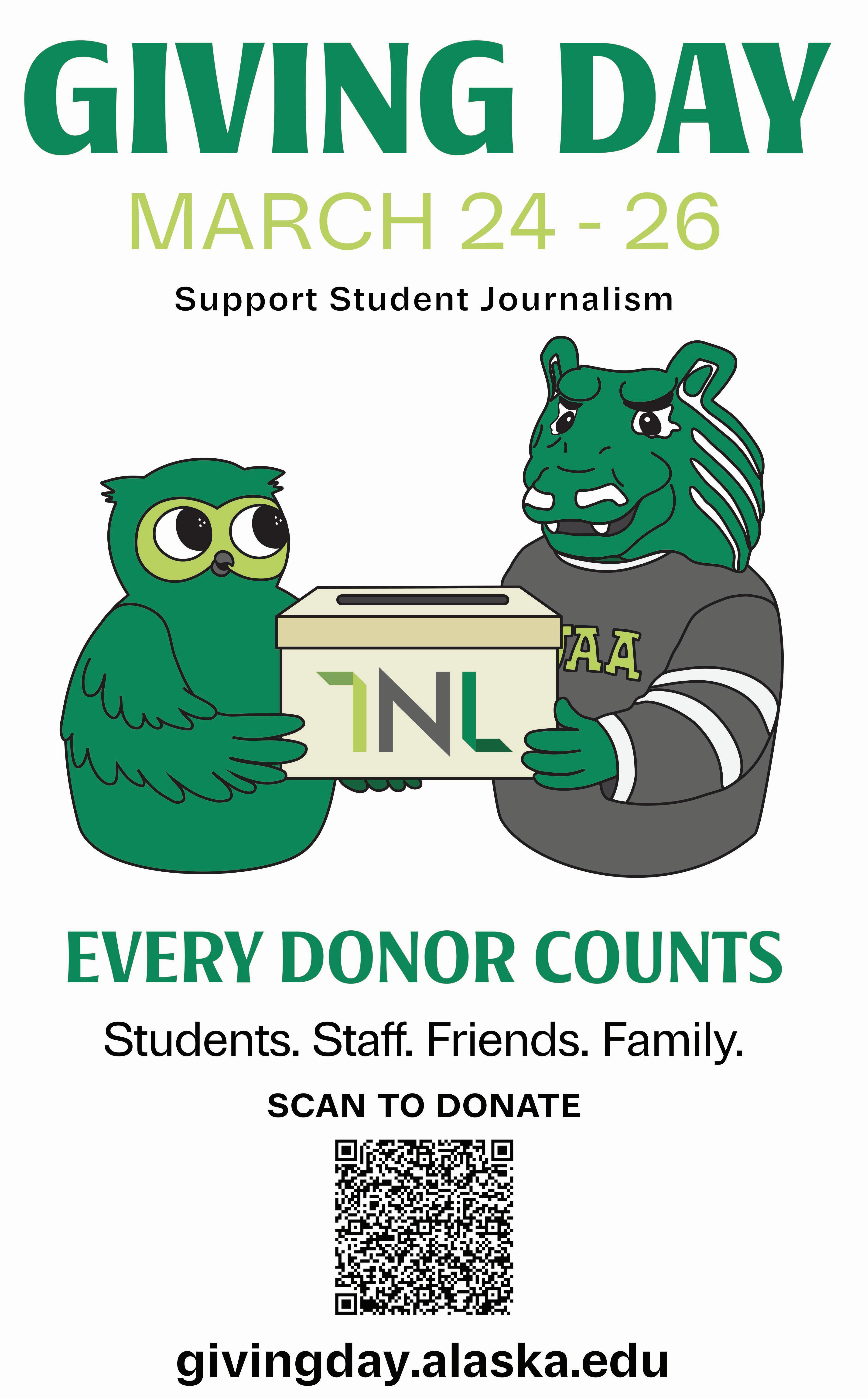
The University of Alaska system is preparing for its annual Giving Day on March 24-26.
The event invites students, faculty, alumni and community members to support university programs and scholarships across all UA campuses.
The Northern Light spoke with Director of Annual Giving for the UA foundation, Samantha Sink, and Chief Philanthropy Officer Bobi Rinehart about Giving Day and how students, faculty and staff can participate in the annual event.
The first Giving Day
started in 2020, and since its creation, the UA system has hosted a Giving Day each year.
Sink said the goal of Giving Day is to invite new donors to support and empower students through their donations to university programs and scholarships. Sink emphasized that there are hundreds of initiatives that people can donate to.
Sink said the most recent Giving Day drew approximately 2,700 donors from across the UA system.
Departments and organizations receiving donations can also participate in Giving Day challenges. When a donor offers a challenge, they commit to
making an additional gift if a specific goal — such as reaching a certain number of donations or a dollar amount — is met.
One systemwide challenge is the UA Launch Power Hour. Through this challenge, the UA Board of Directors will donate $5,500 to the UA General Scholarship if $200 is raised within the first hour of the Giving Day opening.
Another challenge encourages engineering programs to raise $750 for any engineering scholarship. If the goal is met, ConocoPhillips manager and UA Foundation Board member Stephanie Erickson will donate an additional $2,000. This dona-
tion would then be split between the UAA and UAF colleges of engineering.
Sink said Giving Day averages between 1,500 to 2,500 donors each year.
Rinehart said that the focus of Giving Day is more of identifying donors rather than the amount of money that is donated.
“Really, the idea is to get people in the door and figure out what they’re interested in,” said Rinehart.
Sink emphasized the importance of first-time donors and said building trust and learning what inspires donors when building new relationships is important.
Alaska Airlines also donated three ticket
vouchers to UAA to help promote Giving Day opportunities.
Anyone interested in helping spread the word about Giving Day can create an account to become a champion. Champion accounts track referral links shared with potential donors, allowing participants to see their outreach.
Becoming a champion and having a first referral automatically enters the participant into a drawing to win an Alaska Airlines travel voucher.
Another opportunity open to all students involves creating a donor appreciation video for the department they are supporting on Giving Day.
Selected individuals
are eligible to receive an airline ticket as a reward. Videos can range from five to 30 seconds.
Sink said the wide range of opportunities available on Giving Day helps make participation accessible to both students and community members.
“It makes supporting and celebrating what we love accessible and exciting,” said Sink.

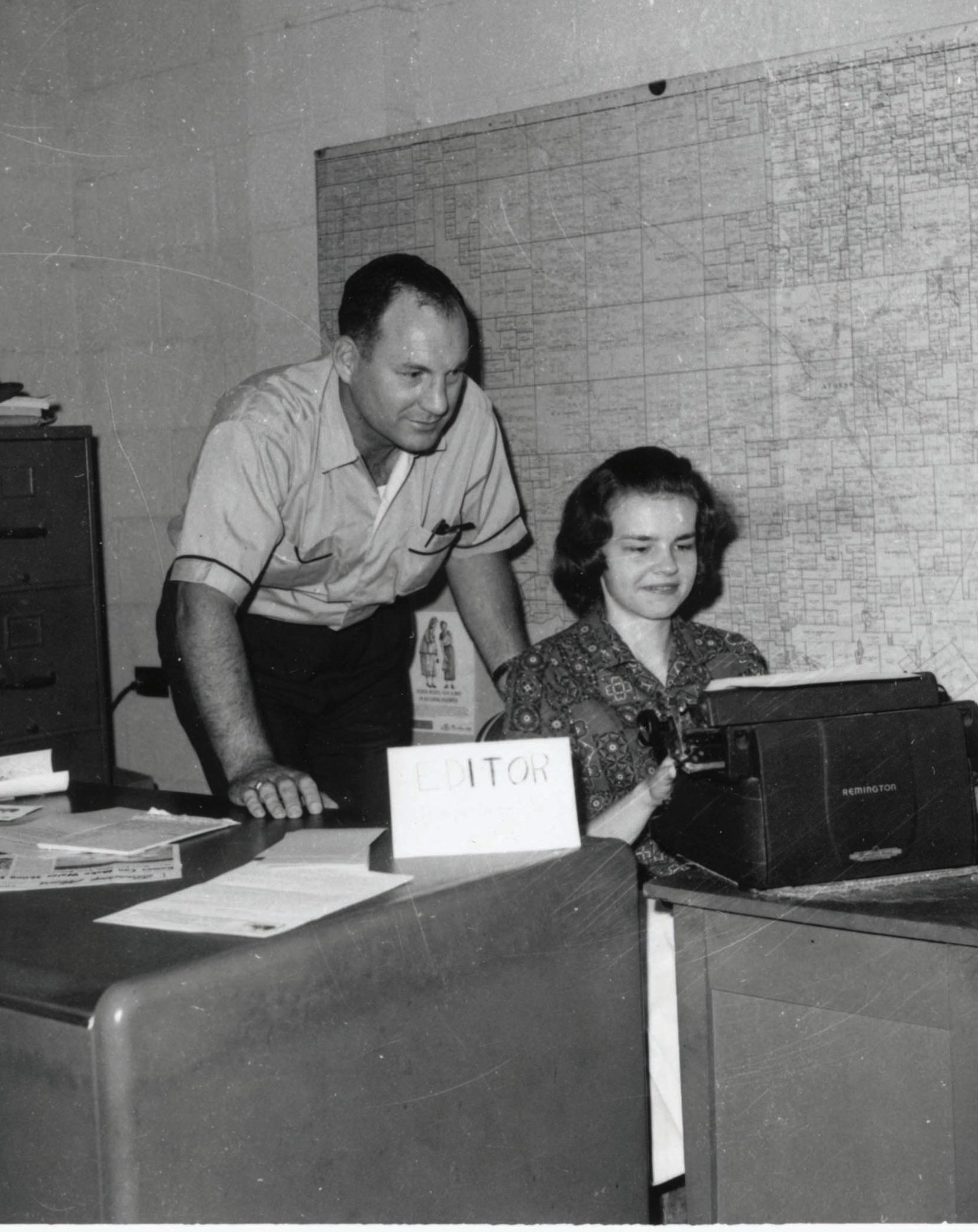
Thank you, Bobi Rinehart, for supporting The Northern Light.
Thank you to Carolyn C. and Robert P. Rinehart for their years of service to the Anchorage community
By The Northern Light
Chief Philanthropy Officer for UAA, Bobi Rinehart made a generous donation to The Northern Light, for which we are most appreciative.
Rinehart did not work much in journalism herself, but she has supported the journalism community for years through her philanthropic work.
The donation was made in honor of Rinehart’s parents, Carolyn C. Rinehart and Robert P. Rinehart. The Northern Light met with Rinehart to learn more about her and her parents.
Rinehart said her mother started her own weekly neighborhood newspaper in Austin, Texas in third grade — The Rosedale Rocket — and ran the paper until eighth grade.
She ran her high school newspaper and then her university’s paper — The Daily Texan at The University of Texas at Austin
— during all four years of her attendance. Later, she made her career at the Anchorage Times.
Carolyn then worked for the Corps of Engineers and Technical Writing until she retired.
During this time, Carolyn also had a membership to the National Federation of Press Women for 45 years.
While Rinehart’s father, Robert, was never a journalist, she said he expressed interest in individuality and freedom of the press.
Both of Rinehart’s parents were heavily involved in civil rights protests.
As a reporter for the Anchorage Times, Carolyn Rinehart covered the merging of Anchorage Community College and UAA in 1988. With her mother’s reporting on the merging of institutions, Rinehart went to Scripps College in California.
Rinehart remembered her college days at Scripps in her dorm near the rec room. One day, she left
her dorm to find students playing Scrabble.
“My mom spent, like, my whole life kicking my ass at Scrabble,” said Rinehart. “She was really good with words.”
Through years of playing Scrabble with her mother, Rinehart developed an appreciation for writing. Although she ultimately chose a different career path, she has remained connected to the journalism community she grew up around.
Inspired by her mother’s lifelong dedication to journalism and her father’s support of press freedom, Rinehart’s donation has allowed The Northern Light to establish a foundation account. The account enables anyone to donate in support of student journalism at UAA.
The Northern Light extends its sincere gratitude to Bobi Rinehart and the Rinehart family for their generosity and lasting commitment to journalism.



By Justin Cox multimedia.editor@thenorth
ernlight.org
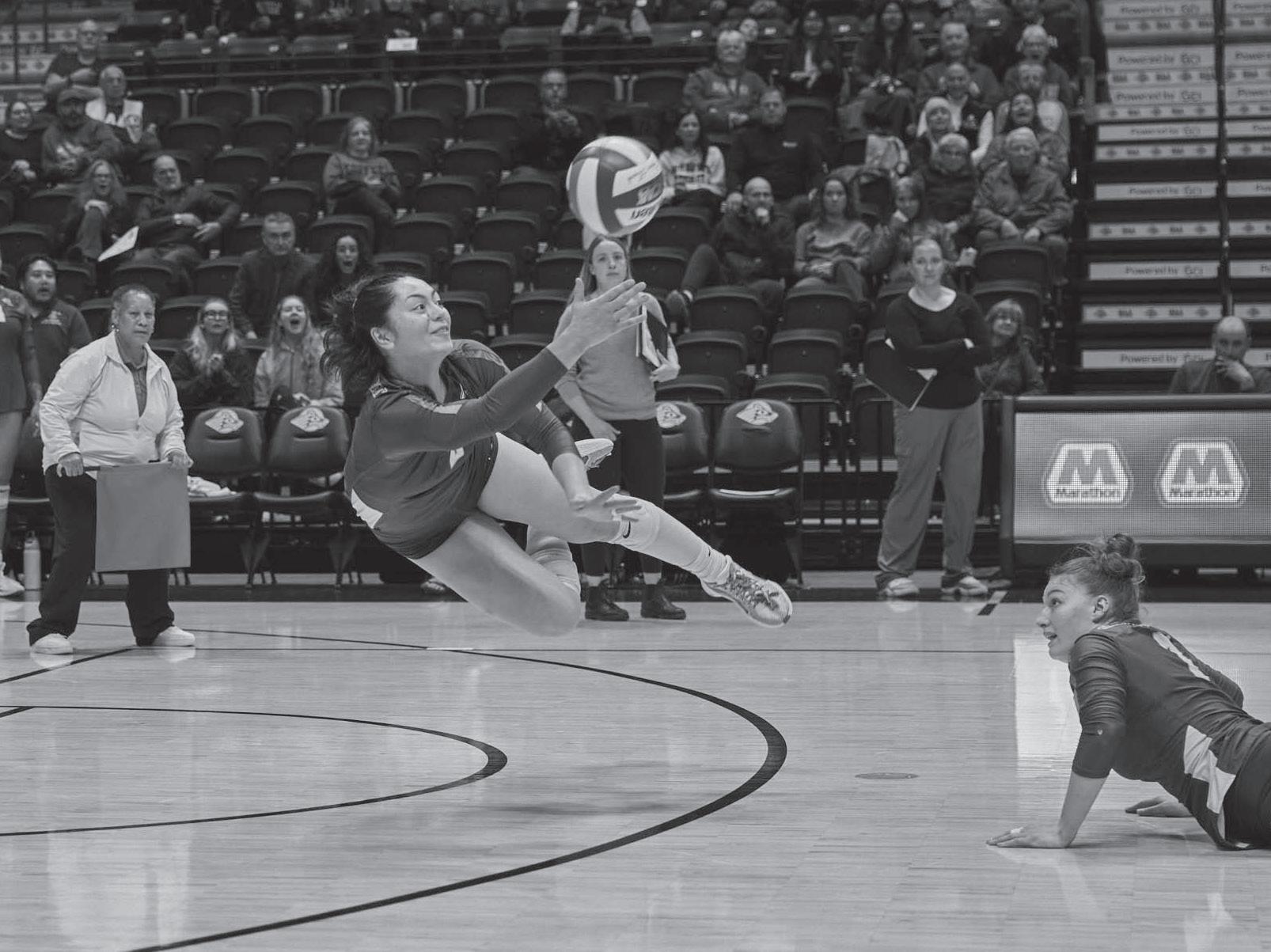
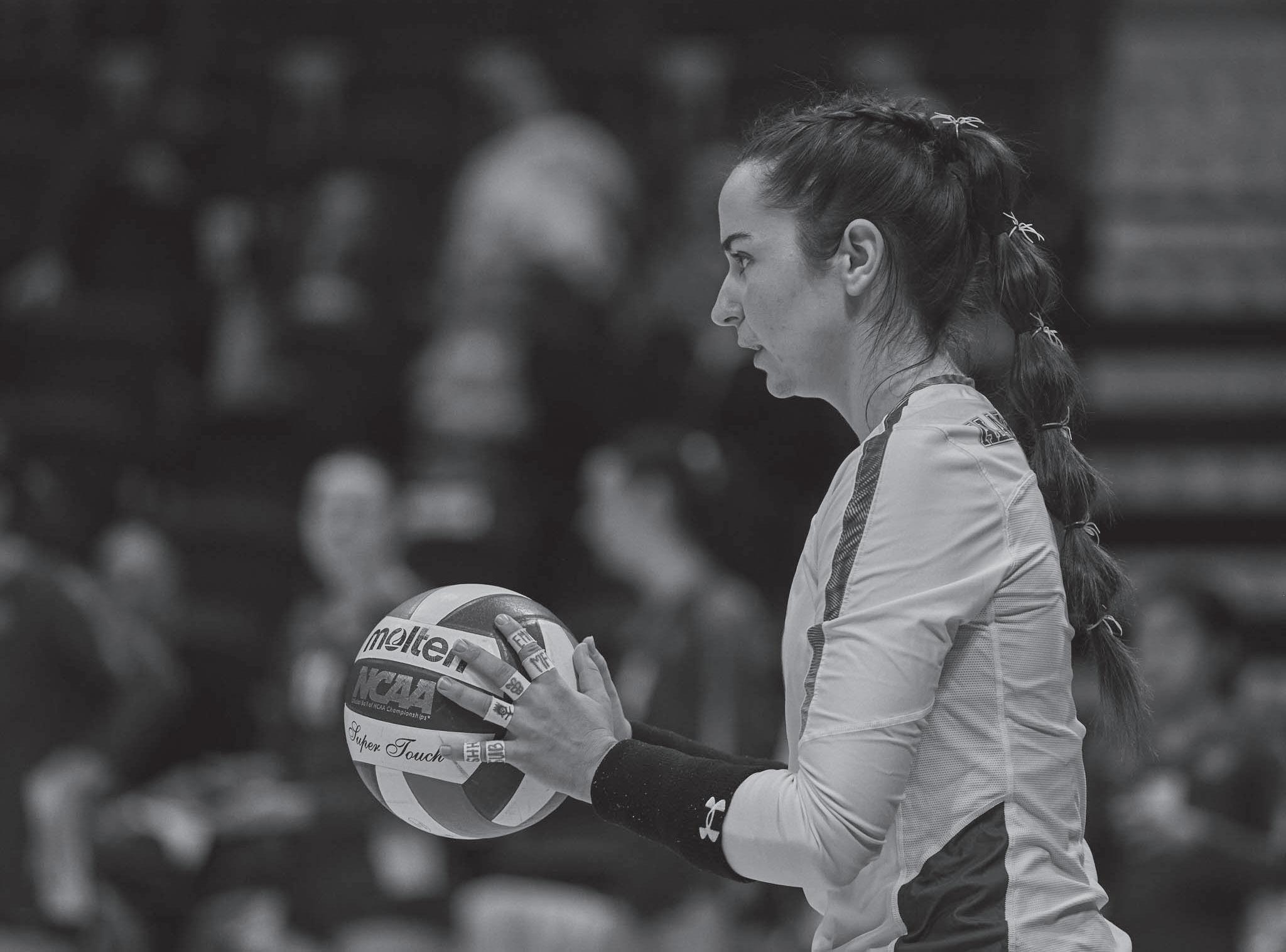
Tia Allen became the first student athlete to play on two sports teams at UAA since 2004. Allen is a senior from Spokane, WA who transferred to UAA from St. Martin’s University in 2023 to pursue a degree in art. Having an amazing year on the court to round out her time at UAA, Allen was only the 12th player in GNAC
history to make at least 1,200 kills, 1,200 digs and 100 aces. She was part of the volleyball team that secured a four-way tie for the GNAC title in 2025. Now to finish out her senior year, Allen is playing basketball with the Seawolves women’s basketball team. The last UAA student to play two sports was O’Lita McWilliams, who played volleyball in 2002-2003 then basketball in the 2003-04 season.

By Justin Cox
multimedia.editor@thenorthernlight.org
Madison Galloway graduated in December after the Seawolves won the 2025 GNAC title as part of a four-way tie. She was in the top 10 for number of sets and matches played with over 200 matches and 400 sets in her time as a Seawolf. Galloway is now looking at schools to begin work on her Ph.D. in psychology this fall.

By Justin Cox multimedia.editor@thenorthernlight.
org
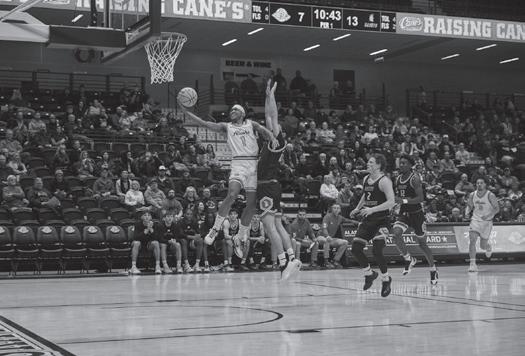
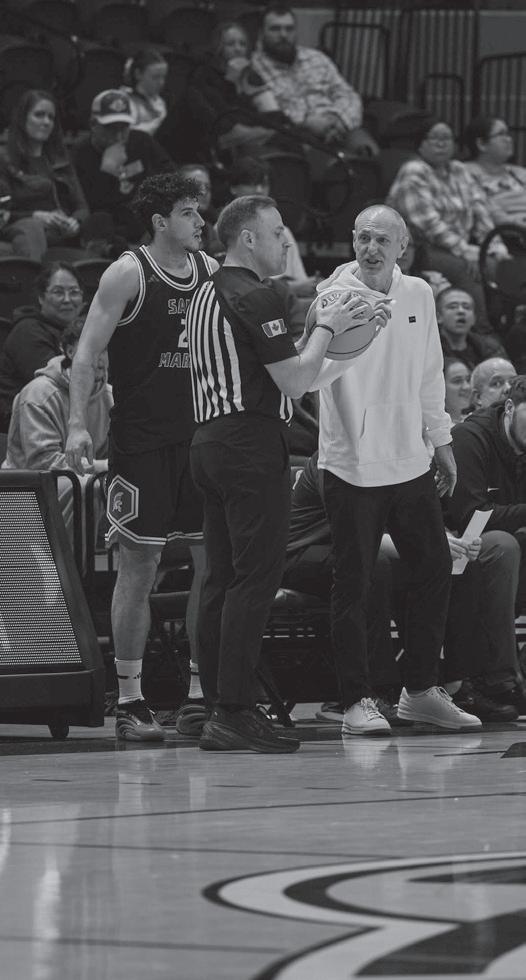
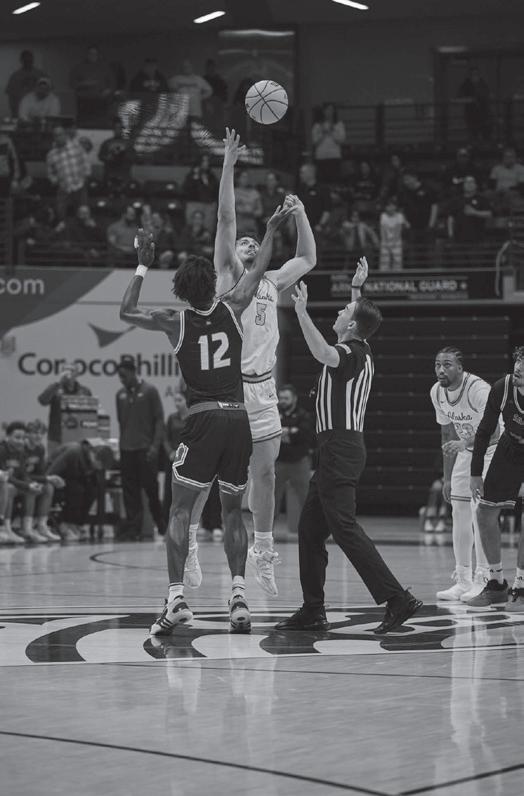
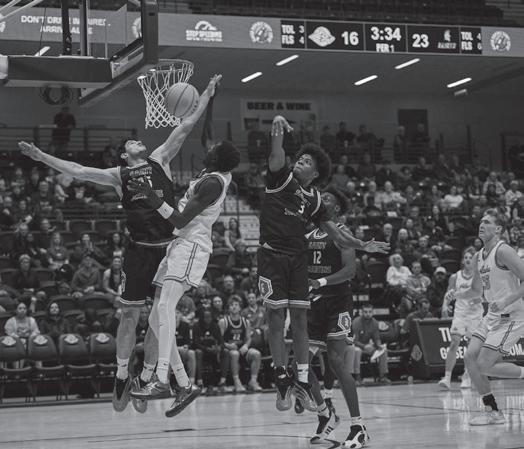
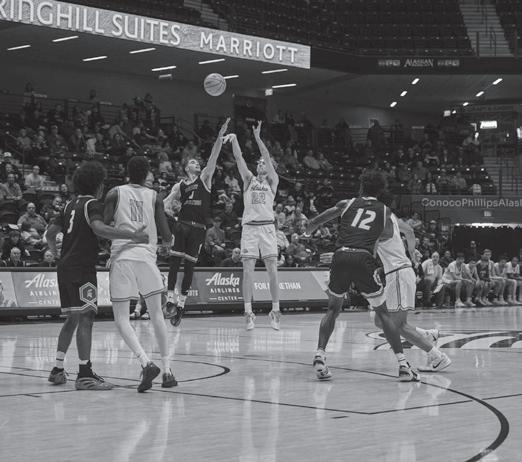
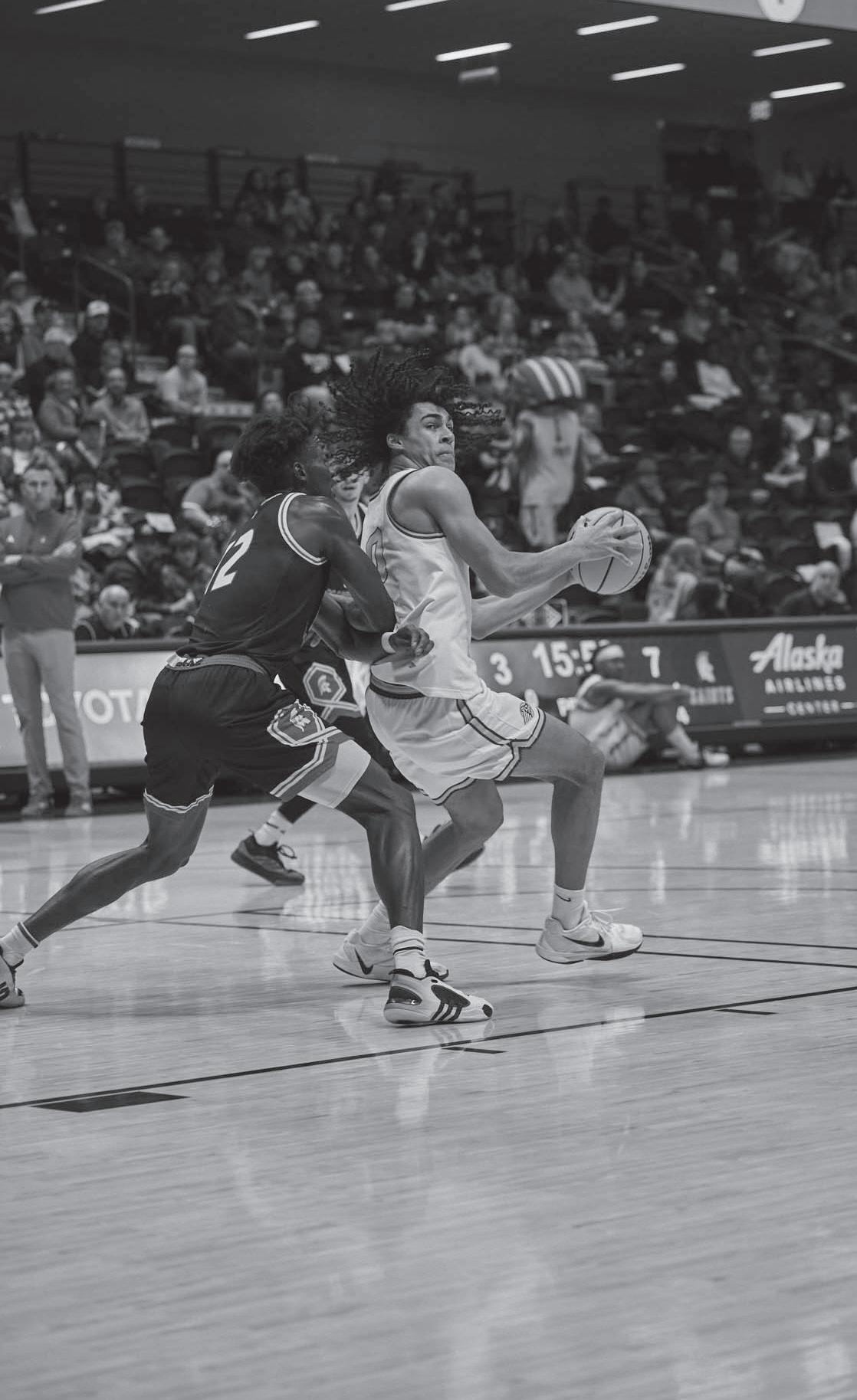
The Seawolves men’s basketball team was defeated by the Saint Martin’s University Saints, 57-56, on Feb. 28 to close out their regular season. While the Saints held the lead throughout the first half, the Seawolves managed to make a comeback and gain the lead until a last second shot from the Saints took the game. This game also marked the end of an era as it was the final home game for Rusty Osborne after 22 years as the Seawolves’ head coach.
Before the game, the Seawolves honored their graduating players Bishop Tosi, Akok Machar, Jaren Miller, John McFadden, Hasaan Herrington, Jesse Stines and Zach Ibbetson.
The Seawolves finish the regular season 20-9 in NCAA play and 12-6 in the GNAC and head to the GNAC championship semifinals on March 6.
By Justin Cox multimedia.editor@thenorthernlight.
org
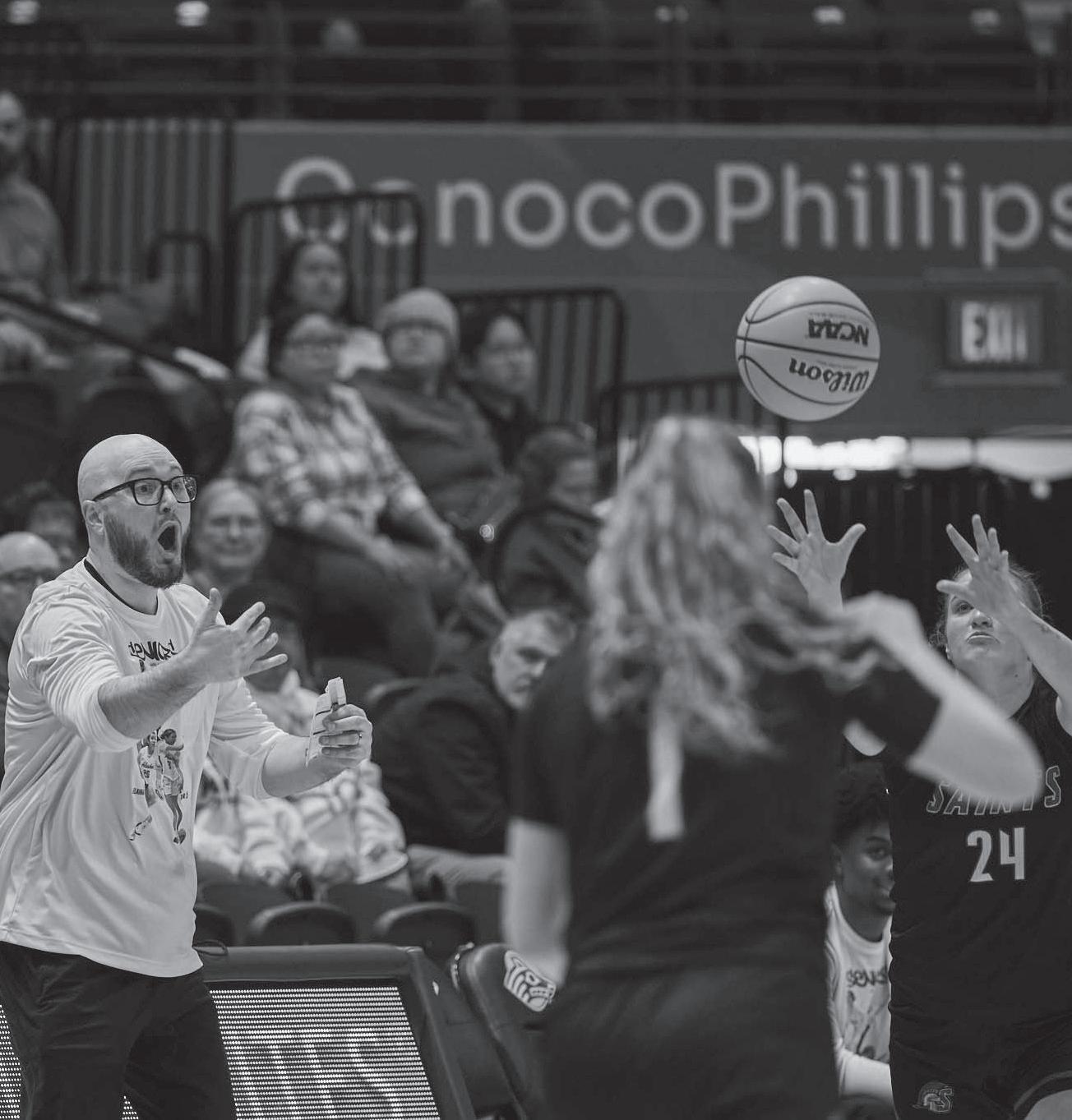
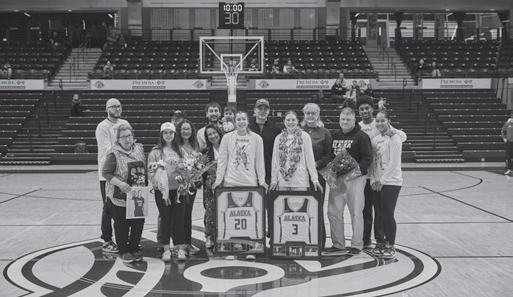
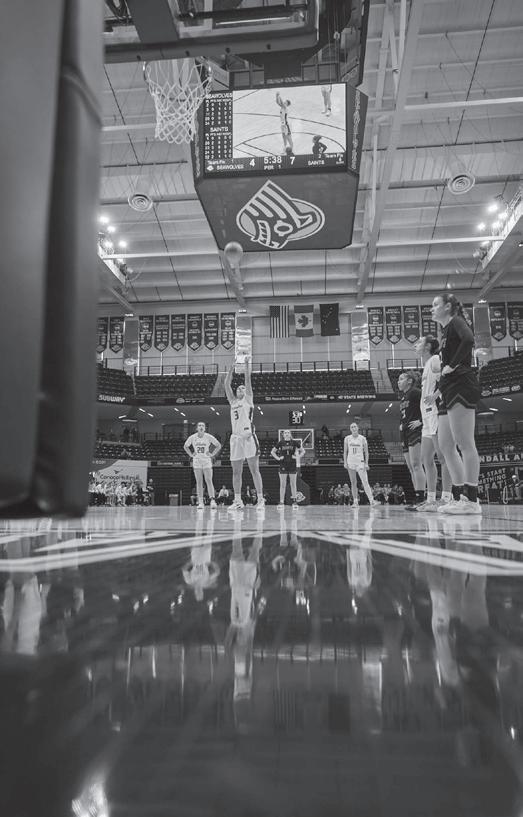
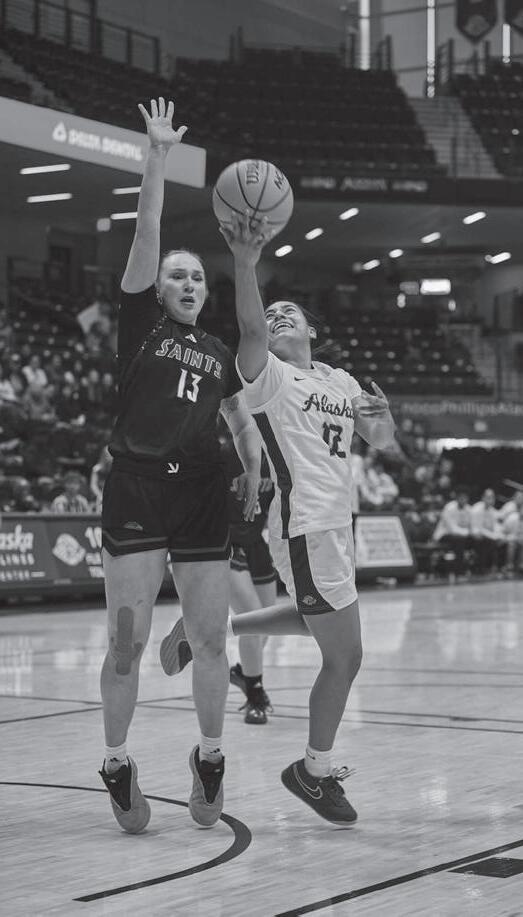
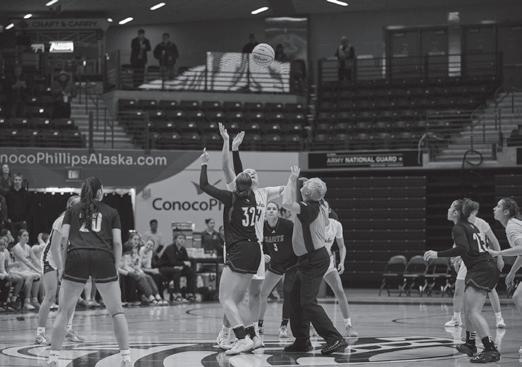
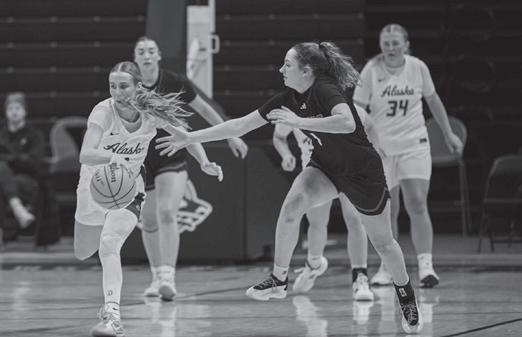
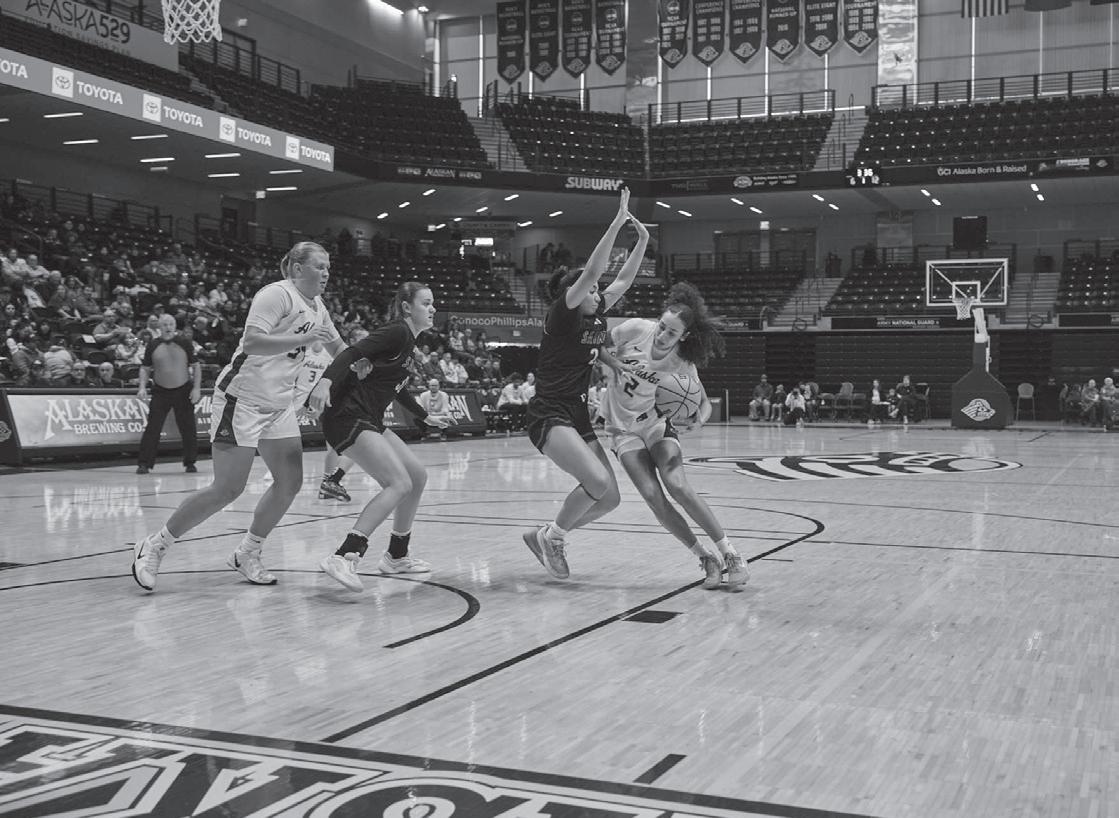
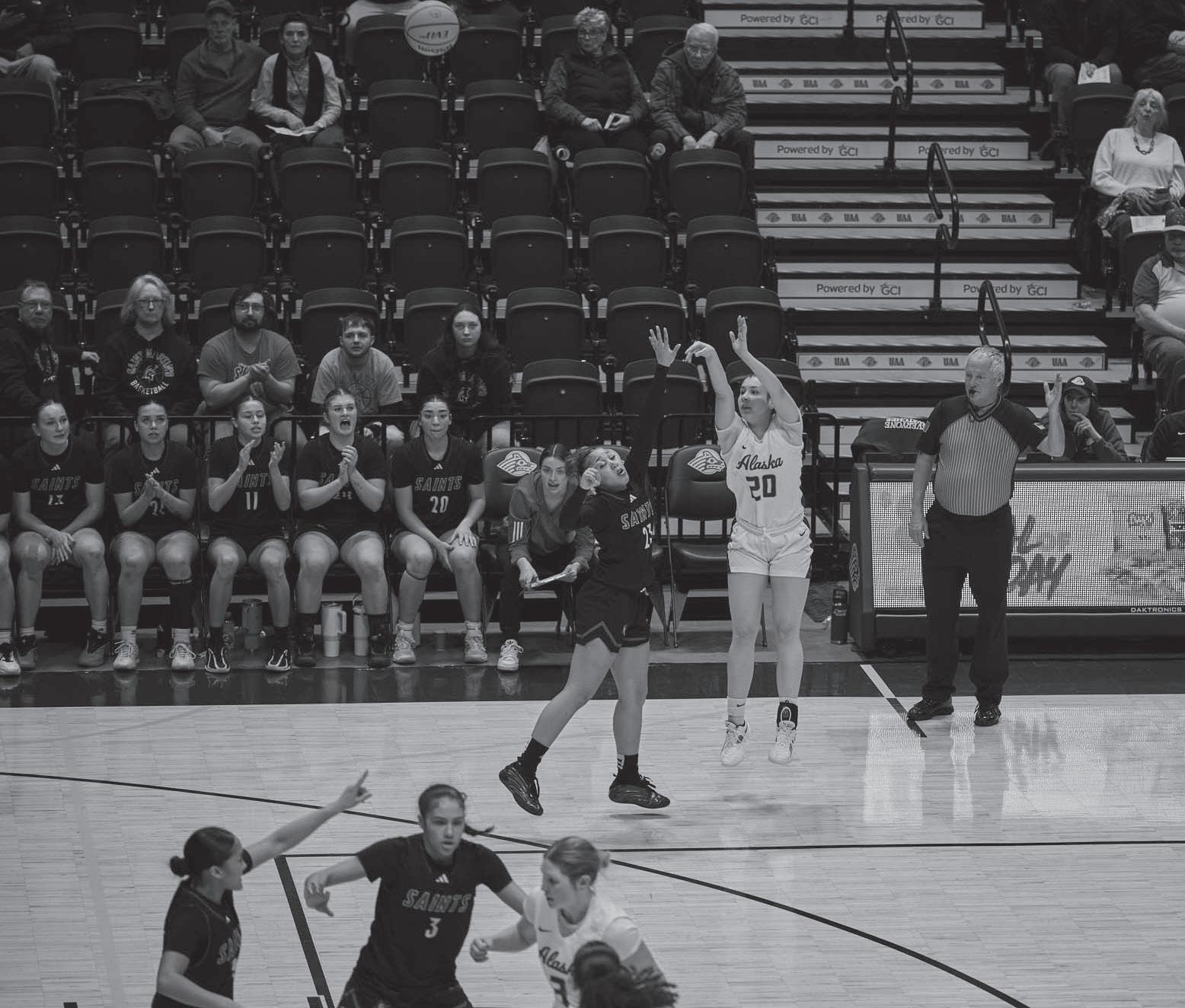
The Seawolves were defeated by the Saint Martin’s University Saints, 66-51, on Feb. 28 ending their season with a 16-11 record in the GNAC. To have a chance at the final GNAC tournament slot, the Seawolves needed to defeat the Saints. Unfortunately, they fell short. The Saints took an early lead and maintained it throughout the night. The Saints
lead grew to 60-30 early in the fourth quarter before the Seawolves rallied back with 16 unanswered points. Ultimately, it was too little, too late and they could not overcome the commanding lead the Saints had gained.
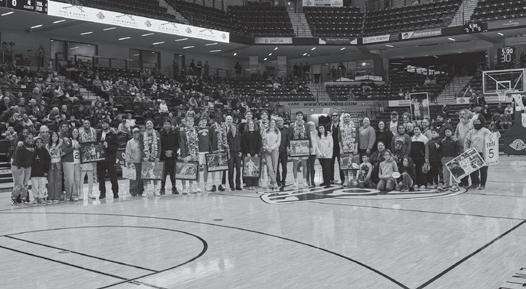
Before the game, the Seawolves honored their two departing senior players, Elaina Mack and Taylor Searcey, along with their families.
By Justin Cox
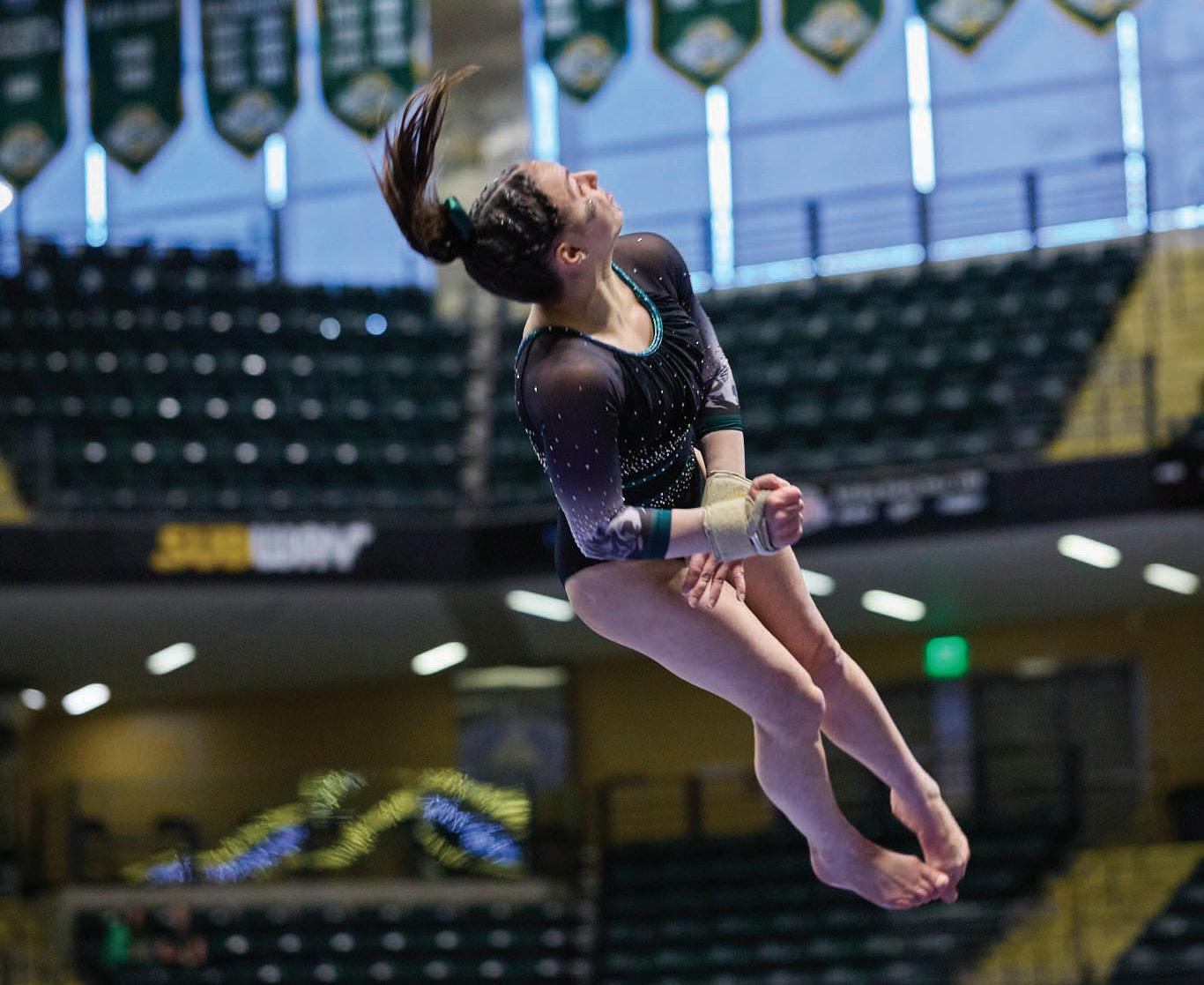
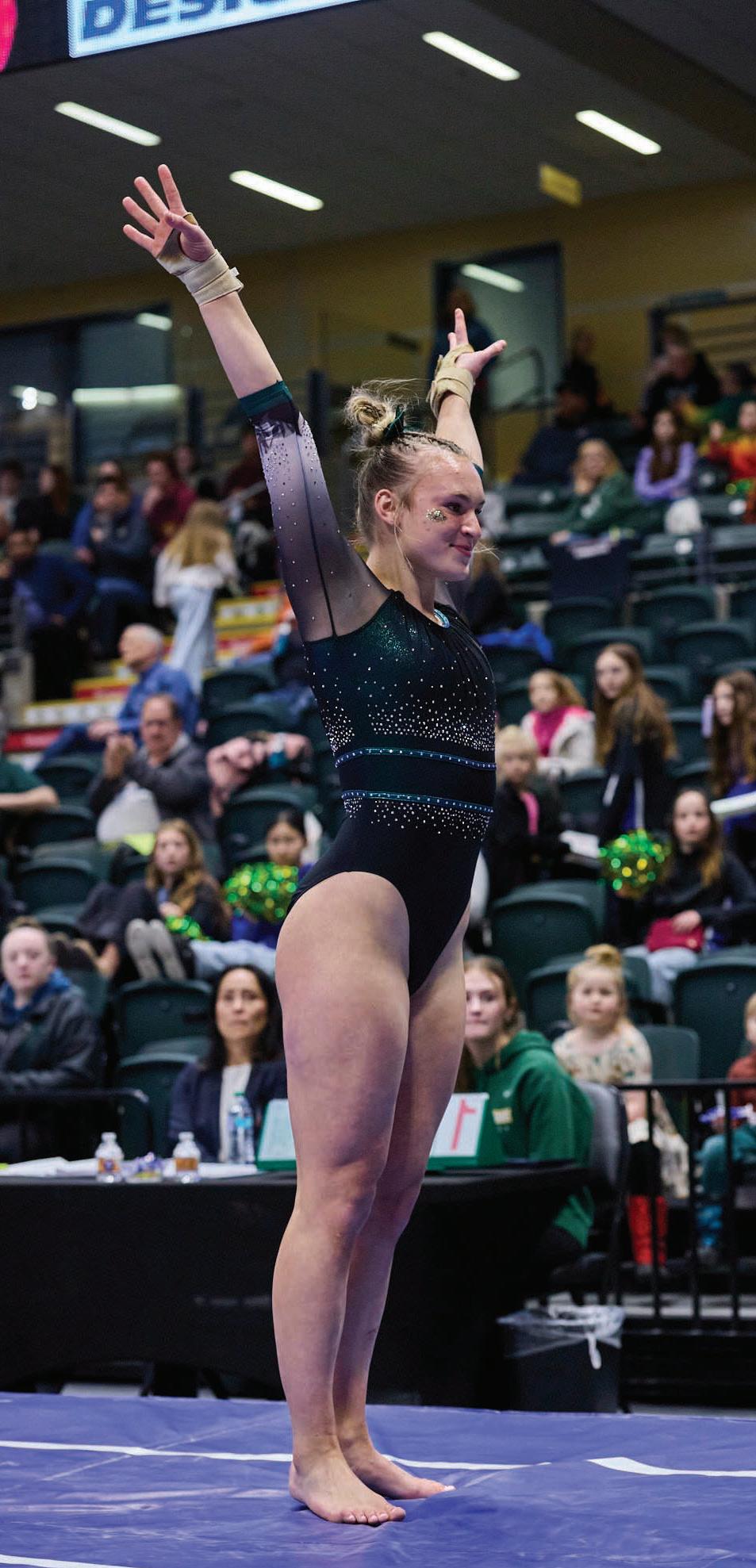
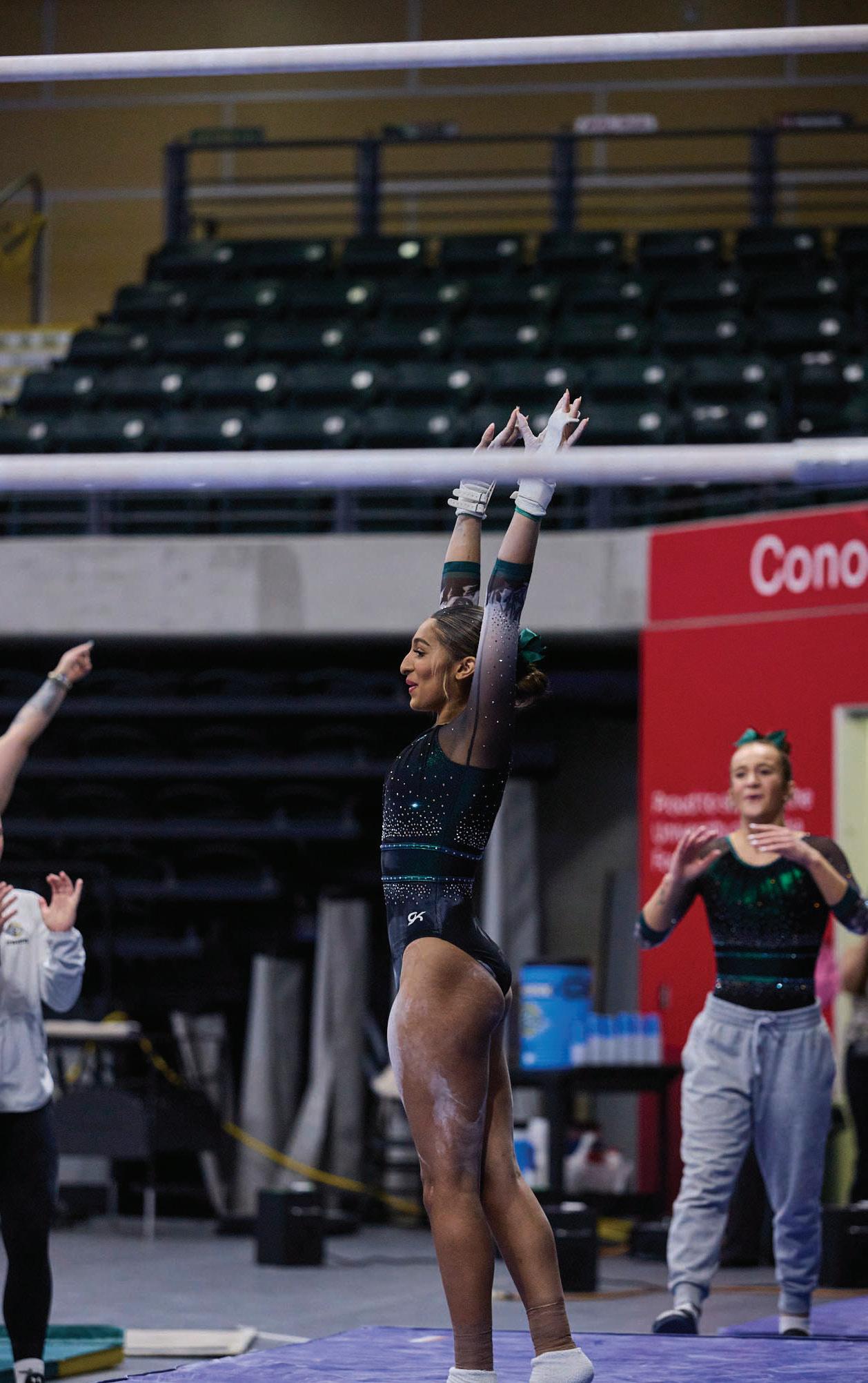
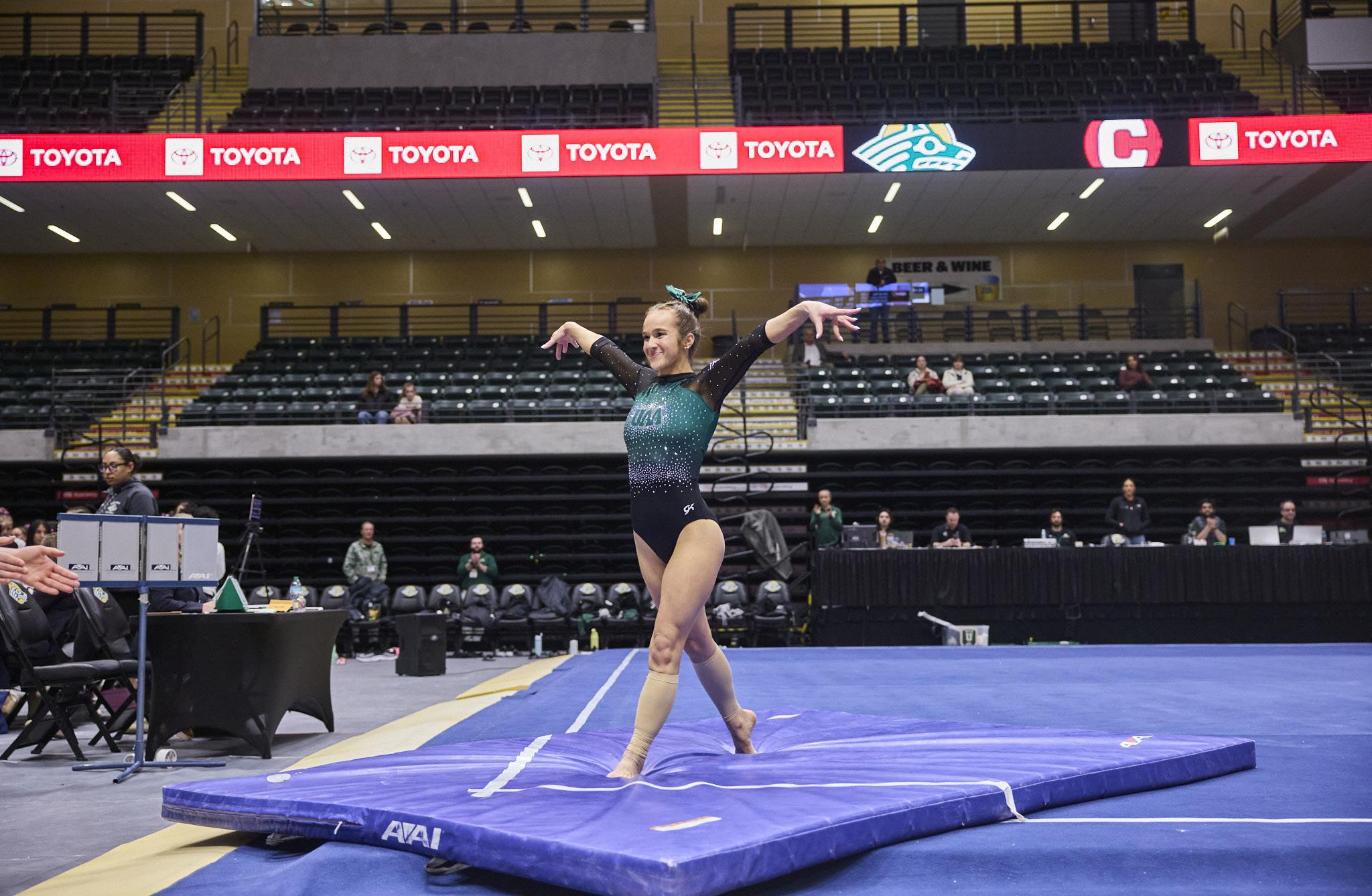
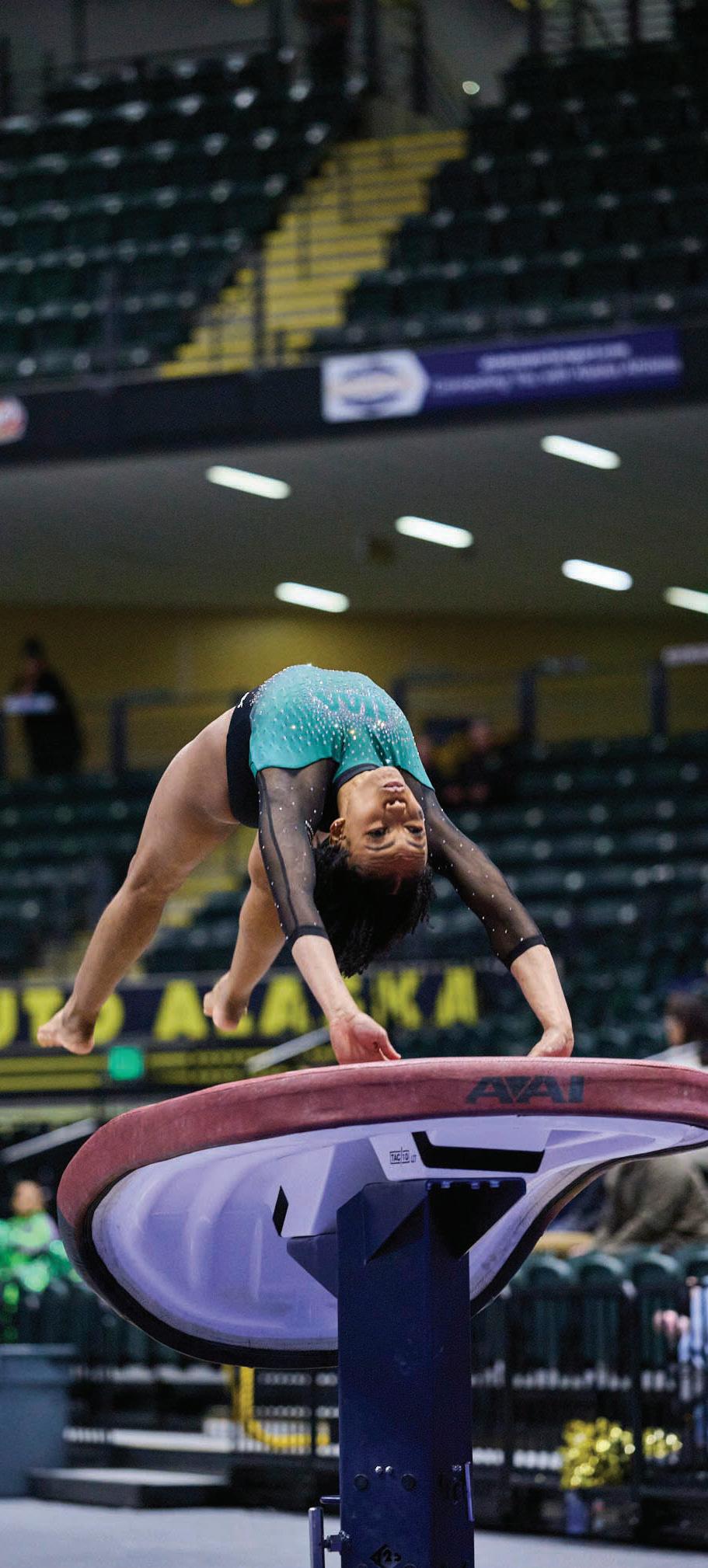
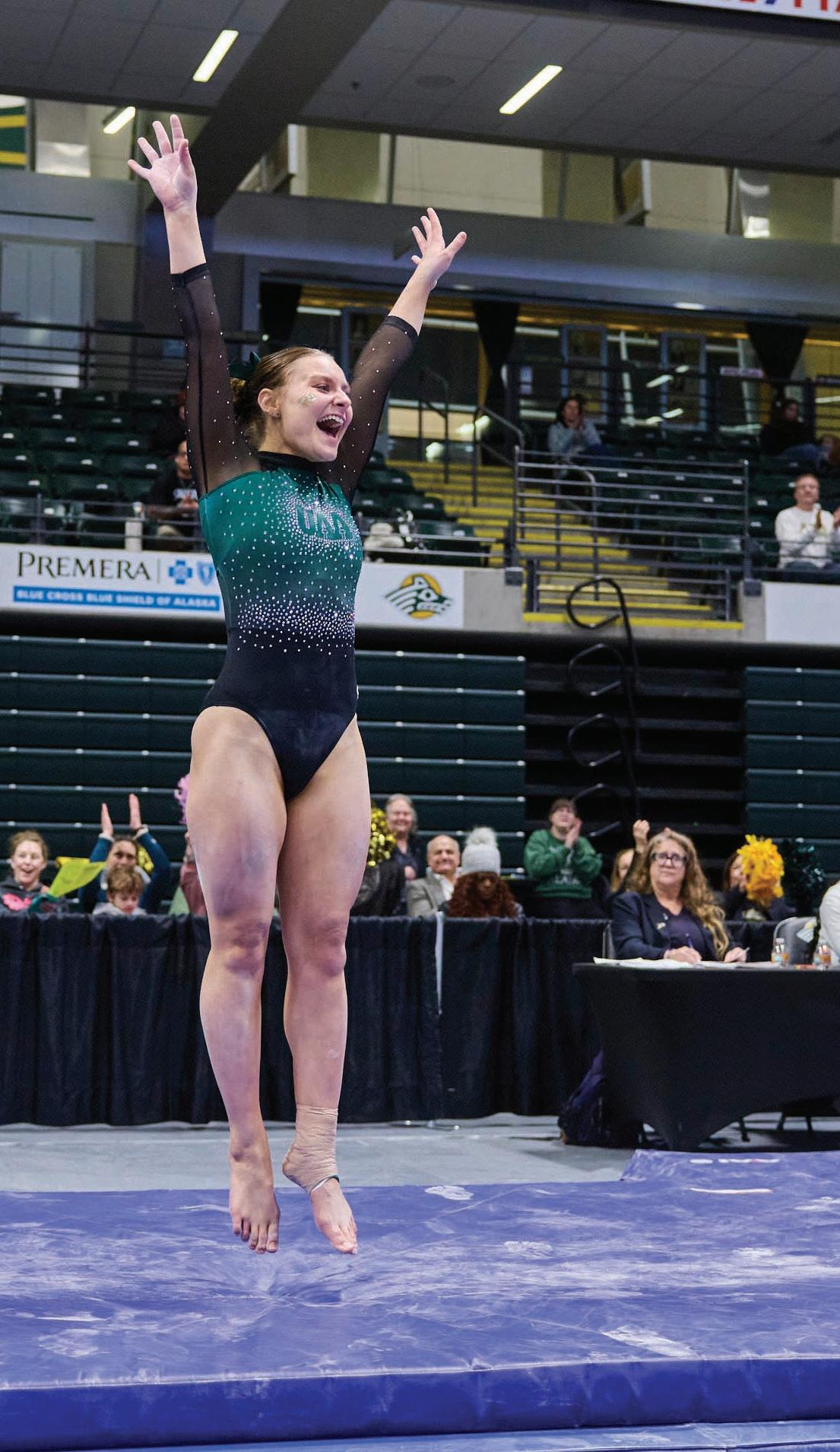
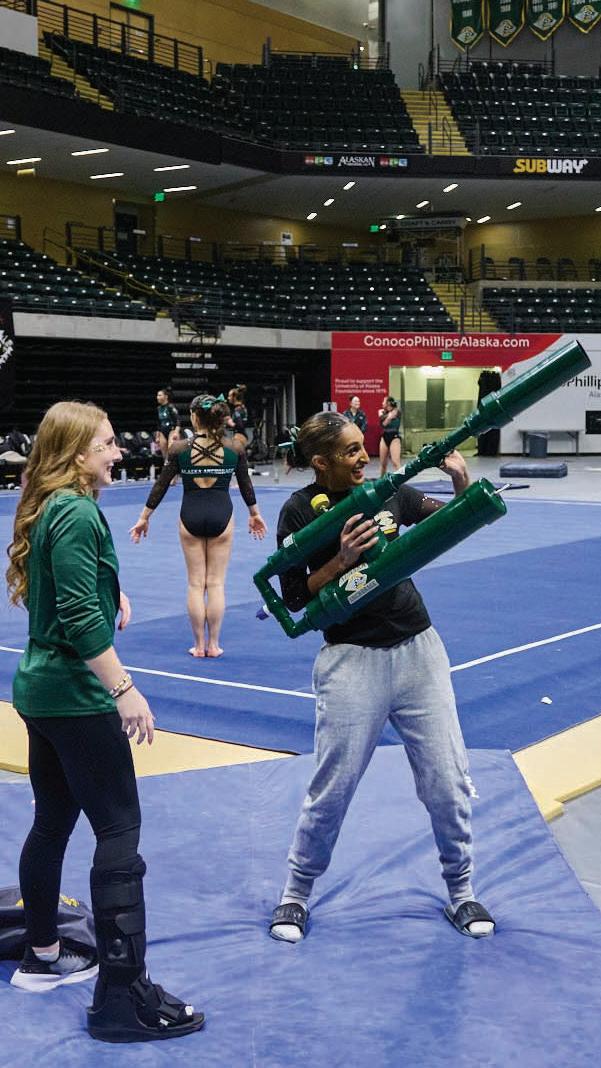
The Seawolves gymnastics team defeated Centenary College on senior night Feb. 22, 191.650-187.675. The Seawolves once again took the top spot in all four events. Jada Niles scored highest for uneven bars with a 9.700 and balance beam with a 9.800, a season best for the UAA team. Ariana Desouza scored first for the floor exercise with a 9.675. UAA also scored a first place tie for the vault, Mari-
belle Albert and Tessa Richardson both scored a 9.725, a career high on the vault for both. The Seawolves took the win this season for all of their home meets.
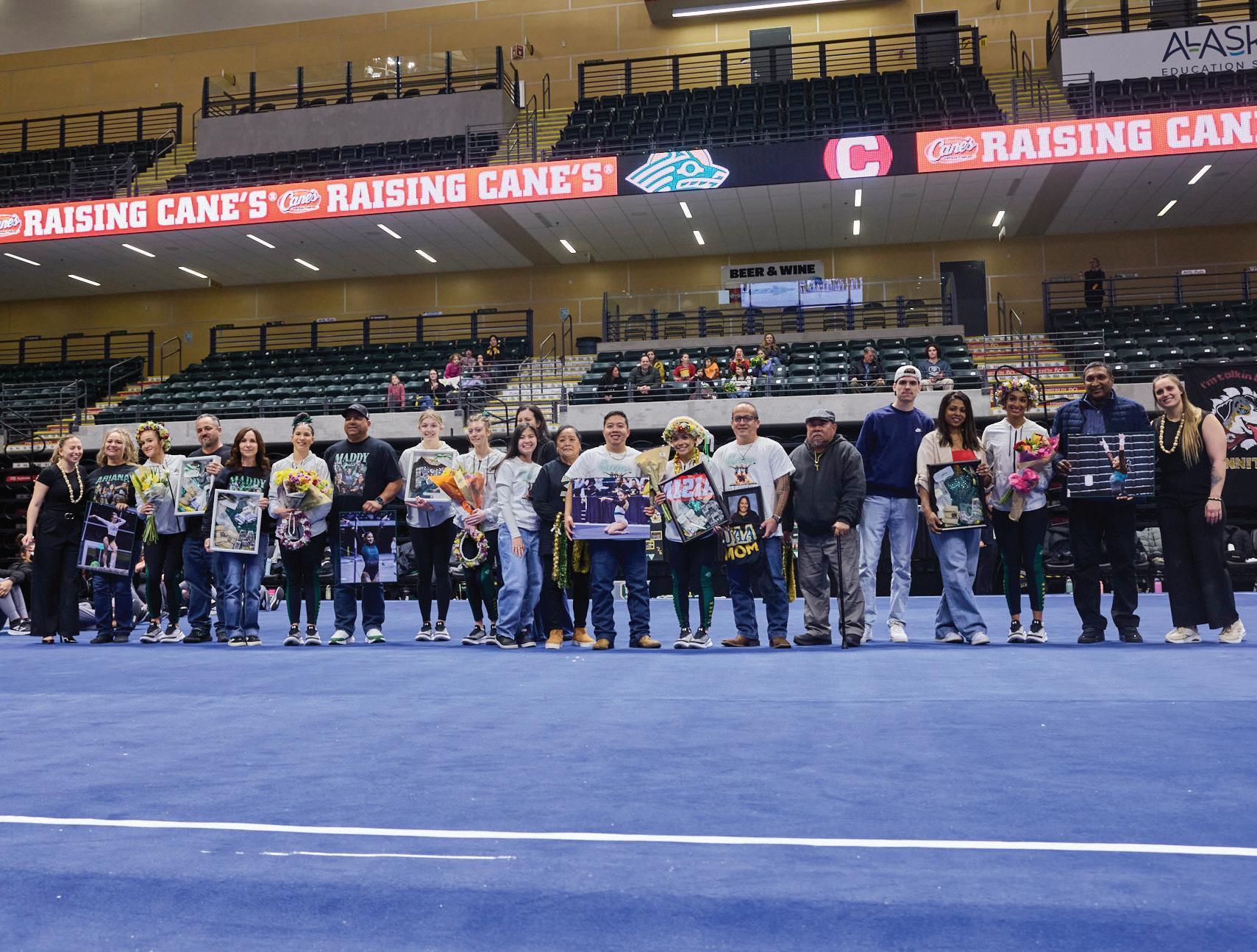
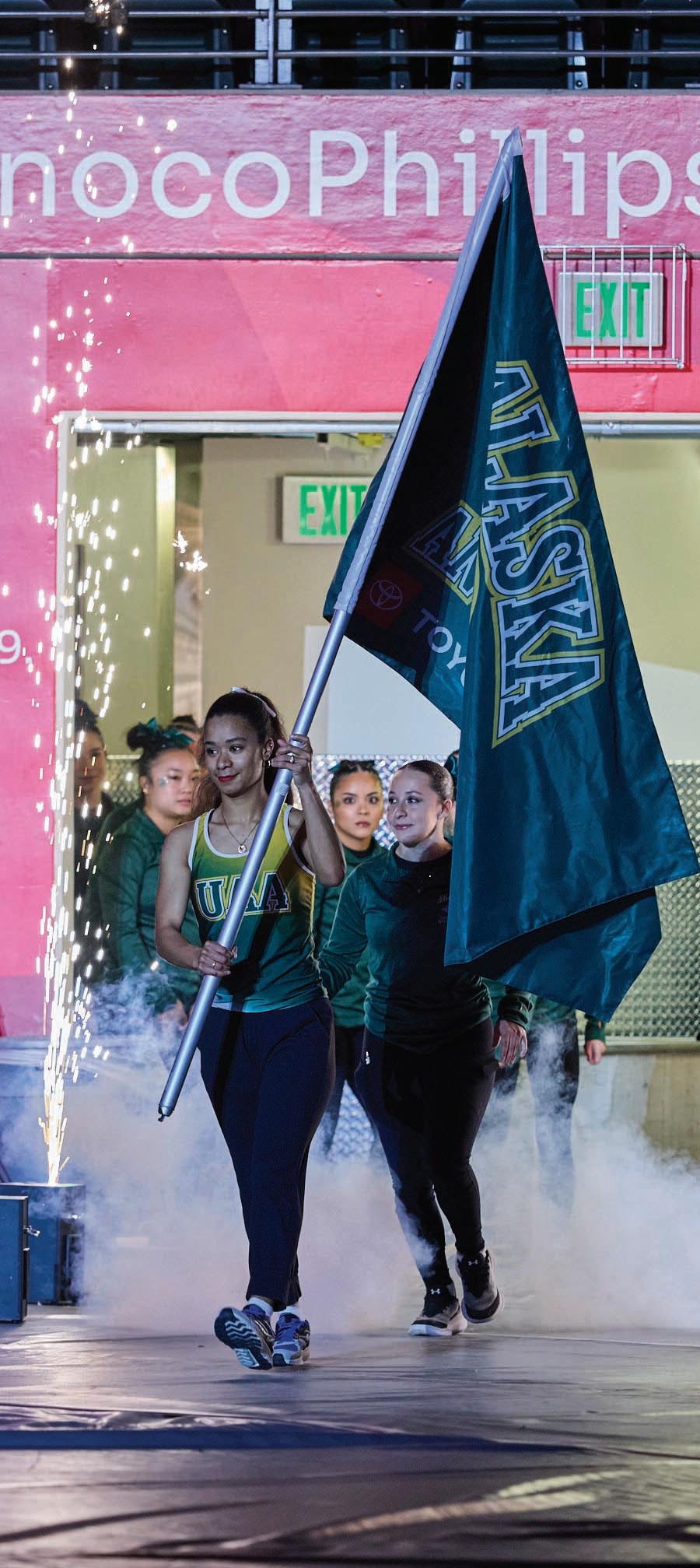
The Seawolves honored the four seniors, DeSouza, Audrey Guess, Breeann Spain, and Madelyn Gomez, as well as Niles, a junior who is not competing in her final year of eligibility, and their families at their final performance as Seawolves.
The gymnasts will finish off their regular season against William and Mary College on the road.

By Justin Cox multimedia.editor@thenorthernlight. org
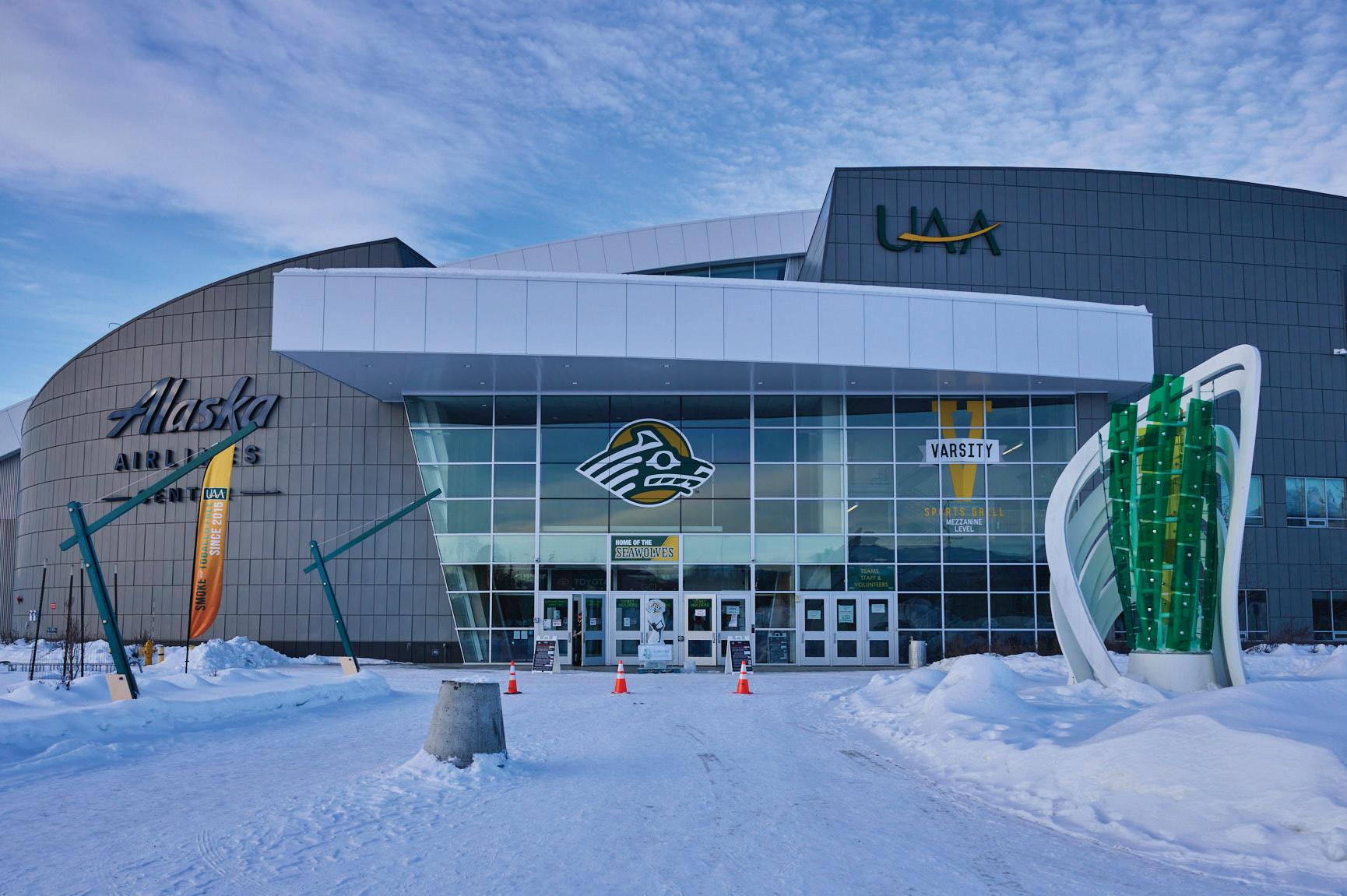
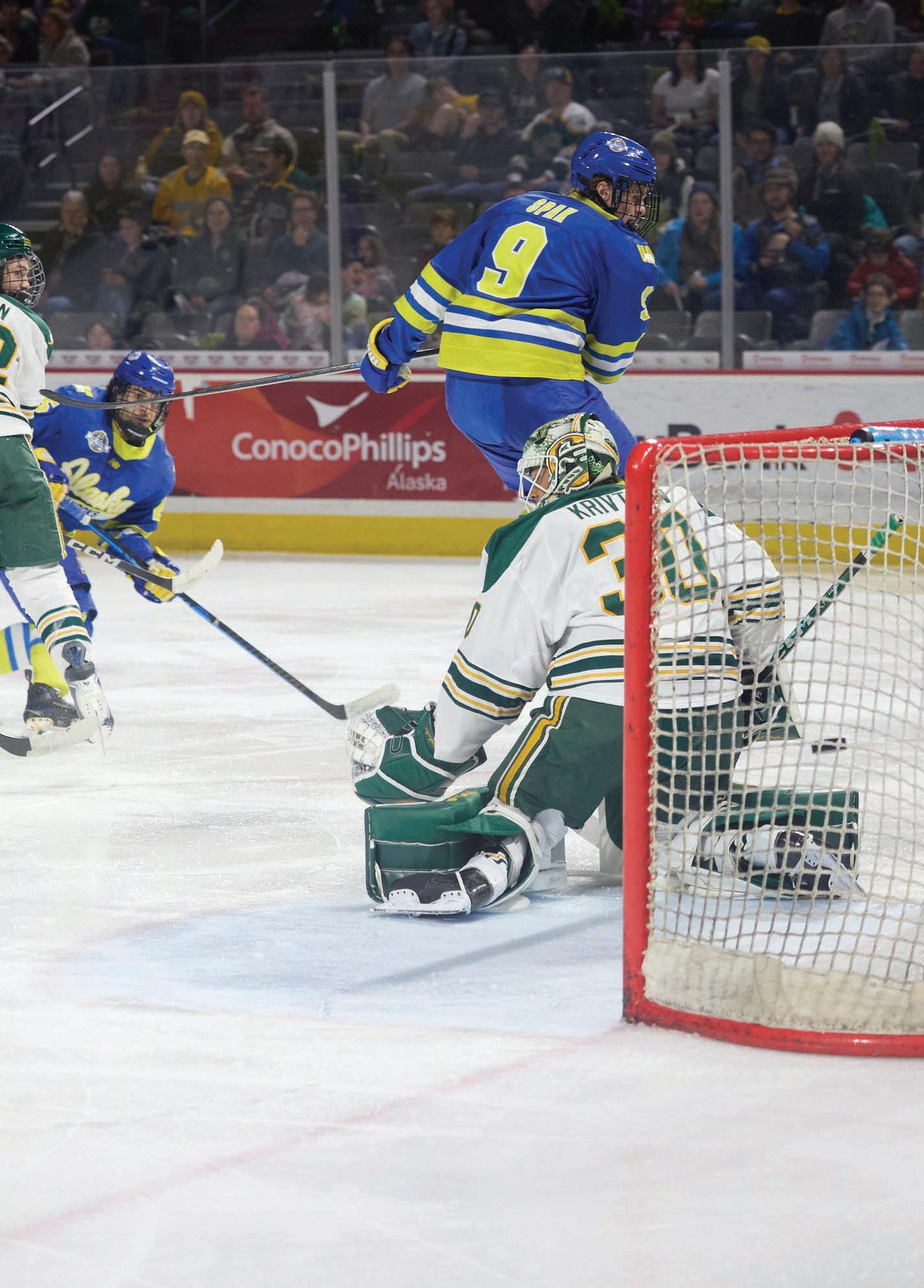
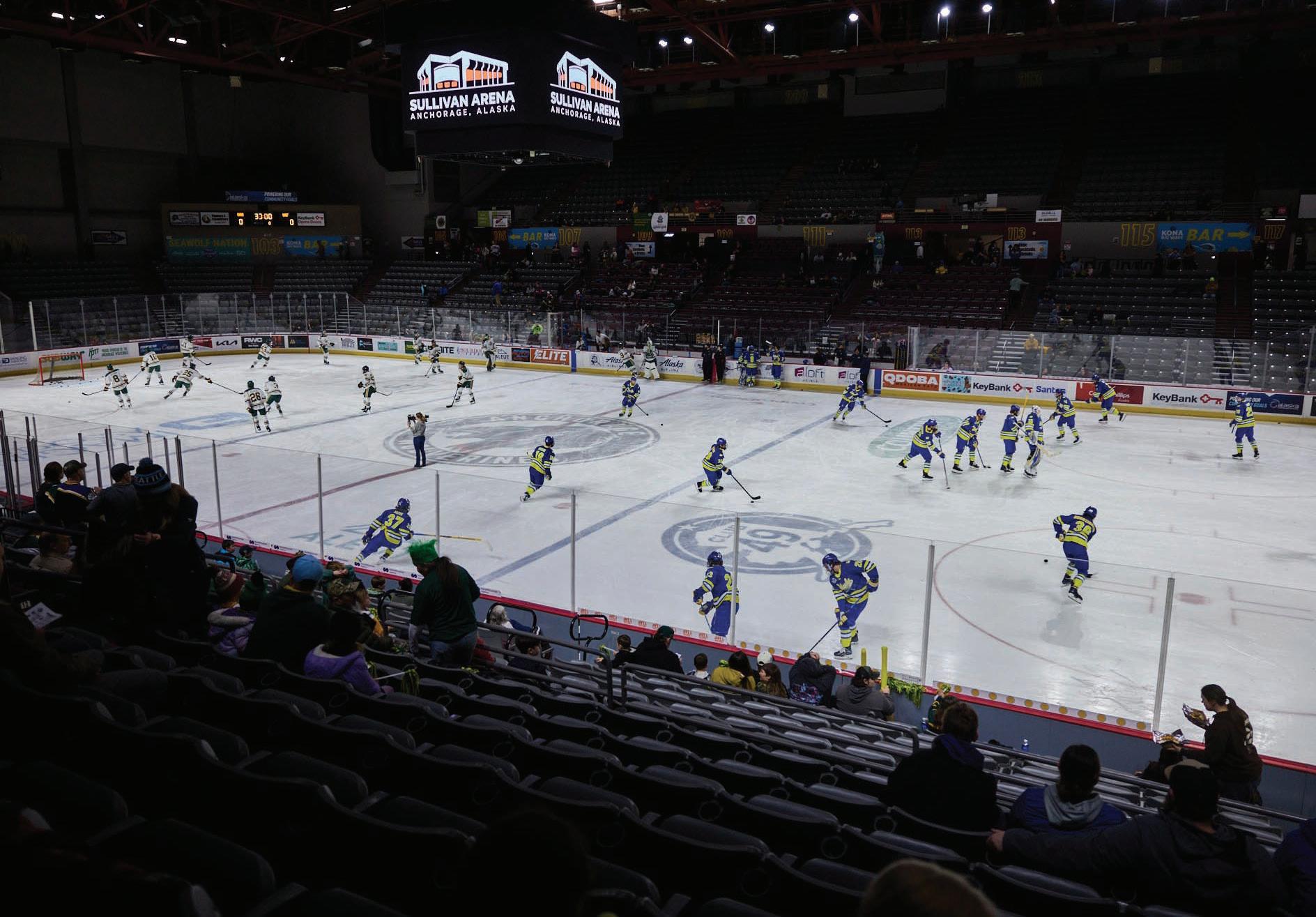
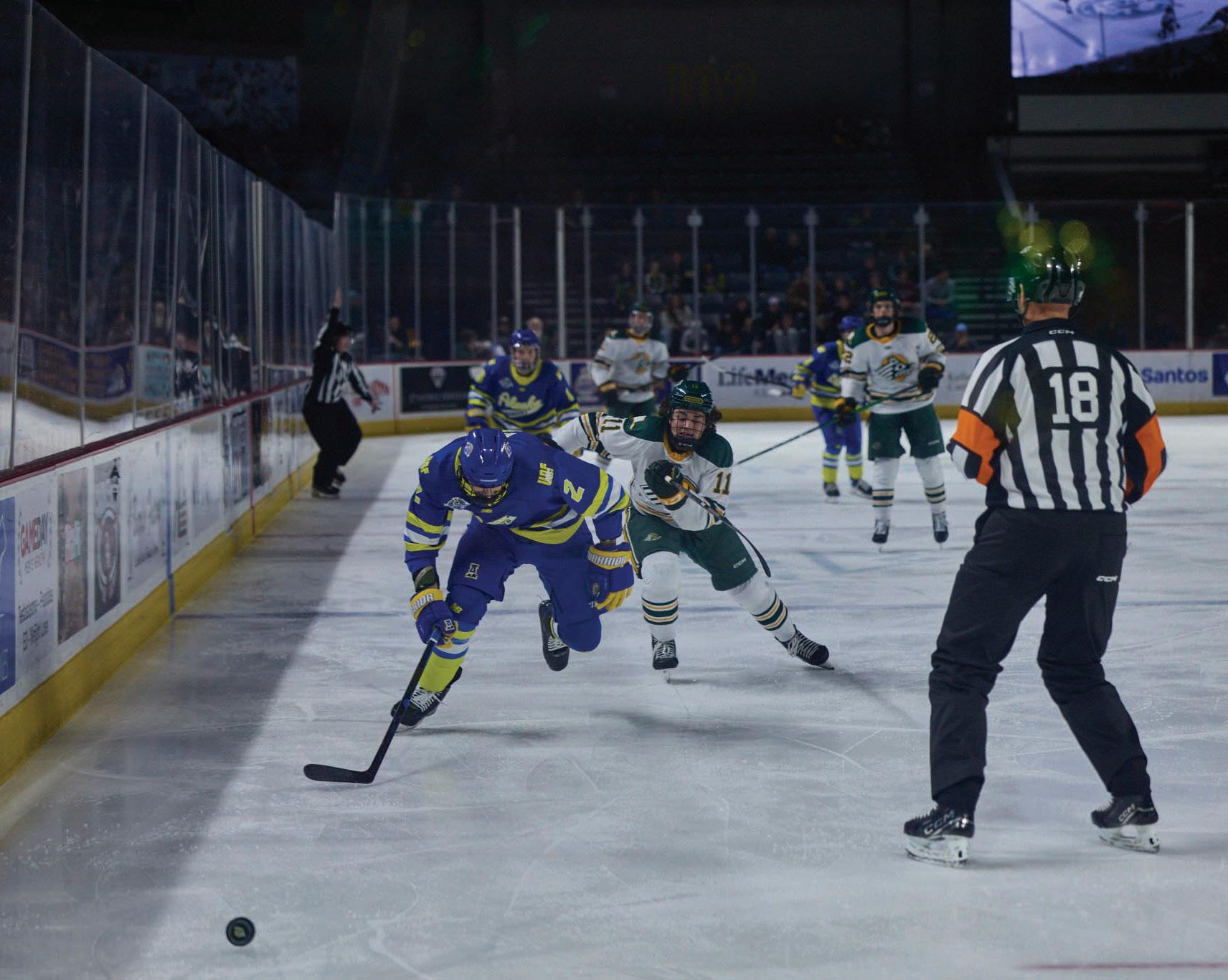
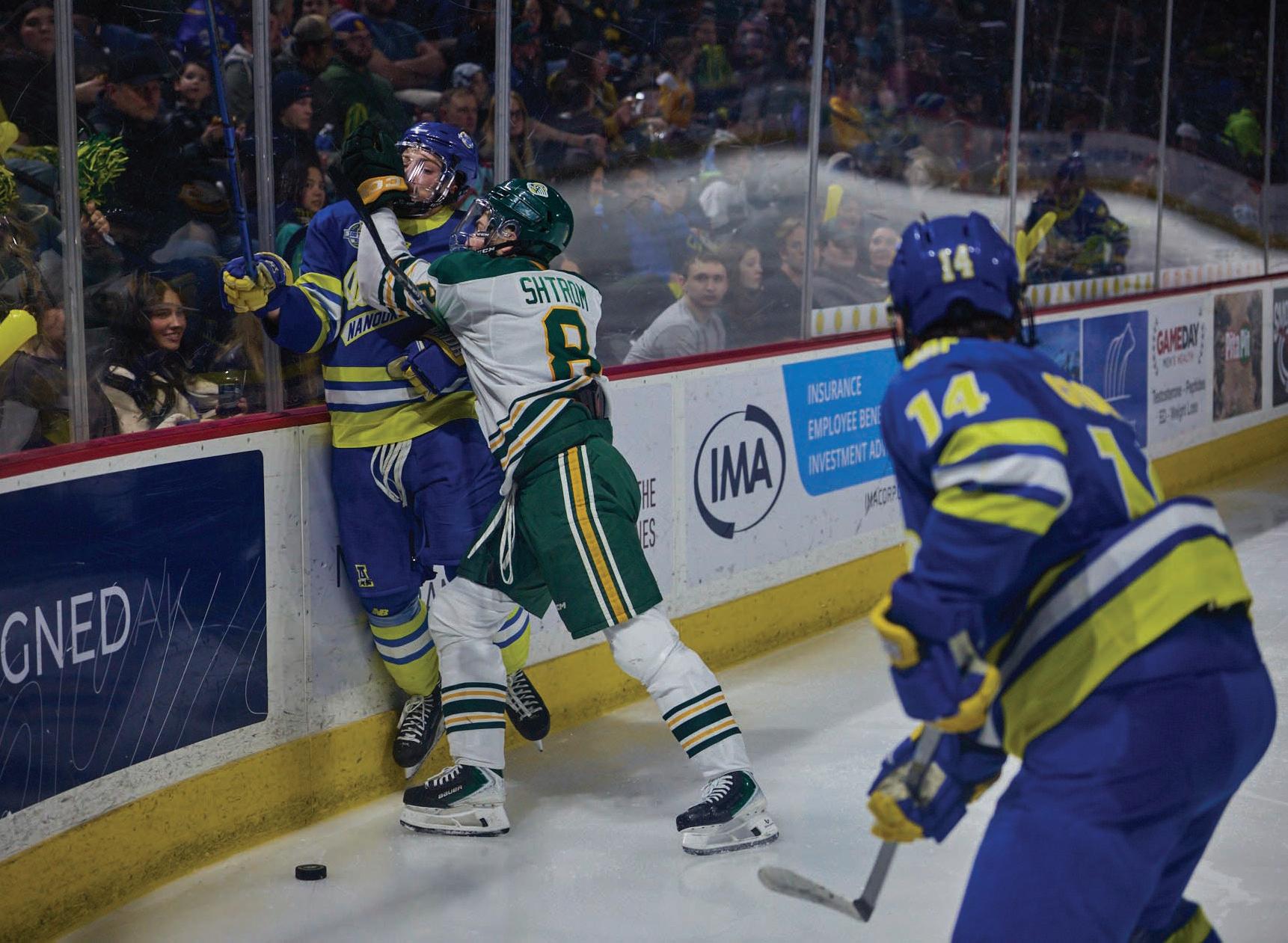
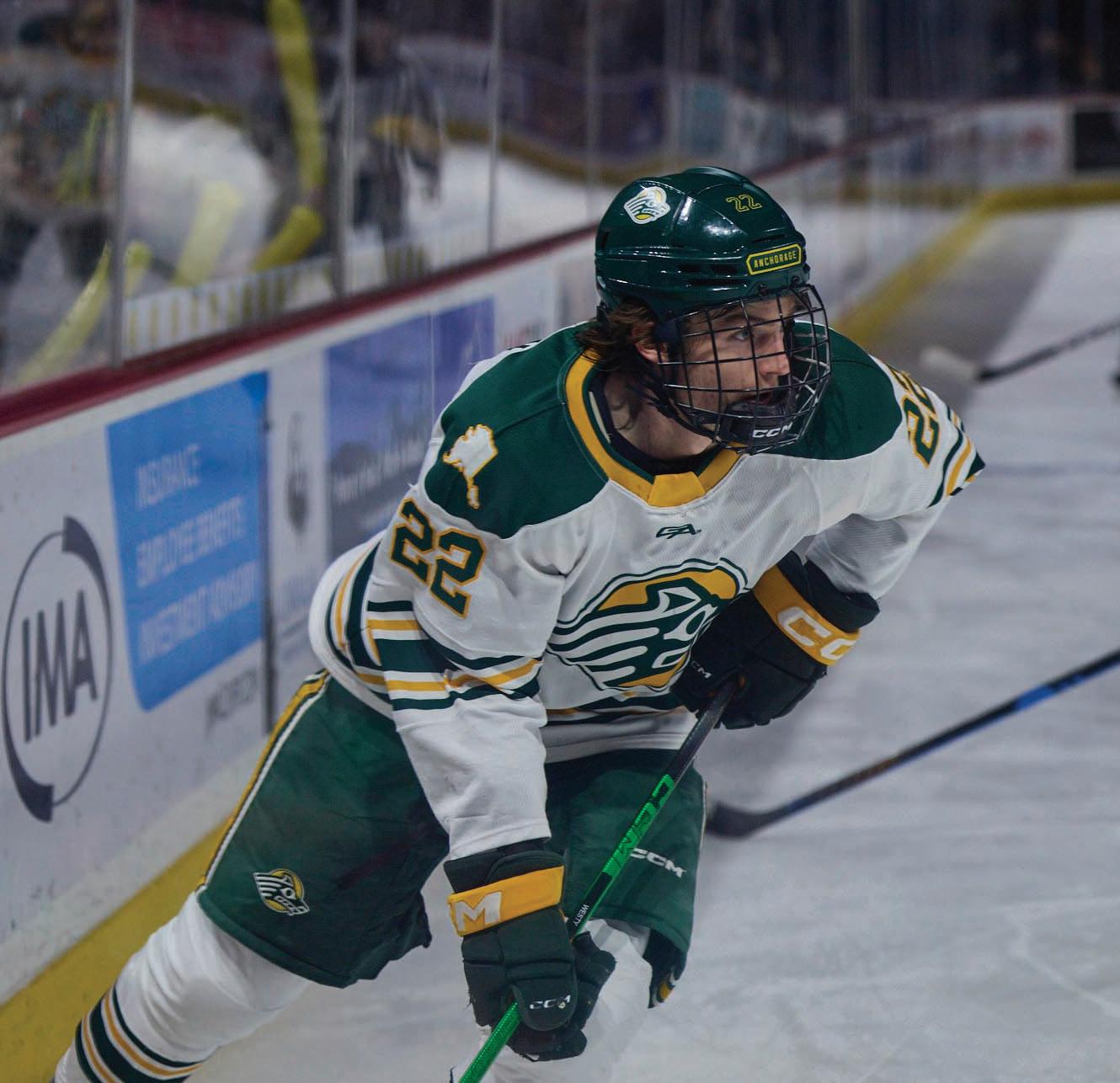
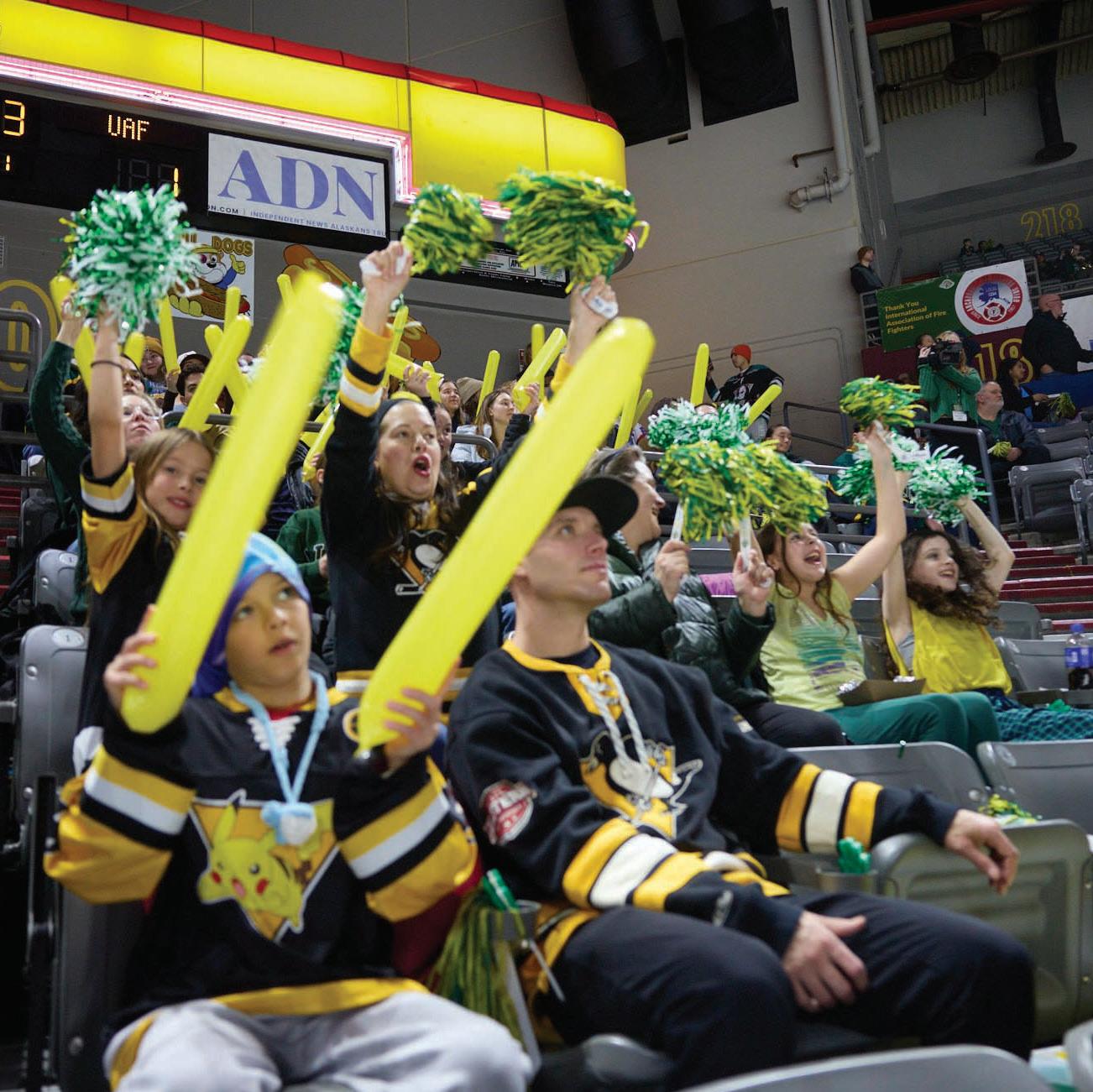
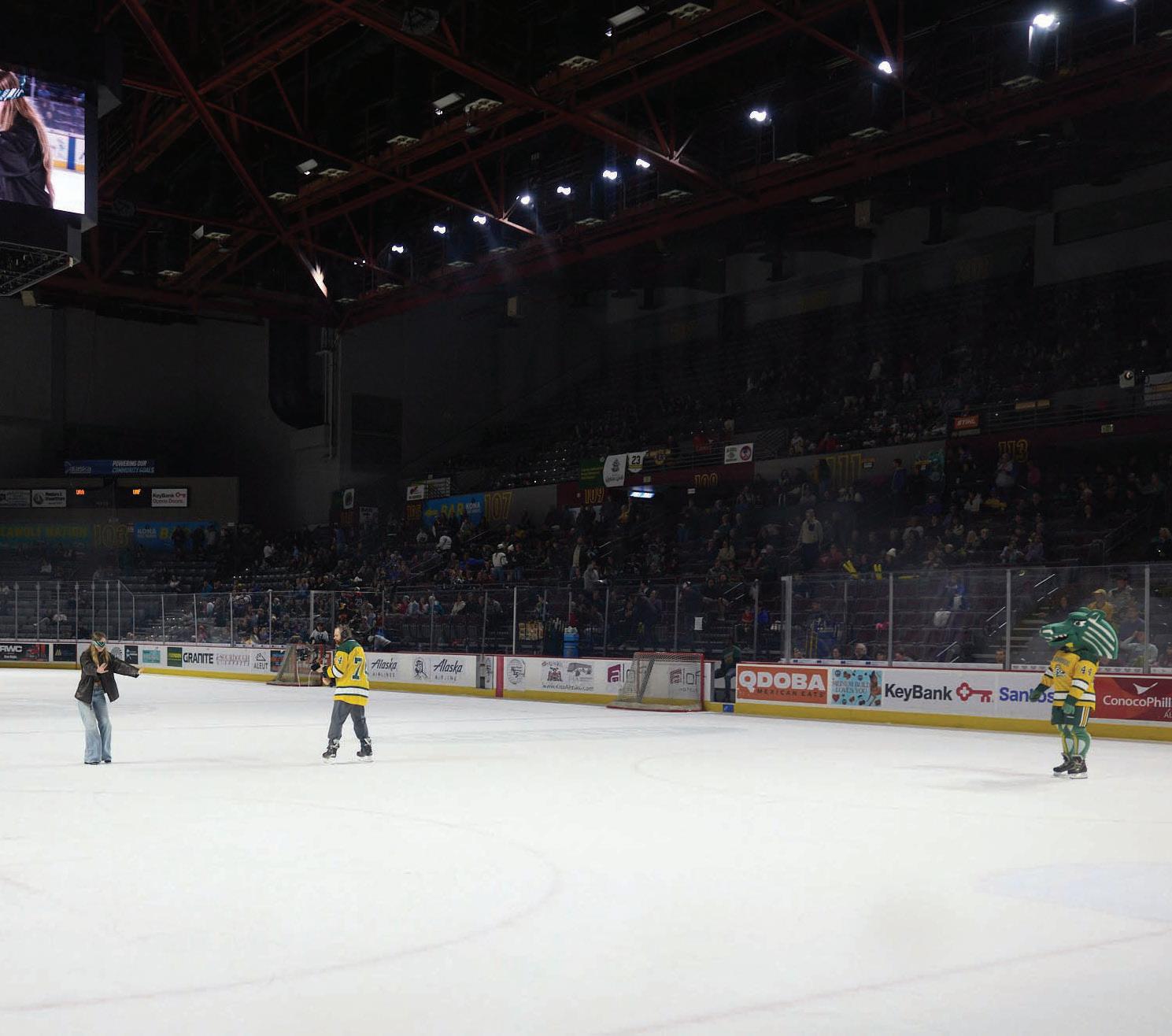
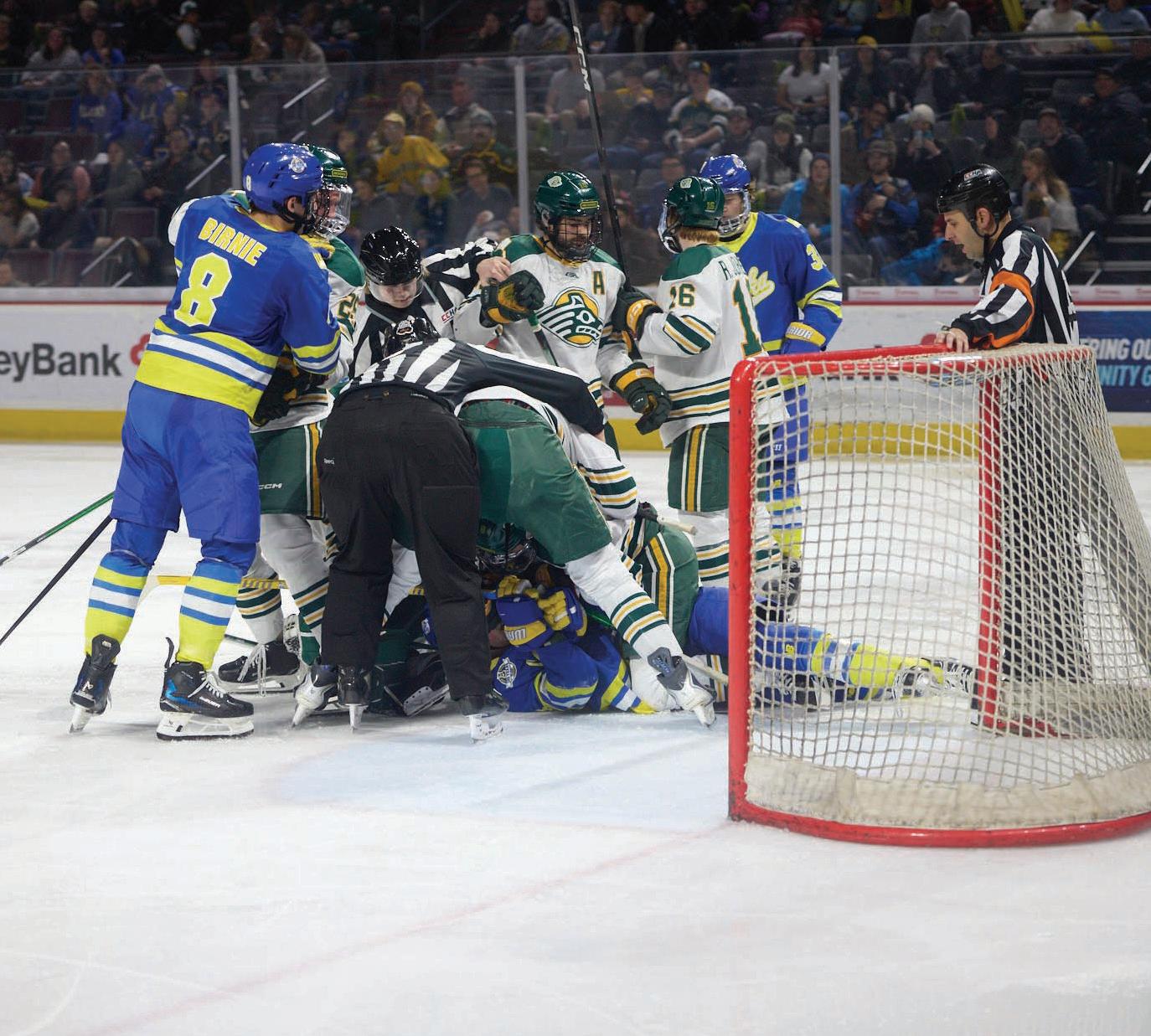
The Seawolves were defeated at the Sullivan Arena by the University of Alaska Fairbanks Nanooks, 4-1, in the third game of the Alaska Airlines Governor’s Cup. UAA’s single goal came from Luke Johnson, his second goal for the season, late in the second period.
The Governor’s Cup is being run on a scoring system this year, with a win in regular play accruing 3 points, an overtime win worth 2 and an overtime loss
worth 1. With Friday’s loss, the Seawolves are down 7-2 against the Nanooks. The Seawolves won game two in overtime and have five games remaining in the series. The Seawolves are currently 3-20-1 in NCAA play.






By Justin Cox
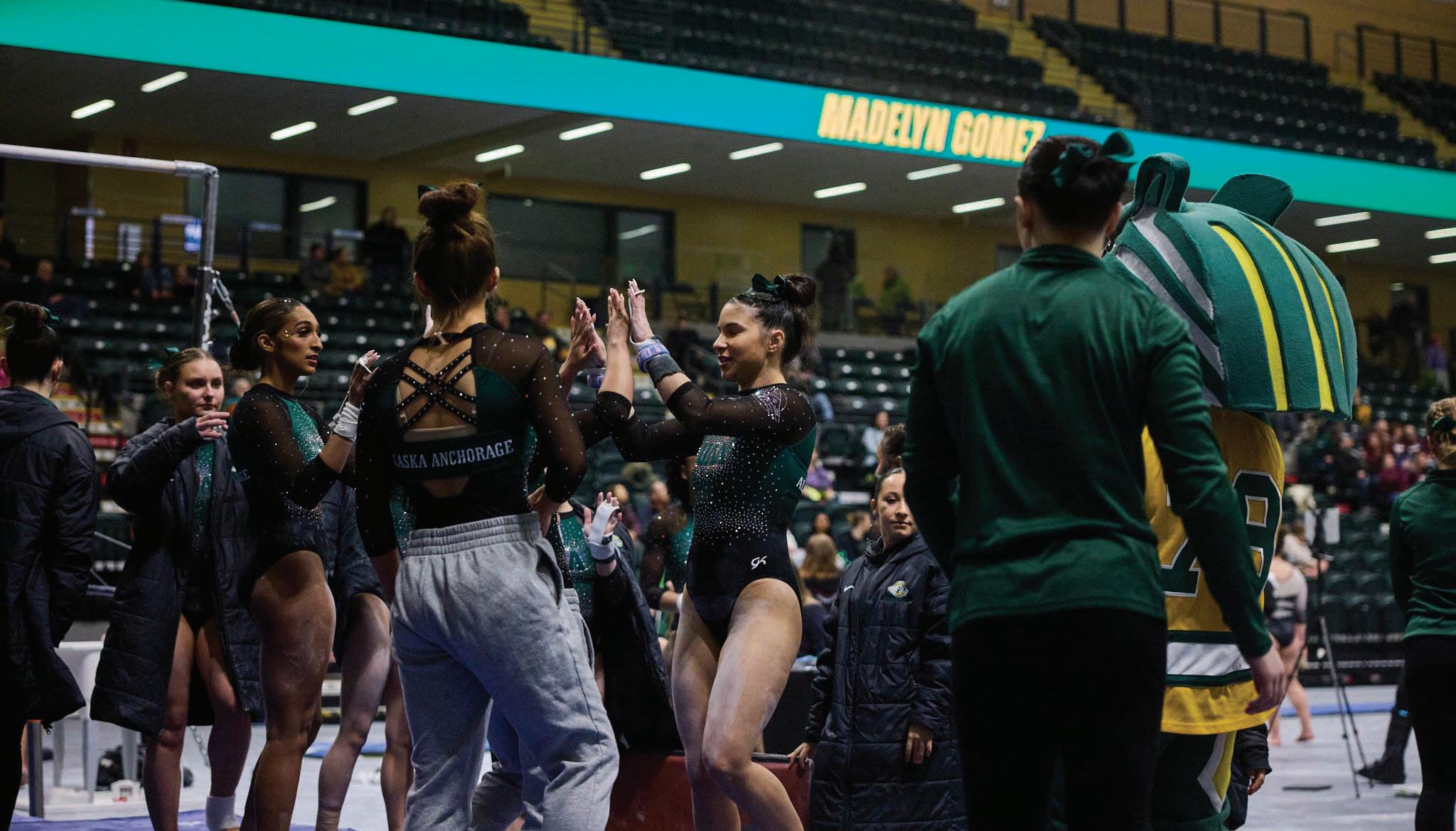
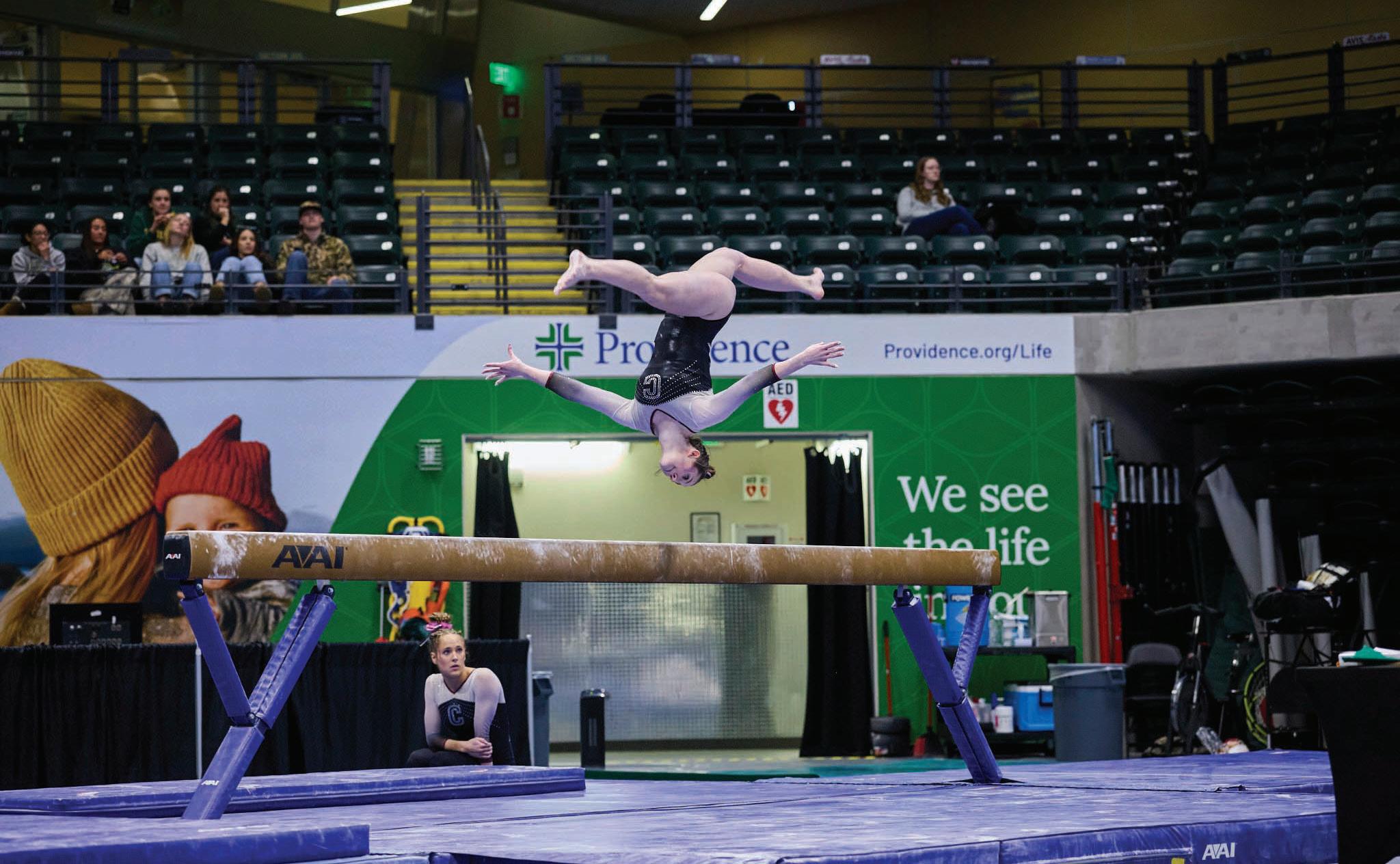
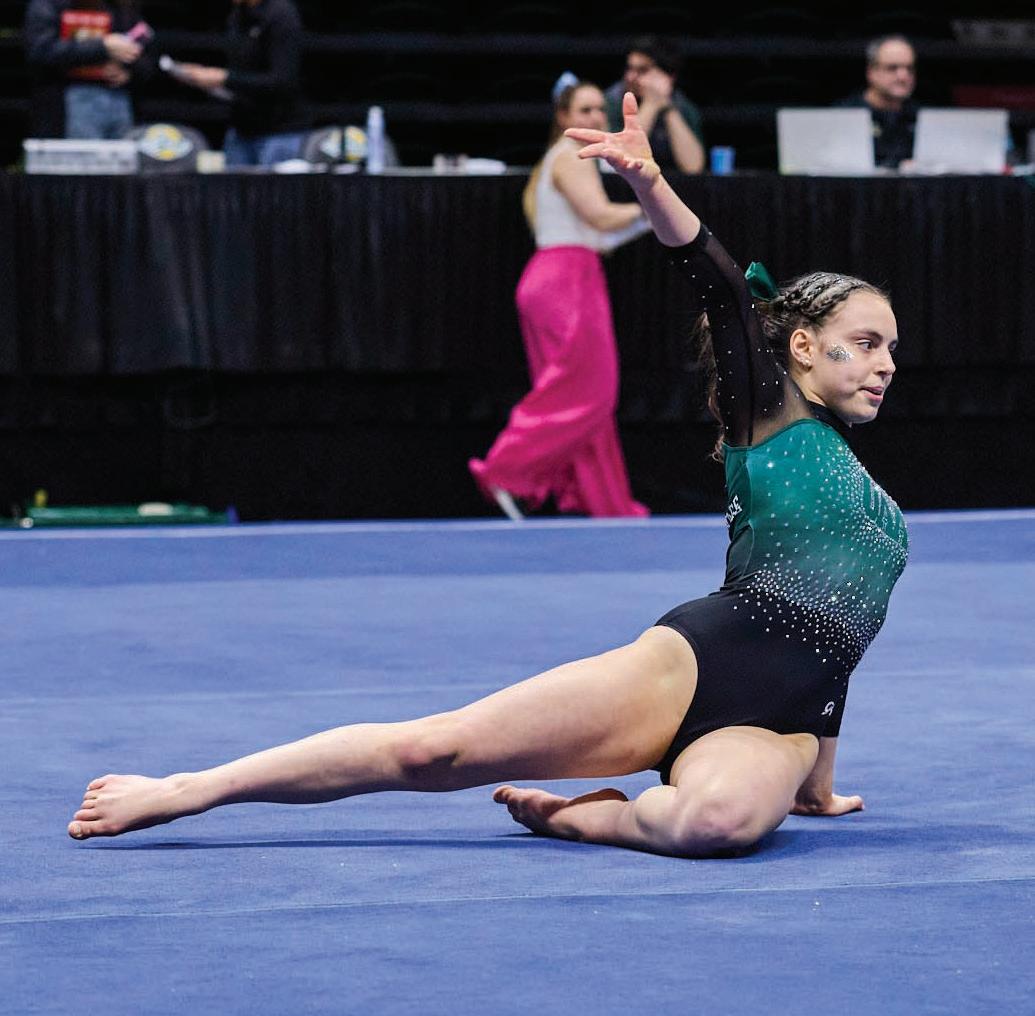
The Seawolves gymnastics team defeated the Centenary College Ladies on Feb.
20, 192.125-188.125, the team’s highest score of the season. The Seawolves took the top spot in all four events of the night. Jamilia Duffus took first on the vault with a 9.700, Tessa Richardson on uneven bars with a 9.750, her first win as a collegiate athlete, Jordan Grindol on balance beam with a 9.775 and Ariana DeSouza on the floor exercise with a 9.75.

If the past is any guide, the future will be bloody. We need to do more than merely support our troops.
By Matthew Schmitz Student Submission:
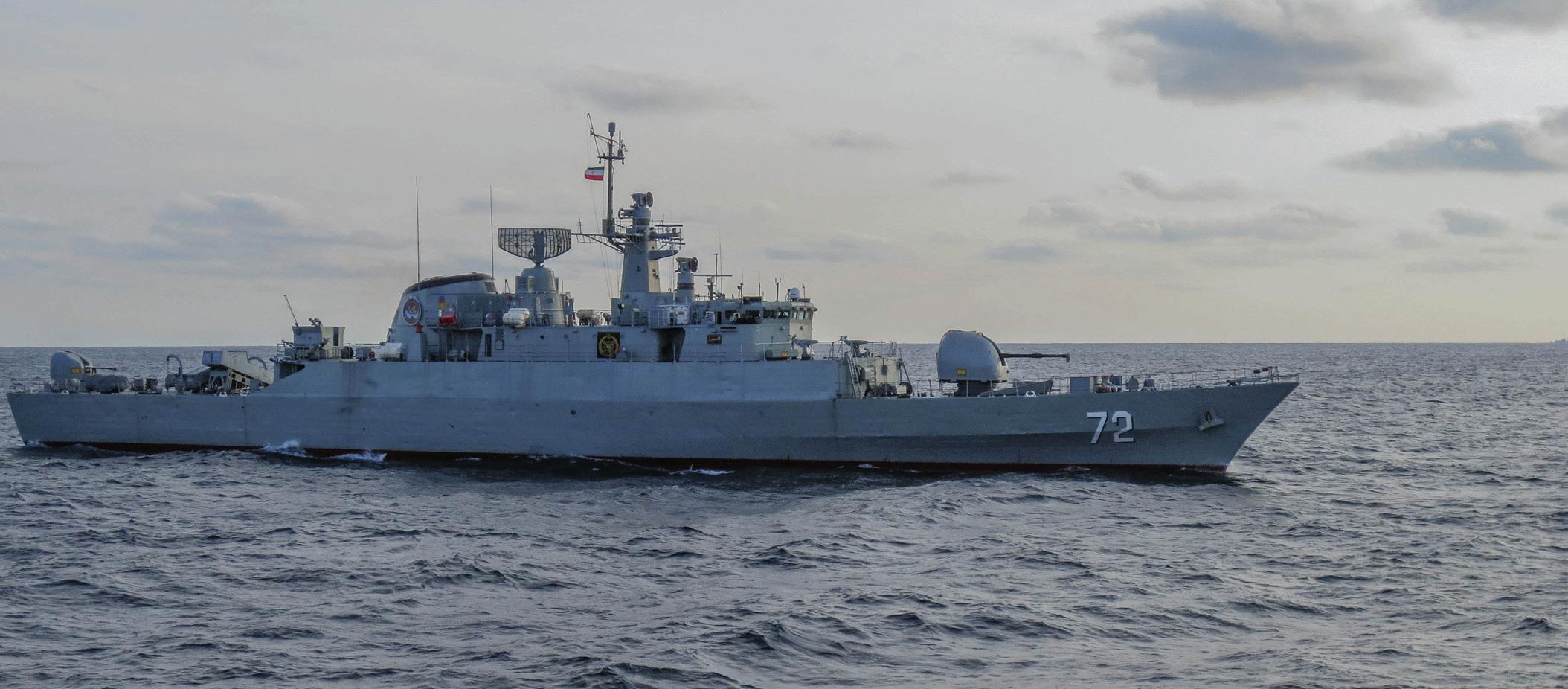
On Feb. 28, President Donald Trump launched a war with Iran. Following the attack, vocal support for our troops has been alive and well — and rightly so.
But we need to do more than voice support if we want to avoid the deaths of countless servicemen and women: We need to avoid repeating the mistakes of the past.
History shows us we are going down a path that requires boots on the ground.
In the 20th century, Air Force bombing campaigns proved to be ineffective tools of U.S. foreign policy, requiring the U.S. to send ground troops into combat.
Bombing campaigns failed to stop communist governments in Vietnam, Cambodia, and North Korea – not that we didn’t try.
In “Rise to Globalism: American Foreign Policy Since 1938,”
authors Stephen Ambrose and Douglas Brinkley wrote that “by 1970, more bombs had been dropped on Vietnam than on all targets in the whole of human history.”
Contrary to expectations,
bombings hardened the enemy and turned local people against us.
In the book, Ambrose and Brinkley reflect on President Lyndon B. Johnson’s failed bombing campaign in Vietnam and his withdrawal from the 1968 presidential race.
They wrote that Johnson “had learned the painful lessons that the power to destroy is not the power to control, and that he had reached and passed the limits to his own power.”
We’ve seen similar limits with the Trump administration.
Last year, President Trump
bombed Iran’s nuclear facilities with bunker busters bombs, presumably destroying the country’s nuclear weapons program.
If that mission was effective, then why are we waging a new offensive? If it was a strong-arm tactic designed to force Iran to renegotiate its nuclear ambitions, then why did the negotiations end?
Most importantly — what comes next?
Airstrikes didn’t work then; they won’t work now. History has proven that. The next steps will be boots on the ground. History has proven that too.
An invasion of Iran would be a quagmire.
Iran is three times the size of Iraq, with a population twice as large, at about 92 million people. Like Afghanistan, Iran is mountainous.
An invasion of Iran would be worse than the 9-year war in Iraq and the 20-year war in Afghanistan combined.
If we want to protect our troops, we need to do more than voice support for them. We need to avoid getting entangled in another forever war in the Middle East.
By Bryson Litteral Student Submission:
I am the events and social media lead at UAA Esports, and during my tenure here at UAA, I’ve been an asynchronous online student majoring in Business and Data Analytics. Since becoming a part of UAA’s Esports team, I instantly
fell in love with the program and found a reason to come to the Student Union.
Working as a staff member has not only allowed me to help create an environment that cultivates a community of belonging among students, but it also allowed me to further my professional career.
With my experience at UAA Esports, I was accepted into a
practicum abroad program to work in Seoul, South Korea with one of the biggest global esports organizations known as Gen.G! I want to help provide those same career opportunities through tech and esports to students in the UAA Esports program as well..
This, however, is our last year with consistent funding for UAA Esports. Not only will our
small but mighty staff team be gone, but something as simple as the computers becoming nonfunctional could have detrimental effects.
An increase in the Student Union fee will allow a portion of that fund to go toward UAA Esports, and allow us not only to continue operating, but to expand our outreach and enhance the student experience further.
As a fully asynchronous student, I believe paying for the Student Union fee is an investment toward reviving the college experience on campus, rather than just an extra cost toward my education.
I am in full support of the fee being raised because it will allow the Student Union to thrive and help the UAA Esports program reach new heights.
Mariam Hall is a UAA student who is double majoring in marketing and management and serves as a delegate on USUAA
By Mariam Hall Student Submission:
Opinions listed here are my own and should not be construed as endorsement by or an official position of USUAA.
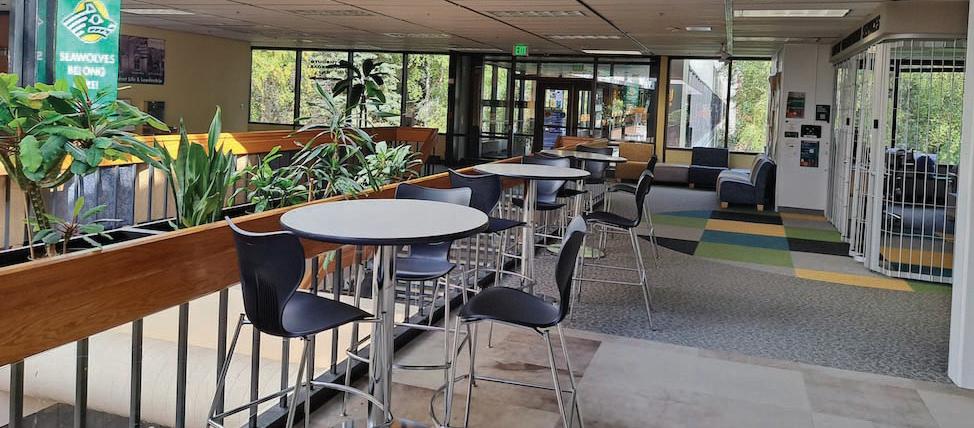
A proposal to introduce a mandatory Student Union fee — added to the existing consolidated fee charged to all students — is being advanced quickly at UAA. While supporters frame the proposal as a way to stabilize funding for student spaces and programming, the pace and structure of this effort raise serious concerns about transparency and representation.
I am not opposed to student life, community spaces, or cam-
pus engagement — quite the opposite. I am opposed to implementing a mandatory Student Union fee, rather than pursuing revenue generating options for the Student Union’s operating budget.
UAA serves a diverse student body. Many students commute, work full time, raise children, or take classes online or in hybrid formats. For these students, the Student Union is often not a central or accessible part of daily campus life. Adding another mandatory fee to the consolidated fee would require them to subsidize a facility they may rarely use.
Supporters of the proposed fee have stated that sponsorships and alternative funding sources have been explored.
However, they have also acknowledged that a student fee may replace existing revenue generating activities, such as space rentals and other earned income, rather than supplement them.
In effect, students would be asked to assume ongoing operating costs so fewer external revenue efforts are required. That shift matters.
I am also concerned about transparency. A recent Student Union survey has been cited as evidence of student support, yet the survey did not disclose that responses could be used to justify a new mandatory fee.
Students completed the survey without knowing their answers could be used to support a fee increase. If that context had
been included, how different might those survey results have been?
Students who want to be a voice can and should get involved by attending USUAA meetings and sharing their perspectives. I know many students face constraints on their time and availability, including work schedules, commuting distances, caregiving responsibilities and online coursework.
That reality makes this moment all the more important. As Hillel the Elder taught in Pirkei Avot: “If I am not for myself, who will be for me? And if I am only for myself, what am I? And if not now, when?”
Those who represent our student body have a responsibility to speak up not only for them-
selves, but for those whose voices are harder to hear.
And when decisions are being made that affect every student’s cost of attendance, now is exactly when we must slow down, ask hard questions, and insist on informed student input. Ultimately, this is not a question of whether the Student Union matters. It is a question of how decisions that affect every student are made. Mandatory fees added to the consolidated fee should come with transparency, context and broad, informed student input.
Before asking all students to pay more, we should ask the question: Who benefits, who bears the cost and who was meaningfully represented in the decision-making process?
By Nick Aufderheide Student Submission:
Although the internet is a relatively new technology, it has managed to impact almost every aspect of our lives. My parents were late adopters of the computer, and my dad famously said he thought computers would be “obsolete” a few years after they began to emerge as a household item. He was clearly wrong.
For many people, computers and the internet have become an extension of the self. Our iden-
tities, the way we see ourselves, and the way we interact with others are all tested and mediated through the internet.
I am now typing this paper on my laptop, next to my work computer, while a tiny computer sits in my pocket. My first social media profile was a Facebook account. I was in fifth grade and felt like I was far behind my peers who had made their accounts years before me.
I made my age on the site 21, and by the time I actually became an adult in real life, I was 32 years old on Facebook. Hav-
This is ‘Just Sociology Tings’: The column where I lose my mind while discussing America’s current political climate
By Nahla White columnist2@thenorthernlight.org
On Jan. 24, the nation watched in horror as Immigration Customs Enforcement, or ICE, officers shot and killed 37-year-old Alex Pretti, an ICU nurse in Minneapolis, Minnesota. Pretti’s execution marks the eighth death at the hands of ICE officers since the beginning of Trump’s second administration.
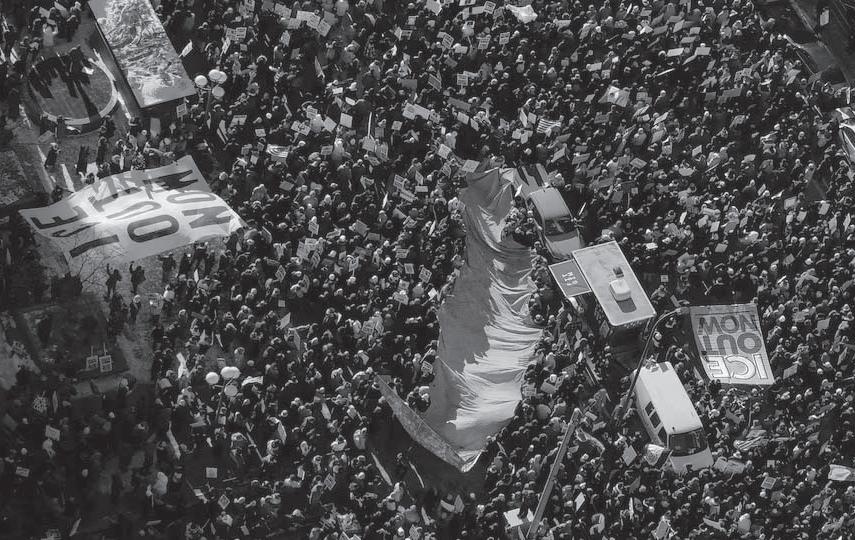
Only two weeks after the murder of Renee Good, the back-to-back killings called thousands of people to action in the Minneapolis area, along with calls of solidarity echoing across the nation.
The images coming out of Minneapolis invoke memories of the similar Black Lives Matter movement, which occurred almost six years ago. While the number of people who’ve stepped forward to participate in the public demonstrations is impressive, is it enough to facilitate actual change?
The topic of what is and isn’t considered legitimate activism is one that resurfaces rather frequently in leftist spaces. In an era where the majority of interaction with politics occurs on social media and the internet, there is no doubt that engagement and redistributing information has become conflated with actual activism.
Many individuals often lean into the notion that passively
ing social media made you cool and signaled to your peers that you were someone worth hanging out with.
Because I had a Facebook, I had more friends, a better social standing and more opportunities to get myself into trouble. If I could just be cool enough, do the right thing, make the right post, then I would be worth something. I also learned more about myself on the internet than potentially anywhere else.
When I was young, I did not know anything about the LGBTQ+ community. I did not
know that such a community even existed, or that those individual labels existed.
The internet gave me a safe space to learn about different sexualities, gender expressions, as well as different cultures or perspectives.
I am white, able-bodied, and grew up with enough money to live. There are many things that I would never know about if the internet did not exist.
There are aspects of my identity that I only feel comfortable expressing on the internet. I can interact with niche online spaces
that ensure membership is composed of accepting individuals. I was able to use the internet and its resources to shape my identity. This is a fact I cannot ignore.
It seems clear that the internet will remain a constant in most people’s lives. Certainly there are elements of my personality and identity that are unpalatable to people outside of the internet. But the information that is available to us online allows us to find community.
engaging with political content is, in and of itself, a form of activism. By comparison, taking to the streets and marching is viewed as a more intense and disruptive course of action.
Before I delve any further into this argument, I want to acknowledge that engagement over social media can be a much more viable option for individuals with disabilities due to a general lack of institutional and infrastructural accessibility.
Even though our current media landscape provides endless opportunities for information and resources to reach countless people, at what point does internet activism stop being productive? How would we, as a society, be able to facilitate in-person action and change?
During tumultuous times, it’s important to take a step back and evaluate how media and imagery often propel us into action without proper preparation. Much of the news that we consume is purposely designed to elicit strong, emotional reactions.
Videos of people being rounded up by ICE and protesters marching by the thousands invokes the urge to take immediate action that will grant us immediate results, and this is where many movements fall flat.
Anyone who’s done a thorough critique of American politics and governance knows that there is no reforming the current system — in order to create a
nation suitable for everyone, it must be restructured entirely.
Until then, the best we can do is work together to create a materially better life for ourselves and our neighbors. Thriving is one of the best forms of resistance there is, and in order to thrive, community building and organization is one of the best ways to accomplish this.
The anarchist concept of mutual aid can be traced back to Peter Kropotkin in the early 1900s. The theory was originally raised as an alternative to social Darwinism. It made the argument that mutualism among humans is integral for the survival of our societies.
Regardless of what it takes the form of, the key to mutual aid is establishing a support network for the members of our community. There are a plethora of community resources offered to lower income individuals, but for folks that live marginally above the poverty line, many of those resources aren’t accessible. It’s up to everyone to contribute what they can toward filling in those gaps.
On an individual level, taking this sort of action can look like joining preexisting community organizations that prioritize aiding people in a skill set that you specialize in. Alternatively, aid groups can also start among friends, where people provide support as needed with whatever resources they have the capacity to share.
This is an oversimplification of how mutual aid works, but establishing a clear objective — and laying out those steps — makes the task much less daunting.
That brings me to the next point: We as a society have a severely warped perception of time and results.
If the steps toward your goal aren’t easily visible, then it’s easy to feel stuck in a state of limbo. The biggest key to ensuring that community organization and mutual aid will be successful is consistency.
Volunteering or donating on a consistent basis ensures that a safety net is always there, and when more people contribute, the work feels less taxing.
Bringing this back to current events, even though it makes sense to divest from ICE through a general strike — since many people have their taxes taken out of their paychecks — having a strike for one day does little to remedy the issue.
Under our current system, many people do not have the resources to take one day off of work, let alone enough time for our economy to substantially be impacted. Having support networks and community resources in place for those individuals is what’s vital for making any long-term form of protest worthwhile.
Investing time and resources into your community can be exhausting. As much as we would
like to live in an idealistic society, where mutual aid can be continuous and stable, the truth is, it’s a resource that lasts as long as we do. This is one of the biggest pitfalls for mutual aid, and that’s where the last tip comes into play.
Rest can also be a powerful tool of resistance if utilized properly. The design of the machine is to keep people too tired to resist and too distrustful to rely on our neighbors. Ensuring that we are well-rested on a consistent basis is a huge ordeal.
This concept can be attributed to the late Audre Lorde, a pioneer in intersectional politics. After being diagnosed with breast cancer at 44, Lorde further implemented the perspective of disability into her writing and activism. In a powerful declaration of revolutionary action, Lorde explained that “caring for [herself] is not self-indulgen[t], it is self-preservation, and that is an act of political warfare.”
Knowing your limitations is not only a great way to ensure that you don’t fall victim to burnout, but it is also a great way to recognize what you have the capacity to do. If you don’t have the capacity to contribute in that moment, taking a step back to strategize why that is and how you can overcome it is what’ll help keep the movement going.
By The Northern Light
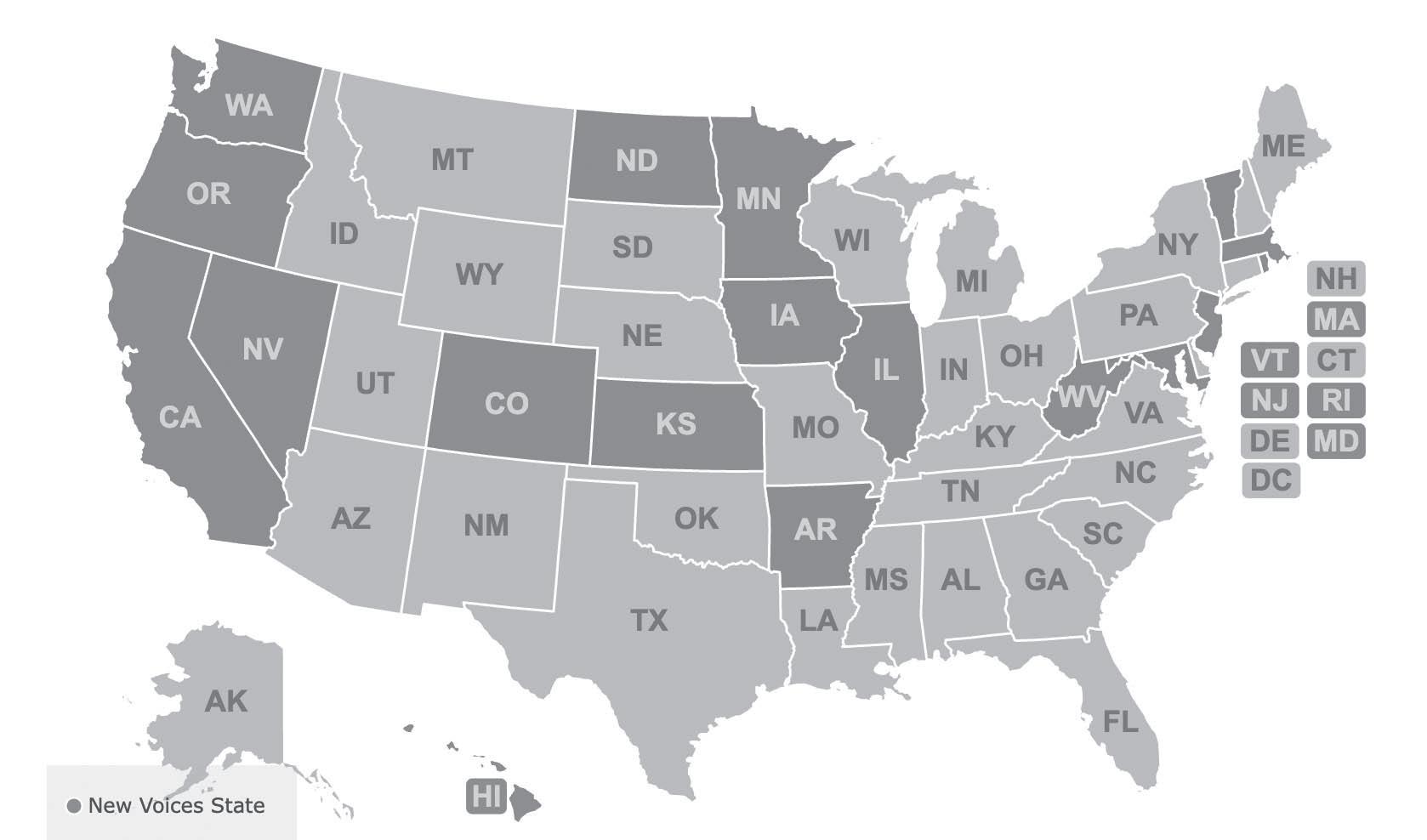
The State of Alaska must adopt New Voices legislation to protect student journalists and the strength of our First Amendment as a whole.
Censorship of journalism has become more prevalent in recent months — from prior review in the Pentagon to firing student media staff who refused to censor students.
New Voices legislation confronts these issues by protecting those who report, edit and advise student media from censorship and suppression of their voices. With censorship on the rise, we must pass laws that reflect the ideals we value: freedom and truth.
We cannot allow a vital pillar of our democracy to be degraded by inaction; instead, we must foster a community for future journalists and the mentors who guide them, as student journalism is an essential public service.
Student reporters are often the first to investigate issues
3211 Providence Drive Student Union 113 Anchorage, AK 99508
Executive Editor
Hannah Dillon (907) 786-1313 editor@thenorthernlight.org
Copy Editor Murat Demir copy.editor@thenorthernlight.org
Layout and Web Editor
Anja Burnett layout@thenorthernlight.org
Multimedia Editor Justin Cox multimedia.editor@thenorthernlight.org
affecting their schools, safety, administrative decisions and local communities. When their voices are restricted, we lose unique perspectives and reporting.
Student journalists are held to the same standard as professional journalists and must take accountability for mistakes, just as the Associated Press or New York Times.
Student media courses create the opportunity for prospective journalists to gain experience and prepare them for real-world situations.
It is invaluable to allow students the opportunity to develop a relationship with the community around them through student media.
The case of Hazelwood v. Kuhlmeier is evidence that the rights of student journalists have been censored or suppressed in their reporting by authority figures in academic institutions on multiple occasions.
The case establishes that censorship is under the determination of reasonability. What is “reasonable” is interpretive, and what constitutes as reasonable
to one, may be immoral to the other.
By allowing students to

Managing Editor // Advertising and Communications Manager Kaitlyn Gaub managing.editor@thenorthernlight.org admanager@thenorthernlight.org (907) 786-6195
Columnist Nahla White columnist2@thenorthernlight.org
Cartoonist Alex Luangasa cartoons@thenorthernlight.org

report and write with transparency, Alaska can join a growing coalition of states in setting
the example that free speech is not optional for safeguarding democracy — it’s mandatory.
The Northern Light is a proud member of the Associated Collegiate Press. The Northern Light is a monthly UAA publication funded by student fees and advertising sales. The editors and writers of The Northern Light are solely responsible for its contents. Circulation is 1,500. The University of Alaska Anchorage provides equal education and employment opportunities for all, regardless of race, color, religion, national origin, age, sex, Vietnam-era or disabledveteran status, physical or mental disability, changes in marital status, pregnancy or parenthood. The views expressed in the opinion section do not necessarily reflect the views of UAA or the Northern Light.
The University of Alaska (www.alaska.edu) is an Equal Opportunity/Equal Access Employer and Educational Institution. The University is committed to a policy of non-discrimination (www.alaska. edu/nondiscrimination) against individuals on the basis of any legally protected status.
The Northern Light encourages readers to express their views in the newspaper. The Northern Light reserves the right to reject or publish any submission, online or in print.
Letters to the editor can be submitted to editor@thenorthernlight.org. The maximum length for a letter to the editor is 300 words, and 150 words for letters specifically endorsing candidates for federal, local, or university office. A letter to the editor is written by someone who does not have authoritative knowledge on the subject they are discussing. Contributors are restricted to one published letter to the editor per month.
Opinion pieces can be submitted to editor@thenorthernlight.org. The maximum length for a contributor’s opinion piece is 500 words. Contributors are restricted to one published opinion piece per month. Opinion pieces written by staff of The Northern Light are limited to 1,000 words. An opinion piece that is published in The Northern Light should be written by someone who has authoritative knowledge on the subject they are discussing.
Letters and opinion pieces are subject to editing for grammar, accuracy, length and clarity. All letters and opinion pieces must include names, major and/or group affiliation and contact information for verification purposes. The Northern Light will not publish anonymous letters or pseudonyms. Requests for corrections can be sent to editor@thenorthernlight.org. Print publication is subject to accuracy and available space. All corrections are posted online with the original story at www. thenorthernlight.org. The deadline for submissions is the Friday before publication at noon, no exceptions.
The Northern Light newsroom is located on the first floor of the Student Union Room 113.