WOULD YOULIKE TO RECEIVE THENORTHERNHORIZON? -ORHAVE YOURECEIVEDITPREVIOUSLY BUTTHEN STOPPEDRECEIVINGIT?
To Canada Post, your Mailbox orSuperboxis designatedinoneof four ways -House,Apartment, FarmorBusiness.
Justheaddown to your localpostoffice andask your Postmaster to have yourMailbox/Superbox designatedasa“Farm”. Youshouldstart receiving your copy oftheHorizon withina coupleof weeks.
Alberta Beef Producers (ABP) And Canadian Cattle Association (CCA) Reach Interim Participation Agreement
abpdaily.com, June 17, 2026
The Canadian Cattle Association (CCA) and Alberta Beef Producers (ABP) have reached an interim participation agreement following motions passed in principle by the CCA at its Annual General Meeting.
Under the agreement, ABP will provide gap funding to support the CCA from July 1 to August 31, 2026. During this period, ABP’s elected representatives to the CCA will participate in meetings and discussions as non-members.
The agreement follows CCA’s agreement-in-principle to bylaw reforms recommended by the Provincial Working Group, which includes representatives from each of CCA’s provincial member organizations. These recommendations will be presented again for approval at CCA’s Semi-Annual Meeting in August.
“The interim participation agreement is important to maintain Alberta’s voice in national advocacy and policy
discussions,” says CCA President Tyler Fulton. “The proposed bylaw revisions represent necessary evolution for our 94-year-old organization, and the board and provincial member associations are confident that we are positioning our organization for continued and improved success advocating on behalf of all Canadian cattle producers.”
“Alberta Beef Producers appreciates the dedication of the Provincial Working Group in developing thoughtful recommendations to the CCA,” says ABP Chair Doug Roxburgh. “The interim participation agreement gives Alberta a voice as the conversations around organizational evolution continue at the national level. We look forward to the
results of the CCA’s Semi-Annual Meeting in August, and the conversations that follow at ABP through our Producer Meetings in the fall and Annual General Meeting in December.”
CCA and ABP are committed to clear communication with their respective stakeholders throughout the interim participation agreement. NH
Proudly serving the BC and Alberta Peace Region Since 1977
freshballingcalves,alongwithyour cows,bullsandyearlingsthis fall. Icannotpredictallmarkettrends asnotwoyearsseem to bethe same,but what Icandoisgive you fairmarket valuethe week you choosetomarketyourlivestock.
Canada Advances African Swine Fever Preparedness With New Zoning Arrangement With Japan
The Honourable Heath MacDonald, Minister of Agriculture and AgriFood is pleased to announce the Government of Canada has successfully established an African swine fever (ASF) zoning arrangement with Japan. This agreement is a significant step in Canada’s ongoing preparedness efforts, helping maintain access to this important market while supporting measures to contain and limit the spread of disease and protect animal health.
Under the new arrangement, pork exports to Japan will continue from ASFfreezones, even if the disease is present elsewhere in Canada. This provision is critical for maintaining trade with Japan - a key market for Canadian pork. In 2025, Canada exports of pork and pork products to Japan valued at approximately $1.8 billion, accounting for 31% of export values.
Although Canada remains free of ASF, the disease continues to spread globally. ASF is not a risk to human health or food safety, but it is highly contagious and fatal for pigs. An outbreak in Canada would have serious consequences for the pork sector, affecting animal health, producers, supply chains, and the broader economy.
Proactively securing zoning arrangements is an important part of Canada’s preparedness plan. This work reflects sustained technical collaboration and ongoing engagement between all levels of the Japanese and Canadian governments. It enables a science-based, internationally recognized approach to maintaining safe trade during an outbreak, helping mitigate disruption to pork trade and supporting food security.
With the addition of Japan, Canada now has ASF zoning arrangements in place with eight markets: the United States, the European Union, Singapore, Hong Kong, Vietnam, the United Arab Emirates, the Philippines and Japan. Together, these markets represent nearly 69% of Canada’s pork export value, helping to maintain market access and strengthen resilience across the sector.
QUOTES
“Securing this zoning arrangement with Japan is an important step in protecting Canada’s pork sector. It helps support market stability for producers while reinforcing a science-based approach to trade and animal health. As one of the most important export markets for Canadian pork, maintaining reliable access to Japan is critical to the long-term success and competitiveness of our producers." Heath MacDonald, Minister of Agriculture and Agri-Food
“This agreement with Japan is excellent news for Canadian pork producers. Japan is a key market for Canadian pork, and it’s a long-standing partner that recognizes the quality and reliability of our sector. By helping preserve trade from ASF-free zones within Canada quickly, this arrangement can give producers greater confidence in market access that can be maintained if Canada ever faces
an ASF outbreak, while also reassuring Japanese consumers that Canada can continue to provide them with safe, high-quality pork they can trust.
I want to thank Minister MacDonald for his leadership in finalizing this zoning agreement, as well as the teams at AAFC and CFIA, the industry and others who participated in the various steps of the process and getting this agreement signed." René Roy, Chair, Canadian Pork Council
"The establishment of an African swine fever (ASF) zoning arrangement with Japan is a major milestone for Canada's pork sector and a critical step in protecting access to one of our most valuable export markets. This agreement reflects the strength of Canada's world-class food safety and animal health systems, as well as the importance of science-based trade measures in responding to animal disease risks. The Canadian Meat Council applauds the Government of Canada's leadership in securing this arrangement and looks forward to advancing similar agreements with additional trading partners to strengthen industry resilience, support export certainty, and safeguard market access." Kyle Larkin, President and CEO, Canadian Meat Council
QUICK FACTS
• Canada is free of African swine fever (ASF). The disease is not a food safety or human health risk, but it is a contagious and fatal disease in pigs.
• Zoning arrangements are formal understandings between Canada and specific trading partners that outline how trade from disease-free zones should be treated if ASF is detected in Canada.
• Canada is the world’s 7th largest pork producers and 4th largest exporter with exports nearly 70% of its pork production each year.
• The Canadian pork industry is a significant supplier of safe and high-quality pork products to approximately 76 countries each year.
• The top five markets for Canadian pork products are the United States, Japan, Mexico, China and South Korea. Together they account for nearly 87% of Canada’s pork export value. NH
DUNVEGAN VALLEY
WEST NILE VIRUS AND HORSES: A Disease Closer to Home Than You May Think
West Nile Virus (WNV) is a mosquito-borne disease that can cause serious neurological illness in horses, humans, and birds. While many horse owners associate West Nile Virus with more southern regions of North America, a confirmed equine case diagnosed right here in the Peace Coun-
By Dr. Christa Harder
try in the fall of 2025 serves as an important reminder that this disease exists in our area and should not be overlooked.
The horse diagnosed in 2025 had not travelled outside of the Peace Region, confirming that local transmission occurred and that infected mosquitoes are present in our area.
This highlights the importance of prevention and vaccination for horses throughout this region.
WHAT IS WEST NILE VIRUS?
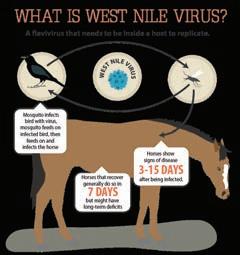
West Nile Virus is spread through the bite of infected mosquitoes. Birds are the natural reservoir for the virus, and mosquitoes become infected when they feed on infected birds. Horses and humans are considered "dead-end hosts," meaning they can become sick if bitten by an infected mosquito but do not spread the virus to other horses, humans, or mosquitoes.
The virus attacks the nervous system and can cause inflammation of the brain and spinal cord, resulting in neurological disease. Although many horses exposed to the virus never develop clinical signs, those that do can become seriously ill.
CLINICAL SIGNS IN HORSES
Horses affected by West Nile Virus may show a variety of signs, including:
• Fever
• Depression or lethargy
• Reduced appetite
• Muscle twitching
• Weakness
• Incoordination (ataxia)
• Stumbling or difficulty walking
• Difficulty swallowing
• Inability to rise
Signs can range from mild to severe. Some horses recover completely, while others may experience permanent neurological deficits. Unfortunately, approximately one-third of horses that develop clinical disease either die or require euthanasia due to the severity of their condition.
DIAGNOSIS AND TREATMENT
West Nile Virus can mimic several other neurological diseases seen in horses, including Equine Herpesvirus (EHV-1). Blood testing can help confirm
a diagnosis, although results often take one to two weeks to return.
There is no specific cure or antiviral treatment for West Nile Virus. Treatment focuses on supportive care and may include anti-inflammatory medications, pain control, intravenous fluids, nutritional support, and intensive nursing care.
WHY VACCINATION MATTERS
The good news is that West Nile Virus is largely preventable through vaccination.
Vaccination is considered safe, effective, and remains the best tool available to reduce the risk of severe illness and death from West Nile Virus. Most cases diagnosed in western Canada occur in horses that are unvaccinated.
At Dawson Creek Veterinary Clinic, we recommend annual West Nile vaccination for horses in the Peace Country. Horses receiving their first West Nile vaccination require a booster 3-4 weeks later, followed by annual boosters thereafter. Given the confirmed local case in 2025, we feel this vaccine should be considered a core component of preventative healthcare for horses in our region.
ADDITIONAL MOSQUITO CONTROL MEASURES
While vaccination provides excellent protection, reducing mosquito exposure can further decrease risk. Horse owners should consider:
• Eliminating standing water where mosquitoes breed
• Cleaning water troughs regularly
• Applying equine-safe mosquito repellents
• Maintaining good drainage around barns and paddocks
If you have additional questions or would like to get your horse vaccinated, please contact us at the Dawson Creek Veterinary Clinic. NH
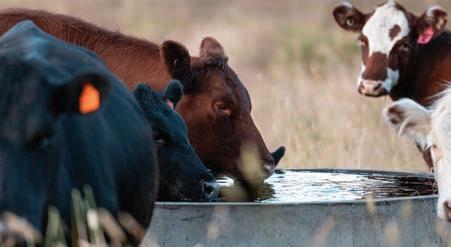
Cattle Chat: Monitoring Water Sources To Protect Herd Health
K-State beef cattle experts discuss how this time of year is particularly important for making sure cattle have access to clean water
By Chevy-Lynn Vaske, K-State Extension news service, MANHATTAN, Kansas, June 16, 2026
When cattle have been without water, a producer's first instinct may be to give them unlimited access as quickly as possible.
But Kansas State University Beef Cattle Institute experts say that response can sometimes create a lifethreatening situation.
During a recent Cattle Chat podcast produced by K-State's Beef Cattle Institute, veterinarians discussed water management challenges and the risks associated with poor water quality, limited water access and improper rehydration of severely dehydrated cattle.
"In western Kansas and other drought-prone areas, sometimes a producer will discover that a well has gone dry and cattle have been without water for a period of time," said K-State veterinarian Brad White. "When you find that situation, it is important to not simply give cattle all the water they can drink."
According to K-State veterinarians Scott Fritz and Bob Larson, cattle that have been severely dehydrated can develop a condition known as salt toxicity if they consume large quantities of water too rapidly.
"We call it salt toxicity," Larson said. "The cattle don't have to be eating a high-salt diet. If a cow becomes really dehydrated and then suddenly gets all the water she wants, that rapid change can cause a brain lesion and often leads to death."
Because of that risk, Fritz recommends gradually rehydrating cattle that have been deprived of water.
"As difficult as it sounds, you have to allow them to have a little bit of water at a time," Fritz said. "If cattle have been without water, the best approach is to try and rehydrate them over a 24-hour period."
While emergency situations can occur, the veterinarians emphasized that prevention is the best strategy. Larson encouraged producers to regularly monitor water sources and develop contingency plans before problems arise.
"Just because you have a pond doesn't mean you don't need to monitor that water source," Larson said. "You need to think about alternative water sources as
well, whether that's hauling water or encouraging cattle to utilize more than one water source."
If hauling water becomes necessary, Fritz said producers should be careful about the equipment used.
"Hauling water is stressful and labor intensive, but sometimes it becomes necessary," Fritz said. "One concern is using tanks that have previously been used for crop chemicals. Even small amounts of residue can create severe health issues for livestock."
Fritz recommends using water tanks dedicated exclusively to hauling water rather than repurposing containers previously used for pesticides, herbicides or other agricultural products.
The veterinarians also discussed water quality concerns, particularly the threat posed by blue-green algae blooms in ponds.
"There are several types of algae that can occur in ponds, including blue-green algae," Fritz said. "If you suspect a problem, you can have a water sample tested."
Blue-green algae, also known as cyanobacteria, can produce toxins harmful to livestock. Fritz noted that blooms often develop following large rainfall events when nutrients wash into ponds and create favorable growing conditions.
"If blue-green algae is present and blooming, livestock should not be allowed to drink that water," Fritz said.
In those situations, producers may need to temporarily fence cattle away from the affected pond and provide an alternative water source until testing confirms the water is safe.
"Fencing cattle out and keeping them away until the pond tests clear may seem expensive up front," Fritz said. "But it can save producers significant losses and cattle health problems in the long run."
"Water is one of the most important nutrients cattle consume every day," Larson said. "Making sure it is available, safe and properly managed is a critical part of herd health." NH
K-State beef cattle experts say salt toxicity happens when cattle are without water for a period of time and then rapidly increase water intake, causing brain lesions.
ANGUS Cattle Directory
Crestland Farms Ltd.
John Harms, Buffalo Head Prairie, AB (C)780-926-9540 (H)780-928-4649
Excel Ranches
Ron & Barb Miller, Westlock, AB Cody & Amy Miller, Westlock, AB 780-349-0644
Red Angus Bullsand Bulls and Heifers forSale offthe Farm rm
CurtisBoese (780)876-4526
Binks Angus Farm
Evan Binks, Grande Prairie, AB 780-518-2020
TRIEBERFARMS
BlackAngus &Shorthorn BullsforSalebyPrivateTreaty
732066RangeRoad111 Beaverlodge,AB
Fred Trieber(780)831-1346 • fredtrieber@gmail.com NaomiTrieber(780)814-0052 • trieberfarms@gmail.com
August2026 not availablenot availablenot available September2026not availablenot available$7.39(+$0.00) October2026not availablenot availablenot available November2026not availablenot availablenot available
Alberta Canola Producers
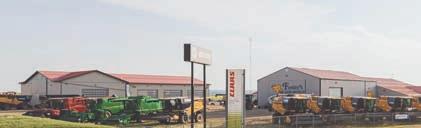
DaveRossEquip.Ltd83Years Since 1943
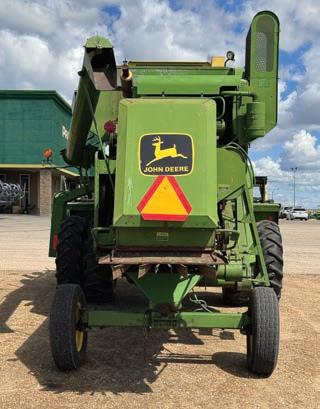
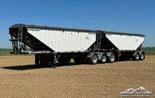
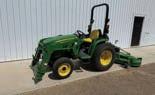
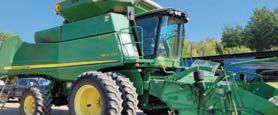
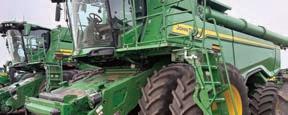
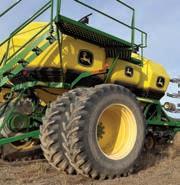
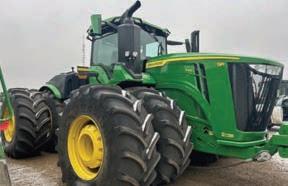
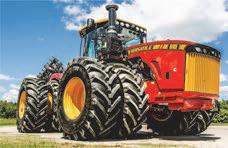
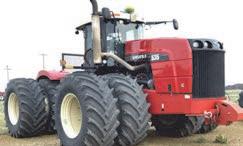
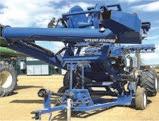
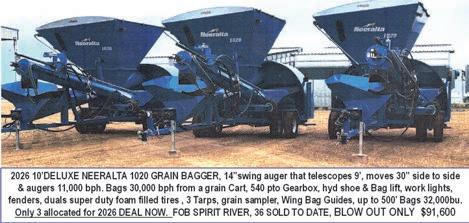
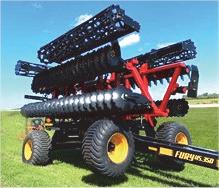
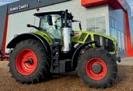
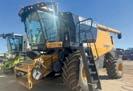
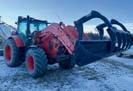
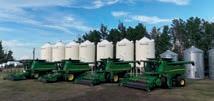
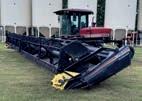
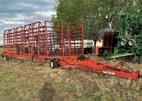
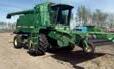
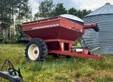
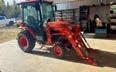
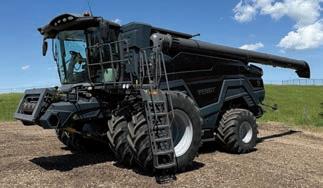
NEW 620 4wd Versatile 665hp@ 1900rpm,16x4Cat P/S tran rev-fantowcable 900/60 R42 110gpmpump 6E hyd 3/4”returndiff lock PTOsusp DelCabIsobusRadar,Jake Brake,19Led lites,V6700A/S/R Rearcamera,#8R2689 #59,800 SN708852 $995,000 $ 895,000
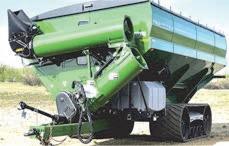
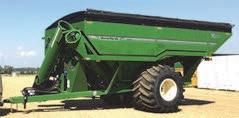
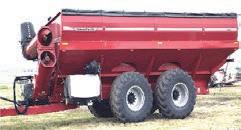
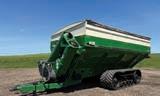
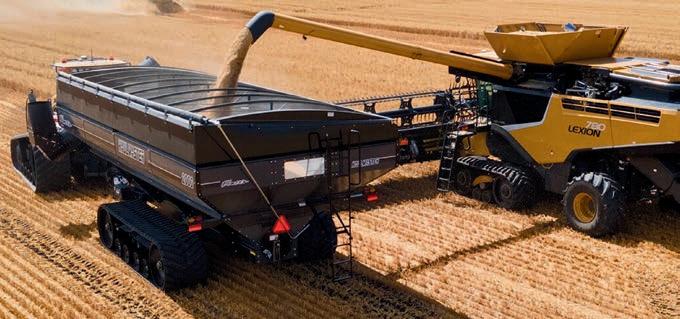
THIS IS THE LAST OF THE30% DISCOUNT ONGRAIN CARTS FROM2025 THEREARE NO FACTORY ORDERS ATTHESEPRICES. A10%DepositwillholdonetoAug1-2026
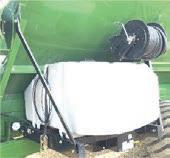
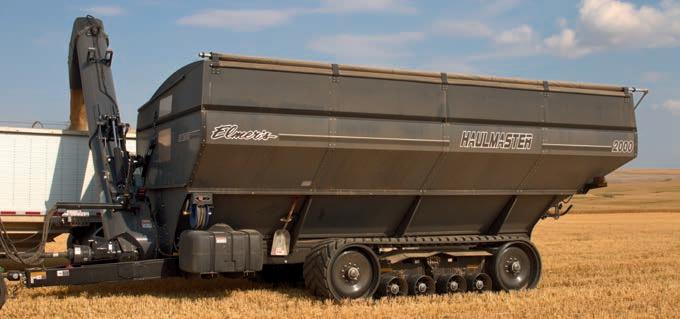
2024GC-20202000bu,5Fct 520Scale42”x148”Eql Track,Tarp, Rearhitch24”Auger, HydJack,,275gal Water tank, 1S1269Hydpump,reelnozzel100’hose msrp$408,000- 30%$285,000
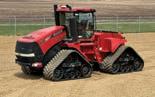
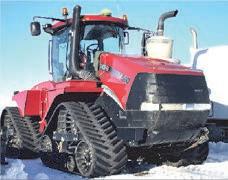
2015580QTCASEP/Stran,30”TracksTowcable 2538hrs,Twinhydpumps98gpm6hidoutlets powerbeyond,returncoupler,B/TradioDeluxe suspCab.Difflock,Pro 700CaseMonitor with workingTrimbleGPS, ServicedreadyforSpring 2015580QT$395,000 NOW $335,000OBO
780-864-3731Spirit RiverAL864-0236 Warren or Jay780.864.3731
Are cover crops economical? That is a question that is discussed by Dr. Humberto Blanco in the September/October issue of the Crops & Soils Magazine of the American Society of Agronomy.
extension.psu.edu, October 31, 2023
Direct costs of cover crops are seed, planting, and termination, while indirect costs can include reduced water for the next crop if water is limiting, slow soil warming due to increased residue, and potential yield reduction in the following crop, while cover crops demand more management from the farmer. Economic benefits of cover crops can include savings on fertilizer, herbicides, and other production costs, potential increase in crop yields, and soil C credits. Unfortunately, although worthy on their own merit, soil physical, chemical, and biological improvements obtained from cover crops can often not be expressed in monetary terms. The lack of economic benefits of cover crops is probably the major reason cover crop adoption is only 5% in the United States of America! In one study in the U.S. Corn Belt, cover crop costs ranged from $33 to $70 per acre, while economic benefits ranged from $37 to $78 per acre. In another study, 61% of cover crop costs were recuperated through improved N cycling, reduced soil erosion, and reduced N losses to subsurface drainage in corn and soybean systems. If cover crops replace the fallow year in water-limited regions, they can be expected to produce positive economic returns. It is evident these examples are not piquing anybody’s interest if one is looking for profit from cover crops. Therefore, Dr. Blanco proposes to look at how cover crops can become a profit center on their own merit, through (1) grazing or harvesting, (2) weed control benefits, (3) N-credits, (4) carbon credits, (5) crop residue, or (6) other ecosystem services. Let us review these here.
1. GRAZING AND HARVESTING
Grazing and harvesting don't necessarily compromise other ecosystem services of cover crops and can help make them profitable. The forage produced has an economic value that may compensate for the increased costs incurred (such as fencing, water system, and harvesting) if biomass production is sufficient. Grass cover crops are more profitable than legumes or cover crop mixtures because the seed costs are affordable and the biomass production is higher. Four studies quoted showed annual net return from grazed or harvested cover crops ranging from $17 to $122 per acre.
2. WEED SUPPRESSION
Weed control with herbicides is becoming more costly with the increase in herbicide-resistant weeds. U.S. farmers spend more than $11 billion per year on herbicides. Cover crops can help reduce weed biomass by 90–100%. Grass cover crops are more effective and economical than legume cover crops due to lower seed costs and higher weed suppression. In one study in a winter wheat-fallow region, a cover crop justified one less herbicide application to control herbicide-resistant kochia.
3. NITROGEN CREDIT
Legume cover crops can provide significant nitrogen to the following crop, from 11 to 162 lbs/A of N with an average of 80 lbs/A N fertilizer equivalent. The author emphasized the benefits of leguminous cover crops to provide nitrogen in organic crop rotations, although he also mentions that adding some inorganic nitrogen to the nitrogen supplied by the cover crop might be more profitable. Grass (or other non-leguminous) cover crops can improve nitrogen cycling by taking it up from the soil and reducing leaching losses and later slowly returning it to the following crop.
4. SOIL CARBON CREDIT
Dr. Blanco states that carbon credits from cover crops range from 0.09 to 0.25 tons/A/yr on a global scale. However, it is necessary to determine what is possible locally based on growth of the cover crops. Further, it is unclear how permanent the carbon from cover crops is in the soil because it can quickly be lost again if cover crops are not consistently used. Further, Dr. Blanco indicates that carbon sequestration from cover crops below 8 inches is not known because most studies focus on the topsoil only. Emerging carbon markets may add profit to cover crops.
5. CROP RESIDUE HARVESTING
Corn residue is valued at approximately $60 per ton for biofuel or livestock needs and is already harvested from about 10% of U.S. corn acreage. If cover crops are planted, one study suggested that 1.78 tons/A extra corn residue can be harvested without compromising soil function. The cover crop is especially important to provide soil cover in the spring when the soil would otherwise be completely bare after corn residue harvest.
6.
OTHER ECOSYSTEM SERVICES
Cover crops supply ecosystem services such as reduced soil erosion, improved water quality, biodiversity, and wildlife habitat. If these services were valued economically, cover crops would be more profitable. Dr. Blanco mentions the estimated cost of soil erosion ($2.8 billion/yr in the Corn Belt according to one recent study), nitrogen losses (2.4 million lbs/N/yr from mid-western states valued at $485 million), and the costs of sediment and nutrient losses in runoff water, which can all be reduced by the use of cover crops.
This review makes it clear that for greater adoption, cover crops need to be profitable. At the moment, the clearest opportunity for profit seems to be through harvesting for forage or grazing, or increasing corn stover harvest (primarily for biofuel), while nitrogen fertilizer value is also worth looking at, as long as the farmer has clear guidance to know the N-value of the cover crop. The economics of weed suppression, carbon sequestration, and ecosystem services are still a bit 'pie in the sky', it seems. Pennsylvania farmers are well aware of the forage value of cover crops, which explains why cover crop adoption in PA is 8 times the national average (almost 40% of annual crop acres are followed by a cover crop in Pennsylvania’s Chesapeake Bay watershed, according to recent transect surveyssee Duiker and Richards, 2023). Approximately 2/3 of the cover crops in Pennsylvania are harvested for forage. It is heartening that new research suggests that most ecosystem benefits of cover crops are still realized with harvesting or grazing, which provides the clearest opportunity to make cover crops profitable. NH
Duiker, S.W. and S. Richards. 2023. Adoption of cover crops in Pennsylvania's Chesapeake Bay watershed. J. Soil and Water Conservation 78:376-383.
Profitability of cover crops is important for high adoption of this BMP
Don’t Be A Pest
With Maria Hansen, pest student at the Peace River Forage Seed Association
This season we decided to change things up and focus on some of the good insects in fields around the region. This week we went with an icon; the bee, specifically three families within this order that contribute to pollinating field crops.
Starting with honeybees, who are most efficient at pollinating fruits from hotter climates, such as kiwifruit and passionfruit. While these are not common in the Peace Region, local gardens, flowers, and many different berries are also favourites of the honeybee. These combined with clovers and canola give the bees a wider variety of crops to pollinate in the region. Some risks to these bees are as always improper pesticide usage, varroa mites and a handful of diseases. Black bears pose a large threat, as honey and larva attract them. The Peace Region makes up a large percentage of the apiaries in Canada, and we are well known for our honey.
Next would be bumble bees, who pollinate many of the same crops honeybees do including local berries such as saskatoons and haskaps. Due to their larger size, they can carry more pollen on their bodies than honeybees can. They are hardier as well - they fly at lower temperatures than honeybees, which also leads them to stay out for more hours of the day. This makes them well suited to the Peace and unlike honeybees, these hefty fliers face habitat destruction from urbanization which poses a serious risk to their nesting habitats. They are also a tasty favourite to predators such as praying mantis and amphibians.
Lastly, alfalfa leaf cutter bees are crucial to crop pollination across Canada. They are responsible for pollinating about half of our canola crops, as well as alfalfa, low bush blueberries, and legume seed crops. In short, they are a vital keystone in pollinating crops, especially in the Peace Region. Because these bees are solitary (independent foragers without hives/colonies) there is the capacity to use them to pollinate crops much more efficiently than honey and bumble bees. They are also known for pollinating plants like peppers, ornamental flowers, and broccoli. Like all insects, alfalfa leaf cutter bees are preyed on by many species of birds. Ants and beetles are also a problem, sometimes preying on the bee larva or weakened bees, as well as stealing the bees’ food. Moisture proves a problem that is unique to this bee; excess moisture causing a damp home can lead to mould and harm the bees and their larva. Habitat loss and improper pesticide use also threatens these bees, especially with urban growth. These bees used to be common in the Peace Region for alfalfa crop pollination, but their numbers have been decreasing. As such, there have been recent attempts to increase the population once more.
Keep an eye out for our next article on some very beneficial beetles that can be found in your fields and what they doing to help combat pest insects. For more information check out the BC Peace Pest Monitoring Project Facebook page. NH
For more information on bees, see: https://beekeepercorner.com/leafcutter-bees-pollination-power/ https://www.worldatlas.com/articles/which-crops-plants-are-pollinated-by-honey-bees.html https://beeprofessor.com/honey-bee-threats/ https://www.koppert.ca/news-information/news/bumblebee-pollination-information-for-canadian-fruit-crops/
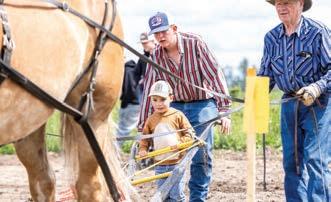
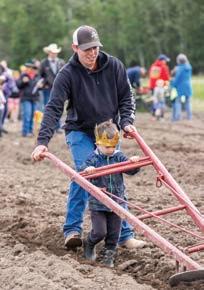
WANHAM PLOWING MATCH
Managing Wild Oats Starts In Spring
albertagrains.com, March 27, 2025
Wild oats are one of the most important weeds to manage in cereal production. They cause yield reduction as they compete with the crops for moisture and resources. In addition, the presence of wild oat seeds may downgrade the grain or increase cleaning costs.
Wild oat management starts in spring. With well-
Crop Wild Oats4
Barley Avadex
Wheat (C - Group 2 tolerant wheat)
Altitude FX (C) Avadex♦ Avenza
Axial♦
Axial MAXX
Axial X iPak
Axial Xtreme♦ Batalium Broadband Cirray
planned integrated management, the damage caused by wild oats can be mitigated, and the wild oats seedbank be reduced.
HERBICIDE
Herbicide is one of the effective tools in managing wild oats. The herbicides registered to manage wild oats in
Alberta are listed on Alberta Bluebook 2025, Page 439. The herbicides listed in the table include both preand post-emergence herbicides. If more than one herbicide is used to manage wild oats, rotate the modes of action to manage the risks of herbicide resistance. Common herbicide products and their herbicide groups are summarized as follows:
HERBICIDE RESISTANCE:
According to the most recent weed survey, 69% of wild oats in Canadian Prairies display herbicide resistant. Among them, 62% are resistant to Group 1 herbicide, 34% are resistant to Group 2, and 27% are resistant to Group 1+2.
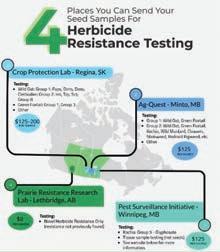
If weeds survived herbicide applications, the reasons might be 1) poor spray coverage due to improper sprayer setup, weather conditions, improper weed stage, etc. or 2) herbicide resistance. If poor spray coverage could be ruled out, consider testing the wild oat seeds for herbicide resistance. Collect 1-2 L of wild oat seed per herbicide group and send to one of the labs below for testing
If poor coverage is likely the cause, calibrate the sprayer using proper nozzles and water volume to achieve better coverage. More resources on sprayer calibration can be found on Sprayer101 website (https:// sprayers101.com/select-nozzle/)
INTEGRATED MANAGEMENT OF WILD OATS
Herbicide resistance poses threats on wild oat management. Cultural methods are tools that reduce the risks of developing herbicide resistance and help keep the precious active ingredients effective.
Think of managing wild oats as hitting them with many small hammers. Each cultural management tool, when stand-alone, may not produce impressive control. However, when combined, they can produce significant levels of control.
The tools available include:
1) Diverse crop rotation Rotating crops allows the use of different herbicide groups. This reduces the chance of one herbicide MOA being used repeatedly and reduces selection pressure.
2) Higher seeding rates: Higher seeding rates increase competition with wild oats. Using twice the seeding rates can reduce wild oat biomass by 2-3 fold (Harker et al. 2009).
In addition, higher crop seeding rates can improve herbicide efficacy against wild oat by enhancing crop competitiveness, leading to better wild oat suppression.
3) Selecting more competitive crops and/or varieties
More competitive crops/varieties reduce the biomass of wild oats. Some crops are more competitive than others. The competitiveness of crops in spring is:
The traits making the variety more competitive include taller plant height, earlier emerging, and earlier canopy closure. Though some of these traits are
not well-defined or thoroughly researched, research is on-going to address this gap.
4) Silage Another way to reduce wild oat seedbank is to cut them before they set seeds. Early cut barley silage can reduce wild oat densities, as panicles are cut during silage while seeds are being produced.
Using one of the above methods can reduce wild oat biomass by 2-3 fold. When using two of the methods combined, wild oat biomass is reduced by 6-7 fold. Further, when three methods were used in combination (2x seeding rate + tall variety + diverse crop rotation) wild oat biomass was reduced by 19 fold (Harker et al. 2009). That is, when wild oats are hit with many small hammers, their biomass can be reduced significantly.
CONCLUSION
Wild oat is an important factor to consider before spring seeding. Herbicide resistance testing helps make wise herbicide choices. Rotating herbicide groups reduces the risks of developing herbicide resistance. Cultural methods such as diverse rotation, higher seeding rates, using more competitive crops/ varieties and silaging the crop are all effective tools for managing wild oats. Using a combination of the tools provides effective wild oat management while also reducing the development of herbicide resistance. NH
Buying Dirt: Alberta’s Foreign Ownership Restrictions And Acquisitions Of Land In Alberta
In June 2024, the Foreign Ownership of Land Administration (“Administration”) in Alberta released updated versions of the statutory declarations prescribed under the Foreign Ownership of Land Regulations, Alta Reg 160/1979 (“Regulations”).
These statutory declarations must be completed by any person or corporation acquiring an interest in “controlled land” in Alberta, which includes the purchase of real estate. Presently, any person or corporation purchasing real estate in Alberta that is caught by the definition of “controlled land” under the Regulations, is required to complete a statutory declaration in one of the four prescribed forms under the Regulations and submit it at the same time as the Transfer of Land for registration. Depending on the purchaser’s ownership structure, the length of the statutory declaration can vary from one page to several pages and appendices. Along with the updated forms, the Administration in its press release titled “Form Types Information Sheet” has suggested that Canadian-controlled corporations acquiring interests in controlled lands may now rely on statutory exemptions and complete Form 3, allowing such corporations to forego the lengthy and often time-consuming process of disclosing their ownership chain to establish their Canadian control. This shift in the disclosure requirements for Canadiancontrolled corporations dramatically reduces the level of disclosure needed where an existing exemption for
foreign-controlled corporations under the Regulations applies to the Canadian-controlled corporation and, as the Administration notes, should improve turnaround times for processing submissions.
This article provides an overview of the current Regulations and the exemptions that a corporation can rely upon in using Form 3.
DEFINITION OF “CONTROLLED LAND”
When discussing the acquisition of “controlled land” in Alberta, terms such as ‘farm land’ or ‘agriculture land’ may be used. While this may bring to mind idyllic images of quarter sections filled with yellowtopped canola plants or pastures of grazing cattle, anyone seeking to acquire land in Alberta should be aware that the definition of “controlled land” under the Regulations captures more than crop land and pasture:
“controlled land” includes all lands in Alberta except: (i) those owned by the Crown, (ii) contained within boundaries of a city, town, new town, village or summer village, (iv) mines and minerals, and (v) lands specifically excluded from being subject to the Regulations.
With such a broad definition, it is easy to see how, for example, someone acquiring a parcel of land located in an industrial park just outside of the municipal limits of a city or town, may not anticipate that they will be subject to the restrictions on foreign ownership and mandatory disclosure requirements under the Regulations when completing this purchase.
RESTRICTIONS ON FOREIGN OWNERSHIP AND “FOREIGN-CONTROLLED”
Enacted under the Citizenship Act, RSC 1985, c C-29, a federal statute, the Regulations limit ineligible persons, foreign-controlled corporations, and foreigncontrolled limited partnerships from owning or beneficially owning interests in more than two parcels of “controlled land” in Alberta that cumulatively contain more than 20 acres. Otherwise, an existing exemption must apply for such ineligible persons, corporations or limited partnerships to acquire the interest or the entity needs to apply to the Provincial Cabinet for a
discretionary exemption.
In using the term ‘interest,’ the Regulations contemplate more than simply acquiring fee simple ownership of controlled land. Acquisitions such as leasehold interests, rights of first refusal and options to purchase that can be evidenced by way of caveat are all interests in controlled land under the Regulations.
Under the Regulations, a corporation will be considered ‘foreign-controlled’ in three circumstances:
1. If a corporation is incorporated outside of Canada, despite the fact all shareholders of the corporation may be Canadian citizens or non-foreign controlled corporations or limited partnerships.
2. If a corporation is incorporated in Canada, either federally or under a provincial statute, its percentage of foreign ownership must be determined through an analysis of its ownership chain:
a. If the corporation is a “private corporation” or a “public corporation” whose shares are not traded on a stock exchange in Canada, a corporation is considered ‘foreign-controlled’ if the percentage of foreign ownership as calculated under the Regulations is 50% or greater; or
b. If, in the chain of ownership of the corporation, 50% or more of the outstanding shares of any of the corporations in succession are more than 50% held by ineligible persons or corporations with 50% or more foreign ownership, the corporation will be considered ‘foreign controlled’.
3. If the corporation is a “public corporation” whose shares are traded on a stock exchange in Canada, the corporation will be considered ‘foreign-controlled’ if less than two-thirds of the directors are Canadian citizens or permanent residents, or 50% or more of the outstanding shares are held in blocks of 5% or more by non-Canadian citizens, non-permanent residents, or foreign-controlled corporations and the percentage of foreign ownership calculated under the Regulations exceeds 50%.
For a limited partnership, a different test applies. A limited partnership will be considered ‘foreign-con-
trolled’ if one or more limited partners, contributing 50% or more of the outstanding contributions by limited partners in the partnership, are foreign controlled corporations or ineligible persons. An ‘ineligible person’ is defined broadly to include: (i) an individual that is not a Canadian citizen or permanent resident; (ii) the government of a country, a political subdivision of a country, or an agent of the government or political subdivision, other than Canada; and (iii) a corporation that is incorporated outside of Canada.
The analysis of whether a corporation is a ‘foreign-controlled corporation” looks up the entire ownership chain until the ultimate beneficial owner is reached.
EXEMPTIONS UNDER THE REGULATIONS
Sections 6, 7 and 8 of the Regulations specify a number of circumstances where the Regulations do not apply. In summary, circumstances that are exempt include:
1. Right of entry orders under The Surface Rights Act;
2. Interests in controlled land to establish an industrial, processing, manufacturing or transportation facility that does not exceed 80 acres per separate facility;
3. For the construction of a pipeline, processing plant, manufacturing plant, refinery, transmission line, power plant, or electric distribution system;
4. Up to 160 acres per project or development for extracting sand, gravel, clay or marl;
5. Up to 80 acres for establishing a residential development, or up to 20 acres to establish a single residence, if in the Minister’s opinion the proposed residence or development is in an area that such construction is likely to be permitted;
6. Acquisitions or taking of interests by a foreign
PRAIRIECOAST EQUIPMENT
state for consular or diplomatic purposes;
7. An acquisition or taking of an interest by an executor of the estate of a deceased person;
8. A leasehold interest for a term of under 20 years, including all extensions and renewals, if registered within 60 days of execution in the Land Titles Office; and
9. An interest under an option to purchase if such option is exercisable within 1 year from its effective date and the exercise is conditional on the interest holder becoming eligible under the Regulations.
GUIDANCE FROM THE ADMINISTRATION
As previewed, following the release of updated statutory declarations in June, 2024, the Administration’s guidance in its Form Types Information Sheet (“Information Sheet”) suggests a Canadian-controlled corporation can rely on an existing statutory exemption and complete Form 3, foregoing the requirement to detail its ownership chain in a lengthy statutory declaration. The Information Sheet also suggests that any Canadian-controlled corporation relying on an exemption must provide proof of a valid and substantiated use under the exemption requirements.
As this new procedure is not legislated, further guidance and direction from the Administration is required regarding the use of Form 3 by Canadian-controlled corporations.
CONSIDERATIONS FOR ANYONE
ACQUIRING LANDS IN ALBERTA
Anyone considering acquiring real estate in Alberta must be mindful of the restrictions on ownership of “controlled land” and the disclosure requirements under the Regulations. As a breach of the Regula-
tions may attract consequences such as divesting the offending land holdings or court-ordered sales of lands, ineligible persons, foreign-controlled corporations and foreign-controlled limited partnerships should be aware of how the Regulations impact their transaction. Advanced preparation, such as completing a thorough review of the ownership structure of the corporation or limited partnership intending to acquire lands in Alberta at the earliest possible opportunity, including before the Purchase and Sale Agreement is executed, can save great time and expense, both in legal costs and closing delays, facilitating smoother transactions.
For assistance with determining how restrictions on foreign ownership of controlled lands may impact your real estate transactions in Alberta, a member of MLT Aikins Agribusiness & Food team or Commerical Real Estate team would be pleased to assist you. Listed among Chambers Canada’s top ranked firms in agribusiness in Canada, MLT Aikins provides legal advice tailored to the business and practical considerations of the agriculture and food industry.
Note: This article is of a general nature only and is not exhaustive of all possible legal rights or remedies. In addition, laws may change over time and should be interpreted only in the context of particular circumstances such that these materials are not intended to be relied upon or taken as legal advice or opinion. Readers should consult a legal professional for specific advice in any particular situation.
Article is reprinted with permission of authors Natasha Hepp and Scott Exner, lawyers in the Agribusiness & Food group of MLT Aikins LLP and was taken from their website at www.mltaikins.com. NH
Beyond Dirt
Alle M. Carter, Lawyer, CLH Law/CLHbid.com, Farmer, Peace Country
Growing up in the Peace Country, I am proud to call the Niobe area home, where I’m now the fourth generation on the land my great-grandfather homesteaded in 1911. Most days I’m somewhere between farming, practicing law, and talking with farmers/ranchers about land; often juggling all three at once. I’d like to think my farm background keeps me out of the category of “stuffy, overpriced lawyer,” and that this column feels more like a conversation than a lecture. I don’t claim to be an expert, but I do spend a lot of time listening, and I hope my two cents are helpful. Perhaps if one topic doesn’t resonate with you, it might with a neighbour or a friend.
IS THE AFTERBURNER SHUT OFF?
It has been quite a trip for farmland prices across Western Canada over the last two decades. Starting in 2007, farmland prices have seen year-over-year increases, often ranging in the 6–8% range. A fun ride if you checked in early. The trajectory of that ride over the past year appears to be flattening, and it would seem that, for now, the afterburner switch has been selected to the off position. If you checked into the trip in the later stages, the height you find yourself at, with borrowed money paying for the ticket, might be a bit scary, especially if you are somewhat adverse to heights/debt. Lately, you may have heard a Saskatchewan realtor proclaim that the flight has been aborted due to a total flameout. He claims on social media that prices are down 30% and that potential sellers need to list now (presumably with him) to avoid the pending annihilation of their balance sheets. Whether he truly believes that an instant 30% downward correction has occurred or is merely attempting to generate quick listings through fear, who knows. At CLHlaw, we see his proph-
ecy as comical. Prices simply do not correct downward by 30% across the board overnight. Grain prices were a large factor in the 20-year run-up, and currently, cattle prices have stepped in to counteract the tight margins being experienced in the grain and oilseed sectors.
Recently, a farmer told us that his wife was good at using AI—in terms of Artificial Intelligence, not Artificial Insemination, which, if you're involved in agriculture, is probably still the first thing that comes to mind. According to AI, the wife’s assessment was that their farmland was still increasing in value. In my opinion, using AI to forecast current farmland prices is fraught with problems. AI is largely rear-view-mirror thinking, which is part of the reason appraisals often lag actual market values. A list price for land is really just a poor man's appraisal of what the owner or realtor thinks the land might be worth. If prices have been rising, AI inherently assumes they will continue rising. How can AI be expected to forecast world weather events or predict what superpowers run by meat brains (as opposed to artificial brains), such as Trump and Putin, are going to do next?
So, what are prices really doing? Only the market knows that for certain, but we do know that neither the fast-talking realtor nor the AI brain has it right. At CLHlaw, we often say that if someone tells you they know exactly what your land is worth, stop listening. With the afterburner switch seemingly shut off for the first time in 20 years, we can no longer simply say that land is going up because it has gone up for the past 20 years. The market is smarter than both AI and anyone proclaiming to know exactly what land is worth. The market ultimately determines value.
We often hear comments such as, "Bert paid too much for that land across from his bin yard," as though Bert hit his head too hard and suddenly became irrational. What Bert paid is the true market value. The true market takes into account hundreds of factors, including assemblage, proximity to one's farm base, operational efficiencies, and countless other considerations. For that reason, we should not be afraid of the market. It is what it is, even during periods when forecasting becomes more difficult.
One area where we are seeing a growing spread is between high-quality land and more marginal land.
With input costs remaining elevated and margins under pressure in portions of the grain sector, some producers appear more willing to part with land that sits farther from the home base, has lower productivity, or presents operational challenges. In our view, that does not necessarily mean farmland as a whole is declining in value. Rather, the market is becoming more selective. As my grandpa would always say, "You can never pay too much for good land and too little for poor land." Productive acres located close to a farm's core operation continue to attract strong interest because they improve efficiency and are difficult to replace. While we would not expect the same rate of appreciation that characterized much of the past twenty years, we also see zero evidence that quality land is suddenly worth 30% less. I was recently speaking with a good friend who was considering converting some of his poorer land into hay. Those acres require significantly more inputs and still struggle to achieve the same yields as the rest of his operation. As margins tighten, some producers may look at lower-performing acres differently than they did a few years ago, whether that means changing their use, or in some cases parting with them altogether.
The challenge in today's market is that there may not be a single answer. Highly productive land and marginal land may not behave the same way. In that environment, I would be cautious of anyone who claims to know exactly what an acre is worth before exposing it to the market. If good land is continuing to hold its value, sellers risk leaving money on the table by accepting broad predictions of declining prices. Conversely, if certain areas or classes of marginal land have softened, pricing based on yesterday's highs may simply result in land sitting unsold. Listening to someone with months of experience who thinks they are smarter than the market can only mean 99.9% of the time you are going to leave money on the table by listing below true market or alternatively risk sitting on your land with it over listed as the market trends down.
Our advice is simple: trust the market. In periods where prices may be less obvious, marketbased price discovery remains the most reliable tool available. NH
Directions From La Crete:52kmSWalongHWY697,1 mile North. Yard onleftside .Directions FromManning: 135kmNorthonHWY35 to HWY697,33kmEastonHWY697 Acrossthe La CreteFerry,1 mileNorth.Yardonleftside.
Canadian Agricultural Hall Of Fame Names Five New Inductees In 2026
Toronto, ON, June 18, 2026
Canadian agriculture runs on innovation and dedication, and five outstanding individuals will be honoured for their lasting contributions as the 2026 inductees into the Canadian Agricultural Hall of Fame Association (CAHFA). Dr. Brian Rossnagel, Ken Forth, Guy Charbonneau, Gary Bowers and Dr. David Bailey will be formally inducted at a special ceremony on Saturday, November 7 in Laval, Québec.
“We are welcoming a fantastic array of individuals who have helped shape the landscape of Canadian agriculture by impacting the people, the policies and the opportunities that drive our industry,” says Phil Boyd, Chair, CAHFA. “They demonstrate a shared value of leadership across every commodity and sector of agriculture, and it is with great pride that we welcome them into the ranks of Canada’s big change makers at the Canadian Agricultural Hall of Fame.”
Dr. David Bailey is widely recognized for his significant contributions to Canadian agriculture through his more than 40-year commitment to scientific research, food safety and advancing the integration of genomics into agri-food production. His career with Agriculture and Agri-Food Canada (AAFC) spans the country, reflecting the national scope and impact his work had on research and innovation. Bailey joined AAFC as a research scientist and took on progressively senior leadership roles including research centre director in Ontario, PEI and Alberta, and Director General of Food Safety and Quality in Nova Scotia. Since 2006, Bailey has been president and CEO of Genome Alberta. David Bailey lives in Calgary, AB and was nominated by Wilf Keller.
Gary Bowers dedicated his career to advancing the Jersey breed of dairy cattle, establishing himself as an outstanding breeder and developer of elite cow families and A.I. sires under the Lencrest prefix. A transformative leader in Canadian dairy genetics, Bowers’ work as a breeder, judge and industry ambassador has shaped herds, breeding systems and standards in Canada and around the world. His impact on Canadian agriculture is defined by his national influence, practical application and long term economic benefit to the dairy sector. His longstanding contributions to the industry include leadership roles as president of Jersey Canada and Semex, and a director of the Canadian Dairy Network and Lactanet. Gary Bowers lives in Coaticook, QC and was nominated by Semex.
Guy Charbonneau has been a co-owner of Ferme Vachalê, a Holstein dairy farm and agricultural operation for 11 consecutive generations. With a passion for dairy production, genetics, crops, the environment and sustainability, Charbonneau has dedicated 57 years to championing causes and making a difference in agriculture and within his community. At a young age, he advocated for agriculture and farmers, a passion that ultimately led him to be involved in l’Union des producteurs agricoles (UPA – Quebec farmers’ union) and numerous organizations in the genetics industry. Charbonneau is particularly interested in the interface between agricultural issues and municipal politics, using his talents as a rallying force to promote the pride and importance of agriculture at local, regional, provincial, national and international levels. Guy Charbonneau lives in Sainte-Anne des-Plaines, QC and was nominated by Holstein Canada and Lactanet. Ken Forth channeled his passion, curiosity and persistence to drive lasting developments and advancements for Canada’s fresh fruit and vegetable sector. A fifth-generation farmer, his Forthdale Farms Limited evolved from multi-crop fruit
and vegetable production to a broccoli enterprise focused on the Ontario market. Forth has always been a strong advocate for farmers working on issues including trade, farm support programs, agricultural safety and the Seasonal Agricultural Worker Program (SAWP). His enduring legacy stems from his passion, leadership and the substantial impact he’s had on labour policies affecting Canadian farms, and raising the international profile for Canada’s fruit and vegetable industry. Ken Forth lives in Lynden, ON and was nominated by Deborah Forth and Anne Fowlie.
Dr. Brian Rossnagel transformed barley and oat production during his 35-year career as a plant breeder with the Crop Development Centre – University of Saskatchewan. A distinguished professor emeritus, Rossnagel’s leadership and collaborative approach to plant breeding successfully strengthened Canada’s international competitiveness and delivered lasting economic benefits to farmers, processors and consumers. His prolific breeding program developed more than 100 superior varieties of barley and oats for feed, forage, food and malting markets that have been widely adopted by producers in Western Canada and beyond. Equally enduring is his legacy of extension and mentorship to train future leaders. Brian Rossnagel lives in Saskatoon, SK and was nominated by the Crop Development Centre – University of Saskatchewan.
The Canadian Agricultural Hall of Fame Association (CAHFA) honours and celebrates Canadians for outstanding contributions to the agriculture and food industry. Portraits are on display in the Canadian Agricultural Hall of Fame Gallery located at the Royal Agricultural Winter Fair. The CAHFA also publicizes the importance of inductee achievements to Canada. CAHFA was organized in 1960 and is administered by 12 volunteer Board of Directors residing in regions across Canada. NH
Update From The Canadian Food Inspection Agency On A Revised Regulatory Approach
To The Livestock Traceability Regulations
Canadian Food Inspection Agency, June 17, 2026
Astrong traceability program is critical for rapid identification and containment of animal disease to maintain market access and support the prosperity of the Canadian agricultural sector. Since January 2026, the Canadian Food Inspection Agency (CFIA) has been re-engaging industry, associations and governments on its proposed amendments to Part XV (Traceability) of the Health of Animals Regulations (HAR).
Further to this recent feedback, the CFIA is planning to move ahead with updated traceability requirements for goats, sheep, and cervids to bring them in line with requirements similar to cattle and bison. The CFIA will also move forward with updated pig traceability requirements supported by the industry. New movement reporting requirements for cattle and bison will not move forward at this time.
The CFIA will continue to work closely with the cattle sector and other livestock industries through ongoing
industry-led forums and discussions. These will inform future plans related to strengthening Canada’s livestock traceability program to protect the health of animals and the long-term viability of our livestock sector.
WHAT IS PROPOSED TO MOVE FORWARD
The revised proposal will focus on improvements that enhance livestock traceability including:
• Giving producers of all regulated parties the option to use provincial premises ID numbers instead of personal contact details when buying tags or reporting events;
• Introducing ID requirements for goats and cervids like all regulated species;
• Adding event reporting (e.g. slaughter, disposal, import, and export) for goats and cervids like all regulated species;
• Requiring slaughter and export reporting for sheep like all regulated species;
• Shortening event reporting time requirement from 30 days to 7 days for abattoirs and carcass collection or disposal points for all regulated species; and
• Requiring transporters of all regulated species to carry documentation to accompany animals during transport, which most producers and transporters already meet through existing systems such as provincial livestock manifests.
MOVING
FORWARD TOGETHER
The CFIA remains committed to working with producers and industry to identify disease management strategies, including traceability, that protect Canadian agricultural markets. Once final stakeholder engagement on the various components of the revised regulatory package is complete, a new timeline will be provided to advance these amendments for final publication in Canada Gazette, Part II. NH
Proudly serving the BC and Alberta Peace Region Since 1977
July24,2026 -10amMDT
Blue-Green Algae In Dugouts: What To Watch For When The Heat Rises
How to identify, treat and prevent this potentially toxic bacteria that can grow in dugouts when temperatures rise.
Agri-News, June 17, 2026
What is commonly called blue green algae is actually cyanobacteria, and under the right conditions it can produce toxins that are dangerous to livestock, pets and people. In the worst cases, it can cause organ damage or death if animals drink contaminated water.
“There are other toxins on the farm that can cause damage as well, things like water hemlock or even accidental ingestion of contaminants, so if you are dealing with a suspected poisoning, a veterinarian should be part of the conversation,” says Shawn Elgert, agricultural water engineer with the Alberta government.
Elgert says the first step is knowing what you are looking at. Cyanobacteria can look like:
• blue green scum along the surface
• water that looks like pea soup
• fine material suspended in the water, like grass clippings
• jelly-like nodules that can be squished into slime
“Even though cyanobacteria can start growing at a water temperature lower than 20°C, you can start monitoring it at that temperature, as the warmer it gets, the more the growth rate increases. One simple rule of thumb: If you can scoop it up as a solid mass, it is not cyanobacteria. If you do suspect cyanobacteria, act cautiously. It is better to be cautious than deal with a livestock loss.”
• Contact a water specialist to assist with identification.
• Remove livestock from the dugout immediately.
• Prevent access until you know what you are dealing with.
Also keep in mind that wind can push cyanobacte-
ria into concentrated pockets and become highly toxic. If cyanobacteria is confirmed, treatment is possible, but timing and management matter. Elgert says copperbased products (registered for dugouts) can control the bloom; however, copper breaks cells open, releasing any toxins into the water all at once. Because of that, do not let livestock drink treated water for up to a month, depending on the intensity of sunlight. He adds that the toxins will eventually break down under sunlight.
In many cases, follow-up treatments such as aluminum sulfate (alum) and hydrated lime can help remove nutrients and reduce the chance of regrowth. In some situations, these approaches are more effective than relying on copper alone.
PREVENTION – YOUR BEST TOOL
Cyanobacteria need warm, nutrient-rich water. Management focuses on limiting those conditions. Dugout design
• Build deeper dugouts with steeper slopes to keep water cooler.
• Avoid sediment buildup that reduces depth over time.
• Don’t locate dugouts directly in waterways where runoff carries nutrients in. Keep nutrients out
• Maintain buffer strips.
• Use grassed waterways.
• Install culvert controls where needed.
• Install off-site watering systems to protect the dugout. Elgert adds that there are other tools that can help prevent cyanobacteria, including aeration, which can improve overall water quality, and dyes, which can reduce sunlight penetration and limit growth.
“No single method is a silver bullet. Layering these approaches gives the best results,” says Elgert.
In addition to these management practices, Elgert says it is important to inspect the dugout, while keeping safety top of mind. Cyanobacteria can move up and down in the water column, so a quick glance is not enough. Look across the entire dugout and check deeper water where possible. Avoid working alone around dugouts and carry a rope with a flotation device if you are inspecting close to the edge. NH
WANHAM PLOWING MATCH
UNRESERVED AUCTION
The Secrets Of Farm Families That Work Well Together
There might not be a template, but successful farm families follow these do’s and don’ts
Angela Lovell, GFM CONTRIBUTOR
What are the ingredients that keep some farm families pulling together in the same direction?
A well-functioning family business is one with owners who take an active interest in the family and the business, says family business advisor, Jim Soldan. But this can also cause all kinds of business and family issues if not done right.
Here are eleven key ingredients successful farm families use in the recipe that keeps their businesses — and families — strong.
1. COMMUNICATE EFFECTIZVELY
Although not always easy, effective communication is critical to good working relationships, whether with family or employees — but not all communication is effective.
“Everything that could go wrong stems from misconceptions, assumptions, greed, selfishness, stubbornness, poor or non-communication and total lack of planning,” Soldan says.
“The first thing people need to learn is how to communicate. They learn how to change the oil in the tractor, look after the cows, but the thing that they need to learn they don’t, which is how to effectively communicate. They need to take effective communication training, to sit down with somebody and go through the basic principles of communication, what works, what doesn’t work.”
Then they need to maintain that communication through regular meetings, both face-to-face and through technology to keep everyone connected and in the loop between those meetings.
“We have management or partner meetings throughout the year, and with our team we have group chats on WhatsApp to keep people interested and involved,” says Roberta Galbraith who farms with husband, Neil and their two sons, Ryan and Jason, near Minnedosa, Man.
“We have a (WhatsApp) thread that keeps the whole team connected and we use two-way radios, because cell service is spotty sometimes, to ensure smooth transition between team members.”
2. DO THE PLANNING
Soldan often sees situations where families approach planning first by consulting with their legal and accounting experts. Although these advisors are vital to any business or transition plan, it should not be the starting point.
“Before that they need to sit down as a family and say this is how we would like this thing to look like five years from now, and put it down on paper,” he says. “Then bring that to the accountant and lawyer as opposed to going there first without any discussion with the family.
“After that, they need to sit down and decide what they hold important in terms of the business and the family, and what does the crossover of that look like?”
This is the beginning of a governance foundation for the family and the business, he adds, and needs to build in accountability and consequences.
“It everyone puts their name to all these things and agrees to them, it is important that if someone transcends that, there is a consequence and people need to know that,” Soldan says.
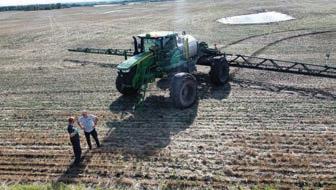
Neil and Jason Galbraith at Galbraith Farms, Man. Photos: supplied
3. ASK GOOD QUESTIONS
“Early on, assumptions were made with our accountants and lawyers,” Galbraith says. “Once we got over that hurdle, we realized we needed to ask better questions and dive deeper, and then we started to feel more empowered.”
4. BE A MENTOR, NOT A BOSS
“It’s not easy as the founder and owner of a family business to provide room for that next generation to participate, but if you don’t, then they will go somewhere else where they can see their visions develop,” Galbraith says.
5.
ASK WHO WANTS TO DO WHAT
Defining roles and responsibilities for each family member (and employee) creates a better work environment and improves job satisfaction. It all begins by simply asking what people like and don’t like to do while recognizing there are some jobs that no-one is going to like but that someone has to do.
“We had made assumptions about what people wanted and liked to do and found out you shouldn’t do that because when we asked them, some people like doing a job that you know someone else hated,” Galbraith says. “It was insightful from the standpoint that we got a sense of where they like to spend their time, so that helps when you’re trying to figure out who in your crew might be the stone picker, or who likes to spend time on the drill or the sprayer, or whatever.”
Ryan Galbraith (35) and his brother Jason (32) have clearly defined roles. Ryan is responsible for the day-to-day management of the farm, while Jason prefers operating equipment and trucking the grain.
“The boys were both clear about what kinds of roles and responsibilities they were looking for, and that made it easy as far as how we split those,” Galbraith says. “Jason is an excellent operator and knows what is going on in the business, but he doesn’t want to be the person that manages the overall operation. Ryan is also an excellent operator but he really enjoys the management of the business, so it was a natural fit.”
The Lavoie family, who own Lavoie Ventures, a 13,000-acre grain farm near StIsidore, Alta., also have clearly defined roles based on their specialized skills and interests. There are five family members involved in the operation: brothers, Normand and Laurent, and their first cousins, Lévis, Alexandre and Simon.
“We see our strengths and our weaknesses and we make it work,” says Normand, who manages the production side of the farm. “Everybody has a role, and we meet once a week to discuss what we are doing. We like to keep the lines of discussion open and if there is a conflict we get to the bottom of it before it creates bigger problems. We also cross-train, so there are always two people (in each vital role) so someone can take over if someone has a family issue to deal with or something else.”
6.
KNOW YOURSELF
A few years ago, the Galbraiths completed a DISC test that categorizes personality types and communication styles into four main categories: dominance (D), influence (I), steadiness (S) and conscientiousness (C).
“The DISC profile determines where you sit, like are you a leader, are you a driver or are you an introvert, are you somebody who likes to get along with everybody,” Galbraith says. “We did it initially with just the family members and that helped with conversations and communication. Once you sort out where people land on the assessment it provides you with guidance on how you might have conversations differently.”
7. EMBRACE CHANGE
Anticipating the need for business and life changes that will impact farm operations and family dynamics is important to make sure everyone has their needs met while keeping the business on track.
“We have had to grow the business to support our sons coming back to the farm, and now they are married and have kids, so we are trying to manage time off so they can have more family time because what’s the whole point of doing this if you don’t spend time with your family?” Galbraith says.
TomandRhonda AntonioofBezanson, Ab. SATURDAY, JULY 182026,10 A.M.
From Bezans on -{hw y.43 &rg. rd.32}:6.5 kmnorthonrg. rd.32totwp.Rd. 730, .5 km west.Countyaddress: 32020twp.rd. 730
Jack andFern Trudgeonof High Prairie,Ab. SATURDAY, JULY 252026,10 A.M.
From High Prairie: 9.6kmw esttorg. rd.182 {Snipe Lake Rd.} 6.4kms outh to tw p. rd.740,1.6kmw esttorg. rd.183, 7kmsouth.Countyaddress: 73123rg. rd.183 From Valleyview :1.6 kmnort htosec. hw y.669, 23 km east to sec. hw y.747, 19 km northtotwp.rd. 724, 4.8kmeasttorg. rd.191, 3.2kmnorth to tw p. rd.730,6.4 km east to rg.rd. 183,2.6 kmnorth. Formoreinf oortoviewitems please call ahead: Robinat:(780) 524- 6844
www.ironhorseauctions.ca or ironhorseauctionsFacebookpage Ph:(780)524-3169Email:iauction@telusplanet.net
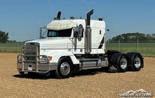
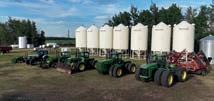
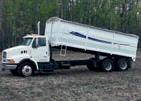
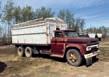
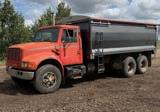
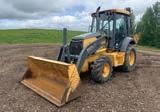
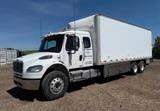
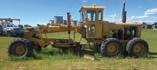
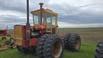
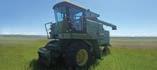
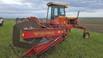
JD9600 {archive } 1988 Frieghtliner
JD8560 {archive } Allis Chalmers 7045
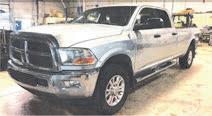
JD9610 Maxi. JD 8640 Case W14 2003 Dodge1500
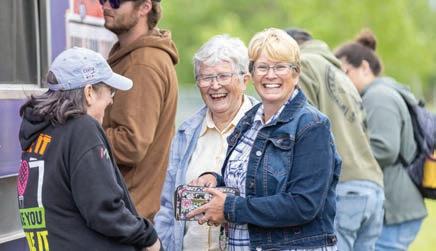
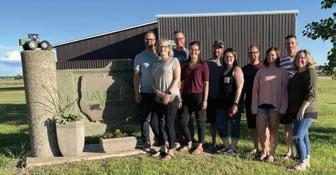
The Lavoie family: Back row, l-r: Normand, Laurent, Alexandre, Levis, Simon. Front row, l-r: Angela, Chantal, Angela (yes, there are two Angelas), Reilly, Melanie
Continued from page 43
“Then, Neil and I are trying to remove ourselves from the day-to-day, so that we can spend more time doing other things like retirement but still being here as mentors and supports because that is a huge part of what we do. Our roles are changing and I spend more time as a grandma now as our daughter-in-law is taking over the books, and things are constantly shifting.”
When Normand Lavoie’s two sons decided they wanted to come into the farm business two years ago, they came up with a creative way to make it happen.
“There wasn’t much room for them, so we decided to start a small feedlot operation,” he says. “They came up with the business plan and showed it to the partners and since then we have added on-farm slaughter capacity that will allow them to expand in different directions.”
8. NEVER STOP LEARNING
Business management and financial literacy are vitally important to the family farm business today.
Both Ryan and Jason Galbraith completed the University of Manitoba’s ag diploma program, which includes a management project component, and Ryan is part of the Farmer Coach program developed by Evan Shout and Kristjan Hebert of The Hebert Group. He also took the TEPAP program (an executive program for agricultural producers), offered through Texas A & M University.
“Having access to people who are outside of your business that are helping you analyze things is important because when you’re in the business, if you don’t have that acumen, you can tell yourself a story that may or may not be true,” Galbraith says. “It all comes back to continuing to ask questions to get clarity. You cannot put your head in the sand and think it will all work out.”
9. CHECK IN WITH EACH OTHER
When the family business owners meet, they need to take an active interest in each other, Soldan says. “They need to discuss how it is going for them personally, in their business and in their family,” he says. “They need to know if anyone has any issues. You cannot separate the family and the family business; what affects the family is going to directly affect the business, and what affects the business is going to affect the family.”
Mental health and wellness are something everyone in the agriculture industry needs to pay more attention to, Galbraith says.
“In a busy time like seeding, we are all running on empty, but it makes it so much better when there’s a team around you,” Galbraith says. “You must be willing to say,
‘I’m tired, I can’t do another day,’ and then you decide as a team about what to do. Being open to having people say things and being approachable is so important.”
“We definitely value family first,” says Normand. “If somebody goes through something where they have to be away from the business, there’s not even a question that they just take the time they need.”
10. HAVE BUSINESS EXPECTATIONS
“It was passed down to us from the previous generation that the farm is a business and you have to treat it that way, so we take it seriously and try to keep everything organized,” says Lévis Lavoie, Normand’s first cousin who brings his off-farm accounting experience to the office side of the farm. That includes documentation such as shareholder agreements, policies and operating standards.
“We treat everybody fairly, but everybody’s got to give back and put in the time on the operation, and we will reward those people,” he says. “When we come up with a policy, we’ll discuss it as a group and hash out the pros and cons of option A versus option B, then everybody votes and majority rules.”
11. DO NOT BE AFRAID TO TRY
There is no template for harmonious family or business relations, and every family and farm will be different.
“It is just a work in progress, and some things work and some things don’t, but good on you for trying,” Galbraith says. NH