
Artsource
The Music Center’s Study Guide to the Performing Arts
TRANSFORMATION
Title of Work:
Impressions #1 (Henry Moore)
Creators:
ENDURING VALUES
TRADITIONAL CLASSICAL CONTEMPORARY EXPERIMENTAL
MULTI-MEDIA
FREEDOM & OPPRESSION
Company: Lewitzky Dance Company
Choreographer: Bella Lewitzky (1916 2004)
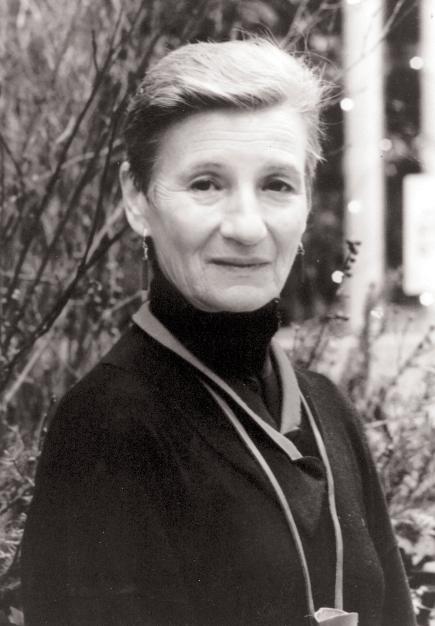
Composer: Larry Attaway b. 1949 Decor & Light Design: Darlene Neel(1941 - 1999)
Background Information:
Bella Lewitzky is an artist of international stature. For over fifty years she has been a performer, choreographer and dance educator. Born to Russian immigrants, she spent her early childhood in the Mojave desert growing up amidst artists, intellectuals and others striving for an ideal society. Although she made up dances as a girl and acquired some dance fundamentals, she did not begin formal modern dance training until she met Lester Horton at age 17. She says that “His approach to movement and his capacity for invention were his most important gifts to me.” She has taken these gifts and used them to evolve her own approach to dance. The establishment of the Bella Lewitzky Dance Company in 1966 made it possible for her to choreograph her inventions and share them with audiences internationally. Her technique, rooted in the modern dance style, stresses alignment and strength. Ms. Lewitzky strives constantly to discover new movement and challenges her audience to bring something of themselves to the viewing and interpretation of her work.
About the Artwork:
Ms. Lewitzky has been a ‘visual collector’ of Henry Moore's work for many years. While she was viewing an exhibit of van Gogh’s work in Holland, she realized that paintings and other forms of art can be a jumping
ARTISTIC PROCESSES
1. CREATING (Cr)
2. PERFORMING, PRESENTING, PRODUCING (Pr)
3. RESPONDING (Re)
4.CONNECTING (Cn)
THE POWER OF NATURE
THE HUMAN FAMILY
off place for kinetic explorations. However, instead of beginning with the work of van Gogh, she surprised herself by starting with Henry Moore. Since it was impossible to bring his sculptures into her studio, she and her dancers worked from images found in books. She describes his figures as elongated and grounded with extended limbs, and states that they look perfectly symmetrical, but are not. He uses asymmetry to create an illusion of classical, cur vaceous symmetr y. She observed that his sculptures have lots of weight and mass, always touching the floor at two or three points, while the heads are small. There are also holes or negative spaces which entice the viewer to look through at different places, altering the perspective and showing that there are many views possible within one object.
Creative Process of the Artist or Culture:
Bella guided her company in experiencing the different aspects of Moore’s work. They explored how the pieces rested on the ground and took off from the resting place, how the feet, hands and arms were carried, and the upright position of the back. They worked with interlocking shapes and eventually developed a ‘Moore movement vocabulary.’ She has labeled her work in the same way Moore did, resulting in such titles as: Upright Figure and Knife Edge; Touching Points; Interlocking Shapes; Two Figure Forms and Three Rings.
“I’ve relished Moore’s sculpture for years, especially his female images. They’re voluptuous, yet they look like they can work, bear children.”
Bella Lewitzky
Discussion Questions:
After the video or slides been viewed:
Slides:
• Select a specific sculpture and describe it in words, using some of the following questions and thoughts:
• Is it light or heavy? What makes you feel one way or the other about its weight?
• How many points of the sculpture are touching the ground, as seen from the slide?
• Describe the shape as you see it. (round, sharp, curvy, erect, long, thick, etc.).
• Think of titles you might give to this work.
Video:
• How do the designs made by the dancers represent the ideas you observed in the Henry Moore sculptures?
• What most impressed you about the choreography in the video?
• How does this type of expressive dance differ from other forms of dance you have seen?
Multidisciplinary Options:
• Work with clay or sculpting material to design a sculpture of a human figure in the style of Henr y Moore. Abstract the human form by elongating it, cur ving the edges, creating negative spaces within the form, balancing it on two or three points, forming a small head, giving it a feeling of large mass and weight. See recipe on page 9.
• Cut from the edges of a square of paper toward the center. Twist, turn, pleat, staple and curl the slashed strips to form a three dimensional paper sculpture with interesting negative spaces.
• Working with some of the following titles of Moore's work, create your interpretation of these ideas combining found objects from your environment: Mother and Child, Three Rings, Traveling, Reclining Figures and Helmet Image.
Audio-Visual Materials:
• Artsource® video excerpt and photos: courtesy of the Lewitzky Dance Company.
• Additional References:
• “ The World of Henry Moore” and“How Henry Moore Creates;” two articles reprinted by permission of Scholastic and Art & Man magazines. December 1979/January 1980.
Sample Experiences:
LEVEL I
• In partners, take turns sculpting each other into different three dimensional forms. Select about five or six ‘sculpted people’ and position them in relationship to each other, forming a ‘sculpture garden’ or environment.
• Create different body shapes. Explore movement ideas that begin and end with each. Vary by using one shape as a beginning and a different one as an ending, using eight counts of movement to get from one to the other.
• Take the concept of a flat circle and a round sphere. Show the first as a two- dimensional shape and the second as a three-dimensional form. Create circular forms alone and then spheres and domes with two or three people.
LEVEL II
• Introduce the idea of negative and positive space. Create shapes which have spaces between body parts and between body parts and the floor. Explore how partner and group shapes can be created using space over, under, around and through each other.
• Explore the concept of volume. Explore ways to create volume in one spot and then travel through space while shaping and forming volume in a variety of ways.
LEVEL III
• Take the concept of Traveling, Reclining Figures, one of Moore’s pieces and the title of one of the dance sections. Build an improvisation around these ideas.
• Work first with partners, then in small groups and build a sequence of three to five Interlocking Shapes. Have a short traveling movement which works as a transition from oneto the other.
• Create a list of nouns, such as chair, door, tree, pencil. Find three variations for creating each idea as a human sculpture. Work in groups of 3-5 people and either combine these ideas into a 3-D tableaux or create plural examples in a series of group sculpture, e.g. chairs.
Indicates sample lessons
HUMAN SCULPTURE
LEVEL I Sample Lesson
INTRODUCTION:
Sculpture is a three-dimensional art form. It can be a carving, model, assemblage, or other created form that has height, width and depth. The human body can be shaped into different sculptural forms and make an aesthetic statement. The artform of dance uses both sculptural designs and selected motion to achieve an aesthetic expression.
OBJECTIVES: (Student Outcomes)
Students will be able to:
•Purposefully ‘sculpt’ or position the human body into selected shapes. (Creating)
•Learn to move another person’s body with sensitivity and aesthetic intention. (Creating & Responding)
• Describe, discuss, analyze and connect information and experiences based on this lesson. Refer to Assessment at the end of this lesson. (Responding & Connecting)
MATERIALS:
•Images of Henry Moore’s work.
•Classical or New Age music (optional).
PROGRESSION:
•Show images of the Moore sculptures, as well as ancient and classical ones. Instruct your students to look at them in some of the following ways:
•How is the sculpture balanced on the ground? How many points (bases of support) are touching the ground?
•Is the sculpture symmetrical (the same on both sides of the center) or asymmetrical (different on both sides of the center)?
•If it is a human figure, where are the different parts of the body (arms, head, legs, torso, etc.) positioned?
•Does the sculpture feel light and unbound by gravity or does it feel heavy and bound by gravity? Is it fighting to free itself from the pull of gravity or it is balanced with the force of gravity?
•Does the figure look static (in a still position) or does it have a feeling of action?
•Are there negative spaces (openings and spaces) within the sculpture? How would the sculpture look if there were no negative spaces? What effect do the negative spaces have?
•Divide the class into partners. The teacher should demonstrate with a student to show how one partner will be the sculptor and the other will be the material to be sculpted. The teacher carefully moves the parts of the student’s body into different positions. Make the following points:
•Move your partner with care and gentleness.
•Elbow and knee joints only move in one direction. Don’t force them to move in other ways.
•Be sensitive not to hurt your partner nor put them into any embarrassing or inappropriate positions.
•When you are the one being sculpted, cooperate and assist the person and hold the position.
•Have each set of partners determine who will be the first sculptor and who will be sculpted. Give a signal to begin and ask that each partner make three to five changes and then stop. If they wish to lower the person, they are to ask the person’s help in getting to the ground. When the sculptures are completed, the sculptors move to the sides of the room and look at the different pieces which have been created.
•Ask a few questions to increase their ability to observe, such as: Which ones are at low levels or high levels? Are they all facing the same way? Which ones look static and which ones have a feeling of action? Why? Are any symmetrical? Are there any without negative spaces? Which ones have more than two points touching the ground?
•Repeat the procedure, having the partners reverse roles.
•Divide the class into four groups. Three groups will observe while one group of partners work in a central space. One group of partners designs their sculpture, relating their partner’s position to the others. When all sculptures are finished, the sculptors should move to the side. Ask the audience to comment of what they observed and make any constructive suggestions for improving the unity of the group relationships. Repeat this problem, giving each group a chance to create a ‘garden’ of sculptures. Music is recommended.
EXTENSIONS:
•Repeat the process adding music and ask the sculptors to use motion which is exaggerated, slow and purposeful as they manipulate their partners. When the sculptures are completed, ask them to find a motion which begins from their position and transforms them into a second position and then a third position. They can repeat the entire sequence. Ask the audience to comment on how the motion changed the look of the sculpture garden. What did they specifically notice?
•Research another sculptor such as Isamu Noguchi. Find a specific sculpture of his and show your impressions through movement.
VOCABULARY: sculpture, sculptor, symmetrical, asymmetrical, ancient, classical, points, base of support, unity
ASSESSMENT: (Responding & Connecting)
ANALYZE: Use the questions on page 3.
Emphasis on: Common Core - CA State Standards for Language - Reading; Writing; Listening; Speaking
