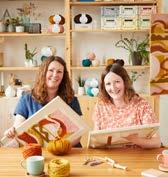
Thanks so much for joining our community and being one of our newsletter subscribers! We're so happy to have you here. The Modern Crafter is by sisters, Rachel & Siobhan and we love to provide you with a way to practice creativity through mindful punch needle and embroidery craft kits. Our kits have a focus on sustainable materials such as British Wool and Organic Cotton.
Our Story
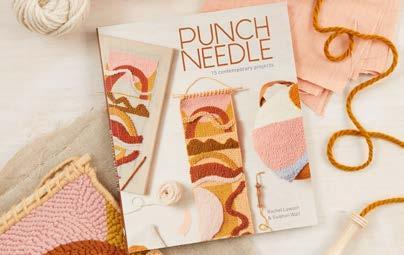
We founded our small business in 2018 and are authors of book Punch Needle, 15 Contemporary Projects. Siobhán studied Fashion & Textiles at Heriot Watt university in Scotland and is the experienced designer for all of our patterns. Rachel makes the products by hand before launching and has 10 years experience with embroidery and punch needle, teaching and meeting others at events all over the UK. All kits are assembled at Rachel's studio in Scotland.
British Wool
We are very proud manufacturers of our own range of British Wool for punch needle which comes from British Suffolk Sheep! We are the only small business to produce British Wool specifically for punch needle! British Wool is always produced using wool from non-mulesed sheep, kinder to the way a sheep is shorn. British Wool is 100% sustainable, 100% biodegradeable and supports British Farmers and British Mill heritage production..
Our Goal
We believe that whilst your hands create your mind relaxes with the outcome being a great sense of joy. We enjoy creating high quality craft kits which are accesible for all abilities and with pre-printed designs, it's easy to get stared straight away.
Punch needle is a traditional craft for rug making. It's a modern addition to rag rugging and the main differences between the two crafts is that with punch needle you work with a ball or cone of yarn, rather than cutting up strips of fabric or yarn for rag rugging. The punch needle tool creates continuious loops rather than having to latch the fibre on to hessian fabric. The other difference is that with punch needle you have to work with the fabric under tension, it needs to be stretched and clamped taut over a frame. With rag rugging the fabric does not need to have tension.
The loop side in punch needle is 'the right side' and you work from the wrong side. The loops are trapped into the weave of the fabric by the stitch that the needle makes on the wrong side. Try pulling on the loops and you will see they won't unravel. Punch needle tools come in various sizes which take various weights of yarns or even embroidery threads - fine, double knit and chunky weight.
Like all crafts there is a technique to learn however it's easy to master and once you have it you will find a mindful flow with this repetitive satisfying technique. We describe it as drawing in with wool. Always going forward in direction and colouring in with wool.
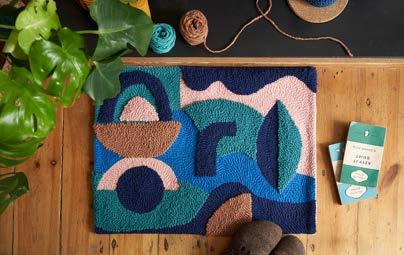
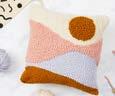
Punch needle is a wonderful craft to make mainly interior items for your home, our favourite project to make is cushions! When you make them with thick yarn they only take around 5 hours to colour in fully and turn into a cushion! For other possible projects some ideas would be wall art, trivets, plant pot holders, coasters, toys or bags.
See our next page for the most common questions we have been asked!
Your Questions Answered
“How does it not unravel”
The reason for this is mainly mastering the technique however it is also down to the combination of the right tools and materials. To open weave fabric with fine yarn will unravel.
“Which is the right side”
The right side traditionally is the loop pile side for making rugs. This is also the right side as if you pull on a loop it will not unravel. The flat stitch is more at risk of unravelling only if it is delibrately pulled!
“Do I tie a knot”
“Can I use any yarn”
You can however we always think about the wear of the end project. Acrylic yarns are not as good quality as 100% wool and won't last as long if the project takes wear such as a cushion or a rug. Roving yarns do work for wall art. Also any fibre that glides through your needle will work - cut up strips of ribbon, sari silks, upcycled clothes, unravel wool jumpers, double up finer wools and mix the colours together!
“What fabric do I need”
No knots or glue are needed. We snip the yarn ends so that they are hidden. Everyone has their preference so you can always sew the ends in if you prefer.
“What is tufting”
Tufting is when the yarn is snipped in the middle of the loop, making the yarn fluffy. Some rug tufting guns do this automatically. This makes the yarn more at risk of coming out and is why tufting artists add glue and/or a backing cloth to the back of their finished project.
You need to match the size of the needle to the weight of yarn to the weave of the cloth otherwise it will not work. As a general rule for the fine needles - linen/calico or cotton. For the bigger needles - open weave linen or hessian. You may have heard of monks cloth but we don't think this cloth is essential. It also frays really easily so is harder to work with. It's generally more expensive too so for experimenting in this brilliant craft we recommend linen. All of our projects have been made on linen. With good quality yarn the base cloth doesn't matter as much.
Which Punch Needle Tool?
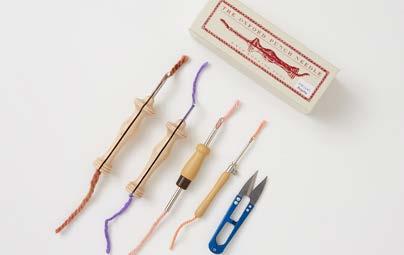
Since we started punch needle 10 years ago punch needle tools have come and gone however the two that we recommend are the Oxford brand and also the Lavor brand.
The pros and cons of each needle are as follows:
Oxford Punch Needle:
This is the only punch needle tool where you don't need a threader. Instead you thread the yarn through the eye of the needle and straight into the slot. This makes it handy for working with cut up strips of fabric and for changing yarn colours quickly. Great quality, made from maple wood and guarentee it lasts a lifetime. This brand of needle comes in various sizes to take different weights of yarn and to create different loop pile heights. It is a premium tool hence the premium price. We stock the Oxford size 14 needle for double knit weight and the size 10 for chunky weight and we find the loop pile with these sizes are just right.
Lavor Punch Needle
Have 3 punch needle tools in its range - fine, double knit and chunky. Fine comes with 3 needle tips for embroidery threads (6 strands), tapestry wool, sock weight yarn and I have found some fine DK's also go through the largest needle tip. Although there is a separate 'DK' needlae. For the DK needle (4mm) - DK yarn or Aran weight yarns are what you need. The third size is chunky (5.5mm). You can double up your finer wools in the chunky needle or cut up strips of fibre. I tend to use the 5th notch setting as I find this is a great loop height. The higher the needle the bigger the loop and the more yarn used! The Lavor needles come with a threader to thread the yarn on to the needle. It's easy enough to do and if they go missing, a fine piece of jewellery wire is a great substitute!
How to Get Started?
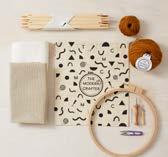
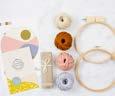
We have lots of kits for you to choose from that take out the trial and error on getting the fabric, tool, yarn combination right. Our kits are made by us, we are extremley passionate about punch needle and what we do. We want you to have the best experience of punch needle. We have bundle kits that don't come with patterns so they allow you to try out your own art work if you prefer. The brilliant thing about the bundles is that they come with a reuseable frame and everything you need to start this relaxing craft.
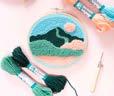
We also have kits with patterns designed by Siobhan, it is a skill in itself to understand what design will work well, in particular thinking about the weight of yarn you are using. Our pattern kits allow you to get started straight away without spending hours on designs that don't quite work. You can choose from the 'fine needle' with tapestry weight yarn and a pre-printed design or the 'rug needle' kits with our own British chunky Wool. We also have cushion kits which come with a reuseable frame so you can go on to experiment further and make more cushions, trivets or a bag! Check out our fine needle kits here or our chunky rug needle kits here
How to Get Started?
Tools and Materials
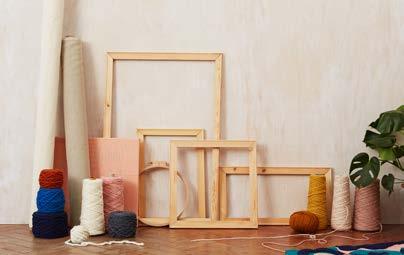
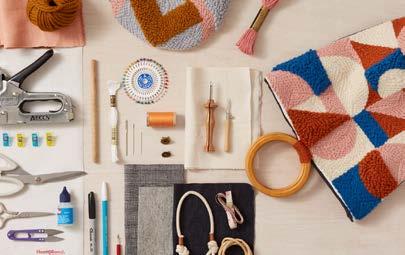
We also offer supplies separately - the key things that you need are:
1. A frame - to keep your fabric taut as you punch needle. If you choose a stretcher bar frame you will need a staple gun to get the fabric stretched over the frame. This is the cheapest way to get started. There are options on gripper strip frames which are a bigger investment. Quilting hoops are also a great option however they are always round and generally the hoop cannot be moved around over punched yarn. Check out frame options here
2. A punch needle tool - choose from fine, double knit or chunky. Check out tool options here
3. Yarn - use yarn based on the purpose of your project i.e. a lot of wear choose 100% good quality wool. We only have our British Wool in kits however we do stock the Oxford yarn great for use with the Oxford size 10 or the Lavor 5.5mm needle. Find that here
4. Fabric - linen/calico/cotton for the fine needle or open weave linen for double knit or chunky needles. Check out fabric options here
The Technique
Our punch needle kits come with full iinstruction booklets with all the details including troubleshooting that you need. There is a lot of information in there and me to support you too should any issues come up!
The main thing that we see when we are teaching others punch needle is that the needle comes up too quickly out of the fabric and the loop unravels and also that the needle is not punched down far enough, therefore the loop is not long enough to hold. So let me talk you though this!
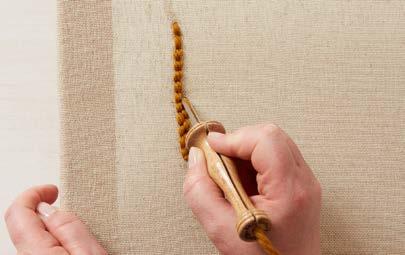
Punch the threaded needle into the fabric. When lifing the needle back up to make the next stitch really control the speed and bring it up slowly (you will eventually speed up but to begin with slow is key so you can understand how the needle is working) The needle should only be brought up to the surface of the fabric and keep the needle tip touching the fabric. If the needle has sprung up too quickly the loop will unravel. In this situation pull the yarn up to tighten it. Don't worry about any hole left in the fabric, just punch back into it.
Once the needle tip is on the surface and touching the fabric, drag the needle forward and punch into the fabric making sure that the handle makes contact onto the fabric on every punch. This creates a consistent loop height. Stitch lengths are approx 1cm for the DK/5.5mm/Oxford 14 & 10 tools and for the fine approx 0.5cm. Stagger the stitches like brickwork on your rows and work your way from the outside into the middle filling in.
How To Explore The Craft Further
If you start off with a hoop kit then next step is to try a cushion kit and then you can reuse your frame to experiment with other projects. Having a sewing machine or some sewing skills will allow you to experiment making lots of other practical projects. You can apply the same technique to all punch needle tools. They may thread differently however the technique is always the same. Handle comes down to touch the fabric and drag the needle forward.
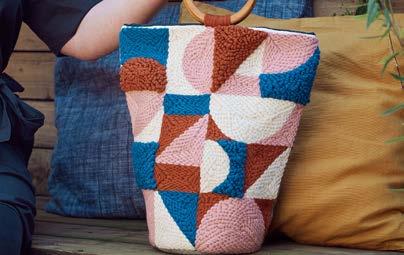
You also have the option of our Punch Needle Book with 15 Contemporary Projects such as the bag above if you would like some inspiration and the pattern, click here ! We also offer kits without the punch needle tool if you would just like the materials but you can use your existing tool!
If you'd prefer to play around with it yourself, try sketching out some drawings before transferring to the fabric. From experience it's rial and error to find out what works well!
If there is anything you are particularly interested in but don't see it on our website please just reach out and email rachel@themoderncrafter.co.uk
We hope you have found this useful, your feedback is really vital to us so any comments at all please do get in touch with the email address above.