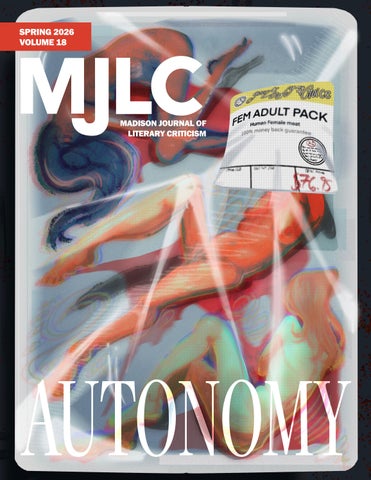
MADISON JOURNAL OF LITERARY CRITICISM

The Madison Journal of Literary Critcism


Staff Page ......................................................................................................................
Letter from the Editor ................................................................................................
Letter from the Education Director ..........................................................................
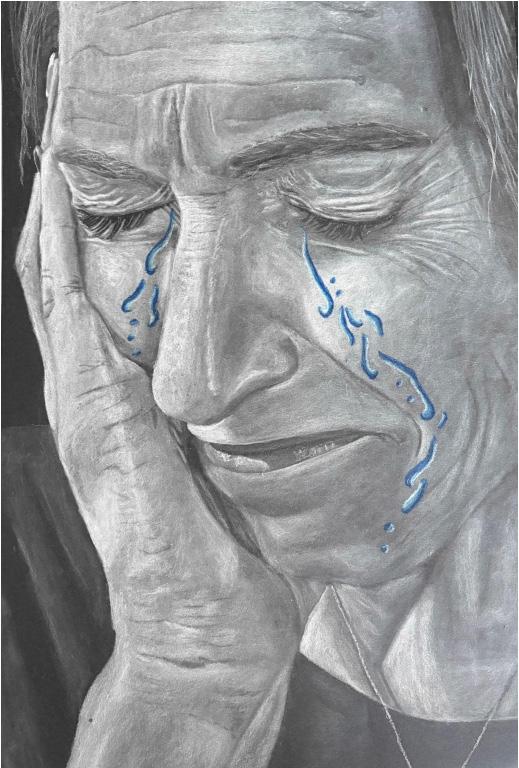
The Beauty in Crying / Madeline Mudler ................................................................
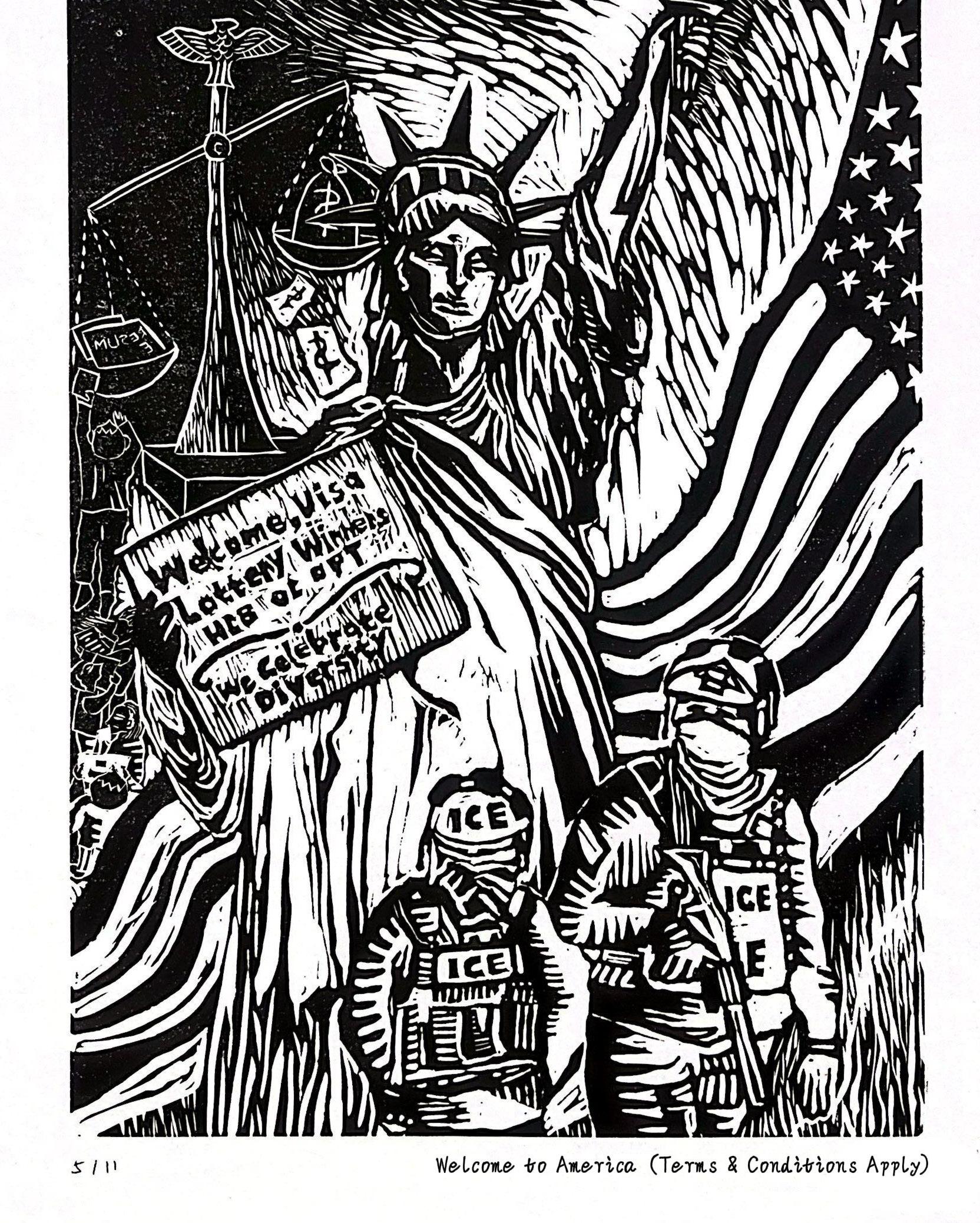
Welcome to America (Terms and Conditions Apply) / Nicky Wang .......................
Just a Name / Mia Zago ...............................................................................................
“
Lo que le pasó a Puerto Rico”: Tourism, Gentrification and Cultural Resistance in Puerto Rico / Angeline Morgado ............................................................................
war boy / Christine Negovani ...................................................................................
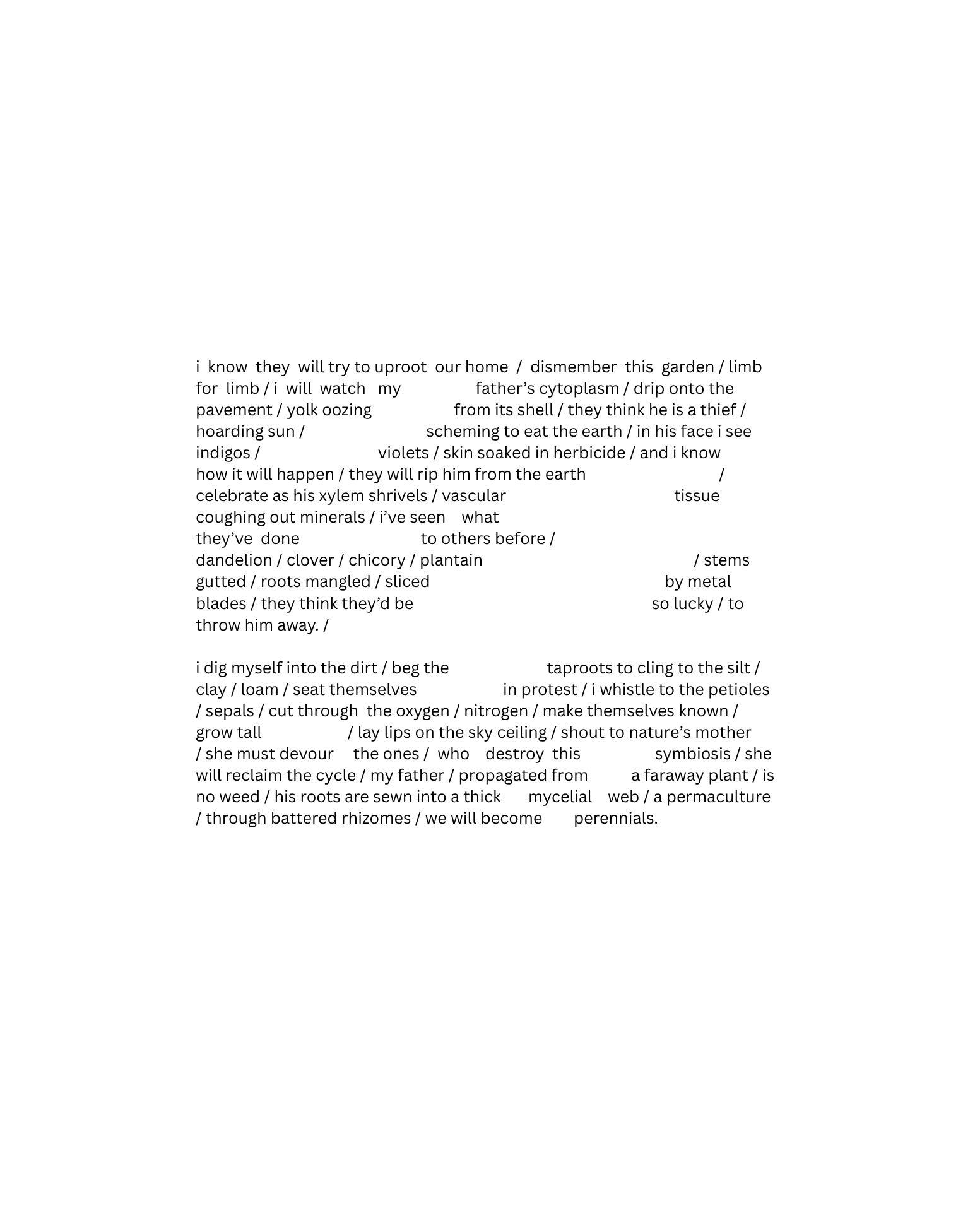
alien dad // perennial / Isis Plesnikova ....................................................................
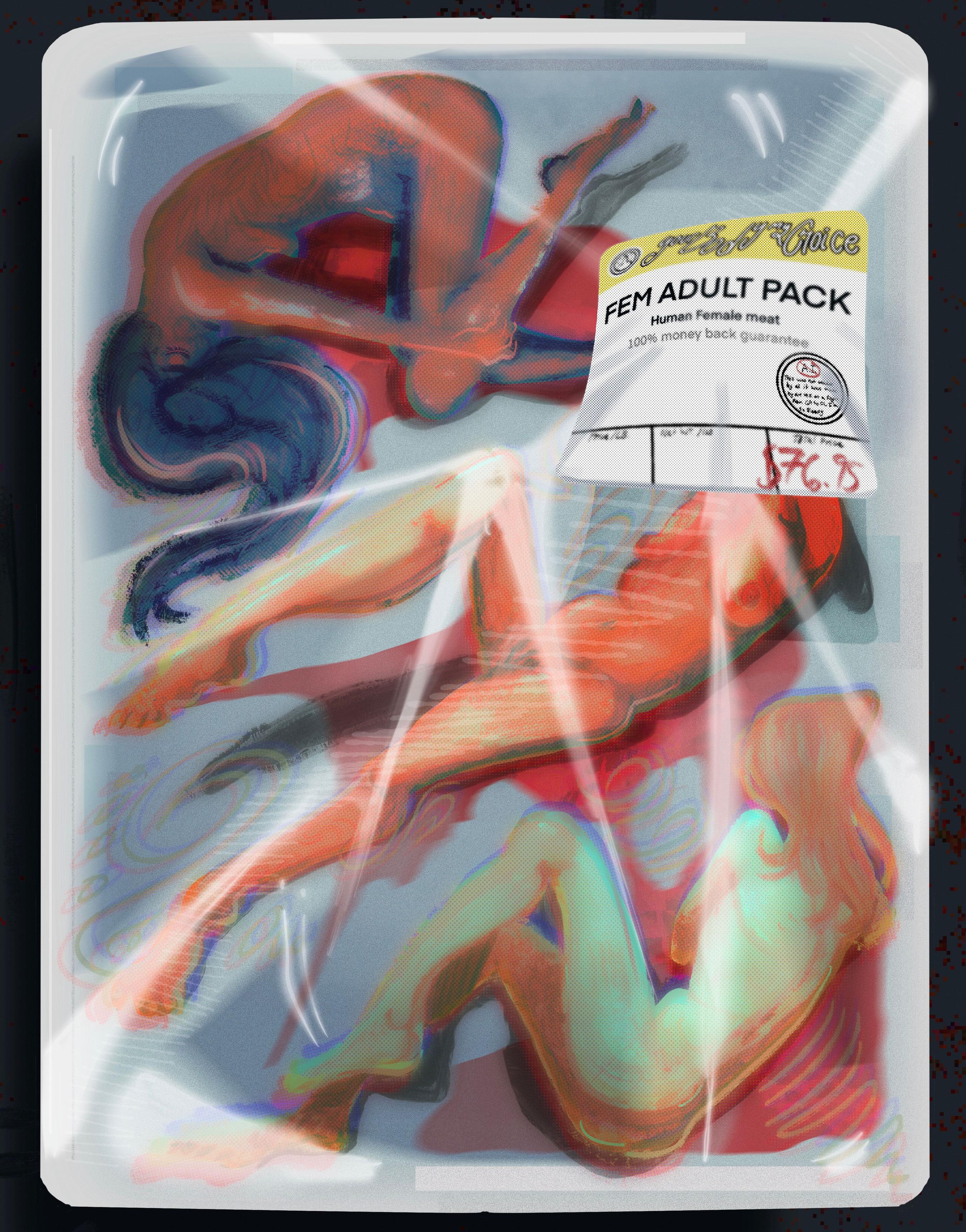
Meat to be Bought / Erin (Ari) Murphy Stroth .......................................................
Market Price / Laila Smith ........................................................................................
Little Red / Riana Howells ........................................................................................
Discovery / Erin (Ari) Murphy Stroth .....................................................................
Beans on the Kitchen Wall / Bernadette Sarazine .................................................
To bet on life / Chava Ramirez ................................................................................
Chronic Perspective / Kean O’Brien .......................................................................
Untitled / Anika Fretz ............................................................................................... you must become glass. / Mars Mittelstadt ...........................................................
Split Open / Betsy Fries ............................................................................................
Approaching Existentialism from an Anarchist Perspective / Rose Tyler ..........
Fracture / Bella Lawson ............................................................................................
Autonomy Within Community: The MJLC Explores the Age Old Question .........
Good Morning Baltimore! MJLC Staff Takeaways from AWP 2026 ......................
Acknowledgements ...................................................................................................
Contributors ..............................................................................................................
Editor-in-Chief ..................................
Education Director ..........................
Executive Team Member .............
Managing Editor ......................

Shu Lan Schaut
Quinn Henneger
Jonathan Tostrud
Mary Murphy Stroth
Production Director ........................
Treasurer ...................................
Max Borgerding
Matteo Dalessandro
Operations Assistant ..............................
Outreach Coordinator ......................
Social Media Manager .......................
Olani Aboro
Hannah Herbst
Mar McKenna
Creative Director ..................................
Graphic Designers ................................
Academic Editors ................................
Art Editor .................................
Kiki Marckel
Sofia Borden
Rissa Nelson
Haleigh Smith
Daniel Trinchillo
Francesca Matthews
Fiction Editors .........................................
David Rhee
Mia Zago
Nonfiction Editor ..................
Elizabeth Baumberger
Poetry Editors ......................................
Darcy Combs
Omalley Thompson
s a theme, Autonomy felt like a necessary statement in the chaos of today; a reminder of our own determination in a time when everything seems far out of our control. Autonomy is a recognizably powerful ability, one that is often capitalized, exploited, and actively restrained. Autonomy shapes our lives, both in the moments when we exert it ourselves and when it is taken from us. My life has been formed by moments of autonomy—when I’ve exerted it, when I’ve longed for it, even when others’ choices have rippled all the way back to me. Autonomy is informed by the micro and macro; the ability to decide is in every factor of our lives.
When I reflect on autonomy as a concept, I think of my own life experiences. I was born under the one-child policy in China, a cruel program that stole personhood and self-determination from millions of women across decades, my birth mother included. When I think about autonomy, I remember what has been taken from me, what has been ascribed to me based on my name, my race, my gender. I think of the small moments when my own space is invaded, my own voice muffled, by men who think what is mine is also theirs. I think of the governments who attempt to dictate their people’s choices, silence their voices, all to paint a picture of a reality that doesn’t exist.
Still, autonomy thrives in movements of resistance, in reclamations of individuality and personhood. I see it in the protests that continue the enduring fight for our independence and control, both in the minutiae and the mainstream. I recognize it in the histories of countries that have revolted against colonial powers, protecting their culture and reclaiming their sovereignty.
Autonomy is also in the grain of the everyday. It is an inherent part of our relationships, our friendships, and communities. We exercise autonomy everyday with every “yes” or “no,” every act of kindness, and every single time we protect ourselves or others.
Most importantly, when I think of autonomy, I think of the generations that came before me—before us all—the ones who clawed their way upwards, claiming the protections we have today. Their shoulders are the supports that allow us to climb further. Autonomy is not just about the anger, the rage, or the defensiveness we naturally feel when threatened. It is about the resilience and the collective nature of resistance put forth to protect it.
In reality, autonomy is not a protected right or guarantee, but a struggle for existence. It is a fight that transcends communities, countries, and centuries. There is no one frame of autonomy; it is about being able to live our lives on our own terms.
I sincerely hope that this issue helps broaden your perspective of autonomy, beyond what may personally affect you, beyond what you already know or assume. Take the time to absorb, to learn, and to grow from these works of autonomy.
This edition of the Madison Journal of Literary Criticism is special in many ways for me. It serves as a bookend for both my time as an undergraduate and my time with the MJLC. This volume is a physical testament to the hours spent fixated on writing a single phrase, the days hunkered over a laptop to edit endless pieces, nights filled with unfortunately late staff meetings and absurd icebreakers. While the work, at times, can be heavy, I have no regrets. Being part of the MJLC has been one of the highlights of my collegiate journey, a choice that I am very thankful to have made, for the opportunities, the challenges, and, most importantly, the friends I have made.
With that, I give you the eighteenth edition of the Madison Journal of Literary Criticism: Autonomy.
Sincerely,
Shu Lan Schaut Editor-in-Chief
his semester’s theme, Autonomy, lies at the heart of our mission at the Madison Journal of Literary Criticism. We are an organization that facilitates a weekly study group and produces a semesterly publication that strives towards an abolitionist model. Our work is defined by questioning all forms of the carceral state and dreaming of more. As we have defined together in our study group, the carceral state is a dynamic system in which the state maintains control through a punitive structure in all parts of our lives. Autonomy lives in this grey space between the questioning and the imagining that comes with abolition—it encapsulates both how we move towards freedom and what our better world will look like. Autonomy disrupts a linear path to abolition and embodies, like many important revolutionaries have said before, that freedom is a process
Take the Zapatista movement—one of our study group topics this semester—and their core autonomous ideology of caminar preguntando, or “we walk by asking questions.” It’s a commitment to making one’s way through practice, of prioritizing the process of collective creation. In our study group, we applied this idea of autonomy to the Madison organizing scene—we questioned how we can strive for longevity within a city that cycles through a large chunk of their population every four years. The answer, as most things tend to be, lies in community.
We need to break out of our bubble within the university and fortify our moment in the process of liberation in tandem with the general Madison community, who has been doing this work for decades. Put simply, collective liberation means everyone. In a true sense of community, we can both learn from previous Madison movements, and come to terms with the fact that there is no handbook telling us how to organize in this specific time and space. We are going to make mistakes, and we’re going to need to navigate conflict. These things only happen when we actually put our hands in the dirt, when we consistently show up for our community in ways that matter. The MJLC, through our study group and magazine, has the ability to embody this organizing system that prioritizes longevity and acts as a bridge between UW and the Madison community.
If you were to tell me three years ago, when I first joined the MJLC, about the necessary uncertainties that come with attempting to build this bridge, I would have sighed with relief. That semester, in a wave of passion and impulse, I jumped head-first into building a campaign through the MJLC to raise attention on campus for the Block Cop City movement and the four Madison residents involved in the RICO indictment. In some ways I had no clue what I was doing, but I was answering all my questions as I listened and learned along the way.
That campaign shaped and improved how I approach building bridges today. Recently, this has emerged as a mutual food justice organization called Nourish, which provides over 300 meals each week to our unhoused neighbors with both students and Madison community members. What most people don’t see is that Nourish is only the way it is because I took a leap of faith just last year, with me and my friend Matvei serving food from the back of his trunk. I have seen these successes with my co-organizers because of these leaps within fear, within doubt, within moments where I felt outright crazy. The evolution of what the MJLC is today is thanks to this process, and the passion and love that is needed to go through with that lofty endeavor. To this day, it is felt and embodied throughout our staff and study group. The MJLC, in its own foundation, understands this collective creation process. Our organization shines when we act as a bridge, when we stay rooted in the Madison community, and the heart of the abolitionist movement within incarcerated people.
The answers to our fears about community building can be found in the process of doing the thing, of walking by asking questions. By embracing liberation as a process, and embodying this through the continuous fight for, and practice of, autonomy in our daily lives. Much like what you will see within the following pages, through words and in spirit, our community defines our collective moment.
In solidarity,
Quinn Henneger Education Director
Welcome to America (Terms & Conditions Apply)
Mia Zago
My name belonged to my being three generations before I was conceived. In a way, my name has always owned me. As a child, I was upset that I had a common name, finding a plethora of strangers, and later friends, who shared the same syllables and arrangement of letters. I wanted to be unique, to have a name that felt solely mine. When I first asked my mother why she had chosen it, she said she had little reason. My name had been set in amulets and stone and whispered into the wind.
My mother, like me, is named María—as is my grandmother, and all nine of her sisters, my great-grandmother and her sisters as well. María stemmed from the Holy Lady, the Virgin Mother, the closest to our God, molding us into an example of good faith from the second our title was placed. My God named me María, and he calls me by this name anytime I have the courage to crawl up to the altar. María is the name of the picture of me at the baptismal fountain.
Fernanda was born from my father’s side of the family, chosen to honor my great-grandfather, endowing me with his conviction to labor and the strength of his booming tone.
María Fernanda came last, not two names but one, separated only by a space where bloodlines and cultures dared to meet. My name—entrusted to me by my parents, the soils, and the wind—is María Fernanda. But nobody calls me by my name. Instead, I am called Fernanda by my parents when I’ve fallen short—when, as a child, I’d been mischievous and now, as an adult, when the rottenness seeps out of me. My name, when pronounced Fer, is reserved only for my family with cariño. Fer was the first identity, the first ever me to make roots, make friends, form memories. Fer was the first to ever own their body, own their world. My home country, and everyone in it who knew and loved me, will only ever know me by that name.
I changed my name when I moved to the United States. At the time, the reasons were plenty, but now they drown me in regret. I feared the othering that I was certain would occur, but this was a time to start anew—to find the power in letting go and “reclaiming” myself. I was taught that assimilating was the only way to be, the only way to fit. So, I rebaptised myself and I became Maria. This was my name. No longer used or pronounced as my Godgiven title, Maria became the intellectual, the American, the student, the dancer, the immigrant. I did not know it then, but this was the first time my name was stripped from me.
The second time came when I was twelve, when a man crumpled up and shredded myself, only to shove the muddled pieces back into me. Maria was never whole again, and she was named and renamed, time and time again. Be it beaner, d*ke, alien, queer, babe, love; their labels soaked Maria up, until I no longer knew where their words began and my name ended. For some time, my name felt like mud as it tumbled from my lips and was received as deafening static when it hit my ears.
Nowadays I am called Mia. She came as a last resort. An identity based solely on preserving and protecting what was left of Maria, Fer, and María Fernanda. Who rested, not forgotten, in the furthest, dullest corners of myself. Mia became the known artist, beloved lover, the manager, barista, college student; most importantly, Mia became the shield. Mia was the self that could not be altered by other labels, the one who would reclaim the memories and sift through identities to make one whole.
There is one more name, one I keep to myself. My name was kept intact because it was reserved for one person only. My nonna, my grandmother, my mother—who named me Marifer. She was, until her last breath, the only one to call me by my name. The delicate merging of all my identities and nicknames only sounded right when spoken by her. She was always able to see through the renewal, the damage, the shield. She saw it all, all of me. Her voice, as she laughed and shook her head while saying my name, would creep into the darkest of crevices. The holes and the gaps somehow filled up, easily. The only times I’ve truly known myself was when she called me Marifer. But no one called me this before her, and no one ever will again.
Angeline Morgado
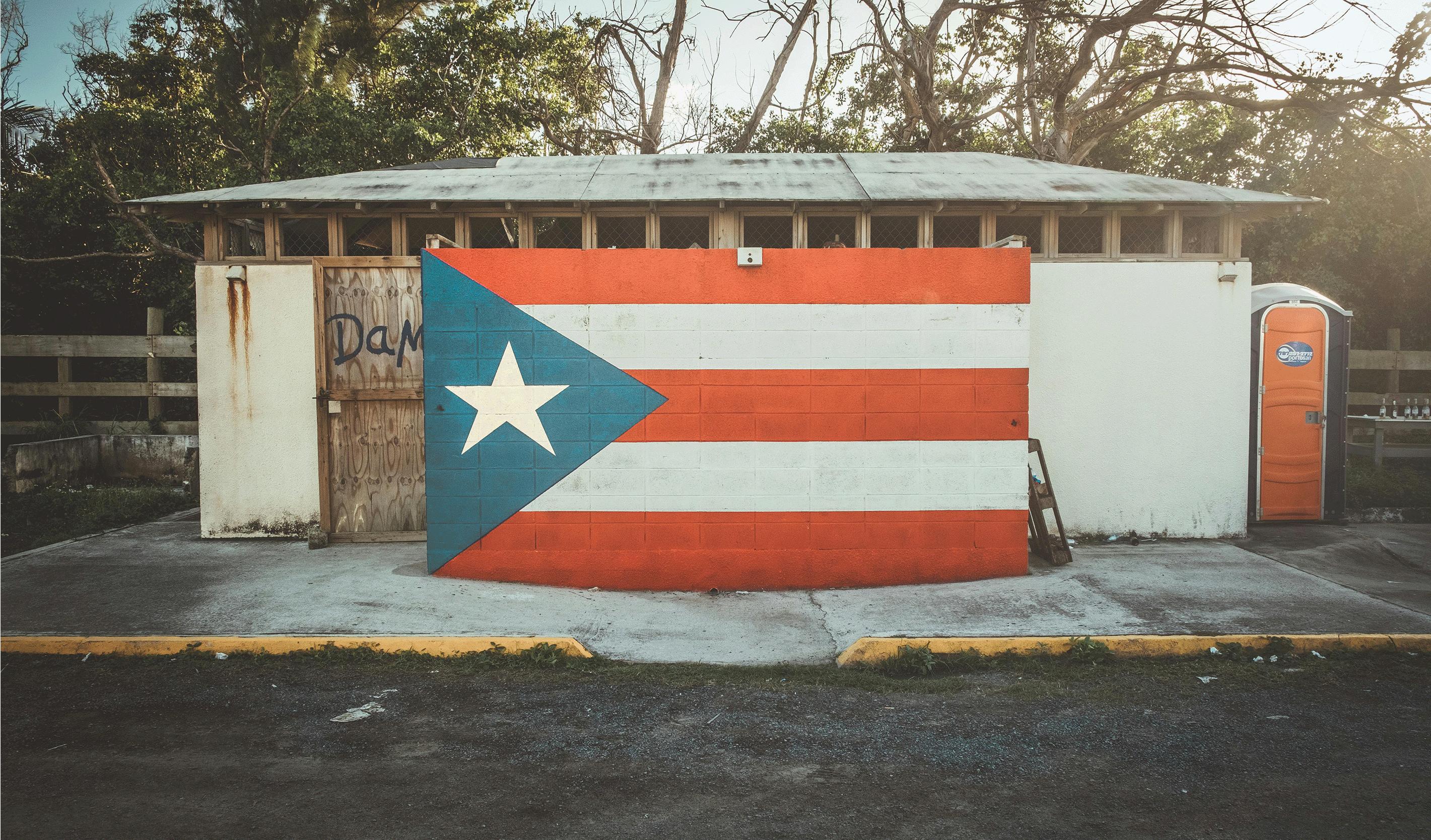
“A tourist is an ugly human being,” states Jamaica Kincaid in her book “A Small Place” (2000, 14). Such a statement is disruptive for the reader whom Kincaid refers to as the “You,” the tourist from North America (Kincaid 2000, 4). Tourism has historically been portrayed as an activity that is instrumentally beneficial both for the individuals who participate in it and the economies of the states that welcome it. However, contemporary local discourses and scholarship challenge this narrow understanding, recognizing tourism instead as an extractive practice rooted in colonialism. In the case of Puerto Rico, tourism driven by mainland Americans has perpetuated colonial narratives functioning as an extension of U.S. imperialism by shaping representations of the island, restructuring local economies, and displacing communities through gentrification. While historical depictions of tourism in Puerto Rico have reproduced colonial narratives of the island as a consumable paradise, those depictions have increasingly been contested through local resistance, as exemplified in Bad Bunny’s recent album, actively challenging those hegemonic narratives.
To begin, it is essential to understand how tourism is defined in academic sources. In Tourism: An Introduction (2003), scholar Alex Franklin explores the theories, practices, and development of tourism as an academic discipline. He references Alister Mathieson and Geoffrey Wall’s definition of tourism as “the temporary movement of people to destinations outside their normal places of work and residence, the activities undertaken during their stay in those destinations, and the facilities created to cater to their needs” (Franklin 2003, 30). This definition highlights common elements present in most hegemonic interpretations of tourism, emphasizing its temporary nature and arguing for its non-disruptive character. To advocate for the tourism industry’s non-invasive nature and its economic impact, the Mexican Center of Social Studies and Public
Opinion defines tourism through the UN’s World Tourism Organization (WTO), which emphasizes the economic nature of tourism (Ramirez et al. 2022). The WTO describes tourism as a catalyst for economic growth and job creation, focusing on statistical data that reinforces the idea of tourism as an economic boost to host countries (Ramirez et al. 2022). Thus, Franklin (2003) posits that nationstates have used and defined tourism primarily as a major means of income generation. Contrastingly, Richard Rosa, a Puerto Rican scholar, defines it as a “new model of colonialism” (Rosa 2012, 87). Scholars Alicia Swords and Ronald Mize (2008), evaluating the U.S. Consumption of Land and Labor in Puerto Rico, rather than defining tourism, challenge its characterization as the most popular development strategy for the Global South. These diverse academic definitions of tourism illustrate how tourism as a discipline has been shaped to fit hegemonic narratives, as well as the contemporary scholarship that challenges that notion.
Among academic and institutional definitions of tourism, the economic lens has historically been dominated in order to justify tourism as a policy practice. A report from the Mexican Center of Social Studies and Public Opinion analyzes tourism gentrification, questioning whether it is an advantage or a threat (Ramirez et al. 2022). In the report, tourism gentrification is acknowledged as a challenge for local residents. However, the focus of the Mexican Center of Social Studies and Public Opinion analysis is not solely on the consequences of tourism as a driver of gentrification, but rather on demonstrating the benefits to help reframe the negative impression among local residents. This shows how economic discourses on tourism undermine locals’ experiences, portraying tourism solely as an economic driving force. The report draws on author Agustin Cocola-Gant’s (Ramirez et al, 2022) remarks on how tourism compensates for the lack of local
demand to revitalize real estate capital and property values. Cocola-Gant’s argument emphasizes how, through tourists’ purchasing power, the real estate market is stimulated. This argument overlooks how the locals are affected by market stimulation. While portraying it as positive, this can lead to displacement, as a stimulated real estate market can affect residents’ rents and purchasing power. In that sense, the report overemphasizes economic academic perspectives, which undermines the local narratives affected by the phenomena being examined and overlooks not only the negative economic impact of tourism but also its environmental and cultural consequences. The Puerto Rican government in the 1990s pushed to integrate the island into the high-luxury tourism market, centering tourism as a tool for development and an instrumental means in stimulating the economy (Rosa 2012, 94). While those narratives of economic development were driving policies, they were also mobilizing locals to protest, showcasing how economic discourses on tourism were used to shape governmental and institutional support, but local resistance challenged those hegemonies and revealed gaps in those narratives (Rosa 2012, 94). In 2010, those dynamics persisted. During a severe economic crisis and high unemployment, the government helped finance the $1.2 billion Ritz-Carlton Dorado project, which was expected to create 900 jobs in the tourism sector, demonstrating that, despite domestic resistance, the government historically framed tourism as an economic policy solution (Rosa 2012, 94). This is especially striking because it demonstrates how, when viewed through an economic lens, tourism becomes a dominant narrative embraced by academia and government institutions, eliminating the possibility of debate. It overshadows locals’ perspectives on the island’s culture and sovereignty, which offer a more comprehensive and critical view of the implications of tourism as a practice to be welcomed.
To challenge the economically-driven definitions of tourism that shape policy, scholars Swords and Mize (2008) center labor within this discourse. Their research describes tourism’s labor as inherently relational: the leisure of one group depends on the service labor of another. To understand U.S. consumption of labor, Swords and Mize (2008) performed on-site research and drew on ethnograph-

ic and statistical labor methods to evaluate Puerto Rico and Mexico. They concluded that the relational labor of tourism is exemplified in how maids, doormen, waiters, waitresses, bartenders, tour guides, and entertainers have to perform for the visual consumption of the tourist, reinforcing power dynamics that commodify culture for tourist consumption (Swords and Mize 2008, 55). Their research highlights how tourists occupy a hierarchical position above workers. Thus, while tourism creates jobs, those jobs are dependent on Puerto Rican labor, primarily accommodating tourists. Their focus on labor relations, shaped by tourism, shows how tourist consumption reenacts colonial narratives, as tourists consume and commodify local labor while being positioned hierarchically above them. Additionally, Swords and Mize (2008) use Old San Juan as an example to illustrate how tourists are placed above locals, leading to the erasure of historical struggles. The city has been restored and rebranded as a major tourist attraction, emphasizing its Spanish colonial past while erasing the histories of Indigenous Taíno and African populations. Such framing of Old San Juan is used to commodify its aspects and cultural history, erasing the struggles of historically marginalized communities to emphasize colonial narratives. Old San Juan’s rebrand exemplifies how tourism is used to disregard exploitative legacies and labor conditions, past and present, challenging economically centered narratives of tourism.
In the discourse surrounding U.S. tourism consumption in Puerto Rico, Swords and Mize (2008) describe historical accounts of Puerto Rico’s relationship with the United States. The tourism industry has roots in Spanish colonialist-born narratives constructed by European travelers over centuries (Swords and Mize 2008). Those narratives reinforce ideas born in times of colonization about the Carib-
bean tropics being a place to relax, a place of beautiful landscapes with “exotic” experiences to consume (Aponte-Parés 2019). By reducing Puerto Rico to its landscapes through the narrative of “tropicality,” tourism is framed as a natural industry that the island should benefit from economically (Rosa 2012, 92). The U.S. later capitalized on those narratives of exotic tropicality available for consumption after acquiring Puerto Rico in the Spanish-American War of 1898, promoting constructed images that attracted tourists by portraying the island as an embodiment of the tropics, the Caribbean, and island life shaped by Western imagination (Rosa 2012, 92; Aponte-Parés 2019). Subsequently, U.S. officials promoted mass tourism as a neocolonial strategy for economic recovery and development, thereby expanding the tourism industry in Puerto Rico (Swords & Mize 2008). Those historical events in Puerto Rico’s relationship with the United States illustrate how the tourism industry began as an imperial endeavor with narratives that commodified the island. U.S. investors’ interests pushed tourism into a consumer-driven industry centered on mass entertainment, luxury, and industrialized leisure imposed by outsiders, reliant on American investment, and functioning as a colonial enterprise from its origins; it wasn’t created to benefit the Puerto Rican locals.
This portrayal of the island to advance tourism can be seen in media apparatuses such as National Geographic. Author Jorge Crespo Armáiz (2014) provides a thoughtful analysis from a Hispanic positionality of National Geographic’s depiction of Puerto Rico. In the 1962 edition, Puerto Rico was marketed as “La Vitrina del Caribe (Showcase of the Caribbean)” in an article that promoted the model of U.S. capitalist economic development through
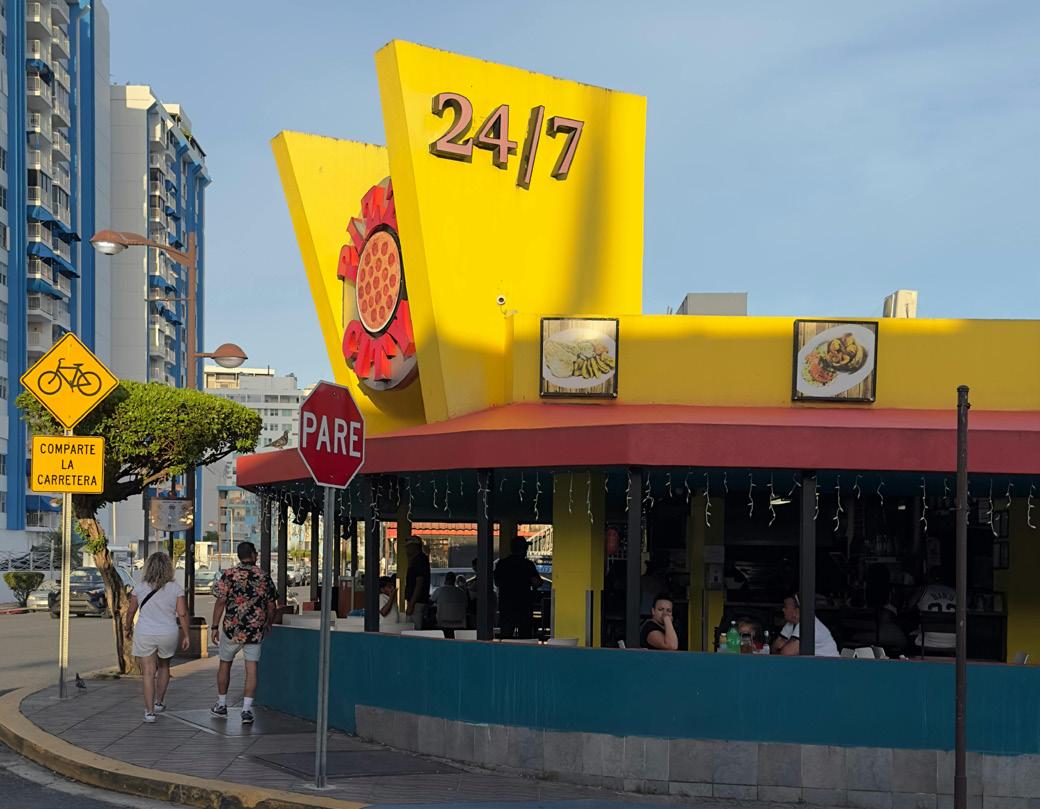
tourism (Crespo Armáiz 2014). In contrast, the article on communist Cuba was titled “Cuba, Troubled Caribbean” (Crespo Armáiz 2014, 21). The National Geographic portrayal of Puerto Rico, in contrast with Cuba, exemplifies how media outlets reinforce hegemonic tourism narratives as a tool for development by mobilizing altruism and paternalism rhetoric. Describing a U.S.-controlled Puerto Rico solely as a paradise, but a communist Cuba as “troubled,” they affirm U.S. economic policy as restorative, and a native-run nation as constantly troubled. This invokes a rhetoric, reminiscent of the “White Man’s Burden,” in which colonial powers seek to project their innocence, altruistic good intentions, while simultaneously reaffirming their authority on the basis of their economic and racial “superiority,” positioning the U.S. as a good intention actor in Puerto Rico and its suggested economic policies as the key to the island’s development” (Crespo Armáiz 2014, 9). Consequently, Puerto Rico’s depiction marginalized local stories, presenting the island’s development as solely the result of U.S. administration and industries. The article’s claim of “asombrosa prosperidad” (astonishing prosperity) as the “inheritance of the island of Ponce de León under American administration” further reinforces a narrative that overlooks the agency and contributions of Puerto Ricans themselves, rooted in colonial ideas of “modernity” (Crespo Armáiz 2014, 13). Crespo Armáiz’s analysis of the National Geographic article’s portrayal of tourism on the island conveys how the practice shapes representations of Puerto Rico as a consumable paradise and alienates other, non-hegemonic depictions of tourism on the island.
To challenge the paternalistic rhetoric of U.S. intervention in Puerto Rico framed as an altruistic force guiding the island’s development, it is necessary to move beyond an economic lens and apply social and historical lenses to understand the U.S. and Puerto Rico colonial relationship. Scholar Richard Rosa applies social and historical lenses to the relationship between the United States and the island through a critical essay on Puerto Rico’s transition from direct colonial rule to economic dependency. Rosa (2012) argues that economic dependency can be exemplified by the 1949 election of Puerto Rico’s first governor, Luis Muñoz Marín, and the
opening of the Caribe Hilton Hotel, a symbol of the shift from colonial control to economic imperialism, strategically implemented by the United States. These events demonstrated how U.S. narratives and industries are prioritized in governance and tourism, as they are intertwined in Puerto Rico, where the island’s democratic beginnings were tied to the establishment of the U.S.-backed tourism industry. Muñoz Marín, who was politically favored by President Harry S. Truman, had an inauguration that, in a few months, was followed by the inauguration of the Caribe Hilton, which brought the same level of celebration, showcasing how the industry was positioned as closely tied to democratic progress (Rosa 2012, 92). Another example was the establishment of a new economic program in 1948, Operation Bootstrap, which granted American companies tax exemptions to “industrialize” Puerto Rico rather than support domestic economic growth (Swords and Mize 2008; Rosa 2012, 92). The democratically elected government, backed by the United States, promoted tourism as a sector necessary for the island’s development. The industry was imposed by U.S. investors and functioned as a colonial enterprise, as it was interwoven with the start of democracy and the buildup of the nation-state (Swords and Mize 2008; Rosa 2012, 94). It allowed the mainland American tourism indus try to capitalize on historical represen tations of Puerto Rico as an exotic, yet modernized colonial oasis, “Span ish in tradition but American in destiny,” bringing U.S. tourists to experience a sense of “adven ture” within the comfort of a familiar economic and political system (Swords and Mize 2008). The intentional involvement of actors from the United States in establishing the political project of the first democratic government in Puerto Rico allowed the tourism industry to be portrayed as the main driver of Puerto Rico’s
economy, a portrayal used to explain, represent, and commodify the island, and its people, for profit. The narratives that defined tourism as an instrumental good silenced discourses on cultural loss and economic exploitation, exemplified in ethnographic research and historical accounts of the issue. Most importantly, what happened to Puerto Rico needs to be recounted through the narratives of the locals who experienced the impact of tourism as a gentrifying force on the island, diverting attention from the initial portrayal of the island, which focused solely on its paradisiacal, tropical location to attract tourists, rather than its culture and history.
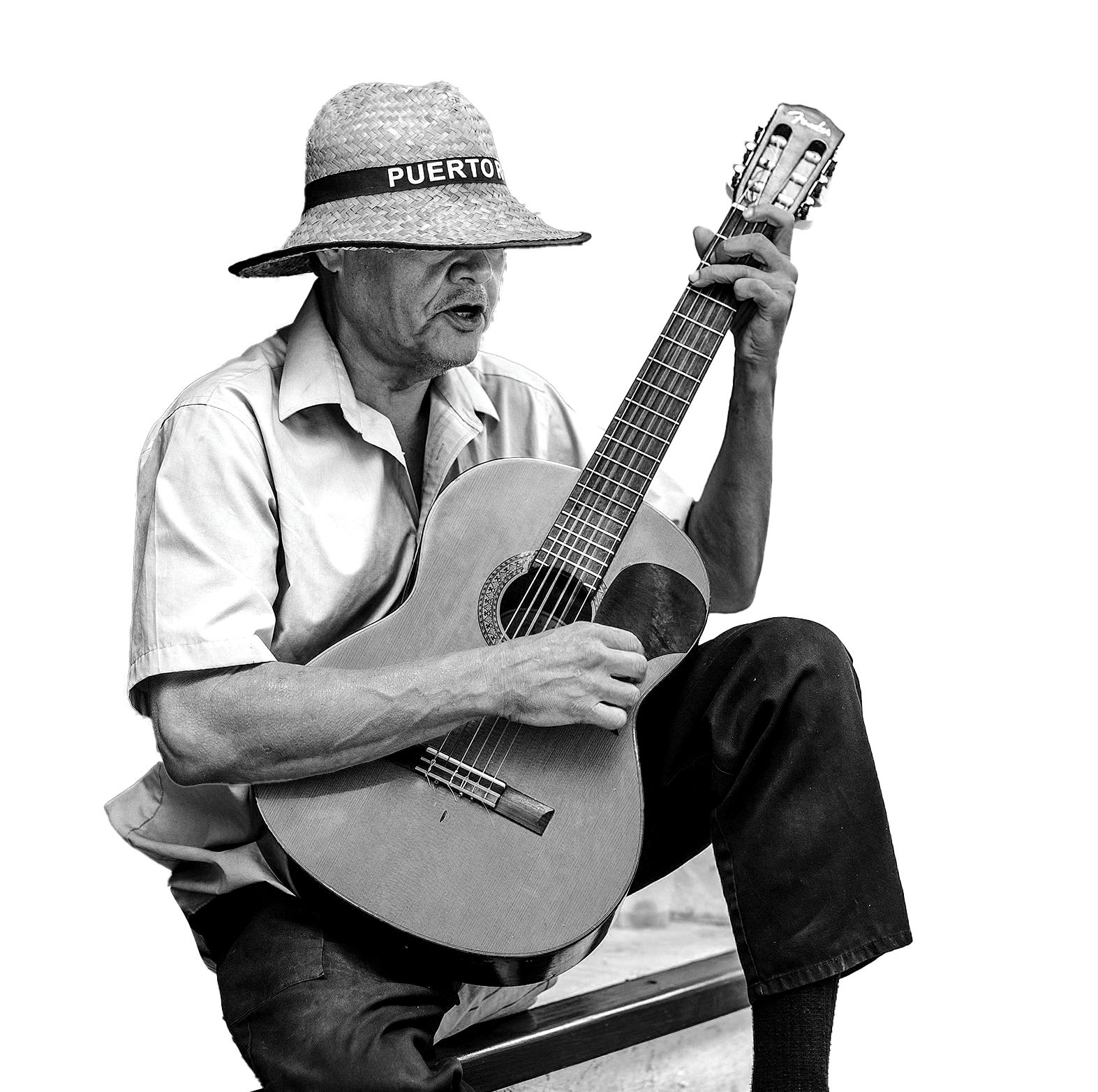
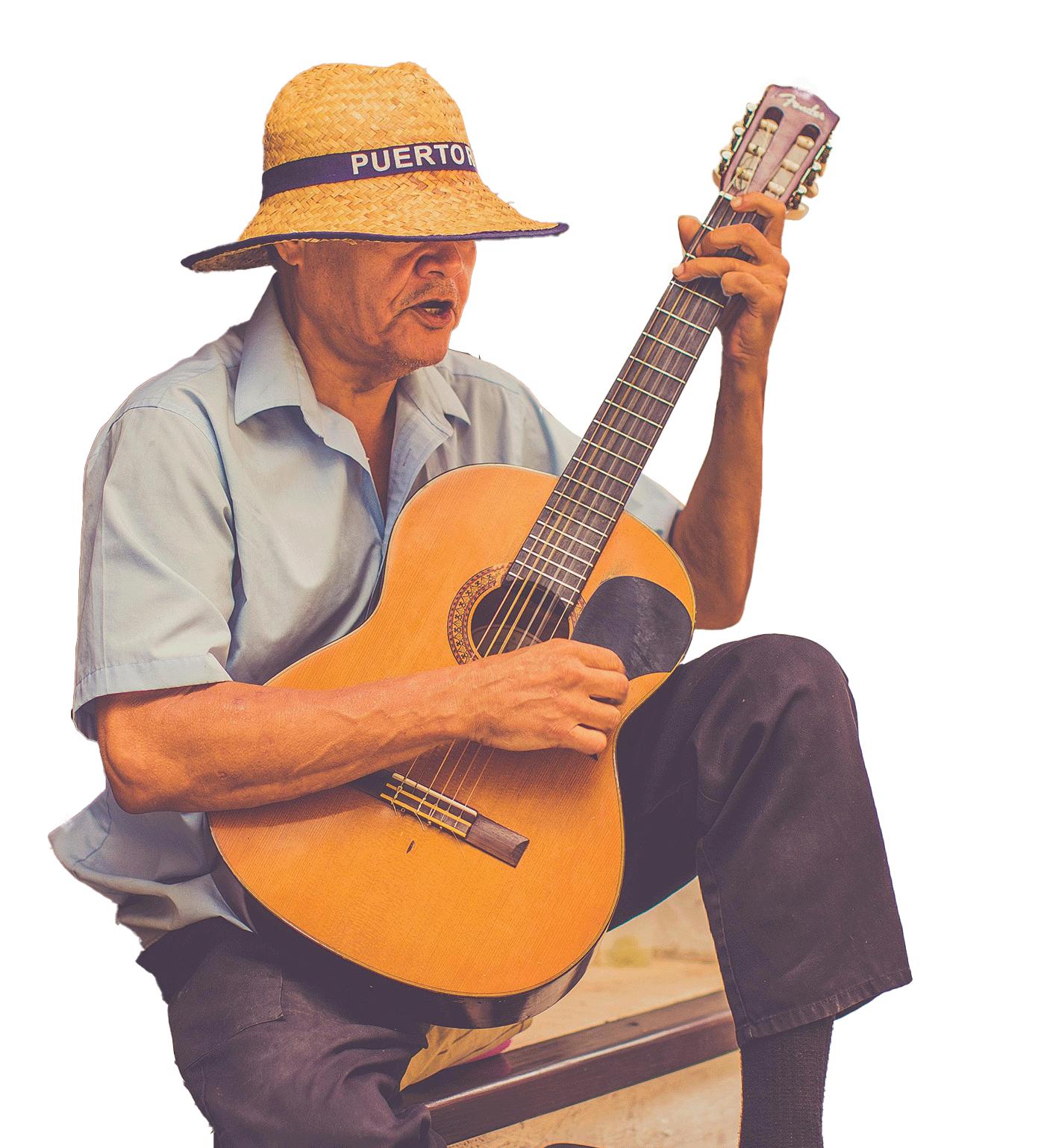
In an effort to reclaim their authorial voice, it is essential to move towards legitimizing the lived experiences of native Puerto Ricans in issues of colonialism, tourism, and their complex history through art and storytelling. This movement towards native control is evident in Bad Bunny’s artistry. Benito Martínez Ocasio, known as Bad Bunny, is a born and raised Puerto Rican singer and composer who has reached international fame through his reggaeton songs and depiction of his cultural roots. He aims, through his newest album, Debí Tirar Más Fotos, to bring awareness to Puerto litical phenomena; The called it “his Puerto Rican album yet” (Caramanica and Coscarelli 2025). This album is a love letter to his home country and culture, calling out exploitative practices, collaborating with Puerto Rican artists, and sampling Caribbean rhythms.
In an interview with The New York Times, Bad Bunny said, “There are a lot of political lines that you can’t tell are political” (Caramanica
and Coscarelli 2025). He offered the example of his song “BOKeTE;” “It’s a song about a love story, but the whole analogy of boquete is—in Puerto Rico, there are a lot of holes in the street” (Caramanica and Coscarelli 2025). He was referencing the lyric in “BOKeTE”: “Tú ere’ un boquete en PR, por eso es que te esquivo,” which translates to, “You are a hole in Puerto Rico; that’s why I avoid you.” The lyrics of “BOKeTe” illustrate Bad Bunny’s intentions to spread cultural and political messages in his songs in a metaphorical way that prompts the listener to reflect on Puerto Rico (Bad Bunny, 2025). It is representative of tourism as a tool for development because it shows how that development is unequal; while cities like Old San Juan are modernized for the sake of “
becoming tourist attractions, other sectors in Puerto Rico continue to be marginalized or have poor infrastructure demonstrating truly that “development” is not for the island, and who gets to choose how development looks like is not the locals.
Furthermore, Bad Bunny addresses the gentrification of the island in his song “Lo que le pasó a Hawaii.” In this track, he uses salsa rhythms at a slow tempo, reminiscent of a ballad for a loved one to express his love for the island and fear for its future. “Lo que le pasó a Hawaii” is not just a social commentary on Puerto Rico’s struggles, it’s a beautiful tribute to the island’s folklore and musical roots (Maldonado 2025). The chorus goes:
quitarme el río y también la playa, Quieren el barrio mío y que abuelita se vaya, No, no suelte’ la bandera ni olvide’ el lelolai, Que no quiero que hagan contigo lo que le pasó

a Hawái” (Bad Bunny 2025).
This translates to: “They want to take the river, and also the beach, They want my barrio and for Grandma to leave. No, don’t let go of the flag nor forget the lelolai—a reference to not forgetting their roots. I don’t want them to do to you [Puerto Rico] what happened to Hawaii.” In these lyrics, Bad Bunny highlights the sadness of displacement and the exploitation of land at play, providing narratives of those who are alienated and, poetically, exemplifying the impacts of tourism on the island, which, while portrayed as a tool for development, is a force of displacement for locals.
Another lyric from “Lo que le pasó a Hawaii” that expresses the sadness of displacement is “Se oye al jíbaro llorando, otro más que se marchó, No quería irse pa’ Orlando, pero el corrupto lo echó.” (Bad Bunny 2025). The translation goes: “You can hear the Jíbaro—which usually refers to an animal, but
in the song it refers to another way to say Puerto Rican, specifically for those in the countryside— crying, another one who left. He didn’t want to go to Orlando, but the corrupt one forced him out.” This reflects the emotional toll on locals and the forced migration of Puerto Ricans, showing how displacement caused by tourism and gentrification is not only about land, but also leads to cultural displacement. “Lo que le pasó a Hawaii” is Bad Bunny’s resistance to the dominant narratives promoted by U.S. imperialism about tourism as a beneficent tool for development. It uses Hawaii as an example of the harm the industry causes and compares it to what could happen to Puerto Rico if nothing changes. The song focuses on how the industry affects local communities, causing displacement, and Bad Bunny uses this to disrupt the hegemonic narratives about tourism on the island.
The emotional burden of Puerto Ricans contrasts with the excitement of some Americans, like TikTok user @AlexNarajian and her husband @justgym8, who celebrate leaving their studio apartment in New York, packing up their stuff and moving to Puerto Rico (Palau 2025). They celebrate their new home, while locals mourn being forced to leave. It is primarily possible for American couples and companies to afford to move to Puerto Rico through Act 60. Act 60, also called the Puerto Rico Tax Incentives Code, provides incentives particularly attractive to U.S. citizens who move to Puerto Rico: they do not need residency permits; their Puerto Rico income is exempt from U.S. federal and state income taxes; they get to keep benefits such as Medicare and Social Security (IRS 2021).

Act 60 is the consolidation of Act 20 and Act 22, called Act to Promote the Relocation of Individual Investors to Puerto Rico (IRS 2021, 16). These tax cuts intend to attract investors to the island, including those who invest in real estate as well as the hotel and tourism industry. Such individuals then profit from these incentives while also receiving generous tax breaks. This consolidation allows mainland American citizens living in Puerto Rico for at least 183 days to access favorable tax treatment, including exemptions from taxes on dividends, capital gains, and other income (Democracy Now! 2018). Additionally, if they move industries to Puerto Rico, they would only need to pay 4% of corporate taxes (Democracy Now! 2018). The corporate tax cuts showcase that these acts are not solely meant for well-intentioned mainland U.S. citizens to have an opportunity to afford moving to another U.S. territory, but to allow American businesses to exploit and profit from Puerto Rican land.
Basically, these two acts determine who has access to the island and who profits from it. Private stakeholders and governmental institutions backing those tax cuts argue that bringing in outside investors and companies creates jobs and develops the economy, which means to position the action as benefiting everyone in that economy. However, the reality is that the conditions of Act 60 promote gentrification as mainland American real estate developers increase the cost of living, leading to the displacement of local communities who cannot adapt. Additionally, mainland transplants reinforce the colonial hierarchical relationship between the United States and Puerto Rico
by positioning mainland Americans’ purchasing power and investment above that of locals, creating unequal positions regarding the island’s land and determining who profits from it and who is incentivized to invest. This commodification and gentrification perpetuates systems of exploitation for natives, while providing privileges to non-natives, furthering a hierarchy that continues a legacy of colonial power.
It is not surprising that American people and companies are treating moving to Puerto Rico like a business venture, as the colonization of the island by the U.S. reflects similar values. This claim is illustrated by Charles Herbert Allen, a U.S.-born politician who invested Puerto Rican public funds in American-owned companies and, after resigning from his role, returned to build a sugar-building empire (Harris 2023). His story as a politician and “investor” represents the ongoing legacy of U.S. colonialism that turns the island into a commodity for profit. In the context of American profit derived from Puerto Rican land, Naomi Klein, in her Intercept documentary “The Battle for Paradise: Naomi Klein Reports from Puerto Rico” (2018), poses a key question about the reconstruction of the island and land ownership after Hurricane Maria. She asks, is Puerto Rico for Puerto Ricans or for outside investors and tourists? In her documentary, Klein explains how in disaster zones, whether economic, climate-related, or war-related, local communities are exploited by governments, corporations, and investors to push through radical policies such as
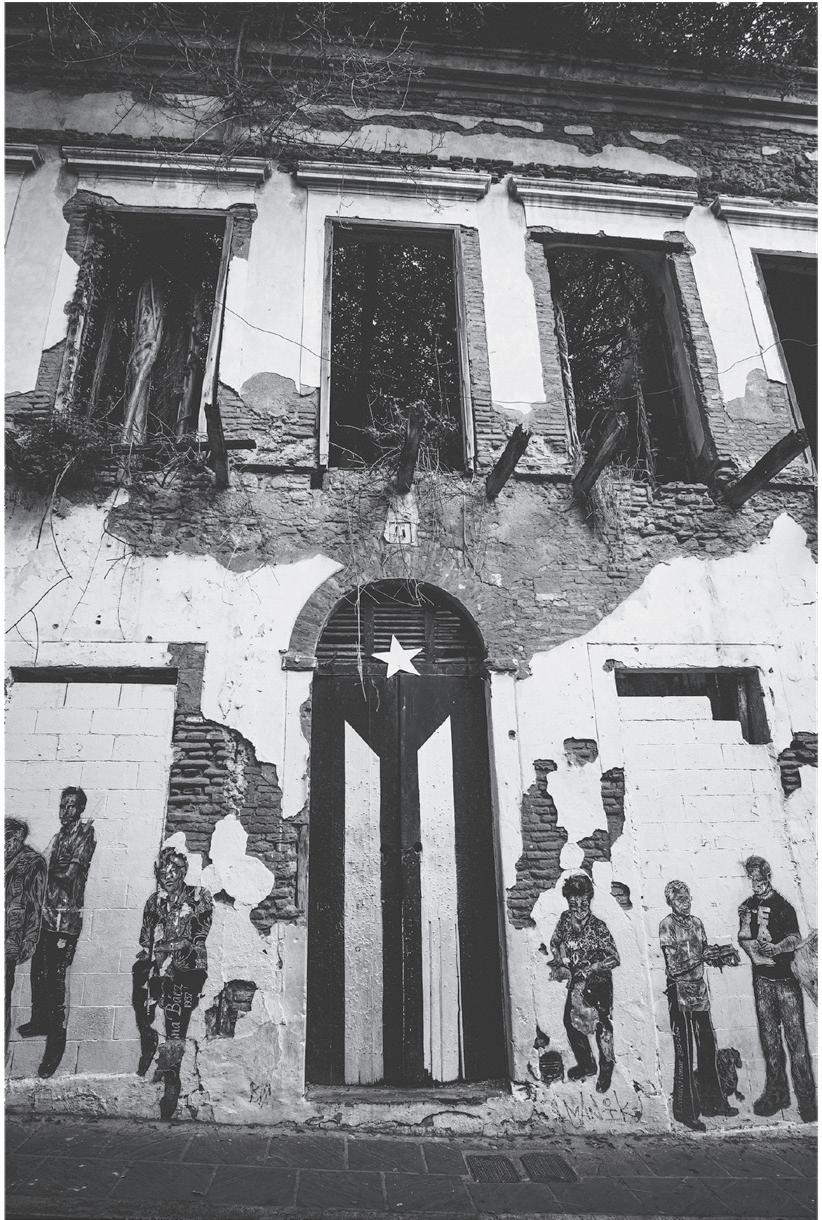
privatization, deregulation, and austerity laws to justify how the tourism industry has maintained its prominence in the island. Klein illustrates how the Puerto Rican government submits hegemonic representations of tourism by allowing the industry to remain unregulated, due to a historical push from the private sector that portrays tourism as essential to the island. American tourist corporations exploit their ties to the Puerto Rican government to continue to extract the land and profit from it. In her documentary “The Battle for Paradise: Naomi Klein Reports from Puerto Rico,” Klein interviews Keith S.T. Clair, the chief executive officer of Isla Verde Hotel Group, who was contacted by the governor, Ricardo Roseelló, regarding his response to Hurricane Maria (The Intercept 2018). Clair expressed that he is doubling and tripling his investment because he believes in Puerto Rico (The Intercept 2018). However, this “belief,” while presented as an altruistic confidence and investment in the island, is rooted in the prospect of profit from the tourism industry.
Despite Puerto Rico’s struggles with hurricanes, the pandemic, and a 6.4-magnitude earthquake in 2020, the protection of the tourism industry takes precedence over the well-being of locals. We saw this clearly when the private sector focused more on attracting outside investors and tourists than on addressing the needs of Puerto Ricans trying to recover. In 2018, Discover Puerto Rico, an institution that receives support from the Puerto Rican government and the Puerto Rico Hotel and Tourism Association, allocated millions of dollars to the “#CoverTheProgress” campaign to mitigate what they termed “negative” media coverage of the hur-
ricane and prevent it from affecting the tourism industry (Taylor 2024). The “#CoverTheProgress” campaign generated 625,000 trips, according to Leah Chandler, the chief marketing officer of Discover Puerto Rico (Taylor 2024). They argue that these campaigns are well-intentioned and intended to attract investors and U.S. companies that will contribute to the island’s growth, thus having a positive impact on all residents. Nevertheless, investing in such a campaign highlights the priorities in creating incentives that support the island’s tourism industry and reveals the institutional need to preserve the narrative of Puerto Rico as a tropical paradise despite its struggles.
Bad Bunny references how the need to preserve the hegemonic, superficial portrayal of the island fosters a shallow relationship with it in his song “Turista” (Tourist). Tourists come to party, enjoy themselves for a while, see the most beautiful landscapes, and then they leave without seeing or dealing with the other side of Puerto Rico, such as its infrastructural issues or the barrios, which this paper compares to the superficiality in a fleeting romance. In the song and music video for Turista, Bad Bunny plays with this metaphor in lyrics. In one line he writes, “En mi vida fuiste turista, tú sólo viste lo mejor de mí, y no lo que yo sufría, te fuiste sin saber el porqué, el porqué de mis heridas,” (“You only saw the best of me and not what I was suffering; you left without knowing the reason of my wounds”). Similarly he continues, “Tengo miedo que me hagan más daño, lleva así mucho tiempo.” (“I am afraid they will hurt me again; it has been like
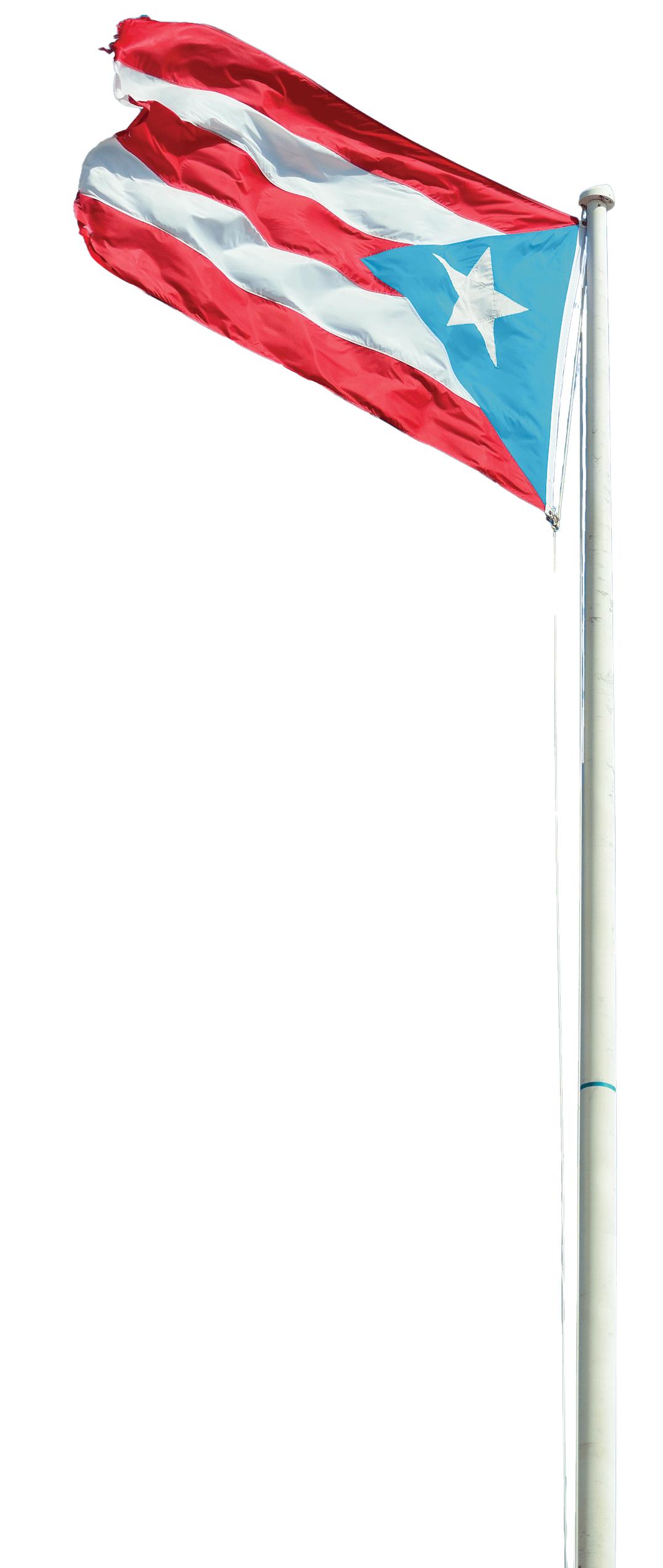
as a commentary on the ways tourism and globalization impact culture and the locals’ sense of community because it showcases how the land has been commodified for outside investors through tax cuts, exploiting and displacing Boriqua’s culture, land, and everyday life for the sake of the tourism industry’s profit. At the same time, it provides a representation of resilience and community, challenging the notion that locals welcome the industry.
The tourism industry and its ethics in Puerto Rico are not neutral, rather they are closely tied to colonial legacies, self-determination, and the intersection of the commodification of culture and land. Tourism in the island functions as a U.S. imperialist practice, shaping Puerto Rico’s representation and economy, which has led to gentrification that has displaced the local residents. Given the deeply interconnected nature of this industry, it is crucial to foster conversations that critically examine these dynamics (Leahy 2025). Relying on dominant hegemonic narratives that, as argued, prioritize economic benefits and describe the island as a consumable tropical paradise, come at the expense of cultural displacement and are rooted in colonial discourse. Yet, the well-being and autonomy of the local population and the protection of culture should always remain central considerations in such discussions, as these hegemonic narratives are not uncontested. As shown through Bad Bunny’s album, Boriquas are actively resisting by reclaiming
their voices and exposing their lives as a consequence of tourism, including gentrification and its cultural and land displacement. This critical analysis of tourism reveals how the practice is rooted in colonial legacies and reaffirms the importance of centering Puerto Rican voices in assessing its impacts on the island.
Crespo Armáiz, Jorge L. 2014. “De la prosperidad a la resistencia: La representación de Puerto Rico en la revista National Geographic (18982003).” Caribbean Studies 42, (1). https://dx.doi. org/10.1353/crb.2014.0016
Democracy Now! 2018. “The Battle for Paradise: Naomi Klein on Disaster Capitalism & the Fight for Puerto Rico’s Future.” YouTube video, Posted March 21. https://www.youtube.com/watch?v=OjG7qqomvBk.
Franklin, Alex. 2003. Tourism: An Introduction. London: SAGE Publications, Limited. ProQuest Ebook Central. https://ebookcentral.proquest. com/lib/wisc/detail.action?docID=354936
Harris, Johnny. 2023. “How the US Stole Puerto Rico.” Youtube video, Posted July 12.
Internal Revenue Service (IRS). 2021. Introduction to Puerto Rico Acts 20 and 22. Washington, D.C. https://www.irs.gov/pub/irs-pgld/introduction-topuerto-rico-acts-20-and-22.pdf
Kincaid, Jamaica. 2000. A Small Place. New York: Farrar, Straus and Giroux.
All translations of Bad Bunny’s lyrics in this piece are done by the author of this paper, whose native language is Spanish.
Aponte-Parés, Luis. 2019. “The Imperial Gaze: Tourism and Puerto Rico—A Review Essay.” Centro Journal 31, (1). https://www.researchgate. net/publication/333349861_The_Imperial_Gaze_ Tourism_and_ Puerto_Rico_-_A_Review_Essay
Bad Bunny. 2025. “BOKeTE.” Genius Lyrics, January 5, 2025. https://genius.com/Bad-bunny-bokete-lyrics
Bad Bunny. 2025. “Debí Tirar Más Fotos (Short film).” YouTube video, Posted January 2025. https:// www.youtube.com/watch?v=gLSzEYVDads.
Bad Bunny. 2025. “Lo que le pasó a HAWAii” Genius Lyrics, January 5. https://genius.com/Badbunny-lo-que-le-paso-a-hawaii-lyrics
Bad Bunny. 2025. “Turista” Genius Lyrics, January 5. https://.com/Bad-bunny-turista-lyrics
Caramanica, Jon, and Joe Coscarelli. 2025. “Bad Bunny Talks ‘Debí Tirar Más Fotos,’ His ‘Most Puerto Rican’ Album Yet.” New York Times, January 20. https://www.nytimes.com/2025/01/05/arts/ music/bad-bunny-album-debi-tirar-mas-fotos.ht ml.
Maldonado, Alina. 2025. “The Powerful Meaning Behind the Silences in Bad Bunny’s ‘Lo Que Le Pasó a Hawaii’.” Los40 USA, March. https://los40.us/2025/the-powerful-meaning-behind-the-silences-in-bad-bunnys-lo-que-le-pas o-a-hawaii-28201.html.
Mathieson, A. and G. Wall. 1982. Tourism: Economic, Physical and Social Impacts. London: Longman Cheshire. https://los40.us/2025/thepowerful-meaning-behind-the-silences-in-badbunnys-lo-que-le-pas o-a-hawaii-28201.html.
Leahy, Bridgette. 2025. “Puerto Rico: A Tourist’s Ethical Dilemma.” The Fordham Ram, February 12. https://thefordhamram.com/opinion/puerto-rico-a-tourists-ethical-dilemma/
Ramírez, L. J. R. E., A. M. Q. Méndez, and M. S. C. L. Ceballos. 2022. Gentrificación turística. Centro de Estudios Sociales y de Opinión Pública. https:// congresooaxaca.gob.mx/docs65.congresooaxaca.gob.mx/centros_estudios/CESOP/i nvestigacionCESOP/Inv_Gentrificacion_CESOP_2022.pdf
Rosa, Richard. 2012. “Governing Tourism: Representation, Domination and Freedom in Puerto Rico: 1949.” The Global South 6 (1). https://doi. org/10.2979/globalsouth.6.1.87.
Swords, Alicia, and Ronald L. Mize. 2008 “Beyond Tourist Gazes and Performances: U.S. Consumption of Land and Labor in Puerto Rican and Mexican Destinations.” Latin American Perspectives 35, (3). http://www.jstor.org/stable/27648097.
Taylor, Charles R. 2024. “Puerto Rico’s Comeback: How Boricua Is Driving Tourism.” Forbes, March 25. https://www.forbes.com/sites/charlesrtaylor/2024/03/25/puerto-ricos-comeback-how-boric ua-is-driving-tourism/.















war boy, w/ stump— —w/ stump-arms out-stretched— as if crucified
bullet-gut bullet-protruding from gut -shooting from gut spilling
hollow where bones should be —would be— glass-cast flesh
faceless headless war boy, without a stake to claim sans hands to claim it with who marked you, stateless war boy? sans nation, home, race sans name yet signed nevertheless claimed staked
war boy, where to repatriate you?— from where do you come?
begotten in the same year as me by an irishman labeled brit born in the year of the nakba
ageless static war boy, a non-soldier with no cult and no country to re-turn to battlefield inward-erupting and wiry-contained open-air inert ammunition civil-war boy, propped on the white-wash altar open esophagus to-ward
Based on War Boy
Job No. 1 by Clifford
Rainey
way-ward boy, (with) what do you think? war boy, why the long face?



Content Warning: Victim blaming, sexual harassment, off-page sexual violence
Her heart pounded in her ears—deafening—throbbing against the skin at her temples. She walked quickly through the twisting halls, picking at the hem of her red dress. Knees shaking with every step, she swallowed down the acid taste of bile. Gnawing on her inner lip, she tasted coppery red blood between her teeth.
The back of her neck prickled. She walked faster, eyes darting past empty nooks and crannies, cursing the lack of people in the usually bustling school halls. Her breath sawed into her lungs with every ragged inhale. The red silk of her dress clung to her back and thighs. Sweat dripped down the nape of her neck and tears pricked at her eyes.
Mama had told her not to wear that dress. Too short. Too bright. Too red.
A loud, warm laugh echoed behind her. She flinched, making a sharp turn. Her walk turned into a run, arms swinging by her sides, bag bouncing against her back. The school counselor— an older woman whose grey hair was expertly twisted into a classy bun—watched her through the glass office door, tracking her running over the rim of a mug.
Her footsteps echoed against the cheap tile floor. She could hear something breathing heavily behind her. Her hands tightened into fists at her sides, short round nails digging into her palms. The tap of feet on tiled floor echoed from behind her. She pictured a monster. Drool dripping from a furred snout of sharp, yellowed, bloodstained teeth—clawed feet making those horrible thudding steps. She ran faster, as fast as she could. Heart pounding, chest heaving, legs shaking, she sprinted and stopped dead at the end of a dark hall. The heavy double doors were shut, barring her way. They were locked, when she pushed against them. Her head twisted frantically from side to side. She turned, ready to run in the other direction—
A man in a nice grey suit, white button up, and grey tie stood, blocking her path. His hair was combed and gelled. His black shoes were shiny and polished. He smiled, flashing a row of flat white teeth.
“Shh shhh.” The sound pushed from between his parted lips and crawled across her red silk sleeves, winding its way to her throat. Her breath caught. Her shoulders tensed. She took a half step back.
Something dark glinted in his eyes.
“You’re okay, baby,” he whispered. “There’s nothing to be afraid of.”
Little Red buried herself in a corner of the cafeteria, back pressed firmly against the wall. Occasionally, someone pointed, whispering as they walked past, but she was old news. The whispers were just dull knives scraping over scabs and scars; not pleasant, but they didn’t draw blood. She wouldn’t let them. She wore all black, wrist to ankle; baggy sweats, a hood pulled around her face. She didn’t touch her food. In fact, her lunch stayed packed, meticulously stowed in the bag tucked tight against her legs, ready to be grabbed and swung over her shoulder at any moment.
Instead, she watched. Hollow eyes set dutifully on a single figure. A freshman girl, barely fourteen, laughing with her friends a few tables down. The girl wore a bright red sweatshirt.
The bell rang like a shrill scream, echoing.
Coincidentally, the girl glanced up at her. Little Red tried to infuse her empty eyes with warning. It didn’t work. The girl’s brow wrinkled, and she turned towards her friends, whispering. They packed up quickly, shooting narrow-eyed looks at Little Red as they passed. She watched from where she sat as they crossed—giving her a wide berth—in front of her table, and until they entered their classroom.
She knew that her staring made the girl uncomfortable. But she also knew she wasn’t the only one watching. Dark, piercing wolfish eyes followed the gleam of red.
If she could, she would tell the girl—tell every girl—to rip up every red thing they owned. To tear stitches into threads. To turn silk into strips into ash into trash. Just like she had. She still remembered the way her hands ached and shook after ripping each red thread out of her favorite rainbow sweater.
“Hey, Little Red.”
She flinched. She grabbed her bag and stood in one fluid motion, turning to face the voice, putting her back to the wall.
Her narrowed eyes flickered over the boy who spoke. She relaxed marginally, easing away from the wall.
“Don’t call me that.” She pulled her black hood further over her face.
He put his hands in the pockets of his jeans, smiling nervously.
“Oh, that’s right. You’ve eschewed color for the season. My apologies.”
“Leave it alone, Hunt.” She stepped around his side, careful not to touch any part of him.
“Hey, wait up.” He trailed behind her, innocent eyes wide like a golden retriever. “Let me walk you to your next class, it’s on the way to the woodshop.”
“Let’s not do this.”
“Red—”
She stopped and swung around to glare at him. He stopped too, wincing.
“Sorry,” he said softly.
She continued walking, not looking at him as he fell into step beside her. An antsy feeling crawled across her skin, causing her to twitch. The halls were emptying too fast. She walked a little closer to Hunter. Their footsteps echoed against the cheap tiling. She shuddered, ignoring the sound. Ignoring the turn towards the dark hall with the double doors.
“Let’s turn here, it’ll be faster.”
“No,” she said sharply.
“Come on, let’s—”
“No.”
They stopped in the middle of the hall. He turned to face her.
“What’s going on with you, Red?”
She looked away. His voice softened.
“Come on. Talk to me.”
She blinked, her throat tight.
“You know what’s going on, Hunt.”
His brows wrinkled, confusion clouding his eyes. He glanced at the dark hall and suddenly they cleared.
“Oh.”
Little Red’s eyes shut. She took a trembling deep breath and peeled them open, not liking what stalked the shadows beneath her closed lids.
“Hunter.” Her voice broke on the word. His eyes widened at the rawness in her voice. He opened his mouth, his arm reaching for her shoulder. The bell rang shrilly. She flinched. He noticed and let his arm fall to his side.
She blinked twice, clearing her eyes.
“Just leave me alone, Hunter.”
Before he could respond, she turned on her heel, turning away from the dark hallway. Away from him. She walked briskly through the empty halls toward her class, looking over her shoulder intermittently.
Hunter had tried to stand by her side after everything happened. But the longer the investigation dragged on—the more times she was called to talk to admin—the more confused he became. He’d asked questions she wasn’t ready to answer, so she’d stopped talking and they’d drifted apart.
Investigation. That word could mean whatever they wanted it to mean. It could mean getting his side of the story first. It could mean calling her into the office again and again, to ask just how sure she was, to inquire why she was out of class alone, to determine how she was behaving.
It could come back to that one color again, and again, and again: red.
She took a deep breath, steadying herself, and pushed into the classroom, intending to slink to the back of the room unnoticed. Unfortunately, Mrs. Matria called her out right as she walked in.
“Ah, late again. Is my time really so worthless to you?”
Little Red stopped dead at the front of the class, burying her face beneath her black hood.
“Sorry,” she murmured, eyes downcast. She could feel the students watching her with burning gazes.
“Well, if you want to be skipping class, you can at least do something useful.” Mrs. Matria shoved a stack of papers into her arms. “I was going to have my TA do it, but it seems like you’ve just volunteered. Take those to the counselor in the front office.”
Little Red stood there, unmoving. Curious whispers grew from her classmates. Mrs. Matria sighed.
“Is there a problem?”
Nervously, Little Red picked at a loose piece of string on her sleeve.
Her mother nodded approvingly at the pile of ripped red strings. But then she sat down next to her and taught Little Red to say the word “no” with strength.
“Is there a problem?” Mrs. Matria repeated, sharply.
Little Red looked up at her, eyes hardening. “No.”
“Well then, I suggest you get going—”
“No, I won’t go.”
“Excuse me?”
“No.”
Even as her hands trembled, Little Red glared at Mrs. Matria. She glared back at Little Red through grey-framed glasses for several long moments. As the silence dragged on, the class tittered nervously. Mrs. Matria closed her eyes and took several deep breaths. When she opened them again, she was smiling.
“You take those papers to the office voluntarily or I’ll call security to escort you there.”
Little Red’s breath caught.
The sound of clawed feet padding against the floor, following her, echoed in her ears. Snarled breathing on her neck—narrowed eyes watching from across the room. A booming laugh that everyone loves and trusts so much.
Holding the papers to her chest like a shield, she turned on her heel back into the vast, silent hall. She walked quickly, ignoring the memories flashing across her eyes. Her heart pulsed frantically, and tears brimmed her eyes.
“Help me,” she begged Mrs. Matria, on the day that had broken her. “He… he…”
The sobs poured from her throat.
Little Red blinked viciously, causing a tear to overflow and run down her cheek. Turning her head nervously from side to side, she checked to make sure the halls were empty. To make sure that the man in the grey suit was elsewhere. She glanced up to ensure the little red light blinked inside the cameras. It did. This time. Clutching the papers tighter to her chest, she hastily scurried towards the office.
Mrs. Matria had sent an email. That was it. An email. And that was all it had taken for the administrative vultures to descend on Little Red.
And they had picked her apart, tearing little nips and strips of bleeding flesh from her still breathing bones. All cawing the same thing over and over again: proof, Little Red, proof.
Proof. Like her words weren’t proof. Like her running wasn’t proof. It’s too bad whispered words don’t leave bruises, and manacles of fear don’t appear on security cameras. It’s too bad that it’s easier to silence and side against a single scared girl.
“The counselor,” she said during the investigation. “She saw me running from him through the glass door. She—she was drinking coffee.”
“The counselor was scheduled to be in meetings with students all afternoon. How could she have seen you? She’s a very busy woman,” had been their reply.
“No—no—”
“Why don’t you just tell us why you would lie about something like that?”
Little Red shook her head, staring through the transparent door at the counselor. Their eyes met over the rim of her mug. Her heart pounded in her throat, hands trembling around her shield of papers. Knees weak beneath her, Little Red took a deep breath and pushed the door open. The fluorescent lighting illuminated the woman’s grey hair.
One by one, Little Red peeled her fingers from the paper shield. She slid it onto the desk between them. Her fingers withdrew into the sleeves of her black hoodie, her arms curled around her torso reflexively.
“Papers from Mrs. Matria.”
The counselor tilted her head to the side, a half-smile curling the corner of her lips.
“Oh? And why are you delivering them? You get into some trouble?” she asked, words dripping with false sweetness.
“I was late,” Little Red said, in a clipped tone, edging towards the door.
“Oh? And what kept you?”
Hunter’s nervous grin flashed before her eyes.
“Come on. Talk to me.” Hunter’s hand fell back to his side when she flinched.
She bit her cheek to drive out the memory of the hurt look on his face and the pain in her
chest. She missed the days when he could stand beside her without all the complicated feelings.
“Nothing,” she muttered.
The counselor made a noise in the back of her throat.
“I would have thought you’d learned better than to lie by now, Little Red.”
She flinched. She heard his voice in her head.
“I’ve always loved the color red.”
His breath on her neck. His nose brushing her ear.
She dug her nails into her palm. She kept them sharp nowadays. Sharp enough to draw red blood, her own form of claws. She met the woman’s eyes head on.
“I’m not the one who lied.”
The counselor’s eyes narrowed.
“What was that?” her white teeth flashed as she spoke.
Little Red took a bracing breath and let the trapped words burst free.
“I’m not the one who lied in order to save my own skin. That was you.”
The woman inhaled sharply and leaned towards Little Red. The door behind her opened.
“Ahh, just the girl I was hoping to talk to.”
Little Red ripped her eyes away from the counselor to stare wide-eyed at Mr. Forest. Her principal. He wore a black suit and grey striped tie. The grey stripes glinted as he smoothed a hand down his jacket.
“Why don’t you step into my office, Little Red, so we can chat for a minute?” He held an arm open, gesturing to the door behind him.
Little Red stood frozen. She knew what was behind that door. A big, expensive mahogany desk. A soft grey swivel chair behind it. A window overlooking the faculty parking lot. A cheap Walmart painting of a wide-eyed deer. And on the other side of the desk, a single rickety folding chair. She knew the feel of that metal chair on her thighs. She knew that the front left leg was shorter than the others—it was missing a cap—and it squeaked loudly every time she moved.
She remembered vividly being ushered into that room, full of hope that now, finally, she would be heard. She remembered freezing the second she entered, Mr. Forest bumping into her back. His hands on her shoulders pushed her into that rickety chair while her eyes locked on the man standing across the room, behind the desk. The man with cold eyes and grey suit. He stared at her, bemused. Mr. Forest sat next to him, behind the mahogany desk.
She remembered every word he said, as she struggled not to get sick on his fancy red and brown rug.
“My friend, Mr. Wolfe, says that you’ve been spreading some nasty rumors about him. I figured we could sit and have a casual chat about that. Before things go any further.”
The cold chair bled through the thin fabric of her red dress. She stared and stared at the frightened deer behind the two men.
Beneath her sleeve, Little Red clenched her fists tighter, digging claws into tender skin. She was careful not to draw a single drop of fresh red blood. Mr. Forest stood, waiting impatiently for her to cross alone into his office. She squared her shoulders.
“I believe I have been very clear that I will not speak to you without my mother present. Good day.”
She nodded to him. He called out to her.
“Well, our trusty counselor could join on your behalf. She’s like a grandmother to the students here.”
Little Red let her eyes flicker over the two cowards. She smiled blandly.
“I find that insufficient.”
“Wait—” Mr. Forest called, but the door was already swinging shut behind her.
She turned quickly on her heel and ran out of the little room, back into the labyrinth of halls, quickly turning a corner and leaving the office behind her. Little Red’s thoughts consumed her as she ran.
These people. They just took, and took, and took from her. From anyone who caused too much of a fuss.
Didn’t they care that she stood outside the school for fifteen minutes every day, working up the nerve to go in? Didn’t they care that she flinched anytime someone came up behind her too quickly? Didn’t they care that she still woke up screaming?
She knew the answer. No, they didn’t care. Not unless they were on camera and then they Did Everything They Could To Help Their Students. She knew the truth. Cowards protected pred-
ators. Predators consumed.
She knew the truth. She could tear every red thread from every dress, every blouse, every sweatshirt in the world. She would still have to fear the cold, dark eyes of a wolf watching her across a crowded room.
It didn’t matter what color cloth she covered her skin in. The red was inside her. It rushed through her veins. Even if she hoarded every drop of the bitter blood, she was a woman: she bled red twelve weeks a year without a choice.
Little Red turned another corner and collided with a girl. Gasping, they both tumbled to the floor. Red’s hood was knocked from her face. She inhaled in surprise, meeting a pair of wide, deer-like eyes.
It was the freshman girl from the cafeteria. The girl in the red hoodie.
Her doe eyes were blown wide and filled with fear. Tears brimmed them. Her chest rose and fell with rapid shallow breaths as she scrambled into a sitting position. Her lips trembled.
She’d been running.
The breath fled from Red’s lungs. She stood, holding her hand out for the girl. The girl’s hand trembled as she took the offered help. Red pulled her up. The girl glanced worriedly behind her, twitching. She took a step to start running again.
“Switch with me,” Red said.
“What?” asked the girl, stopping.
“Switch sweatshirts with me.”
The girl blinked frantically, tears falling down her cheeks. Red pulled her black sweatshirt off over her head and held it out for the girl. Hands trembling, the girl did the same. With shaking breaths, the girl quickly pulled the black sweatshirt over her pink tank top, yanking up the hood to hide her face. Red slowly slid the sweatshirt over her arms and black cami. She left the red hood down.
“Run,” she said to the girl. “It’ll be okay.”
The girl took a step but then turned back to Red.
“What about you?”
Red blinked in surprise, then rolled her shoulders and flexed her hands. The girl’s eyes caught on her sharp fingernails.
“It’ll be okay,” Red repeated.
The girl opened her mouth, paused, then closed it, turning on her heel. Red watched her run down the hall. It would be okay. Red would make it so.
She pulled the little red hood over her head and ran in the opposite direction of the girl. She drew slow breaths into her lungs. Her legs carried her forward—faster, faster. Her heart beat steady in her chest and her eyes narrowed. Behind her, she heard the unmistakable sound of claws on tile, and ragged, beastly breathing.








Never a meal
God damn, god damn, a thousand god damns
He never says it out loud
I know he loves me
God damn, god damn, a thousand god damns
Helps me make a homemade kaleidoscope
I know he loves me
Set an example, you’re the oldest
Help me make a homemade kaleidoscope
God damn woman and kids
Set an example, you’re the oldest
Family reunions
God damn woman and kids
Cousins compare notes
Family reunions
Road trips out West
Cousins compare notes
You drive and you drive and you drive
Road trips out West
Camping on the good nights
You drive and you drive and you drive
Mom does a little laundry
Camping on the good nights
All the girls’ panties stolen while we sleep
Mom does a little laundry
Find a local Penney’s for undies
All the girls’ panties stolen while we sleep
God damn, god damn, a thousand god damns
Plate of beans on the kitchen wall
I know he loved me
Knock over the Christmas tree
Never a meal
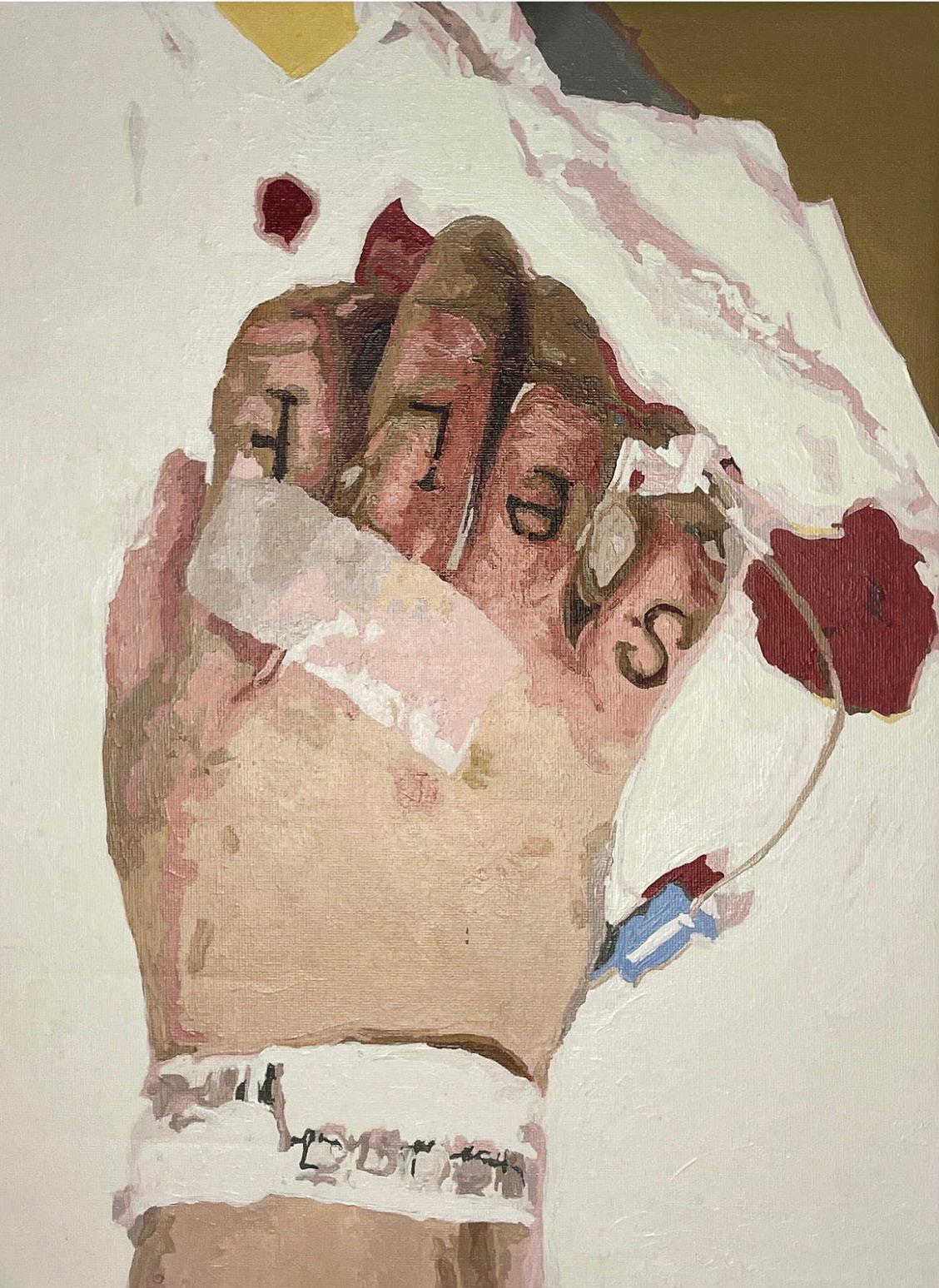
To bet on life
Chava Ramirez



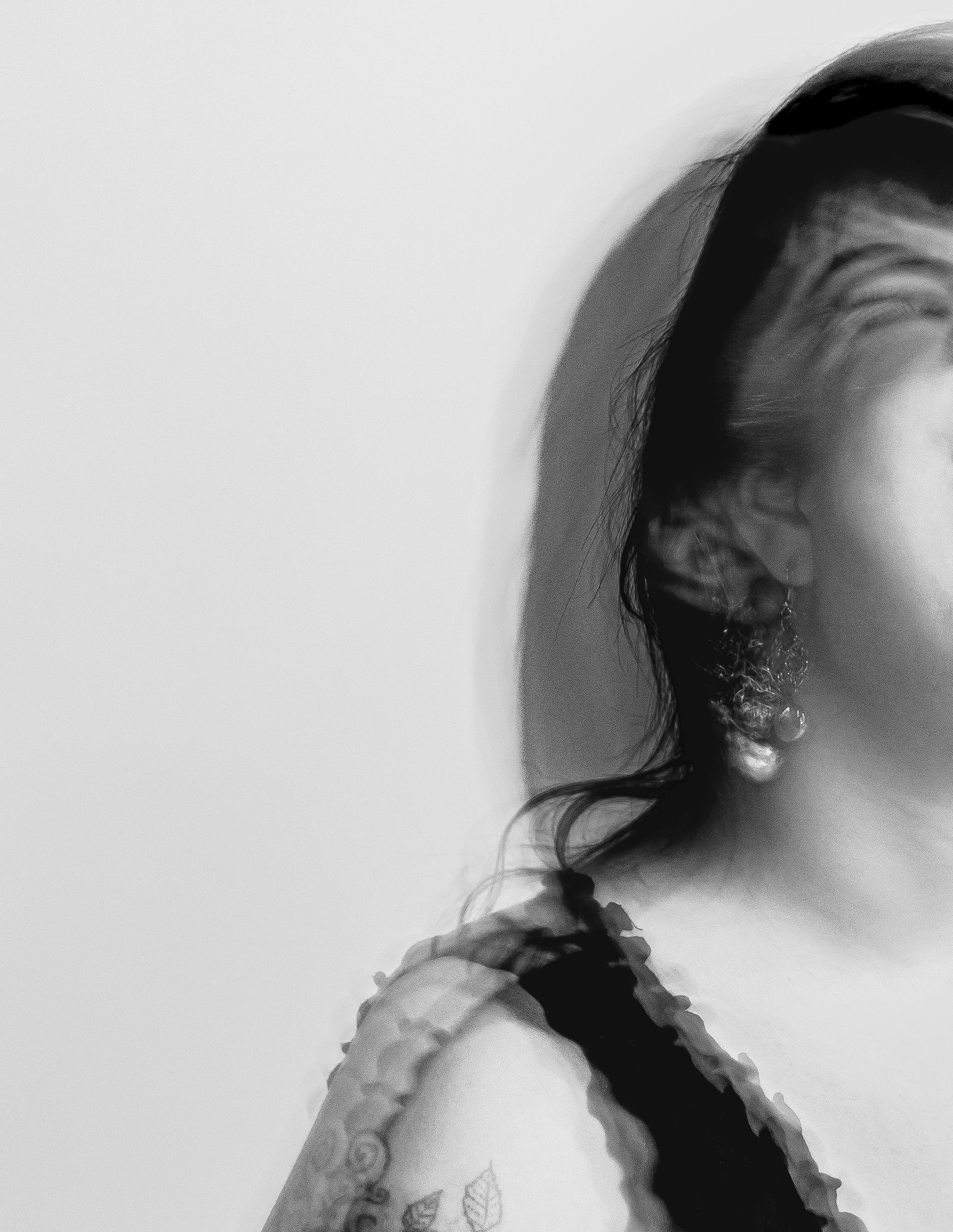
Mars Mittelstadt
in the case you cannot be mended, where flesh fails to meet expectations: don’t dispose of yourself— what a waste. no, you must become molten, molded, mauled, mosaic.
skin shards should adorn your bare bones, glistening glass shattered and glued. grout engrained in grooves.
worship your new god: your body— a three-dimensional window throwing prismatic hues on the chapel floor. in this church, there are no pews, no pulpits to preach from.
there is only a garden—a vast expanse of crystalline flora and in the garden’s core: a book on a pedestal.
the text is ancient, yet pristine— the cover as ornate as the spellbook of a mage,
and the pages are blank until light graces the paper, glimmers forming lines, curves, then words, spelling out the names of each and every trans person, each and every trans person made holy. divine.
please, forget how they fragment you, shifting crystals from prized muscles to despised breasts to crack your will when hammers phase right through.
this world insists on organic flesh, your glass grotesque. let them know your body is no imitation, but self-tribute.


Rose Tyler
In this paper, I develop a theory of relationality between anarchism and existentialism regarding their common metaphysical and ethical understanding of freedom. In doing so, I create an analytic topology based in ambiguity, which can be utilized as a tool for mobilizing revolutionary action towards freedom as the ultimate end. I aim to defend anarchism’s position regarding freedom by discussing some of its prominent philosophers, namely, Emma Goldman and Pëtr Kropotkin. Drawing on the existential philosopher Simone de Beauvoir and her notions of freedom as outlined in her book The Ethics of Ambiguity, I explain how the general development of existentialist ethics and anarchist ethics are closely aligned. Then, I discuss how the similarities between both philosophies suggest that revolutionary action towards freedom is enacted by realizing one’s potential out of a contingent, ambiguous condition. In developing a critique of the state using de Beauvoir’s critiques of power alongside Goldman’s anarchist theories, I find that freedom is most optimally realized outside of statist institutions by enacting anarchist principles of mutual aid and revolutionary action. Finally, I ground these abstract ideas in the liberatory methods utilized by anarchists, addressing the important means-ends debate in revolutionary theory, which points to a conflict between the way revolution is achieved and how it undermines the ultimate goal
of liberation, finding that a synthesis of mutual aid ethics in accordance with the essential condition of freedom resolves this conflict by making the ends and means to revolution analogous to each other.
The essential similarity between anarchism and existentialism is evident when comparing how they each argue in favor of freedom through their assertions that freedom is a fundamental condition of human existence. Freedom, therefore, is a core guiding principle of ethical action and can be used as a point of reference when making a value judgement for some action. In existentialist philosophy, the basic movement that is always present in human action is that of freedom, which is argued by Simone de Beauvoir in The Ethics of Ambiguity as a truth that one must accept to make valuable decisions on how to act in the world. By looking at how freedom functions for the individual, one can draw inferences into how freedom should function for an aggregate of individuals constituting a social body. The character of freedom for the individual is such that it is affirmed through its negation; that is, when a person’s freedom is denied, it is first affirmed as something that exists (de Beauvoir 10). From the negation of freedom, one can determine a positive course of action by identifying the effect that denies freedom for the individual as that which must be overcome to continue their movement towards freedom (de Beauvoir 14). It is this positive course of action,
which, once identified, can grant insight into what values are presently being denied and thereafter, inform a value judgement about any course of action based on whether it results in freedom (de Beauvoir 16). Therefore, freedom is the fundamental condition of every human; since it is the condition of all individuals, it relates the particular condition of any person to the general, universal will of the social body, it should be used to inform how to act in the world. Since freedom is the only justifiable end to action, it is either affirmed or denied in any particular case, and thus becomes necessary that we should treat others “as a freedom so that his end may be freedom” (de Beauvoir 154). Within society, “freedom always appears as a movement of liberation,” and the relationality of freedom means that in seeking freedom for the individual, one must always seek freedom for others at the same time (de Beauvoir 33, 169). The important analytical movement for understanding existentialist ethics in de Beauvoir’s argument is how she understands the relationship between the particular and the universal characters of ethical action; their ends are aligned insofar as they each hold freedom as the ultimate goal. An action only has ethical value if it results in freedom for the individual and broader society at the same time, thus moving beyond a position that is merely grounded in individual or group desires to one which accepts both.
The analysis of existentialist ethics uses freedom as the causal mechanism for measuring the ethical value of some action, meaning that the aim of ethical action becomes clear—it must seek freedom as its ultimate end. Activities are only valid when their ends “are assumed as a movement toward freedom” (de Beauvoir 86). Thus, practicing existentialist ethics
reveals itself as such; this prompts de Beauvoir to argue that ethics in practice is fundamentally ambiguous. The ambiguous condition of ethics arises from the fact that freedom is only realized by acting in the world. If freedom can be negated by something outside itself, then it is already in a situation that is fundamentally relational—people are not things that exist independently. That which is external to freedom is what limits it, but it is also what gives freedom content and meaning. Thus, the ethical value of any action that seeks freedom also relates to the material and social conditions that create the possibility to act, conditions that are created by human existence and give the world meaning (de Beauvoir 79, 84). The ambiguity of human actions reflects a world that is constantly changing, suggesting that meaning is sought by continually reevaluating the conditions needed to realize freedom (de Beauvoir 132–133). Hence, ethical action is something that can only be freely invented in accordance with the particular configuration of conditions that give rise to the possibility for action; the meanings of actions are “never fixed, that [they] must constantly be won.” Conditions must be continuinally addressed rather formed a priori as ethical values in the form of laws and doctrines (de Beauvoir 139). Joining the two realities together, freedom and ambiguity, one gleans a picture of what it means to enact existentialist ethics— one must first accept their fundamental freedom and then recognize what detracts from that. Only after this two-step movement can one begin to formulate a positive course of action based on the particular circumstances they find themselves in and eventually come to make a value judgement about it afterwards.
Now that there is an established logic of
freedom’s function for humans, and an ethical background for acting towards freedom, anarchism can supplement a useful intervention into how society can move towards collective liberation. Namely, anarchism aligns with existentialism in three key ways: (1) its diagnosis of freedom, (2) the ambiguous nature of ethical action, and finally (3) its proposed methods, which are directed towards liberation. Anarchism can, therefore, serve as a principle example representing how abstract points in existentialist ethics can be embodied through political action. To begin this exposition, I provide a definition of anarchy proposed by 20th-century anarchist theorist Emma Goldman from her essay “Anarchy: What It Really Stands For.” She who defines it as “The philosophy of a new social order based on liberty unrestricted by man-made law; the theory that all forms of government rest on violence, and are therefore wrong and harmful, as well as unnecessary” (Goldman 53). In this definition, anarchists are fundamentally opposed to socially produced conditions that inherently restrict freedom. Goldman contrasts the ideal of a society based on human freedom and unrestricted by arbitrary law with the reality of the ways the state functions by using violence and limiting freedom. Her definition, therefore, is a revolutionary political theory centrally focused on societal liberation from the state as the political entity that acts as an oppressive, violent force and fundamentally conflicts with humans’ capacity for freedom.
Entering the first comparison between anarchism and existentialism, anarchism continually asserts the free and selfcreating nature of humanity. Using the dialectical method performed by
existentialist ethics, the anarchist can assert that if the state undermines freedom, then the fundamental condition of humans must be freedom. To illustrate how the state impedes freedom, I will develop anarchist critiques of the state, supported by critiques of power proposed by de Beauvoir, and position them against arguments in support of the state’s omnipotent right to dominate humans, especially through the use of violence. Goldman understood her contemporary configuration of oppression as being rooted in illegitimate domination over the human mind, human needs, and human conduct (Goldman 55). Typically, anarchists characterize oppression under hierarchy as a result of the state, capitalism, and social factors, which produce systems of disharmony in which those at the top control the actions of all their subordinates; these systems are harmonious only insofar as they stifle action from the bottom and secure the positions of those at the top. As the entity at the top of the social hierarchy, the state utilizes different logics to justify the violence it inflicts on citizens, attempting to move from the universal logic of securing the rights for every citizen—provided that they adhere to the laws set up by the state—to a logic of conditional individual rights, meaning that the state must infringe on the right to freedom of those who threaten the social body. Implicitly, this argument is circular in that the rights of individuals can only be secured through subordinating the right of the group to those of the individual, and vice versa. Hence, the state acts as the mediator between the rights of the particular individual and that of the universal social body, with the resulting effect that rights are always already undermined. For the anarchist, then, the laws and norms that the state must enforce in order to maintain its position of
authority inherently limit one’s potential for acting towards freedom. While statists accept this as a fact of living in a social body, the anarchist rejects statist ordering insofar as they see how individuals and societies can achieve freedom outside such arbitrary limits as imposed by a statist bureaucracy.
I hold that this basic argument is the foundation for establishing the state’s legitimacy as a social institution, therefore exposing the fundamental contradiction of the liberal state, which in the same breath announces that freedom can be secured only by repressing freedom. Through laws and doctrines, the state lays out all the ways it is justified in repressing freedom and proclaims that the only legitimate violence is the violence that it enacts. When de Beauvoir discusses the democratic period of crisis where the state violates liberty to secure the rights it vows to uphold, she describes precisely this fundamental contradiction of the liberal state (de Beauvoir 115). Existentialists argue that the persevering state justifies this contradiction by giving “meaning and utility to all the misfortunes which have helped bring it about” (de Beauvoir 120). Anarchists argue that prosperity never comes, the contradictions remain, and all we are left with is rationalization for violence. When the state enumerates rights for people, it describes the circumstances in which it is justified to use violence against people; when the state enacts violence against people, it is reifying their position as objects within the system rather than as humans. So long as the state exists, there is an assurance that there will be more violence to come once a new crisis is identified. Thus, as de Beauvoir puts it, “The whole system seems like a huge mystification, since it subordinates all its
moments to an end term whose coming it dares not set up; the individual renounces himself [and his rights]; but no reality in favor of which he can renounce himself is ever affirmed or recovered” (de Beauvoir 114). It is for these reasons that the anarchist argument against the state maps quite analogously onto the first movement of existentialist ethics that I outlined above. In affirming that the state undermines the freedom of individuals, the anarchist clearly affirms that there is a freedom that exists that the state does undermine.
As with the second movement of existentialist ethics, the point of departure from abstraction into concrete action for anarchist ethics is ambiguous. The second movement of the existentialist’s ethics is in identifying that ethics takes on no predetermined form or mode and must be freely invented in accordance with any particular configuration of circumstances. While the logic of anarchism’s argument against the state already excludes looking within the state for freedom, this does not mean that the anarchist then supplements a rigid political program for living outside the state. Like the existentialist, the anarchist “can merely propose methods” and then act in the world in attempts to achieve liberation (de Beauvoir 145). Furthermore, in existentialist ethics, one can obtain freedom only if actions towards freedom for the individual also align with freedom for everyone as an end, which I have labeled as the role of freedom in reconciling ethics for the universal and the particular. Goldman proposes a similar role of freedom when she dispels the myth of the conflict between the will of the individual and the will of society; she asserts freedom for the individual and the collective are ends that must be sought through each other (Goldman
54). Therefore, anarchism is the mode through which fundamental freedoms for the individual, such as choice, association, and labor, can be realized in the social body (Goldman 58). The positive course of action is necessarily aimed at moving towards liberation by making a radical break in the current social, political, and economic ordering of the world, a sort of revolt that “does not wish to be integrated but rather to explode at the heart of the world and break its continuity” (de Beauvoir 91). Anarchism’s orientation towards freedom demonstrates how anarchism argues that through recognizing our current condition of oppression under statist institutions, we can identify a pathway to freedom and surpass limits that stand in the way. Anarchists can only provide methods to enact their collective vision for the future; beyond this, it is nonsensical to attempt to formulate a comprehensive doctrine.
Considering the two-step movement articulated above, anarchists do indeed propose some successful methods for reaching liberation, namely, the dual force of a social and economic revolution. This third and final point of comparison between existentialist and anarchist ethics grounds ethics in praxis and serves as an example for how one can identify and create value judgements about the ethical worth of anarchist actions. One major facet of anarchist theory is found in the concrete action anarchists take to address oppression through material conditions via mutual aid. In Mutual Aid: A Factor in Evolution, Pëtr Kropotkin argues that humans were able to evolve by sharing resources and receiving mutual benefits that contributed to the survival of the group and the individual. Mutual aid can be used to address artificial state-
created scarcity by centralizing resources in communities before redistributing them. Therefore, the most efficient way to organize society is through collectivized resource distribution. The anarchist position is that we can build these mutually sustaining webs within the current world, looking to the community, rather than the state, to keep us alive. The key difference between mutual aid and state-run resource distribution is that the structure of mutual aid networks is horizontally organized, meaning that power is held by all participants in the network, as opposed to the state, where power is necessarily top-down. Further, mutual aid is not to be confused with charity. As de Beauvoir argues, charity creates a subject that gives and a subject that receives, which can be contrasted with an ethic of mutual aid, in which everybody gives and receives (de Beauvoir 92). The same dynamic is not formed in mutual aid practices precisely because every individual is as equally immersed in the reciprocity as the next. For these reasons, anarchists view mutual aid to be a revolutionary economic practice because of its power to disrupt the very principles that structure and legitimize the state. If the state and capitalism are predicated on the centralization of power and hierarchy, a horizontal organization that redistributes power into the hands of the people takes power away from the state because people do not have to rely on it for their basic material necessities. This threatens the sovereignty and legitimacy of the state and hierarchical order. Even under a benevolent, collectivized state, it is still ultimately the state that holds authority over people; the aim of anarchist organizing is to flip the hierarchy by diffusing power into the hands of the social collective, making it impossible for there to exist an authority over any individual or
group. Such logic has been articulated by anarchists as promoting a “dual-pronged” approach to revolution, also called “institutions of dual power,” or those social ties and community infrastructure, which intend to redistribute power into the hands of the collective by expropriating power from the state (Beswick).
It is hard to separate the conversation of economic and social revolution in anarchist ethics because both factors are directly related to each other. It is nonsensical for the anarchist to disavow the political authority the state wields over them but not the authority of capitalism or social oppression; when one neglects any aspect of oppression, freedom cannot be obtained. This difficulty, though, points to how anarchism addresses an essential criticism of revolutionary action, the means-ends paradox, which the anarchist argument addresses through its adherence to nonhierarchical organizing, exemplified through mutual aid. de Beauvoir brings up the means-ends paradox to illustrate her point about the end to existentialist ethics—that it must seek freedom as an end for all people. She argues that there must not be separation between means, the way of getting there, and ends, the goal to achieve (de Beauvoir 139). On this point, de Beauvoir also says, “Action cannot seek to fulfill itself by means which would destroy its very meaning” (de Beauvoir 141). There must be a permanent tension between means and ends, and the revolutionary must continually ask themself whether they are truly acting for liberation, if what they are doing will set up the conditions for freedom, and “under what conditions his undertakings are valid” (de Beauvoir 144–145). The anarchist has an answer: we can build the new world within the old because “the struggle is not one of words
and ideologies; it is real and concrete” (de Beauvoir 90). By setting up mutual aid networks, one sets up both the conditions for the new world and those that will bring about the destruction of the old world, in which the ends and means to anarchist organizing are aligned towards freedom for all people.
Though there are numerous examples that could be used to illustrate the purpose and power in establishing institutions of dual power, a pertinent example is found in the work of American anarchafeminist organizers in the late 1990s who aimed to address gaps in accessing reproductive healthcare. In the years after the victory of Roe vs. Wade, anarchafeminists recognized that so long as the state still had authority over a person’s bodily autonomy, mutual aid and social care networks were necessary to ensure as many people that needed it had access to reproductive healthcare (Beswick). For the feminists of the Love and Rage Revolutionary Anarchist Federation, this took the form of building a broad leftistfeminist coalition to protect institutional promises to reproductive healthcare, like organizing anti-fascist action against rightwing terrorism targeting abortion clinics, but also through distributing resources that taught women how to perform early-term abortions and other basic reproductive healthcare procedures themselves, with a small group of friends (Beswick). The feminists of the Love and Rage Federation saw this sort of grassroots organizing as a practice of dual power. By giving people access to knowledge about how to perform safe and reliable gynecological procedures at home, they partially removed state and capital interference from the process of reproduction and healthcare, thus providing a method for redistributing
power in other areas of life and a tangible example of the world anarchists want to live in (Beswick).
In conclusion, anarchy and existentialist ethics share many similarities; by developing anarchist ideas in relation to Simone de Beauvoir, I revealed ideas the philosophies share in relation to freedom, the ambiguous condition of humanity, how one should use material and social conditions to inform action, and criticisms of the state. I explained the ways the philosophies develop methods of action, especially looking at de Beauvoir’s description of revolution, and concluded by using anarchist philosophy to resolve an issue arising from de Beauvoir’s revolutionary ethics. Anarchism in praxis is an ethical framework that is dynamic and durable, clearly evident when analyzing how mechanisms for collective decision-making produce reliable outcomes. As a theoretical framework, anarchism can be understood through its ethical adherence to the principles of collective decision-making and its continuous adaptation towards collective liberation. By comparing the arguments made in favor of anarchy to the ethical framework of existentialism, the similarities between the two divulge the principles of freedom and frame acting towards that freedom as a necessary ethical obligation. Since anarchism is a political theory based in realizable action, comparing anarchism and existentialism shows how anarchy’s central principles have been articulated in ethics, providing insight into how anarchy can be understood theoretically and how ethical praxis is demonstrated in the world. I offer anarchism as a constructive political and economic system, demonstrating its personal and social utility and that
favorable politics are both possible and something that is already embodied in the world. Finally, when using the existentialist and anarchist ethical frameworks, anarchist arguments against the state prove to be highly compatible with existentialist ethical theory, which outlines the contemporary relevancy of the ethics. Thus, anarchy proves to be a durable, dynamic, and principled political method aimed at achieving freedom through the creation of a stateless, classless, egalitarian society.
Works Cited
Beswick, Spencer. “‘To Repulse the State from our Uteri’: Anarcha-feminism, Reproductive Freedom, and Dual Power.” Radical History Review, 148, Jan. 01, 2024, pp. 90-106. DOI:10.1215/0163654510846837. Accessed through The Anarchist Library, https://theanarchistlibrary.org/library/ spencer-beswick-to-repulse-the-state-from-ouruteri-full#toc5
de Beauvoir, Simone. The Ethics of Ambiguity. Translated by Bernard Frectman. Open Road Integrated Media, New York, NY, 2018.
Goldman, Emma. “Anarchy: What it Really Stands For,” 1910. Anarchy and Other Essays. AK Press, Chico, CA, 2025. theanarchistlibrary.org/ library/emma-goldman-anarchism-and- otheressays#toc3.
Kropotkin, Pëtr. Mutual Aid: A Factor in Evolution. 1902. The Anarchist Library. theanarchistlibrary.org/library/petr-kropotkinmutual-aid-a-factor-of-evolution#toc8.
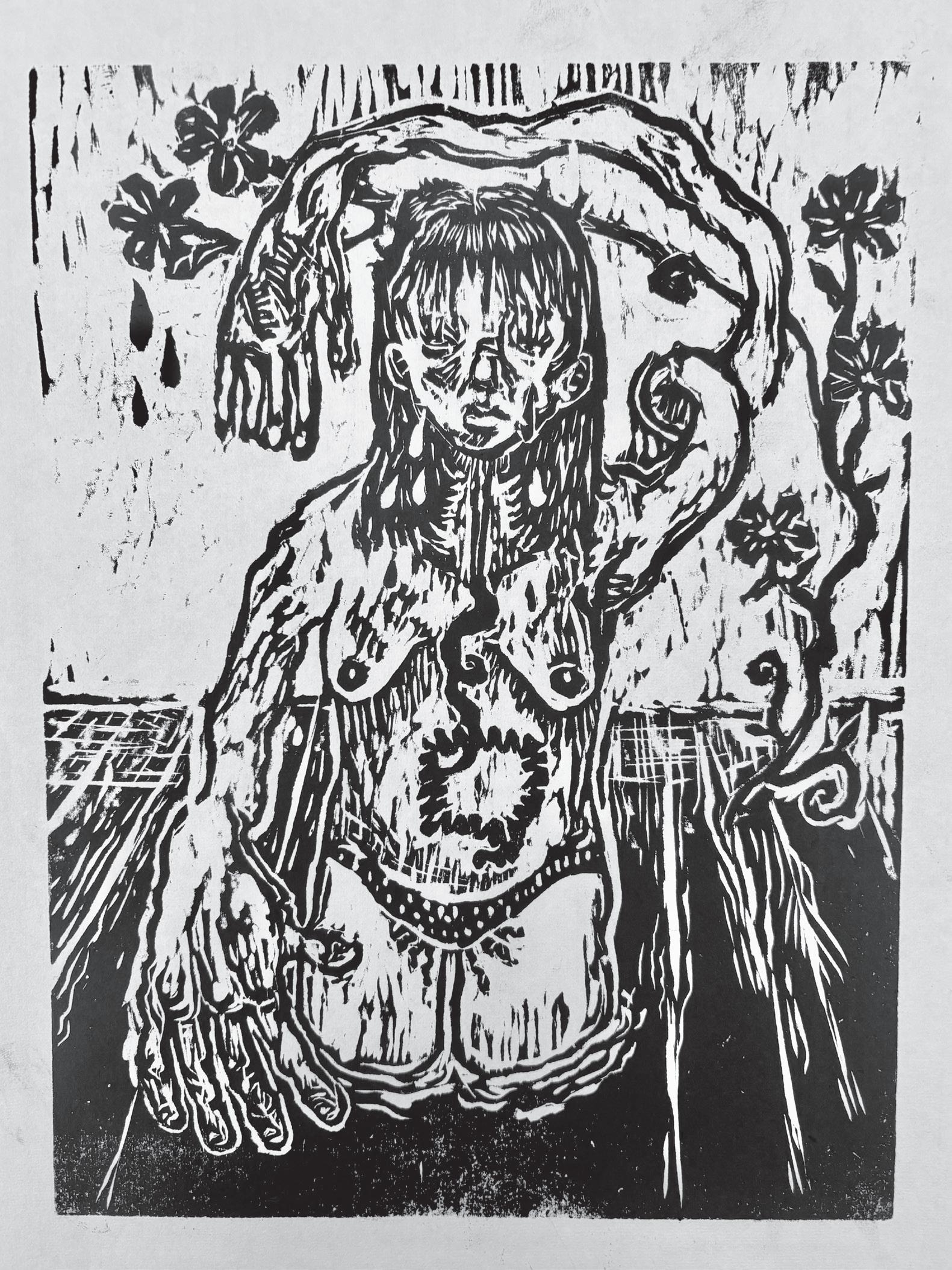
Autonomy is often understood as an attribute of the self, something that exists uniquely for and within each individual. It is because of this mindset that autonomy has become such a pervasive element of political discourse in recent years. Some continue to believe that one can only be fully autonomous in the complete absence of external force, while others maintain that protecting autonomy systematically is how it can be preserved equitably for all.
Abolition, however, champions autonomy in the form of coalitions and communities to eliminate systems of harm. Though the “self” in self-determination remains important to abolition’s cause, liberation ultimately depends on collective action—global, local, or otherwise. A major component of our study group discussions regarding this concept can be described using the phrase “think globally, act locally,” which calls upon individuals in communities to exercise autonomy together. In the following piece, our members explore what it means to be autonomous as a community, as well as how we can achieve and protect our autonomy collectively.
Jonathan Tostrud
Autonomy is an ambivalent term. It suggests callous individuality and rational economic pursuits while simultaneously suggesting freedom in thought, choice, and pursuits—the latter identity being how I tend to think of it. How can I decouple my idea of autonomy from the ever-isolating, commodified, and materialistic mirror image? One answer is simple: recognize the importance of our interconnectedness—the ways in which we are mutually dependent on one another. We ceaselessly trade in the currency of material goods, basic necessities, ideas, laughs, and struggles. There is no argument against this interdependence— indeed, we’d all be much worse off without the medical advances, food access, and many other givens in the modern age. This interdependence suggests that nearly everything that I value came from another, at some other place or time. Therefore, when living together, the question is not if we’re reliant on each other, it’s how much we think we owe one another. We must balance our own needs and goals with those of others—and not only those around us: there are the concerns of cities, countries, and the generations to come in each. We are born midway through, and while others work nine-to-fives, we must pick up the rules of the game on the fly. We are shown the ropes: how to be a good friend, student, citizen, and so on. And far too quickly, we are given the reigns: choice of college, career, and indeed which relationships to keep or sever. As the transfer occurs, a gap remains—and the room left allows us to exercise our autonomy. While I continue to unravel what it means to be autonomous in the modern age, I want to recognize that autonomy is a balancing act— balancing what’s been given to us, what we should give in return, and the path that we must chart ourselves.
Quinn Henneger
Many groups attribute the concept of autonomy to causes and claims that directly contradict one another. For example, on one hand, neo-confederates justify their “Lost Cause” mission using autonomy and state’s rights to defend their white supremacist views, while groups like the Bad River Band utilize autonomy collectively to advocate for land sovereignty in response to the Line 5 pipeline. The word autonomy, with roots meaning “self” and “law,” can be molded to fit many claims—everyone, as a living person, has a relationship to autonomy due to the inherent personhood that is associated with the word. With this, we can gather that the differences that show up in our usages of autonomy appear because we all see the idea of “the self” in contrasting ways.
Take for example the Anishinaabeg’s (Ojibwe) perspective of the self in relation to manoomin, wild rice. To the Anishinaabe people, manoomin has a soul—it has history and culture. Manoomin is a moral person like any of us. A common phrase among Anishinaabe people encapsulates this rhetoric into how they define the self: “What happens to the land happens to us.” With this definition of self, autonomy is connected to the land, to all living things.
We are only able to conceptualize a better world where autonomy is seen as part of a collective when we can come to recognize a broader definition of the self. This definition needs to go beyond the individualized narrative that is perpetuated within capitalism. We need a broader definition of the self; as writer Ayesha Khan would say, where we see every living thing, every land, as “cells that make up one, living, breathing being called Earth.” Only once we have done this can we truly work towards a genuine model of collective liberation that includes the land in our fight for autonomy.
Shu Lan Schaut
When I initially think of autonomy, I think of it selfishly. To be more exact, I think about autonomy through the lens of myself: my bodily autonomy, my economic autonomy, or my political autonomy, to name just a few. However, individual autonomy could not exist without collective action and community; to think anything else is narrow and ignorant to the human condition.
Time and time again, we’ve seen power-hungry systems, governments, and regimes try to control people, attempting to reason away rights with false testimonies of justice and balance. The reality is that stolen autonomy only leads to a power vacuum from which only a select few benefit. In order to resist coherently, we must trust and rely on one another, creating a coalition across communities and beyond beliefs, in order to overcome the barriers in the way.
To be autonomous, to maintain your dignity and determination, means not only protecting yourself, but everyone around you. Anything less is just a slippery slope to a future of submission to a fascist system. It is not our purpose in life to draw lines of who gets to
be autonomous and who doesn’t. Rather, we as individuals, activists, and humans must prioritize empathy and allyship to maintain the autonomy we currently have and reclaim what has been stolen.
In an age of artificial realities and seemingly endless degrees of separation from one another, we need to open our eyes to the sources of connection that exist in our very own neighborhoods and communities. It is these networks that support our mission to protect autonomy, steal ourselves against apathy, and sow the seeds of hope for a better future.
Herbst
Under capitalism, when autonomy is framed solely in the context of the individual, we each act as a weaponless David against a Goliath that controls the means of production—and by extension, the generation of the subsistence that keeps us alive. Food is one of the most powerful influences on the human condition, and it is a necessity that has been historically weaponized to oppress or exploit the masses while generating profit and power for a few. We are left starved, deprived, and poisoned under this pernicious system.
If food is control, then we must reclaim it for ourselves. Food sovereignty, or the right of a people to define and participate in their own culturally fulfilling food and agriculture systems, is a movement grounded in principles of autonomy, sustainability, regeneration, and connection. When communities have a direct hand in producing and distributing food, they are able to regain control of their most basic necessity of welfare. This gives each member of the process—the producers, the distributors, the consumers—a short and direct avenue through which they can meaningfully exercise their autonomy together with the best intentions for themselves and their neighbors.
Local food sovereignty has demonstrably strengthened human and ecological health, fortified small businesses, and created reliable jobs within communities all across the world. By participating in a more localized system of agriculture, we are better equipped to combat the malignance of pollution, animal cruelty, and labor exploitation. Additionally, we are given the opportunity to relearn critical place-based knowledge that will help us sustain our communities long-term and decrease our dependence on corporations and governments. Most importantly, we become able to actively protect and cultivate our lands, livelihoods, decision-making systems, and relationships with one another.
Sofia Borden
Typically, autonomy is thought of as the ability to self-govern, the capacity to make one’s own decisions. Individually, this aligns with people’s intrinsic desire for freedom. Yet in the context of a society, individual freedom is rarely realized; one’s ultimate goal tends to infringe on the ability to fulfill another’s. So, in a group setting, how do we evaluate autonomy? We have to look at the bigger picture.
A human being is an individual, but they are also a collection of microorganisms and cells,
each of which is made up of molecules and atoms. Here, the presence of a group doesn’t take away from the fact that the larger being is an individual entity. Having a common goal or shared beliefs allows for a collective of individuals to become one—one group, one movement, one entity. Looking at a community through this lens, if a group’s autonomy is being jeopardized, it is likely that the autonomy of the individuals will also be put under scrutiny.
We live in a world where you cannot escape the desires and interactions of others, so we might as well take advantage of the power within a group. To align oneself with those who reciprocate by prioritizing our welfare provides resources to not just protect a group’s autonomy, but your own. And really, what is the point of individual freedom if you end up alone?
Max Borgerding
An individual person, no matter how fervent, determined, or courageous, cannot fully defend themselves from a great oppressive force. If deterring oppression is necessary for ensuring free existence, then finding power in a community or group of people is the foundation for preserving individual autonomy. This power can rely on mutual defense, the pledge that an attack on one is an attack on all. Large international defense pacts like NATO provide the clearest example of this concept, deterring violations of national sovereignty by promising joint military retaliation in response. Shared defense can be found on much smaller scales too, like the autonomous community of the Zapatistas in Chiapas, Mexico. This political and military movement relies on the force of pooled individual support, creating strong defense against violence from cartels and state paramilitary forces, as well as robust community support systems that provide basic needs and stimulate rich cultural living.
Beyond physical force, bargaining power is also a highly utilized advantage of coalitions. Individual workers vying for higher pay, shorter hours, or more comprehensive benefits from powerful corporations hold virtually no leverage. However, when workers collectively pool their value into a labor union, they hold enough sway to keep corporations accountable and gain actual concessions. In all of these examples, the existence of a great coercive force, like a global superpower, an authoritarian government, or an overgrown corporation, necessitates the coalition of individual power against a common threat. No community member can realistically defend themselves from these giants alone; it is the pooled force of the whole that can help protect and preserve autonomy.
Mar McKenna
On March 15th, 2026, a group of one hundred activists stormed Ridglan Farms, a beagle breeding facility that has been charged with animal abuse located in Madison, WI. They went in with the goal of rescuing as many dogs as they possibly could, and successfully rescued 23. This group was made of individuals from Madison, LA, New York, Canada, and everywhere in between. Everyone had their own story to tell, but were united under one goal: to save the dogs. Moving as a group, they exercised their autonomy knowing very well that they
could be imprisoned. The police tried to separate them from each other, maybe thinking that would be intimidating. Maybe they would finally cave then, but they did not. They kept fighting until they could not any longer. Some were only detained, but others were arrested. Law enforcement forced the activists apart because of the sheer strength of the group. When they used their individual autonomy to build collective autonomy, their power was insurmountable. Without all of them working together, they could not have saved the lives of 23 dogs.
This anecdote does not apply only to taking dogs from testing facilities. We’ve seen it in every successful revolution, protest, and strike: a group of people using collective autonomy to force progress. This can sometimes force us to compromise our individual autonomy. We can’t always take the actions we, individually, idealize if they are not what is best for the collective. The state wants us to be individualistic because we’re more dangerous in groups. Unity is the best way to resist the state for nobody can successfully resist alone.
Daniel Trinchillo
Autonomy, often thought to be purely individualistic, is much more relative and constrained within a society. The extent to which an individual has autonomy is often defined comparatively, in relation to others and the rules imposed by society. Beyond seeking freedom from oppressive structures, another way to achieve freedom could lie in rejecting comparative autonomy altogether. In doing so, an autonomous individual is not free simply because someone else is less free.
This idea has roots in Paolo Freire’s Pedagogy of the Oppressed, which argues that in an oppressive society, the “oppressors” suffer from the same systems that grant them power. Freire’s philosophy suggests that, for those in power, much of their autonomy and identity is defined by their perceived superiority. To ground this framework, James Baldwin, a prominent activist for African American rights, wrote in My Dungeon Shook, “They have had to believe [...] that black men are inferior to white men. Many of them, indeed, know better, but […] in this case, the danger, in the minds of most white Americans, is the loss of their identity.” Employing Freire’s framework, Baldwin highlights how white American “oppressors” form their identity and autonomy relatively, facing a collapse of identity when their superiority is questioned. Deriving autonomy in this manner requires the perpetuation of cruel conditions that maintain the oppressed’s inferiority and oppressor’s superiority.
The solution? Baldwin proposes radical love. As evidenced in the former passage, he suggests using empathy and understanding to establish a broader human community that can care for one another, even if that means extending understanding to our oppressors. By recognizing shared humanity, oppressors can free their identities from the cruelties they commit while expanding autonomy for the oppressed and themselves. This is a simplified theory regarding how autonomy can be communally maintained through recognition of humanity, but an example of its praxis is in literature. New laws may change conditions but they do not change people’s prejudices. Literature and education, though, can enlighten and change perspectives
on history. For example, Baldwin’s writing speaks to this by confronting racial discrimination and reshaping how readers understand history.
Haleigh Smith
When thinking about autonomy, one of the first connections Americans particularly make is bodily autonomy. This issue, though incredibly complex, is often thought of simply as an individual’s right to abortion, or other reproductive care. After attending a lecture from UW–Madison Professor Judith Houck on her book Looking Through the Speculum: Examining the Women’s Health Movement, I have been thinking about the totality of bodily autonomy and the power of community frameworks in a movement around health and politics.
Starting in the late 1960s and accelerating in the 1970s, the Women’s Health Movement was a grassroots effort to increase women’s bodily knowledge, reproductive control, sexual power, and health. This was done primarily by women meeting in groups to teach each other what their anatomy was and how to identify it in themselves. These groups would be as small as a pair or as large as a crowd filling a whole hotel room. They would meet in church basements, living rooms, college dorms, and beyond. What made this movement successful is the leaders’ realization that bodily knowledge and community connection together bolstered the movement forward. Evidently, the shared connection these women made by being vulnerable in the most literal sense—being naked—they were able to be liberated together.
This sense of shared autonomy helped reinforce community power while also giving individual women power in their everyday lives: on the exam table, in the bedroom, and beyond. This movement really seamlessly melded the importance of individual autonomy, women understanding themselves, with expanding and protecting the autonomy of the group—a broader push against a patriarchal healthcare system and world. In a moment where people with uteruses lack institutional protections, looking to the Women’s Health Movement can provide us with a framework of how community knowledge and connection can change everything.
David Rhee
There’s something to be said about support, of leaning on each other to weather the storm. Beyond our intelligence, the singular reason for our success in the long and arduous history of the Earth and evolution is our ability to care. Human settlements and ecological history have been permeated by signs of nurturing and supporting the elderly, the injured, and the ill. A broken and healed femur is a sure sign of humanity: a symbol of love and compassion through healing the impaired. Through our development of social bonds, of love and affection, we persevere by the hands of others. We can see the success of this: elders imparting wisdom and knowledge, the disenfranchised giving back to the community that supports them, the collectively supported children growing up with a community behind them. It’s this codependence that highlights our autonomy. If you ask most people about autonomy, the common definition is that autonomy exists in the individual sense, that one has the freedom, the will to do anything.
Despite the popular belief, this is not a realistic interpretation of autonomy. To have the support, to have the strength to do as you wish in a world where freedom is often interfered with, requires roots, strong ones. A community needs to back the individual, and the individual must reciprocate. We’ve lost this collective care system in favor of tribalism and division on the basis of certain traits. The divide creates resentment, a sense of the “other” that drives people to do violence rather than give care, all on some asinine difference. Community should be on the basis of care and of compassion, not the possession of some trait or a common background. Communities are together because of basic needs, but stick together because of attachment and care for one another. That’s how it’s been since the emergence of society in Africa and the discovery of fire: an individual maintains their own self through the support of an entire group that they commit to uphold in return.
Thinking of autonomy at the individual level can come easily for most, but autonomy doesn’t end just at the individual. Autonomy is most powerful when adopted by communities, but under a society that demands assimilation from all minorities, finding autonomy becomes increasingly difficult. When I was finally comfortable enough to fight against the proposed and enforced assimilation I experienced by the educational institutions and other organizations I was a part of, I was confronted with the jarring realization that I was alone. In my sad attempts to integrate myself and adopt an identity that was not, and never will be, mine, I lost the opportunity to find people whose identity did connect with my own. People who were open to making sense of this accumulating feeling of loss and lack of control. Individuality had gone completely over my head; my daily habits, demeanor, and characteristics were ruled by the phrase “assimilate or die.” Intersectionality was not a word I had even heard of, let alone something I understood should be applied to my life. There was no window of opportunity to be B and C and D; if you were not A you could never be good or accepted.
When I found myself in need of support, in need of people who’d understand my pain and confusion and grieving, I had no one. The people I had around me only showed me how to erase, how to dissipate, but I was tired of caring and carrying the weight of displacement all on my own. I was tired of the deep discomfort that lay beneath depths of muscle and epidermis wherever I went. And every day I was filled with a sense of loss I could not pinpoint or even name, it simply moved through me in toppling waves. Where was all this pain coming from? I was playing my part, memorizing each line of the script until they were the only lines I knew. Why was I always alone when I was surrounded by people who declared love and acceptance toward me? I wanted to control the narrative of my life, of who I represented and who I was, but my voice was drowned out by everything I was told to feel, told to be.
It wasn’t until I found at least one other person to scream and cry and hurt with me that I began to understand I wasn’t alone. I had become so focused on becoming white that I lost sight of all the people alongside me who were feeling the same things. And so I joined the
fight, I joined the screaming, and I opened space within myself to understand the root of the hurt and displacement I was feeling. I could keep shoving myself in the corner when I was feeling that sense of loss and lack of belonging. Or I could stand up and stop fearing “death” from not assimilating, and try to make a space for the identities and communities I belong to. There was a space for me here, one where I didn’t have to strain my body and my voice to fit the greater majority. Once I regained my voice, I believed it was my duty to continue to grow this community, so no other kid would have to feel or fear the way I had for so many years. While my individual effort could’ve been appreciated, no change would be made without the ongoing support, strength, and effort from a larger community.
Autonomy has a complex relationship with violence. Coercion—the antithesis of autonomy— relies on violence to restrict agency. Conversely, violence can be used to maintain freedom in the face of coercion. Nothing scares an oppressor more than the prospect of the potentially oppressed shooting back. It’s why, before their campaign of terror and lynchings, the Ku Klux Klan of the late 1860s disarmed every Black person they knew had guns. It’s why the Department of Justice in 2025 considered banning transgender people from owning firearms. Most violence is interpersonal, but it is organized, institutional violence that truly threatens our autonomy. Fiercely individualistic approaches to defense will never dismantle the carceral state, but communities that have the capacity to protect themselves certainly can.
For a model of collective autonomy backed by the capacity for violence, look to the Black Panthers. They offered a comprehensive program that included food security, education, and healthcare programs. Being armed allowed them to develop this alternative to the neglectful and actively hostile state with a layer of protection from routine police harassment. Importantly, they didn’t replicate the police by being gun-toting strangers imposing their will on the neighborhood; they operated with the consent and understanding of the community. Although the Black Panthers never achieved full autonomy for their people, they briefly gave the cops and politicians that normally interfered with their community a reason to reconsider their actions.
I’m sure that all of our visions of utopia involve drastically less violence than the present moment. However, getting there means rendering the carceral state obsolete. Those who want to maintain the carceral state will commit themselves to stripping our autonomy away by force because we are an existential threat. We can never hope to make a better world without the means to defend what we’ve built. In a future free from coercion, we protect us. Learn defense skills, take a Stop the Bleed course, share your knowledge, and train alongside your community. I’ll leave you with far wiser words than I could come up with on my own—what author, artist, and activist Margaret Killjoy calls the anarchist prayer: “I ask not to be safe from my enemies, but dangerous to them.”
The Association of Writers and Writing Programs (AWP) hosted the 2026 AWP Conference and Bookfair in the charming city of Baltimore. After the MJLC’s third year attending the conference, we interpret another anthology of panels and experiences through a new lens: Autonomy. The conference and the city alike indulged our curiosity toward the literary. From finding the Maryland flag on every conceivable object, to the disarray of medieval, colonial, and modern architecture, we got a full sense of the “modern bohemia” that keynote speaker John Waters so affectionately calls Baltimore.
We outlasted layovers, babbling babies, and confused schedules to arrive Wednesday night, with the days of the conference awaiting us. We arrived to see the spectacle of thousands of like-minded readers, writers, and publishers, waded through the crowds, and landed in over-stuffed conference rooms. We sifted through the raw materials of words, syntax, and prose—gaining the profound and discarding the peripheral. More than anything, we found care and joy in the writing community—unabashed and unyielding. There were book sales, crab lunches, and coffee runs to keep up with the buzzy environment. Between the bustle of the bookfair and contours of the conference, we gained insight into the boundless craft of the literary arts. Writers, editors, and publishers alike showed us what literature has accomplished and where it is going.
Outside of the conference, we explored local museums, the National Aquarium, the Baltimore Basilica, and even an abridged version of the
Washington Monument (in fact, Baltimore did it first!). Our outings gave us greater perspective to view the trip, both imaginatively and critically.
In the city of Baltimore, the presence of history and art permeates. Every brick bears bygone times, neoclassical stand side-by-side with row houses with modern skyscrapers looming above both; Baltimore’s richness exemplifies resilience and endurance, concepts that art often mirrors. It is understandable to see how such a place can birth such great creative minds, from Edgar Allen Poe to John Waters himself. It was our honor to be able to sample the environment that shaped them both, even for a short time.
AWP is a journey in learning, both from each new panel the conference prepares to every new city it occurs in. Our experiences this year are no exception. Please enjoy some of our staff’s takeways from this year’s AWP Conference and Bookfair in Baltimore.
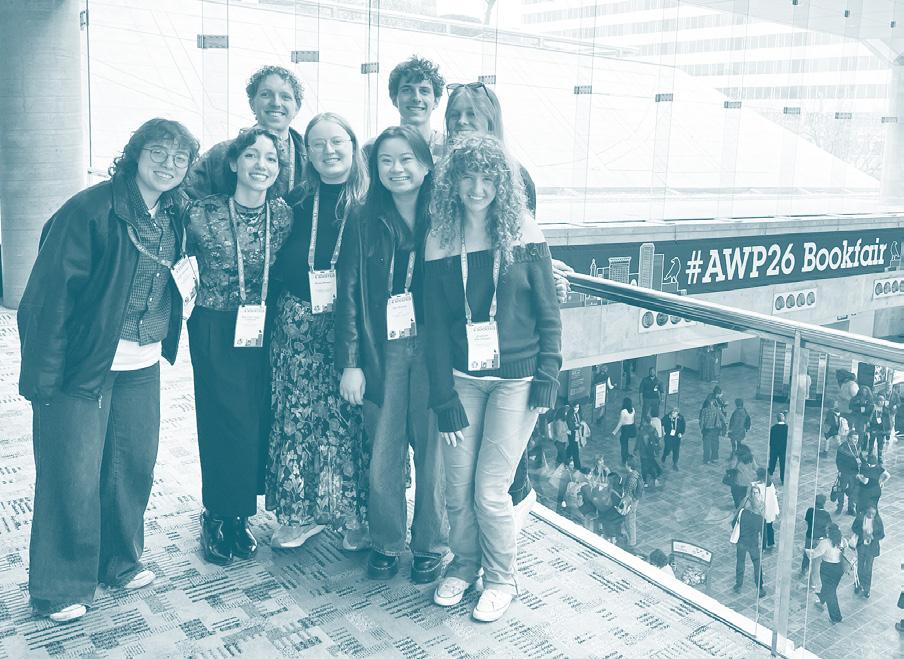
I attended a panel at AWP titled “War & the Living World: The Intersection of History, Biology & Poetry.” Five poets read their work, and other excerpts, from an anthology titled Convergence: Poetry on Environmental Impacts of War that explores the experience of nature in the crossfire of war. These works strung together generations of warfare externalities spanning from degradation around the Silk Road passageway, to the use of chemical weaponry in Vietnam. The moderator of the panel, Lucille Lang Day, structured the reading with an optimistic tone: “Without dread, there can be no hope,” she said, not excusing environmental destruction, but pointing to the duality of human existence. Lang Day encapsulated this duality with the horrific story of an elephant destroyed by a land mine. This elephant lost a leg to the remnants of a conflict it had no part of, its physical autonomy ripped away by selfish humans trying to explode each other. But the elephant was also rehabilitated; it was given a prosthetic leg and nurtured through adolescence with care. A new prosthetic for each growth spurt meant the elephant could continue living a semblance of its natural life. The elephant story describes destruction and growth, avarice and goodwill—the contradictions that define the edges of human existence. Building on the work of these poets and the theme of the panel, I found inroads between the violations of biological autonomy inherent to destructive warfare, the safe haven of internal autonomy during times of external chaos, and the role that humanity can play in voicing the “mind” of the natural world.
Recurring throughout the poetry, and stories from the anthology, is the use of the environment as leverage against opponents during war. The European colonizers of North America exterminated buffalo in the hopes of eradicating Indigenous tribes whose lives relied on the species. American military forces in Vietnam utilized chemical weaponry, like Agent Blue, to wipe out agriculture and vegetation, cutting off the enemy food supply at the source. In both cases, environments crucial for human existence were used as tools for the genocide of non-white populations and the advancement of pointless wars. These horrors reek of anthropocentrism, the concept that humankind is the center of existence, and that the natural environment only exists to be resourced by humanity. Ecocentrism is the opposing force, the emerging belief that nature holds intrinsic value, independent of its usefulness to humans. Anthropocentric practices like fossil fuel burning and tropical forest clearing are becoming increasingly unsustainable and unethical, forcing humans to recognize value in the entirety of the system, of which our species is only a small part. Biological autonomy is inherent to ecocentrism, as the living world is conceptualized independent of human use and with the right to exist in its natural state. War disrupts natural systems in ways that strip natural life of its right to exist. The use of nature as leverage in human conflict not only leads to death and destruction, it denies the Earth of its natural autonomy.
The concept of internal autonomy is crucial for a human-centered analysis of war. Soldiers coerced into a glorified defense of their homeland relinquish control over their physical bodies. They are subjected to trials and chaos that strip them of all autonomy over their existence, personal choices, and life. When an individual is shipped to hell in the name of national interest and susceptible to spontaneous destruction, they retain one form of autonomy: their mindscape. Human immaterial existence is the final sovereign territory over which everyone holds autonomy,
even in the most chaotic episodes of battle or the most oppressive cases of physical coercion. The hope, and sometimes the outcome, is that the individual survives long enough to express their mind. A Vietnam veteran, Sean Mclain Brown, read his poetry during the panel, and was able to express his mind and share his recollection of a war that denied him of his physical autonomy.
When I see these autonomies, that of the biological world, which has been boundlessly violated, and that of the human mind, which withstands the most uncertain chaos, I want to find a fusion of the two. I see a natural world that can’t write expressive poetry itself, and some humans that desperately want the steel birds grounded for good and the stray dogs to find home instead of hospital rubble. Through empathy and vivid imagery, poetry can take us past the first step in recognizing the natural world’s autonomy, its right to exist. At least until elephants can speak, we all have a duty to wield our autonomy in protection of the environment, to prevent further destruction, and to bridge the superfluous gap between humanity and Earth itself.

AWP 2026 marked my third year attending the conference—a sentiment that is a definite badge of honor. This time around, I couldn’t help but notice the parallels between the conference and the connection to Autonomy. John Waters, the keynote speaker, spoke at length of his “filth narratives,” where the outrageous take the place of circumscribed plot and linearity—his stories indeed carry their weight through unique means. He describes the importance of humor, lightheartedness in projects, and, most of all, delivering a story faithful to your vision. When embarking on this creative enterprise, we must bring out something within ourselves, unsatisfied until it resembles that piece of you. As a magazine, we can utilize this framework to bring into focus our contributor’s stories that reflect this deep sense of self.
In the panel, “Why Criticism Continues to Matter,” Kathleen Rooney claimed “Art is the transmission of the human spirit.” We look at other people’s work, review it, judge it, but ultimately indulge in it. We notice it. For reviewers, or a journal like ours, we find the promising stories and platform them. However, we don’t just regurgitate it, but practice “reduction,” that is, reduce it “to its tastiest essence,” as Rooney puts it. In the very same panel, Eric Lorbearer finds the sharing of other’s works to be the “translation of passion,” with the same energy as a friend exclaiming, “You got to read this!” This challenge for the writer is, according to Lorberer, how to bring the work into a format that “a stranger will appreciate and learn from.” That requires a staging of what you want to accomplish in your writing. The level of autonomy you have in writing may be daunting—but your passion, vision, and spirit are what shines through the cracks.

AWP is a blur, both in experience and in memory. There are too many panels to see, far too many booths at the bookfair to visit, and so little time to get to it all. The experience leaves you running around a convention center in Baltimore’s Inner Harbor, hoping to make it just in time before that book you were eyeing yesterday goes on sale and sells out. However, the fast paced three days did not leave me empty handed. I left with innumerable lessons learned, many new additions to my to-be-read list, and a carry-on significantly heavier than it was when I first landed in Baltimore. I was privileged enough to attend AWP last year in Los Angeles too. While, of course, the experiences were similar, it is an incredibly different experience every year. New prints start up, new stories get published, new opportunities, and so many newly born concerns that haunt many writers and publishers. Chief amongst them is artificial intelligence.
One of the panels I attended was “Speculating the Machine: How Fiction Writers Are Rendering a New AI Reality.” To be perfectly clear, the focus was not on AI in our reality, the one writing mediocre essays for high schoolers or creating ridiculous fake images, rather it focused on the subject of AI in the realm of speculative fiction. Despite its accelerated proliferation in the real world, AI is not a new concept in literature and media. From Isaac Asimov’s I, Robot, to Donna Jeanne Haraway’s definitive A Cyborg Manifesto, to Pixar’s WALL-E, creators have imagined an artificial reality far before it started to become real. Part of the panel’s discussion highlighted how AI’s role in speculative fiction has been a tool of critique and forewarning, specifically reflecting the corrupted aspects of society and the truths of humanity.
Within speculative fiction, the role of AI has often represented an exacerbated aspect of reality. A prominent example of this is the cyborg, a human-like robot; in popular media, literary and otherwise, it is almost always depicted as feminine. This is no coincidence, rather a systemic result of gender expectations, misogyny, hypersexualization, exploitation, etc. The cyborg is an entirely programmable, and presumably controllable, body cloaked in a feminine figure; as a literary tool, AI, in this form, has been used to shed light on the hideousness of our society, something easier to approach in fiction than in our own reality. While previously we may have considered these depictions in fiction hyperbolic, as AI grows both in depth and purview, these concerns are becoming part of our reality, moving from the page to our front door. We are seeing its exploitation, especially against women, flipping what once was science-fiction to real cases of abuse. LLMs are programmed to steal others’ work to create half-assed copies, bots are being asked to edit images of real women into sexual objects, deep fakes and other artificially generated videos have flooded every corner of the internet. What was once just a trope has become true. How are we supposed to reckon with that?
In a cyclical sense, we can attempt to turn back to these sources of fiction, though they seem closer and closer to reality with every passing day. What may have been absurdly obvious cases of oblivion and passivity on the page, may be a harsh wake up call to what is directly in front of our faces. If we can recognize as readers and writers the ridiculousness or worthlessness of prioritizing machines over people in fiction, why can’t we do the same in our own lives?
Making art is an arduous process. This magazine is no exception, for it truly takes a village to create something out of nothing. In my case, I am supported by a community filled with passionate staff, writers, and artists, all of whom are instrumental in the creation of this magazine. It is with the deepest gratitude that I attempt to express all of my thanks.
Before anything else, I am indebted to our organization’s wonderful advisor, Erin Polnaszek Boyd, who has stuck alongside us for years. Thank you for every frantic email correspondence, vent session, and snippet of advice you’ve generously bestowed upon me. While we are an entirely undergraduate-run publication, it has always been a comfort to know that we have you in our corner.
I’d like to express our deepest thanks to the anchor of the magazine, our contributors. As a publication, we are entirely dependent on the submissions we receive. While many on our staff contribute writing and art every semester, it is through our diverse submissions that we actually fill the pages of our journal. We are all utterly grateful for the opportunity to share such thoughtful, articulate, and truly unique works. Whether poetry or fiction, academic or art, each and every piece of work within these pages is an emblem we are proud to behold. Thank you for trusting us with your stories of autonomy. It is our hope that these tales inspire our audiences as much as they did us.
As an organization, we are dual pillared by our publication and our weekly meeting in the form of the MJLC Study Group. It is through this group of undergraduates, graduate students, and local Madison community members that the MJLC forms its foundation and mission. It is here where we are able to challenge ourselves, and one another, to broaden our horizons of abolition, and continuously question and interrogate the world around us. Special thanks to Quinn, our fearless education director, for leading every step of the way. Autonomy, as a theme and a concept, would die in darkness without the support of this collective. Thank you all for sticking around amongst the chaos, the tangents, and the occasionally prolonged icebreaker.
Of course, there is a lot of administrative effort required for this type of work. Publishing a magazine biannually is no small feat. Behind the beautifully crafted and heart-tugging pages of prose are hours of managing deadlines, organizing fundraisers for printing costs, consolidating edits, and finalizing drafts. Each and every step takes time, effort, and sacrifice—not just by me, but a whole staff of individuals who voluntarily choose to be part of this crazy group. While I may question their sanity at times, I am forever grateful for all they do.
Editors spend weeks poring over dozens of submissions, genres ranging from nonfiction to visual art. They spend hours reading and editing, even during the height of midterm season, all to ensure that we can produce a beautiful piece of work to share with the world. It is through their efforts that a PDF turns into a piece of a real publication.
The communications team wholeheartedly promotes us across medias and mediums, allowing us to connect and engage with writers and artists from around the world. They’ve sent emails to thousands of institutions multiple times over; planned events and collaborations, grounding our abolitionist mission in real-world praxis; they’ve even helped us promote our magazine at one of the biggest writing conferences in the U.S. Without a doubt, they are the bridge that connects us to the public.
There is no way to overstate the importance of the graphics team, who put up with nonstop requests, and the occasional beg, for Instagram posts, stickers, buttons, bookmarks, business cards—just to name a few. And, of course, they are responsible for bringing this magazine to life. They have a talent unlike any other, the ability to see beyond the black-and-white of a doc to create beautiful, unique formats that paint every page. It is a gift I am envious of and eternally grateful to be privy to. Thank you for bringing life, art, and beauty into the magazine.
I would be remiss to not acknowledge the efforts of our operations team, whose unending endeavors buoy us from start to finish. They are a catch-all, supreme team of über talented and generous people who fuel the behind the scenes of everything. The work of everyone else is predicated on them. From financial backing to soliciting submissions, it is this group of people that help push us across the finish line every semester.
Certainly, their responsibilities as staff members are a lot; these remarks are surely non-exhaustive and deficient to completely portray all the work they put into this organization. Thank you all for dealing with nonsensically late staff meetings, long-winded Slack messages, and my ever-increasing anxiety. It is because of you all that this work can not only get done, but that we can all find joy and fulfillment every step of the way.
To the entire MJLC staff: Quinn, Jonathan, Hannah, Mary, Max, Matteo, Kiki, Olani, Sofia, Rissa, Mar, Francesca, Omalley, Darcy, Elizabeth, David, Mia, Haleigh, and Daniel. Thank you for continuously choosing to be part of this roller coaster with me—I absolutely could not have done it without you all.
I’d like to take this opportunity to specifically spotlight the individuals who have dedicated their time to the MJLC in their final semesters of undergrad. Many on our team will be moving on to the next chapter of their lives after this spring, myself included. To those graduating, congratulations and thank you for choosing to spend your last semester with us!
With every end, there is a beginning. While my chapter of leadership may be ending, I am passing on the reins of the MJLC to an incredibly earnest and caring new generation. Mary, our fantastic managing editor whose knowledge can’t be contained to one continent, let alone one major, and Max, our too-talented-for-his-age production director, are fearless and creative leaders who I could not be more proud of. The work you’ve put in throughout this semester, and previous ones as well, may only be a sampling of your true abilities, but you have both already exceeded my highest expectations. With full faith and excitement, I am happy to announce these two as the MJLC’s next editors-in-chief. I could not think of two people better suited for this role.
Finally, I’d like to thank you, our readers, too. If there’s anything I’ve seen or learned over the years, it is that supporting local literature magazines, promoting human-made art, and defending our freedom of expression is vital to the protection of our autonomy.
Thank you for reading Autonomy.
Sincerely,
Shu Lan Schaut Editor-in-Chief
ANIKA FRETZ / UNTITLED / is constantly inspired by the natural world. Constantly taking pictures for inspiration for a later work and using bright colors to make pieces come to life, Fretz stays truly connected with life. “Untitled” shows a blend of inspiration captured from real life and a colorful play on inner turmoil. After completing high school, the work turned into a manifestation of catharsis. Using acrylic paint, the piece transformed into a reflection of inner and outer worlds: strong mixed feelings and the roof of a Fry’s grocery store.
BETSY FRIES / SPLIT OPEN / is a Minneapolis, Minnesota photographer currently based in Madison, Wisconsin. She is completing a BS in consumer behavior & marketplace studies with certificates in entrepreneurship, photography, and leadership at the University of Wisconsin–Madison. Her work focuses on emotional presence, authenticity, and how subjects inhabit space. While she primarily focuses her practice on portraiture, her work also includes film, sports, and landscape photography, where she continues to explore ideas of stillness and connection to place. Outside of academics, Fries runs her own photography business, where she focuses on capturing people in a way that feels honest and present.
“Split Open” is an individual image from a larger series about burnout. Fries wanted the image to feel the tension, yet in a soft way, and heavy in a quiet way, to allow the viewer to encounter exhaustion rather than being told about it. This image is about permission. Permission to feel tired. Permission to slow down. Permission to rest.
RIANA HOWELLS / LITTLE RED / is an English and creative writing major at the University of Iowa who loves writing long-form fantasy, shortform speculative fiction, and free verse poetry. She writes to create worlds that reflect our own, like light reflects off of shattered glass: broken, but beautifully colored.
BELLA LAWSON / FRACTURE / is a multidisciplinary BFA student at the University of Wisconsin–Madison who explores the complexity of the physical body through painting, printmaking, and ceramics. She explores obstructing the figure in an ongoing artistic investigation about bodily experiences, being human, and the abject and vulnerable parts of it all.
“Fracture” is one of Lawson’s woodcut prints made this semester. It is a self portrait meant to explore the uncomfortable nature of growth and the “fractures” that need to happen in order to survive it. Printmaking is Lawson’s second discipline at UW and she enjoys the texture and personality that manifests in these woodcut prints.
MARS MITTELSTADT / YOU MUST BECOME GLASS. / is a nonbinary trans man from rural Wisconsin who will be receiving a degree in creative writing from the University of Wisconsin–Madison by the spring of 2026. His poems have been previously published by the Querencia Press, Illumination Journal, and the Madison Journal of Literary Criticism.
ANGELINE MORGADO / “LO QUE LE PASÓ A PUERTO RICO”: TOURISM, GENTRIFICATION AND CULTURAL RESISTANCE IN PUERTO
RICO / is a sophomore studying political science, international studies, and Latin American, Caribbean, and Iberian studies, with certificates in gender and women’s studies and leadership at the University of Wisconsin–Madison. As a KingMorgridge and Wisconsin International Scholar, she is committed to social justice and inclusion through the democratization of knowledge, resources, and spaces. As a Venezuelan migrant in Chile, she is dedicated to centering community voices and Latin American perspectives in her scholarship.
MADELINE MUDLER / THE BEAUTY IN CRYING / is a senior at Wausau West High School who is currently enrolled in AP Studio Art. She has been creating art all her life with all types of mediums, favoring charcoal over the rest. Art holds a special place in her heart, as it blends all of her passions, as well as providing opportunities to express herself for the world to see. Autonomy, through her perspective, is taking a sense of control by remaining positive when given situations that draw in negativity. For many people, crying feels like it has a negative impact on their wellbeing. However, Mudler chooses to value crying in a sense of healing. She chooses to see the good wherever possible, allowing herself to feel the full extent of her emotions.
Within her AP body of work, she has shown how traditional medicines prescribed by a doctor, as well as nontraditional medicines using holistic approaches, work to alleviate pain and initiate healing. Throughout her investigation, she has depicted various scenes related to medicine, healing, and healthcare to demonstrate the variety of ways to ease symptoms and improve overall health. Mudler incorporated color symbolism in her art, demonstrating this healing with tears streaming down her mom’s face in a surrealistic manner. This piece, “The Beauty of Crying,” is meant to demonstrate how crying can be cathartic.
ERIN (ARI) MURPHY STROTH / DISCOVERY
/ MEAT TO BE BOUGHT / is an artist from California. She is currently studying computer animation at Ringling College of Art and Design. Between midterms she works on illustrations for herself and others like the MJLC.
“Meat to be Bought” was made digitally on Procreate. The work displays three unclothed women in a styrofoam tray packaged like meat. Murphy Stroth wished to artistically display the current objectification of the female body by society, as nothing but slabs of meat.
“Discovery” is a digital work created for her color and perspective class. The assignment was to create an architectural narrative with a two toned color palette. Stroth created “Discovery” with her own fear of the ocean in mind. An individual trapped inside a small metal tube only seeing through a pin-sized hole at the horrors below.
CHRISTINE NEGOVANI
/ WAR BOY / is a second-year undergraduate studying English and philosophy at the University of Wisconsin–Madison. She is particularly interested in the intersection between the literary and the philosophical in French and German existential works. Her research interests include classical philosophy and testimonial literature.
PERSPECTIVE / (b. 1984, Lima, Ohio) is a white trans, chronically ill, disabled artist, educator, and academic living between Chicago, Illinois and Madison, Wisconsin. As a multimedia artist working interdisciplinarily between photography, painting, found images, installation, and writing, he focuses on the nuance of gendered construction, whiteness, and the body as a landscape for survival, death, grief, and trauma.
When they are hospitalized, they take pictures of their environment and body. It took O’Brien a while to realize that once he left the hospital, he could not remember much of anything about his time there; it was like a complete whiteout of memory. These pictures functioned as a way for him to recall and reposition the self; it is disorienting to only recall time through photographs they do not remember taking. Similar to trauma, the unremembering here fundamentally distorts temporality. These photographs initiated a painting series that began in 2021, called “Chronic Perspectives.”
ISIS PLESNIKOVA / ALIEN DAD / PERENNIAL / is a young poet from Stevens Point, Wisconsin, studying computer science at the University of Wisconsin–Madison. She enjoys pushing the boundaries of the poetic form and uses mixed-media poetry to confront ideas like the purpose of community and the role of self. Her piece “Third place” was recently featured at the Midwest Conference for the Humanities (MUCH) for blending a mix of poems into an interactive, early 2000s-style website that focuses on the death of third spaces and internet culture.
*RONAN PIONTEK / AUTONOMY WITHIN COMMUNITY: THE MJLC EXPLORES THE AGE OLD QUESTION / is a graduating senior at the University of Wisconsin–Madison from Wauwatosa, Wisconsin. A student of Spanish and political science, his thesis is an in-depth exploration of gun culture and gun ownership in marginalized communities. He attributes his interest in community defense, as well as many of his other political beliefs, to listening to the podcast Behind the Bastards. Outside of academia, he enjoys cycling, volunteering, and metal music.
CHAVA RAMIREZ
/ TO BET ON LIFE / is a digital artist from San Benito, TX which is located all the way in Deep South Texas.
The piece, “To bet on life,” takes inspiration from the overbearing stress that society expects to work to the bone, while certain powers expect us to bet our lives on it. The technique that RamirezI used is a digital piece with mixed-media elements that were digitally scanned.
BERNI SARAZINE / BEANS ON THE KITCHEN WALL / is a junior at the University of Minnesota, pursuing degrees in creative writing and gender, women, and sexuality studies. She has a two-year degree in creative writing. She has been awarded the Steven Lee Kaufman Scholarship (Liberal ArtsWriting) and is a member of the Tau Sigma Honor Society and the Phi Beta Kappa Honor Society. She plays in two bands and enjoys documentaries and concerts. She is active in her community and demonstrates regularly. She is the humble servant of Athena the doggo and Annabelle the kitty.
*Indicates MJLC study group member.
LAILA SMITH / MARKET PRICE / is a Madison-based graphic designer and artist. When she’s not hunched over an InDesign file, she enjoys spending time in the ceramics studio, painting, and doing craft nights with friends.
“Market Price” is inspired by the commodification and objectification of women’s bodies. In today’s political climate, it can feel like women’s autonomy is auctioned off to the highest bidder, especially when it comes to their healthcare and wellbeing. The idea for this painting came to her on November 6, 2024—the day after the 2024 presidential election. On this day, Smith felt like the value of her body was entirely dependent on how much other people thought they could gain from it; she was a piece of flesh.
Creating art is a way for Smith to reclaim her autonomy in times of turbulence and uncertainty. Artmaking allows her to express that she is human and she is worthy. In many ways, it is a privilege to make art, and she will always be grateful to have the opportunity to express herself through creation.
ROSE TYLER / APPROACHING EXISTENTIALISM FROM AN ANARCHIST PERSPECTIVE / is a senior studying philosophy, political science, and gender and women’s studies at the University of Wisconsin–Madison. They have an intellectual interest in philosophy and critical theory, and hope to continue writing about their passions after graduation. Rose also loves to read, care for and ride horses, listen to music, and share time with her friends, family, and pets.
/
TO AMERICA (TERMS AND CONDITIONS APPLY) / is a senior graphic design student at the University of Wisconsin–Madison and a socially conscious observer of the world around her. Her works explore advocacy, reflection, and material experimentation. As an international undergraduate student studying in the United States, witnessing the recent federal immigration enforcement operations in Minnesota has been deeply distressing. These actions—which have included mass raids, arrests, violent confrontations, and fatal shootings of civilians by immigration agents—have sparked widespread protests and urgent calls for accountability and reform. Wang used to think she wasn’t a political person, but navigating life as a minority and trying to build a future here made her realize that everything is political.
In “Welcome to America (Terms and Conditions Apply),” Wang used wood carving to create imagery that juxtaposes contradictory messages about immigration and justice. At the front are two ICE officers. Behind them stands the Statue of Liberty, not holding a tablet inscribed with “July IV MDCCLXXVI,” but a large sign that reads “Welcome Visa Lottery Winners… We Celebrate Diversity,” flanked by a waving American flag. On the left, people reach to place their resumes on a giant scale of justice, but the scale weighs bags of money far more than the resumes. These contradictions are intentionally sarcastic, meant to critique the gulf between idealized American values and the real experiences of exclusion, inequality, and injustice.
Follow the MJLC on Instagram
Learn more at the MJLC website
Read the MJLC’s founding research