LEADING THROUGH INNOVATION.
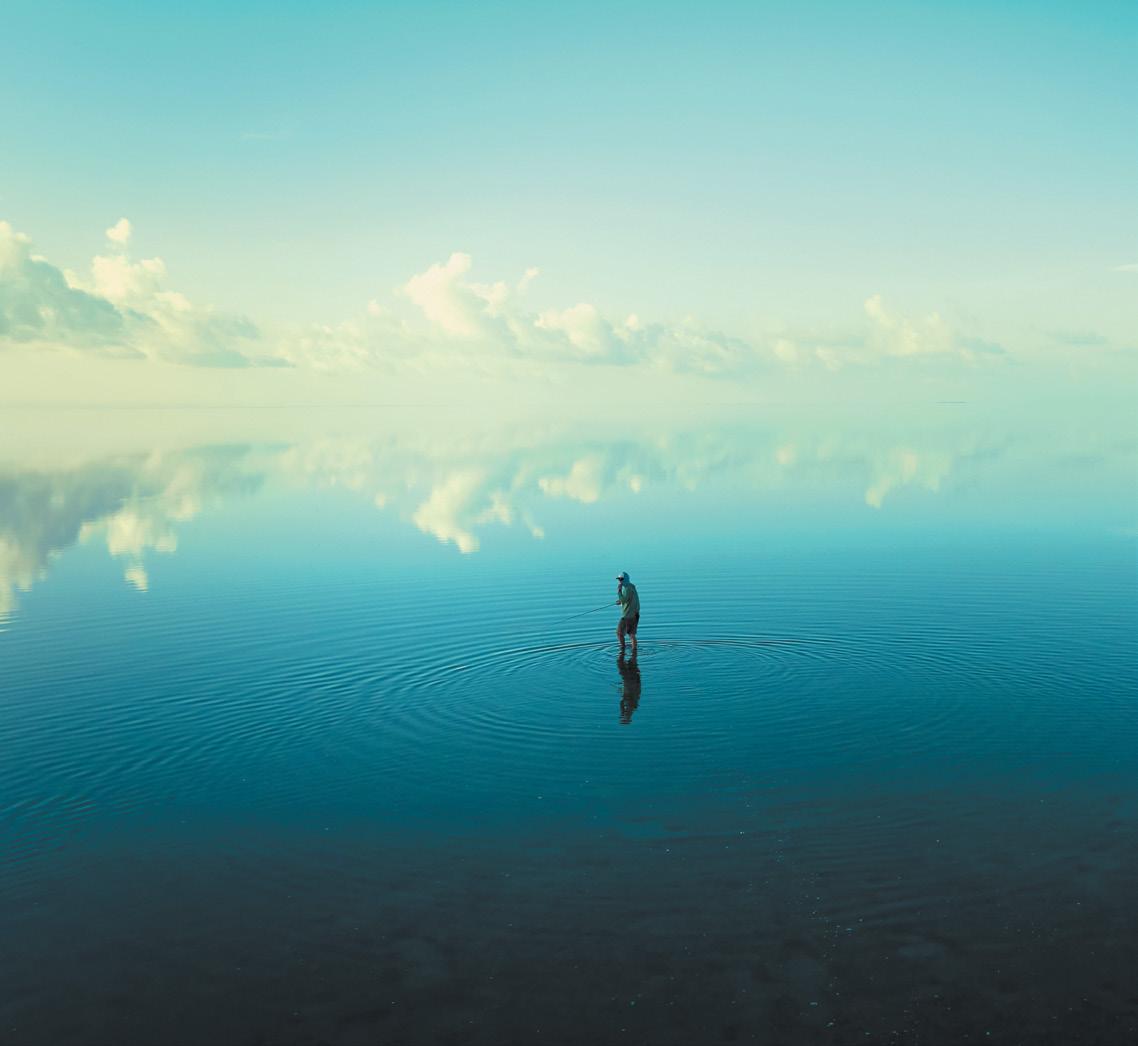
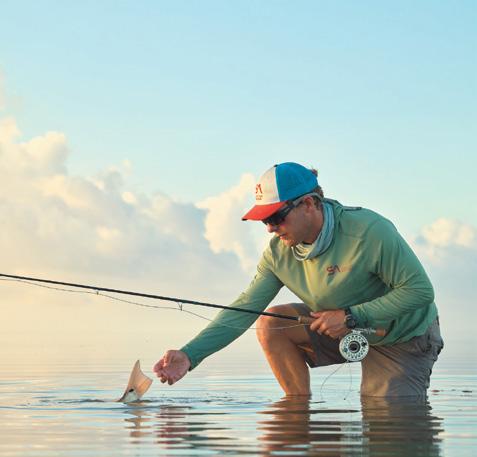
SA Pro Ben Paschal
For over 80 years, we have been at the forefront of innovation. Sharpened by experience. Pushing the boundaries of material science to make our lines stronger and more durable. Then testing in the most demanding environments with the world’s best anglers. Those who demand the best choose Scientific Anglers.


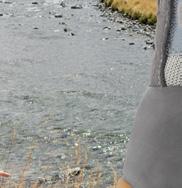
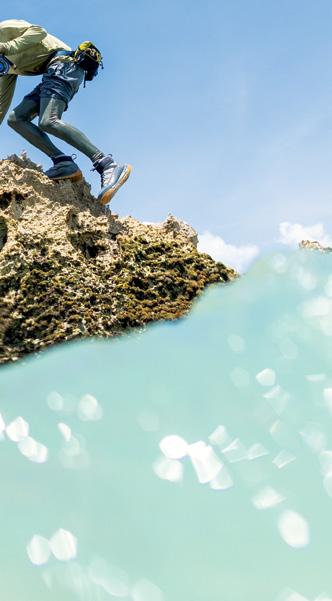
River Salt Wading Boots II
On saltwater flats, sand and razor-sharp coral shreds boots. Rivers batter them with constant impacts and relentless stress. We built the River Salt Wading Boots for anglers who demand absolute performance and reliability—in any water, under any conditions.

Freestones One
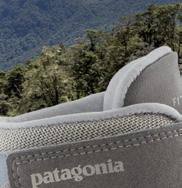


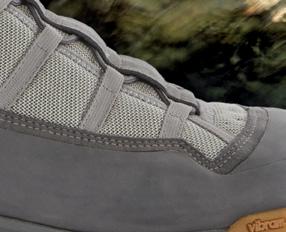
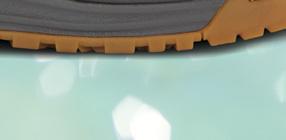
to Flats. Boot.






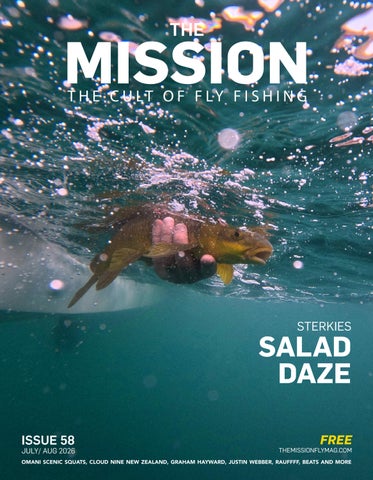
32. SALAD DAZE
Between the weird juju of dry fly fishing on South Africa’s premier smallmouth yellowfish stillwater (and the challenges of competitive eating), Tudor Caradoc-Davies and Greg Lomas throw caution to the wind, invoke The Bard and surrender to the moody whims of Sterkfontein Dam.
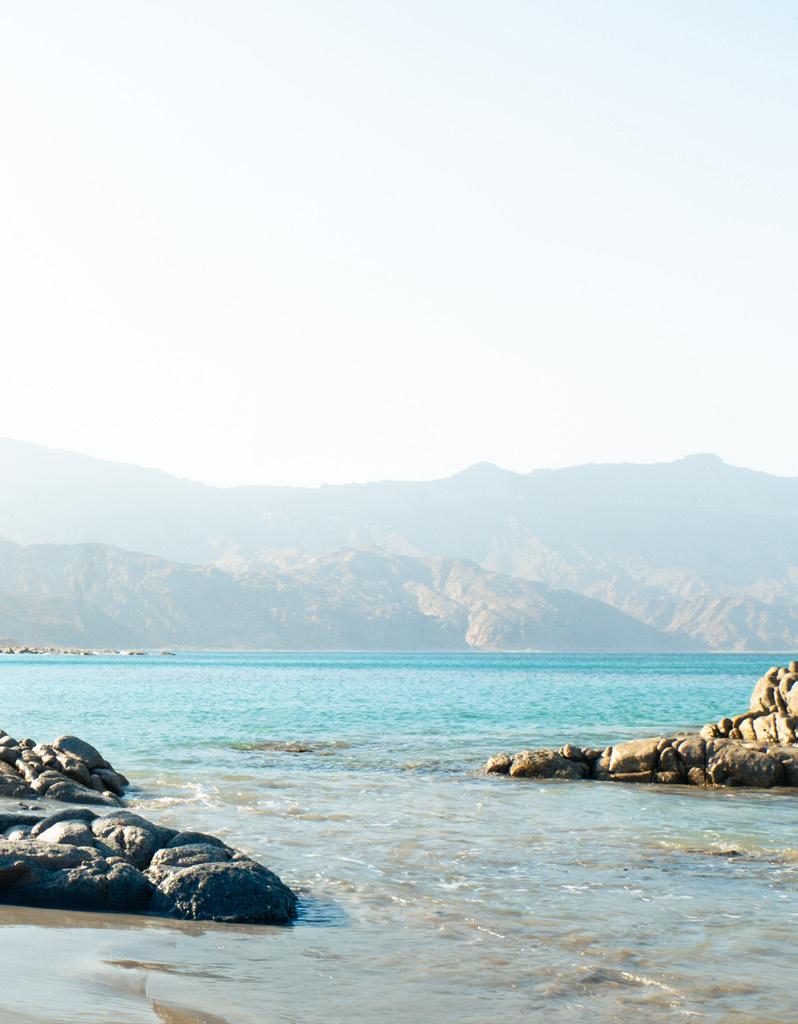
48. SCENIC SQUATS
Adopting the old adage about what to do when life and lemons collide, when Blaede Russell’s entire season as a fly fishing guide and operator in Eritrea was cancelled, he (le)m(on)ade the best of it by roping in a friend and DIYing Oman’s southern coast.
64. CLOUD NINE
New Zealand - Aotearoa, the land of the long white cloud - has been on Grevin Price’s radar for years. A visit to his daughter on North Island, a milestone year for him, a brother turning 54, two old schoolmates and nine days on the South Island. What could possibly go wrong?
76. THE GRANDE
Rob Kyle’s 132cm GT is the biggest ever recorded on fly on the South African coastline - and he caught it on foot. If you were going to hand this fish to anyone, it was him.
REGULAR FEATURES
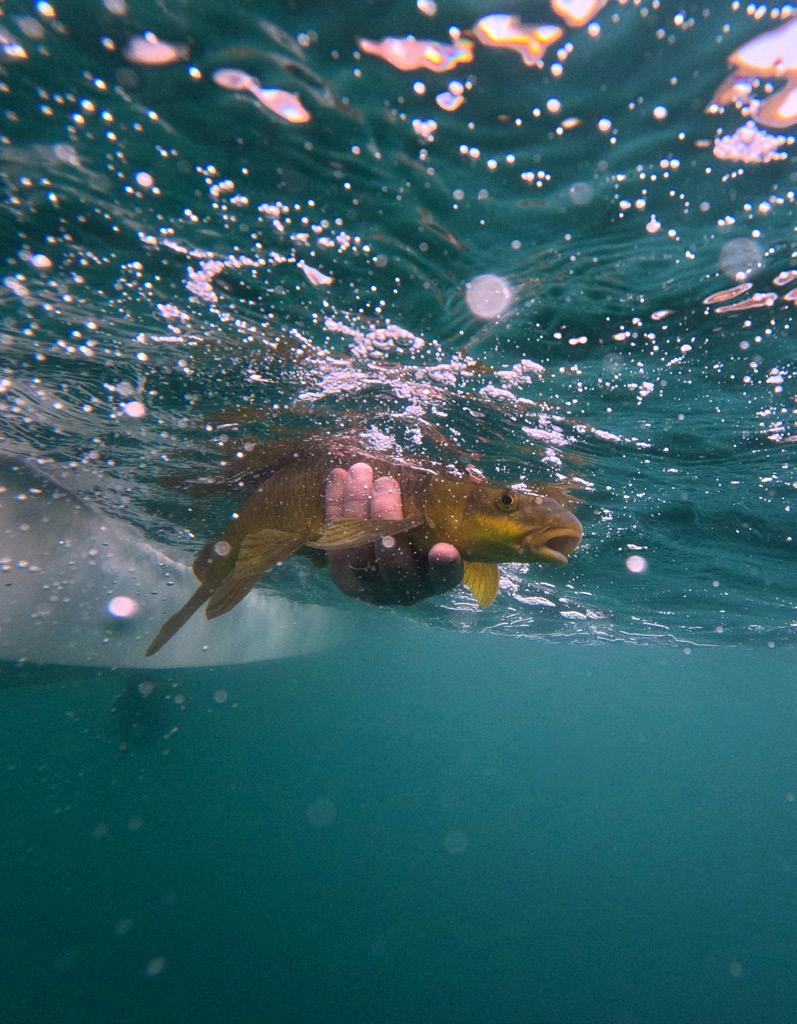
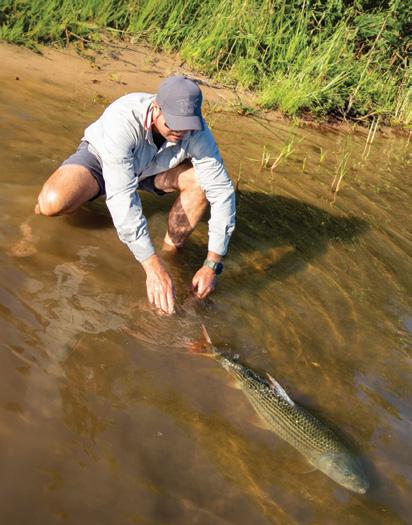
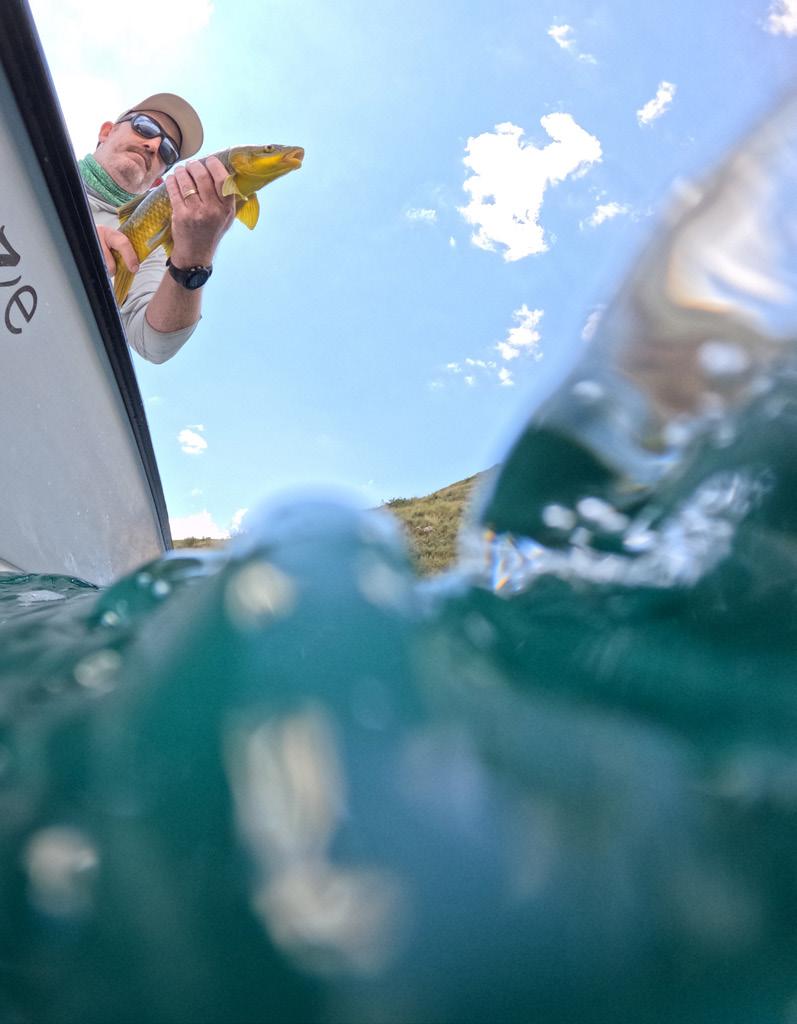
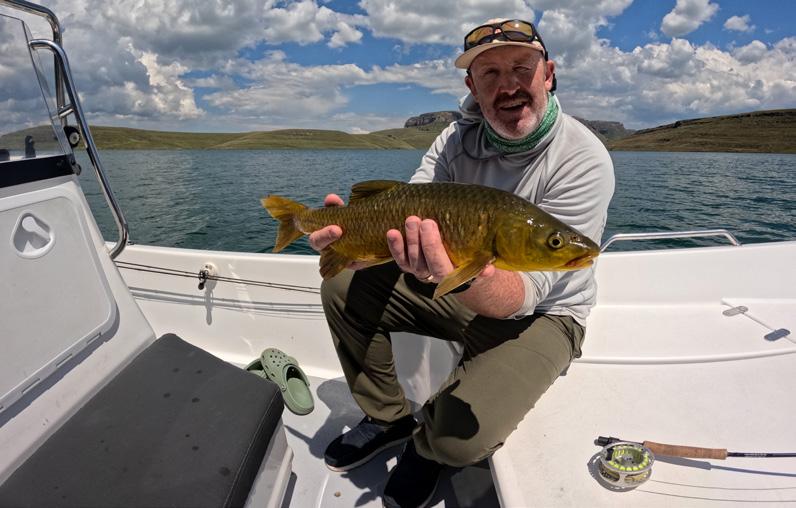
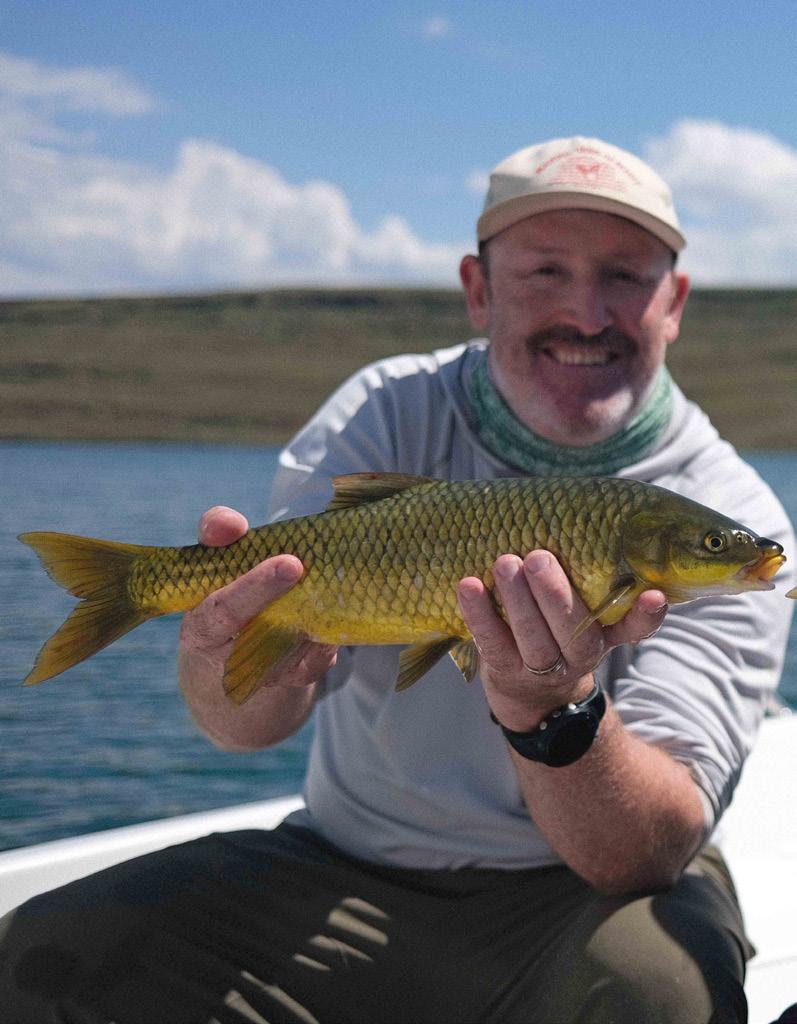
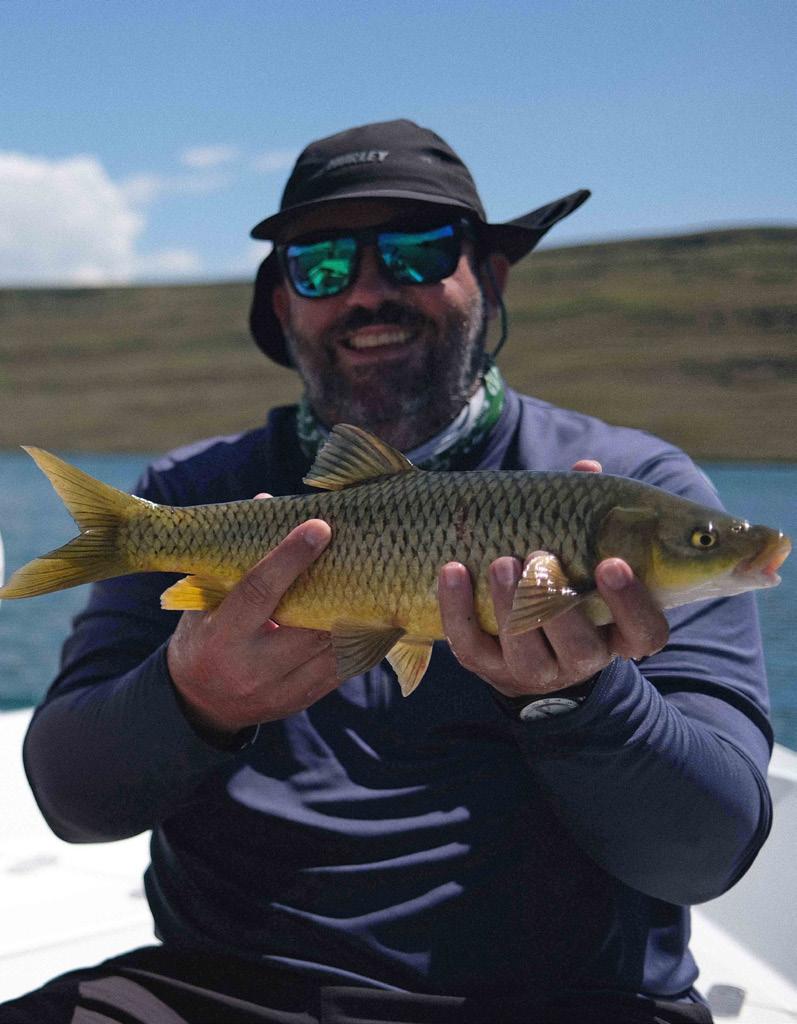
A Sterkies smallmouth yellowfish looks just like Nepptune’s nethers the moment he lowers them into an ice bath. Photo Greg Lomas.
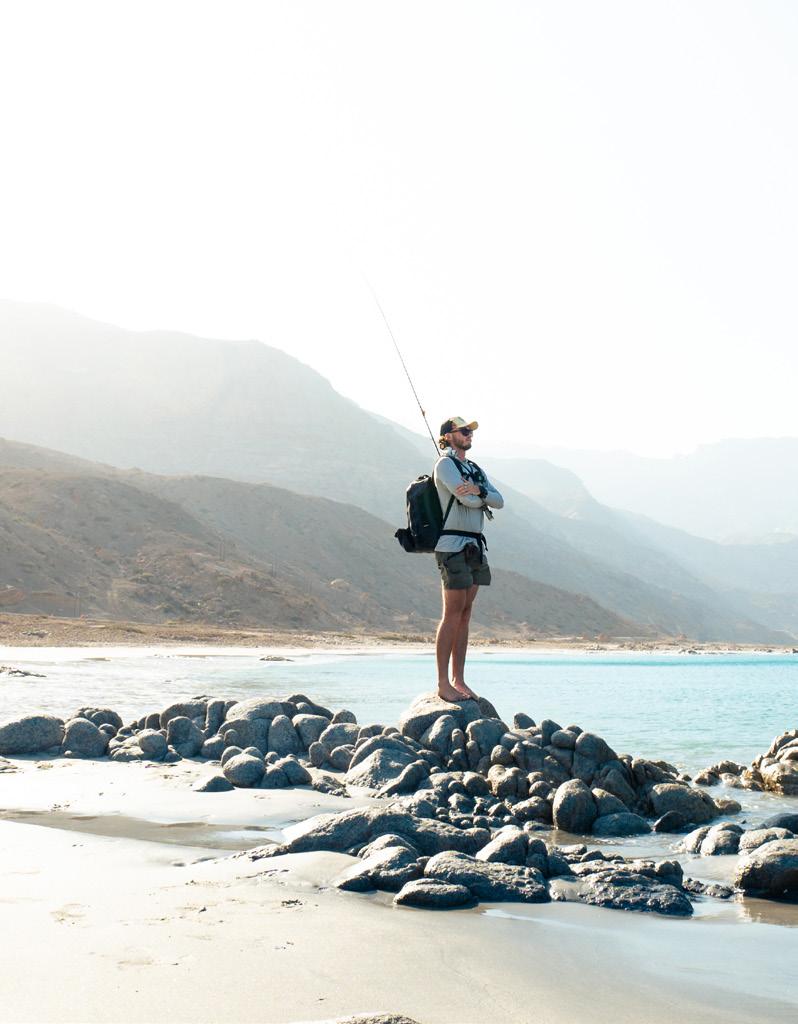
Somewhere on Oman’s southern coast, off-duty guide Blaede Russell plays ‘The floor is lava’ with africanus permit. Photo. Edward Clark (page 48)
150 Years of Fly-Fishing Excellence
Founded in 1872 in Alnwick, England, Hardy has become one of the most respected names in fly fishing. What began as a small family business grew into a global leader in premium fishing tackle, renowned for its innovation, craftsmanship, and performance.
The launch of the iconic perfect reel in 1891 established Hardy’s reputation for engineering excellence, while decades of pioneering designs earned the company worldwide recognition and multiple royal warrants. From classic reels to modern carbon-fibre rods, Hardy has consistently combined traditional craftsmanship with cutting-edge technology.
Today, more than 150 years later, Hardy remains dedicated to producing exceptional rods and reels for anglers who value precision, heritage, and the art of fly fishing.

For anglers looking to experience the legendary quality of Hardy firsthand, a selection of Hardy rods, reels, and accessories is available from Safari Fishing at Safari Outdoor ® Lynnwood. Whether you’re a seasoned fly fisherman or just beginning your journey, Safari Fishing offers access to some of the finest tackle in the world.
Born in England, Fished Everywhere.

LYNNWOOD
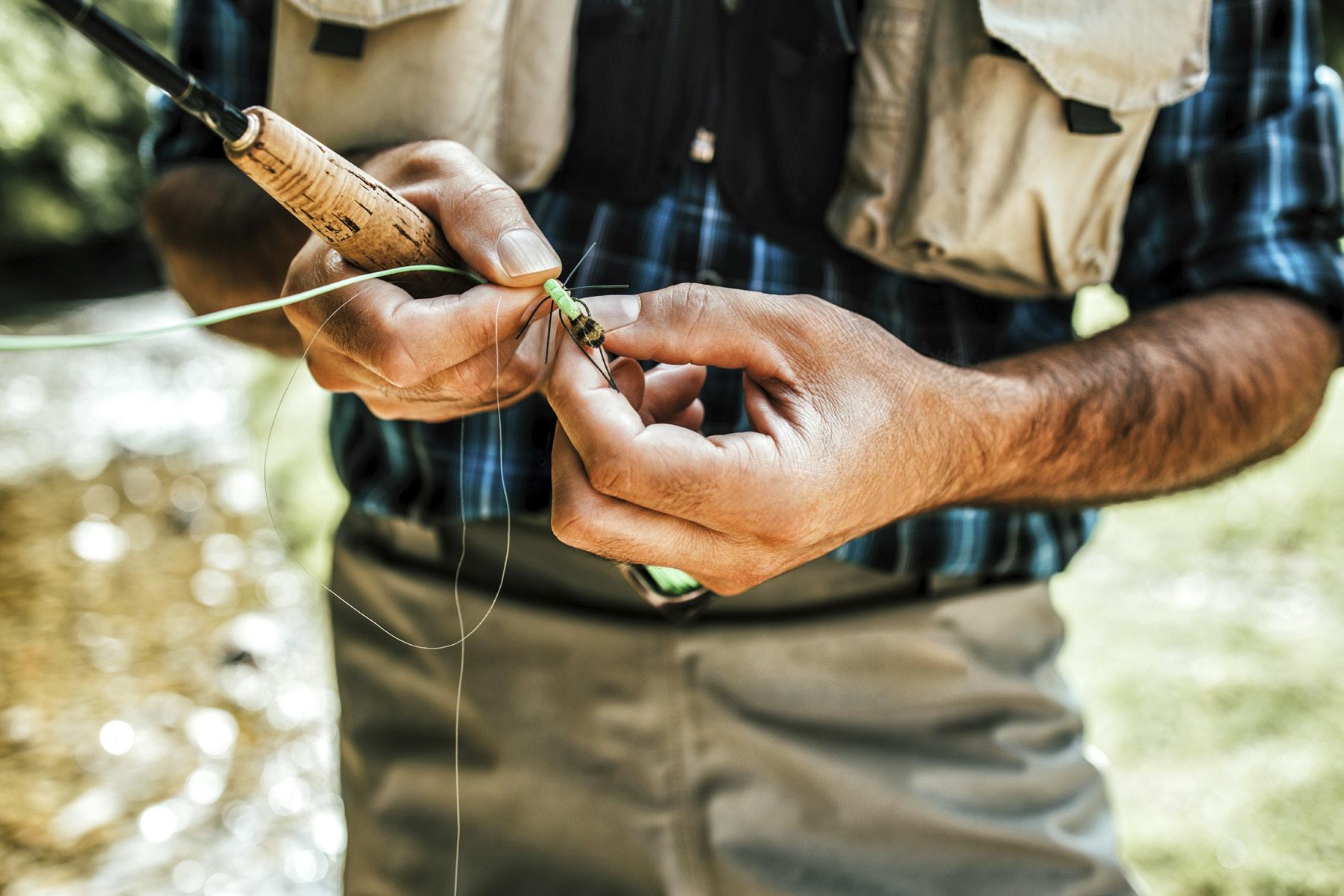
Dr y is for flies.
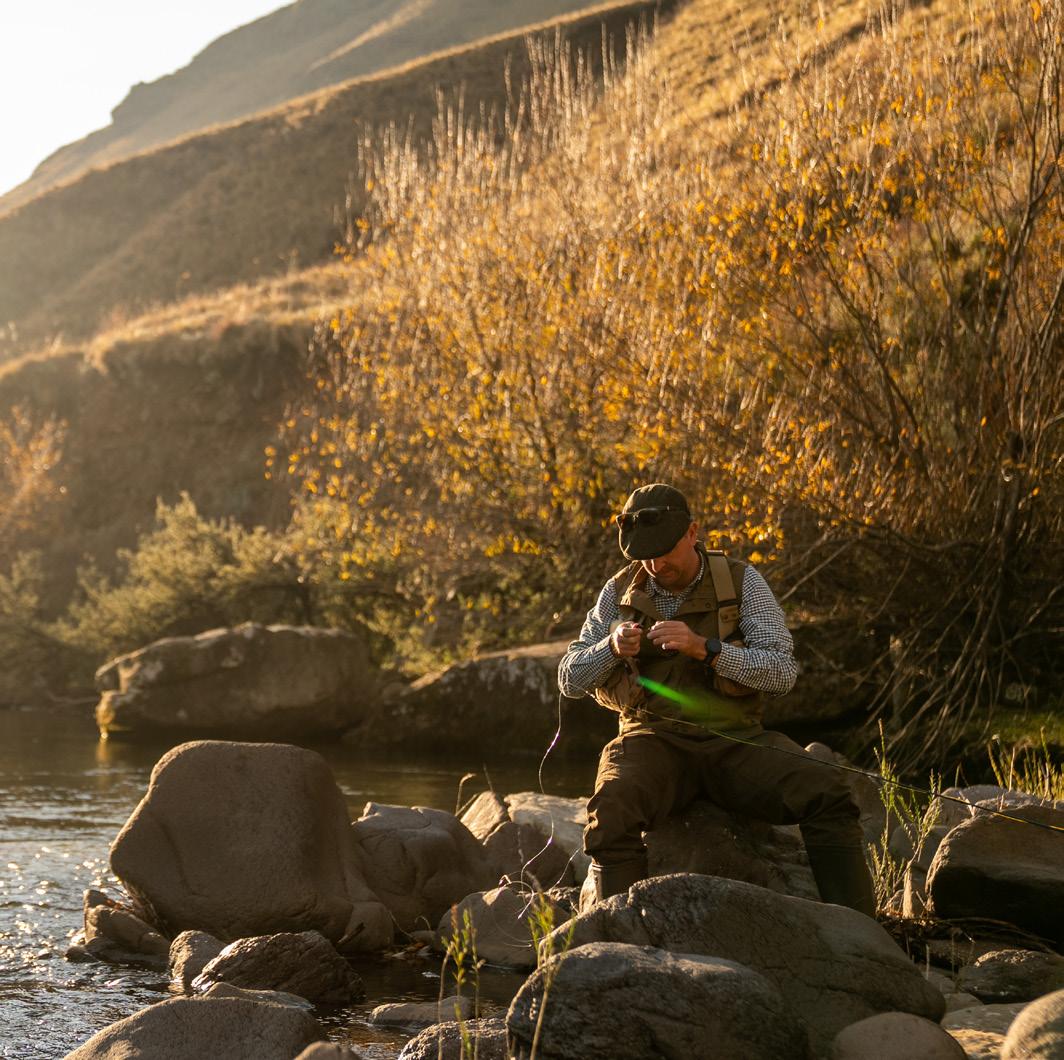
When you are waist-deep in a river, you learn a thing or two about what truly matters. Gear that lasts. Moments that count. Stories that live on.
Stay as long as you like.

FOR US, BY US
Approximately 58 issues ago, Conrad Botes, Brendan Body and I put our heads together and conceived of a fly fishing magazine we would actually want to read. The concept was simple enough: tear up the rule book, speak the way the people we knew spoke about this weird sport/hobby/thing we love, dive deep into all the niches of fly fishing rather than restricting ourselves to the staid traditional lanes, and most importantly - have a jol while doing so.
While we were incredibly excited about what we were doing, as with most creative endeavours we also had a fair amount of doubt. What if people didn’t like it? What if it simply didn’t work as a business? What if the wanker tech bros were actually right, and print is dead?
We needn’t have worried. The reception floored us and has kept doing so ever since. It was like there had always been this fan base, this tribe out there, waiting for us to serve up some adventurous, entertaining delights from deep in our fish-tormented psyches. We’ve been riding the wave ever since.
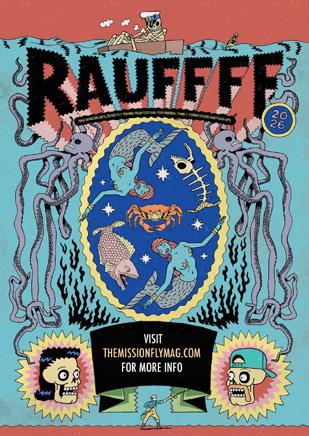
So when we decided to enter the fly fishing film festival scene with our new baby RAUFFFF (Raw African Unfiltered Fly Fishing Film Festival), rather than dip our toes in with just one show, we went for a triple-flip, balls-flailing, backspasm-incoming bomb drop of a seven-city cross-country tour. After all, there’s no use being half pregnant with an idea.
The response has been something else entirely. A range of filmmakers have submitted films - many we knew or had worked with before, but plenty of new faces and talents have come out of the woodwork too. Brands have jumped onboard, helping make the whole endeavour a viable one that will continue for years to come.
As someone who grew up in a version of South Africa’s democracy that was just coming out of the Apartheid years and reintegrating with the rest of the planet across every facet from diplomacy to industry and culture, there is a huge amount of pride in seeing us shift as a nation, both as creators and consumers. While we’re cognisant of what
happens elsewhere, we’re no longer wholly obsessed with what the rest of the world is doing because there is so much talent, entertainment and authenticity right here at home. That’s what the response to RAUFFFF reflects. There’s an echo of the FUBU (For Us By Us) ethos, blended with the rallying cry of “no DNA, just RSA” and the “hulle weet nie wat ons weet nie” (“they don’t know what we know”) mantra. And we don’t even have to headbutt a Chechen UFC goblin or Pommie rugger starlet to prove it. The maths is simple enough - crowds want to connect with fish, fisheries and filmmakers that mean something to them.
We’ll see you out there fam.














EDITOR
Tudor Caradoc-Davies
ART DIRECTOR
Brendan Body
EDITOR AT LARGE Conrad Botes
CONTACT THE MISSION
The Mission Fly Fishing Magazine for Soutie Press (Pty) Ltd 25 Firth Road, Rondebosch, 7700, Cape Town, South Africa info@themissionflymag.com www.themissionflymag.com
CONTENT COORDINATOR Matt Kennedy
COPY EDITOR
Gillian Caradoc-Davies
MANAGING DIRECTOR
Ingrid Sinclair
ADVERTISING SALES tudor@themissionflymag.com
CONTRIBUTORS #58
Grevin Price, Blaede Russell, Rob Kyle, Graham Hayward, Justin Webber, Alex Stone
PHOTOGRAPHERS #58
Grevin Price, Blaede Russell, Rob Kyle, Graham Hayward, Blue Safari Fly Fishing, Justin Webber, Alex Stone, Greg Lomas, Chris Brennan, Edward Clark
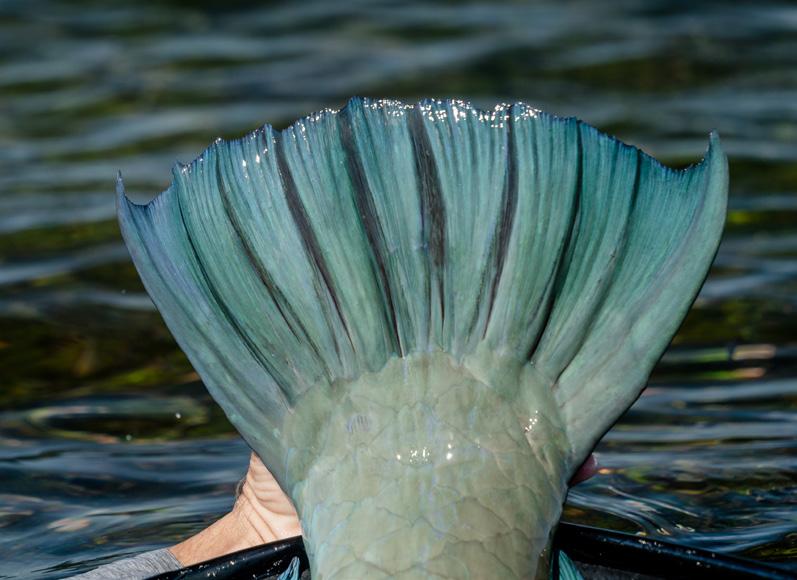
What we imagine the less publicised end of a mermaid actually looks like (page 24).
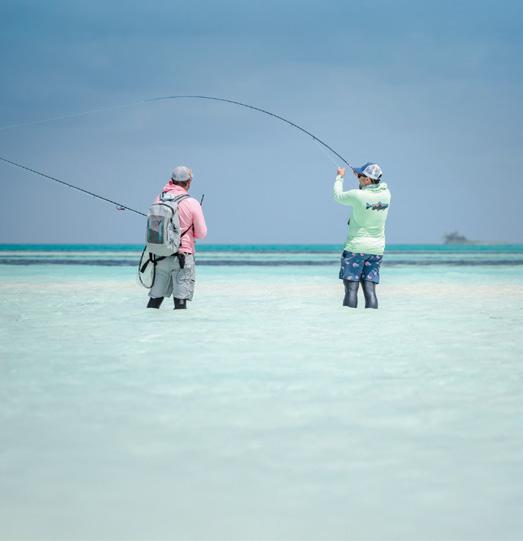
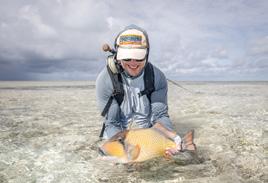
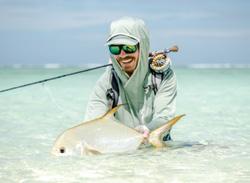
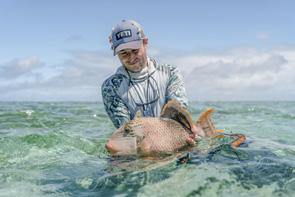
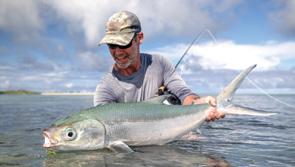
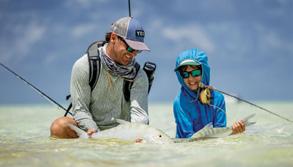
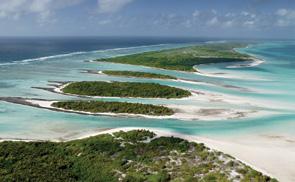
SEYCHELLES
CHUM
THE BEST FEST YOU’LL ATTEND THIS YEAR, A BRAG-WORTHY TROPHY, THE HONEY BADGER SBS, TFO TAKES THE WIN(S) AND SEASONAL BEATS

LASTMINUTE.COM - RAUFFFF TICKETS
This is the July/August issue so if you happen to be reading this in August 2026 there’s a chance you may juuust be in time to grab tickets to your closest RAUFFFF screening. In case you have been living under a rock the last 9 months or so, RAUFFFF is The Mission’s Raw African Unfiltered Fly Fishing Film Festival sponsored by Epi-Max Man. Touring South Africa in August, we will be holding screenings in Cape Town, Durban, Hilton, Johannesburg, Pretoria, Paarl and Knysna. We have a stupendous lineup of (mostly African) films including contributions by Jako Lucas (aka Capt. Jack), FlyBru’s Nick van Rensburg and Matt Gorlei, Ryan Janssens, Hano Scholtz and Ross Kiggen from Doba Productions, our very own Matt Kennedy, Oscar Green, Si Kay, Jeremy Shelton, Johann ‘Vossie’ Vorster, Kev Jennings, and our international headliner, Rolf Nylinder among others. The Durban and Hilton shows will feature the Xplorer popup shop setting up a casting demo with their new NRS rod and Rio lines, while before the Paarl show Stream & Sea will be doing a casting Olympics challenge.
Did someone say prizes? Well, just by virtue of buying a ticket to a screening, you stand a chance of winning a week at Alphonse Island courtesy of Blue Safari valued at R250 000. You also stand a chance of winning a four-night stay for two at Ichingo Chobe River Lodge in prime tigerfish territory, an Eastern Cape Highlands trip with Stream & Sea valued at R20 000, guided Cape Streams or Vaal Yellowfish days also with Stream & Sea, plus guided days on the grunter flats of the Garden Route with Mavungana Flyfishing. Then there are tons of other prizes from YETI, Xplorer, Stream & Sea and Epi-max.
As for the best film and filmmaker? They win a trip for two to smallmouth yellowfish dry fly heaven at the Makhangoa Community Camp on the Bokong River in Lesotho, courtesy of African Waters.
Don’t stuff around any longer - if you hurry tickets might still be available at quicket.co.za

ENTER THE...
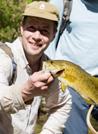
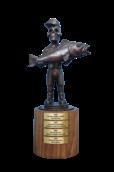
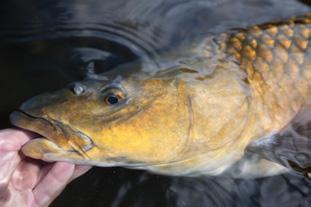
...FEATHERS AWARD. Africa’s most prestigious (...possibly also the only) fly fishing trophy, the Feathers Award recognizes the best fish caught on fly on the African continent in a calendar year. Size helps, but it’s not everything as the judges reward effort, rarity, difficulty etc. too. Previous winners have
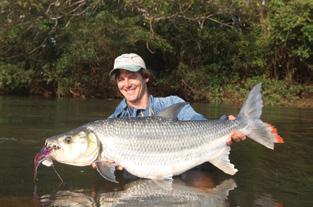
included Ed and Barns Ghaui with the motherlode of Niger barbs in Nigeria, Leonard Flemming’s massive Clanwilliam yellowfish, David Falcke’s musselcracker caught at night in the Overberg, Franna van Zyl’s Gqeberha dorado, Greg Ghaui’s goliath tigerfish and Jimmy Eagleton’s red steenbras. More info at themissionflymag.com
“AFRICA’S MOST PRESTIGIOUS (...POSSIBLY ALSO THE ONLY) FLY FISHING TROPHY.”
“GETS EVISCERATED BY ANYTHING THAT EATS BAITFISH.”
SIGN UP FOR... ... SUNDOWNER FLY FISHING ADVENTURES WINTER
COMP. The 13th edition of one of the friendliest competitions on the calendar, promises 56 spots, wellstocked trout dams, tagged fish prizes, and a vibe. Held on Saturday, 11 July 2026 at Oxbow Country Estate, the categories cover adult men, adult women, juniors (12-15) and teams of four, with every team required to include at least one woman or junior angler. Entry fees: Adults R1,795 | Juniors R1,450. sundowner.co.za
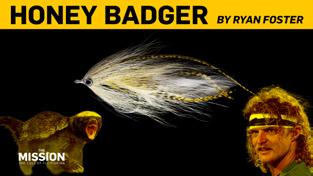
VIDEO: RYAN FOSTER TIES THE HONEY BADGER
One of our favourite rugby players of all time, Nick ‘the Honey Badger’ Cummins was as well known for his postmatch interview chirps (e.g. “He was sweating like a bag of cats at a greyhound meet”), as he was his all-action style as a winger. Whether this fly was tied as a nod to him or the actual animal (a tough, fearless critter that takes on anything regardless of size) is unknown. A simple back-tied bucktail fly, the Honey Badger, is a highly adaptable, quick to tie fly and gets eviscerated by anything that eats baitfish. While it’s a staple in Ryan Foster’s GT box for the flats on the Seychelles, the Honey Badger is also his go-to in South African estuaries. With grizzly hackle that provides a lot of movement and bucktail that pulses with each strip, this baitfish pattern is a proper finisher. themissionflymag.com
SANTA ESTATE, DULLSTROOM
(Own the Water)
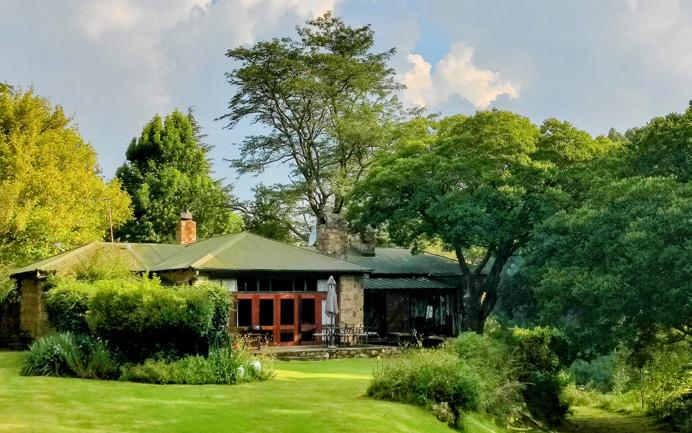
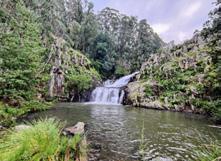
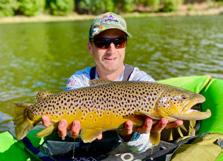
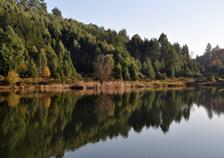
A signature 605-hectare property, adjacent to Walkerson Hotel and Spa, 12km outside Dullstroom. With 1.5km of the Lunsklip River running through it, two dams, nine weirs, and a string of pools, this is one of the area’s original trout-fishing syndicate properties. Sitting alongside the river, overlooking a scenic waterfall, Santa Lodge offers the kind of seclusion that’s genuinely hard to find this close to a village. There’s a working trout hatchery on site, so the waters never run short of fish and two additional income-earning cottages.
9 Beds
4 Baths
260 Sqm
Contact Sannelie Kruger: sannelie.kruger@pamgolding.co.za | 082 451 7478 | pamgolding.co.za
SUBSCRIBE
TO THE MISSION & SCORE WITH SCIENTIFICFLY & GNARLY HEADZ
The Mission is free both in print and digital formats, however, if neither of those options work for you (there’s no stockist near you; you live outside of South Africa; or you just really want to support us – thanks!), you can subscribe and have the print magazine sent directly to you. As an extra bonus, with each new issue you will receive a premium fly (e.g. bass flies, tigerfish flies or saltwater flies) from ScientificFly & GnarlyHeadz.
Annual subscription
Receive 6 issues of The Mission Fly Mag in print
• South Africa only: R980 per year for 6 issues, couriered to your door with no delays
• Outside of South Africa: R3 900 per year
Find out more at themissionflymag.com
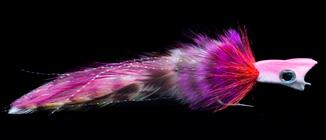

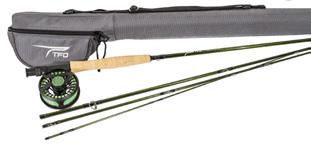
TFO CLEANS UP
We love a plucky underdog story. When thousands of anglers get to handle gear side by side and vote (with no heavy-breathing rep looking over their shoulder), the results tend to cut through the marketing noise and media fluff. At the 2026 Fly Fishing Show Consumer Choice Awards, Temple Fork Outfitters dominated in much the same way a five-year-old does a bluegill. The Dispatch Rod took Freshwater Fly Rod, the Moment took Saltwater Fly Rod, the Dispatch Reel took Freshwater Reel, and the Dispatch Combo Kit won its category outright. Credit where credit is due, that’s an exceptional return for a brand that’s built around the idea that you don’t need to spend a fortune to fish well. Available in our neck of the woods at wildfly.co.za
THE BEATS: THE FISH FLOP FANFARONNADE

While our winters are mild compared to the northern hemisphere, it’s reasonable to be mildly afflicted by SAD (Seasonal Affective Disorder) brought on my short days and a lack of sun, or... in our case... a lack of fish. Featuring an eclectic mix ranging from Tony Allen, Faradjallah, Ben Caplan, TV on the Radio, Soulwax and Death from Above, this playlist doing the rounds at The Mission speaks to the impending change in seasons. It takes us from some slower moody stuff, pushing through the winter solstice and into the pacy, somewhat manic, downhill rush towards spring and summer (for us southern hemisphere types at least). If you are up north, listen to it in reverse. themissionflymag.com
PRESS PLAY

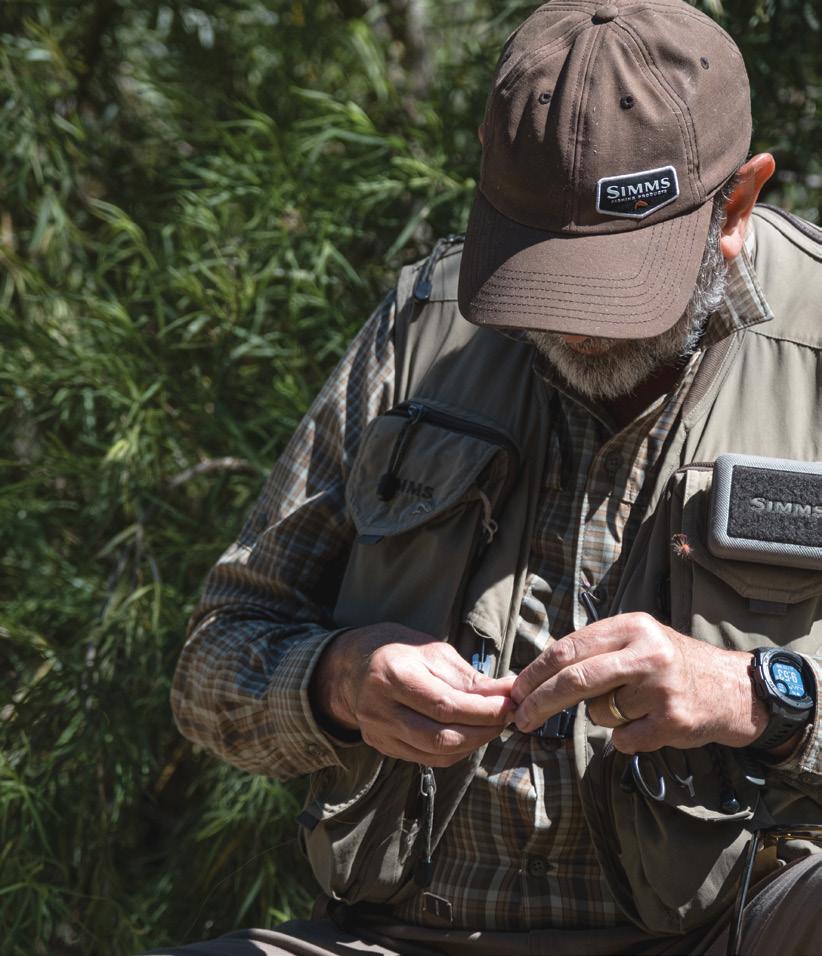
Some mornings start with knots, not clocks.
There’s peace in the ritual. Fingers working through old muscle memory, wrapping tippet and thought into something that might fool a fish. Might not...This is where the day begins.
Full of promise. We have the tools to make your mornings smoother.


Let the Fish Be the Hero
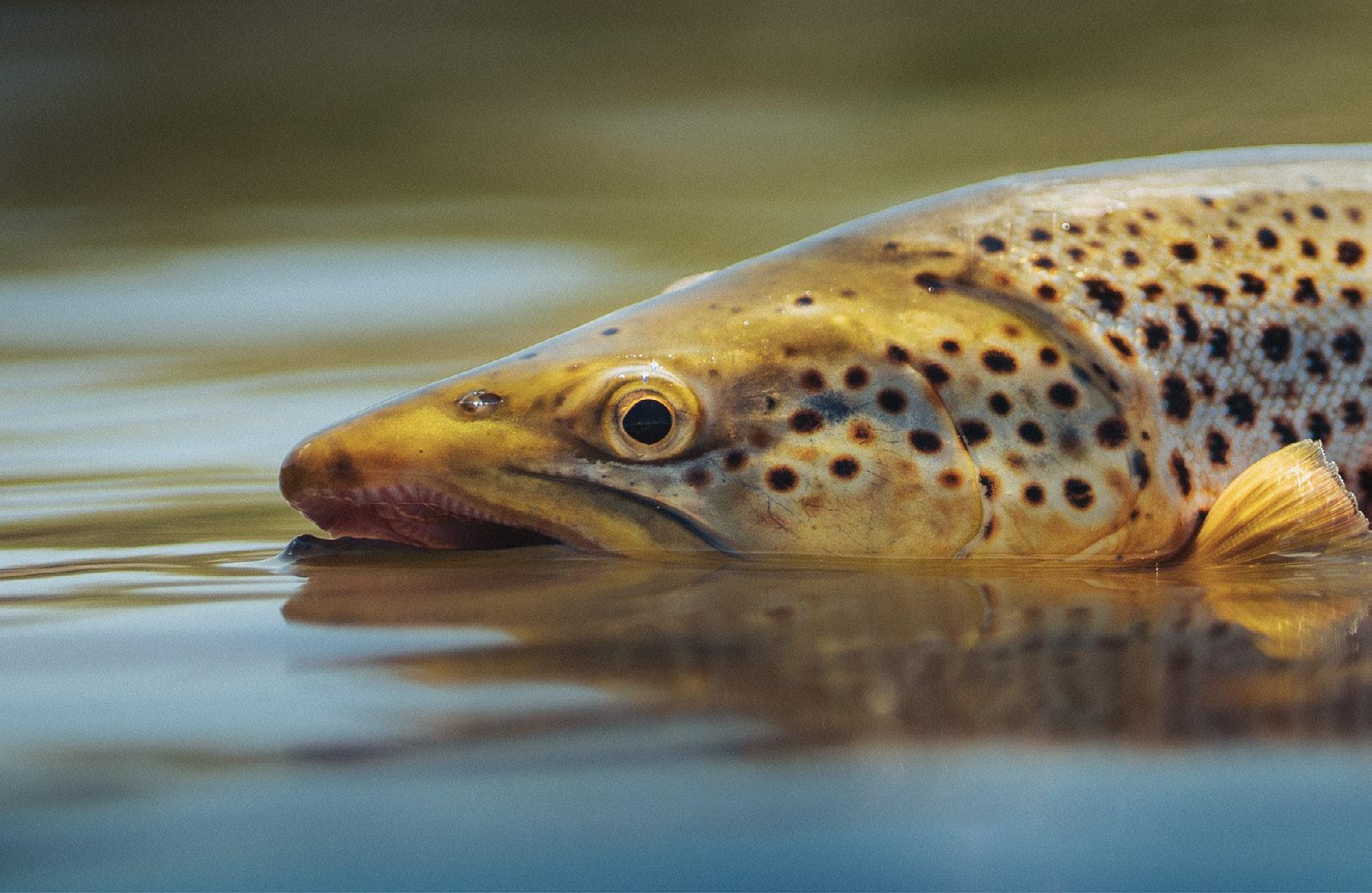
Photo by Amber Payliss
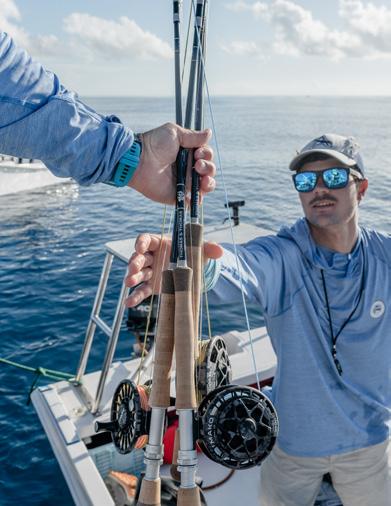
5 best things about where you guide?
1. The people (mainly the boys in the guide crew). I’ve had the pleasure of meeting some truly incredible people along the way and made some friendships that I’ll take with me for life. I could name a few, but they all know who they are anyways.
2. The guide debrief. Some seriously funny shit is thrown around when a team of guides get back into one place with a couple beers after a long day on the water. The Alphonse back room, the Prov Hammocks and the East Ranga bunk house are my top three debrief locations, with Scoty de Bruyn being my all-time favourite storyteller.
3. A cold SeyBrew. Nothing quite hits the same after a big day on the water than when that first lovingly prepared ice cold brew touches your lips.
4. The Providence lagoon on a high sun glass off day, it’s like being on top of the most incredible aquarium in the world. It’s days like these where I really take it all in and appreciate just how lucky I am to see these places.
5. The challenge. These locations will test you. No two days are quite the same and that’s what keeps me coming back for more.
5 fishing-connected items you don’t leave home without before making a mission?
1. Yeti backpack - it stays packed and ready for a last minute call up.
HIGH FIVES
GRAHAM HAYWARD
BORN IN ZIMBABWE, BUT BASED IN THE UK WHEN HE ISN’T GUIDING FOR BLUE SAFARI IN THE SEYCHELLES, GRAHAM HAYWARD IS OCCASIONALLY WAYWARD, BUT ALWAYS FISHY. A BUMPIETICKLER, BUSH CHICKEN PH AND INVETERATE DOG BISCUIT CARPWRANGLER HE’S ALSO OUR HIGH FIVES GUIDE FOR THIS ISSUE.
Photos. C/o Graham Hayward, Blue Safari Fly Fishing
2. Fishpond beer koozie. Allan Stanton taught me this one. It is however essential to double bag for the crispiest of pints.
3. JBL Charge 5. How this thing is still going I don’t know.
4. Crocs. Unfortunately, my lucky pink ones suffered an unforeseen blowout whist chasing a bumpy last season so I’m on the hunt for a replacement pair.
5. My Alphonse belt and Van Staal pliers. I was gifted this belt by Rudolf Lubbe on one of my first days in the Seychelles and it has hardly come off my waist since.
5 bands to listen to while on a road trip?
1. Linkin Park.
2. Tom Odell.
3. Goldfish.
4. Rainbow Kitten Surprise.
5. The Ks.
5 things you are loving right now
1. Conventional fishing. Something I grew up with and love but rarely get to do. Swimming a live bait in Mozambique is hard to beat.
2. Renovating my first property. Unbelievably rewarding and expensive.
3. Morgan Berens. How she puts up with me and my guiding lifestyle I don’t know.
4. Nighttime chicken hunts with Brad Young on Alphonse. We’re helping to eradicate them. Nothing quite like
taking down a roosting chicken with a catapult amongst a tropical coconut forest with your best mate. This is a high risk exercise as incidents with falling coconuts are not uncommon in this neck of the woods. Island security can also pose a significant risk to the success of the evening hunt.
5. Temu. This website has me scrolling for hours, endless fly-tying materials, jigs and lures for next to nothing if you know what to look for.
5 indispensable flies for saltwater?
1. Golden knight. Everything eats this thing.
2. Orange flexo. There’s rarely a day on Prov where we don’t throw one.
3. Kyle Simpson’s permit flexo. If you know, you know.
4. An Andre van Wyk Beast in black and purple. The way these things swim is something special.
5. Curly tail. These will make a trigger do backflips to get the fly.
5 indispensable flies for freshwater?
1. Black and gold Humongous (ed. essentially a riff on a Woolly Bugger). A staple at Rutland (my local fishery) that’s produced more big brownies than I care to count.
2. Yellow owl. My all-time favourite dry.
3. Hare’s ear nymph in all variations, a proven killer.
4. Red Francis - page one in the Atlantic salmon textbook.
5. Clouser minnow - anything predatory is going to eat a Clouser.
5 fly tying materials or fly triggers you swear by?
1. Anything with UV in it.
2. Flexo tubing.
3. Grizzly hackle. It brings a big fly into a different league.
4. Bucktail. The staple in saltwater fly tying.
5. Orange tungsten beads, you can put them inanything.
5 of your favourite fly fishing scenarios
1. A fresh salmon jumping right on the taking spot you are working towards. It most likely still won’t take, but the excitement it generates is something different.
2. A slow moving trout sipping down emergers; a fundamental fly fishing favourite that never fails to get my blood pumping.
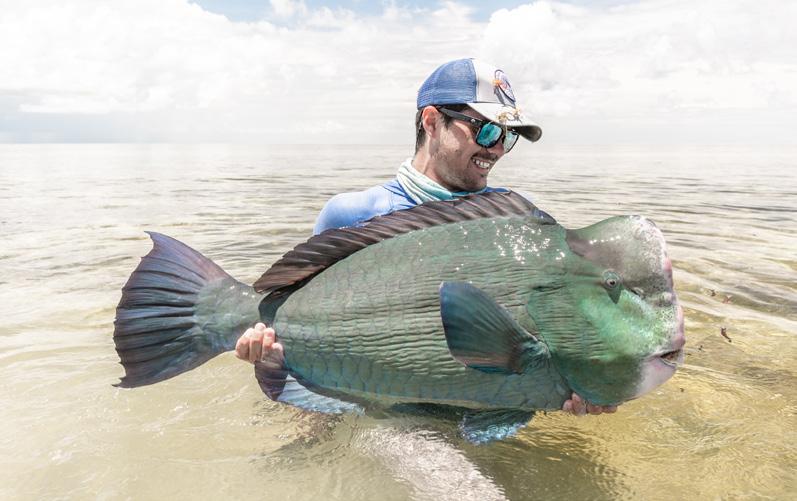
3. A shoal of unsuspecting relaxed bumphead parrotfish tailing in shallow water with a puzzler on the bow. That blank could finally be off if the fly makes it anywhere in the general vicinity.
4. Triggerfish sessions, those rare occasions where the water conditions line up and you’ve got happy tailing fish as far as you can see. Hard to beat in anyone’s book.
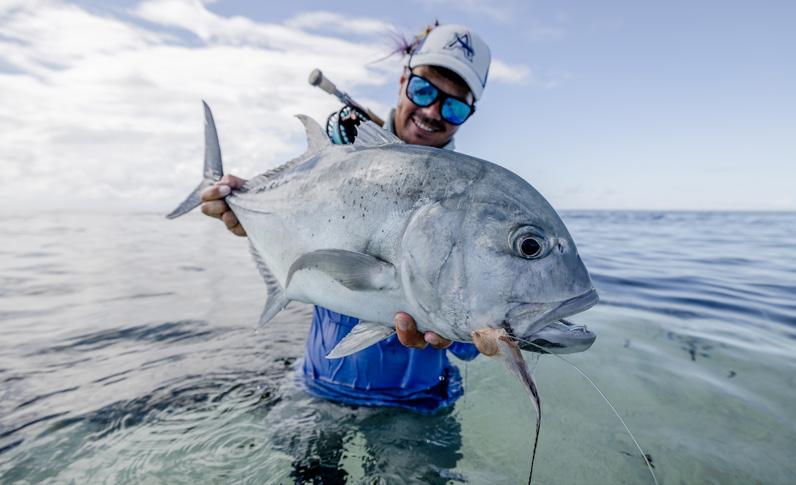
5. My all-time favourite - GTs feeding with a nurse shark or multiple sharks. These opportunities don’t come around every day, but when they do, you’re generally in for a good time. Some real Nat Geo shit.
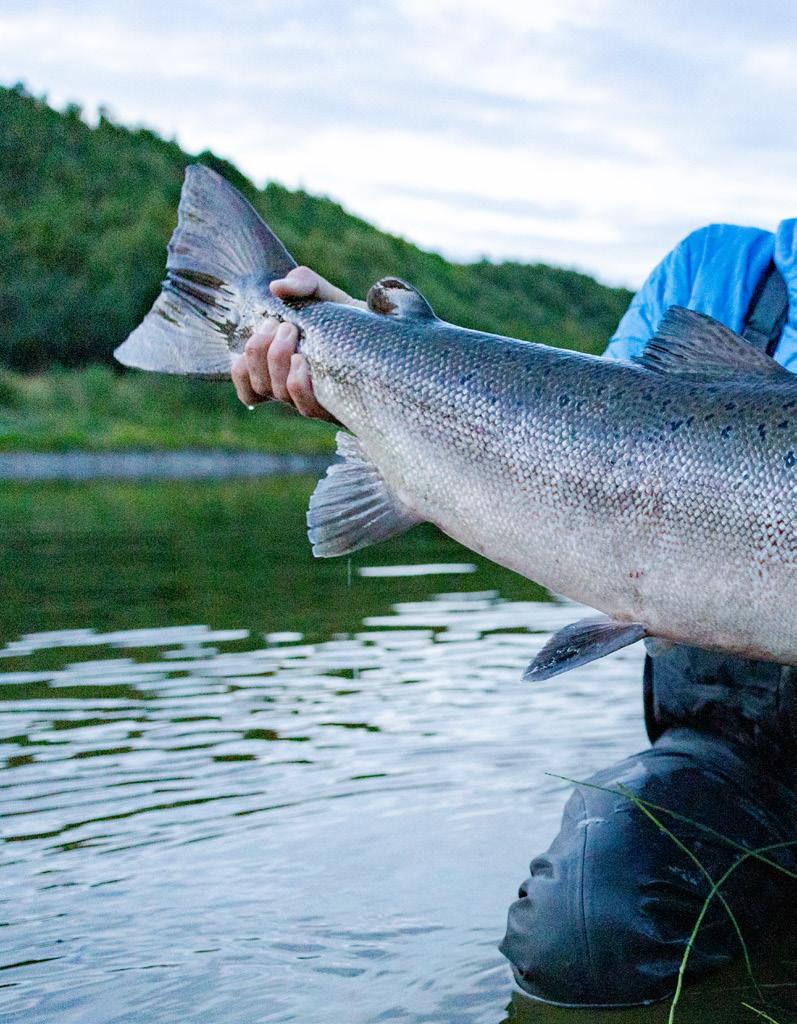
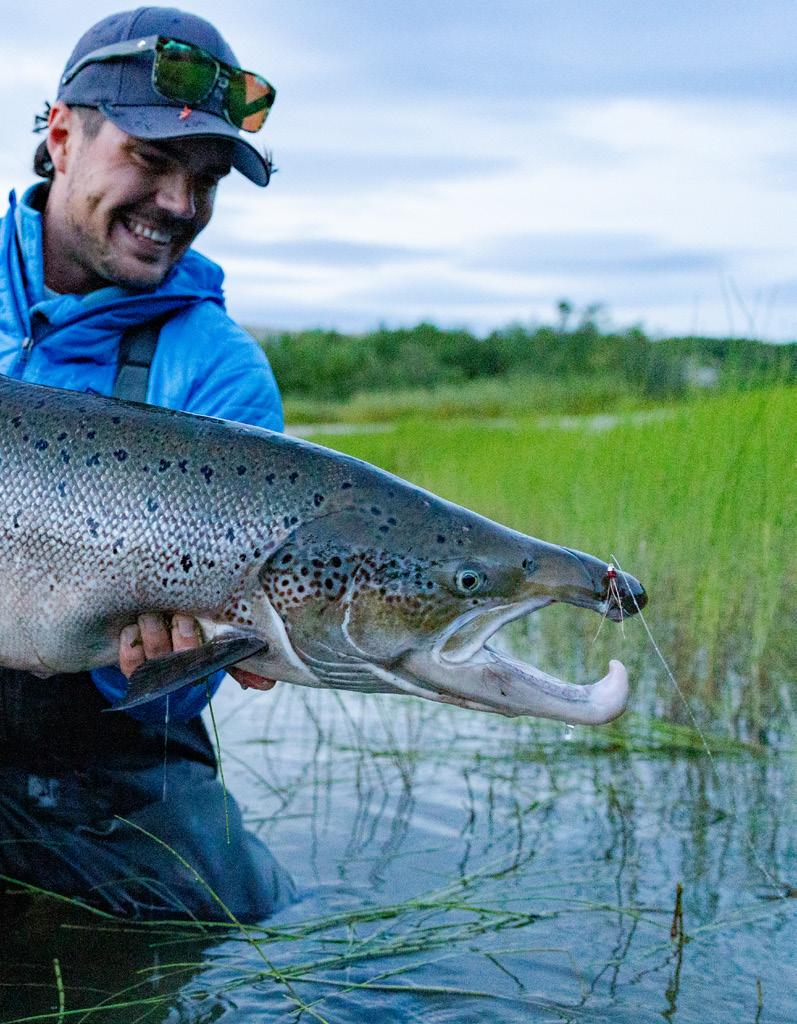
“MONKEY TREE POOL ON THE LAKSELVA AT OLDERO LODGE; WATCHING A 21KG SALMON EAT A FLY WILL FOREVER BE ENGRAVEDIN MY MEMORY.”
5 people to thank in this industry (or beyond) and what are you thanking them for?
1, 2, 3. Keith Rose-Innes, Murray Collins and Devan van der Merwe. For running the operation that has given me so much to be thankful for. I truly love my job, and it wouldn’t exist without these three individuals. I really appreciate it.
4. Cullan Ashby. For putting his neck on the line and showing me that the Seychelles existed.
5. Toff Crowther. We’ve had so many epic days on the water over the years, his friendship is one I value immensely.
5 pieces of advice you’d give your younger self before your first guiding season?
1. “Go slow, go far” is an old ghillie saying that has stuck with me. Nothing bad comes from being a bit late to a spot, however if you take your gear box out on the way to a spot it’s a whole different story. The last thing you need is a reputation like Brandon Karp aka Boxy or Gearbox. When conditions get tough to see in the lagoon, it’s better to drive slowly and not risk hitting coral, than it is to rush and break something.
2. It’s only fishing, enjoy the journey.
3. Don’t panic - know your worth. When I first started in the Seychelles, I made myself sick with worrying if I’d make the cut and fit in with the boys. If only I’d known they would all be some of my closest friends now, I would not have put so much pressure on myself.
4. If your boat sinks three times in a row there’s probably a hole in it.
5. Be honest and open with guests, these people are generally incredibly successful and can see through BS in a heartbeat.
5 things guides talk about when clients aren’t around?
1. How many pints ‘Gus Gus the liquor bus’ (aka Angus Forsyth) can consume before he loses the ability to speak English.
2. The December push (when there’s an influx of leisure guests onto the island) - one of the only opportunities for female interaction in the long Seychelles season. A great talking point in the dark months that lead up to it.
3. Anything other than fishing. One season we even banned fishing stories after dinner.
4. Cricket. A weekly game between the guides and the Sri Lankan community on Alphonse is a hot topic with team selection spoken about thoroughly the week leading up to the game. Practice attendance can be key to selection; many guides have been dropped for lack of attendance at the pub.
5. Again, the debrief. It’s always nice to rattle through and discuss some of the infuriating mistakes from the day with people who truly understand the situations. Things you’ve learned, discovered and seen during a day on the water.
5 favourite fly fishing destinations globally?
1. Providence Atoll’s finger flats which we nicknamed The Cabbages. I can’t get enough of this place.
2. Monkey Tree pool on the Lakselva at Oldero Lodge; watching a 21kg salmon eat a fly will forever be engraved in my memory.
3. Top lagoon on St. Francois atoll. There are some true giants that live here if you know where to look.
4. Hide Away Bay on Rutland’s south arm. I landed my biggest brown trout there.
5. The Stadium at St. Joe’s atoll. A breakthrough spot we recently found where you can see shoal after shoal of IndoPacific permit. Finding something new makes it even more special.
5 of the most difficult guiding/teaching experiences so far?
1. Last season a group of us got engulfed by a massive electrical storm on the flats. An experience that terrified me. I’m not sure if the lesson learnt was to be more cautious of weather systems or, upon safe return, not to consume over 100 beers with the other clients and guides involved in the storm.
2. Gale Fordham and George Curd who run conservation on Alphonse, David Fernandez and Brian Chucky decided to turn their skiff into a swimming pool during a milkfish tagging project resulting in a mayday call over the radio.
There’s something very real about hearing those words over the radio.
3. Drying my skiff out at St. Joes (if you dry out it’s a gamble you take that means you are stuck for the day and the boat is on dry ground while you wait for the tide to come back in). I committed to that move which is quite a big call but didn’t realize I had no shoes. The only option with paying guests was to fish on and make a plan by wearing my client’s flip flops. We actually had a great day and caught a couple good GTs. Safe to say it was a long day in the surf. The chafe on my feet kept me off the water for three days.
4. Being told to, “move back” by a Russian guest in my first season as in his opinion I was proving to be more of a hindrance than a help whilst walking the flats. He is known for being tough on new guides, but I fish with him every year now.
5. When Keith Rose-Innes is in the bar, I have learned not to drink with my strong hand (ed. Keith is known to be a lethal practitioner at bar fines like “Buffalo”, where you get penalised for drinking with your right hand).
5 of the best things you have picked up from guiding?
1. The ability to pack a killer cooler box. I can guarantee the beers will be cold.
2. Patience, guiding will test you on many levels. Having the patience to keep going when things are falling apart is a skill I will carry for life.
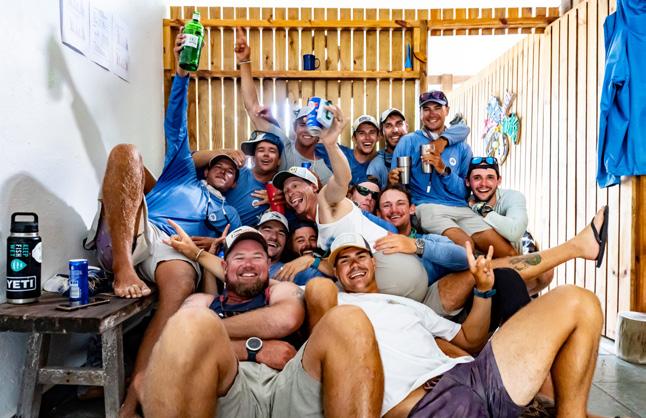
3. Mates, I have made some incredible friends whilst guiding, both clients and fellow guides.
4. Shells. My mum’s shell collection is giant after nearly seven years of walking beaches and collecting trinkets.
5. The Irish goodbye. The ability to sneak out of a bar without anyone realising until it’s too late.
5 people you would like to guide or fish with?
1. Stu Webb, someone I’ve looked up too during my guiding career and has had a positive influence on the way I approach a fishing situation.
2. Alex Quatre, the GOAT, he took me under his wing in my early days and showed me the ropes. The man is a wizard on the flats.
3. Tim Babich. Someone who has forgotten more about Providence atoll than I will likely ever know. I’d love to pick his brain.
4. Toff Crowther, one of the fishiest guys I know but refuses to leave Rutland. I’d love to guide him onto a big GT one day; his mind would explode.
5. Cullan Ashby, something magic always seems to happen when we hit the water together. We’ve been at it together since we were 10 years old.
5 fish on your species hit list?
1. Arapaima - one of the fish I used to name in a fish book that I loved when I was two and they have always
fascinated me ever since.
2. Rooster fish.
3. A big tarpon.
4. A fishery record brown trout out of Rutland.
5. Peacock bass.
5 of the most underrated species in your book?
1. Spanish Barbel, they fight hard and are a sucker for a beetle dry fly.
2. Napoleon Wrasse. The most insane looking fish and one that a lot of anglers don’t know about or get to see.
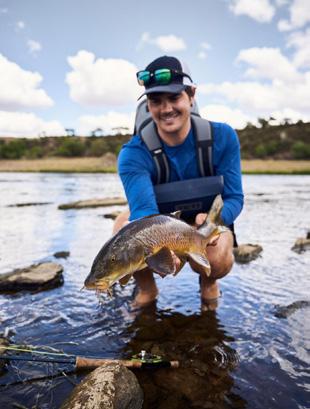
3. Carp. My all-time favourite species to target on fly. Here in the UK, we feed them with dog biscuits and then catch them on balls of brown deer hair. It’s some of the most challenging and rewarding fishing out there. There’s something special about catching a fish with a fly rod right next to a chav that’s been fishing in a spot for days with literal tonnes of tackle.
4. Grayling, out of a salmon river.
5. Arctic char.
Your last five casts were to….
1. Dog biscuit carp at the local pond.
2. Anything that eats a live bait in Mozambique.
3. Rutland brownies.
4. Yellow margin triggers on Prov.
5. Blind casting Prov lagoon for a big GT.
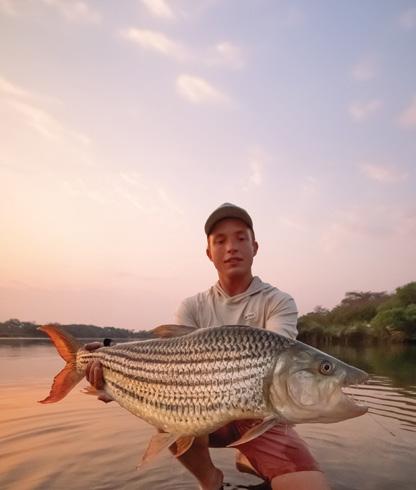
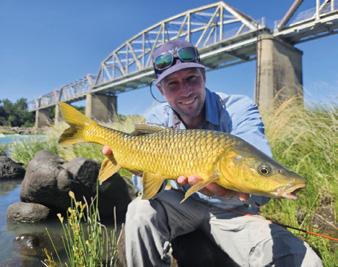
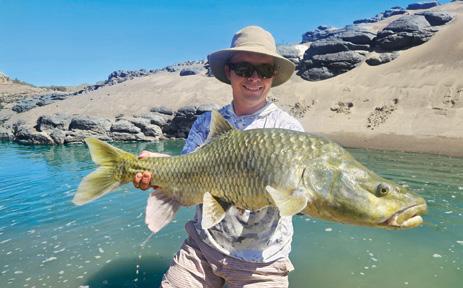
STERKIES
SALAD DAZE
SEDUCED BY THE WEIRD JUJU OF DRY FLY FISHING ON SOUTH AFRICA’S PREMIER SMALLMOUTH YELLOWFISH STILLWATER (AND THE CHALLENGES OF COMPETITIVE EATING), TUDOR CARADOC-DAVIES AND GREG LOMAS THROW CAUTION TO THE WIND, INVOKE THE BARD AND SURRENDER TO THE MOODY WHIMS OF STERKFONTEIN DAM.
Photos. Greg Lomas
“My salad days, When I was green in judgment, cold in blood To say as I said then!”
William Shakespeare, Antony and Cleopatra, Act 1, Scene 5
Ihave never been as clued up and as invested in taking care of my mind (and body) as I am now as a 45-year-old man. From getting sleep to eating right, finding flow state in work and getting a handle on context-switching, it’s hard to avoid this stuff. No doubt it’s all tied to a mild mid-life crisis, understanding the passing of time in more ways than one and doing what I can to cope.
It’s funny, because there was a stage in my career, in my late 20s, when I worked for a magazine called Best Life (the older brother to Men’s Health). It was my job to write stories about managing your stress, your stock portfolio (snort), your fitness, your sex life, your relationship with your wife and kids, your career advancement and so on. And while as a journalist I have always been relatively adept at faking it with whatever crowd I am schmoozing into, all chameleon-like, my cosplaying as a middle-aged man always felt ultra shallow. Your plate is just so much easier and lighter when you’re younger.
What’s all this got to do with my fly fishing trip to South Africa’s premier smallmouth yellowfish dry fly Shangri la, Sterkfontein Dam? Everything, it would turn out.
“IT’S THE SKY OF ARIZONA AND COWBOYS-AND-’INJUNS WESTERNS, THE MONGOLIAN STEPPES OR THE VAST BOWELS OF THE SAHARA.”
The trip began with a 4am wake up in Cape Town that was actually a 3am one because my brain malfunctions whenever an early alarm is set and a flight needs to be caught. I snuck out of the sleeping house and into an Uber with eyes that felt like they were full of sand.
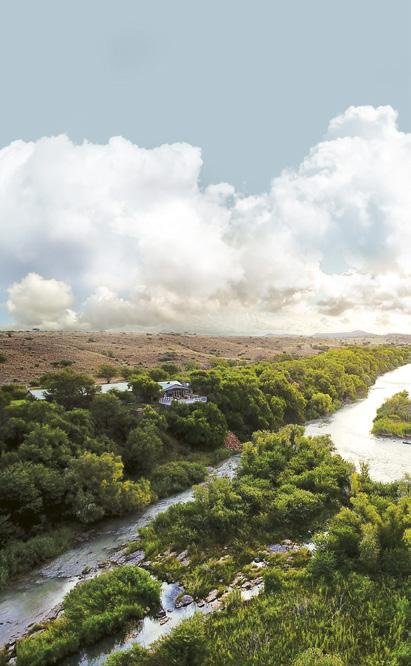
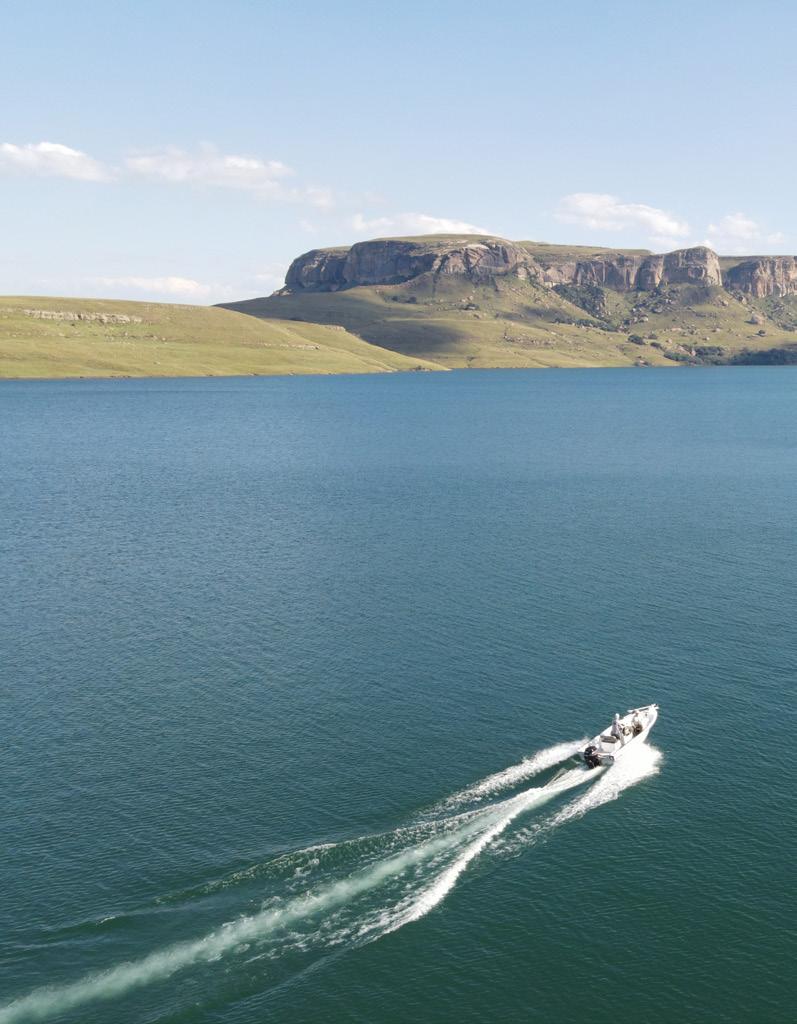
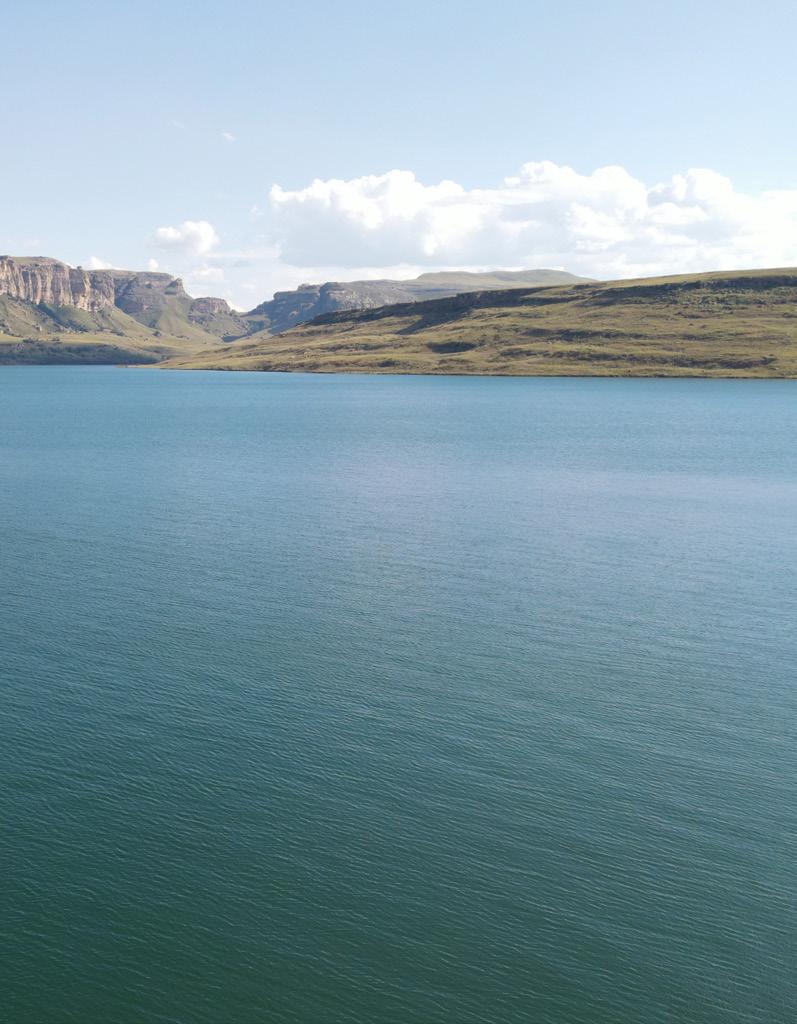
Two hours of mouth-breathing snoring later, Greg picked me up at Durban’s King Shaka International airport and we drove inland up the constipated colon of the N3’s truck traffic between Durban and Pietermaritzburg. As you start to edge out of the Midlands and the foothills of the Drakensberg on smaller regional backroads towards the border of KwaZulu-Natal and the Free State, there’s an invisible line you cross where the vegetation and the sky suddenly change. It’s noticeable. The vibe of green Ye Olde Englisshe pastures, private schools, housing estates and fancy padstals is replaced by savannah-like bush and petrol stations with basic kiosks. As for what lies above, look up and that massive sense of space and scale between the odd cloud, the sun and the horizon is hard to describe other than with the rather unsatisfying, “big sky” that everyone understands. It’s the sky of Arizona and cowboys-and-’injuns Westerns, the Mongolian steppes or the vast bowels of the Sahara.
Greg is a birder which meant he was prone to shouting, “Bird of prey!” at a shape on a fence post or “Waterfowl!” at dots on a roadside dam. That also meant he was keen to stop for every fokken tweetie bird he saw. I too like birds, have had lists in the past, have an app or two on the subject and feel relatively adept at identifying everything except LBJs, but I could feel I was getting twitchy (and not in a birding way) every time Greg stopped the car and reached for his binos. I did not wake up at 3am to miss a late afternoon session on arrival at Sterkies just because he wanted to stare at a Bokmakierie. Call me a heathen. Despite what the well-meaning digital Buddha hidden in my meditation app might advise, I was in a rush to chill, hellbent on relaxmaxxing with rod in hand.
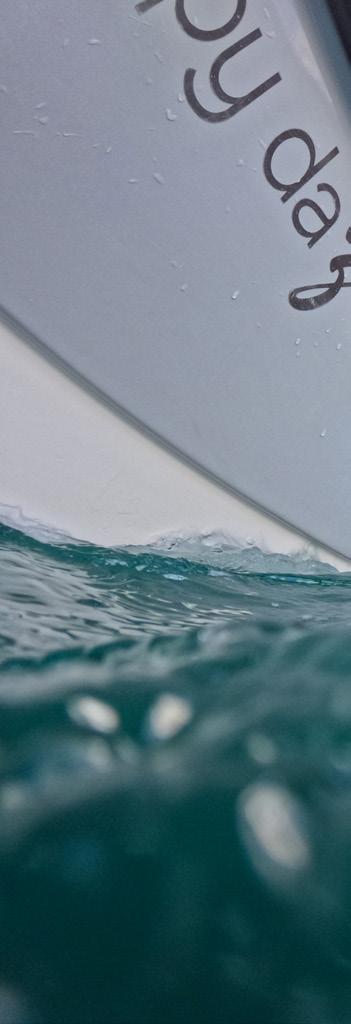
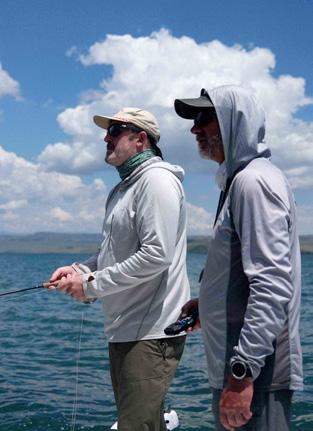
After what seemed like an age, but was just an impatient (on my part) three and a half hours, we pulled into Qwantani, the epicentre of most things Sterkfontein. Comfortable chalets, pub, restaurant, view and a pool. Bags dumped, rod rigged, I joined our host Jeremy Rochester down at the jetty. Greg opted to wrap up some work so while he was giving instructions to employees, binos in hand, Jeremy and I scooted across the nearest bay in his Fusion, Happy Daze , to do a few drifts. We immediately started spotting fish and they were coming up for the fly, but there was a problem. Me. I was still in another mode. Reactive, jumpy, the spinning plates and projects and toddlers guy. Every time I should have done as Jeremy said and simply, “lift the rod” I struck instead. At first I claimed it was because I was used to the trout of the Western Cape streams that are “lighting fast and need a quick reactive strike”, but that excuse started to wear thin on the fifth missed shot. It felt like I had the fishing equivalent of a USB cable in hand and a USB slot in front of me, but whatever way I flipped it I kept getting it the wrong way around. After losing the light, I retired to the pub, frustrated by my performance, but optimistic about the coming days as the fish seemed active.
At the bar that night we encountered Peter Whittaker and Woz on Fly (aka Warren Koch) who had driven down to Sterkies from Johannesburg. The last and only time I visited Sterkies was about three years before and Peter was there too. I could have sworn he was standing in the same spot I left him the last time as if he never left. The odds of you finding him at Sterkies, round a bommie at Providence or in an oxbow lake in the Amazon (where he was heading to later that week to target arapaima) are always good. He’s just one of those guys who has the funds and the freedom to fish all the time. Woz, an actuary who gets paid well to work wherever and whenever he feels like it, spends as much time at Sterkies as Peter and as such knows the menu backwards. He only ever orders one thing - the schnitzel. I can confirm, it’s superb.
“I WAS IN A RUSH TO CHILL, HELLBENT ON
WITH ROD IN HAND.”
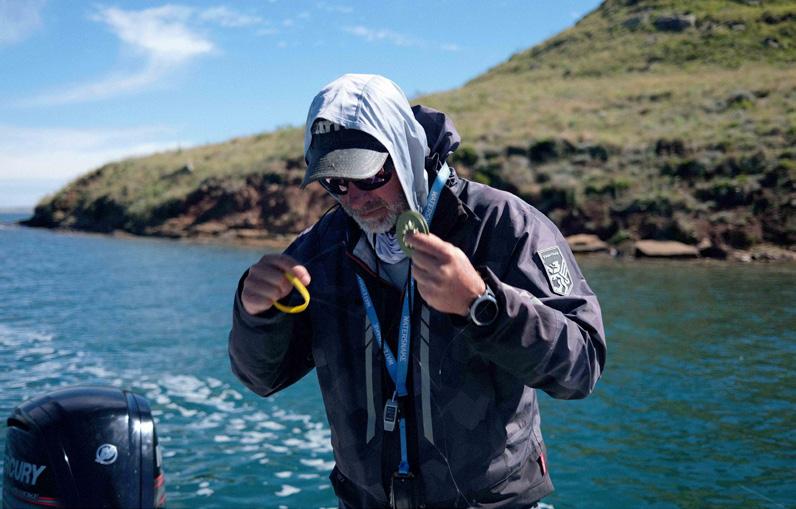
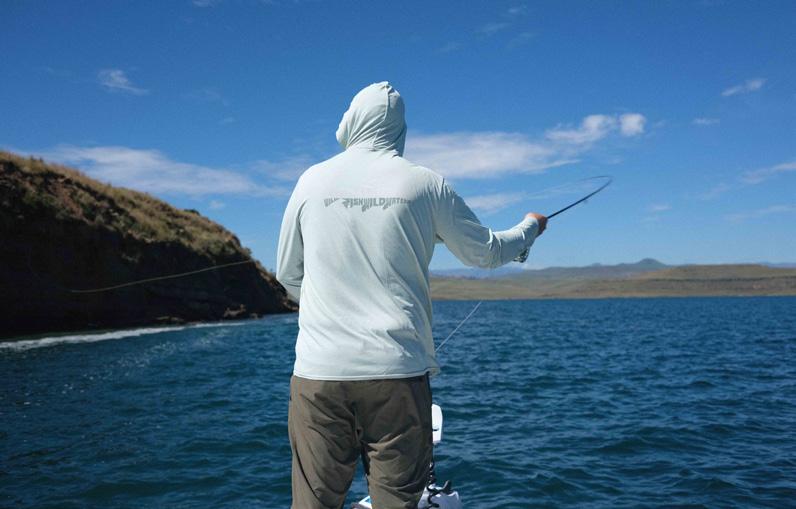
Also at the bar was a TikTok fly fishing influencer called Brenden. TikTok influencing is a thing, but thus far I cannot be arsed to add The Mission to the platform. Best known for an unboxing video extolling the benefits of buying cheap tackle off Temu, Brenden also represents an outdoor clothing brand called Watamu that clearly has me in their algorithmic targeting. Two nights later, Brenden would make the near fatal tactical error of suggesting to Jeremy at the bar that the rivers in the tribal lands could do with some commercial incentivisation and investment. Jeremy who grew up fishing these rivers, no doubt had a vision of the TikTokiffication of his home waters and made clear his displeasure.
Our first full day began with Jeremy taking us to his favourite scum lines on the far side of the dam. Qwantani’s manager Craig Hill joined us on the boat. While it was a perfect day on paper, the fishing was weirdly flat. There were no fish patrolling the scum lines despite there being enough wind in the morning to create the lines and blow bugs into the chop. We worked the far rocky shore around places called Vulture Restaurant and Crow’s Corner. There, casting a black cricket imitation (Jeremy’s favourite fly) into the weed banks along the shore, we spotted a lone cruising fish. I finally managed to calm down enough to hook it off a long distance cast. There’s always a huge relief when you get on the board knowing you have to put together a magazine article. Personal insecurities aside, once a few photos are taken, a layer of pressure peels off just leaving you with the regular voices in your head.
With the fishing moribund, we broke for lunch in the scenic Elizabeth area near a cleft in the massif where a small stream runs into the dam. Watching black eagles and vultures overhead and trying to spot fish on what had been a strangely quiet day, like Jan Braai meets David Copperfield, Jeremy pulled out a small braai he had
stashed in the trees and got some boerie rolls on the go. The rest of the afternoon was also eerily quiet. Jeremy blamed a drop in pressure rather than our skills for the off day and that verdict was somewhat confirmed at the bar that night when we learned Peter and Woz struggled too.
Day 2 was better, but we worked our arses off for every fish and I still had to fight my tendency to fright strike, but both Greg and I caught good fish and dropped a ton more. I’m sure in the Commandments of Fly Fishing Writing, there’s a law that you’re not meant to compare any element of fly fishing with the pursuit of sex but I am going to go there. Thinking back to long before I was happily married... the keener I was to get laid the worse I did. It’s like there was a desperation pheromone that anyone I was interested in could pick up on at fifty paces. However, when I was in a calmer more relaxed state, things happened. We used to have terms for this kind of flow state at university, like “purple patch” or “salad days”. At times on Jeremy’s boat, my desperation pulling flies away from keen fish, I could not help but think of myself in a nightmare nightclub, failing and failing again with my amorous advances. And what made it worse, was that everyone, Jeremy, Craig, Greg, was offering the same line, “just lift the rod.” I don’t play golf, but I imagine it feels like (before you get a chance to squirm or protest) a golf pro wiggling in behind you, wrapping hands over yours on your driver and forcing you to practise your swing together. Very much unsolicited.
On the far eastern and north western shores we had great fun trying to stabilise ourselves in the chop created by the ever-changing winds while bombing out casts into the shallows. We were getting better at spotting fish now cruising in the suds while Jeremy narrated what they were and what was happening. I could see the fish he was referring to 25-odd metres away, but I’ll be damned if I can tell the difference between a smallmouth yellowfish, a non-
“WE WORKED THE FAR ROCKY SHORE AROUND PLACES CALLED VULTURE RESTAURANT AND CROW’S CORNER.”
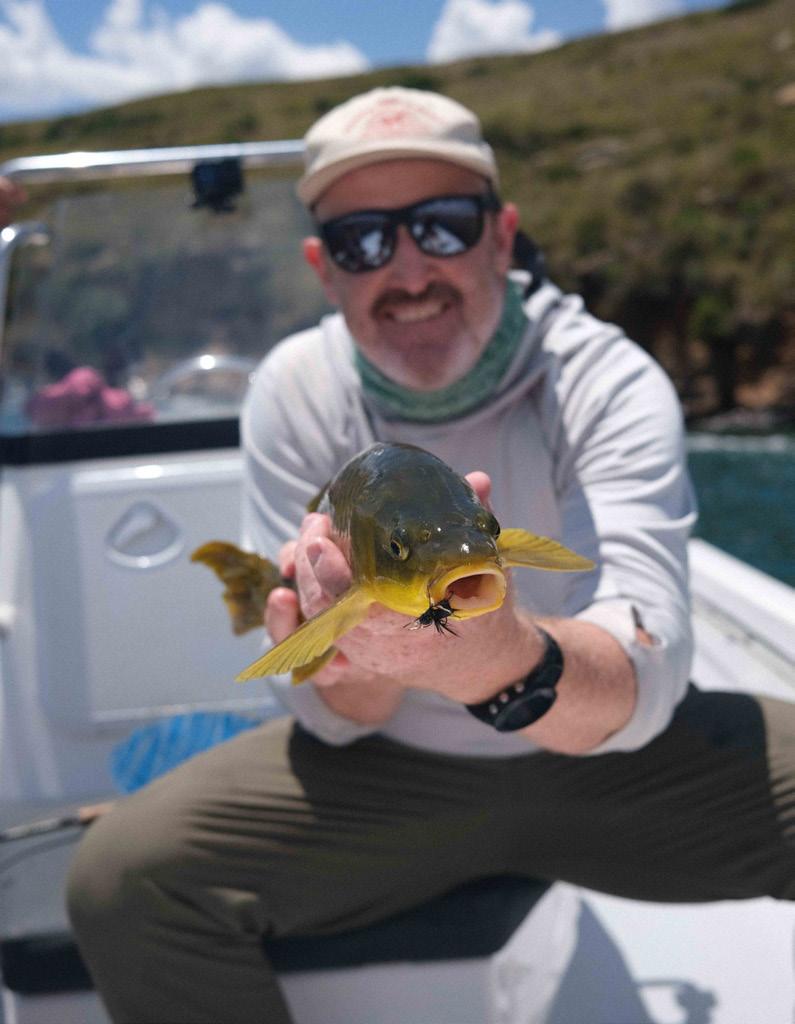
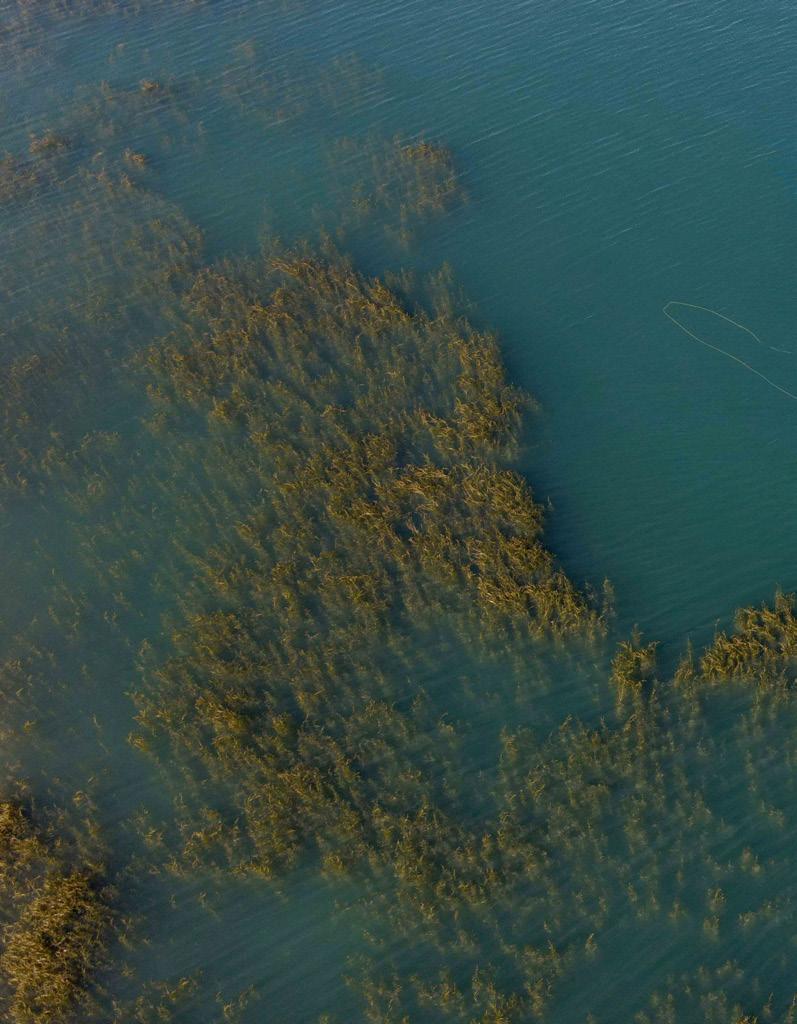
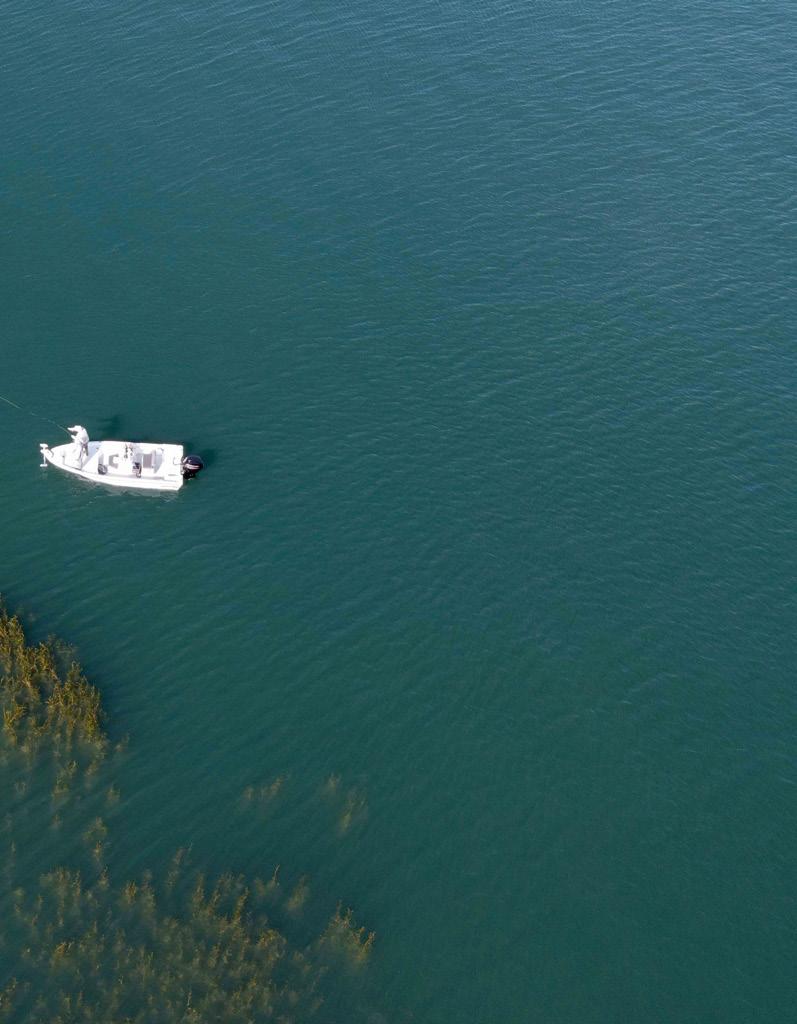
“TIME STOOD STILL AS JEREMY HELD THE BOAT IN PLACE WITH THE ELECTRIC MOTOR AND WE GORGED OURSELVES ON SMALLIES.”
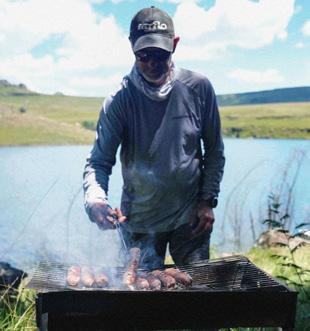
binary-largie (a fish that Jeremy has identified as a largie but that looks like every other green shape) and a randy moggel in some surface wash. What we did get better at, I will admit, was identifying what fish that are “DTF” (Down To Feed) look like. Head up, pectoral fins flared to hold them in position if needs be, and cruising 20-30cm below the surface. Any deeper in the water column and they were unlikely to come up.
Speaking of Jeremy’s skills, in his own understated way, they were on full display over the three days we fished together. It’s understandable really. When he’s not running premium trout farms in the Midlands or taking larnie clients to Kamchatka, or running the agencies for Airflo, Finntrail and Ahrex with his wife Michelle, Jeremy’s secondary office is at Sterkies. Arguably the most regular regular at Qwantani (possibly a tie with Peter Whittaker), as other guide boat operations have come and gone, Jeremy and Happy Daze pimped with an electric motor for yellowfish sneaking, have endured. And man can he spot fish.
When we worked the cliffs around Ararat he identified a squadron of swallows dive-bombing a quick ant hatch, and anticipated exactly where the mayhem would follow. We managed to catch a few fish in short succession before the wind changed, the bugs dissipated and the swallows and fish buggered off.
Day 3, our final day, appeared for all intents and purposes to be an utter bastard. No matter where we went, the wind found us and came at us in unpredictable and malevolent ways. We criss-crossed the dam, tried various bays, drifted backwards, sideways, diagonally and did it all again three times over for good fortune, but we lucked out every time. To top it off we weren’t seeing any fish either.
Around midday, just as we were about to head to Elizabeth again to have a consolation braai, Jeremy decided to try one last bay where he had a feeling that a specific bank might work in the wind (‘Which wind?’ I wanted to know as there appeared to be at least 17). Greg and I were both on a low energy ebb, but as we took position off a weed bank beyond a tree-lined promontory, the fish just started coming up. What followed was one of the most insane and deeply satisfying two-three hours of dry fly fishing I have ever had.
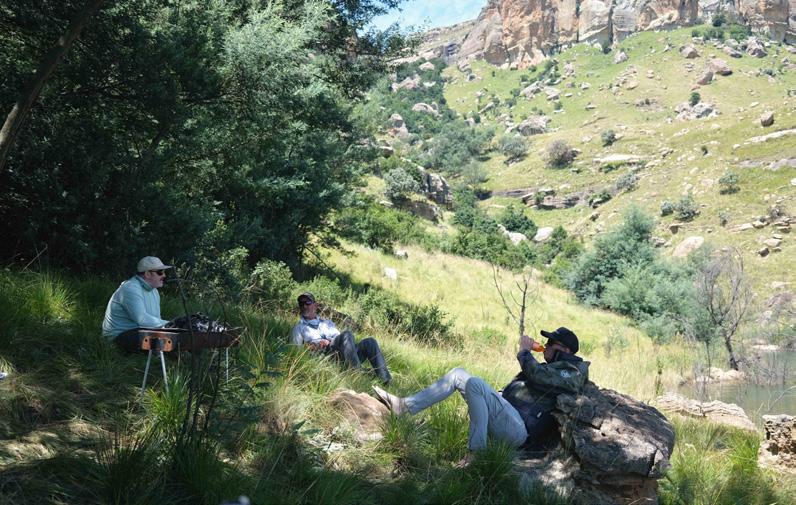
Time stood still as Jeremy held the boat in place with the electric motor and we gorged ourselves on smallies. Flow state engaged, all foibles gooied to the wind, it felt like we could do no wrong. Column after column of new fish seemed to be coming round the corner, so even if we spooked a fish it didn’t matter. Jeremy’s go-to black cricket did the damage, but to put it into perspective, when we lost fish we felt confident enough in their behaviour to change up flies. Flying ants did just as well. At some stage Craig made us hot dog rolls stuffed with potato salad in lieu of the long-forgotten shore-braai. I’ll never forget that frenzy as I tried to embody both the smallies and world champion eater Joey Chestnut (72 hotdogs in ten minutes) and get the extreme stodge potato-dog down. While simultaneously still casting and catching fish, my jaw muscles stretched grotesquely like a traffic light gurner to accommodate the food. Somewhere along the way Jeremy snuck up behind me like the aforementioned golf pro and stuck a Bar One in my pocket. I was having too much fun to notice. Somehow three hours, and too many fish to count, passed by in an instant.
Forget meditation apps, productivity hacks and literally any life advice from 20-somethings that have no idea what they are talking about. Three days and a specific three-hour smallmouth yellowfish feeding frenzy was all I needed to sort out my stress and reset my brain entirely for months to come.
The next morning, as we drove out of Qwantani on the dirt road heading towards Harrismith, then Durban and for me, a flight home - I felt like a new man. I even suggested to Greg that we stop for a few birds.
“I TRIED TO EMBODY BOTH THE SMALLIES AND WORLD CHAMPION EATER JOEY CHESTNUT (72 HOTDOGS IN TEN MINUTES)
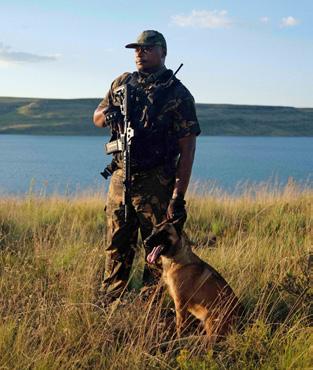
THE STERKFONTEIN ANTI-POACHING UNIT
Craig Hill has been managing Qwantani resort on the shores of Sterkfontein Dam for nearly nine years. His background spans military service, game ranging, professional hunting, and anti-poaching work. It was good preparation for what he found on his doorstep.
Poaching at Sterkfontein had been going on for 25 years before Craig intervened. Spawning yellowfish were being scooped from the shallows in crudely made weld-mesh basket nets, and syndicates were loading 500 to 600 fish at a time into bakkies in broad daylight. “There was nobody on the ground that actually did something,” Craig says.
Nature conservation officers who’d previously tried to intervene had firearms pushed in their faces. The message Craig received when he first heard about the problem was clear: leave them alone, because they’re dangerous.
He didn’t. In 2019, when fellow angler Dave Weaver first flagged it to him, Craig immediately went down to the river. “We engaged with the guys right on that first night. From then on, we just carried on. We never stopped.”
For the first three years he operated with minimal support, relying on his own security team and very often, his son Reece. Early arrests went nowhere. “We’d get them to


the police station and there was absolutely zero interest. Nobody knew the ordinance or the act.” Charges were withdrawn. Cases disappeared.
The poachers they encounter are typically paid around R50 per fish, each carrying 15 to 18 fish, roughly 20 kilograms, over a 15-to-16-kilometre mountain route. The fish sell for up to R150 on the market. Some syndicates now bring donkeys to carry the load. Ages range from 16 to 50, and they’ve started arriving with machetes and in larger groups than before.
In 2022, Craig approached the fly fishing community and established the Sterkfontein Yellowfish Conservation Group. Today, the Sterkfontein Anti-Poaching Unit operates with three dedicated rangers and a Belgian Malinois named Phoenix. The team patrols the mountains above the dam on foot, covering up to 12 kilometres each way to intercept poachers before they reach the water. Shifts run randomly, for days at a time, with teams camped out overnight during peak season. The strategy has evolved away from riverbank confrontation. “We don’t want confrontation,” Craig says. “The message we need to send is, don’t even waste your energy.”
Craig has spent years building relationships with SAPS Stock Theft and Endangered Species units at provincial level. “I can walk in there with perpetrators tonight and have them charged within minutes,” he says. The unit has also worked with police to clear out commercial-scale illegal bank anglers who were killing fish by the hundred on spawning beds. The impact on the fishery is visible for anglers. The past three years have brought more large females and bigger males, and old fish that simply weren’t there before. The last formal scientific study of Sterkfontein was conducted by Professor Leon Barkhuizen in 2007. A new NPC, the 42 Conservation Group (named for the Douglas Adams answer to life, the universe and everything), is being established to broaden conservation efforts across the entire Sterkfontein ecosystem and, hopefully, to attract the kind of academic attention the dam deserves. So if you’re an ichthyology student looking for a masters thesis - step up.
Everything Craig and his team does run on public donations, and the pressure never really lets up. “My clock is ticking fast,” Craig admits. For now, though, Phoenix is working, the team is walking, and the syndicates are finding somewhere else to be.
Ranger
Thomas Makhetha
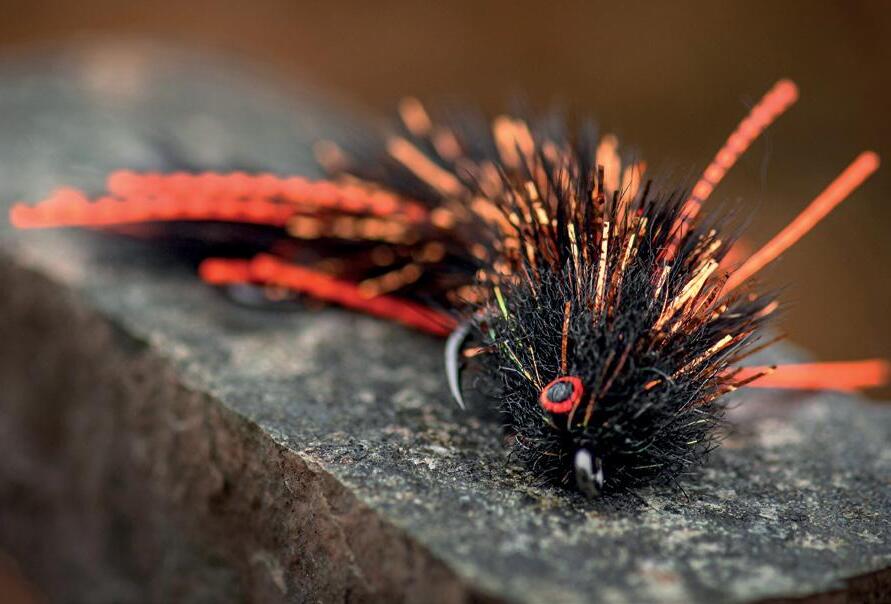
XO784 BC GAME CHANGER
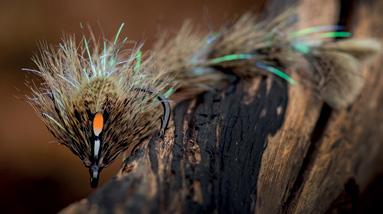
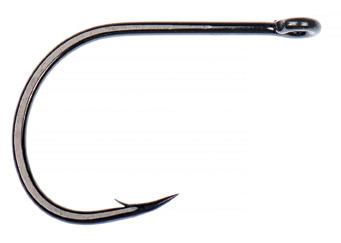
Developed in close collaboration with Blane Chocklett, this innovative hook is the first ever designed specifically for the Game Changer shank system.
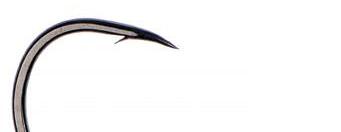
The XO784 BC Game Changer stands out for its refined construction and thoughtful design. Instead of using traditional hook size references, the series is based on shank length. The hook features a wide gape for improved keeling, a stinger-style bend with a slightly upturned point, and a large eye that allows for easy attachment and optimal movement within the shank system.
Crafted from high-carbon steel with a black nickel finish, the hook combines strength, sharpness, and durability – exactly what modern fly tiers demand.
Ahrex Hooks are made without compromise –designed by Scandinavian fly fishermen for fishing all over the world.
We are using innovative technology and the best materials available for each specific hook.
Happy fly tying – The Ahrex Team
Black & Orange Game Changer tied by David Lejon on the XO 784
BC Game Changer
Feather Changer, tied by Søren Flarup on the XO784 – BC Game Changer
OMAN
SCENIC SQUATS
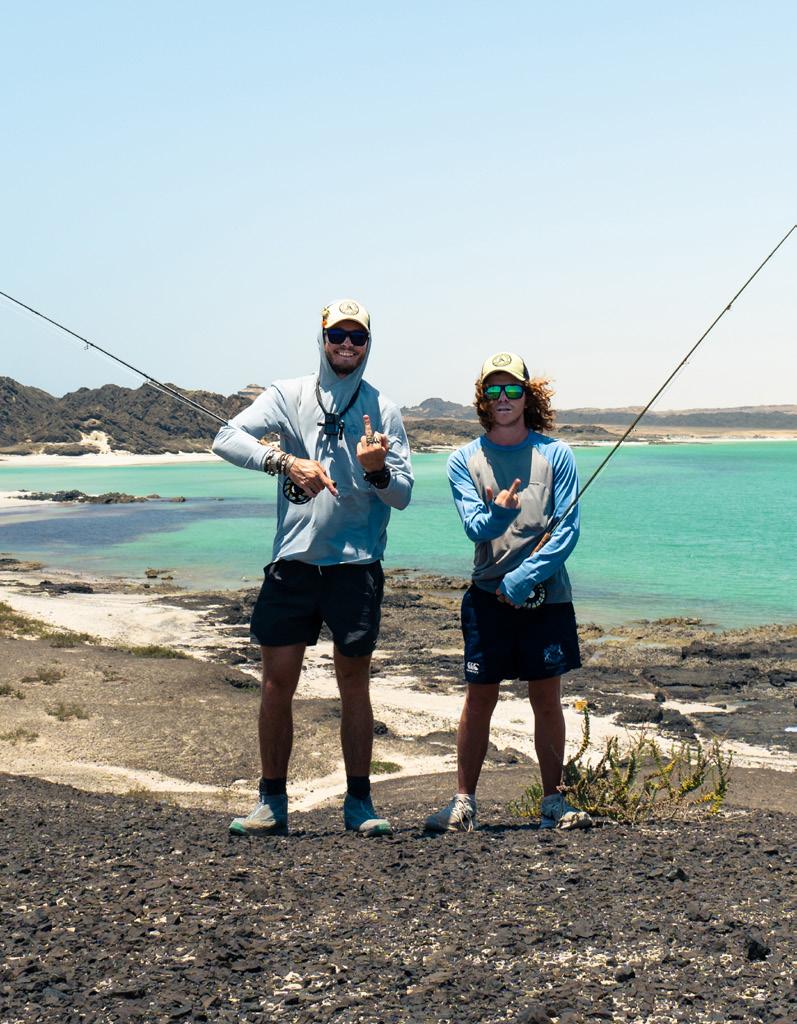
ADOPTING THE OLD ADAGE ABOUT WHAT TO DO WHEN LIFE AND LEMONS COLLIDE, WHEN BLAEDE RUSSELL’S ENTIRE SEASON AS A FLY FISHING GUIDE AND OPERATOR IN ERITREA WAS CANCELLED, HE (LE)M(ON)ADE THE BEST OF IT BY ROPING IN A FRIEND AND DIYING OMAN’S INCREDIBLE COASTLINE.
Photos. Blaede Russell, Edward Clark
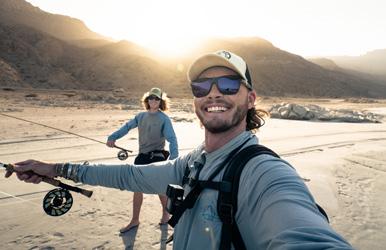
On the 27th of February 2026, my year, along with a great many others, changed rather abruptly. Our flight into Eritrea had been cancelled because a certain individual across the pond decided that bombing Iran was apparently a sensible contribution to international diplomacy. Overnight, transport hubs started shutting down, countries became understandably twitchy, and what was meant to be our debut season on the Adulis Flats quietly unravelled before it had even begun.
For us, it meant no camp building, no early season prep, and eventually no season at all.
Thankfully, we have some remarkably understanding clients and managed to move all our groups onto 2027 with relatively little drama. Professionally, the damage was contained.
Mentally, however, I still had a severe and unresolved desire to go and get humbled by permit.
The question became where. Somewhere relatively cheap, somewhere DIY, somewhere capable of scratching the itch. Ideally somewhere unlikely to feature us on a government travel advisory website.
Oman had sat in the back of my mind for years. Ever since reading about Ray Montoya wandering its beaches catching Indo-Pacific and Africanus permit off the shore, it had occupied that dangerous category of destinations that sound slightly too romantic to actually work.
The problem, naturally, was convincing anyone else. Understandably, most of the usual crew were not especially enthusiastic about flying towards a region that the news channels were describing with large red graphics and dramatic music. Several of the team also had wives and children and did not fancy returning home single or to sleeping on the couch.
Then I remembered Ed - equally unfazed by geopolitical instability, gloriously unemployed, and permanently enthusiastic about suffering in warm climates with fly rods. Ed had been working down in Tanzania with Majestic Rivers, although our history together stretches much further back than that into a collection of hazy memories involving questionable pubs in the UK and decisions that made perfect sense at the time.
The phone call lasted perhaps two minutes. “Fancy Oman?” “Yep.”
That was essentially the planning process complete. Between the two of us we had managed to organize an international fishing expedition with roughly the same level of preparation normally associated with ordering a takeaway.
We met in Doha and briefly discussed whether helmets might be required during the layover. Thankfully our connection was in the early hours of the morning and I can only assume everyone involved in launching missiles had sensibly taken the night off.
The plan itself was beautifully simple. Fly into Salalah, pick up a car, drive the coastline north towards Muscat, fish as much water as possible, sleep wherever looked interesting, repeat. Historically speaking, simple plans are usually the ones most capable of becoming deeply complicated.
By this point I had spent an unhealthy amount of time studying satellite imagery and talking to people who had fished Oman before. Everyone was incredibly generous with information, which is often not the case in the fishing world where some people guard mediocre spots like state secrets.
But the fishing was only part of it.
What really appealed to us was the coastline itself.
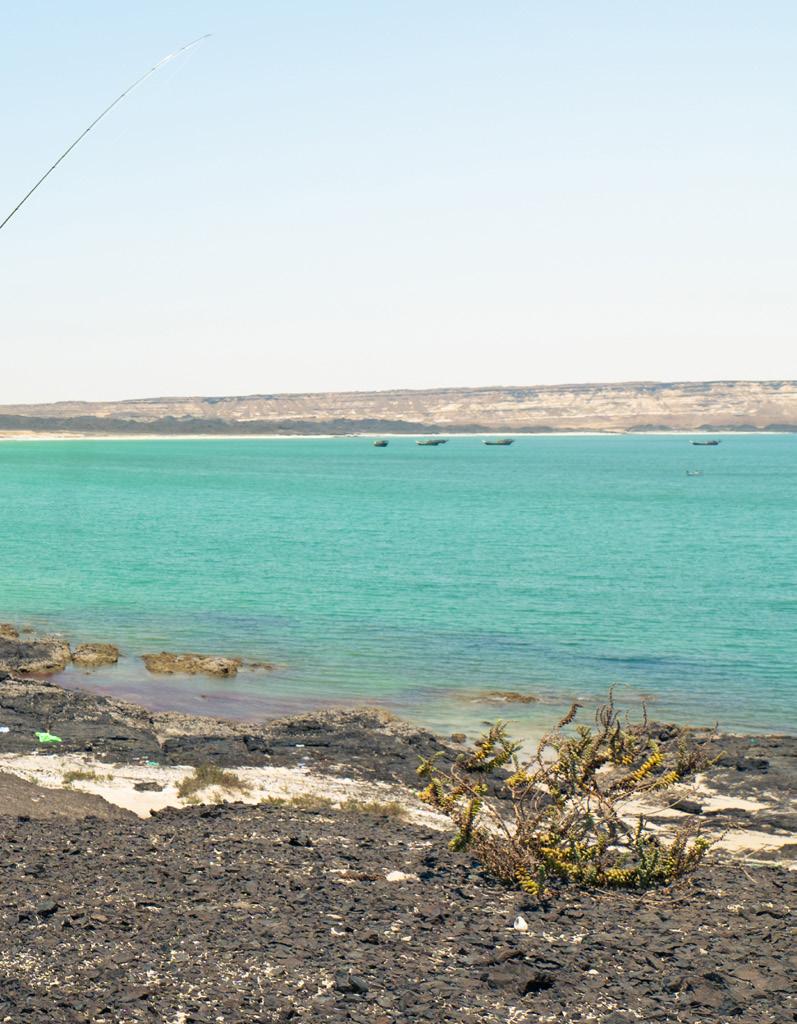
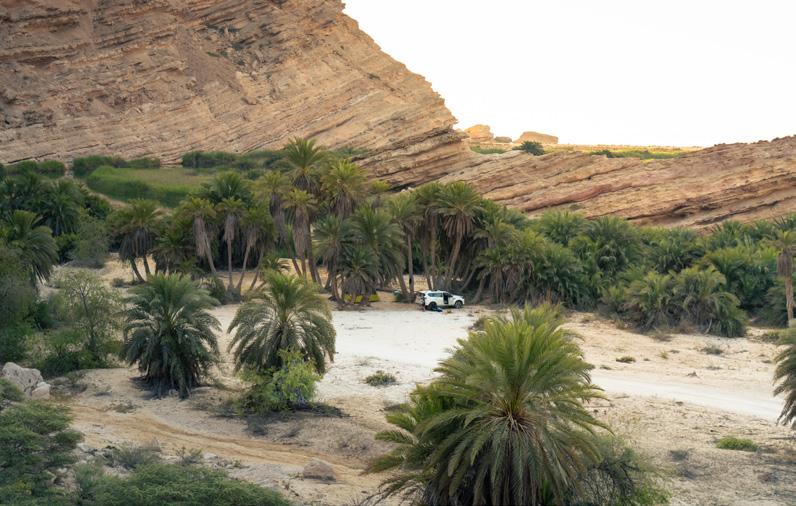
Oman has one of the most absurdly beautiful coastlines I have ever seen. Fishing there with operators gives you a perspective from the water, but we wanted to properly move through it. Walk it, climb it, camp beside it, and generally suffer through it in the most authentic way possible. There was something deeply romantic about the idea of sleeping beside clear desert wadis under palm trees before waking up to hunt permit along empty beaches.
At one point I started thinking about The Alchemist, which coincidentally is also a novel about self-discovery and wandering around deserts looking for meaning. After about ten seconds of this I remembered we were actually there to throw bits of fluff at permit and immediately recovered from my symptoms of philosophy.
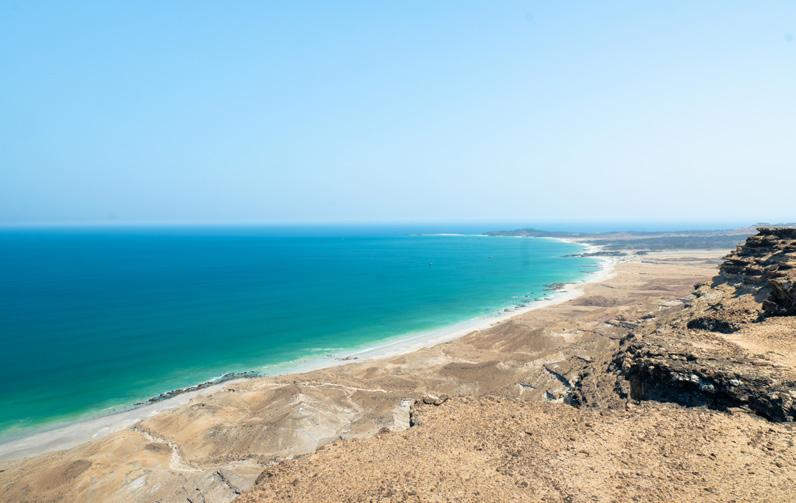
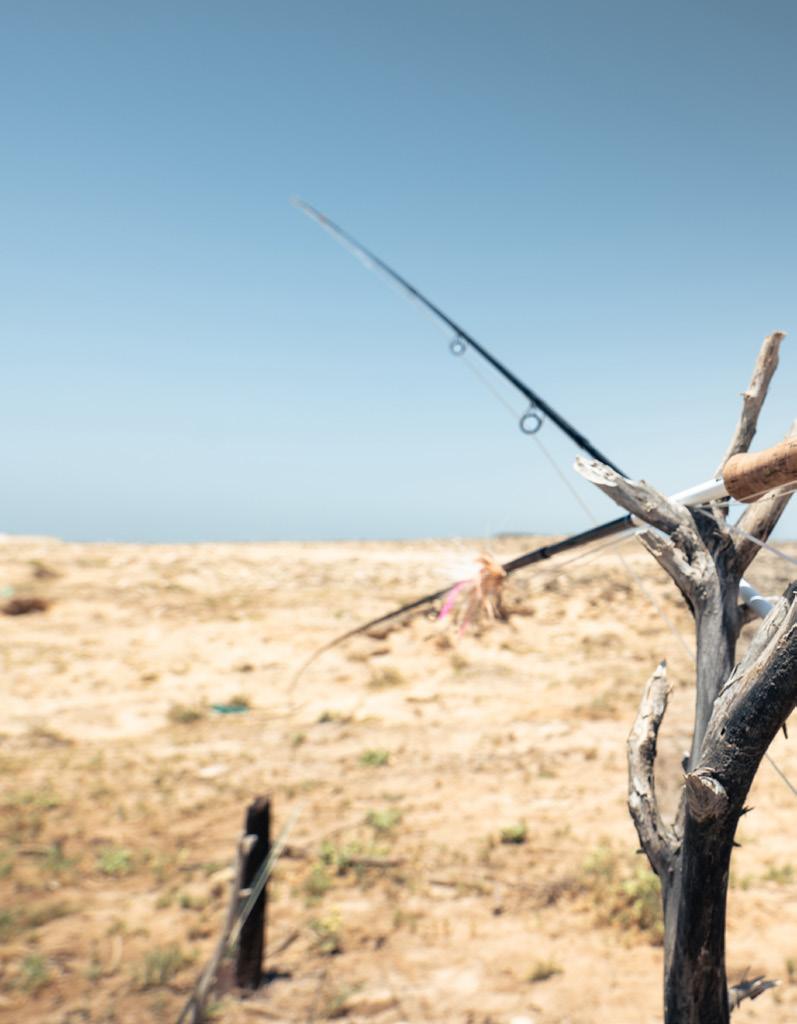
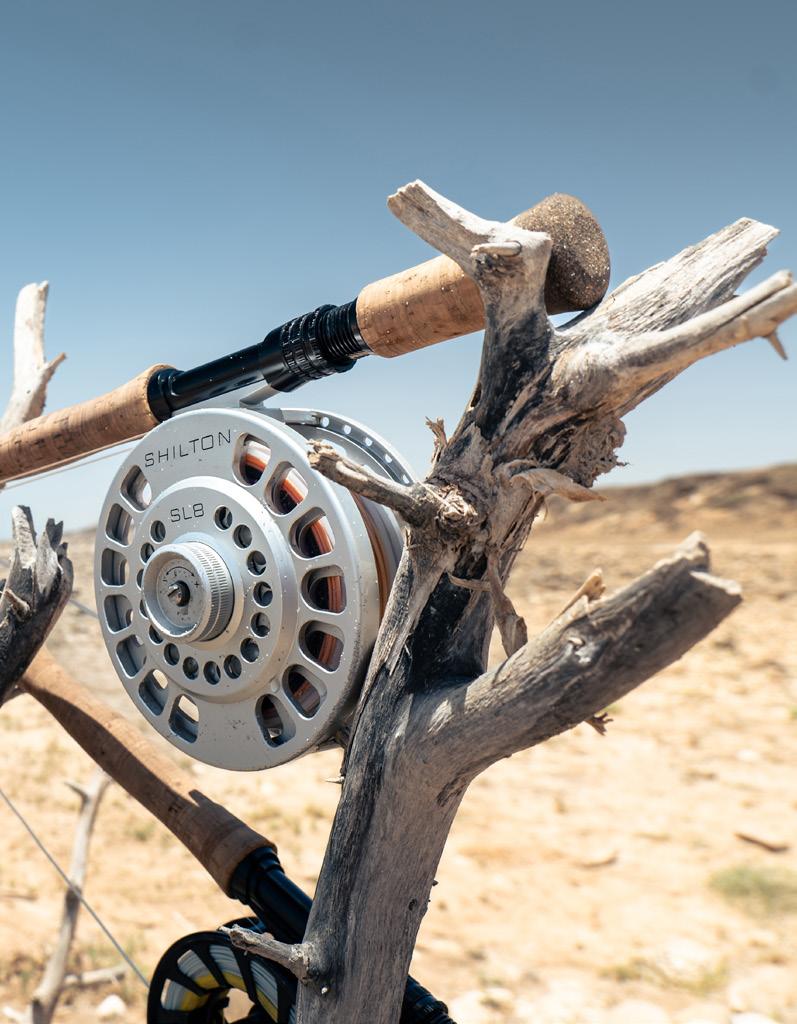
What we found in Oman was a country that quietly exceeded every expectation. The people were some of the warmest and most welcoming I have come across anywhere. At one point a stranger bought us lunch, refused to let us pay for ours, and then also refused to let us buy his. In Britain this level of friendliness would normally be considered medically concerning.
There is a deep historical connection between Oman and East Africa, particularly Kenya where I am from, and at times parts of the culture felt strangely familiar. The hospitality carried that same easy warmth you find along much of the Swahili coast.
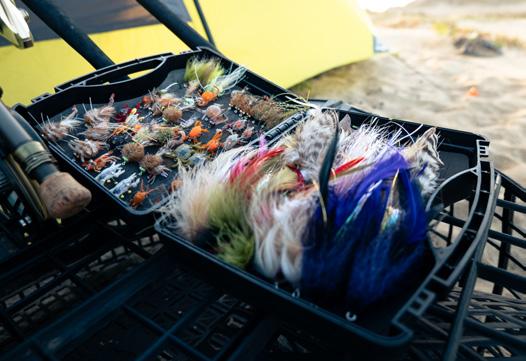
The food was exceptional, the scenery was ridiculous, and the fishing was exactly as difficult as permit fishing should be.
Most mornings began in darkness fumbling around looking for things, stubbing toes on tent pegs, and eventually sipping the sweet nectar that is coffee. Then came charts, tides, and the slow process of deciding which beach would probably disappoint us least. Permit fishing, at its core, is really just structured optimism.
After packing camp we would spend long hours walking. Not strolling. Walking properly. Over ten days we averaged around 24 kilometres a day across sand, coral, rock shelves, and terrain specifically designed to test ankles and senses of humour. The Omani coastline has a remarkable ability to look deceptively close on maps.
It is not. Let me be clear.
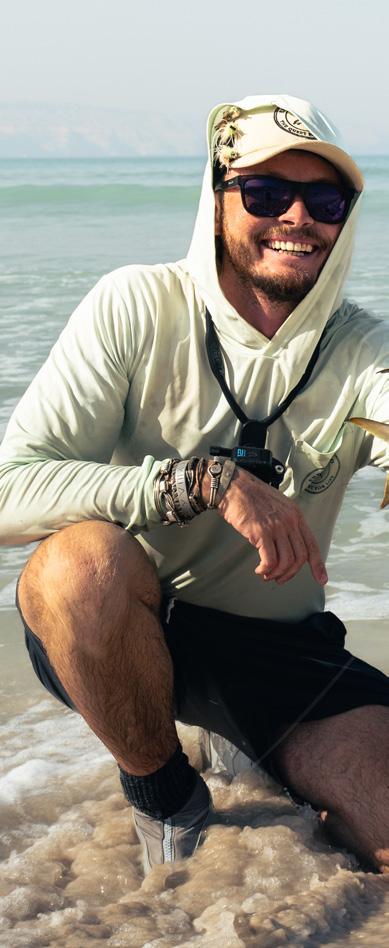
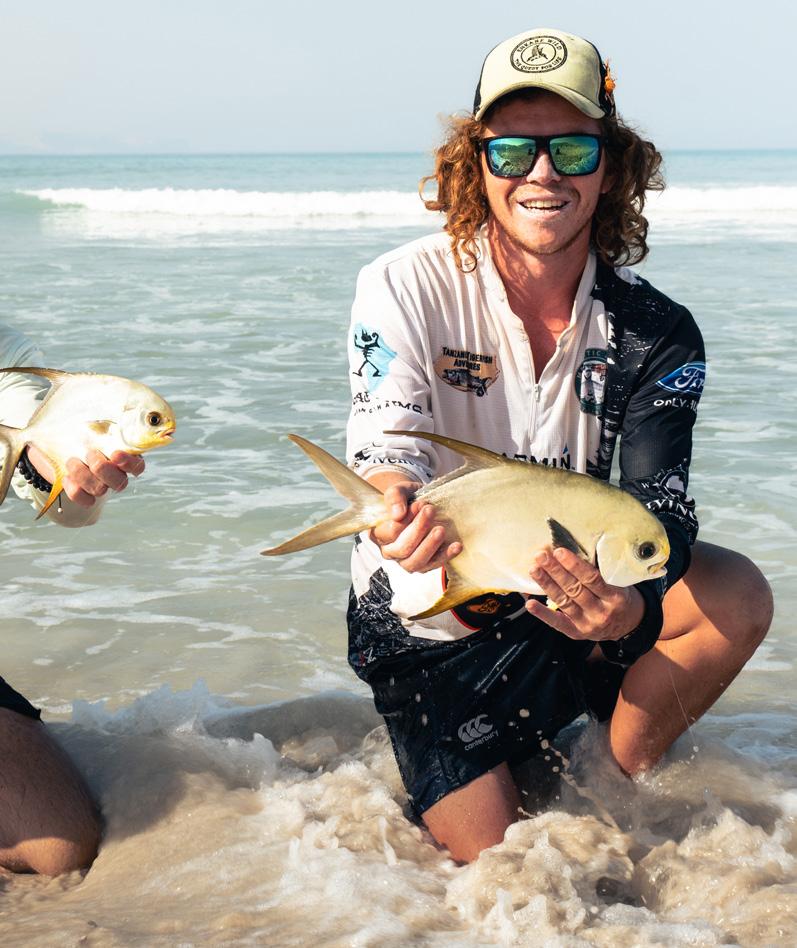
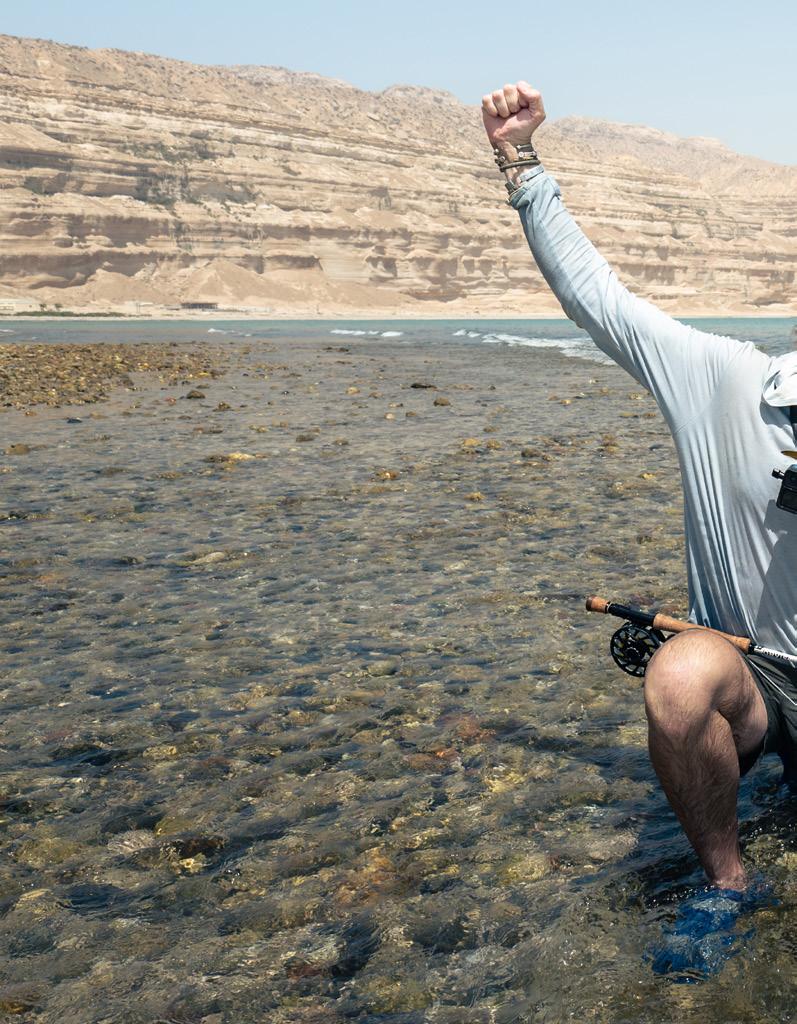
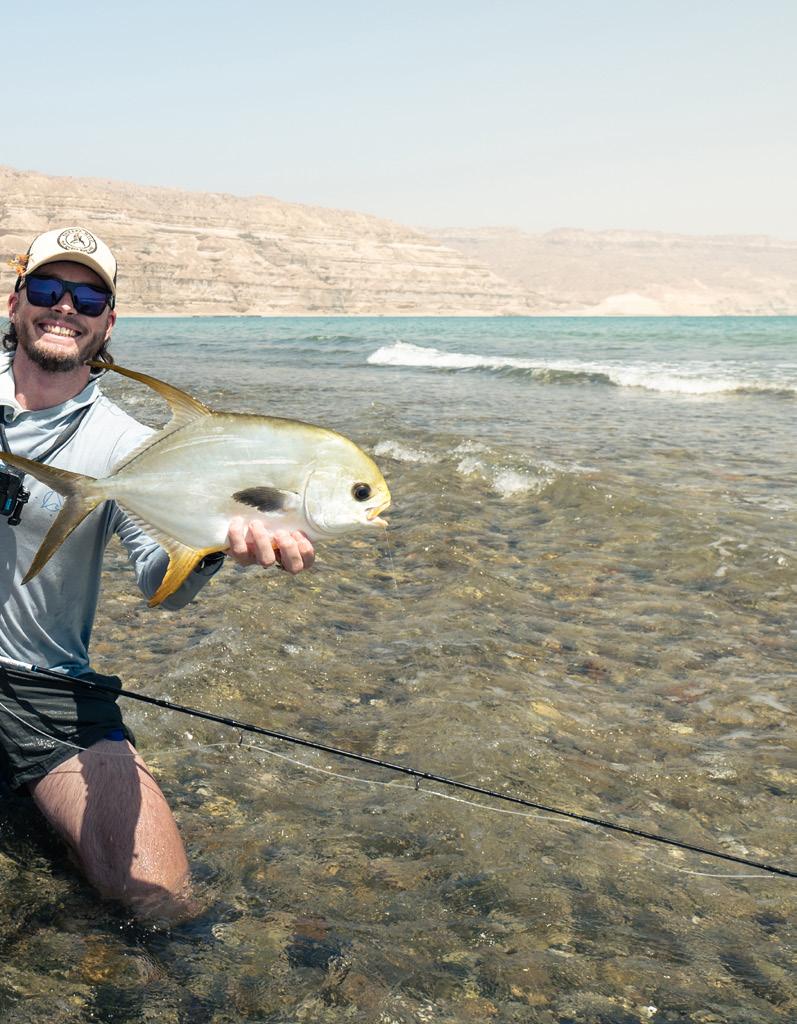
“LONG SAND BAYS, CLEAN WATER, STRUCTURE, MOVEMENT. AND THEN, FINALLY, PERMIT.”
Several beaches that appeared to be a casual twenty minute stroll turned out to require the sort of commitment usually associated with polar exploration. We covered roughly 2,400 kilometres in the car alone, largely to confirm that what appears to be a short drive along the coast can in fact become a major expedition involving fuel calculations and mild emotional deterioration.
The conditions themselves varied wildly. Some beaches looked perfect but were completely dead, others looked hopeless and suddenly produced fish. Big swell and dirty water made many areas almost unfishable. Oman may have endless coastline, but genuinely fishable permit water narrows down surprisingly quickly once you factor in tides, swell direction, wind, visibility, structure, and your own rapidly declining optimism.
But permit fishing has never really been about efficiency. If anything, permit seem deeply offended by the concept. Eventually we started finding sheltered areas where things lined up.
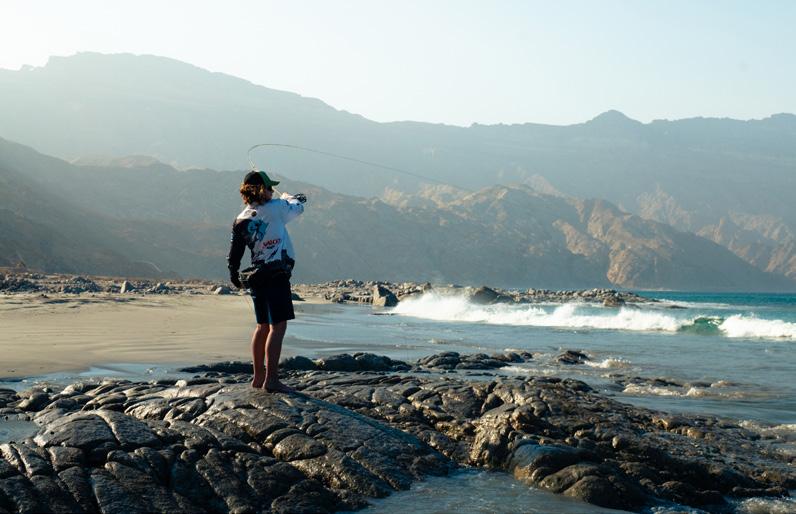
Long sand bays, clean water, structure, movement. And then, finally, permit.
Usually you saw them only briefly. A flash of gold in a wave, a shape materialising for half a second, the unmistakable profile before they vanished again into glare and chaos.
The casting was rarely elegant. Trying to deliver long accurate shots while waves repeatedly slap you in the balls is not something casting instructors spend enough time discussing. Nor, strangely, does it feature heavily in most fly fishing brochures.
But slowly we began to dial things in. Tan Flexos worked, white Flexos worked, orange Flexos worked, various bead colours worked.
Until they suddenly didn’t. Because permit.
“FEW THINGS HUMBLE A MAN QUITE LIKE AGGRESSIVELY REGRETTING A THIRD ROADSIDE
Some fish tailed beautifully, others followed flies purely to insult us before turning away at the last second. We had refusals that bordered on psychological warfare. At times I became convinced permit feed purely out of spite. But persistence eventually started paying off.
One moment in particular will probably stay with me forever. I had hooked a smaller permit and was fighting it somewhere in the shore break when I noticed another angler nearby attached to something significantly more chaotic. Not a permit. Something strange. Large. Naturally I started moving over to help.
At precisely that moment Ed began shouting to my right. I turned and saw his rod absolutely folded over. Anther permit.
Faced with the choice between assisting a stranger with a mystery fish or securing a permit double up with your mate, there is really only one morally acceptable decision. I waded towards Ed.
After several tense minutes involving shouted instructions, poor network, and the usual panic associated with permit near shore break, we somehow managed to land both fish. A proper double up.
Quick photos, release, panic over.
Only afterwards did we discover the other anglers had also landed their fish.
At one point there had been three permit and a shark hooked simultaneously within shouting distance. Completely ridiculous.
The permit themselves were better than either of us had expected.
By the end of the trip we had landed fifteen between the two of us. Which, for permit fishing, feels vaguely offensive. Frankly we were beginning to suspect Oman’s permit had not been properly briefed on how the species is supposed to behave.
To avoid upsetting the fishing gods too much, both Ed and I made sure to lose a respectable number as well.
Of course, the real surprise of the trip turned out to be the milkfish.
We found them on what eventually became known as Milky Beach, named rather unimaginatively due to the amount of milkfish we found in the bays.
For reasons we never fully understood, billions of shrimp had been washed onto the shoreline. Whether it was currents, temperature changes, or some bizarre natural event, the beaches were littered with them.
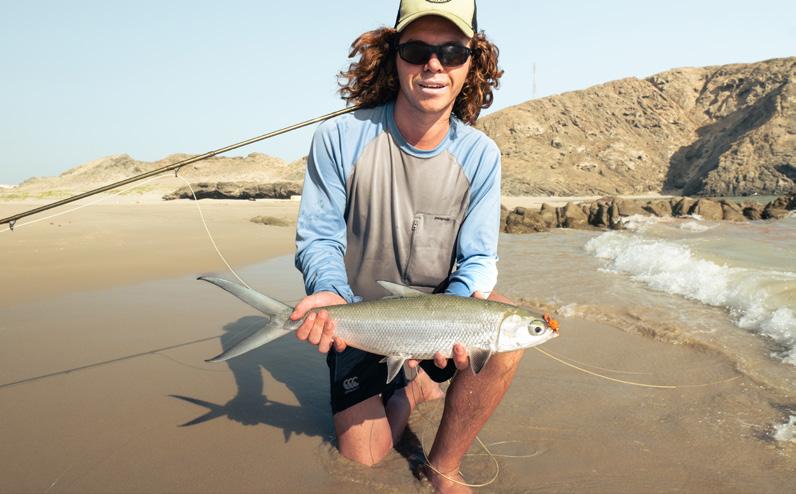
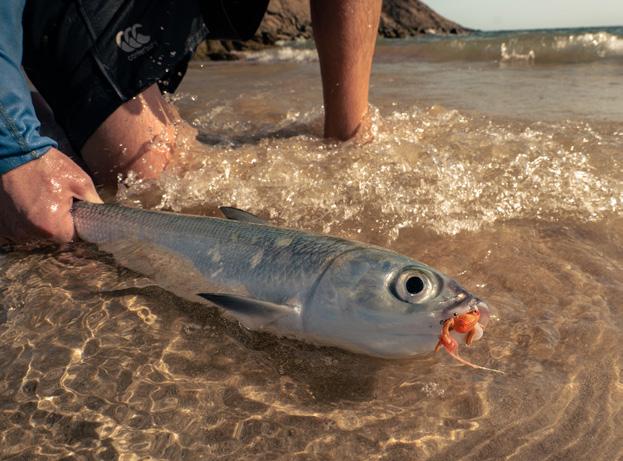
And the milkfish had noticed. To our astonishment they were feeding aggressively right in the surf.
Now, milkfish are not generally considered straightforward fish on fly.
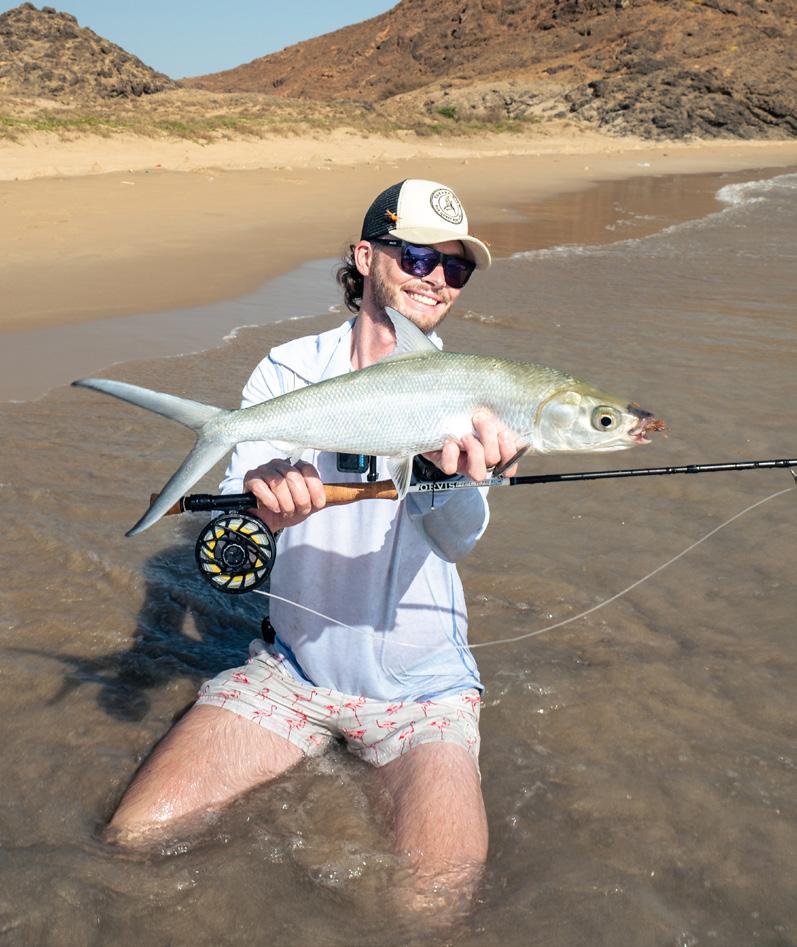
In fact, most encounters with milkfish involve a prolonged emotional breakdown and eventually “flossing”, essentially accidentally snagging the thing through the face. These fish, however, hunted the fly down properly and we watched them engulf the flies like GTs would.
EP Shrimp patterns and orange Flexos immediately started producing shots. Ed hooked several that failed to stay connected, I snapped off three in fairly rapid succession, then finally I landed one. Shortly afterwards Ed landed his too.
Two milkfish from the beach on fly with two idiots who had never caught one before.
Completely biblical.
Our daily routine quickly settled into something wonderfully simple. Fish hard through the mornings, retreat during the worst of the heat, find food, drive, fish again, camp somewhere different.
“WE HAD MANAGED TO ORGANIZE AN INTERNATIONAL FISHING EXPEDITION WITH ROUGHLY THE SAME LEVEL OF PREPARATION NORMALLY ASSOCIATED WITH ORDERING A TAKEAWAY.”
There was a worryingly large amount of biryani consumed on this trip. The food was delicious, rich with spice and flavour, and so too were the consequences the following mornings while searching for somewhere scenic to squat. Finding scenic places to squat became a surprisingly important part of the trip. Few things humble a man quite like aggressively regretting a third roadside biryani while overlooking a beautiful desert wadi.
One of our favourite camps sat beside a beautiful freshwater wadi lined with palm trees, crystal clear water, towering cliffs, absolute serenity.
And approximately every mosquito north of the equator. Still, there was something extraordinary about the freedom of it all. You can simply drive, see somewhere beautiful, stop, and camp. No fences, no bookings, no signs explaining why you are no longer allowed to enjoy things. For two people used to operating trips and logistics professionally, it felt strangely refreshing to reduce life down to tides, food, fuel, and whether the next beach might hold fish.
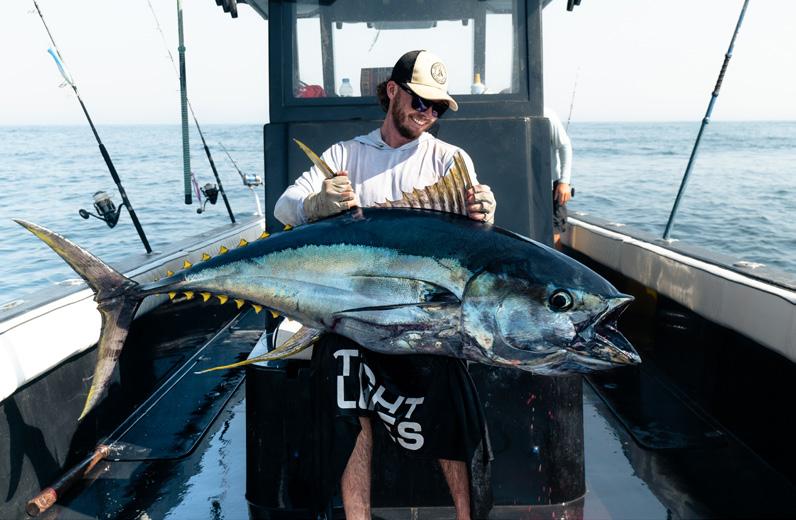
Then there was the side quest - featuring tuna the size of domestic appliances. When someone like Sam from Big F Encounters offers you a day offshore chasing giant yellowfin tuna, declining would be deeply irresponsible. Sam runs an exceptional operation with proper crew, proper boats, no nonsense.
I am still not entirely sure what they feed the tuna in Oman, but whatever it is seems highly effective. The fish are absurd. The yellowfin there look less like tuna and more like industrial farming equipment. The smaller ones still appear capable of towing modest hatchbacks. The one I landed was considered relatively modest at around 65 kilograms, which becomes particularly alarming when the larger fish make the dolphins they swim with look small. The biggest fish of the day pushed just under 100 kilograms. Across all the boats perhaps ten fish were landed.
Offshore Oman is the sort of fishing that permanently alters your perception of what a tuna should look like.
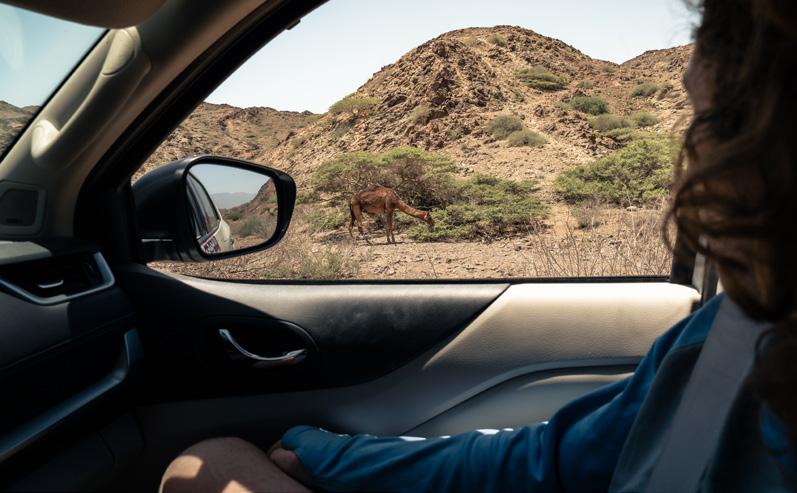
But strangely, despite the tuna, the permit, the milkfish, and the fishing itself, what I remember most about Oman is the place itself. The colours of the desert at sunrise, the call to prayer drifting across empty beaches, the smell of coffee in roadside cafes, camels wandering casually beside highways, the wadis, the roads, the sunsets, and the strange joy of driving hundreds of kilometres simply because a beach looked promising on Google Earth.
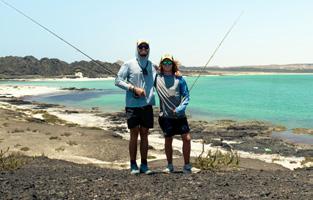
There was something deeply satisfying about the simplicity of the trip. Two mates, a car, fly rods, questionable planning, and enough optimism to repeatedly chase one of the least cooperative fish on earth. In a world where most travel now feels increasingly sanitised, scheduled, and filtered through someone else’s itinerary, Oman still feels wonderfully open.
Wild in all the right ways. Not curated adventure. Not luxury pretending to be exploration. Proper, slightly chaotic, freedom.
It rewards curiosity, it rewards effort, and occasionally, if you suffer enough, it rewards you with permit.
Would I recommend doing it yourself? Absolutely. Be prepared to walk. It is hard not to compare Oman to my usual patch in Eritrea, but they are completely different fisheries. Eritrea offers more classic flats fishing and an unhealthy population of permit amongst big GTs, triggers, bohar snapper, and countless other species, whereas fly fishing Oman from the beach can have huge limitations. But if you are willing to put in the time and effort and want a proper DIY trip, look no further.
As far as making lemonade from lemons goes, it is difficult to complain.
Ten days, 2,400 kilometres, fifteen permit, two milkfish, a questionable consumption of coffee, far too much biryani, and enough memories to justify every terrible cast, sunburn, and kilometre walked.
Not bad for a trip that very nearly never happened at all. P.S. Travelling to Oman was not an issue whatsoever. Naturally I appreciate people’s caution, but getting in and out of the country was incredibly straightforward.
NEW ZEALAND
CLOUD NINE
NEW ZEALAND - AOTEAROA, THE LAND OF THE LONG WHITE CLOUD - HAS BEEN ON GREVIN PRICE’S RADAR FOR YEARS. A VISIT TO HIS DAUGHTER ON NORTH ISLAND, A MILESTONE YEAR FOR HIM, A BROTHER TURNING 54, TWO OLD SCHOOLMATES AND NINE DAYS ON THE SOUTH ISLAND. WHAT COULD POSSIBLY GO WRONG?
Photos. Grevin Price, Chris Brennan
The Biral sleeping pill wore off by six am. I’m wide awake to extraordinary birdsong through the slightly open window - a Tui going absolutely full noise - while the rest of the house sleeps. As always when I’m about to fish somewhere new, the excitement has me properly gripped and I can’t wait for the household to get up. Today we head to the South Island.
My daughter Savanna and her partner Jack have been in Cambridge for close on eighteen months, so a visit was well overdue. It’s also my 50th year, and my boet Guy is turning 54 while we’re in the South Island - a damn fine excuse to tie it all together. Two old schoolmates, Brad and Matt, are joining us for the southern leg. Five days North Island, nine days South, five days North again.
The local Hunting and Fishing shop in Cambridge doesn’t disappoint - think mini Cabela’s. I grab waders and boots on special, which is easier than importing your own through NZ biosecurity. Worth knowing for anyone planning a trip: felt-soled wading boots are illegal here and carry a fine of 10,000 NZD. We spend the afternoon with Jack’s family and get properly spoilt with NZ lamb, ham and the rest. True Kiwi hospitality, plus a number of Speight’s.
The following day, heading the hour and a half to Taupo in my daughter’s wheels, both islands have had a week of serious rain - rivers are running off colour and the planned heli-flip is cancelled. Add to that my own personal blunder: I’ve packed both spools for the 5-weight but forgotten the reel casing. Back to H&F. Last time I forgot my underpants in Scotland.
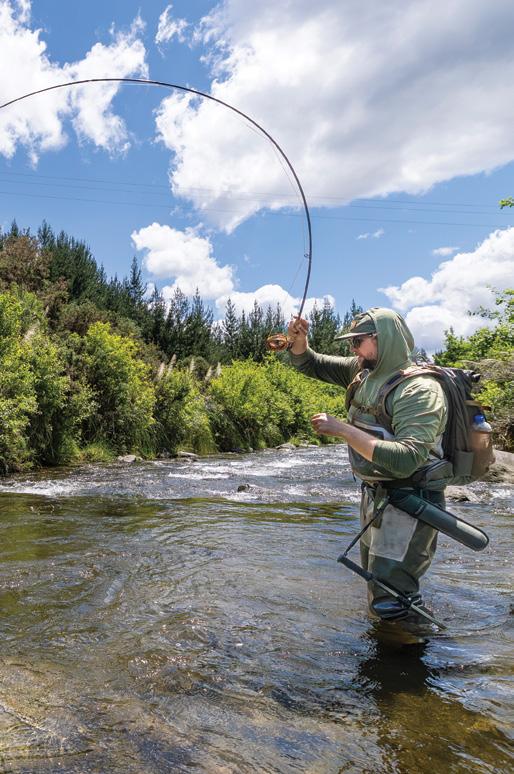
Despite the water being cold, deep and fast, the lower Tongariro above Taupo more than changes my attitude. Guide Chris Brennan puts us on fish - rolling eggs through euro nymphing produces great results as the fish are still spawning (oddly late for October, though climate shifts are pushing these cycles around). Mostly four to five pounds, biggest at six. Single egg fly with split shot to get it down, almost all fish sighted. Odd pumice stone drifting past, cool and windy - really pleasant all round. Worth knowing: Taupo and its tributaries require a separate licence at 37 NZD on top of the general 270 NZD. Fish and Game check ours on the river, so just as well we’re sorted. Beautiful yellow broom covers the banks - the same, I think, as the stuff you see in Chile. The lower sections have some steepsided banks and it’s precarious to say the least.
“CHRIS THE GUIDE IS PHOTOGRAPHING TWO SAFFAS ACTING LIKE THEY’RE ON THE
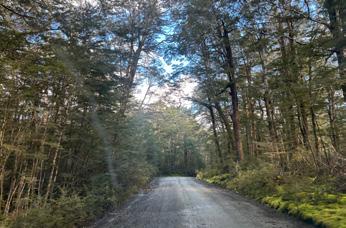
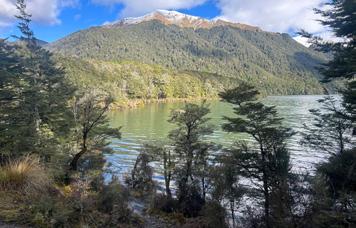
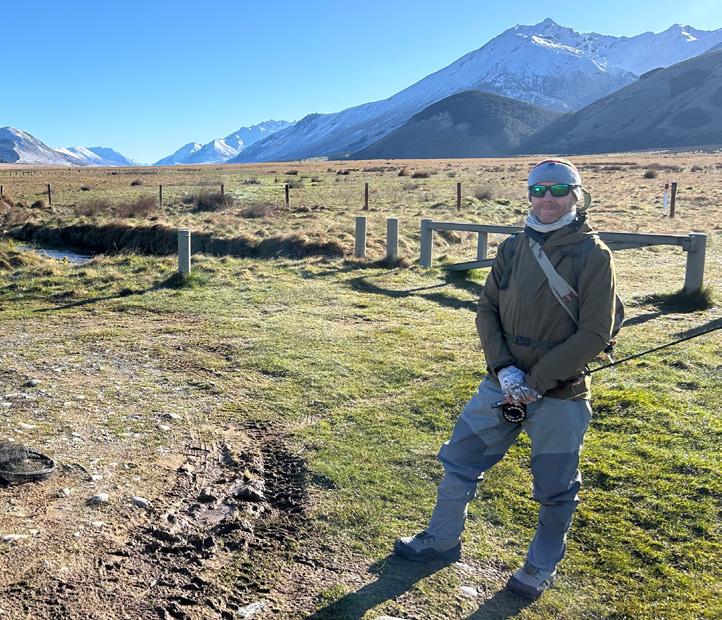
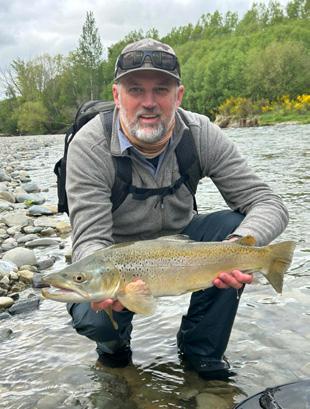
The afternoon on the Hinemia stream is a completely different world - tranquil, forested, running full and slightly off colour through the trees, fishing beautifully for a couple of hours before heading back. Great day all round, with most fish having been sighted. The first night’s exploration of the Speight’s supply takes its considerable toll.
We spend the Labour Day holiday catching up with an old schoolmate from school days - half of SA seems to be living here. Savanna puts on a fantastic breakfast platter of local cheeses, pickles and the like, and a traditional braai for early dinner goes down very well. All in all, a peaceful and relaxed day in a quiet, well-organised, picturesque town. Time to finalise the South Island plan, focused on rivers close to Lumsden and Twizel. After the rainbows on the Tongariro we also have plans to roll eggs in the canals.
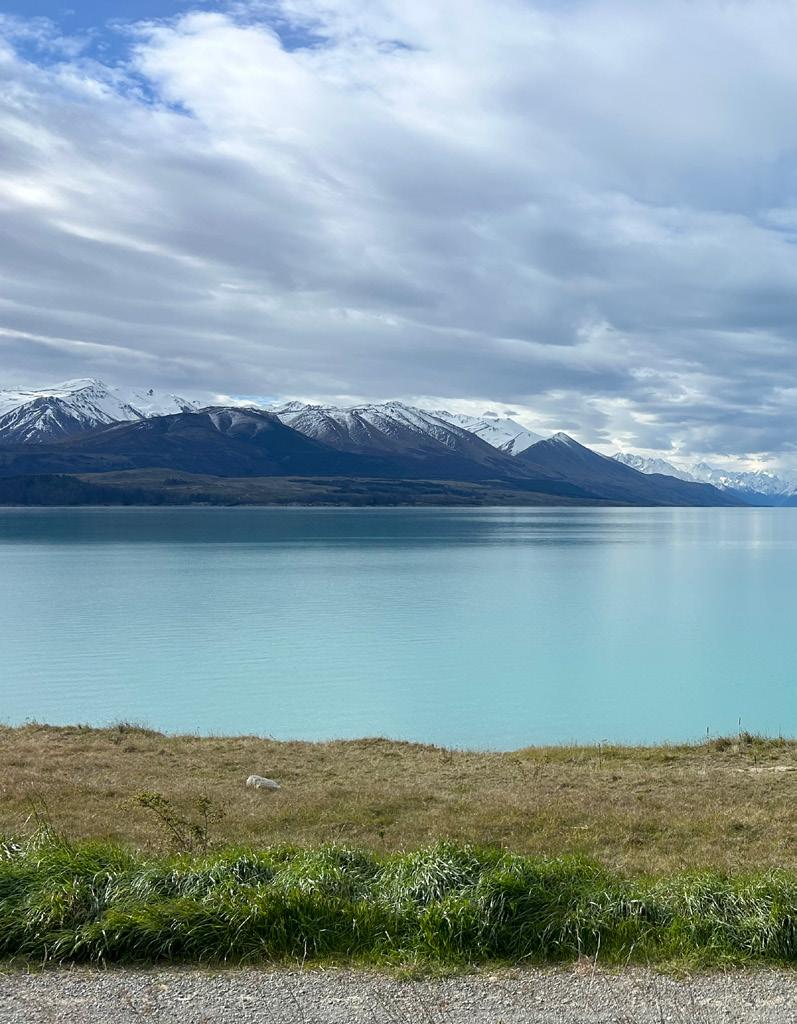
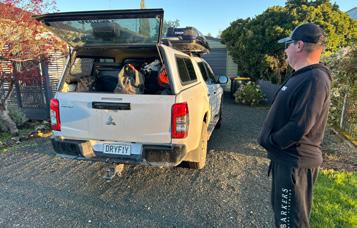
Early departure for Auckland, then a quick flight to Queenstown. Snow overnight. Land safely, pick up the hire car, collect Brad and Matt, stop at H&F in Queenstown (just had to - at this point I’m seriously considering shares in the company), grab supplies and make the scenic drive to Lumsden: snow-capped mountains, clean roads, not a single pothole in sight.
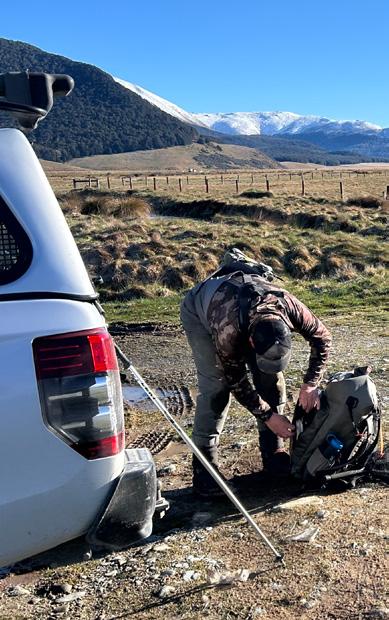
We unpack into the well-appointed Lumsden Fishing Cottage and get our kit together in quick time. The afternoon is spent fishing the Oreti close to the cottage. This section is braided and running off colour on snowmelt, moving at serious pace. I spot a decent brown in a very
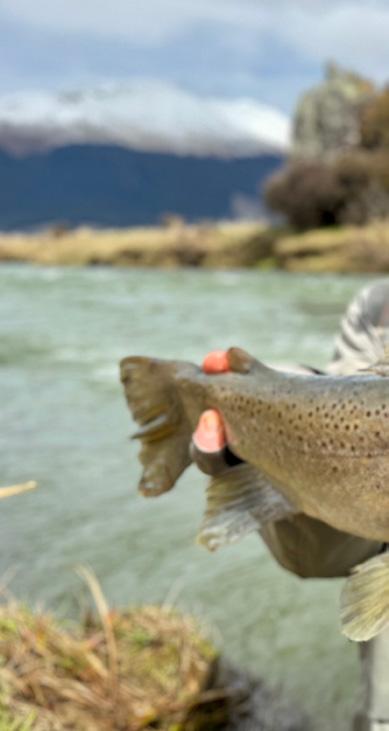
small side channel - seriously windy, the nor’wester having a real go at us - and put in what I consider a perfect cast with the right length and direction, only for a gust to collect it and deposit the fly neatly in the bush directly over the fish’s head. Clear indication of how it’s not done. At least my mates are having a laugh. We’re all rigged with TFO Pro 3 5-weight rods, 5-foot floating polyleaders, 10lb Cortland fluoro (4-foot) and 9.6lb Cortland fluoro (3-foot) with tippet rings between.
Back at the cottage we meet our guide Chris Dore and plan the attack for morning, describing our requirements and exactly what we’re after in terms of fishing.
“SIT YOUR ARSE DOWN AND WAIT YOUR TURN.”
It’s Guy’s birthday. Chris picks us up at six - most guides don’t start until eight. The excitement is barely controllable. We park in line with our beat marker and walk three kilometres downstream, mountains snowcovered above the tree line, the river valley open and free of trees below. By the time we reach the bottom of the beat we’ve built up a decent sweat, which converts quickly from overheating to cold the moment we stop moving.
I’m up first, barely able to hold back despite it being my brother’s birthday - we’ll chalk it up to enthusiasm rather than selfishness. We sight the first brown in slightly off-
colour water, sitting in ten inches of slack just off the current. The second cast lands spot on - two rod lengths out, Chris issuing quiet instructions. I hook up. PTN behind a weighted bloodworm under a strike indicator. Within five minutes a beautiful six-pound brown is in the net and released. This is going to be easy, I think.
Guy is up next. A fish is sighted up a decent side stream. A couple of casts and it takes the single nymph below a NZ wool strike indicator. Then the drama unfolds with the reel. I’d had to buy a reel from H&F and never checked that it was left-hand wind - we’d strung the line on righthand wind. On a reel that’s been spooled backwards, if
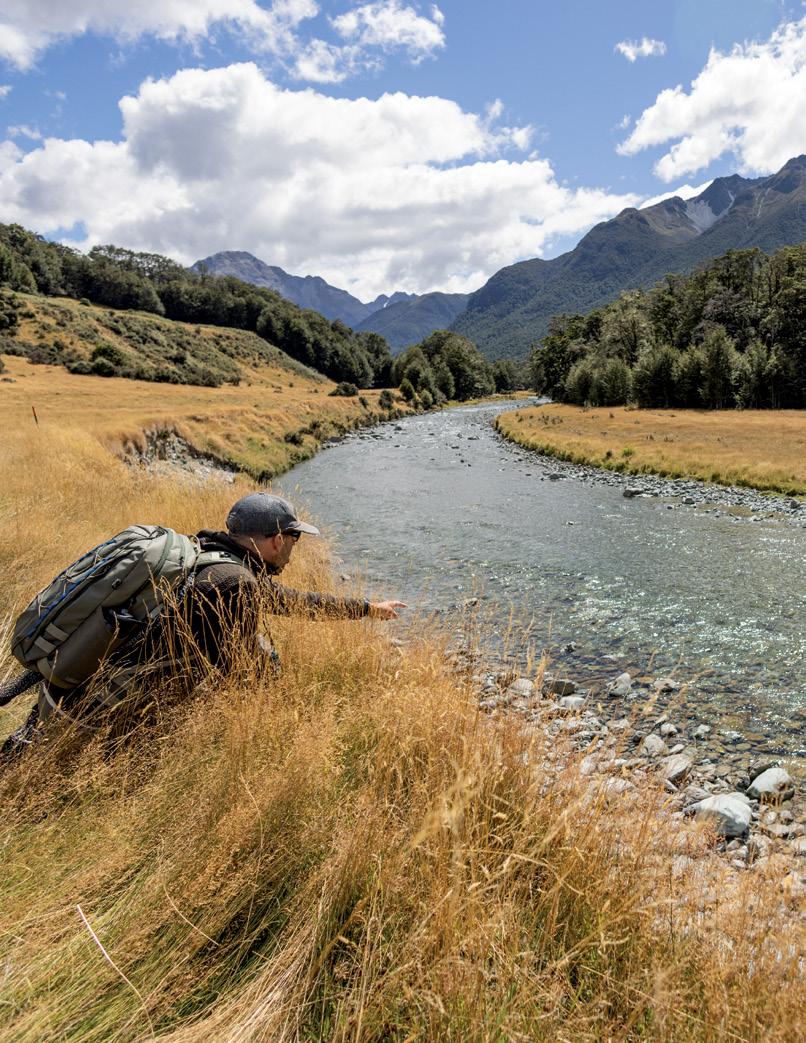
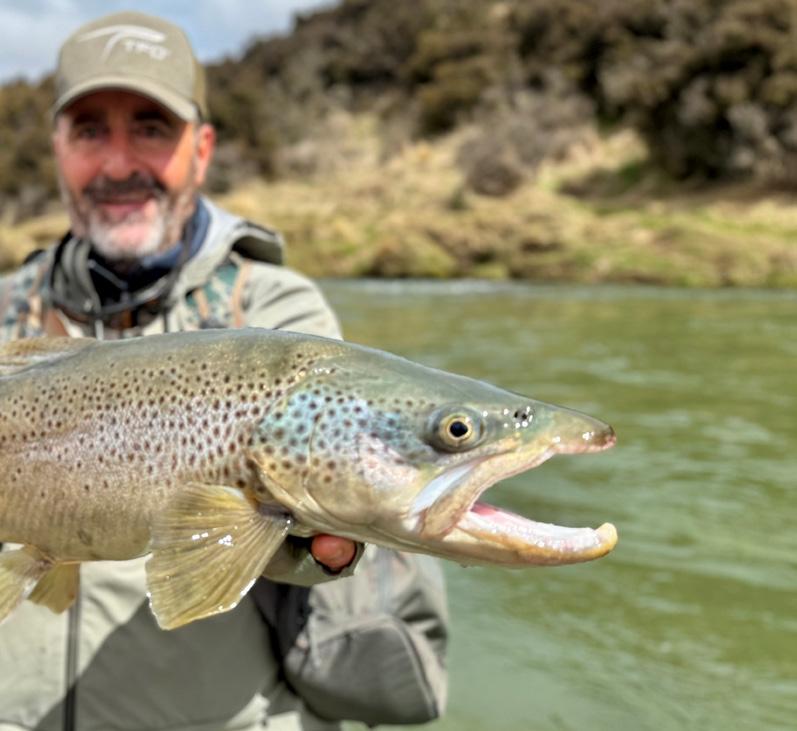
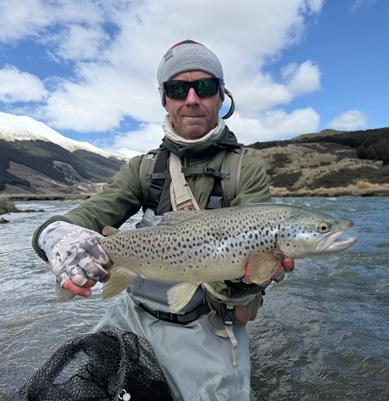
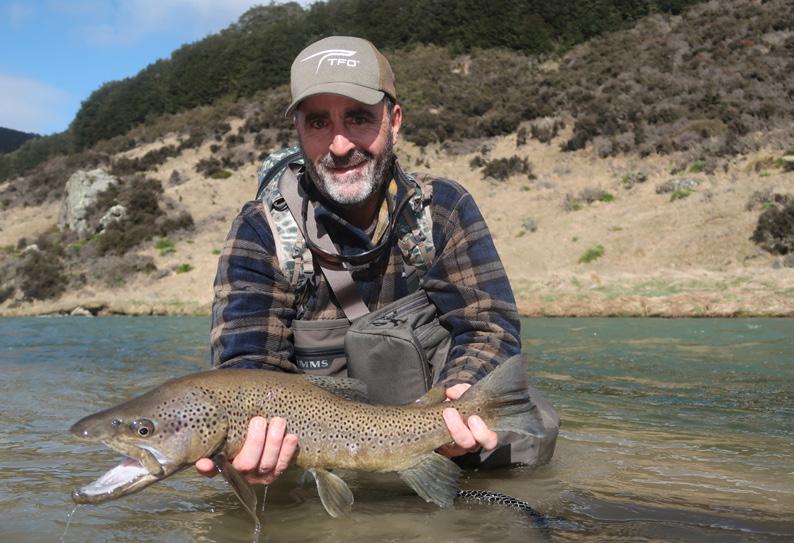
Author Grevin Price (above) and Brad Astrup (opposite) with classic New Zealand brown trout.
you tighten the drag you can’t reel in at all. Guy is a lefty, which in theory should help, but it is one thing trying to reel left-handed when you’re right-handed, and another more significant challenge to manage line when it’s been spooled backwards - we’re doing both simultaneously with a fish on. Three metres of loose line and neither of us can get it back on the reel because the drag had been tightened when the fish took the fly. Then I take a swim.
I’m holding the line up while Guy crosses the stream to cut the fish off from the main river. One moment upright, the next I simply cannot get my feet under me in 800mm of fast current and I’m washing head-first downstream in very cold snowmelt water that fills my waders and begins exploring the contents of my pockets. Chris the guide is photographing two Saffas acting like they’re on the spectrum. Guy lands the fish regardless.
Fifteen minutes in, two fish over six pounds. I change into dry gear (the backpack, at least, proved waterproof), we respool the reel correctly for left-hand wind, and forge on. The wind has picked up, the snow is melting fast and discolouring the water. Nevertheless we manage to land six great fish - all sighted - and prick another two. I spot one sitting ten inches off the bank and manage to hook
and land it. Chris Dore is reputed to be the best guide in Southland and I can’t argue. His ability to pick grey smudges out of moving water is simply next level. Back to Lumsden for a hot shower, a great meal and even better company. Matt and Brad have explored a few streams and returned empty-handed.
The following morning Chris has Matt and Brad while Guy and I fish on our own, spending the day on two tributaries of the Waikaia. They don’t disappoint. I manage four very healthy, clever browns on small PTNs under a strike indicator, three of them sighted. Matt and Brad, out on the Waikaia itself, each get great fish and are properly stoked.
As a South African, there is a great deal of peace to be experienced in simply parking next to a bridge, rigging up to smiles and waves as the odd car passes at a sedate pace, knowing the unattended vehicle will still be there when you’re done. So many rivers and streams to explore. You just feel safe, and that lends itself to a great degree of calm. Fishing slower, willow-lined water is a sort of respite from big, fast water and the wind. Just slow down and be present.
I take a moment to sit on a log next to the stream and watch my brother fish. I realise I am at peace. I’m in a great place, happy and content. The wind has settled and the weather too, much like the space I’m in right now. Deep, calm breaths and a smile. We truly are blessed in the lives we live and the water we get to explore.
It’s great to catch big fish. It’s also great to take the time to enjoy the view and immerse yourself in your surroundings. We all carry stuff - we don’t need the clutter in our minds and in our lives. We need purpose and peace. We need experiences and adventures, surrounded by good solid people. That, combined with a great meal with mates, makes for the very best of times. Learning to fish with patience takes time, and it takes time to be patient with your fishing mates too. Take a step back and give a hand rather than charging upriver to find the next best spot.
The next day without a guide is tough going. We spend the morning on the river section linking the Mavora Lakes - it looks magnificently fishy, seriously fine wadeable shallows with a great deal of water. Not a fish to be found. The afternoon back near Lumsden on the Waikaia is more rewarding: great fish sighted, one hooked and lost, a couple of trophy-sized browns that spook when you blink. The pastoral setting is simply stunning. On the way back to the cottage we spend fifteen minutes behind a few thousand sheep being herded down the road. Last night in Lumsden: a delicious shared meal, a couple of Speight’s, a decent Carmenère with the food, and a single malt to finish.
“LAST TIME I FORGOT MY UNDERPANTS IN SCOTLAND.”
“IT’S NOT ABOUT NUMBERS. GET INVOLVED, HELP FIND FISH, ENJOY THE SPACE.”
On to Twizel. An excellent drive, flat and arid on this side of the Alps, the lack of vegetation a clear sign there could be some wind. We fish the upper Twizel above town after hurriedly unpacking - it’s clearly only just recovering from a flood: super clean, very fast, nothing showing anywhere. The following morning our guide Anton Donaldson picks up Matt and Brad while Guy and I drive through Tekapo to meet Matt Miles - an old fishing mate from KZN competitive days - on the Grays River outside town. Lake Tekapo is very clean and tidy with plenty of tourists about, camper vans filling every available parking spot. It smells fresh and looks like it must be seriously inhospitable in winter. One note for those not used to this kind of organised place: people don’t just urinate in public here, so you have to actually stop at a restroom.
The Grays River is in a pastoral setting - winding, incised, swift and narrow, with deep holes in excess of 2.5m.
A very different river from anything else I’ve fished. All the likely spots seem oddly devoid of fish, very strange. We manage to sight and land one decent brown before returning to the cars to find a local spin fisherman who has pricked eight fish and landed three. Opening weekend rod pressure does that. Savages. The afternoon is spent on the willow-lined banks of Lake Alexandrina with floating lines and twitching dragonfly nymphs. Guy lands a beautiful rainbow wading in frigid water. Matt and Brad fish an unnamed tributary with Anton and both get great fish.
It turns out Anton is as sharp at sighting fish as Chris Dore. He’s also formed a firm view that the online booking system for South Island beats has had a very negative impact on the fishery - the result being that foreign anglers book access online the night before, park overnight to secure the spot, and often spend several days fishing the same section.
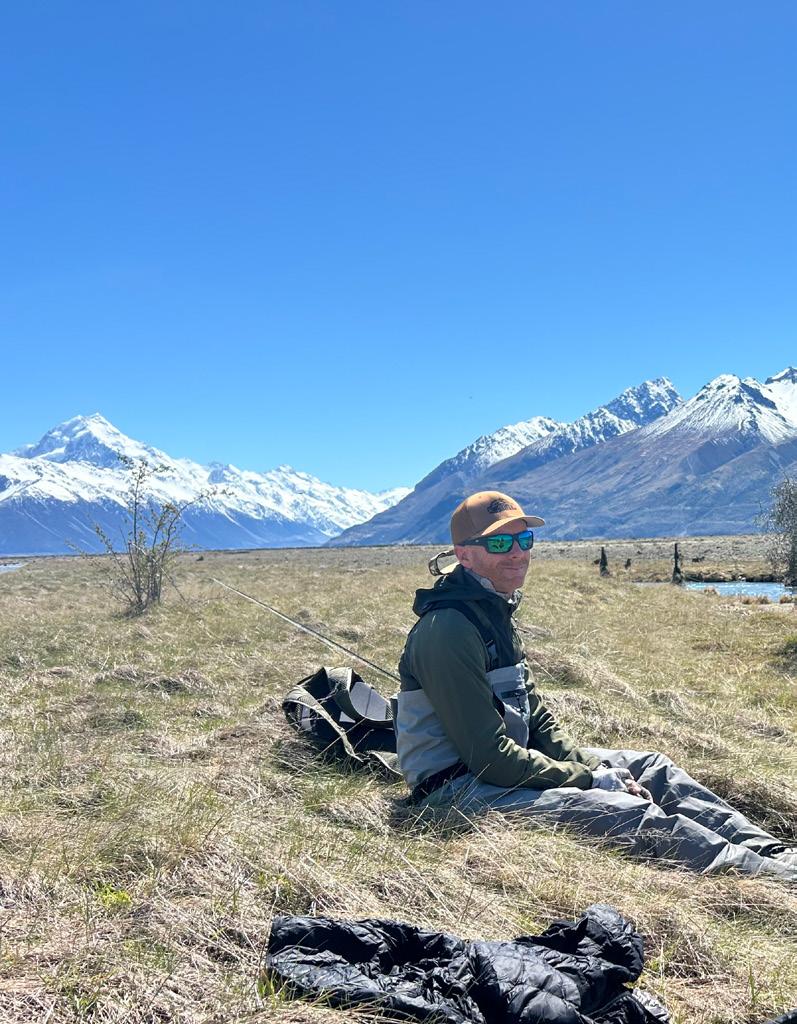
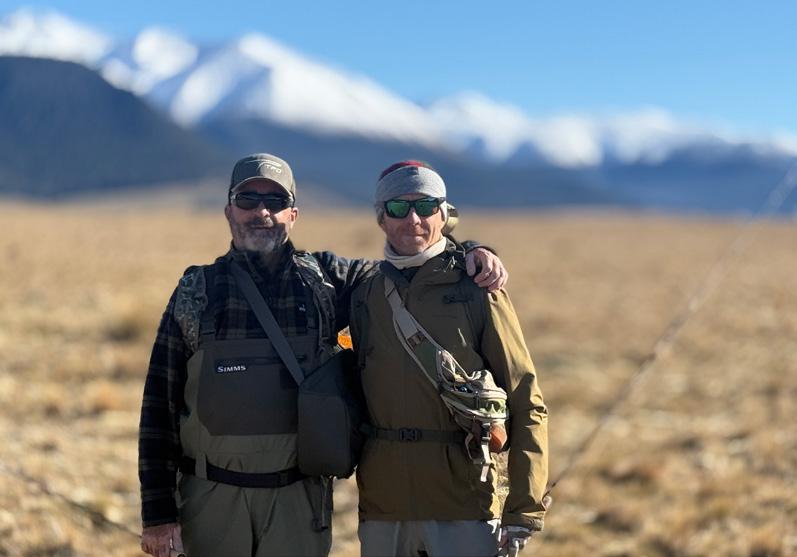
Grevin and his brother Guy Price bust out the shmodel vibes for South Island.
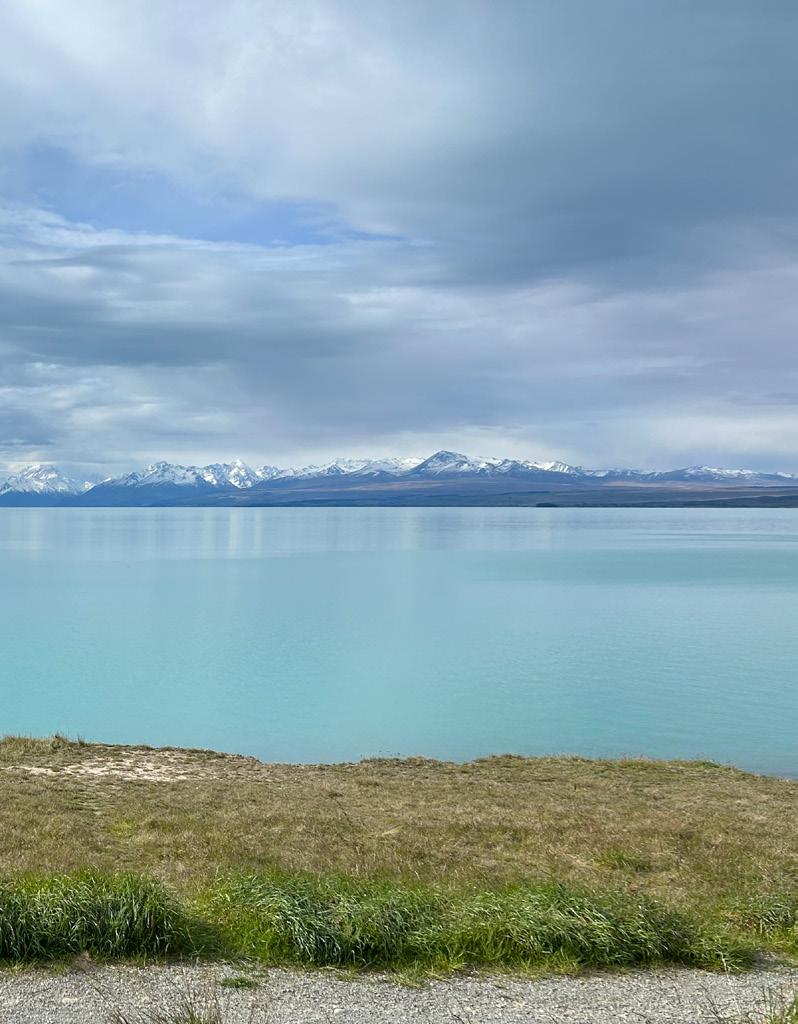
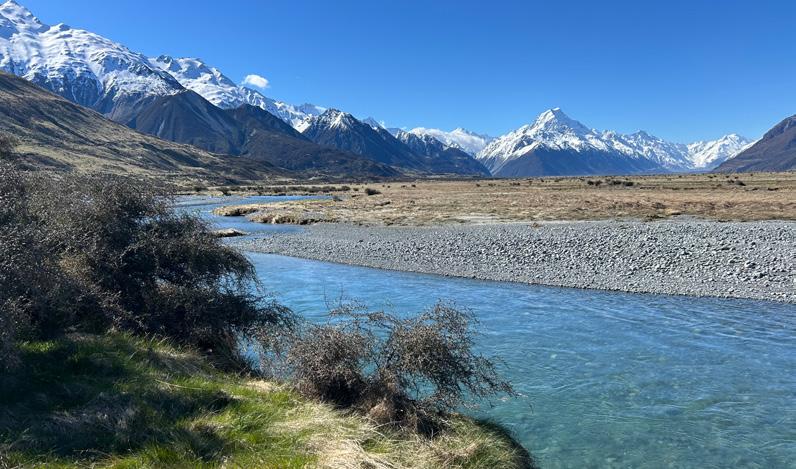
Our turn with Anton the following day, fishing under Mt Cook. It’s difficult to explain in words the scenery or the quality of fish. This is a wild and inhospitable place. I’m up first again, compelled as I always seem to be, and land the first fish we sight on a small PTN. Guy gets one some time later. Then the nor’wester starts and throws a spanner in the works. The 6-weight TFO Signature rod earns its keep in some serious downstream wind. The conditions deteriorate for sighting fish, with intermittent sun, the wind blowing hard onto the bank. Guy, fishing left-handed on the right-hand bank, is facing a proper challenge. A fish in front of him has been feeding happily for some time and remains completely untempted by his efforts - it requires a number of fly changes.
I start getting impatient and tell Anton I’m going upstream to get myself a fish. I get put in my place immediately, and deservedly so - a simple explanation of the ethics at play: you get a fish, he gets a fish, you get a fish, he gets a fish. Plus sit your arse down and wait your turn. The fish eventually succumbs to Guy on a dry and we both end the day with some exceptional fish. Lesson well learned.
Last day on the South Island. The canals and the Ohau River are both running off colour and flowing fast - we cut our losses and spend the afternoon on the Twizel just above town, sight-fishing to spawning rainbows that have moved upstream from Lake Benmore on the snowmelt. Heavily weighted bloodworms and trailing nymphs under a strike indicator. It’s exceptional - a swift, clean stream with decent pools and fish everywhere. We sight two big browns in very difficult positions over fast water that defeat us. We’re all catching sighted fish and having a cracker of an afternoon.
Then, as a fitting send-off: Guy joins me midstream, hooks a fish, and the spool falls off the housing. We manage to land the fish. The net then goes for a swim. The spool washes eighty metres downstream still attached to the backing knot, and Brad ends up swimming for the net in frigid, fast-moving water. Quite a way to end the South Island leg.
A hearty goodbye to the mates and plans are immediately afoot for a rematch.
Back in Cambridge. A compulsory visit to Hobbiton proves genuinely magical - the enchanting countryside and incredible detail on everything makes The Shire come completely alive. Our last day of fishing is on Blue Springs, a tributary of the Waikato, and I’m woken that morning once again by the Tui going full noise through the open window. Some things don’t change.
Some people say it’s not necessary to scratch where there’s no itch. I have an itch that can’t be fixed with scratching - for me it’s all about the fish. It’s an unending challenge that is never conquered. On average, after all, the fish win. Planning the next trip already.
What I Learned
1. Guides generally charge what they’re worth. Some are laid back and forget to tell you they’re six hours from your current accommodation. Communicate well in advance, in detail, exactly what you need from a guide day.
2. Fishing with a guide on a limited timeframe is priceless, irrespective of cost. Without local knowledge you can waste extraordinary amounts of time fishing water blind. It really is the only way to do it.
3. Not all rivers are equal. There are many hidden gems. Timing around levels and conditions can’t be planned and luck plays a massive part.
4. Early season is best. Late season and summer sees serious rod pressure on the South Island, with anglers using the online booking system to secure beats and sleeping in their cars overnight. North Island fish are left surprisingly unmolested.
5. Ethics matter. When two anglers are out together: one fishes until he lands a fish, then the other takes over. It’s not about numbers. Get involved, help find fish, enjoy the space. It isn’t cricket to charge off upstream and do your own thing.
6. Spin fishing trout rivers should be restricted to the Kalahari.
7. Check your reel is spooled correctly before you leave home. Check it again.
SHOP THE MISSION



Fishpond Thunderhead Submersible Backpack. Definitely keeps the contents dry when you swim. fishpondusa.com, wildfly.co.za
TFO Dispatch Reel with interchangeable spools (if you don’t leave the casing behind). tforods.com, wildfly.co.za
Cortland Ultra Premium Fluorocarbon tippet in 3X (9.6 lb) is unbelievably thin for its strength. cortlandline.com, wildfly.co.za
Cortland 444 peach floating line. cortlandline.com, wildfly.co.za
TFO PRO 3 9-foot 5-weight for calmer days. Simply the best rod I have owned and it has the right price. tforods.com, wildfly.co.za
TFO Solution 9-foot, 6-weight for some backbone in a proper breeze. tforods.com, tforods.com, wildfly.co.za
THE GRANDE
A 1M+ GT ON FLY OFF THE SOUTH AFRICAN SHORE IS THE RAREST THING IN FLY FISHING - A UNICORN THAT ONCE ROAMED THIS COASTLINE IN NUMBERS BUT HAS BEEN SLOWLY ERASED BY DECADES OF OVERFISHING, AND ENVIRONMENTAL DAMAGE. THE HUNDRED CLUB (LISTED AT THEMISSIONFLYMAG.COM) EXISTS BECAUSE ENTRIES ARE SO EXTRAORDINARY THEY NEED TO BE DOCUMENTED. ROB KYLE’S 132CM FISH IS THE BIGGEST EVER RECORDED. IF YOU WERE GOING TO HAND THIS FISH TO ANYONE, IT WAS HIM.
Photos. C/o Rob Kyle
Insanity: extreme foolishness or irrationality; inability to behave in ways considered normal or rational; very stupid or unreasonable action. Any one of these definitions could be applied to the pursuit of a 1m+ GT off the South African shore with a fly rod.
I grew up at Kosi Bay, one of the best places for GTs in SA, and have been going back at every opportunity for the 20plus years since I left home. I have spent countless hours fishing for GTs on conventional tackle and been fortunate to cross paths with some special fish over the years. I know the effort and good fortune required to land a 1m+ GT on conventional gear, I know that coastline like the back of my hand, and for many years I considered making the decision to invest time and money in trying to get one on fly as nothing short of INSANE. I looked upon the small group of guys spending hours, days and years trying to make this dream happen with a combination of great admiration and pity. I didn’t understand and couldn’t justify the effort.
I had always fly fished as a youngster, but set it aside as I improved as an angler and my desire to catch lots of fish - and then lots of big fish - came to the fore. As time passed and I worked through the stages that most seriously passionate anglers travel, I found that how I caught a fish started meaning more to me than simply catching it the most effective way possible. To get to the same feelings of excitement and achievement I was after, I had to start doing some things the hard way.
The natural progression was fly fishing and fly tying, which has become something I genuinely love. To tie a fly yourself
and then catch a special fish on it is hard to beat. I am by no means a fly fishing purist - although I have been known to look very steeply down my nose at anyone who fishes for yellowfish with anything other than fly gear - and still love pretty much every other facet of angling.
Around five years ago, after a trip to Sette Cama in Gabon where I threw the 12-weight off the shore with real intent and caught some fish, I realised this was something that made me properly excited. A year or two later I went back to Sette Cama better prepared - the right flies tied, a more capable caster, and conditions on our side. I jumped quite a few tarpon off the beach, landed two, and got a bunch of snapper and threadfin salmon besides. It was the most excitement I’d felt from fishing in a long time, and on my return I made the conscious decision to invest in getting a 1m+ GT from shore in SA, on fly. I matched an Echo Blue 12-weight with a Shilton SR12 reel - the same combination I’d used in Gabon and still love today.
Fast forward a few more years: several trips to Kosi, hundreds of kilometres walked, thousands of casts, many flies tied, and not so much as a GT acknowledging the presence of my efforts, let alone a real chance at one. I knew this was going to be the reality of my choice and I embraced it. I promised myself I would only throw big flies at every opportunity and not get tempted to downscale just to break the blob and then potentially lose the real thing as a result.
This brings us to what is becoming an annual family trip to Kosi over the Easter holidays, 2026. Nine days of fishing. I was excited.
“I MADE THE CONSCIOUS DECISION TO INVEST IN GETTING A 1M+ GT FROM SHORE IN SA.”
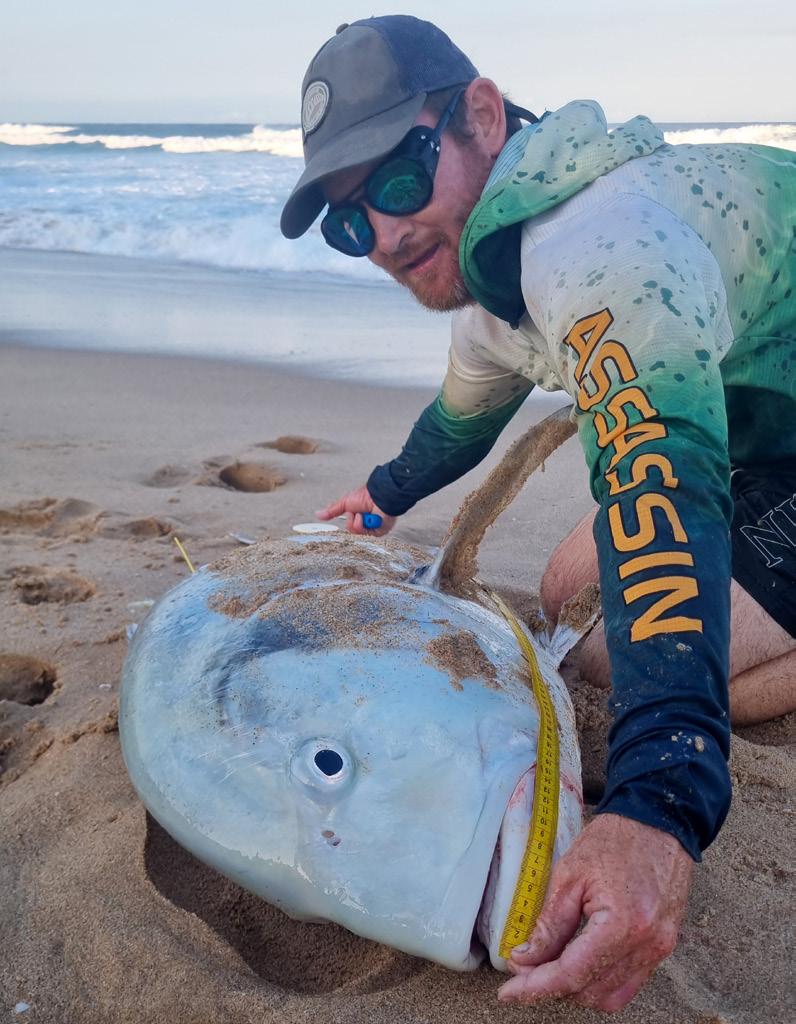
The first two days produced good fish on spinning gear and I threw the 12-weight hard over all the spots where I’d caught, lost and seen GTs over the past 35 years. The formation was epic and the sea flat, allowing access to some incredible water. Not a sign of a GT. And so the holiday progressed: wake early full of renewed excitement, coffee, walk in the dark, be on the spot as light crept over the horizon, fish flat out. If the wind didn’t come, we fished dawn to dusk. If it did, we took a mid-day break and came back for the afternoon. For our efforts we landed very little even on spinning and bait gear, most days the only relief being a greenspot kingy or three.
During a drive through the coastal dunes, I was thinking about GTs and fly fishing and what to try differently. I realised I had tried to match many of their favourite fodder items with flies, but had never attempted a wave garrick imitation. That afternoon I started tying onea full beast fly inspired by Andre “Dre” Van Wyk, who has been an absolute champion through my fly-tying journey and never once failed to help when I’ve come to him with questions. It took two sessions to finish, fishing getting in the way as usual, but I was satisfied with the result and decided to throw just this fly for the rest of the trip.
This brings us to day nine, our final day of fishing. The flat seas of the first week had been replaced by a massive ground swell rendering most spots unfishable. We spent the morning at Mabibi, snorkelling in the relative shelter of the barrier reef. Zero fishing result. Back at the accommodation for lunch, we had a braai that rendered us reasonably incapacitated from sudden-onset crapulence. The north-east wind was blowing 15 to 20 knots and the sea was buggered.
My brother Ewan and I were weighing up the afternoon’s options: 1) collect guavadilla fruit from the forest - required very little effort and we could drive there; or 2) walk 1.5km in unpleasant conditions to Rocktail Bay and fish for a GT, having not seen a decent one in nine days. We had basically decided on option one. At the last minute I chastised myself for being lazy, reminded myself that Rocktail works for GTs precisely when the sea is rough, and decided to go.
We walked onto the beach into rolling white water and a stiff north-easter blowing straight into our teeth. Ewan had so little faith in the decision that he’d brought only an ultra-light rod. There was a sheltered pocket right in the corner of the bay and the usual big shoal of flagtail in the corner. I also spotted eight or ten big mullet right on the
shorebreak - something I hadn’t seen on any previous day. I know how much GTs love mullet. One promising sign.
I went in and threw blind for half an hour with zero result and no sign of life. Even the flagtail were chilled. My thumb was aching from trying to push a full fly line and a 25cm beast fly into the wind. I took off the stripping basket, set it down on the beach with the rod on top and went and sat with Ewan on the dune.
After a short while I chastised myself again for my laziness. I was at one of the best spots in SA for a GT on fly and I was sitting in the dunes. I walked down and picked up my stripping basket. As I clipped the buckle around my waist, I looked up and saw two roughly 4kg kingfish - either bluefin or greenspot - charge through the flagtail, sending them spraying. I ran towards them, getting my line in the air as I went.
The water sucked back with a surge and I was able to get six or eight metres further out on the spit than usual. The wind seemed to drop for those few seconds. I threw, felt a few loops of line get pulled into the stripping guide - and magically they untangled themselves and I landed a nearperfect cast across the current, behind where the kingies had smashed the bait. My plan was to intercept them on their way back out the bay. I got the rod under my arm, took a wave from the returning surge while trying to hold my footing with the sand washing out from under my toes, and on around the third strip felt the fly get eaten.
I set hard and held tight, fully expecting to swing what I thought was a 4kg kingy out of the current. That didn’t happen. The line was torn from my fingers and went hopping out of the stripping basket. There wasn’t much line to clear and this happened in split seconds, closely followed by the end of my fly line exiting the tip guide. I tried hard for the next 10 to 25 metres to keep the fish from getting over the back of the reef. I failed dismally as it ripped line off a locked drag on the SR12.
I had learned over the years to have an exit strategy planned before the fish is on, rather than getting the bite and then looking for parking. My plan, for the unlikely eventuality that I found myself hooked up to something serious, was to drop the stripping basket and sprint around the bay to get an angle on the fish that allowed me to pull it away from the ledges rather than back towards them. I executed this plan, muttering something to Ewan as I ran past him - he had started filming on his phone - along the lines of “this can’t end well.” I think that was the last full sentence I spoke until the fish was on the beach.
“I PROMISED MYSELF I WOULD ONLY THROW BIG FLIES AT EVERY OPPORTUNITY.”
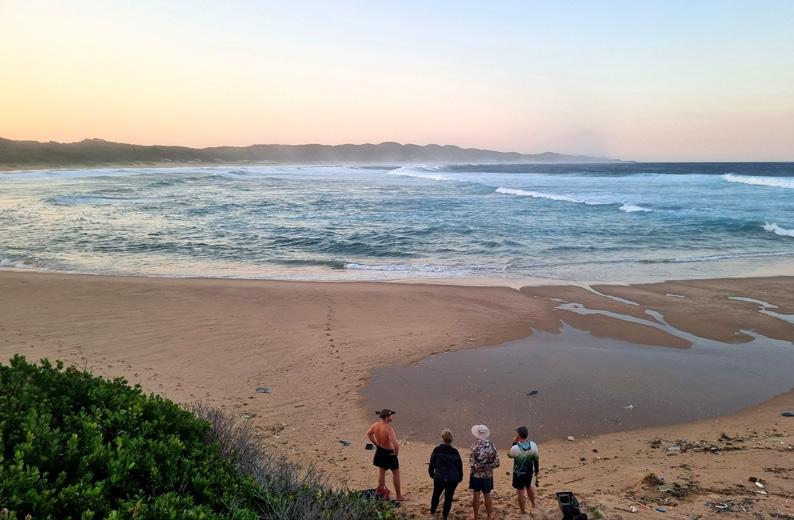
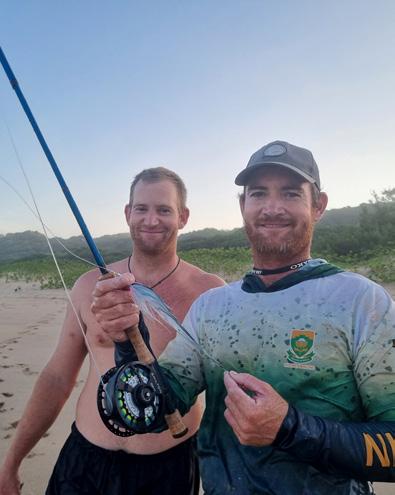
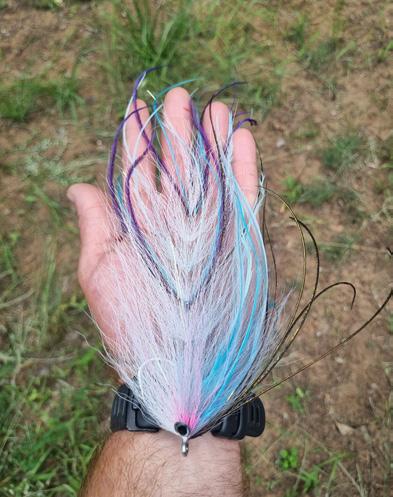
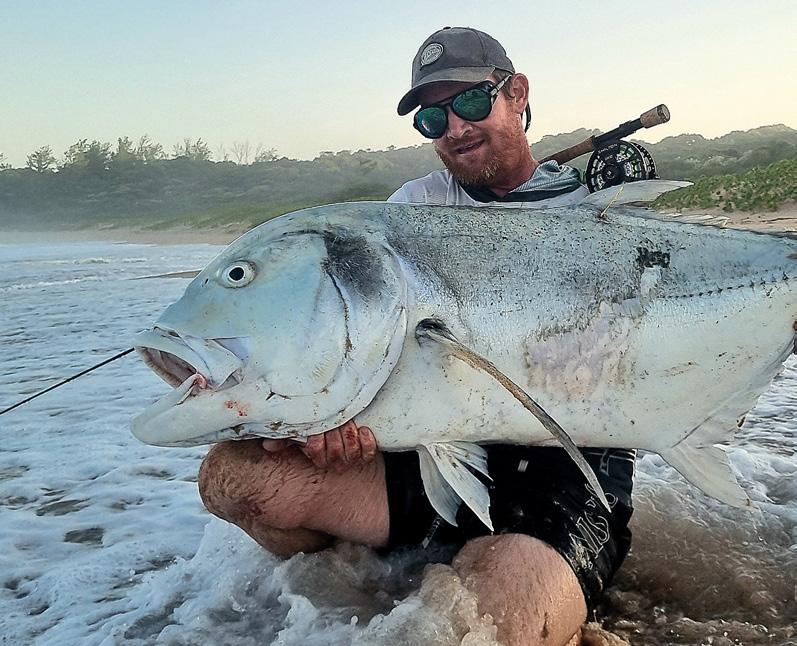
Sprinting on full high tide, soft sand and a sloping beach against a tight drag on the SR12 was harder than my plan had accounted for. Being 40 possibly wasn’t fully factored in either. I made it a few hundred metres around the bay before my legs were done. By that point I had enough of an angle to be pulling the fish away from the reef, and I kept walking, pulling it north. At any moment in the first few minutes the fish just had to turn right or go deep and it would have cut me instantly. If I’d lost it in those first two minutes I almost wouldn’t have been disappointed - the chances of staying connected were tiny.
As the minutes passed and I had the fish arcing away from the reef on the sand, the real stress set in, because now I knew I had a chance and I knew this wasn’t a 15 or 20kg fish. After about eight minutes we had it on the back of the shorebreak. The sea was so big that the backwash made it
nearly impossible to time the run. Eventually we got lucky, and Ewan, who was in the water almost up to his neck, got his hands on it. The next wave knocked the fish out of his grip, but it went up the beach in front of him and he got behind it and stopped it washing back. As the water and sand cleared, we saw the full extent of what was lying there. Only then did we realise what had just happened.
The whole fight had lasted less than twelve minutes, but the fish was battling - eyes wide, pupils small and dark, a sure sign on a GT that it isn’t doing well. Mad panic: hook out, measurements, tag, photos, video, release. Absolute chaos. Nobody got to fully appreciate the fish in that time. We were focused entirely on getting it back as fast as possible.
The fish measured 132cm fork length. Yes, we measured over the curve of the body with a tape, not a straight-line
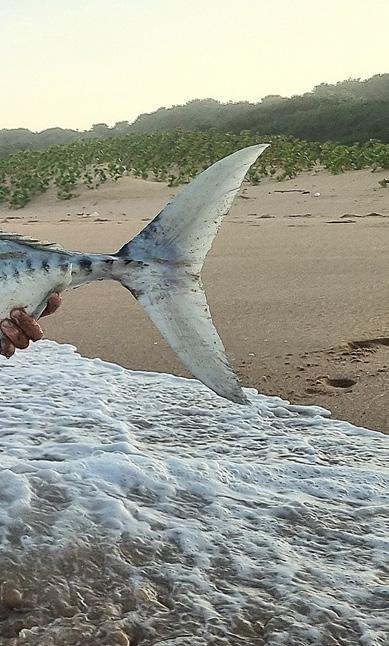
measurement. The straight-line would have been a few centimetres shorter. I haven’t seen many GTs measured differently, so I’m comfortable claiming the curved body length of 132cm. This puts the fish at 44.7kg.
The previous biggest documented GT on fly from shore in SA was caught by Marius Rousseau and measured 118cm. I most certainly do not feel like I deserved that fish. Many fly anglers have dedicated far more time to this pursuit than I have. On the other hand, this fish is such a freak occurrence that there is nothing I could have done over many lifetimes to deserve or earn it. It was simply one of those moments that can’t be explained rationally but sometimes happen when you spend enough time fishingoften when expectation is at its lowest. I am phenomenally grateful to have experienced it. I was asked by Leonard Flemming what my favourite part of the experience was,
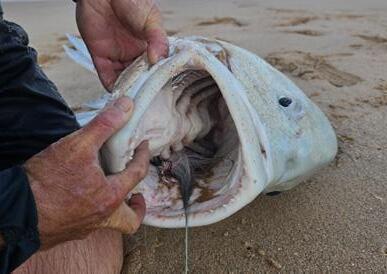
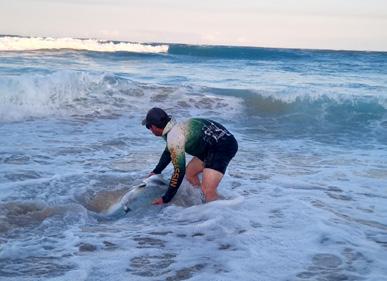
and I had to think carefully. Every aspect of the capture was insane, but the stress and the rush mean it all blurs together in my memory. What I remember crystal clear is having my brother Ewan with me for the whole fight. No talking required, no wild excitement - just the calm knowledge that he would know what to do in any eventuality. My wife Amy was there too, took over filming, knew what I was going through and what this fish meant to me. And both my mum and dad were there. They watched the whole thing from the bite to the release, helped when needed, understood what the moment meant and, as they have always been, were more happy for their offspring’s success than their own. That was the part of the experience I appreciated the most.
Sometimes, just sometimes, insane behaviour produces an insane result.
REVIVAL F Y N B O SFIS
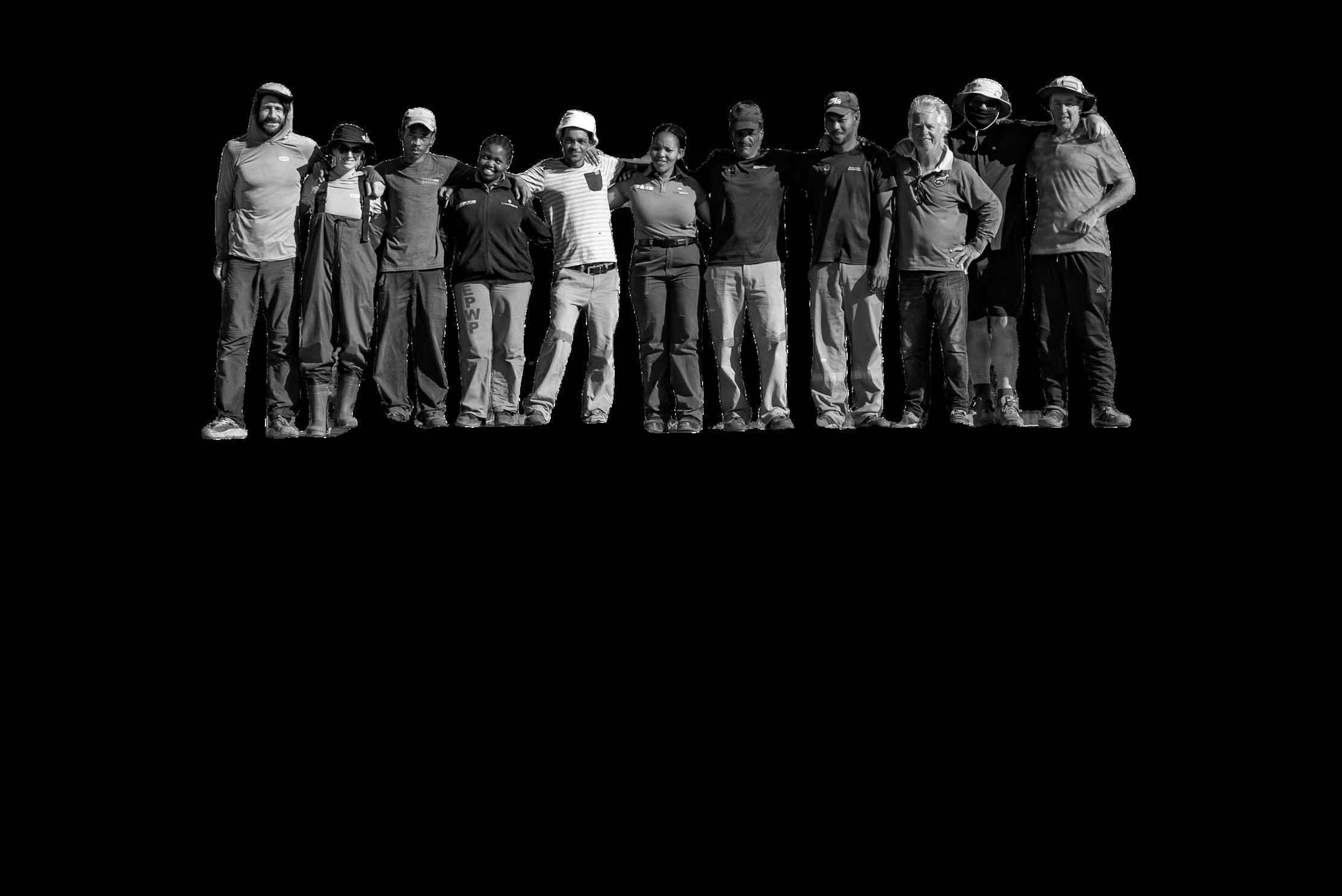
g e t g e t c o n c o n
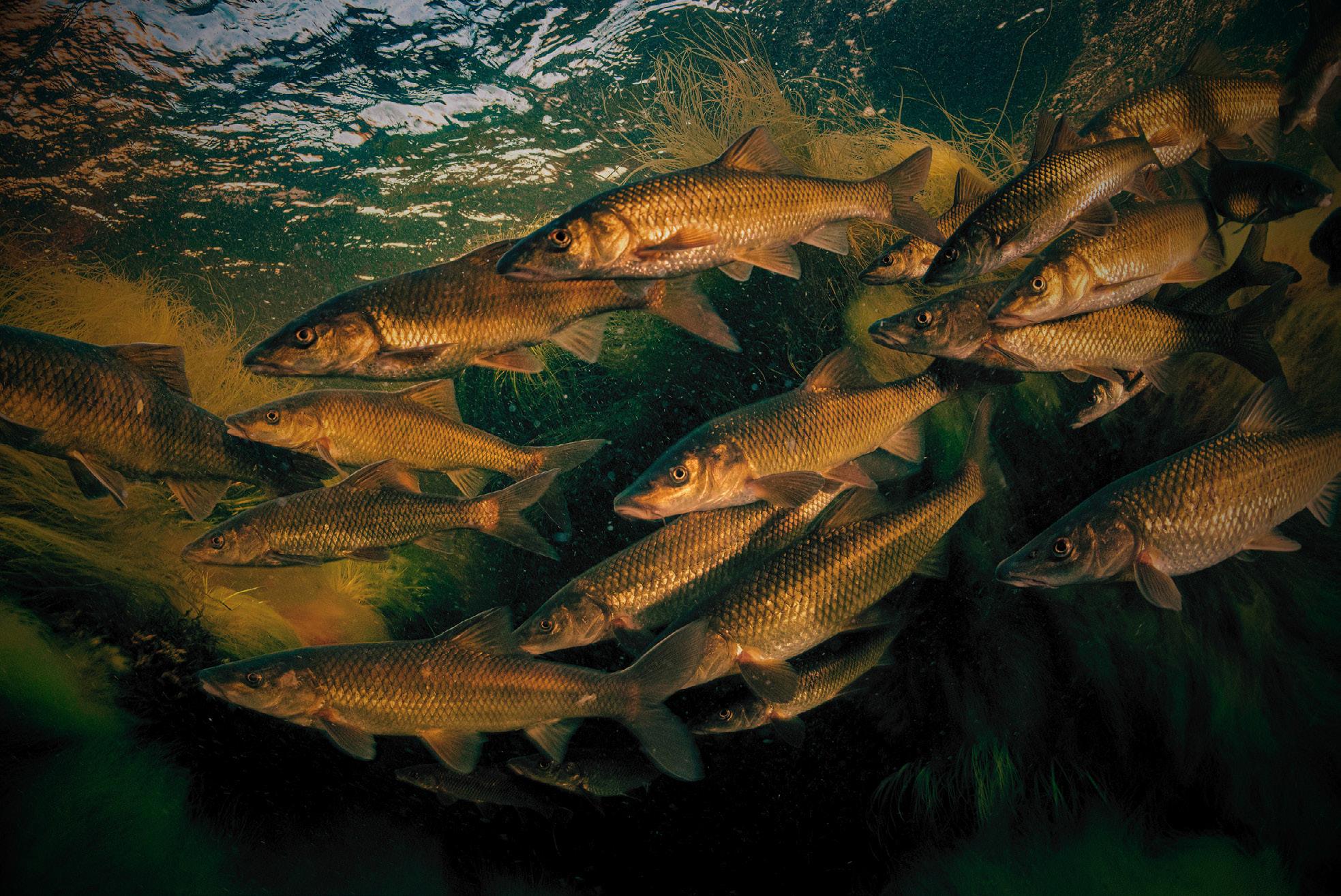
L SH
R e s to r i n g
R i v e r s
s a v i n g
s p e c i e s
C O N N E C T I N G
C O M M U N I T I E S
t b e h i n d t b e h i n d l o c a l f i s h l o c a l f i s h
s e r va t i o n s e r va t i o n w h e r e i t w h e r e i t
m a t t e r s m o s t
m a t t e r s m o s t
c l i c k
SALAD BAR
FINNTRAIL – CAMO SHADOW JACKET
A proper waterproof layer for the days that turn to shite, Finntrail’s Camo Shadow is built from the same durable 4-layer membrane as the rest of Finntrail’s range, rated to 17,000mm waterproofing and 7,000g breathability, with an anatomical elbow cut that actually lets you cast without feeling like you’re fighting weasels in a straitjacket. Internal cuffs seal out water ingress, three side pockets run water-resistant tractor zippers, and there are rubberised elements for clipping gear and small tools. It comes with a two-year warranty on manufacturing defects and is available in Camo Shadow Green and Camo Shadow Black. finntrail.com, wildfly.co.za
“A PROPER WATERPROOF LAYER FOR THE DAYS THAT TURN TO SHITE.”
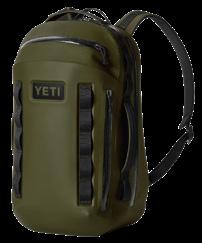
YETI – CAYO 25L BACKPACK
E: fish@upstreamflyfishing.co.za
Did you know, if said fast enough Yeti Cayo sounds a lot like yippee-ki-yay, Bruce Willis’s immortal catch phrase from the Die Hard franchise? And with 25 litres of properly weather-resistant storage built for the commute, the river, and everything in between, you’d be forgiven for acting like Joh McLane. The DryHide shell, RF welded seams and PU coated zippers keep your gear dry in most conditions, the ComfortComb mesh back panel keeps you from overheating, and removable waist and chest straps distribute the load properly rather than just hanging off your shoulders. Quick-access side pockets for water, stretch-woven interior organisation, a hydration reservoir sleeve, and a HitchPoint Grid for clipping on YETI accessories when 25 litres isn’t quite enough.1.6kg empty. Built to last considerably longer than your patience for bad weather. Or Hans Gruber. yeti.com, upstreamflyfishing.co.za
E: fish@upstreamflyfishing.co.za
E: fish@upstreamflyfishing.co.za
RUBY RUTH BAGS – FLY TYING EXTRA LONG TRAVEL BAG
Fly tying evening at your mate’s house? Week-long trip where you may have to tie up some flies on the go? Enter Ruby Ruth’s Extra Long Fly Tying Travel Bag. Featuring an elongated rectangular shape and an angled zipper at the side, allowing the bag to open twice its size, this bag is the solution to transporting all your kak for tying sessions away from home. The main zipper opens to reveal a divider pocket with ample room on either side of it, while 2 x detachable clear window zip pockets and 4 x side zip pockets provide even more extra storage. A machine embroidered stone fly image means you can’t confuse it with your braai tool storage bag. Available in black and khaki, it also comes in a smaller size. rubyruthbags.co.za/fly-tying





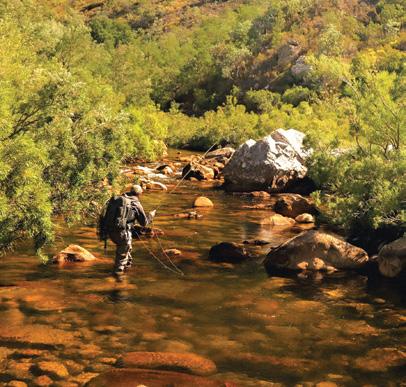
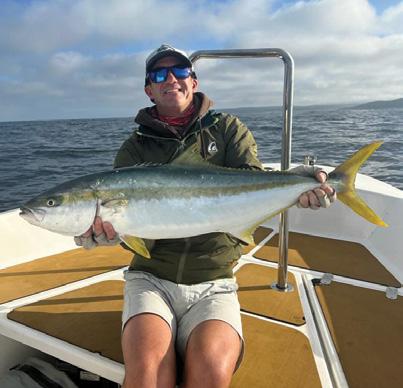
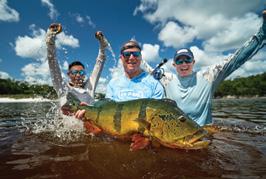
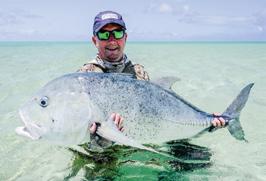



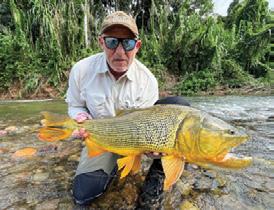


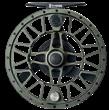
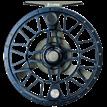
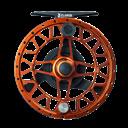
XPLORER – SWITCH REELS
Hark prospective tackle customer, for here is a reel designed specifically with South African water in mind! CNC machined from solid bar stock aluminium with a hard anodised finish, the Switch comes in four colourways drawn from the landscapes that define our local fly fishing: Burnt Orange for the Kalahari, Blue for the estuaries, Forest Green for the Midlands, and Gunsmoke for the Cape mountains. The front quick-release system lets you swap spools between floating, intermediate and sinking lines without any faff, the super large arbor pulls line back fast, and the fully ported spool and cage keep weight down over long sessions. A carbon disc drag sits behind an integrated cover plate to keep grit out, and the reel feet, drag knobs and release buttons can all be customised in store. xplorerflyfishing.co.za
“COMES IN FOUR COLOURWAYS DRAWN FROM THE LANDSCAPES THAT DEFINE OUR LOCAL FLY FISHING.”
FULLING MILL - SPIDER HARE LUG & PARTRIDGE BARBLESS
Spiders (aka soft hackles) are some of the oldest/most traditional flies in existence, yet they appear to be chronically under-fished by most people. Ridiculously versatile, they can be fished dry (if dressed with floatant), in the surface film as an emerger, tied on as a dropper or swung as a wet fly. This classic from Fulling Mill is a great general spider pattern which could be fished to imitate anything from March Browns to caddis to Peter Parker. fullingmill.co.uk, flyfishing.co.za
AIRFLO – SUPERFLO MAX RIDGE 2.0 DOUBLE DOUBLE TAPER
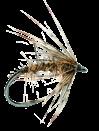
For people who love a belt that is black on one side and brown on the other, comes a reversible dry fly line that covers the full season without swapping spools. One end runs an 8-foot Lichen Green taper with Ultra Supple coating for delicate presentations with midges and smaller flies in cold conditions (think late season April/May on the Cape streams). Flip it, and the 6-foot Tan taper with Standard coating handles larger dries in summer warmth (e.g. Lesotho’s rivers from December to February). Available from 2F to 5F. airflofishing.com
LOOP – TRAK RODS
We love a good rod at a price that doesn’t require a sitdown conversation with your bank and Loop’s new Trak range ticks those boxes. Available from 4 to 9-weight in 9-foot blanks, each model is tuned for its weight class with a mid-fast action, contoured AAA cork handle, robust carbon-insert reel seat and low-friction stripper guides. The 4 and 5-weights are your trout rods, built for delicate
presentation of dries, nymphs and small streamers. The 6 is the all-rounder, with enough backbone to turn over flies at distance on rivers and stillwaters. From the 7 up, things get a tad more serious: yellows (Clans and Largemouth), grunter and leervis territory on the 7 and 8, and the 9 is purposebuilt for larger tigers, kob and other things that eat smaller fish for breakfast. looptackle.com, flyfishing.co.za
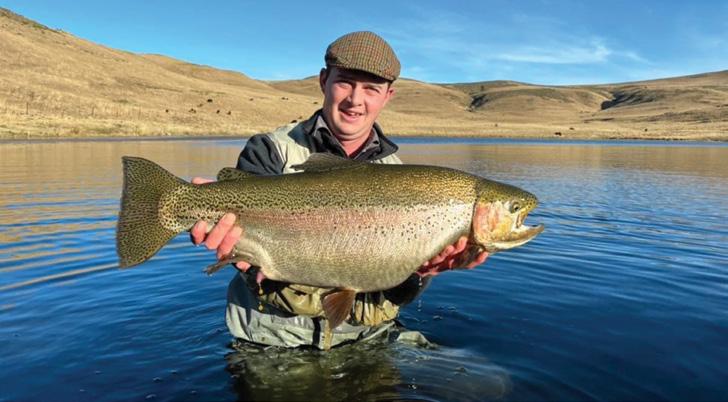
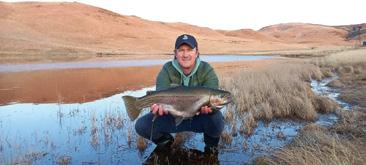
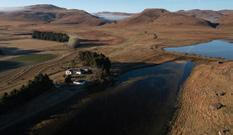
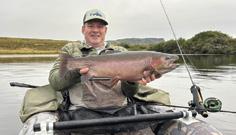
JOLLIF L Y COTTAGE
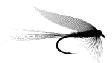
Where 10lb Rainbows Are Just Tuesday
Trophy trout don’t get bigger than this without good reason. Jollifly Cottage sits on Vogel Vlei Farm in the Stormberg Mountains near Dordrecht, Eastern Cape, with access to some of the finest still-water trophy fishing in South Africa. Records nudge past 15lbs, fish stretch beyond 75cm, and the dams are stocked to back up every claim.
Comfortable accommodation, big mountains, and enough birding, hiking and cycling to justify bringing someone who doesn’t fish.
Follow the proof: @jollifly on Instagram & Facebook birchbros@nokwi.co.za
Enquiries & Bookings: Cell/WhatsApp
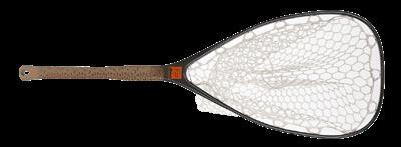
HARDY – 1912 PERFECT REEL
While the name seems like a humblebrag, it’s really just a descriptor of an heirloom’s design legacy. The 1912 Perfect Series draws from over a century of Hardy heritage, pairing iconic design with modern performance mechanisms and the kind of craftsmanship Alnwick, England is still associated with. Available in multiple sizes and line ratings, in both left
FISHPOND – NOMAD MIDDLE FORK NET 2.0
Voila! A net that goes anywhere and catches everything, including approving glances of onlookers when you measure your fish with the built-in ruler markings up to 35 inches. With an extended handle for extra reach, a practical hoop shape that doesn’t snag every branch between you and the water, and a TPU net bag that’s lighter, tougher and stretchier than Spiderjizz™ - from mountain stream to tube or boat, the Nomad Middle Fork 2.0 makes landing fish that much easier. fishpondusa.com, frontierflyfishing.com
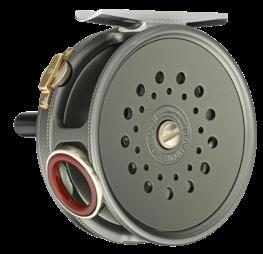
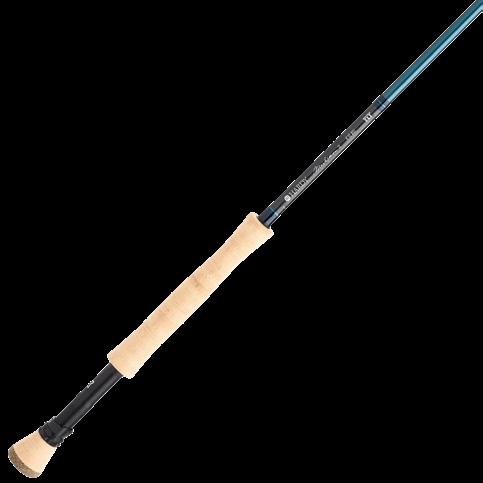
FISHPOND – BACKWATER FLY TYING KIT
Designed for the angler who ties on the road (and has wasted at least half an hour digging through a bag of loose dubbing looking for a hook), Fishpond’s Backwater Fly Tying Kit features two large see-through pouches for keeping materials visible and sorted, a padded pocket with a stretch sleeve that holds your vise and pedestal base without rattling, and a hypalon tool page keeps your scissors and bobbin where you can actually find them. Fits in carry-on or checked luggage without drama (just check the pointy stuff). fishpondusa.com, frontierflyfishing.com



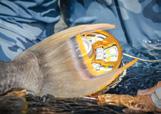


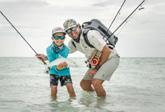
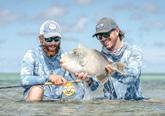
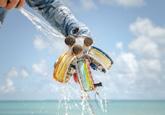
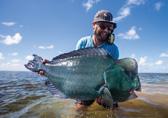




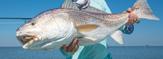
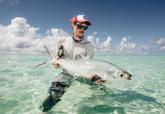
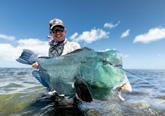


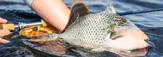
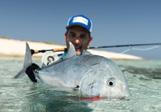
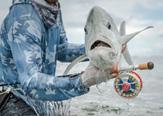



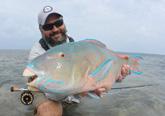
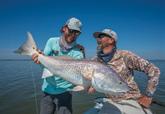
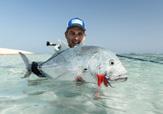
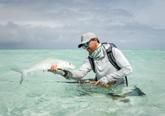
shiltonreels.com | sales@shiltonreels.com
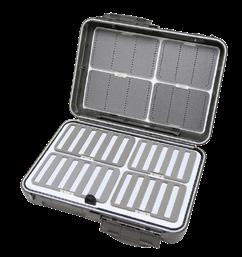
C&F DESIGN – 16-TROUT GUIDE BOAT BOX
The problem with drift boat fishing is that the moment you want to get off and wade, you’re suddenly shuffling flies between boxes like a man who can’t find his car keys. C&F’s solution is a jumbo boat box with interchangeable System Foams that swap out for a System Case or Fly Patch. That means your entire fly selection can move with you in one organised hit rather than a fistful of loose dries and a prayer. cfdesign.jp, frontierflyfishing.com
“YOUR ENTIRE FLY SELECTION CAN MOVE WITH YOU IN ONE ORGANISED HIT.”
FISHTECHY – PROOF BALL 2.0
While we would normally never advocate for putting your balls anywhere near a fish, these nifty gizmos might just quash any future fights over who caught the bigger fish (while ensuring your fish are returned to the water as fast as possible). Simply drop your (Proof) ball next to your catch, take a photo or video on your phone, upload it to the free Fishtechy app, and get accurate length, girth and weight measurements back in seconds without touching the fish any more than necessary. Everything gets logged automatically, you can share size-verified content straight to social media (should you need affirmation from your adoring fans), and there’s even a challenge feature for competing against friends or entering tournaments where nobody can fudge the numbers. Minimal fish handling, maximum bragging rights, zero disputes. fishtechy.com
PARTRIDGE – ATR TIPPET RINGS
Tiny and strong, once you get into the swing of using tippet rings, they become one of those things you wonder how you fished without. Simply attach a tippet ring to the end of your leader and you’ll never shorten it changing tippet again. With a black nickel finish, Japanese-made, high tensile strength, virtually weightless tippet rings from Partridge are ideal for Euro nymphing, and dry/dropper setups targeting trout, yellows and carp. 10 rings per pack on a swivel clip. Available in four sizes from 1.3mm to 3.2mm OD, including a new #0 size for fine work. partridge-of-redditch.co.uk, xplorerflyfishing.co.za
SIMMS – MEN’S ACCESS WADING BOOT
You ever get that feeling that your “allegedly” super grippy wading boot feels a bit slidey, despite the fact that the sole appears to have grip? With their new Access Wading Boot’s Simms set out to address that issue by giving it a dual-compound Vibram outsole. With IdroGrip Flex in the middle and regular IdroGrip on the edges, in theory that means they should grip onto wet rock like FIFA to a brown envelope. Light enough to klap a trail at pace, but also stable enough when you’re standing in the kind of current that makes you reconsider your life choices, these might just be your new favourite boots. simmsfishing.com, frontierflyfishing.com
“GRIP ONTO WET ROCK LIKE FIFA TO A BROWN ENVELOPE.”
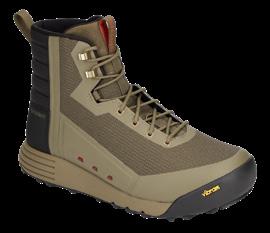
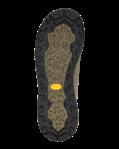
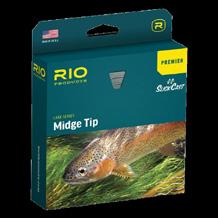
VARIETY MAKES THE DIFFERENCE.
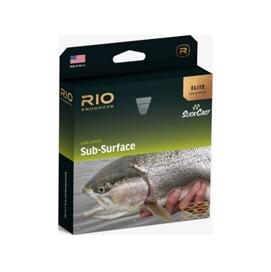

LAKE SERIES
Surface to the bottom. RIO has a lake line for every depth.
The RIO Lake Series isn’t one line trying to do everything. It’s a range of lines, each built for a specific depth and applications,
Sub-Surface, Midge Tip, Fathom, Fathom CleanSweep.
Sub-Surface: Hover & Intermidiate lines for fishing 1 to 3ft deep
Fathom: Full sink lines, multiple sink rates for all depth ranges Fathom CleanSweep : One line to cover a range of depths

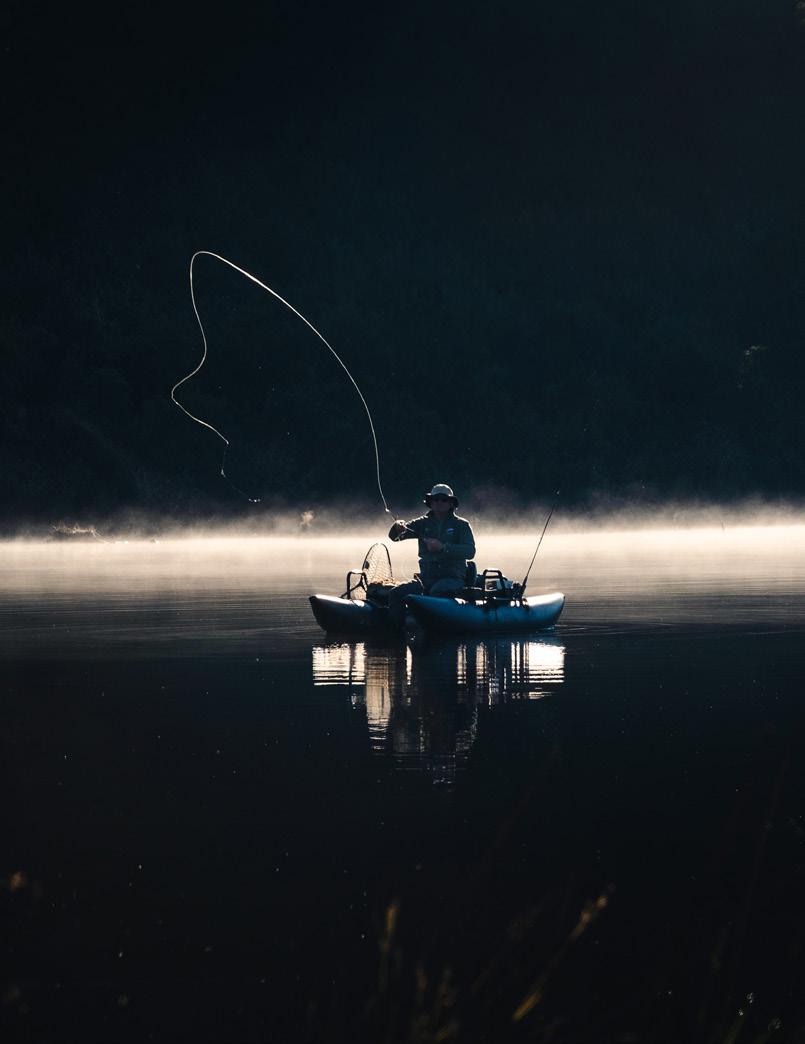
HOWLER BROTHERS – H BAR B TECH LONGSLEEVE
Technical enough to handle the sun, the sweat and whatever weather the river throws at you, without making you look like a dork, this lightweight stretch nylon-poly, vented back yoke, UPF 35, quick-drying, and wrinkle resistant shirt is designed for long days that turn into big nights. There’s a hidden zip pocket at the lower right seam and, perhaps our favourite feature on any fishing garment, a microfibre sunglass cleaner sewn into the hem. Now available in Supernova Stripe – Ash Blue and Supernova Stripe – Leche at Upstream Fly Fishing. howlerbros.com, upstreamflyfishing.co.za
LOOP – STILREN BEANIE
LOOP – DAD CAP
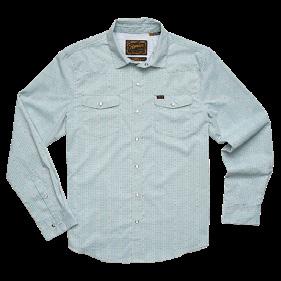
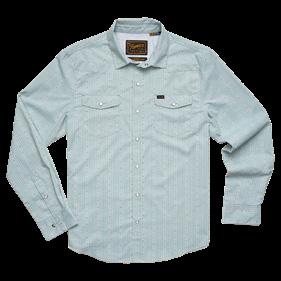
100% merino wool, fold-over cuff, Loop badge on the front. Built by people who grow up in the snow, it keeps your head warm on the cold ones. looptackle.com, flyfishing.co.za
A good-looking fishin’ cap. Hard-wearing, logo on the front, and we wager gets better with age. Wear it until it drips with character. looptackle.com, flyfishing.co.za
SKWALA – 150 THERMO HOODY
Remember that special blankie you had as a kid? The one that went everywhere with you? Well, the 150 Thermo Hoody is the grown up version of that for anglers. Half baselayer, half sunshirt, it’s ridiculously comfortable thanks to the 17.5-micron ultrafine Merino (grown in New Zealand and spun in Germany), which is then blended with just enough nylon for stretch. You get the full Merino package: buttery soft, temperature regulating, moisture wicking, and odour resistant enough to survive a week-long trip without alienating your fishing partners. The scuba hood and 50+ UPF mean it works as a sunshirt on warm days and a proper insulating baselayer under a jacket when it turns cold. In essence, a shirt for most seasons. skwalafishing.com, wildfly.co.za
“IN ESSENCE, A SHIRT FOR MOST SEASONS.”
SKWALA – 300 THERMO FINGERLESS GLOVES
Beloved by the emo/goth crowd as much as they are by anglers in frigid climes, fingerless gloves get an upgrade by Skwala here. Using the same New Zealand Merino, and the same German spinning process as the Thermo Hoody, but in a 300-weight that keeps your hands warm and working in proper cold, they feature enough synthetic blend for stretch and mobility, reinforced palms for rod grip and durability, and Merino’s natural antimicrobial properties so no one can accuse you of having whiffy fingers. With warm hands, if you drop fish it’s all on you. skwalafishing.com, wildfly.co.za
“BELOVED BY THE EMO/GOTH CROWD AS MUCH AS THEY ARE BY ANGLERS.”
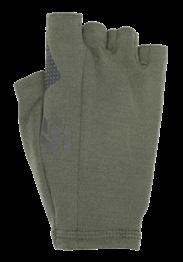
THE HILLBILLY HOPPER
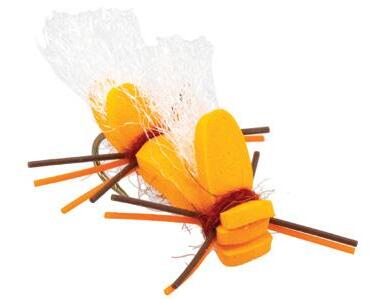
Its like throwing a foam brick at hungry fish. It’s the lamb chop in your fly box, the brandewyn in your coke… hulle eet hom soos ‘n mielie.
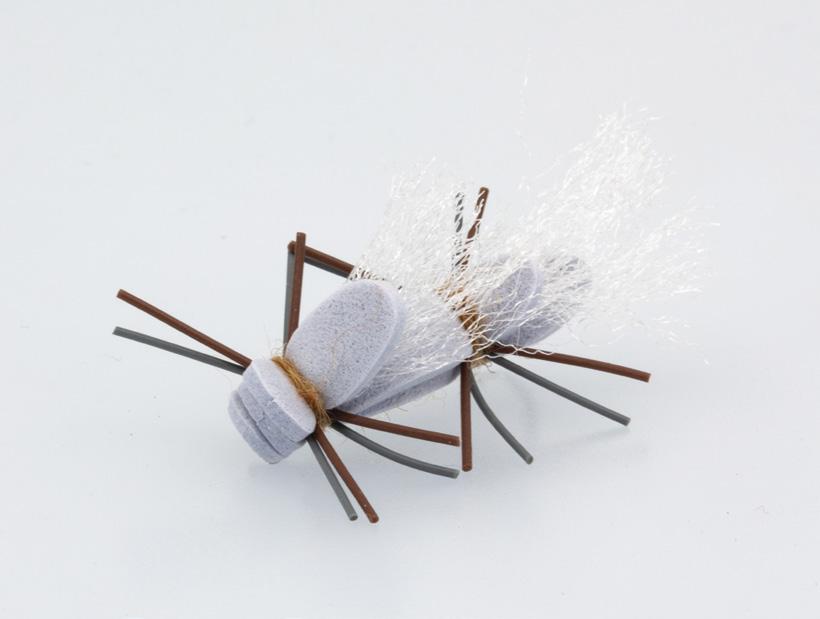




CORTLAND – 444 HOVER SERIES
Not quite floating, not quite sinking, Cortland’s 444 Hover line sits just below the surface film and stays there throughout the retrieve, putting your fly exactly where the fish are feeding without the drag of a full sinker or the surface disturbance of a floater. Neutral density polymer blend, weight forward taper, front welded loop, 105ft, braided nylon multifilament core - it’s available in a 6 and 7-weight from Wildfly. cortlandline.com, wildfly.co.za
“NOT QUITE FLOATING, NOT QUITE SINKING.”
HIGH N DRY – PRODUCT HOLDERS
KINDALE – 15MM BLOB FRITZ
While a ‘blob fritz’ sounds like a dance move you’d pull by doing the splits on the beat drop and then splatting your hairy boep across the dancefloor, this Blob Fritz is a fly. One with a micro-fine core that keeps the body slim and the fibres moving properly in the water. Kindale have made it extra soft, cooked up their own colourways, and squashed two metres into each pack so you can tie a proper stack before the session. Tried, tested, and fish-approved. kindaleflyfishing.co.uk, wildfly.co.za
If you’re already sold on the excellent floating dips and powders of the High N Dry range, you might want to take a gander at these carabiner-clip holders built specifically to hold them. Available in three sizes, they feature durable straps, and keep everything where you can reach it without digging. highndryfishing.com
“KEEP EVERYTHING WHERE YOU CAN REACH IT, WITHOUT DIGGING.”
AIRFLO – SUPERFLO MAX RIDGE 2.0 FLATS UNIVERSAL CLEAR FLOATING
Airflo’s ever-reliable Flats Universal taper, now fully clear. The short front belly loads fast and throws tight loops with any size fly, and the clear construction keeps the line invisible on the water and in the air for presentations that don’t give the game away. Built for the situations where spooky fish on pressured flats have seen everything, and your line is the last variable you want working against you. Available WF6F to WF12F in Clear. airflofishing.com
HARDY – FORTUNA Z
30lbs of stopping power in a fully sealed, hard anodised barstock reel made in Alnwick, England. The multi-pad disc drag system runs unregulated for maximum adjustment range, the power paddle handle gives you something to hold onto when things get serious, and the scratch-proof finish means it can take the knocks that saltwater fishing inevitably delivers. Built for anglers whose entire raison d’être is to journey the planet picking fights with large fish and winning. Available in 8000 (WF10 + 170m of 30lb dacron) and 10000 (WF12 + 300m of 30lb dacron). hardyfishing.com, safarioutdoor.co.za
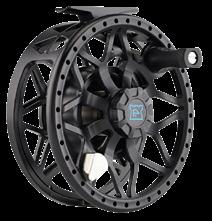
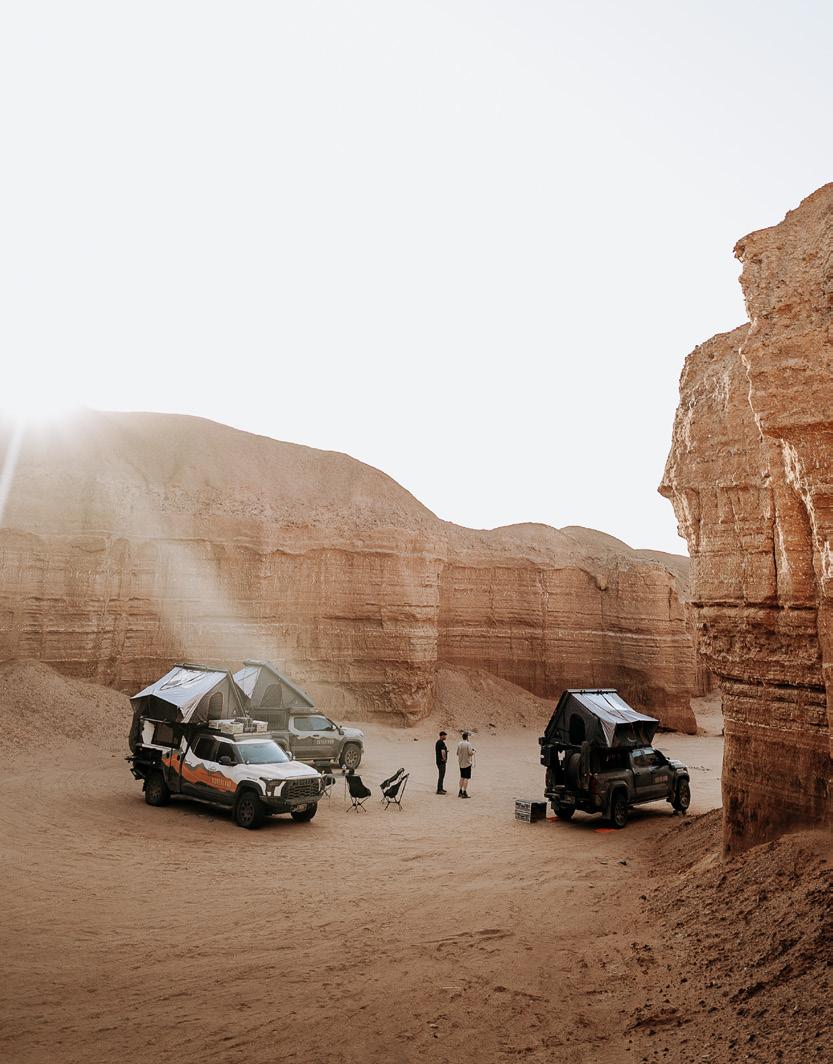
OZZIE BOYTJIE
A SOUTH AFRICAN GRAPHIC DESIGNER WALKED OFF A PLANE IN QUEENSLAND AND WENT FISHING. TWO DECADES LATER, JUSTIN WEBBER RUNS A SIGN SHOP, A FLY SHOP AND AN ART BUSINESS, AND HE STILL DRIVES FOURTEEN HOURS FOR A TROUT FIX. HE ALSO STARTED AND SHUTTERED HIS OWN FLY MAG, IN THE SALT. WE CAUGHT UP WITH THE MAN BEHIND HEADWATERS ART & FLY SHOP.
You’re from Durban originally. How did you end up in Queensland?
Born in Durban, yeah. My old man transferred to Ladysmith when I was about seven, and that’s where fly fishing really started for me. Our mates had trout farms and we used to cut our teeth on those fish. Before that it was mainly spinning - we’d just trawl spinners around catching trout until my mate’s grandfather, who owned the farm, decided we needed to learn to do it properly on fly. That was the bug. We also fished for bass, kurper, carp. When my folks moved to Cape Town, I followed at about eighteen and we were living on Marina da Gama, so there was plenty of saltwater stuff going on too - leervis, springer, even some grunter in Durban Harbour when we went back to visit.
And then you made the jump to Australia. Was that a fishing decision?
One hundred percent. A mate of mine - same guy whose grandfather put me onto fly fishing - had moved to Mackay a few years earlier. He came back to visit at Christmas and showed me photos of GTs, Spanish mackerel, all of it. I was like, ‘I need to go live there. Those are the fish I want to catch.’
I trained as a graphic designer in Cape Town, studied at a little college in Muizenberg, worked at a few places, then went freelance for a couple of years. Basically, I just wanted to surf and fish and earn enough to do that. When my mate started waving those fishing photos around, I went looking for a sponsored visa. Graphic designers were on the Australian skills shortage list at the time and, eventually, I found a guy in Mackay who needed one. It took about seven months to get there from when he said yes. The first night I landed, my mate asked if I wanted to unpack my bags or go fishing. We went fishing.
Straight into it. What were you chasing? Tarpon, actually. The small oxeye tarpon you get up here,
not megalops. They’re rumoured to get up to 1.5 metres in this part of Queensland and guys have caught them over a metre, though I’m still hunting that fish. But within two weeks of arriving, my mate invited me out GT popping. I didn’t know anything about it. The night before, I’d been out on the town and didn’t realise we were being picked up at four in the morning. His dad drove us. He was a bit unhappy with the state I was in. I ran into the tackle shop at the servo, grabbed the biggest Halco rooster poppers I could find, and went out to the reef with an 8000 Saragosa on a twelve-foot surf rod. Caught a few. The biggest was probably ten kilos. That was it - the bug bit hard.
That first year we were on the water almost every weekend. I think we put about 380 hours on my mate’s boat. Eventually, after twelve months I had to find a social life because I hadn’t had one in eight months.
How did you get from print shop owner to magazine editor with In the Salt?
In 2014 I bought the sign business from the same guy who’d sponsored me over. Around the same time I’d really gotten back into fly fishing and I was trying to find information about saltwater fly fishing in Australia. There was basically nothing. A few forums with guys talking about Christmas Island trips, but very little local content. No one was sharing spots or knowledge about what was living in the creeks and on the flats right here.
My logic was: if I start a magazine, people will send me information and I’ll get to read it and figure things out. And honestly, when I was studying graphic design, my lecturer asked what I wanted to do and I wrote down “editor of a fly fishing magazine.” So it was always sitting there in the back of my mind. I figured if there’s no job like that available, I’ll just make it myself. The first issue was mainly articles from me and my mates and a couple of local guys. I got eleven issues out over the years.
“MY OLD MAN TRANSFERRED TO LADYSMITH WHEN I WAS ABOUT SEVEN, AND THAT’S WHERE FLY FISHING REALLY STARTED FOR ME. “
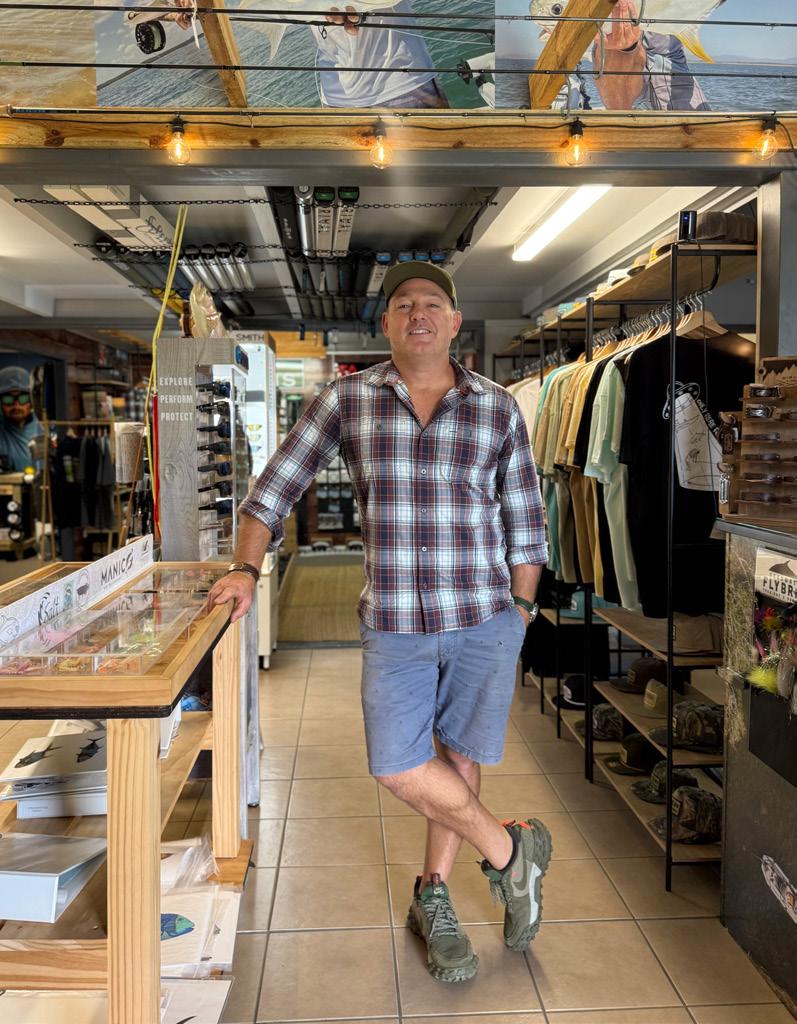
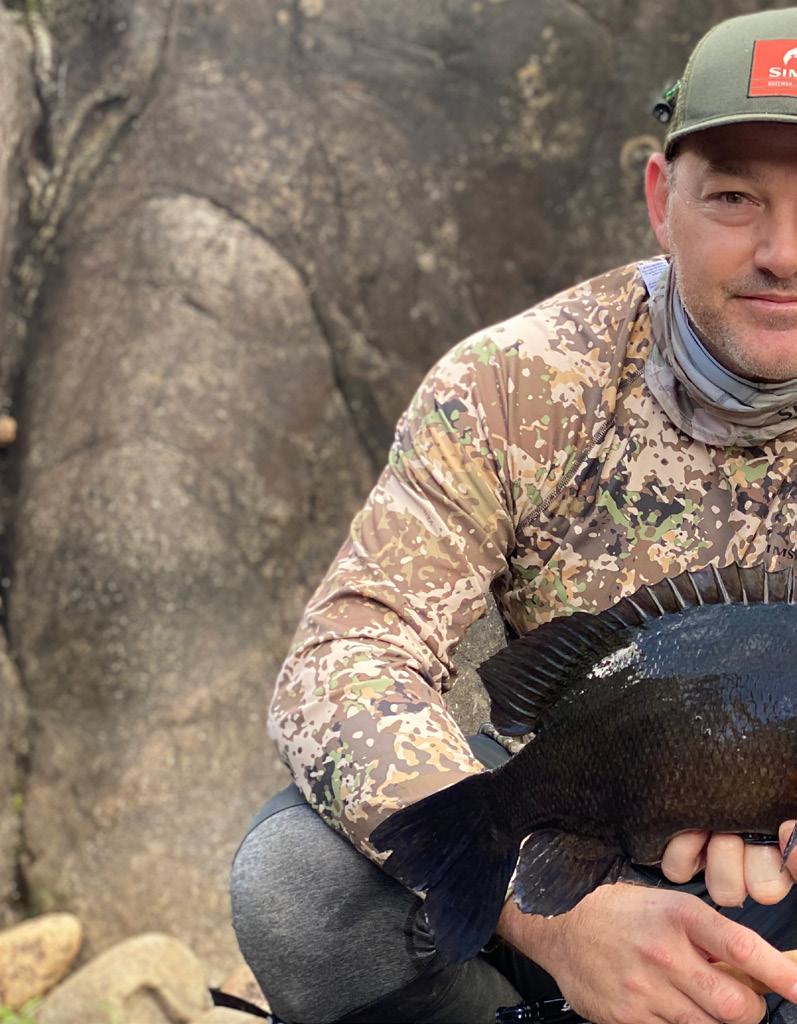
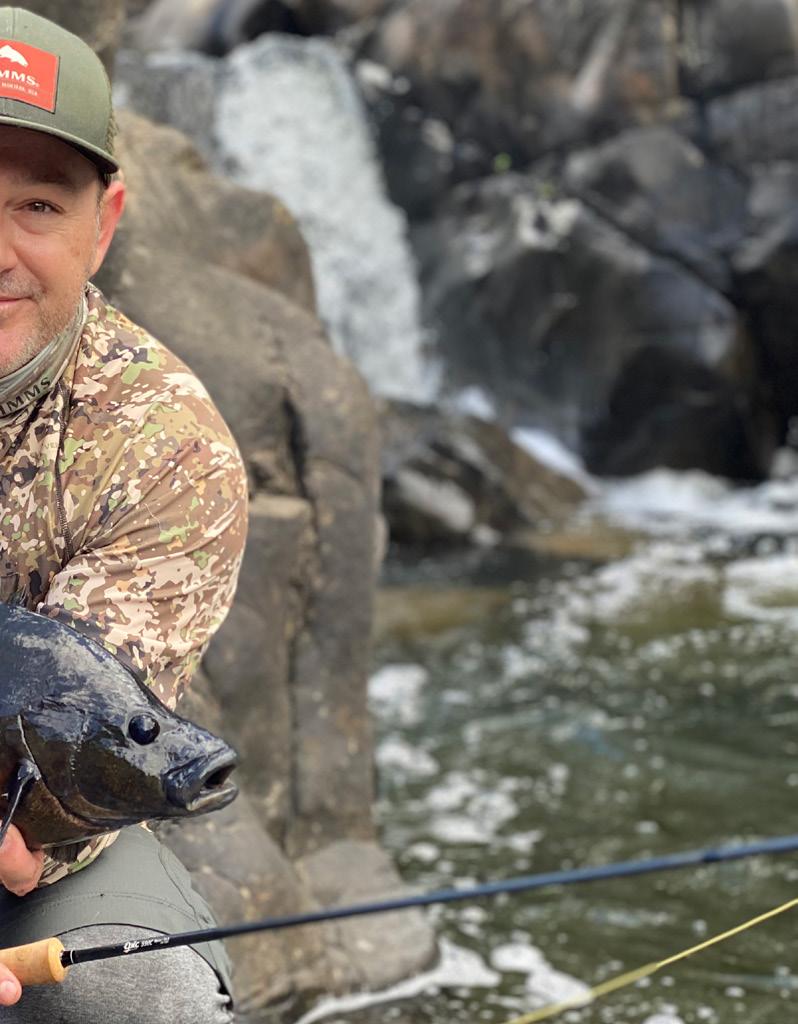
“WE DON’T NEED THE CLUTTER IN OUR MINDS AND IN OUR LIVES. WE NEED PURPOSE AND PEACE. WE NEED EXPERIENCES AND ADVENTURES, SURROUNDED BY GOOD SOLID PEOPLE.”
What made you put it on hold?
Kids and money, mostly. By the end it was costing me anywhere from two to three thousand Aussie dollars per issue to produce and I had no paying advertisers. That was the part I never quite figured out. I’d do trades with brands: they’d send me a product and I’d run their ad. It was good for getting gear but not great for cash flow. The advertising side is a completely different skill-set from designing and editing and I didn’t have it. I look back and think I could have subscribed to every great fly fishing magazine in the world for what I was spending. But it was worth it for what came out of it.
What came out of it?
The relationships. Through the magazine I got to know the team at Manic Tackle and when I eventually had a little space at the sign shop to put some fly gear in, they were the ones who said: if you want to get some stock in, we’ll set you up with an account. They knew me, they trusted me, and that trust came directly from having run the magazine. Without those eleven issues, there’s no Headwaters fly shop. The magazine was the bridge.
Tell us about the art side. Where did Headwaters Art come from?
It started at two in the morning during night feeds. Our first kid came early - he was a month premature and wouldn’t latch, so the feeding routine was intense. I was playing Xbox to stay awake so my wife Kelly could get some sleep. When the second one arrived I thought I should do something more useful with those hours. I’d seen some guys doing digital art online using Procreate on the iPad and I thought, I’ve got an iPad, let me see what happens.I started drawing with my fingers, just messing around. I then got an Apple Pencil and drew a saratoga. One of the girls at the sign shop said we should make it into a stickerwe’re a sticker shop, after all. So we printed a line of them, my mates asked for some, then I drew a barramundi, then a rainbow and a brown trout, posted them on Instagram as Headwaters Art, and people started messaging asking to buy shirts. One thing led to the next: badges, hats, a Shopify website, prints for framing. It outgrew the dining room, moved into the waiting room at the sign shop, kept growing until it took over
most of the floor space. The sign shop now occupies a corner. The fly shop has the rest.
Give us a picture of what’s actually in the water around Mackay.
People don’t realise how stacked it is up here. In the impoundments - what South Africans would call dams; they’re irrigation reservoirs that became fishing spots over time - we have barramundi and sooty grunter. The local club stocks them. Go over the range and Eungella Dam is mainly sooties. In the creeks and estuaries you get barra, GTs, queenfish, mangrove jack, threadfin salmon, blue salmon, sooty grunter in the upper reaches, jungle perch, even black jewfish off the beach - ugly cousin of a kob but they get to 25 or 30 kilos.
Then there’s the flats. We get two species of permit here – the endemic T.anak and the larger Indo-Pacific T.blochii permit. At the right time of year you can see schools of a hundred, two hundred fish. We’ve probably got one of the best permit fisheries in the country, if not one of the best fisheries in the world. We also get bonefish in the Whitsundays - they don’t tail on shallow flats the way they do in the Indian Ocean, but they’re there. I’ve caught a couple myself, both accidentally while fishing for queenies. And milkfish, though I’ve only landed one in the time I’ve lived here. Offshore there’s Spanish mackerel, various smaller mackerel species, longtail tuna, mac tuna, coral trout, emperor, sailfish, and a run of small black marlin down the coast. You can drop a heavy sinking line down around the islands and pull Spanish on fly if you know what you’re doing.
Oh, and oxeye tarpon. Which was the first thing I ever fished for the night I arrived. I’m still after the big ones.
And you’re still chasing trout too, I gather?
Yep, every year when possible. Fourteen hours each way to catch rainbow trout. I know - with everything we have on the doorstep it probably doesn’t make sense. But I grew up on trout farms in Ladysmith and that connection never left. There’s something about standing in a cold river going after small fish that all the GTs and permit in the world don’t quite match.
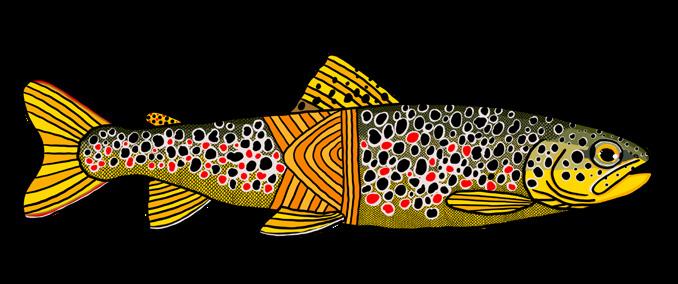
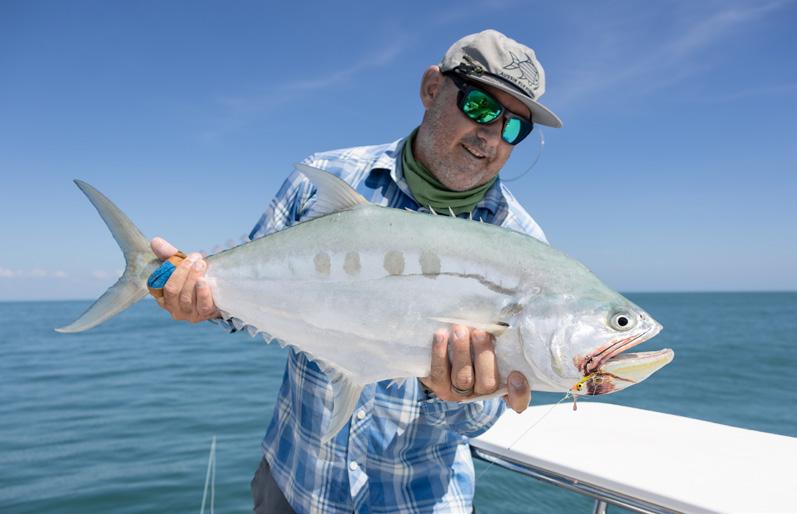
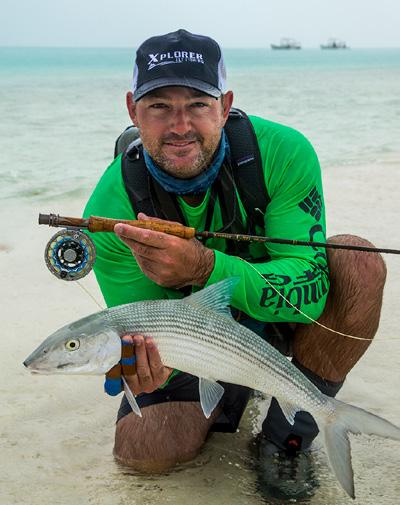
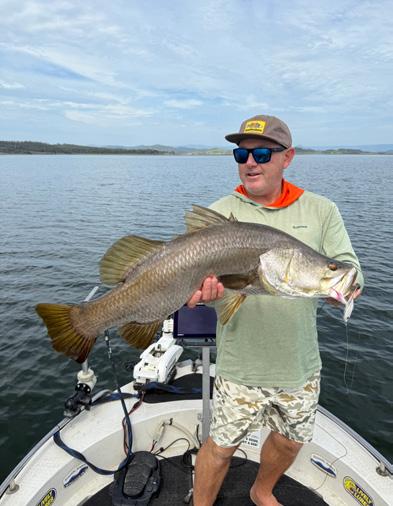
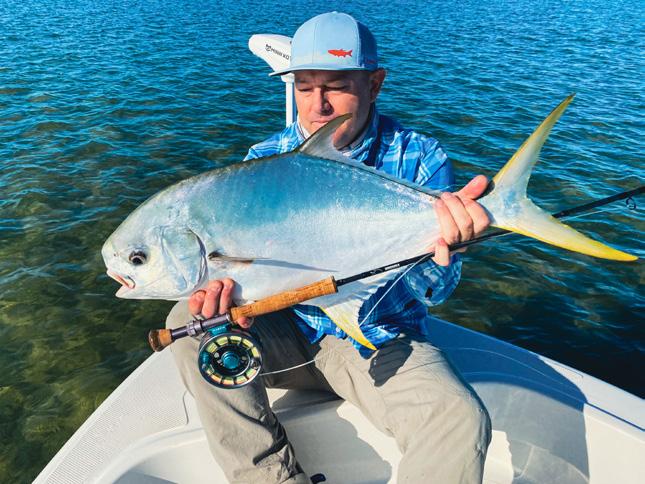
“WE GET TWO SPECIES OF PERMIT HERE – THE ENDEMIC T.ANAK AND THE LARGER INDO-PACIFIC T.BLOCHII PERMIT.”
Is there much of a fly-fishing scene in Mackay?
There was one, but it was cloak and dagger. Nobody wanted to talk about the permits or the flats. A few of us - funnily enough a couple of South African lads were involved - started a Facebook page called Mackay Fly Fishers. We started inviting people, found more guys than we’d expected. Before I ever had the shop or even the magazine, I used to run fly tying nights in the same space the shop is in now. About a dozen guys would show up. Now there are way more people than I ever thought fly fished up here. Fly fishing has become a bit cooler generally. People are seeing more content online and thinking they’ll give it a crack. As far as dedicated fly shops go, there’s no competition in Mackay - we’re it. The closest thing elsewhere on the coast is a materials specialist on the Sunshine Coast, but we’re not really in the same space. The chain tackle shops might have a smattering of fly gear but no one’s giving advice on where to find permit or what to throw at a barra on the flats.
Is guiding something you’re looking at?
Yes. I’ve bought a small inflatable raft from the States for driftboating the upper creek systems after sooties. Two anglers, me in the middle - that style. We have just recently kicked off the season but after some huge rainfalls, over 1000mm in the past 3 months, we’ve only had a few runs but the next few months are looking great! As for saltwater we do have one local guide who works the flats, mostly for permit and goldens, and he’s retiring soon. Once he retires I may get into guiding a bit more. Not just permit on the flats but potentially the full package: mountain creeks, impoundment barra, flats and offshore. We have enough variety here that a travelling angler with a week or two could catch ten different species on fly without leaving the postcode. That story just hasn’t been told properly yet.
Mackay is about 1,100 kilometres north of Brisbane - a short flight or a long drive, and well worth either. Justin’s Headwaters Art and the fly shop are online at headwatersart.com.au If you live in Australia and want to get your hands on a print copy of The Mission, he’s your man.
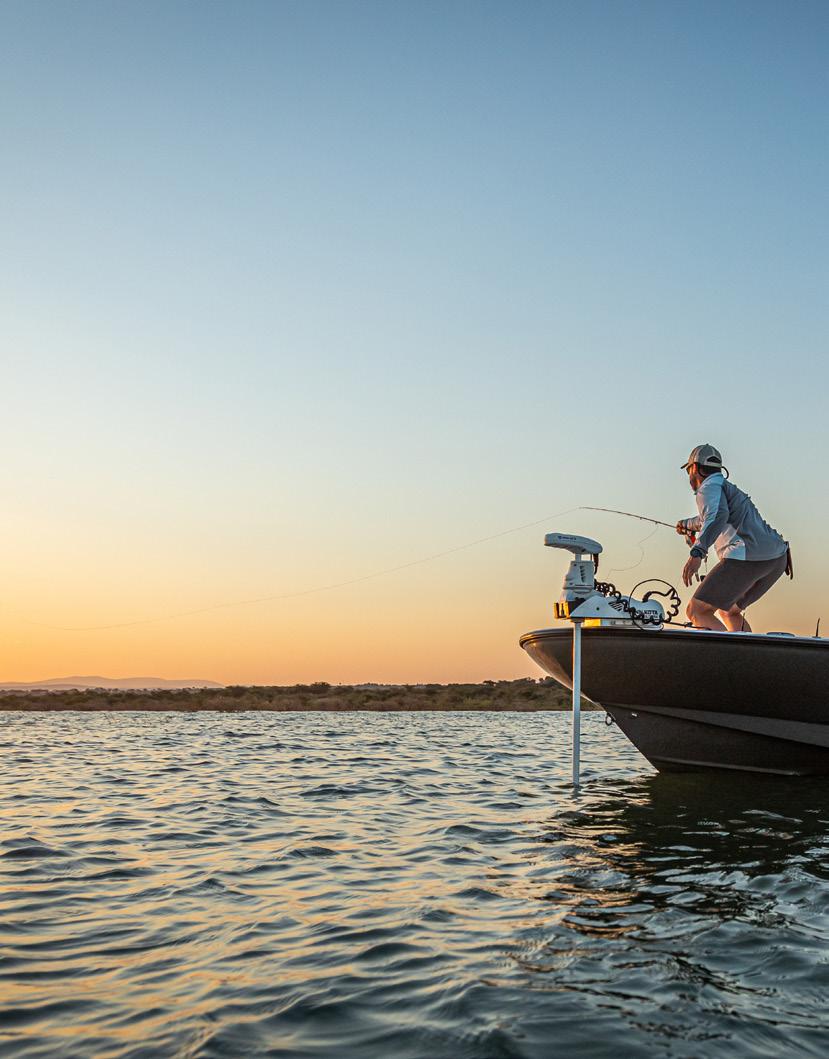
Marine Fish Guide App for

The app is based on linefish research undertaken in South Africa over the last 50 years and includes the most recent information available. The app was compiled by Dr Bruce Mann, Senior Scientist at ORI.
Fish ID



Language
Search for fish names using their common name in English, Afrikaans or by using their scientific name.
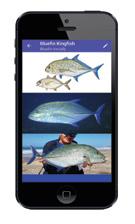

Easily compare similar species. A fish identification app of 249 species designed especially for the South African marine angler.



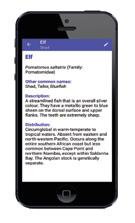
Work out for yourself what fish species you have caught or seen.

Compare

for Southern Africa
Fish Guide
Multiple high quality photos and a drawing for each species.
A comprehensive species profile.
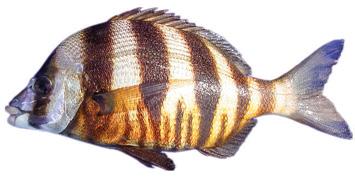
Marine Fish Guide for Southern Africa

A simple map of the species’ distribution in southern African waters.
Length/ Weight Calculator

Fish Groups

A simple line drawing of the general shape of the different fish families.
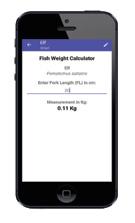



Enter the length and the approximate weight is calculated.

Fishing Regulations
The current linefish regulations for marine recreational anglers in South Africa.
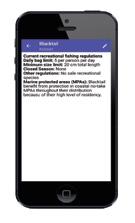

UNDERCURRENTS
RIVER
IN THIS BIOGRAPHICAL SHORT STORY, NEW ZEALAND-BASED AUTHOR ALEX STONE WRITES ABOUT HIS YOUTH AND TIME SPENT FLY FISHING ON THE UMZIMKULU WITH HIS FATHER.
Photos. Alex Stone
The river bank rises steeply from a dusty green fragrant fringe of tchi-tchi bush.
Two figures, a boy of about ten, and a tall, stooped man clamber upwards, to afford themselves a view of a long curved reach of the Umzimkulu, in a mid-afternoon slow patch in an already slow day’s fishing.
“We’ll take a rest,” says my father. “Maybe we’ll see something moving from up here.” But we don’t see anything – no fish moving. So we just sit.
Or rather he just sits, in his patient way. I, ever impatient, opt to change flies - from the non-performing Alexander & Yellow (until then a favourite for obvious reasons), to my new hope, a Walker’s Red Nymph. Of course my philosophical father stays with his ever-reliable Invicta.
We settle with backs against a yard-high vertical bank at the top of the slope. Here we can sit in the clear winter sunlight, yet out of the crisp southerly breeze. With a soft groan of pleasure, my father takes out his pipe, tamps down the bowl with a broad thumb, lights – with difficulty – and puffs, his lips making the smallest popping noises. We are surrounded by the blue haze of Dinglers No. 5 tobacco, which swirls gently in the eddy of the earthen bank behind our heads.
We watch cat’s-paws dance away from us, up against the flow of the river, towards the distant blue wall of Ukahlamba, the Drakensberg mountains. We hear the remaining poplar leaves shiver in that same wind. Their soft rattle is a kind of music. We see the leaves shatter the sharp light reflected off the river’s surface. We breathe the eccentric scent of munyamunyane, a tall plant with tiers of orange flowers. We know with an unspoken clarity, the profound beauty of it all.
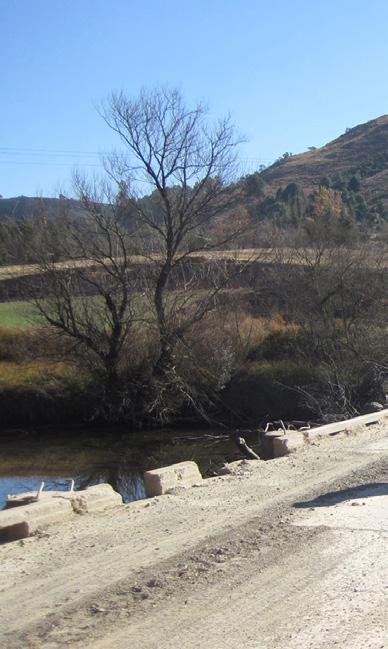
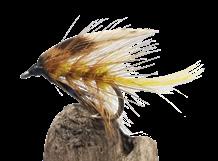
To our right, the vertical lip at the top of the bank deepens into rocky scarp. We’d call it a kranz in these parts. It would be a home to dassies – rock rabbits – and snakes. Between it and us, a stand of thatch grass, back lit by the westering sun, glows, haloed, a yellowless yellow. The river is its own numinous river colours – a blue bluer than blue, a dark darker than dark, a silver no painter could ever describe.
The afternoon enters one of those moments of never – an arrested something, a holding of breath, even the breeze pauses for a time. One of those moments of expectation that are never fulfilled.
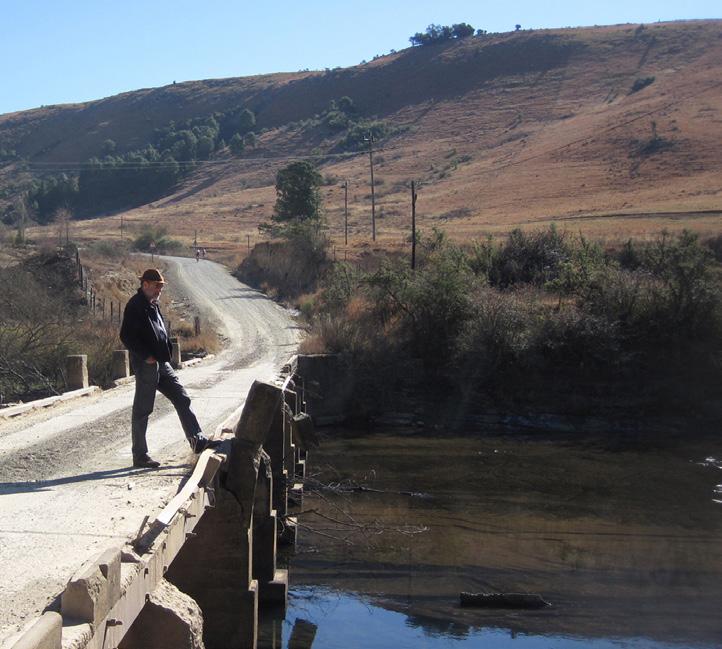
A laughing dove is flying across the V of the river valley, its stiff wing beats seemingly slow-motioned, the whip-whip sound of its wing tips near subliminal. We both watch it dreamily. It makes it halfway across.
What happens next, happens in an instant, perhaps a third of a second; but in that compressed time, all is utter clarity, all is seen and inscribed in memory forever.
We hear a fast-approaching muted roar, too fast for us to react. A female lanner, the biggest and fastest of the falcons, stoops onto the dove. Its feathers are thrumming
“THE PUFF OF SOFT LILAC FEATHERS THAT EXPLODED FROM THE DOVE AT THE MOMENT OF IMPACT ARE NOW FLOATING DOWN, SPECKLING THE RIVER AND THE ROCK, WHERE THE FALCON MAKES ITS MEAL.”
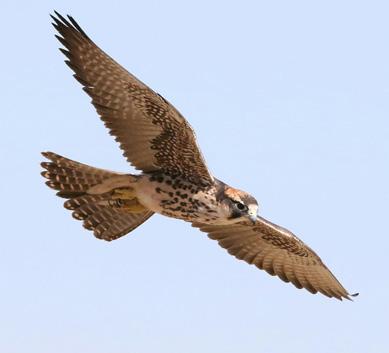
in the extreme wind speed of its descent. Its wings are hooked back like daggers. The raptor clears the lip above our heads by inches, has hit the dove, has pulled up, arced round to the right, and is turning, gliding down to the rock where the lifeless dove will land with a soft thump – all this within a second. Faster than you can write it, read it, imagine it. Our only reaction can be the instantaneous reaction of our eyes. And we feel it. I feel it even now. Perhaps that is why it all remains so clear in my mind.
As if to provide temporal memory of the event, the puff of soft lilac feathers that exploded from the dove at the moment of impact are now floating down, speckling the river and the rock, where the falcon makes its meal. Some feathers drift further, taken by the wind. The dove becomes part of the wind.
The fabric of the afternoon begins to re-knit itself. The breeze resumes. Another dove flies by. A soft wave of sound from the rapids downstream reaches us, borne by the wind. We hear some animal rattling the dry khakibos weeds in the fallow field across the river.
My father has by now taken the pipe from his mouth, but in his habit, not moved it very far, so as to minimise the effort in replacing it. His lips barely have space to move.
But they do: “Hmmpfh!” he says, with the inflection of being impressed in that vowel-less all-purpose word.
“It’s how the cookie crumbles, I suppose…”
There’s a short silence.
And then he comes up with something from a different perspective: “Must be the steepest hill in the sky,” he says.
And he replaces the pipe without further explanation.
“THE RAPTOR CLEARS THE LIP ABOVE OUR HEADS BY INCHES, HAS HIT THE DOVE, HAS PULLED UP, ARCED ROUND TO THE RIGHT, AND IS TURNING, GLIDING DOWN TO THE ROCKWHERE THE LIFELESS DOVE WILL LAND WITH A SOFT THUMP – ALL THIS WITHIN A SECOND.”
Decades later, learning to speak (or at least glimmer some meaning from-) Te Reo Māori, we understand that to introduce yourself properly, you begin by mentioning, in this order, your mountain, your river, your waka. This last is the vessel you most associate with – that which has carried you on your most significant journey. For most Māori people, the waka that is referred to is one of a legendary fleet of voyaging canoes that first made landfall in Aotearoa, and from which the major iwi (or tribal groupings) of contemporary Māori are descended.
This initial list should be followed with a mention of your marae (your communal place of meeting), your papakaianga (the place you are settled, the place you would defend now), and your mana whenua.
Whenua is an interesting word, meaning both placenta and land. Mana is an almost indefinable sense of status, of importance, of moral strength. In this context, mana whenua means the land of your issue, the land that means everything to you.
For urbanised westerners, this can be a bit challenging, a bit disorienting. If you have grown up in the suburbs, what can you call your mountain, your river, or your mana whenua?
Glenfield, the hill above the industrial zone of Wairau road, and the littered, concrete-sided culvert leading a sad trickle to the sea – can you call these your mountain, your river, and still feel good about it?
For me though, there is never doubt. Despite the distances I have travelled, my river is Umzimkulu, the big river, the river remembered above.
My mountain is inSangwane, meaning ‘the little gate’, a prominent hill with a notch at the top that the Umzimkulu winds around. And not far from where we were sitting on the riverbank that day.
And I usually raise a laugh, introducing myself in the proper Māori way in my new papakaianga, by saying my waka is a Boeing 747.
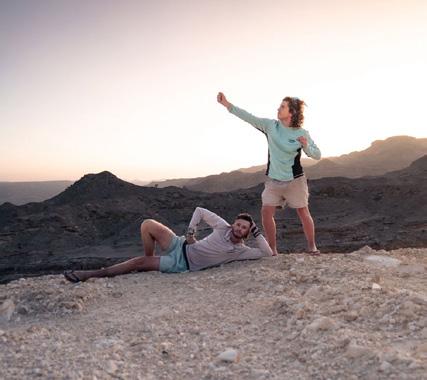
POP QUIZ
REFLECTING POOL OR EGOMANIAC TOOL? ALL THE GEAR NO IDEA OR REVERSE SEAR AND NO FEAR? TAKE OUR RAPID-FIRE QUIZ TO SEE IF WHAT’S LEFT OF YOUR BRAIN IS STILL PICKING UP THE ODD THING.
Blaede Russell
1. What’s a move that our High Fives guide, Graham Hayward, has perfected?
A. The Dutch oven.
B. The Mexican stand-off.
C. The Chinese finger trap.
D. The Irish Goodbye.
E. The Saffer Phuza Thursday.
2. In Maori culture, what is our Undercurrents author, Alex Stone’s, waka?
A. A Boeing 747.
B. The Umzimkulu River.
C. Shakira’s hips.
D. InSangwane.
E. A Fusion 19.
3. While DIYing Oman, Blaede Russell had a philosophical interlude, inspired by which book?
A. The Secret by Rhonda Byrne.
B. Eat, Pray, Love by Elizabeth Gilbert.
C. The Alchemist by Paulo Coelho.
D. Republic by Plato.
E. Salmon Fishing in the Yemen by Paul Torday.
4. What gets you a 10 000 NZD fine in New Zealand?
A. Bringing up the last two Rugby World Cups.
B. Insisting Karoo lamb is better than the local stuff.
C. Asking what it’s like being, ‘basically like Australians...’
D. Bringing felt-soled wading boots into the country.
5. What did Rob Kyle say to his brother Ewan after Rob hooked a 132cm GT that set off for the horizon?
A. What we do in life echoes in eternity.
B. Jislaaaaaaikit boet, hier kom groot kak.
C. Been nice knowing you.
D. This can’t end well.
E. This thing pulls like a wank sock.
6. Other than fly fishing, what sport did our editor inadvertently engage in at Sterkfontein Dam?
A. Ribbon dance.
B. Ice skating.
C. Breakdancing.
D. Curling.
E. Competitive eating.
Photo.