
For over 80 years, we have been at the forefront of innovation. Sharpened by experience. Pushing the boundaries of material science to make our lines stronger and more durable. Then testing in the most demanding environments with the world’s best anglers. Those who demand the best choose Scientific Anglers.
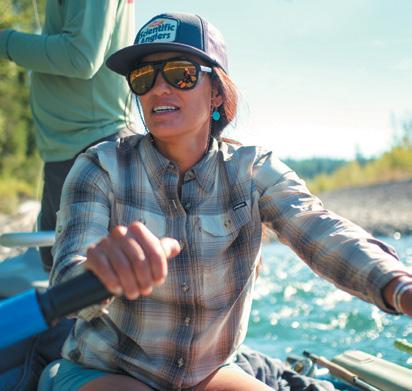




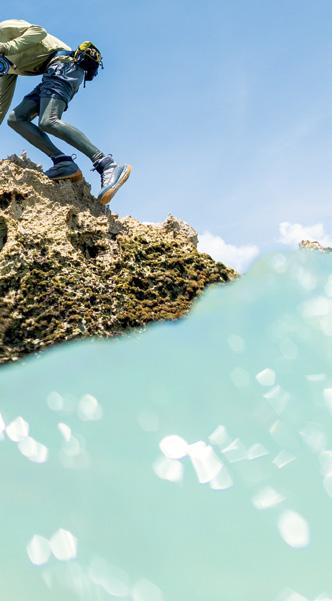
On saltwater flats, sand and razor-sharp coral shreds boots. Rivers batter them with constant impacts and relentless stress. We built the River Salt Wading Boots for anglers who demand absolute performance and reliability—in any water, under any conditions.



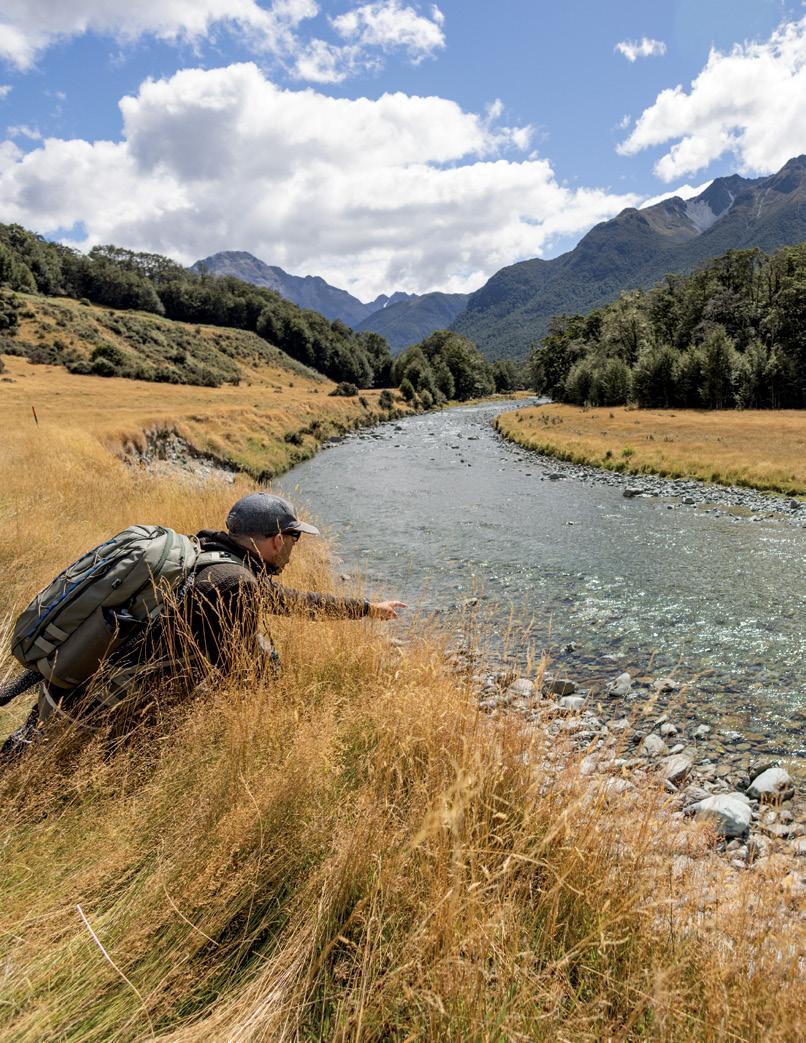










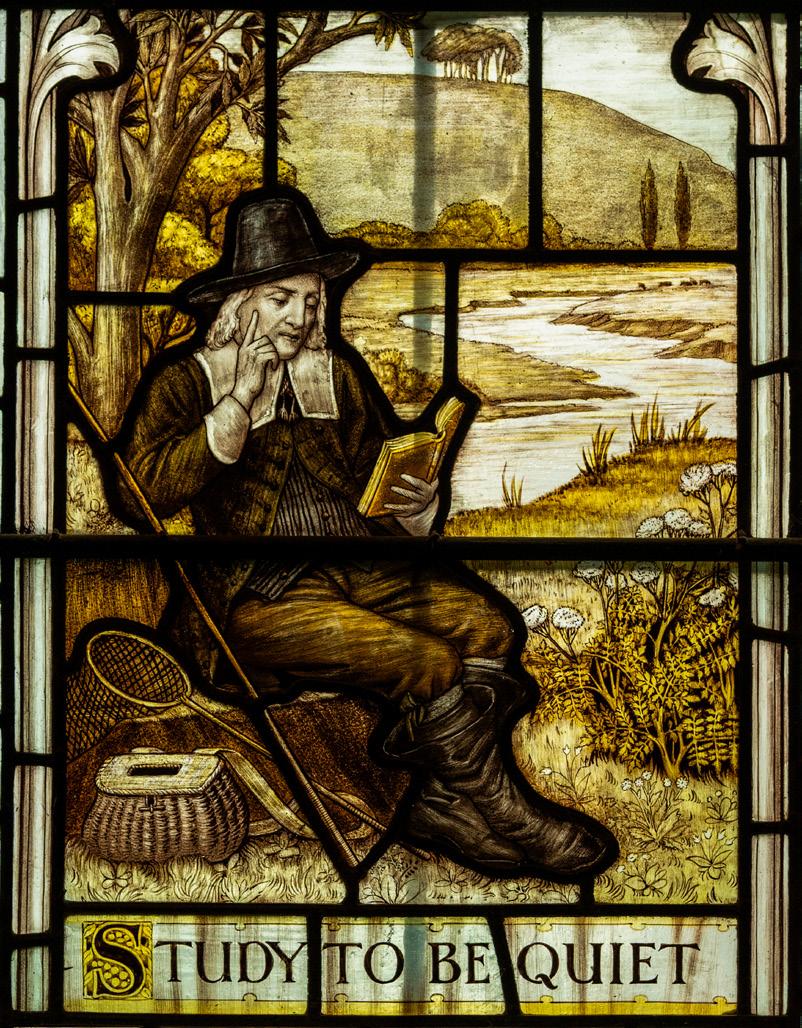
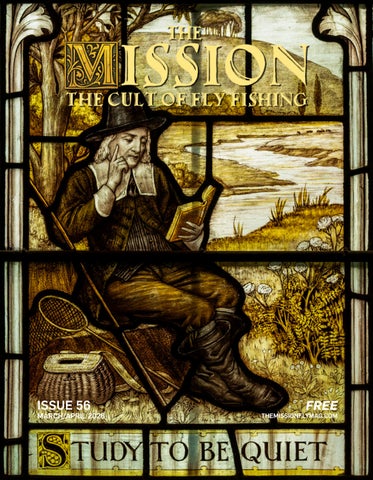
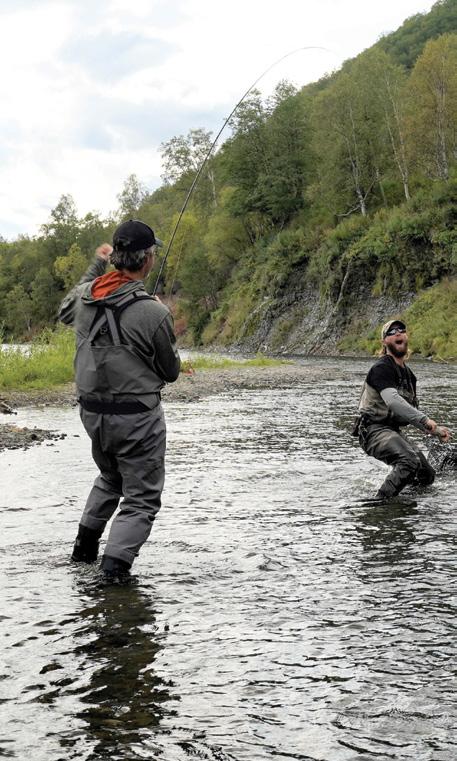
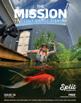
Cover: “Study to be quiet,” pearls of wisdom from fishing’s OG Izaak Walton on how things should be done. Photo
30. UNDERCURRENTS: PISCATOR NON SOLUM PISCATOR Rushing to a dinner date through London’s historic streets, Håkan Stenlund can’t help but take in the centuries of fly fishing literature and lore the British capital is steeped in.
36. KZN’S FINEST
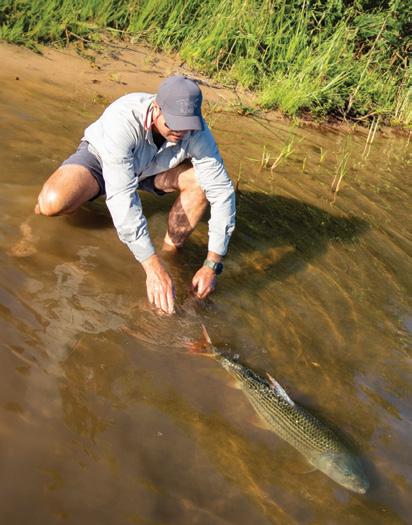
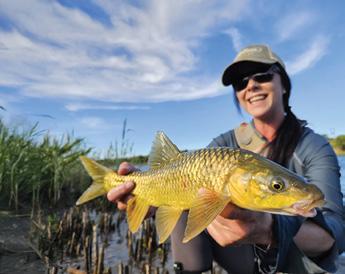
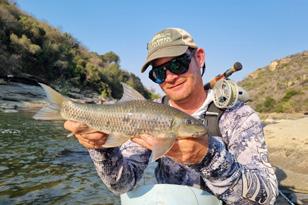
We cat-herd fish whisperer Rob Kyle into the pages of this issue to answer questions about one of our lesser-known (yet highly rated by those in the know) yellowfish species, Natal Scalies (Labeobarbus natalensis)
44. TWO SOUTH AFRICANS, A VAN, AND A PLAN
Amid a backdrop of a fishery in peril and traditions at stake, two South African fishing buddies, Luke Bax and Stu Tappe, re-unite for a DIY Atlantic salmon road trip around Norway.
52. IF AT FIRST YOU DON’T SUCCEED... An adventure doesn’t always have to go according to plan as Andrew Nightingale and Joe Sangiovanni were reminded of (again) while hunting for Nile yellows in Murchison Falls National Park, Uganda.
76. RIVER LEGS
Whether you classify it as a sport or a hobby, if you want to continue fly fishing into old age, you need to train for it. We chat to fly fishing fitness expert Lindsay Kocka to find out where to focus first.
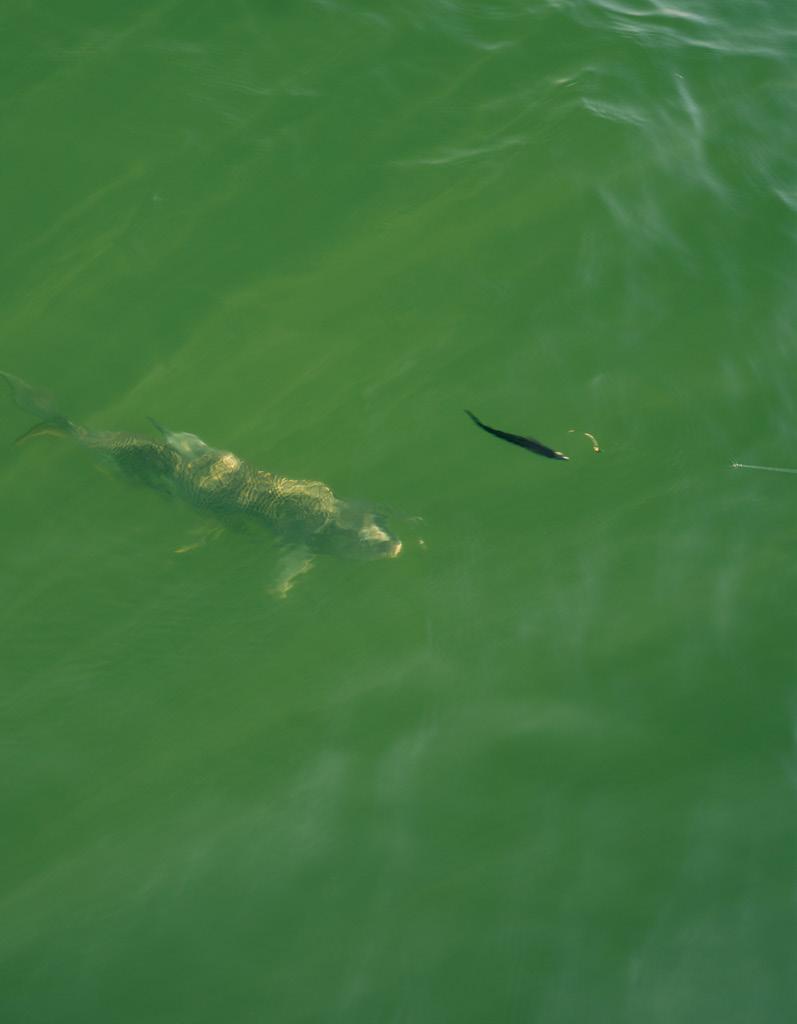
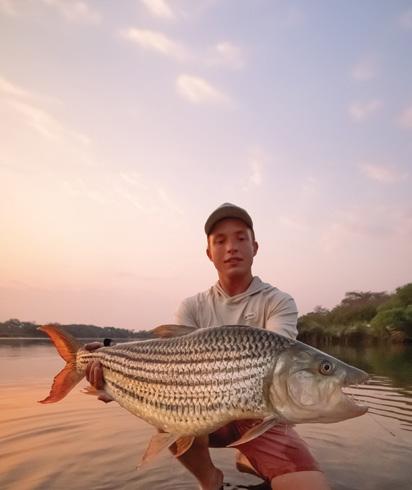
“What the anvil? what dread grasp. Dare its deadly terrors clasp?” In his 1794 poem, The Tyger (of” tyger tyger, burning bright” fame), it’s almost as though William Blake had experienced fishing for tigerfish before. Photo Stu Harley, at Nyerere Dam in Tanzania (pg 12)
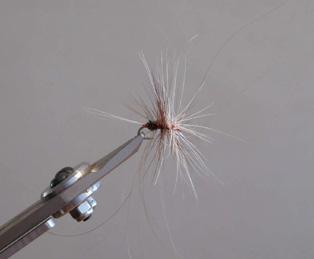
Shortly after going to print with our last issue, news came through that Tony Biggs had passed away. One of the big names in South African fly fishing, often mentioned in the same breath as other luminaries of the same era like Ed Herbst and the late Tom Sutcliffe, Tony is best known for his iconic dry fly, the RAB. Standing for Red-Arsed Bastard (so named by Tony’s fishing companion Mark Mackereth) it was also called the “Rough and Buoyant” by the then Cape Piscatorial Society (CPS) AC Harrison to avoid offending sensitive club members. An ultra-buoyant, high-riding dry made with squirrel hair, and (in Tony’s tying) extralong white and brown hackles, like all great flies, the RAB has been co-opted, re-invented and pimped by many tyers over the years (e.g. the ultra-popular Para-RAB), to the point where store-bought RABs only bear a passing resemblance to the original Biggsian models.
Every now and then local fly tying guru and thespian Gordon van der Spuy will hit me with one of his podcastlength voice notes, covering about 15 different subjects plus a few sidebar brainfarts. One of the repeat topics over the years has been Tony’s way of tying a RAB. TLDR - Tony’s RABs were big and bushy, huge in comparison to modern dry flies. None of this refined “kak”, Gordie would say. Or, as Leonard Flemming put it, “Anyone who has ever held an original Tony Biggs RAB in hand will tell you that it looks a bit like a secretary bird that’s been knocked repeatedly by a township taxi.”
Whether you take an originalist approach or adopt the newer versions, one thing is undeniable, RABs work. Unless there’s an obvious hatch that screams otherwise, it’s the first fly I tie on on the Cape streams, and often lands up being the only fly I use all day. It’s also caught fish for me in rivers and lakes from Argentina, to the USA, France, and Australia. Take a dandelion and blow its seeds off into the air and the gossamer-light landing of its parachute apparatus (called a pappus) is pretty much identical to the way a RAB (and especially a Para-RAB) lands on the water. It probably mainly imitates a mayfly, but to a rainbow trout with limited time to think things over in the faster water of the Cape streams, it could be anything, a cranefly, a rain spider, perhaps a small dragonfly. In short, something to smash.
I didn’t know Tony. We only met a couple of times, once at a Cape Piscatorial Society function, and again at Tom Sutcliffe’s funeral. Even then the man was tall, still had good hair for a ballie and wore a signature brown leather jacket, like he could be a retired pilot or perhaps a stunt double stepping off a MacGyver set in the 80s. I really wanted to do a profile on him in The Mission, but he told me apologetically that he was not allowed to (due to pressure put on him by another magazine that likes to claim ownership of people). It was a pity as I would have loved to hear his stories.
Regardless, I have always thought and will always think about Tony when I fish a RAB or its variants. Or any bushy dry fly for that matter. Or when I see a squirrel.
Whether there really is a heaven of some sort (in which case I hope Tony has the pick of beats), or if we’re all just going to become star dust drifting downstream through the depths of the universe, we would all be so lucky to bring joy to other people’s lives like Tony did, through the simple construction of feathers and fur tied in a specific way on a hook.
Thank you Tony. Drift in peace.
For a wealth of articles on the RAB and many other subjects, check out the Piscator archives compiled by Ed Herbst on the CPS website (piscator.co.za)
“ANYONE











EDITOR
Tudor Caradoc-Davies
ART DIRECTOR
Brendan Body
EDITOR AT LARGE
Conrad Botes
CONTENT COORDINATOR
CONTACT THE MISSION
The Mission Fly Fishing Magazine for Soutie Press (Pty) Ltd 25 Firth Road, Rondebosch, 7700, Cape Town, South Africa info@themissionflymag.com www.themissionflymag.com
Matt Kennedy
COPY EDITOR
Gillian Caradoc-Davies
MANAGING DIRECTOR
Ingrid Sinclair
ADVERTISING SALES tudor@themissionflymag.com
CONTRIBUTORS #56
Johann Rademeyer, Rob Kyle, Matt Harris, Luke Bax, Andrew Nightingale, Håkan Stenlund, Ross Kiggen, Lindsay Kocka.
PHOTOGRAPHERS #56
Hano Scholtz, Johann Rademeyer, Mavungana Flyfishing, Rob Kyle, Matt Harris, Luke Bax, Stu Tappe, Nic Schwerdtfeger, Andrew Nightingale, Håkan Stenlund, Hano Scholtz, Lindsay Kocka
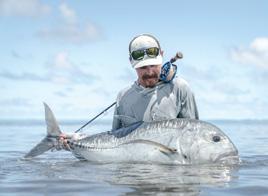
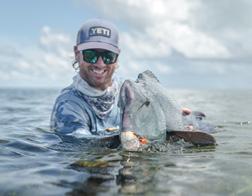
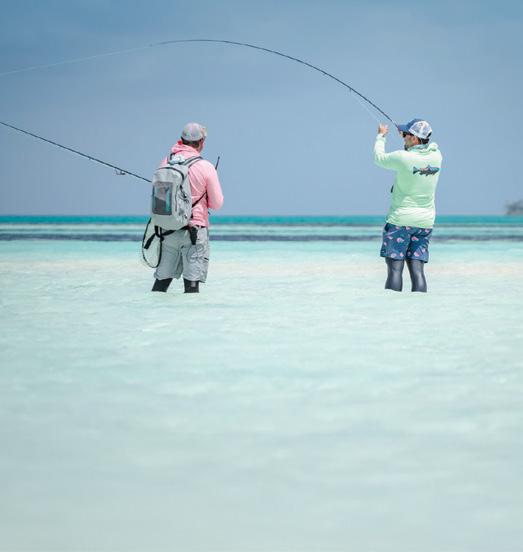
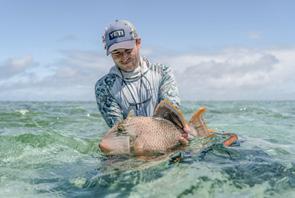
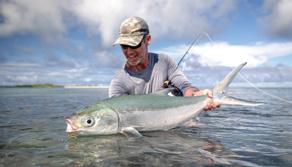

A TANZANIAN DAM THAT MAKES YOU GO DAYUUUM, T-SHIRT WARS, ECHOES FROM FLIP, RAUFFFF GATHERS STEAM, STU’S GOT CRABS, DRE’S GOES BUCKNUTS - PLUS SUNSET BEATS ON THE BEACH.
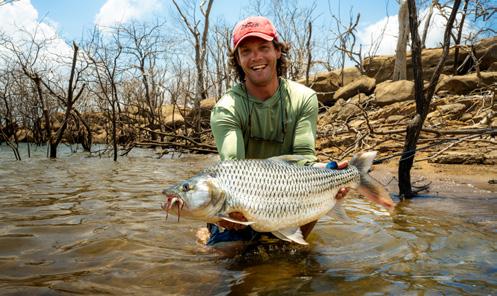
Our misgivings about the long-term effects of hydropower schemes aside, Julius Nyerere Hydropower Station, aka Stiegler’s Gorge Dam, aka Nyerere Dam which officially opened in 2025, is arguably the most exciting “new” fishery Africa has seen in years. For starters, it dams the Rufiji River, home to the much sought-after Tanzanian tigerfish ( Hydrocynus tanzaniae ), which grow to great sizes. It’s also huge - the fourth largest dam in Africa and the ninth largest dam in the world.
More importantly, because it is located in the middle of the famous and massive Nyerere National Park (formerly the Selous Game Reserve), Nyerere Dam is the first freshwater reservoir in Africa that is completely surrounded by a national park. Literally, there are no villages, towns or settlements on any part of
the lake shore, which means it will be protected and not netted to hell and back.
From the early reports, photos and videos, the fishing is already excellent and will only get better. According to Stu Harley of Firetail Fly, who is working with African adventure fly fishing expert Ed Ghaui of Nyerere Fishing (who was offgrid and unavailable for comment), “It’s the first time that Tanzanian tigerfish have had access to a big body of water so I think the ceiling of what the species is capable of growing to, has just shifted. In all the rivers in Tanzania, the size cap is 29lb, but now that these fish have access to this body of water, I think we could see a 30% increase in size for Tanzanian tigerfish if what happened in Kariba with Hydrocynus vittatus is anything to go by.” nyererefishing.com
Before we lost legendary fly fisherman and outdoorsman Flip Pallot midway through last year, he had been working on a new rod collaboration with Tim Rajeff of Echo Fly Fishing. The result is the Overcast, a rod built for maximum line speed in saltwater conditions. Designed to answer Flip’s own rhetorical question to Tim, “Who wouldn’t want more line speed?” the Overcast rods are made to overcome the eternal challenges of saltwater fly fishing - dealing with heavy flies and making quick accurate casts, at distance often through heavy wind. Together, Tim and Flip established that faster line speed begins with a longer lever, which is why Overcast rods measure in at 9’3”. Available from 6–10-weight, we can’t wait to get our hands on one to test them. echoflyfishing.com
That’s right, your resident fly fishing degenerates at The Mission are throwing Africa’s firstever fly fishing film festival in August 2026. Think gritty, think wild, think everything you love about this continent’s waters distilled into one glorious celebration of African destinations, species and the characters who chase them. We want bold filmmakers, fresh blood and films with genuine soul - plus a healthy sense of humour and zero tolerance for boring content. Got a film project under 12 minutes brewing? Pitch it to us at info@themissionflymag.com
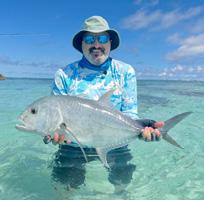
If you ever find yourself at the bar at Alphonse or Cosmoledo in the Outer Islands of the Seychelles and hear some outstanding tunes playing in the background, there’s a very good chance it’s a set from DJ Veridium (aka Jerri Mperdempes). A stalwart in the Cape Town deep house, progressive house and techno scene, Veridium is often found at Afrika Burn conducting matters on The SPIRIT Train. A few years back he was fishing Alphonse and having a

whale of a time, except for some less than stellar music coming off the speakers around sundowner time. He passed the guides and barmen a memory stick and the rest is history. This set is perfect for everything from contemplating your place in the universe as you sit on a beach post-fishing watching the sun go down, to squeaking takkie with your sprogs, fly tying concentration vibes or road tripping on your next mission. Listen at themissionflymag.com

TO THE MISSION & SCORE WITH SCIENTIFICFLY & GNARLY HEADZ
The Mission is free both in print and digital formats, however, if neither of those options work for you (there’s no stockist near you; you live outside of South Africa; or you just really want to support us – thanks!), you can subscribe and have the print magazine sent directly to you. As an extra bonus, with each new issue you will receive a premium fly (e.g. bass flies, tigerfish flies or saltwater flies) from ScientificFly & GnarlyHeadz.
Annual subscription
Receive 6 issues of The Mission Fly Mag in print
• South Africa only: R980 per year for 6 issues, couriered to your door with no delays
• Outside of South Africa: R3 900 per year
Find out more at themissionflymag.com




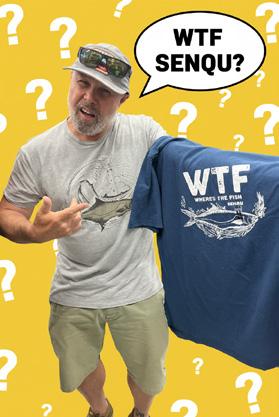
Larger brands ripping off smaller brands is nothing new in the South African retail scene (hello Woolworths), but there has not been too much of it in the fly fishing world that we know of. Until now where we have a blatant example where Senqu - a company named after a river in Lesotho which started in the ‘90s as a fly fishingadjacent clothing brand and segued into a more mainstream lifestyle marque with stores countrywidehas brought out a T-shirt called WTF (Where’s the fish) that appears to be a direct rip off of a design by small Garden Route apparel brand Fly Revolution. When called out on it by Fly Revolution’s Kyle Ovens, Senqu’s team did not exactly deny that their designer cribbed from Fly Revolution’s ‘The Duke’ leervis sketch, but pointed out that technically they have done nothing illegal because they changed a few things in the overall design. Namely, they used their own words and dropped the lighthouse and the
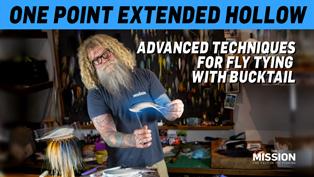
Although Andre “Dre” van Wyk has honed various techniques that make his tying of a Hollow Fleye more convincing and effective, the key factor in his new method – is having only one tie-point of bucktail on the mono-extension tail. In an hour-long masterclass of bucktail fly tying, Dre explains both skills and techniques for working with bucktail as a fly tying material. From advice on batch-tying, proportions in bucktail Hollow Fleyes and blending bucktail to scissor types, thread tension and fly shape, the immense value flowing from our Poodle-licious amigo’s melon is certain to upgrade your skills. Grab your popcorn, fill your tumbler, set up your vice and watch the full + 1 hour video at themissionflymag.com
wave but kept the exact fish, fly, and the artistic splooshes of water.
Kyle says, “Time and thought goes into creating our Fly Revolution designs. We worked closely with SA artist Jacques Coetzer to craft something we’re proud of, that resonates with the fly-fishing community. Seeing our design used by a fellow SA company hit a nerve. Where’s the UBUNTU? C’mon Senqu, do better.”
You have to wonder how Senqu would feel if someone ripped off their own original bangers from their “Signature T-shirt” line. For example, there’s the rib-tickler T featuring a jumping bass with the line, “Mine is so big I have to use both hands”, the “Men have feelings too. Sometimes we feel thirsty” top drawer chortler and the guffaw-inducing graphic print, “Don’t be lelik.”
Indeed Senqu. WTF? Don’t be lelik
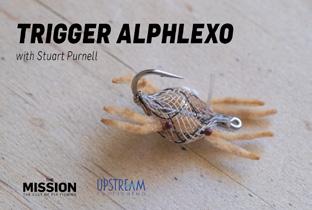
In the latest of our Fly Shop Friday videos where we visit the signature fly tyers at South African fly shops, Stuart Purnell of Upstream Flyfishing takes us through his approach to tying Alphlexo crabs. While they will catch anything from bonefish to permit, Stu’s variation is particularly popular with triggerfish. Watch the full step-by-step video on our YouTube channel. youtube.com/@TheMissionFlyFishingMagazine
Dr y is for flies.
When you are waist-deep in a river, you learn a thing or two about what truly matters. Gear that lasts. Moments that count. Stories that live on.
Stay as long as you like.
A CLUTCH OF WORTHWHILE READS INCLUDING A DROOL-WORTHY RECIPE/COFFEE TABLE BOOK AND A FURTHER THREE BY (OR ABOUT) LITERARY LEGENDS. THERE’S ALSO A FLASK YOU’LL BE ABLE TO DRINK FROM A SEWER WITH.
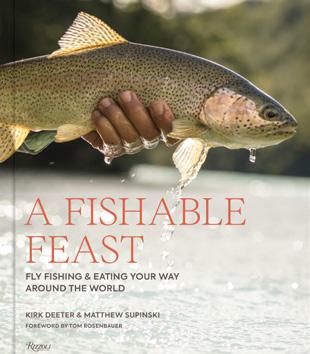
From time to time someone asks (or gives us mild flak) for having fly fishing-adjacent content in this magazine, like our booze, beats and munchies pages. The “why” is simple. While we admit to being as obsessively one-track about fly fishing as the next angler, we are unabashed fans of everything else that comes with fly fishing trips, like the road trips, the connection with friends, the campfire whisky and the great meals shared. It’s the latter aspect that’s the focus of Kirk Deeter’s new book with Matthew Supinski. Deeter is well known for his work in media as editor-in-chief of Trout Magazine , vice president of Trout Unlimited, editor of Angling Trade and as co-founder of Flylab.fish . Supinski also has a bunch of street cred both as a fly-fishing author and podcaster (check out the Hallowed Waters podcast) and via his background as a chef, hotelier and food and beverage expert.
Together they have fished a shitload of amazing places and shared some phenomenal meals thanks to the magic connective glue of fly fishing. A Fishable Feast - Fly Fishing and Eating Your Way Around The World shows off the best of those meals, including recipes, alongside chapters detailing the authors’ own experiences in these destinations. Understandably, the USA features heavily with chapters on Alaska, Catskills, Colorado, Florida, Great Lakes, Louisiana and Montana. However. you can also expect stories and recipes from elsewhere in the Americas (Canada, Argentina, Belize, Baja, Brazil) and a great selection from Europe (France, Italy, Austria, England, Iceland, Poland, Scotland). While New Zealand squeezes in, there’s sadly nothing from Asia (no Mongolian Boodog, camaan!) or Africa (bunny chow FTW), but perhaps that’s coming in a second volume. From fish tacos and ceviche to beef asado and chimichurri, fish and chips, Key lime bars, seafood chowder, shrimp jambalaya and bison meat loaf, the food coverage in A Fishable Feast’s mouth-watering world tour is just as likely to make you start planning a trip as the fishing is. For fly anglers who want the full sensory smorgasbord when they travel, this book is a must. rizzoliusa.com
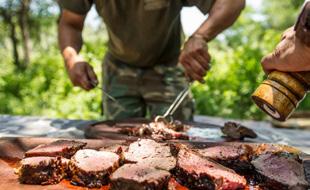
“A FISHABLE FEAST’S MOUTH-WATERING WORLD TOUR IS JUST AS LIKELY TO MAKE YOU START PLANNING A TRIP AS THE FISHING IS.”
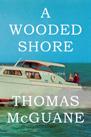
One of the last great literary outdoorsmen (a member of both the Fly Fishing Hall of Fame and the Cutting Horse Hall of Fame), Thomas McGuane is perhaps best known in fly fishing circles for The Longest Silence, his collection of fishing essays, and Ninety-two in the Shade, a story about a Key West tarpon guide based in part on McGuane’s experiences fishing in Florida with the likes of Jim Harrison, Guy de la Valdène, Richard Brautigan and Russel Chatham. In A Wooded Shore: And Other Stories, McGuane serves up a gem of a short story collection. In keeping with McGuane’s style, you can expect bleak yet darkly funny tales from the modern day American West of, mostly, middle-aged men grappling with mundanity and everything from failure to loss, love, lust, shame and more from across the range of human experience. amazon.com

Like McGuane, the late Jim Harrison is another literary giant (Legends of the Fall, Dalva, A Good Day to Die) who also had serious fly fishing chops from his time in Florida’s iconic tarpon scene to his years in Michigan and Montana. As famed for his appetites (gourmand, debauchee, outdoorsman etc) as he is for his works of prose and poetry, in this definitive literary biography Todd Goddard goes deeper into Harrison’s life and oeuvre than ever before. Devouring Time is built off over one hundred interviews with Harrison and draws upon his own archive of collected papers. If you’re already a Harrison fan, you will love this book. If you’re not familiar with him, bookmark it and read his books first. amazon.com
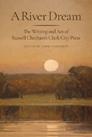
WRITING AND ART OF RUSSELL CHATHAM’S CLARK CITY PRESS - JAMIE HARRISON
The last of these three somewhat interconnected books, A River Dream is a collection of the best writing from the late Russell Chatham’s Clark City Press. A celebrated landscape artist and author, Chatham launched his own publishing house out of Livingston, Montana, in order to take control of his own career. In lieu of payment, many of his early “clients” were paid with Chatham’s paintings. These included friends like Thomas McGuane writing on fishing and memory, Jim Harrison’s poetry collection, The Theory & Practice of Rivers and Rick Bass writing about wolves resettling the continental United States. The collection of fiction, essays, poetry and art was edited by Jamie Harrison (Jim’s daughter), a novelist in her own right and the former editor of Clark City Press. The works in this book were created by the best of the best of this era, and it reads that way. amazon.com
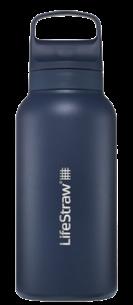
“Cholera, Ebola, ooh, I wanna take ya Hepatitis, Giardiasis, come on, pretty mama”
To be sung to the tune of The Beach Boys’ Kokomo.
Fly fishing, especially when traipsing way off the beaten track, is thirsty work. You have to stay hydrated. But, at the same time, you don’t necessarily want to re-fill your bottle from any random water source that may be polluted with agricultural run-off and a pot-pourri of waterborne lurgies. That’s where a filtration water bottle like Lifestraw’s Go Series becomes invaluable.
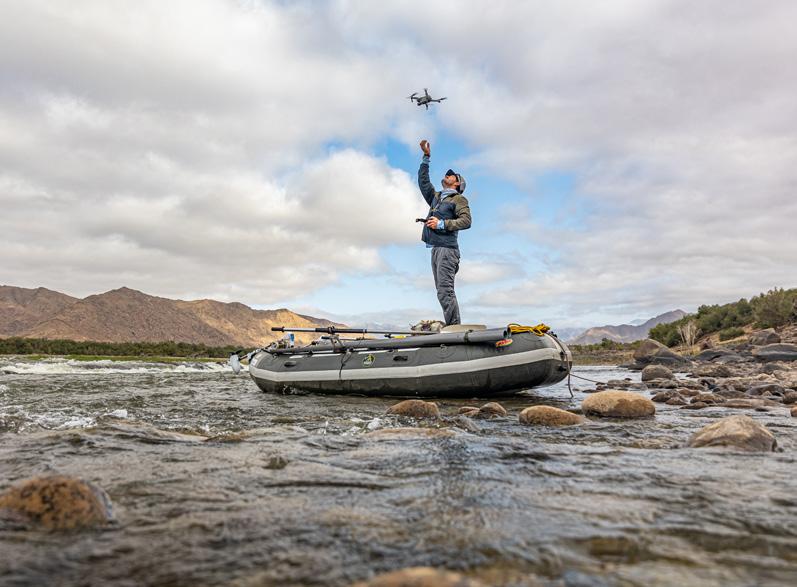
Editor-at-large, Conrad Botes, says, “I recently tested the Lifestraw bottle on the Orange River. I found it easy to use and loved that it allows you to travel lightly. On previous trips I would leave camp with a litre and a half of water and would run out early on in the day, arriving back at camp completely parched. With the Lifestraw you don’t have to worry about carrying water, because you can drink straight from a river like the Orange which, normally, might seem dangerous because the water is laden with sediment. It’s a very useful addition to my fly-fishing kit and essential for rivers in arid areas like the Cederberg or the Tankwa where it’s very hot and you have to walk long distances.”
The way it works is that inside the bottle (technically it’s attached to the lid) there’s an advanced 2-stage carbon filter and a BPAfree membrane microfilter that protects against bacteria, parasites, microplastics, chlorine, silt, sand, and cloudiness while also improving the taste of your water. Throw in double wall vacuum insulation and you have a bottle that not only gives you clean drinking water wherever you go in the world but can keep it cool too. adventureinc.co.za
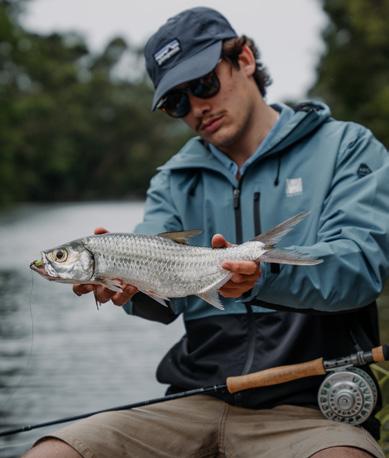
Oxeye tarpon, also known as the Indo-Pacific tarpon (Megalops cyprinoides), looks like someone shrunk an Atlantic tarpon, got distracted halfway through, and left it with eyes far too big for its own good. Same chrome armour, same aerial nonsense, just compressed into a more chaotic package.
They are the strange, smaller brother of the famous Atlantic tarpon and remain poorly studied in South Africa. What we do know is that they are amphidromous, moving freely between ocean, estuary, and freshwater. They are aggressive little predators that feed heavily on small baitfish and crustaceans, striking fast and jumping even faster once hooked.
Most of these fish fall between 20 and 50 cm. That hardly matters. Every oxeye tarpon caught is a reward. They jump, cartwheel and throw hooks with enthusiasm, often giving you the middle finger as your line goes slack. Completely out of proportion to their size. Absolute chaos.
South Africa marks the southernmost edge of the oxeye tarpon’s Indo-Pacific range, which likely explains their elusive status. Locally, they are almost exclusively a KwaZulu-Natal species, appearing sporadically from Maputaland down to the South Coast.
They’ve been recorded in systems such as Kosi Bay, St Lucia, Durban harbour, and rivers like the Umzimkulu,
IF ATLANTIC TARPON ARE ‘THE SILVER KINGS’, THEN INDO-PACIFIC TARPON MUST BE PRINCELINGS. ROSS KIGGEN AND HANO SCHOLTZ OF DOBA PRODUCTIONS HAVE BEEN FINDING THESE ELUSIVE LIGHT TACKLE BUSTERS ALONG THE SOUTHERN KZN COAST. HERE THEY BREAK DOWN HOW YOU CAN TOO.
Photos. Doba Productions
but they are never reliable. They arrive, throw your hook, and disappear. Most encounters will happen in estuaries, although the odd larger fish can be found, under the right conditions, cruising the surf zone.
They tolerate low oxygen thanks to their ability to gulp air at the surface, often giving themselves away with a subtle roll, a quiet flash of silver that’s gone as quickly as it appeared.
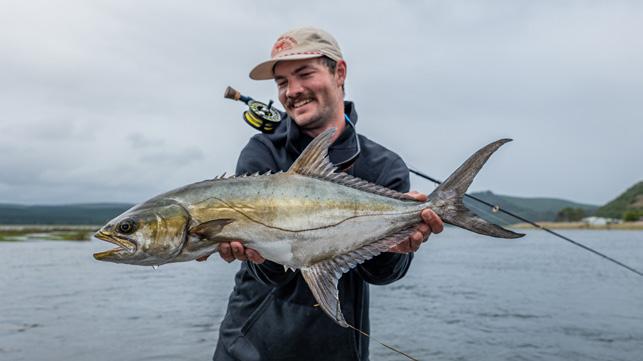
Most oxeye tarpon in South Africa are caught by accident while targeting kingfish or springer in estuaries. A 5 to 7-weight rod is ideal. Floating lines work well when throwing a flipper or a gurgler (yes, they smash topwater), while an intermediate line helps in deeper channels or along drop-offs.
Flies that see the most success are usually in white, tan, olive, and chartreuse, as these colours cover most situations and match a wide range of bait. Small Clousers, simple baitfish patterns, and shrimp or prawn imitations are all highly effective, while small flippers or gurglers work well when fish are feeding close to the surface.
No one guides for oxeye tarpon. You’re on your own boet, but that’s half the charm. The KZN estuaries are something special, and while you’re hunting oxeye tarpon you’ll probably end up tight with a few kingies or other estuary predators first.
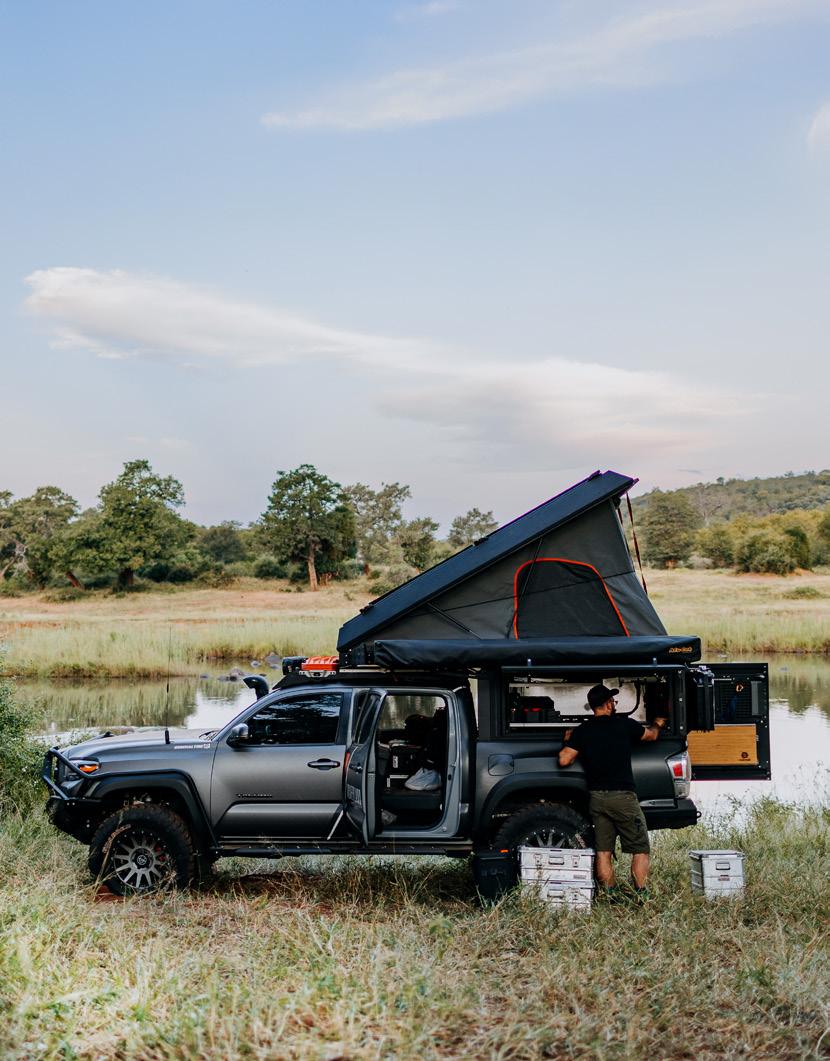
Chase down untracked rivers, travel across untamed terrain and explore untapped waters.
Because the best stories aren’t just about the catch. They’re about the search.
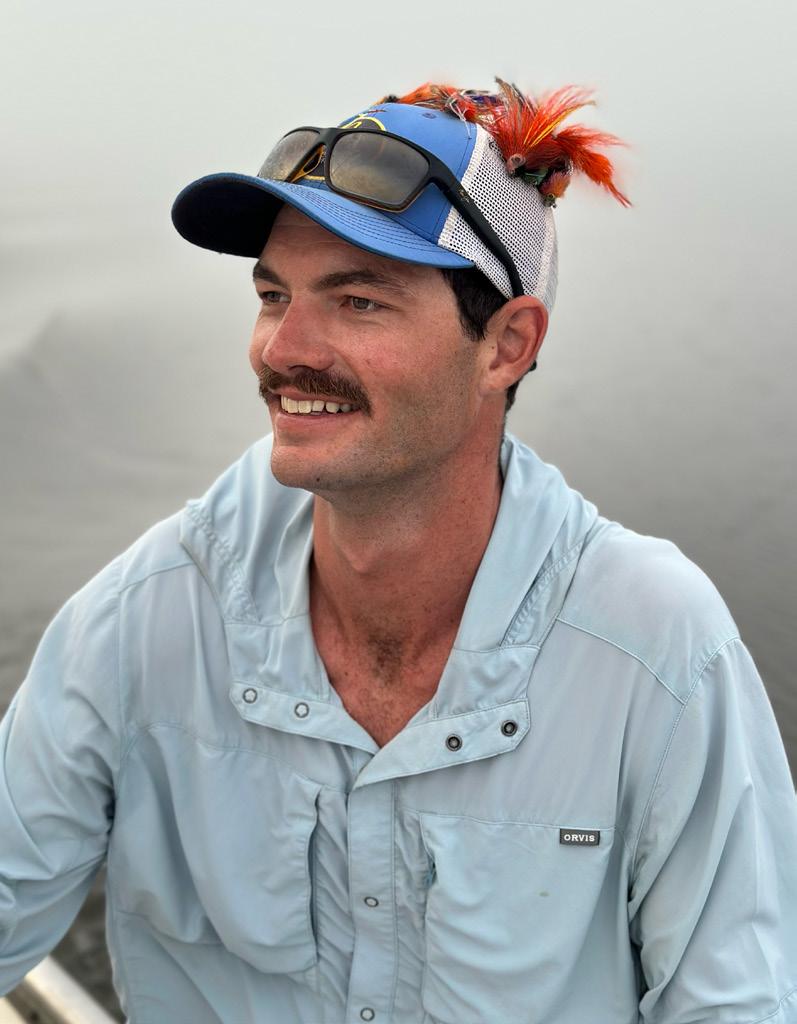
JOHANN RADEMEYER’S POINT OF DIFFERENCE IS AN UPBRINGING IN ROCK AND SURF FISHING THAT HE BRINGS TO THE FLY-FISHING WORLD.
5 best things about where you guide?
1. Losing touch with the real world. I often guide in places where signal and communications are very limited, on a good day. And so you only think and worry about what is happening around you.
2. The caffeine, nicotine and adrenaline lifestyle of Pongola. Late nights in the bar, on the water before first light, dodging hippos, crocs and drunk baitfishermen while wrestling doubledigit tigers on 7-weights in heavy structure. I mean... what more do you want?
3. Arriving at the mouth of the Rio Longa in Angola at first light and seeing hundreds of tarpon. They were rolling in between massive mangrove islands that broke off during the night and were floating out to sea. The islands hold a lot of food for all fish and birds, so it’s basically like watching an allyoucaneat seafood buffet.
4. I spend enough time at a location to experience everything it has to offer but not too long that I get over it. It’s a pretty ideal lifestyle if your conditions allow for it.
5. My fellow guides. The banter, the brandy and literally the blood, sweat and tears we go through during different seasons makes us good mates. A guide team is only as strong as its weakest link, so we’ve always got each other’s backs.
5 fishingconnected items you don’t leave home without before making a mission?
1. A camera of some sort, generally more than one. A few different cameras for different applications which include my trusty weatherproof Panasonic Lumix GH5 with a 16 mm35 mm lens. I also take GoPro 11, Meta RayBan glasses, DJI Mavic Air 2 S drone and my cellphone.
2. Obviously, my Leatherman.
3. I’ve always got a mini repair kit on me. In there you’ll find just about everything: scissors, cable ties, Loon UV Knot Sense, sleeves, swivels, permanent markers, spare polarised glasses, Allen keys - and the list goes on.
4. Sun protection - polarised sunglasses, sunblock, hat, gloves and a Buff.
5. Smokes, a lighter and, most importantly, a spare lighter!
5 indispensable flies for saltwater?
1. For anywhere or any species, just give me a box filled with a big variety of welltied Clousers in every shape, size and colour.
2. Bucktail bulkheads with ostrich herl.
3. Surf candies. Pink is always a favourite.
4. Shrimp patterns.
5. NYAP.
5 indispensable flies for freshwater?
1. Feather Changer.
2. Black Woolly Bugger.
3. PTN.
4. Alphlexo Crab.
5. Muddler Minnow.
5 flytying materials or fly triggers you swear by?
1. Good quality bucktail. I’m a big fan of natural materials especially bucktail.
2. Always add flash. Very easy to remove if you don’t need it but very difficult to add if you do.
3. Fulling Mill’s new UV thread.
4. Owner Aki’s in 2/0. Just trust me.
5. Grizzly hackle.
“I SPEND ENOUGH TIME AT A LOCATION TO EXPERIENCE EVERYTHING IT HAS TO OFFER BUT NOT TOO LONG THAT I GET OVER IT.”
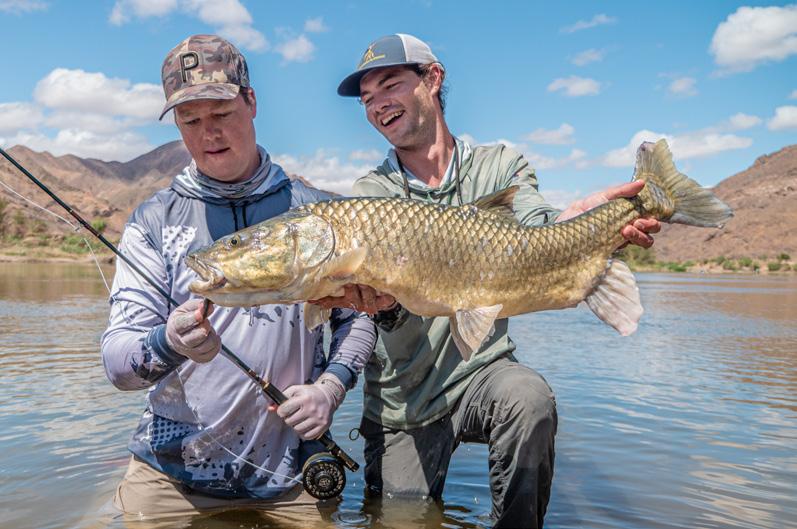
5 of your favourite flyfishing scenarios?
1. When you’ve just explained to a client where the fish are and what to do and you can see the disbelief in their eyes. And then, on their first cast, they go tight. The surprise and trust after that are unbeatable and you have got full control over that client. He thinks you are the greatest thing since sliced bread.
2. I love flyfishing at night without any lights close by. There’s just you, the dark and the mystery of what could go down.
3. I love surf fishing. And no, I’m not talking about when a little ripple comes over a crystalblue flat with some foam water while sight fishing. I’m talking about two metre swells drilling you in the face, knocking you off your feet and tangling you up in your line like an angry python. My favourite is patrolling the West African shoreline. The challenges involved in getting a decent fish from shore really makes it rewarding.
4. Obviously one of my alltime favourites is the old grunter. After you’ve made the perfect cast, that moment when you see the fish sees your fly and now it is game on. Time stops and all you think about is, ‘Maybe this time it will be different. Maybe this time he will actually eat my fly’. It gets my heart racing every time.
5. The moment a big tigerfish gets taxed by a much bigger tigerfish. It always surprises me to see the size of the fish around Pongola and the size of the fish they prey on.
5 pieces of advice you’d give your younger self before your first guiding season?
1. Take more sunblock!
2. Do a basic mechanic course! Shit always breaks.
3. Guide a client on their ability not on yours.
4. Invest in yourself. Buy proper gear that will help you on the job: good sunglasses, waterproof gear, cameras, proper pliers, etc.
5. Anticipate a client’s needs before they need it.
5 weather conditions that secretly make you happiest on the water?
1. I’ve got a lovehate relationship with lightning. Fishing always seems to be crazy in and around lightning storms but that comes with serious risk and consequences.
2. I am an early riser. I am a big fan of a sunrise. No matter the conditions, the spot or the species, I love fishing at first light and seeing how nature wakes up and comes alive.
3. Something I don’t love, but hate is when the wind is humping. I hate what wind does to certain fish and
especially the big ones. There are certain species that I would only target when you can’t stand on the casting deck and have to cast from inside the boat.
4. I will take pouring rain over a slight breeze any day of the week when I’m guiding. Not a lot of clients can deal with any wind whatsoever.
5. Standing in a river mouth in Angola on a dead low tide and getting deleted by waves from the front and the river wanting to suck you out to sea from behind, and you are just waiting for a gap in the sets to finally get your fly over the dropoff and in the face of a hungry West African critter.
5 nonfishing skills that have unexpectedly saved your ass while guiding?
1. Reversing a trailer. It helped that I worked on a grape farm having to reverse 10ton trailers in between vineyards with a tractor.
2. First aid. Speaks for itself. Every single guide will have to use first aid during their guiding career. Some worse than others.
3. Drone flying. I’ve used it to find a lost lifejacket, find spots, plan the day, etc. It has been a great addition to the arsenal.
4. Photography. To photograph clients’ fish or something you’ve see, and your clients realise that no one would believe them if you didn’t have evidence.
5. Sharp nose and ears. For hippos, crocs and other critters.
5 fish you’ve lost that still haunt you?
1. I lost a fish in Pongola which we’re still not sure if it was a crocodile or a 20 lb tiger, but I’ll never forget the wake that came out of the shallows.
2. I broke a flyline on what I believe was a big snapper in the shore break in Angola. After pulling hooks ten minutes before, I might have gone too wild with the stripset.
3. I hooked and lost two arapaima in the Amazon. I would have loved to have seen one up close, even if I didn’t catch it.
4. After three hard days of fishing for largies I hooked into a big rock and immediately dropped my rod and gave slack only to realise the rock was moving and a massive largie came to the surface before spitting my hook and leaving me completely shattered.
5. Every single yellowtail encounter I’ve ever had from the shore is burned into my memory forever.
Your 5step process for reading completely new water for the first time?
1. Depth. I always want to know how deep the water is that I’m fishing. That will dictate which type of line I’ll pick.
2. Structure. It can be obvious structure that you can see like boulders and trees or submerged structure like an oyster bed for example, which makes it much more difficult to find and fish. This will give away which type of species is most likely to be holding there.
“PATIENCE. I’VE ALWAYS HAD A LOT OF PATIENCE, BUT GUIDING WILL PUSH IT TO THE LIMITS.”
3. Temperature. I always feel the water and whenever possible measure the temp. The current temperature is not a major issue for me, but I want to know if it is getting hotter, cooler or staying stable. This will tell me what the fish will be doing or where they might be moving to.
4. Flow. It’s generally, quite easy to see with the naked eye. But this will influence your stripping style/speed.
5. Visibility and colour of water to decide which colour flies I’ll be using.
5 of the best things you have picked up from guiding?
1. How to work on a permanent hangover for three months straight.
2. Patience. I’ve always had a lot of patience, but guiding will push it to the limits.
3. Quick solutions. You find yourself very often in situations where the plan A, B, C, D and E are not options. You have to come up with quick solutions to keep the show running.
4. Hospitality. Guiding for Mavungana Flyfishing is just as much hospitality as it is time on the water. Hence the hangovers mentioned earlier.
5. Connections. I am fortunate to meet and spend time with amazing people from all around the world. To see how doctors, lawyers, CEOs, farmers, etc., all get together to enjoy the same passion we all have. And how different they are being on a fishing trip. I’m not talking about partying. I
am talking about how happy and relaxed people become once they shut off the screens and get outdoors.
5 hints that your client is a colossal tool?
1. Asking how big a yellowfish needs to be before it’s classified as a largie.
2. When they show you their new “bargain” they got on Temu.
3. When they argue that “to feed a tiger line when you get the bite is better than to stripstrike”.
4. When he makes you cast and catch the fish, but then he takes the photo with it.
5. Always asking what the other boats are catching.
5 of the most underrated species in your book?
1. Bonitos from shore.
2. Sharks on fly.
3. Grunter on 5-weights.
4. Baby tarpon.
5. Jacks in the surf.
Your last five casts were to….
1. Sight fishing to bull sharks in the Transkei.
2. Garrick in the surf around the Garden Route.
3. GTs in the Transkei.
4. Largies on the Vaal River.
5. Sight fishing to grunter.
RUSHING TO A DINNER DATE THROUGH LONDON’S HISTORIC STREETS, HÅKAN STENLUND CAN’T HELP BUT TAKE IN THE CENTURIES OF FLY FISHING LITERATURE AND LORE THE
BRITISH CAPITAL IS STEEPED IN.
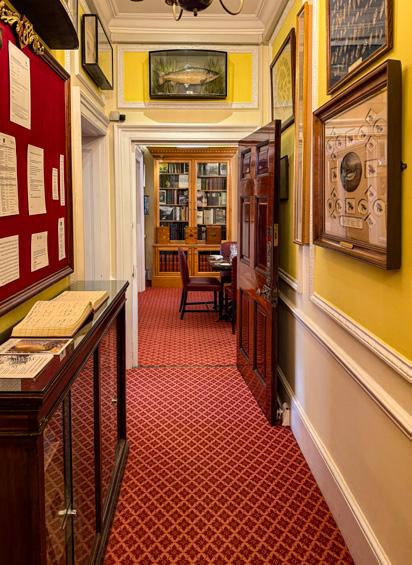
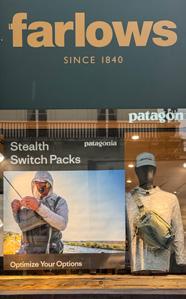
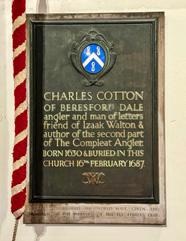
THE OTHER DAY, I FOUND MYSELF HURRYING DOWN BROOK STREET IN LONDON. I HAD BEEN IN TOO GOOD COMPANY, FOR TOO LONG, AT THE FLYFISHER’S CLUB, AND NOW I WAS RUNNING FOR A DINNER APPOINTMENT. IT WAS MY FIRST TIME AT THE FLYFISHER’S CLUB, AND I HAD COMPLETELY LOST MYSELF. CATCHING UP WITH A GOOD FRIEND, ABOUT HIS FISHING ON ALPHONSE ISLAND, AND LOOKING AT FIRST EDITIONS OF BOOKS THAT HAVE BEEN PARAMOUNT FOR THE FLY FISHING CULTURE FOR CENTURIES. BESIDES CATCHING FISH, READING ABOUT FISHING HAS BEEN A FAVOURITE PASTIME OF MINE. I WAS RUNNING, OR AT LEAST TRYING TO, DOWN BOND STREET AND INTO PICCADILLY, PASSING ST JAMES’S CHURCH WHERE CHARLES COTTONPROBABLY FAMILIAR TO SOME OF US - IS BURIED. THE PLAQUE SAYS:” CHARLES COTTON, OF BERESFORD DALE, ANGLER AND A FRIEND OF LETTERS, FRIEND OF IZAAK WALTON & AUTHOR OF THE SECOND PART OF THE COMPLEAT ANGLER. BORN 1630 & BURIED IN THIS CHURCH 16TH FEBRUARY 1687”. THEN, FROM PICCADILLY, I HEADED STRAIGHT DOWN TO PALL MALL, PASSING THE FARLOW’S SHOP. A GREAT TACKLE SHOP SINCE 1840. ANOTHER ICON.
Chasing an appointment at a restaurant, even one run by the Michelin-starred chef Niklas Ekstedt, is not a good start to any Friday night, but being late would be even worse. London, on the other hand, seemed relaxed. At least it wasn’t raining, and pubs were full of folks having a pint. I’ve mentioned Cotton at St James’s church, and the Flyfisher’s Club, as well as Farlow’s. But in London, you could get engaged in angling for days, without even holding a rod. As one of the world’s megacities, it is also a cultural home to fly fishermen. Izaak Walton worked here as a linen draper. He had a shop on Fleet Street, just some 20 minutes

down the road from the restaurant I’m headed to. That was before he moved back to the countryside; too tired of the city, and too tired of the endless religious wars his country was occupied with. Walton, also being on the losing side of the wars, smuggled part of the Crown Jewels out of the country until better times would arrive. You could give him some credit for his character. He wasn’t only catching trout.
On the outskirts of London, half an hour by train from Blackfriars, you reach St Albans, where in 1486 Dame Juliana Berners wrote a chapter “The Book of Saint Albans” called Treatyse of Fysshynge with an Angle. Regarded by many as the first text about modern fly fishing, Dame Juliana wrote about fly patterns, gave advice on how to fish the fly, and pointed out what a healthy life fishing will bring. She insisted that any concerned fisherman would not catch more than he could eat – otherwise, he would ruin his pastime. She wrote about conservation virtues and anglers’ etiquette. Francis Bacon, the father of science, also lived in St Albans. We don’t know if he was an angler. But we know some folks believe that Bacon was the original
Shakespeare and that he wrote many of the famous dramas we still enjoy under the pseudonym Shakespeare. Another Francis, Francis Francis, who we will return to later, is buried in Twickenham, also a part of greater London, as is Alexander Pope. Pope was the one who wrote:” to err is human; to forgive, divine.” I just hope my dinner company will agree.
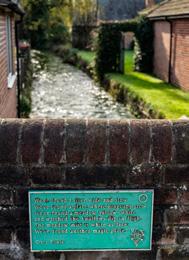
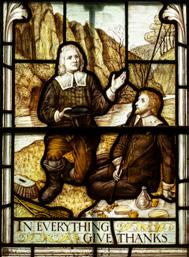
So, depending on your personality, traveling through England without a fly rod could almost be as rewarding as doing so with a rod. Down south, in Hampshire, in a side chapel of Winchester Cathedral, you’ll find Izaak Walton’s grave. On one of the stained-glass windows a man is pictured, under a tree, his rod leaning against the same tree, reading a book. The quote says: ”Study to be quiet.” It’s from the Bible, 1 Thessalonians 4:11, and is said to be Izaak Walton’s favourite verse. It is also how The Compleat Angler ends. On the other side of the Cathedral, not far from Jane Austen’s grave, is a plaque of Francis Francis. He was fishing editor of The Field magazine for a quarter of a century and the author of A Book on Angling, a true classic, and one of the reasons I’m in a hurry this afternoon.

“DEPENDING ON YOUR PERSONALITY, TRAVELING THROUGH ENGLAND WITHOUT A FLY ROD COULD ALMOST BE AS REWARDING AS DOING SO WITH A ROD.”
Francis Francis was, together with Dr Frank Buckland, responsible for sending trout ova to Tasmania on the SS Norfolk in 1864. The first successful shipment of ova to the southern hemisphere, it laid the foundation for the great trout fishing we experience in Tasmania and New Zealand today. Frank Buckland studied in Winchester. And during that period, he was a keen poacher on the Itchen. There is a great biography written about him by Richard Girling called The Man Who Ate the Zoo Buckland was a true eccentric who had a pet bear as a companion during his years at university. He was also the man that John Clark Parker contacted when he wanted to introduce trout to South Africa. Besides his eating habits, Buckland was a keen fisherman and conservationist. He was the one who constructed the first fish ladders on the Test.
When you walk through Winchester, from the cathedral into town, with Walton, Francis, and Buckland on your mind, you’ll
soon find yourself at The Square, in front of the Rodd & Gunn store. Before this was a trendy clothing and apparel store, it used to be John Hammonds’ tackle shop. And here, on April 28th, 1879, a meeting took place that would dictate the fly fishing narrative for decades to come. Here, Fredric Halford met John Selwyn Marryat. Marryat was a devoted dry fly fisherman, and Halford, a keen listener. Some folks say this meeting, for the fly fishing industry, was more important than the one where Walton met Cotton (it probably helps if you really are into dry flies to believe this.) Anyway, this friendship gave us the book Floating Flies and How to Dress Them, and later, Dry Fly Fishing in Theory and Practice. To Halford, fly fishing was all about dry flies and, “upstream, please.” Together, Halford and Marryat perfected upstream dry fly fishing.
In the same shop, Hammond’s, and some years later, a young George Edward MacKenzie Skues walks in and gets introduced to fly fishing
for the first time. Skues was also a student at Winchester. G.E.M Skues is sometimes referred to as “the greatest trout fisherman that ever lived.” Early on, he noticed that trout eat under the surface as well. He fished the Tup’s Indispensable and the Olive Nymph. He was also a friend of Frank Sawyer, who later gave us the Pheasant Tail, the world’s most well-known nymph. People who fish with nymphs, and belong to the “Skues team”, sometimes dismiss Halford, saying he wasn’t really a good fisherman and that he liked to fish with big dry flies, so he could see the takes. In the beginning, Halford and Skues fished together. It was Halford who introduced Skues to the Flyfisher’s Club in London. But years later, 1938, and after Hallford’s passing, the humble Skues would have to argue - in a debate against Halford’s disciples - that trout sometimes take a wet fly. And even if science would prove him right, the conservative side “won” the debate. It’s a little like politics these days.
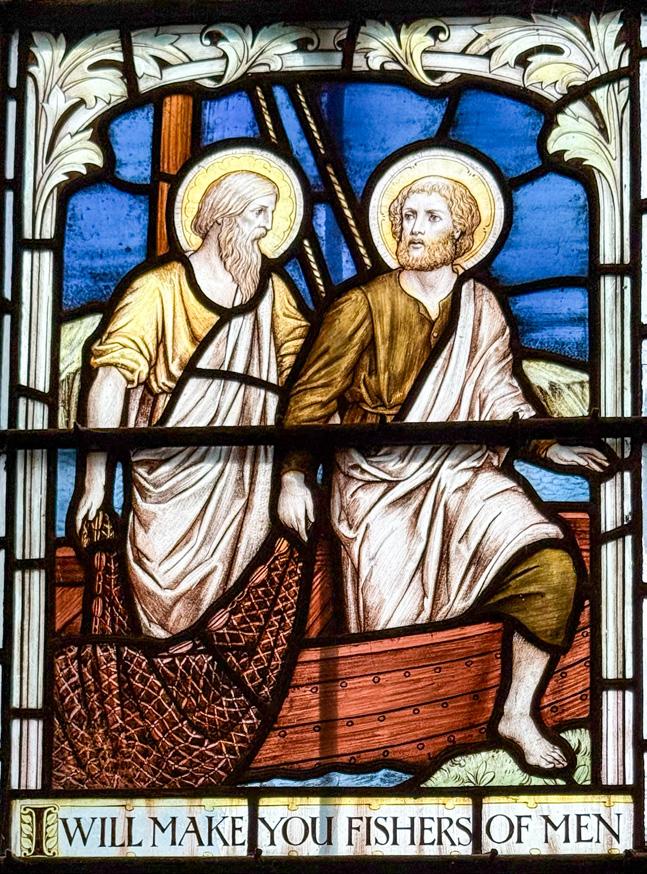
Even a few hundred years back, comp fishing recruitment tactics were a tad aggressive.
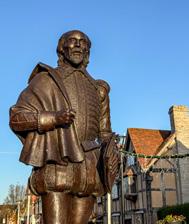
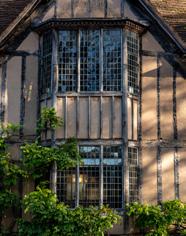
The Flyfisher’s Club has one of the most impressive libraries in the world regarding angling literature, and it holds a lot of memorabilia. A fly box that people say is Walton’s, a “pirn” that belonged to the poet James Hogg, of which Wordsworth wrote the eulogy saying: “He was undoubtedly a man of original genius, but of coarse manners and low and offensive opinions.” The club also holds a rod that David Garrick was supposedly the owner of. Garrick, an actor of considerable fame in the 18th century, of whom Alexander Pope had this to say: ”That young man never had his equal as an actor, and he will never have a rival.” Garrick often acted in Shakespeare’s Richard III, and later in life, he would stage the first Shakespeare Jubilee in
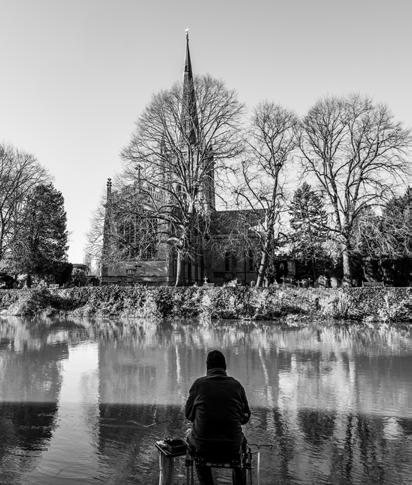
Stratford-upon-Avon. It is hard to know if “The Bard” was ever an angler, although he writes quite a bit about fish and fishing. He basically mentions roach more times than he talks about salmon and trout. One day, when I found myself walking down the river Avon, just opposite the church from where Shakespeare is buried, I remembered his beautiful line from Hamlet: “A man may fish with the worm that hath eat of a king, and eat of the fish that hath fed of the worm”. It’s still true that the world is an oyster and all life’s a stage. About nature and water, Shakespeare found: “tongues in trees, books in the running brooks, sermons in stones and good in everything.” And that we must not forget, even when running down Trafalgar Street chasing dinner.
*A MOTTO OF THE FLYFISHER’S CLUB, ITS LATIN TRANSLATION IS, “THERE IS MORE TO FISHING THAN CATCHING FISH.”
Håkan (@hakanstenlund) is currently travelling the world doing research for a book on how trout spread around the planet. Having visited Kenya, South Africa and Tasmania, he is currently in New Zealand with South America, Bhutan and Japan all on his hit list. When he’s back home in northern Sweden, he lives in an old train station and runs a fly shop called Hook and Cup (@hookandcup) out of another old train station in the town of Sorsele.
The Wademan Set includes a jacket and waders, blending classic style with advanced waterproof-breathable membrane technology and felt-soled boots for secure footing. Engineered for all-day comfort and trusted durability

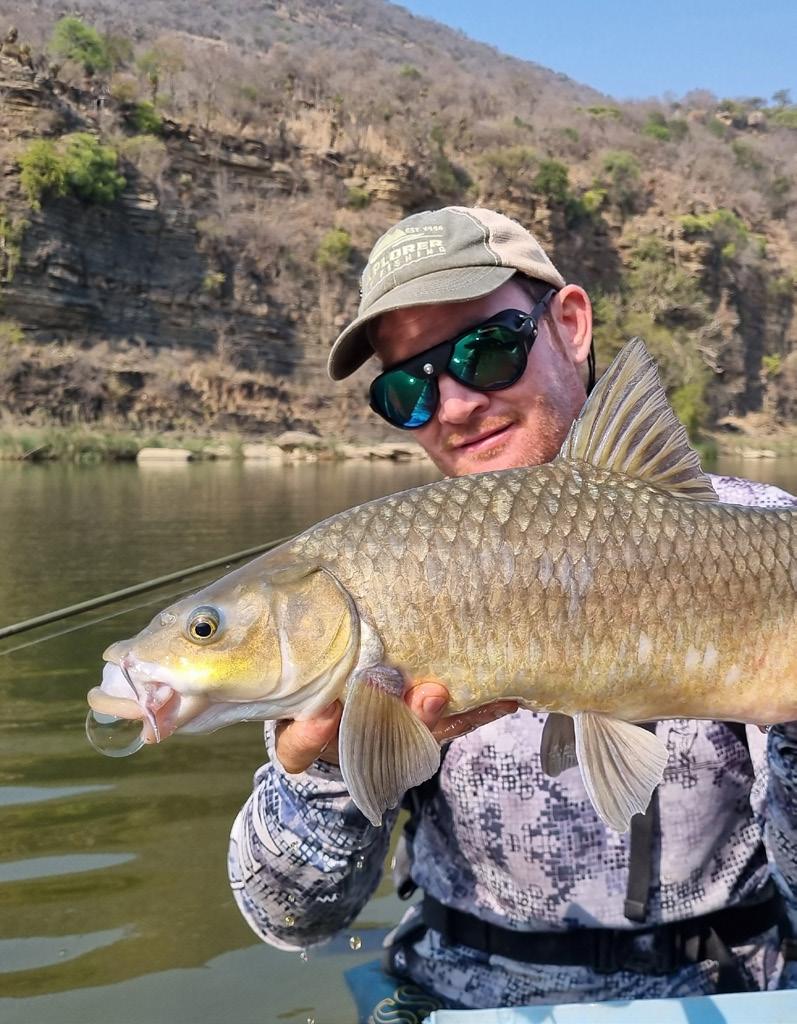
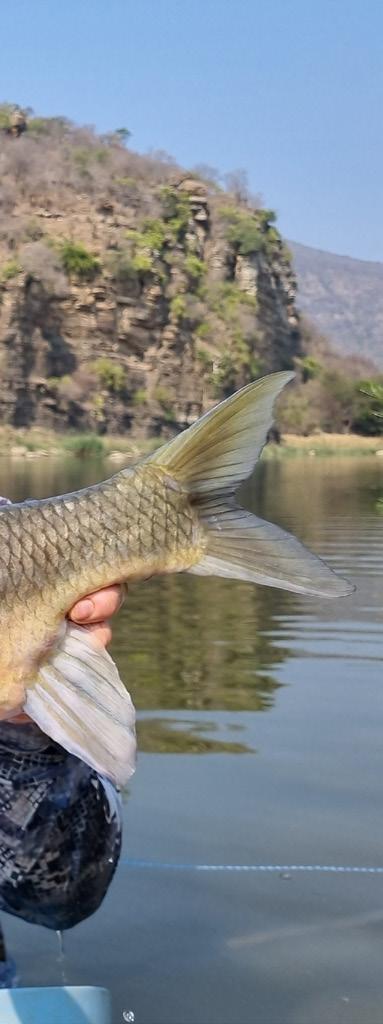
WE CAT-HERD FISH WHISPERER ROB KYLE INTO THE PAGES OF THIS ISSUE TO ANSWER QUESTIONS ABOUT ONE OF OUR LESSER-KNOWN (YET HIGHLY RATED BY THOSE IN THE KNOW) YELLOWFISH SPECIES, NATAL SCALIES (LABEOBARBUS NATALENSIS).
Photos. Rob Kyle
The Expert: Rob Kyle, lead aquarist at Ushaka and the South African Association for Marine Biological Research (SAAMBR), is a Protea rock and surf fisherman, a fount of knowledge through his highly informative Instagram (@ robkylefishing) posts and arguably the fishiest person to ever feature in this magazine. When the conditions are right, he puts down his heathen sticks and picks up a fly rod to target Natal Scalies.
Question: I’ve caught largies, smallies, Clannies and bushveld yellows and the next yellowfish on my target list are Natal Scalies, but there doesn’t seem to be too much info out there on them. What are the ideal conditions for this species? Sandy Chennells
You can catch scalies pretty much throughout the year provided the river conditions allow. I prefer to fish for them during the winter months, which is the opposite of what the vast majority of anglers prefer. The fish fall back to the deeper water pools where you can target them by fishing slow and deep. The bites aren’t plentiful in winter, but the quality of the fish is generally much better. Generally, from around the second half of September into October, as the water temps start to increase, the fish become more active, start getting ready to go into spawning mode and move up closer to the rapids. Around this time of year, you will often see quite a lot of movement in the fish from the pools to the rapids and back to the pools over the course of the day as temps increase. From October, through to April/May, the fish are properly active in the shallower water and in the rapids, but most of the rivers in their range are high and dirty over this period, making fishing for them on fly difficult. In dry years, when you find a river that clears up towards the end of summer, before winter kicks in, you can have great fishing.
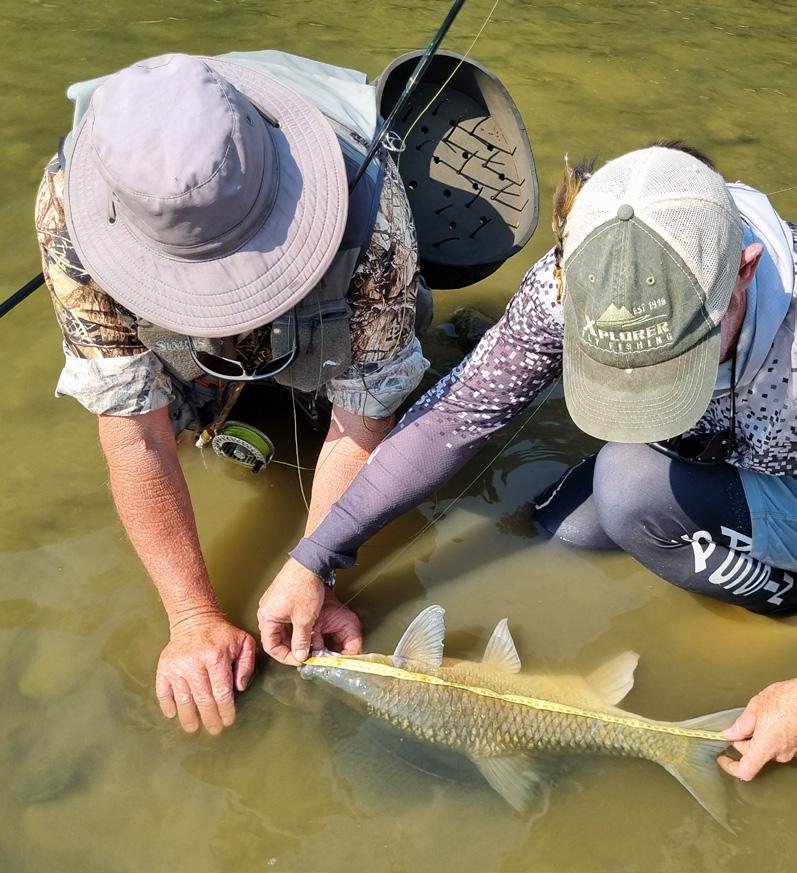
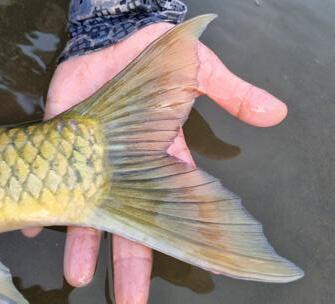
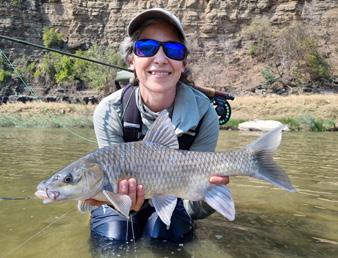
“THE ‘SCALIES’ FROM DIFFERENT SYSTEMS OFTEN LOOK COMPLETELY DIFFERENT, AND GENETIC WORK IS CURRENTLY SUGGESTING THERE COULD BE UP TO FIVE DIFFERENT SPECIES.”
As far as the best conditions for scalies and what makes them bite go…. when someone works that out consistently, please let me know. The more I pay attention to things like barometric pressure and other measurable parameters, the more I get confused. They do seem to prefer a stable barometer, they don’t like a rising river, they do change their feeding habits as the day progresses, they are very much affected by temperature -but not always predictablyand they are absolutely full of shit and pretty much the hardest species I’ve ever tried to pattern. There are no “nevers” and no “always”. If the river is fishable, it’s worth a bash!
In terms of how they behave, are they similar to other yellowfish species or have you noticed subtle differences? For example, do they cruise/patrol like
Clannies or stay put in holding lies? Have you noticed much of a difference in behaviour between the different KwaZulu-Natal (KZN) river systems?
I’d say they are similar in many ways to smallies, just the private school version. They spend the cold months in the deeper pools and move into the rapids to spawn and feed actively during the warmer season. During the transition periods, they will often congregate around the head of a pool at the base of a rapid. I don’t think they patrol like Clans, small scales or largies. They like to stick tight to the bottom most of the time, often not moving out of their lie. You can watch a specific fish for hours sometimes and it won’t move more than a metre or so. Again, there are always exceptions but, generally speaking, I don’t think they patrol. You need to go to them rather than waiting for them to come to you. There are subtle differences
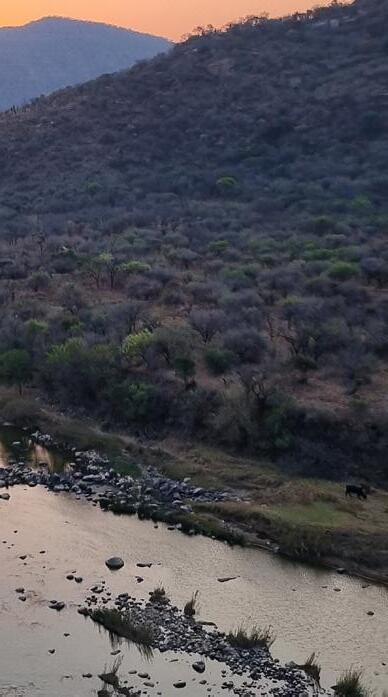
between how they behave in different river systems, but they are too detailed to try and break down in this discussion. The “scalies” from different systems around KZN often look completely different, and genetic work is currently suggesting that there could be up to five different species. More research is required to clear that one up though.
Without spot-burning yourself, what are some of the river systems you recommend people explore for scalies?
There isn’t much to hide in terms of the systems that I like. It’s more the exact spots that I won’t be sharing the coordinates. Haha. The Tugela River has probably the best scalie fishing in terms of numbers and size of fish on offer. They are also relatively easy to catch, as far as scalies go. It is also reasonably easy to access in some places where
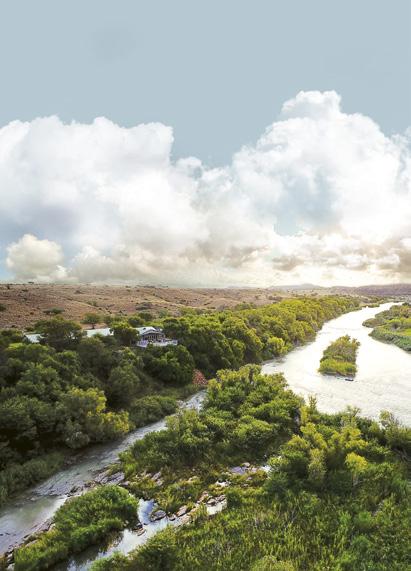
you don’t constantly have to fear for your life (muggers) or worry about your vehicle being stolen. This is a definite plus. Zingela (zingelasafaris.co.za) is one of my top spots to fish. The Bushmans River below Escourt is also very good, with a few options that you can fish. The Umkomaas River has a heap of fish. They are usually pretty eager to eat a fly. For some reason however, they are generally small fish. The Umko is a great river to learn scalie fishing as the numbers of fish build confidence and help you to work things out for the more technical and difficult venues. I dearly like the Umzimkhulu River, but these are undoubtedly the hardest scalies to catch consistently and safe access to the river is difficult and near impossible to find. The Umgeni River system below Albert Falls dam also has a lot of fish, and some good fish, but I haven’t managed to find many spots where it is accessible. The Buffalo River has good numbers of fish but, again, they don’t seem to get big there for some reason.
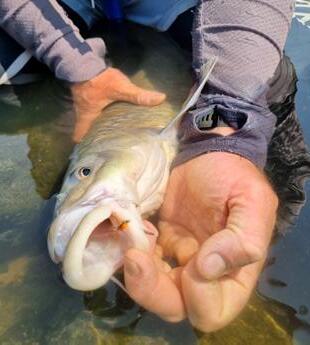
For the most part are you trying to sight fish to them or are you just fishing likely looking water that you know holds fish?
It’s very rare that you will have an opportunity to sight fish a scalie. Occasionally, at the right time of year in specific places, you will find them coming up into the shallows to actively feed. They can tail like bonefish on a flat and this is about as exciting as it gets. A well-presented fly can result in a fish charging several metres with its back out the water to smoke it. This is a scenario that you won’t find very often though. You can catch them on dries but, in most places, they don’t seem to rise consistently, and I’ve found it to be very frustrating. Also, you’re often working with water that only has a few centimetres visibility, so this makes sight fishing of any sort, difficult. Most of the time, I am fishing blind to structure I know will be holding fish.
What is your technique most of the time?
I like to fish a 4-weight, but a 5 or even a 6-weight is fine. I personally would rather wipe my poephol with a cheese grater than “Euro-nymph”, as much as it is a very effective way to catch a lot of fish when they are active and in the fast stuff. As I mentioned, I like to target them in the cold months when they fall back to the slow water in the pools, hug the bottom and aren’t very active. I fish a floating line with a stepped leader of around two rod lengths that I tie myself from fluorocarbon. The business end is a length of 6lb (0.19mm). I fish two flies mostly, New Zealand style I think it’s called, where the back fly is attached to about 40cm of leader material, attached to the bend in the shank of the front fly. I fish a heavy nymph/burrowing dragon/shrimp type pattern I’ve developed with a 3 or 4mm tungsten bead on the front in a size 10 or 12 hook. Then the back is always an unweighted hotspot nymph that I tie on a size 16 hook. I’ve tried multiple different patterns and every year I have new and exciting plans and patterns which, after the first few trips, get discarded as I return to my old faithfuls. The way I fish, I haven’t found a combination of flies that fishes better than these two. I like to cast across slow or even still water, fish the flies slow and deep, frequently making contact with the bottom, and target the big fish. I’d rather freeze my lower extremities off while fishing for a day in the colder months for a handful of bites from potentially special fish, than rack up impressive numbers of young fish in a rapid during the warm months.
A “real” scalie is bloody sneaky, exceptionally cautious, and extremely aware of everything that’s going on around it. You usually have to “hunt” them, which is what makes me excited and causes me to obsess over them for four or five months every winter. You can fish for them effectively under an indicator. This was how I first started fishing them and there are a lot of circumstances where this is the most effective way to present a fly to them. I just enjoy the feeling of getting the eat out of my fingers, over watching a top bung drift down the river. A hook does sit pretty vas in a scalie’s mouth, which is quite soft and rubbery. There is no need for a huge strip set, but I do like an energetic lift of the rod to make sure the hook goes in. Scalies aren’t dirty fighters by any means but, due to the habitat they live in, there is often a risk of getting wrapped up in branches or rocks. For this reason, it is better to hang on to them as hard as your tackle allows and try and keep the fight as close to you as is possible.
I have often heard that of all the yellowfish species, Natal Scalies are the hardest fighters. What’s your take on that?
They are definitely strong. I’d say stronger than a smallie for sure. Definitely stronger pound for pound than a largie or a smallscale. I think a large scalie would be a pretty well-matched fight. If you were to throw it in the ring with a chiselmouth, however, which is now also officially a Labeobarbus , it would get destroyed, but only after round five or six.
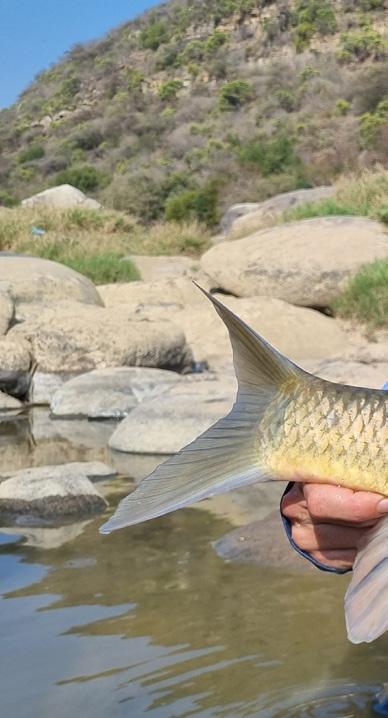
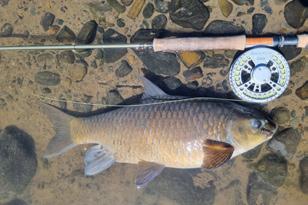

Speaking of chisels, in these systems, what other species or “bycatch” can anglers look out for?
The KZN rivers where scalies occur generally have a very low diversity of species. As far as indigenous species go that you will find as bycatch, barbel are found throughout their range, and many is the “world record scalie” that reveals itself as a barbel. The Tugela system has both Tugela and leaden labeos that are a fun bycatch as much as you foul hook them most of the time. The chiselmouth of the Umzimkhulu river is another species that fly anglers can hope to come to grips with, but they are another whole episode on their own. Carp and bass are throughout all the river systems, so they will also occasionally come into the mix.
AMID A BACKDROP OF A FISHERY IN PERIL AND TRADITIONS AT STAKE, TWO SOUTH AFRICAN FISHING BUDDIES, LUKE BAX AND STU TAPPE , RE-UNITE FOR A DIY ATLANTIC SALMON ROAD TRIP AROUND NORWAY.
Photos. Luke Bax, Stu Tappe, Nic Schwerdtfeger
How do you make something that has been said over and over again feel new and fresh, interesting and captivating? How do you give life to an old story? Slap on a new coat of paint and call it brand new? No. This isn’t some groundbreaking adventure where we find the El Dorado of rivers and the fish of mysteries. Norway’s rivers have been fished since the time of King George III (1738-1820) and the manner in which we were doing it, has been around even longer.
All that aside, I want to share my tale of two South Africans and their adventures under the midnight sun on a beautiful Norwegian river chasing the king of fish, the Atlantic salmon.
Now Stu and I go way back. In fact, he was the one who taught me to fly fish in the first place. During the dog days of Covid, we spent months casting at spooky clannies (Clanwilliam yellowfish) and not so spooky bass. We went through all the trials and tribulations of learning together while on a budget tighter than a budgie’s poephol. A few years have passed and our fly fishing, both together and solo, has come a long way. I live in Norway these days and Stu is in Cape Town, South Africa. Now that we both have a bit of cash (not a lot, just a bit more than the nothingness of yesteryear), last year I had the privilege of being able to return the favour he did in teaching me how to fly fish and, in turn, teach him the art of the double handed Spey cast on a DIY salmon fishing mission in Norway.
You may be wondering how a South African ends up on the west coast of Norway in a tiny town that is most well known for being the ugliest town in the country (legitimate survey results from the 70’s). Well, it is a tale as old as time. Boy meets girl. Boy falls in love with girl. Girl moves back to her home country during a global pandemic and boy does everything in his power to follow her. My wife and I met while on a climbing trip in the Cederberg and, after living for three years in Cape Town, we found ourselves separated on opposite ends of the globe by the pandemic. As I was working as a tourist guide in Cape Town and there
was a distinct lack of tourists, we made the decision to move to Norway and try our luck there. As luck would have it, Forde, this tiny town I now call home, has a salmon river flowing right through the centre. From my balcony I can see the beat where I caught my first salmon. In other words, it’s not kak. Obviously, I had no flippen clue how to fish for salmon when I arrived but, during my first week in Norway, I was sitting on the banks of the Jølstra River when up swam the biggest fish I had ever seen. A slab of silver that looked part dolphin, part fish. At that moment I said to myself, ‘I have to catch one of those fish’. I have never looked back. It took a long time before I came good and got my own silver slab, but that moment on the river bank, when I was questioning a lot of my life choices, will always be where this salmon journey started.
2025 was always going to be an interesting season for the Atlantic Salmon. After potentially the worst salmon season on record in Norway the previous year, regulations were being redrawn, river openings reconsidered and the future of wild Atlantic salmon appeared to be balancing on a knife edge. I’m not going to go into all the details as that would require a magazine of its own.
On Friday the 4th of April it was finally announced that the Gaula River (and the rest of Norway), would have a full fishing season starting on the 1st of June, as is traditional here. Armed with this information, Stu booked his tickets and the trip was officially on.
“ALL NORWEGIANS HAVE TO HAVE A CABIN. I BELIEVE IT’S IN THEIR CONSTITUTION.”
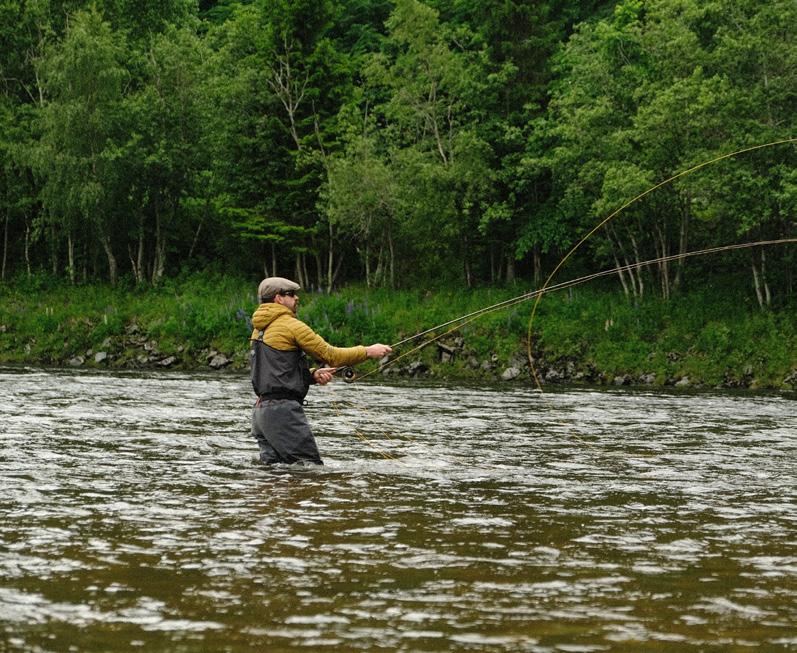
After much practice, Luke started to improve in the ribbon dance.
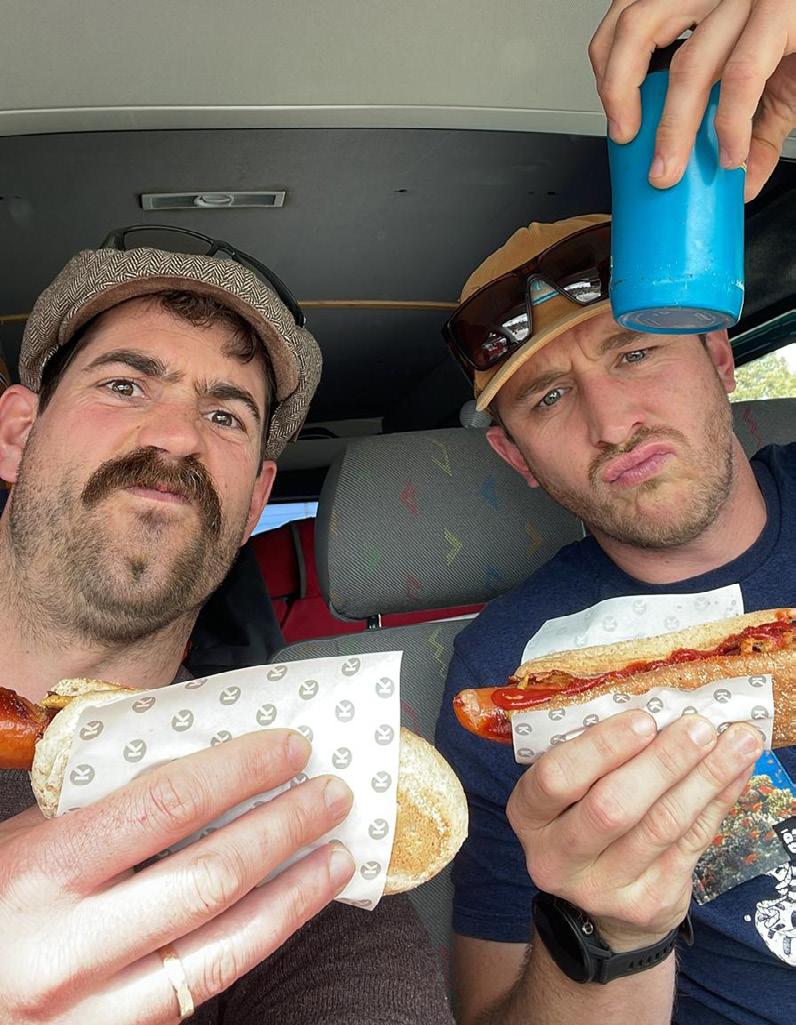
When one thinks of fishing for Atlantic salmon, what often springs to mind are fancy lodges, exclusive fishing and tweed... lots of tweed. For the most part, you would be right. A lot of the better-known rivers in Norway have these lodges where you pay in the thousands (of any currency) for private sections of river, fine dining and your very own private river butler... I mean guide. While I have previously mentioned that Stu and I have at last found some sort of financial stability, it’s nowhere near enough to be a guest at one of these lodges. The amount of tweed alone would bankrupt us. No, we were always going to rock our salmon adventure the same way we did things back home. Less fine dining and more hot dogs and food from a bag. No
lodges but, instead, a riverside camp and a big green van named Hugo. Only the tiniest bit of tweed in my fishing cap but, mostly, just the same clothes, no showers and a bush toilet for six days. Just full on DIY fishing vibes, which, honestly, is the best way to do it.
Stu flew into Ålesund, a port town on Norway’s western coast, and we drove up together with my son, to my family’s cabin. All Norwegians have to have a cabin. I believe it’s in their constitution. The cabin lies but a short drive from the legendary Rauma, a once famous salmon river now closed due to low numbers of returning fish. Having dropped my son off with my wife at the cabin, we set off to the mighty
Gaula. After the three and a half hour drive we finally crossed the Gaula bridge and got our first look at the river. It hit us immediately that we were in salmon country. It seemed that every other car we drove past had rods on the roof, every stretch of river had someone waist deep waving a rod or a group convening on the banks. Fishing huts littered the banks of the river and fancy lodges started to show up every ten kilometres. We had made it to the Gaula.
With a beat called Aune Vald booked for our first day, the only problem was we had absolutely no idea where to start, how to fish this beat or even where it was on the river. A quick pit stop at the Norwegian FlyFishers Club was what
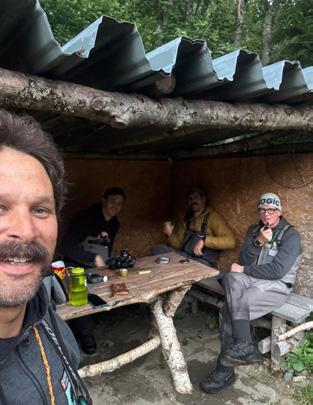
was needed. Now the NFC is one of those establishments I mentioned earlier, with the tweed and the money but, fortunately, their guides and staff are proper salt of the earth kind of people. So, after a quick tour around and a brief on what we could expect on our beat, we were off again. There was nothing spectacular about our first day of fishing. Stu learned the ropes of double handed casting, we got to grips with a new river and generally settled into the flow of a fishing trip for salmon. While some fish were seen and one was even hooked (but lost) by a fellow angler, not much else happened. Onwards to our next stop Nedre Løberg where, for the remainder of our trip, we would be fishing.
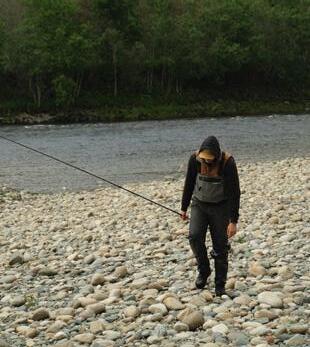
One of my favourite things about salmon fishing is the time you get to spend on the water. Cast, cast, cast, cast, cast and... cast again. It really is a numbers game. The more times you get your fly in the right place, the more chances you get. In most cases you’re not chasing one particular fish but covering water in which the fish are either holding or passing through. This means you get to spend a lot of time on the water. A downside of salmon fishing is you have to spend a lot of time on the water with nothing but your thoughts and, apart from the obvious and consistent thought of EAT IT GODDAMMIT FISH!!!, you get to do a lot of soul searching and thinking. This trip had me thinking about the balancing act of fatherhood and fishing trips, and daydreaming about taking my boy fishing in the very same river when he is old enough. Even thinking about whether there would still be wild Atlantic salmon for him to fish for and wondering what the world would be like for him as time passed. However, these profound and deep thoughts were always interspersed with the aforementioned rantings of a fisherman. BITE GODDAMN YOU BITE!!!
Now, while this was very much a DIY trip for us, we shared a lot with every other person we encountered on the river, even the fancy tweed-wearing lodge-goers. Every single person we met was there for the same reason. Salmon fishing. Whether it was the Irish lawyer and his crew we shared a few bottles of whiskey with, or the Finnish competitive distance caster who gave us some tips, or even those damn Swedes who got drunk and put my Stanley thermos in the fire (I get why Norwegians dislike the Swedes), we all had the common goal of catching a Gaula salmon. If anyone caught one, it was something to be celebrated and this is what I find truly special about salmon fishing in general.
Our days took on a predictable shape. Wake up, get out of our sleeping clothes to put on our day clothes (we packed very lightly) and put our waders and boots on. Someone starts the coffee and the other pours two bowls of cereal. Not much is said during this phase of the day apart from a few grunts. Once our coffee was drunk and cereal inhaled, it was time to decide who would start where. This was decided by water levels, where other people were fishing or, more commonly, whose cup of coffee had acted quickly and forced said person to the bush toilet and therefore no planning was needed. We would fish the west bank of the river, from the top of the beat and back to the gapahuk (hut) in the middle of the beat. Here you step out of the river and come back for a break, another cup of coffee and a chat. Then you return to the river and fish the lower section of the beat.
Once we had fished the west bank, we would hop into the car and make the 20 minute drive over to the east bank. On this drive it was essential that we stop at the 24-hour petrol station to get free coffee. This was done at least four times a day and after day five I believe the staff just regarded us as feral animals because they all gave us a wide berth. For most of our trip, all of these fishing sessions ended the same, with the long walk back to the gapahuk with head bowed low and a feeling of rejection and despondency. The longer the trip went on with no fish caught, the longer the walks began to seem and the heavier the bowed head began to feel. The only consolation was that over the five days of fishing, between ten anglers on the beat, only one salmon and one sea trout had been caught. The river just seemed to be taking a break and we clung to this thought throughout these loooong and frustrating days. As the last days edged closer at the speed of an approaching cold front, a feeling of inevitability set in. My thoughts started drifting away from the river and back to my family, back to playing with my son and hanging out with my wife, of the upcoming guiding season and how I was planning on fishing the rivers back home. I was thinking about almost anything, except the river that was right in front of me.
“ I’VE GOT A WEIGHTED ALLY’S SHRIMP FLY ON. I’M LOOKING FOR ANYTHING TO STAVE OFF WHAT IS STARTING TO FEEL LIKE AN INEVITABLE DOUGHNUT.”
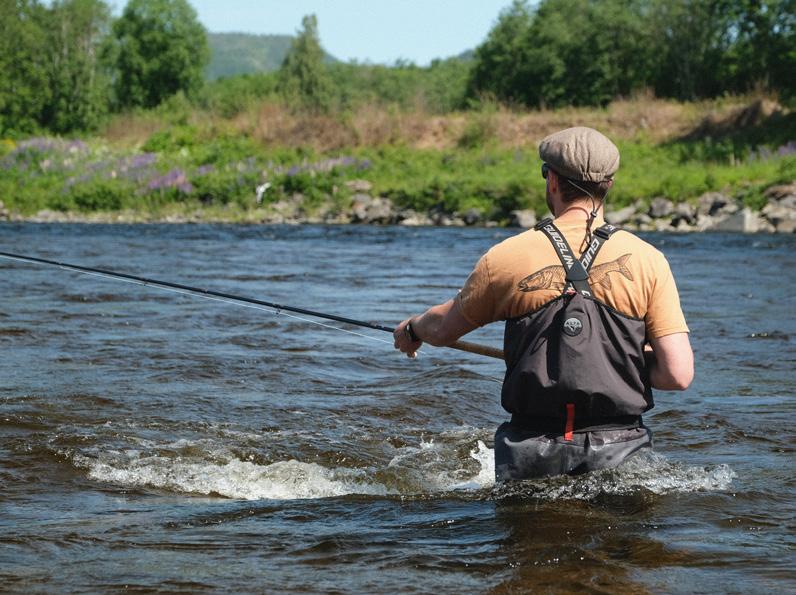
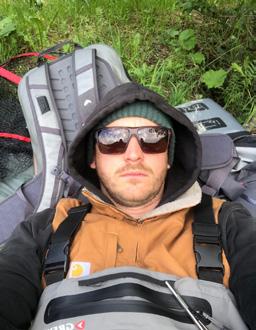
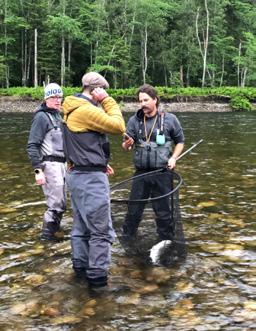
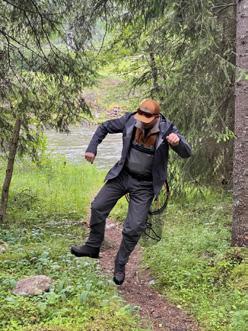
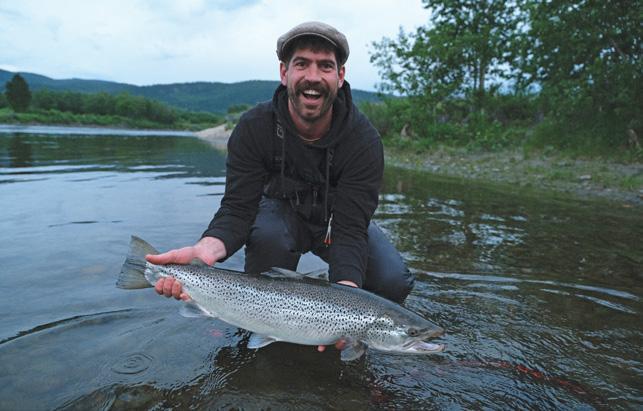
Picture this. It’s 23:30 on the sixth day of fishing. With half an hour to go, the great donkey kick to the stomach (that is the thought of blanking), is looming over our heads like the table cloth hanging over Table Mountain. The most action we have had all trip has occurred this evening. Salmon and sea trout have been seen, but nothing has come within reach. I’ve got a weighted Ally’s Shrimp fly on, just in the hope of enticing a small seatrout to take a nibble. I’m looking for anything to stave off what is starting to feel like an inevitable doughnut. I send out another laser beam of a Spey cast, do a small upstream mend and start the swing. This is the same motion I have done what feels like a million times by now. BANG. The line goes tight in my fingers, I let go of the small bit of slack in my hands and slowly lift the rod. It’s there!!! Holy Shit F#$K it is THERE! I managed to utter one word in a slightly shaking, highpitched voice. “STU!” He turns around with disbelief. “No way, no way, no way. Are you on?” He quickly reels in, dumps his rod on the bank and rushes off to grab the net. Now the stress and adrenaline are really kicking in. He comes back and asks, “Is it big?” I can’t do anything but nod. Then it jumps and, “Oh my, Odin’s ball bag!” Big bullish head shakes and some backing stretching runs are what we are facing, but slowly and surely it comes in. First the body of the line, then the head and finally the leader is in sight. Suddenly, right in front of us not two metres away, a flash of silver and the fish erupts out of the water. While I have shaky hands and a heart rate that suggests I’m running a marathon, Stu gets the fish in the net. The best feeling ever. All the hard work, the tying of flies, the
casting, the practicing and everything else have been worth it to see that beautiful fish lying in the net. But wait . . . plot twist. The fish has more spots on it than a salmon. “Mate, that’s a big seatrout!” were the first words out of my mouth. Not just a seatrout, but a Thunder Dog of a seatrout. All 75cm of fresh, ocean-run, silvery brilliance still sporting sea-lice from the fjords and angry from its journey. After a quick photo from Stu, off the fish went, hopefully to spread his Thunder Dog genes to the next generations.
“NOT JUST A SEATROUT, BUT A THUNDER DOG OF A SEATROUT.”
Heads held high, the walk back to camp wasn’t so bad this time. While we were ready to return to the real world the next day, we had grown so accustomed to the life of waders and hot dogs, coffee to kickstart things and whiskey to keep us going. But this is the beauty of a fishing trip with your best mate. Going home just means that you can start looking forward to the next trip and endless conversations reliving the past ones. As I said right at the start, we weren’t reinventing the wheel, nor was it an expensive trip to some far flung location. It was just two best mates swinging flies on a beautiful river under the midnight sun, and damn if I wouldn’t do it again in a heartbeat.
Gear up for the next horizon with us.


AN ADVENTURE DOESN’T ALWAYS HAVE TO GO ACCORDING TO PLAN AS ANDREW NIGHTINGALE AND JOE SANGIOVANN I WERE REMINDED OF (AGAIN) WHILE HUNTING FOR NILE YELLOWS IN MURCHISON FALLS NATIONAL PARK.
Story. Andrew Nightingale - Photos. Andrew Nightingale and Joe Sangiovanni
In Africa the traditional colour of many rivers is a shade of brown, with all the transparency of a brick. Far too often the proverbial bulldozers of agricultural and industrial “progress,” in the name of food security, have choked most water catchment areas with chemical-laden sediment. As African fly fishers, we are always on the lookout for the perfect anomaly – a clearwater river in an unpopulated place, teeming with unsuspecting fish. What a fantasy!
However, rare as rocking horse shit, they do exist, even if they’re generally a good distance worth of adventure off the edge of any decent map. One has to be mad enough to speculate deep into the unshaded areas, where the cartographers of old would have assured us that “here there be dragons.”
The Ayago and the Kibaa are rivers that run their entire lengths within the protected confines of the Murchison Falls National Park, spilling out into the River Nile. It’s an area so inaccessible that hardly anyone has visited and where only a handful of people had ever really fished. An area thick with untamed bush, teeming with tsetse flies, fire ants, elephant, buffalo and hippo. Every reason listed confirms that this is a bad idea. A single small dirt track runs through this part of Murchison and crosses these two rivers by way of a couple of concrete bridges.
I search on Google Earth and I can make out what I hope are car tracks down the west side of the Ayago leading to a beach on the edge of the Nile. The rangers from Uganda Wildlife Authority (UWA – pronounced “oo-wa”) patrol the area to try and control the bush meat poaching that always prevails in such inaccessibly remote areas.
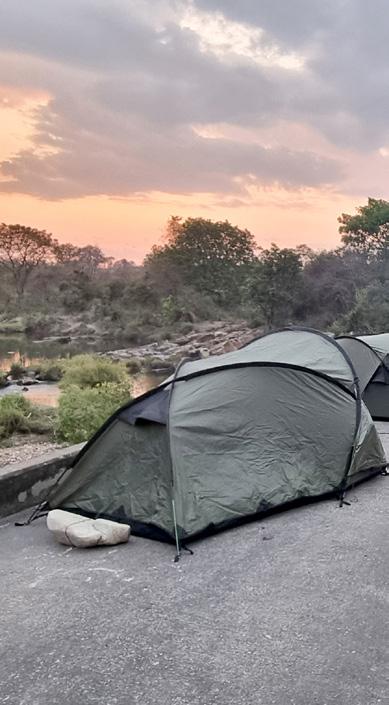
I discuss this with fishing buddy Joe Sangiovanni and hatch a plan. Dates are set and we have a mission. Months crawl slowly by, but we eventually find ourselves crossing the Kibaa River after a twenty-two hour drive en route to the Ayago anti-poaching outpost. Here we had arranged to pick up a couple of UWA rangers. It has rained a lot, and the roads have some interesting swampy sections to get through. We’re glad we have the sand ladders and winch.
Permission to bush camp and have freedom to walk in the National Park is at the Senior Warden’s discretion. One has to have the support of at least two armed rangers, one to look after your base camp, and one to watch your backs while you fish.
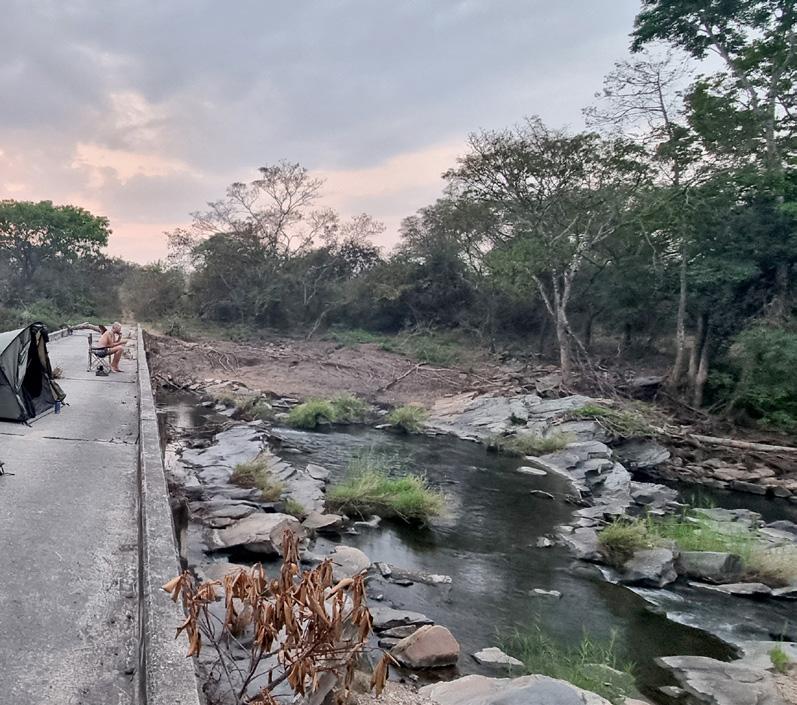
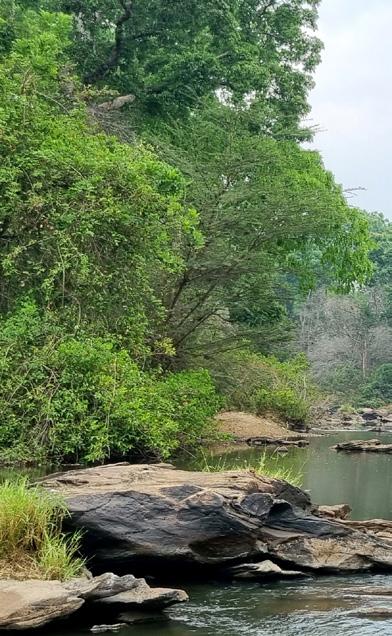
Despite all the weather, the Kibaa is stunningly clear. From our elevated position on the bridge, we look down over clear water pools that lie huge between boulders of metamorphic granite. Towering riverine figs hang over the pools while hornbills and vervet monkeys shake leafy branches in their search for delicious fruit. We see a swirl in the water under the figs and make definite plans to fish this on our way back.
At the Ayago outpost we picked up Corporals Justus Andabati and Francis Lawoko, and eased our way down the rocky track into the Ayago’s valley, crossed the narrow concrete bridge and found the track that took us down to the Nile’s north bank. Under the watchful eyes of nearly a hundred hippo lining the sandbar that bridged the Ayago’s mouth, we pitched our tents in the shade of a big yellow barked acacia.
Camp set up, we decided to go fish the mouth of the Ayago where it flows into the main River Nile. Each time we got even close, the herd of hippo objected. Females and calves backed off while males scooped water in their colossal mouths, dummy charged and shook their heads at us accompanied by wheeze honking applause. A battle-scarred male rested on the bank just up in the Ayago, grumpily recovering from his latest territorial dispute. We backed off, prudently decided to leave the calm lagoon to the hippo, then bushwhacked up the main Nile towards some promising rocks and counter currents. We were armed with our 5’s and 12 weights and, being blokes, decided to go straight for the big guns, hoping for the monster predator that was sure to be patrolling these drop-offs and back eddies.
“WE WERE AFTER THE NILE BARB – A YELLOWFISH THAT HAS BEEN RECORDED UP TO 80CM IN LENGTH THAT WE HAD NEVER YET CAUGHT ON FLY IN THE MAIN RIVER.”
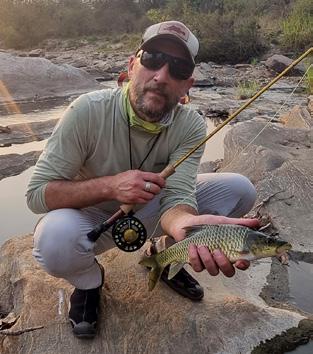
With such thick forest there was very little space for a back-cast. We followed our rod tips and wormed through dense vegetation out onto polished bare rocks that jutted out into the magnificent Nile. As I unfolded and stood up, I glimpsed a flash of silvery lemon yellow and a wrist-sized caudal peduncle flipped the V at me and slid down into the current. Spooked fish can’t be caught. I cursed and swore and thrashed the water anyway. Nada.
Joe bundu-bashed up to the next rocky promontory and had equal success at scaring fish. Looking up and down river we saw very few other access points so, with light fading behind a cloud covered sunset, we followed Justus back down a myriad of game trails as he expertly led us back to camp.
These rangers are amazing. Round the campfire that night they described their lives in this lonely frontier. The bush meat trade is extensive and, with the Congo border so close, the poaching cartels can use the confusion of
legal jurisdictions to their advantage. Poaching is done mainly with snares from fencing wire and gin traps made from old lorry leaf springs. The ivory and the pangolin trades are also rife, funded by Eastern smuggling racketeers. Profiteering and indebted servitude (aka modern slavery) are present in the area, with many families hostage to threats of criminal retribution. There’s no easy solution and these rangers are literally risking their lives to protect Uganda’s wildlife.
Justus described witnessing a fellow ranger stepping on a gin trap that shattered his leg. If he hadn’t been wearing thick socks with trousers tucked into his gumboots, he’d have lost his limb. Francis laughed and said Justus’ resulting paranoia has made him one of the best spotters and trail finders of these terrifying contraptions. I am in awe of their indomitably positive spirit.
We woke to a muggy and close morning. Menacing moisture laden clouds threatened to burst at any moment. We felt
we had better get our fishing in sooner rather than later, so we grabbed a bowl of cereal, glugged a preventative rehydration salt each, shoved some snacks into our packs and struck out to explore. Leaving Justus to keep an eye on our camp, we drove back upstream to the Ayago’s bridge, parked in some shade and started to explore upstream.
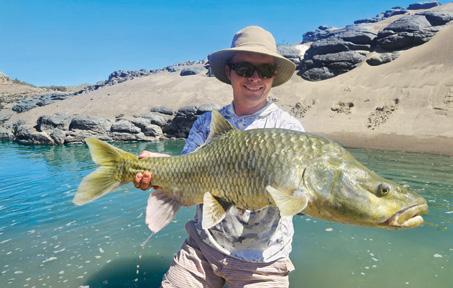
We have a theory that the smaller tributaries of the Nile must be crawling with fish who have moved into safer waters away from the large predators of big water. We were after the Nile Barb (Labeobarbus bynnii) – a yellowfish that has been recorded up to 80cm in length that we had never yet caught on fly in the main river. We had not yet figured how to tie/fish a crustacean pattern in these fast-flowing back eddies where we know they feed on potamonautid freshwater crabs. Maybe this smaller tributary would yield more luck.
Just above the bridge, a natural granite barrier blocks
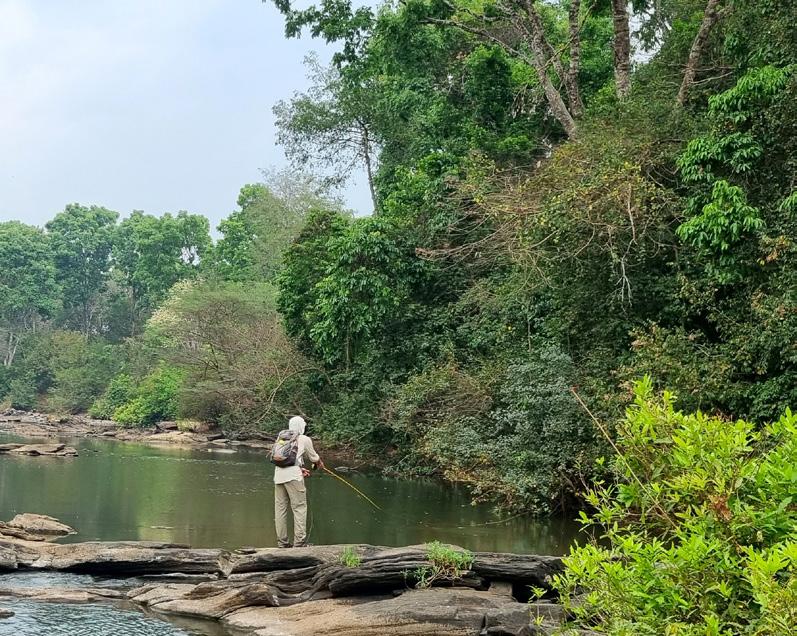
the river and prevents large predators like Nile Perch from invading upper reaches. Beyond this is where we found the yellowfish thrived in great numbers. Long dark pools shaded by overhanging trees provided excellent habitat for these golden beauties. Following game trails to navigate through the forest, we used them to access sandbars and other watering points kept clear by the wildlife. The river was slow flowing and for the most part one could see the bottom and find a safe position to cast from, ever cautious of the potential presence of crocs or hippos.
With the falling barometer, fish were feeding well. I tied on a damsel nymph and picked up a few eight inch silver beauties but struggled to find any fish of an exciting size. The shallows yielded even smaller ingots of silver. The larger fish seemed to be in deeper pools or huddled among the tangle of roots of undercut banks. We would have to find a casting spot midstream or opposite to cast back to the overhung banks.
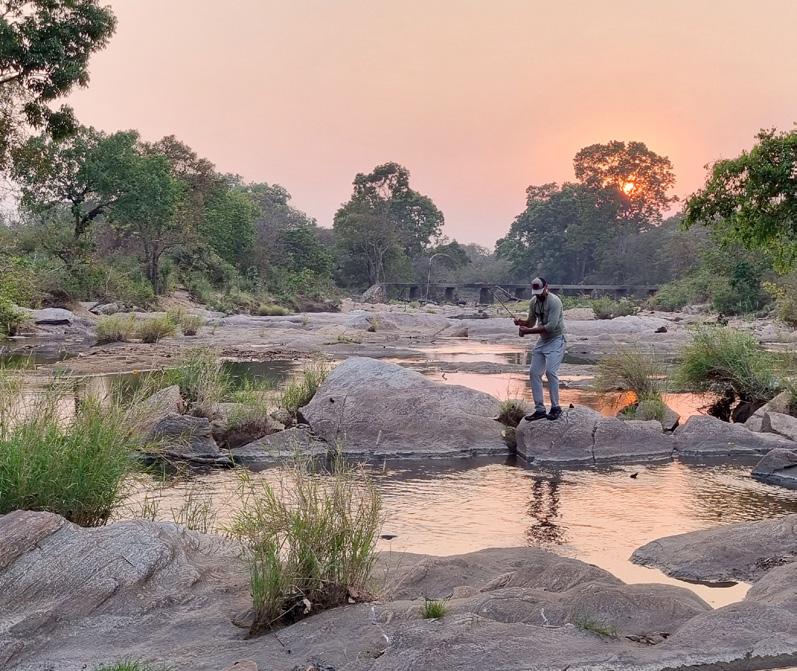
Thunder grumbled in the background. It was apparent from fresh detritus tangled in the trees that flash floods swept through this valley. With the sense of approaching rain, we discussed fishing nearer good exit points in case we heard that warning rumble.
We weren’t sure how the weather was going to affect the fish activity, so we shifted our focus to deeper pools. I found a nice, pebbled beach that allowed me to send a fly under the pendulous bushes on the opposite bank. Boom! A decent fish at last, one that felt the need to exercise the entire length of the pool before agreeing to come in. Lovely! As I let this beautiful specimen slide back into its watery home, the first wave of rain hit us hard, then moved on over.
In between squalls we fished the Ayago, clothes drying
out as fast as we got wet in the tropical heat of Western Uganda. I could feel my core temperature dropping. A snack lunch reignited our metabolic fires and we pushed on up the valley, loving every minute of exploring this beautiful river system.
We pushed on up elephant trails that ran parallel to the river, leapfrogging each other under the watchful eye of Francis who chose which paths seemed safe to follow. It was easy to follow each other’s tracks in the soft sandy bush so rarely visited by other human tread. On one occasion we heard some large creature let out a snort of alarm as it caught our scent. We waited as it moved noisily out of the valley before we proceeded cautiously. Probably a buffalo. It was mid-afternoon when the big storm hit. A wall of wind bore down on us with the sound of an approaching airliner. Within minutes sheets of rain cascaded down
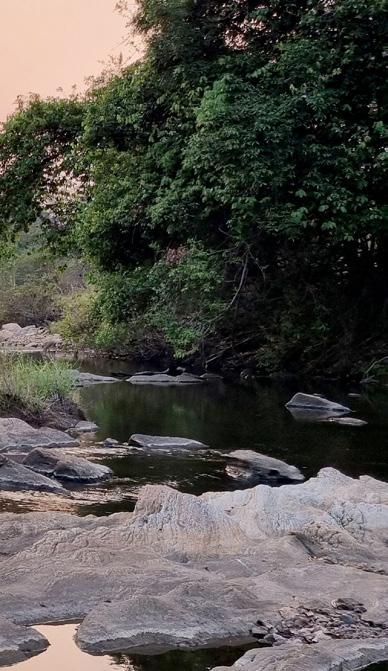
through the leaves, while strong winds buffeted the forest above. Branches began cracking and crashing down so we decided to seek shelter between the huge, buttressed roots of a forest giant. Soaked through and hugging trees for warmth, we prepared to wait out the onslaught. Thunder cracked and lightning flashed and the forest was plunged into a twilight of darkness. Were we in danger of being struck by lightning or crushed by a falling branch? We decided to stick to tree hugging to soak up the latent warmth of a massive trunk and the relative safety between its giant roots. An hour passed in dripping stasis while chaos raged overhead. “Psst! Andrew!” Joe grabbed my attention and pointed with his bearded chin to where a stunning Gaboon viper had materialised out of the leaf litter right between us. It took a moment for me to find focus, this forest queen’s camouflage so perfect that even when I pinpointed her, my eyes tried to find form somewhere else. Chased
“IT WAS MIDAFTERNOON WHEN THE BIG STORM HIT. A WALL OF WIND BORE DOWN ON US WITH THE SOUND OF AN APPROACHING AIRLINER.”
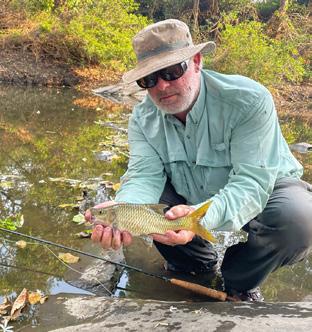
out by rising water between the roots she needed to get somewhere dryer.
As Francis brought his AK up, Joe’s roar of “NO” stopped him. We momentarily forgot the wet and the cold and watched in awe as this rarest of forest creatures sought out safe shelter further up the bank. I shivered, both from the cold and the thought of how this amazing snake has the longest fangs of all. Francis told us they were capable of penetrating a gumboot. But, like so many of Africa’s wildlife, peace and coexistence is the norm. The aggression that natural history media likes to sensationalise is the exception rather than the rule.
Suddenly, the torrential rain stopped. Within minutes sunshine beat down on the upper canopy far above. The surface of the deeply swollen pool next to us was now covered in a floating carpet of fallen leaves and flowers.
“WE
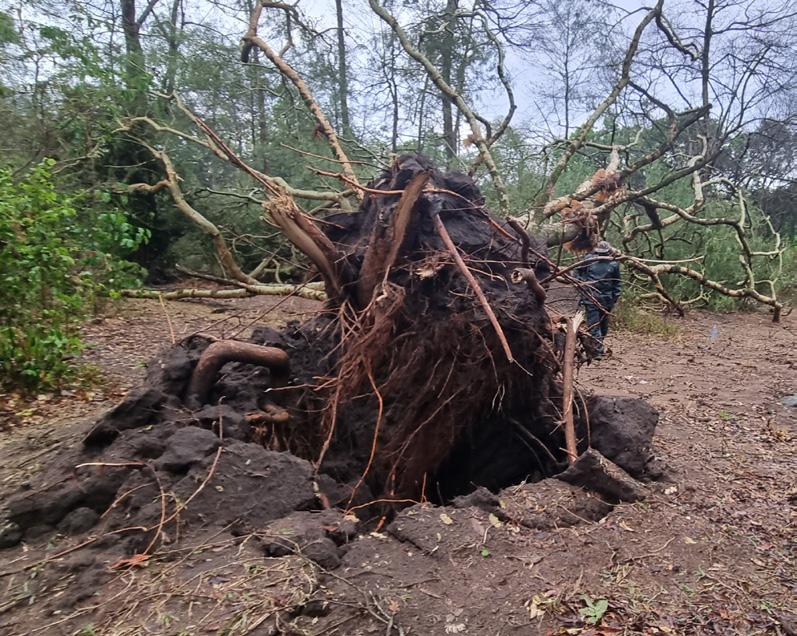
Cast a line into that and we’d be gardening not fishing. Fingers numb and bodies shivering, we realised the day’s fishing was over. It was time to make our way back to base. I remembered the old adage that if you’re not having any fun and feel like you’ve hit the wall, you’re stuck in the middle of some godforsaken story. We are each the unreliable narrator of our own life, but this tale was drowning my heroic ego into oblivion. Cold, wet, frustrated that another precious day of our fishing adventure had been brought to an early close, we clambered over freshly fallen branches and trees that made the game trails much more difficult to navigate on our way back to the waiting Landcruiser. Spurred on with plans to change into warm dry clothes, and drown a hot cup of coffee, we pushed ourselves to the reset and rest we needed for the next day.
We arrived in camp to a scene of apocalyptic destruction. Justus, the ranger we’d left in camp to look after our gear, was hunkered down under a sodden bivvy by the
flattened remains of his tent. The large fever tree lay shattered over the ground and had crushed his little dome tent into the sand. Our tents fared no better and were tied to a tree like crumpled pieces of soggy cardboard. Through chattering teeth Justus described how he heard a roar like an aeroplane, looked outside his shelter to see Joe’s dome tent rolling by like a demented tumbleweed. He’d given chase, tackled the runaway dome, then heard a tearing and splintering crack and turned to see the huge yellow-barked acacia smash onto the tent he’d just vacated. More branches fell and he used one to weigh down the soggy melee of broken poles, bedding and nylon he’d just subdued, went back to placate my shredded tent that had been tied on to a fallen log, then went to retrieve his AK47 rifle that had somehow been missed by the falling tonnage. Only then did the shock kick in as to how lucky he had been to survive. When we hadn’t returned immediately, he’d assumed we had also met with disaster and was wondering how best to rescue the situation.
In the dying light, a survey of the destruction showed all our food and kitchen ware had been scattered, along with camp chairs. Tin safari boxes had rolled into the bush emptying their contents along the way. Our tents were ripped with poles bent beyond repair. In the Land Cruiser I had the coffee bag with snacks and soon had the Jetboil doing what it does best. Julius calmed down with a hot cuppa inside him and we decided that trying to stay put was a needless exercise in futility. The rangers had warm dry beds back at base and we were only a few hours’ drive away from a perfectly comfy lodge on the edge of the Nile. I walked out onto the beach in search for some open sky to use the satphone, not a hippo to be seen anywhere. I got through to the senior warden who gave us permission to make a run for it and drive through the park after dark. Looking around it was obvious that our camp had been caught by the edge of a microburst – a weather phenomenon where a towering column of cold air can no longer be held by the cumulonimbus that

created it. It drops down through the cloud, gathering speed with some kind of venturi-like jet stream and hits the ground, spreading out with devastatingly strong hundred-mile-an-hour-plus winds. Trees felled like ninepins littered the landscape. Raw earthly power. We bundled the sodden muddy remains of our base camp into the back of the Land Cruiser, locked the hubs and drove up to the rangers’ outpost to drop off our trusty companions. As we wallowed and skidded our way through more torrential rain, windscreen wipers working flat out to reveal a tunnel of bush in the headlights, we marvelled at how much had gone wrong on this adventure. Oh, how the gods had laughed at us that day. We’d tried to measure our machismo against an indifferent Mother Nature who’d methodically pummelled us into submission. The adventuresome ghost of Nile riverman Hendri Coetzee would have been smiling at us for “living another best day ever”, finding the exhilarating joy to be had among all the day’s misadventures.
Joe turned and said: “You realise we’re going to have to come back and try again”. I smiled – yep, we sure will.
There’s no need to ask whether we went back. Of course we did! Two years year later in 2025, Joe and I were on our way to Murchison Falls National Park, travelling once again across the lily-covered marshes of the wetlands, revelling in the dappled green shades of the Bundongo Forest and the miombo woodlands before dropping down to cross the Nile, that magnificent river that runs half the length of Africa. Wildlife abounds.
We crested a hill not far off the dirt track and found a group of rangers resting under a big kigella tree, where we asked about the road ahead. One of the rangers called our names and we were delighted to reacquaint ourselves with Lance Corporal Justus Andabati who had been with us on our previous adventure. He urged us to tell his disbelieving colleagues the story of the tree that nearly killed him. Justus explained that they had moved base to the Wankwar Rangers Post as the bridges over the two rivers we were heading for had been destroyed by catastrophic floods. We would have to retrace our steps
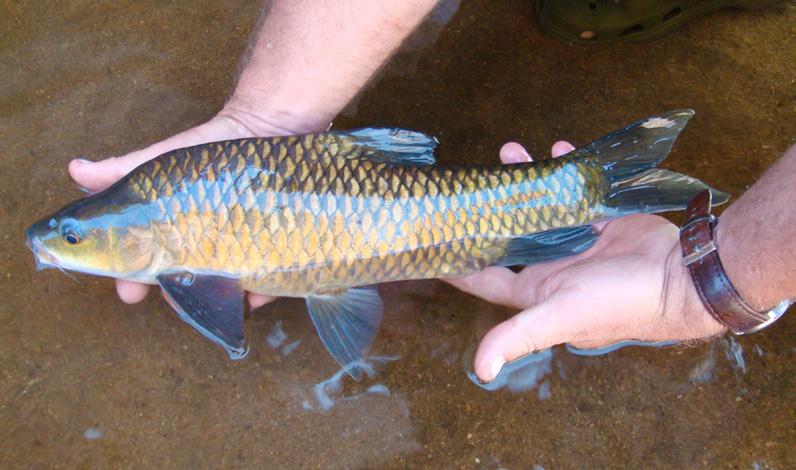
to collect our security detail and in doing so gave a lift to a ranger with a damaged ankle, together with a gin trap and several snares they had found. A group of bushmeat poachers were in the area and the rangers were gathering intel and zeroing in on their hideout.
At Wankwar we were allocated Privates Clement Mugole and Anthony Okella to look after us. We retraced our steps, dropping off drinking water and rations for the patrol group as we passed them. The bush closed in on us and the going was rough. Because of the impassable bridges there was no through traffic and virtually no track and patrols were limited to what could be done on foot. We inched our way down towards the Kibaa River, twice having to get out and feed the swarms of tsetse flies as we bow-sawed and macheted our way past a fallen tree to clear the road ahead.
And then we were there, the thick bush giving way to the geometric interruption of the concrete remains of the Kibaa
Bridge. This wasn’t going to be an easy repair. The tsetse flies behaved like they hadn’t been fed for weeks and the only place we could get away from them was on the pier in the hot baking sun. Clement explained that while on patrol they preferred camping on the bridge as, at night, a breeze blows down the valley and keeps this elevated position free of mosquitos as well. Decision made, we set up camp on the bridge.
The scorching heat abated, we had a wallow, cooled down and then it was time to fish. We rigged up and headed to some promising runs upstream. We were instantly into fish, whether with a full-blooded tsetse imitator or a damsel nymph. The afternoon slipped by unnoticed and before we knew it the dusty sunset signalled that we should fish our way back to camp. There’s something very acceptable about sipping warm whisky from a flask at the end of a successful day. The territorial sawing cough of a patrolling leopard put an end to any temptation to try a bit of moonlight fishing.
The next day, accompanied by Clement, who moved silently between vantage points keeping a watchful eye open for crocodiles or big game, Joe and I leapfrogged each other, gently rolling downstream towards the Nile, trying not to spook fish. While Joe cast out across the pools I stalked and Czech-nymphed the multitude of little rapids and chutes between them. Despite the discomforts of heat and bugs (including safari ants) and the threat of predatory animals, we lost track of time… the sport was that good. I cannot, however, deny that the tsetse are a huge problem. Long sleeved shirts and long trousers tucked into socks, all of which had been pre-soaked in Dettol, protected most of our bodies. Backs of hands, necks and ears were prime targets. Every now and then one would find its way into a particularly sensitive spot. Please note that when whacked, tsetse don’t die, so a crushing slap and roll is the only way to destroy them. If you react badly to insect bites, avoid this place – it will put you in bed.
As the afternoon cooled, we fished upstream with Private Anthony watching our backs. Once again, every fishy spot yielded results. Perfect therapy, almost too easy once you’ve gone into stealth mode. We skirted a few sections where rocky slabs gave way to sand and which we felt were high risk hidey holes for hippos or crocs. General rule of thumb for finishing the safari safely –if you can’t cast from a spot, there are plenty of other places to go to. A well-dead oribi lay in the shallows and yet, strangely, there were no signs of fish feasting on the decomposing corpse, nor were there any catfish.
It wasn’t long before we spotted the tracks of a more dangerous predator…man. The poachers camp had to be nearby because we came across a set of booted footprints that were still fresh, the pool near them still scarlet with blood where they had cleaned their kill. We decided not to hang around, not knowing if these guys were armed or stressed by our presence. The chances of stepping on a buried gin-trap suddenly seemed real. We broke our rods down and Clement led us on much less- used game trails back upstream and into camp.
Back on the bridge that evening, drinks in hand we rated the Kibaa as a fly fisher’s Nirvana – that transcendent state in which there is neither suffering, desire nor sense of self, where the disciple is released from the effects of karma and the cycle of death and rebirth. A state of mind that represents the final goal of Buddhism. Although no real monsters were caught, we reckoned the Kibaa had proved itself a world class fly-fishing river, well worth the time and effort it takes to get there.
We reported the whereabouts of the poachers signs we had come across to UWA and within days an operation had been mobilised to surround the area and flush the gang out. Mike Keigwin of Uganda Conservation Foundation told me that since 2015 the UWA patrols have seized over 50 metric tons of spring traps and snares from the Murchison Falls National Park area. It’s a phenomenal
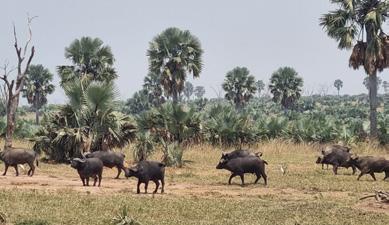
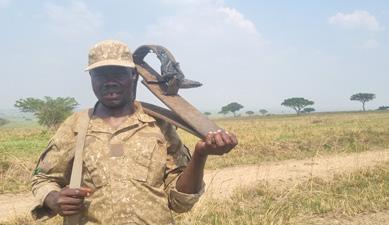
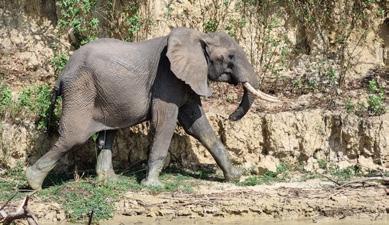
amount of hardware hellbent on raping one of the world’s greatest wilderness conservation areas. Many people are critically pessimistic about conservation efforts within Africa, but there are legions of people trying to do good with little to no funding. I take my hat off to those brave and dedicated souls. As fly fisherfolk we are lucky enough to get to go into these wildernesses and to see and appreciate what is being done to save them. A true privilege.
A fish identification app of 249 species designed especially for the South African marine angler.
The app is based on linefish research undertaken in South Africa over the last 50 years and includes the most recent information available. The app was compiled by Dr Bruce Mann, Senior Scientist at ORI.




Search for fish names using their common name in English, Afrikaans or by using their scientific name.




Work out for yourself what fish species you have caught or seen.

Easily compare similar species.



Fish Guide
Multiple high quality photos and a drawing for each species.
A comprehensive species profile.
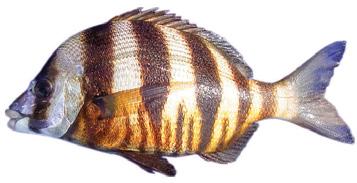
Marine Fish Guide for Southern Africa

A simple map of the species’ distribution in southern African waters.


A simple line drawing of the general shape of the different fish families.



Enter the length and the approximate weight is calculated.

The current linefish regulations for marine recreational anglers in South Africa.

PATAGONIA - RIVER SALT WADING BOOTS II
Be still our beating hearts! While we loved the original River Salt collab between Patagonia and Danner, the second iteration sees Patagonia teaming up with Italian boot brand Fitwell (same guys who did their Forra collab). The result is a thing of great beauty. Somewhere between the OG River Salt, a flats sneaker and the kind of footwear (pre-Nazi-loving) Ye might design, the 1106 g / 39 oz River Salt II features the anti-slip, non-marking juju of Vibram®’s Megagrip soles giving you all-day comfort on your feet and excellent traction on everything from boat decks to slick rocks. The uppers are made from a Cordura® nylon mesh that is lightweight, quick-drying and hard as nails, resisting the common heavy wear puncture areas hammered by coral and rocks. Last, but stylistically and functionally not least, these boots feature a high collar and adjustable ankle strap that reinforce your stability (think of those tweaking micro muscle adjustments on unstable ground).
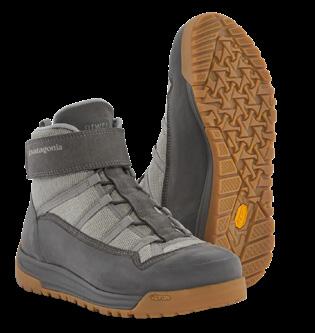
They also help keep sand out of your boots. The reinforced rubber toe and heel protect your feet, while the hardware and lace pocket are built with anti-corrosion top of mind. Designed and tested for both the fresh and the salt, you may never need another boot again. patagonia.com
AIRFLO - RIDGE 2.0 SUPERFLO MAX UNIVERSAL
We just tested the 5-weight in this banger of a line at Sterkfontein Dam so we can attest to the fact that it is, officially, the tits. It’s a textured line (hence the “Ridge” bit), but good texture in that it doesn’t go overboard eviscerating your hand or making a noise through the guides. With the addition of Airflo’s new Superflo Max Hybrid tech it’s an incredibly fast shooting line, with increased line speed and reduced memory. A perfect all-rounder floating line, the Ridge 2.0 Airflo Superflo Max Universal taper will do duty on any rod in the 3-9-weight range. airflofishing.com
“A PERFECT ALL- ROUNDER FLOATING LINE.”
SHILTON - HEAVY DUTY NIPPER
From the proudly Seffrican brand that brings you indestructible reels, comes a pair of nippers to go to war with. Tested in the harsh salt conditions of the Seychelles for over a year, these off-set blade beauties machined out of 6061-T6 anodised bar stock aluminium feature tungsten carbide cutting blades that cut braid and slice through 150lbs mono. We wager they can even handle your horny toenails. Available in green, orange, blue and grey colourways. shiltonreels.com
TFO - DISPATCH REEL
TFO’s Dispatch reel delivers dependable performance and thoughtful design in a lightweight, durable package. With a smooth, stacked stainless and carbon drag, sealed internals, and large arbor design, it’s built to stand up to the elements and keep you on the water longer. tforods.com, wildfly.co.za

“BUILT TO STAND UP TO THE ELEMENTS.”
New from Xplorer are these spiffy, top-of-the-range NRS rods. Built on a graphene reinforced carbon blank for superior strength to weight performance, the lighter, slimmer construction serves up increased stiffness and durability and faster recovery for higher line speed, tighter loops, and improved accuracy. The nano-resin system strengthens fibre bonds and reduces excess resin weight. In action, you’ll see a smooth, progressive flex with high sensitivity
Mako built its reputation on reels that could stop a tarpon cold. Their new 7450 trout reel brings that same obsessive engineering to a 3.5” trout spool. The centrepiece is a carbon-fibre/stainless hybrid drag with a fully sealed assembly: exceptionally low startup inertia, deadconsistent pressure across the full range, and zero ingress from grit, sediment, or cold water. For fine tippet work with trick troots, that’s essential. The rest follows Mako’s usual engineering standards - one-piece precision-machined aircraft-grade aluminium frame, Type III hard-anodized finish, and a ported counterbalance system that sheds weight without sacrificing rigidity. The optimized spool geometry picks up line fast when a fish runs at you in heavy current. It’s lighter and smaller than what we are used to seeing from the brand, but still unmistakably a Mako. Now all you need to do is find a big enough trout to test it on. makoreels.com
“LIGHTER AND SMALLER THAN WHAT WE ARE USED TO SEEING FROM THE BRAND, BUT STILL UNMISTAKABLY A MAKO.”
and precise control, perfect for banging out casts to finning yellows in the chop and suds at places like Sterkies. In terms of hardware you can expect SeaGuide titanium frame top guide and silicon nitride insert guides, Flor grade cork, a matte uplocking reel seat with carbon finishing and a hook keeper. They come in a lightweight, durable Cordura rod tube, featuring a aluminium end cap, labelled cap for easy identification. xplorerflyfishing.co.za
Like a mini, portable safe for your stuff, YETI’s Loadout Gobox 1 Gear Case is designed to keep your essentials like phone, wallet, passport and keys safe from anything even the biggest agent of chaos could throw at it. Dustproof, waterproof, and virtually indestructible, it features a removable tray and Silicone PackAttic™ on the interior to keep your essentials organized, there’s a tether strap for easy attaching and handsfree carrying and it’s compatible with all of YETI’s Camino®, Panga®, Cayo®, and Hopper® products. yeti.com, upstreamflyfishing.co.za
“LIKE A MINI, PORTABLE SAFE FOR YOUR STUFF.”
The Northern Cape town of Hotazel was, quite literally, named by a bunch of hard-drinking land surveyors circa 1915 who had a bit of a skop and decided, seeing as the place was “hot as hell”, that they might as well name it such. If however the Longhaul Sun Hoodie from Horizon existed back then, not only would Frontier Fly Fishing be well over 100 years old, but it’s likely that Hotazel would have another name. This hoodie is designed with long hours on the water and sun protection top of mind. Made from lightweight UPF 50 material, it is lightweight and breathable and features include thumb loops for holding sleeves in place during casting, finger loops for keeping the sleeve covering your hand, a three-panel hood construction for an ergonomic fit, a buttoned neckline to keep the hood in place and a hood that comfortably fits over your cap. Available in Sky Blue or Sand. horizonflyfishing.co.za, frontierflyfishing.com
Made with a highly abrasion resistant coating, and their XTR technology, Cortland’s Fluorocarbon XTR
Leader Material is an ideal blend of fluorocarbon resins that gives you a crystal clear, glass smooth finish and exceptional knot strength while maintaining a perfect combination of suppleness and stiffness. Expect low visibility underwater (meaning you are less likely to spook fish), a faster sink rate giving you better depth control and more direct contact when fishing below the surface, plus it comes in a range of diameters and strengths, allowing you build leaders tuned precisely to the conditions and technique you are facing. cortlandline.com, wildfly.co.za
From the boardroom to the riverbanks, Orvis’s R65™ fleece vest and jacket are the kinds of garments that do duty for you both in the outdoors and elsewhere in life. Lightweight with a soft brushed fleece interior and sweater-knit exterior, they expertly meld technical performance properties with durable style. Sustainably made of recycled polyester from PET bottles (65+ bottles are used to make each jacket for example), neither the vest nor the jacket will pill or weigh you down. orvis.com, flyfishing.co.za
“THIS HOODIE IS DESIGNED WITH LONG HOURS ON THE WATER AND SUN PROTECTION TOP OF MIND.”
Ours is one of the few pursuits where you get to sport the trimmings of success on your melon (honourable shout out to Viking helmets). Patagonia’s Fly Catchers are high-crown hats made of 100% organic cotton corduroy with a fly-catching front patch for holding your tried and trusted patterns. No need to dig in your pack when changing things up. The brim is made of NetPlus® 100% recycled fishing nets. As with most things Patagonia, it is Fair Trade Certified™ sewn. patagonia.com, xplorerflyfishing.co.za
CRAGHOPPERS - NOSILIFE CARGO TROUSER III
Everyone needs a pair of ... drum roll, cymbals clash... ADVENTURE PANTS!
Craghoppers specialize in this field and with their Nosilife range in particular. Featuring a Zip’n’Clip security pocket, dry bag, drying loops, adjustable hem, wicking mesh cooling inner waistband, heel tape, 10 freaking pockets and UPF 50+ sun-protection - these easy-care, go-anywhere cargos guard against insects and UV rays, while helping you stay cool and fresh in searing heat. craghoppers.co.za, flyfishing.co.za

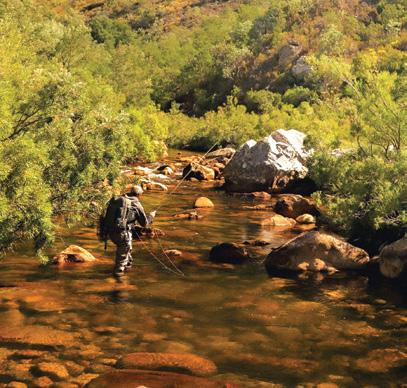

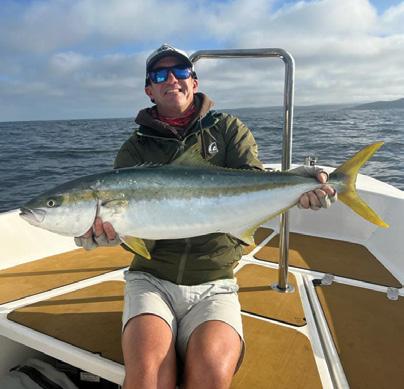



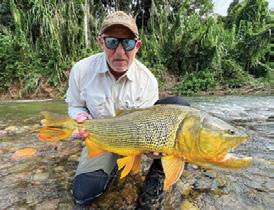





At the risk of sounding like the oppositional AI slop language of ChatGPT (“this is not just a carrot, it’s a testament to root vegetables!”), Skwala’s Fusion Tactical Hoody is not just a hoody. Why? Well it combines the cozy breathability of a midlayer fleece with the insulation of a micro-puffy and the fit and functionality of a regular sun hoody. Three-for-one special ek se! The expedition-weight waffle grid fleece provides comfort and insulation while the Primeflex™ stretch-woven outer shell covers shoulders and sleeves to cut wind and shed water without limiting range-of-motion. Great for those hot and cold shoulder season days in the South African autumn and winter, you can wear it as is for stand-alone high-performance, use it as a solid base layer, or employ it as a mid-layer for the coldest days (e.g. Thrift Dam in August in a float tube). skwalafishing.com, wildfly.co.za
While a Seaguar sounds like a cougar with a penchant for open water ocean swimming, it is in fact a premium Japanese line manufacturer and their Fluoro Premier Fluorocarbon Leader is a product you will often find out on the atolls and islands of the Seychelles. With its double structure composition that fuses two 100% fluorocarbon resins, it boasts phenomenal knot and tensile strength, a smaller diameter and low memory, giving you a leader more powerful and supple than your mom’s pilates instructor. Each spool is 25yds (22,86m) and it comes in 12lb, 15lb, 20lb, 25lb, 30lb and 40lb options. seaguar.com, upstreamflyfishing.co.za
Files this one in the “Technical garment that you won’t be embarrassed to wear in public” folder. The do-it-all Men’s Long-Sleeved Self-Guided Sun Shirt brings together intuitive, on-the-water/trail performance with 40+ UPF sun protection and breezy, all-day comfort. Stretchy, quick-drying 100% recycled polyester fabric moves athletically, stays cool and looks shweet in any situation. Made in a Fair Trade Certified™ factory. Xplorer has river rock green and thermal blue colourways. patagonia.com, xplorerflyfishing.co.za
“FILE THIS ONE IN THE ‘TECHNICAL GARMENT THAT YOU WON’T BE EMBARRASSED TO WEAR IN PUBLIC’ FOLDER.”
When you don’t need to get technical about mega-BEAST hooks or the curvature of a shrimp’s back, but simply need a sharp, reliable saltwater hook, you might want to consider Fulling Mill’s Universal Salt. Manufactured to the highest possible standards of sharpness and strength, these standard finish, straight eye, 2X strong, forged, tin-plated hooks suit a wide range of flies from bonefish patterns and crabs, to Clousers, other baitfish and everything in between. Sold in packs of 25. fullingmill.co.uk, flyfishing.co.za

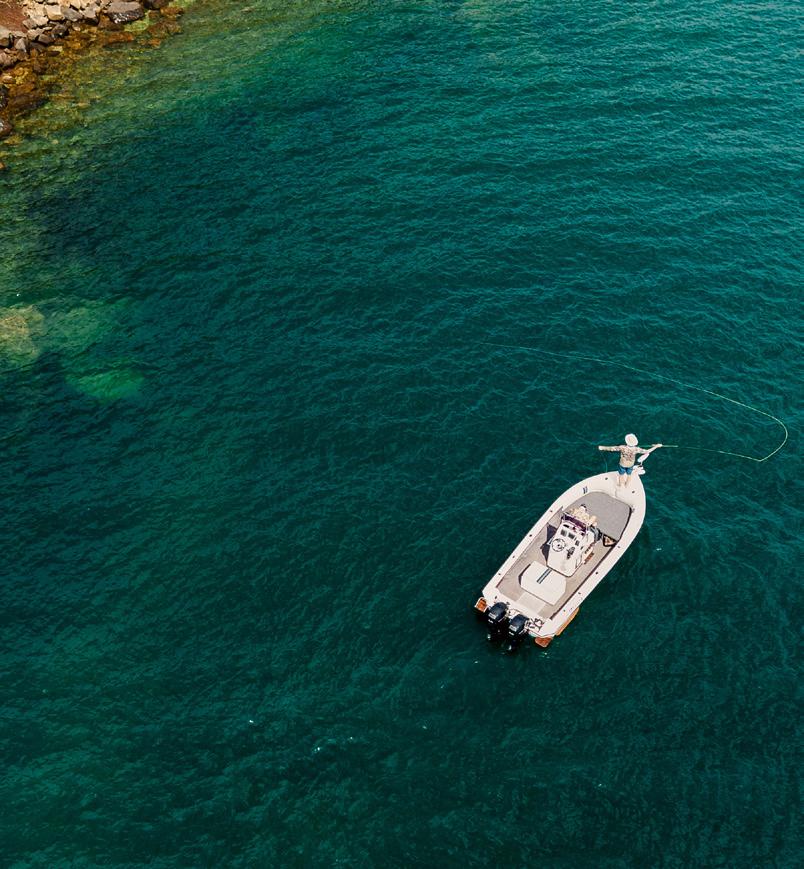
“THE ULTIMATE MULTIPURPOSE LINE FOR ANGLERS WITH A DRY-FLY FOCUS, BUT A READINESS TO ADAPT TO SUBSURFACE PURSUITS AS CONDITIONS CHANGE.”



If you’re looking for a rod that hits both the workhorse and warhorse descriptors, Orvis’s new Recon rods raise a hoof or three. Packing high-end performance in tough rods that are designed to be used and abused (tossed in the back of the bakkie, strapped to your backpack, attached to your fat bike) Orvis redesigned the Recon to be 20% stronger than the previous generation while delivering all
the performance hard-charging anglers require of a midpriced rod. Made in Orvis’ Vermont rod shop, the Recon is available in 13 freshwater and 6 saltwater models. Each rod sports a unique taper (inspired by Orvis’s highend Helios range), tailored to excel at its target purpose, whether that’s bluelining Knysna forest browns or targeting yellowtail offshore. orvis.com, flyfishing.co.za
what to buy and gets you on the water quicker. , wildfly.co.za
Redington’s Classic Trout rods are some of our all-time favourite, affordable small stream wands so it’s not surprise to us that their new Classic reels are cut from the same cloth. Nothing fancy, just a good-looking, lightweight, largearbor reel that gives you the kind of click that provokes a Pavlovian response (in your case, a trout strike and a baritone squeal). Invoking Goldilocks “just right” design principles, these reels feature an adjustable double-clicker mechanism with enough drag to stop over-spooling, enough audible click to let your buddy downstream know you’re on, and enough palm-able rim to keep it all under control. Constructed from machined 6061-T6 aluminium, the ported mid-arbor, narrow spool design keeps it lightweight, durable and delivers quick line pickup, all in a vintage package. farbank.com, xplorerflyfishing.co.za
Almost as popular among homemade butt plug hobbyists as it is with the fly tying fraternity, Arctic fox tail is one of those wonder materials that packs plenty of movement. Use it instead of marabou, work it into a Gamechanger or simply tie it into your baitfish or crustacean patterns and let its long, soft, and mobile hairs do the work. veniard.com. upstreamflyfishing.co.za





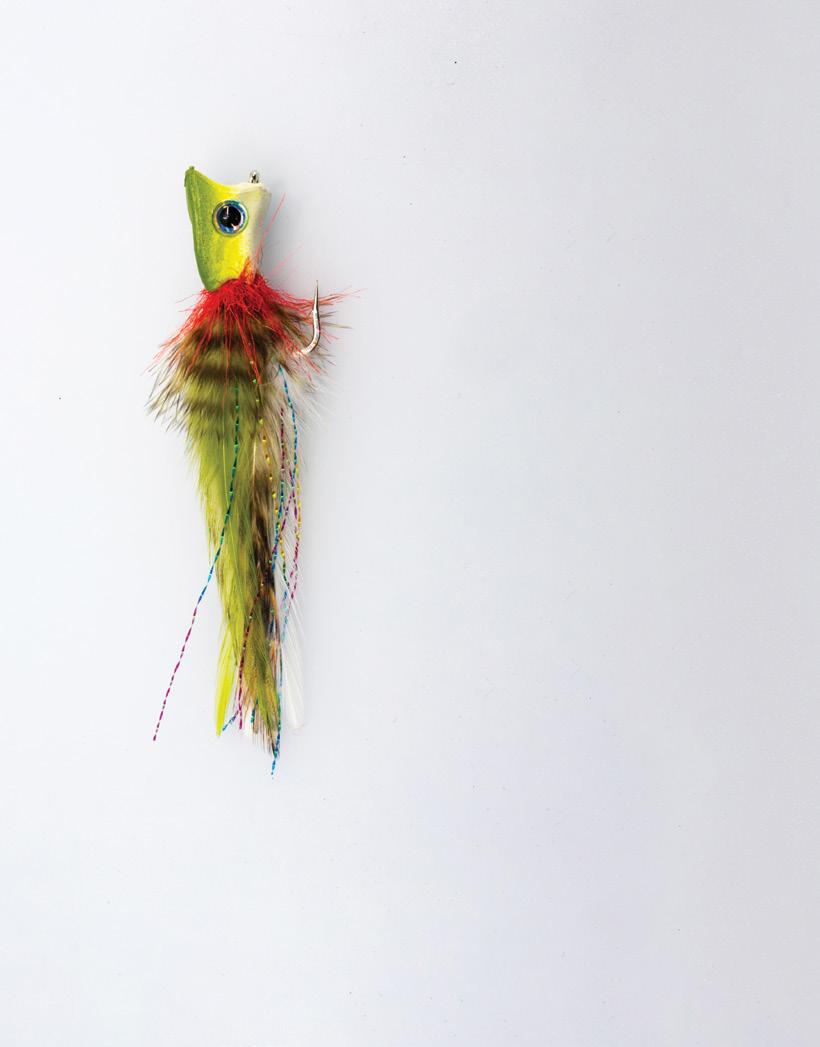


IN THE SECTION THAT GIVES YOU HOT TAKES ON EVERYTHING FROM VROT HAKES TO CUPCAKES AND DEEP FAKES, WE GIVE YOU THE VERDICT ON THE NEW G. LOOMIS ASQUITH ROD WHICH SELLS FOR A MIND-BOGGLING $1750 (+- R29 000).
The 10, 11 and 12-weight rods come in at $1750, while the 8 and 9-weights (both saltwater) and the 7-weight (freshwater) fetch $1635, and the 6-weight goes for a paltry $1570.
- The original Asquith was designed by Steve Rajeff, aka the baby Jesus of the rod design world and while we are not 100% sure if this newer range is imbued with his DNA to the same extent (literally a stray pube would do), we’re going to assume it is, which means it should be excellent.
- Gooi this rod and you will be like freaking Darth Vader before he got mangled and chopped. Mean and ninja-like, a one-man GT Deathstar, capable of power, precision and the eradication of Ewoks.
- You will probably also be an investment wanker banker or trustafarian at that price point. Or ... maybe we are just being mean because we live in a country with a Mickey Mouse currency and cannot quite get our tiny brains around paying that much for a fly rod.
- On that note, as is the nature of prestige product competitive pricing and the never-ending marketing arms race of premium brands, it’s just a matter of time until we see the first $2000 rod.
- If we were to answer one of those emails claiming to be from a Biafran uncle who wants to leave us his fortune and if said email did not turn out to be a scam, would we like to buy one? Yes, of course. This is probably a truly amazing rod.
+- R29 000


Package 1
A 2007 Ford Ka from North West Province in “good condition”, with manual transmission, 114 971 km on the clock and some suspicious stains on the backseat. R24 999
+ An Xplorer CRX 7/9-weight Fly Reel. R1 285
+ An Xplorer ProCast II Fly Rod. R1700
+ A bottle of Olaf Bergh brandy. R175
+ A pack of Stuyvesant Reds. R62
+ Fuel. R800


Package 2
A tenkara rod bundle (plus shipping). R10 800
+ A gimp suit. R5000
+ A tub of KY jelly R65
+ A subscription to The Complete Fly Fisherman R1060
+ A second hand scooter R12 050

Package 3
An Orange River Drift (one of the larnie ones where they set up your tent and offer you a choice of bevvies and a back rub at the end of the day).
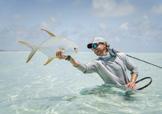






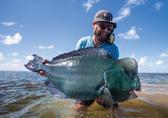




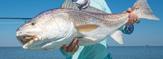

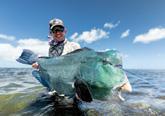


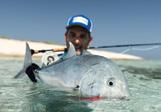
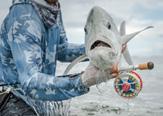



shiltonreels.com | sales@shiltonreels.com

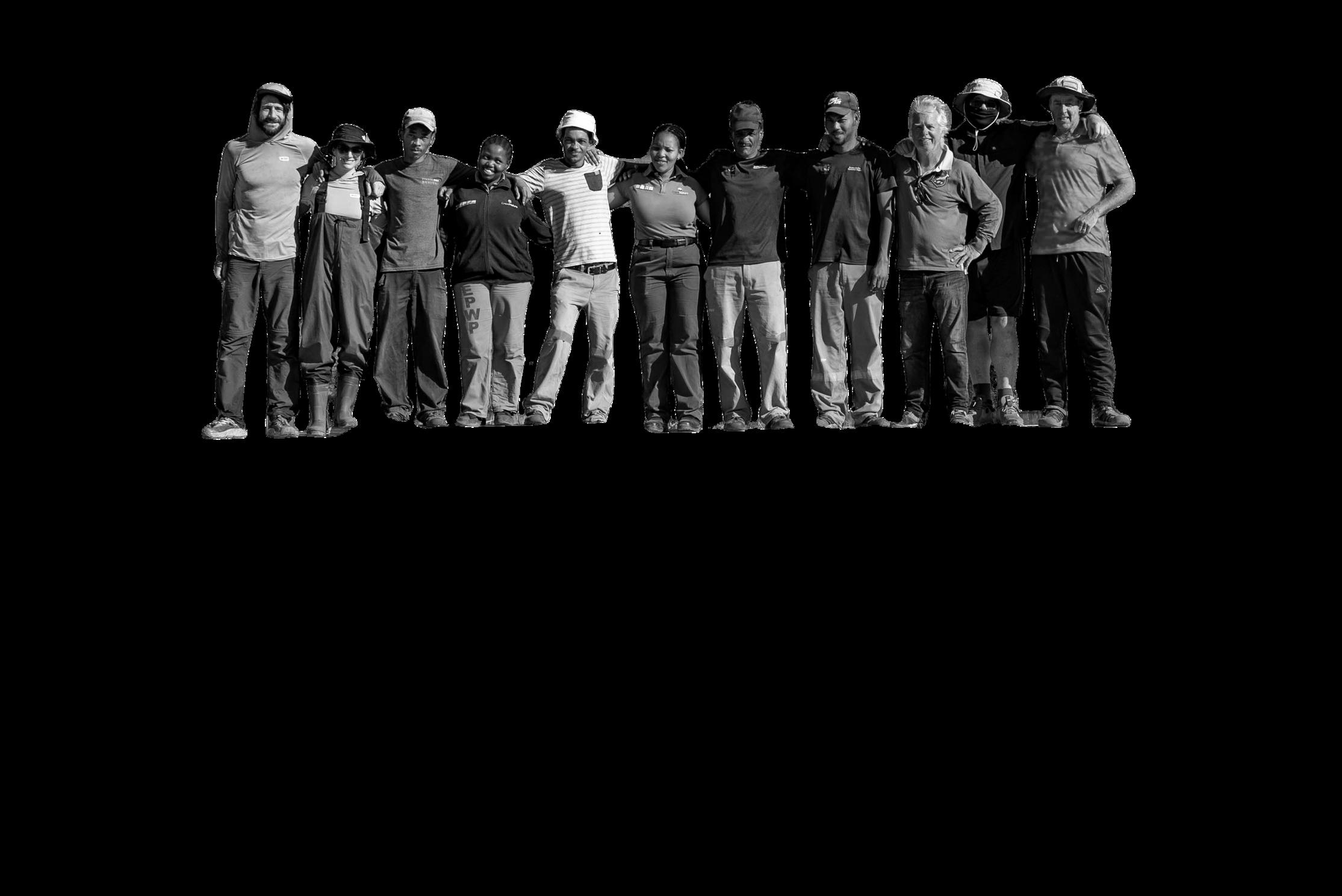
g e t g e t c o n c o n
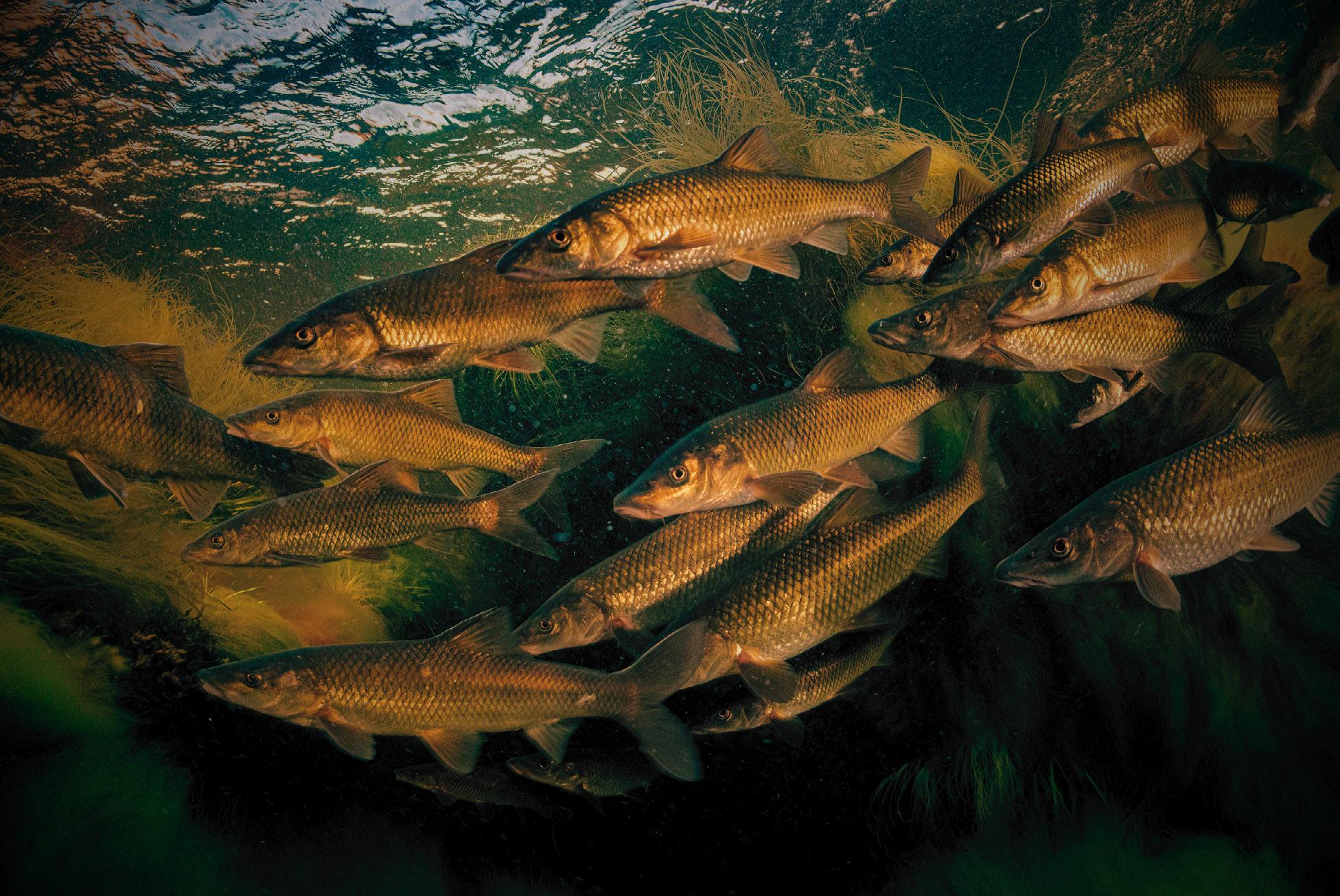
R e s to r i n g
R i v e r s
s a v i n g
s p e c i e s
C O N N E C T I N G
C O M M U N I T I E S
t b e h i n d t b e h i n d l o c a l f i s h l o c a l f i s h
n s e r va t i o n
n s e r va t i o n w h e r e i t w h e r e i t
m a t t e r s m o s t
m a t t e r s m o s t
c l i c k
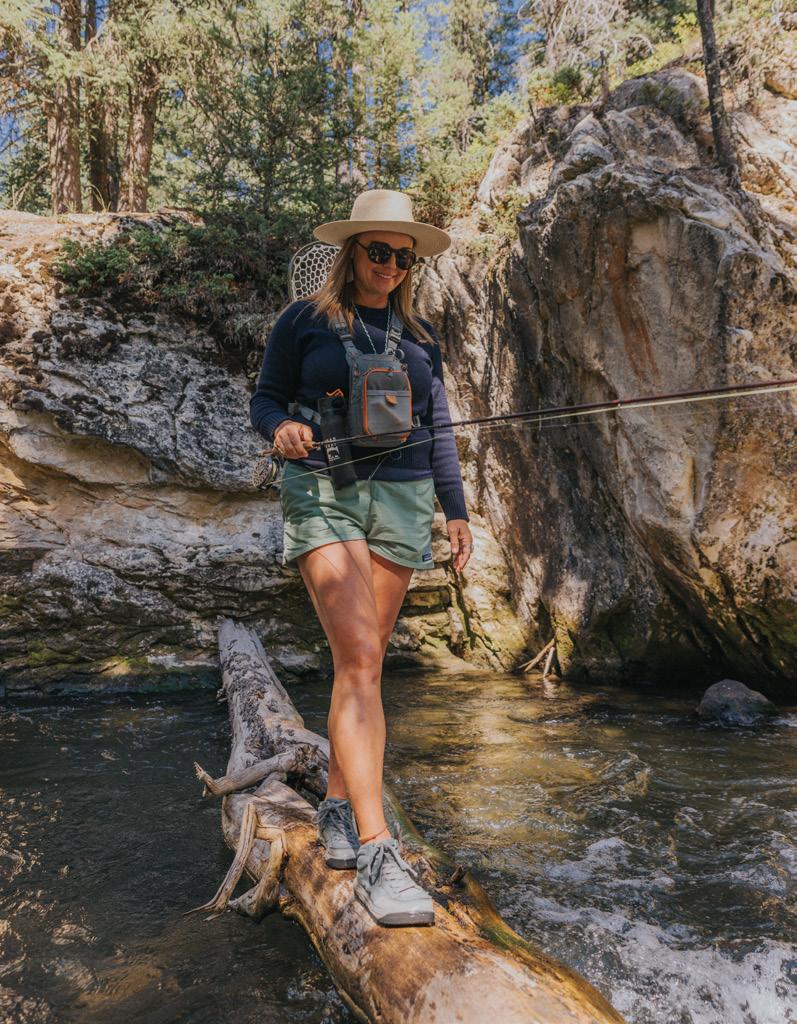
WHETHER YOU CLASSIFY IT AS A SPORT OR A HOBBY, IF YOU WANT TO CONTINUE FLY FISHING INTO OLD AGE, YOU NEED TO TRAIN FOR IT. WE CHAT TO FLY FISHING FITNESS EXPERT LINDSAY KOCKA TO FIND OUT WHERE TO FOCUS FIRST.
Photos. Gloria Goñi
It doesn’t matter how old you are right now, at some stage while exerting yourself out fly fishing you’re going to think, ‘That was harder than it used to be’”
Because this pastime of ours - this sport, this hobby, this obsession - is inherently physical. We hike into mountains and along coastlines to find good water. We scramble up and over boulders, trudge through heavy sand, bash through bundu, and balance on one leg while performing a hail Mary cast standing on a wobbling rock in a river with strong currents.
In your teens and twenties, all of this is easy. In your thirties, the first cracks start to show - perhaps you have an injury or put on a little weight - but you can still push it. As you enter your forties, fifties and sixties - fitness, strength and mobility become more serious concerns. You can no longer operate on a Coke, a garage pie, a smoke and good genes. Plans and dedication come into play. You have to work at keeping your chassis in decent nick in order to do the things you want to do. We’re not talking about washboard abs and breaking marathon or strong man records. We’re talking about being that old guy who is still out there. We’re talking about staying fit so we can keep fishing for longer.
Meet American fly fishing fitness fundi Lindsay Kocka. Originally from Minnesota, but based in Bozeman Montana these days, 42-year-old Lindsay is the closest thing fly fishing has to a fitness influencer but not the kind that flogs supplements and grubs around for freebies in exchange for hashtags. She gives real, practical fitness advice tailored to the fly fishing world.
Though her undergraduate degree was in anthropology rather than kinesiology or sports science, Lindsay’s professional education came later, and extensively. Over the past fifteen years she’s completed advanced training in functional mobility, therapeutic yoga, neuro-based movement, recovery, and strength development, building a depth of practice shaped by real bodies, real environments, and long days spent on the water. Growing up in Minnesota, she was an avid mountain biker and worked as a bike messenger for several years. “My path has just kind of followed my own personal fitness interests. I worked with cyclists first and then I became really interested in rock climbing and worked with rock climbers managing yoga and fitness programming for rock climbing gyms in Minnesota.”
While she only came to fly fishing in her early thirties, Lindsay didn’t expect the demands it made on her body. “I was thinking ‘I’m a pretty fit individual, I can move pretty well’, but I was very surprised by the level of challenge that I was encountering while wading rivers. In Minnesota it’s spring creek fishing, really small water, very technical precision casting and a whole lot of crawling around on your hands and knees sneaking up on fish. It was hard. I was falling down a lot, using a whole lot of dynamic movement and a range of motion that I didn’t expect. So, I thought to myself, if it’s this challenging for me, it has to be challenging for others. My Wade Well method came out of that.” As she got deeper into fly fishing Lindsay realised that there were plenty of fellow anglers who were grappling with the physical age-related changes we all encounter and these changes impacted on their fly fishing. She says, “I want to empower people to stay on the water as long as possible.”
“YOU CAN NO LONGER OPERATE ON A COKE, A GARAGE PIE, A SMOKE AND GOOD GENES. PLANS AND DEDICATION COME INTO PLAY.”
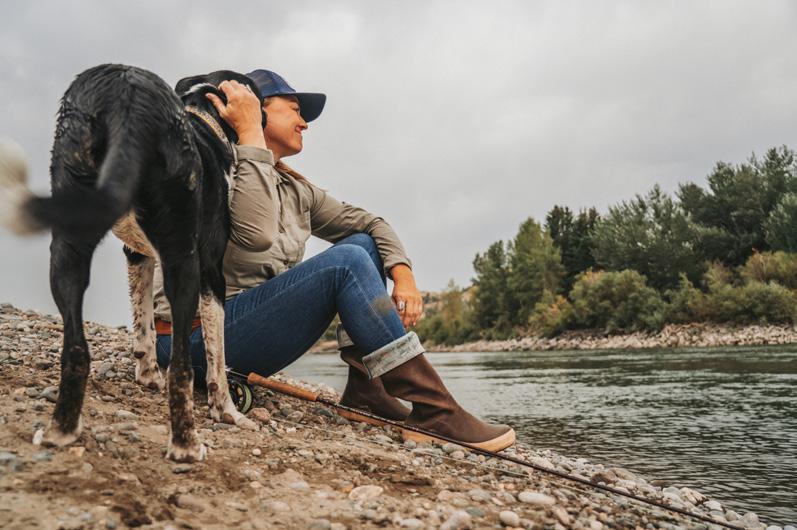
To do just that here’s a list of things Lindsay recommends you do to improve your physical health.
That “age is just a number” is a cliche but it’s no lie. We really do know two kinds of 60-year-olds. Those who behave like they are ancient, whereas others (frequent contributors to this rag in fact) charge harder than your average 20-year-old.
Lindsay continues, “There’s this misconception that after you hit a certain age, you’re just going downhill. I’m a huge advocate of the very opposite. I work with people of all ages. It’s so cool to watch how quickly all ages can progress, assuming they are committed to the cause. It’s definitely not an instant gratification game.”
Let he or she who hath not fallen ass-backwards into a rock pool or Palmiet River hole and landed up with their knees higher than their heads, cast the first stone. Sometimes, getting up off the deck takes a lot of effort. And the bad news is that it just gets harder the older you get. To combat that, you have to put the work in. It all starts on the floor.
Lindsay says, “The ability to get up and down from the ground is massive. Just being able to squat down to net a fish, release your fish and stand back up, are all basic functions that it’s easy to take for granted until you wake up one day and your body is not cooperating. Why? It’s because of a lack of coordination control, ankle mobility, hip mobility, and just general management of gravity and space. The number one thing you should do on a regular basis, ideally every day, is spend time on the ground. It doesn’t have to be for long, but it makes a huge difference. Just get your butt down in the middle of your living room floor (not propped up against a couch). Whether you are watching Netflix, reading a book, working on your computer or playing with your dog or kids, I don’t care what you do. What happens when you’re seated on the ground for, say, half an hour, is that you typically wind up moving your body into different positions, because it gets uncomfortable. If you look at the different positions you move into, you will see that they replicate different stretches, yoga postures, and movements that you might even see in a Pilates mat class. Sitting on the ground makes you naturally start to move your joints throughout all these different ranges of motion, the lower body in particular. Even if you decide to lay belly down for a minute or on your back or your side, I cannot stress enough how important it is to your ability to get up.”
We’ve all wiped out while fly fishing while navigating slippery logs, standing on unstable rocks, crossing strong currents or falling overboard off a boat in choppy water. Balance is key to fly fishing. But, like anything you want to be good at, you need to train for it.
Lindsay says, “People start to notice deficits in their balance as they age, so there’s a lot of balance training that I would consider essential for everyone regardless of their lifestyle. Single leg balancing of some sort on a daily basis is really important. You can do it when you’re brushing your teeth. Simply balance on one leg balance for 15-30 seconds and then switch sides. Or, when you’re putting your shoes on before you leave the house, do it standing up instead of taking a seat. I don’t want anyone falling down and breaking anything so, if you need to, hold onto something stable and upright. We actually want that level of challenge and the wobbling it causes. Similarly, I always recommend that when people are putting their waders on they do it standing up instead of sitting down. Let yourself wobble a little. Wobbling is good.”
Think grip strength and you probably imagine manly handshakes, rock climbing feats of derring-do or armwrestling bouts with berserkers, but there are more important reasons to focus on your grip than those distractions. Studies have shown that a weaker grip could indicate that a person is more susceptible to diabetes, cognitive impairment, depression and lower bone mineral density. For Lindsay, grip strength goes beyond sheer power and is about the dexterity of your hands and the pressure range of your grip.
“Everybody should be training their grip strength. It is super important as we age and arguably more important for people who are managing really heavily weighted rods. Even though we’re supposed to maintain a pretty light grip on our rods, if you’re salt-water fishing for massive species that changes pretty quickly. When I talk about grip strength, I’m not necessarily only talking about gripping really tightly. It’s more about people being able to utilise the dexterity of their hands and being able to hold onto anything, period. Over-gripping can also be an issue. We get a lot of people who wind up with tennis elbow or chronic pain and dysfunction based on over gripping.
“Simple exercises like tennis ball squeezes are a great beginning friendly option for grip strength training. Similarly, exercises that simultaneously build grip while also engaging your entire upper body, are dead hangs and farmer carries. Pair them with hand and wrist mobility work and self-myofascial release to keep tissues healthy, maintain dexterity, and cultivate greater durability and comprehensive hand health.”
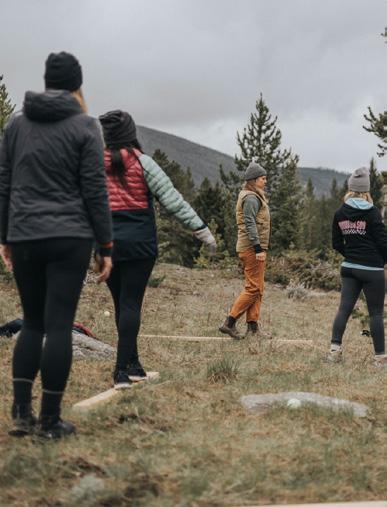
While a great invention (shout out to Ötzi the Iceman and his 3200 BCE brethren), modern shoes get in the way of your feet. They’re over-protective, like helicopter moms at kindergarten drop-off. For many South Africans being barefoot is a way of life but, for people in cold northern climes like Lindsay, you need to remind yourself to lose the shoes and socks whenever you can. More time barefoot means stronger, healthier feet.
“Foot health is essential. If you are able to spend time without your feet crammed in shoes, that’s ideal. You should be building the many muscles in your feet in the same way you build all of these other muscles in your body. You’re not able to do that if you have shoes on all the time. Avoid shoes with narrow toe boxes if you can and try to walk around barefoot or even just with socks so that your feet are can build some strength, resilience and durabilityeven just 30 minutes a day - that’s a game changer.”
No, not the rugby studs-and-all melee. Popular as a fitness trend at the moment, “rucking” (aka carrying a bunch of weights while walking via a weighted vest or rucksack) is hugely beneficial for your overall fitness, weight management and, most importantly, your ability to excel on a backpacking fly-fishing trip without pulling a muscle after day one.
Lindsay says, “I love rucking. I think it is one of the most beneficial things everyone can do. It checks so many boxes, especially for the wading angler and those looking for an entry-level way into strength training while still staying active. I always think about the traveling angler who drops big money on a trip and then blows out their back or shoulder on the first day. Or, they’re just not feeling great because of the amount of output that’s required on a day-to-day basis during the trip and they’re not recovering well. If you don’t have the ability to attain some level of recovery at the end of each day, I wouldn’t want to be on that trip.”
Unless you are already on top of your strength and mobility situation, you’re probably finding that the older you get, the stiffer you feel after exercise (including a day out fishing). That’s thanks in a large part to your fascia (the membranelike connective tissue covering your muscles making you essentially a massive human sausage) becoming tight and thickened. If you’re planning on doing multi-day trips that demand serious exertion day after day, you need to work on your recovery protocols, stuff that loosens those uptight fascia and gives your body permission to relax. Asked to narrow it down, Lindsay recommends two moves (there are plenty more in her courses) and one super cheap yet effective recovery tool.

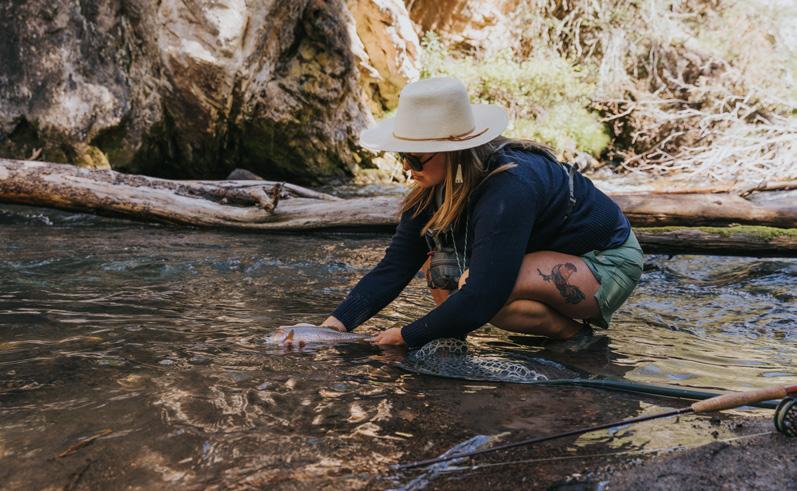
“I ALWAYS THINK ABOUT THE TRAVELING ANGLER WHO DROPS BIG MONEY ON A TRIP AND THEN BLOWS OUT THEIR BACK OR SHOULDER ON THE FIRST DAY.”
“One of my go-tos that I absolutely love in terms of recovery practice, is a basic legs up the wall posture. You could be laying on the ground or on your bed or a couch, and you pop your legs up on the wall. Even if you just have your legs halfway up, like on a chair with your knees bent, that works too. The second move is a standing forward fold. From standing up, you hinge at your hips, fold down and I let your head hang so you’re upside down with your heart and spine decompressing. These are incredibly restorative practices, especially if you’ve been on your feet all day fishing. And no, you don’t have to touch your toes.”
“Lastly, I am a huge fan of self-myofascial release. You can use a massage ball or a tennis ball, which is what I have my students use because they’re cheap. You just put that tennis ball into any of those tight muscle spots and then roll on it or use your hand to roll it into muscle and fascia. Soft tissue is what we’re going for, avoiding bone and avoiding nerves. It pains me to see people grimacing while they’re
stretching. I have to remind them that your nervous system is not going to offer you more range of motion in those tissues if you’re in the midst of a pain response. I always encourage people to actually scale it back to a point where you’re not in pain, because then you make incremental gains rather than trying to push it. In the same way you get this concept of progressive overload when you’re strength training where you’re slowly adding more volume and load over time. It’s the same with stretching and myofascial release. Start very small. You do not have to do an hourlong yoga practice or an hour’s strength training every day. Three minutes is better than no minutes, and sometimes three minutes is better than two hours, depending on who you are and what you’re trying to achieve.”
Feel like you need a bit more professional help on the fly fishing fitness front? Check out lindsaykocka.com for classes, programmes and more from her Wade Well method.
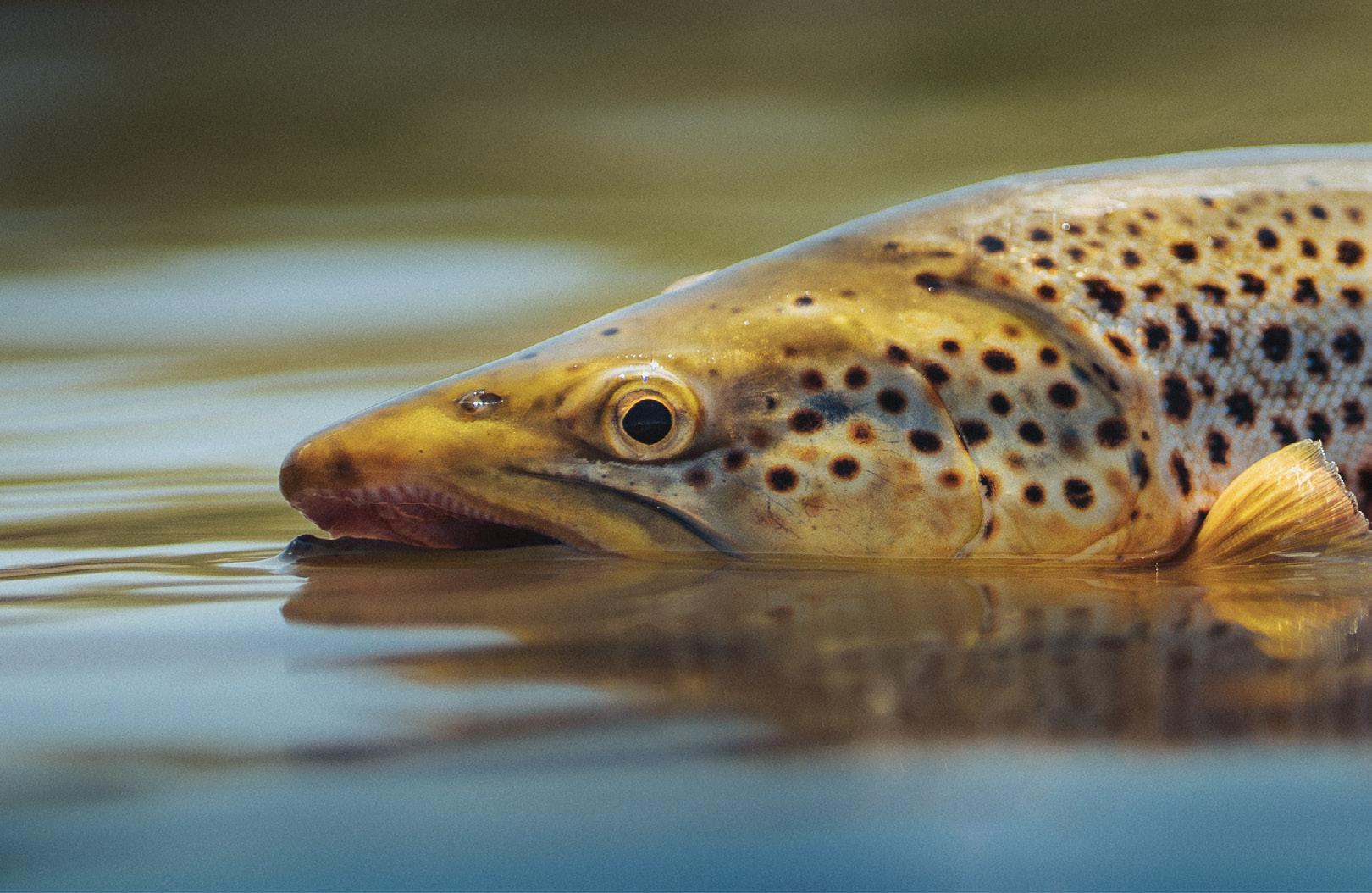
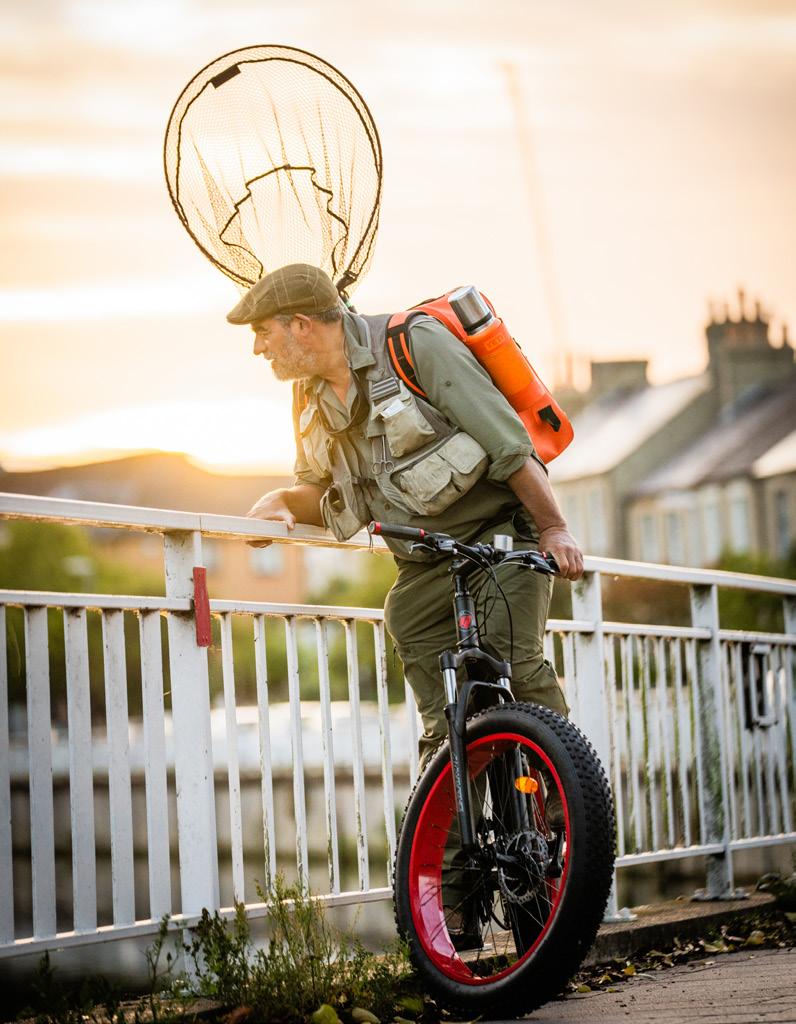
THERE’S A BUDDHIST MONK CALLED MATTHIEU RICARD (FORMERLY A FRENCH MOLECULAR BIOLOGIST), FAMOUSLY KNOWN AS ‘THE HAPPIEST PERSON ON EARTH’ ON ACCOUNT OF THE UNPRECEDENTED LEVELS OF GAMMA WAVES HIS BRAIN PRODUCES. FOR A FLY FISHING EQUIVALENT, YOU NEED LOOK NO FURTHER THAN ANOTHER MATT, GLOBETROTTING ANGLER AND AUTHOR MATT HARRIS . FEW PEOPLE LOOK AT FISH IN THE DEEPLY STOKED WAY MATT DOES. PERHAPS THAT’S A SKILL THAT COMES WITH, AS A PHOTOGRAPHER, MAKING KIDS LAUGH FOR A LIVING. BUT, WE LIKE TO BELIEVE THAT MATT IS TAPPING INTO SOMETHING DEEPER. GOOD JUJU, GAMMA WAVES, THE PURE ESSENCE OF FLY FISHING THAT WE ALL CHASE TO SOME DEGREE. CALL IT WHAT YOU WILL, MATT HAS IT.
Photos. c/o Matt Harris
The first fish I remember catching was a small and impossibly gullible European perch (Perca fluviatilis) caught in the suburbs of West London when I was seven years old.
Places I’ve called home include various suburbs of London and, latterly, Cambridge in the UK.
I’m a professional advertising photographer, specialising in shooting images of babies and toddlers. Making them laugh for the camera is the photographic equivalent of permit fishing. I love it. I’m currently shooting for Tesco, a European supermarket chain. A typical day looks like a 5am alarm, shower, coffee, taxi, Cambridge to London train, a quick walk over the Farringdon Road and through the bustle of the London rush hour to the studio. Then eight long hours of blowing bubbles, feathers on sticks and general mayhem as my three gals, Lou, Amy and Elsie and I try to make a procession of snot-nosed kids laugh for the camera. Then a pint and a laugh with the gals, back on the train and home in time for supper with Mrs H.
Before becoming a photographer, I had countless crap summer and Saturday jobs that taught me two things:
1. I had to be my own boss
2. I had to love what I did for a living
My home water is the River Cam, Cambridge UK. Urban sight fishing with dry flies for chub (Squalius cephalus).
The best part is that the fishery is 200 yards from my front door, on the edge of the Fens, a huge network of rivers and drains that criss-cross the east of England. In the summer months, walking or cycling the banks at dawn with a fly rod and spotting the big ‘chevins’ lazing in the early morning sunshine is one of the great pleasures of my life. I love it. They can be super-tough to catch but will respond, if caught with stealth and accuracy, to flying ant patterns and various other dry flies. By 6.30 am the first varsity rowing crews are starting to put their boats in the water and, once they start rowing over the fish, it’s over. But, those brief morning hours are ones that I treasure as much as any fishing I know.
The worst part? The relentless deterioration of the fishery due to water pollution caused by the very people who are charged with protecting and policing the river. The water is becoming increasingly filthy, and the big chub that I used to love to target with tiny dry flies are increasingly difficult to see in the murky waters. It’s not a mystery as to why this is happening. Last year a sewer storm overflow, just upstream of Cambridge at Haslingfield, spilled sewage into the Cam watercourse 172 times for a combined total of 2,935 hours - a third of the entire year. Despite their CEO earning close on a million dollars a year, the privatised water company responsible, Anglian Water, did nothing to prevent the almost constant pollution and the damage it caused. Shame on them. However, despite this wretched ecological vandalism, there are still mornings… mornings
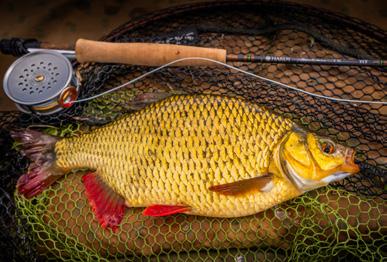
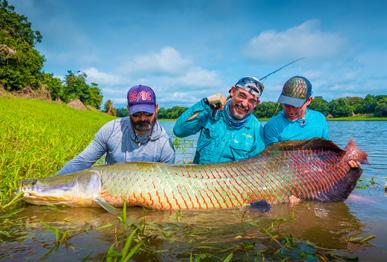
when the river is low and clear, and when the chub hang in the warm morning sunshine and, occasionally, amble gently up to take that tiny dry fly with innocent abandon. On those mornings the fishing is as good as any available on a Mexican permit flat or a New Zealand trout stream.
The fish here are super smart - they have been fished hard with every conceivable bait and lure. Luckily, few others fish for them with flies. They have gained the nickname “the permit of the fens”, and they will have you hissing and cursing just like the real thing. Occasionally, however, they can be tempted, and I get a massive kick out of catching each and every one of them. As well as chub, fishing further from home and deep into the fens, I’ll spot other species, including huge golden rudd of three pounds and more, that are stunningly beautiful and similarly tough to dupe with a dry fly.
I typically fish with a Hardy 9’ 5-weight Marksman
rod, Hardy Perfect 1912 reel, Rio Gold 5-weight line, a landing net and a bunch of dry flies. Ants, crane flies and adult damsel flies are my favourites. I travel as light as possible and spend far more time looking than fishing.
The best advice I have ever been given in terms of fishing: “Stop fishing. Just sit still and WATCH”. Words said by my great mate Craig Simpson, brilliant New Zealand trout guide, a dear friend who is heartbreakingly no longer with us.
The best advice in terms of life: “I spent most of my money on women and fast cars. The rest I wasted” George Best. And, “When something’s not right, it’s wrong” Bob Dylan.
I am most proud of finding, seducing and marrying the most beautiful woman that I’ve ever met. My wife Cath, along with our three boys, is the best thing that has ever happened to me.
The greatest party trick I have ever seen was watching my friend Steve Edge tying a large bucket to a 130lb class boat rod, letting it way out behind the boat and then, when he returned from a visit to the ‘head’, persuading an unsuspecting know-it-all angler nicknamed Elevenerife (if you’ve been to Tenerife, he’s been to Elevenerife) that he was playing a large marlin for the best part of an hour. “Or was it a monster yellowfin tuna?? Or maybe a foul-hooked giant sunfish?” The rest of us stood behind him as he huffed and puffed in the fighting chair, offering advice and trying to suppress the tears of laughter streaming down our faces. Happy days!
Something I have had to work really hard at in life… is not being a pain in the arse.
Something that’s come naturally is…. being a pain in the arse.
The most satisfying fish I ever caught is… easy. First permit, Cuba May 25, 2009.
In terms of go-to drinks, I drank half a litre of Gordon’s Gin in seven seconds for a bet at the tender age of 16 and, as a direct result, very nearly didn’t see my 17th birthday. Despite (or perhaps because of ) this extreme foolishness, after twenty years or so of recoiling from even the faintest whiff of the stuff, I am now a total sucker for a good and preferably very large gin and tonic. I’m also partial to a well-made mojito or a large glass of 12-year-old Macallan.
One place, never again… is any place where I am obliged to work for someone else, especially if they are a fool.
One place I have to return to is my wife’s arms …and maybe the Yokanga River again one day, to fish with
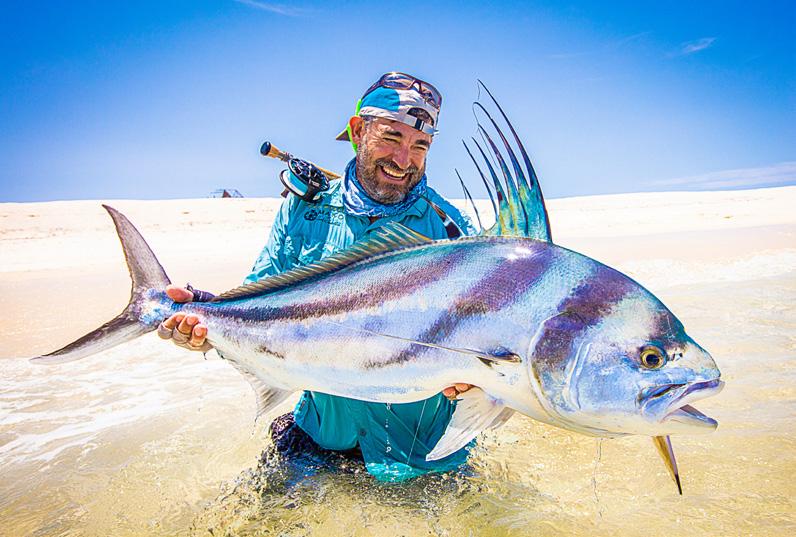
PERFECT THERAPY, ALMOST TOO EASY ONCE YOU’VE GONE INTO STEALTH MODE.”
my dear pals Vova Moisayev, Val Smirnov and Edvard Azarenok, when the wretched butcher Putin is finally, safely in the ground.
It is okay for an angler to lie to protect a special spot that will not withstand fishing pressure… in which case, it should not just be okay, but mandatory.
The handiest survival skill I have is a (baffling) amount of unjustified but totally unshakeable self-belief.
A skill I would you like to master is sincerity… and casting with my (non-dominant) left hand.
The biggest adventure I have ever been on was taking my family around the world in 2003 when my three boys were aged eight, five and ten. Comfortably the maddest and best thing I’ve ever done.
I often hear Henry David Thoreau’s celebrated quote, “Many men go fishing all of their lives without knowing that it is not fish they are after”. Not so long ago, I would have told you that’s all a load of sentimental old bollocks. At least as far as I was concerned. I’ve always been all about the fish. Especially the big ones. Still am. Always will be. However, maybe I’m getting old. I’m starting to see that fly fishing has given me so much more than a bunch
“FLY FISHING HAS GIFTED ME A MILLION AMAZING ADVENTURES, SHOWN ME SOME TRULY EXTRAORDINARY PLACES AND PROVIDED COUNTLESS LIFE-LONG FRIENDSHIPS.”
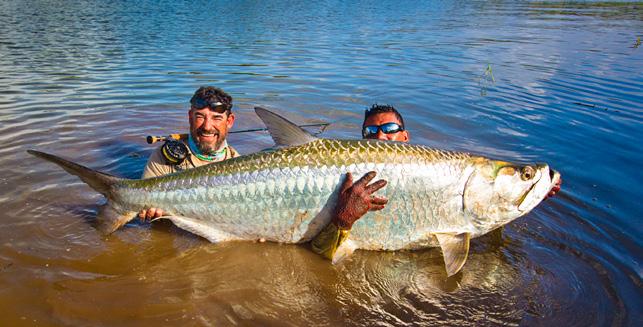
of silly fish. It’s gifted me a million amazing adventures, shown me some truly extraordinary places, and provided countless life-long friendships and a million laughs along the way. Perhaps Mister Thoreau had a point after all.
Before I die, I’d like to discover the fountain of youth, fish with my boys more, create enough new memories to produce Volume Two of my book “The Fish of a Lifetime” and maybe, just maybe, catch a 50lb Atlantic salmon.
If I could change one thing in fly fishing, it would be the apathy and wretched lack of unified activism among anglers in the face of the relentless destruction of our fish and their habitat by greedy, self-serving eco-vandals like Donald Trump.
Looking back on my life thus far, if there is anything I would do differently it would be to fish more. And take less shit.
Something I have changed my mind about is my naive and commonly shared assumption that we can rely on our society constantly evolving and constantly travelling in the right direction. The rise of liars, murderers and charlatans like Putin, Trump and Netanyahu has shown that mankind is not necessarily as sophisticated and as intelligent as we might hope it to be. I have been regularly lambasted on social media for speaking my mind on the hideous atrocities happening
in the Ukraine, Gaza and most recently Minneapolis and have been told to stay in my lane and so on by the MAGA brigade et al. I really don’t care. Some things are more important than ‘likes’ and ‘followers’. I feel really strongly that we must all speak out against what we believe to be wrong, and I hate to see people with a substantial platform to share their thoughts, bullied into ‘hiding behind the sofa’ in case it impacts their precious ‘brand’. Shame on them. “All tyranny needs to gain a foothold is for people of good conscience to remain silent,” is a line variously attributed to Edward Burke or Thomas Jefferson. Whoever said it, it has never been more pertinent. It is imperative that if people feel strongly about the travesties unfolding across the United States and the wider world right now, we must ALL speak out and must not allow ourselves to be bullied into silence.
The last fish I caught was a beautiful tarpon that taped out at just under 100lbs with my good friend Olly Santoro at the African Waters operation at Port Gentil in Gabon. While there are fish twice this size there, I defy anyone not to get a kick out of each and every one of these magnificent fish. Olly and his fellow guides, Shaun Fredrikson and Chris, are absolute pros and a real pleasure to fish with, and to share a beer with in the evening. Good on you, Olly, Shaun and Chris, and thank you so much!
Matt’s excellent coffee table book, Fish of a Lifetime (Volume 1) is available from thefishofalifetime.com
We don’t chase trends We chase hatches, tides, moon phases, weather windows, and risers. High-performance apparel designed for better days on the water.
Built To Fish
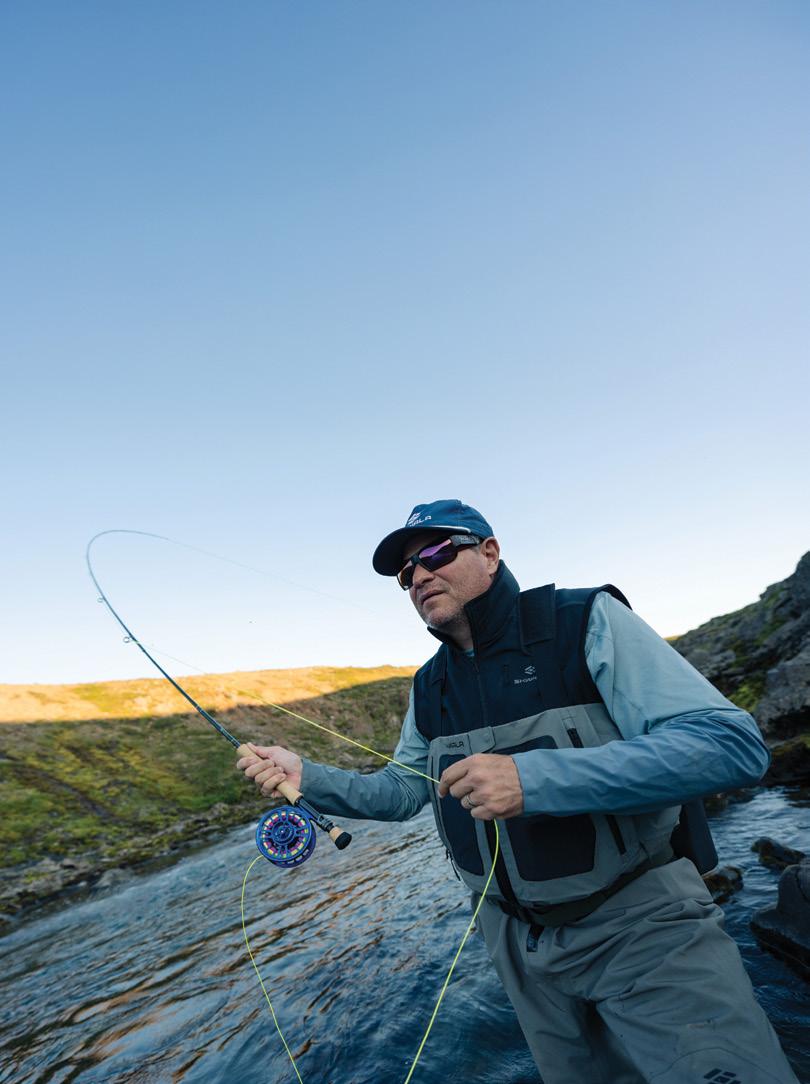
1. According to our High Fives guide Johann Rademeyer, from doctors to lawyers, CEOs and farmers, what do his clients have in common when they go on a fishing trip?
A. They all get extremely loose on night 1.
B. They all over-estimate their casting ability.
C. They all transform into happier, more relaxed people once they get off their screens.
D. They all make their fish bigger in the re-telling of stories over a campfire.
2. Who wrote Treatyse of fysshynge wyth an Angle?
A. Tom Sutcliffe
B. Izaak Walton
C. Dame Juliana Berners
D. Gollum
E. Our art director Bod, while trying to fire up his sexy talk on Bumble after a papsak
3. What would Natal Scalie expert (and well-known aquarist) Rob Kyle rather do than Euro-nymph?
A. Pap gooi using his nether regions a bait.
B. Wipe his poephol with a cheese grater.
C. Dedicate himself to Tenkara.
D. Bathe in red bait, then swim through a musselcracker nursery.
1. C, 2. C, 3. B, 4. E, 5. C, 6. D. DOES YOUR BRAIN CONTAIN DEEP THOTS OR DO YOU FARM OUT YOUR THINKING TO AI BOTS? TAKE OUR RAPID-FIRE QUIZ TO SEE IF ANYTHING FROM THIS ISSUE STUCK TO YOUR BRAIN LIKE POOP TO A FASCIST’S BOOT.
E. Steve Irwin-snorkel his way through a shallow flat filled with stingrays.
4. When he connected with a “thunder dog of a sea trout” in Norway, Luke Bax appealed to which Norse god’s body parts for help?
A. Thor’s holy hammer-yams.
B. Loki’s luscious love muscle.
C. Freyja’s furry fingertips.
D. Idunn’s bodacious buns.
E. Odin’s benevolent ball bag.
5. In Andrew Nightingale’s Uganda story, what is the Wankwar Post?
A. A tribute to the fallen onanists of the border wars.
B. A particularly popular rhino rubbing post near Murchison Falls.
C. A ranger station used to combat poaching operations.
D. What the Washington Post is called these days after being gutted by Bezos.
6. Which of the following could be said to be untrue about our Lifer Matt Harris?
A. He gets a chub for chubb.
B. New Zealand trout titillation is his thing.
C. He’d really like to catch a 50lb salmon on the Yokanga.
D. He goes gaga for MAGA.
“BATHE IN RED BAIT, THEN SWIM THROUGH A MUSSELCRACKER