5/2 Central Boulevard, Silverdale Parking in the Briscoes complex 09 4210910
https://kateallen.co.nz
At Kate Allen Aesthetics, we are passionate about investing in advanced, medical-grade technology backed by clinical research to help our clients achieve healthy, confident skin. Through personalised consultations, professional skincare and advanced treatment options, our experienced team creates tailored treatment plans designed around each individual's skin concerns and goals.
THE BEST TIME TO TREAT PIGMENTATION
As we move into the cooler months, it is an ideal time to focus on concerns such as pigmentation, uneven skin tone and overall skin health. With lower UV levels and fewer environmental stressors, the skin is often better positioned to respond to treatments including professional skincare, laser and chemical peels.
NOT ALL PIGMENTATION IS CREATED EQUAL
Many people assume all pigmentation is the same, however different forms of pigmentation can have very different causes and often require different treatment approaches. Concerns such as sun damage, post-inflammatory pigmentation, vascular pigmentation and melasma may appear similar at first glance, but understanding the underlying cause is essential when creating an effective treatment plan.
COMMON TYPES OF PIGMENTATION
Sun Damage: Brown spots caused by cumulative UV exposure over time.
Post-Inflammatory Pigmentation: Pigmentation that develops following inflammation, acne, injury or irritation to the skin
Vascular Pigmentation: Red or pink discolouration caused by blood vessels beneath the skin rather than excess pigment.
Whether you're beginning your pigmentation journey or looking to better manage concerns such as melasma and uneven skin tone, our team is here to guide you with expert advice and personalised care.
UNDERSTANDING MELASMA
Melasma is one of the most misunderstood forms of pigmentation. Unlike other types of pigmentation, melasma is influenced by factors such as hormones, UV exposure and heat, making it more complex to manage. While pigment may fade, melasma can return if underlying triggers are not addressed, which is why a personalised, long-term approach is often recommended.
HANNA’S SEASONAL SKIN TIP
During the winter season, it's vital to stay on top of both your body and skin hydration levels! In clinic, we frequently see individuals who are not maintaining an adequate water intake and this can have a significant impact on both our skin and our health. Adding in hydrating skincare actives such as hyaluronic acid, ceramides and essential fatty acids are a great way to support overall hydration and promote a healthy skin barrier function.
I’ve spent a lot of time driving my kids to activities around the Coast at dusk recently and at times I’ve literally pulled the car over to take in the incredible sunsets on display. The elevation and landscape around the Coast certainly blesses us with some real beauties.
We are also blessed on the Coast with lots of talented and hard-working locals. In this issue, we bring you the story of a local footballer making waves on the New Zealand Secondary School scene, we share a powerful piece from an exceptionally talented local author and we celebrate with Coastguard Hibiscus as two of their skippers pass a gruelling assessment to re-qualify their operational skills.
With AI on everyone’s minds lately, we bring you a local business who can help you navigate this relatively new arena, advice on which AI tools might be best suited to specific goals and a caution about the limitations of AI when it comes to meaningful social interaction. For those IRL catch ups we have a hiking suggestion at lovely Bethells Beach, we fill you in on what it’s like to hold a dinner party catered by a private chef and we help you imagine journeying with your nearest and dearest through the varying landscapes of Peru (certainly one of my top travel highlights ever).
If your current goals fit more within the ‘staying healthy’ category, we have advice on strength training for women, why you shouldn’t give up working out just when it gets tough, and we even have a moreish butternut squash pancake recipe for you, a delicious way to tick off one of your ‘5+ a day’ by breakfast time.
Please, pop up your feet and enjoy.
Don’t sit on your symptoms
Get checked for bowel cancer
June marked Bowel Cancer Awareness Month in New Zealand. Bowel cancer is often preventable, and awareness and early detection can make all the difference. In support, Waitematā Endoscopy is helping get to the bottom of bowel cancer.
Bowel cancer is the second leading cause of cancer-related death in New Zealand. Our rates are among the highest in the world, with more than 3,000 New Zealanders diagnosed every year. The earlier bowel cancer is detected, the more treatable it becomes. In some cases, it can be prevented altogether.
Unfortunately, many people ‘sit on their symptoms’ for months, with almost half of patients unfamiliar with the symptoms before diagnosis. These delays can reduce opportunities for early intervention and successful treatment. Symptoms are often subtle, intermittent, and easy to dismiss. Key symptoms to watch for include:
• bleeding from the bottom
• a change in bowel habit
• unexplained fatigue or weight loss
• abdominal pain or a lump in the abdomen
A colonoscopy is a safe and minimally invasive procedure that allows specialists to examine the inside of the bowel using a thin flexible tube with a light and camera. One of the major benefits of colonoscopy is the early detection and removal of pre-cancerous polyps. Removing these growths early can often prevent bowel cancer from developing.
Personal risk factors are also important. Risk increases with age, particularly over 50, and in people with a family history of bowel cancer or inflammatory bowel disease. Lifestyle factors such as smoking, obesity, poor diet and low physical activity also contribute significantly.
Eating a diet rich in vegetables, fruits, legumes and whole grains, exercising regularly, maintaining a healthy weight, limiting alcohol and processed meats, and avoiding smoking all support bowel health and may lower the risk of bowel cancer.
Equally important is breaking the stigma around bowel health. At Waitematā Endoscopy, we aim to make taking a proactive approach to your gut health easy. We accept GP, specialist, and self-referrals via our website. Our experienced Specialists can perform an endoscopy for you within 7 working days of receiving the referral.
Mr Shahed Yassaie
Colorectal and General Surgeon & Endoscopist
Waitematā Endoscopy
With new Specialists and increased capacity, Waitemata Endoscopy can provide greater access to timely and quality care Our experienced team are dedicated to providing exceptional endoscopy care at every opportunity.
working days
Colorectal
Print | Digital | Social
FOLLOW US
thecoastiesmag.co.nz
TheCoastiesMag
thecoastiesmag
YEARS
DESIGN
PUBLISHER
Grayson & Sarah Furniss
MANAGING EDITOR
Claire Nevans
GRAPHIC DESIGN
KD Design
PRINTER
Treehouse Print
CONTACT US
021 771 140 advertising@thecoastiesmag.co.nz
CONTRIBUTORS
Hayley Crawford
Karen McMillan
Mark Lane
Carmen Bird
Chris Norris
Trish Beauchamp
Lizzie Blanchard
IN THE LOOP
Shine On Silverdale
Posts filled with excitement and smatterings of anxiety over the anticipation of inevitable budget-blowing have been appearing on local social pages since news broke recently that Shine On is coming to Silverdale.
For those of you who haven’t heard, the fashion retailer will be the latest tenant to inhabit what has probably been the most turned over shop space at The Silverdale Centre to date, the spot between Jamaica Blue and St Pierre’s Sushi.
Popular for their reasonably priced, fashionable and inclusive clothing and positive brand message, Shine On, who already have a store in Whangaparaoa, are sure to be a popular edition to the Silverdale retail scene. The exact opening date has yet to be confirmed.
Don’t toss it just yet
sessions run the first Saturday of each month from 10am to 1pm at the Orewa Community Centre, with the next two sessions being Saturday, 4 July and Saturday, 1 August.
Local volunteers will be available to try and fix your broken household items for free (donations welcome). Popular items include electrical, electronic, sewing, kitchen gadgets and general repairs. Everything from busted zips to wonky side tables welcome. Take it along and see if their volunteer fixers can work a little of their magic for you.
Contact sarah.williams@de-anz.org or DEANZ Repair Cafe Orewa on facebook.
Have you got what it takes?
Silverdale Volunteer Fire Brigade have recently put a call out for those who may be interested in joining their ranks to get in touch and see if they have what it takes. To be considered you must be 18 years plus, have a full driving licence and live within 4 minutes of Silverdale Fire Station.
Volunteer Brigades are made up of locals who have lots of different skills and professions. As well as firefighting, volunteers attend medical incidents, motor vehicle accidents, severe weather events and other requests for help. They also install and check smoke alarms and help to improve fire safety in our communities. If you’re interested, contact the Silverdale Fire Brigade direct or send them a message on facebook.
The lovely folk at the Orewa Repair Café have asked us to remind everyone that repair café
FOUND & FANCIED
Love a snuggly afternoon tea at home? Check out these local items we found and rather fancied.
1. Double layer character cups at For You Gifts & Flowers 350 HBC Highway, Orewa 2. Single origin drinking chocolate at Foundry Chocolate Peters Way, Silverdale
Lemon meringue pie (order to go) at Goodhub Eatery HBC Highway, Orewa
Pre-loved puzzles at Never Ending Books Moenui Avenue, Orewa
Strengthening connections between local schools
A new initiative led by the Orewa College Year 13 Manukura (student leaders) has been helping strengthen the college’s connection with the wider community through visits to local primary schools.
An entirely student-led project, the Manukura organised a series of activity rotation days at five local primary schools: Orewa Beach Primary School, Ahutoetoe School, Dairy Flat School, Orewa Primary School and Silverdale School. The programme involved working with students from Years 2 and 3 through to Years 5 and 6, with activities designed to be both engaging and educational.
The focus for the initiative stemmed from the traditional Māori mentoring model of Tuākana-Tēina, where a more experienced Tuākana guides and supports a younger, less experienced Tēina. This concept emphasises reciprocal learning, where both mentor and learner grow through the experience.
Alyssa Sou, a performing arts Manukura, spoke about the project days, saying, ‘Teaching younger students reminded me that learning goes both ways. As much as we hope to inspire them, they teach us just as much.’
At Orewa Primary School, the Manukura worked closely with Year 5 and 6 students. During the day they introduced new games such as Tapuae, Kī o Rahi and Pūkana, with the hope that the Year 5 and 6 students could take what they had learned and become tuakana themselves, passing these activities on to the junior students at their school, continuing the Tuākana-Tēina cycle.
The Manukura aimed to develop their own leadership skills through mentoring and coaching, while also providing a memorable experience for primary school students and sharing the knowledge they have gained throughout their time at Orewa College.
The rotation days included a wide variety of activities, such as sports and performing arts, to Māori games and fun team challenges. Each station was led by Manukura students, who were responsible for planning, creating and running the activities throughout the day. This allowed each leader to share something based on their own strengths and interests, while encouraging participation, confidence and learning among the primary school students.
Many of these primary schools visited were also the former schools of several Manukura. Alyssa Sou reflected on the experience,
saying, ‘It was fascinating to see where everyone came from before we met as prefects. In many ways, it felt like reconnecting with our inner children and rediscovering parts of ourselves that we had forgotten. It gave me a new appreciation for the journeys that made us the leaders we are now.’
For the Manukura themselves the program has been an important opportunity for growth, helping them develop new skills that they can take with them as they complete their final year of education. Orewa College Principal Wiri Warriner says, ‘Our
local schools invest years into developing young people before they arrive at Orewa College. This project is a way of acknowledging that contribution and giving something back to the communities that helped shape our leadership of tomorrow.’
Lizzie Blanchard Feature Writer
AI tools are not confidential
What every New Zealander should know before sharing personal information
Artificial intelligence tools are now part of everyday life. Many New Zealanders use them to draft emails, research health concerns, navigate disputes with landlords or employers and seek guidance on legal and financial matters. Most are unaware of what happens to the information they provide.
The key point is simple: when you type something into an AI tool, you are not running a private search. You are sending information to a server operated by a company, often based overseas, and that company’s terms of service govern what happens next. Many free AI tools retain user inputs and may use that data to improve their systems. Most users agree to this without ever reading the fine print.
The risks grow when personal details are involved. Consider someone going through a relationship separation who types the
details of their situation, including names, addresses and financial arrangements, to get a sense of their legal position. Or a person who pastes a letter from their employer or insurer, complete with identifying information, asking an AI how to respond. Or a patient describing their full medical history in detail, looking for a second opinion. In each case, sensitive personal information is being shared with a third party in ways the individual may not have intended.
So how should AI tools be used wisely? Treat them as you would any third party. Share only what is necessary to get a useful answer. Avoid including full names, addresses, dates of birth, financial figures or other identifying details where possible. If using AI for anything involving a legal, medical or financial situation, consider whether a free tool is appropriate. Paid and enterprise versions typically offer clearer privacy settings and more transparent data
retention policies. Before using any tool for a sensitive matter, take a few minutes to review its privacy policy. It is rarely as long as it looks.
AI is genuinely useful. The goal is not to avoid it, but to use it in a way that keeps personal information where it belongs.
If you have questions about your privacy rights or how your business handles personal information, contact Martin & Parker Law at office@mplaw.co.nz or call 09 421 0559.
Samuel Epstein Solicitor, Martin & Parker Law
Note: This article is published for general information purposes and should not be relied upon as legal advice. For advice specific to your legal issues, please engage a lawyer directly.
A secret no more
It’s time to let one of the Hibiscus Coast’s best-kept secrets out of the bag.
Nestled on Upper Orewa Road in Wainui, just beyond Northridge Golf Course, The Green Grower has quietly transformed from a small venture born during the uncertainty of the COVID years into a thriving green destination unlike any other.
Set across four and a half acres, this unique garden centre combines lush display gardens, heated and irrigated glasshouses and expansive shade houses filled with an impressive collection of indoor and outdoor subtropical plants. From rare and unusual specimens to timeless garden favourites, there’s something to delight every plant enthusiast.
Under the leadership of Director Dan Adam and his dedicated team, The Green Grower now supplies both retail customers and wholesale clients, including landscapers and garden centres throughout the region. Remarkably, around 75% of the plants sold are grown on-site, ensuring exceptional quality and value.
The Green Grower is much more than a traditional garden centre. Visitors can browse an extensive range of pots, fertilisers, growing media and plant care products, while also taking advantage of convenient repotting and gifting services.
Families are especially welcome. Children love visiting the colouring in table and the resident turtles, lizards, and birds, while four-legged family members are encouraged to join in the outing too. It’s a destination designed to be enjoyed by everyone.
Looking to the future, Dan has exciting plans to further enhance the visitor experience, including hosting community events and workshops, creating a relaxed picnic area for families and school holiday activities for the little ones.
Some upcoming events to look out for include: Plant Bingo night, Terrarium workshops and a mid-winter late-night shopping experience.
The Green Grower’s displays are constantly evolving, weekly specials offer fresh inspiration, and friendly, knowledgeable advice is always on hand.
‘We love welcoming locals,’ says Dan. ‘Visitors often comment on our landscaping ideas, our unique shop displays, and, most importantly, the health and quality of our plants.’
Whether you’re an experienced gardener, a houseplant enthusiast, or simply looking for a peaceful place to explore, The Green Grower is well worth discovering.
Open 7 days a week from 10am to 3pm, this local treasure won’t be a secret for much longer.
Dan Adam - Director
288 7118
TAKING A HIKE
Out west at Bethells Beach
On a recent mid-week day when the forecast promised glorious sunshine, I found myself with a free day and a couple of friends ready for an outing. We headed out west, expecting to tackle the Te Henga track, only to discover it had actually been closed since Cyclone Gabrielle. Not my finest research moment.
With Plan A off the table, we carried on down the road to Bethells Beach. The day was stunning, the surf was roaring and the beach had that usual wild West Coast energy. Not long into our walk, we came across a fisherman who had managed to get his ute and boat stuck. A few locals gathered, ropes appeared, and after some determined teamwork, they managed to pull everything free just before the tide engulfed it.
We continued toward the far end of the beach, peeked into the infamous beach cave, then scrambled around the rocks for a look around the corner toward Wigmore Bay. It’s mesmerising watching the swell and waves crash into the rocks below — not a gentle wave in sight.
On the way back, we crossed the stream and followed the beach around to Waitākere Beach. My friends spotted the narrow hole in the rock that leads through to the secluded Raetahinga Point Cove and squeezed through without hesitation. It looked a bit too small for my liking, so I took the path up and over the hill instead. The views were breathtaking, and we met up again on the other side before looping back past O’Neill Bay and returning to the carpark.
By then we were more than ready for food, so we stopped at the Bethells Beach Café, a Kiwi eatery tucked into the sand and trees. It’s the kind of place that feels like it belongs exactly where it is — relaxed, unpolished and full of character. The locally made kumara sourdough was as delicious as it looked. Sitting under the trees with sandy feet, good food and the sound of the surf in the background felt like the perfect finish to our day.
By the time we reached the car, we’d covered around 8km, though it never felt long or difficult. There’s something about a West Coast adventure — the energy of the ocean, the space, the salt air — that leaves you feeling relaxed and reset. A blissful escape from the bustle of daily life.
Carmen Bird
Carmen Bird Photography
THE BEAUTY BRIEF
temperamental, resist the urge to throw every product in the bathroom cabinet at the problem. Instead:
• choose gentle, fragrance-free products
• avoid over-exfoliating
• moisturise regularly
• introduce products slowly
Sensitive skin
It’s not you, it’s your oestrogen
One day you’re happily trying every new serum and face mask on the market. The next, your skin is throwing a tantrum over products you’ve used for years and behaving like a temperamental teenager. If this sounds familiar, you’re not imagining things. Sensitive skin can develop at any age, but many women notice changes during their late 30s, 40s and 50s.
When hormones start rewriting the rules
As we move through perimenopause and menopause, oestrogen levels begin to decline. Oestrogen plays an important role in maintaining collagen, hydration and the skin’s protective barrier. In fact, women can lose up to 30% of their collagen in the first five years after menopause. As these levels fall, the skin becomes thinner, drier and more vulnerable to irritation.
And it’s not just our skin that gets the memo. Hair may become finer and shed more readily, nails can become brittle, and suddenly we find ourselves wondering why our once-reliable beauty routine seems to have resigned without notice.
Your skin barrier isn’t what it used to be
Think of your skin barrier as your body’s security guard. When it’s healthy, it keeps moisture in and irritants out. But with age, this barrier naturally weakens, making skin more reactive to fragrances, harsh cleansers, strong exfoliants and stressors.
Years of accumulated sun exposure can also catch up with us. It turns out those baby oil and tanning days of the ’80s and ’90s weren’t our finest skincare decisions.
Too much of a good thing
Modern skincare can sometimes be a case of ‘more isn’t better’. Layering acids, retinols, scrubs and active ingredients in pursuit of glowing skin may actually leave it angry and overwhelmed. Many cases of sensitive skin are caused by accidentally overdoing our routines.
Simple Is sometimes best. If your skin has become more
• wear sunscreen daily, even in winter
The good news? Sensitive skin doesn’t mean your glow days are over. Sometimes your complexion is simply asking for a little less drama and a little more kindness. After all, maturity should bring wisdom – not a permanent argument with your moisturiser.
Kerry Venter | Health & Skincare Therapist Mint Skin & Body Therapy
www.mintskinbody.co.nz 020 4126 2064
THE GREEN SPOT
Taking
‘charge’
of your driving emissions
This month brings the final of my three-part discussion on sustainable driving, continuing to dispel misinformation about electric vehicles.
There is a misconception that electric vehicles are more likely to catch fire than internal combustion vehicles. An American insurance company found that in 2021 there were 1530 fires per 100,000 petrol and diesel vehicles versus 25 fires out of every 100,000 EVs. Gasoline ignites immediately after encountering a spark while lithium-ion batteries take time to heat up enough for ignition. The batteries are shrouded in liquid coolant to prevent overheating and separated by firewalls to limit damage. Also, the electricity is isolated, so power is cut off in the event of a crash. However, in the rare event of these catching fire, they do burn hotter and are harder to extinguish, meaning the fires can be severe. Many fires are caused by after-market or DIY chargers and batteries, and most fires have occurred following a crash a few weeks prior where hidden damage can cause the battery to slowly overheat.
As mentioned, cobalt is a component of lithium batteries and there have been ethical concerns regarding the safety and remuneration of miners in The Democratic Republic of Congo, where 60 to 70 percent of the world’s output of cobalt occurs. They are actually paid significantly more than the average wage in the country, but it is right to be concerned. This is something to consider when purchasing any item
and laptop, but this kind of awareness should also extend to any purchase, such as clothing and toys that are manufactured in countries where poverty is rife and employees are working in unsafe and unfair conditions.
There are many ways that any vehicle can damage the environment other than through its emissions and batteries. Many of the
and brakes release tiny particles into the air and improper disposal and leaking of vehicle fluids lead to soil and water contamination. It is clear that, although EVs are the superior choice over petrol cars in terms of environmental friendliness, avoiding the use of any car at all is the premium option.
Hayley Crawford
Exciting selection for local footballer Hannah Beguely
When Millwatarian Hannah Beguely first ran out onto the football field ten years ago as an energetic 5-year-old in the First Kicks programme at Hibiscus Coast Football Club she had no idea what a massive influence the sport would have on her life.
After working her way through the younger grades, she joined her first girls-only team at the age of eight, becoming part of a core group of girls who played together all the way through until last year, when different opportunities arose for various players. For Hannah, that was making the Women’s First team squad at the club, which lead to her senior debut this year at 15 years old.
As well as playing for Hibiscus Coast, Hannah has been a member of the KingsWay School First XI girls team since Year 9. In her first two years on the team they were the winners and the runners up in the Harbour Senior A2 grade, and the team is doing just as well so far this year. She has also attended many sports camps and tournaments with football and enjoys all the opportunities the sport brings to her. ‘It’s fun and you can have such good experiences through playing it,’ says Hannah. ‘You can make good friendships too.’
All the hard work and dedication Hannah has put into her football has now led to her being selected to play for the New Zealand Secondary School Under 16 team, a team made up of players from all over the country. Her impressive work ethic, playing statistics and team successes played a big part of her selection, including her team being runners up in the prestigious Weir Rose Bowl tournament in 2024 and the selectors being impressed with Hannah’s role in the newly established Hibiscus Bays Girls Youth Development Team.
The New Zealand Secondary School Under 16 team will be heading to Melbourne where they will play against playing top youth girls academy and club teams from the Melbourne area, including Melbourne Victory,
Geelong and South Melbourne. These teams all have players who have been identified in the Victorian or Australian programmes.
‘This opportunity is amazing as she will be coached by a Football Ferns legend, Annalie Longo, who has played more than 100 games for New Zealand,’ says Hannah’s mum Raelene Beguely. ‘It will be a chance to play alongside other top players who are already involved with New Zealand Football and Auckland FC programmes. It will also be awesome to play against top-notch teams, to travel to a new destination and make new football friends within the squad.’
Hannah says, ‘I’m really excited for this trip because it is an opportunity to play with some elite players from around New Zealand as well as playing high level opposition’. This is a great step towards Hannah’s ultimate football goals of playing at the top level within New Zealand, perhaps professionally and maybe even making the national team.
To help raise funds for travelling to Melbourne, there is an online auction where people can bid for some amazing items and also make donations. If you’d like to help out, you can access the auction via the QR Code. ‘Thanks to all those who have supported our fundraising so far’ says Raelene. ‘Your contributions are much appreciated.’
I have been cooking professionally for 39 years. My business, Culinary Lane Catering, is based in Millwater, providing three and five course dinners in your home, out-catering and grazing tables. Gain the benefit of my experience by emailing me your cooking questions.
Jasper: Mark can please explain the process/steps involved with having a private caterer for a dinner party at home?
For ‘Dinner Parties at Home’, clients contact me with a date and a number of guests and I check my availability. I can meet with the client for a free consultation if they wish, but most clients organise the whole experience online. The options are 6-24 guests for the 5-course or 12-45 guests for the 3-course dinner/lunch. I send menus and a list of what I require, which are the menu choices, time of the event (I arrive 90-120 minutes prior), the address, any dietary requirements, if they require matching glass hireage and/ or wine variety matching options with each course and if they would like anything special written on the menu.
I don’t need to see the kitchen unless it’s a group over 20, to just check the oven space (a photo will do). I bring all crockery, cutlery, tablecloths, linen napkins, placemats, printed menus and all kitchen equipment for cooking, I even bring my owns tea towels and washing up liquid. All I need from a client is a clear bench space, an oven and cook top (gas or induction). It takes around 2.5 hours to serve the 5-course, which usually includes Amuse Bouche, Entrée, Main, Dessert and Cheese (depending on the client’s choices). I set the table, serve the meals and explain each one to the guests, clear each course, do all the washing up and leave the kitchen clean. It’s a great way to experience a top restaurant meal without leaving your home. You provide the drinks
and enjoy the experience. Just email me at culinarylane@gmail. com or get more information at www. culinarylane.co.nz.
Teresa: Can you please give me your tips and tricks for the best mashed potato, so it’s creamy and delicious. Also, do you have any flavour additions to it that you recommend?
I love a great potato mash. The most famous recipe is Joel Robuchon’s ‘Pomme Puree’ 1981 which is 1kg of potatoes and 500g of butter finished with milk!
Some people suggest boiling the potatoes in the skin to reduce water absorption. I prefer using peeled Agria potatoes (overseas they use others such as Yukon Gold, Desiree, King Edward and Maris Piper). Peel and cut into medium sized quarters (around 5-6 cm each), not too small as they will soak up too much water. Place into cold salted water, boil and reduce to a medium simmer until fully cooked (around 25-30 minutes total). Drain and allow to sit for 5-10 minutes to allow excess water to steam off. Place back
in the pot, use a potato masher and when there are ‘no’ lumps left, add cold diced butter, cream or milk, salt and ground white pepper. I like to finish with a hand whisk to fluff up and add a little air to them to make them light and creamy.
The amount of butter and cream or milk will decide the richness and consistency of the mash. Don’t add all at once. Some recipes like you to boil the butter and cream first. For the ultimate mash you can pass the mix through a fine strainer. You can then add cheddar, parmesan, Italian parsley, fresh basil, chives, cabbage (colcannon), spring onions (champ), sour cream, roasted garlic, even crispy bacon.
Mark Lane | Culinary Lane Catering www.culinarylane.co.nz culinarylane@gmail.com
ANTHONY DAHYA | AI STRATEGY & WORKFLOW ADVISOR
Working with NZ SMEs to turn AI confusion into practical time-saving workflows.
Stop doing work AI can do
Most business owners know AI could help them. But the tools, the jargon, and the noise make it feel impossible to know where to start.
Start Here
SME AI Clarity Session
A focused workshop with Anthony to map exactly where AI can save your business time and money. Walk away with a clear, actionable plan, built for your business, not a template.
Step 1
AI Clarity Session
90 minutes. Your business, your time drains, your biggest opportunities.
Save 40% on your AI Clarity Session aiworkflows.agency/sme-ai-clarity-session
Step 2
Your Personalised AI Plan
A practical map of your highestimpact automations, built around how you actually work.
Step 3
Get Your Time Back
Repetitive tasks run automatically. You focus on growing the business.
Champion Mindset Collective Podcast
Want to share your story and grow your visibility? Guest and sponsorship opportunities are available for business owners who want to reach a wider audience and create content they can use across their own marketing.
From survival to clarity
Some businesses are built from strategy. Others are built from life experience.
For Anthony Dahya, the journey began long before business. It began with a young boy learning how to survive change.
After his parents separated when he was young, Anthony spent six years from the age of seven in a highly regimented ashram boarding school in India — an experience he describes as feeling like a cross between an army camp and a prison. That chapter left him carrying a deep story of abandonment and rejection, something that would quietly shape many parts of his life.
But over time, Anthony began to realise something important. Real change does not start by fixing everything outside of us. It starts with self-awareness — recognising
the repeating patterns and stories that keep showing up in our lives and having the courage to do the inner work.
That belief has shaped everything he has done since.
Anthony went on to build a corporate career spanning some of Auckland’s most prominent organisations — Vodafone, Auckland Transport and Auckland Council — working across technology, data, analytics and business improvement. Along the way he experienced multiple restructures and redundancies firsthand. Rather than letting those moments define him, he let them teach him. He came to understand, up close, how uncertainty affects people and teams, and how rarely organisations give people the tools to navigate it well.
Those years in the corporate world gave Anthony something most business advisors lack: a genuine understanding of what it feels like to be on the inside when things are uncertain. That empathy, built through lived experience rather than theory, became the foundation for everything he has created since.
Inspired by the idea often connected with Mahatma Gandhi, ‘Be the change you wish to see in the world’, Anthony launched the Champion Mindset Collective Podcast to share honest conversations with people who have faced challenge, built businesses, led teams and grown through life. The show has grown to feature CEOs, founders, entrepreneurs, authors, coaches and everyday people with powerful stories to tell.
More recently, through his business AI Workflows Agency, Anthony has turned his attention to helping New Zealand small businesses navigate the rapidly changing world of artificial intelligence — translating something that can feel overwhelming into something practical and human. At the heart of all of it is a simple thread: the belief that clarity — about who you are, how you work, and where you are headed — is what creates real freedom. Not just in business, but in life.
Vanessa Li | Marketing Specialist Silverdale Business
www.silverdalebusiness.co.nz
The value of friendship
George Elliot writes, ‘Friendship is the inexpressible comfort of feeling safe with a person, having neither to weigh thoughts nor measure words.’
How wonderful it is to have a friend with whom you feel safe being yourself, not needing to seek approval or feel pressured to be who they want you to be.
Psychologist Marisa Franco writes about the importance of friends in her book Plantonic. Platonic relationships are built on mutual trust, shared interests and emotional support. Romantic intimacy is not a key factor, but having an equally bonded friendship is.
Why do we find it challenging to form friendships as adults?
Marisa explains the ‘paradox of people’. We know we need people to help us feel connected, but they can also emotionally wound or reject us. How we handle this paradox impacts our ability to maintain healthy friendships. She also discusses a phenomenon called the ‘liking gap’, when people underestimate how much someone likes them at their first meeting. This research suggests that we’re less likely to be rejected than we think. Another observation was that people who think friendships will happen with luck are actually lonelier five years later. Those who are prepared to put in the effort to connect with others are less lonely.
Research reveals that loneliness is more toxic for your body than a poor diet or not exercising
Forming friendships can feel vulnerable, but if we want to connect
with people, we need to resist the part of ourselves that is fearful or mistrustful. When we allow the part of ourselves that wants to feel connected to be present in our interactions, we can form new friendships with renewed confidence and success.
Artificial Intelligence: The illusion of a friend
‘AI offers a friction-free pseudo-relationship,’ Dr. Sherry Turkle (Sociologist).
People feeling lonely or isolated can become emotionally attached to an online connection wth a machine trained to interact like a human. AI platforms can be a useful source of information, providing support for friendship connections. But AI conversations cannot replace real-life human interactions.
To experience the fullness of who we are, it can be beneficial to have a community of friendships – maybe including a romantic connection, interest groups, fitness buddies, business colleagues and pets. All have significance in adding value to our lives.
Enjoy quality time with friends, your wellbeing will thank you.
Trish | Life Wellness Coach trishbeauchamp.com
Winter wellness
It’s winter… a good time to look to nutrientbased seasonal whole foods to support your immune system, overall health and eye health.
By making positive changes to your diet by incorporating the following foods specifically for eye health, you can help healthy eyes stay in tip-top condition and it may also be possible to help slow down deterioration:
• Eat the rainbow. That is eating fresh seasonable vegetables of a wide range of colours, such as beetroot, carrots and kale.
• Your dark green leafy vegetables, such as spinach, kale, broccoli and brussels sprouts, are high in folate. These foods widen the blood vessels improving circulation to the optic nerve. Dark green leafy vegetables contain lutein and zeaxanthin; antioxidants that are important for the macular.
• Eggs also contain lutein and zeaxanthin and are one of the best sources of choline, which is essential for communication between your eyes and brain.
• Fatty fish such as salmon and tuna are high in Omega-3. You might already be aware that the Omega-3 improves the function of the meibomian glands, which produce the essential oily layer in our tears preventing the tears from evaporating too quickly. Omega-3 also helps to maintain a healthy retina and improves signals between the nerve cells.
• Carrots. Most of us grew up being told to eat our carrots if we want to see in the dark. The vitamin A found in carrots help our rod cells in the retina to see in the dark.
• Citrus fruits and berries are rich in
vitamin C, which help to protect our eyes against damaging UV.
• Nuts and seeds. A small handful of nuts each day is a great addition to any diet. Choose raw, unsalted nuts including Brazil, almonds and walnuts.
There are also other nutrients needed that you cannot get in a typical diet, which are found in nutritional supplements.
We recommend Macutec, a dietary supplement based on scientific research specifically for the macular.
Come and see the team at Orewa Optics for your regular check-up, and to see our extensive and stylish range of eye wear.
Orewa Optics are here Monday to Friday, 8:30am to 5:30pm, and enjoy extended hours until 7:00pm on Tuesdays. Call us today 09 426 6646 or book online at www.orewaoptics.co.nz.
Why strength training is essential for women (from age
30+)
From around age 30, women naturally begin to lose muscle mass at a rate of approximately 3–8% per decade if it is not actively maintained. This process becomes even more pronounced during perimenopause and menopause, largely due to the decline in estrogen.
Research shows that women experience a faster rate of loss than men across the lifespan. This is one of the key reasons strength training becomes so important for women’s long-term health.
Muscle is far more than a ‘toning’ tool. It is a key indicator of health and longevity. In fact, research published in recent years has shown that skeletal muscle mass is a better predictor of mortality than BMI or body fat.
Lower muscle mass has been associated with a significantly higher risk of poor health outcomes later in life, particularly in women.
Strength training also plays a major role in protecting bone health. As muscle declines, so does bone density, increasing the risk of osteopenia, osteoporosis, and fractures. Resistance training helps counteract this by placing healthy stress on bones, signalling the body to maintain and strengthen them.
Metabolically, muscle is highly active tissue. It helps regulate blood sugar, improves insulin sensitivity, and supports a healthier metabolism overall. This is one reason women often notice improvements in energy, cravings and body composition when they begin consistent strength training.
We’re more than lawyers, we’re partners in your success.
Based in Silverdale, we’re here to help with business and commercial law, property, trusts and estate planning.
Formerly Simpson Western North
As if that isn’t enough good reasons already to get your muscles firing, strength training is also great for your brain and mental health. Regular resistance exercise has been associated with improved mood, reduced symptoms of anxiety and depression, and better cognitive function. Emerging research also suggests that maintaining muscle and engaging in regular strength training may help reduce the risk of cognitive decline and conditions such as Alzheimer’s disease later in life, largely through improved blood flow, reduced inflammation, and better metabolic health.
Other benefits include links to reduced risk of cardiovascular disease, diabetes and certain cancers. It supports joint stability, reduces injury risk, and improves functional strength for everyday life — from carrying children to maintaining independence as we age.
This doesn’t require extreme training. Even two to three 30 minute sessions per week of structured strength training can make a significant difference over time. The key is consistency and gradually progressing with load.
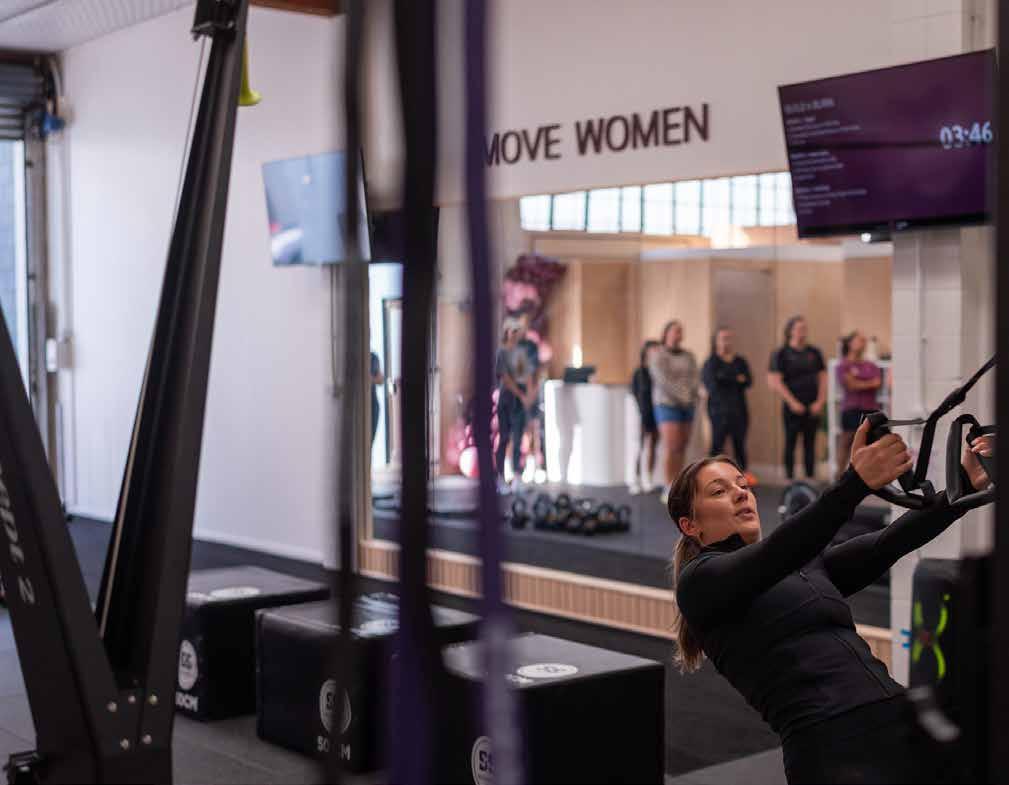
If you’re interested in working on your strength training in a supportive, all-women environment, sign up for a free trial class at Move Women here https://movewomen. gymmasteronline.com/portal/signup.
Emily
Leilua
Owner,
MOVE Women’s Gym Silverdale
Personal Trainer, Clinical Nutritionist & Women’s Health Naturopath
www.movewomen.co.nz
4 Keith Hay Court Silverdale
Finding the right AI tool for the job
AI has evolved quickly, from an experimental novelty to a tool many people now use every day. With so many options available, it helps to understand where each one excels rather than expecting a single model to handle every task.
ChatGPT is often the best fit when you need clearer thinking or sharper writing. It’s ideal for shaping early ideas, exploring different angles or untangling thoughts that feel scattered. When a draft needs structure or momentum, ChatGPT can help you find your footing and move forward with confidence.
Gemini shines when real-time information matters or when your work extends across formats such as text, visuals, data or insights drawn from the web. It’s particularly useful for scanning trends, researching fast-moving topics, or getting a quick, current snapshot of what’s happening. When up-to-date context is essential, Gemini is often the most reliable choice.
Midjourney, meanwhile, is the creative engine. It’s great for exploring visual directions such as brand concepts, mood boards, campaign ideas or anything requiring strong aesthetic cues. It turns abstract ideas into imagery that can spark new thinking. Just remember: Midjourney is conceptual. It’s not a replacement for high-resolution production or print-ready files, and you may still need a designer or agency for final execution.
Even with all this capability, AI can’t replace what makes us human. The real ‘human art’ lies in reading tone, noticing nuance, asking thoughtful questions and adapting in real time. Empathy, humour, intuition and genuine relationship building remain uniquely human strengths.
When bringing AI into your work, a curious and practical mindset goes a long way. It’s a good idea to:
• start small – hands-on experimenting teaches you the most
• be intentional with prompts – clarity improves outcomes
• compare tools – each one excels at different jobs
• take notes – capture what works (and what doesn’t)
• review everything – AI is support, not a substitute for judgment
• stay curious – the tools evolve quickly, and your capability grows with them
A ‘Responsible Use Checklist’ can help build trust and protect you legally. Disclose AI-generated content. Ensure you have permission for any images or video. Avoid misleading or deceptive content. Steer clear of recreating copyrighted material. And ask yourself whether you’d feel comfortable explaining how the content was made.
When you’re outside your expertise, bring in a specialist. Blind spots exist, and risks aren’t always obvious. AI isn’t here to replace instincts or experience; it’s here to amplify them. Used thoughtfully, it can help you move faster while preserving the human touch that still matters most.
Chris Norris | AllBrand Cert. MKTG |
MCC | Cert. Typography
Former Chairman of Business Whangaparaoa and Board Member for Silverdale Business. Mentor with the Business Mentors Programme at MBIE. Now runs a locally focussed branding business. Allbrand.co.nz – Revealing the true USP in businesses. Chris@allbrand.co.nz
(Note: This article was written by AI as an experiment. Well, it seemed a good test, right? However, this took me far more time to produce by the time I checked, edited and added a human angle. AI was best for the facts and the cutting down to the right word count.)
Excerpt from a session between members of the Independent Board facilitated by Sarah Carr.
MORTGAGE MATTERS
What are your options for topping up on your home loan Home loan top ups
If you already have a home loan, you can potentially look to borrow more with a home loan top up. A top up allows you to borrow additional funds using the equity you’ve built up in your home. This loan can either be consolidated with your existing home loan or taken out as an additional home loan.
These funds can be used for:
• renovations on your home
• making your home more energy efficient
• debt consolidation
• purchasing a second property
• holidays
• unexpected life expenses
The benefits of using a home loan top up include that the interest rates are generally lower than personal loans or credit cards as the lending is secured against your property. You can also apply at any time – you don’t need to wait until your home loan expires off its fixed term.
How much you could borrow
The amount you could borrow will depend on a range of factors including:
• the equity you have in your home – generally the banks will need you to have at least 20% equity remaining AFTER your top up is competed
• the current value of your home and what your Loan to Value Ratio is (the amount of your home loan compared to the current value of your home)
• that you can still afford your home loan repayments once your top up is completed
What options do banks offer with a top up home loan?
When applying for additional funds on your home loan, the bank could provide the following options:
• Standard home loan top – if you have at least 20% equity in your home AFTER the completion of your top up, most banks will typically allow a straightforward top up on your existing home loan
• Green Loans – this is one of the more attractive options that most banks offer as the interest rate can be as low as 1% pa or 0% pa for a fixed period of time. This top up type is specifically for energy-efficient upgrades such as heat pumps, insulation, solar panels, double glazing, electric or hybrid vehicles
• Renovation specific lending – some banks offer a special interest rate if you’re needing the funds for home renovations.
• Debt Consolidation – by consolidating your shortterm debts, such as credit cards or vehicle finance loans, on to your mortgage, you can reduce your overall interest rate and lower your loan repayments. However, it’s important to note that by stretching short-term debt over a longer loan term can increase the total interest paid if not structured carefully.
If you have a mortgage, and are needing to apply for additional lending, we recommend that you seek expert help from an experienced Mortgage Adviser.
Let’s chat! Contact Wayne Henry on 021 423 818 or email wayne@waynehenry.co.nz.
Wayne & Karen Henry are Millwater locals. Wayne is a Financial Adviser specialising in mortgages and Karen supports him with all admin related work. Wayne’s Disclosure Statement is available free of charge on request or can be downloaded via website https://www.waynehenry.co.nz/ wayne-henry-mortgage-adviser/
Wayne Henry | Wayne Henry Mortgages
PROPERTY CHAT
with Jason Croft
The market continues to show encouraging signs of strength as we move into winter. Buyer activity remains strong and many purchasers are keen to secure a home despite world events, interest rate rises and an upcoming election. The continuous stabilisation of interest rates (with the RBNZ holding the OCR at 2.25%) has kept first-home buyers active in newer subdivisions such as Milldale and Millwater, where inventory levels remain healthy. Sales numbers were up for May compared to April, and while the median price did fall a little as sellers continue to meet the market, we saw activity across the entire price range.
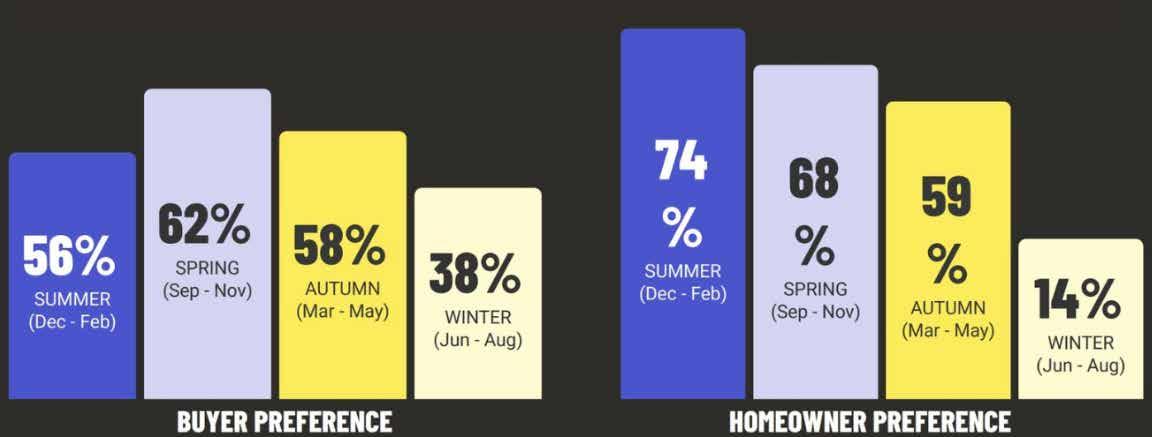
I’m often asked when is the best time to sell. It really does depend on a lot of factors, but I recently saw an interesting graph from TradeMe (see graphic) that compared homeowners to buyers preference across the seasons. It highlights that while the difference between homeowners preference to sell between summer and winter was, as expected, quite wide, with buyers there are still plenty that are looking in the winter months. So, in some ways you could actually have a better ratio of buyers to sellers in winter. It is also worth noting that those buyers looking in the winter months are usually more serious about what they are looking for and ready to make a decision. Certainly food for thought when you are weighing up a good time to put your home on the market.
I’ve added in some average prices by number of bedrooms, which I thought might be of interest and help when deciding how far your budget will stretch. From a price breakdown point of view 59 properties (44%) sold for under $1M, 68 properties (51%) sold for between $1M to $2M and 7 properties (5%) sold above $2M.
I trust these insights help you navigate the current market with confidence. If you are considering your next move or simply want a fresh perspective on your property’s value, I am here to help. Let’s start a conversation, give me a call today.
Disclaimer: Data has been provided by a third party (REINZ). All care has been taken to ensure the information is accurate, but it may differ from other sources due to timings.
When people see a Coastguard rescue vessel heading out on a tasking, it can be easy to assume there is a paid crew behind the operation. At Coastguard Hibiscus, that could not be further from the truth. Every one of our 40 unit members is a volunteer. We are everyday people who give our time, train hard and answer the call when our community needs help on the water.
Among those volunteers are our qualified skippers, or masters, who carry the responsibility of leading the vessel, the crew and the response. At present, Hibiscus is fortunate to have six qualified skippers who can respond to callouts on either of our vessels, whether they are rostered on duty or arrive first during an urgent tasking. Two of these skippers also hold commercial maritime qualifications.
A qualification built for rescue work
Becoming a Coastguard skipper is not a quick process. It would normally take at least five years of continuous service to qualify as a Master/Skipper and gain the Royal New Zealand Coastguard industry-specific masters qualification. This is a specialist pathway designed for Coastguard rescue vessel operations, where the role is about far more than simply driving a boat.
The qualification differs from commercial pathways because it includes additional
requirements specific to maritime search and rescue, emergency response, and the management of a volunteer-based crew. Coastguard’s own Certificate of Competency framework supports rescue vessel training and operational qualifications, while commercial skipper training focuses on maritime industry requirements.
Before reaching skipper level, our masters work their way through the full operational pathway: trainee, deckhand, qualified crew and senior qualified crew. Alongside this, they complete boating education courses and practical training covering areas such as Boatmaster, inboard and outboard engineering, radar, GPS, helming, search techniques, towing, anchoring, risk assessment and crew resource management.
Leading from the back seat
One of the interesting realities of becoming a skipper is that, after spending years honing boat-handling skills, skippers often spend less time actually on the helm, or doing the ‘work’. On a tasking, the skipper is usually seated further back, maintaining situational awareness, managing the vessel, directing the crew, monitoring risk and making decisions as the situation unfolds.
That leadership is vital, but it also means practical skills can fade if they are not deliberately maintained. For that reason, our
team takes every opportunity to keep skills current. Revalidation is an important part of that process, ensuring skippers remain ready, capable, and confident when the pager goes off.
Putting skills to the test
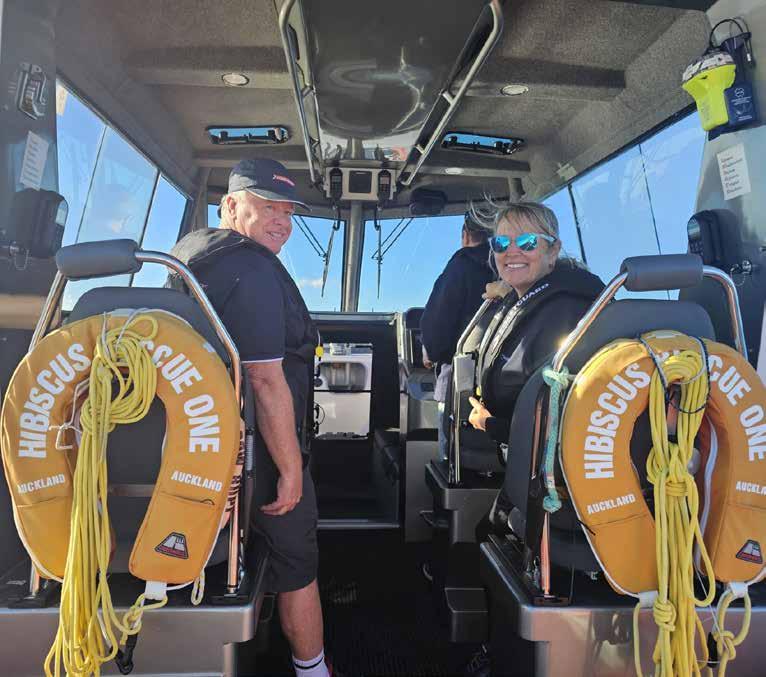
Over the weekend, both David and I were required to complete our skipper revalidation, an intensive two-to-three-hour assessment per person. This was especially challenging because our primary rescue vessel, Hibiscus Rescue One, has been off the water for the past nine weeks while repairs are completed. Even so, the assessment needed to cover the full range of knowledge and skills expected of a Coastguard skipper.
The great news for the unit is that both David and I passed, meaning we are revalidated for another five years. It was a demanding process, but also a valuable reminder of why ongoing training matters. When a crew launches, the community is trusting us to bring skill, judgement, and calm leadership to whatever situation we find.
Rachel Hessey | Skipper Coastguard Hibiscus
www.coastguardhibiscus.org.nz
Strawberry Season Has Begun!
July is the ideal time in Auckland to plant strawberries, allowing roots to establish well before the warmer spring growing season begins. Healthy strawberries thrive with consistent moisture and nutrient-rich soil to encourage strong growth and future fruit production. The Jobmate Weeper Hose helps deliver water slowly and evenly directly to the soil, supporting deep root development while reducing water waste. To give plants an extra boost during establishment, Tui Mini Sheep Pellets enrich the soil with natural nutrients that promote healthier foliage and vibrant growth throughout the season.
Protect & Encourage Healthy Growth
A successful strawberry harvest begins with protecting young plants while they establish during the cooler periods. Creating a warmer growing environment encourages stronger growth and helps plants continue developing through winter. The Grow It Grow Tunnel helps protect strawberry plants from frost while still allowing sunlight and air ow to reach the plants. With the right care through winter, your strawberry patch can ourish into a productive garden lled with sweet, homegrown berries ready for spring and summer picking.
Prepare Your Soil
Mix sheep pellets through the soil before planting strawberries to provide slow-release nutrients and support healthy root growth. Water well after planting to help nutrients soak into the garden bed.
Set Up Your Watering
Lay a weeping hose along the base of your strawberry plants to deliver slow, even watering directly to the roots. Cover lightly with mulch to help retain moisture and keep soil consistently hydrated.
Protect Young Plants
Place a grow tunnel securely over your strawberry rows to create a sheltered growing space while plants establish. Ensure the cover is rmly anchored while still allowing sunlight and air ow to reach the plants.
Silverdale Pioneer Village
The Silverdale Pioneer Village, a much loved local treasure, relies heavily on the donated time of many dedicated volunteers who keep the village running.
If you or anyone you know is able to help fill the following volunteer position, please get in touch with the team on the email below.
New voluntary secretary required
Do you have good computer and administration skills? Do you enjoy working as part of a team of enthusiastic volunteers? We need you!
The Silverdale Pioneer Village needs a new secretary. This is an unpaid voluntary role, which includes dealing with emails, helping to co-ordinate events,and helping to welcome visitors to the Pioneer Village. If you would like to know more email us on pioneervillage1968@gmail.com.
Open every weekend
The Pioneer Village is open every Saturday and Sunday from 10am to 3pm. Come for a day and take a step back in time. Entry is by donation. Group bookings are also welcome on weekdays.
Delights on offer at the Treats & Treasures Craft Shop include:
• unique handcrafted gifts, both new and upcycled using vintage material
• beautiful hand-crafted gifts for Christmas
• toys, jams and preserves
Purchases can be made by cash or bank transfer only – we are in the pre-EFTPOS era.
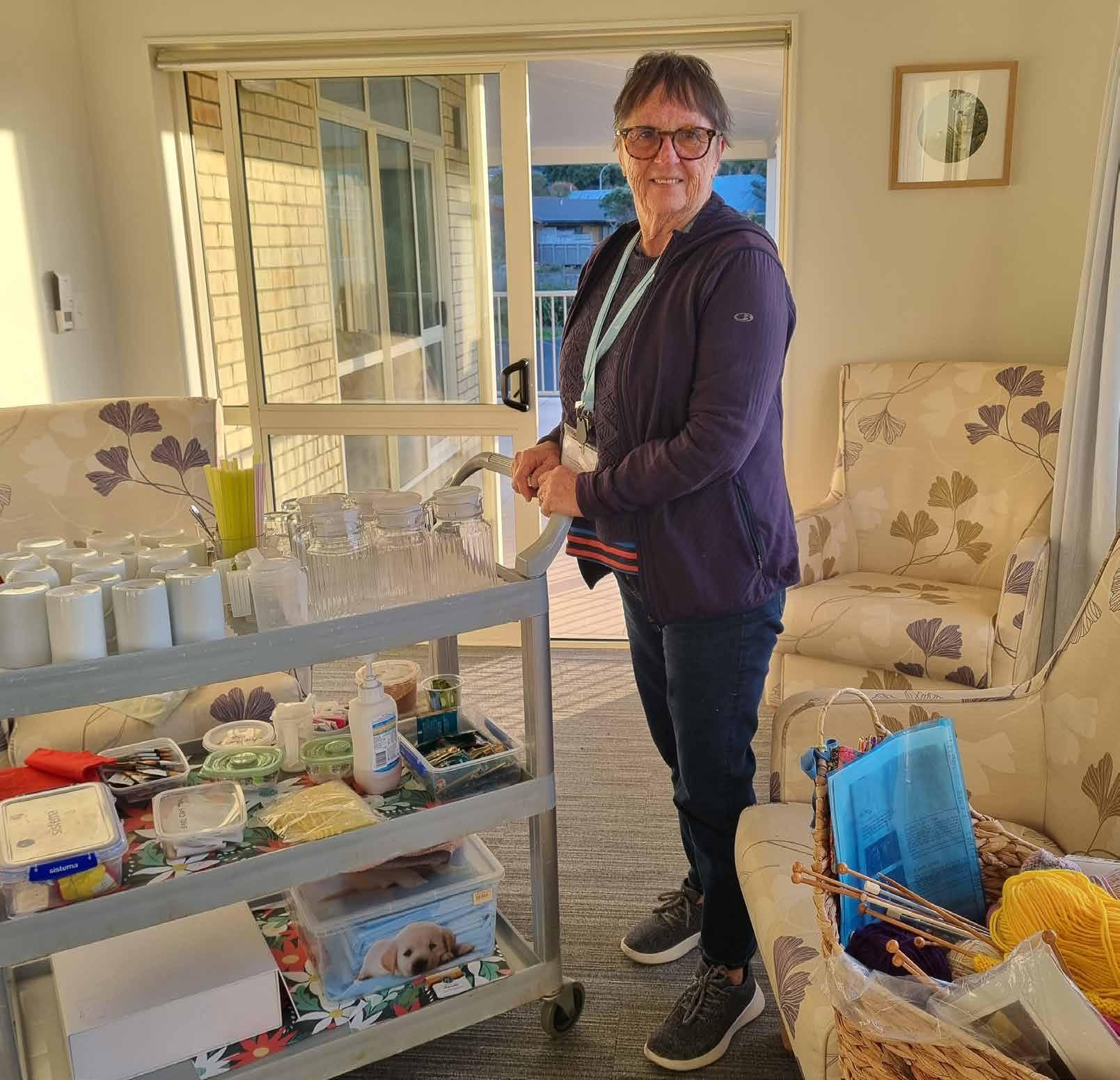
When Irene Sanders tells people she volunteers at Harbour Hospice in its Inpatient Unit, the reaction is often: ‘Oh no, how can you do that? It must be so sad.’
But it’s not sad, Irene says. ‘It’s hard to describe exactly how it feels, but it makes me feel good to be there on the periphery of patients’ journeys – to bring a cup of tea, welcome their family in, sit and chat, whatever they need. It’s a privilege.’
Irene joined Harbour Hospice’s volunteer whānau 10 years ago after responding to a newspaper ad, and this month she’ll be recognised for her dedication alongside 52 other Hibiscus Coast-based volunteers at Hospice’s Hibiscus Coast Long Service Awards. She says the decade has flown by and even given her the opportunity to contribute in a paid role.
‘Five years after I started volunteering, hospice was short on healthcare assistants (who support the nursing team in patient care),’ she explains. ‘They asked me if I’d be interested in training. I now do that on a casual basis as well as my volunteer work.’
The mahi Irene does for hospice has helped her come full circle in life, she says. ‘I had always wanted to be a nurse, but just before I was due to start my training my mother became ill and I stayed home to help. After that, life took me in another direction. So, it really does feel like I’m fulfilling that calling now.’
One of the most satisfying aspects of her volunteer work is witnessing the transformation in patients after they arrive, she says. ‘A lot come in apprehensive and some in fear, but they soon see, in the kind conversations and compassionate care from the staff, that they no longer have to worry, and everything falls into place.
‘People don’t realise that hospice is about family. At Hospice you see dogs trotting down the hallway, and lots of children coming in to see their Nana or Poppa. There’s fun and laughter and singing, especially when Pacific or Māori families bring in their guitars.
‘As soon as you drive in, there’s just a feeling here. And the people are at the heart of it all.’
To find out more about joining Harbour Hospice’s volunteer whānau, email volunteer@harbourhospice. org.nz.
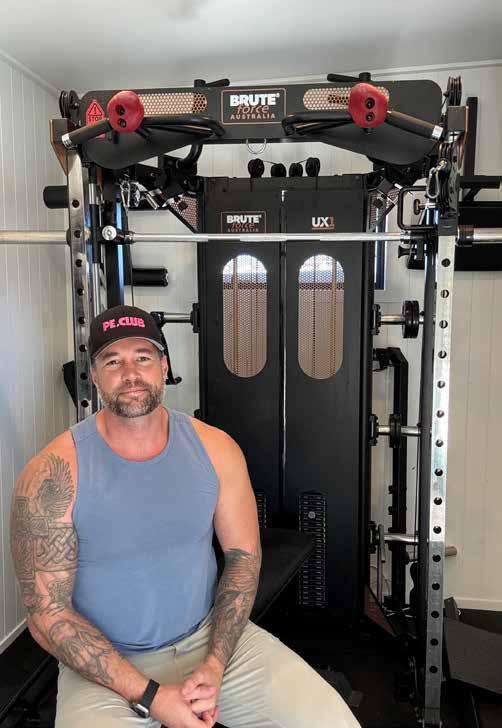
Why is it that you feel worse before you feel better?
There is a particular kind of discouragement that hits around day three or four of getting back into an exercise routine. You’re tired. Your legs feel like dead weights. You slept badly. You’re wondering whether all this effort to be a ‘new me’ is worth it at all.
Coaches note: Keep going. Most coaches fail to mention this bit. They either forget or they don’t want to discourage new clients too soon. I try to prepare my new clients as best as possible. Of course, it is paired with a lower intensity of volume to help keep momentum and spirits high.
When you start exercising again after a break, your body treats it as a disruption. Muscles that haven’t been asked to work properly in a while respond to the new load
with inflammation – that familiar ache that makes sitting down on the sofa a two-stage operation, paired with a wild cacophony of exotic noises (or is that just me?!). Your heart rate runs higher than it should for the effort you’re putting in. Energy dips. Sleep can actually worsen temporarily as your nervous system recalibrates.
This isn’t failure. It’s adaptation. And it’s important to appreciate the difference.
Science has a name for what happens next: the repeated bout effect. A 2017 study found that after an initial bout of eccentric exercise – the kind that causes the most soreness, like walking downhill, lowering weights or any movement where your muscle lengthens under load – the body adapts rapidly. The same exercise, performed a short time later, produces significantly less muscle damage, less soreness and faster recovery. The first session essentially prepares you against the
worst of what comes after it.
The problem is that most people hit this window – usually somewhere between day three and the end of week two – and conclude that exercise just isn’t for them. That their body isn’t responding. So they stop, right at the point where the compound interest was about to start paying out.
Our coastal tide is a good way to think about this. Before it comes in, it goes out. There’s a low point that looks, if you catch it at a certain moment, like nothing is happening. But the water is always moving, always building. The beach doesn’t panic, and neither should you. Jumper | PE Club www.peclub.co.nz
Why felted wool carpet is a smart choice for New Zealand homes
When it comes to choosing carpet, many New Zealand homeowners are looking for something that is warm, durable, natural and made to last. Felted wool carpet has become an increasingly popular option because it combines all of these qualities while also offering a beautiful modern appearance that suits many Kiwi homes.
Unlike synthetic carpets, felted wool carpet is made using natural New Zealand wool fibres. Wool has been trusted in homes for generations thanks to its softness, warmth, and ability to perform well in busy family spaces. What makes felted wool different is the way the wool fibres are specially twisted and heat-set during manufacturing to create a tighter, more textured finish.
This ‘felting’ process gives the carpet a cleaner, more structured look while also improving durability. The fibres are tightly packed together, helping the carpet resist flattening and crushing from foot traffic. This means felted wool carpet tends to hold its
appearance for longer, even in high-use areas like hallways, living rooms and stairs.
One of the biggest advantages of New Zealand-made felted wool carpet is comfort. Wool naturally provides excellent insulation, helping homes stay warmer in winter and cooler in summer. Underfoot, felted wool feels soft yet supportive, creating a cosy and welcoming atmosphere throughout the home.
Wool is also naturally breathable. It can absorb and release moisture from the air without feeling damp, helping regulate humidity levels inside the home. This can contribute to a healthier indoor environment, especially during New Zealand’s colder and wetter months. It is also stain resistant and sustainable.
Felted wool carpet is also known for its acoustic benefits. The dense wool fibres help absorb sound, reducing noise inside the home and creating quieter, more comfortable living spaces. This can make a noticeable difference in busy households or multi-level homes.
From a design perspective, felted wool carpet has a stylish textured appearance that works beautifully with modern interiors. Many
New Zealand manufacturers offer a wide range of natural tones inspired by the New Zealand landscape, making it easy to pair with timber flooring, tiles, and contemporary colour schemes.
While felted wool carpet can be a slightly larger investment upfront compared to some synthetic and general wool alternatives, many homeowners find the long-term performance, comfort, and appearance make it worthwhile. Its durability, timeless style, and natural benefits continue to make felted wool one of the premium flooring choices for New Zealand homes.
For homeowners wanting warmth, quality, and a flooring product designed to suit Kiwi living, New Zealand-made felted wool carpet remains one of the best options available.
Bremworth and Feltex produce some exceptional felted wool ranges.
Rena
Nicholson | Midway Flooring
www.midwayflooring.co.nz
675 Whangaparaoa Road 09 424 3790
THE FICTION SPOT
By Paula J. Kora
At the Pompidou Centre, there‘s an exhibition of 19th century French Realist painters. I’m familiar with the works of Courbet, Manet and Millet but none of the others whose work is on display. I decide this is how I’ll fill the one day I have left in Paris.
To my dismay the gallery is full of chirping groups of school kids. I don’t want to be jostling amongst them so I find the café and sit for a while, with coffee, observing the culturati and glitterati and tourists like me. When I return to the gallery it has emptied enough for me to move around comfortably, taking my time to study each work.
I come across one that completely stops me in my tracks. Two women occupy the prime vantage point so I stand behind, fidgeting, impatient for them to get out of my way.
‘She certainly looks like a madwoman,’ says one. They laugh contemptuously and move on.
I slide into their space to be front and centre, as close as the cordon will allow. I read the small laminated label.
‘The Lunatic of Etretat’ - Huguse Merle 1871.
The artist left no documentation regarding the subject matter of this work. Therefore any interpretation can only be speculation. The portrait remains one of the greatest mysteries of the art world.’
In the painting a barefooted woman sits cross-legged on the edge of a well. Her unkempt hair and tattered lace cuffs scream poverty. Beggar? Or gypsy perhaps? Her head is bowed over a baby she clutches tightly in one arm, a ‘Madonna and child’ pose. But she is not looking lovingly at her baby. Instead she is intensely staring me down. The whites of her eyes shine wet and slightly pink, orbs glowing in the shadow of curly fringe. Her direct gaze is dark, feral, and dangerous…. and it disturbs me.
But more disturbing is what she holds. It is not a baby, but a log of wood swaddled in a thick woollen blanket, a red bonnet with pink ribbons tied to the top end. The woman
is throwing down a gauntlet. She confronts me, challenges me to point out that what she holds is not a baby. She defies me to try to snatch it away. And suddenly I understand. This woman has given birth to a stillborn baby. The inanimate nature of the log supports my theory. And now I am drowning in my own emotional response. I feel the woman’s profound pain deep in my guts. I understand the despair causing her to lose her grip on reality. Every cell in my body is swamped by a tsunami of grief.
Unashamedly, I weep for her.
I weep for all mothers who have lost a child, whether stillborn, accident or disease, murder or suicide. And I weep for all the displaced mothers who, right at this moment, are powerless to protect their innocent children from the devastations of war and injustice.
Theirs, too, are the silent stories. END
Hibiscus Coast Writers
For more information, don't hesitate to get in touch with the Membership Secretary, Paula at paulajkora@hotmail.com
The upside of downsizing
For many retirees, downsizing is about much more than moving house. It’s about creating space for a new chapter – one with less maintenance, greater peace of mind and more time to enjoy the things that matter most.
Yet even when the benefits are clear, the process can feel overwhelming. Decades of memories, treasured possessions and the logistics of preparing a home for sale can make the prospect seem daunting.
The good news? You don’t have to do it alone.
There are specialists who can help simplify the process from start to finish, providing practical guidance, expert advice and emotional support along the way. From decluttering and organising to preparing a home for market and coordinating the move itself, support is available at each and every step. At The Botanic Hibiscus Coast, the village team partners with a range of specialists ready to help their new residents.
Renowned downsizing specialist Brynyce Owen of Moving Made Easy works with many retirees to assist them with the transition to a retirement village. ‘Many people are surprised to discover that downsizing isn’t about giving things up - it’s about choosing what matters most,’ she says. ‘By carefully selecting the possessions that will move with you, you’re creating a home that reflects you and your lifestyle in your new home.’
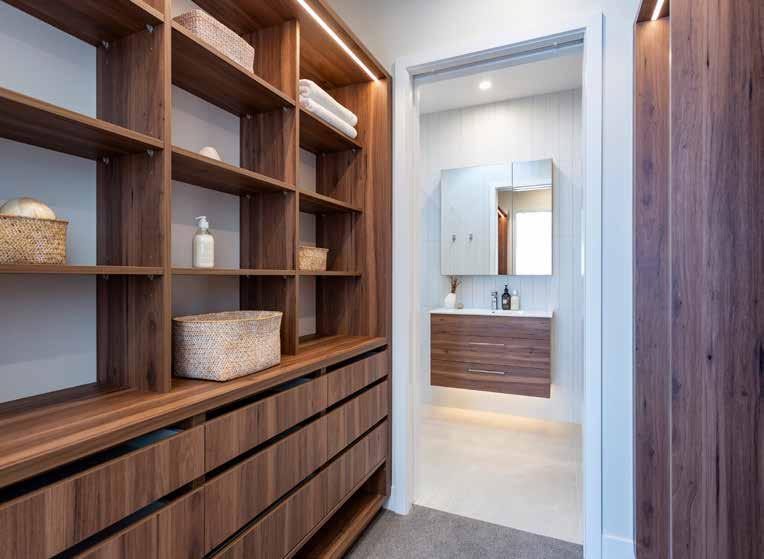
One of the biggest concerns people have is whether they’ll have enough space, but you can choose how much you want to downsize. For example, at The Botanic, thoughtfully designed two and three-bedroom villas and apartments make the transition far less daunting. Generous floorplans, deep garaging, cleverly integrated storage solutions and spacious walk-through wardrobes mean residents can often bring far more with them than they expect. The result is a home that feels spacious, comfortable and perfectly suited to this stage of life.
‘Residents frequently tell us they wish they had made the move sooner,’ says Michelle Pipping, sales manager at The Botanic. ‘Leaving behind home maintenance, gardening and ongoing property upkeep gives people more time to travel, pursue hobbies, spend time with family and enjoy the social connection that village life provides.’
The key is starting the conversation early. Exploring your options
before a move becomes necessary allows you to make decisions on your own terms, with time to plan and prepare.
Downsizing isn’t about reducing your life – it’s about making room for the things that matter most.
If you’ve been thinking about your next move, join us for the free ‘Downsizing Made Easy’ morning tea at The Clubhouse Café at The Botanic Hibiscus Coast at 10am on Monday, 20 July. Featuring practical advice from Brynyce Owen of Moving Made Easy, this informative event will show you how downsizing can be far simpler and less stressful than you might imagine. Go to www.thebotanic.co.nz for more information.
thebotanic.co.nz
Shedding light on the invisible load
There is a heck of a lot of life admin that comes with parenting. Some people call it the mental load, others refer to it as invisible – it’s all the details that sit in your head and keep family life running.
Often in a relationship there’s a ‘default parent’ who’s carrying the majority of this load. Yes, it includes housework, laundry, cooking and supermarket shopping – but not just that. It’s also all the other less-obvious-but-still-important unseen tasks.
It’s remembering to buy presents, working around orthodontist appointments, responding to sports team group chats, booking school interviews, coordinating drop-offs to after-school activities, juggling work when kids are sick, remembering it’s Book Week and whipping up a last-minute costume. It’s organising who is bringing what to the BBQ. It’s keeping in touch with extended whānau and checking in on aging parents.
And let’s be honest – at the risk of sounding stereotypical, and while acknowledging that there are definitely exceptions to any ‘rules’ – most of the mental load is carried by women.
When one person is carrying the weight of most of the life admin, it’s like having too many tabs open at once – all the time. It’s stressful and impacts your sleep, your patience and, ultimately, how well you cope with the everyday demands of children. Carrying the invisible load unsupported also
has a relational impact on partnerships. If one person is feeling resentful or burnt out, that really shapes the atmosphere at home. And kids pick up on it.
Why does the load lose its balance?
Many of us were raised in settings with more traditional gender roles, where mothers carried most of the responsibility for home and children. We’ve certainly come a long way. We see a lot more dads who are really keen to be involved and share the load. But even now, there can still be quite a big gap.
So what can we do about it?
The first step is making the invisible load visible. We can’t share something we haven’t actually named.
This might look like writing everything down. Some couples have a shared document where they add appointments and tasks as they come up. And of course there are apps to meet the scheduling needs of a modern family. PAM (made in NZ!), Cozi and Family Wall all come recommended. OurFamilyWizard is especially helpful for co-parenting through separation.
A really important shift here is moving from ‘helping’ to ‘owning’. If one person is still holding all the responsibility and just asking
for help, the load hasn’t really changed. What works better is each person fully owning certain tasks from start to finish.
So instead of helping with orthodontist appointments, one person becomes the contact and manages that whole thing, including rearranging work, driving to the appointments and scheduling follow-ups.
Give, and let go
Which brings me to my final point. When you do start sharing tasks out, it’s important to let the other person do it their way. They may not do something exactly how you would, but that doesn’t mean they’re doing it wrong.
At the end of the day, it’s not about everything being perfectly equal. Partners have different strengths and also interests. Ultimately, bringing the invisible into the light is about feeling like you’re on the same team as your partner. When the load is shared more fairly, it doesn’t just reduce stress – it creates a calmer, more connected home for everyone.
Condensed with permission from an article by Kristin Ward, Parent Coaching Team Manager at Parenting Place, first published at parentingplace.com
People are more than boxes on an application form
The power of active listening
In today’s world, good insurance advice is about much more than recommending products. It begins with understanding people – their circumstances, their concerns, their goals and sometimes the challenges they have overcome.
JACKSON
M: 027 498 6202
E: ryan@treehouseprint.co.nz PO Box 133, Kumeu 0841 Auckland
Active listening means taking the time to genuinely understand a client’s story before offering advice. It means asking questions, listening carefully to the answers, and ensuring that clients fully understand the options available to them.
Recently, I was referred a couple who had previously been declined insurance for their business because of a past history of drug and substance abuse. On the surface, their situation appeared challenging. However, by encouraging them to openly share their journey, a very different picture emerged.
They had been free from drugs for many years and had devoted themselves to helping others break the cycle of addiction. They had started a family, welcomed a young baby into their lives, and were focused on building a positive future while giving back to their community.
By listening carefully and understanding the full context, I was able to present their situation accurately and transparently to an insurer. The result was that their application received fair consideration and was approved, based on who they are today, not simply on events from their distant past.
This experience highlights an important truth: people are more than a series of boxes on an application form.
Active listening allows advisers to become effective advocates for their clients. It helps ensure that insurers receive a complete and accurate picture, and that clients receive advice tailored to their individual circumstances.
At UProtectNZ Insurance Services, we are committed to taking the time to listen, understand, and guide our clients through important insurance decisions.
We listen. It’s what we do.
Theo Simeonidis | UProtectNZ Insurance Services
Theo is a Financial Adviser, living and working in Millwater on the Hibiscus Coast, and specialising in personal and business insurances. Theo can be contacted on 027 248 9320 or email theo@uprotectnz.com. Any assistance is provided on a free, no-obligation basis. A public disclosure statement is available on the www.uprotectnz.com website.
"Simple - R e spectful - Dignified "
Our Simple Cremation, provides a cost effective and uncomplicated option for caring for your loved one, without embalming or additional services. It is designed for families who prefer a straightforward "no-fuss" approach, while maintaining a respectful and dignified service.
From your first call, our experienced team will gently support you every step of the way. We’ll arrange for your loved one to come into our care and take care of all the necessary details, giving you peace of mind during this difficult time.
For more personalised or traditional funeral options, please give us a call or visit our website to view the range of packages available.
Tracey Brown
Get In Touch
Simply contact us and we will arrange to bring your loved one into our care and begin the simple cremation process.
3 Cremation
Our team will gently care for your loved one and handle the cremation with dignity and respect.
2
Documentation
We will guide you through all required paperwork and assist in obtaining the necessary permissions for cremation.
4 Recieving Ashes
Ashes are usually ready within two working days after cremation, and we will return them to you once all arrangements have been settled.
BUCKET LIST TRAVEL
Peru
A journey through the land of the Incas
Recently, I had the pleasure of exploring the incredible wonders of Peru on a G Adventures G luxe tour, and it was truly an unforgettable experience.
Our journey began in Cusco, the ancient capital of the Inca empire, where Spanish colonial architecture blends beautifully with Incan history. Wandering through cobblestone streets lined with carved wooden balconies, and spotting alpacas and llamas around every corner, was the perfect introduction to this fascinating country.
To help acclimatise to the altitude, we spent three nights in the Sacred Valley, where the adventures really began. Highlights included a spectacular waterfall hike with an introduction to the famous Inca Trail, visits to impressive archaeological sites, the
remarkable Maras Salt Mines, and a local ceramic workshop. One of the most memorable experiences was spending time with a local community learning to make traditional empanadas – a wonderful way to connect with Peruvian culture.
Back in Cusco, we explored the city’s rich history on a walking tour, discovering hidden gems such as Mural Alley and Wak’a Sapantiana, an ancient Andean sanctuary dedicated to water worship.
The journey then continued aboard a scenic train from Ollantaytambo to Aguas Calientes, gateway to the legendary Machu Picchu. Seeing this iconic site in person was a true bucket-list moment. Standing among the ancient ruins, surrounded by breath-taking
mountain scenery, left me in awe of the ingenuity and achievements of the Inca civilization.
Peru delighted all the senses – from tasting alpaca carpaccio and sipping the country’s famous Pisco Sour, to discovering unique flora, colourful birdlife and spectacular landscapes. Rich in history, culture, scenery and warm hospitality, Peru is a destination that exceeded every expectation and one I would highly recommend to any traveller seeking an extraordinary adventure.
Winter is an exciting time at Estuary Arts, with a full calendar of exhibitions, events, classes, and creative activities for all ages.
In Gallery One, visitors can enjoy an inspiring showcase of Helensville artists featuring painting, woodturning, jewellery and metalwork. This diverse exhibition brings together the work of 12 talented artists: Roy Scott, Leda Daniel, Ron Clark, Myra Lloyd, Jeff Thomson, Ruth Sumner, Joanne Sullivan, Mike Rowland, Raywin Cruickshank, Tom Somerville, Tracey Roberts and William R. Boyd.
Galleries Two and Three celebrate the rising star cluster of Pleiades, known in Aotearoa as Matariki, which marks the Māori New Year. Alongside a vibrant group exhibition featuring painting, printmaking, video, weaving and more, Estuary Arts invites the whole family to a special Matariki celebration on Saturday, 4 July from 3pm to 5pm. Enjoy an afternoon of music, kai and hands-on art activities as we come together to celebrate this important cultural occasion.
In Gallery Four, the annual Hibiscus Coast Printmakers Exhibition returns, showcasing the creativity and technical excellence of this talented local group.
On the Feature Wall, Estuary Arts is delighted to present The Northland Panels by Robin Neal Davies. This marks the artist’s first major large scale work in oils and draws inspiration from the rich biodiversity, landscapes and Māori culture of Northland.
July also brings a jam-packed Youth School Holiday Programme, with an exciting range of hands-on art-making workshops and classes designed to inspire young creatives. There is something for every interest and skill level.
Looking ahead, Term Three weekly art classes for adults, as well as after-school classes for children and teens, begin from 20 July. Spaces are filling quickly, so be sure to visit the website and book early. Estuary Arts members receive discounted class fees.
We invite you to visit the galleries and experience the exhibitions this winter at Estuary Arts, located at 214B Hibiscus Coast Highway, Orewa. The galleries are open seven days a week.
For exhibition details, class bookings, and upcoming events, visit Estuary Arts Centre
Knock, knock… Can your landlord just turn up?
Imagine you’re relaxing at home on a Saturday morning when there’s a knock at the door. You open it to find your landlord standing there, wanting to ‘have a quick look around’.
Can they do that? The answer lies in a legal right known as quiet enjoyment — a term that often causes confusion for both tenants and landlords. Despite what the name suggests, quiet enjoyment isn’t about having complete silence. It’s about a tenant’s right to enjoy their home with reasonable peace, comfort, and privacy.
What is quiet enjoyment?
When you rent a property, it becomes your home. While the landlord still owns the property, they can’t interfere unreasonably with your ability to live there.
The Residential Tenancies Act gives tenants the right to quiet enjoyment of their home. This means they should be able to go about
their daily lives without unnecessary disruption, harassment, or intrusion.
Quiet enjoyment includes the right to:
• have reasonable privacy in your home
• feel secure and comfortable where you live
• be free from harassment or intimidation
• have landlords follow the correct legal process before entering the property
• enjoy the property without unreasonable interference
Doesn’t ‘quiet’ mean no noise?
Not quite. One of the most common misunderstandings is that quiet enjoyment guarantees complete peace and quiet. In reality, everyday living comes with a certain amount of noise and activity.
Children playing next door, a neighbour mowing the lawn, or the occasional barking dog are all normal parts of community living.
CAB Hibiscus Coast locations
The key question is whether someone’s actions are unreasonably interfering with a tenant’s peace, comfort or privacy.
When might quiet enjoyment be breached?
Examples of quiet enjoyment being breached could include a landlord:
• entering the property without the required notice
• turning up unexpectedly and repeatedly
• conducting inspections more often than the law allows
• harassing or intimidating a tenant
• interfering with the tenant’s use of the property
Every situation is different, but the law recognises that tenants should be able to feel at home in the place they rent.
However, quiet enjoyment is a two-way street. Tenants also have an obligation not to interfere with the peace, comfort or privacy of neighbours and other tenants.
For example, regularly hosting loud latenight parties or creating ongoing disturbances could affect someone else’s right to enjoy their home.
What can tenants do if there’s a problem?
If a tenant believes their right to quiet enjoyment has been breached, the first step is often to discuss the issue with their landlord.
If that doesn’t resolve the problem, they may be able to issue a notice to remedy, asking the landlord to correct the issue within a reasonable timeframe.
Where a dispute can’t be resolved, either party may be able to apply to the Tenancy Tribunal for a decision.
Need more? Contact CAB for free, confidential info and advice on freephone 0800 367 222, online at cab.org.nz (send a message or speak with a volunteer interviewer on live chat), or visit in person : cab.org.nz/ find-a-cab/.
Orewa Community Centre Whangaparaoa Library Outreach: Mon-Fri: 9:30am to 3:30pm Wed: 10am to 12noon (excluding public holidays)
BEST BOOKS
Karen McMillan Author
Looking for your next great read? Let our local author guide you.
The Spirit Remains
by Donna Goodacre
Set in the 1890s. Lucy Chappell has lost her great love, Hohepa, and now she must raise their children on her own in New Zealand. But new opportunities and new people enter her life, and there may be a chance she will find love again. Wiremu, an elder and mentor to Lucy, guides the next generation and, along the way, discovers a son he didn’t know about.
Meanwhile, in the UK, artist Colin Greenwood is also mourning the loss of his partner. When Charles Patterson arrives in both countries, secrets emerge from the family’s tangled past for both Lucy and Colin.
In the present day, Ngaroma investigates the lives of her ancestors, and this part of the story is based on the author’s real-life discoveries.
The Spirit Remains is a story of love, loss, resilience and connection. With themes of women’s empowerment and the determination to find one’s purpose, it also brings to life the evolving Māori-Pākehā relations of the Victorian era. It explores mysteries that connect past and present, with colourful, well-crafted characters who will capture your heart.
Good Acre Books, RRP $38
His Story
by
Hans B. Grueber
Local author Hans B. Grueber has lived an extraordinary life, with the first half in Germany and the second in New Zealand (and has also lived in France and the USA). This is so much more than a personal family history, as he shares a compelling account of European history, the legal profession, politics and thoughts on the future.
His earliest childhood memories are of playing in the rubble of his badly bombed German town, after the city centre was incinerated by Allied forces in World War II. Always interested in the wider world around him, Hans smuggled banned books to his friends in East Berlin as a university student. He fled from police during student revolts in Paris, and saw anti-Vietnam War demonstrators being tear-gassed while studying at UC Berkley. As a young lawyer, he describes some of the cases he worked.
Moving to New Zealand was a new chapter for Hans. He was a key player in introducing MMP to New Zealand, but he shares a painful episode when his first marriage broke down, and the international custody case of his children that followed. Hans has an easy, relaxed writing style, with just the right mix of humour, honesty and insight.
Writes Hill Press, RRP $40.00
WHAT'S ON HIBISCUS COAST
HIBISCUS COAST SCOTTISH COUNTRY DANCE CLUB
Every Weds Silverdale Hall 7:00pm
HIBISCUS COAST ARTISTS GROUP
Meet on Mon 9.30am-1pm Stanmore Bay Community Hall Whangaparoa. All Welcome.
Shana 021 650 184
HIBISCUS COAST ROCK & ROLL
Every Tues. W’poa Hall 7pm lessons. 8pm general dancing. Wear soft sole flat shoes. See website & Facebook
DANCE FITNESS CLASS
Every Tues/Thurs evening 7-8pm at Kingsway Jnr Campus. First class FREE then $10 per session. Richard 021 504084
PUHOI CELTIC SESSIONS
Every 2nd Thurs at Orewa North Primary School. A sing-around/ play-around event. Alan alanthewag@outlook.com
SUICIDE BEREAVEMENT
SUPPORT
Last Mon of every month (Jan-Nov) 7-9pm HBC Community House. Support for anyone who has lost a loved one. Susan 021 884 162
OREWA GARDEN CLUB
2nd Thurs of month
Feb–Nov 12.30–3pm.
St John’s Catholic Church Hall, Orewa. Visitors welcome. orewagardenclub@outlook. co.nz
HIBISCUS COAST ORCHID SOCIETY
ST CHAD MARKET
1st Sat of every month 8am-noon 117 Centreway Rd, Orewa. Grant 021 0830 7743 or email office@ hbcanglicanparish.nz
UKELELE CLASSES
Every Thurs at St Andrew’s Church Hall. 107 Centreway Dr 1pm-2:15pm. $15 includes music.
Avon Hansen-Beadle 021 421 109
HIBISCUS COAST CONCERT BANK
Every 2nd Thurs
All ages & abilities welcome hccb.org.nz Call 021 186 4599
WHANGAPARAOA INDOOR BOWLS CLUB
W’poa School Hall Mon 7pm. All ages, beginners welcome. Coaching provided. Maurice 027 392 0541
Orewa Presbyterian Church 10am-12pm. Friendship Club for seniors. Morning tea, guest speakers & outings. Colleen 021 112 3409
HIBISCUS COAST COUNTRY MUSIC CLUB
1st Sun each month
Orewa Community Centre 1-4pm $5.00. Everyone welcome. Janet 0212367094
2nd Sunday of the month. Feb–Dec 1-3pm Masonic Lodge, Centreway Road, Orewa. Visitors welcome. Bruce 09 947 5787 HOUSIE
Every Friday 12.30pm ($1000 jackpot) at Bowls Orewa, 214 Hibiscus Highway. Ph 09 426 5937
MILLWATER PARKRUN
Every Sat 8am
See www.parkrun.co.nz/ millwater for more details
HBC GRANDPARENTS
PARENTING GRANDCHILDREN
Monthly 1st Wed, Support Group. Maygrove Retirement Village. 10:30-1:30 free lunch. Weekly for Coffee Group each Wed 10:30 (various locations). Donna 021 024 30064.
HBC SENIOR CITIZENS ASSN. INC.
Meet Tues for Indoor bowls & cards at Orewa Community Hall. 12-4pm. Membership $5/yr. $2 entry includes afternoon tea. Edna Tibble 0272975554
SILVERDALE BALLROOM STUDIO
Every Thurs Silverdale Hall 7pm. Adult & Improvers classes for beginners & social dancers. 021 031 4216
PIONEER DANCE CLUB
Every Thurs at Silverdale Hall 1.30-3.30pm. Social Ballroom Dance for seniors. 021 031 4216
LINE DANCE CLASSES
Beginners class Weds 10am-midday at Silverdale Hall. Great way to exercise to music & make friends. Sue 021 99 1717
TRAVEL CLUB with Bucket List Travel. 2nd Tues of every month
(Feb-Nov) 9:45am–11am Red Beach SurfLifesaving Club. Michelle 094261490
HIBISCUS COAST
FRIENDSHIP CLUB
4th Wed of the month at 10am Bridge Club rooms, Edith Hopper Park, Manly. Speakers/outings/luncheons together. Peter or Jeanne 09 4268675.
ROTARY CLUB OF OREWA-MILLWATER
1st & 3rd Tues of every month 7pm at The Wade Tavern. 2 Tavern Rd Silverdale. orc.secretary@outlook.com
LADIES CRAFT GROUP
Every school term Tues Orewa Community Church 235 HBC H’way. 10am-12pm. $2 for morning tea & craft creche provided.
SILVERDALE VILLAGE MARKET
HIBISCUS COAST MIDWEEK BADMINTON CLUB
Every Weds 9am-noon
All welcome . Orewa Badminton Hall, Victor Eaves Park. 021 0870 8118
ARTS GROUP
Every school term Friday Orewa Community Church 235 HBC H’way. 9am-1pm $2 incl. morning tea
Alan 021 039 7155
Every Sat 8am -1pm Silverdale St Silverdale FREE
Mon/Wed/Thur & Sat 10-noon at W'poa Library. By Volunteers from HBC Genealogy Group. Garry on 021 902715 or garryphillips2010@gmail.com
KIWI CLUB 4th Sun of each month. Social Dance 5-8pm, all welcome. Silverdale Hall.
HIBISCUS PETANQUE CLUB
Every Tues/Weds 9am12 & Sun 1pm at 214 HBC Highway. New players welcome, free coaching. John 0274894955
10PIN BOWLING FOR SENIORS
W’poa Bowling Centre, Arkles Bay. Looking for senior players to join club for league games. Mon & Fri 10am. Lots of fun and advice. Brett 0210530905
HIBISCUS COAST QUILTERS
1st Tues of the month at 9.30am & 3rd Weds at 7.30pm. W’poa Community Hall. Beginners, experienced quilters & visitors welcome. hbcquilters@gmail.com
HIBISCUS COAST LITERARY CLUB
2nd Sat of the month @ 1pm W’poa Library Workshops. By authors. Writing competitions. Friendly atmosphere. Everyone welcome.
HIBISCUS COAST GENEALOGY CLUB 3rd Tuesday of each month at St Chads Church, 117 Centreway Road, Orewa 2-4pm. Guest speaker. Afternoon tea and fellowship follows. Members free, visitors welcome, $5.
HEARTBEATS CARDIAC SURVIVORS SUPPORT GROUP
1st Tues of every month 10am at HBC Community House. Open to all heart event survivors & their families. Trent Lash 0220 606 199
OREWA LIONS CLUB
1st & 3rd Weds 6.30pm (7pm start) at St Chads Hall 117 Centreway Road, Orewa.
Wendy 021 841 125, orewalionsclub@gmail.com
SILVERDALE NAVAL CLUB
meets the 3rd Sun of each month at HBC Community RSA at 15.00. Vince Sturmey 09 4285222
DAIRY FLAT MUSIC CLUB
Weekly dances/events with live music held at The Dairy Flat Hall, Postman’s Rd. Visit www.dairyflatlive.com for more info.
Bobby Sundarajan at Barfoot & Thompson 021 051 2769 Real Estate
Medical / Dental Optometrist
Orewa Optics 09 426 6646
Waitemata Endoscopy 09 925 4449
The Botanic 0508 268 264 Retirement Living
Motoring / Boating Transport
Rodney Auto Centre 09 426 5016
Silverdale Car Services 09 421 1413
Simon Lucas Mitsubishi www.simonlucas.co.nz
LOCAL RECIPES
Triple cooked pomme fritte (French fries)
Ingredients
8 medium to large Agria potatoes
Salt
Oil for fryer
Method
Peel the potatoes and wash well, no eyes should remain. Get larger potatoes for a chunky chip. Remove all sides with a sharp knife, creating a large cube. The off cuts can be saved in water for making mashed potato or a soup. The idea is to have the chips all the same size for even cooking and presentation.
Cut the potatoes into batons (chips), around 2-3cm thick, wash well to remove the excess starch. Bring a pot of lightly salted water to the boil, when par boiling the fries have a lot of boiling water as this will allow them to cook evenly. Place the cut fries into the boiling water for around 7-10 minutes depending on the size of your fry, or until the potatoes are nearly cooked all the way through but still holding their shape. Never stir the water or disturb as this will break up the potatoes. With a perforated spoon carefully remove the batons and place them flat onto a tray with paper towels to drain the excess water.
To deep fry, use a large pot on the stove with a thermometer or a bench top fryer at 140°C. Gently place the batons into the oil. Remember, if you overload the oil with too many fries this will cool the oil too quickly and cause the fries to be oily and soggy. If you shake and move the fries too much, they will break up, so only gently shake them occasionally. Deep-fry for around 5 minutes, until they are cooked all the way through but not too crisp. Remove gently from the fryer and place on kitchen paper to cool on the bench. These stages can be done before you need your Pomme Fritte, but the key to a crispy fry is to deep-fry in hot oil when you are ready to serve.
Place the fries in 180°C oil for around 5-7 minutes or until crispy on the outside. Remove from the oil, season with sea salt and serve. The larger the fry the fluffier it will be inside. A great Pomme Fritte should be crispy on the outside and light and fluffy in the middle. For the best flavour you can use duck fat if you want to be really posh.
Mark Lane | Culinary Lane
www.culinarylane.co.nz
Note: These were invented by Heston Blumental of the Fat Duck in 1992, this is my version. I find the best potato for this is Agria, great colour, low moisture, high starch and fluffy when cooked. A good all-purpose potato.
Butternut pancakes with crispy sage and brown butter (12)
Pancakes
1 cup roasted and mashed butternut squash
⅓ cup yogurt or sour cream
2 large eggs
½ cup finely grated gruyere or parmesan
Method Ingredients
In a large bowl, whisk butternut, yogurt, eggs, cheese, salt, pepper and baking powder until smooth. Add flour and stir until just combined. Batter will be thick.
Heat a large frying over medium-low to medium heat. Coat the bottom with butter or olive oil, or a combination thereof, and spoon in pancake batter, a heaped soup spoon or scant quarter cup at a time. Press the back of the batter mound to flatten the pancake slightly. Cook until golden brown underneath, flip and then cook until golden brown on the second side. If this is happening
¾ tsp fine sea or table salt
A few grinds of black pepper
1 tsp baking powder
1 cup all-purpose flour
Butter or olive oil for frying pan
To finish
2 to 3 Tbsp butter
A pinch or two of salt
A few fresh sage leaves
very fast, lower your heat. If you’re worried pancakes have not cooked in the centre, you can finish them for 10 minutes in a 250 degrees oven. You can also keep your pancakes warm there until needed. Repeat with remaining batter.
To finish, wipe out frying pan and place butter, a pinch or two of salt and sage leaves back in it, heating over medium. The sage leaves will crisp and the butter will brown in a minute or two, so keep a close watch on it. Pour leaves and butter over pancakes and quickly understand why you’ll never have
them another way.
Note 1: To roast butternut, halve and scoop out the seeds. Roast face-down on an oiled baking sheet at 190°C for 40 to 50 minutes, until tender. Yields about 2 cups mashed butternut from one small-medium butternut.
Note 2: Consider doubling this recipe. The pancakes keep well in the fridge and can also be frozen.
Source: www.smittenkitchen.com
WHAT'S ON AT YOUR LOCAL LIBRARY
Ōrewa
Special events
Love Food Hate Waste – Seasonal Produce Pickling Workshop Sunday, 12 July at 10.30am. Pickle your surplus food, plus food waste tips with Sarah Williams from The Compost Collective. Bring a clean jar to take home some fridge pickle. Free but booking is essential. Register at compostcollective.org.nz
Hibiscus and Bays Local Board – drop in session Saturday, 18 July at 1.30pm. Come along and speak with a local board member.
School Holiday & Matariki events
Creating creatures with silk clay: Tuesday, 7 July at 3pm. Creative air-dry silk clay workshop. Tamariki will be working with soft, colourful silk clay, designing and creating their own creature to take home.
Wheelies Wednesday: Wednesdays, 8 & 15 July from 9am to 4.45pm. Hot Wheels vehicles and tracks will be out all day in the children’s area. Drop in any time.
Little Scientists: Thursday, 9 July at 2.30pm. The Little Scientist Team are bringing their Matariki Star Science activities to Ōrewa Library.
Matariki public holiday: Library is closed Friday, 10 July
Ngā Pūrākau o Matariki: Saturday, 11 July at 11.00am. Join us for a joyful, bilingual Storytime where we explore the stories of Matariki through pūrākau Māori, waiata, bubbles and more.
Weaving Whetū with Danica (for Rangatahi): Monday, 13 July at 11am. Creating whetū with Danica in recognition of Matariki. Aimed at 12+. Bookings recommended, email orewalib@aucklandcouncil.govt.nz
Alphabeatz: Tuesday, 14 July at 11am. Alphabeatz are bringing their Whanau friendly, interactive songs to Ōrewa Library. Although aimed at 2–10-year-olds, this will be a fun, interactive sing-a-long for the whole family.
Introduction to Robotics: Wednesday, 15 July at 2pm. Learn about VEX Robotics and robotics opportunities in Aotearoa NZ. Participate in an interactive game and learn about Yihan’s (Year 10) experience as a team captain, driver and lead coder. Free, no bookings required.
Poi making with Kendra: Thursday, 16 July at 2pm. Come and make a set of poi using recycled wool and material, alongside learning a poi waiata.
Activities happening in the library during the holidays: Korowai Craft, Star Board, Matariki Scavenger Hunt and Colouring.
Activities for Rangitahi Teens: Hiwa-i-te-Rangi Zine, Colouring Word Finds, Interactive board about Matariki.
Regular programmes
Monthly & fortnightly
Step in, step up, stand out: Tuesday, 6 July at 10am. Register via website: ripple.net.nz/workshops
Book Chat: Wednesday, 1 July at 10.30am
Orewa Orators: Fridays, 3, 17 & 31 July at 12pm
Parkinson’s Support Group: Monday, 6 July at 10am. Email jo.lynch@parkinson.org.nz
Family tree maker: Wednesday, 8 July at 1pm. Booking required, email ftm@hbcgenealogy.org.nz
Orewa Writers and Poets: Saturday, 18 July, at 1pm
HBC Embroiders Guild: Sunday, 26 July at 1pm
Weekly adult’s programmes
ESOL with Lynn Williams: Mondays at 1pm (term time)
Conversational French: Mondays at 3pm, from 22 July
Craft group: Wednesdays at 9.30am
BrainCharge: Wednesdays at 11am (term time)
Te timatanga o toku Reo Maori Heaerenga group: Wednesdays at 2pm (term time)
Digital seniors: Thursdays at 10am
Gentle yoga with Sarah Pearce: Thursdays at 2pm (term time)
PTE IELTS with Lynn: Saturdays at 9.30am (term time)
Weekly children’s programmes (children’s area during term time)
Rhymetime: Tuesdays at 11am (for 18 months to 3-year-olds)
Code Club: Tuesdays at 3.30pm (currently full)
Wriggle & Rhyme: Wednesdays at 10 am or 11am (for 0 to 2-year-olds) Storytime: Thursdays at 11am (for 2 to 5-year-olds)
Whangaparāoa
Special events
Have your say on the Whangaparāoa Bus Station Design
Friday, 3 July from 10am to 12pm and Saturday, 4 July from 12 to 2pm. What features and amenities would you like to see? Free drop-in event.
Love Food Hate Waste Workshop
Wednesday, 8 July from 12.30pm to 2pm. Hibiscus Coast Zero Waste’s Sarah Williams with ideas on the thoughtful use of food scraps. Free event.
Raranga Harakeke (Flax Weaving) Workshop
Saturday, 11 July from 11am to 2pm. Join Kendra Barr in making a putiputi (flower) for Matariki. Free event.
Matariki Concert
Saturday, 11 July at 1pm. Te Herenga Waka o Ōrewa & Ukulele Union partner up for a special Matariki waiata and ukulele orchestra. Free event.
Discover Your Whakapapa
Wednesday, 15 July from 10am to 12pm. In partnership with Te Herenga Waka o Ōrewa Marae and Hibiscus Coast Genealogy, this Matariki drop-in session invites those interested in exploring their whakapapa and family history, with a focus on Māori genealogy.
Regular programmes
Adult’s programmes
The Reading Revolution: Wednesdays, 2pm to 3pm
Digital Seniors (65+): Wednesdays, from 10am to 12pm
Low Sensory Quiet Hour: Wednesdays, 1.30pm to 2.30pm
CAB Chat: Wednesdays, 10am to 12pm
BrainCharge: Fridays, 2pm to 3pm
Chinese beginner’s English: First and third Fridays at 10am
Brightside spinners: Fridays 9.30am to 2pm
Hibiscus Coast Writers: Saturday, 13 June at 1pm
Children’s programmes
Rythym & Beats: Mondays, 10.30am to 11am (3 to 5 yrs)
Chess Club: Tuesdays at 3.30pm (10 yrs+)
Minecraft Club: Wednesdays, 3.30pm to 4.30pm (all ages)
Wriggle & Rhyme: Thursdays, 10.30am to 11am (0 to 2 yrs)
Te Reo Story Time: Fridays, 10.30am to 11am
Code Club: Fridays at 5pm. Learn how to make computer games (8 to 13 yrs)
Beginner’s Mandarin: Saturdays, 1.30pm to 2pm (6 yrs+)
Teen Craft Club: Saturdays at 2pm
Advanced Mandarin: Sundays, 10am to 10.45am (6 yrs+)
Story time: Saturdays at 10.30am and 11am (bilingual)
Teen Book Club: Thursday, 11 June at 3.30pm. Share your love of reading with like-minded teens, enjoy some snacks and join in some bookish related activities and crafts.
For further events held by community groups please consult the library’s Facebook page. Holiday programme not available at time of print.
The Hibiscus Coast’s premier, luxury, resort-style retirement village for 65+
DOWNSIZING MADE EASY with Moving Made Easy
Monday 20 July, 10am
The Clubhouse Café
3 Evergreen Drive, Silverdale
Join us in The Clubhouse Café for a complimentary morning tea and hear from downsizing expert Brynyce Owen as she shares practical tips for simplifying the move to your next chapter.
With decades of experience helping retirees downsize, organise and prepare their homes for sale, Brynyce offers valuable insights to make the process smoother and less overwhelming.
Whether you’re considering retirement village living yourself or supporting a loved one through the transition, this informative session is not to be missed.
RSVP by Thursday 16 July to kathryn@thebotanic.co.nz or call / text 027 522 1777
CONTACT MICHELLE AND KATHRYN
We’d love to show you around The Botanic’s available properties and award-winning amenities. Get in touch to arrange a time