



Photo/Teddy Bien-Aime

Geondre Baldwin ‘26
Editor-in-Chief
Niles Garrison ‘26
Managing Editor niles.garrison@morehouse.edu
Seth Beamer ‘27
Multimedia Director seth.beamer@morehouse.edu
Julian Reyes ‘27
Chief Business Officer julian.reyes@morehouse.edu
PRINT & MULTIMEDIA
Freddrell Green ‘27
Chief Copy Editor freddrell.green@morehouse.edu
Joshua Bass ‘27
Executive Producer | Senior News & Politics Editor joshua.bass@morehouse.edu
Madeline Daniel ‘27
Senior Opinions Editor madelinedaniel@spelman.edu
Aeiress Stancil ‘28
Senior Arts & Ent. Editor aeiressstancil@spelman.edu
Elijah Qualls ‘27
Senior Features Editor elijah.qualls@morehouse.edu
Tyler Lewis ‘27
Senior Sports Editor tyler.lewis1@morehouse.edu
Darian Crisp ‘27
Video Director darian.crisp@morehouse.edu
Isaiah Turman ‘28
Chief Photo Editor isaiah.turman@morehouse.edu
Kennedy Crisp ‘27
Chief Layout Editor kennedycrisp@spelman.edu
Aaron Fields ‘28
Associate Producer aaron.fields@morehouse.edu
Joshua Bryant ‘26
Associate Producer joshua.bryant@morehouse.edu
Jiana K. McDonald ‘27
Sports Producer jianamcdonald@morehouse.edu
Laila Surafiel ‘27
Sports Producer lailasurafiel@spelman.edu
Tiffani Billups ‘27
Secretary tiffanibillups@spelman.edu
Paris Graves ‘27
Secretary parisgraves@spelman.edu
Jeremiah Mitchell ‘27
Digital Content Manager jeremiah.mitchell@morehouse.edu
By Marcus Craig Staff Writer marcus.craig@morehouse.edu
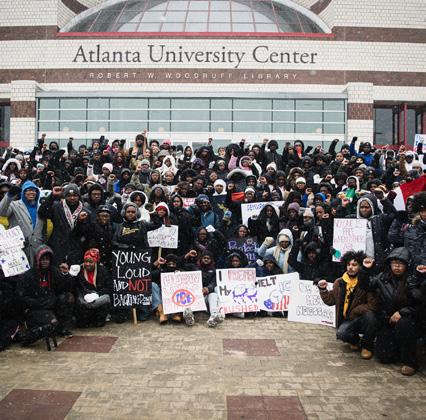
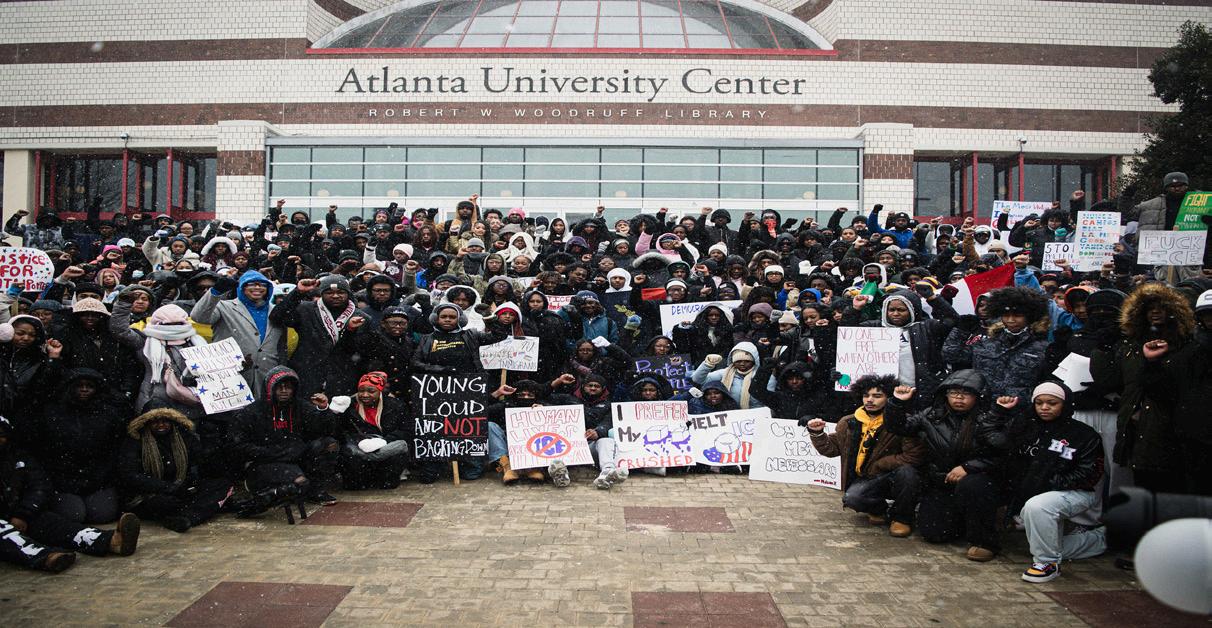
On Jan. 31, students from across the Atlanta University Center gathered to protest Trump administration immigration policies and the presence of U.S. Immigration and Customs Enforcement in cities and neighborhoods across the United States.
The protest followed renewed immigration enforcement efforts and increased ICE activity in major U.S. cities. These shifts expanded detention and deportation practices, according to organizers.
As many as 300 students from AUC institutions joined members of the broader Atlanta community. Together, they marched from the steps of the Robert W. Woodruff Library to the gates of the Georgia State Capitol.
As the group moved through the city, protesters chanted phrases such as “We want ICE off our streets” and “Immigrant lives matter.”
Once the march reached the Capitol, organizers passed around a megaphone. Participants used it to share messages and speeches on the Capitol grounds.
In addition, protesters read aloud the names of people killed during ICE encounters. The group paused after each name to honor and remember those lives.
To keep students safe, Clark Atlanta University Police Chief Debra Williams and Spelman College Police Chief Moses Perdue coordinated between institutions. Officers followed the march and temporarily blocked city traffic as students moved through snowy streets.
“Chief Williams wanted to support that we got there safely,” said Meyunna Montgomery ’29, an organizer from Clark A tlanta University. Ultimately, the protest remained peaceful. No one attempted to disrupt the march, and organizers reported no incidents.
Organizers began planning the demonstration on Jan. 10, several weeks before the event.
For Myana Garrison, a Spelman
College sophomore, the idea formed during an ordinary moment. While working out at the gym, she saw televised coverage of the death of Renée Good. ICE fatally shot Good inside her SUV in Minneapolis.
“I was outraged,” Garrison said. “What fueled it was anger.”
She added that she wanted to turn that anger into action.
“My anger had to be channeled into something positive,” Garrison said. “Something loud, Something moving, Something educational.”
For A’Nija Hughley, a Spelman College sophomore, activism did not begin with this protest.
“From the beginning, I’ve been heavily involved in social justice and advocacy,” Hughley said.
Hughley, a St. Louis native, began writing spoken-word poetry in 2020. Her work focused on racism and police brutality. Two years later, she joined Justice for Black Girls, a group that works to address systemic injustice.
In 2023, Hughley met Ralph Yarl, a teenager later shot in the head by a white man after ringing the wrong doorbell.
“Why was Ralph shot?” Hughley said. “Due to racism, obviously.”
After the shooting, Hughley connected with organizers in Kansas City, Missouri. Together, they planned protests calling for the shooter’s arrest.
For Montgomery, the Jan. 31 march marked her 15th protest.
However, it was her first time serving as an organizer.
“Being born as a Black woman in the United States is my drive,” Montgomery said. “My body is a political statement.”
The Atlanta University Center holds a long history of civil rights activism. Alumni include the Rev. Dr. Martin Luther King Jr., W.E.B. Du Bois, Ralph Abernathy and Stacey Abrams. Moreover, student activism at the AUC predates the 1960s and includes sit-ins, boycotts and mass demonstrations.
Montgomery said AUC students inherit that responsibility.
“As students who attend the AUC, we applied knowing we were stepping into that history,” she said.
Before the protest, students gathered on Jan. 29 at the Woodruff Library. There, they made signs featuring messages later chanted during the march.
Garrison described the sign-making as an “integral” part of the process.
Meanwhile, the protest itself reflected unity across institutions. Clark Atlanta University students, Morris Brown College students, Spelman College students and Morehouse College students marched side by side.
“My biggest takeaway was seeing the power we have as students when we stand together,” said Dawud Crooms, a Morehouse College freshman.
“I hope people see that AUC students do not stand with the actions of ICE. We will never be silent in our opposition.”
By Elijah Qualls Senior Features Editor
elijah.qualls@morehouse.edu
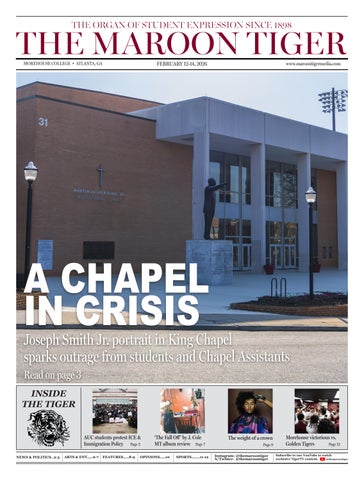
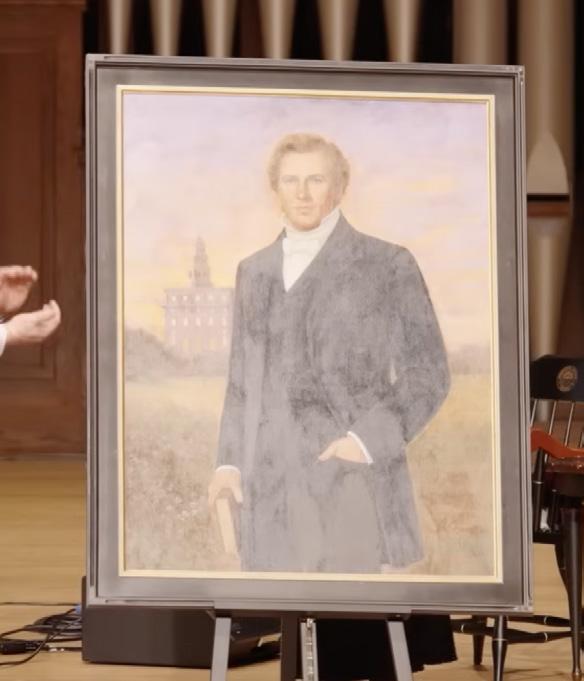
The Martin Luther King Jr. International Chapel sparked campus outrage after it unveiled a portrait of Joseph Smith Jr., founder of Mormonism, in its Hall of Honor. Students say chapel administrators made the decision without meaningful student input and ignored how the honor conflicts with Morehouse College’s legacy.
The chapel unveiled the portrait Sunday, Feb. 1, during its 5:30 p.m. vespers service. Two days later, chapel assistants began drafting a formal letter of dissent. Over the following week, tensions escalated between students and chapel leadership over representation, governance and the symbolism of the Hall of Honor.
Joseph Smith Jr. founded the Church of Jesus Christ of Latter-day Saints in the early 19th century. Many students and scholars consider his views on race and slavery deeply troubling.
Although Smith later expressed support for gradual emancipation, historical records show that he tolerated slavery among church members and made racially charged statements throughout his life.
Zandra Vranes, a Black Atlanta resident and lifelong member of the Church of Jesus Christ of Latter-day Saints, said Smith’s record reflects both regressive and progressive ideas for his time.
Historical texts document Smith making racist remarks, including a journal entry that states, “Had I anything to do with the negro, I would confine them by strict Laws to their own species.”
In a letter to fellow religious leader Oliver Cowdery, Smith warned against freeing enslaved people. He argued that abolitionists might “set loose upon the world a community of people who might peradventure, overrun our country and violate the most sacred principles of human society,
chastity and virtue.”
Smith later supported gradual emancipation during his 1844 presidential campaign. However, Vranes emphasized that he never prohibited church members from enslaving people.
“Is a person allowed to evolve? Sure,” Vranes said. “But even while he was running on that anti-slavery platform, there was never a time where he didn’t allow members to have enslaved people.”
Vranes said she questioned why the chapel chose to induct Smith into the Hall of Honor.
Dean Lawrence Edward Carter, dean of the Martin Luther King Jr. International Chapel, has publicly praised Smith. In a published article, Carter referred to Smith as “Lincoln before Lincoln.”
Vranes challenged that comparison. She said Abraham Lincoln and Smith’s political opponent James G. Birney openly opposed slavery, while Smith promoted gradual emancipation paired with compensation for slave owners.
In an exclusive interview with The Maroon Tiger, Carter defended the decision. He described Smith’s abolition stance as courageous and historically significant.
“Smith wanted to free the enslaved Africans, and he wanted to have the federal government pay reparations to slave owners,” Carter said. “If elected, there would have been no civil war.”
Carter also cited financial constraints as a factor in the decision.
“Donors are hard to find who are willing to pay for oil portraits of people they don’t know,” Carter said. “I haven’t been able to find money for almost everybody you can name in Black history.
On Wednesday, Feb. 4, junior Alonzo Brinson, the 40th President of the Chapel Assistants, and junior Damarion King, vice president of the Chapel Assistants, released a letter condemning the decision to honor Smith. The letter questioned whether the induction aligned with Morehouse’s mission and institutional values. Students involved say chapel administrators dismissed their concerns and, in
some cases, responded with disciplinary actions.
On Feb. 5, King advanced to the finals of the Otis Moss Oratorical Contest. During his speech, King publicly criticized the college’s decision.
“How are we falling asleep while a racist, unethical, miseducated, dead white man is honored with a portrait in this sacred space,” King said. “While hardworking Black, powerful and educated men and women are overlooked? Morehouse, how are we falling asleep?”
Later that week, contest officials disqualified King, citing changes between his semifinal and final speeches. Administrators also informed him that he would no longer host or speak at the Candle in the Dark Gala scheduled for Saturday, Feb. 14, 2026.
“Your decision to do the Instagram post, as well as what you said during the oratorical contest has become a negative for having you stand before people at the gala,” said Leah Creque, an administrator overseeing the gala and contest, during a phone call with King.
When The Maroon Tiger asked Creque about disciplinary action against King, she said, “To my knowledge, no official action has been taken towards Mr. King.”
King said the statements conflicted with what Creque told him directly, which he said left him confused about his standing with the college.
During the Feb. 1 service, the chapel unveiled portraits of both Joseph Smith Jr. and Dr. Harold Bennett, chair of the Philosophy and Religion Department at Morehouse College.
Students pointed to a stark difference in how long both Bennett and Smith were honored. Chapel assistants estimate that the address introducing Smith lasted approximately 15 minutes, while Bennett’s introduction lasted about four.
Brinson said the disparity disrespected both Bennett and the institution.
“When I wrote the letter, it was not out of frustration but out of standing for something,” Brinson said.
“If you don’t stand for something, you will fall for anything.
We have prostituted ourselves, in a manner of speaking, for the Mormons. I was very disappointed by Dean Carter for doing that.”
Brinson and King said the decision diminished the work of collegiate ministry and disregarded the legacy of Morehouse College.
Students say the controversy reflects a broader pattern of exclusion within the chapel, especially around decision-making authority.
“We set up, take down, usher, escort, pick up from the airport and pick up from hotels,” Brinson said. “We do the grunt work, but we have no say in the process.”
Brinson and King said chapel assistants began recording conversations with Carter to ensure accountability. Associate Dean Quincy James Rineheart said he did not know about the recordings and questioned whether Carter consented.
King said he always informs Carter when he records conversations but acknowledged that he does not speak for all assistants. Rineheart said in an email that he did not commission Smith’s portrait.
Students outside the chapel assistants have also criticized the decision. Linden Young, a senior philosophy major from Columbus, Ohio, said honoring Smith
contradicts Morehouse’s mission.
“By honoring Joseph Smith, a man who believed the enslavement of Black people was ordained by God, we have to understand how inconsistent that is with the mission of freedom fighting,” Young said.
As debate continues, Carter has urged forgiveness and deeper scholarship.
“Why do you go to church if you don’t want people saved, redeemed?” Carter said.
Students argue that the controversy extends beyond one historical figure. They say the Hall of Honor sends a message about whose legacies the chapel elevates and who holds power in one of the most sacred spaces on campus.
Brinson and King continue to call for transparency, meaningful student involvement in chapel governance and a reevaluation of how leaders select honorees.
At the center of the debate stands not only a portrait on the wall, but a broader question about power, representation and whose values the Martin Luther King Jr. International Chapel ultimately reflects.

By David Wall Rice ‘95, Editor-in-Chief (1994-95) FEB. 17, 1995
“Niggas are scared of revolution!” This proclamation, made some years ago by The Last Poets, speaks to so many of our brothers and sisters, but it certainly does not speak to our “talented tenth.” Those who stroll the halls of wisdom forged by that illustrious institution called Morehouse College are certainly not niggas who are frightened of political, social, and economic up-heaval. For we are men of the house, soon to be full-fledged Morehouse men and we lead the struggle to liberate the minds, bodies, and souls of our people. We are the revolution.
Unfortunately, this is a clouded reality. We are far from the revolution, and today too many of us are scared of the revolution we are touted with leading. Here at Morehouse, brothers are on a quest for money and the good life that this money can purchase.
Gone are the days when we are in want of respect, dignity, and equality, for if we are given a few scraps, i.e. mansions, expensive cars, expensive watches and the like, we are satisfied. Of course, this is not entirely the fault of those who maintain this perverted sense of success. If we look to our administration and faculty, we see many of them espouse to us this point of view. How many times have you been told how much you will be worth, monetarily of course, when you graduate?
How many times have you been told not to wear that goatee to a job interview for fear that it might conjure up graven images of Malcolm X in the minds of
the Corporate America that is to employ you? How many times have you been told that perhaps during the Spring and Summer months, you should learn Golf and brush up on your Tennis, so that you can rub elbows with the “Major Players.”
Many of us have been told these things time and time again. And indeed, if we are to make headway in this American society, we must learn to play the game, but we must remember that this is in fact a game. We are not white folk. We have a different core that we must pay allegiance to, a core that is far more significant than the dollar bill. We need brothers who can be Sam Greenlee’s Spook Who Sat by the Door, but as it appears, Morehouse is developing more and more spooks.
The niggas at Morehouse are scared of revolution, because they do not want to upset a balance that can give them what they perceive to be the good life. They have not yet thought that their good life is no longer going to be given to them with a presentation of decent grades, good looks and fancy talk.
The scraps are quickly getting smaller, for there are those who are not scared of revolution and their names are Newt, Bob, Jesse, and Rush. So think quick, Morehouse brothers! Are you scared of revolution? And if so, do you think that our people can make it to the next century without a political, social, and economic upheaval?
The answer must be an honest and emphatic no. And if Morehouse College was doing its job, our entire student body would be able to answer accordingly.
Are
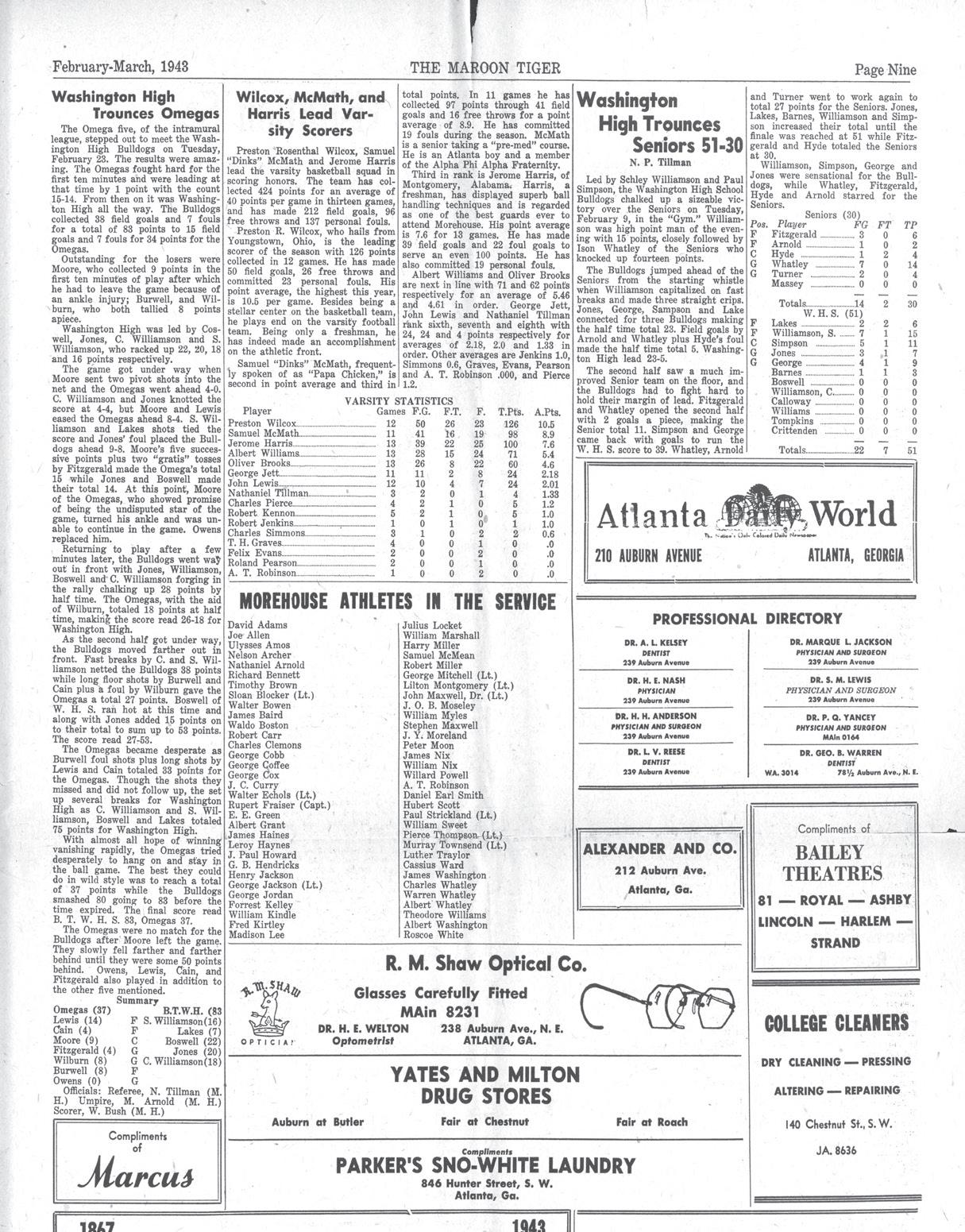
Are you the loser? Recently, 1 returned home to New York City after being away for more than a year. Family was family, but I was disappointed to see friends, well, still friends. The group of comrades, that I used to run the streets with, was basically running-in place. Inadequate pay from jobs that are not challenging them, living with parents or aunts because they cannot afford a place on they’re own, bickering and fighting as if we were still in high school. It’s amazing what a few years change and doesn’t change. Many of you will go home and maybe witness the same thing happen in your own lives in which case, this story is more than vicariously felt. But before I could go on and look at their lives with such a scrutinizing eye, I had to look at myself. Was I being as progressive as I can possibly be, or am I just going through the motions of college and not growing and maturing, in as many dimensions that comprise me. It never crossed my well-learned, Morehouse College taught mind, that maybe I was the loser that wasn’t living up to all that I could be. For who knows who looks at me, and what I have done as mediocre personal advancements? It was wrong for me to look down on them before I checked myself and evaluated my level of improvement. I have been on a campus where I have had up to six institutions for higher education, all at my fingertips that I have not tried to get not one of my friends into. Who is the loser? I have been away for three and a half years and all I can bring back home is dirty laundry and banter of living “college life.” Who is the loser?
I am not taking responsibility for the choices that other men make on their own, but I am taking responsibility for the choices I did not make. As a man you must understand that you wield the power to influence, motivate and inspire a people by your action and example. That is a power that comes with a great responsibility, a power that needs to be used in the most positive way possible. I understand that now, and I challenge you—my fellow men of Morehouse to take control of that same authority as an educated black man, and use it to produce mounds of bubbling success. Everyone is sure to be beset with problems, but someone can bring clarity to these problems. To not ask the question of who are the losers, but how can I make more winners.
By Jaiden Jones Staff Writer jaiden.jones@morehouse.edu
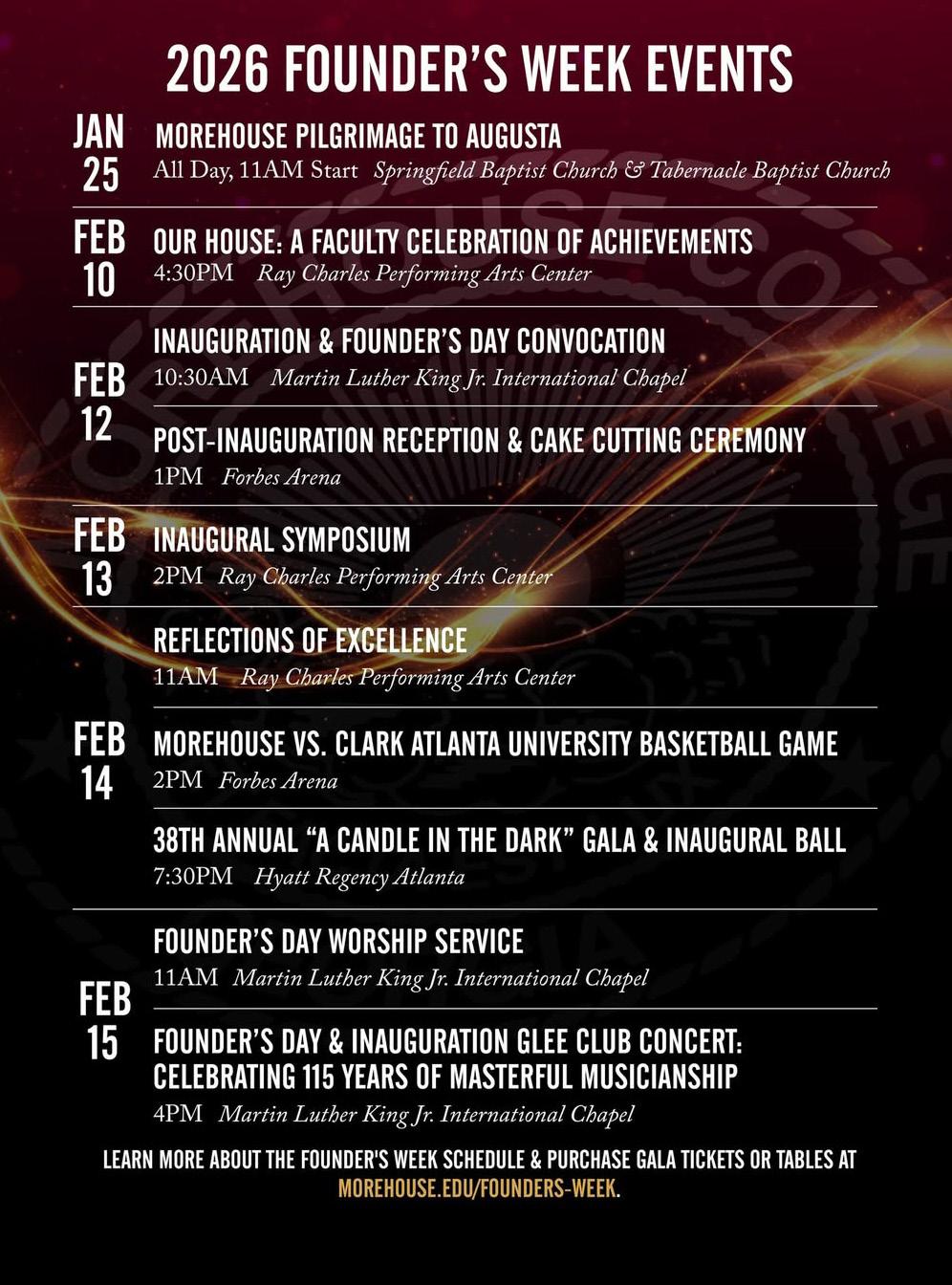
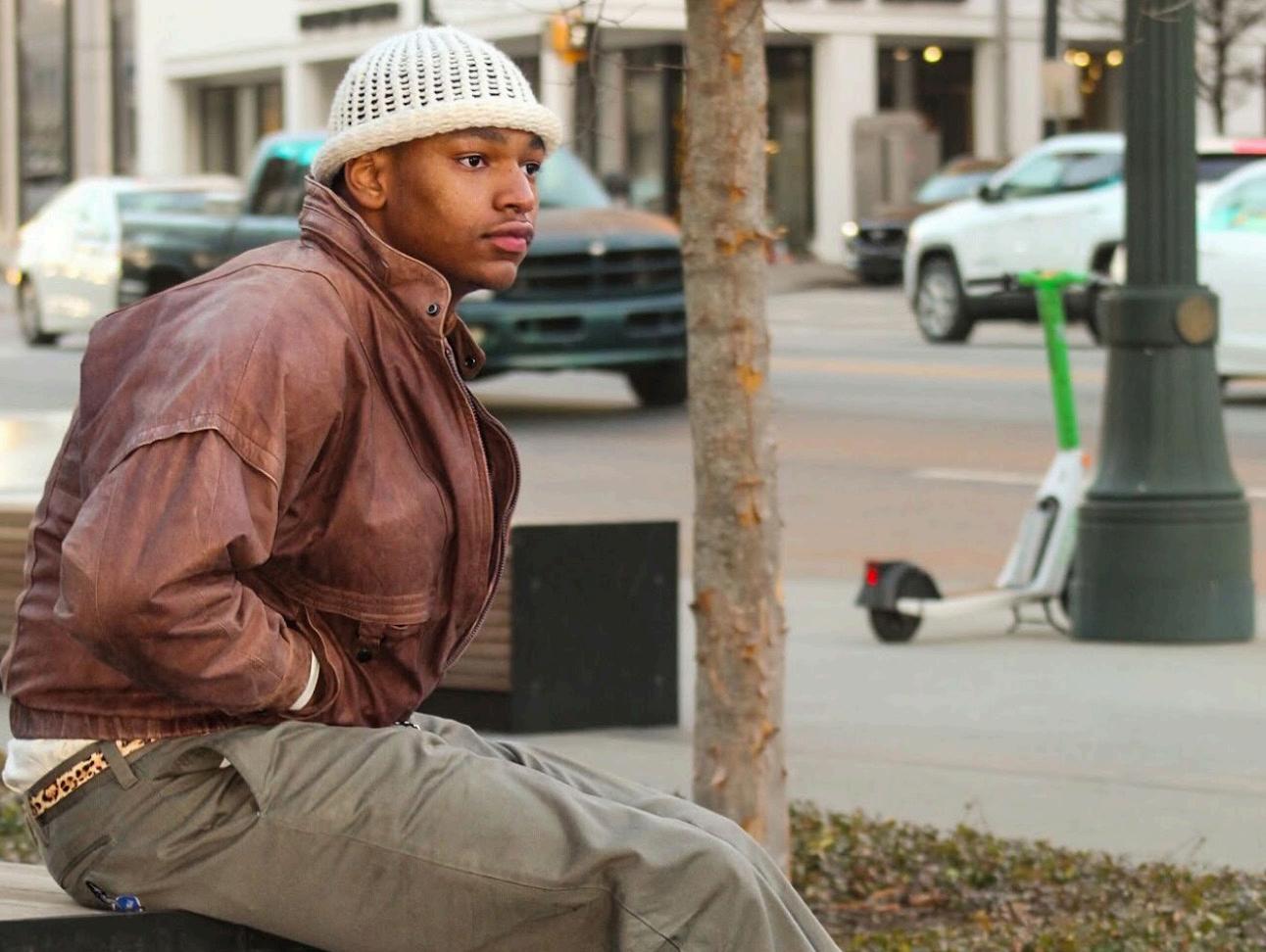
The AUC is a perfect example that style is culture in Atlanta. Students are demonstarting this with fashion inspired and assembled choices from thrifting.
Some may cast thrifting as looking through secondhand clothing, but it has become an art of hunting to find one-of-a-kind clothing pieces to put into personal aesthetics. Today, thrifting has become one of the largest gatherings of the African diaspora in the United States, giving it its own cultural expression with distinct individualism from person-to-person.
Here is a list showcasing and ranking all the different places to stop around the AUC for beginning and experienced thrifters.

Unless you have been off social media, you may have seen 2W Thrift surfacing on TikTok. It has emerged as one of the more recommended thrifting stores to go to in Atlanta.
From the outside, the store looks like a warehouse which gives it a large selection of clothing items sorted by category and size. They are labeled with colored price codes
that could range from $1-20, making it easier to shop with little to no assistance needed.
What could be found: vintage dresses, jeans, graphic tees, jackets and denim. Also holds footwear and accessories, such as jewelry and vintage watches.
“Fun place with exceptional staff. I was able to buy a Mickey Mouse watch in great shape for 15 bucks,” a customer named David said on Yelp. 2W Thrift has 4.8/5 stars on Yelp with 8 reviews.
The place as a whole is aesthetically pleasing, with the store carrying a classic Mercedes-Benz and multiple colors throughout the warehouse like store. Also recognized for being very clean and tidy.
“What makes it 5 stars ??? Large selection… Clean and no smell… Staff are nice… Several fitting rooms… Decent brands available… Not over priced,” a customer named Kameetrice said on Yelp.

The Clothing Warehouse is a staple to the Atlanta thrifting scene, known for its high end boutique aesthetic. Originally founded in 1992 by Jim Buckley, an export business before evolving into a retail store.

It is a part of Little Five Points, a hub known for its alternative free spirit fashion, shopping, and street art. Located only a couple miles east of downtown
When you walk in you’ll see thousands of vintage t-shirts covering the wall, color coordinated and plenty of racks of unique dresses and skirts.
What separates The Clothing Warehouse from any other store is the representation of many styles. Their styles span the 50s, 60s, 70s and 80s with endless collections of cowboy boots, leather jackets, sunglasses, classic Levi’s and Wrangler jeans. Also having tons of accessory brands Fossil, Casio, Baggu, etc.
“Every piece is as original as you –we have something for everyone,” the official website said.
Their Yelp rating is 3.5/5 with 82 reviews.
The store is almost guaranteed to have something to peak your interest, with the wide unique variety of styles it displays. This may encourage you to pay more than you want at times, when it comes to more exclusive pieces.
“Easily the coolest vintage clothing shop we went to the entire trip, so many options and racks to sort through,” Sarah said on her Yelp review of her trip to the store. “We had a 5 star experience!”
The store serves as a time capsule of self expression and fashion history.

2nd Street is nothing short of high end thrifting, blending streetwear with designer fashion. They regularly add inventory from the U.S. and Japan, originally starting there and growing to a global resale chain in the United States, Taiwan, Thailand, Hong Kong, etc.
Having well known streetwear brands such as Supreme and Bape are one thing, but having a steady inventory of designer brands like Rich Owens, Balenciaga and Maison Margiela sets them apart from any other store in the area. The store gives consumers opportunities to see exclusive one-of-kind-pieces that you may
just have never seen before, such as the shoe by VOGAL, where its signature styled laces are on a high top Jordan one. Outside of collections and inventory, there is a real tendency of lowballing for anyone who wants to trade in pieces for profit.
“Offered me 10 cents (not exaggerating) for a pair of streetwear styled sweat pants I love…I was so off-put,” shopper Alli E. said in her review on Yelp.
Their Yelp review is 2.1/5 with 17 reviews.
“They offered me $3.50 for the following items: a vintage leather coach bag, a hand woven and leather bag from Morocco, a pair of high waisted vintage jeans in mint condition, a vintage tie front top, a brand new dress shirt, a button up thermal from Anthropologie,” Mary P. said on their experience on Yelp.
It is highly encouraged if you’d like to trade items in for profit, use it as in store credit to support frequent shopping.
The store is best for anyone who wants to elevate their wardrobe with recognizable brands while still staying in a reasonable budget.
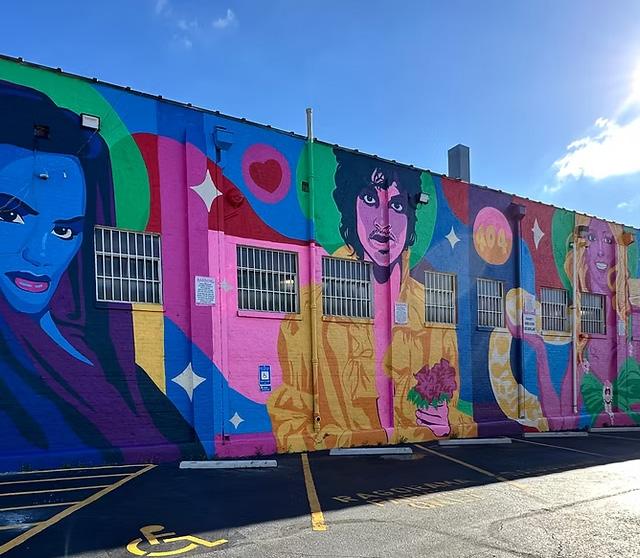
Going to Rag-O-Rama, you’re met with this feeling of vintage, due to the colorful art and graffiti on the sides of the building.
This place is better equipped for people who enjoy thrifting with the task of searching for pieces. It has a wide variety of clothing items, with a large portion of casual wear, opposed to known name brands.
It operates on a buy-sell-trade model, allowing shoppers to sell their own pieces for cash or store credit. More casual wear in the store makes it easier for customers to get compensated for their sales or trades.
The store located in Little Five Points, near The Clothing Wearhouse.
Their Yelp is rated 3.1/5 with 196 reviews.
The store serves as a thrift adventure where bargain hunters can dig through racks to find standout pieces for gems.
Out of the Closest is a socially conscious and non-profit store. They support HIV/AIDS services; 96 cents on every dollar generated goes directly towards testing, care and prevention programs worldwide. Each purchase has a deeper purpose beyond style.
Their clothing is sorted by size and gender, making it easy to navigate the store and a contrast from busier and chaotic thrifting environments.
The store relies on donations, so the inventory changes constantly. A rotating selection keeps thrifters coming back and looking forward to seasonal pieces like jackets and other streetwear layers.
Their Yelp rating is 4.5/5 with 13 reviews.
“Beautiful thrift store with high quality finds! Great place to go to find something unique and special,” Heather said in her Yelp review as she gave the store a five star rating.
By Jaden Davis Staff Writer jaden.davis1@spelman.edu
Nylah DeCohen, a graduating senior comparative women’s studies major from Virginia Beach, Virginia, blends styling, modeling and creative direction to build a powerful presence in the fashion industry. As a fashion stylist, her work reflects intention, sustainability and fearless self-expression.
A multifaceted creative, DeCohen has paved a path for herself and others who feel called to fashion. She approaches each project with confidence and clarity. When she sets her mind to something, she commits fully.
DeCohen’s journey into fashion began at home with her Nana, whom she lovingly calls a “sewing machine goddess.” As a child, she filled notebooks with original designs and absorbed inspiration from her Nana’s bold personal style.
Those early influences shaped her aesthetic as a fashion stylist. DeCohen embraces experimentation, courage

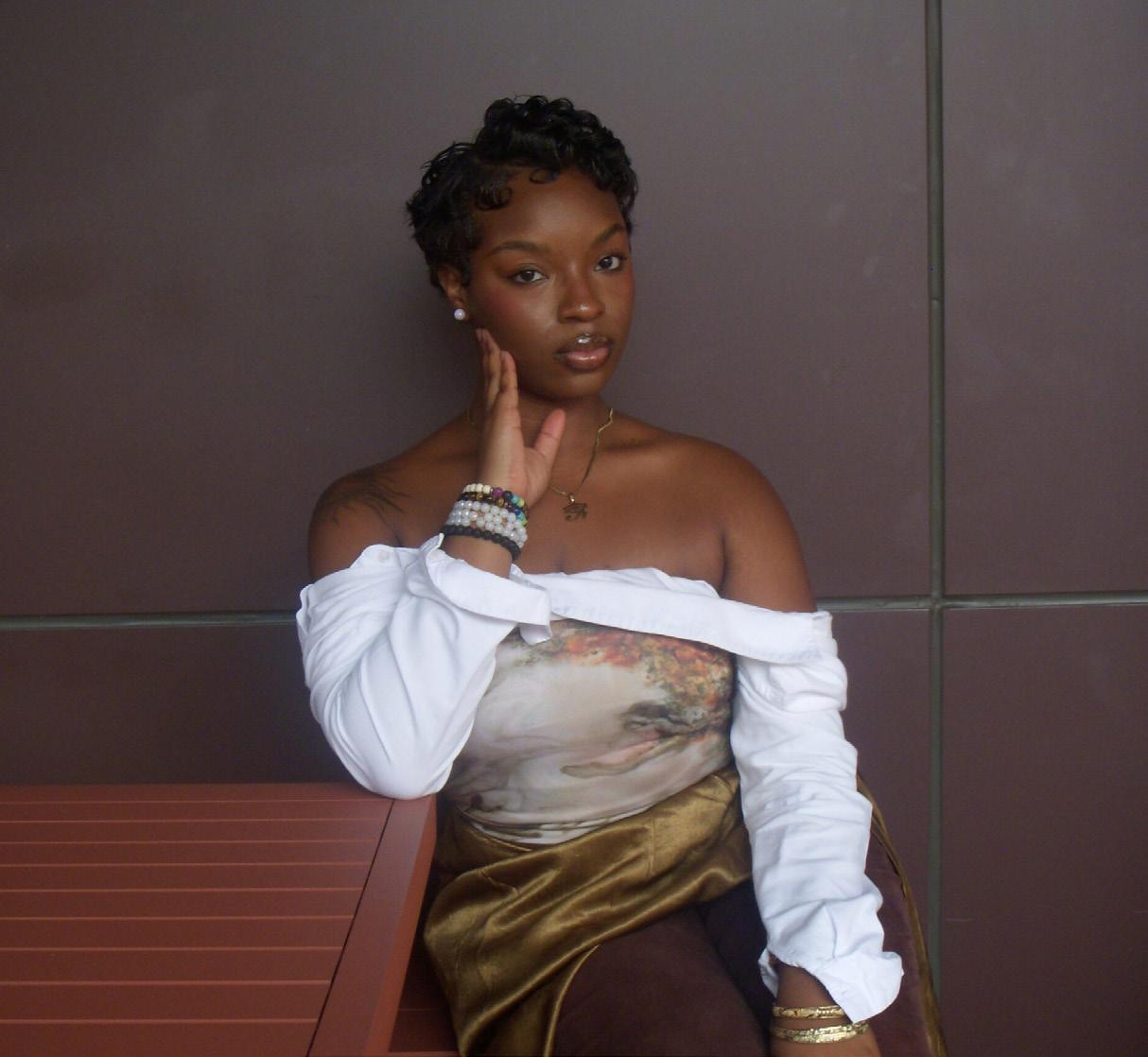
and creativity. She pushes the boundaries of fashion by reimagining garments and styling pieces in unexpected ways. Her work invites people to see clothing differently.
Pursuing a career in fashion rarely follows a straight line. At an institution with limited formal opportunities in the
gave her hands-on exposure to the fashion industry.
“That immediately propelled me into opportunities,” DeCohen said. “I learned modeling basics, styling fundamentals and what it means to be in shows.”
DeCohen channels her creativity through entrepreneurship. She foun ded her styling company, “Ouroboros Styling,” with sustainability at its core. That value defines both her personal style and her professional work as a fashion stylist.
“If you can wear something more than once, you know how to dress,” DeCohen said.
She treats fashion as functional art. Each look reflects thought, reuse and intention. Rather than chasing trends, she reimagines pieces in ways that feel fresh and expressive.
tribute to the Harlem Renaissance. Another segment explored the future of fashion through an Afrofuturism-inspired lens.
Through the show, DeCohen created a platform for visibility, affirmation and artistic freedom.
DeCohen currently serves as a stylist for the AUC Agency. She helps craft the bold looks featured in its shows and events. She also leads her “Name Your Price” styling consultation service, which offers affordable and sustainable fashion guidance.
As graduation approaches, DeCohen looks toward the future with purpose. She hopes to return to her alma mater and help establish a structured fashion program.
“I will make that happen, one way or another,” DeCohen said.
In an announcement video, Cole explained his creative process.
field, DeCohen relied on determination and ingenuity. She believes lived experience teaches more than any classroom.
Her freshman-year modeling work with the AUC Agency marked a turning point in her development as a stylist. That experience opened doors and
A central belief guides DeCohen’s work: she goes where she is celebrated, not merely tolerated. When those spaces do not exist, she creates them.
Last spring, DeCohen produced, styled and creatively directed the “Codified Couture” fashion show. The event celebrated Black queer fashion and honored Black history. Several scenes paid
She also wants fashion-related studies to receive the same academic recognition as other arts and STEM disciplines.
Passion runs through everything DeCohen creates. Her authenticity sets her apart in an ever-evolving industry. Where others see obstacles, she sees opportunity. With vision, discipline and creativity, she continues to bring bold ideas to life.
“For the past 10 years, this album has been handcrafted with one intention: a personal challenge to myself to create my best work,” he said.

1) How would y’all rate the new president so far?
By Aaron Fields Associate Producer
aaron.fields@morehouse.edu
J. Cole released his long-anticipated double album
The Fall Off, a project that explores two phases of his life: his rise in hip-hop and his reflections on fame after reaching mainstream success.
Since releasing his debut mixtape The Come Up in 2007, Cole has continuously refined his sound. From the beginning, he approached his career with the end in mind. As a result, The Fall Off feels both like a milestone and a meditation on longevity.
The album title reflects the cyclical nature of fame. Cole acknowledges that success often comes with eventual decline but presents that decline as a natural phase of growth and artistic evolution.
The first disc focuses on themes that have long defined Cole’s music, including loyalty to his hometown, temptation and his complicated relationship with the music industry. The song “Two Six” may reference the album’s release date, Feb. 6, 2026. Throughout Disc 29, Cole reflects on returning home at 29 after living in New York City, describing conflicting priorities.
“...I was at a crossroads with the three loves of my life; my woman, my craft and my city,” Cole said.
The disc features aggressive lyricism and energetic delivery, capturing the hunger that fueled his rise and the pressure of remaining an elite voice in hip-hop.
Disc 39 presents a more mature Cole. Nearly a decade later, he revisits his hometown with clarity and peace. The album shifts toward introspection, emphasizing storytelling and reflection. Tracks like “The Fall-Off Is Inevitable” use reverse chronological storytelling to revisit defining moments.
The album closes with “and the whole world is the Ville,” a love letter to Fayetteville, North Carolina, reinforcing the album’s focus on legacy over commercial success.
2) How can we restore siblinghood between MH & Spelman?
3) Why is Morehouse not as serious as it used to be?
4) So the dishwasher is working now?
5) Was the halftime show overrated?
6) Did they get their application in on Feb. 9?
7) Are AUC pageants even fair anymore?
8) Who’s to blame for the actions of the men of Morehouse?
9) Why everybody wanna be a rapper?
10) Will the Senate actually be the Senate?
11) Follow up: Or will they just tie ties?
12) Are men of MH the devil or are Spelmanites manipulators?
13) Did their president really just say that?
14) Y’all think the next president gone be a**?
15) MORMONS?
16) How you let a man sleep at Spelman but my man can’t come over?
17) What they serving in the caf?
18) The yard fell off?
19) Why that prez so freaked out?
20) Why do Seniors think it’s okay to mess with Freshmen? ?
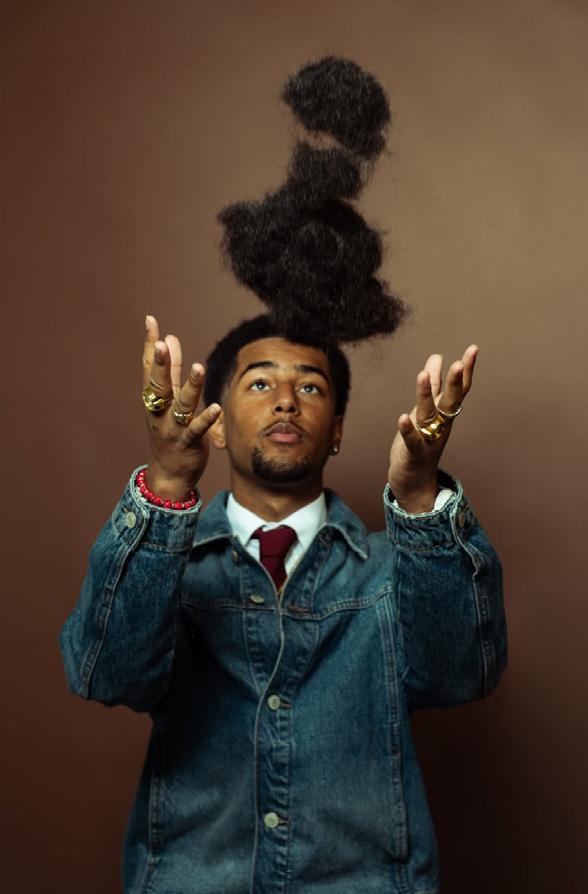
Ché Harmon-Williams Photojournalist che.harmonwilliams@morehouse.edu
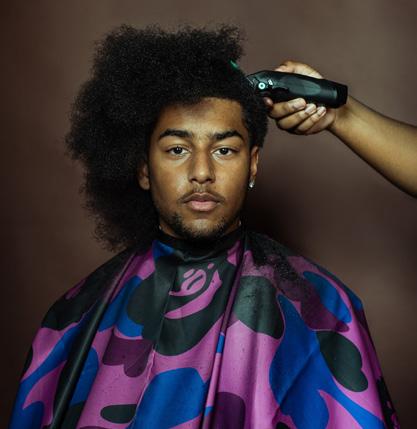
As Black men, hair can often serve as an extension of a person’s image and personality. Solomon Tucker, a sophomore Kinesiology major from Decatur, GA, recently departed with this important part of his identity.
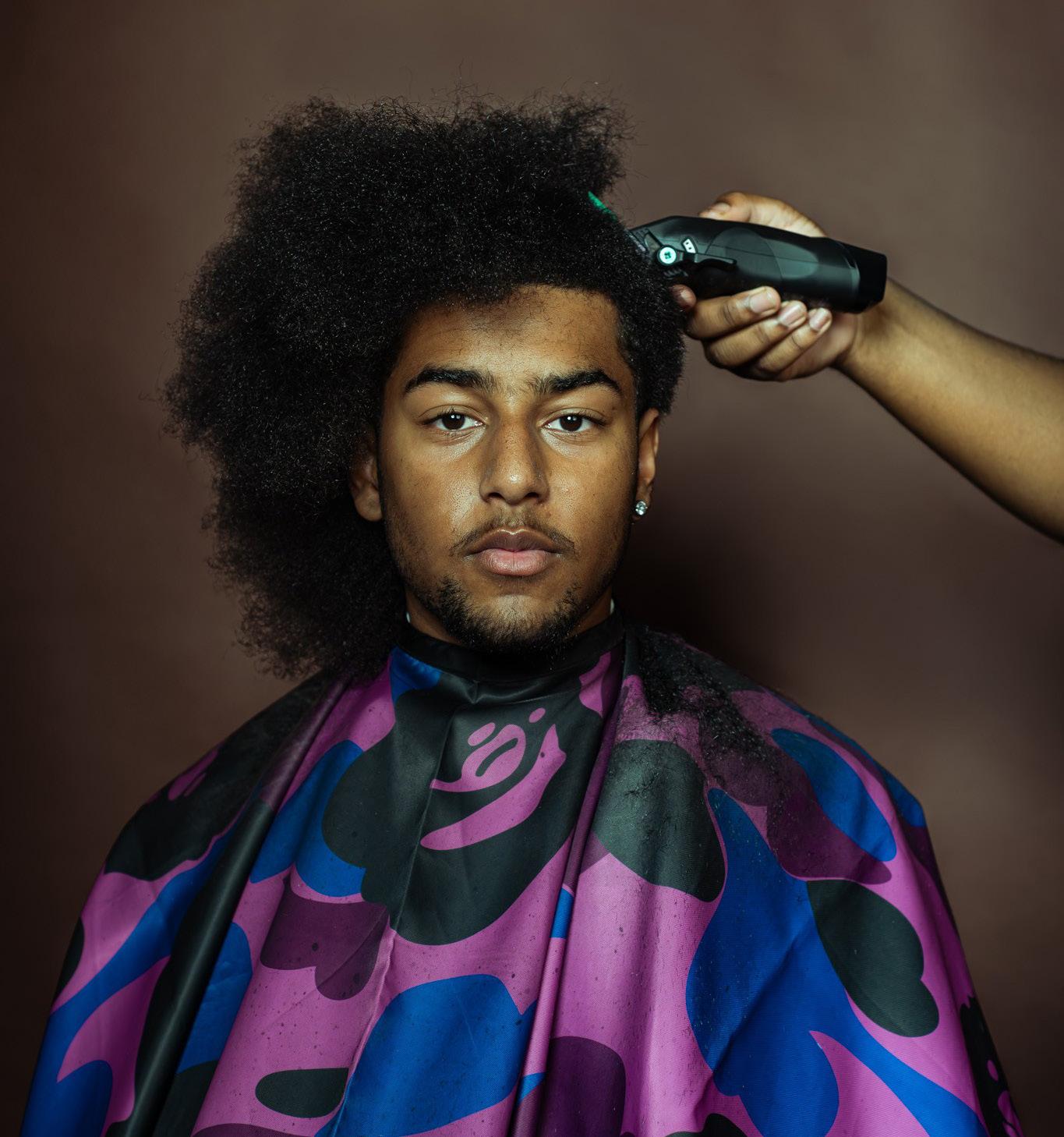
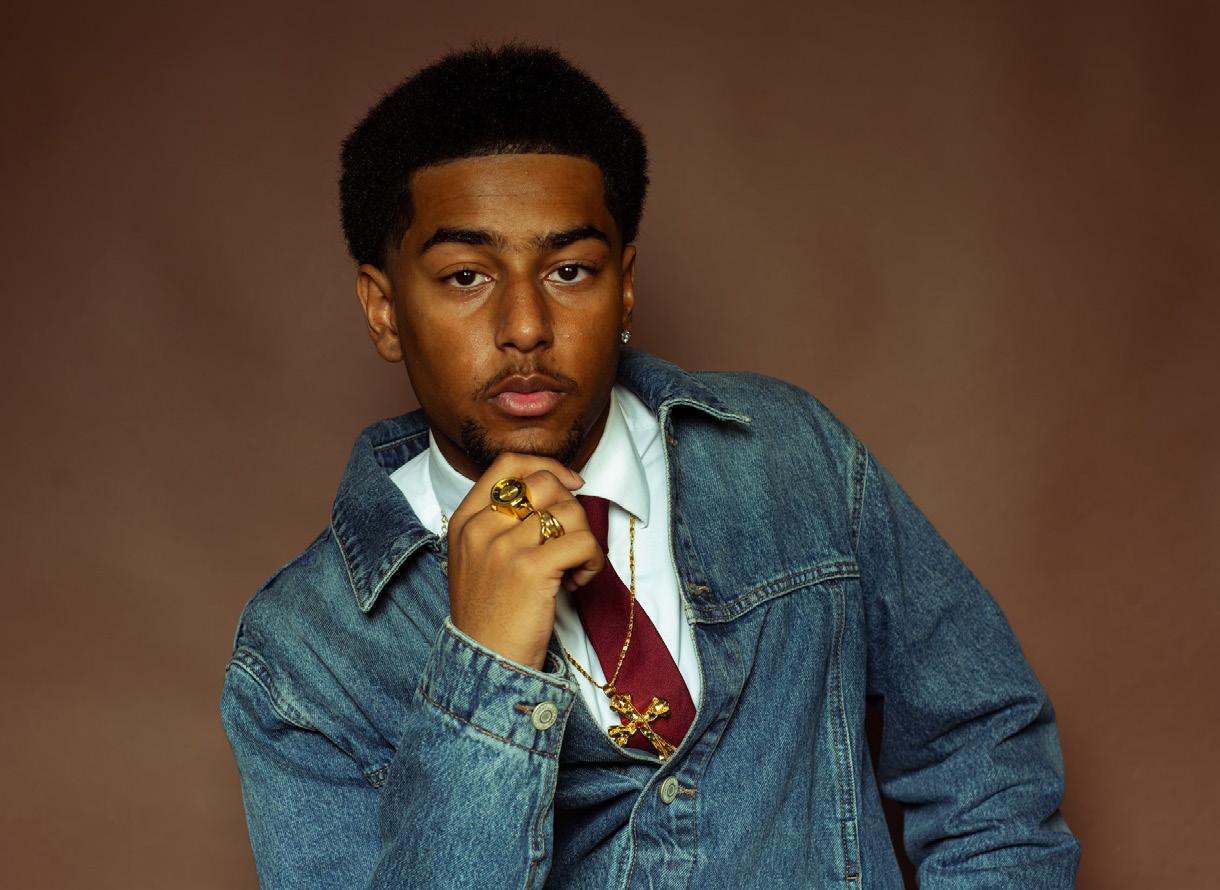
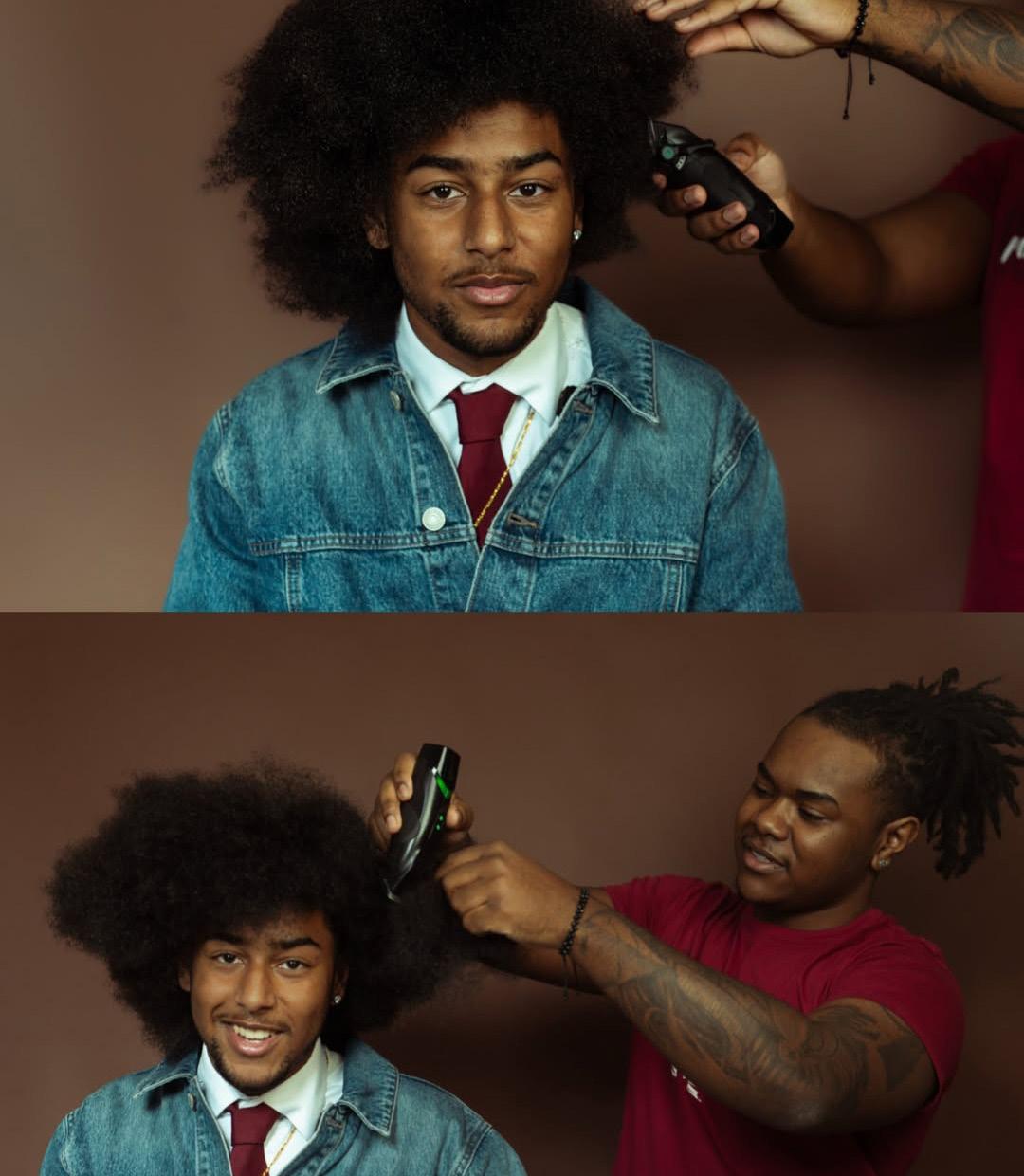
The afro-photojournalism project “FRO-REAL” highlights Tucker’s journey as he is captured candidly through the process of cutting his hair. Tucker has been growing out his hair for the past 3 – 4 years, taking on new styles and appearances.
The ‘fro “connects me to family and just Black culture in general,” said Tucker. “I just think it’s time. I’m ready for a new beginning … I mean, you only live once.”
To Tucker, cutting off this much
hair means a great deal more to him as this new style allows for more freedom and exploring yet to come.
He additionally describes that “the art and craftsmanship that goes into barbershops and Black men in that scene is very important.”
Tucker describes the feeling of being in a barbershop as surreal. The fact that he was able to do a candid photoshoot while cutting off this much hair, meant a great deal more.
This collection captures intimate acts of cutting old bonds and habits, concluding with portraits highlighting Tucker’s new look, marking the beginning of a new chapter rooted in clarity, transformation, and authenticity.

By Zaire Wilson Staff Writer zaire.wilson@morehouse.edu
Reverend Dr. Keith A. Troy, Morehouse class of 1976, delivered a rousing sermonette during Crown Forum entitled “Significance vs. Success.” This Crown Forum was in honor of Morehouse College’s most renowned alumnus, Dr. Martin Luther King Jr. class of 1948. Troy, a pastor in Columbus, OH presented a powerful call to action for current Men of Morehouse.
On the rainy morning of January 22, students of the college gathered in Martin Luther King Jr. International Chapel. Their murmurs fluttering about the space as rain pattered softly against the windows.
Troy encouraged students not to seek definition in the approval of others. Instead, he suggested that they focus on their own presence and let their
8
character guide them. Beyond that, his speech centered around the difference between success and significance. Success is a short-term achievement based on what others think. Meanwhile, significance is something longer-lasting, built on who you are rather than people’s opinions.
“I beg you, do not become addicted to the applause, because applause will come and go,” Troy said. “Many of the folk who will be cheering you on will not be cheering because they’re with you, they’re just happy to be around you.”
To further drive his point home, Troy said, “Success is building your resume. Significance is building a legacy.”
Troy stressed that true success comes from focusing on purpose, not just personal achievement. It is especially relevant in an environment where visibility is a huge factor in establishing one’s identity.
Troy shared a story of his major shift during his junior year at Morehouse. A visit to Antioch Baptist Church led him to accept his calling into ministry. Some students leaned forward or exchanged quiet glances while listening to Troy’s challenges he faced to pursue his career. His story illustrates that significance isn’t a process of instant gratification. It requires difficult decision-making and courage, rather than pursuing paths that only appear successful on the surface.
He then shared another anecdote, discussing the importance of investing in others, urging students to “be careful who you dismiss.”
Troy explained how he took time to tutor the daughter of Alice Booker, the head cook in Chivers Hall, offering her support and guidance as a student.
“She [Alice Booker] would cook for me a meal out of the executive kitchen, not just for me, but for my wife so I could take it home,” Troy said. “She was a cook, and yet, simply because I invested
in her daughter, she fed me when I didn’t have money and I didn’t have food. Be careful not to ignore the ‘Alice Bookers’ in your life.”
The story captures what it means to be a Morehouse man. It takes a village.
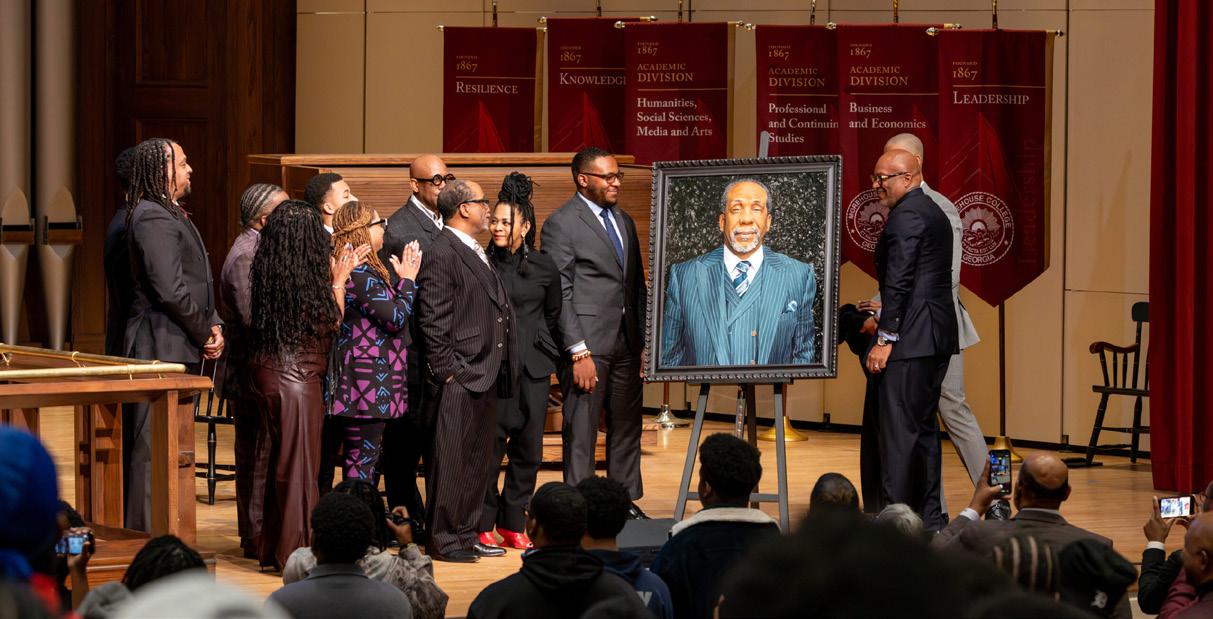
The forum concluded with the unveiling of Troy’s portrait, a moment that visually reinforced the very message he delivered. The portrait was representative of Keith Troy’s legacy rooted in not only professional accomplishment but in service,
leadership, and faith. This unveiling showed that significance endures beyond the moment, impressing itself into the history of Morehouse.
Troy prompted students to consider not only their personal achievements but also how their actions affect those around them. He emphasized that a meaningful legacy is built through service, mentorship, and intentional choices. Through these lessons, Troy reminded the Men of Morehouse that true success is measured not by accolades but by the impact they leave on others.
Make ten words with at least 5 letters in this scramble
E I O S Y C D V R
By Madeline Daniel Senior Opinions Editor madelinedaniel@spelman.edu
Since President Trump was inaugurated, Immigration and Customs Enforcement (ICE) has been serving under the DHS as the administration’s dirty right hand in rounding up “illegal” immigrants.
Since the beginning of his second term, ICE has been running around the nation destroying families and creating fear. In the beginning of 2026, Renee Good and Alex Pretti were murdered by the law enforcement. The aftermath resulted in the people of Minneapolis to revolt.
The chaos that this administration and ICE have caused is unacceptable and they should be held responsible for all the people it has murdered. However, it is essential to note that with the unfortunate deaths of Good and Pretti, there has been an uptick in white activism, particularly on TikTok.
It begs the question: are these examples of the “ideal” victim?
The concept of the ideal victim holds that a victim has certain attributes and
characteristics that make them “better” victims than others. This idea was first proposed by the Norwegian sociologist Nils Christie in 1986. In this case, the ideal victim is white people. Those who carry (in theory) the highest amount of social capital in America were murdered in broad daylight on video.
There is no argument that the unfortunate passings of Good and Pretti are more visible due to evidence, because there is video evidence of the murders of George Floyd, Ahmaud Arbery, and Breonna Taylor. Do Floyd, Arbery and Taylor matter less because it is the death of the Black body? And in America, the Black body is not considered human?
Law enforcement killing its citizens is not new. There are so many Black and brown people who have lost their lives at the hands of the police or ICE. Yet suddenly, the deaths of two white people are able to trigger a political movement that has been necessary for years?
The Black body should hold the same worth as a White body and should be seen as human. It is exhausting learning and protesting the deaths of Black and brown

people who have been wrongfully murdered at the hands of the government and watching nothing be done. No news coverage and barely any white protestors and activists speaking out.
Yet we are called on to protest when a person with social capital passes. This follows an election where we watched the majority of the country vote against human rights for the
By Madeline Daniel Senior Opinions
Editor madelinedaniel@spelman.edu
“We made the right person famous.”
A phrase said all too often on TikTok when an influencer has said a politically correct take, such as “ICE is wrong” or “everyone deserves reproductive rights.” The world has reached a point where posting the “right take” is enough to earn praise, and participation has replaced real action.
Participation trophies are often used to reward someone for a certain objective, such as showing up to your first soccer game at six years old or competing in your elementary school’s field day.
While the original intention of the participation trophy was to encourage involvement, the result became a way to encourage mediocre behavior.
Nowadays, they have stretched their existence into the world of social media, specifically online activism, where simply acknowledging an issue is treated as a significant accomplishment.
On social media, influencers are often praised for voicing popular opinions that carry little personal risk. Posting a statement or reposting an infographic is enough to earn public approval.
The applause comes quickly, but it rarely demands consistency beyond the screen. Once the public deems an influencer’s statement sufficient regarding their political stance, the influencer may continue posting content without scrutiny.
When the bare minimum is celebrated, there is less pressure to engage in difficult conversations when issues stop trending. Serious human rights concerns become forgotten once the algorithm moves on.
So why are we okay with congratulating influencers for essentially brushing their teeth? To brush one’s teeth is the bare minimum, so why is supporting fundamental human rights a big show when it should be the standard?
The act of caring about someone else’s rights outside of your own is a trait we all possess; it should not be a big deal that you are capable of having empathy for people outside of your personal bubble.
Though every influencer is not necessarily a “political activist” influencer, they should still be properly held to the standard that people have for each other
Black body. There should be no hierarchy in who matters more once they pass. The tears that are shed when a white person passes, should be the same tears shed for the Black and brown body.

and their politicians. It shouldn’t be until the very last second that an influencer feels the need to address an issue. Influencers are people with moral beliefs like anyone else; just because they are more in the public eye doesn’t mean they should be treated differently. Participation trophies are not deserved for having basic human courtesy. Queries? Feedback? Suggestions? Write to us:
mt@morehouse.edu
By Ryan Perry Sports Writer ryan.perry@morehouse.edu
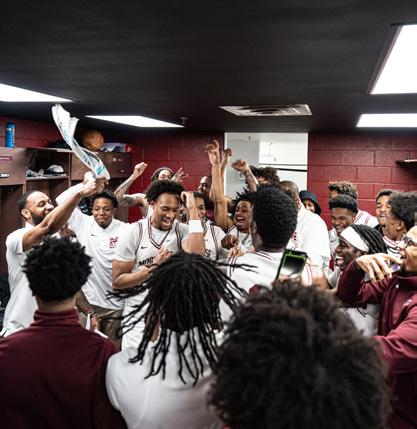
Greek Night brought movement and energy to Forbes Arena, and Morehouse basketball delivered a performance to match. The Maroon Tigers defeated Kentucky State 80–66 in an East vs. West SIAC matchup, extending their winning streak to 10 games as the postseason approaches.
The victory moves Morehouse to 14–7 overall and strengthens its positioning ahead of the upcoming SIAC Tournament.
The atmosphere inside Forbes Arena remained lively throughout the night, with members of campus Greek organizations energizing the crowd from start to finish. The Maroon Tigers responded with disciplined execution on both ends of the floor, feeding off the environment to seize early control.
Morehouse made its intentions clear from the opening tip, racing out to an 8–0 run and eventually build a commanding 27-point halftime lead. The Maroon Tigers’ defensive pressure and efficient shooting overwhelmed Kentucky State early, setting the tone for the rest of the night.
Although Kentucky State mounted a second-half push, timely steals and momentum-shifting three-pointers allowed Morehouse to maintain control through the final buzzer.
Morehouse shot 47.5 percent from the field and placed four players in double figures for the second consecutive game, a sign of balanced offensive production heading into the final stretch of the regular season.
Senior forward JerMontae Hill recorded a dominant double-double with 17 points, 11 rebounds, and three assists,
marking his first double-double of the season. Guards Brandon Peters and Jared White each added three steals, anchoring a defensive effort that disrupted Kentucky State’s rhythm throughout the night.
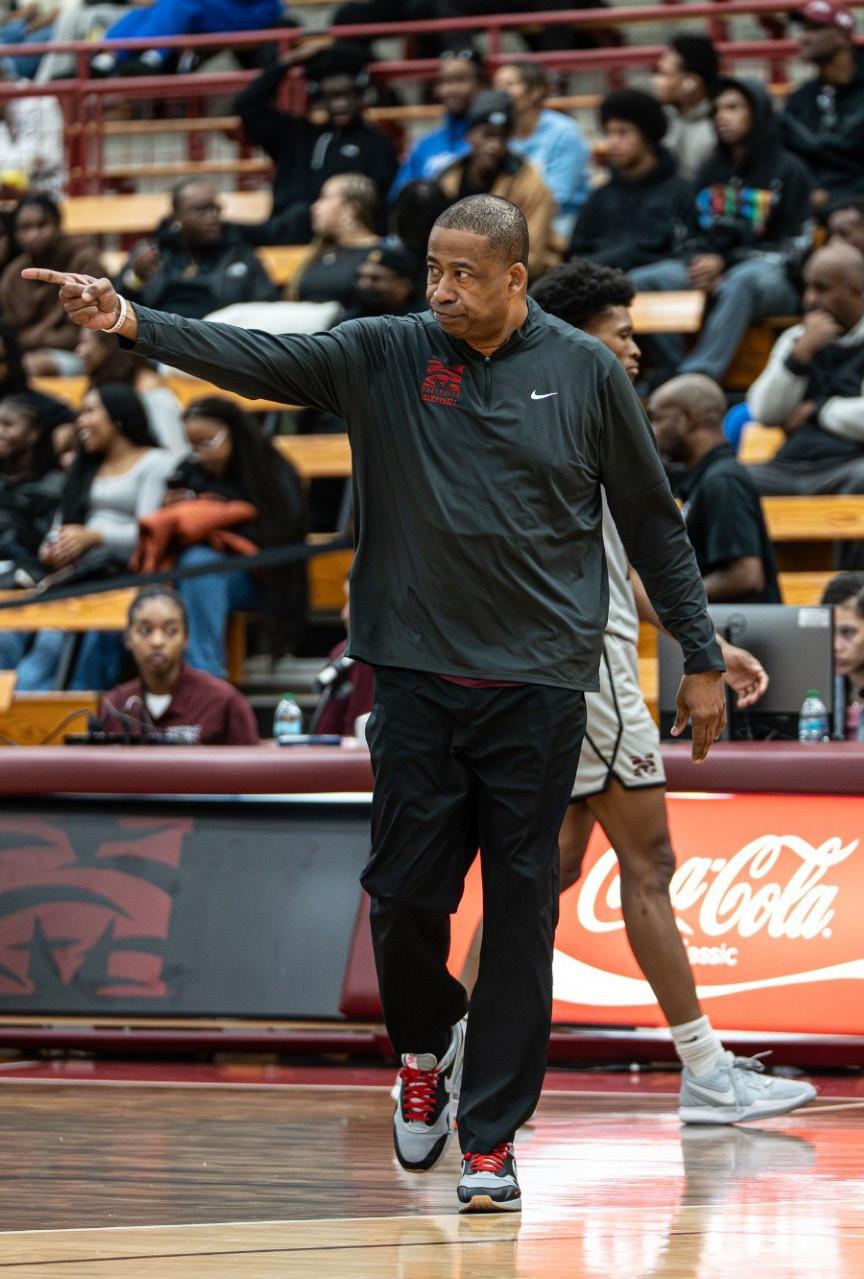
Despite the convincing 80–66 victory, Head Coach Larry Dixon stressed the need for improvement as Morehouse basketball prepares for postseason play.
“I’m glad we had a good first half because that second half wasn’t very good,” Dixon said. “We can’t afford to give up 47 points in a half. That’s when we lost focus.”
Dixon added that the team must avoid competing “within ourselves,” emphasizing discipline and focus as the SIAC Tournament approaches.
With 10 straight wins, the Maroon Tigers will look to continue their momentum into their next matchup.
By Jackson Azu Sports Writer jackson.azu@morehouse.edu
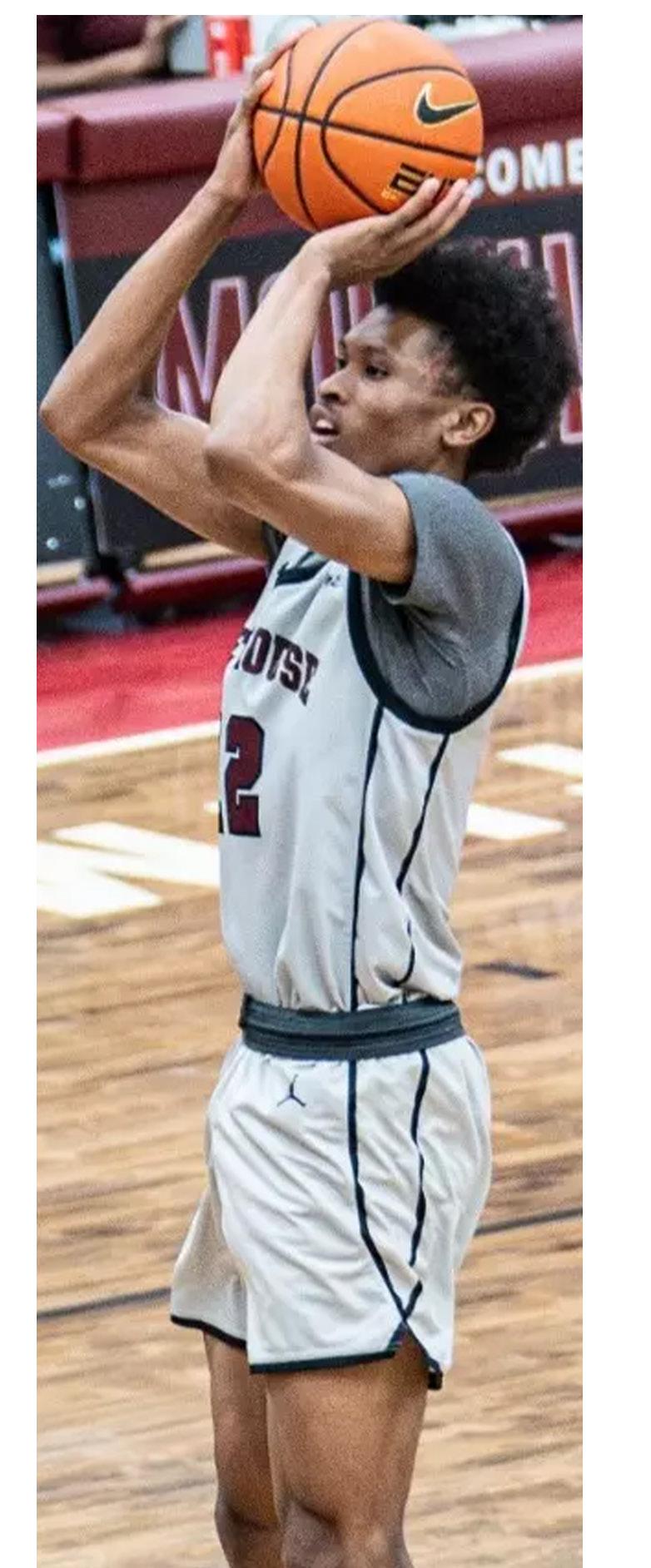
Despite a historic scoring night from junior guard Sincere Moore, Morehouse Basketball dropped a tough SIAC matchup to Lane College at Forbes Arena after a one-hour game delay due to a shortage of officials.
The Maroon Tigers entered the contest looking to bounce back from their recent upset loss to LeMoyne-Owen College. However, their shooting struggles from previous games resurfaced once again.
Morehouse shot just 7-of30 (23%) from three-point range, echoing their 5-of-26 performance from beyond the arc against Lane in an earlier meeting. Offensive inconsistency continued to be a theme, as the Maroon Tigers finished the game shooting 39 percent from the field overall.
Defensively, Morehouse had difficulty containing Lane’s offensive rhythm. The Dragons shot nearly 60 percent from the field, capitalizing on defensive lapses throughout the game.
“Can’t win games like that… we’ve got to get back defensively,” Head Coach Larry Dixon said postgame, emphasizing the team’s need for stronger defensive execution.
One bright spot for Morehouse was the outstanding performance from Sincere Moore, who poured in 37 points. This was the highest single-game scoring total for the program in the past 15 years. It also marks the first 30-point performance by a Maroon Tiger since 2022.
Moore carried the offensive load, while JerMontae Hill added 18 points and Brandon Peters contributed 14. Morehouse relied heavily on Moore’s scoring output, as consistent offensive production was limited elsewhere.
On the other hand, Lane showcased balanced scoring and ball movement. Elijah Greer Dawson and Jarell Love eclipsed the 20-point mark, helping the Dragons maintain control during key stretches of the second half.
1st 30-pt game from M’House player since 2022
Down the stretch, Morehouse struggled to generate defensive stops and timely baskets. Lane’s shots hit during crucial moments, while the Maroon Tigers were unable to convert on routine layups and put-back opportunities. Morehouse finished with 34 points in the paint but lacked the defense necessary to shift momentum late in the contest.
Morehouse will have an opportunity to respond next Saturday, Feb. 14, when they host rival Clark Atlanta University in the “Big Cat Hardwood Classic” at Forbes Arena on Founders Day. The Maroon Tigers aim to protect home court and sweep the season series in front of what is expected to be a high-energy crowd.
By Jasir Dollard Sports Writer jasir.dollard@morehouse.edu
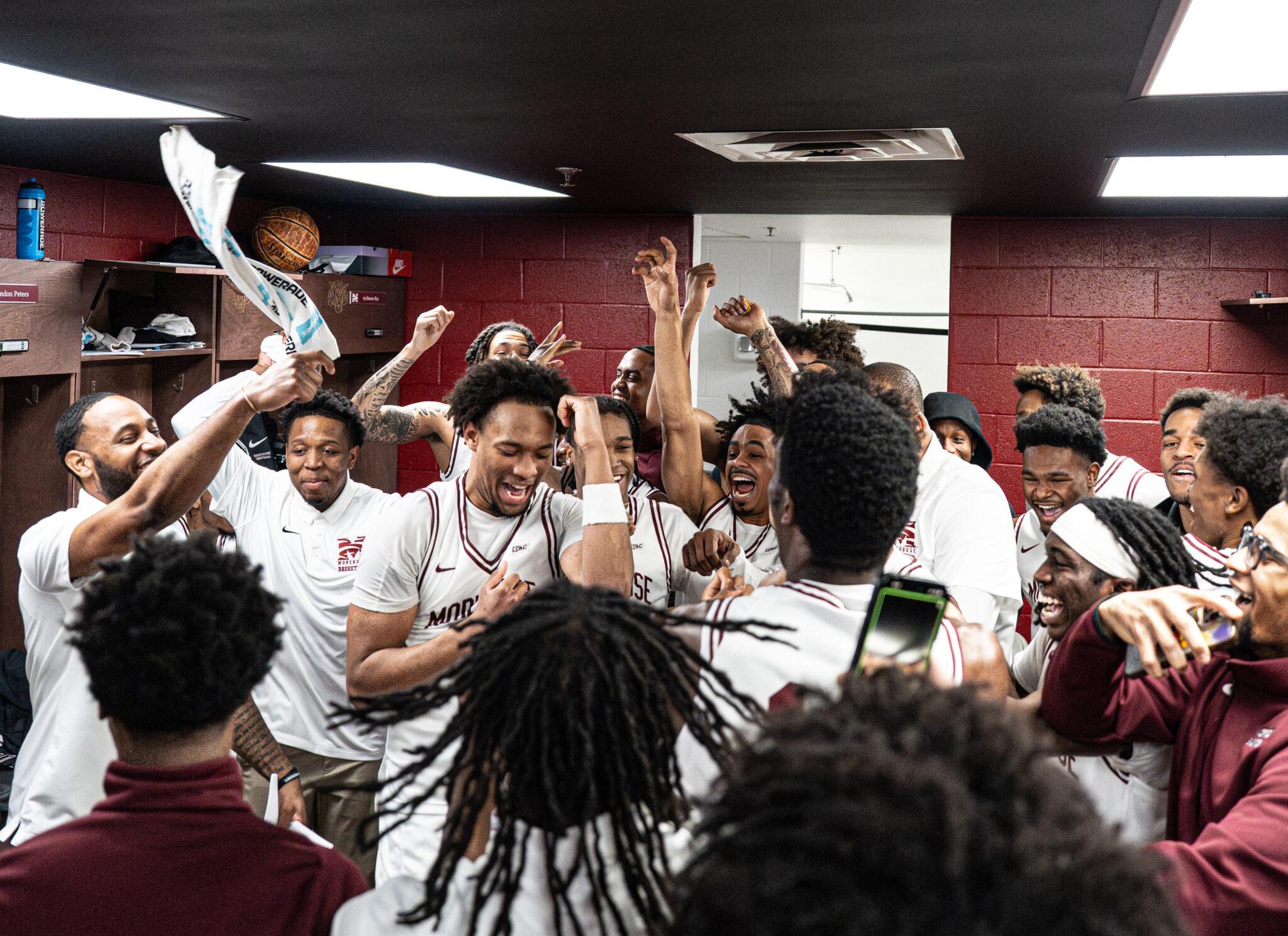
The Maroon Tigers held off a late Tuskegee Golden Tigers push to secure a 77–69 victory Saturday afternoon inside Frank L. Forbes Arena, extending its winning streak to nine games in a high-energy matchup that doubled as a celebration of the program’s Den of Honor Class.
Morehouse set the tone early behind hot shooting from junior guard Sincere Moore, who knocked down two early 3-pointers to spark an 8–2 run. Tuskegee responded and briefly took a 20–19 lead midway through the first half, but the Maroon Tigers flipped the momentum with a decisive 15–2 run that included four straight 3s, capped by an and-one from Moore. That surge pushed Morehouse in front 34–22 before Tuskegee steadied itself late, trimming the deficit to 36–31 by halftime.
The Golden Tigers controlled the offensive glass early, grabbing
seven offensive rebounds in the first half while Morehouse did not record one, keeping the visitors within striking distance despite the Maroon Tigers’ perimeter shooting. Tuskegee guard, RJ Walker, led the way with 10 first-half points, while Moore, who ended the game with 24 points and senior forward, JerMontae Hill, 19 points, paced Morehouse with efficient scoring that helped neutralize Tuskegee’s
Tuskegee’s rebounding edge.
Morehouse came out of the locker room with purpose, as Moore opened the second half with another 3 to stretch the lead to 39–31. The pace slowed as both teams traded stops, but the Maroon Tigers maintained control by getting out in transition and knocking down timely shots. With four minutes left, Morehouse
led 62–55 before delivering the knockout punch, going on a pivotal seven-point run that pushed the margin to 69–57 with under two minutes to play. Strong free-throw shooting allowed the Tigers to keep the Golden Tigers at bay, closing out the win as Tuskegee tried to make one final push.
“Tough, tough win but our fans were unbelievable; shoutout the
D9 and students because it was a great atmosphere,” Coach Larry Dixon said after the game. “I have seen improvement in our guys, and we just have to keep getting better.” A packed house and a loud D9 presence created one of the season’s best atmospheres as the Maroon Tigers continued their strong run through conference play.
The game ended in chaos as Tuskegee’s Head Coach Benjy Taylor and a police officer shared a brief exchange, which further led to the officer grabbing his handcuffs from his belt and putting them on Taylor. This quickly led to escalation as players from Tuskegee began to scuffle with members of Morehouse’s football program on the court. With video appearing online, many are questioned as to why the coach was put in cuffs to begin with.
Nevertheless, a statement win for Morehouse against the Golden Tigers, as the team continues to build momentum throughout the rest of the season.