From production to consumer - we understand the unique challenges and opportunities facing your Manufacturing business.
From production to consumer - we understand the unique challenges and opportunities facing your Manufacturing business.
Whether you’re investing in automation, expanding internationally, or seeking day-to-day financial support, our Business Relationship Managers can support you with tailored financial solutions and sector-specific insights that help you navigate new markets and stay competitive.
From production to consumer - we understand the unique challenges and opportunities facing your Manufacturing business.
You will gain access to our local knowledge and connections to specialists, supporting your decision-making as your business grows.
If you’re looking to upgrade equipment, asset finance is available through our partner Propel1 .
Whether you’re investing in automation, expanding internationally, or seeking day-to-day financial support, our Business Relationship Managers can support you with tailored financial solutions and sector-specific insights that help you navigate new markets and stay competitive.
Search ‘Barclays Business Manufacturing’
You will gain access to our local knowledge and connections to specialists, supporting your decision-making as your business grows.
If you’re looking to upgrade equipment, asset finance is available through our partner Propel1 .
Search ‘Barclays Business Manufacturing’

James Devonshire jdevonshire@nineteengroup.com
Hello and welcome to the 2026 Q2 issue of The Manufacturer magazine. As News Editor, it’s my job to stay abreast of the latest developments shaping the sector and since our last issue, there has been no shortage of headline-making activity. From ongoing geopolitical tensions to shifting economic pressures, manufacturers are continuing to navigate an increasingly complex global landscape.
Nowhere is this more evident than in the Middle East, where escalating conflict is being felt through global supply chains. Disruption to critical shipping routes and energy markets is driving up costs and extending lead times, adding yet another layer of uncertainty for manufacturers already operating under pressure. It’s a story that has clearly struck a chord with our readership too, with our in-depth analysis becoming one of the most viewed articles on The Manufacturer website since its publication at the beginning of March.
Against this backdrop of uncertainty, the industry’s focus on innovation and collaboration has never been more important; topics that will be on full display at Smart Manufacturing Week this June, an event I’ll be making the long journey from south east Asia to attend in person. Returning to the NEC Birmingham, the UK’s flagship industrial technology show continues to grow in scale and ambition, bringing together thousands of leaders to explore the technologies, strategies and ideas shaping the future.
Built around five core pillars - innovation and smart technologies, digitalisation, sustainability, people and skills, and supply chain resilience - this year’s edition promises an even more comprehensive view of the challenges and opportunities facing the sector. From immersive features like the Factory of
the Future to a packed programme of expert-led sessions, our preview explores why SMW remains the defining date in the manufacturing calendar. See page 4.
Also in this issue, we report from Make UK’s annual conference, where Chief Executive Stephen Phipson discusses an industry at a pivotal moment. While AI and digitalisation are unlocking new levels of productivity, significant structural challenges remainfrom soaring energy costs to a deepening skills crisis and ongoing policy uncertainty. See page 30.
That challenge around skills and workforce development is explored further in my interview with Jo Rayson of Babcock International Group. Drawing on her own unconventional career path, Rayson shares insights on the importance of early outreach, visible role models and stronger support structures to broaden the talent pipeline. As skills shortages intensify, she makes a compelling case that improving gender diversity is not just a social imperative, but a strategic necessity for the future of the sector. See page 40.
Finally, our special Robotics & Automation supplement brings many of these themes together, exploring one of the most critical shifts shaping modern manufacturing. It begins with The Manufacturer’s guide to robotics, a practical blueprint for businesses moving towards AI-integrated automation, before asking whether the pace of adoption is fast enough in an interview with BARA's (British Automation and Robot Association) Oliver Selby.
We also hear from the University of Nottingham on how its Omnifactory is enabling more agile, reconfigurable production. Rounding things off, the supplement includes a Robotics & Automation Directory, helping readers connect with the companies driving this fast-evolving space.
There’s all this and more in the pages that follow.
Smart Manufacturing Week 2026
Powering the future of industry

12 The Platinum Partners The must-visit stands at Smart Manufacturing Week 2026

18 Manufacturing Digitalisation Summit A digital deep-dive
20 Industry Focus: Ceramics A sector feeling the heat





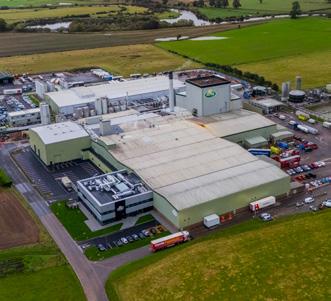
26 A clean sweep A look at Bucher Municipal’s success story

30 High costs, big ambitions Make UK’s Stephen Phipson discusses the UK’s competitiveness
40 Opening doors How Babcock is attracting more women in defence





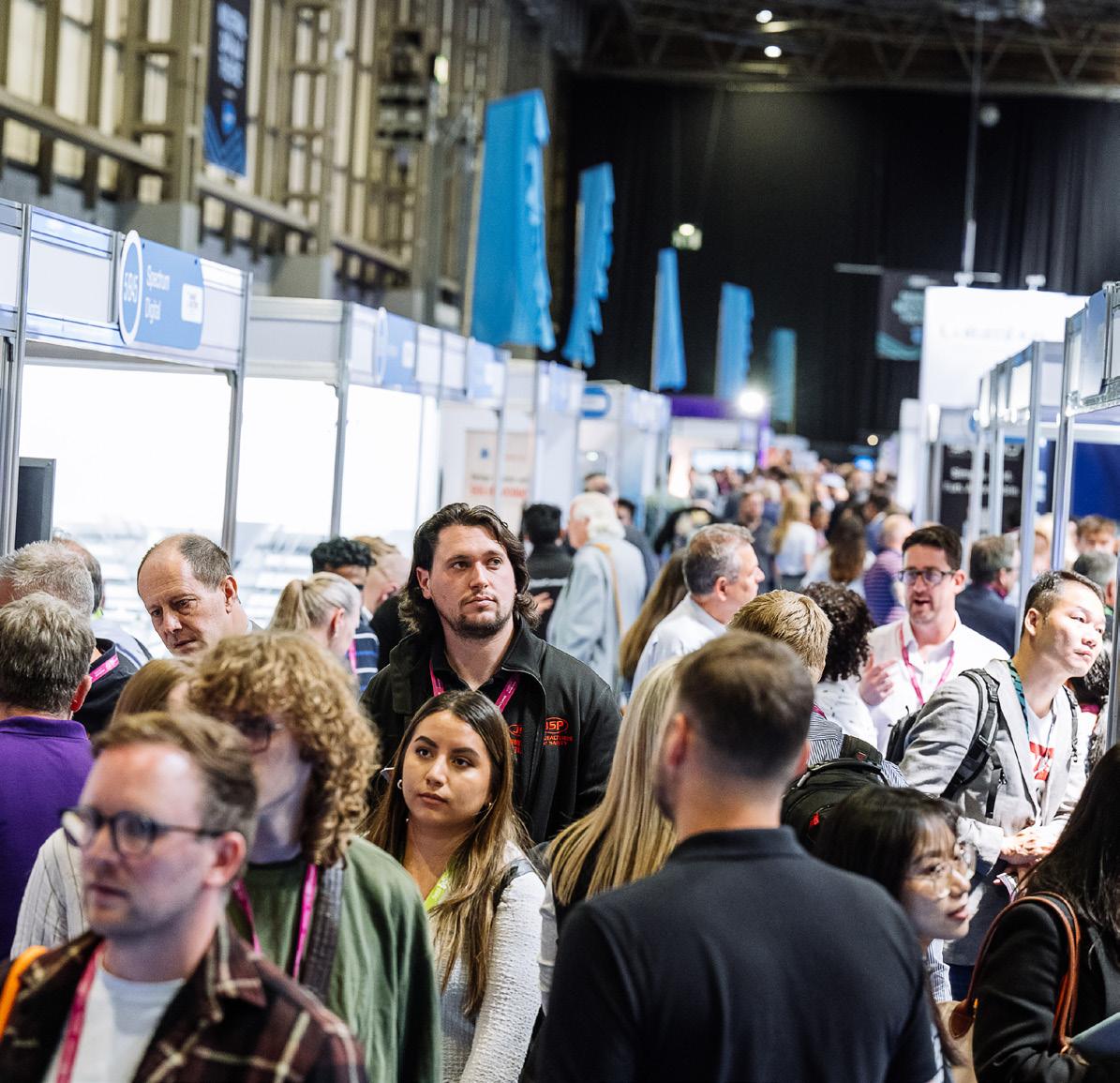
Smart Manufacturing Week (SMW), the UK’s flagship industrial technology show, returns to the NEC Birmingham from 2-4 June, with the main events taking place 3-4 June

Smart Manufacturing Week has become the point in the calendar where the industry doesn’t just show up - it moves forward
Chris Allen, Marketing Manager, SMW
Bringing together a powerhouse portfolio including co-located exhibitions Smart Factory Expo, Maintec, Drives + Controls and Design + Engineering, alongside Manufacturing Digitalisation Summit and The Manufacturer Directors’ Forums, SMW once again promises to be the focal point for innovation, insight and industry collaboration.
Building on the success of the 2025 event, which welcomed more than 13,500 visitors alongside 450+ exhibitors and over 200 speakers, SMW 2026 is set to be even more ambitious. With increased international participation expected, the event will deliver an expanded showcase of technologies, ideas and expertise shaping the future of manufacturing and engineering, at a time when many manufacturers are advancing beyond experimentation with technology and on to expectation.
Reflecting on last year’s success, Chris Allen, Marketing Manager of Smart Manufacturing Week, noted the event’s unique value in the market: “Smart Manufacturing Week has become the point in the calendar where the industry doesn’t just show up - it moves forward. It’s where real challenges are tackled, ideas are tested and the conversations happening on the show floor genuinely shape what comes next for manufacturing.”
SMW 2026 will feature a strong lineup of leading global organisations including Beckhoff, SolutionsPT, Epicor, Ericsson, Produtech, Dassault Systèmes, FANUC, Sage, SAP, SKF, 3M and many more. Alongside many other major industry players, the exhibition floor will provide a comprehensive view of the technologies driving manufacturing forward.
SMW 2026 is curated by the content team at The Manufacturer and informed by deep industry research, with the event structured around five defining pillars that address manufacturing’s biggest challenges and most exciting opportunities.
Established through extensive sector insight, these pillars shape the entire show, delivering fresh, future-focused perspectives. These themes are: Sustainability, Digitalisation, People & Skills, Innovation and Supply Chain Resilience. These themes make up the foundation of the event, with exhibitors, education sessions and other activities all designed to help manufacturers and engineers address these challenges and position themselves for future success.
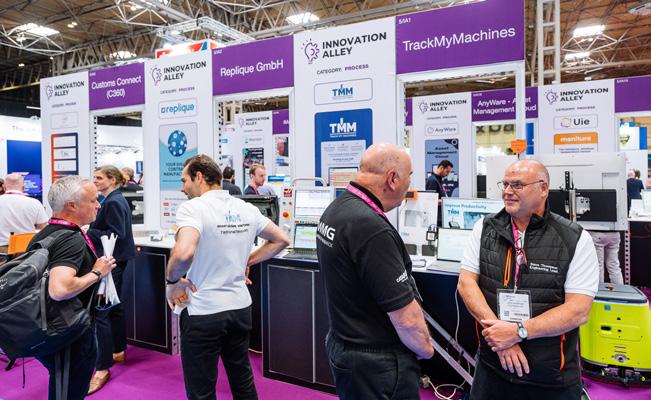
Innovation & Smart Manufacturing: Innovation is the heartbeat of modern manufacturing, and SMW 2026 will celebrate the latest advancements in manufacturing processes, materials and technologies. The event will highlight breakthrough innovations that are not only enhancing product quality but also helping manufacturers streamline operations, reduce waste and drive profitability. Located at the very heart of the exhibition, Innovation Alley will also return as the UK's leading showcase of all the new and developing technologies that will change the landscape of manufacturing over the next decade. Further details opposite.
Digitalisation: Across manufacturing and engineering businesses of all sizes the path to digitalisation is at the very heart of future strategy. The integration of digital technologies is transforming manufacturing at an unprecedented pace and SMW 2026 will showcase a range of solutions aimed at improving productivity and efficiency.
From AI and robotics to the Industrial Internet of Things (IIoT), the event will highlight the tools manufacturers need to enhance operations and stay competitive as well as a number of sessions in the educational programme exploring this topic. There are also theatre streams dedicated to Digital Transformation, Industrial Data & AI, Connected Factory, and an ambassador programme.
Smart Manufacturing Week creates a vibrant environment in which people learn, do business, network and genuinely enjoy being there
Grace Gilling, Managing Director, The Manufacturer
Sustainability: Sustainability and the challenge of achieving net zero is at the forefront of modern manufacturing; not just as a regulatory necessity but as a catalyst for innovation and efficiency. SMW 2026 is a platform for visitors to explore solutions that minimise environmental impact, optimise energy consumption and drive circular economy models.
Various activities and exhibitor solutions throughout the event will highlight how sustainable practices can enhance competitiveness, reduce costs and meet the growing demand for greener products and performance. There is also a Sustainability stream on the Leadership & Strategy theatre and an ambassador programme dedicated to the topic.
People & Skills: The skills gap and attracting the workforce of the future remains perhaps the biggest challenge facing the manufacturing sector.
In addition to the partnerships with organisations such as Women in Science and Engineering (WISE) and the Women's Engineering Society (WES), which help to broaden the appeal of the industry, plus the
dedicated STEM programme, SMW 2026 will also host sessions focused on upskilling and offer opportunities for both employers and potential employees to connect, ensuring the sector has the talent it needs for the future.
Alongside this, the show boasts an EDI ambassador programme, wellbeing zone and dedicated People & Skills stream at the Leadership & Strategy theatre.
Supply Chain Resilience: In today’s volatile global landscape, a resilient supply chain is more vital than ever.
At SMW 2026, manufacturers will discover innovative strategies and new technologies designed to help them overcome disruptions and create more adaptable, agile systems.
With a series of sessions in a dedicated stream within the Leadership & Strategy Solutions Theatre, the event will equip businesses with the essential tools to future-proof their operations and ensure continuity in the face of ongoing challenges. There is also a dedicated ambassador programme which includes a networking event on day one.
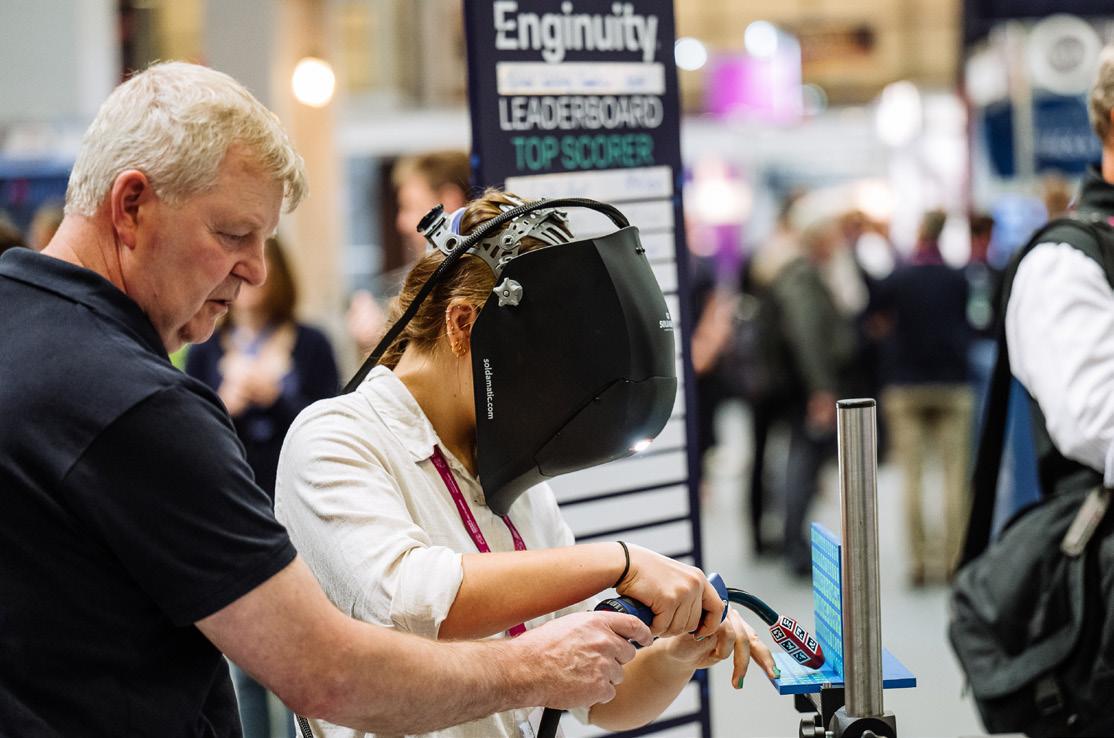

Show features - new and returning
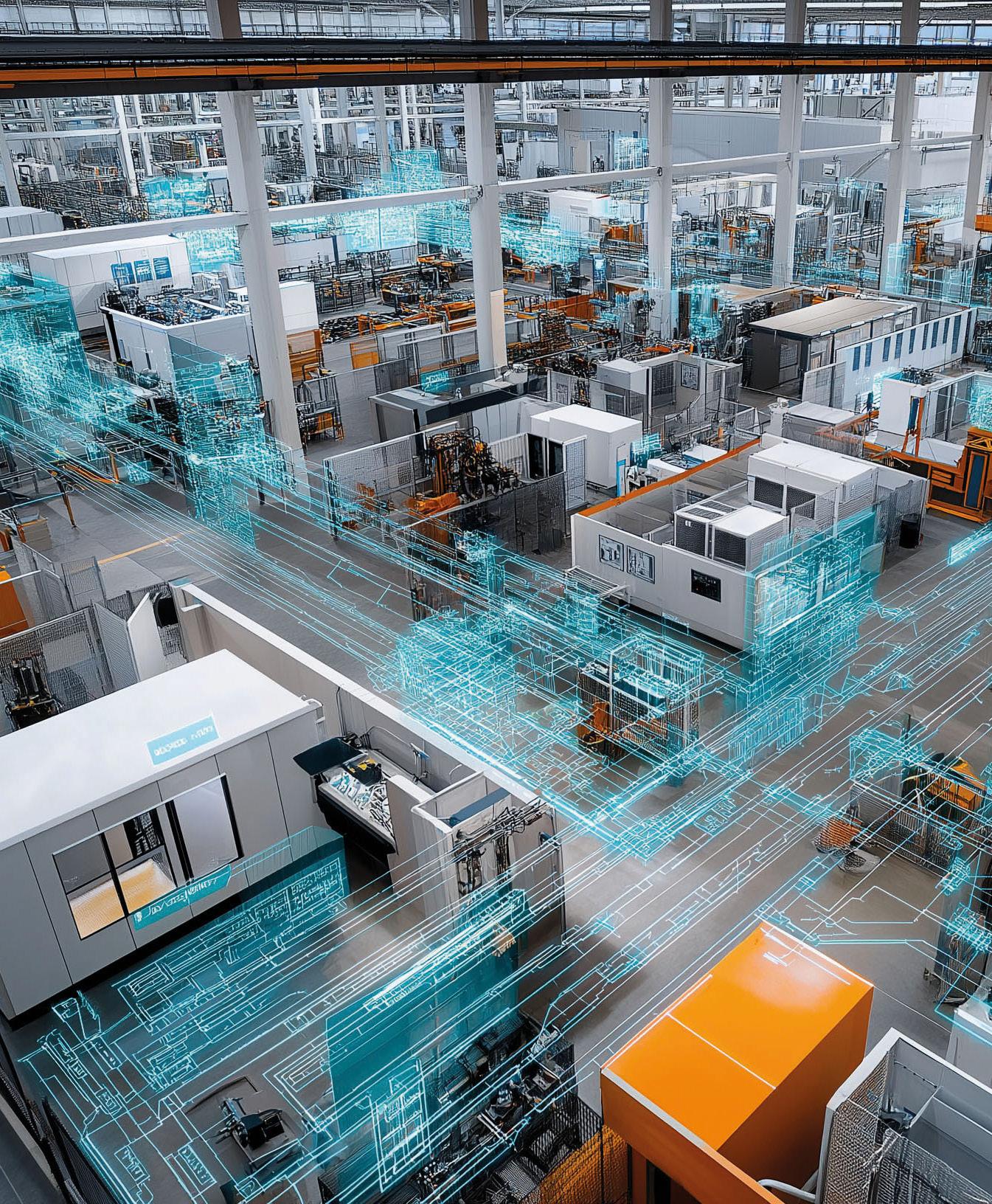
A major new feature for SMW 2026 will be The Factory of the Future, an immersive virtual twin experience which will serve as a high-impact, digitally-led showcase designed to bring connected, intelligent and secure manufacturing to life.
Visitors will be able to see how robotics, AI, digital twins and cyber security work together in a connected system, through a cinematic, interactive environment designed to educate, inspire and challenge how industry thinks about production.
The Factory of the Future will offer a guided journey through:
• Optimised production (connected, efficient factory)
• Disruption events (machine failure, supply chain issues)
• Cyber attack scenario (breach → detection → response → recovery)
• Sustainability mode (energy, waste, carbon visibility)
A regular highlight of SMW, Innovation Alley offers a glimpse into the future of manufacturing by showcasing some of the most promising start-ups and disruptive small businesses in the sector.
Located at the intersection of all four shows, the alley will feature exciting exhibitors all falling into at least one of four categories. ‘People’ will highlight advancements in workforce management, training and employee wellbeing, while ‘Product’ will focus on innovation in design, R&D and materials. ‘Process’ will explore developments in productivity, resilience, AI and supply chain optimisation, and ‘Planet’ will put the spotlight on sustainable manufacturing, energy management and net zero strategies.
Manufacturers and engineers with an eye on the future will find Innovation Alley a rewarding space to explore, offering a first look at the technologies and ideas that could play a key role in shaping the industry's future.
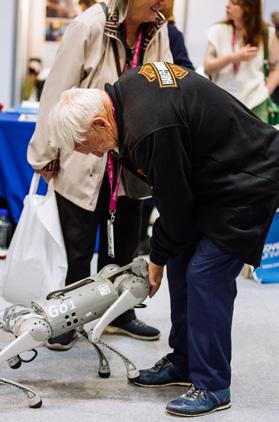
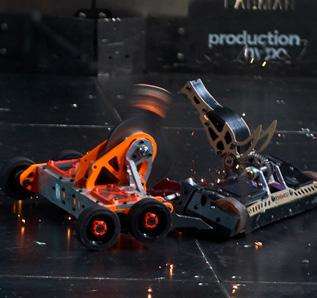
Another dynamic new feature for 2026 is FightFest, presented by Accu. B2B fighting robot battles will form a competitive element located within the Drives + Controls show. Taking place on the AccuBots stand, this high-energy event is aligned with automation and robotics, a core event theme.
Designed to encourage engagement and hands-on experience in engineering, the event will see students from across
THE HEADLINE EDUCATIONAL PROGRAMME at SMW 2026 is produced by The Manufacturer Editorial team and developed in response to extensive research around the critical challenges facing manufacturers and engineers today.
The seven Solutions Theatres will cover a range of key topics from that research and feature winners from The Manufacturer’s dedicated awards programmes, stand out site visits and innovative use cases.
Leadership & Strategy
featuring four key streams
• Workforce Development & Upskilling
• Sustainability & Circular Economy
• Supply Chain Resilience
• Sales & Marketing
Digital Transformation sponsored by Epicor
• Smart factories and connected ecosystems
• Digital twins and virtual commissioning
• Integrating legacy systems and new platforms
• Leadership and change management in digital rollouts
• Measuring ROI and unlocking long-term digital value
Maintenance
• Predictive, preventive, and prescriptive maintenance
• Condition monitoring, sensors, and diagnostics
• CMMS/EAM integration and analytics
• Extending asset life and optimising maintenance strategies
• Downtime prevention and energyaware maintenance
Production sponsored by Ericsson
• Industrial IoT (IIoT), MES, and SCADA integration
• Robotics and cobots in dynamic environments
• Machine-to-machine communication and automation control
• OT/IT convergence for secure data flow
• Edge AI and distributed decisionmaking
• Cyber-physical systems, cloud, and digital infrastructure
sponsored by Redzone
• Industrial data strategy, architecture, and governance
• AI for predictive maintenance, process optimisation, and quality assurance
• Computer vision, NLP, and generative AI use cases
• Responsible AI: explainability, bias, and transparency
• Building AI-ready cultures and teams
Design & Product Innovation sponsored by Stratasys
• Advanced materials, 3D printing, and additive manufacturing
• Simulation, virtual prototyping, and agile design cycles
• Human-centred design and usability in industrial products
• Eco-design, lifecycle thinking, and design for disassembly Manufacturers &
• Apprenticeships, graduate schemes, and early-career opportunities
• STEM inspiration through schools and higher education partnerships
• Innovation showcases from young engineers and student teams
• Career pathways in digital, green, and advanced manufacturing
• Mentorship, skills development, and industry-led training initiatives
Focusing on the topics that matter most to the industry right now, the Solutions Theatres will provide an opportunity for attendees to engage with experts, gain a deeper understanding of emerging technologies, expand their industry insights and learn how to implement strategies to drive efficiency, reduce costs and ensure competitiveness in the rapidly changing industrial landscape.
the UK competing with custom-made robots, alongside professional teams live over the two days.
While undoubtedly a fun feature of the show floor, Fight Fest showcases the need to engage and develop the next generation of engineers who must be proficient in mechanical design, programming and prototyping to meet the demands of the smart factories of the future.
SMW 2026 will also continue its commitment to inspiring the next generation through its dedicated STEM Programme, Manufacturers & Engineers of the Future, taking place from 11:00 – 16:00 on 4 June, in partnership with Stemazing. Hundreds of students and apprentices will engage directly with industry professionals, gaining handson exposure to careers in advanced manufacturing and engineering.
Alongside the main exhibition, a series of high-profile satellite events will return, including the Manufacturing Digitalisation Summit. This two-day event unites senior digitalisation and technology leaders from across the UK’s manufacturing sector to solve pressing industry challenges and unlock the full potential of digital technologies for productivity, efficiency and growth. See a full preview on page 18.
SMW 2026 will also see the return of The Manufacturer Directors’ Forums, a series of private networking breakfasts and dinners bringing together senior executives to address the most pressing challenges and opportunities facing industry today. Discussions will explore the journey towards autonomous and AI-enabled operations, moving beyond pilots to embed intelligence into day-to-day decision-making, and strengthening sustainability, resilience and environmental security across manufacturing organisations. You can apply to attend via https://info.themanufacturer.com/ directors-forum
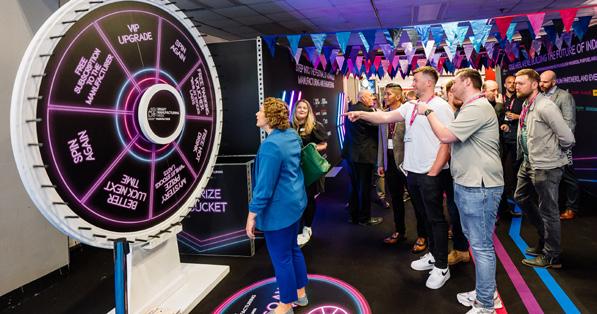
At SMW 2026, the festival vibe comes alive with performances throughout on the exhibition floor, unexpected surprises and immersive visuals - all designed to inspire, entertain and connect attendees. There will be live music performances throughout SMW as well as a networking party with a live band on the first day of the show.
In 2025, SMW welcomed Guether Steiner, former boss of the Haas Formula 1 team and star of the... Continues on page 11

DESIGN & ENGINEERING EXPO is created for designers and engineering professionals across every stage of the supply chain who are looking to reduce costs, streamline processes and strengthen future strategies.
With innovation at its core, this free-to-attend, two-day event offers a unique opportunity to explore the latest technologies, gain insights from pioneers pushing the boundaries of engineering, and connect directly with suppliers. Attendees will leave equipped with fresh ideas, practical solutions and a competitive edge to drive their projects and organisations forward.

Covering critical areas such as energy efficiency, machine safety, drives, motion control, robotics and automation plus much more, all under one roof, DRIVES AND CONTROLS has been the voice of the industry since 1991 and has become the market leading event within a growing industry driven by the adoption of automation and Industry 4.0.
Designed to allow UK manufacturers to be the most efficient, sustainable and profitable in the world, SMART FACTORY EXPO is where change-makers can find the insights, solutions and connections for their digital transformation projects.
This year marks a major milestone for Smart Factory Expo, celebrating a decade at the forefront of the UK’s manufacturing transformation. What began as a bold idea - to bring together the technologies shaping the Fourth Industrial Revolution - has evolved into the UK’s leading showcase for digital manufacturing, automation and industrial innovation.
Today, Smart Factory Expo sits at the heart of Smart Manufacturing Week, attracting thousands of manufacturers, engineers and technology leaders each year. Beginning in Liverpool ten years ago to its current home at the NEC Birmingham, Smart Factory Expo has continuously adapted to the needs of the industry while maintaining its role as a central meeting point for manufacturing innovation.

MAINTEC is the longest-standing exhibition for the predictive maintenance, reliability and asset management industry and attracts the most ground-breaking products and services in the sector, helping to extend product lifecycles by providing fast solutions and servicing.
Maintec has cemented its position as the go-to event for maintenance professionals across the UK and internationally, bringing together engineers, maintenance managers, reliability experts, asset owners and technology innovators. The exhibition’s focus is on practical solutions that drive uptime, extend equipment lifecycles, reduce downtime and boost operational efficiency - making it highly relevant for industrial sectors from manufacturing and transport to facilities and infrastructure.

Exciting funding opportunities are available through the £4 billion DRIVE35 programme – now open to businesses looking to enter the automotive supply chain!

Whether you’re in tech, manufacturing, and related industries, you may be eligible to receive government support for your next automotive project.
Curious to learn more?
Contact APC today – let’s explore how we can work together to drive your ideas forward.
Don’t miss out on this chance to fuel your business growth.

Are you looking forward to 2026 edition of Smart Manufacturing Week?
Absolutely. SMW has always evolved thoughtfully, and the 2026 edition reflects that progression with a strong emphasis on relevance and impact. We’re bringing The Manufacturer MX Awards reigning champions onto the keynote stage to share what’s genuinely working
All four of our colocated shows provide a complete 360 degree view of modern manufacturing
Grace Gilling, Managing Director, The Manufacturer
inside their factories - so the ideas are grounded in real practice, not theory.
We’ve also launched a brand-new Meet the Buyer / Meet the Supplier programme designed to help visitors and exhibitors get more value from the two days. It’s all about making the right commercial introductions quickly and meaningfully. All of that sits within the
festival energy that people now associate with SMW. It’s high quality content, serious technology and a show floor that’s designed to be explored, not just walked.
What is it that makes SMW unique?
What stands out about the event is that it is researched and produced by The Manufacturer. That means every part of the programme - keynotes, theatres, demonstrations, show floor features - is shaped by genuine industry insight and the topics our community tells us matter most.
The content is curated by our editorial team and structured around four exhibitions - Smart Factory Expo, Maintec, Drives + Controls and Design + Engineering Expo. While each show has its own focus, all address the key challenges facing manufacturing today and are brought together through our five core pillars.
Finally, as part of Nineteen Groupwhose philosophy is that trade shows should never be dull - we work hard to make the entire experience energising. SMW has a festival-like atmosphere, designed to entertain as well as inform. It’s a vibrant environment in which people learn, do business, network and genuinely enjoy being there.
What can visitors expect from their experience?
The aim of SMW 2026 is to create a joined up experience where visitors can explore a challenge from multiple angles - content, solutions, people and practical next steps.
Across all seven of our Solutions Theatres, you’ll find solution-led presentations from technology and hardware providers, manufacturing keynotes sharing best practice and deep-dive panel discussions on the hottest topics in industry.
In addition, all four of our co-located shows provide a complete 360° view of modern manufacturing - from strategic decision-making to enabling technology, engineering fundamentals and operational excellence. Visitors can compare solutions side by side, meet multiple suppliers in one trip, and build a single, joined up roadmap across digital, engineering, maintenance and production.
The entire event is designed to support manufacturers and engineers at every stage of their journey - offering real insight, technology and connections that help people move from ideas to action. l
Netflix Drive To Survive series, as the exhibition’s keynote. It was standing room only as Guenther shared his experiences, approaches and advice on everything from managing data, to managing egos.
2026 will be no different and the SMW team has lined up an equally compelling, show-stopping keynote for this year’s show that will have audiences flocking. Watch this space.
The returning Ambassador Programme will also be expanded for 2026, offering exclusive networking events from 16:0016:30 on day one for individuals passionate about driving change to connect, collaborate and tackle today’s most pressing challenges together.
Furthermore, SMW will provide a dedicated networking platform with the ability to arrange 1-2-1 meetings. Supported by additional matchmaking services and onsite assistance, this tool aims to overcome the challenge of finding the most relevant contacts at a large-scale trade show.
The Society of Motor Manufacturers and Traders (SMMT) will also be running its Meet the Buyer programme, aimed at helping buyers meet suppliers that fit their particular needs at any point during their purchasing cycle, and develop meaningful business connections during this key period of recovery and transition. l
Don’t take our word for it
SMW is researched and produced by The Manufacturer. That means every part of the programme is shaped by genuine industry insight
Grace Gilling, Managing Director, The Manufacturer “

Scan QR code to register your place at
Manufacturing Week 2026
"I’m excited about the focus on practical, scalable industrial technologies and exchanging real deployment lessons with maintenance professionals."
Pawan Jalagar, Product Manager, Murata Electronics Europe - 2026 Speaker
“I felt like a child in a sweet shop, I didn’t know where to start! From inspiring lectures to cutting-edge exhibitions, there was plenty to explore and learn. I connected with some brilliant minds and saw first-hand how the sector continues to evolve.”
Oye Sule, Innovation Practitioner, South & City College Birmingham, 2025 visitor
"I’m most excited about hearing how manufacturers are really tackling workforce challenges on the groundonboarding, training and upskilling teams while products and processes keep evolving. Smart Manufacturing Week brings together people who are dealing with these problems every day, and that’s where the most valuable conversations happen."
Sam Burgess, CEO & Founder, Partful2026 Exhibitor
Smart Manufacturing Week brings together the people actually running and modernising UK factories and beyond.
Anton Zdziebczok, VP of Product, RealVNC - 2026 Speaker
“I went down to the NEC to go and visit Smart Manufacturing Week for the first time this year, and I was really surprised about how different this event felt. The atmosphere made it feel less like an industry show and more of a social experience! The talks were brilliant, and the mix of larger and smaller businesses meant there was something for everyone. Needless to say, I already have the dates in my calendar for 2026!”
Sarah Steinhoefel, Client AI Implementation Manager, TwentyFour IT Services, 2025 visitor
Check out the must-visit stands at Smart Manufacturing Week 2026
Columbus will be focusing on one central theme: helping manufacturers navigate ‘The Shift’ - a fundamental transformation redefining the global manufacturing landscape. As highlighted in Columbus’ latest industry report, The Shift: Redefining Global Manufacturing, businesses are facing a convergence of challenges and opportunities, from digital acceleration and AI adoption to evolving supply chains and sustainability demands.
At SMW 2026, Columbus will bring
Remember Robot Wars? The sparks, the crashes, the moment a machine flipped its opponent across the arena. Now picture that action at the heart of the UK’s largest engineering and manufacturing eventlive on the show floor.
At SMW 2026, Accu will present FightFest: the world’s first major B2B fighting robot exhibition.
This unique 1v1 tournament will see machines built by engineers from the BBC’s Robot Wars go head-to-head in front of thousands of technical and manufacturing leaders.
But for Accu, it’s more than an explosive spectacle. Every robot collision will demonstrate the ultimate real-world
these insights to life, demonstrating how manufacturers can move beyond theory and take practical steps toward transformation. Visitors to the stand will discover how to align technology investments with business strategy, ensuring that digital initiatives deliver measurable value across operations, finance and customer engagement.
Columbus will also showcase realworld examples of how organisations are responding to key trends identified in the report - such as the rise of intelligent automation, the increasing importance of data-driven decision-making, and the need
stress for their precision components and tools - the same ones trusted by their customers; including over 70% of the world’s top manufacturers.
FightFest also highlights the importance of STEM engagement. Robotics competitions show engineering at its most creative, competitive and exciting - exactly the kind of energy needed to attract the next generation of engineering talent.
The action will be captured across multiple cameras, producing content before, during and after the show, with coverage expected to reach 750,000+ viewers across digital channelsextending the impact and reach far beyond the exhibition floor.
for greater agility in a volatile global market. These conversations are designed to help manufacturers cut through complexity and focus on actionable change.
By combining industry expertise with deep technological capability, Columbus aims to support manufacturers at every stage of their journey - whether they are just beginning to explore digital transformation or looking to scale existing initiatives.
SMW 2026 provides the ideal platform to connect, share ideas and explore what’s next. Columbus is part of that conversation - helping shape a smarter, more resilient future for manufacturing.


Expert voices. Timely insights. Real impact. Our webinars spotlight leading manufacturers and tech providers, offering practical knowledge on the tools, skills and behaviours shaping the modern industry.
Exclusive insight, senior connection and real conversations. A private space for senior manufacturing executives to network, share challenges, and gain strategic insight through high-level roundtables.
Where insight meets influence. From exclusive reports to targeted events, Marketing to Manufacturers’ helps solution providers connect with manufacturers and turn expert knowledge into commercial growth.
Entry deadline. Recognised as the gold standard awards programme in UK manufacturing, test your excellence across categories including innovation, sustainability, digitalisation, leadership, and staff engagement. Submit your entries and showcase your achievements. 9 JUL
A single-evening, invitation-only event for senior UK manufacturing and supply chain leaders, designed from the ground up to be a working session rather than a passive conference.
24 SEP
Each November, the UK’s top manufacturing minds gather in Liverpool for The Manufacturer Live - a prestigious series of award-winning events driving innovation, strategy, and recognition. With over 50 years of legacy, it’s the premier gathering for those shaping the future of industry. 9-11 NOV


Where the industrial elite converge. This award-winning Summit is a catalyst for transformation, covering the topics most pertinent to manufacturing leaders alongside economic and market factors, operational challenges and organisational challenges.
The festival of industrial innovation. Four expos, one summit and dozens of fringe events unite the industry for cutting-edge thinking, smart technology and the latest hardware driving real world results on the factory floor, and celebration.
2027
Back for its 7th year, Manufacturing Digitalisation Summit unites digital leaders to explore how to turn digital vision into industrial reality. JUN 2027
Manufacturers face mounting pressure to improve performance, increase operational insight and respond quickly to shifting market demands, often while managing rising costs and ongoing disruption. At SMW, Epicor will showcase how its industryfocused ERP and connected manufacturing
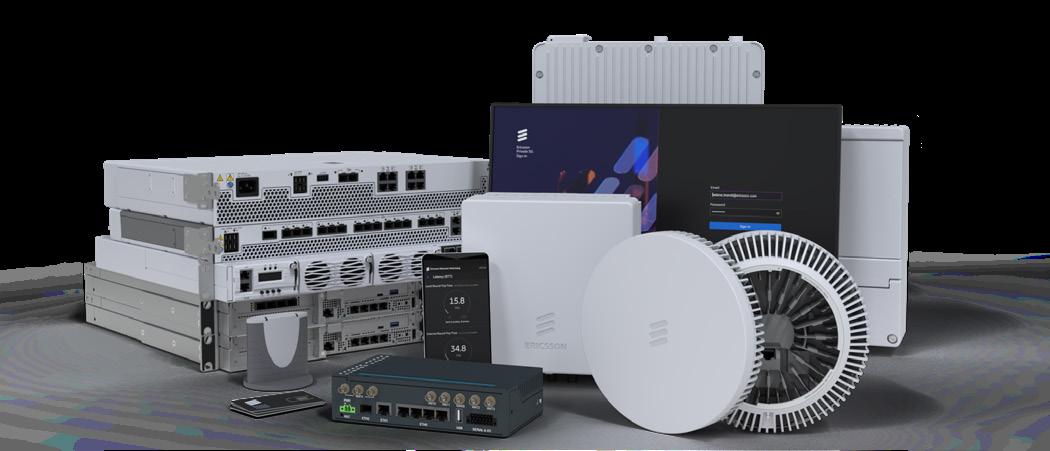
Ericsson Enterprise Wireless Solutions will show how private 5G turns manufacturing data into real-time decisions. As plants add autonomous mobile robots, Industrial IoT and AI-driven analytics, legacy WiFi and wired networks can struggle with coverage, mobility, congestion and deterministic performance. Private 5G provides secure, scalable connectivity with high capacity and low latency - built for mission-critical operations across IT and OT.
solutions help organisations navigate these challenges and operate smarter.
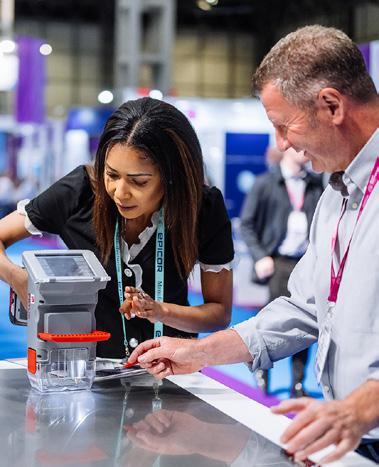
At the Smart Factory Expo, Epicor will demonstrate how manufacturers can achieve real-time visibility across their operations – from the shop floor to the supply chain –enabling better-informed decisions, stronger performance and sustainable growth. By connecting people, processes and data together, Epicor helps manufacturers replace
complexity with clarity.
Epicor will highlight how businesses can streamline production, optimise inventory, improve scheduling and respond more effectively to customer demand. From reducing downtime and improving traceability, to strengthening supply chain resilience, Epicor’s solutions are designed to support smarter, faster and more agile operations.
Visitors to the stand can experience practical use cases enabled by Ericsson Private 5G, including indoor drones that automate inventory cycle counts, Pushto-Talk communications that streamline a connected workforce, and a digital-twin experience that helps plan 5G coverage before deployment. You’ll also see how a secure private network connects machines, people and systems to improve productivity,
safety and operational resilience.
On the Connected Production Stage there will also be three talks - Brains and Brawn: Why Physical AI Needs Private 5G; Private 5G: The Backbone of Predictive, Real-Time Manufacturing; and Connected Workers, Competitive Advantage. These will be focused on architectures, deployment patterns and steps to accelerate AI value while reducing retrofit cost and downtime.
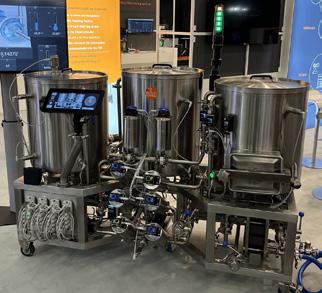
ifm will showcase a comprehensive range of industrial automation technologies, highlighting a powerful array of smart manufacturing and Industrial Internet of Things (IIoT) solutions designed to optimise factory production and drive interoperability across diverse operational platforms.
Focusing on image processing, the display will feature the O3R 3D Smart Sensor. This multi-application camera platform delivers precise robotic perception, identification and
quality inspection. Advancing process automation, ifm will also display the SU Puresonic flow sensors, which provide highly accurate ultrasonic flow measurement tailored specifically for hygienic process applications. These technologies facilitate seamless, efficient and reliable production environments.
Highlighting IIoT and digitalisation, ifm will spotlight the moneo Kickstart system with an IP67-rated IO-Key. This plug-and-work IIoT solution enables robust data acquisition and analytics directly at the machine level, accelerating digital transformation and open industrial communication.
Industrial, automotive, aerospace and defence manufacturers are under intense pressure to increase productivity, resilience and speed - without adding complexity or risk. At SMW 2026, Infor will be showcasing how leading manufacturers are doing
exactly that by using its innovative enterprise CloudSuite Solutions.
Visitors to the Infor booth can experience cloud first, industry specific ERP solutions built for complex, mixed mode manufacturing environments. Through live product demonstrations, the Infor CloudSuite Industrial Enterprise will combine embedded AI, automation and analytics to help organisations plan smarter, execute faster and adapt with confidence.
From AI driven planning and predictive insights to workflow automation and trusted real-time operational data, Infor’s Velocity Suite accelerates value across manufacturing businesses. See how manufacturers are improving asset performance, reducing integration costs
and achieving faster time to value with solutions that are industry-specific - not generic retrofitted ERPs.
At the stand, there will also be the opportunity to meet real Infor customers. Speak directly with buyers who are already using Infor’s CloudSuite solutions and hear first-hand how they’ve modernised operations, improved visibility across sites and delivered measurable productivity gains - while managing risk and minimising disruption.
Learn how industry leading performance starts with Infor’s precise value, trusted by 11 of the top 15 industrial manufacturers, eight of the top ten automotive manufacturers, and 16 of the top 20 aerospace companies.
LAPP will be located in the Drives + Controls exhibition, highlighting not only its latest innovations in connectivity and cable technology but also the expertise, insight and hands-on support that set LAPP apart as a trusted partner.
Visitors to the stand will have the opportunity to meet LAPP’s top product specialists, who will be showcasing its advanced range of cables, connectors, cable glands, assemblies and complete harnessing solutions. Whether manufacturers are looking to streamline production, improve system performance
PRODUTECH is the Portuguese cluster for manufacturing technologies, bringing together equipment manufacturers, software developers, systems integrators, R&D institutions and industrial associations in a unified network driving the modernisation and competitiveness of Portuguese industry.
PRODUTECH will be presenting a collective showcase of Portuguese capabilities through its co-exhibitors - each delivering practical, innovationdriven solutions to the global manufacturing stage. Visitors will discover knowledge-based augmented reality tools that support frontline operators with
or enhance safety and reliability, LAPP experts will be the guide through the technologies that can make the greatest impact on operations.
Alongside LAPP’s technical experts, the company will also have its leading business solutions managers in attendance. These specialists work closely with customers across the UK and Ireland to deliver tailored solutions that address both engineering and commercial challenges. They will be available to discuss how LAPP can collaborate with manufacturing organisations to unlock efficiencies and support long-term scalability.
This exhibition is an opportunity to see how LAPP’s combination of high-
quality products, customised harnessing solutions and strategic partnership can help businesses stay ahead in the current demanding landscape. Whether it’s exploring new projects, seeking to optimise existing systems or searching for a supplier who can support growth, the LAPP team is ready to help.

digital work instructions and real-time guidance, ensuring higher efficiency and full process traceability.
The showcase also highlights advanced AI and analytics applied to industrial and business processes, enabling better decision-making, cost reduction and operational optimisation. Complementing these technologies are proven approaches to operational excellence, including lean manufacturing, continuous improvement and workforce training, helping organisations eliminate inefficiencies and sustain performance gains.
At the production and logistics level, integrated manufacturing execution systems (MES) demonstrate how realtime monitoring, data integration and
automation enhance shopfloor visibility and productivity. These capabilities are complemented by autonomous mobile robotic solutions, including autonomous AMR stackers for internal logistics operations, enabling more flexible, efficient and scalable material handling within industrial environments.
In parallel, flexible industrial automation solutions - from customised machinery to fully integrated systems - illustrate how manufacturers can improve efficiency and quality across sectors. The portfolio is further strengthened by advanced engineering in polymer materials, supporting innovation and knowledge transfer for more sustainable and highperformance applications.
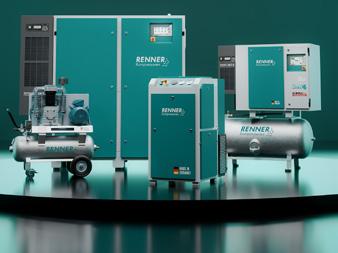
RENNER Kompressoren, based in Güglingen, Germany, is a medium-sized, family-run company with over 30 years of experience and a strong, dynamic development.
Today, around 250 employees contribute across all areas of the company - from development and testing to production, quality assurance, procurement, product management, as well as marketing, sales and service. This broad expertise allows the company to maintain high standards throughout the entire value chain. Its work is guided by the following principles. Tradition: The company believes
lifecycle - from day-to-day maintenance through to complex engineering challenges.
in building long-term partnerships by truly valuing its customers and working together for sustainable success. High standards: RENNER’s products stand for quality that convinces - reliable, efficient and built to last. User focus: The company rely on experienced technical specialists and supports them with a strong network of qualified local partners to ensure the best possible service. Responsibility: Environmental awareness is not an option for RENNER - it is a core part of its philosophy and shapes how it develops and delivers its solutions.
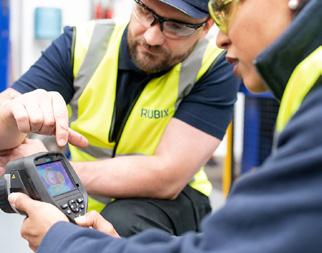
Rubix is showcasing its expanded UK and Ireland business at SMW 2026, bringing together the combined strengths of the former ERIKS UK & Ireland and Rubix operations under the Rubix brand.
This newly extended Rubix business represents a step-change in capability for customers. By combining ERIKS’ expertise in flow technology, sealing and polymer solutions, and engineering services with Rubix’s strength in PPE, tools, mechanical power transmission and automation, customers now have access to a broader, more integrated offer than ever before. Backed by a pan-European network and deep local presence, Rubix is uniquely positioned to support the full industrial
At the event, Rubix will demonstrate how this combined capability translates into real customer value. Visitors will experience practical solutions focused on improving reliability, reducing downtime and strengthening supply chain resilience. This includes technical services such as repair and refurbishment, condition monitoring and reliability engineering, alongside tailored product solutions and integrated supply models like on-site inventory management and procurement support.
The stand will bring these capabilities to life through real-world applications, showcasing how Rubix specialists work alongside customers to solve problems,
optimise performance and reduce total cost of ownership. With more experts, an extended product range and enhanced technical depth, Rubix is inviting visitors to take a fresh look at what’s now possibleand how the combined business can help make industry work better.
As UK manufacturers continue to navigate economic pressure, skills shortages and increasing operational complexity, the focus is shifting from why digital transformation matters to how it can be delivered in practice. That’s why Sage is returning to SMW 2026 - to help manufacturers move from ambition to execution.
Throughout the event, Sage will showcase how modern manufacturing organisations can gain greater visibility, resilience and control by connecting finance, operations and supply chains
through a single, intelligent platform. Rather than leading with technology alone, Sage’s presence will centre on real-world manufacturing challenges and the outcomes that matter most to today’s leaders - improving efficiency, responding faster to change and building a more sustainable operation.
Visitors to the Sage stand will be invited to explore practical use cases and live demonstrations that reflect the realities of modern manufacturing environments. These conversations are designed to show how data-driven insight, automation and integrated systems can support smarter decision-making across the entire organisation, from the factory floor to the
boardroom.
Beyond the stand, Sage will contribute to the wider SMW 2026 agenda through expert-led sessions and discussions focused on the future of UK manufacturing. Topics such as digitalisation, AI, operational agility and the evolving role of finance leaders will underline Sage’s perspective as a longterm partner to the sector.
SMW 2026 brings together a community of manufacturers actively shaping what comes next. Sage’s role is to support that journey - providing the insight, technology and expertise needed to help manufacturers thrive in an increasingly complex and competitive landscape.
Unplanned downtime is one of the biggest pressures facing UK manufacturers today. Equipment rarely fails without warning, yet early signs such as changes in vibration, temperature, noise or speed are often missed amid busy operations,
skills gaps and growing demands on maintenance teams. When problems are only discovered at the point of failure, the consequences are familiar: production losses, safety risks, rising costs and rushed maintenance decisions.
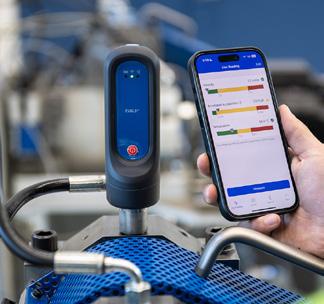
SKF’s purpose at SMW 2026 / Maintec is to help UK manufacturers move away from this reactive reality. SKF starts from the customer’s day-to-day pain points and challenges; keeping (ageing) machines running reliably with limited time, resources and predictability. Rather than leading with complex technology, SKF focuses on what customers need most - practical ways to detect issues earlier, understand what is happening inside critical assets and take action while there is still time to plan.
At Maintec, SKF will demonstrate how accessible condition monitoring, from simple checks to more structured and advanced data collection, can form the foundation of smarter maintenance. These early insights allow maintenance teams to prioritise work, reduce unnecessary
interventions and prevent small issues from becoming disruptive failures. Importantly, SKF supports manufacturers wherever they are on their reliability and sustainability journey, helping them take achievable next steps rather than forcing one-sizefits-all solutions.
Beyond individual products or tools, SKF’s presence is about partnerships. UK manufacturers benefit from working with a company that understands industrial realities, supports long-term asset performance and is committed to sustainability through longer equipment life, reduced waste and improved energy efficiency.
Working with SKF means having access to a global engineering network, offering 120 years of experience and knowledge in more than 40 industries. By combining reliability expertise with a responsible approach to manufacturing, SKF helps customers protect uptime today while building more resilient, efficient and sustainable operations for the future.
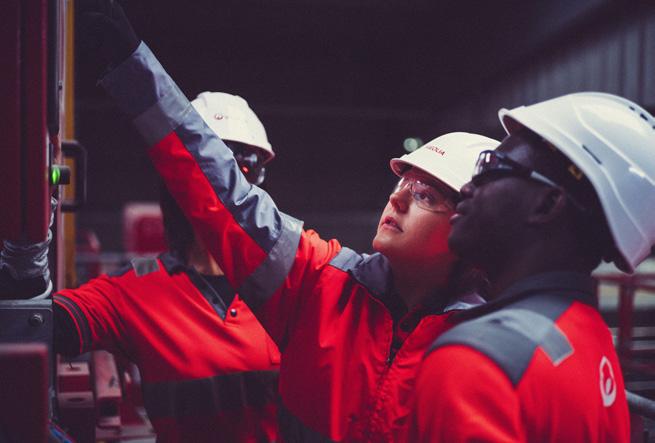
Visitors to the Veolia stand will be able to explore how sustainability can transform manufacturing operations.
Manufacturers are facing growing pressure to simultaneously improve efficiency, reduce environmental impact and meet evolving regulatory demands. At the Smart Factory Expo, Veolia will showcase how integrated environmental solutions help manufacturers meet these challenges while strengthening operational performance.
Drawing on global expertise across water, waste and energy management, Veolia will demonstrate how manufacturers can optimise resources and build resilient operations, ultimately driving profitability. Whether it's improving efficiency in processes and reducing energy consumption and reliance on the grid to significantly lower operational costs, or effectively managing complex industrial wastewater and specialised waste streams for revenue generation opportunities, Veolia has the expertise and technology to help.
Its teams specialise in tackling niche challenges. Every manufacturing facility has unique requirements, and Veolia
specialises in developing tailored solutions that address specific operational needs. With experience across food and beverage, pharmaceuticals, aerospace and more, Veolia understands distinct environmental and operational pressures and can confidently help businesses
navigate through the challenge.
Veolia will also be presenting on the Strategy & Leadership Stage on 4 June at 11:30, sharing real-life insights on how manufacturers have embedded sustainability into their operational strategy to deliver measurable business value.
There was a time when digital transformation in manufacturing was largely centred around possibility.
Factories were experimenting.
Leadership teams were exploring. New technologies were being trialled, tested and discussed at length. The appetite was there, but in many cases the real industrial impact was still sitting somewhere just over the horizon. That conversation has now changed.
As we approach the sixth annual Manufacturing Digitalisation Summit, taking place at the NEC Birmingham on 3–4 June alongside Smart Manufacturing Week, the manufacturing sector finds itself in a very different place. Digital is no longer a side conversation or an innovation project parked within IT. It is now directly tied to productivity, resilience, cost control, agility and competitive survival.
The challenge for manufacturers today is no longer deciding whether to digitalise. The challenge is making it work.
Digital is no longer an experiment in manufacturing — it is now a business performance issue
Over the past five years, we have watched the industry move from curiosity to commitment. Manufacturers have invested heavily in automation, connected systems, AI tools, analytics platforms, ERP upgrades, cyber security frameworks and data programmes. Yet despite all this activity, one very clear issue continues to surface.
Why are so many organisations still struggling to turn digital ambition into measurable plant-wide results? That question sits firmly at the heart of this year’s summit.
Our 2026 agenda has been built specifically around the execution gap, the often difficult space between digital investment and operational return. Because while technology potential is plentiful, operational traction remains far harder to achieve.
Manufacturers are telling us the same thing repeatedly: they do not need another high-level conversation about Industry 4.0. They need practical answers around scaling, integration, ROI, adoption and business case.
The barrier is no longer what to deploy - it is how to adopt, scale and monetise digital successfully
This is exactly why the Manufacturing Digitalisation Summit has become such an important fixture within the Smart Manufacturing Week calendar.
Unlike many digital conferences that remain theory-heavy or vendor-led, this summit is designed as a senior peer-to-peer forum focused on what is actually working inside real manufacturing businesses.
Across two days, delegates will hear directly from manufacturing leaders who are tackling the difficult questions in real time.
• How do you scale digital transformation across multiple sites without disrupting production?
• Where is AI genuinely delivering industrial value, and where is it still hype?
• How are manufacturers connecting MES, ERP, automation and data environments into one intelligent operational ecosystem?
• How do you fund transformation in a climate where every investment decision is under scrutiny?
• And perhaps most importantly, how do you make digital pay?
These are not hypothetical conversations. They are practical, often uncomfortable, but critically necessary discussions that manufacturers need to be having right now.
This is not about digital theory; it is about digital that delivers
Another defining feature of this year’s summit is the format itself.
Alongside keynote presentations from some of the sector’s leading digital thinkers, the programme will once again feature our highly valued interactive roundtable discussions and working sessions, allowing delegates to move beyond passive listening and into genuine conversation.
This matters. Senior manufacturers consistently tell us that some of the greatest value comes not just from hearing success stories, but from openly discussing where projects have stalled, where ROI has been hard to prove, where internal resistance has slowed progress, and what practical steps are helping to move the dial.
In short, the summit is designed to provide delegates with frameworks, lessons and peer benchmarking they can take straight back into their own organisations.
And in a year where manufacturers are balancing rising costs, supply chain instability, cyber risk, workforce shortages and relentless pressure to improve efficiency, that kind of practical insight has never been more important.
Real factories. Real lessons. Real operational outcomes
Co-locating once again with Smart Manufacturing Week also gives delegates the added advantage of accessing the UK’s largest festival of advanced manufacturing innovation under one roof, combining strategic boardroom discussion with hands-on exposure to the latest enabling technologies.
Quite simply, there has never been a greater need for manufacturing leaders to understand not just where digital is heading, but how to implement it without breaking the business in the process. That is what this summit is built to address.
The sixth Annual Manufacturing Digitalisation Summit is where digital stops being an ambition on a strategy slide and starts becoming an industrial advantage on the factory floor.
We look forward to welcoming you all to Birmingham this June. l
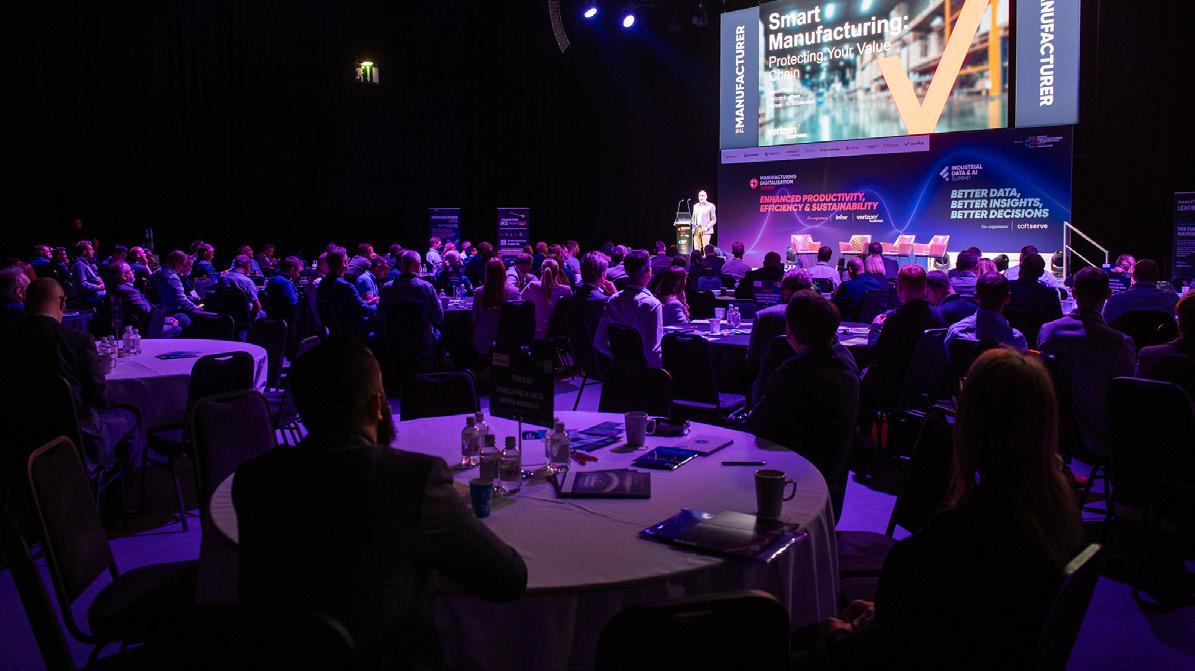

The Manufacturing Digitalisation Summit 2026 at the NEC on 3-4 June (Co-located with Smart Manufacturing Week) is more than a conference; it’s a platform for shaping the digital transformation of UK manufacturing. For more information go to: www.manufacturing-digitalisation.com







Nigel Paine Vice President Production, Carlsberg Britvic
Sofia Karlen
Smart Factory Product Management LeadGlobal Petcare, Mars
Razvan Popescu AI Strategy Lead, Johnson Matthey
Ioana Hera Head of Lean, RollsRoyce




Carl Milbourne Head of SASB Operations, Sertec
Laura McBrown Managing Director, G&B Electronic Designs



David Forrest Manager, AMIEO Digital Manufacturing, Nissan

Anna KimberTarbuck Operations Systems Developer, Smurfit Westrock
Edward Markey Manufacturing Intelligence & Visualisation Team Lead, Rolls-Royce
Amy Collender Senior Project Engineer, Renishaw
Sergey Konstantinov Automation Project Manager, Samworth Brothers
Claire Umney Managing Director, Alwayse
Kayode Adisa Site Director, Fine Line Bakeries

Catrin Brain, Head of Digital Transformation - Global Supply Chain, Castrol


19 Scan QR code to register your place at Manufacturing Digitalisation Summit




Pramod Wattegedara Senior Industrial Engineer, Plessey Semiconductors
Esther Cornell Managing Director, Cambridge Rapid
Harshit Sikarwar Digital Strategy & Capability Lead, Jaguar Land Rover
Andrea Wilson Former Managing Director, Hone-All Precision
Rob Smith Head of Manufacturing, SBD Apparel
Alistair Attrill Head of Product Lifecycle Management, Subsea Craft


“
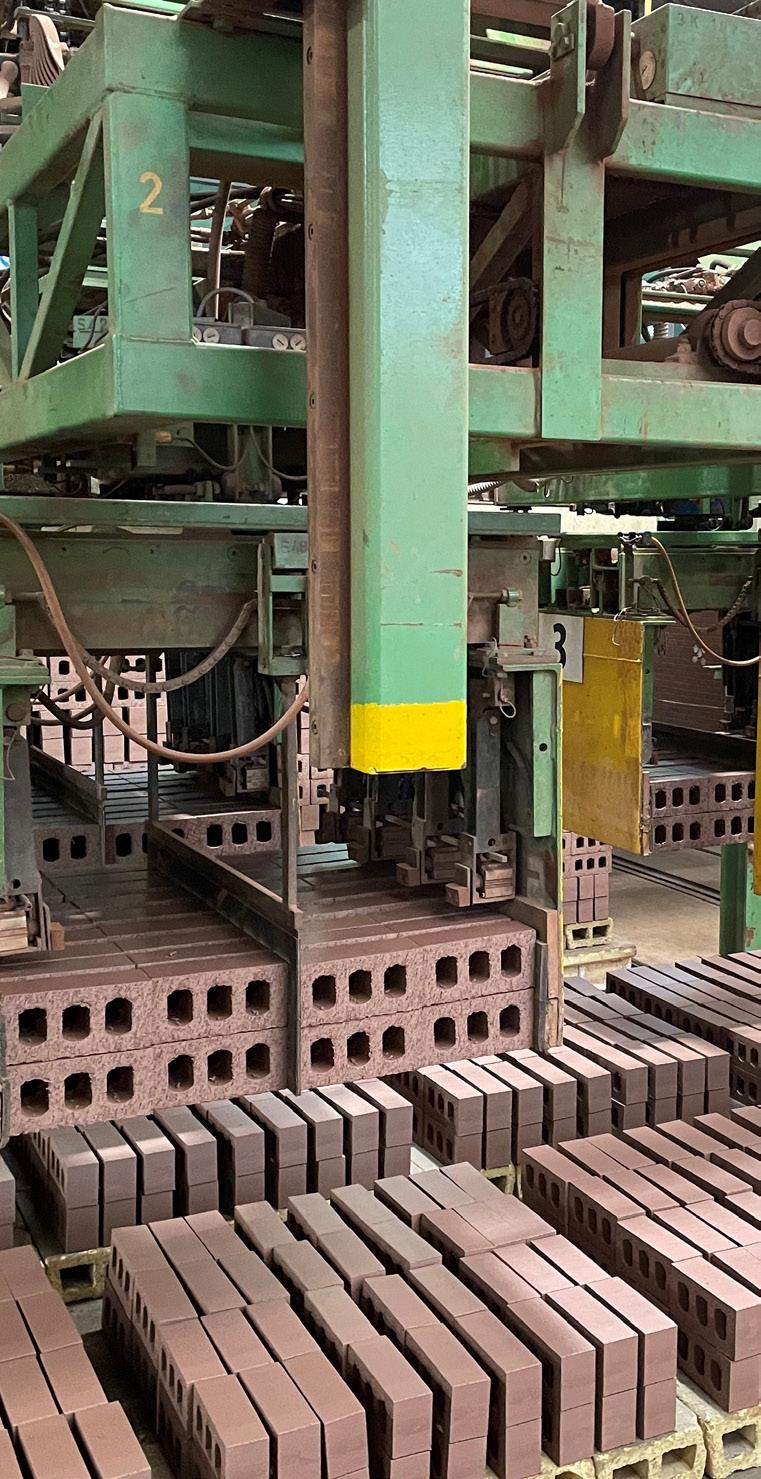
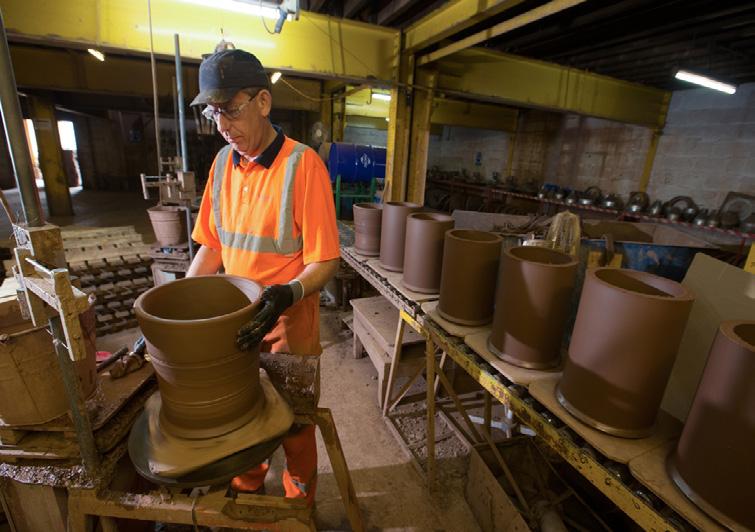
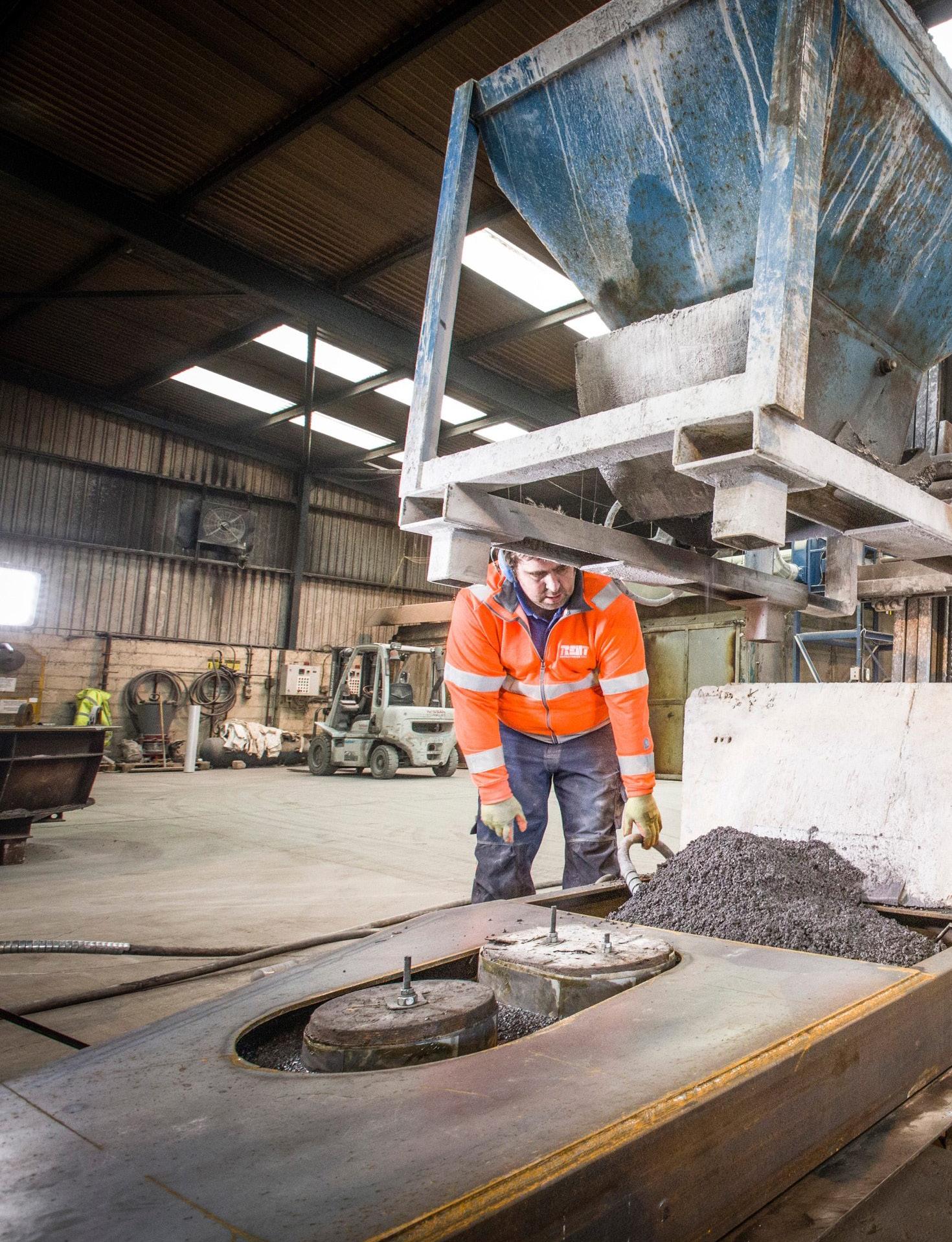
The UK ceramics industry - spanning everything from bricks and bathroomware to advanced components in jet engines and medical devices - finds itself at a critical crossroads, as rising energy costs and policy pressures threaten its future despite the essential role it plays in underpinning modern manufacturing. Rob Flello, Chief Executive of Ceramics UK, speaks to The Manufacturer
Contrary to popular belief, the influence of ceramics isn't confined to Stoke-on-Trent.
It extends across the UK, with over 150 ceramics sites dispersed throughout almost every region.
Ceramics UK, the trading name of the British Ceramic Confederation, has represented the sector for around 100 years. It covers 90% of the ceramics industry and acts as an umbrella organisation for a variety of sub-sectors including brick making, sanitary ware, healthcare, aerospace, defence, refractories crucial for steel and glass making, and of course, the pottery that many people associate with ceramics production.
“Say the word ‘ceramics’ and many people immediately think pottery,” said Rob. “However, the sector is far more nuanced than that. Glass, steel or cement manufacturing would be impossible without ceramic refractories, for example. The
turbine blades of Rolls-Royce jet engines are really complex structures, and can only be made with a ceramic core. There are also ceramic parts that form MRI and CT scanners, so some of our members are at the forefront of advanced manufacturing.”
In fact, the sector contributes over £2bn each year to the UK economy and produces items and components that are used in homes and businesses across the country and the world.
A turbulent landscape
Despite this varied and innovative sector, almost every area of ceramics is going through its own troubles, with Rob having no hesitation in describing the current situation as “grim”.
House building, for example, remains flat and with mortgage rates increasing, this sector is showing scant signs of recovery. “Any element of construction - whether that's bricks, roof tiles, pipes,
We have heard warm words from government on multiple occasions about the heritage, skill, innovation and critical position of ceramics within UK manufacturing, only to be excluded from vital energy support
Rob Flello, CEO, Ceramics UK
sanitary ware, floor and wall tiles – is in for another torrid year. Our best guess is that everyone will be hanging on for another 18 months or so before they're going to see any sign of life,” Rob warned.
Ceramics UK’s refractory makers predominantly supply into the steel and glass industries. Steel’s woes have been well documented with tariffs and business rates impacting on the sector’s competitiveness. Likewise, glass has been hit hard by government policy around the Extended Producer Responsibility (EPR) tax.
Businesses with over £1m turnover and 25+ tonnes of packaging must pay fees based on the amount and type of packaging
supplied, aiming to reduce waste and promote recycling.
As this tax is fundamentally based on weight, it has proved extremely punitive for glass manufacturers since coming into full effect at the end of last year. “Any refractory maker that supplies into the UK glass or steel industry has experienced a knock-on effect of these industries’ troubles. Thankfully, a lot of our makers export but in terms of the domestic market, glass and steel have taken a battering, and businesses exposed purely to the UK market are having a horrible time.”
The situation in UK hospitality is looking just as precarious and so any Ceramics UK members providing tableware into that sector are also struggling. As are higher end giftware manufacturers, illustrated by the news of Denby - a 217 year-old pottery firm - calling in the administrators in March citing reduced demand, escalating employment costs and soaring energy bills.
“Some of our advanced manufacturers, particularly in the defence sector, are doing quite well at the moment. There’s a high volume of ceramics in IT and medicine and they are also bucking the trend, but that’s the exception rather than the rule. Unfortunately, those success stories constitute a very small percentage of our membership,” Rob added.
The cause of the sector’s problems Unsurprisingly, energy costs are top of the list of concerns of Ceramics UK’s members.
The sector’s gas-intensive nature exposes it to broader energy volatility, particularly in light of ongoing global events. In the short-term, many manufacturers are hedged or have long-term energy contracts. However, despite that apparent position of strength, few businesses have purchased their gas fully.
Many have only purchased 80-90% in advance, and so are still exposed on the remaining 10-20%. “This is a definite worry,” Rob added. "Many of our members are even making decisions around whether to reduce production so in turn reducing their gas usage, or indeed, selling gas back to the energy company.”
Rob added that the situation is not quite as dire as it was at the start of the Ukraine war, when gas rose to £8.00 per therm. But at around £1.40 a therm, it is still a far cry from the ~30p per therm prior to the Ukraine conflict.
“ My worry was that the Industrial Strategy would be a damp squib. And sure enough, it's done absolutely nothing for us. It’s a bit of paper that gave a photo opportunity to the government, and not much more
Rob Flello, CEO, Ceramics UK
Carbon taxes are also causing a huge problem and a real disincentive to businesses wanting to grow. Rob added: “Following COVID, one of our members was looking to double their production. However, after doing the numbers they found they would be paying an extra £1m in carbon tax if they did so - it just wasn't economically viable. That company's now closed and gone offshore. So it is a real drag on the UK economy.
“And obviously, the UK has the most expensive electricity in the world, and a huge part of that is made up of government levies, so firing products using electricity comes with a huge amount of extra cost,” added Rob. “And, it's going to get worse. I recently heard a government minister say that in three or four years’ time, they expect the price of electricity to fall.
“That’s really interesting, because we've just finished an allocation round where the government have given very expensive contracts for around the next 15 years. So quite how they expect the prices to fall, I don't know - the two just don't align.”
you look at the graphs of the Committee on Climate Change over the last 40 years, as UK emissions have fallen off a cliff, global emissions have risen. That’s because we simply swap good British manufacturing for high-carbon imports.”
In addition, Ceramics UK is also pushing for government to extend the British Industry Supercharger. A support package designed to reduce electricity costs for energy-intensive industries, the scheme currently only applies to around one in ten of Ceramics UK members.
“As so few of our members qualify for the scheme, the vast majority of businesses will continue to face the highest industrial electricity prices in the G7 and globally,” Rob added.
BELOW:
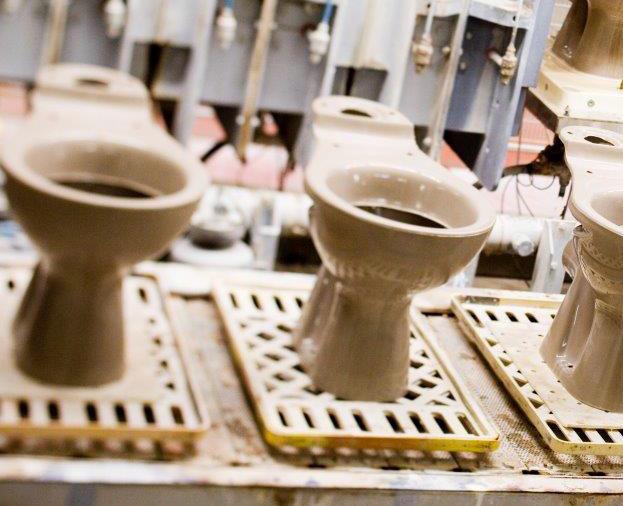
Despite being a varied and innovative sector, almost every area of ceramics is going through its own troubles
To ease the pain on Ceramics UK members Rob suggested that it would be ideal if the government scrapped the UK Emissions Trading Scheme. However, in that unlikely event, a pause would be hugely beneficial, stating that it would give the industry much needed breathing space to grow and invest.
He claimed the scheme will have zero impact on the global carbon position. “If
“We need the government to reconsider its plans, and work with us to back one of the UK’s most enduring and strategically important manufacturing industries. Indeed, the Chief Executive of Denby was quoted publicly as saying that if they'd been in the Supercharger scheme, it may well have been the difference between going into administration.”
Scheme stress
To further assist businesses with skyrocketing energy costs, the government – as part of the Industrial Strategy – has also introduced the British Industrial Competitiveness Scheme (BICS). However, Rob’s perception of this additional initiative is little more than a consolation prize for those businesses who don’t qualify for the Supercharger.
Not only that, but under current criteria, businesses will be competing for a relatively small piece of the BICS pie. There will be gateways (and gatekeepers) through which manufacturers will need to pass to gain access to any BICS funding, and it’s Rob’s belief that, due to the scheme being born out of the Industrial Strategy –which leans heavily towards sectors such as automotive and aerospace – it will actually be something of a closed shop to Ceramics UK members.
“There's going to be multiple barriers to entry under BICS. And once businesses are through the door, any funding will be divided across thousands of businesses, so our members will be fighting for scraps,” he warned.
In mid-April the government announced its intension to expand BICS to include an extra 3,000 businesses. While on the
surface this appeared a positive move, Rob claimed that the scheme still broadly ignores the ceramics sector, further ramping up pressure on association members.
Despite support from certain MPs who have fought fiercely on behalf of the ceramics industry in the House of Commons, the sector is in desperate need of action, as Rob added: “We have heard warm words from government on multiple occasions about the heritage, skill, innovation and critical position of ceramics within UK manufacturing, only to be, once again, excluded from vital energy support.
“At the moment, our industry is being ignored and, while the Secretary of State for Business and Trade, Peter Kyle, has committed to speak to the sector specifically, I cannot stress enough how urgent it is that we see swift intervention on energy bills for our members.
“Ceramics UK is calling for an immediate reconsideration of the BICS criteria, where it is particularly baffling that certain ceramic goods are excluded from eligibility while comparable products from other sectors are being included.”
This is part of the reason why Ceramics UK is throwing its weight behind getting its members included within the Supercharger instead. However, the route into that scheme has also been barred thus far, and ministerial meetings have failed to yield results.
Rob added: “We had a recent meeting with the minister, but unfortunately he trotted out all the reasons why they can't bring us into the scheme – which they could do at the stroke of a pen. None of those reasons hold any water for me.”
As such, Ceramics UK is looking to up the ante and to raise the profile of the sector to make government take notice. There has been a consultation around broadening the Supercharger, however, Rob is less than confident – based on previous experience – that any action will be taken for at least 18 months. Not an encouraging timescale when Ceramics UK members need help now.
“BICS doesn’t even start until 2027, at the absolute earliest. The Supercharger, which has been running for a number of years, has just been increased, going from 60% to 90% relief, but that’s not much good when only ten per cent of our membership qualify.”
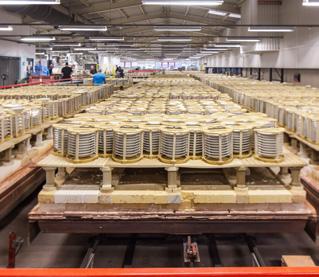
RIGHT: Without ceramic refractories, manufacturing of steel, cement and glass would be impossible
The Industrial Strategy – falling short Rob was also less than complimentary of the government’s Industrial Strategy, with the announcement thus far doing little or nothing for the benefit of the association’s members.
The strategy was released to much fanfare with regular mentions of the previous government’s lack of support for manufacturing, but Rob lamented that his main fears prior to the strategy’s launch have been realised, with a plethora of opportunities missed.
“My worry was that the strategy would be a damp squib. And sure enough, it's done absolutely nothing for us. The government could have created a strategy that takes a proper look at British industry, asks what it needs and how they can help.
“With the Supercharger, for example, government could easily bring our industry into that scheme. But instead, they are coming up with all sorts of reasons why they can't. So for me, the Industrial Strategy is a bit of paper that gave a photo opportunity to the government, and not much more.”
The Industrial Strategy speaks at length about advanced manufacturing sectors such as automotive and defence, while ceramics is an area of manufacturing that often gets swept under the carpet. And part of the problem is the perception of the industry. For a long time, the industry was perceived as being just about pottery gifts and tableware.
“ The truth is that many of our members are just hanging on right now… hoping they’re still in business in 12–18 months’ time
Rob Flello, CEO, Ceramics UK
Despite this, Rob has felt for some time, that the sector has punched above its weight. However, as he explained, there's a difference between being listened to - getting the wants and needs of the sector acknowledged - and actual action being taken.
“We’re on the government’s radar, they’re talking and listening to us, but at the moment the action piece is missing. We’ve put a lot of effort into explaining that there can't be a defence, medical or steel sector without us.
“And in terms of size, the number of people employed in this country making virgin steel, for example, is less than a tenth of the number of people that work in the UK ceramics industry. And yet, in the past, government has recalled parliament to sit over a weekend to take action to preserve the UK virgin steel sector, but we get pushed down the line.
“It's very frustrating, but we keep making the case, and we’re getting heard, which is a start. We're at least in the door and sat at the table.”
What’s next for the ceramics sector?
All things considered, it’s a challenging time right now for the nation’s ceramics manufacturers, and Rob described the short-term prospects for the sector as something of a white-knuckle ride.
“The truth is that many of our members are just hanging on right now; trying to get through this period and hoping they’re still in business in 12-18 months’ time,” he added.
“The long-term picture will depend on when and if government act. If they get our members into the Supercharger, and stop punishing the industry, then we’ve got a really
“ Almost every area of ceramics is going through its own troubles… the current situation is ‘grim’
Rob Flello, CEO, Ceramics UK
LEFT
good opportunity that all manufacturing will grow and be in a good place. If government carry on the path they're on at the moment, I think we're all in trouble.”
It’s clear that the UK ceramics industry stands as a vital yet under-recognised pillar of modern manufacturing, deeply embedded in supply chains ranging from construction to advanced technology.
However, escalating energy costs, uneven policy frameworks and limited government support have placed the sector under severe strain, leaving many businesses in a precarious position.
While there remain pockets of resilience and long-term potential, the industry’s future will ultimately hinge on swift and meaningful policy intervention. Without it, the risk is not just the decline of ceramics manufacturing, but the erosion of wider UK industrial capability that depends upon it. In terms of what government can do to help it’s clearly a case of actions speaking louder than words. l
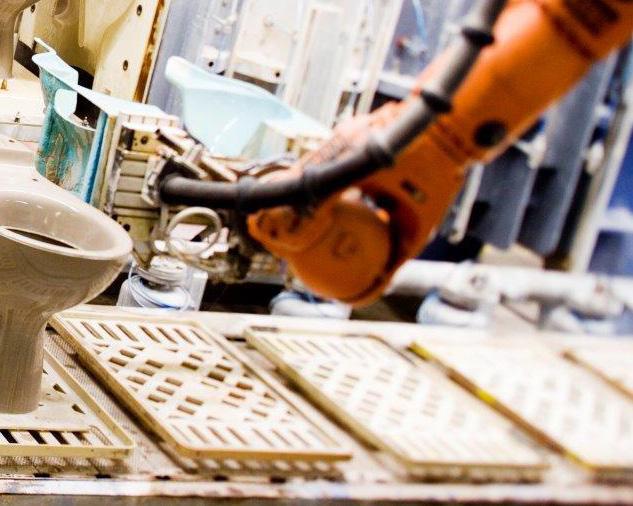
& BELOW: Ceramics contributes over £2bn each year to the UK economy and produces items and components that are used in homes and businesses across the country and the world
ABOVE: Unsurprisingly, energy costs are top of the list of concerns of Ceramics UK’s members
• The ceramics industry is far more critical than commonly perceived: It underpins essential sectors like steel, glass, aerospace, defence and healthcare - not just traditional pottery - making it a foundational part of UK manufacturing
• The sector is facing widespread and severe economic pressure: From construction and hospitality to steel and glass supply chains, most areas are struggling, with many businesses simply trying to survive the next 12–18 months
• Energy costs are the single biggest threat: High gas and electricity prices are forcing companies to cut production, absorb losses or even sell unused energy - undermining competitiveness and growth
• Government policy is seen as a major obstacle rather than support: Carbon taxes, limited access to relief schemes like the Supercharger, and ineffective alternatives such as BICS are discouraging investment and pushing firms offshore
• The industry’s future depends on urgent policy intervention: Without swift government action to reduce costs and level the playing field, the UK risks losing not just ceramics manufacturing, but the wider industries that rely on it
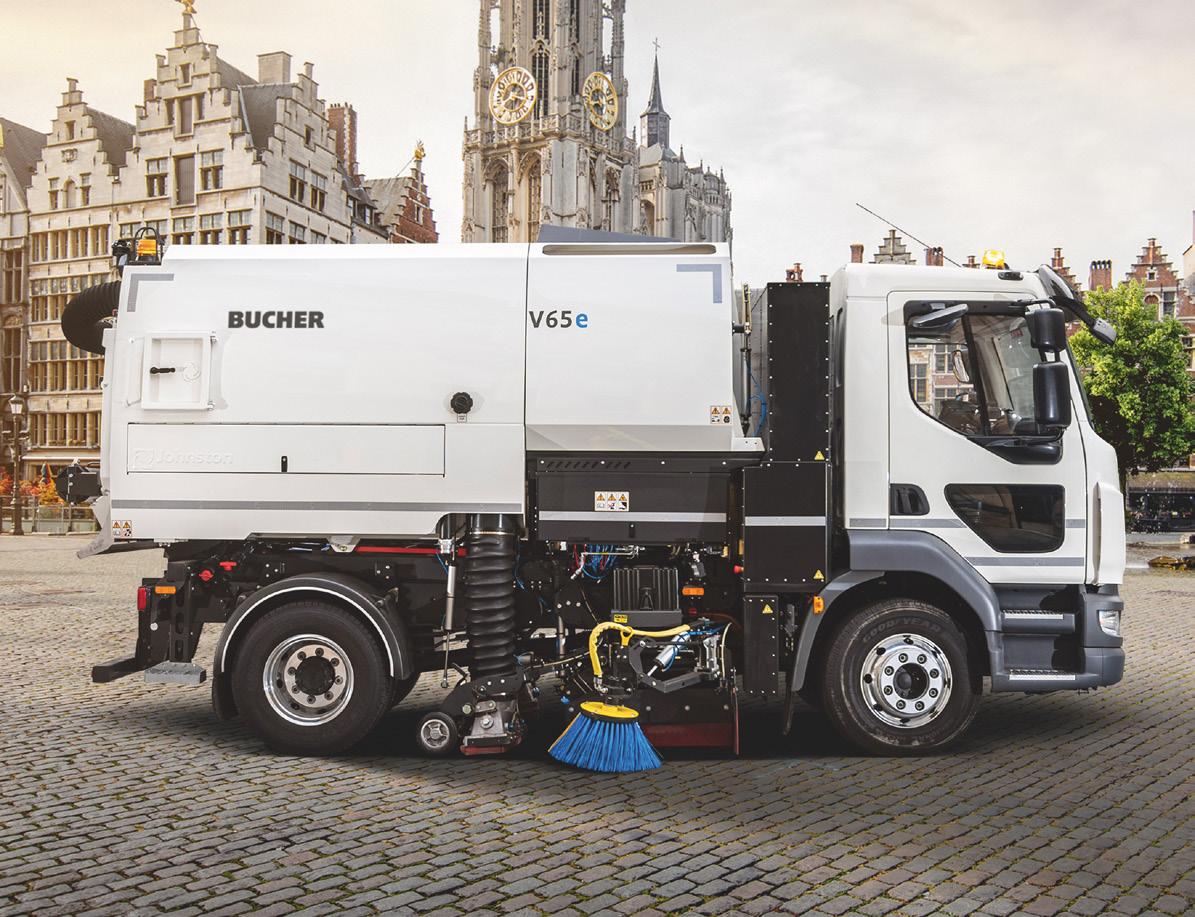
Bucher
Municipal’s Dorking
site won a The Manufacturer MX Award in 2025 for the company’s dedication to product innovation and design. On our visit, we caught up with Gareth Knopp, Innovation and Simulation Manager, TMS, to discuss all things operations and innovation
From snow covered mountains to bustling city streets, Bucher Municipal manufactures a wide range of vehicles worldwide, with its UK operations in Dorking focusing on truck-mounted road sweepers.
However, the company is doing more than just building hardware; it is currently redefining the sector by shifting from traditional manufacturing to a digital-first approach.
By embedding artificial intelligence, machine learning and advanced simulation into its development cycles,
Bucher Municipal is not only optimising vehicle performance but also fostering a culture of innovation.
The company’s evolution has seen a shift away from diesel-only solutions toward a mix of alternative energy sources, including electric vehicles (EVs) and hydrogen-powered systems. Alongside this, Bucher is integrating smart technologies such as advanced driver assistance systems (ADAS), automation and AI-powered ‘Smart Assist’ tools that aim to improve operator experience and increase productivity.
Market trends and USP
Historically, Bucher Municipal has always worked to create the next best thing and improve how it is powered. Yet now, the trends are leaning towards optimisation through data-driven decision making; to be able to make well-informed choices about how to use and deploy equipment, as well as efficiencies of the equipment itself.
The legendary Henry Ford’s assessment of the market following the invention of the automobile was that: “If I had asked people what they wanted, they would
have said faster horses.” And Bucher feel it is at a very similar stage in its own journey.
“Some of the projects we're developing now could generate a foundational shift in the world of street cleanliness,” said Gareth Knopp, Innovation and Simulation Manager, TMS, Bucher Municipal.
The company’s USP is its ability. “We’ve got the recipe right and can balance customisation to a level that suits us. It allows us to maintain economies of scale while also enabling the customisation that we can deliver to our customers,” he said.
The end-to-end chain at Bucher Municipal is full of people with great ideas around how to make things work.
“Being able and innovative is what sets us apart,” Gareth added.
However, with innovation also comes the requirement to protect what is yours. “While we are looking at new technology and thinking about what comes next, we’re also protecting our intellectual property. We have multiple patent families from fan design and steering systems to automation, machine learning and artificial intelligence,” he said.
The forefront of innovation
“Innovation isn’t a department, it’s a culture. And ensuring that we’ve got the right environment which fosters the ability to innovate is vital,” explained Gareth.
Bucher Municipal is using tools such as AI and simulation to allow the company to de-risk certain areas of product creation and allow for development and innovation to grow. Through this, it is able to fulfill the needs of its customers that other businesses can’t.
In turn, this sets them apart. “We are shortening development cycles to improve efficiency and lower the total cost of ownership. We are doing this by employing new technologies that can meet those needs while at the same time, supporting our sustainability and ESG goals,” he said.
As well as new products, Bucher Municipal is also looking at the technology landscape and how that is
constantly evolving. “This is all brought together by having experts in a variety of different cross-functional areas; and that involves product management, sales, marketing and engineering being able to come together and understand the ideas we’re creating and how they can be built into a new product process,” said Gareth.
For Bucher it’s simple; a business can’t become a market leader if it rests on its laurels. Although the business relies on product innovation and thinking ahead of the market, it requires a great team to bring that to life. “It’s critical that we foster an engaged, productive and happy workforce. We’re always thinking about how we can make the organisation a good place to work and support our people and their innovation,” he added.
Digital transformation
Like many manufacturers, it’s an exciting time when it comes to digital transformation, with the rapid rate that technology is growing and influencing manufacturing operations and processes.
“Around seven years ago, we began looking at the different tools that we could potentially use within the business, from AI, machine learning and computer vision, to optimising and automating the control systems of the sweeper. We currently have an ongoing project involving those elements as well as driving our own efficiencies with ERP systems and integrating those into our manufacturing processes,” said Gareth. Drive for net zero

“
Part of our core mantra is to be able to do more with less
Gareth Knopp, Innovation and Simulation Manager, TMS, Bucher Municipal
As you’d expect from a company that specialises in cleaning the environment around us, sustainability is at the heart of every operation at Bucher Municipal and its unique market position allows the company to assist its customers and those in its supply chain on their own journeys.
A prime example is how the organisation is striving to optimise the physics of the road sweeper so that it uses the least amount of energy possible to perform its various cleaning functions.
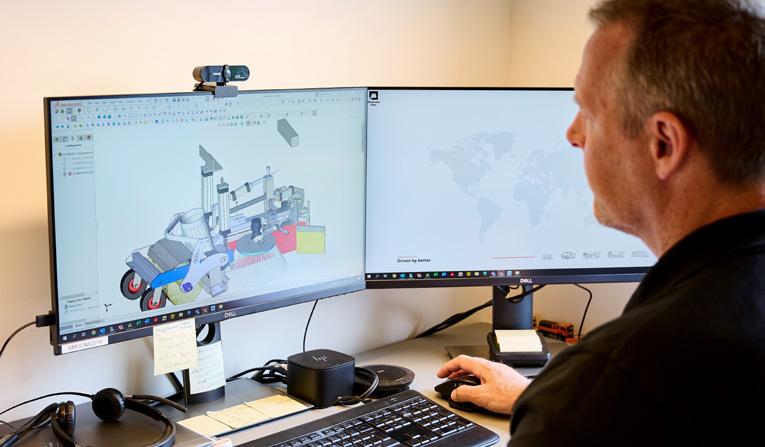
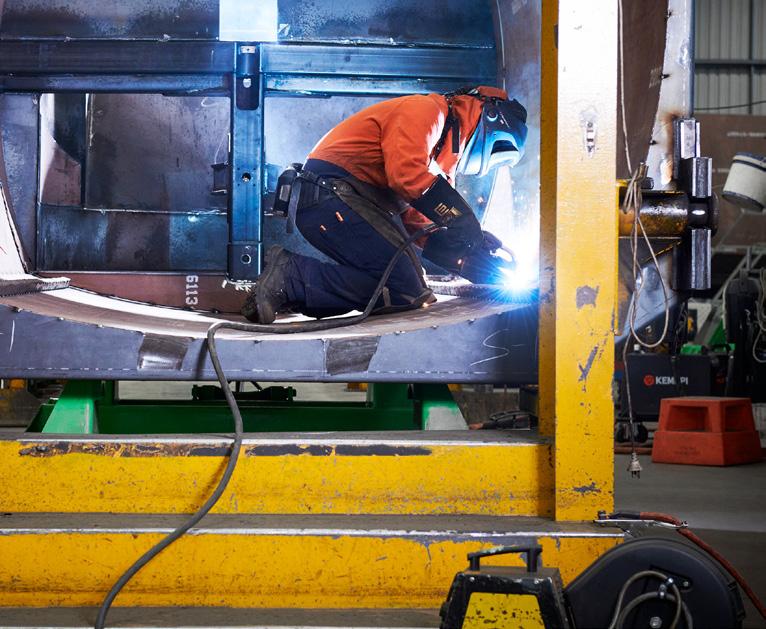
“28
The beauty of a road sweeper is that it's also influencing the environment for society as wellmaking streets cleaner and improving air quality
Gareth
Knopp,
Innovation and Simulation Manager, TMS,
Bucher Municipal
And now, with the advancements of AI and machine learning, it is also working on optimising the control of vehicles for sustainability.
“The beauty of a road sweeper is that it also influences the environment for society as well; making streets cleaner and improving air quality,” said Gareth.
A major issue for many local councils is the difficulty of trying to meet air quality targets. Bucher Municipal is assisting in this regard through better optimisation
BUCHER MUNICIPAL is expanding its operations with a multi-phase redevelopment of its Dorking site. The business will be integrating a new 3.1-acre manufacturing plant with the recently acquired Carville Plastics site.
This investment aims to modernise facilities, increase production capacity and improve sustainability.
By consolidating its footprint, Bucher Municipal is future-proofing its global manufacturing leadership while enhancing the working environment for its 480 local employees.
efficiency and lower environmental impact. Similar innovations are seen in winter maintenance, where sensors measure road temperature and automatically adjust salt distribution, reducing waste and environmental damage.
Developing skills and retaining good talent are important to the industry and Bucher Municipal is no different.
The company’s Dorking site has an undergraduate programme where it works closely with local universities to inform students about the business and encourage them to look at careers within the industry. “We’ve currently got graduates across all areas of the organisation, in manufacturing, production, engineering, design and all the AI-related activities we are working on,” said Gareth.
Every business right now needs to ensure that it is investing in people who have the right skills to be able to fulfill the roles that are needed at this crucial time for industry. “It is a fundamental part of everything we do and contributes to the sustainability of the organisation,” he added.
Looking to the future, Gareth still believes the mega trends of today such as data-driven decisions, smart cities and autonimisation of vehicles will continue. “From there, our ethos will be around creating vehicles with even more efficient fans and power trains, so they can almost control and optimise themselves, providing the user with insight into the ways they should or could be used,” he said.
This will ultimately mean that customers will be able to deploy sweepers with improved utilisation and effectiveness, having an even greater impact on street cleanliness and air quality.
of its vehicles, ensuring they do the right job at the right time. “It’s part of our core mantra; to do more with less - achieving a cleaner environment with less energy, cost and environmental impact,” said Gareth.
Indeed, rather than traditional fixed schedules for street cleaning, in the future Bucher envisions systems that measure cleanliness in real-time and deploy resources only when needed. This approach can reduce costs, improve
There will also be a growing focus on the workplace environment for the operators themselves. The ADAS (Advanced Driver Assistance Systems) Bucher is delivering are improving the conditions within the cab area to reduce the cognitive load on the drivers.
“Anyone would agree that driving a 16-tonne truck around London is a stressful job, all while trying to do it safely in an environment that includes pedestrians and other road users. Therefore, it’s vital for us to be able to make decisions on behalf of the driver to allow for an overall safer operation with repeatable cleanliness,” said Gareth. l
Back in November 2025, Bucher Municipal won The Manufacturer MX Award in the Product Innovation & Design category. During our visit, we asked Gareth about the win.
In your awards submission you discussed a ‘world-first project’ at Bucher Municipal. Can you talk a bit more about that?
GK: The use of hydrogen as a fuel is very exciting yet challenging. Hydrogen comes with a lot of infrastructure issues as well as environmental concerns around where you can fill up and what type of hydrogen is being used i.e., preferably green rather than blue or grey. Not only that but hydrogen is a costly fuel.
As of now, we’re working with JCB, a company that’s developed a hydrogenburning engine based on its diesel equivalent, which has been converted to a spark ignition instead of a compression ignition. The great thing about this project is that fundamentally, it is still an engine. That means our technicians and engineers can still work with something they are familiar with. For us, it’s not just about getting that technology to market but also, being able to support and maintain it once it’s out there.
So far, we’ve built a technology demonstrator which includes a hydrogen engine within one of our vehicles which runs the sweeping gear. It’s currently in the testing phase; assessing the longevity of hydrogen as a fuel and how that could work once it’s been deployed on the roads and in our cities.
How did it feel to win the award?
On the night, sitting and listening to all the names in our particular category, and then hearing ours called as the winner was great.
Catch Gareth's keynote at Smart Manufacturing Week on Wed 3 at 10.30 in the Product Innovation & Design Theatre, and see Bucher's exhibit in the Best of British Showcase.
Stand C184
For us, it really meant something and was so rewarding, especially with the award coming from The Manufacturer, and the indepth process behind the programme.
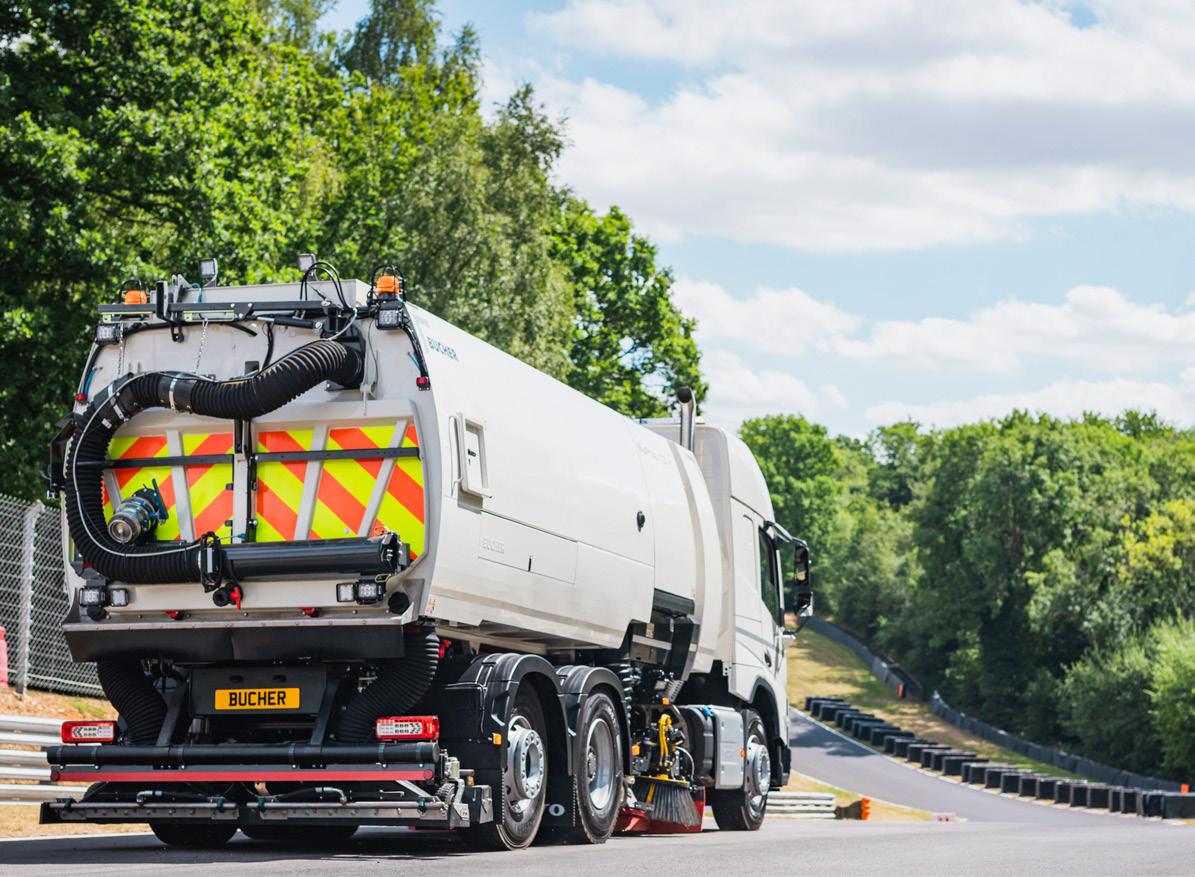
What do you think made you stand out?
Innovation is baked into our culture. The enthusiasm that everyone has for our products, the company and the people was shown to the judges. They asked us such insightful questions that made us dig into the details and I believe it was how we answered those that set us apart.

Entries for the 2026 TMMX awards are now open. Visit: themanufacturermxawards.com
From surging AI adoption to crippling energy costs and a deepening skills crisis, the UK’s manufacturing sector is at a pivotal moment. In this wideranging interview, Make UK’s Chief Executive Stephen Phipson, sets out the opportunities driving growth, and the structural challenges that threaten to hold the industry back
The UK manufacturing sector is undergoing rapid transformation, shaped by digital innovation, geopolitical pressures and shifting economic realities.
Fresh from one of its largest-ever conferences, Chief Executive of Make UK, Stephen Phipson, offers a front-line view of an industry balancing optimism around productivity gains - particularly through AI and digitalisation - with mounting concern over energy prices, workforce shortages and policy uncertainty.
Opportunities for manufacturing exist but can the sector scale its strengths quickly enough to stay globally competitive? Stephen picks up the story.
What were the key takeaways from this year’s Make UK conference?
SP: We had around 800 manufacturers in attendance, so it offered a great opportunity for people to network and discuss the latest trends in the sector, where the growth opportunities are, and what’s being done to ensure manufacturers are taking advantage.
We ran a series of workshops on the key issues of the day - with skills, AI and energy management taking centre stage. We also had a variety of inspiring speakers and representatives from the world of politics. It’s clear that people are really hungry for new ideas in the sector, and the conference enabled greater discussion around those.
What are the key trends shaping the sector?
It won’t come as a surprise that AI is getting a lot of attention. Within manufacturing, we’re currently seeing three applications of AI implementation. One is around automating the back office. While not a unique use case for manufacturing, we’re seeing a lot of organisations implementing AI across their financial systems, payroll etc, and extracting cost out of the business.
AI deployment on the shop floor is becoming very interesting. We’re seeing larger companies using AI to predict when failures might happen, conducting interventions quickly, improving productivity and generally linking their production and monitoring systems together.
And actually, many of the companies that have invested in this deployment have increased employment as a result. Contrary to the fears around AI deployment, this actually makes sense. By improving productivity in a factory, all
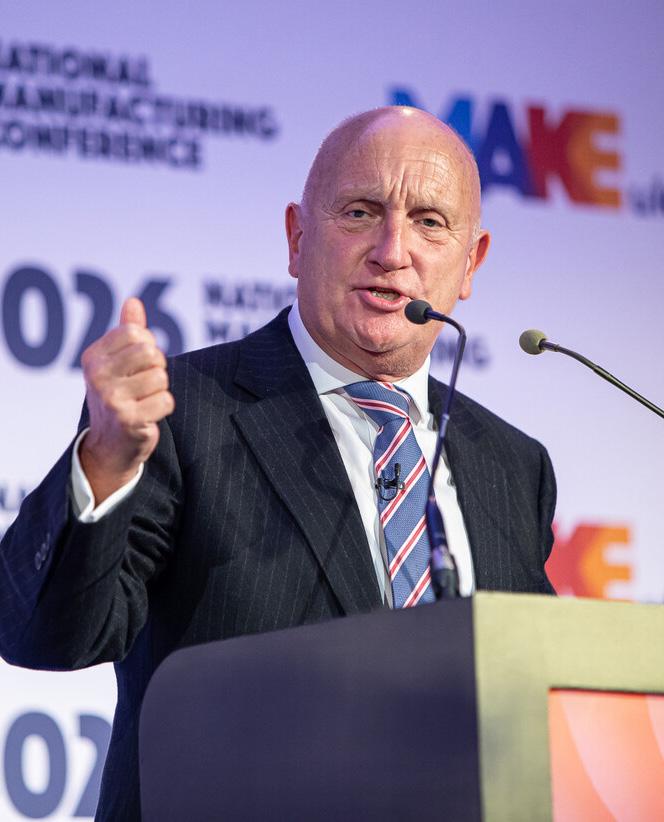
of
a sudden that business will need more people loading materials, more suppliers and more data analysts.
The third area, which is new for manufacturing, is the use of AI in compliance. In heavily regulated industries such as commercial aerospace or pharmaceuticals, AI can be used to help shorten compliance cycles. When certifying a new drug or piece of aircraft equipment, can the regulators be convinced that using AI can speed up the process? And a lot of manufacturers are making investments to find out.
And of course, SMEs are looking at what larger companies are doing and asking how similar deployments could be rolledout in their own production processes. Promoting programmes like Made Smarter,
I’ve been doing this job for eight years and I’ve had eight business secretaries… every time a new one comes in, there’s a sense of starting again from first principles
Stephen Phipson, Chief Executive, Make UK “
Stephen Phipson, Chief Executive, Make UK “
which help SMEs to get on the adoption journey, was also a key theme of the conference.
third dimension around energy, and that's been a theme this year, driven by the current market.
By improving productivity in a factory, businesses will then need more people… Contrary to the fears around AI deployment, this actually makes sense
For these deployments to work fully, they need to scale. And very often, larger companies have an enormous infrastructure of SMEs in their supply chains. As such it is in their interests to help them on that journey to make the whole system more productive. On the flip side, the agility and innovation that comes from the SME community often sees a push from the opposite direction.
There’s no doubt that energy efficiency is driving digitisation within SMEs. Energy costs are huge in the UK, but if an SME manufacturer adopts a digital process, the results often show a ~45% reduction in energy consumption. While digital technology deployment is perennially about productivity and competitiveness, we're now seeing a
And of course, if you look at the stats from the National Cyber Security Centre, manufacturing is now one of the most targeted sectors for cyber crime. The issue for the sector is that most cyber security systems are designed to protect the front end of the business - payroll systems, accounting software, email infrastructure etc.
By digitising production systems, internet connected devices all of sudden have a presence on the factory floor. However, often they are installed by production engineers rather than IT specialists. Some surveys suggest that connected devices on manufacturing production lines are often still set to default passwords, as it’s an environment that has not traditionally needed a
mindset around cyber protection.
And this is a pattern being exploited by the cyber criminals. A lot of attacks within manufacturing are actually targeting IP from production processes, rather than the front end of the business.
Are current industrial energy prices a temporary hurdle, or is there a permanent risk of de-industrialisation for smaller firms?
The UK has the highest industrial energy costs in the world. Part of the problem is that the sector is not regulated, so in April, around a third of businesses had to renegotiate their energy contracts.
With the Iran crisis ongoing, some firms were quoted three to four times last year’s energy costs – which were already sky-high.
The UK has high wholesale energy costs anyway. Then layered on top of that is a number of different levies, such as the
LEFT: The UK currently has around 50,000 vacancies for vocational skills such as welders, tool makers and service technicians
Climate Change Levy (CCL). The upshot is that the cost of our wind farms and net zero production etc is paid for by industry, whereas in most other countries, this is covered by general taxation.
Of course, government are loath to make that shift. They don’t want to cover those costs by increasing taxes for the general public, so they lay it all on industrial energy.
That's why we’ve ended up with layers of levies piled on top of the already high wholesale cost, which adds up to UK industrial energy being twice the price of Germany and four times that of the US. In some areas of manufacturing, where energy is a big proportion of cost – glass, cement, steel for example - this situation is making firms very uncompetitive. So, it’s a big problem and one we’re constantly talking to government about.
Of course they have tried to aid businesses in this regard by introducing initiatives such as the British Industry Supercharger, which reduces energy costs by removing some of those aforementioned levies. However, the reality is that the Supercharger has a very limited definition of an energy intensive business, and therefore, only applies to around 450 of the UK’s 150,000 manufacturers, so most businesses are currently missing out.
To get around this the government has also introduced the British Industrial Competitiveness Scheme (BICS), as part of the Industrial Strategy. It doesn't go quite as far as the Supercharger, but it will apply to around 10,000 British manufacturershaving been expanded in April - and again, removes some of those levies, making the cost of energy a little more comparable to the rest of Europe.
However, BICS is also not without its problems, foremost of which is the fact that the government is not planning to bring it into effect until 2027. That’s not great for a lot of those smaller companies that are struggling to survive against the current energy costs in the here and now.
Every day, I get emails from members who are struggling. So, our big push is immediate delivery and the need to bring those proposed plans forward.
What were the key findings of the recent Shape of British Industry Report?
Running alongside the issue of energy costs, the report revealed that skills is the biggest challenge for manufacturers. We have the best part of 50,000 vacancies in vocational skills - welders, tool makers and service technicians. These skills would typically be nurtured through running successful apprenticeships. However, the apprentice programme in the UK is failing, and our starts have been going down every year since The Apprenticeship Levy was introduced.
The government has made tweaks to the levy, but in truth these have been nothing like the wholesale reform it requires to really push home the important role of these specific skills.
They’ve created technical excellence colleges but in truth, the changes are little more than rebadged versions of our further education colleges. The whole definition of apprenticeships has become too wide and we need a proper apprenticeship focus on vocational skills for manufacturing.
Apprenticeships are now available in fields such as estate agency. As such, the overall government position is that apprenticeships have gone up enormously; the issue is that they're in areas that don’t cover the core skills that we need.
The landscape of manufacturing constitutes around 800 large companies and around 150,000 SMEs, so the challenge in relation to skills provision for most of those businesses is capital. To train apprentices in the manufacturing skills we require, any facility needs lathes, milling machines, welding bays and a variety of costly equipment.
For an FE college, it's much easier to deliver an apprenticeship that doesn't need that capital investment. This has seen the provision of engineering apprenticeships within FE colleges going down, as those facilities have focused on apprenticeships in other, less capitalintensive areas.
Of course, there's always exceptions. The larger manufacturers have invested enormous amounts in skills and many have incredible training academies of their own, in recognition of the failings of the current external system and the existential threat the skills issue represents going forward.
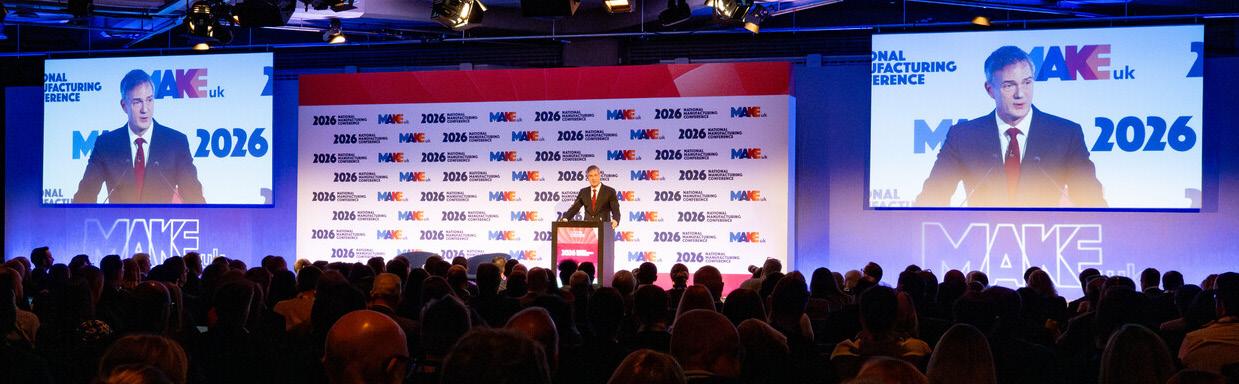
“We’ve ended up with layers of levies piled on top of already high wholesale energy costs, which adds up to UK industrial energy being twice the price of Germany and four times that of the US
Stephen Phipson, Chief Executive, Make UK
Some FE colleges enjoy backing from large manufacturing businesses situated nearby, who recognise the need to invest in training to meet their future needs. If those larger manufacturers don’t have training academies of their own, they will often sponsor the local FE college to do it for them.
That’s great for the larger players but for many SMEs, this is simply not an option. They don’t have the resources to fund and kit out their own training facilities and often, we find that local FE colleges have ceased running engineering apprenticeships due to cost.
That means there is no pipeline of talent feeding through into the manufacturing SMEs in the same area.
The Apprenticeship Levy can’t help as it doesn't allow manufactures any capital spend, so we find that many SMEs that want to take on an apprentice very often have no avenue in which to do so.
To make matters worse the skills system is incredibly complicated. If you're an SME, it's very hard to work through all the different new standards, how you get levy money, etc. So, we need to make the process easier, and to work on reform of the further education system to be able to provide engineering apprenticeships properly.
Again, the government are certainly aware of the problem but still haven't pragmatically done anything about it. It's laid out in the Industrial Strategy, of course, but we need to see reform. The average age of someone working in manufacturing in the UK is 52. So, 20% of the workforce is set to retire over the next decade or so.
It’s easy to say that technology will fill the gap. But AI can’t do everything; neither can automation. We’re going to need production engineers, service technicians and welders. There's an amazing amount of technology that's being developed and manufactured in the UK, but if we’re not careful we won’t have anyone left to carry that on.
Another interesting finding from the report is that it’s clear manufacturers are willing to invest, but they need long-term clarity. The average investment cycles in manufacturing are around seven years,
so it’s key that the policy environment is stable.
When policy, government and people change it is extremely challenging. And historically, it’s been a big problem; I've been doing this job for eight years and I've had eight business secretaries. And every time a new one comes in there is a sense of starting again from first principles. Discussions have to happen all over again about why manufacturing is important.
If you look at the stats, the sector only accounts for around ten per cent of GDP, so from the government’s perspective, it’s perhaps easy to consider manufacturing as a lesser priority. However, manufacturing underpins so many other elements of our society, and we’ve certainly had to repeat that message more than once.
We've got the Industrial Strategy, which is a great step forward, and I would go as far as to say the Steel Strategy saved that particular industry from terminal decline in this country. So this government have been good at strategy, we just need them to quickly move forward on getting some of those implemented and delivered.
Can you explain more about Make UK Defence and Lloyds’ new practical guide for how SMEs can break into the defence sector?
Most of my career has been in the defence manufacturing sector. The UK has 270,000 people employed in defence and we're the second largest exporter of defence equipment in the world, after
the US. We've got some world class technologies, true pockets of excellence and are really leading the way in certain areas.
The challenge the defence sector is currently facing is that we’ve traditionally relied on the larger platforms - fast jets, aircraft carriers, etc. However, what we've seen in Ukraine, and what we're now seeing in Iran, is a very agile, low-cost form of warfare.
We’re currently shooting million dollar missiles at $30,000 drones. That's not a sustainable way of dealing with these sorts of conflicts. We need a lot more agility and quicker innovation, and that comes from the SME community.
This guide provides SMEs with an overview of the support available to improve their technology adoption and manufacturing output, including routes to market within MOD and the wider supply chain, details of future defence programmes, how they can access finance, and the sector’s accreditation and cyber security requirements.
SMEs are becoming more and more important in the new types of warfare that we are witnessing and their ability to move quickly is going to be vital. And this guide sets out to explain to innovative SMEs, that defence is a good place to go and work.
It’s a sector that a lot of businesses are put off from entering due to its complicated nature around prime contractors, the MOD, support from the banks, compliance regulations – the list goes on.
What we’re trying to do is set out a pathway for SMEs to come and participate. We have no shortage of demand and the large manufacturers are anxious to get more companies into their supply chain with new innovative ideas and processes.
But the guide also aims to cast the net wider to the myriad of very clever companies that are operating in completely different sectors. They're the ones with the good ideas that we can bring to bear on some of these new challenges in the defence sector.
Make UK is celebrating its 130th anniversary this year – time for reflection?
The key attributes that I’ve seen in my 45 years in the manufacturing sector is
• AI is accelerating productivity - and could boost jobs, not cut them: Manufacturers are rapidly adopting AI across back-office functions, shop floors and compliance. Rather than replacing workers, increased productivity is often creating demand for more staff, particularly in operations and data roles.
• Energy costs are the sector’s most urgent threat: The UK’s exceptionally high industrial energy prices are undermining competitiveness, especially for energy intensive industries. While government schemes exist, most manufacturersparticularly SMEs - are not getting meaningful relief in the short-term.
• A deepening skills crisis is constraining growth: With around 50,000 vacancies in key vocational roles and an ageing workforce, the lack of effective apprenticeship pathways is becoming a critical bottleneck - especially for SMEs without access to training infrastructure.
• SMEs are central to future growth, but need support to scale: Smaller manufacturers are vital to supply chains, innovation and emerging sectors like defence. However, they face barriers around digital adoption, skills, finance and complexity, requiring clearer pathways and targeted support.
• Policy stability and faster implementation are essential: While the government’s industrial strategies are broadly welcomed, slow delivery and constant policy churn are holding back longterm investment. Manufacturers need clarity and consistency to plan over multi-year investment cycles.
resilience and pragmatism. The UK has been through endless shocks, challenges and upheaval, but you always find engineers that find answers to the problems at hand.
The UK is the place where innovation happens. I participated in a roundtable with US manufacturers in Washington last year and I asked for their view of UK manufacturing. Their response was simple; the UK does the innovation, the US has the resources to develop it at scale.
We are experts at R&D and finding solutions – just look at what’s happening in the UK around advanced materials and composites – and that’s always been the case, but we need to get better at scaling those innovations into large companies.
Pace of change in the sector has obviously been dramatic. Looking back 30 years, we were very commodity driven and were the centre for manufacturing items such as TVs, white goods, volume cars etc. The trend of globalisation saw much of our low-cost, high-volume manufacture offshored.
Our focus now is on advanced engineering and manufacturing. We're the leader in commercial aerospace components and, as previously mentioned, the world’s second largest defence exporter. The UK is also the centre of the luxury car market so we really excel when it comes to advanced manufacturing.
What does the next ten years look like? We are rapidly becoming the leader in renewable energy technologies, creating 50,000 new jobs in that sector last year.
We’re the biggest wind turbine installation and production location in the world, leaders in hydrogen technology and jet engines, and we’re catching the US when it comes to small modular reactors (SMRs).
The next ten years is going to be about increasing that pace of change. Much of that will be done digitally of course, and that’s why we’re so keen to get as many companies as possible to adopt technology.
The government’s role is to make sure we have the right policy environment for the sector to thrive. And that fundamentally means ensuring that we don’t have the highest industrial energy costs in the world and that we’re producing young people who want a career in manufacturing. l
A day of celebration at Arla Foods marked 50 years of dairy making at its Lockerbie site. Now, the focus is on the future, with an investment totalling £144m towards an upgraded cheddar facility and a centre of excellence in UHT and lactose-free milk. Within that, comes a continued pledge to sustainability, workforce development, technology advancements and a long-standing commitment to the farmers that provide the milk. Tom St John reports
The Lockerbie site is somewhat tucked away in a rural pocket of south-west Scotland. The road that leads up to the facility runs past a large field with fencing and Highland cattle, with their pointed horns and rugged light brown, gingery coats of fur greeted me as I drove in. A comforting reminder that you’re in farming country, a key reason for the existence of Arla Foods in Lockerbie, as we’ll find out.
Since its opening in 1975, Arla Lockerbie has grown into one of the UK’s largest cheese-making facilities. Today, it takes in over 600 million litres of milk every year, producing around 200 million litres of fresh bottled milk and 42,000 tonnes of cheese. As I’m informed by Arla’s press team, that’s enough for approximately 840 million cheese sandwiches.
Fran Ball is the SVP of UK Supply Chain at Arla Foods. “We've just invested in a
Main pic: Lockerbie creamery is famed for its sweet, smooth cheddars with a ‘wee bit of bite’
fantastic new cheddar manufacturing site here,” she told me.
“We’ve also confirmed £90m investment in UHT (ultra-pasteurised milk) bringing a centre of excellence in UHT and lactosefree manufacturing to Lockerbie.”
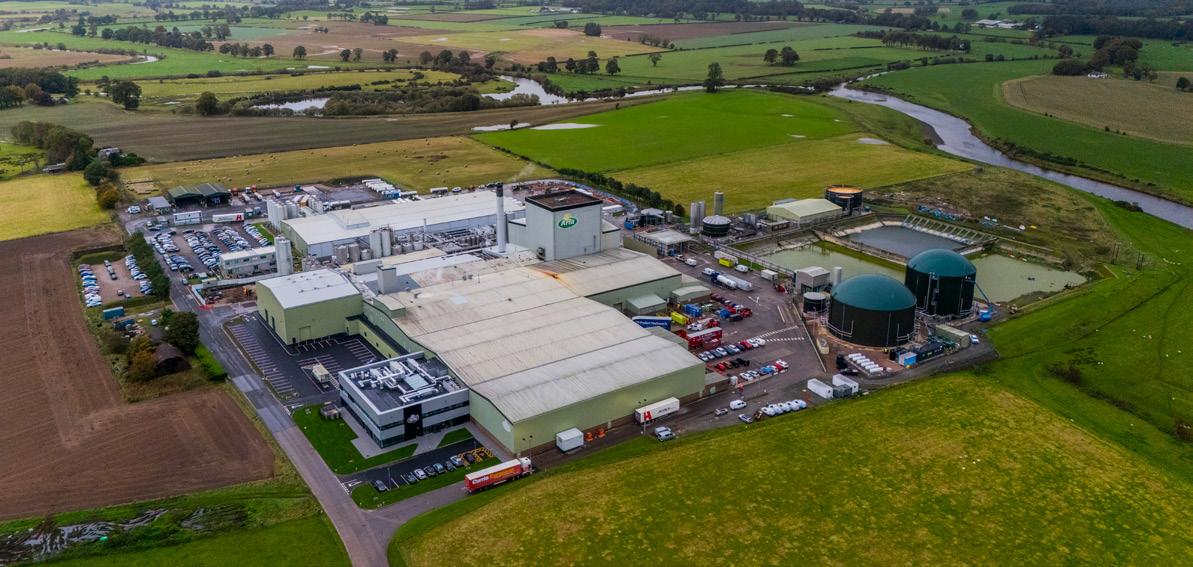

Our sector can't succeed in the future without diverse talent perspectives
Fran Ball, SVP of UK Supply Chain
The cheddar facility cost £34m to upgrade, with a £20m anaerobic digestion plant taking the total investment to £114m.
Milking it
It’s a significant outlay, but its money well spent from Arla’s perspective. The site is an important hub within Arla’s UK operations, combining multiple product streams and advanced processing capabilities.
Fran explained that the decision to invest in Lockerbie is also largely driven by Arla’s farmers. “We're in a very large milk pool,” she said. “The majority of the milk comes into this site from within a 50 mile radius.”
Arla is owned by more than 7,200 dairy farmers, with over 1,800 UK farmer owners. So, as David Boulanger, Executive VP and Head of Global Supply Chain pointed out, any new investment decision across the UK or Europe is made with the welfare of farmers in mind.
Supply chain efficiency and sustainability are also considerations, of course. Closer proximity to raw materials ensures this.
“Lockerbie has a very important role to play,” said David. “We need to make any investment as efficient as possible, and
we need to ensure the best price for our farmers. Being so close to a large milk pool allows us to valorise the best milk that we get from our farmers, ensuring a nutritional product.”
In a world where supply chain volatility has flared up once again, resilience has become a core priority. It’s harder for some, but when you operate in an integrated and largely local network as Arla facilities do, the stress on the supply chain is lessened.
“We face a lot of volatility,” said David. “Our job is to make our supply chains as resilient and agile as possible. This is an area we invest in significantly across our different regions. We need strong supply chains to address the challenges that we face in the world today.”
Fran added: “We obviously have a lot of our farmers in this area so, we have the fresh milk supply in that instance. But resilience is still a really important aspect for us, and we still need to be mindful of reliability, contingency and our capacities.”
As well as being in close proximity to large milk supplies, Lockerbie was chosen for investment because it’s a longestablished production facility.
Its 50 years of cheese making has served the entirety of the north of England and beyond. While upgrades were needed, existing infrastructure still stands firm, and can be expanded upon. It’s a site that offers both logistical and economic advantages - reducing transport emissions while also enabling future growth.
Fran said: “There’s been years of manufacturing here, and other products were made in the past. We have buildings that we can reuse, and we have space to expand. It’s very important if we want to build economies of scale.”
Future fit
As part of the investment, unsurprisingly, upgrades extend to technology across the site, on both the cheddar facility and in UHT.
“The new cheddar facility incorporates the latest generation of vats, which will give us higher yields,” said Fran. “We’re also automating some of the processes there, to make sure we get the most efficient cutting.
“And in the UHT centre, we've got some new processes coming online which are more energy efficient, but we’re also bringing automation into loading. That was one of the areas that we identified for upgrade..
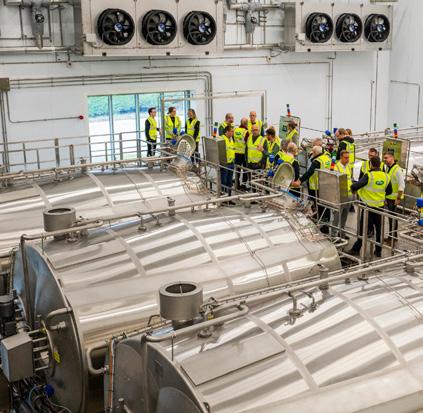
“That allows colleagues to use their time better, and we can eliminate some of the more manual roles.”
Continuous improvement obviously becomes harder when managing larger sites, and Arla Lockerbie is vast. But it’s a daily priority. And in reality, it wouldn’t have received this level of investment if it wasn’t.
“Operational efficiency is a constant focus,” said Fran. “We’re always looking for different opportunities, whether that's through big CapEx investments in the latest technology, or whether that's the day-today, incremental improvements that help the operators on the front line.”
As mentioned earlier, while this large investment improves Arla Lockerbie immediately, it’s also focussed on making the site future fit. And part of that plan will involve creating a technologically advanced and skilled workforce.
That’s not to say these people don’t already exist at this facility, but as is the aim of most companies in the industry, Arla Lockerbie wants to ensure this for years to come. To do that, access to new skills is as vital as developing existing ones.
I was unsurprised to hear that a strong apprenticeship programme has been in place for a number of years, where investment has been put into dairy technologists and engineers.
“Three of our senior team here in Lockerbie came through that process,” said Fran. “We also have apprenticeship schemes where we work with our team leaders and our managers to make sure they have the right training.”
An employee upskilling initiative also exists, and is known as the ‘Arla Performance System’, which is based on Lean principles, as Fran explained: “We're upskilling the front line and making sure we
We know about changing dietary habits, and of course, there is sustainability pressure… But actually, we believe dairy is part of the solution, not part of the problem
David Boulanger, Executive VP and Head of Global Supply Chain
create a culture of line centric teams that really take ownership.”
She continued: “A blend of e-learning and traditional classroom training also takes place. So, there’s a lot of different elements going on, all very much evolving to future needs, particularly around digital and automation.”
As well as having access to a large milk pool, Arla Lockerbie is also in a good catchment area for skills and has built a reputation for being a large employer in the region.
Diverse talent perspectives
By its own admission, Arla want to create more diversity within the employees, as a large percentage of the workforce at the Lockerbie facility are still male. At The Manufacturer, we’ve long argued that this is a problem. As Fran puts it: “Our sector can't succeed in the future without diverse talent perspectives.”
The rationale being that diversity of thought and experience brings new ideas and perspectives.
Over the past four years, Arla has been implementing a structured gender diversity strategy, built on three workstreams:
• Attract: Aiming to double the share of women applicants to UK supply chain roles by 2030, supported by tools like the ‘Gender Decoder’ for job adverts,
inclusive recruitment training and showcasing women already thriving in Arla’s supply chain.
• Develop: Building a strong pipeline of female leaders through mentorship, coaching and leadership accountability for inclusion.
• Retain: Ensuring women stay and progress by introducing progressive policies such as menopause, fertility leave, shared parental leave, pregnancy loss support and flexible working, alongside practical changes like improved facilities and uniforms.
“We also need to ensure that we have good development and succession plans in place for women, and that we continue to drive that,” added Fran. “Our male allies are also a very important part of this, because we need to have a balanced colleague community where everyone can thrive.”
All in on dairy
Arla have placed dairy solely at the heart of its future. While £90m has gone into a UHT and lactose-free centre of excellence, the resulting products are still using milk.
MAIN PIC: Arla Lockerbie's 50th anniversary and official opening of its upgraded cheddar facility
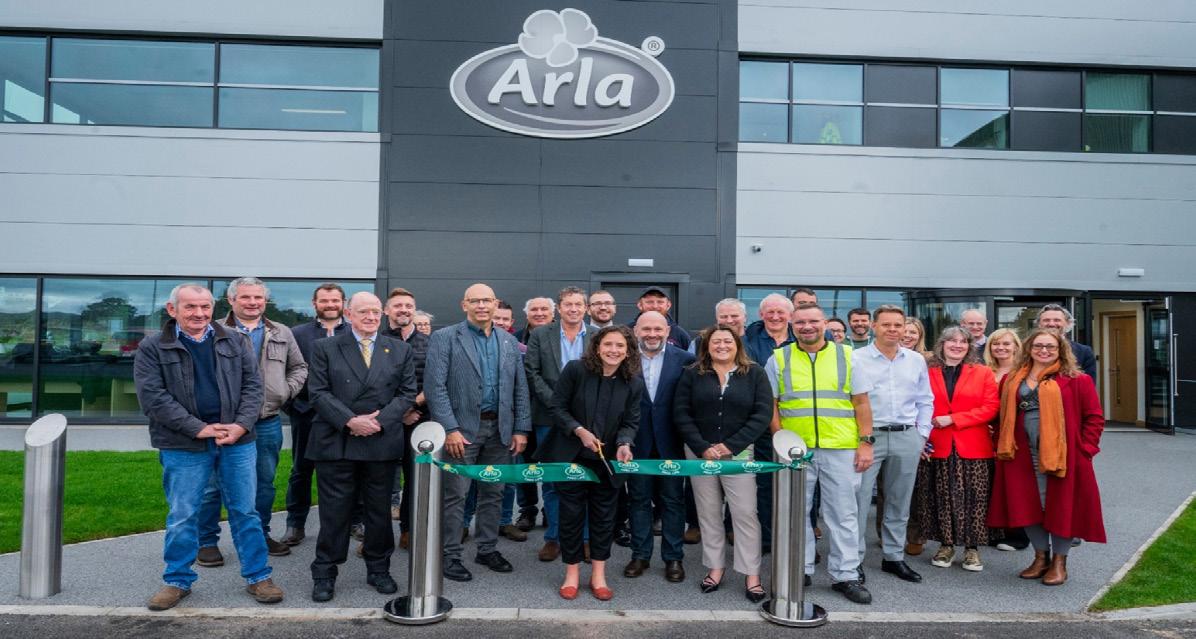
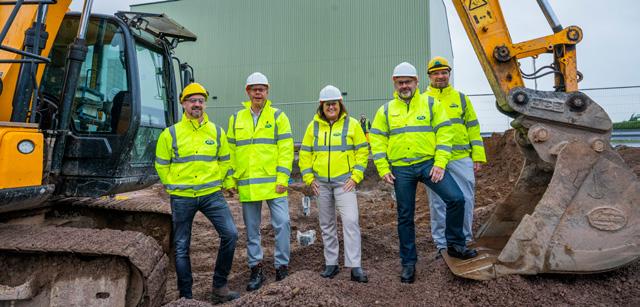
UHT is just regular milk that has been momentarily heated to a high temperature, which removes bacteria and extends shelf life. And lactose-free, again involves regular milk, but with lactase added to it.
As a cooperative, Arla is constantly looking for ways to drive the greatest value for its farmer owners, and have made the decision to make a strategic shift and refocus the Arla JÖRÐ product range for the food service channel. This means that Arla will no longer offer Arla JÖRÐ as a retail product in the UK. However, the company is continuing to develop its plant-based portfolio with category leading brands, including Lurpak.
Arla’s Aylesbury facility, the largest dairy factory in the UK, made national news when it was blockaded by protesters back in 2021.
Animal Rebellion protesters called for the company to switch to plant-based production by 2025 and said they wouldn’t move until Arla submitted to their demands and funded a transition for its workers.
However, that doesn’t really marry with the interests of a company owned by farmers. And when it comes to environmental concerns, Arla doesn’t believe it’s obligation to dairy is at odds with its sustainability ambitions.
“We know about changing dietary habits, and of course, there is sustainability pressure,” said David. “But actually, we believe dairy is part of the solution, not the problem. And our role and mission is to adjust our dairies to provide a new generation of product that can bring health to our consumers in a sustainable way.”
Arla is positioning itself to lead on sustainable dairy products and is committed to environmental targets across
the wider group.
“We have a target to be carbon net zero by 2050,” added David. “But closer to that, we want to decrease our carbon footprint by 63% in our supply chain by 2030. And we are on the right track for that at present.”
There has been a lot of electrification across Arla dairies in recent years, with instillations of E-boilers and heat pumps. And of course in Lockerbie, part of the new investment involved the £20m investment in an anaerobic digestion plant, which recycles the site’s waste and as David explained: “Significantly cuts our carbon footprint here in Lockerbie.”
The investment will undoubtedly strengthen Arla Lockerbie, improving operational efficiency, sustainability credentials and production capacity. It positions Lockerbie as a central hub for advanced dairy processing, particularly in high-growth areas like UHT and lactose-free products.
The local and regional impact will also be felt. The site is expected to create around 90 new jobs. And as mentioned, a genuinely important aspect for Arla is the support the investment provides for its local farmers, quite a number of who attended the opening of the new facilities.
By sourcing milk locally, the site reinforces demand for regional dairy farming, aligning with its cooperative model.
While this spells good news for Lockerbie, the unfortunate aspect of this story is that another area of the UK suffers. Arla announced in February last year that it wanted to close its Settle factory in North Yorkshire, as part of its consolidation at Lockerbie.
INNOVATION & DESIGN
• Major investment signals longterm commitment: Arla’s £144m investment in Lockerbie highlights its intention to future-proof UK dairy production, expanding cheddar capacity and creating a centre of excellence for UHT and lactose-free milk
• Local sourcing strengthens resilience and farmer support: With most milk sourced within a 50-mile radius, the site reinforces Arla’s cooperative model, supporting farmers while improving supply chain efficiency and reducing volatility
• Technology and automation are driving efficiency gains: Upgraded facilities, automation and energyefficient processes are boosting productivity, improving yields and freeing up workers to focus on higher-value tasks
• Workforce development and diversity are key priorities: Apprenticeships, upskilling initiatives and a structured diversity strategy aim to build a futureready workforce and address gender imbalance in the sector
• Sustainability and scale come with trade-offs: While Lockerbie’s expansion supports carbon reduction goals and regional growth, it also reflects difficult strategic decisions, such as the closure of the Settle site, to consolidate operations and remain competitive
Despite opposition from the GMB union and other stakeholders, Arla proceeded with that decision. The closure was described as a “devastating blow” to the 130 skilled workers - which initially Arla had hoped to keep - as well as the wider community. It does further position the Lockerbie investment as more than just a facility upgrade, its a strategic - and in the context of Settle - ruthless move to future-proof operations in the north of the UK. Such balancing acts often need to be taken in business. And Arla Lockerbie aims to balance efficiency, environmental responsibility and support for its farming community. l
As
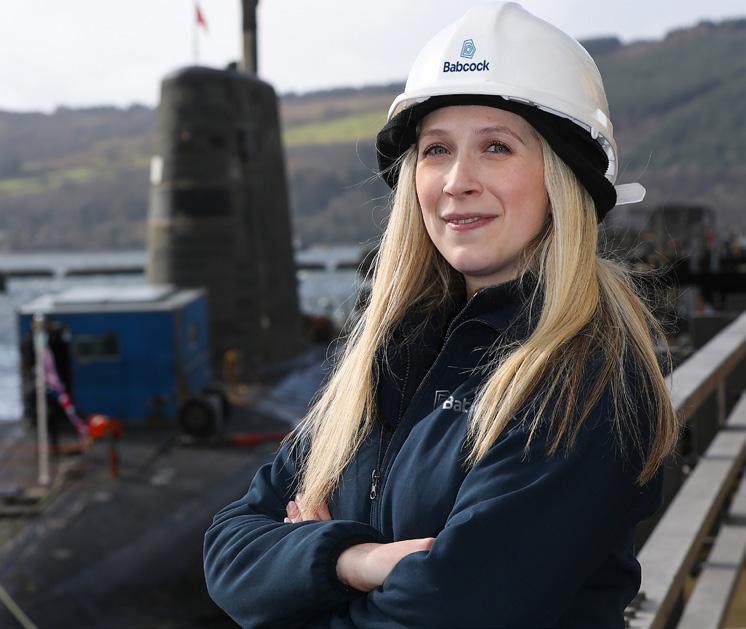
The defence and aerospace sectors have long faced a persistent challenge: how to broaden their talent pipelines in industries that have historically been male-dominated. For companies such as Babcock International Group, the issue is not simply about equality. It is also about ensuring the future workforce has the skills needed to support increasingly complex technologies and national security priorities.
Few people are better placed to discuss this challenge than Jo Rayson, Chief Operating Officer (COO) for Land and UK Aviation at Babcock. In her role, Rayson oversees operational delivery across a wide portfolio that spans building, supporting, training and flying services for customers including the British Armed Forces, NATO and emergency services.
Yet her own career path into defence was far from traditional. Before joining Babcock nine years ago, Rayson worked across sectors including telecoms, construction, financial services and rail, holding a range of HR and change leadership roles. She originally joined Babcock as HR Director for its emergency services and training business before transitioning into operational leadership roles and eventually becoming COO.
According to Rayson, her experience moving between sectors demonstrates that defence careers are far more accessible than many people assume.
The real challenge now, however, is encouraging more women to see the sector as somewhere they belong.
Changing perceptions: reaching young women earlier
For many young women, defence, aviation and engineering simply do not appear on the list of possible careers. Changing that perception requires engagement much earlier in the education pipeline.
Rayson believes outreach programmes are critical in helping students understand the wide range of opportunities available within the sector.
LEFT: By showcasing real career journeys, including those that did not start in engineering or defence, organisations can demonstrate that the sector is more open than stereotypes suggest
“This is a real challenge that we face as a sector, and actually a number of sectors face similar challenges,” she explained.
One of the most effective approaches has been opening doors to students and letting them experience engineering first-hand. Events such as engineering festivals, STEM days and school outreach initiatives can provide a tangible introduction to careers that might otherwise feel distant or unfamiliar.
At Babcock, initiatives like its Festival of Engineering have brought hundreds of schoolchildren into its facilities to explore technologies ranging from robotics to virtual-reality welding. Such experiences can transform perceptions of manufacturing from outdated stereotypes into something modern and exciting.
“Bringing to life what a career could look like if you chose to work for a company like Babcock is really important,” Jo said.
Equally important are clear pathways into the industry. Apprenticeships, early career programmes and structured development routes can help young people visualise how they might progress from education into a long-term career.
For organisations operating in remote or specialised locations, community engagement can also play a vital role. Babcock employees are encouraged to take part in local initiatives through a volunteering programme that allows them to support schools, careers events or mentoring activities.
The aim is simple: expose as many young people as possible to the possibilities of engineering and defence careers.
Jo also believes that outreach should begin earlier than many organisations currently target.
“If possible, we should engage people earlier in the process,” she said, noting that career perceptions often form well before students reach secondary school.
By opening conversations at a younger age, companies can challenge assumptions and ensure students understand the full breadth of opportunities available.
The power of visible role models Representation matters. For decades, senior leadership across defence and manufacturing has been dominated by men. That is gradually changing, but visibility remains an important factor in shaping how potential recruits view the sector.
“When you went to an event years ago, it would be predominantly men,” Jo recalled.
Today, she said, the picture is slowly shifting. Seeing women in leadership positions sends a powerful message that career progression is possible.
Babcock itself has taken steps to increase representation at the highest levels. The company’s Chair, Dame Ruth Cairnie, is a prominent female leader in the UK defence sector, while women now account for around 40% of the company’s board.
The organisation has also set a clear ambition to increase female representation across the wider business. Babcock is targeting a minimum of 30% women in its workforce by 2030, a goal that Rayson said is embedded throughout recruitment, development and outreach activity.
For Jo, these examples matter not only internally but across the wider industry.
“The more women can see that there are females in very senior roles, the more that comes to life,” she said.
Role models are not limited to senior leaders. Graduates, apprentices and early-career professionals can also play an important role in shaping perceptions.
Many are entering the defence sector for the first time, bringing fresh perspectives and sharing their experiences with younger generations considering similar careers.
By showcasing real career journeys, including those that did not start in engineering or defence, organisations can demonstrate that the sector is more open than stereotypes suggest.
Addressing the barriers that remain Despite progress, structural barriers still exist and Jo is clear that the sector cannot assume the work is done. “We’re still not in a place where everyone has the most positive experience,” she said.
One of the most effective ways to support women entering the industry is through mentoring. Having a trusted mentor can provide guidance, encouragement and advocacy during key career moments.
At Babcock, a mentoring initiative known as Illuminate focuses specifically on supporting women’s development within the business. The programme pairs female employees with mentors who can help them build confidence, expand networks and explore long-term career pathways.
“Mentorship has been instrumental in my career,” Jo explained.
Another area companies are examining is the points in a career where women are most likely to leave the sector. Parenthood is
one such transition that has historically led to talent leaving engineering and defence roles, highlighting the need for better support structures and workplace flexibility.
Pay equity is another important consideration. Transparent reporting of gender pay gaps has also encouraged organisations to review how roles are structured and rewarded.
For Jo, however, the solution also lies in collaboration. Defence companies cannot solve these challenges in isolation.
Partnerships with industry networks and professional groups, such as organisations promoting women in defence and engineering, allow companies to share best practice and learn from one another.
“This is an industry challenge that we need to address together,” Jo said.

Come and understand what we are as an industry. Don’t have preconceived ideas about what it might look like to work in these sectors
Jo Rayson, Chief Operating Officer for Land and UK Aviation, Babcock International Group
The more women can see that there are females in very senior roles, the more careers are brought to life
Jo Rayson, Chief Operating Officer for Land and UK Aviation, Babcock International Group
Gender diversity as a solution to the skills crisis
The defence and aerospace sectors are experiencing acute skills shortages, particularly in engineering and advanced manufacturing roles.
For Jo, the connection between gender diversity and workforce sustainability is clear.
If companies fail to attract women into these careers, they are effectively closing off half of the potential talent pool.
“There is very much a war for talent at the moment,” she said.
Broadening recruitment to include more women and individuals from diverse backgrounds is therefore not just a social objective but a strategic necessity.
This requires thinking beyond immediate recruitment needs and focusing on the long-term skills pipeline.
Technological change is transforming defence and manufacturing, bringing
BELOW: Students take part in Babcock’s Festival of Engineering, an initiative designed to inspire the next generation and broaden awareness of careers in defence and manufacturing
new requirements in areas such as digital engineering, automation, data analysis and advanced materials.
As these skills evolve, companies must work closely with educational institutions, training providers and small and mediumsized enterprises to develop the workforce needed for the future.
“Helping us understand what those skills gaps are and how we bring them into our organisation is pivotal,” Jo said.
Encouraging greater gender diversity is therefore not just about fairness, it is also about ensuring the sector has access to the widest possible pool of talent.
Retaining talent: beyond recruitment
Attracting women into defence careers is only the first step. Retention and career progression are equally important.
Jo pointed to several areas where organisations can make meaningful improvements.
“We’ve looked carefully at the exit points we see for women in our business,” she said. “There is definitely a piece around becoming a parent, so we focus a lot on the policies, support and networks we can put around women when they leave to have children, to encourage them to return and make that experience as positive as possible.”
While parenthood remains a major transition point in many careers, it is far from the only one.
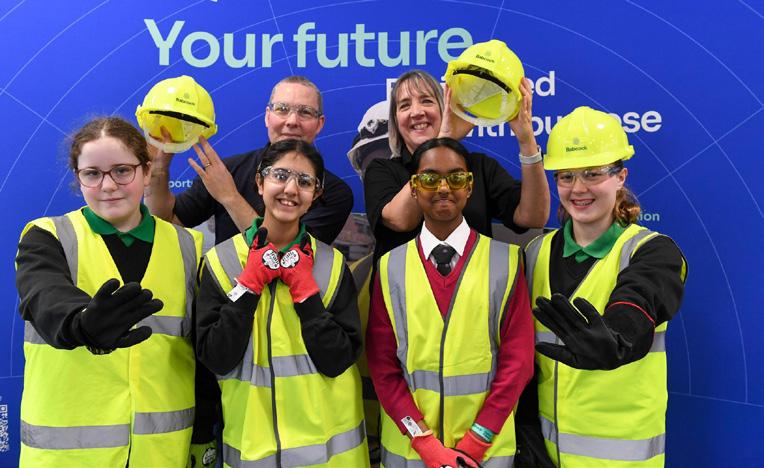
Companies are increasingly recognising the need to support employees through different life stages, including menopause, which can significantly affect workplace experiences but has historically received little attention.
Providing open conversations, appropriate policies and supportive workplace cultures can make a tangible difference in keeping experienced employees within the organisation.
Career visibility is another key factor. Employees are far more likely to stay if they can see a clear path for development.
Structured talent programmes, leadership training and technical upskilling opportunities help individuals understand how they can progress.
In Babcock’s case, talent development initiatives aim to provide employees with both technical expertise and leadership capabilities, ensuring they have the tools needed to advance their careers.
Beyond professional growth, workplace culture also plays a role in retention. Increasingly, employees want to work for organisations whose values align with their own. Sustainability, community engagement and environmental responsibility are becoming important factors in how younger workers choose employers.
Jo noted that Babcock’s annual employee surveys consistently highlight interest in the company’s environmental, social and governance (ESG) initiatives.
Programmes such as community volunteering days and environmental sustainability projects have therefore become an integral part of the organisation’s culture.
These initiatives not only benefit local communities but also strengthen employees’ sense of purpose and connection to their work.
For young women considering careers in defence, aviation or manufacturing, Jo’s message is straightforward: do not assume you need a traditional background to succeed. “I’m not an engineer,” she pointed out.
Her own career demonstrates that many skills developed in other sectors –from leadership and project management to operational strategy – can translate effectively into defence roles.
The key, she said, is to approach the industry with an open mind. “Come and understand what we are as an industry. Don’t have preconceived ideas about what
it might look like to work in these sectors.”
Manufacturing environments have changed dramatically over the past few decades. Modern facilities increasingly feature advanced robotics, automation and digital technologies that bear little resemblance to outdated stereotypes of heavy industry.
For those willing to explore the sector, opportunities extend far beyond traditional engineering roles.
From digital specialists and project managers to sustainability experts and operational leaders, the defence industry requires a diverse mix of skills.
Rayson also encourages young professionals not to place artificial limits on their ambitions.
“Don’t be self-limiting in what you can achieve,” she said.
Measuring progress: what success should look like
Looking ahead, meaningful progress in gender diversity will require both measurable targets and cultural change.
Metrics such as representation at different levels of an organisation remain important. Without clear goals and accountability, progress can stall.
However, Jo believes the ultimate measure of success will be when gender diversity becomes less of a separate topic and more simply a natural part of how organisations operate.
“The reason we talk about it so much is because we need to drive a step change,” she said.
Jo suggested that, in an ideal future, conversations would focus less on gender
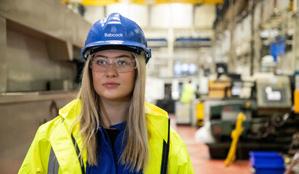
• Attracting women is a strategic necessity, not just a diversity goal: The defence and manufacturing sectors
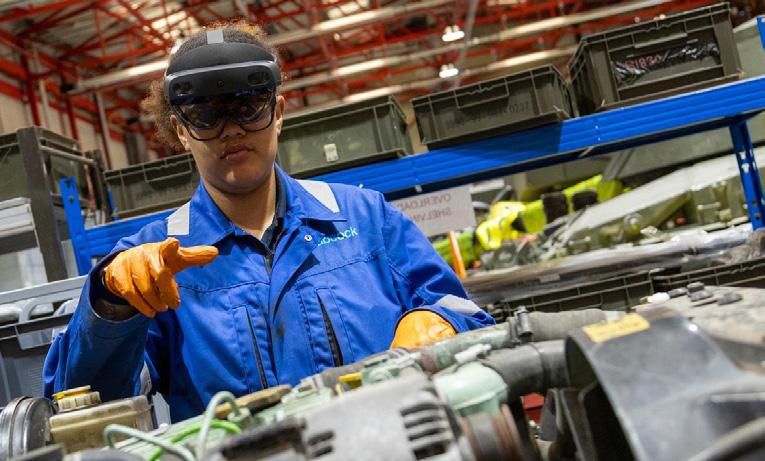
ABOVE: Augmented reality is helping to modernise defence engineering roles, offering new pathways into the sector for a more diverse workforce
and more on building inclusive workplaces where everyone can thrive.
“I’d love to be in a position where we’re just talking about inclusion and creating great places to work.”
Reaching that point will take sustained effort across the entire industry.
Yet with skills shortages intensifying and technological change accelerating, the incentive to broaden the talent pool has never been stronger.
Encouraging more women into defence and manufacturing is therefore not just about representation, it is about ensuring the sector has the diverse skills, perspectives and leadership needed to meet the challenges of the future. l
face significant skills shortages, and failing to engage women effectively excludes half the potential talent pool
• Early engagement is essential to change perceptions: Many young women never consider careers in defence or engineering due to outdated stereotypes. Outreach programmes are crucial, especially when introduced at an early age
• Visible role models help break down barriers: Seeing women in leadership and across all career stages helps make the industry feel more accessible. Representation plays a key role in
We’re still not in a place where everyone has the most positive experience. This is an industry challenge that we need to address together
Jo Rayson, Chief Operating Officer for Land and UK Aviation, Babcock International Group
showing that progression is achievable
• Structural barriers still need active solutions: Challenges such as lack of mentorship, career breaks (e.g. parenthood), and pay equity issues continue to affect women’s participation
• Retention and progression matter as much as recruitment: Attracting women into the sector is only the first step. Long-term success depends on supportive workplace cultures, clear career pathways, life-stage support and alignment with values like sustainability and community impact
ABOVE: Attracting more women into defence careers is critical to addressing skills shortages and building a more resilient workforce.
A transformation at Chivas Brothers’ Kilmalid site is bringing whisky, a centuries-old product, into the modern age. There’s no need to change the drink, so generations of maturation and distillation processes remain largely unchanged. But to meet global demand, innovative operational and technological decisions needed to be made. Multimedia Editor, Tom St John, looks at how this transformation has impacted people, product innovation and the future of whisky making at Kilmalid
The word whisky (or whiskey, if you’re from Ireland or the US) comes from the Gaelic word uisce (or uisge), meaning ‘water’. The water was certainly falling from the sky when I pulled up to the Kilmalid site in Dumbarton – bad weather, even by Scottish standards. I came all that way because I wanted to see how a whisky manufacturing site operated, and Kilmalid is the flagship bottling plant of Chivas Brothers, owned by Pernod Ricard.
A case of whisky normally includes 12 750ml bottles, totalling nine litres. This particular site produces around 20 million nine-litre cases every year.
This makes Kilmalid a central node in the company’s global supply chain. With so much whisky heading out the doors, the breadth of activity is unsurprisingly significant. Sarah Badesha is the Head of Engineering at Chivas Brothers and was a warm and welcoming presence throughout the tour.
“We do everything from blending and processing the spirit, bringing it to the line, bottling and putting the spirit into cases to get it to consumers,” she said.
To meet global demand, Chivas Brothers has committed significant capital investment into upgrading the site. A transformation termed ‘Project Optimus’ has taken place in recent years, which has seen the installation of a high-speed bottling line at the Clyde bottling hall.
With that has come a raft of new technologies: digital inspection, data capture and automation. But how does this impact a craft that requires patience and care?
Tradition meets tech
We featured John Dewar & Sons, owned by Bacardi, in our last magazine issue. And I was struck by something that Whisky Category Director Angus Holmes said of that company: “We are not aiming to change the craft of whisky production.”
In a similar way, Chivas Brothers is deploying advanced technology to assist in its production, but essentially, there are some things you don’t mess with. And Sarah was clear that the core of whisky-making remains unchanged in hundreds of years: “The processes around distillation and maturation haven't massively altered,” she said.
“We still make whisky the same way; however, the bottling and production environment has had to evolve significantly to remain competitive in a modern environment.”
She continued: “We need to have the ability to take our beautiful aged spirit and efficiently put it into all sorts of products.”
MAIN PIC: Ballantine's at the Clyde bottling hall LEFT: The Kilmalid site under construction in the 1980s
BELOW: The old Clyde bottling hall

We still make whisky the same way, however, the bottling and production environment has had to evolve significantly to remain competitive in a modern environment
Sarah Badesha, Head of Engineering, Chivas Brothers
When going through change, tell people what you’re planning to do, how it’s going to impact them and why it’s the best thing for the long-term future of the site
Sarah Badesha, Head of Engineering, Chivas Brothers
The transformation of the Kilmalid site illustrates this shift. When the plant opened in 1982, packaging and bottling were still manual. “There was far less automation and many more low-skilled jobs involved in making whisky.”
Today, the same Clyde bottling hall is a hypnotic, dizzying spectacle of sound and colour. Bottles chink as they pass meticulously through the lines at high speed and high volume. Bottles line up neatly, transparent and empty for a moment, then fill simultaneously with deep amber-coloured Glenlivet, frothing briefly before settling.
This is where modern manufacturing processes have become ubiquitous; automation, camera inspection and digital information all help to run the lines.
Tech adoption in a mature way However, Sarah explained that the Chivas Brothers approach is pragmatic and outcome-focused. The transformation at
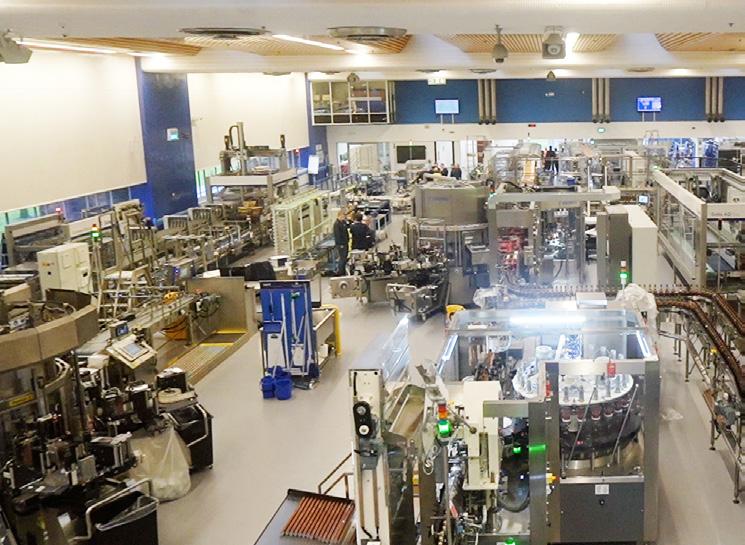
Kilmalid is undoubtedly reaping rewards, but she insisted: “The key lies in identifying the problem you’re trying to solve rather than introducing digital for the sake of it.”
The site - and indeed the whisky industry more generally - is a relatively late adopter of digital technologies, so maturity isn’t quite at the level of some other sectors. But I’d definitely say that this approach of targeted execution and implementation in areas of need reflects a mature mindset.
That’s how technology is being utilised at Kilmalid. Performance tracking of the lines, for example, builds on an existing process, but digital inspection has improved it.
As a result, operators can capture data from the lines, understand where downtime occurs, identify pain points and drive performance improvement.
The use of robotics for complex packaging has also been introduced. “For a premium product, we didn't feel that an off-the-shelf packer was something that we could use because of the delicate nature of the product,” said Sarah.
“Instead, we worked with a robotics company in Scotland to develop something bespoke.”
But for some products, the old ways live on. As Sarah explained: “There should always be a place for some of our products to be hand finished.
“We have some ultra-premium ranges that sell for hundreds of thousands of pounds that are essentially pieces of art. We’re never going to automate the bottling and finishing of those products, and nor should we ever try to.”
With such a contrast between the site now and how it looked in the 1980s, jobs and skills have evolved significantly. The whisky industry has a longstanding tradition of apprenticeship programmes, which have had to adapt as the role of engineers change.
“We've had quite a rich heritage of training our own engineers for many decades,” said Sarah. “But the nature of what’s required of engineers has shifted significantly. Much of our equipment is PLCdriven, and there's a lot more programming involved. This has required training programmes to be adapted to ensure that they're fit for the future.”
As equipment becomes more complex, the ability to operate, maintain and improve it directly affects productivity, downtime and cost efficiency.
Chivas Brothers has a dedicated training department focused on upskilling, supplemented by external training. And occasionally, external skills are brought in to support staff development, “where they can learn on the job,” as Sarah put it.
This ensures that the workforce can fully utilise the modern technology they are working with.
In fact, this was central to Project Optimus - organisational transformation and ensuring people were ready to benefit from change.
Sarah emphasised that the success of such initiatives depends heavily on people, and that communication was absolutely central: “Telling people what's coming, helping them to understand why we're doing it, when things are happening and how it will
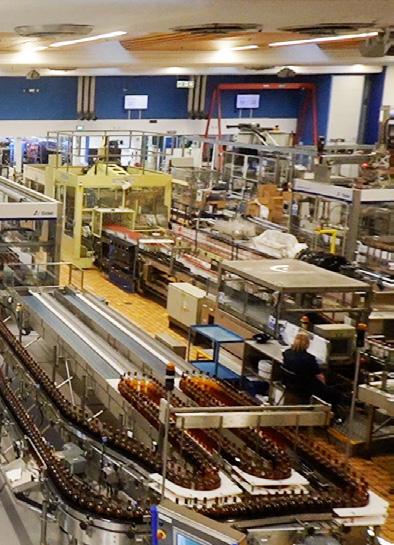
impact them - this was all really important.
“Communication isn’t a big enough word for it. We wanted to make sure staff could take ownership.”
The project involved a wide team covering all departments within manufacturing. Operators helped build the programme and were involved in the design of the lines.
“We felt that this was fundamental for the people who would be operating the machines. We took them out to the factory acceptance tests, there was a big training programme, and we let them familiarise themselves with their new work areas before they got started.”
This level of engagement improves implementation quality, reduces disruption and increases the likelihood that new systems are used effectively.
Pass it on
The whisky industry, like many traditional sectors, has a large number of longtenured employees. And a key challenge is capturing and transferring that knowledge.
“We've got a number of people who have 30 years plus experience, but we've also got young talent,” said Sarah.
“So that creates an organic process for them to work together and transfer knowledge. But we’re also working through a large programme of centralising and documenting changeovers.”
She continued: “We do need to start moving away from engineers having all the information in a little black book in their back pocket, so there is a drive from the operations team to standardise and document that.
“However, there's no substitute for working with someone who has experience and learning from them.”
Blowing off the dust
The bottling side of the business appears more dynamic, from a technology standpoint, than the production of the spirit itself. But that’s intentional. As Sarah put it: “Bottling has to move; it has to become as efficient as other industries.
“But as a company, I think we're quite open to innovation. In this factory, we produce flavoured whisky drinks, which was a relatively recent development within the industry. But the main innovation in whisky production definitely exists more within the bottling and packaging side of operations.”
That will continue to be the focus at the Kilmalid plant, particularly in workforce capability and upskilling in controls, automation and programming. Robotics will also play an increasing role. As Sarah noted: “From a bottling perspective, it's about efficiency and producing at an acceptable cost.”
Safety is another major driver of transformation. Sarah believes the site often goes above and beyond both industry and legislative standards.
It’s an advancement that all traditional industries must move towards. While heritage is well understood, modern realities loom large, and the industry still faces misconceptions.
“People don't normally see how we turn whisky into a consumer product. And actually, the facilities here are pretty modern.
“The reputation of whisky being a dusty old man's industry is one that I would like to completely destroy, because this is a diverse and inclusive environment with a good proportion of diverse talent.”
My aim was definitely achieved from this site visit. I wanted to see how a traditionally handcrafted industry producing a globally loved drink balances the need for technology adoption and innovation.
It’s a story that reflects wider industry challenges: how the workforce is prepared for automation, how skills are developed to keep pace with change, how knowledge is transferred, and how digital transformation is targeted to improve efficiency, product quality and safety.
Chivas Brothers is focused on problemdriven innovation, investing in people and maintaining a clear distinction between where to modernise and where to preserve tradition.l
• Tradition remains at the core of whisky making: Despite major upgrades, the fundamental processes of distillation and maturation haven’t changed in centuries. The industry is careful to preserve the craft while modernising only where necessary
• Technology is transforming bottling, not the spirit: Innovations like automation, robotics and digital inspection are mainly applied to bottling and packaging. This allows higher efficiency and scale without compromising the quality of the whisky
• Modernisation is driven by global demand and efficiency: The Kilmalid site produces massive volumes (around 20 million cases annually), requiring high-speed production lines and data-driven operations to stay competitive in a global market
• Workforce skills are evolving alongside technology: Roles have shifted from manual labour to more technical, programming-focused work. Training, upskilling and apprenticeships are essential to help employees adapt to increasingly complex systems
• People and communication are critical to successful transformation: The success of Project Optimus depended heavily on involving employees, clear communication and knowledge sharing between experienced workers and newer talent - ensuring smooth adoption of new systems

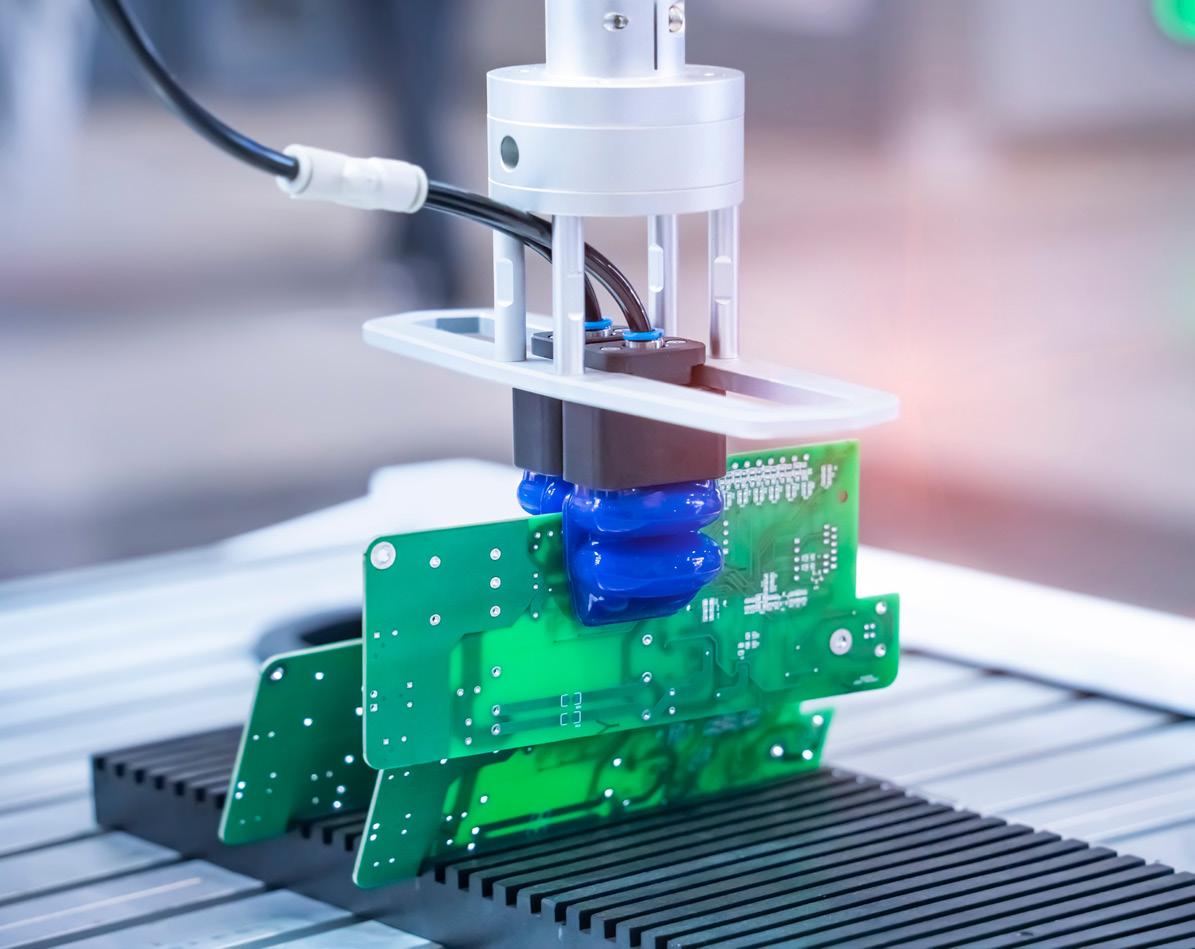
Cambridge Industrial Innovation Policy has published the UK Innovation Report 2026. The report's co-authors speak to The Manufacturer about the findings and what they mean for the sector
The UK has long been recognised as one of the world’s leading innovation economies.
It ranks among the top countries globally for scientific publications, high-impact research and patents in critical technologies, and has developed one of the most dynamic start-up ecosystems outside the US.
Yet, as the government moves from designing its Industrial Strategy to delivering it across eight priority sectors, a more fundamental question is coming into focus for industry: can the UK convert its research strength into sustained industrial competitiveness?
The newly published UK Innovation Report, from the Cambridge Industrial Innovation Policy, based at the Institute for Manufacturing, University of Cambridge, argues that this translation challenge now sits at the heart of the UK’s economic future.
The report provides a comprehensive evidence base on the UK’s innovation performance, drawing on new data and sector-level analysis across the Industrial Strategy’s priority areas. It sets out not only the scale of the UK’s research strengths but also the structural barriers limiting their translation into industrial outcomes.
The findings were presented to industry, policymakers and researchers at the report’s official launch event at the Institute for Government, highlighting the growing urgency of aligning innovation policy with industrial competitiveness.
Strong research, weaker industrial outcomes
The UK’s research performance remains internationally strong. In 2023, the UK ranked sixth globally for total R&D expenditure, accounting for 3.5% of global spending. R&D intensity stood at 2.68% of GDP, below the OECD average and leading R&D-intensive economies, though above several G7 peers and China.
In 2022, the UK ranked fourth worldwide for total publications and was among the top five for highly cited outputs in technology fields across the physical sciences and life sciences. It was also among the global leaders in patent applications in areas such as artificial intelligence, biotechnology and semiconductors.
Yet this strength has not proportionately translated into industrial advantage at a time of intensifying global competition. The report finds, for
example, that the UK has a relatively low share of high-technology exports in total trade, and its representation among the world’s top R&D-investing firms has declined since 2012.
The UK ranks among global leaders in start-up creation and has produced a high number of so-called ‘unicorn’ firms. However, this success has not translated into sustained productivity growth, export dynamism, or deeper domestic industrial capacity.
That challenge is central to the UK’s industrial future, according to Carlos LópezGómez, Co-author of the report. “The UK performs strongly on research excellence and scientific output, but research excellence alone does not guarantee industrial competitiveness. Considering the Industrial Strategy's stated objectives, the question is how this research strength connects to domestic production, export performance and sustained industrial capability. The UK cannot simply become the ‘lab of the world’, with new products and services based on knowledge created here but produced abroad.”
The scale-up gap: where value leaves the UK
UK technology scale-up activity is concentrated in a narrow set of sectors, notably life sciences, software and fintech. While the UK performs strongly in early-stage innovation, since 2012 most university spinout IPOs have taken place overseas, and acquisitions of UK firms by foreign companies have increased significantly over the past decade.

For industry, these patterns point to a persistent challenge in domestic value capture. While the debate focuses almost exclusively on access to finance, structural factors – including access to supply chains, specialised skills, regulatory conditions, and market scale – influence where long-term industrial benefits are realised.
The report highlights that technology scale-up should not be defined by firm valuation or capital raised alone – but by the extent to which companies build domestic production capacity, exports and sectoral depth over time. The concentration of scale-up activity in a limited number of sectors helps to explain why strong innovation performance has translated unevenly into competitiveness across manufacturing-intensive and other strategic sectors.
Considering the Industrial Strategy's stated objectives, the question is how the UK’s research strength connects to domestic production, export performance and sustained industrial capability
Carlos López-Gómez, Co-author, UK Innovation Report 2026
MAIN
PIC: Electronics has grown faster in value added than manufacturing overall since 2000, and performs strongly in labour productivity
The central challenge is not whether the UK produces worldclass science but whether it can convert that strength into a durable industrial advantage
Carlos
López-Gómez,
Co-author,
UK Innovation Report 2026
Carlos added: “Industrial strategy must focus less on the number or valuation of high-growth firms and more on whether innovation helps to regain competitiveness in priority sectors.”
Electronics and electrical equipment: productivity without scale, a warning sign? The report’s analysis of the electronics and electrical equipment sectors illustrates the broader structural shift in UK manufacturing. Together, these sectors account for 10% of UK manufacturing value added and 13% of manufacturing exports.
Electronics has grown faster in value added than manufacturing overall since 2000, and performs strongly in labour productivity. At the same time, both electronics and electrical equipment have seen long-term employment reductions, and the UK runs trade deficits in both sectors.
The findings highlight a transition away from scale and volume towards highly productive, knowledge-intensive niches embedded in global value chains. Competitiveness increasingly rests on strengths such as metrology, photonics, medical technologies and specialised grid-related equipment rather than highvolume, low-cost products.
“The real opportunity for the UK lies in reversing the long-term decline of highvalue-added sectors,” said report Coauthor, Zongshuai Fan. “The UK has an enviable research and innovation base, but the challenge is ensuring that these capabilities support the competitiveness and growth of its industrial sectors.”
Skills and workforce constraints
The report identifies workforce pressures as a structural constraint on competitiveness. A total of 64% of the workforce in the eight priority sectors identified in the Industrial Strategy hold graduate-level qualifications, compared with 52% across the economy. Around 82% of new jobs in priority occupations between 2025 and 2030 are expected to require post-secondary education.
Despite overall vacancy levels easing, skills shortages persist. In 2024, skillsshortage vacancies accounted for 27% of all vacancies. In 2025, 76% of engineering employers reported difficulties recruiting workers with the required skills, with specialist sustainability skills most frequently cited as the main challenge.
Co-author Michele Palladino added: “The data suggests that current shortages are structural rather than cyclical, particularly for science and engineering professionals. Without closer alignment between skills and industry needs, workforce constraints could limit the effectiveness of industrial strategy implementation.”
pivotal moment for UK manufacturing
The publication of the UK Innovation Report 2026 comes at a critical juncture. As the UK transitions from strategy design to implementation, the challenge is no longer defining ambition but delivering results.
For the manufacturing sector, the implications are clear. Innovation alone is not enough. The key question is whether the UK can convert its world-class science base into competitive, productive and export-oriented industrial activity.
“The evidence highlights three areas requiring particular focus: strengthening the link between research excellence and domestic industrial scale; supporting later-stage technology deployment and adoption within priority sectors; and addressing structural skills and capability constraints that limit growth,” Carlos said.
Ultimately, the report makes a compelling case that competitiveness and the creation of high-quality jobs should be the benchmark for success.
“The central challenge is not whether the UK produces world-class science but whether it can convert that strength into a durable industrial advantage in an increasingly competitive global environment. Together, the findings in the Innovation Report suggest that competitiveness and good jobs – not innovation activity alone –should be the benchmark for success.” l
• The UK has an enviable science base and strong specialised industries - with the foundations needed for industrial strategy success
• Strong innovation performance has not delivered proportional gains in productivity, exports or domestic industrial capacity
• Value from UK innovation is often captured overseas due to gaps in technology scale-up and industrial deployment
• Competitiveness increasingly depends on strengthening highvalue, knowledge-intensive sectors rather than scale alone
• Skills shortages in engineering and technical fields risk becoming a structural constraint on Industrial Strategy delivery

The full UK Innovation Report, along with insights from its launch discussions, is available via Cambridge Industrial Innovation Policy. For industry leaders, the report offers a detailed evidence base to inform strategic decisions on investment, capability building and long-term competitiveness

Increase Space Utilisation
Create a Scalable Platform for Growth Improve Safety
Raise Productivity and Throughput
Streamline Warehouse Management Reduce Operational Costs
Learn more about your single source for integrated warehouse solutions



iv


The Manufacturer’s guide to robotics: opportunity for adoption

For UK manufacturers, 2026 isn't just about adopting high-end technology, it’s about starting small, thinking globally and leaning into a network of expertise


vi

Automate or fall behind: is time running out?


The Manufacturer speaks to Oliver Selby, Chairman of BARA (British Automation and Robot Association) to find out about the deployment of automation, where we are now, what’s changing in the sector and is the needle shifting?
viii


Changing the playing field: Omnifactory and the robotic future of agile manufacturing


The University of Nottingham discusses how its Omnifactory serves as a £3.8m national testbed to help manufacturers navigate uncertainty through reconfigurable, AI-driven automation


Find information on robotics and automation companies here


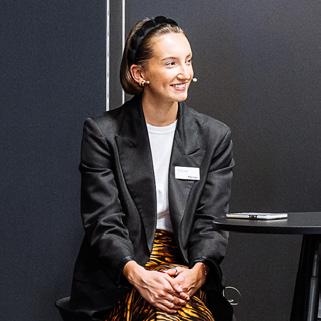
The landscape of the UK’s manufacturing industry is undergoing a huge shift as robotics and automation move from shop floor luxuries to core strategic investments. According to The Manufacturer’s, Manufacturing Momentum Report 2026, the conversation has fundamentally evolved; manufacturers are no longer asking whether automation makes sense, but rather where it genuinely fits and where it introduces new risks. This reflects a maturing sector that prioritises resilience and targeted ROI over blanket digitalisation.
The UK’s manufacturing sector, which contributes roughly £217bn (8.5% of GVA) to the economy, is currently at a crossroads regarding tech adoption. While the UK has historically lagged behind G7 counterparts in robot density - ranking 24th globally - recent data suggests a turning point. The International Federation of Robotics (IFR) has noted a steady increase in UK installations, particularly within the automotive and food and beverage
sectors, driven by labour shortages and the need to combat rising energy costs. With nearly 60% of firms now ramping up investment in AI and digital tools, the focus has shifted towards closing the skills gap to ensure these high-tech assets are fully utilised.
In this supplement we look at those challenges and benefits to robotic and automation adoption across the sector. It features an interview with Oliver Selby, Chairman of BARA (British Automation & Robot Association); where he discusses how the UK must overcome cultural mindsets regarding short-term investment and legacy machinery to remain competitive. By leveraging expert guidance from system integrators and new government-backed adoption hubs, manufacturers can successfully derisk automation and secure long-term productivity and employment.
We also sat down with Rory Daniels, Head of Emerging Technology and Innovation at TechUK, who explained how manufacturers can take their first steps when implementing
new ‘off-the-shelf’ robotics, why they must do it now and what’s coming up in the nottoo-distance future.
And we look at the University of Nottingham’s Omnifactory. This unique facility serves as a £3.8m national testbed that provides manufacturers with a reconfigurable, AI-driven production environment to de-risk automation investments and trial agile, plug-and-play robotic systems.
Ultimately, the drive toward automation in the UK is about more than just replacing manual labour; it is about augmenting the human workforce to focus on high-value tasks. Industry leaders now recognise that smarter adoption could unlock a £150bn boost to national GDP over the next decade.
As The Manufacturer’s, Manufacturing Momentum Report 2026 suggests, the goal for 2026 and beyond is smart growth, ensuring that every piece of technology added to the factory floor serves a precise, de-risked purpose in an evergrowing, competitive market.
For UK manufacturers, 2026 isn't just about adopting high-end technology, it’s about starting small, thinking globally and leaning into a network of expertise
There is a definite automation adoption opportunity for the UK.
As we’ll find out in the next feature, the country has been lagging behind the rest of the world for quite some time, so there’s certainly room for improvement and to make advancements in industrial robotic density.
As AI continues to thrive and is combined further with robotic technologies, new possibilities are opening up for businesses to move quickly.
This short guide provides a blueprint for UK manufacturers to navigate the transition from traditional production to AI-integrated automation.
Technology to change industry
The convergence between AI and robotics is unlocking new possibilities for manufacturing.
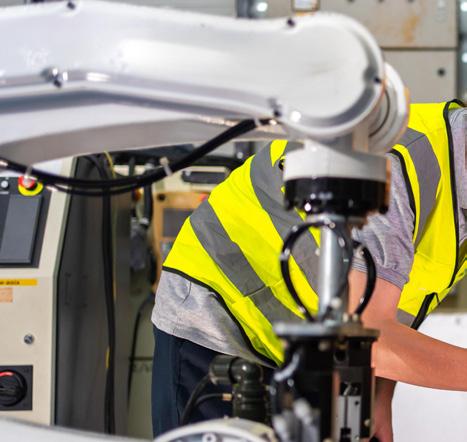
There are currently autonomous systems that are acting increasingly independently of humans, as well as dexterous manipulation (robotic hands and grippers) which can work on complex objects and unsupervised learning, where robots are able to identify a pattern without guidance.
This is drastically changing industry and speeding up the time from deployment to results, as well as increasing human and robotic collaboration.
AI now spans the full spectrum of robotics, from development and testing through to deployment. Large language models have also grown in the last year when it comes to robotics. Their widespread use makes it easier for non-specialist users to train and configure robotic systems. This allows for a lower dependency on specialists and decreases barriers for implementation.
The sector is now moving towards the use of physical AI, meaning the use of systems that perceive reason and act in the physical world. Robots are now working independently and autonomously in the world around them, in a smarter way.
The manufacturing industry must throw out everything it thinks it knows about robots and make room for this new age.
ABOVE: Beyond simple efficiency, the integration of robotics addresses the most pressing structural challenges facing UK industry today BELOW: The convergence between AI and robotics is unlocking new possibilities for manufacturing
Barriers to adoption for SMEs
Barriers to robotics adoption in the UK are highly researched. Industrial robotic installations did reach a record high in 2023 which was driven largely by the automotive sector. However, in general, UK robot density stands at around 112 per 10,000 manufacturing workers which is the lowest in the G7. But why?
The top three barriers manufacturers face:
• Cost of integration: The cost of integrating a robot into a business is often more than purchasing one. Most SMEs won’t be developing their own technology and therefore will be purchasing off the shelf technology. Therefore, installation often creates a stumbling block for SMEs.
• Expertise gap: The UK has great system integrators, but unfortunately, not
enough of them. Industry is calling for a strategic shift in public procurement to fuel robotics adoption. This move will help to build the industrial capacity and expertise our integration sector currently lacks.
• Incorrect perception: Businesses associate robots with large automotive style manufacturers and smaller businesses can’t always visualise how robotics would apply to them. To combat this idea, the UK government needs to look at the wider ecosystem. Perceptions of robotics and automation go beyond the company; it goes to the public, investors, policy makers and regulators. If the story out there is not a good one, then the UK is not going to realise the opportunity it has.
Beyond simple efficiency, the integration of robotics addresses the most pressing structural challenges facing UK industry today, allowing businesses to solve them.
• Labour shortage: The UK manufacturing sector currently has around 58,000 vacancies in which robotics can offer a direct response. With the use of robotics and automation, businesses can maintain output and grow, but without being constrained by workforce availability. This allows the industry to plug skills gaps and be more competitive globally.
• Operational safety: Robotics remove humans from dull, dirty and, importantly, dangerous environments.
According to the latest HSE data, manual handling and machinery contact are the leading causes of serious injury in UK manufacturing, accounting for up to 25% of all nonfatal accidents. By automating these high-risk tasks, businesses don't just protect their workforce, they significantly reduce the downtime and insurance costs associated with workplace injuries.
• High output and lights out: For manufacturers, robotics is the key to continued growth. However, widespread adoption requires a stable market. By committing to innovative robotic solutions in public sectors like healthcare and defence, the government can stimulate the industrial capacity needed to make these technologies more accessible and affordable for every UK manufacturing business.
Start small and simple
Struggling where to start? Small and simple. Manufacturing businesses often know they want to implement robotics and automation in their factories, but don’t know where or why.
Businesses should begin by looking to automate relatively straightforward processes, not complex ones. This will increase the chances of success and lay the foundations for future deployments by boosting internal confidence and creating a culture of acceptance. Many businesses that unsuccessfully deploy new technologies will be reluctant to repeat their mistakes, opting in the future for maintaining the status quo over investing in new and unproven technologies. In short, perceptions matter.
Right now, across the UK, technology hubs and test facilities for the manufacturing sector are popping up. A place where business owners can go and ask experts hundreds of questions about what robot is right for them, or what a new solution could look like. For them, this creates peace of mind and lowers the risk of investment.
These hubs connect manufacturers with proven off-the-shelf solutions. Manufacturers should ride the wave of these existing initiatives that are well-funded, tried and tested to help themselves on their adoption journeys. The UK ranks highly when it comes to robotic innovation. However, the perception is that only ground-breaking, frontier innovation will yield results, when in fact, off-the-shelf technologies can work just as well.
The UK requires a robotics opportunities action plan that spans adoption, regulation, skills and investment at scale. This framework is needed for the UK to move from innovation to adoption as quickly as possible and reap the benefits of robotic adoption in industry. Ultimately, manufacturing businesses need to be adopting now because waiting for the market to mature will allow competitors such as Germany and China to benefit from the UK’s hesitancy.
To attract serious growth-stage investment, UK robotics and manufacturing firms must prioritise international scale from the outset. Although the UK market is relatively small, the most successful companies are those that ‘think global' early, using international demand to generate the high returns required to gain ROI and fuel long-term expansion.
For manufacturers, the race to automate is already underway and victory belongs to those who act early. Success depends on integrating into the national network of robotics expertise, from transport and defence to digital infrastructure. Engaging with these ecosystems ensures businesses are at the forefront of new procurement opportunities and nationwide funding rolls-outs, allowing them to scale faster and more effectively. l

Daniels, Head of Emerging Technology and Innovation, techUK
For quite some time UK industry has been fully aware that it’s been playing catch-up to most of its global competitors when it comes to the deployment of automation. So, where are we now, what’s changing in the sector and is the needle shifting? The Manufacturer speaks to Oliver Selby, Chairman of BARA (British Automation and Robot Association) to find out
It’s a sad fact that the UK has always been something of a laggard as far as robotics are concerned, sitting in 24th place for the number of robots installed per 10,000 employees, and the only nation in the G7 with a robot density lower than the global average.
This would be a concern even if the UK was showing signs of acceleration and were gaining some ground on the rest. However, if anything, the other nations that have been setting the pace for years are starting to pull away even further.
Despite this, Oliver is optimistic as foundations have now been put in place
MAIN PIC: The Department for Business and Trade has worked closely with Innovate UK to establish several Robotics Adoption Hubs across the UK that are specialised in de-risking automation
ABOVE: It will be some years before we see large-scale deployment of humanoids on production lines, but trials have already taken place at the likes of Siemens and BMW BELOW: Robotics installations are on the rise across the globe, so the UK can’t afford to be left behind
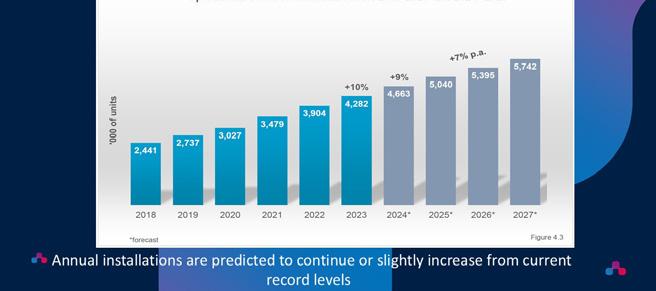
to arrest this slide. The Department for Business and Trade has worked closely with Innovate UK to establish several Robotics Adoption Hubs across the UK that are specialised in de-risking automation and giving businesses the confidence to commit to the technology.
“I’m confident that we’ll see the situation begin to change,” he added. “And it has to, because the truth is that we’re fast approaching a do or die scenario for some companies who know that there's stern European and global competition for whatever they manufacture.”
When looking at the correlation of robotic deployments elsewhere in the world against increases in productivity, it certainly raises the question around why the UK has for so long, been reticent towards the technology, and Oliver puts this purely down to short-termism, particularly around return on investment.
And he stressed that the UK needs to look at the way in which contracts are devised and developed across the whole supply chain to make it easier to automate over a longer period.
“In terms of barriers to entry, Make UK has identified a lack of technical skills, integration and data challenges, high costs, lack of budget, workforce transition and cultural changes. That last one in particular is a big challenge for me day-to-day -
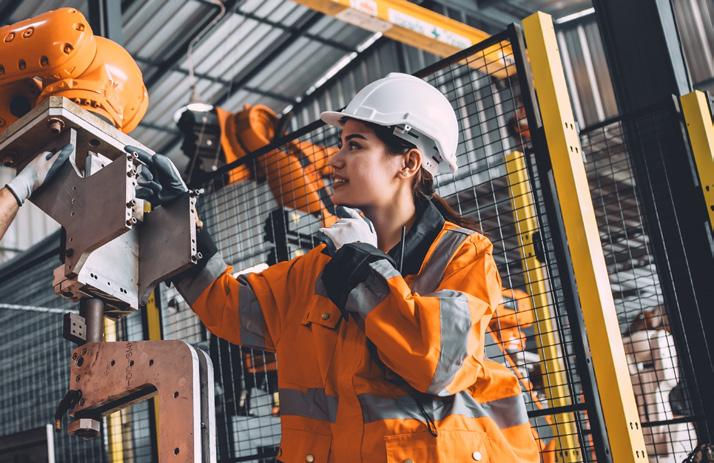
trying to get people to understand that robots don't take away jobs.
“They improve and secure jobs, if anything, because companies can continue to exist, and don't end up having to close down due to being uncompetitive.”
However, there is an undoubted culture issue in the UK around modernising and upgrading infrastructure. Businesses have traditionally been happy to keep machines running - even display a sense of pride if they still have equipment that is operational several decades after deployment. And for the most part, this is not a trait shared by other nations.
“These legacy assets might well be twice or three times more expensive to run than something that's brand new off the production line,” added Oliver. “It goes back to the total cost of ownership of a piece of equipment that's running. If you can invest in a new piece of equipment, it may pay back a lot quicker than you might expect, especially in high energy use processes.”
Top tips for deployment
Oliver explained that the key to early success with industrial automation is the low-hanging fruit and not to do too much, too soon.
“Often we see businesses coming to us with a half-baked plan of deploying a robot in a particular area because they've seen a video on social media,” said Oliver. “Trust the experts to tell you where robotics could make a difference in your business, and make sure you work with them - most robotic companies or system integrators are more than happy to feed into an existing business plan.”

It’s no longer the case that we build best; we’re now competing with what were classed previously as low-cost manufacturing nations
Oliver Selby, Chairman, BARA (British Automation and Robot Association)
He added that the vast majority of manufacturing businesses won’t have the data they need to populate a business plan thoroughly enough to convince the stakeholders of investment - whether that's finance, higher engineering, management or owners.
System integrators and automation providers will have that information to hand, they will have done it before and they can help build that business case. And quite often, a key piece of
information they will provide is that the ROI on any investment will be longer than anticipated.
Oliver added. “The truth is that most businesses won’t see a payback for two or even three years. That’s the reality in around 80% of the cases we see.
“That acceptance is commonplace in other parts of the world. An industrial robot could have a 20+ year lifetime, so after that initial three year ROI, a business will have 70-80% of the lifetime of that piece of equipment to make money from it. And that’s where UK industry needs a change of mindset.”
Of course, with other fiscal constraints hampering many manufacturers – not least skyrocketing energy costs –there begs the question around how businesses, particularly SMEs, can finance investments such as these.
However, more and more financial institutions are happy to support automation solutions as a financeable option over multiple years. In addition, there are many more integrators producing off the shelf equipment, which is certainly easier to finance.
Whether it relates to welding, palletising, machine loading or even painting systems, off the shelf equipment - from the perspective of a finance company - is readily available and can be redeployed very easily, should they need to; which is one of the key factors lenders look at.
the future in a changing
Despite the challenges, the automation sector looks bright, especially from the perspective of the next generation of talent coming through. Jobs within the space currently will no doubt evolve over time, while there will also be roles being filled in five years that don’t exist at all today, so the prospects within the sector are exciting.
The development and roll-out of the Robotics Adoption Hubs is also likely to accelerate automation uptake, and the skills competition that Innovate UK will be running alongside those hubs will put the right skills paths in place for young people to come into the sector, which will only be good for the industry.
UK manufacturers have known for some time that standing still is no longer an option. And while the road to automation may be complex, the longterm benefits – as has been proven by other nations - are difficult to ignore. l
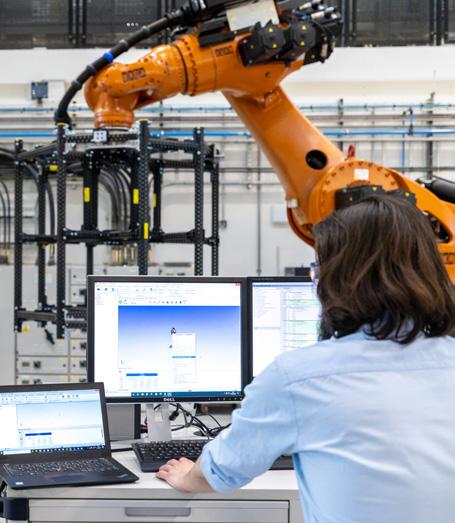
Daniel Symes, Head of
&
Exchange at the University of Nottingham, discusses how Omnifactory serves as a £3.8m national testbed to help manufacturers navigate uncertainty through reconfigurable, AI-driven automation
Manufacturing has always been about balance: cost versus quality, speed versus precision.
Today, a new tension defines the sector – agility versus certainty. Against a backdrop of climate change, geopolitical instability, supplychain disruption and volatile markets, manufacturers are being asked to deliver more customisation, faster lead times and lower environmental impact, often with less predictability than ever before.
At the same time, rapid advances in robotics, automation and artificial intelligence are transforming what is
possible on the factory floor. Autonomous systems, intelligent robots and datadriven decision-making are no longer futuristic concepts; they are becoming central to competitiveness. The challenge now is not simply adopting automation, but designing production systems that can evolve, reconfigure and scale in response to continuous change.
How, then, can manufacturers plan and invest with confidence when product portfolios expand, order books fluctuate and requirements shift late in the design cycle? The answer lies in rethinking factory architectures themselves – and
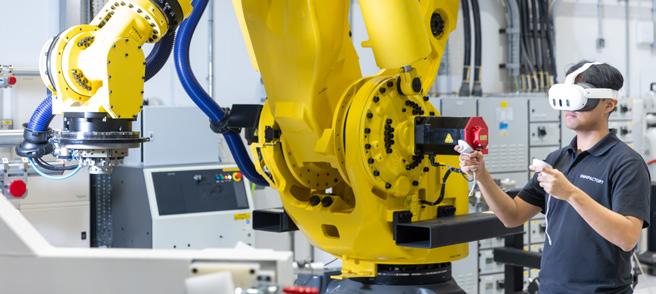
in redefining the role of robotics and automation within them. This is where Omnifactory comes in.
A robotic factory built for the unknown Officially opened in March 2023 at the University of Nottingham, Omnifactory is a £3.8m national demonstrator for smart, robotic manufacturing. More than a research facility, it is a fully operational testbed designed to show how highly automated factories can remain agile under uncertainty.
Omnifactory is embedded within the University of Nottingham’s strong Knowledge Exchange ecosystem, translating research in robotics, automation and digital manufacturing into impact through industry-funded research, contract R&D, collaborative PhDs, specialist facilities and commercialisation via licensing, IP and high-growth spinouts.
At its core is a bespoke, reconfigurable production environment that integrates advanced robotics, autonomous material handling, machine vision, AI and digital connectivity across plant, system and device levels. Unlike traditional fixed automation, Omnifactory enables robotic cells and processes to be dynamically reconfigured as product requirements change.
Robots are no longer locked into single tasks or static layouts. Instead, intelligent sensing, real-time data and AI-driven control allow systems to adapt to variable geometries, mixed-model production, and late-stage design changes that
would typically halt or severely disrupt conventional automated lines. The result is a factory capable of ‘plug-andproduce’ automation, where flexibility is designed in from the outset rather than retrofitted at high cost.
By embedding autonomy and adaptability into robotic systems, Omnifactory demonstrates how manufacturers can maximise asset utilisation, shorten changeover times and de-risk investment in automation –even in uncertain markets.
Building on decades of automation and robotics expertise
While Omnifactory is a new facility, it builds on more than 25 years of expertise in manufacturing automation and digital engineering. Formerly the Centre for Aerospace Manufacturing, the research centre has a strong track record of delivering world-leading research and industrial impact, supported by EPSRC, Innovate UK, the Aerospace Technology Institute (ATI) and major EU programmes including Horizon 2020 and Clean Sky.
This work spans sectors where robotics and automation are businesscritical: aerospace, automotive, defence, construction, nuclear, medical technologies, food manufacturing and space. Across these domains, the focus has been on deploying intelligent automation in environments characterised by complexity, precision and stringent quality requirements.
A flagship example is the Flexible Nacelle Manufacturing Assembly (FLEXCELLE) project, funded by the ATI and led by BAE Systems. FLEXCELLE reimagined large-scale aerostructure assembly through the use of robotic systems combined with measurementassisted determinate assembly (MADA). By replacing traditional fixed jigs with robotic, sensor-rich assembly processes, the project demonstrated that jig-less, flexible automation is not only feasible but highly effective.
The benefits were significant: improved precision, reduced inspection and rework, automated validation of large structures in multiple orientations, and the ability to produce different variants on the same robotic equipment. Critically, this approach delivered potential reductions of more than 50% in non-recurring costs associated with introducing new products – a powerful example of how robotics can enable both agility and economic resilience.
A national testbed for industrial automation
Omnifactory has been developed in close collaboration with industrial partners including Siemens and BAE Systems, who recognise the need for a neutral environment where advanced automation technologies can be tested, integrated and matured before deployment at scale.
Crucially, the facility is open to organisations of all sizes. SMEs and multinational manufacturers alike can use Omnifactory to trial robotic solutions, validate digital and control architectures and de-risk investments in automation. Whether exploring autonomous assembly, robotic inspection, human–robot collaboration or AI-enabled production control, businesses can experiment in a realistic, industrial-grade setting.
In doing so, Omnifactory acts as a bridge between laboratory research and operational factories, accelerating the adoption of robotics, automation and digital manufacturing across multiple sectors.
Robotics, automation and the path to net zero
For Professor Svetan Ratchev, Director of the Omnifactory Research Centre, the ambition extends beyond productivity gains.
“Omnifactory enables us to develop and rapidly deploy advanced robotic and digital manufacturing technologies with our industrial partners,” he explained. “Together, we are creating highly agile, intelligent and resource-efficient factories that strengthen supply chains, accelerate innovation and contribute to net-zero.”
Automation plays a critical role here. Intelligent robots reduce material waste, enable right-first-time manufacture and support energy-efficient production by matching capacity to demand. By reducing rework, overproduction and unnecessary transportation, digitally enabled factories can significantly lower emissions embedded within manufactured products.
In this way, Omnifactory demonstrates how robotics and automation are not only economic enablers, but also essential tools in delivering sustainable and circular manufacturing.
Shaping the robotic future of manufacturing
Omnifactory represents a compelling vision of what the factory of the future looks like: automated, intelligent,

We're creating a factory capable of 'plug-and-produce' automation, where flexibility is designed in from the outset rather than retrofitted at high cost
Daniel Symes, Head of Business & Knowledge Exchange, University of Nottingham
flexible and resilient by design. For manufacturers navigating uncertainty, it offers a practical route to adopting advanced automation without sacrificing adaptability.
By combining deep academic expertise, cutting-edge robotic technologies and a strong knowledge exchange framework, Omnifactory is not only redefining how factories operate – it is helping ensure the long-term competitiveness of UK manufacturing in an increasingly automated world.
l Visit www.omnifactory.com for more information
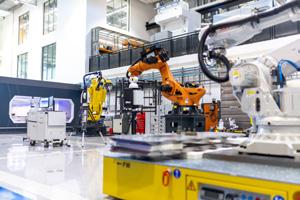

KUKA is a leading global supplier of intelligent industrial automation solutions. With a network of specialist partner integrators, KUKA offers a comprehensive range of industrial robots, autonomous mobile robots (AMRs) and software tools. With a focus on delivering the highest possible quality, performance and customer service, KUKA makes automation easier.


Every day thousands of companies rely on Peak Technologies to provide their operations with mission critical solutions that drive increased visibility, traceability and allow those companies to drive significant increases in profitability and shareholder value. Solutions include technologies such as machine vision, RFID, AI, printing and labelling and mobile computing.
Where there’s automation, there’s FANUC. FANUC UK provides industrial automation solutions - from the supply of CNC controllers, robots, collaborative robots, machining centres, EDM and injection moulding machines to the complete integration of factory automation systems. Working alongside a large network of integration partners who specialise in different industries and process applications FANUC are a strong partner to support your automation adoption.

Guidance Automation combines practical automation technology with a flexible pay-per-hour model, making smart manufacturing accessible to businesses of all sizes. Automation becomes a low-risk, scalable tool that delivers measurable productivity gains from day one, helping manufacturers improve efficiency, resilience, and competitiveness on their own terms.
LAPTOP-MOBILE www.kuka.com
PHONE-HANGUP +44 (0)121 505 9970
@ info-uk@kuka.com
LAPTOP-MOBILE www.peaktech.com/gb/
PHONE-HANGUP +44 (0)1249 659 000
LAPTOP-MOBILE www.fanuc.eu/
PHONE +44 24 7605 3000
@ infouk@peaktech.com @ sales@fanuc.co.uk
LAPTOP www.guidanceautomation.com
PHONE +44 116 243 6250
@ enquiries@guidanceautomation.com

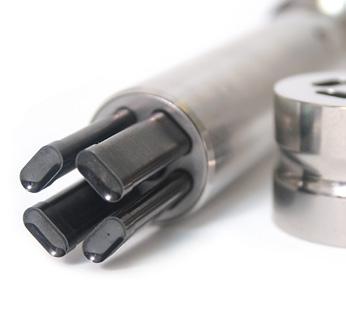
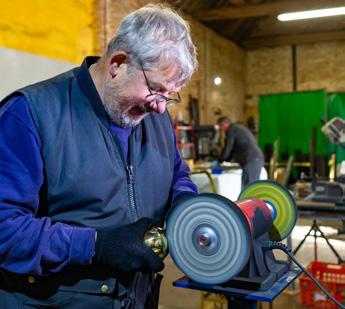
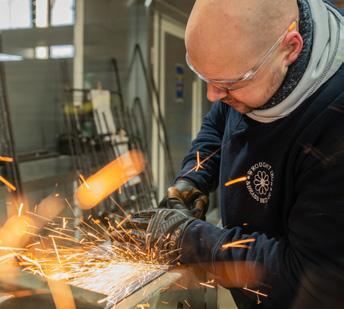
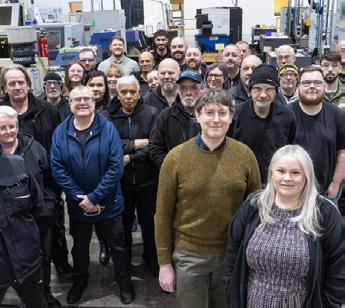

Delta Fire, a UK-based manufacturer specialising in high-performance firefighting equipment, won the Sustainable Manufacturing category at The Manufacturer MX Awards 2025. We paid a visit to find out more about the business and the secret sauce behind the award win
While Delta Fire supplies fire and rescue services, defence and industrial sectors around the world, the company, based just outside Norwich, is best known for its highperformance fire nozzles, including the award-winning Attack Pro range, which has been widely adopted across UK fire services and exported to over 70 countries.
Delta Fire supports the extinguishing of the majority of fires in the UK every day and that impact is built on precision engineering, rigorous testing and
continuous product refinement to meet the evolving demands of modern fire and rescue operations.
As a third-generation family business, Delta Fire combines engineering excellence with a strong focus on innovation, real-world operational performance and of course – as proved by last year’s award win - sustainability.
The business is ISO14001 registered, which provides a framework for implementing an environmental management system that can help the company deliver operational efficiency and sustainability.
ABOVE: Delta Fire has invested £5.5m in a new purpose-built, sustainable manufacturing facility near Norwich
Trends, processes and technology
Within the fire and rescue sector, Delta Fire has identified a clear shift towards more complex and volatile fire risks, driven by climate change, urbanisation and new hazards such as lithium-ion battery fires. Alongside this, there is growing demand for fluorine-free firefighting solutions and again, more sustainable system design.
From a manufacturing perspective, digitalisation and automation are becoming essential, not optional, while defence and infrastructure investment - particularly in nuclear and energy - is creating new growth opportunities for the business.
Delta Fire’s manufacturing is vertically integrated, combining solar powered robot tended precision CNC machining, assembly, testing and quality assurance under one roof. The company designs and engineers products in-house, supported by advanced simulation and real-world testing facilities. This allows Delta Fire to maintain tight control over quality and continuously refine performance based on feedback from frontline users.
Of course, much of this advancement is underpinned by the deployment of digital technology, which is playing a key role in improving efficiency, quality and decisionmaking. Delta Fire is increasingly using real-time machine data, performance monitoring and digital dashboards to optimise production and reduce waste.
Like many manufacturers on a similar journey, challenges have emerged around integration; linking legacy systems with new platforms and ensuring the workforce is confident and trained to use these new tools effectively. However, Delta Fire has identified that this process is as much a people transformation as it is a technical one.
Additional challenges
The company has further recognised the supply chain issues of recent years. At The Manufacturer we’ve often spoken about two prerequisites for manufacturers wanting to strengthen their supply chains – namely to broaden sourcing options and to invest in existing partnerships.
Delta Fire has done exactly that and has built resilience through supplier diversification, stronger relationships and increased visibility across its supply chain. Where possible, the company has also brought more capability in-house to reduce reliance on external suppliers. The situation has stabilised compared to recent years, but volatility remains, particularly around geopolitical factors and raw material pricing. Additionally, attracting and retaining talent has been a challenge for Delta Fire. Mitigation measures have seen the business actively engaging with schools, colleges and universities, offering apprenticeships and clear career pathways. Culture has also played a big part, and there has been a clear focus

Challenges have emerged around technology integration, but this process is as much a people transformation as it is a technical one
Jordon King, Head of Business Development, Delta Fire
LEFT: Delta Fire’s innovation can be seen in its Hydro-Wall Nozzle Hose which delivers heat shield protection and versatility, making it ideal for wildfire demarcation, EV protection, decontamination, firefighter rehabilitation, dust suppression and asset protection
on giving people responsibility early, encouraging cross-functional learning, and showing that manufacturing can be innovative, purpose-driven and impactful.
While the company we keen to remind others about the importance of being proactive – such as investing early in digital capability, taking a long-term view on sustainability, and treating skills development as a strategic priority – it is even more vital to align these areasdigital, sustainability and people - rather than treating them as separate initiatives.
Delta Fire’s future strategy is focused on scaling the core product range globally, particularly in defence, nuclear and export markets. Alongside this, the business is set to continue its investment in R&D and intellectual property, ensuring it remains at the forefront of firefighting innovation. Unsurprisingly, sustainability will remain central to this strategy, not just in terms of operations, but also in the solutions Delta Fire provides to its customers.
Continues over...
BELOW: Delta Fire’s Attack Pro Nozzle series has won the prestigious King's Award for Enterprise: Innovation 2025
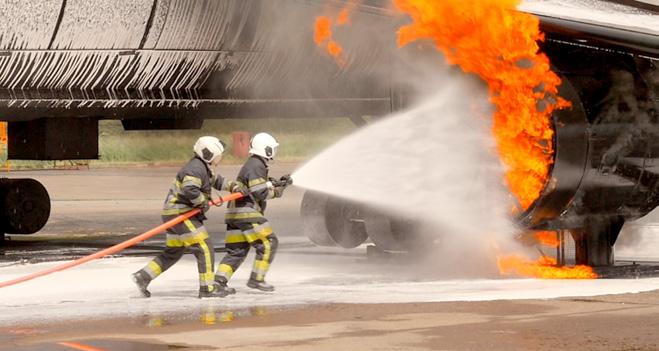

It is vital to align digital, sustainability and people, rather than treating them as separate initiatives
Jordon King, Head of Business Development, Delta Fire
BELOW: Delta Fire’s manufacturing includes solar powered robot tended precision CNC machining, assembly, testing and quality assurance under one roof
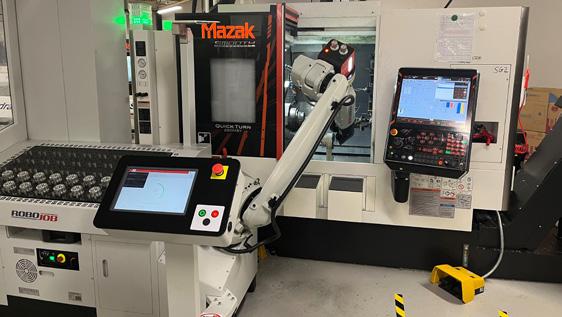
As well as picking up the award in the Sustainable Manufacturing category at last year’s The Manufacturer MX Awards, Delta Fire also won a King's Award for Enterprise for its sustainable development, recognising the company’s holistic approach, combining operational sustainability with product innovation.
Jordon King, Head of Business Development at Delta Fire, speaks about the role of sustainability within the business, the investment the company has made in this area and the award win.
Why has sustainability become so important to Delta Fire?
JK: Sustainability has evolved from a responsibility to a strategic priority at Delta Fire. As a business operating in fire and environmental protection, it was a natural progression for us. The increasing impact of climate change - particularly wildfires - has reinforced the importance of developing solutions that are both high-performing and environmentally responsible.
As a third-generation family business, we don’t have to prioritise shareholders, external finance providers or investors, so it’s been easy to focus on what’s important to us. Sustainability and doing right for the planet, people and our supply chain customers have always been close to our heart.
Delta Fire invested £5.5m in building a new sustainable facility – what did this entail?
We had lots of ideas on how we wanted to address and tackle climate change, focus on our sustainability objectives, and align them with the wider goals of the business.
This was always going to be a challenge in our old-world facility. We didn't have ownership of the site, and that limited what we were able to do as an organisation. As such, we decided to take the leap and invest in our own facility.
Building our own site from the ground up allowed us to really invest in sustainability across the organisation This has resulted in a purpose-built, energy-efficient manufacturing site, featuring 100% rooftop coverage solar generation, battery storage, air source heat pumps and rainwater harvesting systems. It was designed not just to reduce emissions, but to improve operational efficiency and support future growth.
What were the key drivers behind the facility reaching its 2025 net zero goal?
Long-term resilience, cost stability and alignment with our values as a family business were integral to this investment. The main challenges were upfront capital investment, integrating new technologies and ensuring operational continuity during the transition. Achieving net zero required a whole-business approach rather than isolated initiatives, and a culture-driven process of continuous improvement.
Operating from a net zero energy manufacturing facility demonstrates that high-performance engineering and environmental responsibility can work together. Sustainability is integrated into production methods, energy usage and long-term strategic decision-making.
This approach supports increasingly stringent procurement requirements focused on carbon reduction and responsible supply chains, while maintaining the performance standards expected by fire and rescue services.
What advice would you give any manufacturers on a similar journey?
Start with a clear baseline and focus on the areas where you can have the greatest impact. Don’t underestimate the importance of leadership buy-in and workforce engagement. It’s also important to view sustainability as an investment rather than a cost.
Clear communication is also critical; without it, it’s very difficult to achieve meaningful change. We ensured that sustainability was embedded into the company culture, with regular updates, clear targets and visible leadership commitment. People need to understand not just what you’re doing, but why it matters.
We also measure sustainability success by tracking a range of metrics including energy usage, emissions across Scopes
1, 2, and 3, waste reduction and resource efficiency. KPIs are set based on both regulatory frameworks and internal targets, with a focus on continuous improvement rather than one-off achievements.
Is there a balance between profit and planet? There can be in the short-term, particularly when it comes to investment decisions. However, in the long-term, sustainability and profitability are increasingly aligned. Efficient use of resources, energy independence and strong ESG credentials all contribute to a more resilient and competitive business.
Rather than being just a metric we measure, sustainability is becoming a significant differentiator. Customers are increasingly factoring sustainability into procurement decisions, particularly in public sector and large industrial projects. However, it must be backed up by performancesustainability alone isn’t enough.
Our approach is integrated rather than superficial. Sustainability is embedded across our operations, products and strategy. Combined with high-performance engineering, this allows us to offer solutions that meet both operational and environmental requirements.
The next phase in our sustainability journey is about scaling impact, continuing to reduce emissions, expanding sustainable product innovation and supporting both customers and suppliers in their own transition journeys. We are also exploring new and complementary technologies such as a vertical wind-turbine (subject to planning approval) and approaches to further improve efficiency and resilience.
What was it like to enter and win at The Manufacturer MX Awards 2025?
The awards process is really thorough, which I think is a strong USP of the programme. It’s challenging, and it really sets you apart from other organisations if you win.
There's so much credibility around the awards, to the extent that even being a finalist and getting through to that stage is a huge achievement and recognition.
I think the judges really liked our products which have been designed to be modular, so every part is replaceable. So, we're able to educate our customers on the longevity of the product, reduce its emissions and optimise its lifecycle. It's something our competitors simply aren't doing as much.
• Sustainability is central to Delta Fire’s strategy, not just a side initiative: Delta Fire has embedded sustainability across its operations, products and long-term planning. Its net-zero manufacturing facility, ISO14001 certification and focus on environmentally responsible firefighting solutions show that sustainability is treated as a core business driver and competitive advantage
• Vertical integration and digitalisation drive quality and efficiency: By keeping design, engineering, manufacturing and testing in-house, Delta Fire maintains tight quality control, reduces waste and continuously improves product performance
• The firefighting industry is evolving rapidly, creating new demands: Trends like climate change, urbanisation and lithium-ion battery fires are increasing the complexity of fire risks. This is pushing demand for more advanced, sustainable and adaptable firefighting equipment
• People and culture are as important as technology: The company emphasises workforce development, early responsibility and cross-functional learning. It recognises that digital transformation isn’t just technical - it requires training, engagement and cultural alignment
• Resilience comes from proactive, long-term thinking: Delta Fire has strengthened its supply chain through diversification and in-house capabilities, invested early in sustainability and digital tools, and aligned strategy across people, technology and environmental goals
Back in February, The Manufacturer visited Cofast, also known as NDB Engineering, at its new facility in Willenhall, to discuss current operations and what it means to now be part of Clarity Group
Cofast is currently headquartered at its 22,000 sq ft manufacturing facility in Willenhall, near Wolverhampton, supported by a 6,500 sq ft logistics hub strategically located in Plymouth. With a dedicated team of 64 employees, the company generates around £7m in annual revenue. Its extensive portfolio includes a 20,000-item engineered consumables list alongside specialised fasteners and turned parts.
“We are a manufacturer of special fasteners as well as precision turned parts. We also import standard fasteners, which we keep for distribution and onward sale,” said Rebecca James, the company’s
Managing Director. “We also specialise in stocking solutions, such as VMI (vendor managed inventory) for our customers, offering anything that takes the pain out of purchasing fasteners.”
As managing director, Rebecca predominantly spends her time focusing on the commercial side of the business, working with key customers and supporting the finance functions. “I have a team of great people working on the operations and technical side of the business for support,” she added.
Cofast’s main process is turn and mill for manufacturing fasteners. “We use exotic alloys, like Monel, Hastelloy and Inconel,
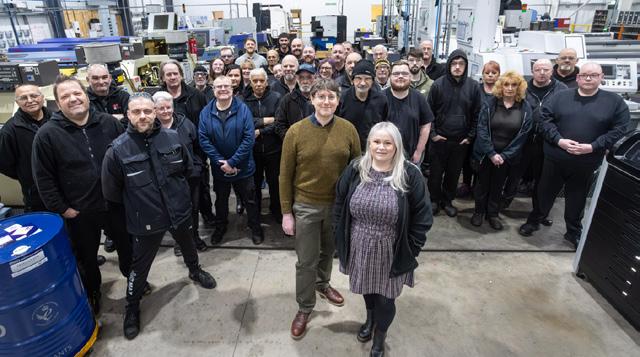
but also more standard stainless and carbon steel.”
The end use of Cofast products is largely within the defence sector, as well as nuclear, oil and gas. “This means we have the support structure that enables us to handle additional certification and testing requirements, and subcontract processes as well. This includes things like grinding, destructive and non-destructive testing,” explained Rebecca.
One trend that Cofast is seeing is the increased expectation from customers around compliance. “We're finding that the expectations of many of our customers in this area has increased, and there is now a lot more paperwork involved to support the fastener, rather than merely the quality of the fastener itself,” said Rebecca.
She explained that while much of this compliance focus is around process, there has also been a push from customers for net zero and a greater need to ensure environmental, health and safety compliance.
As well as continued support to its customers, the business also has a solid supply chain in place which it has built up over the years, building trust and support when times have been more challenging. “Our partners have also been very supportive of the different directions we have taken,” added Rebecca.
Every company, enterprise or SME within the sector is working on some kind of digital transformation, and Cofast is no different. “We’ve been working on our ERP system to help automate a lot of the business analysis and monitoring tools that are sat within it. This involves areas like automatic monitoring of stock levels,” said Rebecca.
This means Cofast is alerted when purchases are required, rather than the other way round. The business is also implementing the same system within its VMI solutions, meaning the vendor, in this case Cofast, takes full responsibility that its customer never runs out of stock. “This means the customer gets a greater level of service overall,” she said.
The business is also looking into the use of cobots on the shop floor, where appropriate, given the batch sizes that it is running, helping to increase productivity and efficiency.
As an SME, Rebecca finds it challenging to make a difference when it comes to net zero. “We’re currently members of JOSCAR and EcoVadis which provide us with great pointers as to how we are moving forward, where we are strong and where we could improve,” said Rebcca.
For Cofast, many of its actions are rooted in the local community and how it can offer support. “We currently donate our scrap wood and broken pallets to Wood Saints, which is a local charity that provides disadvantaged members of the community with the tools to build items like furniture which they can sell on,” she explained. The business is also providing staff with an additional day of annual leave which they can use to volunteer for local charities.
With advanced manufacturing featuring heavily in the government’s Industrial Strategy, it’s no surprise that this year, Cofast is ramping up its focus on the defence sector. “It’s a sector which we’ve been successfully supplying for over 20 years. We know there is growth there and it’s where our focus is for now,” said Rebecca.
The focus on defence also plays into Cofast’s recruitment requirements. “In the past few years, we’ve been focused on stabilising the business following our facility move, so recruitment had taken a backseat,” said Rebcca.
We’re seeing lots of positive changes within the Clarity Group and are really excited to be part of that within a bigger group
Rebecca James, Managing Director, Cofast
As the business is now settled, it is ready to pick up the drive for new staff and looking at Make UK Defence, who support apprenticeships within manufacturing. Rebecca added: “There are lots of opportunities in new infrastructure projects and we’re already working alongside our sister businesses to explore new markets where our engineering knowledge and machine capacity can make a difference –aerospace is a prime target.”
In truth, it’s not all been plain sailing for Cofast and, back in February, the company announced that the business had been purchased by Clarity Group, a move that saved more than 60 jobs across NDB Engineering and sister company, Cofast. “For us this means investment, which in turn will give us the capability for activities like grinding in-house, increasing our efficiency and capability for our customers,” explained Rebecca.
The buyout has also opened doors for Cofast to collaborate with other parts of the group. An example of this is the group’s purchase of Clarity Plastics, which operate in many of the same sectors as Cofast. “I'm currently doing a lot of work with them so we can support each other in the sectors where we both operate. They have also undergone a wealth of changes since the buyout,” she said.
Clarity Group has recently passed surveillance audits for ISO 9001 and is in the process of investing £500,000 in a new machine to support a recent new contract.
“We’re seeing lots of positive changes within the business and are really excited to be part of that within a bigger group,” Rebecca concluded. l
• Strong SME with specialised offering: Cofast is a well-established SME generating ~£7m annually, with a large portfolio (20,000+ items) focused on specialised fasteners, precision parts and inventory management solutions like VMI
• Highly regulated end markets shape operations: The company primarily serves defence, nuclear and oil and gas sectors, requiring strict certification, testing and increasing levels of compliance documentation beyond just product quality
• Digital transformation is improving efficiency: Cofast is investing in ERP systems and automation (including potential cobots) to streamline stock management, improve productivity and enhance customer service through smarter VMI systems
• Balancing sustainability with SME constraints: While net zero goals are challenging for a smaller business, Cofast is making incremental progress through certifications (JOSCAR, EcoVadis) and local community initiatives like charity partnerships and volunteering
• Clarity Group acquisition enables growth and stability: The buyout secured jobs and is unlocking investment, new capabilities (e.g. inhouse grinding), and collaboration opportunities across the grouppositioning Cofast for expansion
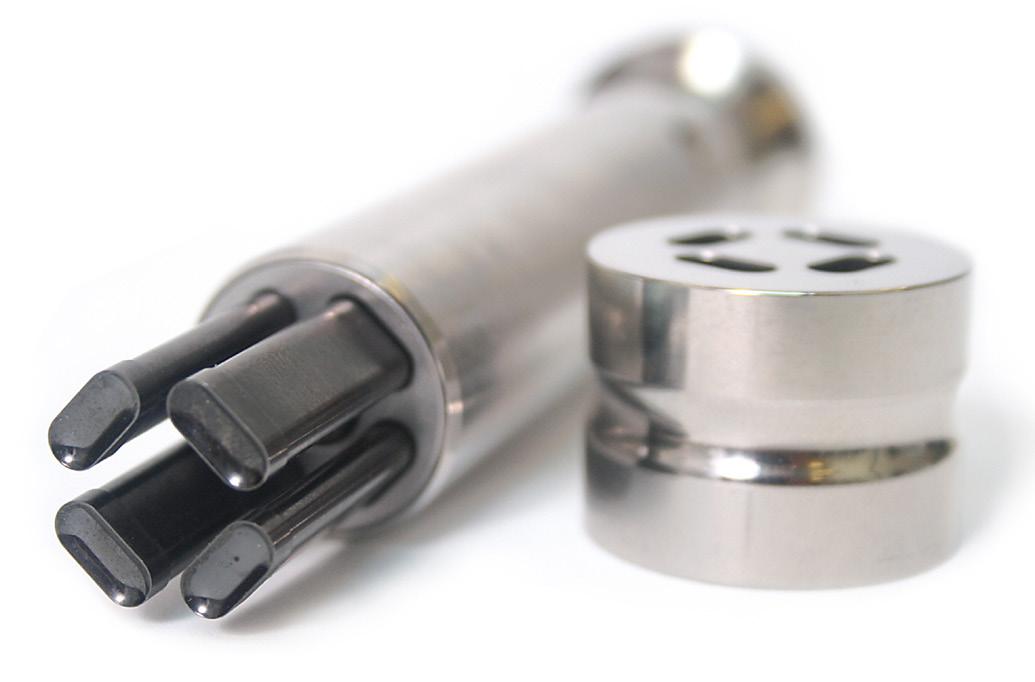
The Manufacturer took a recent trip to Long Eaton to visit The Manufacturer MX Awards 2025, International Trade category winner, I Holland. We sat down with Rob Blanchard, Research, Development & Quality Systems Manager, about the company's reputation for exceptional export and its future growth plans
Every day, millions of people around the world take tablets, vitamins and supplements as part of their daily routine - often without a second thought about how they were made. Behind many of these products are the precision-engineered tablet tooling and designs created by I Holland, helping manufacturers produce safe, consistent and high-quality medicines that people rely on.
I Holland began life in 1946 from the joining of two companies making tablet tooling - one was a three-man machining company crafting precision-engineered components, the other a specialist in producing dies for printing and embossed labels used on luxury products such as perfume and chocolate.
Now in 2026, many of I Holland’s employees have seen many years of
service, including Rob Blanchard, Research, Development & Quality Systems Executive Manager at I Holland. “I started here 22 years ago on a fixed-term contract and never looked back. The company is three times larger than it was back then and we’re continuing to grow.”
Unique processes
Most of I Holland’s manufacturing
processes are unique to the business, ensuring quality and repeat custom each time. During our visit Rob gave us a glimpse into some of the unique processes at I Holland that give their tools their precision and high quality. Rob explained three key steps.
1. Cold forming: Starting with the cold forming process, I Holland form the tablet shape into steel through pressing, without the need for heat. This is a process that’s been developed by I Holland over the years and the way the company applies this process is unique to the business.
2. Heat treatment: The steel must be hardened to ensure the best toughness and strength. A modern tablet press is a harsh environment for tooling, putting them under immense wear and strain. The heat treatment produces a durable and wear resistant product. It also ensures dimensional stability all the way through machining.
3. Process control: I Holland has statistical process control which is analysed by the internal quality team. Once the inspection is complete, the product is dispatched to the customer. This attention to detail is applied to each process in the factory, with no tool left to chance - everything is measured, reviewed and 100% inspected.
“We’re currently making thousands of components a day, which are shipped to approximately 100 countries,” said Rob.
Like many manufacturers, I Holland is on a digital transformation journey which is focused on data processing.
“Our statistical process control gathers an enormous amount of data on the capabilities of our shop floor processes. Taking the time to analyse the data can be quite lengthy, but we’ve begun to utilise AI to do it for us,” said Rob. Being able to process this data faster allows the business to extract meaningful information. “We’ve also set up small teams within the company that are looking at the wider uses of AI and digital automation technologies to be able to aid the business moving forward,” he added.
the challenges of sustainability goals and net zero much more difficult.
“We have recently had new compressors installed and are now using the heat - a byproduct from the compressors - to run the factory. In turn, we’ve been able to remove all other heating systems from the business,” said Rob. Before this, the heat would have vented out of the building and been wasted.
Not only that, but the roofs of all four I Holland buildings are now covered in solar panels. "The aim is to achieve our ambitious sustainability targets while reducing electricity costs as much as possible, helping us keep prices competitive for our customers," he added.

Geopolitical issues have affected every manufacturer’s supply chain in one way or another, and businesses have had to adapt quickly to the ongoing challenges. “We have set up a truly global supply chain which helps us mitigate any local geopolitical issues in any one region around the world. This gives us the capability to swap and move our supply chain around from different suppliers globally, rather than just sourcing everything from one place,” Rob explained.
Being an exporter to over 100 countries, I Holland is well-versed in problem solving. “Our strength is that we don't have one market that dominates all the others. This allows us to move our focus should one area become difficult,” he said.
An example of this is the current situation in Ukraine. When the conflict first broke out, I Holland pivoted and focused operations on South America. "This has allowed us to better support our customers in this growing region and provides us with a stronger global platform," said Rob.
Of course, there has been further disruption since, not least the tariff turmoil.
Advice for expanding markets
We have set up a truly global supply chain which helps us mitigate any local geopolitical issues in any one region around the world
Rob Blanchard, Research, Development & Quality Systems Manager, I Holland
Many mechanical engineering companies are energy intensive and can often find 61
Exporting is a very multifaceted task, so who better to ask for advice in this area that the current holder of The Manufacturer MX Awards International Trade category. Fundamentally, a business needs to develop strong channels to market to be sucessful. The fact that I Holland works with many multinational companies, with sites all over the globe, has helped it develop those channels to market.
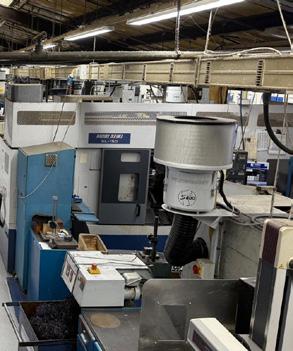
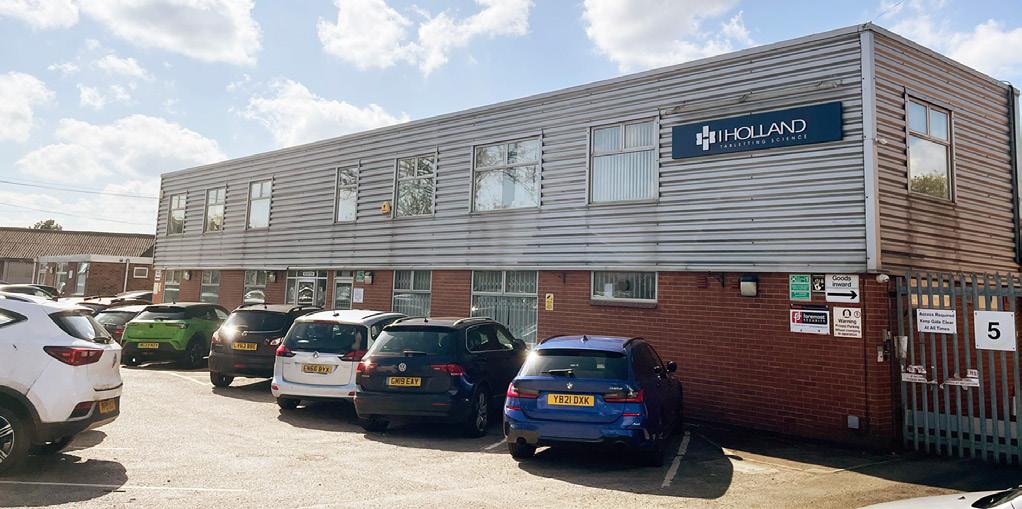
It's important that we continue to focus on our exports to new and emerging markets to continue to grow and support our industry
Rob Blanchard, Research, Development & Quality Systems Manager, I Holland
The majority of all products that I Holland ship is through air freight, which comes with its own security protocols; so much so that the company has its own dedicated team to work across this part of the business. “We have our own export department here and the people within that team are very knowledgeable on the subject; working with tariffs, commodity codes and global shipping regulations,” said Rob.
For manufacturers starting out, Rob’s advice would be to look at exporting holistically and methodically. “First ensure you have a market to begin with, then look at all the factors that could impact your ability to export. Take it step-bystep and the rest will follow; growing the business to the point where we now export to over 100 countries has been a slow process and it didn’t all happen over night,” he said.
Even though I Holland has doubled the size of the business in the last seven years, it certainly has no plans to rest on its laurels. A strategy is already in place for I Holland to triple in size again over the next decade. The business has recently gone through a buyout process which will aid its ambitious targets.
LEFT: Details such as the teddy bear on vitamin tablets are vital to a pharmaceutical business, ensuring brand, quality and authenticity
Going forward, Rob expects growth, and 90%+ of everything the business produces is likely to be exported. "Overall access to medicines is increasing throughout the globe and with this production of tablets continues to grow in all parts. It's important that we continue to focus on our exports to these new and emerging markets to continue to grow and support our industry." he said. l

Catch Rob's keynote at Smart Manufacturing Week on Wed 3 at 11:00 in the Leadership & Strategy Theatre.
Back in November 2025, I Holland won The Manufacturer MX Award for International Trade. During our visit, we asked Rob about the win.
Why did you enter the International Trade category?
RB: We're a manufacturer, an exporter and we innovate, so the award aligned with our core business values. Currently, we export over 80% of everything we manufacture to over 100 counties globally. That has come with its challenges over the years, but we’re undeterred and we want to increase that to 120 countries within the next ten years.
What do you think made I Holland stand out to the judges?
It’s the fact that we are a manufacturing company that exports exceptionally well.
I Holland has a fantastic reputation within our marketplace, making it easy for the judges to see the fruits of our innovation and growth. They could clearly see what we are doing now and how we are going to continue to move forward.
It’s great to be part of a manufacturing business that is thriving and is sucessful in exporting.
What did it feel like to win?
It was amazing that someone else has recognised the work we do at I Holland. It also helped us to know that we are doing the right things and are being rewarded for it.
The awards are also great for employee morale; ultimately, it’s not about the person who writes the application, it’s about the whole business that puts the work in.
At I Holland, we see ourselves as a big family of 174 people and we all celebrate together and share the good news!
How was the feedback that you received from the judges?
The feedback was excellent. It's good to have a fresh set of eyes looking at the business.
It's why we like new people coming in, because they always have an opinion on how we could be doing things differently. We need to be a business that keeps
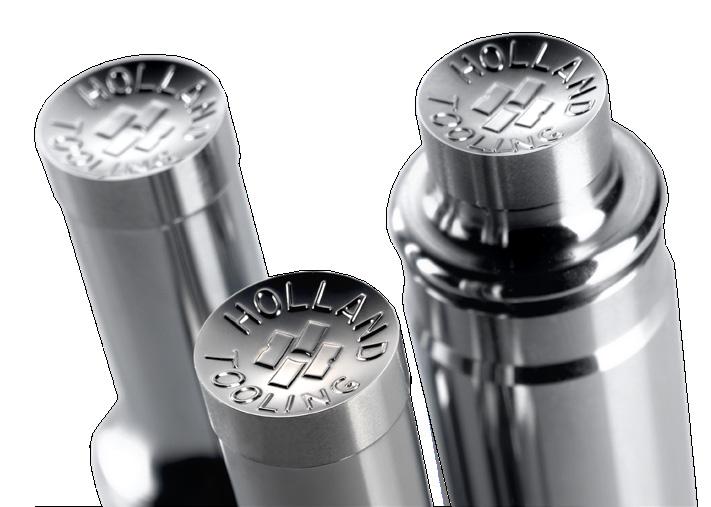
• I Holland’s niche expertise underpins global pharma quality: The company specialises in tablet tooling (the parts that shape and emboss pills), which is critical for branding, safety and authenticity in pharmaceuticals. Its long history (since 1946) and unique capabilities have made it a trusted global supplier
• Manufacturing processes drive quality and loyalty: I Holland’s highly controlled manufacturing methods including cold forming, heat treatment and statistical process control, alongside continuous product and coating innovations, deliver durable, high-precision components. The combination of advanced engineering, consistent quality and ongoing innovation helps build long-term customer relationships and repeat business
• AI and digital transformation are boosting efficiency: The company is leveraging AI to analyse large volumes of manufacturing data more quickly, improving decision-making and opening the door to broader automation across the business
• Sustainability and energy innovation are key priorities: As an energy-intensive manufacturer, I Holland has invested in solutions like heat recovery from compressors and solar panels across its facilities. These moves reduce costs and support net-zero ambitions
• Global diversification strengthens resilience and growth: Exporting to over 100 countries, I Holland avoids reliance on any single market. It actively adapts to geopolitical challenges - shifting focus between regions and capitalising on trade changes - to maintain growth and competitiveness
One family-run manufacturer is proving that craftsmanship, sustainability and innovation can go hand-in-hand - building luxury, bespoke iron beds designed to last a lifetime while embracing the future of British manufacturing. The Manufacturer visits the Iron & Brass Bed Company
As journeys to manufacturing businesses go, our trip to the Iron & Brass Bed Company was certainly one of the most picturesque.
A drive up through rural Norfolk took in some beautiful countryside, all the way to the manufacturer's showroom and workshop, both situated on the Sandringham estate.
That's not to say that a countryside location can't be the setting for some pretty advanced manufacturing.
We’ve all heard – and maybe even uttered the phrase – ‘they don’t make ‘em like that anymore’. And that, in essence, was the ethos behind the Iron & Brass Bed Company.
Founder Amanda Oldfield grew up with beautiful, old iron beds but when she searched for something similar when she become a mother herself, she failed to find anything that possessed the same soul, weight of memory or was still made in Britain.
She decided to change that by not
merely creating beautiful beds, but rather to build something that families could cherish, and a legacy that could be passed down.
In an age of fast furniture and disposable consumer habits, the company is proving that tradition, craftsmanship and sustainability can still define a successful modern business. The company is the only UK metal bedmaker certified by Made in Britain, as well as holders of two Royal Warrants.
One of the most notable shifts for the company in recent years has been a growing consumer appreciation for handmade products. According to Amanda, customers are increasingly seeking out items that offer quality and a sense of heritage, and it is these characteristics that make the company stand out as a truly luxury brand.
“People value the fact our beds are handmade,” she said. “They want to invest in something that will last - a lifetime guarantee, and that old-fashioned ‘buy it once’ mindset.”
This trend stands in stark contrast to the mass-produced, short-lifecycle furniture that has dominated the market for years. Instead, customers are gravitating towards products with a story.
At the heart of the company’s offering is a fully bespoke service. Each bed tailored to the customer’s exact specifications, and only produced once an order has been placed.
“A bed is never made until it’s got an owner,” Amanda explained. “The manufacturing process itself is deliberately transparent. Customers are even invited to visit the workshop to see their bed being manufactured - from raw iron entering the factory to the final powder-coated frame ready for delivery.”
This emphasis on craftsmanship extends beyond production into logistics. Unlike many manufacturers, the company handles its own deliveries, ensuring complete control over the customer experience while also reducing environmental impact.
Beds are delivered, assembled in the customer’s home, and all packaging is taken away for reuse. “Nothing gets wasted,” Amanda added. “We keep our carbon footprint down wherever we can.”
This closed-loop approach is part of a broader sustainability strategy that has seen the business become carbon neutral - an achievement that sets it apart within the sector.
Technology as an enabler
In addition, one might think that traditional, handmade, even artisan Continues over...
BELOW: One of the most notable shifts for the company in recent years has been a growing consumer appreciation for handmade products
IN AN EFFORT to highlight the economic pressures facing sheep farmers and the growing demand for transparency across UK supply chains, earlier this year the Iron & Brass Bed Company unveiled an updated mattress collection using 100% British fleece that can be traced directly from bale to bedroom.
The updated Signature British Wool Mattress Collection is the first and only mattress range filled entirely with pure British wool, using no synthetic blends or fillings and no imported fleece, complemented by British-made calico pocket springs. The improved range also has the unique distinction of being the only pure wool mattress endorsed by Made in Britain. No other wool mattress in the UK currently holds this certification.
This ensures full traceability, with each product linked to the individual farm from which the wool originated.
Working directly with British sheep farms, the company has built its own in-house traceability system, allowing wool to be processed in farm-specific batches and tracked through each stage of production. Each mattress carries a bespoke QR code enabling customers to see where the wool inside their product has come from.
Harry Thompson, Head of Brand Development and Marketing at the Iron & Brass Bed Company, said: “British farmers are paid mere pennies for fleece. A farmer has no choice but to shear their sheep for welfare, but smaller holdings are barely breaking even.
“Large conglomerates in the industry base the wool’s value on the market average at the end of the year and typically do not release payment to the farmer until the farmer sends in the next clip
the following year.
“This means that many British farmers are unsure of what their wool income is likely to be and feel trapped in a loop where they have no control over how much they’re going to get paid and feel obliged to continue the cycle.”
UK farmers typically earn 10-60p per kg of wool produced, far below the cost of shearing, although prices in the last year reached their highest prices in a decade of up to £1.18 per kg. This has been attributed to a global decline in the number of sheep and changes in consumer behaviour as environmentally conscious shoppers switch from synthetic fabrics to natural materials.
The aim of the Signature British Wool Mattress Collection is to help more consumers choose natural, British materials while also giving farmers greater financial security.
The company offers farmers a fixed price upfront when signing a partnership, with payments released after just three months to help their cash flow.
John Pearce, CEO of Made in Britain, said: “This is a strong example of British manufacturing working closely with the UK agricultural supply chain to deliver transparency and long-term value, for consumers and the skilled workers that uplifts our economy. British wool has a proud heritage, and it is deeply encouraging to see manufacturers supporting farmers through clearer provenance and responsible sourcing."

We’ve always believed in sourcing everything on our doorstep as much as we can, and as such, we’re the only carbon neutral iron bed maker in the country
Amanda Oldfield, Founder, Iron & Brass Bed Company
manufactured products would have stayed processes, reluctant to embrace change and adopt technology. This could not be further from the truth at the Iron & Brass Bed Company with technology viewed as a tool to enhance craftsmanship rather than replace it.
Don’t be fooled by the rural location and workshop in a converted farm building; the company are constantly looking forward and are currently in the process of commissioning a new industrial welding robot, which will speed up production time and free up operators to engage in more highly-skilled tasks.
“With the next generation now stepping into leadership roles, digital transformation is becoming an increasingly important focus,” Amanda added. “Our sons are taking over the business, and they’re far more in tune with new technology, which allows us to work smarter. The robot welder is there to support our artisans, improve precision and help us develop new product lines, rather than replace the craftsmanship of the business."
Resilience in a changing world
In recent years, manufacturers across the UK have faced significant disruptionfrom Brexit and the pandemic to ongoing geopolitical tensions. Yet Amanda’s business has remained relatively insulated from these challenges.
A key reason is its commitment to sourcing materials locally. “We’ve always bought British,” she explained. “We believe in sourcing everything on our doorstep as much as we can.”
While this approach has occasionally led to minor delays - particularly during periods of increased demand - it has largely protected the business from the more severe supply chain issues experienced elsewhere.
The company has also shown agility in responding to cost pressures. Rising fuel prices in 2022 prompted a shift to a four-day working week, with longer hours but improved efficiency - a move that Amanda described as highly successful.
Redefining sustainability
Sustainability is not just a buzzword for the business - it is embedded in every aspect of its operations.
From reusing packaging to investing in energy-efficient technologies, the company is constantly seeking ways to reduce its environmental impact. But perhaps its most innovative initiative lies in its approach to materials - particularly wool.
ABOVE: Investment in an industrial welding robot will free up workers to concentrate on more highly-skilled activities
• Craftsmanship making a comeback: The ‘buy it once’ mindset is gaining traction, with customers actively seeking handmade, durable products that carry meaning and story - rather than mass-produced alternatives
• Bespoke, made-to-order manufacturing is a competitive advantage: By only producing beds once they have a buyer, the company avoids overproduction, reduces waste and strengthens customer connection
• Sustainability works best when it’s embedded, not added on: From carbon neutrality to reusing packaging and sourcing local materials, sustainability is integrated into every part of the business
• Technology should enhance craftsmanship, not replace it: The business demonstrates a balanced approach to innovation - using tools like robotics to improve efficiency while preserving the human skill that defines the product
• Local sourcing builds resilience and strengthens brand value: By prioritising British materials and suppliers, the company has avoided many global supply chain disruptions while also appealing to growing consumer interest in domestic manufacturing
The company recently launched a fully traceable British wool mattress, made using locally sourced wool and designed to reconnect customers with the origins of their products.
“Wool is an amazing natural resource that’s not being valued,” Amanda added. “Much of it gets burned or buried.” See full case study below.
Late last year, Amanda was recognised with an Inspiring Leader Award at the Made in Britain Awards - an achievement she described as both humbling and unexpected.
“To hear my name read out was just mind-blowing,” she recalled. Yet she is quick to deflect credit to her team, emphasising the collective effort behind the company’s success. “When we make a bed, that’s a whole team effort. We couldn’t do what we do without our people.”
This team-centric approach –combined with a definite family affair - is central to the company’s resilience and growth. By fostering a culture of shared responsibility and pride in craftsmanship, the business has built a workforce that is deeply invested in its success.
As the company enters its next chapter, the focus remains on evolution rather than reinvention. Plans include expanding product ranges, improving sustainability practices and continuing to champion British materials and craftsmanship. Onsite we were shown the location of a new production facility, fresh with newly levelled floor and awaiting a solar panelled roof.
In a manufacturing landscape often dominated by scale and speed, this Norfolk bedmaker offers a compelling alternative: a business where quality, sustainability and human connection are not just values, but the foundation of everything it does.
And in a world increasingly defined by uncertainty, that foundation may prove to be its greatest strength. l

Whether you’re paying for fuel or EV charging, for a few vehicles or a growing fleet, Allstar brings everything together in one place.
From fuel discounts at the pump* to fast, reliable charging across the UK, you get the coverage, control and cost savings your business needs to keep moving.
A simpler way to manage payments, with less hassle where it matters.
Search ‘Allstar card’ or scan below for more info


From site assessment to system integration - energy chains, cable assemblies, and turnkey solutions from igus®