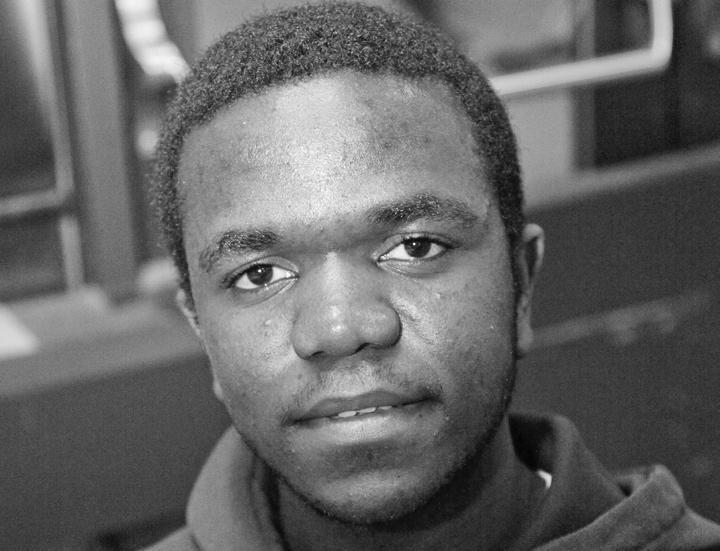
Will Gibson, Keegan Steele, Gloria Joe, Samantha Secter, David Moll, Sarah Bennett
MANITOBAN
105 UNIVERSITY CENTRE UNIVERSITY OF MANITOBA WINNIPEG, MB R3T 2N2
General
Phone: (204) 474.6535
Fax: (204) 474.7651
A “volunteer staff” member is defined as a person who has had three volunteer articles, photographs, or pieces of art of reasonable length and/or substance published in three different issues of the current publishing year of the Manitoban. Any individual who qualifies must be voted in by a majority vote at a Manitoban staff meeting. Elected representatives and non-students may be excluded from holding votes as volunteer staff members in accordance with the Manitoban Constitution.
The Manitoban is the official student newspaper of the University of Manitoba. It is published monthly during the summer and each week of regular classes during the academic year by the Manitoban Newspaper Publications Corporation.
The Manitoban is an independent and democratic student organization, open to participation from all students. It exists to serve its readers as students and citizens.
This year will mark the first UMSU general election for which polling stations are available at certain locations across the University of Manitoba’s Fort Garry campus, places such as Migizii Agamik (Bald Eagle Lodge) and the faculty of law’s Robson Hall. Nonetheless, some students are upset that Migizii will only house a polling station for one day of the three-day voting period.
Earlier this month, UMSU Council’s Aboriginal students’ representative and the U of M Aboriginal Students Association (UMASA)
treasurer Clyford Sinclair circulated an email imploring students to contact chief returning officer (CRO) Jacqueline Keena to express concern over the one-day rule.
“I am asking all council and students you know to email [Keena] that this is unfairly targeting Aboriginal students who all mainly go to Migizii Agamik. It does not allow us students to have fair access to voting while every other voting station in other faculties and buildings have them available for the 2-3 days,” wrote Sinclair, who is also running for vice-president internal
this election season, with the slate UMatter.
“It was brought to my attention by a student,” Sinclair recently told the Manitoban
“I did some digging [ . . . ] the CRO told me that it was an experimental process to see if there would be a turnout for it, but to me it didn’t make sense, because if you’re going to look for a fair turnout you have to do at least minimum two days since classes run Monday-Wednesday-Friday and Tuesday-Thursday,” he continued.
Keena later released a statement
online, acknowledging the correspondence she had received over the Migizii issue and declaring that polling stations could not be rearranged following the closing of the nomination period.
“Polling stations are not changed after the close of the nomination period. To do so would be to run the risk of giving a declared candidate an unfair advantage,” said Keena, later adding, “Any polling station is available to any student during the vote.”
In an interview with the Manitoban, Keena said she received a total of nine emails expressing dismay over the polling station arrangement, while others contacted her to confirm that they were not upset about having only one day to cast a ballot inside Migizii.
Sinclair pointed out in his email that while Bald Eagle Lodge received a station for one day, Robson Hall would have a station for two. Keena
also responded to this concern in a statement to the Manitoban, explaining that the arrangement was based on the strict class schedule the faculty of law follows.
“The number of hours to vote at Migizii Agamik is greater than the number of hours available to students at Robson Hall. The intention of having a polling station at Robson Hall for two days, albeit for less hours, is to allow students to vote during their set lunch break,” she said.
Keena went on to point out the importance of arranging polling stations to maximize accessibility within the confines of a set budget.
Voting runs this week, Mar. 5-7. See the map above or the website of the CRO for polling locations.
General elections 2014 complaints summary
A compilation of grievances filed, and their rulings
According to UMSU bylaw 1050, during general elections, “any Member of the Union, other than the CRO [chief returning officer], may file a complaint regarding an alleged breach of the election rules,” and “the CRO is empowered to investigate and rule upon any breach of the election rules, whether submitted to the CRO in a complaint or initiated by the CRO.”
As of press time, Monday, Mar. 3 at midnight, only two complaints had
been filed, and neither has resulted in any penalty. As campaigning heats up, however, the total is expected to rise.
Here is a summary of the registered complaints:
complaint #2014-01
Victoria Watkins (vice-president internal, Fusion) filed a complaint against presidential candidate Al Turnbull (Refresh) last Friday, alleging he “promoted slander by
re-tweeting a tweet that suggested ‘slates’ were responsible for vandalism of his campaign material.” CRO Jacqueline Keena ruled that “no slanderous or libelous statements were promoted.” The complaint was ruled invalid because it was filed more than 48 hours after the incident and no penalty was assigned to Turnbull.
complaint #2014-02
Zachary Johnson filed a complaint against the Refresh slate last Saturday
night, alleging that the slate distributed “factually incorrect” campaign materials.
From the CRO’s summary: “The statement in question was made by Refresh in the all-members email sent by the CRO. In the email, Refresh states, ‘We, for the first time ever took the Hub out of a $450,000 hole…’”
According to Keena’s write-up, she consulted with UMSU general manager Clark Cunningham and
confirmed that “under the direction of the current UMSU executive, the Hub is making strides to reach a break-even point by the end of the fiscal year.”
She ruled that “the statement in question is not incorrect,” and noted that “complete financial records are not available.” No penalty was assigned to Refresh.
The Manitoban will be updating this story online.
Map COurtEsy Of jaCquELiNE kEENa
Women’s Day – why?
Local IWD events raise questions of diversity, inclusion, and focus
aN astasia c hipels K i, staff
International Women’s Day (IWD) has strong roots in the socialist and labour movements, but in 2014, the symbolic meaning of this day is not so clear cut.
While some may lament the lack of a unified vision for IWD, the open-ended nature of the day makes room for productive conversations about social change, history, and inclusion.
IWD does not necessarily have a home with a particular organization or group, and so a variety of events can be held in observance.
This year, a march is being organized by a group identified as the IWD planning committee, who state that “[individual] groups had been doing their own thing to honour the day for years. There was the annual event at the legislature, student groups would plan something for students and people in the area, [community] groups would plan for their members/clients, and so would labour activists.”
The labour movement roots of
IWD go back to the early 1900s, and much of the history written about IWD focuses on the struggles for workers’ rights and obtaining the vote for women. In 1975, IWD was officially “sanctioned” by the United Nations (UN), who did not set an exact date but left it up to individual nations to choose how and when to mark the day.
Some local feminists have noticed a lack of specificity in this UN-focused IWD tradition. Tanya McFadyen, who returned to feminist organizing in Winnipeg after seven years in Toronto, noted that “Sometimes it feels like a holdover from a United Nations/second-wave feminist type way of organizing [ . . . ] just create and they will come.”
McFadyen noted that IWD events held in Toronto focused on Canadian women supporting women’s struggles on an international level, while in Winnipeg, “the organizing conversations so far have been more focused on indigenous women.”
The question of who is included
within the label of “women” has also fuelled many passionate debates. Gina McKay helped organize multiple IWD and Take Back the Night marches throughout the 2000s, and recalls meeting resistance when trying to open the events up beyond the “women born women” category.
“[The] first [IWD] march/event after that was under-attended as everyone seemed to be avoiding the women’s centre activities [ . . . ] however, it changed by the next march as we began educating regarding the broadening of the feminist lens to include women of all kinds.”
McKay reflects that this change was necessitated by her close work with trans*-identified women who were “desperately looking for a space to connect.”
While she recognizes the challenges in finding a place of inclusion and diversity in events like IWD, McKay believes it’s possible if the organizers “recognize the need for different events that reflect each community, and stitch it all together with solidarity.”
While bringing people together respectfully and inclusively can be a challenge on its own, the question remains: What are they being brought together for?
“Is it a day to educate, mourn, celebrate, or to re-evaluate the social movements that are centred on gendered issues, in particular issues facing women-identified folks?” asks McFadyen.
The IWD planning committee points to the 2011 controversy of Judge Robert Dewar’s sentencing and commentary around a rape case as a galvanizing moment in local feminist movements. This event, and resulting demonstrations, were “instrumental in shaking many local feminists out of their complacency and for providing a reason for everyone to work together.”
This year, a full slate of events including marches, performances, speakers, and dinners are being held in the name of IWD. The vision of the IWD planning committee’s
march this year is “to remind women of the benefits of working together, to highlight the work yet to be done, and to celebrate our stories.”
In working together, perhaps this year’s IWD will provide a space for those in the women’s, feminist, and social justice movements to come together and consider their goals for IWD and beyond.
If it is a day to mobilize for change, what changes are being sought? Is it a day to celebrate and reflect on women’s stories, and if so, whose stories are and aren’t being told?
Rather than undermining the work that has been done, these questions echo the strengths of these movements, emphasize their selfreflective nature, and point to areas for productive discussion, learning, and growth.
This article is the first of a two-part series on IWD events in Winnipeg. If you have an IWD-related story or perspective to share, please email anastasia@themanitoban.com
international women's day events
March 5
12 p.m.
Presented by Sarasvati Productions and U of M Womyn’s Centre
Student Resource Centre (180 Helen Glass)
March 6
5:30-10 p.m.
12th Annual Dinner to Celebrate International Women’s Day Women and Sport: Issues and Opportunities with Dr. Sarah Teetzel
Marshall McLuhan Hall, University of Manitoba
Dinner 6:15 and $25
Speaker’s Presentation 7:30 and free
March 7
7:30-9 a.m.
International Women’s Day Breakfast with prof. Marilou McPhedran
Presented by Winnipeg South Centre Federal Liberal Association
Prairie Ink Restaurant & Bakery (1120 Grant Ave.)
Tickets $25 at events.liberal.ca
7:30-9:45 a.m.
Inspiring Change for Women in Manitoba – a Breakfast Panel
Discussion
Presented by the Hummingbird Education Fund
Delta Hotel Ballroom (2nd floor, 350 St Mary Ave.)
Tickets $40 (call 204-474-6799)
11:45-1 p.m.
Celebrating the Diversity of Manitoba Women
Presented by the Manitoba Status of Women / Manitoba Women’s Advisory Council Room 200, Manitoba Legislative Building
March 7
2-5 p.m.
Screening of the film Girl Rising
Presented by Women of Winnipeg Cineplex Odeon (2190 McGillivray Blvd)
Tickets $25 (204-479-8479)
6 p.m.
Young Lakota screening in celebration of International Women’s Day
Followed by panel discussion with the Native Youth Sexual Health Network
Ka Ni Kanichihk (455 McDermot Ave.)
March 8
12-3 p.m.
International Women’s Day 2014Winnipeg March
Starting at Portage Place; Marching to Union Centre on Broadway
March 8
12-4 p.m.
Craftstravaganza
Celebrating International Women’s Day with a Mega-Workshop in Indigenous and International Craft Practices
Presented by MAWA in partnership with Manitoba Craft Council
MAWA (611 Main St.)
12-2:30 p.m.
Screening of Miss Representation and Discussion
Presented by YMCA-YWCA of Winnipeg’s Volunteer Civic Engagement Group
Cinematheque (100 Arthur St.)
5 p.m.-8 p.m.
Steak’n Spuds Night – Proceeds to the Women’s Memorial Fund
Sponsored by Canadian Labour Congress, Manitoba Federation of Labour, and Winnipeg Labour Council
CanadInns (826 Regent Ave. W)
Tickets $20 (call 204-942-0522)
March 8
9 p.m.-2 a.m.
Mama Cutsworth’s DJ Academy for All Women
The Graduation Dance Party Loft Gastropub (774 Corydon Ave.)
$5 at the door
International Women’s Week Cabaret of Monologues: Rise up!
March 7 and 8, 8 p.m.
Colin Jackson Studio (Prairie Theatre Exchange)
TIckets $10
Creating ‘solid ground for women to stand on’
Strength in Heels to raise awareness of gendered violence
chelle
c arly N s
Alex Torcolacci and Ellie Schwartz were studying for their final exams last semester when the topic of what they would do for their joint birthdays this year came up. Instead of the typical birthday plans, they decided to support a cause that is very near to their hearts.
In just three months, they have planned Strength in Heels, a movement working to raise awareness of violence against women. The movement’s first event will take place on Saturday, Mar. 8 at the Winnipeg Winter Club, with proceeds going to the Fort Garry Women’s Resource Centre.
The event falls on International Women’s Day, and attendees are asked to wear purple – the colour for both International Women’s Day and the campaign against domestic abuse. The colour will dominate the evening in the form of balloons, centrepieces, and flowers.
Schwartz, a political studies student at the University of Manitoba, says she and Torcolacci want to address the issue of domestic abuse because the teen demographic is unintentionally being ignored. After this first event, the co-founders plan to go into high schools to talk to young women and men. “The dating age is getting lower and lower; these conversations need to follow that.”
“In high school when you learn about domestic abuse, if you even
learn about domestic abuse [ . . . ] [the perception is that] if there’s an issue, here’s the crisis line. But when you hear ‘crisis line’ you think, well, that gut feeling that I’m having, that, you know, I’m a little uncomfortable when my boyfriend gets really mad over nothing, that’s not a crisis, and that idea needs to change,” says Schwartz.
Torcolacci, a recent University of Winnipeg political studies graduate, stresses that domestic abuse isn’t just physical: “It’s a lot more mental, and that’s a side that most people don’t discuss.”
The purpose of Strength in Heels is to get these problems out of the “bedrooms” and actually talk about them. “It is something that isn’t talked about and it is so common,” says Torcolacci. “I think it’s also the fact that someone’s like re-victimizing the individual; from my personal experience, it’s very embarrassing, I don’t know why it is, but it’s embarrassing to talk about.” So awareness needs to be raised in order to help “prevent further cases.”
Schwartz says that these types of conversations are sometimes approached in an intimidating or heavy way, and we need to promote the notion of “listen[ing] to your gut” in a way that’s not “scaring people away from having those conversations.”
Torcolacci adds, “[domestic vio-
One artist, many hands
Rebecca Belmore’s installation at the Canadian Museum for Human Rights will involve thousands of people
lu K as t hiesse N , staff
When the site at the Forks was excavated for the Canadian Museum for Human Rights (CMHR), 400,000 mostly Aboriginal artifacts were unearthed.
Now, when visitors to Canada’s newest national museum enter the postmodern building, they enter the Indigenous Perspectives gallery, positioned as the second stop after the introductory room. The gallery will display a vast tapestry reminiscent of a shawl or blanket, and composed of thousands of heavy earthen beads crafted by an incredible number of participants.
The installation will be about 30 feet high and 20 feet wide on a wall almost 250 feet long, using roughly 10,000 beads.
lence] isn’t just a one-sided thing; it is more common for it to happen to females, but it does happen to men, too.”
At the event, there will be posters and pamphlets from the Fort Garry Women’s Resource Centre, a nonprofit, feminist organization that promotes the safety and empowerment of women.
Schwartz notes that most centres and shelters like this one receive little funding, and a goal of Strength in Heels is to promote “the avenues that are available in Winnipeg; there are many shelters and resource centres that people know nothing about and that have very little support.”
“The whole idea behind strength in heels is to create solid ground for women to stand on and so you know strength in heels, strength in numbers. Let’s create a community that can do that, that can support each other.”
Strength in Heels will take place at the Winnipeg Winter Club starting with a cocktail hour at 9 p.m. The semi-formal, 18+ event will be emceed by Jordan Knight and Kristin Mirand of Energy 106.1. Tickets are $15 in advance, $20 at the door, and proceeds go to the Fort Garry Women’s Resource Centre. For more information visit the website strengthinheels.com and find Strength in Heels on Facebook and Twitter.
“There will be indigenous work in each of the 11 galleries in the CMHR, but the Indigenous Perspectives Gallery is important because it prepares visitors to understand the museum’s goals through a framework of ideas rooted in many First Nations cultures,” says Maureen Fitzhenry, media relations manager for the CMHR.
The director of art and objects at the CMHR issued a call to six different curators to submit proposals and select an artist they wanted to work with. Four of them responded, and after the proposals were subjected to a selection panel, Martin’s proposal was chosen.
“None of the other pieces in the museum are [as] participatory as this one,” says Fitzhenry. “That is one of the reasons why the selection panel particularly liked this concept. The actual vision of the artwork itself was very aligned with the museum’s human rights principles, and the situation with the museum on First Nations territory. Belmore’s piece was highly influenced by the archeology work that happened at the museum site before construction began.”
Belmore was the first Aboriginal woman to represent Canada at the international art exhibition, the Venice Biennale
“She was particularly impressed with the number of fire pits, or hearths, that were uncovered in a relatively small dig site. That spoke to the site being a gathering place for thousands of years and confirmed a lot of the oral histories around the site,” says Fitzhenry.
The enormous beaded tapestry to be installed is titled Trace, created by Rebecca Belmore, an Anishinaabe-Canadian artist, and curated by Lee-Ann Martin, former curator of contemporary Canadian Aboriginal art at the Museum of Civilization and adjunct curator of First Nations art at the MacKenzie Art Gallery in Regina.
Belmore was the first Aboriginal woman to represent Canada at the international art exhibition the Venice Biennale Belmore’s work has been exhibited across Canada, as well as in New Mexico, Italy, Australia, and Cuba.
“This is a major coup for Winnipeg and the Canadian Museum for Human Rights to have an original artwork by this particular artist here,” says Fitzhenry.
“She started thinking about hearths, people meeting, fire, clay, earth, and came up with the idea of doing something about clay. But then she thought of the archeology revealing the clay shards of pottery unearthed from 800 years ago, of the impressions left by those people from so long ago, and she wanted to do something that keeps that tradition going and has the trace of many diverse people who are here today.”
Want to participate in this art project? Go to Neechi Commons (865 Main St.) on Wednesday, Thursday, and Friday afternoons from 12 p.m until 5 p.m., and Saturdays and Sundays from 10 a.m. until 4 p.m. Contact them at traceprojectwinnipeg@gmail.com, or like their Facebook page Trace Project.
LOgO CrEatEd by stEVE sChwartz, prOpErty Of strENgth iN hEELs
The sound of violence
Stop and smell the pickles
Slow Food workshop connects local makers and foodies
aN astasia c hipels K i, staff
While February isn’t typically the canning season, you wouldn’t know it from the full house gathered at Café Ce Soir on a chilly Monday night. We were all there for a sold-out workshop on pickling carrots hosted by Slow Food Winnipeg, and featuring the expertise of local entrepreneur and pickler extraordinaire Kim Bialkoski.
Bialkoski is the woman behind flora & farmer, under whose moniker she produces pickles, jams, and other canned goods.
“[The business was born when] my hobby got out of control,” says Bialkoski. Over the last nine years, she taught herself the basic science of canning and preserving, and mixed in more than a dash of her own creative whimsy.
While playing in the kitchen, she found herself building a collection of over 200 jars of various goods—more than she could eat or give away—but after selling them all at an anarchist festival in 2012, she realized she might be onto something.
Her vision for flora & farmer was to create new taste combinations that are “not your grandmother’s pickles.”
Samples of her first original recipe—a strawberry, a beet, and vanilla jam—were offered up on a sideboard for workshop attendees.
As Bialkoski deftly worked the demo table and sterilized the jars, we nibbled on other delights: brandy and star anise pickled pears; raspberry grapefruit spread; and boozy
Local violinist with loop pedal releases debut album
lu K as t hiesse N , staff
Nicholas Krueger confronts the assumption that violent screech is a term for the sound made by a novice violin student playing the instrument for the first time. Classically trained at Centenary Suzuki School in Shreveport, Louisiana, he later studied violin at the University of Manitoba with Oleg Pokhanovski, and is now known by his performance moniker Violent Screech.
“I’m a violin teacher too and I do experience lots of screeching. It usually takes a student at least five years to get a good tone,” Krueger tells the Manitoban “The learning curve is very steep – you have to love the instrument to make it through those first couple years. Once I crossed this threshold, the instrument opens up so much, you can mimic almost any sound you want and play so many different genres.”
This project is his first foray beyond
traditional approaches to his instrument. He used to play classical violin for himself, friends, and family.
Krueger spent last year honing his skills as Violent Screech at various performances in Winnipeg, including a guerilla sound and noise show and an event at premiere arts venue Zsa Zsa West.
He is set to play at Cluster: New Music and Integrated Arts Festival a week before his self-titled debut is released at the Purple Room in March. The show opens with music by Heartbeat City and will include a performance of Arvo Pärt’s composition “Fratres.” Krueger himself will be joined by vocalist Rayannah and bassist Quintin Bart.
Krueger is releasing the album independently: the songs were engineered by local musician J. Riley Hill (The Fo!ps, RasTamils, Mulligrub, and J.
Riley Hill and the Magic Bears), under Hill’s new production project called Mortfell Recording.
“The whole album is about my experience with home. Half my life was in Louisiana and the other half here,” says Krueger. “I love both these places, but feel conflicted about them. Louisiana of course has a history of slavery and continues to be a hotbed of bigotry. Winnipeg has a continuing history of genocide towards indigenous people.”
“When I wrote this album, I was thinking a lot about how I live on land that is not mine and the genocide that occurred here,” says Krueger. “So it became a very political album.”
The album starts off with the song “Tree,” which describes how something that takes a long time to grow can be easily destroyed. The next song is “Forest Floor,” about what happens after the destruction. The closing songs,
anise, ginger, and citrus rubies (her signature pickled beets).
Her passion for finely flavored cuisine is shared by Anna Echols, VP of Slow Food Winnipeg and the enthusiastic co-host of the event.
“I personally love the foodie events and learning new ways of doing things in the kitchen,” says Echols. “I believe that any locavore should join [the slow food movement], not only to support the worldwide movement, but to support those activities and the educational opportunities that Slow Food provides locally to promote the oldfashioned and traditional values of knowing where [your] food comes from.”
She encouraged workshop participants to attend other workshops, learn about locally sourced products, and get involved in farm-share programs. By being directly involved in a local food production chain, Echols believes that individuals take an active role “as co-producers, not just consumers.”
The spirit of the Slow Food movement is to slow down, and rediscover the pleasure of food and the communities it creates, to “meet people and hear their stories,” says Echols. The long process of canning can be brightened up by inviting friends, and sharing the wealth of food, knowledge, and good company.
And although you can learn almost anything off the Internet, Bialkoski provided a warning about online misinformation and different global canning standards. In Europe,
for example, sealing the goods in a water bath isn’t standard, though it is a required process for North American safety standards.
Bialkoski shared her tips and tricks for canning safely and tastily, as well as how to make the most of ingredients and equipment. Jars can be reused once sterilized, while lids cannot – but they can be quite cheap at Dollarama.
As the evening wound to an end, we lined up around Bialkoski’s tables to each assemble our own pickle jar, filling it with spices, onion wedges, garlic cloves, and fresh dill. The sliced carrots—some bright yellow and orange, some deep purple with a sunburst centre—were carefully layered before being covered in brine.
While they’re pickling, these jars are a beautiful visual creation, and in a few weeks, workshop participants will have their first taste of the honey mustard dill carrot pickles. And once all of the pickled goods are gone, the brine that bathed them can still find a second life, Bialkoski suggested. The brine from the brandy and star anise pears makes a great marinade for pork, and can double as a spinach salad dressing.
Learn about future Slow Food Winnipeg events and make your own honey mustard dill carrot pickles with flora & farmer’s recipe at slowfoodwinnipeg.org/blog. Flora & farmer is currently only available at farmers’ markets and smaller sales, so follow them on Facebook for news.
“Our Hands,” and “Our Breath,” move toward hope.
“The loop pedal lends itself so well to solo violin, as the violin can be bass, percussion, treble, and carry the melody,” says Krueger. “I think it’s just a result of technology that is now being used in different genres.”
He is one of the newest artists in this field, which includes Owen Pallett, Andrew Bird, and Hannah Epperson.
“Although those three artists use the same medium, they are all quite different in sound, and all doing great things,” says Krueger. “Andrew Bird is folk-pop, Owen Pallett is neo-classical, and Hannah Epperson is pop.”
“I’d say my biggest influences are Godspeed You! Black Emperor and Bach, and I would consider myself ambient-classical. Of those three, my music is most influenced and similar to Owen Pallett, especially his album He
Poos Clouds, which is his most classically influenced album.”
Krueger plays on an acoustic violin from Winnipeg luthier John Weier, and an RC300 pedal. For Krueger, the pedal is a tool for live performance, and he plays about half the time with only the violin, not using the pedal or amplification. He composes without the pedal, using it afterwards to play the parts he already wrote.
“I really like how personal the loop pedal makes my shows, that every sound has my interpretation of the music,” says Krueger. “However, for the sake of sound, if I could hire a string quartet for every show, I would.”
The album release is 8 p.m. on Mar. 14, at the Purple Room at Frame Arts Warehouse (318 Ross Ave.). Contact info@violentscreech.com for tickets ($10 in advance, $12 at the door).
phOtOs by sarah bENNEtt
event listings
The arts events to attend this weekend
Thursday, March 6 – April 5
MY MONUMENT featuring Cam Bush, Steven Leyden Cochrane, Roewan Crowe, and Paul Robles Gallery 1C03 (University of Winnipeg)
Friday, March 7 – April 4
There is Here by Robert Taite aceartinc.
Friday, March 7
viSuAl ArT MuSic oTher
Friday, March 7
Beefdonut album release show with Kato Destroy and the Manic Shakes The Windsor
Review: A Story of Children and Film
Michael c arlisle, volUnteeR staff
Though there have been many books that analyze film and the significance of children in them, none can compare to Mark Cousins’ documentary A Story of Children and Film Using examples from the filmography of famous international directors such as Luis Bu ñ uel, Ingmar Bergman, and Yasujiro Ozu, Cousins thoroughly dissects the importance of child actors and how children can be used to portray distinctions in classes and world events.
A hit at the Toronto International Film Festival and the Cannes Film Festival, A Story of Children and Film can be seen as a grand visual textbook which is bold in vision. It is thoroughly committed to highlighting films that have been forgotten by the public, ensuring us that they still are important and influencing us to seek them out if we haven’t already. Cousins convinces
us that nothing is merely a “child’s film” because even animation can be quite complex and diverse; animation can reveal a tremendous amount about life.
Cousins presents a mosaic of clips, images, and significant moments from various films in order to bring forth his distinctive and sometimes strange essay, which often flows like a magnificent poem. He speaks with the confidence of a narrator in a nature documentary: nothing he says seems out of place and everything makes absolute logical sense. When Cousins explains David Lean’s Great Expectations (1946) in terms of social class that is seen through the young main character, you feel as though it’s exactly what the director and writer intended Great Expectations to be.
Considering there is a lot of material Cousins could have used, it’s both good and bad that the film
is only 100 minutes. The picture could have been longer, but it would have risked overstaying its welcome.
A Story of Children and Film is short enough to keep its audience’s attention and long enough to display a wealth of information Cousins’ film is thought-provoking; film buffs and historians will certainly be drawn to it, and even casual filmgoers may find a reason to seriously get involved with this magnificent piece of art.
4/5
Check out more of Michael’s reviews at goodbadcritic.blogspot.ca, and catch a screening of A Story of Children and Film at Cinematheque (100 Arthur Street) on Mar. 5-6 at 7 p.m., as well as Mar. 7-8 at 9 p.m.
Saturday, March 8
Cold and Miserable Fest featuring The Unbelievable Bargains, Moledebater, Ghost Hole, and Mulligrub The Sad Haus
Memory Maps by Frank Livingston Zsa Zsa West
Heartbreak in Calgary
Bison men’s hockey team gives nationally-ranked Dinos all they can handle in semifinals
Mi K e s till, staff
Heading into this past weekend’s action, the Manitoba Bison men’s hockey team had lost in the semifinals each of the past three years, and were on a mission to change their fate this year. Their opponent, the fourth-ranked Calgary Dinos, had not lost to Manitoba all season, but the Bisons gave the home team everything they had in a threegame slugfest. The Dinos ultimately eliminated Manitoba in a classic playoff matchup.
Calgary never trailed in the series, yet Manitoba still took two of three games to overtime, making for an exciting finish. Despite playing with relentless passion, the Bisons fell just short, losing the series 2-1.
Calgary potted goals in bunches during game one on Friday night, going a perfect two-for-two on the power play, and orchestrating a dominant 5-1 victory.
Calgary scored early and often in the first period, registering 17 shots and three goals in the first 10 minutes.
Giffen Nyren was first to put Calgary on the board on a controversial call at 6:16; it appeared he had pushed the puck in with his knee, but the goal was confirmed after a brief discussion amongst the officials.
The Dinos built on their momentum less than 20 seconds later, as Davis Vandane made it 2-0 with a huge slapper from the point. Walker Wintoneak chipped in on the power play at 9:46, deflecting a Nyren shot into the back of the net.
Manitoba attempted to seize the momentum in the second frame. The Bisons outshot Calgary 10-6 in the period as the Dinos committed
three minor penalties, with a fourth extended from the opening 20 minutes. This forced the typically offensive-minded team to play on their toes and stay in the defensive zone throughout.
The Bisons eventually took advantage, scoring on their second opportunity with the power play at 6:47. Rookie defenceman Luke Paulsen notched his first career playoff goal, going five-hole on Jacob DeSerres.
Needing a comeback, Manitoba fell flat in the third after generating a number of chances in the second period. Calgary tallied two more goals, despite registering only seven shots in the final frame.
Facing elimination in game two, the Bisons showed off their resiliency as they pulled out a 3-2 overtime win.
Calgary took the lead just under two minutes into the game, as Vandane blasted a shot from an odd angle that got by a screened Joe Caligiuri. The goal was Vandane’s second of the series, a bit of a surprise considering he’d scored just once through the regular season.
Just like game one, the Dinos did a good job limiting Manitoba’s chances in the first 20 minutes. Kris Lazaruk made his first start of the series and remained fairly comfortable throughout the period, facing just five shots.
The defensive battle continued in the second period, with both sides dumping the puck and not generating many chances throughout the first 15 minutes. Manitoba scored the tying goal at 10:41 on an innocent-looking shot from Paulsen that managed to
Bison Briefs
Men’s volleyball
After an outstanding Canada West season, Adam DeJonckheere was recognized for his outstanding rookie year with the Bisons at both the conference and national levels. He was named to the 2013-14 Canada West men’s volleyball All-Rookie Team and also to the 2013-14 CIS men’s volleyball All-Rookie Team.
DeJonckheere was recruited from St. Paul’s High School, and finished second on the team with 288 kills and 320.5 points.
“Adam has shown tremendous growth this year that allowed him to play at a level beyond his years,” Bison head coach Cam Johnson told gobisons.ca.
“He plays with confidence and an ability to shake off and process errors such that he became a go-to guy even as a first-year player on the floor.”
Women’s hockey
Four Bison athletes from the women’s hockey team were honoured with Canada West All-Star designations.
Caitlin MacDonald capped off her fifth and final year as a Bison with her for selection as a Canada West first team All-Star. MacDonald was an alternate captain for the Bisons in 2013-14 and finished the season with 10 points as a defenceman.
Joining MacDonald is Kyleigh Palmer, who was also selected as a
slip past Lazaruk.
The momentum swung back to Calgary in the third, as Darren Bestland received a 10-minute misconduct penalty for a hit to the head. Veteran Cory Pritz made sure to capitalize, going end to end on the power play and beating Caligiuri at 2:43 to re-establish a one-goal lead for Calgary.
The Dinos continued to apply pressure after regaining momentum, and had a few chances to put this one away. However, Caligiuri remained calm in net.
Manitoba stayed patient and was rewarded just under halfway through the final frame. After a Calgary shot ripped all the way around the boards, Dylan Kelly lit the lamp on a tremendous pass in tight from Luke Cain. His goal at 9:31 was the first by a forward all series for the Bisons. Both sides traded chances late, but neither goalie could be beat, sending this one into overtime.
Another young star stepped up in overtime for the Bisons as Jordan DePape, who was third in rookie scoring, ended things at 13:05. His goal forced a deciding game three the following evening.
The deciding game on Sunday went to overtime yet again, this time with a disappointing result, as the Dinos booked their ticket to the Canada West final with a 2-1 win.
The momentum was in Calgary’s hands up until the six-minute mark, when a controversial hit from Kelly turned the tides in the visitors’ favour.
The scrappy forward smashed Calgary’s Nyren into the boards
so hard that a pane of glass behind the Bison net broke all over the ice. Thankfully, both players emerged unscathed. The pause in action sent Calgary into a funk for the remainder of the period, and Manitoba capitalized. Brendan Rowinski cleaned up a loose puck in front at 15:15, evening the score after one.
Penalties prevented either side from getting much going in the second. A total of five were committed overall. The Dinos generated quality chances, but were halted by the glove of Caligiuri. Manitoba’s back end also proved their worth: led by Bestland and Brock Sutherland, the Bisons fearlessly blocked a number of Calgary shots.
For the third time in six games during the playoffs, Manitoba headed to overtime. Both sides played tentatively, careful not to make a mistake that cost their team.
The extra session featured backand-forth action, with a few heartstopping opportunities at both ends of the ice. Calgary was able to exact a measure of revenge from Saturday’s overtime loss, ending the Bisons’ season at 5:41 on a quick shot from Alex Dzielski.
With the win, Calgary now moves on to play their provincial rivals, the Alberta Golden Bears, in the Canada West Championship.
Canada West first team All-Star. As a forward in her fifth year of eligibility as a Bison, Palmer was first in team scoring and third overall in the conference with 14 goals and 15 assists for 29 points. Palmer led the Bisons with a plus/minus rating of +14, and was tied for fourth in the conference with four game-winning goals.
Fourth-year forward Meagan Vestby was named as a Canada West second team All-Star. The selection was her first as a Bison after her best scoring season with the team. Vestby had 23 points (eight goals and 15 assists), which placed her second on the team scoring list and sixth overall in the conference.
Rookie Caitlin Fyten was selected
to the Canada West All-Rookie Team. The 18-year-old defenceman was tied for eighth in conference rookie scoring with eight points (one goal, seven assists).
“Caitlin, Kyleigh, and Meagan were all big parts of a really good regular season for our team this year,” said Bison women’s hockey head coach Jon Rempel to gobisons. ca. “All four players played hard and are deserving of Canada West AllStar and All-Rookie recognition.”
The Canada West conference was completely shut out at the CIS level for awards.
Men’s basketball
Andre Arruda started every game during his rookie season with the Bisons, leading to him being named to the 2013-14 Canada West men’s basketball All-Rookie team.
Arruda led the Bisons with a 13.8 points-per-game average and was fifth in three-point shooting percentages throughout the conference, with a .420 conversion rate.
“After coming off a knee injury last year, to starting every game for us this year, he has made huge strides in his development,” Bison men’s basketball head coach Kirby Schepp told gobisons.ca.
“[Arruda] had an outstanding season but has an even brighter future ahead of him.”
Marc l agace, staff
Paralympic medal contenders
Canadians looking for more success in Sochi
a da M p eleshaty, volUnteeR staff
W
hile the Winter Olympics have now left Sochi, athletes will once again descend on the Russian city for the 11th Winter Paralympic Games, which run Mar. 7-16.
This is the first Paralympics ever held in Russia and it has the potential to leave a significant effect on the country. While Russia is behind Canadian standards in accessibility and equality towards people with disabilities, they have made progress, as evidenced by its ratification of the United Nations Convention on the Rights of Persons with Disabilities in 2012.
Five sports—alpine skiing, biathlon, cross-country skiing, sledge hockey, and wheelchair curling— will be contested with 72 events in total. Para-snowboarding, in the form of snowboard cross and under the alpine skiing program, will make its Paralympic debut.
Canada is sending 54 athletes to Sochi and looks to match or exceed their medal haul in Vancouver where
they won 19 medals, 10 of them gold. However, the Russians won the most medals four years ago with 38 and are seeking another dominant performance on home soil.
Alpine skiing
Four years ago, Lauren Woolstencroft won five gold medals to contribute to Canada’s 13 medals on the hill. Since Vancouver, Woolstencroft and others have retired, leaving Josh Dueck as the only returning Canadian medallist heading to Sochi. His teammates Mac Marcoux, Chris Williamson, Kimberly Joines, and Alexandra Starker are also Canadian medal threats.
Other skiers expected to contend for medals at Sochi include Slovakia’s Henrieta Farkasova, France’s Marie Bochet, Germany’s Anna Schaffelhuber, Japan’s Taiki Morii, and Austria’s Matthias Lanzinger. Winnipeg-born John Leslie is Canada’s top para-snowboarder
but faces stiff competition from Americans Evan Strong, Michael Shea, and Keith Gabel.
Biathlon
Charlottetown’s Mark Arendz is the reigning World Cup cham pion in standing biathlon, and is Canada’s only medal contender, but this sport is Russia’s bread and but ter. Their biathletes won 16 medals in Vancouver and Russians currently have or share the lead in every World Cup ranking. Irek Zaripov, Nikolay Polukhin, and Maria Iovleva— 2010 medallists—lead the Russian team while the Ukrainians, led by gold medallists Vitaly Lukyanenko and Oleksandra Kononova, will challenge the Russians for biathlon dominance.
cross-country skiing
Four years ago, Brian McKeever shrugged off not participating in the Olympic Games for Canada despite being named to the team, and left
Vancouver with three Paralympic gold medals. He will be a medal threat in Sochi, but has a new sighted guide after his brother Robin retired to become Canada’s Paralympic Nordic skiing head coach. Robbi Weldon is another Canadian medal threat, and 52-year-old Colette Bourgonje will compete
sledge hockey
Unlike their able-bodied counterparts, Canada’s sledge hockey team was left disappointed in Vancouver. The team lost to Japan and Norway to finish fourth but this year, the team comes in as reigning world champions and gold medal favourites. Led by veteran players Billy Bridges, Brad Bowden, and captain Greg Westlake, Team Canada will try to fend off the U.S., Norway, and Russia for their second gold medal in the last three Paralympic tournaments.
Wheelchair curling
the cross-country medals in Sochi.
Since making our Paralympic debut in 2006 in Torino, Canada has won gold in both Paralympic wheelchair curling events. Skip Jim Armstrong will lead Canada just as he did four years ago in Vancouver. Returning teammates from Vancouver are Ina Forrest and Sonja Gaudet, who also won gold in Torino. Dennis Thiessen of Sanford, MB and Mark Ideson will also play for Canada. Other medal favourites are Sweden, the U.S., and Great Britain.
LLustratiON by braM kEast
i
Golden effort
Bison women’s volleyball wins national title in straight sets
Marc l agace, staff
The University of Manitoba Bison women’s volleyball team is the top team in the nation after upsetting the top-ranked UBC Thunderbirds for the national title in Regina on Mar. 2.
The Bisons qualified for the 2014 CIS Women’s Volleyball Championship after settling for silver against UBC at the Canada West women’s volleyball championships. It would take the Bisons just nine sets to steamroll all competitors at the national tournament, as Manitoba never gave up a set in three straight sweeps.
Their first match was against the Ottawa Gee-Gees of the Ontario University Athletics conference on Friday night. Manitoba showed some rust early, as Ottawa scored the first three points of the match on service aces. By the technical timeout, Manitoba led 16-14 and played lights out from that point on for a 25-17 win in the first set.
As has been the case throughout most of the season, Rachel Cockrell and Taylor Pischke led the Bison offensive attack, landing 16 and 11 kills, respectively. Brittany Habing had 30
assists—more than the entire GeeGees team combined—and Crystal Mulder led all players with 12 digs on the match as the Bisons rolled to their first sweep 3-0 (25-17, 25-23, 25-16).
In the semifinals, the Bisons took on the Dalhousie Tigers, who entered the tournament as the sixth seed. Manitoba had played Dalhousie in a pre-season tournament, picking up a win over the defending Atlantic University Sport (AUS) conference champions. The Tigers had won the AUS Championship again this year to qualify for the CIS championships.
Dalhousie challenged Manitoba in the first set, and led 16-15 at the technical timeout, but the Bisons got hot after the break and went on a four-point run that forced the Tigers to call a timeout. The strategy did end up causing the Bisons to side out, but could not stem the momentum as Manitoba clinched the first set 25-22.
The second set was a total wash, as the Bisons dominated 25-13. In the third set, Pischke capped the match, earning Manitoba’s final three points on offensive kills. Pischke led all Bisons with 12
Push for the playoffs
kills, while Mariel Garcia stepped up and pitched in 10 kills and eight digs on the night. On the other side of the court, Desiree Nouwen led all players with 17 kills, but was clearly outmatched by the Bisons’ multi-faceted attack.
Manitoba swept 3-0 (25-22, 25-13, 25-21) to advance to the final, where the team was set for a dream rematch against the UBC Thunderbirds, with the national title on the line.
It’s important to note just how dominant the Thunderbirds have been in CIS women’s volleyball. Heading into the tournament, they were the sixtime defenders of the national title, and on pace to win their seventh straight national championship. In Vancouver, when the Bisons last played them, Manitoba was swept clean, although they showed plenty of fight.
Now playing at a relatively neutral site (the Big Horns were in Regina to cheer and make noise like only they know how to), this was an opportunity for Manitoba to make up for a streak of 10 straight playoff losses to UBC, dating back to their last win against the T-Birds in 2002—coincidentally, the
last time the Bisons won the national title.
“Obviously playing UBC at home is harder. They serve the ball very well at home,” said head coach Ken Bentley.
“[We were] playing at a neutral court—a court that we know very well because we play Regina a lot—and we passed the ball better, so that right away made our game plan achievable.”
The Bisons needed to play their best volleyball to beat CIS Player of the Year Lisa Barclay and the defending champs, and that’s exactly what they did. Manitoba owned the net, finishing with 24 blocks to UBC’s six. The
Evaluating the Winnipeg Jets’ chances of making the post-season
Mi K e s till, staff
The Winnipeg Jets have experienced revitalization since the hiring of new head coach Paul Maurice. They have a record of 10-3-1 under the current bench boss, and appear to be headed in the right direction.
While their recent success is a positive, Winnipeg faces just six nonplayoff teams for the remainder of the season, and will have to play their best hockey if they want to make the playoffs for the first time since returning in 2011.
With four teams, including Winnipeg, within four points of the final wild card spot, the race will certainly heat up. The toughest task now for the young squad is continuing their momentum after a 19-day Olympic break. Last Thursday night’s victory against Phoenix began a busy stretch—22 games in 44 nights for the Jets. Thankfully, five of Winnipeg’s next seven games take place at home, which could prove to be crucial.
With only a handful of Jets players playing in Sochi, a number of players received the opportunity to heal up and rest injuries. Evander Kane’s return to the lineup is by far the most noticeable. He provides a huge spark for the team, as his speed is an immediate asset. Jim Slater and Matt Halischuk have also returned from injury. With over 600 games of combined experience, their veteran presence is a necessity in the locker room and on the ice.
Slater rejoined the lineup against
Phoenix for the first time since Oct. 18. The gritty fourth-line centre made a welcomed return to the faceoff circle, where he averaged a win percentage of 54.3.
“I was a little nervous coming in here; I’ve still got things to work on. Obviously it’s tough jumping right in, but overall I think I felt pretty good,” commented Jim Slater postgame against the Coyotes.
While the Olympic break provided a long stretch without game action for some, for Olli Jokinen, it was of great importance. With just two goals in his last 14 NHL games, the veteran from Finland needed to pick his game up.
Playing for his home country in Sochi was a chance for Jokinen to hone his skills and generate some confidence for the final 22 games of the regular season. Appearing in all six of Finland’s games, he notched two goals and two assists. Jokinen was still trying to adjust to the NHL style of play against the Coyotes, but notched a goal against Nashville on Saturday.
“It’s a different game here. It’s a lot more physical and a lot more grinding over here, than over there (in Sochi) in the last two weeks,” Jokinen explained.
Something that could become a major factor entering the final stretch of the season is free agency. With the trade deadline on Mar. 5, Winnipeg will have some important decisions
to make regarding the contracts of Jokinen, as well as defenceman Mark Stuart. Both players become unrestricted free agents at the end of the season.
With the fourth highest salary on the team and a cap hit of over four million dollars, moving Jokinen might make sense for the Jets. He has experienced rejuvenation this year, with 13 goals and 32 points in 61 games, but has been inconsistent at times. At age 35, he may very well be at the peak of his production, and this could be the best chance Winnipeg has to get positive returns for the alternate captain.
The same case could be made for Stuart; however, his character and leadership is nearly irreplaceable. He is a trusted veteran who has mentored Jacob Trouba from the start of his rookie season. His style of play represents the ideal defensive grinder, and he’s been known to provide a spark for this team. Stuart would likely be more open to restructuring his contract, if it benefits the team going forward as well.
No matter what Winnipeg Jets management chooses to do, they can be confident knowing a number of critical pieces are in place for a playoff push. This team has bought into Paul Maurice’s system, and is in a position to sneak into the final wild card spot at season’s end.
phOtO by bEibEi Lu
Bisons had seven service aces, while Cockrell was named the Bison player of the match and tournament MVP, contributing 18 kills in a solid 3-0 (25-22, 25-22, 25-20) championship win.
“It’s really nice to put our program back in the national conversation again, and to be considered a top team,” said Bentley, adding, “I think we’ve always been considered that, but to continue to be considered that you need to win.”