





Sharon a lwarD
The University of Manitoba Faculty Association (UMFA) has been negotiating with the administration since mid-June. The issues that remain on the table are the ones that will determine the culture and the mission of this university far into the future.
Although University of Manitoba academics, at virtually all ranks, are at the bottom of any list of average salaries for comparable universities in Canada, money is not the big issue. We believe that salaries could be negotiated. Despite what the administration has said publically, it knows that money is not the key factor preventing an agreement.
However, we are at a serious impasse on several matters: academic freedom; privacy of email and other correspondence; whether the administration can use evaluative measures to restrict the kind of research that will be valued here; and whether collegial governance principles will be respected when setting promotion and tenure criteria and weightings. There has been a steady erosion of collegial governance over the last few years and a decreasing respect for the opinions, views, and beliefs of the academic community here at the University of Manitoba. We are fighting that trend.
Academic freedom is one of the pillars of a good university. UMFA members want to have the Collective Agreement clearly state that we have the right to criticize the university administration, and that we have the right to contribute to social change through the free expression of opinion on all matters of public interest without fear of reprisal or repression by the university administration. The administration refuses to put these changes into the Collective Agreement.
The administration has said that it is not attempting to reduce rights under the UMFA Collective Agreement. But the truth is that this administration is taking new initiatives outside the collective bargaining process that undermine academic freedom. It has proposed what it calls “performance management systems” that would control what research a professor could do, where that research could be published, and how it could be funded. Researchers would have to meet targets set by administrators, instead of having the academic freedom to choose research projects according to their best
professional judgment.
These restrictions on research essentially undermine the idea of the university. A good university has scholars who are immersed in, and passionate about, their subject areas. They strive to expand their fields, not to narrow them into easily “manageable” categories. Protecting academic freedom is essential to maintaining a high quality of education for students.
The administration is also amalgamating and discontinuing faculties in ways that undermine fundamental principles of collegial governance. While the administration asks for the opinions of academics and students, it is clear that it does not take these views into consideration and is not going to change the direction that it has set. We can’t bargain for students, but we must bargain for our members’ rights to have a real influence on the administration’s decisions and for our rights to be respected when these changes do go forward.
The administration is using its vast public relations resources, including its student listserv, to send you, the students, its perspective on the current state of negotiations. We will do our best to provide you with information from our perspective. We are proposing a mediation process to the university in the hopes of reaching an agreement at the table.
We hope that we can reach a settlement and avoid a strike. But if a satisfactory settlement cannot be reached, a strike will begin on the morning of Tuesday, October 22.
If there is a strike, we hope you will support and respect UMFA’s picket lines. The Manitoba Human Rights Code covers the University of Manitoba and prevents discrimination against students on political grounds. Therefore, students who refuse to cross picket lines must be accommodated and cannot be subject to academic penalty or disadvantage. If there is a strike, picket lines will be up from 7 a.m. to 5 p.m. at all Fort Garry campus entrances, with one on the Bannatyne campus as well.
Please check our website www. umfa.ca for updated information on the state of negotiations and on issues related to these negotiations.
Sharon Alward is president of the University of Manitoba Faculty Association

Finance report:
By Quinn Richert, staff
to accommodate the rapper.
Frosh Festival Failed to break even
Justin Paquin of Paquin entertainment reported to UMSU council on Monday, Oct. 21 that the Frosh Music Festival generated a net loss of $150,404.
Paquin entertainment was contracted by the UMSU executive to organize the Frosh Festival. Justin Paquin served as production manager for the event.
According to Paquin, the unanticipated loss was a result of headliner Childish Gambino’s last-minute cancellation for the Friday showtime. Lower-thanexpected alcohol revenues further compounded losses after the festival switched to a two-day format
Following Paquin’s presentation, UMSU vice-president internal Amanda McMullin shared the union’s 2013 to-date finance report, where she outlined the union’s attempts to counter the Frosh deficit.
McMullin explained that UMSU has saved $10,500 in personnel costs, as well as $140,000 on the union’s new Health and Dental Plan, which, according to McMullin, works out to $10 in savings per University of Manitoba student.
Councilor Steven Stairs nevertheless expressed frustration at how the Frosh Festival was reorganized following Gambino’s unexpected ultimatum.
“There were critical points dur-
ing this process where there could have been consultation, and there could have been outside information brought toward council concerning appropriate means of going forward, and regarding how we’re spending our money,” said Stairs to council during a question period.
cFs review committee to commence meetings
UMSU’s council’s ad hoc CFS review committee, which was struck earlier this year, will hold its first meeting later this week. The meeting will be closed to all but committee members. Two more UMSU councilors are still being sought to fill vacancies.


n ot on My Ca M puS ColleC tive
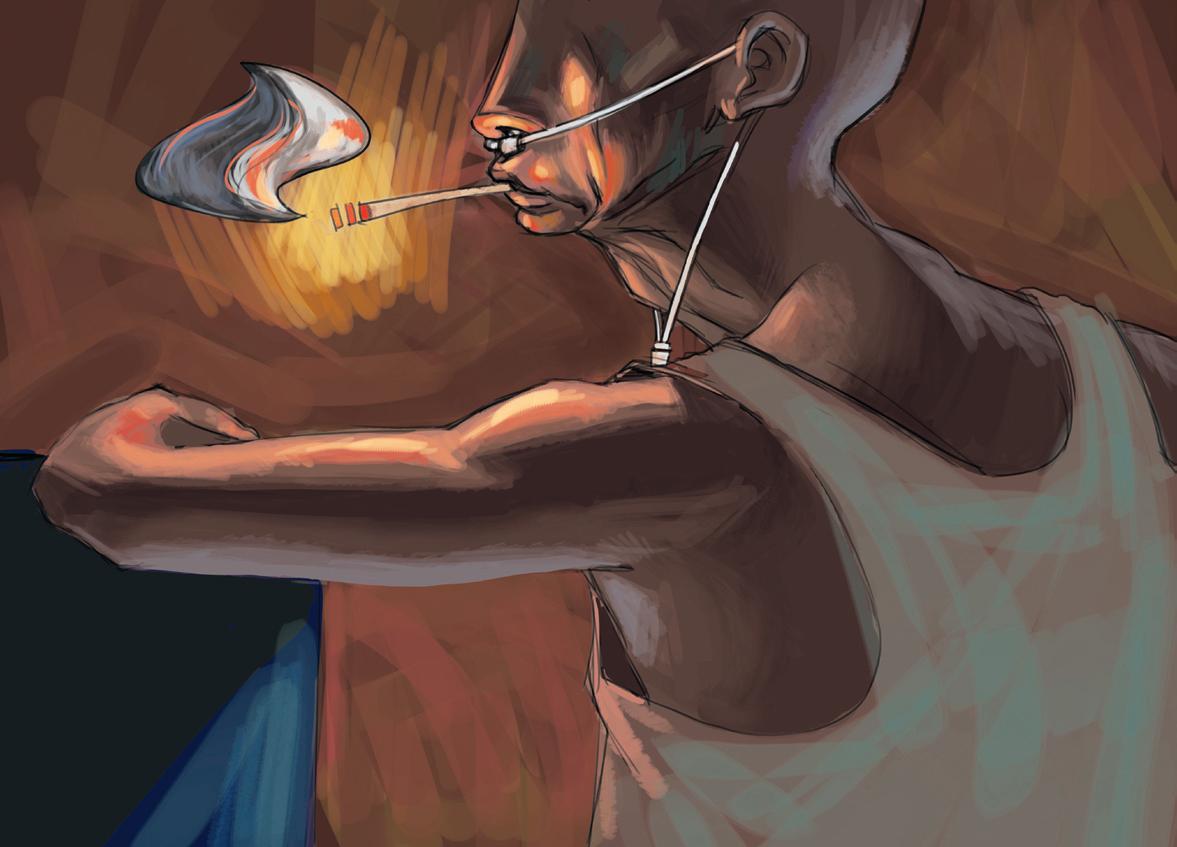
Across Canada, many provinces and territories have prohibited tobacco sales at post-secondary institutions. It is surprising that the University of Manitoba sells cigarettes in two locations on the Fort Garry campus: IQ’s and G.P.A.’s. Both stores are run by the University of Manitoba
Students’ Union (UMSU). Being the provider of the health and dental plan for U of M students, it is concerning that UMSU also sells tobacco products to its students.
A tobacco-free campus helps protect non-smokers from “involuntary exposure to second-hand smoke”
and advertisements of tobacco products. Provincial legislation is in place in British Columbia, Alberta, Quebec, Prince Edward Island, and Newfoundland and Labrador that prohibits the sale of tobacco on university campuses.
An article published in the Manitoban in 2009, titled “Up in smoke,” addressed tobacco sales on campus. At that time, UMSU’s president stated that no laws were being broken and they were simply providing a service to the students. While this may be true, there are many reasons why the health risks to students should be considered over any financial gain.
The intention of this article is to inspire readers to think about how eliminating tobacco sales at the U of M will have positive health benefits for the student body. We advocate for Manitoba to become one of the provinces in Canada that prohibits tobacco sales at post-secondary institutions. Earlier this year, a few students started a Students Working Against Tobacco
(SWAT) group at the U of M to bring awareness to the issue. This shows that there is student concern surrounding this issue. SWAT supports prohibiting tobacco sales on campus.
Why should you as a student care about tobacco on campus?
The incentive to eliminate tobacco sales on campus ultimately comes down to the many risks associated with smoking, such as those of heart disease and lung cancer.
Smoking is the leading preventable cause of death and its cessation has been shown to have the greatest impact on reducing lung diseases such as cancer and chronic obstructive pulmonary disease (COPD).
Health Canada’s 2012 Canadian Tobacco Use Monitoring Survey showed that an alarming 20 per cent of Canadians between the ages of 20 and 24 smoke tobacco. This rate is the highest of any other age group surveyed in the study. Further exasperating this situation is that about 70 per cent of post-secondary students have tried smoking at least once. Three-
quarters of daily smokers who try to quit smoking fail.
To make matters worse, nicotine may be just as addictive as some narcotic drugs and alcohol. People who smoke cigarettes are more likely to use illicit drugs, such as marijuana and cocaine, later in life. An American national survey found that a shocking 90 per cent of cocaine users between the ages of 18 and 34 had been cigarette smokers before using cocaine.
There is one ray of hope that stands out from all of these facts. A 2002 study by the Canadian Journal of Public Health showed that of the post-secondary students surveyed, the most students to successfully quite smoking were between the ages of 20 and 29 years old. This further justifies why smoking cessation and prevention should be targeted at young adults in general.
Visit the “Not on My Campus: End To bacco Sales at the University of Manito ba” Facebook page and take part in our one-question poll before Nov. 6, 2013.




tessa vanderhart, co-host
oF Winnipeg internet punDitS
I’ve been doing Winnipeg Internet Pundits for two and a half years now, every Wednesday at 5:30 p.m. Basically we bring the best undiscovered political minds of the city together every week for a raucous debate on issues of city and provincial politics, with a healthy dose of urbanism. There really isn’t anything like it in Winnipeg media – especially before the fire hall scandal, civic politics elicited a yawn from most Winnipeggers. Today, people are engaged and realize that the decisions made at a local level matter. And, more than ever, people are thinking about ways to make our city better. We’re glad to give those ideas a home.
eric m aclise, co-host oF
Covering the SpreaD I’ve been doing the show for seven months now. Covering the Spread airs Tuesdays at 10 a.m. It is a one-hour sports talk show where myself and cohost Sean Angus discuss and debate topical stories from the wide world of sports. There is definitely a focus locally, with the Jets and Bombers, but we’ll hit anything current (Bisons, NHL, NFL). We try to have a guest on each week. Sometimes it’s hard to get talent
ian t d thomson, host oF 7 DeaDly SongS
I have been doing my show at UMFM for roughly two years, having started volunteering in 2011 during my second year of university. I am also part of the UMFM board of directors.
I host 7 Deadly Songs from 11 a.m. to noon every Wednesday. The show is rebroadcast on Sundays at 2 a.m. for the insomniacs. The 7 Deadly Songs is a theme-based program; we take a different topic or theme each week, and explore it through the many genres of music available. The primary focus is modern-indie rock music. Interviews
We are pretty lucky to have a dedicated group of volunteers and people that listen to the show every week and provide feedback. But it’s not something you’d ever hear on professional radio. I’m proud to provide a place where this kind of in-depth, policyfocused, independent and original discussion of city issues can happen. The bits of it that happen on Twitter in 140 characters and over Phil Sheegl’s tab at the King’s Head aren’t going to change governance in our city – but injecting humour and passion into discussion of these important issues just might get people involved enough to, I don’t know, vote.
The big thing [I’ve] learned at UMFM is confidence – the mic is on and people are listening and you
for a college radio station (people are busy), but a lot of people have been really good about it. Journalists have been great, and when you think about it, they were probably in our situation at one point too, so they’re good about making time for us. We’ve had the Canadian Press NHL writer Stephen Whyno on the show; former Bomber coach Paul LaPolice has been on the show; and Jets and Bombers reporter Darrin Bauming is a regular.
The station and show mean a lot to
are frequently featured on the show. I have interviewed many local, national, and international artists, including Purity Ring, The Dodos, Disturbed, and Buckcherry.
As a student, I am able to fit the show in between my classes, sort of like a break. It gives me an opportunity to share my musical tastes and play new music that does not get airtime on commercial pre-programmed radio stations. I enjoy interviewing the artists who provide an insight into the creative processes of up-and-coming musicians.
It is extremely important for UMFM to continue running. At
better be darn sure of what you’re saying.
Campus media is Canada’s version of NPR – and no, I’m not exaggerating. There is amazing programming you would never get [anywhere] else. If it were focus-grouped or bleeped out, it would be dulling culture. Sure, UMFM educates students, but the big educational service is for the public, students, and community alike – anyone who tunes in and hears something they wouldn’t hear anywhere else. In an age of personalized playlists and computers telling you what you want to hear—never mind doofus mainstream DJs—what you get at UMFM is carefully curated selections that will expand your horizons and tastes.
me. It’s a chance to pursue broadcasting without dedicating yourself to a journalism degree. I’m in business, and plan on finishing my degree here, and then after that I’m looking at a oneyear post-grad broadcasting program at Humber College in Toronto. Radio is a tough field to make it in, so I think what UMFM does is give a lot a people a chance to pursue radio while getting a solid educational foundation in whatever area they choose.
its core, UMFM has a community of volunteers who strive every week to bring you the latest and greatest to their respective shows. Just look at the program grid and you can see the incredible eclectic diversity of the hosts and their programming. They reflect the diversity of the university community, both past and present, and literally serve as goodwill ambassadors for the University of Manitoba to world listeners. This puts the U of M in the same league as other major universities in North America and around the world that also have independent radio stations.

UMFM 101.5 provides invaluable service to students and community, and they need your help b
The University of Manitoba’s official radio station, UMFM 101.5, is running their second annual Pledge-O-Rama fund drive from Oct. 18-25, and they need your support. UMFM broadcasts a wide range of music and talk-radio programming, the overwhelming majority of which is curated and hosted by volunteers.
In 2012’s inaugural Pledge-O-Rama event, UMFM board of directors set their goal at $20,000; however, due to the charity of listeners, they managed to gross over $30,000. The station’s target this year is $24,000, which amounts to 15 per cent of their total annual operating budget, and as of Monday evening roughly $14,000 in pledges had already poured in over the phones.
Faces oF radio 101.5
The phone lines opened last Friday evening on UMFM program director Michael Elves’ variety show Free Range, which airs Fridays at 6:30, and will remain open until the end of his show this coming Friday, Oct. 25 at 8 p.m. “Last year I got to celebrate the fact that we vastly exceeded our target, and— fingers crossed—I’ll be able to cap things off this year with a bit of a celebration on air,” Elves told the Manitoban Elves, a U of M grad and former arts editor of the Manitoban , is a man of many hats. “Basically anything that is on air, I am responsible for: the music that gets played, the top programming, the volunteers that do the programming – that’s my bailiwick,” said Elves.
completion of his master’s degree in political science, Elves was hired and joined station manager Jared McKetiak in October of 2005. Eight years on, his passion for community broadcasting and the strong working relationship between he and McKetiak is palpable.
“We do call ourselves cam-
[paired with] the escalating prices of technology, has kind of eradicated some of that value.”
The nature of the advertisements played on UMFM is that they are, for the most part, for local businesses “like the West End Cultural Centre and the Park Theatre,” said Elves.
“We’re not a commercially-driven radio; we’re also not hitdriven. You’re going to hear a much wider variety,” said Elves. “Our playlist is very diverse on any given week whereas a lot of commercial radios cycle through a very limited playlist on any given week, and we, in a lot of senses, break some artists that eventually do become commercial.”
What differentiates independent campus radio stations like UMFM from their industry counterparts is their lack of reliance on commercially generated revenue.
pus and community radio; we try to embody those two different approaches,” said Elves.
The station encountered some financial issues in the early 1980s that led it to close its doors for a time. However, in 1998 it reopened, this time in a new studio with its current station manager Jared McKetiak at the helm. McKetiak studied computer science in university, but eventually found his way onto the airwaves and into the position he has occupied for the last 15 years.

umFm pledges incentive packages:
$25 – • UMFM Friends With Benefits Card, Transmissions From UMFM 101.5 Double CD
$ • 35 – UMFM Friends With Benefits Card, Transmissions From UMFM 101.5 Double CD, Can Koozie
$50 – • UMFM Friends With Benefits Card, Transmissions From UMFM 101.5 Double CD, Can Koozie, Bottle Opener
Keychain
$75 – • UMFM Friends With Benefits Card, Transmissions From UMFM 101.5 Double CD, Can Koozie, Bottle Opener Keychain, Pint Glass OR UMFM Friends With Benefits Card, Transmissions From UMFM 101.5 Double CD, UMFM T-Shirt
Mike is one of the two full-time staff at UMFM. Following the
What differentiates independent campus radio stations like UMFM from their industry counterparts is the lack of reliance on commercially-generated revenue. “[Our budget] primarily comes from student fees, and we are certainly thankful for the continued support of the students here on campus, but obviously student enrolment can fluctuate –the value of five dollars 15 years ago versus the value of five dollars now,
Under McKetiak and Elves’ direction, as well that of the vast amount of volunteer staff producing content on a weekly basis, the hope is that UMFM will raise enough money to continue providing the campus and community with quality independent programming into the future.
Your pledges can be made over the phone (204-474-6610), in person (Room 308, University Centre) or online at https:// www.umfm.com/info/donate/.
$101.50 – • UMFM Friends With Benefits Card, Transmissions From UMFM 101.5 Double CD, Can Koozie, Bottle Opener Keychain, Pint Glass, UMFM T-Shirt
$135 – • UMFM Friends With Benefits Card, Transmissions From UMFM 101.5 Double CD, Can Koozie, Bottle Opener Keychain, Pint Glass, UMFM T-Shirt, Gig Poster Calendar
$150 – • 2 UMFM Friends With Benefits Card, 2 Transmissions From UMFM 101.5 Double CD, 2 Can Koozies, 2 Bottle Opener Keychains, 2 Pint Glasses, UMFM T-Shirt, Gig Poster Calendar
$250 – • 2 UMFM Friends With Benefits Card, 2 Transmissions From UMFM 101.5 Double CD, 2 Can Koozies, 2 Bottle Opener Keychains, 2 Pint Glasses, 2 UMFM T-Shirts, 2 Gig Poster Calendars and entry into our special Golden Ticket draws!
Tax receipts are also available




Jo D ie l ayne, volunteer staff
What would you do if your fiancée got a job filming porn?
Emily Southwood was confronted with this conundrum and wrote about it in the book Prude: Lessons I Learned When My Fiancée Filmed Porn Robbie, Emily’s then-betrothed, was fresh out of film school and offered a long-term paying gig as a cameraman for the show Webdreams In the book, Southwood explores her feelings on porn, her feelings of jealousy, what monogamy really means, how porn affects her self-image, and the effect porn has on a relationship.
It’s relieving to hear Southwood
grapple publicly with how her feminist ideals and porn interact with her relationship ideals and ultimately make room for porn to coexist. Before websites such as xojane—which is not to say that they can’t be proven to be problematic—there were few women having conversations about porn openly in accessible media. It’s difficult to figure out how you feel about something as complex as porn. It’s okay to feel uncomfortable with it and it’s okay to be totally fine with it. If you’re still working it out, this book is for you.
Southwood is frank with her
tinges of jealousy and insecurity coupled with the pressure to be a “cool girlfriend” and be accepting of her partner watching porn and filming it for a living. The conflicting feelings raised a lot of new questions: are they going to want to do anal now? Does that woman even like what she’s doing or does she just need the money? Does that matter, even? Does my partner think I’m an ugly troll now?
Choosing to use or enjoy porn is a personal decision. For many, the question of whether porn usage is something we’re
obligated to negotiate about in intimate relationships remains. Porn can be a useful tool for selfexploration, increasing intimacy, and fostering healthy sexuality. It can also be divisive, lead to resentment, and give space for withdrawal.
Negotiating porn use in a relationship can be tricky and jealousy has a habit of trailing wherever porn exists. It’s less about what you think of porn and more about how efficiently you’re communicating with your partner. Here are a few approaches you can take:
Don’t ask, Don’t tell.
You suspect your partner watches porn or vice versa. You don’t think it’s okay to control their masturbatory sex lives, but you don’t want to hear, see, or know what they’re flicking, rubbing, or jerking it to.
Cool. Carry on. Trust here is crucial – no snooping through browser histories.
Bring it up.
Talk about the fact that you watch certain kinds of porn and analyse the effects that has on your expectations of your sex life or that
of your partner. Express any concerns or boundaries you may have regarding pornography without going into specifics.
go for it.
You use explicit videos and/or photos in your sexy times. You talk about and share the kinds of porn you like, your favourite actors/ actresses. You fantasize together. This is a fully open-book policy that allows you to work out desires, hang-ups, issues, and everything else that comes with the territory. This, like the first option, definitely requires trust.
Just like porn, there’s no one thing that does the trick for everyone. Also, it’s okay to have no definitive feeling or to change your mind about how porn makes you feel. The most important thing is that we’re being conscious consumers and compassionate partners.
You can confidentially submit a question or topic to jodie.m.w.layne@gmail.com.


MAWA’s year-end showcase to take place at aceartinc
lu K a S thieSSen, staff
On Oct. 25 at 7 p.m. aceartinc., a contemporary art-focused, artistrun centre, will host a vernissage for emerging artists. This group participated in what hannah_g, co-director of the gallery, describes as Winnipeg’s premiere arts mentorship opportunity: MAWA’s Foundation Mentorship Program (FMP).
A quarter-century ago, MAWA (Mentoring Artists for Women’s Art) was established to address the underrepresentation of female artists in society. Lisa Wood, program and administrative coordinator for the organization, explains that advocacy is still needed. People assume underrepresentation is not an issue because work has been done to amend this lack, but it is a reality for artists from certain communities.
The recent centennial celebration exhibition at the Winnipeg Art
Gallery, 100 Masters, included only six female artists. The show was a collection of works from the traditionally accepted list of great artists, a list which enforces the idea that mastery is male.
MAWA supports other communities who receive less attention, including the craft community, Aboriginal artists, and artists with disabilities. Each year the FMP involves artists from an additional community not receiving sufficient attention.
MAWA’s core activity is the FMP: established women artists mentoring emerging female artists. MAWA is an accessible space and all programming except the FMP is open to all genders.
“I think it’s a common misconception that MAWA is a female-identified-only space, but it’s simply not true,” says Elise Dawson, chair of the board
of directors for MAWA and a 2012-13 participant of FMP.
Sasha Amaya and Sarah HodgesKolisnyk, two artists from the same program, emphasize MAWA’s openness as well as their own, listing male
MAWA supports other communities who receive less attention
and female artists who inspire them.
Mentees are selected by mentors who believe in their protegé’s potential. Amaya and Hodges-Kolisnyk explain that discussing their work with mentors who personally chose them was invaluable, and meeting together
inspired them to work diligently.
Hodges-Kolisnyk laments that after school constructive feedback is rarely available, and Amaya says mentors push the artists to improve and prevent lasting discouragement. When asked what she would tell young female artists if she were to mentor them, Amaya listed the following:
1. Ask people if they want to work with you; some will say no, others will say yes.
2. Constantly work on things, even if you are only practicing.
3. Winnipeg is a super great place, but it is also small. If you don’t see what you want here, look for it somewhere else. You don’t need to be confined to this city.
4. Once you have made a few works, people will want you to continue doing the same thing. Don’t be afraid of exploring other ways of working.
5. Study another discipline in addition to art. It will make you more confident and give your work deeper meaning.
Come see what happens when fantastic artists are brought together to learn. There will be works by Sasha Amaya, Janessa Brunet, Amanda Damsma, Elise Dawson, Sarah Hodges-Kolisnyk, Megan Kraus, Gerry Oliver, and Natasha Peterson, who were mentored by Aganetha Dyck, Val Klassen, Suzie Smith, and Lisa Stinner-Kun, assisted by Danishka Esterhazy. They represent the current base of fantastic talent and the future of art in this city and abroad.
The year-end FMP showcase will be on display at aceartinc., 290 McDermot Avenue, until Saturday, Nov. 9. Visit www. aceart.org for more details.
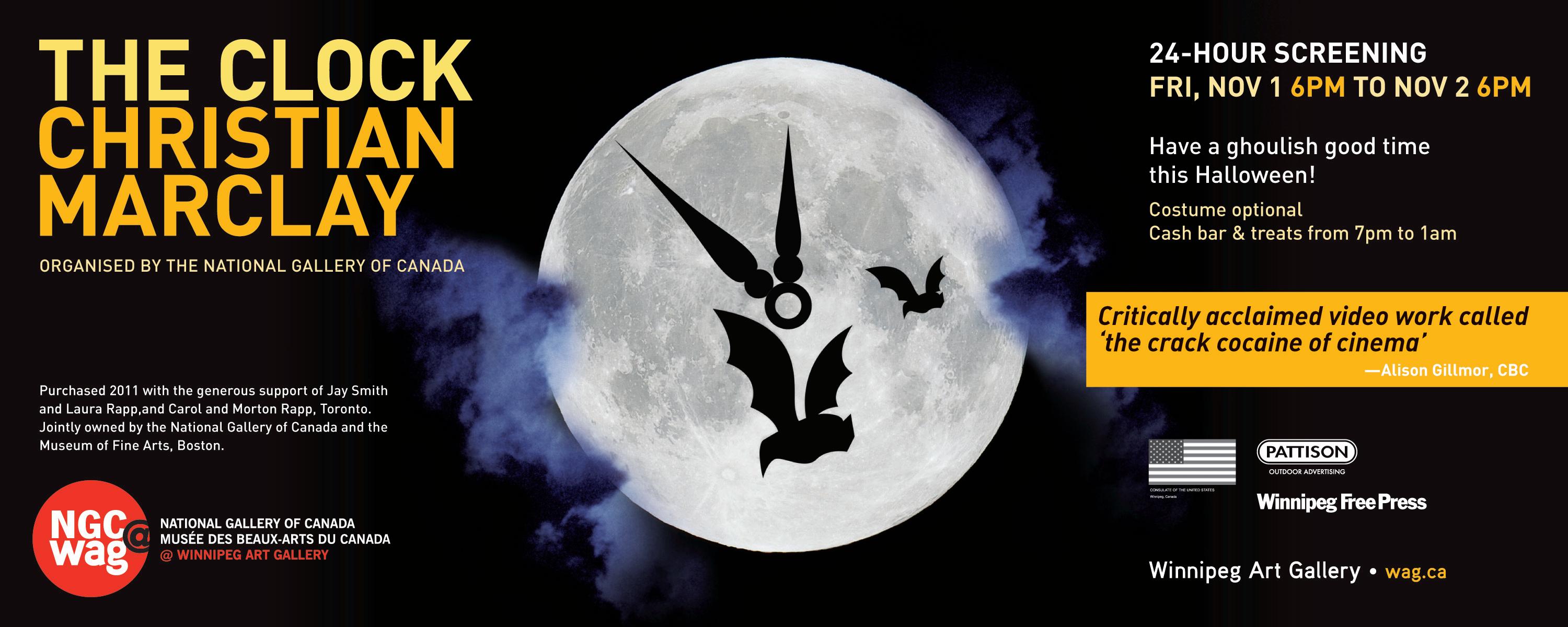
The arts events to attend this weekend

Thursday, Oct. 24
A Amrak Society Booklet Collection Natural Cycle

Friday, Oct. 25
Exhumed / Dying Fetus / Abiotic The Park Theatre
Friday, Oct. 25
MAWA: FMP Year-End Showcase aceartinc.

Friday, Oct. 25
This Hisses / J Riley Hill and the Magic Bears Exchange Community Church


Friday, Oct. 25
RAW: SECOND HOUSE FIRST closing
RAW: Gallery of Architecture and Design

saturday, Oct. 26 Frank Turner Garrick Centre
Thursday, Oct. 24
Hostile Life / the Bad Nerves / Unbelievable Bargains The Windsor

Monday, Oct. 28
MORTALS (nyc) / VIOLENT GORGE / PLAGUE / FOOT SPA / CHICA BOOM BOOM The Rudolf Rocker Cultural Centre


In 2007, Manitobans got a new holiday, named after Louis Riel.
While many enjoy the day off, opinions of the man himself vary widely: was he a hero or a traitor?
For those who may be wary of the text-heavy nature of historical accounts, look to Chester Brown’s Louis Riel: A Comic-Strip Biography. This year marks the comic’s 10th birthday, and it is being re-released in a special 10th anniversary edition, with added bonus material, such as draft scripts and earlier artworks.
Chester Brown has been credited with influencing many cartoonists with this work, which led to a reinvigoration of the
genre. While biographical comics are not necessarily new, they have been used for more conventional ends since the 1920s and 1930s.
“[Biographical comics were primarily used] as educational tools to depict the ‘great lives’ of religious leaders, scientists and inventors, political heroes and so on,” says Candida Rifkind, associate professor of English at the University of Winnipeg and host of the event to celebrate the 10th anniversary edition.
Brown, however, came from a different lineage – one of cartoonists from the 1960s and 1970s.
“[They used the genre] as a countercultural medium to challenge the status quo,” says Rifkind. “A lot
of their work was autobiographical, confessional, and sexually graphic.”
Some other examples of this genre are Art Spiegelman’s Maus and the work of R. Crumb.
While Riel is a politically and historically relevant subject, he was also a complicated and fascinating human being.
“[Brown] depicts [Riel] as a complex man and doesn’t shy away from representing his religious mysticism and messianism,” says Rifkind. “[Brown’s book] shows the complicated situations Riel faced, both within his community and outside it, and so goes beyond the usual caricatures of him

Friday, Oct. 25
Greg Rekus / Humble Hero / Kris Rendina / Harley James Flett Le Garage

Wednesday, Oct. 30 Bands as Bands Union Sound Hall
as either ‘traitor’ or ‘hero.’” Brown’s nuanced depiction of Riel also complicates the definition of lives worth chronicling, and has inspired many other alternative cartoonists to continue in this vein.
“[Brown exposed] lesser-known aspects of famous subjects [by] telling the life stories of everyday people, outsiders, and rebels.”
In writing about Riel, Chester Brown has inspired a new way of writing history.
Spend an evening with Chester Brown at McNally Robinson on Tuesday, Oct. 22 at 7 p.m. for a talk and book signing.
iMage pROViDeD by DRawN aND QuaRteRLy
Jean Kilbourne’s mission for media literacy
a na Sta Sia Chipel SK i, staff

Generally, we like to think that we are smart enough that the media is not manipulating us. We’re beyond the age of Mad Men, of Don Draper-esque characters holding forth our universal—or specific—soft spots, and writing copy aimed right at our hearts. But we may forget, as Jean Kilbourne—a feminist author, speaker, and filmmaker—points out, that “we’re up against huge forces and huge amounts of money,” and the game has changed a lot since the 1960s.
In 1968, Kilbourne started clipping out and collecting advertisements, and she started to notice some trends. Taking ads seriously was a radical idea at the time, but Kilbourne was persistent, and continued to blaze a trail over many decades, studying, writing, and lecturing about the effects of advertising.
While Kilbourne has been joined by others sounding the alarm, we may still be deceiving ourselves about our immunity to persuasion.
“Most people still don’t believe that they’re influenced in any way [ . . . ] most people still haven’t been educated about it.”
Education about media literacy is an important step in lessening its influence over our lives.
This influence might not even be something that we are immediately aware of, says Kilbourne.
“Advertising affects us mostly subconsciously, and now with the
brain research, they’re able to find out [ . . . ] how we’re responding emotionally to something [ . . . ] even if we don’t really know it.”
This is one part of a sophisticated system, along with incessant data collection, that has been leading marketers to targeting us more individually than ever before, using methods seamlessly integrated into services we use in our daily lives.
Think of the last time you visited a site like Amazon or Netflix. After making your selection, a list of recommended titles popped up. Or maybe you have noticed a pop-up advertisement that is eerily similar to the topic of your last Google search. These are the more obvious outcomes of targeted marketing, based on information you may not have realized you were disclosing.
“People don’t realize that it’s almost impossible to throw something away on the Internet [ . . . ] Marketers are tracking our every move,” says Kilbourne.
While the advent of more usergenerated online platforms has led advertisers to adopt more individualized tactics, they’ve also opened up possibilities for resistance.
“Never before in human history has there been this opportunity for people to communicate so quickly around the globe [ . . . ] so the possibility for action and resistance are terrific,” says Kilbourne, citing the Arab Spring as a major event that was largely facilitated by social media platforms.
There are also more groups
working in the field of media literacy today – more books, more documentaries, more people studying and understanding the psychology and effects of advertising.
“The more we make it conscious and the more we know about it, the more obvious it becomes [ . . . ] Paying attention to it reduces its power.”
For this reason, Kilbourne believes that media literacy should be included in school curriculums, beginning as early as kindergarten.
“We need to teach our children to be critical viewers, and that part of media literacy should be making people think of ourselves as citizens rather than as consumers.”
This small shift from a highly individualized, consumer-focused viewpoint to one of active engagement in our communities and society as a whole is a key issue for Kilbourne.
“ That means, if you’re thinking of yourself as a consumer, you don’t really worry about what’s happening to the planet. If you think of yourself as a citizen, you do.”
It is this change in focus that Kilbourne has been working towards over the last 40 years, through her own lecturing and writing, being featured in documentaries such as Miss Representation, and creating the Killing Us Softly series. Her message of media literacy can have an enduring impact.
“The thing I hear most often after [people] have seen my lectures or my films is that they never look at ads again in the same way.”
With more education and more media literacy educators the persuasive influence of advertising media will become more obvious, and less insidious. With four decades of hard work, Kilbourne has seen many changes in her field.
“In general, things have gotten much worse [ . . . ] the obsession with thinness, the tyranny of the ideal image of beauty, the violence against women, the sexualization of children, the selling of alcohol to kids - all of this is much worse than it was when I started out. But what’s different is that I’m no longer alone.”
Join Jean Kilbourne for a free public presentation called “Deadly Persuasion” on Oct. 24 at 7:30 p.m. at the University of Winnipeg, 515 Portage Avenue. For more resources about media literacy, visit www.jeankilbourne.com.


Davi D SK ene, volunteer staff
Kato destroys the rock star myth: the bullshit notion that you have to give up living a real life to make big bombastic rock and roll. Three guys making music they care about while negotiating careers, home ownership, and partners is a lot harder than surrendering to the narcissistic, “lonely poet” archetype.
It’s impossible to be someone you’re not when surrounded by people who have known you since grade school
To say that Kato Destroy is just another slice of gritty Peg city rock does the band a disservice. It ignores the deft experimentation with jazz and metal; it misses out on their penchant for Jagermeisterfueled humor; and—most importantly—it doesn’t speak to the fact that Kato Destroy presents itself in a way that is almost completely free of persona and posturing.
Formed in the summer of 2007, Kato Destroy came to life when Darcy Gudmundson (vocals/guitars) asked his estranged childhood friends Jimmy Marnoch (bass) and Jimmy Shand (drums) to join him in a rock odyssey that would see them playing almost every room this town has to offer.
The combination of hard gigging and long-time friends is what keeps
one’s ego in check. It’s impossible to be someone you’re not when surrounded by people who have known you since grade school. Let’s face it: in a world of social media catfish and pitchfork hype bands, honesty is the hottest commodity around. Listening to their brand spanking new digital EP, Super Zang, I can’t help but think of that scene in Almost Famous when Lester Bangs is at the radio station talking about the difference between the Doors and the Guess Who.
“Jim Morrison? He’s a drunken buffoon posing as a poet [ . . . ] Give me the Guess Who. They’ve got the courage to be drunken buffoons, which makes them poetic.”
Now I don’t think Kato Destroy are buffoons—poetic or otherwise—but they do have the courage to be themselves, and I can’t think of anything more poetic than that.
Check out the band at katodestroy. bandcamp.com and catch them live at the Rose n’ Bee on Nov. 2, when they rock the house with Beefdonut and the Bad Nerves.



lu K a S thieSSen, staff
Winnipeg’s LGBTTQ* film festival, the largest of its kind between Toronto and Vancouver, is run entirely by volunteers. Additional support from the people of Manitoba who attend the festival as well as proud sponsors—Assiniboine Credit Union has been on board since the time when people told financial institutions not to support this community—is enabling the festival to grow.
The power inherent in Winnipeg’s REEL PRIDE film festival goes beyond great art and supporting the LBTTQ* community. This year, the festival raised awareness about breast cancer in conjunction with the The LuLu Sessions, a documentary about the
last months in the life of a woman with breast cancer, directed by S. Casper Wong.
Highlighted by the attention given to women’s experience with cancer, REEL PRIDE has a vast scope: last year was the first time films about queer women of colour were shown; this year, for the first time, the festival included a series of short films about trans men of colour. Organizers want to represent films about and by Aboriginal people, Canadians, international communities, and many more groups.
As much as REEL PRIDE is about great films, programming committee members David Wyatt and Kevin Maguire point out that in a LGBTTQ*
event, everything is political.
Walking out of the mesmerizing 2012 film Soongava: Dance of the Orchids, written and directed by Nepalese artist Subarna Thapa, a patron breathed a sigh of relief.
“It makes me glad we live here.”
The film depicts two young Nepalese women played by Deeya Maskey and Saugat Malla who choose to live together. They are shunned and abused by their families, employers, neighbours, law enforcement officials, and others. Nepalese culture is depicted as antagonistic towards same-sex relationships for challenging traditional family bonds. A murder scene in the film begins as an apparently loving embrace between siblings and becomes an act of suffocation.
Soongava includes stunning choreography, cinematography, acting, set design, and more talent than can be enumerated here, and yet this art does not shy away from the harsh realities experienced by many.
Anna Margarita Albelo directed the semi-autobiographical 2013 film Who’s


Afraid of Vagina Wolf? Her character deals with a mid-life crisis by trying to create a lesbian version of Mike Nichols’ 1966 drama Who’s Afraid of Virginia Woolf?, which starred Elizabeth Taylor and Richard Burton.
The frank imagery of the vagina asks questions about vulnerability, with which the protagonist struggles while pursued by beautiful women. The film grapples with beauty, whether the vagina is a gorgeous member of the body, and whether the main character and other women see their bodies as alluring.
When one character says amiably to Anna, “You’re a walking vagina,” is this statement a compliment, insult, joke, or something else? The main character wears a vagina-shaped body suit at the beginning of the work, with rhinestones and a tiara, and commences crafting a slick remake of Nichols’ film.
The finale finds her dressing and creating art in a radically different style.
Hot Guys with Guns, by writer-director Doug Spearman and starring Marc Anthony Samuel and Brian McArdle,
is a slick black-guy-white-guy buddy comedy about an actor who takes a private investigator course to prepare for a role and uses his classroom skills to solve a series of robberies in the community of high-class gay sex parties. But as Wyatt and Maguire said, everything is political.
In this excellent story full of laughs and brief glimpses of some of the tightest buns you’ll ever see is the harsh reality of date rape. The rich elites of Los Angeles strive to cover up their crimes and punish their victims, who have returned for vengeance. The instructor for the PI class (Alan Blumenfeld) offers advice which everyone should take when engaging in sexual encounters: Keep your wits about you, research is key, and protect yourself and your equipment.
The selection committee for next year might be able to use your help, and volunteers aplenty are needed to make this great event possible. Get in touch through reelpride.org and Facebook at REEL PRIDE Winnipeg to become a part of this amazing festival!
Art installation at Gas Station Theatre allows community to reflect on pride
a na Sta Sia Chipel SK i, staff
While the Pride Parade is a memory from another season, many of the sentiments collected from that day have found a new form. The multi-panel art project “Messages of Pride” was unveiled on Oct. 15 and will remain on display at the Gas Station Theatre throughout the REEL PRIDE festival, and until Oct. 25.
REEL PRIDE board member
Annette Schultz didn’t know what the final form of the art project would be when she began handing out index cards at the Pride Parade, asking people to record what they were proud of on that day. Schultz knew it would become art, but wasn’t exactly sure how, so the Rainbow Resource Centre (RRC) was asked to take on the task of turning the cards into a piece for REEL PRIDE.
At the end of the summer, local artist Tim Haughian began working with the youth attending the peer support program at RRC.
“Before anybody picked up a paintbrush we had great discussions on everything from politics to philosophy,” says Haughian.
Together, they discussed the messages they had received on the index cards and
considered them carefully.
“We wanted to be able to be inspired by the cards, [to] come up with symbols that would evoke the same emotions that the cards invoked in us.”
The final result is a piece that balances consistency and change, and while many of the symbols are clearly celebratory, like “loud and proud,” others reflect more somber issues. Two of the panels feature a large semicolon, meaning “could have ended, but didn’t.”
Haughian explains that they found many cards expressing pride in having survived suicide attempts, and they wanted to note this, celebrate it, and be sure that others could feel open about discussing it. He sees these expressions not as a plea, but as the success of a strong community. “It’s working. They chose life.”
Haughian believes that art is therapeutic for the youth who worked on the project, and for the community at large, and he will continue working with the youth at RRC.
“I’m totally committed to supporting this group; I think it’s great that kids have access to [it]. It’s doing a lot of good and I am determined to do as much with this group as I can.”







e lizabeth Drewni K , staff

Italy’s minister of health has announced that the Italian government will not permit human clinical trials of a controversial stem cell therapy. The Stamina
Foundation, a Turin-based nonprofit founded by Davide Vannoni, has been at the centre of a monthslong battle to secure legal permission to provide the treatment, which
many scientists believe has no scientific basis.
The treatment involves removing the patient’s bone marrow cells, conducting some in vitro manipulations, and reintroducing the manipulated cells back into the patient. Vannoni claims to be able to cause bone marrow cells to differentiate into nerve cells, which would aid in the treatment of neurodegenerative diseases such as ALS, Parkinson’s, and Alzheimer’s. As a result of these claims, thousands of people support Stamina’s treatment methods, despite their questionable scientific value.
the U.S. Patent Office, for being too vague.
An investigation carried out by the journal Nature found that Stamina’s U.S. patent application contained images lifted without context or attribution from unrelated papers published by a Russian and Ukrainian team.
Vannoni refuses to reveal detailed information about the treatment
Many stem cell scientists have dismissed Vannoni’s claims. One anonymous source told the journal Science that the theory behind the treatment is “unclear and scientifically inconsistent,” and stem cell researcher Elena Cattaneo called it “alchemy.”
Scientists have also been suspicious of the secrecy surrounding the treatment. Vannoni refuses to reveal detailed information about the treatment, and the only document publicly available is the U.S. patent application, which was rejected by
Nobel-winning scientists shed light on cell-to-cell
e lizabeth Drewni K , staff
Earlier this month, the Nobel Assembly at the Karolinska Institutet announced the winners of the 2013 Nobel Prizes. The prize in Physiology or Medicine was awarded jointly to James Rothman, a Yale professor of cell biology, Randy Schekman, a biologist at UC Berkeley, and Thomas Südhof, a professor of molecular and cellular physiology. Their work focuses on the mechanisms by which molecules are transported within or between cells.
“These beautiful discoveries have importance for the understanding of the human body and obviously implications for diseases in various organs such as the nervous system, diabetes and immune disorders,” said Jan-Inge Henter, a scientist at the Karolinska Institutet.
The transportation of molecules— such as neurotransmitters or hormones—in cells is incredibly important. Generally, this molecular “cargo” is packaged in vesicles—small compartmentalized sacs—to be transported to another cell or another location in the same cell.
When proteins are synthesized, they need to be transported within a cell. Not all of these proteins are meant to be localized in the same area. Imagine a simple example of a cell. Our hypothetical cell synthesizes two kinds of proteins: protein A and protein B. These two proteins need to be segregated to opposite sides of the cell. In order for this to happen, there has to be a way of recognizing proteins A and B, as well as sorting them into different compartments.
The work of earlier scientists, including several previous Nobel laureates, clarified how this system works. It was already known that vesicles played a critical role in the transportation of molecular cargo by containing the molecules and keeping them separated from the external environment to ensure their safety. But until recently, one question remained: How are molecules sent to the right destination with precision?
Schekman’s research compared normal yeast cells with mutated ones to identify the genes that control vesicle transportation. Rothman identified the proteins that allow vesicles to fuse with their target membranes—like a small soap bubble being absorbed by a larger one. Südhof discovered the mechanism that detects calcium ions and causes vesicle fusion, which explains how signals can be transmitted from one nerve cell to another with temporal precision.
These findings have changed the way we view the transportation of molecular cargo. This is important because molecular signals are continuously released within a cell to synchronize the cell’s activities, and outside of the cell to communicate with other nearby cells, or to the bloodstream to reach distant targets.
Disturbances at any step in this process can contribute to neurological diseases, diabetes, or immunological disorders.
Under Italian law, unproven stem cell treatments can be provided to terminally ill patients without other options – provided that certain safety standards are maintained. Earlier this year Italy’s previous health minister, Renato Balduzzi, responded to pressure from Stamina supporters by proposing a law that in its original version would have allowed the treatment of thousands of patients without the prior performance of clinical trials.
The Italian Senate approved an amended bill that allowed Stamina to continue treating the patients they already had, but prevented them from taking on new patients. It also provided three million euros for a clinical trial of the treatment. According to Cattaneo, “this will probably be the first time that a parliament orders a clinical trial.”
In July, the minister of health ordered Stamina to provide scientific information on their treatments to a committee of scientific experts to assess the safety and effectiveness of this method for human trials. By early September, Stamina’s treatment methodology had been unanimously rejected, primarily for being vaguely described and unsafe.
Vannoni told reporters from the journal Science that “the reasons for rejection are totally unfounded.” He expressed surprise that the panel did not look at the records of any of his current patients. “They are doing very well,” he said.
Vannoni also impugned the impartiality of the panel, most of whose members expressed an unfavourable opinion of his treatment before they were selected. Although Stamina will not be able to carry out human trials in Italy, Vannoni claims that the minister of health for an unidentified African country has approved the tests. He also claims that one European and one Asian country are interested in the treatment.
Despite all of the recent events, there are still many patients being treated by Stamina in a Brescia hospital, while around 100 people have appealed to Italian courts for the right to be treated by Stamina.
n obel prize winners:
physics: François Englert and Peter W. Higgs “for the theoretical discovery of a mechanism that contributes to our understanding of the origin of mass of subatomic particles.”
chemistry: Martin Karplus, Michael Levitt, and Arieh Warshel “for the development of multiscale models for complex chemical systems.”
physiology/m edicine: James E. Rothman, Randy W. Schekman, and Thomas C. Südhof “for their discoveries of machinery regulating vesicle traffic, a major transport system in our cells.”
l iterature: Alice Munro, “master of the contemporary short story.”
peace prize: Organization for the Prohibition of Chemical Weapons “for its extensive efforts to eliminate chemical weapons.”
s veriges riksbank prize in economic s ciences in memory o F a l Fred n obel: Eugene F. Fama, Lars Peter Hansen, Robert J. Shiller “for their empirical analysis of asset prices.”

of modern chemistry
toM i ngra M , staff
I
n the late eighteenth century, Antoine-Laurent de Lavoisier discovered fire.”
This is how the futurist and artificial intelligence researcher Eliezer Yudkowsky described it, and he’s not far off the mark. Through much of the 18th century, the dominant explanation of combustion was known as the phlogiston theory. Phlogiston theorists held that one of the basic building blocks of matter is a substance called phlogiston, which functions as elemental fire. Combustible substances are made up of phlogiston and a “calx” (residue). When something burns, phlogiston is released until only the calx remains.
Phlogiston’s role in combustion is roughly opposite of oxygen, which is consumed in combustion. So phlogiston theory is (as we now know) wrong, but it is not horribly wrong. It provides a nice bridge from the alchemical writings of the 17th century to present-day non-mystical chemistry. In studying science’s history it is important to remember that our ancestors were not stupid. They had very good reasons for believing as they did, and we can still learn a great deal by studying the way they thought of chemistry.
The man generally credited with the overturning of phlogiston theory is the French chemist Antoine Lavoisier. Lavoisier was a fascinating figure whose work touched on just about every important topic in chemistry. He was involved in the discovery of several elements, created one of the first extensive lists of elements, reformed chemical nomenclature, and had a hand in the creation of the metric system. He also published the Elementary Treatise on Chemistry, the first modern textbook on the subject.
One of the central ideas of Lavoisier’s chemistry was that
Katy MaCKinnon, staff

Have you ever examined your relationship with the natural world? J. B. MacKinnon visited the U of M campus on Tuesday, Oct. 15 to promote his new book, The Once and Future World. The book examines the history of nature, the notion of personally reconnecting with nature, and the concept of “rewilding.”
number of species now missing from the area, but that people had forgotten about them.
“Their presence had been totally forgotten,” he said. “Growing up, no one ever mentioned to me any of these missing animals.”
During his talk, MacKinnon proposed the “three ‘R’s”: remember, reconnect, and rewild.
The theme of remembering nature and exploring the history of nature is present throughout the book. MacKinnon suggested that, although students learn many forms of history in school and through pop culture, the history of nature is often overlooked.
point. The degraded state of nature for one generation becomes the normal state of nature for the next,” he said.
MacKinnon proposes “rewilding”—the creation of environmental conditions that accommodate and encourage the existence of wildlife communities in urban areas—as a possible solution to this generational myopia.
According to MacKinnon, throughout history people have farmed animals to the point of extinction; however, we need not continue to do so in the future.
nothing is created or destroyed in a chemical reaction. All that happens to the matter involved in a reaction is a change of state. Following this theory, Lavoisier would carry out experiments in sealed glass vessels so he could weigh everything involved in a reaction – including the smoke given off in combustion.
Lavoisier’s innovation was to make chemistry mathematical. By weighing all the components of a reaction, he was able to use precise mathematical reasoning in his work. This allowed him to show that combustion is a reaction between a flammable substance and oxygen, rather than the release of some inherent fire element within the substance. The difference between phlogiston theory and oxygen theory is subtler than it seems, but Lavoisier’s explanation simplified a lot of our concepts and provided a model of chemical activity that has endured, with some modifications, to present day.
Incidentally, through physiological experiments Lavoisier was able to show that breathing actually involves the same chemical activity as a burning fire. Like a fire, your body takes in oxygen and produces carbon dioxide and heat. The same rules that govern everyday chemical reactions also govern the basic processes of life.
In Lavoisier’s case, we once again see a tragic collision of science and politics. Lavoisier, as a high-ranking government official, fell out of political favour during the French Revolution. During the Reign of Terror, people involved in tax collection were under suspicion and many of them—Lavoisier included—were put on trial. One of the great figures in the history of chemistry was accused of stealing France’s money and watering down its tobacco, and on May 8, 1794 he was summarily guillotined.
MacKinnon spoke with UMFM on Tuesday regarding the recurring themes in his book. The idea for The Once and Future World was planted when MacKinnon revisited his hometown. As a young child, he was able to roam the adjacent expanse of grasslands, but upon returning as an adult he found that much of the area had been converted to suburban developments.
Reflecting on the visit to his hometown, MacKinnon said, “It just triggered this desire to know more about the history of the landscape I grew up on in general.” He discovered that not only were there a
“[Natural history] is perhaps our most forgotten form of history,” he said. “It’s incredible how quickly people lose sight of what the natural world was like in the past, and it frequently does happen within a single generation.”
Losing sight of the changing natural world occurs all too easily and frequently, according to MacKinnon. He invoked the concept known as “shifting baseline syndrome” to explain how this forgetful feature of the human condition distorts the way we measure the generational degradation of nature.
“Each generation is looking at the world that they grow up in and then measuring the degradation of that world against their own life experience. But then, along comes another generation and they do exactly the same thing, starting from their new
“I think what history indicates is that we all too often get carried away with whatever direction we’re headed in, so we become persuaded that we need to, [for instance], eliminate predators from the landscape because they threaten certain of our interests. So we go about destroying all of them, everywhere. It becomes this relentless pursuit, almost comparable to a religious mania.”
MacKinnon described the importance of fostering a “meaningful” social relationship with wildlife, one in which we can live alongside each other in harmony. He noted how, for him, nurturing this relationship began as a simple act of mindfully observing his surroundings in parks and urban areas.
“If we allow nature to become meaningless to us, then that will certainly be the nail in the coffin in the human relationship to the natural world,” said MacKinnon.



MarC l agaCe, staff

The U of M women’s hockey team picked up a pair of victories over the Mount Royal Cougars over the home opener weekend in Wayne Fleming Arena at Max Bell Centre. On Oct. 18, a busy third period featured three Bison goals, en route to their 4-1 win.
The Bisons came out of the gate firing hot on Friday. Nicole McGlenen opened the scoring just over one minute in. The team was quick and energetic, but the Cougars showed some fight. With her teammate Rachel Piitz in the penalty box, Janessa Jenkins sped past the Bison defence on a breakaway and beat Bison goalie Amanda Schubert for a shorthanded goal.
The Bisons did a great job of cycling the puck around in the first period, getting shots on net and keeping play in Mount Royal’s end. Manitoba skated with amazing speed, successfully moving out of their own zone and creating odd-man rushes and breakaway opportunities.
Penalty troubles began for the Bisons late into the first period, and spilled over into the second. On the day, the Bisons gave up 22 minutes of penalties—even playing 6-on-3 for a brief moment near the end of the second period—but they killed every second.
Maggie Litchfield-Medd scored the go-ahead goal 3:23 into the third
period, after a fortunate bounce found her stick at the side of the Cougar net.
Captain Amy Lee scored an insurance marker at 6:42 on the power play. The Bisons outhustled the Cougars to the puck, and outshot their opponents 32-17.
Cassandra Taylor put a bow on the game, beating Mount Royal goalie Jess Ross high glove side on a penalty shot at 9:45. Final score: 4-1.
Strong play on special teams was a key to the Bison victory.
“I was impressed by the speed and pace we played at tonight. Our penalty kill, which has been outstanding all year, probably won us the game,” said Manitoba head coach Jon Rempel.



“I’m impressed that we won a close one like this headed to the third, it’s great for our confidence.”
The following night, the Bison forwards picked up where they left off, setting the pace and finding the net early and often.
Meagan Vestby assisted on the opening goal—just 1:06 into the first period—as Alana Serhan tipped in her first of the game and season. Vestby and Serhan would find the net just three minutes later. A third goal, this one by Litchfield-Medd at 9:15, chased Mount Royal goalie Katie Sigurdson from the net. Ross came in and managed to stifle the Bison momentum.
While coach Rempel was impressed by the way the team came out and played early, he still expects more from his players.
“We managed the game well,” said Rempel, “I would’ve liked to see us put it away in the second, though, because we had plenty of chances.”
At the other end of the rink, Schubert followed up her 16-save performance the night before with a 20-save shutout, her first of the season.
In the sixth game of the regular season, Vestby earned her sixth assist of the season. She leads the Bisons in points with six and is currently sixth in conference scoring.
On the back end, Kyleigh Palmer and Caitlin MacDonald were solid offensively and defensively all weekend. Palmer was fast to the puck and eager to jump in on the rush, finishing with an assist in both games. MacDonald
was solid along the blue line, getting pucks toward the net and providing an outlet pass at the top of the slot.
Manitoba is 3-2-1 on the season after the wins, while Mount Royal falls to 1-5-0. They travel to Calgary next for a pair of games against the 2-3-1 Dinos.
bison men split outoF-town series
Deven Dubyk stopped 38 shots in a 1-0 shutout victory against Mount Royal on Oct. 18. Brendan Rowinski scored the only goal of the game midway through the first period. Dubyk and the Bisons survived the Cougars’ onslaught in the third period. The Cougars outshot the Bisons 18-7 in the final 20 minutes. Manitoba did everything they needed to protect the one-goal lead and hang on for their second win of the season.
The rematch the following night featured more offence, but yielded a worse result for the Bisons. A power play goal 27 seconds into the third period broke a 1-1 tie. The Cougars potted a third goal for insurance, winning 3-2. Jesse Paradis and Dane Crowley scored for the Bisons Saturday, while Dubyk had 29 saves on the day.
The Bisons and Mount Royal remain tied in the standings, at 2-4-0, after splitting the series. Manitoba hosts the 6-0-0 Calgary Dinos at Wayne Fleming Arena in a pair of games on Oct. 25 and 26. Puck drop is 7 p.m. Friday and 6 p.m. Saturday evening.

MarC l agaCe, staff

T
he Bisons are potentially one win away from finishing second in the Canada West conference after a 33-26 victory over the U of Saskatchewan Huskies
on Oct. 18. Winning over Saskatchewan was key to keeping their playoff hopes alive. Now, the Bisons head into the final week of the Canada West regular season in a three-way tie for second place with Saskatchewan and UBC.
Bison quarterback Jordan Yantz finished the game with good numbers, but had some issues in the first quarter. After settling for a field goal on Manitoba’s first drive of the game, Yantz was intercepted in the red zone on their next possession. After a quick Saskatchewan two-and-out, Yantz and the Bison offence needed only four plays to find the end zone, as Yantz hit Nic Demski with a 21-yard pass for Demski’s fifth touchdown of the season.
The teams would battle for field
Mi K e Still, staff

The Manitoba Bison women’s soccer team was officially eliminated from playoff contention with a loss at home, falling 1-0 to the Victoria Vikes.
The Vikes were the far stronger team, heading into the game with an 8-2 record. Nonetheless, the Bisons were able to keep things close in a fairly even match.
After a few close chances, including a shot that went off the crossbar, Victoria was able to solve goaltender Chloe Werle in the 28th minute.
Carlita Branion-Calles scored on a wide open net as Werle attempted to grab the loose ball.
The two teams would head into the half with Victoria holding onto the one-goal lead. The Vikes continued to generate quality chances in the second half; however, Werle stood strong in net.
Manitoba’s best chance of the half came in the 82nd minute. Daniella Scerbo had a shot at a loose ball in the box, but it was quickly grabbed by Victoria goalie Tanya Jones. With the loss, the Bisons fell to 1-6-4, while Victoria advanced to 9-2.
After being eliminated from playoff contention, the Bisons looked to finish the season on a positive note the following evening. Despite battling hard, they were unable to overcome the Fraser Valley Cascades and lost 2-1.
Manitoba was unable to generate much offence in the first half, being outshot 10-3. Fraser Valley kept the pressure in the Bisons’ end, creating a number of scoring opportunities. Chloe Werle held strong in net for Manitoba, but was eventually cracked in the 37th minute by forward Shelby
position in the second quarter, with Saskatchewan placekicker Denton Kolodzinski booting his second field goal of the day from 29 yards. The teams would head into halftime with the Bisons leading 10-6.
On the second-half kick, a Bison fumble set the Huskies up with great field position. Saskatchewan running back Dexter Janke capped a three-play drive with a 15-yard touchdown rush that put the Huskies up 13-10. Six minutes later, the Huskies would extend their lead with a third Kolodzinski field goal.
After only completing one of six passes in the second half, Yantz connected with four different receivers, capping off a 95-yard drive with a 27-yard touchdown pass to Dustin Pedersen. The score, plus a team safety given up by the Huskies, gave the Bisons a 19-13 lead heading into the fourth quarter.
The Huskies jumped back on
top early in the fourth. Shane Buchanan busted out a 50-yard run and later plunged into the Manitoba end zone to re-establish Saskatchewan’s lead. The Bisons responded on the scoreboard almost immediately.
After a 24-yard rush by Coombs, Yantz connected with Matt Sawyer for a 41-yard touchdown passing play that made the score 26-23. Kolodzinski tied the contest with his fourth field goal, but Yantz would put the game away for the Bisons with his fourth touchdown pass of the night, a 28-yarder to Alex Vitt.
The Huskies tried for a tie late in the fourth, but an interception by Cam Teschuk in the final two minutes foiled any hopes of a dramatic comeback.
Yantz finished the game completing 18 of 32 passes for 364 yards, four touchdowns, and one interception. Coombs led all rushers with 88 yards, and the Bison defence recorded four sacks on the night.
The Bisons’ win over the Huskies and UBC’s dominating 60-0 victory over Alberta has set up an interesting final week in the Canada West. The Bisons travel to play the Alberta Golden Bears in Edmonton, while UBC travels to play the undefeated Calgary Dinos, and the Huskies are in Regina.
The Bisons should now hold the tiebreaker over Saskatchewan with the win, but if Manitoba and UBC end up tied for second place, it will come down to each team’s point total for the season. A three-way tie for second place will require all sorts of math to figure out where each team will end up.
Fortunately for Manitoba, they wrap up their regular season against the winless Alberta Bears, who have been outscored 170-359 this season by their opponents. Nothing is guaranteed in football, but a win against the lowly Golden Bears might be enough to secure an early November game at Investors Group Field.
Beck on a pass that split the Bison defence. Fraser Valley took the 1-0 lead into the half.
Fraser Valley continued to dictate the pace early in the second half, preventing Manitoba from getting any sort of momentum. Things went from bad to worse for the Bisons in the 56th minute, as fifth-year defender Gillian Sidon took down forward Carly Neeson in the box, resulting in a penalty kick. Neeson would make no mistake, extending the Cascades’ lead to 2-0.
Sidon was one of two Bison players participating in their final CIS game. Sidon was a leader on a young Bison squad, starting in 53 games over her Bison career. She showed perseverance, making up for the earlier penalty and getting Manitoba on the board in the 74th minute on a rocket shot just outside the box.
Laura Stewart was the other graduating Bison, having played in 26 matches over her career.
Coach Vanessa Martinez-Lagunas was pleased with the play of both her graduating players, also noting how important the game was for them.
“I’m just happy for them; they played hard and had a good game, both of them.”
Sidon’s goal seemed to ignite the Bisons: they picked up the tempo in the last 15 minutes, but were unable to tie the game, falling just short. With the loss, the Bisons finished the regular season with a 1-7-4 record, with Fraser Valley ending up 5-4-3.
Despite failing to qualify for the playoffs, Martinez-Lagunas maintained a positive outlook for next season, focusing on strengthening and growing the team.
invest in development. This is a really young team. I think most of the young players got plenty of minutes of playing time. It’s a good experience for them.”
“This season I said I wanted to

Mi K e Still, staff
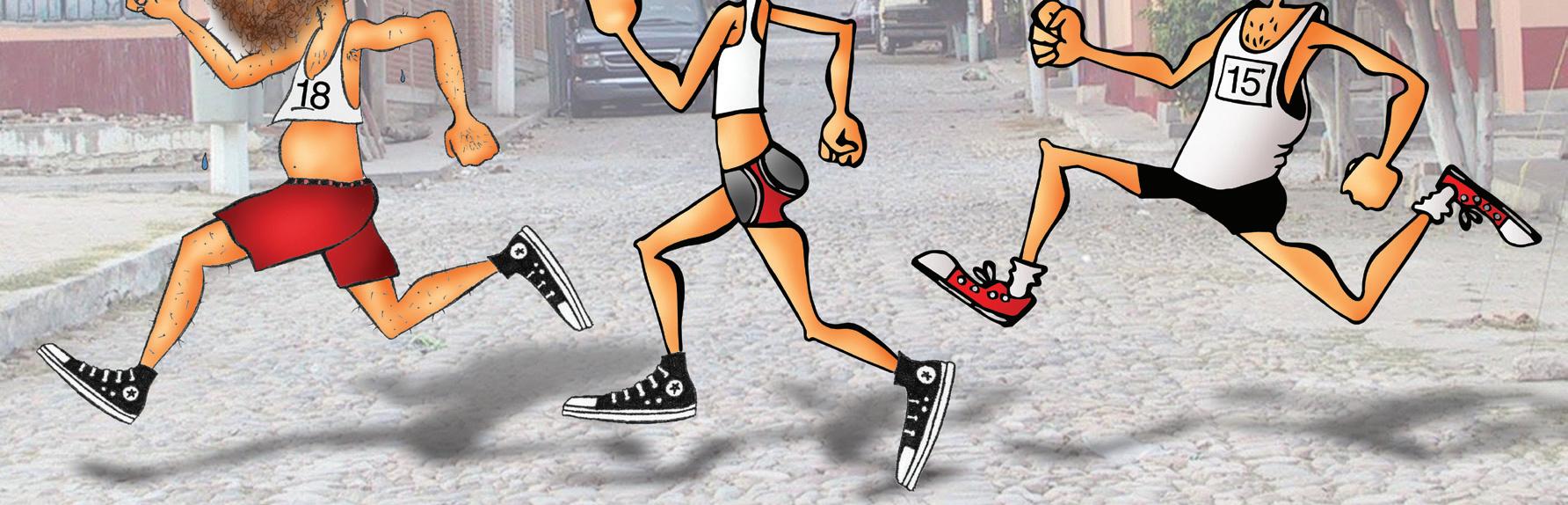
Before committing yourself to a running event, it’s important to create a plan. The step is to set an achievable goal. Whether it is finishing at a specific time or simply just finishing, it is crucial to have a goal to motivate you.
It is also important to adjust your goals when necessary. When I ran my first marathon this past June, I had a goal of finishing in three hours and 35 minutes. Around halfway through my training, I sustained a knee injury and had to take a few weeks off. Once I was rested and back into training I realized that my original goal would not be achievable.
I decided I would aim for less than four hours instead. I was able to achieve this, running in 3:52:00. Applying a realistic goal helps maintain a positive attitude as you progress and improve, and is vital
to maintaining your focus during training.
Once you set a goal for yourself, the next step is to design a training program. You can approach this in a variety of different ways: consulting a coach, going to a running specialty store, or searching for one online.
When I first started running half marathons two years ago, I did not know how often I needed to run, or even what types of workouts were best. I trained for my first two races on my own. This was not the smartest idea as I struggled to get through the second half of both.
It wasn’t until after I began working at the Running Room that I learned the importance of a proper training program, as well as receiving knowledgeable coaching. My third half marathon, and first with a full training regime, yielded
huge results. I cut down my personal best time by nearly 19 minutes. From that point on, I was incredibly motivated to improve and train harder with each race.
My typical training schedule for a half marathon is 16 weeks long. It includes speed work, slower long distance runs (9.5-21 km), quicker tempo runs (6.5-8 km), and hill training to improve the core. Marathon training involves the same training runs—the difference being the longer training distances—all the way up to 35 km.
Training will vary depending on the individual. I usually like to train with a group that has similar goals and fitness levels, as I find it motivates me to stay committed. I have also met some of my closest friends through running. They were the ones who convinced me to run a marathon, and have kept me going
afterwards.
Regardless as to how you choose to train, setting up a consistent schedule is what will get you through the weeks, and prepare you for whichever race you choose to do.
Most of my motivation comes from the event that I am training for. Once you’re committed to your traning regimen, I would recommend trying to run at least one destination race per year. Whether that be out of province or out of country, it is exciting to experience the atmosphere of different race locations while enjoying a fun weekend trip. I ran my second marathon in Minnesota on Oct. 6 after completing the Manitoba Marathon in June. It gave me an entirely new perspective on how different races are organized.
There were over 5,000 runners
on the full marathon course in Minneapolis and St. Paul, significantly more than the Manitoba Marathon. The fan support was absolutely amazing throughout the race, especially during the toughest parts of the course. There were far more hills than in the Manitoba Marathon, which was challenging. The experience has allowed me to appreciate the excitement of going to a larger race, as well as the calmer nature of smaller, local races. Sticking to your goals and training truly makes a difference, regardless of whether you are a seasoned veteran or just starting out. When I look back a few years, I am amazed at the progress I have made. I have run 10 half marathons and two full marathons over the last two years. I credit my accomplishments to my strong training plan and realistic, motivational goals.