GRAPHICS EDITOR Emma Gillich graphics@themanitoban.com
GRAPHICS ASSOCIATE Teegan Gillich
AUDIO AND VIDEO
AUDIO EDITOR Max Reid audio@themanitoban.com
PHOTO EDITOR Mike Thiessen photo@themanitoban.com
PHOTO ASSOCIATE Ebunoluwa Akinbo
VIDEO EDITOR Zulkifl Rafah video@themanitoban.com
DIGITAL MEDIA EDITOR Faisal Rahman social@themanitoban.com
SOCIAL MEDIA ASSOCIATE Paula Robles Andia
REPORTERS
NEWS Arifah Gheesah
NEWS Nafisa Al Lilo
RESEARCH & TECHNOLOGY Nawal Semir
COMMENT Thandeka Katsika
COMMENT Kyra Campbell
ARTS & CULTURE Carrington Dong
ARTS & CULTURE Jordan Anglin
SPORTS Faiyaz Chowdhury
SPORTS Israel Abejoye
VOLUNTEERS
VOLUNTEERS
interested in volunteering?
email me@themanitoban.com today!
The Manitoban is the official student newspaper of the University of Manitoba. It is published monthly during the summer and each week of regular classes during the academic year by the Manitoban Newspaper Publications Corporation.
The Manitoban is an independent and democratic student organization, open to participation from all students. It exists to serve its readers as students and citizens.
The Manitoban is a member of the Canadian University Press, and our journalistic standards can be found on the Manitoban’s website.
The newspaper’s primary mandate is to report fairly and objectively on issues and events of importance and interest to the students of the University of Manitoba, to provide an open forum for the free expression and exchange of opinions and ideas and to stimulate meaningful debate on issues that affect or would otherwise be of interest to the student body and/ or society in general. The Manitoban serves as a training ground for students interested in any aspect of journalism.
Students and other interested parties are invited to contribute to any section of the newspaper. Please contact the appropriate editor for submission guidelines.
The Manitoban reserves the right to edit all submissions and will not publish any material deemed by its Editorial Board to be discriminatory, racist, sexist, homophobic or transphobic, ableist or libellous.
Opinions expressed in letters and articles are solely those of the authors. Editorials in the Manitoban are signed and represent the opinions of the writer(s), not necessarily those of the Manitoban staff, Editorial Board or the publisher.
A “volunteer staff” member is defined as a person who has had three volunteer articles, photographs or pieces of art of reasonable length and/ or substance published in the current publishing year of the Manitoban
Any individual who qualifies as a volunteer staff member must be voted in by a majority vote at a Manitoban editorial board meeting. Elected representatives and non-students may be excluded from holding votes as volunteer staff members in accordance with the Manitoban Constitution.
U of M alum Rachad Antonius returns to discuss Palestinian activism
Arifah Gheesah, staff
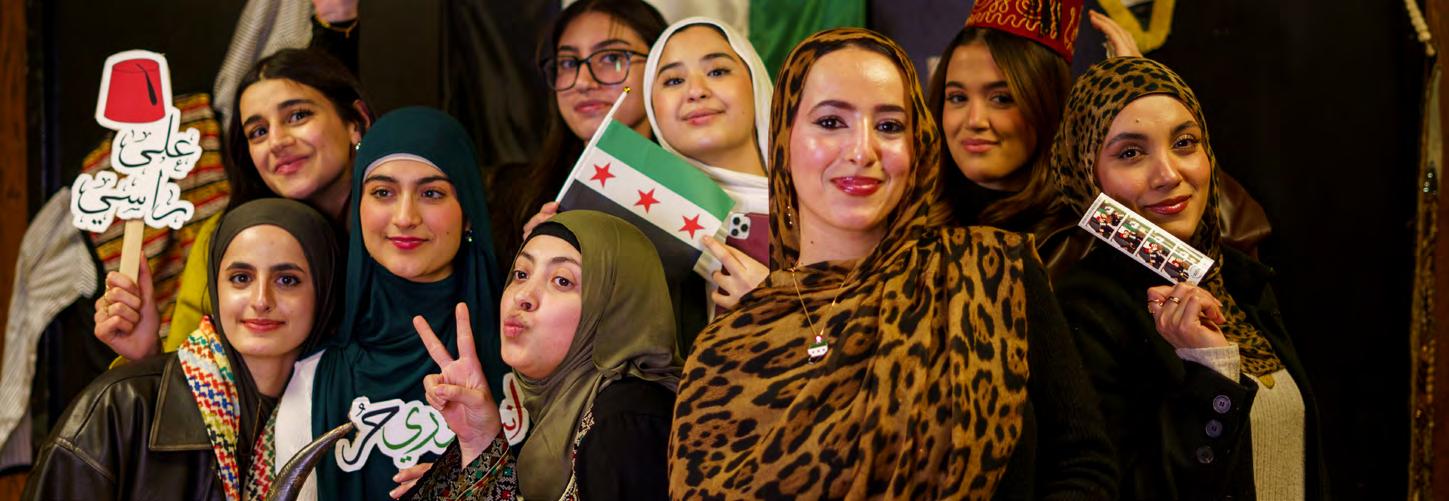
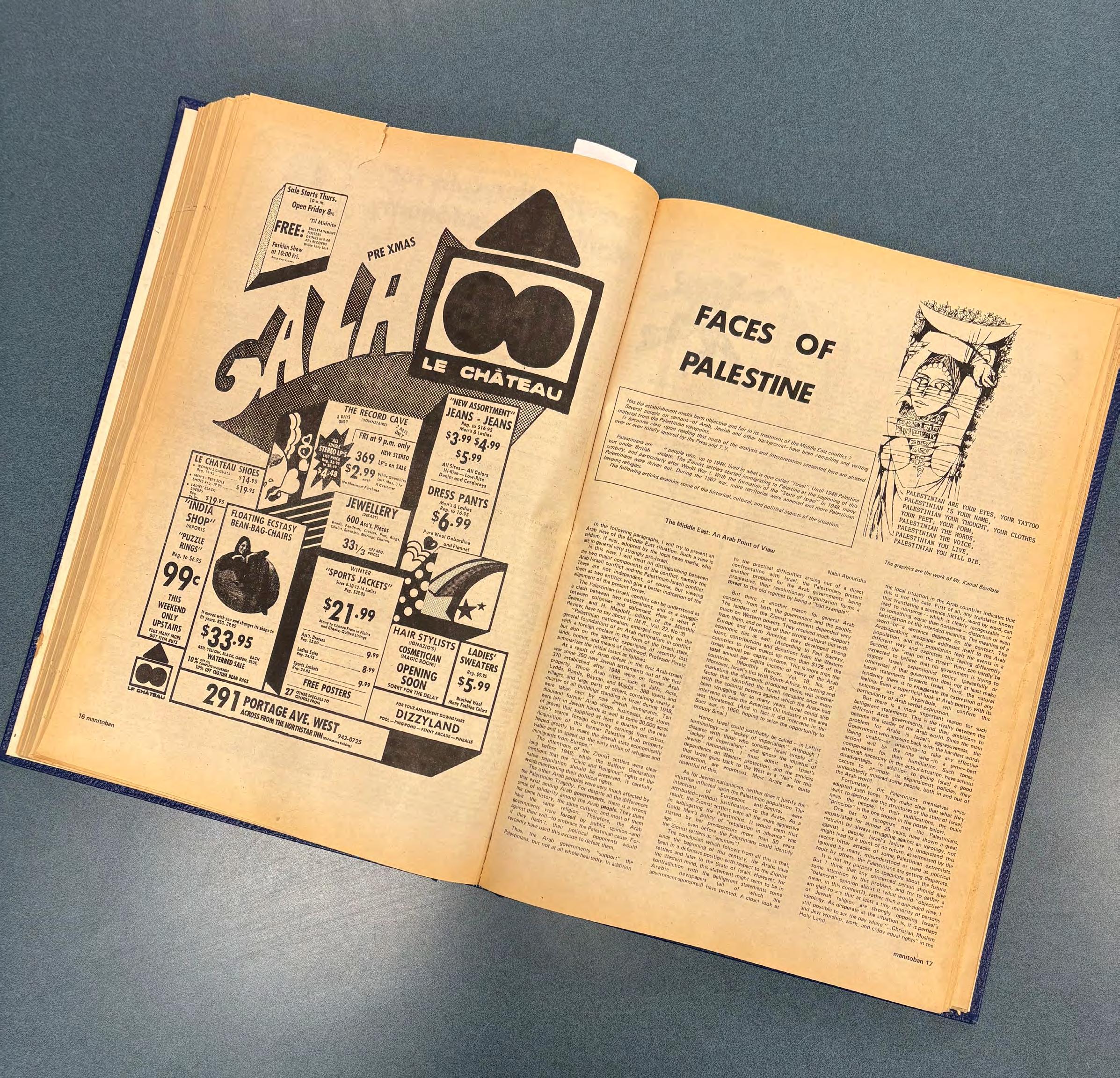
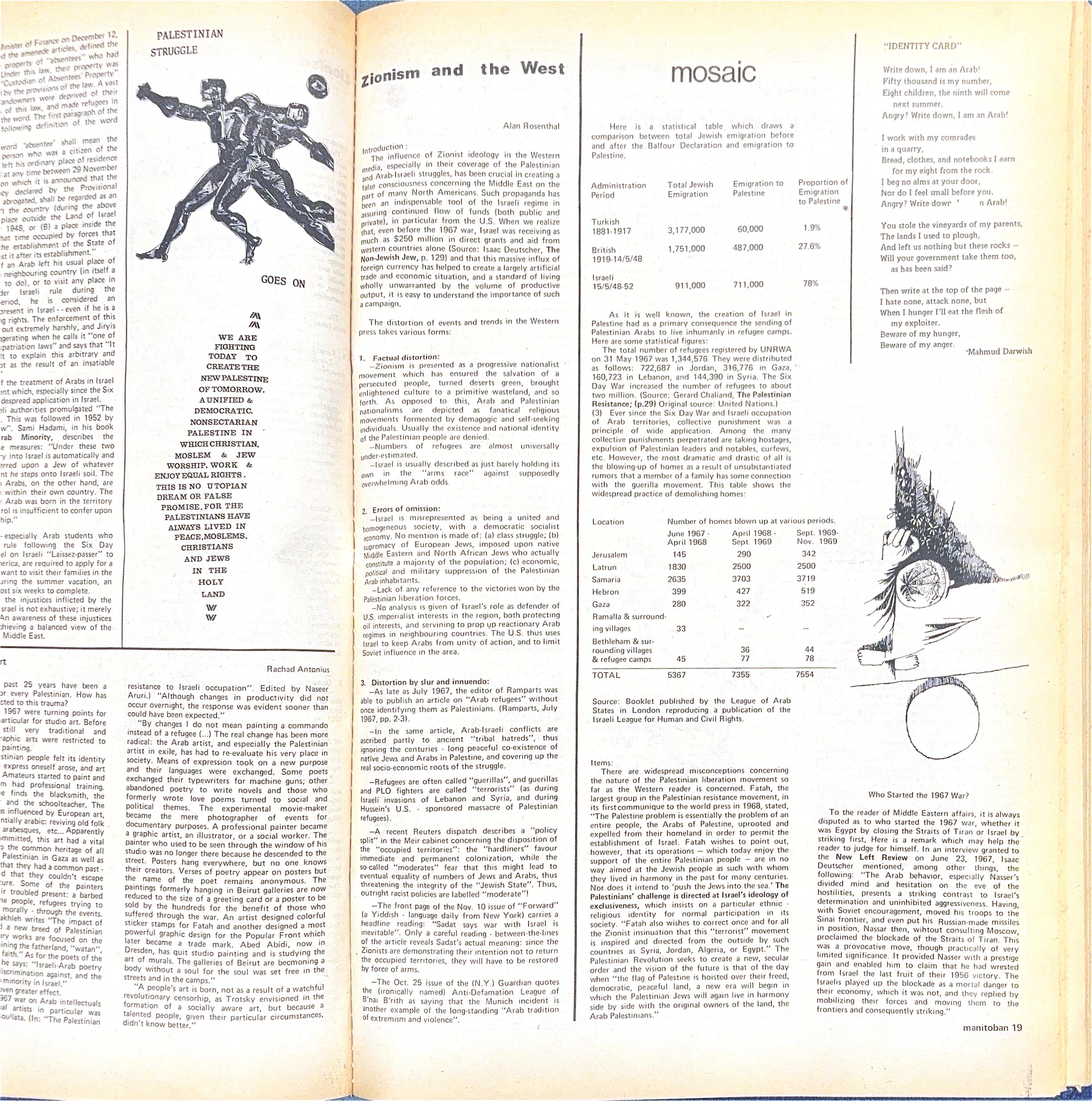
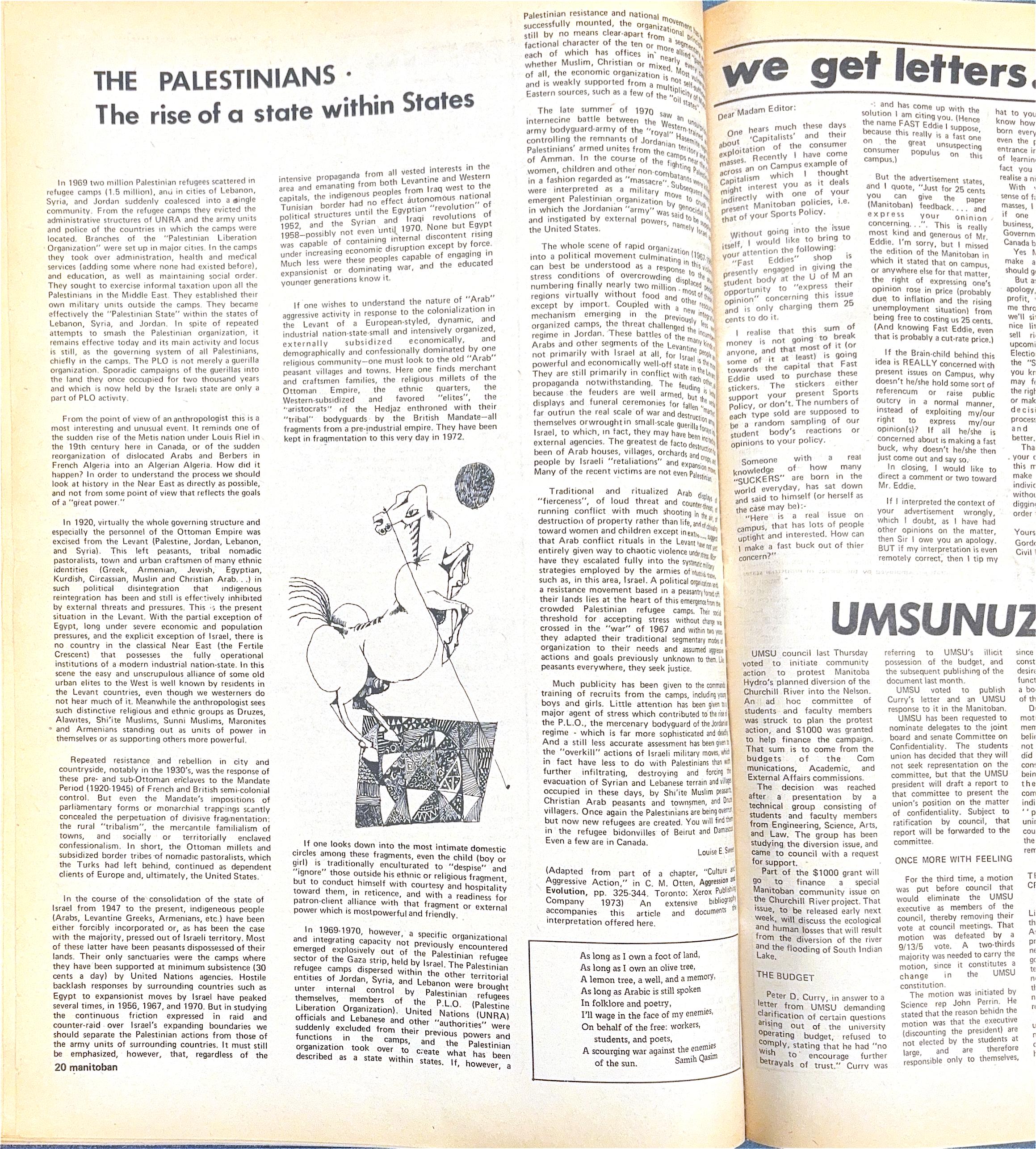
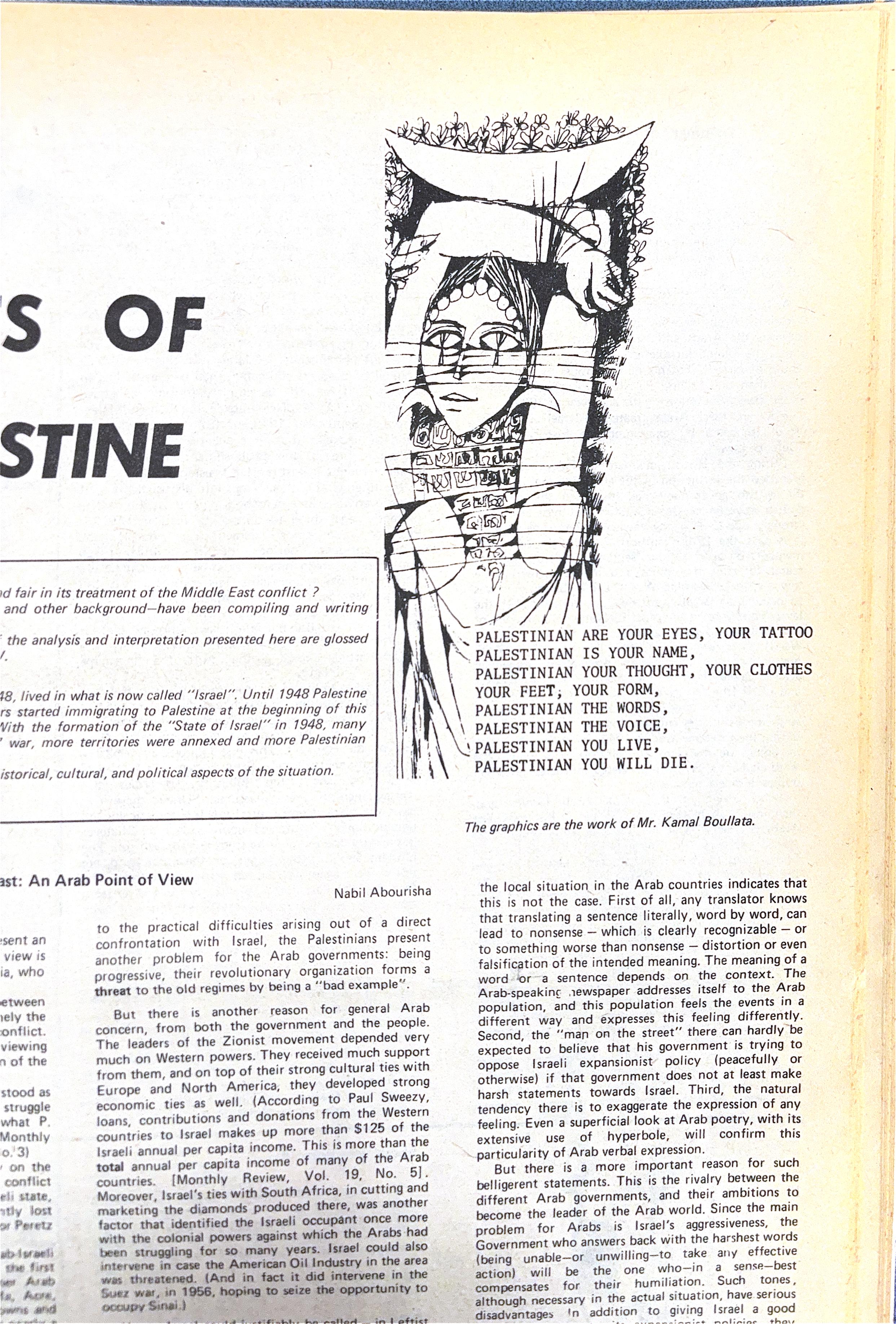
Tier Building will open its doors on Jan. 22 for an on-campus event titled Faces of Palestine, 1972: From a Document in the Manitoban to the Current Crisis. The event to be held at room 307
PHOTO BY DEVENEY JARROW / STAFF
ABOVE: PHOTO OF THE MANITOBAN 1972 ARCHIVE PHOTOS PROVIDED BY THE MANITOBAN ARCHIVE
ABOVE GRAPHICS BY MR. KAMAL BOULLATA, PER THE MANITOBAN 1972 ARCHIVE
PHOTOS
Research & Technology
Rethinking genocide through a non-human lens
Examining how violence against animals shapes collective loss
Mansura Akter Meghla, staff
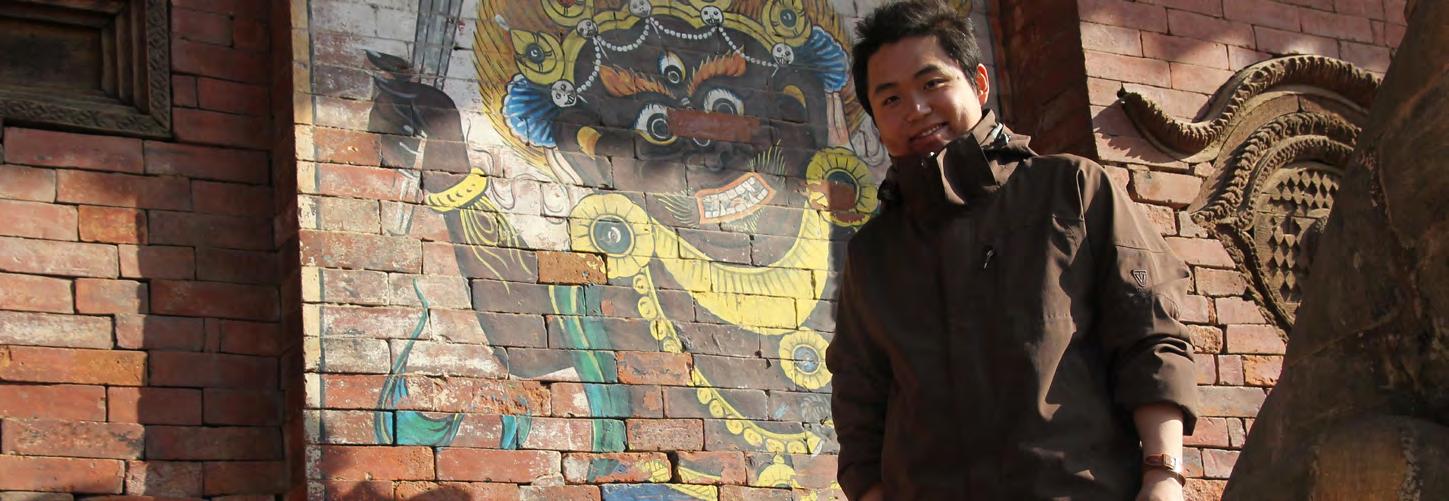
According to Marvin Xia, genocide cannot be fully understood by looking at human suffering alone. His research argues that violence against animals and the land is not a side effect of genocide, but a central part of how collective destruction unfolds.
Xia is an instructor in the U of M’s department of sociology and criminology and holds two doctoral degrees — one in anthropology from Peking University and the other in sociology from the U of M. His research examines how settler colonialism, systemic oppression and genocide shape both human societies and the environments they inhabit.
“My long-term research interests are primarily focused on the complex dynamics of conflicts between state and ethnic minorities,” Xia said. He placed particular emphasis on Indigenous peoples, whose experiences of colonial violence often extend beyond direct harm to humans and into the destruction of animals, land and social relations.
Xia’s second PhD dissertation is a comparative study of mass animal deaths
that occurred alongside genocides targeting human groups. He examined three cases — the slaughter of Tutsi cattle during the Rwandan genocide, the mass death of yaks during the collectivization of Tibetan nomads and the widespread killing of buffalo during the genocide against Indigenous peoples of North America.
as members of the community rather than objects owned by humans.
“A major takeaway from this research is that to truly understand the suffering of victimized groups, we need to explore their own beliefs and knowledge systems,” Xia said. Concepts such as destruction
impossible.
During fieldwork in Sichuan province, Xia witnessed the aftermath of Tibetan selfimmolation protests that began in 2009. Later, mass internment and re-education camps in Xinjiang targeting Uyghur Muslims further reinforced the urgency of studying ethnic minority oppression.
“To truly understand the suffering of victimized groups, we need to explore their own beliefs and knowledge systems”
“I try to find out why so many cattle were killed in the three events,” Xia explained, “and challenge the Western perspective that views animals as human property and natural resources.”
— Marvin Xia, recent PhD graduate and instructor in the U of M’s department of sociology and criminology
or collectivity, he argued, cannot be imposed from outside cultural frameworks without losing their meaning.
Rather than treating animals as passive losses, Xia’s research argues that cattle, yaks and buffalo held social, cultural and spiritual roles within their respective communities. Their destruction represented not only economic harm, but a collapse of collective life.
In many of the societies he studied, animals functioned
Xia’s academic path was shaped by political realities as much as intellectual interest. His first doctoral research in China focused on conflicts between ethnic minorities and pre-communist Chinese governments, particularly involving Tibetans in southwest China. Studying contemporary minority issues under the current political system proved nearly
“China’s ethnic minority issues are very important,” Xia said. “However, people cannot [study them] within China.”
Strict censorship and surveillance limited access to information, leading Xia to relocate to Canada to continue his research. At the U of M, he shifted his focus toward genocide studies, using comparative and interdisciplinary methods that were not possible in his previous academic environment.
Xia described his work as contributing to the decolonization of genocide studies. His findings suggest that Western definitions of genocide, which focus
primarily on human victims, overlook how collective destruction often includes animals and ecosystems that are integral to social life. In many non-Western societies, he argued, collectivity is not limited to humans alone.
“This suggests that ‘genos’ (collectivity) can have various implications and is not necessarily exclusive to humankind,” Xia said. Generally, this opens space for broader interpretations of violence, loss and survival.
Looking ahead, Xia plans to publish his dissertation with the aim of reshaping how scholars think about animal killing in genocidal contexts. Ultimately, Xia hopes his research encourages scholars and readers alike to reconsider fundamental questions such as, “What constitutes a group? And what constitutes destruction?”
For students entering the field, he advised stepping outside dominant academic frameworks and engaging with Indigenous and nonWestern knowledge systems. “Students should strive to reflect on the habitual frameworks of thought in their lives,” he included.
PHOTO
INTERESTED IN UMSU LEADERSHIP?
STUDENT LEADER JOB FAIR
Speak with current executives and community representatives to learn more about each role!
1st floor – UMSU University Centre Wednesday, February 4 11AM to 1PM