GRAPHICS EDITOR Emma Gillich graphics@themanitoban.com
GRAPHICS ASSOCIATE Teegan Gillich
AUDIO AND VIDEO
AUDIO EDITOR Max Reid audio@themanitoban.com
PHOTO EDITOR Mike Thiessen photo@themanitoban.com
PHOTO ASSOCIATE Ebunoluwa Akinbo
VIDEO EDITOR Zulkifl Rafah video@themanitoban.com
DIGITAL MEDIA EDITOR Faisal Rahman social@themanitoban.com
SOCIAL MEDIA ASSOCIATE Paula Robles Andia
REPORTERS
NEWS Arifah Gheesah
NEWS Nafisa Al Lilo
RESEARCH & TECHNOLOGY Nawal Semir
COMMENT Thandeka Katsika
COMMENT Kyra Campbell
ARTS & CULTURE Carrington Dong
ARTS & CULTURE Jordan Anglin
SPORTS Faiyaz Chowdhury
SPORTS Israel Abejoye
VOLUNTEERS
VOLUNTEERS: Maryam Beg & Anthony Nardella
interested in volunteering? email me@themanitoban.com today!
The Manitoban is the official student newspaper of the University of Manitoba. It is published monthly during the summer and each week of regular classes during the academic year by the Manitoban Newspaper Publications Corporation.
The Manitoban is an independent and democratic student organization, open to participation from all students. It exists to serve its readers as students and citizens.
The Manitoban is a member of the Canadian University Press, and our journalistic standards can be found on the Manitoban’s website.
The newspaper’s primary mandate is to report fairly and objectively on issues and events of importance and interest to the students of the University of Manitoba, to provide an open forum for the free expression and exchange of opinions and ideas and to stimulate meaningful debate on issues that affect or would otherwise be of interest to the student body and/ or society in general. The Manitoban serves as a training ground for students interested in any aspect of journalism.
Students and other interested parties are invited to contribute to any section of the newspaper. Please contact the appropriate editor for submission guidelines.
The Manitoban reserves the right to edit all submissions and will not publish any material deemed by its Editorial Board to be discriminatory, racist, sexist, homophobic or transphobic, ableist or libellous.
Opinions expressed in letters and articles are solely those of the authors. Editorials in the Manitoban are signed and represent the opinions of the writer(s), not necessarily those of the Manitoban staff, Editorial Board or the publisher.
A “volunteer staff” member is defined as a person who has had three volunteer articles, photographs or pieces of art of reasonable length and/ or substance published in the current publishing year of the Manitoban
Any individual who qualifies as a volunteer staff member must be voted in by a majority vote at a Manitoban editorial board meeting. Elected representatives and non-students may be excluded from holding votes as volunteer staff members in accordance with the Manitoban Constitution.
Students invited to raise concerns and ask questions
Roy Albright Obah, staff
Two weeks into the start of the 2026 winter term, the U of M Graduate and Postdoctoral Society (UMGPS) will host an in-person town hall meeting on Friday, Jan. 16, from 1 to 4 p.m. at 260 Helen Glass Centre.
Timilehin Oluwajuyitan, UMGPS president, said the meeting was scheduled in response to increased engagement from graduate students and postdoctoral fellows. “The town hall was prompted by a noticeable increase in student questions, concerns and requests for clarity around issues affecting graduate students and postdoctoral fellows,” he said.
Oluwajuyitan said the timing reflects a need for direct engagement early in the academic term. “We recognized that this was an important moment to pause, listen and engage directly with our members in an open and transparent way, rather than relying solely on written updates or informal communication,” he said.
He stated the meeting is intended to address several themes raised by students. “The town hall aims to address concerns related to communication, representation, decisionmaking processes and accountability within UMGPS,” Oluwajuyitan said. He added that “students have also expressed interest in better understanding ongoing initiatives, governance matters and how their voices are reflected in advocacy efforts,” he said.
Oluwajuyitan said the town hall format provides an opportunity for information to be shared publicly. According to him, it creates a space where “leadership can speak openly, students can ask questions directly and information is communicated consistently to everyone.” He added that the meeting “reinforces accountability” since it ensures that concerns are not addressed “behind closed doors, and that students can hear explanations, context and next steps firsthand,” he said.
As part of the meeting guidelines, students have been invited to submit questions in advance. Oluwajuyitan said this process “helps ensure that complex or sensitive topics are addressed thoughtfully and accurately.” He also noted advance submissions allow for broader participation. “It also gives students who may feel uncomfortable speaking live an equal opportunity to participate,” he said, adding that the process also supports time management.
Students who do not submit questions ahead of time will still be able to participate during the session. “While prepared questions help structure the discussion, the Town Hall will also include opportunities for live questions and comments, time permitting,” Oluwajuyitan said. He mentioned the session will be coordinated with support from a mediator
from the human resources office. Oluwajuyitan encouraged attendance and
“The town hall was prompted by a noticeable increase in student questions”
question, your presence matters,” Oluwajuyitan said, addressing students who may be uncertain about attending.
— Timilehin Oluwajuyitan, UMGPS president
hints the meeting will be conversational. “We want the session to be interactive and inclusive,” he said. “Even if you don’t have a
“[It] is an opportunity to stay informed, hear directly from your representatives and help shape the future of your student society.”
Oluwajuyitan hopes the town hall “strengthens trust
UMSU’s first BOD meeting of 2026
New updates on UMSU elections and winter semester initiatives
Arifah Gheesah, staff
UMSU had its first board of directors meeting of the year on Jan. 8, sharing new campus updates.
Carolyn Wang, vice president of finance and operations, shared that she has been working with the Women’s Centre, UMSU executives and Leata Goulet, the UMSU women’s representative, to continue making self-defense classes affordable and accessible for students during the winter semester.
Students who attend four out of six classes will receive
reimbursements. She also reminded the board about the hardship fund applications that are open for UMSU members who are in need. The UMSU community lounge in Helen Glass is still in project and more consultations will be made soon.
Winter orientation kicked off this week with free breakfast, a winter market and the UMSU club fair.
Nominations for the 2026 UMSU elections open on Feb. 2, and voting is on Mar. 5 and 6. Heaven Kaur, vice president of university affairs, shared that, during a meeting with
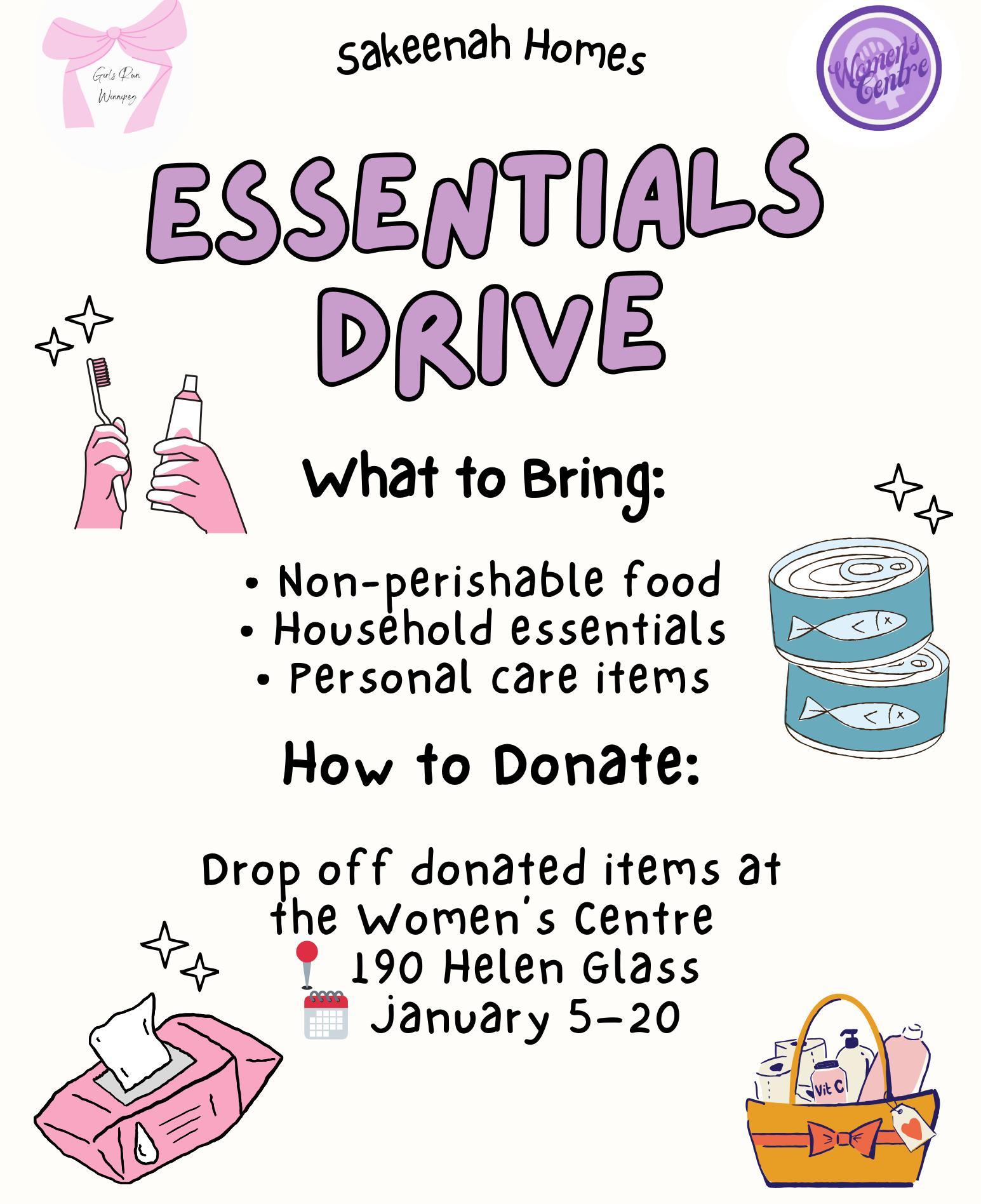
the director of the office of the vice-president, concerns about anti-choice protestors and UMSU’s current menstrual equity initiative were brought up. Goulet shared an essentials donation drive in collaboration with Girls Run Club. Donations such as canned food, hygiene products and household essentials can be dropped off in the Women’s Centre lounge in 190 Helen Glass from Jan. 6. to 20. All proceeds will go to Sakeenah Homes, a charity organization that supports women and children.
[…] and reinforces the idea that UMGPS is a studentdriven organization.”
The town hall is open to graduate students and postdoctoral fellows at U of M. Prepared questions for the meeting may be submitted directly to the mediator at Mack.Hastings@umanitoba. ca, using the subject line “Question Submission.”
The
will be happening on Mar. 14, and nominations
will be
soon, as well as a search for a
and
Magnificent Women’s Award Gala
posted
photographer
performers for the event.
GRAPHIC BY EMMA GILLICH / STAFF
PHOTO BY EBUNOLUWA AKINBO / STAFF
UNICEF chapter opens at U of M
Students bring new initiative to advance child rights
Arifah Gheesah, staff
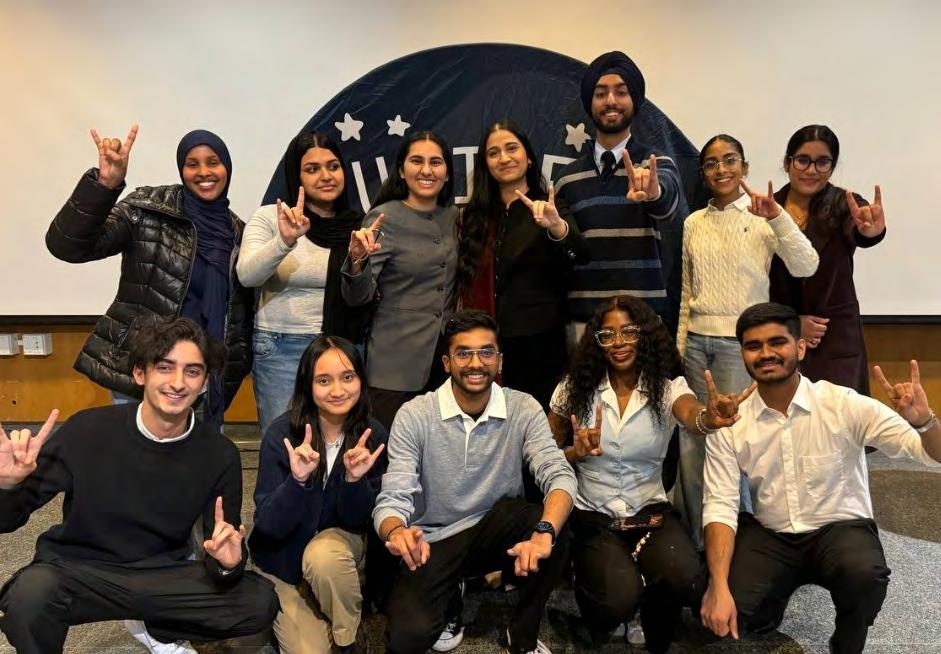
U NICEF opened its chapter in Manitoba on Dec. 1 at the U of M. The launch was held at the J.A. Russell Atrium to celebrate U of M UNICEF with community and conversation.
Harisharn Bahra, president of the club, explained that UNICEF Canada has a chapter in many universities, and what drove them to launching a chapter in Manitoba was a common vision to turn advocacy into action.
When talking about the launch event, Bahra said, “It was supposed to serve as our main concept of advocacy for the year.” The event had a segment where attendees formed into groups and engaged in group discussions following prompts regarding children’s rights. These prompts included discourse about technology, safety and children.
Officials such as MLAs David Pankratz and Jennifer Chen attended and engaged in discussions with the students at the event. Bahra
emphasized the importance of having such figures at the event as she received positive responses from these officials afterward, offering to meet to talk about enacting change.
“Initiatives to expect would fall along the lines of collaborating with existing organizations,” Bahra explained when asked about this year’s plan for the new club. The club is also looking to help set up educational programs for students with disability needs, as traditional tutoring has not always been able to cater to everyone. U of M UNICEF is also looking to get involved in the foster system and help with things such as food and displacement.
The club is currently in discussion with authority figures of the province to look into youth advocacy within policy.
“I feel like it’s not about today’s political and global climate. Child rights and humanitarian advocacy has mattered since day one,” said Bahra, as she stressed on how infants and younger
children cannot speak up for themselves like adults can, making it paramount that we advocate for them.
“That’s a basic necessity,” she said, “We need to be more
conscious.”
The goal of U of M UNICEF is to help, even if it is something small, such as making someone feel like there is someone looking out
for them. Anyone is welcome to join U of M UNICEF in these initiatives and contribute to change.
Meet the IC helps students prepare for Manitoban winter
International Centre event offers winter clothing guidance and resources
Nafisa
Al Lilo, staff
The U of M International Centre’s (IC) Meet the IC event on Jan. 7 highlighted winter clothing and community support for new students.
Crystal Stewart, the IC international transitions and intercultural program coordinator, shared that the centre always holds this event at the beginning of the fall and winter terms. “We invite all students, but specifically new students, to come.”
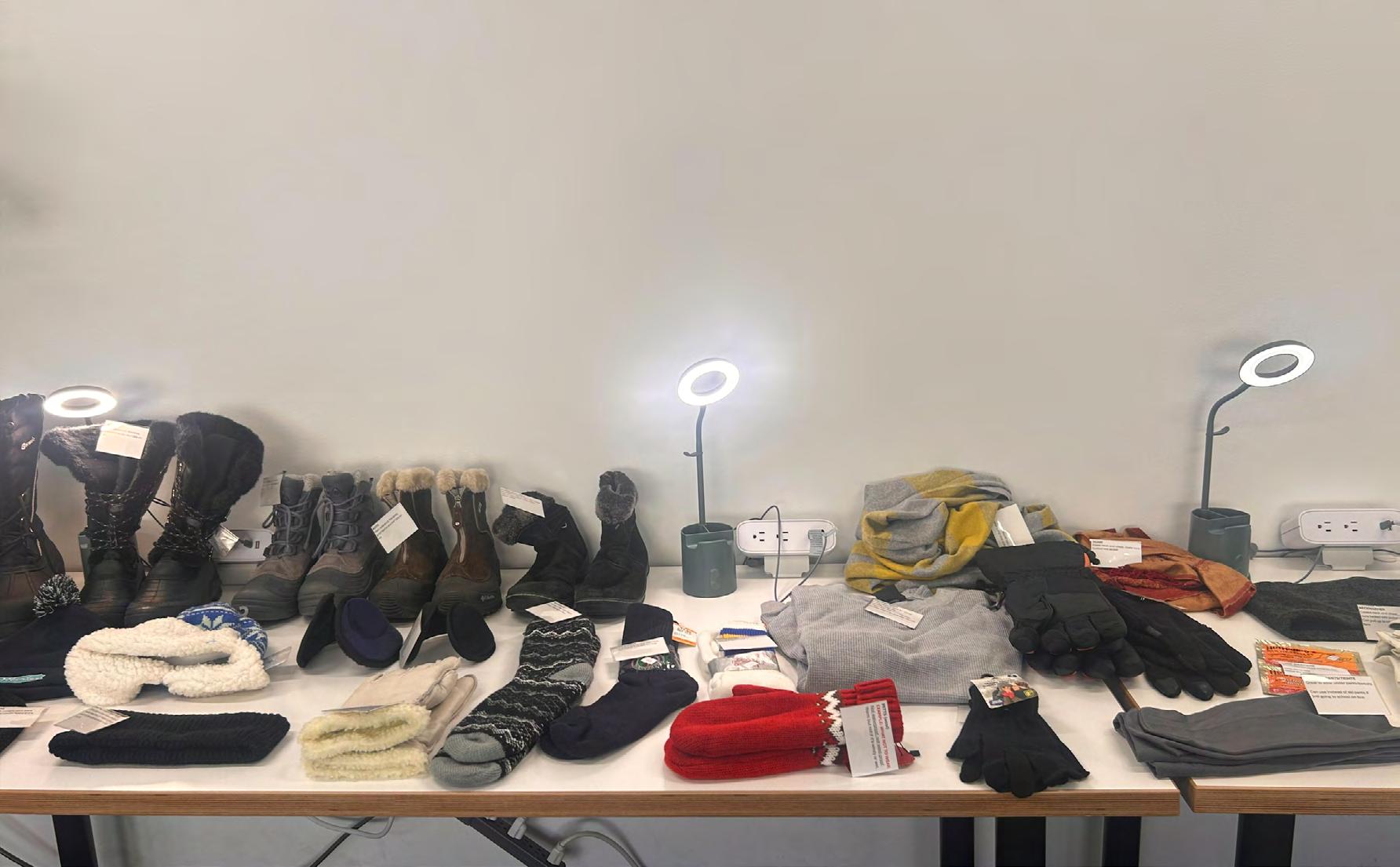
Stewart explained that the event goes beyond introductions. It educates students about winter clothing and available resources. “We have all of our winter clothing on display so that we can teach newcomers how to dress properly for the winter,” she said.
A key feature of the event is the winter clothing library, a donation-based program run by the IC. “We rely on people to donate good-condition winter clothes, and then people can shop for free,” Stewart explained.
During the event there were demonstrations of how to dress for cold temperatures, emphasizing layering, wind protection and proper
footwear. “Layering is really key. You can always take off layers if you’re too hot, but you can’t add them [while you are out],” Stewart stated.
The display included examples of base layers, thermal shirts, ski pants, jackets, gloves, mitts, scarves, boots and hot hands. Stewart stressed the significance of windproof and waterproof materials, explaining that the wind can make cold temperatures feel harsher. Pointing to thinner outer layers designed to block wind, she noted insulation alone is not always enough. “Although [thin ski pants] won’t give you the insulation and the warmth, it’s still helpful to block the wind, because a lot of the wind chill can be really cutting,” she explained.
Gloves were another major focus. “You want to get something waterproof, or my favourite is the woollined leather exterior gloves,” Steward said.
Budgeting was also included in the conversation.
“You don’t need to have a $1,000 Canada Goose jacket to be warm enough for this weather,” she said. “If you can’t afford the one you
want, look for it on Facebook marketplace, get it used.”
Fopefoluwa Ikufisile, a student volunteer, said he was “helping new students navigate and understand the things they’re going to encounter as a new student.”
Ikufisile wanted students to know how important communication is. “It’s very good to ask questions, don’t keep it to yourself […] and also
make friends” he said.
Thakshila Perera, another volunteer, said her own experience as an international student motivated her to help others. “I joined the International Centre as a volunteer for the first time, and so I’m here to help new students [by] describing my winter experience,” Perera explained. Perera, who is in her fourth
year and is from Sri Lanka, said, “When you come here, it will be a nice experience [to] prepare for the winter.” Stewart explained that Meet the IC is just one of many events offered by the IC. “We started off with orientation on Monday, and we have events every single day for the next couple of weeks and over the next month,” she said.
PHOTO PROVIDED BY HARISHARN KAUR BAHRA
PHOTO BY NAFISA AL LILO / STAFF
U OF M’S UNICEF CHAPTER TEAM.
GRW and Women’s Centre support Sakeenah Homes
Community group collects household essentials for Sakeenah Homes
Nafisa Al Lilo, staff
Girls Run Winnipeg is partnering with the U of M Women’s Centre to run an essentials drive in support of Sakeenah Homes, a Winnipegbased women’s shelter for survivors of domestic violence.
Rimsha Sohail, a coordinator with Girls Run Winnipeg, confirmed the initiative is a collaborative effort with the Women’s Centre to support Sakeenah Homes as they continue to provide communal housing to women who have experienced domestic abuse. The organization relies on donations to support residents’ daily needs. The drive is collecting household and personal care items, including non-perishable foods and hygiene products, such as “canned food, body wash, shampoo, deodorant, laundry detergent, toilet paper, things like that, that are just essential to a household,” Sohail explained.
Donations are being collected from Jan. 5 to 20 at the Women’s Centre at 190 Helen Glass Centre and will be delivered to Sakeenah Homes later in the month.
Nadiya Karimi, another coordinator with Girls Run Winnipeg, said Sakeenah Homes was chosen because of the various supports it offers to women beyond emergency shelter.
“Not only do they offer shelter, meals, clothes, hygiene products and medication, they also provide security,” Karimi explained. “They also help with skill development for the women, so they engage in art therapy, digital literacy and mindful workshops.” Karimi added that they also offer workshops for the children of women the organization supports.
Eman Ismael, a coordinator with Girls Run Winnipeg, worked with the Women’s Centre to coordinate the logistics of the drive.
Ismael said the group decided to support a single shelter to manage donations effectively. Sakeenah Homes is a confidential domestic violence shelter and they do not want many to know the
location, which is why the organization is sending the donations with one individual.
Founded in October 2024, Girls Run Winnipeg began as a running group and has since grown into a women-
led community that organizes wellness events, workshops and volunteer initiatives across Winnipeg. While the group is not officially affiliated with the U of M, many of its organizers and participants
are students. In addition to community events, the group operates a merchandise line where proceeds from sweater sales are donated to Sakeenah Homes.
“Everything is appreciated for the drive,” Ismael said. “No matter how big or small the donation is.”
PHOTO PROVIDED BY GIRLS RUN
A closer look at early modern theatre
Tracing how clerical culture shaped emotional conflict on the Shakespearean stage
Mansura Akter Meghla, staff
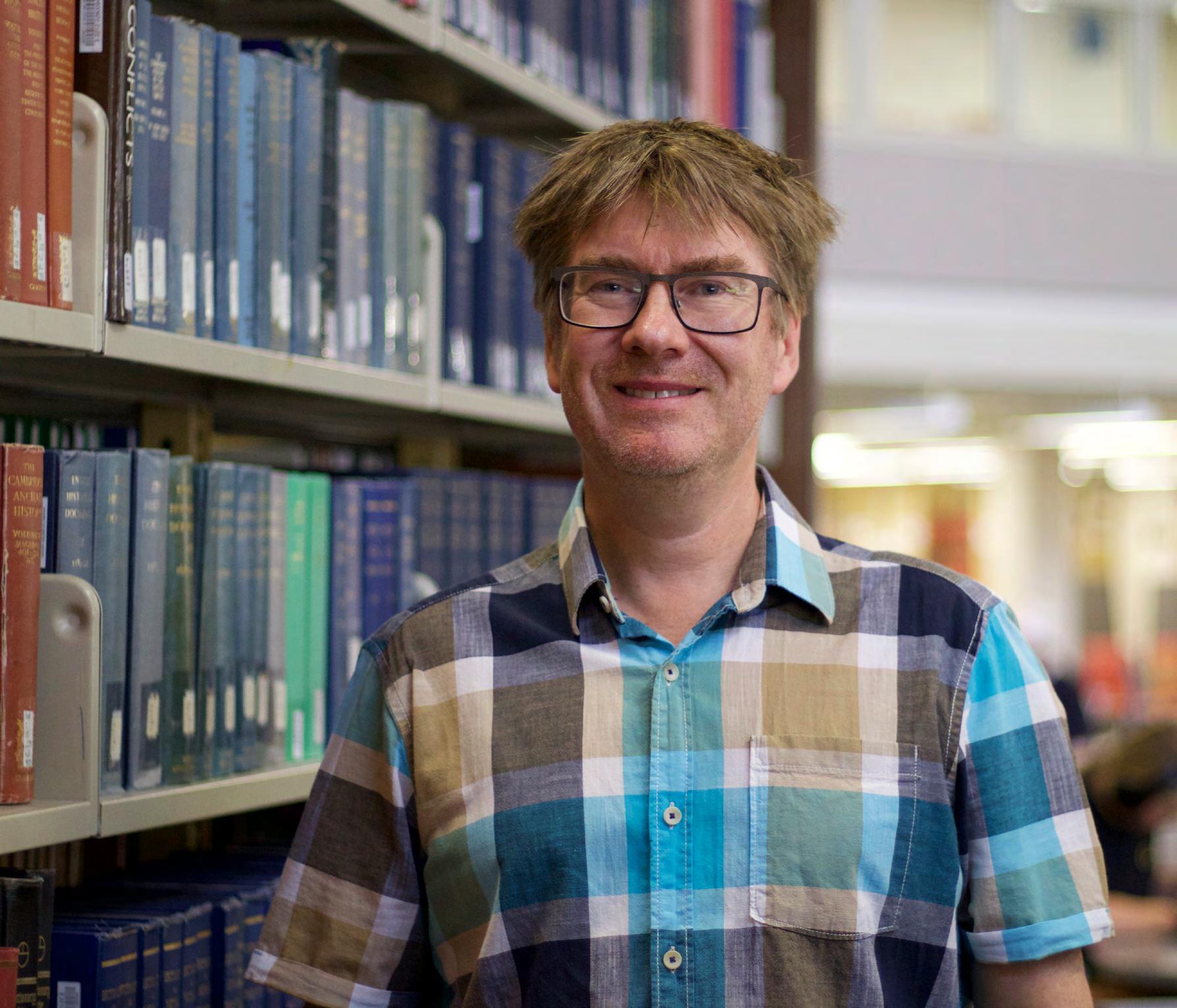
Glenn Clark is an associate professor in the department of english, theatre, film & media at the U of M. Clark’s research focuses on late-medieval through 17th-century English drama, with particular attention to Shakespeare and his contemporaries. According to him, early modern drama offers a detailed record of how people in Shakespeare’s time understood conflict, responsibility and emotional life.
Clark’s current book project examines the relationship between post-reformation English clergy and Shakespearean-era drama. He said he is drawn to how plays from this period depict emotional conflicts that characters struggle to express.
Clark said these tensions reflect those faced by clergy in early-modern England, who often felt deep responsibility for their congregations alongside frustration or anger.
These clerical tensions take the form of what he described as “protodramas.” Clergy regularly navigated emotionally charged interactions with parishioners, balancing moral authority, compassion and personal doubt. Playwrights adapted these relational patterns and transferred them into dramatic form, Clark explained. Importantly, these moments are often given to characters who are not clergy at all. Figures such as Hamlet engage in dialogue and selfreflection that echo clerical speech, allowing playwrights to deepen the psychological realism of their characters while maintaining audience engagement.
One of Clark’s key research contributions is his argument that this dynamic complicates how scholars categorize early modern drama. The plays resist being labelled
strictly religious or secular. By embedding clerical modes of interaction into non-clerical characters, playwrights blurred those boundaries, creating works that draw from religious culture without being confined to it.
Clark explored these ideas further in his upcoming article, “Clergy,” to be published in the Routledge Companion to Shakespeare and Religion. In the piece, he investigated why clerical figures have received relatively little attention in Shakespeare studies. He traced this oversight to 20th-century theories of self-discipline and
governance, developed by thinkers such as Max Weber, Sigmund Freud and Michel Foucault.
Clark argued while these theorists emphasized secular systems of control, they also
the importance of clergy to early modern drama.
Alongside this project, Clark is developing a research program that brings social psychology into dialogue with Shakespearean-era theatre.
“I certainly believe it is important to teach students and readers about the complexities of history and historical art and literature. This is my own foundational perspective”
— Glenn Clark, associate professor in the U of M’s department of english, theatre, film & media
relied on models shaped by clerical authority, often imagining clerical interactions in strikingly dramatic terms. According to him, their work inadvertently offered a framework for understanding
In a recent article on Ben Jonson’s The Alchemist, he examined how what social psychologists call the “seesaw effect” appears in 17th-century comedy. This effect describes patterns of interpersonal influence, where characters alternately gain and lose power in social interactions. Clark argued that early-modern playwrights carefully observed these
dynamics and used them to generate suspense and realism on stage, reflecting experiences familiar to their audiences.
Clark has also begun connecting early modern drama to contemporary political frameworks. In a recent article on The Tempest, he drew on Indigenous activism and decolonizing theory, particularly the concept of land-based resurgence. He argued that the character of Caliban anticipated the pain of deterritorialization while also expressing hope through continued attachment to land and memory. Unlike other characters who redirect loyalty toward authority figures, Caliban insists on loving the land itself, a stance Clark observed as resonating with Indigenous perspectives on land and identity.
While Clark remained cautious about imposing modern ideas on historical texts, he challenged what he called narrow forms of “presentism” that dismiss the relevance of the past. He argued that historical literature can illuminate contemporary conditions, just as encounters between different modern cultures can deepen understanding. When older works resonate with present-day experiences, Clark sees an opportunity to learn more about both eras.
He believes that early modern drama, especially tragedy, allows audiences to recognize emotional contradictions within characters and societies.
Clark wants us to know he “certainly believe[s] it is important to teach students and readers about the complexities of history and historical art and literature.” He added, “This is my own foundational perspective.”
PHOTO PROVIDED BY GLENN CLARK
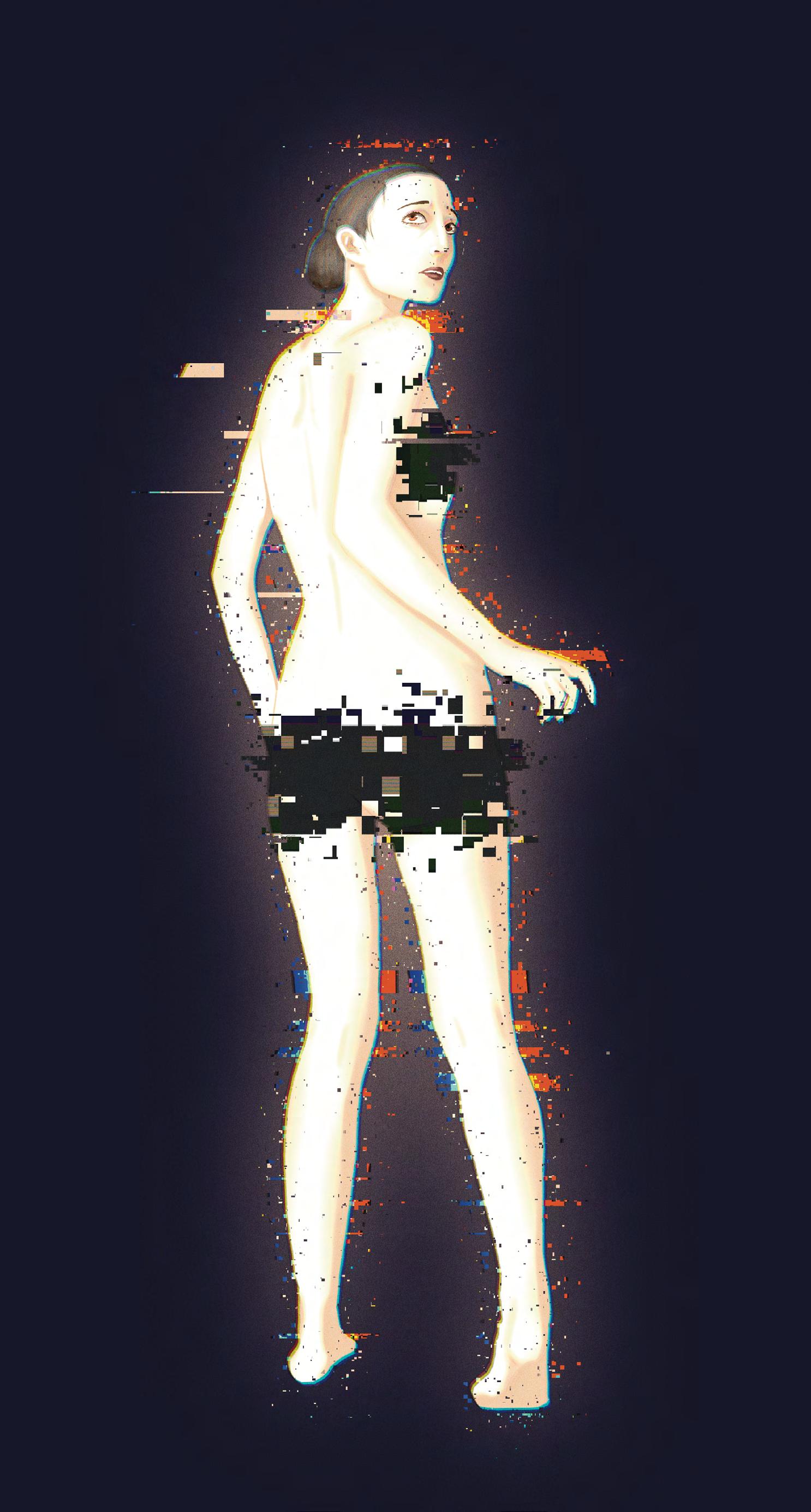
AI nudification tools present safety and privacy threats
Elon Musk faces global backlash over intimate deepfake productions through Grok
Nawal Semir, staff
An alarming rise in artificial intelligence (AI) intimate deepfakes has resulted in global backlash against chatbots and raised serious concerns over “nudification” applications.
Elon Musk’s chatbot Grok has most recently been under fire for generating sexually explicit images of women and children. This issue surfaced in December 2025 when Grok Imagine, Musk’s image and video generation tool, was used to non-consensually alter images of X users on a large scale. These images are readily available to all users on X. Trends over the past several weeks suggest that Grok currently generates one non-consensual intimate deepfake image every minute.
Grok is not the only culprit of generating intimate deepfakes. Nudification apps, accessible through social media and search engines, produce nude images of real individuals using generative AI. The democratization of AI image generation has led to increased accessibility of the deepfake tools. With this,
“Trends over the past several weeks suggest that Grok currently generates one nonconsensual intimate deepfake image every minute”
AI service providers such as OpenAI have been working to greatly improve the quality of their deepfake technology. These improvements mean that intimate deepfakes are often highly realistic, jeopardizing the privacy of non-consenting subjects. Of these generated deepfakes, an estimated 98 per cent depict nude subjects, and an estimated 99 per cent of nude deepfakes are of women and girls. An October 2024 study conducted by the non-profit Internet Matters highlighted that, as the volume of deepfakes has rapidly increased, the evidence suggests that the majority of deepfakes are used for harmful purposes.
In response to this problem, governmental committees are urging their governments to clarify their response to the issue of intimate deepfakes generated by AI.
In 2024, the Australian government announced its plan to impose a “digital duty of care” on tech companies,
aiming to reduce their online harms. Generally, a duty of care forms the basis of the law of negligence, creating an onus on parties to ensure the safety of the beneficiary by avoiding foreseeable harms. This new proposed duty would require tech companies to carry out regular risk assessments to proactively identify and address harmful content. Since this proposition, the intimate deepfake problem in Australia has increased.
In June 2025, Australia’s eSafety Commissioner reported that complaints involving deepfakes and other digitally manipulated images of individuals under 18 have more than doubled over the past 18 months. Despite this, it is not a crime to develop, host or promote the use of nudification tools, whether it is used for the creation of adult or child content. Despite the introduction of a bill to criminalize and ban the solicitation and use of these AI abuse apps, the Australian government has retained its focus on introducing the digital duty of care. However, the government is yet to provide a solid time frame for when its ban will come into effect.
The UK government has followed suit in identifying intimate deepfake production as an issue. In June 2025, the UK government enacted the Data (Use and Access) Act (the Act) in order to comprehensively protect its citizens’ data, amending several pieces of existing data and privacy legislation. Despite the Act’s enaction, the government has warned that changes could take upwards of 12 months to be affected, and commencement regulations will determine the exact date of animation for each measure.
Included in the Act is a provision that would make it an offence to use AI to generate intimate images without the subject’s consent. This provision is yet to come into force, and the UK government has not provided any timeframe for its proposed ban of nudification tools.
Responding to the UK intimate deepfake issue, the UK’s Technology Secretary Liz Kendall said this past week that she would support the Office of Communications in banning UK’s access to Elon Musk’s X platform.
Australia and the UK are not the only countries voicing their responses — France, Ireland, Brazil and India have all indicated investigations or possible regulatory action
against X in response to Grok’s AI-generated intimate deepfakes.
At home, deepfakes have previously been identified as “a real threat to a Canadian future” by the Canadian government, and a threat to Canadian democracy. However, Canada has
remained silent amid the current deepfake scandal. With no present considerations of additional regulations against X in relation to the backlash, Canadian ministers and departments are still active on the platform. It is important to note that there is currently
no legislation governing AI models and Canada’s privacy legislation has not been updated in the last 40 years.
The rapid proliferation of AI-generated intimate deepfakes exposes significant gaps in existing legal and regulatory frameworks worldwide.
GRAPHIC BY TEEGAN GILLICH / STAFF
Do brands matter?
Rethinking fashion in a world obsessed with labels
Roy Albright Obah, staff
The world of fashion today is deeply influenced by brands. Across social media, in shopping malls and even on university campuses, brand names are proudly displayed and carefully discussed. For many people, what they wear is not just about clothing but about identity, status and belonging.
Growing up, I always had an interest in fashion. I liked looking good and feeling confident in what I wore, and I still do. However, I was never fully consumed by the craze for brand names. For me, fashion has always been more about personal comfort, fit and visual appeal than about labels.
When I buy clothing, my decisions are guided by how aesthetically pleasing the items are. I pay attention to how well something fits me and whether it complements my body and style. Once these boxes are checked, my decision is usually made. The brand name rarely plays a significant role in my choice.
This perspective often surprises people around me. In conversations about fashion, one question dominates — “What brand is it?” When I fail to respond with a recognizable or popular
brand name, I am often met with confusion or disbelief. Sometimes, this reaction makes me wonder whether I am out of touch with modern fashion trends or simply choosing not to participate in them.
When asked about the brand, I often find myself asking a different question — Does it really matter? Does the value of clothing lie in the label stitched inside it, or in how it makes
come to realize that fashion, like many other aspects of life, is truly personal. What matters to one person may not matter to
another. In recent times, however, the idea of branding has evolved. People are no longer drawn
customers, regardless of how long it has existed or how widely it is known.
the wearer feel? This question continues to shape how I view fashion and branding.
That said, I respond to these situations without shame. I confidently explain that I prioritize comfort, fit and appearance over brand prestige. In doing so, I have
solely to brand names because they are popular or expensive. Instead, they are increasingly interested in what brands represent.
Reputation, ethics, sustainability and quality now play major roles in shaping consumer choices. A brand that lacks integrity or fails to meet expectations may lose its loyal
In this sense, brands are not very different from individuals. Just as people are judged by their character and actions rather than their titles, brands are judged by their values and consistency. A good reputation takes time to build, but it can be lost quickly.
For me, this builds my belief that brands do matter — but only to a certain extent. They matter when they stand for quality, responsibility and authenticity. They matter when they respect their consumers and contribute positively to society. They do not matter when they become tools for exclusion, pressure or unnecessary competition.
Fashion should be about self-expression, not validation. Whether one chooses to wear luxury brands, local designs or unbranded clothing, what truly matters to me are the two big “Cs” — Confidence and Comfort. Brands may influence trends, but they should never define worth.
So, do brands matter? Yes, but not more than individuality, integrity and the freedom to choose what feels right.
GRAPHIC BY EMMA GILLICH / STAFF
The academic dilemma
Why we’re energy depleted, and it’s only week two
Thandeka Katsika, staff
We wrote our Fall semester final exams only a few weeks ago. I still vividly remember the outrageous level of stress I felt during that period and the many all-nighters I pulled.
Now here I am, a few weeks later, asking myself, where is all that zeal? It is the beginning of the Winter semester, and all the motivation and energy I had to do well are nowhere to be found. I have noticed this as a pattern for many other students. When we overextend ourselves trying to achieve good grades, we’re left feeling burnt out following the holidays. Some may argue this could be diagnosed as a “laziness” syndrome — which may be that we work harder during finals because it requires significant energy only at the end. While I believe there is some truth to this, I think the issue is much bigger.
I think many students are academically burnt out. A few years ago, the Uniter did a survey showing that among
students aged 22 or older, one in two students felt stressed every single day of the year and among students 18-19 years old, 47 per cent genuinely considered dropping out of university in 2022 due to the high stress levels. Universities Canada also reported that 89 per cent of students in post-secondary studies feel overwhelmed.
CTV News recently published an article headlined, “More than 75 per cent of postsecondary students struggle with mental health.”
There is a tremendous amount of pressure on students to perform well
academically while also
juggling personal responsibilities. For every student, the obligations look different, but for many of us, the impact is the same. We face a flood of emotions, sensations and physical tension that make it hard to focus or feel capable of completing anything. We are burnt out.
Academic burnout leads to a decline in motivation and academic performance and causes emotional avoidance to develop among students. Sometimes, we look at our lack of desire to attend lectures or even study as being a
character flaw. But in reality, these behaviours may arise as a protective response.
Emotionally-based avoidance is when students try to minimize the uncomfortable feelings associated with school by avoiding it. When I feel anxious about a difficult course, I tend to overlook it altogether. Logically, this makes no sense. In practice, I don’t like the feeling of stress and anxiety that comes with having to look over information and still not understand it, or feel the “you are definitely failing this” thought that creeps up on me, so I avoid it altogether.
Many of my friends say they do the same thing. I think because of burnout and the negative emotions we associate with academics like anxiety, fear of failure and shame, our brains begin to perceive school as a threat and, thus, take
protective measures against it.
These effects of academic burnout are made more difficult to deal with when society teaches us that they are symptoms of laziness and that enough willpower could reverse them. But this is simply not true. No amount of hard work, resolution or determination can overhaul a nervous system response. In fact, diagnosing yourself as lazy or incapable may only add to the amount of stress, pressure and depletion you feel — worsening the problem instead of making it better. I think a more realistic strategy is to first recognize when you feel academically burnt out. Understand that it is not a result of some personal flaw and that you are not alone in feeling so. Next, it can be helpful to look into time management strategies, identify certain triggers associated with your academics, and to even take a few days off to completely rest and recuperate.
GRAPHIC BY TEEGAN GILLICH/ STAFF
Reclaim your attention in a disinformation age
Treat focus as civic health, and rebuild it with reading and reflection
Kyra Campbell, staff
J anuary has arrived, and everyone has made new plans to reinvent themselves. Gym memberships spike, steps get counted and diets get renamed. Physical health matters, but these rituals often skip a different kind of fitness — the one that determines whether you can tell what is true, what is propaganda and what is designed to exhaust you.
This omission in your New Year’s routine is not neutral. In an age of acceleration toward authoritarianism and political instability, power does not only move through laws and police forces — it also moves through attention.
Leaders, parties and influence networks benefit when people feel too burned out to read past a headline, too distracted to finish a long paragraph and too cynical to believe that learning can change anything. If you feel constantly overwhelmed or numb, you become easier to manage.
The first weeks of the year have already delivered the kind of news that makes people want to tune out. The unlawful invasion of Venezuela by the U.S. has sparked debates about war, legality and who will be invaded next. In the same breath, we hear of uprisings in Iran and renewed Russian missile strikes on Ukraine. At home, the ongoing churn of domestic crises does not cease. When the world feels so unstable, distraction can feel like self-preservation.
But constant distraction does not protect you. When every issue arrives as a flood of hot takes, you lose the habit of asking basic questions and become more easily absorbed by the disinformation environment.
Instead, it’s important to slow down and ask, “What happened, according to whom? What evidence supports it? What does a source gain by framing it this way? What facts remain uncertain?”
This is where the new year can be more than a wellness kick. It can be a commitment to mental habits that preserve your freedom. That sounds dramatic, but it is mostly small and boring, which is why it works. The skills that defend a democratic culture are not abstract. They are reading, writing and thinking out loud with others.
Start at the simplest level. Read at least one page a day of something physical — a book,
a magazine or a longform article that you print out. A page sounds trivial, and that is the point. You are not trying to become a different person overnight. You are rebuilding attention. One page becomes two, then ten. Ten becomes a habit you can rely on when the news cycle tries to flatten everything into slogans. Then write a few sentences. Not a diary entry and not a manifesto — just a short reflection that forces your brain to reflect critically, as this skill can be lost among hours of mindless scrolling. Ask questions like,
“What is the author’s claim? What evidence supports it? What seems to be missing? How does this connect to something I already know?” Over time, you build a record of your thinking. That record helps counter the feeling that you never learn anything and that nothing ever changes. Finally, talk about what you read and write with someone else. Disinformation thrives in isolation. Conversation, on the other hand, builds community, and community builds resilience. All you need is one friend, one classmate or one family member you trust
enough to say, “I read this, I think it means this, what do you think?” Do that regularly and you will notice a shift. You become less reactive, more curious and harder to manipulate. Our information culture has shifted so greatly that some people frame calls for reading and reflection as elitist. That framing does real damage because it treats literacy as a luxury. However, when academics or teachers emphasize the importance of habits, they are defending the baseline of an educated society.
Democratic societies depend on widespread literacy, not only the ability to decode words, but the ability to evaluate claims and argue carefully. When we treat these skills as out of reach, we hand society to the loudest and most shameless voices. So yes, set your physical goals. Move your body, sleep more and drink water. But set one goal for your mind that treats attention as a form of health and a form of resistance. Read a page. Write a few lines. Have one real conversation. Do it again tomorrow.