
Nafisa Al Lilo, staff
The Indigenous Winter Market returned to the U of M on Nov. 20 for its fourth year, bringing beadwork, ribbon skirts, paintings and handmade accessories created by Indigenous student artists to Marshall McLuhan Hall in UMSU Centre.
The event, organized through the office of the vice-president (Indigenous), was created to support Indigenous student vendors and build connections across the university.
Vanessa Lillie , U of M director of cultural integration (Indigenous) said the idea for the event emerged in response to increasing interest from faculties.
“When I was first in this role as the director of cultural integration, there [were] many faculties reaching out to find out who were the beaders and the painters and the students who were creating beautiful works of art at the U of M,” she said. “I created the Indigenous Winter Market in order to create space for connections.”
“Any U of M Indigenous student is eligible to be a vendor,” she added.
Lillie said the market has expanded significantly since its launch. The first two years were hosted in Migizii Agamik, but attendance quickly exceeded the building’s capacity. Last year’s market drew more than 500 attendees, and this year’s turnout appeared similar, according to Lillie.
“We were outgrowing all of the spaces that I had chosen to

have it in,” she explained. “It’s great news to outgrow those spaces and to have so many people interested in the market.”
Lillie explained the market has become a space for community building. “It creates a space for people to come together and build stronger relationships across the university,” she said. “I really love the way that the market has brought people from all across our campuses to connect.”
Mariah Hanslip, a Métis beadwork artist, who sold handmade jewelry, stickers and pouches, said the market offers a meaningful way to share Indigenous art with the campus community.
Arifah Gheesah, staff
UMSU received an audit opinion for the fiscal year ending April 30, 2025. Financial statements reviewed by BDO Canada LLP found the organization’s records to be in accordance with Canadian accounting standards for notfor-profit organizations, with no material misstatements identified.
Founded in 1975, UMSU operates as a registered notfor-profit corporation and is exempt from income tax. Its operations are organized across several fund categories, including the Operating Fund, Scholarship and Bursary Fund and a Capital Fund used for
campus building improvements and renovations.
The Health and Dental Plan Reserve opened the year with $3.54 million. The Deferred Revenue for the Childcare Facility Fund began the year at $589,806 and UMSU received $281,557 in new funds and recognized or transferred $210,000, bringing the balance to $661,363.
Net book value of capital assets declined to $606,404 from $708,360 the previous year. This includes computer equipment at $41,288, other equipment at $166,687, furniture and fixtures at $122,524, and leasehold improvements at $276,325.
“I just love being able to share Indigenous artwork with students on campus,” she said. “Whether it’s something that somebody is able to wear with pride or even if it’s just educating students that are coming by on Indigenous artwork, I think it’s really important to share that.”
Another vendor, Ethan Michlosky, has participated in the market every year. He has watched the event change, becoming bigger and better.
“It’s definitely changed for the better — it’s definitely bigger, more people [and] more variety of what people are selling,” he said.
Michlosky sold dot art, abstract paintings and prints.
He said art first appealed to him because of how grounding it felt. “It always was therapeutic,” he said. “When I realized that I had a talent for it, I figured I would just pursue it further.”
He encouraged other students to participate in the market. “Just do it,” he said. “It’s giving you experience, and at the end of the day it will just be a great time.”
Savannah Moon, also participating for the fourth time, said she has watched the market shift from a small gathering in the Indigenous Student Centre into the largest it has ever been.
Moon sells beaded earrings, beaded eyelashes, jingle cone
accessories, wristlets and ribbon clothing. She also encouraged students to join the event in future years.
“If you don’t like your work, that doesn’t matter, because someone out there is going to think it’s so beautiful,” Moon assured.
“Even if you only have four pairs of earrings to sell, that’s still money that you could be putting in your pocket.”
Lillie emphasized, “Indigenous students are incredible artists, and often they use their creations as an outlet from some of the stress from school, as cultural reclamation and to learn from each other.”
UMSU maintains a longterm commitment to U of M’s Front and Centre Capital Campaign, under which it pledged $16.22 million over 12 years through student levies. Remaining payments total $4.94 million, scheduled from 2026 to 2029. In addition, UMSU continues annual repayments of $500,000 plus five per cent interest toward a $3 million loan from its Endowment Fund Inc., with repayments concluding in 2029. Related-party obligations include $538,929 payable to UMSU Endowment Fund Inc., down from $978,203 in 2024, and $54,673 payable to UMFM,
the student radio station. The Endowment Fund loan is secured, while other payables are non-interest bearing. The audit indicates that UMSU’s financial statements
present the organization’s financial position and comply with applicable accounting standards. No irregularities were reported.
Nafisa Al Lilo, staff
he U of M Punjabi Stu-
T
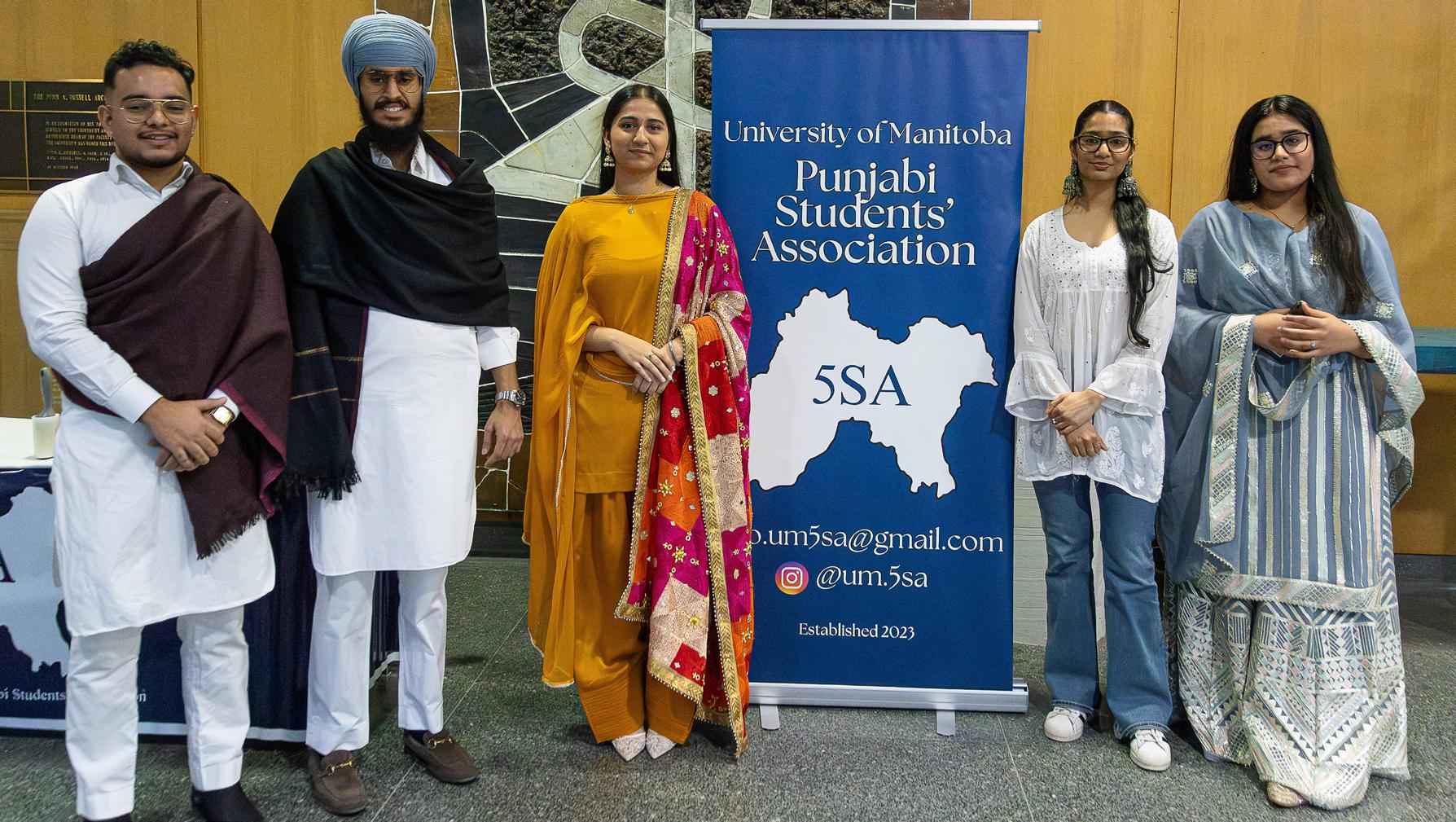
dents’ Association (5SA) hosted Threads of Togetherness on Nov. 27, an event designed to bring students from different cultural backgrounds together through poetry, classical singing and dialogue.
Harisharn Bahra, vice-president external for 5SA and the evening’s MC, spoke on the goal of Threads of Togetherness. “This event [was] to serve a purpose of bringing all community and cultural diasporas on campus together,” she said. “[It was] an excuse to celebrate as well.”
The event’s concept originated from last year’s event. Bahra explained that Threads of Togetherness took inspiration from last year’s event— Oneness. However, this year’s focus was more cultural, unlike last year which was more religious.
“It’s great that we have so many cultural student associations on campus,” she stated. “Hence, these types of events
can happen.”
Ravneet Kaur, 5SA vice-president advisor, stated the roots of the event reach into the Sikh and Punjabi traditions that emphasize unity. Kaur said she was especially excited for the live qawwali performance, a South Asian musical tradition in which singers sit together on the floor, singing poetic and devotional folk songs. “It’s very energizing,” she said. “I’ve never seen it in person [...] so I’m super excited.”
She encouraged students to attend future 5SA events. “U of M is a multicultural and very inclusive environment,” she emphasized. “I really urge every student [at the] U of M to participate in such events moving forward as much as they can, so that they get to know more about our culture and we get to know more about theirs.”
Prabhnoor Singh, UMSU president, attending as a guest, spoke about the event’s broader message. “The significance of this event is to spread
the message of humility, kindness and love,” he explained. “And overall, just starting the dialogue about how we can build a world which is empathetic”
Dhruvi Shah, a student attendee, said she was drawn in by the event’s concept and welcoming poster. She said
the night offered space for “discussions that normally are not had.”
Somia Sadiq, whose work is centered around identity and belonging, decided to be a part of the event. She said she was moved by the wisdom she heard from the young people.
“I just really loved seeing so
many young people feel proud of who they are,” she said. “Our world is in safe hands with these folks.”
Sadiq encouraged students to “just keep going,” she said. “The world is your place — your ideas, your energy, your excitement, all of that is incredible.”
Roy Albright Obah, staff
The U of M Dentistry4Youth club (UMD4Y) drew high school and university students to its event on Nov. 24, creating a space for aspiring dental professionals to connect with the team behind the new student-led initiative.
Heba Ismael and Ejlal Chioua, UMD4Y co-presidents and co-founders, said the purpose of the event was to launch the club to students. They presented the team and the year’s goals, alongside a hands-on workshop featuring soap carving and clay tooth modeling. These activities were designed to give students
“a fun glimpse into real dental skills” and highlight the club’s commitment to making dentistry “both accessible and engaging through real, skill-building experiences.”
Chioua and Ismael explained that UMD4Y is a student-focused group providing “mentorship, shadowing and meaningful opportunities for growth.”
their exploration. With guidance from pre-dental student mentors, the club aims to support high school students as they explore their academic and career paths by offering
“Stay tuned for those exciting opportunities”
— Heba Ismael and Ejlal Chioua, UMD4Y co-presidents and co-founders
While university students gain leadership experience, the primary focus is guiding high school students early in
interactive workshops and sessions with guest speakers to inform those decisions.
Chioua and Ismael reported an enthusiastic response to the launch. “The turnout was
amazing, [tickets] were completely sold out,” they said, and noted the energy was particularly high during the soap carving portion of the event. They found it “inspiring to see motivated students come together for a hands-on, engaging experience.”
The co-president founders said students and community members can expect “more shadowing opportunities,” mentorship visits to high schools and elementary schools, as well as
interactive events featuring dental students and professionals from a wide range of backgrounds. They promised future workshops will offer insight into the “dental school environment and the skill-building that comes with it.”
Chioua and Ismael confirmed the club is officially UMSU-approved. They added, “Stay tuned for those exciting opportunities.”
Students and community members can join UMD4Y via the link in the club’s Instagram bio @dentistry4youth_ umanitoba.

Arifah Gheesah, staff
The U of M Debate Club (UMDC) and the Philosophy Students’ Association (PSA) hosted a debate event named Wisdom and Wit on Nov. 24. The event created an opportunity for students to debate, enjoy each other’s company and engage in meaningful discussions.
UMDC has existed for a long time, tracing back over 110 years. Debating in Manitoba is a long-standing tradition and the club has only continued to grow.
Gregoria Ginakes, UMDC president, said the event was a collaborative effort with PSA to encourage discourse, compare ideas and deepen understanding about various topics.
The event opened with an introduction to Canadian parliamentary debating. Afterwards, motions were presented, allowing pairs to select a motion and prepare for it. This was followed by a round of debates. Beginners
were able to participate even though they had no experience, as training was provided. One of the motions focused on moral responsibility and whether it requires the ability to choose or to have done otherwise.
Corrina Colvinson, a general member of UMDC and attendee, said, “It is important to try to encourage that culture of critical thinking.”
Ginakes also emphasized the importance of giving students opportunities to spend their evenings doing something beyond studying or going straight home after classes. Instead, she encouraged engagement and interaction with other students.
UMDC sends debaters across the country and potentially around the world, giving students the chance to engage with others and unite over a common passion.
The club helps students develop skills they already possess and learn how to
apply them, boosting confidence in debating regardless of their faculty or academic background. At the start of each semester, they host workshops that coach debaters thoroughly.
Ginakes mentioned she still gets nervous behind the podium sometimes, but that there is nothing to be afraid of. “Everyone at debate is really friendly, you’ll get very warmly welcomed.”
Colvinson, who joined only in the middle of the previous school year, earned the top score at the Canadian Parliamentary Nationals in Ottawa in March, even though she was scared in the beginning.
The debate club offers many roles beyond debating — students can also serve as judges or simply watch debates to ease into the environment.
Ginakes said, “I think there’s definitely a first time for everything,” for those who want to try debating but may feel scared.
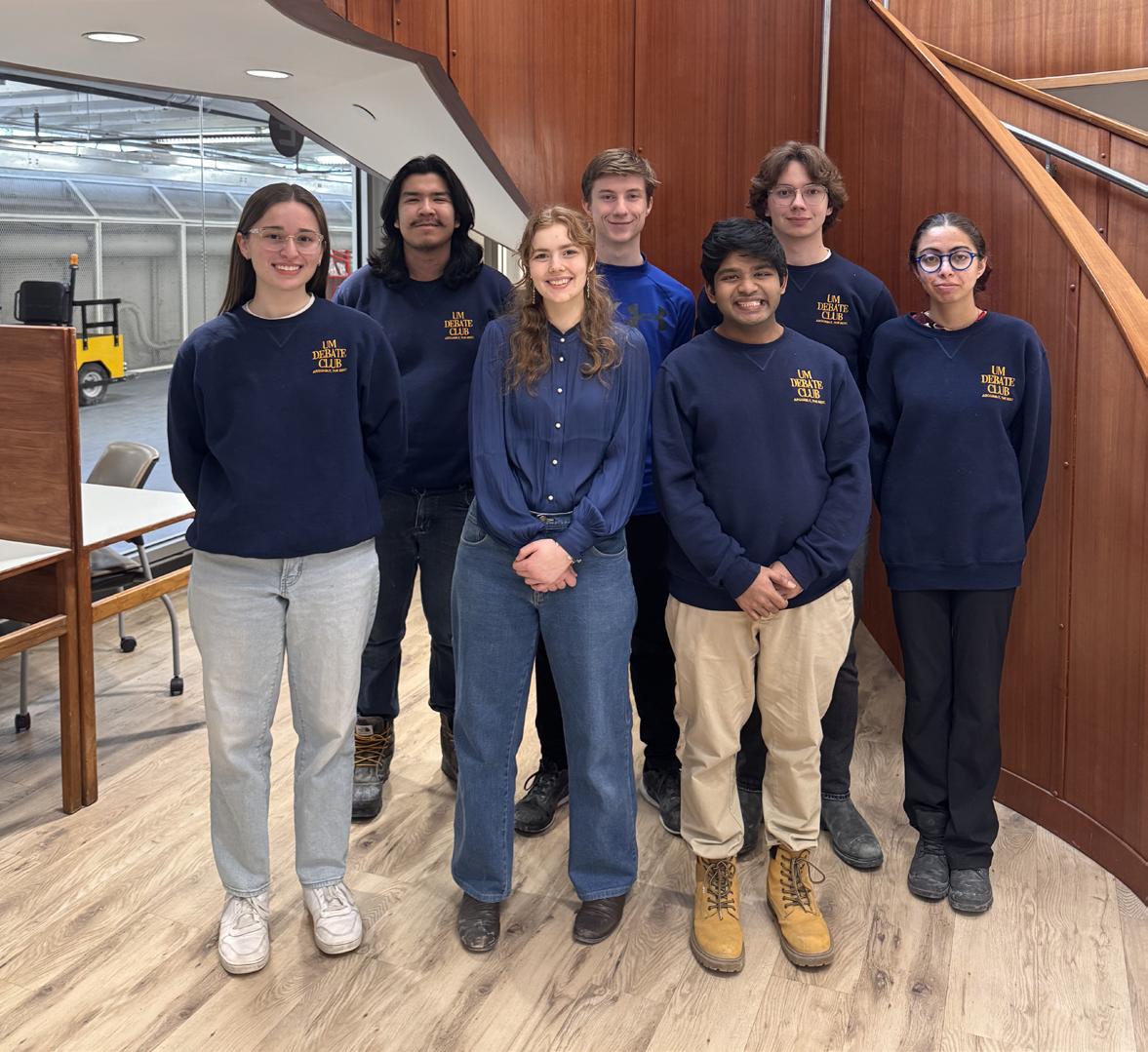
The club ensures that everyone receives training, and there is no pressure placed on new members. She included she does not know anyone
Roy
Albright Obah, staff
The Ghana Students’ Union Manitoba (GSUM) held its fall meet-and-greet on Nov. 21 at the GSA lounge, bringing students together to participate in conversations and shared experiences. The event introduced the union’s leadership, outlined its purpose and offered students an opportunity to connect through informal activities.
Emmanuella Nti, GSUM president, described the makeup of the union. “[GSUM] is made up of Ghanaian students and allies who are committed to building community and celebrating Ghanaian culture,” she said.
Nti explained the aim of the event “was to create a comfortable environment for everyone to connect and build a community.”
GSUM vice-president Genevive Osei Amaniampong addressed participants and commented on the attendance. She described the turnout as positive, noting that it contributed to broad engagement among students. “The [event] was a great success. Students were able
to connect and build genuine relationships that go beyond academic settings,” she said.
Osei Amaniampong also referred to feedback organizers received following the event. “Many attendees expressed how grateful they were for the event. It reaffirmed the importance of the work we do at GSUM in fostering unity and cultural pride,” she said.
Nti noted the turnout exceeded expectations and “created a vibrant, supportive atmosphere.”
The gathering allowed students to share information and experiences. “We had meaningful conversations about life in Canada, shared experiences, played games and enjoyed food together,” Nti said.
who has joined the club and did not come out with more friends than they had when they first arrived.
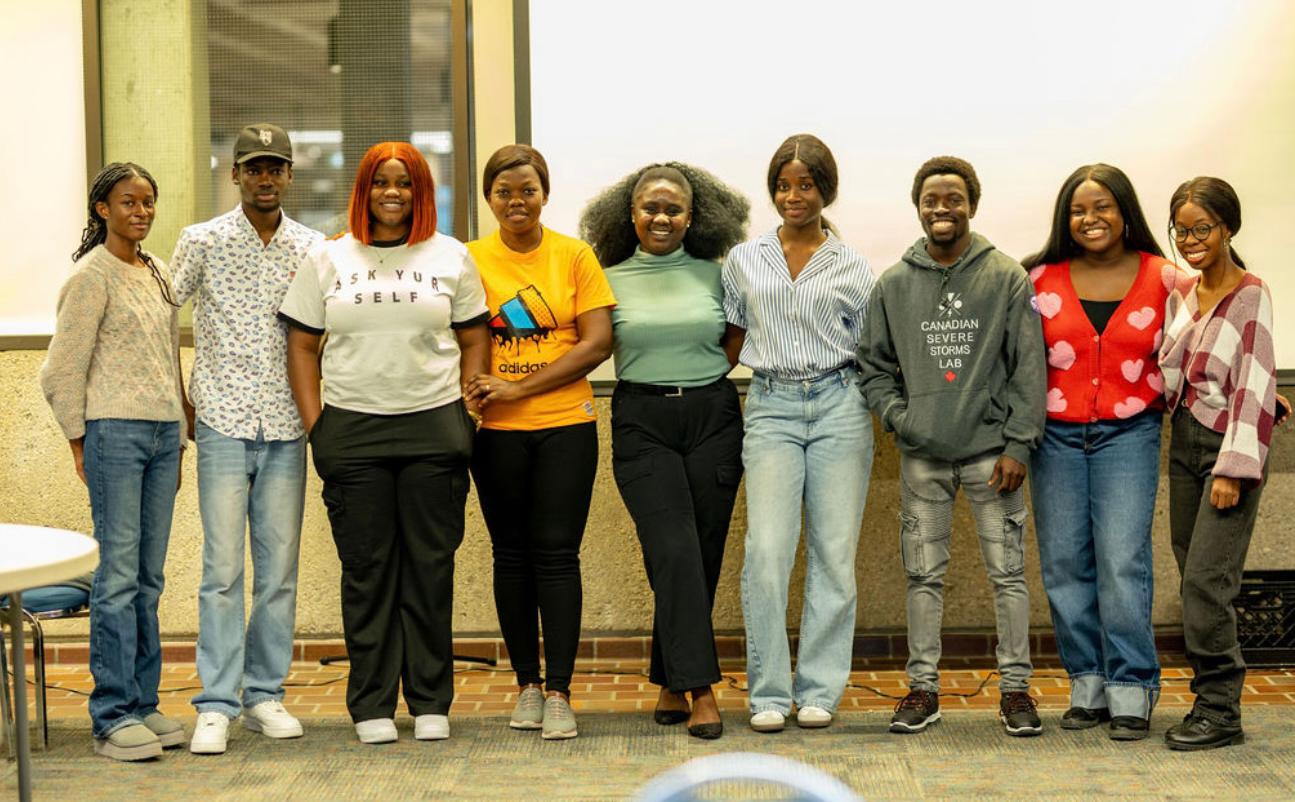
“Our membership is open and welcoming. Any interested student can participate and become part of the community”
— Emmanuella Nti, GSUM president
“Joining GSUM is about finding a home away from home, building lifelong relationships and contributing to a thriving Ghanaian community on campus,” Osei Amaniampong encouraged.
The union also intends to collaborate with other cultural student groups. Nti disclosed they “are already exploring collaborations with groups such as the African Students’ Association” and are “building bridges across communities [as a] priority.” The event highlighted par-
ticipants’ willingness to support one another. Nti noted that during the event, some students “expressed readiness to help others find job opportunities,” suggesting a shared interest in helping peers navigate life in Canada.
Nti said she hoped the event would achieve its purpose of community-building, “connect students to new friends and make everyone, especially newcomers, feel welcomed,” she said.
“Our membership is open and welcoming,” Nti stressed. “Any interested student can participate and become part of the community.”
The union announced its upcoming Christmas party and its plans to take part in Black History Month activities. Nti believes such “events will continue to foster community engagement and cultural pride among members.”
Mikaela Warkentin, staff
S ince moving to Winnipeg, I feel like I can begin authentically enjoying the discography of The Weakerthans, a cornerstone band in the Canadian indie scene with roots in this city. There’s something romantic about listening to a song tailored for a place while you’re in it, because yes, I am in fact driving the same route every day, just like the song! Based on my first months living fullfledged in this city, The Weakerthans got it right.
But there’s something in the back of my mind when The Weakerthans’ “One Great City!” hits its refrain — “I hate Winnipeg.” It’s a harsh thing to say, to hate something. For me, while I relate deeply to the issues brought up in the song, there’s a tinge of irony for me to sing along. I chose to live here — I actually kind of like Winnipeg. What a controversial idea!
/ Of feet on polished floor”. Finally, something I can contest! Earlier this fall, the city opened up aboveground pedestrian traffic on this infamous corner.
The same goes for the slight against the Jets later in the song — I’m no superfan, but I know they’ve regularly made the NHL playoffs (ignoring how they go in the second round). Debate over, Winnipeg’s great now. The Weakerthans can suck it.
However, there’s a distinction between hating Winnipeg for its cosmetic shortcomings and a genuine discontent of the people who live here. Statistics Canada collected data on quality-of-life indicators throughout Canada via their census, with factors being “life satisfaction,” “sense of meaning and purpose,” “future outlook,” “loneliness,” “having someone to rely on”
pile, hopeful about the good things this city has to offer. At least Winnipeg isn’t a complete dead end!
One Great City! ends on the stark visual of a city that does not care for its residents. “Our golden business boy / Will watch the North End die / And sing ‘I love this town’ / Then let his arcing wrecking ball proclaim / I hate Winnipeg.”
Our “golden business boy” atop the Legislature faces directly into the heart of the city and speaks to a level of disconnect. “I love this town,” but “this town” isn’t Winnipeg. With this in mind, I choose to understand this song not from the perspective of an inconvenienced citizen, but instead from the understanding that the government itself seems to hate the idea of Winnipeg. This isn’t an unfounded conclusion to arrive at, either.
“Debate over, Winnipeg’s great now. The Weakerthans can suck it”
As a newcomer to the city, maybe I’ve got it all wrong. Let’s assess what I do know about Winnipeg. The song mentions the dreary weather (“A darker grey is breaking through a lighter one”) that sits over the city — that I can’t argue with. “One Great City!” continues to reference the underground pedestrian crossing at Portage and Main — “A thousand sharpened elbows in the underground / That hollow hurried sound
and “a sense of belonging to local community.” Winnipeggers sit in the middle for most of these factors as 48 per cent of respondents “rarely or never feel lonely,” 46 per cent have a “high life satisfaction,” and 54 per cent have a “strong sense of meaning and purpose.” While it’s still a middling statistic, 59 per cent of respondents “always or often have a hopeful outlook” — maybe I am counted in this
The city of Winnipeg’s own resident satisfaction survey has seen a steady decline in respondents’ satisfaction with overall city services — from 87 per cent satisfaction in 2021 to 72 per cent in 2025. The reasoning behind this decline could be a myriad of issues found within city governance, but what takes the cake is the surveyed statement, “I believe the City of Winnipeg acts in the best interest of citizens,” a data point that needed the added subtext, “There are no
demographic subgroups more likely to strongly or somewhat agree with these perceptions,” noting that of the respondents, only 29 per cent hailed from Winnipeg’s inner city. From the mouths of the remaining 71 per cent, along with the inner city’s minor contribution, 63 per cent of respondents felt that the city is acting in the best interest of Winnipeggers. There’s one more number from Statistics Canada I failed to mention. 72 per cent of the Winnipeggers surveyed shared that they “often or always have someone to count on.” In my research for this, I was stopped in my tracks. It’s a lovely thing to survey for, or to monitor if there is a sense of community beyond the one understood by the larger cultures.
There’s the fact that the structural components of this
city seem to constantly let its citizens down — “One Great City!” bemoans the traffic, the government, the weather, but never seems to complain too much about the people. In fact, there’s a sense of unity in saying, “I hate Winnipeg.” While it’s a heavy sentiment, it’s at least a sentiment shared. The Weakerthans did indeed “get it right” about Winnipeg — we’re all hating it together.











Mansura Akter Meghla, staff
F or Brenda Austin-Smith, a professor in the department of english, theatre, film & media at the U of M, the power of cinema has always been inseparable from the power of feeling. Her research spans film performance, stardom, audience emotion and the small details such as lighting, sound and camera placement that shape how films move us. Together, these threads highlight her interest in the ways movies matter to people and become meaningful parts of their lives.
Austin-Smith traced her fascination with films back to her mother, a devoted film lover who grew up in the small town of Cape Breton and snuck into theatres whenever she could. “She told me all about those films and those stars when I was young, and even let me stay home from high school sometimes to watch a film on TV with her,” she said.
Though Austin-Smith completed all her degrees in English, she gradually shifted her scholarly focus toward cin-
ema. “I owe it all to my mom,” she added. Her work ranges widely across film and media studies. One of her forthcoming essays explores the 1947 Hollywood film The Bishop’s Wife It examines how “angels” function on screen and how their benevolence brushes up against the unease we associate with ghosts or spirits.
According to Austin-Smith, the film’s premise — an exceptionally handsome angel appears smitten with the bishop’s wife — raises questions that linger beneath its light tone.
ing implications of an otherworldly being entering human life.
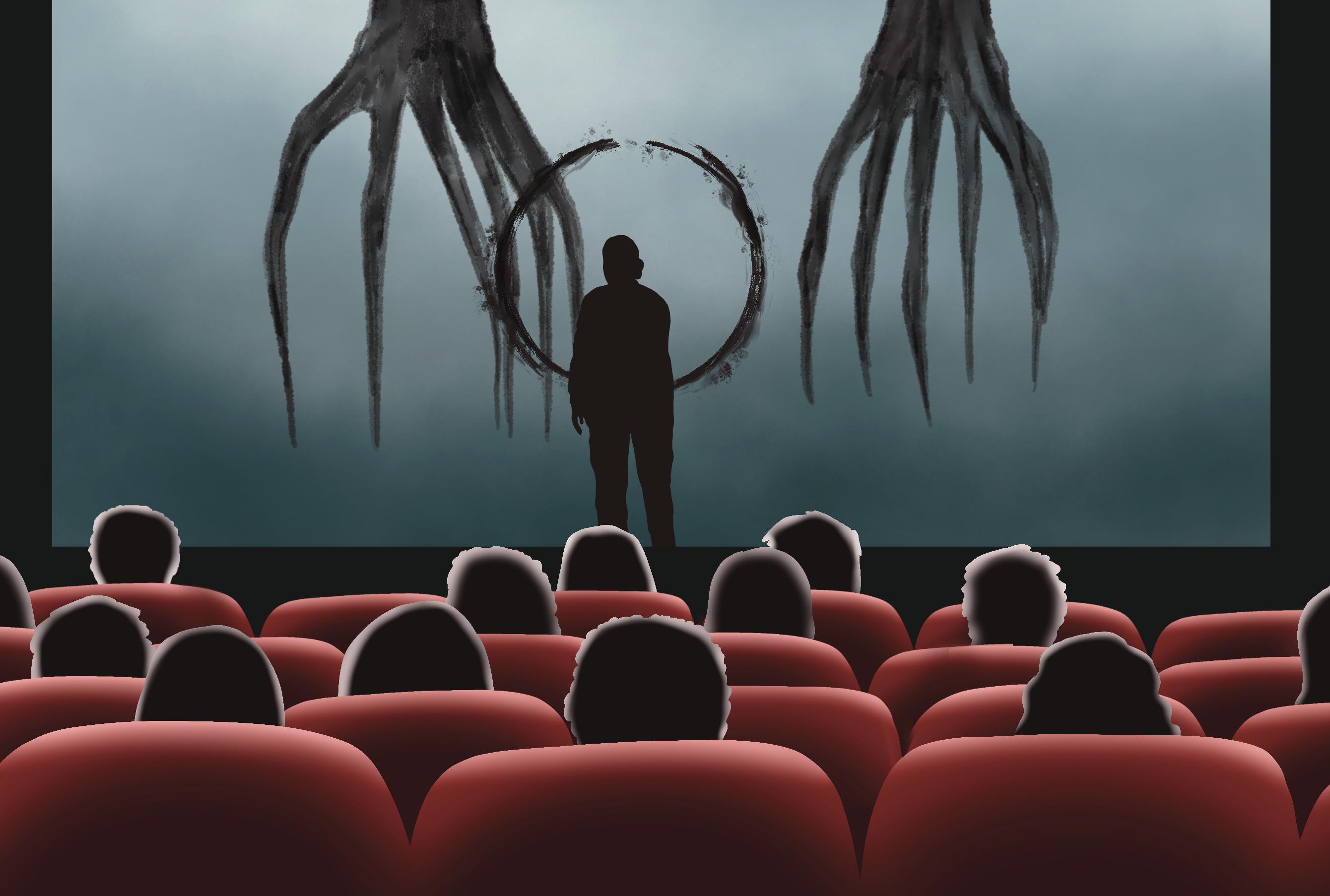
That interest in the emotional undercurrents of film is what consistently draws her to her work. She recalled watching Arrival and hearing the low, resonant sound accompanying the aliens’ appearance. “I knew that was the sound of grief — heavy, rumbling, in your bones — and I was overcome with tears,” she said. She explained moments
lar film, or where they sat in the theatre. Accuracy matters less than the emotional imprint. “Films help us recall things about ourselves. They can become cinematic placeholders for nostalgia,” she said. “A film can bring many things back to us the way music can.”
“Films help us recall things about ourselves. They can become cinematic placeholders for nostalgia”
“Why isn’t the angel already perfectly happy? What could the angel do to a human husband who might be in his romantic way?” she noted. These tensions, she argued, point to a broader cinematic pattern. For example, films about angels tend toward humour and charm, perhaps to soften the overwhelm-
— Brenda Austin-Smith, professor in the U of M’s department of english, theatre, film & media
like that illustrate how film form communicates feeling long before the plot reveals anything.
According to Austin-Smith, memory plays a similar role. She noted how vividly people recall who they were with when they saw a particu-
Her research on fandom and cinephilia reflects that same emotional connection. Cinephiles — people with a deep, enduring love for film — often experience movies as far more than stories. For them, film becomes personal and intimate through memorized dialogues, an enduring crush on a star or a scene known by heart. “A film is almost never just a film for fans and cinephiles. It is a treasure to be shared with a chosen few,” she noted.
Austin-Smith emphasized the afterlives of films — the enduring presence in cultural
memory, noting that iconic lines continue to circulate long after their original context has faded. In this way, films “get under the skin of lived culture,” revealing values and anxieties in ways that cannot always be predicted.
As viewing habits shift across massive screens and handheld devices, she shared her concern about the growing impatience that digital culture encourages. She also emphasized that many films may have been lost, forgotten or never digitized. “The internet is like the ocean. Things get lost, taken down, not restored, no longer circulated,” she said. “Films can disappear, which is tragic.”
Yet the magic remains. Even on a small screen, she still feels the pull of a film’s opening moments. “The opening shots of a film remain a portal to me, a door into a place of art and wonder,” she said. “I’m a Dorothy who wants to stay in Oz a bit longer.”
Nawal Semir, staff
A
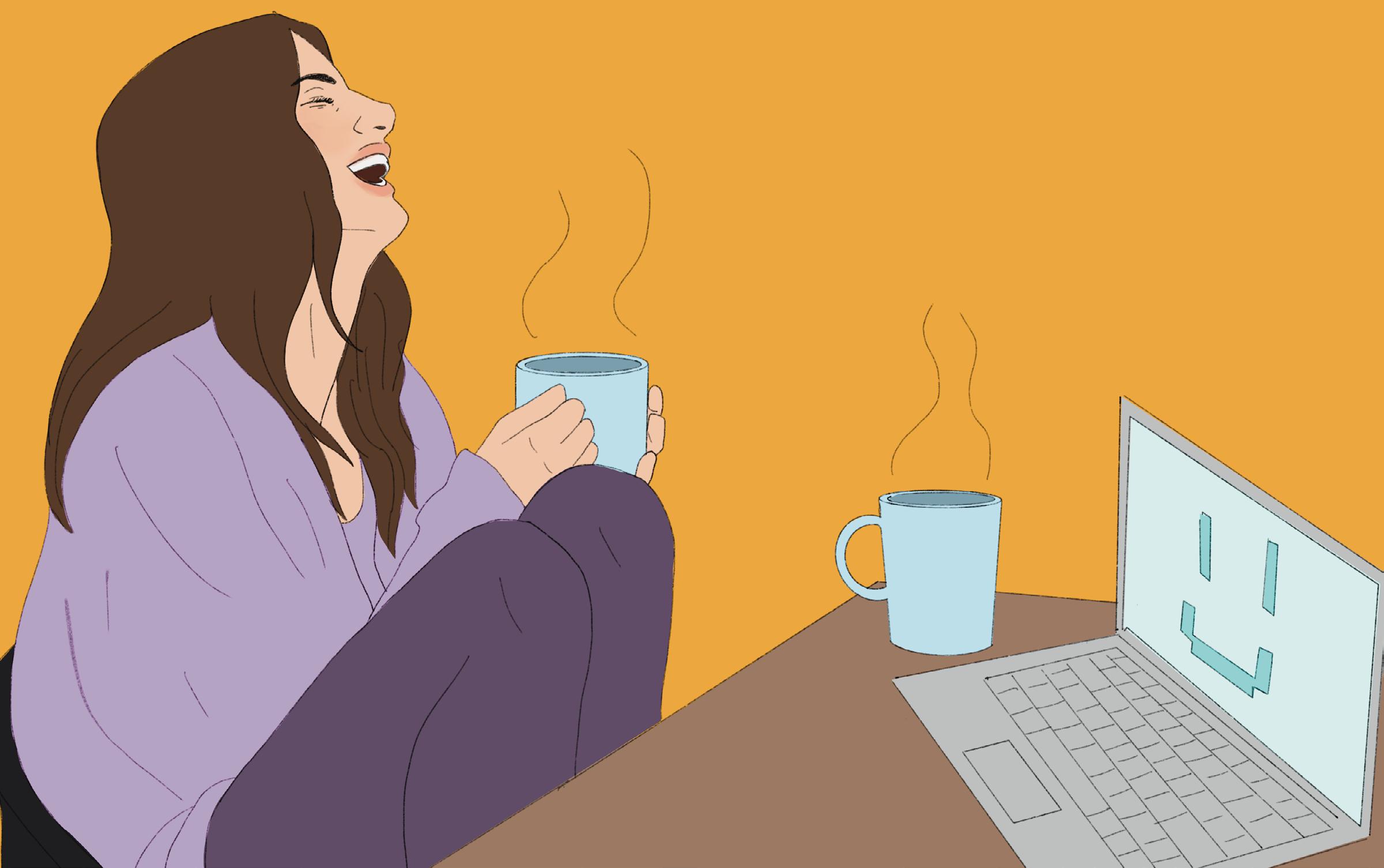
rtificial intelligence (AI)-induced psychosis is an emerging problem, with numerous reports of AI-induced psychotic episodes surfacing on the internet. Although no epidemiological studies of the effects of conversational generative AI on mental health have been conducted, there have been a number of media coverage reports of individual cases. News reports of individual cases have exposed severe risks such as suicidal ideation, increasing paranoia and conspiratorial beliefs after intense AI chatbot use.
Most recently reported, an Ontario man by the name of Allan Brooks experienced a mental spiral seemingly induced by conversation with ChatGPT. Brooks, interviewed by CTV News, indicated ChatGPT “convince[d] him that he had discovered a new math formula that could destroy some of the world’s most powerful institutions, and that he had to inform the authorities before it resulted in a global disaster.” Conversations between Brooks and the chatbot spanned three weeks, culminating in his deluded state that was only broken when a competing AI chatbot confirmed to Brooks that ChatGPT’s claims were false.
Brooks is now suing OpenAI, ChatGPT’s developer company, claiming that ChatGPT is prone to dangerous sycophancy, as it is designed to constantly reaffirm users. Brooks is not alone in his claim. Seven lawsuits have concurrently been filed against OpenAI, alleging chatbots caused the claimants delusions and psychosis, even resulting in four suicides, according to CTV.
Brooks’ claim of sycophancy against OpenAI is supported by a recent study
conducted by researchers at Stanford University. Testing the feasibility of substituting mental health care providers with large language models (LLMs), the study found that LLMs “respond inappropriately to certain common (and critical) conditions in naturalistic therapy settings.” The findings further explained, “LLMs encourage clients’ delusional thinking, likely due to their sycophancy.”
In a similar vein, another study from the Georgia Institute of Technology suggests that LLMs can be trained to recognize when users are looking for the reinforcement of their “bad” behaviour in therapeutic settings, subsequently encouraging selfharm. LLMs have been found to affirm users to an addictive degree, limiting their independence and causing
emotional harm.
The Stanford study explains that LLMs’ inability to substitute for mental health care providers is due to the very sycophancy Brooks alleges. “Confrontation is the opposite of sycophancy. It promotes self-awareness and a desired change in the client. In cases of delusional and intrusive thoughts — including psychosis, mania, obsessive thoughts and suicidal ideation — a client may have little insight and thus a good therapist must ‘reality-check’ the client’s statements,” the researchers explained.
While Brooks claimed LLMs’ sycophancy induced mental delusions that were not pre-existing, the Stanford study tests LLMs’ sycophantic behaviour through the lens of users in need of mental health treatment. Nevertheless,
the Stanford study provides insights on how LLMs operate to the detriment of users like Brooks.
Despite the several lawsuits against OpenAI, the company has promised that ChatGPT’s newest version, GPT5.1 Instant, is “now warmer by default and more conversational.” Claiming to adhere to customers’ concerns, the company said that they have created a GPT version that is “enjoyable to talk to.” Additionally, GPT-5.1 Instant includes controls that OpenAI says “can better match the tone you want in responses.”
While GPT-5.1 Instant may address the doubts and desires of many users, the concerns of a rising minority claiming AI-induced mental health episodes are sidelined. This updated version does nothing to address ChatGPT’s
sycophantic tendencies, but rather potentially perpetuates it. Tailoring responses to the desires of users may result in affirmative responses that have no end. OpenAI makes no mention of plans to incorporate more confrontational behaviours in future GPT versions — the kind of behaviour that is necessary to bring LLMs closer to therapeutic settings.
The undeniable rise of users depending on LLMs for emotional support makes it imperative for OpenAI and similar companies to address issues of sycophancy. The emerging allegations of AI-induced psychosis on a case-bycase basis highlights the need for further research on the matter.

Quinn Mayhew, staff
I
f I were to write a hate letter to any establishment, it would be the U of M’s parking services. For a place that is named the “Welcome Centre,” it is one of the least welcoming places there are.
If you are ever unlucky enough to see a parking enforcement vehicle driving around campus, you’ve most likely seen them handing out tickets to cars. In my opinion, parking at the U of M should be free. Why on earth are students paying for parking at a university they already pay to attend?
Whenever I see one of those vehicles giving citations to students, I purposefully walk as slowly as humanly possible in front of said vehicle just to annoy them to the level that they annoy me.
I find it ironic, though, that a university that claims to value its students issued 13,000 parking citations in 2023, according to the Freedom of Information and Protection of Privacy Act, with a total revenue of $584,974.40 — all of which was paid to the U of M.
The greed coming from U of M parking services is nothing new. I’ve always had difficulties with them, whether because they’ve ticketed me for not parking within the allotted space or because the parking app crashed while I tried to pay. Boy oh boy, do they love to ticket people for any reason they can find.
Recently, I was towed off the U of M campus — something I had no idea they could even do. It is not listed anywhere on their website that
they even engage in towing services.
I find it even more ridiculous that the university hired an outside company to tow away students when too many tickets accumulate, as if shutting down access to certain services on Aurora isn’t enough to encourage you to pay your tickets on time.
As I trudged down to Doctor Hook Towing that fateful Monday afternoon to retrieve my car from purgatory, a thought came to me. The U of M couldn’t care less if they cause mental distress to the students forced to scour the parking lot to find their disappearing car, like me. When I couldn’t find my car, I assumed it had been stolen. As I paid the $346 to have my car released, I asked the gentleman at the front counter if

they had towed many people off campus that day. He responded with, “A lot.”
Eventually, once you’ve figured out your car’s been towed, you’ll trudge your way down to the “Welcome Centre” and argue with the employees at the front desk, who do not seem to care if you get your
car back. The U of M needs to do better. They cannot be towing their own students away or bringing in an outside company to ensure citations are paid. Does the U of M have such a desperate need to expand the parking office into a mega mart that they cannot lay off such extreme ticketing?
Kyra Campbell, staff
If you want to go to law school in Canada, your grade point average and résumé are only the beginning. Standing between you and an admissions offer is a multiple-choice exam run by an American non-profit organization, the Law School Admission Council (LSAC).
The Law School Admission Test, or LSAT, is a standardized exam scored from 120 to 180 that most Canadian schools still treat as a major gatekeeper. Officially, it measures logical reasoning and reading comprehension. Unofficially, in an age of widening income inequality, it also measures who has the time, money and stability to bend their life around an exam.
Start with the price tag. LSAC lists the LSAT fee in U.S. currency — currently $248 USD. By the time the exchange rate and taxes are added, many of us in Canada see a charge in the high three hundreds. That number does not include other costs such as prep books, online subscriptions, practice tests and, if you’re lucky, LSAT tutoring. Even if you rely on free resources, you still need a decent laptop, reliable internet and a quiet space — none of which are guaranteed if you are living with roommates, family or in unstable housing.
Then there is the cost that does not show up on a receipt
— time. To be “LSAT-competitive,” applicants are encouraged to study for hundreds of hours. For some, that may mean rearranging schedules and cutting back on social life. For others, especially those working or caregiving, those hours can only be carved out of sleep or earning income. Studying for the LSAT may start to look like an unpaid fulltime job.
like this favours applicants who can afford to take fewer shifts, who have help paying rent, who can pay for a tutor when their practice
it’s who can buy themselves time. It is worth asking what, exactly, this test adds to the process that everything else does not already demand.

At the same time, law schools tell applicants they are looking for volunteer work, leadership roles, extracurriculars and a thoughtful personal statement. In practice, that means a lot of people are trying to hold down paid work, manage family responsibilities, find time to volunteer and still produce a competitive LSAT score.
On the flip side, a system
scores plateau or who have family who have already navigated the process. When so much weight is put on the LSAT, it is not just logic being tested —
I am not arguing that law schools should admit students without academic standards.
The ability to read dense material, reason carefully and manage stress all matter in the
with blind test takers, LSAC removed the logic games section because its reliance on drawing diagrams made it less accessible for many disabled students.
If an entire section of the LSAT can change in the name of fairness, it is hard to pretend that the test as a whole is some neutral, immovable standard. It is a timed, highstakes, one-size-fits-all exam that does not account for whether someone has navigated poverty, eviction, immigration or the criminal legal system from the other side of the table. Those experiences, which are invaluable in a lawyer, do not appear as a higher score.
If anyone from an admissions committee at a school I have applied to happens to be reading this, consider it my very nerdy way of saying I am excited about the possibility of learning all that law school has to offer. I am just less convinced that one very expensive standardized test should have so much power over who gets to attend.
practice of law. But the LSAT is a very particular way of measuring those skills, under very particular conditions. Even LSAC has acknowledged that the test is not untouchable. After a legal settlement
Right now, in a country where the cost of living keeps climbing, having the LSAT included and weighed heavily in admissions functions as yet another barrier that falls hardest on people from less privileged backgrounds. The law should not belong primarily to those who can afford the time and money it takes to master logic questions.
To complete Sudoku, fill the board by entering numbers 1 to 9 such that each row, column, and 3x3 box contains every number uniquely. In Straights, like Sudoku, no single number 1 to 9 can repeat in any row or column. But rows and columns are divided by black squares into compartments. Each compartment must form a “straight.” A straight is a set of numbers with no gaps but it can be in any order, eg [7,6,9,8]. Clues in black cells remove that number as an option in that row and column, and are not part of any straight. Glance at the solution to see how “straights” are formed.