GRAPHICS EDITOR Emma Gillich graphics@themanitoban.com
GRAPHICS ASSOCIATE Teegan Gillich
AUDIO AND VIDEO
AUDIO EDITOR Max Reid audio@themanitoban.com
PHOTO EDITOR Mike Thiessen photo@themanitoban.com
PHOTO ASSOCIATE Ebunoluwa Akinbo
VIDEO EDITOR Zulkifl Rafah video@themanitoban.com
DIGITAL MEDIA EDITOR Faisal Rahman social@themanitoban.com
SOCIAL MEDIA ASSOCIATE Paula Robles Andia
REPORTERS
NEWS Arifah Gheesah
NEWS Nafisa Al Lilo
RESEARCH & TECHNOLOGY Nawal Semir
COMMENT Thandeka Katsika
COMMENT Kyra Campbell
ARTS & CULTURE Carrington Dong
ARTS & CULTURE Jordan Anglin
SPORTS Faiyaz Chowdhury
SPORTS Israel Abejoye
VOLUNTEERS
VOLUNTEERS
Marco Tolentino, Mohamed Soussi, Anthony Nardella & Emmanuel Laramee
interested in volunteering? email me@themanitoban.com today!
The Manitoban is the official student newspaper of the University of Manitoba. It is published monthly during the summer and each week of regular classes during the academic year by the Manitoban Newspaper Publications Corporation.
The Manitoban is an independent and democratic student organization, open to participation from all students. It exists to serve its readers as students and citizens.
The Manitoban is a member of the Canadian University Press, and our journalistic standards can be found on the Manitoban’s website.
The newspaper’s primary mandate is to report fairly and objectively on issues and events of importance and interest to the students of the University of Manitoba, to provide an open forum for the free expression and exchange of opinions and ideas and to stimulate meaningful debate on issues that affect or would otherwise be of interest to the student body and/ or society in general. The Manitoban serves as a training ground for students interested in any aspect of journalism.
Students and other interested parties are invited to contribute to any section of the newspaper. Please contact the appropriate editor for submission guidelines.
The Manitoban reserves the right to edit all submissions and will not publish any material deemed by its Editorial Board to be discriminatory, racist, sexist, homophobic or transphobic, ableist or libellous.
Opinions expressed in letters and articles are solely those of the authors. Editorials in the Manitoban are signed and represent the opinions of the writer(s), not necessarily those of the Manitoban staff, Editorial Board or the publisher.
A “volunteer staff” member is defined as a person who has had three volunteer articles, photographs or pieces of art of reasonable length and/ or substance published in the current publishing year of the Manitoban
Any individual who qualifies as a volunteer staff member must be voted in by a majority vote at a Manitoban editorial board meeting. Elected representatives and non-students may be excluded from holding votes as volunteer staff members in accordance with the Manitoban Constitution.
Second UMSU executive removed from office in a month
Hannah Le out as vice president student life following board’s decision
Roy Albright Obah, staff
Twenty-nine days after the removal of Jared Ramos Murphy from the position of UMSU vice president external affairs, another executive has departed.
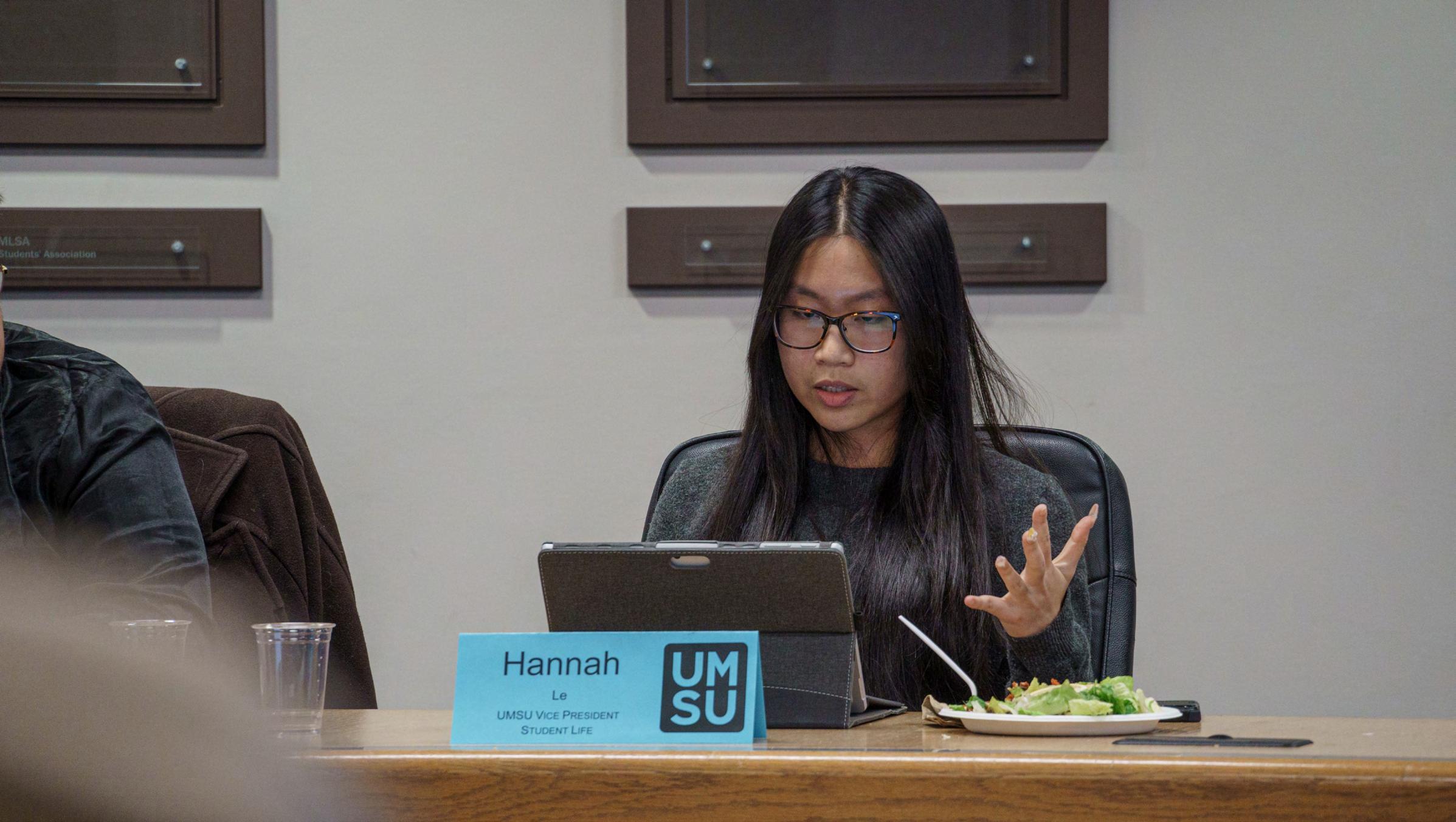
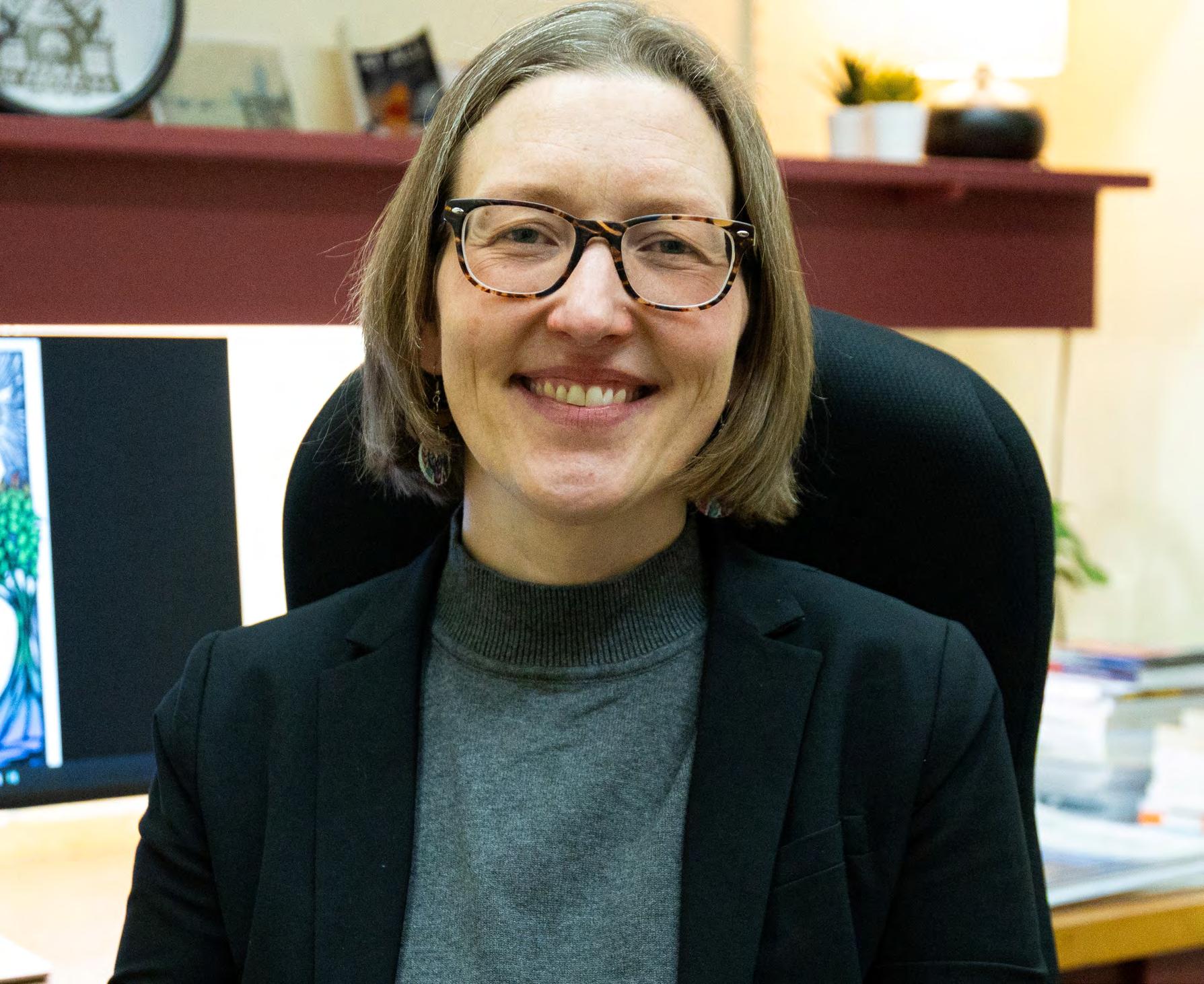
Hannah Le, elected in March 2025 to serve as vice president student life (VPSL) for the 2025-26 term, has been removed from her role.
Prior to her election, Le expressed her passion for student engagement and community-building. She stated she was ready to devote her time to making “students lives better.” The 2025-26 election saw Le clinch the VPSL seat with 1,316 votes, ahead of five other contenders.
The removal followed an UMSU board of directors meeting on Dec. 4, where five major issues were raised against Le. The judicial board cited concerns including tardiness to Membership Services Committee meetings and failing to hold required monthly one-on-one checkins with the women’s representative, centered around a pattern of shirking assigned responsibilities.
Le expressed her feelings in response to her removal from UMSU. “This situation was unexpected and disappointing,” she said, “given how deeply I care about student life and the work I dedicated to this role.”She also commented on the challenges of the role and the impact of reducing the executive team.
“The VPSL portfolio is large […] The quality and reliability of these services depend on a cohesive and well-supported executive team,” Le stated. “Reducing the number of executives inevitably creates more work for fewer people.”
Despite the circumstances, Le shared her readiness to move forward. “I’m ready to close this chapter and move forward. This role has taught me a great deal about leadership, resilience and the importance of standing firmly
by your values even when circumstances become difficult.”
Prabhnoor Singh, UMSU president, confirmed the removal was a decision made by the board of directors. “Advocacy never stops at UMSU,” Singh said, indicating the team’s continued effort to realize campaign promises despite the downsizing of the executive team. He mentioned discussions will be held by the executive committee on how to assign Le’s duties, pending board approval.
UMSU board updates
Le offered advice to future students seeking UMSU office.
“My message for future UMSU executives is [to] have a strong reason for why you’re stepping into leadership. There will be tough moments, and you’ll need that reason to ground you and help you push through.”
Le also expressed gratitude.
“The support I’ve received from students has been overwhelming, and I’m truly grateful for every community we built together.”
As of Dec. 8, the UMSU website shows only three of the five originally elected executives remain in their portfolios for the academic year. With 86 days until the next polls, UMSU has announced via its official Instagram that the vacant positions will be handled by the president. Nominations for candidates to run in the next UMSU elections will open on Feb. 2, 2026, with voting scheduled to take place on March 5 and 6, 2026.
CASA’s advocacy week, campus events and student support programs
Arifah Gheesah, staff
UMSU’s board gathered on Dec. 4 to share updates and announcements for the student community.
Prabhnoor Singh, UMSU president, updates Canada’s Alliance of Student Associations (CASA), the national voice for post-secondary students representing undergraduate, graduate and polytechnic associations. CASA advocates through research, policy development, awareness campaigns, government relations and strategic partnerships.
During CASA’s 2025 Advocacy Week, UMSU delegates, including Singh and Heaven Kaur, VP university affairs, held over 100 meetings with
federal ministers, MPs, senators and other stakeholders. Singh also attended Minister Patty Hajdu’s announcement of $1.5 billion in funding for youth employment initiatives, including the Student Work Placement Program and Canada Summer Jobs. At the provincial level, UMSU continues to advocate for affordable tuition and international student healthcare, noting that post-secondary education received limited attention in the recent Throne Speech. At the university level, Singh met with Richard Jochelson, dean of the faculty of law, to discuss programs such as the Community Law Centre, Business Law Clinic and Manitoba Legal Clinic for
the Arts. He also met with the director of parking and transportation to address student concerns regarding parking tickets and representation on appeals committees. Ongoing initiatives include updating abortion resources on campus, hosting vice-provost (academic affairs) office hours and supporting individual student advocacy cases.
UMSU women’s representative Leata Goulet announced events to support student well-being. On Dec. 3, a collaborative study night with the Arts Student Body Council and Active Minds allowed students to body double, focus on schoolwork and enjoy giveaways and refreshments from local businesses. From Dec.
1 to 8, students were able to stop by the lounge for complimentary snacks and beverages, with additional supplies planned for January.
Temiloluwa Oyewole, UMSU Black students representative, announced that the Black Students’ Association hosted the second-ever edition of The Junction, an
African-centric market event that was a success, with many local businesses selling out. The event included rice and drinks, and a networking session for Black professionals, offering students the opportunity to connect, celebrate and engage with the community.
PHOTO BY ZULKIFL RAFAH / STAFF
PHOTO BY EBUNOLUWA AKINBO / STAFF
FORMER VICE PRESIDENT STUDENT LIFE HANNAH LE AT AN UMSU BOARD OF DIRECTORS MEETING HELD ON OCT. 23.
UMSU holiday hampers to support students in need
Annual program offers $150 grocery support as financial pressures rise
Nafisa Al Lilo, staff
MSU is once again run-
U
ning its annual Holiday Hamper program, an initiative that provides grocery support to students facing financial hardships during the winter break. Last year, the program helped over 300 students through, according to UMSU president Prabhnoor Singh.
He said the long running event offers students a $150 grocery gift card, allowing them to purchase items they personally need.
“It’s probably one of UMSU’s most impactful initiatives run throughout the year,” Singh said. “Students can create their own holiday hampers and purchase items that they find necessary.”
The program, which has been operating for more than a decade, is funded through community donations and campus partnerships. UMSU has reached student associations, faculties and external partners, while several UMSUrun businesses have also contributed through fundraising promotions.
sonal holiday drinks, with one dollar from each purchase going toward the program, IQ’s is donating one dollar from every boba tea sold and GPA’s is allowing customers to round up to the nearest dollar for a donation to the program.
UMSU also hosted an on-campus event to boost donations. One fundraiser invited students to take photos with Santa Claus and a polar bear mascot, with proceeds directed to the hamper fund.
UMSU partnered with Coca-Cola to host a holiday event at the university. A Coca-Cola truck, along with Santa and the company’s polar bear mascot, offered free photos to students. Singh said this was the first time the partnership included an on-campus event, though Coca-Cola has supported UMSU initiatives in the past.
“Ten cents from each CocaCola drink purchased went to
“We just want to make sure that no student feels alone”
— Prabhnoor Singh, UMSU president
Degrees is offering six sea-
the Holiday Hampers,” Singh added. Students who need assistance can apply through
the Holiday Hampers website. The program is open to undergraduate students across the Fort Garry, Bannatyne and inner city campuses.
“We recognize that this time can be difficult,” he said. “We just want to make sure that no student
feels alone.”
Singh emphasized even small contributions from community members make a meaningful difference in the lives of students.
Singh said he is grateful to students and community members who contributed through purchases, events or donations.
“To those that have contrib -
uted,” he said, “I really want to thank you from the bottom of my heart.”
UMSU continues to direct students to additional support, including the U of M food bank on the fifth floor of UMSU Centre and the UMSU Hardship Fund, which offers additional financial assistance.
GPESA hosts conversation with Canadian diplomat GPESA hosts conversation with Canadian diplomat
Arifah Gheesah, staff
The Global Political Economy Students Association (GPESA) hosted retired Canadian diplomat Mark Eichhorst on Dec. 5. Born in Winnipeg and raised in Otterburne, Manitoba, Eichhorst attended Providence College and completed one semester at the U of M as a visiting student for his history courses. He initially pictured a future in teaching, but new interests and opportunities eventually pulled him toward a global career.
Eichhorst especially enjoyed his work in immigration. “I absolutely love that because [...] I played a part in
making Manitoba [...] more diverse, and [...] bringing different perspectives.”
Over the years, Eichhorst has found his career rewarding, and he enjoys sharing his experiences. He has previously spoken to political studies classes at the U of M and to high school students.
“Ninety per cent of the time, I probably would have done it for free,” he said, when reflecting on his career.
According to Camila Hernandez, GPESA co-director of administration, Jonathan Jenner, Global Political Economy (GPE) coordinator, helped GPESA connect with Eichhorst. Marianne Shaibu,
GPESA co-director of events, explained that many upperyear GPE students struggle with career decisions, and the purpose of this event was to offer a perspective on what professional paths might look like. She added that Eichhorst’s involvement in diverse international contexts is especially valuable for students in the program.
“[GPESA] exists to unite GPE students, and people who are globally-minded members of the campus community,” Hernandez said. GPESA regularly hosts brown bag events to help students connect with professors, learn about their research and explore career
paths. As a self-funded club, GPESA organizes bake sales — their largest fundraiser — and donates part of the proceeds to causes such as the U of M Food Bank.
Shaibu emphasized that GPE is interdisciplinary, and
that GPESA events aim to spotlight intersections between different academic fields.
The association also has several upcoming initiatives, including donation drives and additional fundraising activities.
PHOTO PROVIDED BY UMSU
PHOTO BY MIKAELA WARKENTIN / STAFF
STUDENTS WHO TOOK PHOTOS WITH SANTA TO FUNDRAISE THE HOLIDAY HAMPER PROGRAM.
What community truly means
Induction of former Seven Oaks superintendent into Jerry Maslowsky Hall of Fame
Marco Tolentino, volunteer
Of the many schools of the Seven Oaks School Division (SOSD), most, if not all of them, have giant banners on the front. Some say “Community begins here,” and some say “Community starts here,” but no matter what, there is always something about “community.” When asked about the meaning of “Community begins here,” Brian O’Leary, former SOSD superintendent, said, “It means bringing people together, old or young.”
O’Leary was the superintendent for 22 years (200123), and was recently inducted into the Jerry Maslowsky Performing Arts Hall of Fame on Nov. 6. This induction was accompanied by a concert featuring multiple school groups under SOSD which was organized by Tyler Yip, Manitoba Music Educators’ Association president.
“We hope we can connect with new communities […] through the power of live performance. In Brian’s words, he was most proud when he attended a concert at the SOPAC [Seven Oaks Performing Arts Centre] and watched the look on parents’
faces. He loved seeing the pride in their faces as they watched their kids on stage, Yip said.”
The Hall of Fame concert featured some of the many SOSD school groups consisting of Elwick Community School, Amber Trails Community School, Maples Collegiate/Maples Met and Garden City Collegiate/The Seven Oaks Met School. The schools had much to show for the performing arts O’Leary worked so hard to put in the spotlight.
The variety of performances include drumming by Walking Wolf, a group led by Ray (Coco) Stevenson, a band performance from Elwick Sistema, an Afro-Caribbean dance performance from The Amber Trails BSU Dance Group, a choral performance from the Garden City Senior-Choir, a fiddle performance from the Seven Oaks Fiddle Teachers, and a band performance from the local Winnipeg family band, Legacy.
All proceeds from the event will be going toward a scholarship fund to assist a Maples Collegiate student who participates in the Wayfinders Program, a community based outreach program that pro -
‘Toban news briefs
Mikaela Warkentin, staff
24-hour exam study space opens on campus
The U of M is running a 24/7 study space over the upcoming exam period, open to all students seeking a dedicated study space at any hour of the day. With a capacity of 55 students, the space operates on a first-come, first-served basis and requires student ID for entry and exit. You can find this study haven in the St. John’s College Library on the third floor from Dec 8 to 19.
Enjoy finding art in advertisements?
The Cannes Lions International Festival of Creativity is heading to Winnipeg with screenings of the best advertisements the industry has to offer. The awards, which have been presented annually since 1954, celebrate creativity within the advertising and communication industry on an international scale. Screenings will take place at the Muriel Richardson Auditorium at WAG-Qaumajuq from December to March.
For specific showtimes and to buy tickets, visit wag.ca/ event/cannes-lions-2025/.
vides mentorship for students in their high school journey and encouragement for successful transition into post-secondary education. The SOSD hopes to continue to help its students and the community moving forward.
Tony Kreml, current SOSD superintendent, spoke about the school division. “Our division welcomes families from many cultural, religious and social backgrounds and we rely on this diversity to create a unique, rich environment for all. Our goal is for every family to find their home in Seven Oaks, without compromising what makes each of us unique,” he said. “Our community is much stronger when each person is authentically seen, heard and valued.”
Jaclyn Loganberg this year marked her 30th year as a music teacher at Maples Collegiate. When asked about what the performing arts is like within the SOSD, she said, “I believe I have one of the best jobs in the world for two reasons — the support from the Seven Oaks board members, trustees and the superintendents, and the amazing students we have in our school.”
“Seven Oaks values the arts more than most, if not all, the other school divisions in Manitoba and definitely across Canada,” Loganberg added. “With free instruments for all students, subsidized trips to the Brandon Jazz Festival, generous budgets and staffing support, I am very fortunate to have worked in this division for my entire career.”
“Our students work very hard and they become very successful adults, in large part
because of the values of the music program and the values of arts in our lives,” Loganberg said.
Brian O’ Leary’s induction into the Jerry Maslowsky Performing Arts Hall of Fame serves as a reminder to all on how hard he has worked toward putting the performing arts in the spotlight in the school division. It also reminds us that community is not just an individual idea.
Riding into the night with transit’s winter schedule
Winnipeg Transit is heading into their winter schedule on Dec. 14 with expansions in the On Request system covering gaps in nighttime transit availability. Zones that currently operate after 7 p.m. will extend to 2 a.m. on weekdays and Saturdays and 12:45 a.m. on Sundays and holidays. Schedules are also being rewritten for the D12, D13, D16 and F8 among other routes to improve weekday availability and timing.
For more bus route updates, visit info.winnipegtransit. com/en/rider-guide/news/.
Talking
with your hands
Legislation introduced to recognize sign languages in the Manitoba government was brought to the table on Dec. 3, International Day of Persons with Disabilities. Languages recognized in their own right would be American Sign Language, Quebec Sign Language, Indigenous sign languages and tactile sign languages. If this legislation were to be successful, Manitoba would be the first province in Canada to recognize sign language as a language, not solely as a tool for accessibility.
MMF files class action suits against Manitoba and Canada
The Manitoba Métis Federation (MMF) is demanding that Manitoba and Canada acknowledge the role both governments had in the Sixties Scoop and how it impacted the Red River Métis in the form of two lawsuits, one against Manitoba and the other against both Manitoba and Canada. David Chartrand, MMF president, cites the lack of apology from both governments for how the Sixties Scoop affected Métis children and families as the reasoning behind the suits.
You can find out more about these lawsuits, filed earlier this month, at mmf.mb.ca/news.
PHOTO PROVIDED BY TAMARA PROCIUK / SOSD
TONY KREML IS STEPPING UP AS SUPERINTENDENT OF SEVEN OAKS SCHOOL DIVISION.
UMES gathers to honour lives cut short at Polytech in 1989
Ceremony remembers the 14 women lost, stressing the need for more inclusive spaces
Nafisa Al Lilo, staff
T
he Price faculty of engineering held its annual memorial on Dec. 5 to honour the 14 women murdered in the 1989 École Polytechnique massacre, an act of gender-based violence that has continued to shape conversations about safety, inclusion and equity in engineering.
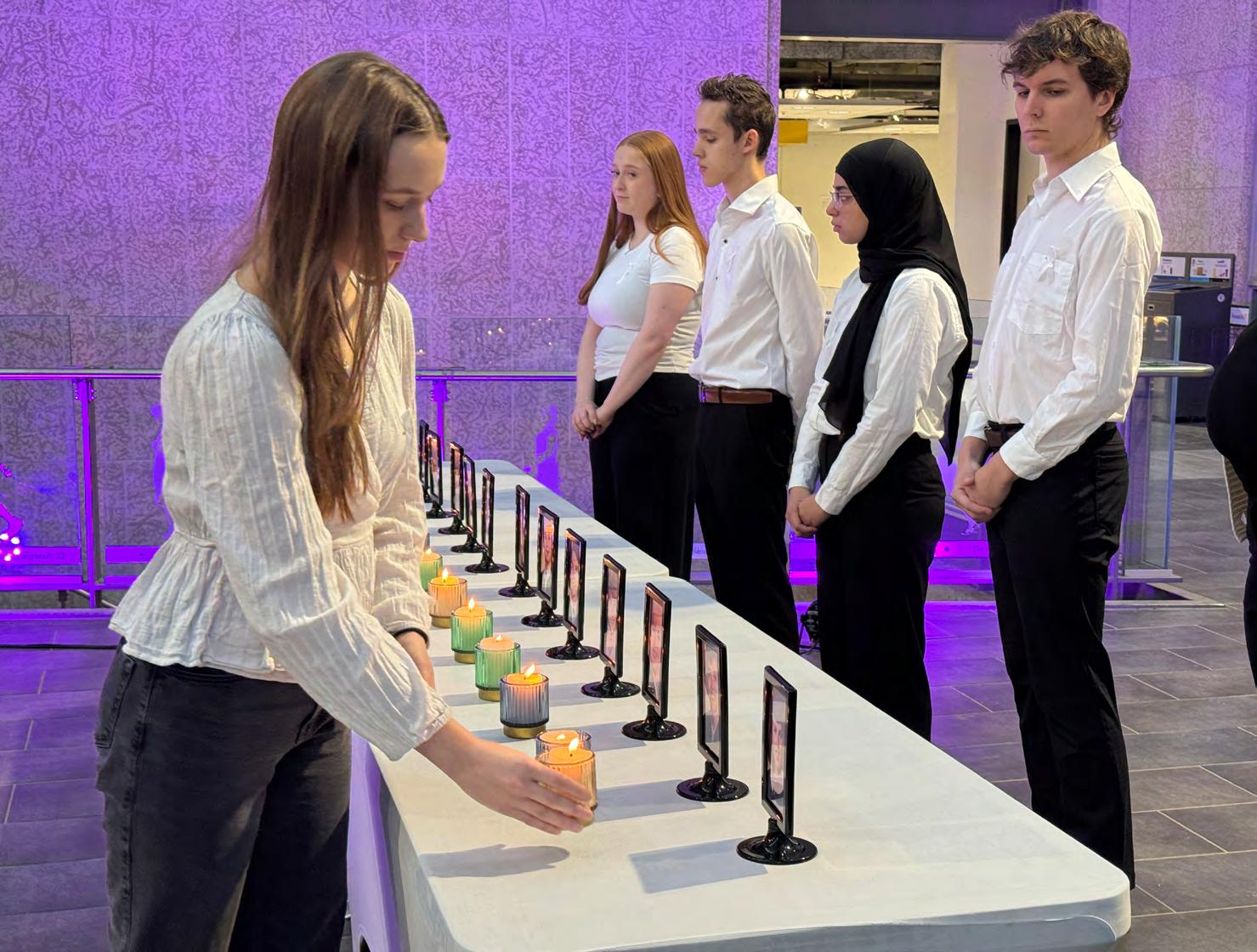
The event, organized by the U of M Engineering Society (UMES) in partnership with the dean’s office, drew students, faculty and staff to the engineering atrium for speeches, reflection and a candle lighting ceremony.
The ceremony opened with remarks from Elder-in-residence Norman Meade, followed by speeches from U of M president Michael Benarroch and dean of the Price faculty of engineering Marcia Friesen.
The names of the women killed were read out, along
with brief biographies. Candles were lit and placed beside their photos by 14 volunteers made up of seven women and seven men. The event closed with remarks from UMES senior stick Simran Gill.
Friesen said the memorial, held across the country, remains essential more than three decades later.
whether we’ve made changes since then and what we can continue to do,” she said.
She added the tragedy reinforces the broader reality that “the world is not a safe and just place for everybody,”
remembering.”
Kinzie Friesen, the MC for the event and a second-year engineering student, said the gathering made her feel “really empowered.”
“It’s important to just recognize why the event happened, and to ask ourselves whether we’ve made changes since then”
— Marcia Friesen, dean of Price faculty of engineering
“It’s important to remember the losses of that day, [as well as] the violence that was inherent in that event and the impacts it had on the families and the communities.”
Friesen explained that the anniversary calls for ongoing scrutiny of our culture surrounding violence against women. “It’s important to just recognize why the event happened, and to ask ourselves
further encouraging engineering communities to continually ask themselves how they can contribute to eliciting change.
Friesen also expressed gratitude for student leadership. “I really appreciate that [UMES] continues to host this event every year,” she stated. “I think it’s a real expression of their commitment to
“It makes me really happy that everyone gathered together today to support [this issue],” she said.
“There [are] so many people that find this matter important and want to make a change and stand up to gender-based violence”
Luke Qually, fourth-year civil engineering student who has served as a candle holder at the event for several years, said the act carries deep significance for him as a man in the faculty.
“I feel it is a duty as a man in engineering to do what I can to ensure that the space is wel-
coming,” he explained. “And that the harms and the issues that still exist are acknowledged.”
“For me, the candles represent that while their lives were cut short, the impact and the legacy that they had is not forgotten,” Qually added.
Mallory Stewart, a thirdyear biosystems engineering student and UMES equity officer, mentioned the importance of hosting such events. “It’s a really good time to reflect on these important events so that they don’t repeat themselves.”
“It promotes inclusion,” she said. “I’m doing a lot of work in engineering to help promote equity, inclusivity, diversity and accessibility.”
“Believe in who you are, believe in your passions and believe that you have a place in engineering,” Stewart encouraged students.
Remembering the 14 young women whose lives tragically ended on December 6, 1989
Geneviève Bergeron (21 years old)
Mechanical Engineering student
Maryse Laganière, (25 years old)
Employee, Finance Department
Hélène Colgan (23 years old)
Mechanical Engineering student
Maryse Leclair, (23 years old)
Metallurgical Engineering student
Nathalie Croteau, (23 years old)
Mechanical Engineering student
Anne-Marie Lemay, (22 years old)
Mechanical Engineering student
Barbara Daigneault, 22 years old)
Mechanical Engineering student
Sonia Pelletier, (28 years old)
Mechanical Engineering student
Anne-Marie Edward, (21 years old)
Chemical Engineering student
Michèle Richard, (21 years old)
Metallurgical Engineering student
Maud Haviernick, (29 years old)
Metallurgical Engineering student
Annie St-Arneault, (23 years old)
Mechanical Engineering student
Barbara Klucznik-Widajewicz, (31 years old)
Nursing student (Université de Montréal)
Annie Turcotte, (20 years old)
Metallurgical Engineering student
PHOTOS PROVIDED BY UMES
PHOTO BY EBUNOLUWA AKINBO / STAFF
Are your New Year’s resolutions really for you?
How social media and societal expectations set us up for failure
Deveney Jarrow, staff
Every New Year, we hear and see the same cycle — friends and family declaring that this is the year they are finally going to do blank Whether it is to read more, start eating healthier, exercise more regularly, learn a new skill, start volunteering, the list goes on. We see the gyms become busier, people sharing their Goodreads lists and posting their healthier meals. Come February or March, it all seems to come to a halt. So why is it that these resolutions always seem doomed to fail?
I believe it comes down to us seeing others online accomplishing certain goals that we, too, would like to accomplish. We
think, “Hey, I can do that.” But sometimes that just isn’t the case — it isn’t always that easy.
Don’t get me wrong, seeing others achieve their goals can be inspiring, but it’s also misleading.
Social media can be a great place to get inspiration for setting goals or envisioning where you want to be in life — however, when setting a goal, it is so important to consider why you want to achieve it and how it can be possible within your
ily mean it will work the same way for you.
An example of a goal I would like to accomplish but know isn’t right for me right now is reading more. I used to
ated to.
So, how do we set intentional, achievable goals that align with our own lives?
“Seeing others achieve their goals can be inspiring, but it’s also misleading”
immediately start comparing our own lives to the ones we see on TikTok and Instagram and feel a desire to have that same fulfilment. On top of that, we see them achieve their goals from start to finish through updates that they may post, showing how “easy” it is to do. Thus, we start to
be an avid reader when I was younger, and I really, really miss reading. Every time I see people I follow post their reading challenges and how much they’ve read so far in a year, I get so jealous. But knowing myself, I know I won’t realistically be able to read that much until I finish my degree. I know others can study and then switch to reading for fun, but it just does not work for me.
First, I would recommend looking at what you are doing now and where you spend the most time. Is there something you would like or could do less of that may free up time for a new hobby? Do you already lead an active lifestyle and know going to the gym more won’t be that crazy of a change?
Second, I would really ask yourself if the goal is achievable for you, or
priority, so you know which is more important for you to focus on. Also, for each goal, define why it is you want to do it. I think when people just say they want to achieve a certain thing without giving it meaning for themselves, this is where they are letting themselves down. If there is no meaning or purpose behind your desire to achieve something, what will motivate you to do it when it gets hard? I think there is power in putting something in writing versus just saying you want to be better at something.
specific lifestyle. Are you wanting to achieve it just because you saw someone else do so? And since they seem successful, for you to feel successful you have to do the same? Just because it works for one person and they only had to take these few steps to get there does not necessar-
Some people even set timers and just read for 10 minutes a day to start small, but setting rules around reading would just make it feel like a chore for me rather than something I actually enjoy. So for now, I will look longingly at my want-to-read list and only read whenever I feel motiv-
does it need to be broken down into smaller goals first? For example, maybe if the gym is too daunting or you don’t know how to come up with a workout, you can try a new sport instead.
If you are going into 2026 with multiple goals, maybe write them down in order of
Finally, tell a friend your goal or make vision boards, so you can reach your goals together and keep each other accountable. I know my friends and I will be doing this
come winter break. Setting intentional goals is much easier with people who know you and can help you. With that, good luck, Bisons. Happy New Year and here’s to our future achievements in 2026!
GRAPHIC BY EMMA GILLICH / STAFF
From the picket line to the negotiating table
Research explores history of feminist labour movements
Nawal Semir, staff
When images of feminist activism flash across our screens, they often follow a familiar script — protesters with placards in the streets, marching for legislative change. For Julia Smith, a U of M labour studies professor, this common narrative captures only a fraction of a much richer and more diverse history. This history is one she has dedicated her research to uncovering.
Smith describes herself as an interdisciplinary historian and outlines her focus on the history of feminist labour organization. Her approach focuses on “women who have been working to advance gender equality through union activism,” she explained. Her research challenges the traditional idea of the feminist activist, revealing a world where the fight for equality has been persistently waged not only on the streets but within the very structures of the workplace.
Smith’s portfolio is deliberately wide-ranging. She has studied women who founded independent unions, as well as those who organized within existing male-dominated labour structures and campaigns across different professions, including the financial sector. This includes significant work on women in the banking industry and a current co-authored project on flight attendants. The latter holds particular significance, Smith noted, “given the high-profile strike by flight attendants at Air Canada recently.”
ition on the plane,” and stewardesses, who were positioned “below that.” This changed as women sought access to those higher-status jobs, leading to a merger of the roles into the single, gender-neutral title of flight attendant.
Despite this formal integration, Smith observed the profession still consists predominately of women, and the issues they fight for being deeply gendered. She connected the recent Air Canada strike’s focus on unpaid labour — being paid for only part of their work — to long-standing inequities in woman-dominated jobs.
According to Smith, this research represents more than an academic focus — it is a personal and intellectual journey that has fundamentally reshaped her understanding of social movements. Reflecting on her undergraduate introduction to feminism, she admitted a common initial perception. “Like many people, I felt like feminist activism kind of looks like one way. It’s women out in the street, picketing, fighting for things,” she admitted. Exposure to labour history, however, opened a new lens.
Studying the intersection of gender and class activism, she said, “really opened [her] eyes to the diversity of what [feminist acitivsm] looks like.”
That diversity is twofold. First, it concerns the activists
this, highlighting women from varied backgrounds, including many from the working class, who have identified as feminists and chosen the collective power of the union as their primary vehicle for change. “The women that I’ve spent a lot of time studying,” she said, “chose to basically advance their feminist activism through labour activism — by organizing in the workplace, or by joining unions.”
“The women that I’ve spent a lot of time studying […] chose to […] advance their feminist activism through labour activism — by organizing in the workplace, or by joining unions”
— Julia Smith, U of M labour studies professor
Smith’s research on flight attendants shows that the role was “literally divided by gender.” There were stewards, who held what she described as “more like the management pos-
themselves. “When we talk about feminist movements, we might think of women of a certain kind, that look a certain way,” Smith observed. Her research deliberately counters
Second, this intersection reframes the very tactics of social change. It positions collective bargaining for pay equity, parental leave, protections against harassment and safe working conditions as core feminist achievements. The negotiation table becomes as significant a site of strug-
gle as the rally. This perspective enriches labour history by centering gender justice as a driving force within union movements, while simultaneously expanding the feminist canon to include the sustained, organized efforts of women within their professions.
When asked about the role of men in this integrated struggle, Smith emphasized their critical importance.
She noted that, while women constitute a majority of the population, systemic change requires broad-based alliance.
“A lot of feminist activists will say this, that it’s really important that men are on board too and that men are participating in the feminist movement.” Achieving equitable workplaces demand allyship across genders, challenging entrenched norms and power dynamics that affect all workers. “We need men to understand those issues […] to help organize around them, espe-
cially when […] people who sit at decision-making tables are still predominantly men.”
For students of history, labour, gender studies and even technology, Smith’s research offers crucial insights. It demonstrates that the tools for building a more just world are often found in the spaces we already inhabit. Her project on flight attendants, a profession long defined by gendered expectations and now on the front lines of modern labour disputes, promises to further illuminate how feminized professions organize, blending traditional union strategy with urgent feminist concerns in the 21st century economy.
In documenting these stories, Smith’s work does more than archive the past. It provides a roadmap for understanding the present and strategically organizing for the future.
PHOTO BY EBUNOLUWA AKINBO / STAFF
Listening to the land’s stories
Indigenous storytelling carries knowledge, ethics and histories of resistance
Mansura Akter Meghla, staff
W arren Cariou, a professor in the department of english, theatre, film & media, has spent his career thinking about stories. Cariou focuses on where the stories come from, who carries them and how they connect people to the land.
“My research involves Indigenous storytelling, writing and land relations,” he said. “I am interested in the ways that all three of these are interconnected in Indigenous traditions.” Many storytellers describe stories as emerging from the land itself, he explained, and retelling them becomes a way of maintaining relationships with territories. His work also examines how environmental damage from developments like oil extraction or hydroelectric dams has shaped communities and cultural memory.
Cariou’s research is tied closely to his own upbringing. “My dad was an amazing storyteller in the Métis tradition, so I have always been inspired by his example,” he said. Growing up near the Athabasca tar sands also exposed him to the cultural and environmental disruption caused by resource extraction. “I have felt a responsibility to tell the stories of Indigenous people who have been affected,” he said.
That responsibility led to Petrography, one of his recent creative projects. Using bitumen from the Athabasca region, Cariou created photographs depicting both the damage caused by oil extraction and the landscapes that persist beyond industrial development. The project emerged during a previous film collaboration with U of M colleague Neil McArthur.
“I realized during the filmmaking process that the bitumen is naturally occurring and that it had traditional uses for Indigenous people before the oil companies came,” Cariou said. “In my Petrography project, I am trying to find a new way of relating to oil, one that is more in keeping with Indigenous teachings about respect for the land and for one another.”
Across his work, storytelling became a form of knowledge that transcends genres. “A story is not just an entertainment — it is also a condensed and memorable form of science, law, psychology and ethics,” he explained. Many stories record teachings about survival, ethical relations or the careful observation of plants, animals, weather and stars. The land
itself functions as a character and a teacher, shaping both the story and the listener.
Cariou’s approach has contributed to fields such as Indigenous environmental thought and energy humanities, where he proposes what he calls “Indigenous energy intimacy.” In contrast to Western ideas of energy as a commodity, he sees energy as a relationship between humans and land. He hoped this framework would encourage people to think more critically about the resources that sustain daily life. “If we understand that we are related to our energy sources […] we will
be much more aware of the environmental and cultural costs of using them,” he noted. His creative practice — spanning memoir, fiction, poetry, film and photography — reflects the fluidity of oral storytelling. “Oral storytellers are often retelling their stories, but each time the story is a
way of understanding the topic.”
Cariou’s upcoming projects continue this multiform approach. He is currently working on an audiobook featuring Indigenous oral storytellers, created in collaboration with the publishing company McClelland & Stewart.
“A story is not just an entertainment — it is also a condensed and memorable form of science, law, psychology and ethics”
— Warren Cariou, department of english, theatre, film & media professor
little different,” he said. Moving between mediums allows him to explore a subject from multiple directions. “Each of those forms provides a new
“I hope that listeners will feel like they are sitting at a kitchen table or at a campfire [while] hearing stories that will captivate them,” he said.
For students interested in Indigenous literature or environmental humanities, he emphasized humility and
attentive listening. “Being humble means abandoning the idea of ‘mastering’ a subject and instead opening yourself to the possibility of being moved, and being changed, by what you are learning,” he said. “Spending time with storytellers has taught me to be a better listener, but it has also taught me that I have so much more to learn.”
Cariou said one of his greatest inspirations is Omushkego Cree storyteller Louis Bird. Despite facing difficulties throughout his life, Bird remains driven by curiosity and joy. “At 91 years old, he is an inspiration for learners everywhere,” Cariou said.
GRAPHIC BY EMMA GILLICH / STAFF
The coach who never stopped raising the bar
Ken Bentley reflects on his journey with the Bisons women’s volleyball team
Faiyaz Chowdhury, staff
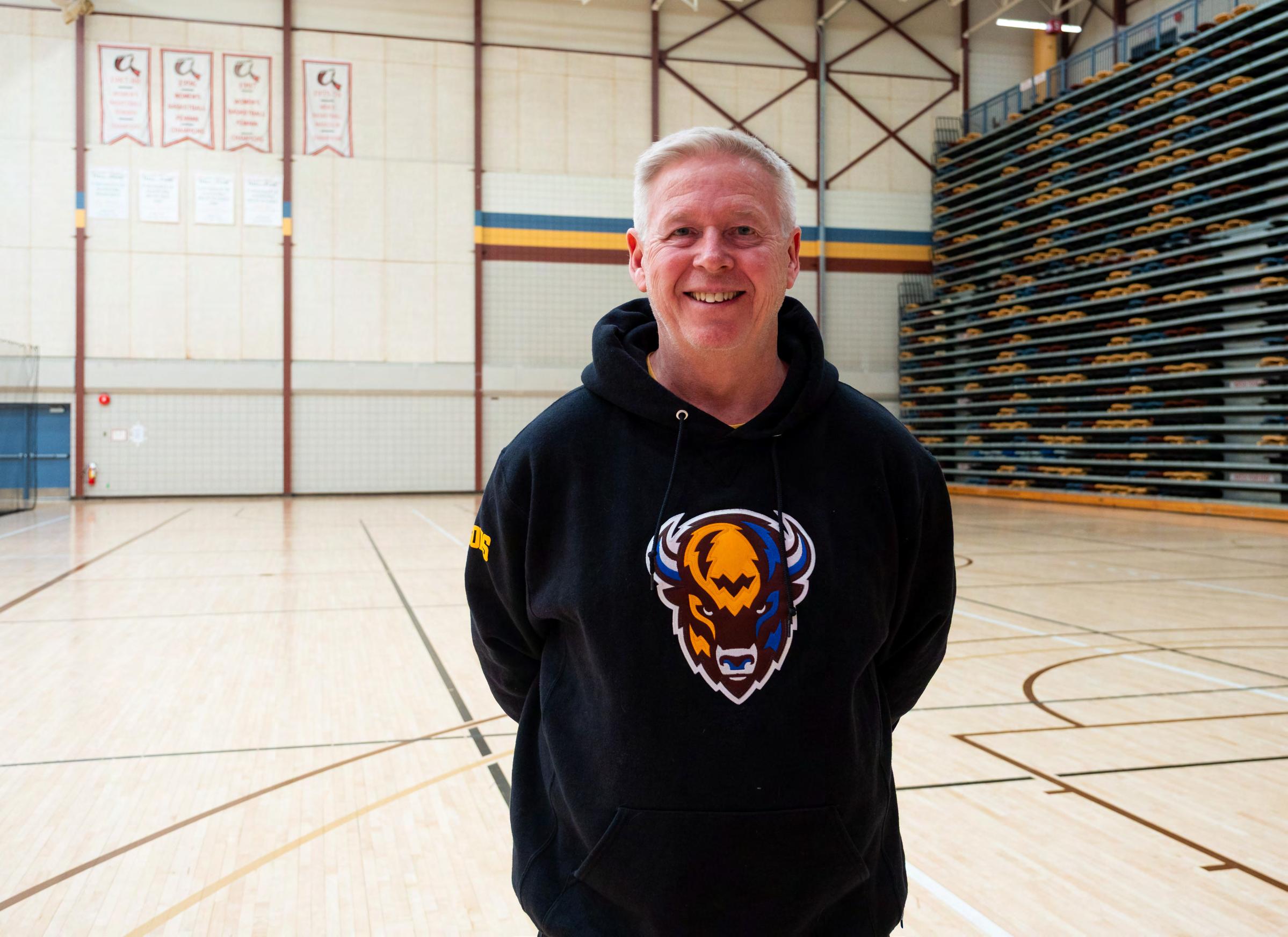
Bisons women’s volleyball head coach Ken Bentley stepped into his role for the team in the 1986-87 season at just 23 years old, full of ambition. Entering his fourth decade with the Bisons, he is one of the most accomplished coaches in the Canadian university sport, guiding the Bisons to 11 national finals and winning seven (1990, 1991, 1992, 2001, 2002, 2014, 2025).
Ken Bentley was born in Winnipeg. He graduated high school from Murdoch MacKay Collegiate and completed his post-secondary studies at the U of M. “The simple goal was just a win,” Bentley said of his first years with the team.
Coaching at the university level required more than just knowledge about volleyball. “I certainly didn’t realize the breadth of the responsibility [as] a university coach,” he said. “Obviously, as time goes on, your goals broaden […] In the short-term I just wanted to try it out, keep winning.”
Bentley found success in rebuilding competitive teams across multiple generations, adapting to changes in the sport while maintaining a consistent culture. “Strong recruiting, getting really good people, great student athletes and then obviously retaining those players too [is key],” he said. “Your retention rate is critical, and that’s a big challenge for any university coach […] They [the players] have to be happy more often than they’re not.”
His hard work has not gone unnoticed. Bentley was named coach of the year by U Sports twice, in 1991–92 and 2006–07. “It’s obviously a reflection of the totality of the work that we’re doing,” he
said. “I never set out [at] the start [of] the year [saying], ‘I wanna be coach of the year.’”
In 2014, Bentley reached 1,000 career wins, a milestone only a few Canadian coaches reach. He was the first Canadian women’s volleyball coach at the university level to achieve this. Bentley recalls the grind more than the glory. “I don’t think of the wins as much as I
think about all the late nights […] when really nobody’s watching and you’re grinding it out,” he added, “You don’t get to 1,000 [wins] without
“No one person is bigger than the team […] We fight hard for each other, not against each other”
— Ken Bentley, Bisons women’s volleyball head coach
winning those matches when no one else is around.”
Team culture has been cen-
tral to his long-term success. He noted “no one person is bigger than the team [...] We fight hard for each other, not against each other.” Bentley remembered the moment he learned he got the job back in 1986, and the small celebration that followed. He said, “I just couldn’t believe someone was going to pay me to coach.” With his first pay-
cheque, he added, “I bought my parents Chinese food [to] pay [them] back in some small measure.”
Across several decades from the sideline, certain seasons stand out for Bentley, though he hesitated to rank them. “Each championship was incredibly […] different,” he said.
Bentley happily shared that winning championships hosted at the U of M were special to him. This happened twice, in 2000-01 and 2024-25.