A “volunteer staff” member is defined as a person who has had three volunteer articles, photographs, or pieces of art of reasonable length and/or substance published in three different issues of the current publishing year of the Manitoban. Any individual who qualifies must be voted in by a majority vote at a Manitoban staff meeting. Elected representatives and non-students may be excluded from holding votes as volunteer staff members in accordance with the Manitoban Constitution.
The Manitoban is the official student newspaper of the University of Manitoba. It is published monthly during the summer and each week of regular classes during the academic year by the Manitoban Newspaper Publications Corporation.
The Manitoban is an independent and democratic student organization, open to participation from all students. It exists to serve its readers as students and citizens.
Legalizing sex work means safety, dignity for women
CASEY PLETT
S
ince last month, the federal government has been shepherding through a new bill regarding sex work laws.
Having passed a second reading in the House of Commons, the Protection of Communities and Exploited Persons Act—or Bill C-36—looks very likely to become law. Contrary to the wholesome sounding name, the bill will do little to “protect” sex workers; it will actually be devastating and harmful to women who work in the industry.
Until the Canada v. Bedford case in December 2013 , sex work had been technically legal in Canada, but catch-22 laws made it difficult to be legal in practice. For example, it was illegal to operate a “common bawdy house” or any consistent indoor location (like a brothel or even one’s own home), or “live off the avails” of sex work – a provision meant to target pimps but which also covered bodyguards, drivers, madams, etc. “Solicitation in a public place” was also illegal for sex work purposes.
If it sounds as though it was impossible to conduct sex work in a safe and legal fashion, you are correct; it was. For that reason, the Supreme Court struck down these laws last December. It was a unanimous decision and they gave the government a year to write a new law if they wished.
Bill C-36
The result of this thoughtful deliberation is Bill C-36 – and it is worse. It is so, so much worse, and it is dangerous. Let me explain.
First, the bill will make it illegal to buy sex but not to sell it.
Second, third parties will not be allowed to facilitate advertising—i.e. newspaper or online ads—so in practice it will be impossible to advertise.
Third, it will be illegal to offer services in a public place “that is or is next to a place where anyone under the age of 18 could reasonably be expected to be present.” What is defined as “next to” a place will be open to police interpretation.
Fourth, others receiving money “in the context of a commercial enterprise” from sex work—such as bodyguards, drivers, and madams—would be open to prosecution.
The outcome of these stipulations will make it impossible for sex workers to work legally in any way but solo, leaving them potentially more vulnerable and exposed to hazards of the job.
If it sounds impossible to conduct sex work in a safe and legal fashion under these laws – correct, it will be!
The problem is…
That isn’t actually the goal for the bill’s supporters. Many are explicit in their views; they believe all sex work is inherently bad and that C-36 is a safe way to pressure the industry into nonexistence.
Local MP and supporter Joy Smith wrote in the Winnipeg Free
Press last month, “A truly progressive society encourages the equality and dignity of women, not the prostitution of women.”
Protecting the dignity of all women, however, requires actually listening to the women whose lives you are legislating. Sex-workerrun organizations like the Canadian Alliance for Sex Work Law Reform, Maggie’s, POWER, and Chez Stella are against C-36. Sex workers are the ones who know how to make their own lives better, not you or me or anybody else.
Criminalizing buyers only makes life less safe for sex workers.
duce electronic gadgets.”
“Many more cannot get or keep other jobs because of mental health issues, addictions, criminal record, immigration status, or discrimination (and a severe lack of social resources to help them with these issues,” adds Koyama.
Protecting the dignity of all women requires actually listening to the women whose lives you are legislating
“If there are less johns out there, women have to lower their prices to say competitive,” notes Emi Koyama in her publication “War on Terror & War on Trafficking.”
“What many people often do not understand is that the reduction in demand can lead to far greater impact [on sex workers] than on farmers who grow cabbages or companies that pro-
As well, criminalizing buyers
“gives remaining johns greater bargaining power [ . . . ] for example, a woman who had always insisted on using a condom may be forced to engage in less safe practices simply to stay competitive.”
Indeed, when this type of model was put into practice in Sweden, a police report found that’s exactly what happened, in addition to increasing the violence and danger workers faced.
Opponents of sex work frequently talk about human trafficking. No one will deny that trafficking is a horrific crime demanding an aggressive response.
But to conflate sex work and trafficking is both lazy and danger-
ous. Proponents of this idea rarely provide evidence that legalizing sex work actually increases trafficking. In New Zealand, where they have implemented decriminalization, that hasn’t happened.
Furthermore, perhaps because of the horror of such crimes, facts are often unexamined and conflated.
For example, Koyama notes an oft-cited statistic that the average sex worker enters the industry at age 13, which leads back to one study that, among other problems, only includes underage youth, omitting those who entered over 18 by default from the dataset.
Other more recent studies estimate the average youth—again, no adults—entered at 15-16 years of age, which is still terrible, but “the average underage sex worker enters at 15” is a very different reality than “the average sex worker enters at 13.”
We don’t want to know
Those who promote C-36 rarely seem to have a genuine understanding of how the industry really works – that, or they don’t seem to care to know.
I think there’s something else at play too, though: most people just don’t want to think about it. They don’t want to grapple with how sex
work ties in with broader issues of economic, social, and racial justice. At its core, sex work makes people deeply uncomfortable and so they want those who do it to go away.
Bartley Kives, writing for the Winnipeg Free Press last December in the wake of the Bedford decision, said, “Most conscientious Canadians [ . . . ] aren’t crazy about the idea of a legal brothel opening up between the 7-Eleven and the three-for-one pizza joint.” He went on to bemoan the idea that municipalities would have to figure out how to regulate such an industry and ended by saying, “the City of Winnipeg isn’t up to the task.” The thing is that sex work already happens on that block. It probably happens on Kives’ block.
When I drove for an escort agency, we went to literally every neighbourhood. We hit St. James and Fort Garry and North Kildonan just as much as we did the hotels and condos downtown .
“The argument that [those against legalization] always bring up is, ‘Nobody dreams of becoming a prostitute!’ And when I was growing up, I heard similar arguments for McDonald’s (nobody wants to work at McDonalds!),” said Naomi Sayers, who runs the indigenous feminist blog kwetoday.com.
“But you know what, some people do work at McDonald’s whether they like it or not. The difference is that they can file complaints to address rights violations. Sex workers can’t [ . . . ] This will be the case under Bill C-36.”
In the end, C-36 does not address risks in sex work but pushes the industry farther out of daylight.
“The thing here is politicians, though they may know us as clients, they do not understand how sex work works,” Valerie Scott, one of the plaintiffs in the Bedford case, said in the wake of the decision.
“They won’t be able to write a halfdecent law. It will fail. That’s why you must bring sex workers to the table in a meaningful way.” They didn’t and, of course, she was right.
This week, C-36 was in its third reading, and the Standing Committee on Justice and Human Rights will hear from over 60 witnesses, including Sayers. The Canadian Alliance for Sex Work Law Reform has a local chapter, the Winnipeg Working Group, and their Twitter (@WinnipegWG) or Facebook is a good place to begin listening and learning about ways to take action to oppose the bill . I don’t drive anymore, but I still worry a lot. Sex work will never go away, but it can be made safer. Bill C-36 will not do that. When someone says, “we aren’t up to the task,” it’s hard for me to not hear: “Those women you knew are not my problem.”
But they are. So listen to them.
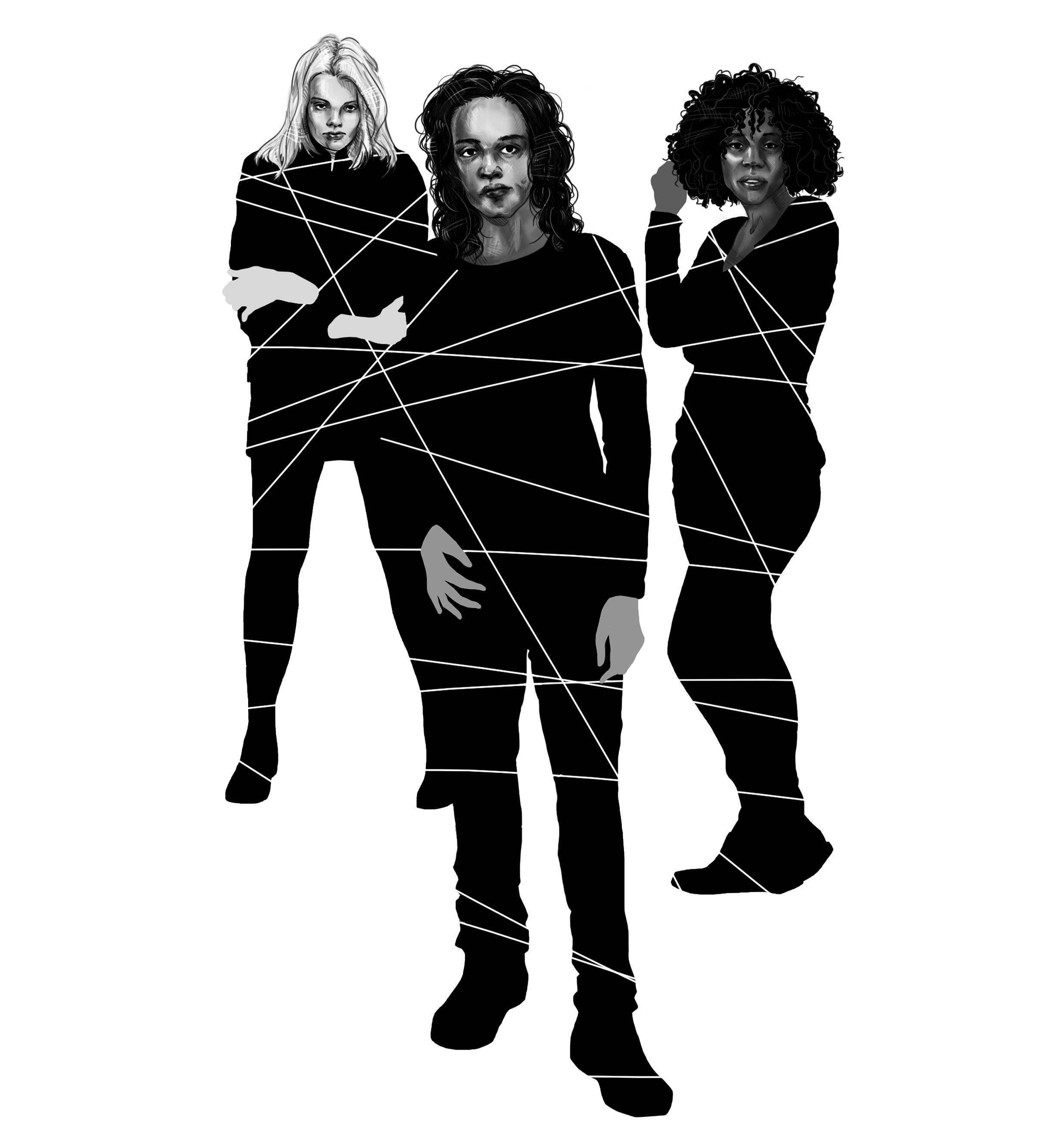
GRAPHIC BY CAROLYNE KROEKER
From left: Jill Stuchenko, Dawn Crey, Sarah de Vines
Asmall amount of Canadian corporations—a few Tim Hortons and McDonald’s franchises, for example—have reportedly been abusing Canada’s Temporary Foreign Worker Program.
Some have argued the program, which allowed businesses to import foreign workers to fill jobs in Canada, took jobs away from and favoured foreign workers over able and willing Canadians. Because of this kind of abuse, the Harper government has suspended the program until it can be overhauled.
There’s no doubt that the program is problematic. Most disturbing is the mentality behind it, which views humans as commodities. Basically, this system allows Canadian companies to look at people in foreign countries as cheap sources of labour as opposed to human beings.
“The problem with temporary
foreign workers is not that they are workers,” reads a recent Globe and Mail editorial. “It is that they are temporary and foreign, tied to their employers like indentured servants, and constantly under threat of losing their right to work, and their right to remain in Canada, if they displease that employer.”
This is not what Canada should be supporting.
If we want people to come and work in Canada, we should have the decency to allow them to become Canadian citizens. We should make sure they’re paid the same wage as any other Canadian would be doing that job. They should have the same rights and freedoms. If they are willing to do jobs in Canada that we won’t do, the least we can do is welcome them into our country. At the same time, these jobs should be first made available to Canadians. It is time for employ-
ers to accept that to attract workers they must use innovation and creativity, as opposed to relying on a program that will allow them to bring in cheap labour from the outside.
Finally, Canadians have to stop looking at these low-skill jobs as unappealing and unattractive. You need a job? Well, it might not be the best job, but it’s a job. We must stop looking at people who work cooking burgers or cleaning bathrooms as losers and failures, as we too often do, and start seeing these as jobs that need to be done, and those that do them as valuable members of society.
We as Canadians need to adjust our cultural attitudes toward foreign worker laws to make sure we stay relatively ethical in our hiring practices and treat people as human beings, not commodities.
Jailed EgyptianCanadian journalist abandoned by Harper government
Freedom of the press under attack across the globe
TARIQ SOHAIL
On June 23, 2014 an Egyptian court sentenced Mohamed Fahmy and his two colleagues to seven years in prison on terrorismrelated charges. Fahmy, an Egyptian-Canadian journalist, was covering the Arab Spring in Egypt before he was arrested. The Egyptian government accuses the three journalists of supporting the Muslim Brotherhood, spreading “false news,” and for allegedly smearing Egypt’s reputation as a means of undermining the current military-backed government. It is not a new phenomenon for authoritarian governments to jail or kill journalists for covering news that could be critical of the government. That is the reason why freedom of press exists – to keep government power in check.
Jailing journalism
It cannot be stressed enough how vital a free press is to the survival of civilization and liberty in any nation.
The Harper government’s response to this farcical trial and conviction has been hushed and weak. Canadian Foreign Minister John Baird defended the government’s approach to the sentences by saying that the reason Canada isn’t speaking out loudly in this case is because that approach has not worked in the past.
It cannot be stressed enough how vital a free press is to the survival of civilization and liberty in any nation
Fahmy says he did not receive proper medical treatment for his wounded shoulder when left in solitary confinement for six weeks, and he fears the injuries might be permanent. He was in an Egyptian prison for six months before the trial.
Australian Prime Minister Tony Abbott and British Foreign Secretary William Hague have both expressed opposition to the treatment and convictions of Fahmy and his colleagues; U.S. Secretary of State John Kerry referred to the sentences as “chilling” and “draconian.”
Journalists all around the world are persecuted for being journalists. It is common in dictatorships or areas lacking a stable government such as Somalia, Pakistan, Afghanistan, Iraq, and, more recently, Syria. According to the Committee to Protect Journalists, two-thirds of the journalists killed in 2013 were in the Middle East, with Syria and Egypt seeing a rise in fatalities.
The Harper government’s policy toward jailed Canadians in foreign countries is very selective and politically expedient. Brenda Martin, who was convicted in Mexico for Internet fraud, was transferred to Canadian custody after Harper personally intervened. Huseyin Celil, imprisoned in China, was showered with the government’s strong support for his release. Yet there have been times when Harper has allowed Canadians to be stranded in African prisons.
It also isn’t unheard of for journalists to be mistreated by Western democracies in some cases. Jeremy Scahill, an investigative journalist who has reported on the assassination program of the Obama administration, has received warnings from people high up in the administration.
It is inherent within the profession of journalism to report on hard-hitting news in an unbiased way, and some governments would rather keep the public in the dark. Journalists and governments are in a constant struggle over what information ought to see the light of day, which is why it is important that citizens of all countries continue to fight for a free press.
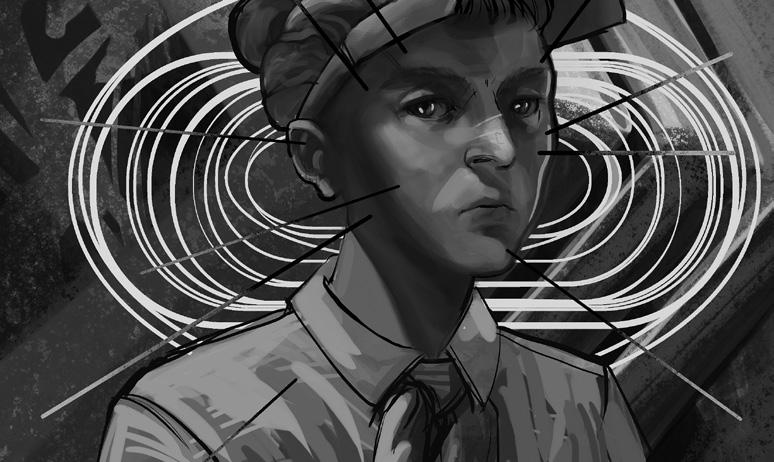
GRAPHIC BY BRAM KEAST
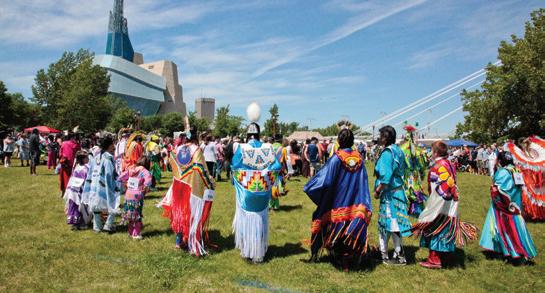
National Aboriginal Day
Arts & Culture
On the radar, off the grid
Up-and-coming Folk Fest artists not to miss
LAUREN SIDDALL
W
ith legends like Joan Baez and Bonnie Raitt playing at Folk Fest this year, it’s easy to miss other fantastic, lesser-known performers. Here are some acts to put on your radar.
The Wilderness of Manitoba
Four-piece ensemble the Wilderness of Manitoba hails from Toronto – contrary to what their name might suggest. Consisting of Will Whitwham (vocals, guitar, piano), Amanda Balsys (vocals, violin), Wes McClintock (bass), and Sean Lancaric (drums), this Juno-nominated band emphasizes the constantly developing nature of composing music as they grow as a band.
Since their first 2009 album , the band’s songs have evolved to incorporate more prominent lead vocals from Whitwham and Balsys, along with stronger percussion – particularly on their latest full-length album, Island of Echoes
The band will be infusing their Folk Fest set with songs from their upcoming album, Between Colours, which will be released mid-September.
Showtime: 3 p.m. Friday, July 11 at Green Ash.
Reuben
and the Dark
From Calgary, Alberta, Reuben and the Dark take the stage to present material from their debut album, Funeral Sky, produced by Christopher Hayden (Florence and the Machine) and Stephen Kozmeniuk (Madonna), and mixed by Jim Abbiss (Arctic Monkeys).
This collection of four multiinstrumentalists and vocalists— Distance Bullock, Shea Alain, Scott Munro, Dillon Whitfield and led by Reuben Bullock —provides a unique sound ranging from the fiery and driving single “Rolling Stone,” to the dark and emotive “Devil’s Time,” while exploring the very Keatsian theme of the duality between happiness and misery.
Originally a solo act, this ensem-
ble provides a fuller sound and chilling harmonies for Bullock’s powerful folk music. Backed by Arts & Crafts (who are responsible for artists such as Feist, Dan Mangan, and The Stills ), Reuben and the Dark are already selling out shows; catch them before it’s too late .
Showtime: 4:30 p.m. Friday, July 11 at Snowberry.
All the way from Sydney, Australia, Boy & Bear are back in Winnipeg for the second time since releasing their ARIA-charttopping album Harlequin Dream
The Strumbellas
This six-piece ensemble delivers an eclectic new breed of country music, often described as alternative-country. The Toronto-based group is fresh off of a Juno win for their sophomore album produced by Ryan Hadlock (The Lumineers). Their latest energy-filled album We Still Move on Dance Floors fluctuates from the acoustic sound of Simon Ward’s vocals and guitar as heard in “The Fire,” to the jauntier songs filled with sing-along cho-
ruses, such as “Home Sweet Home” and “Ride On.”
Simon Ward (songwriter, vocals, guitar), Dave Ritter (vocals, keys), Jon Hembrey (lead guitar), Isabel Ritchie (violin), Darryl James (bass guitar), and Jeremy Drury (drums) are sure to deliver a stellar, crowdpumping set.
Bonus: The Strumbellas are set to play right before the Sheepdogs.
Showtime: 9:30 p.m. Friday, July 11 at Big Blue.
Boy & Bear
All the way from Sydney, Australia, Boy & Bear are back in Winnipeg for the second time since releasing their ARIA-charttopping album Harlequin Dream David Hosking (vocals, guitar), Killian Gavin (vocals, guitar), Tim Hart (vocals, drums), Jonathan Hart (vocals, banjo, mandolin, keyboards), and David Symes (bass) deliver a warm indie-rock inspired folk – at times reminiscent of a 1970s steel guitar sound, as in their single “Southern Sun” or the heavier, more rock-influenced “Bridges.”
Armed with a killer sense of humour, these Aussies keep a witty banter going between songs while delivering a fantastic set that sounds as good, if not better, than their studio recordings. If you like their show, they will be back in Winnipeg on Oct. 23 to perform at the Garrick Centre along with Bahamas and Reuben and the Dark.
Showtime: 9:30 p.m. Sunday, July 13 on Big Blue.
Filling your belly at Folk Fest
Vendors offer local, organic, fair trade eats
When you’re dancing in hippy bliss to the smooth sounds of performers from around the world, you’re going to need some grub to keep your stomach smiling.
This year’s Winnipeg Folk Festival is sporting 28 food vendors who share a common principle: LOFT, which stands for local, organic, and fair trade .
Folk Fest places a priority on working with LOFT partners, says Lynne Skromeda, executive director of the festival. Chocolatier Constance Popp, Diversity Food Services, Green Bean Coffee Imports, Forbidden Flavours, and Whales Tails (a festival tradition similar to beaver tails) will all be using fair trade products to feed festivalgoers.
Diversity Food Services executive chef Ben Kramer says the team is excited to bring their take on fresh local food to the masses at Folk Fest. Kramer is active in fundraising events throughout the city, including the Stone Soup event last March.
Classic vendor favourites, such as Lemon Heaven and Santa Lucia, are ready to satisfy your hunger pangs
New to the festival this year are vendors Burrito Splendido, Mr. Perogie, Corrientes (a restaurant listed as one of the Winnipeg Free Press’ Best restaurants of 2012 ), and Diversity Food Services.
Diversity Food Services will be running two booths at Folk Fest: one for public access, as well as a second backstage for volunteers and performers.
Classic vendor favourites, such as Lemon Heaven and Santa Lucia, are ready to satisfy your hunger pangs. Be sure not to throw your Lemon Heaven cups in the trash – they’re compostable. With last year’s new food vendor setup, the Serpentine (a snake-shaped row of food vendors), securing your dish is a breeze. The new format allows for easier menu-viewing and rids the need to cut through food lines to get to the main stage, something that was common with the previous system, says Skromeda.
Campground-goers will enjoy the food-truck style food in the campground from Food for Folks, Jonnies Sticky Buns, the Red Ember, Thom Bargen Coffee and Tea, and Vilai’s Spice Box. Be sure to come hungry to Folk Fest 2014; there’s a food vendor for everyone.
KATY MACKINNON, STAFF
PHOTO OF THE STRUMBELLAS BY HEATHER POLLOCK
PHOTO OF THE WILDERNESS OF MANITOBA BY KILLBEAT MUSIC
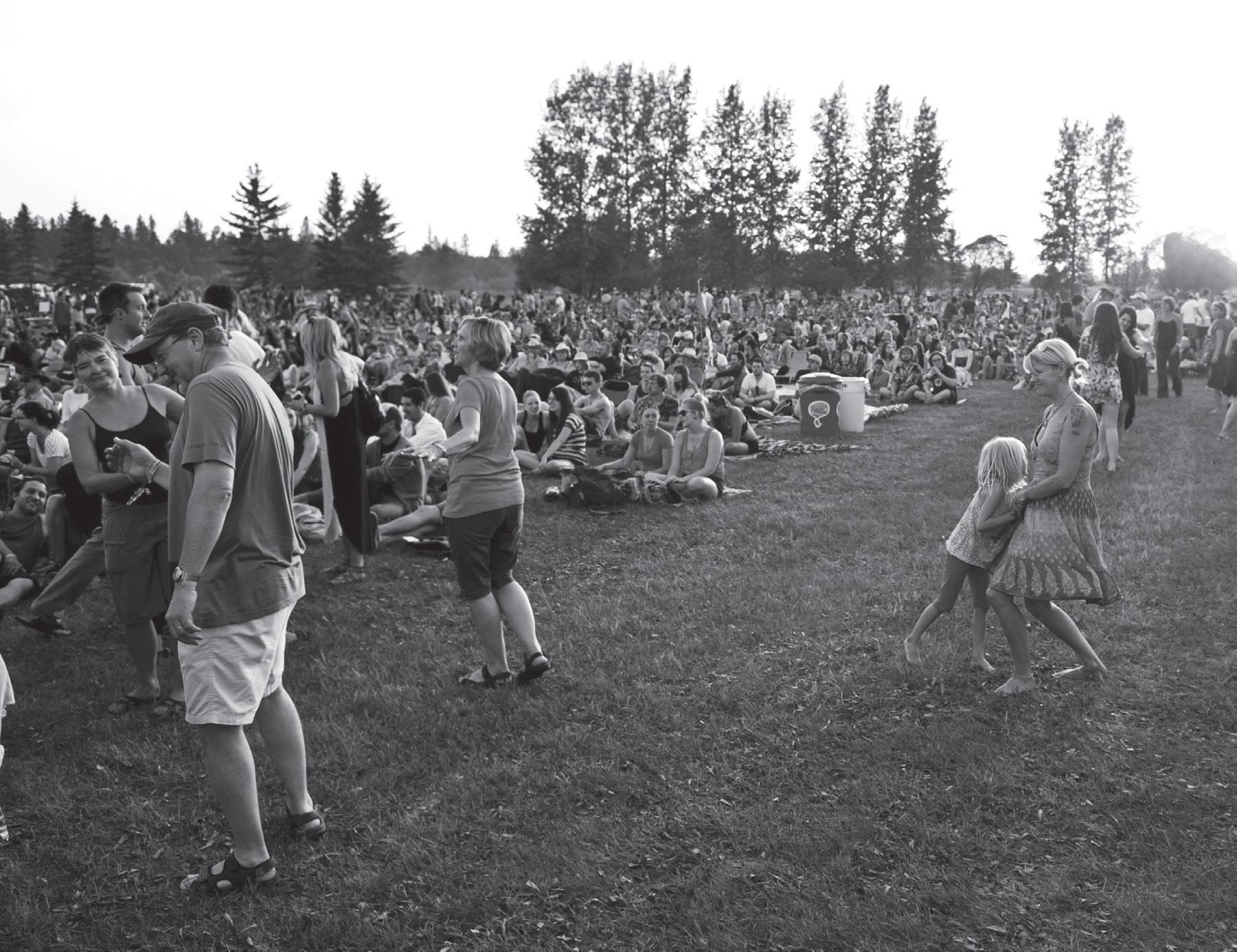
PHOTO BY SEAN MCGILLIVRAY
Ar ts & Culture
The hope movement
Local band Bold as Lions delivers upbeat sound, positive message
MIKE STILL, STAFF
In November 2011, local 16-year-old musician Sean Quigley released his rendition of the famous Christmas song “The Little Drummer Boy” on YouTube. The musical masterpiece went viral and has now garnered over 2.8 million views.
Since posting the video, Quigley has received coverage from a variety of media outlets in Canada.
Despite his success, Quigley stays humble. He created a CD version of his performance, with the profits going to Siloam Mission, a philanthropic Christian agency offering programs and services for the homeless population of Winnipeg.
“I don’t believe that [Drummer Boy] had anything to do with me. I believe it was God’s plan for my life,” Quigley says.
The YouTube project was just the beginning for Quigley, who took his momentum and ran with it. In February of 2013, Quigley’s solo album was released, titled We are the Generation. The album debuted at #3 on the iTunes North American charts.
Quigley recorded and produced the entire album himself.
The completion of his album led to even broader opportunities. In November 2012, he travelled abroad with World Vision, educating youth on the ability to become advocates for positive change through the use of arts and media.
“The platform I have now has nothing to do with me, really. It just sort
of happened,” says Quigley. “I believe that I’ve sort of been put in this position to influence young people.”
On the horizon
Presently the 19-year-old Quigley is working on a brand-new project. His newest venture is the band Bold as Lions, in which the Oak Park High School graduate plays not only
“If any of the songs or words change one person’s life, then we’ve done what we’re here to do” – Karli Gerbrandt, Bold as Lions
drums, but also guitar and vocals. Quigley says the name for the new band comes from Proverbs 28:1, a bible verse that states, “The wicked flee though no one pursues, but the righteous are as bold as a lion.”
The band also includes his 21-yearold fiancée Karli Gerbrandt, who sings vocals. The duo originally met at Oasis Community Church in Charleswood. From the outset, there was an immediate connection. Soon after, they began dating. Sean was 15 at the time.
“She [Karli] was the one person
who stood by me since day one,” says Quigley. “When I was just some punk kid in my basement still screwing up, she was the one that was there for me.”
A few years later, they began playing together on the same worship team at Oasis, which is what encouraged the couple to start up a band. Their unity, both as life partners as well as bandmates, has been growing ever since. Quigley and Gerbrandt’s hard work culminated with the release of their debut album on June 8, titled The Hope Movement
“Our goal is to inspire young people, or people of any age, in any situation, and just bring hope to a world that doesn’t have any hope – which is what we write about,” Gerbrandt says.
The 10-track CD displays a wide variety of musical genres, including acoustic, rock, and hip hop. There is an open and honest vibe to the band’s lyrics, which any listener can relate to. One constant that can be heard in every song is a message of hope and positivity.
While the band members are Christian, Gerbrandt says that their music does not necessarily have explicitly religious overtones.
“I don’t think that music has faith, the people in the band do,” Gerbrandt says. “Our songs are relatable, and that’s kind of the goal. If any of the songs or words change one person’s life, then we’ve done what we’re here to do.”
Cover to cover with Carlyn
There Can Never Be Enough: New and Selected Stories by David Arnason
CARLYN SCHELLENBERG, STAFF
There Can Never Be Enough: New and Selected Stories is University of Manitoba English professor and seasoned fiction writer David Arnason’s latest collection since 2002’s The Demon Lover. In addition to showcasing many of his previous tales, Arnason’s newest work introduces three new stories: “Getting it Right,” “The Bad Samaritan,” and “On Silver Pond.”
Like Arnason’s prior fiction and non-fiction releases, the stories in There Can Never Be Enough predominantly capture the Interlake area and Winnipeg. Outlier locations include Iceland, Italy, the Ukraine, Russia, Paraguay, Australia, and Montana. Nostalgia, a common theme in this tome, is emphasized in the most moving of the new three, “Getting it Right,” in which a man looks fondly back at his life. In this passage, as in the rest of the collection, simple language prevails:
“Just moments ago everything was expectation. I had plans. I lived in many different futures in my imagination, and I slept well at night and dreamed dreams of power and success. Now, I want to live in the past. I would be willing to live my life over exactly as it happened, taking the good with the bad, as if it were a favourite movie that I could replay whenever I wanted.”
Many of Arnason’s stories are acutely comical and equally ridiculous. The most notable story of the collection is “The Naiads,” in which a man, while his sailboat is anchored at Gull Harbour, encounters three naked female campers who don’t want to share the area. His ill father secretly tags along, witnessing from afar and butting into his son’s arguments and sexual relationships with the young women.
The male voice is predominant in There Can Never Be Enough; with the
exception of the second-person perspective, all female characters are in third-person while all first-person narrators are male.
Many of Arnason’s stories are acutely comical and equally ridiculous
However, Arnason makes up for this lack of a female voice in “Bad Girl,” a story about a “disobedient” teenager named Ellen whose religious, dogmatic parents believe they have ownership over her and her body. Ellen’s lover informs her that they will be married by fall or else; after Ellen’s retributive father finds out she’s been saving up to go to university, he tries to take her money, referring to her as a “thieving slut.”
Arnason highlights the misogyny and turns the “bad girl” trope on its head by illustrating the father and lover as outlandish creatures.
There Can Never Be Enough is rife with folklore. In “The Sunfish,” a talking fish informs a New Iceland man that the world is going to end, and he subsequently acts in accordance with the fish’s advice to attain his wishes. “Girl and Wolf” is a take on the Little Red Riding Hood fairy tale, using bestiality in a style reminiscent of Angela Carter’s The Bloody Chamber. In this story, the wolf is ready to kill the woman, and she flips the fairy tale script.
In an almost “Choose Your Own Adventure” kind of way, Arnason, forever cognizant of his audience, tells and revises his stories. For example, in “A Girl’s Story,” written in second person, “you” are the protagonist. After describing a setting, the narrator says, “I slipped a lot of
details in there and provided all those hints about strange and dangerous things under the surface. That’s called foreshadowing .” In “The Naiads,” the narrator questions his verb choice: “I’m not sure whether the word I want is ‘flounced’ or ‘bounced.’”
The characters in the collection are predominantly older males, and are most often moose hunting, fishing, camping, playing hockey, sailing, and figure skating. If Arnason has a fault, it’s that some pieces blend together, and it’s difficult to conclude if this is endearing or jarring. For example, the ailing, annoying patriarchs in “Sons and Fathers, Fathers and Sons” and “The Naiads” are virtually the same character.
Nonetheless, There Can Never Be Enough is a humorous, touching, and compelling read – especially for residents of the Interlake region.
PHOTOS PROVIDED BY BOLD AS LIONS
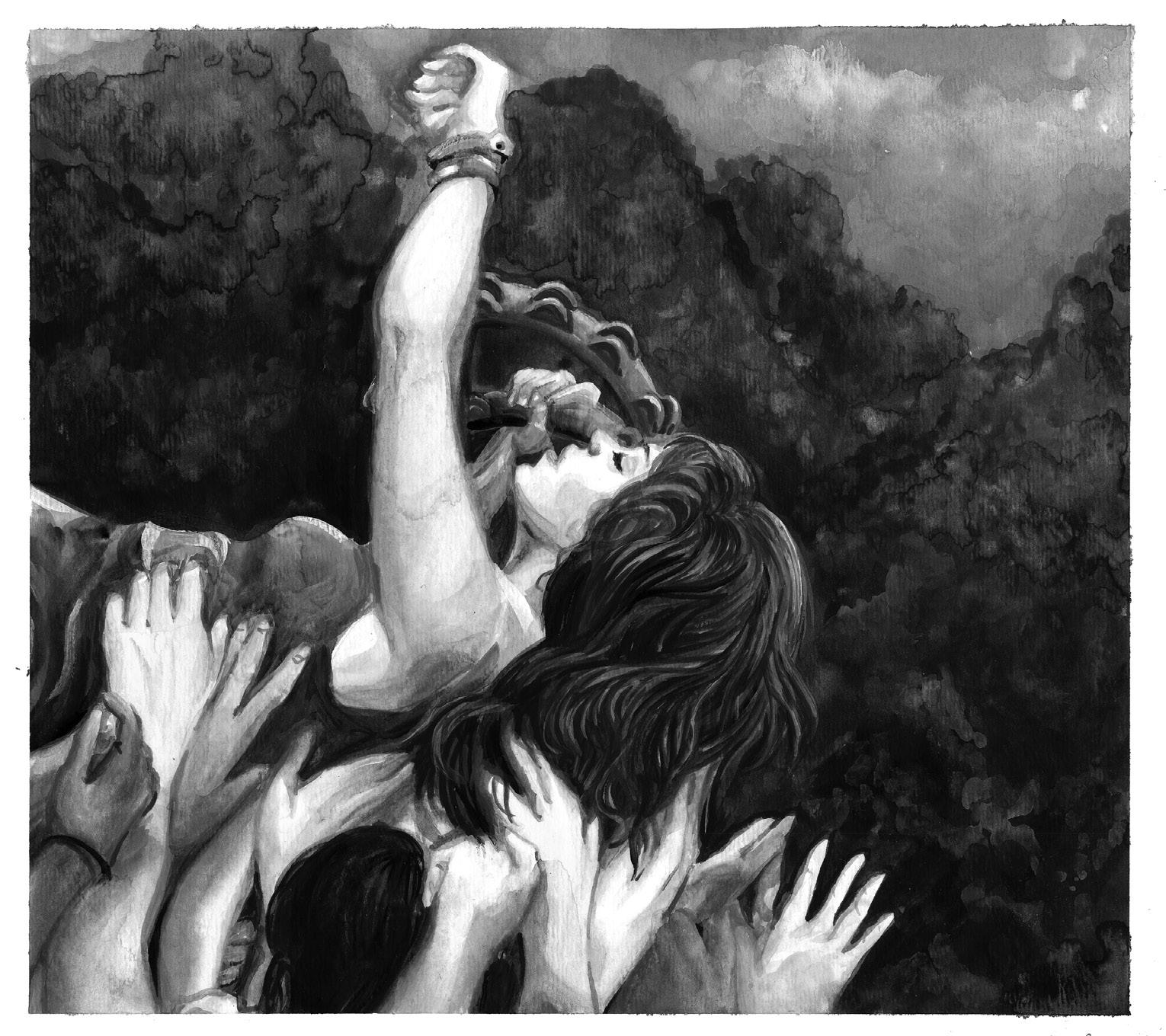
One time, at band camp
Teens with mood disorders come to camp to Let It Out
MICHELLE SAROMO
For teens, summer is the time to have fun, let loose, make new friends, and just let it all out. What better place to do that than at summer camp?
This summer, the Mood Disorders Association of Manitoba is hosting their annual Let It Out!
Summer Rock Camp for Teens at the Robert A. Steen Community Centre.
Running on its fourth year, Let It Out is geared towards teenagers aged 12 to 17. Though teens don’t have to be officially diagnosed in order to join, they do need to have some prior musical knowledge.
on their own musical capabilities.
The camp program fosters teambuilding skills and gives students a safe space to socialize, but it also challenges the students to reflect on their own musical capabilities.
Taylor Demetrioff is the founder of Let It Out. Having played in bands himself since he was 14, he used music to cope with borderline personality disorder.
Demetrioff says that Let It Out is formatted similarly to a program that he attended as a teen. Members are grouped together into different bands and practise their songs together. They play some covers and even learn to write their own songs to perform for the big show at the end of each session.
The camp has all the elements that you would find in a “typical” band camp; however, Demetrioff wanted to incorporate a mental health aspect. The students listen to presentations about mental health and participate in daily group sessions, which allow them to open up and share their experiences.
A number of students have returned to the camp year after year, says Demetrioff, and he’s seen them become more open and willing to break out of their comfort zone.
“I remember the first year there was one person [who] wouldn’t say a word to anyone,” he says. “And then by the second week she was on stage rapping and jumping around, and just super vibrant and kind of being herself.”
The camp program fosters teambuilding skills and gives students a safe space to socialize, but it also challenges the students to reflect
Kara Passey, former arts and culture editor for the Manitoban, recently joined the Mood Disorders Association of Manitoba team as a youth outreach coordinator, and is working as a counsellor at the camp. She has worked in music programming for after-school programs for the past few years, but wanted to get involved with this program because she enjoys “working with kids that need the support that they might not normally find
at school, or even at home.”
Like Demetrioff, Passey has used music to help cope with her anxiety and has played in couple of bands. She says that although coping with the disorder while fronting a band can be tricky, it has helped her to better deal with stress and has taught her to be more outgoing. She relates the idea of being in a band to building a community.
“When you’re in a band, the ideal setting is to be in a group of people that you trust and [to ensure] that it feels safe, and so we kind of use that atmosphere to show kids how to be in a supported place.”
Passey says she looks forward to supporting the teens at camp and getting the opportunity to see what they’re capable of achieving.
Let it Out will have four twoweek sessions starting July 7 and running until Aug. 29.
Digital storytelling animals
Workshop teaches ordinary folks to tell stories that matter
MICHELLE SAROMO
Two workshop sessions on July 14-16 and Sept. 8-10 are set to enlighten and teach participants about the art and process of digital storytelling, facilitated by digital storyteller Frances Ravinsky.
The concept of digital storytelling can be tricky to grasp, especially considering how commonplace the word “digital” is today; the term tends to lead people’s understanding of the work astray.
“That word now is everywhere, that ‘digital storytelling,’ and if you Google it, there’s nine million hits [ . . . ] and it means many different things,” says Frances Ravinsky, a digital storyteller certified through the University of Colorado and the Center for Digital Storytelling in California.
“It means interactive gaming, it means text-less slide shows, it means instructional media [to other people],” says Ravinksy, who is also co-founder of Community Works, which develops various social workshops for communities and organizations. But to Ravinsky, that’s not what the work is about.
The workshop, called “Digital Storytelling: Telling the Stories that Matter,” aims to provide participants the opportunity to reflect on their experiences, and invites them to share the stories that can nourish and teach the community in a creative manner.
“I think in general, we, as a North American culture, [have] sort of given the rights and obligations to tell the stories that matter to the professional storytellers, the filmmakers, and also to the celebrity culture,” says Ravinsky.
Sharing stories, then, is like collecting “life data ”
Participants will learn to use digital technology and software to create and narrate a three- to five-minute video of their story, to which they can add whatever audio or visual elements they wish.
At the core of it, digital storytelling work is more closely related to the oral storytelling tradition; the “digital” aspect is merely reflected in the tools that are used to communicate the stories. Ravinsky says that the work’s process is also consistent with participatory education, or as she describes it, “education for transformation.”
In the realm of human experience, there is no one true “expert” we can rely on to give us all the answers.
“We are our own experts,” she says, mentioning that even in her role as a facilitator, it is about “a dual role of teacher and student and together addressing those hard issues that need to be addressed.” Sharing stories, then, is like collecting “life data.” It is a way for humans to obtain some answers to help us understand life experiences and solve human problems.
Digital storytelling allows us a chance to gain full authorship of our own stories and reclaim our storytelling rights. It provides a nuanced space for people to reflect and express what they feel needs to be said, in the way that they wish to express it.
For more information on Community Works and the workshop, visit comworks.wordpress.com. View an example of one of Ravinsky’s digital stories here: youtu.be/WHl9cUdtTJc
“[Participatory education is] about engaging people in a process of reflecting on their experience [and] the wisdom contained in that experience, and then [ . . . ] using it in the service of action, of making change in our world,” Ravinsky says.
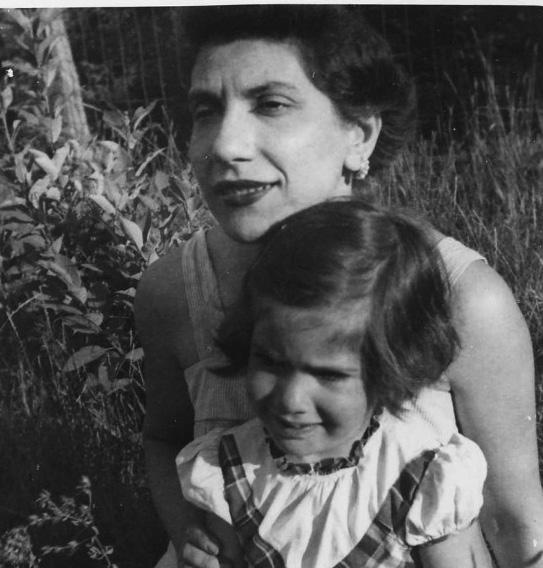
PHOTO OF FRANCES AND HER MOTHER TAKEN BY A FAMILY MEMBER
GRAPHIC BY KARA PASSEY
ILLUSTRATION BY SAMANTHA SECTER
ILLUSTRATION BY SCOTT FORD
ILLUSTRATIONS BY CAROLINE NORMAN
Running with the herd
Inside the mind of Manitoba
half marathon winner
Abduselam Yussuf
MIKE STILL, STAFF
Speed is a gift, and Abduselam Yussuf has certainly been blessed with a large quantity of it.
The cross country and track and field athlete, who is going into his third year of eligibility with the Bisons, recently showed off that speed en route to capturing the 2014 Manitoba half marathon title.
His time of 1:09:32 was over a minute faster than the second-place finisher’s, with a blistering pace of 3:18 per kilometre.
When asked what he did to prepare, Yussuf noted that a lot of his training ended up being on his own, away from his teammates, which is far different than usual. During cross country and track season, the group typically becomes a close, cohesive unit.
“There was a lot of training that went into it. There were a lot of Saturday long workouts, 20-minute runs, and intervals,” Yussuf said.
“While the rest of my teammates trained on the track, I did maybe one day of the week on the track with them, and the other days would just be weights in the grotto or Max Bell, and then runs afterwards just to feel strong, and see how it worked.”
When discussing the race, Yussuf mentioned that he was initially on the fence about competing.
“I wanted to do a bit more road races and track races, and I wasn’t super sure that I wanted to do the half marathon, but I hadn’t done it since grade 11, so I just wanted to see what my time was,” said Yussuf. Things didn’t necessarily go as
planned for the speedster in terms of his normal routine.
“The night before the half, it was weird. I wasn’t feeling it, and it was raining so hard,” said Yussuf.
“Then the morning came, and we were trying to rush to the bathroom after we came here [to the university], and there was no time to warm up, so we just jumped in.
I said I would just hold on for however long. It turned out pretty okay.”
Yussuf was definitely in his comfort zone on June 15. This was mainly because the half marathon course spanned over a large chunk of the city, and was not repetitive.
It is for this reason that he also prefers cross country over track during the year.
“For me, I definitely love cross [country] season,” Yussuf said.
“They are longer races, and there are a lot of people, so it’s super fun. We go into different places; it’s a huge challenge, because you’re not always running into those same spots, and it’s not repetitive.”
Yussuf is a humble athlete. He keeps his words reserved, and doesn’t boast, even when speaking of an impressive accomplishment.
One thing he is sure of, though, is that his motivation and intensity is something that cannot be taught.
“I don’t think I could tell people what I tell myself,” Yussuf said with a chuckle.
“You kind of force yourself to run. If you want to get better at it, you’ve got to do the training anyways.”
Big Horn breakdown
Interview with Big Horn member Shahab Valipour
DAVID GRAD
Meeting new people can be tough, but sports can help. What’s more, you don’t necessarily need to play on a team to do this if you join the right fan group.
Shahab Valipour is a science student from Iran going into his second year. Not only was Shahab new to the university when he joined the Big Horns; he was also relatively new to Canada.
I sat down with Shahab to hear about his experience with the Big Horns and how it helped him find a sense of belonging at the University of Manitoba.
DAVID GRAD: How did you first get involved with the Big Horns?
SHAHAB VALIPOUR: I had been at school for a few months and usually went home after class because I had nothing to do. One of my first days staying after class I was sitting in the Armes Building. Steve Setka, one of the Big Horns, came up to me and gave me tickets for wearing my U of M clothes.
I went with some friends and saw some of the other Big Horns; they were loud and having so much fun. Cheering for the teams – I liked it! I was an athlete in high school and loved it when fans came out, it was exciting. I wanted to join them. They were funny and fun to hang out with. So I joined them! I’ve had a lot of fun and learned a lot of things since joining.
DG: As a first-year student, what did joining the Big Horns mean to you?
SV: Before I joined, I was alone in
the university. I was scared, everyone said university was hard. I was new to the school and new to Canada.
I found a lot of friends when I joined. I enjoyed university more; I love being in university now. I felt more confident because I knew I was part of a family. My family lives in Iran, but the Big Horns became my family. Going to class, talking to TAs, studying – I felt more confident with everything.
“I am alone in the city, but here I now feel like I have a family. Going to the games as a group, having dinner together, having meetings – it is like my family!” –Shahab Valipour
DG: Why do you feel school spirit is important?
SV: We [the Big Horns] went to Regina together to cheer women’s volleyball at nationals. No other team had fans out like we did. We were only one group, a small group, but everyone was talking about us and what we brought. We were supporting each other, and the athletes supported us and welcomed us as part of their fam-
ily. Breaking our drums, losing our voices, cheering with players’ families, and being invited on the court by the players after they won a national title, that was special. It was us helping our school and making our school better.
DG: Is the U of M more than just a school for you now?
SV: Yes, absolutely. I spend most of my time here now. Before joining, I went home right after class because I was just here for class. After joining, I am staying here all the time. I am more comfortable here, I like being on campus. I am alone in the city, but here I know feel like I have a family. Going to the games as a group, having dinner together, having meetings – it is like my family!
DG: Since joining the Big Horns, when you put on a sweater or shirt that has the Bison or University of Manitoba on it, do you feel more pride, like you are a part of something bigger?
SV: Yes! I am more proud to be a student here. I am more confident. Going to Regina or U of W to watch games, watching the way we support our teams, it makes me feel proud. We have something here other schools don’t have. I wear my U of M clothes wherever I go; Iran, Toronto, or wherever [ . . . ] I am a part of something.
Check out the Big Horns at facebook.com/thebighorns and twitter.com/thebighorns1
PHOTO OF ABDUSELAM YUSSUF PROVIDED BY BISON SPORTS
GRAPHIC BY BRENDA STILLS
Yakking with Yantz
Thoughts on East West Bowl, training camp with the Bombers, and potential future in the CFL
MIKE STILL, STAFF
I
t must feel pretty good to be Jordan Yantz right now. For starters, he’s the number one QB on a CIS team with a strong chance of making it to the Vanier Cup. Tack on his participation in the Bomber training camp and impressive showing in the 2014 East West bowl, and his situation couldn’t get much better.
When asked about his experiences over the past few months, Yantz was quite positive, especially when discussing the East West Bowl.
“It’s up there. It’s right below a pro camp,” Yantz said. “We got some outstanding coaching, and there were some CFL coaches out there. My quarterbacks coach on the West team was Paul LaPolice, so that was cool – him teaching me the little things, like how to perfect my release, and speed up my feet and decision-making.”
One of the most unique aspects of the East West Bowl is the ability to play on the same team with opponents from the Canada West conference, and develop a positive relationship through the week, which Yantz made sure to note.
“The cool part about it was that you’re playing with top talent across the country, and all week create chemistry with some guys,” said the Regina native. “It was cool to meet those guys, and ball out with them [ . . . ] it was probably one of the funnest football experiences I’ve ever had.”
Yantz also had the benefit of having his teammate Nic Demski on the field with him, something he made sure to capitalize on at game time.
“When it came to game time, I happened to find Nic Demski quite a bit, so that was pretty exciting. It’s something that me and him kind of have, so no one can take that away from us.”
While the East West Bowl was an amazing experience for Yantz, it’s hard to compare that to CFL camps, which Yantz has now had
a fair amount of exposure to. Since this wasn’t his first rodeo, he knew the drill going in.
“Going in [to Bomber camp], me being at two other pro camps, I kind of knew the routine of what I had to do,” said Yantz.
“It was awesome. I got to throw some balls, and I did good . There was a couple times where there was a little bit of a crowd, and I threw a couple of deep balls and got it to Ror [Rory Kohlert], so that was exciting.”
Yantz was also quick to mention the knowledge he gained from attending meetings, and soaking in all the information that he could.
“The different level of coaching that they get there is something that I try to eat up. It’s the little things that I kind of took in – in the classroom,” Yantz said. “That’s all I could do, was try and learn, and bring what I could back to the Bisons. It was an awesome experience, and I took lots of notes.”
While Yantz still has one more year of CIS eligibility, there has already been preliminary talk of him leading the charge for Canadian quarterbacks starting in the CFL down the line. He has faced the question many times, and answered it with confidence.
“It’s obviously a dream that I’ve always wanted to do, and pursue, said Yantz. “I’m a strong believer that if I have some success next year, and so to say were to have the same success I had last season, I think that there’s a good chance that I do get drafted.”
All that the Bison QB wants is a chance to prove himself if given the ability, and if he does get drafted, Yantz said he would go in with no hesitation.
“Whether it’s in the first round or the fifth round, it won’t matter to me. I’ll be really excited either way, and pursue that dream,” Yantz added. “I believe if I got that opportunity, I would take 100 per cent advantage of it, and go and attack it.”
Abridged 2014-15 Bison Sports schedule
Dates to remember
MIKE STILL, STAFF
Football (5-3 in 2013-14 Canada West regular season)
Sept. 12: Home opener versus Regina at 7 p.m.
Sept. 20: Homecoming game versus UBC at 2 p.m.
Oct. 17: Game six at home versus Saskatchewan at 7 p.m.
Nov. 1: Seniors game versus 2013-14 Canada West champ Calgary at 2 p.m.
Women’s soccer (1-7-4 in 2013-14 Canada West regular season)
Sept. 5: Season and home opener versus Regina at 6 p.m.
Sept. 13: Duckworth Challenge game vs. Winnipeg at home at 6 p.m.
Oct. 2-3: Home series against 2013 Canada West champion Alberta at 6 p.m.
Oct. 11: Final regular season home game at home versus Calgary at 6 p.m.
Cross country (Men’s team ninth, women’s team 17th at 2013 CIS Cross Country Championship)
Sept. 27: Roy Griak Invitational in Minneapolis
Oct. 25: Manitoba Championship in Winnipeg
Nov. 8: 2014 CIS Championship at Memorial University (St. John’s)
Swimming (Men’s team ended up 15th overall at 2014 CIS Swimming Championship and women’s team finished 17th)
Nov. 1-2: First meet of the season at UBC
Nov. 22-23: 2014-15 Canada West Championship at University of Lethbridge
Nov. 29: Bison Sprint IM Invitational at Pan Am Pool
Feb. 19-21: 2015 CIS Championship at University of Victoria
Women’s hockey (17-13 in Canada West 2013-14 regular season)
Oct. 3: Season opener versus Regina on the road at 8 p.m.
Oct. 9: Home opener vs. 2013-14 Canada West champ Saskatchewan at 6:30 p.m.
Nov. 29: Finish first half of season at home vs. Alberta at 1 p.m.
Feb. 14: Season finale and regular season game at home vs. Calgary at 1 p.m.
Men’s hockey (15-19 in 2013-14 Canada West regular season)
Sept. 25: Season opener against Calgary on the road at 8 p.m.
Oct. 3: Home Opener vs. Regina at 7 p.m.
Nov. 7-8: Home series against 2013-14 Canada West champ Alberta at 7/6 p.m.
Jan. 24: Home finale regular season game vs. Saskatchewan at 6 p.m.
Women’s basketball (5-17 in 2013-14 Canada West regular season)
Oct. 9: Season and home opener against Trinity Western at 6 p.m.
Jan. 23-24: Home series against 2013-14 Canada West champ Sask. at 6/5 p.m.
Jan. 30: Duckworth Challenge game vs. Winnipeg on the road at 6 p.m.
Jan. 31: Home finale regular season game vs. Winnipeg at 5 p.m.
Men’s basketball (6-16 in 2013-14 Canada West regular season)
Oct. 9: Season and home opener against Trinity Western at 8 p.m.
Jan. 9: Start of second half at home vs. Victoria at 8 p.m.
Jan. 30: Duckworth Challenge game vs. Winnipeg on the road at 8 p.m.
Jan. 31: Home finale regular season game vs. Winnipeg at 7 p.m.
Women’s volleyball (2014 CIS National Champions)
Oct. 9: Season and home opener plus 2013-14 CIS banner unveiling against Calgary at 6 p.m.
Nov. 7-8: Home series against 2013-14 Canada West champ UBC at 6/5 p.m.
Jan. 29: Duckworth Challenge game vs. Winnipeg at home at 6 p.m.
Jan. 31: Home finale regular season game vs. Winnipeg at 1 p.m.
Men’s volleyball (10-12 in 2013-14 Canada West regular season)
Oct. 9: Season and home opener against Calgary at 8 p.m.
Jan. 16-17: Home series against 2013-14 CIS champ Alberta at 8/7 p.m.
Jan.29: Duckworth Challenge game vs. Winnipeg at home at 8 p.m.
Jan. 31: Home finale regular season game vs. Winnipeg at 2:30 p.m.
Golf (2014 CIS National Champions)
Start of Sept.: First tournament for men’s golf
Track and field
Dec. 6: Flying M Classic at Max Bell Fieldhouse
Feb. 6-7: Bison Classic at Max Bell Fieldhouse
Feb. 27-28: Host 2015 Canada West Championship at Max Bell Fieldhouse
March 12-14: 2015 CIS Championship at University of Windsor