Weeklong UMSU event brings current issues to the forefront page 5
Organ market
Atrocities in Sinai Desert must come to an end
Genetic drives Free-range Streak over
Experiment shows DNA's potential for data storage
Unconventional ways to interact with art in Winnipeg
Bisons hand Alberta first loss of the season
19
Please contact designteam@themanitoban.com if you are interested in submitting a cover image.
For other volunteer inquiries, please come to our office in University Centre (across from Tim Horton’s, behind GOSA) or email the editor of the section for which you are interested in writing.
Please direct all other inquiries to editor@themanitoban.com
Toban Talkback
Patterson, staff
“Happy Chinese New Year 2013” by Beibei Lu
image
Happy Chinese New Year 2013
3
Idle No More supporters gather for national day of action
Protestors still optimistic for change
Quinn Riche R t, staff
Protestors walked from Bloodvein, Hollow Water, Brokenhead, and Little Black River First Nations to the Manitoba Legislature on Jan. 28, where they met local Idle No More supporters for a rally in conjunction with a global day of action.
The crowd, numbering over 800 by some counts, gathered on the front steps holding signs and banners to listen to a succession of speakers discuss a variety of Aboriginal issues, such as treaties and environmental concerns.
Singer and activist Buffy SainteMarie, who appeared the next day at the University of Manitoba as part of Celebration Week, was one of the last speakers to take the podium.
“Idle No More is spotlighting issues that we have been living with for years [ . . . ] this is the educational opportunity of a lifetime for Aboriginal people to learn more ourselves, to actually read the fine print in the treaties, and for non-Aboriginal people to finally understand what it is that makes us so proud,” said Sainte-Marie from the steps of the legislative building.
Following her short speech SainteMarie led the crowd in a song, accompanied by many with traditional drums.
Other speakers included April Raintree author Beatrice Mosionier and Winnipeg-based comedian Ryan McMahon.
During his speech, McMahon focused on the need for Indigenous communities to protect their land.
“When we talk about standing up
for the land, we are talking about standing up for our version of what we call god. Everything that protects us, everything that keeps us well, everything that brings us together [ . . . ] comes from Mother Earth. When we don’t protect that, and when we don’t stop companies from resource extraction, they are taking our version of god away from us,” McMahon told the crowd.
Following the speeches, Cheryl, one of the eight youth who walked from Bloodvein First Nation to Manitoba’s provincial government headquarters, told the Manitoban that the four-day walk from the reserve, which is situated north of Winnipeg and along the east
side of Lake Winnipeg, was cold but not difficult.
“It is just about finding the strength you need to stay positive,” Cheryl said.
“The actions just keep coming, and that is the momentum that we really need.” – Susanne McCrea
Some news outlets, however, have reported that walkers faced occasional abuse from motorists while walking along Highway 59.
CBC News Manitoba reported
Idle No More: an overview
How did we get
here and what does it mean?
Rebecca K Reme R , volunteer staff
S
ince November, 2012 the Canadian grassroots movement Idle No More has been well covered in the media, yet it still remains a mystery to many Canadians.
The Manitoban interviewed U of M students in January to find out what the student community’s views were regarding the movement. The response showed that although students were aware of the movement’s existence, many had no notion of its views or goals.
The following is a basic summary of the facts and events that make up the Idle No More movement.
The movement began in response to a bill, labelled the Jobs and Growth Act, also known as Bill C-45, that passed in December of 2012. Among various amendments, spanning from fishing rights to pensions, the bill lays a reworking of the Navigable Waters Protection Act (NWPA), originally penned
in 1882.
The original purpose of the NWPA was to ensure that any structure to be created, repaired, or altered on any body of water in Canada navigable by canoe, had plans that were first presented to the federal government. In extreme cases, this meant that even minuscule adjustments, like painting lines on a bridge or installing a culvert, were subject to consultation.
In October, 2012 the Harper Government proposed the NPA (Navigation Protection Act) to replace the NWPA as a part of Bill C-45. The act limits the scope of areas where development requires consultation to 97 lakes, 62 rivers, and the oceans.
The First Nations chiefs, however, felt that discussion was needed in terms of ensuring treaty promises and they requested a meeting with the Prime Minister.
It was at this point, on Dec. 10, that Attawapiskat Chief Theresa Spence began her hunger strike to garner public sympathy and pressure Harper into meeting with the chiefs. Her strike occurred simultaneously with the movement but was not officially part of Idle No More.
Eventually, a meeting was arranged on Jan. 11 between Stephen Harper and the various chiefs to discuss policies related to, but not in actual conjunction with, those of the Idle No More movement.
Outside parliament, however, thousands of Idle No More demonstrators picketed, demanding protection for Canada’s wilderness and Aboriginal treaties in the broader sense.
NDP MP Charlie Angus described the movement’s nature to the National Post
“It’s not ‘fix this one thing’ or
that the group, which included young children, had pennies hurled at them “by at least one vehicle full of people.”
Also in attendance at the rally was Susanne McCrea, executive director of the Boreal Forest Network. McCrea, who has been involved in organizing Indigenous solidarity events around Winnipeg, said she is not concerned that Idle No More is losing momentum following Theresa Spence’s decision to end her hunger strike.
“I don’t equate the two,” said McCrea. “Many people have taken independent actions in support of Idle No More. That was an individual standing up in her own way, which I
think people will continue to do. It is important that people take their turns and come and go in support of the movement rather than become the movement.”
The day of action was announced on Jan. 10 on the Idle No More official website, and reportedly featured events in at least 30 Canadian cities.
“This day of action will peacefully protest attacks on Democracy, Indigenous Sovereignty, Human Rights and Environmental Protections when Canadian MPs return to the House of Commons on January 28th. As a grassroots movement, clearly no political organization speaks for Idle No More. This movement is of the people… For The People!” said a statement released by Idle No More organizers.
The rally concluded with many crowd members engaging in a round dance, which spread single file across the legislative grounds.
As for what will happen next in the Idle No More movement, McCrea is optimistic.
“The actions just keep coming and that is the momentum that we really need,” she said.
“As much as we can dislike Harper and the policies that his government has enacted, we can also thank him for being so extreme that it brought people together [ . . . ] whether it’s Indigenous or non-Indigenous people, labour, environmentalists, or social justice activists, all of those people have the same stake in this.”
‘change that’ and everything goes back to being hunky-dory. This is about a broken relationship and how we can get back to where we need to be.”
When activists Nina Wilson, Sheelah Mclean, Sylvia McAdam, and Jessica Gordon founded the movement back in November, they decided that a major facet of their vision would be to conserve “Indigenous Ways of Knowing rooted in Indigenous Sovereignty to protect water, air, land and all creation for future generations.”
They viewed the updated NPA as an attempt by Harper to circumvent Aboriginal sovereignty and to grant companies access to Canada’s waterways without consultation.
The movement itself has taken the form of flash mob round dances in public centres, and is designed to both raise awareness and protest the actions of parliament. Since
December, flash mobs have taken place throughout Canada from the West Edmonton Mall to the middle of Manitoba highways to Niagara Falls.
Fueling the movement online, social media networks such as Facebook and Twitter have been crucial in organizing the protests and spreading awareness among those who otherwise may not have heard about the movement.
The most active day for the movement’s hashtag, #IdleNoMore, on Twitter was Jan. 11, the day Harper met with the First Nations chiefs. The final tally reached an estimated 58,000 relevant tweets.
The movement saw a resurgence on Jan. 28, with Idle No More’s global day of action. Across Canada, protestors demanded that their voices be heard, and were clustered around legislatures in Manitoba and elsewhere.
Student group Praxis calling for gown donations
Gowns for Grads provides dresses for high school students
Rachel Wood, staff
U of M student group is participating in a city-wide initiative that provides free grad dresses to high school students not able to afford one on their own.
Britney Truman, Praxis coordinator for the Student Life office, explained to the Manitoban that the student group’s involvement in Gowns for Grads includes promotion, raising awareness, and acting as a drop-off spot for donations.
The Praxis student group, whose name translates to “turning theory into action,” also coordinates other programs throughout the year, including Trick or Eat, where members go trick-or-treating for canned goods, and offers volunteer opportu-
nities at local charities.
Praxis also holds a yearly fashion show during Celebration Week to endorse
Gowns for Grads. According to Truman, this year has brought a slower start for donations but the fashion show has helped increase awareness.
This year’s fashion shows took place on Jan. 28 and Feb. 1, and featured members of the Praxis group modeling their own grad gowns. Truman explained that this program affects women in the student group on a deep level.
“There is definitely a personal effect, especially among the women in our group [ . . . ] We always hear those stories like, ‘Oh, grad was such an important day to me [ . . . ] I can’t imagine not being able to afford a dress.’”
Justin Trudeau visits Drake Centre
The Gowns for Grads donation draw concludes when high school students go to the Convention Centre and pick out their dresses, shoes, and accessories, all of which have been collected by local organizations and companies.
Truman said that this year the Praxis group would have the opportunity to volunteer at the concluding event at the Convention Centre and witness the effects the program has on the participants firsthand.
The program began at St. John’s High School when its grad committee saw the need for free provision of grad dresses to students who were not planning on attending their grad due to financial constraints.
Liberal leadership candidate encourages young people to engage in politics
a lycia Rod Rigues, staff
J
ustin Trudeau visited the University of Manitoba on Friday, Feb. 1 in an attempt to gain the attention of the student body. His stop was part of the Liberal leadership campaign, for which all of the candidates for the Liberal Party’s leadership role were in Manitoba for a debate on Feb. 2.
During his speech, Trudeau expressed his concern regarding the public’s disenchantment with politics and how people no longer feel that politics are an effective way to get things done in the Canadian economy.
Canadians have become cynical, said Trudeau, since it has become “a fight about who’s right, not what’s right.”
“Those not voting isn’t a reflection on young people; it’s a reflection on politics,” said Trudeau.
Yet, despite the disinterest in politics, he stated that youths are gaining political interest and becoming mindful of current issues, engaged in trying to make a change. Throughout his campaign across Canada, Trudeau has noticed a lot of support.
During his speech, the Liberal
leadership candidate stated that when the Liberals lost confidence and relevance, it forced them to look at what went wrong. They decided to get Canadians involved.
“People are coming out because they want to be a part of something; they want to be engaged and empowered,” said Trudeau.
A recent CBC article commented that Trudeau has relied on the popularity of his father during the leadership campaign. He has refuted this claim by arguing that the younger generation does not identify with his father.
“For young people—particularly young people these days—if you’re not the real deal yourself, they’re not going to pay any attention no matter how much grandma remembers meeting your Dad at a train station,” he said.
Trudeau explained that his goal to get out across Canada is so the right leader can be chosen and to demonstrate that young people are interested in politics and voting. He said that current leaders are disrupting the unity of Canada by playing games. According to Trudeau, it is important to keep Canada a democracy and, in order to do so, the Liberal Party will commit to not using omnibus bills, which he labelled as short-sighted. Issues touched upon during the question and answer portion of the speech were the Idle No More movement, low-income populations, mental health, addiction, and the justice system. Trudeau recognized that First Nations groups have been poorly treated by Canadians and said it is important to get it right rather than look at it as a problem to get rid of. He stressed the importance of empower-
Praxis is run out of the Student Life office, which is a venue for U of M students to get involved in campus activities. The office also runs orientation week and hosts additional programs including Alternative Reading Week, which introduces students to local non-profit organizations during the February break.
“It’s basically an office that is looking at getting students involved and opening up opportunities for students,” said Truman.
Dresses, purses, shoes, and accessories can be donated to the Student Life office at 225 University Centre until Feb. 15.
ment through education and action.
Trudeau said that one of his main goals will be the strengthening of the middle class, which he claims has been decreasing. There has been a 13 per cent increase in middle class debt along with an increasing cost of living and a minimal raise in income. He stated that after necessities have been met, it is important to feel valued and respected in the community, and that this could be achieved through education and housing programs. Trudeau concluded by encouraging listeners that their actions and engagements matter.
“The heart of our democracy is the ideas of the people; a single impact makes a huge difference [ . . . ] we have to believe in our value and the difference we can make.”
iLLustRatiON by JustiN Ladia
phOtOs by beibei Lu
Celebration Week brings current issues to forefront
Topics vary from Aboriginal rights to sex trade misconceptions
a lycia Rod Rigues, staff
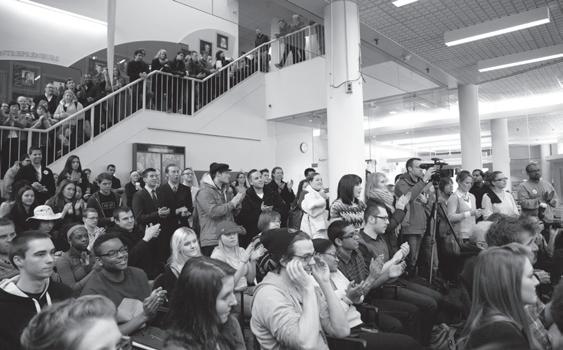
Celebration Week at the University of Manitoba was held from Jan. 28 to Feb. 1, an event that UMSU holds yearly to bring students entertainment and inspirational speakers who shed light on important current issues.
UMSU president Bilan Arte told the Manitoban that the point of Celebration Week is to celebrate life and learning through fun experiences and engaging speakers. Arte said that each year a survey with a list of topics is sent to each UMSU member, asking them about current issues that they would like to learn more about. According to Arte, an overwhelming majority of students wanted to learn about issues relating to the media, bullying, and Indigenous activism due to the popularity of the Idle No More movement.
Arte said this year’s turnout was a success. She also noted that it is great to hear from the members directly about what is important to them, and encouraged students to get involved with the union.
“It’s been awesome to see so many students go to not just one event, but two or three of the same events, because that way we get to see a lot of the same faces over and over again [ . . . ] We’re really excited to have a
more engaged membership.”
Some of the Celebration Week performers included Buffy SainteMarie, who spoke about the Idle No More movement, and Fred Penner, who touched on the importance of staying positive and what it means to find yourself.
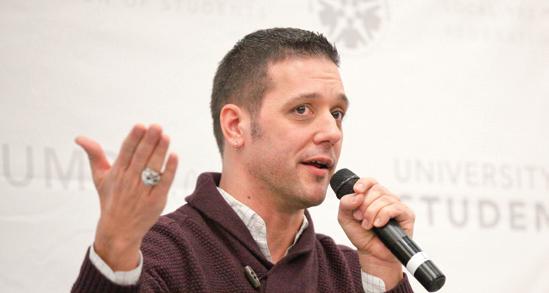
George Stroumboulopoulos spoke on Feb. 1 about being an engaged citizen in the media. He explained how June Callwood, a Canadian journalist and activist, had a profound impact on him. Stroumboulopoulos was honoured to be Callwood’s last interviewer before she died of cancer.
The most important issues facing Canada right now, Stroumboulopoulos said, is support for gay marriage, equal pay for women, safe injection sites, and a reformation of punishment and the justice system. He also touched on the Idle No More movement, which he described as a powerful movement with expectations for growth.
When asked about student debt, Stroumboulopoulos said that, although it is an issue he can’t identify with, he believes that education should be lower in price and accessible to everyone. He suggested that students should start a “lower my fucking tuition party.”
Also included in Celebration Week was a seminar featuring Sex Trade 101, a Canadian group of sex trade experts who aim to raise awareness and educate individuals on the sex trade industry. The seminar was held on Jan. 28 and included discussions surrounding common misconceptions regarding sex trade workers.
The seminar panel included Bridget Perrier, a member of Sex Trade 101, Dianna Bussey, human trafficking consultant for the Salvation Army, and Diane Redsky, project director for the Canadian Women’s Foundation.
Redsky explained that 70 per cent of trafficked individuals are Aboriginal women, and that there are 400 sexually exploited youth in Manitoba.
The seminar was a part of Pyjama Week, a week in support of sex trade workers that occurred simultaneously with Celebration Week, and Safe Night Off Winnipeg Streets (SNOW) night, an event intended to provide sex trade workers a safe night where they can connect with organizations who provide support programs. People were encouraged to wear pyjamas during the week and donate new pyjamas, blankets, pillows, and toiletries for SNOW
U of M hosts seminar on forced organ harvesting in China
Human rights lawyer David Matas leads discussion over the issue
Quinn Riche R t, staff
International human rights
lawyer David Matas was at the University of Manitoba on Feb. 1 to talk about the issue of forced organ harvesting from incarcerated Falun Gong practitioners in China.
Matas’ talk was sponsored by the U of M’s Arthur V. Mauro Centre, the Centre for Human Rights Research, the faculty of social work, and the departments of sociology and Asian studies.
Falun Gong, also known as Falun Dafa, is a form of meditation and exercise, imbued with spiritual teachings, which has, in recent years, “become a subject of much communist propaganda in China,” according to Matas.
Matas explained that, as Falun Gong gained popularity in the mid90s, the Chinese Communist Party moved to outlaw the practice.
“By 1999, Falun Gong were, according to a government survey, more numerous in memberships than the Communist Party. Out of fear of losing its ideological supremacy and popularity, the party banned Falun Gong.” Doctors Against Forced Organ Harvesting spokesperson Dr. Damon Noto claims that by the end of that
same year, “the number of transplants taking place just exploded.”
Many, including Noto and Matas, point out a disparity between the number of organ transplants performed yearly in China and the number of criminals executed by the state – China’s acknowledged source of most transplanted organs.
Two books published by Matas, entitled Bloody Harvest and State Organs, argue that the most likely source of unaccounted-for organs is from Falun Gong practitioners held in labour camps. These individuals, who are not formally sentenced to the death penalty, are routinely blood-typed and subjected to various medical tests while detained and then killed for their organs when required.
“There is no explanation for the transplant numbers in China other
than sourcing from Falun Gong. China is the second largest transplant country in the world other than the U.S., yet, up until 2010, China did not have a deceased donation system and, even today, that system produces donations [that] are statistically insignificant,” Matas said to the U of M crowd.
The second half of Matas’ talk transitioned into a 12-point plan on how Canada’s government and citizens could pressure China into ending forced organ harvesting.
Matas thinks that Canada can enact extraterritorial legislation in order to cut down on “transplant tourism” to China.
“Parliament should enact legislation to combat international organ transplant abuse. A legislative initiative in this area would highlight the importance of any abuse and
night.
Tammy Junghans, coordinator of pyjama week and a student studying Native studies, told the Manitoban that students are particularly expected to be educated about the sex trade industry because they have the power to change the world. She described the sex trade as a business based on supply and demand. According to Junghans, the question, “what is driving demand?” needs to be asked. She also suggested looking at the current culture, where sex sells everything.
Junghans described the perception of a sex trade worker as having chosen that lifestyle but, ultimately, she said it comes down to a lack of choice.
Redsky explained that the average education level of a sex trade worker is grade seven, which leaves little opportunity for employment.
Another event, held at Degrees on Jan. 31, discussed the Gender Inclusive Washroom Initiative (GIWI). GIWI has proposed a washroom that would welcome all bodies, and would aim to make everyone feel welcome and comfortable when using the facility.
The panel discussed the idea that sex is not equal to gender and that some people, despite being born with a certain anatomy, do not identify with the label associated with that anatomy.
Lara Coppola, a second year student from the faculty of social work, attended all of the events that she could during Celebration Week.
“There has been a lot of diversity in culture and great informal learning situations. I also can’t complain about all the free stuff. It was cool to see everyone in the university come together and really celebrate their campus,” said Coppola.
strengthen the position of those in China who are actually subjected to it,” said Matas.
Furthermore, Matas says Canadian academic institutions should “deny admission to Chinese medical professionals who are training in transplant surgical techniques, unless the would-be trainees commit to not engage directly or indirectly in the use of organs from prisons.”
Following his talk, Matas told the Manitoban that, while there is a cultural aversion toward organ donation in China, the Communist Party has the power to reverse such thinking –involuntary organ harvesting is much too lucrative.
“China has managed to overcome a lot of its historical cultural traditions [ . . . ] If the Chinese Communist Party put a priority on donation, there would be more than enough donations. If the party said, ‘in order to be a member of the party, you have to sign up with the donation program,’ it would happen overnight. The reason it hasn’t happened is not cultural aversion. There is just too much money being made from organs [ . . . ] there [are] a lot of vested interests that want to keep this system.”
Maria Cheung, a social work professor at the U of M and chair of the discussion, said that some of the discrimination faced by Falun Gong practitioners has carried into Canada, and has been noticed on the U of M campus.
Cheung says that many Chinese students think that Falun Gong practitioners run the independent Chinese newspaper, the Epoch Times, which can be found for free at the main entrance to University Centre.
“If you walk past the Epoch Times you can do a survey every week. Sometimes people flip it over or try to cover it with something. These are very subtle ‘micro-aggressions,’” said Cheung.
Cheung says she hopes that she can continue to work towards eradicating feelings of suspicion or hostility towards Falun Gong practitioners on campus.
On Jan. 29, the U of M’s Falun Dafa group showed the film Between Life and Death: Falun Gong Practitioners Systematically Murdered for Their Organs as part of the University of Manitoba Students’ Union (UMSU)’s International Movie Festival. phOtO by beibei Lu
eDitor-in-chief Ryan Harby
editor@themanitoban.com / 474.8293
Business manager Foster Lyle accounts@themanitoban.com / 474.6535
Voluntee R contR ibuto R s Chris Hearn, Beth Daniel, Steve Snyder, Lauren Boulet, James Culleton, Caroline Norman, Mathieu Boulet, Justin Ladia, Emilie St. Hilaire, Rebecca Kremer, Elizabeth Drewnik, Rodger Lepinsky, Ian T.D. Thomson, David Skene, Katy MacKinnon, Dany Reede,
MANITOBAN
105 UNIVERSITY CENTRE
UNIVERSITY OF MANITOBA WINNIPEG, MB R3T 2N2
General Inqu I r I es & a dvert I s I n G
Phone: (204) 474.6535
Fax: (204) 474.7651
Email: manitoban@themanitoban.com
n at I onal & Mult I -Market a dvert I s I n G Campus Plus Media Services Toll-Free (In Canada): 1.800.265.5372
Email: info@campusplus.com
Canadian Publications Mail Product Sales Agreement #589160
A “volunteer staff” member is defined as a person who has had three volunteer articles, photographs, or pieces of art of reasonable length and/or substance published in three different issues of the current publishing year of the Manitoban. Any individual who qualifies must be voted in by a majority vote at a Manitoban staff meeting. Elected representatives and non-students may be excluded from holding votes as volunteer staff members in accordance with the Manitoban Constitution. The Manitoban is the official student newspaper of the University of Manitoba. It is published monthly during the summer and each week of regular classes during the academic year by the Manitoban Newspaper Publications Corporation.
The Manitoban is an independent and democratic student organization, open to participation from all students. It exists to serve its readers as students and citizens.
“Seek out argument and disputation for their own sake; the grave will supply plenty of time for silence.” – Christopher Hitchens
We delete, unfollow, unfriend. We block “friends.” We erase conflict. We detach without reflection, without fully understanding the factors motivating us to detach. And sometimes, without knowing, in removing intellectual “variety” from our online friend networks, we are actively participating in our own miseducation.
HashtagNoFilterLifeSucks YouJelly?ThatShitCray
Everyday you grow weary of that someone blowing up your news feed or inbox with impersonal notifications – invitations to play silly online games or to attend events of no particular interest to you. You are, by no fault of your own, subject to so much vacuity and carelessness online, that no one would blame you for deleting maniacally enthused, posthappy John Doe.
There are a variety of obvious reasons to delete a contact like John on any given social media platform. And the most common motivating factors likely do include those just listed. Mere annoyance at John’s persistent barrage of vacuous status updates and flourishes of unflattering “selfies” also probably ranks highly on our list of justifications for blocking him.
Those “friends,” like John, bent on detailing the niceties of their latest meal, or chronicling their misadventures in the grocery store parking lot in photo essay form, do nothing to discourage this urge to rid them from our social media landscape either. Nor do such digital acquaintances that habitually treat the Internetz as their unconstrained personal diary strengthen our already shaky faith in humanity.
And the inappropriate cross-platform use of hashtags? Here’s a revelation: hashtags don’t aggregate data on Facebook like they do on Twitter, which is made plainly clear in the name of the Facebook group, “This is not Twitter. Hashtags don’t work here.” The one exception is if you have a keen sense of irony, in which case hashtag on, my Facebook friend.
For superficial reasons like these it’s easy to see how deleting a “friend” might only provide positive returns. No more exposure to the prattle and vanity of John Doe.
“Seek out argument and disputation for their own sake”
Which brings me to my next distinction. There’s a whole other class of people, “friends” that we feel compelled to sever from the lives of our digitized selves.
A colleague at the Manitoban once remarked something to the effect, “If there’s one thing social media has done, that I almost wish it hadn’t, is that it allows me to figure out with such ease which people on my friends lists are racist.”
The Internet bigot: all-too comfortable in his or her own skin, flippantly making wild generalizations about marginalized or misunderstood groups of people online. Interacting even passively with this class of scaly, reptilian troglodyte constitutes a departure from the less subtle motivations we have to delete people that merely annoy us on a superficial level.
But maybe these people should be deleted far less quickly than the lesser assholes like John Doe.
Some Internet bigotry is performed with brazen self-assurance, and it may seem our only recourse is to distance ourselves from
such bile-belching mouth-breathers by blocking or deleting them. Certainly, most people don’t seek out and surround themselves with racists for their charm and mature sense of comedic timing.
Conversing with social activist-types on how to deal with this kind of openly bigoted attitude online, the answers vary in delivery but many end on the same note: confront the person. Send them a message, join the comment thread, do something to reach out to them and a) give them a spittle-mouthed scathing, or b) give them a chance to correct themselves. To say nothing is to enable the bigot to go on perpetuating harmful stereotypes unchallenged at his and everyone’s peril.
The beautiful (and cursed) thing about the Internet and social media is that we have the opportunity to carefully select our words in a strategic manner to articulate either one of the two aforementioned approaches. Both are likely to achieve very different outcomes and, as mentioned, depending on the bigot, sometimes the best option is a blunt “Fuck you, bigot,” rendered publicly in the comment feed followed swiftly by deletion.
If a descent into trolldom in the face of online bullying and bigotry is what you need to do get through the day, have at it.
The less obvious and more constructive thing to do, if possible, is to contextualize and explain to them, in a non-condescending manner, why they are wrong to associate themselves with hate speech, and why different forms appear to be more socially condoned than others. Worst-case scenario: if they’re dismissive or disrespectful, you come away having given humanity another chance, sadly, with your suspicions intact.
I am so SMRT
And then there’s the pseudo intellectual type—at least as vociferous on social media as we are—that we find ourselves poles apart from, politically, spiritually, and socially. These members of our online social community irritate us on a more basal level: people with posts as predictably matter-of-fact as they are persistent.
Once in a while you develop the faintest sense that, we’ll call her Jane Doe, is in reality an apolitical demagogue, and her bold affirmations and affiliations to this or that “idea” are simply extensions of a kind of conspicuous
expressionism – the act of “sharing” something for the purpose of having others see you do it.
For example, if Jane wanted to appear intellectual, she’d serially share materials online that she perceived to have a desirable intellectual quality to them, with the unexpressed and semi-conscious intent of having her social network learn, through habituation and association, to attribute this level of intellect to her.
More than an interest in edifying herself, Jane is most concerned with maintaining the perception (through social media) that she is learned. This sounds like a mild form of sociopathy, and it probably is.
To unfriend, or not to unfriend?
I’ve hovered many a cursor over the unfriend/unfollow setting for various “friends” that post and share articles and updates that insult my fragile cosmopolitan sensibilities, unsure of what to make of my own hesitancy. I’ve found restraint in these moments to be my greatest ally, as keeping your social network enemies close can prove to be beneficial in a number of ways.
Living alongside the notion of cultivating positivity in your everyday life, we have an equally trying challenge to understand how and why people think what they think. Cultivating a varied social media landscape— with “friends” you couldn’t bring yourself to piss on were they burning—provides us with an opportunity to influence, and a window into the minds of people that differ drastically from us.
Of course, everyone has a threshold for conceit, bullshit, or bigotry. There is a balance everyone must manage between willfully exposing themselves to disparate and sometimes heinous worldviews just for the sake of taking a pulse of the online cultural and political landscape.
If you can remain strong enough to not censor or sterilize your experience of the Internet’z many trolls, you could stand to gain a more nuanced understanding of why people are so fucked up. And that, friends, is something that no further amount of Farmville requests, “NoFilter” hashtags, or bigoted status updates can ever take away from you.
editor- in-Chief: Ryan harby
Canada’s dilemma
A conventional fight against an unconventional enemy
ch Ris h ea Rn, volunteer staff
The recent hostage-taking situation in Algeria hit a little closer to home when it was revealed that two hostage takers were Canadian. Canadian? How could Canadians be involved in this? Mind you, as I write this, the Algerian government has been less than forthcoming with information and the Canadian government is trying to find out more. And frankly, I think the situation was handled terribly by the Algerian government. So, who knows what the truth may end up being.
Regardless, it would appear that Canada is far from immune to having dangerous people operating from within it, although that probably isn’t a big secret anyway. But to put it in perspective, in our multicultural society, some people with various connections to criminal activity will be able to slip into Canada. Mafia and gangs based in homelands around the world have managed to move into
our country. So, the idea that militants such as those involved in the Algerian hostage taking could come from here shouldn’t be a surprise –but it also doesn’t mean that any one group within Canada that may have criminal elements within it are worse than another. This should not be seen as a tainted view of Canadian multiculturalism, but of an international problem that affects every country: people who aren’t loyal to a country, but are loyal only to their ideology and use anywhere they can as their base.
What this situation highlights is how difficult the struggle against international “terror” groups (for lack of a better description) is. The hostage takers were from a wide variety of countries who came together to take part in an operation. This is an “army” that knows no borders and has operatives everywhere. Furthermore, the fact that this taking of hostages
in Algeria occurred as a response to French military involvement in Mali shows yet another problem. While the militants know no borders, conventional armies do. How exactly can we protect ourselves or take action as a result? If one side fights a conventional war but the other side doesn’t, it poses problems.
Now, Canada has been lucky. We have seen no attacks from these kinds of groups here since 9/11. Domestic terrorism has proven to be a larger threat statistically. One is more likely to get killed by a dog than by an al-Qaeda militant within Canada. But how long can this last? The French faced blowback for their involvement in Mali with this hostage crisis in Algeria, which ensnared many nationalities (partly because the west is seen as one evil lump by some). Canada has taken a small role in assisting Mali and is hinting at more, with the possibility
of additional involvement that has yet to be revealed to us. Will that put us at greater risk of a large-scale, dramatic attack? The list of risk factors also includes Canada’s hard-line pro-Israel position under the current Canadian government. And there is still plenty of anger out there about the fact that Canada took part in the Afghanistan war. How much longer will we be able to dodge the bullet, both literally and figuratively? How at risk are Canadian assets abroad? How at risk is Canada itself? This article is not meant to stoke fear, but it is a reminder that we are not immune to what is happening globally, and the risk for backlash may be growing. So, what can we do? I fear that the answer is nothing. If we look at how the U.S. has dealt with the terrorist situation post9/11, we see that almost every move made is met with intense criticism over human rights violations: indefi-
The atrocities of the Sinai Desert
The
world must pay attention
b eth daniel
Typically, when you enter “forced organ harvesting” in a search engine, the results will provide awareness and preventive measures taken to solve this issue in China.
However, China is not the only place in the world where people are facing the misfortune of forced organ harvesting. Today, it is rare that many would
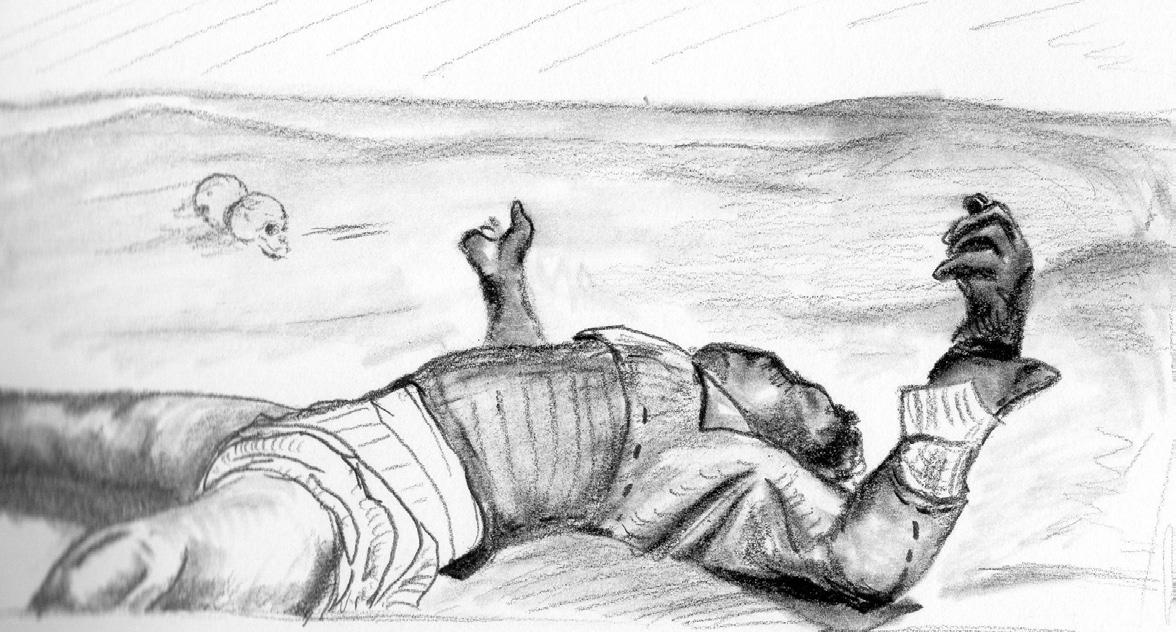
know the location of the Sinai Desert or the human tragedy that lies hidden there, left unknown to the masses. The Sinai is the place where refugees—the majority of whom are Eritrean, Ethiopian, and Sudanese—are taken against their will. These people are held for ransom while their organs are forcefully harvested, and this gruesome practice occurs every day.
The desert is located on the Egyptian Peninsula, spanning to the neighbouring border of Israel. These refugees, fleeing their homelands due to various forms of persecution, offer money to Bedouin guides to take them to the Egypt-Israel border. Corrupt Bedouin guides then lead the refugees, including women and children, to a detention site where they are tortured and held for ransom. According to Human Rights Watch, the captives are forced to make calls to relatives, instructing them to make the payments in exchange for their lives. During these phone calls the smugglers physically abuse their victims to create a sense of urgency for their relatives. If their family members are unable to provide the ransom, the traffickers threaten to harvest their organs. Details of these events have recently been surfacing with personal testimonials.
Reports of mass graves in the desert have been found, with postmortem autopsies exposing incisions predominantly in the abdomen, near the kidneys and liver, as well as in the
corneas of the eyes. After harvesting, the organs are sold on the black market in nations such as Egypt and other Middle Eastern countries. The hostages’ naked bodies are beaten with electrical cords; the hostages are burned with hot irons, given electric shocks, beaten on the soles of their feet, and are tortured in many other cruel ways. The corrupt Bedouins force the women to cook and clean after them, and are often referred to as “slaves.” The women are raped repeatedly by groups of men, either among captives or in secluded areas, and this abuse can last several days to a week. Physicians for Human Rights-Israel told Human Rights Watch that in 2010, they had performed approximately 80 abortions on asylum seekers coming from the Sinai Desert. They also added that gynecological examinations showed that these aborted pregnancies were the result of sexual trauma endured in the Sinai.
The Sinai Desert is under the control of desert-dwelling Bedouins that are familiar with the area, far more than the government authority who rarely venture into the peninsula. Human Rights Watch has reported that the Government of Egypt has not prosecuted the traffickers nor closed the detention sites of the refugees. The Egyptian government has been criticized for not reacting sooner and neglecting to put an end to human trafficking and forced organ harvesting. However, there have been
nite detentions, the way people are screened at airports, the wars the U.S. has entered, drone strikes, torture, and Guantanamo Bay. Many moves have been dogged by criticism, sometimes for good reason. In Canada, the Canadian Security Intelligence Service is still facing backlash from the Maher Arar case, and the determination to prevent his ordeal from happening again is pretty strong.
For the sake of justice, fairness, equality, and human rights, we must follow rules. Unfortunately, the “enemy,” as it were, does not follow rules, knows no boundaries, and doesn’t seem to mind being ruthless. We are left with conventional means to fight an unconventional war. What will that mean for our future? Where is this fight against an international force driven by an extreme ideology going to take us? How will we stay safe?
grassroots attempts to intervene and help the released captives. According to the Daily Mail, an online newspaper, alliances have been made with Bedouin Sheikhs to intervene and help stop these atrocities.
The inaction of major governing parties in Egypt and other influential international governing bodies exemplifies the neglect and failure of humanity. These people are living in subhuman conditions and their cries for help are being ignored. The lack of awareness and effort by international organizations to stop these horrific events is very surprising. Neither of the political bodies in the respective countries, people of the developing nations, nor international governing bodies have done anything to try and facilitate acts of justice.
Ultimately, if there wasn’t a market for illegally harvested organs, there wouldn’t be a need to kidnap and mistreat these victims. If this type of work wasn’t lucrative, then there wouldn’t be the need to do this. However, this is the reality. This is happening as we speak. It has not stopped and it will not stop unless proper measures are taken. This type of treatment is unacceptable and this should no longer be hidden. The cries of these poor people should not fall on deaf ears. People all over the world should know about what happens in the heart of that desert.
End the liquor monopoly
Times have changed
spence R Fe Rnando, staff
Manitoba has had a liquor monopoly since 1878. Since then, the world has changed dramatically. Unfortunately, one thing has not changed much: Manitobans are still treated in a paternalistic manner when it comes to making their own choices when it comes to alcohol.
I think it’s about time that the liquor monopoly in this province comes to an end. Here are a few reasons why:
The liquor monopoly denies you choices.
Because of the limited nature of the monopoly, there are many different options that we are missing out on. Manitobans are denied options that are available to people in many parts of the world.
The liquor monopoly takes money out of your pocket.
Because the monopoly limits your choices, you pay more for alcohol
than in a free system. Every time you purchase alcohol, you are paying well above the market price. Considering the high taxes we already pay in this province, the liquor monopoly takes even more cash out of your pockets.
The liquor monopoly limits job opportunities.
Manitobans are hardworking and creative. Given the opportunity, Manitobans could create amazing businesses and new jobs in the liquor market. The liquor mart could still continue to operate and protect current jobs.
The liquor monopoly isn’t what government should focus on.
There are areas where the government should be involved. Healthcare, education, and infrastructure are among them. But running a liquor monopoly? There is no reason why the province should be in control of the liquor market. It should be left
up to individual Manitobans and job creators.
The liquor monopoly gives too much authority to a few.
The problem that often arises with monopolies is that power is concentrated in the hands of a few. This leads to an institution that is both unresponsive to changes in society, and that implements terrible policies. The liquor monopoly in this province is no exception. Here is a rundown of a few questionable policies and decisions from the monopoly’s past, courtesy of the Winnipeg Free Press : 1928: Men and women are banned from drinking together in the same room. Aboriginal people and those under 21 are not allowed to enter licensed premises.
1955: The liquor monopoly increased serving hours, but Aboriginal people were not yet allowed on licensed premises. Liquor stores also tracked
the addresses and names of those who purchased alcohol.
1971: It took until 1971 before women were allowed to work at stores run by the liquor monopoly for the first time.
1979: Manitobans are permitted to drink while standing.
1985: It took all the way until 1985 before the liquor monopoly ended their ban on First Nations citizens being able to drink on and off reserves.
2005: Responding to safety concerns, Manitobans are allowed to bring their drinks into the washroom with them.
Notice a trend here? The idea seems to be that Manitobans are allowed to do only what the liquor monopoly tells them. This is a profoundly disrespectful attitude, as it implies that Manitobans are unable to make their own decisions and need
Renting: the best way to throw away your money and end up ahead
snyde R
ste V e
Home ownership is often considered the “American Dream,” or Canadian in this instance. I’ve been told tales of homes rising in value from $45,000 in 1973 to $480,000 just this year. While these numbers may not be completely representative of the market, it was a friend of my parents who told me I could make a lot of money owning my home. The reasoning behind this is strong: who wouldn’t love an asset that consistently grows your portfolio? But these numbers don’t show all the facts.
In the late 70s, interest rates were on the climb, moving from around six per cent in 1973 up to over 13 per cent in 1979, and hovered around the 10 per cent mark for the 80s. This makes the cost of borrowing $45,000 a much larger burden than it would be today; the payment would be almost $500 without adjusting for inflation. Over the lifetime of that mortgage the total amount paid would be more in the range of $120,000 to as much as $180,000, though I can’t state for certain since credit ratings, interest rates, and interest terms can all vary. But what about the money you spent on the kitchen, or the new shingles and windows? In reality, the lifecycle cost of owning a home is much higher than the actual amount of the mortgage, which is just a small
piece of the big picture.
Even with the numbers above, some people will still believe they made a good investment choice in deciding to own their home; for some, a good investment choice in the past means the same choice will continue to be a good investment in the future. When not even looking at the “housing bubble” in the U.S. where prices dropped seemingly overnight, it is
lar house in a similar neighbourhood.
Let’s look at the numbers:
Person A takes their down payment and puts it toward a mortgage for the home; they decide to put $30,000 towards the mortgage, get a $270,000 mortgage over 30 years, and their negotiated interest rate is 3.89 per cent. The other $5,000 goes towards various closing costs (mostly the lawyer and land transfer taxes). Person A now “owns” their home. Aside from the $1,300 monthly, Person A will be paying for their mortgage; they will also be paying between $560 and $790 a month on maintenance and property tax, depending on the age of their house – we’ll say $600 for simplicity, with a total of $1,900 a month, leaving $100 for savings.
still clear that housing is not as good an investment as one might believe.
For theoretical purposes, we will say two people both have $2,000 a month to spend on housing and $35,000 saved for a down payment. They put any extra money they do not spend on housing into an account that returns 4.25 per cent per year. Person A decides to buy a $300,000 home, while Person B decides to rent a simi-
Person B, on the other hand, decides to rent a house in a similar area, and ends up paying $1,600 per month for housing. They put down two months of rent as a security deposit and still have $29,800 in savings, which goes into the interest-bearing account. In addition to this, they have an extra $400 per month to add to this account.
The main argument I hear when people tell me my numbers are over-simplistic is that the value of the house will rise and rent prices can go up. While this is true, the
same can be said for interest rates. To understand how this might change things, a one per cent increase in the mortgage lending rate would translate into an extra $150 per month. The renter would be at the mercy of the landlord, whereas the buyer would be at the mercy of the Bank of Canada. I also intentionally left the return on the savings rather low – it’s not uncommon to see a return of six to eight per cent on the TSX index. What people fail to realize in all this is the freedom that renting gives. When the rent prices get to be too much of a burden, you can move.
Renting a house and saving your money produces completely liquid assets. But when you try to get the equity out of the house that you own, you can take a loan out against the value of the house and pay interest,
the liquor monopoly to keep them in line. The past lack of equal rights is also clear, as Aboriginal people and women were denied equal rights for a very long time under the liquor monopoly. This is part of the problem of concentrating power in a monopoly. A few people get to decide for everyone else, and people are denied the right to make their own choices. The time for this line of thinking is long past. Adult Manitobans should be trusted to make their own choices, and should be treated with respect, not paternalism.
It should be noted that there has been progress—however slow— towards giving Manitobans more choices. It’s time to take the final step and end the liquor monopoly in Manitoba.
Spencer Fernando is the Comment Editor for the Manitoban.
C ampus M inistr y
or you can sell your house and pay closing costs; both of these cost the owner additional funds and creates much less flexibility when it comes to where you live. This brings me to my last point: upgrading.
When you are renting and you want to move into a bigger place, you just terminate the lease and find a new place – a small hassle. But when you want to upgrade while owning, you have to sell your current place and find a new place concurrently. While the hassle of selling and buying alone is enough for me to want to avoid the process, the fixed costs associated with home ownership can add an extra burden that some simply cannot handle.
i LLustRatiON by bRadLy WOh Lgemuth
Sunday Mass > 11am, Christ the King Chapel
Weekday Mass > Tue-Fri 11:45am, Side Chapel
Volunteer musicians & singers are welcome for choir practice > 5:30pm Fridays, 10am Sundays Ash Wednesday Mass > Feb 13 11:45am with distribution of Blessed Ashes
Co ee House > Mar 2 8:00pm | Fundraiser for students involved in spiritual & social justice activities. Volunteer entertainers welcome.
For more information, contact:
Sr. Elaine Baete
204 474 9784 | ELAINE.BAETE@ad.umanitoba.ca
Fr. Michael Koryluk
204 474 8460 | korylukm@cc.umanitoba.ca
Eliude Cavalcante
204 474 8645 | cavalcan@cc.umanitoba.ca
Science & technology
A day in the life of an undergraduate researcher
Cell culture
e lizabeth dRe Wni K , volunteer staff
I’ve had the opportunity to experience cell culture, PCR (Polymerase Chain Reaction), and Western blotting techniques, all of which feature prominently across many fields of cell biology. Over the coming weeks, I’ll be giving in-depth explanations of each technique within the context of realistic experimental scenarios.
According to Wikipedia, cell culture is the “complex process by which cells are grown under controlled conditions, generally outside of their natural environment.” But as most undergraduates have come to learn, Wikipedia is not a source to be blindly trusted.
True, cell culture is a complex process, in which cells are grown under controlled conditions outside their natural environments. However, what I’ve learned more than anything throughout my experience (as well as from listening to lectures in Applied Molecular Biology) is that things that sound nice on paper rarely turn out that way in practice.
The basics of cell culture include maintaining your cells and ensuring that they survive from day to day in order to be available for experimentation. My experience in cell culture includes: media changes, cell splitting, cell counting, cell plating, drug additions, and measuring viability.
Media changes
Cells function like microscopic people – they take in nutrients and eliminate waste. However, the difference between a cell and a person is that people do not excrete in closed environments, and we definitely do not excrete in the same environments from which we take our nutrients. Cells, on the other hand, are confined to an enclosed environment and depend on us to provide them with the required nutrients and eliminate their wastes so that they do not perish. That’s what media changes are all about.
Just like there are countless varieties of people, with different tastes and flavours for life, there are countless varieties of cells with different media requirements. Generally, most cell culture media is composed of amino acids, salts, glucose, and vitamins, among other specific ingredients that depend on the cell type. I work with human ovarian cancer (OvCa) cells, which also have various subtypes.
In the lab, we feed cells by providing them with a tissue culture medium. After a certain length of time, the colour of the medium will change (in my case, from a deep reddish-pink to a dull orange) due to the accumulation of waste products. This colour change is a perfect indication that the medium should be changed so that the cells don’t die.
Because I’m working with human cells, I need to be working in a biosafety cabinet (BSC); we call this the “hood.” For those who have never seen a BSC before, it’s essentially a large metal desk with a large metal hood (hence the nickname) covering the top of the desk, and a large glass plate
extending downwards from the top of the hood. This ensures that an individual can work on their experiments safely without risk of becoming injured, or without risk of contaminating the cell samples (as the BSC is a sterile environment).
The hood must be turned on at least 30 minutes prior to beginning experimentation, as well as sprayed down with 70 per cent ethanol. All outside materials that are to be used within the hood are also sprayed down with 70 per cent ethanol. The media must also be heated approximately 30 minutes prior to experimentation. Media is stored in the four degrees Celsius refrigerator when not in use, and must be heated in the 37 degrees Celsius water bath prior to use with cells, as core body temperature is 37 degrees Celsius.
In the meantime, other smaller experiments may be conducted; otherwise, the researcher has to play the waiting game for half an hour before it is considered reasonable to begin changing cell media.
Typically, cells are stored in T75 flasks. The T75 denotes a volume of 75 millilitres (ml), for which 15 ml of cells and the medium are added. In order to change cell media, the cells must be removed from the flask. The tool for this is called an aspirator. Imagine a trip to the dentist. Now imagine that you are salivating so intensely that the dentist must use a tool to “suck” (aspirate) all your saliva from your mouth. Now, imagine that this dentist tool is connected to a high-powered vacuum. That is an aspirator.
A delicate and long Pasteur pipette must be adjusted to the end of the aspirator in order to extract all the old media. But wait! What about the cells? When I first watched my supervisor perform this procedure, I nearly suffered a heart attack! I thought, “No! You’re aspirating all the cells!” He laughed at me and explained the following: because these cells were grown in the culture, they have the same properties as cells grown in the body.
Cells are able to adhere to surfaces as well as other cells. In other words, they are adhered to the T75 flask, and it is only the medium that we are extracting from the flask. Afterwards, we take a clean pipette and add the new medium.
All waste items generated must be disposed of in biohazardous waste containers. This is to ensure that the waste is safely disposed of, and that nobody will harm themselves by accidentally coming into contact with biohazardous materials, such as cancer cells. What at first appears to be a very simple procedure actually requires quite the effort. However, the procedure for media changing only really takes about five minutes (ten if you’re starting for the first time), aside from the 30-minute incubation period.
The cell culture processes that follow begin to increase in difficulty and tediousness as this experiment progresses. Next week we’ll look at another technique in this series of cell culture treatments: cell splitting.
iLLustRatiON by CaROLiNe NORmaN
Genetic hard drives
Experiment shows DNA’s potential for data storage
tom i ng R am, staff
Scientists at the European Bioinformatics Institute (EBI) have developed a new method of encoding information into DNA that could turn the blueprint of life into a viable data storage medium. The team demonstrated their method in an experiment published in Nature on Jan. 23.
“I think it’s a really important milestone,” said George Church, a Harvard molecular geneticist who worked on a similar experiment in the past, “We have a real field now.”
DNA’s potential use as a storage medium was first demonstrated in 1988, but the previous experiments were too costly and small-scale to have any immediate use. That changed last year, when Church’s team took binary data (strings of ones and zeroes) and used a straightforward code to write it with DNA bases: A and C represent zero, and T and G represent one. This code worked, but it led to long strings of the same letter, which can cause errors because it’s easy to misread.
This new experiment, led by Nick Goldman of EBI, tried a different code. Each byte was converted into five or six base-3 digits (known as trits). Each trit was represented in the DNA with one of the three DNA bases different from the previous one used, meaning there are no repeti-
tions in the code. To demonstrate the flexibility of DNA, the team encoded a variety of data: a text file containing all of Shakespeare’s sonnets, an audio clip from Martin Luther King, Jr.’s “I have a dream” speech, a PDF of Watson and Crick’s paper on the structure of DNA, a JPEG photo of EBI’s building, and the Huffman code that they used to convert bytes to base-3 digits. To demonstrate the reliability and durability of DNA, they had the code synthesized by a company in California, which sent the DNA back to the UK in ordinary packaging and at ambient temperatures.
Goldman’s code also allows error checking. Because it is difficult to write DNA in long strands, both Church and Goldman synthesized short strands, each including addressing information that locates it in the overall sequence. Goldman’s code, however, has each strand overlapping with the previous one in such a way that all the data appears at least four times, drastically reducing the probability of errors. In the end, they were able to recreate the data with 100 per cent accuracy.
The main advantage of DNA is its durability.
“The experiment was done 60,000 years ago when a mammoth died and lay there in the ice,” said Goldman,
referring to the discovery of readable DNA on a frozen woolly mammoth. “And those weren’t even carefully prepared samples.”
While hard drives need to be powered and are prone to crashing, and tape drives degrade and have to be replaced every few years, DNA should last for millennia under cold, dry conditions. It’s also space-efficient: 100 million hours of HD video would fit in a cup of DNA. Because DNA is so important in the life sciences, we will always need the ability to read it, so the format will never go obsolete.
Of course, it’s all prohibitively expensive. Goldman’s team estimates costs of $12,400 per megabyte (MB) to encode and $220 per MB to read data stored in DNA. It also took two weeks to read the data. But the costs of reading and writing DNA have been falling at an unprecedented rate, much faster than the cost of new electronic media. With the expected advances in technology, soon it will be practical for DNA to be stored in long-term archives that don’t need to be accessed frequently. You probably won’t have DNA in your laptop any time soon, but you could one day see it in your library.
i LLustRatiON by si LVaNa mORaN
Alfred Russel Wallace, 100 years on
This year marks the 100th anniversary of the death of the seminal evolutionary biologist Alfred Russel Wallace. According to the website of the Natural History Museum in London, more than a dozen events are planned throughout the year and around the world to commemorate the occasion, ranging from lectures and presentations to symposiums and even a stage play. On Jan. 24, a
new project called Wallace Letters Online was launched on the Natural History Museum’s website to catalogue over 4,000 of Wallace’s letters, many of which have been scanned and transcribed.
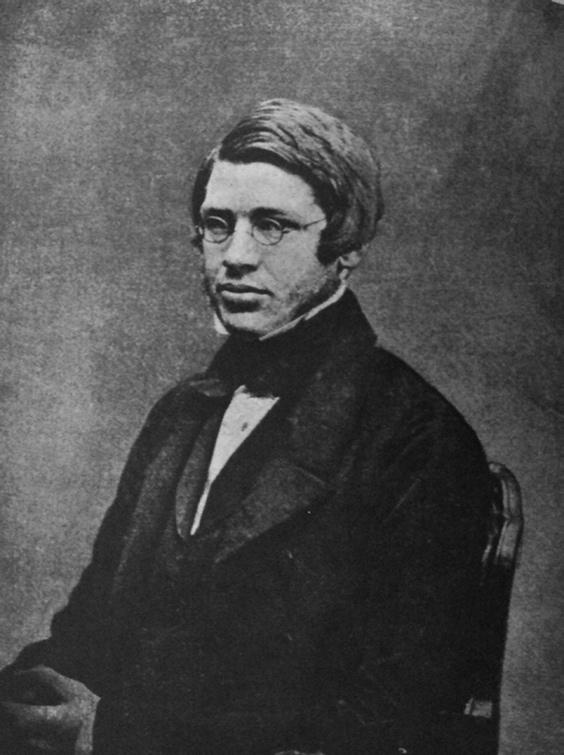
We tend to think of Alfred Russel Wallace as nothing more than Charles Darwin’s sidekick. But Wallace had a fascinating career in his own right and made many discoveries and accomplishments that had nothing to do with Darwin. He was a much more equal partner in the theory of natural selection and a much more original thinker on evolutionary biology than he’s been given credit for.
Born in 1823, Wallace came from a family that was middle class in origin but financially troubled. In his early teens he was sent to London to room with his older brother after the family fell on hard times.
In London Wallace came into contact with the supporters of the socialist reformer Robert Owen, and heard Owen speak on at least one occasion. Wallace considered himself
a disciple of Owen’s, and this contact probably sparked his lifelong interest in social welfare issues. The next year he became an apprentice surveyor. Even at this young age he was not shy about approaching eminent scientists with his ideas; a few years ago, a letter from Wallace to William Henry Fox Talbot came to light. It proposed a way of making telescope mirrors that was too technically advanced for the time.
The surveying job taught Wallace much about mathematics and cartography but, more importantly, it also meant that he was frequently working outdoors. He began to take an interest in natural history. In 1843 Wallace met the amateur naturalist Henry Walter Bates. The two of them made plans for a scientific expedition to the Amazon, which began in 1848. It was here that Wallace first began to study evolution. His time with the Owenists led him to some books on the subject, such as those of Charles Lyell and Robert Chambers, and he theorized about how to dem-
onstrate that evolution had taken place. This led to an extensive study of the biology and geography of the Amazon and Rio Negro regions (Wallace is known as the father of biogeography).
Wallace learned a lot in South America but did not come to any ultimate conclusions about the mechanisms of evolution. On the way back to England, his ship caught fire and sank, and all his collections were lost. Left with no specimens to study back in England, Wallace departed for Indonesia a year and a half later. While in Indonesia, Wallace published his first paper on evolution in 1855, and he published two more over the next two years. In 1858, while recovering from malaria, he connected the ideas of the British economist Thomas Malthus on the limits of population growth to his work on biogeography, and came up with the concept (though not the phrase) of “survival of the fittest.”
Wallace wrote an essay on the subject and sent it to Charles Darwin, who had been toying with similar
ideas for nearly twenty years. Darwin decided, on the advice of his friends, to present Wallace’s paper and some writings of his own at a meeting of the Linnean Society. The theory of evolution by natural selection was born and Darwin published On The Origin of Species in the next year. Darwin overshadowed Wallace from that point on, but until his death, Wallace continued to produce scientific work at an astonishing rate. In the end, he published 23 books and hundreds of articles. Like presentday popular science writers, Wallace branched out into social criticism and other topics, including a book-length refutation of a theory that Mars is inhabited. He was a supporter of women’s suffrage, a critic of imperialism and eugenics, and a proponent of the introduction of paper money. The list of Wallace’s accomplishments in science and other fields is too long to summarize here. The director of the Wallace Letters Online project hopes it will trigger a “renaissance” in research on the oft-overlooked biologist.
Cyberspace’s most wanted
Virus used in global cyber crimes
staff
i an t d thomson, volunteer
On Jan. 23, the Federal Bureau of Investigation (FBI) charged three men for creating and distributing a computer virus that has affected over one million computers across the globe. Known as the “Gozi virus,” the computer code was used to withdraw tens of millions of dollars from personal bank accounts. In the release it was named “one of the most financially destructive computer viruses in history.”
The Gozi virus is a type of “malware” (or malicious software) that was used to pilfer personal banking information from infected computers. In this case, the Gozi virus was used to steal users’ personal bank account information with the intent of withdrawing funds and wiring them to the accused via the Internet. The success of the software came through its ability to remain undetected in the computers it had affected.
According to Reuters, over 160 computers belonging to the National Aeronautics and Space Administration (NASA) were affected, resulting in excess of US $40,000 in damages. A co-creator of the Gozi virus, Nikita Kuzmin, is a Russian national who first conceived the virus in 2005. Once the software was coded, Kuzmin began renting out the virus for a weekly fee through a business he called “76 Service.” By 2009, the virus was being sold to cyber criminals online for up to $50,000. Kuzmin worked with many co-
The accused and their clientele went about their cyber crimes without being identified by law enforcement.
conspirators to update and enhance the virus. Two accomplices in making the malware a “success” were Deniss Calovskis and Mihai Ionut Paunescu. Calovskis, a Latvian resident, helped create a specific code for the virus known as “web injects.” The virus would alter how bank websites look to the users of infected computers. Through alteration of the website, cyber criminals were able to pry additional information from victims, including social security numbers, driver’s licence information, as well as their banking and personal identification
The case for electric vehicles
Electric vehicle technology – Part 2 of 3
R lepinsK y
Rodge
Electric vehicles (EVs) have a number of advantages over internal combustion engine (ICE) vehicles.
EVs are much more efficient than ICE vehicles. According to the U.S Department of Energy, only about 17 per cent to 21 per cent of the energy in gasoline actually moves the ICE vehicle forward. The rest is lost in friction and heat. This is why ICE vehicles need a cooling system with a radiator, water pump, thermostat, hoses, and water passages. It’s also why you can be nice and warm inside your ICE vehicle when it is –30 degrees Celsius outside. By contrast, electric motors are over 90 per cent efficient and approximately 59 to 62 per cent of the energy in the battery is transferred to the wheels.
Internal combustion engines are only efficient within a certain range. They have less torque at low revolutions per minute (RPM). This is why ICE vehicles need a transmission to shift gears as they accelerate. The transmission keeps the engine’s RPM within its relevant range, say between 2,000 to 4,000. Transmissions are complex, have many parts, and weigh a few hundred pounds.
Certain electric vehicles (models of Tesla, for instance) by contrast have 100 per cent torque at zero RPM. They accelerate instantly from a standing start. The fully electric Tesla Roadster can accelerate from 0 to 60 miles per hour (mph) in four seconds, and is the second fastest production car in the world. Because of the electric motor’s torque characteristics, EVs have simple single-speed transmis-
sions, which could be better described as gearboxes. Electric motors are also far more reliable and require less maintenance than internal combustion engines.
While gas engines have over 240 moving parts, an electric motor has only one: the rotor. Electric motors can operate for years without stopping, such as in the heating, ventilation, air conditioning (HVAC) systems of buildings and refrigerators.
ICE vehicles require a lot of maintenance over their lifetimes such as oil changes, radiator fluid changes, transmission service, and eventual replacements of the external serpentine belt and timing chain inside the engine. EVs require none of this maintenance.
time it was plugged in, the time to charge the battery may be just a few minutes, similar to your cell phone. The other factor is the type of charging equipment used.
Level One charging uses a standard 120 volt household current and takes the longest to fully charge an
numbers (PIN). Paunescu provided a service known as “bulletproof hosting.” By providing IP addresses and computer servers that preserved their anonymity, the accused and their clientele could go about their cyber crimes without being identified by law enforcement. Crimes that were committed through bulletproof hosting include the utilization of the Gozi virus and other dangerous malware such as the “Zeus trojan” and the “SpyEye trojan.”
Kuzmin was apprehended in November of 2010 in the U.S. and has since pleaded guilty to various intrusion and fraud charges. Calovskis was arrested in Latvia in November of 2012 and Paunescu in Romania in December of 2012. Investigators gathered 51 computer servers containing an approximate total of 250 million megabytes of
information. The investigation is ongoing.
The three accused men are in their mid-to-late-20s. Kuzmin began work on the Gozi virus at the age of 18. Co-conspirator Calovskis became involved at the age of 20, while Paunescu, 28, has purportedly been in the bulletproof hosting world for years. All three men are faced with serious jail time; Kuzmin with a maximum penalty of 95 years in prison, Calovskis with a maximum of 67 years, and Paunescu with a maximum of 60 years.
The means and methods of cyber crime have matured to a point where they pose an increased threat to security. As Manhattan U.S. Attorney Preet Bharara puts it, “cyber criminals’ bank heists require neither a mask nor a gun, just a clever program and an Internet connection.”
an hour. Level Three chargers are expensive and not yet widespread.
Battery technology
The current industry standard for electric vehicle batteries is lithiumion, the same batteries used in laptops. They are expensive and more energy-dense than other battery technologies. At 0.72 megajoules per kilogram (mj/ kg) lithiumion batteries have roughly 2.5 times the energy density of nickel-metal hydride (0.29 mj/kg), and about seven times the energy density of lead-acid batteries (0.1 mj/kg).
Batteries and charging
Fully charging an EV can take from a few minutes to a number of hours, depending on a few factors. One factor is how much the battery is already discharged. If the vehicle was not driven much since the last
EV battery – 11 to 16 hours for a completely drained battery. Level Two uses a 240 volt current, similar to that used with electric clothing dryers, and will take six to eight hours to fully discharge. There is also a Level Three charger that utilizes 400 volts or more. A Level Three charger could charge a Nissan Leaf in about half
EV battery packs are composed of cells and modules.
In the 24-kilowatt Nissan Leaf battery there are 48 modules, with each module composed of four cells. If there is a problem with the battery only the faulty modules need to be changed, not the entire battery pack. Nissan and Mitsubishi both warranty their batteries for eight years, or 160,000 kilometres. As most Manitobans are aware,
battery capacity declines in the cold. One EV enthusiast, Ross Redman, has kept detailed records of his vehicle’s performance and noted that his Mitsubishi Miev had a range of roughly “129 km at 0 degrees Celsius to 76 km at –25 degrees Celsius.” However, given Winnipeg’s small size and the opportunity to plug the EV into electrical outlets at work, someone with Redman’s lifestyle isn’t likely to encounter many EV-specific limitations in winter conditions.
In an interview with CBC , Redman stated, “I drive around the city, go to work, I pick up the groceries, go to volleyball, and do all the normal things that people do in Winnipeg, and the range works just fine for me.”
Like an ICE vehicle, an EV can be plugged in to warm up the battery pack and the interior before departing. And, during operation, the battery pack also has its own HVAC system to keep the battery warm in the cold and cool in hot weather. Unlike an ICE vehicle, heat in an electric vehicle is instant; no warm-up time is required.
Based on Redman’s experience alone, it appears EVs are formidable enough to handle Winnipeg’s winter conditions.
Next week, Part 3: electric vehicles, public policy, and consumer benefits. Rodger Lepinsky is a University of Manitoba alumnus, and a member of the Manitoba Electric Vehicle Association. He sometimes blogs at: http://rodgerswriting.blogspot.com.
image by James CuLLetON
Good on your tongue
This Hisses to release their second album, Anhedonia
Jodie l ayne, sta FF
The howling, haunting, and darkly beautiful sounds of the band whose name feels good on your tongue is back. This Hisses is releasing Anhedonia on Feb 5., their second record on local label Transistor 66. Anhedonia, defined as the inability to feel pleasure, is almost an inappropriate name for the wall of post-punk sound that comes from this threepiece band, but perfectly captures the band’s tortured lyrics. It’s the follow up to Surf Noir, their first album –this time less surf, more noir.
With the incredibly talented Julia Ryckman on vocals and bass, JeanPaul Perron on drums, and Patrick Short on guitar, this band is a powerhouse of experience, expertise, and passion. I interviewed Ryckman about the impending release of Anhedonia
the Manitoban: How does it feel
to have a second album coming out? Did you know the band would be this serious from the start?
Julia Ryckman: I started This Hisses as a recording project. I had songs from my former band, the Gorgon, that had never been recorded and I didn’t want to lose them when we broke up.
This Hisses got together for the first few rehearsals with the single goal of recording those songs, [but then] realized we had something that really worked and wanted to keep it going.
We recorded Surf Noir [after] a couple of months, capturing a raw and punkier version of the band. It took us over a year to release [it, and by then] we had already crafted a more powerful, distilled sound.
M: How was your experience making your new video for “Blacksmith?”
JR: The most wonderful thing about making this video was collaborating with other creative people who understand our aesthetic. We went through a number of ideas for this video, and in the end Gwendolyn Trutnau took creative control. She built the pyramids, found the candelabra, styled everyone, did the make-up, and co-directed. Ryan Simmons co-directed the video and is responsible for the incredible editing.
M: What is the sound like this time? The name of the album leads me to believe it’s very dark.
JR: Anhedonia holds a darkly cinematic yet decidedly rock n’ roll aesthetic. In creating it, we were inspired by David Lynch and Wim Wenders as much as we were by the Stooges and Nick Cave. We were very musically greedy – we wanted it every which way.
M: What was the process like creating Anhedonia?
JR: We work collaboratively as a band. We create something together that is very unlike anything we would create
individually. Patrick Short or I write the riffs, but by the time JP Perron has added drums, I [add vocals and we fight it out]—it is something distinctly This Hisses.
M: Anything that you would change in retrospect or did it come out exactly as you had hoped?
JR: If we could do it all over again, I would budget more time for everything. [When] making a record, there are so many [steps], and everything always takes longer than you think. When making decisions on mixes, masters, test presses, or artwork, sometimes you need time to just sit with things until you know exactly how you feel. I am happy with [everything], but we did put a lot of people under heavy time constraints to get things done and we can’t thank them enough for pulling through and performing well under pressure.
M: What has it been like to work with Matt Peters on both albums now?
JR: Matt Peters is Matt Peters. If someone knows Matt, then that statement will make absolute sense. Matt has incredible boundaries in the studio as [a] producer and [an] engineer; he knows when to push you and when to pull back. He is amazing at understanding exactly what we envision and he does everything possible to capture those ideas and even take them further. He works harder than any one of us individually in the studio and keeps the energy high.
M: Tell me a bit about Bloodstains
Across The Prairies and your involvement in it.
JR: Years ago when I was in the Gorgon and performing a lot with my solo project Slattern, I put on a few shows for the excellent, but now defunct, Albertan band Endangered Ape. This was how I got to know Paul Lawton, who is now the man behind the Canadian Bloodstains albums. He asked me if I had a band that would contribute a track to the Manitoba side. There is a highly exciting national prairie profile developing and Paul Lawton, Weird Canada blog, BeatRoute Magazine, Sled Island Festival, and Winnipeg’s Big Fun Festival have everything to do with it. The trick about the Bloodstains albums is that the songs are all one minute long. We wrote “Long Slow Crawl” for that compilation and then decided to re-record it for inclusion on Anhedonia
M: What’s next for This Hisses? What does the rest of your winter and your spring hold?
JR: We will be touring Anhedonia throughout Canada in the spring and will hopefully have time to make a few more videos.
Don’t miss the release show with Pop Crimes and Slow Dancers at the West End Cultural Centre on Saturday, Feb. 9.
This Saturday, Feb. 9 we will get a chance to celebrate a rock n’ roll rebel that has been bringing noise to Winnipeg since she first rolled into town from Vancouver. Yes, Alana Mercer is turning 30 and two of her many projects will be rockin’ the stage at the Windsor. So, let’s use this as an excuse to take a brief look at a few of my favourite acts from Miss Mercer’s past and present.
Her first project in Winnipeg was the Quiffs, who debuted at a time when pop groups ruled the airwaves and rap-metal had yet to wheeze its
last breath. The Quiffs reigned over the Albert like some lost gang from The Warriors, with their vintage stage garb and powerhouse riffs. Mercer’s chaotic, thumping drum beats spoke to a generation of Winnipeggers no longer content to be spoon-fed the corporate swill they were getting from so-called “alternative” radio. Sure, they had rough edges, but that was part of the fun – you never knew what was going to happen at a Quiffs show.
Mercer kept busy after the Quiffs, playing in acts like the Gorgon, the
High Thunderers, and the Blowholes, just to name a few.
Lately Mercer has been splitting her time between a couple of bands, one of which is Phlegm Fatale – a dance rock duo that is a unique blend of drum loops, soaring vocals, and grungy guitars. They are the perfect expression of the punk rock aesthetic free of the stylistic trappings that have become the straitjacket of that genre.
Then there is Mercer’s solo project, the Gunness, where she steps outside the safe confines of a group and pres-
ents her songs stripped down to just a guitar, a kick pedal on a suitcase, and a voice. The inherent intimacy juxtaposed against the fact that she is still playing rock and roll creates a level of suspense that you don’t get from a lot of solo acts.
At her birthday bash at the Windsor you will get the pleasure of seeing two of Mercer’s projects: one being a big ol’ slab of delicious, thundering Winnipeg destruction—with Mercer on bass—called Lazyhorse, and the other band being the Angry Dragons.
If you don’t know the Angry Dragons, I don’t want to know you. They are hands down one of the best rock and roll outfits in the city and have been around for years. The addition of Alana on drums is a brilliant move.
So, if you are free this Saturday, pop on over to the Windsor and raise your glass in celebration of a true Winnipeg trailblazer. If you are busy, cancel your plans and go to the Windsor because you do not want to miss this show.
Alana Mercer
phOtO by tRaVis COLe
Student pricing
FILE NAME: 12-HRB-033-BW-SP-E-8 TRIM: 4" x 7.5"
DATE: Jan 22 REV #: 0 BLEED: –ARTIST: ID COLOUR: 1/0 SAFETY:
CD: AD: CW: PP: SM: AM:
PUBLICATION/LOCATION:
Fifty shades of cray
Jodie l ayne, sta FF
Possibly to the surprise of suburban Fifty Shades of Grey fanatics everywhere, the whole sexy book phenomenon is not a new one. Erotic literature is so old that it predates the printing press. As long as people have had sexual organs, they have been finding ways to make them feel good. Before videos and photos, written smut used to be the only real pornographic medium.
In the 60s, 70s, 80s, and much of the 90s, it used to be that porn was for men and romance novels were for women. It is often quoted “science” that men are more visual creatures while romantic words speak directly to the hearts of ladies.
storyline in terrible porn, but smarter because it uses words. It gives you both the relaxing and brain-stimulating practice of reading with the psychological and physical benefits of orgasm. Plus, watching porn in the bath is near impossible, whereas slipping a book in between your towels is much easier.
“It gives you both the relaxing and brainstimulating practice of reading with the psychological and physical benefits of orgasm.”
To be fair, until recently, porn past the 70s wasn’t really anything necessarily stimulating either. So you had a choice: long acrylic nails and bleach-blonde hair with waxedsmooth vaginas or paperback covers that look like they had been inspired by cheesy hotel theme rooms.
While not much may have changed in the mainstream porn world, erotic literature has evolved to a point of mastery.
Not just for dainty gentlewomen whose delicate sensibilities scare them away from porn, there are some pretty well-written books that will make certain undergarments damp or certain body parts stiffen.
Not to be confused with those cheesy romance novels almost every girl I went to high school with rubbed one out to, contemporary erotica mostly gets to the good stuff. Instead of building ridiculous emotion-fraught story arcs, erotic literature just sets the stage as much as is necessary to get the scene going – similar to the pizza boy or plumber
Even in this day and age of instantaneous porn with seemingly endless variety, erotic literature is still an important tool in exploring sexuality. If you’re thinking of dipping your toe into the waters of erotic literature and picking up some sexy reading, it too is widely available online for free. Like porn, there truly is something for every taste, fetish, kink, and turn-on –including even the most taboo.
So if you like your BDSM with proper boundaries and consent, take a look around the web and skip the Grey. Just like porn, I think it’s important to fairly pay the people who produce the things that get us off. Yes, I am asking you to put a price on an orgasm.
Here are just a few titles worth checking out:
Best Women’s erotica 2012 aNd Just Watch me: erotica for Women BY VIoLeT BLue
frenzy: 60 stories of sudden sex BY aLISoN T YLeR
sometimes she Lets me: Best Butch femme erotica BY TRISTaN TaoRMINo
You can confidentially submit a question or topic to jodie.m.w.layne@ gmail.com
Free-range art
Five unconventional ways to interact with art in Winnipeg
J odie layne , staff
Galleries are great and museums are marvelous, but I prefer my art al fresco.
A well-curated collection has its place, but sometimes it feels a little stifling. Art and culture shouldn’t solely exist in an alienating silo. Winnipeg is in a phase where it seems the words attached to every new development—be it our NHL team or new foreign chain stores— are “world-class city.” Yet, a city doesn’t come to be world class by simply adding things that hundreds of other locales have; cities like New
York, Berlin, and Paris gain their status by celebrating the culture that exists within its city limits and the things that make it unique.
Luckily, there are some great pieces of free-range art to fill your eyes with that won’t cost you a penny. While some are controversial and others simply aren’t everyone’s cup of time, here are five of my favorites:
“eMpTYFuL” BY BILL
peCHeT
This piece and its $575,000 price tag might just be the most controversial public art in the city. It sits in the park behind the Millennium Library and is inspired by the emptiness of the prairies or, as its statement describes: “A boundless space where various phenomena such as weather, light, sea -
sons and human endeavour come and go.”
A beaker-shaped sculpture featuring light, water, and fog components, this piece is dynamic and eye-catching for those who claim they don’t “get” art, while celebrating the culture of our region.
“MaRBLeS oN poRTage” BY eRIC a SweNdRowSkI
The 16 cement marbles that popped up on Portage Avenue last summer incorporate plants, cement, light, and a good bit of whimsy.
Swendrowski was chosen as a Community Garden Artist-inResidence as a way of bringing art to spaces that focus on community and food production. That evolved into this project, which features some marbles growing in felt pockets and some that glow at night, bringing a little light and life to the concrete of downtown Winnipeg.
THe oSBoRNe BRIdge
In my opinion, some of the best public art takes functional structures and applies beauty to them. In Winnipeg, a principal example of this
Winnipeg’s best cover band
Celebrating 10 years with the Windups
Jenna d iubaldo, staff
Yes, it’s true – the Windups are a cover band. In fact, they are quite possibly the best cover band this city has ever seen.
You’re not going to hear a shitty cover of “Brown Eyed Girl” or “Stuck in the Middle with You” during a Windups set; this band boasts only the best tunes that rock and roll has to offer and they do it with style to boot.
“We started as a pub-rock band; hard R&B from England in the Dr. Feelgood/Eddie & the Hot Rods mold,” stated Rob Pachol, guitarist extraordinaire. “We eventually
decided to play whatever we felt like and though some of our decisions over the years have been somewhat ill-conceived (Tom Waits? Love is the Drug?), we’ve seemed to hit on what works. Can you ever go wrong with ‘Ace of Spades,’ ‘Neat, Neat, Neat,’ or ‘Under My Wheels?’”
Now, 10 years later, the band is getting ready to celebrate a decade of rock and roll with two nights of music, dancing, and good times on Feb. 8 and 9.
The Windups will be playing two sets each night – the first with their original drummer, Dean “Deano”
Desrochers, and the second with their current line-up which includes bassist Rejean Ricard, drummer Jacques Dubois, and always stylish frontman Andy Morton.
The second set of music will consist of classic album Raw Power by the Stooges performed in its entirety.
“Raw Power seemed like an exciting challenge,” said Pachol. “There’s great rock and roll lurking under all that production racket. Figuring out those parts was like panning for gold.”
By far what makes the Windups
Lots and lots of glitter
The Pinkslips say goodbye with one last show
All good things must come to an end. The Pinkslips will be saying farewell to their fans this weekend with one last hurrah in the form of a dirty, crusty punk show.
“Lysa Molcan (drummer) came to Winnipeg to [go to the] University of Winnipeg a few years ago,” said bassist/singer Jenny Wuckert. “She has now decided to move back home
to B.C. so she can spend some time with her family and eventually teach overseas. Although we are very proud of her and encourage her to take this step in her career, it is sad to see her go! We wish her all the best and will continue to show her love and support.”
What may come as a surprise when listening to Hate Songs , the
Pinkslips’ only studio record, is that behind this “we don’t give a shit” punk exterior stands three petite women who, while on stage, somewhat sheepishly exchange banter between songs and will politely tell you to fuck right off.
“I would say we have all had a very positive experience in this band,” said Wuckert. “It is unreal
is the Osborne bridge.
The pedestrian portion of the bridge itself is designed using lines from a map of streets in the neighbourhood, while aluminum plates telling stories of the area’s history line the handrail and are lit up by LED lights at night. On either side of the bridge, four larger plates depict four major architectural events in the area, giving it the character it has today. For those who cross the notoriously cold and blustery bridge, it is a welcome distraction.
“BRILLIaNT HoRIzoN” BY waNda koop
The new Hydro building is expansive, architecturally beautiful, and full of beautiful art - most of which is not accessible to the public (including a wonderful Miriam Rudolf print).
However, just outside the doors of one of the most disappointing restaurant experiences I have ever had, there is a small lounge area. It contains a Wanda Koop painting called “Brilliant Horizon” from her View From Here series; an abstract landscape with neon linear shapes.
Koop—an Order of Canada recip-
ient—is one of the most celebrated Winnipeg artists not only for her paintings but for founding Art City. In between a million city buses, hot dog carts, the hustle of the skywalk system, and office employees hurriedly darting everywhere, this is a quiet little corner perfect for taking a breather.
dIY FIeLd
An interactive installation piece in Winnipeg’s Central Park, DIY Field excels in both concept and execution. Made up of poles with lights on top and three buttons, passersby can completely control the output of the light by choosing its color or choosing to turn it off entirely.
In an area of town often stigmatized as being unsafe to walk in at night, this piece reminds us that we are not alone, and reminds us of all of those who have passed by before us. It demonstrates our ability to change aspects of our neighbourhood and celebrates the residents’ ability to shine as bright as they can with what they have.
the band that they are is their stage presence. While their musical talent is indisputable, it’s really the fact that they are having fun doing what they’re doing that gets the crowd going, and keeps people coming back for more.
Joi n the Windups for their 10th anniversary show at the Times Change(d) High and Lonesome Club on Feb. 8 and 9 with the English
to think that we started as three ladies casually jamming in my garage in February, 2010 [ . . . ] We have accomplished so much and met so many great people along the way.”
Hosted by War on Music records, this all-female punk trio will be joined on their last stand by a long line-up including: 1971, the
Blackout Brigade, TERRORIST, and the Bad Nerves. All for only $7, now that’s a deal. What else can fans expect from the Pinkslips’ farewell show? “Glitter. Lots and lots of glitter.”
Catch the Pinkslips’ last show on Feb. 9 at the Rudolf Rocker Cultural Centre
Jenna d iubaldo, staff
Moccasins and Andrew Neville and the Poor Choices
phOtO by maRyLOu dRiedgeR
ATMOSPHERE
The ecological future of design
Katy m acKinnon, volunteer staff
F
rom Feb. 7–9 the University of Manitoba’s faculty of architecture is taking environmental awareness to the next level as they host their annual symposium, ATMOSPHERE ( ATMOS ). The symposium was created in 2009 to bring together speakers from all disciplines in the faculty of architecture, and the theme this year is ecology and design.
In its simplest definition, ecology is the study of relationships between humans and their environment.
According to Dr. Marcella Eaton, one of the originators of the symposium, this is a topic that can be interpreted
in many ways.
“Within our faculty there [are] many differing ideas of what ecology is, what it means to designers, and how it might be integrated within the program. We hope that ATMOSPHERE will extend and expand these very interesting discussions,” says Eaton.
“Design of the environments that we live within is highly complex and in many respects it begins with an understanding of the networks of relationships that make up the physical and cultural worlds we inhabit.”
Keynote speakers from around the
Hundreds of kazoos
world will hold presentations that address the challenges designers face today when it comes to considering ecology in their design.
Maria Aiolova, co-president of Terreform ONE, will commence the event as the first keynote speaker. Terreform ONE is a non-profit design group in New York City, promoting green design in cities all around the world.
Aiolova has won numerous awards, including the Zumtobel Group Award for Sustainability and Humanity. This award honours those who have made a significant contribution to environmental protection and sustainability through their designs.
On Friday, Mark DeKay and Matt Kondolf will provide keynote presentations. DeKay is a registered architect who teaches university students; he has also published books and scholarly journals on sustainable design.
For DeKay, sustainable design has to do with more than just technological sustainability. He believes it is important to also consider ecological sustainability and cultural sustainability in building and urban design.
“What we build tells us about what we care about as a culture,” says DeKay. “In short, we need moving experiences and great cultural stories to encourage society to organize itself in efficient and ecological patterns.”
DeKay believes that modern architecture needs to place more emphasis on ecology and sustainability, and
students who understand this may be placing themselves one step forward in the field.
“Firms are clamouring for ecologically literate and technically competent designers, and at the same time, who have a developed aesthetic sense. Students are always ahead of their schools in terms of their environmental values. I think if students are not getting the kind of education they know they need [in order to] face the biggest problem of our times, then they must make it happen [themselves].”
Matt Kondolf, professor, geomorphologist, and environmental planner joins ATMOS from the University of California. His keynote speech may be of particular interest to students wishing to pursue design careers in Winnipeg. Kondolf is especially interested in river restoration around the world.
Kondolf believes that an understanding of a river’s history as well as its physical and ecological processes is essential when creating a restoration strategy. He believes that approaches to rivers in urban areas must be different from approaches taken to rivers in rural areas.
The last day of the symposium will include keynote speeches from Jennifer Siegal, David Gersten, and Kai-Uwe Bergmann.
Jennifer Siegal could be considered a celebrity in the architecture world, with her work being featured on news channels such as CNN and
HGTV. Her firm, Office of Mobile Design, works to create homes that are ecologically sustainable. These homes are more cost-effective and use more sustainable methods than conventional architecture.
Siegal was named one of the “Best and Brightest” by Esquire magazine in 2003. She has also received numerous awards and has been published in over 100 books, newspapers, and journals.
David Gersten, an architect, writer, and educator, visits from New York City. Gersten has been a professor at the Irwin S. Chanin School of Architecture since 1991. His work has been exhibited internationally, and can be found at the Canadian Center for Architecture.
Kai-Uwe Bergmann, partner at Bjarke Ingels Group (BIG), works to create buildings that are innovative and resource-conscious. Bergmann has influenced design all over the world. He is a registered architect in three countries and has been a juror for architectural prizes.
Professors from the University of Manitoba and other universities across Canada will also hold presentations. The event promises to be educational as well as innovative, and students outside of the faculty of architecture are welcome to attend.
Students wishing to attend can register online at https://umanitoba.ca/ architecture/atmosphere/r_registration. ssl.html
CKUW celebrates 50 years by gearing up for their annual Fundrive
As local University of Winnipeg campus radio station CKUW gets ready to kick off their annual Fundrive, the station is not only raising money for their next year of operation, but also celebrating 50 years of providing grassroots, listener-driven, Nickleback-free, quality programming.
“It’s had its ups and downs – the key has been consistency,” said Kent Davies—ex-CKUW staffer and volunteer DJ with long-running show ‘Peg City Groove—as he reflected on
his time spent organizing Fundrive.
“Over the years it’s gotten bigger and crazier with the amount of events, guests, schwag, and overall craziness. We’ve kind of swung for the fences a few times now with having live streamed shows from the Lo Pub and our own [beer] from Half Pints. I think we’re getting back to basics now. At the end of the day it’s all about having [a] truly independent radio station controlled by the community of Winnipeg.”
The station fundraises each year in
“These Fundrives ensure that we have a safety net so we’ll be able to survive as a community radio station.”
order to keep CKUW broadcasting the sweetest of tunes by local volunteer DJs, and to ensure a little breathing room in terms of budgetary costs.
“The funds cover general maintenance costs, equipment upgrades, server space, etc.,” stated Davies. “Basically the funding you would need to run a radio station for another year. We also put a little away just in case something happens and we can no longer be funded by the student levy or have to move off campus. These Fundrives ensure that we have [a] safety net so we’ll be able to survive as a community radio station.”
Come Feb. 8, listeners should
not only be prepared to empty their change purses and money clips, but also get ready to enjoy some quality entertainment as boasted by CKUW’s Fundrive each year.
CKUW will be kicking off the weeklong event on Feb. 8 with a night of music at the Rose n’ Bee Pub, featuring Indicator Indicator, the Young Pixels, Merch Table Delite, and Ex Modern Teen.
With the demise of beloved Winnipeg venue the Lo Pub, Davies admits that there has been some trouble booking shows given the loss of the strong relationship CKUW once had with the pub that just happened to be down the street from the station itself.
“It’s a huge loss,” stated Davies. “Without the Lo Pub it’s been difficult to host events this Fundrive – everyone there helped us out a lot. Luckily we have support from Brandon Ackerman at the Windsor and Matt Rosenby at the Rose n’ Bee Pub, as well as some awesome bands [who] put a couple shows together for
Fundrive.”
Later on in the week on Feb. 14, the Windsor will be turning their weekly draft night into a Fundrive extravaganza with sets from Smoki T. and the Manitobandits, the Blisters, and J. Riley Hill and the Magic Bears.
As usual, listeners who donate to Fundrive will be given the choice between a charitable tax receipt or some high-quality prizes such as t-shirts, toques, and the famed CKUW discount card good for deals at local retailers around the city.
In addition to their usual schwag, CKUW has another giveaway treat up their sleeves this time around.
“There [are] a lot incentives for each show: custom sound systems, posters, t-shirts, and LPs,” said Davies.
“We also love kazoos and are giving away [hundreds] of them to everyone who pledges.”
Listeners can pledge to CKUW’s Fundrive right now at fundrive.ckuw. ca or by calling (204) 774-6877 from Feb. 8-15
Jenna d iubaldo, staff
LauReN bOuLet
Bisons storm back against Thunderbirds
Earn series split to stay in second in Canada West
d e Re K g agnon, staff
runch time has arrived for the
CBison men’s hockey team. This past weekend the Bisons entered their second-to-last Canada West regular season back-to-back set with a narrow one-point lead over the Saskatchewan Huskies for second place. Holding the spot at season’s end would give the Bisons a bye into the second round of playoffs, a much desired position over battling it out in the first round.
To hold on to that spot, the Bisons needed maximum points
against UBC and the following weekend against Regina, or hope for a slip up by the Huskies. Tying with Saskatchewan would not get the job done, as the Huskies hold the season tie-breaker over Manitoba.
Coach Mike Sirant offered up his take on the Bisons finishing in second.
“We need to control our own destiny by doing what we need to do, one game at a time.”
Friday night saw the Bisons get on the board first off the stick of
fourth year player Luke Cain. The Thunderbirds would respond before the period was out as UBC captain Justin McCrae made it a 1-1 scoreline after 20 minutes.
The Bisons yet again grabbed the lead as James Henry scored just 2:03 into the second. But UBC responded with a goal of their own, and later grabbed their first lead of the game. The Thunderbirds took a 3-2 lead into the third period.
The Bisons turned it on in the third period, really looking to tie
Groundhog Day in Glendale
Phoenix Coyotes see same story year after year
d e Re K g agnon, staff
The city of Glendale faces a story right out of Hollywood. Every year there is renewed hope and expectations that a new owner will buy the Phoenix Coyotes and keep the team in Arizona. Every year there’s a new potential suitor, and every year something goes awry and the deal fails to get done.
In this Odyssey of a tale, there have been plenty of suitors seeking various deals with varying levels of legality. Jim Balsillie, a group that went by the moniker “Ice Edge,” Jerry Reinsdorf, Matthew Hulsizer, and Greg Jamison are amongst the names of potential buyers that have seen deals fall apart. Some couldn’t acquire the necessary funds, while other proposed deals appeared to be so fishy that an Arizona taxpayer watchdog group, the Goldwater Institute, chose to get involved to ensure that everything was legal.
The latest failed attempt to buy the team came to an end on Jan. 31, 2013 when Greg Jamison announced he would not be able to secure sufficient funding to complete a deal with the NHL, despite a lucrative arena management set up between his group and the city of Glendale, who own Jobing. com Arena, the current home of the
the game up. They outshot UBC 11-6 in the period but, despite a couple of power play opportunities, were unable to solve UBC goalie Jordan White and the Thunderbirds held on for a 3-2 win.
On giving up the lead in the second period on Friday night, Coach Sirant said, “We didn’t play to the level we expect of ourselves [in the second period].”
Luckily for the Bisons, they got some help in the standings on Friday night, as Saskatchewan also lost to the visiting Calgary Dinos, so they were still in second heading into Saturday’s action.
Prior to the puck drop on Saturday night, the Bisons honoured their outgoing members playing in their final regular season home game for the herd. Del Cowan, Jesse Deckert, Tyler Dittmer, Tyler Feakes, and Matthew Lowry were all honoured for their services with the Bisons during their CIS athletic careers.
The Thunderbirds took the lead in the first after a scramble in front led to a Cole Wilson goal. The Bisons found themselves in the penalty box three times in the period, which prevented them from setting up in
UBC’s end. A late UBC penalty provided the opportunity to start the second period on a positive note.
The Bisons capitalized on the penalty, as Matthew Lowry scored just 58 seconds into the period. The score remained tied for some time, despite the Bisons defending a 5-on-3 penalty kill for 1:11. Special teams were a strength on the day for the Bisons, as the penalty-killing unit would kill all seven Thunderbird power plays. Blair Macaulay scored the second Bisons power play goal of the game with 2:58 to play in the second, and the Bisons added a quick insurance goal less than a minute later, as captain Dane Crowley blasted one through a screen to extend the Bisons’ lead to 3-1.
Tyler Dittmer put the icing on the cake with another power play goal in the third and the Bisons prevailed by a final of 5-1.
The Bisons enter the final weekend of the season still one point up on the Huskies. Two road games in Regina remain for the Bisons’ Canada West regular season.
Coyotes. The Phoenix Coyotes continue to play, owned by the National Hockey League. The club has been under the control of the NHL since October 2009, when then-owner Jerry Moyes put the club into bankruptcy in an attempt to get out from under the mountain of debt associated with it.
Since then it’s been like the movie Groundhog Day everyday, as fans and players alike wonder what the future
will have in store for the Coyotes franchise. The on-ice product has actually improved despite the unwillingness to invest in the team’s salary, which required the Coyotes to find bargains wherever they could. They won the Pacific Division last year and advanced to the Western Conference Finals despite fielding a squad that ranked 22nd in money spent on player salaries.
It’s safe to say it’s not the on-ice
product that makes this team unsuccessful, but rather it is the fact that the Coyotes continue to play in a market that refuses to support its hockey team.
Yes, there’s a core group of devout fans, as there are with any sports franchise, but they are simply unable to properly fill the building on a game-by-game basis. At press time the Coyotes averaged an announced home attendance of 12,364 per game, easily the lowest in the NHL, and often these numbers
are artificially inflated. Winnipeg fans that watched the recent game against the Panthers in Sunrise, Fla. can attest to this.
So what’s the plan?
Much to the chagrin of commissioner Gary Bettman, relocation is becoming the simplest alternative. There are plenty of cities looking to follow in the footsteps of Winnipeg and acquire—or reclaim—themselves an NHL franchise. In Canada, the names that come up most often are Quebec City, Markham, and Hamilton, with new arenas scheduled to be built in Quebec City and Markham. The United States also has several cities with expressed interest: Seattle; Hartford, Connecticut; and Kansas City lead the way. Hartford previously had the Whalers before they left for North Carolina to become the Carolina Hurricanes. Seattle has a prospective owner interested in bringing the NHL to Seattle. Finally, Kansas City has a building already in place, which opened in 2007. All of these options seem more viable than ice hockey in a desert. The puck is now in Bettman’s hands to determine what happens next.
iLLustRatiON by siLVaNa mORaN
phOtOs by beibei Lu
FOLLOWING THE HERD
GO!
PENALTY KILLERS
Bisons beat the best in the West
Undefeated Alberta served first loss of season
m a Rc l agace, staff
It was a solid weekend of volleyball for the #4 ranked Bisons men’s volleyball team, as they hosted the 18-0 Alberta Golden Bears—ranked first in the nation—for a pair of matches. With only four regular season matches remaining in an extremely competitive Canada West conference, Manitoba needed to pick up a win to keep pace with the other top teams in the conference.
Heading into this weekend’s action, Bisons head coach Garth Pischke believed his team was playing some of their best volleyball all year, confident they could do what no other team could accomplish this year: beat Alberta.
In the opening set of the twomatch weekend, Manitoba jumped out front early and won the first set 25-12. It was only the ninth set that Alberta had lost and the third time they had failed to win the first set in a match all season.
Unfortunately, Alberta showed why they’re the top team in the nation, as they topped the Bisons in three straight sets to win the match 3-1 (12-25, 25-22, 25-22, 25-17).
“I think we let up on our serving
in the last three sets, and that gave [Alberta] the opportunity to run all their hitters. They couldn’t run their middle in the first set – we blocked like crazy,” coach Pischke explained.
“They had way more varied offence in the last three sets. A couple close ones in the second and third, but we didn’t come up with the big plays. Then they just rolled in the fourth.”
The two teams met again the following night at the Investors Group
Athletic Centre for the rematch. It was also a night for celebrating five Bisons men’s players who would be playing their final regular season home game, wearing the Brown and Gold.
One thing that coach Pischke mentioned after the end of the first game was the need to keep the emotional level a little higher in the rematch. With Derek Nieroda, Joseph Brooks, Carson Kauenhowen,
and co-captains Dane Pischke and Chris Voth recognized before for the match as a part of the graduating class of Bisons sports athletes, emotions were bound to be sky high.
As if following a Hollywood script, the fifth-year leaders on the team came through in the clutch as Manitoba served Alberta their first loss of the season 3-1 (25-15, 25-22, 26-28, 25-17).
Like the night before, the Bisons
took the first set handily, but this night they would not allow Alberta to respond in the second. The third set saw the score tied 11 times, as Alberta attempted to scrap their way back from the verge of defeat with a 28-26 set victory. But the Bisons appeared destined to win the game, as they capped off the match and the weekend with a fourth set that clinched victory.
Each of the big veterans finished the game with impressive stat lines. Dane Pischke had the second highest total kills of the night (15) and pitched in on defense with six digs. Nieroda had a game-high 13 digs, Brooks was in on a game-high eight blocks (one solo, seven assists), and Voth pitched in with 12 kills and three digs of his own.
The Bisons finish the season with two road matches against the Saskatchewan Huskies, while Alberta finishes their season at home against Trinity Western. Currently sitting in fourth place, the Bisons can leapfrog the Huskies into third with a series sweep.
The 2013 Manitoban Hockey Pool
unsung hockey pool heroes
For every big-name player who has lived up to the expectations of the majority who selected them in their entries—Evgeni Malkin and Hendrik Lundqvist come to mind—there are those players, sometimes only selected by one lone entry, that come up with huge performances.
Here are the top surprise performers of the pool so far:
Second Line: patrick Marleau (SJS)
Marleau’s stellar play has led the San Jose Sharks to the top of the NHL standings, as his nine goals in eight games (as of Feb. 3) leads all players. Marleau leads the players in the second line category with 17 points, with only six points coming from penalty minutes. Marleau was only selected in one pool entry.
Fourth Line: wayne Simmonds (pHI)
To be fair, it really made no sense to select Simmonds in a box that featured such up-and-coming talent like Evander Kane, Jeff Skinner, and Taylor Hall. And yet, the Flyers winger somehow leads all players in that box with 18.5 fantasy points. Unlike Marleau, the majority of his points come from his 27 PIMs, good for 13.5 pool points. Simmonds was only selected in three entries.
enforcers: Jared Boll (CBJ)
When picking the enforcers and grinders category, you’re basically looking to select the roughest goon of the bunch. So far this season, Jared Boll has lived up to that reputation. He leads all but one skater with 23 pool points, all but one of those coming via 44 PIMs. Boll was only selected in three entries.
grinders: Ryane Clowe (SJS)
On the opposite end of the spectrum from his teammate Marleau, Clowe leads his category with 23.5 points. Like Boll, most of them have come from penalties. But, more interestingly, 35 of his 39 penalty minutes came in one game against the Vancouver Canucks on Jan. 27. That 17.5 point haul pushed him well ahead of all other players in his category. Clowe was only chosen in one entry. Top 25: