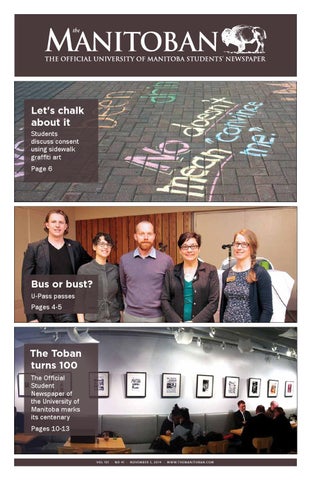
Students discuss consent using sidewalk graffiti art
Bus or bust?
U-Pass passes
Pages 4-5
The Toban turns 100
The Official Student Newspaper of the University of Manitoba marks its centenary Page 6
Pages 10-13
Volunteer Contributors MANITOBAN
A “volunteer staff” member is defined as a person who has had three volunteer articles, photographs, or pieces of art of reasonable length and/or substance published in three different issues of the current publishing year of the Manitoban. Any individual who qualifies must be voted in by a majority vote at a Manitoban staff meeting. Elected representatives and non-students may be excluded from holding votes as volunteer staff members in accordance with the Manitoban Constitution. The Manitoban is the official student newspaper of the University of Manitoba. It is published monthly during the summer and each week of regular classes during the academic year by the Manitoban Newspaper Publications Corporation.
The Manitoban is an independent and democratic student organization, open to participation from all students. It exists to serve its readers as students and citizens. The newspaper’s primary mandate is to report fairly and objectively on issues and events of importance and interest to the students of the University of Manitoba, to provide an open forum for the free expression and exchange of opinions and ideas, and to stimulate meaningful debate on issues that affect or would otherwise be of interest to the student body and/or society in general. The Manitoban serves as a training ground for students interested in any aspect of journalism. Students and other interested parties are invited to contribute to any section of the newspaper. Please contact the appropriate editor for submission guidelines. The Manitoban reserves the right to edit all submissions and will not publish any material deemed by its editorial board to be discriminatory, racist, sexist, homophobic or libellous. Opinions expressed in letters and articles are solely
Justice Murray Sinclair visits the University of Manitoba
Guest speaker says truth and reconciliation will take time, but are possible
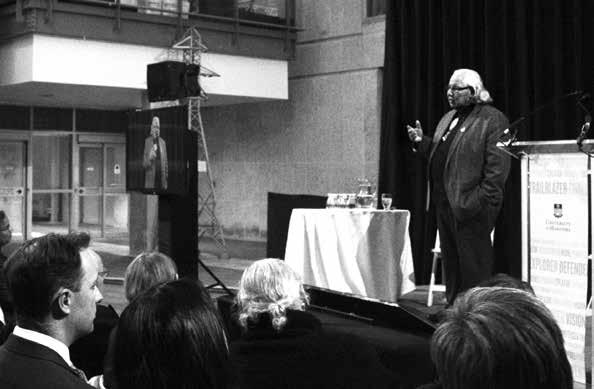
The Honourable Justice Murray Sinclair, chair of the Truth and Reconciliation Commission of Canada, spoke at the University of Manitoba’s Engineering atrium on Thursday, Oct. 30. His speech—titled “If you thought the Truth was hard, Reconciliation will be harder”— concerned the injustices faced by Aboriginal people in Canada who were forced to attend residential schools.
Sinclair’s speech was part of the 2014 Knight Distinguished Visitors Program. As part of this program, the U of M provides individuals who have made outstanding contributions to their fields with the chance to give a lecture to the public.
Sinclair spoke about the discrimination and abuse that First Nations people have faced in Canada and
brought up troubling examples of the types of injustice that were carried out and the repercussions thereof.
“Aboriginal people were traumatized by their experience in residential schools through physical and sexual abuse,” said Sinclair.
During his speech, Sinclair proposed a solution for helping people understand the significance of the consequences of the injustices experienced by indigenous peoples in Canada. Sinclair contended that the Canadian curriculum should be amended to include a more balanced approach to teaching Canadian history, with more of a focus on aboriginal people.
“Getting people to understand [the injustices] will allow us to appreciate the significance of putting changes in our curriculum,” said Sinclair.
In Alberta, curriculum changes have already been imposed. Earlier this year, the province announced that the elementary and high school curriculums will include mandatory content about the history of First Nations treaties and impacts of the residential school system.
“Reconciliation is a hard road but it is founded upon establishing a relationship of mutual respect between aboriginal and non-aboriginal people and between perpetrators and survivors.”
According to the Truth and Reconciliation Commission of Canada website, “reconciliation is a goal that will take the commitment of multiple generations” of Canadians to achieve, but once it is accomplished “it will make for a better, stronger Canada.”
“It’s through the establishment of healthy relationships that we are going to be able to achieve a good nation and a good way for the people
of this country to coexist together as was originally intended by the indigenous people,” said Sinclair.
U of M students come up short in races for school trustee
Nagra and Imbrogno lose but announce interest in running again in
Craig a do L phe, staff
Two University of Manitoba students who ran for school trustee have lost their respective races in Winnipeg’s municipal election.
When the polls closed on Oct. 22, Tanjit Nagra and Luigi Imbrogno were both defeated.
In Louis Riel School Division –Ward 1, Nagra placed third among three candidates, receiving 2,956 votes. Candidates Louise Johnston and Cindy Turner received 6,484 and 4,979 votes, respectively, and with two seats to be filled both candidates were elected.
In Winnipeg School Division – Ward 1, Imbrogno placed sixth among seven candidates, receiving 561
votes. Candidate Sherri Rollins was elected to the ward’s single seat with 2,324 votes. Heather Cardona received 2,044 votes, Sheri Oberman received 784 votes, Paul Guise received 661 votes, David Lobson received 609 votes, and Marilyn Simon received 477 votes.
Nagra told the Manitoban that she was happy with the amount of support she saw from voters and volunteers.
“At first I was—as normal—a little discouraged because I had put in a lot of time and effort into my campaign. However, after a few days I had a lot of time to reflect on the whole process and the past few months and it was
a very, very rewarding experience. I learned a lot about the electoral process and a lot about myself as well.
“For a young candidate, I think I did very well. And in the future I’d love to put my name forward again. Obviously in 2018 we’ll have to see what I’m up to then. But I mean it’s definitely something I’d love to do in the future.”
When asked if she would consider running for office in other levels of government, Nagra did not rule it out.
“I’m all about new opportunities and new experiences. If a new opportunity does pop up at anytime I would for sure look into it. I mean, four years is a long time. At the beginning of
the future
2014 I didn’t know I was running for trustee. I just knew I wanted to be involved. And then April, May is when I really started looking into trusteeship. So just in a few months I encountered a new opportunity. So four years from now, you never know.
“This whole process has been so humbling and so positive. I personally think I ran a positive and strong campaign and I hope other people saw that too.”
Imbrogno was also happy with his first jump into municipal politics.
“I’m very happy about the results [ . . . ] For 561 people to actually go to a polling location with the intention of voting for me made me feel amazing.”
Imbrogno also did not rule out future bids at political office, saying that he was not discouraged by his sixth-place finish.
“This experience definitely motivates me to pursue public office in the future. I’ll just have to start earlier and campaign more!”
Both students will continue to hold elected positions at the U of M. Nagra remains the vice-president of the U1 Student Council until the end of December and also serves as the vice-president external for the Undergrad Political Studies Students’ Association. In January, Imbrogno will be starting a year-long term as president of the U1 Student Council.
Photo by Carolyne KroeKer
U-Pass passes
Majority support in referendum confirms student participation from U of M, U of W
dana h aT her Ly, staff
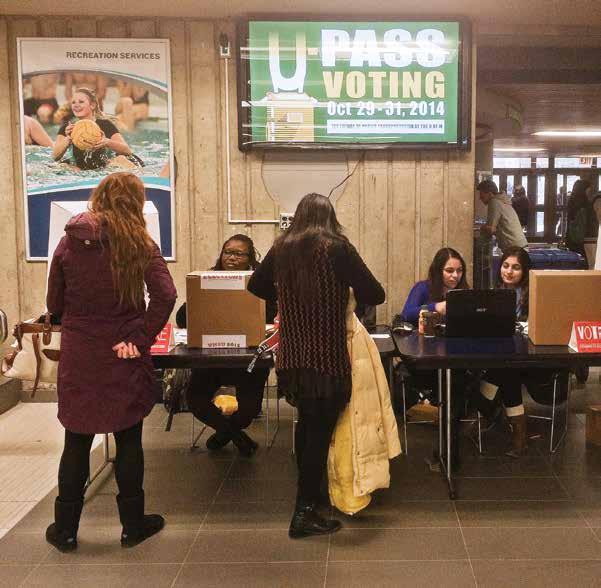
The final results of the referendum officially confirmed that Winnipeg students approve the universal transit pass (U-Pass) program. The majority vote by UMSU, the University of Winnipeg Students’ Association (UWSA), and the U of M Graduate Students’ Association (UMGSA) signalled to city council that the U-Pass was approved of by university students at all participating post-secondary institutions.
Before Winnipeg city council would commit to introducing the program, university students were required to show majority support for the U-Pass as determined by a referendum vote.
The final ballots from the UMSU referendum were counted at about 7 p.m. and the results showed that 53 per cent of U of M undergraduate students voted in favour of the U-Pass. In total 4,548 out of 23,277 possible UMSU members voted, or 19.5 per cent.
A similar ballot count was held by UWSA on Wednesday following the referendum vote at the U of W. With 1,355 eligible votes in total—82 per cent in favour—out of the possible 9,348 undergraduates and 138 graduate students, the voter turnout at the U of W was higher than the last time the U-Pass was under referendum.
The U-Pass program
“The U-Pass is a universal bus pass program where students pay a fee at the beginning of each term and receive a bus pass that is valid for the entire academic year,” states the UWSA website. With a U-Pass, participating students’ union members will be able to access Winnipeg Transit services “anytime, anywhere across the city.”
The UWSA website continues:
“The U-Pass will reduce the cost for all students to use transit from September to April. The current cost of a monthly post-secondary bus pass
is $67.75. The total cost for purchasing monthly bus passes from September to April is $542.
“Under the U-Pass, the maximum cost for a bus pass would be $260 and would only increase each year at the rate of inflation.”
“My
goal throughout last year lobbying for the U-Pass was to negotiate the best possible deal alongside the UWSA and allow our students to democratically decide whether or not they want this program implemented for our students – Christian Pierce, UMSU vicepresident external
The U-Pass is slated to begin in September 2016, “or sooner if possible,” said UMSU vice-president external Christian Pierce.
With the introduction of the U-Pass, Winnipeg universities will join over 30 institutions across the country at comparable rates. Jenny Gerbasi, a leading voice on the issue in city council, said that the current price is comparable to or lesser than rates at other participating universities across the country. Pierce told the Manitoban that when city council officially approved the U-Pass in principle, it was dependent on majority referendums by
UMSU and the UWSA that would represent a binding agreement between the two parties.
The legally binding documents were the motion from city council and the two referendums, UWSA president Rorie Mcleod Arnould told the Manitoban. According to Mcleod Arnould, city council said they would commit to this program—by coming forward with the money required and instructing Winnipeg Transit to move forward accordingly—if students’ unions come back with positive results determined by referendums.
Both undergraduate and graduate students at the U of W are participating members under the structure of the UWSA, said Mcleod Arnould. Graduate students at the U of M were not initially included in the U-Pass calculations and negotiations.
The UMGSA referendum “ended with an astonishing 34.2 per cent of graduate students casting a vote –double the number of students who voted in the general election of 2014,” read an email to graduate students from Joseph Dipple and Karalyn Dokurno, Fort Garry chief returning officers.
The results of UMGSA’s referendum demonstrate to city council that graduate students are interested in participating in the U-Pass, said UMGSA president Laura Rempel.
“With 59 per cent voting in favour of participating in the U-Pass, UMGSA will begin conversations with city hall to move this mandate forward,” Rempel said.
Differing structures, varying stances
The vote for the U-Pass—which was publicly endorsed by the UWSA—was celebrated by many students on social media, including Mcleod Arnould, while other students expressed disappointment with the results.
“This is democracy in action:
Students standing together with students’ unions—to buy things like health insurance and lobby for public policy and social conditions—to try and structure the civil society that we want,” said Mcleod Arnould.
In contrast to the strong position statement by the UWSA, the UMSU executive maintained a neutral stance on the issue throughout the U-Pass campaign.
“During our campaign in March for [the UMSU executive] election, we made it clear that we would take a neutral stance during the referendum,” said Pierce. “My goal throughout last year lobbying for the U-Pass was to negotiate the best possible deal alongside the UWSA and allow our students to democratically decide whether or not they want this program implemented for our students.”
The UMGSA did not take a position on the U-Pass, although their council voted in favour of it.
The decisions of these Winnipeg student bodies matched the political commitments of Brian Bowman during his run for mayor. Mayor-elect Bowman supported the U-Pass initiative and public transportation in general with his vow to finish all six phases of rapid transit.
With Winnipeg under new management, popular support from students may offer critical political influence in city hall.
The councillor changeover included incoming Matt Allard for outgoing Dan Vandal (St. Boniface), Janice Lukes for Justin Swandel (St. Norbert), Marty Morantz for Paula Havixbeck (Tuxedo-Charleswood), Cindy Gilroy for Harvey Smith (Daniel McIntyre), Shawn Dobson for Grant Nordman (St. Charles), Jason Schreyer for Thomas Steen (ElmoodEast Kildonan), and Scott Gillingham (St. James). Gillingham replaced Scott Fielding, who had strongly opposed the U-Pass and rapid transit during his time on city council.
Experts weigh in
The transit forum co-hosted by UMGSA, UMSU, and the Manitoban featured evidence-based research and opinions presented by expert panellists and decision-makers including Councillor Gerbasi; Ian Hall, director of the U of M Office of Sustainability; and Orly Linovski, city planning assistant professor. Bowman was not in attendance at the forum event on the day after the civic elections. Dan Penner—a second-year master’s student in the department of city planning, and policy researcher for Bowman’s recent campaign—received a tweet from Bowman to reaffirm his support for the U-Pass program.
Following her re-election, Gerbasi told the audience that: “The U-Pass is expected to result in a significant ridership increase, which is important for the city of Winnipeg.
“We have huge traffic congestion issues on Pembina Highway and throughout the city. If you take 60 people and put them on the bus, you’re taking 60 cars off the road, and that has a big impact on congestion and a big impact on the wear and tear on the roads, which you’ve been hearing a lot about lately if you’ve been following the municipal elections.”
New buses will be purchased and ramped up with staff to deal with the increase in ridership, Gerbasi said.
“A lot of people were talking about a referendum on rapid transit,” Gerbasi said. “I believe that we have had one; the two major mayoral candidates both strongly supported rapid transit as part of their election platforms, and that’s how the vote went.” Linovski brought a critical evaluation of public transportation and urban design into perspective.
Continued on next page
Linovski challenged the concern expressed by students that Winnipeg Transit will be unable to match the influx of riders. Linovski said that although one of the impacts of the U-Pass will involve an increase in ridership, “It is not as much as you would think.
“Transit does have its issues right now,” Penner admitted. He added that these problems need to be resolved in practical ways – relative to what was being done in other cities.
“There are 12 Park and Rides here,” Penner continued. “Drive to Pembina; park at Safeway (you will not get towed); hop on a bus straight to U of M. You save the $560 you pay on parking, which, when you factor in the U-Pass, is just under $300 in savings.”
“The university’s president, David Barnard, has stated his support,” Hall said, providing a campus perspective,
“for improved transportation options including the universal bus pass.”
“More [U of M staff and students are already] buying monthly bus passes – from 11 to 26 per cent in the past 14 years,” Hall said, versus the reduced rate that the U-Pass would provide to students.
One of the UMGSA Yes campaign spokespeople, Penner, presented about the U-Pass from a policy perspective and based on his own positive experiences with the U-Pass at Carleton University. The only authorized No side representative at the forum was pharmacy doctorate Sarandeep Malhi. Malhi told the audience that he had registered to represent the students at Bannatyne campus who may not benefit to the same extent as other students.
Questions from the audience during the transit forum showed various student inquiries about the practi-
cality and mandatory nature of the U-Pass. Their concerns addressed how the U-Pass would apply to those who are enrolled in courses all year round; start courses in winter term only; live in residence or choose to ride a bike; seniors; people with childcare drop-offs; graduate students who are in the field for a year; or those who reside in areas not currently serviced by Winnipeg Transit.
Based on the ongoing process of negotiations, according to the UMSU website, “Opt-outs would only be available for students living outside of Winnipeg’s city limits.” Additional opt-out options might be available for eligible students contingent on continued negotiations with Winnipeg Transit.
Photos by beibei lu
UMSU’s No Means No campaign holds chalk-writing exercise
Sidewalk chalk messages written on campus raise awareness of rape culture
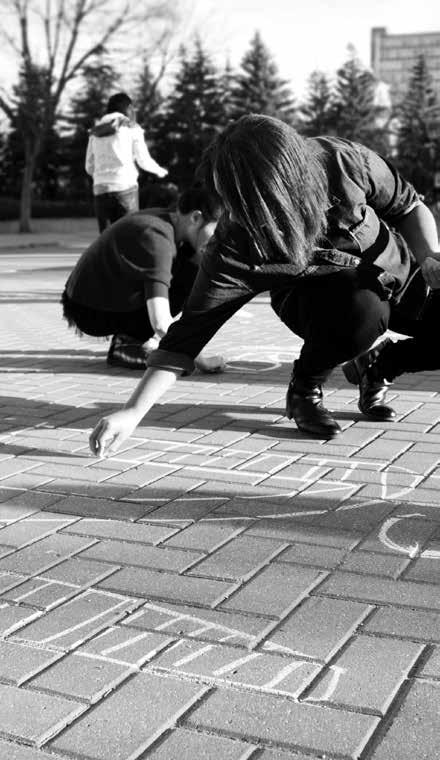
Last Thursday, Oct. 30 University of Manitoba students used chalk to write messages about consent and rape culture in front of University Centre as part of the No Means No campaign.
The campaign—which is being run in coordination with the Canadian Federation of Students— works to address sexual assault and rape culture on campus.
About 15 volunteers showed up to take part in the event, with additional passerby students stopping to leave their own messages on the pavement.
The idea of writing messages raising awareness about rape culture with chalk on the sidewalk in front of University Centre was suggested by Reanna Blair, the UMSU women’s representative.
“It’s a topic that’s very relevant to Canadian society and that’s why I decided to bring it to the U of M campus,” said Blair.
Over the course of just a few hours, hundreds of consent-related messages were written all over sidewalks on campus.
“It was crazy just how many people took time out of their day just to stop and read and ask questions,” said Blair, who added that many people took pictures of the chalk and asked to write messages that they believed were relevant.
One of the students who volunteered to write messages, Marina Herscovitch, said that she heard about the event through Blair.
“I thought it was a good cause to stand behind,” said Herscovitch.
“I think that it was an interesting and creative way to get the message out there; it really caught your eye.”
It is important to start conversations about consent because it can often be a difficult subject to discuss, said Womyn’s Centre co-ordinator Hira Sabzwari, who worked with Blair on the campaign.
“The goal of the campaign is to raise awareness and eliminate rape culture on campus,” Sabzwari told the Manitoban
The event was well-received, according to Sabzwari, which was surprising to her in light of recent vandalism to posters for the #NoMoreBlurredLines campaign that conveyed similar consent-related messages.
“I think it’s really unfortunate,” said Sabzwari. “I was given some
photos of the vandalism itself and a lot of [the messages left by the vandals were] referring to the way a woman is dressed.”
“I think the big issue with this is that people aren’t properly educated on the facts,” said Herscovitch. “If people had a better understanding of how others feel when you treat them a certain way, there would be less ignorance and ideally less vandalism.”
Our society has a long way to go when it comes to eliminating rape culture according to Blair.
She said that people often do not see rape culture when it happens because they may not personally experience sexual harassment, but it is a reality for a lot of women and men.
“The
fact that rape culture is so hidden and insidious makes it that much harder to treat and we need to collectively work together to solve these types of issues” – Reanna Blair, UMSU women’s representative
“The fact that rape culture is so hidden and insidious makes it that much harder to treat, and we need to collectively work together to solve these types of issues,” said Blair.
When asked about the recent #NoMoreBlurredLines vandalisms, Sabzwari said, “It just shows that there are a lot of ideas around the issue of consent that are still very negative and harmful that we need to find ways to approach.”
As for future events to raise awareness about consent, Sabzwari told the Manitoban that the Womyn’s Centre is in the process of organizing an event in collaboration with the health and wellness educator on campus as well as the Women’s Health Clinic that will focus on issues surrounding consent.
“I definitely hope to see more events like this in the future that will bring a really visual awareness to these types of issues,” said Sabzwari.
Photo by Carolyne KroeKer
GoSA reopens, but still faces challenges
UMSU vice-president internal says cuts were necessary for Endowment Fund restructuring
eT han Ca B e L , staff
The University of Manitoba’s Gallery of Student Art (GoSA) has reopened after a temporary closure. Fine arts students and other students in arts-related faculties claim that the gallery will have to overcome major challenges after UMSU made budget cuts to eliminate a paid coordinator position in September.
The Gallery of Student Art’s $12,000 budget was trimmed down to $3,000 by eliminating its paid coordinator position, precipitating the gallery’s month-long closure. The co-ordinator was paid approximately $9,000 annually, with responsibilities that included planning and setting up exhibitions as well as co-ordinating all openings for the gallery.
The co-ordinator has been replaced with what UMSU calls the “GoSA ambassador program.” The program, which is run by UMSU services administrator Amanda Jonson, is designed to assemble a group of volunteers who can collectively run the gallery.
The UMSU executive launched the GoSA ambassadors program to establish a volunteer committee of “students who are interested in supplementing their Fine Arts education or other students around the university who are interested in curation [that] can apply and get involved.”
The volunteer base
According to third-year fine arts student Whitney Zyluk, the ambassador program has resulted in confusion among volunteers and has diminished the ability of the gallery to show quality exhibits.
“It’s all completely on the fly,” she said, adding that a paid co-ordinator gives the gallery professional management that volunteers cannot provide.
When GoSA closed due to unexpected cuts from UMSU, Zyluk and her friend Brooke Lychuk agreed to act as volunteer co-ordinators in order to ensure that GoSA would reopen.
Since their agreement with UMSU, Zyluk has attempted to balance school and a part-time job while planning and managing much of the gallery’s activities.
“We’ve had almost no volunteer applications; there’s no structure in place to deal with the applications we do get,” Zyluk said.
Nicole Flynn, a fourth-year honours student in fine arts at the U of M, had an exhibit displayed in GoSA last week.
The exhibit, which is part of a larger project titled “No More, No Less” which was included in Nuit Blanche Winnipeg, involved installing a swing inside the gallery. Flynn split the Emerging Voices grand prize from Nuit Blanche with another participant and U of M fourth-year fine arts student, Bram Keast.
“It’s devaluing to say that the [coordinator] position isn’t required; it’s like any professional job,” she said.
“With my work this week, I had prepared it all but it still took almost three hours to get it up and I had people helping me.”
Besides GoSA, the U of M and the University of Winnipeg both have curated galleries. The U of M has the School of Art Gallery in the Art Research Technology Laboratory, while the U of W has Gallery 1C03 on its main campus and the Plug In Institute of Contemporary Art Gallery in the Buhler Centre.
However, these galleries primarily display the work of professional and established artists – whereas GoSA
is entirely student-based, Flynn said.
“It gives such a huge opportunity,” she said.
Kopp cuts to the chase
Jeremiah Kopp, vice-president internal for UMSU, told the Manitoban that cuts to GoSA were necessary and part of broader funding decreases for several student services.
Funding for the gallery is provided by UMSU’s Endowment Fund. The Endowment Fund is funded through student fees but is governed by its own Board of Trustees and operates independently from UMSU’s operating budget.
The University of Manitoba Students’ Union is classified as a non-profit organization while the Endowment Fund is a charitable foundation for regulation and tax purposes.
According to Kopp, the fund was created to ensure that critical student organizations like the U of M Aboriginal Students Association have stable funding. This means that those
services are protected from the more volatile budgetary decisions of a nonprofit like UMSU.
Kopp is attempting to restructure how the fund is utilized to ensure that UMSU services can only draw from interest on the fund’s capital reserves each year. This, he argues, requires some belt tightening until the full scope of money available for student services can be determined.
“We’re in this position where we need to restructure and make sure that it’s sustainable for the next hundred years going forward,” Kopp said.
“GoSA is the crown jewel of the services that UMSU provides. Nobody here is attacking the arts, and no here wants to reduce services to the arts, that is not the intention,” Kopp continued, referring to the gallery co-ordinator’s responsibilities being folded into the full-time staff position of services co-ordinator.
Faculty factors in
Cliff Eyland, an associate professor of painting at the U of M, is pleased that GoSA has reopened. However, he argued that a paid coordinator is necessary to ensure that the gallery provides opportunities to student artists to show their work in a highly visible, accessible location on campus.
“A co-ordinator really is the centre of the gallery and organizes publicity and assists students in how to put up work safely,” Eyland said.
“A gallery can’t just be a free-for-all. It’s not just a matter of hammering a nail and putting up a work.”
In September, students proposed a motion to UMSU to create a committee of students from various faculties to oversee GoSA to organize fundraisers and apply for grants to pay for a co-ordinator independent of any financial support from the endowment fund.
“[The motion] directly contradicted existing UMSU bylaws and endowment fund bylaws and governance documents,” Kopp said, adding that the main issue had to do with the endowment fund being designated as charitable organization by the Canada Revenue Agency.
“You’re not actually able to have a staff member raising money for themselves [ . . . ] also people found it a little disingenuous that they would be raising money just for their own salary.”
Flynn said she is pleased that GoSA has reopened, but is concerned that the gallery does not have the capacity to do all that it used to do for students, such as organizing openings for exhibits.
“Every gallery will have openings as soon as a new show opens,” Flynn said, adding that the former paid GoSA co-ordinator, Kira Koop, used to facilitate those openings, which also act as crucial experiences for emerging artists.
“They’re huge events and they’re super important, too, because they give you a lot of exposure to the artists; otherwise you don’t know who the artist is.”
Photos by Carolyne KroeKer
Comment Editor: Tom Ingram
Contact: comment@themanitoban.com / 474.6529
Why I no longer vote strategically
Electoral pragmatism sends politicians the wrong message
T
he day before the mayoral election my social media feed was flooded with pleas from political pragmatists. Supporters of Brian Bowman were trying to persuade Gord Steeves supporters to vote for Bowman, and Judy WasylyciaLeis supporters were trying to convince supporters of Robert-Falcon Ouellette to vote for Wasylycia-Leis.
The core of their message was:
“Your candidate doesn’t have a chance, so vote for our more popular candi-
date who somewhat represents your views to keep the really bad person from getting in.” This practice is known as strategic voting.
Of course this practice didn’t begin with this election. In a world where the left and right wings of the political spectrum are becoming more polarized all the time, it’s only natural that many people would be willing to vote for whatever candidate has the best chance of keeping the other side out of office, even if that
vote might be cast for a candidate who isn’t their first choice.
I think it’s up for debate whether this phenomenon occurs because people are identifying more strongly with their political institutions or if the policy differences between the left and the right have actually become irreconcilable, but ultimately the result is the same. Some people are more concerned about keeping the “bad” candidate out of office than getting their choice candidate in.
I’ve engaged in strategic voting myself. In my first federal election I wanted to vote for the Green party. Back then all I knew was that the environment was in trouble and that the Green party wanted to legalize marijuana, and that was enough to get me passionate about voting Green.
I felt like my voice hadn’t been heard –or worse, had spoken for the wrong person
However, I also knew that Vic Toews had a stranglehold on my riding, and that the only other candidate in my riding who had any real support was the New Democratic Party (NDP) candidate. Even at that age I knew that Toews stood for basically everything I was opposed to, so I thought I would be smart and strategically vote for the NDP.
When I viewed the election results that night and saw that Toews had won I felt cheated. Looking at those numbers, I knew somewhere in there was one vote that the NDP shouldn’t have had and one that the Green party should have. I felt like my voice hadn’t been heard – or worse, had spoken for the wrong person.
Therein lies the danger of strategic voting. Ours is a system based on representation. Even if your candidate isn’t going to get in, and even if you know that they have no chance from
the beginning, don’t you want your voice to be counted for what comes closest to what you actually believe? If we consistently fortify our votes around one candidate for the left and one candidate for the right, where will that leave us?
Do we really want to risk drifting towards anything that resembles the two-party debacle that they have south of the border, where the animosity between the left and right has grown so much that their Congress is accomplishing less than ever? We would be too close for comfort to such a system at the federal level if the NDP and the Liberals were ever to merge.
I was happy to see that many in Winnipeg chose not to vote strategically in the mayoral election, as evidenced by the relatively strong showing for Ouellette. Because of this a man who started as a fringe candidate was given a mandate from the people to persevere in the field of politics, to carry forward with his vision, whereas a poor showing may have discouraged him from that path. Not only that, but when someone like Ouellette receives the support that he did, it sends a message to the big name politicians who finished at the front of the pack. That message is that a lot of us are tired with the status quo, both from the left and the right, and if you aren’t willing to change things, maybe next time there will be enough of us to elect someone who will.
Reforming concert etiquette
Cai TLyn m a S kiew , volunteer staff
Concert etiquette can be a touchy subject, especially among classical musicians. While classical musicians maintain a certain pride in the unspoken rules surrounding concert, it’s possible that some of these rules have made the music inaccessible to those who are not familiar with them.
A few good arguments are made by conductor Baldur Brönnimann in his article “10 things that we should change about classical music concerts.” One thing he proposes to change is the treatment of the space between movements which is a hot topic with almost every classical musician.
His suggestion is that we allow applause between movements, and to an extent it makes sense to applaud the orchestra for a movement well played. For works of absolute music, or music without a program or story behind it, this could work.
There’s no reason not to clap between movements of a Haydn sym-
phony as it does not disrupt the ideas of the music. The applause doesn’t interfere with the production of the music itself.
However, on the other hand is music with a programmatic nature. For instance, Berlioz’s “Symphonie Fantastique” is a piece depicting a man’s journey from love to madness. The composer himself wrote program notes to go along with the symphony that distinguishes each movement like a section of a story told by the orchestra.
In order for this to be maintained the audience almost has to forget they’re in a concert hall at all, and be transported to the world Berlioz paints with his music and must not be disrupted by applause. Furthermore, the music suffers if the orchestra loses the mood of the music they’re crafting due to excess noise in the hall, and it may take them a few minutes to recapture the mood in themselves
and the music they’ve already worked to create.
While classical musicians maintain a certain pride in the unspoken rules surrounding concert, it’s possible that some of these rules have made the music inaccessible to those who are not familiar with them
A happy medium could be a change of convention in which,
should the conductor drop their hands between movements and the musicians readjust, applause is welcomed, but if they leave their hands up, silence must be maintained.
Another, and possibly the most important, change Brönnimann proposes is to include more new music in programs. Classical music has always tended to be antiquarian, but in order for progress to be made in the field promotion of new music is vital.
Some new classical music is aurally unpleasant and can be quite difficult to listen to, but much of it is really quite lovely and can be an exciting addition to any program. The Winnipeg Symphony Orchestra puts on a New Music Festival every year in order to introduce audience members, who would otherwise not listen to more recent compositions at all, to the wonder of new classical music.
While a festival is a great way to introduce audience members to
new classical music, if programs not specific to a certain composer or era contained at least one new work it could increase the general interest in classical music and possibly make it more accessible to people who don’t like classical music because it’s so old.
Any updates made to the classical music scene would have to be gradual and seemingly insignificant at first. The current audience for the style is largely invested in the tradition that goes along with the music. But in order to keep orchestras in business and the classical music scene alive we need to begin making preparations to allow this style to be more easily accessible to people who may not be as educated in the genre. Public appeal is part of any performing art and though classical music is traditional and established it still needs to update itself with the times if anyone in the future is to care about it.
graPhiC by bram Keast
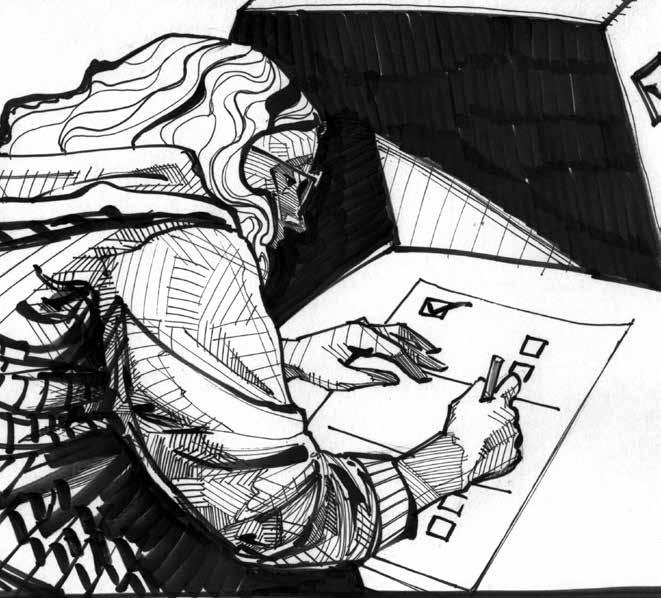
Strategic voting or voting from the heart?
Editor-In-Chief:
Bryce Hoye
Contact: Editor@themanitoban.com / 474.6770
Happy 100, Manitoban
Celebrating a century of service
BryC e h oye , staff
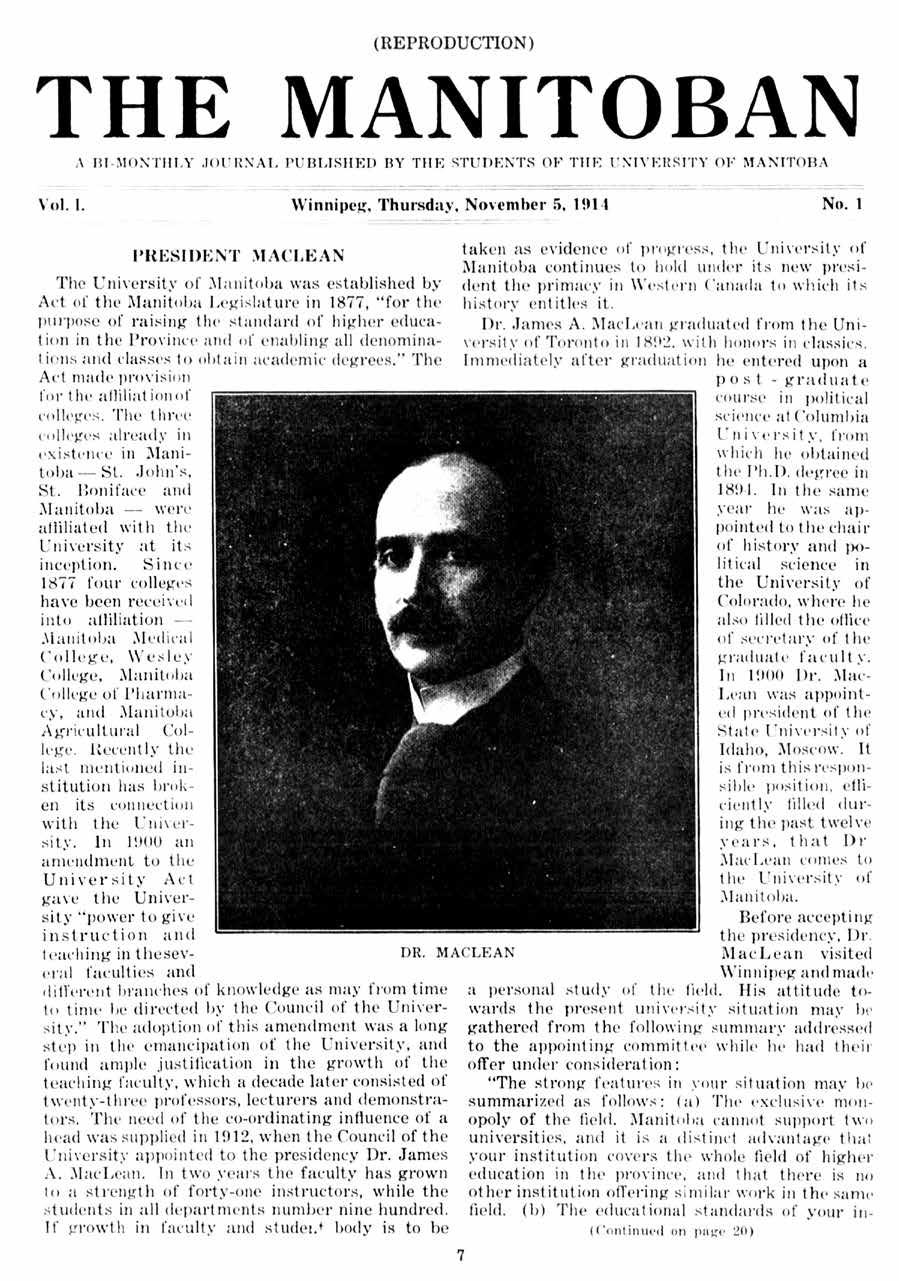
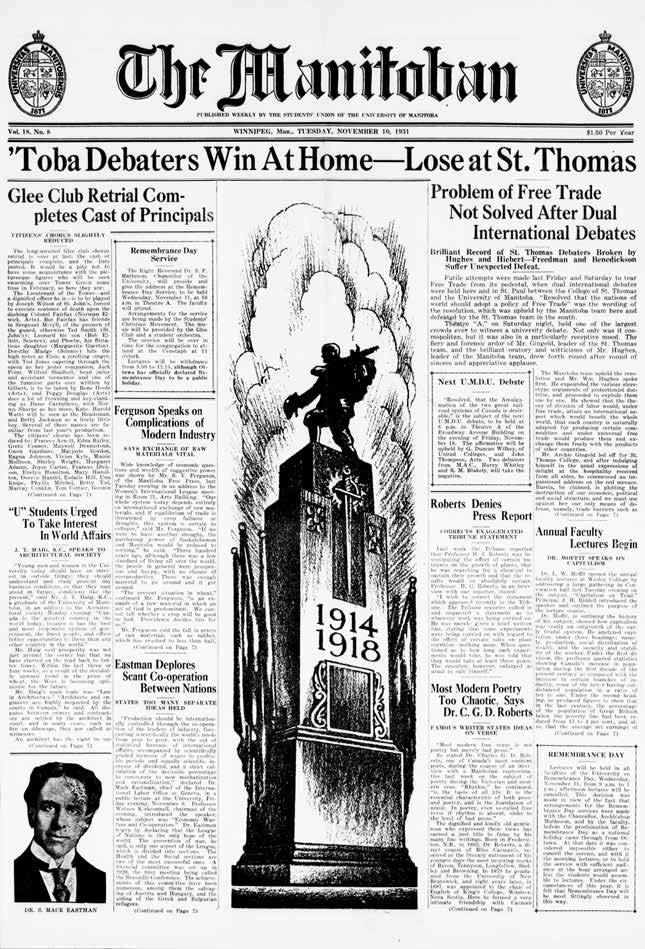
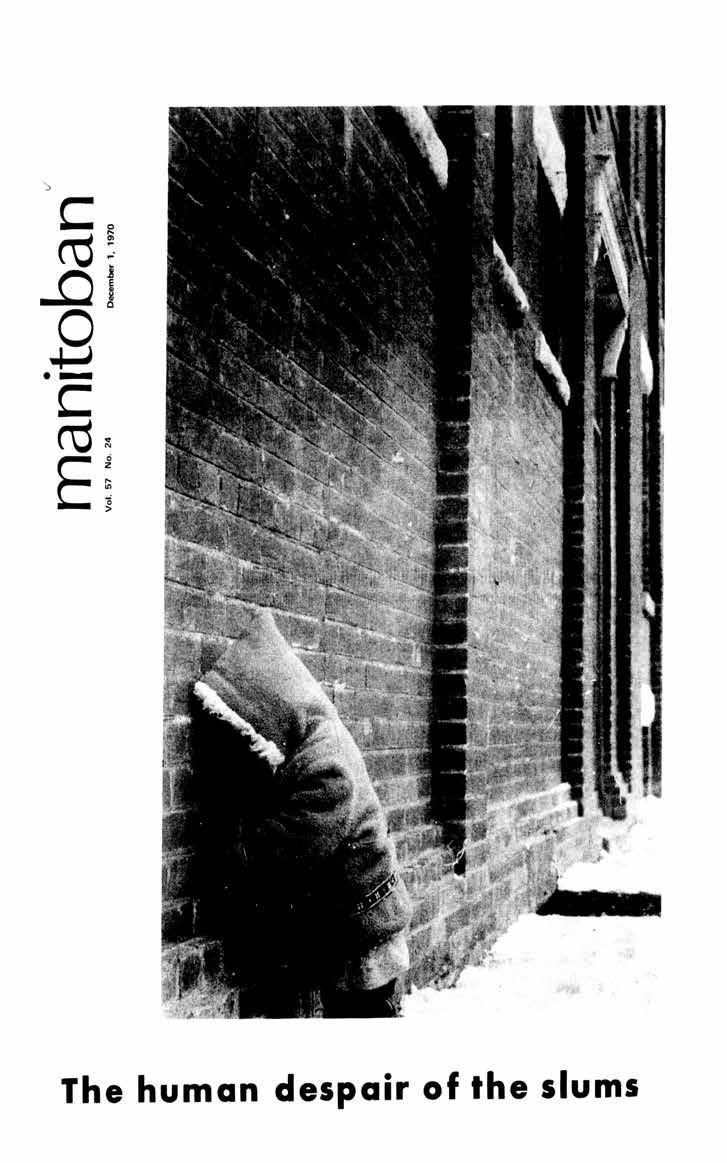
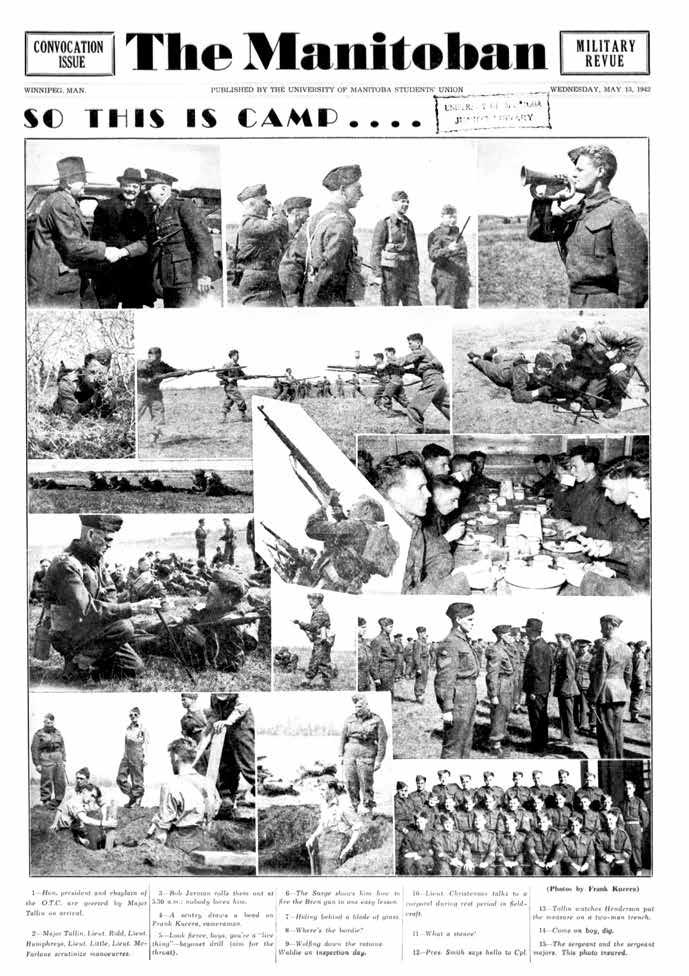
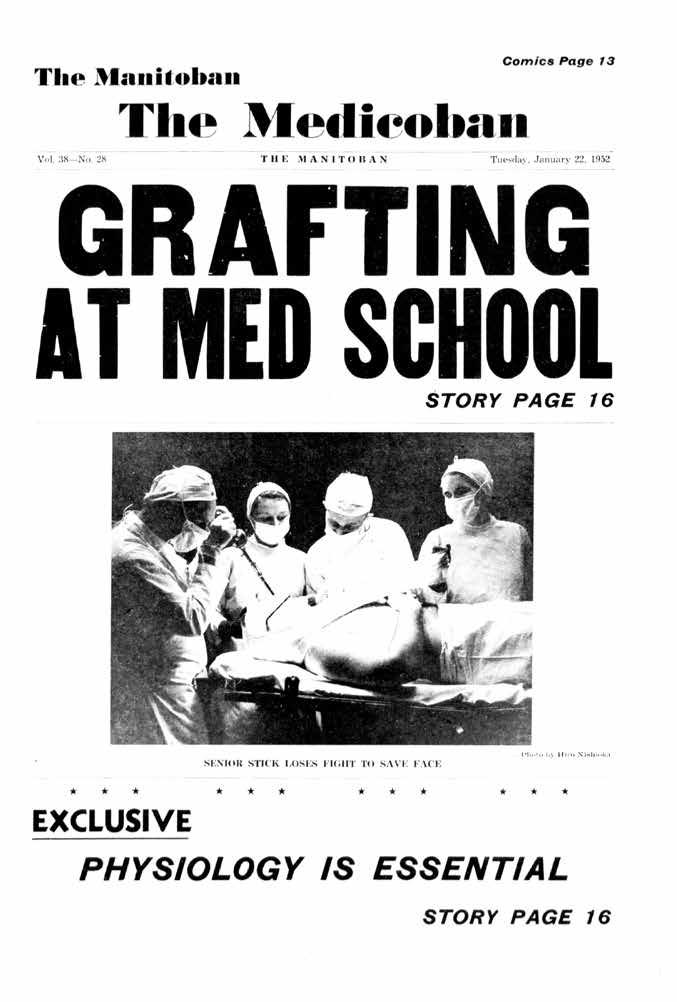
The Manitoban celebrates its centenary Wednesday, Nov. 5 – 100 years and counting covering issues that affect University of Manitoba students most.
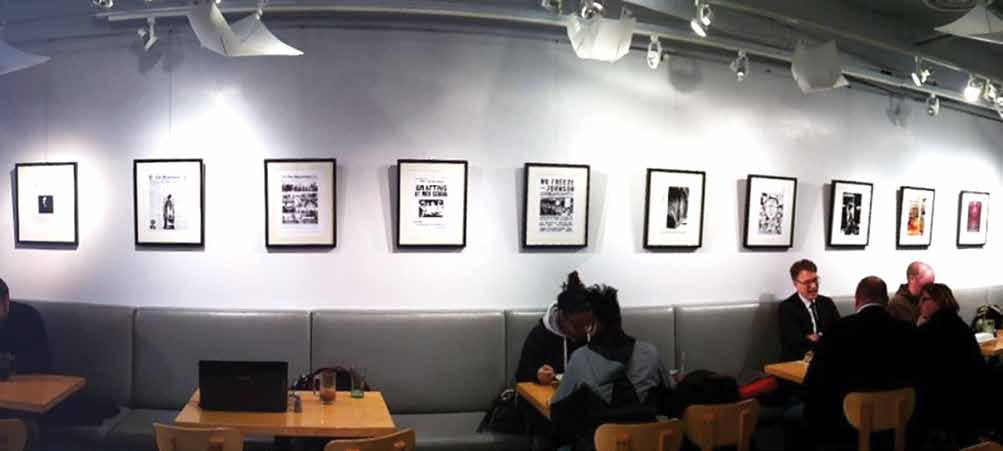
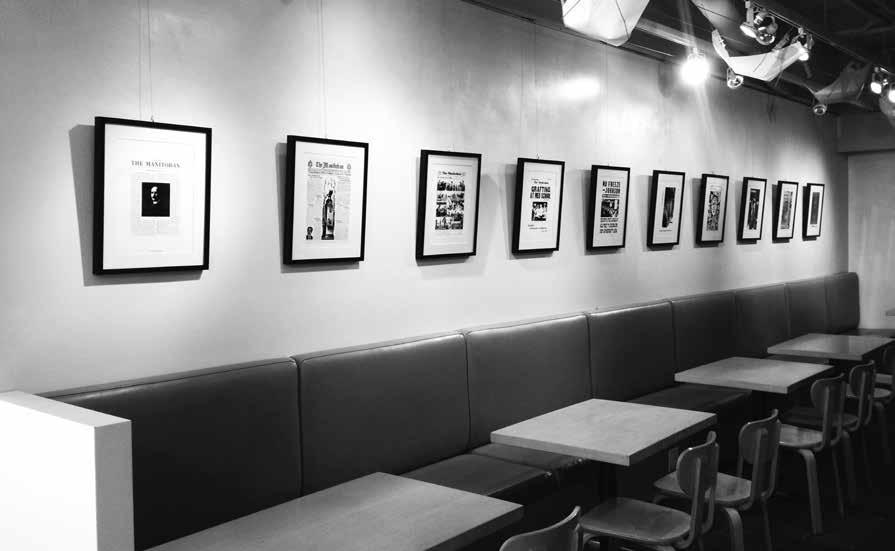
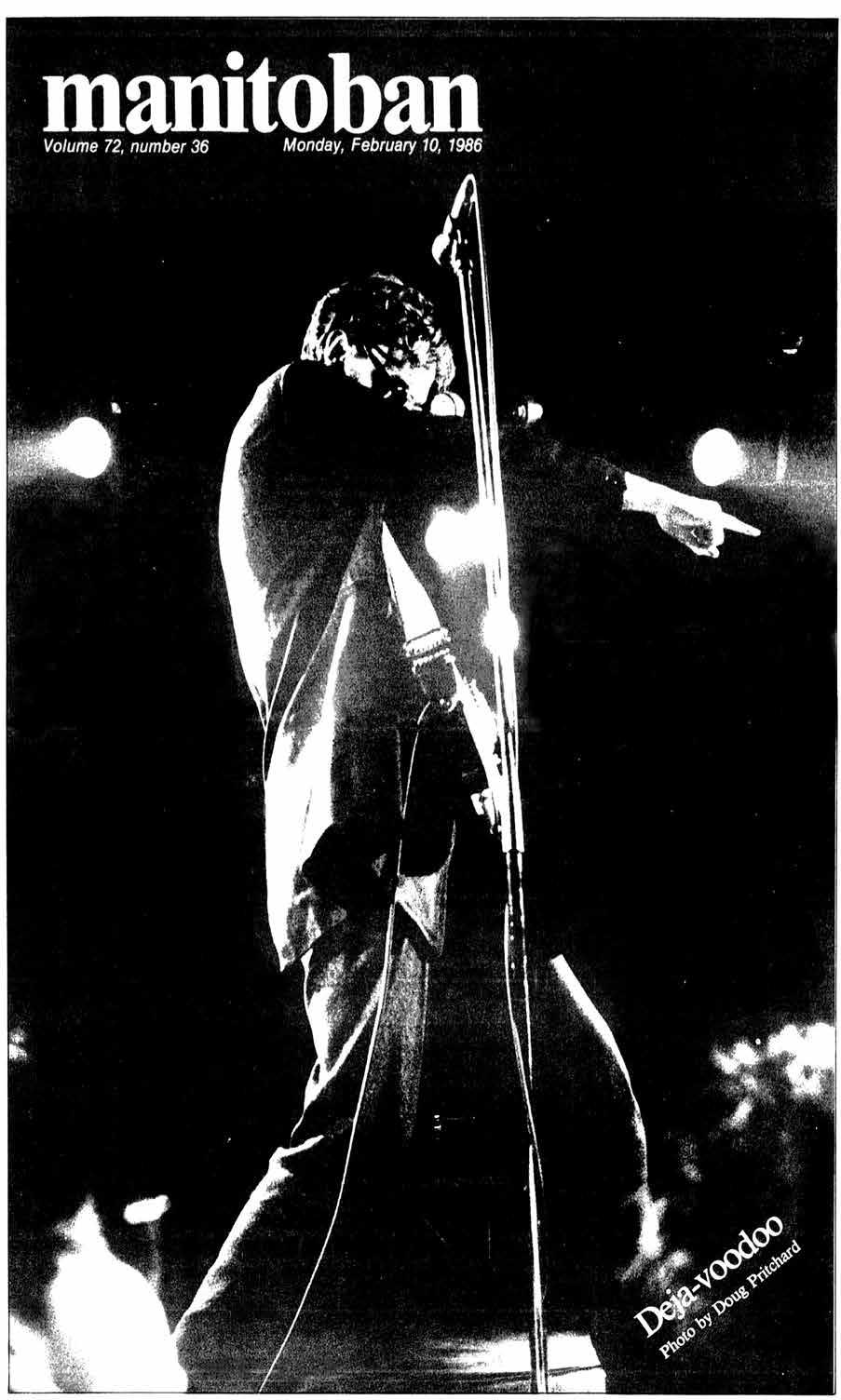
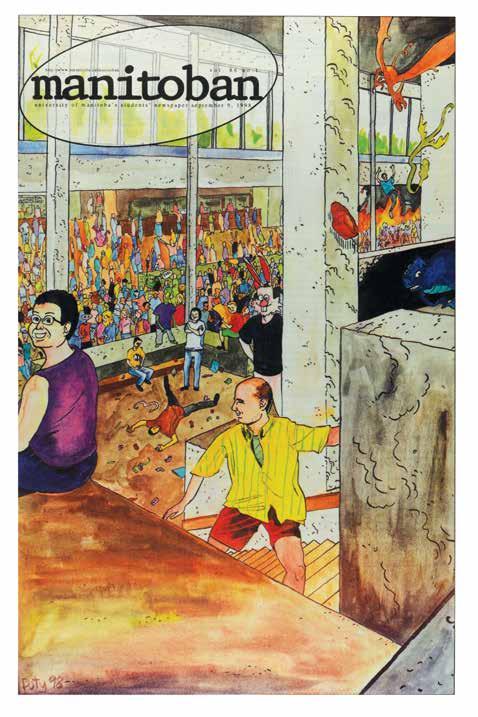
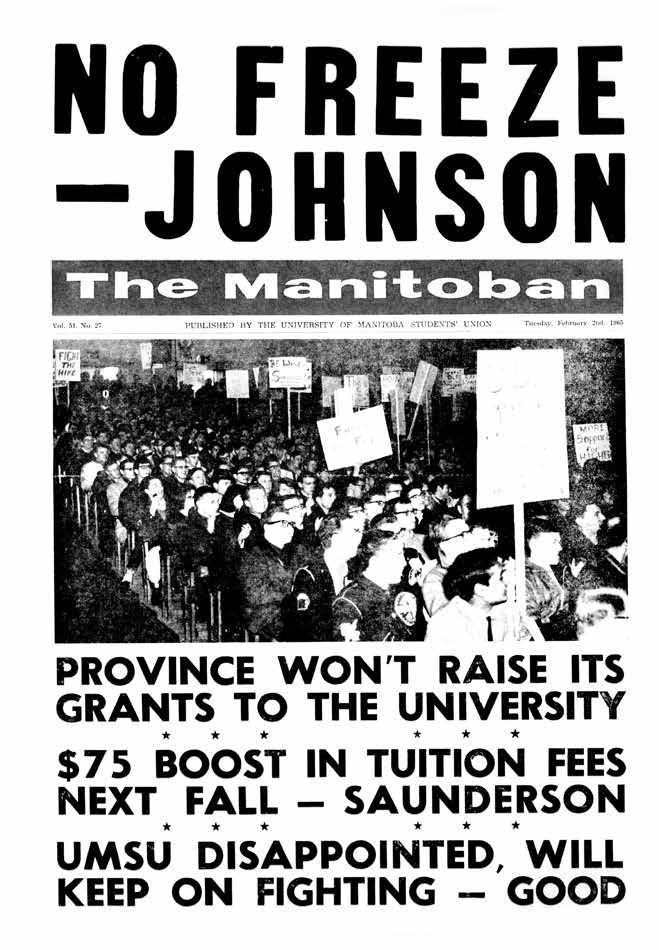
To mark the special day, members of the Manitoban’s design team have selected 10 pieces of cover art from issues dating back to the paper’s inaugural issue for this week’s centrefold. Flip the page for a look at some of our favourites.
These covers will be featured in the Starving Artist Gallery in Degrees for the month of November.
Old news
The paper is the strong institution it is today because of the funding it has received from hundreds of thousands of students. The same acknowledgment extends to the efforts of the people who have managed the business of running a paper and populating its pages with engaging, important content for all these years.
The majority of the paper’s staff have been busy students, many of whom took on declines in their GPA in the name of covering U of M news of the day. And Manitoban readers are better for it.
A lot of interesting things have happened in all that time – to the paper and campus. Many influential journalists made their first forays into the writing world in the pages of the Manitoban, often tasked with covering past incarnations of the same issues facing students today.
Graham Spry was an editor-inchief at the paper in the early 20s. He would’ve been at the helm for student elections, faculty association changes, tuition fee changes, student union controversies, etc. Later on, in the 30s, he had a huge hand in creating a modest little independent outfit known as the Canadian Broadcast Corporation (CBC).
Andrew Coyne, a writer with the National Post, guest panellist on CBC’s The National, and one of Canada’s foremost political commentators, got his start as an editor at the Manitoban. The focus of his writing these days relates mostly to economics and federal politics. In the early 80s, however, Coyne was covering perennial campus issues, like UMSU presidential elections and proposed U of M tuition fee increases.
Not much has changed
Nahlah Ayed, an editor at the paper in the mid-90s and a former U of M Graduate Students’ Association president, is currently one of the CBC’s most notable foreign correspondents and received an honourary doctorate of law by the U of M in 2007 for her coverage of issues in the Middle East.
Ayed now covers geopolitical issues playing out on the international stage. But one of the last times her name appeared in the paper in the 90s saw her responding, in her capacity as a U of M Graduate Students’ Association councillor in an interview
with a Manitoban staff member, to the paper seeking autonomy from UMSU.
“The Toban can push more limits within a certain parameter if they know that there isn’t this hold over them that they may possibly be shut down,” noted Ayed in the April 6, 1994 issue of the Manitoban Along with annual advertising revenue, funding for the paper comes directly from students in the form of an annual levy that is included in tuition. It has always been thus. But the student union used to have ultimate control over the budget and hiring of staff. Understandably, this made our Toban ancestors very nervous.
The students remain the paper’s primary constituents, its primary concern
Until the Manitoban achieved its desired autonomy from UMSU, there was always a possibility that the current executive could (and did, on more than one occasion) attempt to interfere and exercise an amount of control over the direction or content of the paper. Although it hasn’t happened recently, there have been attempts to shut the paper down, to block bids to increase its funding, to force it to issue retractions.
But it’s still standing, because it’s the students who decide whether the direction the paper is going is acceptable, and Ayed’s prescient words issued in the lead-up to a referendum on the topic of the paper’s independence still ring true more than 20 years on.
“[The Manitoban] will have to be more accountable to students, both editorially and financially, because the students chose to contribute their money straight to the Toban.”
More of the same
Again, not much has changed: the students remain the paper’s primary constituents, its primary concern.
The Manitoban remains the only training ground of its kind on campus where students can develop handson journalistic experience while also keeping their peers up to speed on what’s going on.
The paper’s future will no doubt be as engrossing as the cover art in this week’s centrefold, as unpredictable as its past. Whatever happens, if you’ll have us, we’ll still be here – recorders and laptops at the ready.
Photo by Joy K. balmana
A century now online
Q & A with
BryC e h oye, staff
Shelley Sweeney, head
of the University of Manitoba Archives & Special Collections
Afew years ago the digital archivization of the Manitoban was undertaken. Shelley Sweeney, head of archives and special collections at the University of Manitoba, oversaw the venture. The Manitoban spoke with Sweeney about the project.
The ManiToban: Tell me about the Manitoban digital archivization project. When/why/how did it begin? When did it go live?
Shelley Sweeney: [On] April 11, 2010, then-editor-in-chief of the Manitoban Kevin Doole asked if we would be able to digitize issues of the Manitoban. At the time he thought that the Manitoban had started in 1911. As it turned out, the first one was published [on] November 5, 1914 instead, giving us extra time to get the project done. We ingested the images into our digital asset management system in November 2013, which allowed users to see the issues, and indexed the whole works by December 2013, which allowed users to search the entire run.
M: Who was contracted to do the work? Can you speak to the kind of processes that were undertaken to get the hard copies to the contractors and to digitize everything?
in general, and about the history of education in Canada. It is interesting that the Manitoban is the only public source of information published consistently about the University of Manitoba.
The people who have written for the Manitoban over the years have also made important contributions to Canadian life. These have included such figures as Graham Spry, who helped propel the development of the CBC; Marshall McLuhan, a leading theorist in communications; Israel Asper, a giant in the communications industry; Peter Herrndorf, former chairman and CEO of TVOntario; Heather Robertson, champion of freelancers across Canada; Andrew Coyne, journalist and commentator with a wide variety of publications and CBC’s The National; and Nahlah Ayed, foreign correspondent with the CBC who specializes in the Middle East, to name a few.
M: Can you think of any historical coverage in the paper you found particularly interesting/ valuable?
“The Manitoban is the only public source of information published consistently about the University of Manitoba”
–Shelley Sweeney, university archivist
SS: Heather Robertson, writer and a former editor of the Manitoban, had paid to have the Manitoban microfilmed in 1998. This meant that we could have the microfilm digitized, which was considerably cheaper than digitizing the originals. We contracted a company called Commonwealth Imaging/West Canadian Digital Imaging to digitize the issues from this microfilm. Because the project was so involved, and so lengthy, and because the technology to provide access to the papers changed over a very short period of time, this all made the project cheaper than originally anticipated in the end.
M: What does it mean—for the university, the community—to have all of these issues archived?
SS: Often students are at the leading edge of change in society. Now that these newspapers are available, researchers will be able to trace important cultural movements in the paper and get more ideas about why the students develop these changes. Of course researchers will be able to find out more about the University of Manitoba itself, about student life
SS: I think the Manitoban was quite important to give alternative perspectives on the Second World War, and also how the war affected people who remain behind in Canada.
The newspaper provides a very intimate glimpse of the toll the war took.
Also, Marshall McLuhan’s articles are quite interesting to read to see some of his ideas in germination.
M: Any interesting anecdotes about the paper you think the readership would be interested in knowing about?
SS: In addition to all the students who wrote for the Manitoban and went on to great things, the Manitoban was also successful in getting writers to contribute. For example, Theodore Dreiser, an American novelist and journalist of the naturalist school, contributed a poem about Oscar Wilde for the October 29th, 1943 edition. This was a real coup for a student newspaper to land someone of his calibre. Also, during the Second World War, three students faced suspension for publishing a poem [that] was interpreted as being “anti-war,” including Albert Hamilton, and Jack Ludwig, who then went on to become a professor of English at the State University of New York at Stony Brook.
Exploding spacecraft can’t dissuade us
An overview of Orbital Sciences Corporation and Virgin Galactic’s mission failures and why the space industry must continue
Chan T e LL e d u B oi S , staff
In the same week the world witnessed two space mission failures, both of which had commercial origins: the Space Orbital Corporation’s Antares rocket failure and Virgin Galactic’s SpaceShipTwo crash. Space missions have always included a high level of risk, both financially and in respect to human life. For the burgeoning commercial space industry, such catastrophic failures serve as additional obstacles to an endeavour already rife with challenges.
Orbital Sciences Corporation signed the Commercial Resupply Services (CRS) contract with NASA in 2008 to provide eight resupply missions to the International Space Station (ISS). These missions involved launching the unmanned Cygnus cargo carrier aboard the Antares rocket to deliver supplies and payloads from the Mid-Atlantic Regional Spaceport (MARS) in Virgina, U.S.A.
The first of Orbital Sciences’ CRS launches occurred Jan. 9, 2014 and was followed by a second launch on July 13, 2014. Weather conditions postponed the second Cygnus launch by just over two months, but both missions successfully delivered cargo to the ISS. Last week’s launch would have been part of the third resupply mission carried out by the company.
Cygnus CRS Orb-3, the third of the Cygnus missions to the ISS, was scheduled to launch on Oct. 27, 2014 with 5,000 lbs of supplies, which included scientific payloads, hardware, and supplies for crew members. The launch was delayed for 24 hours after a sailboat was spotted too close to the launch pad inside the exclusion zone. Launching this vehicle would be Orbital Sciences’ Antares rocket, a two-stage launch vehicle which uses both liquid and solid fuel. Prior to launch there were no known issues with the rocket.
The failure occurred 15 seconds after lift-off at 6:22 p.m. EST when the Antares rocket stopped propelling and fell back to Earth, south of the launch pad. Fortunately, no fatalities occurred although the facilities were damaged and the rocket explosion resulted in over $200 million in losses.
Virgin Galactic is owned by Virgin Group Limited and was founded in 2004. The company has been developing plans for suborbital flights for space tourists and launching capabilities for science payloads and small satellites.
SpaceShipTwo is a suborbital plane designed to travel to sub-orbit after being launched by its mothership, WhiteKnightTwo. The spaceplane has a seating capacity of six passengers and two pilots. Each seat is currently being sold for US $250,000.
Just days after the crash of Cygnus CRS Orb-3 on Oct. 31, Virgin Galactic’s SpaceShipTwo crashed over the Mojave desert during a test flight with WhiteKnightTwo. The
pilot of the ship managed to eject and survive with serious injuries. The co-pilot unfortunately did not survive.
Prior to the crash there had been discussion of the company beginning commercial sub-orbital space flights early in 2015.
Both the Antares rocket explosion and SpaceShipTwo crash are still under investigation, but the two events made last week difficult for the commercial space industry.
While it is easy to become discouraged and afraid, the space industry has always persevered in the name of science and exploration beyond Earth.
The commercial space industry is relatively new, but the private space industry has had significant failures in its past. Two important examples of such failures include NASA’s Space Shuttle Challenger disaster in 1986 and Space Shuttle Columbia in 2003.
In 1986 Space Shuttle Challenger launched on a mission to deploy the SPARTAN-203 tracking satellite and record lessons for the Teachers in Space program.
The space industry has always persevered in the name of science and exploration beyond Earth
Seventy-three seconds after launch, the shuttle broke apart. The crew members did not survive.
Investigations revealed that primary and secondary o-ring seals on one of the solid rocket boosters failed due to below-threshold operating temperatures. This disaster resulted in a 32-month suspension of the space shuttle program.
In 2003, Space Shuttle Columbia returned from orbit after performing scientific missions.
Upon re-entry, a tile from the heat shield which had fallen off during launch led to the destruction of the left wing of the shuttle, destabilizing it and ultimately leading to its crash. None of the crew members survived.
The space shuttle program was then put on hold for another two years.
Both of these disasters resulted in NASA developing committees to oversee safety and inspection to prevent such catastrophes from occurring again.
Despite such disasters, the Space Shuttle Program lasted 30 years, retiring in 2011. Over the program’s 30-year lifetime 180 payloads, which included satellites and parts for the ISS, were launched or delivered. Of the 135 flights, 133 were successful and 355 astronauts or cosmonaut passengers flew aboard one of the five shuttles.
Since then, many successes in space have occurred. Work on the ISS continued and was completed in 2011. The ISS represents worldwide collaboration in engineering and science, and has been inhabited continuously since 2000.
The science and technology developed as a result of the ISS has been beneficial here on Earth. An example is the neuroArm which performs surgery inside MRI machines. It uses robotic technology adopted from the Canadarm, Canadarm2, and Dextre.
SpaceX, a manufacturing and launching company, has also seen its own shares of failure and success. In August, one of SpaceX’s Falcon 9 prototypes self-destructed due to a faulty sensor.
Despite this failure, SpaceX has successfully completed 17 launches for both government and private missions. The company also has a contract with NASA to supply 12 of the Commercial Resupply Missions.
SpaceX is also currently developing the Dragon spacecraft that will serve to transport astronauts to and from the International Space Station.
Commercial space flight is important for the future of the world’s space programs. These commercial companies are enabling organizations like NASA to continue accessing space resources, such as launching capabilities for satellites or bringing crew members to the International Space Station.
While the Antares rocket explosion was unfortunate, and the SpaceShipTwo crash tragic, the commercial space industry should move forward and continue to enable mankind to explore and discover. Had we stopped after failures in the past, projects like the International Space Station may never have seen completion.
graPhiC by evan tremblay
The Cygnus CRS-3 mission failed after the Antares rocket exploded
Science Fiction: Gluten
Addressing the gluten-free fad with a wheat expert
Jeremiah yarmie, staff
Welcome to the first ever installment of the Science Fiction column. In this column we will address popular misconceptions about science and consult on-campus experts to debunk them for good!
Spouting scientific facts is always a great way to impress your friends, family, or fellow partygoers, but how sure are you about the validity of your claims? Fear not, we have you covered.
This week’s misconception involves a diet fad that is gaining a lot of momentum: the glutenfree diet. Will giving up bread and wheat make you feel better?
Our misconception is that “wheat and wheat-based food products are destructive to your health and that the elimination of wheat from the diet is a cure.” Harry Sapirstein, associate professor of food science at the University of Manitoba, who has a PhD in cereal chemistry from the U of M, will help shed some light on this popular movement.
“Wheat (as well as rye and barley via their close genetic relationships to wheat), when eaten as a whole grain, is a rich source of dietary fibre, B vitamins, [ . . . ] folate, vitamin E, iron, and many other minerals, as well as phenolic antioxidants and other phytochemicals, which science has shown to be beneficial for health,” Sapirstein told the Manitoban
Gluten is complex, composed of the proteins gliadins and glutenins. The gluten proteins have unique properties which make them suitable for dough formation and baking.
Celiac disease is a condition in which gluten causes the immune system to damage the small intestine, resulting in poor nutrient absorption. The immune system mistakes gluten for a potentially harmful molecule, and responds with inflammation in the small intestine. The treatment of celiac disease is a gluten-free diet.
“Many individuals believe that cutting wheat and wheat products from their diet is beneficial or even essential for health, despite not having celiac disease or a medically diagnosed gastrointestinal intolerance to wheat or gluten,” said Sapirstein.
“There have always been and always will be fad-seekers wanting easy solutions to very complex dietrelated health issues. Anti-gluten or gluten-free is perhaps the most recent of these fads purporting to cure obesity, type 2 diabetes, acne, arthritis, mental ‘fogginess,’ and more,” said Sapirstein.
Gluten-free products are consistently more expensive than their gluten-containing counterparts.
This premium may be an inconvenience to individuals with celiac disease or gluten intolerance, but also may work to suggest to other consumers, rightly or wrongly, that what they are paying for is “better” or “worth it.”
“What’s worse are the proponents of this sort of diet extremism, often book authors, who latch on to limited or unsound science to make sweeping, simplistic, and even disturbing assertions about the evils of wheat for health, when the totality of scientific evidence points to its many health benefits,” said Sapirstein.
“There have always been and always will be fad-seekers wanting easy solutions to very complex dietrelated health issues. Anti-gluten or gluten-free is perhaps the most recent of these fads purporting to cure obesity, type 2 diabetes, acne, arthritis, mental ‘fogginess,’ and more” – Harry Sapirstein, U of M department of food science associate professor
“Besides, there is almost no food more appealing sensory-wise than oven-fresh bread, that only the uniqueness of wheat gluten proteins can deliver,” said Sapirstein.
Harry Sapirstein is an associate professor in the U of M’s department food science. His research interests include the composition and function of wheat proteins in baking, optimizing wheat bran for health, and studying the effects of the growing environment and genotype on the breadmaking quality of Western Canadian wheat.
Stay tuned for the next instalment of Science Fiction. There are many popular misconceptions to cover, and many professors to help shed light on them.
Bridging the gap between spinal cord injury and paralysis
The use of unique cells in the treatment of spinal cord injury
Jeremiah yarmie, staff
Aspecial type of cell found in the nasal cavity may be a feasible treatment for spinal cord injuries. Olfactory ensheathing cells (OECs) are a cell type of the olfactory system, which encase the neurons in the olfactory nervous system.
These cells help the nerves of the system renew themselves when they become damaged. This unique property has made them desirable in treatment of spinal cord injuries. Olfactory ensheathing cells have the ability to naturally induce the regeneration of axons, the long projections of neurons. Neurons are the main cells which enable communication within the nervous system.
Studies have demonstrated that OEC transplantation in rats with completely severed spinal cords show axon regeneration and the regained use of paralyzed limbs.
Studies in dogs have also shown the potential OECs have in the treatment of spinal cord injuries. In one study, 34 dogs that were unable to feel or control their hind limbs as a result of accidental spinal cord injury were selected for treatment. The dogs were injected with OECs isolated from their own nasal cavity at the site of spinal cord damage. After the treatment, the dogs regained the ability to move their hind legs.
A study was carried out in collaboration between Polish surgeons and British researchers which looked into a similar treatment in humans.
The purpose of the study was to determine the safety and efficacy of OEC-mediated spinal cord injury treatment.
The Phase I clinical trial attempted to use OECs to regenerate regions of neuron damage in the spinal cord. The six male patients involved in the study, aged 22 to 26, had spinal cord injuries in the thoracic region of the spinal cord found in the upper back. Five of the injuries were due to car collisions while one individual had spinal cord damage from a stab wound.
Three of the patients were operated on to introduce OECs at the site of injury. The other three patients did not have operations and acted as a control group.
All six patients received rehabilitation therapy for three months before the operation and for two years afterwards.
The transplanted OECs were obtained from tissue samples taken from the patients’ own olfactory systems. This eliminated the risk of immune system rejection.
Spinal cord injury research does not just happen far away; the University of Manitoba has its own Spinal Cord Research Centre, based in the department of physiology and pathophysiology
No adverse reactions to the initial removal of the olfactory tissue were seen in any of the participants. Though the patients did show an initial loss of smell due to an increase in mucus as a result of the tissue removal, sense of smell returned to normal levels within two weeks.
All three transplant patients showed increased neurological activity within the first year after their surgery.
The patient disabled by the stab wound, Darek Fidykatold the BBC, “When you can’t feel almost half your body, you are helpless, but when it starts coming back it’s like you were born again”.
The leader of the British team, professor Geoff Raisman, told the BBC that the results of this study were “more impressive than man walking on the moon.”
Two years after the surgery, Fidyka is now able walk with a walking-aid. He has also regained sensation in his bladder and bowel, and has recovered some sexual function.
Spinal cord injury research does not just happen far away; the University of Manitoba has its own Spinal Cord Research Centre (SCRC) based in the department of physiology and pathophysiology.
The SCRC was established in 1987 “to provide an environment for world-class spinal cord research and training.”
The SCRC is composed of
10 core professors dedicated to researching spinal cord injury. The centre is also affiliated with 12 researchers from the Regenerative Medicine Program and the departments of rehabilitation medicine, internal medicine, neurology, and kinesiology and recreation management at the U of M.
Research at the SCRC focuses on the use of neural stem cells to treat spinal cord injuries, the electrical properties of injured spinal cords, and the training and recovery of rats with spinal cord injuries.
Those interested in the SCRC and ongoing research at the centre can visit scrc.umanitoba.ca
graPhiC by aldo rios
The spinal cord, seen above in black, is a thin cord of nervous tissue protected by the backbones.
Arts & Culture
Arts
A classic Shakespearean tragedy
The Black Hole Theatre brings violent tragedy Titus Andronicus to stage for first time in Winnipeg theatre history
i
“Vengeance is in my heart, death in my hand, blood and revenge are hammering in my head” – Titus Andronicus, 2.3.38-39
With Halloween in the past, the latest production at the Black Hole Theatre Company is giving you one more reason to be entertained by death and gore with the classic Shakespearian tragedy Titus Andronicus
The Black Hole Theatre Company is the practical branch of the University of Manitoba’s theatre department. The company provides students with experience at all levels of running a full-scale theatre production – from the actors onstage to the backstage crew cueing the lights.
Co-directed by Black Hole Theatre veterans Bill Kerr and Chris Johnson, Titus Andronicus will be one of three main stage plays that the company will put on for the season. This is also the first time in Winnipeg theatre history that Titus Andronicus will be staged.
As a Shakespearian revenge tragedy, Titus Andronicus is not for the faint of heart. The play tells the tale of the titular character, a Roman general who has returned from 10 years of war. Titus has captured Queen of the Goths, Tamora; Aaron, the Moor; and Tamora’s three sons. After sacrificing her eldest son, Tamora pledges revenge on Andronicus as the play quickly escalates into a series of killings, torture, rape, and cannibalism.
The play was most likely written in late 1593, making Titus Andronicus Shakespeare’s first tragedy. It was extremely popular during his lifetime. While the play has endured mixed reviews from critics comparing it to other works
by Shakespeare, the tragedy’s dark and sadistic nature can be cited as influencing our present-day horror pictures.
“Titus [ Andronicus] is [by] the young Shakespeare in his ‘Tarantino’ phase, using all the elements of staging and violence, tragedy and black comedy to surprising, disturbing, hilarious, and devastating effect,” explains codirector Bill Kerr.
“Each act will leave a trail of blood and decay that will accumulate and culminate in the pile of bodies that is the inevitable end of this tragedy ” –Bill Kerr, co-director
What is most shocking about this play is the abundance of blood and violence. With the Black Hole production, Kerr ensures the play will include the classic Shakespearian violence, as well as a new modern twist.
“We have decided to use weapons from multiple periods, ranging from ancient Rome to the present day, so that we can see examples of violence from multiple times done in many ways to a variety of victims,” explains Kerr.
“Each act will leave a trail of blood and decay that will accumulate and culminate in the pile of bodies that is the inevitable end of this tragedy.”
Ian Bastin, a theatre student at the U of M, plays the lead, Titus Andronicus, in the production. Bastin, who has acted in past Black Hole productions, speaks highly of the theatre company and its support for students.
“If I were making my living as an actor right now, I would never get a role like this. It would be years before I got a role like this,” says Bastin.“[The Black Hole Theatre] gives you an opportunity that you wouldn’t get anywhere. And I have almost learnt more in plays in Black Hole [Theatre] than I have in my course work.”
Although this is the first time Titus Andronicus will be performed in Winnipeg, both Bastin and Kerr recognize why Shakespeare and his play are still relevant 500 years later.
“I think his themes are very universal [ . . . ] Some of the themes in this play I think are being felt now in the news,” says Bastin.
“[Shakespeare] happened to inhabit the time of the great sea change in thought we call modernity and had the genius to capture this moment in language and action in plays that [. . .] invented what we now call human,” explains Kerr.
Titus Andronicus will be performed at the Black Hole Theatre, located on the lower level of University College (210 Dysart). The play will be performed Nov. 18 and 25 at 7 p.m. and Nov. 19-22 and 26-29 at 8 p.m. Tickets are $15 for adults and $12 for students and seniors, available at the door or in advance (contact 24-hour box office at 204-474-6880).
A pop-rock musical season: autumn still
Winnipeg trio offers introspective jams on self-titled EP, Manitoba Music Night on November 5
i an T. d. Thom S on, staff
As one of the newer bands of the local music scene, poprock trio autumn still strives to bring their introspective jams to listeners across Winnipeg. Playing Manitoba Music Night on Nov. 5 at Ozzy’s, the band will also be formally releasing their self-titled EP on Dec. 4 at the Good Will.
The band, consisting of Bethany Swanson (vocals/bass), Trevor Graumann (vocals/guitar), and Roger Arseneault (drums), is the culmination of lifetime musical partnerships.
“Trevor and I have been playing music together on and off since we were in high school [ . . . ] We have always had a mutual understanding of each other’s process so it felt natural to start writing some songs together when I moved back to Winnipeg,” Swanson tells the Manitoban
With the formation of the band came their self-titled EP: three songs recorded in Arseneault’s home-based studio. While the EP is less than 15 minutes in length, Swanson stresses the precision and care that went into crafting the songs.
“We went with quality over quantity for this recording and spent a good deal of time on arrangement,” says Swanson. “Once we captured the performances we wanted, Roger worked his magic and made it sound great.”
The song “Bartholomew” exemplifies the pop-rock vibe that the band is aiming for. Swanson’s vocals slide smoothly over top of
a fingerpicking guitar in the track with a bass/drum rhythm echoes the slow song that closes out every high school dance. Near the end of the track, we realize the potential of having two very competent singers in a band, as Graumann joins Swanson for a section of etherealsounding harmonization.
“We went with quality over quantity for this recording and spent a good deal of time on arrangement” –Bethany Swanson, autumn still
Although the EP was released online in June of this year, the band is still planning on formally releasing it on Dec. 4 at the Good Will. With the band playing live across Winnipeg, show-goers can look forward to a wide-ranging set from autumn still.
“People can expect a collection of sounds that are sometimes loud and sometimes quiet, and hopefully people dig it,” says Swanson. You can catch autumn atill live at Manitoba Music Night on Nov. 5 at Ozzy’s (160 Osborne Street). autumn still will also be formally releasing their self-titled EP on Dec. 4 at the Good Will.
Photo by sean PerKins
Photo by lauren siddall
Folk Fest in the City
Winnipeg Folk Festival to host third annual fundraising gala for community programs i an T. d. Thom S on, staff
While the 2015 Winnipeg Folk Festival still seems ages away, the Winnipeg Folk Festival nonprofit organization remains active. Holding their annual fundraising gala, Folk Fest in the City, on Nov. 21 at the Fairmont, the organization hopes to raise funds and awareness for their community programs in Winnipeg.
Going into its third year, the fundraising gala is focusing on two of Winnipeg Folk Festival’s community programs.
“This year we are highlighting our Musical Mentors program and our Guest for a Day program,” explains Tim Sidock, Winnipeg Folk Festival sponsorship and special events co-ordinator.
The Winnipeg Folk Festival’s Musical Mentors program helps junior high and high school students by providing mentorship from professional musicians in Winnipeg. The goal is to bring the joys of folk music to students. The program has featured contributions from artists such as Rusty Matyas (The Sheepdogs, Imaginary Cities) and Vanessa Kuzina (Oh My Darling).
The Guest for a Day program allows applicants to attend the Winnipeg Folk Festival who might not otherwise be able to attend.
Providing meals, transportations, and tickets, the guests are given the full Winnipeg Folk Festival experience.
The Folk Fest in the City fundraiser will feature dinner, live performances by acts such as Black Sea Station, as well as live and silent auctions. The night will also honour musician David Lindley with the 2014 Artistic Achievement Award.
Lindley is an American multiinstrumentalist who is worldrenowned in the music scene.
Having played the Winnipeg Folk Festival six times since 1986, Lindley has collaborated with acts such as Warren Zevon; Rod Stewart; and Crosby, Stills and Nash.
“He captures the essence of the festival’s jam-style workshops, which are very representational of our Folk Fest community,” says Winnipeg Folk Festival artistic director Chris Frayer.
“Folk Fest in the City” takes place on Nov 21 at 6 p.m. at the Fairmont Winnipeg.
Tickets are $150 and corporate tables are $1,500, available at winnipegfolkfestival.ca
Step into your culture zone
Every first Friday of the month, Winnipeg artists open their doors to the patrons of the Exchange
Lauren Sidda LL , staff
FirstFridays in the Exchange offers Winnipeggers the oncein-a-lifetime opportunity to see inside the private quarters of an
artist’s studio – or in this case, a once-a-month opportunity.
Modelled after the First Fridays seen in other major cities across Canada and the United States, First Fridays in the Exchange breaks down the wall between the patron and the artist.
“One of the artists who started First Fridays went to the event in Kansas City and saw all these people lined up in that city’s art district, wanting to get inside and see all the art and different medias,” says Sarah Swan, an organizer of the event.
“And she thought, Winnipeg has such a thriving art scene, so why not start a First Fridays here, especially because our art district is all in one area, the Exchange.”
In its four years of existence, First Fridays in the Exchange has seen an exciting influx in the number of Winnipeggers attending each month.
“It grew; people were really excited about coming down and being allowed to see inside an artist’s studio because it is a private and vulnerable space.”
The interest of the public has also allowed the event to expand and include an educational annex.
“We got feedback from the public saying they loved seeing the galleries and loved seeing the art, but they felt sort of ill-equipped to understand what they were seeing. There’s an intimidation factor there sometimes, especially with contemporary art or conceptual art [ . . . ] So we started the Art Talk/ Art Walk program at the Free Press Café.”
The Art Talk portion features an array of events, ranging from
showings and discussions of specific artist’s work to live interviews and demonstrations.
The November installment of First Fridays is entitled “Matching the Sofa,” and will aim to deconstruct the notion that only the financially well off can be art connoisseurs.
Elise Dawson will speak about learning how to develop a taste in art; Larry Glawson from Martha Street Studio will discuss the different forms of printmaking, such as silk-screens, lithographs, and etchings; and Richel Davies will round off the Art Talk portion of the evening by explaining the artistry of collecting art on a budget.
But the night does not stop there.
“Some of the studios that are going to be open that night are going to have printmaking demonstrations. So they’ll be doing a live pull of a print in front of the audience to show how it’s actually done, to show the magic happening. Some artists have things for sale, and some just set up a little gallery. And some artists are brave enough to show work in progress,” explains Swan.
To add to the buzz of the night, most galleries in the Exchange align their openings with First Fridays. Shops and restaurants have also jumped on board the program.
“The other aspect of First Fridays is some of the shops and restaurants will also extend their hours. So you have Tara Davis Studio Boutique that’s also open late, and you have the Haberdashery, and the different coffee shops that stay open – and Tiny Feast too.”
The cluster of culture found within the Exchange on First Friday nights has broken down the wall between the artists and the public, helping to make the art world more accessible and comfortable.
“The biggest thing for me that’s the most personally gratifying is occasionally I’ll get a comment from somebody who comes and says to me, ‘Ever since I’ve been coming to these events, I’m no longer intimidated about art.’ And that’s what we’re trying to do, that’s our main focus – to build a bridge between regular Winnipeggers, if you will, and the artist community.”
First Fridays in the Exchange takes place each month, participants and events vary each time. For a more in-depth look at who is participating and to help support First Fridays in the Exchange, visit firstfridayswinnipeg.org
Photo by lauren siddall
18
A Collage of sound
Eclectic Regina band to come to Winnipeg following album release
Lauren Sidda LL , staff
Hailing from Regina, the fourpiece band Indigo Joseph aims to keep listeners on their toes on their nationwide tour in support of their latest album, Collage
“We’re constantly switching instruments, we perform in two languages, we have two completely different styles of singers, so it’s easy to keep doing different stuff because we all like to play different instruments and like lots of different types of genres,” says band member Sean McCannell.
“Sometimes we sacrifice the stability of just playing what we know for not being boring.”
Being boring is never an issue with this bilingual band.
Ranging from bluesy jazz numbers; to acoustic love songs; to infectious rock with their CBC Music’s Indie
but we’re not going to sacrifice the vulnerability of trying to change things up when we feel like it.”
The fluidity of the band can be seen during their live shows, as they opt to change up their performances from the recorded precursors. According to McCannell, they try to do something different each show, and Winnipeg’s show will be no exception.
“We want to find success and we want to find a place in the industry, but we’re not going to sacrifice the vulnerability of trying to change things up when we feel like it” –Sean McCannell, Indigo Joseph
Song of the Summer track, “Others”; Indigo Joseph has something to offer everyone.
In addition to their incredible range of genre, each band member commands ridiculous musicality and is known to switch instruments with their bandmates during a set.
“A lot of people in the business want to see something that’s consistent and reliable but we just don’t operate that way. I think in some ways I think it’s the biggest part of our charm. A lot of the people that come back are always like ‘every show is completely different and you never know who’s going to be on what instrument,’” says McCannell.
Relatively new to the music scene, Indigo Joseph is still playing around to find their ideal musical identity.
“We want to find success and we want to find a place in the industry,
Despite being geographically close to Winnipeg, Indigo Joseph has only been to the Manitoba capital four times.
“Every time we’ve played [in Winnipeg], it feels so warm with a rich cultural scene and beautiful architecture. It’s a really neat city. People sort of don’t realize how much musical talent has come out of there in the past and it’s a huge breeding ground for it now, too.”
Praising the Weakerthans, Neil Young, and Royal Canoe, McCannell is very excited to return to Winnipeg as the last stop on their tour.
“The last time we played Winnipeg was right after our Regina show. It was a really good show and we had people come out, but we had so much equipment trouble. Our bass guitar stopped working and we had to use someone else’s, which was weird. And the amp – just all sorts of equipment malfunctioning.”
“I’m sure we all want to go back and kill it and have a really big show,” says McCannell.
Indigo Joseph is set to play at the Cavern (112 Osborne Street) on Nov. 15, 2014 with the Secrets. Collage is available now.
Photo Provided by audio blood inC
The Staves: Blood I Bled
British sisters release intricate and enchanting EP
r ay L ene paC i
With their perfect three-part harmonies, charming melodies, and unique twist on folk-rock, the Staves’ masterfully crafted songs can make a listener close their eyes and imagine that this is as close to heaven as it gets.
The Staves are Emily, Jessica, and Camilla Staveley-Taylor, a talented trio of sisters born in Watford, England.
The British trio released their fourth EP, Blood I Bled on Oct. 28 –the first glimpse of new music since the release of their debut album, Dead and Born and Grown in 2012.
Producer Justin Vernon (Bon Iver) has his fingerprints are evident from the start of the first track, “Open.” With more complex instrumentation, glittered with small rhythmic decorations and chilling vocals, it is reminiscent of Vernon’s past works such as For Emma, Forever Ago.
But, it is clear by the steadily building harmonies leading towards a clear climax that this has not been completely crafted by Bon Iver. The Staves cling strongly to the musical style their fans have come to know and love.
“America,” the third track on the EP, begins with a near-static viola
drone, making listeners question where the song is going. Soon, the soft strumming of an acoustic guitar enters and it is apparent that we are now in familiar territory: the middle sister will begin softly crooning a melody and the remaining two will join in by the second verse to add another lovely layer to the tune.
The sisters’ harmonies are even more outstanding as they soar powerfully over the elaborate instrumentation behind them, making this track a must-listen
Although this track could be considered the most reminiscent of the Staves older music, Vernon’s influence brings about subtle changes to the instrumentation, setting the track apart from something the trio
might have performed two years ago. The songwriting also marks the continuing climb of the sisters’ maturity, while the harmonies are even more passionate and less polite; the Staves are not intending to remain in the same musical place for an extended period of time.
The true gem of this record lies in between the two above-mentioned tunes: the title track, “Blood I Bled.”
Almost Celtic sounding in nature,
this song starts off with moody and mysterious solo vocals and gentle ukulele finger-picking. But with the addition of pounding drum beats, trumpet echoes, and an uplifting melody carried by an entire string section, it reaches new levels of depth and creativity. The sisters’ harmonies are even more outstanding as they soar powerfully over the elaborate instrumentation behind them, making this track a must-listen.
Leaving smiles and happy sighs among fans, anticipation is only building for their upcoming album to be released early next year; Blood I Bled has achieved its goal. I encourage you to take advantage of a rainy (or snowy, if we’re unlucky) Sunday afternoon to listen to the beautiful artistry that is the Staves.
Photo by Kelly teaCher
A tale of two teams
Men’s basketball opens season with dominant sweep, women fall in two tight contests
g raC e r omund
Billy the Bison wasn’t the only character in costume this Halloween weekend for the University of Manitoba Bison basketball season and home openers. Bisons, Batmen, and horses turned up to see the men and women face off against the Trinity Western Spartans in back-to-back games on Friday and Saturday night. The women were ousted on both evenings, while the men came out undefeated to start the year.
women’s basketball
The women had the first opportunity to give the crowd a taste of what to expect from them as a team this year. Both teams seemed slow to get going. The Bisons managed to take an initial lead, but would lose it by the end of the first quarter, and trailed the Spartans for the rest of the game.
Perhaps owing to these being the first few games of the season, the number of personal and defensive fouls would prove costly to the Bisons. They ended Friday’s matchup with a total of 24.
Trailing within 10 points of the Spartans for most of the game, they came within four points in the final minute, but were unable to complete the comeback, falling 61-56.
The Spartans maintained dominance all through the first half of Saturday’s rematch, leading by 18 points going into the third quarter. The Bisons were able to narrow the gap in points significantly in the second half, starting the third quarter on a 7-0 run. Despite their resiliency, the Spartans were able to hold on for the 62-61 victory.
Robyn Eyer led the way offensively for Manitoba, putting up a total of 25 points over the two close losses.
Samantha Pyke, beginning her fifth year as a Bison athlete, was disappointed in the 0-2 standing after the opening games.
“We lost two tough games, but we need to think of them as learning experiences,” Pyke said.
“We will focus on grabbing those rebounds and limiting second chance opportunities for the other team.”
Men’s basketball
In men’s basketball, the Bisons had a different story to tell – one of complete dominance. Manitoba took the lead early, and held on all throughout the Friday game, ending in a resounding 84-56 victory.
Trinity Western could not respond to the speed and decisive play which led to basket after basket for the home side. Leading the charge was co-captain Stephan Walton, who set up play after play, ending with 11 points and four rebounds.
In game two the Bisons continued to emphasize the divide between the two teams, pulling away completely in the second half, achieving a 96-78 victory.
Arguably three-pointers were the key to Manitoba staying so far ahead. Many of the Bisons were successful in that regard, with the team sinking 10 of 19 overall from beyond the arc.
These baskets came from a number of players, but Amarjit Basi led the way, going 4-of-8 from the threepoint line.
Both teams will now hit the road to meet the University of Regina Cougars in their first away game of the season, on Nov. 7 and 8.
by
Snapping the streak
Bison football beats Calgary for first time since 2007, secures playoff berth
m ike S T i LL , staff
It was a long time coming for the University of Manitoba Bison football program, as they delivered a beat down to the second-nationally-ranked Calgary Dinos, 50-31 on Saturday afternoon, effectively ending a six-year winless drought against their rivals at the University of Calgary. The regular season loss was just the second in three seasons for Calgary (excluding a forfeit for an ineligible player earlier this year).
The win also served as redemption for a one-point loss earlier in the year, and guaranteed Manitoba a trip to the playoffs for the third consecutive season. It was a complete performance all the way around for the Bisons, whose 50 points included three touchdowns from Nic Demski,
and two from special teams. Manitoba would never trail in the game. They put up seven points on their first offensive series, effectively setting the tempo. Quarterback Theo Deezar engineered a quick three-play drive, capped by a Demski grab in double coverage from 26 yards out.
After Calgary pulled the score to 7-5, the Bisons special teams took over. With just under three minutes left in the first quarter, Alex Christie broke through the wall, and blocked a Johnny Mark punt. A mad scramble for the ball quickly ensued, resulting in Mark partially kicking it away, right into the hands of sophomore standout Jayden McKoy, who dashed 60 yards to the house.
The rest, as they say, is history.
Calgary would get as close as nine points away, but were never able to gather consistent momentum. Their potent offence was held to just three touchdowns all game long. Manitoba also recorded two interceptions defensively, both by McKoy, and DJ Lalama was a rock at linebacker yet again, with 11 tackles.
Along with McKoy and Demski, the Bisons got majors from Kienan LaFrance and Christie on run plays, along with Jordan Linnen on special teams, who scooped up the second blocked punt of the day – yet again from Christie.
Deezar, playing in place of an injured Jordan Yantz for a second consecutive game, was effective, going 10-of-18 for 210 yards, and three
touchdowns. He was pleased with the way the team responded after a tough loss in Regina last week.
“It was just fun to go out there and reach our potential as a team,” Deezar said. “We have what it takes to do it, and all facets of the game—offence, defence, and special teams—we all played well, and that’s really all I wanted from our team.”
Zach Regert had his best game of the season at slotback, hauling in four receptions for 77 yards, while Demski led the team with 126 yards on four catches and a whopping 31.5 yards per catch average, which included a 75-yard touchdown in the dying seconds of the first.
Head coach Brian Dobie emphasized the importance of the team’s
win post-game, especially against a team like Calgary.
“For sure, it feels great that Calgary was the opponent that we had to win against,” said Dobie.
“I think it made a statement, not about them, but about us. We faced the best, we beat the best, with our backs against the wall to do it. That unto itself has a great deal of importance to it.”
Manitoba (4-4) finishes the season as the third seed in the playoffs, and will travel to Saskatchewan this weekend to take on the secondseeded Saskatchewan Huskies (6-2). Game time is 7 p.m.
Photo
shawn Coates
Yakking with Yantz
Discussing how to deal with an injury
m ike S T i LL , staff
Life is different these days for University of Manitoba Bison
QB Jordan Yantz. Forced to watch from the sidelines with a concussion suffered two weeks ago against Saskatchewan, Yantz now finds himself in a mentorship role to current pivot Theo Deezar. The Manitoban caught up with Yantz prior to the team’s final regular season game against Calgary this past Saturday, to see how things were going, both team- and injury-wise.
The ManiToban: What has it been like for you, having to be a spectator instead of being on the field?
M: What are the major differences, if any, between the way you and Theo approach the game? Is there a mutual respect between the two of you, especially in regards to telling him things that you’re seeing unfold on the field, as an observer?
yanTz: I think it’s a little bit different, me being 24 and Theo being 20 – the fact of having more experience at that level, at different levels, and just simply football experience itself. One good thing about him is that when I’m telling him stuff, he’s definitely taking that and using it, which I think is a big respect thing that him and I have for each other. I think that he appreciates that, because of the success that I may have had.
M: Getting back to the team for a sec-
Jordan yanTz: It’s horrible. It was my first game [against Regina] that I’ve ever missed in my entire career, so it was absolutely shitty. It’s tough when your team’s down and you can’t do anything about it. There’s something you want to do about it, but you can do absolutely nothing. It’s definitely a downer in that respect.
ond, it’s been hard to find a consistent rhythm this year. Thinking ahead to the post-season, is there confidence in the locker room that you guys can go all the way?
yan T z: I think this year in the Canada West, no team is unbeatable. Anybody has a chance of winning, and that’s the cool part about it. I don’t think anybody wants us in the playoffs. Calgary knows that we can beat them, Saskatchewan knows that we can beat them. It’s a toss-up. I think that we, going into the playoffs, are the most underrated team.
M: What kind of thoughts will be running through your head once you return to the field if the team makes the playoffs?
yanTz: All I want to do is put my helmet on, and I can’t right now, and that’s the [worst] part. It’s tough for
me to do something, and say something, when you can’t do anything. So when I get that opportunity on Monday when we make the playoffs to put my helmet on, there’s only
going to be one thing on my mind, and that’s, ‘I have to win.’ I think that message will be said quite a few times when I get to come back.
Big Horn breakdown
Same group, new style
david g rad, staff
The Big Horns have been around for over a year now. The group started out with three students lathered in body paint, fur hats, and some extra energy to burn at a men’s hockey home opener and has since sprawled into a community of students with full fur costumes, customs, and camaraderie.
The Big Horns have also spread out into other leadership positions on campus. Last year Andrew Fenwick was in his first year as a student at the University of Manitoba. He joined the Big Horns after meeting us at a basketball game and has since become the disabilities rep for UMSU and the accessibility rep for
Arts Student Body Council. Joe Kelly joined the Big Horns last year and even road tripped to Regina to cheer on the women’s volleyball team at Nationals; now he is the Arts Student Body Council president. One of the original three who dawned body paint, Rebecca Kunzman, is now UMSU’s vice-
president advocacy.
I’m not saying that being a Big Horn is why these students became leaders, but the Big Horns are a group that helped increase their sense of belonging and connection to our school.
A lot has changed since the early days of standing on top of trash bags to paint our bodies at the Hub. We now have a core leadership group made up of senior members responsible for promotions, finances, relationships, and programming.
A lot has changed since the early days of standing on top of trash bags to paint our bodies at the Hub
With Big Horn flair, we managed to add some flavour to your traditional executive titles. Our group features a grand poobah, archduke of fun, social media and electronic word wizard, and a drum commander. Perhaps one of the most notable changes for the Big Horns is how we recruit new members. Each Big Horn is asked to find a Little Horn.
A Little Horn is someone you bring to the games, introduce to the group, mentor, and have pledge to become a new member. The real goal is to
provide students looking to meet new people a friend to introduce you to the group and be your go-to person. Recently, a first-year student stopped me in University Centre. She had my named scribbled on a piece of paper and was told that I was the guy to find to join the group. I helped her find a Big Horn in the group and she has been coming out every weekend since. The reason I am telling this story is because of what has happened after she joined.
I was browsing Facebook and saw a picture posted by the first-year student. The picture was of both the Little Horn and Big Horn and the caption read, “Thanks for being my supportive Big Horn. It has been a great time since we met! I appreciate every single moment of spending time with you.”
Our Big Horn has become not only a senior student mentor in the group, but a friend for our new firstyear member.
The structure and size of our group may have changed, but we are still, at the core, about bonding at sports games. We’ve seen friendships form, students grow into leaders, and student-athletes embrace the new fan community.
Altruism is alive and well in the Big Horns, and we hope that by becoming an UMSU group and creating a new group setup modelled after the big brother/big sister format, the Big Horns will be a permanent fixture in campus culture.
Photo Provided by bison sPorts
graPhiC by brenda still
New-look Jets, newer questions
2014/15 poses more questions than answers for Winnipeg
Less than 10 games into the Winnipeg Jets’ 2014-15 campaign and already a team revamped in the off-season poses more questions than it does answers. Aside from the question of whether the Jets will compete in the post-season for the first time since arriving in 2011, there are a variety of talking points regarding their momentum for the remainder of the season.
Winnipeg began the season with a memorable 6-2 destruction of the Arizona Coyotes, but has been ineffective, if not inconsistent since. This begs the question: what do the Winnipeg Jets have in store for the 2014-15 NHL season?
how will ondrej Pavelec perform?
The Jets’ number-one goalie has posted average, unspectacular numbers since inheriting the position in 2011. He proved, however, that he was capable of performing under pressure during close wins against Carolina and Colorado. If Pavelec wants to be an elite goaltender in the NHL, now is his opportunity to rise up the challenge. At 27, time is on his side for now.
will Tobias enstrom live up to his large price tag?
With seven points in his first nine games this season, it appears
Men’s volleyball
The University of Manitoba Bison men’s volleyball team was in a tough test against the fourth-place Trinity Western Spartans this weekend. The Bisons entered the weekend on the bubble for one of the top four spots, but weren’t able to beat the Spartans. Manitoba pushed the Spartans to five sets both Friday and Saturday night. On Friday night the Bisons dropped their first two sets (26-24, 25-19), but showed their resilience by fighting back and taking the next two (25-23, 25-19). With their backs against the wall, the Spartans responded by taking the fifth set (157), ending the Bisons’ comeback. The action was back and forth Saturday night with the Bisons trading wins set for set, winning the first (30-28) and third set (25-22) but dropping the second (22-25) and
fourth (25-27). The Spartans broke the pattern by taking the fifth set for the second night in a row.
Devren Dear had a big night Friday, notching 27 kills and 13 digs. Adam DeJonckheere totalled 35 kills and 22 digs over the weekend, moving him into second in the Canada West for most kills, and second for most digs. Luke Herr added to his impressive assist totals, setting his teammates up with 102 assists this weekend. Herr now has the second most assists in the conference. The Bisons also received solid contributions over the weekend from Kenny Rooney with 19 kills, and Kevin Falconer with 15 kills.
Women’s volleyball
The women’s volleyball team was also in action against the Trinity Western Spartans this weekend,
that the Swede is justifying his $5.75 million a year contract, and could produce upward of 50 points this season. Dustin Byfuglien’s transition to forward means the Jets will need some attacking firepower from the back end. In addition, the “A” was removed from Enstrom’s sweater in the off-season, meaning that he can focus on fulfilling his duties without those added by the alternate captain position.
will Trouba and Scheifele break out or slump?
Mark Scheifele proved last season that he can be an offensive leader and one day a point-per-game player in the NHL. Entering just his second season, the question is how many points he will produce, working on the top two offensive lines. His two points in nine games to start the season is nothing out of the ordinary. In his Ontario Hockey League career, Scheifele’s opening month of the season was always his slowest. If the 21-year-old continues on this trend, point production should pick up by mid-November. It shouldn’t be a surprise if Scheifele more than doubles his offensive output from his rookie year, if he can remain healthy.
Jacob Trouba impressed last season, fulfilling a two-way role with the Jets, while rivalling Nashville’s Seth Jones as the league’s best rookie defenceman. His size, strength, and overall play as rookie drew a comparison to the Buffalo Sabres’ defensive tower Tyler Myers and his Calder-
winning performance as a rookie in 2009-10.
The danger for Trouba is avoiding a similar sophomore slump to Myers’ in 2010-11. It’s clear that the former World Junior gold medallist will one day be a complete two-way NHL defenceman, but stepping into that role at age 20 is too soon. Though mustering just one point in his first nine games this season, Trouba should score in the range of 40 points by the end of the season.
No one’s job is safe, with the exceptions of Jacob Trouba and Mark Scheifele
how will Kane’s injury impact his performance?
Evander Kane gave quite a scare with his opening night injury. Taking into account that he is coming off an injury, only 23, and still developing, Kane should be able to shrug off the injury bug and score 25 to 30 goals along with tallying close to a pointper-game ratio for the season.
If Kane is unable to continue to match the expectations of being a developing power forward, though, his behaviour off the ice will certainly overshadow his performance on it, and that is his biggest liability.
how will Mathieu Perreault and adam lowry perform?
Perreault’s two-way game and
versatility is suited for any type of situation. Although not known as a dominant offensive forward, the Capitals’ draft pick has an offensive upside and could see time on the top two scoring lines. He’s still settling into the Jets lineup, but should snatch a point every two games once he starts getting into the rhythm. Only a rookie, Lowry is drawing early comparisons to Milan Lucic, who’s fearless on the forecheck. For a player with such a commanding stature, Lowry also features incredibly soft hands, and could discover a frequent nose for the net. His on-ice consistency should prove him a valuable 82-game rookie, and earn him consideration for the Calder.
will the Jets make any major trades (or any trades at all)?
At the moment, no one’s job is safe with the exception of Trouba and Scheifele’s. This may be the season GM Kevin Cheveldayoff pulls off his first major trade.
Key veterans such as Andrew Ladd, Blake Wheeler, Dustin Byfuglien, and Tobias Enstrom are reaching their prime. If they underperform, it might be time to reboot. The Jets don’t have any player out of contract this season, but the contracts of Michael Frolik, Jim Slater, Matt Halischuk, Adam Pardy, and Peter Budaj do expire at the end of next season.
splitting the weekend series. The Bisons lost the first two sets Friday night (25-15, 25-20) but fought back to take three straight sets (23-25, 22-25, 19-21).
The Bisons carried the momentum into Saturday night, taking the first set by a wide margin (25-16), but the Spartans rallied to win three straight sets (25-15, 25-15, 25-22). The weekend puts the national champs in 11th place in the Canada West and four spots out of the playoffs.
Rachel Cockrell led the Bisons over the weekend with 28 kills and 28 digs. Brittany Habing picked up 70 assists and 25 digs, Libero Caleigh Dobie picked up 24 digs on Friday night, and Jordana Milne added 19 kills over the weekend.
Both men’s and women’s volleyball teams are in action against UBC next weekend.
Men’s hockey
The Bisons men’s hockey team was on the road this weekend facing a struggling Lethbridge squad searching for their first win of the season. The Bisons weren’t able to capitalize on the woes of Lethbridge, dropping Friday and Saturday night’s games 3-1 and 5-2.
The Bisons poured on the offensive pressure throughout the weekend but were stymied by a hot goaltender from Lethbridge. Damien Ketlo put Lethbridge on his back, frustrating the Bisons with 75 saves over two games.
Bison goaltender Deven Dubyk was coming off a strong performance before the bye week and only allowed two goals on 30 shots in Friday night’s loss. Rookie goaltender Byron Spriggs got the call on Saturday, making 18 saves in a 5-2 loss.
Brett Dudar picked up two goals this weekend, scoring the lone goal on Friday night and adding a second goal on Saturday. Dudar also added an assist and finished with a +2 on Saturday. Taylor Dickin assisted on Dudar’s goal Friday night and netted a goal on Saturday night. Jordan DePape had two assists on Saturday night and Brock Sutherland picked up an assist in both games.
The Bisons now sit just a few points back of UBC in fifth place in the Canada West with a record of 5-5-0. The Bisons play host to the best team in the nation next weekend when the University of Alberta Golden Bears come to town. A win against the U of A would be a big step for the young Bison squad and could help move them up in the standings.
graPhiC by Caroline norman
On the road again
2014/15 Bison football playoff preview
m ike S T i LL , staff
For a second consecutive season, the University of Manitoba
Bisons will take on the Saskatchewan Huskies in Canada West semi-final action. This year, however, Manitoba will be on the road. The Bisons haven’t had any luck away from Investors Group Field this season, posting an 0-4 record, and will look to change their fate this weekend. With the much-anticipated rematch from last year looming, the Manitoban decided to take a look at how the two teams stack up against each other, in a number of categories.
Offence
Both teams have firepower, with a slight advantage going to Manitoba. The Bisons ranked in the top 10 in the CIS in both total points (sixth), and total yards (10th), while the Huskies ranked 12th, and 17th in those same categories.
Individually, Manitoba has the edge at the running back position. They boasted the second leading rusher in the Canada West, in Kienan Lafrance (785 yards). His 132 carries also led the conference, while his 98.1 yards per game ranked second overall.
The Bisons also have the advantage in receiving, where Nic Demski was third in the conference in yards (589), yards per game (98.2), and touchdowns (five). This is all the more impressive, considering he only played in six regular season games.
Saskatchewan bests the Bisons statistically at the QB position, where Drew Burko led the conference in passing yards, with 2256. His
21 touchdowns were also tops in the Canada West.
Defence
The cross province rivals are almost identical defensively. Saskatchewan was 15th in the CIS, with 28.2 points per game allowed, while Manitoba was right behind them, at 30.9, good for 16th. The Bisons allowed 438.1 yards per game, which is 16th overall, while Saskatchewan was 17th, at 474.1.
Saskatchewan had a huge leg up in interceptions, with 15 overall, good for third in the CIS. Manitoba was 10th in that category, with nine. The Bisons, however, pull away in sacks, with 18 (11th overall). Saskatchewan was tied for the lowest in that area, with eight.
Both teams are close in leading individual stats as well. Mark Ingram of Saskatchewan was second in total tackles, with 42, while DJ Lalama was third, with 40. Ingram led the conference in interceptions, with six,
while Jayden McKoy of Manitoba was right behind him, with five.
The major difference in individual stats was in sacks, where Evan Foster of Manitoba led the conference, with five and a half. The closest Huskie was Timi Agbaje, who was seventh, with two and a half.
Home field advantage
The Huskies were 3-1 at home this year, including a 44-24 victory over Manitoba in the regular season opener. The crowd could play a big factor in this game, as the Huskies look to avenge last season’s semi-final loss.
With that being said, Manitoba is coming off of a huge win over the number two nationally ranked Calgary Dinos last week, and that momentum could be enough to propel the team to a second consecutive Hardy Cup berth.