
SVRC hosts monthly self-care day on campus
Drop-in event offers crafts, snacks and support at University Centre
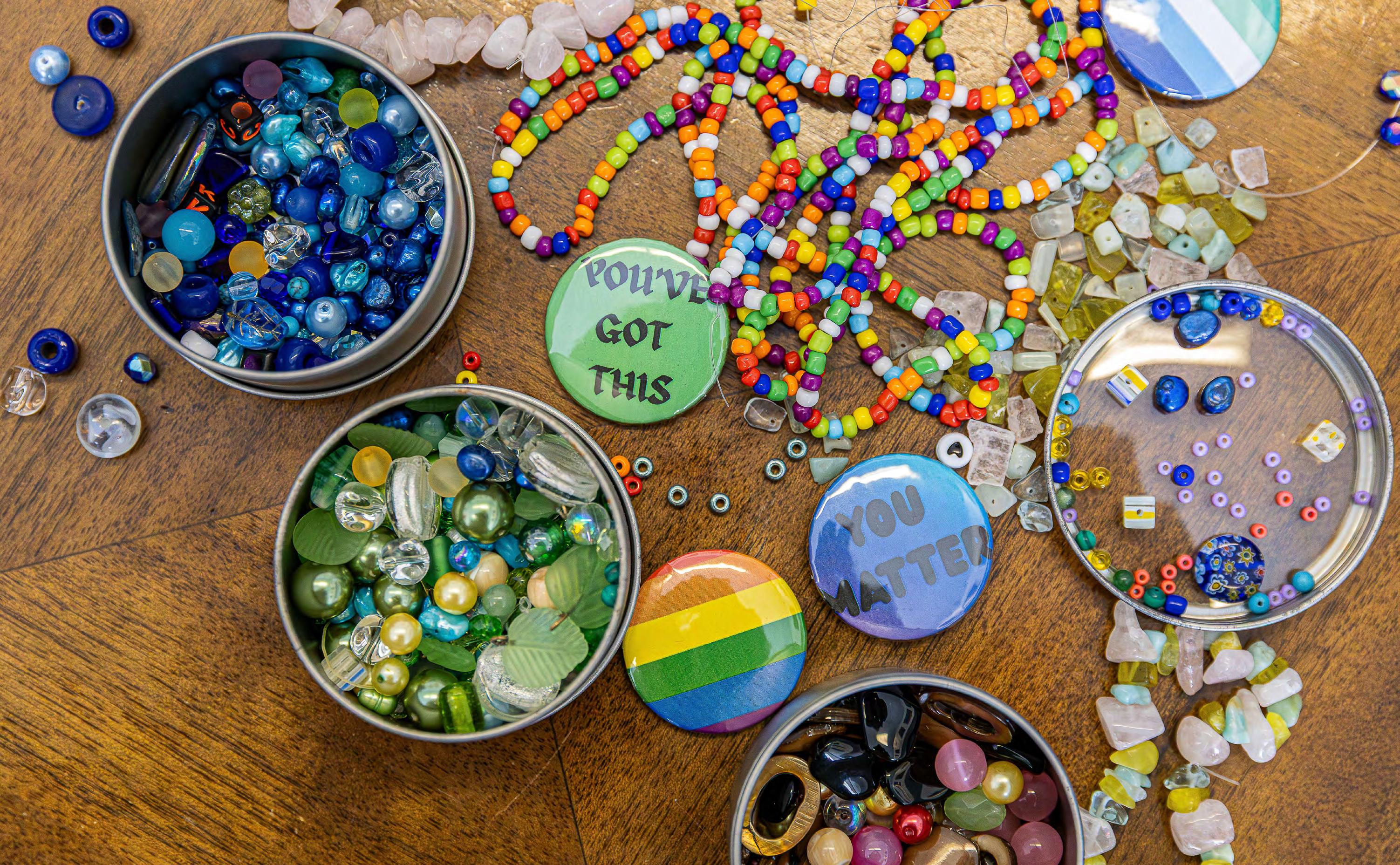
The Sexual Violence Resource Centre (SVRC) hosted its monthly drop-in self-care day on Feb. 26 from 1 to 4 p.m. in 537 University Centre. This offered students, staff and faculty a space to step away from daily pressures and focus on personal well-being.
The drop-in event was structured as an open house, which allowed attendees to come and go as their schedules permitted.
There was a table set with snacks, colouring materials, bracelet-making supplies and button-making equipment, creating a low-barrier environment for creativity.
Sharlaine Glowatsky, SVRC confidential intake and triage
specialist, explained that the initiative was first introduced in July 2025 when many of the community members were processing the outcomes of a high-profile sexual assault case.
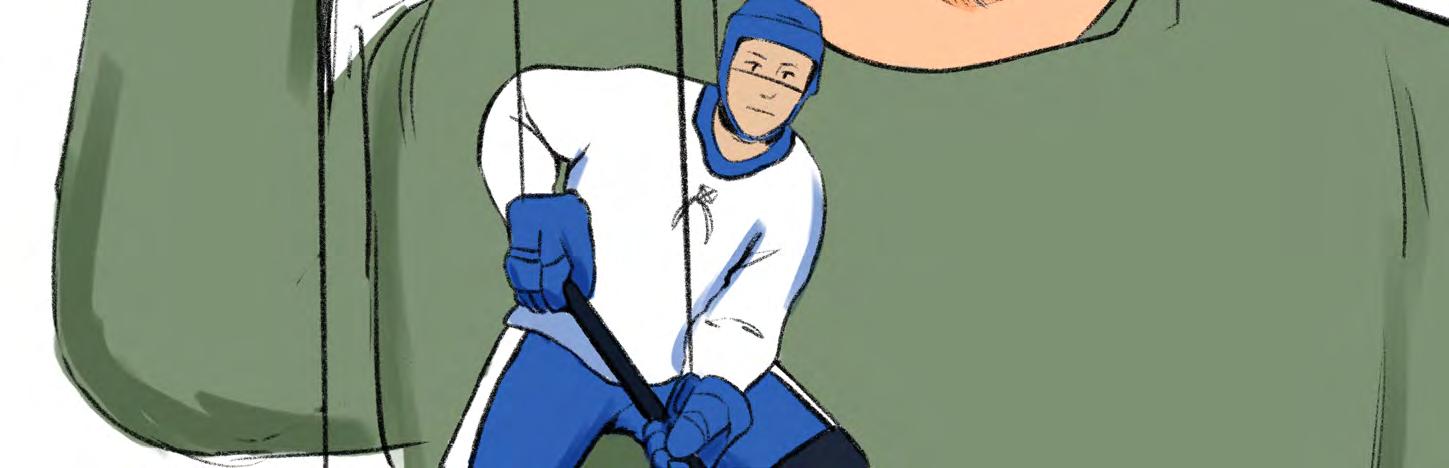
”When the Hockey Canada court ruling was happening […] it happened to coincide with the international self-care day,” she stated. “We decided for that month, for that particular event, we want to make space for folks who might be impacted by however that court ruling ended up happening, and just let folks
know that we care about them and support them.”
Following the initial event, organizers chose to continue the program on a monthly basis beginning September 2025. The gathering is typically scheduled for the
While the drop-in self-care day is currently the centre’s only recurring wellnessfocused event, SVRC has various events that include education and direct support.
“Our centre is open [and] available to all students and staff, and faculty”
— Sharlaine Glowatsky, SVRC confidential intake and triage specialist
third Thursday of each month.
“We open up our space for folks to come sit, hang out, relax[…] just as a way to care for themselves on a monthly basis.”
Workshops offered throughout the year address topics such as healthy relationships and responding to sexual violence. The centre also facilitates men in dialogue groups, which allows a monthly opportunity for men and gender diverse individuals to discuss specific themes in a guided and respectful setting.
Beyond programming, the
centre provides confidential intake and triage services to members of the university.
Glowatsky emphasized that individuals do not need to be certain that their situation falls into sexual violence in order to reach out.
“Our centre is open [and] available to all students and staff and faculty,” Glowatsky explained.
SVRC operates Monday through Friday from 8:30 a.m. to 4:30 p.m., with designated drop-in hours throughout the week.
Community members can contact the centre by phone at 204-474-6562, or by email at svrc@umanitoba.ca.
Ramadan Kareem!
Muslim Students’ Association offers free iftars during Ramadan News 3
Just an expression
Learning to question the source of the gender police in your head
Following the urge to avoid the news is not saving you from it
Sounds good, Sofar
Sofar Sounds returns to Winnipeg to create unique, intimate concerts Arts & Culture 17
Sports 20
Bisons skate through
Cougars lose, Bisons women’s hockey makes nationals
PHOTO BY EBUNOLUWA AKINBO / STAFF
Nafisa Al Lilo, staff


109 HELEN GLASS BUILDING UNIVERSITY OF MANITOBA WINNIPEG, MB THEMANITOBAN.COM | 204. 474. 6535
GENERAL INQUIRIES: ME@THEMANITOBAN.COM
CIRCULATION INQUIRIES: MISSING OR INCOMPLETE PAPER? EMAIL: DISTRIBUTION@THEMANITOBAN.COM
EDITOR-IN-CHIEF Mikaela Warkentin editor@themanitoban.com
BUSINESS MANAGER Alice Teufack accounts@themanitoban.com
BUSINESS SUPPORT MANAGER Joshua Herold ads@themanitoban.com
EDITORIAL
MANAGING EDITOR Peace Ifeanyi me@themanitoban.com
COPY EDITOR Eden Quiring copy@themanitoban.com
COPY ASSOCIATE Mursal Ghiyasi
NEWS EDITOR Roy Albright Obah news@themanitoban.com
RESEARCH & TECHNOLOGY EDITOR Mansura Meghla research@themanitoban.com
COMMENT EDITOR Quinn Mayhew comment@themanitoban.com
ARTS & CULTURE EDITOR Boris Tsun Hang Leung arts@themanitoban.com
SPORTS EDITOR Abdul-Jalilu Ahmed sports@themanitoban.com
DESIGN
DESIGN EDITOR Deveney Jarrow design@themanitoban.com
DESIGN ASSOCIATE Patricia Sanque
GRAPHICS EDITOR Emma Gillich graphics@themanitoban.com
GRAPHICS ASSOCIATE Teegan Gillich
AUDIO AND VIDEO
AUDIO EDITOR Max Reid audio@themanitoban.com
PHOTO EDITOR Mike Thiessen photo@themanitoban.com
PHOTO ASSOCIATE Ebunoluwa Akinbo
VIDEO EDITOR Zulkifl Rafah video@themanitoban.com
DIGITAL MEDIA EDITOR Faisal Rahman social@themanitoban.com
SOCIAL MEDIA ASSOCIATE Paula Robles Andia
REPORTERS
NEWS Arifah Gheesah
NEWS Nafisa Al Lilo
RESEARCH & TECHNOLOGY Nawal Semir
COMMENT Thandeka Katsika
COMMENT Kyra Campbell
ARTS & CULTURE Carrington Dong
ARTS & CULTURE Jordan Anglin
SPORTS Faiyaz Chowdhury
SPORTS Israel Abejoye
VOLUNTEERS
VOLUNTEERS
Mike Chahal
interested in volunteering?
email me@themanitoban.com today!
The Manitoban is the official student newspaper of the University of Manitoba. It is published monthly during the summer and each week of regular classes during the academic year by the Manitoban Newspaper Publications Corporation.
The Manitoban is an independent and democratic student organization, open to participation from all students. It exists to serve its readers as students and citizens.
The Manitoban is a member of the Canadian University Press, and our journalistic standards can be found on the Manitoban’s website.
The newspaper’s primary mandate is to report fairly and objectively on issues and events of importance and interest to the students of the University of Manitoba, to provide an open forum for the free expression and exchange of opinions and ideas and to stimulate meaningful debate on issues that affect or would otherwise be of interest to the student body and/ or society in general. The Manitoban serves as a training ground for students interested in any aspect of journalism.
Students and other interested parties are invited to contribute to any section of the newspaper. Please contact the appropriate editor for submission guidelines.
The Manitoban reserves the right to edit all submissions and will not publish any material deemed by its Editorial Board to be discriminatory, racist, sexist, homophobic or transphobic, ableist or libellous.
Opinions expressed in letters and articles are solely those of the authors. Editorials in the Manitoban are signed and represent the opinions of the writer(s), not necessarily those of the Manitoban staff, Editorial Board or the publisher.
A “volunteer staff” member is defined as a person who has had three volunteer articles, photographs or pieces of art of reasonable length and/ or substance published in the current publishing year of the Manitoban
Any individual who qualifies as a volunteer staff member must be voted in by a majority vote at a Manitoban editorial board meeting. Elected representatives and non-students may be excluded from holding votes as volunteer staff members in accordance with the Manitoban Constitution.
All contents are ©2026 and may not be reprinted without the express written permission of the Editor-in-Chief.
correction: umsu vice president university affairs candidates In its Feb. 25 issue, the Manitoban incorrectly spelled the name of UMSU vice president university affairs candidate Harisharn Bahra.




UMSU BOD meeting highlights
Federal advocacy, campus initiatives and upcoming elections
Arifah Gheesah, staff
The UMSU board of directors meeting on Feb. 26 included updates on federal advocacy such as the Canadian Alliance of Student Associations (CASA) town hall that was hosted on Feb. 5. The town hall covered discussions regarding student housing concerns and engagement with CASA’s Education Builds a Nation petition.
Prabhnoor Singh, UMSU president, shared that UMSU’s Black Students’ Community Centre was recognized by Terry Duguid, MP for Winnipeg South, with a Canada Post stamp dedicated to Marie-Joseph Angélique in honour of Black History Month.
At the municipal level, advocacy has been ongoing
with Winnipeg Transit and the City of Winnipeg to discuss the U-Pass agreement and future considerations. Discussions regarding improvements are still ongoing.
UMSU recently met with Laurie Schnarr, U of M viceprovost (students), and Mark Torchia, U of M vice-provost (learning, analytics, and academic infrastructure), to discuss the creation of a centralized webpage where course syllabi would be publicly accessible to students, alumni and the wider community.
UMSU also met with members of the U of M Campus Planning Office to discuss opening a GPA’s convenience store on the Bannatyne campus.
Carolyn Wang, VP finance
and operations, shared that UMSU will be providing free tax filings for students, given criteria applies. The tax clinic will operate March 17 to April 2 from 9 a.m. to 3 p.m. Students
need to bring their student ID as well as any needed documents. Activities for the UMSU General Elections are ongoing. Voting is scheduled to take
place on March 5 and 6 .
Candidates are tabling across the university and sharing their policies on their social media.
Ramadan brings students together on campus
MSA hosts nightly iftars and prayers at the university
Nafisa Al Lilo, staff
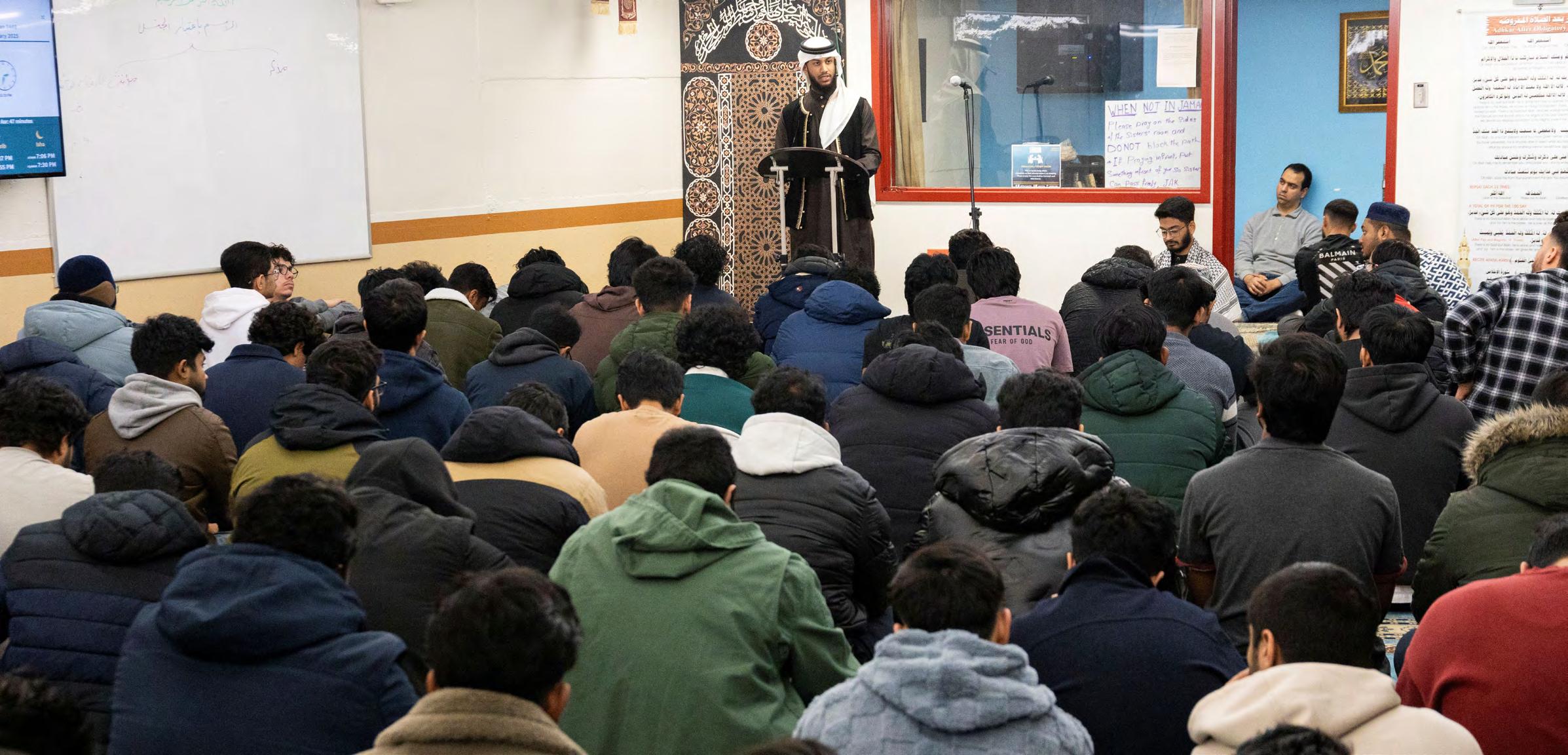
As the month of Ramadan continues at the U of M, the Muslim Students’ Association (MSA) is hosting nightly iftars and prayers, creating a space for students to gather, reflect and break their fast together.
During Ramadan, Muslims fast from dawn until sunset as an act of worship. Each evening, they gather for iftar, which is known as the meal that breaks the fast.
On campus, MSA organizes free iftar every day of the month, along with suhoor, the pre-dawn meal, during the last 10 nights.
Aryan Fida Nur, MSA internal relations manager, described Ramadan as “the best month.”
He explained that one of the reasons MSA is hosting iftar is because “sometimes students […] on campus, [do not] have time to go home and to break their fast.”
According to Fida Nur, the initiative has become a longstanding tradition supported by community sponsors.
“Our
“The iftar is for everyone, for all the students, community members,” he explained. “Even if any non-
during Ramadan.
Ramadan operation would be incomplete and wouldn’t even be possible without our volunteers”
“It happens through our sponsors — we have a very huge number of sponsors who donate the money to serve students.” The meals are free and open to everyone.
“[I’m] making plates for them, making their seating plans, setting up everything so everything works accordingly for the students coming here to have food.”
— Bareera Kamran, MSA secretary and food lead during Ramadan
Muslim wants to […] join.”
Haris Kamran, a civil engineering student and volunteer, also helps MSA
Kamran said that nonMuslims are welcome to attend and observe.
“It is a very good opportunity to learn about […] the routine of a Muslim
in Ramadan and how […] Muslims break their fast,” Kamran explained.
Bareera Kamran, MSA secretary and food lead on the sisters’ side during Ramadan, described the month as a time of increased worship and discipline.
“We make sure that we’re on our best behaviour,” she explained. “We pray five times a day and we try to practice more of our deen and do more religious acts because they are highly rewarded.”
Due to fire safety regulations, attendance at the mosque is limited to 250 people.
“Because of this capacity limit, we have to put a cap on the number of meals we order every day for iftar,” Bareera said.
Bareera expressed appreciation to the volunteers involved in this initiative.
“There’s about 30-35 people that are involved at iftar time every single day that show up to help us with setup, cleanup [and] food serving,” she said.
“Our Ramadan operation would be incomplete and wouldn’t even be possible without our volunteers.”
PHOTO BY EBUNOLUWA AKINBO / STAFF
PHOTO BY EBUNOLUWA AKINBO / STAFF
Shakerah Jones Hall named CBC Future 40 winner
U of M nursing instructor honoured for leadership and community impact
Roy Albright Obah, staff
C
BC Manitoba has announced the recipients of its 2025 Future 40 recognition, an annual award that celebrates individuals under the age of 40 who are contributing to the province in diverse and impactful ways.
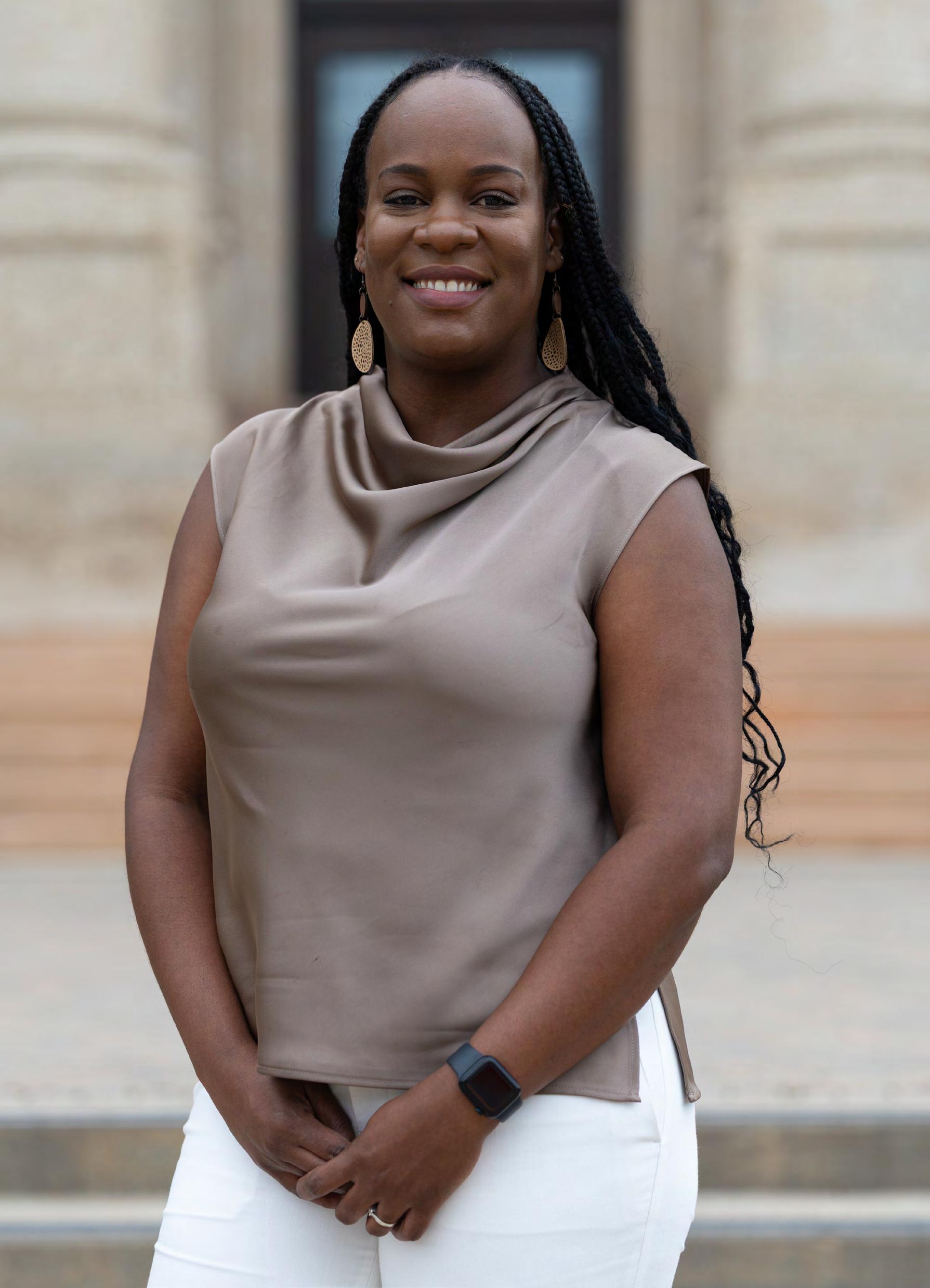
Shakerah Jones Hall, an instructor in the U of M’s college of nursing, was named as one of the eight awardees recognized for their leadership, community impact and commitment to positive change in Manitoba.
Hall said being named in the Future 40 is “incredibly humbling and deeply meaningful.”
“It affirms that work rooted in equity, mentorship and community-building matters,” she said. “I view this recognition as a reflection of the students, families and communities who inspire this work every day.”
Hall serves in multiple capacities at the U of M. She is the faculty mentor for the university’s fellows in the Equity, Anti-Oppression and Social Justice Program as well as the founder and lead of the Canadian Black Nurses Alliance (CBNA) — U of M Chapter, formerly known as the Black and Racialized Nursing Student Support Group.
Hall said her work is “grounded in advancing equity, supporting student success and transforming nursing education to better serve Manitoba’s increasingly diverse communities.”
Hall’s path toward founding a CBNA chapter at the U of
M emerged directly from her experiences as a faculty member in nursing education.
“As I watched students fail courses, repeat clinical placements or leave the program altogether, I felt a deep sense of responsibility to act,” she said.
Without what she described as “a clear blueprint,” Hall developed a proposal and brought it to then-dean of nursing, Dr. Netha Dyck. The proposal was approved, marking the beginning of the U of M’s chapter of CBNA.
Hall said her lived experience as “a Black, racialized immigrant woman” informs her work. “I see myself reflected in many of these students,” she said. “I understand how powerful it is to see people who look like you and who share similar experiences in leadership roles.”
She described her approach to teaching as extending beyond clinical instruction.
“While I teach clinical skills and nursing knowledge, I also teach confidence, advocacy, professionalism and selfworth,” she said.
Hall said she hopes her work will contribute to improved retention and success for Black and racialized nursing students, while also supporting Manitoba’s healthcare system.
The CBC Future 40 recognition, for Hall, serves as both affirmation and motivation.
“[It is] motivation to continue building systems that support a more just and equitable future for Manitoba,” she said.

PHOTO PROVIDED BY SHAKERAH JONES


New Gamma Knife elevates neurosurgery in Manitoba
Upgraded system at HSC increases access, efficiency and treatment capacity
Mansura Akter Meghla, staff
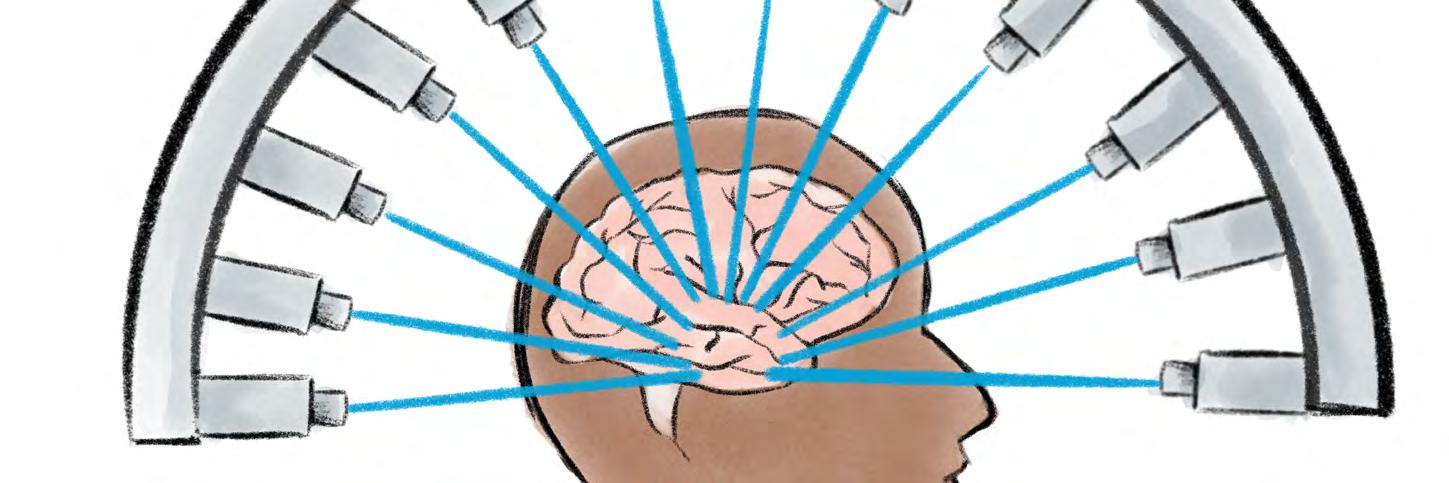
Health Sciences Centre (HSC) Winnipeg has unveiled a next-generation Gamma Knife system, marking a major advancement in minimally invasive brain surgery in Manitoba. The new Elekta Esprit unit, funded through the HSC Foundation’s Operation Excellence campaign in partnership with the Province of Manitoba, replaced an aging system that had reached the end of its service life.
A Gamma Knife is not a traditional surgical instrument.
First developed in Sweden in the 1960s, it is a form of stereotactic radiosurgery that delivers highly concentrated beams of gamma radiation to treat brain tumours, vascular malformations and other neurological conditions without making an incision.
At HSC, more than 5,000 patients have been treated with Gamma Knife technology since its introduction in 2003.
Dr. Anthony Kaufmann, HSC neurosurgeon and co-director of Canada’s first Gamma Knife radiosurgery program, has been closely tied to the technology’s development in Manitoba.
A Winnipeg native and U of M alumnus, Kaufmann completed medical school and neurosurgery training in Manitoba before gaining experience with one of the first commercial Gamma Knife programs in the world at the University of Pittsburgh.
In 2003, Kaufmann and Dr. Michael West helped establish Canada’s first Gamma Knife radiosurgery program at HSC. Since then, utilization has
grown steadily. What was initially projected to serve about 100 Manitobans annually now treats more than 200, reflecting a broader recognition of radiosurgery as an effective treatment option.
The new Elekta Esprit introduces several upgrades over previous generations. According to the press release, it can treat larger tumours and includes integrated CT imaging, which eliminates the need for sameday MRI scans.
Kaufmann explained that this added imaging capability improves scheduling flexibility across the hospital, benefiting not only neurosurgery patients but the broader system.
The system also
replacing the traditional head frame in some cases. This allows for “fractionation,” meaning larger tumours can be treated over several
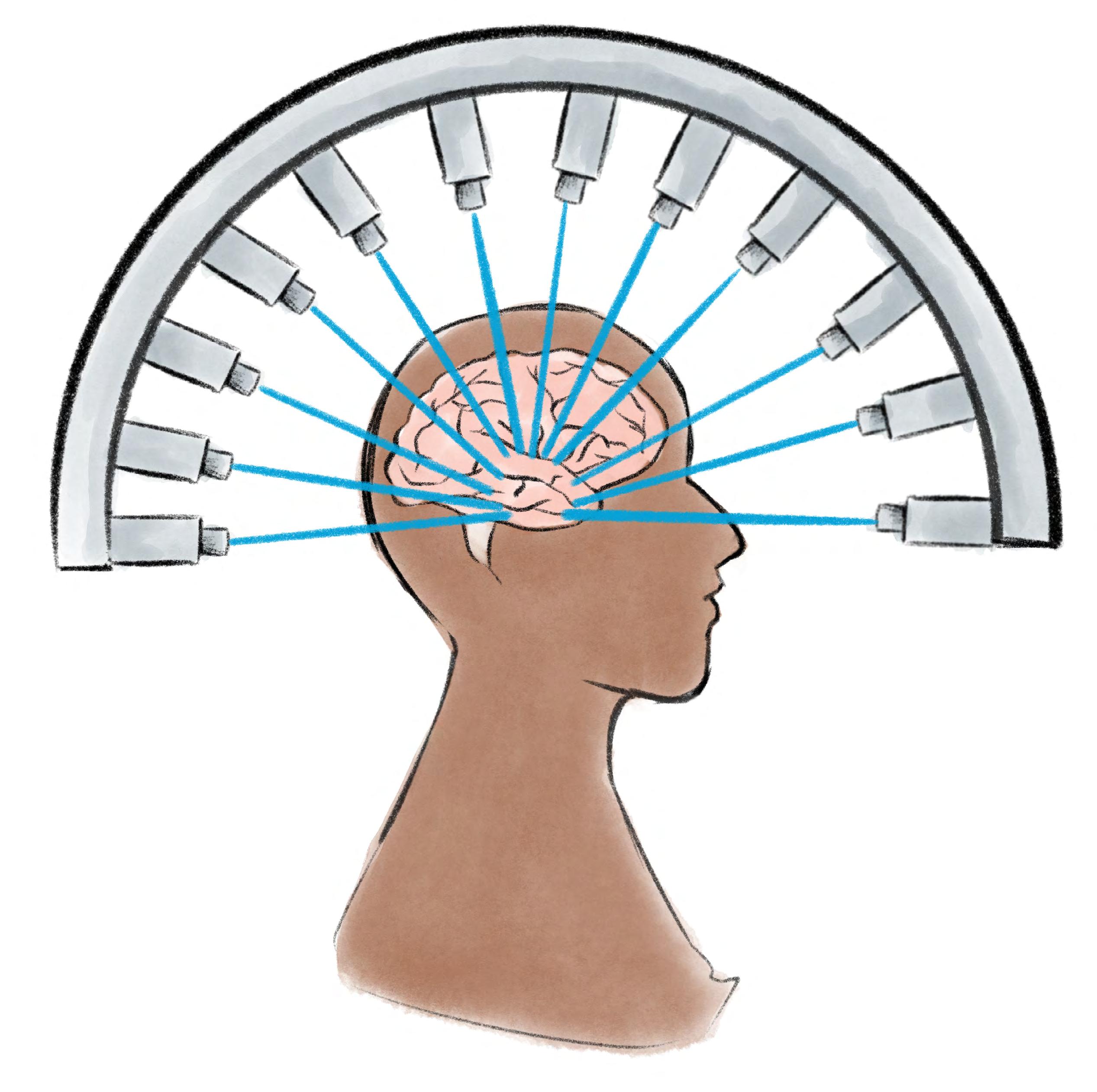
offers a maskbased immobilization option,
sessions instead of a single highdose treatment. “We are able to treat patients with larger tumours compared to before,” Kaufmann explained. “If the tumour is too large, we have to divide that treatment up sometimes into three [to] five treatments.”
Planning efficiency has also improved. Kaufmann noted that the upgraded software allows neurosurgeons to adjust radiation plans quickly and interactively. “With the new technology, we can make those adjustments […] very efficiently using some AI-type technologies that allow us to interact with the computer to make the perfect plan.”
Gamma Knife radiosurgery now accounts
for approximately 20 to 25 per cent of all brain surgery in Manitoba, according to Kaufmann. It is particularly effective for metastatic cancers that have spread to the brain from other parts of the body, such as lung or breast cancer. However, it does not replace open surgery in all cases. Large tumours causing immediate pressure often require conventional surgical intervention, and certain primary brain cancers are not suitable for radiosurgery.
Having the technology in Manitoba reduces the need for patients to travel out of province. Kaufmann emphasized that Manitobans can receive advanced treatment “with the best technology and with one of the largest experiences, over 20 years of experience,” eliminating the need to seek care elsewhere.
Beyond patient care, Kaufmann expressed broader implications for neurosurgery and medical training in Manitoba. He noted that maintaining advanced technology helps recruit and retain skilled neurosurgeons and creates educational opportunities.
“It’s important to maintain a level of excellence,” Kaufmann said. “You want to know that your doctors are not just competent, but they’re actually pursuing excellence.”

GRAPHICBY
EMMAGILLICH / STAFF
The key to a long life or the path to mental turmoil?
Fitness trackers increase anxiety in users as they obsess over health data
Nawal Semir, staff
R
esearch suggests that increased reliance on smartwatches for habitual health monitoring may be increasing users’ anxiety.
Currently there are more than 562.86 million smartwatch users globally, and the smartwatch market is valued at approximately USD $35.29 billion. These numbers are projected to increase in the coming years, with market estimates at US$62.46 billion by 2028 and the global number of users projected to reach 740 million by 2029.
While these figures point to growing global success, the underlying question remains — what is driving this rise?
Modern smartwatches use built-in sensors like GPS and heart rate monitors to collect data about user activity. Each brand uses its own unique software to turn that information into personalized health metrics that can be understood by users.
With this data, users can monitor their physical activity, blood and oxygen levels, sleep and even heart health. Doctors admit to the benefits of using this wearable technology, especially for patients experiencing occasional heart symptoms.
In the era of “gymfluencers” and increased health consciousness, wearable technologies that make health data available at our fingertips or at the flick of the wrist are a key to elevating our quality of life. According to Apple CEO Tim Cook, some features on smartwatches, such as fall detection, can even save lives.
One 2024 study hints at the affective capabilities on users’ morale, finding that the devices are capable of “fulfill[ing] a motivational void.” Research also shows that wearable fitness trackers not only make users more likely to start working out, but also make them seven times more likely to continue with their fitness regimen six months down the line. Smartwatches can thus boost users’ morale, increasing
physical health.
Despite all the benefits smartwatches may bring to our physical health, the negative impacts on mental health are underexplored.
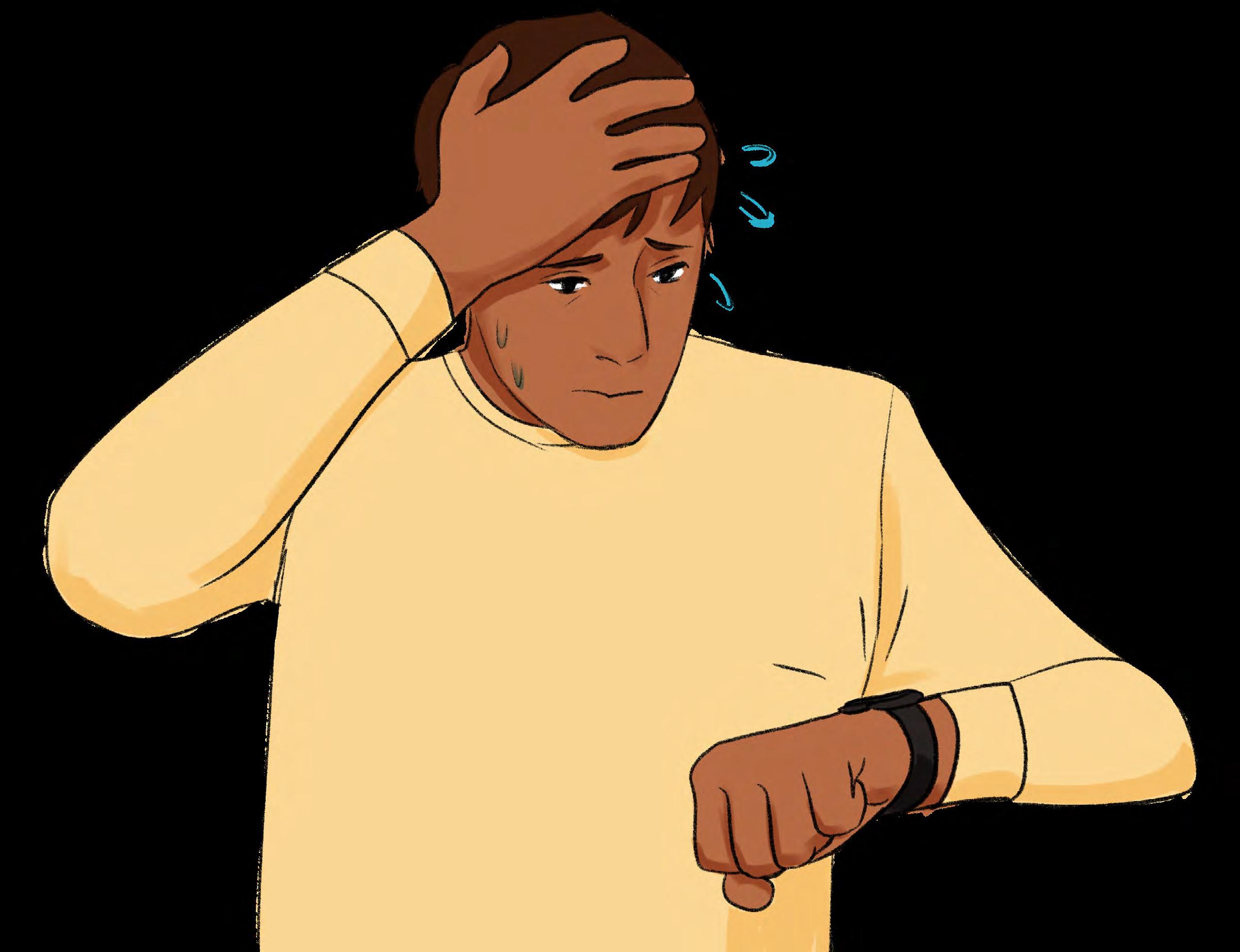
While knowing one’s body and the changes occurring to it is important, the provision of real time data — notifications about decreased health, productivity or sleep — may create anxiety in users.
In a study published by the Journal of the American Heart Association, 172 individuals with atrial fibrillation (an irregular and rapid heart rhythm) were monitored over a nine-month period. Eightythree of these individuals tracked their condition using smartwatches.
The study found that the cohort of smartwatch trackers expressed increased

anxiety about their symptoms compared to the cohort that did not. In addition, one in five users expressed anxiety because of their usage.
The information overload that wearables provide may also result in alert fatigue — desensitization caused by the mental exhaustion stemming from an overwhelming amount of notifications. In the healthcare sector, alert fatigue is already a growing concern. Increased accessibility to data and notifications encouraging more frequent consultations with physicians can cause frustration in users, resulting in an increase in ignored warnings.
For users free of diagnosed health conditions, the notifications smartwatches provide can also, at times, be a nuisance. Sleep and
productivity insights, for example, often inform pregnant women and new mothers of what they already know — notifying them that they are not getting enough sleep or that they are not productive enough.
Upon cancelling their subscription to WHOOP, a fitness tracking wearable, one Reddit user shared their experience on how their fitness tracker turned them into “an anxiety trigger” in just a few months. They explained that they tracked every aspect of their health including sleep, recovery and performance. However, within a few months, they became oddly obsessed with their heart rate.
The user would track their heart rate during and after workouts, staring at their
watch for extended periods. This constant tracking created a never-before-held anxiety in the user, prompting them to “let go of the band and move on.” The user issued a warning to readers. “These tools can be helpful — but only if you know how to use them without letting them use you.” The Reddit user’s experience is not isolated, many under the thread echo the same warning.
For those already struggling with health anxiety, smartwatches are not tools to improve physical health, but rather tools that feed into existing fears and delusions. In any case, the physical benefits of tracking one’s fitness with a smartwatch may not outweigh the mental consequences for some.
GRAPHIC BY EMMA GILLICH / STAFF
How spaces choreograph for us
Who sets the volume on gender expression?
Peace Ifeanyi, staff
How much of our gender expression is choice, how much is choreography?
In the fall of 2025, I spotted someone on campus whose clothing seemed unusually bright, in contrast to the subdued and “calm” hues of a Winnipeg semester. The colours were vibrant and the makeup deliberately loud. The contrast was stark. My first thought was simple — that’s too much.
I didn’t say it out loud. But I recall my reaction was immediate.
A few months later, at a conference dinner, I found myself wearing a gown. Now, I am usually a jeans-shirt-andsneakers person, confident in understated comfort. But that evening carried its own expectations. I let a friend style me. I wore the makeup. I put on the heels. The compliments came and I did not feel out of place. If anything, I smiled all through the event, even though I had felt and complained many times to her that “it was too much.”
Two different places. Two different required scripts. But, for both, gender felt less like an instinctive self-expression and more like a choreography — something we ought to follow.
We sometimes discuss gender as if it can be a pure expression and arises from authenticity. Be yourself. Dress how you want. Show up as you are. And yet, most of us intuitively understand that not every version of ourselves fits every room.
Campuses have a distinct aesthetic vibe. And from my observation, in Winnipeg’s fall, the vibe is practical — neutral colours, denim, hoodies and sturdy, functional shoes built for changing weather. The atmosphere is relaxed, casual and almost utilitarian. Against that backdrop, brightness reads loudly — not necessarily wrongly, but noticeably.
On the other hand, I think dinner parties operate at a higher pitch. They welcome elevation. Glamour is not excess there, it is alignment. For example, in my case, a gown and makeup did not disrupt the room — rather, they blended in with the space. But that alignment was learned, acquired, encouraged through persuasion and reassurance — “Hey, Peace, it’s not too much. It’s just right. It’s appropriate. You look good. Enjoy it.”
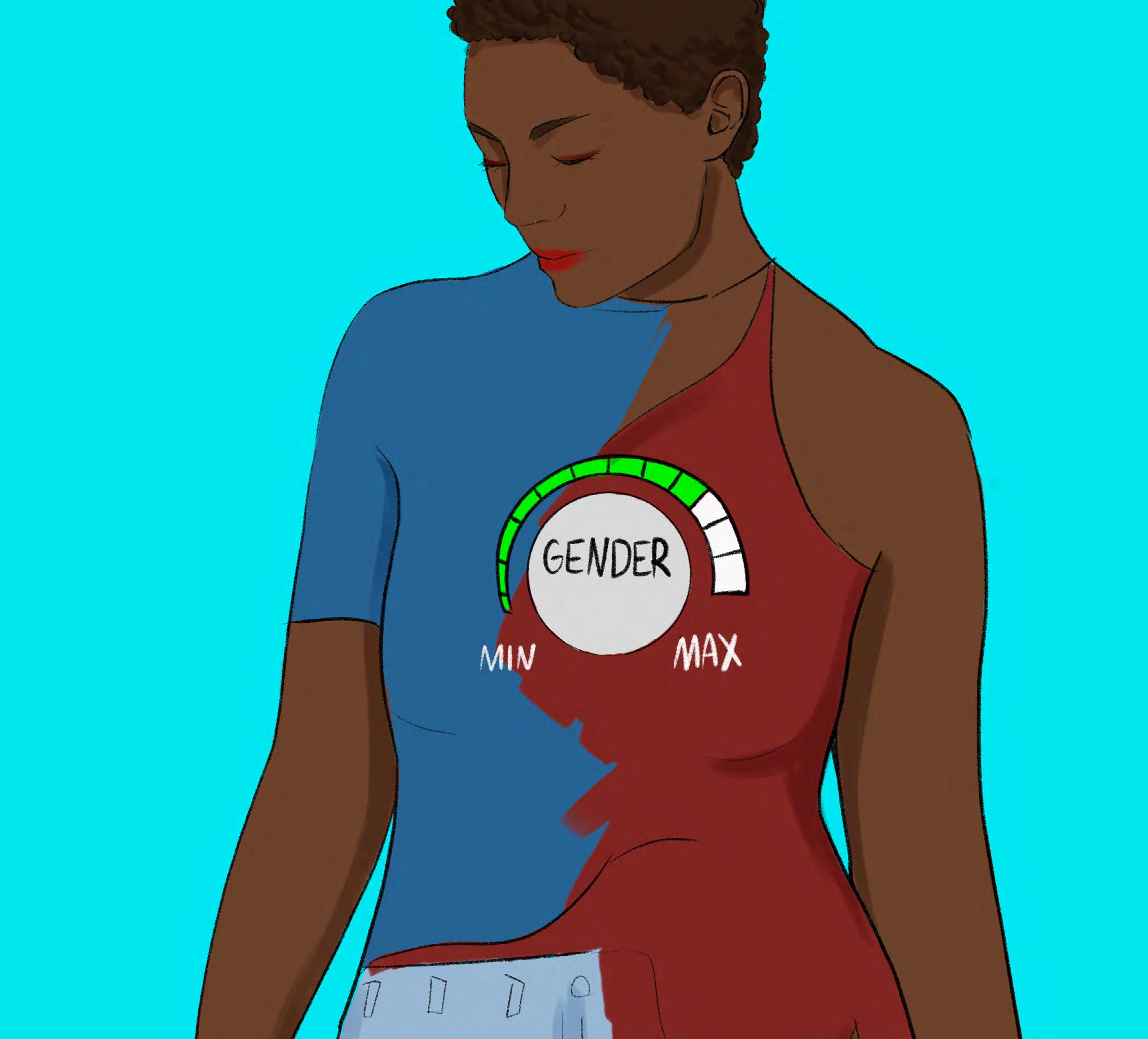
What unsettled me about my own reaction to the fall campus event, upon reflection, was not the brightness of the clothing. It was the speed with which I recognized and registered it as misaligned. As though I carried, unconsciously, a mental decibel scale for acceptable presentation. As if I knew, without ever being told, how loudly or not femininity, in this case, should speak in a particular space.
That realization forced a harder question — who sets that volume? Why did I think that way?
pretend clothing and gender presentation are exempt from that same negotiation.
But acknowledging performance is different from interrogating its pressure.
At the conference dinner, no one forced me into a gown. I agreed, although not without some convincing and a few moments of checking the mirror. I was also curious to see myself differently. I
because I came to understand the script. This is not to say that wearing my usual pants and sneakers would have made me feel out of place. But I would have been. The room had a clear aesthetic, and my gown aligned easily with it.
And perhaps that is the point. Scripts are rarely written down. They are absorbed. We learn without noticing how much effort a space rewards. How much brightness it tolerates.
“And perhaps that is the point. Scripts are rarely written down. They are absorbed. We learn without noticing how much effort a space rewards”
Sociologist Erving Goffman described social life as a series of performances, with each of us managing impressions depending on the stage we occupy. We adjust tone, posture and even vocabulary depending on whether we are in a classroom, at a job interview or at dinner with new faces. It would be naive to
enjoyed the affirmation. Yet it would be incomplete to ignore that the invitation to “switch it up” was gendered. I was not advised to explore with androgyny or go further into my comfort zone. The expectation of the evening leaned in one direction — a more feminine, more polished, more visible direction.
I complied — not because I lacked confidence, but
How much deviation it registers. Over time, we learn what seems expected the next time we enter a similar room, what belongs and what feels out of place.
The individual I noticed in the fall did not violate a rule. There was no dress code. Vibrant colours and elaborate pinky makeup that matches your pink outfit are not prohibited. The only thing disrupted was harmony. The quiet, collective agreement
about how campus typically looks. My reaction revealed that I, too, am attuned to that harmony.
So maybe the issue is not that someone was “too much.” Maybe it is that we are deeply trained to detect when someone exceeds the “aesthetic expectations of a room.” And perhaps that reveals more about us than about them. If gender is self-expression, then it is also social negotiation. It moves between authenticity and adaptation. Between environment and instinct. Between who we think we are and who a room invites us to become.
We all perform in various ways, therefore the question is not whether we should. The question is whether we recognize how frequently the performance is subtly staged for us, and if we ever stop, midjudgment or mid-adjustment, to ask — is this what I want to express or what this space has choreographed for me?
GRAPHIC BY EMMA GILLICH / STAFF

Diversions
To complete Sudoku, fill the board by entering numbers 1 to 9 such that each row, column, and 3x3 box contains every number uniquely. In Straights, like Sudoku, no single number 1 to 9 can repeat in any row or column. But rows and columns are divided by black squares into compartments. Each compartment must form a “straight.” A straight is a set of numbers with no gaps but it can be in any order, eg [7,6,9,8]. Clues in black cells remove that number as an option in that row and column, and are not part of any straight. Glance at the solution to see how “straights” are formed.
Spiraling
Mike Chahal, volunteer
Circling back
Again and again
Like a howling wind
Moaning in spirals
Through dark Dense trees
Until deadened
Like hollow air passing through A sighing
Dying trumpet
In the river’s rushing mouth I see half-sunken stones
Who all share
The same face
Carved out
From the water’s whip
They wade
Through stagnant hopes
And as I sit and watch
The river’s long arms
Cradling everything
Away from view
I find nothing
Brings the day more to an end
Than feeling
Like it never began
Looking off
To where my horizon ends I know
Another begins
And over there
Somewhere else
Someone Is moaning in spirals And walking
Through dark Dense trees
Poets’ Corner Do


Straights Puzzle by Signdicated Puzzles Puzzle by Signdicated Puzzles
Sudoku Sudoku Solution