Wickenheiser's path of destruction






Quinn Riche R t, staff
The Manitoba Court of Appeal recently ruled that the commission overseeing the inquiry into the death of Phoenix Sinclair is not obligated to release witness interview transcripts to lawyers representing Manitoba Child and Family Services (CFS).
The transcripts come from 85 interviews with potential witnesses to the inquiry and total approximately 12,000 pages.
CFS representatives were originally supplied with summaries of the transcripts. Upon requesting the release of the actual documents, commissioner Edward Hughes refused.
While CFS authorities argued that release of the transcripts is “required pursuant to the Commission’s own Rules of Procedure and Practice and pursuant to the principles of natural justice and procedural fairness,” the Commission of Inquiry insisted the transcripts could not be released because interview participants had been promised confidentiality.
Furthermore, commission officials insist that the release of the documents would have severely delayed proceedings, possibly for several months.

on Oct. 29.
The Commission of Inquiry into the Circumstances Surrounding the Death of Phoenix Sinclair was announced on March 25, 2011 by Attorney General Andrew Swan. Its mandate is to “inquire into the child welfare services provided or not provided to Phoenix Sinclair and her family under The Child and Family Services Act ; any other circumstances, apart from the delivery of child welfare services, directly related to the death of Phoenix Sinclair; and why the death of Phoenix Sinclair remained undiscovered for several months.”
By seeking answers to those questions, the inquiry aims to find ways to “better protect Manitoba children” under the Child and Family Services Act
will also attempt to understand how it came to be that Sinclair’s disappearance went unnoticed for months.
Phase one is expected to run until the end of December, according to commission counsel Sherri Walsh, as stated in a court transcript from the opening day of the public proceedings.
The ruling by the Manitoba Court of Appeal, the province’s highest court, declared that the commission was not required to release the documents on the grounds that the summaries supplied to CFS were sufficient to meet standards of “procedural fairness.”
the development of the Commission Rules and made no objection to the disclosure being provided by the way of summaries.”
Additionally, the ruling stated, “The parties never expected to receive more than summaries of the witness’s evidence. They were fully involved in
The ruling is expected to set the inquiry into motion again soon. According to CTV news, a meeting was held between the parties to decide when the inquiry will resume
The commission began public inquiry hearings on Sept. 5 of this year, but those were halted on the Sept. 7 in order for the disagreement over the interview transcripts to be brought before the Court of Appeal.
The inquiry is divided into three phases. The first, when it resumes, will attempt to determine, through cross examination of CFS workers involved in Phoenix Sinclair’s case, what care she was and was not being provided by the agency. This phase
a lycia Rod Rigues, staff
T
he evidence portion of the inquest into Ashley Smith’s death will commence on Jan. 14, 2013, after years of motions to inquire into the case behind her death.
In 1997, Smith choked herself to death with a strip of cloth after a year of solitary confinement in the Grand Valley Institution of Kitchener, Ontario. The women’s institution is one of many Correctional Services Canada (CSC) correctional facilities, which opened its doors in 1997 to hold up to129 inmates.
Legal battles have been fought over whether the public should continue having access to videos of the treatment that Smith endured at the facility. Dr. John Carlisle, presiding coroner, was asked by federal correctional authorities to ban disclosure of the shocking videos to the public.
Julian Falconer, the representative who speaks on behalf of the Smith family, was in opposition to the gov-
ernment’s request. He argued that the government is trying to cover up the treatment of Smith.
“The essential question is what the various doctors and prison officials in the various provinces did to Ashley,” said Falconer.
The videos show Smith being restrained for hours at a time, at one point left wet and cold, with no food or water.
Recent court rulings denied the request for the videos to be blocked.
Lawyers working in defence of Smith believe that Smith’s case should include her whole time of incarceration as she was moved 17 times within institutions. Three psychologists who worked with Smith outside of the Ontario institution were contacted, but maintain the position that the case should stay within the realms of the Kitchener institution.
Kim Pate, head of the Canadian association of Elizabeth Fry Societies,
stated the importance of the case being released to the public due to the fact that there are many inmates in similar situations.
“Increasingly we’re cutting resources in the community and (incarcerating) individuals who should never end up in prison [ . . . ] We continue down the path of criminalizing and imprisoning people who really have other issues,” Pate told the CBC.
CSC claims that providing safe and secure facilities for both staff members and offenders is one of their central responsibilities. The CSC website states their goal is to amalgamate offenders within society as responsible, law-abiding individuals. In order to do so, they claim to provide a safe environment with appropriate treatment, programming, and essential healthcare. CSC states that part of this essential treatment is directed towards those with mental illness in order to reduce self-harm and risk that
these individuals may pose to others.
“Every day, thousands of correctional staff across the country interact with more than 13,000 incarcerated offenders in efforts to assist them with their rehabilitation and intervene when they are in distress,” states the CSC website.
In 2001-2005, there were 82 deaths not due to natural causes. The volume of high-need offenders is large and offenders often have drug, alcohol, and mental health issues. CSC claims to issue of unnatural deaths while in custody.
CSC states that they have taken preventative correctional steps since the death of Smith in 2007. Forums were held in 2009 to discuss deaths while in custody and to explore the relationship between mental health and the criminal justice system.
Smith was diagnosed with learning disabilities as a teenager but was unable to receive the proper help or
Phoenix Sinclair was murdered on June 25, 2005, on Fisher River First Nation at the age of five. Her body went undiscovered for nine months, until it was uncovered near Fisher River landfill wrapped in plastic. Sinclair’s mother, Samantha Kematch, and stepfather, Karl McKay, who led police to the site where Sinclair’s body was buried, were convicted of her murder in 2008. Evidence at their trial showed that Sinclair was subjected to years of abuse, including being shot with a pellet gun and being forced to eat her own vomit. Post-mortem examination of her body revealed “numerous new and old fractures, indicating a pattern of violence against her,” according to the Winnipeg Free Press According to inquiry transcripts, Kematch and McKay were both contacted by Walsh and asked, “whether they wanted to seek standing to participate in [the] inquiry,” but both parties declined.
necessary treatment. Her mother stated that Smith had multiple run-ins with the law as a result of her inability to grasp the consequences of her actions. Smith was initially incarcerated for pelting a local mailman with crab apples. She was moved between several institutions and videos of brutal treatment surfaced while she was incarcerated.
Videos show the guards using physical force, pepper spray, and a cocoon-like wrap in order to subdue the girl. Smith is shown to have complete resistance to the authorities. The cycle perpetuated throughout her incarceration and Smith became more resistant and volatile as her treatment became worse.
This is not the first time an inquiry into the Smith’s death has been requested. The first attempt was shut down after the coroner on the case, Dr. Bonita Porter, retired after months of legal battles.
editor-in-cH ief Ryan Harby
editor@themanitoban.com / 474.8293
BuSineSS manager Foster Lyle accounts@themanitoban.com / 474.6535
advertiSing coordinator Arynne McMurray ads@themanitoban.com / 474.6535
e dito R ial
Senior n ewS editor Rachel Wood rachel@themanitoban.com / 474.6770
n ewS editor Jill Patterson jill@themanitoban.com / 474.6770
comment editor Spencer Fernando comment@themanitoban.com / 474.6529
managing editor Chuthan Ponnampalam me@themanitoban.com / 474.6520
Science & tecH nology editor Bryce Hoye science@themanitoban.com/ 474.6529
artS & culture editor Kara Passey artsculture@themanitoban.com / 474.6529
SPortS editor Marc Lagace sports@themanitoban.com / 474.6529
coPy editor Grace Romund copy@themanitoban.com/ 474.6520
d esign
deSign editor Aichelle Sayuno design@themanitoban.com / 474.6775
graPH icS editor Silvana Moran graphics@themanitoban.com / 474.6775
PHoto editor Beibei Lu photo@themanitoban.com / 474.6775
deSign aSSociate Beibei Lu photo@themanitoban.com / 474.6775
graPH icS aSSociate Bradly Wohlgemuth bradly@themanitoban.com / 474.6775
Repo Rte R s
n ewS Alycia Rodrigues
n ewS Quinn Richert
Science Tom Ingram
artS & culture Jodie Layne
artS & culture Jenna Diubaldo
SPortS Derek Gagnon
aSSiStant coPy editor Carlyn Schellenberg
Voluntee R contR ibuto R s Adam Peleshaty, Ian T.D. Thomson, Brandi M. Shabaga, Justin Ladia, Emilie St. Hillaire, Lauren Boulet, Will Gibson, Mathieu Boulet, Caroline Norman, S. Arden Hill, Michelle Saromo, Dany Reede
105 UNIVERSITY CENTRE
UNIVERSITY OF MANITOBA WINNIPEG, MB R3T 2N2
General Inqu I r I es & a dvert I s I n G
Phone: (204) 474.6535
Fax: (204) 474.7651
Email: manitoban@themanitoban.com
n at I onal & Mult I -Market a dvert I s I n G Campus Plus Media Services
Toll-Free (In Canada): 1.800.265.5372
Email: info@campusplus.com
Canadian Publications Mail Product Sales Agreement #589160
A “volunteer staff” member is defined as a person who has had three volunteer articles, photographs, or pieces of art of reasonable length and/or substance published in three different issues of the current publishing year of the Manitoban. Any individual who qualifies must be voted in by a majority vote at a Manitoban staff meeting. Elected representatives and non-students may be excluded from holding votes as volunteer staff members in accordance with the Manitoban Constitution. The Manitoban is the official student newspaper of the University of Manitoba. It is published monthly during the summer and each week of regular classes during the academic year by the Manitoban Newspaper Publications Corporation.
The Manitoban is an independent and democratic student organization, open to participation from all students. It exists to serve its readers as students and citizens.
The newspaper’s primary mandate is to report fairly and objectively on issues and events of importance and interest to the students of the University of Manitoba, to provide an open forum for the free expression and exchange of opinions and ideas, and to stimulate meaningful debate on issues that affect or would otherwise be of interest to the student body and/or society in general. The Manitoban serves as a training ground for students interested in any aspect of journalism. Students and other interested parties are invited to contribute to any section of the newspaper. Please contact the appropriate editor for submission guidelines. The Manitoban reserves the right to edit all submissions and will not publish any material deemed by its editorial board to be discriminatory, racist, sexist, homophobic or libellous. Opinions expressed in letters and articles are solely those of the authors. Editorials in the Manitoban are signed and represent the opinions of the writer(s), not necessarily those of the Manitoban staff, Editorial Board, or the publisher. All contents are ©2012 and may not be reprinted without the express written permission of the Editor-in-Chief. Yearly subscriptions to the Manitoban are available for $40.
Ka R a passey, staff
When I was growing up I managed to avoid a lot of stereotypes and social constructs about my gender. I had a pretty healthy balance; I played with both dolls and action figures, I loved my Fischer Price kitchen and my pirate Lego set, I hated the colour pink but boy, did I ever love my Cyndi Lauper cassette tape.
Most of my friends growing up were boys and I will admit that they influenced a lot of my interests and behaviour growing up –young boys are just conditioned differently, and lucky for me I have awesome, supportive parents that never told me that I couldn’t do something just because “it’s for boys.” But one thing that I found myself hating and unwilling to try was science fiction, and when I look back at it the only real reason for it is that science and adventure are targeted towards boys, and I let that social construct keep me away from them.
This past summer I fell victim to the Doctor Who fandom – like, really fell. I have a TARDIS iPhone case and my ringtone is the sonic screwdriver noise. Maybe I gave it a chance because so many people are gushing about how adorable David Tennant and Matt Smith are on Tumblr all the time— plus who doesn’t love British television—but what kept me watching was how progressive it often is.
Here is a confession: I am the annoying feminist friend that critiques your favourite media.
I’m always calling out sexist song lyrics, stereotypical adverts, and pointing out when movies don’t pass the Bechdel Test (Does the movie have at least two women in it? Do they talk to each other? Do they talk about something other than a man?). Although I should add that it is okay to like problematic things, I just like to be critical and understand why they are problematic and then try to learn from the behaviour portrayed.
I found myself obsessing over Doctor Who; the casting of people of colour, the companions who are adventurous, smart women, and also the casual queerness that pops up and never shocks anyone, ever. Now, the show doesn’t pass the Bechdel Test—even if there is more than one woman in an episode, they are always talking about the Doctor, and even though the Doctor has regenerated eleven times, he has always been a white man—but the show sheds light on a future world where issues of race, gender, and sexuality are just not relevant anymore. Maybe it is not that we progressed past racism and prejudice, even just for survival of humankind—it could be argued that the world is just so much more complex when humans are no longer the dominant species and thus those issues became obsolete—but gosh the idea of such a world sure is alluring.

the only show I’m excited about for these reasons. After a drunken conversation in my kitchen with friends about feminism, Joss Whedon, Star Trek, and the like, I decided compile a list of highlights in hopes that it may encourage some other skeptical ladies to take a closer gander at sci-fi.
1. Captain Jack Harkness
I’m always calling out sexist song lyrics, stereotypical adverts, and pointing out when movies don’t pass the Bechdel Test. Does the movie have at least two women in it? Do they talk to each other? Do they talk about something other than a man?
2. Dollhouse
I would need much bigger platform than an editorial in the Manitoban to delve into the politics of Doctor Who —there are also writers out there much more apt than I, just check out doctorher.com—and it isn’t even
Originally from Doctor Who, Capt. Jack has his own more adult-oriented spin-off series called Torchwood and he is possibly the first and only queer sci-fi hero on a children’s TV show. Capt. Jack is the ultimate pansexual—it doesn’t matter if you are man, woman, or even human—and his character breaks all stereotypes of queer men being weak while providing a diverse representation of the queer community on television.
A short-lived, 26-episode Cyber Punk show by Joss Whedon about human “actives” or “dolls” who have been wiped clean of their own personalities and receive new personalities tailor-made to suit the customers of the Dollhouse. The show is interesting from a body politics point of view – there are a lot of
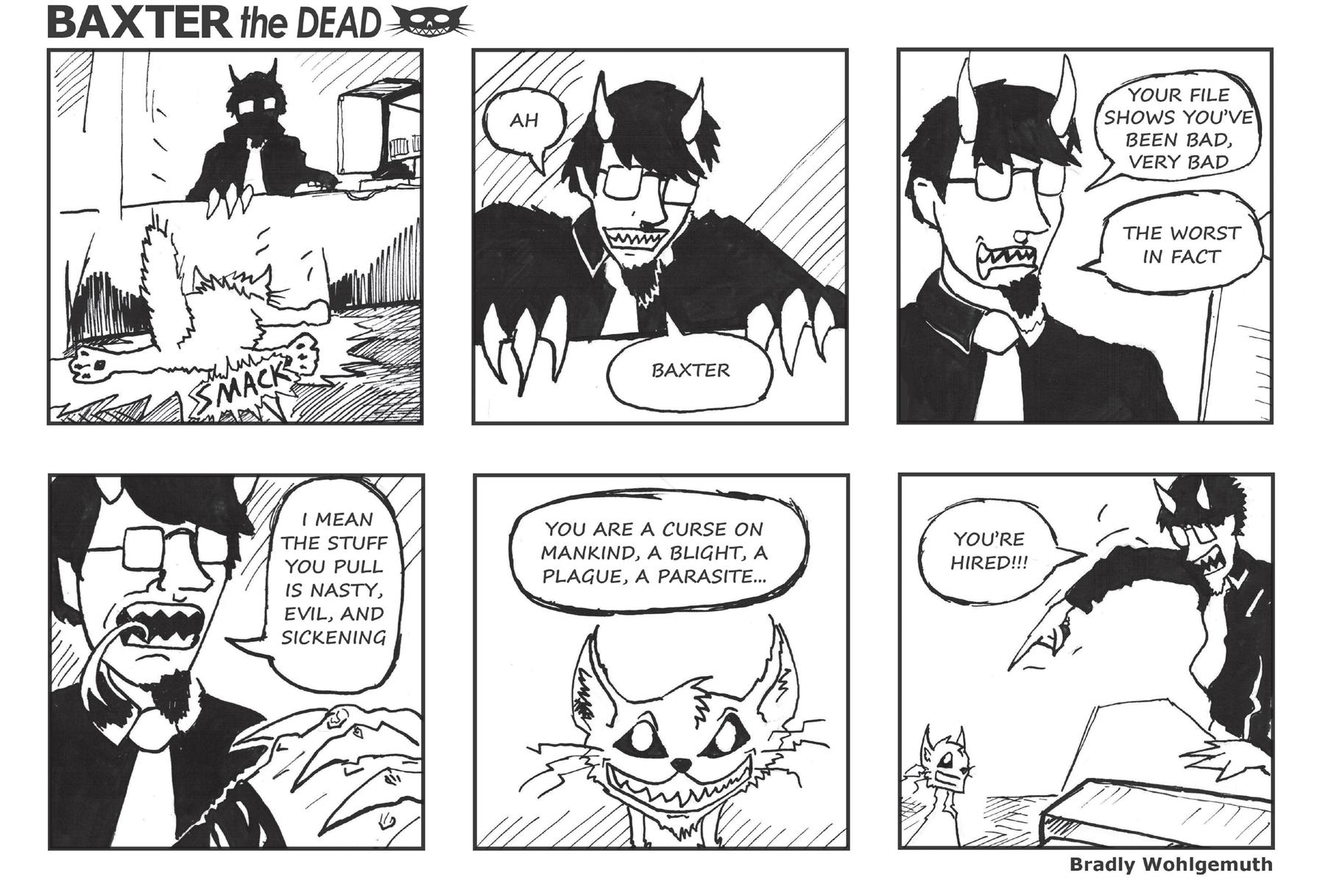
iLLustRatiON by bRadLy WOhLgemuth
troubling themes of transhumanist human trafficking and prostitution, as well as issues of consent where signing away use of your body legally is concerned.
3. Lieutenant Nyota Uhura
The communications officer aboard the USS Enterprise, played by Nichelle Nichols, was the first major, non-stereotypical role played by a black woman on television the 1960s. At first, Nichols was unaware of the importance of this role, and being unhappy with it wanted to leave after the first season. Dr. Martin Luther King personally urged her to stay with the series and she did, only to break history again with the first televised interracial kiss between Uhura and Kirk.
4. Firefly
It is often argued that men aren’t capable of writing good (complex, multi-dimensional) female characters, but Joss Whedon at least comes close. Firefly is an American space Western television series that follows the adventures of the crew of Serenity, a “Firefly-class” spaceship. The show passes the Bechdel Test, is queer friendly, racially diverse, and also provides a commentary on sex workers/prostitution.
Like any genre, science fiction still has a lot of faults – the progressive politics I’m talking about here are only kind of sneaking in the backdoor. But I’m pretty irked by the idea that I was avoiding an entire genre because of some idea that having a vagina would keep me from liking it. That in its own is a pretty unsettling thought; please, please don’t avoid trying something new because a societal construct about your gender tells you not to.


behind the times on U-Pass issue
gR ace Romund, staff
Getting to and from the university is an element of the educational process that nearly every single student must take into account when budgeting their expenses. Being a university student is expensive enough as it is, why wouldn’t we want to cut the costs of commuting, too?
When I arrived on the U of M campus this year, all I could think of upon hearing that there was no U-Pass system was that I had returned to the Dark Ages of universities and university student unions.
I completed my undergraduate degree at the University of the Fraser Valley (UFV), in Abbotsford, BC. UFV’s Student Union Society helped to develop and institute UFV’s U-Pass system over four years ago.
UFV is one of over a dozen universities in BC that have versions of a U-Pass system that subsidizes the cost of public transportation so university students can commute more affordably.
Meanwhile, in Manitoba both the University of Manitoba and University of Winnipeg’s student unions have been unable to make it happen.
Throughout my entire undergraduate degree I used my U-Pass to get to and from my classes, to get groceries, and to attend community events. I did all these things for a fraction of the cost I would have if I had had to pay the going rate for monthly public transit passes.
Of course, I am not blind to the argument that there are those students who own vehicles and would prefer to spend the money on gas and insurance to have the convenience of driving to school. However, if you are an out-of-towner or far from public transit options and prefer to drive, I know for a fact that you are not exempt from the cost of paying to park at the U of M.
There are 12 park-and-ride locations offered by Winnipeg Transit, one of which is located quite near the U of M by bus. You could save on the cost of parking at the university by taking the bus that short distance between the free park and ride and the university – the cost of the bus ride subsidized by the U-Pass system.
While someone might say that no one would take the extra effort to save on parking, I know that they would. I had several vehicle-owning university student friends
who would drive in from out of town, park at a park-and-ride, and arrive at the university on the bus, thus saving themselves money on parking expenses and saving themselves the aggravation of trying to find a parking spot even remotely near where they needed to be on campus.
The costs associated with the proposed U-Pass system in Winnipeg is the largest point of contention for most students, especially those who don’t use public transit. For those who do use public transit, the cost of the U-Pass per semester would be minimal compared to $61.60 they are already paying to Winnipeg Transit every month for their university student transit pass.
Those who don’t use public transit will be subsidizing the cost of those who do use public transit – and this makes many vehicledriving university students angry. To this I must ask: why is it only in this instance you are making such a fuss?
U of M student members of the University of Manitoba Students’ Union (UMSU) currently pay approximately $90 per semester to UMSU and yet only 7.3 per cent of those students voted in the current UMSU executive in March of this year. One, you have no right to complain about what UMSU is doing right now if you were a student, but didn’t vote in March. And two, people pay for things they don’t use to their full potential all the time.
The fact of the matter is there are systems put in place at the university that cost money, but they are deemed to be for the greater good of university students, and so if you don’t want to come out and play – that’s on you.
Given the success of U-Pass systems at other universities, the only thing that anybody should be mad about is the fact that University of Winnipeg Student Association vice-president advocate Zach Fleisher recently told U of W’s The Uniter that student associations in Winnipeg have been trying to get a U-Pass system for the past 15 years. But only now are these initiatives starting to really see the light of day.
Because I have experienced the positive effects of an implemented U-Pass system, I urge you to vote “yes” for the U-Pass.
Grace Romund is the Copy Editor for the Manitoban

foste R lyle, staff
UMSU, the voice of the students, has found another way to make attending the University of Manitoba even more expensive. Though few students are aware of it, we are all going to the polls to vote whether or not we should all be levied nearly $200 a year so that all students, bus users or not, may have a universal bus pass.
UMSU has claimed countless reasons that the U-Pass is a “must have” for university students, citing reduced greenhouse emissions, improved parking, and shorter line ups for bus passes as just a few. Additionally, UMSU believes that being one of the only universities without a universal bus pass leaves us at a competitive disadvantage to other universities. Though I understand where UMSU gets this golden image of a bus friendly campus, I still find myself puzzled by why they feel now is the time to force students into buying a subjectively expensive, universal bus pass.
Most university students are already strapped for cash in more than one way. Many students work full or part-time to make ends meet, and still end up going into debt. Though UMSU believes this is because the University of Manitoba demands too much for tuition (even though Manitoba has some of the lowest tuition rates in the country), UMSU is collecting over $85 from students each semester, more if you choose to take spring or summer classes or if you are forced to opt-in to UMSU Health and Dental. With the addition of the U-Pass, the mandatory UMSU fee would nearly double, to $172.50 per semester.
Now as a student who has chosen to some years take the bus and other years drive, I understand that both have their pros and cons. Taking the bus is cheap, allows you get things done while making your daily commute, and lets you feel good about doing your fair share for the environment. Driving, though more expensive, offers much more flexibility through the day, and allows you to avoid the hustle and bustle of Winnipeg Transit. Regardless of which option you prefer, should a student be forced to pay into either system? No. Students should be allowed to pay their hard earned dollars into

whichever system works better for them. If UMSU gets their way students will be unfairly forced to pay into the transit system. I’ve never seen a movement of this type to subsidize car insurance costs, or parking pass prices for those students who chose to drive, and I’m sure I never will.
UMSU swears that the U-Pass will drive students to take the bus, reducing parking demands, and lowering the price of parking passes, making it a benefit for students who drive as well. Firstly, I believe students who drive choose to do so because they choose to spend their disposable income on a car, and its operating costs, and ultimately having a universal bus pass would not limit the use of their car. Secondly, I do not anticipate parking pass prices falling by even close to the $170 fee this bus pass will cost, meaning their overall costs will increase regardless. The only reason these fees will still be levied from them is to subsidize the cost of the U-Pass to other students who are already using the bus.
Though a universal bus pass has worked well for many other cities across the country, a piece of information UMSU is always quick to bring up, Winnipeg unfortunately is unlike many of them.
Winnipeg has a transit system that was put in place over 100 years ago, and though it has gone through many changes in those years, is still one that needs gross amounts of reform before it is ready for a universal bus pass. Busses run at limited times throughout the day and provide routes that are inefficient for many students, taking hours a day to make a simple commute. The price students are being asked to pay to Winnipeg Transit will not provide the funds they need to improve on this system, and will only hurt an already struggling company.
The U-Pass will benefit some students unquestionably, but is it fair that this limited benefit come at a cost to all students, users or not? I truly hope students will realize that this is a bad deal and take a strong “NO” stance to the upcoming referendum.
Foster Lyle is the Business Manager for the Manitoban

spence R fe Rnando, staff


On Oct. 10, 2012, after years of being bullied and tormented, Amanda Todd, a 15-year-old girl from British Colombia, took her own life. Beforehand, she had made a public plea for support on YouTube, where she shared her feelings of loneliness and sadness. While Amanda had many people who loved her, the pain of being bullied proved too much for her heart to bear.
Amanda Todd’s death caused an outpouring of love and support in memory of her life, as well as a discussion about bullying in our society.
I also believe that it caused many of the people who had bullied her to feel deep regret for their actions, as their mistreatment of Amanda resulted in tragic consequences.
It is in these moments of tragedy and death that we see things as they really are. And sometimes, the truth hurts. The things that consume us and feel so important are often revealed as nothing but temporary distractions, blinding us from our connection to

each other. How sad that something tragic has to happen for us to learn this lesson.
I know how easy it can be for these distractions to interfere with the deeper meaning of life.
Years ago, when I was a teenager, my grandmother came to visit from New York City. Throughout my life she had shown me nothing but love, and was as devoted as a grandmother could possibly be. Because she lived far away, and never had too much money to travel, my opportunities to see her were few and far between.
On the first evening of her visit, while she was at my father’s house, some family members and I got into an argument.
This argument led to me leaving and spending the rest of my grandmother’s visit at my mother’s house. Out of a sense of pride I told myself I wouldn’t go back until I got an apology. Today, I can’t even remember what I wanted an apology for, but at the time it seemed important enough for me
to miss the rest of my grandmothers visit.
I never ended up going back while she was here, assuming that our next visit would work out better. But it didn’t.
There was no next visit. Back in New York City, she was hit by a car and passed away.
This was a really tough way to learn a difficult life lesson. Sometimes we don’t get do over’s, sometimes we don’t get second chances. The moments I missed with my grandmother are not moments I can ever get back.
I know it may not make immediate sense to link this experience with the death of Amanda Todd, but I believe there is a common thread that runs between them: People forget that we have no guarantee our friends and loved ones will be here tomorrow.
Just as I must live with the regret of allowing a petty disagreement to spoil my last visit with my grandmother, there are many people who will live with regret about the way they


treated Amanda Todd the last time they saw her. The last insult or threat they directed towards her will stick in their minds, as they wonder what would have happened if they had acted differently. If they could go back and see her again, many would surely tell her that she was loved, and that they were sorry for any pain they caused her.
As you read this, perhaps you are thinking of someone in your life— maybe a loved one—who you’ve taken for granted. Maybe you are in the midst of an argument or disagreement that has led you to stop talking. Maybe your last moment with them was filled with anger.
Now, imagine that you have just learned that you will never see this person again. How quickly would your perspective change? How easily would your previously “important” dispute seem meaningless? Wouldn’t you give anything for just one more moment, one more chance to look into their eyes or hold them in your arms?
Now, think of someone you dislike, maybe even hate. Imagine that you are arguing with them, getting more upset with every passing moment. What if in the midst of this argument, you were made aware that they would die tomorrow? How much anger would remain in your thoughts? Wouldn’t it seem foolish to continue your argument? Wouldn’t you feel completely different towards them?
We can have legitimate disagreements, but too often these disagreements crowd our thoughts and our recognition of the limited time we all have on this earth. We often forget that this day could be our last.
It’s easy to feel this way when we think that those around us will be alive forever. We think we can afford to ignore them for a while, or treat them disrespectfully just for a bit, because we always imagine we will have a chance to fix the damage later. Yet, as many people myself included have learned the hard way, there isn’t always a chance to fix the damage. The moment we yell or slam the door in anger may be the last moment we have with our loved ones on this earth.
I’m not saying this to be depressing or negative, but to emphasize just how precious every moment is, and why we must make the most of the time we have.
Amanda Todd’s death is a sad reminder, not only of the suffering caused by bullying, but that we can’t always wait to reach out to someone with compassion and kindness. We can’t always take each other for granted and imagine that we will be here forever. We can't always wait to do the right thing. We have to try to treat everyone around us as if we are seeing them for the last time. If we can work to keep this thought in our minds, perhaps we can begin to heal some of the pain that exists in our world.
Spencer Fernando is the comment editor for the Manitoban.

tom i ng R am, staff
Three years after the earthquake in the town of L’Aquila, Italy, that killed 309 people, a group of Italian scientists and government officials have been sentenced to six years in prison for manslaughter for allegedly carrying out a shoddy risk assessment and failing to communicate clearly with the public.
The prosecutors argued that confusing and contradictory official statements led the people of L’Aquila to underestimate the risk of an earthquake and neglect safety measures, resulting in unnecessary deaths.
The defendants were a volcanologist at Roma Tre University Franco Barberi; a geophysicist at the University of Bologna Enzo Boschi; a seismic engi neer at the University of Pavia Gian Michele Calvi; a seismic engineer with the Italian Civil Protection Department Mauro Dolce; a seismologist at the University of Genoa Claudio Eva; a seismologist at the National Institute of Geophysics and Volcanology (INGV) Giulio Salvaggi; and the deputy head of the Civil Protection Department Bernardo de Bernardinis.
As members of the National Commission for the Forecast and Prevention of Major Risks, they met on March 31, 2009 (six days before the earthquake struck in April) to discuss the swarm of seismic tremors that had been shaking
earthquake. A draft of the minutes from the commission’s meeting, cited by prosecutors in the trial, contained similar statements. However, this is a discredited idea in seismology.

L’Aquila for three months.
In press conferences before and after the meeting, De Bernardinis said that the swarm posed “no danger” and that it helped to discharge energy, lessening the likelihood of a future
“The idea that minor earthquakes release energy and thus make things better is a common misperception,” said Susan Hough of the U.S. Geological Survey. “But seismologists know it’s not true. I doubt any scientist could have said that.”
The minutes as they were actually published, however, do not deny the possibility of an earthquake.
This version said that an earthquake was unlikely but couldn’t be ruled out, and there was no reason to believe that the swarm of tremors predicted a major shock. Some of the scientists from the commission criticized the way the risk assessment was handled.
According to Enzo Boschi, the meeting was only an hour long and that he and others were not told about the press conference, in which De Bernardinis attempted to reassure the public.
Research reveals climate conditions at beginning of Khan’s rise to power
Research published in the journal Science has helped to explain the climate conditions behind Genghis Khan’s rise to power. Through examining the inside of old trees from lava fields in Mongolia, researchers were able to note an abundance of rainfall during the period that the infamous emperor first began to conquer surrounding lands.
Genghis Khan was said to be born in Mongolia around 1155 CE. Originally named “Temujin,” Genghis Khan united several tribes to build an army of more than 20,000 soldiers by the age of 20. Temujin was able to take out rival tribes through strong military tactics and, as the study points out, “conquer
more territory in 25 years than the Romans did in 400.” Tribal groups in Mongolia bestowed Temujin the title of “Genghis Khan,” which translates to “universal ruler.”
Researchers were able to study old trees located near the dormant Khorgo Volcano in Mongolia. A volcanic eruption that occurred 8,000 to 9,000 years ago left lava covering the surrounding field and plant-life. Because of this eruption, the “lavastressed” trees became very sensitive to changes in moisture. By studying the rings of these trees, researchers were able to study the moisture fluctuations throughout this period. Based on the findings, researchers were able to conclude that there was
heavy rainfall from the period of 1211 to 1230 CE, when Khan was beginning his conquest. While certainly Genghis Khan’s military prowess was one of his strongest assets, this data shows that he also benefited from a convivial climate producing abundant vegetation to allow livestock to also flourish. This study is only the beginning of new research into linking climate changes with past history. Other research includes a study from the University of Washington, which looks to take sediment samples from the bottom of Lake Terkhiin Tsagaan to determine the number of livestock that have utilized the lake over the years.
A wiretap from an unrelated investigation recorded Guido Bertolaso, then head of the Civil Protection Department, saying in a phone conversation that sending the commission to L’Aquila was mostly “a media move.” This recording appears to be the origin of the claim that the swarm discharged energy and prevented a large earthquake.
When he was questioned about this conversation during the trial, Bertolaso claimed that he had heard the idea about energy discharge from scientists at the INGV. Bertolaso also said that he did not intend to minimize the risk of an earthquake, but wanted to set the facts straight after confusion resulting from a newspaper misquote and the claims of an amateur seismologist who thought he had predicted an earthquake.
However, Picuti called their risk assessment “superficial and generic” and criticized their communication with the public. Vincenzo Vittorini, whose wife and daughter died in the quake, agreed, saying, “Nobody here wants to put science in the dock,” but that the commission inappropriately held back information like which buildings were likely to collapse.
“I’m afraid that many scientists are learning to keep their mouths shut.”—Thomas Jordan, University of Southern California
Traditionally, people in L’Aquila are taught as children to go outside, away from buildings, during an earthquake. Statements from the commission that appeared to minimize the risk of a major earthquake led many to stay inside, according to the prosecutor, and when the earthquake struck, at least thirty people died as a result. The prosecutor Fabio Picuti stressed that he knows the scientists cannot predict earthquakes.
Picuti had sought a four-year sentence, but Judge Marco Billi, who decided the case, ordered six years. In addition, the scientists are permanently banned from public service and must pay compensation to L’Aquila and to the families of 29 victims. Billi has not yet filed a motivation for his sentence. Once he has, the defenders intend to appeal, a process that could last for years.
Thomas Jordan, an earthquake scientist at the University of Southern California, called the judge’s ruling “incredible” and said it would do more harm than good.
“We know that the system for communicating risk before the L’Aquila earthquake was flawed, but this verdict will cast a pall over any attempt to improve it. I’m afraid that many scientists are learning to keep their mouths shut.”
iLLustRatiON by CaROLiNe NORmaN

tom i ng R am, staff
Controversy continues to rage over a geoengineering project intended to boost salmon populations around the islands of Haida Gwaii, BC, by fertilizing the water with iron.
In July, the project, backed by controversial American businessman Russ George, dumped 100 tonnes of iron in the ocean 200 nautical miles from the islands in an attempt to encourage plankton growth and cause a chain reaction, promoting the increase of salmon stocks. An environmentalist group has said that the project violates international agreements and could have a negative impact on the ecosystem. The Council of the Haida Nation denounced the project in a press release.
“History is full of examples of ecological manipulations that backfired”— John Cullen, Dalhousie University
George’s previous attempts at geoengineering by ocean fertilization, as the CEO of Planktos, Inc., caused him to be banned from the Galapagos and Canary Islands. George also received a warning from the Environmental Protection Agency (EPA) that carrying out his Galapagos project under an American flag would be illegal. In February, the Haida fishing village of Old Massett voted to lend $2.5 million to the Haida Salmon Restoration Corporation (HSRC), which employs George as its chief science officer, to use iron fertilization to restore the salmon population. As a side effect, the HSRC expects the plankton to sequester carbon, and they intend to repay the loan by selling carbon credits.
Satellite images confirm that there has been a plankton bloom of 10,000 square kilometres in area, but it is not clear whether this was caused by the iron. The Haida eddies cause a natural plankton bloom every summer and Kenneth Denman, an oceanographer from the University of Victoria, says that this natural cycle could account for much or all of the plankton growing in the area. Denman also criticized the project’s lack of scientific rigour.
Other scientists also had problems with the HSRC’s project. John Cullen, an oceanographer at Dalhousie University, said that it is difficult to know what the ultimate outcome will be, but the possible risks of ocean fertilization, such as deepwater oxygen depletion and unpredictable effects on food webs, are too great. “History is full of examples of ecological manipulations that backfired,” Cullen said to the Guardian Victor Smetacek, a marine biologist and the lead author of a paper that suggested iron fertilization could be an effective means of burying carbon, said of the project, “I’m not going to
condemn it offhand, but this is just not the way to do this experiment.”
The science of ocean fertilization, both for sequestering carbon and increasing salmon stocks, is still in the preliminary stages. After an ironrich volcanic eruption in the Aleutian Islands in 2008, salmon populations skyrocketed. But there is not enough data to support a link between the two events. And while Smetacek’s study supports the possibility of using plankton to sequester carbon, at least one other study is less optimistic.
The ETC Group, an organization that monitors technology and ecology, said in a statement that the HSRC project violates both international agreements and Canadian law. The relevant international agreements are the UN Convention on Biological Diversity (CBD) and the London Protocol on the dumping of waste at sea. According to an expert consulted by the journal Science, however, the CBD discourages ocean fertilization but is not binding, while the London Protocol only applies to material intended as waste.
It is not clear at this point whether
bR andi m shabaga
In the sky with diamonds
It’s like something out of a science fiction movie. Forty light years away in the constellation of Cancer, orbiting a sun-like star, exists a planet that does not consist of water, granite or clays like our own planet but, rather, is composed of… diamonds?
Researchers at the department of geology and geophysics at Yale University and the National Center for Scientific Research (CNRS) in France have reported that the main chemical constituent of this exotic planet is carbon. While carbon may be the fundamental building block for life, to a geologist it is also the building block for diamonds.
In 2004, 55 Cancri e (abbreviated “Cnc e”) was discovered orbiting a central binary star named “55 Cancri (a),” by using radial velocity measurements. However, it was not until 2011 that the mass and radius of Cnc e were determined. These measurements place the planet in what is known as a “super-earth” category – with a radius twice the size of Earth and a mass approximately eight times greater. Taking into account that it is believed a portion of Cnc e’s carbon is also in the form of graphite, this leaves enough room to accommodate a diamond the size of Earth!
Space talk
Earlier this year, NASA’s Spitzer
Space Telescope successfully measured the amount of infrared light emitted solely by Cnc e, rather than the combined light of the 55 Cancri system, by observing its occultation. The method is refreshingly straightforward.
A telescope is positioned to measure the total output of light from a planet plus its star. As the planet transits (or passes behind the star) its light becomes blocked as it disappears behind the larger body. This results in a very small decrease in the observed light from the system as a whole, which is then recorded. The difference in brightness is the amount of light being emitted from the planet itself.
This spatially resolved data allows astronomers to infer characteristics about the planet such as temperature, chemistry, and density.
In the case of Cnc e, the unique chemistry of the planet was finally determined earlier this month by using the size and mass calculated last year, with the recent infrared brightness results obtained from NASA’s telescope. The team of astronomers made their discovery by modeling all possible combinations of elements and chemical compounds
that would result in the best fit for the planet’s known characteristics; carbon provided a positive match.
Diamonds, diamonds everywhere, but not a carat to mine
On Earth, diamonds are found in cone-shaped geologic structures
the project violated Canadian law, though the dump did take place outside of Canadian waters. Environment minister Peter Kent said that Environment Canada did not approve the project, though an article from the Guardian shows that they did at least know about it in advance.
Meanwhile, the Council of the Haida Nation distanced themselves from the project. Guujaaw, the council’s president, told the Guardian , “The village people voted to support what they were told was a ‘salmon enhancement project’ and would not have agreed if they had been told of any potential negative effects or that it was in breach of an international convention.”
The Council released an official statement saying, “The consequences of tampering with nature at this scale are not predictable and pose unacceptable risks to the marine environment. Our people along with the rest of humanity depend on the oceans and cannot leave the fate of the oceans to the whim of the few.”
within the crust. The magmas associated with these violent explosions are derived from the lower crust and below, reaching into the depths of the mantle – where diamonds are formed.
When these bodies of hot liquid rock travel up to the surface of the Earth, pieces of the mantle are

known as kimberlite pipes, which are formed by deep volcanic eruptions
exhumed and emplaced within the new rocks at shallower depths. These
pieces of diamond-bearing mantle rocks are called “xenoliths” (from the ancient Greek “xeno” meaning foreign, and “lithos” meaning rock). Diamonds form under extremely high pressure and temperature conditions, whereby graphite is condensed and its atoms are oriented into a cubic crystal structure known as a diamond lattice. Therefore, geologically speaking, the only difference between the graphite in a five cent pencil and a diamond in a five thousand dollar ring is temperature and pressure. On our planet these conditions only occur in the mantle.
Conditions on Cnc e, however, are vastly different from those on Earth. For instance, a single year on Cnc e lasts a mere 18 hours, and surface temperatures reach 2,150 degrees Celsius! These extreme conditions are responsible for Cnc e’s unique chemistry. While these conditions are ideal for the formation of diamonds on Cnc e, don’t expect Tiffany’s to be showcasing a “conflictfree exoplanet diamond collection” any time soon.
LLustRatiON by bRaNdi m. shabaga


Jenna d iubaldo, staff
On Oct. 11, 2012 the Winnipeg Free Press (WFP) announced huge changes to Winnipeg’s beloved alternative music publication, Uptown Magazine
It was publicized in the WFP that Uptown alone publication—will be “relaunched as a new section that will run as part of the Thursday edition of subscribers and available for sale on newsstands.”
While the publication will be incorporated within the weekly section will also be avail able around Winnipeg at current newsstands.
What the WFP did not publicize is that with these changes came the elimination of all staff positions at Uptown Magazine – a division of Canstar News. This information was made public through the blog of journalist and exstaff mem ber Melissa Martin. Martin was laid off from the paper during their last round of cutbacks in September, which saw a total of seven reporters and editors losing their jobs.
“Last week, the Press made the decision to ‘change’ Uptown Magazine in her blog, aptly named Nothing in Winnipeg. “At the end of the month, all the Uptown staff jobs will be terminated. That is four full-time positions and one part-time position axed, including Uptown editor Jen Zoratti.”
tively done.”
Oddly enough, this information has not received much press coverage despite the huge implications it may have on alternative music news in Winnipeg.
offs at the WFP potentially creating an even larger workload for existing staff, Martin has doubts that Uptown Magazine ’s reputation for local, relevant music news will remain unscathed.
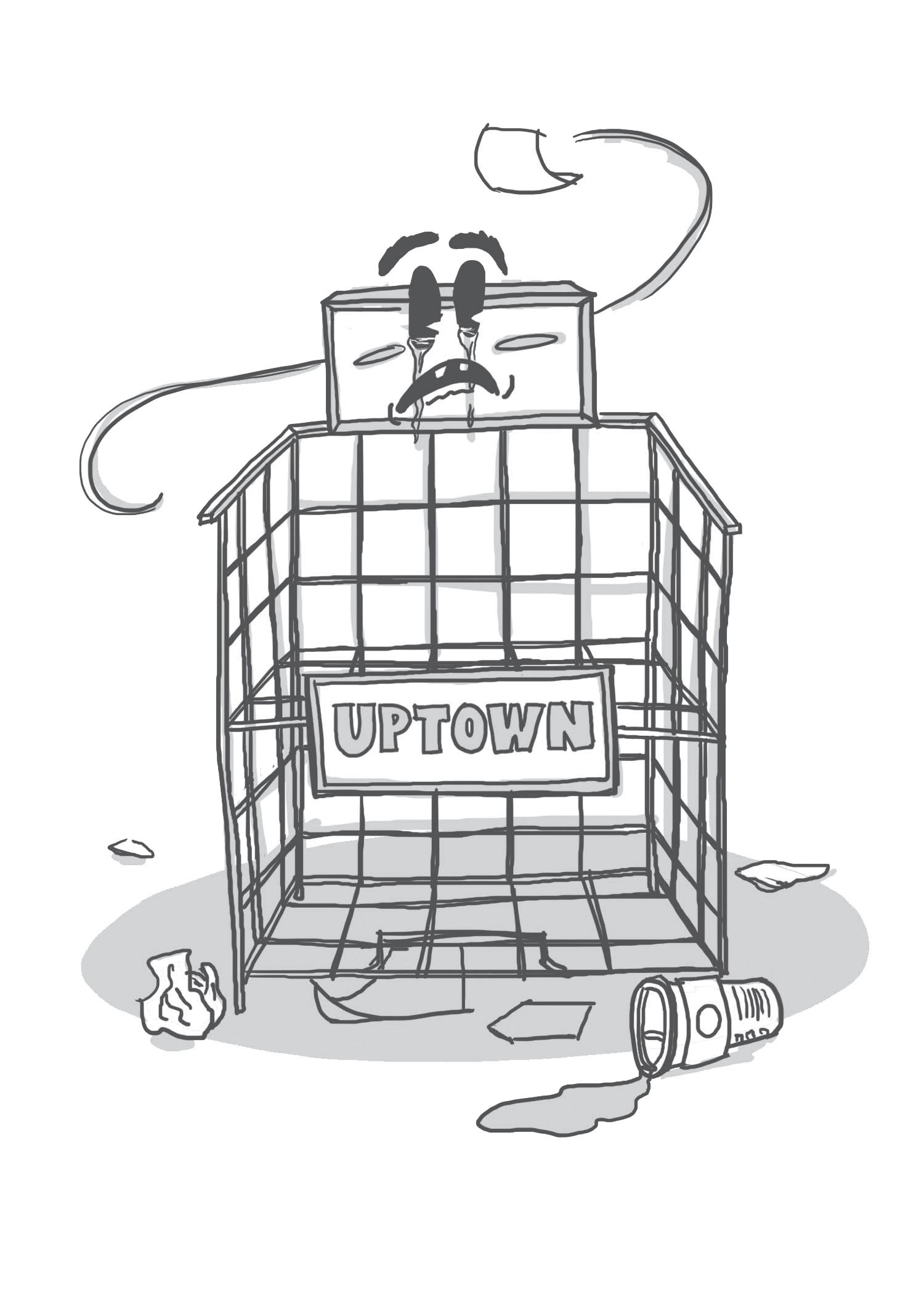
will be able to fill the shoes of the former staff of Uptown Magazine
There’s something awkward, cynical and even a little grim about clinging to the brand name while tossing out everything that the brand actually stood for.
“This move will put some very talented young media folks out of work. (The fact that they have to keep working there for three weeks after being informed seems… rather unfortunate.) And after a couple of decades in the business, Uptown is effec-
“I am sure that Winnipeg Free Press staff can produce an interesting entertainment weekly, combining the content of Uptown and ‘The Tab,’” Cox told the Manitoban “The new approach is an effort to reinvigorate both the entertainment content of the Winnipeg Free Press and Uptown to put it on a sound financial footing.”
However, with recent staff lay-
“I have a lot of love and respect for my former colleagues at the Free [ . . . ] there [are] some really talented people that are going to be contributing to it, and some of them who are even more intimately familiar with Uptown Magazine meant than I ever was,” Manitoban
“Unfortunately, there’s too few of them, they’re at later stages in their careers, and there’s not a single music specialist remaining on staff – which doesn’t bode well for the 'new' really being able to capitalize on exciting content that’s relevant to new readers, or being able to bring fresh voices to the media
“So in the end, I don’t see the point in retaining the brand at all, when it will effectively be altered beyond recognition. I mean I fundamentally understand why they want to keep the brand name alive: it’s familiar in Winnipeg, [and] it has value. But there’s something awkward, cynical and even a little grim about clinging to the brand name while tossing out everything that the brand actually stood for.”
Former staff of Uptown Magazine held a “funeral” of sorts for the publication on Oct. 25 at the King’s Head Pub – an opportunity for staff, friends and fans to come together to share stories, reminisce, and offer speeches as a fond farewell to the publication that has held a place in so many Winnipeggers’ hearts.
Only time will tell whether the new Uptown Magazine will be able to hold a candle to its former embodiment. One can only hope that this new publication will remain a venue for local bands, artists and the like to share their art with our city, and that alternative music news in Winnipeg will live on.
A documentary about street prostitution comes to Cinematheque
saRoMo, volunteeR staff
Michelle
When you’re driving around the city at night and you see women standing on street corners, are you struck with guilt at the sight? Do you wonder how they ended up there or worry about what might happen to them later? Or do you just dismissively declare them prostitutes and carry on without a second thought?
No matter how visible a marginalized part of society may be, it’s so easy to feel indifferent towards a whole demographic when a label has been placed upon them. The act of labeling is not a viable solution to any problem, it only perpetuates it.
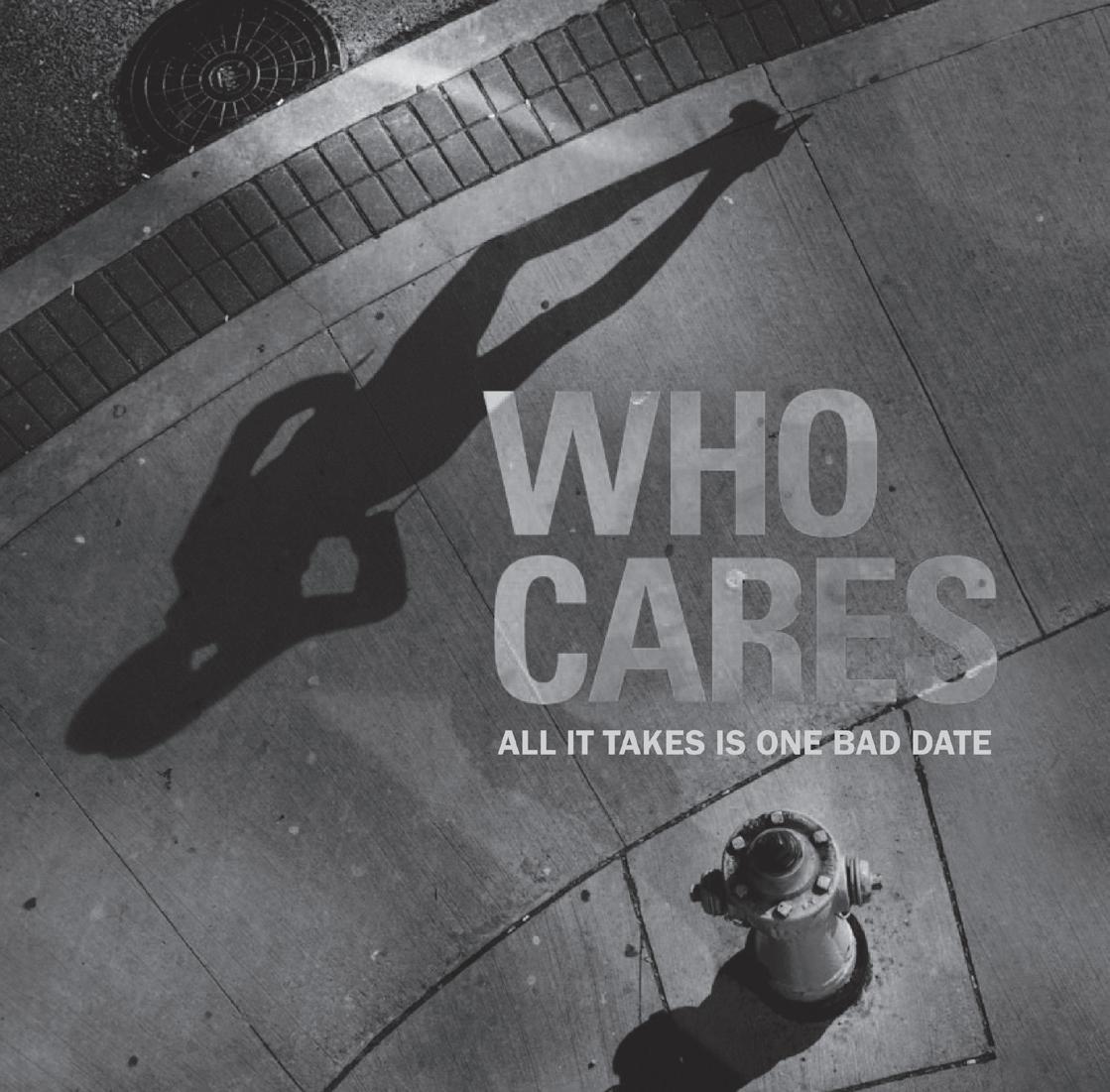
Who Cares?, the newest documentary by director Rosie Dransfeld, follows the lives of women involved in Edmonton’s sex trade and makes the issue tangible by individualizing their stories.
Dransfeld is a Gemini awardwinning filmmaker known for making authentic, characterdriven documentaries, and in Who Cares? this skill of hers is effectively employed. Dransfeld doesn’t just hover around the characters’ lives, nor does she try to invent a narrative for them. Rather, she allows them to bravely express whatever experiences they wish to divulge to the camera, be they painful or candid.
The documentary also follows RCMP Joe Veraeghe of the Project Kare investigation unit in Alberta. Project Kare works to register the women by collecting their information and DNA samples in order to better identify their bodies, should an unfortunate incident ever happen to them. Veraeghe admits, although it gives their loved ones peace of mind, registering with the program does not make the women any safer from danger. The only way to accomplish that is to prevent them from street work.
Getting off the streets sounds so simple when you’re looking from the outside in, but in Who Cares?
we see how difficult it can actually be to ever recover from the situation. In the documentary one of the women who used to work on the streets, Courtney, suffers from post-traumatic stress. She talks about how the “prostitute” label has become ingrained into her identity, even now after having escaped the street life.
There is one scene where Courtney proudly tells a man at the local pub that she has finally overcome her drug addiction and is no longer working on the streets – the man seems to disregard everything Courtney had said and casually asks her if she wants to spend a night with him. Courtney talks about how disheartening this offer is to hear because in the eyes of others, the label still remains; it is as if all the progress she has made in changing her life has amounted to nothing.
Watching this documentary, it’s difficult to dissociate yourself and not feel emotionally involved. We learn about these people the way we would if we were to have a conversation with them in real life – rather than crystallizing them into stringent societal roles, the characters’ multidimensional personalities are brought to light.
Who Cares? is powerful in that it not only calls attention to the issue, but also gives an intimate look into the lives of the people affected. It pulls viewers away from apathy and indifference by personalizing the issue, tearing the labels apart and showing us why we should care.
Who Cares? premieres at the Cinematheque on Nov. 9 at 6 p.m.. There will be a Q&A after the screening with director Rosie Dransfeld, Courtney, Joe Verhaeghe, and Russ Hewson from the Edmonton Police Service.
Street outreach program Sage House will be in attendance to accept any winter clothing for the women and/or monetary donations for the program.
Jodie l ayne, staff
W
innipeg doesn’t seem like home to many deserts – but it is. Food deserts, that is.
“Food security to me is the equal right to food for all,” explains Jasmine Tara, the food security and greening facilitator at the North End Community Renewal Corporation. “Fresh produce in the North End is not readily available – the grocery stores are on the outskirts of the core area and not easy to get to.”
Tara says that when it comes down to it, fresh fruits and vegetables provide more nutrient density for less money but are hard to come by at the many convenience stores in the neighbourhood.
“Fresh fruits and vegetables improve the quality of your diet and of your life by reducing the risk of certain diseases. They also add color, flavour, and variety to your diet,” says Natalie Rempel, fourth year
dietary sciences student.
The North End Food Security Network implemented a program –the Good Food Box. The program was also run in the West Broadway Neighbourhood and saw great success there, which was repeated in the North End.
The program sees fresh fruits and vegetables purchased in bulk to drive down their costs and delivered bi-weekly to a community depot, where they are picked up by participants. The boxes come in three sizes: a small box for $8, a medium box for $15, and a large box for $20. There is no delivery charge and no profit generated – this is purely a service provided to the community.
“The program was just covering a need in the community for fresh fruits and vegetables and became more and more popular,” says Tara.
The program has now spread
throughout the city and is managed by Winnipeg FoodShare Co-op, a partnership between several community renewal organizations and Food Matters Manitoba. The co-op saw 525 boxes ordered and delivered this past week. The Good Food Box isn’t just for the inner city.
It doesn’t take much commitment to become a depot and anyone can be one – even from their own home.
Community enrichment, relationship building, and multi-faceted wellness are all positive products of food security.
“The small, eight-dollar box is perfect for singles, seniors, and university students,” Tara says. “This is not just for people who are financially struggling, this is absolutely for everyone in Winnipeg. It’s simply about fresh, affordable, produce available to you in an easy way.”
Just collect orders from community members—a minimum of five orders is required— place your order with the co-op, and the boxes will be delivered to your depot bi-weekly for community members to pick up.
“You have access to vegetables and recipes that automatically include them, which is important” says Rempel.
University students on their own, cooking for themselves might not know what to do with vegetables,
thus preventing them from purchasing vegetables.
“I would love to see a Good Food Box Depot at every university and community centre in the city,” adds Tara.
Community enrichment, relationship building, and multi-faceted wellness are all positive products of food security.
“I don’t want people to depend on processed, boxed food in the store. I want to teach people how to cook with fresh food and pass those skills on. Not only does it lead to a longer, healthier life and provide disease prevention – the reality is [that] food brings people together,” asserts Tara.
You can learn more about ordering the Good Food Box or becoming a depot at www.winnipegfoodsharecoop. ca or by calling 204-414-2667
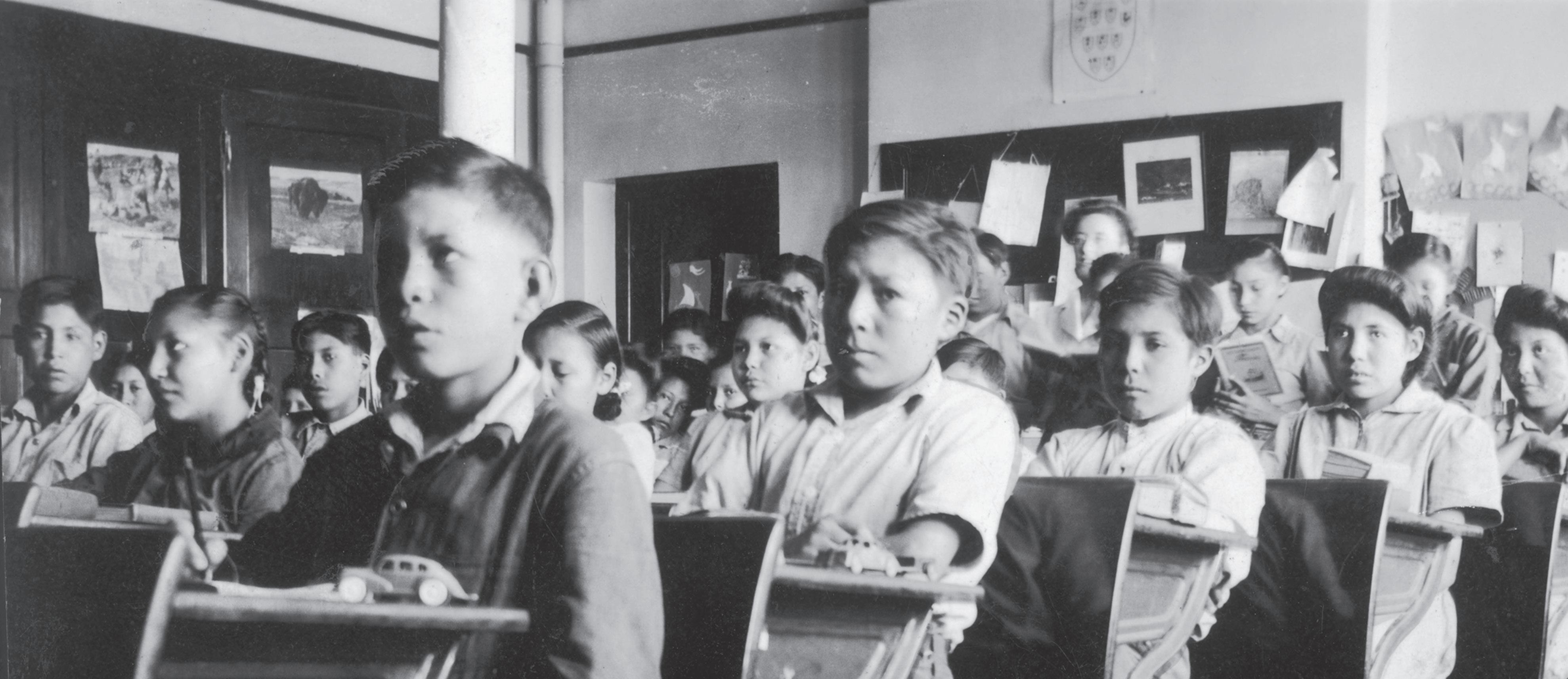
This bilingual exhibit is designed to raise awareness about the history and legacy of Residential Schools in Canada. 100 Years of Loss strives to sensitize and educate Canadians, while challenging stereotypes and fostering a dialogue between people.
EXHIBIT OPENING: MONDAY NOVEMBER 5, 11AM William Norrie Centre, Inner City Social Work Program, 485 Selkirk Ave. OPEN FOR VIEWING NOVEMBER 5-9, 8:30AM-4:30PM FREE-OF-CHARGE. EVERYONE IS WELCOME. Appointment Viewing - To view the exhibit outside of regular hours, please contact: Maureen 204-790-7201
For more information, contact: Andrea Bilash 204-480-1473 or andrea_bilash@umanitoba.ca
K a R a passey, staff
Coming to the Graffiti Gallery this Friday, Nov. 2, is an exhibition of sculptural work from recent graduates of the University of Manitoba’s Fine Art Program. The show is titled Undesirables and, considering that it boasts new work by Ben Bonner, Laura Magnusson, Sherrie Rennie, Josh Roach and Tamara Weller, the title is misleading.
In the beginning, I jokingly titled the show Winnipeg Future, [to coincide with the current exhibition at the Plug In], Winnipeg Now, but in actual fact, it fits the bill,” says Sarah Anne Johnson.
Johnson is one of the curators of the exhibition, who also attended the U of M for her BFA Honours degree, and continued on to Yale to receive her MFA. Meeka Walsh, Editor-inChief of Boarder Crossings Magazine, joined Johnson in curating and Michael Nesbitt, a supporter of the arts, agreed to fund the work. Four of the five participating artists later received grants from the Winnipeg Arts Council as well.
“The five [chosen artists] made large sculpture when they were in [university] but stopped after graduating,” says Johnson. “At the U of M there is a large sculpture [facility with tools and] tech support. Once graduated, if they can

afford it, they end up in a tiny shared studio space, [and] they also have to start building their own tool supply.”
“For most, they stop making sculpture all together because the financial burden of starting up a shop is impossible while paying off student loans. I thought that because there was money being donated, this was a great opportunity to force this extremely talented bunch to do what they do best, go big.”
“The only broad, intentional theme of the show is the large-scale nature
of the work,” says Ben Bonner, who won a CPAM Sculpture Experience award in 2010. “Aside from that there was no theme or parameters outlined; however, we noticed that we had all created portraits depicting a fractured or compromised state. That’s how we came to the title of the show.”
Sherrie Rennie, who won the Kenneth Finkelstein Prize in Sculpture in 2010, is known for her autobiographical work that often involves mechanical components. Rennie’s contribution to Undesirables is a floor to ceiling kinetic
installation of a hot air balloon that inflates and deflates based on viewer participation.
“Sherrie has to be singled out to some degree as having a piece we are all in awe of. Just looking at the mechanics [and] logistics involved in her sculpture is intimidating,” says Bonner.
“Obviously with large-scale sculpture there is always planning involved, but for the most part Laura, Tamara, Josh and I have had pieces set up nearly from the beginning which we’ve tried to refine over time. Sherrie’s piece is
the opposite. She has mapped out the schematics of her piece over a period of months and is just now assembling it in the gallery for all of us to see. We are all extremely excited to see it take form and to see it work once everything is hooked up.”
Bonner—whose large bronze sculpture entitled “Golem’s Pelt” was installed on campus at the U of M—has been building his new work “cloudghoultrillghost” in his studio at Negative Space. Bonner’s work is always meticulous—whether it be drawing, painting or sculpting—and this giant figure depicting a bubbling, self-sustaining ecosystem of fungal clouds acting as the body of an inter-dimensional ghoul is no exception. Even in its unfinished state, visitors to the art space can’t not stop and awe at its size and detail.
“I am excited about all the work,” says Johnson. “All of these artists make very sophisticated, mature art. There is a life-size dinosaur that cries, a temple of war, a nursing home [crossed with a] boat that’s run aground, a 40-foot kinetic hot air balloon, and a giant cloud ghoul.”
The opening reception for Undesirables is on Nov. 2 at the Graffiti Gallery starting at 7 p.m. The exhibition runs until Dec. 15.

You can never have too much—or too little—sex!
Jodie l ayne, staff
T
his might not come as a shock to many, but the Anna Faris film What’s Your Number? is atrocious.
Originally, I had seen only the beginning on HBO in a hotel room on my most recent trip to Minneapolis. I fell asleep in a vegan pizza, Hendricks gin, and vacation happiness-induced coma halfway through – but what I had seen before that point had surprised me. A woman, unashamed of her number of sexual partners until her friends reveal their much lower numbers and engage in some good ol’ fashioned slut shaming.
I was excited, enthused even, to find a somewhat accurate representation of sexual shame in the media –we’re not ashamed until we are taught to be.
It hadn’t crossed my mind again until months later when a friend of mine texted me—fuming—after watching the film on Netflix on a lazy day. It turns out the ending is not so wonderful as its hopeful beginning. Just in case any of you were still interested in watching this movie for
some god-forsaken reason, consider this your spoiler alert: Ally finds her true love and doesn’t have to become a slut by sleeping with more than 20 men. YAY TRUE LOVE! YAY NOT BEING SLUTTY!
Although women bear the brunt of slut-shaming (as illustrated in Jessica Valenti’s 2008 book, He’s a Stud, She’s a Slut), men can also be shamed for the number of sexual partners they’ve had. Think of some of the terms we use to describe people who have had a ton of sex and you’ll see that not too many of them are complimentary: slut, whore, skank, hoe. Nothing you’d want engraved on your tombstone, that’s for sure.
While engaging in sex acts with more partners does statistically put you risk of more exposure to infections, it certainly does not make one dirty. Although it does call to mind the “favorite” abstinence-only educator metaphor that we are like tape and every time we have sex with someone, we attach ourselves to them – leaving
Think of some of the terms we use to describe people who have had a ton of sex and you’ll see that not too many of them are complimentary: slut, whore, skank, hoe. Nothing you’d want engraved on your tombstone, that’s for sure.
Then there are the other perceptions: “People who have slept around are dirty.”
their residue and “gunk” all over us. Well, I have good news – we are not tape, we are people and sex is not dirty. Alternatively, however, people can
be shamed for not having enough sex. That’s right – we shouldn’t have too much or too little sex. I lived in a town that is often falsely identified as “The STI Capital of Canada” because casual sex with many partners is the norm. That just wasn’t my style! I definitely got teased and my friends had no idea why I wasn’t jumping into the culture vagina-first. I exaggerated the number of people I had slept with because I thought I should and felt weird having slept with so many less people than my ski-hill co-workers. So why are we still prejudiced and ashamed of our sexual experiences?
The thing is – the amount, quality, and frequency of the sex we have has nothing to do with how many people have seen us naked. It is entirely pos-
sible for someone to have had few partners with whom they have had all the sex. It is possible for someone with many partners to still not be able to voice their needs, haven’t been adventurous and tried new things, or have a ton of sex – and vice-versa.
All that the number of partners you have had says about you is how many partners you have had. Period.
Whether you wear the term “slut” as a badge of honor or find it deeply offensive, we should worry about questioning why someone felt qualified and justified in applying any label to your sexuality. How about we be the judge of our own sexuality, whether we have slept with eight or 58 people? When it comes down to it, “your number” is useless and just becomes another tool of a sex-negative society in keeping us focused on what we “should” be doing, instead of inciting a riot of sensuality pleasure.
You can confidentially submit a question or topic to jodie.m.w.layne@gmail. com
Jenna d iubaldo, staff
S
olidarity Rock is a non-profit, artist run organization that aims to help Cuban musicians access the equipment and resources needed to create music, partnering Canadian and Cuban bands together in order to bring Canadian rock music to Cuba and vise versa.
In December, 2007, Drew McIntosh travelled with Edmonton band 7 And 7 Is to embark on a Cuban tour for what would become Solidarity Rock’s first ever visit to the Caribbean Island country. During this trip, McIntosh noticed that many of the musicians he met along the way did not have access to proper musical instruments.
“On that tour I [ . . . ] became really good friends with the musicians and saw that they didn’t have the basic things that people here [take] for granted,” said McIntosh. “We decided to make some connections
with the two groups of people to bring basic things like strings and picks and stuff that people didn’t have to try to help them build a punk scene or an independent music community.”
McIntosh met William Garcia, guitarist for Cuban hardcore band Arrabio and community activist, during this initial visit to Cuba and they quickly became good friends. The two began discussing plans to join forces to create a network that could aid and empower people of all ages to create punk rock music in Cuba.
Established in 2008 shortly after that first tour, Solidarity Rock was born and became a body to support do-it-yourself community music and art within Cuba. As McIntosh puts it, by putting on shows, planning tours, and providing musical instruments, Solidarity Rock promotes the idea of cross-cultural participation in music.
Solidarity Rock has enabled


Canadian bands such as Kids on Fire (Winnipeg), Slates, Vicious Cycles, and many more to tour Cuba, each time bringing loads of musical instruments and supplies with them to pass along to Cuban musicians. No small feat considering Solidarity Rock functions almost entirely on fundraising and in-kind donations of cash, gear, and sweat equity.
Solidarity Rock’s most recent success has been bringing Arrabio to Canada to tour and share their music throughout the country.
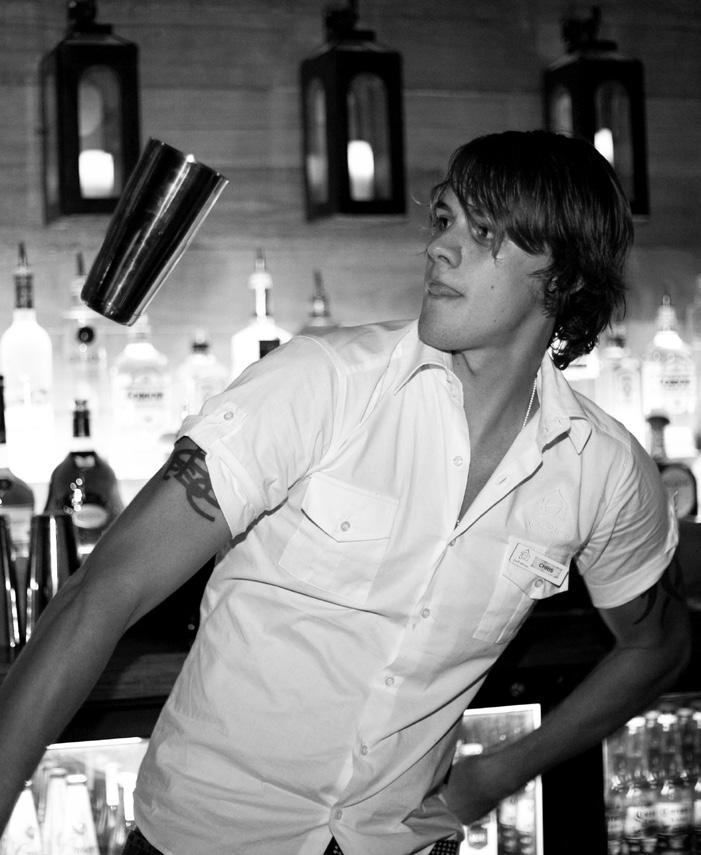
“This is the most amazing experience [ . . . ] we have ever had,” stated Garcia. “We are right now bringing different experiences back to Cuba and we hope that this is not the only time a Cuban band can come and play outside of Cuba. Bands do not tour in Cuba, which is pretty strange… it’s weird but that’s the way it goes.”
Garcia explained that touring for Cuban musicians is sometimes out of the question for a variety of reasons. Lack of money and transportation are two difficulties, but mainly the United States embargo against Cuba has made obtaining musical instruments in Cuba such as amplifiers and guitars, among other goods, next to impossible. This means that many supplies brought back to Cuba through travel are sold at a premium.
Garcia went on to say that while a pack of electric guitar strings would sell for approximately five dollars here in Canada, musicians in Cuba may pay upwards of $125 for that same pack of strings. A monthly salary of approximately $350 CAD means that musicians, such as Garcia, may have to sometimes forego other necessities, such as food, in order to continue to make music.
Despite these obstacles, Arrabio have made a name for themselves in
the Cuban punk scene and are now spreading their music around Western Canada, playing dates in BC, Alberta, and Manitoba, including three dates opening for the punk band Agnostic Front.
“I remember when I was like 15 and I was getting into rock music, we were pretty much into punk rock, which we are still,” said Garcia. “We [have been] listening to [Agnostic Front] since then. To meet them personally, you know, like to have the opportunity to tour [with] them [ . . . ] it’s been an amazing experience.”
Arrabio’s first performance in Winnipeg on Oct. 24 at Negative Space drew a large, hot, sweaty crowd that packed the art space and cheered on the band. As Arrabio ripped through a vast catalogue of originals and covers, it was quite easy to see the passion and aggression that these four musicians embody, which truly represents the essence of the Cuban punk scene.
to be with them on this trip here [ . . . ] this event that I know is going to be a big part of their lives forever [ . . . ] it means a lot to me,” said McIntosh with tears in his eyes.
“Each of them I know have taken a lot from it, so for me it’s kind of emotional because it’s been so long coming [ . . . ] and everyone’s had to do so much to get this to happen. Then to watch it just go off, it’s just... it’s fucking perfect. It’s perfect.” So what’s next for Solidarity Rock?
Lack of money and transportation are two difficulties, but mainly the United States embargo against Cuba has made obtaining musical instruments in Cuba such as amplifiers and guitars, among other goods, next to impossible.
“I think that the thing that we’ve done in Cuba kind of shows us that if you can create a place for people to be able to express themselves they will do that [ . . . ] and that it will provide good benefits to people,” said McIntosh. “No matter where we would go and do that, I think it would be beneficial, so right now we’re just sort of exploring the idea [of] what we can do by making cross-cultural art experiences happen.”
Oct. 25 marked the last date on the quartet’s Canadian tour, opening for Agnostic Front at The Zoo in Winnipeg. This performance was the cherry on top of what has truly been a historical event and triumph for both Arrabio and Solidarity Rock.
“These guys are some of my best friends, you know? And just to be able
“People said that we couldn’t do things like [this] in Cuba and we did them and I think that if we’re genuine we can find a way to do it no matter where we go.”
For more information on Solidarity Rock, or to purchase a copy of Arrabio’s new album visit www.solidarityrock. com








a dam peleshaty, volunteeR staff
T
he sight of seeing a kicker in the NFL miss a field goal is happening less now than ever.
After Week Seven of the 2012 NFL season, kickers are converting field goals at a rate of 87.7 per cent, which would break the record of 84.5 per cent set in 2008 and is almost five percentage points better than last season (82.9 per cent). It is also higher than that of the most accurate kicker in league history, the soon-to-be-released Nate Kaeding of the San Diego Chargers (87.0 per cent). Kickers in the NFL are also making perfect field goals from inside 30 yards and accuracy rates from all distances are up from last season.
What makes this more impressive is the number of field goal attempts from over 50 yards. Two-thirds of field goal attempts from that distance and farther were made and they are being attempted more often. In fact, the NFL is on track to see more field goal attempts from over 50 yards this season than in any other season. Seven kickers have kicked field goals from beyond 55 yards this season already, three of whom have converted from 60 yards and beyond.
The accuracy and distance of NFL kickers has increased greatly
over the last few years. 2005 was the first time the accuracy rate exceeded 80 per cent for the second straight year. The main reasons for this are the increase of kicking camps for young kickers, improved technique and fitness, increased focus on special teams, and more kickers are playing exclusively in the position rather than being used in another capacity. While established NFL vets are holding up to this new standard of success, three rookie kickers are ascending to be among the league’s elite.
Next to Robert Griffin III, St. Louis Rams’ kicker Greg Zuerlein may have garnered the most buzz surrounding an NFC rookie early this season. The man they call “Legatron” made his first 12 career field goal tries including field goals of 58 and 60 yards in one game, a first in NFL history. Not bad for someone who played his college football in Division II.
Justin Tucker of the Baltimore Ravens unseated veteran kicker Billy Cundiff who missed a field goal that could have sent the team to Super Bowl XLVI. The Ravens have not regretted this move as Tucker has missed only once this season and is 4-for-4 from beyond 50 yards. His highlight this season was making
a game-winner against the New England Patriots.
Blair Walsh of the Minnesota Vikings became the first kicker in franchise history to make field goals of over 50 yards in three straight games. In his first career NFL game, he made a 55-yarder to send the game into overtime, where he later won the game with another field goal. Walsh was named the NFC Special Teams Player of the Week for that effort and he has maintained it by matching Tucker’s marks of only missing once this season and being perfect from beyond 50 yards.
With the impressive crop of rookie kickers this year and an overall improvement in other kickers as well, many are expecting the NFL record of the 63-yard field goal to be broken sooner rather than later. Tom Dempsey of the New Orleans Saints set the record in 1970 and the Denver Broncos’ Jason Elam matched it in 1998, but it has been duplicated twice in the past 13 months by Sebastian Janikowski of the Oakland Raiders last year and David Akers of the 49ers back in Week One. It is possible that one of the three aforementioned rookie kickers can break the record, but veterans like Janikowski and
d e Re K g agnon, staff
G
oing est stage of FIFA World Cup qualifying, the Canadian men’s national soccer team had only ever qualified for the tournament in 1986. Hopes were high for the squad, as they had easily progressed out of the second round of CONCACAF qualifying, with four wins and two draws against far inferior competition. Round 3 was to be the biggest test yet, proving if fact a team to be reckoned with.
As it turns out, they weren’t.
The Canadians were in a group of four with the top two teams advanc ing to the fourth and final round of qualifying. Canada played home and away games against Cuba, Honduras, and Panama. With one last game to be played

they found themselves on the losing end of an 8-1 drubbing that left nothing but disappointment and questions to be answered. Within days head coach Stephen Hart resigned, taking full blame for the failure.
“But it was my responsibility,” the coach responded to interviewers after being reminded that he wasn’t on the pitch during the game.
Is Hart really to blame?
Some of the blame obviously has to fall on the players on the pitch, as an 8-1 score is not within the realm of respectability. Not when the same two teams had fought out a 0-0 draw in Canada on June 12. Injuries to certain key players can obviously factor in, but the reality is this squad scored just six goals in six games in the third round. The fourth round was only going to be more difficult, but getting there was a very obtain-
With over 20 years of international futility, the Canadian Soccer Association and the government of Canada have to look at themselves and realize there are major flaws in

Akers should also be considered. Austin Rehkow, a kicker from Veradale, Washington, recently made a 67-yard field goal for his high school
football team. If a high schooler can not only raise the bar, but also kick over it, don’t be surprised if NFL kickers soon do the same.
terms of organization and financial investments for the national program. Nations like England and the Netherlands pour millions annually into training facilities and programs for their youngsters to ensure that talent is cultivated at a very young age. The same cannot be said for Canada, where hockey gets the most attention.
Yet every four years at World Cup time, the interest of this multi-cultural nation is piqued and the questions get asked again and again: “Why can’t Canada field a competitive team?”
CONCACAF stands for the Confederation of North, Central American and Caribbean Association Football. It represents 38 nations in the aforementioned areas as well as two more from South America.
Well in order for those questions to be put to rest, action needs to be taken immediately to ensure success in both the immediate and long-term future. This includes focusing on training the
younger players while retaining the services of our better players instead of seeing them choose to play under a different flag. The likes of Teal Bunbury, Jonathan de Guzmán, Owen Hargreaves, and Junior Hoilett—who are Canadianborn players with successful careers in Europe—have all chosen not to represent Canada for various reasons. Canada’s line-up would be notably boosted with quality professional players on it. Until then, we can always look forward to FIFA World Cup qualifying for 2018.

d e Re K g agnon, staff
The Manitoba Bison women’s hockey team hosted a special guest this weekend, as Hayley Wickenheiser and her Calgary Dinos teammates visited Max Bell Centre in a pair of back-to-back games.
Wickenheiser has been a dominant force on the international hockey scene for Team Canada, and her game has translated well to the university level. The third-year kinesiology major had accumulated 81 points in 35 career games going into this weekend’s action and it was going to take a monumental effort by the Bisons squad if they were to succeed in keeping her off the score-sheet.
On Friday, the Bisons grabbed the lead in the first period via a Rachèle Bosc goal and it seemed the squad would be a good test for Hayley and company. However, three quick goals in the last five minutes of the opening period saw that dream vanish very quickly. Stephanie Ramsay opened the scoring for the Dinos with 5:12 to play, with Elana Lovell giving them the lead 41 seconds later. Wickenheiser would make her impact felt with 1:06 left as she undressed a Manitoba defender and wristed one passed Leiette Klassen, giving the Dinos a 3-1 lead after one period of play. At some point, Wickenheiser’s goal was wrongly awarded to Ramsay.
Wickenheiser notched her second of the game when she took on two defenders and managed to get a shot by Klassen making the score 5-1 after two periods.
The third period saw Dée-Ana Marion replace Klassen in the Bisons’ net. The scoring would be stymied, but not the penalty parade, as this game would finish with 14 minor penalties being called, which heavily
defensive play, including blocks by Kyleigh Palmer and a flopping save by Marion kept this game at 0-0, until Wickenheiser opened the scoring with 4:11 left.
The third period saw further pressure by the Dinos pay off with Ramsay slapping a point shot through the fivehole to make it 2-0 with 12:48 left. Jenna Smith would manage to bang one in from behind the net on the power play to make it 3-0 for Calgary. Meagan Vestby got Manitoba on the board with her fourth of the year, but a late empty-net goal by Iya Gavrilova would end this game with a 4-1 score.

influenced the flow and really took away from what could have been a very entertaining hockey game.
Saturday night saw a different referee and a very different style of officiating, as physicality was a big part of the game and bodychecks repeatedly went uncalled.
The Dinos continued to build on their lead in the second period, as Ramsay added a power play goal via a slap shot from the point, and
Marion got the start in goal for the Bisons on the night after turning aside all 10 shots she faced in the third period the night before. The Bisons once again opened strong, but it was scoreless after one.
The second period was very much dominated by the Dinos but solid
The Bisons were out-shot 60-37 in the two games as they faced a very strong Calgary team who now sit at 7-0-1 on the season, good for first place in Canada West.
The Bisons are now 2-5-1 and sit two points behind Mount Royal for the sixth and final playoff spot. The Bisons next play at the University of Lethbridge next Friday and Saturday.
In a post-game interview on Saturday, Bison coach Jon Rempel gave his take on what happened in the losses.
“Friday night we did not compete hard enough, and let them run the show. (Saturday) we competed harder, our special teams cleaned things up, particularly on the penalty kill, but we didn’t generate enough offensively.” Rempel was then asked to comment on the officiating in the games,
d e Re K g agnon, staff
Coming off a road sweep against the Mount Royal Cougars, the Bison men’s hockey team was looking to improve upon its spot in the Canada West standings when they took on the Calgary Dinos in Alberta this weekend.
The Bisons opened up their game on Friday with a roar, as Jeremy Schappert opened the scoring just 3:49 into the contest, a lead that lasted through the duration of the period.
The match remained at 1-0 for the visitors until a five-minute major and game misconduct was given to Calgary’s Ryan Gillen for a check from behind. On the subsequent power play, James Henry and Brendan Rowinski scored power play goals that gave the Bisons a 3-0 lead after two. The teams traded goals in the third and the game
particularly on Friday night’s 14-penalty game.
“I thought the reffing was very inconsistent this weekend,” Rempel stated. “Instead of letting us play and letting the teams decide it, I was disappointed that the refs had to get involved, because a lot of stuff was called (Friday) that didn’t need to be”.
Wickenheiser was also reached for comment after Saturday’s game. When asked to comment on playing the Bisons this weekend she said, “I
ended 4-1 for Manitoba.
Saturday night saw a much tighter affair. Matthew Lowry and Tyler Feakes gave the Bisons a 2-0 lead, but the Dinos tied it in the third and sent the game to overtime. The extra period solved nothing, so the game came down to a shootout, in which Calgary keeper Jacob DeSerres stopped two of three shots while Jesse Deckert stopped just one, as Calgary prevailed by a 3-2 final score.
Jesse Deckert stopped 62 of 65 shots on the weekend, improving his save percentage to 92.2 per cent. With the win and the overtime loss, the Bisons record stands at 4-3-1. Tied for fifth in the conference with UBC. The Bisons return home to play the winless Lethbridge Pronghorns at the Max Bell Arena on November 9 and 10.
thought they pushed hard, and they certainly play a tough game, but I think we had just a little more skill.” Wickenheiser went on to say that as she is graduating with a kinesiology degree this year, this may very well be her last year in a Dinos uniform despite two years of eligibility remaining, although she left the door open for a potential return after the Sochi Olympics in 2014.
phOtO by beibei Lu
m a Rc l agace, staff

W
hen you look at Manitoba’s volleyball teams, you’ll notice a big difference between the team rosters - specifically when you com-
pare the athlete’s years of remaining eligibility.
The women’s team is brimming with young talent and looking to
fill the void left from the departures of Kristi Hunter and Tricia Mayba, who accounted for nearly half of the team’s total kills in 2011-12. Made up of mostly first and second-year players with only one fifth-year veteran and two third-year players, success will be a testament to the Bison Junior Volleyball program that most of the players have come through. They enter the 2012-13 Canada West season ranked fifth in the nation.
Meanwhile, the men’s team has four fifth-year players leading the charge on a team that won bronze at last year’s CIS National Championship. The Bison men enter this season ranked third in the nation, behind two conference rivals: the defending CIS Champion Trinity Western Spartans and the Alberta Golden Bears.
Both teams start the 2012-13 season with the same goal: to win the CIS National Championship. To do
so, they’ll have to keep up outstanding play in an incredibly competitive Canada West conference before booking their tickets to Sherbrooke, QC for the National Championship tournament in February.
But there was no time for daydreaming about championship banners on Oct. 25; both Bison teams were focused on opening the season with a win over their cross-town rivals, the U of Winnipeg Wesmen.
The women’s team got the night started by cruising past the Wesmen 3-0 (27-25, 25-19, 25-17). The Bisons struggled early in the first set, but finally found their stride. Down 23-14, they came all the way back to clinch the first set 27-25. From there, the women’s team managed to avoid the unforced errors that put them behind in the first set and remained in control for the rest of the match.
Christina Souza did a fine job setting up most of the Bison kills on
the night, as Christina Mulder led all Bisons with 13 kills, three behind Winnipeg’s Ozana Nikolic who led all players in the category.
The men were just as impressive, as they got right down to work dismantling the Wesmen in straight sets 3-0 (25-23, 25-19, 25-15). By the end of the game, it was clear that Manitoba was the better team and that this group will be a force to contend with this season. Capitalizing on 24 unforced Winnipeg errors, Manitoba was able to win comfortably.
The team captains made their presence felt; Chris Voth had 11 kills and Dane Pischke had eight digs, good enough to lead those categories.
Both Bison teams will play their first home games of the season this weekend, as the Calgary Dinos come to town for a pair of games at the Investors Group Athletic Centre on Thursday and Friday.



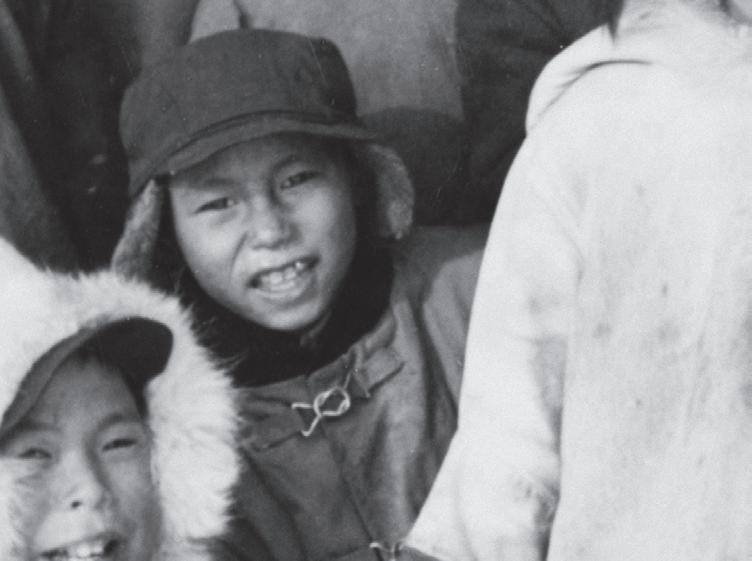


EXECUTIVE LEAD FOR INDIGENOUS ACHIEVEMENT, OFFICE OF THE PRESIDENT INVITES YOU TO ATTEND



An exhibition that presents the Inuit experience of residential schools through the voices of 8 courageous Survivors.
Produced by the Legacy of Hope Foundation, Aboriginal Healing Foundation, and Library and Archives Canada with financial support from the Government of Canada.
EXHIBITION OPENING
Wednesday, October 31, 11:00am
Brodie Mezzanine (2nd Floor), 727 McDermot Ave, Bannatyne Campus Light Lunch to follow
OPENING REMARKS
David Barnard, President and Vice-Chancellor, University of Manitoba Justice Murray Sinclair Honoured Inuit Survivors
OPEN FOR VIEWING FREE-OF-CHARGE
October 31 – November 16, Mon-Fri 6:00am – 10:00pm / Sat & Sun 8:30am – 7:00pm
INUIT LEARNING DAY
Thursday, November 1, 12 noon – 2:00pm
A panel discussion with four honoured Inuit Survivors who will share their residential school experiences.
Frederic Gaspard Theatre, Basic Medical Sciences Building, U of M, Bannatyne Campus, 727 McDermot Avenue Light snacks and refreshments to follow

For more information, contact: Andrea Bilash 204-480-1473 or andrea_bilash@umanitoba.ca