

E T han Cab E l, staff

University of Manitoba presi-
dent David Barnard delivered a clear but controversial message to a room full of students, faculty, and staff last week – cuts are coming, but they’re necessary for the financial health of the university.
“We’ll make decisions with an emphasis on fairness [ . . . ] but some decisions will have to be made,” Barnard said.
“We need to find savings and not just delay the inevitable.”
The town hall meeting last Wednesday included vice-president administration Paul Kochan, vicepresident external John Kearsey, and vice-president academic Joanne Kesselman. The president and senior administrators provided information on the impending budget cuts, which are slated to be four per cent in each of the next two years.
Barnard emphasized that the cuts will not be across the board, meaning that some departments will be more affected than others.
“We have many classes that have very low enrolment, we have a range of success factors for how many students complete classes successfully and how many people complete their program successfully,” Barnard said.
“In the time that I have been here, which is now 6.5 academic years, we’ve added a lot of programs to the
university. We have removed very few.”
When asked by the Manitoban about whether departments with low enrolment will face the brunt of the cuts, Barnard said, “That’s clearly a place to look.”
“It will not be solely a question of where is the largest amount of money to be found to free up. It needs to be a looking and saying, ‘What are the implications of this? What’s the impact of this?’”
The cuts have been justified by U of M administration as a necessary response to several financial constraints – namely low tuition, insufficient government grants, and rising faculty salaries.
Between 1999 and 2009, tuition fees were effectively frozen in Manitoba before the province allowed universities to raise tuition by up to 4.5 per cent in 2009 and five per cent in 2010.
The provincial government capped tuition fee increases at the rate of inflation in 2011, promising that it would raise the operating grant for universities by five per cent a year for the next three years as compensation for low tuition. The government reneged on that commitment in 2013 and has increased the operating grant for universities by 2.5 per cent in each of the last two years.
The unexpected drop in the increase rate of the grant precipitated over $10 million in cuts over the last two budget cycles. It also prompted Barnard to speak out against low tuition fees. Manitoba students pay the third lowest tuition in the country, around $2,000 less per year than the national average.
Barnard pointed out that increases in tuition and government grants at
their current rates cannot keep pace with growth in faculty salaries, which already make up the vast majority of U of M budget expenditures.
The 2013-16 collective bargaining agreement (CBA) between administration and the University of Manitoba Faculty Association (UMFA) built in a 6.9 per cent salary increase over three years. The previous CBA over 2010-13 gave faculty a 4.4 per cent raise. In last year’s budget, required salary increases amounted to $17 million.
The University of Manitoba is not alone in facing budgetary challenges as universities across Canada are grappling with how to reduce their costs.
Ian Clark, professor in the School of Public Policy and Governance at the University of Toronto, has written extensively on the state of postsecondary education in Canada.
Clark argues that the primary problem for Canadian universities is how labour is distributed among faculty members.
The primary mandate for universities is to teach students but, according to Clark, faculty members generally negotiate a split in their labour that works out to 60 per cent teaching and other services, and 40 per cent research. This split is protected under their CBA and, when coupled with salary increases, severely constrains university finances.
“The whole collective bargaining framework needs to be re-examined as it applies to university faculty negotiations to see if adjustments can be made to increase incentives on both parties to come to an agreement that recognizes financial reali-
ties,” Clark said.
“Something has to give if you have faculty salaries increasing at higher than inflation, and tuition and government grants restricted to inflation or lower. What has been giving consistently, in Ontario and the rest of Canada, has been two main things; class sizes, more students per full-time professor, and more use of part-time teaching faculty who are paid less than half of what full-time professors are per teaching amount.”
Alex Usher, president of Torontobased consulting firm Higher Education Strategy Associates, writes a blog dedicated to Canadian postsecondary education policy.
Usher argues that universities, because they are constrained in their ability to lay off academic staff and are often obligated to pay out three or four per cent salary increases due to collective bargaining, often attempt to make cuts in non-salary areas. However, the non-salary budget “never amounts to more than 25 per cent” of the total budget, according to Usher.
“If you build that four per cent a year in on the academic side, and the non-academics tend to get something similar, and you don’t get four per cent increases from tuition and government revenue, then all the adjustment happens on that 25 per cent,” Usher said, adding that cutting those areas is not sustainable.
According to Usher, faculty unions across Canada bargain as though they are in a public sector environment, where the government can raise taxes to cover salary increases. However, universities have limited control over their own revenues, meaning that students end up covering the cost of faculty raises, he said.
“The students pay for it one way or the other, either through higher tuition or through lower services.”
The University of Manitoba Faculty Association (UMFA) maintains that faculty salaries have been declining relative to the budgetary surpluses that the U of M consistently transfers to capital assets.
Janet Morrill, associate professor of accounting and finance at the U of M, has spent years crunching numbers, along with her husband Cameron, for UMFA.
Morrill said she was critical of how much money the university transferred from its operating budget to cover capital expenditures, arguing that the transfers, which amounted to $49.5 million last year, are the real source of the university’s budgetary woes.
“Given that some of the capital expansion that we’re doing is coming at the expense of class sizes and class offerings, I would like to be sure that the choices that are being made are the choices that the students would make,” Morrill said.
While the faculty association cites several new capital projects as responsible for draining the university’s financial resources, including the over $4.7 million Welcome Centre and the over $45 million Active Living Centre, vice-president administration Paul Kochan told the Manitoban that the university faces over $300 million in deferred maintenance costs.
“It’s a massive problem for us. We’re trying to chip away at it; some of the transfers that we transfer from operating to capital goes into a fund to address deferred maintenance,” Kochan said.

E M ily ZaryC h Ta, staff
L
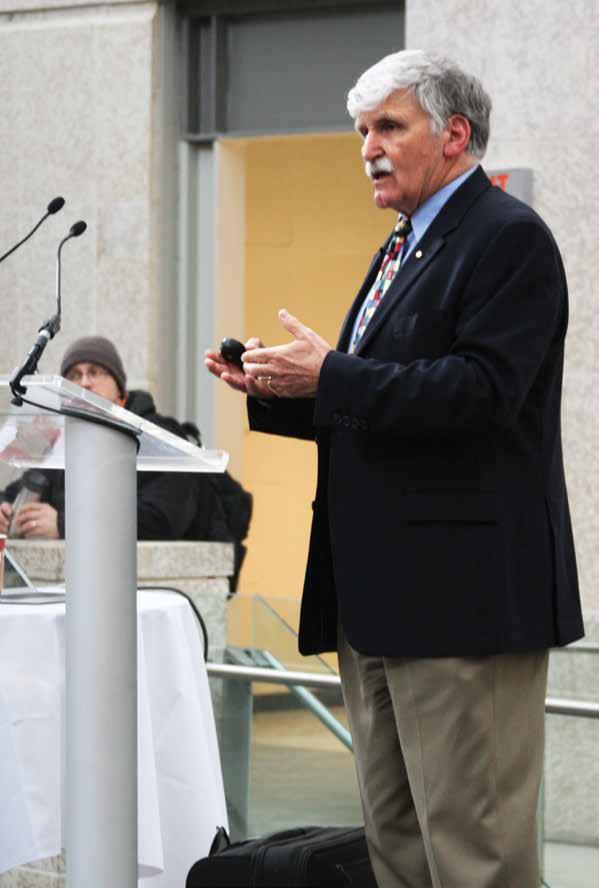
ieutenant-General Roméo Dallaire—who, after witnessing to the 1993-1994 Rwandan genocide as the force commander for the United Nations Assistance Mission for Rwanda, has become an advocate for human rights, mental health, and child soldiers—spoke at the University of Manitoba on Jan. 22 as part of UMSU’s Frost speaker series.
The atrium of the Engineering and Information Technology Complex was filled with spectators for Dallaire’s speech, with a handful of audience members waiting upwards of two hours for front row seats.
Dallaire touched upon personal experiences from his time in Rwanda. He explained how he saw his son’s eyes when he looked into the eyes of a Rwandan child, found in a house of decaying bodies. He said, “That child
was just as human as my son, yet look at the constructs of which they find themselves.”
The topic of inherent equality and universal humanity resurfaced a number of times throughout Dallaire’s speech.
Dallaire was ordered out of Rwanda because “the world can’t handle more peacekeepers being killed.
“The world could handle 10,000 Rwandans being slaughtered every day, but it couldn’t handle 450 peacekeepers being killed.” He said his morals kept him from leaving, because he was protecting 30,000 Rwandans and as a nation, and we ask ourselves if we should spill our blood to protect others, or if we intervene only when it suits us.
With the end of the classic era of giant armies facing other giant
armies, our classic methods of the use of force have also ended and the world has fundamentally changed since his generation, he said, asking the audience if they accept the recent restrictions of civil liberties, denial of human rights, acceptance of torture, and Guantanamo Bay.
“We are in a revolutionary period.”
He argued that the only solution to perpetual conflict is to address the rampant poverty that exists in the world, because poverty breeds rage. For this reason, long-term commitments are necessary to begin to alleviate poverty, which will stabilize a country. The 12-year Canadian involvement in Afghanistan was much too short; Dallaire argues that commitments up to 60 years in length may be needed to build stable democracies.
One U of M psychology student Fiona Axelsson described the event as a “once-in-a-lifetime experience to be with a Canadian legend.”
University of Manitoba students Ntwali Fabrice and Namurambaho Raoul, from Rwanda, had the chance to meet Dallaire after the presentation. Ntwali said, “I wanted to know him; I wanted to hear what he experienced in our country.”
Both students lost family members in the Rwandan genocide, and felt it was meaningful to meet and talk to the man who helped protect Rwandan refugees.
“The world could handle 10,000 Rwandans being slaughtered every day, but it couldn’t handle 450 peacekeepers being killed”–
Lieutenant-General Roméo Dallaire
Manitoban: If you could give a call to action to millennials, with regards to human rights and social justice, what would that be?
Dallaire: I think that you’re going to have to listen to my presentation, particularly some of my last slides; because that’s where I give you guys some guidance.
First of all, the perception of how you’ve described your generation is there only because it has not been informed enough. We’re seeing far more of your generation going to visit developing countries than that go to Europe, which is a massive shift than from before, when everything was in Europe. I think that’s the first thing.
The second thing is that you are already a generation without borders, which I’ll explain. Okay, you’re already global, so you’ve got a much better ability to feel what the hell is going on in the world and humanity than we ever had. And so, you’re empowered by so much capability the only thing that is required is to give you a sense of participation, and essentially, activism. I’m saying that you guys have all the reasons to be activists, you’ve got the tools to coalesce, you’ve got the tools to influence, and, by becoming activists you will gain, in fact, that momentum to change.
And, to give you credibility is you’ve got to go and get your boots dirty.
So I say that your generation, you should have a sort of a rite of passage, which I’ll explain later, which is
underneath your bed, there should be a pair of sneakers or boots that have been dirtied or soiled in the earth of a developing country. Go for three weeks, a month. Just go, see, taste, hear, feel what’s going on with 80 per cent of humanity. Bring that back and join non-governmental organizations, create NGOs, get out there and become activists.
M: What do you think of students using social media as a form of activism?
D: I think that you cannot erase the facts of humanly being on the ground. So, the social media does not replace that; what it does, it’s a force multiplier. It permits you to get that out there more, to be able to exchange it more, to bring your own picture, live, from where you are in the field to the gang back home.
I think, also, the social media is still a very immature system, so you’ve got to watch it because sometimes you can create movements that just, are either not credible or are not ethical. Invisible children, remember that? Go get Kony, right? And the world went wild. There is no way you could do that; and some of the material that was used was wrong. And so, you know what Kony did with that? It empowered him. I mean hey, the world knows about him now, he doesn’t give a shit.
“I think, also, the social media is still a very immature system, so you’ve got to watch it because sometimes you can create movements that just, are either not credible or are not ethical" –Roméo Dallaire
M: How can students lobby to increase Canada’s commitment to multilateralism and peacekeeping?
D: Engagement in the NGO world, and help them coalesce and become the lobby of the community, of the population. It’s not necessarily joining political parties, it is using tools to influence the political parties. And, I think the coalescing of NGOs, who are the eyes and the ears, the witnesses of humanity, they are without borders, and so, I believe they will become that body that’s going to bring the voice of humanity to the politicians to change policy, to influence public opinion. So that’s the route to go.
Dana h aT h E rly, staff

Minister of education and advanced learning Peter Bjornson spoke at the University of Winnipeg last week about the state of post-secondary education in Manitoba. He outlined the government’s new approach to post-secondary education policy with reference to the new advanced education advisory committee, which replaces the former Council on Post-secondary Education (COPSE).
While the first meeting of the advisory committee was held last week, Bjornson’s speech did not get into the specifics of the meeting.
Consisting of both post-secondary and non-post-secondary appointees, the committee is responsible for allocating funds and directing the Manitoba post-secondary education system. Since COPSE was dismantled last year, the minister of education and advanced learning has effectively assumed the role of the council, with power centralized in his office under the guidance of the advisory committee.
Bjornson told the U of W audience that technically, the advisory committee did not replace COPSE, and that legislation and amendments were made to address the former role that COPSE had.
“We had some pretty frank discussions and some good heated debate,” Bjornson said of the first meeting of the advisory committee.
Post-secondary and K-12 education were put under the same umbrella in the province’s education department over the past year. Bjornson was asked whether issues particular to post-secondary students and institutions would be left behind.
“No, I don’t think so at all, in fact, because we still have the same people within the department dedicated to doing the work that they need to do,” he said.
“By virtue of having that model, we have one lens looking at the system from K-12 to post-secondary,” Bjornson continued, adding that
the departments can now work more collaboratively.
One of the major concerns is the transition that students face from high school to university, according to Bjornson. In an interview with the Manitoban following the minister’s presentation, Wayne Ewasko, the province’s Progressive Conservative education critic, agreed with this premise.
Along with some Manitoban academics, Ewasko did have reservations pertaining to the composition and centralized power of the advisory committee.
Education critique
Ewasko, Lac du Bonnet MLA, told the Manitoban that the concern coming from a lot of the post-secondary institutions is that “students are not necessarily coming very well-prepared.”
“We are asking everybody within Manitoba, any political stripe, to bring forward ideas about how to make changes,” Ewasko said.
With regards to some of the changes underway within the department of education, Ewasko spoke about how, during James Allum’s term, the former education minister and now Manitoba justice minister, effectively dissolved COPSE, “bringing in all the power into the department, into the minister’s office.”
“How is this going to work?”
Ewasko said.
“Technically every decision in regards to post-secondary would fall not only onto the minister, but is then going to be delivered by the minister.”
Ewasko questioned the authority and influences of the committee.
“From what I saw in the bill, that basically put the power of COPSE into the minister’s office, is that, yes, there is an advisory committee, but it is exactly that. It’s an advisory committee.”
Ewasko added that with the recommendations given to the minister from the advisory committee, the minister “can take it or leave it.”
In terms of the positions held on the advisory committee, Ewasko reaffirmed that these positions are not elected or legislated, noting that the minister may essentially decide that one person is no longer required on the committee, and then not fill the vacant seat; or the minister can appoint anyone to fill the position, since criteria to fill all of the positions are not legislated.
Ewasko added that, with vast representation on the committee, he hopes that members are doing it for the “rights reasons,” based on “experience and expertise within their fields and not just for political gain.”
When asked about the effectiveness of the advisory committee, Ewasko responded, “Only time will tell.”
He said his number one concern with the committee was that “COPSE had to provide reports,” adding that the council was in charge of directing the funds to various post-
secondary institutions.
“So now, we are in a situation in which post-secondary institutions are playing nice with the minister.”
Ewasko said that there is “no watchdog until after the fact” – until after funding allocations have been determined.
“The thing is that it is out of the public’s purview.”
When asked about the power bestowed by the minister and the committee, respectively, UMSU vicepresident external Christian Pierce told the Manitoban that centralization of authority is not an issue and that the power balance is similar to the configuration under COPSE.
“I think the power balance remains similar in respect to the minister because he still has a committee reporting to him,” Pierce wrote in an email.
A letter to the minister of education from UMSU, provided to the Manitoban by Pierce, applauded the notion of centralized authority for reasons of accountability. On the other hand, it read that the “minister will hold even greater power and authority over PSE institutions in this province” and that “this could lead to the temptation to intervene inappropriately in institutional autonomy.”
letter to the minister
Bjornson has stated that Canadian Federation of Students-Manitoba chairperson Zach Fleisher is the only student representative on the advisory committee, representing students from campuses across the province.
In his email to the Manitoban, Pierce said, “ I will continue to communicate with Zach to ensure he knows what issues UMSU feels should be voiced at these committee meetings.”
Pierce told the Manitoban last week that UMSU had sent a letter to minister Bjornson advocating for more student representation on the committee.
Bjornson said that the decision to give the Canadian Federation of Students-Manitoba the sole student representative spot on the committee was based on “recommendations with respect to individuals as part of organizations that should be at the table.”
“The participants are based on not just who they are, but the hats that they wear, and when they do get to the table, everyone’s taking their hats off,” Bjornson said.
When asked about the letter, Bjornson said that he had “read that UMSU sent us a letter.”
“We have a very sophisticated tracking system,” and in regards to reception of the letter from UMSU, Bjornson responded that the minister’s office did “not have any trace of it.”
The letter indicated that the capacity of the advisory committee was too limited, with no requirement to deliberate on tuition fees or other policy matters.
“Most critically, however, is the
make-up of AEAC [advanced education advisory committee],” read the letter Pierce was referring to in response to Bill 63 – the Advanced Education Administration Amendment and COPSE Act, which established the committee.
According to Bjornson, UMSU did not bring up the issue of student representation on the committee during their meeting with the minister after he was appointed.
Tim Johnson, special assistant to the minister, said he called Pierce regarding the unrecorded letter, but did not receive a call back by the time of publication.
“If we see it, we’ll look at it,” Johnson said.
When asked about the letter advocating for more student representation on the advisory committee, Pierce told the Manitoban that UMSU sent the letter to “the minister of education and advanced learning office at the end of May 2014, which
was occupied at the time by minister James Allum.”
“If I had mentioned that we sent a letter to minster Bjornson, I was mistaken, and it was minister Allum that we were dealing with at the time,” Pierce said of the missing letter.
Although the present minister expects to hear from student organizations about this, Bjornson told the Manitoban that he was content with the current post-secondary student representation on the committee.
The Manitoban requested the full list of committee members from the minister’s office. According to the list received, in total there are currently 18 committee members – including one U of M student named Kathleen BlueSky.


K E ila D E Pa PE

In coordination with campus student groups, the University of Winnipeg Students’ Association (UWSA) is launching a fossil fuel divestment campaign on their campus to encourage the University of Winnipeg to discontinue the practice of investing in fossil fuel companies.
The launch week, which begun on Monday, includes activities such as a petition drive, panel discussion, and film screenings to raise awareness surrounding climate change caused by burning fossil fuels. The objective is to engage as many campus stakeholders as possible, including the University of Winnipeg Foundation, the Board of Regents, faculty, and the administration.
Manitoba students have been preparing for a fossil fuel divestment campaign targeting TransCanada due to the proposed Energy East pipeline, which is slated to transport oil sands bitumen from Alberta to refineries on Canada’s east coast, according to a press release by the Canadian Federation of Students-Manitoba.
The current UWSA campaign emerged when the national office of the Canadian Federation of Students passed a unanimous resolution to endorse a national campaign for fossil fuel divestment at their general meeting in the spring of 2014. Delegates representing the UWSA at that meeting then brought the resolution to their Board of Directors. Shortly after the CFS resolution, the UWSA board passed a motion to endorse the campaign.
In discussing their current initiative, UWSA vice-president advocate Peyton Veitch said that there is significant need for oil sands divestment given the current economic and environmental climate in Canada.
“There’s a level of urgency to this cause that’s really worth highlighting,” Veitch said.
“We have to be really clear in saying that fossil fuel companies and their business practices, if left to their own devices, will push the planet to the point of runaway climate change.”
Veitch cited at least one example where pressure from the community led to divestment from an oil company at the U of W.
In 2013, when scrutiny was put on the university’s campus Eco-Kids pro-
gram, a summer science program for inner city youth funded by the oil company Enbridge, the university cancelled the initiative due to community pressure. The program, re-titled ScienceKids on Campus, is now funded by the government of Manitoba and a range of community groups.
What divestment seeks to attain, however, is a full break from any relationship, financial or otherwise, between universities and oil companies like Enbridge or TransCanada.
The University of Winnipeg Foundation, a charitable public foundation that engages in fundraising and asset management for the U of W, does not make the specifics of their investments public. This makes it difficult to determine which fossil fuel companies are in their investment portfolio and how they affect the value of the endowment fund that is used to support scholarships, academic programs, and infrastructure, Veitch said.
“I think we have to assume that there will be some initial cost, but one of the things that we’re very cognizant of, is not only saying that investing in fossil companies is wrong, but also providing alternatives for the foundation,” said Veitch, noting that advocating for greater transparency on the part of the foundation is connected to the campaign.
Jeremy Read, executive officer and advisor to the president at the U of W, confirmed to the Manitoban that six per cent of the U of W’s endowment fund is invested in petroleum and associated industries such as plastic and asphalt. When asked about the administration’s stance on divestment, Read said that divestment would need to fit into a larger framework of long-term goals and strategies for sustainability.
“The reality is, our economy as a whole is petroleum- and gas-dependent, and if the long-term goal is reduction of fossil fuel dependency and greenhouse gas emissions in terms of impact on climate change, then I think as an institution we want to make sure we’re at the table with the people we need to have those conversations with,” Read said.
Al Turnbull, president of the University of Manitoba Students’ Union, told the Manitoban that the student union does not have an official stance on fossil fuel divestment
as of yet.
“Moving forward we need to consider a time without fossil fuel investments and fossil fuel dependency. On behalf of myself, I think universities should be cognizant that they are places of higher learning and progressive thinking, and they need to consider all the options. Fossil fuel divestment—and conversely, clean energy investment—is something we need to be cognizant of,” Turnbull said.
Over the past 50 years, divestment has been used as a tactic to facilitate social change on university campuses.
The most widely known movement took place in the 1970s and ’80s when student activists demanded that schools divest from companies doing business with South Africa to protest the country’s apartheid system.
Those efforts, combined with
widespread social and global state pressure, aided in isolating the South African economy, which facilitated the eventual collapse of the apartheid system. Divestment campaigns have been implemented on a wider scale and realized by federal legislation since the 1980s. Since then, sweatshop labour, use of landmines, and tobacco companies have all been targets of divestment.
In early December, Concordia University became the first Canadian post-secondary institution to begin divesting from fossil fuel companies, with a commitment to withdraw $5 million worth of holdings and dedicate it to “social and ethical investing.”
Dalhousie University’s Board of Governors recently voted against divestment, but agreed to consider environmental, social, and governance factors in their practice, and to incorporate the UN Principles for
Responsible Investments. Dalhousie has also committed to publishing annual reports on investments.
The University of Manitoba has not announced any plans for oil divestment, but their current Strategic Plan states: “The university will need to continue its efforts to promote institutional sustainability and to pursue the principles of environmental, social, and economic sustainability defined by the World Commission on Environment and Development as meeting ‘the needs of the present without compromising the ability of future generations to meet their own needs.’”
The UWSA campaign is linked to Fossil Free Canada, a “national campus-based fossil fuel divestment movement,” which acts as a platform to connect nearly 30 student divestment groups across Canada.


Carlyn S C h E ll E nb E rg, staff
When Canadians watch hockey today, we are watching men.
Riddled with patriarchal language, hockey—and ringette— was created with men in mind. This is evidenced by the names of penalties such as “too many men,” and terms such as “defencemen.”
But where are all the women?
Canadians began playing hockey in the 1880s. Women began playing as early as 1891 in Ottawa. Dressed in long wool skirts and figure skates, women hockey players were accepted for a short time as equals on the ice in certain provinces – namely Saskatchewan.
This did not last, as doctors warned women of the “dangers of athletic exertion,” and dissent against women playing hockey grew. During the 1920s and ’30s, women’s hockey, which at the time involved body checking and slashing, received more publicity than the decades that followed. As Joanna Avery and Julie Stevens note in the book Too Many Men on the Ice, during this time period, some women were discouraged or forbidden from the sport altogether by their husbands.
During the Second World War, women’s hockey took a backseat to the men’s game. While women already received the bottom of the barrel with regards to ice time and equipment, now athletic funds for women were being cut and entire teams collapsed. Men’s hockey was seen to be more profitable, with the National Hockey League being a case in point.
In the 1960s, women’s hockey experienced a restoration at the university level. At Queen’s University in Kingston, Ontario, the women played a physical, aggressive game, in spite of a rule prohibiting body checking.
Associations and individuals lobbied for women’s hockey. In 1974, a player on the Queen’s University team requested in vain that the American Hockey Association include women’s hockey as an Olympic sport. The Ontario Women’s Hockey Association, started in 1975, lobbied for inclusion in the Ontario Winter Games, the national championships, and the world championships.
Despite these efforts, women could not access hockey the way men could. The Canadian Hockey Association didn’t recognize women’s hockey until 1982 after the inception of the National Female Council. A 1992 National Collegiate Athletic Association study examined gender equity in ice hockey. The study revealed that males received 69.6 per cent of scholarship money. The recruiting budget received was 82.8 per cent for males, and 17.2 per cent for females. The media also largely ignored female hockey, at least in contrast to the attention men’s hockey received.
Women lacked access to the sport; there were “fewer psychological and material rewards for women athletes
and less access to status and prestige,” according to M. Ann Hall and Dorothy A. Richardson in the book Fair Ball: Towards Sex Equality in Canadian Sport Sports involving body contact were forbidden to women in the early 1900s, a ban rooted in the notion of women as dainty beings who cannot risk damaging their reproductive organs and consequently abandoning their compulsory maternal role. It turns out, though, that female reproductive organs are well-protected. As highlighted in Fair Ball, “the uterus is surrounded in an aqueous material that absorbs and distributes forces so well that injury is highly unlikely.”
Females were left out from hockey partly because it served as a training ground for professional leagues, and there was and still is no professional league for women. Other reasons included the still pervasive belief that women are physically inferior to men. Fair Ball asks, “Are women athletes inferior for biological reasons or because they haven’t benefited over the years from the same systemic and rigorous training as men?”
Another harmful idea that discourages women from playing hockey is that women shouldn’t have muscles because muscles are masculine traits; women should be slender and attractive, and bearing traditionally masculine traits such as muscles makes women undesirable to men. An aggressive sport such as hockey risks women’s femininity. There is also a stigma for aggressive, strong women: all successful female athletes are lesbians. This belief serves to prevent women from playing hockey due to the homophobic harassment that ensues.
Sports involving body contact were forbidden to women in the early 1900s, rooted in the notion of women as dainty beings who cannot risk damaging their reproductive organs and consequently abandoning their compulsory maternal role
Elizabeth Etue and Megan K. Williams write in On the Edge: Women Making Hockey History, “Harassment, inadequate access to ice time, underfunding and the underrepresentation of women on organizational bodies all attest to a sports world that promotes and guards the aspirations of some boys and views the aspirations of girls as a threat.”

The problem of females entering the traditionally male domain of aggression and violence (ie. ice hockey) was addressed through the creation of sports made specifically for females.
Enter: ringette, which is similar to hockey but is not a contact sport – an ideal arena for girls and women to uphold their “feminine charm.”
Ringette was invented in 1963 by Sam Jacks in North Bay, Ontario, who found that girls were not playing hockey and needed an ice sport as well. In the beginning, much like Eve was allegedly created out of Adam’s rib, ringette sticks were made from hockey sticks with the blade removed.
In this safer environment, female athletes could thrive. Ringette quickly grew; in 1983, there were over 14,500 ringette players. According to On the Edge, in that same year, “the number of players registered in women’s hockey was a mere 5,379, less than 40 per cent of ringette’s numbers.” Today there are over 80,000 girls playing hockey.
When women’s hockey banned body checking in 1986, some ringette players moved on to hockey. In spite of this, the only year ringette registration actually decreased was in 1998, most likely due to women’s hockey becoming an Olympic sport for the first time. There are currently more than 27,000 ringette players in Canada.
The levels of ringette play in Canada were divided into Bunny, Novice, Petite, Tween, Junior, Belle, and Open. These categories, as noted in On the Edge, “leave no room for confusion about one’s sexual identity.”
The names of these levels have recently been changed to U8 (under eight), U10, U12, U14, U16, U19, and 18+, perhaps to abandon the notion of females as delicate creatures. Other
aspects of ringette have changed as well. As Hayley Mick writes in the Globe and Mail, “Today’s ringette is not your grandmother’s ringette. Modern ringette is stocked with good Canadian stuff like the occasional busted rib.” Adding a shot clock, which gives the team with ring possession only 30 seconds to shoot, for higher levels has also quickened the game.
The problem of females entering the traditionally male domain of aggression and violence (ie. ice hockey) was solved by the creation of sports made specifically for females
Canadian Olympic gold medallist Hayley Wickenheiser has seen career success playing in a professional men’s league, and women’s hockey has also come a long way, but, as noted earlier, there is still no professional women’s league. So while men have leagues such as the NHL to aspire to, women typically cannot make a living playing hockey. National Hockey League commissioner Gary Bettman said a women’s professional hockey league doesn’t make business sense, yet. Ringette and women’s hockey are still entrenched in gender norms. While boys are technically allowed to play ringette until age 12, and you may see the occasional male goalie in higher levels, you would be more
than shocked to see a boy playing the sport. Ringette is still seen as a female sport and, unfortunately, therefore a lesser sport.
While boys don’t need access to ringette, as they have the privilege of men’s hockey, the problem with gendering sports is that it causes a divide and serves to exclude the marginalized group. If a boy or man were to play ringette, they would undoubtedly be ridiculed and viewed as less of a man – because ringette is supposed to be free of all “masculine” traits. It’s only been 17 years since women began playing hockey in the Olympics. Progress takes time – time for competition to build, more players to join the game, and for sexism to dissipate. It’s also been 52 years since ringette was invented. Hockey and ringette are increasingly accessible to women and girls who want to play aggressively on the ice, but for equity to be achieved, we need to start with a successful professional women’s hockey league so that women can make a living playing the sport they love as well.
Perhaps if hitting and fighting were incorporated into women’s hockey it would be more entertaining and profitable. The current rule in the Olympics is that while only some men require partial visors, women must wear full face masks. This rule would need to be changed in order for women’s hockey to be taken seriously – or fighting banned from and face masks made compulsory for men’s hockey. Some argue that women’s hockey is faster than men’s because it is exempt from fighting and hitting. In order for these rules to change, society’s ideas about weak, fragile women will need to evolve.


Don’t like how the debate is being conducted? Get involved!
To M i ngra M , staff
In the wake of the Charlie Hebdo shootings, a number of political tropes have renewed their currency. There has been an awful lot of talk about freedom of speech and the freedom to offend. Almost as much has been said about the alleged racism of Charlie ’s cartoonists, France’s alleged discrimination against Muslims, and the disturbing anti-Muslim backlash that has been occurring.
Given my position as the Comment Editor of the Manitoban, one of these tropes enrages me especially: the notion that covering one violent, tragic incident and not covering another reflects some insidious ideology-driven editorial policy. Whenever you cover—or, indeed, speak about—any significant disaster, someone will always wriggle out of the woodwork to criticize you for not discussing some other, more important, disaster.
As the tragedies get more horrible and more public, the probability that this will happen approaches one. These people are not, for the most part, involved in the discussion. They do not write about the issues they believe are important. They advocate for their pet issues only when current events bestow a high-profile tragedy that is supposedly less deserving of attention.
In short, they simply want to dictate what other people—and media outlets—devote their attention to, without making any meaningful contribution. “You there, with the notebook and recorder! Go and do
extensive research on the political circumstances of Nigeria. And make it snappy. I haven’t got all day.”
This is a lazy cop-out, a symptom of the rankest political hipsterism.
The Manitoban is a student newspaper. That means that we rely to a great extent on volunteers – students interested in contributing to the discourse surrounding current events, students interested in a career in journalism, and community members with ties to the university weighing in on their areas of expertise.
The reliance on volunteers is doubly true of the Comment section. I am currently the only staff member of the Manitoban whose job is to write opinion articles. And much as it pains me to admit it, I don’t know everything. More importantly, I have only my own point of view to work with. A certain uniformity of opinion is already one of the great weaknesses of the student press, and it would help matters very little if I were to turn our opinion pages into the Tom Ingram Variety Hour.
I see my job as rendering my contributors’ opinions in print, to the greatest extent that I can, regardless of whether I agree with them. So I almost never reject articles that are sent to me. I have done it only twice this academic year.
But the very best we can do is publish every article that gets written and sent to us. And the sad fact is that we don’t get very many volunteer contributions. We have the resources to publish far more articles
than we actually receive on a weekto-week basis. As a result, our coverage reflects, for better or worse, the thoughts and opinions of our staff and the small number of regular volunteers we have.
By this I do not mean that our coverage simply reflects our opinions on the issues. Our coverage reflects which issues we see as important enough to be worth having an opinion on. If our coverage is not diverse enough, that is because we print material written by a small number of people, and it’s more or less the same people every time.
The solution to this problem is to get more voices, and a greater variety of voices, involved in the discussion. I want to run articles about economics.
I want articles written from a religious point of view. I want articles talking knowledgeably about education. I want articles discussing the local politics of far-off lands in a way accessible to Winnipeggers. I want vicious polemics and quietly wellinformed dissertations that barely count as opinion pieces.
Some of these topics I see rarely, while some I have never seen in the four years I’ve been writing for the Manitoban. These are just a few I pulled off the top of my head; doubtless there are more interesting topics that would never have occurred to someone like me.
I believe that we as a student body can do better. I challenge us to do better. If you do not like how the debate is being conducted, get
involved. Steer it in a different direction. Or do something – just don’t sit idly and cast aspersions at the goodfaith efforts of others.
The question is often asked: “Why isn’t somebody talking about X?” There is only one answer to this question: “Hey, I’m somebody!”

In responding to the Charlie Hebdo shootings, best to avoid simplistic narratives of left and right
D E von h an E l
It is worth appreciating the immense outcry that has flooded the pages of broadsheets in the days following the senseless slaughter of satirists. A series of appraisals, explanations, and condemnations are in wide selection, and a simple inventory of this mass of text reveals a freedom of speech in recuperation.
This diagnosis, however lacking it may be, is corroborated by the choice of certain publications, including the Manitoban, to reprint the blasphemous images that made Charlie Hebdo a litmus test for freedom of speech.
However, much of the content of the current discourse is far from helpful. In fact, it would seem that the temptation of vacuous cliché and platitude has taken hold of more than just the mainstream press, where it is expected, but has become the de facto manner of speech.
The mainstream is not alone in
this (I intend to be an “equal opportunity offender”), as many on the left have taken it upon themselves to speak of, or for, a singular indivisible “Muslim community” and to know more than I suspect one can about the causes, or at least antecedents, of this act of murder. This is to say nothing of the vitriol and bigotry that the farright employs in an unjust backlash against those of the Islamic faith.
By now immersion into the rhetoric of war is complete with many world leaders echoing sentiments similar to those of Stephen Harper, who said that “they have declared war on anybody who does not think and act exactly as they wish” – “they,” in this case, referring to the nebulous “international jihadist movement.”
The tired expression those in power are reaching for is the “clash of civilizations.” When 22,000 people are killed in non-Western countries
compared to just 12 in Western countries as a result of terrorist attacks in 2013, it might be prudent to ask where this supposed clash is really taking place.
Many who are weary that the press is adopting the rhetoric of those who have the ability to curtail liberty for security or launch unjust interventions will be made uneasy when Ethan Cabel, in a Jan. 14 article in the Manitoban, writes that “we are at war with radical Islamism...” which is a “well-organized movement that seeks to impose theocratic Islamic fascism on the rest of the world through the use of violence.”
There is no doubt Cabel is right when citing al-Qaeda in Yemen as an example of “Islamofascism” and there are many others whose ideology fits the ticket. But to say that there is a “well-organized movement” seeking imposition of fascism, presumably
on Western countries, is to be nothing more than unsophisticated as one resorts to accepted assertion. It is an ironic claim to make after announcing the need for “an honest account” of the terrorist threat’s “origins, aims, and motives.”
The fault of mainstream journalists is their indolence; their lack of examination into the socioeconomics of French society and the Islamic world, the context in which radicalization arises, but also the abnegation of the responsibility to criticize, for example, the free speech crimes of world leaders who proclaim “Je suis Charlie.”
The mainstream may not remedy our myopic discourse, but neither does much of the left.
In Jacobin magazine Richard Seymour describes Charlie Hebdo as a “frankly racist publication.” From this charge many claim that Charlie has been stoking the fire for the far-right,
the other fascists, who might enact violence and discrimination upon France’s impoverished Muslim community. This and the fear of reprisal ought to be shared.
Understanding Charlie as Islamophobic seems to follow with the idea that the Muslim community is a unitary one. Seymour and his comrades are wrong to “essentialize,” as Seth Ackerman puts it, Muslims in just the same way the right does. There is no one Muslim sensibility to be spoken for and those who act as though there is are also resorting to the superficial.
The freedom to deride religion in the most vulgar way is to be upheld against those who feel the censorious impulse. For this reason one ought to feel solidarity with Charlie, while simultaneously repudiating the clichés that are the current narratives of right and left.
Letters published in the Manitoban are edited for spelling, grammar, and punctuation. Views expressed in the letters are those of the author and do not necessarily reflect the views of the Manitoban
I
would like to respond to an article in the Jan. 21, 2015 edition of the Manitoban titled “UMGSA confusion” by Ethan Cabel. The main points of this article revolve around excerpts taken from a leaked confidential resignation letter, and participation in the anti-cuts campaign with the Canadian Federation of Students MB (CFS-MB).
A confidential issue that was being dealt with in our UMGSA Council became a public affair when an individual shared a document with the Manitoban. Upon contact from the Manitoban, I refrained from discuss-
ing the resignation because those details should be confidential until they are resolved. Therefore, I provided the Manitoban with the details of our involvement in the anti-cuts campaign but not the resignation.
The content of the resignation letter was taken out of context, which made it appear there was a scandal to be uncovered. The resignation letter was not the result of UMGSA involvement in the “Stop the Cuts” campaign, but rather stems from a different issue.
We are an autonomous organization working to stop campus auster-
ity measures with six other student and worker unions on the “Stop the Cuts” campaign, one of which is the CFS-MB. We are also working with representatives from AESES, CUPE Local 3909, UMFA, UMSU, and Unifor Local 3007. This does not make us members of those organizations. We are participating with the campaign on a case-by-case basis so the UMGSA Executive and Campaigns Committees can evaluate which activities are most appropriate based on member goals.
To set the record straight, we pledged $1,000 to the anti-cuts cam-
paign with council’s endorsement; this is very different from a “donation” that was stated in the Manitoban’s article. We did not donate the $1,000 to CFS-MB; no money has changed hands. UMGSA will retain all control over the funds and the allocation of them.
The article tagline “Council confusion” seems to insinuate these processes took place without council consent instead of as a product of their involvement. Our council has had discussions around the anticuts campaign; critical questions have been raised and caution exercised.
The budget cuts will impact many stakeholders on campus and we should not let organizational politics restrict us from doing what is best for the student body. Moving forward I hope we can focus on the anti-cuts issues rather than unsubstantiated allegations.
Sincerely,
Laura Rempel President
University of Manitoba Graduate Students’ Association
Hollywood treatment does not do justice
To M i ngra M , staff
L
Doesn’t it?
Not so fast. The Imitation Game has numerous problems – there’s no focus, it lacks any interesting visu-
ast year saw the release of two high-profile films about famous scientists: The Imitation Game, starring Benedict Cumberbatch as the ill-fated computer scientist Alan Turing, and The Theory of Everything, with Eddie Redmayne as Stephen Hawking, the theoretical physicist. Both are up for several Academy Awards. With all the attention these films have received, it seems that there is a heartening new interest in science among the movie-going public.
als or sounds, and the characters are mostly nonexistent. But most distressing is the fact that it utterly fails to engage with Turing’s ideas in any meaningful way, even as it sexes up the historical events he was involved in and attempts to change the strange but amiable Turing into some sort of bizarre combination of

Cumberbatch’s Sherlock and Sheldon from The Big Bang Theory
No one expects a biopic to be a documentary, but a viewer with no prior exposure to Turing would leave this film with only the vaguest idea of why he was important. There is only a slight hand wave made in the direction of explaining the mathematics that made up Turing’s life’s work –though some of his concepts are quite simple and elegant.
The Theory of Everything is at least a serviceable movie. It focuses mainly on the romance between Hawking and his first wife Jane Wilde from their early days at Cambridge up to the dissolution of their marriage in 1990. The film’s supporting cast makes at least some impression, which is more than can be said for The Imitation Game. There are even moments of genuine humour here and there.
But again, Hawking’s scientific work fades to the background. There are a few spots where the film looks like it’s going to discuss Hawking’s conception of time, but each time it cuts away or changes the subject. The film does not treat Hawking’s ideas with any seriousness. Instead we get technobabble and a whole lot of irrelevant agonizing over the existence or nonexistence of God.
This is clearly worse than nothing, since the film’s version of scientific vacuity leaves viewers with the erroneous idea that they know something of Hawking’s work—the broad strokes if not the details—and connects it to some simplistic and readily available sociopolitical argument that it really has nothing to do with.
Far be it from me to suggest that biographical films must be rigorously accurate to history. But I don’t approve of prurience, and if you’re
going to go digging in the private affairs of living or recently dead people, it behooves you to avoid distorting, inventing, or glossing over important details of their lives. Or, at the very least, you should make a good movie.
The scientific work of two famous scientists is not a small thing you can just neglect to mention. Their work cannot be meaningfully detached from their lives. Cinematic biographers who don’t care—or expect their audience not to care—about this major aspect of their subjects’ lives simply do not care about their subjects as individuals.
With this in mind, it is not surprising that these films have felt the clammy touch of the Academy Awards, which have long been a celebration of middlebrow mediocrity.
The Academy loves stories of overcoming disability as much as it loves stories of discrimination that happened just long enough ago that we can’t be blamed for it, and these two films offer up a fine example of each.
These two films are sanitized of the quite challenging and revolutionary ideas of their subjects until nothing is left but platitudinous pablum, as exemplified in the clunky slogan of The Imitation Game: “Sometimes it is the people who no one imagines anything of who do the things that no one can imagine.”
The watered-down hagiography of the Oscar-ready biopic fails to give Alan Turing and Stephen Hawking their due. These were complex men who developed complex theories, and their respective lives and bodies of work deserve a complex cinematic look, one that likely won’t fit any preconceived social narrative.
No doubt such a film would not win an Oscar.

Craig aD ol P h E , staff
T
wo months ago, as students finished their courses for the fall term, a number of them invested their additional free time into volunteering for local charities.
Of course, charities operate yearround and informal giving permeates our social world. We’re encouraged by the media and through cultural narratives to consider those who don’t have the same quality of life we do. When faced with a recognition of the suffering of others and
the level of inequality in our society, most people’s first reactions are to want to help.
While some people offer criticisms about the efficacy of charitable organizations and the models they operate by (we certainly will here), we can also take heart in the intents of people contributing to charities. People are giving their time and financial resources out of a desire to do good for others.
These reactions are a central fea-
ture of human nature. Charitable giving is, in part, a manifestation of this desire to help and protect others.
The ubiquitous nature of the desire to help others makes it a topic worthy of discussion and a perfect candidate for the first feature of the year.
A comprehensive discussion of charity should look at a number of topics: it should explore the social psychology of giving, question the idea of altruism, look at the social institutions that necessitate charity,
analyze specific charitable organizations and events, and feature personal narratives of individuals giving as well as receiving from others.
Unfortunately, we won’t be able to touch upon all of these in the time and space allocated to us, but I hope that what’s presented here can serve as the launching pad for a number of discussions about charity.
This feature will include profiles of several charitable initiatives that have U of M student involvement,
an interview with Donald Benham, Winnipeg Harvest’s director of hunger and poverty awareness, and a look at Bob Geldof’s influence on musical charity initiatives.
I hope that the acts of charity profiled in this section inspire you to address social problems in your own communities and that the critical discussion about the nature of charity as an institution encourages you to think about the most effective ways to address those social problems.
Winnipeg Harvest is a staple in the city. One of Winnipeg’s most well-respected and well-recognized charities; for decades Winnipeg Harvest has worked to eliminate hunger in the province, and has done a great deal to reduce hunger through the collection and distribution of food.
Winnipeg Harvest distributes food through more than 350 partner agencies in Manitoba, including churches, community centres, schools, post-secondary education facilities, day cares, soup kitchens, and community agencies. In 2013, the organization distributed more than 12.8 million pounds of food.
Winnipeg Harvest’s mission statement might best be described as succinct. It lays out a vision for the organization: to create “a community that no longer requires the services of a food bank” as well as a threepoint mission for the organization: “1. Share food with hungry families; 2. Facilitate training and learning opportunities for [their] clients; and 3. Focus attention on hunger within our community and move towards long-term solutions.”
Nestled in that brief statement is a radical idea: a desire to put themselves out of business.
The Manitoban spoke to Winnipeg Harvest’s hunger and poverty awareness director, Donald Benham, about their philosophy and the role it plays in the organization’s efforts to alleviate hunger in the city.
“That view is held within Winnipeg Harvest, from everyone who works here and everyone who volunteers here, [to] our board,” said Benham. “We are very clear, top to bottom and every way sideways, that we’re all working on ending the need for food banks and thus putting Winnipeg Harvest out of business and closing its doors.
“But only when we’re satisfied, when the need is met, that everyone in Winnipeg, and Manitoba [ . . . ] is going to have enough to eat.”
Winnipeg Harvest’s long-term planning is supported by their hunger and poverty awareness committee, which is made up of people who are low-income and defined as oppressed—including clients and former clients of Winnipeg Harvest— and people who are of higher incomes who are not oppressed. The committee is meant to be a place for respectful dialogue where people of different backgrounds are able to contribute their knowledge to developing a strategy for achieving the organization’s vision.
Major projects being developed by Winnipeg Harvest go before the committee so they can discuss whether it will work towards ending the need for food banks. The committee also works to develop new plans that work towards the same goals.
The problems: hunger and poverty
Research done by Winnipeg Harvest has found that roughly 60,000 people use emergency food programs a month in Manitoba, 45 per cent of whom are children. As astoundingly large a number as that may be, there’s another key figure to keep in mind; although the figure stays at roughly 60,000 people using emergency food programs month to month, Winnipeg Harvest’s researchers have found that with the start of a new month the 60,000 figure includes 3,000 new users who had not been clients the previous month.
“It’s not the same people all the time. It’s important that people understand that and it’s important that we understand that,” said Benham.
The number of people utilizing food bank services in the province shouldn’t come as a surprise in light of poverty levels and the current inadequacy of funding for the welfare state.
“Bottom line, for a mom and two kids—a single mom and two kids— just as one of the examples [of the basic cost of living] is $38,000 a year,”
said Benham. “And if she’s on welfare she’s got about half of that. So every time she goes to the store for milk and bread, for every dollar she needs she’s got 50 cents. And she never gets the other 50 cents. She is always behind. So we say is that fair? Is that fair to that mom? Is that fair to those kids?”
Winnipeg Harvest calculates that even working a full-time, full-year job at minimum wage, a mother of two children would only have 75 cents for every dollar she needs for basic dignified living.
“We think this is a very important example of what people need to know about living in poverty in Winnipeg.
“What should we do about that?” Benham asks. “What would be a better way? What would be a better system to make sure that those kids have enough food in them before they go to school every day so they can learn properly?”
A solution: guaranteed annual income
The most crucial idea, according to Benham, is a guaranteed annual income.
“We say, let’s take a look at something that happened in Dauphin, Manitoba from 1974 to 1978,” said Benham, referring to the Mincome basic income project, which was piloted in Daupin and has recently regained notoriety through research done by U of M researcher Evelyn Forget in order to determine what impact the project had.
As part of the Mincome program, families in Dauphin were given supplementary income. The program was available to all low-income families, including the working poor. Families of people who were unemployed and receiving Mincome, who went on to find work, were not penalized by losing access to their financial support. Instead it was reduced slightly depending on their income.
Since then, researchers have found that the unconditional financial support for low-income families had not

significantly reduced participation in the labour force, as many feared it would. The two exceptions: married women deciding to stay at home longer having children, and teenagers who didn’t get full-time jobs until they were slightly older.
However, the effects of making it available to everyone that needed it have been manifold: it helped to reduce poverty; it has been described as less stigmatizing than conditional social welfare benefits; it contributed to radically increasing high school graduation rates; and it reduced hospitalization rates – an effect that extended indefinitely, beyond the duration of the experiment.
Benham was excited by the implications of the findings for poverty elimination strategies.
“High school enrolment increased so much that they were actually pulling in drop-outs from previous years,” said Benham. “And there’s actually been a permanent good—a permanent change—in the well-being of
the people of Dauphin when it comes to hospitalization for mental illness or mental health issues and for accidents and injuries.”
“Because health care is a public responsibility, if we could save that much money on health care by implementing a guaranteed annual income, we think that would be not only the [ . . . ] humane thing to do,” said Benham, “but we think it would be the smart thing to do. The economically efficient thing to do. Because we would save money in the long run on our health care system as well as a number of other social benefits from having more people food secure and having enough to eat. Including all those kids going to school.”
Winnipeg Harvest lays out a vision for how we can work to eliminate poverty and the need for food banks while also serving as a model for how to think of the role of charity: with compassion, with dignity, and only as long as we need it.
Craig aD ol P h E , staff
The university is a hive of activity, and students and staff at the University of Manitoba seem particularly generous in their time and finances. Amongst the various student groups, unions, faculties, and departments on campus there are dozens—perhaps hundreds—of charitable projects and efforts worthy of profiling. This article looks at only a few of the most notable efforts championed by students.
The University of Manitoba Students’ Union is the main representative body of students at the U of M. As such, it takes an active role in spearheading charitable initiatives supported by U of M students. It provides funding to some charitable student groups, contributes financially to key causes important to students, and manages its own charitable projects such as the holiday hamper.
Local student groups are given support through space, access to tables during orientation, and occasional funding from UMSU for special events. Several of these groups have charitable mandates and are affiliated with national or international charities and non-profits. The groups include Let’s Talk Science, Active Minds at University of Manitoba, MEFLIFE Manitoba, the University of Manitoba group for the Canadian Breast Cancer Foundation’s Youth Advisory Council, the Justice for Women Student Group, and University of Manitoba Operation Smile, among others.
The holiday hamper program has been run by the students’ union for over 10 years. The program is meant to help students in need over the holidays. Students in need are able to confidentially sign up to receive a
hamper through UMSU while student groups, faculty councils, associations, and faculties participate in the program through the “Adopt-AHamper” initiative, in which they help collect and deliver goods.
“I wanted to try to get Bison athletes engaged in a community that they don’t normally engage in” – Lindsay Poggemiller-Smith, Siloam Mission’s director of human resources and volunteer services, and former Bisons athlete
This year, UMSU was able to distribute over 200 holiday hampers to the families of students in need.
Rebecca Kunzman, UMSU vicepresident advocacy, said that the union had doubled the capacity of the holiday hamper program compared to last year.
The students’ union also runs an annual toy drive. The toys are collected by donation in University Centre and go to the children of students receiving hampers.
Kunzman started work on the union’s hamper program in early November, but emphasized the contributions of other students in the success of the program this year.
“This program would not be possible without the help of our volunteers

and the generous donations of all the student groups, faculty councils and associations, offices, and individuals who participated.
“The three-day block over which the program really comes together is an intensive one. This year was an amazing success due to the number of great volunteers who came out and helped us on the packaging, wrapping, and especially delivery days.”
The University of Manitoba Athletic Council (UMAC) is a student group made up of student athletes who play for the Bisons.
Jessica Rosenbaum, UMAC volunteer coordinator and athlete with the Bisons’ women’s hockey team, told the Manitoban UMAC’s purpose is to provide a venue for “com-
munity outreach; social planning; to provide a forum for discussion for all athletic-related issues; to regulate all other unified activities done by varsity athletes; and to be the voice of all student athletes on behalf of Bison Sports.”
But on top of all of its other roles, UMAC is particularly active in its charity efforts.
This year was UMAC’s 10th year volunteering at Siloam Mission over the holidays. The volunteers—who included athletes from track and field, swimming, basketball, soccer, hockey, volleyball, and golf—worked in Siloam’s kitchen and drop-in centre, and sorted donations.
The Bison swimming team also donated over $500 to Siloam Mission after raising money with sales of event programs at their 2014 Bison Sprint meet.

The University of Manitoba Athletic Council’s partnership with Siloam started when Lindsay Poggemiller-Smith, director of human resources and volunteer services at Siloam Mission and a thenBison athlete from the women’s volleyball team, brought her team to volunteer. The initiative expanded as other Bison teams began to join the effort.
“I wanted to try to get Bison athletes engaged in a community that they don’t normally engage in,” Poggemiller-Smith said in an interview with Shaw TV. “Siloam was a great place to do that and so I brought some of my friends down, brought my volleyball team down, and then the coaches were graceful enough to let me expand it to other teams until UMAC got involved.
“And for the last seven or eight years there’s been a different rep carrying it to bring people down to Siloam for Christmas.”
“We obviously think it’s really important and we all like to give back and try to do what we can,” said Rosenbaum in reference to UMAC’s charity work.
The University of Manitoba Athletic Council and various Bison teams engage in a variety of other charity initiatives throughout the year. This year, the women’s hockey and basketball teams supported the Canadian Breast Cancer Foundation with Shoot for the Cure games. Throughout the year UMAC also runs two programs in Winnipeg elementary schools: Bisons Against Bullying and Bison Book Buddies.
Upcoming projects, set for February, include raising funds for the Heart and Stroke Foundation during Bison games and having student athletes read to children as part of I Love to Read Month.

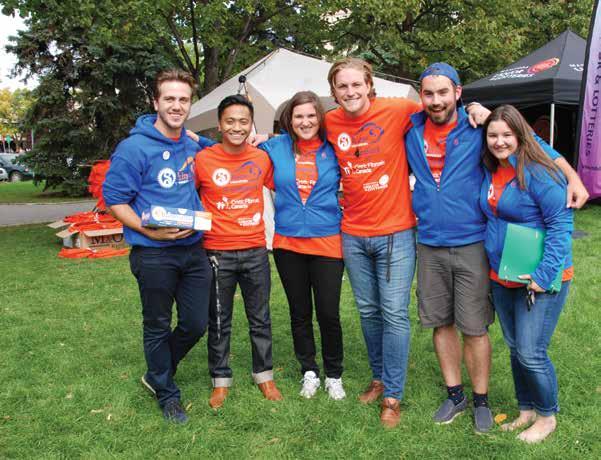
The Commerce Students’ Association (CSA), which represents students in the Asper school of business, is, in conjunction with Asper, another leader on campus in terms of charity efforts. Their annual activities include Chillin’ for Charity which raises funds for the United Way, 5 Days for the Homeless which raises funds for Resource Assistance for Youth (RaY), and Shinerama, which raises money for the Canadian Cystic Fibrosis Foundation.
In November 2013, over 50 students took turns diving into a pool of icy water as part of the University of Manitoba’s Chillin’ for Charity event, which was organized by Asper students. They raised over $17,500, with all the proceeds going to the United Way of Winnipeg. The fundraiser is an annual activity and is done in conjunction with business schools across Western Canada.
United Way of Winnipeg, the recipient of funds, is a major charitable organization in the city. Founded 50 years ago as a joint venture of the Winnipeg Chamber of Commerce and the Winnipeg Labour Council, it works to fundraise and distribute to various groups in the city. It has also expanded its focus to broader planning in the charitable and nonprofit sector.
Louise Waldman, United Way of Winnipeg director of communications, said that the funds it raises, including those raised by the U of M’s Chillin’ for Charity event, go towards a variety of initiatives throughout the city.
“All of that money gets invested in services through agencies and through programs throughout Winnipeg.
“There’s so many people whose lives are touched by United Way; they may not realize it but the network of programming we support is so broad: from mental health and physical health, to community and family resource centres, to youth programming, to cultural groups. It’s just a really important part of the fabric of our city.”
In 2014, 5 Days for the Homeless saw six students from the Asper school of business camping outside on the Fort Garry campus while still

attending classes and engaging in their daily activities. The campaign ended up raising $27,350 for RaY, a local non-profit organization that works with Winnipeg’s homeless youth up to the age of 29. The organization intends to provide a nonjudgmental environment in order to make young people comfortable and provide programs and services focused on ensuring health and wellness, access to employment and housing, and opportunities for recreation.
“All of that money gets invested in services through agencies and through programs throughout Winnipeg” – Louise Waldman, United Way of Winnipeg director of communications
5 Days for the Homeless originated at the University of Alberta, spreading to other universities in Canada in 2008. Since its inception, 5 Days for the Homeless has raised over $985,000 for Canadian charitable organizations.
Shinerama is the national fundraising campaign for the Canadian Cystic Fibrosis Foundation. Volunteers for the annual campaign include over 35,000 students from 60 Canadian universities and colleges, who raise money primarily by shining shoes. However, volunteers also cook burgers, wash cars, and contribute in a number of other ways.
The U of M plays a major role in the campaign every year, with local activities being organized by members of the CSA. The U of M campaign raised over $32,000 in 2014 and over $35,000 the year before that. Since the campaigns first launch in 1964, Shinarama has raised close to $25 million, which goes towards cystic fibrosis research and care.

Bob Geldof and the strange contradiction of celebrity activism
To M i ngra M , staff

The field of benefit concerts and charity singles is dominated by one man: Bob Geldof, the Irish rocker who was one of the driving forces behind the Live Aid and Live 8 concerts and who has corralled pop singers into recording and releasing his charity single “Do They Know It’s Christmas?” four times since 1984 under the umbrella of “Band Aid.”
Geldof ushered in a new era of celebrity activism where every actor and pop star supports their own pet cause and everyone who’s anyone in the charity world has some vaguely famous person to be the public face of their organization. Whether or not this is a positive change, it is one of the factors that drives the charitable world even today.
With Band Aid 30’s record—the 30th anniversary version of “Do They Know It’s Christmas?”—released last November, and the 30th anniversary of Live Aid fast approaching, Geldof has found himself back in the headlines. Just as in the 1980s, much of what is being said about him is not positive.
The Geldof-style benefit concert is a lavish spectacle featuring as many big-name pop stars as he can fit in one
place. Live Aid, which was put on in July of 1985 at the Wembley Stadium in London, featured performances by David Bowie, Dire Straits, the Who, Paul McCartney, and, most memorably, Queen.
The Geldof-style benefit concert is a lavish spectacle featuring as many big-name pop stars as he can fit in one place
The concert brought in 100 million pounds for famine relief in Ethiopia, so no one can doubt Geldof’s effectiveness at raising funds. But Live Aid, Band Aid, and the rhetoric surrounding them have come under fire over the years from two different angles. On the one hand were criticisms of the way the money was used. David Rieff, in an article published in the Guardian in 2005, called attention to
the cooperation of Western NGOs, some of which were funded by Band Aid, with the Ethiopian government’s resettlement plan at the time of the famine.
This resettlement uprooted 600,000 people from their homes in order to move them out of disputed territory and into the areas that were controlled by Ethiopia’s communist regime. At least 50,000 people died in the resettlement, and Médecins Sans Frontières president Claude Malhuret likened it to the Khmer Rouge genocide in Cambodia.
Médecins Sans Frontières refused to cooperate with the resettlement, but other NGOs such as Oxfam and Save the Children, as well as some UN agencies, cooperated in order to remain in the country to distribute aid. Reports of the resettlement reached the western media, but the narrative of the famine was by this point largely driven by Geldof, who criticized Médecins Sans Frontières and defended the NGOs who stayed.
Rieff claimed that staying in Ethiopia put these organizations in the position of being “unwilling collaborators” with the Ethiopian regime, and he castigated Geldof for
purveying bland platitudes that gloss over the real political complications of aid work.
“Predictably, Geldof takes a morally serious dispute, with respectable arguments on both sides [ . . . ] and turns it into a pissing match in an alley behind a pub,” wrote Rieff in another article.
Ethiopia remains one of the poorest countries in the world while the rhetoric surrounding the problem of African poverty still assumes that the entire continent will perish without the help of a rock musician who has not put out a worthwhile record since 1979
On the other hand, many have criticized Geldof for glossing over a whole other set of complex political realities. In his speeches and lyrics, Geldof tends to talk about Africa monolithically, in the abstract, and with little reference to individuals.
He also tends toward portraying Africans as abject victims desperately in need of heroism from the West.
This is an image that has become especially unpalatable in recent years as African voices have become more available to the average Westerner.
In response to Band Aid 30, which is to help fund the fight against Ebola in West Africa, Al Jazeera published an article in which they asked several African intellectuals for their opinions on Western charity singles for Africa.
“Producing an Ebola song now to raise money, nearly one year after the first reported case in Guinea, is belated at best,” said Robtel Neajai Pailey, a PhD student from Liberia.
“It reeks of the ‘white saviour complex’ because it negates local efforts that have come before it.”
“[Ethiopia] has been trying to depict a new bright image to the world so as to attract tourists and foreign direct investment. But this uphill battle is always hindered when such reminders of the past appear again on the screens of the people that are trying to be persuaded,” said Dawit Gebreselassie, an Ethiopian financial analyst.
Another criticism that has arisen on occasion is that Geldof’s benefit concerts for Africa have largely excluded African performers – Live Aid, for example, had none.
Geldof’s fundraising is indeed unimpeachable, but some have suggested that it has produced little in the way of structural change, as Ethiopia remains one of the poorest countries in the world while the rhetoric surrounding the problem of African poverty still assumes that the entire continent will perish without the help of a rock musician who has not put out a worthwhile record since 1979.
For many years now Geldof has arguably been an activist first and a musician second, so he can hardly be unaware of these criticisms.
Yet Geldof has a rosy view of Live Aid and Band Aid as “something that was wholly good and incorruptible and that worked.” His refusal to dignify arguments such as Rieff’s betrays what could be a quaintly idealistic devotion to this idea. Still, when he does respond to criticism, he occasionally seems to reveal a certain cynicism about the listening public.
He is under no illusions about the artistic quality of his charity singles; he has gone on record describing “Do They Know It’s Christmas?” as one of “the worst songs in history.” As far as Geldof is concerned, it seems, the music is beside the point.
“The reality behind the pop song— Christmassy, corny, whatever you think about it—the reality behind it is stark,” said Geldof to Rolling Stone, “If it’s a pop song that can help ease the pain, the agony, if they can die with a little more dignity then, yeah, I’m there. It’s pretty simple.”
He responded to criticisms of his depiction of Africa by saying that “It’s a pop song, it’s not a doctoral thesis” and inviting critics to “fuck off.” He believes that Band Aid has brought the discussion of international aid to the general public, and that it gives a boost to voices the public ordinarily doesn’t hear – such as, perhaps, Al Jazeera’s interviewees.
This is the strange contradiction of celebrity activism: either benefit concerts and charity singles are supposed to unite the world spiritually or they are an elaborate put-on to trick the drones (i.e. you) into behaving as required (i.e. donating). In the former case, the images and words we use matter a great deal, perhaps even more than the actual effectiveness of the charitable dollar.
In the latter case, it’s all right for them to be a little broad or cartoonish, since it’s all just an excuse to extract money from wallets. You can’t have it both ways, but it would seem that’s how Bob Geldof wants it.
J E r EM iah yar M i E , staff
Visionary Conversations is a speaker series featuring University of Manitoba researchers and alumni hosted by president and vice-chancellor David Barnard.
Individuals filled Robert B. Schultz Theatre to attend the fourth Visionary Conversation of the 2014-2015 academic year. The topic of the panel’s discussion was the intricate relationship between popular imagination and scientific innovation.
The panel consisted of Jayanne English, physics and astronomy associate professor; Pourang Irani, computer science professor and Canada research chair in ubiquitous analytics; and Scott Young, alumnus and manager of science communication and visitor experiences of the Manitoba Museum.
“I think there is an eventful shift in innovation [ . . . ] it is accessible to the masses,” said Irani. “Great innovations are indeed at the root of what is possible regarding imagination [ . . . ] the ones that are the most impactful are the ones that actually turn the minds of people.”
Irani’s research interest, ubiquitous analytics, involves exploring information with interactive methods and visualization tools to allow individuals to access information effectively and efficiently.
English introduced the idea that popular imagination is currently misaligned with scientific innovation, an idea which permeated the conversation.
“Have we been failing in our communication somehow?” asked English. English’s research involves
studying the formation of galactic structures and tracing dark matter. Her career has found her coordinating the Hubble Heritage Project and serving as a columnist for the CBC Radio 1 program Quirks & Quarks
“The relatively small cadre of scientists and innovators are imagining these great things, and coming up with these great innovations, but not always being able to communicate that to the public,” said Young. “The process of science is the kind of thing that everyone can understand, the process of discovery.”
Young has been active in astronomy since the 1980s and is a former national president of the Royal Astronomical Society of Canada. Young also moonlights as a musician in the “kindie” band Seanster and the Monsters, and even has an asteroid named after him.
The conversation then turned to audience-provided questions, which were addressed by the panel.
“How do we encourage young girls to seek a career in science and technology?” asked a member of the audience.
“Role models,” answered English, “and mentorship, to be able to be told that you are capable of doing what you wish to do.”
“What do you think is the source of imagination?” asked U of M immunology assistant professor Afshin Raouf from the audience.
“I think, to me, imagination is your brain thinking about a subject that you are passionate about when you’re not really paying attention
[ . . . ] I think, ultimately, it’s an outcome of passion,” replied Young.


J E r EM iah yar M i E , staff
A rise in the resistance of treatment in malaria parasites recently prompted scientists to investigate further into the cause. As a result, scientists have discovered mutated genetic sequences that link to the development of malaria tolerance.
Malaria is a mosquito-borne disease caused by parasites of the genus Plasmodium. Most lethal cases of malaria are attributed to the species P. falciparum. Malaria typically occurs along the equator in tropical and subtropical areas, and is spread by female Anopheles mosquitos.
Drug-resistance is a huge problem in the fight against malaria. The first anti-malarial drug, chloroquine, is just one of many to have come and gone due to the development of resistance.
Artemisinin is currently the only anti-malarial drug class without widespread resistance. Unfortunately, artemisinin resistance is emerging in south-east Asia, as artemisinin has been showing decreasing efficacy in the last five years. To make matters worse, artemisinin is currently the front line and most effective treatment for malaria.
To decrease the likelihood of the development of resistance, artemisinin is often used in combination with other drugs. WHO-coordinated efforts against malaria and resistance development are currently supported by the Government of Australia and the Bill & Melinda Gates Foundation.
Research recently published in Nature Genetics looks into the underlying genetics of artemisinin-resistance.
The genome-wide association study is the largest known of its kind in P. falciparum. Researchers compared artemisinin resistance to gene variations of over 1,600 samples from locations like Thailand and Laos.
English touched on the cyclic nature of the scientific method and how it influences imagination.
“Imagination involves creativity,” added English.
“Innovation and exploration are the inherent nature of the human species,” said Young.
Popular Science occurred on Wednesday, Jan. 21st, 2015. The next Visionary Conversation is on Wednesday, March 4, 2015, and is entitled “Are You Happy Now? The Pursuit of Happiness in the Modern Age.” Visit umanitoba.ca/visionaryconversations for more details.
Anti-malarial drug resistance seems to consistently begin at the Cambodia-Thai border. Some contributing factors may include high rates of parasite inbreeding and poor public health treatment in the area.
The study showed at least 20 different mutations in a gene called kelch13 which are linked to artemisinin resistance. The most widespread mutant variation has developed independently in a number of areas.
Four other genes associated with other anti-malarial drugs, fd, arps10, mdr2, and crt, were also shown to have variants associated with artemisinin resistance. These gene variants indicate a genetic background which favours the formation of kelch13 resistance mutations.
In P. falciparum ’s 50 million years of evolution, kelch13 has seen little change. Because of this, researchers believe that the gene is required for survival, meaning that
the malaria parasite will develop to favour factors that enable artemisinin survival. This is something that is often seen in drug resistance.
Malaria is a devastating disease. It is estimated by the World Health Organization (WHO) that in 2012, more than 200,000,000 clinical episodes, and more than 500,000 deaths were caused by malaria. In 2010, 91 per cent of deaths from malaria occurred in Africa.
The initial signs and symptoms of malaria are often flu-like, and may include headache, fever, and chills. Malaria is often diagnosed by using microscopy to detect the parasite in blood smears.
Current treatments for malaria include the natural products artemisinin, first isolated from the Qinghaosu sweet wormwood plant, and quinine, from the cinchona tree. Both plants have been used for centuries in traditional medicine.
Quinine contributes to the bitterness of tonic water. Tonic water was originally developed as a medicinal drink to treat malaria, but commercial consumption became popular and quinine lev-

els decreased. Quinine is also the reason why tonic water fluoresces under UV light.
The fight against malaria benefitted from these findings. Through understanding the genetic cause of these resistance mechanisms, researchers will be able to better track and predict the development of these mutations.

methods now a
Chan TE ll E Duboi S , staff

graphic by Keegan steeLe
Recent developments in the field of genetics have made it possible to precisely edit DNA in mice, creating the need for a discussion of the ethical implications of the technology.
mice at the University of Bath. The procedure is performed within three hours of egg fertilization using Cas9 to precisely alter DNA. The mice in the experiment then showed successful replication of the altered DNA.
In an interview with the BBC, Perry said, “It is approaching 100 per cent efficiency already, it’s a case of ‘you shoot you score.’”
This development is a potential step forward in germline gene therapy, allowing for the selective removal of genetic material, which is responsible for inherited diseases or conditions. Cystic fibrosis, haemophilia, and colour blindness are such examples.
Once an inheritable disease is eliminated in meiotic cell DNA, it can no longer be passed down to the next generation.
While precise and accurate germline gene therapy sounds purely beneficial, since it may eradicate many currently incurable conditions, the treatment is not legal in many countries including Canada, the United Kingdom, and Australia.
lation of DNA in order to eliminate hereditary disease may argue that altering DNA at the meiotic stage may create unknown mutations or consequences, which will then be passed down to future generations. If the procedure is not performed correctly, it may produce unwanted results worse than the condition eliminated.
The rights of unborn children, or fetal law, is a highly controversial topic. In the American Convention on Human Rights, humans have legal rights at the moment of conception. An unborn child would not be able to give consent to genetic modifications. However, those in favour of DNA manipulation could argue that an unborn child would have no control over which genes it would inherit anyway.
pre-disposition to talent or ability. If a generation of athletes were born with genetic modifications that make them even better athletes, anyone who does not have selective gene therapy may be at a disadvantage.
The consequences of genetic manipulation are frequently explored in mainstream media.
In the 1997 sci-fi drama Gattaca, the very premise of the movie is that of a future society in which genetic engineering has become ubiquitous, and parents are able to choose freely which characteristics their children are born with. The main character, Vincent Morrow, is at a disadvantage as he was born the “natural way.” In the movie, Vincent aspires to be a celestial navigator, but genetic discrimination prevents him from pursuing his dreams. “Invalids,” those born without genetic engineering, are discriminated against and considered a lower class. Despite being qualified intellectually, emotionally, and otherwise, the only way he is able to achieve his dream is by impersonating someone with better DNA.
Clustered Regularly Interspaced Short Palindromic Repeats (CRISPR) technology takes advantage of a protein called Cas9, which is used by bacteria to eliminate viral genomes with fissuring. Manipulating Cas9 has allowed scientists to edit DNA by cutting, removing, and inserting genetic sequences.
This is due to the many potential ethical implications of the procedure. Ethical considerations include: Are the benefits greater than the risks? Are individual human rights considered? Is it accessible and affordable? Is it needed?
Economic benefits of eradicating inheritable diseases would free up many of the financial resources currently being used to treat diseases in health care systems. However, a social imbalance may occur if germline gene therapy is only accessible to those who could afford it, potentially creating even more disparity in social equality.
Anthony Perry, an expert in cloning, has used CRISPR technology successfully in experiments with
It has already been mentioned that many hereditary diseases can be eliminated with germline gene therapy. Those opposed to manipu-
Additionally, it is possible for DNA manipulation to be used not only for the eradication of disease but for specific traits to be selected by parents which are deemed to be more appealing. This could include physical characteristics such as hair colour, eye colour, skin colour, or even
On the ethics of human genetic modification, Perry commented to the BBC, “on the human side, one has to be very cautious.”
$1,025,839 has been awarded to fund 4 projects on campus
Chan TE ll E Duboi S , staff
T
he Canadian Foundation for Innovation (CFI) has recently granted just over one million dollars to four research projects at the University of Manitoba.
The funding comes from the John R. Evans Leaders Fund (JRELF) and is awarded to help attract and keep the best researchers at Canadian institutions.
Funding from the JRELF will go towards investing in facilities to build an infrastructure that enables cutting-edge research, develop research support packages which are competitive, and cover research costs from partner organizations.
Recipients of this funding are leaders in their fields of research, are pursuing research and development that is innovative, and hold a full-time academic position with a research institution. In addition, the research should benefit Canadians.
The four projects to which the funding was granted are in the fields of plant science, electrical and com-
puter engineering, soil science, and mechanical engineering.
High oil and high meal protein content canola cultivars
To increase the value of canola crops in Canada, researchers will work on developing methods to increase the oil and meal protein content of canola to above 50 per cent. Currently, oil content of commercially produced Canadian canola is on average 42 to 45 per cent, and meal protein content of hybrid commercial canola 46 to 47 per cent. The recipient of this award is Robert Duncan, from the department of plant science.
Condition monitoring of high voltage power systems
New methods to monitor the condition of online and offline high voltage power systems will help Canadians identify aging insulation. This will enable Canadians to replace insulation before equipment
failure occurs and increase reliability. Investment in power infrastructure has not kept up with the demand for electric power in North America, resulting in increased stress on the system and reduced stability. The recipients of this award are Behzad Kordi, Sherif Sherif, and Derek Oliver, from the department of electrical and computer engineering.
Soil erosion and sedimentation
This research and development program will be expanded to aid in the assessment of sedimentation and soil erosion, create management practices for land and water resources, and to develop ways to improve policies and practices. The recipients of this award are David Lobb, from the department of soil science, partnered with Philip Owens, from the University of Northern British Columbia.
Ice engineering
Funding will go towards investing
in time-resolved tomographic particle image velocimetry equipment and a water tunnel. This equipment will allow researchers to measure the threedimensional velocity of airflows and water turbulence, enabling an investigation into the effects of channel roughness and ice covers. In addition, the characteristics of water jets and turbulent air will be examined. The recipients
of this award are Mark Tachie, from the department of mechanical engineering, and Shawn Clark, from the department of civil engineering.
The CFI was founded in 1997 by the Government of Canada to support and develop world-class research and development which will benefit Canadians.


Canadian artists nominated for animationrelated categories at the Oscars i an T.D.
T
he nominees for the 87th Academy Awards were announced in Beverly Hills, California on Jan. 15. American movie heavyweight favourites, such as The Grand Budapest Hotel and American Sniper, lead the nominations. The Academy of Motion Picture Arts and Sciences acknowledged Canada’s contributions to the silver screen mainly in categories involving animations.
Difficult families, dragons, and Danish bricks are the backdrop for three Canadian stories in this year’s Oscars.
torill Kove, Me and My Moulton
Nominated for Best Animated Short Film is director and animator Torill Kove. Kove is a Norwegianborn Canadian, based out of Montreal. This is her third time being nominated in this category. In 1999 she was nominated for her film, My Grandmother Ironed the King’s Shirts. In 2006, she won the Oscar for the Best Animated Short Film for The Danish Poet, a story about a poet searching for inspiration by travelling to Norway to meet author Sigrid Undset. This year, Kove is nominated for her short film, Me and My Moulton, an autobiographical tale about Kove’s experience as a young child and middle sister of three growing
up in Norway.
The film explores the dynamic between the perceived wants and needs of children and the imposing projection of perceived needs of the parents. Me and My Moulton uses the purchase of a bicycle to demonstrate this dynamic. The sisters wish for a certain bicycle, only to receive the one that the parents wished to have.
While the song lacks any groundbreaking musical innovations in its three minutes of pop electronic, the music is able to encapsulate the optimism of childhood exploration
“It has topics that are quite universal,” explained Kove in an interview.
“Also it’s funny film. And I think humour is always a good way to reach people.”

Album Review of James Hill’s The Old Silo
Dean Deblois (How to Train Your Dragon 2) vs. Graham annable (The Boxtrolls)
In the category of Best Animated Film, two Canadian directors lead the charge for their respective works, both geared to younger audiences. Dean DeBlois is a writer and director from Aylmer, Quebec. DeBlois’ most notable films are immediately recognizable, such as 1998’s Mulan and 2002’s Lilo & Stitch.
Writer and director of Disney’s How to Train Your Dragon trilogy, DeBlois was nominated in 2010 for Best Animated Film for the first iteration, and is now nominated for its sequel, How to Train Your Dragon 2
In the other corner is Graham Annable, co-director of The Boxtrolls. Annable—born in Sault Ste. Marie, Ontario—has a more varied resume, having worked as an animator for several video games in the mid-2000s. While Annable’s previous works include 2012’s ParaNorman, Annable’s most notable work is not a movie, but a series of comic drawings and animations called Grickle. This is Annable’s first nomination in the category of Best Animated Film.
tegan and Sara, The Lego Movie
One can argue about how the movie based on Swedish toy blocks was unfairly snubbed for nomination in its appropriate categories.
However, the movie’s mantra, “Everything is Awesome!” has been appropriately appreciated by the Academy, being nominated for Best Original Song.
While the song lacks any groundbreaking musical innovations in its three minutes of popelectronic, the music is able to encapsulate the optimism of childhood exploration – a theme integral for a film based around building blocks.
“It’s awesome to win, it’s awesome to lose,” raps comedian Andy Samberg in a dubstep-style breakdown.
U.S. singer-songwriter Shawn Patterson wrote the song, however it is performed by Canadian sisterpop duo Tegan and Sara, featuring the Lonely Island, led by Samberg.
“We couldn’t be more proud to see ‘Everything is Awesome’ has been nominated for an #Oscar for Best Original Song!! Congrats to the whole team!” tweeted the sister duo Tegan and Sara.
E MM a h igg S
Nova Scotia songwriter and ukulele player James Hill made waves in the Canadian music scene last fall with the release of his new roots/Americana album, The Old Silo.
Hill is an experienced performer, with five other albums to his name. He is also a well-known ukulele educator and clinician, as well as the co-author of a ukulele method book series. He began learning ukulele early in life in his hometown of Langley, B.C., where he honed his technique throughout his teenage years.
Hill cites Troy Fernandez, OhtaSan, J. Chalmers Doane, John King, and Kimo Hussey as his largest ukulele influences.
The Old Silo was recorded in Dartmouth, Nova Scotia and produced by acclaimed indie-rock musician Joel Plaskett (who is also featured on the album).
with a cheerful ukulele accompaniment. It is one of many songs on the record that highlights Hill’s strong lyric writing, including the meandering and sweet “Gold Digger.”
Featuring banjo, spoons, and ukulele, “The Village Belle” is another standout from the album, sounding like an indie-rock interpretation of a country hoedown tune. Other songs on the album also hint at country classics; “Promenade” is a crowd-pleaser with a breakdown and harmonica solo, and “Lovebirds” a classic country/ roots tune with a bluesy piano opening.
His re-imagining of the ukulele and its role in modern music is an impressive display of his innovation and creativity as a songwriter and musician
Hill brings virtuosic ukulele technique and a wealth of musicality to The Old Silo. His reimagining of the ukulele and its role in modern music is an impressive display of his innovation and creativity as a songwriter and musician.
The Old Silo is a fresh take on folk/roots rock music, and incorporates elements of country and indie rock. Cellist/vocalist Anne Janelle, pianist Bill Stevenson, and harmonica player Joe Murphy join Hill and Plaskett on the album, creating a wide spectrum of instrumentation Hill uses to present various styles and sounds throughout The Old Silo
The album opens with “New Moon,” a timelessly catchy tune
Pared down love songs with haunting vocal harmonies are contrasted by hard-driving tunes like “She’s Still Got It” and “Tie One On,” which evoke modern indie/ alternative rock bands, featuring edgy vocals and baritone ukulele riffs from Hill.
“The Brightest Lights” is another highlight from the album, filled with rich notes from the ukulele and cello, as well as soaring vocal harmonies.
Hill demonstrates his strong musical instincts throughout the album by masterfully combining the tones of different instruments to create an effortlessly unique roots/Americana album.
Hill creates beautiful narratives and imagery that infuse everything from love to loneliness into the record. The Old Silo reflects the musical maturity and experience of Hill and Plaskett, delivering in every aspect of music-making.

l aur E n Si DDall, staff
Grab your snowsuit, your bicycle, and your stretchiest pair of pants – a Moveable Feast, winter edition, takes to the streets of Winnipeg Feb. 6.
The idea is simple: purchase a ticket and you will be taken on a guided bicycle tour of downtown Winnipeg and surrounding areas, with pit stops at seven restaurants –each providing a different component of the meal, such as the appetizer, entrée, or dessert, to create a mélange of delicious food.
“In 2013, our board of directors, which are businesses elected to be on our board, said, ‘Can we do something more creative than just a billboard campaign that shows restaurants? What can we do to give people a more intimate interaction with the businesses downtown?’ So they challenged us to create a full platter of downtown tours, with the idea being, ‘Where would you take your friends? What would your approach be?’” said Jason Syvixay, Downtown Business Improvement Zone (BIZ) managing director and University of Manitoba graduate student.
“The inspiration behind [a Moveable Feast] was an informal tour that I did with my friends in Wolseley, where we just went from one house to the next. And so we thought, can we do something similar downtown?”
Not only does this innovative tour share the delicacies of downtown with Winnipeggers, it also advocates being downtown without a car.
“I think it’s more than just restaurants. It’s about showcasing those bike paths and being able to change attitudes about the convenience of bicycling. This is an excellent opportunity to do that, and grab a bite to eat.”
A Moveable Feast also provides an opportunity to challenge the general public’s perception of downtown. By removing the car window barrier from the participants, they are exposed to the beauty of the architecture and green spaces that is ordinarily passed by.
“You can navigate differently and go through alleyways, and go through the river trail and see more of the landscape and more of the beauty of the buildings that you wouldn’t see while in your car. And that is one of the missions of the tour, showing people that you can take a pause and see some of these beautiful things downtown and change people’s perceptions,” said Syvixay.
“For this specific tour, we will choose businesses strategically, so businesses that have a winter view; businesses that have large windows where you can take in the winter landscape, because it’s about celebrating Winnipeg as a winter city. Or trying to find a business that’s really high up so you can see the general Winnipeg landscape in the winter.”
Emphasizing Winnipeg as a winter city is a new concept for a Moveable Feast; up until last
February, it was strictly a summer event. With the visit of the Winter Cycling Congress, however, a Moveable Feast began to be viewed as a cross-seasonal affair.
“There was a great opportunity with the Winter Cycling Congress that was happening in Winnipeg at the time. And that congress was all about encouraging attitudes about cycling in the winter. So they brought in delegates from Japan, China, and Finland where winter cycling is a thing, people just do it. It’s not stigmatized; it’s a natural thing there,” Syvixay said.
The goal is for winter cycling to become the norm here too. This year, a Moveable Feast is partnering with the Canadian Association of Planning Students conference at the U of M to showcase the ease with which Winnipeg can be navigated sustainably.
“I know that [a] Moveable Feast is bigger than just a tour throughout downtown" –Jason Syvixay
Bringing more sustainable means of transport to the downtown area is only a portion of the overarching goal of a Moveable Feast. As a downtown BIZ production, events, such as a Moveable Feast, also help to fulfill the Downtown BIZ mandate.
“I always think it’s important to get some context [ . . . ] Our mandate is stipulated by the City of Winnipeg bylaw: to maintain, improve, and beautify downtown; undertake and promote economic development; attract and encourage the development of new businesses in the zone; and to undertake under actions to carry out the mandate.”
To accomplish such broad goals, several departments have been created, including place-making and cleanliness; community safety; events and promotions; marketing and communication; transport, parking, and transit; advocacy; and homelessness.
While festivals and tours are created for the enjoyment of participants and to celebrate the downtown— which is approximately 361 hectares, the size of Vancouver’s downtown area—the rippled effect they have on other aspects of the community is huge.
“I find that it is important to know why we do things. A lot of folks think that we’re just a festival organization, and that’s a big part of what we do, but downtown is so unique that it needs to be addressed from a lot of different angles. I think that we fill a lot of the gaps.”
A seemingly unrelated example is the issue of homelessness. Events, such as a Moveable Feast, push towards a feeling of community


safety and comradeship downtown. A component of creating a safe, welcoming community is addressing issues of poverty and homelessness that seep into the perception of downtown, which is a priority for Downtown BIZ. A social work platform has evolved from this idea, which targets the chronically homeless in the downtown area.
“I know that [a] Moveable Feast is bigger than just a tour throughout downtown. It’s about changing perceptions, it’s about challenging urban sprawl, it’s about getting people into the core. I think [ . . . ] it’s important to contextualize.”
A Moveable Feast takes place on Feb. 6 and tickets are available online for $40.

The pop-up restaurant is sold out for dinner, but there’s still brunch
a lana TraC h E n Ko, staff
Unless you’ve been living under a rock (which there’s no reason to do, it hasn’t hit -45 yet), you’ve heard about RAW: almond. In Winnipeg, we don’t do moderation – not when it comes to the weather, the length of our river trail, or the intensity with which we embrace our harsh winters.
Enter RAW: almond – the popup restaurant on the river. On its own, the idea of eating on the river is pretty unique, but the chefs of Winnipeg—staying true to their style— bumped it up a notch by not only creating a building from a contest-winning design, but also serving a five-course dinner.
“The project is a really good one,” said Talia Syrie, chef at the Tallest Poppy. Syrie will be serving brunch on the weekends during the allotted 21 days of business. Although dinner is sold out, and has been for weeks, brunch is first come, first serve, and more affordable.
However, those who managed to get a ticket are getting their money’s worth.
“You’re getting five courses from some of the top chefs not just in Winnipeg, but in Canada, in a restaurant, on the river, that we built,” said Ben Kramer, a chef and one of the event’s organizers.
When Kramer isn’t planning for nationally heralded events, he works at Diversity Food Services, runs a catering company, and provides food backstage at Folk Fest – about 50, 000 meals.
“So I’m all over the place,” said Kramer. He added that catering has made him comfortable going into situations with makeshift kitchens and creating high quality meals in a variety of settings. That skill will be a real asset while working at RAW: almond, where the potential for things to go wrong is unusually high. Kramer said they’re prepared with plans B, C, and D in case a breaker goes or the heater fails.
Dinner guests will be seated at
three tables of 14, each table with its own chef and menu. Chefs have the freedom to plan their entire menus, and get a chance to showcase dishes that they may not be able to sell at their respective restaurants because they seem intimidating, according to Kramer.
With both brunch and dinner, the freedom is refreshing for chefs who are used to working within the limits of their set menus.
“You can do a little bit of experimentation,” said Syrie. “We try to do things that are more fun, and reflect the environment that we’re in.”
“The amount of organization and coordination is like watching a dance”
– Ben Kramer, chef and organizer
Syrie also added that because guests are coming with no expectations, aside from prepping their palate for delicious food, there is more opportunity to work outside the box with dishes and menu planning.
In addition to creating an event that makes winter seem slightly more tolerable, the pop-up restaurant gives the chefs of Winnipeg a chance to work with each other, an otherwise rare occurrence.
“Everyone jumped on Twitter in the last couple of years, and started getting to know each other virtually, bringing the community a little closer together,” said Kramer. “Now we find time to do projects like this [ . . . ] we’re all just a bunch of kids really. Throwing parties so we can play together.”
Dinner at RAW: almond is more than just eating good food and drinking good wine; it’s a chance to get to know your fellow
Winnipeggers. Because the tables seat 14 people, you’ll likely be sitting next to someone you don’t know. Kramer explained that couples and small groups, as well as single diners, fill most spots.
Guests will also be close to the action in the kitchen, because of the open layout of the restaurant.
“The idea of having three chefs doing three menus simultaneously is insane to watch,” said Kramer. “Especially from the dining room. The amount of organization and coordination is like watching a dance.”
Unlike the restaurants where most of the chefs normally work, RAW: almond breaks the barrier between chef and diner.
The unique project has piqued the interest of many. Not only has it been featured in local, national, and international media, it was also the subject of a locally made documentary by Colin Enquist and Anthony Carvalho. The short film features locals bundled up in full winter gear, grinning through the cold, and eating the renowned Red River Cereal.
Syrie said brunch guests can expect the Red River Cereal this year, but with a twist. She’s also bringing back the Shmallow.
“It’s perfect timing. It kind of breaks up the winter a bit, and it gives everybody involved something to do that’s so out of the norm,” said Kramer.
“We live here, it’s cold. Every year, the same thing happens. So you know, you have to learn to enjoy it. I committed to living here. I can hate life for six months of the year, or I can get into it.”
For more information about RAW: almond, visit raw-almond. com/#about. To view Enquist and Carvalho’s documentary, visit rawalmonddoc.com


While the Winnipeg Folk Festival is most known for putting on their acclaimed summer festival at Birds Hill Park, on Jan. 15 the non-profit organization announced a new concert series happening in the upcoming months. Folk Fest Thursdays will be a bi-weekly concert event series at the Good Will Social Club to promote folk/roots music in Winnipeg on a more regular basis.
As a newer venue in town, the Good Will has been building a reputation as a prominent location for live performances. The venue has been secured as one of nine locations for the upcoming Big Fun Festival, alongside more established venues such as the West End Cultural Centre.
The Winnipeg Folk Festival saw the potential in the venue to be the home for its new series.
“We are always looking for new and exciting community partnerships, and the opportunity to present a night of folk music at the Good Will—a great new venue— feels like a perfect fit,” explained Kelly Romas, Folk Festival marketing and communications coordinator, to the Manitoban
The format of Folk Fest Thursdays may seem to parallel New Music Wednesdays upon first glance, a weekly concert series put on at Ozzy’s in partnership with Manitoba Music; both concert series are set on promoting the local music scene and up and coming artists.
New Music Wednesdays, however, features three different bands on the concert night, while every Folk Fest Thursday will be led by Winnipeg-based singer-songwriter Scott Nolan and a revolving backing band.
“I look forward to inviting guests to sit in and front the group, and with any luck it will catch on,” said Nolan.
Nolan has seven full-length albums under his belt, and toured across Canada since the beginning of his solo career. Nolan spoke positively about the how the concert series can help give back and support an upcoming generation of folk artists.
“My songwriting career began in earnest, after hours at the Blue Note Café, and it depended greatly on the generosity of many Winnipeg musicians, young and old,” said Nolan.
“At Folk Fest Thursdays, we’ll see that tradition continue.”
Nolan’s latest available work, entitled North/South, was released in September of 2013. The album features live recordings of Nolan accompanied by Joanna Miller on drums and vocals.
At the first Folk Fest Thursday on Jan. 22, new music was performed from two unreleased albums from the singer-songwriter. One album was recorded in Alabama and the other features the writing of late Canadian poet Patrick O’Connell. The opening Thursday night also featured artists Ashley Au on bass guitar and Aisha Belle on violin and harmony vocals for a night reminiscent of summer in Birds Hill Park without the mosquitoes.
Folk Fest Thursdays starts at 8 p.m. and runs every second and fourth week of the month at the Good Will Social Club, located at 625 Portage Avenue.
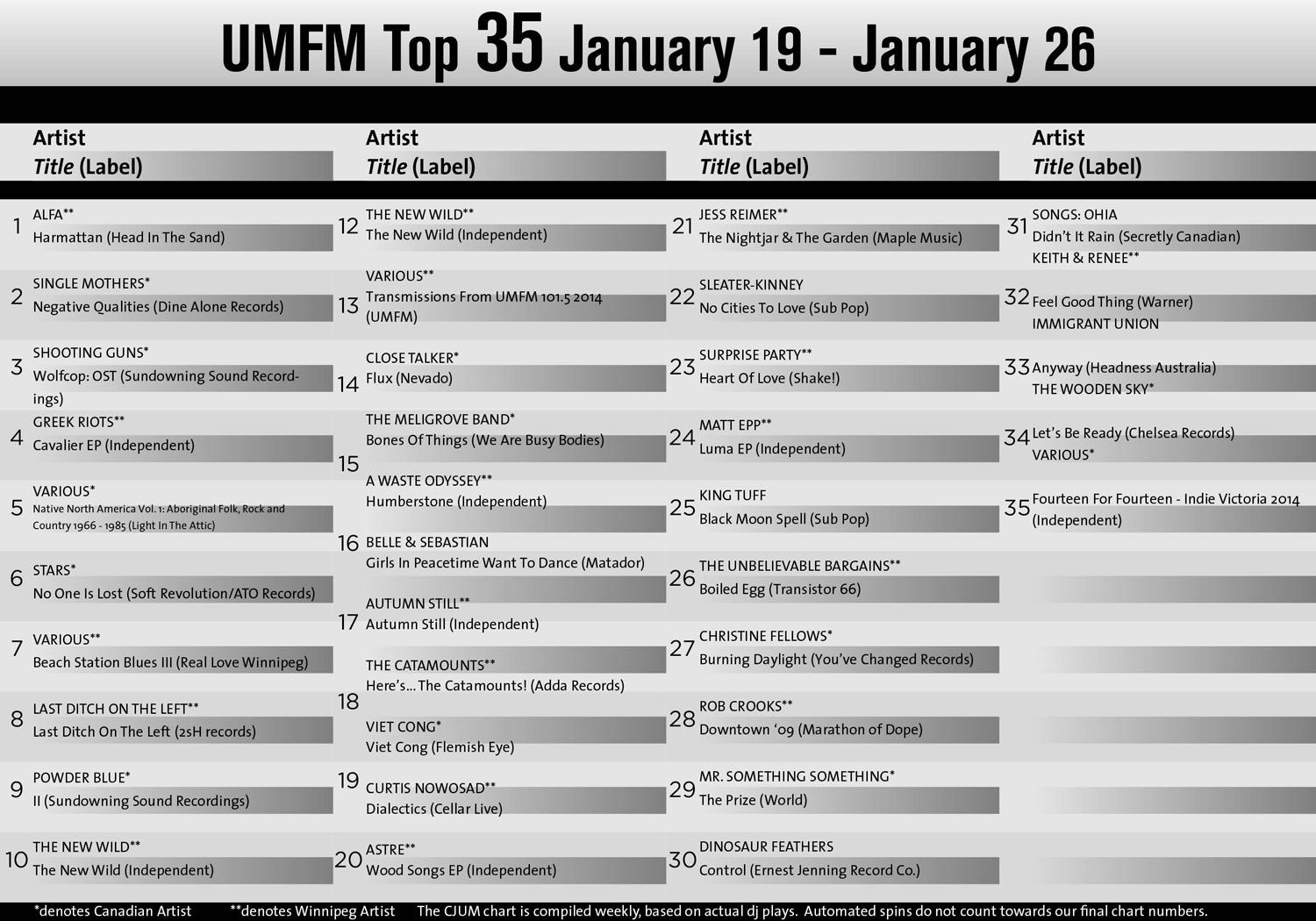










IceCaps goaltender proving invaluable in Jets pipeline
a n Dy Ch E , volunteer staff

The 2014-15 season is proving to be an impressive campaign for Winnipeg Jets goaltenders. Starter Ondrej Pavelec’s form has reached commendable heights through the first half, posting the best numbers in his career.
Michael Hutchinson has been giving Pavelec a run for the starter’s job and is arguably the better of the two goaltenders, ranking in the league’s top three for both goals against and save percentage. As the Jets inch closer to the
Davi D g ra D, staff
Women’s volleyball
Fighting to return to the postseason, the Bisons overcame a tough 3-1 loss against Saskatchewan Friday night to earn a weekend split, winning Saturday night in three straight sets (25-19, 25-17, 25-22).
Saturday’s win gave the Bisons critical points as they battle to hold onto the final playoff spot in the conference. The Bisons improved to 10-10 on the season and sit two points ahead of MacEwan University and four points ahead of Winnipeg for the last playoff spot.
Manitoba and MacEwan will face off in the last series of the regular season on Feb. 7 and 8, a matchup that has the possibility of turning into a sudden death playoff elimination series.
Against Saskatchewan, Rachel Cockrell picked up 39 kills and 10 digs, Brittany Habing collected 60 assists, 11 kills, and 13 digs, Jordana Milne had 14 kills, Caleigh Dobie had 21 digs, and Kalena Schulz added 16 digs.
Manitoba is back in action against Winnipeg in the annual Duckworth Challenge on Thursday night in the Investors Group Athletic Centre. Game time is 6 p.m.
Their home matchup against Winnipeg will be their last home stand of the regular season and carries serious playoff implications.
Men’s volleyball
The men’s volleyball team, nicknamed the ’Zoons, split their weekend series against Saskatchewan.
The ’Zoons picked up a 3-1 (25-17, 21-25, 33-31, 25-16) win Friday night, standing tall in a lengthy third set shootout that deflated the Huskies.
The ’Zoons weren’t able to carry the momentum into Saturday night, losing 3-1 (25-23, 25-29, 14-25, 22-25).
The men’s team currently sits sixth in the conference, holding firm on the second last playoff spot. Manitoba is in a tough four-way battle for the final two playoff spots with Thompson Rivers, UBC, and Calgary.
Leading the way for the Bisons this weekend were Devren Dear and Kevin Falconer, who both threw down 25 kills. Kenny Rooney had 27 kills, with 17 being slammed on Friday night. Adam DeJonckheere picked up 17 kills, Luke Herr had 90 assists, and Alex Strachan added to the defence with 23 digs.
The Bisons are back in action for the Duckworth Challenge on Thursday night against the University of Winnipeg at 8 p.m. Every game counts for the ’Zoons, who look to hold onto their playoff spot.
playoffs, Pavelec and Hutchinson will duel it out to be Paul Maurice’s number-one man; however, observing the Winnipeg depth chart, Jets prospect Connor Hellebuyck will likely offer both goaltenders even more competition in the near future.
While Hellebuyck may not be a household name in Winnipeg, the 21-year-old cut his ties from NCAA hockey this season and turned pro with the St. John’s IceCaps. After just his maiden month of AHL experience, the inaugural winner of the Mike Richter Award recognizing the NCAA’s most outstanding goaltender, he had ousted NHL veteran Peter Budaj from the starter’s position in St. John’s.
His outstanding performance in November 2014, highlighted with two shutouts in a five-day span, earned AHL player of the week honours on Nov. 24.
Heading into the New Year, the Michigan native’s strong presence in the IceCap net, along with Budaj’s inability to collect his first win of the season despite collecting 13 AHL appearances, has the pendulum fully
swinging Hellebuyck’s way for the rest of the AHL campaign.
Despite the IceCaps’ Eastern Conference-worst 135 goals against and losing record midway through the season, Hellebuyck has undoubtedly emerged as one of the best goaltenders in the AHL, compiling a winning 17-11-2 record with three shutouts, and a 2.39 goals against average and 0.927 save percentage. Not too shabby for an AHL rookie.
Hellebuyck’s maturity and transition into pro hockey appear flawless, considering the 130th overall selection in 2012 took part in the Jets’ training camp last season and the rookie camp in the last two years.
In front of the likes of St. John’s head coach Keith McCambridge and Jets goaltending coach Wade Flaherty, Hellebuyck impressed with his upright butterfly style, taking advantage of his six-foot-four frame to comfortably absorb high pucks into his body. His weakness with the puck is the only area where the former attendee of the University of Massachusetts Lowell needs improvement.
While it may be ludicrous to say that Hellebuyck’s stardom in the NHL is for certain, his performance so far this season in St. John’s illustrates his rich potential for dominance.
In early January, Hellebuyck was bestowed yet another honour, his inclusion to the Eastern Conference roster for the 2015 AHL All-Star festivities, a potential foreshadowing of what’s to come as he inches closer to the NHL.
While the Jets continue to favour Pavelec as their starting option, GM Kevin Cheveldayoff is surely aware of Hutchinson’s ability to fill a larger role and of the justifications for Hellebuyck’s NHL call-up.
After all, Eddie Pasquale’s draftday trade to Washington opened the floodgates for Hutchinson’s full-time stint in the NHL, and Hellebuyck’s promotion into the IceCaps’ lineup. Helle may have not frozen over the MTS Centre just yet, but his already exceptional spell in St. John’s may soon enough earn him a muchdeserved landing in Winnipeg.
The women’s hockey team improved their win streak to six with a weekend sweep of the Saskatchewan Huskies. The wins keep Manitoba in second place and within reach of first place.
The Bisons picked up a convincing 5-2 win Friday night, and battled the Huskies in a 4-3 match Saturday that needed an extra minute of play.
Alana Serhan was impressive over the weekend, netting a hat trick on Friday night and picking up a goal and assist on Saturday night. Serhan now sits eighth in the conference in points and is tied for third in goals with 13.
Sitting second in Canada West for points and goals is teammate Alanna Sharman, who had two assists Friday night and buried the overtime winner on Saturday night.
Also scoring for the Bisons were Lauryn Keen, Kayleigh Wiens, Cassandra Taylor, and captain Maggie Litchfield-Medd.
The Bisons will host Mount Royal this weekend at Max Bell. The series will be a battle of second place teams, as the Bisons sit second overall and Mount Royal sits in second last overall. Game times are 6:30 and 1 p.m., on Friday and Saturday, respectively.


In their last home stand of the 2014-15 regular season, the University of Manitoba Bisons swept the Saskatchewan Huskies.
Manitoba outlasted Saskatchewan Friday night, netting the game-winner in a 2-1 double overtime win. The Bisons showed no signs of wearing down Saturday night, putting together an energetic 6-2 win over the Huskies on senior night.
Despite the low scoring affair on Friday night, the Bisons were not lacking in offence as they peppered the Huskies with 44 shots. Huskies goalie Ryan Holfeld kept his team in the game with an impressive performance, standing on his head at times to keep Manitoba from lighting up the scoreboard.
At the opposite end of the ice, Byron Spriggs put together his own strong showing with 30 saves. Some of the best saves of the night came in the second period as each tender stood tall.
Saskatchewan opened the scoring Friday night in the first period with a goal from Craig McCallum. McCallum sits eighth in Canada West scoring, one point behind Bison Jordan DePape. The Huskies looked to jump out to a two-goal lead in the first period, but it was
later waved off due to a high stick. DePape tied the game up with five seconds left in the second period. The game-winning goal came early in double-overtime, as Taylor Dickin buried a wrist shot for an unassisted goal.
Manitoba carried the momentum of Dickin’s game-winner into Saturday night, dominating the Huskies. The herd only needed 22 shots on goal. They chased away Jordan Cooke after netting four goals in the first period.
Playing in what may be their last home game of their university careers, seniors Jory Coates, Taylor Dickin, Darren Bestland, and Aaron Lewadniuk were recognized with a special ceremony before the start of the game.
Dickin picked up two assists on the night. He now leads his team with 15 assists on the season, and sits 12th overall in the conference in points.
Lewadniuk opened scoring two minutes into the first period, assisted by Chad Robinson and Shaquille Merasty. It only took a minute for Manitoba to find the back of the net again, as Brett Dudar put away the second of the night with assists from Justin Augert and Jory Coates.
Coates was back on the score board 10 minutes later, collecting the third goal of the game.
Also scoring for the Bisons were Jesse Paradis and Joel Schreyer with power play markers, and DePape.
The goal was DePape’s teamleading 13th of the season, which ties him with Mount Royal’s Cody Cartier for second in the Canada West.
The weekend sweep gave the Bisons crucial points as they battle UBC for post-season home ice.
The Bisons, who sit fifth in the conference, have clinched a playoff spot but are determined to bring their first-round matchup to Max Bell. They are in action against Mount Royal University next weekend.


The University of Manitoba
Bison men’s basketball team ran into one of the hottest teams in the Canada West this past weekend, falling in two tightly contested matchups against the Saskatchewan Huskies. The visitors came to town on a four-game winning streak, and still haven’t lost since returning from winter break.
Getting to the free throw line was key on the weekend – especially in the second half, where Saskatchewan doubled Manitoba’s attempts from the charity stripe both nights.
Friday night’s 92-87 Huskies victory featured a relatively equal stat line. The difference came down to rebounding and free throw percentage. The Huskies grabbed 45 boards, compared to Manitoba’s 34, and were 12-of-16 at the line in the second half. The Bisons were a lowly 6-of-13, despite recording less fouls (27-21) than their opponents.
AJ Basi was tremendous in the loss. Thrust into the starting five, due to a nagging Andre Arruda ankle injury, he recorded a gamehigh 33 points, going 14-of-22 from the field. Basi felt that the team had a few advantages penetrating into the paint, which helped open up his scoring chances.
“We were just playing an open, motion offence. We didn’t call any plans today,” Basi said. It was just moving, pitching, and sharing the ball.”
While Basi’s presence in the starting lineup was felt, it also resonated in a negative way for the reserve players. Manitoba got just 11 points from their bench, compared to 35 for Saskatchewan, which was big in a close second half where each team scored 46 points. If the home team was healthy, the game’s story may have been different.
Getting to the free throw line was key on the weekend – especially in the second half, where Saskatchewan doubled Manitoba’s attempts from the charity stripe both nights
Basi echoed what the stat line read post-game, in terms of getting to the glass.
“The main key was rebounding,” Basi said. “We were minus 10 at the half. The shooting numbers were even – three-pointers, field goals, free throws; it was just rebounding.”
Free throw shooting was huge for the Huskies. Saskatchewan was 70.6 per cent at the line in the game, on 34 attempts, while Manitoba shot 66.7 per cent, but only had 15 attempts. That made the difference in the fourth quarter, where Saskatchewan essentially won the game on free throws.
Matthew Forbes and Ben Baker led the way for the Huskies, with 22 and 19 points, respectively. Not coincidentally, those two players also had the most free throw attempts in the game. Forbes went 6-for-8, while Baker went 11-of-13.
Baker’s shooting percentage from the charity stripe was big, as he only went 4-of-11 from the field.
Justus Alleyn played admirably in the Bison loss. He went 6-of-8 from beyond the arc, including a number of late three-pointers to keep the game close. Alleyn finished with a game-leading 28 points.
The Bisons’ next action will be in the Duckworth Challenge against cross-town rivals, Winnipeg Wesmen on Jan. 30, and 31. Friday’s game takes place at 8 p.m. at the David F. Anderson Gymnasium, while Saturday’s matchup will take place at Investors Group Athletic Centre at 7 p.m. Saturday’s game is also senior night for Manitoba.
Saturday’s rematch featured a fourth quarter barrage from Saskatchewan, who doubled the Bisons in points, 32-16, winning the otherwise close game, 87-81.
Mi KE S T ill, staff

I
f you were to look at the University of Manitoba men’s volleyball team roster, one thing would likely stand out – the local connection.
“I think that’s something that makes U of M a really unique kind of environment to play volleyball especially,” co-captain and left side hitter Adam DeJonckheere said. “I think we have one player from outside of Manitoba. On a 13-man roster, you won’t find that anywhere else.”
DeJonckheere, along with fellow co-captains Kenny Rooney (middle hitter) and Kevin Falconer (left side hitter), is included in that local number. DeJonckheere and Falconer played their high school volleyball at St. Paul’s, while Rooney played for Collège Jeanne-Sauvè.
Along with high school volleyball, the trio, just like the majority of their teammates, played club volleyball, as well as on provincial programs. One of the major connections the team has is from 204 Volleyball – a local club established in 2010, which has qualified for nationals seven times in four years.
“All three of us played at 204 Volleyball Club, and Kenny and I played on the same team two years in a row,” Falconer said.
“The chemistry that our team had in our 18U season was huge, and it brought us all the way to a national final. A lot of those guys that were on that team, are on the team we’re playing on right now, so it kind of carries forward.”
In total, seven of the 13 players on the roster have played for 204 at some point in their career, which greatly aids in team chemistry. It also helps that no player has used up more than three years of eligibility, and all are around the same age.
“Usually you would have the veterans hold everyone else accountable, and know how things go, but in this case, I think it helps that we know each other so well,” Rooney said.
“We’re not afraid to hold each other accountable, even though we’re the same age and have relatively the same experience.”
The connection the team maintains has been evident on the court
this season, where the Bisons are currently ranked in the top 10 in the CIS, and have a strong chance to host a home playoff series.
The ’Zoons, as they are also called, have plenty of energy when they take the court each week. Win or lose, they always give the crowd an entertaining, impressive performance, and while they are well-rounded, the three co-captains have led the way. DeJonckheere, Falconer, and Rooney are all in the top 20 in the conference in at least one category this season.
DeJonckheere is ninth in total kills, with 247; Falconer is 18th in solo blocks, with eight; and Rooney is first in that same category, with 20, but despite their individual stats, the team will always come first.
“On this team, we truly do care about each other,” Rooney said.
“Sure there’s little fights here and there, like we’re a bunch of brothers really, but we want to win not only for ourselves, but for each other.”