Please contact designteam@themanitoban.com if you are interested in submitting a cover image.
For other volunteer inquiries, please come to our office in University Centre (across from Tim Horton’s, behind GOSA) or email the editor of the section for which you are interested in writing.
Please direct all other inquiries to editor@themanitoban.com
Want to volunteer for the Manitoban? Interested in getting your very own work published in the paper?
Visit: www.themanitoban.com/apply-to-volunteer and get in touch with our friendly section editors!
Toban Talkback
Rachel Wood, staff
Based on the campus rally last week, what is your opinion of the privately owned company, Aramark, controlling most the the campus food service?
Temporarily displaced
5 Days for the Homeless participants prepare for the event
Rachel wood, stAff
I
n an effort to raise awareness about homelessness and gather donations for a local non-profit organization, several University of Manitoba students are preparing to spend five consecutive days sleeping outside as a part of the national campaign, 5 Days for the Homeless.
The Asper school of business is housing the campaign for the fifth year, raising money for Resource Assistance for Youth (RaY), which works with and supports street-involved and homeless youth in Winnipeg.
Emily Ashley, a marketing and finance student in the Asper school of business, has been involved in the campaign in previous years, but only in the planning process. This year will be her first as a participant sleeping outside.
“I would love to say that I was fully excited but I am kind of nervous to be honest [ . . . ] you
have to reach a state of vulnerability when you are doing this and I’m not used to that,” admitted Ashley.
Supply chain and logistics stu-
dent Jill Stevens was a sleeping participant in 2012 and has taken on the marketing responsibilities of the campaign this year.
“It was a challenge [ . . . ] One of the biggest things I realized throughout the campaign is that I knew I was going home on Friday so I just had to get to that day and then I was done, whereas someone who is homeless doesn’t have the luxury of getting to that target date,” said Stevens of her experience.
Stevens continued to explain that the campaign t-shirts participants wore acted as a security blanket throughout the week.
“I could hide behind that t-shirt, whereas someone that was actually homeless wouldn’t be able to explain to people why they didn’t look as put together as people expect them to.”
Participants in the campaign will sleep outside from March 10 – 15 and must follow strict rules.
These include restrictions from areas that their student card allows them exclusive access to, and any food consumed must be perishable food gathered through donations; they will also not receive income, have no participation in any personal communication media, and will demonstrate continued attendance in their classes.
Throughout the campaign’s history, the event has produced some criticism. Claims that the participants are not truly experiencing homelessness is a common critique that the students have faced.
“We really stress that we’re not trying to imitate homelessness because you can’t really do that.
We just want to start a conversation about the topic so that people are educated on the facts of youth homelessness,” said Ashley.
Stevens continued, “At the end of the day, RaY supports the campaign [ . . . ] They agree with what we’re doing.”
In 2012, nearly $20,000 was donated to RaY through fundraising activities that occurred during the weeklong event, including a coffee house, pancake breakfasts, and a barbeque, all of which are included in this year’s campaign.
While raising money for the non-profit and educating the student body on youth homelessness are the main focuses of the event, 5 Days for the Homeless also unintentionally serves to change common perceptions of Asper students.
“People usually have a stereotypical belief that business students are all about the bottom line and making profit and, in reality, [ . . . ] we do [the campaign] for something bigger: for social responsibility and to make a difference,” said Ashley.
phOtO by beibei Lu
Research on residential schools catalogues student deaths at 3,000
Project will continue investigations to fulfill five-year mandate
Quinn Riche R t, stAff
New research shows that at least 3,000 children died while attending the Indian residential schools (IRS) system in Canada.
The research was, and continues to be, conducted under the Missing Children Project, whose establishment was recommended by “a working group of multi-party representatives under the direction of the interim director of the Truth and Reconciliation Commission of Canada (TRC),” and was subsequently undertaken by TRC.
TRC documents indicate that it is required to “prepare a report on the history and legacy of the IRS experience” under their five-year mandate. The documents go on to say that cataloguing student deaths and disappearances will be an integral part of this report.
Furthermore, the published man date for the TRC states that a major goal of the commission is to “create as complete as possible an historical record of the IRS system and legacy [which] shall be pre served and made accessible to the public for future study and use.” The five-year mandate also promises the construction of a research centre.
Thus far, the research remains
unpublished. A recent report by the Canadian Press says that the estimate of 3,000 deaths since the beginning of the IRS during the 1870s might increase as researchers continue to comb through archival materials.
In fact, the number of confirmed deaths rose dramatically from June of last year to the present. A TRC news release dated June 11, 2012 declares, “to date, the Missing Children Project has identified approximately 600 cases of Aboriginal children who died while attending residential schools.”
That same release says that the
the schools. Tuberculosis was shown to be a constant threat to students, as was the Spanish flu during the years of 1918-19.
As Alex Maass, research manager for the Missing Children Project, recently told the Canadian Press, “the schools were a particular breeding ground for TB [ . . . ] dormitories were incubation wards.”
Other causes of death were said to include fires and malnutrition, amongst others. Abuse of students by staff was also rampant at residential schools.
Peter Kulchyski, a professor in the native studies department at the University of Manitoba, clarified to the Manitoban that, while the general idea underlying residential schools for Aboriginal children was racist and assimilationist, it is important in light of the recent research to draw a distinction between the church-run and government-run systems.
“The government-run residential schools were better than the church-run residential schools,” said Kulchyski. “The church-run schools had very poor standards. You often had a situation where predators could survive and thrive and that aggravated the problem.”
“Government-run residential schools had higher professional standards in terms of who they hired, and also had better quality food. You didn’t have a system where all the better food went to the priests and
Despite this, Kulchyski pointed out that in either case, “they were still pulling children away from their families and expecting them to learn in a language that might have been their second language. There were all kinds of problems.”
Kulchyski said that it is important to recognize that
Girl Guides celebrate World Thinking Day
Youth learn about world issues and leadership skills
a lycia Rod Rigues, stAff
G
irl Scouts from around the world gather every year on Feb. 22 to celebrate World Thinking Day, a day designed to teach Girl Guides about world issues, and this year the theme is centred on women and children.
The international Girl Guiding and Scouting movement has grown to include over ten million women from over 145 different countries since it was founded in 1910. World Thinking Day (until 1999 known as Thinking Day) has been celebrated every year since 1926.
There are four main goals of World Thinking Day: learning more about other international Girl Guides, engaging in fun educational activities, fundraising, and earning a badge.
Each year brings a different theme, with previous years focusing on world issues, such as water access in 2008; HIV, aids, malaria, and other diseases in 2009; extreme hunger and poverty in 2010; gender equality and empowering women in 2011; and environ-
mental health in 2012, according to the event’s website.
This year brings a double theme of two issues that are reliant on one another. The first, titled “together we can save children’s lives,” focuses on infant mortality, while the second issue, “every mother’s life and health is precious,” focuses on maternal health.
The World Association of Girl Guides and Girl Scouts are challenging their members to question the rate of infant mortality and maternal health. According to their statistics, 90 per cent of infant mortalities in the U.S. occur in newborn babies one year old and under. This is due, they say, to lack of equal opportunity to access the necessary prenatal medical attention in countries that do not
provide healthcare. Economically disadvantaged pregnant women, who are disadvantaged because of either poverty or language barriers, are then put at risk along with their fetuses. They stress the importance of government policy and fairness in society.
Sharron Callahan, the chief commissioner of Girl Guides Canada, told the Manitoban that a day like World Thinking Day is important because it enables young girls to engage in activities at a local level, which have a global impact by raising awareness and generating interest in world issues.
“Thinking Day is a wonderful opportunity for girls and their Guiders to participate in activities and projects with global themes, to learn
and take action on important issues facing girls around the world, and to fundraise to support the Canadian World Friendship Fund, which helps to support Guiding in countries that are not as fortunate as we are here in Canada,” said Callahan.
Participating in Girl Guides helps women in the future by allowing girls to develop skills at their own pace in line with their interests, she said. This includes a vested commitment to community service, using opportunities to think and act beyond what is normally expected, and connecting with nature through activities such as camping.
“Guiding is respectful and inclusive of all girls and women, [and] provides a safe environment where girls can explore issues that are important to them in environments that are learning, fun, adventurous, challenging, and empowering.”
An important part of the Girl Guide program is to be open to change, said Callahan. The pro-
TRC was funded by the settlement and is not overseen by the Canadian government.
“It is a very important thing to say because it means that the commission has an independent status. Its job is not to tell Stephen Harper what he wants to hear, but to determine and publicize the truth.”
The TRC is a commission with a mandate “to learn the truth about what happened in the residential schools and to inform all Canadians about what happened in the schools.”
TRC was established as part of a settlement agreement when residential school survivors brought a lawsuit against the Canadian government and churches involved in running the schools. That settlement granted the TRC a five-year budget of $60 million, as well as individual “compensation for former students.”
Speculating on what the relationship between the Canadian state and Aboriginal communities would look like today had the residential schools system never existed, Kulchyski says that it is hard to say, but nevertheless, “you would see a lot of communities that had much stronger Aboriginal culture.”
gram ensures that it is relevant to the interests and issues of girls today. It is important for the leaders to have access to resources and opportunities that they can in turn share with their Girl Guides. Recent changes include uniform redesign and special projects such as sustainable living initiatives, empowerment actions, and increased opportunities for international and national travel.
A major program review is set for the years 2013-2015. Part of this will allow the girls to provide feedback and advocate for issues that are important to them.
“Thinking Day activities are a great way to build interest in the wider world, that leading girls can do to discover how individual actions can have a global impact,” said Callahan. “If everyone did just one action to meet the Thinking Day themes, the world for children and women would be greatly improved.”
iLLustRatiON by bRadLy WOhLgemuth
iLLustRatiON by JustiN Ladia
editor-in-Chief Ryan Harby editor@themanitoban.com / 474.8293
business manager Foster Lyle accounts@themanitoban.com / 474.6535
Voluntee R contR ibuto R s Mathieu Boulet, Lauren Boulet, Emilie St. Hilaire, Dany Reede, James Culleton, Will Gibson, Caroline Norman, Justin Ladia, Katy MacKinnon, David Skene, Richard Jung, Chris Hearn, Steven Yaschuk, Steve Snyder, Laura Cobus, Devon Hanel, Ian T.D. Thomson, Eusebio Raposo
MANITOBAN
105 UNIVERSITY CENTRE UNIVERSITY OF MANITOBA WINNIPEG, MB R3T 2N2
General Inqu I r I es & a dvert I s I n G
Phone: (204) 474.6535
Fax: (204) 474.7651
Email: manitoban@themanitoban.com
n at I onal & Mult I -Market a dvert I s I n G Campus Plus Media Services Toll-Free (In Canada): 1.800.265.5372
Email: info@campusplus.com
Canadian Publications Mail Product Sales Agreement #589160
A “volunteer staff” member is defined as a person who has had three volunteer articles, photographs, or pieces of art of reasonable length and/or substance published in three different issues of the current publishing year of the Manitoban. Any individual who qualifies must be voted in by a majority vote at a Manitoban staff meeting. Elected representatives and non-students may be excluded from holding votes as volunteer staff members in accordance with the Manitoban Constitution. The Manitoban is the official student newspaper of the University of Manitoba. It is published monthly during the summer and each week of regular classes during the academic year by the Manitoban Newspaper Publications Corporation.
The Manitoban is an independent and democratic student organization, open to participation from all students. It exists to serve its readers as students and citizens.
At this very moment, people are languishing in dark prisons, families are living in fear, and entire communities face oppression, persecution, and even death, for nothing more than worshipping in accordance with their own beliefs.
This is difficult to imagine for many of us, as Canada is a land of diversity of religious faiths. Yet, the equality, tolerance, and freedom we enjoy in Canada is not shared by religious minorities in many countries.
The following list—while nowhere near complete—can give some idea of how widespread the oppression of religious minorities is, and how important it is to stand up for freedom of religion:
In North Korea, Christians are targeted as being part of the “western enemy,” and face imprisonment, arrest, and execution at the hands of the totalitarian Communist regime.
In Iran, adherents of the Baha’i faith suffer from violence at the hands of the Iranian regime. Baha’i adherents are also spied upon by the government, have had their holy sites destroyed, and have been tortured and imprisoned.
the hands of the state. Sadly, the revolution in Egypt has made matters worse for the Christian community. Since the revolution, more than 100,000 Coptic Christians have fled Egypt, and over 100 have lost their lives due to violence.
In China, Falun Gong practitioners are forced to express their faith in secret. Those in the Falun Gong often face imprisonment and violence.
In Saudi Arabia, the Shia Muslim minority faces significant discrimination, while textbooks created by the state incite hatred against Jewish people, Christians, and “polytheists.”
In Canada, we know that freedom of religion makes us stronger, not weaker.
In Pakistan, Ahmadi Muslims have suffered repression as well as terrorist attacks. In 2010, two Ahmadi Mosques were targeted by individuals associated with the Pakistani Taliban, and more than 85 innocent people were murdered.
In Bangladesh, many Hindus face oppression and violence.
In Egypt, the Coptic Christian community has long suffered from resistance at
In Tibet, Buddhists face state oppression, and in recent months there have been several self-immolations by Buddhist monks in protest of the denial of their freedom and human rights. Here in Canada, those who practice these faiths are safe, and free. This is something we often take for granted, but it is something we should cherish and defend, not only abroad, but at home as well. As we can see, no faith community is immune from persecution. Many of these countries oppose freedom of religion because they feel that being open and accepting of diverse faiths makes them weaker. This attitude is based on fear, and it is wrong.
Governments are, in the end, nothing but a group of individuals. And to allow one group of individuals to deny others the right to live in accordance with their principles, is to oppose the very essence of what it means to be free. Understanding
this, we know that individual freedom is not possible without freedom of religion, and freedom of religion is not possible without individual freedom.
It is with this understanding that we acknowledge the fact that the countries where freedom of religion is strongest are also the places where it is safest for those who do not adhere to a religious faith. Freedom of religion protects all who wish to live in a free society.
Freedom of religion also provides the opportunity for faith-based organizations that are doing incredible work around the globe. Countless lives are saved because of those who give their heart and soul to bring peace, hope, and healing to the most oppressed and impoverished corners of our world. The members of these organizations make tremendous sacrifices and place their lives at risk to help others.
In Canada, we know that freedom of religion makes us stronger, not weaker. Canada is the home of countless individuals, families, and communities, who have fled persecution for their beliefs, because in our nation, people can be true to their faith and live according to their deepest beliefs, and still be fully equal members of our Canadian family.
Freedom of religion is at the core of who we are as Canadians, and by standing up for the right of all to worship and live in keeping with their consciences, we will continue to renew and revitalize the spirit of diversity, tolerance, and freedom that makes Canada the great nation we are today.
Spencer Fernando is the comment editor for the Manitoban.
Economic concerns
How we can avoid America’s struggles
Richa Rd Jung
The United States and its neighbours experienced the Great Recession due to the U.S. housing bubble that erupted in late 2007. The Great Recession was due to a combination of “crises” in the United States, including a high household debt of US $13.8 trillion (roughly 160 per cent household debt/GDP ratio), a housing bubble, a large government budget deficit, and a trade deficit – which occurs when imports are greater than exports in a nation.
Canada appears to be experiencing similar conditions as pre2008 U.S., with a record high household debt-to-GDP ratio of 164.62 per cent. The breakdown of the debt reveals that 64 per cent is due to mortgages, 28 per cent consumer credit (i.e., credit cards), and 8 per cent non-mortgage loans. Paired with this large debt is the slowdown in the labour sector, when the economy unexpectedly lost 21,900 jobs in January. The unemployment rate has decreased from 7.1 per cent to 7.0 per cent; this is a misleading statistic, as individuals who give up on their job searches are no longer counted within the unemployment rate.
Many economists in Canada are arguing that the labour market caught up with the slow growth in the economy. Nonetheless, these are not the most comforting statistics.
Along with a large household debt and weak economic growth is another problem: the so-called housing bubble. Since 2000, Canadian housing prices are up almost 100 per cent from their previous values, and combined with about $500 billion in highrisk or subprime mortgages, this makes up nearly 50 per cent of our housing market. The government is making it harder for individuals to purchases houses with the current low interest rates by making mortgages more difficult to obtain; however, many cities in Canada (mainly Vancouver and Toronto) are seeing a large decrease in housing sales. In order to sustain long-term growth, Canada will need a correction in its housing prices, and will have to increase its interest rates, though preferably in the future, as doing so right now would have detrimental effects on households with large debts.
It is true that the Canadian
trade deficit has been reduced from $1.7 billion to $901 million. On the surface, the decrease in deficit appears to be an improvement to our economy, until we get a closer examination behind the numbers. The decrease in trade deficit occurred due to a 0.9 per cent decrease in exports and 2.8 per cent decrease in imports. Our dependence on other economies’ improvements to better our domestic conditions should be of concern.
With a halt in the Keystone XL pipeline with our primary trading partner, economic growth in Canada could be imperiled. What is also alarming is that approximately 80 per cent of our exports are directed to the U.S., showing a large interdependence between the two economies. As the saying goes, never put all your eggs in one basket. That’s why the government’s effort to introduce free trade agreements to Asia and developing a possible pipeline to export oil to the Asian market is very important for future economic growth, and will help Canada continue to avoid the economic issues that persistently trouble the U.S.
Louis Riel Day
Why it’s important
ste V en yaschuk
To some, Louis Riel Day is just any other provincial holiday, giving citizens a nice long weekend. In other provinces (such as Alberta or Saskatchewan) it’s known as Family Day, and serves its purpose of reinforcing “family values,” those values differing from family to family.
In Prince Edward Island it’s called “Islander Day” to celebrate pride in the province. But in Manitoba it’s more than just values and pride; it’s the history of where we have come from and how we have grown.
the Métis weren’t even considered full-status Aboriginals under the Indian Act. This shows the relevance of Riel’s plight in today’s Canada and the importance of this day to Manitobans, as these values are still cherished.
Louis Riel is one of the utmost controversial figures in Canadian history, but who doesn’t enjoy a little contention?
Louis Riel is one of the utmost controversial figures in Canadian history, but who doesn’t enjoy a little contention? He fought the federal government, supporting provincial control over federal jurisdiction, and advocated for Métis rights. And until this year,
Coincidentally, last Friday kicked off Festival du Voyageur, another Manitoba celebration of heritage and pride. It is a great week of trading and dress-up, especially if you are a Francophone, as the festival is centered on French culture and entertainment, but that doesn’t stop Anglophones from enjoying it.
Though many Manitobans see the festivities as an extra day of rest, the few who went out to Riel Day celebrations, as well as the Festival du Voyageur, truly experienced what it means to be Manitoban.
JOB POSTING
position: Editor-in-Chief
Company: The Manitoban
salary: Approximately $20,000 annually
ContraCt: May 1, 2013 – May 14, 2014
duties: The Editor-in-Chief (EiC) is one of two executives of the Manitoban. The EiC is responsible for the day-to-day running of the editorial side of the paper, and has final say over the editorial content within. The EiC is also the chair of the Editorial Board and Manitoban Newspaper Publications Corporation, which oversees the long-term operations of the paper.
QualifiCations: The ideal candidate will have experience in student media and will be familiar with the Manitoban. They should have a strong understanding of the English language including spelling, punctuation, and grammar as well as a working knowledge of Canadian Press style. Previous experience managing employees and working in a non-profit environment will be considered an asset.
how to apply: Email your resume and cover letter to hiring@themanitoban.com before March 20, 2013.
Important lessons
What Idle No More has taught me
ch Ris h ea Rn, volunteeR stAff
Idle No More, the movement that shot up online out of nowhere appears to have faded just as quickly. Trying to find mention of it in the media is becoming a chore these days. It’s sad to see the wind go out of the sails on this so quickly, because at the core it is an important movement.
But what I am walking away with from the Idle No More movement is a sense of frustration with my fellow Canadians. I have been completely disillusioned at the blatant racism and ignorance shown so often when talking about First Nations people in this country.
Canada is seen as a multicultural nation that is inviting for people from all over the world.
But, for some reason this openness to include new Canadians in our grand mosaic doesn’t seem to extend to Native Canadians.
better. Well, it turns out we have the exact same racial divide here. And I’m disappointed.
Idle No More is about creating a better relationship between Natives and non-Natives. On the plate are treaty issues, housing, education, and the environment. Now, these can be solved through good negotiations and a dedication to change and improvement. However, stamping out the racism and discrimination can’t be done so easily.
I don’t think there is anyone in Canada who thinks that the status quo is working at the moment.
Though I have no statistics to back it up, from observation I believe that the level of racism and discrimination is highest towards Aboriginals in this country.
There have been continuous attacks that imply that Aboriginals are lazy people who just sponge off the government, are addicts, can’t handle money, can’t be trusted, etc. You name it, it’s been said and it has just blown me away. Not only is it deliberate and open, but it seems to be commonly accepted, deeply rooted, and in my opinion is NOT being discouraged enough within our society. While we wouldn’t attack almost any other race using bigoted racial slurs or stereotypes, there seems to be no problem using them when it comes to Natives. Why?
I used to look south of the border and see how race is still such a divisive issue there. I felt smug thinking our multicultural society was far
When Chief Theresa Spence was on her much-publicized hunger strike, I will admit that I lost patience with her. I supported her at first, but as time went on, I felt that it was turning into a farce and not helping to accomplish much. Now, although I disagreed with her, I was appalled by how many criticisms of her were steeped in stereotypes and racism. It’s one thing to disagree with a person or question what they are doing; it’s another thing to attack them based on their race. I felt that it was completely unnecessary, counterproductive, and downright rude and destructive to bring racist attacks into the equation.
After seeing what has happened, I think it’s time for a new movement. It’s time for Racism No More. Look, we don’t all have to agree on how to move forward on the issues Idle No More brings up, but surely we can discuss them without the racism. I don’t think there is anyone in Canada who thinks that the status quo is working at the moment. We need change. We know that. But, in discussing change, what we don’t need is racism and stereotypes tainting the conversation. It gets us absolutely nowhere and ends up dividing us as Canadians. As the saying goes, united we stand, divided we fall. Let’s not fall.
Subsidizing sprawl
The infrastructure deficit continues
As much as it pains me to say this, I always get excited when the City of Winnipeg’s yearly spending budgets get released. The documents, released by the City of Winnipeg on Jan. 9, are the preliminary capital and operational spending plans for the 2013 fiscal year, and a five-year forecast of future spending.
This year, for the second year in a row, the City of Winnipeg has approved a tax increase, this after a 14-year tax freeze from 1998 to 2011.
The approved tax hike of 3.87 per cent is slightly higher than the 2012 increase of 3.5 per cent.
essence, these higher density units are generating a subsidy to their less dense counterparts in the suburbs. These flat taxes encourage land use patterns that promote sprawl and inefficient urban development.
According to documentation in the Capital Budget, the City of Winnipeg is projected to grow in population over the next 20 years. After a lull in the population levels in the 90s, the City of Winnipeg experienced a boom, growing by 60,000 in 12 years from 1999 to 2011.
The city must develop better policy behind their development fees.
While I understand that the city needs additional revenue, I do not believe that these flat rate increases are fair to all citizens.
What these flat increases show is that the City of Winnipeg still subsidizes urban sprawl. Why should a condo dweller, whose infrastructure costs to the city are far lower than a McMansion owner in the suburbs, pay the same mill rate and be subject to the same tax increases as the suburbanites? In
position: Business Manager
Company: The Manitoban
salary: Approximately $20,000 annually
ContraCt: May 1, 2013 – May 14, 2014
According to projections, this growth will continue despite our crappy weather and even crappier football team.
Sources peg the increase between 150 and 200 thousand over 20 years. Coupled with this increase is a need for more dwelling units –between 87,000 and 103,000. To put that number into perspective, the new Waverley West subdivision is expected to increase housing stock by 12,000 lots.
If this sprawl continues you can expect the city mill rate to be far higher by the time us students will
JOB POSTING
duties: The Business Manager is responsible for overseeing the general business functions of the Manitoban newspaper including accounting, payroll, taxes, human resources, marketing, and management. Day-to-day duties include managing accounts
have to worry about it. In 2012, the two biggest infrastructure projects the city “needed” were the Chief Peguis Trail extension and the Waverley West Arterial Roads, both of which are multi-million dollar projects, not including additional federal and provincial contributions.
Many proponents of the Chief Peguis Trail extension state that the funds made available to the city through the P3 Canada Fund would not have been possible if we didn’t build it, to which I say the funds could have been made available if the city put together a funding request for Rapid Transit.
If the city persists on this path of fringe subdivisions, we will get to a point where our infrastructure funding needs far exceed our means to generate those funds. The city must develop better policy behind their development fees. Until it costs developers a substantial amount more for Greenfield development over infill, they will continue to build these sprawling divisions and create an ever-increasing infrastructure burden on the city.
receivable and payable, invoicing, and general administrative duties. Long-term duties include strategy development, marketing, and process planning.
QualifiCations: The ideal candidate has business experience through work or school that includes basic accounting knowledge. They have ideally worked in an office setting and have experience in a decision making role.
how to apply: Email your resume and cover letter to hiring@themanitoban.com before March 20, 2013.
Avast, me hearties!
A look at the new documentary on The Pirate Bay
In 2009 four Swedish men— Peter Sunde, Fredrik Neij, Gottfrid Svartholm Warg, and Carl Lundström—were sentenced to a year in jail and fined US $4.5 million. The crime? Operating The Pirate Bay, the world’s largest filesharing site, where millions of files are downloaded every day, mostly— let’s not kid ourselves— illegally.
The Pirate Bay is a torrent tracker. If you want to download a video, for example, you download the corresponding torrent file from The Pirate Bay’s website. This file contains information about the video, such as its size, a bit of text that will let you verify the video’s integrity, and the address for
decided to film the events surrounding the proceedings. The result was released early this month. It’s called TPB: AFK, so named because of Sunde’s remark that he prefers the term AFK (away from keyboard) to IRL (in real life) to highlight the fact that the Internet is real.
Much of the argument in favour of The Pirate Bay hinges on the fact that the shared files never actually pass through their servers.
The film consists mostly of interviews—of figures from both sides of the trial—with some key footage of the trial and of a raid on The Pirate Bay’s data centre. Its thesis is that the trial was a trumped-up political prosecution by technological incompetents against a band of bright but confused idealists. The prosecutor and the various entertainment industry lawyers attached to him are shown to be
tigating the case accepted a job from Warner Brothers. It is now certain that the judge, Tomas Norström, is a member of a pro-copyright group – and the case’s prosecutor and two significant entertainment industry lawyers are members of the same group. The obvious conflict of interest was not disclosed and, incredibly, the defendants were denied a retrial.
There’s no doubt that the film is slanted in the defendants’ favour. But it’s not as pronounced as you might think. The film does not shy away from the fact that Sunde is an idealist with incredibly naive ideas about the future of copyright; Neij an “alcoholic racist asshole” who sees the site as an intellectual challenge and doesn’t care about the legal meaning of his actions; and Svartholm Warg an anarchic junky who takes pleasure in doing things he’s not supposed to.
The film points out the bizarre contortions of logic whereby they are able to define spam as “emails that I haven’t requested” and plead ignorance about any illegal activitynated
exchanging bits of the video file between them with effectively no further involvement from the tracker. Much of the argument in favour of The Pirate Bay hinges on the fact that the shared files never actually pass through their servers.
The Pirate Bay has been in the news more or less continuously over the last few years, and when its three operators (Lundström was an early financial backer who has little to do with the site’s operations) were put on trial, a documentary crew
megabytes and megabits, an error anyone familiar with computers is unlikely to make. An industry lawyer mistakes “Kopimi,” a minor Pirate Bay-related slogan, for the name of an entire movement. They continually advance their idea that The Pirate Bay is an elaborate, wellfunded operation. As Neij puts it, “I don’t think they can grasp the idea of an organization that doesn’t have any boss.”
As for corruption, the trial was apparently rife with it. The film alleges that the police officer inves-
The sky is falling
Meteor breaches Russian atmosphere, asteroid passes by Earth all in same day
i an t d thomson, volunteeR stAff
On Feb. 15 at 3:20 Coordinated Universal Time a meteorite exploded over the city of Chelyabinsk in central Russia. Travelling at a speed of around 18 km/sec (40,000 mph) when it broke the Earth’s atmosphere, the meteor created a shock wave that damaged several buildings and windows within Russia’s Ural Mountain region. The trail left behind by the meteor could be seen as far as 200 km away.
The descent of this meteor occurred 16 hours before an asteroid, labelled “2012 DA14,” was expected to pass by Earth. Although it is interesting that these two astronomic phenomena occurred on Feb. 15, the Russian meteor and the asteroid flyby were independent events.
anticipate the meteor over Russia. However, NASA correctly predicted that the DA14 asteroid was never going to impact Earth.
their is, after all, just a communication mechanism like the phone or
Most importantly, it shows that, despite Sunde’s wellmeaning efforts, they really have no alternative to the status quo. It becomes clearer every day that copyright law is in need of drastic overhauls, but The Bay may not be a tenable way foret al. are right that we need reform, but
The film is, conveniently, being distributed for free on The Pirate Bay. It’s available through other avenues, too, but if you’ve never torrented a file before, I would encourage you to try it. These are issues that are hard to talk about unless you have firsthand experience, and you may never get a better chance to get something legitimate off The Pirate Bay.
iLLustRatiON by James CuLLetON
The impact left 1,491 people injured, including 311 children; however, no deaths were reported.
NASA reported that “the trajectory of the Russia meteor was significantly different than the trajectory of the asteroid 2012 DA14, making it a completely unrelated object.”
News of the Russian meteor spread quickly, as videos, several from dashboard cameras of cars in Russia, went viral over the internet. The videos showed the meteor shine brightly and pierce across the sky at a fast rate. NASA used many of these videos to determine that the meteor was moving from north to south. This was in contradiction with the trajectory of the DA14 asteroid, which was moving from south to north when it passed by Earth.
The DA14 asteroid flyover was the closest an object of its size has approached Earth in recorded history, coming within 27,700 km above the Earth’s surface – closer than several of the world’s orbiting satellites and around 1/13th of the distance from the Earth to the Moon. With an estimated diameter of 45 metres across and a mass of 130,000 metric tons, the 2012 DA14 asteroid was much larger than the Russian meteor, which was estimated to be 17 metres across and 10 metric tons.
While the 2012 DA14 asteroid was expected to fly by planet Earth on the 15th, space experts did not
Although the Russian meteor was only one-third the diameter of the DA14 asteroid, infrasound data from around the world has led to an estimate of nearly 500 kilotons of energy liberated by the meteor’s explosion. By comparison, the shock wave (or sonic boom) and associated energy released by the atomic bomb that was dropped on Hiroshima in 1945 was 15-16 kilotons. The damage caused by the impact wave following the meteor explosion included 200,000 square metres of shattered window glass in Chelyabinsk. Among the many homes and businesses damaged was the Chelyabinsk Zinc Plant, which received the worst hit, with some of its walls having collapsed after the meteor’s energy release. The impact left 1,491 people injured, including 311 children; however, no deaths were reported.
Russia is not unaccustomed to objects from space landing in its territory. A meteor shower struck the village of Tsaryov in southern Russia in 1922 with 1.6 tons of meteor fragments.
The recent meteor seen near Chelyabinsk has been compared to a 1908 event in Tunguska, where a meteor exploded above the Podkamennaya Tunguska River in Siberia (what is now Krasnoyarsk Krai, Russia) and flattened around 2,200 square kilometres of forest. It remains the largest natural explosion recorded in recent history.
The two serendipitous though unconnected astronomic events occurring on the same day has sparked a conversation in the space and lay community surrounding the technologies humanity currently employs to track incoming space objects. While one was a predicted and benign passerby, the other—the meteor—was unanticipated and unwelcome – a quaint reminder of how utterly vulnerable we are to the capricious workings of the cosmos.
The evolution of religion and morality
Researchers explore cultural evolutionary roots of religion
d e Von h anel
Researchers at the University of British Columbia (UBC) and Simon Fraser University’s Centre for Human Evolution, Cognition and Culture (HECC) have received a $3 million grant from the Canadian Social Sciences and Humanities Research Council for a project “aimed at exploring the cultural evolutionary roots of religion.”
The Cultural Evolution of Religion Research Consortium (CERC) project brings together scholars, both local and international (partner universities include Oxford and Harvard), from a range of disciplines. Researchers from the humanities, natural sciences, and social sciences will focus on understanding the complex origins of religious behaviour and morality.
The HECC’s purpose, according
iours are linked to within-group solidarity and cooperation, will be the focus of research, from which related questions about cognition and historical/cultural processes may emerge.
UBC researcher and primary investigator of the CERC, Edward Slingerland, calls for consilience between the humanities and the sciences to properly engage the project’s research. In a recent paper titled “Religious Studies as a Life Science” (coauthored by Joseph Bulbulia), Slingerland states, “progress in the study of religion requires extensive collaboration between life scientists and classical scholars of religion.”
Slingerland adopts this view on the study of religion, noting, “while preliminary results from the biology of religion are impressive, much of the science of religion is conducted
gence of religion or belief in god.
“God exists, if only in the form of a meme with high survival value or infective power,” claims Dawkins in
“Progress in the study of religion requires extensive collaboration between life scientists and classical scholars of religion” – Edward Slingerland, UBC
gene, the individual, and the group.
Slingerland notes three evolutionary models of religion proposed by biologists of religion. Some researchers understand religions as “cultural by-products” and consider religious traits to be “by-products of functional designs.” Dawkins’ memetic theory of religion falls into this group. Others view religion as somehow conferring individual adaptations for cooperation, in which religiosity and associated characteristics are thought to possess survival value for the individual organism. Lastly, the “cultural group adaptations” view asserts that “religious cultures evolve to benefit religious groups.” Wilson’s idea of multi-level selection would fall under this third category.
The CERC is dedicated to bridging an overplayed dichotomy
merely optional.” However, classically trained scholars too must inform scientists, as Slingerland cautions, “a science without facts is not a science.”
Ultimately, the CERC is an excellent example of multidisciplinary research and strong Canadian scholarship in a global initiative. These researchers are digging at a fertile bed of knowledge that requires both the modern tools of science and, despite those who deem them outmoded, the tools of religious studies to penetrate and extract rich facts about religion and morality.
The study of religious behaviour and morality provides insight into one of life’s endless forms—the human mind—to which illumination can only make it all the more beautiful and wonderful.
The CERC is expected to report its
Viruses:
Are they alive or zombies of the microscopic world?
l au R a cobus
I
magine a single living cell, its tiny organs and brain-like nucleus protected from the world by a strong cell wall. Suddenly, a virus touches down on the outside of the cell like a spacecraft landing on the moon. Similar to a parasite, the virus injects its genetic material through the cell wall, taking control of the host cell.
The cell is forced to make copy after copy of the invading virus, and soon the cell dies a violent death as the new viruses burst forth.
This example of a virus “life” cycle is staggeringly common; in the oceans, a viral infection occurs 1023 times per second! Despite their ubiquity, the exact nature of viruses remains somewhat mysterious. Early virus research in the 1930s described viruses as completely non-living packages of biochemicals. Today, scientific opinion varies over whether viruses are alive or not. The debate revolves around several key issues:
Reproduction
When a virus is not inside a host cell, it exists as an inert particle called a virion—otherwise known as the "virus particle"—and generally consists of genetic material (RNA or DNA) and a protective protein coating. In this state, a virion is similar to an acorn, which is inactive, but has a latent potential for life. An acorn, however, has the ability to use energy and to grow into something else entirely, whereas a virion only possesses the genetic instructions for how to grow another virion.
A virion needs the resources of a living cell to put these genetic instructions into action, which is why it must take control of a cell. And if a virus can’t self-replicate or convert food to energy, is it a living thing?
Viruses and the environment Some viruses have influence over their surroundings on a worldwide scale. For example, marine algae
called Emiliania huxleyi periodically produce massive blooms, which are subsequently killed off by viruses named EhV viruses.
The destruction of the blooms releases chemicals into the atmosphere that induce cloud formation and rain. Intriguingly, the EhV viruses seem to lie in wait inside the algal cells, and then kill all of them when the total size of the blooms reaches a critical mass. Does such control over the environment and climate mean viruses deserve a place on the “tree of life?”
What came first, the virus or the cell?
Viruses may play an important role in the evolution of other biological organisms When viruses replicate, they sometimes first splice fragments of their genes in with those of the host cell. The host cell then propagates; successive generations of cells contain and express the genetic characteristics of the virus as their own. Gene
transfers between cells create more variations amongst members of the same species, possibly influencing the evolutionary process.
But do viruses themselves evolve?
Since viruses undergo random mutation and gene exchange much more often than other organisms, it is difficult to trace back their lineages in time.
Proposed theories for virus evolution include:
First, the “escape theory” that long ago some genetic material somehow escaped from the nuclei of living cells.
The genetic material became doomed to search, zombie-like, for host cells in order to replicate.
Second: cells evolved from viruses. Some early viruses came together, gathered some structure around them, and evolved into cells.
And finally: ancient viruses were much more complex, like cells, and have since devolved into simpler organisms.
This third option is supported by
the case of giant viruses, called giruses. Discovered relatively recently, many giruses have more genetic sequences than some single-celled organisms. Strangely, some of these sequences are instructions for processes which cells routinely perform, like gene translation, but which are useless to modern viruses.
Could it be that these genes are remnants of a more complex, cell-like virus ancestor? If viruses used to be alive, but have evolved into non-living structures, then we are forced to reconcile the difference between living and non-living states.
So, are viruses alive?
It is too soon for a scientific consensus on this question – as many of the issues outlined here are still being investigated. Clearly, viruses blur the line between the living and the nonliving. Today’s young virologists can look forward to taking part in a fascinating debate.
Risk and reward
The Winnipeg Adventure Film Festival
k aty m ack innon, Voluntee R staff
Action. Adventure. Adrenaline. Autana has it all.
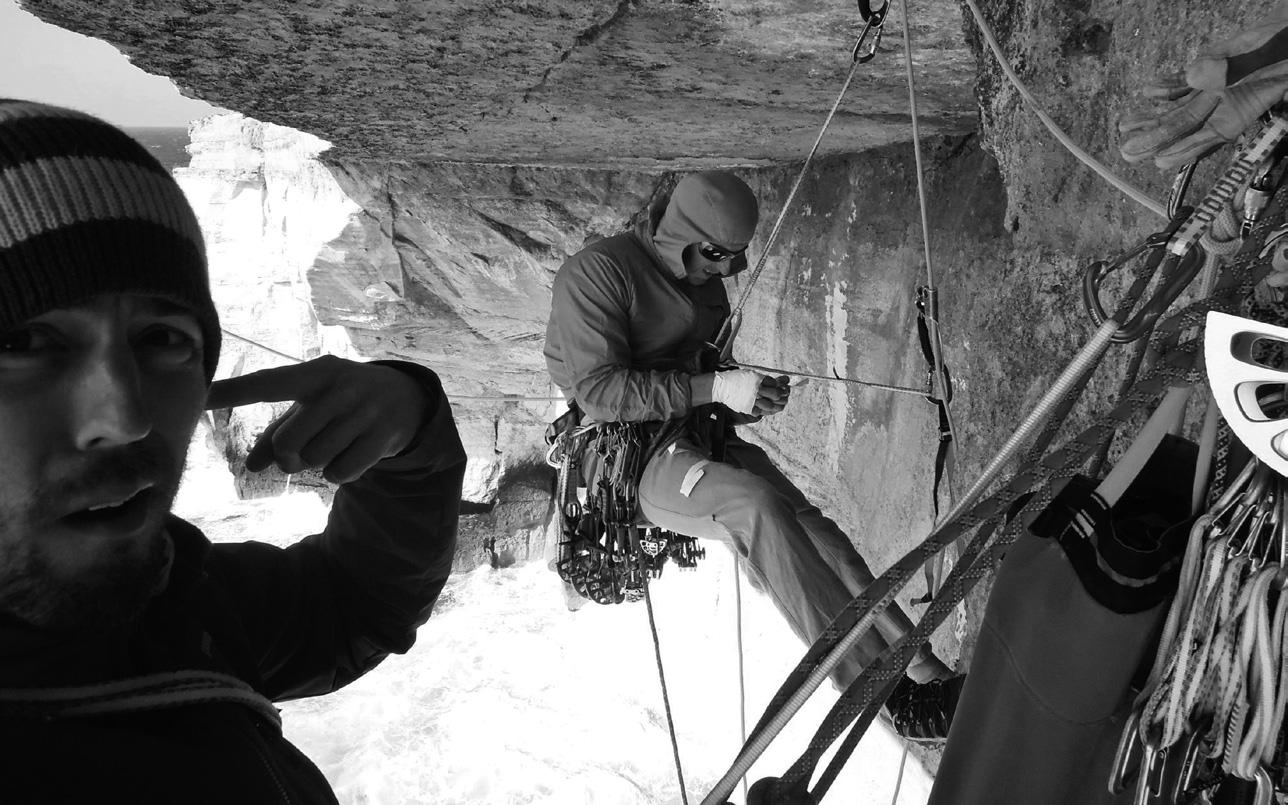
Take part in the first Winnipeg Adventure Film Festival at the Park Theatre on Tuesday, Mar. 5, to see the film Autana and three other adventure films. Sonnie Trotter, Canadian climber and adventure enthusiast, will also give a multimedia presentation.
Ivan Hughes, originator of the festival, started the Squamish Mountain Film Festival eight years ago. Hughes hopes to continue with the Adventure Film Festival in Winnipeg each year.
Autana is an award-winning film, taking place at the Cerro Autana mountain in the Amazon. Climbers Leo Houlding, Sean Leary, and Jason Pickles defy odds as they attempt to climb a part of the mountain that has never been climbed before.
The climbers must pretend to be tourists as they pass through military checkpoints to reach Cerro Autana. The mountain is sacred, and they must gain access to it from the local Shaman. Their journey promises to be exciting and entertaining as they experience jungle creatures and extreme humidity.
The Denali Experiment, Tent Bound in Devil’s Bay, and Cascada will also be shown at the festival.
In The Denali Experiment, skier Sage Cattabriga-Alosa and snowboarder Lucas Debari take on the Denali Mountain. The North Face athlete team help out the climbers as they embark on the hardest expedition of their lives.
Tent Bound in Devil’s Bay takes place in Newfoundland as four
climbers attempt to climb a 1,200foot granite wall.
“For the climbers, their experience
graduating high school, continually seeks new heights and adventure.
“Although I love and miss my fam-
became as much an inward exploration of their own hopes, anxieties, and fears as it was an exploration of the vertical walls,” says Hughes.
In Cascada, viewers join paddlers and cinematographers on a journey through a remote Mexican jungle. Hughes describes the activities in the film as needing a careful balance between risk and reward.
“[They are looking for] the perfect waterfall, and the perfect shot. Paddler and cinematographer alike explore a world beyond the expected,” says Hughes.
Sonnie Trotter, who is set to make a live presentation before the film, has experienced this balance himself. His presentation will include multimedia slides and clips from his mountain adventures.
Trotter, 33, who has not been home for more than three months since
ily greatly, I will never regret leaving behind the suburban sprawl of southern Ontario to explore a world of uncertainty, a world of great character, raw beauty, and individual expression,” says Trotter on his website, www.sonnietrotter.com.
For Trotter, travelling is about cultural immersion rather than a traditional vacation. He tries to stay as long as he can in the places he visits and truly experience the culture.
Trotter has been all over the world, including Mexico, Australia, and India. He has also spent a large amount of time in North America, spending a very small amount of money and climbing as many mountains as possible.
He believes in travel wholeheartedly.
“I read somewhere that life is a great book, and for those who don’t travel
only read one page. I think we were born to move and to challenge our bodies and broaden our minds; when we don’t, our lives and cells grow stagnant,” says Trotter.
According to Outside Online, Trotter had a childhood dream of being a ninja. From there, he dreamed of being an architect. This high school dream influences his current choice of mountains to climb.
“I’m attracted to visually aesthetic lines, the kind of climbs that look more like art sculptures than anything else,” he told Outside Online. “Thinking about it now, I think being a professional rock climber is half ninja, half architect.”
Climbing has always been an adventure for Trotter, but not always in the good sense. In Arizona, he experienced a bad accident with his friend Steve.
After an 80-foot fall, the two men had to go to the hospital in Las Vegas. They thought their climbing careers were over.
Trotter’s positive attitude allowed him to continue the sport.
has managed to spend so much time away from home and travelled to so many places, the answer may be in his choice of accommodation.
Last year, Trotter and his wife moved into a van.
“Living in a van allows the entire world to be your personal backyard. You live and love, outside. The best part for me is connecting with the natural rhythm of life,” Trotter wrote on The Cleanest Line (Patagonia).
The experience has increased his environmental awareness, and his perception of the difference between wants and needs. He learned important lessons, such as the increasing need to conserve water. Trotter and his wife practiced conservation methods such as saving pasta water for tea, and drinking water used for steaming vegetables.
“One day, our children’s children might not have the same luxuries we do. The things they want might also be the things they need, and water might be one of them.”
Trotter, who has not been home for more than three months since graduating high school, continually seeks new heights and adventure.
“I think climbers just always find a way back if they truly love it. You see it every day, people with both minor and major injuries still getting outside and still getting after it, and that’s just awesome.”
If you’re wondering how Trotter
Trotter is looking forward to presenting in Winnipeg.
“I’m really stoked to come to Winnipeg to be part [of] a brand new festival and share some stories with an enthusiastic crowd. I’ll definitely have to blog about this!”
Tickets to the festival can be purchased at www.whattheheck.ca. They are $15 in advance, and $18 at the door.
Do you remember that episode of Seinfeld where Elaine’s boyfriend is obsessed with that song “Desperado”? Every time he hears it, his eyes glaze over and he gets lost in an internal world of his own design. I have a song that does that to me; it’s called “Coffee with Penguins” by an organ and cello duo called Savant Flaneur.
The song is a sweeping piece that speaks volumes in its short run time. It’s a testament to music’s ability to capture the intangible, ephemeral aspects of the human experience. When Scott Leroux gets his organ
whirring and Nathan Krahn bows his head and puts his bow to the strings, magic happens.
Outside of Savant Flaneur, the two are responsible for expanding the sounds of numerous local acts and lending grandeur to the work spilling forth from the local music scene. Aside from his solo act, Sequin, Leroux has been known to share the stage with fellow vintage organ enthusiast Smoky Tiger, he has added a layer to a yet unreleased song by Ex Modern Teen, and recently debuted a new act with Jennifer Sparling, the
The absence of stage, theatrical lighting, or a PA forces an intimacy with their audience that is very endearing.
Uncanny Valley Girls, that is sure to excite and challenge audiences citywide. Krahn has added a taste-
fully heartfelt cello to David Fort’s alt-folk extravaganza Twin and is a member of the hauntingly sweet Form Giants and the charmingly rustic Eagle Lake Owls.
With a resume that reads like a who’s who of Winnipeg’s weird and wonderful, why is it that the quirky orchestral sounds of Savant Flaneur hold such sway over me? Why do their songs cut me to the quick when both men have so many projects?
Maybe it’s because they seem to mostly perform at unorthodox venues: house shows, galleries and
their series of performances outside Jonnies Sticky Buns. The absence of stage, theatrical lighting, or a PA forces an intimacy with their audience that is very endearing. You can’t chat to your friend or order another drink; it is not designed to make you turn off your mind and dance. With songs like “Coffee with Penguins,” they literally invite the listener to focus their mind on “that moment in a film where the two lovers haven’t kissed yet, but you know they are just about to.”
Where else do you find music like that? Nowhere, that’s where.
Savant Flaneur
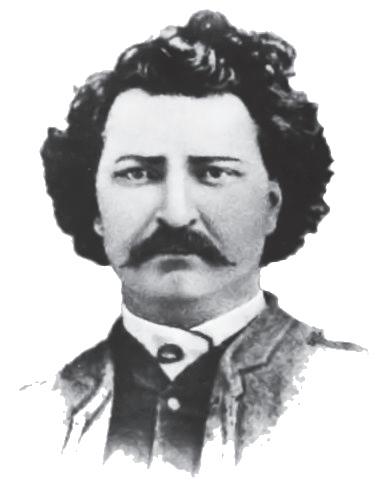
Five reasons why Louis Riel was a badass motherfucker
Five unconventional ways to interact with art in Winnipeg
Jenna d iubaldo, stAff
1. H E’ S Su PER Co NTRoVERSIAL
Depending on who you ask, Riel was either a hero or a traitor. He led the Red River Métis to rebel against the Canadian government and petition for their rights as a people, which included fighting wars and at times sentencing death to prisoners. Either way it’s pretty badass to be regarded as a historical figure that deserves his own day of commemoration.
2. H E WAS o NE of THE fIRST Mé TIS ADVo CATES
When the Hudson’s Bay Company began negotiations between the Canadian government for the sale of Rupert’s Land (now known as all of Manitoba, parts of Saskatchewan, Ontario, Quebec, Nunavut, and various American states), the Métis were in need of a leader to fight for their right to the land they lived on. Riel—an educated, charismatic, bilingual man—led the charge and petitioned the Canadian government literally to his death. Now that’s pretty badass.
3. H E PRETT HANDEDL REBELLI o NATI o N of Riel’s charisma and education served him well as the leader of the Métis provisional government. He was able to effectively navigate the political system and make it clear to the Canadian government that the Métis were not going to be ignored; he did this by making demands, seizing forts like a boss, and travelling to Ottawa to demand negotiations with government officials. Riel was also successful in rallying Red River residents to thwart Canada’s attempts to infiltrate their land and fight for their rights as French-speaking peoples.
4. H E WAS INSTRuMENTAL IN THE CREATI o N of THE PRoVINCE of M ANITo BA
Say what you will about Louis Riel, but the fact is that Manitoba likely wouldn’t exist if it weren’t for him. The Métis provisional government—as formed by Riel and other delegates—made several lists of demands and presented them to the Canadian government, insisting that the Métis peoples be recognized as their own nation and that their right to the land they lived on be observed. These lists of demands eventually went on to form the basis for the Manitoba Act; legislation passed in 1870, which, among other things, created the province that we know and love.
5. H E LIVED AND DIED fo R WHAT HE BELIEVED IN Riel devoted the entirety of his life to ensuring that the Métis nation was taken seriously and seen as its own body of government apart from Canada. While his efforts were not without success, the Métis peoples did eventually lose their land rights and the prosperity that came with it. Riel spent a large part of his life wanted by the police and eventually surrendered after many years of fleeing, hiding, and fighting. Riel was charged with treason, sentenced to death, and eventually hanged in Regina on Nov. 16, 1885.
Just before he was hung, a guard asked him for a souvenir and Riel is quoted as saying: “I have nothing but my heart and I have given it long ago to my country.”
Sunday Mass > 11am, Christ the King Chapel Weekday Mass > Tue-Fri 11:45am, Side Chapel
Volunteer musicians & singers are welcome for choir practice > 5:30pm Fridays, 10am Sundays
Co ee House > Mar 2 8:00pm | Fundraiser for students involved in spiritual & social justice activities. Volunteer entertainers welcome.
Hanley Memorial Lecture Series > Mar 3-4
“A Teaching Church that Learns: The Art of Magisterium” presented by Gerard Mannion, PhD
omemaking by Chantel Mierau, opening at aceartinc. on Friday, Mar. 1, uses traditional textile methods with a contemporary twist. Six videos, one installation, and a performance all involving handmade textile works make a commentary on comforts, discomforts, traditions, chores, and the artist’s personal history and reflections on being Mennonite.
Mierau, a graduate from the University of Manitoba’s school of fine art, is known for her work done with knitting and sewing. She has thoroughly exhibited her work across Winnipeg, and has received awards from the Manitoba Arts Council and Video Pool. Mierau pushes the boundaries of traditional processes by bringing in contemporary elements such as video, performance, and installation.
In her thesis year, Mierau took knitting to a new level. Her piece, “Humility, Fear and Trembling,” used sewing thread for yarn and sewing pins for needles. She completed close to 20 tiny red scarves and the piece included a video of her working.
“Because of their scale, and their DNA-like structure, this work brings to my mind thoughts about heritage and lineage, as well as traditions, practices and even belief systems that inescapably get passed down from
generation to generation,” Mierau told the Manitoba Crafts Museum and Library.
“I learned to knit when I was 18, and then started using it for nonfunctional pieces two years later upon entering art school. I find that knitting embodies much of the subject matter I want to address in my art such as care, tradition, work and home.”
Mierau’s new films include footage of people in the process of making textile work, but others also show her completed—and otherwise nonfunctional—pieces being put to use.
In the film Larva , the artist is
Dream, love, cure
shown outside, wrapped up in what can be best described as a giant slipper sewn shut across her back. Mierau crouches inside of her knitting, with her hands close to her face, resembling a slug. As the larva, she picks up a ball of yarn and strings it across the doorway of an abandoned barn, making a clothesline, and then pins a tea towel to it. The film is about five minutes long, and the whole time she struggles with the basic task while inside her knitted skin.
“A lot of my work is about comfort and discomfort. The larva costume is this really nice and knitted thing [ . . . ] that you think of as comfort-
Locals combine music and skateboarding to raise money for cancer
Jenna d iubaldo, stAff
BE:Cause Industries was started by Jay Fulmore and Mat Perlman as an outlet to not only book some cool shows, but more importantly help out some local charities along the way.
“Mat and myself have been involved in the music and arts community here in Winnipeg since we were young, and wanted to use what we had learned over the years to do something positive, and support various community organizations and non-profits,” says Fulmore. “We’ve done six big events in the past five years as well as a bunch of smaller concerts, dance parties, and an art show/sale.”
One of BE:Cause Industries’ flagship events is their annual Skate4Cancer concert series which aims to raise cancer awareness in youth.
“I met Rob Dyer six or seven years ago through mutual friends and eventually learned about Skate4Cancer,” continues Fulmore. “My band at the time joined [ . . . ] a couple other acts on the Cure is Knowledge Tour, which was a cross-Canada tour of free all-ages concerts where the bands would play and Rob would give a talk
on stage and then hang out and chat with kids. I booked the Winnipeg date of that tour and BE:Cause [Industries]’ involvement has grown from there.”
Skate4Cancer founder Rob Dyer started the organization soon after losing his mother, grandmothers, and close friend to cancer. Skateboarding demonstrations and live music events provided a vehicle for Dyer to engage youth in order to promote cancer awareness and prevention techniques.
BE:Cause Industries will be hosting a Skate4Cancer fundraiser on Mar. 1, which will include performances from local talent such as the Noble Thiefs and the Angry Dragons.
Funds raised on Mar. 1 will be put towards organizing the aforementioned annual concert series organized by BE:Cause Industries, which includes a huge outdoor Skate4Cancer event scheduled to take place at the Plaza Skate Park at the Forks on May 25. This event features live music from 12 – 15 acts, skateboarding competitions, and a slew of prizes.
Also present will be Dyer himself to talk to attendees about topics such as the importance of cancer aware-
ness and how knowledge is the only cure for cancer.
“Armed with the understanding that 80 per cent of cancers can be prevented with early detection and healthy lifestyles, The Cure is Knowledge proposes that the only cure currently available is knowledge,” reads the Skate4Cancer website.
“By creating educational campaigns that are easy to understand, we hope to inspire youth to incorporate preventative methods into their busy lives. Our approach includes informative videos, social media pushes and effective blogs as well as several informative campaigns.”
able, but it prevents the wearer from completing a basic, domestic task,” says Mierau.
The film was shot outside of Winnipeg in rural Manitoba, which Mierau says references her personal history.
“I wanted to reference [my upbringing]; it’s about home and tradition. There is something comforting about a traditional lifestyle, but there is also a restricting quality.”
In Mierau’s film, Wednesdaying, several women who are dressed in white, resembling nurses, sit around a quilting frame and work together to weave a large spider web with white thread. The video, about 12 minutes long, plays on a loop, and it’s difficult to distinguish the beginning from the end. Watching the women’s hands pass threads and weave the web gives the viewer a calm, lulling feeling. The repetitive quality represents chores and traditions shared by women in a community setting.
“The women are representations, not characters. I am drawn to anonymity; there is something about being in a group or a community that makes you become a bit anonymous. It is more about the group than the individual.”
“[The film is also a commentary] on the qualities of tradition and
the feeling of entrapment in repetition,” says Mierau. “[I called the film Wednesdaying] as a reference to the days of the week, and the idea of having a chore for every day of the week.”
Homemaking is the debut of six new films by Mierau and an installation of the spider webs made during the filming of Wednesdaying. During the opening night reception on Mar. 1, Mierau is planning a new performance, which she has mostly kept under wraps so far.
“I don’t know how much I want to tell you,” Mierau says with a laugh. “When does it go from a teaser to a spoiler?”
Mierau has built a table with mops for legs, which she plans to push around and use to mop the gallery. She will be wearing a masked headdress and what can best be described as “homemaker’s clothes,” as a character that Mierau describes as an archetype of a “good woman.” Upon the table she will write on recipe cards and pass them to people she wants to communicate with.
But what will they say?
“Some advice, some recipes.”
Homemaking will be at aceartinc. from Mar. 1 until Apr. 5. There will be an artist talk with Mierau on Saturday, Mar. 9
All funds raised from these events will be donated to a local cancer-related organization. Last year BE:Cause Industries donated
for deeper penetration into tumours and provide options for more efficient removal of the tumours,” says Fulmore.
Also included in the concert series is a pre-party boasting a night of heavy music at the Windsor Hotel on May 24, as well as an after-party on the evening of May 25 at a yet to be disclosed location.
funds to the HSC Foundation, which contributed to the purchase of a new piece of medical equipment called a Hitachi Ultrasound Prosound 7. “This innovative ultrasound equipment provides enhanced detailed image information to physicians and the sophisticated probes allow
Some might ask why Fulmore and Pearlman pour their hearts and souls into the work that they’re doing for nothing in return, and the answer is simple.
“BE:Cause Industries was created to effect a positive difference in the world,” says Fulmore.
“We are dedicated to supporting great causes, and the people who run them.”
Support Skate4Cancer by checking out the Noble Thiefs [sic] and the Angry Dragons at the Windsor Hotel on Mar. 1. Visit www. dreamlovecure.org for more information on Skate4Cancer, Rob Dyer, and how you can be a part of the cure.
Event Listings MUSIC
Thursday, feb. 28
Trust / ERAAS / Kindest Cuts West End Cultural Centre
Saturday, Mar. 9
CRAfTSTRAVAgANzA! MAWA, 611 Main St.
Tuesday, Mar. 5
Bestiaire by Denis Côté
RAW: gallery of Architecture and Design
friday, Mar. 1
TIMES IS ugLy by Daniel Ellingsen zsa zsa West
friday, Mar. 1
A.D.D. / Molting / Saünlust II / The Psychics and friends Negative Space
Saturday, Mar. 9
Peggay VI – Queer Dance Party Negative Space
friday, Mar. 8 – Apr. 19
unravelled
university of Manitoba’s School of Art gallery
friday, Mar. 1
Anti-Love Show by Mr. Peanut and Ms. Jellybean The Edge gallery
Thursday, feb. 28
unbelievable Bargains / Hostile Life / Atomic Don / The Black Sunrise The Windsor Hotel
friday, Mar. 1 – Apr. 5
Homemaking by Chantel Mierau aceartinc.
Thursday, Mar. 7 – Apr. 6
Herstory: Art by Women in the university of Winnipeg Collection gallery 1C03
Thursday, feb. 28
Chesterfield Magazine release with Smoki Tygr 672 art (Sargent ave.)
friday, Mar. 1
Marduk / Moonspell / Inquisition / The foreshadowing / Deathwolf The zoo
Local artisans encourage Winnipeg to embrace the ethical and handmade
Jodie l ayne, stAff
“W
e have a lot of creative people with unique fashion sense, so we thought it would be nice to build a handmade wardrobe community in this city,” says Alesha Frederickson, co -organizer for Me-Made March.
Alongside Melanie Wesley, Frederickson is presenting a challenge to dress and accessorize yourself with items that you have crafted, up-cycled, or have been handmade by an artisan. The pair partook in an online challenge by the same name last year.
“I think at its core, this challenge is about embracing your inner maker.
Learning to look past the (sometimes) imperfect seams of a handmade garment and being proud to wear those garments which are uniquely yours,” says Wesley.
They decided to launch the challenge in a real way in Winnipeg, and give people the necessary tools to participate.
Workshops teaching how to make the aforementioned leggings and
Me-Made March Intersectional politics
underwear as well as tank/sac dresses, scarves, cowls, collars, and other neck accessories will run every Saturday at Tara Davis Studio Boutique in the Exchange District.
“I think some of the workshops are going to be an eye-opening experience for people, and show them it really is possible to make your clothing. We all have to start somewhere,” says Frederickson.
Wesley says that the pattern for her sac dress workshop is only two pieces and is so simple that anyone can do it. Frederickson agrees and encourages new enthusiasts and the sew-curious to come out and give it a try.
The challenge seeks to combat “Fast Fashion,” the common consumption habits to buy cheap, poorly made, trendy clothing from retailers like Forever 21. Participant Jennifer Lee Smith, who is taking the tights and sac dress workshop, says that she loves getting dressed but struggles with finding ethical clothing.
Book review: Defiant Daughters
Jodie l ayne, stAff
“It is hard to find clothes that make me feel pretty and fashion forward and that are affordable. [I want to know they] come from a good place, that no one has suffered to make
Aside from the ethical reasons to make your own clothes, simple delight and enjoyment is forefront.
[them], and that [they won’t] end up in a landfill in a few months.”
Smith says the only way she feels she can control this is to make her own clothing, and it is a huge part of the reason she decided to participate.
Frederickson agrees, saying many people participate in “Fast Fashion” because the days of owning quality pieces are over. Making your own clothing can be an affordable antidote to the exploitative labour and environmental practices of massproduced garments but can be quite time-consuming – Me-Made March has an answer to that.
Finding the time to create can be difficult, and Wesley suggests that a good alternate option is buying from other people making things from hand like Tony Chestnut, Andee Penner at Sew Dandee, and Lennard Taylor.
“Winnipeg is loaded with tons of talented designers and makers; it’s so important we support them,” says Wesley.
Aside from the ethical reasons to make your own clothes, simple delight and enjoyment is forefront.
“There is a certain kind of joy when you put something on that you made, and you get a compliment. It
is different from someone telling you they like what you shopped for; it is a sense of pride in creating things with your own hands and mind and getting practical use from it,” says Frederickson.
Wesley, Pinchin, and Smith all say that the community formed around crafting is a huge motivator and benefit of making your own things.
“I believe that making offers many solutions for economic and social injustice – at home and globally. Making has unlimited potential; it’s at the very heart of all of us. It connects me to my family and friends and someone I’ve never met across the globe,” says Wesley.
If anyone is interested in signing up for workshops or learning more, they can visit the Facebook event page for Me-Made March. Workshops are $50 for one, or two for $85, and the schedule is posted online. There will be an open house on Friday, Mar. 1, where you can bring in things to up-cycle, learn to knit, sign up, or chat with the organizers
“Language distances us from the reality of meat eating, thus reinforcing the symbolic meaning of meat eating, a symbolic meaning that is intrinsically patriarchal and maleoriented. Meat becomes a symbol for what is not seen but is always there – patriarchal control of animals and of language,” says Carol J. Adams in her 1990 book, the Sexual Politics of Meat.
Adams presented the theory that feminism and animal rights were intrinsically linked. Like one can have white privilege, male privilege, or straight privilege, Adams argues that humans have species privilege. She proposed the theory that consumption of flesh gave women and animals more common ground than we would care to admit, and that their struggles were interconnected.
Thousands agreed and the book became required reading in gender studies classes and in feminist circles. Two decades later, young feminists still see the validity in her theory and the issues are still as relevant as ever. Defiant Daughters is their analysis of current issues and attitudes and response to the original text.
Growing up in a culture that tears apart our self-esteem through media and then sells it back—allowing factory farms to flourish while selling us on the benefits of dairy, eggs, and milk—the need for this analysis is obvious and the contributor’s per-
sonal experiences are well-informed. While the Sexual Politics of Meat is a heavily academic book, the anthology is more accessible in its delivery, which is a good thing.
to attention a common hypocrisy in society: caring for the welfare of companion animals and ignoring the welfare of animals we have grown up eating.
One of the most affecting essays is “A Moment of Truth” by Rochelle M. Green, which explores the correlation of rape and animal products, and deconstructs the familiar saying, “feeling like a piece of meat”.
“This book
Organized into categories named after animals and finishing with “Woman,” the essays are varied and range from theory to personal experience. With diverse voices, Defiant Daughters provides the intersectional theories of feminism and other analyses of oppression and cultural influence. Exploring themes like bodily acceptance, art, free-range meat, queerness, breastfeeding, and gender equality amongst others, this book does look at the issue from all angles and in that way encourages readers to make their own connections between feminism and animal rights.
Every anthology will undoubtedly have a piece that doesn’t seem to fit, and “Opening Veins” by Kim Socha is that piece. It’s long and meandering and felt disjointed, offering no real stimulating analysis.
could easily be considered required reading for feminists, vegans, and those who fall under both categories.”
In “Sustaining Rice,” Carolyn Mullin explores her Mexican identity and the connection between the commodification of the bodies of women and animals in art with nuance and justified anger. The essay “Knowing Ignorance” by Vidushi Sharma brings
Just as its predecessor, this book could easily be considered required reading for feminists, vegans, and those who fall under both categories. It is non-alienating and could challenge the thinking of even the most devoted carnivore. This vibrant, accessible, and interesting anthology is provocative and will inspire critical thinking and conversation for years to come.
LauReN bOuLet
emiLie st. hiLaiRe
CuRtONbummiNgs.tumbLR COm
Huskies pull away from Bisons in Canada West Semifinals
Men’s hockey team loses in decisive third game
d e Rek g agnon, stAff
he Canada West Semifinal
Tbetween the Manitoba Bisons and Saskatchewan Huskies was not at the venue the Bisons likely would have preferred after seeing their second place position evaporate in the last game of the season. Nonetheless, after sweeping Regina in the Canada West Quarter-final series, they went into Saskatoon raring to go, winning by scores of 6-2 and 5-0.
Friday night’s game did not go how the Bisons would have liked, as the Huskies dominated the opening period. Sixteen shots were put on net, and by the time the period ended four shots had evaded Jesse Deckert and made their way into the Bison net.
The second period saw the teams trade goals, with Ian Duval finding the net for Manitoba. Saskatchewan added two more in the third period to make the final score a resounding 7-1 victory for the Huskies. It looked as though Saskatchewan’s path to the Canada West Final would be an easy one.
The Bisons had different plans, though, and played a much better game on Saturday night. Despite an undisciplined game that saw the Bisons face nine separate Saskatchewan power plays, the Bisons relied on the steady play of goalie Jesse Deckert to keep them in the game. The Bisons held a 1-0 lead going into the third period, and
came up big while facing elimination. They would add three goals in the period as they won by a 4-1 margin, with Deckert turning aside 33 of 34 shots and the Bisons getting goals from Ian Duval, Dane Crowley, Matthew Lowry, and James Henry.
The Bisons victory meant a rubber match would be needed on Sunday night to determine who would move on to play Alberta in the Canada West Final.
Unfortunately for the Bisons, they got off to another slow start on Sunday night. Twelve shots against in the first period to just four from the Bisons saw U of M trailing by a score of 1-0. Despite a better period by the Bisons, it was once again Saskatchewan finding
the scoresheet to make it 2-0 after two. The Huskies struck quickly in the third to make it 3-0 less than a minute in, and 4-0 just four minutes later; the Huskies were in the driver’s seat. The Bisons had a number of chances in the period, including a few on the power play, but a lone Ian Duval goal was not enough, as the Bisons lost 4-1, eliminating them from the Canada West playoff series 2-1.
Despite losing twice, the Bisons got some good performances in the playoffs worth noting:
Fifth-year Bisons netminder •
Jesse Deckert went 3-2-0 with one shutout and a 91.4 per cent save percentage. He was a big reason the Bisons made it as far as they did.
Basketball team hits roadblock
Also: results from Track and Field Canada West Championship
m
After slipping into the Canada West playoffs despite losing to U of W in their regular season final, the Bison men’s basketball team was eliminated from the post-season on the road by the University of Victoria in two straight games.
Manitoba finished with a 14-8 record tied for second place in the Prairie Division with Winnipeg and Alberta. The team travelled to the west coast to take on the 16-6 Victoria Vikes for a quarter-finals best-of-three series.
In game one, the Vikes were three-for-three from beyond the arc in the fourth quarter as they pulled ahead of the Bisons. On the other end of the court, the Bisons went 3-for-12 in their own three-point attempts as they fell 76-70. Jonar Huertas led all players with 16 points in game one.
In the second game, with the Bisons season on the brink, the Vikes
muscled their way into the next round with a solid performance.
Victoria took the lead in the first quarter and never looked back, outscoring Manitoba 73-50 heading into the fourth quarter.
Once again, shooting percentages told the story of the game, as Victoria made just under half of all their attempted shots (.435), while the Bisons struggled with a shooting percentage of 39.1 per cent, and only hit 4-of-19 threepoint attempts.
Playing the “what-if” game is a mostly pointless exercise, but had the Bisons won their final regular season game against their cross-town rivals they would have surely benefitted from not travelling out west for their playoff series; the visiting team came up on the losing end in three of the four playoff matchups,.
The U of M Track and Field team found plenty of success at the
The top line of Ian Duval, Tyler • Dittmer, and Blair Macaulay decimated the Regina Cougars, and the hope was for similar results in Saskatoon. However, Macaulay was injured after being boarded in the first period of Friday’s game and would miss the remainder of the series, a huge blow to the team as their leading point getter in the regular season was sorely missed.
Ian Duval managed to accu- • mulate 11 points in five games, with three goals and eight assists leading all Canada West players in points after two rounds.
In his second-last week as a • Bison, fifth-year forward Tyler
Dittmer put up nine points in five games, with a dominant four-goal night in the decisive game against Regina, earning him Canada West Male Athlete of the Week honours. Blair Macaulay was a force on • offence against Regina, so it’s no wonder his absence was felt against Saskatchewan. The speedster notched six points in three games. Fifth-year Tyler Feakes and • graduating players Matthew Lowry and Del Cowan also concluded their Bisons careers in Saskatoon this past weekend.
2013 Track and Field Canada West Championship at the U of Regina.
Over the course of the two-day event, the Bisons had six individual athletes earn a spot on the podium, and also took two bronze medals in the relays.
On day one, two Bisons reached the podium in the men’s pentathlon event, as Arthur Buchanan earned a silver medal and Wyatt Eyford finished just 20 points back from his teammate, settling for bronze. Wilfred Samking won bronze in the men’s 60m hurdles with a time of 8.43.
On the second day of competition, three more individual Bison athletes joined in on the medal haul; Alhaji Mansaray finished second in the men’s high jump with a jump of 2.06m, Eric Furletti finished
second in the men’s pole vault with a jump of 4.51m, and Wilfred Samking finished third in the men’s 60m with a time of 6.89.
The men’s 4x200 and 4x400 relay teams both finished in third place, good for a spot on the podium. By the end of the meet, Manitoba finished third amongst all teams, only 14 points back from the hosts Regina in second.
Athletes who finish in the top two at a conference championship automatically qualify for the 2013 CIS Track and Field Championships, held at the University of Alberta in Edmonton, March 7-9.
Thin blue line
Jets continue to struggle with injuries on defence
Jenna d iubaldo, stAff
The return of defensive pair-
ing Dustin Byfuglien and Zach Bogosian from the injury list signalled a sigh of relief for the Winnipeg Jets; the two make up some of the team’s top defencemen, with Byfuglien in particular providing a huge presence (figuratively and literally) both in front of the net and at the blue line.
“They’re obviously two big parts of our back end, and two guys that can log a lot of minutes and skate and help us out on the offensive side too,” said captain Andrew Ladd after a loss against the Philadelphia Flyers on Feb. 12.
Byfuglien, who has been struggling this season with a lower body injury, returned to the ice that evening against the Flyers, but does not yet seem to be performing to the best of his abilities. He has registered just two points (in seven games) since his return, and the 265-pound defenceman known to use his size to his advantage lately seems somewhat hesitant to get physical and throw his weight against the boards in full force.
On the same day that Bogosian finally made his season debut, the Jets’ defensive lineup took yet another blow with Tobias Enstrom injuring his right shoulder during the Feb. 15 game against the Pittsburgh Penguins. Enstrom, the team’s point-leading defenceman with two goals and 11 assists this season, underwent an MRI recently and will “be out for a little while,” as head coach Claude Noel put it.
The injuries only continue, most recently with defenceman Zach Redmond suffering a critical injury when he fell during morning practice on Feb. 21 and was stepped on by fellow teammate Antti Miettinen. The skate blade pierced through Redmond’s thigh, severing his right femoral artery. He was taken by ambulance to the hospital and straight into a threehour surgery to repair the damage.
Not surprisingly, Redmond will not return this season.
“It was my skate that hit it,” stated Miettinen. “I feel pretty bad about what happened. I hope everything goes well for Zach. For the short time that I’ve known him, he’s got a great will and spirit. I just hope the healing process goes well for him.”
“It’s something where every guy in this room has to look at [himself] first and realize that there’s more to give,” states Ladd. “You know, it’s not okay to just go out there and do your job and come off the ice. We want guys to try to make an impact every time they touch the ice and make things happen, and you’ve got to have that attitude to be a successful team.”
After a long stretch on the road where the Jets have been able to pull in a few key victories, they will head home to face the New Jersey Devils on Feb. 28. The team will likely look to Ladd to deliver in this difficult game, as he is one of the Winnipeg players, along with Blake Wheeler and Evander Kane, who has been able to consistently find the back of the net over the past few weeks, scoring eight points over the past seven games. Wheeler has also picked up the pace with five points over three games for the Jets.
Wrestling to be cut from Olympics in 2020
Opinion: How the IOC is Americanizing the Olympic Games
Wrestling has been engrained in Olympic sport since its beginnings in Ancient Greece. The sport has survived with only minor variations over the millennia since then, and was one of the original sports when the modern incarnation of the Olympic Games began in 1896. It is a sport of strategy and strength, and has been a staple of everything that the Olympic Games stand for as a competition, where equipment and training come secondary to brains and brawn. Natural talent is largely what wins medals in this sport.
These setbacks have likely contributed to the less than favourable season the Jets have been experiencing thus far. Though the team seemed to come out of the gates with a confident and fluid game, the Jets have regressed into the familiar patterns displayed in 2011/2012, filled with clumsy plays and an inability to capitalize on scoring chances.
“Right now we can’t afford [to] sit around here and wait for other guys to [step up]; everyone has to jump on board and be a part of the solution,” said Ladd. “At the end of the day it’s up to each individual to commit to getting better for your buddy sitting next to you and for the team.” phOtO by matt
But all that is about to change.
On Feb. 12, 2013 the International Olympic Committee (IOC) voted to have the sport dropped from all competitions starting in 2020. They deemed that the all-mighty dollar is more important than centuries of history and competition.
Why do I say this? Well it seems safe to assume that one of the primary viewing audiences is the United States, so there’s much to be gained from positive television ratings and commercial viewing. Corporate sponsorships and merchandising influence how much the Games make as a whole, so it is easy to see why parties would be concerned about making money off of the Americans. But that doesn’t make it right.
The Olympic Games are supposed to be about fair and honourable competition, not about people making money. That seems to fall on deaf ears, though; the spirit of competition is being neglected as the Americanization of the Games takes place.
It has become a disturbing trend in recent years, how much a supposedly international sporting committee is catering to one country, as the United States gets increasingly favourable ruling for their athletes, with elitist views
coming through quite vividly. Golf, by no means a poor man’s sport, will be contested in 2016. Does the U.S.A. like golf? Yes, as long as Tiger Woods and Phil Mickelson are weekly contenders. Baseball and softball, national pastimes in America, are up for inclusion once again in 2020. Basketball, a sport dominated by Americans, doesn’t seem to be in a vulnerable spot despite the lack of competition. Why? Because the Americans want it in. And then there are the sports almost exclusively catered to the elite - like dressage, which is essentially horse -dancing. Wrestling is by no means an elitist sport, as all it takes is a singlet and some headgear. Twentynine nations were able to win medals in wrestling competitions in London in 2012, as it is truly an affordable sport. The Americans, who do not get a lot of exposure to the sport, did not pay much attention as countries like Iran, Azerbaijan, and Georgia earned medals in the various wrestling weight classes.
It is truly a sport where anybody can win. So what does the IOC propose they replace it with? How about wakeboarding? Yes, that seems fair that a sport that requires access to a motorboat be played by nations in the developing world. I’m sure they’ll stand a great chance…
The IOC has really jumped the shark on this one and sold out entirely. The people in charge have made it overly clear this is no longer an athletic competition, but rather an easy way for greedy businessmen to line their pockets. As the golden rule goes, so too do the IOC rules. Wrestling doesn’t attract American viewers, so it doesn’t attract American money. That’s why it’s down on the mat, with little hope of getting back up.