A “volunteer staff” member is defined as a person who has had three volunteer articles, photographs, or pieces of art of reasonable length and/or substance published in three different issues of the current publishing year of the Manitoban. Any individual who qualifies must be voted in by a majority vote at a Manitoban staff meeting. Elected representatives and non-students may be excluded from holding votes as volunteer staff members in accordance with the Manitoban Constitution. The Manitoban is the official student newspaper of the University of Manitoba. It is published monthly during the summer and each week of regular classes during the academic year by the Manitoban Newspaper Publications Corporation.
The Manitoban is an independent and democratic student organization, open to participation from all students. It exists to serve its readers as students and citizens.
Politicians, faculty members respond to U of M budget cuts
Faculty association says University of Manitoba has its priorities confused
Ethan Cab E l, staff
The recent announcement that the University of Manitoba is preparing for budget cuts has generated controversy including critical reaction from students and faculty at the U of M.
According to U of M president David Barnard, both academic and non-academic units are being asked to prepare for average budget cuts of four per cent this year and four per cent next year.
The cuts were outlined to faculty and staff as part of the university’s strategic resource allocation process which marks the beginning of annual budget consultation at the U of M. According to Barnard, the cuts may be necessary given the difficult financial situation the university faces.
“We don’t yet know what the provincial grant will be, but whatever it is we need to be ready to respond to it,” Barnard told the Manitoban
The annual provincial operating grant for Manitoba universities has increased by 2.5 per cent each year for the last two years.
Barnard argued that another 2.5 per cent increase in the grant is insufficient compensation for Manitoba having the third lowest tuition fees in the country. Provincial legislation passed in 2011 capped tuition in Manitoba at the rate of inflation.
“If [tuition fees] moved up to be comparable to fees at other universities it would mean a substantial increase in revenues for the university,” Barnard said.
Provincial government, opposition respond
According to Peter Bjornson, Manitoba’s new minister of education and advanced learning, the provincial government is not going to change its tuition policy as long as the New Democratic Party (NDP) is in power.
“We want to make sure that we have an affordable, accessible postsecondary system in the province,” Bjornson said.
“You can expect our policy [on tuition] to be consistent.”
Although Bjornson would not disclose how much the provincial operating grant for universities may or may not increase next year, he argued the NDP has provided generous funding for universities in the midst of an economic downturn.
“We were still in the throes of a global economic downturn when we brought in a 2.5 per cent increase in funding,” Bjornson said, adding that he hopes the university can avoid steep budget cuts just as the provincial government has avoided austerity measures.
“As government, we have our own challenges in terms of how we deliver our services, and we’re working very hard to ensure we can provide the best possible services with our economic
challenges and we would hope that the university would do the same.”
Wayne Ewasko, education critic for the Progressive Conservative Party of Manitoba, argued that steep budget cuts at the U of M are a product of distrust between the NDP government and Manitoba universities.
“You can promise the moon, but if you don’t have the funds to back it up, then what ends up happening? You end up having broken promises,” Ewasko said, referring to the NDP government’s 2011 vow to increase the annual operating grant by five per cent a year for three years, which the government reneged on in 2013.
Ewasko cited the U of M Front and Centre campaign, which seeks to raise $500 million in private donations for the university, as an example of how provincial costs can be offloaded onto post-secondary institutions.
“Whether it’s post-secondary institutions; whether it’s municipal governments; whether it’s taxpayers; they’re starting to figure out that they’re being downloaded on and so in order to get certain things done they’re going to have to start doing it themselves,” Ewasko said.
Faculty tensions re-emerge
Just over a year after the University of Manitoba Faculty Association (UMFA) nearly went on strike over academic freedom issues, some faculty members have become concerned about deteriorating working conditions in lieu of the proposed budget cuts.
According to UMFA president Thomas Kucera, faculty members are animated around the issue.
Some faculty members will be attending a public student-led “Stop the Cuts” assembly on Nov. 26 organized by U of M students. The event will be held in conjunction with the Canadian Federation of StudentsManitoba, to “stop significant budget cuts at the University of Manitoba that could result in class cancellations, layoffs, program mergers or closures”; and a “general deterioration of academic options and quality.”
Much of the faculty opposition comes in response to a statement released about the cuts by Barnard on Nov. 14.
“We want to weigh carefully and understand the impact of reductions in different units in order to make spending cuts,” stated Barnard.
“These decisions will be made through consideration of unit and faculty plans and priorities [ . . . ] It’s important for people in both academic and support units to get involved in the process and provide their best ideas from their knowledge and experience with different areas of the university.”
“I didn’t really appreciate the
appeal for us all to get together and decide how we are going to cut our own throats, or whose throats are going to be cut,” Kucera said, referring to Barnard’s statement.
“The campus is quite energized on this issue and I think Barnard stirred up a hornet’s nest.”
The University of Manitoba Faculty Association has conducted an analysis of the U of M operating budget for several years. After last year’s round of collective bargaining, UMFA concluded that faculties and academic departments were seeing limited growth compared to administration at the U of M.
According to UMFA’s 2014 summer newsletter, which tracked budget growth between 2009 and 2013, the budget for the office of the vice-president academic at the U of M increased from $18.5 million in 2009 to $25.8 million in 2013 – a 39.5 per cent increase. During the same period, the science faculty budget went from $27.1 million in 2009 to $29.9 million in 2013 – a 10.3 per cent increase. “The increase to all faculties in the same period went from $260.4 million to $311.0 million” – an increase of 19.4 per cent.
The highest increase went to the office of the vice-president external, which saw its budget go from $5.6 million in 2009 to $11 million in 2013 – a 96.4 per cent increase. The vice-president external is responsible for marketing and communications, alumni, and donor relations.
According to Kucera, this budget disparity is the real culprit when it comes to any funding crunch experienced by the U of M.
“They have been transferring money from academics to administrative things,” Kucera said.
“It’s really a problem of allocation of money and if more resources were being allocated to academics, the cuts
might not be necessary or they might not necessarily be so severe.”
Cameron Morrill, an associate professor of accounting at the U of M, has conducted extensive research on the financial reporting practices of Canadian universities.
“As government, we have our own challenges in terms of how we deliver our services, and we’re working very hard to ensure we can provide the best possible services with our economic challenges and we would hope that the university would do the same” – Peter Bjornson, minister of education and advanced learning
In a series of articles published in the UMFA newsletter in the winter of 2010, Morrill described how surplus funds from the U of M operating budget were consistently spent on capital assets or allocated to specific provisions, such as equipment replacement or unit-specific projects. By transferring operating surpluses into other areas, the U of M created a funding problem that did not actually exist within the purview of normal operating expenditures,
Morrill said.
“The university has always argued that the government does not give them enough capital money for their needs [ . . . ] so a certain amount of money has to come from the operating fund,” he said, adding that the university ends up using operating surpluses to cover cost overruns on expensive capital projects.
Morrill added that increases in the budget for marketing and communications at the U of M have also contributed to the university’s financial woes.
“I think we end up spending a fair bit of money on advertising for what is, really, a fixed number of students and a fixed amount of donor dollars,” he said.
“At the end of the day, I think what happens is you end up with the same number of students as there would have been before, you end up with maybe the same amount of donor dollars as there would have been before, but you’ve thrown a whole bunch of money away on big billboards and advertisements.”
In response, Barnard argued that the U of M actively attempts to balance academic and administrative expenditures in line with what can be seen at other universities.
“It’d be like saying we’re going to buy clothes but we’re not going to buy food for a while, or we’re going to buy less food,” Barnard said.
“You might decide to squeeze part of your budget at some point, but eventually you have to keep the size of the different components of your budget in balance.”
graphic by carolyne KroeKer, staff
Outrage ignites over 43 missing students
Corruption and endemic violence fuel the fire in Mexico
Rafa E l DE a b RE u; Dana h ath ER ly, staff
Students backed with strong popular support have been leading major mobilizations in recent years in Mexico. The most recent uprisings—fuelled by government corruption and endemic violence in Mexico—follow the disappearance of 43 students.
The students from the rural teachers’ vocational school of Ayotzinapa, about 100-km away from Iguala, were reportedly massacred during a visit to Iguala to protest education reforms and raise funds.
On Sept. 26, local police of Iguala, with the help of drug traffickers that controlled the region, took control of buses carrying the student teachers, known as normalistas.
The government crackdown has left six people dead, about 17 seriously injured, and 43 missing.
Last Thursday, on the anniversary of the Mexican Revolution, protesters took to the streets. Marching in solidarity with the missing Ayotzinapa students were students, indigenous community members, business people, workers, and others who have been demonstrating their concerns about the state of justice and rule of law in Mexico.
This past Saturday, sources from CNN reported that the head local police official was arrested in connection with the disappearance.
Authorities said that César Nava González, the former deputy director of the police department in the town of Cocula—near Iguala—was allegedly involved with the round-up and handover by local authorities in relation to the 43 missing students.
The Iguala mayor at the time of the incident, José Luis Abarca Velázquez, has been held as the “probable mastermind” in the disappearance, according to CNN reports. Authorities reported that Abarca was charged with “six counts of aggravated homicide and one count of attempted homicide.”
In total, various sources stated at least 75 people have been arrested in connection with the 43 missing and 6 dead students.
Corruption, collusion
The mayor of Iguala, Abarca, and his wife, María de los Ángeles Pineda Villa, are accused of having links with the Guerreros Unidos group, who economically and politically control the region surrounding the city of about 130,000 inhabitants.
The group produces opium paste destined for the United States market. Federal officials have announced that the takeover of the region has relieved the local police forces of their public security duties.
On Sept. 26—the day that the normalistas arrived in Iguala prior to their disappearance—there was an event organized by Pineda.
The normalistas had a long-term
dispute with former mayor Abarca and there were suspicions that the students would interrupt. Once Abarca and Pineda learned that the students were in the city, they commanded the police chief to deal with them.
The students attempted to leave Iguala by bus, commandeering three from a local company.
The police tried to halt the buses with a blockade, which reportedly failed.
Local police, with reinforcements from traffickers, brutally attacked the normalistas, according to multiple sources. Three students were left dead at the scene, one of them was recovered with a skinned face and eyes gouged out – mutilations indicative of trafficker involvement.
Incident not in isolation
Guerrero ranked first for the highest murder rates in 2012, tied with the bordering state of Chihuahua. According to World Bank data from 2010, in rural areas of Mexico, 61 per cent of people lived below the national rural poverty line, over 15 million out of a rural population of about 25 million. Guerrero faces extreme poverty and violence, with systemic ties between politicians, the state, and organized crime groups.
This is not an isolated incident, according to Daniel Wilkinson, managing director at Human Rights Watch (HRW).
This case is not the first time that police have been accused of attacking normalistas. In December 2011, two students were killed and the case remains unresolved, although accusations pointed to the local police.
Furthermore, rural vocational schools—representing an autonomous power, apart from the government and organized drug groups—have suffered several attacks against them over the last few decades.
These schools typically follow the line of revolutionary Marxism and socialist ideology. Created during the Mexican Revolution of 1910, these establishments seek to form rural teachers who are public, free, and will work with select children and families surviving in the most destitute areas of Mexico. Students are trained to become teachers under these major schools of this framework throughout rural southern Mexico.
Many of the 43 disappeared Ayotzinapa teachers’ college students were from rural indigenous communities.
Wilkinson said that there were many other documented cases of disappearances in Mexico during an interview report. One HRW report issued that out of 250 disappearances, 149 were found to be forced disappearances in various regions of the country that involved agents of the state.
In the past decade, more than 100,000 people have been killed and 27,000 have disappeared in Mexico.
The violent Sept. 26 episode occurred at a time when Mexico was already under the international spotlight following the murder of 22 civilians on June 30—allegedly drug dealers—by soldiers in Tlatlaya, next to the state of Guerrero.
“These killings and forced disappearances reflect a much broader pattern of abuse and are largely the consequence of the longstanding failure of Mexican authorities to address the problem” – José Miguel Vivanco, director at Human Rights Watch
Eight were arrested in relation to that case after a UN report said that it is necessary “to carry out a prompt and independent investigation into these deaths.”
In the week following the attack in Tlatlaya, a demonstration took place in Mexico City in honour of another student massacre at Tlatelolco in 1968. There remains no consensus about the number of students who died during the Tlatelolco episode. Various sources report up to a few hundred dead.
According to militant sources in Mexico, the buses taken by normalistas on Sept. 26 were intended to serve to bring them to this demonstration.
One week after the 43 students disappeared, mass grave sites were discovered containing 28 bodies that were removed and identified. Based on DNA analysis done by forensic scientists, the former governor of Guerrero, Ángel Aguirre, said that the bodies did match those of the missing students.
Since Aguirre’s announcement, mobilizations escalated. Aguirre has since stepped down from his position.
In the first weeks following the disappearance of the 43 students, the former governor had his house attacked by Molotov cocktails. Later the government palace of Chilpancingo, capital of Guerrero, was torched by protesters who demanded evidence about what happened to the students after the police clash near Iguala.
Prior to the major discovery of a mass grave site 10 miles away from the last place the students were witnessed, the investigation uncovered 11 clandestine graves containing 38 sets of human remains in the area surrounding Iguala. However, the evidence thus far suggests that the bodies there are not those of the missing students.
Various sources reported that members of the Guerreros Unidos who remained in custody led the investigators to another nearby site on Oct. 27 that they claimed contained the remains of the missing students.
The missing students’ relatives were told that authorities were led to six bags of human remains in the area where students reportedly vanished. The relatives remain skeptical of the evidence and have been critical about the entire process.
The findings are under continued investigation.
One report from HRW states that Mexico should ensure that the investigation is “impartial and effective, and properly considers evidence of wrongful state action.”
Outrage for evidence
On Nov. 7 at a news conference, the attorney general, Jesús Murillo Karam, who is responsible for leading the investigation, said the students were captured by the municipal police of Iguala and delivered to the Guerrero Unidos group.
Murillo responded to questions on the case for about an hour before making the remark, “Ya me canse,” or “Enough, I’m tired.”
The prosecutor’s Spanish remarks became the rallying call at the originally peaceful marches in Mexico City. The protests turned violent at the National Palace on Nov. 8.
In response to the statements of the prosecutor, students have set fire to police cars in various parts of the country, broken the windows of government building, and tried to enter the National Palace in Mexico City by breaking down the door. Their attention turned to Mexico’s President Enrique Peña Nieto.
The walls of the palace were tagged using graffiti with the phrase“nós os queremos vivos”—translated to“we want to live”—in reference to the 43 students.
Based on recorded testimony, various sources report that at least two or more members of the Guerrero Unidos group admitted that the police handed off the students to their group. The group reportedly transported the missing students to a landfill in dump trucks, killed them, and disposed of their remains near the town of Cocula.
About 15 students died on the way to the landfill site due to asphyxiation.
Others were shot dead before all of the detained bodies were incinerated
in a fire built with wood and tires. The fire burned for hours, extending until the next day. In the end, the bodies were broken down and placed in trash bags.
According to various media outlets, the prosecutor said that body bags were found and the remains were being analyzed. Sources reported up to six bags found. Authorities stated it had not been possible to perform DNA testing on the remains, meaning that the case is not closed. Murillo said that due to the extent of incineration and the limited recovery of physical remains, the charred evidence would be difficult to identify.
A team of Argentine forensic experts were on the scene, reporting that none of the remains matched the 43 students’ identifications.
On Nov. 14, the United Nations Human Rights Office (OHCHR) cautioned against jumping to conclusions about the “complex and ongoing” investigation into the 43 missing students.
The OHCHR spokesperson, Rupert Colville, said staff from the Mexico Human Rights Office deployed to visit the graves and landfill sites, emphasizing the importance of waiting for complete forensic analysis from independent experts as a better means of determination.
The United Nations commissioner for human rights, Zeid Ra’ad Al Hussein, and the deputy foreign minister for multilateral affairs and human rights, Juan Manuel Gomez Robeldo, had a serious discussion last week about the importance of discovering the truth. Colville noted that “there are deep concerns about the case both nationally and internationally.”
Outrage has sparked over statebacked violence, with the protesters claiming that the acts have become increasingly radicalized. The past couple of months of searching in Mexico have uncovered clandestine graves in the context of nearly 22,000 missing people.
“These are the worst atrocities we’ve seen in Mexico in years, but they are hardly isolated incidents,” said José Miguel Vivanco, director at HRW.
“Instead, these killings and forced disappearances reflect a much broader pattern of abuse and are largely the consequence of the longstanding failure of Mexican authorities to address the problem.”
On Nov. 22 during a press conference, CNN reported, Mexico’s president, speaking of the protests, “condemned the violence, but said the demands were legitimite.”
“Society rightly is tired of feeling violated; is tired of imputiny and crimes,” said Peña Nieto.
Manitoba government vows to eliminate interest on student loans
Last week’s throne speech offered students relief
Philma S C h EEPERS , staff
Last Thursday the reigning provincial New Democratic Party (NDP) government announced that the government would move to eliminate interest rates on all provincial government-issued post-secondary student loans.
The throne speech signalled the opening of a new legislative session, assessing policies of the previous decade as a period of transition from “cuts and underfunding to investment” for the future and defining the provincial caucus’s obligations to students at every level.
In particular, students across the province celebrated the government’s announcement of the elimination of interest on student loans.
Premier Greg Selinger, said in an official announcement released on Monday, about the changes to Manitoba financial student aid: “Our government is continuing to ensure that post-secondary education in Manitoba is accessible, affordable, and of a high quality by helping students keep more money in their pocket.”
“Any student with Manitoba student loans that they are currently paying off, or any outstanding student loans, are going to have the interest portion of that removed, so moving forward no student is going to pay interest on their student loans,”
University of Winnipeg Students’ Association (UWSA) president, Rorie Mcleod Arnould told the Manitoban
“It’s going to be putting money back into the pockets of recent graduates, who are trying to start families, trying to start businesses, and trying to form the backbone of our economy.”
“I’m so excited,” said Alexandria Levandoski, a first-year nursing student at the University of Manitoba.
“It’s a step in the right direction, and it will be such a great relief for students across Manitoba.”
The process of elimination
Earlier this year, students and supporters of the Education for All campaign, spearheaded by the Canadian Federation of Students-Manitoba (CFS-MB), lobbied the provincial government to eliminate interest rates on student loans.
Students at the U of M, University of Winnipeg, Brandon University, and Université de Saint-Boniface raised concerns about student debt, calling on members of the provincial government to eliminate student loan interest rates.
Over 6,000 postcards were signed by students in support of the campaign, including thousands collected from U of M students. In April, participating students and student leaders met with and delivered the postcards to the former minister of education and advanced learning, James Allum.
“Last winter we launched—on the University of Winnipeg campus—the Education for All campaign, where we were able to get over 1,000 of our students to sign postcards calling on the government to eliminate the provincial portion of interest rates on student loans,” said Peyton Veitch, UWSA vicepresident advocate.
Interest rates on Manitoba student loans are set at prime rate, which works out to about three per cent. Veitch told the Manitoban that this change is estimated to save students in total just over $1.3 million.
“Especially with being an independent and having to pay rent, pay for car insurance, pay for your own personal matters on top of school and tuition, it ends up being so much money and this is such a big deal for me,” Levandoski said.
“I still have debt from the first couple of years [of university],” she continued. “Money is always a struggle
for me, and I’m working a couple of jobs and going to school so to hear [about the interest rates] is a bit of a relief off my shoulders.”
Peter Bjornson, the new minister of education and advanced learning, said that the government would not confirm the cost to them until it finalizes its budget in the spring.
The premier projected the cost at about $1 million per year, according to Mcleod Arnould.
As for when the elimination of student loan interest rates will be implemented, Bjornson told the Manitoban that this would also be worked out later in the year. Bjornson is “looking forward to having those details released to the public.”
“Thank you so much to all the students who put in such hard work representing all of us because it has definitely made a difference and it will make a difference for students in the years to come,” said Levandoski in response to the
recent political move to eliminate interest rates.
Student movement movers claim victory
“This was the product of an initiative—42,000 students strong—many of whom played a part, large or small, in making this a reality,” said Veitch, who said he believed this victory really underscores what is possible when students in Manitoba come together.
Hannah James, one of the core organizers of the Education for All campaign last year and a thirdyear family social sciences student, is thrilled about the government’s decision.
“It’s a huge step in the right direction for accessible and affordable postsecondary education in Manitoba,” she said.
James told the Manitoban she is surprised that the decision was not made sooner.
“We also lobbied with the Liberals and they were already pledging to eliminate interest rates on student loans in order to try and gain the student vote.”
James said that this should have provided even more incentive for Selinger’s government to step up to the issue much sooner than it did.
“Based on the political environment right now I think it’s important for students to be supported by our government,” said James.
Christian Pierce, UMSU vicepresident external, said that UMSU is “pleased with the new initiatives announced in the throne speech which included eliminating interest rates on student loans.”
Canadian Federation of StudentsManitoba chairperson Zach Fleisher said that CFS-MB will be working with the department of education over the next year to finalize the elimination process.
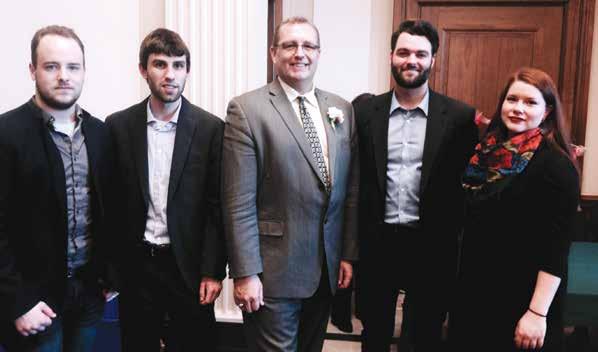
Peter Bjornson (middle) with student leaders from UWSA and CFS-MB photo by Dana hatherly, staff
UMSU hosts semi-annual general meeting
Bannatyne event sees low turnout, U-parking pass motion
The University of Manitoba Students’ Union (UMSU) hosted its semi-annual general meeting at the university’s Bannatyne campus last week.
The event took place Nov. 17 over lunch at the Neil John Maclean Health Sciences Library.
The University of Manitoba Students’ Union is obligated to host two general meetings a year during the regular school session, one of which has to take place on the Bannatyne campus.
Items on the agenda included reports from the executive and standing UMSU committees, a question period, and presentation of motions submitted by UMSU members.
Rebecca Kunzman, UMSU vice-president advocacy, said the event went well but that only one student—Thomas Hall, UMSU councillor for the Manitoba Medical Students’ Association— was in attendance.
“Typically we don’t get a huge turnout for the Bannatyne AGM. It’s to do with a number of reasons. Obviously, with very different schedules for each of the different programs that are operating at Bannatyne, it’s difficult to coordinate a time that works for all students’ schedules,” said Kunzman.
“Something we talked about after the meeting is really re-evaluating the way the Bannatyne AGM is done. Certainly, we want to connect with the Bannatyne campus and we feel that it’s really integral and important that we do so. However, [we’re] just making sure the way we do so is actually effective and efficient.”
The one motion included on the
agenda, titled “U-Parking Pass,” was submitted by U of M student Matthew Granger.
It read: “Whereas students have complained of the high parking pass prices; be it resolved that UMSU support a U-parking pass, a parking pass for those that are able to purchase a parking pass, where parking pass payment is submitted by all University of Manitoba undergraduate students in the universe, starting with a minimum value of $260 per parking pass per year and to be increased as inflation dictates.”
When asked if the motion was intended to be a joke, Kunzman said that the executive was unsure. Granger was not in attendance to speak on behalf of the motion.
“It wasn’t seconded so it wasn’t put up for debate or discussion,” said Kunzman.
Quorum, the minimum amount of people required for an organization to conduct official business, is set at 200 members for UMSU general meetings. Motions can still be passed if quorum is not met but they will only be considered as advice to council, who have no obligation to heed it.
If quorum is met, passage of a motion at a general meeting becomes UMSU policy the day after the next UMSU Council meeting. The council can rescind or amend any motion passed at a general meeting with a two-thirds majority vote.
Alternatively, if they meet quorum, members at a general meeting can rescind any motion of the council currently in office with a two-thirds majority vote.
Bjornson excited to work with students
New education minister discusses
his role
and
the
future of post-secondary education in Manitoba
Peter Bjornson, the newly appointed minister of education and advanced learning, has formally begun to take on the responsibilities of his new position.
Bjornson landed in his new position following a difficult month for the Manitoba NDP, which saw the resignation of five former cabinet ministers who questioned Premier Greg Selinger’s leadership.
“I am excited to have the opportunity to help implement our plan to improve the quality of education in Manitoba, help young people get good jobs, and keep education affordable for parents and students,” Bjornson told the Manitoban
Although he has only held the position of minister of education and advanced learning for a few weeks, Bjornson faces a number of issues, including looming budget cuts at the University of Manitoba.
The elimination of interest rates on student loans was announced during last Wednesday’s throne speech.
Along with the elimination of interest on student loans, the NDP vowed to create new educational opportunities for the emerging workforce and economy by combin-
ing academic and technical skills; endorsing more distance education and online courses; and launching a new Credit Transfer Portal to ease the credit transfer process across programs and institutions.
Manitoba’s government also stated an intent to introduce more industry representatives in the classroom and to collaborate with Aboriginal Peoples and promote indigenous educational opportunities, such as a proposal to work with the U of M for a master of social work in indigenous knowledge.
The province’s emphasis on training and education is aimed at helping young people build their lives here in Manitoba by ensuring good jobs through learning opportunities. The province’s outlook on education for the new economy involves investment in education as its cornerstone, with an emphasis on accessible, affordable postsecondary education.
Bjornson told the Manitoban that the NDP’s approach to ensuring student success is far different than that of the leader of the opposition, the Progressive Conservatives’ Brian Pallister.
According to Bjornson, the
NDP government will continue to work with students to build a postsecondary system defined by “quality, affordability, and accessibility.” As for tuition levels, Bjornson stated that the province should expect the government’s policy to remain consistent in terms of freezing university tuition fees at the rate of inflation.
Bjornson also told the Manitoban that the government would continue to work alongside universities in order to come up with some possible solutions to the problem of underfunding and the university-wide budget cuts at the U of M.
“Our focus has been to continue investing in our colleges and universities and to bring in measures to ensure that university remains affordable and accessible,” said Bjornson.
Christian Pierce, UMSU vicepresident external, said that the union had not yet had an opportunity to meet with the new minister and promised to continue to lobby for increased funding for post-secondary education and greater access for everyone.
Philma S C h EEPERS , staff; with files from ethan Cabel, staff and dana hatherly, staff
For the students
Make your mark by contributing to the Manitoban
Ca R lyn S C h E ll E nb ERG , staff
The story’s not unique: you’ve been told by your teacher or professor that you’re a “good writer.” You want to hone your writing skills beyond the academic realm but don’t know where to start.
The Manitoban exists for that purpose.
When I was enrolled at the University of Manitoba as an English major, I was interested in journalism and fiction writing – and therefore the Manitoban. But out of shyness, and because I didn’t know much about getting involved, I didn’t bother. It wasn’t until heading into the last year of my degree that I felt confident enough, after seeing a job posting, to take the plunge and apply to join the team.
I’ve heard similar stories from other staff members about being interested in writing for the Manitoban but not feeling confident enough to reach out.
I’m here to tell you that you don’t need to wait until you’re further along in your degree to contribute. I recommend getting involved with the paper in your early years of university so you can develop and use your skills as much as possible.
One of the Manitoban’s main purposes is to help students gain journalism experience. If you’re reading
this and your story sounds like mine, come and see us! Visit our office at 105 University Centre, email editor@ themanitoban.com to express your interest, or email a section editor to tell them your article idea. The Manitoban team can help you figure out a topic to write about, assist with structure and content, and work on revisions.
Even if you’re not a student, the Manitoban welcomes anyone’s
submissions.
Whether you want to cover a Bison football game, complain about campus politics, or review your favourite local band’s latest album, there is something for you to write about.
There are many benefits to contributing to the Manitoban – whether through writing, or producing graphics or photos. Gain the important title of “volunteer staff” – someone who has had three volunteer contributions
published in three separate issues of the Manitoban. Having published work to your name looks great on a résumé, and helps you gain writing skills and journalism experience.
If you’re interested in editing and proofreading, the Manitoban also welcomes volunteer copy editors. Email me at copy@themanitoban. com to get involved!
In May, the Manitoban typically hires all editor positions, other than the Editor-in-Chief—Managing, Copy, Senior News, News, Arts & Culture, Sports, Science, Comment, Design, Graphics, and Photo. The associate positions— Assistant Copy, Graphics, Design; and News, Arts & Culture, Sports, and Science reporters—are usually filled in the fall. If these are positions you’re interested in or want to learn more about, send us an email, visit, or give us a call (204-474-6535).
a better writer and editor, expanded my vocabulary, written on a variety of topics for different sections, and, most importantly, am part of a great team made up of wonderful and ambitious people. My experience working and writing for the Manitoban has also led me to gain publishing credits for other magazines and helped me attain an internship and job in the publishing industry.
One of the Manitoban’s main purposes is to help students gain journalism experience.
So, if you’re reading this and the above account sounds similar to yours, visit our office at 105 University Centre, email editor@ themanitoban.com to express your interest, or email a section editor to tell them your article idea
Even though these applications are months away, inquire now, or start volunteering to get your foot in the door.
Maybe you want to get involved in another way – you have an issue or story you think the Manitoban should be covering, or are not satisfied with an aspect of the paper. Contact us!
The benefits of a student paper cannot be stressed enough. Throughout my time at the Manitoban I have learned the ins and outs of publishing and student journalism, to think critically, how to interview people, and Canadian Press style. I have become
In the Manitoban office, I’ve witnessed investigative documents being shredded and interviewees’ obfuscation, watched excitedly as a campus story developed on a late night, and spent countless hours working, conversing, and laughing with fellow staff members.
The Manitoban just turned 100 years old this month, and many staff members and contributors over the years have gone on to excel in journalism and in life. National Post columnist Andrew Coyne and Canadian philosopher Marshall McLuhan are just a few of the many successful Canadians who got their start by contributing to the Manitoban; even Mayor Brian Bowman wrote for the Manitoban, back in the day. Come and join the ranks.
graphic
Morticians and cosmeticians
T
oday when we lift up our eyes to the signboards whence cometh our help we are apt to find “help” in the most unexpected forms. The middle-aged are reassured by the Kruschen people and others that physical decline is a myth and a superstition which has been uprooted by science. [Kruschen was a brand of saline miracle cure snake-oil – TI] As likely as not, a real estate firm has an ad beside this one displaying the exuberant grass, the redolent blooms and the soughing trees of “Lullhaven.” But what is carefully made to look like a summer resort for tired people is in reality a cemetery. It is rather strongly suggested that after a few weeks in this delightful spot residents will again develop that Kruschen feeling so indispensable to the beauty and dignity of aged people.
In light of the fact that a monstrous and absurd advertisement has recently appeared in Winnipeg street cars, I do not think that I am making an uncertain prophecy when I say that we can shortly expect an orgy of competitive advertising between the crematoria and our city morticians. There has long been a universal assumption that in life and sex we must submit to the standards and desires of industry and commerce. But now even “Death, that phantom of grisly bone,” has been painted and glazed, upholstered and varnished beyond cognizance. “We hardly fear his terrible shape, it seems so like our own.”
It has been proven time and again that the foulest and most stinking offences against human dignity and decency can be committed with impunity in the name of trade.
Every decent person who has retained amidst the modern hurlyburly any moral or mental standards whatever knows that the very word “mortician” is a foul offence. He knows that it reeks and stinks; and he has often longed to tear down the lurid neon lights which nightly shriek to the high heavens their nameless crime and horror against humanity.
Perhaps it was a more subtle commercial instinct in the builders of our modern death shops that taught them that anything quite as obvious and contrasted as black and white was sure to keep an unpleasant reality before their inevitable customers. Simplicity and even harshness has always been the external characteristic of Christian
burial because it has always been the most optimistic of all burials. But simplicity does not mean big profits, and it has gradually given way to pagan pomp.
After attending a modern funeral one unconsciously begins to hum the song:
“Look at the tombstone, bloomin’ old knobs on—
Oh, ain’t it grand to be bloomin’ well dead?”
And then one is reminded of the story of Pat, who operated the steamshovel in the crematorium. But unfortunately it cannot be repeated.
It is not necessary to point out that just as people have lost faith in the love of life, they have painted death in their own image. The most elaborate and cruel of all burials was devised by a people who believed that there was a future existence in all points like this one. It is not necessary to point out that the age of the obstetrician, the dietitian, the electrician, the politician, and the mortician is an evil and materialistic time without joy, or love, or dignity. But there are still some sardonic jokers who can say, “Cremation? No. It robs us of our last laugh!”
I should like to quote, apropos of nothing, the last verse of “The Good Rich Man,” by Chesterton:
“Mr. Mandragon the millionaire, I am happy to say is dead; He enjoyed a quiet funeral in a crematorium shed, And he lies there fluffy and soft and grey, and certainly quite refined
When he might have rotted to flowers and fruit with Adam and all mankind, Or been eaten by wolves athirst for blood, Or burned on a big tall pyre of wood, In a towering flame as a heathen should, Or even sat with us here at food, Merrily taking twopenny ale and cheese with a pocket-knife. But these were luxuries not meant for him who went to the simple life.”
This article first appeared in the March 2, 1934 edition of the Manitoban. The advertisement which inspired it is, unfortunately, lost to history.
Appreciating Marshall McLuhan
Putting
spotlight on the influential media theorist and University of Manitoba alum
In its hundred-year history, the Manitoban has been the first step on the way to a professional career for numerous writers. But there is one who leaves them all behind, whose association with the Manitoban gives us instant respectability even with those who sneer at the student press. I speak, of course, of Marshall McLuhan.
McLuhan did his undergrad and master’s in English at the University of Manitoba in the late 1920s and early 30s. During this time he was a contributor at the Manitoban , writing articles on literary and political issues and editing the literary supplements.
These interests were revealed in his first published book: The Mechanical Bride: Folklore of Industrial Man In this book, McLuhan analyzed newspapers, comic strips, and especially advertisements. His analyses display considerable erudition, but McLuhan did not develop his points along traditional lines. Rather than making any kind of linear argument, he wrote miniessays that can be read in any order, each of which gives a different perspective on the nature of media and social construction in an age of technology and mass communication.
The result is a fascinating read in its own right, somewhat reminiscent of Montaigne – if Montaigne used 1950s slang. More interesting than the unusual form is the way McLuhan cuts to the core of the collective psyche of industrial capitalism.
Ads like these not only express but also encourage that strange dissociation of sex not only from the human person, but even from the unity of the body.
McLuhan grew up to be a new breed of academic. Though very traditionally trained in English literature—he did his doctoral work at Cambridge, tracing the history of grammar, logic, and rhetoric up to Thomas Nashe—his main interests lay elsewhere. For McLuhan, the most significant cultural artifacts were the popular media, to which the academy was mostly blind.
The title essay is an analysis of an ad for stockings featuring a woman’s legs standing on a podium with the rest of her body out of frame. McLuhan argues that this ad portrays the legs as interchangeable parts – a cultural obsession in industrial society, he says. “Ads like these not only express but also encourage that strange dissociation of sex not only from the human person, but even from the unity of the body.”
More generally, he says, a pattern in popular culture and advertisements is “the widely occurring cluster image of sex, technology,
and death which constitutes the mystery of the mechanical bride.”
Advertisers take these images and use them to turn the ordinary sex drive into “a metaphysical enticement, a cerebral itch, an abstract torment.”
The miasma of media and commercials constitutes an education system in itself, he believed, and it has much more money and power behind it than academia
McLuhan thought that the extent to which our basic attitudes and beliefs are constructed by advertisers rendered direct resistance futile. The miasma of media and commercials constitutes an education system in itself, he believed, and it has much more money and power behind it than academia. Therefore, it is necessary to use pop culture’s weight against itself by presenting, studying, and reinterpreting the powerful images it creates. The best way to approach these things, according to McLuhan, is with amusement, not anger.
We live in a world of even more advanced technology than McLuhan’s 50s, operating faster and on a larger scale. Popular culture has fragmented into a million pieces. Advertisers are sophisticated and intrusive. Our political media is louder and larger than ever but seems strangely arbitrary and pointless. In such a world, the insights of McLuhan become even more significant.
We have reprinted for your reading pleasure an article McLuhan wrote for the Manitoban in 1934, entitled “Morticians and cosmeticians.” In addition to being a marvellous early example of his allusive and elusive writing style, it deals with issues related to the topics addressed in The Mechanical Bride
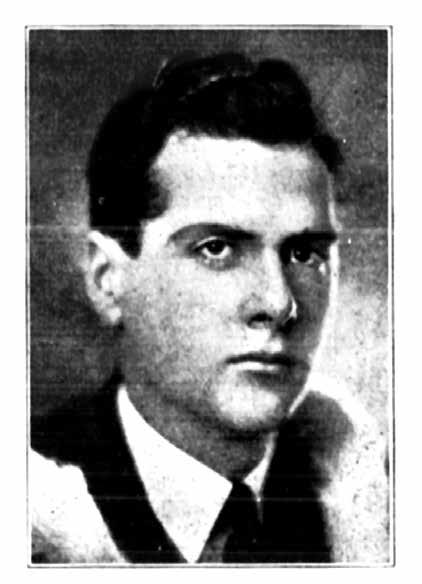
Marshall McLuhan 1934
graphic by bram Keast
U of M goes to HuroCup
Computer science and engineering students bring home silver and bronze at robotics competition
Chant E ll E Duboi S , staff
Computer science and computer engineering students from the University of Manitoba have recently returned from HuroCup, an international robotics competition held in Beijing, China.
The four-day event, which took place between Nov. 6 and 10, welcomed 30 teams from around the globe to compete using humanoid robots in an octathlon consisting of sprinting, a marathon, weight lifting, basketball, an obstacle course, wall climbing, penalty kicks, and a lift and carry event.
The U of M’s robots took home two awards; the small robots (47-cm tall) brought home silver in the wallclimbing event, and the large robot (85-cm tall) received bronze in the sprint event.
Jacky Baltes, computer science professor at the U of M and chair of the HuroCup organizing committee, first started doing research on artificial intelligence in 1996 and began researching humanoid robots in 2002.
“ There is this paradox in artificial
intelligence research: Things that we think require a lot of intelligence [ . . . ] do require a lot of intelligence from humans, but are comparatively easy to do on a computer,” said Baltes.
However, part of the paradox is that when it comes to simpler processes that humans take for granted every day, computing becomes more of a challenge.
“Compare this to face detection or object recognition, navigation indoors and outdoors, grasping of objects, natural language understanding. In those areas, computers are [much] worse than five-year-olds, yet no one calls little Timmy a genius because he can look at a picture and say, ‘Oma and Opa in front of a Christmas tree with a red toy truck.’
Yet, this ability is so far beyond the state of the art of what we can do with computers,” said Baltes, highlighting the challenges of developing humanoid robots to compete in HuroCup.
The U of M team, working out of the Autonomous Agents Laboratory on campus, collaborated with the
Amirkabir University of Technology in Iran on the development of their robots. The U of M team primarily focused on developing software and intelligence for the robots, while the Amirkabir University of Technology team was more involved in developing the mechanics.
Particularly innovative features of the robots that the U of M entered into HuroCup include a fully decoupled software architecture for behavioural control, a new walking engine that enables omni-directional walking, a vision algorithm to detect the shape of objects, and an ego-motion estimation algorithm using optical flow.
The advantages of engaging students in a competition like HuroCup include showing how their research functions in the real world where the environment is dynamic, providing opportunities to network with leading robotics experts from around the world and learning from them, and furthering global robotics research. Such networking has resulted
in some research exchanges, including a long-standing collaboration with the National Kaohsiung First University of Science and Technology in Kaohsiung, Taiwan.
Two members of the U of M robotics team spent two months last summer doing research at the university.
“For many researchers in Asia, building a fully capable humanoid robot is the equivalent of the Apollo program – the biggest scientific challenge of the day. For most, the main focus is not competition, but participants at these events see themselves as making their contribution to a blue sky dream goal for humanity,” said Baltes.
To find out more about robotics research at the U of M, visit the Autonomous Agents Laboratory website at aalab.cs.umanitoba.ca
Winnipeg’s tech startup scene
Innovation and entrepreneurship are around every corner in this city
Chant E ll E Duboi S , staff
Global Entrepreneurship Week
is a worldwide event created to celebrate innovation around the world. One hundred and twenty-five countries participated, hosting over 33,000 activities globally, focusing on inspiring and recognizing the world’s entrepreneurs and innovators.
The University of Manitoba hosted its own activity in the Drake Centre on Nov. 19. The event invited speakers from local industry to share ideas, participate in panel discussions, and engage students in five sessions held throughout the day.
Present at the U of M event was Lisa Hobday, commercial co-ordinator from Manitoba Technology Accelerator, a federally funded, nonprofit organization that provides support to help startups transition from
ideas to businesses.
“We are Manitoba’s only federally funded incubator, taking people who have ideas with J-curve potential and helping them build a business,” said Hobday.
In other words, Hobday is in the business of tech startups.
Tech startups have become a global phenomenon, described in an article in the Economist as a “Cambrian moment,” a comparison to the Cambrian explosion when life began to flourish under the right conditions 540 million years ago.
The Economist article explains that easy access to resources such as easyto-learn programming frameworks, open source code for developers, Internet access for quick communications, social media for marketing,
and, of course, program accelerators, is enabling an explosion of ideas, products, and businesses.
Tech startups are most commonly associated with Silicon Valley or San Francisco where popular and very successful tech startups like DropBox, Instagram, and GitHub are headquartered.
“The tech startup scene in Winnipeg is vibrant, filled with hardworking entrepreneurs and opportunities to impact both local and broader communities,” said Hobday. “Winnipeg is bursting with innovation but those who are disconnected from the startup community may not feel privy to all of the action.”
Several startups in Winnipeg have benefited from accelerator programs such as Manitoba Technology
Accelerator.
“We are formally engaged with eight clients,” said Hobday. Included in these eight clients is Arterial Stiffness Inc., which has developed a product that can measure the amount of plaque in an individual’s vascular system in a non-invasive manner. The device can then compare the information to a database, determining health risk factors based on age.
BL Photonics Inc. uses a spectrophotometer in the ultraviolet-visible-near infrared range to measure characteristics of wine while it is being produced, also known as the wine “parameters.”
Cubresa Inc. designs and builds SPECT and PET cameras, which are retrofitted into MRI machines
and CT scanners.
Potential Winnipeg tech startup entrepreneurs and innovators have plenty of options in Winnipeg to help develop their ideas.
“We are just the tip of the iceberg when it comes to organizations who collaborate on projects, events, and businesses,” said Hobday.
“So if you feel like you’re missing out or if anything you heard during Entrepreneurship Week piqued your interest, come and find out what the community has to offer you as an entrepreneur, mentor, or just a proud and well-informed Winnipegger.”
For more information on the accelerator program, contact Lisa Hobday by email at lhobday@mbtechaccelerator.com
Fighting pathogens with liposomes
How little bundles of fat can help us target toxin-producing bacteria
J ERE miah ya R mi E , staff
Researchers from the University of Bern in Switzerland have developed new compounds to aid in the treatment of bacterial infections. These compounds act to accumulate and neutralize specific toxin proteins formed by pathogenic bacteria.
Certain pathogenic bacteria, those that cause disease, create body-damaging toxins, which target our cell membranes.
Membranes define the boundary of a cell. A cell’s membrane separates the outside environment from its inside, and regulates in and out traffic. Membranes are composed of different fat molecules, known as lipids, which confer a dynamic and
fluid shape to the cell.
Some toxins have the ability to poke holes in these membranes. This results in the leaking of cellular components, disrupting the balance of charged particles, and potentially leading to cell death.
Two of the most common bacteria that produce pore-forming toxins are Staphylococcus aureus, a common cause of Staph infections, and Streptococcus pneumoniae, a major cause of bacterial pneumonia.
Different toxins made by these pathogenic bacteria tend to target different lipids that are exclusively found in animal cell membranes. One example of these lipids is cholesterol.
Ure(k)a!
The
The Switzerland team, led by Eduard Babiychuk and Annette Draeger, has created special liposomes composed of lipids that are similar to those that make up human cell membranes.
Liposomes are non-toxic in humans, and are typically used in medicine to deliver molecules, like drugs or nutrients, to specific cells in the body.
These engineered liposomes act as look-alike decoys for pore-forming bacterial toxins, attracting them away from their target cells. The liposomes effectively compete with the host cell membranes in the binding of these toxins.
The team has shown that the lipid composition of these liposomes can be tailored to make them more attractive to specific toxins.
The liposomes were shown to protect human cells that were treated with pore-forming toxins in test tubes. The team was able to demonstrate that the liposomes can be used to protect against active infections.
Mice were injected with lethal doses of either S. aureus or S. pneumoniae, and were either treated with specific liposomes or nothing. The mice that were left untreated died within a few days, while the liposome-treated mice survived if the
intervention occurred within 10 hours after the initial infection.
Liposome treatment also protected mice from developing pneumonia in mice nasally infected with S. pneumoniae.
The mice that were left untreated typically died within a few days, while the liposome-treated mice survived if the intervention occurred within 10 hours after the initial infection
The distraction that the liposomes create allows the host’s immune system to do its job and clear the bacterial infection. The immune response would not be as effective in the absence of the liposomes, since immune cells are a common target of these pore-forming toxins.
The liposomes do not directly kill the pathogenic bacteria, which is very important. When conventional anti-
biotics are used, they can cause some complications. If a bacterium dies from antibiotic action, it releases all of its formed toxins at once, resulting in sudden host damage.
As well, antibiotic treatment has the possibility of naturally selecting for resistance. A simple way of picturing this is if you treated 100 bacterial cells with a particular antibiotic. Of those 100, 99 are susceptible to the antibiotic and die, but one is immune and lives on. That one particular bacterium can multiply and result in a new population of cells that are all resistant to that particular antibiotic. Since this treatment does not target or kill particular bacterial cells, resistance is unlikely to develop. These toxins are not essential for bacterial life; they just contribute to a more effective infection. The research team suggests that the combination of liposomes and antibiotics may be a sound treatment of infections by pore-forming toxin-producing bacteria.
Antibiotic resistant bacterial strains are becoming a major concern in the modern world. Alternative treatments for bacterial infections, such as these liposomes, may be our answer to combatting antibiotic resistance in the future.
story of Wöhler, organic chemistry, and vitalism, like you have never heard it
J ERE miah ya R mi E , staff
V
italism is the doctrine that processes of living organisms are governed by unique principles due to a “vital essence” that is separate and distinct from the laws of physics and chemistry. In the 19th century, many scientists accepted the idea of a vital essence as a fundamental principle.
In 1828, German chemist Friedrich Wöhler accidentally synthesized the organic molecule urea using inorganic chemicals. Organic molecules are chemical structures constructed from carbon atoms. Urea, well, that is found your urine.
Urea was first isolated from urine in 1727 by Herman Boerhaave. Urea is the predominant molecule used by our bodies to excrete nitrogen and, as such, is naturally made by living organisms.
The synthesis of urea has gone down in many textbooks as the refutation of vitalism, but no single experiment refuted vitalism entirely.
Wöhler did not carry out this experiment with the purpose of
dispelling vitalism. He did not even discuss the implications that this experiment could have on vitalism in his 1828 paper. Most importantly, the vitalist community did not even take much notice of Wöhler’s experiments at the time.
The idea of vitalism carried on long after. In 1840, Wöhler’s own teacher, Jöns Jacob Berzelius, voiced his continued belief in vitalism.
In 1857, a dispute arose between chemists Louis Pasteur and Justus von Liebig regarding the nature of alcoholic fermentation. Pasteur believed the process was vitalistic in nature, while von Liebig believed the process had a chemical basis.
The von Liebig-Pasteur controversy was not settled until Eduard Buchner uncovered the cause of alcoholic fermentation in 1897.
Buchner managed to isolate an enzyme complex from yeast cells, which he named zymase, that had the ability to ferment alcohol.
Enzymes are proteins with the ability to facilitate chemical reactions. The
fermentation process was shown to occur in the absence of living yeast cells, disproving Pasteur’s stance.
“Molecules do not know or care how they were made. Whether they are beneficial or harmful depends only on their structure – and on how people use them” – Phil Hultin, U of M
Vitalism was ultimately snuffed out in science by a steady accumulation of experimental evidence demonstrating that key life processes follow the same rules as chemical reactions carried out in
test tubes.
However, remnants of vitalism can still be seen in everyday life. One example lies in the distinction between “synthetic” and “natural,” or “organic” substances. The idea that something can be both synthetic and organic may be a source of dissonance for some, but chemists know that the properties of substances depend on their structures, not where they come from or how they are made.
Naturally-sourced substances and synthetic chemicals both arise through sequences of chemical reactions. These reactions work to build up a final molecule. Synthetic chemists often use different reactions from those used in nature, much like Wöhler did in 1828. Like Wöhler’s urea and urine’s urea, syntheticallyprepared and naturally-occurring versions of the same substance are identical.
A naturally-sourced product is not inherently healthier or more effective than a synthetic one. Both types of products can contain impuri-
ties, additives, or by-products, which may or may not impact the safety of the product.
For example, some people use melatonin to address sleep disorders and treat jet lag. Whether you buy synthetic or naturally derived melatonin, what you are purchasing is N-acetyl-5-methoxytryptamine. The natural molecule is identical to the synthetic version. However, melatonin extracted from animal pineal glands may be contaminated by viruses.
University of Manitoba chemistry professor Phil Hultin tells his students, “Molecules do not know or care how they were made. Whether they are beneficial or harmful depends only on their structure and on how people use them.”
What is natural? In the scientific sense, everything is! Science concerns the exploration of our natural universe. Synthetic organic chemistry is just as natural as landing probes on far-off comets or the Pythagorean theorem.
graphic by evan tremblay, staff
Phancy rhythms: Phantogram
New York band tours Canada, plays Garrick
Centre’s Jingle Bell Rock
i an t.D. t hom S on, staff
Crack out the eggnog and get out your dancing shoes. On Dec. 9, electronic-rock duo Phantogram will bring holiday joy to the Garrick Centre as part of the Union event series, Jingle Bell Rock.
Phantogram is composed of Josh Carter and Sarah Barthel, two artists from Saratoga Springs, New York. Formed in 2007, the duo has released two studio albums and four extended plays. Their latest album, Voices, released in February of this year, exemplifies a continuation of the group’s take on indie rock music with hip-hop production and beat influences.
The style and genre crossover appeal has led the duo to collaborate with Outkast member Big Boi. Having already teamed up on tracks such as “Objectum Sexuality” for Big Boi’s solo album, Phantogram and Big Boi have since gone into the studio and recorded an EP worth of material. The collaboration, called Big Grams, may be released as soon as 2015.
“It just kind of happened from just hanging out a lot. It’s crazy to say, but we’re good friends with Big Boi,” said singer/guitarist Josh Carter in an interview with XXL
Magazine
“We were just talking about things and said, ‘Why don’t we just make a record together?’ That’s it.”
Phantogram’s latest album, Voices, exemplifies a continuation of the group’s take on indie rock music with hip-hop production and beat influences
For the near future, the band will be busy touring in support of their sophomore album, Voices, starting the Canadian portion of their tour on Dec. 4 in Montreal. The band will make their way to Winnipeg from there, stopping in to perform as part of Jingle Bell Rock.
Jingle Bell Rock is an event series put on across five cities in Canada – Toronto, Winnipeg,
Edmonton, Calgary, and Saskatoon. While Phantogram is from New York, the event series includes many popular Canadian indie acts including Tokyo Police Club, July Talk, and Wildlife. Along with Phantogram’s show, the series is bringing noise-rock duo Death From Above 1979 to the Garrick Centre in late January of next year.
The event series, which spans over December and January, donates a portion of the ticket sales to a local charity within each city. For the two events in Winnipeg, $1 from every ticket will go towards Winnipeg Harvest’s Hunger for Hope. The initiative, which focuses on providing food for babies and children in Winnipeg and Manitoba, started in 2007 and has since raised over $1.2 million for the cause.
Jingle Bell Rock presents Phantogram with special guest Dear Rouge and Mounties on Dec. 9 at the Garrick Centre (330 Garry Street). Tickets are $27.50 and are available at Music Trader (97 Osborne Street) and Ticketfly.com
Mynarski unveiled
New bronze monument commemorates WWII Pilot Officer Andrew Mynarski VC
i an t.D. t hom S on, staff
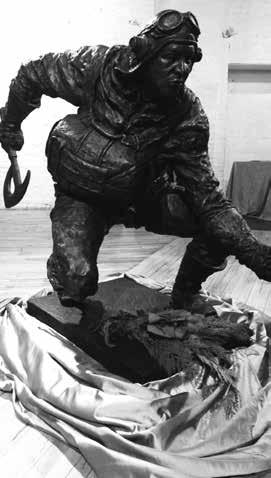
During the week of Remembrance Day, an exclusive preview of the Andrew Mynarski bronze monument was revealed at the Frame Arts Warehouse. The bronze sculpture was created by local artist Charles Johnston in commemoration of the valour of Royal Canadian Air Force (RCAF) Pilot Officer Andrew Charles Mynarski VC.
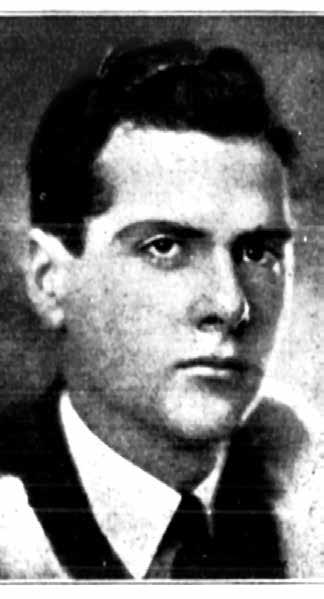
Mynarski was born in 1916 to Polish immigrants and raised in the North End of Winnipeg. He enlisted in the army before volunteering for the RCAF. He rose to the rank of pilot officer during World War II.
The story of Mynarski’s heroism begins on the evening of June 12, 1944. The RCAF 419 “Moose” Squadron of Lancaster bombers took off from England, bound for a bombing run in France to support the D-Day invasion on June 6. Mynarski manned the mid-upper machine gun and his best friend, Pat Brophy, was the plane’s tail gunner.
Over Cambrai, France, the Lancaster came under enemy fire from the ground and then from night fighters. The Lancaster was set ablaze and the pilot ordered the crew to bail out, but Brophy was trapped in the rear gun turret. Mynarski—without concern for his own life and safety—crawled through the flames to save his friend.
After several attempts with a fire ax to break through into the jammed rear turret, Mynarski was still unable to free Brophy. Brophy signalled that Mynarski should save himself. With his uniform and parachute on fire, Mynarski backed away, saluted his colleague, and bailed out from the doomed plane.
Mynarski died of his severe burns in the early morning of June 13, 1944. Miraculously, Brophy survived the impact of the aircraft and reported the tale of Mynarski’s selfless act of friendship.
For his bravery in the face of death, Andrew Mynarski received the Victoria Cross posthumously on Oct. 11, 1946 – the highest award for valour in the British Empire. There are other memorials dedicated to the Winnipeg hero. At Valiants Memorial in Ottawa, there is a bust of Mynarski. A Lancaster bomber at the Canadian Warplane Heritage Museum in Hamilton is detailed with the Lancaster KB726 markings, just like the one in which he flew. There is also a monument at RAF Middleton St George in England, the air force base from
which Mynarski departed on the fateful flight.
In Manitoba, there is a junior high school, as well as a chain of three lakes, named in dedication of the pilot.
However, up until now there has not been a monument dedicated to Mynarski in his hometown.
Charles Johnston sought a unique perspective on Mynarski’s heroism.
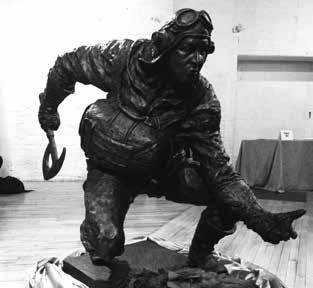
“I’ve been thinking about this sculpture for many years now, all the while trying to find the pose that best describes his story, what it symbolizes,” sculptor Johnston told the Manitoban
“I chose the moment when he decided to try and save his friend, Pat Brophy, at the risk of his own life.”
In the bronze monument, Mynarski is portrayed crouching down, fire ax in one hand, with his other hand reaching outwards.
As a sculptor, painter, and muralist in Winnipeg for over 25 years, Johnston felt honoured to sculpt the monument of the WWII pilot.
“It was a great experience; as a local artist capturing a local hero in our hometown, it doesn’t get much better than that,” Johnston explained to the Manitoban
The sculpture memorializes the life and altruism of Mynarski, but perhaps it also celebrates a generation motivated to valiant action. Johnston’s art depicts a man trying to save a friend and inspires all of us with this example of selfless sacrifice.
Charles Johnston’s bronze monument of Mynarski will be dedicated in Vimy Ridge Memorial Park on June 12, 2015 on the 71st anniversary of the flight.
photo proviDeD by charles Johnston
So-called separation of church and state
School of Art Gallery showcases photography exhibit, Following the Ten Commandments
l au RE n Si DDall, staff
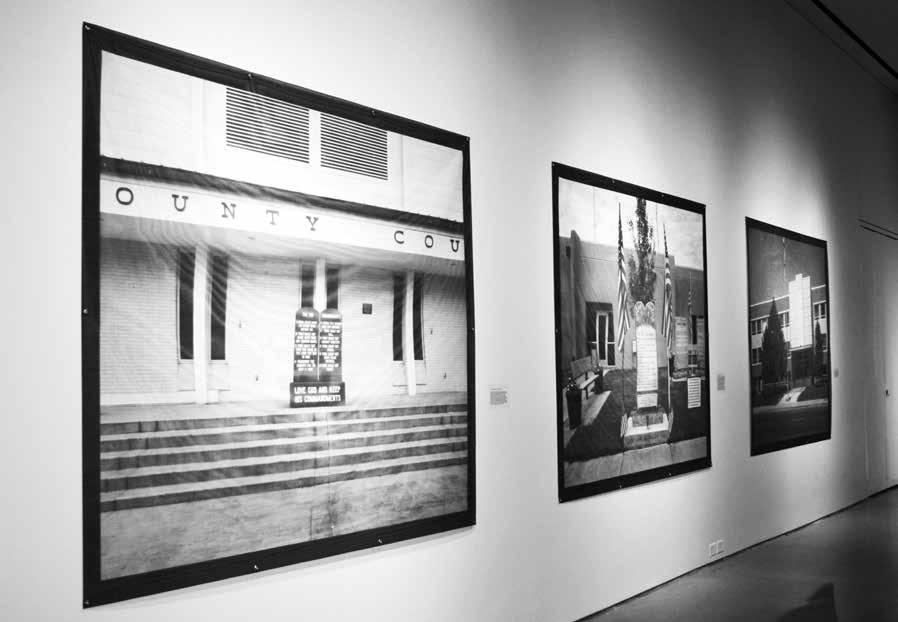
New York photography duo Andrea Robbins and Max Becher began photographing and researching monuments of the Ten Commandments when living in the southern United States.
“We started photographing and researching the subject and were surprised by how differently the monuments are treated by the courts, how widespread they are, and how they seemed to be part of three historic waves,” Robbins told the Manitoban
The first wave came in the 1930s,
followed by monuments provided by the Fraternal Order of Eagles in the 1950s, and the most recent inspired by Judge Roy Moore of Alabama in 2003.
Located outside courthouses, public schools, parks, and county seats, these religious monuments have been surrounded by controversy.
But more interesting than the controversy is the manner in which the designers have maneuvered around laws in places with strict stipulations on the public depiction of religion.
“Some groups have tried to design
Ten Commandment monuments that incorporate different symbols or they place the display within a group of historic monuments in order to assert that its importance is as one of many influences to American law and not a religious icon.”
These are the same groups that outwardly argue that the Christian cross in public places is in fact not a religious symbol, but rather a lowercase t.
Ironically, these manipulations do not necessarily need to be in place.
“Like many people, we were raised to believe that the U.S. Constitution laid out a separation of church and state, and this is not exactly the case. The Establishment Clause of the First Amendment does not call for a separation, but is a precaution against a government endorsement of one religion over another, or a preference for religion over the belief in no religion.”
The Establishment Clause of the First Amendment states, “Congress shall make no law respecting an establishment of religion or prohibiting the free exercise thereof.”
This clause has proved unclear.
The Supreme Court has allowed religious appeals to open legislative assemblies, private religious school textbook funding by the government, and schedule arrangements by school districts to accommodate extra-curricular religious education – and disallowed certain outwardly religious monuments on courthouse land.
This lack of clarity has resulted in differing levels of legal disputation and citizen resistance to acceptance of the monuments into the community.
“It takes about 10 minutes of photographing—sometimes more or less—before someone shows up. In small towns, we like to make our visits short and we make return visits in order to photograph again in the best light which depends on the direction the monument faces and its surroundings.”
Robbins and Becher’s work have captured the interest of Shep Steiner, U of M assistant professor in the school of art.
Merging medicine and art
Helene Girard’s Tribology explores contrasting worlds
l au RE n Si DDall, staff
C
re8ery’s latest exhibit, Tribology by Helene Girard, amalgamates medical terminology and visual art to create a showing concentrated on
the effects of interactive movement through textures. Girard associates the language of medicine in the titles of the pieces
with complex shapes and textures on the canvas. What originally appears complicated is simplified through geometric shapes and pharmaceutical definitions.
In addition to creative medical titles, the pieces within the exhibit are drawn together by their representation of the artist.
“I wanted every part of me in my paintings and I think that they should represent me as an individual. Each and every one of us is unique and special and what I find striking for me as an individual is the circumstances of how I was born,” said Girard.
“I am very lucky to be here being born on the ambulance at three pounds and a few ounces with the help of a nurse without a doctor. This is why all my titles are based on medical terminology. I paint representing my version of medical terms.”
With titles ranging from relatively well-known terms, such as “claus-
trophobia,” to lesser-known medical terminology, such as “ bimalleolar fracture,” each piece becomes contextualized in light of the medical terminology.
For those of us not as well-versed in the language of medicine, each viewer is provided a brochure filled with definition of the terminology to accompany the exhibit.
Inspired by artists such as JeanPaul Riopelle, Jackson Pollock, and Pablo Picasso, Girard aims to provide each viewer with a subjective perception of her paintings.
“Little pieces of my life are reflected in my paintings and I hope to do the same for every individual looking at them.”
By infusing the artwork with her identity and emotions, Girard gives room for viewers to attribute their own meanings to the works, resulting in a more interactive exhibit than pieces oriented towards the more
“I received a grant from the University Research Grants Program to visit these artists in New York, and thought the money better spent if I brought them here to give a lecture, meet with students. The school of art agreed to help pay for an exhibition, so that’s how things developed,” explained Steiner.
Following the Ten Commandments will mark the first time Robbin and Becher’s work has been brought to Canada – and it is fitting that it is in Winnipeg.
“Robbins and Becher’s project [ . . . ] has a local connection here in Winnipeg. The only Ten Commandment monument in Canada is in the formal garden in Assiniboine Park.”
The photography within the exhibit includes the landscapes in which the monuments are placed, to contextualize the controversy, a feature that is important to Robbins.
“We show them along with their unique surroundings – so sometimes the monument is front and centre and sometimes not. Finding the recurring shape in the photo is like a game and forms an initial level of engagement with the viewer in the gallery. We provide a text next to each image that is just a few words or quite long depending on the specific history.”
Following the Ten Commandments will be displayed at the School of Art Gallery until Feb. 20, 2015. The gallery is open from 9 a.m.-4 p.m. Monday-Friday, but will be closed from Dec. 23-Jan. 5.
realistic side of the artistic spectrum.
“Although my representation might have succumbed to a surrealistic approach in some cases, I am quite inspired with it and really enjoy breaking it down into phonetics.”
Evolving from working with pen and ink, to portraiture, to creating menus and programs, to her own exhibits, art is in Girard’s blood.
“I have always been an artist as far as I can remember. The first prize for art was in Grade 3 where I coloured Little Bo Peep with her sheep [ . . . ] My art studies were in Montreal. I started with window display—which I did not really enjoy much—then graphic art, and finally general art touching absolutely everything. This is where I felt home.”
photo by lauren siDDall, staff
photo by lauren siDDall, staff
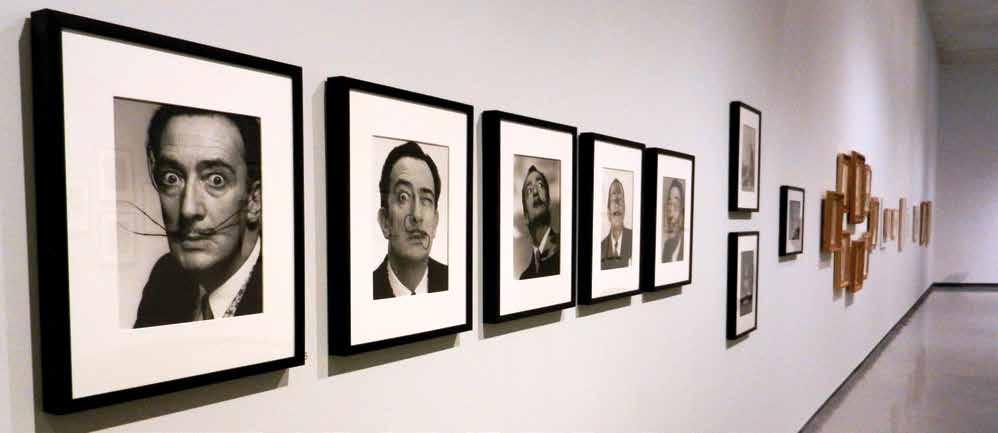
The late, great Salvador Dalí
Winnipeg Art Gallery exhibits later work of 20th-century surrealist
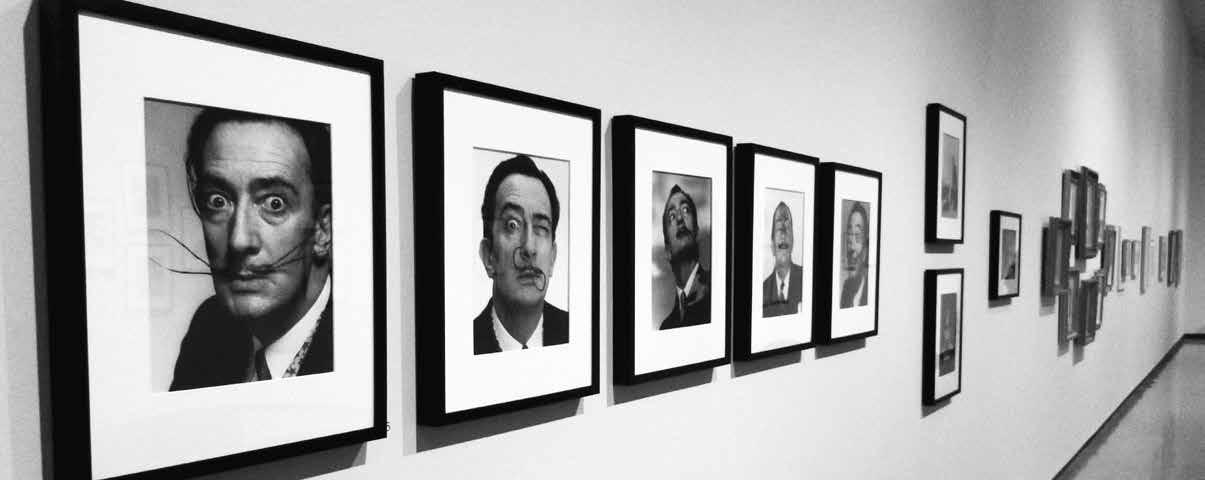
On Nov. 15, the Winnipeg Art Gallery (WAG) presented a lecture by Elliot King, an art historian and expert on surrealist artist Salvador Dalí. Part of the WAG’s ongoing exhibit, Dalí Up Close, King’s lecture focused on the last four decades of Dalí’s career, examining the time after Dalí removed himself from the surrealist movement in 1939.
Elliot King is an assistant professor of art history at the Washington and Lee University in Lexington, Virginia. Having helped curate many Dalí exhibitions over the last 10 years, King’s work on Dalí emphasizes the artist’s work post-surrealism.
“Elliot King is a young guy, but is regarded as one of these people who’s really involved in the Dalí Renaissance – looking at Dalí in new ways, especially looking at his later works,” said Dalí Up Close curator Andrew Kear to the Manitoban.
His lecture on Nov. 15, entitled “The Great Late Salvador Dalí,” gave a chronology of the life of the eccentric character, with a focus on his work past 1940.
Dalí was more than just a painter; he was multi-talented in many forms of art. Over the span of his life, he wrote several articles, three books, films, and an opera. Dalí also fabricated numerous sculptures.
Born in 1904 in Figueres, Spain, Dalí’s life was full of twists and turns. Despite his father disapproving of his art, Dalí studied at the prestigious San Fernando Academy of Fine Arts for four years. He was expelled twice. On the second occasion, he was kicked out before his final exami-
nations after declaring publicly that his professors were incompetent compared to him.
In 1929, Dalí helped write a surrealist film entitled Un Chien Andalou (An Andalusian Dog), a film that was based around one rule: that none of the scenes connect with one another. With the film lacking a plot, Dalí was annoyed when it became a success. This propelled his career into the surrealist art scene.
Dalí’s early surrealist work was influenced heavily by psychologist Sigmund Freud’s psychoanalytic theory, in which the unconscious aspects of our minds are examined to explain behaviour. With this theme, many of Dalí’s paintings try to capture dreamscapes comprised of the repressed thoughts to which Freud alludes.
In 1939, after being a member of a group of surrealists that produced paintings based around dreamscapes, Dalí left the scene that he had helped develop.
In his later work, Dalí explored aspects of religion and classic paintings in such works as “Santiago El Grande.” Pieces such as these would define Dalí’s career after 1940.
For King, Dalí should be given more credit than being just a “crazy man with a moustache.”
“His work is very entertaining, but there’s also a lot of thought that goes behind his images,” explained King to the Manitoban
“If you take him seriously, it opens up just another world of Dalí.”
Dalí Up Close features many pieces from Dalí’s later career, when the art-
ist explored elements of religion and what he called “Nuclear Mysticism.”
While the exhibit displays grandiose paintings such as the “Santiago El Grande,” the show also features many rare pieces that have not received much prior exposure.
One such piece is Dalí’s “A Vision of Hell.” Painted in 1962, the highly religious piece illustrates a surrealist vision seen by three children in Fatima, Portugal in 1917. Commissioned in 1960 by an anonymous patron in Texas, the painting remained hidden under a nun’s bed for decades; the piece has not been viewed in a large public exhibition until now. King commented that this was the first opportunity to behold the painting in person.
King spoke highly of the uniquely
The Reality of Storm Chasing
Local chaser planning documentary of tornado chasing in the Prairies
Ca R lyn S C h E ll E nb ERG , staff
The upcoming documentary, The Reality of Storm Chasing, set to be filmed by local storm chaser Francis Lavigne-Theriault, chronicles storm chasing experts in the United States and Canada.
Lavigne-Theriault, a University of Manitoba atmospheric sciences student, experienced his first storm chase in 2010 on a road trip in the Southwestern United States. On a whim, Lavigne-Theriault and his father took the hours-long drive from New Mexico to Oklahoma after a big tornado was forecast for the state.
“We were seeing massive mountainous thunderstorms on the horizon and so we started heading in their general direction when we met up with a [never-ending] line of chasers. Literally hundreds of cars passed us! We followed them until we saw a tank heading into the storm,” LavigneTheriault told the Manitoban
“We then saw a large stovepipe tornado cross the road about 200 metres in front of us! After that, we realized how dangerous this was with the limited information we had and so we left. From that moment on, I was hooked.”
Four years later, storm chasing is still as exciting for Lavigne-Theriault as that first encounter.
Lavigne-Theriault is the founder of the group NZP Chasers – the acronym stands for “Near Zero Probability,” meaning they will chase even if there is a near zero probability of a tornado. The group chases in the United States and Canada.
Lavigne-Theriault plans to capture storm chasing in the Prairies on a documentary slated to film next spring and summer. The Reality of Storm Chasing will compare storm chasing on the Canadian Prairies and in the U.S.’s tornado alley.
“The main purpose of this documentary is to tell the untold stories of Canadian storm chasers. There are so many chasers in Canada and Manitoba that nobody has heard of before (including me), and these chasers have amazing stories to tell,” said Lavigne-Theriault. “We would also like to share the kind of severe weather research being done in Canada and what are the plans for the future.”
Manitoba and U.S. storm chasers will be interviewed for the documentary, as well as Tim Marshall, a structural engineer who examines the aftermath of tornadoes.
“[Marshall’s] data and experience is critical in better structural engineering of buildings and houses to withstand straight-line winds and tornado winds,” explained Lavigne-Theriault. The documentary will cover ChaserCon, a conference for storm chasers and severe weather researchers,
taking place this February in Denver.
The Reality of Storm Chasing will also focus on “humanitarian aspects” of storm chasing: the emotions and reactions of storm chasers.
Lavigne-Theriault told the Manitoban, “We want to show you what happens behind the camera instead of simply showing you a video of some tornado.”
“We are also referring to the role that storm chasers play in warning the population of impending severe weather and how they help out when a disaster strikes. When we fear that a population might be impacted by severe weather, we call our local authorities, who send out warnings to the population, and if a disaster strikes, we go in rescue mode and we help out the best we can.”
Lavigne-Theriault set up an Indiegogo campaign last month to raise money for this project, with a
portrayed exhibit of the late, great Salvador Dalí.
“I think when you have an exhibition of any size that can bring something new to the table and make us think a new way about an artist we may think might know, I think that’s very productive,” said King.
The WAG will present another lecture on Dalí's work, this time from a mathematical perspective by Canadian Mennonite University professor Tim Rogalsky, on Nov. 26 at noon.
The exhibit Dalí Up Close runs until Jan. 31, 2015. For more information visit wag.ca
goal of $3,000. Funds will go to rental vehicles costs and equipment such as several GoPro cameras, camera mounts, and tripods. If more than $3,000 is raised, a paramedic will join the team in May to help in disaster relief efforts in case NZP Chasers are ever the first responders to a natural disaster in the U.S.
Lavigne-Theriault also hopes to share the love of storm chasing and the connections formed between storm chasers.
“This project is far beyond a simple campaign donation,” said LavigneTheriault. “It is greater than ourselves.”
The Reality of Storm Chasing’s Indiegogo campaign ends Dec. 4. For more information on the documentary and how you can help with fundraising, visit indiegogo.com/projects/the-realityof-storm-chasing-a-documentary and nzpchasers.webs.com
photo by ian t.D. thomson, staff
Editor: Mike Still
Bison Briefs
Basketball, men’s hockey, and swimming
Davi D G R a D, staff
Basketball
The men and women’s basketball teams visited Calgary this weekend to take on the Dinos. The women’s team continued their struggles against a 2-4 Dino squad, losing Friday night 78-62, and Saturday night 65-39.
The women now sit at the bottom of the Canada West, still searching for their first win of the season.
The men’s team was in a battle for first place in the Canada West this weekend against the Dinos. Splitting the weekend with a loss Friday night 76-71 and win Saturday night 73-68, the Bisons now share first place in the conference with Calgary.
After missing the playoffs last year, the Bisons have turned things around dramatically – heading into the Christmas break at the top of the conference. If Manitoba can continue their strong play, they will have a
chance at hosting a playoff game.
The Bisons were led over the weekend by Jonathan Alexander, who went 17 for 30 shooting; A.J. Basi, who went 10 for 23; and Justus Alleyn, who went 10 for 25.
The Bisons struggled from beyond the arc, dropping just 4 of 26 attempts over the weekend. Defensively Manitoba was led by Wyatt Anders with 15 rebounds, and Alexander with 17 rebounds. In Saturday night’s win, all the Bison starters picked up at least six rebounds and one reserve player, Alfreeman Flowers, grabbed eight.
Men’s hockey
The Bisons were in British Columbia looking to gain ground on third place in Canada West Standings against a struggling Thunderbirds squad. Manitoba
helped their chances with a sweep of UBC, winning Friday night 2-1 and Saturday night 3-1.
Goaltender Deven Dubyk was outstanding over the weekend, making 33 saves in Friday night’s win and 27 saves on Saturday night
Goaltender Deven Dubyk was outstanding, making 33 saves in Friday night’s win and 27 saves on Saturday night.
Dubyk leads the conference in most games played for a goaltender.
He also currently boasts the second best save percentage, and is a major reason for the Bisons’ success this season.
Jordan DePape scored the two goals in Friday night’s win. On Saturday the Bisons were led by Darren Bestland, who netted two.
Joel Schreyer also scored—his first goal of the season—in Saturday’s victory.
Swimming
The Bison swim team was in Lethbridge this weekend for the Canada West Swimming Championships – a three-day, 24-event competition.
The Bisons’ Dillon Perron picked up three medals, with a silver in the 200-metre breaststroke, a bronze medal in 100-metre backstroke, and a silver in 50-metre butterfly,
while Kimberly Moors won gold for Manitoba in the 50-metre freestyle, and silver in the 50-metre butterfly.
The Bison women’s team finished sixth in the competition with 196 points, while the men’s team also ranked sixth, with 192 points. The UBC Thunderbirds captured first on both sides, with a combined total of over 2000 points.
Schedules
Both basketball teams return home to take on the Lethbridge Pronghorns this weekend. Games are Friday and Saturday at 6 and 5 p.m., respectively, for the women, while the men play at 8 and 7 p.m..
The men’s hockey team will stay on the road to battle the Alberta Golden Bears, with Friday and Saturday games at 8 and 7 p.m., respectively.
Postma provides power play prowess
7th round pick has finally secured NHL status
a n Dy Ch E , volunteer staff
Not much work was done on the Winnipeg Jet defence during the off-season, except for a few bits and bops to strengthen the backline pairings for the 201415 season. Perhaps the biggest change was the role of 25-year old Paul Postma, who is finally seeing NHL ice time on a regular basis this season.
In the previous two seasons, Postma had seen action in only 54 NHL games, splitting time with the Jets and the AHL’s St. John’s IceCaps. Last season, he was due his first full season in an NHL uniform, until a nagging pain in his calf put his NHL campaign under siege.
The diagnosis was a blood clot in his leg, and the then-24-yearold faced long-term recovery in the months ahead. Postma eventually returned to the Jet lineup in February, but would only play 20 games. Fast forward one year and Postma has not looked back, solidifying his position with the Jets by fulfilling a role on the team’s third defensive pairing. He has even mounted an occasional offensive surge, such as scoring his first goal of the season in a comeback effort in New York, where the Jets defeated the Islanders 4-3 on October 28.
18-year-old was an offensively-shy Swift Current Bronco, until a trade to Calgary saw him break out as one of junior hockey’s brightest defensive prospects.
In his final WHL season, Postma tallied 84 points, nearly four times his output at the time of his trade to the Calgary Hitmen. That performance earned the 20-yearold an NHL entry level contract in 2009. He continued to hone his offensive game with the AHL’s Chicago Wolves for two seasons. While the Atlanta Thrashers relocation to Winnipeg marked a major alteration for all the players affiliated with the franchise in 2011 there was little change in Postma’s efforts. He continued to concentrate on working his way up the Jet pipeline with the new AHL club in St. John’s.
A 13-goal, 44-point season in 56 games during 2011/12 marked the best points-pergame ratio in his AHL career.
It might only be a matter of time before this seventh round selection becomes an absolute steal of a pick
Although he has yet to reach 20 minutes in a game this season, Postma’s persistent appearance on the power play and penalty kill has greatly aided the Jets through the first two months.
Should he remain healthy, there is little question that the Red Deer native will carry out an 82-game regular season for the first time in his career. Not too shabby for a player who just one year ago suffered a season-threatening injury, and within recent years, has worked his way up from the bottom of the 2007 NHL Entry Draft.
Evidence in the making that quality can be selected in the late rounds of the draft, Postma was the 205th overall selection by the Atlanta Thrashers. At the time, the
Herd-ling up the standings
Women’s hockey sweeps 4th-ranked UBC, moves into tie for 1st place
The University of Manitoba
Following the IceCaps’ daring run in the Calder Cup Playoffs that ended at the conference final, the 2011/12 campaign marked the final full season Postma would ever play in the minors.
Going from the late rounds of the NHL Entry Draft to becoming a full-time NHLer isn’t a quick or easy journey. Postma’s rapid development prior to being drafted was highlighted by the discovery of his relatively untapped offensive upside, and he’s worked that technical ability towards the NHL level.
A proven power play anchor, Postma has scored 26 of his 47 career AHL goals and half of his NHL career goals on the man-advantage. Having spent all of his professional career with the same Thrashers-Jets franchise, and with both affiliated AHL teams, Postma finally has the opportunity to apply his trademark offensive-minded style at the top tier. This seventh round selection may soon gain recognition as an absolute steal of a pick.
Bison women’s hockey team made a huge statement over the weekend, grinding out two impressive wins over the CIS fourth-ranked UBC Thunderbirds.
Manitoba never trailed in either game, holding the dangerous UBC scoring attack to just one goal in both games.
Friday’s matchup went to overtime, with the Bisons pulling out the 2-1 win, thanks to back-to-back penalties committed early in the extra session by UBC.
Regulation hockey featured a fast-paced, back and forth battle, with a total of just three penalties called.
Seventeen shots were fired between the two squads in the first period, with both Rachel Dyck and Samantha Langford standing their ground, keeping the game scoreless after 20.
Both teams kept the tempo up in the second frame, but Dyck and Langford stayed composed. Manitoba grabbed the momentum in the final minute, as captain Maggie Litchfield-Medd burst into the Thunderbirds zone, and was tripped up on a partial breakaway, leading to the first penalty of the game, which the Bisons carried into the third.
Manitoba made use of the power play, as Litchfield-Medd redirected an Erica Rieder shot into the back of the net, just a minute into the period.
The Thunderbirds stepped up the tempo after falling down by one. After hitting the goal post just over a minute after the Litchfield-Medd goal, they finally cracked the scoreboard at 6:48, when Kelly Murray deflected a Rebecca Unrau shot past Dyck to tie things up.
The Thunderbirds had a chance to steal the game from Manitoba with just under three minutes left, after Litchfield-Medd took a tripping penalty – the only infraction committed by the Bisons. Boasting the nation’s best power play unit, UBC was unable to get much going, as Manitoba successfully kept them to the outside, pushing the game to overtime.
Overall through the two games, Manitoba held the visitors’ prolific power play off the board, going 0 for 7
The Thunderbirds took two quick penalties in extra time, and the Herd capitalized, with Alanna Sharman netting the game winner just 1:41 in.
Sharman is now tied for second in the CIS, with 10 goals on the year, and head coach Jon Rempel was quick to praise the rookie sensation.
“She’s a special player,” Rempel
said. “You don’t get many players like her that have that kind of hockey sense, offensive ability, and ability to make others around her better. She doesn’t play like a firstyear player.”
Saturday’s rematch featured another impressive showing from Dyck, who turned aside 28 of 29 shots in a 3-1 win.
Manitoba got two goals from another rookie, Courtlyn Oswald, as well as Jessica Rosenbaum, while UBC’s lone goal came off of the stick of Nicole Saxvik. Three of the game’s four goals occurred in a wild second period, where Manitoba outshot UBC 15-10.
The Thunderbirds had a few quality chances to tie the game in the middle stages of the second period, with Manitoba taking two separate trips to the sin bin; however, the Bison defence was yet again able to keep UBC from gaining many quality chances in tight. Overall through the two games, Manitoba held the visitors’ prolific power play off the board, going 0 for 7.
Up next for Manitoba is a crucial series with Alberta, as they come to town this weekend, Nov. 28 and 29, in the final games before the Christmas break Game times are 6:30 p.m. on Friday, and 1 p.m. on Saturday.
photo by shawn coates
Saturday night’s alright for winning
Men’s and women’s volleyball split weekend against Thompson Rivers
Davi D G R a D, staff
The University of Manitoba Bison men and women’s volleyball teams squared off against Thompson Rivers at home this weekend, sharing similar results with a loss on Friday night and 3-0 win on Saturday.
Women
The Bison women’s team opened their weekend Friday night against the WolfPack in front of a largehouse in the Investors Group Athletic Centre. Manitoba fed off the energy of the crowd and shot out to a quick lead on the WolfPack, taking the first
two sets, 20-25 and 21-25.
It looked like it was going to be an early night for the team, but the WolfPack benefited from several Bison errors , narrowly edging out the Bisons in the next three sets, 25-23, 27-25, 17-15.
“We can’t ask for more opportunities to win a match than we had tonight,” lamented head coach Ken Bentley on his team’s tough loss. “We kept fighting. I love that about our team. We could have won the match, they were within our grasp.”
Showcasing the will to battle that
has become the hallmark of the team, the Bisons rebounded Saturday night by wining in three straight sets (25-23, 31-29, 25-19). The Bisons were able to make the big plays when it mattered, and survived a shootout in the second set that seemed to deflate the WolfPack.
Jordana Milne tied her season high of 13 kills Friday night and added another five kills on Saturday night. Rachel Cockrell picked up 44 kills and 15 kills, Brittany Habing collected 73 assists and 14 digs, and libero Caleigh Dobie led the way defensively with 29 digs.
Golden sun, golden medals
Former Bison Taylor Pischke wins gold for Canada
Davi D G R a D, staff
Former Bison Taylor Pischke has added more gold to her impressive trophy case while representing Canada in the North, Central American, and Caribbean (NORCECA) beach volleyball championship.
Pischke and her Team Canada beach volleyball partner from York University, Melissa HumanaParedes, are currently ranked 34th in Fédération Internationale de Volleyball (FIVB) World Tour rankings and are steadily rising.
Look for the pair to climb the
FIVB rankings over the next year and potentially earn a chance to represent Canada at the upcoming summer Olympics.
Pischke is the daughter of North America’s winningest coach, Garth Pischke, who also found success as a player. Garth played for two Canadian Junior Championship teams from Manitoba, was part of the Canadian Olympic team, won three Canadian Interuniversity Athletic Union championships, and has coached at the Olympic level. The apple doesn’t fall far from the
tree with the younger Pischke, who, at the age of 21, has already compiled an impressive resume full of medals and wins.
Pischke was an integral part of the Bison team that went a perfect 9-0 in Regina last year to capture a national championship. She picked up 327 kills and 297 digs in 27 games during her final year with the Bisons.
Pischke has two Under 23 World Championship bronze medals, two NORCECA circuit titles, the CIS gold medal with the Bisons, and now a NORCECA gold medal.
Men
The weekend played out almost identically for the men’s volleyball team against Thompson Rivers.
Friday night saw the Bisons lose a tight matchup in four sets (25-20, 31-29, 23-25, 25-22). The second set featured a marathon tie-break that ended unfavourably for the home team.
Despite losing the shootout in the second set, the Bisons stormed back to take the third and narrowly lost in a back-and-forth battle in the fourth set.
Libero Alex Strachan commented on his team’s no-quit attitude post-game.
“We really try to keep going after every point,” Strachan said
“We just try to find ways to put the ball away. That’s basically our attitude: keep the ball in play, be patient, and wait for the opportunity to get a kill or make the big play, and just wear the other team down.”
Strachan and rest of Manitoba put together a more consistent game on Saturday night, taking the WolfPack in three straight sets (25-23, 25-19, 25-22).
The win keeps the Bisons in a playoff spot, a fact that motivates the team each weekend.
“We’re a team that’s really hungry to make the playoffs. Last year we were so close, missing it by a couple of points here and there,” Strachan said. “So this year we are really trying to come out strong.”
Captain Kenny Rooney had his season’s highest kill total with 13 on Friday night and added another 10 on Saturday. Devren Dear added 23 kills and 11 digs, Luke Herr picked up 75 assists, and Adam DeJonckheere added 19 kills and 11 digs over the two games.
Jordan Dragojevic had the highlight of the night on Friday night when he used his foot in a sprawling save to stop what seemed to be a sure point for the WolfPack.
Both squads will be on the road this weekend, taking on the Mount Royal Cougars. Game times are 7 and 6 p.m., respectively, for the women, and 8:30 and 7:30 p.m., respectively, for the men.
photo by shawn coates
Bisons fall just short against Montreal
University of Manitoba football team suffers heartbreaking 29-26 loss in Uteck Bowl
m i KE Still, staff
Just 12 yards stood between the Manitoba Bisons, and a trip to their first Vanier Cup since 2007 on Saturday afternoon, however fate would not play into the visitors’ hands, as they fell 29-26 against a stingy Montreal Carabins defence.
Summary
Trailing by five points with 1:32 remaining, Bison quarterback Jordan Yantz led his team 82 yards, all the way into the Montreal red zone, before a sack, and forced fumble by Anthony Coady would end any chance of a Manitoba comeback, as the Carabins recovered the ball with just 30 seconds left to play.
It was a gutsy performance from a Bison team that was forced to play comeback football all day long.
Montreal wasted very little time taking the lead, as Carabin QB Gabriel Cousineau found receiver Mik Davidson from 89 yards out, on just the second play from scrimmage, to pull ahead.
After a Felix Ménard-Brière rouge made the score 8-0, the Bisons answered back. Yantz drove the Manitoba offence 75 yards, and found long-time teammate Matt Sawyer from eight yards out, for the first of two touchdown connections on the day.
Cousineau would continue his hot start for Montreal immediately afterwards, to keep the momentum with the home team. Davidson hauled in his second TD on the ensuing drive for Montreal, followed by a field goal, and safety, to give the Carabins a commanding 20-7 lead after one quarter.
The Bisons answered quickly in second frame, scoring on their first drive. Yantz found Sawyer from 30 yards out to give the Herd some confidence, on a series that took just three plays.
Manitoba would carry the momentum for the majority of the second quarter, as both defences stiff-
ened up after a 27-point first frame.
The Carabins refused to let the Bisons get too comfortable, though, as Cousineau scampered in on a sixyard QB keeper with 2:48 remaining, replenishing the 13-point lead. The score was aided by a missed field goal by Bison kicker Ryan Jones on the previous Manitoba drive.
Getting the ball back with 2:42 left in the first half, Manitoba stayed focused, with Yantz calling his own number, diving in from 10 yards out, to make the score 27-21 heading into the break. The Bison signal caller completed four of five passes on the drive, for 59 yards, before using his
legs to get the major.
A combined total of just seven points were scored in the entirety of the second half. Montreal recorded two safeties, while the Bisons got a 40-yard field goal from Jones, but it wasn’t enough to topple the secondranked Carabins.
Both teams turned the ball over on their first drives of the third quarter, setting the stage for what turned into a defensive slugfest.
Manitoba got the ball to start the third, and was the first to cough up the pigskin. Stud linebacker Byron Archambault—the 2014 RSEQ defensive player of the
year—punched the ball out of Kienan LaFrance’s hands, and Coady dove on it.
The Bison defence—which had given up just 10 total points in the second half during the playoffs heading into the Uteck Bowl—answered with a big play of their own immediately after the Carabin offence retook the field.
Linebacker Jonathan Jones displayed his athletic abilities, stealing the ball out of the hands of Davidson, to give possession back to Manitoba.
The third and final turnover of the second half ended up sealing the win for Montreal, with the duo of Coady and Archambault ending Manitoba’s season, right when it looked like the Bisons were about to finish off an impressive comeback in the final minute.
Applauding the effort
Sawyer, who finished the day with five receptions for 80 yards, and the two majors, commended Montreal for their coaching on the final Bison drive.
“They chose a good play call, and sent more guys than we could block,” Sawyer said. “Kudos to Montreal.”
Despite the loss, Sawyer remained positive about the way Manitoba performed in the post-season.
“It was an awesome run. We played a great team, and were just one play away.”
The two squads combined for six sacks on defence, with four coming from Manitoba, but the Carabins were able to control the time of possession, holding the ball for 32:28, compared to 27:32 for the Bisons.
Mitchell Harrison had his best game of the season for Manitoba, recording a team-high seven tackles, along with an interception and pass break-up, while Archambault and Coady both put up big numbers for the Carabins.
The third and final turnover of the second half ended up sealing the win for Montreal, with the duo of Coady and Archambault ending Manitoba’s season
Archambault finished with seven and a half tackles, two forced fumbles, and a fumble recovery, while Coady had four and a half tackles, a sack, a forced fumble, and a fumble recovery. Cousineau had an impressive 421 passing yards for Montreal, while Yantz finished the day 22-of-35, for 320 yards and two scores against the nation’s best pass defence. When it counted, however, the Carabins stood their ground, advancing to the National title in their own backyard next Saturday.
Montreal will now face the McMaster Marauders of the OUA in the Vanier Cup. The Mitchell Bowl champs defeated the Mount Allison Mounties in the other CIS semi-final.