Government Act targets drinking water, sewage removal in First Nations communities
Alyci A Rod Rigues, staff
Bill S-8, a new bill aimed to instate the first ever regulations to water and wastewater in First Nations communities, is expected to pass by the end of the year.
Policy analyst and founder of Assembly of Manitoba Chiefs (AMC) Melissa Hotain, and University of Manitoba law professor and founding academic of the Centre for Human Rights Research Karen Busby are part of a research group addressing this issue. They are holding open discussions titled “Safe Drinking Water for First Nations Act,” which explores First Nations drinking water supply and sanitation issues with 50 academic researchers, First Nations partners, and community partners.
the treatment of water and wastewater, the monitoring, testing, sampling and reporting, and the protection of sources of drinking water located on the reserve.
Bill S-8 has created a series of mixed responses. Grand Chief Charles Weaselhead of Treaty 7, in Alberta, is optimistic about the bill.
Recent federal reports have claimed that 39 per cent of First Nations water systems are considered high risk and 45 per cent of Manitoba’s First Nations homes have piped sewage.
High risk, however, does not necessarily mean there are current dangers but it does have implications for future problems, according to Busby. As it is, the current primary systems of First Nations, which include boiling water, are not safe.
Certain health risks increase with this lack of safety. For example, inability to wash hands leaves one at risk for diseases or colds. The H1N1 pandemic of 2009 illustrates this point, in that those highest at risk and those who contracted it were seen in communities without running water.
The bill is an attempt to solve this problem, but could potentially create another set of problems. If passed, the law-making decisions would be placed in the hands of the federal government rather than the First Nations. Third parties could enforce the regulations, but this weakens Aboriginal and Treaty rights of the 1985 Constitution Act.
The government website on the bill outlines key areas for federal regulations surrounding the issue including: quality of drinking water, training and certification of water and wastewater system operators,
Some fear terrorism bills threaten human rights
Expired anti-terrorism bills reintroduced for House of Commons debate
Quinn Riche R t, staff
The House of Commons began debates on two anti-terrorism bills on Oct. 15, which had first been introduced after the attacks of Sept. 11, 2001, and subsequently expired in 2007.
The first of the reinstated bills, S-7, the Combating Terrorism Act, expands the working definition of “terrorism” under the Criminal Code, widening the scope of acts that may be deemed terrorist offences under the law.
CBC reports that S-7 also “compels a suspect believed to have information relating to a terrorist offence to undergo an investigative hearing before a judge, without being charged with any offence.”
On Oct. 17, when debate on the Combating Terrorism Act resumed in Parliament, MP Olivia Chow (NDP) referred to S-7 as “a bill designed to violate the civil and human rights of Canadians.”
“[It would] lead to other measures necessary to ensure the safety of First Nations drinking water,” said Weaselhead.
Busby stated, however, that Weaselhead retracted his support after fully grasping the response and the implications of the bill.
The AMC, on the contrary, is unsupportive. They do not agree
“Water is a fundamental and integral part of [First Nations] inherent, Aboriginal and treaty rights and must not be circumscribed by legislation”
with the government stepping in with legislative rules that take the situation out of their hands and into the hands of the government.
“[The AMC] does not support a legislative measure as an option [ . . . ] Water is a fundamental and integral part of [First Nations] inherent, Aboriginal, and treaty rights and must not be circumscribed by legislation,” said Hotain.
Busby feels there is still a strong legal bias and is unsure if the duty to consult applies to Bill S-8 which is a future area of research suggested to students.
“If all you’re going to do is pass a whole bunch of regulations [ . . . ] nothing is going to happen unless the infrastructure and capacity are there.”
The bill also increases the severity of penalties for those who “knowingly harbour or conceal individuals who have committed terrorism offences.”
The act has generated controversy because of some of the expanded powers it grants to courts and law enforcement officers. The controversial segments of the bill, clauses 10 to 13, allow for the “preventative arrest” of individuals suspected of planning terrorist activities, followed by up to 12 months of recognizance without the individual being charged for an offence.
“What we have in front of us is a bill that unfortunately would take away a tremendous amount of rights from an individual. We can have a secure country without having to violate the civil and human rights of individuals. We do not have to give up those rights.”
The second anti-terrorism bill introduced on Oct.15, known as S-9 or the Nuclear Terrorism Act, adds four new offences to the Criminal Code related to the possession, use, and disposal of nuclear or radioactive materials and devices.
Bill S-9 also amends the
Criminal Code ’s section pertaining to double jeopardy in criminal proceedings. If a person is tried and acquitted of an offence outside of Canada, clause nine of Bill S-9 ensures that the individual may be tried again for that offence within Canada if the previous trial did not meet “certain basic Canadian legal standards.”
Bill S-9 has proved substantially less controversial in the House of Commons than S-7. CBC News reports that both the Liberal and NDP parties intend to vote in favour of adopting the act.
Although the measures contained within Bills S-7 and S-9 have never been applied by law enforcement, the Harper government has been pushing for their reinstatement since 2007 with no success. This time, with a majority in the House, both are expected to pass.
The bills were first approved in the Senate before moving to the House floor for debate.
Voluntee R contR ibuto R s Jeff Kent, Emilie St. Hillaire, James Culleton, Vanessa Marginet, Dany Reede, S. Arden Hill, David Krause, Chris Hearn, Alex Passey, Justin Ladia, Caroline Norman, Brandi M. Shabaga, Elizabeth Drewnik, Sissy SoFunk, Curtis Bouvier, Will Gibson
MANITOBAN
105 UNIVERSITY CENTRE
UNIVERSITY OF MANITOBA WINNIPEG, MB R3T 2N2
General Inqu I r I es & a dvert I s I n G
Phone: (204) 474.6535
Fax: (204) 474.7651
Email: manitoban@themanitoban.com
n at I onal & Mult I -Market a dvert I s I n G
Campus Plus Media Services
Toll-Free (In Canada): 1.800.265.5372
Email: info@campusplus.com
Canadian Publications Mail Product Sales Agreement #589160
A “volunteer staff” member is defined as a person who has had three volunteer articles, photographs, or pieces of art of reasonable length and/or substance published in three different issues of the current publishing year of the Manitoban. Any individual who qualifies must be voted in by a majority vote at a Manitoban staff meeting. Elected representatives and non-students may be excluded from holding votes as volunteer staff members in accordance with the Manitoban Constitution.
The Manitoban is the official student newspaper of the University of Manitoba. It is published monthly during the summer and each week of regular classes during the academic year by the Manitoban Newspaper Publications Corporation.
The Manitoban is an independent and democratic student organization, open to participation from all students. It exists to serve its readers as students and citizens.
Yearly subscriptions to the Manitoban are available for $40.
Examining what the public “knows” about crime
How misconceptions of crime lead to injustice
Jill pAtte R son, staff
When it comes to issues of crime the public is very sadly misinformed. I use the word sad because this misinformed public shapes the public policy and politics around criminality, as with other policies, and as a result public money is squandered foolishly and, in my opinion, invokes injustices.
My goal here is to put right some of the very common misconceptions about crime and policing that have been running rampant in society, and to show some of the consequences of these unchecked myths, and our subsequent “tough on crime” attitude. These issues pertain to Winnipeg specifically, as well as Canada as a whole.
The first fact that people must recognize when thinking about crime in Canada, and Winnipeg, is that the media gives an extremely skewed view of criminal activity. The media publishes, on a regular basis, the most extreme examples of sadistic murders, serial killings, and sexual abuse cases, which makes these types of crime commonplace. Although the media does not fabricate these stories, they do sensationalize these types of stories such that people get the impression that the world is an increasingly dangerous place and that crime everywhere is on the rise. The old mantra of “if it bleeds it reads” holds true in this instance.
In reality, though, crime rates are going down. According to Statistics Canada crime rates are the lowest they have been in Canada since 1972. However, an avid reader of the Winnipeg Sun (to take the worst perpetrator of sensationalizing crime stories) would beg to disagree. The Sun is notorious for printing consecutive front-page issues of the most horrific crime stories, leading readers to believe that these crimes happen daily.
To the fact that crime rates are going down, many people would be enticed to make the claim that crime rates as a whole may be going down, but crimes are getting more violent and violent crimes, by themselves, are going up. This is, again, false. Both crime severity and violent crime severity have been declining since 2001, as anyone who looks up the statistics can attest.
Knowledge of these misconceptions helps to explain the reasoning behind the various political policies put forth by politicians concerning crime. The public is worried about rising crime rates and wants their politicians to do something about it. Take, for instance, the commonly heard repertoire of politicians aiming to get “tough on crime” and that doing this will put more police cruisers downtown to help stop crime and keep the streets safe. Simply adding more police cars to patrol certain neighborhoods does not, however, produce more arrests, and therefore does not reduce crime.
An alternative approach to simply adding more police cars is place-based policing, where police are sent to a specific address rather than wandering the streets hoping to find criminal activity taking place. This method is much more effective than simply
patrolling the streets.
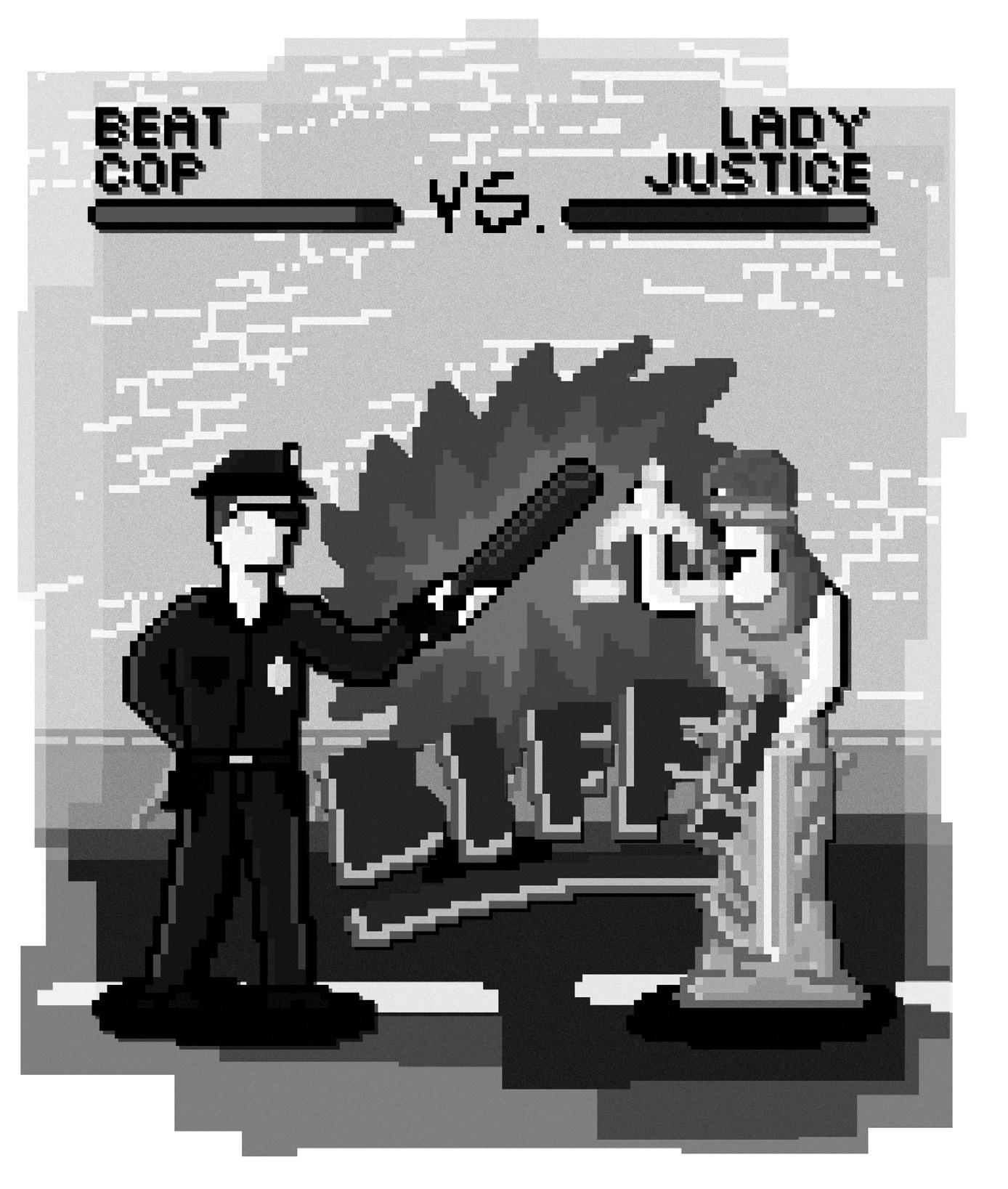
Another political implement concerning crime that will have very far-reaching and disastrous effects in years to come is the Harper government’s implementation of Bill C-10, often called Harper’s omnibus crime bill. Much of the public has heard about the passing of Bill C-10 but I fear that by and large many people are not aware of all that entails Bill C-10 or what the consequences of it will be. For example, the new bill introduces new minimum sentencing laws relating to drug offences, among others. One such law states that drug “trafficking” will now include not only selling drugs but also passing, giving, and sharing drugs.
This law is dangerous in that it blurs the line between “user” and “dealer” where now “dealer,” under this new bill, receives automatic prison time, regardless if it is a first offence or not. This means that our already severely overcrowded prisons and jails will now become even more crowded due to the new intake of “drug criminals.”
Prison conditions are already in a very dire situation in our country, so what should we do? The answer from politicians have been to build more prisons, as can be seen in the recent boom in prison facility construction all over Canada.
But what does this mean for the taxpaying public? The implementation of Bill C-10 means that the public’s precious tax money that is always the centre of their focus will
iLLustRatiON by JustiN Ladia
be spent on “criminals.” Tax money will be paid towards feeding, clothing, and housing these new inmates, as well as building new facilities to confine them all in. So not only is the public now paying money to house more inmates, they are also paying for people that really should not be in prison in the first place.
Let us remember why prisons exist in the first place. Prisons are meant to separate and confine people who are considered a danger and a physical threat to society. They are meant for people who could not be rehabilitated back into society and thus had no place in society. However, we have shifted from locking people up for reasons of fear and concern to reasons of anger and frustration. In this sense, prison is no longer a last resort for people who cannot be rehabilitated back into society. It is the one and only “solution” to temporarily solve the problem.
We are heading in a dangerous direction where we are incarcerating people who really would benefit more from rehabilitative and restorative justice because, let’s not fool ourselves, prisons do not rehabilitate people, they simply confine them.
Any rehabilitative programing comes from outside sources, such as the John Howard Society, the Elizabeth Fry Society, Cocaine Anonymous, among others. I think it’s time we reevaluate our stance on crime, and it’s time the public becomes informed about these issues.
Should we retest elderly drivers?
The answer is yes
Alex pA ssey, volunteeR staff
W
hen I die, I want to go peacefully in my sleep, like my grandfather, and not screaming like his passengers. It’s an old joke, and a tasteless one some might say, but it does shed light on an important issue. Should elderly drivers be forced to undergo some kind of regular testing in order to keep their driver’s license after they reach a certain age?
We all know the stereotype of a little old man behind the wheel who can barely see over the dashboard, driving half the speed limit with his left turn signal flashing for all eternity. But a question we need to ask ourselves is: do elderly drivers actually cause more accidents than other age groups?
The answer is a resounding no. Statistics obtained by Manitoba Public Insurance (MPI) show that, in fact, the opposite is true: the older the driver, the less likely you
are to be involved in a car accident.
Nevertheless, the issue for mandatory retesting for elderly drivers has been raised yet again, and in the same fashion that it always has.
Recently, a ten-year-old girl was struck by a car in a bizarre accident.
Winnipeg Police report that the driver was pulling out of a parking stall, and then continued to speed backwards for fifty meters—nearly the entire length of the parking lot— before his vehicle struck the child.
The car did not come to a stop until it hit a nearby tree. The driver of the car was 86 years old.
The young girl was injured quite badly, but thankfully her condition was stabilized after she was brought to the hospital. But regardless of the circumstances surrounding this particular accident, the question of mandatory retesting for senior citizens has arisen again, as it always does when
Nobel Prize for the EU
Really?
ch Ris h e ARn, volunteeR staff
And the Peace Prize goes to – the European Union?
Yes, it has been announced that the European Union (EU) is this year’s recipient of the Nobel Peace Prize. And, as it often does, this has triggered a fury of criticism with seemingly little support.
The EU currently has 27 members in what is now considered one of the most peaceful regions in the world. It is also a massive economic success, despite current economic problems. It contains some of the largest economies in the world with the UK, France, and Germany, as well as, up until recently, the richest country in the world, Luxembourg.
Consider this: through much of the first half of the 1900s, Europe was far from a stable region, with
both of the World Wars triggered there. By the end of the 1900s, 27 countries in the region had come together to cooperate, to work for peace, economic stability and progress. Furthermore, to get into the EU, countries must meet strict criteria (the Copenhagen criteria) in terms of human rights, government transparency, and democratic principles. As a result, many countries, including some that were formerly under communist regimes or Soviet rule, have been completely transformed, like the Czech Republic and Estonia.
Now, of course, the EU is not perfect. Sometimes it seems that those who are critical of Nobel Prize nominations are looking for pure perfection. That is far from realistic. But, keep in mind that the Nobel Peace
a collision involving an elderly driver takes place.
Manitoba would not be the first to implement such a policy. Ontario already requires drivers over the age of 80 to undergo regular written and vision tests and Alberta also requires drivers over the age of 75 to have their eyesight checked.
But MPI is reluctant to implement any such policy and, statistically speaking; it is understandable why this might be so. On paper, younger drivers are the more dangerous demographic. Younger drivers are more prone to speeding, drinking and driving, talking on cell phones and basically every single other risky driving habit. So why pester seniors when it is obvious that young people are the true scourge of the highways?
The problem is that this is comparing apples to oranges. Young drivers may indulge in riskier driving habits,
but there are laws to curb them. There are stiff monetary fines in place to deter people from speeding or talking on their phones while driving. If you get caught drinking and driving, you stand to lose your license, your vehicle, and very possibly even your freedom.
But the risk that comes with elderly drivers on the road is entirely different. The danger that senior citizens might pose while driving doesn’t come from the reckless choices they make. It comes from the simple reality that as we age, our motor skills deteriorate. It doesn’t matter who you are; your eyesight will blur, your reflexes will slow, and your wits will become muddled. It happens to every single one of us.
MPI says that they don’t need to regularly retest elderly drivers because they already keep close track of people with bad driving records.
If people demonstrate that they are dangerous drivers, MPI keeps a close eye on them and requires them to demonstrate that they deserve to keep their license. That’s great, but a person can go their entire lives as a perfect driver and never get a blemish on their record, and that still doesn’t mean that their eyesight might not deteriorate to a dangerous level when they’re 80. Why would we not want to take a more proactive approach to this problem? Do we have to wait until someone finally does get into an accident before we take their license away, allowing a tragedy that was entirely preventable?
We take measures to curb the dangerous driving habits to which young people are more prone. I feel it is foolish not to take measures to curb the dangers aging drivers are prone to as well.
Prize was set up under Alfred Nobel’s vision of rewarding those who have “done the most or the best work for fraternity between nations, for the abolition or reduction of standing armies and for the holding and promotion of peace congresses.”
Well, this is the European Union, is it not? This is what it does and has been doing. So, it makes sense to award the Nobel Prize in recognition of the achievements of those who created this union.
So, why is this prize being rewarded now, as the EU seems threatened by economic turmoil?
Well, for one thing, it serves as a reminder to the EU of the success it has had, and why it is worth fighting for and keeping it together. There was a time, not so long ago, when parts of Europe were separated from each other by the Iron Curtain, best symbolized by the Berlin Wall. The Wall is now gone.
Where there was once a wall, barbed wire, and armed men separating countries, a person can now travel freely anywhere across Germany, Poland, Austria, Belgium or the Czech Republic without even stopping at a border crossing. The quality of life for people across the EU has improved in many countries, in many ways. Now, we are seeing some frays as the result of a global economic meltdown. The troubles in Greece and Spain are the most notable and concerning issues that threaten the future of the EU.
The idea of the EU crumbling, however, is even more concerning, for it has been vital in improving the
lives of millions by improving trade and creating peace. Despite its current issues, there are still countries working hard to meet the requirements in hopes of being accepted into the union, who believe that it is the best way to move forward.
Yes, the EU was a good choice for the Nobel Peace Prize. Many argue that it should have been an individual that won it. Well, this is a group of millions of individuals who have come together to create peace and relative prosperity in a region of the world that had for a long time been unstable. Many argue that the EU
does not deserve it at all. Well, apparently, the Nobel committee doesn’t agree and they do get the final say. Does it make a mockery of the prize as some have suggested? Absolutely not! The EU has been a remarkable achievement.
Regardless of what the future holds, one cannot deny the past and what the EU has done for Europe. This is a “big picture” reward, looking at the complete history and scope of the Union. The decision they made was commendable and is deserving of respect for recognizing the best in the EU instead of the worst.
iLLustRatiON by CaROLiNe NORMaN
Can I get some eggs to go with that sperm?
Stem cell research one step closer to ending infertility
e liz A beth dRewnik
Infertility is a serious issue affecting both men and women worldwide. There are alternative methods for infertile individuals to have children, such as adoption, gamete donation, or surrogate birth. Still, a demand to have one’s own progeny remains and continues to push research towards solving the enigma of infertility.
The Women’s Health Data Directory defines fertility as the ability of a couple to conceive through heterosexual activity. Infertility, on the other hand, is the inability to conceive after a year of regular intercourse, or the inability to carry a baby to term. Measuring infertility rates is quite tricky, as one does not know whether demographic infertility is caused by biology or choice. Because of these inconsistencies, demographic data is obtained on fertility rather than infertility.
According to records in Statistics Canada, the Canadian Total fertility rate has been steadily declining since the late 1980s, but has experienced a slight upward trend since 1996. The current Canadian Total fertility rate
Hotspot
(1.6) is the highest that it has been since 1996. Despite this recent rise in fertility, the rate is still far below the replacement rate (2.1) that is needed to replace the current Canadian population with births. Since fertil ity is declining, it can be inferred that infer tility is on the rise. Again, whether this increase in infertility is due to biological influence or the influence
U of M’s role in the nuclear industry
ndi M. sh A bAg A
The “R” word: a brief history
Radioactivity: the term first used in 1898 by Marie Curie in her paper entitled “Emissions of Rays by Uranium and Thorium Compounds.” Immediately following its discovery, radiation received an abundant supply of attention, and theories of possible applications for this new form of energy began to circulate. In August of 1945, nuclear technology made its global societal debut in the form of an ominous mushroom-shaped cloud, bringing with it destruction and death.
In 1957 the “Atoms for Peace” organization was founded and integrated into the United Nations (U.N.) family to safeguard knowledge of nuclear technology, and promote its use in a safe and peaceful manner.
Today, this organization acts as the major hub for all nuclear technology relations and is best known as the International Atomic Energy Agency (IAEA). Despite its questionable past, scientists recognize nuclear energy as a means to contribute to the health and security of countries, as well as provide the technology to produce a fuel capable of filling the growing demands for energy and sustaining future generations, while minimizing
environmental impact.
Uranium 101
Nuclear power utilizes the radiation emitted by uranium to generate energy. However, natural uranium mined from the earth does not produce a sufficient amount of radiation to be considered significant enough for the generation of commercial energy. Therefore, a variety of industrial pro cesses from the nuclear fuel cycle are required prior to its use in a nuclear reactor.
Exploration, extraction, refine ment and conversion, enrichment, fuel manufacturing, storage, and disposal are all processes which collectively make up the nuclear fuel cycle.
Undoubtedly, the two most critical steps lie on either end of this cycle: exploration (where is the ura nium?) and disposal (where do we put the nuclear waste after we’re done?). Understanding both these processes and answering their related questions requires an in-depth knowledge of
of choice is not certain. However, the fact remains that there are instances of biological infertility and researchers are finding new methods for approaching this problem.
It’s estimated that seven to nine per cent of Canadians are biologically infertile, where approximately one third of the infertility cases are femalederived, one third are male-derived, and the last third are due to a combination of factors affecting both males and females.
A recent study conducted by Mitinori Saitou at the University of Kyoto has made a breakthrough in the reproductive biology community, and has
the potential to generate a putative solution with respect to infertility.
Saitou et al. have developed a way to create viable gametes (sperm and egg cells) from the embryonic stem cells (ESCs) of both male and female mice, respectively. In their latest October, 2012 publication, Saitou et al. reported successful isolation of female gametes from female mouse induced pluripotent stem cells (iPSCs).
IPSCs are cells which harbour artificial pluripotency (the ability to become any other cell type the way a stem cell does) by forcing the expression of certain genes from adult somatic (body) cells. These adult somatic cells are already differentiated – i.e., cells that have been “assigned” a task or specialization in the body, such as skin cells, or muscle cells. This simply means that the researchers were able to take adult cells from adult mice, change them into a stem cell, and change those stem cells into egg cells.
In an earlier study, Saitou et al. were successful in creating the same results in male mice, meaning that they were able to change adult male
cells into sperm cells. The fact that they were able to recreate these results using female cells is nothing less than astounding, given that it was much harder to make these changes in the female cells, for a variety of complicated genetic reasons.
In addition to being successful in growing artificial gametes, Saitou et al. were able to generate viable offspring using these cells; they were then implanted into a mouse foster mother and resulted in a litter of healthy offspring.
The next step for the Saitou research team is to transfer these results to humans. Ultimately, the goal is to be able to reconstruct whole female germ-cell (sex cell) development. This is good news for those suffering from infertility who would prefer to have their own biological children, rather than adopt or accept donated sex cells (eggs and sperm).
iLLustRatiON by CaROLiNe NORMaN
the structure, behavior, and chemistry and composition of the earth – it requires geologists.
U of M’s involvement in the nuclear industry
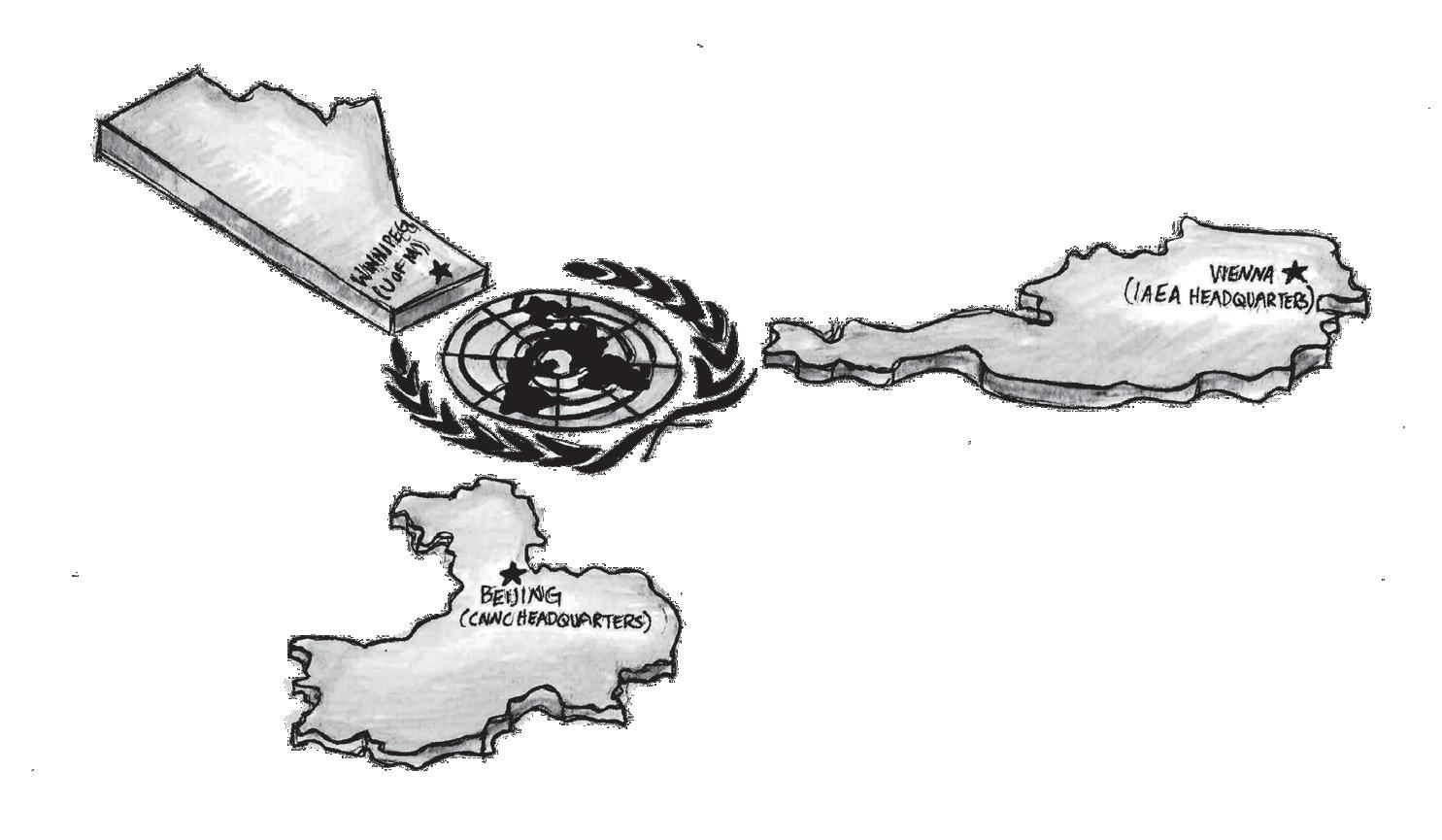
Researchers from the department of geological sciences at the University of Manitoba are currently investigating several facets of ura-
provinces and the United States. The team is lead by professor and Canadian Research Chair (CRC) in Environmental and Isotope Geochemistry Dr. Mostafa Fayek.
Earlier this month, Fayek returned from China where he and his team, in collaboration with the China National Nuclear Corporation (CNNC), have been conducting research in uranium exploration over the last four years. After being selected to be a part of the IAEA’s team of world experts in September of this year, Fayek traveled to China to partake in a joint mission organized by the U.N., IAEA, and
On uranium research in China, the primary goal here, Fayek says, is “to effectively explore for an energy resource, while maintaining environmental stewardship.”
While in China, Fayek used his expertise in uranium geochemistry to train geoscientists in laboratory and field methods related to uranium exploration. The mission ended on a high note, with the IAEA suggesting that under the supervision of Dr. Fayek, an international uranium research-training program for Chinese delegates be established at
the University of Manitoba.
This IAEA workshop will be administered through the Canadian Bureau of International Education (CBIE) to the department of geological sciences at the University of Manitoba, for the purpose of improving the professional level and understanding of the genesis of uranium deposits.
“This helps highlight the University of Manitoba’s reputation on the world stage,” said Fayek, “the department of geological sciences houses worldclass facilities.”
Beginning early next year, professionals as well as young geoscientists from China will be visiting these state-of-the-art facilities for an intense month-long workshop. Participants will receive one-on-one training in an array of methodologies and instrumental techniques applicable to uranium exploration.
With travel plans already in the works for another trip to China next summer, Fayek and his team are looking forward to expanding their research in other countries overseas, and continuing their work with the IAEA and CNNC.
iLLustRatiON by bRaNdi M. shabaga
It’s a scorcher out there
Last month tied for hottest September on record
toM i ng RAM , staff
L
ast month is tied with September, 2005 for the hottest September on record, according to data from the National Climatic Data Center (NCDC) at the US National Oceanic and Atmospheric Administration (NOAA). Global land and ocean temperatures exceeded the twentieth century average by 0.67 degrees Celsius. September was the 331st consecutive month this was the case. Canada saw especially hot temperatures, with record highs observed on the East Coast and on some of the islands north of Hudson’s Bay.
The report by the NOAA gives a global update on the climate for the last month. It includes a world map that labels grid squares as “Near Average,” “Warmer/Cooler than Average,” “Much Warmer/Cooler
than Average,” and “Record Warmest/ Coldest.” Areas that are labelled “Warmer than Average” or greater had a September that was in the warmest 33 per cent of the historical record. All of Canada was labelled “Warmer than Average” or greater, with the exception of a small area near the Great Lakes that was “Near Average” and some islands in the north, for which no data was available.
When data for the whole year to date is taken into account, Canada comes off even warmer: most of the country has had a year in the top 10 per cent of the historical record, and a large swath that covers the southern half of Manitoba (as well as parts of Saskatchewan, Ontario, and a huge portion of the United States) is experiencing record temperatures.
In terms of land temperatures alone, last month was the third hottest September on record, behind 2009 and 2005. Parts of east central Russia, Venezuela, northern Brazil, central to eastern Europe, and western Australia felt record warmth. On the other hand, far eastern Russia, parts of southern Africa, and parts of China were cooler than average. The U.S. continues to face one of the worst droughts on record, and several Eastern European countries are also
suffering from droughts. Chief of the NCDC’s climate monitoring branch Deke Arndt chalked it up to two factors: first, that a period of La Niña (the opposite of the El Niño climate oscillation) ended. La Niña tends to bring global temperatures down. Also, the Arctic had a record amount of sea ice melting, which has affected the climate of the Northern Hemisphere. More than 4.57 million square miles of ice have melted in 2012 – the largest sea ice
Doctors behaving badly
Japanese researcher lied about stem cell treatment
toM i ng RAM , staff
T
he Japanese medical community is reeling after a researcher admitted to lying about a revolutionary treatment for heart patients.
Hisashi Moriguchi claimed to have used induced pluripotent stem cells to treat heart disease – if true, it would be the first clinical use of these cells.
But when questions were raised about Moriguchi’s institutional affiliations, several authorities discovered that not only did he misrepresent himself as a Harvard doctor, the transplants he claimed to have performed probably never happened at all.
On Oct. 12, the Japanese newspaper
Yomiuri Shimbun reported in a frontpage article that Moriguchi had successfully transplanted cardiac muscle cells derived from induced pluripotent stem cells into six patients and was presenting a paper on his methods at a conference in New York.
Induced pluripotent stem (iPS) cells
are ordinary mature cells that have been reprogrammed to behave as young cells that can develop into several different specialized types. It is thought that iPS cells could provide an alternative to embryonic stem cells.
Recently, Shinya Yamanaka was awarded the 2012 Nobel Prize in medicine for his discovery of a method for creating human iPS cells.
loss on record.
Arndt said it may be worth studying why September keeps setting world records for high temperatures. This is the sixteenth time since 2000 that a hot weather record has been either set or tied. The last belowaverage September was in 1976, and the last time any month was below average was February 1985. Andrew Weaver, a climate scientist at the University of Victoria who has been critical of the Canadian government’s climate science policy, laid the blame on man-made global warming. “What’s playing out is precisely what climate scientists said we should expect to see 20 to 30 years ago,” Weaver said.
iLLustRatiON by JaMes CuLLetON
her about Pap tests. TellEveryWoman.ca
The conference in New York, held at Rockefeller University and sponsored by the New York Stem Cell Foundation, took down the poster on Moriguchi’s cardiac study before the meeting’s second day, after Harvard officials denied any knowledge of his research. Moriguchi claimed to have carried out his transplants at the Massachusetts General Hospital (MGH), under the auspices of the Harvard Medical School. According to B. D. Colen, a Harvard communications officer, Moriguchi was a visiting fellow at the MGH for a little over a month in 1999, and he has not been associated with the university since that time.
Moriguchi’s other claimed affiliation, with the University of Tokyo, was also called into question. The university confirmed that Moriguchi works for them as a project researcher, but did not carry out the claimed stem cell research at any of their facilities. From 1999 to 2010, he worked at the University of Tokyo’s Research Center for Advanced Science and Technology working on medical policy and economics. He did no experimental research there at all. It was only in March, 2010 that he began working at the Tokyo University Hospital, where he worked on cryopreservation.
Investigators from the University of Tokyo are beginning to look into two papers Moriguchi published in Scientific Reports, including one on cryopreservation. The paper claims
that it was approved by the institutional review boards at the authors’ institutions. A University of Tokyo spokesperson told the journal Science that the work had not been run by the ethics committee, although it is still unclear whether or not it was submitted to other review boards. Tokyo Medical and Dental University (TMDU), where Moriguchi received his undergraduate degree in nursing and where one of his frequent coauthors holds a position, is also looking into the matter.
Chifumi Sato, Moriguchi’s collaborator at TMDU, agreed to be listed as a coauthor on the paper about the iPS transplant. He asked questions about the Harvard review board and Moriguchi’s collaborators, which he had expected to be resolved before the paper was published. He also expected to see more detailed drafts. Sato was not told about the New York conference and found out about it from the newspaper. At least two other people have appeared as coauthors on Moriguchi’s papers either without their knowledge or without approval over the final drafts.
On Oct. 13, Moriguchi admitted that he had lied in his claims about the transplants. He said that five of them are “scheduled for the future.” However, he still maintains that he carried out one iPS transplant in June, 2011. Supposedly, this transplant was approved by the MGH but actually occurred at another, unnamed, Boston hospital. The MGH says it did not approve this transplant. “I doubt whether this is real,” Hiromitsu Nakauchi, a stem cell researcher at the University of Tokyo, said to the journal Nature
The Japanese Cabinet Office is investigating Moriguchi’s governmentfunded research.
The study of evil
U of M course deals with the tough topic of evil
gRAce RoMund, staff
Y
ou might not think that evil or the moralistic struggle between good and evil would play a role in a university classroom setting, where a more common goal is to study things such as mathematics, medicine or literature. There may be arguments that some practices are good while some evil, but dissecting the concept that is evil always tends to be a tricky endeavour.
There is one place at the University of Manitoba, however, where evil gets a little more of the spotlight than it otherwise would. In the faculty of arts’ department of religion, an entry-level course entitled “Evil in World Religions” offers students somewhat of a different experience from their otherwise predictable routine. As eager first-year students make their course selections, the only description they have to discern whether or not they have what it takes to embark on a journey to discover the darker side religious doctrine is one short sentence: “The course introduces students to perspectives on evil in selected world religions.”
U of M religion professor Kenneth MacKendrick has taught numerous sections of Evil in World Religions over the last ten years. Teaching this course has been such a unique experience that MacKendrick was prompted to write a “memoir” of the process in
How evil is a socially constructed concept
Evil across societies
Jill pAtte R son, staff
E
veryone takes evil for granted. We tend to see things as either inherently or objectively evil. The age-old debate of good versus evil often comes to mind when thinking about what we see as evil. There are two things, however, we must remember about evil when thinking in these terms.
First is that good and evil are not simply black and white. Evil and good are on a continuum that we often seem to overlook. As humans we tend to like categories; they give us a mental and social tool that helps make sense of things, so that we as a soci-
ety can have shared meanings and, thus, function and communicate better together. This means we like to label things as “evil” or “good.” These categories cannot overlap in our minds, or else there is a contradiction that makes things unclear for us. We like to stick to our labels of “good” and “evil.” However, in reality there are varying levels and degrees of evil.
The second thing to keep in mind when thinking about evil is that it is a socially constructed concept, different for each culture and society in which it exists. Various cultures have different ideas and beliefs
GOLEM: Journal of Religion and Monsters
In his memoir MacKendrick explains what he hopes will be the outcome of the course, but notes that most students enter the classroom with a preconceived notion of what evil is and how it should be characterized.
“My aims are programmatic: to develop a course of study that introduces students to the topic of evil without strong assumptions about what evil is.”
MacKendrick avoids “unreflective moralism,” but rather opts to centre his lectures around “the ambiguity of the concept of evil and its potentially limited cross-cultural applicability; the complex history of the study of religion and the extrication of the study of religion from theology; and, the vicissitudes of contemporary ethical and moral philosophy.”
An Evil in World Religions course syllabus, of a section MacKendrick taught in 2008, divides the study of evil in world religions into three parts: the anatomy of evil (defined as everything from the difference between what is pure and impure to monsters and sacrificial practices), illustrations of evil, and finally the relations between conceptualized evil in religion and modern criminal justice systems.
Readings for this course have included everything from articles on the notions of evil and death in European culture during the Middle Ages, to Sati worship practices in India in the twentieth century; from Bram Stoker’s Dracula to Hannah Arendt’s Eichmann in Jerusalem
In taking this course one could develop an understanding of how evil is portrayed in many religions and how that portrayal influences the modern world. Though incredibly interesting, this class would not be for the faint of heart considering lecture after lecture is spent exploring topics of dread, disgust, monsters, death, and supernatural horror.
Then again, those keywords may well have piqued your interest enough to pick up a course calendar and check out the next time this Evil class might be available for you.
about what constitutes “evil.” What is evil to some may well be commonplace for others. The reason for this is that evil is a subjectively formed social concept. Depending on a certain society’s beliefs and morals, ideas about evil are bound to be different from that of another society.
In our Western world, for example, we tend to see the birth of twins as a somewhat rare occurrence but nothing extraordinary. Some may be overjoyed with the birth of twins but there is no societal standard on the inherent nature of twins.
In Nigeria the Yoruba people once saw twins as an evil occurrence, believing the only way a woman could give birth to twins was for the woman to have had been with two men at the same time. This often resulted in infanticide in order to cleanse the community. Although this is no longer practiced, there are still superstitions surrounding twins among the Yoruba.
Another common theme among Western horror movies is that of ghosts or
spirits, which we often see as scary, frightening, and evil. Many cultures, though, do not hold this same belief. There are many who see ghosts and spirits as forces of good. For example, in certain sects of Judaism ghosts and spirits are seen as helpful in providing assistance to the living. When a person is struggling with a situation or problem, the person is sometimes helped by a nonliving entity who had once gone through the same problem while alive. It is believed that the nonliving spirit attaches itself to the living just long enough for the person to overcome their troubles.
As you can see, we often take “evil” for granted in that we seem to believe there is a shared standard on what is evil and what is good. You would be hard-pressed to find someone in the Western world who considers the birth of twins as evil, whereas in other cultures it is seen as horrific. There is in fact no global view of what constitutes evil, it is shaped by the variety of beliefs and values in any given culture or society.
Constructing a monster
RyA n hARby, staff
Do enough shopping for little nieces and nephews and you’ll eventually stumble upon a toy kit from the Melissa and Doug line called MakeYour-Own Monster Puppet. The idea is simple enough; you start with a fuzzy, sock-puppet type body that you can adorn with a number of monstrous Velcro-ed arms, legs, eyes, ears, tentacles, fangs, whatever the occasion calls for. In the end, kids love it and good times are had by all.
Funnily enough, it’s not that uncommon to find monster, or even monster-creation, themed entertainment geared towards children these days. The reason? It’s actually pretty easy to understand how monsters work, even at a young age.
There are numerous variations of the pattern but there is one essential, enduring component of any good monster: familiarity. That’s not to say you recognize a monster’s identity but that, in one way or another, the monster is rooted in something familiar, something that makes sense in our reality but at the same time doesn’t. It conflicts with our world-view while simultaneously affirming it.
Think of the classic movie monsters: Count Dracula, the Wolf Man, Frankenstein’s monster, and the mummy. To the audience, these are (essen-
tially) human characters that have been perverted and/or mutated into something abnormal, something that defies convention.
Move over to the sci-fi genre and the principle remains the same; if a villain is going to strike monstrous fear it must somehow resemble something familiar. Fox’s two science fiction franchises, the Alien and Predator variety, follow this rule to a tee.
Both film series create their monster villain by imagining something with two arms, two legs, and one head. Even Cthulhu, H.P. Lovecraft’s ancient-underwater-dragon-octopus-god, looks fairly anthropomorphic – and this is by design.
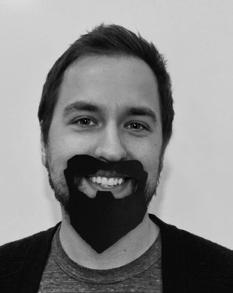
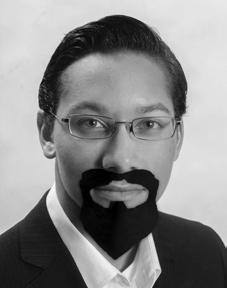
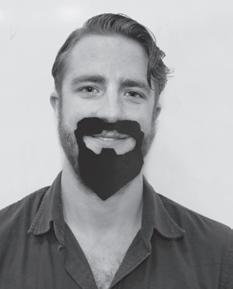
In 1967, Gene Roddenberry’s Star Trek took this understanding of the monstrous to a new level when the show used a goatee to signify the difference between the character Spock and his “evil” alternate-universe counterpart. Since then television shows like South Park and Community have parodied this same trope of the goateed eviltwin.
Granted, an evil-twin is not necessarily a monster, per se, but the same rules apply: if you want something to evoke reactions of fear, suspicion,
dread, etc. then you must make it both recognizable and foreign. In extreme cases, it seems, you don’t even have to be that different from what is considered normal.
Anthropologist Mary Douglas—in her brilliantly ambitious books Purity and Danger and Natural Symbols— illustrates how feelings of discomfort are often tied to a lack of order and/or classification. To be obtusely concise, when something defies traditional order, even in subtle ways, people will tend to treat that thing as an impurity, an anomaly that in some way threatens the order upon which any given society stands.
Of course, anomalies aren’t always cast outward. In fact, in cases like our Make-Your-Own Monster kit we have a clear example of something that has been identified and categorized so it can be (somewhat) appealing to us. Thus, we use the word “monster” so that the critters from Sesame Street can entertain us with their inverted reality, rather than offend our sense of self.
Take a classic, then ad yourself a twist.
Man gets cursed, he’s the hideous Wolf Man. Spock gets a goatee, he’s the evil Spock. Kids put weird eyes and arms all over sock puppet? It’s a monster!
Cruella de Vil
Wicked Witch of the West
Shark from Jaws Scar
Hal 9000
Rita Repulsa
Count Dracula
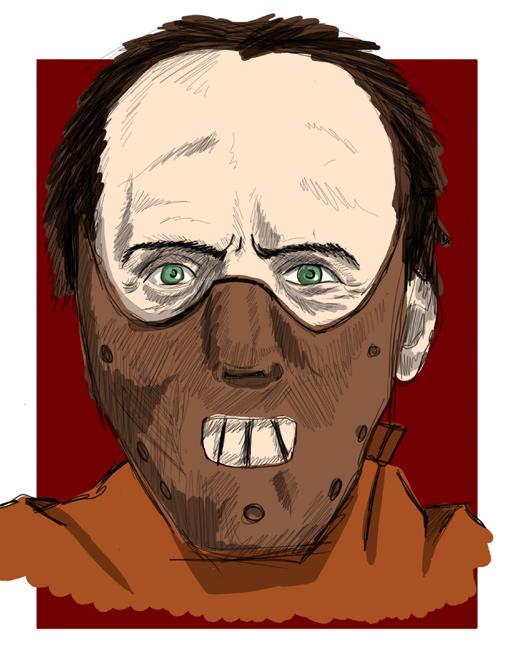
Hannibal Lector
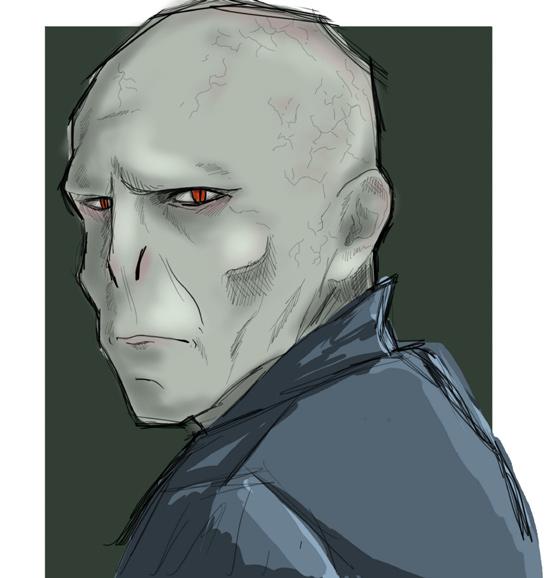
Voldemort
Doomsday
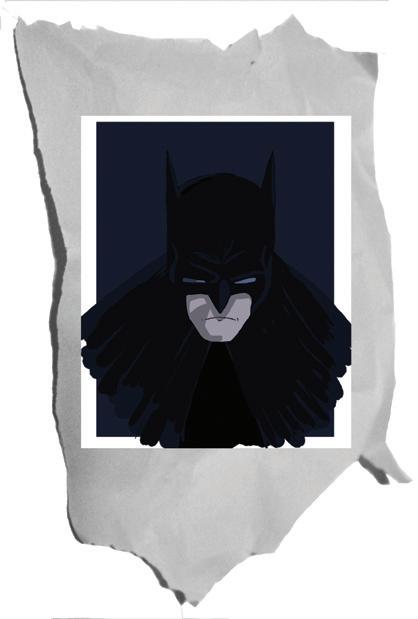
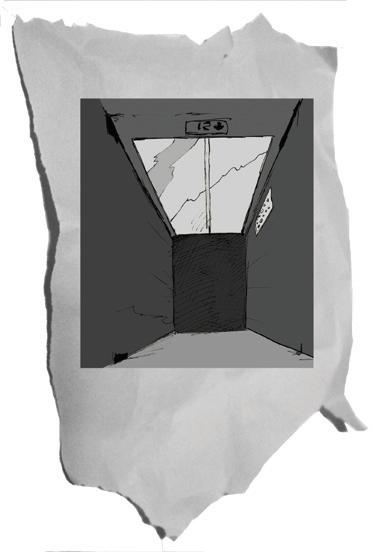
gallery of evil
iLLustRatiONs by
by aiCheLLe sayuNO
The Joker
Walter White/ Heinsenberg
Batman
Crocs
Leopard Seals
Elevators
Santa
Pogs
Mr. Burns
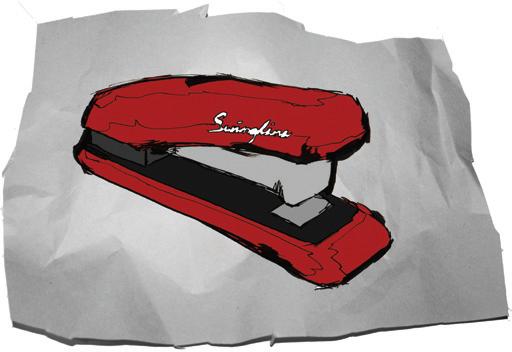
Swingline stapler
Beach ball
Winnie the Pooh
Mr. Bean
Exorcism: the realities of expelling evil
R Achel wood, staff
Exorcism is seemingly the epitome of experiencing and releasing evil, and recently, the Manitoban learned that the sensationalism of this religious ritual, as portrayed in the entertainment industry, is not completely untrue. The Manitoban got in touch with a prior at St. Raphael’s Priory, one Father Gerard Rusay—who previously gave a two-part lecture at the University of Manitoba, which examined Catholic teachings on angels, the Devil and exorcism—talked to the Manitoban about the mysterious ritual:
the Manitoban: how do you know when someone is possessed?
father gerard rusak: They basically have to do something that is super human – that is a big sign. Say they speak in another language they have not learned before or they levitate [ . . . ] Someone with basic psychological difficulties – that is not going to qualify. Before you do an exorcism you are going to check all of that out.
M: what is involved in the process of an exorcism?
fgr: We have the book called the Ritual, so it has got the whole rite of the exorcism there [ . . . ] The priest is dressed in his priestly [dress]. The prayers are gone through in the ritual. If they know that this person has maybe done some superhuman things then they will have some rather strong men that might hold them down if they begin to be very violent or something like that [ . . . ] I believe sometimes the exorcist may repeat certain parts so the exorcism can take an hour or more at least.
M: what is the success rate for exorcisms?
fgr: I believe it doesn’t always end [successfully]. I’ve heard of cases when the exorcist has had to do this sev-
eral times and still the person wasn’t delivered – maybe because the exorcist isn’t doing his job well enough. I was just told of a man that was an exorcist recently in Winnipeg who would sometimes fast 40 days before he did an exorcism [ . . . ] They really wanted to make sure that they had all the spiritual help on their side so they really prepared well where others might not have prepared as well and they might not have been as careful. There is often a human element of how well it’s done. Sometimes God just doesn’t want this person to be delivered at this time.
M: why would god not want someone to be delivered?
fgr: That person may still be in the state of grace and it might be a trial you might have to go through. We sometimes pray for people to be cured of cancer but God doesn’t always want that. It’s just like any trial we have in life. Some people have actually much improved their life because of this. Normally that’s not going to be the ideal but sometimes that’s just the permission of God even if everything is done well.
M: how do real exorcisms compare to ones portrayed in the entertainment industry?
fgr: [In the exorcisms] that I have heard of, the exorcists are still alive and telling the story but, sometimes, the [exorcists] in the movies die and that could happen I suppose if he is not careful. I did see a thing on the internet and there was some parts in there where they showed [an] exorcist done by Protestants and they have totally different form [ . . . ] They were not dressed as a minister or priest or anyone and they would hit the man
on the head with the book. [In Catholic exorcisms] you follow the ritual and you read the prayers and sometimes the person will react in different ways. Sometimes they’ll become cold like they are dead, his body will be [ . . . ] frozen almost, and they’ll speak in different languages [ . . . ] Different things can happen in different cases so each exorcism is going to be a little different.
M: are there different demons who are associated with different sins that posses people?
fgr: A demon is a fallen angel. [They are] unlike human beings – we are all the same species, but each angel in a way is a different species from one another. [Demons appear in] those kind of people that have been involved in witchcraft or something like that. Those are often cases where the devil will take possession of the person. They have made some kind of pact. They are not just necessarily your local bank robber. It’s someone who has had some sort of contact with the devil freely on [his or her] own, usually, but not always. Maybe someone has [put] a curse on this person; someone who has contact with the devil and God has allowed them to be possessed, so they aren’t always at fault.
Father Gerard Rusak has never performed an exorcism but has heard tapes of the process. Finding a real live exorcist proved extremely difficulty throughout the investigation of this article. This only added to the mystery of the procedure, and left us extremely curious about the surreal lives of those who come into direct contact with evil possession.
Managing editor: Chuthan Ponnampalam
Evil in the forebrain
The neuroscience of psychopathy
bRyce h oye, staff
The myth of “pure evil” is a bad joke, resulting from and sustained by other unhelpful binaries: good and bad, right and wrong, normal and abnormal, and hot and cold.
How bad? How wrong? How abnormal or cold?
Science can speak to this question of degree and enrich our understanding of what “evil” might be. Specifically, the sciences of the mind have a variety of approaches to illuminate our understanding of natural phenomena like “evil” on a psychological and neurobiological level.
Take, for instance, the psychopath. The term “evil” is popularly equated with psychopathy, and together they readily evoke thoughts of ruthless dic-
tators—Pol Pot, Stalin, and Hitler—and sadistic serial killers – Jack the Ripper, Jeffrey Dahmer, and Gary Ridgeway (the “Green River Killer”). While this subsample of infamous and sensationalized historical figures represents only a very narrow and conventional portrait of what people casually refer to as “evil,” psychopathology is generally understood as one of several other personality disorders that fall along a continuum of antisocial behaviours.
Antisocial Personality Disorder (ASPD) is characterized by chronic patterns of egotism, narcissistic grandiosity, as well as extreme manipulative and destructive behaviours towards others. Characterized by a lack of conscience and an inability to empathize with others,
psychopaths are usually associated with a range of textbook behavioural and personality traits – for instance, a propensity for perpetrating cold-hearted, criminal acts of violence. The Psychopathy Checklist–Revised (PCL-R) is one of the standard clinical diagnostic tests used to determine psychopathy.
Currently in a clinical context the term ASPD is favoured over “psychopathy” and advocated for in the current version of the Diagnostic and Statistical Manual of Mental Disorders (DSM) produced by the American Psychiatric Association. In fact, there is an ongoing debate over how to differentiate psychopathy from other emotional dysfunctions along the antisocial disorder spectrum. However, several studies over the past few years have amassed evidence that provide a more definitive neuroscientific distinction for psychopathy as an independent brain disorder.
For example, a study published in 2010 by the psychologist Adrian Raine took magnetic resonance images (MRI)
of the brains of around 90 individuals “at risk for antisocial personality disorder and psychopathy,” looking for signs of a damaged or underdeveloped septum pellucidum – a structure in the limbic system of developing fetuses, which closes as the brain becomes fully formed.
Prenatal neural maldevelopment is associated with the pressence of a cavum septum pellucidum (CSP, a cavity in the septum pellucidum) and is suspected to result from exposing the fetus to alcohol.
Raine et al. hypothesized and later confirmed via MRI that those who suffered from neurodevelopmental abnormalities in the “limbic and septal structures” (i.e., those who with a CSP) were predisposed to ASPD and psychopathy.
Not discounting the role of environment, genetics and social circumstance at play, these findings basically mean those suffering from ASPDs and psychopathy were predisposed to these conditions by developmental biological forces beyond their control.
The “evil” machine
An expression of our fears
spence R Fe Rn A ndo, staff
“At times, we forget the magnitude of the havoc we can wreak by off-loading our minds onto super-intelligent machines, that is, until they run away from us, like mad sorcerers’ apprentices, and drag us up to the precipice for a look down into the abyss.”
– Richard Dooling
the humans were the aggressors, and that the machines were acting out of self preservation. The final Matrix movie (spoiler alert if you haven’t seen it in all these years) even ends with peace between the machines and humanity, rather than a clear victory for either side.
A related study published in May, 2012, by Sarah Gregory et al. aimed to quantify via MRI the difference in volume of gray matter (GM) between the brains of 60 men: “antisocial male violent offenders” suffering from ASPD and psychopathy, versus those simply suffering from some form of ASPD and those without any personality disorder at all. The result: “Reduced GM volume within areas implicated in empathic processing, moral reasoning, and processing of prosocial emotions such as guilt and embarrassment may contribute to the profound abnormalities of social behavior observed in psychopathy.”
A neuroscience of psychopathy only helps to de-stigmatize and demystify “evil.” It does not entail that we exonerate serial murderers across the board on the basis of them being issued a bad model of brain.
From The Matrix to The Terminator, to shows like Battlestar Galactica, we have explored the theme of humanity fighting “evil” machines.
Many of these stories have a similar foundation: humanity creates artificial intelligence (AI). The AI we create rebels against us or grow beyond our control. Humanity fights against the AI in a desperate battle for survival.
It’s a pretty rote formula, yet its power to create compelling entertainment remains potent.
Perhaps this is because these movies, stories, and shows are ways of addressing our fears about the growing influence of computers and technology in our lives. With every passing day we give more and more of our tasks over to electronic devices, and it is worth questioning whether these devices really give us more control over our lives, or less.
Another interesting, yet not often explored, aspect of evil machines in entertainment is that as the stories go on over time, they begin to shift away form the idea that machines are evil, and add depth and nuance to the story.
For example, in the first Matrix movie, the story seemed to be a clear battle of the good humans against the evil machines, yet the backstory to The Matrix makes clear that
In the first Terminator movie, Arnold Schwarzenegger plays a ruthless killing machine, but in the subsequent movies he comes back as John Connor’s protector and ally.
And while the Cylons (machines) in the original Battlestar Galactica series were basically chrome toasters hunting down humans, in the modern series the machines had learned to create themselves in nearly human form and in the end humans and the Cylons are basically merged into one species.
This change over time reflects our changing attitude towards technology – more familiar, but still ambivalent. Whereas in the past most folk’s experience with computers was the one sitting in their office, today we take our smart phones with us everywhere we go, listening to music, texting our friends, updating our social networks, etc. Machines are no longer simply distant tools of the workplace; they are an intimate part of our everyday lives.
This leads me to believe that the fear of evil machines really has nothing to do with machines at all. It is an expression of our own fears about losing control, about seeing our creations turn against us, and about what kind of future our increasingly advanced technology will create.
Most evil man on television
Breaking Bad challenges viewers to cheer for the bad guy
M ARc lAg Ace, staff
I’ll start with a brief disclaimer: if you aren’t caught up with Breaking Bad, or have yet to start watching the awardwinning AMC drama, do not fret as I will attempt to keep this free of major spoilers.
When life gives you lemons, make lemonade.
That’s a common adage about overcoming adversities and turning a bad situation into a positive one. Breaking Bad is sort of like that, except replace lemons with inoperable lung cancer and lemonade with crystal meth.
Walter White’s journey from a meek high school science teacher and part-time car wash attendant to the feared drug lord known as “Heisenberg” has turned into quite the compelling tale. Creator and head writer Vince Gillian has taken audiences on an incredible ride over the past five seasons.
While the plot of Breaking Bad might seem a tad unrealistic—at least for Canadian audiences who might not be able to relate with the looming threat of astronomically high hospital bills—the show ultimately focuses on an average family man who is pushed to his limits in an attempt to protect his family financially. But for Walt, an attempt to make a fast buck and cover medical expenses quickly turned into a full-time endeavor that has proven hard to walk away from.
During his transformation from Walter White to
Heisenberg, Walt has stolen, lied, deceived, intimidated, and harmed so many people that it’s hard not to look at the sum of Walt’s actions and not come to the conclusion that he has turned into an evil man. But the most intriguing part of the show is how the audience has reacted to Walt’s turn to evil.
It’s a somewhat derisive issue amongst fans. There are some who continue to cheer for Walt, hoping he wins, which could end up meaning many different things but boils down to the show ending with Walt still alive and living as a free man. Walt is an anti-hero, and despite some of his more deplorable actions, he’s still the character that the audience has come to know best.
But others find Walt’s actions to be beyond redeemable, and therefore are actively cheering against him. Without going into details that might spoil some shocking moments, let’s just say that Walt has been a very bad man, and he’d better hope that his bad karma doesn’t catch up with him.
Personally, I think Walt’s character is still capable of redemption. Despite all the despicable acts that he’s responsible for, Gilligan and his writing team have eight more episodes left in the series to come to some sort of a conclusion and I’ve come to expect the completely unexpected from this show.
Whether Walter will continue to reign atop his drug empire or make an honest attempt to redeem himself will be revealed when the final eight episodes air next summer.
Hating horror
The scapegoat genre
dAV id kRAuse, volunteeR staff
Aman chokes out a high-pitched wail. He is thrashing face down on a weight lifting bench as a drill churns his anal cavity into borscht. To the casual observer the camcorder grade footage seems grainy, suspiciously lifelike, and highly disturbing.
It almost seems real. Thankfully it isn’t. It’s only a death metal music video for the song “Forced Gender Reassignment” by Cattle Decapitation.
However, many in society and the media view such extreme content to be disgusting, reprehensible, and therefore partially responsible for evil in society.
It’s a topic that is close to my heart. Every time a serial killer grabs society’s attention, horror genre metaphors and tired snide remarks are doled out liberally to titillate general audiences – it’s yellow journalism at its worst. It makes
horror fans look bad to society at large and perpetuates stereotypes about people who really, really love niche entertainment.
David Dollard, a Toronto-based horror genre producer and writer expressed his thoughts on why the horror genre is such an easy whipping boy for media outlets when graphic topics reach their news desks.
“The content is hardly sought after by the
general public – especially exploitation genres which will try to capitalize on gore and shock type techniques,” states Dollard.
“The media happens to obsess as much as the people who read and watch the evening news. Possibly the obsession fits a political interest and/or targets opponents arguments. The news can be just as guilty [as horror] of placing the violent content into public awareness.”
While horror can seem extreme and out there to the uninitiated, what really is the issue that many seem to have with it?
“The debate seems to be ‘what makes someone harmful and do harmful things?’ Fact is everyone is capable of harming others or themselves,” says Dollard.
An obvious conclusion, but it’s one that many find hard to accept. People want justice – a clear-cut reason for the horrible events that take place in our society whether it’s drugs, teen pregnancies or school shootings. If it isn’t horror, it’s something else under the “greater good” spotlight.
Famous directors of bygone eras considered these ramifications, as Dollard explains.
“Hitchcock’s response to some of his horrific set pieces is the mentally broken/unstable individuals who are capable of harm to others or themselves would have caused harm in some manner anyway, only his films have merely made them a little more creative.”
As someone in the creative industry, Dollard contemplates on a regular basis the effect media has on those who experience and consume it.
“Stories with many details are usually more effective. Psychologically speaking, suggestion is more powerful when something is left to the imagination and only shown and not told. That is the true art of film.”
Modern electric tattoos
Rebel Waltz Tattoo shop settles into their new home
Rebel Waltz Tattoo, located in the heart of the inner city on Notre Dame Avenue, is one of Winnipeg’s most versatile tattoo shops, providing modern electric tattoos to willing patrons since 2009.
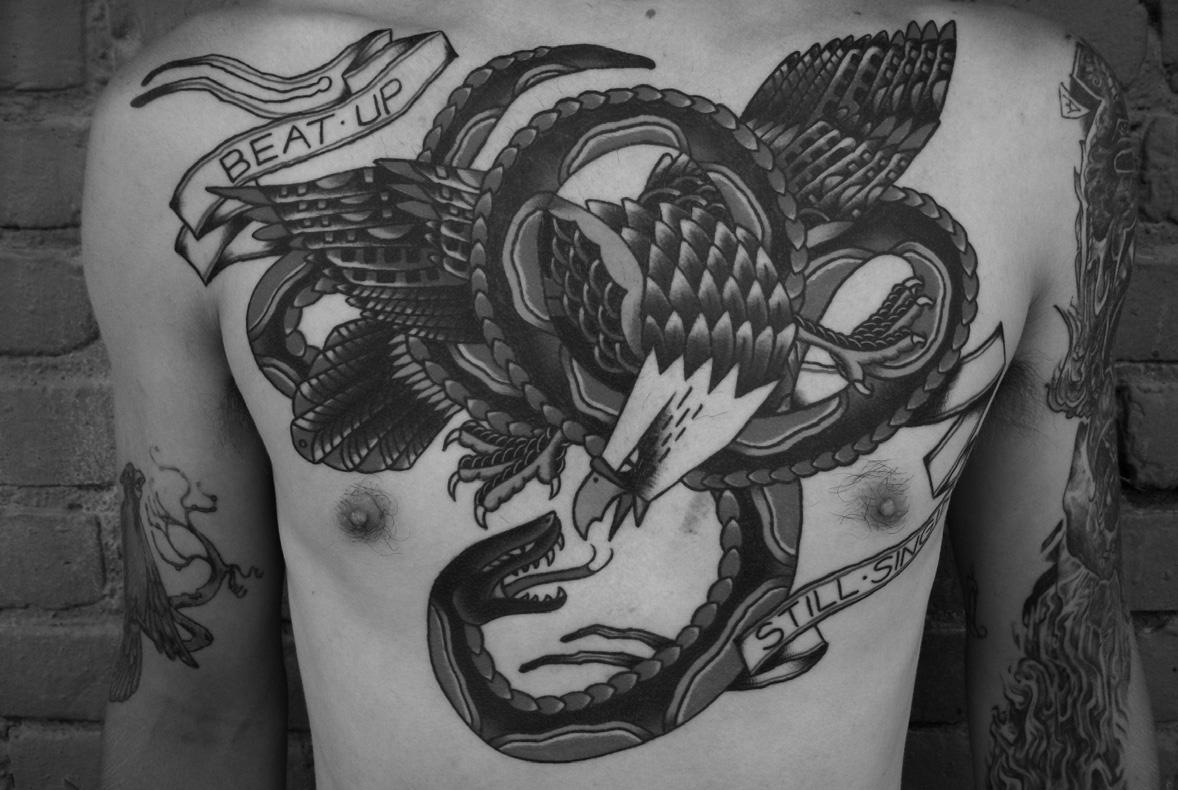
Each resident artist specializes— but is not limited to—a different style of work; whether it be Bram Adey (with his stick-and-poke style tattoos) or Chris Stans (who excels at more modern designs) one thing is for certain – if you’re looking to get a traditional tattoo in Winnipeg, Don
“I’m not one of these highfalutin tattoo artistes or nothing.”
Ritson is the guy to talk to.
Ritson, the owner/manager of Rebel Waltz, is not only one of the most talented tattooers in the city, but is also one of the nicest guys you’ll ever meet. Sporting facial hair that
resembles a giant beard of bees from afar, Ritson specializes in a style of tattooing that can be best described as a modern take on American traditional. Taking the signature traits of traditional tattoos such as thick, clean lines and bold, solid colours, Ritson adds his own flare to this historical style through beautiful shading and the adding of subtle three-dimensional features.
Ritson tends to work most often with the two original colours of pigment used for tattooing: black and red. Not only is the bulk of his flash art designed in this colour scheme, but all of the tattoos in his own personal collection are black and red as well. Ritson says he’s certainly not limited to these colours in any way, though.
“They’ve always been colours I gravitate towards; long before I began
The night of the living movie
Art City hosts live movie making at
Jodie lAyne, staff
The idea of children in homemade costumes might not sound terrifying – but it will be if Cathy Gordon and Ulysses Castellanos (Toronto) have their way.
On Oct. 26, community members of all ages will gather at Broadway Neighbourhood Centre to create monster movies live! The idea for a night of monster movie magic was proposed by the artists, as one of Art City’s Professional Artist Workshops.
“We thought the idea proposed by these two top-notch artists would be a great fit for our yearly Halloween party,” says managing director Josh Ruth.
Art City is a community art centre in the West Broadway neighbourhood that offers classes and workshops to artists and budding artists yearround at no cost. It was founded by legendary local artist Wanda Koop in 1998 whose vision for the centre is to give people the chance to think creatively.
“My feeling is that if you can think creatively, you can survive almost anything,” says Koop.
“Video is an amazing medium for community art. The Art City participants always shock and delight us when given a chance to rock video,” says Ruth.
While not always the easiest medium to work within a community
tattooing even,” says Ritson. “To be honest, a lot of the flash I do is primarily black and red, and people just seem to be into it. It’s super heavy and “tuff” looking, but it’s also got that little splash of colour. All the tattoos that I have personally are black and red as well, so it’s easy to show people how it’ll look once we get it under the skin.”
“For the record though, while I love doing it, it’s not all I do. If I think I can do a good job of the piece, I’ll take it on – I’m not one of these highfalutin tattoo artistes or nothing.”
Recently, the shop moved from its former location (also on Notre Dame Ave.) to a new building across the street after Ritson decided to buy a new home for Rebel Waltz.
“We were in the old location for long enough,” states Ritson. “It was tight and cramped, poor storage, super hot in the summer and cold in the winter, and we had to deal regularly with the other tenants. I’ll remember it fondly, but it’s rad to have room for all our stuff, all our reference, and that sort of thing.”
the Broadway Neighbourhood Centre
setting, due to a need for resources and expertise, Ruth says that when attention spans and resources allow, getting kids in on the entire process can produce amazing results.
“Fortunately, we have some incredibly talented staff and volunteers like Andy Rudolph and Ryan Simmons; local creative wizards who help us with the more technical considerations,” says Ruth. “Behind the controls this time is Cathy Gordon, a multidisciplinary artist and programmer living and working in Toronto. Gordon will be doing editing and adding special effects on-scene. She is no stranger to working with art in a community setting, as she just finished a storycollecting multi-media project in the Queen/Bathurst neighbourhood of Toronto.”
The films are, with the exception of creative contributions from the guest artists, completely community-made. The centre has been working with artists in its programs for a month to create sets, props, and costumes for the movies.
“Every year I see more and more pre-fab, super lame Wal-Mart costumes on kids at Halloween. I get it, they are cheap and on trend. But we like to show participants that you can have way more fun hand-making your own,” says Ruth.
Seeing their costume and set cre-
ations come to life on an old-time movie screen will add to the effect and help drive home the point to the participants.
“It is not just about Halloween, but teaching kids to realize their creative visions are we are all about, all year around.”
Performance artist Ulysses Castellanos will be directing the short films with local participants. Ruth says that Art City participants have incredible creative vision and thinks Castellanos and Gordon will be well-suited to harnessing that vision and creating pieces that are truly collaborative.
“Personally, I cannot wait to see them pull this off. I had my doubts at first, but they have done live movie making in places like the Harbourfront Centre in Toronto and I have absolute faith in their abilities.”
Of course, the most important part is not only giving the neighbourhood residents the tools to think creatively, but the ability to do so together and work as a community towards a goal.
“These kinds of special events are like social sculpture, and this one in particular. Let’s all get together as a community and make our own fun. Let’s see what that looks like. It will be ridiculously blow-your-mind cool.”
If you want your mind blown by
Not only do all of the resident artists provide quality tattoos, but Rebel Waltz has frequent visits from out-oftown guest artists as well.
“Earlier in the summer we had Franz Stefanik come out, which was a lot of fun,” says Ritson. “We’ve worked on a few of the same clients, so it was cool to finally meet and work together. Hopefully he’ll be back again – there were a lot of people who wanted to get in and couldn’t just because he ran out of time. A few weeks ago we also had my good buddy ‘Handsome’ Mike Bialek from Toronto come out. I’ve been out there a few times to work, so it was great to get to show him around Winnipeg a bit, and return the hosting favour.”
If you’re in the market for a new tattoo Don Ritson has one thing to say to you – “Come check out the shop and get tattooed!”
For more information on the shop, resident artists, and future visits from guest artists follow Rebel Waltz Tattoo on Facebook, or check out their website at www.rebelwaltztattoo.com.
collaborative art, be at the Broadway Neighbourhood Centre between 5 and 8 p.m. on Friday, Oct. 26.
Crooning, shouting, yodeling, and snorting
Review: Bloodshot Bill’s Out the Door
Jenn A d iubA ldo, staff
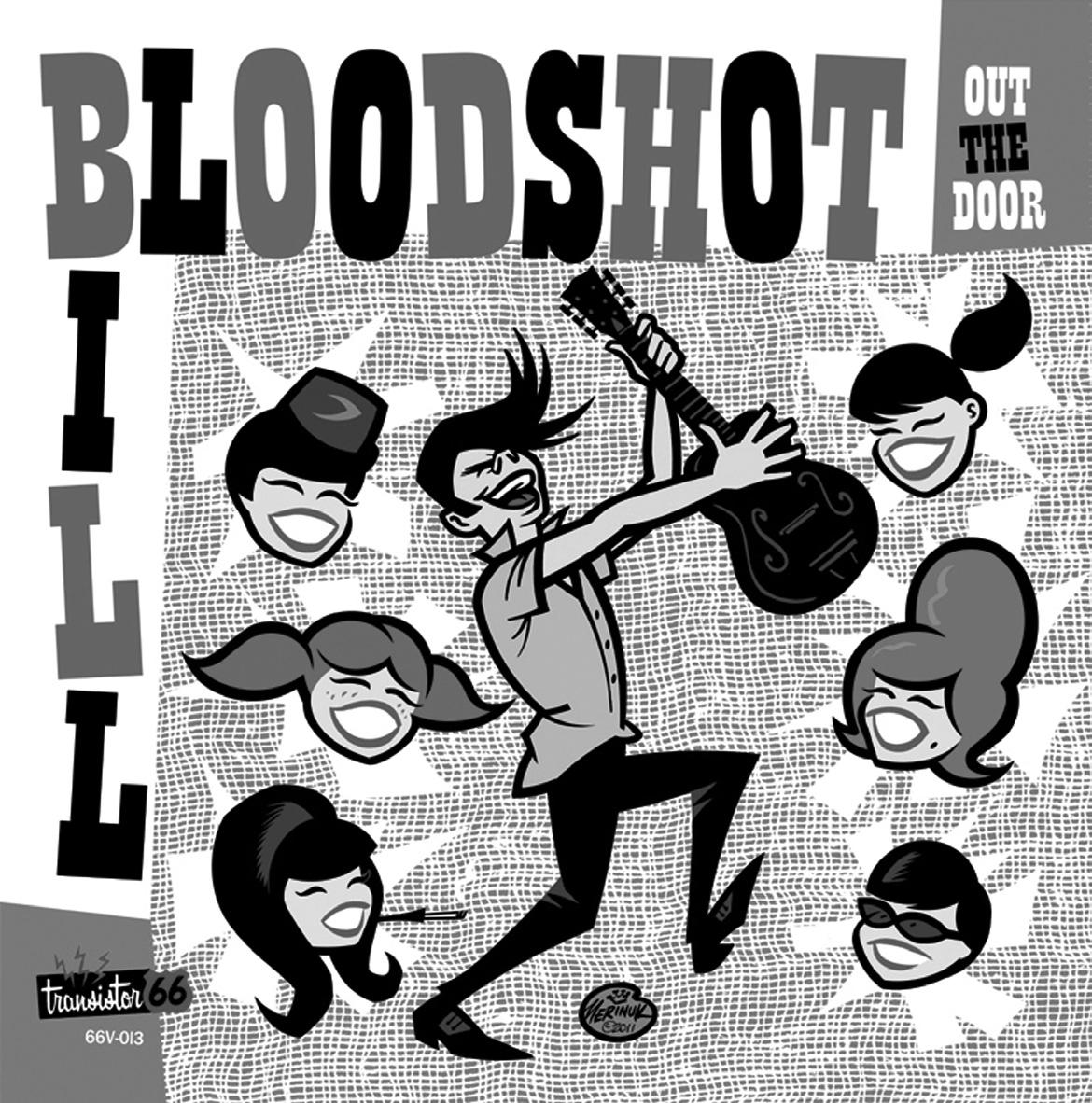
Out the Door is Montreal rockabilly/country sensation Bloodshot Bill’s second release available through Transistor 66, Winnipeg’s leading rock and roll powerhouse, and about his millionth release overall.
Bloodshot Bill is one of those artists who seems to have a never-ending supply of material ready to record at any moment, churning out 7-inches and LPs like the record pressing machine has been permanently stuck in the “on” position.
This rockabilly maniac is known for his signature live performance style, which features a pajama-clad, greasyhaired Bill, crooning, shouting, yodeling, and snorting his way through a vast catalogue of songs, while simultaneously playing the guitar and the bottom-half of a drum set with his feet.
No stranger to side projects, Bill has joined forces with such names as Mark Sultan and UK garage rocker King Khan to form bands like the Ding Dongs and Tandoori Knights.
Released in early 2012, Out the Door is a five-song 7” record that provides a nice little sampler of the many facets of Bloodshot Bill.
High-energy tracks “Out the Door” and “Rattle My Brain” showcase Bill’s unique singing style that sometimes sounds like a rock and roll sound effects reel, in a really good way; picture Hasil Adkins’ music on steroids and even more badass. I had the pleasure of performing these songs live with Bill last time he was in town and the experience was unreal.
“I Saw You Crying At at the Show” draws heavy influence from Hank Williams, with Bill lazily croon-
ing along to this laid-back, slower number.
The last song on the album, “Degueu Burger Radio Ad,” which translates to “disgusting burger,” was created as an advertisement for a burger joint in Montreal. Bill also starred in a commercial for the same restaurant featuring the singer chowing down on some “disgusting burgers.” He once told me that rather than spitting out the food after every take as is usually done while filming food advertisements, he actually ate about ten burgers throughout the course of the commercial shoot and made himself really sick.
Do yourself a favour, pick up a copy of Out the Door and then go check out Bloodshot Bill live next time you have the chance – you will not be disappointed.
Q&A and D&D
Shooting the shit with the Deaner
In one week, Dean “the Deaner” Murdoch—yes, the Deaner of FUBAR —and his band, Nightseeker, will be bringing their sozzled brand of rock and roll to the Pyramid. I got a hold of Murdoch in Montreal, where he’s been the past couple of weeks.
“I just kinda go where basically, wherever the couches are warmest, and I got a pretty warm couch here. I got a buddy of mine here that’s got that Mrs Pacman game, like the full arcade size in his house, so I’m tryin’ to get the top five high scores. I got three of the five. I spent 6 hours trying to get the high score,” says Murdoch.
Filling out the band are a variety of mythical beings, sent to shred our mortal ears.
“One of the guys, he’s like a half human, like big, but his body is kinda like a leprechaun body, so everything’s slightly smaller. We were walking through the forest looking for some shrooms and we just seen him all naked in a ball and we’re like ‘Hey man do you play guitar?’ and he’s like ‘Fuck yeah!’”
“The other guitar player, the lead guitar, he rode in on a bolt of lightning. Pretty cool, we were just jamming one day and there was a flash of lightning and all of a sudden we had a second guitar player.”
“Of course I play bass,” adds Murdoch. “And on the drums we got Poof; we call him Poof the Magic Drummer ‘cause sometimes he just disappears. Poof. We’re pretty sure he’s gonna be in Winnipeg, though.”
Fantasy figures strongly in some of the songs and imagery of Nightseeker. I was curious if Deaner was influenced by any particular books or movies. He answered that he used to play a lot of Dungeons & Dragons when he was a kid.
“I got pretty fucking good and my friends were all like ‘Oh Deaner, you should become a fuckin’ wizard!’” He goes on to explain why he doesn’t want to be a DM (dungeon master, the person who runs the game). “I want to be more the person who kills the beast, you know? Or gets killed by the beast. Being the DM seems like too much work.”
Different places have their own different names for Dean and his ilk.
I asked him whether he thinks of himself as a hesher, banger, metalhead, rocker, thrasher, or something else.
“Oh I definitely go with rocker. Ain’t no fuckin' question. I’m a rocker through and through,” says Murdoch. “You can’t deny that the best rock came out of the 80s, late 70s. It was just pure and no one really knew what they were doing yet, and that’s the best time, when you don’t really know what you’re doing, just doin’ it.”
He doesn’t go for heavy metal or hardcore so much.
“If I’m at a show givin’r, I love fast music, so it’s not like I’m gonna go home.”
We talked more about Nightseeker and how they craft their songs; Deaner writes all the lyrics and music, but says that overall the band collaborates.
“The guitar players write their own solos and shit,” says Murdoch. “I like to lie on my back in the darkness, you know? That’s how I write my music. I’ll just feel a song coming on, and sometimes there’ll be a riff, like [sings a riff], and sometimes it’ll be actual words. But it really depends. For example we got a song called ‘Cold War,’ and that’s all about fuckin’ winter, the yearly war of winter that wages on humanity. I came up with the words first, and after that the song came from there.”
Orgasms are awesome: Part 3
Jodie lAyne, staff
So, I think by now you get the point that orgasms are awesome.
The way that our bodies and minds interact and affect each other in moments of sheer pleasure is kind of mind-blowing. Well, what’s better than an orgasm then?
cock rings and remote-controlled vibrators are specifically good for lazier days, or when your orgasms are getting up there in number but you’re not quite ready to call it quits yet.
“I want to be more the person who kills the beast, you know? Or gets killed by the beast. Being the DM seems like too much work.”
the next day he’ll be in the best mood ever, and you just kinda accept it, just roll with it,” says Murdoch. The Deaner is all about just rolling with it, that much is clear. And if there is one thing Dean is known for, it’s shotgunning beers. I’m concerned that he may not be the master shotgunner in the band, but he insists there is no contest, he’ll win every time. A couple of minutes later I have a pretty firm grasp on the drinking habits of each member of the band, and the Deaner goes on to explain that it’s because of his practice singing.
“My mouth is always open and my throat’s in that perfect spot.”
That got us talking about winter and cold in general. I point out that winter’s war on mankind is kind of what Winnipeg is known for—well, and stabbings and our mayor kicking a kid in the face—so what, I asked, is Calgary known for?
“Calgary is totally known for how sometimes it’s fuckin’ cold out, and the next days it’s super hot out, and it’s sort of affected the people there. You know one day your buddy will be in a bad mood hating life – and
Finishing up the phone call, Murdoch wanted us to know that he’s fuckin’ stoked to play Winnipeg.
“[I want to] see who gives ‘er harder, Winnipeg or Brandon, cause it’s Deanatoba, 2012, we’re playing there the next night. These small towns give’r pretty hard you know?”
Accept his challenge next Thursday, Oct. 25, at the Pyramid Cabaret.
MULTIPLES. If you haven’t caught on by now that our bodies are capable of pretty amazing things – behold the multiple orgasm. It’s common belief that only people with vaginas can experience multiple orgasms in one sexual encounter – but you penis-toting folks can get in on the action while getting some action as well.
There are several factors that can prevent you from being multi-orgasmic, including stress and physical exhaustion.
Although many vagina bearers have not experienced an orgasm or require extra stimulation to cum—like we talked about in Part 1 of this series—once you do orgasm you’re not necessarily finished. Not all vagina bearers can experience multiple orgasms—scientists are not exactly sure why some can’t—but often people don’t know they can because once orgasm is achieved, sex usually stops. This is one of the many reasons why an orgasm should never be the reason you start and stop sex – it’s all about discovery and exploration!
It should be noted, that just because you are able to experience multiple orgasm sometimes, it doesn’t mean you will be able to consistently. There are several factors that can prevent you from being multi-orgasmic, including stress and physical exhaustion.
If physical stamina is a barrier for you or your partner, sex toys can be a great tool to keep the arousal and pleasure flowing, while minimizing the amount of work your body has to do to make it happen. Vibrating
As always, you can test the... uh... “waters” during masturbation and see if multiple orgasm is something your body is capable of. Once you bring yourself to orgasm for the first time, your genitals are going to be sensitive and will likely need to recover. This is called the refractory period and a penis bearer’s refractory period lasts much longer than a vagina bearer’s. During the refractory period it is important to keep the mood going and stay aroused. Touch and caress other parts of your body, dirty talk with your partner, engage in acts of foreplay or fantasy, massage each other, watch porn – whatever keeps your mind on track and body ready for more. Once some of the sensitivity is gone, you can begin to stimulate your genitals again. Again, for people with penises, this will take some time – after ejaculating once, your body needs to wait for you to be able to ejaculate again. The next orgasm can come quite quickly and orgasms can be accomplished more easily as your body relaxes and climaxes repeatedly. It is possible to have more than five orgasms in one sexy romp.
Again, kind of amazing. Don’t get discouraged if multiple orgasms seem elusive or difficult – there is definitely no harm in enjoying the journey it will take to get there.
You can confidentially submit a question or topic to jodie.m.w.layne@ gmail.com
Juvenile bald eagle
By Bryce Hoye
Women’s hockey team improves record against Mount Royal
Bisons take 3 of 4 points in weekend series against Cougars
staff
d e Rek gAgnon,
Heading into this past weekend, the Bisons women’s hockey were hoping to improve a 1-3 record that had them on the outside looking in at the Canada West playoff picture. To do so they would need results against a Mount Royal Cougars squad that boasted a record of 2-1-1 after their first two weekends of action.
Friday night the Bisons went with Leiette Klassen in goal, while the Cougars countered with Jessica Ross. The first period saw plenty of chances for the Bisons, as they were the dominant team throughout the period.
Bison forward Kyleigh Palmer had a number of chances turned aside, including a shorthanded breakaway, but it seemed that it was only a matter of time before she got one, as the teams went into the first intermission scoreless.
Ross exited the game for the Cougars due to injury after stopping all 11 shots she faced, with Kendall Kilgour replacing her in the Cougars net to start the second period.
The Cougars went on the power play before the Bisons could test Kilgour after a bodychecking call that had Bisons coach Jon Rempel fuming on the bench. The Bisons killed the penalty, but were unable to get a change for some time before Klassen pounced on a puck to get the team a much-needed whistle. The Bisons got a few powerplay chances of their own, with the third proving to be the charm when Krisitn Cockerill tipped in a Jessica Carswell point shot with 3:49 to go. The Bisons were outshot 8-7 by the Cougars in the period, but started the third on the power play
after a late penalty. In the third, Palmer netted one just 40 seconds into the period. On the power play, the Bisons cycled the puck around until Palmer fired off a one-timer and managed to get her own rebound passed Kilgour for a 2-0 Bisons lead. Maggie LitchfieldMedd added her third of the year four minutes later, tapping in a rebound from Meagan Vestby.
Sydney Laurin used her size and brought the Cougars within two as she skated up the middle and backhanded one passed Leiette Klassen with 7:25 to play. A Litchfield-Medd penalty two minutes later gave the Cougars opportunity to make a real game of it, but they failed to capitalize on the ensuing power play. That opportuniy would come back to haunt them when Vestby added a goal to her two assists on the night, one-timing
a pass from Litchfield-Medd passed Kilgour, giving the Bisons a 4-1 lead that ended up being the final score. The win improved the Bisons’ record to 2-3, as Klassen stopped 23 of 24 shots in the win.
Game two on Saturday evening saw the Bisons come roaring out of the gate and grabbing three goals in the first period. It appeared that this game would be a blow out.
Vestby put on a great individual effort to open the scoring. After stripping the puck from the Cougars, she undressed the Cougars defense before depositing her own rebound passed Kilgour and into the net. With 8:53 to go Rachèle Bosc stripped the puck from a Cougars defender at the blue line, resulting in a two on one break. Bosc elected to keep the puck herself and the decision paid off with a goal. The Bisons then went on the
powerplay with 5:46 left and capitalized 33 seconds later when a Caitlin MacDonald slapshot was knocked in by Palmer, with Vestby there jamming away at it too.
With the score 3-0 it appeared as though the Bisons were going to walk away with this one. The Cougars had other ideas, though, as Laurin scored after being left alone in the slot with 3:35 left in the first period. Shortly after the intermission Laurin would do it again, as the 6’0” forward notched her third goal of the weekend making it a 3-2 game. The Cougars evened up the score with 8:48 left in the second when Taralynn Suzuki one-timed the puck passed Leiette Klassen.
The third period would go scoreless, despite the efforts of a very vociferous crowd that included members of the Bisons football team coming
off a playoff-clinching win against UBC.
In overtime Laurin broke in on goal, but Michelle Pawluk was able to catch her and knock the puck off her stick before both players crashed into the net. Remarkably, Pawluk was called for roughing on the play, a call that Bisons Coach Jon Rempel clearly disagreed with. On the power play, a rebound from a Rayna Cruickshank shot went to the stick of Chrissy Hodgson who netted the winner for the Cougars.
The Bisons record after the weekend is now 2-3-1, good enough for 5 points and sixth place in Canada West. They next host the 5-0-1 Calgary Dinos, featuring 3-time Olympic Gold medallist Hayley Wickenheiser. Games are Friday and Saturday, both at 7 p.m..
Bisons sweep Cougars in visit to Mount Royal
Men’s hockey now 3-3 after a pair of wins in Calgary
d e Rek gAgnon, staff
Sitting out of a playoff spot two weeks into the season, Coach Mike Sirant and the Bisons men’s hockey team were looking to grab some valuable points and prove that this is, in fact, a team to reckon with when they visited the Mount Royal Cougars in Calgary this weekend.
The Bisons entered the match with one win in four contests, with that victory coming last week in a game against the Saskatchewan Huskies. The Cougars came into the weekend with an identical 1-3 record.
The Bisons came out strong, peppering Cougars goalie Justin Cote with shots, but Cote kept the Cougars in contention for most of the game. The Cougars grabbed the lead with 2:16 minutes left in the second period when Jesse Tresierra got one passed Bisons goalie Jesse Deckert. After two periods it was 1-0 Cougars despite the Bisons outshooting Mount Royal 22-12.
with 53 seconds left, as the Bisons won 4-1. Jesse Deckert turned aside 16 of 17 shots faced in the effort.
The Bisons finally solved Cote 8:02 into the third, when Luke Cain notched his second of the season. The floodgates would open with the man advantage as goals from Captain Dane Crowley and Tyler Dittmer came four minutes apart on the power play. Matthew Lowry would put this game away with his first of the year
The second game of the two-game set came on Saturday afternoon, with this one starting out closer than the first game, with both teams getting chances in the first period, but neither finding the scoreboard as it was 0-0 after one period of play.
The second period saw more life from the Bisons as Jeremy Schappert opened the scoring 3:16 into the period. The Bisons added to their lead when Jesse Paradis knocked one in with 6:59 left in the period. The Bisons scored another in the dying
seconds of the period on the power play when Tyler Dittmer put in his third of the year with four seconds remaining giving the Herd a 3-0 lead after two periods.
The third period turned into a nail biter for the Bisons as the Cougars chipped away at their lead. First Tyler Eskesen scored with 4:36 gone in the period, then Nick Bell made it a one goal game with 11 minutes left on the board. After two Bisons penalties for goalie interference, the Cougars’ Mike Brown tried to exact some revenge by taking a run at Jesse Deckert, which resulted in a whopping 32 penalty minutes for his efforts. The Cougars
killed off the minor and ended up with a power play of their own with just 2:57 left. Frantic moments went by as the Cougars threw everything they had at their opponents, but the Bisons stood their ground, killed off the penalty and held on to win 3-2. Jesse Deckert got his second win in as many nights with 27 saves on 29 shots. With the wins the Bisons improved to 3-3 on the year, rising to sixth in the Canada West conference and still very much in the thick of things. The Herd plays next weekend at the University of Calgary, as they take on a 4-2 Dinos squad that went 1-1 against Regina this weekend.
phOtOs by beibei Lu
Pink and gold
Bison athletes go pink for breast cancer research
M ARc lAg Ace, staff
W
ith October recognized as National Breast Cancer Awareness month, the Bison women’s basketball team hosted the 2012 ‘Shoot For The Cure’ invitational tournament in support for the Canadian Breast Cancer Foundation this past weekend. This year will mark the fifth year the Bison women’s team has put on the event.
Organized by the CIS Women’s Basketball Coaches Association (WBCA), the ‘Shoot For The Cure’ campaign has raised over a halfmillion dollars in donations since its inception in 2007.
The highlight of the Bisons’ tournament occurred Saturday, on a night that was dubbed the “Pack The Place Pink Night.” The Bisons wore honourary pink jerseys in their game against the U of Winnipeg Wesmen.
Cure’ tournament isn’t the only event the players are planning in support of the Canadian Breast Cancer Foundation. The players are planning to continue collecting donations until February.
Beyond the donations and good will, there were also games to be played. The Wesmen were the big winners, winning all three games including a 73-47 win over the Bisons.
Enthusiasm for the ‘Shoot for the Cure’ cause has spread beyond the women’s basketball team, as Bison football players used pink laces and tape in their game on Saturday.
According to co-head coach Michele Hynes, the ‘Shoot For The
All gate revenue from Saturday’s games are to be donated towards breast cancer research, including sales of pink and black t-shirts that the Bison players have been selling around campus over the past couple weeks.
WE WERE SO FAR AWAY
The games were all non-conference matches—the Bisons’ Canada West season doesn’t start until Nov. 2—but despite being the hosts among the four teams competing, the Bisons finished the tournament 0-3. Two nonconference pre-season games remain (against Dickinson State University) before the Bisons tip off the 2012 season on the road against the University of Calgary Nov. 2 and 3.
phOtOs by beibei Lu
EXECUTIVE LEAD FOR INDIGENOUS ACHIEVEMENT, OFFICE OF THE PRESIDENT INVITES YOU TO ATTEND
An exhibition that presents the Inuit experience of residential schools through the voices of 8 courageous Survivors. Produced by the Legacy of Hope Foundation, Aboriginal Healing Foundation, and Library and Archives Canada with financial support from the Government of Canada.
David Barnard, President and Vice-Chancellor, University of Manitoba Justice Murray Sinclair Honoured Inuit Survivors
OPEN FOR VIEWING FREE-OF-CHARGE
October 31 – November 16 Mon-Fri 7am - 6pm, Sat & Sun 9am – 6pm
For more information, contact: Andrea Bilash 204-480-1473 or andrea_bilash@umanitoba.ca
FOLLOWING THE
Bisons clip Thunderbirds wings, win 37-31
Manitoba playoff-bound, enjoy last-ever game at University Stadium
M ARc lAg Ace, staff
The Vanier Cup was in town, sitting on the sidelines, as the Bisons football program played its final regular season football game at University Stadium on Oct. 20. The Bisons have won the CIS National Championship three times during the stadium’s 45-year history, most recently in 2007.
It was fitting that on the very same day, the Bisons finally clinched a playoff berth for the first time since that undefeated championship season in 2007 with a thrilling 37-31 victory over the UBC Thunderbirds.
In the week leading up to this game, head coach Brian Dobie admitted that there was some uncertainty at quarterback, after Cam Clark was pulled at halftime during a devastating 44-39 loss against Saskatchewan. Clark got the start and enjoyed the spoils of a fantastic rushing performance by the Bison running backs.
Anthony Coombs led all Bison rushers with 177 yards and one touch-
down on 19 carries, as the Bisons rushed for a team total of 296 yards and four touchdowns. Andrew Barry picked up two goal line touchdowns while Kienan LaFrance scored the other rushing touchdown.
Led by fifth-year quarterback Billy Greene, the Thunderbirds were completely shut down for most of the first half as the Bisons headed into
the locker room at halftime with a commanding 30-4 lead. However, no lead has been safe for this year’s Bison squad.
Greene and the Thunderbirds offence would start their comeback with a 98-yard touchdown pass late in the third quarter. Things started to really unravel for the Bisons in the fourth, as Greene threw three
straight touchdowns in the fourth quarter that evaporated a 20-point lead and put the T-birds in the lead 31-30.
With less than eight minutes remaining in the game, the Bisons managed to rally for a touchdown to reclaim the lead, but a failed 2-point conversion left the door open for Greene to break the hearts of the Bison supporters in attendance. Manitoba failed to put the game away after Bami Adewale intercepted Greene and returned the ball down to the UBC 10-yard line, which gave the Thunderbirds just under three minutes to drive the length of the field for the game winning points. The comeback would come up short, as the Bisons would force a turnover on downs and clinch a playoff berth.
With 12 fifth-year players never getting the opportunity to play in the post-season up until this year, to get there in the final year makes it all the more special.
“I’m not ready for this victory lap to be done,” fifth-year linebacker Thomas Hall said. Hall was redshirted during the 2007 season, but has since become one of the key team leaders, “You see it in our younger guys’ eyes, you see it in all the fifth-year guys. When we win, [the younger players] look in my eyes and say, ‘this one’s for you guys.’”
“Our team is rallying around it. We’ve got a great core group of fifth-years and then all those younger players making plays. I think we’re all finally starting to realize what it means to rally around that, be Bisons and win the games we’re supposed to win.”
The Bisons wrap up the regular season Oct. 27 on the road versus the Calgary Dinos, who clinched first place despite last week losing their first game of the season to the Huskies.