Will Gibson Janelle Curry Lauren Siddall Meg Crane Caitlyn Maskiew Ian T.D. Thomson
MANITOBAN
A “volunteer staff” member is defined as a person who has had three volunteer articles, photographs, or pieces of art of reasonable length and/or substance published in three different issues of the current publishing year of the Manitoban. Any individual who qualifies must be voted in by a majority vote at a Manitoban staff meeting. Elected representatives and non-students may be excluded from holding votes as volunteer staff members in accordance with the Manitoban Constitution.
The Manitoban is the official student newspaper of the University of Manitoba. It is published monthly during the summer and each week of regular classes during the academic year by the Manitoban Newspaper Publications Corporation.
The Manitoban is an independent and democratic student organization, open to participation from all students. It exists to serve its readers as students and citizens.
University of Manitoba hosts first Visionary Conversation of the 2014 seminar series
DANA HATHERLY, STAFF
During the first Visionary Conversation of the school year hosted by the University of Manitoba, three representatives, one from law, media, and academia, spoke on the topic of, and examined who pays the price for, freedom of expression.
Joanne Kesselman, the moderator and vice-president academic provost, introduced this particular topic as an “important cornerstone of democracy.”
“The Canadian Charter of rights and freedoms sets out our fundamental rights and freedoms including (as written in the charter) the freedom of thought, belief, opinion and expression, including freedom of the press and other media communication,” she explained.
Based on arguments presented by each of the speakers at the seminar, our freedom of expression is only protected within reasonable and justifiable limits.
According to a source on the history of freedoms in Canada, “There is a long history of opposing censorship since state-imposed censorship manifested itself in a myriad of ways in Canada by the 1960s.”
Our freedom of expression is upheld to this day by various governments and institutional means, such as the Canadian Charter of Rights and Freedoms and the Manitoba Human Rights Code – however, free expression is not absolute.
Freedom of expression and the law
The first speaker of the night, Sarah Lugtig, a U of M faculty of law professor, human rights lawyer, and the director of Experiential Learning, referred to freedom of expression and the law. She took a multi-faceted approach to free expression and recognized its applicability as a shield, as a sword, and for support.
At the level of Supreme Court, Lugtig said the charter acts as a shield by protecting the media’s right to disseminate information and the public’s right to access information about the courts.
Freedom of expression may be used as a sword to fight for or intervene to protect vulnerable groups. She explained that the Manitoba Human Rights Code applies anti-harassment policies in this way.
Lugtig asked whether or not antiharassment policies should apply to universities, which she claimed lies at the heart of the academic freedom debate.
She further explained that free expression is upheld within “reasonable limits,” including restrictions in terms of child pornography, tobacco advertisements, and other advertisements with adverse social and health implications.
The third facet of free expression she spoke about was as a means of support. For instance, whistleblowers legislation ensures our right to feel
safe to express ourselves. According to Lugtig, the question remains whether or not governments should support free expression.
Freedom of expression in the media
Cecil Rosner, managing editor of CBC Manitoba, spoke about the impact of free expression in media, alluding to funding deficiencies in public media sources since recent federal budget cutbacks to CBC.
“The media is stagemanaged – and by that, I mean it is managed by those who want to influence the media to say and report certain things” –Cecil Rosner, CBC managing editor
Rosner challenged the audience to consider how they know things. He went on to explain that people may have firsthand experience, but the main way that most people stay informed is through the media, in one way or another. He posed the question, “How does
the media go about to find things out to transmit and convey it to you?” Rosner’s response was explaining that the media learns various things from official groups and sources, but can also “go into the world and investigate things on their own.”
“Sometimes [the media] comes across, or are sought out by, people who know what is going on within their workplaces—whether it’s within the corridors of government or corporations or other institutions—and that they may have firsthand experience knowing about it.
“[These people are] not the official spokespersons. In fact, usually these types of people are prohibited by employers from conveying information to the media, but for a variety of reasons, feel compelled to speak out.
“The media is stage-managed – and by that, I mean it is managed by those who want to influence the media to say and report certain things.”
To answer the question of who pays the price for free expression, Rosner argued that whistleblowers often pay the price in the face of being disciplined, fired, or sent to jail.
“Their only crime has been to reveal inconvenient truths, and they are being denied their fundamental right of freedom to speech.”
“We need to encourage whistleblowers, not suppress them,” he said.
In conclusion, Rosner addressed the needs to urge whistleblowers to speak out, equip the media to deal
with that information, and preserve our freedom of expression.
Freedom of expression in academia
The final speaker was U of M president and vice-chancellor David Barnard, who presented about freedom of expression within the context of academic freedom.
“Academic freedom allows scholars to pursue truth where it takes them – whether in support of, or contradictory, to common orthodoxies.”
Barnard said that professors are expected to challenge what we think we know, and push our boundaries.
“Academic freedom is a valuable principle, and we should all—academics and general public—defend it.”
Barnard addressed the civility argument present in debates, and how it tends to overshadow problems of racism and systemic discrimination.
“As a university, we made a statement of apology about our complacency during the Indian residential school era.
“That apology can be seen as an admission that we did not sufficiently exercise our responsibility to use our freedom of expression. As an academic community, we should have examined what was happening more carefully and spoken out at the time.”
The question of whether free expression and academic freedom should trump all other rights remains to be determined in another forum.
PHOTO BY ANGELA ENGLAND
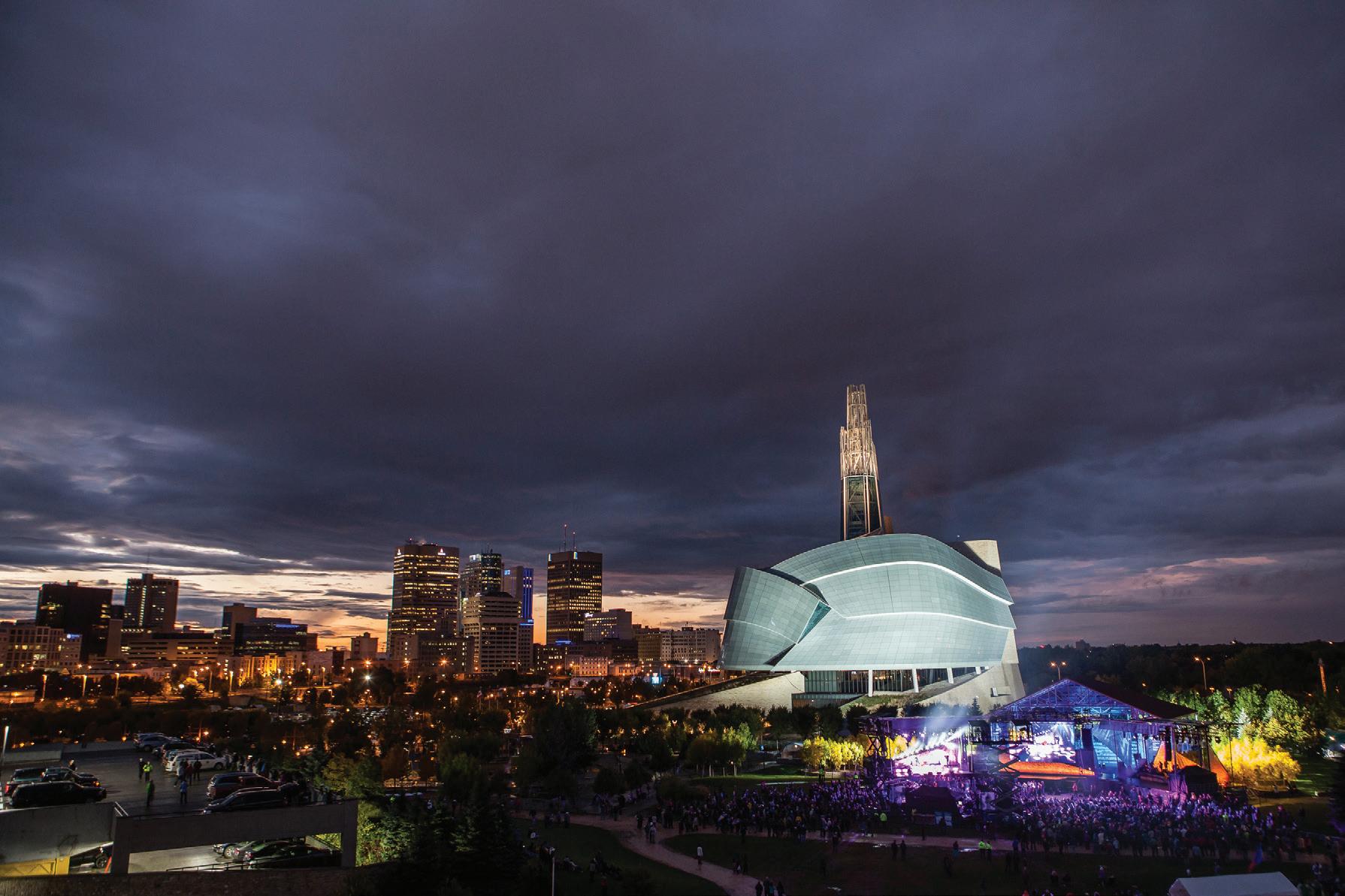
Winnipeggers Take Back the Night
March for safer streets restricted to the sidewalks
JANELLE CURRY
The 36th annual Take Back the Night march took to the sidewalks with a diverse crowd this Thursday, Sept. 18th. The event aims to raise awareness of sexual and domestic violence against women, featuring guest speakers, performers, and people of all ages showing their support for increasing women’s safety in public places.
People gathered at 6:30 p.m. at the Bell Tower on the corner of Selkirk Ave. and Powers St. with homemade signs, banners, and T-shirts.
This marked the first year that the march was denied a parade licence by the Winnipeg Police Service (WPS), which means that the WPS did not officially provide police escorts to ensure the safety of those marching.
The Manitoban spoke to organizer Mandy Fraser about this decision. She said that the WPS “cited a lack of resources due to the [Canadian Museum for Human Rights] open-
ing, and their need for security there.”
She continued, “The WPS [representative] did offer to provide the permit a week later, but this is a longstanding date—we had organized our lives around it—so we declined that.”
During the march, marked and unmarked police vehicles did have a constant presence, but attendees questioned their intentions.
“Are they here to enforce us sticking to the sidewalks, or protect us?” said one marcher.
The lead-up to the march featured both performances and speeches.
Outspoken community leaders critical of the response to missing and murdered Aboriginal women and girls related to the crowd.
Chelsea Cardinal voiced her concerns about safety for Aboriginal women.
“We all have the right to be safe,” said Cardinal. “We cannot have our women going missing and murdered.”
The Native Women’s Association of Canada has assembled information about 582 cases of missing First Nations women for the database they created.
In an article by the Winnipeg Free Press about last year’s march, organizers stated that the per capita rate of violence against women in the province is “almost twice the national average and second-highest in the country,” according to a 2011 Statistics Canada report. There were 1,460 sexual assaults reported in Manitoba in 2012, and it is estimated that only “one in ten assaults are reported.”
The province also reported one of the highest rates of domestic violence in the country, and that women are more common victims of violence and abuse.
All speakers expressed enthusiasm about the presence of so many men at the event.
“This is what it’s going to take,”
said another outspoken leader Sandy Banman. “The balance of the whole community.”
The U of M Womyn’s Centre provided bus tickets and sign-making materials for students who wished to attend the event.
“We’re trying to create a sort of environment where people that haven’t gone before, or might be new to the city, can go down as a group together,” said Hira Sabzwari, Womyn’s Centre co-ordinator.
In the diverse crowd, everyone had their own reasons for being present.
Carmen Vielfaure said it was her third year of attendance.
“Violence against women is so present. It touches so many different
people.”
This year, the focus has been on missing and murdered Aboriginal women. It’s a terrible thing that it took this long,” said Vielfaure.
“You don’t have to go very far to see why a lot of people don’t feel safe,” said Sabzwari.
The march lasted just under one hour. It ended at the Inner City Social Work campus with bannock and refreshments.
For more information about Take Back the Night, visit takebackthenight.org. For resources regarding sexual and domestic violence, abuse, and counselling options, visit Klinic Community Health Centre at klinic.mb.ca.
PHOTO BY CAROLYNE KROEKER
Museum of Canadian Human Rights Violations launched on CMHR grounds
First Nations communities protest water issues and daily human rights violations during CMHR grand opening ceremonies
DANA HATHERLY, STAFF
D
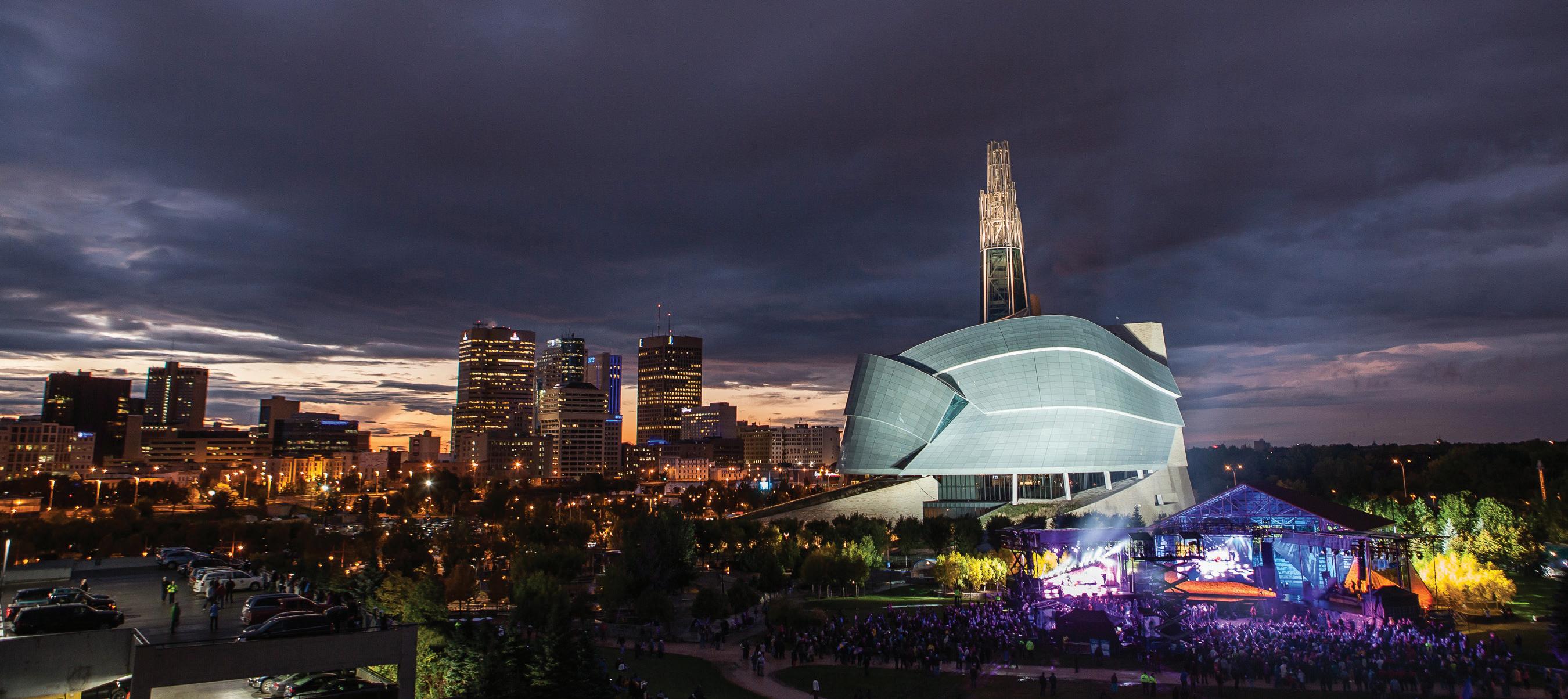
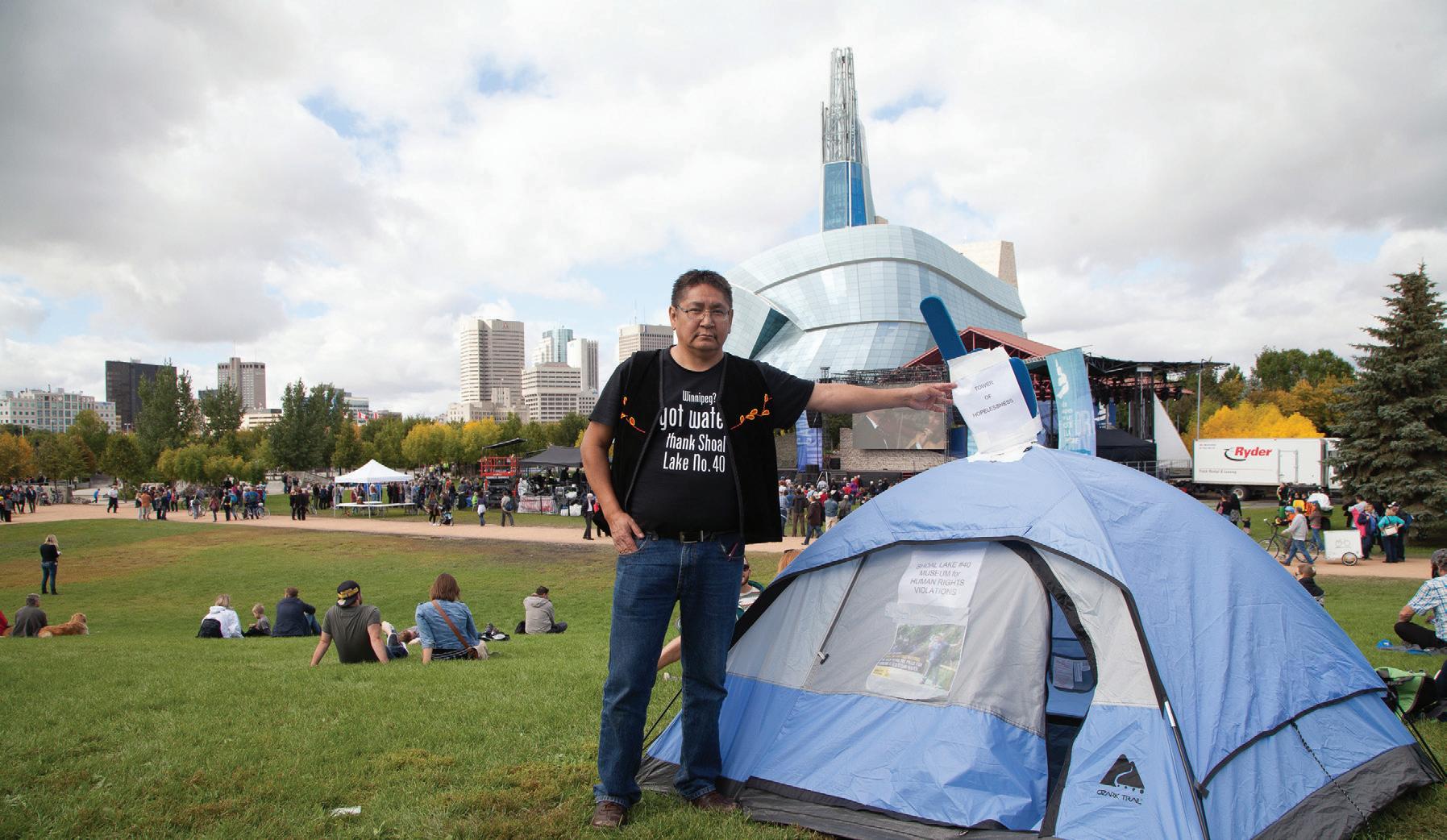
uring the grand opening of the Canadian Museum for Human Rights (CMHR), the Shoal Lake No. 40 First Nation launched their own living museum—the Museum of Canadian Human Rights Violations—to raise the public’ awareness of water issues and human rights violations faced daily in their community.
The First Nations community sought to educate Winnipeggers about its day-to-day struggles accessing water – a result of their systematic community displacement, isolation, and exclusion from water in order to supply the City of Winnipeg with drinking water.
Representatives from Shoal Lake No. 40 told the Manitoban that they would be occupying the CMHR grounds for the duration of the opening weekend ceremonies and other events over the course of this past weekend.
History of human rights violations
In 1914, the federal government permitted Winnipeg to expropriate over 3,000 acres of the reserve’s land and divert water from Shoal Lake to the urban centre.
Shoal Lake No. 40 First Nation Chief Erwin Redsky described to the Manitoban how First Nations communities were physically displaced from traditional villages where drinking water was located and excluded from water infrastructure development.
In 1919, Winnipeg built an aqueduct along underground pipes to divert water from Shoal Lake, Ont. to supply to the city.
To this day, clean water is widely inaccessible in the Shoal Lake region. Shoal Lake No. 40 has been living under a boil water advisory for 17 years.
According to Redsky, residents struggle to access resources for survival on the artificial island—previously a peninsula, but re-constructed in order to build the aqueduct—surrounded by contaminated water.
The chief told the Manitoban that the community has opened up their own museum to exhibit their situation and educate people about the source of the City of Winnipeg’s water.
“The museum has opened up their museum, and we’re opening ours, too – the Museum of Canadian Human Rights Violations.”
Call to action
Citizens of Shoal Lake No. 40 First Nation held a protest camp on the grounds outside the CMHR during the course of the museum’s grand opening ceremonies to draw attention to their direct call to action.
As part of their call to action, an informational pamphlet created by the Price of Water group and distributed by members of Shoal Lake No. 40 reads:
“The people of Shoal Lake Number 40 First Nation have been relocated and isolated, so Winnipeg can have fresh, clean drinking water.”
In regards to the Universal Declaration of Human Rights (UDHR) Article 23, the pamphlet reads: “Meet real people struggling to survive with little hope of development in a severely restricted designated area.”
And, in response to the UDHR Articles 25 and 26: “Loads of inadequate shelter and services – visit your choice of dilapidated home or infrastructure (school, day care, offices).”
The pamphlet includes a photograph of a family transporting groceries and drinking water from the grocery store on the mainland by foot and by sled across the thinly frozen ice path connecting their community on the island to the mainland.
“Risk your life accessing the museum: level of risk may vary by season and weather,” the pamphlet reads below the photograph.
For suggestions about how to get there, the pamphlet reads, “Begin at the CMHR in downtown Winnipeg, [ . . . ] follow the ‘healing waters’ supply pipe to its source at Shoal Lake No. 40 First Nation.”
The pamphlet directly refers to the United Nations Declaration on the Rights of Indigenous Peoples in order to denounce daily violations of the rights to clean water, safety, security, and the necessities of life in Shoal Lake No. 40.
Chief Fawn Wapioke, University of Manitoba alumna and resident of the neighbouring Shoal Lake No. 40 First Nation, told the Manitoban that her community continues to face regional boil water advisories and the negative repercussions of water diversions.
Redsky and Wapioke both discussed the need for awareness about the misuse of water, water diversions, and the situation faced by those residing in the Shoal Lake region.
Redsky said, “The first question I ask people [in the city] is, ‘Where do you get your water from?’”
Partnering with other First Nations communities on the water issue is one of Shoal Lake No. 40 First Nation’s main priorities. The community has been developing alliances with Treaty 1 and Treaty 5 groups that have been flooded due to misuse of that water.
“Water is a part of all of us. Water is going to connect all of us together [ . . . ] We don’t have clean water; [therefore] we don’t have opportunities. Water is life; all we want is life.
“We want to let [Winnipeggers] know what is going on at the other end of the pipe,” Redsky said, alluding to an ongoing water dispute between the City of Winnipeg and First Nations communities residing in the Shoal Lake region.
“Most of all,” Redsky said, “We just want to be connected to [the rest of] Canada – that’s our first and foremost solution as an isolated community.”
Opportunities for change
At the grand opening ceremonies, CMHR Board of Trustees member Wilton Littlechild made a speech about the CMHR as part of a “journey on the hopeful path for peaceful coexistence” and presented the museum as an opportunity to call for action.
Based on the United Nations Declaration on the Rights of
Indigenous Peoples established in 2007 as the framework for action, the opportunity he spoke of included indigenous views and perspectives in development projects.
During his speech, Littlechild spoke about the UDHR’s inception in 1948:
“The indigenous peoples were not represented, and we [the First Nations] were left out. It took us a long time to gain recognition as people of the United Nations – as human beings with human rights.
“Just last week as we were commemorating, some state allegations were still denying indigenous people and denying the recognition of rights of indigenous people. So, while we’ve come a long way, there is a long way to go.
“One of the most powerful opportunities for change will be the museum and the role that it
will play in education and dialogue,” Littlechild added. “We will have opportunities to learn that treaty rights are human rights, that treaties are a solution, and that we are all treaty people.
Littlechild stressed the significance of the museum for providing a chance “to build on the strength of our peoples and commit to a better Canada where the human rights of all peoples are honoured and respected.”
“We are not attacking the museum – we are targeting the governments that have put us in this situation,” said Redsky, addressing his community’s position on the museum.
“Our friends from the museum keep supplying us [at the protest camp] with food and wood – they understand us. We want more people to understand.
“Here’s an opportunity to bring our stories [into] the open.”
PHOTOS BY MATT DUBOFF
Pursuit for human rights established at the U of M
Master’s program announced during Canadian Museum for Human Rights grand opening week
DANA HATHERLY, STAFF
The pursuit for human rights has a new helm of energy at the University of Manitoba with the development of a new master of human rights (MHR) program announced earlier this week leading up to the Canadian Museum for Human Rights (CMHR) grand opening.
The launch of the MHR and the grand opening of the CMHR both contribute to establishing Winnipeg as a destination for human rights education and scholarship.
The graduate program in human rights will be the first of its kind in Canada.
The program development involved collaboration between five faculties (graduate studies, arts, law, education, and social work) and three research centres (Centre for Human Rights Research, Mauro Centre
for Peace and Justice, and National Research Centre for Truth and Reconciliation).
According to UM Today, the MHR program will be “broadly interdisciplinary, branching into the social sciences, sciences, and humanities, taking advantage of expertise in the university’s professional schools, including medicine, social work, education, nursing, and law.”
In a message to the public on the CMHR opening, U of M president David Barnard asserted Manitoba’s position as a hub of human rights research will be strengthened by developing the MHR program at the U of M.
“The U of M is committed to an enduring partnership with the CMHR – one that establishes Manitoba as the global capital for learning and studies in fields related
to human rights, towards the betterment of humankind,” Barnard said in his letter.
At the CMHR opening ceremonies, president and CEO Stuart Murray spoke live on television to an audience consisting of bureaucrats, scholars, and community leaders.
“When we truly open the doors to profound opportunities, [we get] the chance to make this city internationally synonymous with the pursuit for human rights, and a globally recognized destination for cultural tourism and human rights scholarship; and the chance to imply—or amplify—this museum’s message and impacts to all corners of the world, to all places where the message of hope, understanding, and inclusion is needed the most,” Murray said.
Of the CMHR opening, Murray said, “Today, we gather to ask: ‘What
now becomes possible; what now can we hope to achieve next?’
“The CMHR will open doors to conversations we haven’t had before. Not all these conversations will be easy, we accept that – but we will not shy away.
“The museum’s ability to attract visitors will be matched only by its ability to attract debate.”
The museum has engaged debate from within the academy and at the U of M, demonstrating that the museum and the academy each provide important forums for public and academic discussion.
Various U of M faculties and departments such as history, law, and native studies have long contributed to discussions in defence of human rights and criticisms regarding the construction of the CMHR.
In a Toronto Star opinion piece
last week, faculty of law assistant professor Umut Özsu criticised the museum for failing to address Winnipeg’s human rights issues, such as socioeconomic deprivation, and inequalities faced in communities around the world today.
Murray welcomed both celebration and debate.
“We are successful only if this museum can spark spirited and meaningful exchange – no matter whether the museum is the forum for [human rights] discussion, or its subject,” Murray said.
“In passion, debate is the tool that makes this project stronger. Most important of all, passionate debate calls our attention to struggles that have not yet had enough.”
Peppers plucked, pumpkins pilfered
UMSU campus garden co-ordinator and volunteers cope with garden theft
CRAIG ADOLPHE, STAFF
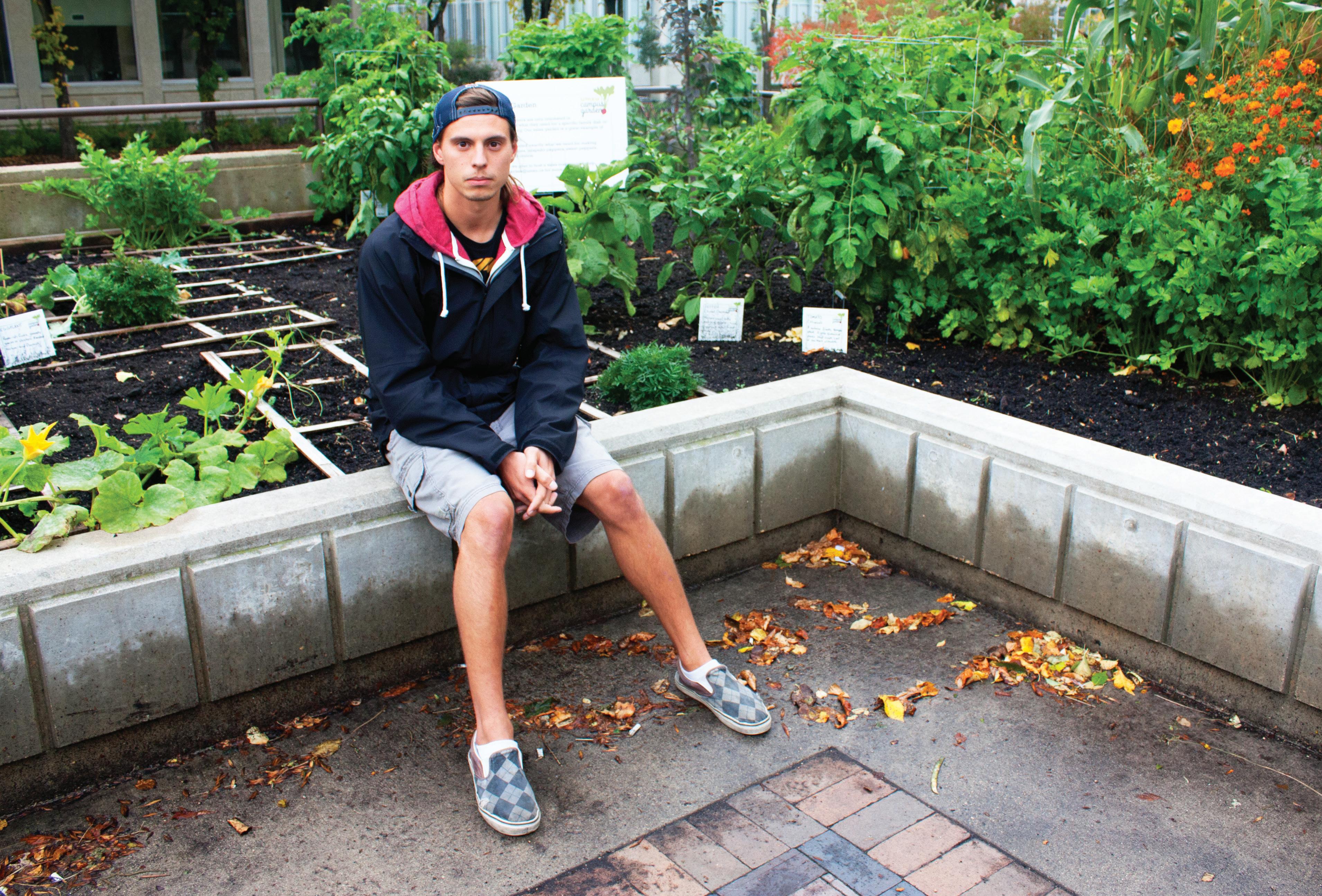
The UMSU campus garden, situated just outside University Centre, was recently raided, leaving little produce for volunteers and customers of the U of M’s Market Mondays.
The theft occurred sometime between the afternoon on Sept. 12 and the morning of Sept. 15. Stolen items included the garden’s tomatoes, peppers, carrots, beets, cucumbers, and cabbage; one watermelon; half the garden’s Swiss chard; and approximately 10 pumpkins.
The learning garden was maintained by a group of volunteers overseen by UMSU campus garden co-ordinator Cody Schuender.
It has served a special role as a training ground where people can come to practice and develop gardening skills.
Schuender, who took over the position in mid-June, said the theft has put a damper on end-of-season activities for the group.
“There’s obviously a lot of disappointment [from the volunteer gardeners],” said Schuender. “There just isn’t a lot to take home. [With] what is left, volunteers will get first pick as they help me clean up.”
Schuender said that Market Mondays, a weekly fruit and vegetable sale hosted by the campus gar-
den volunteers, have also suffered as a result of the thefts.
Market Mondays take place every week, in the later part of the gardening season, in University Centre.
The harvested produce is shared by volunteers, with additional produce going to Degrees to be used by the cooking staff and incorporated into their menu. The leftover produce is brought to a table in University Centre and sold to people on campus.
Sales from Market Mondays go back to UMSU to help cover operating costs for the garden.
The garden’s 36 individually managed plots, situated at the corner of Chancellor Matheson and Pembina Highway, have not experienced any major thefts this year, but Schuender is encouraging gardeners to watch out for theft as the season wraps up.
“I’ve warned all the garden plot holders that we’re at that time of year now where theft happens,” said Schuender.
“We’re taking precautions like picking tomatoes early, picking whatever we can early. They’ve all been alerted to call Security Services if there’s something suspicious happening or anything like that.”
This isn’t the first time the campus garden has experienced a loss. Last year gardeners using the private
plots were raided near the end of the summer.
Around that same time, other stories emerged in the media about major thefts from Riverview Community Garden, Paulicelli Park community garden, and the garden at Westminster United Church.
“There just isn’t a lot to take home. What is left, volunteers will get first pick as they help me clean up” – Cody Schuender, campus garden co-ordinator
Rebecca Kunzman, UMSU vicepresident advocacy, said she was disappointed to hear about this year’s theft, but thought Schuender had done a great job in managing the situation.
“It’s unfortunate that it happened again this year but I think Cody has really rallied around it and when I did speak to him he was still planning to go forward with the events that he’s planned. I know he has a fall feast as well as a seed-harvesting
workshop that he’ll be conducting later on in the season. I think he’s done a really good job making sure that this doesn’t affect the volunteers,” said Kunzman.
Kunzman said UMSU would be working with Schuender to try to develop a plan to prevent losses for next year.
“I don’t think it’ll affect [volunteer participation] into the future but I do think it is important that we address the issue so that it doesn’t happen again [ . . . ] because this is something that did happen last year as well.”
Kunzman said that despite the thefts there are numerous benefits for people interested in getting involved with the campus garden.
“One of those is the garden itself. It does provide the local community with fresh vegetables [ . . . ] it’s great volunteer experience. It’s also a way to connect to other students on campus,” said Kunzman.
“It’s a great community for incoming students who may not necessarily be as entrenched in the campus life yet. And it’s a great first step to get involved.”
One of the campus gardeners, Ashley Evans, was not surprised at the occurrence of theft on campus.
“When people are hungry they will
do what needs to be done to take care of themselves. Hunger is a worldwide problem,” said Evans.
Evans said that despite occasional incidents of theft, she has enjoyed her time gardening on campus.
“Getting involved with the campus garden this year has been great. [ . . . ] You can say you worked hard to grow yourself and [learn] about new produce.
“Meeting great people this year has been the silver lining; I’ve been able to meet students that I normally wouldn’t know just because the garden has brought us together.”
Evans encourages more students to get involved with the UMSU garden.
“We need to learn more about where our food comes from,” said Evans. “After this season, my husband and I [want] to get a second plot, if available.
“The food we grew tastes way better than anything you could buy in a store.”
For more information on how to get involved with the UMSU campus garden, email Cody at garden@ umsu.ca or check the group’s Facebook page “UMSU Campus Garden,” where Cody posts updates on events and volunteer opportunities.
PHOTO BY CAROLYNE KROEKER
More than just academics
CFS-Manitoba’s role in building the student movement
ZACH FLEISHER
As October rolls in, we see students are settling back into the regular grind of classes and part-time jobs. With all of this going on, it’s often tough to find a moment to look at the larger issues going on in Manitoba.
All students at the University of Manitoba, through UMSU, hold a membership in the Canadian Federation of Students (CFS), which the students’ union joined in 2005. As chairperson of the CFS Manitoba, I am proud to represent students in front of provincial, municipal, and federal governments.
Since my term began in June, we’ve been active in supporting international students facing discriminatory policies from the faculty of engineering, lobbying all mayoral candidates, and successfully having lobbied the provincial government on Bill 63.
For those not in the know, Bill 63 worked to abolish the Council on Post-Secondary Education and, through research and lobbying, CFS-MB was able to ensure that
student representation is guaranteed on the future committee that will guide the direction of post-secondary education in the province.
All of this, of course, fits well into our long-standing history of successful campaign work on student issues, going back to the 10-year tuition fee freeze. We’ve done a lot of work in the past and have a lot more to look forward to in the future.
Rumours of cuts to academic programs on campus and discussions over the future transportation situation for U of M students are clearly on the horizon, with the U-Pass referendum occurring this fall as well.
I’m not going to pretend for a moment that any of what I’ve mentioned above is a result of an exhaustive individual effort, or some form of a student union superheroism. No – efforts and long track records of success have to come from vibrant and active student movements that are pushed by their membership. No effective political movement can ever be successful over a sustained period
of time without having strong volunteers to push and construct an agenda that truly looks out for students.
No
effective political movement can ever be successful over a sustained
period of time without having strong volunteers to push and construct an agenda that truly looks out for students
In Manitoba, we currently have the third lowest tuition fees in the nation, according to the most recent information from the Canadian Centre for Policy Alternatives, making the province a hospitable place to
Former UMSU vice-president breaks down recent history of endowment
As a former vice-president student services and member of the Board of Trustees, I would like to provide some background information about UMSU’s endowment fund.
The endowment fund is a separately incorporated entity with its own constitution and bylaws and is managed by an eight-member Board of Trustees, including three community members, one studentat-large, two executive members as voting members, the president as a non-voting member, and the UMSU general manager as secretary.
The endowment fund is a registered charity under the Canadian Revenue Agency (CRA) and, therefore, must file annual reports to the CRA and meet certain requirements to maintain charitable status. The purpose of the fund as designated in the constitution is to provide financial aid and assistance (awards, grants, services) to benefit students at the University of Manitoba.
Back in 2008, prior to the major stock market crash, UMSU Council approved a motion asking the Board of Trustees to move the endowment fund (then worth $3.35 million) out of the high-risk stock market and invest it into a guaranteed income certificate (GIC) in a local credit union, with an
fund
annual interest rate of 5.15 per cent for five years.
This move was recommended by UMSU’s accounting staff and praised by UMSU’s independent auditors.
At that time, UMSU was also paying upwards of $80,000 per year to a company to invest students’ money in the stock markets, and UMSU was advised that the average rate of return the endowment fund saw over the previous 10 years invested in the stocks was less than 5 per cent, so it made sense to move the funds out of stocks into a GIC for a guaranteed rate of return and to protect the principle.
This investment was made at a local credit union, as all deposits, including interest, are guaranteed without limit by the Deposit Guarantee Corporation of Manitoba. This is not the case for banks and other financial institutions and investment companies, and according to previous board reports, was a very important consideration for the Board of Trustees, especially in light of the financial crisis of 2008.
At no time did previous executives use the funding at their discretion. As noted above, the endowment fund was invested and locked into a GIC for a five-year term ending in the fall
of 2013. Meeting all requirements of the fund’s constitution and the CRA, the Board of Trustees allocated income from the fund to an approved annual budget for student awards (e.g. UMSU awards, Bison awards), grants (e.g. travel grants, hardship fund), and services (e.g. GoSA, Bison Patrol, Textbook & iClicker Lending, UMSU Living, Foodbank) in April of each year for the following year.
The budgeted expenses never exceeded revenue for the endowment fund, and, in fact, significant funds were always carried over to the following year to continue to build the fund. As an example, on the CRA website listing registered charities, the endowment fund’s assets for 2012 are listed at $3,844,712 and assets for 2013 are at $4,152,564. Also, at the year ending April 30, 2013, the total revenue was $384,269 and the total expenses were $283,768.
The endowment fund was established over 15 years ago and I hope that it will continue meeting its intended purpose to support and service the students at the University of Manitoba for many years to come.
Ronnie Cruz, former vicepresident student services and member of the Board of Trustees.
settle down. This level of accessibility doesn’t come accidentally; rather, it comes from years of sustained pressure on the provincial government to increase access for those who need it most.
And that doesn’t mean the struggle is over. International students in Manitoba still pay at least twice, if not three times, what domestic students pay. Rates of participation for indigenous populations in postsecondary institutions are still below what they need to be.
As a province, we still have a long way to go for education to become truly accessible for all citizens, not just segmented populations. As students, we have a responsibility to advocate, organize, and envision the world we want to see upon graduation. For me, that includes a world that acts on issues around climate justice, systemic racism, and inequality.
In an attempt to create a truly inclusive, responsive, and collaborative movement, we need to work together, bringing the best that all
students can offer to truly create social change.
On Oct. 11, we’ll be taking a first step in that process as we host a campaigns forum titled, “Building a Student Movement” in collaboration with Justice for Women and the Global Political Economy Students Association.
Held at the U of M Fort Garry campus, the forum will seek to reimagine campaigns centred around topics like sexual assault on campus, the international student movement, and the future of post-secondary accessibility in the province. We need participation from students in that process to best develop campaigns that fit your needs on campus. Looking forward to seeing you there
Zach Fleisher, Canadian Federation of Students-Manitoba chair
Kickstart student-developed technology
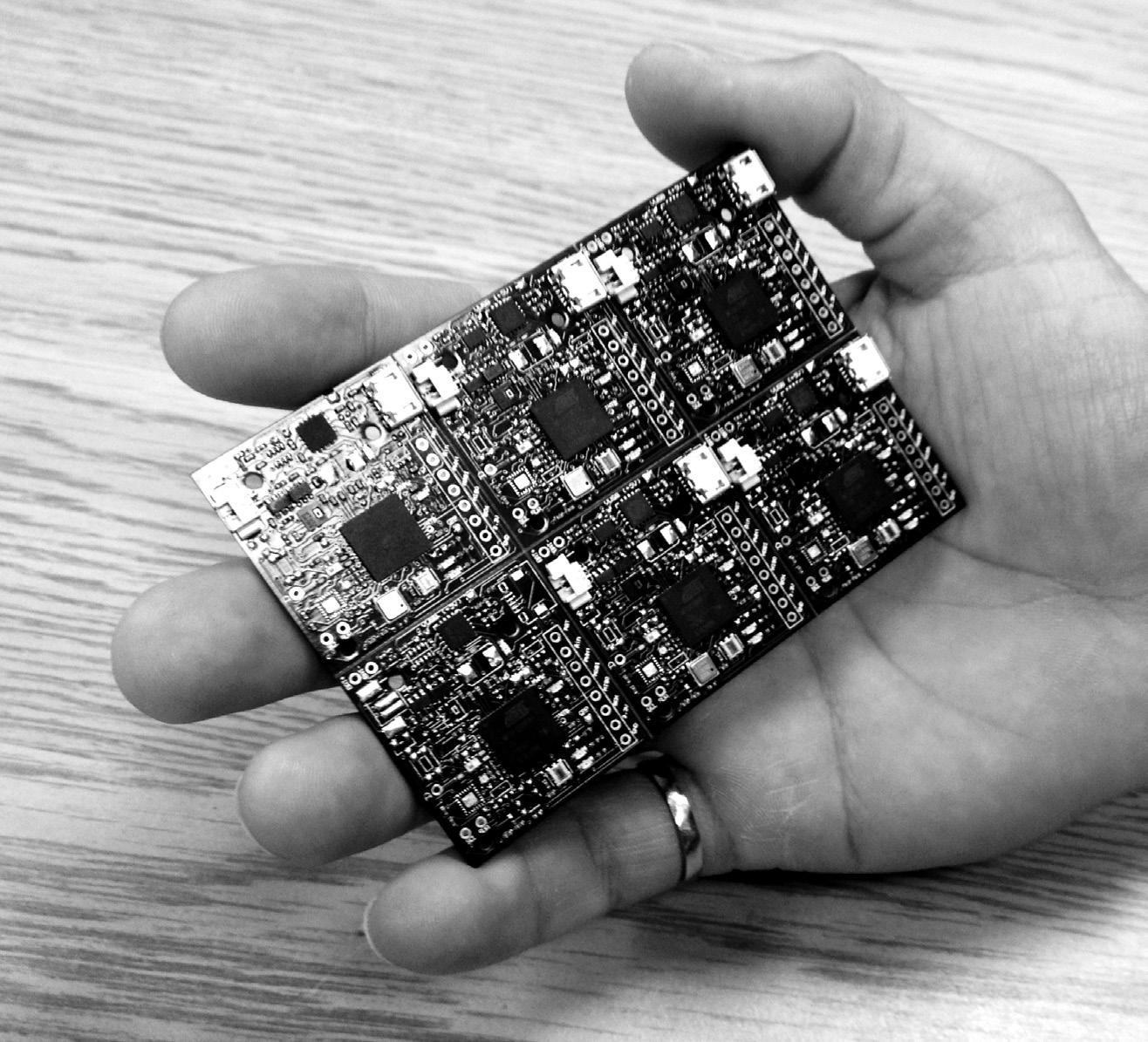
ArduIMU V4, next generation wireless sensor module U of M students’ hobby project
BAILEY RANKINE, STAFF
Typically, when you ask a university student what they do in their spare time, you might not expect to hear, “design next generation wireless sensor devices.”
But that’s the mantra of the University of Manitoba Space Applications and Technology Society (UMSATS).
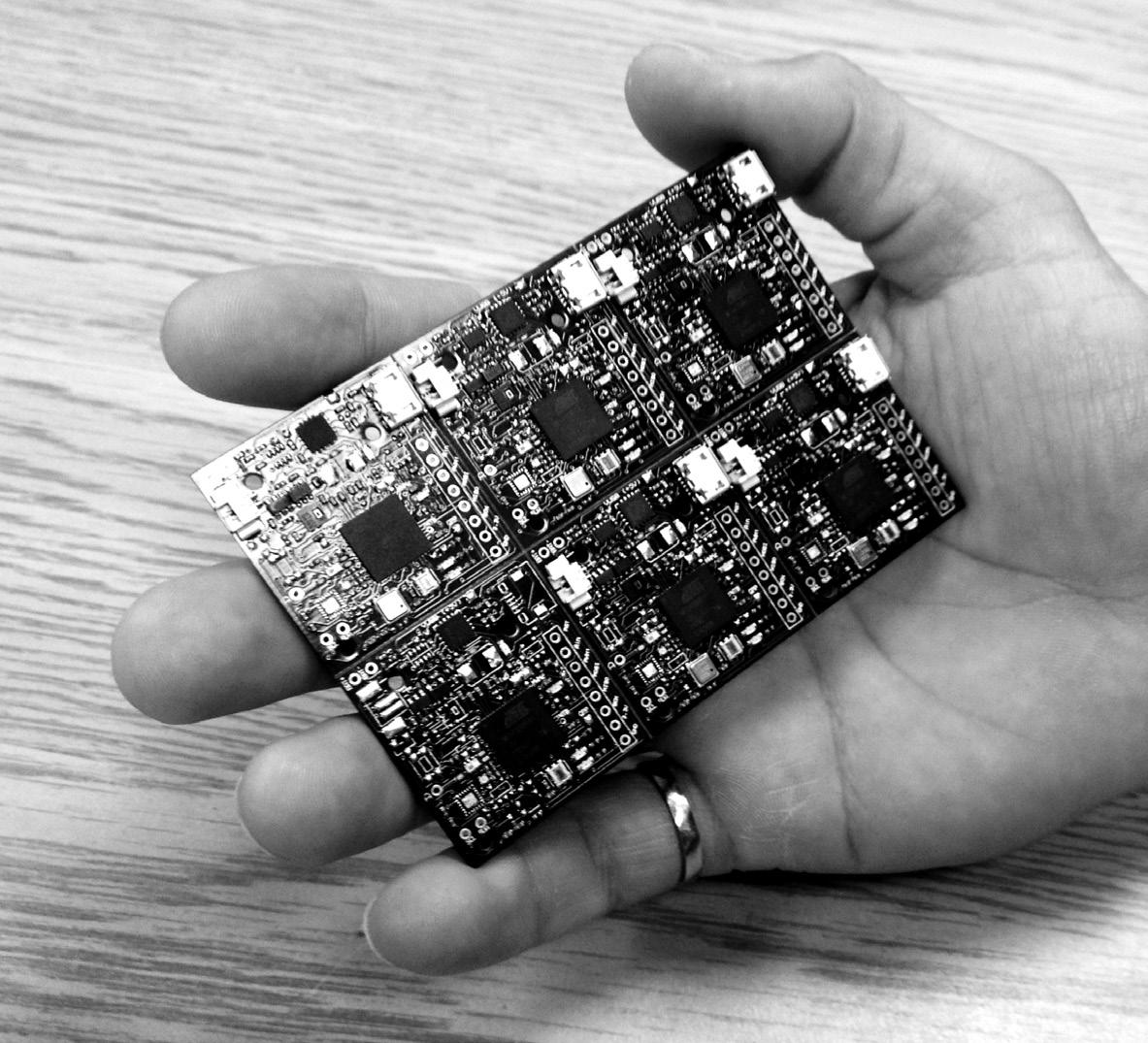
The society has been hard at work developing ArduIMU V4, which can be broken down like this: “Ardu” refers to Arduino software, “IMU” stands for Integrated Measurement Unit, and V4 is the fourth version.
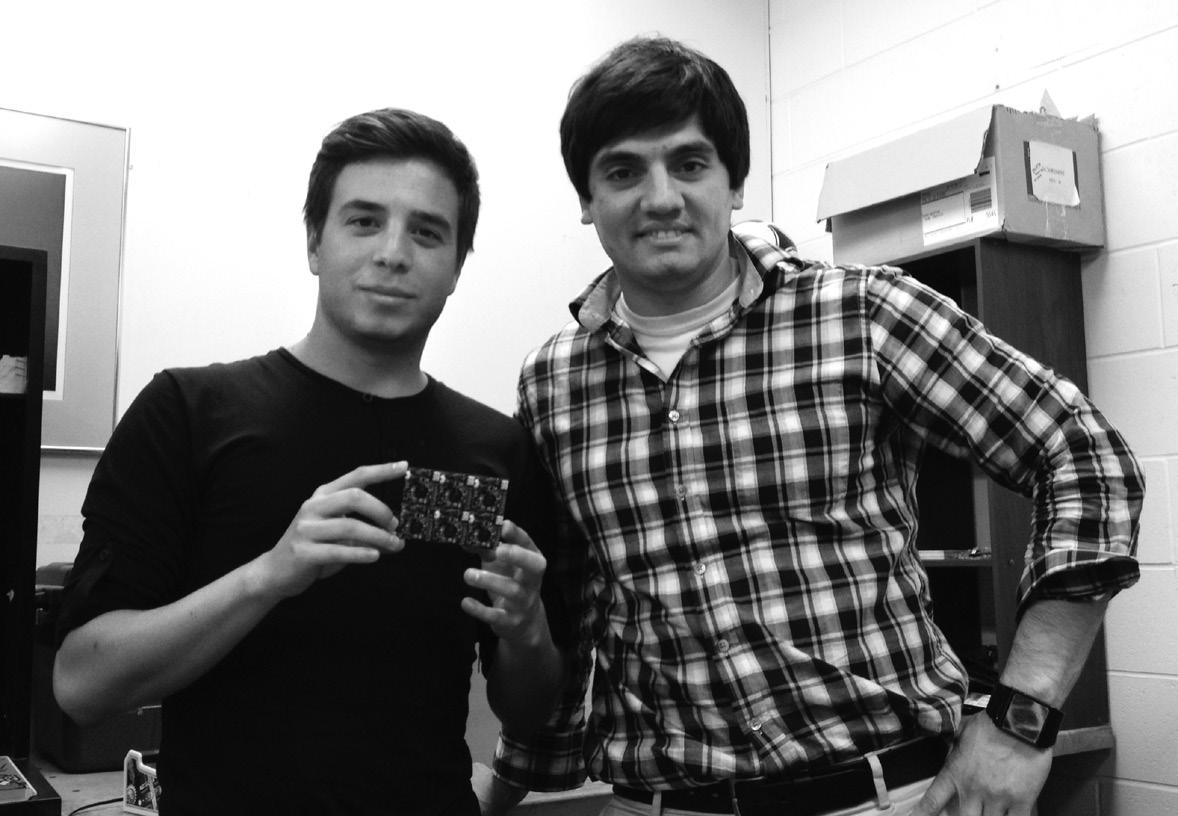
Mike Lambeta, undergraduate UMSATS member and technical lead, said “the easiest way to describe it is it’s a sensor platform.”
The ArduIMU project began in 2007 and has undergone various improvements since then.
The current model, ArduIMU V4, is a miniature 3.14 cm by 3.14 cm in size. The ArduIMU V4 is a “beefed up” version of its predecessor, ArduIMU V3.
So what upgrades have been added?
Initially, the V3 was equipped with a magnetometer, which measures the strength of a magnetic field; a gyroscope, which measures the orientation of an object (pitch, roll, and yaw); and an accelerometer, which measures speed.
In addition to these original sensors, V4 can also measure temperature, barometric pressure, humidity, light, and infrared.
Aside from these factory settings,
users have the ability to program sensors to measure just about anything.
The device is outfitted with wireless communication and can be charged by battery or solar panel.
Open-source innovation
The accompanying Arduino software is described as “open-source,” which means it’s free and can be accessed by anyone in order to learn details of how the device is built.
The team is trying to raise awareness of their project on Kickstarter. The goal is to raise $35,000
Making this information available promotes the continuous evolution of the sensor platform, explained Lambeta.
For example, if another engineer hobbyist were to come along and develop further upgrades, under the licensing agreement of the opensource software, they too would have to make their developments publicly accessible.
Ahmad Byagowi, team lead on the project, states, “You get it from the community; you give it back to the community.”
The team is trying to raise awareness of their project on Kickstarter.
Kickstarter is a crowd-funding program, which means assets come from anonymous, external investors who are interested in obtaining the product before it hits the market.
The team’s goal is to raise $35,000, which would cover the cost of manufacturing, assembly, and parts to make 500 platforms and break even.
The target market includes university students, gamers, scientists, engineers, and athletes.
Imagine the advantages of having one of these multi-sensor devices on the jersey of every starting player on the Bison football team during both games and practices.
Each player’s location would be positioned on a virtual map. It could track their routes, all the while measuring their speed, body temperature, heart rate, and blood oxygen saturation.
Knowing these vitals could aid in the development of optimal practice drills and conditioning routines customized for each individual player.
If the goal of $35,000 is reached, the team will manufacture 500 of the revamped sensor modules and distribute them to investors.
The investors receive the product at a discount price, but they must be patient while the funds are raised and the manufacturing is carried out.
For more information about ArduIMU V4 technology and how to get involved, visit tinyurl.com/arduimuv4
PHOTOS BY BAILEY RANKINE
Honeybees’ healing bacteria
The antimicrobial properties of honey
JEREMIAH YARMIE
Humans have used honey for the treatment of wounds since ancient Egyptian times.
There are three main factors contributing to the antimicrobial properties of honey.
First, honey has a high concentration of dissolved particles and is very acidic, which, together, result in an unfavourable environment for bacterial growth. Second, honey contains hydrogen peroxide, which is produced by the bee protein glucose oxidase. And finally, another bee protein which lends antimicrobial properties is Bee defensin-1.
Bee defensin-1 has broad-acting antimicrobial action and is produced in the bee salivary gland.
Studies have shown that honey inhibits quorum sensing, the bacterial process of using chemical messages to communicate with other bacteria, which inhibits the formation of biofilms (bacterial aggregates which adhere to each other on a surface). These properties, however, do not
paint the whole picture.
A research group from Lund University in Sweden has been investigating bacteria found in the honeyproducing stomach of bees. The 13 species of bacteria are all lactic acid producers and help protect the bees from harmful microbes.
The beneficial lactic acid bacteria are transferred in large amounts from the bees to fresh, raw honey. These helpful bacteria may yet be another contributor to honey’s antimicrobial properties.
These 13 lactic acid bacteria were exposed to various human wound pathogens in a petri dish culture.
The lactic acid bacteria inhibited the growth of all tested human pathogens, including the antibioticresistant strains methicillin-resistant Staphylococcus aureus , commonly known as MRSA, and vancomycinresistant Enterococcus, known as VRE.
The individual lactic acid bacteria species do not exhibit the same degree of antimicrobial action, nor do
they produce the same antimicrobial compounds.
When combined, the lactic acid bacteria have the benefit of combatting against an extensive range of pathogens.
An interesting side project the researchers undertook involved the topical application of these lactic acid bacteria. Researchers mixed the lactic acid bacteria in sterile honey and applied them to the persistent wounds of 10 horses who had been treated with a number of unsuccessful methods.
All 10 horses’ wounds healed after the topical application of this mixture.
It is important to note that this was done without proper controls, and would not constitute a proper experiment. These results are preliminary at best, but it doesn’t make it any less exciting. The lab plans on progressing to properly controlled clinical trials in the future.
Does this mean that the next time you cut yourself you should slather a
glob of honey on the wound?
Well, not quite. Not all honeys are created equally. They have different compositions, including their lactic acid bacteria proportions, which depends on factors such as nectar source and honeybee health.
Manuka honey, made from a bush native to New Zealand and Australia, is highly regarded for its antimicrobial properties. Manuka honey has the only commercially available honey with topical medical applications.
The most important thing to remember is that most honey available to us in grocery stores has been pasteurized. The pasteurization process kills almost all of the bacteria found in honey, including the beneficial lactic acid ones.
The honey used to treat the horse wounds was initially pasteurized, and then fortified with bacteria at higher levels than normal. Therefore, in this example, the healing effects observed may not be the same as if raw honey
was applied.
So how does the characterization of the antimicrobial properties of these lactic acid bacteria help?
First of all, it gives scientific support to the efficacy of honey as a wound-healer.
“It seems to have worked well for millions of years of protecting bees’ health and honey against other harmful microorganisms,” explained Tobias Olofsson, head researcher at Lund University.
Honey has also been used in human healing practices for thousands of years. Alternative treatments for bacterial infections are becoming more crucial as antibiotic-resistant strains of bacteria are becoming more prevalent.
Honey may be one of humanity’s options going forward, and how sweet it is.
Arts & Culture
Arts & Culture Editor: Katy MacKinnon
Contact: arts@themanitoban.com / 474.6529
Accessing art
The Soapbox Series is starting the conversation
MEG CRANE, VOLUNTEER STAFF
The arts aren’t always accessible for people with disabilities.
Sometimes audience members can’t see a play because of flights of stairs. Other times, artwork is seen as therapeutic art rather than professional art. Sometimes, audience members feel uncomfortable, or even sick, watching someone in a wheelchair perform on stage.
Arts & Disability Network
Manitoba chair Susan Lamberd hopes to make a big leap toward increasing accessibility with the Soapbox Series, beginning Oct. 2.
The organization puts on an event every year in the fall.
“This year we decided that we wanted to see where the needs lie, not only with artists with disabilities, but the art community and the disability community and the public,” says Lamberd.
Four events will be held: two workshops and two panel discussions.
Project leader Brennan Smith says the artists involved include director, playwright, and actor Debbie Patterson, and musician Angel Calnek. At the final event, hip-hop/ breakdancer Bill Shannon will perform his own style of dance using crutches.
“We’re hoping that people, through
a roundtable discussion process, will identify what they think the needs are in the community to make the arts more accessible,” says Smith.
“We’re
not expecting a perfect place, an ultimate goal. We’re hoping that this leads to mutual understanding that there is work to be done” – Susan Lamberd, chair of the Arts & Disability Network Manitoba
The event isn’t about educating or talking to people, it’s just about having conversations. At the end of the series, organizers will discuss what they learned from people who attended the events, says Lamberd.
“We’re not expecting a perfect place, an ultimate goal. We’re hoping that this leads to mutual understand-
ing that there is work to be done,” says Lamberd.
She says once people realize that there are barriers, they can start discussing how to get rid of them.
“People may start to work towards crashing those barriers down,” says Lamberd.
All the events of the Soapbox Series are taking place in spaces that are representative of the types of accessible spaces the Arts &
Disability Network Manitoba would like to see more of. Each event is also free.
“Everybody will be able to come and join in all of the events,” says Lamberd. And that’s exactly what they hope will happen.
Lamberd notes there is limited space so people should register ahead of time.
Save your spot at an event at adnm. ca or by emailing info@adnm.ca
Scheduled events
Panel Discussion on Accessibility and the Arts in Manitoba
World Cafe Workshop for ADNM Members and Artists with Disabilities – A Conversation on Arts Accessibility
Oct. 8, 1:30 – 3:45 p.m.
Platform Centre for Photographic + Digital Arts
World Cafe Workshop for the Arts Community at Large and Manitoba Disability Organizations Oct. 15, 1:30 – 3:45 p.m. Mentoring Artists for Women’s Art
Performance/Artist Talk by “Crutchmaster” Bill Shannon Oct. 30, 2014, 1:00 – 4:30 p.m.
Canadian Museum for Human Rights
Wall-to-Wall West Broadway art
Murals, food, and music aplenty at five-day festival
LAUREN SIDDALL, VOLUNTEER STAFF
S
ynonym Art Consultation is hosting a five-day mural and culture festival, beginning Sept. 23. With murals, music, and food, the local arts initiative aims to help connect people in Winnipeg who love to create.
Run by Andrew Eastman and Chloe Chafe, Synonym Art Consultation works to keep Winnipeg’s art scene thriving by installing art displays in many local establishments around town— including Fitzroy Restaurant and Union Sound Hall—in order to make art more accessible.
Their latest project, Wall-toWall, is a multifaceted, interactive mural and culture festival designed to break the mundane “art-opening” experience.
This art series is a combination of both indoor and outdoor murals to connect the establishments with the growing culture and development cropping up on Sherbrook Street. Eastman and Chafe aim to make Wall-to-Wall a chance for artists of all types to come together and experience the art from other members of the community. They are providing the public with an opportunity to
sing, eat, and enjoy the multi-sensory experience.
Doubling as a clothing store and studio, EMK Clothing provides the perfect backdrop for Matea Radic’s mural. Her images create a world of meaninglessness while maintaining beautiful, constructed figures that converge together into a form that resists individuality. Midnight Choir, an open-membership musical project, will provide entertainment for the event before asking for audience participation. The best part? Free admission.
This intimate coffee shop sets the stage for the Blind Pig pop-up restaurant to create a completely unique combined culinary experience and art opening for Natalie Baird’s mural. Baird is primarily interested in community-based arts and research – fitting perfectly with
Thom Bargen. Tickets for this event are $35 in advance. Email info@synonymartconsultation.com for yours.
Sept. 25, 8 p.m.-late, The Tallest Poppy (685 Westminster Avenue)
First established in the North End and moving to the Sherbrook Hotel this fall, the Tallest Poppy will host Jade Rennie-Harper’s mural to the tune of Jom Jom Club’s eclectic music. Rennie-Harper’s attraction to street art, ink, painting, and tattoos will result in a stellar mural. Tickets are $5 at the door; swing by to grab a drink and ask to see the Jom Jom Club’s vinyl collection.
The festival’s events reprise at Thom Bargen to bring you an afternoon of acoustic acts, an art sale (free admission), and of course all the (purchased) coffee you desire.
Sept. 26 10 p.m.-late, The Handsome Daughter (61 Sherbrook Street)
This under-the-radar bar (formerly
the Rose n’ Bee Pub) will be hosting Dany Reede’s mural. His work exemplifies the dissonance he feels between his mind and body. Join local DJ trio Magik Trix for a rocking Friday night, complete with an open karaoke mic. Tickets are $5.
Sept. 27, 4-11 p.m., Food Fare Parking Lot (115 Maryland Street) This pivotal point connects multiple local businesses across Sherbrook Street, making it the
perfect location for Gabrielle Funk and Takashi Iwasaki’s mural. This event was designed to coincide with the Rainbow Trout Bike Jam, acting as the first stop. Get a bike tune-up from Natural Cycle, decorate your bike with Art City, and dance to music from local band Surprise Party at 8:30 p.m.
What reason could you possibly have for missing this amazing multifaceted event? Admission is free!
GRAPHIC BY BRAM KEAST
PHOTO PROVIDED BY TAKASHI IWASAKI
Bill Shannon performs own style of breakdance using crutches
The Dude Abides
5th annual charity event Lebowskipalooza shows love for 90s cult classic
IAN T.D. THOMSON, VOLUNTEER STAFF
Put on your favourite Creedence tape, tie up your bowling shoes, and starting mixing up some White Russians: Lebowskipalooza, an event based around the 90s cult comedy The Big Lebowski, will be held at the Garrick Centre on Oct. 18.
The event, which donates proceeds to the Alzheimer Society of Manitoba, returns for the fifth year in the row after being formed in early 2009 from a discussion between two friends.
“Trent Whidden (the driving force behind Lebowskipalooza) [and I] were discussing how what a bummer it was that we never saw the movie in the theatres back in 1998 when it first came out,” says Greg Skazyk of the Lebowskipalooza organizing committee.
“We discussed, jokingly at first, about renting a theatre somewhere in Winnipeg and running the movie for us and our friends.”
Written, directed, and produced by the Coen brothers (Fargo, No Country for Old Men, O Brother Where Art Thou?), The Big Lebowski is one of the more outlandish dark comedies of the past 20 years.
The film tells the tale of Jeffrey Lebowski, who more commonly refers to himself as “the Dude” (Jeff Bridges). While the Dude is content with his lethargic, drama-free routine, trouble finds him as his life becomes intertwined with a millionaire of the same name.
With the assistance of his bowling team consisting of a paranoid Vietnam veteran named Walter (John
Goodman) and their clueless pal Donny (Steve Buscemi), the Dude soon finds himself wrapped into several absurd events featuring the likes of Krautrock Nihilists, pornography producers, and a pedophile bowler named Jesus.
When the movie was originally released in March of 1998, its success was limited. With an estimated budget of US $15 million, the movie only made about US $5.5 million in the United States on its opening weekend. Movie reviews were mixed.
In 1998, Peter Howell of the Toronto Star wrote, “It’s hard to believe that this is the work of a team that won an Oscar last year for the original screenplay of Fargo.”
Over the past decade, though, there has been a newfound appre-
ciation for the film. The Big Lebowski has evolved into a cult classic.
“I think there may be several things that people connect with in this movie,” says Skazyk. He says that all the characters are interesting and memorable, and that the dialogue by the Coen brothers is wonderfully written – many lines in the movie are quotable.
“Finally, I’d say that a lot of people see at least a bit of themselves in the Dude,” says Skazyk. “He’s an underdog, and everyone loves to root for the underdog.”
With a supportive fan base clamouring to every joke and quote from the film (“Donny, you’re out of your element!”), festivals based on the film have multiplied across North America, giving fans the ability to
show their appreciation for the Dude outside of watching the movie.
For the past four years, Lebowskipalooza has proved to be the fix for all the “Lebowski urban achievers of Winnipeg.” The volunteer-run event raised $1,700 last year and Skazyk expects it will raise even more money this year. With the main feature being a screening of the 1998 film, the event will also feature “the usual suspects: [a] costume contest, ringer toss, trivia, dance-off, and plenty of White Russians,” says Skazyk.
Doors for Lebowskipalooza open at 6 p.m. with games beginning at 7 p.m. Tickets are $15 plus applicable fees at diyobo.com and at the door.
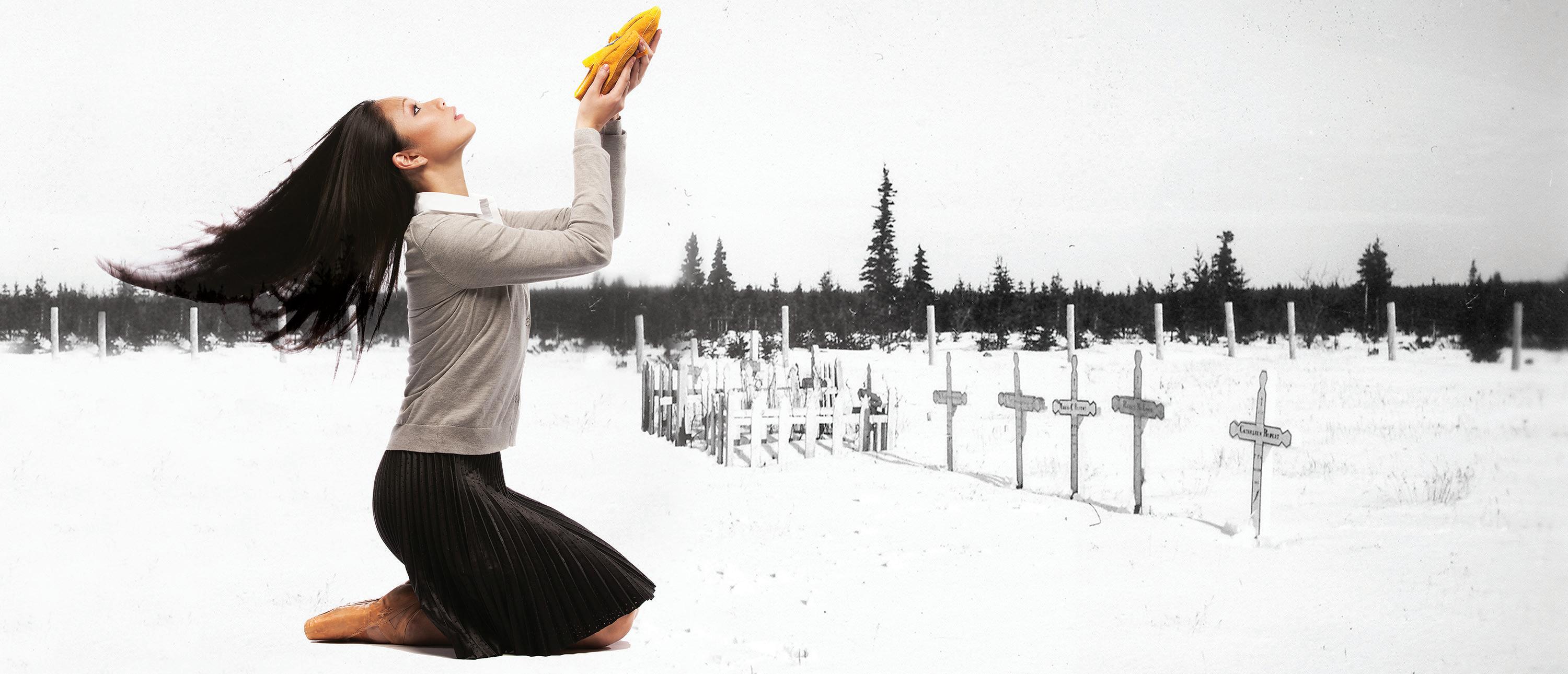
Going Home Star – Truth and Reconciliation explores legacy of residential schools
Royal Winnipeg Ballet offering free admission to survivors, reduced-rate evening to general public
BRYCE HOYE, STAFF
D
rug use, promiscuous sex, homelessness, and the cultural sterilization and displacement of an entire nation are all part of the Royal Winnipeg Ballet’s (RWB) next act.
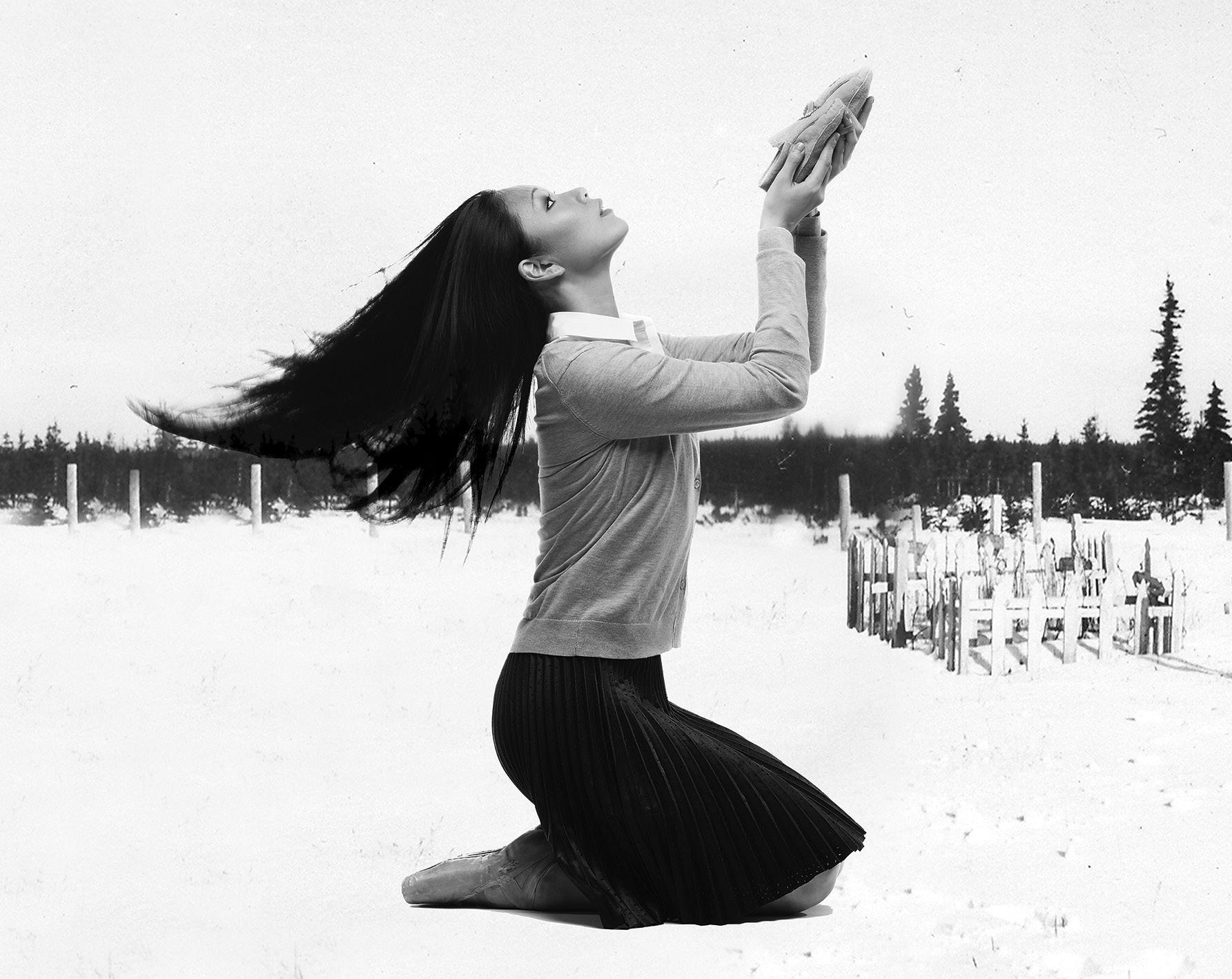
It’s hard to imagine how the carefully choreographed pirouettes and pliés of a ballet might be used to explore the generational traumas experienced by Canada’s First Nations through the residential school system.
And yet that is exactly what the RWB will attempt to do Oct. 1-5 in Going Home Star - Truth and Reconciliation
“Essentially it’s a love story woven around the Truth and Reconciliation Commission findings,” says RWB artistic director André Lewis.
The storyline, written by acclaimed aboriginal novelist Joseph Boyden, follows Annie, a young, independent aboriginal woman played by Sophia Lee.
Annie works as a hairdresser and lives an urban life of wild partying, taking on different lovers every night. She grows restless and disconnected.
Eventually Annie encounters a homeless First Nations man, Gordon, portrayed by Liang Xing. Gordon is forced from his home on a reserve at a young age and into the residential school system, eventually fleeing to fend for himself on the street.
The two first meet in the subway, and through that meeting they connect and begin to help each other recover from the legacy of pain
inflicted by the residential school system.
Support from Aboriginal community
Lewis says the Aboriginal community has been behind the premise of Going Home Star since it was in its conceptual phase almost 10 years ago.
“I would’ve never approached this subject matter if it had not been for Aboriginal people supporting this, but this is not an Aboriginal problem, it’s a Canadian problem,” says Lewis.
The Aboriginal community as a whole has been supportive of Going Home Star, says Lewis, because they feel their story is being told.
“In the ballet itself, you see the effect that the schools have had on the main character, Gordon, and how Annie ultimately helps him and rediscovers her culture, her background; that’s why it’s called Going Home Star, to reconnect with what [the Catholic Church] and a successive government tried to erase.”
Although there won’t be any First Nations dancers in the ballet, there will be other forms of contributions made from a series of First Nations artists.
“We have Tanya Tagak, who is a throat singer,” says Lewis. “We have Steve Wood and the Northern Cree Singers.
“ It wasn’t going to be just white only Anglo-Saxon men that created the work,” says Lewis. “I wanted the continuum, which is why we have
KC Adams [as set designer], who is an installation artist in Winnipeg.”
Aside from ballerina Maria Tallchief, formerly of the New York City Ballet and who passed away last year at the age of 88, historically there have been very few Aboriginal people participating at elite levels of ballet in
North America, says Lewis. So, in an attempt to make the ballet more inclusive, the RWB announced Monday night they are inviting residential school survivors to take in Going Home Star for free.
There is a limited amount of seating so survivors wishing to attend should contact the RWB’s Angela Hendry at 204-957-3494 or email groupsales@ rwb.org by Monday, Sept. 29 They also announced a “Pay What You Can” evening on Oct. 2. Reduced-rate tickets go on sale at 5:30 p.m. the day of the show. Suggested donation price is $20.
PHOTO BY RÉJEAN BRANDT PHOTOGRAPHY
Deschâtelets Archives Missionary Oblates (Q), Sophia Lee
Hearing Trees’ debut EP
Laid-back poetry, ghostly vocals found throughout breakout record
CAITLYN MASKIEW
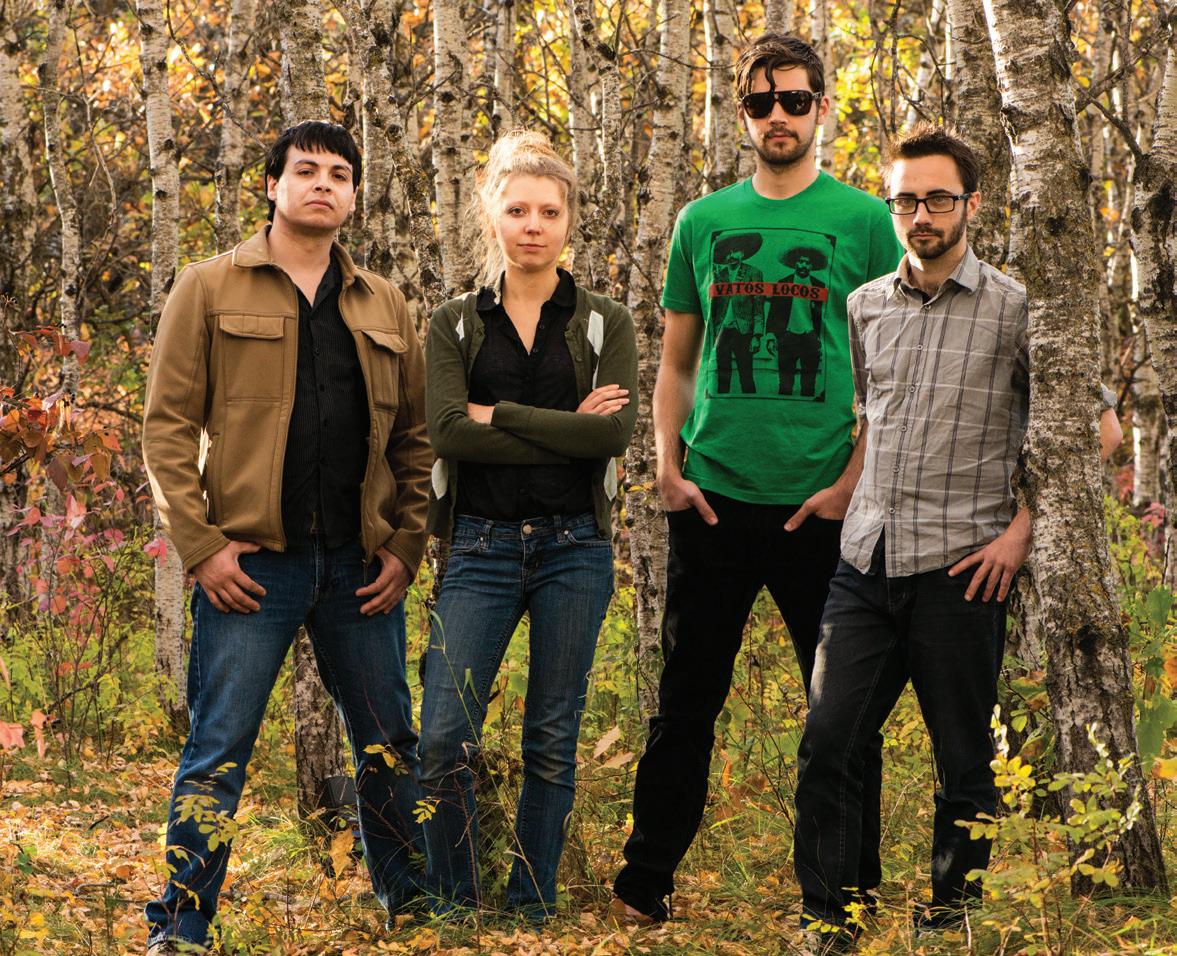
The four-piece rock group Hearing Trees recently debuted their selftitled EP. The band is made up of Graham Hnatiuk singing vocals, Ava Glendinning on guitar, Joel Heidinger playing bass, and drummer Kyle Kunkel.
The band has a sound not heard often. While the majority of new rock music has become aggressive and heavy, Hearing Trees stands out with a laid-back sound while still maintaining a distinctly rock music feel.
Even when the bass is driving in “Room For You” and the drums beat out a quick rhythm, the guitar and voice both have a slower melody with longer notes, giving the song a perfect balance.
Hnatiuk wrote poetry for four years before Hearing Trees came together. His skill with words is particularly noticeable in “Kites,” where the song begins with spoken verse about a soldier’s experiences at war. The descriptive verse coupled with
Hnatiuk’s vocal inflections shows the soldier’s distress at his current state of affairs.
Head in the Sand records founder Michael P Falk praised the band for their “marriage of good lyrics with creative rock songs.”
Truly thoughtful and personal lyrics are somewhat rare in popular music, and Hnatiuk’s mastery of language is something that sets this band apart.
All musicians have influences and will often build their sound with a few key artists in mind. For Hearing Trees it’s R.E.M., Matthew Good, and, most noticeably, the Tragically Hip.
When “Love Oblivion” starts, it’s immediately reminiscent of the light, acoustic sound that the Tragically Hip utilizes frequently, and when the vocals begin the first verse, the similarity becomes more apparent.
The lead singers for the two bands sing in around the same range and
both have a sharp quality to their low voices that is not easily matched.
The band breaks away from getting caught in the trap of sounding too much like their idols with the songs “Kites” and “Shipwrecker.”
Using spoken word poetry in “Kites” is a risky technique, as the poetry goes on for over a minute, and with the wrong tone to the voice it could quickly become boring and make the listener skip the track.
Thankfully, Hnatiuk provides a dynamic performance where the listener can really sympathize with the desperation in the soldier’s voice.
Then, we have “Shipwrecker,” which is unlike any of the songs on the album. It’s dark and ominous, with a haunting melody played skillfully on guitar by Glendinning, and echoes in the vocals during the chorus are almost ghostly.
Using techniques like these to emotionally draw in the listener, who then becomes active in the con-
sumption of the art, is what makes this band unlike any other in recent memory. This rock group’s debut EP is worth a listen.
Purchase the Hearing Trees’ album on Bandcamp at hearingtrees. bandcamp.com/track/kites
PHOTO BY DARON FIELD
Bisons get clawed
Women’s soccer shut-out on the road against Grant MacEwan
MIKE STILL, STAFF
Summary
The Grant MacEwan Griffins set the tempo early on, and didn’t look back, defeating the University of Manitoba Bisons 3-0 on Sunday afternoon in Edmonton.
The Griffins wasted little time getting on the scoreboard, as midfielder Jenny Lam notched the first goal of the game just 2:27 into the first half.
The goal came off of a free kick, after teammate Kassandra Jajczay was hauled down in the penalty area. Lam’s kick was a no-doubter, as she hammered it straight into the top corner, giving Bison goalie Martina Arran very little opportunity to make the save.
Manitoba didn’t let the goal phase them, coming back with pressure
of their own. The best opportunity for the Bisons occurred in the 31st minute, as forward Selina Speranza, fresh after being brought on as a substitute in the 21st minute, was able to beat MacEwan goaltender Rebecca Reif. Just as it looked like Manitoba was about to get on the board, defender Kayla Evans stepped in, kicking the ball out of harm’s way.
first half, out-chancing the Griffins 6-3, but couldn’t find the back of the net.
The Griffins pulled away in the second half, dictating the pace and adding two more goals in the first 10 minutes of play
The Bisons continued to pressure MacEwan for the remainder of the
The Griffins pulled away in the second half, dictating the pace and adding two more goals in the first 10 minutes of play. Forward Shaelan Donnovan made the score 2-0 in the 53rd minute, finishing off a brilliant pass from Jajczay with a sliding goal. It was Donnovan’s second scoring opportunity, after shooting
the ball just over the top of the net earlier in the half.
MacEwan would put the game to rest just under two minutes later, as forward Kaily Mohn flashed with impressive speed down the left wing, tucking the ball past Arran and into the net.
The Bisons put up an admirable fight despite the score, frequently putting the ball on net in the remaining 35 minutes of play. They outshot MacEwan 6-3 after the third Griffin goal, but were unable to solve Reif, who had five saves on the day.
Game notes
Forward Amanda Wong of the Bisons led all players with four shots, two of which were on net. The rookie
played all 90 minutes against the Griffins.
Forward Robyn Kastner was named the player of the game for Manitoba, after having two quality chances that were both on net. With the win, the Griffins, playing in their first season in the Canada West, move to 3-1-0 on the season, while the Bisons fall to 2-2-0.
Manitoba will stay on the road this weekend, as they travel to Calgary to take on the 1-4-1 Mount Royal Cougars, while the Griffins will welcome the 3-1-2 Saskatchewan Huskies.
Grinding it out
Bison football pulls out homecoming victory in harsh weather
MIKE STILL, STAFF
Summary
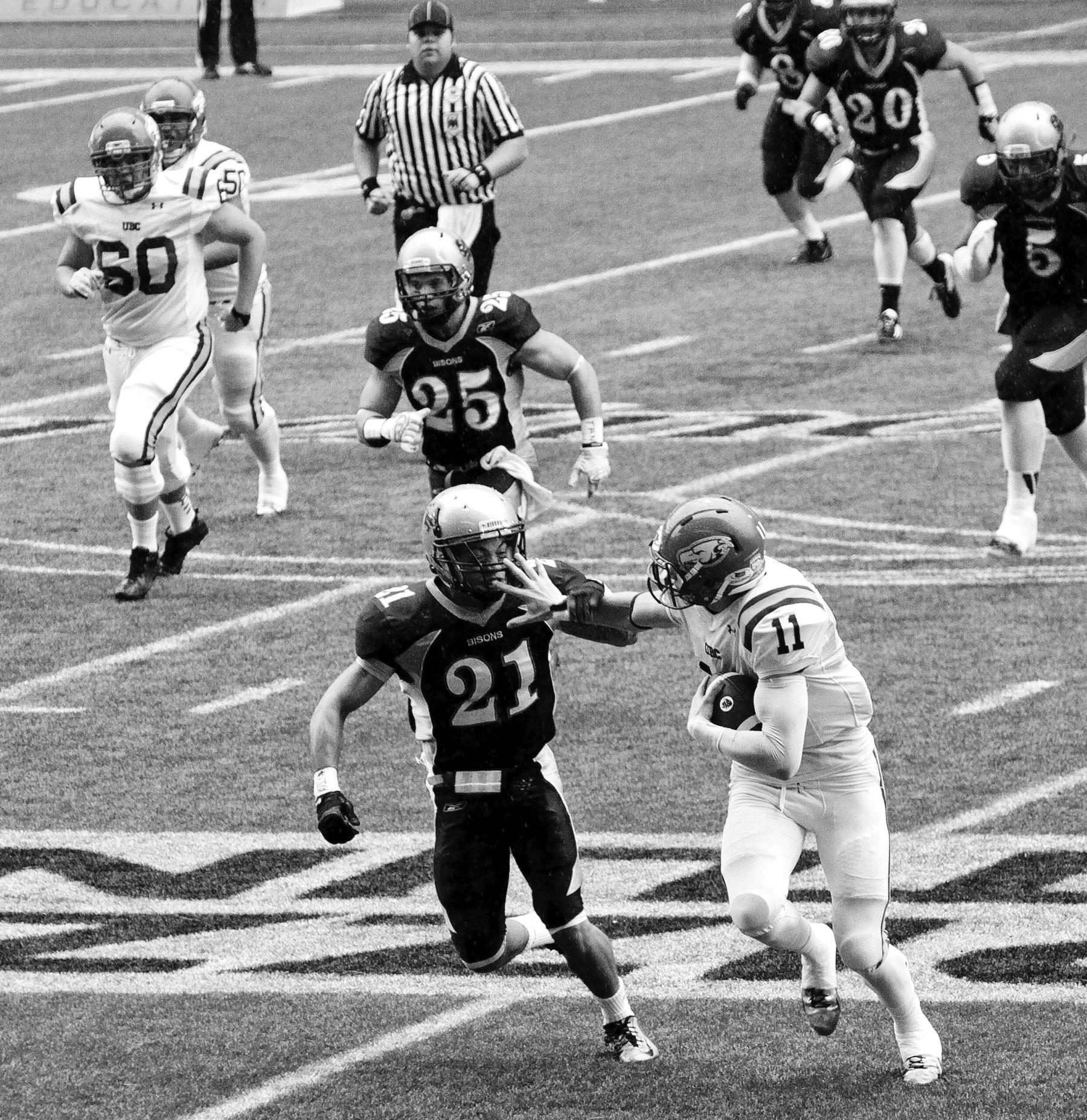
It didn’t come easy for the #9-ranked University of Manitoba Bisons, but they got it done at rain-soaked Investors Group Field on Saturday afternoon, pulling off a 20-10 victory over the UBC Thunderbirds.
Manitoba was led by their defence, which recorded four sacks and caused two turnovers on a day where that many touchdowns were scored – one by each team.
The Bisons got on the board first, at 11:12 of the first quarter with a safety. The two points were due largely in part to the defence, which stuffed UBC deep in their own end.
Manitoba would add to their lead at 5:51, scoring their only touchdown of the day: a 22-yard rushing touchdown by Kienan LaFrance, his fifth major of the season.
The Bisons would need only three plays to put six points on the board. After an incomplete pass, Nic Demski hauled in a 31-yard reception, and LaFrance finished things off on the following snap. He took a draw play, which seemed to fool the UBC secondary, giving him space to run. LaFrance deked a few defenders out of their equipment in the process, enroute to the score.
The Thunderbirds managed very little offensively in the first quarter. They only had one drive last longer than three plays, and also turned the ball over once – thanks to a forced fumble by Bison defensive back Cam Teschuk, which was recovered by linebacker D.J. Lalama.
Manitoba would add to their lead at 7:22 of the second quarter, thanks to a 36-yard field goal by kicker Ryan Jones. The drive was aided by brilliant field position, which started in UBC territory after a muffed punt by Thunderbirds kicker Quinn van Gylswyk.
UBC would get their only touchdown on the following drive: a fouryard scamper by running back Terrell Davis at 4:53. Receiver Alex Morrison was the x-factor on the drive, hauling in three passes for 77 yards.
The Thunderbirds crept closer with 11 seconds left in the first half, as van Gylswyk booted a 38-yard field goal, capping a seven-play, 29-yard drive. That made the score 12-10 for Manitoba heading into the half. It was also the closest that UBC would get on this day, as they were shut out completely in the second half. Only eight points were scored in the final two quarters, all coming from the Bisons.
Manitoba got off to a strong start in the second half, kicking a field goal on their first drive. Demski provided the biggest play, rushing 28 yards on an end-around, which set up the Bisons at the UBC 25-yard line. Jones would connect on a 40-yarder three plays later to make the score 15-10.
The Bisons put two more points on the board at 2:59 of the third, after the defence stuffed UBC
inside the 20-yard line yet again. The Thunderbirds were forced to concede another safety.
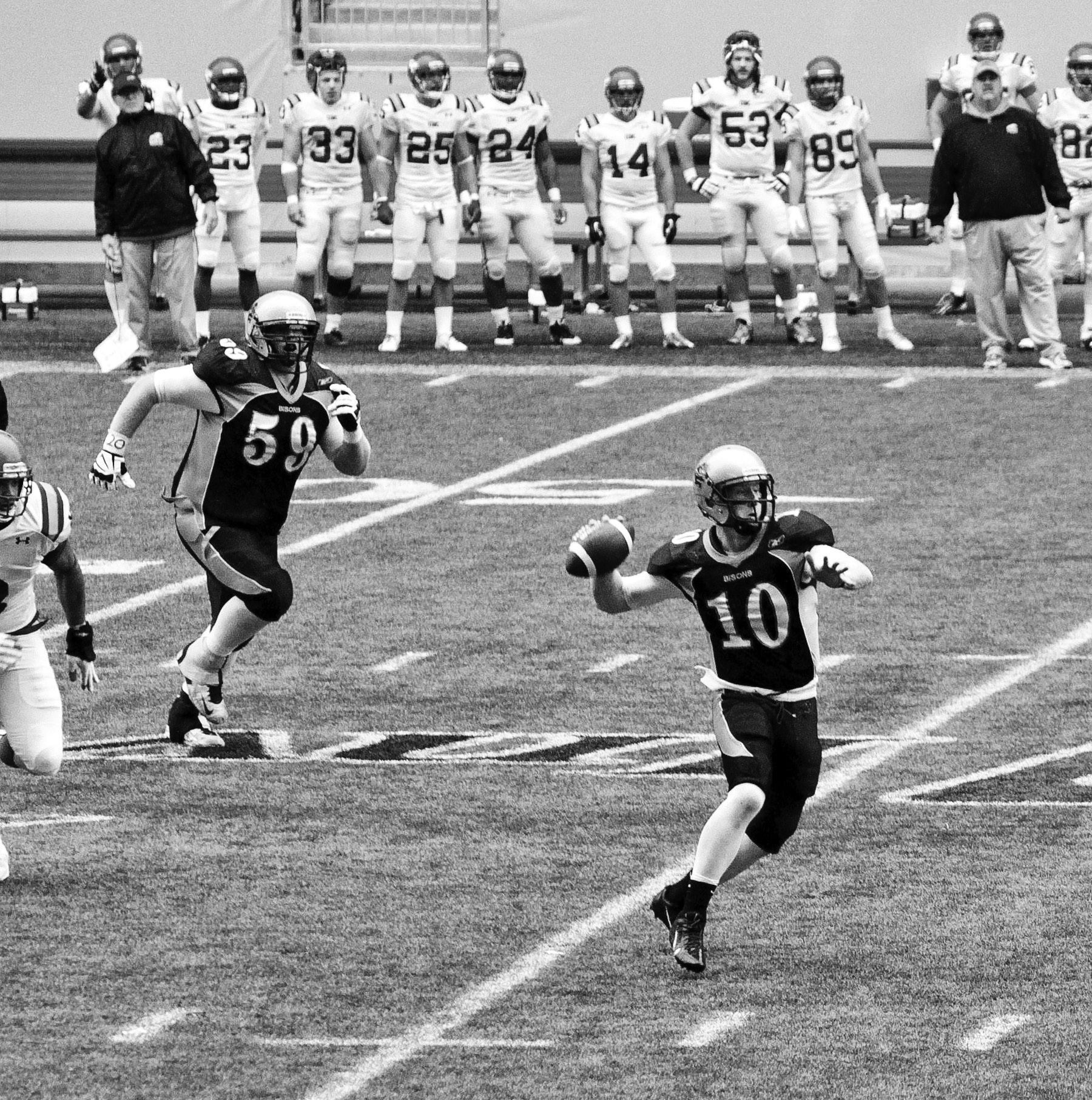
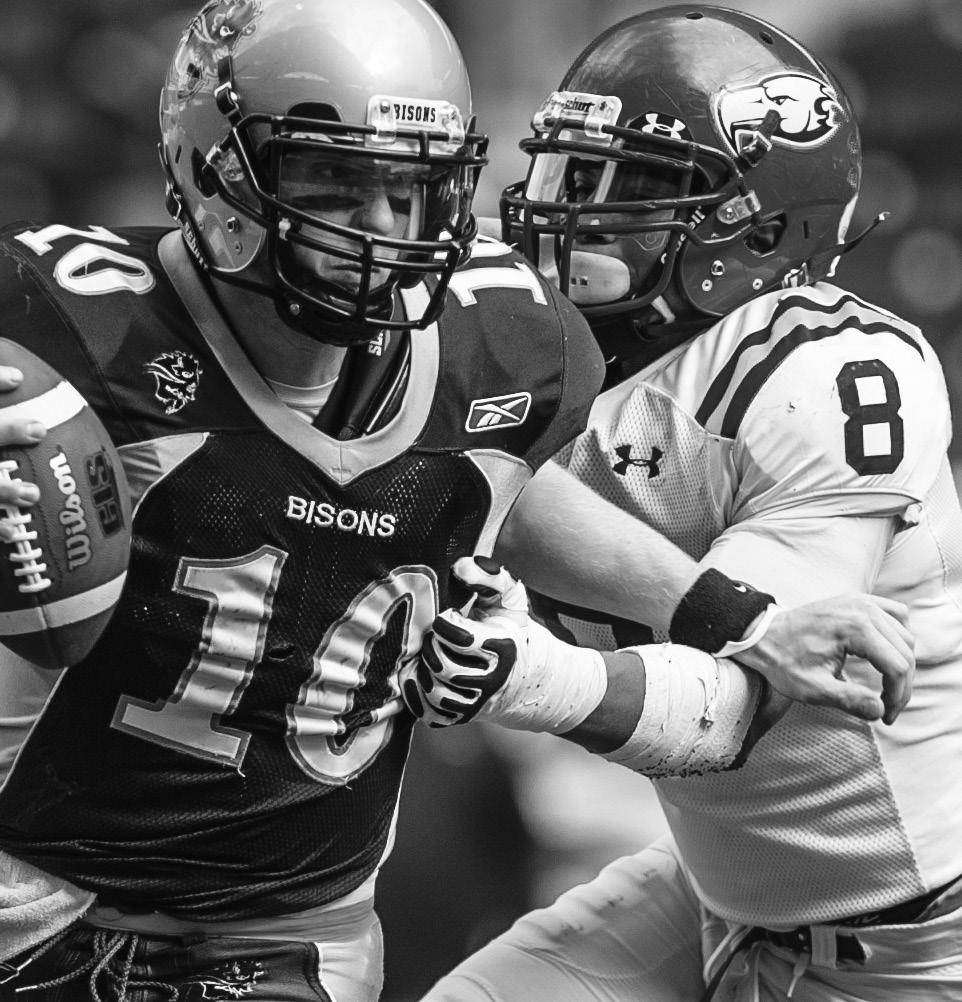
Manitoba would finish off the scoring with a 19-yard field goal, at 6:33 of the fourth quarter. The Bison drive lasted nine plays—their longest of the game—and showed the athletic ability of quarterback Jordan Yantz, who frequently made plays with his feet.
Manitoba was led by their defence, which recorded four sacks and caused two turnovers
UBC looked to move the ball in the final three minutes, starting at the Manitoba 43-yard line after a botched punt. Bison safety Tyler Fong would snuff out any chance at a comeback, though, as he intercepted the ensuing Carson Williams pass, securing the 20-10 win.
Discussions with Dobie
Head coach Brian Dobie was pleased with his team’s overall performance in all three areas against UBC, making note of their ability to dictate the pace.
“You look how all three units contributed so heavily in that game. We were never in danger, not truly,” said Dobie.
“I felt we really controlled the game against a UBC team that is far better than its record.”
Game notes for Manitoba
Demski, a three-time CIS AllCanadian, was all over the ball for Manitoba, recording 224 combined all-purpose yards. He had 45 yards rushing, 65 yards receiving, and 114 yards in kickoff/punt returns.
Receiver/punter Zach Regert had one heck of a day booting the football. Six of his 11 punts ended up inside the opposition’s 20-yard line, frequently setting up UBC with unfortunate field position. His longest punt on the day sailed 55 yards.
Lalama, the middle linebacker for the Bisons, was all over the ball. He led the defence with nine total tackles, along with a fumble recovery.
With his one and a half sacks in back-to-back games, first-year rush end Evan Foster now leads the Canada West with three total sacks on the season.
What’s up next?
Manitoba will face their biggest test of the season next week as they travel to Calgary to take on the #2-ranked Dinos. Game time is 6 p.m. Mountain Time on Friday, Sept. 26.
Investing in the future
Sport for Life Centre offers many diverse opportunities for residents
MIKE STILL, STAFF
Background
For athletes both young and old, having the ability to train and grow in sport is crucial. In order to do so, one of the important factors is an appropriate facility. The Sport for Life Centre, a branch of Sport Manitoba, offers that opportunity.
Nestled in downtown Winnipeg at 145 Pacific Avenue, the Sport for Life Centre features a variety of different programs geared for anyone from the amateur athlete, all the way up to Olympic hopeful.
According to Tara Skibo, communications and public relations officer for Sport Manitoba, the Sport for Life Centre’s goals are: to build community through sport, and ensure that the community has access to the education, equipment, and resources necessary to further their growth, development, health, and wellness.
“Sport Manitoba’s board of directors and staff began developing the Sport for Life Centre project in 2005,” said Skibo.
“Since the Sport for Life Centre is the first of its kind in Canada, Sport Manitoba spent many years researching and developing the Sport for Life Centre concept.”
This particular concept includes an ongoing 160,000-sq.-ft. renovation, which is being built in two phases.
First phase
Phase one is an 84,000-sq.-ft. renovation, and was ready for occupancy in spring of 2010, according to Skibo.
Sport Manitoba president and CEO Jeff Hnatiuk talked about the development of the project, and its impact on the community as a whole.
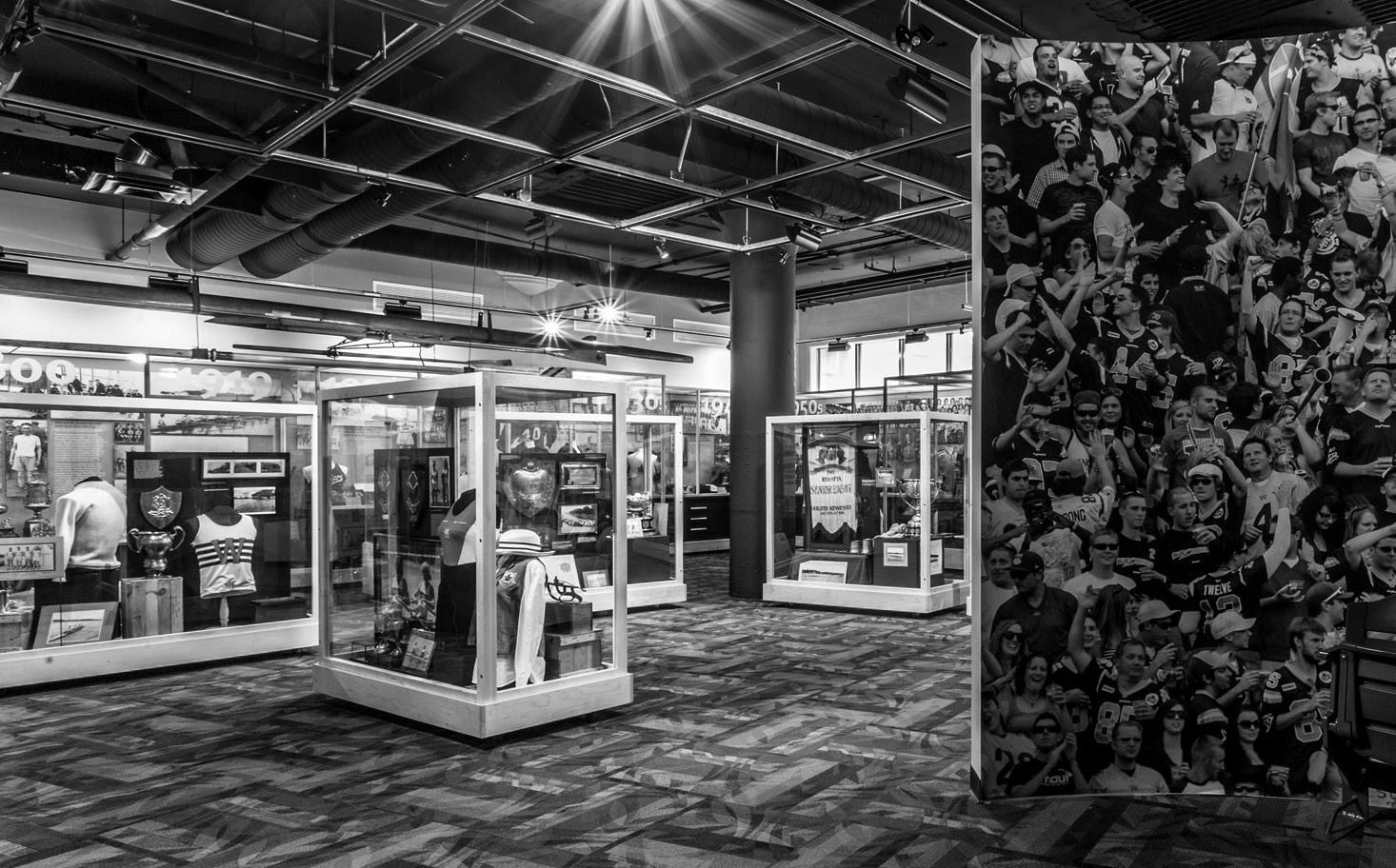
“In [the first phase] we have the Manitoba Sports Hall of Fame, the administrative components of the facility, and our Sport Medicine Centre,” said Hnatiuk.
According to their website, “The Sport for Life Centre currently houses over 60 provincial sport organizations. Collectively, these organizations serve over 190,000 athletes, 100,000 program participants, and approximately 25,000 volunteers, coaches, and officials.”
“Bringing all those aspects of sport together in one become very unique, and really allows us to have a significant impact in the community in a number of different ways,” Hnatiuk said.
Second phase
Phase two of the project, which is currently being worked on, will be an 80,000-sq.-ft. training complex, housed in the same building as the rest of the Sport for Life Centre.
The complex will build off of what is already provided, and will include a variety of other features, such as a training track for sport and community use; strength, conditioning and testing areas; and three full convertible court spaces and areas for individual sports, fitness conditioning, and workshops.
“The training centre provides seamless transition between training, coaching, testing, and therapy, which is a first in Canada,” said Skibo.
For provincial athletes and Olympic hopefuls, the centre will offer many valuable resources that may help those specific individuals to perform more effectively in competition.
“Team Manitoba athletes and provincial team athletes will gain access to much needed sport medicine and science research,” said Skibo.
New identification, evaluation, and training opportunities will move them seamlessly from the provincial
to national training levels resulting in greater opportunities for Manitobans to live their athletic dreams on the national stage.”
Hnatiuk further emphasized that point, noting the importance of proper preparation.
“What we want to do, is we want to make sure that our athletes that are competing inter-provincially feel as prepared, and they should be, as an athlete that they’re stepping up to the starting line, on the ice, or the court
against, no matter where that athlete is from in this country.”
Regardless of the athlete’s level of experience, each individual can find an aspect of the centre to benefit from.
“The Sport for Life Centre is an accessible and centralized learning facility where grassroots volunteers, leaders, athletes, coaches, and officials are welcome and can access the best research and education on sport and activity,” said Skibo.
PHOTO BY TARA SKIBO
PHOTO BY NUMBER TEN
GRAPHIC BY NUMBER TEN
GRAPHIC BY NUMBER TEN
Big Horn breakdown
A summary of school spirit
DAVID GRAD, VOLUNTEER STAFF
On Sunday, Sept. 14,Bison Recreation Services, Student Life, and students from the University of Manitoba got together and helped raise funds for the Bison women’s soccer team through a soccer tournament. Our soccer team is relatively new and does not have the benefit of major funding, which is why they work so hard to raise funds throughout the year.
The one-day tournament saw 10 student teams sign up for a day of soccer on the same turf field that the Bisons play on. Despite being the least skilled teams at the tournament, I can confirm that the Big Horns had fun coming down from the stands and getting a chance to play.
The best part of the tournament was the fact that the women’s soccer team was out in full force, officiating each game, keeping everyone on track, selling food, and taking photos. One thing stood out to me at this tournament. There were students helping athletes, athletes helping students, and the university supporting community.
There have been other examples of students supporting athletes outside of the stands. Last year after the women’s volleyball team won nationals, University One Student
Council organized a welcome home party for the team at the Hub.
Members of the council followed the team’s play through live streams and were so excited by the Bisons’ win that they wanted to make their contribution to the experience.
School spirit is alive and well at the University of Manitoba. It is starting to thrive, not just in the stands at games, but in the actions and support of students and student councils
A couple weeks prior to nationals, the U1 Council also joined the Big Horns in the stands for a weekend of volleyball. That’s the unique thing about CIS sports: athletes are students and want to get to know their fans.
Yakking with Yantz
Early season comments from the Bison QB
MIKE STILL, STAFF
The University of Manitoba
Bisons football team has gotten off to a strong start, putting up a 2-1 record after three games. The Manitoban had a chance to catch up with quarterback Jordan Yantz, after a successful victory over Regina in the Bison’s home opener, to get his thoughts on how the team is progressing.
THE MANITOBAN: What are your overall thoughts from a team perspective, about the loss in the season opener against Saskatchewan?
YANTZ: I thought we started off strong. We were moving the ball on the offensive side very well in the first half. It was just a downward spiral for us in the second half, with injuries. I think that we proved in the first half that we were a very good team. We can beat those guys, no “ifs,” “ands,” or “buts,” we just have to play a full game.
M: How prepared do you think the team was for the season opener, coming out of training camp?
YANTZ: I think overall as a team, that was a great win. It wasn’t just one unit that dominated. Offensively, I think that we were inches away from multiple big plays. There’s a lot that we can correct. It still was a good game for us, but I think we can even get better.
M: After homecoming, the team will head on the road for two straight games. Does being away from IGF, and the comforts of home ware on you as a player at all?
YANTZ: It’s definitely different. The good thing about going to Calgary (this week) and Alberta (next week) is that we fly there, so you don’t have to travel on a bus. That’s what drains you, is travelling from here to Saskatoon on a bus, that’s definitely not the funnest thing to do in the world. I think it will be okay for us. It’s just another game, and we just have to prepare like any other week.
Most recently, U1 Student Council and Arts Student Body Council pooled their resources to support all varsity athletes with a large pyrotechnic show during the Pep Rally at the football home opener. It’s difficult to know for sure, but the pyrotechnic show provided by the university one and arts student body councils may be one of the first times student councils worked together to support student athletes with programming that helps build a stronger fan culture on campus.
Anyone who was at the event will tell you that the pyrotechnics were visually incredible to watch against the backdrop of 300 student athletes. School spirit is alive and well at the University of Manitoba. It is starting to thrive, not just in the stands at games, but in the actions and support of students and student councils who are doing more than just cheering in the stands.
The Big Horns played their role in helping to fill the stands with students and energy, but athletes who take the time to join students in the stands helped provide the motivation to organize better pep rallies, throw welcome home parties, and build a stronger culture of school spirit on campus.
YANTZ: Training camp was a struggle this year. It was six straight days of two-a-days, guys were getting banged up and smashing every day, so it wasn’t the best structure. Not having a pre-season game was also huge for us. We had tons of penalties, close to 200 yards. That’s one thing that never helps you out, and that really killed us.
M: The team responded quite well against Regina. How important was that win for you guys?
M: It’s hard not to look ahead to Calgary on the schedule, especially seeing the kinds of scores that they have put up the past few weeks. Is there an enhanced level of focus preparing for a team like that?
YANTZ: For sure. Our big thing this year is that we can’t be scared to play. I think we can be ready for it, and I think we can beat them. We just have to play a full four quarters, plain and simple. If we go down, we can’t hang our head. I think we can do it.