Please contact designteam@themanitoban.com if you are interested in submitting a cover image.
For other volunteer inquiries, please come to our office in University Centre (across from Tim Horton’s, behind GOSA) or email the editor of the section for which you are interested in writing.
Please direct all other inquiries to editor@themanitoban.com
Photo and ceramic bowl by Peter Titten-
taken for the University of Manitoba Ceramics Club Exhibition and Sale, which runs from November 20th - 22nd, 9:30am-3:30pm daily at the Gallery of Student Art in University Centre. For more information about upcoming events, please visit us online at facebook. com/UMCeramics
Toban Talkback
Jill Patterson, staff
“Obama seems like a cool guy.”
Ceramic bowl by Peter Tittenberger
berger,
Back to business with U.S. election concluded
Issue of fiscal cliff kicks off Obama’s new term
Jill Patter S on, S taff
After much campaigning and anticipation, Barack Obama was re-elected as President of the United States on Nov. 6 with approximately 332 electoral votes to his Republican opponent Mitt Romney’s 206 electoral votes.
It was projected leading up to the election that the results would be very close and that there was a likely chance either candidate could be the winner. However, even before the votes for some states had been tallied, Obama was declared the winner.
Celebration erupted in Chicago as the news broke out, with people chanting “four more years, four more years.”
Obama addressed the cheering crowd, saying to the American people, “We are an American family and we rise or fall together as one nation, one people. We have fought our way back [ . . . ] and we know in our hearts, that for the United States of America the best is yet to come.”
Obama won eight out of the nine swing states, which included: Florida, Ohio, Virginia, Iowa, Wisconsin, New Hampshire, Colorado, and Nevada. He lost only North Carolina.
Many commentators have claimed that Obama’s victory came from winning the majority of votes from marginalized groups, including 75 per cent of the Latino vote, over 90 per
cent of the African American vote, 73 per cent of the Asian American vote, and approximately 39 per cent of white non-Hispanic voters.
According to polls conducted by the National Association for the Advancement of Coloured People,
“We are an American family and we rise or fall together as one nation, one people. We have fought our way back [ . . . ] and we know in our hearts, that for the United States of America the best is yet to come.” – President Barack Obama
National Coalition for Asian Pacific American Community Development, and Latino Decisions, the majority of voters cited issues around the economy and jobs as their main concern
in deciding their vote.
Following the end of the election, Romney was quoted as saying that he had lost the election because Obama had been handing our bribes during his campaign.
“It’s a proven political strategy, which is, give a bunch of money from the government to a group and guess what? They vote for you.”
Soon after the results were revealed discussions on how to navigate around the issue of the upcoming “fiscal cliff” have taken centre stage. The fiscal cliff is the simultaneous introduction of both tax increases and deep cuts in government. It is estimated that upcoming fiscal cliff in January could drain the economy of approximately $500 billion.
The next big struggle for Obama will be negotiating with lawmakers to come up with a plan to tackle the fiscal cliff and alleviate some of the dangers posed by it. On the issue of the fiscal cliff, Obama said that economic damage is possible but only if there is no cooperation from Congress.
“Obviously we can all imagine a scenario where we go off the fiscal cliff, [which would be due to] too much stubbornness in Congress.”
Many commentators have said that the main issue standing in the way of cooperation between the White House and Congress are issues surrounding taxation.
RCMP releases “It Gets Better” video to show support
Alyci A Rod Rigues, Staff
The “It Gets Better” campaign, which supports lesbian, gay, bisexual, and transgendered (LGBT) youth, is reaching further with a video from the RCMP.
RCMP officers from Surrey, B.C., posted the video on YouTube on Nov. 6. The ten-minute video contains 23 RCMP employees explaining their experiences of growing up while identifying as LGBT. Many tell their stories of hiding their identity in their youth, but explain the relief that came with coming out to their families, urging the youth that “it gets better.”
“Life is worth taking the chance and knowing that it will get better,” said Maya, a 911 operator featured in the video.
The campaign, led by columnist and author Dan Savage and his partner Terry Miller, began in September 2010 as a response to increasing suicides of LGBT youth. Since this time the project has become a global phe-
nomenon, sparking more than 50,000 videos on YouTube, which have been viewed approximately 50 million times.
Celebrities, politicians, organizations, activists, media personnel, and now RCMP employees are among the many individuals that have endorsed the campaign.
Sargent Shelley Jacobson of the Surrey Youth Unit told the Manitoban that the RCMP deals with all kinds of bullying. This includes psychological bullying, such as ostracization or name calling, or physical bullying through harassment.
“Whether it is physical bullying or social bullying, all kinds of
Message of hope for LGBT youth Agriculture student competing for award in New York
bullying are hurtful and have a lifelong impact,” said Jacobson.
Bullying itself is not against the law, explained Jacobson, but many of the behaviours associated with bullying are. The goal is prevention and intervention, but when a situation escalates to extreme bullying it manifests as a criminal offense. She stated that a perpetrator can be charged with a hate crime if they go after an individual specifically because they are LGBT.
“Harassment, assault, and uttering threats are all in the Criminal Code and can be dealt with in the courts. It doesn’t matter if the offender is under 18, as long as they are over 12 they can be charged,” said Jacobson. The video is intended
U of M student represents Canada at Global Student Entrepreneur Awards
Quinn Riche R t, Staff
University of Manitoba student Brett Sheffield made it to the final round of the Global Student Entrepreneur Awards (GSEA) competition in New York City on Nov. 16.
Sheffield, a student in the faculty of agriculture, progressed to the New York competition after taking first place in the Student Entrepreneur National Competition, which is held yearly by the Advancing Canadian Entrepreneurship (ACE) organization.
In New York, Sheffield competed against 30 other student entrepreneurs from around the world. As the owner of Sheffield farms and Stay Fit Health Club, Sheffield is often noted for his commitment to
sustainable business practices and ambitious expansions.
A statement released by ACE president Nicole Almond stated, “Our national judges were incredibly impressed by Brett’s determination to build sustainable businesses that have potential for growth.”
“Brett embodies Canada’s entrepreneurial spirit. We are very proud of his success at home and on the international stage.”
ACE is a charitable organization that aims to promote and advance entrepreneurship among young Canadians. Its two main programs are the annual competition, which Sheffield won, and the Enactus program.
According to Almond, “ACE’s
November 13 - December 21, 2012
flagship program is Enactus, which enables progress through entrepreneurial action. Participating students form teams on their university campuses and apply business concepts to develop outreach projects that improve the quality of life and standard of living for people in need.”
National entrepreneur competitions, “provide a forum for Enactus teams to present the results of their projects.”
The U of M was not registered as an “enrolled school” with ACE in the spring of 2012, when Brett won the annual national championship, thereby securing his place in the global finals.
“It was actually Brett who was
introduced to ACE and then went back to the University of Manitoba and initiated an Enactus program,” explained Almond. “He saw the impact teams across the country were having on their communities and he wanted the University of Manitoba to be involved in this powerful network.”
As of this year, the U of M has become an enrolled institution with ACE.
Sheffield is the first Manitoban to ever represent Canada at the GSEAs. Only once has a Canadian won first place. According to Almond, that was in 2009 when Milun Tesovic won the competition – Tesovic created the website MetroLyrics, which was eventually
Campus news briefs
R Achel Wood, Staff
U-Pass referendUm resUlts show sUPPort for Universal bUs Pass
The counting of the UMSU U-Pass referendum took place on Nov. 16 and saw 73.82 per cent of student voters in support of the initiative. 29.17 per cent voted against the U-Pass. The voter turnout was 26.59 per cent, a total of 6,897 voters, while 32
voters spoiled their ballots.
UmsU.ca hacked by groUP with claim of sUPPorting oPPressed mUslims
The University of Manitoba Student’s Union (UMSU) was hacked on Nov. 15, causing the site to be disabled and visitors being automatically redirected to the UMSU Facebook page.
to show positive role models of those who are gay and live on to have happy, fulfilling lives with successful careers. When asked if the video has been successful, Jacobson described the support the video has received from the LGBT community and that it lead to a 50-year-old man to coming out.
“To me that is powerful,” said Jacobson.
Jacobson said fear of diversity could be a reason why people may not accept LGBT individuals. Now that diversity is more the norm, society is becoming more accepting, but Jacobson claims there is still a long way to go.
“Diversity is all around us and we need to celebrate it more and judge less [ . . . ] I don’t imagine that the first gay RCMP officer had the same experience that one today would have,” said Jacobson.
sold to CBS.
“Student entrepreneurs face challenges that other entrepreneurs do not, but they also have some extra resources. On most campuses there are professors who are more than happy to share their expertise. Student entrepreneurs spend their time in school surrounded by potential mentors and they ought to take advantage of those opportunities.”
Almond encouraged all student entrepreneurs to register for the next Student Entrepreneur National Competition, held at ACE’s 2013 National Exposition in Toronto from May 6 to 8. Registration remains open on ACE’s official website until Nov. 23.
The hackers claimed that they invaded the site, not for the purpose of sabotage, but to show “support [for] our Muslim brothers oppressed politically and to show you the real message of Islam.”
The name “SaHrAwI_HaCkEr” was listed under the heading, “By The Name Of Allah, The Most Gracious, The Most Merciful.” I
Fifty shades of more pleasure International Education Week recognizes students from abroad
Sex seminar responds to Fifty Shades of Grey trilogy
Alyci A Rod Rigues, Staff
Dr. Reece Malone, Winnipeg sexologist and sex educator, held a seminar that was the first of its kind on Nov. 10 to discuss sexual empowerment, drawing over 150 women who were eager to hear about sex, love, and relationships.
Clinical therapist Vicki Enns, also based in Winnipeg, joined with Dr. Malone delivering factual information to empower and enlighten women who may have read the Fifty Shades of Grey trilogy or want to learn more about sexuality.
The seminar, which took place at the Radisson Hotel, attracted sponsors such as Smitten, O’My Lube, Coco Boudoir, Rudy’s, Mona Lisa’s, Provici Cosmetics, and Hypnotic.
To start off the seminar Malone and Enns highlighted the background of women’s sexuality dating all the way back to Plato and the wandering womb. Malone and Enns explained that scholars often attributed hysterical mania of women to religious and other animistic reasons. They presented Plato’s argument that hysteria was due to psychological conflict, which arises from sexual desire thwarted by frustration.
sial topics such as masturbation, which she explained, always came with feelings of being ashamed for “being dirty down there,” despite being expected to know all about “down there.”
She also explained contradictions such as the pressure to know all about male pleasure while simultaneously being labelled as “a slut” for expressing or experimenting with sexual desire.
Statistics show that by age of 15, 53 per cent of girls in the U.S. are unhappy with their bodies. This number jumps to 78 per cent by the age of 17. Most women, a number as high as 75 per cent, do not experience orgasm from penetration alone, while 5-15 per cent of women will never experience an orgasm at all. Meanwhile, all females are physically capable of having multiple orgasms.
Malone recognizes a need for a new sex mantra that deals with concentrating on pleasure such as sight, smell, and touch rather than focusing on receiving an orgasm.
“All of us have body image issues. Honour the fact we’re not perfect and come to terms with that.”
– Dr. Reece Malone
Malone and Enns stated that hysteria was one of the most common disorders females were diagnosed with during what was referred to as the sexually repressed Victorian era. This eventually led doctors to prescribe manual stimulation of the female genitals by use of either a pelvic massage or vibrator.
According to the presenters, the history of women’s sexuality has often been a taboo and controversial subject. Mainstream media has often held negative messages containing faulty beliefs about women’s bodies. Malone explained the huge impact culture and society has on sexuality.
Enns went over the double standard and difficulties associated with growing up as woman. These difficulties included pressure for women to have long hair, which is often considered more pretty than short hair. In addition, homosexuality has always had a negative connotation.
Enns touched on controver-
Despite the criticism the Fifty Shades of Grey trilogy has received, Malone views its popularity as an outlet for female fantasy. Fantasy has often been associated with feelings of guilt and shame.
“For many women, the book facilitates the comfort and self-permission to talk about their fantasies, perhaps to bring some of those fantasies to life despite the criticisms of the book’s content. Our seminar provides that space and opportunity to discuss sexuality, a kind of Sex Ed. for adults,” said Malone.
The key to sexual empowerment, according to Malone, is mindfulness, which deals with awareness of feelings. He explained that this will lead to an understanding of limits, to know what is permissible and what is not, and will facilitate better communication for both singles and couples.
Malone left the group of females with exercises to help one come to terms with body issues and to recognize how tension in different parts of the body represent different stressors.
“All of us have body image issues. Honour the fact we’re not perfect and come to terms with that,” said Malone.
Brazilian students here on Science
Without Borders scholarships
Quinn Riche R t, Staff
The fourth annual International Education Week was held across Canada last week in order to recognize the importance of international students to “Canada, to Canadian educational institutions, and to all Canadians.” The Canadian event was held in conjunction with similar events taking place in over 85 countries.
The Manitoba Council for International Education (MCIE) held a reception in conjunction with the provincial government at the Manitoba Legislature for international students.
MLA Erin Selby announced the creation of a new scholarship program for international students at the reception. The award will honour the “international students of the year,” with the first winners being announced at next year’s banquet, according to Colin Fraser, marketing coordinator for MCIE and marketing and recruitment coordinator for English language studies at the U of M.
The University of Manitoba contributed in its own way to international education appreciation by accepting 80 Brazilian students this fall to study at the university, as part of the Science Without Borders program.
According to the MCIE, the U of M has received the second greatest number of students among Canadian post-secondary institutions involved in the program, exceeded only by the University of Toronto.
Despite the name of the program, Brazilian students will not only be studying in the faculty of science, but also pursuing programs in the faculties of medicine, dentistry, engineering, and nursing, among others.
Brazilian students that arrived at the U of M this fall are beneficiaries of a program initiated by the
Brazilian government that will run over the next four years.
According to MCIE, “the Brazilian government will spend $2 billion to help send more than 100,000 of its best students to study
“One of the strengths I’ve seen from the University of Manitoba is that people are very accommodating, from faculty members to students, and I think that extends to Manitoba as well.” - Colin Fraser
internationally in science, technology, engineering, and mathematics faculties around the globe.”
Of the 100,000 students, about 12 per cent will be heading to Canada – the second biggest share of all participating countries. The U of M will be upping its share of that 12 per cent in January, when, according to Fraser, 36 more students will be begin their studies at the U of M.
Steven Rice, a student advisor with extended education, explained that the Science Without Borders (SWB) program is broken down into three main parts. “Students are required to do two academic terms, and an industry or research placement. However, some are also required to partake in additional English language study.”
It was noted that all students
are headed to English speaking countries.
“I wouldn’t say that the primary goal of the program is to improve Brazilian students’ ability to speak English, but it certainly is high up on the list,” mentioned Rice.
“Today lots of Brazilian undergraduate students or secondary students lose scholarship opportunities because they do not have good English proficiency [ . . . ] English classes are now mandatory at public schools, but many of them do not provide sufficient guidance to prepare students to study abroad and improve their skills in foreign languages,” said Simone Cristina Da Silva Rosa, a nursing student studying at the U of M with the SWB program.
Colin Fraser, who is involved in supervising the language partner program for international students at the university, reports that thus far students have been very enthusiastic about their time in Manitoba and the program is off to an excellent start. The welcoming community on campus can largely account for that successful transition, says Fraser.
“One of the strengths I’ve seen from the University of Manitoba is that people are very accommodating, from faculty members to students, and I think that extends to Manitoba as well.”
The language partner program that Fraser oversees is a popular method for students to practice English one-on-one with a native speaker, while simultaneously becoming accustomed to Canadian cultural life.
“[Participants in the program] meet with that student at least once a week to practice their conversational English,” says Fraser. “A lot of the time it evolves beyond that. A lot of really genuine friendships come from it.”
Crime beat
R Achel Wood, Staff
October saw several accounts of criminal activity at the University of Manitoba.
Ten thefts were reported from Oct. 1 to 31, nine of them being missing laptops taken from unattended spots or lockers. A male who does not attend the U of M has been arrested and charged.
Three acts of vandalism occurred in October. One incident included damage to a parkade gate. The remaining two incidents involved vandalism to tunnel cameras and signs. These acts occurred during socials on campus.
Alcohol played a large factor in criminal activity at the university, with seven incidents linked to alcohol consumption occurring. Three of the events led to medical treatment for the intoxicated individuals. Due to intoxication and refused entry to a campus social, Security Services took one male to the Main Street Project.
editor-in-chief Ryan Harby
editor@themanitoban.com / 474.8293
bUsiness manager Foster Lyle accounts@themanitoban.com / 474.6535
arts & cU ltU re Jenna Diubaldo sPorts Derek Gagnon
assistant coPy editor Carlyn Schellenberg
Voluntee R contR ibuto R s Matthew Giesbrecht, Mathieu Boulet, Caroline Norman, Justin Ladia, Philipp Fisch, Dany Reede, Emilie St. Hillaire, Lauren Boulet, Adam Peleshaty, Willard Anderson, Michelle Saromo, Matt Abra, Chris Hearn, Stephanie George, Will Gibson
MANITOBAN
105 UNIVERSITY CENTRE UNIVERSITY OF MANITOBA WINNIPEG, MB R3T 2N2
General Inqu I r I es & a dvert I s I n G
Phone: (204) 474.6535
Fax: (204) 474.7651
Email: manitoban@themanitoban.com
n at I onal & Mult I -Market a dvert I s I n G Campus Plus Media Services
Toll-Free (In Canada): 1.800.265.5372
Email: info@campusplus.com
Canadian Publications Mail Product Sales Agreement #589160
A “volunteer staff” member is defined as a person who has had three volunteer articles, photographs, or pieces of art of reasonable length and/or substance published in three different issues of the current publishing year of the Manitoban. Any individual who qualifies must be voted in by a majority vote at a Manitoban staff meeting. Elected representatives and non-students may be excluded from holding votes as volunteer staff members in accordance with the Manitoban Constitution. The Manitoban is the official student newspaper of the University of Manitoba. It is published monthly during the summer and each week of regular classes during the academic year by the Manitoban Newspaper Publications Corporation.
The Manitoban is an independent and democratic student organization, open to participation from all students. It exists to serve its readers as students and citizens.
Why Greenpeace is tricky, though not without value
bRyce h oye, Staff
The imagery and messages of large activist groups like Greenpeace can be problematic. It’s easy to see why.
Hume observed, and this is now a wellestablished phenomenon in social psychology and the social sciences, that we often “feel” more viscerally through exposure to the emotional expressions of others than we might if we were actually the ones experiencing those emotions first hand. This happens subconsciously, often uncontrollably; we assume the perceived emotional state of the individual(s) we’re witnessing go through this emotional experience.
It’s all very cyclical. It’s as if we are unthinkingly aping those emotions, and one could speculate that this increases our level of empathy and connection to the person or group or animal or thing we’re viewing go through its perceived emotional or mental experience.
Of course, there are exceptions. Some religious and cultural and neurological conditions modulate or even hinder this process of empathizing with the “other.” But often, when we witness someone elate or sob, we adopt their pain or elation as if it were our own.
So when we look at the current Greenpeace campaign focused on raising awareness over the plans of several oil companies to develop offshore drilling outfits in the Arctic, there are a couple things we need to consider.
This summer Greenpeace began ramping up efforts to inform the public perception of, and thwart heavily funded PR campaigns by companies like Shell, on the basis of Shell’s arctic drilling campaign. Shell’s slogan: “arctic ready.” This was allegedly meant to reassure the public, in a fairly trivial way, of Shell’s confidence that it wouldn’t have any major offshore oil drilling disasters like BP did in the Gulf of Mexico in 2010.
Greenpeace’s opening salvos centered on
a commercial and a series of protests which followed, using the implied inevitable suffering of cuddly and iconic polar bears as one of their instruments of persuasion.
The commercial was shot in a gloomy urban landscape, with the melancholic though convincing animatronic polar bear shuffling through the streets, confusedly rummaging through loads of rubbish in back alley ways near polluted, manmade canals. The commercial is set to Radiohead’s “Everything in its right place,” and ends with the polar bear slouching against a tree, then finally falling down in exhaustion with its face landing at the edge of another pile of trash.
This is set to the familiar, British, god-like tones of some actor everyone recognizes but can’t quite put a name to, softly proclaiming “nobody will listen to her, but they’ll listen to you: join the movement, save the arctic.” Admittedly, it evoked feelings of pity and sadness in me. For I am not made of stone.
to the apparent message of gender equality. That is, until it was made painfully clear how stupid they were for denying women the very same privileges they’d always enjoyed.
Taken on its own, the Greenpeace video might rightly be criticized as just one more vane and ineffective attempt to vilify otherwise innocent, shadowy, amoral energy exploration corporations. However, any active engagement with that campaign as a whole requires acknowledgement of the series of other interrelated efforts that were carried out by Greenpeace.
For instance, they purchased the “arcticready.com” domain, something Shell PR and administration forgot to do, I suppose. On the website they impersonated Shell and invited the public to produce ads demonstrating why they thought “we need arctic drilling.” Entries range from a bird’s eye view of a pod of narwhals (an arctic whale species) with the text “Narwhals are the unicorns of the ocean. We provide the rainbows via oil slicks, LET’S GO” to an image of melting sea ice with the text, “Why go solar when you can go polar? LET’S GO,” and other such subversive brilliance.
Before the site was revealed to belong to Greenpeace and The Yes Men (the latter a sardonic, subversion-driven activist team), it didn’t go over too well with the public, as its uninhibited “let’s drill the arctic!” imagery and messages were read as an official marketing campaign by Shell. Shell hasn’t sued Greenpeace for defamation or impersonation. Some speculate this is because in suing Greenpeace, Shell would simply be empowering them and appear as if threatened by their efforts.
Admittedly, it evoked feelings of pity and sadness in me. For I am not made of stone.
What do polar bears and the suffragettes have in common?
Many know Nellie McClung as a major force in the suffragette movement: the fight for a woman’s right to vote in the early 1900s. McClung is remembered for famously exposing the absurdity of a men-only voting system in a mock parliament she and her female comrades staged in Winnipeg in 1914. The premise of this subversive-theatre: a parliament made up of only women, arguing against giving men the right to vote.
Many men in parliament at the time railing against these women and their cause were present for McClung’s troop’s theatrical performance, and were said to be rather entertained throughout the show, oblivious
Following the release of the polar bear video, dozens of Shell gas stations around Europe were stymied by Greenpeacers in polar bear suits, in many cases being forced to shut down gas stations for a time. This was a minor success for them, a minor inconvenience for Shell, but it was the series of photographs that hit different media outlets afterward that scored Greenpeace a real point of publicity. The photographs contained scenes of police handcuffing these humanoid, bipedal polar bears, escorting them to police cars. There were even a few brilliantly absurd photos captured of polar bears in the back of squad cars pressing their paws and noses against the back windows.
However remote, the thing that unites Greenpeace’s Arctic awareness campaign and McClung’s tactics is that they exploit the motives and rationale behind their opposition, and they do this by pointing out how absurd or flawed said rationale was through comedy and subversion.
Greenpeace can be associated with the cult of celebrity from time to time, and the media caricature of their ilk as vainglorious hippie activists might have some truth to it. Unlike a group like PETA, however, which seems more concerned with appropriating and using imagery of oversexed female bodies to appear “subversive,” Greenpeace might have a little more worth listening to.
editor-In-Chief: Ryan Harby Contact: editor@themanitoban.com / 474.6770
ILLustRatION by sILVaNa mORaN
The legacy of the fallen
Our inheritance of peace
spence R Fe Rn A ndo, Staff
On Remembrance Day, like many Canadians who attended ceremonies across our country, I had the opportunity to attend a Remembrance Day Ceremony in St. Norbert Cemetery.
During the ceremony, the students from a nearby school read the names of soldiers who lost their lives in battle. Current members of the Canadian Armed Forces were there as well, carrying on the tradition of service and heroism Métis soldiers were remembered for their sacrifice and people from across the community were in attendance.
On campus, there has also been great effort to remember our veterans and those who lost their lives in service. The Arts Student Body Council put up a board so that students could post their remembrances of sacrifices made by their family members who served, or just to post their thoughts on Remembrance Day. Adam Peleshaty wrote a wonderful article about athletes who left the playing field to enter the field of battle.
This is great to see, because many of those who lost their lives were younger than you or I. Think of our day to day struggles and concerns, and think of how they pale in com parison to those faced by students who went off to war. It’s good to see folks from our generation acknow ledging this.
Many made the ultimate sacrifice, and their legacy is all around us. It is felt in every moment we live without fear. It is felt in every opportunity we can chase after because we live in peace.
This legacy is not limited just to our own country. Millions of people in Europe are free because of Canadian soldiers and our allies. Because of our efforts in the Korean War, millions of Koreans were spared the brutality of the Communist regime. In Afghanistan, a genera tion of women— though still facing tremendous challenges—will have the opportunity to go to school.
These are the big ways we can wit ness the legacy of those who served;
Stop the rockets
Dump Hamas!
ch Ris h e ARn, volUnteer Staff
Iwoke up recently to see that prominent Hamas armed wing leader Ahmed Al-Jaabari had been assassinated when an Israeli missile hit his car in the Gaza Strip. This has come after at least a week of escalation in violence between Israel and Gaza militants that have seen an increase in rockets being fired into southern Israel and retaliation by Israel.
So, Hamas and Islamic Jihad in Gaza, may I ask, how has firing rockets indiscriminately into Israel worked out for you and the people of Gaza? At what point will you see that these rockets are suicidal? How many times must Gaza be struck by
Israel before the point is made that the rockets achieve nothing? How many people must die? For some reason, there are those in Gaza and those who support Palestinians who believe that these rockets are justified. They are seen as an act of defence instead of what they really are, which is an act of offence that leads to retaliation. And, when Israel does retaliate because rockets are fired at them, the world screams, “Israel is attacking Gaza!” Well, no kidding! They are trying desperately to stop these rockets! You can’t fire rockets into Israel and expect no response. The common argument is that
these rockets are just small, crude devices and Israel is showing disproportionate force. The answer then: don’t fire rockets! There are those who say that Gaza has been treated poorly. Yes, I can see that. However, the grip tightened significantly— and understandably—when Hamas took over power of the strip. Hamas has virtually dedicated itself to the destruction of Israel. Can people not see the connection here? Again, what is Israel to do? At what point will people see that Hamas is not helping Palestinians as a whole in any way, shape, or form. They are not offering security, that’s for sure. They are not offering a better life for the people of Gaza. They are offering war and destruction. And for all the talk of Israel’s iron grip, there is little mention of the grip Hamas has over its people - who take part in, for example, stealing UN supplies that are meant for the people
Among those who survive the ravages of war, many are changed for life. As -
ety learns
matic stress disorder, we are realizing that just because someone doesn’t have physical injuries, doesn’t mean their mind is not scarredans walked through hell on Earth, braving deathest expressions of human nature. They faced death so
Our society is held up on the shoulders of those
who gave their lives for us, and it was not inevitable that our society would turn out the way it has. There were leaders of other countries who saw a very different and much worse future for Canada and allied nations. Had they gotten their way, many of us might not be here today.
So when it comes to our Veterans and those who gave their lives for us, we owe them everything. We owe them our remembrance, not just on Remembrance Day, but every day of the year.
We can all hope that one day our world will solve all problems peacefully. But until that day comes, as long as there are some who are willing to use violence to impose their will upon others, there will be those who step up to protect our rights and our way of life.
That is why we remember. Spencer Fernando is the Comment Editor for the Manitoban.
of Gaza as a whole and diverting it towards militants or Hamas supporters. How is this helping Gaza?
This is just one example of the kind of actions that Hamas takes part in that I find appalling. Am I a firm supporter of Israel? No. I support its existence; I see it as an independent country. But at the
same time, I believe that it has done many wrongs over the years that are intolerable, such as extending beyond its borders. Israel is no angel and in this conflict there truly are two sides doing ridiculous, horrible things. But for Gaza, I believe strongly that the answer to progress is to get rid of Hamas, get rid of Islamic Jihad, get
rid of rockets, and work on becoming a state that Israel can live beside peacefully, like it does with most of its other neighbours. At the same time, Israel has a responsibility to stop expanding beyond its borders. I have little faith that we will see peace in the Middle East anytime soon. Divisions are so deep, polarized and steeped in a cycle of violence. Both sides in the Israel/ Palestine conflict have shown to be stubborn and hot headed. There are solutions. I believe I have presented a few. There is, however, much more to do beyond that. But, as long as rockets are being shot off into Israel indiscriminately and Hamas is in power, there is little hope of peace, little room for negotiation. It’s time for Gaza and Palestinians to step back and rethink their futile strategy.
pHOtO by RaHuLdLuCCa
Liberal America
What Canadians can learn from the American election
M Att Ab RA
S
omeone once said, “The only time it’s enjoyable to watch Fox News is right after a Democrat has won the White House.”
OK, it was actually me who said that, a couple days ago to a friend, but it was based on a number of similar sentiments that have been making the rounds in wake of the U.S. Presidential election. With their strict partisanship, their faulty backpeddling, and their utter detachment from reality, Fox News, the most conservative punditry in America, is looking rather whitewashed these days, even pathetic.
Forget that Barack Obama was just re-elected; it’s great to be a liberal right now simply for the bliss of watching hardcore conservatives become so unhinged. And before you accuse me of gloating, let’s get one thing straight: they brought it on themselves. They could have played it safe and not made such out-there predictions about a Republican landslide, and they could have taken the defeat in stride and said to their audience something dignified like, “America
has spoken, and now Republicans must regroup.” But they didn’t. Instead, they called Americans hopeless, cowardly, and, in the words of one Bill O’Reilly, a bunch of moochers who just “want stuff” from the government. They don’t waste any time, I’ll give them that.
But something else has occurred to me in the weeks since the election. Yes, it was a close election, and yes, the House of Representatives remains firmly in Republican hands, but at least symbolically Nov. 6 should be remembered as a fairly substantial victory for liberalism. Conservatives screamed to the heavens that Barack Obama was a socialist, a religionhater, even an immigrant, but rational Americans were not fooled. Toss in some landmark decisions to legalize both marijuana and gay marriage in a handful of states and suddenly it felt like the U.S. was finally moving into the 21st century. It stands to reason that when you witness Republicans take to their soapboxes and holler with loud voices, as they have done the past
couple weeks, it means that progress is winning. What else could conjure such overblown reactions? It’s exactly why they call them “reactionaries.” It got me thinking – maybe our neighbours to the south aren’t as inherently conservative as I once thought.
And when I say “conservative,” I mean that in conjunction with Canada. It used to be said that a liberal in the U.S. was the same thing as a conservative in Canada. That trend seemed to dissipate in 2006 when Stephen Harper entered office as Prime Minister, and it all but vanished in 2011 when his party won a majority government. Harper has since used that majority to enact farright policies that have put Canada on a regressive path, and now with this glimpse of forthcoming progress in the States, it had me asking: has Harper finally achieved his goal? Are we the new America? The fact that two states legalized pot before us is mind-blowing in and of itself.
If the answer is “yes” I truly think Canadians need to take a lesson from this American election. We need to
Re: “We are more than the colour of our skin” by Spencer Fernando - November 7, 2012
I’d like respond to Spencer Fernando’s opinion piece, “Why we are more than the colour of our skin.” To be clear, I hadn’t heard about the creation of the racialized rep position before reading his article and I don’t have any personal stake in the issue. I simply wish to disagree with the analysis Spencer uses to support his opinion.
From the outset the notion of “racialization” or identifying as “racialized” is insufficiently defined. The concept is more nuanced than simply describing people as non-white, as the article suggests. Instead, it’s about understanding race as a social construct, as a series of generalizations and assumptions that are projected by those with privilege (and therefore power) onto those without it. It’s often closely related to stereotypes and histories of marginalization, oppression, and violence. Saying that identifying someone as racialized is all about focusing on skin colour does this powerful concept a disservice; it’s far less about biological characteristics and far more about the attitudes and assumptions of others and the harms that can result.
Spencer’s concern seems to be that creating a racialized rep position will
a) single out students of colour and unfairly lump them together, and b) deny white students an opportunity. He thinks that the best way to maintain and continue striving for equality is to treat everyone exactly the same, to place no parameters around any position and let democracy do its own thing. He points to important historical events like the civil rights movement to say, “look, we stopped treating people differently, and we’re better off for it.” And he’s right, partly. But stopping the bad kind of differential treatment is only half of the story.
The other extremely important part of this story is to recognize that sometimes we need to treat people differently in order to obtain the most equal result. One example of this is to look at affirmative action policies. These policies recognize that, even once laws that prevent some groups from filling certain jobs are discontinued, the prejudicial attitudes of the past that informed those laws persist (even if unintentional or subconscious), and something additional needs to be done. Programs and policies are then created to acknowledge the historic disadvantage and to try to avoid perpetuating it in the
future. This might mean giving priority to some people in hiring to ensure that non-privileged groups are not underrepresented or left out entirely. Our own Canadian Charter of Rights and Freedoms, the part of our Constitution that protects our human rights, contains an exception to its equality provision that specifically allows the government to treat people differently, so long as it is for the purpose of rectifying disadvantage.
In my view, having a disabilities rep doesn’t mean that all students with disabilities face the same challenges. Having a status of women director doesn’t mean that all women necessarily have identical interests and concerns. I’m sure the same would be true of a racialized student rep. These kinds of positions are about acknowledging that a higher degree of care may be needed in order to ensure that the needs of some students are not overlooked because they fall outside of the privileged, dominant group.
Sincerely,
Elizabeth Mitchell
use our next election for a landmark of our own. To be blunt: we need to get rid of Stephen Harper. There, wasn’t that simple? Indeed, sometimes introspection works best when it is kept simple. If, for example, the Republicans are to take a lesson from this election, let’s hope it is just as simple. I’ll even give them a hint: the American people are tired of sensationalism. Canadians should be feeling the same.
You can choose a specific reason if you’d like: maybe Harper’s relentless insistence that we are a welfare state and his resulting cuts to social programs; or how ‘bout just the plain fact that he resides over the only government to have been found in contempt of parliament in Commonwealth history. Sure, why not? But at the end of the day, it’s the broader implications of continued Harper governance that are the most daunting, like many liberals’ demoralizing suspicion that he has been gradually Americanizing us for years now.
But those fears were in reference to the backwards America – the
America that was the only developed country in the world without some form of universal healthcare, the America that constantly mistook the term “defence budget” for “imperial budget,” the America that thought the preamble of their own Declaration of Independence applied only to heterosexuals. Don’t you miss the days when things like that made Canadians feel, if not superior, at least darn good about themselves? Yet strangely this most recent election has me second guessing myself. From a liberal perspective, the U.S. still has a long way to go but they are at least moving forward, however slowly. Canada, with its private sector loving, power hungry, anti-equality Prime Minister, seems to be the one now headed in the wrong direction. Hence, we need to make him go away, or soon we are all going to wake up and find Canadians being bankrupted by heart attacks while gay couples in the U.S are smoking joints on their way to the altar.
GREEN the feature
Something’s happening. For some time now, there have been efforts all around steering us in a direction—to be healthier, more sustainable, and kinder to the environment—to be “green.”
If you disagree begin by considering organic foods, they are no longer niche products found in specialty shops. Now they are featured in their very own aisle at Superstore and many other grocery stores. After you’re done with the organics—if you might be so inclined—take a stroll down the aisle of cleaning products, if only to admire all the bright green labels boasting of their environmentally friendly contents.
Stay vigilant of those “V”s on the menu when you tell the waiter what you’ll be having, because vegetarian isn’t the only alternate option when dining-out. And how about toilets nowadays, they’re starting to come with options too, so take care to choose your flush wisely.
Things have changed. Trans-fat free chips have become the norm, while foods fried in hydrogenated oils are the exception. Earth Hour isn’t much of a grassroots initiative anymore – it’s become a tradition. And, electric cars are no longer confined to
GREEN FACTS
sketchbooks, showrooms, or whispers of conspiracy theorists.
Green options are sprouting-up around us, as unhealthy and unsustainable conventions are being weeded out. Perhaps it’s not by choice for all of us, and maybe some of us don’t even like it, but we’re turning green.
Notions have changed and our vocabulary has expanded to adapt. Green, organic, energy-efficient, sustainable – these aren’t freshly minted words, but they are remarkable for how thoroughly they’ve saturated our lives in recent years.
For many of us, our education on these words has come from the various streams of information we encounter in our day-to-day life – conversations, the media, advertising, etc.. For this reason our understanding of these notions and words are built on an eclectic mix of knowledge (that is often tinted with opinion) continuing to be refined.
For this reason, the topic of being green and all that it entails is controversial because many have great faith in it, while others remain skeptical of its virtues. To slant the topic either way as
wholly good or bad is a great generalization.
Some time ago, while sifting through pictures of cats on Reddit, I happened upon an interesting anecdote about “organic” firewood. The title of the post read: “My buddy sells firewood; he took half of it and labeled it as ‘organic’ and managed to sell it at a 50 per cent price increase. What vacuous marketing gimmick has worked for you?” Since it was Reddit, the story should be taken with a grain of salt, but even so a contentious point about organics has been raised. Do products labeled as organic really have any merits that make them better? Are those organic apples really healthier?
In this feature, the Manitoban examines some of these questions. This is by no means a comprehensive look at the green movement, and it’s not meant to draw an absolute conclusion on it, but rather partake in the conversation about what being green entails. This conversation is an important one to have, because whether you agree or disagree, or never really gave it consideration – the green movement is happening, and it is only going to continue to grow and permeate our lives further, that much is assured.
- Manitoba was the first province to ban plastic bags at liquor stores
- 61 per cent of Canadians report lowering their thermostat temperatures when asleep during the winter season
- Manitoba saw the number of farms reporting certified organic products more than double from 90 to 196, from 2001 to 2006
- 88 per cent of Canadians report having at least one type of energy-saving light
- Manitoba has led the prairie provinces in pesticide use, however, since 1994 pesticide and chemical fertilizer use is on the decline overall
- 15 per cent of Canadian households with a lawn or garden have used chemical pesticides, compared to 31 per cent in 1994
- 22 per cent of Canadian households with a lawn or garden have used chemical fertilizers, compared to 47 per cent in 1994.
- 66 per cent of Canadians report drinking tap water, while 24 per cent report drinking bottled water, and nine per cent drink both
- 64 per cent of Canadians report using a clothesline or drying rack to dry clothes
- 80 per cent of Canadians report putting on more clothing instead of adjusting the temperature
- In 2010, Canada’s average annual renewable freshwater supply, or water yield, was 3,472 cubic kilometres (or 3.47200 × 10¹⁵ litres).
all data is curteousy of statisitics Canada. unless otherwise stated, studies are from 2009.
chuth A n p onn AM pA l AM , Staff
Salad days
A five-day experiment in the world of healthy eating
R Achel Wood, Staff
I’ve never been a healthy eater. That’s actually an understatement. I’ve been known to intake approximately one poutine per week. As I’ve “matured,” I’ve seen the value in healthy eating: people seem to be happier, more intelligent, livelier, more energetic, and generally more well off. I decided to see what all the hype was about. So I went to Organza, an organic food store near Confusion Corner, and dove into an organic experiment.
Day 4
Day 1
The experiment began tonight after my shopping trip. I searched for healthy, organic recipes and was most successful on the Disney website, confirming my suspicion that I haven’t fully matured into an adult yet. I found a lovely rice casserole recipe that intrigued me—mostly because of the copious amounts of cheese—and ventured to the shop. I then found out the cost of organic eating. My poor, tired, depressed Visa card took a hard hit tonight. However, my excitement over the prospect of not feeling terminally lethargic, overpowered my over-spending guilt. I ate a wonderful ready-made salad from Organza for dinner, and I’m ready for my first full day tomorrow.
Day 2
More oatmeal. More rice leftovers. Organic eating takes time and effort – time and effort that I don’t always have while working full-time. However, the one large meal I have made did leave me with leftovers for the entire week. My partner cooked up a tasty organic dish tonight: quinoa stir-fry with tofu, kale, broccoli, and asparagus. This meal has improved my organic outlook for the week. It was filling and I feel energized for the rest of my night. The pessimism is slowly evaporating.
Day 5 Well today, dear diary, will be my last organic eating day. Mainly because I have run out of organic groceries and my limited food budget won’t allow me to shop again this week. I had a wonderful breakfast of scrambled eggs with kale and toast. My grilled cheese for lunch, however, left something to be desired. A grilled cheese just isn’t the same without Kraft singles. I then had an afternoon snack of Greek yogurt, which was awesome, as are all things Greek.
I have spent most of the day hungry. I ate oatmeal for breakfast, a vegetable potpie for lunch, and pecked like a bird at pumpkin seeds all afternoon. By the time I got home I was shaking from weakness. I NEED SATURATED FATS! I made a kickass “green greens rice casserole” with a shit ton of cheese, enough said. I topped it off with baked potatoes and fresh multigrain bread. I served this wonderful meal to my parents—I think they worry about me less now that they see I can hold my own in the kitchen— while my two-year-old nephew enthusiastically ate organic macaroni and cheese.
Another plus: I haven’t felt like vomiting all day, which I usually feel like after I eat an entire bag of jalapeño chips in 10 minutes. Point organic diet. Now, I am going to go munch on leftover kale roots because that’s all I’m allowed to eat.
Day 3
I started today off with the usual oatmeal. Apparently instant organic oatmeal doesn’t fill you up as much as a McDonald’s sausage McMuffin, because I was starving by noon. I then ate rice casserole leftovers for lunch and snacked on more pumpkin seeds and seaweed chips throughout the afternoon. I decided to experiment and fry up the leftover kale and Swiss chard roots – I’ve gathered that it’s hip in the organic crowd to use every bit of the vegetable. The cheap Mennonite in me loves this. The roots, however, left the meat-craving Mennonite in me disappointed. I ended off today with a fried egg on toast with cheese and organic popcorn.
There we have it, thoughts straight from the mind of a junk food deprived woman. All in all, it was an interesting experiment. I walked away from the five days with some revelations about organic eating: It is expensive – like I mentioned in many of the diary entries, the $90 grocery bill that only lasted me five days is not sustainable for my lifestyle and budget. I have been told, however, that I chose the wrong place to shop. Places such as Safeway and Superstore have a large selection of organic produce at a more economical price.
It is time consuming but worth the effort – the time it took to make the one main meal was significant, however, the meal lasted several days and allowed for already prepared lunches at work.
It does indeed give you more energy – I never felt lethargic
or too full after eating an organic meal. I often felt lighter and more energized. This was the most notable change I saw with the experiment.
Cooking is not as difficult as I had made it out to be – as a self-proclaimed kitchen hater, I was anxious about making my meals from scratch, but I learned to enjoy it and realized the benefits of spending time in the kitchen, letting your creative juices flow.
In conclusion, the experiment taught me the benefits of not just organic eating, but healthy eating in general. While I cannot say that I will be a devoted organic eater from now on, I can say that my diet has taken a turn for the better. I can also say that I no longer fear a premature death from an overdose of preservatives and poutine gravy.
pHOtO by RaCHeL WOOd
Keep it organic?
Are organic produce and animal products more “nutritious” than conventional counterparts?
In September of this year, a study entitled “Are Organic Foods Safer or Healthier Than Conventional Alternatives?” was released by a group of Stanford medical researchers. Crystal Smith-Spangle et al concluded, “The published literature lacks strong evidence that organic foods are significantly more nutritious than conventional foods.”
The study is what is known as a meta-analysis: the statistical technique of pooling data from independent studies in order to identify large-scale overarching trends in “the published literature.” One limitation to meta-analysis is that there is often high “heterogeneity” between the pooled studies. This means that while it is possible to track select variables of interest (i.e. nutrient content) across independents studies, one runs the risk of overgeneralization, sacrificing detail in the name of finding a common trend amongst studies.
Smith-Spangle et al scanned archives and found nearly 6,000 relevant scholarly research articles. Around 240 of the studies “met inclusion criteria” – 223 of which concerned nutrient concentration differences between organic and conventional food products, while 17 focused on clinical health differences resulting from conventional and organics-based diets in populations.
One of the main and much publicized elements of the study, again, was the reported finding that the “comparative health outcomes, nutrition [italics added], and safety of organic and conventional foods identified limited evidence for the superiority of organic foods.”
The research was published in the Annals of Internal Medicine on Sept. 4, and was quickly picked up by various media outlets – including the local CBC Radio One. A weekday afternoon program featured host Larry Updike interviewing University of Manitoba professor, Rick Holley, about the study’s findings. Despite admitting to the positive environmental impacts of organic versus conventional farming and food production systems, Holley sounded otherwise unsurprised by the finding that nutritional content differences were negligible between
the two options.
Regarding organic products being healthier than conventional products, in an interview with the Manitoban Holley remarked, “There are no legal claims that can be made with regard to that effect that I am aware of. In fact, I’m pretty certain it would be illegal to make a health claim based on nutritional content of an organic product versus a conventional product.”
Holley has a background in both industrial and government research, though he’s been in the U of M’s Food Sciences department for the last 18 years, looking at the impact of animal management systems on foodborne illness and the spread of bacteria to food.
According to Holley’s experience and familiarity with research in the organic/conventional foods debate, the case has already been established elsewhere, and this study is “confirmatory work” more then anything.
Holley went on to explain that other studies have had similar outcomes with respect to the measurable nutrient differences between organic and conventional foods, with the “balances going towards organics.” But, in Holley’s words, that’s been explained by the fact that “organic produce grows more slowly than conventionally raised produce.
“What happens is you have products grown organically that seem to contain a little less water and so the nutrient content [appears] a little higher per unit of vegetable or fruit.”
Organics less “contaminated?”
“It’s the media that really made health claims about organics in the first place,” stated U of M Plant Sciences professor, Martin Entz, in an interview with the Manitoban
“The organic movement really started as an environmental movement, as a political movement, and as a social justice movement. It really didn’t start out as a food quality movement. So the media is kind of having a discussion with itself there.”
Entz has been studying organic agriculture around the world for over 20 years and is part of the U of M’s Natural Systems Agriculture project conducted at the Glenlea Research Station, located 20 kms south of the U of M’s Fort Garry campus.
Perhaps one of the lesser-publicized details of the study was the finding that organic produce had less exposure to antibioticresistant bacteria and pesticide residues. Organic produce was on average 30 per cent less likely to contain detectable amounts of contaminants (pesticide residues) than its conventional counterpart. In addition, conventional pork and chicken products carried a 33 per cent greater risk of containing bacteria resistant to “three or more antibiotics” than did the same organic products.
Though these organic food products did not hit the magic “zero tolerance” levels many would hope to see, they still contained lower levels of pesticide residue on average. However, from a toxicology perspective, the researchers added that the effect of detectable contamination levels found between organic and conventional food-consuming populations was “unclear because
the difference in risk for contamination exceeding maximum allowed limits may be small.”
According to professor Holley, when toxicologists establish the maximum residue levels they are “based on lower levels of tolerance that are established in terms of weight of component per unit weight of an individual: [that’s] micrograms per kilogram of bodyweight, each day for the entire life of the individual.”
“The USDA has done work in this area as well to establish what baseline levels of [pesticide and antibiotic] residues might be in food products,” Holley continued.
Are organics ever “less” healthy?
“Having these meta-analyses are helpful in some ways. In other ways they do gloss over [important details],” maintained Entz. Entz took issue with the study’s conclusion, describing it as a little naïve [ . . . ] given the parameters looked at.” Entz noted that researchers mainly measured nutrient content, but that there are other nutritional elements in food that may have been overlooked.
Offering as an example the levels of secondary plant metabolites present in produce, Entz reflected, “what we’ve learned in reductionist science is that a little stress is very good for plants; it actually increases their antioxidants because they’re increasing [the activity] of self defense mechanisms.”
The “stress” Entz mentioned results from the lack of pesticides present in organic farming. According to Entz, these increased stress levels lead to “increases [in the plants’] phenolic compounds, which are healthy for us.”
“Organic crops, because they’ve been subjected to more [environmental] stress, are actually higher in these beneficial secondary plant metabolites.” Entz added, “that is also part of ‘nutrition,’ and that is something they didn’t measure.”
Entz concluded, “Is organic food any less healthy? Never. Is organic food ever in some way better? Often.”
bRyce h oye, Staff
ILLustRatION by CaROLINe NORmaN
Beyond animal rights, the search for a sustainable and ethical vegan diet
Jodie lAyne, Staff
It seemed so simple at first; I was an empathetic person, so I became vegetarian. Little did I know that my journey to ethical and socially just eating was only beginning – and it was a much more paradoxical road to get there than I thought.
Growing up near my godparents’ farm and bonding with the beasts that produced our dairy was a formative experience. The moment I knew that I was cut out to never eat animals came much later, though. It was during a three-week-long family road trip through the United States when I was 12 that my sister asked what was in a large transport truck. She was confused, they looked like cows – but why would cows be in a truck? Where were they going? My mother, never one to insult our intelligence or maturity, explained to my sister how hamburgers actually worked. A few years later I still couldn’t shake the image in my mind and became vegetarian. I went vegetarian on-and-off until I was 19 years old – I gave up meat for good and became a vegan not long after.
As with many vegans, I thought the ethical choice was simple – don’t kill other things to eat them, don’t eat the products of animals cruelly confined and exploited for food. While animal rights are a good starting point, a truly ethical diet must take other factors into consideration. Plant-based diets are touted as being an environmentally-friendly choice – 18 per cent of total global climate-changing emissions are from livestock production (more than all forms of transportation combined). It takes 227 litres of water to produce a pound of potatoes and 908 to produce a pound of soybeans, but 45,459 litres to produce a single pound of beef. In a world with increasingly less fresh
Pickled Beets
water security, it seems that conserving water seems like the obvious sustainable choice.
Organic fruits and vegetables, however, only make up 11.4 per cent of all U.S. fruits and vegetable sales. Organic food sales in total only make up 3.7 per cent of all food sold in the U.S.. If one’s diet is plant-based, this means that chances are that it is likely heavily comprised of non-organic plants. According to the USDA, the detrimental effects of non-organic farming include, but are not limited to: soil erosion and dysfunction, water scarcity, water pollution, destructions of forests and loss of wildlife wetlands, and reduced genetic biodiversity. It’s not just the environment that suffers – conventional farming also harms farm workers.
An estimate from the World Health Organization puts the total cases of pesticide poisoning worldwide at between two and five million workers each year. Forty thousand of those workers will die due to pesticide poisoning. Animal rights are important, but what about human rights?
Child labour is rampant in agriculture. The International Labour Organization estimates that 10 per cent of the workforce in developing countries is made up of children between the ages of five and 14, 70 per cent of which are working in the agricultural industry. In a country with a short growing season as our own frozen home, we rely on produce to be imported from many of those developing countries, meaning that we are financially supporting these industries. In America, there are an estimated 300,000 to 800,000 child labourers according to the National Centre for Farmworkers health. The numbers are hard to extract, but many children of the many migrant labourers who come to North America accompany their parents to work in the fields. This problem is not exclusive to conventional farming.
You can still find local beets around, thanks to their late harvest and long shelf life. Pickling these earthy, vibrant vegetables will help them last all winter long.
While a certified organic sticker may mean that the farm follows environmentally sound practices, it says little of the labour standards of the farm. The labour standards in Canada’s Seasonal Agriculture Worker Program have not changed since 1966 and organic and conventional farms use the program alike. In fact, organic farming requires human labour to do the job that pesticides and herbicides cannot, and it is a much more labourintensive growing process. Although many organic farmers are trying to create a new food system and do avoid using migrant labour, there are some that do.
While in search of a diet whose politics line up with mine, I have found I will almost nearly fall short. I literally cannot fathom killing and butchering an animal for food and so I will continue to abstain from meat. As a vegan living in Manitoba, the only way for me to realistically eat the ultimate sustainable and socially just diet would be to eat only local, organic, produce and spend my summer days preserving enough vegetables to get me through the winter months, so as not to rely on food produced with questionable labour practices that is shipped miles and miles. This is not financially or realistically feasible, but I haven’t given up – if we all made one or two changes to our diets regularly, we could begin to refine the system.
My friend Janessa says that every dollar you spend is a vote for the kind of world you want to live in. I think that is a true and important statement. I buy from the farmer’s market in the summer – fresh organic vegetables from people I know. I buy organic when possible, year-round. I try to eat more in-season vegetables in the winter – root vegetables and squashes. I buy specialty organic and vegan products from local specialty stores to keep money in our community and support local businesses. I buy fair trade wine, coffee, and chocolate. In search of a truly ethical diet, it’s not about being perfect but being aware of what goes in our bodies and how it got there.
Boil water and cook beets for 30 minutes or until tender. When tender remove from water and drain, rinsing with cool water. Slide off beet skins and quarter or halve peeled beets.
In large saucepan, boil water, vinegar, sugar and salt until the solids have dissolved completely.
In your largest pot, boil water to sanitize jars and lids. When boiling, use tongs to place jars and lids in water and boil for 5 minutes. Remove with tongs and place on a towel to dry until cool.
Mix herbs into the boiling liquid and remove from heat. Let sit for 5 minutes. Fill four mason jars with beets and ladle liquid evenly into the jars, leaving an inch of space. Cover with prepared lids and screw on tightly. When lids are secure, turn upside down and let rest until a seal is created.
Pondering pesticides
Poison is bad for you
toM i ng RAM , Staff
Apesticide is a substance used to kill or control plants or animals that we consider to be pests. In agriculture, when we talk about pesticides we are usually talking about herbicides, insecticides, and fungicides – chemicals meant to kill plants, insects, and fungi, respectively.
We use pesticides to protect crops: weeds compete with crops for resources; insects can feed on crops; and fungus can damage them. A secondary, but economically important, function of pesticides is to make produce look pretty. The flawless apples that we can find in abundance at our grocery stores are quite rare in nature.
Pesticides are, obviously, poisonous. They are designed to kill things. These “things” are supposed to be insects, weeds, and fungi that are damaging to crops, but agriculture is not an exact science and we can’t make a chemical that is perfectly deadly to all and only those organisms we want dead. A 1999 estimate from the World Wildlife Federation (WWF) says that 70 to 90 per cent of ground-applied pesticides and 25 to 50 per cent of aerially applied pesticides reach their target area. Moreover, the large-scale killing of these organisms (which are, after all,
a natural part of the ecosystem) can have unpredictable effects, including new outbreaks of otherwise minor pests.
Pesticides can accumulate in the environment and cause harm to other species that we may not intend to kill. For example, the bald eagle used to be an endangered species, in part because poisoning from the insecticide DDT caused their eggshells to thin and become more breakable. Since the banning of DDT, they have been removed from the American endangered species list.
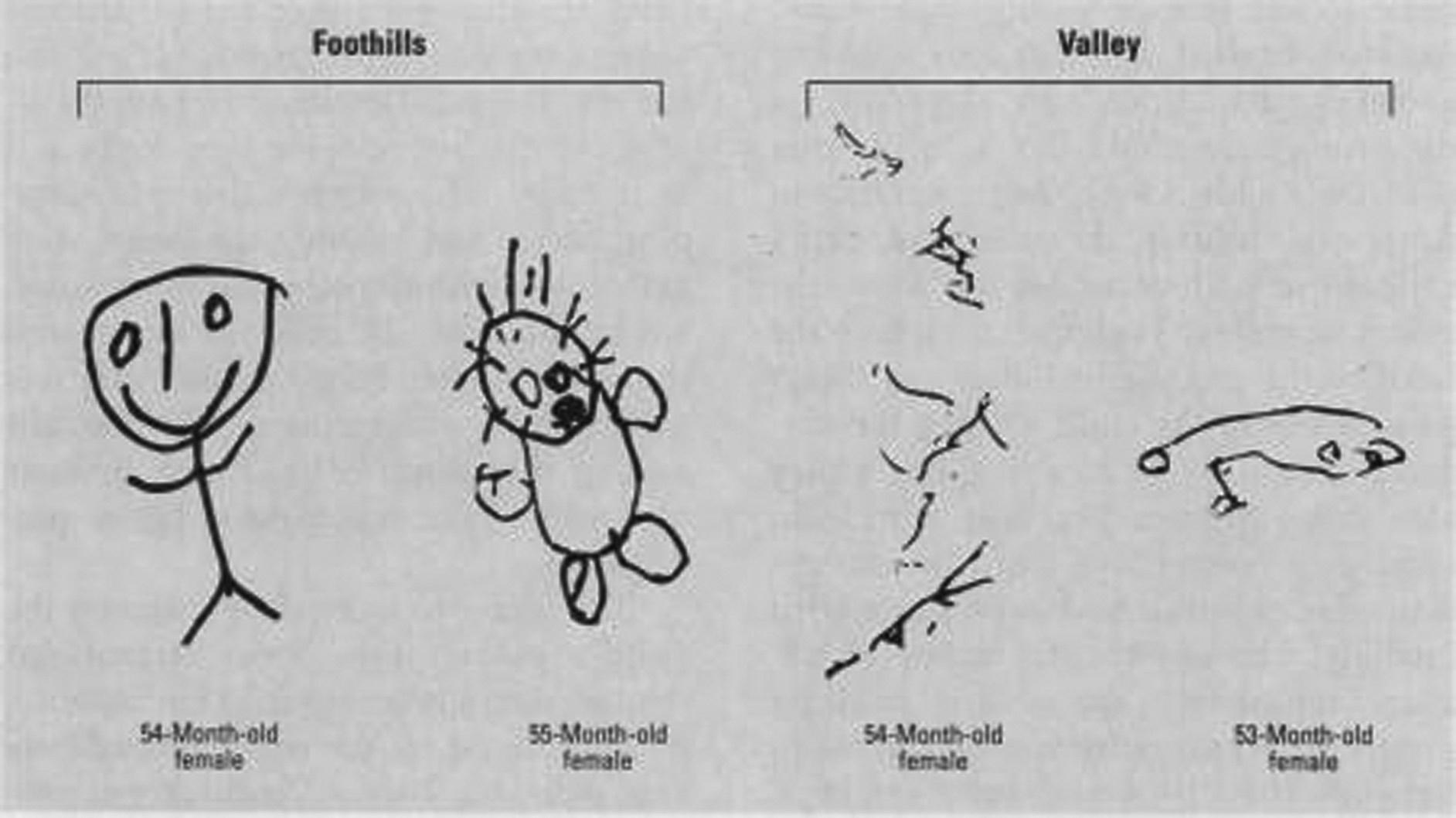
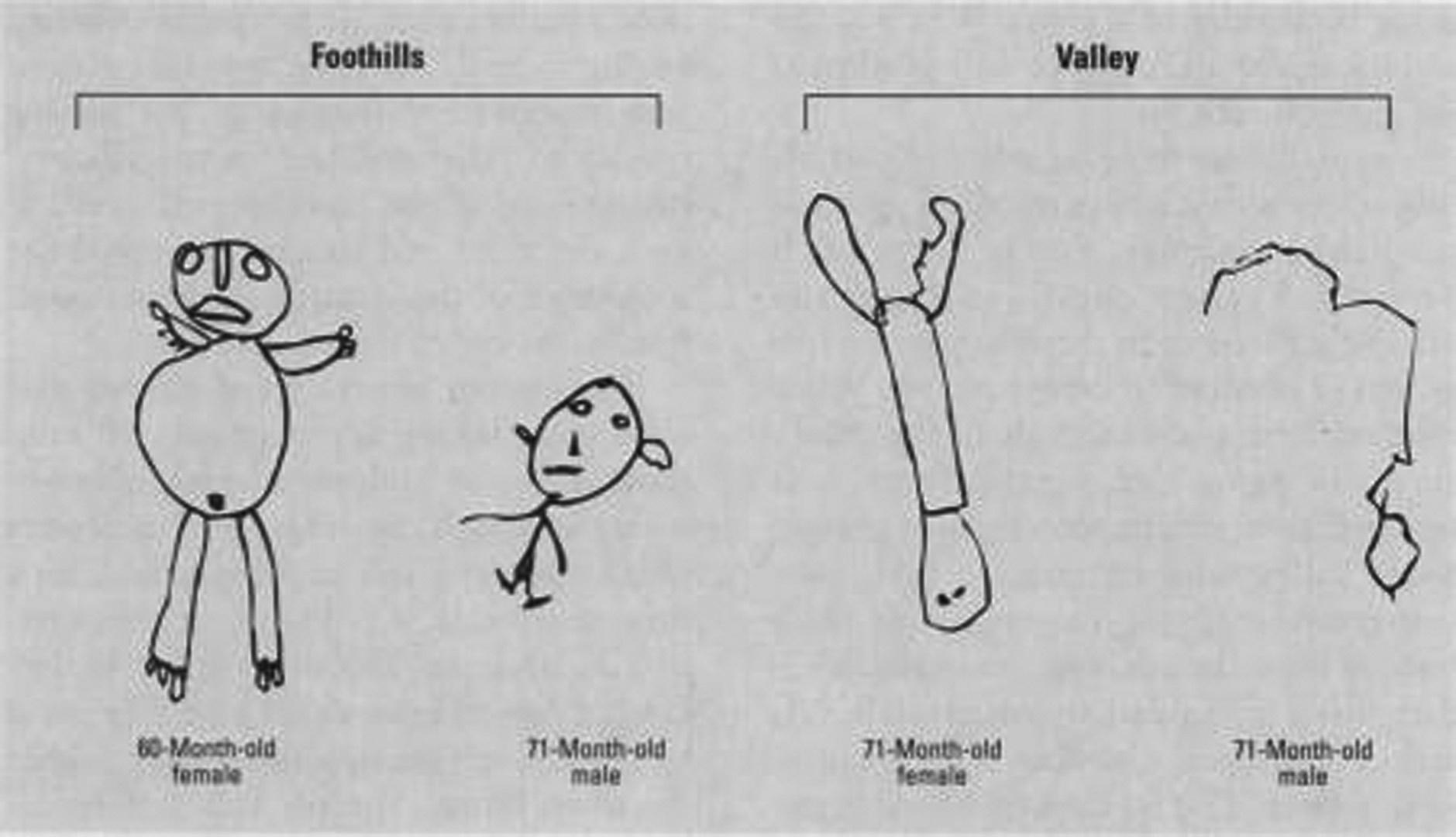
Another example more close to home: humans. Three fairly recent American studies have associated prenatal pesticide exposure with lower IQs at age seven. A 1998 study from Mexico found that children from a region where pesticides are in wide use, when compared with children from a relatively pesticide free-area, had worse physical stamina, hand-eye coordination, memory, and, frighteningly, the inability to draw anything resembling a human figure. The World Health Organization (WHO) estimates that 20,000 agricultural workers die yearly from pesticide poisoning.
Quite a lot of agricultural research goes on at the U of M,
and some of it focuses on pesticides and related topics. Martin Entz, a professor in the U of M’s department of Plant Science, maintains a website about “natural systems agriculture.” One aspect of natural systems agriculture is its reduction of the use of chemicals. Entz and his team have experimented with a project called “Pesticide Free Production.” The project seeks to produce
Three fairly recent American studies have associated prenatal pesticide exposure with lower IQs at age seven.
crops that have not been treated with pest-control products without sacrificing yields, and has proved successful.
The problem with talking about pesticides is that it gets us into a complex realm of knotty political, moral, and economic doctrines that affect how the science is presented. It is, for example, unbelievably difficult to get a straight answer from experts about the dangers of pesticide exposure through food. There is not much the lay person can say with confidence on the subject of pesticides, but it’s reasonably safe to avow that, all else being equal, less pesticide use is better. Measures like Pesticide Free Production are a promising step in this direction.
Representative
of
Anthropologists Elizabeth
various
et al
A
where children were tasked with drawing the human form: figure 1 contains drawings done by four-year-olds while figure 2 contains those done by five-year-olds from the two sample populations (images and article hosted by the National Centre for Biotechnology Information).
Figure 1:
drawings
a person by 4-year-old Yaqui children from the valley and foothills of Sonora, Mexico
A.Guillette
used
Rapid Assessment Tool for Preschool Children (RATPC) to measure
developmental aspects of two populations of Yaqui children – one from the foothills and one from the valley of Sonora, Mexico. This assessment contained an exercise
Figure 2: Representative drawings of a person by 5-year-old Yaqui children from the valley and foothills of Sonora, Mexico
Eat healthy, save money, reduce waste!
Start composting and plant a garden
K ARA pA ssey, Staff
Ithink we all get the concept that vegetables are good for you, right? It is pretty much common knowledge these days; vegetables good, fast food bad. The problem isn’t that people don’t know what to eat, it’s that fresh vegetables aren’t cheap and aren’t as readily available.
People who live in Winnipeg’s core, North and West Ends are living in what are called “food deserts.” These are areas where people have little or no access to grocery stores. Ever notice how chain grocery stores seem to have “abandoned” the North End? Bussing a couple hours once a week just to lug groceries doesn’t sound like fun to anyone – especially in the middle of your typical Winnipeg winter.
So what are your options for affordable healthy eating? Well, you can check out winnipegfoodsharecoop.org and take advantage of their Good Food Box program, or if you have the space and ability you could pick up gardening!
I’ve been living on the cheap for a while now—six years as a student and now as a broke graduate—sometimes dabbling in veganism and vegetarianism, so I’ve learned some tricks on how to make cooking vegetables delicious, easy, and cheap. But at the end of the day, when you work three jobs you don’t always have the time and energy to stir fry some veggies, and vegetables have a time limit. So more often than not I end up chucking rotten vegetables – not only am I wasting money, I am making waste.
So this brings me to my new project: turn my ugly West End back yard into a plentiful and sustainable garden! Eat healthy, save money, and reduce waste! Oh wait – it’s about to drop to below zero temperatures and cover everything with snow? What can I do to get started now? Well I’ll tell you what I did, I built myself a compost bin and started collecting my organic waste
so I can kick that garden’s butt next summer.
Now you can buy compost bins from the city, or you can dig through your basement and find some of those busted up old Tupperware storage containers and use those. You only need one bin and its matching lid—size is really up to you and how much you think you are going to compost—a hammer and nail (or a power drill if you are fancy), and a sharp knife or X-Acto blade.
Start by punching holes all over the container and lid, pretty much as many as you can fit, about two inches apart. If you are using a hammer and nail it can be a tedious task, but your compost needs to be able to breathe without holes big enough for rodents to get in. Use the knife to cut some slots along the bottom edges to allow drainage. If you have a second lid you can put it underneath the container to catch the drainage and use it to feed your garden as well. If it isn’t obvious, you want to keep the bin outside – it will get stinky.
Personally, I have an old cat litter bucket in my kitchen and I empty it into the bin outside every couple days. I put up a crudely written sign so my roommates know what they can compost, it reads:
Hey mother fuckers! Lets be conscious of our shit. Here’s what you can compost:
Raw vegetables and fruit, plant waste, wood ashes, small pieces of cardboard, coffee grounds and filters, dryer lint, egg shells, hair, news paper, tea leaves and yard waste.
Let’s plant a garden so we can stop killing ourselves with McDonalds.
Turn the compost every once in a while; in three to six weeks it is ready to fertilize your garden. Plant some tasty veggies and herbs, share them with your friends and family, and be happy.
Talking the green talk Companies, consumers, and misleading environmentalism
steph A nie g eo Rge
W
hen I hear the phrase “false advertising,” I think of those diet ads where the before and after pictures are clearly not the same person. Greenwashing is one of the more popular forms of false advertising, or “branding strategies,” around these days.
Jay Westerveld coined the term greenwashing in 1986 when he wrote an essay motivated by a placard he found in his hotel room about saving towels to save the environment. Westerveld thought it was a load of crap. It’s not that he wasn’t into the environment—he was actually studying tooth-billed pigeons in Samoa at the time of the incident—he just didn’t appreciate that his hotel made it seem like their sole purpose was to protect the planet when really, less towels to wash meant less money spent.
In this case, the hotel is really helping the environment but misleads naive guests into believing that this factor solely motivates their decisions. However, greenwashing is a spectrum and there are examples of companies that twist the truth in different ways. Fang Wan, who teaches at the Asper School of Business, co-wrote an article with Kent Walker on the topic, in which they define greenwashing as, “a strategy that companies adopt to engage in symbolic communications of environmental issues without substantially addressing them in actions.” The article uses the analogy of talking and walking to better explain the concept. Greenwashing is the difference between green talk (what companies say about their environmental initiative) and green walk (what companies actually do about their claims). Wan was surprised to find that green talk has no impact on financial success and, in fact, it may even hurt a little (talk + walk = no financial affect; talk – walk (greenwashing) = negative financial affect). Wan concludes, “talk alone doesn’t do it!” Global consciousness is a new but increasingly important concept in the business world – social responsibility defines both
companies and consumers. As horrible as it is that companies use their “green card” as a business strategy, Wan says that consumers are part of the problem. It is not just companies that are creating false green identities but consumers as well. For example, Wan explains that the majority of Winnipeggers say that supporting local brands is important to them, yet most of these people are planning on running to IKEA, a global brand, as soon as Nov. 28 comes around. So, are we the hypocrites?
Greenwashing is a fairly new area of scholarship. Wan says that more research can be done in regard to differentiating companies that greenwash from those that truly have environmental initiatives. Furthermore, it would be helpful to learn just how capable consumers are in recognizing greenwashing. If you would like to learn more about different ways companies greenwash, I would suggest checking out TerraChoice, “an environmental marketing and consulting firm.” TerraChoice has published a series of studies on greenwashing, which are collectively known as the “Sins of Greenwashing.” According to the 2010 report by TerraChoice, “more than 95 per cent of consumer products claiming to be green were found to commit at least one of the ‘Sins of Greenwashing.’”
From global warming and resource extraction to the burning of fossil fuels and good old pollution, the environment has enough to deal with these days! I’m thinking that Mother Nature doesn’t want to be the face of a branding strategy, unless the companies that back such marketing have pure environmental intentions. As for consumers, we can’t just pat ourselves on the back for purchasing “environmentally friendly” products anymore.
We must identify our value system as consumers and if “green” is really part of our identity, then we gotta grab our magnifying glasses and do a little sleuthing!
Science & technology
Carl Sagan Day
Eloquent
popular scientist remembered, fifteen years after his death
toM i ng RAM , Staff
Two weeks ago, the Center for Inquiry of Fort Lauderdale in Florida celebrated the fourth annual Carl Sagan day.
Since 2009, they have hosted educational events on Nov. 9 including a science fair for local schoolchildren and speakers on topics including astronomy, skepticism, and the life of Carl Sagan. Many of us were very young when Sagan died prema-
turely in 1996. A whole generation has grown up without him and there are quite a few people today who have never heard of him at all. So in honour of what would have been his seventy-eighth birthday, here’s a brief introduction to the man, the legend, the institution of Carl Sagan.
Though Sagan had some significant research accomplishments (such as his important contributions to our
UNIVERSITY OF MANITOBA
EMAIL CHANGES YOU NEED TO KNOW
In 2013, the university will only use your U of M email account for o cial university communications. This includes information or important changes from your instructors, faculty, department, advisors and the university.
BE PREPARED AND CLAIM YOUR @umanitoba.ca EMAIL ACCOUNT NOW!
Claim your U of M email account at: umanitoba.ca/claimid
If you have already claimed your computer ID, please remember that in doing so, you have created a number of computer service accounts, including an email account. Check this account regularly for important notices. More info about these changes will be available soon at: umanitoba.ca/registrar
understanding of Venus’ atmosphere), it was clear from the beginning that his great talent was his ability to explain and popularize without simplifying. He was good at broad, conceptual thinking and rough preliminary calculations.
“Some persons work best in specializing on a major program in the laboratory; others are best in liaison between sciences. Dr. Sagan belongs in the latter group,” said thesis advisor Gerard Kuiper when Sagan received his doctorate.
Because of his expertise in astronomy and planetary sciences, Sagan worked as an advisor to NASA from the beginning of the U.S. space program. He was a member of the science teams for the Mariner 2, Mariner 9, Viking, Voyager, and Galileo missions. NASA scientists valued his ability to challenge what was (often prematurely) accepted as conventional wisdom in planetary science.
If this was all Carl Sagan was about, he wouldn’t be of interest to anyone but students of space exploration. Fortunately for the rest of the world, Sagan also applied his trade outside the government and academia, working in the much-maligned field of popular science as a writer and TV presenter. His non-fiction books won numerous honours, including the Pulitzer Prize for General NonFiction (for The Dragons of Eden). He even wrote a novel: Contact, the basis for the 1997 movie starring Jodie Foster.
But Sagan will always be known primarily for one achievement: Cosmos, a PBS documentary series with an accompanying book. In its thirteen episodes, Sagan explained
the universe from the ground up. There’s a famous moment at the beginning of the ninth episode with Sagan sitting alone in an opulent Cambridge banquet hall. A finely dressed waiter sets down a pie in front of him and Sagan turns to the camera and says, “If you wish to make an apple pie from scratch, you must first invent the universe.” He uses this apple pie as a jumping-off point to discuss the nature of atoms and very large numbers. Inevitably, this leads to one of the recurring themes in Sagan’s work as a science writer: the universe’s sublime vastness and the comparative insignificance of humanity.
In Douglas Adams’ novel The Restaurant at the End of the Universe, there is a machine called the “Total Perspective Vortex” that is used as a torture device. It shows the victim a 3D scale model of the entire universe, with a tiny dot labelled “you are here.” The victim, faced with such a stark illustration of their place in the universe, goes insane. During Sagan’s lifetime, we saw a real-world TPV in the “Pale Blue Dot” photograph from the Voyager 1 spacecraft in 1990. It showed the Earth from the edge of the solar system, just barely visible. In 1994, Carl Sagan wrote a book, also called Pale Blue Dot, which included this famous passage:
“Look again at that dot. That’s here. That’s home. That’s us. On it everyone you love, everyone you know, everyone you ever heard of, every human being who ever was, lived out their lives. The aggregate of our joy and suffering, thousands of confident religions, ideologies, and economic doctrines, every hunter and forager,
Climate change and the community
every hero and coward, every creator and destroyer of civilization, every king and peasant, every young couple in love, every mother and father, hopeful child, inventor and explorer, every teacher of morals, every corrupt politician, every 'superstar,' every ‘supreme leader,’ every saint and sinner in the history of our species lived there – on a mote of dust suspended in a sunbeam [ . . . ] To me, [astronomy] underscores our responsibility to deal more kindly with one another, and to preserve and cherish the pale blue dot, the only home we’ve ever known.”
Sagan’s acute awareness of humanity’s smallness led him to get deeply involved in advocacy for various social issues. He was a strong opponent of nuclear warfare and the militarization of space. He led a quixotic and ultimately doomed effort to unite the US and Soviet space programs with the goal of sending a manned mission to Mars. He promoted science and skepticism without holding those on the fringe in contempt – and, as the most prominent supporter of the Search for Extraterrestrial Intelligence (SETI), he occasionally found himself on the fringe.
It is as a spokesman for science that he was most successful. In recent years, several skeptics and science advocates have become major pop cultural forces. Carl Sagan got in on the ground floor of this movement, around the same time as the similarly well-spoken Richard Dawkins, with whom he has much in common. With this worldview and eloquence, Sagan brought the gift of science to millions of people during his life and continues to do so more than fifteen years after his death.
Participate in local discussion on the effects of climate change.
Will ARd Ande R son
For thousands of years humans have taken for granted that we would have winter and summer, a planting season and harvest season. Suddenly we’re finding climatic variations are changing that conception of seasonality.
Winnipeg’s 2011/2012 winter was one of the warmest in the city’s record, challenging all time highs for the month of January and even breaking the all time high for Jan. 5 at 6.3 degrees C.
Looking to the south, the U.S. has had a serious drought throughout the 2012 growing period. Specifically in the central and midwest regions of the country, states have experienced
exceptionally severe droughts.
Local residents of Elie, MB will recall what in 2007 the CBC described as the most powerful tornado in Canadian history:
"Environment Canada analysts recently examined fresh video evidence of the June 22 storm that helped confirm it as the only officially confirmed tornado in Canada to be rated F-5 on the Fujita scale."
Yet another troubling manifestation of a global warming-influenced natural disaster is visible in the damage incurred to the U.S. East Coast by Hurricane Sandy. Collectively, the increased frequency and severity of incidences
like these might be best viewed as precursors to much more serious climatic changes in the coming years, further impinging upon things like agriculture and the ability to maintain food security. Concerned citizens interested in getting involved in the fight against climate change are welcomed to join in the discussion:
ark Sultan is coming to a town near you to rattle your brain and show you what rock and roll is really about.
Starting out releasing music under the name “BBQ,” Sultan is one of the hardest working acts in rock and
roll, churning out a constant stream of releases and not at the expense of quality. Sultan’s music is simple, to the point, in your face rock and roll with a soul influence that will have you dancing all night long.
Not only does Sultan bash away at a guitar with his hands and a drum set with his feet to create his own solo music, he has been known to team up with some of rock and roll’s greatest heavyweights to create some unforgettable super groups. Sultan is one half of the King Khan & BBQ show, pairing up with garage rock sensation and long-time friend King Khan in 2005 to create eight albums over the course of four years and counting. More recently, Sultan recorded an album with Montreal rock and roller Bloodshot Bill to release a collaborative album in 2010 under the name the Ding Dongs. I recently had the chance to chat with Sultan about his upcoming
North American tour, and here’s what was said.
the Manitoban:
You have solo releases both under the names Mark Sultan and BBQ –what do you feel are the differences between these two personas?
mark sultan:
There aren’t really any differences in the personas. I started as BBQ in like 2002 or 2003, and did two albums before starting the King Khan & BBQ Show in 2004 or 2005. With Mark Sultan as my moniker, I just thought that it would be a means to explore fuller instrumentation on record, so as not to confuse it with the simplicity of the one-man band sounds.
M: You’re teaming up with King Khan for a number of the dates on your
North American tour, and recently in a blog post you stated that during your European tour you were able to stay with him for a couple weeks, reconnect, and write some new songs. How was that experience and can we look forward to a new King Khan & BBQ album in the near future?
ms:
New album? No idea. We will probably record some stuff in the spring. The experience... I mean we are old friends. I think anyone could imagine what it’s like having a major falling out and then hangin’ again. It’s a relief and like seeing your family again after floating in a submarine for a few years.
M: In 2010 you teamed up with Bloodshot Bill to release a collaborative album under the name the Ding Dongs—which is one of my personal
favourites out of your catalogue— how did you find working with Bill, and can we look forward to more from this duo in the future?
ms: Bill is a good friend. I have known him a long time. He’s a classic. It’s great playing with him for many reasons. Mostly I love exploring 50s rock‘n’roll with him [and] playing sounds I love so much, but with someone who has a complete grasp of its intricacies. I think we have mostly been able to play within the tiny window of pure 50s rock‘n’roll —not R&B or rockabilly, so much— and that is difficult.
Do yourself a favor and catch Mark Sultan at the historic Windsor Hotel on Nov. 22 with Rock Lake and the Electrics.
Celebrating Indigenous film, video, and storytelling
The 11th annual Winnipeg Aboriginal Film Festival
Jenn A d iubA ldo, Staff
T
he Winnipeg Aboriginal Film Festival (WAFF) is excited to celebrate its 11th year in the making, and it continues to gain momentum each year. The WAFF is one of the largest festivals in North America to showcase and celebrate Indigenous film, video, and storytelling.
“WAFF celebrates the best in Indigenous filmmaking from around the world,” stated Coleen Rajotte, the Artistic Director for the festival. “There is always a buzz leading up to the festival and while it’s a lot of work, to see it all come together is very rewarding and exciting!”
The festival will kick off on Nov. 21 with the Canadian premiere of the film Shouting Secrets, which stars First Nations celebrity heartthrob Chaske Spencer – best known for playing the role of “Sam Uley” in the Twilight Saga. Spencer will be in attendance for the screening as the keynote speaker on opening night. Other celebrities scheduled to make appearances at the WAFF include Dances With Wolves star Tantoo Cardinal, who co-stars in Shouting Secrets alongside Spencer, and everyone’s favourite Manitoba-born actor Adam Beach, who will be appearing at the screening of his new film Path of Souls.
ists, but the festival is also organized and facilitated entirely by Aboriginal staff.
“Our festival is 100 per cent staffed by Aboriginal people but most importantly we share our stories, our culture, and our experiences at WAFF,” said Rajotte. “Every year we
the state of Arizona, and Smoke Traders, a documentary explaining the stronghold that the Mohawk peoples have over the tobacco trade in Eastern Canada.
The WAFF also features activities geared towards Aboriginal youth including a Youth Education Day scheduled to take place the day before the festival begins on Nov. 20. The Youth Education Day will provide a venue for young filmmakers to screen their work, as well as provide learning opportunities for aspiring young artists through workshops and peer presentations from established youth filmmakers.
build relationships with our audience and we look forward to making new friends.”
Not only does the festival feature the work of many Aboriginal art-
The festival will span five days in length, and feature screenings of films such as More Than Frybread, a comedic documentary featuring a frybread championship between 22 tribes in
The festival depends largely on volunteer support and organizers are still recruiting volunteers for this year’s festival. Students interested in volunteering are encouraged to contact the WAFF to lend a hand and experience the festival in a behind-the-scenes way.
If you have not attended the Winnipeg Aboriginal Film Festival in the past, then this year is a perfect opportunity to support this important event, and learn to about Indigenous culture, film, and artists.
“A lot of planning goes into this event,” said Rajotte. “We are a nonprofit arts group that is powered by
people with passion. Come out, take it in – it’s an incredible five days!”
The Winnipeg Aboriginal Film Festival takes place from Nov. 21 to 25 at the Garrick Event Centre. For more
information on the Winnipeg Aboriginal Film Festival please visit the event website at www.waff.ca. If you are interested in volunteering for the festival please call (204) 774-1375.
LEARN TO BARTEND!
Re-Configuring Abstraction
Contemporary abstract painting at the School of Art Gallery
K ARA pA ssey, Staff
With the Winnipeg Art Gallery’s recent exhibition Winnipeg Now showcasing contemporary Winnipeg artwork and the Plug In ICA’s series of exhibitions titled My Winnipeg, Mary Reid feels that Winnipeg’s strong history of abstract artwork has been overlooked and wants to shed light on some of Winnipeg’s contemporary abstract artists.
“My intention was to show an alternative or different perspective of contemporary art created ‘right now’ that is connected to Winnipeg in some form,” says Reid, curator of the School of Art Gallery at the University of Manitoba.
“For this most part the work being exhibited in [the WAG and the Plug In] can be characterized as being figurative and narrative driven. I wanted to counter this notion and show a contrasting side to the story.”
The show is titled Re-Configuring Abstraction and boasts four artists who are established and have shown work internationally. They all have either grown up in Winnipeg or have settled here to work, some have done both. Krisjania Kaktins-Gorsline, Holger Kalberg, Dil Hildebrand, and Derek Dunlop are all known for their work in abstract painting.
“Winnipeg and the U of M has a strong background in abstract painting,” says Reid. “While still students at the School of Art, Tony Tascona, Bruce Head, Winston Leathers, and Frank Mikuska were exploring and experimenting with abstract painting in the early 1950s. Many prominent abstract painters such as Ken Lochhead and Diane Whitehouse have also been
Kaktins-Gorsline’s work in the past contain figures and other recognizable shapes such as birds, the paintings showcased in Re-Configuring Abstraction are completely abstract.
Kalberg hails from Dinslaken, Germany but now lives in Winnipeg and works as an assistant professor at the U of M School of Art and teaches painting.
Sometimes they physically scratch out chunks of the paintings or block them out with paint, circling prominent intersections of lines and shapes.
Professors and Directors of the School of Art through the years.”
Born in 1980, Kaktins-Gorsline grew up in Winnipeg’s north end. He completed his BFA (Hons) degree at the U of M in 2006, and his MFA from Columbia University in 2008. After graduate studies he returned to Winnipeg to live and work.
Kaktins-Gorsline draws inspiration from the natural sciences and the way that forms are generated through the systems and processes of the material world. While some of
Born in 1967, he received his MFA from Emily Carr in 2001.
Kalberg works with collage and sculpture as well as painting. His painting process begins with experimentation with collage made from painted and cut paper, sometimes focusing on sections and progressing into abstract paintings. His current work explores the use of grounding to give his compositions weight, and his use of negative space is just as prominent as his architectural shapes.
All �the� work deals with the fundamentals of painting,” says Reid.
“� They� are coming out of representational imagery and moving into abstraction – and a very particular type of abstraction, one that conflates the figure and the ground, the
subject and the object.”
The work of both KaktinsGorsline and Kalberg show the importance of process in abstract painting. Imagery is selected, studied and abstracted. They work in layers, and add and subtract shapes. Sometimes they physically scratch out chunks of the paintings or block them out with paint, circling prominent intersections of lines and shapes.
Kaktins-Gorsline’s earlier and more representational work is what gave him critical recognition but recently his work shifted into abstraction. He now finds inspiration in the newsprint he used to blot his past work and uses the shapes created to make stencils. He works with patterns and overlay, and his new work still manages to echo his past.
“Process is a means � � to inves- Process tigate the way the medium of paint works: how it lays on the canvas, how it can be built up, how is can shift and change an image,” says Reid. “Process is also about thinking through a problem, how to represent an idea, how to communicate meaning – both what the work is and what the work is about is imbedded in the process.”
Re-Configuring Abstraction is on display until Jan. 11 at the School of Art Gallery in the ARTlab building on campus at the U of M.
INspeCtOR by KRIsJaNIs KaKtINs-gORsLINe
Ai Weiwei: Never Sorry
The first film in Cinematheque’s human rights series
Michelle sARoMo, volUnteer Staff
Beginning this month and running till February, the Cinematheque will be showing several films as part of their new series called We Rise Above: New Films on Human Rights. The series showcases six different films that revolve around themes of political and human rights issues around the world. The first of the series to be shown is Ai Weiwei: Never Sorry, a documentary about China’s most controversial artist and the Chinese Communist Party’s most vocal critic.
Ai Weiwei, who helped design the Bird’s Nest Stadium in Beijing for the 2008 Olympics, is known for being unabashedly frank when it comes to conceptualizing his art. His body of work consists of acts such as taking pictures of himself “flipping the bird” in front of landmarks such as Tiananmen Square and the White House, to breaking vases dating from the Neolithic age and painting the Coca-Cola logo over them – just to name a few. But Ai doesn’t do it just
for the sheer “shock factor” of it all, he uses his art as a way of pushing the boundaries and commenting against the censorship imposed on society.
Along with his artwork, Ai actively expresses his dissent for the Chinese government system by using social media. He boycotted the Beijing Olympics on his blog and became the first Chinese citizen to speak
Take it or leave it, we don’t give a shit
Review: Nova’s debut album, Midnight Midnight Jenn A d iubA
There’s something really refreshing about listening to a band that creates uncontrived, unadulterated music without apology – music created for the sole purpose of creating music.
This is the feeling that I get when listening to Nova’s debut album Midnight Midnight. I get the feeling that this band really could not care less about what others think about their music—whether it’s catchy enough, or edgy enough—but rather they write this music because they like this music and that’s really all that matters. They present their music as if to say, “Here’s our music. Take it or leave it. We don’t give a shit.” Midnight Midnight contains much of the same angsty folk-rock that one would expect from a band that contains singer/songwriter Greg MacPherson, but with the addition of Jackie Hogue and Molly McCracken to form this indie rock trio MacPherson’s songwriting has been brought to a new and exciting place.
out against the Games. Ai also uses Twitter as a way of communicating with the public and calling them to action. In the devastating aftermath of the Sichuan province earthquake of 2008, Chinese authorities refused to publicly disclose the number of people who died in the catastrophe. Many of those who had died were children in government-built school
buildings that were speculated to have been built poorly. Appalled by the government’s unwillingness to take responsibility, Ai turned to Twitter to ask for volunteers to help him gather as many names of the deceased as possible. On the oneyear anniversary of the earthquake, Ai posted a list of over 5,000 names on his blog. However, the government would eventually shut his blog down.
Even for a world-renowned artist with an enormous number of fans and followers, going against the system is still no easy feat. The film shows the trials that Ai has to face for his activism, from authorities installing surveillance cameras around his house, to being stalked as he travels around Beijing, and even being physically beaten and detained by police. At one point in the film, Ai is asked how he remains so fearless amongst all the danger he faces.
“I am more fearful, really, than most people,” Ai says. “That’s why I
act more brave, because I know the danger is really there. If you don’t act, the danger becomes stronger.”
Ai Weiwei: Never Sorry not only highlights the impact that one individual can have on society, but it also shows how use of social media sites like Twitter can inspire people to connect with each other and join the reform. Despite China’s heavily imposed censorship on its citizens, the existence of social networking sites allows people to communicate with other like-minded individuals much more easily than ever before. The film is an optimistic portrayal of how technological advancements can pave the road for social change.
Ai Weiwei: Never Sorry runs at the Cinematheque until Nov. 22. The next two films in the We Rise Above series are Haiti: Where Did the Money Go?, which investigates improper funding use and is showing on Nov. 22; and Tahrir Liberation Square, a film about the Egyptian revolution and protests, showing on Dec. 13.
Nova is definitely an act to watch in years to come, and if you haven’t already then do yourself a favor and pick up a copy of Midnight Midnight.
For more information on Nova, or to purchase their debut album, Midnight Midnight, visit the Disintegration Records website at www.disintegration.ca
Many of the tracks feature MacPherson’s upbeat, Bruce Springsteen-esque style especially on tracks where McPherson takes over on lead vocals such as “Big City Couple,” and “Selkirk.” However, the album often takes a much darker turn during songs sung by McCracken such as “Pontiac” and “Most Days,” with haunting melodies and background tracks that at times mimic a spooky sounds tape that you would hear on Halloween.
Babes in Toyland
Jodie l Ayne, Staff
are only for women—a few of the common misconceptions around all things pleasurable. However, sex toys are for everyone of every gender and orientation. If you have parts, there is something to make them feel nice – or naughty if that’s what you’re into. They can enhance your
If you have parts, there is something to make them feel nice – or naughty if that’s what you’re into.
to buy a toy.
1) Research! Look up what kinds of toys are out there and see what might tickle your fancy/what you find interesting. Reading about different products or watching reviews on YouTube can be a great way to find out what the possibilities are.
2) Experiment! What kinds of sensations and stimulation do you like? Do you like a feeling of penetration? G-zone stimulation? Clitoral? Prostate? Figure out what gets you off and then look for a toy to help you do that in a different way.
upstanding establishment, I can tell you that we know what we are talking about. The staff are usually sex nerds and well educated on their products. They are trained to deal with talking to strangers about sensitive and intimate topics and are familiar with the products they carry. If you can, and you feel comfortable, go to an adult boutique near you. It also helps to hold and feel the item and see how it rumbles and what it feels like. If not, there are plenty of online stores that carry a variety of quality products they will ship discreetly right to your door.
If you’ve been reading my columns, then you know I think masturbation is great and we should all be doing more of it. I also think sex is great and we should all be having as much of it as we please. I know it doesn’t seem possible, but here’s how to make a good thing even better – sex toys. You may have endured an awkward passion party or scuttled into a skeevy adult shop or perused the offerings online and wondered if these things were really for you.
There are some weird attitudes people have about sex toys—they are for people who can’t have the real thing, you won’t be able to orgasm with a partner if you use them, they
Doom-soul
solo or partnered pleasure. In the weeks and months to come, I will be showcasing the many types of toys, some of my favorites, and different ways to incorporate them into solo or partnered play. But first you have
Cold Specks to play the Park Theatre on Nov. 26
Jodie lAyne, Staff
Al Spx of Cold Specks offers up her most intimate inner-workings on the band’s first album, the Polaris Prize Nominated I Predict a Graceful Explosion – but she hides behind a pseudonym.
The paradox of deep intimacy and a stage name seems fitting for Spx who sings in a style heavily influenced by southern-style gospel, yet is backed by a single finger-picked guitar or booming drums. She calls
it doom-soul and it seems to be the only fitting title.
I Predict a Graceful Explosion is enchanting and dark, beautiful and revealing – touching on themes of loss, depression, and struggling with
3) Find body and environmentally safe materials. For things that are going in or on our most delicate parts, they sure make toys out of some scary things. Look for items that are phthalate and PVC-free and are ideally non-porous and made from materials like silicone or glass.
4) Go find out! Hopefully you have a friendly neighbourhood adult boutique. As a staff member of an
Sex toys can be not only provide you self-pleasure, but allow for exploration and discovery in relationships too.
You can confidentially submit a question or topic to jodie.m.w.layne@gmail. com
god. If you are to believe Spx, the album is too honest.
“If I would have known how many people would have heard it, I would have made it less honest and more playful. Playful is about performance, it’s more fun and less stressful than baring your heart every night, but no regrets,” says Spx. “There is no harm in learning and improving from there.” Her songwriting is brutally honest and bare, but it is her soulful and earnest voice that sells those lyrics and shows weariness, wisdom, and capability beyond her twenty-something years. As a child of immigrant parents who valued education and religion, Spx struggled with both god and schooling
“Playful
is about performance, it’s more fun and less stressful than baring your heart every night, but no regrets.”
attempt at college while she secretly snuck around to make music. Spx’s next album, though, will be a little less about her and quite a bit less honest.
“I want to make people dance, I want to tell other people’s stories,” says Spx. “People tend to latch onto songs that are honest. The audience has an attachment to [personal songs] because they get to know the artist a bit more, people find that appealing. I don’t care about that. I can only hope people appreciate the sounds and the songs, really.”
Cold Specks is playing Park Theatre on Monday, Nov. 26 with her band who she calls, “A bunch of good peeps” and this show
Capuccino for Winter
By Fayassir Haqna
PHOTO
Handing out the hardware
Predictions for the 2012 CFL Player Awards
AdAM pelesh Aty, volUnteer Staff
most outstanding Player chad owens, WR, Argonauts ✔
Jon Cornish, RB, Stampeders
For the first time since 2006, both finalists are not quarterbacks. Cornish is also the first Canadian to be nominated for MOP since former Stampeders slotback Dave Sapunjis in 1995. While both players had tremendous seasons, Owens managed to set a new pro football record for all-purpose yards in a single season (3,863), a record previously held by Argos legend Mike “Pinball” Clemons since 1997. The total is almost 1,200 yards greater than the nearest competitor, B.C. Lion Tim Brown (2,687) and includes a league-leading total of 1,328 yards receiving. In his first season as a starting tailback, Cornish had the best rushing season by a Canadian with a league-leading 1,457 yards breaking Normie Kwong’s 56-yearold record.
Owens’ numbers really stand out and are indicative of his versatility. As for Cornish, the only other Canadians who have won MOP are
CFL legends Russ Jackson and Tony Gabriel. Cornish does not belong with those players – yet.
Most Outstanding Canadian
Jon Cornish, RB, Stampeders ✔ Shea Emry, LB, Alouettes
Cornish is a double nominee this year and, logically, is also up for Most Outstanding Canadian. As for Emry, he missed most of the 2011 season with a concussion but came back this year with career-highs in tackles (87) and sacks (7) and is ranked fifth in the CFL in both categories. On his only interception of the season, he also scored his first ever CFL touchdown. Emry’s season was impressive given his comeback from injury, but Cornish became the first Canadian to lead the league in rushing since Ottawa’s Orville Lee in 1988.
most outstanding defensive Player
J.c. sherritt, LB, Eskimos ✔ Shea Emry, LB, Alouettes Emry is also nominated for Most
Outstanding Defensive Player. Sherritt broke a CFL record with 130 tackles this season, surpassing former Argonaut Calvin Tiggle who had 129 in 1994. Sherritt also had five interceptions this season, which led all linebackers in the category and tied for second most in the CFL. It appears Emry may go home empty-handed when the ceremony is finished.
most outstanding special teams Player
chris williams, WR/ KR, Tiger-Cats ✔ Tim Brown, RB/KR, Lions
Last year’s Most Outstanding Rookie did not have a sophomore slump in 2012. By Labour Day, Williams had six return touchdowns – five from punt returns, one from a missed field goal. He became the first player in CFL history to score that many return touchdowns in a single season as well as the first to have punt return touchdowns in three straight games. Brown was second in the league for combined
return yards and all-purpose yards, trailing Chad Owens in both categories, as well as scoring two return touchdowns. Brown had a great season, but Williams’s season was more outstanding.
most outstanding rookie chris matthews, WR, Blue Bombers ✔ Jabar Westerman, DE, Lions
Despite an anemic Winnipeg passing offense, Matthews led his team with 81 catches for 1,192 yards and seven touchdowns, surpassing
veteran WR Terrence Edwards and making Bomber fans forget about now-Saskatchewan Roughrider Greg Carr. Meanwhile, Westerman is the first Canadian nominated for this award since Etienne Boulay for the Alouettes in 2006. However, with four sacks but only 14 tackles, it looks like the Bombers may get one trophy this year.
most outstanding lineman
Jovan olafioye, OT, Lions ✔ Josh Bourke, OT, Alouettes
Both players are nominated for the second straight year with Bourke winning the award in 2011. Both the Lions and the Alouettes allowed a league-low 30 sacks in 2012 but the Lions gain the edge in rushing yards, pass attempts, and for allowing fewer tackles for losses over the Alouettes. Those categories are what voters may look for when determining a winner this year and this year may be Olafioye’s turn.
NHLPA stars play on campus, score Goals For Dreams
Charity wins in fundraiser game at Max
d e Re K gAgnon, Staff
With the lockout dragging on in the NHL, hundreds of lucky Winnipeg hockey fans took in the Goals For Dreams charity hockey
Bell Centre
game Nov. 17 at the Max Bell Arena.
The event featured some big names from the NHLPA playing alongside members of the Winnipeg Police
Services Patrolmen hockey team.
The game would finish with a 14-8 score line with Team Ladd prevailing over Team Stuart, but anybody would tell you that the real winners on this day were the charities that received over $80,000 thanks to a sold out crowd, silent auction and 50/50 draw. The Dream Factory, a charity dedicated making dreams come true for children battling life threatening illnesses, and The Children’s Hospital Foundation of Manitoba were the organizations associated with the event.
The game was a very entertaining affair, with referee and MC Ron Hoggarth keeping things lively with his continued commentary and tendency to award penalty shots for no reason. There was a lot of “aww”-ing going on when Timbits hockey players were brought out to play against the pros, with these little players being dwarfed by beasts like 6’4”, 232 lb. Shea Weber.
There were five Winnipeg Jets on the ice with one another; Zach Bogosian serving as an Honorary Coach as he recovers from wrist surgery. Captain Andrew Ladd, Bryan Little, and Jim Slater suited up for Team Ladd, while Mark Stuart and new signing Olli Jokinen played for Team Stuart. Tanner Glass and Chris Mason, Jets players in the 2011-2012 season, were also on hand for the event and received a very warm welcome from the fans.
Talking about a failed attempt at a “GST” chant, Glass divvied up the blame.
“Maybe I’m to blame for that, maybe [Chris] Thorburn’s to blame for that because he wasn’t here,” said Glass, noting the absence of his linemate from last year.
Other Winnipeg-born NHLers were in attendance, including Jonathan Toews of the Chicago Blackhawks.
“The fans were great, you could tell they were very excited to watch some hockey,” said Toews, adding “It feels good to go out there and play in front of the fans again.”
When asked about his team prevailing over Mark Stuart’s team, Ladd was quick to point out who
really won on the day.
“It turned out good, we had some fun. I don’t think it really mattered what the score was, the charities were really the ones that won the game.”
Prior to the game, newly sworn-in Winnipeg Police Service Chief of Police Devon Clunis spoke of the importance of the game:
“This is just a great example of the NHLPA and the WPS getting together and trying to do something very serious for a very vulnerable sector of society in terms of our children.”
“I think its just a small piece of what we can do collectively as a city, as a community, for the community at large.”
pHOtO by maRC LagaCe
pHOtO by mattHeW gIesbReCHt
FOLLOWING THE HERD
MEN’S WOMEN’S
JAN. 4-5
THATS
Catching up with the Bisons
Brief summary of the past two weeks
M ARc lAg Ace, Staff
men’s basketball
Nov. 9 @ Brandon L 78-76
Nov. 10 @ Brandon W 81-63
Nov. 17 @ Regina W 87-61
Nov. 18 @ Regina W 104-91
The Bisons men are on a roll, having won three of their last four games. They currently sit tied for second in the Canada West Prairie division. Both the Bobcats and Cougars sit at the bottom of the standings, but it was important for the Bisons to perform their game plan properly and make the shots as they became available. The Bisons will hope to keep rolling as they travel west to play Fraser Valley and Trinity Western.
women’s basketball
Nov. 9 @ Brandon
W 62-61 (OT)
Nov. 10 @ Brandon W62-53
Nov. 17 @ Regina L 83-32
Nov. 18 @ Regina L 104-51
The Bisons struggled in Regina after winning a pair of games in Brandon. Brittany Koop was the Bison of the weekend in Brandon, earning a double-double with 14 points and 10 rebounds in the overtime victory, following up with another stellar performance the following day. With 16 points, Koop was just three rebounds shy of recording back-to-back double-doubles.
men’s volleyball
Nov. 9 @ Brandon
W 3-2 (25-20, 25-18, 25-27, 23-25, 17-15)
Nov. 10 @ Brandon
L 3-2 (25-23 , 22-25, 25-19, 21-25, 12-15)
Nov. 16 @ UBC Okanagan
W 3-0 (25-20, 25-8, 25-15)
Nov. 17 @ UBC Okanagan W 3-0 (25-19, 25-17, 25-23)
Despite suffering their first loss of the season against a tough Brandon team, the Bisons men’s volleyball continues to be among the top of the Canada West.
The top four teams in the conference are Alberta, Trinity Western, Manitoba and Brandon, so close results like the above are to be expected.
women’s volleyball
Nov. 9 @ Brandon
L 3-0 (23-25, 17-25, 18-25)
Nov. 10 @ Brandon
W 3-1 (25-21, 21-25, 25-19, 28-26)
Nov. 16 @ UBC Okanagan
L 3-2 (23-25, 22-25, 25-21, 25-18, 11-15)
Nov. 17 @ UBC Okanagan
L 3-0 (10-25, 20-25, 9-25)
The Bison women’s volleyball team has fallen from near the top of the conference to the middle of the pack after a disappointing road trip, their first of the season. Picking up just one win, the Bisons return to the comfortable confines of the Investors Group Atheltic Centre, where they hope to get their season back on track against Thompson Rivers University.
men’s hockey
Nov. 9 vs Lethbridge W 4-1
Nov. 10 vs Lethbridge W 4-2
Nov. 16 @ UBC L 5-2
Nov. 17 @ UBC L 2-1 (2OT)
After picking up a pair of wins at home against Lethbridge, the Bisons travelled out West, where they were up against a formidable foe in UBC.
UBC swept the Bisons, with Manitoba earning one point due to an overtime loss
women’s hockey
Nov. 16 vs UBC W 2-1 Nov. 17 vs UBC L 2-1 (OT)
The Bisons women came off the bye week and took three of a possible four points out of a tough matchup at home against the UBC Thunderbirds.
In the second game, Meagan Vestby scored the game tying goal late in the third period that forced overtime.
Bison forward, Brittany Koop
Beauty The Beast
We all need to manage the waste we create. If you’re like 90% of Manitobans, you already recycle. But one third of us admit we still throw into the trash some items that could be re-used or recycled into useful materials. Let’s manage to do better!
More than half of all household garbage can be recycled. Are you recycling all you can?