109 HELEN GLASS UNIVERSITY OF MANITOBA WINNIPEG, MB R3T 2N2
General Inqu I r I es & a dvert I s I n G
Phone: (204) 474.6535
Fax: (204) 474.7651
Email: manitoban@themanitoban.com
Free Med I a Campus Plus Media Services Phone: 1.780.421.1000 Email: advertise@free-media.ca
A “volunteer staff” member is defined as a person who has had three volunteer articles, photographs, or pieces of art of reasonable length and/or substance published in three different issues of the current publishing year of the Manitoban. Any individual who qualifies must be voted in by a majority vote at a Manitoban staff meeting. Elected representatives and non-students may be excluded from holding votes as volunteer staff members in accordance with the Manitoban Constitution. The Manitoban is the official student newspaper of the University of Manitoba. It is published monthly during the summer and each week of regular classes during the academic year by the Manitoban Newspaper Publications Corporation.
U of O professor emeritus unpacks North Korean nuclear threat
Michel Chossudovsky blames the United States for static peace negotiations
Qudus a busaleh, staff
In a lecture co-hosted by Peace Alliance Winnipeg and the U of M’s Geopolitical Economy Research Group Jan. 15, University of Ottawa professor emeritus of economics
Michel Chossudovsky spoke to students on the dangers of nuclear war in light of heated exchanges between North Korea and the Trump administration over the past year.
A popular figure among anti-globalization activists and founder of the Centre for Research on Globalization, Chossudovsky’s publications and research have earned praise from theoretical linguist Noam Chomsky and several other contemporary antiestablishment intellectuals.
Chossudovsky’s lecture was based on the premise of his recent book, Towards a World War III Scenario: The Dangers of Nuclear War
“Ultimately,” he said, “the whole concept of nuclear weapons has changed from an ideological standpoint and consequently we are at a very dangerous crossroads.”
“It is absolutely essential that we understand that history,” he continued, “and we understand which countries constitute dangers to the future of humanity and that is not an understatement because nuclear annihilation is something that is very real.”
The Manhattan Project and the Korean War
In the 1940s, American scientists working with an initial $6,000 in funds, began organizing a project to exploit the then-newly discovered process of nuclear fission for military purposes.
As the military potential of the project grew more evident and following the U.S. entry into WWII, the U .S. Department of Defence - then called the War Department - was handed responsibility of the project and began orchestrating the construction of an array of pilot plants and manufacturing facilities. As a way of preventing undue attention, the project was soon after dubbed the Manhattan Project.
“The three partners of that Manhattan Project were the United States, the United Kingdom, and Canada,” Chossudovsky said.
Although Canadians may not be aware of this, Chossudovsky noted, Canada’s integral role lay in supplying uranium, the chief material necessary in the making of a nuclear bomb.
Canada “was also privy to a lot intelligence and science on the construction of the first nuclear weapons,” Chossudovsky said.
The Korean War, which resulted in the split between the two Koreas, began in 1950 after the communist North Korean army crossed the 38th parallel - a boundary that divided the Korean Peninsula between Soviet and American occupation zones following the surrender of Japan that
had been occupying Korea during WWII. Three years later, an armistice agreement signed by the North Koreans, China, and the U.S. marked the end of the war.
Chossudovsky argued that the Korean War was the “most devastating” war in world history.
“If you look at World War II, the Soviet Union, Germany, Yugoslavia, lost an absolute number - large numbers of [their] population,” he said.
“In the case of the USSR it was almost 10 per cent, but here we are talking about 30 percent.
“30 per cent of the population of North Korea was killed in the course of three years’ bombings.”
The Korean peninsula following war
Chossudovsky said that instead of the U.S. pushing for the transition of the armistice agreement into a peace treaty between the North and South, it instead focused on establishing “a nuclear weapons program right on the border of North Korea.”
For this reason, the two countries are “technically and theoretically” still at war. Chossudovsky pointed blame towards the United States which has “consistently refused to enter into peace negotiations,” and as such obliged South Korea into signing a “joint defence forces agreement under what is called o peration control [OPCON].”
“In effect, what happens is that the
U.S. has overwhelming power over the entire military apparatus of South Korea,” Chossudovsky explained.
"When the lie becomes the truth, there’s no moving backwards. And that’s what is happening. We are told that war is a humanitarian endeavour” - Michel Chossudovsky, U of O emeritus professor of economics
Chossudovsky said that reunification of the two Koreas could help establish “an extended trading system which would go from South Korea up to North Korea and then up into” the Russian city of Vladivostok and into the Liaoning province of China.
“So in effect, this would become a trading bloc and eventually it might be integrated into China’s Belt and Road initiative,” he said.
China’s Belt and Road initiative was established by Chinese president Xi Jinping and aims to reshape
China's international engagement through building infrastructure across Asia, Africa, Europe, and the Middle East and create new foreign markets for Chinese products.
“Now, evidently the United States and its allies don't want that to occur,” Chossudovsky continued. “So that in effect, reunification from the point of view of U.S. hegemony is something which they don't want.”
Chossudovsky asserted that the mainstream U.S. narrative on North Korea is perpetuated by the American administration to sustain an agenda that emphasizes a maintained dominance over the region.
“If you read the newspapers and listen to network television,” he said, “they will represent North Korea as some shithole country with no architecture, no social services, poverty and so on.
“We are trying to represent these countries as that they don’t really take care of their citizens.”
Nuclear abolition
On July 7, 2017, a United Nations resolution calling for the prohibition of nuclear weapons was passed in the General Assembly, with 122 countries voting in favour - including North Korea. The United States, Canada, and other NATO members did not attend the negotiations.
North Korea “is the only nuclear weapons state that voted in favour of the abolition of nuclear weapons,”
Chossudovsky said.
“That position was reflected in previous statements saying: ‘We’ll scrap our nuclear weapons program if you ensure a peaceful transition.’”
“Is a country with 25 million people somewhere in East Asia a threat to global security?” he questioned. “In the minds of all Koreans, there is not a single family in North Korea which hasn’t lost a loved one.
“In their mind, of course, the United States is a threat to their security, although they are not in anyway vindictive to Americans, they understand that this is a political decision.”
Chossudovsky said that the best way forward is for South Korea to recycle the OPCON agreement in favour of evolving the armistice agreement with North Korea into a peace agreement.
“I don’t think we need to debate whether we are for or against North Korea,” he said. “We have to look at the realities.”
“We have to unite against this madness and diabolical agenda which ultimately turns realities upside down. When the lie becomes the truth, there’s no moving backwards. And that’s what is happening. We are told that war is a humanitarian endeavour.
“Ultimately, that’s part of the lie.”
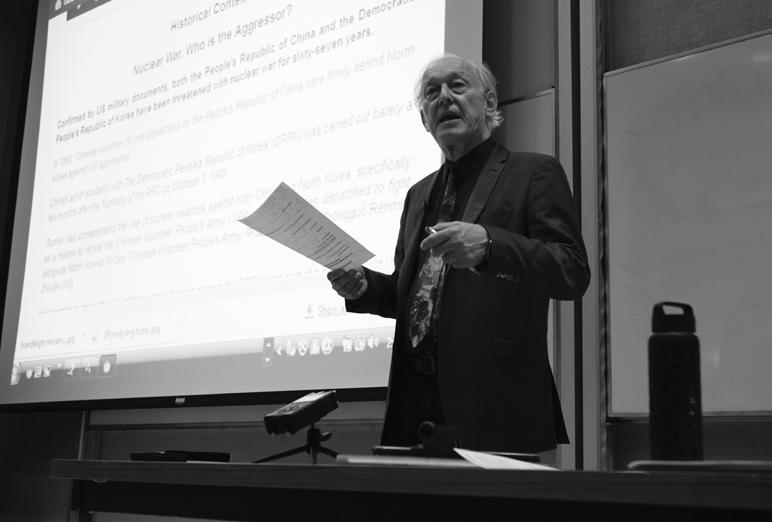
U of O professor emeritus of economics Michel Chossudovsky visited the University of Manitoba Jan. 15 to speak about the dangers of nuclear war. photo by asha nelson
Winnipeg Women’s March shifts focus to local issues
Access to childcare, reproductive rights, pay inequality among the issues raised at women’s rally
s haden a busaleh, staff
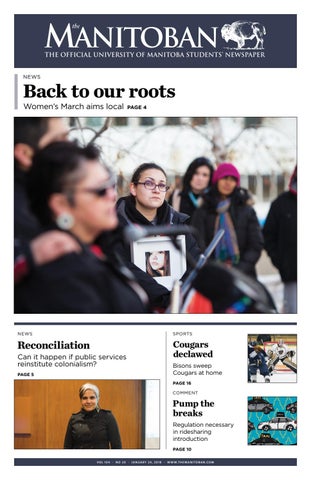
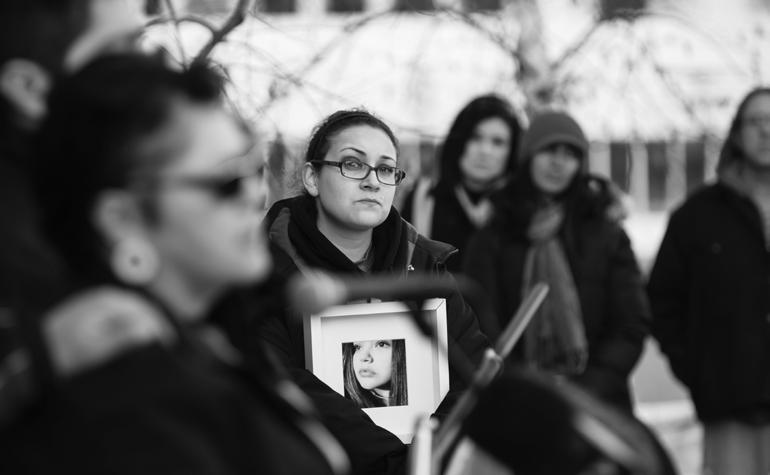
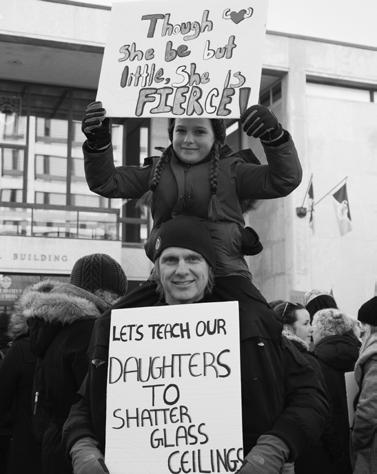
Hundreds rallied outside Winnipeg City Hall for the Women’s March Jan. 20 as part of a series of protests that unfolded across Canada and the United States.
Last year’s Women’s March, which saw thousands walk through downtown Winnipeg, was organized in solidarity with the Women’s March on Washington that saw record numbers of protesters flood the streets of the American capitol the day after U.S. President Donald Trump’s inauguration.
The 2018 Winnipeg Women’s March shifted its focus to local issues affecting Manitoban women, including access to healthcare and reproductive rights, pay equality, childcare provisions, and issues facing Indigenous women.
Speaking to the crowd gathered at the steps of City Hall, Basia Sokal, president of the Winnipeg Labour Council and one of the rally’s organizers, said “Women in Manitoba have some very unique issues. Childcare is a serious concern in the province and we have a crisis. We’re close to 16,000 children waiting for affordable and accessible childcare.”
Sokal highlighted access to health care, particularly for women in the province’s north, as another concern.
“We want the same access for all women,” she said. “And we want this province not to discriminate against Indigenous women that are under attack.”
“The women of this province deserve better,” Sokal added. “All
women across the country, across the globe, and specifically here in our province of Manitoba, don’t have access to the same rights, the same drugs, the same needs and services - [it] is a shame.”
This year’s rally occurred in the midst of the growing visibility of the Me Too and Time’s Up movements, which aim to draw attention to the prevalence of harassment and sexual assault against women.
Priti Shah, a lawyer and owner of PRAXIS Conflict Consulting, reflected on the importance of movements like Me Too, saying 2017 was both an exciting and a challenging year for her personally.
“For so many of us, the Me Too movement was painful,” she said in an address to the crowd. “And for me it was a painful time because I had to look back upon the early days of my legal career where I experienced so much sexual harassment that I just let go by the wayside.
“I didn’t do anything. I didn’t complain. I had nowhere to go. There was nobody who had my back and I’m still troubled about the fact that I didn’t do anything about it.”
In an interview, Shah said her daughter was behind her choice to attend the rally.
“We shouldn't have to, as Indigenous people, be four times more likely to walk out of our house and never be seen or heard from again.”
“We have over 1,200 missing and murdered women across Canada. And that number is almost 200 here just in Winnipeg, and these statistics continue to rise. Yet there’s no resources put in place for prevention to support families” -
Bernadette Smith, NDP MLA for Point Douglas
Smith is co-founder of the Manitoba Coalition of Families of Missing and Murdered Women in Manitoba as well as the Drag the Red Initiative and was among the speakers at the rally. She shared the story of her sister, Claudette Osbourne, who went missing in 2008.
Smith said that when Osbourne went missing, her family did not receive much help from the community and police, saying that “often what happens in the media, our loved ones are portrayed as less than human.”
“That’s exactly what happened with my sister,” she said. “When she went missing, it was, ‘aboriginal, sex-trade, drug-addicted woman missing,’ and it wasn’t until you read into the second paragraph that you actually found out who she was.”
In an interview, Smith noted that issues such as childcare, affordable housing, and addiction are among the many that need to be addressed, emphasizing safety as an important concern facing Manitoban women today.
MLA Bernadette Smith on the Women’s March
“I am the solo parent of an almost 20-year-old daughter who is of African background,” she said. “And I want her to be moving forward in a society where she can do whatever she wants to do, she can be paid equally for what she does, and she can live free from harassment and discrimination.”
up for the rights of women.
“We’re all human. We all need to be treated the same,” she said.
NDP MLA for Point Douglas Bernadette Smith said she chose to attend the Women’s March to stand
“We’re a very diverse community but we shouldn't have to be fighting for women’s pay equity. We shouldn't have to be fighting for the abortion pill for everybody.
“We have over 1,200 missing and murdered women across Canada,” she said. “And that number is almost 200 here just in Winnipeg, and these statistics continue to rise. Yet there’s no resources put in place for prevention to support families.”
Hundreds attended the Winnipeg Women's March at city hall Jan. 20. photo by asha nelson
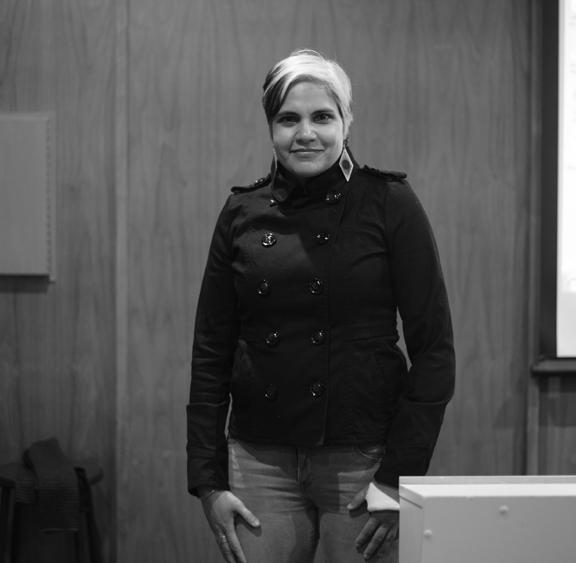
photo by quincy houdayer
Jaskiran Dhillon draws attention to Indigenous youth tangled in colonial institutions
Noted academic’s Prairie Rising investigates role of public institutions in the lives of Indigenous youth.
Imreet Kaur, staff
The Institute for Women’s and Gender Studies at the University of Winnipeg (U of W) hosted New School university professor Jaskiran Dhillon for a keynote lecture to discuss her book, Prairie Rising: Indigenous Youth, Decolonization, and the Politics of Intervention, Jan. 18.
Dhillon, an academic and child of immigrants who grew up on Treaty Six territory in Saskatchewan, is an assistant professor of global studies and anthropology at the New School University in New York City.
She is noted for her study of political movements centred around decolonization, environmental justice movements such as the resistance against Dakota Access Pipeline, and the role played by Indigenous youth within these movements.
Dhillon spoke about Indigenousstate relations and the colonial nature of state intervention policies in the lives of Indigenous youth, which she said are “lived expressions of racism, both obvious and subtle that have resulted in a strained relationship between Indigenous and non-Indigenous residents in Saskatoon.”
Visible racism
Dhillon’s book focuses on the city of Saskatoon, which is divided into east and west sides by the South Saskatchewan river. The west side of the city, Dhillon said, is home to Indigenous people living in deeprooted racialized poverty.
“Indigenous youth have told me about the palpability of these hostilities when they describe their experiences of moving from the Westside to the Eastside of Saskatoon across the South Saskatchewan River over one of the city’s eight bridges.
“They have told me about the way business owners stare at them when they enter restaurants, bars, and clothing stores they are not expected to enter, when they break the informal codes of conduct in an overtly segregated city,” Dhillon said during her address.
Dhillon said it was a common sight to see police officials pull over Indigenous youth and engage in a rough line of questioning, which she added is a reflection of the "interminable power of the criminal justice system.”
Dhillon mentioned that her upbringing in a “politicized household” helped her comprehend the history of Canada as her parents engaged in detailed discussions, about the country they chose to immigrate to with her from a very young age.
Growing up, Dhillon said she “ would often see things happening on the street, Indigenous people being verbally abused, people yelling at them in grocery stores, or [in] department stores being followed.”
School to prison pipeline
Dhillon described how the assimilation of the education system and the criminal justice system - to enforce disciplinary policies and practices within schools - has “implicated” students in the criminal justice system.
Calling this a “school-to-prison pipeline,” Dhillon noted that the phenomenon, acknowledged in the United States, occurs in Canada as well.
“Indigenous youth have told me about the palpability of these hostilities when they describe their experiences of moving from the Westside to the Eastside of Saskatoon across the South Saskatchewan River” - Jaskiran Dhillon, author
As schools develop zero tolerance policies towards violence and anything that can be described as problematic behaviour, schools involve law enforcement in discipline, which Dhillon argued amplifies the scrutiny of Indigenous youth in the public education system.
“They are often minority students, students of colour, or in this case Indigenous students that then develop a relationship with the police,” Dhillon said.
Institutional racism
“Historically, Indigenous migration to Canadian cities was viewed with scepticism and fear, solidifying the belief that their rightful place was on the reserve,” she said.
In 1960, the government of Saskatchewan submitted a report to the Joint Committee of the Senate and House of Commons on Indian Affairs.
The government of Saskatchewan issued a statement saying “the day is not distant when the burgeoning Indian population, now largely confined to reservations, will explode into white communities and present a serious problem indeed.”
Fast forward many decades later, a report released by the Department of Justice in 2004 confirmed the disparate representation of Indigenous youth in prisons.
Dhillon pointed out that nationally the percentage of Indigenous
youth in prison sits at about 33 per cent, even though they make up only five per cent of the population. In Saskatchewan, 88 per cent of youth in custody are Indigenous. Calling it an “astounding” number, Dhillon said that “incarceration rates mirror the intensity of settler-colonial confrontation between Indigenous youth and the criminal justice system.”
In 2014, the department revealed that 28 per cent of Indigenous people over the age of 15 reported being mistreated in the past year, compared to 18 per cent of non-Indigenous people with twice the rates of violent victimization among Indigenous people in comparison to non-Indigenous people.
Moving forward
“It is short-sighted and dangerous to assume that the settler state is simply going to step in and right its wrongs - regardless of how many more inquiries are called or reports commissioned or participatory strategies are developed,” Dhillon said.
Representation politics, she said, does little to shift the dynamics of power if institutions focus solely on the participation of representative Indigenous communities without thinking about operating outside state structures.
“This means we need people working in settler state spaces and agencies
that embody a politicized understanding of Indigenous-state relations and the stronghold state institutions have on the lives of Indigenous youth through micro, everyday actions,” she said.
“Incarceration rates mirror the intensity of settler-colonial confrontation between Indigenous youth and the criminal justice system” - Jaskiran Dhillon
In addition to thinking about the structure of the institutions, youth programs, and public services, Dhillon said government should abandon “the language and practice of service delivery and instead” focus on the “realities of colonialism when considering program creation and advocacy alongside Indigenous youth.”
Dhillon said that hiring practices and public programming that make up institutions of higher education need to make concrete changes in
the curriculums being taught at postsecondary institutions.
“The social workers, youth workers, probation officers, nurses, doctors, aid workers, criminologists, and police, along with many novice researchers, are being ‘trained’ within our post-secondary institutions," she said.
"What forms of critical pedagogy are we using to challenge the dominant modes of address invoked in everyday references to Indigenous peoples across Turtle Island? How are we ensuring that the white-washing of our fields of study and program areas are not feeding into the production of a new set of professionals willing to take up the goals of the settler-colonial state?”
Implementing Indigenous course requirements, which the U of W introduced in 2016, is “excellent” and “absolutely central” to advance the learning about Indigenous people and Indigenous worldviews, Dhillon said.
The U of M has debated following suit with its own mandatory Indigenous credit requirements.
“Forcing students to sit in a class that they would otherwise not be willing to take does the work of providing them with some exposure to the history and the politics of the country,” Dhillon added.
photo by asha nelson
MSA’s Bandaids for the Soul sheds light on mental illness in the Muslim community
UMSU Mental Health and Wellness Week to align with Bell Let’s Talk Day
T
he Muslim Student Association
(MSA) is hosting regular gatherings called Bandaids for the Soul at the U of M Fort Gary campus.
The program is aimed at ending the stigma attached to mental illness in the campus' Muslim community, and more broadly within the city of Winnipeg.
MSA president Yazan Hammad said the group has hosted three sessions since the inception of the program in November.
Hammad said he is passionate about the cause as he “struggled with mental health problems” and that discussing these issues with a group of peers is more comfortable than speaking to a psychologist, which he said is “too formal.”
Hammad said the sessions were not aimed at solving problems, but to help people come up with their own solutions having listened to the lived experiences of their peers.
Rashedeh Naseri, MSA marketing director and photographer, said the sessions aim at promoting psychological well-being among students and community members through an open discussion forum.
She said the program was created to give people a space “to express their feelings.”
“We’re not here to give a cure,” Naseri said. “We don’t have the medicine for your mental health problems
but we can help you - we can be the Band-Aid and be part of the healing process.”
Rahma Shahin, a volunteer with the MSA, said she felt that “within the Muslim community, there’s huge stigma [attached to] mental health,” which makes people less likely to speak about it.
“Whether you are Muslim or nonMuslim, whether you’re brown, black, white - it doesn’t matter to us”Rahma Shahin, a volunteer for MSA
“We are non-judgemental,” Shahin said. “Whether you are Muslim or non-Muslim, whether you’re brown, black, white - it doesn’t matter to us. For us it is all about your problems and how we can be a part of the solution. And we just want a safe space where anyone can come and have a place where they don’t have to be scared to speak up.”
The slogan for the program is “Together not alone, we make it feel
like home.”
“That is the whole point of this,” said Hammad. “It doesn’t matter what your religion is, what your race is, nothing matters. As long as you’re a human being, you are welcome to come and share whatever you like.”
UMSU Mental Health and Wellness Week
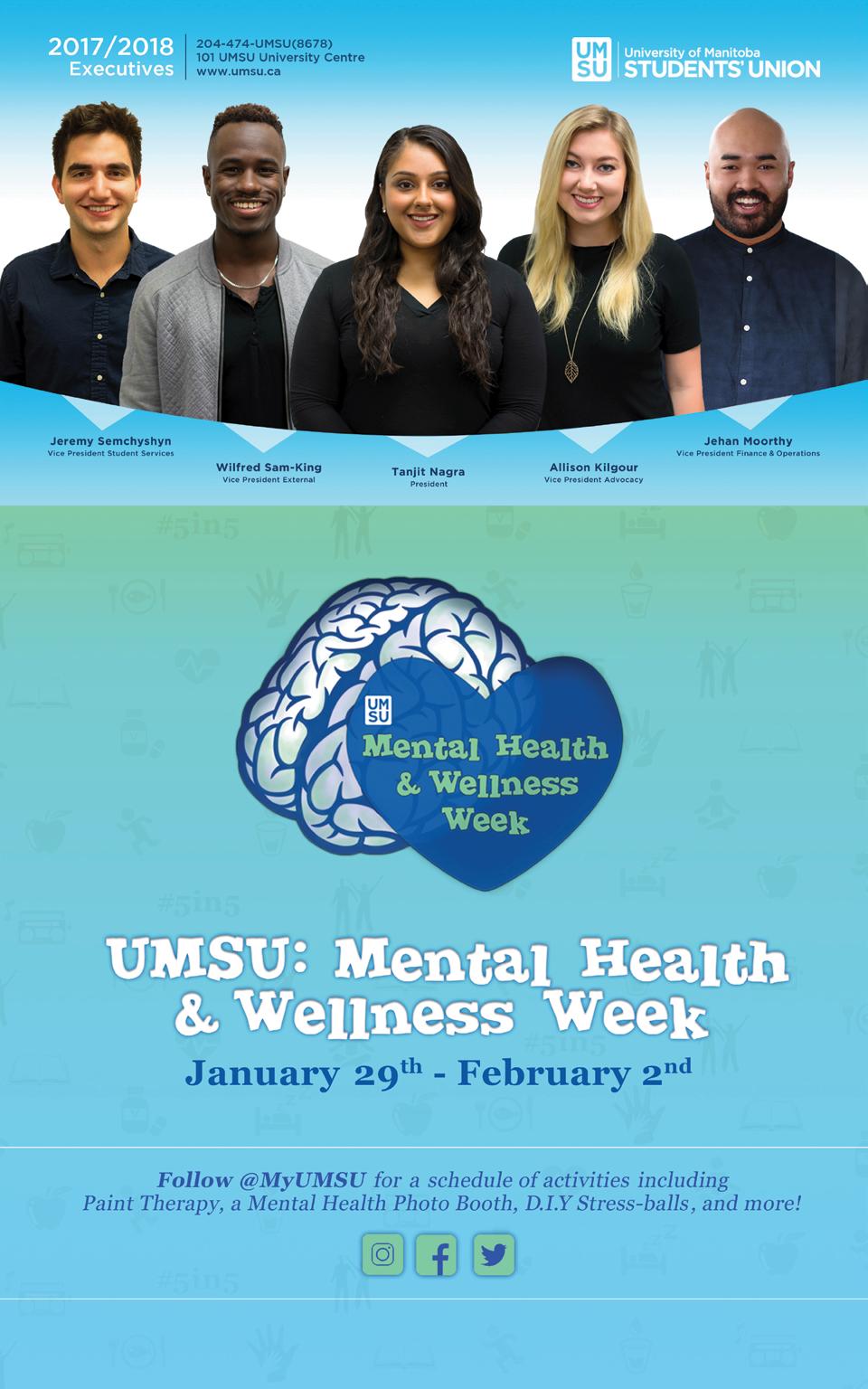
UMSU's annual Mental Health and Wellness Week will run Jan. 29 to Feb 2.
Allison Kilgour, VP advocacy, said, “one in five Canadians will struggle with mental illness, and of that one in five, only a quarter will receive the help that they need.”
Kilgour said the stigma surrounding mental health makes people less likely to seek help. As such, Mental Health Awareness Week was designed keeping this in mind.
She said the weeklong event will bring together different groups from “on and off campus tabling and sharing resources” with regard to mental health including many planned activities and games.
She noted that students are a population of individuals struggling with mental illness due to stress and other reasons associated with being a student.
“With potential tuition increases, the cost of living and the current job market, as well as the stress of
classes and everyday life, many of our students are in need of more mental health support,” said Kilgour.
Kilgour noted that UMSU had decided to prioritize mental health by constantly seeking new ways in which students could be provided support.
UMSU made sure to include mental health services within its Health & Dental Plan and introduced Empower Me, a free, 24-hour counselling services to all students enrolled in the plan.
Kilgour added that during the wellness week, UMSU will launch a new program called “Speak Up U of M” - a program intended to spark conversations around mental illness on campus. However, she noted that “access to proper supports is lacking all across Manitoba” and UMSU continues to advocate for changes from the university as well as the provincial government.
Belal Zia, a clinical psychology student at the U of M, said that although the university has resources to help students cope with mental health struggles - such as the U of M Psychological Service Centrethere is still room for more to be done, which is “where the stigma piece comes into play.”
“Stigma is definitely a huge challenge, and we're doing the best we can to try to figure out why there is such
stigma surrounding mental health,” Zia said. “I personally think it's because you can't see mental health challenges necessarily and problems you can't see are ones that we have a hard time accepting.”
Mental Health and Wellness week is held simultaneously with “Bell Let’s Talk Day” Jan. 31, an initiative which also aims to promote discussions on mental illness.
Kilgour said “Bell Let’s Talk has been an incredible success” in encouraging these discussions.
“We wanted to include this day in our programming and involve the entire campus community to remind everyone that this is an issue that affects all of us, and that it’s up to all of us to change the culture and how we think and talk about mental health,” she said.
Zia also stressed the importance of creating awareness surrounding mental illness as a way of addressing the matter.
“I think the remedy for that is actually education,” he said. “The more we shed light on mental health difficulties, the easier it is for us to help people get access to services that will help them get better.”
Dele Ojewole appointed CFS-MB interim-chairperson
Ojewole affirms CFS-MB’s commitment to continue its fight against expected tuition fee increases
s haden a busaleh, staff
The Canadian Federation of Students - Manitoba (CFS-MB) has appointed Dele Ojewole as the interim-chairperson following the resignation of Carlen Comegan-Ronke.
The announcement was made in a statement posted on CFS-MB’s Facebook page Dec. 16. Ojewole, who was the organization’s former deputy chairperson, had his new position officially ratified Jan. 8 at the regular provincial executive meeting for CFS-MB.
In a statement posted on the organization’s Facebook page Jan. 11, Ojewole restated CFS-MB’s commitment to advocating “for an affordable, accessible, and high-quality post-secondary education in Manitoba.”
Ojewole is currently in his final year in applied computer science at the University of Winnipeg and said he feels “extremely privileged to be serving as interim-chairperson,” adding that his participation
in student politics was borne out of his belief “in advocating for an affordable and accessible post-secondary education.”
The fight against Bill 31
The Advanced Education Administration Act - Bill 31 - lifts a cap on tuition hikes that has held increases to inflation since 2012, and removes restrictions on course-related fees. The bill passed its third reading with a majority in the early hours of Nov. 10 following an all-night legislative session.
Universities in Manitoba are now free to increase tuition fees by five per cent plus inflation annually, starting September.
Speaking on Bill 31, Ojewole reflected on student advocacy against the rise in tuition fees.
“This past year, thousands of students from across Manitoba worked tirelessly to oppose the provincial government’s attack against an affor-
dable and accessible post-secondary education in the province,” he said.
“We will not back down until our vision for an affordable, accessible postsecondary education in Manitoba is achieved” - Dele
Ojewole, CFS-MB interim-chairperson
Almost 50 people spokeoverwhelmingly against - the bill at a committee hearing Oct. 25. This included representatives from CFS-MB, UMSU, the University of Winnipeg Students’ Association, and Brandon University Students’ Union.
On Oct. 26, more than one hundred students participated in CFS-MB’s day of action in Winnipeg. Students marched from the University of Winnipeg to the Manitoba legislature calling on the provincial government to scrap Bill 31. The protest was attended by students and alumni from the U of M, Université de Saint-Boniface, the U of W, and Brandon University.
“Since then, the student movement has grown stronger and we will continue to pursue an affordable and accessible public post-secondary education,” Ojewole said.
Ojewole affirmed CFS-MB’s commitment to continue its fight against the expected rise in tuition fees.
“Bill 31 will not slow us down,” he said.
Ojewole added that the organization will continue rallying and advocating across campuses in Manitoba to ensure that university admini-
strations “will not capitalize on the passage of Bill 31 in raising tuition.”
“We will not back down until our vision for an affordable, accessible post-secondary education in Manitoba is achieved,” he said.
Upcoming plebiscite
UMSU is currently preparing to hold a plebiscite asking UMSU members whether they wish to continue their membership in CFS.
Voting in the plebiscite will open Jan. 31 at 8:30 a.m. and will close Feb. 2 at 4:30 p.m. Online votes will be tallied on umsu.simplyvoting.com. A polling station will be set up in front of the UMSU office in the UMSU University Centre.
Editor-In-Chief: Garett Williams
Contact: Editor@themanitoban.com / 474.8293
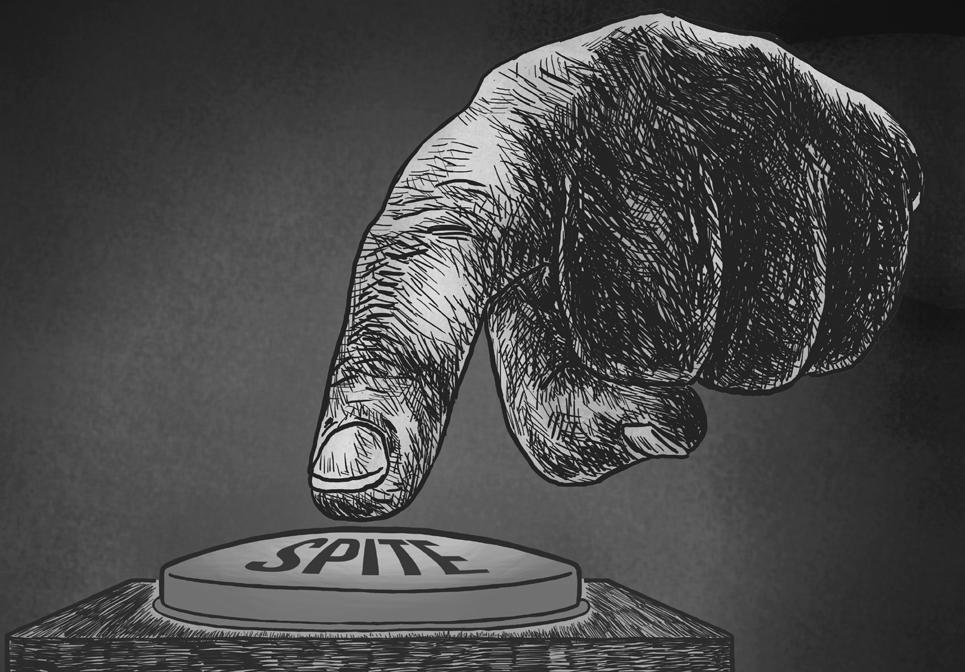
UMSU plebiscite is politics made petty
The current leadership’s thinly veiled attempt at defederation lacks practical reasoning
s hawn h uberdeau, staff
If student politics is the training ground for parliamentary politics, then legislatures across Canada will increasingly look like the schoolyards of the nation.
A motion effectively summoned at the whim of the UMSU executive - approved by the ever-servile UMSU council - has set into motion a non-binding plebiscite posing the existential question: “Do you believe UMSU should remain a member of the Canadian Federation of Students, at a cost of $14.98 per student per year?”
The likely causes for the referendum are varied but identically vacuous in nature. First, there was the 2013-14 UMSU executive that tore promotional CFS material from UMSU agendas following a dispute surrounding the cost of printing the dayplanners. The executives deemed the deal unfit to “provide the cheapest and best service for our students,” a retroactive negotiating strategy worthy of recounting in a number-one bestseller. Perhaps, UMSU: The Art of the Deal?
Second was the protracted 2013-14 UMSU executive decision to withhold a total of $993,562.18 in annual membership fees to CFS, all due to an argument over which organiza-
tion had the legitimate rights to an UMSU domain name. The milliondollar drama came to an end in mid2016 after UMSU settled its debt to CFS - an easily accomplished task as the union continued to collect the CFS levy from students throughout the years.
UMSU’s current course of action is one of self-refutation
Third was UMSU president Tanjit Nagra’s experience at a 2016 CFS national general meeting. There, Nagra claims to have been verbally harassed by a dual executive of the U of W students’ association and CFSManitoba, as well as laughed at by the national CFS executives.
In the aftermath, UMSU council passed an emergency motion mandating its executives pen a letter demanding an apology from CFS. In written response, CFS took two pages to explain that anti-harassment measures were offered to UMSU. No official complaints were lodged. The message conspicuously lacked an apology for the alleged harassment.
With this triad of trite events in mind, it is clear UMSU’s plebiscite is only a means of turning the petty personal into the political. Fraught with tension for years, the relationship between UMSU and CFS is brittle in trepidation for precisely the kind of play the current union leadership and its accessory council are trying to pull off.
By advancing the plebiscite, executives may disguise their action as an innocent appeal for students to carve out a mandate for the future of the union’s relationship with CFS. Yet spinning the story this way conveniently neglects the fact that UMSU hasn’t held a democratic mandate for decades - save the 2017-18 election, less than a quarter of students have voted in annual UMSU elections for the past 20 years.
To anyone with the strength of will to watch, UMSU is clearly setting the stage for a defederation campaign. This is a sorry state of affairs.
In what is clearly an attempt to make an example of CFS for the application resumés of future parliamentarians, the UMSU executive has appeared to set up its current constituents for failure.
Frankly, UMSU’s current course of action is one of self-refutation.
The logic of institutional lobbying is to enshrine certain group interests in legislation. As the member of a national organization like the CFS, UMSU increases the structural bargaining power of students by backing students’ interests with a plurality of united unions as opposed to a plurality of lone unions. When pursuing talks with the federal government, UMSU is better off with more committed allies than fewer.
Although UMSU has claimed success in opening channels of communication to the federal government with other U15 research universities, such casual collaboration is no proper substitute for the activist infrastructure offered by CFS, along with its massive organizing and mobilizing apparatus.
In the language of practical realpolitik, as student politicians seem so fond of speaking, lobbying ultimately breaks down into a numbers game or a favours game: who backs whom, and who can do favours for whom. CFS has the resources to grapple in both arenas.
In desertion of the federation, student lobbying power is weakened by splintering the student voice into antagonistic factions. A sad situation, but arguably a political neces-
sity in certain scenarios. Yet UMSU’s interests here are not formally political - they take the character of righteous revenge. Having been wronged, UMSU is now preparing for retaliation. While this moment of political theatre may be one worthy of laughter by its victors over dimly lit bar tables long into the future, it will do little to avail the fight for free tuition, increasing the quality of academic work at our universities, and building stronger student supports on campus.
But since when has UMSU been concerned with any of that?
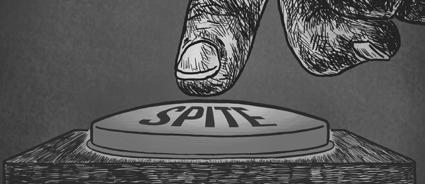
graphic by kelly campbell
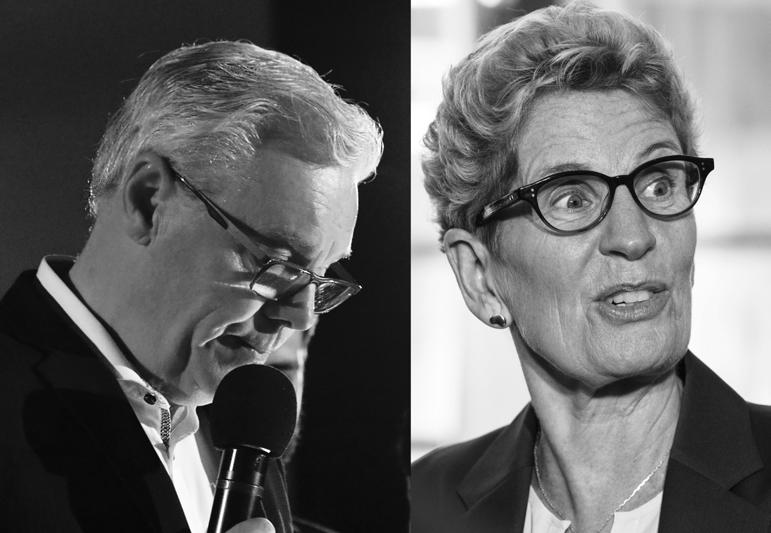
Kathleen Wynne’s long road to June
Will the Ontario premier survive election, or will she face the same reckoning as Greg Selinger in 2016?
l ev I g arber, staff
An unpopular premier whose party has been in power for more than 14 years is under threat of losing an upcoming election to the PCs. No, this is not a reference to Greg Selinger and the Manitoba NDP of 2016.
This time it’s Ontario Liberal premier Kathleen Wynne who is in trouble.
Wynne and the Ontario Liberals - who have been in power since 2003 - are facing a provincial election in June and the odds, like Selinger’s in 2016, are not in their favour.
As a sort of pre-campaign campaign strategy, Wynne has been crisscrossing Ontario hosting town hall meetings since the end of 2017, taking open questions from anyone with a grievance.
Although Selinger never held any kind of Q&A sessions with Manitobans in the lead up to his party’s failed election, one can’t help but think such an event would mirror that of the Ottawa auditorium filled to capacity last week for Wynne’s first town hall in the nation’s capital.
Even before Wynne stepped onto the stage, frustrated Ontarians had trouble containing their anticipation to grill the premier on decisions her government has made over her fiveyear tenure.
How would Manitobans react if they had the chance to ask Selinger direct questions on controversies such as the provincial sales tax hike, his government’s decision to purchase expensive Tiger Dams, or the cabinet revolt that rocked his party to its core in 2015?
That town hall would have felt just as tense as Wynne's. In Ottawa, the spectacle was a miniature version of Prime Minister Justin Trudeau’s town hall meetings, which have been grabbing headlines across the country since the beginning of the year. A platform situated in the centre of a packed auditorium with a large flag hanging behind the stage - all in all, perfect for a good photo-op.
Trouble is, Wynne fails to garner the same kind of celebrity admiration the prime minister does. In fact, her personal popularity is in shambles, with one late 2017 Forum Research poll giving her a 15 per cent approval rating.
Sound familiar?
Just two months before the Manitoba election, Selinger’s approval rating sat at 19 per cent.
Although Wynne never hiked
provincial taxes or survived a cabinet mutiny, her government has gone through a few damaging controversies over her tenure as premier.
Despite the proverbial writing on the wall, don’t count Wynne and the Liberals out like most Manitobans correctly counted Selinger’s NDP out in 2016
Most notably, Wynne’s Liberals privatized most of Hydro One, Ontario’s hydroelectricity provider, a move that immediately brought confusion and frustration to the residents of Canada’s largest province.
The political scandals originating from Wynne’s Liberal predecessor,
Dalton McGuinty, have not helped the party’s popularity either. Just last week, McGuinty’s former chief of staff was found guilty in an Ontario court of deleting government documents in 2013 - just before Wynne took over - to shield the Liberals from fallout over revelations that plans for new power plants were cancelled in the lead up to an election at an estimated cost of more than $1 billion over 20 years.
And on top of Wynne and her party’s unpopularity due to political misgivings with similarities to Selinger’s NDP, there is the fact that the premier is an LGBTTQ* woman. Since taking office, Wynne has had to contend with both sexism and homophobia. As The Agenda host Steve Paikin penned in April: “Is it possible that part of the reason [Wynne’s] poll numbers are down is that Ontario is a less progressive, more sexist, and more homophobic place than any of us would like to admit?”
All these issues were on full dis-
play as Wynne took questions from town hall audience members she selected at random. Between loud hecklers and a tense stand off with a man in the front row who delivered quite the angry, incoherent rant in the premier’s face - to which she stood her ground only four feet away - Wynne answered emotional questions on elder abuse in care homes, marijuana legalization, the Ontario college strike, racism, and more with professionalism and sympathy.
Despite the proverbial writing on the wall, it would be foolish to count Wynne and the Liberals out like most Manitobans correctly counted Selinger’s NDP out in 2016.
The Liberal government’s more recent progressive legislation - such as a minimum wage hike to $14 per hour, expanding health coverage for pharmaceuticals to all Ontarians 25 and under, and free college tuition for students from low-income families - have been popular moves. Those measures, paired with a strong provincial economy and an
almost-balanced budget, all seem to have helped tighten the polling gap between Wynne and Patrick Brown’s contending PCs.
However, the road to victory is still a very long one for Wynne’s Liberals. The most recent polling still has the PCs leading anywhere from eight to 16 per cent over the Liberals.
Then again, the election is still a few months away, and that could be long enough to turn the tides of popular support.
As Ontarians exited the town hall into the chilly January night, it was hard to tell if many were left feeling more confident in their premier or if Wynne’s bid for re-election was indeed a lost cause.
Will the coming election prove to be a long-anticipated reckoning like April 2016 was for Selinger? Or will Wynne pull off a triumphant victory in the face of presumed failure?
Right now, it’s anyone’s guess.
photos by megan cowel and craig robertson
In the introduction of ridesharing to Winnipeg, a balanced approach is key
Regulation is good for both drivers and passengers
Kenny Ingram, staff
Taxis are absolutely terrible.
Anyone who has ever taken one knows that they’re often too hot or cold, make you sick with how aggressively they are driven, frequently smell of cigarette smoke, and - above all - are expensive to ride.
We need to be wary of the idea that apps such as Uber and Lyft will have nothing but a positive impact in communities which allow them free reign
In no place is this more true than Winnipeg, where the two largest taxi companies each have an online Google rating of under two stars, based on over 300 reviews each. For those without a vehicle, public transit and taxis are the only realistic option for transportation in cold weather and for long distances.
This is all set to change, however, with a bill passed in the legislature under the Progressive Conservatives. Bill 30 repealed The Taxicab Act -
legislation originally introduced 30 years ago - dissolved the Taxicab Board, and allowed for municipalities to write their own regulations governing limos, taxis, and ridesharing applications. Naturally, it was strongly opposed by Manitoba’s taxi industry, which has long benefited from a government-regulated monopoly. The price of a taxi license in 2016 exceeded $400,000 and the two largest taxi companies together controlled 407 out of 410 standard taxi licenses in the city. With a huge financial barrier to entry and a grotesque monopoly like this - stifling any realistic possibility of competition in the taxi industryit’s no wonder service has been poor for years.
Some members of the legislature - namely former NDP MLA Mohinder Saran and NDP MLA Jim Maloway - went so far as to call the bill discriminatory toward the East Indian community, given Indo-Canadians form a large portion of taxi drivers. Yet there is nothing inherently discriminatory about allowing municipal governments to regulate an aspect of the transportation sector. It is done in almost every other major city in Canada. The taxi industry, having already
poured millions of dollars into licensing that rideshare operators are not required to hold, has lobbied for compensation from the city if companies like Uber and Lyft are permitted to operate in Winnipeg.
If at this point you do not want the two largest taxi companies to go bankrupt, or at the very least have a negative view on the prospect of ride sharing coming to Winnipeg, it might be because you are a taxi driver or owner of a soon-to-be uncompetitive taxi company. Given public perception of the taxi industry in Winnipeg, most people in the city likely do not want these companies subsidized through their tax dollars to help them compete against ridesharing companies.
We need to be wary of embracing the idea that apps such as Uber and Lyft will have nothing but a positive impact in communities that allow them free reign. This is not the case - not by far, according to the experience of cities that have already walked the path Winnipeg is about to start down.
What apps like Uber do is classify the people who drive for them as private contractors rather than employees, a legal distinction which allows the company to avoid a great deal of
labour regulations. Surely, though, Uber and Lyft drivers are employees, not contractors. It’s important to recognize that as employees, drivers for these companies deserve to be treated fairly - the same way an employee at any other company would be.
It would be naive to think that Uber, as soon as it has achieved market domination, will not then raise its prices
Uber has alleged - and recently lost a case based on this position in the European Court of Justice - that they are merely a technology platform, rather than a transport service. Uber’s European legal battle was just an attempt to avoid the laws and regulations which transportation services like taxis and limos have to abide by. If Uber and Lyft want to compete in the market, then they must be regulated the same way other transportation companies are to keep competition as fair as possible. This
ultimately leads to the best product for consumers.
Currently, Uber is only succeeding on the market because its business model is built around dodging government regulations. Much like Amazon, Uber operates at a loss, and relies on a stream of external investments so that it does not immediately need to make a profit. Uber prices its services well under the market rates, allowing it to drive any pesky competitors out of business.
It would be naive to think that Uber, as soon as it has achieved market domination, will not then raise its prices.
Uber recently claimed that some regulations may prevent it from coming to Winnipeg: specifically, licensing. Manitoba Public Insurance (MPI) submitted a document in Dec. 2017 detailing how it planned to roll out licensing for ridesharing apps. Licensing would be in the form of “vehicle for hire insurance packages,” with plans available for different allotments of estimated work time, all purchased by individual drivers instead of Uber’s preferred method of purchasing blanket insurance through the corporation.
Uber is opposed to any kind of barrier to entry that is not exactly what it wants. It is a multinational corporation concerned with its bottom line, not whether or not drivers are adequately protected in cases of costly accidents. This is all despite the fact that licensing packages offered to Uber drivers would be a quarter of the price of those offered to taxi drivers, where a taxi and Uber driver work identical hours.
It’s important to remember that other large businesses have played these types of games before. A corporation like Uber is not likely to pass up one of the largest cities in Canada as a market because of a few regulatory battles when it has overcome others in the past.
What would happen if there were little or no regulation placed on ridesharing apps? This would result in a company in charge of policing itself - where employees are treated poorly, customers are not protected, employees are not suspended for violating terms and conditions. Companies require external sources of authority to impose standards, given that the motivating drive for any corporation is self-interest and profit. Without regulation, any conflict between selfimposed standards and profit would be resolved by appeal to the almighty dollar.
Regulations proposed by MPI and city council are for everyone’s benefit and safety. Let’s not be blinded by the dream of imagined greener grass just because our current taxi system is less than ideal.
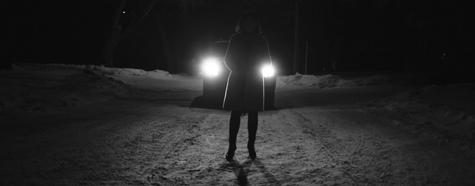
graphic by ernest ZarZuela
Women’s volleyball sweep Wesmen, men earn a split
ryan s telter, staff
The Bison women’s volleyball team swept the University of Winnipeg this weekend, while the men earned a split.
Despite both women and men winning the Duckworth portion of their series, the Bison basketball teams fell by a large enough margin to give the Wesmen the Duckworth Challenge title.
The Duckworth Challenge was started by Dr. Henry E. Duckworth, a former president at U of W and chancellor of the U of M, in the 1991-92 season as a way to enrich the rivalry between the two universities in Winnipeg.
Women
In the first game and Duckworth Challenge portion of the volleyball games Thursday, the Bisons took out the Wesmen 3-0.
Manitoba jumped out to a 16-11 lead at the technical timeout in the first set. The Wesmen crawled their way back close, but Bison Josie Abbott ended the first set for Manitoba’s 25-17 win. The second set was a carbon copy of the first, with Manitoba again winning 25-17. The Bisons rolled on to win the third 25-19 to take the match win.
Bison right side Kearley Abbott finished with 14 kills and three Bisons
finished with 10 or more digs, for a team total of 60.
“I felt we played clean. It’s a short week to turn around after such a hard weekend,” said Bison head coach Ken Bentley, referring to last weekend’s matches against Trinity Western.
“We can’t afford any slip-ups. The teams that we’ve lost to, we’ve been really competitive with. I mean the top teams in our conference, we’ve closed the gap to just millimetres, that’s where we are.”
The Bisons won the rematch
Saturday 3-1, with all four sets closely contested. Kearley Abbott finished with 21 kills and three blocks. Cassie Bujan had 21 digs in the win and now leads the country with 313.
With the series sweep, the Bisons see their record move to 8-10 and are holding on to the last playoff spot in the Canada West.
Men
The 10th-ranked Bisons won their series opening game over the ninthranked Wesmen in four sets Thursday.
Following in the footsteps of the women, the men won the opening set 25-17. The second was much tighter, with neither team able to establish a comfortable lead. Bison setter Dylan Sutherland had some cheeky tips to earn a few points before a Scott Vercaigne tip ended the set 27-25.
The third set was another close one, but Winnipeg pulled ahead 16-12 at the technical timeout. Manitoba clawed back to pull ahead 21-20, forcing a Wesmen timeout. Winnipeg eventually forced a fourth set after
It was a weekend to forget for the University of Manitoba basketball teams, who were swept by crosstown rivals the University of Winnipeg Wesmen.
With the pair of losses, Manitoba ceded the 27th annual Duckworth Challenge to the University of Winnipeg after reigning supreme for four years straight. The Duckworth Challenge was started in the 1991-92 season; Manitoba still holds the edge overall, having won the challenge 17 times since then.
Women
The Bisons had the unenviable task of trying to stop Wesmen Antoinette Miller, one of the top players in the country. Miller averages 26.3 points per game, the most in Canada. Miller exploded Friday for 40 points against the Bisons in an 86-66 U of M loss.
“I thought we had some really good looks on her in the first half,” said Bison head coach Michele Sung. “She’s hitting tough shots. We said ‘OK, she wants to go up for 40 we have to contain everyone else,’ which we didn’t do.”
Manitoba started off well Friday, with Taylor Randall hitting two
threes back-to-back to get the crowd at Investors Group Athletic Centre fired up. Randall finished with 29 points, five rebounds and two assists. The U of M capitulated in the third quarter and was outscored by a ridiculous 24-2 margin.
“I don’t think we could shoot any worse in the third quarter, that’s one thing,” Sung said. “We had a really good opportunity to build our mental toughness today and we didn’t take advantage of it.”
It was more of the same in the Saturday rematch, with the Wesmen completing the sweep and delivering the Bisons a 75-58 loss. A poor third quarter was again the herd's Achilles heel, as the Wesmen outscored the Bisons 27-9. Bison forward Claire Harvey finished with 14 points, nine rebounds, and one assist on the night.
Following the pair of losses, Manitoba’s record sinks to 8-10 and the club sits 11th in the Canada West. The top 12 earn a playoff berth.
Men
After being swept by the University of Victoria a weekend prior, the Bisons were looking for a bounce back series against the
winning 26-24.
The fourth set continued the trend of the entire match, with Bison Kevin Negus making an incredible diving play to keep the ball alive as well as a huge kill a few points later. Adam DeJonckheere fired home the match point, for a winning score of 25-21.
“It’s a big game. Anytime we play Winnipeg - Duckworth or not - it means something extra,” said Bison head coach Garth Pischke.
“It’s guys that these kids grew up with and playing with and playing against and I’ve seen years where we’ve been ranked really high and they’ve been ranked low and the game is just as competitive.”
Manitoba fell in the rematch on Saturday, losing in straight sets. DeJonckheere had 12 kills, three blocks, and four digs in the loss. Vercaigne had a team best eight digs.
The Bisons are now 7-11 on the year and are in the final playoff spot in the Canada West.
The Bison volleyball teams head into a bye week this week and will be in Calgary on Feb. 2-3 for a series against the Mount Royal University Cougars.
Wesmen.
Friday night was a tale of two halves, with the Bisons and Wesmen exchanging leads and remaining close.
The first half closed with a buzzerbeater three pointer from Bison Rashawn Browne, but the Wesmen led 47-45. The floodgates opened up after the break, with the Wesmen outscoring the Bisons 47-22 in the second half en route to a 94-67 win.
Wesmen guard Denzel LynchBlair had a field day, scoring 31 points, six rebounds, and five assists.
“We were just mentally very, very soft. We turned the ball over a lot and they dominated the glass,” said head coach Kirby Schepp. “I didn’t see any positives. I thought we were mentally weak from 1-12 - every guy that played all you can hope for is you can learn from it.”
Bison fifth-year guard and captain Justus Alleyn, who was playing in his final regular season game at Investors Group Athletic Centre, wasn’t concerned about the Duckworth loss.
“I won’t necessarily associate this game with my experience at U of M. It’s just a stop on the road at the end of the day,” he said. “They can have
tonight, but at the end of the day we’re going to end up on top.”
Despite Alleyn’s confidence, the Wesmen crept ever closer to the Bisons in the standingsafter the U or W took another win Saturday by a score of 89-83. Manitoba stormed out of the gates to start, leading 19-8 after the first 10 minutes.
Winnipeg wouldn’t go away, grabbed hold of the lead halfway through the fourth quarter and ran with it to take the series sweep.
Alleyn was dominant for the Bisons, scoring 30 points and playing all 40 minutes. James Wagner, returning to the lineup after missing time due to injury, scored 22 points, seven rebounds, and four assists.
The Bisons now hold a 10-8 record and sit fifth in the Canada West.
The Bison basketball teams head into a bye week before heading out to Abbotsford, B.C. for a series against the Fraser Valley Cascades on Feb. 2-3 .
photo by Joe ocZerklewicZ
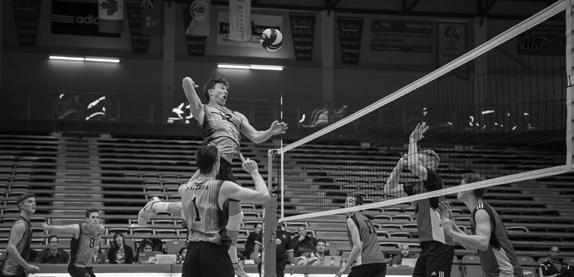
Bison captain Dustin Spiring(#12) winds up for a kill, set by Dylan Sutherland(#1) as Wesman Ethan Duncan(#13) goes up for the block. photo by Joe ocZerklewicZ