Visionary Conversations opens its 201617 series tackling critical issue
Page 3
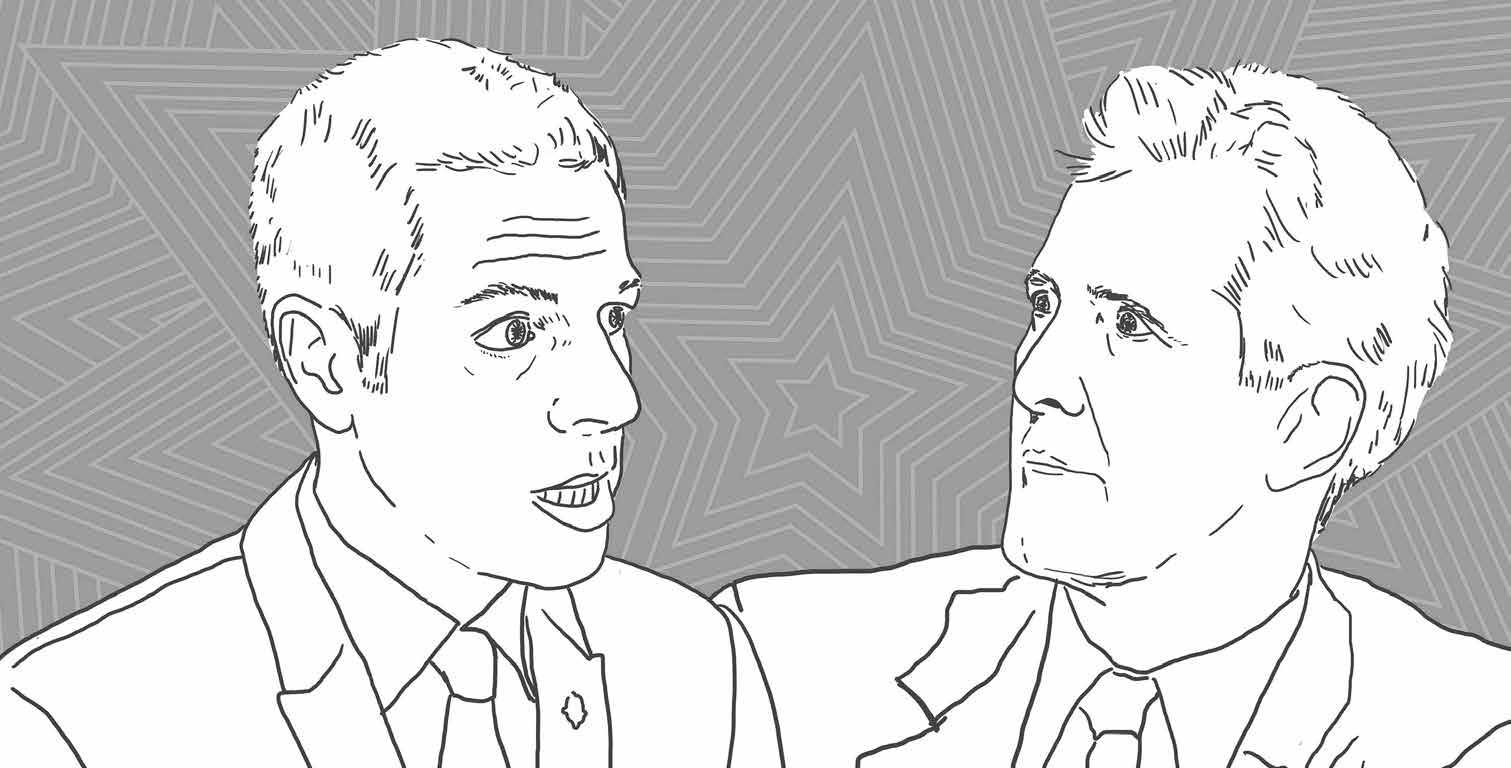
Battle of the Brians
It's time for Bowman and Pallister to mend fences
Page 7
Big budget scares
Indie film proves it can compete with blockbuster counterparts
Page 15
Dishing with Deezar
The
play
based on nothing
Bison QB talks about the season ahead
Conklin Theatre features adaptation of Thom Pain sports a rts
17
Check the Manitoban's website and Facebook page for an interview with Ivan Henwood, a U of M alumnus and star of Thom Pain
Design
14
School of Art Gallery Current Exhibiton:
Hank Bull: Connexion
September 29 - December 2
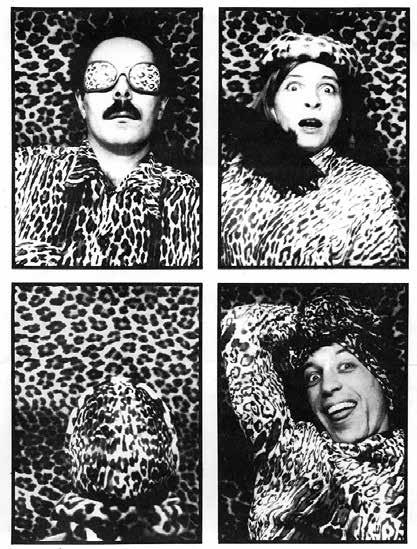
The School of Art Gallery is pleased to present Hank Bull: Connexion, an exhibition showcasing an artist’s archive assembled from several decades’ accumulation of objects, media, sources of inspiration, the evidence and remnants of activity and collaboration acquired during a life-long practice. Together with curators Joni Lowe and Pan Wendt, Canadian artist Hank Bull has selected sculptural pieces, media pieces, artworks, and numerous articles to communicate something of the energy, diversity and experimentation of his collaborative practice that is international in scope.
eporters
Volunteer Contributors
MANITOBAN
109 HELEN GLASS UNIVERSITY OF MANITOBA WINNIPEG, MB R3T 2N2
Visionary Conversations series looks at how to move forward
Gare TT Williams, staff
More than a year after the Truth and Reconciliation Commission of Canada (TRC) issued 94 calls to action, discussions toward what reconciliation looks like – and how it can be achieved – continue.
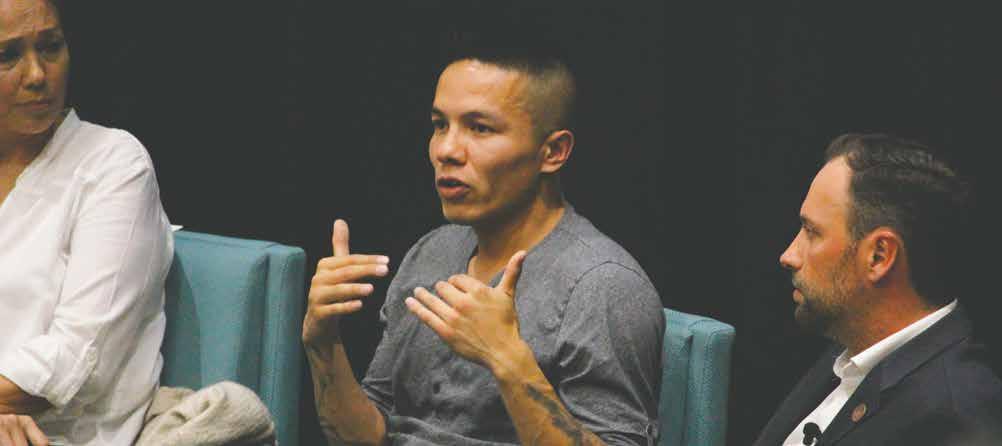
The University of Manitoba faced the subject with the opening of its 2016-17 Visionary Conversations series on Sept. 21, hosting a fourmember panel discussion examining how to move from theory to action in reconciliation.
“Reconciliation needs Canada to stop fighting First Nations people” – Lenard Monkman, Visionary Conversations panelist
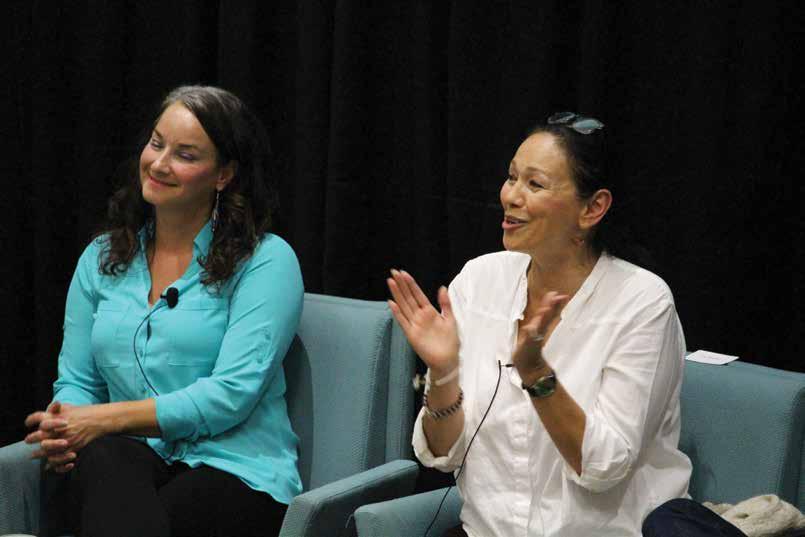
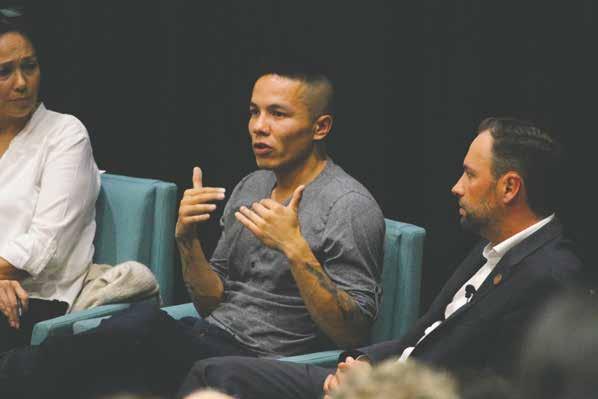
The panel included Manitoba NDP MLA for St. Johns Nahanni Fontaine; Winnipeg-based film producer and former Churchill member of Parliament Tina Keeper; CBC Indigenous producer and Red Rising Magazine co-founder Lenard Monkman; and National Centre for Truth and Reconciliation (NCTR) director Ry Moran.
A crowd of students, academics, and community members at-large filled the Robert Schultz Theatre to participate in a dialogue about how Canada can effectively address its Indian residential school past.
Over its six-year mandate, the TRC heard more than 6,700 residential school survivor and witness statements. It released 94 calls to action in June 2015. Its final report was released in December.
For more than 100 years, indigenous children were removed from their home communities and schooled and assimilated in government-funded, church-run institutions before the final school closed in 1996. Reports of physical and sexual abuse at the schools are common.
In opening remarks, all four panelists acknowledged that reconciliation takes many different shapes. Monkman remarked that if 100 people were polled on the street, they would return as many different visions for how to move forward.
“What does real reconciliation look like if First Nation values clash with capitalism, with resource extraction, with the understanding of how important water is?” asked Monkman. “We have all of these different conversations about reconciliation.”
However, all agreed education is a key step toward instilling the next generation with the tools and con-
fidence to face Canada’s residential school history.
“The truth is that we have been through an extraordinary cultural genocide and we have endured, through many generations, a massive, massive amount of trauma which we know and identify as historic trauma,” said Keeper.
“Until we come to grips with the truth, it’s going to be hard to reconcile” – Joe Keeper, community elder
As director of the NCTR, which opened its doors on the U of M’s Fort Garry campus in the summer of 2015, Moran is overseeing the creation of a national archive and permanent home to all statements, documents, and materials gathered by the TRC.
He noted the commission’s calls to action provide a roadmap but are not the solution, saying Canadian indigenous communities are still in crisis.
“Just because we’ve had an apology and just because we’ve had a truth commission, [that] doesn’t mean that that crisis has stopped,” he said.
“ We as a society – as a collective, mainstream Canadian society – really need to come to terms with what this
history means,” he added.
Beyond education, Monkman also called on the federal government to refrain from engaging in drawnout court battles with First Nations concerning land use and resource planning.
“Reconciliation needs Canada to stop fighting First Nations people,” he said.
“Maybe give us back ten per cent of the land. Maybe real self-government will happen. Maybe we’ll be able to
determine what is going to happen. We’ll be able to determine what our politics is going to look like. We’ll be able to determine what our education system is going to look like.”
Joe Keeper, Tina’s father and a community elder who identified himself as a survivor, told the panel and gathered crowd that the systemic racism of the residential school system extends beyond the schools themselves and into society as a whole.
That, he said, is what makes the
past so difficult to face.
“When you go back and you try and isolate why things are the way they are today, it’s well-named, truth and reconciliation, but the more difficult thing is coming to grips with the truth,” he said.
“And until we come to grips with the truth, it’s going to be hard to reconcile.”
photos by garett williams
Return of national academic survey welcomed by researchers, faculty associations
University and College Academic Staff System surveys equity, academic pay scales
Gare TT Williams, staff
Research associations, faculty, and university administrations alike are welcoming the return of a Statistics Canada survey that supporters say will provide crucial data on the Canadian academic landscape.
Federal Minister of Science Kirsty Duncan announced the reinstatement of the University and College Academic Staff System (UCASS) survey on Sept. 9.
“It’s a good planning tool, but it’s also, I think, a very important way in which we can monitor progress on important issues like equity” – David Robinson, executive director, CAUT
Nixed in 2012 due to budget concerns, the data collected paints a full picture of Canada’s research academy, including the age, gender, and payscales of full-time university faculty members.
“It represents another step our government is taking towards establishing evidence-based decision-making,
while encouraging a more diverse and inclusive country,” Duncan said at a press conference at Western University in southern Ontario.
“The data is really the first step to gauging diversity in our research community,” she said. “I cannot emphasize this enough – in all of our efforts as a government, you will see respect for diversity and inclusivity.”
David Robinson, executive director of the Canadian Association of University Teachers (CAUT), said the information provided by UCASS is a vital resource for policy-makers looking at student-faculty ratios or making decisions about new institutions or programs.
“It’s a good planning tool, but it’s also, I think, a very important way in which we can monitor progress on important issues like equity,” he said, noting that the information helps identify gender pay gaps and monitor the progress of women in academia.
“It’s the only data we have on how many female teachers teach in engineering across the country. That’s important to know for obvious equity reasons,” he said.
“How many faculty are teaching in the social sciences and humanities versus medical sciences, for instance?
I think that gives us a sense of where our human resource allocation is.”
Bargaining
Beyond research and social plan-
ning, the data also plays a significant role at the bargaining table, giving both faculty associations and institution administrations an impartial look at pay-scales for similar position around the country.
“It’s going to help both parties,” said Robinson. “It’s going to help both our academic staff associations and the institutions because when you sit down and you go through collective bargaining, having good reliable data helps both sides come to a reasonable agreement.”
The last time this data was made available was in 2012 and while researchers at Western University made attempts to replicate the survey, they only received responses from about 80 per cent of schools, according to Robinson. The holes in data impacted negotiations, he said.
“It can make it more difficult because you’re kind of shooting in the dark in some ways,” he explained.
U of M administration and the University of Manitoba Faculty Association (UMFA) are currently negotiating a long-term agreement. Talks have been scheduled through to the end of the month.
UMFA president Mark Hudson said he is pleased the survey is being revived, noting data collected by Statistics Canada, an independent third party, keeps the information objective at the bargaining table.
“If it’s coming from CAUT it’s less likely to be accepted as authoritative,
no matter what the process is,” he said, acknowledging that “there was a bit of an outcry when it was shut-down, for sure.”
"It's Important for helping us get a handle on how we are progressing in terms of a lot of our larger social goals, equity in the academy being one of those important goals”
- Mark Hudson, UMFA president
It is “important for helping us get a handle on how we are progressing in terms of a lot of our larger social goals, equity in the academy being one of those important goals,” he added.
Both the the Canadian Psychological Association and the Canadian Consortium for Research – which includes 20 organizations representing researchers in all disciplines across Canada – have lauded the return of the survey.
At the Sept. 19 announcement,
Front and Centre zeroing in on $500 million, province noncommittal on $150 million pledge
Gare TT Williams, staff
The University of Manitoba announced Saturday that its Front and Centre fundraising campaign has passed the $400 million mark.
U of M President and vice-chancellor David Barnard and Front and Centre campaign chair Paul Soubry joined the University of Manitoba Students’ Union (UMSU) executive on the football field during halftime of the homecoming game to announce the campaign has to date raised more than $409.3 million.
The fundraising campaign was announced at the same game a year ago with the aim of collecting a total of $500 million.
Barnard recognized a 10-year, $15.9 million commitment from the student union toward the campaign and declared that University Centre on the Fort Garry campus will now be known as UMSU University Centre.
The campaign to date has raised more than $409.3 million
“This is a proud day for our students, and for our community of alumni, many of whom are celebrating Homecoming this week,”
Barnard said. “Today, we recognize the incredible impact that students themselves have on this community – an impact that continues well after graduation.”
Only a fraction of the UMSU donation – $2.4 million for new daycare spaces – will be directly administered by the university.
The remaining fees, amounting to roughly $13.5 million, will be managed by UMSU and count toward the Front and Centre campaign in name only.
Since the campaign began, 342 new student scholarships and bursaries have been created, 29 buildings have been upgraded, and 16 new
research chairs and professorships have been created at the U of M, according to a university release.
More than 25,800 donors have contributed.
The $409 million tally includes a $150 million commitment made by the previous NDP provincial government before it was defeated in a spring election.
The new Progressive Conservative government, led by Premier Brian Pallister, has not made clear whether it will honour the commitment.
Pallister, who remains uncommitted to more than $600 million worth of outstanding NDP promises, told media, “I don't plan to be
Western University president Amit Chakma praised WU researchers who worked independently to fill in the gap left behind when the survey was scrapped, saying the data is “such an important tool; we just couldn’t lose it because somebody decided it is no longer important.”
Prior to 2012, the survey ran annually dating back to 1937. Robinson said the revived survey may also be expanded to include part-time instructors as well, which he said make up nearly one third of Canadian university faculty.
University of Manitoba executive director of public affairs John Danakas said in an email the university is taking a closer look at the survey and its implications before issuing a statement.
held accountable for desperate NDP promises made in their final days.”
U of M executive director of public affairs John Danakas said in an email the university is continuing to hold discussions with the province on the matter.
“As the president has stated a number of times, the University of Manitoba continues to have positive discussions with the province,” he said. “The campaign priorities align with provincial priorities.”
Permanent universal safe space sought at U of M
Questions raised over what a universal safe space entails following Frosh controversy
l evi Gar B er, staff
Students who organized a safe space during this year’s Frosh Fest are calling for the University of Manitoba Students’ Union (UMSU) to bring a permanent and universal safe space to the U of M.
Aly Raposo, a women’s and gender studies student who organized a safe space at Frosh Fest on behalf of the student union and Jack.Org – an organization dedicated to dealing with mental health issues on university campuses – said she believes it’s time for a permanent space to be introduced to the university.
“The resources there need to be inclusive to all,” Raposo said. “[They] need to be addressing sexual assaults, depression, or anything that would bring somebody into a safe space.”
“Primarily it’s a space to go if you need to get away,” she said. “That’s what I want everybody to know about.”
Frosh Fest controversy
Prior to this year’s Frosh Fest, UMSU vice-president student services Jessica Smith approached Raposo to form a group of volunteers and create a safe space at the festival’s Sept. 18 headline event.
Raposo gathered a team of four volunteers – two to stay in the safe space to help anyone who came in, and two to walk around with pur-
ple ribbons to assist anyone feeling uncomfortable or overwhelmed – and began advertising the service.
The space was advertised as a “sexual assault response, mental health response, and crisis response” room by Raposo and her team. This led to confusion among UMSU executives, who were not aware the space would act as a sexual assault response centre in addition to a mental health crisis centre.
The day before the festival, an UMSU executive asked Raposo not to share the advertisements, leading to public criticisms that the student union worried more about Frosh appearing safe than promoting the space.
“We wanted to make sure that we weren’t promising things that wouldn’t be there,” UMSU president Tanjit Nagra said.
“One of my concerns was the issue of the sexual assault response that was mentioned. From my understanding, I don’t think we [UMSU or Jack.Org] have people trained to [deal with] that.”
Jack.Org programming manager, Sarah Mughal, told the Manitoban that student volunteers for the organization do not receive training to deal with sexual assaults.
However, Mughal did say, “Sometimes students in our network
have that [sexual assault response training] separately, but our program does not provide that training.”
Raposo openly criticized the union in an article by the CBC, saying UMSU was suppressing the advertisements so students wouldn’t get the idea Frosh was unsafe and calling the union executive’s actions “rape culture at its finest.”
Nagra defended the executive’s actions, saying Raposo was asked not to heavily promote the space due to confusion over what exactly the safe space would provide for students.
“When we weren’t sure what exactly the safe space would entail, we didn’t want to promote it not knowing the full details,” she said.
Despite the confusion, Raposo insists the space was successful.
“I really do appreciate the fact that [UMSU] did allow us to have this safe space and they were really thankful afterwards because it was most definitely needed,” said Raposo.
Permanent space
The event’s eventual success, Raposo said, is proof enough that the union should invest in creating a permanent, universal safe space on campus.
University safe spaces are places that students of certain genders, races, or orientations can visit if they are
feeling bullied, unsafe, or uncomfortable on campus.
Currently, the University of Manitoba has student support resource centres and safe spaces specifically for women, members of the LGBTTQ* community, indigenous students, and those living with a disability – but no universal space.
Raposo referenced the mental health struggles she herself faced in her early years in university and the feeling of not having somewhere to go on campus. In her second year, she dropped out of classes due to anxiety.
Nagra said that she – or any other UMSU executive – has yet to be approached by any student willing to take on the task of organizing a universal safe space on campus.
“If there’s a very passionate student who wants to take this on, we’re happy to work with them,”she said. “If they feel that it should be an executive looking into this, by all means, ask someone to. Or even just set up a meeting.”
Johise Namwira, last year’s assistant women’s liaison to the Arts Student Body Council (ASBC) and a volunteer at Frosh Fest’s safe space, said, “People need to know that there are resources available and that there’s a place you can go.”
“We don’t always know when people will need it,” she said, “but it’s always good to have something that’s prepared in the case that we do need it.”
CFS-MB calls on PC government to pass mandatory sexual assault policy legislation
l
evi Gar B er, staff
T
he Canadian Federation of Students–Manitoba (CFS-MB) is calling on the Progressive Conservative (PC) government to pass a bill that requires public postsecondary institutions to have sexual assault policies.
The Post-Secondary Violence and Sexual Harassment Policies Act, or Bill 204, was introduced as a private member’s bill by New Democratic Party (NDP) MLA and education critic Wab Kinew to the legislature in June.
Bill 204 would require Manitoba’s universities and colleges to develop standalone sexual harassment and violence policies. The proposed law would also mandate that the institutions publicly report when incidents relating to those policies occur.
The provincial NDP introduced a similar bill last spring, but it did not make it past the first reading before the April 2016 provincial election was called. Since then, the PC government has not indicated that
it will reconsider that bill nor have they released any plans to examine Kinew’s private member’s bill.
Brandon University controversy
Kinew introduced the piece of legislation following controversy regarding Brandon University’s sexual assault policy last spring. The CBC published a report last April revealing that BU students who reported sexual assault incidents were made to sign a document promising not to discuss the incident with anyone other than a counselor.
Since then, Brandon University president Gervan Fearon has apologized and BU is currently in the process of developing a new sexual assault policy.
The University of Manitoba introduced its own standalone sexual assault policy in June, which will deal specifically with sexual assault cases, as opposed to including them under the university’s broader behavioural
policies.
In an interview with the Manitoban in July, Kinew highlighted the importance of post-secondary institutions having standalone policies on sexual assault, as opposed to broad behavioural policies.
“When you’re designing institutional policy, if you want certain outcomes you have to be very intentional about it. So if you want to combat sexual violence and sexual misconduct, you have to really focus on it and you can’t just lump it in with other initiatives,” he said.
CFS’s call for legislation
CFS-MB chairperson Michael Barkman discussed the proposed legislation with the Manitoban
“[Bill 204] would be really important for creating safer campuses, for building consent culture on campus, and for ensuring that everybody at the institution has a strong understanding of the proper protocol if an incident of sexual assault occurs on
campus,” Barkman said. Barkman noted that although he believes that Bill 204 is not perfect, it is a step in the right direction.
“We as an organization are supportive of any bill that addresses this issue and we’ll support any legislation that ensures that students are safe on campus,” he said.
University of Manitoba Students’ Union (UMSU) vice president advo-
cacy Dara Hallock also said she supports Bill 204 and that she has been working with CFS-MB on pressuring the government to pass mandatory sexual assault policy legislation. The Manitoban reached out to Minister of Education Ian Wishart to ask about the bill, but received no response.
photo provided by aly raposo
photo by levi garber
Editor-In-Chief:
Craig Adolphe
Contact: Editor@themanitoban.com / 474.6770
Public perception of new Liberal government is a far cry from reality
Trudeaumania has Canadians hoodwinked
s haW n Gar B u TT, staff
S
ince the last federal election,
Canada has been under a peaceful slumber. Many seem to think Trudeau and his new Liberal government have ushered in the end of history. Since Canada drowned in red and Trudeau took the House of Commons by storm, the government has gained significant ground in the polls. Following the election, the new government has increased by nearly 15 points in approval ratings averaged across three different polling companies. This has landed the Trudeau government in the good books of a whopping 60 per cent of Canadians.
At the height of his popularity, Trudeau had an approval rating of 65 per cent. During that grace period, he was the second most popular prime minister since the eighties, only trailing one point behind Jean Chrétien.
So what exactly has our new prime minister done to warrant the glory he and his new government find themselves basking in? Honestly, not much.
But worry not. Our new fearless leader not only has a shining head of hair, but he also does things like take nonpartisan selfies and give speeches drenched in Hallmarkbrand optimism!
Quite frankly, it’s Trudeau’s media savvy and nothing more that has captured the public’s heart.
In hindsight, this is rather refreshing. Stephen Harper, our last prime minister, had those on the left questioning whether or not his regime was
fascist. Disclaimer: it wasn’t.
Although it is a little intoxicating to see the doom and gloom attitude of Harper finally vanquished from the House of Commons by Trudeau’s infamous “sunny ways,” it is high time we put on some sunglasses and assess the new Liberal government with a more critical eye.
It’s outrageous to shower the government with endless praise when its performance has been mediocre at best
Enjoying some of the highest approval ratings in recent memory, surely the Liberals have proven themselves to be policy juggernauts in order to merit the public’s massive case of Trudeaumania. Polls have shown that health care is one of Canadians' top priorities when it comes to government dealings. Have the Liberals deftly cured the ills of our belaboured health care system with tact and nuance? Well, not exactly.
Federal-provincial negotiations are ongoing as a new health accord doesn’t look like it’ll be signed until
the end of this year, all while premiers fight over federal transfers and whether or not health care funding will be targeted. Meanwhile, the Trudeau government just announced that they will not be reversing cuts to federal health transfers implemented by the previous Harper government. Putting their differences aside, calls for increased funding have been echoed by nearly all provinces, with Manitoba premier Brian Pallister saying “we need a partner in Ottawa that is not backing away from its obligations.”
Nor has the government done much more in the way of achieving some of their most significant campaign promises. A $3 billion investment in senior care, meant to be a part of the new health accord as promised in the Liberals’ election campaign, was nowhere to be seen in the government budget. No more likely are we to see Canada stay below the emission caps agreed upon at the Paris climate change conference. Additionally, the ever-controversial piece of terror legislation Bill C-51 remains in action as the Liberals have failed to repeal what they call its “problematic elements,” something that was promised during their election campaign.
To be fair, governing a country as vast as Canada, both culturally and geographically, is no easy feat. Perhaps we ought to be less cynical of those who manage to go through it with a perennial smile on their face.
Then again, prime ministers aren’t prime ministers because of their capacity to be cheery. Prime ministers and their governments take office in order to draft, debate, and pass legislation. In Trudeau’s case, the Library of Parliament has shown his government to be the least productive in over two decades, having only passed 10 bills in their first 11 months of office.
Government exists to steer the state, so when our 11-month government has passed the least amount of legislation in recent history, then we ought to question whether Trudeau has even been at the wheel
Government exists to steer the state, so when our 11-month government has passed the least amount of legislation in recent history, then we ought to question whether Trudeau has even been at the wheel.
The fact of the matter is that people are willing to give Trudeau a free pass by juxtaposition alone.
Whatever, his action plan on climate change is too weak; the last guy in office wouldn’t even let government scientists talk about climate change. How ironic that such a major part of Harper’s legacy is the validation of the man who was on the receiving end of millions of Conservative sponsored “he’s just not ready” political ads. Nonetheless, it’s outrageous to shower the government with endless praise when its performance has been mediocre at best.
Under Trudeau, the Liberal party did in fact witness a resurgence on the political scene. It was rather impressive to see their House of Commons seat count grow beyond any pundit’s wildest imagination. Arguably, much of the Liberals’ victory is owed to the coalition of left-leaning voters they managed to patch together through strategic voting in the face of the NDP’s tactical incompetence. Drink some tea, Canada, and take a day off work. Trudeaumania is getting the best of you. Good selfie angles and a youthful face can’t hide the fact that when it comes to the technical aspect of politics – crafting and implementing policy – Trudeau has shown that maybe he just wasn’t ready to take office. Fortunately, he can climb that steep learning curve over the next three years.
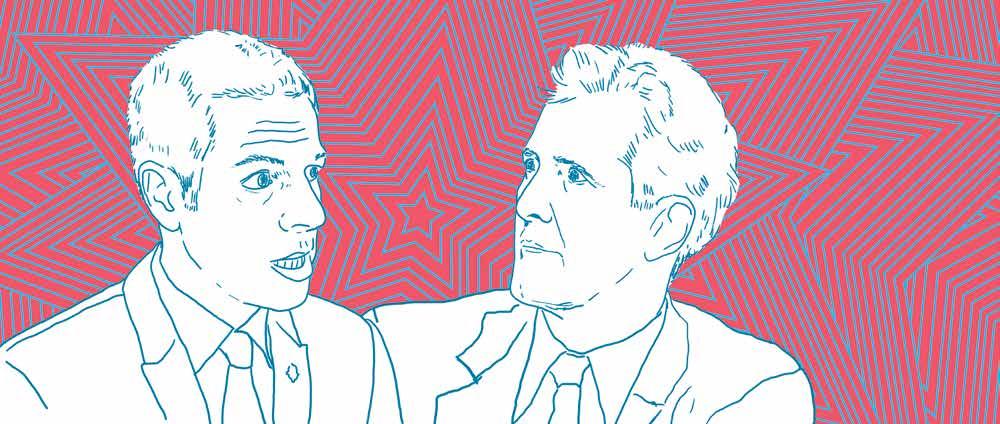
A tale of two Brians
Consistent disagreement over policy could derail progress in Winnipeg
Zach Fleisher, staff
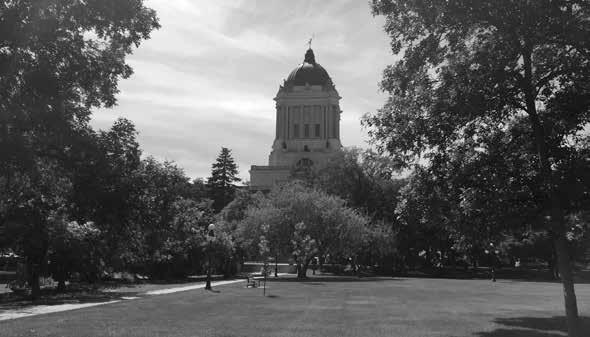
On April 19, Manitobans handed a substantial government majority to the incoming Progressive Conservative (PC) party, led by Brian Pallister. After reeling from a federal election in which they lost all urban seats in Manitoba, Conservatives now control the provincial legislature alongside city hall, where former Manitoba PC party youth wing president Brian Bowman occupies the mayor's office. These developments are a breath of fresh air for conservatives in Manitoba who had been relegated to the legislature’s opposition benches since 1999.
Yet despite the overwhelming hue of blue awash in our local representation, it appears that our civic and provincial leaders share similarities in name only. Since the new provincial government took office in May, there have been several public points of contention that show a drastic difference in the policy perspectives between the two levels of government.
In January 2015, on the heels of a Maclean’s article labelling Winnipeg as the racism capital of Canada, the city quickly assembled a wide variety of representatives meant to stand in solidarity against the charge while also acknowledging the work that needs to be done. Surrounded by supporters and members of council, Bowman declared 2015 a “year
of reconciliation” while introducing the newly-made indigenous advisory council.
As Winnipeg’s first indigenous mayor, Bowman moved swiftly to emphasize and expand the role that our civic government plays in reconciliation. This includes emphasizing indigenous participation in high-profile committees, such as the Winnipeg Police Board.
The Pallister government has taken an alternative route, removing prominent community member Leslie Spillett from the police board and appointing former PC candidate Allie Szarkiewicz in her place. This move was labelled a step backwards for reconciliation in Manitoba by Wab Kiew, an NDP opposition member of the legislative assembly and significant member of the indigenous community.
Of a similar fate is the future of rail relocation in Winnipeg. A study and task force initiated by the outgoing NDP government, supported by the city of Winnipeg and led by former Quebec premier Jean Charest, was recently quashed by the Pallister government. This was partly because of its $400,000 price tag. Bowman, to his credit, was quick to criticize the decision and issued a public plea to the provincial and federal governments to continue with the study. In response, the provincial government
pinned the blame on the previous NDP administration, claiming that they had committed to far too many ambitious projects and that a sense of realism was needed to temper their spending.
Currently, the two levels of government are butting heads on the proposed growth fees put forward by the Bowman administration in order to recoup revenue to address the city’s growing infrastructure deficit. For the city of Winnipeg, any additional means of taxation must be approved by the province, which steadfastly challenged the legality of the proposed growth fees and then challenged the city to get their financial books in order and to find savings elsewhere. For a mayor trying to address urban sprawl and the city’s dire financial situation, the move was certainly a kick in the face.
While it is common and often expected that municipal and provincial governments will disagree on matters of policy, it is perplexing to see these disagreements manifest themselves in such a public and frequent fashion. To the casual observer, it paints the picture that the two levels of government simply are not on the same page when it comes to a number of key issues.
One has to wonder how relations between the city and province have deteriorated this quickly, to the point
where blatant naysaying and the outright rejection of municipal priorities have become regular features of our public discourse. Whatever happened to working out your differences behind closed doors?
While the opposing antics of two conservative politicians may make for interesting political fodder on the pages of our newspapers, the effects of these spats will soon be felt across the province
While the opposing antics of two conservative politicians may make for interesting political fodder on the pages of our newspapers, the effects of these spats will soon be felt across the province. Simply put, our local governments are better able to serve their citizens when they aren’t engaged in public bickering. It is worth noting that the pre-
vious NDP government regularly quarrelled with the city over matters of policy, especially relating to infrastructure and revenue policy, which means that disagreements of these nature are nothing new. What is new is the presence of conservative politicians at both the legislature and city hall, making the political dysfunction between governments even more astonishing.
With Pallister and his new government still awash in their political honeymoon and the Bowman administration still showing strong in the polls, it remains to be seen if these public disputes will harm the popularity of either level of government. Over time, though, as projects are delayed, while our infrastructure continues to crumble and new revenue streams are rejected, the citizens of Winnipeg could pay the price for the lack of cooperation between provincial and civic governments.
Brians, it may be time to put aside your differences and work together, if only for the sake of the citizens you represent.
Zach Fleisher is a University of Manitoba student who ran for the New Democratic Party in the previous Manitoba election.