New research on male contraceptives brings us a step closer to a pill for men
MALAK ABAS, STAFF
Researchers working on a contraceptive pill for men have come closer to a final product, according to scientists in a report published by the University of Minnesota college of pharmacy.
Creating an ingestible form of contraceptive for men has been a notoriously difficult task, mainly because the process requires halting the function of the thousands of sperm made every minute of every day by men, rather than one egg a month.
A low dose of hormones is usually enough to prevent ovaries from ovulation, but the level of testosterone needed to stop sperm production in men is high enough to cause side effects such as intense mood swings, weight gain, and a decrease in beneficial cholesterol.
Additionally, the process is unreliable, according to Jillian Kyzer, a graduate student at the University of Minnesota and co-author of this report.
Current methods of male birth control are relatively old-school. There are condoms, which provide a physical barrier, or vasectomies, which involve invasive surgery. There are a few other methods waiting to pass clinical trials, but currently there are few options for men.
Head researcher Gunda I. Georg and her colleagues believe they
have reached a new breakthrough. According to their research, which was presented at the 251st National Meeting & Exposition of the American Chemical Society (ACS) in San Diego, one of the issues with the current state of the male birth control pill lies in the retinoic acid receptors.
“It would be wonderful to provide couples with a safe alternative because some women cannot take birth control pills” – Gunda I. Georg, pharmacy professor, University of Minnesota
Retinoic acid receptors are, receptors in our brains. Animals have them too, and researchers noticed that animals with a defective alpha receptor (there are three retinoic acid receptors: RAR-alpha, RAR-beta, and RAR-gamma) seemed perfectly healthy but were infertile. The team is now working on a
The Internet of Things
A change in our reality
You wake up this morning, head through your apartment door and without having to do anything your car responds to your impending arrival and starts, saving you from having to worry about sitting in the cold waiting for the engine to warm up. While this sounds like science fiction, this seamless integration of technology and convenience is becoming a reality: this is the
Internet of Things. The Internet of Things is the concept of having everything connected to the Internet. It is the collection of sensors and embedded electronics networking together to collect data and react. It’s a reality-changing technology that is revolutionizing everyday life and simplifying trivial tasks.
The example given above barely
scratches the surface of what the Internet of Things is. The Internet of Things is a paradigm that the world is shifting towards. With computer chips becoming cheaper and smaller in size, and at the same time more powerful, it is now much more feasible to embed them into everything, from buildings and cars to farm animals and bus seats.
It is estimated that by the year 2020 there will be over 50 billion “things” that will be connected to the Internet
Able to get relevant data from your phone about specific things that happened throughout your day, your home can now react accordingly. Whether by changing the temperature in anticipation of your arrival, playing soothing music due to a long
day at work, or calling the ambulance due to an injury, it will simplify and improve the quality of life.
The Internet of Things will redefine our realities, with everyday objects communicating with the purpose of making our lives easier; our world will be in constant change based on our experiences and our personalities. Some governments have already started investing heavily in the Internet of Things, acknowledging its importance economically and socially.
It is estimated that by the year 2020 there will be over 50 billion “things” that will be connected to the Internet.
The Internet has had made a significant impact on human societies over the past 20 years, and has changed the way we all live. We now have things like online video games and video streaming services, and we can now talk with people on the other side of the planet through live high-definition video in real time.
Imagine what kind of change the Internet of Things will bring.
However, like many disruptive technologies, the long-term implications
compound created by drug company Bristol-Myers Squibb that alters the alpha receptor in men. Their tinkering of the compound has made the current male contraceptive easier to ingest, and more effective over a long period.
However, while the experimental compound is soluble, it also interacts with the beta and gamma receptors, which have no implication for fertility, and could result in unwanted side effects.
The other big issue with the creation of a male contraceptive is that it has to have the same level of accessibility that the women’s birth control pill has.
“It would have to be soluble so it could be taken by mouth. It would start working fairly quickly and it wouldn’t diminish libido. It would be safe even if taken for decades,” Georg said.
It would also have to be as simple to stop regularly taking the pill as it is for women’s birth control pills, and it would be required to not have long-term affects on fertility. Georg is hopeful, and hopes to have the compound ready to test on animals within six months.
“It would be wonderful to provide couples with a safe alternative because some women cannot take birth control pills,” she said.
are sometimes hard to predict. Hackers and viruses can do tremendous harm to electronic devices or to a digital services, such as our own computers or eBay customer servers. Hackers can damage digital property, or steal private information from a compromised website. This effect could be magnified many times more once everything is connected, so there is a clear security and privacy concern. On top of that, the advertising industry will become much more intrusive. It will be able to market things specifically for you, which might be quite annoying to some, and which brings into question the morality, ethics and responsibility of those we trust to be the front runners of this new technology. But everything has its downsides, from a broad perspective; the Internet of Things has the potential to be a substantial improvement on our quality of life. It has its risks, but so does every major technological advancement. It’s already happening, so we need to be prepared, but we should be excited for the opportunity this presents.
GRAPHIC BY BRAM KEAST
GRAPHIC BY KELLY CAMPBELL
Health and lifestyle apps for students
Staying healthy and focused through university with technology
ALLISON POPPEL
With only a month left in this semester midterms have been written, GPAs are being cemented, and studying for finals procrastinated on. It may be safe to assume that health and wellness is not at the top of a student’s priority list, given the multitude of other concerns on their minds.
It may not be feasible for all of us to get eight hours of sleep every night, eat delicious and nutritious Instagram-worthy meals, and work out for an hour every day. Baby steps are more realistic in working towards better health.
Here in no particular order is a round up of five apps vetted by a fellow student which I found to be worth their data in gold.
It may be safe to assume that health and wellness is not at the top of a student’s priority list, given the multitude of other concerns on their minds
Grades 3 (iOS)
Free with numerous features, this app lets you plan ahead by showing upcoming due dates and tests, allows you to set reminders for when to do an assignment or study, keeps your notes in one place, sends group texts and emails right from the app, and can even call your professor.
The best feature of them all: determine what you need to get on your next test to get the grade you want in your class. And there’s even a GPA calculator as the cherry on top.
My verdict : I’ve used this app for almost two years. I input all the necessary assignments, discussions, midterms, essays, and final exams and assign the weight. After doing that, I can see what I need to achieve the grade I want. This app has been incredibly valuable for planning and achieving my academic goals.
SexPositive (Android/iOS)
SexPositive, a free sexual health app developed by the University of Oregon Health Centre, allows users to educate themselves on safe sex practices in an easy and accessible way.
The app includes a function in which the user can match up two body parts that may be involved in a sexual encounter, and is presented with the corresponding sexually transmitted infection risks, along with advice on safer sex practices and related tips on communication. The app also has links to various sexual health resources.
My verdict : This app is great. I think the body-part function is an awesome way for users to really home in on the specific sexual interactions
they are curious about, and receive thorough feedback on the kinds of risks and options for prevention that are associated with it. I would totally consult this app for information on keeping myself safe and minimizing risks.
Calm in the storm (iOS)
This app is designed to help individuals get through everyday life stressors – a thing students know a little bit about!
By helping you track and identify your sources or times of stress, you can learn how to better cope with whatever may come your way. The app will even make suggestions specific to your stress patterns to help cope.
Packed with inspirational quotes, educational chapters, and a wide vari-
ety of stress relief options (everything from ‘breathing meditation’ to ‘relax in a hurry’ to ‘Aboriginal teachings’) this will be a go-to app for anyone looking for a sense of calm.
My verdict : I love that this app was designed here in Winnipeg and has links to local resources such as Klinic. It has worked pretty seamlessly for me and it’s the perfect companion to some of the things available here on campus like the Student Counselling Centre (located in 474 University Centre).
Foursquare (Android/iOS)
If you are a newcomer in Winnipeg and finding new places to explore is difficult, Foursquare is for you.
This is an ultimate city guide about places to eat, drink, shop, and visit.
You can set your favourite interests and the app will show you local options accordingly. There are also short reviews and ranking for different places by other users, and price points.
My verdict : I’ve found this app recently and I’m totally in love with it. It would have been great to have in my first year in the city. Not only does it give different choices, but I can also save places I have been to and make it more personalized. This app has search options such as night time, romantic dinner, or more specific options such as seafood and French pastries.
Nike + Training Club (Android/iOS)
Nike + Training Club uses the motto “Your personal trainer.
Designed by Nike. Powered by friends.” It features over 100 workouts and multiple programs you can personalize to your needs. Workouts can be streamed to your group to keep you accountable and motivated.
My verdict : For those of us that aren’t at home in the gym, Nike + Training Club is a good place to start. My favourite feature is that it shows you exactly how to do each exercise with proper form, which is always one of the things I’m most intimidated by when trying a new workout. Another great thing is that many of the exercises can be completed wherever, which might also be good for those of us that aren’t quite ready to strut our stuff in the Active Living Centre, or don’t have the time to make it to a gym.
GRAPHIC BY JONDELL COOMBS
GRAPHIC BY BRAM KEAST
COMIC BY KELLY CAMPBELL
GRAPHIC
GRAPHIC BY BRAM KEAST
Alumni profiles
U of M alumni achieve as authors, Juno-nominated jazz players
OLIVIA MICHALCZUK, STAFF
Curtis Nowosad – Bachelor of jazz studies, 2011
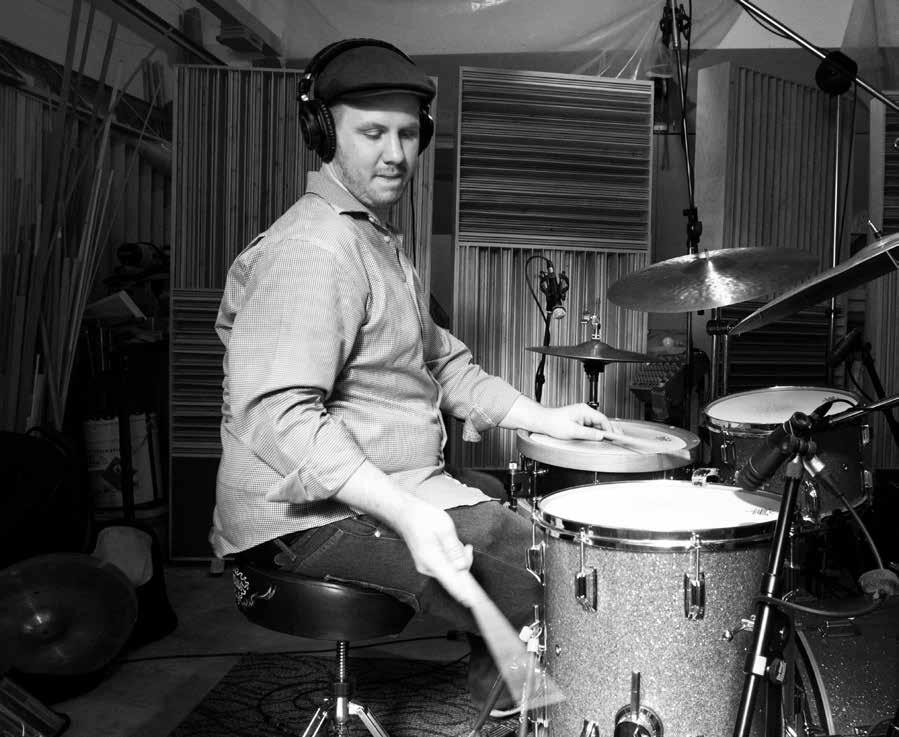
Born and raised in Winnipeg, Nowosad attended the U of M as part of the first graduating class of the newly minted jazz studies program. Since then, the New York-based drummer, composer, and bandleader has gone on to win numerous awards and work with world-renowned artists.
“It’s impossible to understate the effect that my education has had on my art. At the U of M I had the very unique opportunity to learn from musicians of a calibre that I wouldn’t have been able to work with anywhere else in the country,” Nowosad told the Manitoban.
“My relationship with Steve Kirby –the director of jazz studies at the U of M – really opened the door that led to all others. I was able to interact with many of the top jazz musicians in the world, all at home in Winnipeg.”
In March 2015, Nowosad released his sophomore album Dialectic to a Juno nomination and critical acclaim. The album features saxophonist Jimmy Greene, Derrick Gardner on trumpet, Will Bonness on piano, and Steve Kirby on bass. Greene is a former U of M professor, while Gardner, Bonness, and Kirby are current faculty members.
The album was included in DownBeat Magazine’s “Best of 2015” list, receiving a 4 1/2 star review. It also reached number three on both
OLIVIA MICHALCZUK, STAFF
Osamede Arhunmwunde – Bachelor of arts (economics), 2011
Since graduating from the U of M, Arhunmwunde has become an international bestselling author and publishing expert.
With his first book, Higher Education 101: Understanding the secrets to personal development, Arhunmwunde gained positive feedback on his message of finding your natural gift, realizing your potential, and the key to unlocking the secret to finding your personal glory.
Arhunmwunde is the creative director of Couronne Publishing, a boutique publishing firm that specifically addresses the needs and goals of entrepreneur authors who value creative freedom, visionary flexibility, and achieving success with their published works.
His specialty lies with leaders and entrepreneurs in their respective fields of business. Arhunmwunde’s goal is to assist in challenging them to break through to the next levels of success, credibility, and significant contribution. Arhunmwunde believes the most powerful tool to achieve this is through, in his words, “the most powerful conversion tool in the world – a published book.”
Arhunmwunde has worked with over 1,000 business leaders and entrepreneurs worldwide. He prides him-
the CMJ and !earshot magazine’s jazz charts, as well as spending ten weeks on the JazzWeek charts.
Nowosad released his debut album
The Skeptic & the Cynic in late 2012. It spent two weeks at number one on the !earshot Canadian jazz charts.
On The Skeptic & the Cynic, Nowosad and his quintet showcase Nowosad’s arrangements of contemporary popular music – such as Bob Marley’s “Three Little Birds” and Michael Jackson’s “The Way You Make Me Feel” – with special guest and twotime Grammy nominee Taylor Eigsti on piano.
Nowosad has performed on many high-profile stages throughout his career. These include New York jazz clubs Smalls, Smoke, and Dizzy’s Club Coca-Cola in addition to Edmonton’s Yardbird Suite, Vancouver’s Cellar Jazz Club, and Toronto’s Rex Hotel. Nowosad has also performed as part of every major Canadian jazz festival, including those in Montréal, Ottawa, Vancouver, Victoria, Edmonton, and Halifax.
“Music and the arts in general are unlike other fields in that while you can complete the requirements of the degree, you can’t become a certified artist just by going to school, but rather you have to work tirelessly on your art in school, as well as the real world,” said Nowosad.
“Steve and the many other great faculty members at the U of M
self on developing powerful business models and materials that give his clientele an edge on their competition.
The worldwide explosion of digital media platforms has recently prompted Arhunmwunde to found and begin developing Authorship Academy, an e-learning platform and private community for self-publishers that will allow him to reach a global audience.
One of Arhunmwunde’s most valuable lessons from his education at the U of M was in supply and demand, which he describes as “the most fundamental concept of economics and [...] the backbone to any market.”
Arhunmwunde’s education in economics prepared him for the real world and his entrepreneurial journey in it. His awareness of his own marketability has allowed him to be successful as both a businessman and a mentor.
www.couronnepublishing.com
provided me with so much great information in the classroom, but infinitely more important was the practical knowledge I gained from performing with them.”
Nowosad also credits his educa-
tion as helping craft his work ethic.
“My education is what made me constantly hungry for new information, constantly studying, practicing, performing, composing, trying to learn more about this music and the
world. It really taught me the importance of hard work and using music as a force for good.”
www.curtisnowosad.com
PHOTO PROVIDED BY CURTIS NOWOSAD
PHOTO
’Toban turntable
Soothing new age sounds and hyperactive hip-hop/funk hybrids
SEAMUS HAMILTON-PATTISON, STAFF
Jordan Klassen Javelin 4/5
Jordan’s Klassen’s Javelin is a lot of things, but boring isn’t one of them.
The Vancouver-based soloist’s latest album lives up to his self-ascribed genre of “new age folk,” blending the gentle, soothing dynamics of new age music with soft classical guitar lines and swooning string sections.
Still, Klassen’s music incorporates much more than that. “Glory B” starts things off with a sparse intro of vocal harmonies, cavernous percussion, and a distant, delayed guitar line. All of this gradually crescendos and morphs into something groovier and world music-infused for the remainder of the song, and conjures up a vibe similar to Peter Gabriel (1992’s Us in particular).
“Gargoyles” and “Baby Moses” use the string section to great effect. “Gargoyles” – the album’s longest track at over five minutes – keeps the world music-inspired percussion going while alternately plucked or softly bowed violin melodies drive the song forward. The strings are even more prominent on “Baby Moses,” which adopts a waltz-like tempo and rhythm for its verses, but dives headlong into indie-pop on the chorus.
According to Klassen, Javelin’s primary lyrical theme is one of selfreflection on past failures. With that in mind, the lyrics are fairly general proclamations of lost love and regret – but that’s not to say they’re derivative or poorly written.
Klassen’s lyrics are plenty poetic and well-thought-out, but it seems as though they’re meant to be universally relatable and unobtrusive, not pointed and verbose.
“Baby Moses” sports the album’s best heart-wrenching line in “you could have filled up our house with the notes of an unloved mouth.”
With such dense instrumentation and effects-laden vocals, Javelin required pristine production quality and thankfully Klassen – who produced the album himself in addition to playing nearly every instrument – provided just that.
The whole album sounds warm and uncompressed, and never sacrifices dynamics for volume.
While Klassen’s album is
extremely well-executed and an intriguing, engaging listen, it’s not exactly energetic music. Javelin is a great album to throw on for a slow, late-night drive or as a focus aid for any creative task, but the soft, droning tone of songs like “We Got Married” and “Smoking Too Long” could lull you into a peaceful slumber mid-jog.
Jordan Klassen will perform at the Park Theatre with local synth-pop outfit Ghost Twin on March 27. Tickets are $15 in advance, and are available at the Park Theatre, Music Trader, or online via www.ticketfly.com
www.jordanklassen.com
OLIVIA MICHALCZUK, STAFF
Towodo The Depths 3.5/5
Local psychedelic/trip-hop group Towodo will be releasing their new album The Depths at the Good Will Social Club on Friday, March 25. The album has been available on YouTube and Soundcloud in its entirely for months now, which gives fans an opportunity to take a listen to Towodo’s new material well before the show.
The album’s first song “Railroad” completely encompasses its title. A phased-out male vocal fits so well with the modern beat constructed from sounds of the train and railyard. It’s oddly broken up with a female vocal that’s not as complementary as the male vocal, but remains powerful and eerie nonetheless.
“Doom Rogers,” the second track, will certainly make you doubletake, as it’s entirely different from the first. A melody similar to that of a video game lobby accompanied by a rap keeps you guessing as to what the rest of the album will consist of. The musical elements present on The Depths sound as though they’re coming from a variety of sources, and it’s confusing as to whether or not most of the instrumentation you’re hearing is replicated electronically or performed organically. That being said, the experimentation of sound on the album is effective, and really contributes to its trip-hop elements. The rapping is pretty smooth and the male vocals are consistent. These songs have so much content, with new elements constantly weaving in and out.
www.soundcloud.com/towodo
PROVIDED BY KILLBEAT MUSIC
PROVIDED BY TOWODO
David Onyemata: a legend from Lagos
The story of a man from Nigeria on the brink of stardom
RYAN STELTER, STAFF
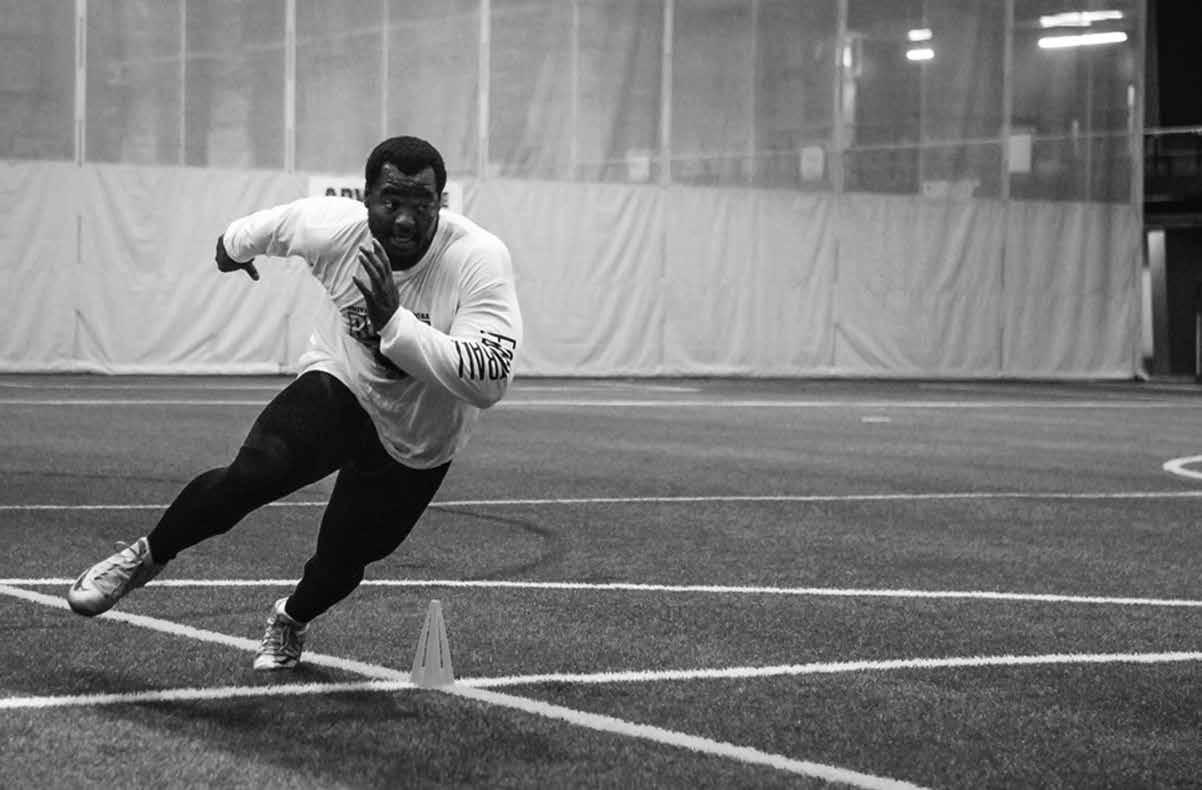
When David Onyemata came to Winnipeg, he knew nothing about football. He had never before strapped on the pads, let alone played a down.
Hailing from Lagos, Nigeria, where gridiron football is not the sport of choice, Onyemata had a lot to learn. In the span of four years, Onyemata became the best defensive lineman in Canada, and last Monday he had 17 NFL scouts watching his every move for his pro day.
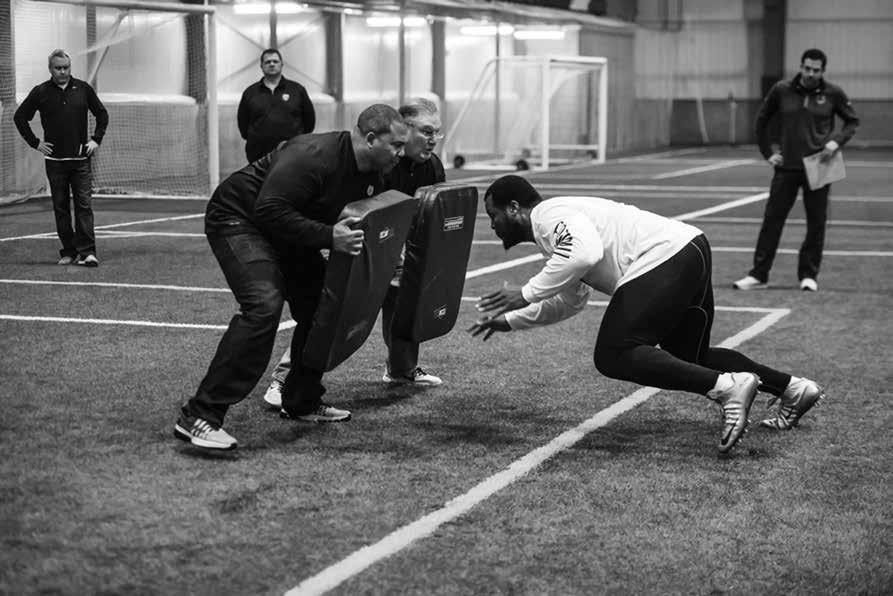
During his pro day, which was the first ever held at the University of Manitoba, the six-foot-four, 300pound lineman ran his 40-yard dash in 5.06 seconds and threw up a ridiculous 33 bench press reps of 225 pounds. Oneymata would have placed first in
the bench press at the NFL scouting combine, and would have been among the top 10 with his 33-inch vertical jump had he been at the event.
“It was like a whole new reality for me” – David Onyemata
Onyemata’s CIS career
The amazing part about Onyemata’s journey was how quickly he learned everything. He was doing things in his first couple years as a Bison that most players first do when they are very young.
“It was like a whole new reality for me,” Onyemata said. “I didn’t know they had plays and things like that. During my first practice there were times when I didn’t know what I was doing and everyone was laughing.”
In four years with the Bisons, Onyemata played in 31 of 32 conference regular season games and made a total of 102 tackles. He also had eight sacks, five of which came this past season. In seven playoff games, he made 32 tackles and added one-anda-half sacks. He was a Canada West All Star in 2014 and 2015 and was a big part of the Hardy Cup-winning Bisons team in 2014.
In all eight games he started this season, Onyemata amassed 31 tackles, seven and a half tackles for loss, and
a forced fumble and fumble recovery. These numbers were all earned whilst being double-teamed almost every single snap. Onyemata never grabbed any headlines this year with highlight reel-worthy plays but he was an anchor on a very strong defensive front for the Bisons.
With his strong play this season, Onyemata earned a spot in the EastWest Shrine game where yet again he was double-teamed but managed one sack and was constantly pressuring the quarterback. He was also named the J.P. Metras trophy winner this past season as the best down lineman in the CIS.
Onyemata took tremendous strides in his career with the Bisons, something head coach Brian Dobie was extremely impressed with.
“If you break it down regardless of sport, for someone to come from the other side of the world and come to an elite, national-level program and not only compete, but to excel as one of the best players to ever leave the program is a crazy story,” he said.
“It took the Bison village to raise David”
Coach Dobie was filled with pride when talking about his prized defensive lineman.
“David is probably the biggest Cinderella story that you’ll ever see,” he said. “He faced a lot of adversity, but not the type of adversity we typically hear about, it was just his sheer innocence in not knowing anything about the game of football.”
Onyemata’s strength was his ability to learn, as his thirst for knowledge was unquenchable.
“That is part of the beauty that is David Onyemata, his ability and want to learn,” Dobie said. “That is
something we tried to stress to the NFL personnel here. That is one of the characteristics that they learned about him at his pro day.”
Onyemata had tremendous help from his Bisons teammates and coaching staff during his journey. R.J. Skinner, a former member of the herd, had a particularly big impact.
“R.J. Skinner, who was injured at the time David entered the program, helped him every night, helping develop his fundamental skills, as well as the intricacies of the game. He deserves a lot of credit,” Dobie said.
Dobie stressed the fact there were many players out there helping David every practice, dedicating time to help the big man improve. At the end of the day, it is on the player to react to the coaching and help they get and Onyemata did just that.
“It was so many people inputting him appropriately to put him where his today,” Dobie said. “But, I will say that it was on David, how he reacted and adapted to all that information being thrown at him.”
The NFL at the U of M
The impact of having an NFL pro day at the University of Manitoba was a huge plus to the credibility of the program, as all eyes were cast on Winnipeg during Onyemata’s pro day.
“There was a huge buzz around the country during Onyemata’s pro day,” Dobie said. “If and when he makes the NFL, he will be the second defensive lineman this program has put into that league. We sort of have a reputation of being ‘D-Line U.’”
There are many notable Bison defensive lineman plying their trade in the CFL, such as Eddie Steele of the Edmonton Eskimos and his teammate Don Oramasionwu, as well as Bombers lineman Louie Richardson. Having a player like Onyemata leave the Bisons program only adds to the list of pro players that Manitoba has produced.
Another player that Manitoba produced was NFL star Israel Idonije, who also hails from Lagos and most notably made it to the Super Bowl with the Chicago Bears in 2006. There are a lot of similarities that can be drawn between Idonije and Onyemata. Idonije had very little exposure to the game of football prior to coming to the Bisons and excelled in a very similar way to Onyemata.
Onyemata had never heard of Idonije prior to coming to Manitoba and now the two communicate regularly.
“We text back and forth a lot,” he said. “Mainly about training and how they do things down in the States.”
This will not be the last time you hear about Onyemata, as he will most likely be taken in the upcoming NFL draft. We don’t know where yet, but this is only the beginning for the Nigerian native who will be looking to make his mark in the NFL soon.
PHOTOS BY JEFF MILLER
The best of Bisons men’s basketball
Counting down the top stories from the 2015-16 season
MIKE STILL, STAFF
T
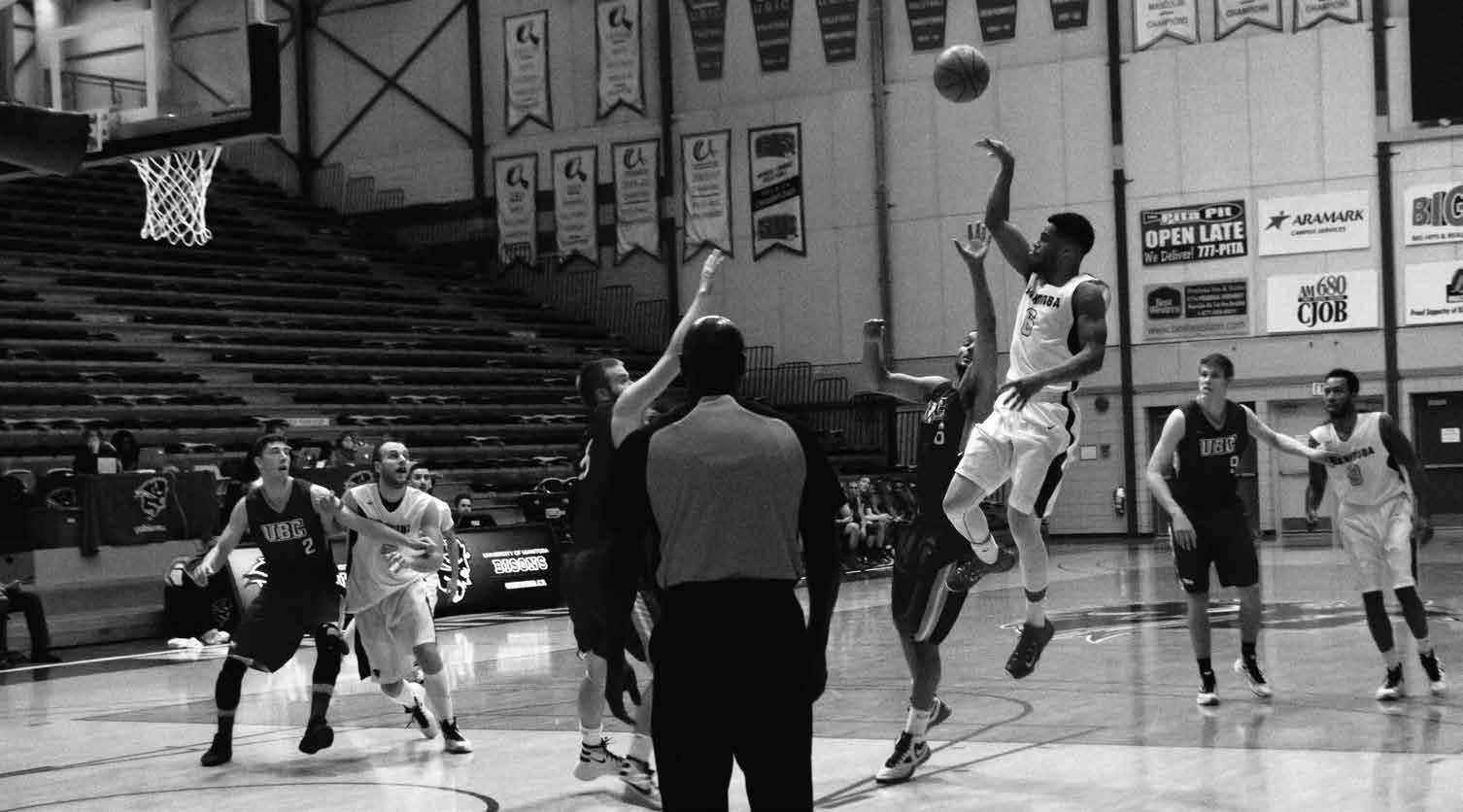
he University of Manitoba Bisons men’s basketball team made a historic run in 2015-16, culminating in the team’s first-ever appearance at the Canada West Final Four. Below are the top 10 moments, plays, and memories from the season.
10. Eghosa offers glimpse of the future
Osahon Eghosa – an Ontario native who last played for Colorado Northwestern – was recruited in the offseason by head coach Kirby Schepp as one of the key pieces at the four or five position for the future. While he didn’t see much action this past year, the big-body forward did offer a sneak peek at what he has to offer against both Brandon and Trinity Western.
The second-year athlete put up a combined 15 points in just 15 minutes against the Bobcats in the first half of the campaign and ended the regular season on a high note with 14 points in 15 minutes against the Spartans in the first of their two-game set. Both matchups resulted in wins for Manitoba.
9. Jewell steps up in Anders’ absence
It’s fairly safe to say that centre Brett Jewell was hot and cold in 201516. There were times where he dominated in the paint and others where he was borderline nonexistent. One thing is for sure though: when his fellow big-man Wyatt Anders was out of the lineup, he made a huge impact. The best example occurred against Regina in the second game
of their back-to-back where Jewell notched 12 points, six rebounds, and four assists. He did most of his damage in the first half but it was enough to secure momentum for the herd, which they never gave up en route to a 77-63 victory.
8. Comeback win against Trinity Western
The Bisons entered the last series of the season having already known that they had made the playoffs. What was at stake though was the chance to host an opening round matchup. The herd was taking on a lowly Trinity team that was at the bottom of the standings but Trinity came out hot against Manitoba in game one, entering halftime with a 36-31 lead.
The herd responded after recess, putting up 35 points in both the third and fourth quarters to steal the win and also guaranteeing themselves a minimum third place finish in the standings in the process. Overall, 10 different Manitoba players scored in what resulted in a 101-67 victory.
7. Emphatic dunks
During Coach Schepp’s time at the U of M, the Bisons have established an up-tempo identity offensively – frequently using their speed and cardio to capitalize on fast-break opportunities. This was especially evident with the number of powerful dunks that Manitoba showcased in 2015-16, with Justus Alleyn, Keith Omoerah, Jonathan Alexander, Brett Jewell, and Osahon Eghosa all getting in on the jam-fest.
Omoerah’s windmill dunk against Winnipeg in the Wesmen Classic was impressive, but it’s Alleyn’s onehander in a losing effort against UBC that takes the cake. Trailing in the fourth quarter, Alleyn took matters into his own hands, going coast-tocoast and showcasing his hops by posterizing two Thunderbirds forwards – both of whom had a minimum of four inches on the Bisons guard.
6. Omoerah nearly finishes with tripledouble against Regina Keith Omoerah was a critical piece to the herd’s success all season long. After taking a few seasons off to deal with personal matters, he returned in 2015-16 and didn’t miss a beat. Omoerah started every game, rotating anywhere from the one to four position and his hard work culminated in a Canada West SecondTeam All Star selection.
One of his more memorable performances occurred during a Friday night game in late January against the Regina Cougars, where he finished with 16 points, 14 boards, and six assists. Manitoba would go on to win the contest 89-82.
5. Anders‘ 20-rebound performance against Calgary in home opener
The Bisons didn’t fare quite how they wanted against Calgary in the Canada West Final 4, but earlier in the year – in the third game of the season – Manitoba gained the upper hand with a 96-90 overtime win.
Wyatt Anders was the star of the show inside the paint, recording a career-high 20 boards in 34 minutes of play. While he didn’t have stellar offensive numbers on the night, his ability to reset the shot clock for his team was invaluable. Stellar guards Justus Alleyn and AJ Basi were the biggest beneficiaries, as Alleyn finished with 27 points while Basi had 16.
4. Team holds Victoria to 59 points
After falling in the opening game of the second half of the season against Victoria on the Friday night, Manitoba was looking for revenge and a critical two points in the rematch. They obtained their goal – a 65-59 win – thanks to a dominating performance defensively where Wyatt Anders, Keith Omoerah, Malik Irwin, and Jonathan Alexander all had at least one block.
3. Basi nets game-winning three-pointer in opening game against Saskatchewan Manitoba started off the 2015-16 season in memorable fashion, coming from behind in the final minute to upend the Saskatchewan Huskies 91-88. AJ Basi was the hero of the evening, as he hit two straight shots from beyond the perimeter in the final 43 seconds. The first tied the game at 88, while the second was a fadeaway corner three that occurred with only one second left.
2. Winning first Wesmen Classic in 24 years
The herd had plenty of reason to
celebrate during non-conference play, as they ran through their competition during the three-day Wesmen Classic tournament which occurred over the winter break at the University of Winnipeg. The Bisons got past Lethbridge in the quarterfinals and Winnipeg in the semis, before handing Lakehead a 73-54 drubbing in the championship game to claim their first tournament win since 1991. Manitoba received contributions from all five starters, as well as Malik Irwin, Ilarion Bonhomme II, Jonathan Alexander, and Amir Ali off the bench.
1. Hosting first playoff game in over a decade, winning first playoff series at home since 2000
Manitoba’s third-place finish in the standings earned them their first home playoff series since the 200304 season and they didn’t disappoint, sweeping the Fraser Valley Cascades in two games. The resounding quarterfinal win was also a monkey off their back in terms of the herd’s ability to win on their home court during the post-season.
Wyatt Anders returned from injury and had a major impact on the glass, while the herd used their reserve depth to stymie a Cascades team that didn’t have much production aside from their starting five. While the Bisons’ playoff run came to a close a week later, the quarterfinal win was still a massive step forward for the program.
PHOTO BY CHANTAL ZDAN
Questions and Anders
Final thoughts on the season that was
MIKE STILL, STAFF
The University of Manitoba Bisons men’s basketball team saw their historic playoff run end at the Canada West Final Four. For Wyatt Anders, last weekend’s losses are also his final games in brown and gold. The cocaptain discussed a few of his emotions in what was a memorable career with the herd.
MANITOBAN: Give me your quick thoughts on the Calgary game and what you think made the difference?
ANDERS: Defensively, no one played as a team. Justus [Alleyn] had a tough time with [Thomas] Cooper and obviously the soft foul calls the refs gave him didn’t help, but that wasn’t the downfall. We had guys not helping, so that way when a ball screen hap-
pened and Lars [Schlueter] popped out for a three, no one stunted at him, so there was a lot of open threes that were going on.
M : Obviously things didn’t work out the way you wanted it to in the Final Four, but what did you take out of that experience?
and if you don’t fulfill that potential, as long as you work hard and you gave it your all, then you can walk out with
M: What will you remember most about your time playing for the Bisons?
I think [Kirby] Schepp finally got to the position he wanted for his team in the sense that he had to build a team that was nothing when he got here
A: Big picture, it’s great for the university. Small picture, it’s terrible. When people envision stuff and fans, they see, ‘hey, you had success, that’s good.’ To me, that’s not my vision of success. Success is working your hardest and fulfilling your potential
your head held high. But I felt like that Final Four we didn’t walk out with our heads high and I didn’t leave this league the way I wanted to. For me, small picture wise, I felt pretty disappointed.
A: I got to play with my coach (Coach Schepp was Anders’ high school coach as well). For myself, I wasn’t a recruited player and it’s just always exciting knowing that I was that Cinderella story that no one knew about, a guy who wasn’t recruited and played and worked his ass off in some league and then [Kirby] Schepp brought me and trusted me in my last years and I became the leader and the player
Hot takes with Steltsy and Still
Comments on soccer coverage in Canada and Milt Stegall Drive
MIKE STILL AND RYAN STELTER, STAFF
This week, Ryan lets loose about the lack of soccer coverage in Canada, while Mike vents his frustrations about the location of Milt Stegall Drive.
Soccer coverage in Canada sucks (Ryan)
Being a soccer fan is a brutal thing in Canada unless you are a fan of the English Premier League, which not
everyone is. Sportsnet acquired the rights to air the German Bundesliga this season on their Sportsnet World channel, which is an extra 17 dollars a month.
Being a fan of the Bundesliga, I was thrilled with this news, as it meant that I didn’t have to rely on sketchy Internet streams to get my soccer fix. I have been thoroughly disappointed, however, because
almost every Saturday morning I wake up to see that they are playing more English soccer on that channel I pay $17 for. Unless it is a big match, most of the time they do not play Bundesliga games live, which is very disheartening as a fan of the game. What is the point of paying for the channel if they are not going to air it? That is some false advertising on the part of Sportsnet, who have
not only ruined my German soccer watching experience, but Hockey Night in Canada, which I will save for another time.
Also, do not get me started with TSN and the UEFA Champions League. TSN has five channels, yet this past week they decided to play the second leg of the Arsenal and Barcelona tie, instead of Bayern Munich taking on Juventus which
that he wanted – a hard working guy.
M: Where do you see the direction of the team going now that you and Amir Ali have graduated?
A: I think [Kirby] Schepp finally got to the position he wanted for his team in the sense that he had to build a team that was nothing when he got here. We went from not really making playoffs, to kind of making playoffs, to being a team that should be doing well in playoffs. Because of that, he’s starting to be able to recruit guys he really wants now. If you look at the team right now, they have potential at guard, they have some young guys that can really play and he has a funnel now of guys to replace each other, whereas before he was scrambling.
ended up being one of the best soccer games I have ever seen. Step up your game, TSN. You have five channels, use them.
Soccer needs to grow in Canada, and it doesn’t help when some of the best soccer being played isn’t even accessible to Canadians.
Move the location of Milt Stegall Drive (Mike)
Milt Stegall is and will always be my favourite CFL player. He was consistently reliable and rightfully earned the nickname “Milt Stegall the touchdown beagle” during his tenure with Winnipeg. He set copious CFL records at the time of his retirement at age 39 and will go down as one of the best to ever play the Canadian game. With all this in mind, it’s flat out ridiculous that the street named after him now sits in obscurity.
The city passed a motion to change the name of Arena Road to Milt Stegall Drive back in 2007, but that was done when Canad Inns Stadium was still lodged between Empress and St. James Street. Now that Canad Inns has been torn down, the street named after Stegall sits with nothing in its general vicinity. In my opinion, that’s embarrassing; it gives off the impression that the city doesn’t care about Stegall any more despite being the most prolific player in team history.
I don’t think it would be all that difficult to move Milt Stegall Drive somewhere closer to the new stadium, instead of having it lay in the ruins of location that no longer exists.
You can catch Mike and Ryan’s hot takes every Tuesday morning from 10-11 a.m. on 101.5 UMFM.
GRAPHIC BY BRAM KEAST
The puck stops here?
NHL goalie equipment change may help ’tenders make more saves
ANDY CHE, STAFF
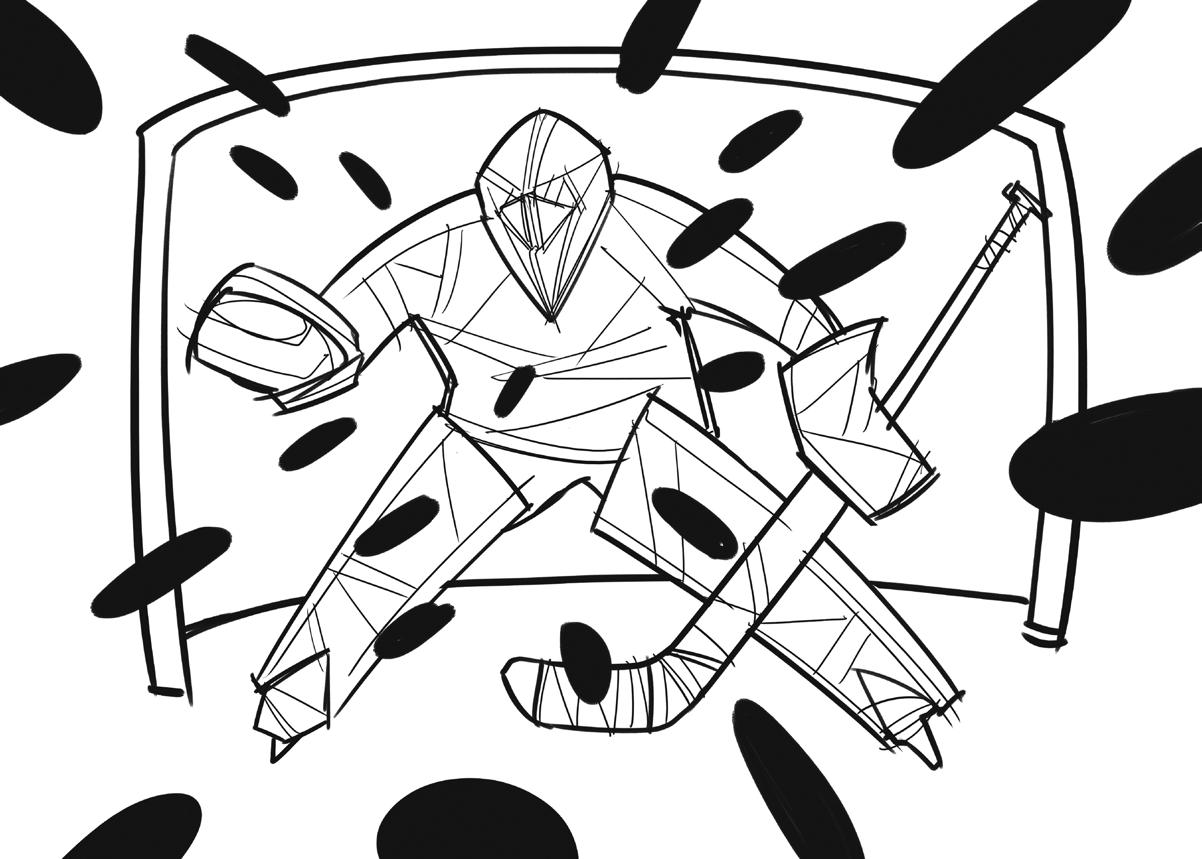
Goaltending is perhaps the most elaborate position in the NHL with players, coaches, and the crowd hanging upon every save. As if it isn’t a hard enough task, the NHL is attempting to make the job more difficult. Last week, the NHL announced that goalie equipment will shrink even further by next season in an effort to increase scoring.
The two main pieces of goalie equipment that are slated to change are the chest protector and the goal pants. There has been no announcement on which components on either piece of equipment specifically will be subject to change, according to the NHL.
The rationale behind slimming down chest protectors and goal pants is that the average size of the goaltender will cover less of the net. However, based on that premise, the NHL may be giving all goaltenders a greater advantage on every save.
It is quite possible that the league is just wasting their time in altering an element of the game which appears to be the barricade in increasing scoring. Despite the increasing size of the average NHL goaltender, those in the modern NHL do not rely on size to make saves as much as they used to.
If size really mattered in goaltending, then Tampa’s Ben Bishop, Vancouver’s Jacob Markstrom and Arizona’s Anders Lindback – all standing at or above six-foot-six –should be producing some the best numbers of the NHL. That could not be any further from the truth.
Downsizing equipment isn’t fair to the goaltenders
If the NHL wanted to increase scoring, their apparent solution is to have the goalies cover less of the net. It may be the most obvious and easy resolution, but constant focus on altering the equipment of players from one position is just not fair to goaltenders. Since the NHL first downsized pads in 2005 and then again in 2013, there has been no end to the debate of whether goaltender equipment is too big.
On an average day in the NHL, there are hundreds of players who could score a goal while there are a maximum of 30 goalies who can start a game. Based on numbers, there is little justification to the NHL focusing on making changes to the 30 goalies who start a game over the number of players who can score.
In addition to goalie equipment changes, the NHL may want to start focusing on a possibility such as loosening the regulations on sticks. Only then would attempts to increase scoring be focused on all playing positions, rather than just scoping out the goaltending position.
Changes to goal pants will mean fewer rebounds
Research and development for the NHL’s top suppliers of goalie gear (Vaughn, CCM, Bauer) tends
to focus on ways to make equipment lighter. The less weight that goalies are carrying, the faster they will be able to hit the ice to face a shot.
“We’re just starting to see goalies that track the best make it. It’s a combination of that stuff that gets you to the next level” – Eric Comrie, Manitoba Moose goalie
Furthermore, the modern way of goaltending in the NHL relies heavily on a butterfly which allows a goalie to eliminate as many rebounds as possible. The slimming down of the goal pants will allow the goaltender to not only hit the ice faster but to do so in a position where they can absorb more pucks to their body rather than being forced to give up a rebound.
Changes to chest protectors increases importance in the glove and blocker
The slimming down of the chest protector will cause problems for goaltenders, especially in covering the sixth and seventh holes. However, just as the downsizing in goal pants will allow goalies to react faster to
the ice, the same change on chest protectors will allow goalies to react faster to high shots.
It especially serves as an advantage to those goaltenders with a weaker glove hand. The modern chest protector is boxy at the arm regions, causing some hindrance in glove and blocker moments. Now, should those areas of the chest protector be more contoured to the arms, glove motility is less restricted.
In the modern butterfly technique, goalies prefer to knock pucks aside using their shoulder instead of the blocker. There will be a greater emphasis on the blocker and glove if the chest protector is downsized around the shoulders. This will lessen net coverage around the high shoulders, but is compensated by allowing goalies to achieve a faster reaction in going for a high blocker or glove save.
A combination of slimmer chest protector and goal pants will also allow goaltenders to be more flexible and fluid in motility. Thus, the NHL might be seeing acrobatic saves make a comeback with goalies having smaller equipment to maneuver around in.
History suggests it’s a quick fix
Taking into consideration the alternations ahead of the 2005-06 season, the NHL achieved their ultimate goal of increasing scoring with the downsizing of goalie gear, along with increasing penalties and changing the boundaries of the ice.
That season, the NHL collectively
achieved over three goals per game on average for the first time since 1995-96. However, goalies began to adjust to equipment change soon after and the average goals per game rate deceased again over the next five years.
The slimming
down
of the goal pants will
allow
the
goaltender to not only hit the ice faster but to do so in a position where they can absorb more pucks to their body rather than being forced to give up a rebound
It also has reflected in the NHL’s average save percentage. There was a decrease from 0.911 to 0.901 after the installment of slimmer pads in 2005. It has steadily increased since, from 0.901 in 2005 to a 0.915 over the past two seasons.
Thus, changes to goalie equipment will only serve as a temporary solution to increasing scoring for next season, if it is at all successful. The dynamics of modern goaltending suggests it won’t be. Do not be surprised if the average save percentage takes a dip for 2016-17, only to skyrocket back up again within the next few seasons after.
The impact on current and future goalies
Especially with the rigorous training schedules of current and prospect goaltenders, adjustment to any changes is a key attribute to the position. There is no doubt that any changes to equipment will especially be welcomed by the next generation of goaltenders, who will embrace the challenge in their developmental years and will have been well adjusted by the time they graduate from junior hockey.
The changes to size in goalies and their gear may actually not have any impact whatsoever. Speaking to In Goal Magazine, Winnipeg Jets prospect and current Manitoba Moose goalie Eric Comrie suggested that size is no longer relevant to the position and the best puck-trackers arise as the best goalies.
“We’re just starting to see goalies that track the best make it,” said Comrie. “They have better natural ability of skating, tracking down on pucks, seeing the puck better. It’s a combination of that stuff that gets you to the next level.”
Unless the NHL also decides to alter the boundaries on the ice, scoring might be increased for just one season before goaltenders begin to modifying their game to adapt to their equipment. Otherwise, with the current progression in slimming down goal equipment, the NHL may just be inadvertently helping goalies.