Student union, Justice for Women group and bystander intervention program sessions compulsory beginning this year
SHREYA GHIMIRE, STAFF
At its Feb. 11 meeting, the University of Manitoba Students’ Union (UMSU) council passed a motion requiring all student associations to participate in a consent culture training program for their elected officials.
The motion was drafted by Alana Robert, UMSU womyn’s representative and chair of the Justice for Women student group, and Rebecca Kunzman, vice-president advocacy for UMSU.
The Manitoban reported on Feb. 10 that Robert and Kunzman were disappointed by what they perceived as a lack of participation on the part of several student councils – namely the U of M Engineering Society (UMES) and the Commerce Students’ Association (CSA).
The motion requires all facultyspecific councils and student associations recognized by UMSU to participate in consent culture workshops put on by UMSU, the Justice for Women group, or the bystander intervention training program put on by the U of M.
Robert expressed enthusiasm about the motion passing unanimously at UMSU council, emphasizing that sexual violence is an ongoing issue on Canadian campuses.
“I am so excited that UMSU has joined Justice for Women’s initiatives,
extending the reach of our campaigns and programming, in a truly proactive step to combat sexual violence and rape culture at the University of Manitoba,” Robert said.
According to Robert, Justice for Women has had overwhelmingly positive feedback for its consent culture workshops, which focus on educating students on definitions of sexual assault and violence, gender stereotypes, and the meaning of consent in contexts of power imbalance.
“This is an unprecedented step amongst universities across Canada – where a student initiative, being Justice for Women, has partnered with a students’ union to extend comprehensive training, dialogue, and action to reach across an entire university,” Robert said.
According to Kunzman, the motion was the first step in a twostep process. It ensured that council members agreed to the idea that these workshops should be mandated. This motion is active now until April 30 of next year as a standing resolution.
Kunzman told the Manitoban that the next step will be to pass a policy to go into UMSU’s governance and operations manual. This will ensure that the sexual assault training program can remain mandated through the years by being embedded in the institutional structure of UMSU, she
said.
A draft of this policy was given in a report to councillors during the meeting before they voted on the motion.
“With making it mandatory for general council members to attend, I’m worried that might cause more harm than good” –Noah Yagi, president, Commerce Students’ Association
The report, titled “UMSU’s Safe Space and Socials Program,” describes the background of the program, UMSU’s role, the workshops, the experiences, and the difficulties that have come up this year. It also includes the policy proposal, the motion to council, and a draft of the policy.
“Now we can move forward with the knowledge in hand that everyone is on board with the idea and the
principle that this should be required,” Kunzman said.
But not all students are enthusiastic about making the workshops mandatory for student councils.
Noah Yagi, president of the CSA, one of the student associations that was called out by Robert for not adequately participating in the workshops, expressed support for the motion, calling it a “great initiative.”
However, he also expressed concern about what a mandatory policy would look like, and reservations on the consequences of mandating the program.
“If they want to make this something that is received from all the student groups, I’m not sure if this approach is going to work for all the student organizing groups, in the sense that some are a lot larger than others,” Yagi said.
“With making it mandatory for general council members to attend, I’m worried that might cause more harm than good.”
The policy
In the report given to councillors, the draft policy outlines the timeline that student councils must follow when implementing the consent culture workshops.
According to Kunzman, the target date for student groups to receive
this training will be by the end of the summer, so they will be equipped going into the year, where they will be participating in Frosh events that take place during the first weeks of school.
Moreover, the policy stipulates that students organizing events where food and alcohol are served must complete consent culture training in order to receive the relevant permits to hold the event on campus.
The draft policy also outlines the steps available to UMSU if student councils do not comply or miss the deadlines to obtain the training. The student association would receive reminders up until a certain date, followed by meetings and follow-ups. After that, the UMSU vice-president advocacy will give a final notice and write a report to the UMSU council articulating the executive’s position on the matter. From there, it would go to UMSU council as the final authoritative body to decide if they will sanction the student association by withholding fees.
“It strikes a balance between trying to be flexible with the councils, but then also ensuring that we actually have some mechanisms in place to make sure that it does get done. Unless you make it a priority, the ball will get dropped,” Kunzman said.
Mayor Brian Bowman set to speak at Asper school of business
Association of Aboriginal Commerce Students holds final instalment of its speaker series
OSHO SAMUEL ADETUNJI, STAFF
T
he Association of Aboriginal Commerce Students (AACS) has tapped Winnipeg mayor Brian Bowman to address the fourth and final instalment of its speaker series on Feb. 29.
In Sept. 2015, AACS launched its first-ever indigenous speaker series in the Asper school of business branded “Wahkotowin,” Cree for “being related.”
Over several years, the student group has carved out a niche on campus by organizing events that seek to encourage Aboriginal participation in business education with focus on increasing awareness about Aboriginal issues and causes.
Previous editions in the speaker series have featured Gregg Hanson, former president and CEO of Wawanesa Mutual; Niigaanwewidam James Sinclair, acting head of the University of Manitoba native studies department; and James Wilson, treaty commissioner for Manitoba. Bowman is expected to address the future of commerce in Winnipeg
and the importance of indigenous inclusion and partnership. SadiePhoenix Lavoie, University of Winnipeg Aboriginal Student
Council co-president and driving force behind that school’s adoption of a mandatory indigenous credit requirement, will be the youth
speaker of the day.
According to Ashley Richard, AACS president and fourth-year commerce student at the U of M, the speaker series is meant to stimulate stronger relationships between indigenous and non-indigenous students.
“Through this series, we wished to highlight the key role indigenous peoples have to play in the future of Winnipeg’s economic success,” Richard said.
“We also wanted to build stronger relations between indigenous and non-indigenous students in Asper as well as the greater U of M community. Each part of the series features a prominent community leader who understands the importance of enhancing the modern treaty relationships.”
Richard cited Bowman’s efforts facing racism in Winnipeg in the wake of a January 2015 article in Macleans magazine calling the city the most racist in Canada.
“Since this article, Mayor Bowman has made significant efforts in our
city to combat our racism issue,” she said. “As young indigenous business leaders, we invited Mayor Bowman to speak with us on how strong indigenous and non-indigenous relationships are key to the future of our city’s economic success.”
“We want him to highlight how he thinks that indigenous business students should be supported.”
She emphasized the link between the previous speakers featured in the series and Bowman.
“All of these speakers are diverse in their ranges of work,” she said, “but they all have one fundamental thing in common: their dedication to the betterment of the futures of indigenous peoples in Manitoba.”
The final speech in the Association of Aboriginal Commerce Students’ Wahkotowin speaker series, presented by Brian Bowman, will take place in the Drake Centre on Feb. 29, at 7:30 p.m.
Winnipeg mayor Brian Bowman
Features Editor: Lauren Siddall Contact: Me@themanitoban.com
Assistive Technology Lab opens its doors
New lab to provide resources for students living with disabilities
LAUREN SIDDALL, STAFF
After 10 years in the making, the University of Manitoba’s Assistive Technology Lab officially opened on Feb. 4. The lab’s development was funded by the Students First Project, the university IT advisory committee, student affairs, the campus planning office, and the office of the vice-president administration.
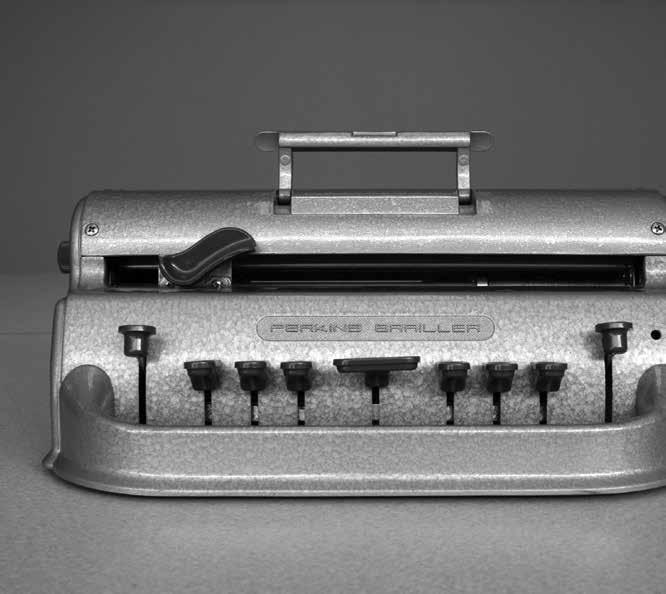
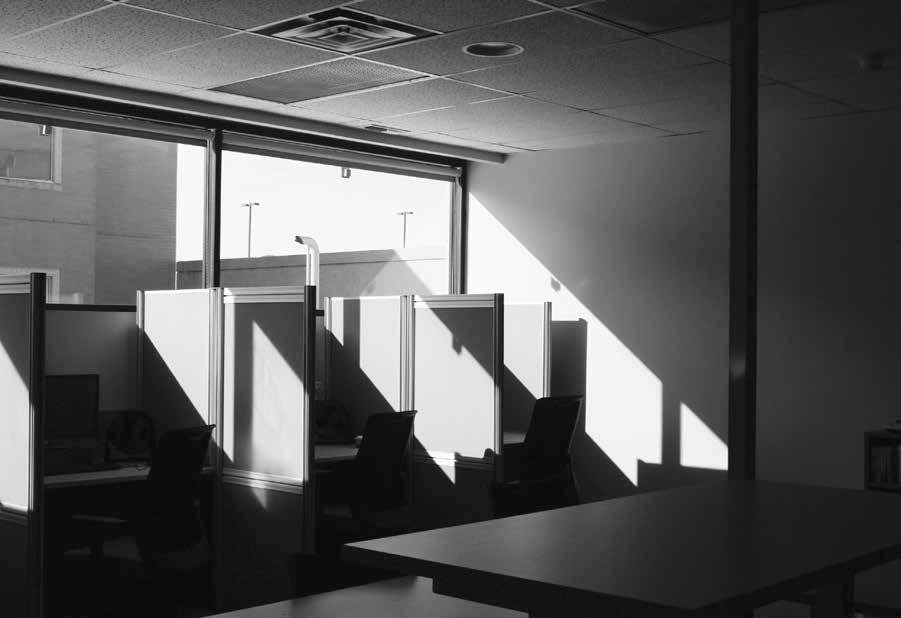
Outfitted with height-adjustable tables, wide workstations, a tutorial room, and several computers equipped with digital accessibility programs, the Assistive Technology (AT) Lab will help serve the 2,000 students at the U of M who have identified accessibility requirements.
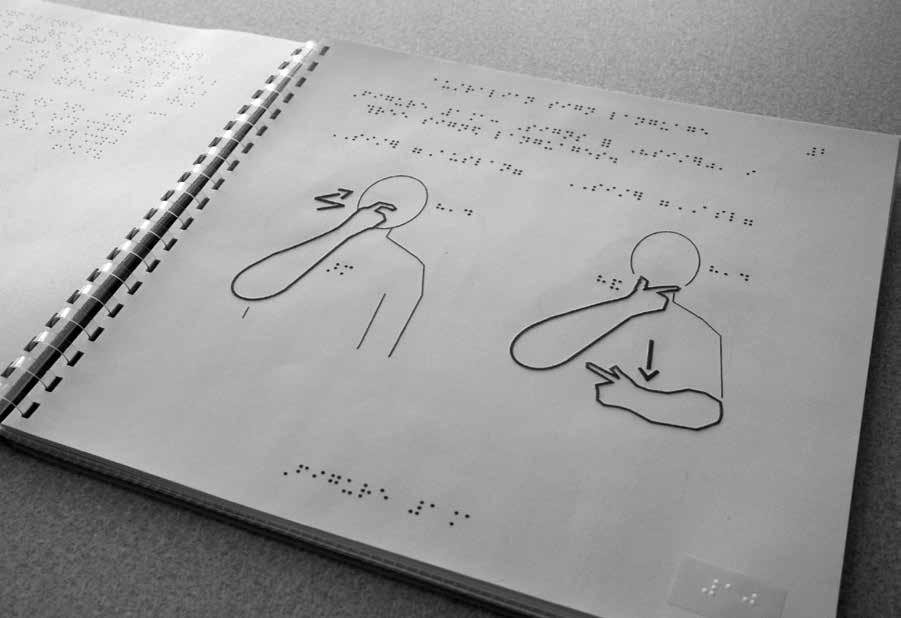
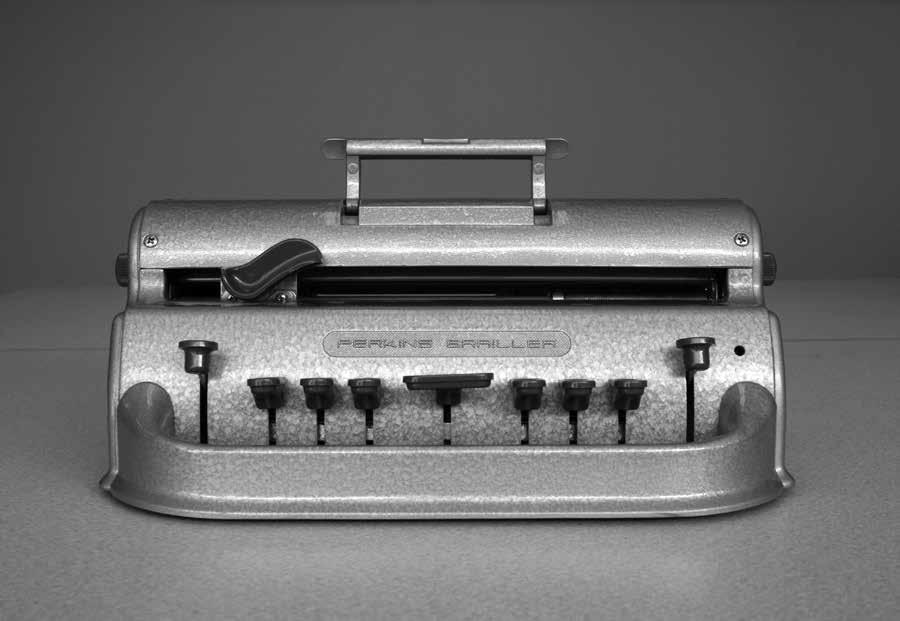
The AT Lab also accommodates alternative formatting needs, such as e-text or braille, and provides resources for sign language interpreters.
“The idea of an AT Lab is not a new one. It’s been talked about for probably about 10 years. It was a matter of finding funding, because a lot of the programs are not cheap. Once we had nailed down some of the funding, it was a matter of finding space,” said Jeff Buhse, assistive technologist with Student Accessibility Services.
“Once we knew the funding was there, we started drawing up plans and talking about what exactly it was going to look like, coming up with quotes, and working with physical plant to make sure that we could get it how we wanted. And I’m working with students pretty much everyday to know what they’re actually going to benefit from.”
The need for an AT Lab springs, ironically, from the inaccessibility of the digital accessibility programs on the market. Kurzweil 3000 – the most common text-to-speech program – is sold for approximately US$1,400. If students require multiple programs and do not qualify for funding, these programs quickly become out of reach. While this is the primary reasoning behind the lab, Buhse hopes that students with their own devices will also use the space.
“I just want to see it used lots. I want to see lots of students in here utilizing the desks and the computers, and really getting to know the programs better, and just succeeding. The programs aren’t there to be an advantage over other students who don’t get the programs, but rather they are to remove the barriers that are preventing students from succeeding in school,” said Buhse.
“I’d like to see students use these programs to their full advantage so that they can succeed as best as possible in school, but then also have then knowledge of the programs to carry it over into the working world so that they can be successful past university too.”
Buhse says there has been a major push for improving accessibility as a result of the Accessibility for Manitobans Act, which passed on Dec. 5, 2013. Under this legislation, the Manitoba government created mandatory accessibility standards that apply to both private and public sectors. Each standard is designed
to address barriers for Manitobans living with disabilities in key areas of daily life.
“In the last five or six years, this field has really changed a lot and I think that in the next five or six years, it’s going to change just as much. With the Accessibility for Manitobans Act, which came into legislation in December of 2013, there’s a big push for accessibility as a whole. Within the Act, there are sort of five main sections that are being rolled out. The third one, which isn’t ‘out’ yet, is information and communication, and that is what really affects what I do the most,” said Buhse.
“And the university, I can tell, is already starting to put a big emphasis on digital accessibility, and that’s sort of my area of expertise. Just in terms of making sure all documents that are being posted on the website are accessible, and educating the university community on how to do that. That’s where I see the most growth.”
When Buhse first started working at Student Accessibility Services, he says that assistive technology and alternate format textbooks comprised approximately 10 per cent of his job, but he was still considered the assistive technologist. Now, thanks to increased funding and resources, he is able to focus on digital accessibility full-time.
“With my job, I’m hoping to see it grow further, to have additional staff to help me out with the work I do so that we can better serve students, but also I would like to see us work with the university community as a whole to really champion for digital accessibility – in terms of training faculty and staff on universal design principles and not just showing or explaining how to make an accessible document, but explaining why that’s important and the effects that it has on people,” Buhse said.
“The whole environment surrounding what the technology is used with is where there is going to be a lot of change. And the university is showing that they are going to be a leader in accessibility, and I’m happy to be a part of it.”
President of Beyond Abilities, Alan Bridgeman, is happy to see the project completed, adding that it is great to have an assistive technologist available on campus. While he believes the lab is a welcome advancement, allowing students with disabilities to access expensive equipment, he also knows there is more to be done to improve accessibility on campus.
“Improving accessibility on campus is something that is always ongoing and is something that will never truly be done – the goal is simply to minimize effort for students living with disabilities to make it an even field. This means there is always ways to improve accessibility and there is always challenges associated with each of them,” Bridgeman said.
“I think this is a large step in the right direction for accessibility on campus, but isn't the only step that can be taken.”
U of M connected to physics discovery that is making gravitational waves
JEREMIAH YARMIE, STAFF
On Feb. 11, researchers from the Laser Interferometer Gravitational Wave Observatory (LIGO) announced in a press conference that they have observed gravitational waves.
A corresponding peer-reviewed journal article was published in the American Physical Society journal Physical Review Letters that same day.
The detected gravitational waves were formed by two black holes that collided 1.3 billion years ago. The observation occurred on Sept. 14, 2015.
One black hole had the mass of about 29 suns, while the other had a mass of about 36 suns. Once combined, the single massive black hole was as heavy as 62 suns.
“The three solar masses unaccounted for were deposited as energy directly into the fabric of the universe, generating the gravitational wave signal LIGO observed in September of 2015,” said Adam Rogers, a post-doctoral fellow in physics and astronomy at the University of Manitoba.
“This event was so titanic that for a brief moment the power in the gravitational wave signal exceeded 50 times the power of all the stars in the universe combined,” said Rogers.
Rogers’s research spans a breadth of phenomena related to gravity, including the nature of neutron stars and the behavior of light as it passes through the gravitational fields of massive objects.
This is huge. Some people believe that this discovery will garner this year’s Nobel Prize in Physics – most Nobel-winning discoveries have a turnaround of at least a couple of years. Gravitational waves were first conjured in the mind of Albert Einstein
as he pieced together his 1916 theory of general relativity. They are ripples in space-time that move at the speed of light.
While gravitational waves are a fundamental part of general relativity, they have never been directly observed until now.
“This event was so titanic that for a brief moment the power in the gravitational wave signal exceeded fifty times the power of all the stars in the Universe combined” – Adam Rogers, post-doctoral fellow in physics and astronomy, U of M
As a gravitational wave moves in a particular direction it deforms the space around it. Space is compressed in one axis perpendicular to the direction of motion, and is elongated in the other perpendicular axis. This dilation in space is called gravitational wave strain.
LIGO is comprised of a pair of observatories, in Hanford, Wash. and Livingston, La. The detection lead scientist of the Hanford observatory is University of Manitoba alumnus Michael Landry, who completed his PhD here in 2000.
“LIGO’s detection of gravita-
tional waves from binary black holes is a thrilling result for us, one many decades in the making,” Landry told the Manitoban
“However the real story here is that in the near future, we will be making regular detections of these objects, that there is a population of binary black holes within our reach. Rich physics and astrophysics will come out of these observations.”
Detection
Researchers from MIT and Caltech designed the twin detectors, the operation of which includes more than 1,000 scientists.
The initial LIGO (iLIGO) was temporarily shut down in 2010 for some much-needed upgrades. The advanced LIGO (aLIGO) reopened in September 2015 with expanded abilities worthy of its new name. aLIGO outcompetes its predecessor in a number of areas.
While the iLIGO was able to observe phenomena happening 15 million parsecs away (despite what Han Solo might say, a parsec is a unit of measurement, not time, equivalent to about 31 trillion km) aLIGO can reach as far as 300 million parsecs.
This increased range allows aLIGO to detect up to 3,000 times more events than the iLIGO. The gravitational waves were so quiet that iLIGO would not have been sensitive enough to detect them.
Light isn’t affected by the compression and expansion caused by gravitational waves, so laser beams are the perfect yardstick for this sort of experiment.
The observed gravitational waves reached the Louisiana and Washington LIGO sites within 10
milliseconds of each other. aLIGO is sensitive to frequencies of gravitational waves within the range of human hearing.
The waves observed by aLIGO are called inspiral gravitational waves, which are formed when two massive objects combine into one. As the two objects get closer to each other, they begin to move faster, which causes the frequency of the gravitational waves that are being produced to increase until the two objects meet.
This produces a sound called a “chirp.”
Rumours began circulating in the beginning of January that LIGO had finally observed the elusive gravitational waves.
Some individuals worried that these rumours would turn out to be another false alarm.
Every so often, a few covert LIGO scientists will plant fake measurements that look like real gravitational waves. Like a fire drill, these so-called ‘blind injections’ ensure that the LIGO researchers are ready to go when real observations are measured.
In 2010, researchers thought they had finally observed gravitational waves before it was revealed that it was just a blind injection. The LIGO team went as far as writing a scientific paper to be sent in for publication before it was revealed to be a test run.
What gravitational waves mean for the field of physics
In the press conference, LIGO researchers presented the actual chirp of the observed gravitational waves.
The existence of gravitational waves has been inferred by studies done in the 1970s by Nobel Prize laureates Russell Hulse and Joseph
Taylor. They found that when two neutron stars orbit around each other, they lose the same amount of energy from their motion as the amount found in emitted gravitational waves, as predicted by general relativity. By characterizing gravitational waves and observing them more consistently, researchers will be able to use them to probe into the early events of our universe, looking further back than is possible using light.
“Of course this focus on known theoretical models of events associated with gravitational waves improved the chances of successful detection and hence helped acquire funding,” physics and astronomy professor Jayanne English told the Manitoban
“However now the really exciting discoveries start – we’ll observe phenomena for which theoretical models do not yet exist.”
LISA Pathfinder
In December of last year, the European Space Agency launched the LISA Pathfinder, a proof-of-principle experiment to see the potential use of LIGO-like detection methods in space with interferometers. Space is a lot less noisy than the Earth is, which may result in easier detections. If the results of LISA Pathfinder experiments look promising, then the European Space Agency will begin the process of preparing the eLISA project for a projected 2034 launch. The eLISA project would use an interferometer with arms around one million kilometres long.
GRAPHIC BY BRAM KEAST
New research links wheezing to asthma development later in life
A study 15 years in the making has roots in Winnipeg
MALAK ABAS, STAFF
Researchers at the University of Manitoba and the University of British Columbia have found a connection between wheezing in infants and young children and the possibility of developing asthma later in life.
The study, published by JAMA Pediatrics, observed 320 infants living in Winnipeg and Vancouver over a period of four years.
“It’s
“I would say one of the really unique things about this study is that we had 15 years of follow-up on these kids, and we started studying them before they were born [...] so having that new data is pretty unique,” said Meghan Azad, lead author of the study and University of Manitoba assistant professor in pediatrics and child health and community health sciences.
ence at least one wheezing episode.
The categories ranged from children who did not wheeze at all, children who wheezed occasionally but grew out of it, children who wheezed but not until they were past infancy, and children who wheezed consistently until the age of seven.
While this in itself may not be surprising, the study also found that even children who wheezed only occasionally appeared to have lung troubles.
“I think it is surprising, because often parents or physicians think that a little bit of wheezing early on, as long as it’s resolved, is no big deal,” Azad said.
important to develop new drugs for asthma and study how to manage symptoms, but the reality is there’s no cure for asthma”
–
Meghan Azad, University of Manitoba assistant professor in pediatrics and child health and community health sciences
When the children turned seven, the initial observation period ended, and the children were not tested again until they were 15.
The children were categorized based on their wheezing patterns. Wheezing – characterized by harsh, whistling breaths – is relatively common in babies. Around 25 to 30 per cent of all young children will experi-
What they found was a link between the number the children who wheezed as babies and the likelihood of the child having asthma as teenagers. The children who wheezed were much more likely than the children who did not wheeze to have asthma later in life.
“But what we found was that even kids who only wheeze transiently, so those that wheeze once or a couple of times in infancy, and then not again through their early childhood years, still had an increased risk of asthma and decreased lung function later on.”
The study also showed some environmental factors. The infants born in Winnipeg were more likely to wheeze than those born in Vancouver.
Meghan Azad will also be an associate investigator on an upcoming project called the CHILD (Canadian Healthy Infant Longitudinal Development) study, which will look into asthma prevention strategies on
a larger scale. It will observe over 3,500 Canadian mothers, and will take home and environmental factors into account. The study will also take genetic information such as umbilical cord blood and viral swabs from both the mother and child.
According to Azad, learning how we can prevent reduced lung function in infants is key.
New study raises connection between Neanderthal DNA and health problems
“It’s important to develop new drugs for asthma and study how to manage symptoms, but the reality is there’s no cure for asthma,” Azad said.
“Prevention is really the best approach.”
Modern humans with Neanderthal DNA more susceptible to addiction, depression
MALAK ABAS, STAFF
Can’t seem to quit smoking? Your Neanderthal ancestry might be the culprit.
A recent study published by the American Association for the Advancement of Science claims that there is a link between people’s inherited Neanderthal DNA and their possible tendency towards health problems such as depression and addiction.
Neanderthals were, to put it plainly, a relative of modern humans, or humans that would eventually evolve into Homo sapiens. You might remember seeing dioramas of them in museums: heavy-browed, dressed in animal hides, and carrying a makeshift weapon. This was hundreds of thousands of years ago, but around 50,000 years ago, modern humans and Neanderthals crossed paths and interbred. Thus the traceable Neanderthal DNA in people living today.
Neanderthal DNA isn’t something that everyone has. In fact, scientists didn’t prove that modern humans possessed any Neanderthal DNA at all until just six years ago.
Experts now believe that one to five per cent of the DNA of people of European, Asian, Native American, or Australian descent can be traced back to Homo neanderthalensis, or the Neanderthal subsection of prehistoric people.
To find the genetic connection, scientists looked at the health records of 28,000 people of European descent, including their DNA sequences. They then used a pre-published map that showed where Neanderthal variants had been found in the human genome. The scientists then used both sets of data to figure out which people had the Neanderthal DNA, and used the health records to see if there were any consistent health issues amongst those people. They found that people with the Neanderthal DNA were more susceptible to a set of health problems.
“Our main finding is that Neanderthal DNA does influence clinical traits in modern humans,” explained John Capra in an interview with New Historian, co-author of the study and professor at Vanderbilt University.
“We discovered associations between Neanderthal DNA and a wide range of traits, including immunological, dermatological, neurological, psychiatric, and reproductive diseases.”
Some of these issues could be traced back to traits that would have been helpful for your average Neanderthal, but are dangerous for a modern human. People with Neanderthal DNA have a higher risk of developing keratosis, a skin disease that creates scaly skin growths after repeated sun exposure. These growths may have actually helped Neanderthals get more vitamin D, as they did not experience a lot of sun exposure in the northern hemisphere.
Other traits were a little more confusing. Neanderthal DNA seemed to greatly increase the risk of developing a nicotine addiction. Depression was also a very common disorder amongst people with the DNA.
Does this mean that our Neanderthal ancestors predestined us to poor health? Probably not. Neanderthals were obviously not addicted to smoking, and scientists
don’t have enough information on them to tell us whether clinical depression was something that they dealt with.
Neanderthal variants contributed only one per cent of a person’s overall risk of developing depression . If any-
thing, these findings are an interesting look into the genetic makeup of Neanderthals, modern-day people who share their DNA, and a stepping-stone to further understand how the two connect.
GRAPPHIC BY BRAM KEAST
GRAPHIC BY JONDELL
Entering the deep freeze
Maintaining your vehicle’s health and your safety for the winter months
KIERON BERNDT
G etting from point A to point B
has never been easier. With a push of a button and a turn of a key, you’re barrelling down the motorway in a comfortable sardine tin with a few pillows that eject in the case of a crash.
This all comes to a screeching halt at the first snowfall, when our streets are full of motorists who struggle to grasp the concept of winter driving, with cars that are ill-prepared for the weather.
We can make our roads safer by spending a bit of time winterizing our vehicles to make them more reliable and easier to drive. I spoke to a local automotive technician, Benjamin May of Automotive Connection, to ask what we can do to help our cars to stand up to the test of winter.
Oil
His first recommendation is to change the regular engine oil for full synthetic oil. It not only flows better, but also lubricates in a superior fashion. Choosing the right type of motor oil for your vehicle plays a vital factor in the health, durability, and strength of your engine. The lower the viscosity, the better.
In oil terms, a viscosity rating has two parts: shear and flow. Shear is how an oil’s viscosity changes under stress, or how an oil thins while under
pressure or mechanical stress. The flow is how fast an oil flows. The better the oil shears, the lower the viscosity and the higher the flow, and, in turn, the better the lubrication.
: We can make our roads safer by spending a bit of time winterizing our vehicles to make them more reliable and easier to drive
For example, Mobil 1 10W-30 motor oil at 4 C has a viscosity of 63.2 centistokes (cSt). It maintains the characteristic viscosity of molasses, and flows much the same. Most new vehicles call for Mobil 1 5W-20, and a Mobile 1 5W-20 Advanced Full Synthetic motor oil contains a viscosity of 49.8 cSt at 4 C. The 5W-20 has a viscosity rating of 13.4 less than the 10W-30, meaning that it lubricates better, flows faster, and the viscosity is reduced under stress.
When in doubt of what oil to use, check your owner’s manual, or in some vehicles, it will be written on the oil cap.
Coolant
An essential part of winter maintenance and preparation should be coolant. Coolant, similar to oil, has different ratings for different temperatures. The recommended coolant for vehicles in the winter months is 60/40: 60 per cent coolant and 40 per cent water.
The coolant and water mix does the job of not just cooling, but preventing rust and corrosion in the vital organs of the cooling system of your car. The water in the coolant is what removes heat from the system and runs it through the heater core, where the cabin heat is generated.
If your heater isn’t blowing warm air, your coolant and motor are still cold. A way to avoid this is to let your vehicle warm up for a set span of time. Letting your engine warm up to an efficient operating temperature reduces the wear inflicted on your engine. Warming up in excess of 10 minutes is not advised because not only does it wastes fuel, but your engine is not operating at peak performance levels, which in turn may harm your vehicle.
Tires
A big part of winter driving is tires. Advances in tire technology have made strides, a quarter mile at a time. The compounds used in tires
have come a long way since the days of all-season tires, rendering them inferior to a proper approved winter tire for driving in low temperatures.
All-season tires are not safe for the winter months, and not only do they endanger you and your vehicle, but other motorists too. The rubber tire compound that is used in making all-season and summer tires becomes harder and stiffer at temperatures below 9 degrees Celsius. This leads to longer stopping distances, loss of traction, and a great deterioration of the handling of your vehicle. Winter tires should be installed once the temperature is consistently below 9 degrees Celsius.
When looking for the right winter tire for your vehicle, be sure to look for the snowflake on the sidewall, which means that the tire is approved by Transport Canada. A tire that is approved by Transport Canada is eligible for the Manitoba Public Insurance Tire Program, which allows consumers to pay monthly preauthorized payments for their tires. This program not only saves consumers from having to front a large bill in one payment, but it makes our roads and vehicles safer.
In addition to changing your vehicle’s tires, be sure to check the tire pressure regularly. Fluctuation in temperature can cause inflation
or deflation of the pressure of the tire. Information pertaining to the pressure can be found in your vehicle’s owner manual, or in the driver’s doorjamb.
Inspection
Finally, it is always a good idea to get a winter inspection for your vehicle. This covers a wide range of components, ranging from an exterior light check, battery crank strength test, and ignition system check, right down to testing your vehicle’s block heater.
After you equip your vehicle with the essential tools and perform the necessary maintenance for winter driving, you and other motorists will be safer. Your car will thank you by starting and running strongly throughout the barren months of winter.
Thanks to Benjamin May and Auto Connection for providing their time and information for this article.
PHOTO BY CAROLYNE KROEKER
COMIC BY KELLY CAMPBELL
GRAPHIC BY BRAM KEAST
GRAPHIC BY JONDELL COOMBS
Leafing creatively
Local floral photographer, DIY cooks to be featured at art/science presentation
TOBI NIFESI, STAFF
W
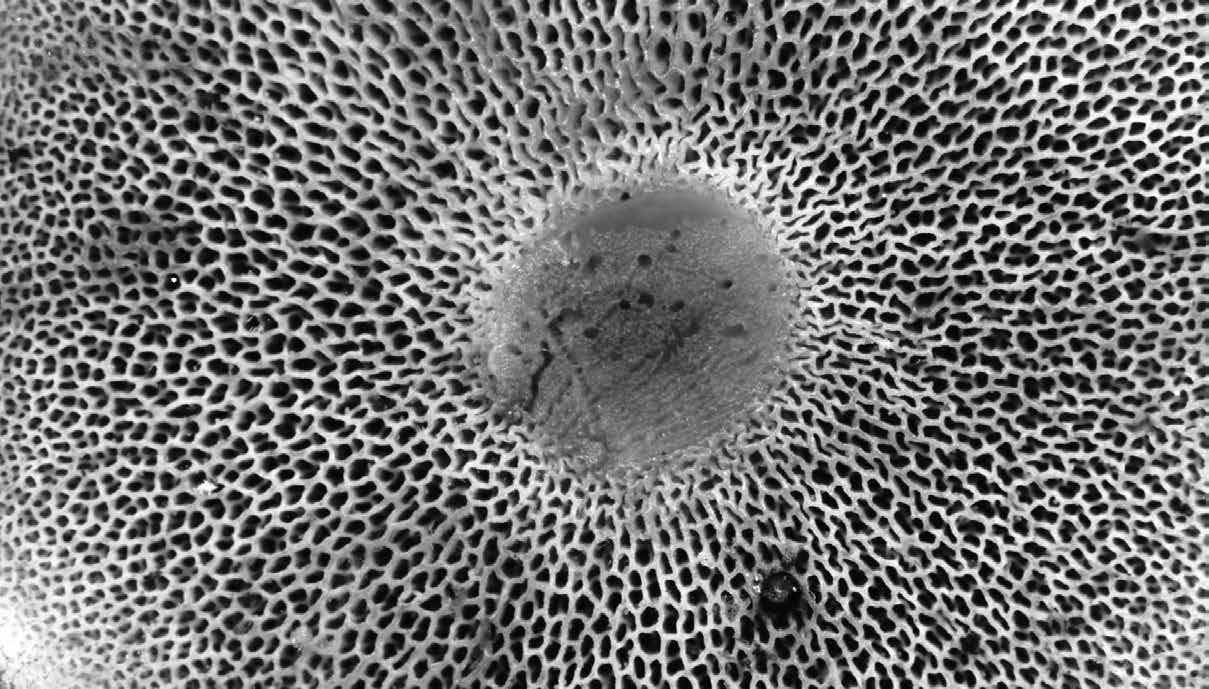
innipeg artist and photographer Joel Penner has created a unique art and science project that creatively showcases the concepts of life and death via artistic video representations of floral life. The project, called Momentary Vitality, visually maps the lifespan of plants through time-lapse photography and renderings.
“[Momentary Vitality is] footage of decaying plants and fungi that show us the beautifully fleeting nature of life itself,” Penner told the Manitoban
On Thursday, Feb. 25 Penner will be hosting a Momentary Vitality presentation titled “Conifers & Company” at the Carol Shields Auditorium of the Millennium Library, scheduled to start at 7 p.m.
This exhibit will feature the artistic aspects of pine cones, falling spruce needles, and mushrooms depositing their spores, as well as the premiere of exclusive footage from Penner’s new film, which will include time-lapse renderings of growing plant roots.
“My plan is to use them to illustrate scenes for an animated short based around a creation myth,” said Penner.
A life-long love for plants coupled with a budding interest in photography led Penner into his present artistic project. Soon after he ventured into time-lapse and scanning photography, he began shooting flowers and detailing floral life. Today, these shots are presented as short, contextual films that aim to provoke thought from both artistic and scientific perspectives.
“I have always been interested in art and science, but this project came out of my passion for photography,” Penner explained.
“I’d consider my short films without narration to be more on the art side of things. I’d consider the focus of my presentations to be scientific art, as my main goal is to find beautiful moments in my time-lapse imagery of different specimens and convey those, but also with a bit of contextualization and explanation from biology.”
Penner chooses his specimens by considering their water retention abilities, as this determines how dramatic and lively their colour changes will be. It also determines the chances of a fungus growing colonies. The gradual and systemic nature of these types of changes is what he hopes to capture.
In the past, Penner has focused heavily on plant and fungus species
native to Canada. More recently, he has come to appreciate the diverse nature of native Manitoban species, and has narrowed his focus to these local plants.
“I’ve focused on plants native to Canada in the past, but I find it fascinating how studying the plant world reveals the incredible amount of international flair present in Manitoba,” said Penner.
Nevertheless, there are a few challenges associated with this artistic medium. A major challenge for Penner is the potential for some mechanical or technological failure to occur that could hamper the capturing or rendering process of his images. That being said, he appreciates the space for broader and diverse exploration that this medium affords him.
“The process of scaling up my computer set-up to match my artistic ambitions has been a fantastic opportunity to learn about computing in a more in-depth manner,” Penner told the Manitoban
“But it doesn’t feel fantastic starting the scanners again at 2 a.m. after a computer crash to keep a two-month time-lapse going.”
Catering Conifers & Company
Clandess Diner – a local pop up restaurant that specializes in rare and wild seasonal dishes – will be providing catering services at the event. The diner’s menu for this event is a glimpse of what they have to offer during one of their full popup experiences that occur once every six weeks at secret locations.
“I find it fascinating how studying the plant world reveals the incredible amount of international flair present in Manitoba” – Joel Penner
Clandess Diner’s menu for the Momentary Vitality presentation –which includes tea made from white spruce and pine – will be thematically geared towards Penner’s floral exhibits.
Anna Sigrithur and Nathan Enns operate the restaurant together. These two cooks are self-described gastronauts (boldly going where no chef has gone before). Together, Sigrithur and Enns craft brand-new, unique recipes for each one of their pop-up experiences. They pride themselves in their ability to masterfully incorporate underused Manitoban ingredients to make delectable dishes.
“[Pop-ups] allow for a lot more creativity,” said Enns.
“We have to come up with a new menu every time. People are coming for an amazing experience so you don’t cook anything that is so-so, it all has to be a cut above.”
Sigrithur noted that in addition to striving for excellent dishes, she and Enns also source their ingredients from many local farmers and their own foraging.
Clandess Diner hopes to contribute, in their own way, to a bigger cause of appreciating and preserving indigenous ingredients, recipes, and menus.
“It is a place from which things can grow. That is what it is meant to be,” said Sigrithur.
“Something that I would like to see is a Manitoba-specific boreal forest to
Aspen parkland biome-based food research center that aims to document food knowledge and bring that into scientific and artistic practice in terms of keeping food recipes alive and [preserving] the [indigenous] lands [...] I would love to support something like that. We live on this land as settlers and have to honour the history of the food that is here.”
One of the many thrills of the diner is its exclusive nature. The restaurant operates at secret locations, mostly in central Winnipeg. Anyone interested in attending must subscribe to the diner’s mailing list, and will be notified of available tickets right before the pop-up date. Only those that purchase tickets get to know the location and have a chance to experience the warm atmosphere and mouthwatering dishes.
“Conifers & Company” is a free event, but donations are accepted. To learn more about Penner’s work, visit www.momentaryvitality. ca. To learn more about Clandess Diner and sign up to their mailing list, visit www.clandessdiner.org
Hamilton-Pattison Contact: arts@themanitoban.com
PHOTO STILL BY JOEL PENNER
Library Voices showcase new tricks on Lovish
Indie collective to hit Winnipeg Feb. 25 with gritty new record
SEAMUS HAMILTON-PATTISON, STAFF
Regina-based music collective Library Voices is bringing their bombastic, fuzzed-out brand of hook-laden indie/pop-rock back to Winnipeg’s West End Cultural Centre (WECC) on Feb. 25, kicking off the band’s tour of Eastern Canada in support of their third full-length album, Lovish
According to vocalist/guitarist Carl Johnson, Library Voices are no strangers to Winnipeg, as the city is a frequent starting or ending point of their Canadian tours.
“Whenever we go east, we usually start or end with Winnipeg. It just kind of makes sense, y’know? It’s five hours away,” said Johnson.
“Stop in Brandon, get Subway on the way – it’s kind of tradition at this point.”
Citing Library Voices’ last stop in Winnipeg, Johnson praised the relatively new Good Will Social Club as a “fantastic” live venue.
“We have kind of a similar style venue here in Regina called The Artful Dodger, but I think the Good Will Social Club may be a little more fleshed out on the rock and the pizza front.”
On Lovish , Library Voices have a lot in common with fellow Canadian indie-rockers The New Pornographers. Like the Pornographers, Library Voices favour
driving guitar rhythms, impeccable vocal harmonies, and a vast, dense sound made possible by their lineup of seven.
That’s not to say Lovish is an homage, far from it. In fact, what makes Library Voices stand out amongst the slew of indie-rock bands across Canada is the fact that each song on Lovish is probably going to remind you of a different band or genre – but it’ll all sound uniquely Library Voices.
Album opener “Oh Donna” sounds like lazy, mid-90’s alternative rock (or early indie-rock, depending who you ask) at its finest with its muscular, overdriven chords, walkingpace tempo, and ethereal vocals.
For something completely different, the song “Zzyzx” takes a sharp left turn into classic rock and sticks the landing, from a pompous horn section Bob Seger would be pumped about, right down to an unintentional, yet awesomely spot-on vocal tribute to Tom Petty.
“There are some by-products of the approach that we’ve taken that you can’t really anticipate,” said Johnson of the song, after chuckling heartily at the Manitoban’s assessment, and noting that there was an intent to emphasize saxophone parts more on Lovish than they had been in the past.
Due to the prevalence of sax in the music of Bruce Springsteen and Seger, it’s easy to see how Library
Voices’ emphasis on the instrument begat such strong classic rock vibes in “Zzyzx,” even if the band wasn’t aware of it at the time.
Lovish and the band’s preceding 2014 EP For John mark a significant stylistic shift for Library Voices. Up until these releases, the band played a far cleaner, more pop-oriented and radio-ready version of their current sound. This style culminated on the band’s 2011 offering Summer of Lust, which Johnson described as the band’s attempt at a “complete pop record.”
According to Johnson, the band’s experimentation on Lovish can be attributed in part to the adult responsibilities of marriage and children, which in turn affected the manner in which the record was made.
“A lot of time had gone by. Three years had gone by before we made For John, and another year before Lovish, so I think we’re all getting a little older,” said Johnson.
“A large majority of the band is married, having kids. Three band members have kids, and two more have buns in the oven.”
In getting older and having relatively changed priorities, Johnson remarked that the band was simply unwilling to “chase radio.”
“By the time For John came out, we were kind of consciously wanting to experiment more and make music,
first of all, for ourselves. Music that we thought was going to be interesting and more exploratory,” said Johnson.
“Hopefully people dig it as well. It’s a hard thing to do when you’re not sure what the rules are, and you’re not sure what people who followed you before are going to think. It is a little scary, but I think just being older, we’re like ‘oh, we just wanna shift gears a little.’”
Fans of Library Voices already anxious for more will be happy to know that Johnson is continually looking forward, and eager to toss out ideas for future releases from the band.
“We actually recorded a bunch of covers,” said Johnson.
“So we might release a covers EP. We’re gonna [record] a couple more really soon [...] We’ve talked about doing seven-inches, we’ve talked about doing albums. I have no idea where we’re going from here, but that’s kind of exciting itself.”
Library Voices will be joined at the WECC Feb. 25 by local folk singersongwriter Slow Leaves. Tickets are $12 in advance and are available at Music Trader, the WECC, and online at www. ticketfly.com
Going beyond Bechdel on the big screen
Winnipeg event seeks to tackle issue of sexism in film industry
On Feb. 23, the Provincial Council of Women of Manitoba (PCWM) will host a panel discussion at the Park Theatre starting at 7 p.m. titled “Beyond Bechdel: Where are the Women in Film?” that will attempt to break new ground on the topic of the underrepresentation of women in the film industry.
It’s no easy feat, but event organizer and PCWM president-elect Alexandra Shkandrij feels her four talented panelists and moderator Merit Jensen Carr are more than up to the task.
“What we have in terms of our event is a group of Manitoban film-
makers, and academics, and people who want to speak to some of the issues surrounding the film industry generally,” said Shkandrij.
The panel consists of filmmakers Sonya Ballantyne and Cecilia Araneda, director/producer Elise Swerhone, and filmmaker/U of M professor Shereen Jerrett.
Merit Jensen Carr, an award-winning producer and president of Merit Motion Pictures, will moderate the panel. For Shkandrij, having a diverse panel was a crucial aspect of the event and necessary to explore the multiple facets of the film industry affected by the underrepresentation of women.
The event’s title references the Bechdel Test – a test for determining whether a film contains meaningful female character interaction, which was explained in a comic strip by American cartoonist Alison Bechdel in 1985.
In order for a film to pass the Bechdel Test, it must feature at least two named female characters who talk to each other about something other than a man. A surprising number of world-famous films fail to pass the Bechdel Test, from Citizen Kane to the entire Lord of the Rings trilogy.
For Shkandrij, however, a film passing the Bechdel Test itself doesn’t necessarily mean women are wellrepresented within every aspect of it.
To Shkandrij, the issue of representation extends not only to the lack of women we see onscreen, but also to the lack of women occupying technical roles in filmmaking.
“It’s about how women don’t get funded to be directors, they’re underrepresented as writers, they’re underrepresented in terms of the roles they’re given – especially women who are older or younger,” Shkandrij explained.
Shkandrij pointed out that last
year in Hollywood’s studios, a very large majority of high-profile movie releases (upwards of 90 per cent, according to the Centre for the Study of Women in Television and Film) were directed by men. Not only that, but as Shkandrij also states, “a lot of those men are first-time directors.”
“This has gotten to the point where it’s an actual systemic problem.”
The Canadian film industry is not immune to systemic bias against female directors either, according to Shkandrij.
“When you look at the Canadian version of this, the public sector – so these are films that you and I fund with our tax dollars – six per cent of these films are directed by women. So for a government industry to be systemically only funding male directors, I think that is a problem.”
Still, Shkandrij is hopeful that events like “Beyond Bechdel” will jumpstart more conversations in film studios and in the homes of the public that will bring about positive change. She looks to the controversy surrounding this year’s acting nominations at the Academy Awards as a sign of society’s growing awareness regarding representation in film.
“We’re looking at the Oscars this year, where there’s actually a backlash for not nominating any people of colour. I think that’s a sign that people are more aware, and the same thing is true of women’s roles.”
Overall, it seems that inspiring and empowering the female voice is something that the PCWM hope to accomplish with events like this because, as Shkandrij puts it, “even if a woman writes a film, the same way that even if a woman is in legislature, it doesn’t mean that she will make laws or films that are pro-women, but it will mean that a woman’s voice was heard. And that’s important.”
Tickets to “Beyond Bechdel” are available for $10 in advance by contacting pcwm@ mymts.net, visiting the Park Theatre in person, or by purchasing online at www.ticketfly.com. Following the panel discussion, there will be a screening of the 2015 film Grandma , starring Lily Tomlin and Julia Garner.
Visit the PCWM website at www.pcwmanitoba.ca for a list of upcoming panels and events.
PHOTO BY CHRIS GRAHAM
GRAPHIC PROVIDED BY CWM
Alumni profiles
U of M grads ply their creative trades in the community
OLIVIA MICHALCZUK, STAFF
Alex Ateah – Bachelor of fine arts (honours), 2015
Kylie Friesen – Bachelor of arts (honours), English literature, 2014
After graduating from the U of M, Alex Ateah and Kylie Friesen began their comic web series YOLO Fashion Divas, which can be found on YouTube.
The series, currently consisting of six episodes, is filled with the mock educational ventures of beauty and lifestyle guru Kylie and arts and culture connoisseur Alex. With their clever, insulting brand of humour, Ateah and Friesen take the viewer through subjects such as fashion trends, vegan tapas, and working out.
Ateah began to pursue comedy after graduation, and with the help of her education she saw how the line between comedy and art is very blurred. Her education gave her the confidence and tools to explore her performing side.
“My thesis project, Other Half
Dating Service, was directly rooted in comedy and performance, and from there I was able to gain the confidence to continue down the path that I’m on.”
Friesen has been primarily working as a makeup artist since graduating and has also been working on various film and art projects, including music videos, as well as promoting and DJing local events.
“The biggest skill I have taken from my English degree is the importance of maintaining a strict eye for detail and how to look critically at your own work and the work of others,” Friesen told the Manitoban
“The creative process for me is not only the expression of your ideas, but the careful configuring and reconfiguring of those ideas to make something wonderful.”
Check out the YOLO Fashion Divas’ YouTube channel, and subscribe to make sure you don’t miss their next video.
Erik Klassen Bachelor of arts, labour studies, 2015
Erik Klassen is a local solo singer-songwriter, guitarist, and frontman of local roots-folk band These Old Fangs.
Klassen was born and raised in the small Manitoba francophone community of Saint-Jean Baptiste.
After graduating high school, he moved to Winnipeg to pursue a post-secondary education at the U of M. Klassen struggled with university and sticking to a specific program, changing his direction several times before finding a home in the labour studies program.
There were many areas covered in the labour studies program that prompted Klassen to switch from pursuing an education in business.
The evolution of the organized labour movement, the evolution
of socio-economic organizing, and the role of unions in the modern world were some of the most prevalent topics to pique his interest, but Klassen said the treatment of vulnerable people in the workplace and the use of environmental resources and sustainability were also addressed throughout the program.
Klassen graduated with his BA in October 2015, and is happily employed as an occupational health and safety presenter for SAFE Workers of Tomorrow. He puts his degree to use by teaching youth, new immigrants, and other vulnerable workers about their fundamental worker’s rights, as well as workplace health and safety.
Klassen’s degree and field of study greatly influence his songwriting. His lyrics feature themes such as romanticized social and
political upheavals in the 18th and 19th century, resisting powerful corporate entities, as well as exasperated commentary on a rapidly developing neoliberal, hyper-capitalist society.
Though Klassen says his rants cause friends and family members to roll their eyes, he has found a way to format his art so that he can spread his message in an appealing way.
“My art gives me the opportunity to vent, preach, or simply voice ideas aloud while simultaneously providing melody and harmony that brings those listening enjoyment and stimulation.”
Erik Klassen’s band, These Old Fangs, can be found at theseoldfangs.bandcamp.com
PHOTO PROVIDED BY ERIK KLASSEN
PHOTO PROVIDED BY YOLO FASHION DIVAS
Making a statement
Bison men’s basketball team snaps 12-year playoff hosting drought, sets sights on CIS Final Eight
MIKE STILL, STAFF
BY
Entering the 2015-16 CIS men’s basketball season, it had been 12 long years since the University of Manitoba Bisons had seen home playoff basketball. All of that changed this year when head coach Kirby Schepp and company assembled a team that not only snapped the herd’s playoff hosting drought, but also set a new regular season wins record since joining the Canada West conference, going 15-5.
Manitoba’s 15-win campaign was good enough for third place in the conference, and the Bisons will now host the Fraser Valley Cascades next weekend in a quarterfinal matchup at Investors Group Athletic Centre.
For Schepp, Manitoba’s performance this season means much more than just the record and ability to host. It’s a statement that the quality of CIS competition in the province deserves to be respected – something that wasn’t necessarily the case when
he inherited the head coaching position for the 2009-10 season. At that time, the Bisons hadn’t seen the postseason since 2004.
“Even though we had a great team that year it just goes to show how much that home support can do for you” –Amir Ali, guard, Manitoba Bisons
“People saw both programs [Manitoba and Winnipeg] in the city as not winners and not something they wanted to be a part of,” Schepp said.
“Winnipeg’s certainly done well in the last few years and they’ve brought things around. Obviously I’m really proud of what we’ve done here and gradually each year we’re getting better and better and better and being more competitive and more consistently a playoff team.”
Since 2009-10, the Bisons have now made the playoffs in four of Schepp’s seven years with the squad, including 2012-13, where they were just one win away from ending the playoff-hosting slump three years early. Unfortunately, they fell just short in the final game of the season – something that current members Wyatt Anders, AJ Basi, Brett Jewell, and Amir Ali have not forgotten, as they were all on the 2012-13 roster.
“I think with that team [2012-13] we were the number-one team or tied for first going into the last game of the season and we dropped it in a heartbreaker to the [Winnipeg]
Wesmen, ending up missing two free throws to win it,” said Ali.
Since 2009-10, the Bisons have now made the playoffs in four of Schepp’s seven years with the squad
“That put us on the road and we were playing at Victoria in a best of three series in a packed, loud gym and we couldn’t pull it off. Even though we had a great team that year it just goes to show how much that home support can do for you.”
That result wasn’t duplicated this past season as Manitoba went 8-2 in the second half of the sea-
son – including winning their last seven straight games. Every player – starter or reserve – has had a role in the Bisons’ success, something that Schepp was quick to point out, especially when critical playmakers in Anders and Ilarion Bonhomme II went down at times.
“It’s always rewarding as a coach to see when you go through that adversity and when things happen, other people step up and perform in big situations and that’s certainly happened,” Schepp said.
With a strong mixture of playmakers on their roster and the playoff drought now over, the next step for Manitoba is proving they’re good enough to make it to the CIS Final Eight. Based on their performance in the regular season, there’s no reason that can’t happen in 2015-16.
PHOTO
JEFF MILLER
Bisons playoff run comes to a screeching halt
Dinos come back to win quarterfinal series 2-1 in men’s hockey
RYAN STELTER, STAFF
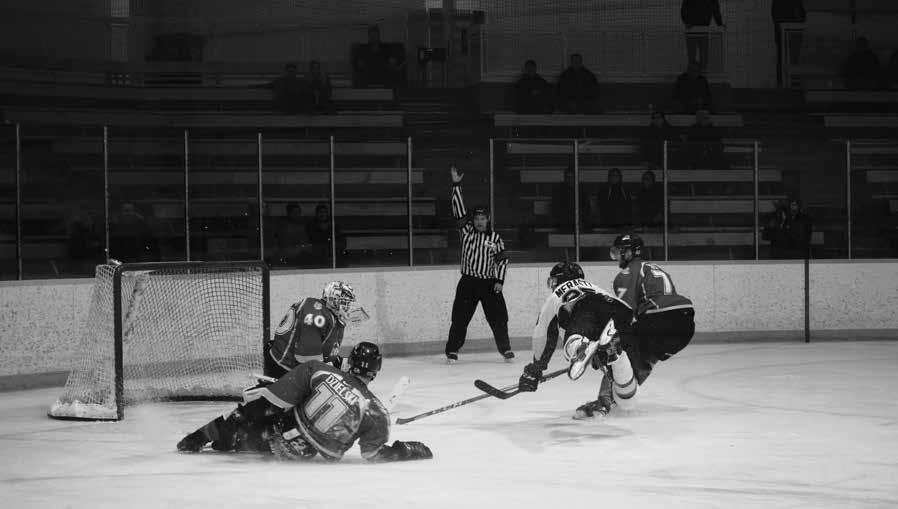
This weekend, the University of Manitoba Bisons men’s hockey team played a full three-game quarterfinal series against the Calgary Dinos. After winning game one on Friday, the Bisons dropped two straight and lost the series 2-1.
Friday
The Dinos dominated the majority of the first period, outshooting the herd 12-2. Manitoba led at the break, however, after Joel Schreyer grinded
along the boards and was able to feed a pass to Warren Callis, who finished the hard work off.
In the second period, the Bisons jumped out to a 2-0 lead after Shaq Merasty stuffed the puck past Steven Stanford after taking a couple whacks at it. A minute later, Brett Brooks gave the home side a 3-0 lead after using his speed to tuck home a nice wraparound effort. Calgary cut into the Bisons’ lead after Elgin Pearce cruised into the offensive zone off
a faceoff and dragged Justin Paulic across his crease and put it over his shoulder.
A scoreless third period saw the Bisons fend off some furious pressure in the dying minutes of the game from Calgary to take the win 3-1.
“That was an intense game,” Bisons head coach Mike Sirant said postgame. “A lot of these guys have never played a CIS playoff game, and we now have that one game experience under our belt.”
Saturday
On Saturday, the Bisons were hoping to close out the series early against the Dinos with a win, but Calgary forced a decisive third game with a 2-1 victory.
The Bisons were in control for most of the first period, generating a few grade-A chances from dangerous areas. They were unable to bypass Stanford, however, who made some excellent saves.
A hard-hitting and fast-paced second period saw the game’s first goal with two minutes remaining in the frame as Pearce tapped the puck home after a great feed from Chris Collins at the point.
Both teams had strong chances throughout the second, with a couple of mad scrambles that had the fans at the Wayne Fleming arena on the edge of their seats.
The Dinos jumped to a 2-0 lead 16 seconds into the third period with Pearce’s second of the night and third of the playoffs. Manitoba answered back when Brett Stovin finished off a nice passing play between Jordan DePape and Adam Henry on the powerplay.
The herd poured some serious pressure onto the Dinos, but Calgary did an excellent job of blocking the shooting lanes to preserve the win.
“We ran out of time,” Sirant said.
Bison women’s hockey clinches series in fifth overtime
Venla Hovi
ANDY CHE, STAFF
scores historic goal in longest ever CanWest game
The University of Manitoba Bisons women’s hockey team came back from a game down to defeat the Saskatchewan Huskies 2-1 in their quarterfinal series, including a wild fifth-overtime win in the decisive third game.
Friday
The Bisons dropped a 3-0 decision in game one with forward Kaitlin Willoughby scoring a natural hat trick.
Just a minute after pulling back to even strength in the first period, the Bisons dropped down a point, making it 1-0 for the Huskies. Willoughby converted a pass along the boards from Lauren Zary up over Rachel Dyck’s shoulder for the lead.
The Huskies continued to apply pressure in the second period, yet the score remained 1-0.
Offensive defenceman Julia Flinton made her mark in the third period, setting up Willoughby in the slot for a 2-0 lead. She then recorded her second assist of the evening, playing the puck up to Willoughby for an empty netter with 1:36 left to go.
Despite having a fair number of chances to score, the Bisons could not beat the Huskies’ goalie Cassidy Hendricks. She made 23 saves to earn the shutout. Dyck performed valiantly in the loss, with 28 saves to her credit on 30 shots.
Saturday
After falling 3-0 in the post-season opener, the Bisons evened the series with a convincing 5-1 win in game two.
The herd knocked out four unanswered goals after Julia Flinton opened the scoring for the Huskies. The away side also opted to swap goaltenders for the occasion and Amanda Schubert made her post-season debut. Down 1-0 to a Flinton pointshot and nearing the end of the first period, Venla Hovi converted Alanna Sharman’s pass on a two-on-one for a buzzer-beating equalizer.
As soon as the second period started, the Bisons began to take advantage of their momentum. Shorthanded, Sharman broke in on a breakaway and was just put off by a Cassidy Hendricks pokecheck.
Midway through the second, Hovi took an opportunity in the slot to beat Hendricks for a 2-1 Bisons lead.
Schubert, who finished the game with 66 saves on 67 shots, has now cemented her place as the Bisons’ starter when they visit the Alberta Pandas next week
Late in the frame, game two appeared to have slipped away from the Huskies. Lauryn Keen linked with Sharman on the rush, with Sharman outmaneuvering Hendricks to make it a 3-1 game. Keen’s assist gave her three points on the night. The second-year forward continued to leave her impression on game two as it entered the third period. The
Sharman-Keen combination struck again for the Bisons, and it was Keen this time around who beat Hendricks for a 4-1 stranglehold.
Kayleigh Wiens rounded out the scoring, ensuring that the Bisons’ commanding 5-1 victory would keep their season alive and gift them opportunity at advancing in the playoffs on Sunday night.
Sunday
Although it took a record-breakingly long time to get there, the sensational winning goal was well worth it. Finnish star Venla Hovi became the overtime hero as the Manitoba Bisons completed the series comeback in game three with a 2-1 win that required five overtime periods to clinch a second-round berth.
The goal at 9:02 of the fifth overtime period ended the longest hockey game in Canada West history, surpassing a record set by the Huskies and Regina Cougars two years ago, which took four overtimes.
Manitoba opened the scoring just 11 seconds into the contest. With the goal, Keen notched her sixth point in
“It was a great playoff game – both teams played well.”
Sunday
Sunday saw the Bisons and the Dinos face off in the decisive third game of their Canada West quarterfinal series. Calgary cruised to a 6-1 win, eliminating the herd from the playoffs.
The first period didn’t bode so well for the Bisons, as they found themselves 2-0 down after Calgary struck twice on the powerplay through Spencer Edwards.
Manitoba got their breakthrough four minutes into the second period off the rush when Jordyn Boyd fed a nice pass to Justin Augert, who tapped home his first of the playoffs. The Bisons continued to press for the equalizer but to no avail.
The Dinos gained a 3-1 lead early in the third when they scored another powerplay goal. A couple minutes later, Collins picked up his own rebound and scored on Paulic from a sharp angle. The visitors added two more goals to make it a resounding victory for their squad.
“We’re feeling a lot of pain right now, but the pain we suffer now will only make us stronger for next season,” Sirant said after the Bisons’ crushing defeat.
the last two games assisted by Hovi and Sharman.
With the lead hanging in the balance, the Bisons called Amanda Schubert into action. The third-year goaltender kept the away team in front with a stupendous display in the second period. She stopped all 13 shots she faced in the frame, as the Bisons were outshot 17-12 through two periods.
Saskatchewan responded midway through the third period. Lauren Zary scored the equalizer with an assist going to Kaitlin Willoughby –her fourth point of the playoffs. Hovi ended the game finishing off Sharman’s pass on a two-on-one rush. Sharman and Keen had the assists on the game-winner, both their second points in the game. Both goaltenders stood out in a battle of individual supremacy. Schubert, who finished the game with 66 saves on 67 shots, has now cemented her place as the Bisons’ starter when they visit the Alberta Pandas next week. Cassidy Hendricks finished with 40 saves on 42 shots.
PHOTO BY CHANTAL ZDAN
Brothers act
Alberta football products Luc and Des Catellier reunited in Manitoba
MIKE STILL, STAFF
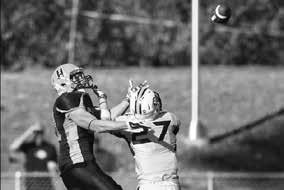
It’s not often that you get the opportunity to play football on the same team as your older sibling – especially when the latter is four years older. For Des Catellier, however, that rare occasion will occur in 2016 as he joins his older brother Luc on the Bisons football team.
Luc – an Alberta Golden Bears and Edmonton Wildcats alumnus at cornerback – joined the Bisons for the 2015 season as a redshirt. At sixfoot-two and 190 pounds, he’s got the size to be an elite-level defensive back, playing the game with physicality and aggression.
Des, on the other hand, is a recent high school graduate from the St. Francis Browns in Calgary who led his squad to the Alberta Tier One Provincial Championship this past season. He’s also an elite-level punter and earned the honour of being named a Canada Football Chat Top 100 prospect (41st overall) during the 2015 season.
The family dynamic
Neither brother fully immersed themselves in the sport of football until slightly later on in their youth, making their progression as players that much more impressive.
“I started pretty late. We both played high-level hockey and soccer from a young age and football was sort of an afterthought,” Luc said.
“I started playing tackle football in Grade 9 after several summers of playing flag football. Des definitely benefited from being the second child – he started playing the following season when he was in Grade 6.”
“Luc is always showing me my tendencies that may give away who I want to throw to, or if the play is a run or a pass” – Des Catellier
Being the younger sibling, Des certainly benefited from the tutelage Luc gave him over the years, which has helped him develop into the player he is today.
“We’re always going back and forth
trying to improve our games,” Des said. “Luc is always showing me my tendencies that may give away who I want to throw to, or if the play is a run or a pass. Luc will also help me with game prep by watching film and helping me see what the defence is trying to do.”
Luc has also coached his brother in the past and provided assistance wherever needed.
“Being four years older, I’ve always felt like somewhat of a role model to Des. I was his coach for his three years of junior high flag football as well as helping out at practices with St. Francis whenever I was in town during a season of his,” Luc said.
“I have always pushed myself to set a good example for him. He surpassed my quarterback knowledge years ago, but I watched film of his games weekly and gave him whatever tips I could about what tendencies I
saw in opposing defenses.”
Because Des has established himself as a reliable pivot, most of Luc’s tips for him are based around presnap reads.
“I’ll tell him if he has any tendencies to eliminate such as looking at your primary receiver pre-snap or licking your fingers before passes but not running plays, as well as what keys to look for in the defence to know if it’s man or zone,” Luc said.
Despite being the younger sibling, Des has also been able to aid in Luc’s game. It’s a very interesting dynamic, as the two play positions that require them to study the actions of the other, in the common “quarterback versus defensive back chess match.”
“This is a big deal for this team because Des has a chance to be the face of this team down the road” – Luc Catellier
“I try to point out things that Luc does that could tell a quarterback if it’s zone or man on any play,” Des said.
Des’s pointers don’t go unnoticed or unappreciated by his brother.
“Des has pointed out ways for me to be less predictable with disguising my coverages as well as explain how offences use certain concepts to exploit weaknesses in certain coverages,” Luc said.
Big dreams
Being able to play together means the world to both brothers, and Luc’s evaluation came with tremendous humility, touching on how impressed he’s been with Des’s skill set.
“From a football standpoint, we have recruited arguably one of the best quarterbacks in the nation from a city with a team that has dominated for the past decade and that he grew up watching,” Luc said.
“This is a big deal for this team because Des has a chance to be the face of this team down the road. Hopefully we can get some matching Vanier Cup rings before this is all over.”
Bison volleyball teams split in Calgary
Men move onto playoffs while women end on high note
RYAN STELTER, STAFF
This weekend saw the University of Manitoba Bisons volleyball teams close out their regular season in Calgary. Both the men and women earned a split to end off the year. The fourth-ranked men’s team will look forward to the playoffs, with the aim of reaching the Canada West Final Four in Edmonton, while the women’s team will start to look forward to next year’s campaign.
Men
The men opened up their weekend in Calgary with a 3-1 win. Usual suspect Devren Dear led the Bisons with 18 kills. Dear finished the regular season with 349 kills and averaged 4.47
kills per set, securing him as thirdbest in the country.
Despite the Bisons’ 3-1 win, the match was a very tight affair with the herd only outscoring Calgary 93-83.
The Bisons were able to snap their losing streak on Saturday with a hardfought 3-2 victory
On Saturday, the Dinos dropped the Bisons in three straight sets (25-
18, 25-23, 25-23). Manitoba was right there with Calgary but was unable to find the killer instinct to grab a set victory. Scott Vercaigne led the Bisons on the night with 14 kills. Manitoba finished the year with the second-best hitting percentage in the Canada West, sitting at an impressive .316.
The herd had a very impressive 2015-16 campaign, finishing second in the Canada West with a 19-5 record. They play host to the Mount Royal Cougars next weekend, with the first game at 7 p.m. on Thursday, Feb. 25 at Investors Group Athletic Centre. Manitoba swept the season series against the Cougars, not dropping a
single set and outscoring them 107-91.
Women
The women’s volleyball team came into Friday’s matchup riding an 11-game losing streak, which was extended to 12 on Friday when the Dinos beat the Bisons 3-1 (25-18, 25-22, 22-25, 25-19).
Tori Studler led the line for the herd with 13 kills. Cassie Bujan had an impressive 17 digs, while Studler contributed 10 of her own.
The Bisons were able to snap their losing streak on Saturday with a hardfought 3-2 victory (29-27, 25-27, 25-21, 20-25, 15-12). After a disappointing season, Manitoba was able to finish
on a positive note with a good win. Studler had 22 kills on the night – her best output of the season. She finished the year with 179 total kills, averaging 2.29 kills per set. Bujan also put on a marvelous performance with a season-high 23 digs. She finished the year with 192 digs, averaging 2.31 per set.
The Bison women have a very young squad and a lot to look forward to for next year. Finishing on a positive note shows that the team has the resolve to rebound from a woeful 2015-16 season in which they finished second-last in the Canada West with a 3-21 record. The only way is up for this team.
PHOTO BY LOUIS CHRIST
PHOTO BY LUC CATELLIER
PHOTO BY LOUIS CHRIST
Harris signing brings life to Bombers
Winnipeg native’s return home will be critical to Blue Bombers’ success both statistically and financially
MIKE STILL, STAFF
The Winnipeg Blue Bombers football team went on a free agent frenzy in 2016, signing impact starters such as defensive tackle Keith Shologan, receiver Ryan Smith, and placekicker Justin Medlock. A month prior to the above signings, they also inked Smith’s former Saskatchewan teammate and fellow receiver Weston Dressler.
Arguably the biggest addition the Bombers have made this offseason, however, was bringing in national
running back Andrew Harris – a Winnipeg native who grew up playing high school football at both Grant Park and Oak Park.
In his six-year CFL career – all with the BC Lions – Harris has become one of the most versatile players at his position, amassing 4,259 rushing yards to go with 2,639 receiving yards. His three-year deal with Winnipeg gives the Bombers their first “franchise” running back since the days of Charles Roberts.
It’s no secret that Winnipeg has been trying to corral Harris for a number of years, and chances are they’re still a bit bitter about the fact that they couldn’t draft him due to being a territorial exemption coming out of the Vancouver Island Raiders junior football program in 2008.
Regardless of prior circumstances, he’s here now and couldn’t be any happier. For Harris, the decision felt right both for his career as well as in his own personal life, as his eight-year old daughter resides in the ‘Peg.
“Being closer to her was a big factor in deciding this and I just think the organization is going in the right direction and it was the right timing for a number of reasons,” Harris said via conference call.
At 28 years old, Harris is in the prime of his career. His maturity and leadership as well as his ability to be an every-down back is invaluable – specifically in the passing game where the Bombers have struggled to keep their pivots upright.
“To be a good running back in this league you have to have three
amazing factors – running, catching, and being able to block – so for me I definitely feel like I can utilize all of those skills and I just want to be able to get on the field and make impact plays for this team,” Harris said.
“For me I definitely feel like I can utilize all of those skills and I just want to be able to get on the field and make impact plays for this team”
– Andrew Harris
The signing of Harris goes far beyond an organizational perspective. It also gives life to a fan base that hasn’t had much to look forward to over the past four seasons. This city knows the name Andrew Harris: simply putting on the “33” in blue and
gold will generate increased ticket sales and also likely encourage season ticket holders to come back for the 2016-17 campaign.
Expectations are at an all-time high for a community that hasn’t seemed close to enough winning sporting-wise over the past two decades. With the amount of firepower general manager Kyle Walters has brought in thus far, it’s clear that the goal is to end that slump sooner rather than later and bringing in Harris is just the icing on top of the cake for the Blue Bombers.
Anyone can predict a Grey Cup season during free agency, but it’s a heck of a lot harder to actually follow through with that once the season begins. Regardless as to what happens in 2016-17, one thing is for sure: on paper, Winnipeg has improved this offseason. Now they must walk the walk in the regular season.
Hot takes with Steltsy and Still
A new weekly segment from your friendly faces in the world of sports at
E very Tuesday morning from 10 to 11 a.m. on 101.5 UMFM, clad in tropical t-shirts, Manitoban sports editor Mike Still mans the soundboard while chatting with his co-worker and reporter Ryan Stelter about everything going on in the world of sports.
Starting this week, Steltsy and Still are proud to give you their hottest takes from the week that was, as well as general grievances about rules, protocol or anything else that comes
to mind from the NHL, MLB, NBA, NFL, or CFL.
For a more detailed breakdown (including a lot of talk about the Edmonton Oilers from Ryan), tune into the show.
Puck over the glass (Ryan)
This is a stupid rule in my opinion, as most of the time a player accidently clears the puck out and over the glass. Why penalize a team for something like that? It seems so innocuous. I
believe that if a player does clear the puck out and over the glass without it hitting another player’s stick that his team should not be able to change, similar to an icing call. Get rid of that delay of game penalty, NHL.
Maurice’s ejection (Ryan)
On Thursday night, when the Winnipeg Jets were taking on the Tampa Bay Lightning in Tampa, Fla., Jets head coach Paul Maurice found himself ejected at the beginning
of the third period. He was clearly upset over a hit to the head that Bryan Little sustained earlier in the game, which left him unable to return.
It was the second time during the game Little was hit while in a vulnerable position and the player who laid the hit (Anton Strålman) was neither ejected nor sent to the penalty box. If you watched the game or saw the highlights, you would have noticed that the referee never explained his decision about the hit on Little and he never even went over to the Jets’ bench.
As a coach, all you can ask for is a simple explanation in a situation like that. The coach may not like the result that referee Francois St. Laurent made, but at least he should be able to get a reason as to what happened. I am fully on the side of Maurice, as his actions were completely warranted because he was never given that explanation and he was clearly furious over that.
The way that whole situation was handled was very poor and I would hope that the NHL’s head of refereeing will have a chat with St. Laurent.
Cam Newton is human, too (Mike)
Immediately after Super Bowl 50, media flocked to the podium where Carolina Panthers quarterback Cam Newton was sitting in order to ask
him about his team’s loss. The pivot was naturally quiet and upset, due to the game still being fresh in his mind.
Despite his giving short two- to three-second answers, reporters continued to hammer him with questions, for some reason fully expecting that he would eventually “snap out of it” and talk candidly to them. This was likely due to the fact that Newton has traditionally been known for his colourful interviews.
This situation is far different, though. It was the biggest game of Newton’s career and he came up short. Of course he’s going to be upset and was likely still processing everything that had occurred.
As a journalist I understand that after a game, you have a job to do and you need comments – in this case from Newton. But it was pretty clear that after the first few questions he didn’t have much to say. Just get what you have, be respectful, and leave. If he didn’t say more than two-to-three words, that’s what you should be putting into the story, and not trying to fish some sort of monologue out of the guy just because you’re used to getting quality content from him.
I challenge any member of the media to try sitting in Newton’s shoes in that situation and not respond in the exact same way.