
Editor-In-Chief:
Craig Adolphe

Editor-In-Chief:
Craig Adolphe
Winnipeg Water Walkers rally in support for the community of Shoal Lake 40 First Nation
CAROLYNE KROEKER, STAFF

On September 12, hundreds of protestors marched from the Manitoba legislature to the Winnipeg Aqueduct Monument to raise awareness for the dire water situation in Shoal Lake 40 First Nation, which provides drinking
water to Winnipeg. While the water surrounding Shoal Lake 40 First Nation supplies drinking water to Winnipeggers, the community remains under a boil advisory that has been effective for over 17 years. Municipal and provincial govern-

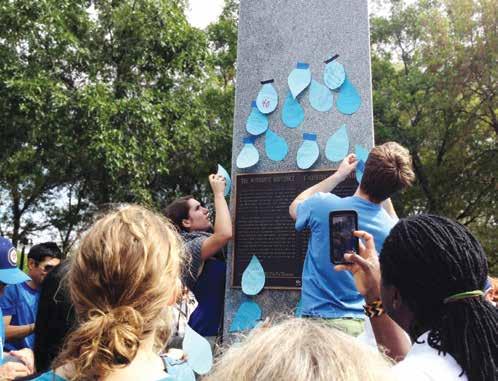

ments have pledged funds to the development of a "Freedom Road" connecting the isolated community to the mainland, however the federal government has yet to follow through with any substantial commitments to remedy the situation.










TOM INGRAM, STAFF

Recently the Manitoban republished a pair of articles from the Ubyssey, the student newspaper at the University of British Columbia (UBC), that argued over whether competitive gaming, also known as eSports, should technically be considered sports, and therefore whether the UBC eSports Association should be recognized as an official Thunderbirds team.
One group argued that since competitive gaming involves rigorous training, popular spectator events, and large amounts of prize money, it ought to be considered a sport. The other group conceded these similarities, but argued that a competitive spectator event cannot be considered a sport without the presence of physical athleticism.
I think both sides of the discussion would have to concede that if competitive gaming is a sport, it’s an unusual one
The philosopher Ludwig Wittgenstein discussed a very similar sort of argument in his Philosophical Investigations when he analyzed the category of things called “games” – “board games, card games, ball games, Olympic games, and so on.” Wittgenstein asked what is common to all members of this category. “If you look at them you will not see something that is common to all,” he wrote, “but similarities, relationships, and a whole series of them at that.”
We could easily replace the word “games” with “sports” without distorting the meaning. Membership in the category “sports” is not a binary matter of fulfilling certain necessary and sufficient conditions (competition, athleticism, spectacle), but a much more quicksilvery thing.
There may be two sports that are totally unlike each other and are considered members of the same category not due to their sharing
some definitive quality, but on account of their mutual similarity to some third sport.
The word “sports” is not a neatly carved-out block in conceptual space, but a complex web of relationships where not every node is connected to every other one. As Wittgenstein puts it, “we see a complicated network of similarities overlapping and criss-crossing: sometimes overall similarities, sometimes similarities of detail.”
Clearly there are aspects of competitive gaming that are sport-like (competition, spectacle, prizes, training). Just as clearly there are many aspects that are less sport-like (non-physicality). I think both sides of the discussion would have to concede that if competitive gaming is a sport, it’s an unusual one.
But the philosophically sophisticated answer to the question of whether eSports are sports is another, much more interesting question: why should we want them to be?
I can’t help but notice that this debate feels awfully familiar. It was not many years ago that film critic Roger Ebert’s declaration that games could not be art sent hordes of inadequately bearded man-children off to read their Croce and Collingwood. I’m not convinced that Ebert knew what he was talking about, but there was at least one thing he was right about: it’s not clear that there’s anything to be gained by hitching games to the category “art.”
We can tie ourselves in aesthetic knots trying to decide just where the boundary of art versus nonart can be found, but eventually we have to decide whether this is a worthwhile endeavour. Clearly games are a cultural phenomenon of some sort, and if they are going to be taken seriously by anyone it will most likely be cultural studies types – people who are not especially concerned with what is and isn’t art.
Old-fashioned aestheticians are not just unlikely to take games seriously, they have an aesthetic framework that is of no use to people interested in analyzing video games. Games have artsy and decidedly non-artsy qualities – the question
is which ones to play up. But the definition of “art” has never been more fraught with problems than it is right now, and demanding that games be taken seriously as art would be trading a lifetime of aesthetic headaches for a little temporary prestige among people whose opinions don’t matter.
To bring the topic back to sports, the question of whether the UBC eSports Association should be considered an official UBC Thunderbirds team is a complicated one. The club and the university will have to determine whether their respective interests are in fact served by such a union. But this is a question of practicality and strategy. There is no logically necessary answer.
The philosophically sophisticated answer to the question of whether eSports are sports is another, much more interesting question: why should we want them to be?
Games are not art. Games are not sports. Games are games. They’re their own thing, and all this arguing over what else they might be betrays a secret anxiety as to whether they’re a pursuit worth spending time on. Private inferiority complexes don’t make a good foundation for aesthetic debates. If games as games are going to be taken seriously, then serious gamers are going to have to stop having these discussions and focus instead on doing what they do as well as possible.
We should be outraged, but by no means surprised
EVAN TREMBLAY, STAFF
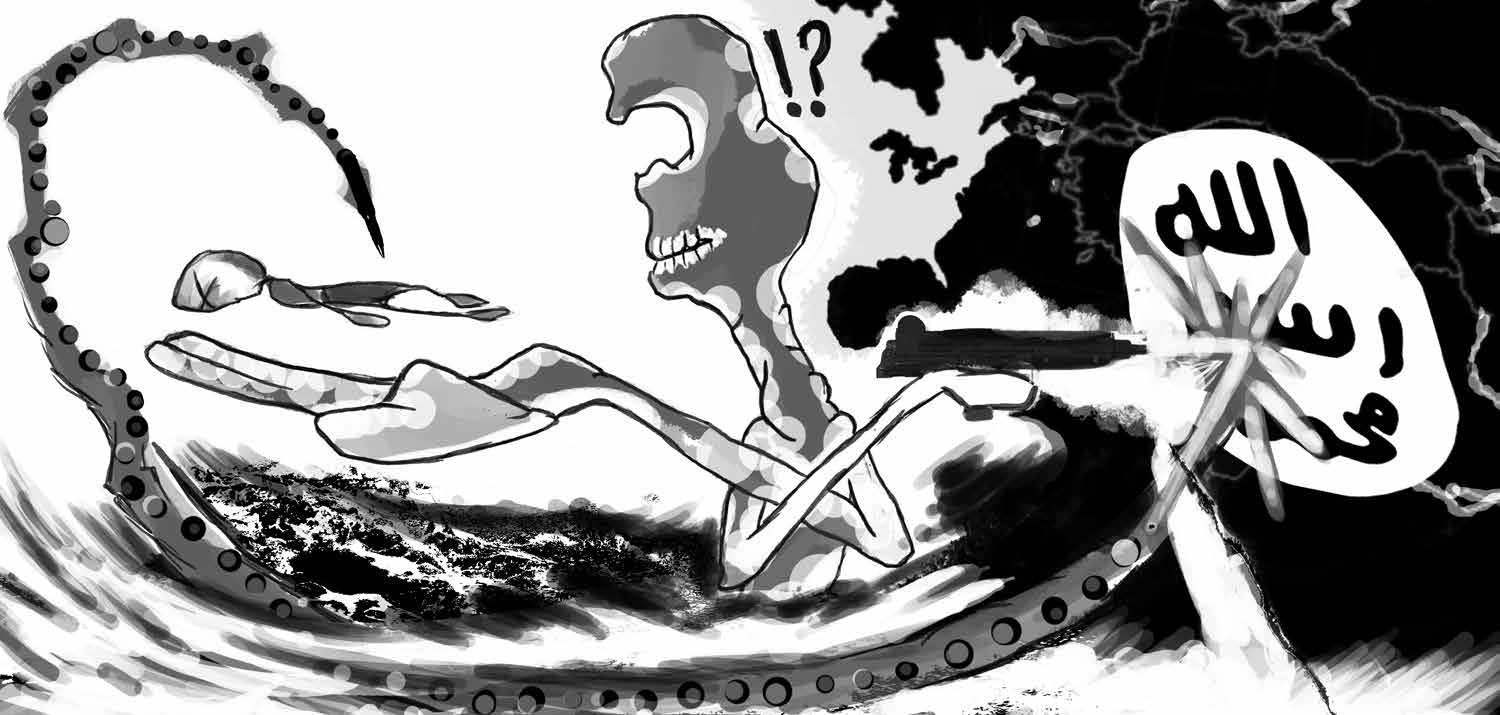
The Sept. 5 issue of the Globe and Mail had no less than 22 articles directly or indirectly dealing with just one picture: that of the body of a three-year-old Kurdish boy, Alan Kurdi, lying face down in the sand. He drowned, along with his mother and brother, while they were trying to reach the Greek island of Kos, and thus the European Union.
There is nothing new about refugees drowning in the Mediterranean Sea as they try to reach Europe. More notable than what is captured by the photograph is the response that has come of it.
That response has been, to put it mildly, sickening. From both governments and individuals, the knee-jerk proclamations of horror and sudden offers of help don’t stem from compassion. They stem from guilt and a desire to distance ourselves from that guilt, lest as individuals and institutions we be forced to confront our own part in the tragedy. We hope that if we proclaim horror now, no one will remember that a few days ago we had not even compassion.
The Syrian civil war has been raging for four years. Hundreds of thousands of people have died, surely including many toddlers. Certainly no shortage of refugees meeting tragic ends. But we weren’t confronted
with the image of their lifeless bodies; the thought of these innocent deaths was not in our collective mind.
It’s not just the Syrian civil war. The wars in Iraq and Afghanistan, the ruin of Libya, the slow suffocating death of the Palestinians: there’s no shortage of horrors for people to flee from. But unless there’s a particularly tragic photo, it’s business as usual in Canada.
Tragedy, it seems, is only digestible if we imagine it happening to us
Maybe an offhand reference here or there – “isn’t it a shame” from individuals, “Canada is doing its part” from the government. But certainly not party leaders tripping over themselves to lay blame, nor 22 articles in one day on the human toll of the “refugee crisis.”
In our rush to proclaim our goodness of heart, our hate of evil, that’s how we have to frame it: a crisis. Not the perfectly logical result of decades of Western imperialism that have turned the cradle of civilization into a hell on earth. Not the predictable
result of our unbalanced relationship with the rest of the world.
And so our sick, twisted solutions: take in more refugees! Send more humanitarian aid! No mention of halting our imperialism, though. We’ll take in the huddled masses when our conscience leaves us no choice, but forget about ending the bombings and invasions, the culture of waste and continuing Western colonialism, that made them to huddle in the first place.
Stephen Harper, for once, speaks for the majority of Canadians. Of the image of Alan’s lifeless body, he declares: “the first thing that crossed [my] mind was remembering [my] own son Ben at that age,” before launching into a justification of bombing ISIS targets in the boy’s home country.
Tragedy, it seems, is only digestible if we imagine it happening to us. We offer different solutions to the problems of others than we would accept for ourselves. In intellect or in soul, there is a void in the people that think the solution to refugees fleeing the Middle East is more bombings in the Middle East.
But this void is not restricted to our leaders. It exists in all of us. “Bomb the terrorists,” we say, pretending that we believe that drone strikes kill only
terrorists, and never three-year-olds. War is only ever waged by the West upon the evil ones of the Earth. When instability results, when once prosperous and stable nations are reduced to roving bands of fundamentalist militants armed by weapons we sell them, their hospitals and universities and culture rubble, we just ignore it. The reporting stops, we move on to our next target. Even if our goal is ending lawlessness, as with the mission to destroy ISIS, the only solution we seem to be able to conceive of is more bombing.
All is good when you live in the West – until an over-crowded sweatshop where our cheap gadgets were produced collapses. Until our wars of aggression spawn terrorists and refugees. Until we’re forced by an alltoo-rare public uproar to confront the costs of our actions. And then umbrage, bubbling over into outrage!
“Half-barbarians driven by greed, they must have been, who allowed this to happen,” we say – of people in other countries.
It is easy to judge the varied European responses to the first ripples of the rising human tide of our times: it seems callous and indifferent. But there is nothing here in Canada to suggest that our response would be any different. Certainly, if it was,
it would be no thanks to a government which seems more eager to spin numbers on everything from greenhouse gas emission to the number of refugees accepted, than commit to actual change.
Our comfort, peace, prosperity, and happiness are worth nothing if they are built on the backs of others. Our compassion is worth nothing if it is extended to people who are victims of our own callousness. Every day the innocent are dying. And more and more are going to die: as the climate worsens, there will be more refugees. As more and more nations are “sent back to the stone age,” there will be more and more militants to flee from.
The media did an uncommon thing when it showed us the body of that little boy. It forced us for a moment to confront the evil and injustice that exists in the world, the dark shadow to the light of the West. We should fix that image in our minds, and with it there examine all our actions and opinions, asking ourselves what part they (and we) played in that tragedy – and what part of ourselves we are willing to change, to build a future where it does not happen again.



CHANTELLE DUBOIS, STAFF

S martphones and apps have changed many aspects of our daily lives, including the way we do business. The sharing economy can be described as the business of sharing underused resources between people.
Entrepreneurs have been using this business model to enable consumers to connect with sellers easily, quickly, and affordably through a variety of apps. Some of today’s most popular smartphone apps are those which fall under the sharing economy business platform.
In a world where many people are trying to reduce excess waste and spending, the ability to share resources and save money is attractive. It also provides ways for ordinary people to make extra money on the side without investing a lot. If
you have a spare room, you can easily list it on a room-sharing app and rent it out.
Smartphone apps have made it incredibly easy to create a virtual marketplace for these businesses. Most apps include the ability to review sellers, letting other potential customers know what personal experiences were like dealing with that individual.
This allows for a form of selfregulation, since bad reviews will potentially prevent sellers from gaining customers, and good reviews will attract more. As well, many apps do not allow for the exchange of money in person, and instead opt for virtual transfers. This removes the danger of robbery or the possibility of a customer being ripped off.
Signing up as a seller sometimes


requires some additional background checks. However, signing up as a consumer requires simply downloading the required app, bringing the marketplace to the palm of your hand.
Here is a review of some of the most popular and interesting apps available.
One of the most recognizable sharing economy apps is Uber. The Uber business model allows ordinary people with access to a vehicle to connect to other people who are looking for a ride. The idea is that transactions are completed safely without the exchange of money, since the transaction is handled through the app via credit card. Uber allows you to rate drivers and provides a more economical way to commute than standard taxis.
The app also enables you to estimate the cost of your ride, split the bill among fellow riders, and share your GPS location with family or friends so they know when you will arrive.
For sellers, it is a flexible way to make extra money.
Currently, Uber is not available in Winnipeg, possibly due to licensing requirements for taxi fleets by the province’s Taxicab Board.
AirBnB allows sellers to rent out spare rooms or entire homes while the owner is away. For sellers, this is an easy way to make money on space not being used. For renters, the rates are generally a lot cheaper than a standard hotel. There is also the opportunity to rent unique accommodations, such as one of the 1400 castles that AirBnB reports is listed.
The app allows users to search for available space in their city of choice, and returns search results of accommodations available during their visit. Once a desirable place is found, the user may request to book the space. All payment is handled through the app, via credit card.
AirBnB is available in over 190 countries, covering most of Europe, North America, Asia, Australia, and New Zealand. It is available in Canada.
When nature calls and you don’t have any public restroom options, AirPnP can help you. This app allows users to find nearby toilets for rent. Sellers can post details about their restrooms, detailing things like the softness of towels, or the luxuriousness of hand soap. Users can rate their bathroom experience, and choose their preferred toilet experience based
on other reviews.
The founders developed this app after finding they could not find legal places to relieve themselves during Mardi Gras in New Orleans. The app is currently web-based, but AirPnP is currently developing a smartphone app.
As of this publication, there is only one toilet listed on AirPnP in Winnipeg.
For those who say no to economy seating and bad airline food, there is JetSmarter. A little more high-end than Uber, JetSmarter connects users with independent airline fleets. The app allows you to create your own itinerary, and then matches you with an available jet. You can book a jet up to six hours before you need to take off. The available jets are usually flying on an empty leg, and would otherwise not be carrying any passengers.
JetSmarter investors include the likes of Jay-Z and members of the Saudi Arabian royal family, among others.
A flight from Winnipeg to Toronto on a Premier 1 light jet aircraft starts at $10,200, and goes up to $48,100 on a Global 5000 long-range jet. A refundable 10 per cent deposit is requested before booking.
WILBERT SAM
Ants have been around the earth since about 140 to 168 million years ago. They lived in the Jurassic period – a time when the world was dominated by the dinosaurs. They’ve kept evolving and adapting to their environment all over the world, and there are now over 12,000 different species of ants.
Generally ants are divided into two roles: the queen and the workers. The queen’s purpose is to lay eggs. She usually remains with the ant colony while the workers are responsible for maintaining and searching for food for the queen and colony.
Ants are omnivorous, so they will eat anything that they can find in nature such as seeds, leaves, and honey. But they will also scavenge dead birds and mice.
Now comes the interesting part: how can such small creatures drag those objects, which are much larger than them, to the ant colony? Science has the answer!
Carlos Castro, assistant professor
of mechanical and aerospace engineering at Ohio State University, performed tests on ant joints to determine how similar designs can be applied to mimic similar strength in robots.
Before the experiment, Castro and his research team conservatively estimated that ants may withstand forces up to 1000 times their body weight.
In the first step of the experiment, the researchers anesthetized the specimens, then glued them face-down in a specially designed centrifuge about the size of a compact disc to measure the force needed to disjoin their head from the body. As the disc spun faster, the forces applied to the ants increased until their necks deformed and their heads separated from their bodies at the neck joint.
The researchers found that the ants’ necks ruptured at forces much higher than their original estimate: 3,400 to 5,000 times their weight.
Next, they used micro-computed tomography scans to analyze the neck
joint. The researchers found tissue structures were covered in textured microstructures, which they theorized play a role in how the ants manage their strength.
“[The microstructures] might regulate the way that the soft tissue and hard exoskeleton come together, to minimize stress and optimize mechanical function. They might create friction, or brace one moving part against the other,” said Castro.
Another important feature of the ant’s body structure is the gradual transition from soft tissue to hard tissue between the neck joint and head. This gradient provides additional strength by distributing points of stress more evenly.
Another secret to why an ant can carry disproportionately heavy objects is because their bodies are light. Inside their hard exoskeletons, their muscles don’t have to do much work, so they can apply all their strength to lifting objects.

On the other hand, humans carry relatively heavy loads due to our body weight. With our muscles supporting body weight, not much strength is left to lift other objects.




Panel of U of M vicepresidents list U of M among province’s top schools
MURV BERKLEY, STAFF
T
he University of Manitoba has been named among the top five universities in Manitoba by an independent panel of University of Manitoba vice-presidents.
Universities were ranked on a number of criteria by the Manitoban University Awards Organization (MUAO), a registered non-profit whose board of directors is made up entirely of U of M vice-presidents who, according to their website, include “U of M vice-presidents from all walks of life.”
The U of M ranked first in a number of criteria including “total number of on-campus parking spaces,” “total number of students,” and “number of promotional posters on campus.”
Overall, the U of M ranked third behind Brandon University and the Université de Saint-Boniface, and ahead of University College of the North and the University of Winnipeg.
The U of M also received the special distinction of receiving the annual Trailblazy award, which goes towards the university that has demonstrated the greatest achievement in the field
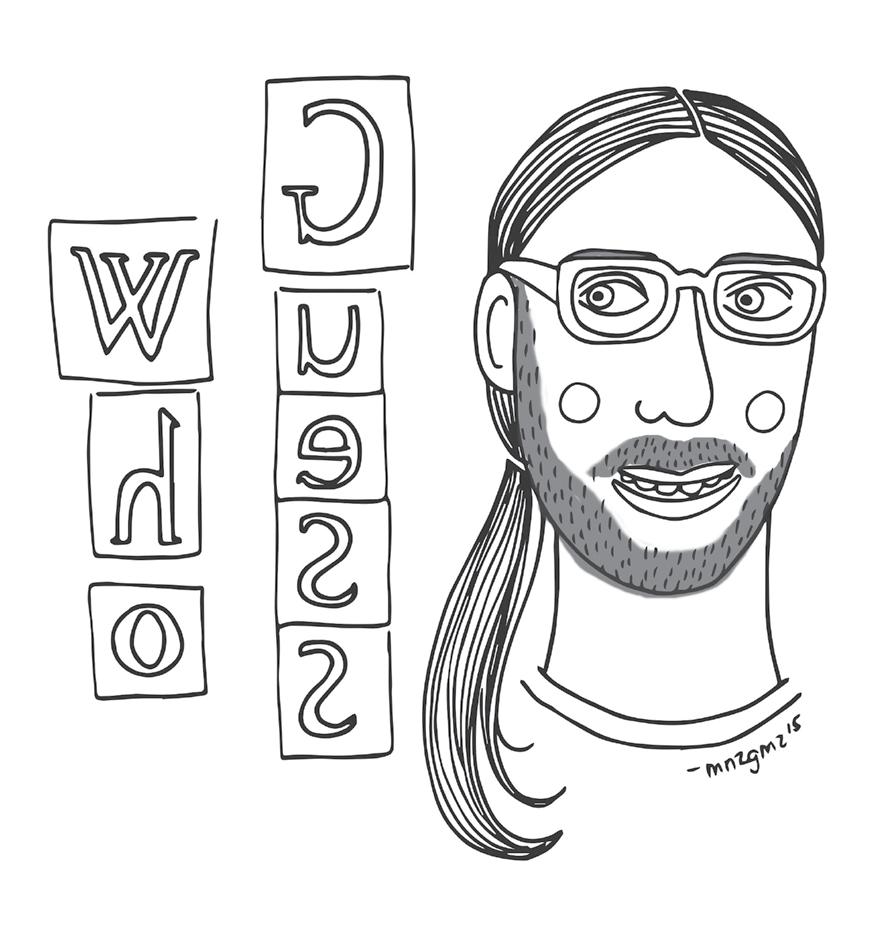
of trailblazing.
The U of M’s vice-president promotions, Charles Tezuki, who also sat on the panel of judges and founded the organization presenting the awards, said the award showed the strength of administration’s efforts to bring greater recognition to their campus.
“I think this just shows what trailblazers we truly are at the U of M,” said Tezuki.
U of W’s vice-president promotions Terra McAvy questioned the significance of the MUAO rankings, in which the U of W placed fifth.
“We don’t put much stock in the ranking criteria used by the Manitoban University Awards Organization. In our view, the Institute for Recognizing Urban Winnipeg Universities incorporate more valid criteria.”
Despite refusing to attend the banquet, the University of Winnipeg received awards for highest ratio of smugnessto-math-comprehension and number of thick-framed glasses per-capita.


Hi, my name is Will Gibson and I am a mathematician here at the University of Manitoba. I have been making the Sudoku puzzles for the Manitoban since 2009. I hope you enjoy my puzzles.
The goal of Sudoku is to fill the empty squares with numbers between 1 and 9 so that every horizontal row, every vertical column and every 3x3 block contains all the numbers between 1 and 9 exactly once.
Some of my puzzles are extremely easy and some are extremely hard. Each puzzle in the Manitoban will have a rating indicating how easy or hard it is to solve. From easiest to hardest my classification system is:
1) Absolute beginner
2) Very easy
3) Easy
4) Medium
5) Hard
6) Very hard
7) Death
8) Afterlife





Contact:
Local hip-hop outfit returns to UMSU Frosh Music Festival, hints at release of new music
SEAMUS HAMILTON-PATTISON, STAFF

Established local hip-hop group the Lytics are set to play the University of Manitoba Student Union’s (UMSU) annual concert hailing the start of the school year, UMSU Frosh Music Festival. The group will be opening for DJs Dillon Francis and Oliver Heldens, and award-winning rapper Waka Flocka Flame.
This year will mark the second appearance of the Lytics as a part of Frosh Fest’s main lineup. Two years ago, the band performed at the festival, then held at University Stadium, alongside rapper/comedian/actor Donald Glover – or as he is known in the music world, Childish Gambino.
“UMSU just contacted us about it,” band member Andrew Sannie told the Manitoban.
“I guess they liked what we did and asked us back. It’s always fun to play those Frosh Fest shows, because it’s just a bunch of new kids and they’re ready to party, have a good time. The energy just feeds into our show and we give it back.”
Sannie went on to express a preference for larger festivals such as Frosh Music Festival and the TD Winnipeg Jazz Festival, which the band also performed at this year, taking Old Market Square by storm on June 12.
“I think they lend well to our style. We really like bigger festival-type
venues. I mean, club venues are fun too, but I think we just really get fired up for the bigger venues. They get us going and the crowd really feeds off of it. I think that’s part of the reason we’ve become a fixture. UMSU has seen us a few times and any time we get asked to play this, we know we’re gonna kill it and they know we are too.”
The Lytics began as an entirely familial group, consisting of Andrew Sannie and his brothers Anthony and Alex, as well as cousin Mungala Londe. The group’s initial interest in music was sparked watching their grandfather practice and perform church music, and intensified when Alex began making his own rhythms. Unbeknownst to Alex, this would prompt Anthony and Andrew to begin crafting their own rhymes and rhythms over beats from old hip-hop/ rap tunes by J Dilla and Pete Rock.
“By the time he found out, we had a record pretty well ready to go,” said Sannie.
The band added local DJ Lonnie Ce to flesh out the lineup and broaden their sound, and would release a selftitled EP and a full-length album titled They Told Me in 2009 and 2012 respectively.
Recently, the Lytics have enjoyed some big moments as a band. The group opened for hip-hop legend
Nas for his appearance at the MTS Centre on Sept. 3. Shortly after, they announced their acceptance to the Converse Rubber Tracks recording sessions.
“It was an incredible experience. We’d never played the MTS Centre and on top of that, Nas is a hero of all of ours. It’s just great to say that we’ve been able to share a stage with a guy like that,” said Sannie about the show.
“UMSU has seen us a few times and any time we get asked to play this, we know we’re gonna kill it and they know we are too” – Andrew Sannie, the Lytics
Converse Rubber Tracks, a musical initiative launched by the titular shoe brand, brings together a collection of 12 professional recording studios in various cities across the United States. Any band is welcome to apply for recording sessions. Andrew’s brother, Alex Sannie, told the Manitoban that the Lytics’
acceptance means they will be flown down to a studio in Brooklyn, N.Y. and granted two full days of studio time to record their music, all of which they will retain the rights to. Alex spoke of a desire to make the most of the time.
“That’s gonna be the tricky part, is time management. Some days, you can bang out three songs in a day and some days you have trouble with one [...] They’re hooking us up with some really good engineers and producers to help us out, and to maximize the use of time and make sure we get everything right,” Alex said.
However, the creation of new Lytics music doesn’t stop with Converse Rubber Tracks. Not only does the band plan to drop a new single at a currently unspecified date this month, but they also plan to release a new EP in November, with a fulllength album on the way for 2016.
“Some of the songs on the EP will end up on the album I think, it’s kind of like one big project that’ll be broken into two. You know, we haven’t put anything out in a long time and we want to make sure what we do put out is done well. We’re gonna release the EP, then once we have a bit of buzz going, drop the full-length and put a full campaign behind it,” said Alex.
Alex went on to emphasize that
the deliberate, calculated trajectory of the band’s upcoming releases is integral to an artist’s success in the modern age.
“Maybe there was a time when you could get away with not mapping out what you want to do or how you want to do it, but today it’s absolutely impossible to do that and be successful. You may have great music, but if no one hears it, you don’t have PR people working it, you’re not touring it, and you don’t have a real plan heading in – whether it’s three or four singles leading off or getting pictures done and your whole thing tight –then you’re really wasting your time.”
Don’t forget to catch the Lytics at UMSU Frosh Music Festival 2015 on Sept. 20 with Dillon Francis, Oliver Heldens, and Waka Flocka Flame. Tickets are available at UMSU Living on the first floor of University Centre with presentation of a valid student ID, or online at www.diyobo.com


Local soccer derby at Investors Group Field could be the start to something special
ANDY CHE, VOLUNTEER STAFF

W
hen the CIS soccer schedule was released at the beginning of the season, Bisons coach Vanessa Martinez-Lagunas circled Oct. 9 on her calendar. On that Friday evening, Manitoba will host crosstown rivals the University of Winnipeg Wesmen at Investors Group Field.
The occasion not only marks a thrill for players and fans alike, but also features the first ever CIS match to be played at a former World Cup venue.
The 2015 FIFA Women’s World Cup featured seven matches at the stadium, blessing spectators with
stars such as Alex Morgan, Carli Lloyd, Homare Sawa, and Asisat Oshoala.
The Bisons will be performing on the very same turf with their potential stars in the making such as Chloe Werle, Amanda Wong, and Bruna Mavignier.
Speaking ahead of the Bisons’ road trip to Regina and Saskatoon, Martinez-Lagunas was quick to comment on the motivation level of Manitoba and Winnipeg players alike in advance of the local derby.
“This is not only going to be special for us, but for their players because
they are also going to get the chance to play in a World Cup stadium,” Martinez-Lagunas said.
“I’m pretty sure that’s going to increase our motivation level a lot and I wish we could get a lot of students supporting their respective teams in an amazing soccer environment like the World Cup.”
Martinez-Lagunas also commented on how the excitement of such an event can be an inspirational tool for young girls who grow up dreaming of playing professional soccer.
“Most of our young girls watched
the World Cup games in that stadium. Now for them to see the university players playing on the same pitch that those top-level players played on, their dreams and aspirations become bigger,” Martinez-Lagunas said.
“Our top talents can now think of staying here to experience top-level soccer”
– Vanessa Martinez-Lagunas, head coach, Bisons women’s soccer
“They also want to become a player that plays a World Cup or professionally one day and I already have a few that want to be a professional in their minds.”
The prospect of facing a rival team also enhances the experience of playing in a distinguished venue.
For Martinez-Lagunas, having a rivalry doesn’t only mean fierce competition, but it also allows for both sides to establish a beneficial relation-
ship in their respective developments.
“Both universities can do a lot to continue growing the game and to give more players the opportunity to play here at home at a higher level,” Martinez-Lagunas said.
“I’m really happy with the rivalry that both universities have. I think we need to help each other as much as we can to continue growing the sport and especially this event.”
A CIS match in an ex-World Cup stadium will also ideally attract hometown and foreign talent to consider pursuing soccer in Manitoba.
“It will help us keep many of our talents here in our province, because in previous years we have been losing our best talent to the U.S. Now we have a really strong program with great infrastructure and great potential,” Martinez-Lagunas said.
“Our top talents can now think of staying here to experience top-level soccer.”
The Manitoba Bisons host the University of Winnipeg Wesmen on Oct. 9 at 6 p.m. at Investors Group Field
Manitoba tops CIS table with critical win at Regina after Saskatchewan defeat
ANDY CHE, VOLUNTEER STAFF
With a win and a draw in their premiere weekend, the Manitoba Bisons women’s soccer team left Regina and Saskatoon having gained some momentum in the CIS regular season.
Things didn’t go exactly to plan in their 3-2 loss against the Saskatchewan Huskies, but the Bisons regrouped to defeat the Regina Cougars 2-1 the very next day.
University of Saskatchewan
In last season’s meeting, the Huskies won the fixture 3-1 on Manitoba’s home turf, and the herd was looking to exact some revenge in 2015.
Alyssa Robinson gave the Bisons the perfect start when she opened the scoring after 17 minutes. Down 1-0, the Huskies began to launch a series of on-target shots hoping to break through.
Eventually, Saskatchewan caught a break when Kelly Cerkowniak drew a foul inside the penalty area. The midfielder converted the penalty to equalize just minutes before the halftime whistle.
The home side took the lead 2-1 just five minutes after the restart, with striker Leesa Eggum scoring her
first goal of the season. The Bisons responded through Bruna Mavginier, pouncing on a Huskies mis-clearance to equalize just three minutes later.
The goal marked Mavignier’s teamleading third goal of the season.
With a crucial three points collected in their two performances on the weekend, Manitoba retains their firstplace ranking in the Prairie Division of Canada West
The Bisons’ dreams of clinching a win at Saskatchewan collapsed when the Huskies bagged a late lead from Cerkowniak’s second strike of the match. The home side eventually held on for a 3-2 victory. Manitoba fought hard, snatching the lead and equalizing after giving it away. Yet they fell victim
to Saskatchewan’s consistent attack, producing 25 attempts on goal to the Bisons’ five.
Having lost their first match of the season on Saturday, Manitoba’s fiery attitude would be on full display at Regina’s expense.
The Bisons made one noteworthy change from their defeat to Saskatchewan. Martinez-Lagunas replaced captain and starting goalkeeper Chloe Werle with Martina Arran ahead of their clash at Regina.
Looking to avenge their first loss of the season, Manitoba broke through inside the opening 15 minutes. Mavignier played the final ball for Robinson, who scored her second goal in two matches. The Brazilian continued to dominate the first half, scoring her fourth goal of the season less than two minutes later.
The Cougars came closest to beating Arran when Swedish midfielder Tove Werner struck the bar midway through the first half, but the Bisons lucked out and took their 2-0 lead into the halftime break.
Manitoba introduced freshman goalkeeper Madison Wilford for the second 45 minutes, and despite giving

up a goal, she held strong to ensure the victory.
Regina’s bid for a comeback was sparked by a late marker from midfielder Celia Michaud, but that would be the closest the Cougars would get.
With a crucial three points collected in their two performances on the weekend, Manitoba retains first-
place ranking in the Prairie division of Canada West. Mavignier’s four goals in the season also ranks within the top 10 goal leaders in the CIS.
The Manitoba Bisons continue on the road next weekend as they take on the MacEwan Griffins and the Calgary Dinos.




The Manitoba Bisons football team hosted their home opener at Investors Group Field on Friday, suffering a crushing 46-38 loss to the Calgary Dinos, despite leading for over 50 minutes.
The Dinos were without star wideout Brett Blaszko, but that didn’t hinder them. Andrew Buckley relied heavily on receiver Rashaun Simonise, who racked up 178 yards on 13 catches, as well as one touchdown.
Calgary stole victory from the herd due to their successful run game. Running back Mercer Timmis was an absolute menace, rushing for 276 yards on 27 carries. Timmis also added three touchdowns, including a 79-yard break late in the third quarter which turned out to be the momentum swinger.
Summary
This game was a back-and-forth offensive showdown between two of the best teams in Canada.
Manitoba started the game off brilliantly with a Bison record 107-yard kick off return for a touchdown by star rookie Jamel Lyles.
Calgary was quick to respond after the opening kickoff, however, tying the game up 7-7 on their first drive.
In the second quarter, the Bisons strung together a highlight reel-worthy drive. It started when Cameron Fox took a shovel pass from Theo Deezar 51 yards after absolutely trucking a Dino defender, knocking his helmet off in the process.
On the next play, Deezar aired it out to Alex Vitt, who channelled his inner Odell Beckham Jr. and
made a spectacular grab in double coverage to get the touchdown.
It appeared for many parts of this game that the Bisons were going to walk away winners, as the defensive line did a great job containing Timmis in the first half, restricting him to 68 yards.
“To
play these games out of the gate, two consecutive weeks, it puts us further ahead in the learning curve” – Brian Dobie, head coach, Bisons football
Like many great backs however, Timmis got better as the game went along. Calgary’s offensive line also won the war in the trenches in the second half, allowing Timmis the space to make big plays.
After Timmis’s 79-yard touchdown to end the third quarter, the Dinos went on to outscore the Bisons 20-7 in the fourth.
The Bisons may have lost this game, but they did have some fantastic individual performances.
Offensively, Vitt had a fantastic game, with five catches for 111 yards and a touchdown. Jesse Walker scored his first touchdown in the CIS with a nice 64-yarder in the third quarter as well.
Rookie Jamel Lyles continued to dazzle us with his running ability, running for 82 yards on 11 carries.
On special teams, Lyles ran for 209 yards, including his spectacular opening kickoff touchdown Lyles received high praise from head coach Brian Dobie postgame.
“That kid is such a wonder, I’m so impressed with him,” Dobie said. “He is going to be a great back in this conference.”
On defence, DJ Lalama led all players with 10.5 tackles, a stellar performance from the middle linebacker.
The Dinos are arguably the best team in the conference, and losing this way can be seen as a learning experience for the herd. Dobie thinks that playing tough teams early on is a good thing for the Bisons.
“To play these games out of the gate, two consecutive weeks, it puts us further ahead in the learning curve,” Dobie said. “It shows our grit, our toughness and our competitive level.”
The Bisons go up against the UBC Thunderbirds at home next Saturday, which will prove to be a tough test. Manitoba beat the Thunderbirds 20-10 the last time these two teams clashed in the regular season, and the T-Birds will be looking for revenge.

Ted’s Run for
Literacy aims to break the cycle of childhood poverty, provide confidence
MIKE STILL, STAFF


Ted Swain was a well-known and respected face in the running community until his untimely passing in May of 2009 following the Winnipeg Police Service half-marathon. He became very involved in the recreational running scene after his retirement from Vincent Massey Collegiate, where he taught English.
Swain would run his first full marathon in 2004, which was also the year he began coaching running clinics at the Running Room. His
love and passion for the sport led him to coach an outstanding 19 clinics in a span of five years – something both he and his clinic members found great joy in.
When Swain suffered a heart attack after completing the race, a huge void was felt by those in the running scene.
One evening, shortly following Swain’s passing, a group of about 100 runners gathered at the Kenaston Running Room. A small race was
held to honour Swain, and a sizable amount of cash was collected. Swain’s wife Joan used the money to start a foundation in Ted’s name through the Winnipeg Foundation.
A few weeks later, Kenaston Running Room manager Lorraine Walton approached Michael Bennett, a dedicated runner and friend of Ted’s, and asked if he would consider taking on the race director position if there was enough interest in organizing a second race.
“Several meetings followed, and the interest was there for a second event, so I accepted the race director position,” Bennett said.
“We had no idea what we were doing, or how to organize an event, but the committee was very strong and dedicated to making it work. Fast-forward to September 2015 and we’re still around, stronger than ever.”
Sept. 27 will see the fifth instalment of the event known as Ted’s Run for Literacy (TRL). It’s an event that honours Swain’s legacy in a few different ways.
“Our race crew is very motivated. We are one of the few races, perhaps the only one, that is organized by runners, for runners, to honour a runner,” Bennett said.
The event does more than simply honour Swain’s lasting impact on many in the running community, however. It also links with his background as an English teacher.
“Our vision is to eradicate the cycle of childhood poverty. It's a dream, an audacious dream, even, but we're not afraid to tackle this issue head-on” –Michael Bennett, race director, Ted’s Run for Literacy
“Our vision is to eradicate the cycle of childhood poverty. It’s a dream, an audacious dream, even, but we’re not afraid to tackle this issue headon,” Bennett said. “We believe that through education, particularly literacy education, we can make a difference. To date we have generated about $26,000 towards this end. We are, indeed, the little race that could.”
CanU
This year, the proceeds of TRL will go to support CanU, a local afterschool program created in 2010. Its goal is to inspire hope and confidence in Winnipeg children who may not have the same access to post-second-
ary education as others living above the poverty line.
CanU provides multi-week programming and is hosted by partnering faculties at the University of Manitoba.
“Programs are 14-18 weeks long during the academic school year, and are designed and delivered by university student volunteer coordinators and instructors, who teach the children literacy and life skills in a variety of sports and academic programs,” said Roger Berrington, the current executive director of CanU.
“These programs are designed not only to provide Winnipeg children and youth with experiences that will instil hope and confidence in their ability to achieve post-secondary success, but also provides university [and] college students with leadership skills in their chosen field in the context of a cross-cultural, cross-social and cross-economic setting.”
Interestingly, Berrington has also been volunteering with TRL since its inception, connecting the run with an opportunity to make a difference in the lives of Manitoba kids by using some of the funds to provide running shoes to kids.
“Last year, Ted’s Run asked the Winnipeg Foundation for a recommendation of an organization that serves kids in literacy and sport,” Berrington said. “One of the organizations they recommended was CanU. It was kind of cool and humorous how TRL chose CanU.”
By partnering with CanU, TRL is continuing its goal of fostering education in an inspiring way. It’s a mutually beneficial relationship, and something that Swain would likely be proud to see.
“It’s no secret that education is the key to success, the key to opening the vault of poverty,” Bennett said. “To not try to open the door is shameful. Ted was a teacher and he would be proud of his legacy.”
Ted’s Run for Literacy has both a 5-km and 10-km event which start at 10:00 a.m., as well as a 2-km event at 10:02 a.m. The race occurs at Kildonan Park, 2015 Main Street, on Sunday, Sept. 27. For more information, go to tedsrunforliteracy.com.

MIKE STILL, STAFF
Despite not posting the worst record in the CFL, the Winnipeg Blue Bombers can still be considered the worst in one very important area: their depth at the QB position. Without a capable backup behind injured starter Drew Willy, the Bombers have nowhere to go but down.
After losing Willy to a knee injury in a 38-8 week-seven loss to the Hamilton Tiger-Cats, the Bombers have gone 1-3 and are quickly watching their chances of hosting the upcoming Grey Cup in Winnipeg go down the drain.
Now I’m aware that the Bombers won 22-7 this past weekend against Saskatchewan with recently signed six-year CFL veteran Matt Nichols. That means nothing, in my opinion. Saskatchewan is in the bottom three in every important defensive category, and the win is not indicative of the Bombers’ abilities offensively.
Before analyzing Nichols’s background, it’s important to first discuss why Winnipeg needed to sign him in the first place.
Winnipeg’s two previous backups that saw time in Willy’s absence – Robert Marve in weeks eight and 10, and Brian Brohm in week 11, failed to pick up a single victory, and neither one passed for over 210 yards in any of those three games.
Their experience level in the CFL doesn’t help either. Marve and Brohm combined have been in the league for two years less than Nichols. While both strong-armed QB’s were talented in the American college ranks, they haven’t been able to adjust to the change in defensive schemes and alignments put together by their opposition, and at times have looked simply confused.
This isn’t the first time the Bombers have run into an issue with depth at quarterback. It dates all the way back to 2007
Let’s take this conversation back to Nichols now. His record as a starter is a mediocre 6-7, with all six wins occurring this year. His decisionmaking has been questioned at times as well: he’s thrown 20 touchdowns, but also 19 interceptions. Let’s also remember that Edmonton has the best defence in the league and doesn’t require many points out of their offence.
This isn’t the first time the Bombers have run into an issue with depth at quarterback. It dates all the way back to 2007, when backup Ryan Dinwiddie made his first career CFL start in the Grey Cup, after proven starter Kevin Glenn went down the week before.
Following 2007, CFL no-names continued to find a place with Winnipeg at the pivot position, with Stefan LeFors, Joey Elliott, Justin Goltz, Alex Brink, and Max Hall being just a few players whose careers never skyrocketed in the Canadian game. Meanwhile, teams across the CFL found capable backups turned starters seemingly with ease. Bo Levi Mitchell, Travis Lulay, and Henry Burris are just a few quarterbacks who started with a clipboard and now have Grey Cup rings as starters.

This is a team that ranks last in

the league in sacks allowed and has a predictable offensive playbook. Those two factors equal a number of pressures on the quarterback and a higher chance of injury. If the Bombers can’t
find someone to replace Willy both now and in future years, then chances are they’ll see their enormous Grey Cup drought continue.