U of M professor launches transit research project
Project seeks to determine how cities balance accessibility with development goals
ETHAN CABEL, STAFF
With the City of Winnipeg slated to complete phase two of the Southwest rapid transit corridor by 2020 after years of delays, one University of Manitoba professor is preparing to examine how municipalities across Canada make decisions about bus rapid transit (BRT).
Orly Linovski, an assistant professor in the department of city planning at the U of M, recently received funding for her joint BRT research project with Kevin Manaugh, an assistant professor in the department of geography at McGill University.
The project, titled “Selecting the Route: Development and Equity Goals in Transit Decision-making,” will examine the development of BRT systems in four Canadian jurisdictions — Winnipeg, Calgary, Ottawa and the city of Markham, Ont. in the regional municipality of York, near Toronto.
Each case study will include a discourse analysis of planning docu-
ments and media coverage, a spatial analysis of the mapping of the BRT routes, and interviews with key decision-makers in the transit authorities and bureaucracies of each municipality.
According to Linovski and Manaugh, public transportation has two primary goals.
First, to provide mobility for transit-dependent riders – namely, those who rely on public transportation in their daily lives. These riders are disproportionately low-income people and people with disabilities.
Second, public transportation seeks to encourage those who are able to drive a vehicle to opt for public transit instead. These riders are from higher income groups and are more likely to live in suburban areas.
Bolstering the number of so-called “choice riders” carries many potential benefits for cities, including reduced traffic congestion. Moreover, residential development along rapid transit
corridors has the potential to increase choice ridership while expanding the tax base for cash-strapped municipalities.
As such, the project ultimately seeks to determine how the goals of equity in transit development –namely, improved accessibility for the marginalized groups that disproportionately use public transit – are weighted against the development goals of municipalities.
“I’m interested in how decisions are made over the routing of transportation investments when there are benefits, or possible benefits, for equity and access as well as possible benefits for the city in terms of development potential,” Linovski told the Manitoban
“I’m specifically interested in bus rapid transit because often times it’s sold as a lower-cost option for municipalities with the same development potential.”
As part of the first phase of this
research, Linovski applied for a summer intern through the Mitacs Globalink program, which connects universities with international interns.
Mitacs is a not-for-profit organization that seeks to build partnerships between industry and university researchers.
“I’m interested in how decisions are made over the routing of transportation investments when there are benefits, or possible benefits, for equity and access as well as possible benefits for the city in terms of development potential” - Orly Linovski, assistant professor, University of Manitoba city planning department
Shuheng Zhu, an urban planning student from Wuhan University in China, spent the summer gathering information and mapping Winnipeg’s Southwest transit corridor. Development for the second phase of the corridor went to a request for proposals in July and will be developed as public-private partnership.
“She did a lot of the heavy lifting in terms of gathering the existing data and pulling it together,” Linovski said, adding that the data still needs to be analyzed for the purposes of the project.
“She also did a photo survey of all
of the current BRT stations to have an idea of the pace of development.”
The research project is slated to take place over two years. In the first year, the discourse and spatial analysis will be compiled. This analysis will be used to identify the key decisionmakers who will be interviewed over the course of the second year.
Before partnering with Linovski, Kevin Manaugh studied transit development in Toronto. His recent article, titled “Towards equitable transit: Examining transit accessibility and social need in Toronto, Canada, 1996-2006” revealed that Toronto has a generally equitable transit system.
The article concluded that “the most socially disadvantaged census tracts have statistically significantly better accessibility and lower transit travel times relative to the rest of the region in both 1996 and in 2006.” However, the Toronto case study relied on mapping and other data rather than direct interviews with key decision-makers.
As such, Manaugh hopes to learn more about how city officials balance the competing priorities of accessibility and development in BRT projects.
“It is very difficult in terms of the methods we used to uncover any real intention on the part of policy makers or any real experience of actual users of the system [in Toronto],” he said, adding that he looks forward to the discourse analysis and decision-maker interviews that will be key components of his project with Linovski.
“Uncovering some of the nuance of what is actually behind some of the goals and objectives of the plans is going to be very interesting.”
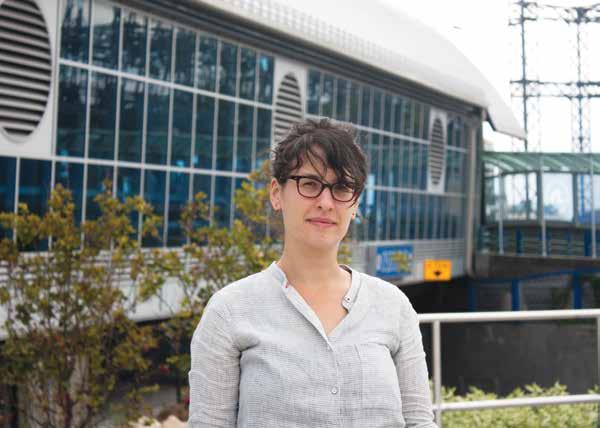
PHOTO BY CAROLYNE KROEKER
Ideas matter
The decline of the liberal arts and the rise of anti-intellectualism
LAUREN SIDDALL, STAFF
The term “liberal education” was coined in classical Greco-Roman times, selected to emphasize its role in analyzing their rulers critically. It was thought to make one wise through studying over time, with the goal of producing a more educated electorate.
An Association of American Colleges and Universities report states that “the case for liberal arts goes beyond purely vocational or economic reasons, they are indispensible to the vitality of democracy and the future of global understanding and community.” A liberal arts education teaches critical thinking skills; it’s effectively learning how to learn.
Why, then, is an education that was once so coveted, so essential, now becoming increasingly obsolete?
Economic conditions may be partly to blame. As the cost of postsecondary education rises, liberal arts have been forced into the backseat – and are instead replaced with more vocationally oriented studies. Even within the liberal arts, there has been a shift from the more traditional humanities, such as English and history, toward more marketable subjects, such as economics.
The humanities are increasingly seen as a luxury for those who can afford to spend time studying. In fact, a sociologist at Cornell University found that students from more wealthy families tend to enroll in English, history, and performing arts, while students from lower-income families flock to computer science, physics, and mathematics.
But that is only part of the problem.
As we move into a more technologically reliant world, there has been a push by the government, as well as educational institutions, towards “training” over education. Rather than attending post-secondary educational facilities to gain a deeper understanding of the world, students are now more inclined to seek specialized courses in specific technical skills.
Education is now viewed as a commodity to be traded for a prosperous career, which it most certainly is not. It is an opportunity to cultivate the intellectual values necessary for a functioning democracy. In fact, eliminating the humanities from education creates a darkly utilitarian portrait of humankind and what our purpose is.
University of Chicago professor Rosanna Warren maintains that “most people need and want arts in their lives. Our civilization may now be so coarsened that we will eliminate the humanities from our schools, and we will train our citizens only for technical skills which give them no sense of what they are living for, or why.”
We are designed to be creative, analytical beings. Our cerebra – the folded surface layer of our brains associated with higher cognitive processes – are significantly more complex than that of animals. We are made with a capacity to contemplate ideologies
and interpret the meaning of events, texts, and works of art.
Yet, there is still a push by government bodies and educational institutions to focus wholly on technical education with “real-world applicability.”
The interesting – and somewhat counterintuitive – thing is: antiintellectualism has nothing to do with level of intelligence, or lack thereof. Rather, it is the lack of ability to reason
When we stop teaching the ability to think critically, we lose what makes us distinctly human. We need to teach people to question the sweeping majority to ensure we as a society are on the right track.
Training everyone to think the same leads to groupthink and polarization, which eventually leads a culture of anti-intellectualism – a culture in which uninformed opinions based on emotion, a few facts, and even less study rule.
The interesting – and somewhat counterintuitive – thing is: anti-intellectualism has nothing to do with level of intelligence, or lack thereof. Rather, it is the lack of ability to reason. Therefore, the emphasis on a strictly STEM education in Canada and the United States, no matter how rigorous or intellectually stimulating, will not mitigate the anti-intellectualist culture we have created, as it does not teach the same broad-scale critical thinking
Training people to be able to perform only one task at an elite level limits their capacity to understand and analyze anything outside of their particular paradigm; they are essentially programmed into passive acceptance.
Perhaps the issue is that few of us truly think anymore. We don’t read complicated enough literature, and we don’t read well. Books focusing purely on entertainment, such as The
Hunger Games, have replaced the literary classics, like Shakespeare and Milton.
Confronting arduous literature whose meaning is initially obscure to us and being compelled to push forward, to grapple and think and work, gives us the perseverance needed for true enlightenment
Sure, Shakespeare is difficult to read, but that’s the point. We need to struggle through novels like War and Peace or Infinite Jest because a deep understanding of the world shouldn’t be easy. You cannot grow intellectually, morally by standing where you are comfortable; you need to propel yourself beyond what you believe you
are capable of.
Confronting arduous literature whose meaning is initially obscure to us and being compelled to push forward, to grapple and think and work, gives us the perseverance needed for true enlightenment.
An informed, intelligent public needs to be able to read something longer than 140 characters in order to be engaged in reasoned dialogue and debate. We need to be able to form well-informed opinions in order to sustain a functioning democratic society.
Over one third of Canadians between 16 and 65 fails to meet the functioning standard of literacy. This is a red flag. These are the people who hold the future in their hands.
A liberal education challenges and empowers individuals, preparing them for diversity, change, and complexity. It helps students develop a sense of social responsibility and the ability to analyze, communicate, and solve problems.
Liberal arts are not elitist, nor optional. If we want an educated citizenry, we must educate them.
GRAPHIC BY EVAN TREMBLAY
Comment Editor: Evan Tremblay
Contact: comment@themanitoban.com / 474.6529
Who does UMSU really work for?
The answer should be the students
YANISA WU
Welcome to the University of Manitoba: a campus that “thrives” and “grows” by disengaging from the student population via the brick walls of bureaucracy and oppressive ideology. Please do not be fooled by our school’s glittery and distracting advertisements that announce “I am a trailblazer” or “I am a rebel.” In fact, you are not a trailblazer or rebel, as a student of this university.
Instead, you are expected to pay your dues and enter into a submissive relationship with both the university administration and student union. This was shown during the 2014-15 school year when several student, faculty, and staff groups protested the austerity budget that would see four per cent cuts to most faculties and some non-academic units. Here are some – certainly not all – things to consider should you decide to continue your academic journey through this treacherous campus.
Every undergraduate student at the U of M pays a minimum annual University of Manitoba Students’ Union (UMSU) fee in addition to the UMSU Health and Dental Plan. We pay hundreds of dollars over the course of our degrees to an organization that supposedly aims to fight for our rights and interests as students of the university. Yet our current executive continually fails to do so.
In 2014-15, UMSU made little to no effort in leading a campaign that directly affected current students and will be affecting future students. In May, UMSU executives voted in favour or abstained from voting
‘That’s not fair!’
Meditations on the clarion call of self-interest
EVAN TREMBLAY, STAFF
I
t seems to be something of a trend with people my age to confuse their own interests with the common good. The idea that it is somehow unfair for us to not have all our desires (and a lot of what we call needs are really just desires) met is not a healthy mindset, though it is increasingly widespread. Seeing unfairness as a state of discontent is a big part of why we live in such an unjust society: we are willing to put up with a lot, so long as things seem “fair” for number one.
It’s not just young people, of course – though I think that as digital technology permeates more and more of our lives, we are more likely to be susceptible to it. The social media we use is designed to show us the things we like to see; algorithms track what we click on and deliver more of the same. We get a false idea of how much the world agrees with us and of how important we are in the grand scheme of things.
Combine this with a culture of consumption that makes money by making us feel special, and an inflated sense of self-importance becomes understandable, if not forgivable.
We learn by example. World leaders refuse to take actions to reduce the emission of greenhouse gasses, appealing to a rough-andtumble sense of fairness, where fair is what benefits them (and their economies). Canada stands out as a prime example of nations that have not put forward workable solutions to reduce their greenhouse gas emissions to acceptable levels, and have used their economies (or rather, the inconceivability of tinkering with them) as justification for continuing to destroy the heritage of the whole community of nations.
Don’t get me wrong: we do live in a very unfair, inequitable, and unequal culture. If you’re not amongst
the super-rich (hint: if you’re reading this, you’re not), then to varying degrees all our lives are unfair. The gears of government and the economy do not turn for your benefit. But one thing that young people forget when they invoke unfairness as a condition they suffer from is everyone else besides them.
A small example I’m sure many of you can relate to: classmates complaining that it was unfair that they did not know in advance know what parts of a book would be covered by a test. The whole book was assigned; to them, “unfair” means “more effort than they want to put in.” They wanted a free lunch, and screw people that were willing to put in the required work.
Or consider that crotchety relative we all have: it’s “unfair” that they have to pay taxes for [insert thing they dislike]. I’ve never met anyone who was willing to just not use any
against the budget, presumably under the assumption that it parallelled student interests. However, the executive never provided the student body with an opportunity to voice their opinions on this matter. There were no surveys, no discussions, no information sessions.
It is UMSU’s duty to represent its members and make the relationship with the students a priority
The current UMSU executive is unable to represent the student population on important issues, such as the budget cuts, if they are unable to consistently educate, inform, and engage with the students on these issues. Only two emails were sent since the budget cuts were announced in November 2014; one each in January and May of the following year. These emails sought only to educate the students on why these cuts were necessary, rather than explaining the position of many students that these cuts were unnecessary and oppressive choices on the part of the administration. The only avenue available for students to learn more about the unnecessary budget cuts and to actively engage with this issue on campus is through the Student Action Network.
An overly close relationship between the administration and the university’s student union directly harms the relationship between the executives of that union and its members: the students. If the administration’s decisions and actions are working in direct opposition to the interests of students, it is UMSU’s duty to represent its members and make the relationship with students a priority. At this point, it is not.
The mandate of a student union becomes lost and muddled when students see the administration and UMSU cooperating on multiple levels. If undergraduate students are paying hundreds of dollars for the services of the union, shouldn’t the union do everything in its power to support them? Instead of focusing on supplying the students with expensive music festivals, budget cuts should be the focus of an official UMSU campaign, alongside other important campaigns such as Divest Manitoba. Why not? The above is not meant to provoke or create further conflicts among students groups and the student union. However, it acknowledges the absence of UMSU’s much-needed support and leadership during a time where the administration is using the students’ perceived inactivity as a means and excuse to continue their unrepresentative and neoliberal actions.
Yanisa Wu is a member of the University of Manitoba Student Action Network.
government services, so presumably these people don’t disapprove of government services; they just want these to consist of what they like, and forget anyone else with different needs who is represented by the same government.
It’s not fair when exceptionalism is used to justify military action; it’s no more so when used to frame our expectations of how the world treats us
Thinking of things like this as unfair blinds us to true unfairness.
If a situation not turning out to your liking is unfair, what is the situation of the First Nations here, or the Palestinians in Israel? When we split our world into a dichotomy of fair and unfair based on ourselves and no one else, the words lose meaning, become hollow.
The idea of unfairness that a lot of people seem to have is a lot like American exceptionalism. We all know what that looks like: America can attack anyone it wants, but it is a horrific unfairness if they themselves are attacked. It’s a willing blindness to subtlety, context, and broader community. It’s not fair when exceptionalism is used to justify military action; it’s no more so when used to frame our expectations of how the world treats us.
GRAPHIC BY BRAM KEAST
On science communication
Why science communication and critical thinking are important
CHANTELLE DUBOIS, STAFF
Science communication is the process of communicating scientific ideas to those who are not scientists. For those who are in STEM (science, technology, engineering, and math) fields, it may be easy to forget how often science fiction is dressed up as science fact. Many commercials, websites, magazines, and other publications advance their cause by relying on the ignorance of non-scientific readers, throwing around vague or meaningless words that sound important.
The Internet has made it possible for misinformation to go viral. With a click of a button, an article can be shared with thousands of people within a short time period. In this era, it has become more important than ever to educate the general population and increase scientific literacy so that people are able to evaluate information themselves with the basic understanding of scientific concepts.
One of the most significant cases of scientific misinformation is the supposed link between autism and vaccines. In 1998 Andrew Wakefield, a doctor from the United Kingdom, published the result of a study which suggested that the measles, mumps, and rubella vaccine was linked to the occurrence of autism in children.
One of the most important aspects of a scientific claim is the possibility of reproducing the results, a part of a process called the scientific method. Fellow scientists and researchers were not able to reproduce Wakefield’s results, and the legitimacy of the study came into question, among many other issues surrounding the study. Shortly after, Wakefield’s paper was retracted by the Lancet, the scientific journal in which it was inititally published.
In 2007, Jenny McCarthy, a model, appeared on Oprah Winfrey’s TV show to claim that her son had developed autism caused by the measles, mumps, and rubella vaccine. As a celebrity, her claims reached the ears of many parents who chose to believe through anecdotal evidence that there was a link between vaccines and autism, despite no scientific study to date supporting this claim.
Parents who choose not to vaccinate their children are not the enemies of science. They are just wellmeaning individuals wanting what is best for their children. However, misinformation reached them first. Vaccinations are now a hotly debated topic, and an issue where good science communication is more important than ever.
Good science communication can be incredibly beneficial and even entertaining. The point of science communication is to gain the interest and attention of non-scientists, a task that can be difficult at times. For children growing up in the 90s, television programs such as The Magic School Bus and Bill Nye the Science Guy taught many scientific concepts while
being fun and interesting. Some of the most popular YouTube channels or videos are ones teaching scientific topics in entertaining ways, such as Vsauce, who has over nine million channel subscribers, over 860 million views, and 315 videos on various science topics.
Bill Nye continues to be one of the most prolific science communicators of our time. After his time hosting Bill Nye the Science Guy, he went on to become Bill Nye the Planetary Guy, the CEO of the Planetary Society. The Planetary Society is a non-profit organization aiming to bring together citizens and scientists to advance the human exploration of space. The organization engages in various forms of outreach. One of their biggest and most successful campaigns has been the LightSail KickStarter project.
Through this project, individuals were able to financially contribute to the LightSail mission, giving them the sense of ownership of the mission and the opportunity to participate in citizen science. The success of the LightSail project is evidence that this mission gained the attention of the public, proving their interest in space. The mission itself is innovative and teaches the public about novel technologies that may eventually enable humankind to travel between planets.
Todd Pernerowski, a U of M alumnus and high school physics, math, and computer science teacher, described a discussion with a school administrator, in which the adminis-
trator said that they did not consider science to be a core subject.
After the discussion, using science communication to positively influence his students became a greater priority to him.
“Science is the reason why you were able to ride an iron horse to work. It’s the reason why your kids haven’t died of typhoid. The fact that a grown, educated adult couldn’t understand this is a huge driving force behind getting my students to understand how science connects everyone and everything in this universe.” said Pernerowski.
Not everyone wants to be a scientist or an engineer. Nor should everyone want to be. Diversity in expertise and interests is what makes the world a good and more interesting place. However, everyone should have the basic skills needed in order to assess information critically. This is not only important with regards to scientific topics, but to all information. Especially since information is now so easily spread, whether or not it is true.
If you are interested in becoming a science communicator, volunteer for the Manitoban! Contact the Science & Technology Editor, Chantelle Dubois, by email at science@themanitoban.com.
GRAPHIC BY BRAM KEAST
The search for extraterrestrial life
Are we alone in the universe?
CAZZY LEWCHUK, THE OTHER PRESS
NEW WESTMINISTER, B.C.
– For hundreds of years, humans have asked “Are we alone in the universe?” This question has been particularly prominent in the last century as we begin to learn much more about space and the origins of the human race. We are coming to realize the sheer size of the universe and the possibility of other Earth-like planets, leading to speculation that it’s only a matter of time before extraterrestrial life is found.
The Fermi Paradox asks the question, “given that we have good reasons to estimate highly the probability of extraterrestrial life, why haven’t we found any evidence of it?” There are billions of stars just in the Milky Way galaxy, and billions of stars older than our own sun. The probabilities suggest that at least some of them – even a very small fraction would still be thousands of suns – have planets revolving around them that are hospitable to life, and are therefore Earth-like in nature.
Some of those planets may develop life forms, and if evolution takes its course, intelligent life capable of forming civilizations may exist. The amount of time these civilizations are thought to have had on a cosmic scale (i.e., up to millions of years longer than Earth has) suggests that the aliens would be capable of interstellar travel. If these space-faring beings exist, where are they? There has been no solid evidence of other beings in the universe, no visits to Earth, no galactic phone calls initiating first contact.
The lack of any detection so far of other intelligent life does not mean it doesn’t exist. The Milky Way is only one of an estimated hundred billion galaxies in the known universe. Each one contains a range of several thousands to several trillion stars within, many with orbiting planetary systems. With such a diverse field to choose from, many believe intelligent life exists somewhere out there. The question is not so much if we’ll make contact with another civilization, but when.
First contact – a theme explored in many science fiction works –brings up a wide range of questions and issues. What’s the other civilization like? How advanced are they compared to humanity? Are their intentions toward humanity goodnatured, or hostile and dangerous? The sheer diplomatic crisis and confusion caused on Earth by contact with aliens alone would change the world in major ways. They will most likely be more advanced in intelligence and technology than humans, which creates many issues in itself. That’s not even getting into the religious and philosophical implications caused by knowledge of their existence.
The Search for Extraterrestrial Intelligence (SETI) no longer exists only in science fiction. In the last 100 years, many scientific SETI initia-
tives have been started in an attempt to find whoever else is out there. These are mostly centred on manipulating and monitoring radio waves in an attempt to find energy sources, and therefore signs of life, in the universe. Recently, the Breakthrough Initiatives, a $100 million deal sealed by prominent physicist Stephen Hawking, Russian billionaire Yuri Milner, and others was announced. This program is a 10-year plan funding major radio telescopes to detect signals from potential civilizations.
According to Hawking, “in an infinite universe, there must be other life. There is no bigger question. It is time to commit to finding the answer.”
The program also includes plans to design and approve messages sent by Earth into the far reaches of space where others may one day read them. This brings up its own dilemmas. What should we say in a communication beamed to the far reaches of space and potentially read by an extraterrestrial civilization? Are the benefits of doing so greater than the risks?
The possibilities about intelligent extraterrestrial life’s nature are almost as manifold as the potential places that may exist. The universe is billions of years old. It’s entirely possible that vast interstellar civilizations existed and disappeared in that time frame.
The size of the universe also suggests intelligent life may simply be too far away from us to detect through current technology. It may surpass our lifetimes, or even a millennium, before we discover anything. There’s even a possibility, albeit slim, that there is nothing out there, and humans are truly the most intelligent beings in the universe. As science fiction writer Arthur C. Clarke is said to have put it, “Two possibilities exist: either we are alone in the universe or we are not. Both are equally terrifying.”
The existential and ethical debates on the existence and meaning of intelligent life forms elsewhere will continue until we have a definitive answer. We may not know in the next 100 years. We may never know. Certainly, our search for the truth will inspire philosophy, emotion, and science fiction for years to come. We can only hope that humans like the answer when it does come. It may be uniting or dividing.
Popular astrophysicist Neil deGrasse Tyson suggests, “our image of evil space aliens surely derives from a fear that they will treat us just as we treat one another.” True intelligent life could be anywhere in the universe – but perhaps it isn’t anywhere on our own planet.
For now, all we can do is to speculate, research, fund SETI initiatives, and keep watching the skies.
– National University Wire
IVORY BUFFALO
Area youth has misleading amount of fun at MiniU
Child plans to attend university based on unrealistic campus experience
MURV BERKLEY, STAFF
Local eight-year-old Judy Reiter has announced plans to one day attend the University of Manitoba after experiencing an unrealistic amount of fun at the university’s MiniU summer camp for children.
The little girl, who didn’t pull any overnighters studying for midterms or working on final papers in her 10-day summer camp, says she likes university and wants to be a doctor when she grows up, but has yet to select a major for her undergraduate degree.
as “a fast learner” and “an excellent camper” despite reports that she had done no homework during her two weeks on campus.
Reiter’s two weeks in camp included outdoor activities, swimming, socializing, and lunch with peers – activities which Buchon, an actual university student, admitted to not having time for in the school year.
Ray Buford, a fourth year student at the U of M, spent the same two weeks on campus completing an elective course requirement for his honours degree in biology, and reports having a much worse time
than Reiter.
“I think we had very different experiences on campus this summer. She got to play tag and finger paint, meanwhile I was trying to memorize how to conduct a t-test and ANOVA for my stats class,” Buford said.
“My worry is that based on this she’s going to have an idealistic notion of what this place is like and what she’s getting herself into. She might want to come back one day. I mean she actually made friends here. I haven’t seen any of my friends in two years. I really just hope she reconsiders.”
PHOTO BY CAROLYNE KROEKER
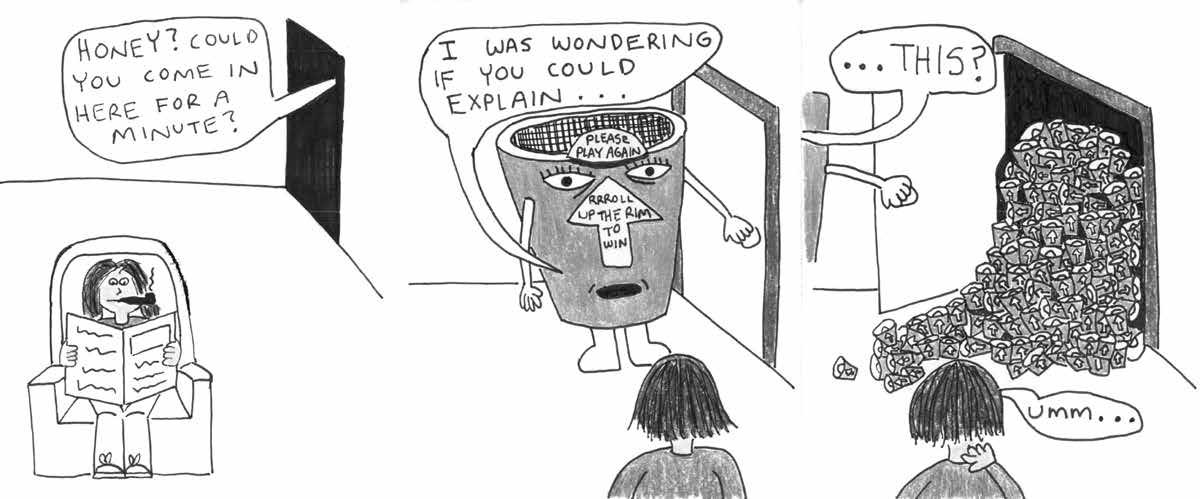
ILLUSTRATION BY BRAM KEAST
Arts & Culture
Arts & Culture Editor: Seamus Hamilton-Pattison
Contact: arts@themanitoban.com / 474.6529
18
Red Moon Rising
Local folk/roots trio set to release their latest at the WECC Sept. 11
SEAMUS HAMILTON-PATTISON, STAFF
Local folk/roots music trio Red Moon Road is set to release their second full-length album, Sorrows and Glories, at the West End Cultural Centre on Friday, Sept. 11, prior to embarking on a three-month cross-country tour of North America.
Red Moon Road consists of vocalist/occasional percussionist and keyboardist Sheena Rattai, guitarist/occasional vocalist and percussionist Daniel Jordan, and vocalist/multi-instrumentalist Daniel Péloquin-Hopfner. Sorrows and Glories is an album exemplary of the band’s consistent work ethic, as it arrives approximately two years after the band’s prior release, the Tales from the Whiteshell EP, which was also released just two years after the band unveiled their self-titled debut in 2011.
“We’re always excited to play new songs and write more music, so I think it’s been an accidental pattern of work for us, based on our creative output and returning to the same fans and thinking they deserve new music,” Rattai told the Manitoban when asked about the band’s apparent pattern of releases.
Though the band’s pattern of touring and releasing material so regularly might seem routine to some, Red Moon Road’s music has lost no spontaneity. Between the addition of new instruments and the gradual increase of production value on each release, the band has always managed to find something new to differentiate their current sound from that of their back catalogue.
Tales From the Whiteshell added some sparse electric guitar on songs such as “Wash Over Me” to fill out the earthy, bare-bones acoustic tones capably presented on Red Moon Road’s self-titled debut. Sorrows and Glories increases the
density of the group’s sound once again, adding piano flourishes, lap steel lines that swell and fall with Rattai’s voice, and a still-minimalistic electric guitar, albeit one that now occupies nearly as much sonic space as its acoustic counterpart.
“We’re
always excited to play new songs and write more music, so I think it’s been an accidental pattern of work for us, based on our creative output and returning to the same fans and thinking they deserve new music” – Sheena Rattai, vocalist/ percussionist/ keyboardist, Red Moon Road
“I think a lot of it has to do with [producer/engineer David TraversSmith’s] touches. He brought a lot of subtle nuances to the album and brought out a lot of richness from each song,” Rattai said.
Rattai went on to state that although Sorrows and Glories may have evolved into an elaborate work with varied instrumentation on each track, the group had initially set out to keep things simple, with the intention of perfectly
duplicating the album’s arrangements in a live setting, while still retaining their original dynamic as a three-piece.
“That’s what we’re doing right now to prepare for the release,” said Rattai.
“I’m like, ‘okay, how can I play the snare drum on this song while Daniel [Jordan] plays the bass drum there?’ while Daniel PéloquinHopfner is jumping from the mandolin to the organ [...] It’s been an adventure,” Rattai said.
To promote the upcoming release, Red Moon Road has released a live-in-studio video of the album’s first single, “Beauty in These Broken Bones.” The video features a massive choir comprised of friends and fellow musicians singing along to the powerful, gospel-influenced track.
“We just sent out a big message to all of our favourite singers, and they were all super gung-ho and really excited. We just pulled them into the studio, taught them the song right then – they’d never heard it before – and we banged it out in two takes,” Rattai said of the song, which was inspired by a severe broken leg she suffered nearly two years ago.
On Sept. 11, Red Moon Road will be joined at the West End Cultural Centre by two handpicked opening acts: local folk duo The Small Glories and Albertan songwriter Matt Patershuk, both of whom Rattai wholeheartedly described to the Manitoban as “so super great” and “impeccable.”
“It’s just going to be a really great party, and we hope everyone comes out. We can’t wait to share this new material with everyone.”
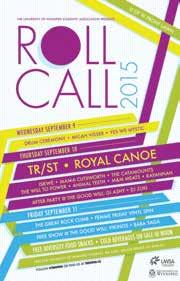
UWSA launches Roll Call 2015
Back to school festival to celebrate community and diversity
RAYLENE PACI
With the beginning of classes quickly approaching, the University of Winnipeg is gearing up to host the newly revamped Roll Call 2015 – a fresh take on the student orientation event formerly known as “O-Week.”
The name change is reflective of the difference between this back-to-school festival and others around the world that also use the “O-Week” branding.
“Roll Call is a celebration of community, and a reflection of our values as a students’ association. Promoting consent culture through specialized volunteer training and activities, acknowledging our presence on Treaty One territory by opening with a drum ceremony, and featuring local artisans at an outdoor marketplace highlights our commitment to equity and inclusion,” explained Peyton Veitch, president of the University of Winnipeg Students’ Association (UWSA).
The three-day celebration starts Sept. 9 on the U of W’s front lawn and will include a number of diverse local acts. Attendees can expect performances from headliners Royal Canoe and TR/ST, as well as other local talents like Micah Visser and the Catamounts.
“Our headliners, Royal Canoe and TR/ST, are fantastic local and Canadian bands, respectively, and will put on a great show. I’m also looking forward to hearing isKwé perform. She’s a young indigenous artist who writes songs about socially relevant themes including missing and murdered women,” said Veitch.
In addition to the music, the event will feature a bike sale hosted by the WRENCH, selling excellent reconditioned bikes, and a marketplace showcasing local businesses and local makers’ work.
The UWSA has also provided a Blue Tent for the duration of Roll Call: a visual representation of their Positive Space Policy where students who need a break or a
resource can visit and take some time. The tent will be run by volunteers with crisis management training.
“This year we focused on incorporating our advocacy work into the event. We want to welcome new and returning students back to campus, but we also want to let students know about the campaigns and supports we are working on to improve campus life,” said UWSA events coordinator Denae Penner.
“On Wednesday, we are hosting a Consent Tea Tent to talk about consent culture and the University of Winnipeg Sexual Misconduct policy. We focused on curating a schedule of musicians that reflected diversity.”
The student union’s executive and the board of directors will be available throughout the event, volunteering and speaking with students. A “food passport” will be an incentive for students to engage with their union, offering free lunch from the campus service, Diversity Foods, in return. The passport, available from UWSA members in limited quantity, grants students a free meal from a food truck present on campus each day of Roll Call, in exchange for the student performing one activity listed on the passport itself.
“Roll Call is a celebration of community, and a reflection of our values as a students’ association” –Peyton Veitch, UWSA president
The Student Group Fair will allow attendees to explore different groups on campus as well.
“I hope Roll Call is an opportunity for students to have fun and make new friends and sets a positive tone for a year filled with progressive change,” said Veitch.
Roll Call 2015 takes place from Sept. 9-11 on U of W’s front lawn (515 Portage Avenue). Events are free for U of W students and community member tickets are available at Music Trader, The Urban Bakery, or the UWSA Info Booth for $20. For more information, visit theuwsa.ca/rollcall/
PHOTO BY EMILY CHRISTIE
PROVIDED BY UWSA
Tips for off-campus living
One editor’s anecdotal advice on how to handle living away from your new school and friends
RICHARD JOSEPH, THE GAZETTE
LONDON, Ont. – The various misadventures of students in residence, much like a reality television show, are best appreciated from the comfort of your own home. When you have hundreds of teenagers living in close quarters, the result could be an absolute disaster, a wonder to behold, or a bit of both. Western University is regularly touted as topping the charts in terms of student experience and living in residence is a big part of that. It’s by far the easiest way to make friends. Just by virtue of proximity, you form lifelong connections and become part of a community of students. In fact, it would be hard not to make friends, given that you share lodgings, experiences, and bathrooms for a year of your life. The parties, the carefully rehearsed chants, the solidarity – living on campus is the pinnacle of Western’s whole oo-rah school spirit schtick. And that’s fine, but it’s definitely not for everyone. Personally, I took an easy pass on the res lifestyle in favour of privacy, space, and freedom. There’s definitely something to be said for living off-campus. I luxuriate in a steaming bathtub comfortable in the knowledge that there are no hordes of drunken teenagers about to burst in. I can nurse a hangover in my own queensized foam-topped bed in blissful silence. I could repaint my entire room fuchsia, if such an impulse seized me. Nobody 10 feet to my left is blasting EDM as I’m studying for finals. And my food is not only delicious, it’s reasonably priced. I realize of course that not all residences are made equal –the dorms range from slightly upscale prison cells to miniaturized luxury hotels. At the end of the day, though, you’re still giving up a degree of privacy and individual agency for that “Western experience.”
On the other hand, there are certain problems with living offcampus. The first issue is transportation. As you might have guessed, there’s no scenic 10-minute morning stroll to class for us. If you’re not driving, I’m sorry to say you’ll have to deal with London’s so-called public transit system. Always take the earlier bus, because the LTC seems to have a cultivated contempt for punctuality. Make sure you live reasonably near a bus route, figure out the most convenient way to get to campus and stick to it.
The major issue, however, is the social one. Whether you’re living with a few roommates, on your own or with your parents, you’re disconnected from campus and student life the moment you go home. Unlike the res rats, you can’t just count on a party or event of some sort every week. Understandably, off-campus students are concerned they will miss out on the social aspect of Canada’s most renowned “party university.”
Yes, it is going to be harder to make friends when you’re off-campus. But it’s more complex than that – it’s up to you to put yourself out there, make connections and get involved
Yes, it is going to be harder to make friends when you’re offcampus. But it’s more complex than that – it’s up to you to put yourself out there, make connections and get involved. No future soulmates are going to casually stroll through your front door and strike up conversation, but there’s nothing stopping you from talking to the person beside you in class.
Western has a vast selection of clubs, societies, cults, and extracurriculars that all offer opportunities to meet new people. You could take up knitting, calligraphy, rowing, or jazzercise with like-minded individuals. In fact, if you want to work with a particularly charming, beautiful, and brilliant group of people, why not do as I did in first year and volunteer for the Gazette?
– National University Wire
’Toban Turntable
The Manitoban’s brand-new music review column
SEAMUS HAMILTON-PATTISON, STAFF
Juan Barbosa
Soulbot 6000
3.5/5
Atitle like Soulbot 6000 immediately makes singer/songwriter/multi-instrumentalist Juan Barbosa’s latest solo offering stand out as a potentially intriguing and enigmatic listen. Soulbot 6000 is something of a concept album, loosely based around the titular character, a robot sent back in time to the 1970s to “absorb the soul into his funk matrix,” thus improving the music of the future.
Wacky concept aside, Barbosa’s new album is actually pretty straightforward. If you like hardhitting, bluesy rock and roll along the lines of George Thorogood, ZZ Top, or The Black Crowes with some Rage Against the Machineesque guitar theatrics thrown on top for good measure, then Soulbot is the album for you.
Vocally, Barbosa sticks to a tough-as-nails blues growl, which suits the music and his dark and raspy voice just fine. However, he could have showcased his upper register a bit more because, as “Got To Get it Back” proves, it’s
Le Vent du Nord Têtu 4/5
Le Vent du Nord are a traditional folk group if you’ve ever heard one. Têtu, the group’s eighth release, is a collection of songs both celebratory and melancholy. The foot-stomping revelry of songs like “Confédération” bring to mind the excessive and exuberant dancing that is wont to take place at such celebrations of French-Canadian culture as Festival du Voyageur. On the other hand, more reserved numbers such as the instrumental “Petit rêve IX” bring to mind more sombre imagery, like a lost explorer wandering forever and never knowing if he or she will return home.
The album’s lyrics are sung entirely in French, so a listener completely unfamiliar with the language will inevitably turn to this kind of mental imagery in order to accurately convey the tone and emotion presented within each song. Thankfully, Le Vent du Nord have made this an easy thing to do. It’s as though the band was actively keeping non-Francophone listeners in mind, composing each song with a very deliberate emotion or feeling in mind.
Le Vent du Nord employs a varied instrumentation throughout the
just as powerful and a little less monotonous.
Aside from a passing reference to the album’s theme (which I wish Barbosa had stuck with a little more), the lyrical content mostly concerns itself with the funk, the soul, and just how much Barbosa enjoys both. The lyrics overflow with positivity and bravado, and
suit the bombastic music perfectly. At 18 tracks, Soulbot 6000 feels a little over-long, but remains a fun, rockin’ listen. Crack a cold one, fire up the grill, and turn this one up real loud.
www.juanbarbosa.com/
release that ranges from folk staples like the fiddle, guitar, and piano to more niche instruments such as the hurdy gurdy, bouzouki, and “feet” (there’s a lot of stomping on this record). The arrangements themselves run the gamut from full instrumentation to completely a capella. Ultimately, this type of traditional/world music isn’t for everyone, but Le Vent du Nord performs
it with enough finesse and compositional complexity for even the most passing fan to appreciate.
leventdunord.com/en/
PHOTO BY VENDTU NORD
PHOTO BY VENDTU NORD
Bisons open premiere weekend in style
Manitoba routs Thompson Rivers in Friday’s opener, draws UBC Okanagan on Saturday
ANDY CHE, VOLUNTEER STAFF
Speaking last Tuesday about the Manitoba Bisons’ soccer season opener against Thompson Rivers, coach Vanessa Martinez-Lagunas had already set an opening day objective for her squad.
“We cannot underestimate any opponent, we want to start with a win,” she said ahead of opening up her third season as the Bisons bench boss.
On Friday, Manitoba did just that. The Bisons defeated the Thompson Rivers Wolfpack 4-0 at the University of Manitoba indoor soccerplex. Thunderstorm conditions prevented the match from being played outdoors.
After an anxious first ten minutes, momentum shifted in Manitoba’s direction. Off a Bisons corner kick, Elyce Molyneaux’s in-swinger rang warning bells for Wolfpack goalkeeper Taylor Shantz, who fisted away the danger. The Bisons did not let up, and drew first blood soon after.
“I think we struggled in the first 10 minutes. We were nervous and Thompson Rivers did a great job pressuring us and didn’t give us a lot of space,” said Martinez-Lagunas following the match.
Eighteen minutes in, Bruna Mavignier produced a lovely final ball to Selina Speranza inside the penalty
area. With her first touch, Speranza rounded Shantz and tapped home for the Bisons’ first goal of the season.
Scoring the first goal boosted morale for the team and held particular significance for Manitoba goalkeeper Chloe Werle. The captain was making her return to action after being sidelined for the entirety of last season due to a back fracture.
“I was told I would never play soccer again. When we scored our first goal, I almost started crying because this is what a year [of rehab] has amounted to,” said Werle.
Nearing the end of the first half, Manitoba’s relentless pressure paid off again. Off a Wolfpack turnover, Alyssa Robinson and Alanna Shaw combined for a gorgeous one-two pass onto the wing. Robinson picked out Mavignier inside the area to score her first goal of the season.
Moments later, a short corner was played to Amanda Wong, who then whipped in a dangerous cross that Mavignier instinctively headed in for a 3-0 lead.
Late in the second half, Speranza danced through two Wolfpack players and played a ball across the face of goal to Sara Schur, who exquisitely scored her first goal as a Bison.
The Bisons’ second match on Saturday, hosting the University of
British Columbia-Okanagan, was a different matter. The teams played to a draw, which saw Manitoba come back from a 1-0 deficit for a 1-1 final.
Heat striker Courtney Hemmerling placed her finish to the top left corner to put the Heat up 1-0 just before halftime. Minutes after the break, Speranza delivered a cross from the right flank which Shaw equalized on a clinical finish to the far post.
The match, which was between two sides who appeared equal in calibre, could have easily gone either way. Werle was kept busy for the entire 90
Northern uprising
The rise of basketball in Canada
JEREMY HECHT, WITH FILES FROM MIKE STILL, STAFF
I’vealways loved basketball. For as long as I can remember it’s been a huge part of my life. However, the problem with growing up as a fan of the game in Canada is that none of my idols were from up north, so I had to cheer for the American heroes.
Last week, I turned on the TV and watched the highlights from a FIBA men’s game between Canada and Argentina. If this were five years ago I wouldn’t even expect a game within 30 points, let alone a Canada win, but this time around something was different.
When I used to watch the Olympics or FIBA tournaments on TV as a kid, it was always the same story: “the U.S. wins another game by 20.” And as great as it was getting to watch the best players in the world all compete together on one team, it was boring, predictable, and most importantly disappointing.
I remember cheering for Carlos Arroyo and the Puerto Rican men’s team just so I wouldn’t have to watch the US win another championship. Fast forward to 2015, and it is a whole different story.
Coming off of a best-ever silver medal finish at the 2015 Pan Am
Games in Toronto, the Canadian men are on the rise. Their roster boasts a ton of big name talent all across the board, which has been a rarity in years past.
The squad features two former first-overall picks: Anthony Bennett and Andrew Wiggins – who is also the reigning NBA Rookie of the Year. The aforementioned players were the first two Canadians ever taken with the top spot in the draft.
Top that off with hard-working Cory Joseph, big-man Kelly Olynyk, and sharpshooter Nik Stauskas, and the future is bright for the Canucks.
Joseph is an all-around loveable player. The guy is a hustler who will always lay his body out and get on the floor for the team. He runs the fast break well and is a great defender who you can count on for steals, and a spark when Canada is in need of one.
Bennett is the post presence down low that Canada needs to compete on an international stage. It’s a presence that they’ve only come close to with Samuel Dalembert. In that regard, Bennett is a huge step up.
Olynyk is a great player to have for the pick-and-roll game, and you can count on him to put some points
on the board using both his abilities inside the paint and his smooth midrange game.
The squad features two former firstoverall picks, in Anthony Bennett and Andrew Wiggins – who is also the reigning NBA Rookie of the Year
Stauskas is also a player to keep an eye on for Canada. He’s a lightsout shooter from beyond the arc, but also has a surprisingly smooth touch around the rim when finishing in traffic.
Of course, the man holding it all together for the boys in red and white is Wiggins. His athletic ability is almost unmatched in a league where the bar is set very high. He understands the role he plays in reviving Canadian basketball, and
minutes. Her standout moment came in the first half when she tipped a looping header over the bar then held onto a decently struck shot moments later. The Bisons could have easily clinched a late win with Mavignier’s clever header, but it was saved by Joella Koblischke. Martinez-Lagunas was confident of her team’s ability to put up a fight after giving up the first goal in a sensitive time of the match.
“It was an error from our part, but I love the way we came back. Then, we were all over them, we showed we wanted to get the three points,” she
said after the draw.
Even though the Bisons have had a satisfactory start to the season, there is still a long way to go. Secondary captain Amanda Wong, who was injured in the opener, realized the importance of thinking long term.
“Obviously it’s a great start but that doesn’t mean anything. We still have a lot of work to do and a lot of improvements to make.”
The Bisons are on the road on Sept. 12 and 13, facing Saskatchewan and Regina, respectively.
he plays it well. The new Captain Canada is here to stay, and you can catch him in the air soaring over defenders, or on your local highlight reel.
This team is going to be extremely fun to watch, and as their chemistry grows, they will quickly become a force to be reckoned with.
PHOTO BY CHANTAL ZDAN
GRAPHIC
Prairie rainstorm
Bisons battle back for hard-earned win against Huskies
RYAN STELTER, VOLUNTEER STAFF
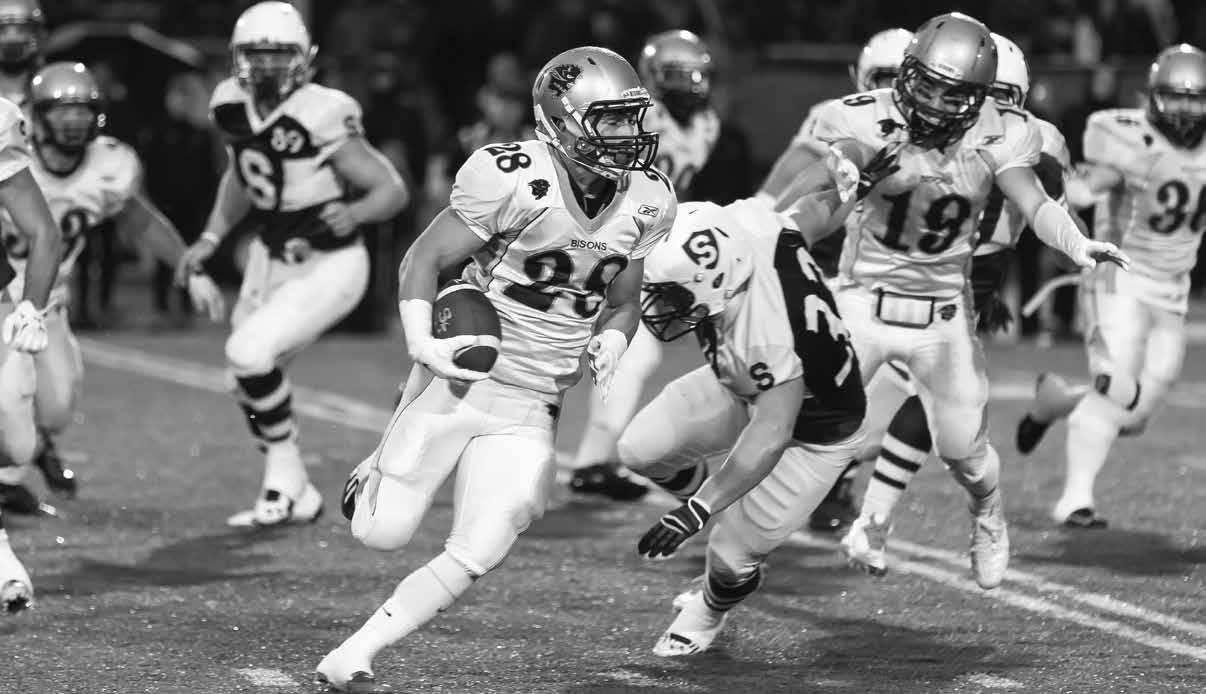
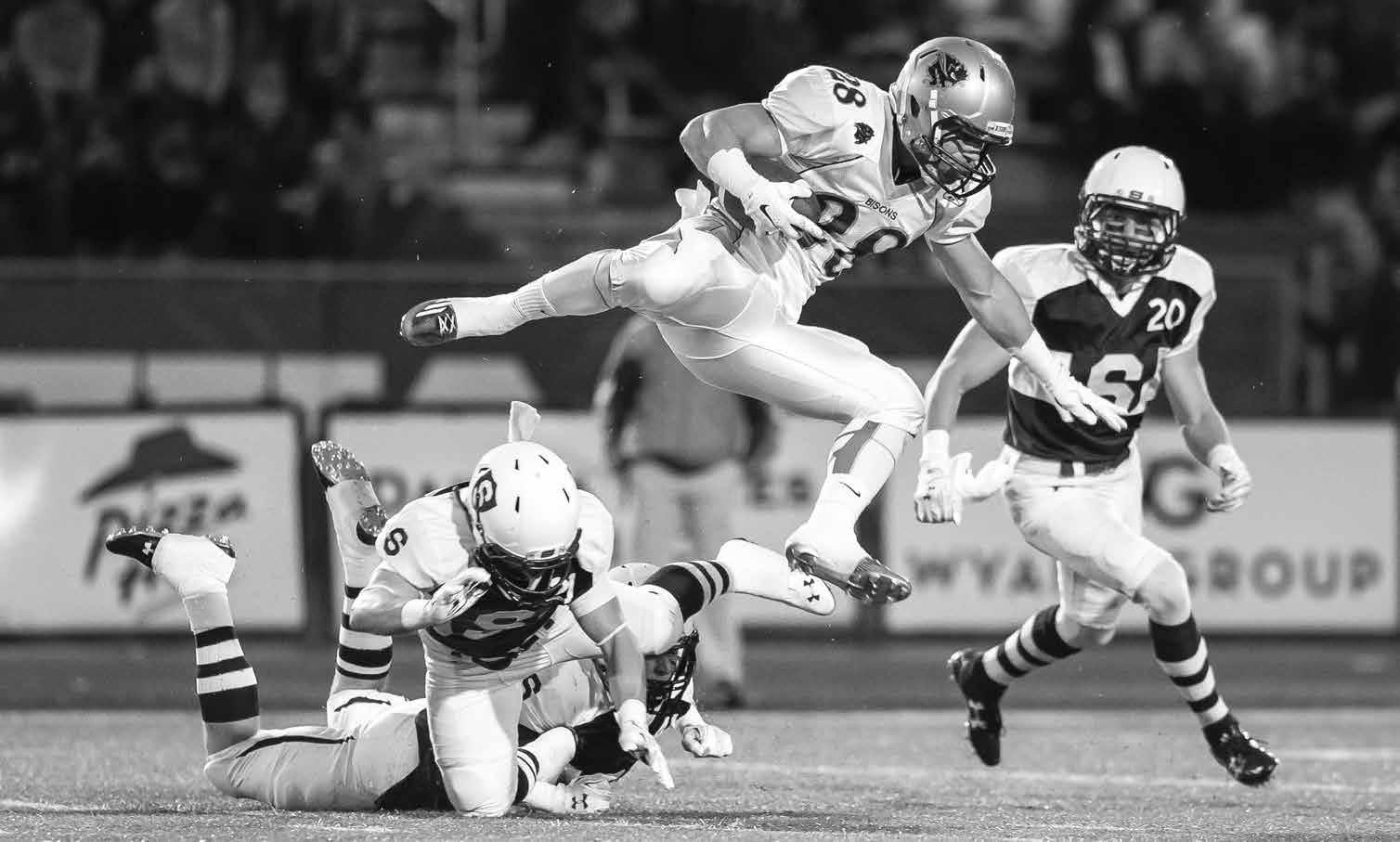
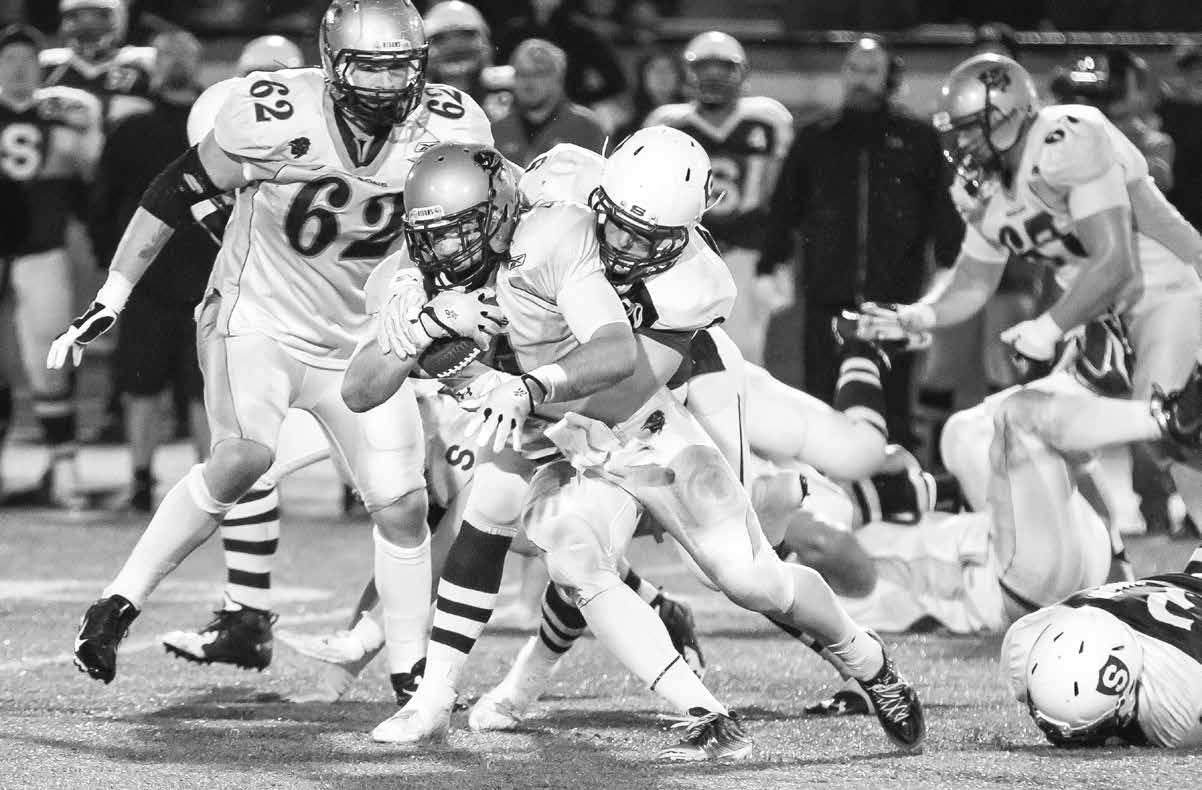
On a rainy Friday night, the Manitoba Bisons headed into battle against the Saskatchewan Huskies and walked away 34-28 winners.
The Bisons were resilient this game, fighting back from as much as 13 points down. The Huskies jumped out to the lead on their first possession and seemed to be in control, but
the Bisons managed to keep the game close in the first half and were eventually leading at the break, 24-22.
Dobie’s boys really showed their colours in the second half where they stormed out in the fourth quarter and took the game from the Huskies, outscoring them 10-3. Some excellent late defensive play also helped seal
the win for Manitoba.
Defence
The Bison secondary was superb, especially late in this game. Four of the five starting defensive backs had an interception for Manitoba, including key picks from Zack Sandulescu and Cam Teschuk late in the final frame, effectively stopping the
Huskies’ attempt to come back.
The Bisons’ front seven were in tough against an experienced Huskies offensive line. They managed to get good penetration in the second half, rushing Drew Burko multiple times. Mitchell Harrison led the defence with eight tackles. Highly touted defensive lineman David Onyemata led the men in the
trenches with three tackles and was a real force up front. The defensive line struggled early on to get into Burko’s kitchen, but really stepped up when it mattered, stopping the Huskies countless times in the red zone, including a goal line stand.
Freshman sensations
The rookies stole the show on Friday night for the herd. Tailback Jamel Lyles was on fire, running for 155 yards on 11 carries. Lyles also found the endzone in the second quarter after a blistering 58-yard run. Lyles took advantage of the excellent blocking of the Bison offensive line and hit his holes with speed. He was also dangerous on special teams as a punt returner. The kid from Surrey is someone to watch this season, as we’ll most likely see stat lines like this again in the near future.
Another offensive rookie who had an impressive showing was Lerenzo Ihanza. The freshman wide receiver out of Brampton, Ont. took advantage of a tipped ball in the fourth quarter and ran it in for the touch down. His first catch in the CIS was a unique and important one, as it was the winning touchdown for the Bisons.
Jesse Walker proved to be a very versatile player on Friday. The athletic slotback racked up 62 yards of total offence, including 45 yards receiving on four catches.
Offence
The Bison receiving core played
PHOTOS BY JOSH SCHAEFER
well in a game where dropped balls and mishandles were extremely common. Slotback Bryden Bone had an exceptional game, recording five catches for 103 yards, one being a ridiculous triple grab made while on his back.
Alex Vitt stepped up when necessary and made a great grab on the goal line in between two Husky defensive backs, falling into the endzone to help keep the game in reach for Manitoba.
The Bison defence really stepped up when it mattered, stopping the Huskies countless times in the red zone, including a goal line stand
Quarterback Theo Deezar was hot and cold in this one, going 17 of 28 for 268 yards and two touchdowns, but also throwing two interceptions. In these rainy conditions, the sophomore coming in to fill Jordan Yantz’s role performed well, and aside from some ill-advised throws, it was a great game from the six-foot-five St. Paul’s alum.
We also got to see the depth of the Bisons backfield; the run game will be something to be feared this season. Jamel Lyles, Cameron Fox, and Alex Christie combined for a total of 220 yards, accounting for a good measure of the Bison offence.
Special teams
Special teams also played a big factor in this game, as both teams’ kick returners performed well. This helped the Huskies out many times, putting them in great field position.
In eight kickoffs, Saskatchewan had a combined 186 yards, and also managed to block a punt.
Discipline came into play for the herd, as they amassed 15 penalties for 100 yards. The game could easily have
been put out of reach by the Huskies early on, but they never really capitalized on the mistakes the Bisons made.
Some errored punts and great kick returns consistently put Saskatchewan in great field position, however they never seemed to take advantage, keeping the Bisons in the game. Manitoba stayed patient and capitalized on the Huskies mental gaffes in the back half of the fourth quarter, showing impressive resolve.
The stat lines for both teams were very even, without too much difference in terms of numbers. On the field, however, you could tell that the Bisons were in control, and they did well silencing the crowd at Griffiths Stadium in Saskatoon.
What’s next?
It was a wildly entertaining game to open up the 2015-16 Canada West campaign, in which the Bisons will
be looking to defend their Hardy Cup title from 2014. Manitoba will play their home opener next week against the Calgary Dinos, who are coming off an impressive 49-16 win over the University of British Columbia on Friday.
Discussions with DJ
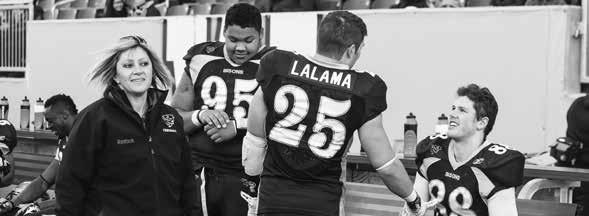
A new monthly Q & A with Bisons linebacker DJ Lalama
MIKE STILL, STAFF
DJ Lalama’s football resume is a long and impressive one. His accolades include being named AAA defensive player of the year in his senior year of high school, as well as a provincial team captain and allstar – all with St. Paul’s High School. In 2013, he was a Football Reporters of Canada Conference AllStar at the specialist position with the Bisons, and last year he was third in the conference with 40 tackles. This season, he was named a team captain for the first time. It’s not hard to tell he’s a leader on this team, and will be critical if the Bisons want to make it back to the Vanier Cup for the first time since 2007.
The Manitoban caught up with DJ right before the herd headed out for Saskatchewan for their first game of the regular season.
MANITOBAN: What was your experience like, getting a chance to participate in the East-West Bowl during the off-season?
LALAMA: First of all, it was an honour to be selected by our coaching staff to represent Canada West and the Bisons. I think it puts things in a whole new perspective. A lot of people look at Laval being an untouchable, and then you get out there and start playing – two practices a day against these guys, and you start wondering. They’re no different than you. They’ve got the same shoulder pads, same helmet, and the same schemes. You start getting into these one-onone drills, and you realize, you’re up there.
M: Does your mindset change at all, knowing that this is your draft year,
and that scouts will be watching fairly intently?
L: The fact that scouts are there, not so much. There were scouts here last year, there were scouts the year before. We’ve had a number of bona fide players go to the CFL each and every year that I’ve been here. Ultimately, we want to hoist a championship at the end of the year, and be able to say that we did that – to have something to tie this team together forever, because ultimately, this is our brotherhood. We’ve worked extremely hard, and we’re at the point where we think we’re ready.
M: With that being said, does it hit home, knowing that teammates of yours are now playing in the CFL, and that could be you next season?
L: Absolutely, it’s something to look forward to, but to be honest with you, we’ve got to take care of business on the field first. Right now, it’s just one of those things where we’re taking it week by week. We want to finish what we started last year, and have the opportunity for scouts to look at this team and say, “holy smokes, there’s something special here.” The better we do, the rest of that stuff will take care of itself.
BY
M: After week one, you have quite a few home games in a row. How critical do you think that home field advantage will be?
L: I think Investors Group Field is probably one of the hardest places for an opponent to play. For whatever reason, we play well here and teams tend to have a tougher time. To be able to play two top 10 teams in week two, and three at home is huge.
PHOTO
JEFF MILLER
‘Half man, half amazing’
The legacy of Vince Carter in Toronto
JEREMY HECHT
In 2004, when Vince Carter left the Toronto Raptors to join the then New Jersey Nets, a little bit of hope died in Canada. A piece of every Canadian basketball fan was lost as they watched their golden boy, “Air Canada,” leave his throne to move onto the States. That moment was more than just a trade, it was the loss of one of the hopes that Canada had for basketball to be a mainstream success in this country.
The words Canada and basketball haven’t traditionally had a strong correlation for many people. For decades, whenever people would mention sports in Canada, hockey was the beginning and the end of that discussion. As a kid who has loved basketball my whole life, growing up in this hockey-saturated world was lonely.
Most of my friends were big into hockey too, so as a kid I joined along with the crowd, but I always knew at heart that I was a true die-hard fan of the game of basketball. It seemed like most people couldn’t understand why I was so upset that Vince Carter left Toronto, why I taped “Quitter” over “Carter” on the back of my youth jersey, or why that moment mattered so much for Canadian basketball.
People who didn’t follow basketball closely in the early 2000s may not understand just how big of an impact Vince Carter had on basketball culture in Canada. He was the idol of every kid trying to make it out of an unlikely situation; he was their role model.
The most ironic part about his status was that Carter wasn’t even Canadian. He was born and raised in Daytona Beach, Florida, yet he embodied everything that kids in Canada dreamed of being on the basketball court. He was exciting, flashy, scoring-minded, and he was all we had on our nation’s home team, the Toronto Raptors.
Although it seemed like Toronto’s chances of succeeding were slim to none after Carter left, his presence in the city did spark the young minds that could potentially change basketball in Canada forever.
Carter’s impact
on Canadians in the NBA
Around the same time that Carter left Toronto, there was a young kid perfecting his shot and dunks every day in the same city; his name is Andrew.
Andrew Wiggins is known by many as the saviour of Canadian basketball. He was drafted first overall by the Minnesota Timberwolves in 2014 and is already taking the league by storm with his enormous potential and unmatched athletic ability.
Wiggins is the heir to the throne that Carter left open in Toronto years ago, and has publicly stated that Vince Carter was like his Michael Jordan and heavily influenced his game.
“[The Toronto Raptors] were a big influence, especially Carter,” Wiggins said, in an interview with
Fox Sports. “He was the number one hero in Canada. Every kid’s hero.”
Although Wiggins is not currently playing for the Raps (wishful thinking about the future), it gives kids who were once in his shoes so much hope. To see a kid from Canada play at a top school in the states for college ball, get drafted first overall, and then succeed in a league where so many fall off is the ultimate form of inspiration for young players looking to make their dreams turn into reality.
Carter’s impact is not limited to Wiggins; he also inspired other young, talented players in Ontario.
Kelly Olynyk grew up watching Carter’s dunk competition at home from his couch. He attended the basketball camps that Carter put on in Toronto during his residence as a Raptor, and Olynyk saw firsthand the passion that Carter had for the game of basketball and for helping it grow in Canada.
“He was the number one hero in Canada. Every kid's hero” –Andrew Wiggins
“He just kind of brought that excitement and that passion and that love for the game,” Olynyk told the Toronto Star
“You could taste the excitement in the air and the atmosphere was just unbelievable. I think when he got there, and after the first couple years, he really excited the community and brought the community into everything.”
Now Olynyk is a budding NBA player for the Boston Celtics and is currently on the Canadian National team
When Anthony Bennett – a former number one overall pick of the Cleveland Cavaliers and current member of the Minnesota Timberwolves, was asked by ESPN what his first memories of basketball were, he said “Vince Carter.” Bennett was raised in Brampton, Ont. and was also inspired by the impact that Carter left on the city.
His presence in the city sparked the young minds that could potentially change basketball
in Canada forever
The stories of these young stars are just a few examples of how Vince Carter has changed the culture of Canadian basketball forever.
Impact on the city of Toronto
For as long as I can remember, every time that Carter touched back down in Toronto, he was instantly booed when the ball touched his hand. As a long time Carter fan (and part-time Carter hater after he left), that made me feel extremely uncomfortable. I didn’t know how to react or who to cheer for.
I felt a little bit happy when he hit two game winners against the Raps, and when he beat them in the playoffs, but I couldn’t admit it. It’s probably similar to how my dad feels when the Leafs play the Jets in Winnipeg.
Yet last season when Carter returned to Toronto (playing for the Grizzlies), things were different. It was a night paying tribute to the legacy that he had left behind in Toronto
and fans watching on TV, including myself, were eager to see how a new Toronto crowd would react.
Carter was shown on the jumbotron after a tribute video was played showcasing his greatest Raptor dunks and moments. At first, he was greeted with an array of boos. But then something incredible happened. Fans started standing up. One by one, the crowd changed their tones from boos to loud claps, and before anyone knew what had happened the entirety of the Air Canada Centre was participating in a standing ovation.
Vince Carter was in tears. I think I may have shed a couple also. That is the type of impact this man had on the city of Toronto and the country of Canada. That is how fans truly feel about Carter, even if it took them 10 years to admit it, and that is the only
way that I can describe his impact on Canadian basketball without showing you his highlight tapes (which you should look up for yourself if you have a couple of minutes).
Perhaps Vince Carter leaving Toronto was just one small chapter in a book that has so much of its story yet to be written. Perhaps, the best is yet to come.