

Building momentum for Shoal Lake 40’s Freedom Road
Moral imperative to build land link requires financial backing to proceed
CHUCK WRIGHT AND CHRISTIE MCLEOD

T
his past September, nearly 1,000 Winnipeggers gathered at the Legislative Building to participate in the Winnipeg Water Walk, an event which called for hard commitments from the local, provincial, and federal governments towards the building of Shoal Lake 40 First Nation’s “Freedom Road.” At this event, Premier Greg Selinger announced that Freedom Road would be included in the next provincial budget.
The recently unseated Harper government had provided no indication of changing its position to fund only one-third of the cost of the design study, and not the actual construction of this all-weather access road, which will cost an estimated $30 million in total.
With the newly elected Liberal government, there is hope that the federal government will fulfil their responsibility to fund the road. During the election campaign, Liberal leader Justin Trudeau promised to address the “inexcusable” situ-
ation at Shoal Lake 40, and several newly elected MPs in Winnipeg have indicated their support for Freedom Road as well.
Winnipeggers have also taken notice of this situation, believing it to be a valuable opportunity to begin to reconcile relationships with the First Nations of our country. It was, after all, the City of Winnipeg’s utility that displaced Shoal Lake 40 members in 1913 to build the aqueduct and intake works that diverts drinking water to Winnipeg.
This summer, Winnipegers’ quest to assist in bringing justice to Shoal Lake 40 was displayed through several actions. West Broadway
Given Trudeau’s promise to remedy this wrong - as well as to end all boil water advisories in Canada by 2020 – Bowman must recognize that now is the time to honour the city’s commitment by including funding for Freedom Road in the 2016 budget
Road. Although the lofty goal of $10 million was not met (and thus, no funds were collected or distributed) his campaign was a testament to the staggering support that exists surrounding this issue.
Friends of Shoal Lake 40, is seeking to increase pressure on the City of Winnipeg to follow the province and include funding for Freedom Road in its December budget. Until recently, it was the city and province that have been most vocally supportive of building the road. But the mayor’s office seems to have been caught offguard by the recent turn of events in Parliament, as well as the demonstrable public support over the past several months.
Given Trudeau’s promise to remedy this wrong – as well as to end all boil water advisories in Canada by 2020 – Bowman must recognize that now is the time to honour the city’s commitment by including funding for Freedom Road in the 2016 budget.
On Oct. 6, Cindy Gilroy, city councillor for Daniel McIntyre, introduced a motion that was passed at the Standing Policy Committee on Infrastructure Renewal and Public Works that “the commitment made in principle to Shoal Lake 40 First Nation for Freedom Road be sent to the 2016 Capital Budget process.” The motion requires the Chief Financial Officer to take action on this item, to be considered by city council.
To assist them in their consideration of this important issue, Friends of Shoal Lake 40 organized a trip with city councillors to Shoal Lake 40 for a tour of the community led by First Nation leadership. Councillors witnessed the direct costs that the community has faced as a result of Winnipeg’s water diversion, and further the growing support for our city’s reconciliation with Shoal Lake 40 First Nation.
The First Nation’s own “Museum of Canadian Human Rights Violations” – a historical tour of Shoal Lake 40 initiated in the fall of 2014 – has proven to be an effective campaign tool for amplifying the call on all levels of government to address the gross inequity that exists. This museum has been visited by hundreds of concerned Canadians, including David Suzuki, Maude Barlow, and Winnipeg Chamber of Commerce President Dave Angus, as well as international human rights organization Human Rights Watch.
Persistent indifference to this systemic injustice – an injustice that has caused the community’s 18-year-long boil-water advisory – showcases the institutionalized racism that continues to exist in our city and country.
Community Ministry held “10 Days for Shoal Lake,” which drew support from various faith communities and consisted of numerous actions, including a petition to Stephen Harper that stretched as long as a city block.
In a matter of weeks, Rick Harp managed to crowdfund over $100,000 of conditional funds for Freedom
The “Churches for Freedom Road” campaign recruited over 60 places of worship to post “We support Shoal Lake 40 Freedom Road” signs (a number that is still growing), and recently expanded the campaign to the Kenora riding, wherein a portion of Shoal Lake 40 is situated. Additionally, former Kildonan-St. Paul MP Joy Smith broke ranks with the ruling Conservative Party when she held a press conference at her constituency office expressing support for federal funding of Freedom Road. Now a newly formed coalition,
Friends of Shoal Lake 40 is asking Winnipeggers to continue to exert pressure on the City of Winnipeg by signing and circulating our petition, which can be found at www.buildfreedomroad.com. Meetings with several city councillors have indicated that with strong public support for Freedom Road, we can encourage councillors to do the right thing and make Freedom Road a reality for the people of Shoal Lake 40 First Nation – which in Chief Erwin Redsky’s words is “a matter of survival [...] [and] a matter of our most basic human rights.”
Chuck Wright and Christie McLeod are both members of Friends of Shoal Lake 40.
GRAPHIC BY CAROLINE NORMAN

Science & technology
Editor: Chantelle Dubois
Put down that bacon
Processed meats linked to greater cancer risk, says WHO
MALAK ABAS, STAFF

If you’re reading this over breakfast, you may want to rethink what’s on your plate. The World Health Organization (WHO) has stated that eating processed meat can increase your risk of getting cancer.
The study, published in the Lancet Oncology, included the findings of the International Agency for Research on Cancer (IARC). A group of 22 experts on cancer research from 10 different countries met to review decades of research on the carcinogenicity of processed and red meats, and concluded that both had ties to developing colorectal cancer.
The IARC has specified that red meat is a Group 2A carcinogen,
meaning it is classified as “probably carcinogenic to humans,” while processed meat is a Group 1 carcinogen, as the evidence linking it to cancer was enough to define it as “carcinogenic to humans.”
Processed meat includes any meat that has been modified to improve its shelf life through methods such as smoking the meat or adding preservatives. Some meat products that are considered processed include hot dogs, salami, and bacon.
As little as 50 grams of processed meat a day, about the equivalent of a hot dog, is enough to increase a person’s risk of developing colorectal cancer by 18 per cent.
The cancer risk from processed meat comes from the chemicals used in the method of processing. It is hypothesized that the nitrates and nitrites used for preserving meat, which are found in the salt used, turn into compounds called nitrosamines, which have carcinogenic qualities.
Other carcinogens can form when the meat is cooked at very high temperatures, such as pan-frying or barbecuing. This is, however, only a theory, and the root cause of the increased risk of cancer in processed meat is not clear just yet.
The news has promoted widespread discussion and speculation. There have been several misconcep-
tions finding their way across the Internet, including the theory that eating processed meat is as bad for you as smoking.
The cancer risk from processed meat comes from the chemicals used in the method of processing
Smoking and eating processed meats are both classified as “carci-
nogenic to humans” by the IARC, but the similarities stop there. There are many things classified as Group 1 carcinogens (sunlight, for example) but this does not mean they are all equally likely to result in someone developing cancer.
For example, in the United Kingdom three per cent of cancer cases each year are thought to be caused by the consumption of red and processed meat, versus 19 per cent as the result of smoking cigarettes, according to Cancer Research UK.
Another myth is that processed meats marked as “natural” by their packaging are less likely to cause cancer. The unfortunate truth is that all processed meats contain nitrates, and it doesn’t matter how “natural” the source sounds.
The answer is as it’s always been: moderation really is the key
After receiving a flurry of questions and concerns, the WHO reinforced their stance on processed meats by releasing a statement through their website. The statement confirms that the study “does not ask people to stop eating processed meats but indicates that reducing consumption of these products can reduce the risk of colorectal cancer.”
So how does the reader put this information into perspective? The answer is not to necessarily cut out processed or red meats, which can be a part of a healthy diet, but to assess your own risk and act accordingly.
A person who occasionally eats processed or red meats within guidelines set by experts such as the Canadian Cancer Society – who recommend red meat be consumed up to three times a week, and processed meat only occasionally – and maintains a healthy lifestyle will be fine.
Gina Sunderland, a registered dietician for CancerCare Manitoba, agreed in an interview with the Manitoban that moderation, mixed with including better options, is the best way to approach the subject.
“What we know can reduce our risk [of colorectal cancer] is including more dietary fibre in our diet,” Sunderland told the Manitoban “So whole grains. Make that sandwich on whole wheat bread. Use brown rice. Include the skins on your potatoes for more fibre. Make sure you’re getting a fruit and a vegetable, or fruits and vegetables in your diet every day. We know that is a sure way to help reduce risk.”
It’s important to do your research and make the decision for yourself. The answer is as it’s always been: moderation really is the key.
GRAPHIC BY KELLY CAMPBELL
Net neutrality and cyber surveillance
An overview for the everyday user
CHANTELLE DUBOIS, STAFF

Buzz words like “net neutrality” and “cyber surveillance” are often heard and seen in the media, along with various bills referred to by various acronyms. What does it all mean, and why should you care?
Canadians have long enjoyed relatively open and free access to Internet. One of the most important aspects of the Internet is the information and ideas that it has provided to billions of people worldwide. The Internet has been a catalyst for social and political change, spreading concepts and ideas around the globe in a short period of time, and has even had a role in helping take down oppressive regimes. It is where free speech and innovation are king.
The Canadian Radio-television and Telecommunications Commission (CRTC) developed a framework in 2009 which guides Internet service providers (ISPs) on accepted Internet Traffic Management Practices (ITMPs).
This framework attempts to balance the interests of both ISPs and consumers. ISPs want to control Internet traffic to prevent things like piracy and illegal streaming from congesting their infrastructure, while consumers want private and open access to online content without discrimination through censorship or speed throttling. This is called net neutrality, and it is what many people believe make the Internet as valuable as it is today.
The CRTC’s framework stipulates that ISPs must be transparent and allow open access to the Internet in order to allow innovation and competition to thrive. Internet traffic cannot be discriminated against regardless of its content, use, platform, or source. The only acceptable use of ITMPs are in instances of temporarily protecting the security and integrity of networks.
This cybereavesdropping could be considered a violation of the Canadian Charter of Rights and Freedoms, as it may infringe on the right to freedom from unreasonable search or seizure, since no authorization is given to peek into our data
However, since the Internet and the way it is used is constantly evolving, the CRTC does not make any hard and fast rules concern-
ing specific ITMPs. Consumers are responsible for reporting unfair ITMPs, which the CRTC will then investigate.
In the meantime, an ISP can apply whichever ITMP it feels is appropriate, with consequences only occurring if a consumer reports it as being unfair and contrary to the ITMP framework.
So, what does this mean and what does this framework prevent? If ISPs were allowed to freely control and discriminate traffic flow, large companies and corporations could pay money to ensure that access to their content is fast and easy, while smaller businesses, startups, and content uploaded by regular people would be difficult and slow to access. This would stifle freedom of speech, innovation, and access to information.
Additionally, the framework prevents traffic shaping, which is when an ISP gives high or low priority to traffic depending on its content. Not only does this violate the concept of net neutrality, but it also could be an invasion of privacy. It could give ISPs insight into what a consumer is accessing, what their online habits are, and information about their personal lives. For some Canadians, the idea that companies could have access to this sort of information is unsettling.
This brings us to cyber surveillance. Watching what people do on the Internet is something some governments want to do in order to
curb piracy, terrorism, and other illegal activity. Once again, this cybereavesdropping could be considered a violation of the Canadian Charter of Rights and Freedoms, as it may infringe on the right to freedom from unreasonable search or seizure, since no authorization is given to peek into our data.
The U.S. Senate turned down four amendments meant to rectify some of the perceived problems with CISA
Early this year, the CBC reported on a document released by Edward Snowden, the U.S. whistleblower now seeking asylum in Russia after revealing the surveillance activities of the National Security Agency. This document revealed that Canada’s Communications Survey Establishment can monitor what Canadians are downloading and uploading in order to target extremists plotting attacks in North America. It is unclear as to whether or not this initiative was receiving this data from ISPs. While the purpose seems to have good intentions, it is the idea
that the government has employed a mass surveillance program that causes some concern.
South of the border, Internet surveillance is an ongoing issue where privacy and security is a fragile balance. Recently, the U.S. Senate passed the Cybersecurity Information Sharing Act, which allows government agencies and commercial entities to share Internet traffic information that could be related to cyber security threats.
However, the language in the bill leaves some things vague, like when an ISP is obligated to remove personal identifying information from data, or describing it as a voluntary initiative even though consumers aren’t the ones who get to choose whether or not to opt in. It is the ISP that chooses.
The Senate turned down four amendments meant to rectify some of the perceived problems with CISA. Across the Atlantic, the European Union passed legislation enhancing net neutrality and preventing ISPs from discriminating or censoring Internet traffic. The legislation comes into effect at the end of the year, and will be most immediately noticeable in the United Kingdom, where consumers currently have to opt in to access pornography.
While Canada has so far successfully defended open access to the Internet, it is still a topic to watch.









ILLUSTRATION BY BRAM KEAST
ILLUSTRATION BY BRAM KEAST




Love, loss, life
Hamilton-based folk/blues artist shares various artistic ventures
SEAMUS HAMILTON-PATTISON, STAFF
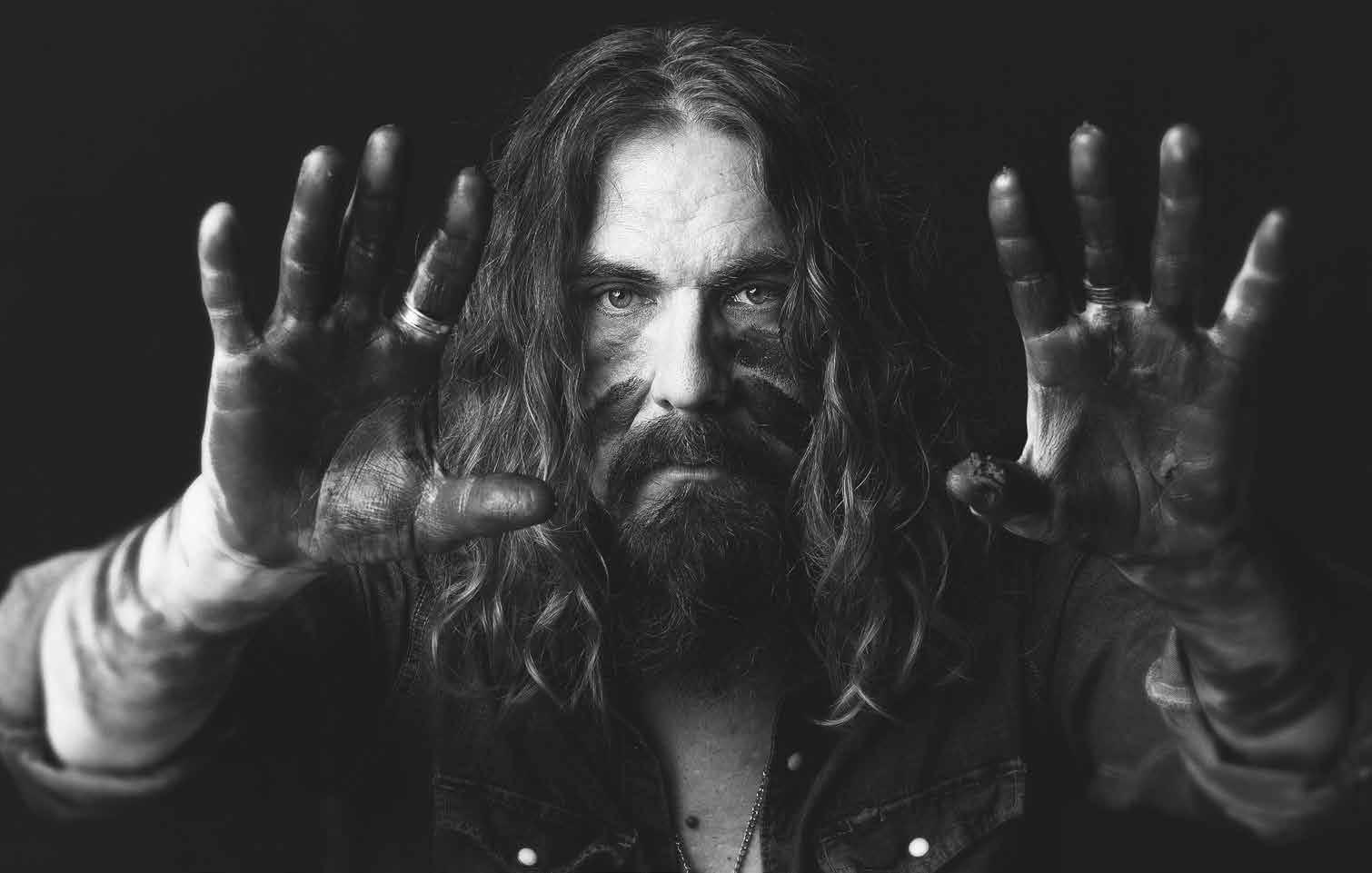
On Sunday, Nov. 8, consummate artist Tom Wilson will bring his psychedelic folk music project LeE HARVeY OsMOND to the Park Theatre. LeE HARVeY OsMOND’s Winnipeg stop marks the first in a tour promoting the project’s newest album, Beautiful Scars.
Beautiful Scars is a dense, impassioned album to be sure. Some songs are folksy, rootsy, and not led by much more than a picked acoustic guitar line and Wilson’s voice (“How Does It Feel,” “Come and Go”). Other songs are more sultry, bluesy numbers that feature a more varied instrumentation (“Loser Without Your Love,” “Hey Hey Hey”).
However, be they brighter or darker, folksy or bluesy, every track bears Wilson’s crooning baritone firmly in the foreground, singing impassioned lyrics of love and love lost.
“Loser Without Your Love” opens the album and showcases these aspects in exemplary form. The cynicism is softly stated, yet still palpable and biting when Wilson sings lines like “I’m still in love with the girl that you used to be, a little Jesus walking on your endless sea,” and the chorus refrain “I’m just a loser without your love, I guess.”
Wilson wasted no time expressing his fondness for Winnipeg to the Manitoban.
“I’ve done the Park Theatre, I’ve
done the West End Cultural Centre, I performed there for the JUNO awards a couple years ago. I’m in and out of Winnipeg, it seems, all the time,” Wilson said.
“It’s the place that’s the most familiar to me and that I relate to more of a home than anywhere else in Canada. I’m from Hamilton, Ont. and whether Winnipeg likes it or not, we kind of consider ourselves Winnipeg South here.”
Every track bears Wilson’s crooning baritone firmly in the foreground, singing impassioned lyrics of love and love lost
The varied but cohesive instrumentation presented on many of the songs from Beautiful Scars can be partially ascribed to the collaborative, selfless ethos Wilson has chosen to work under with each release.
Aside from Wilson, the musicians involved with LeE HARVeY OsMOND have changed over time. Wilson informed the Manitoban that he has produced each recording alongside Michael Timmins of Toronto-based alt-country group Cowboy Junkies.
“The idea of these recordings is to work with people who don’t want to show off when they’re playing music, y’know,” Wilson explained.
“There’s always somebody that wants to play more notes than the guy beside them, and those are the kind of people that we’re not interested in playing music with. We’re really interested in playing music with people that are sensitive to the material. The Cowboy Junkies’ first record The Trinity Session is an example or even a template to what we do. Also, Miles Davis’s Kind of Blue is a template to what we do. These are recordings where people executed the material without ego.”
Eschewing the idea of shooting a traditional music video for a song off Beautiful Scars, Wilson has partnered with filmmaker Jeth Weinrich to produce a trilogy of short films titled Where The Dirt Ends The Love Begins... that are set in Mexico and follow “the day-to-day-to-dust journey of love.”
This partnership marks the first collaboration of Weinrich and Wilson in 19 years. Back then, in 1996, the two worked together on a JUNOwinning music video for “Burned Out Car,” a song by Wilson’s old group Junkhouse.
“Jeth and I both share the idea that you’ve gotta lead with your art [...] Lead with art and you’ll never go wrong, you will always be able to get in bed and go to sleep at night know-
ing that you’ve done the best job you can possibly do,” said Wilson.
Wilson has even been keeping busy outside of music. He just signed a book deal with Penguin Random House, and is in the midst of working on his first literary release, inspired in part by a recent personal discovery.
“There’s
always somebody that wants to play more notes than the guy beside them, and those are the kind of people that we’re not interested in playing music with” – Tom Wilson
“I’m 56 right now, and I found out I was adopted three years ago and started to unravel that story, because, of course, I was the last to know about it,” Wilson explained.
“I grew up thinking I was an Irish guy my entire life, and it ends up that I’m actually a Mohawk guy [...] I went on a radio show called Definitely Not the Opera and told a little bit about that story. From that I got offered a
place on This American Life in the U.S., which I still have yet to do.”
“Then I got a call from Penguin Random House asking if I’d be interested in writing a book and I said fuck no, that seems like way too much work. But, here I am, writing a book,” he concluded, chuckling.
Wilson followed up the news by sharing inspiring, candid thoughts on art, life, and their overlap.
“If we keep our minds and our hearts open, we realize we have these beautiful works of art that we’ve created with our lives. I feel really blessed that people actually pay me to do that, to document my own work of art,” Wilson said.
“40s, 50s, 60s, you’ve created quite a body of work behind you, no matter what it is you’ve been doing with your life. I’m blessed that I’m able to sustain this lifestyle as an artist.”
Join LeE HARVeY OsMOND at the Park Theatre on Sunday, Nov. 8. Tickets are $29.50 plus fees in advance, and may be purchased online at www.ticketmaster.ca.
PHOTO BY JEN SQUIRES
Ar ts & Culture
The right ones for the job
New Jobs biopic features strong work from writer, director, and cast
JESS KOSTUIK

It is a challenging task to depict the life of a man who achieved and experienced so much. It would be very easy to get a movie of such importance terribly wrong.
But, when I heard that writer Aaron Sorkin ( A Few Good Men, The Social Network) would be adapting Walter Isaacson’s 2011 biography on Apple co-founder Steve Jobs for a screenplay, that Danny Boyle (Slumdog Millionaire, 127 Hours) was set to direct, and that Michael Fassbender was cast to play Jobs himself, I knew Steve Jobs was in great hands.
So how does one go about capturing the life of one of the most significant icons in America’s technological uprising? The easy answer would be to focus on the most important moments of Jobs’s life and career in chronological order (Jobs died in 2011 at age 56, after battling pancreatic cancer). Fortunately, this is far from the approach Sorkin took to his screenplay.
Steve Jobs is structured as three half-hour acts, each depicting the moments backstage before a pivotal product launch in Jobs’s career (the Macintosh in 1984, the NeXT cube in 1988 after Jobs was fired from Apple, and the iMac in 1998 after Jobs had been reinstated as CEO of the company he helped found). A few flashback scenes are added for context.
This structure is the perfect way not only to showcase Jobs’ illustrious career, but also to understand how he operated personally. This is shown by his outrageous demands (Jobs insists on having the
Macintosh say “hello” for a product launch, despite his team telling him it’s impossible), and how he treats his friends and colleagues.
Sorkin’s script moves remarkably fast, and he demands the audience keep up.
Does Sorkin at times get caught up in his own cleverness? Perhaps – the movie is in fact chock full of metaphors and very quotable lines (at one point Jobs says, “musicians play their instruments. I play the orchestra.”), but that doesn’t make it any less of a blast to watch.
Boyle, a truly remarkable filmmaker, does an incredible job of directing Sorkin’s material with speed and finesse. Boyle uses a combination of inspiring cinematography. The 1984 act was shot on 16mm film, 1988 on 35mm, and 1998 was shot in high-definition digital, to represent the film technology available at each time period. Imaginative visual effects are combined with this to bring Sorkin’s material to life.
With Sorkin’s rapid script, and Boyle’s inventive direction, the last piece of the puzzle is left to the actors, and boy do they deliver.
Fassbender leads the cast with a ferocious performance, not missing a single beat. Despite bearing little physical resemblance to Jobs, Fassbender immerses himself in the role, playing Jobs like a man possessed.
There’s also a lot to be said for the perfectly cast supporting players as well.
Kate Winslet plays Polish-born marketing chief Joanna Hoffman, the only person who comes close to keeping Jobs in check. Seth Rogen
Dear coach’s corner
UMFM show covers all arenas of professional hockey
SEAMUS HAMILTON-PATTISON, STAFF

For three years, The Hockey Show has provided 101.5 UMFM’s listeners with detailed coverage of games and any other newsworthy developments from a variety of hockey leagues along with “any other hockey-related matter that catches their attention” every Thursday between 5:30 p.m. 6:30 p.m.
plays Apple co-founder and friend to Jobs Steve “Woz” Wozniak with surprising emotional depth and tenderness. Finally, Apple CEO John Sculley is portrayed by Jeff Daniels, who matches Fassbender’s ferocity.
This is best seen in a sequence depicting a yelling match between Jobs and Sculley, cutting to flashbacks throughout the scene to show how Sculley got Jobs fired from the very company he founded.
Sorkin doesn’t just focus on the achievements of Jobs’ career.
An overriding theme in the film is the relationship between Jobs and his daughter, which often casts the protagonist in a harsh light.
In 1984, Jobs denies paternity of his five-year-old daughter Lisa (Makenzie Moss). Despite Jobs’ millionaire status, Lisa and her mother, Chrisann Brennan (Katherine Waterston), are on welfare. In 1988, nine-year-old Lisa (Ripley Sobo) attempts to get closer to her father, but a real relationship never forms. It is not until the spat between 19-year-old Lisa (Perla Haney-Jardine) and her father in 1998 that we really see the emotional side of Jobs. Jardine keeps up with Fassbender terrifically, which is no easy feat.
Sorkin and Boyle attempt to look past just the achievements of a complicated figure, and more closely at what drives him.
Steve Jobs does incredible work giving the audience insight into a man who has transformed the way we communicate.
Tune in to The Hockey Show often enough, and you’re bound to hear hosts Trevor Alexander and Brenden Olynick (known on-air as “Teebz” and “Beans” respectively) discuss some news or statistics about all your favourite NHL teams. It is, however, The Hockey Show ’s local coverage that sets the show apart from the Ron MacLeans and Don Cherrys of the hockey world.
“We do a little more Manitoba focus. We try to have a lot of Manitoba guests on. Players that have either been born in Manitoba, played in Manitoba, or have a connection to Manitoba in some way. We try to report on some of the lower-level divisions,” said Alexander.
Alexander went on to say that, given that they’re broadcasting from the U of M, the show must cover developments in the CIS, in which the Manitoba Bisons hockey teams play.
According to Alexander, the show covers a wide range of smaller leagues such as the NCAA, the AHL, and the WHL. All the while, The Hockey Show still manages to keep up with developments in the NHL as well as with both our city’s teams: the Winnipeg Jets and newly revived Manitoba Moose.
However, The Hockey Show’s discussions don’t begin and end with the sport itself.
“We did a little bit of talking about [the recent sexual assault allegations against Chicago Blackhawk Patrick Kane], but at the same time we blew it up into something much bigger in terms of that culture in society,” Alexander told the Manitoban. “It’s making it a more relevant news story, and talking about how it affects people on campus. It happens on campuses, and we want to make sure people
PHOTO BY CAROLYNE KROEKER
are aware of that.”
“We don’t try and make it solely about hockey. We look at hockey as sort of a microcosm of society and try to relate things back to how we see it, and how it affects us.”
The show’s broad coverage and local focus has led to many guests appearing on the show over its three-year run.
“We’ve had lots of great guests on and I’d be terrible if I just picked out one. However, we do have some favourites that come back year after year. [Former Manitoba Moose and Vancouver Canucks player] Brandon Reid and his wife Jessica Scott-Reid [...] they’re always great to have on. We’ve had Ted Irvine on, Sean Pronger when he played with the Manitoba Moose as well,” explained Alexander.
“It’s some of the people that we don’t often talk about that are some of the more memorable guests. There was an older couple that lost their son playing hockey and we just talked to them about how tragic it was, and the stuff that went on around that. Memorable guests are the ones that have the stories that bring a new angle to the story of hockey.”
Even with the 2015-16 NHL season barely underway, Alexander already has strong, well-formed opinions on this year’s players to watch.
“I think it’s a good idea to keep an eye on some of the rookies. Nikolaj Ehlers is having a good campaign with Winnipeg right now. I really like the stuff that’s happening in Buffalo with Jack Eichel. I know he’s playing on a pretty bad team, but you can’t really do much about that,” Alexander laughed.
“Some of the Montreal Canadiens are doing really well [...] I’m hoping, knock on wood, that we see something big out of Joe Pavelski in San Jose. I think Pavelski’s due for a big, big season.”
Listen to The Hockey Show live on 101.5 UMFM every Thursday from 5:30 p.m. to 6:30 p.m. For more information on all things hockey, check out Trevor Alexander’s blog at www.hockeyblog-in-canada.blogspot.ca.
GRAPHIC BY KELLY CAMPBELL
Savvy soul & rock and roll
Local
rock quartet the Noble Thiefs unveils second release Nov. 5 at the WECC
OLIVIA MICHALCZUK, STAFF
Dynamic and entertaining local rock quartet the Noble Thiefs are on the final stretch to releasing their sophomore album It’s Tough to be the Bad Guy at the West End Cultural Centre on Saturday, Nov. 14.
The group is comprised of vocalist Myron Dean, guitarist Riley Hastings, bassist Ian Lodewyks, and drummer Joel Armstrong.
Armstrong said the band has prepared a show that is unlike the many they have played before, both across the city and country.
“We had a ton of fun recording this album, and did it with an extended cast of great musicians. We’re going to relive that live and on stage [...] We’ll have a cast of nine members playing the album in its entirety, as well as some old favourites,” Armstrong told the Manitoban
The Noble Thiefs were a band bred from necessity. Conceived by a group of musicians desperate for an outlet in the cold Winnipeg winters, their music slowly evolved.
This evolution was all done with the intention of getting their audience to dance, which Armstrong stated is “a requirement for a band of any calibre if you want to get your point across.”
Since then, Armstrong said the band has developed a way to entertain audiences while fulfilling this
requirement and developing a unique identity.
“First we played ska, then reggae, then soul. Now we’ve developed our own hybrid that sets us apart. A blend of rock and roll and soul whose influences span the past seven decades.”
It’s been four years since the band released their first album, Beyond the 11th Deck, and it has taken copious amounts of time and effort to make sure that the new album they produced emphasized the extent of their ability.
“This process was much more intense than any of us had gone through. Having [local record label]
Pipe & Hat involved made all the difference. There’s a certain standard of excellence demanded from being a part of something like that, so we had a lot of pressure to deliver our best,” said Armstrong.
With the guidance of producer Mike Nash from Montreal and engineer Jordan Waters, the band transformed the way they write and record their music for It’s Tough to be the Bad Guy
“We learned to look at the essence of our songs and how they could be most effective,” Joel elaborated.
“It took us two years to write the songs, one year to break them down, and one year to build them back up into the songs you’ll hear on It’s Tough

to be the Bad Guy.” The Noble Thiefs have a very strong and confident persona which comes across in their performances. They’re animated, over the top, and extremely entertaining.
“In our song ‘Give ’em Hell,’ you’ll hear Myron spit ‘it’s tough to be the bad guy, but I think I will,’” said Joel.
“Our album’s name It’s Tough to be the Bad Guy is indicative of our ethos. Sometimes the best thing to do in a

situation is not always the right thing to do.”
Mise en Scene, a local indie rock group and label-mates to the Noble Thiefs, is set to warm up the crowd.
“These guys are like our brothers, and we couldn’t be more proud of them for this amazing release. The show is going to be fantastic and the album will definitely not disappoint,”
Mise en Scene told the Manitoban
The album release will be the
Noble Thiefs’ last show before they leave the country, so be sure to grab a copy of their album to keep their spirit warm in Winnipeg.
Tickets for the Noble Thiefs’ album release show are $20 in advance, $25 at the door. Tickets can be purchased online via www.ticketfly.com and in person at Music Traders, the Winnipeg Folk Festival Music Store, and the West End Cultural Centre.


PHOTO BY TRAVIS ROSS
Hop on over to Black Rabbit
New Osborne restaurant provides a unique and reasonably priced meal
OLIVIA MICHALCZUK, STAFF



Located at 135 Osborne St., Black Rabbit Bistro has taken the place of the formerly well-known Bistrot by Basil and transformed it into a budding hub on one of the most culturally saturated streets in Winnipeg.
Black-clad waitresses in unique self-designed uniforms with welcoming smiles fill the busy restaurant and lounge.
The owners of Bistro 7¼ on south Osborne were approached with a location to start a new project and to their surprise, that location was the abandoned restaurant on the corner of Osborne and Stradbrook Ave.
Co-owner Jay Leslie reached out to Jarrett Connery, a friend and former business partner, and together they began creating their vision.
They acquired the building in November 2014 and from there, they spent the next four to five months creating the Black Rabbit.
Since the building had been unused for quite some time, it required a top-to-bottom dust-off. The existing brick and wood was already a perfect foundation to create a beautiful space that had a cozy feel to it – all it required was some polishing.
After refinishing the bar and floors, adding new light fixtures and incorporating local art into the space, they prepared to open in April 2015.
Leslie describes the food at Black Rabbit as “elevated bar food.” Their menu consists of “traditional plates with a wider global palate” while still maintaining the promise of “good food at a good price.”
Designed with a variety of small plates, Black Rabbit tries to create a congregation over food.
The menu is set to change seasonally, but there are some Black Rabbit mainstays that I sampled. I tried two small plates and their most popular signature cocktail, the “Lady Grey sour,” which features rye, Earl Grey syrup, egg white, lemon juice, and black pepper.
First up was the ricotta gnocchi with peas, smoked ham, oven-roasted tomatoes, and a slow-poached egg.
The combination of the sweetness of the tomatoes, the saltiness of the ham and the buttery consistency of the egg yolk is both texturally appealing and absolutely delicious.
The second dish I sampled was the pork belly with apple-fennel slaw and fig balsamic. The pork belly was very fatty, but not at all greasy. This provided a soft texture and a ton of flavour without making me feel bloated.
By creating a community with the surrounding restaurants, Black Rabbit has been doing its part to ensure that the social culture of Winnipeg thrives
The pairing with the slaw was the perfect opposite, with a lot of crunch and a light, milder flavour; it was hard to distinguish individual flavours, but it went very well together and the hint of fennel was perfect.
The price points are fair for the quality and taste of the food. Going with a group of friends and having a few of these small plates on the table over a drink is affordable, and also leaves you feeling like you haven’t eaten fake processed foods or left a large dent in your bank account.
Business has been going well since the restaurant’s spring opening. By creating a community with the surrounding restaurants, Black Rabbit has been doing its part to ensure that Winnipeg's food culture thrives.
“We have one of the best patios in the city and Winnipeggers love their
patios,” Leslie said.
Besides catering to the needs of a hot Winnipeg summer, Leslie told the Manitoban that Black Rabbit encourages people to not only enjoy their restaurant, but the surrounding businesses as well.
“ We feel that what’s good for the Village is good for everyone. There is a lot of crossover with a lot of the restaurants and we’re always trying to promote our ‘competitors.’ If somebody gets a positive experience in the Village, they’re going to come back to the Village and support the community.”
Black Rabbit is becoming the perfect foundation for a thriving business. Already, reservations are recommended for Friday and Saturday because they have become quite busy and their Sunday brunch is gaining popularity.
If you haven’t checked out Black Rabbit yet, grab a couple friends and foodies for some small plates and drinks over live music.
With great food, live entertainment, and a warm atmosphere from the décor and the down-to-earth staff, all located in the heart of Osborne Village, you can’t go wrong.
For more information about Black Rabbit Bistro, check out www.blackrabbit.menu.

PHOTOS PROVIDED BY BLACK RABBIT BISTRO



Wild weekend for Bison volleyball
Men continue to roll, women grab first win
RYAN STELTER, VOLUNTEER STAFF

This weekend saw both the Bisons
men’s and women’s volleyball teams play a two game series against the Grant MacEwan Griffins. The men stayed undefeated while the women split their two games, getting their first win of the year in the process.
Men dominate
The CIS fourth-ranked Bisons squad showed why they’re a top-10 team in the nation, dropping just one set in the two games against the Griffins.
On Friday, the herd swept the Griffins 3-0 (26-24, 25-14, 25-17). The first set proved to be a tight offensive battle.
Manitoba then came out flying in the second set and at one point were leading by 10. The third and decisive
set saw the men cruise comfortably to a 25-17 win.
Bisons men’s head coach Garth Pischke talked after the game about the win and how he felt his team performed.
“I think we wore them down eventually,” Pischke said. “We stayed with our same hard working attitude – I think we were really blue-collar out there.”
Saturday saw more of the same for the men as they dominated the floor and won 3-1 (25-20, 25-20, 22-25, 25-18).
Devren Dear led the Bisons with 16 kills for the Saturday afternoon and 14 on Friday. Kevin Falconer also had an impressive three service aces, his most of the season.
Luke Herr led the herd with 14 digs, although the whole starting six got involved as everyone recorded at
least four.
The ‘Zoons are now 4-0 on the year and will face off against the Mount Royal Cougars at home next weekend. The Cougars have a perfect away record and will look to keep that momentum going.
Women split games
The women’s volleyball team struggled on Friday night, but grabbed their first win on the season on Saturday afternoon.
The Griffins and Bisons went the distance on Friday. After the home side took a 2-1 lead, MacEwan came back to win 3-2 (20-25, 26-24, 25-15, 22-25, 6-15).
For the third time this season, the Bison women lost despite holding a 2-1 lead, something that will need to be addressed in the future. At many

points throughout the match, the Bisons looked disorganized and the Griffins punished them.
“We
stayed with our same hard working attitude,
I think
we were really blue-collar out there” – Garth Pischke, head coach, men’s volleyball
Jordana Milne led the line for Manitoba on Friday, recording 15 kills – her best output this season.
Caleigh Dobie also had a team high of 16 digs, making some key plays to get the Bisons out of trouble.
Saturday was a much different story however, as the herd dominated and won 3-1 (25-23, 25-20, 20-25, 25-12). The first three sets were very tight, but the Bisons came stampeding out in the fourth set, determined to not let previous collapses happen again.
Tori Studler racked up 13 kills on the afternoon, with Kalena Schulz and Milne both getting 11. The two team’s stats were fairly even but the Bisons did have significantly more blocks, getting 11 compared to the Griffins’ six.
The women will also play the Mount Royal Cougars next weekend at home. The Cougars are 2-3 and coming off a tough weekend against Alberta.
T-Birds win fight for home field advantage
Manitoba swept by UBC, return to Thunderbird stadium next week for Canada West semi-final
MIKE STILL, STAFF
T
he University of Manitoba Bisons football team entered UBC for the final regular season game of the season on Saturday afternoon, hoping to leapfrog over their opponent in the standings and grab the number two seed in the conference. Ultimately, though, it was the Thunderbirds who came out on top 24-10, advancing to 6-2 and securing their first home playoff game since 2011-12.
With the loss, the herd fall to 5-3 and will travel to British Columbia once again next Saturday as the third seed.
The play from the pivot position made a huge difference in this game, as UBC quarterback Michael O’Connor outperformed Bison signcaller Foster Martens, making his second consecutive replacement for injured starter Theo Deezar.
Martens finished the day with just 82 passing yards along with three interceptions – two from defensive back Stavros Katsantonis – and was
yanked from the game just before the start of the fourth quarter.
O’Connor didn’t have the best day either; he threw two interceptions, but was still able to control the pace of the game for his squad. He ended with 219 yards through the air and was also effective on the ground, churning out four carries for 62 yards and a touchdown.
Turnovers also played a critical role in the outcome of this game, with four from both sides. Half of the giveaways occurred in the first quarter, with each team coughing the ball up twice in their first three possessions, effectively limiting any form of rhythm offensively.
The biggest turnover of the game occurred with 8:40 left in the opening quarter.
After Bison halfback Jayden McKoy put his offence in great field position with an interception on an overthrown pass by O’Connor, Manitoba was poised to put the first
points on the board.
Starting at the UBC 45-yard line, Martens marched his team into the red-zone on a drive that included two third-down conversions. Just when it looked like the herd would take the lead, Martens showed his inexperience, rushing a pass over the middle that was intercepted by Riley Jones.
Manitoba’s offensive strategy simply didn’t pan out. Jamel Lyles was held to only 55 yards, while Alex Christie had just 47
The Thunderbirds went on to score a major on the ensuing drive, thanks to some poor tackling that led to a 14-yard Marcus Davis touchdown rush. The home side’s touchdown
took the wind out of the Bisons’ sails and they were never able to bounce back, playing from behind for the rest of the game.
Manitoba trailed 14-3 at halftime, and began relying on the run game in the second half after two interceptions by Martens in opening 30 minutes.
While their defence – led by DJ Lalama with eight tackles and Brett MacFarlane with two forced fumbles – allowed just 10 points in the final two quarters, their offensive strategy simply didn’t pan out. Jamel Lyles was held to only 55 yards, while Alex Christie had just 47.
The Bisons frequently started from the shadow of their own goalposts in the third and fourth quarters and despite stacking seven players on the line, they still weren’t able to move the ball past the 40-yard line for the most part.
The herd’s lone offensive highlight occurred late in the fourth quarter
as true freshman Billy Hart guided the team downfield, using his legs to pick up first downs as well as finding receivers Bryden Bone and Dustin Pedersen for gains of 21 and 17 yards respectively.
Running back Cameron Fox finished the drive off with a one-yard touchdown plunge to bring the Bisons back to within a single score, at 17-10.
The comeback fell short, however, as UBC running back Brandon Deschamps put the game to bed on the following drive, with a 50-yard major on the ground.
Manitoba heads back to Thunderbird Stadium at 2 p.m. this Saturday, and will look for their first win of the season against UBC. The Bisons have a 3-1 record over the last two Canada West playoff campaigns, and will also likely have Deezar back under centre to help lead the charge.
PHOTOS BY CAROLYNE KROEKER
Finnish Flash 2.0
Hemmingway, Finnish Olympian Hovi star in standout weekend
ANDY CHE, STAFF

The Manitoba Bisons women’s hockey team is on back on track after a jittery start to the 2015-16 season. The hosts topped the Calgary Dinos last weekend to improve their record to .500, producing 3-2 and 5-0 wins, respectively.
Tasmine Hemmingway stood out for the herd in game one, scoring two goals, while Finnish international star Venla Hovi potted four goals on Saturday.
Game 1 It took just over five minutes for the Bisons to open the scoring on Friday. Hemmingway’s deflection on Celine Caron’s shot eluded Dinos goalie Carissa Fischer for her first goal of the season.
Calgary, who was 1-5-2 to start the game, responded just 1:32 later when
Megan Grenon’s shot from the slot beat Bisons goaltender Rachel Dyck.
A second Hemmingway goal capped off a wild first period on a questionable goaltending decision from Fischer. The six-foot forward was able to dispossess Fischer, who had wandered out of her crease to play the puck, and capitalized to retake the lead for Manitoba.
The goal marked the end of the night for the Calgary starter – who gave up two goals on three shots and was pulled for CIS rookie Sarah Murray.
Just two minutes into the second period, the Dinos started to show signs of life. Russian forward Iya Gavrilova struck shorthanded to tie the game at two all.
Hemmingway continued to be a standout presence in the third
period. She played a part in a late rush from the Bisons, leading to Nicole McGlenen’s game-winning goal with three minutes left to play.
The Bisons improve to 4-5-0 after their victory, outshooting the Dinos 19-13.
Coach Jon Rempel was quick to praise Hemmingway on her rampant performance.
“She was opportunistic, making the most of her opportunities. A smart player,” said Rempel postgame. “She really gave us a good boost early in the game.”
Game 2
Finnish Olympian Venla Hovi –who was recruited ahead of the season – was dominant on Saturday. She scored shorthanded to get Manitoba on the board just two minutes into

the game. Six minutes later, it was Hovi capitalizing again, this time on a two-on-one opportunity.
The Bisons made it 3-0 six minutes into the second period when Courtlyn Oswald beat Murray from an awkward angle for her first goal of the season. Hovi completed her hat trick just a minute later on the man advantage.
If scoring three goals in her fourth CIS career game was not satisfactory enough, the 2010 Olympic bronze medalist with the Finnish national women’s team added one more for good measure, just 38 seconds into the third period. Perhaps the Bisons will be looking overseas for hockey recruits more often in the near future, with Hovi being Rempel’s first ever international recruit.
Goalie Amanda Schubert stopped
all 14 shots she faced for the 5-0 shutout in the game promoting cancer research awareness. Cancer Care Manitoba also received a $2,000 donation from the Bisons during the postgame.
Rempel noted the importance of the team’s recent improvements postgame.
“It’s very important. Our margin for error this season is very, very, very small,” Rempel said. “If we don’t play a consistent solid checking team game, it’s going to be very hard for us to win games. When you get a couple of these under your belt it gives us more confidence to play in games like this.”
Herd stampedes over Dinos
Men’s hockey sweeps Calgary on the road in two-game set
RYAN STELTER, VOLUNTEER STAFF
The University of Manitoba Bisons
men’s hockey team traveled to Calgary this weekend to play a twogame set against the Dinos. They swept the matchup, winning 3-1 on Friday and 5-2 on Saturday.
The two wins bring the Bisons up to a .500 record at 4-3-1 and extends their winning streak to three games.
Friday night lights out
Special teams were an issue for the Bisons in their previous games, only scoring two power play goals in their first six contests. Manitoba put that to rest when they put two away on the power play on Friday.
The Dinos opened up the scoring through a power play marker of their own, coming off Chris Collins’s
stick at 14:02 of the opening period.
The Bisons responded with the manadvantage just over two minutes later as Shaq Merasty netted his third goal of the year. It took six minutes into the third period for the Bisons to ultimately get the goahead goal. Captain Jordan DePape converted on another power play for the eventual game-winner, his fourth goal of the year.
poor showings previously. Rookie Justin Paulic stood tall in between the pipes, making 29 saves for the win.
room with Manitoba leading 2-1.
Jordan DePape had quite the weekend, scoring the game-winning goal on Friday then adding three assists on Saturday
Halloween thriller
Joel Schreyer then added an empty netter with two minutes left to seal the win for the Bisons.
Manitoba went 2-for-6 with the man advantage, a far cry from the
The herd was looking to carry their momentum into Saturday’s showdown and did just that. They jumped out to a 2-0 lead in the first period with goals from Merasty and Jesse Paradis. Calgary pulled one back late and the teams headed to the dressing
In the second period, Merasty scored his second goal of the night midway through. He notched three points on the weekend and looks to be heating up. Calgary would score on the power play in the third, through Adam Kambeitz – his first on the year.
Liam Bilton would restore the Bisons’ two-goal lead just two minutes later.
The rookie is putting on a brilliant performance so far this year, notching four goals.
Former Saskatoon Blade Brett Stovin also bagged his fourth goal on
the year with six minutes left in the game. Stovin is proving to be a great addition to the Bison squad, with six points in eight games currently. Byron Spriggs put in a stellar performance in net making 32 saves.
DePape had quite the weekend, scoring the game-winning goal on Friday then adding three assists on Saturday. He leads the Bisons in scoring with 11 points and is sitting third in scoring in the Canada West conference.
The Bisons will stay on the road and head to Alberta again, this time to play the Golden Bears. The reigning CIS champions will be a tough test for Manitoba, despite their slow start thus far.
PHOTOS BY CAROLYNE KROEKER
The homecoming
After three CIS basketball seasons in Thunder Bay, forward Joey Nitychoruk has returned to play for the Bisons
MIKE STILL, STAFF

To say that Joey Nitychoruk was highly touted coming out of high school would be an extreme understatement. Along with being a significant contributor on the U17 provincial squad, the six-foot-six wingman was also named the top high school basketball player in Manitoba in the Winnipeg Sun coaches’ poll during his senior year with St. Paul’s High School in 2010-11.
A number of CIS schools wanted Nitychoruk, but it was the Bisons he had the deepest connection for many reasons. The first was his relationship with head coach Kirby Schepp.
“I got recruited kind of earlier by the U of M here, just because I did know coach Kirby Schepp really well,”
Nitychoruk said. “I knew him from provincials when I was 16 and that was a great experience so we kind of had a great relationship and were always talking.”
The other pull to stay at home came from his head coach in grades 11 and 12, Jeff Laping, who was also an assistant coach with the Bisons.
“Mr. Laping always had strong words for the U of M as they were a good program at the time, but he was also very helpful with helping me with other options too,” Nitychoruk said.
Manitoba and Victoria were both serious considerations for Nitychoruk, but he ultimately chose to attend Lakehead University in Thunder Bay,
Ont. for the 2011-12 season.
“The program for education at the time was really good, the team was coming off an OUA championship so they were one of the most competitive programs in the country, and I was highly recruited out of Winnipeg so it was a good chance for me to stretch my wings and kind of see how other places operated,” Nitychoruk said.
His time with the Lakehead Thunderwolves was productive. Nitychoruk saw action as a true freshman in his first season on a very talented team, and a year later won a silver medal at the CIS Final Eight with the squad from Thunder Bay.
“It was a very serious tone that everyone takes,” Nitychoruk said of
the team’s work ethic.
“You come in to work. You’re working to get better, you’re working as a team, you’re working on the chemistry, and you’re working on all the little things that you might not think about in high school.”
“I love my city, I love everything that has to do with Winnipeg, so I wanted to really support it here with the U of M program” – Joey Nitychoruk
Nitychoruk also appreciated the way that the small town responded to its basketball club. Looking back, he has nothing but positive memories.
“Lakehead gave me a lot of love. It was a great time there – the program is unreal, the people are great, and the town was good. The fan support is unreal there too, it’s one of the best in the country for sure.”
The transition back home
In his third season with the Thunderwolves, Nitychoruk sustained a severe ankle injury that in a way got the ball rolling towards his return to Manitoba.
He tore two tendons and broke four bones at the start of the 2013-14 campaign, yet somehow managed the play through the pain. But as soon as
Season-ending shutout
Bison women’s soccer season comes to a close
ANDY CHE, STAFF
W
hen the final whistle blew in Manitoba’s playoff opener at Grant MacEwan, they accepted a bittersweet fate – a 2-0 loss to the home side, putting an end to one of the most exciting Bisons soccer seasons in recent memory.
Manitoba had previously played the Griffins once during the 2015-16 season. The match featured a tremendous Bisons comeback in Edmonton, as the herd drew 2-2 from being down 2-0, and MacEwan kicked off Friday’s match looking for some redemption from that earlier meeting.
The home side’s high-powered offense forced goalkeeper Madison Wilford into making five saves in the first 15 minutes of the match.
Approaching halftime, MacEwan was still in control of proceedings while the visitors were looking for a way to spoil the home side’s
momentum.
Just two minutes before the break, the Griffins broke through when midfielder Erika Vecchio headed a shot past Wilford after play had been restarted from a throw-in. At the halfway point, MacEwan deserved the lead, generating 19 attempts at goal to the Bisons’ six.
Countless times this season, Manitoba had responded immediately after the halftime whistle. On this occasion, though, it was the Bisons who fell victim to start the second half.
After just 50 minutes, striker Sheena Tracey doubled the Griffins’ lead with her second goal against the Bisons this season.
MacEwan’s spirited number nine proved to be a thorn in the Bisons’ backline, amassing 10 shots during the full 90 minutes.
Down 2-0 with 40 minutes remaining to save their season, Manitoba needed a quick response. It unfortunately didn’t arrive, as MacEwan nearly widened the lead to 3-0 when defender Kayla Evans struck the woodwork.
At the end of 90 minutes, the Manitoba Bisons soccer season had come to a close with a 2-0 defeat. Yet it was a classy way for left-back Elyce Molyneaux to bow out of the CIS as she was named the player of the match in her final performance.
Wilford also played a heroic part in the postseason exit, with an astounding 21 saves to her credit.
The win was imprinted in Grant MacEwan history, with their first match hosted at Jasper Place Bowl on top of their first quarterfinal win in the Canada West conference. The Griffins will now progress into the
The Bisons’ exponential improvement on last season was displayed with their first trip to the CIS playoffs since 2012-13, and the first time in coach Vanessa MartinezLagunas’s reign
On a positive note, the Bisons’ exponential improvement on last season was displayed with their first
the season ended, he knew he had to take some time off in order to prevent further damage, choosing to sit out all of 2014-15.
Because Nitychoruk wasn’t officially a part of the team last season, he had the chance to chat seriously with other schools – something that wouldn’t be permitted if he were on the active roster.
That’s when the thoughts of coming back home began to become realistic, as Lakehead was in a transitional period with the roster.
“It was a new era almost in a sense – there were a lot of new guys coming in and I felt my time there was done,” Nitychoruk said.
A few other programs were hoping to land the versatile forward for the 2015-16 season, but Nitychoruk had his heart set on coming back home and after a number of discussions with Schepp, he chose to return to familiar territory.
He’ll have two years of eligibility left to play out with the herd, and his combination of great shooting range and strong defending will be invaluable to this roster.
“I wanted to play for the U of M, I wanted to play for coach Kirby Schepp,” Nitychoruk said. “I like being in my community, I love my city, I love everything that has to do with Winnipeg, so I wanted to really support it here with the U of M program.”
trip to the CIS playoffs since 2012-13, and the first time in coach Vanessa Martinez-Lagunas’s reign.
At the other end of the spectrum, the shock first-round postseason exit will indicate final CIS performance of four Bisons – Chloe Werle, Megan Graca, Elyce Molyneaux, and Alyssa Robinson.
The Bisons now enter a sevenmonth offseason with the goal of improving on this season during their upcoming 2016-17 campaign. Though many would have wanted to see Manitoba go deeper into the playoffs, their first postseason appearance in three years gives much hope for a group of talented players destined for greater achievements.
Canada West Select Six.
PHOTO BY JEFF MILLER
Looking to conquer the Canada West
Highlighting
a few players to watch on the Bison men’s basketball team in 2015-16
MIKE STILL, STAFF

After falling to Calgary in a Canada West Play-In series last February, the University of Manitoba Bisons men’s basketball team is hungry to return to the postseason this coming year. With a number of critical players from squads across the conference graduating, the parity is as high as it’s been in years, giving the herd an opportune chance to rise in the standings for 2015-16.
Manitoba’s only exits are guards Stephan Walton and Mike Holloway, as well as forward Andre Arruda. While these three players are tough losses, the chemistry within the group will still be quite strong. Not only do the Bisons have a large crop of returning players, head coach Kirby Schepp also went out and recruited some familiar faces, who will play into the fold immediately.
Without further adieu, here are a few players to look for when the herd begin their season this coming weekend.
It’s not their time to leave yet
Two players you might’ve not expected to be on this list are 2014-15 co-captains Wyatt Anders and Amir Ali. Both athletes technically played in their fifth and final year of eligibility last season, but they each won their final year back.
Ali, a point guard, tore his ACL a month and a half before the start of last season and played in just five regular season games. Due to his injury, he was granted medical redshirt status and is back for 2015-16.
Ali’s leadership and high basketball IQ will be very important for
his squad this season. Between Ali and Ilarion Bonhomme II, the herd will have a ton of experience at the “one” position. His ability to read and react to what’s going on around him is something that any team would love to have, and the Bisons will be sure to take advantage of that.
Getting Anders back provides them with even more leadership and a player who fights for every rebound
He’s also versatile. While Bonhomme is fairly set at the point guard position due to his six-foot frame, Ali at six-foot-three can also move to shooting guard when needed.
Anders’ case is a bit more interesting. His fight to get his final year back as a transfer from the Canadian Mennonite University Blazers was a long and drawn-out process, but he eventually won his appeal and it couldn’t come at a better time.
While the Bisons have size in the front court with Brett Jewell and Jonathan Alexander, getting Anders back provides them with even more leadership and a player who fights for every rebound, boasting a strong post-up game. He’ll likely be inserted right back into the starting rotation, and gives the herd a double-double type effort game-in and game-out.

The usual suspects
Entering their third and fourth years respectively, guards Justus Alleyn and AJ Basi are two players who have consistently stepped up for their squad. Last season, they were also first and second in minutes per game – both racking up over 29.
Nitychoruk’s nonstop work ethic is also contagious and will provide a spark for his teammates
Alleyn was second on the team in points per game in 2014-15 with 11.7, and has a natural scoring touch from both inside and outside the perimeter.
Much like Ali, he can play either the “one” or “two” position, and has great speed coming off of the screen. His defensive game is also tenacious.
Basi is an all-around hard worker with hustle who led the team in points per game last year with 16.3. He has great touch from beyond the arc and is able to position himself excellently on a consistent basis.
Local playmakers from the past come back
Two of the biggest recruits for this season are local players who fill huge voids as dynamic swingmen on a roster that has primarily been guard-heavy in the past.
Joey Nitychoruk returns to Manitoba after three successful seasons with the Lakehead Thunderwolves of the OUA.
At six-foot-five he can play as a
post but is also able to move out to the “three” position as a strong perimeter shooter. His ability on the glass and defence of the post-up game is also invaluable as a strong compliment to Anders, Jewell and Alexander. Nitychoruk’s nonstop work ethic is also contagious and will provide a spark for his teammates.
Keith Omoerah is another versatile player who’s making his return to the Bisons after two years away from the CIS game. He can play almost every position on the court, hence his description as a guard/forward on the roster.
Much like Nitychoruk, he has great range from beyond the arc but can also rebound effectively, and much like Anders, he’s capable of recording a double-double in every game.
PHOTOS BY JEFF MILLER