
Manitoba Museum completes largest repatriation to date
Nineteen cultural items make their return to Piapot First Nation
Jesse Brogan, staff
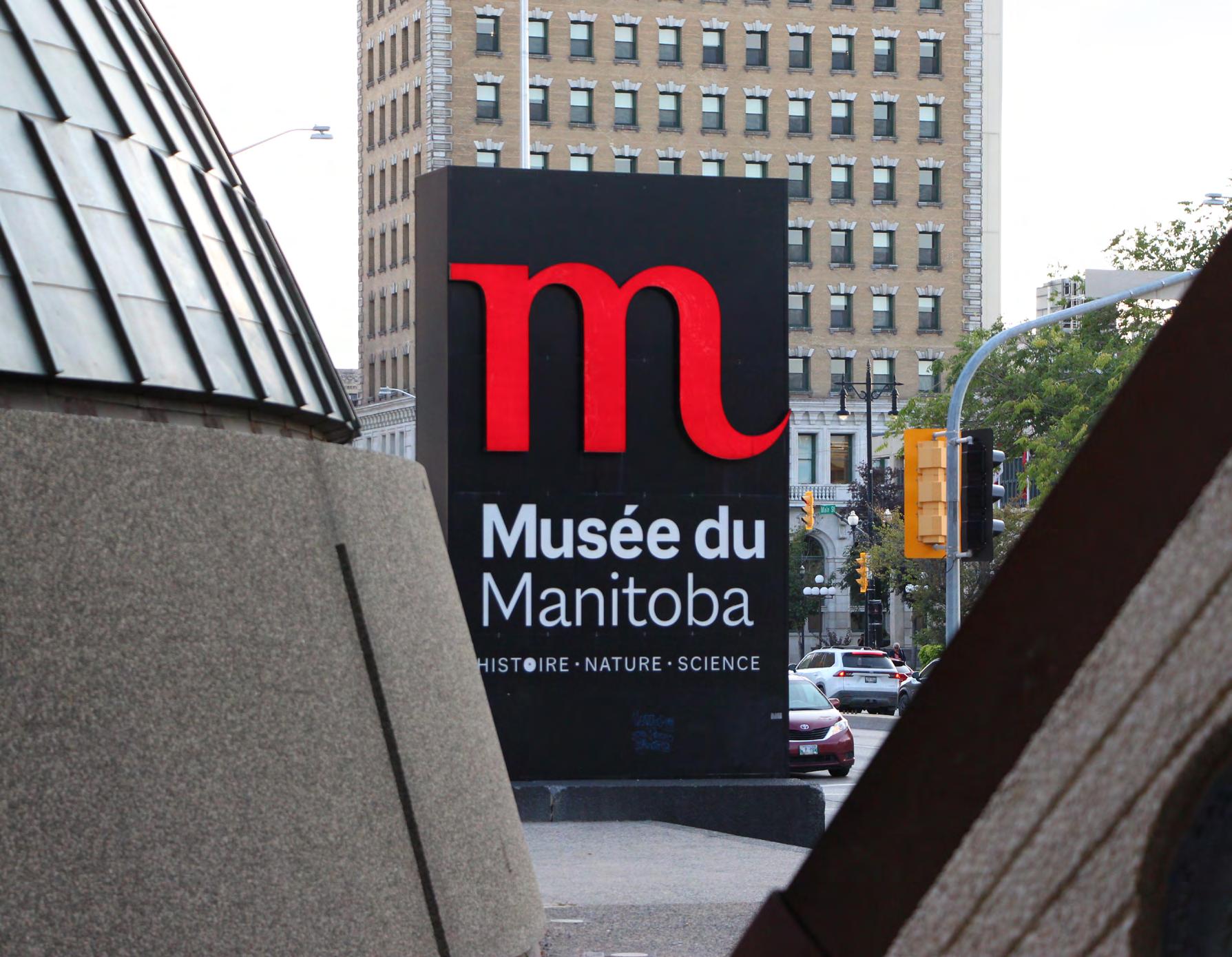
The Manitoba Museum has completed its largest repatriation to date, returning 19 cultural belongings to Piapot First Nation in Saskatchewan.
This repatriation aligns with the 150th anniversary of the signing of Treaty 4. The repatriated items include ceremonial pipes, a drum, an eagle fan, medicine pouches and gifts Chief Piapot once gave to the minister who conducted his daughter’s marriage ceremony.
At the center of the work is Amelia Fay, the museum’s curator of anthropology and the Hudson’s Bay Company collection.
“It’s a really collaborative process. We want repatriations to succeed just as much as the communities requesting them,” said Fay. Her dayto-day responsibilities range from provenance research to assembling documentation.
“No two repatriations look the same,” she added.
In the case of the Piapot repatriation, everything aligned quickly. From initial request to completion, the project took roughly three months — rapid by typical repatriation standards — and marked Fay’s first major repatriation as lead curator.
Fay framed repatriation as stitching a thread back into place. “It’s reconnecting with the past and having that continuous thread,” said Fay.
“We know that a lot of that continuum has been severed
through colonial processes,” she said. “There is something to be said about those belongings just going home where they rightfully belong and what that means.”
meant to be, and that’s where they’re supposed to be,” said Fay.
have these things back home where [they belong].”
“There is something to be said about those belongings just going home where they rightfully belong and what that means”
Fay felt the difference the repatriation made in Piapot. “When I was out at Piapot, things just felt really good — it felt really light. It just felt like it was
— Amelia Fay, curator of anthropology and the HBC museum collection
“You could feel the community’s energy, you could feel what it meant for them to
Piapot First Nation leadership underscored that impact with a quote from Chief Mark Fox in the museum’s announcement.
“The return of Chief Piapot’s belongings is very important […] When our people see the belongings,
they’re proud, they’re honoured, they’re emotional […] It’s going to carry our nation for another hundreds and hundreds of years to come,” said Fox.
Lara Rosenoff Gauvin, an associate professor in the U of M’s department of anthropology, shared her perspective as well. “The Elders I work with emphasize that repatriation (or rematriation) is Ceremony — that it is spiritual and healing.”
Brandi Hayberg, manager of marketing and communications at the Manitoba Museum, said the museum’s policy views repatriation as “more than returning objects to communities.” It supports “revitalizing Indigenous self-identity, spirituality and ceremony, languages, art, sovereignty, laws and governance.”
As a Winnipeg-born curator who studied here, left for graduate studies and came home again, Fay now helps navigate where belongings belong, sometimes after decades. Her arc mirrors the return those items make — away, and then back, carrying teachings for the next generation.
Dorota Blumczyńska, the Manitoba Museum’s CEO, put the museum’s hope plainly.
“We hope that the repatriation of Chief Piapot’s belongings to his community will bring present and future generations renewed strength and hope.”
UMGPS welcome back event builds student connections
Roy Albright Obah, staff
The U of M Graduate and Postdoctoral Society (UMGPS) welcomed new and returning members with its annual welcome back event on Sept. 11 at the Fort Garry campus. Designed to reconnect students after the summer and introduce fresh faces to
the community, the event blended games, conversations and shared activities to foster a sense of belonging.
Diwan Oulai, UMGPS vice-president of events and clubs, emphasized the importance of creating such spaces for students. “The event specifically is an opportunity for
new and returning students to [connect] with their peers,” Oulai said. “It’s an opportunity for them to reconnect with each other, make new friends and be reminded that they are also not alone in their journey.”
The afternoon was filled with interactive activities
aimed at sparking conversations and breaking the ice. Students from a wide range of disciplines and backgrounds participated, making the event a representation of the diversity within the UMGPS community. While the programming focused on fun, its underlying goal was to help
reduce the isolation that can accompany graduate and postdoctoral life.
Daniel Asante, a returning graduate student, was provided a much-needed pause from the pressures of course-
Cont’d p. 3 / work <
PHOTO BY JESSE BROGAN / STAFF


109 HELEN GLASS BUILDING UNIVERSITY OF MANITOBA WINNIPEG, MB THEMANITOBAN.COM | 204. 474. 6535
GENERAL INQUIRIES: ME@THEMANITOBAN.COM
CIRCULATION INQUIRIES: MISSING OR INCOMPLETE PAPER?
EMAIL: DISTRIBUTION@THEMANITOBAN.COM
EDITOR-IN-CHIEF Mikaela Warkentin editor@themanitoban.com
BUSINESS MANAGER Alice Teufack accounts@themanitoban.com
BUSINESS SUPPORT MANAGER Joshua Herold ads@themanitoban.com
EDITORIAL
MANAGING EDITOR Peace Ifeanyi me@themanitoban.com
COPY EDITOR Eden Quiring copy@themanitoban.com
NEWS EDITOR Jesse Brogan news@themanitoban.com
NEWS EDITOR Roy Albright Obah news@themanitoban.com
RESEARCH & TECHNOLOGY EDITOR Mansura Meghla research@themanitoban.com
COMMENT EDITOR Quinn Mayhew comment@themanitoban.com
ARTS & CULTURE EDITOR Boris Tsun Hang Leung arts@themanitoban.com
SPORTS EDITOR Abdul-Jalilu Ahmed sports@themanitoban.com
DESIGN
DESIGN EDITOR Deveney Jarrow design@themanitoban.com
GRAPHICS EDITOR Emma Gillich graphics@themanitoban.com
AUDIO AND VIDEO
AUDIO EDITOR Max Reid audio@themanitoban.com
PHOTO EDITOR Mike Thiessen photo@themanitoban.com
VIDEO EDITOR Zulkifl Rafah video@themanitoban.com
DIGITAL MEDIA EDITOR Faisal Rahman social@themanitoban.com VOLUNTEERS
VOLUNTEER STAFF
VOLUNTEERS
interested in volunteering? email me@themanitoban.com today!

The Manitoban is the official student newspaper of the University of Manitoba. It is published monthly during the summer and each week of regular classes during the academic year by the Manitoban Newspaper Publications Corporation.
The Manitoban is an independent and democratic student organization, open to participation from all students. It exists to serve its readers as students and citizens.
The Manitoban is a member of the Canadian University Press, and our journalistic standards can be found on the Manitoban’s website.
The newspaper’s primary mandate is to report fairly and objectively on issues and events of importance and interest to the students of the University of Manitoba, to provide an open forum for the free expression and exchange of opinions and ideas and to stimulate meaningful debate on issues that affect or would otherwise be of interest to the student body and/ or society in general. The Manitoban serves as a training ground for students interested in any aspect of journalism.
Students and other interested parties are invited to contribute to any section of the newspaper. Please contact the appropriate editor for submission guidelines.
The Manitoban reserves the right to edit all submissions and will not publish any material deemed by its Editorial Board to be discriminatory, racist, sexist, homophobic or transphobic, ableist or libellous.
Opinions expressed in letters and articles are solely those of the authors. Editorials in the Manitoban are signed and represent the opinions of the writer(s), not necessarily those of the Manitoban staff, Editorial Board or the publisher.
A “volunteer staff” member is defined as a person who has had three volunteer articles, photographs or pieces of art of reasonable length and/ or substance published in the current publishing year of the Manitoban
Any individual who qualifies as a volunteer staff member must be voted in by a majority vote at a Manitoban editorial board meeting. Elected representatives and non-students may be excluded from holding votes as volunteer staff members in accordance with the Manitoban Constitution.
All contents are ©2025 and may not be reprinted without the express written permission of the Editor-in-Chief.




Truth and Reconciliation in the face of denialism
Indigenous communities release statement regarding Frances Widdowson
Mikaela Warkentin, staff
The U of M Indigenous Students Association (UMISA) and UMSU’s Indigenous Community have released a joint statement regarding the visit of Frances Widdowson, a former professor at Mount Royal University, whose most recent project is a documentary titled WHAT REMAINS: Exposing the Kamloops Mass Grave Deception’s Impact on Powell River Widdowson is known for a vitriolic online presence surrounding Indigenous academia and research. She intends to speak in front of the National Centre for Truth and Reconciliation on Sept. 25 in an effort to disseminate her beliefs. She has specifically chosen the U of M campus as a location for her Spectrum Street Epistemology session regarding the claim “The ‘grave error’ at Kamloops was a hoax” because of the university’s and the centre’s efforts to dispel the same residential school denialism she intends to sow.
In a video Widdowson posted on Sept. 6, she shared that she had been attempting to get a formal space for her talk at U of M “since June” with the assistance of an anonymous U of M professor. In an email posted by Widdowson, the university said they would have required her to reschedule her talk and pay for a portion of security due to the content of her work and the potential for her talks to draw negative attention.
Following a decision made by UMSU’s Indigenous students’ representative Arianna Gamblin and the UMISA
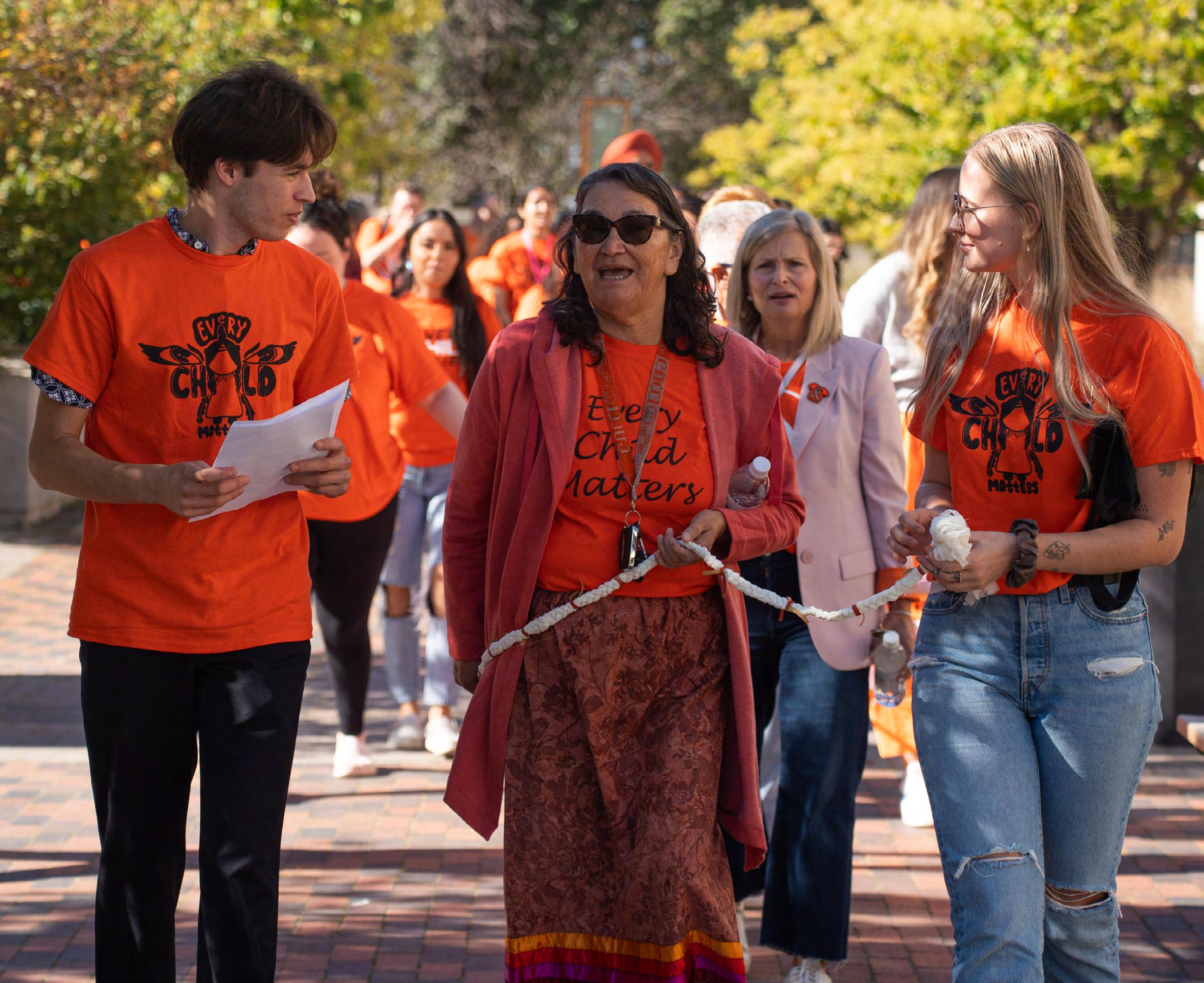
co-presidents Gamblin and Alex Peters, both groups released a joint statement saying that counter-protest would not be the best course of action against Widdowson, citing safety concerns.
Widdowson regularly makes use of social media platforms
such as X (formerly known as Twitter) to publicly target academics, researchers and politicians for their efforts in truth and reconciliation. Widdowson also has criticized UMSU for elements of the Truth and Reconciliation events that the U of M is hosting, specifically
prayers, “which should not be held at a secular institution,” shared Widdowson in a post made to X.
Instead of counter-protests, UMISA and the UMSU Indigenous Community encourage attendance at Truth and
Event fosters connection for graduate and postdoctoral students
< Cont’d from front page
work and research at the event.
“I wanted to use this event as an opportunity to take a break from work, reconnect with friends and meet new graduate students,” Asante said. He described the event as both engaging and approachable.
“Events like this are refreshing and motivating […] which is a great boost as we begin another term,” he explained.
“The variety of activities helped spark conversations and made connecting with others feel natural.”
Other students also expressed this sense of relief and renewal. Mubaraq Olanyinka Ganiyu, who attended last year’s event as well, found
the 2025 edition equally meaningful. “It reminds me that I’m not alone in this journey, and there are people and resources here to support us throughout the year,” he said. Ganiyu also noted that he learned about new opportunities on campus. “I found out about a few student resources I hadn’t explored […] which I think is really valuable.”
The event was also an avenue for practical learning and professional growth.
Omowumi Banjo, a new graduate student, shared how the event offered her new insights for academic and social integration. “I got helpful tips that will help me in navigating in the community and promo-
ting my academic network,” she said.
Oulai reaffirmed the broader role UMGPS plays in the lives of graduate and postdoctoral students. “The UMGPS is there to facilitate students’ transitions into the school environment,” he said. “Don’t hesitate to reach out to us.”
For anyone interested in networking, discovering resources or enjoying campus life, UMGPS updates are available through email and on Instagram @uofm_gps.
Reconciliation Day events, including those hosted by the U of M. For more information on these events, visit umanitoba. ca/indigenous/engagement/ national-day-truth-and-reconciliation.
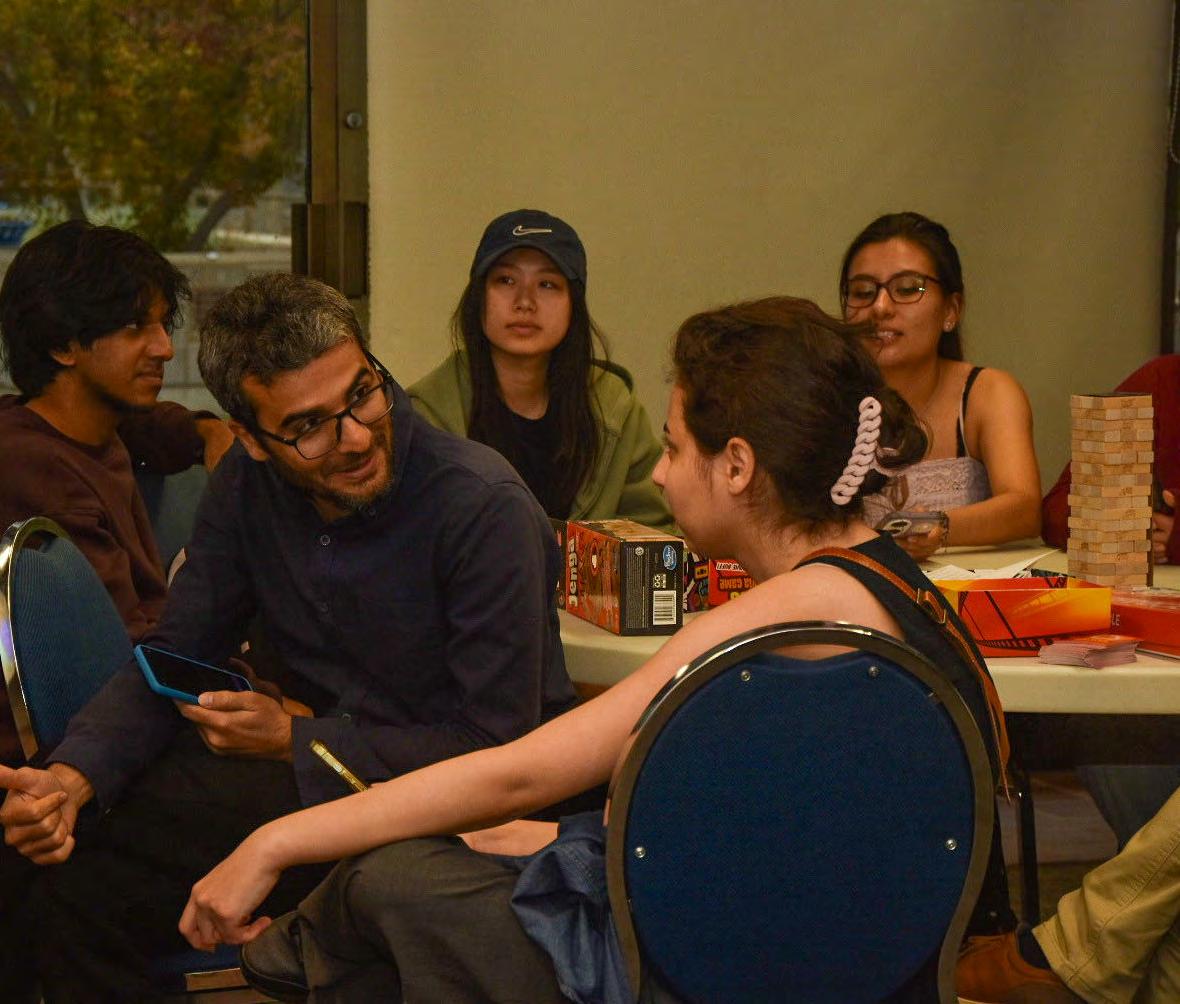
PHOTO BY NISCHAL KARKI / STAFF
PHOTO PROVIDED BY O3PHOTOGRAPHY
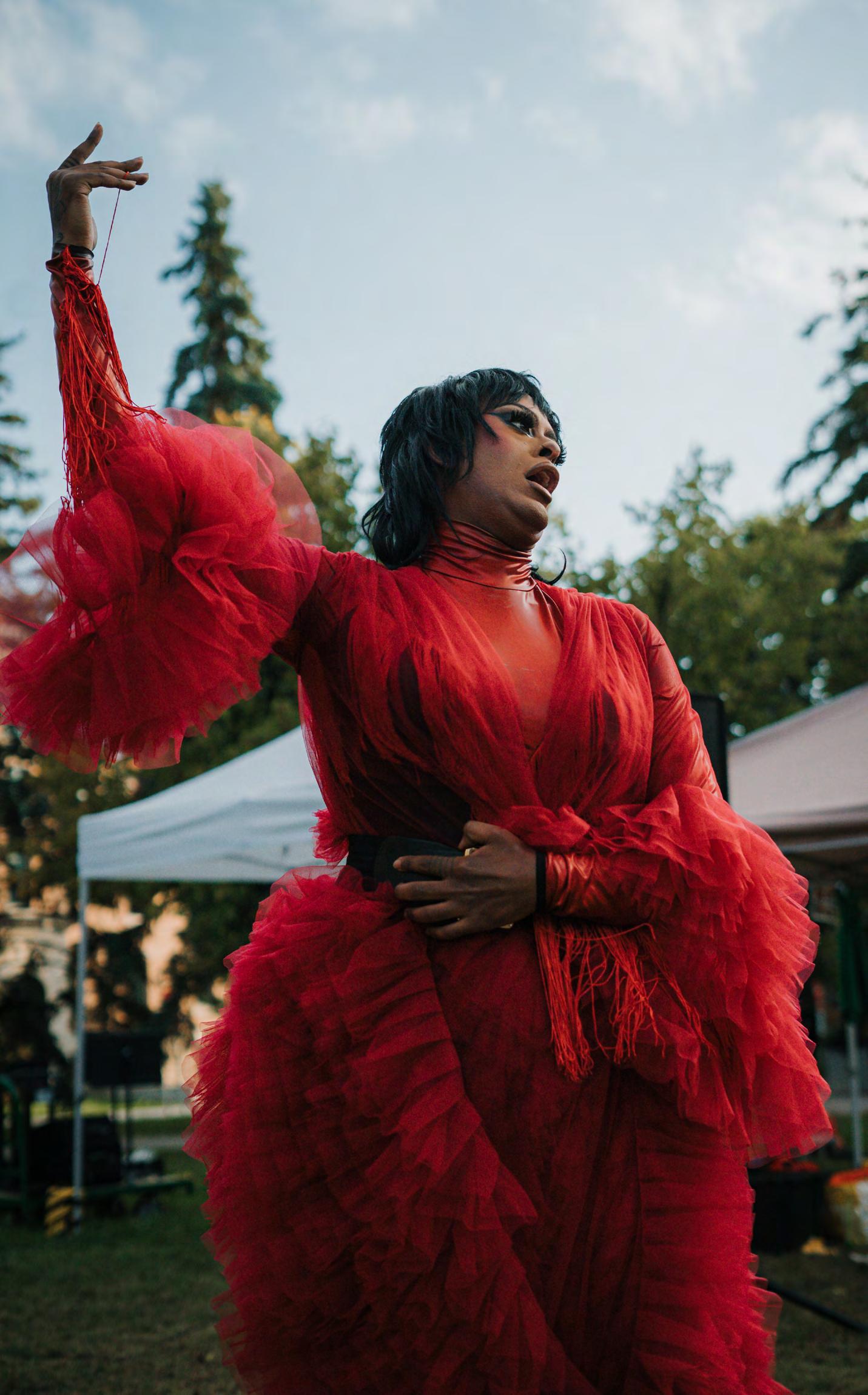
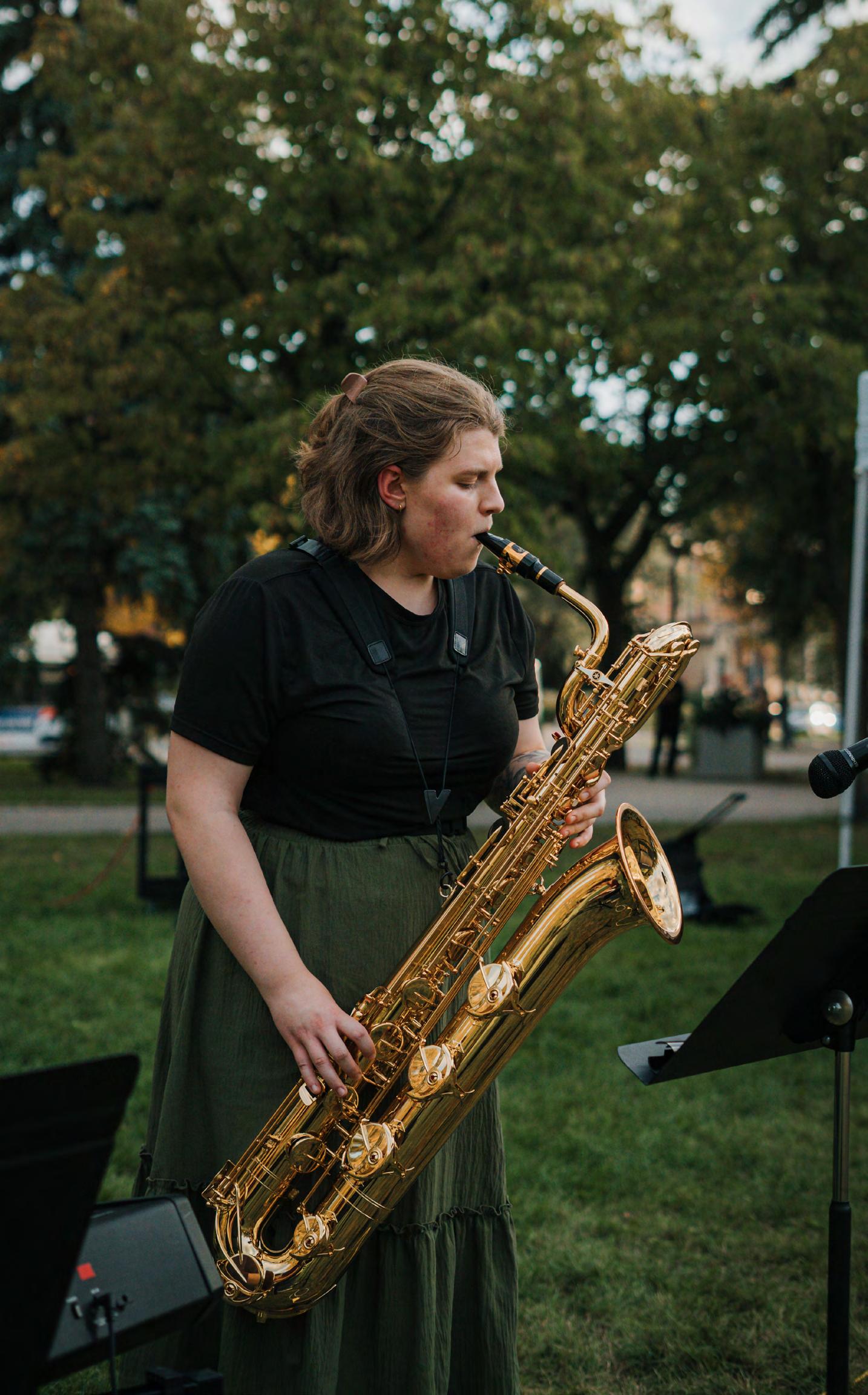
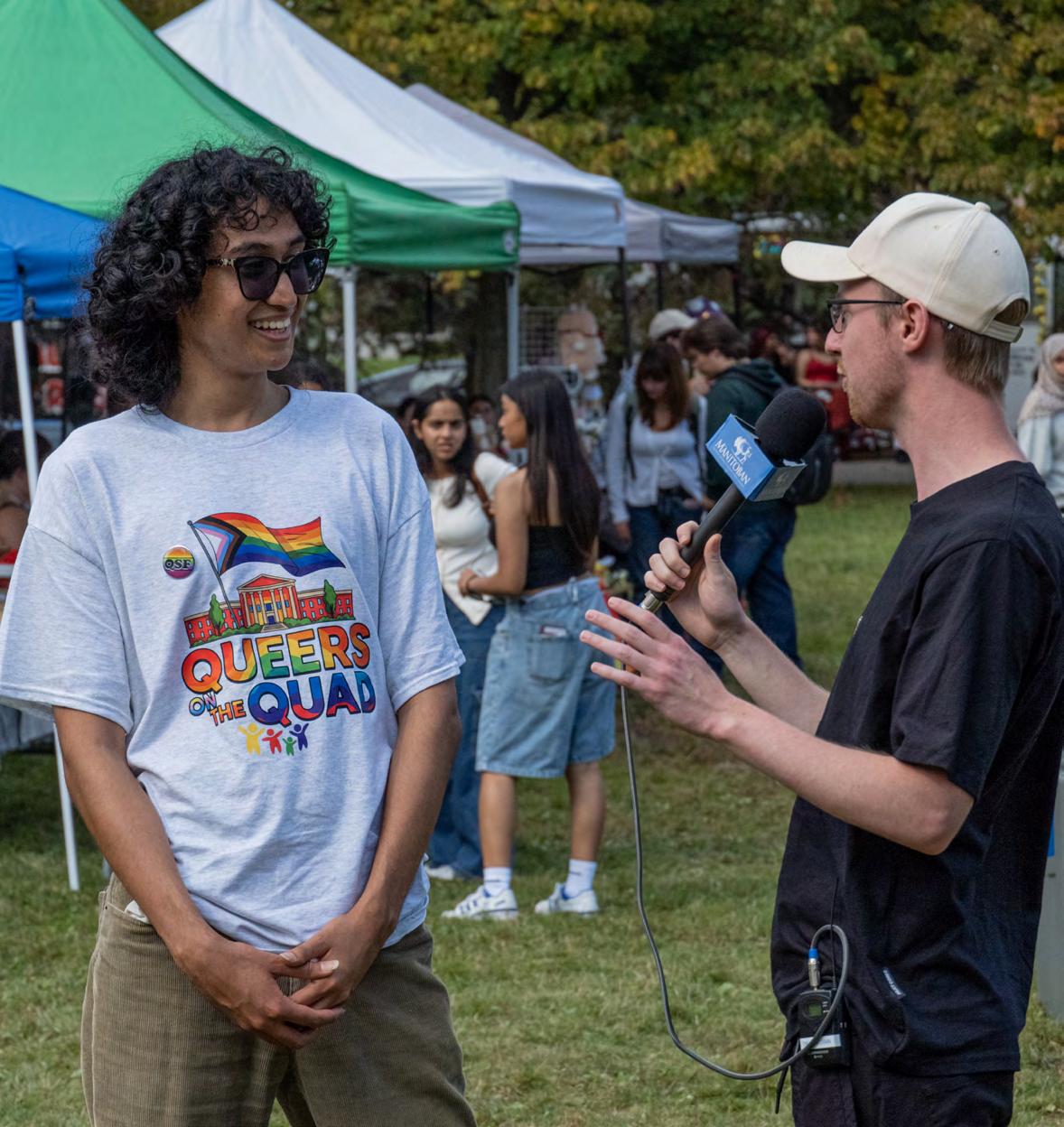
Queers on the Quad 2025 anything but a drag
The Queer Student Family Centre and UMSU 2SLGBTQIA+ rep Ayush Singh hosted Queers on the Quad 2025 on Friday, September 12. Drag artists and live music were the highlights of the day, featuring U of M’s queer talent, along with food trucks and local vendors. Stay tuned for the Manitoban’s exclusive interview on Toban Talks, where we spoke with Singh and community members about the importance of events like these.

PHOTOS BY ZULKIFL RAFAH / STAFF
Access Program celebrates 50 years
Five decades of breaking barriers and supporting student success at U of M
Roy Albright Obah, staff
T
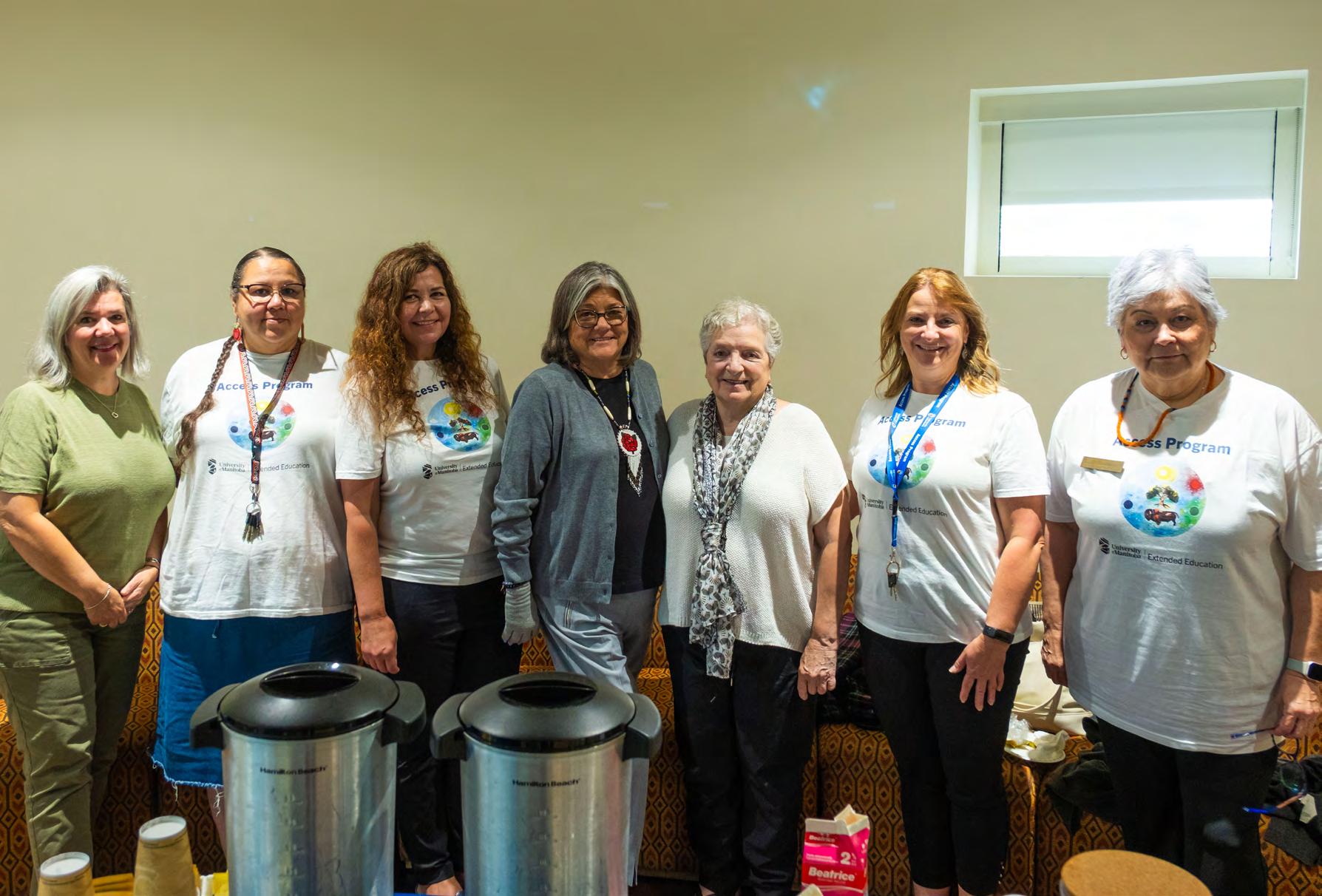
he U of M’s Access Program celebrated its jubilee anniversary on Sept. 11 at Migizii Agamik (Bald Eagle Lodge). The milestone marked five decades of supporting students who have faced barriers to education and providing them with a pathway to success.
Launched in 1975, the Access Program was designed to open doors for individuals who had historically been excluded from post-secondary opportunities. Nearly half a century later, the mission remains the same — to remove obstacles and provide the tools students need to succeed both in and beyond the classroom.
Diedre A. Desmarais, area director of the Access and Aboriginal Focus Programs, touched upon the purpose of the Access Program, saying that it has “remained consistent.” She added, “We recruit then accept those students who have traditionally faced barriers to post-secondary education.” Since its inception, the Access Program has supported more than 700 students. Alumni have gone on to excel in medicine, law, nursing, liberal arts, fine arts and more.
“Our alumni cross all disciplines […] and have become fine role models for those following in their footsteps,” Desmarais said.
One such success story is that of Marti Ford, who graduated from the Access Program three decades ago. Ford went on to earn a bachelor of arts, a
bachelor of education, a master of education and a PhD. Today, she serves as the associate dean of Indigenous education and an assistant professor at the U of M. She currently shares her expertise both nationally and internationally.
“[She] is a shining example of success and how one person can break the trail for many more,” Desmarais said. “We are very proud of Dr. Ford, prouder still that she chose our program to assist in her success.”
The program’s longevity is rooted in its ability to adapt. In recent years, this has included developing a partnership with the faculty of education to address the province’s need for more teachers.
In the 2024–25 academic year, the program offered its first “Introduction to Teaching” course as part of this initiative.
Looking forward, the Access Program is exploring ways to partner with Indigenous communities to offer university credits locally, allowing students to remain in their home communities while beginning their academic journeys.
to face challenges. “Our greatest challenge is finances […] but the Access team are highly committed professionals who have adapted to personnel shortages and fiscal restraints
“Our alumni cross all disciplines […] and have become fine role models for those following in their footsteps”
4
“We try very hard to stay relevant and address the [needs] of our provincial communities in the moment,” Desmarais said.
— Diedre A. Desmarais, area director of the Access and Aboriginal Focus Programs News
Alongside its achievements, the program continues
‘Toban news briefs
Jesse Brogan, staff
Large donation for U of M
The Mastercard Foundati on has announced a $5 million gift to the U of M to enhance post-secondary education for Indigenous youth. This donation, part of the foundation’s $235 million investment across Canada, builds on the U of M’s partnership with the EleV Program. The funds will support Indigenous learners, strengthen community partnerships and respond to a 10.7 per cent increase in Indigenous student enrolment at the U of M.
Winnipeg Design Festival 2025 sparks connections
This year’s Winnipeg Design Festival ignites crea-
tivity with the theme “CONNECT,” inviting artists, designers and thinkers to explore links beyond the physical, embracing cultural, emotional and social ties. Through interactive installations, workshops and forums, the festival celebrates local design culture and fosters dialogue, elevating Winnipeg’s status as a burgeoning global design hub.
Things Left Unsaid
Bria Fernandes presents layered narratives in new exhibition. Winnipeg-based artist Fernandes delves deep into identity and memory with her latest exhibition at Gallery 1C03. Through large-scale tableaus, she explores the complexities of self-doubt, anxiety
like the champions that they are,” Desmarais explained. Desmarais sees the work as something that is deeply personal. “There is very little
that our students face that is unfamiliar to me,” she said. “Every aspect of my career I see through the lens of my lived experience as an Indigenous woman and my experience as a lifelong learner who successfully achieved the dream of academic [success].”
inte R national ne W s b R iefs
By
As the program looks to the next decade, Desmarais is hopeful it will continue to thrive. “My hope for this program is that it is still around for many more decades,” she said. “There
are many students who face almost overwhelming barriers to post-secondary success, and the community that we build in our program gives them a safe place to land.”
“Every program is only as good as the professionals who make it shine,” Desmarais added. “As for the Access students, we couldn’t be prouder. Your tenacity in academic struggle and your commitment to succeed is so admirable […] You are the true heroes.”
For more information about the Access Program, visit umanitoba.ca/student-supports/access-program.
and displacement within diasporic communities. Her work will be on display from Sept. 11 to Oct. 31 at the University of Winnipeg’s Centennial Hall, on weekdays from 12 p.m. to 4 p.m.
Orange Shirt Days
The Manitoba Museum will host Orange Shirt Days from Sept. 28–30, featuring special programming on the history of Indian Residential Schools and Truth and Reconciliation Commission Calls to Action. The event offers learning and reflection opportunities. Admission to the Museum Galleries, Science Gallery, and Planetarium is free during these three days. There are no tickets required, but there is limited capacity.
U of M Student Wellness Centre
The Student Wellness Centre (SWC) at the U of M is open for the 2025-26 academic year, marking its two-year anniversary. The SWC offers a lounge and wellness resource library, as well as free health supplies, peer consultations and yearround events to support student wellbeing. Open Monday through Friday, the SWC can be found at 162 Extended Education Complex at the


PHOTO BY MIKE THIESSEN / STAFF
ALUMNI AND STAFF OF THE U OF M’S ACCESS PROGRAM AT THE PROGRAM’S 50TH ANNIVERSARY CELEBRATION.
Jill Patterson, staff









Research & Technology
Unlocking the gut’s secrets
Exploring microbiome, mental health and disease outcome links
Mansura Akter Meghla, staff
Charles Bernstein, a gastroenterologist and professor of internal medicine at the U of M, has spent decades studying how the gut influences disease. His current work highlights the connections between inflammatory bowel disease (IBD), the gut microbiome and mental health.
Bernstein directs two of the province’s largest IBD research resources — the IBD Epidemiology Database and the IBD Research Registry. The database compiles population-based data on prevalence, outcomes and related conditions across Manitoba, while the registry includes nearly half of all Manitobans diagnosed with IBD. Together, these tools allow his team to follow patients over time, connect medical records to survey data and build long-term cohort studies.
His research spans “epidemiological work using administrative health databases, clinical outcomes and comorbidities of persons with [IBD].” Bernstein added, “We do translational research exploring the neuroimmunology and gut microbiome in persons with [IBD].” A major focus of his research is the brain-gut axis, which examines psychiatric conditions that often occur alongside IBD and other chronic immune disorders. By combining administrative health records with population-based data, Bernstein aims to better understand how mental and physical health interact in IBD.
Bernstein began focusing on the gut in the late 1980s. His studies have contributed new knowledge on how IBD develops and how it can be managed. This includes research into the gut microbiome (the microorganisms that live in the digestive tract) and how they shape disease outcomes.
Bernstein’s team is exploring microbiome changes linked to mental illness and sleep, as well as brain imaging in IBD.

ulcerative colitis.”
Bernstein recently co-authored an international study on disparities in IBD care. “It was not surprising, but fascinating, to see where the disparities are in care. [That is]
tive colitis present in strikingly similar ways worldwide, regardless of differences in health care spending.
“Exploring IBD around the world will help us discover the causes of [chronic immune] diseases”
— Charles Bernstein, a distinguished professor at U of M’s Max Rady college of medicine
“We are studying functional and structural MRI [results] in relation to disease diagnosis, including the presence or absence of mental health [issues],” Bernstein said. “We have just begun work on sleep and circadian rhythms in persons with Crohn’s disease and
less availability of advanced endoscopy equipment and advanced drugs in lower income countries,” he noted.
At a recent gastroenterology meeting in San Diego, Bernstein and colleagues presented findings showing Crohn’s disease and ulcera-
“The rapid rise of inflammatory bowel disease worldwide fascinates me and leads me to believe exploring IBD around the world will help us discover the causes of [chronic immune] diseases,” he said.
“We should be able to harness the similarities in diseases clinically and the different biologies of the people worldwide presenting with the diseases to solve what causes them.”
Looking ahead, Bernstein’s ultimate goal is to advance the “understanding of the cause
and management of [IBD]” to improve care for people living with IBD, particularly when it comes to mental health comorbidities.
He also encouraged students considering research careers to be motivated by curiosity rather than obligation. “Students should only do it because they are driven to, not because it is just a means to an end,” he said.
Bernstein highlighted Manitoba’s collaborative network. “Through collaboration with superstar clinicians and researchers in Manitoba, we have developed an international reputation for our [IBD] research program […] We continue to extend our collaborations worldwide to enhance our understanding and care for these patients,” he said.
Each June, his research centre hosts an international symposium on gastroenterology in Winnipeg, drawing trainees and specialists from around the world.
He said, “June 11 and 12, 2026 will be our 29th annual symposium. Trainees get free registration (and free food!). We bring in about 15 international gastroenterology stars to participate.”
By continuing to integrate epidemiology, microbiome science and mental health research, Bernstein’s work positions Manitoba as a global hub in the search for causes and treatments of IBD.
More information can be found at ibdmanitoba.org.
GRAPHIC BY EMMA GILLICH / STAFF
Prioritizing patients over paperwork
Research weighs benefits of human vs. AI scribes in psychiatry
Mansura Akter Meghla, staff
econd-year medical
S
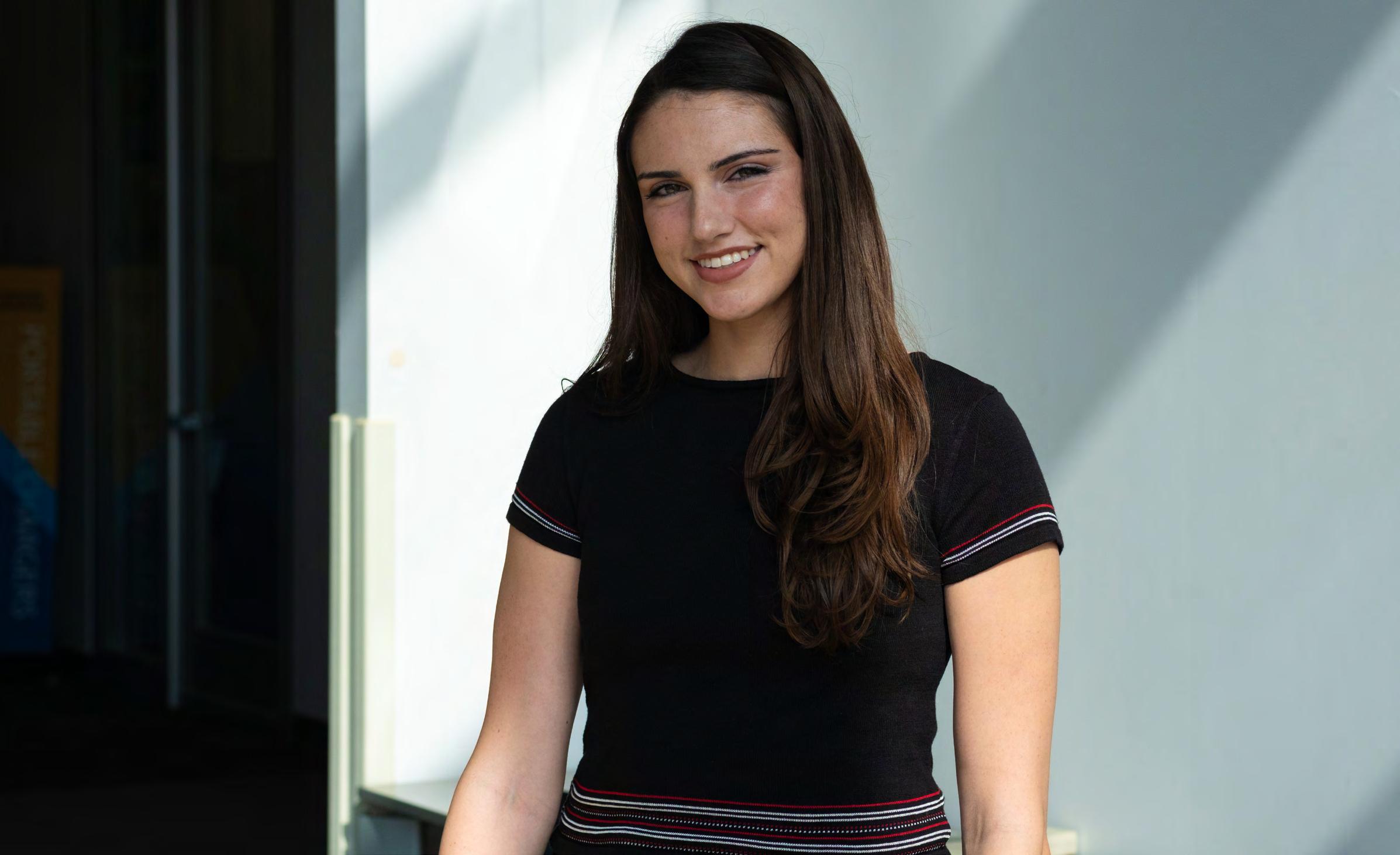
student Jessica Dyck spent her summer in the BSc Med program on a project that could reshape psychiatric care. She is part of a randomized controlled trial (RCT) titled Patients Before Paperwork, which tests whether human or artificial intelligence (AI) scribes can best reduce the administrative load carried by psychiatrists.
The BSc Med program allows medical students to conduct research between their first and second years. Dyck joined the project after seeing its description in a list of abstracts. “I have a bit of experience being a medical scribe, so I thought it was right up my alley,” she said.
“All physicians have to take notes of their clinical encounters,” both for legal reasons and continuity of care, Dyck said. “A scribe does those notes for them, but […] can also function as an assistant” helping with referrals or prescriptions, she explained. Having a scribe can make a big difference in how much time a doctor is able to spend directly with a patient.
The study is led by Jitender Sareen, a professor and the department head of psychiatry at the U of M. Sareen highlighted that the work has three major goals. “One, improve the quality of patient care […] two, to reduce the administrative burden on the psychiatrist,” and three, to reduce the long “waiting times for our population.”
The trial will recruit 10 psychiatrists, who will rotate through three one-month conditions: no scribe, a human scribe and an AI scribe. The order will be randomized, with some starting with human scribes and others with AI scribes. Researchers will then compare outcomes such as physician workload, patient satisfaction and time spent in face-to-face interaction.
Sareen said the burden of paperwork is one of the largest barriers in psychiatry today.
“Often a psychiatrist meets with a person for an hour, hour and a half,” then spends another hour or two writing the report, he said. “If we can reduce that time for the writing, it frees up their time to either see more patients or reduce the amount of time they have to do work at home.”
Human scribes have been at work for years in U.S. hospitals and in several Canadian specialties, including cardiology and surgery. Sareen said they have proven effective at reducing doctor’s administrative strain.
digital tools and the need for human support.
“The AI scribes or the digital scribes are starting to be implemented,” he said, “but there are certain things that you can’t really use a digital scribe to do, like go back and find lab work from another place.” Humans still play a valuable role.
ants. For Sareen, that training pipeline is an important part of the study. It gives students the opportunity to explore “that early interest in a particular area of medicine.”
“Anything that we can do to reduce [the] waiting list for our populations to access mental health care [is important]”
— Jitender Sareen, professor at U of M’s Max Rady college of medicine
Now, AI scribes are beginning to enter clinics, raising questions about the limits of
The project is currently in the recruitment phase, with ethics approvals underway. Alongside the psychiatrists, the team is seeking undergraduate students to work as scribes and research assist-
Dyck said she is excited about this project as “it has the ability to equally benefit patients and physicians.” The study will survey patients on how much of the visit was spent interacting directly with their doctor and whether they felt the quality of the visit improved, she explained. At the same time, the study will look at physician satisfaction and workload.
“This study, I feel, is very, very important,” emphasized Sareen. “Anything that we
can do to reduce [the] waiting list for our populations to access mental health care” is important. It is also necessary, “trying to really look at using some of this new technology in the appropriate, safe manner, because there’s lots of risks with privacy and a range of different problems. So, part of our evaluation is also learning some of the challenges that can happen.”
If successful, Patients Before Paperwork will serve as a feasibility study for a larger RCT. The findings could shape how psychiatrists, and eventually other doctors, integrate human and AI scribes into practice.
The research team is in the recruiting phase right now. Students interested in human scribe or research assistant positions can contact the team at jsareen@hsc.mb.ca for more information.

PHOTO BY MIKE THIESSEN / STAFF
U OF M MEDICAL SCHOOL STUDENT JESSICA DYCK IS PART OF A RESEARCH PROJECT TESTING THE EFFICACY OF AI MEDICAL SCRIBES
Celebrate people while they are still here
In the wake of tragedy, a reminder to honour lives before they slip beyond our reach
Roy Albright Obah, staff
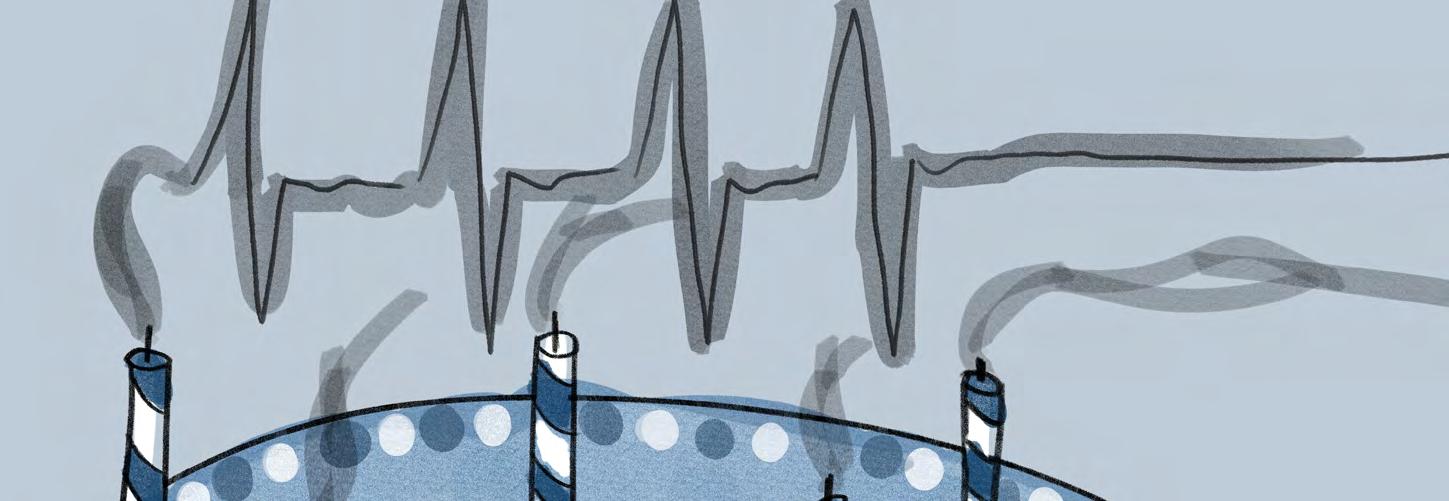
Every tick of the clock marks both a beginning and an end. A newborn draws its first breath somewhere in the world, while elsewhere, another soul slips quietly away. This constant, silent rhythm reveals the profound fragility and fleeting beauty of existence.
Birthdays, those annual personal milestones, sit squarely at the intersection of this paradox. As I stand on the threshold of adding another year to my own tally, the familiar question arises — does this turning of the page instill paranoia about time’s relentless march, or kindle hope for the unwritten chapters ahead? The answer, perhaps, is a complex blend of both — a feeling uniquely amplified by the very nature of the day.
For many, a birthday is a light piercing the dullness of routine. It is the designated day when the world, or at least a corner of it, remembers you. Phones buzz with messages, social media feeds overflow with well-wishes, and loved ones make the effort to reach out. It is a validation, a tangible reminder of connection and belonging.
Yet, this concentrated affection can cast a shadow.
For those navigating loneliness, grief or fractured relationships, a birthday can feel like a cruel magnification of absence. It becomes less of a celebration and more of a haunting echo of loss, a painful reminder of happier times. This feeling was especially sharp in Ghana in the wake of the recent tragic helicopter crash that claimed the lives of
eight people on Aug. 6.
The nation, united in grief, was awashed in tributes, music, eulogies and solemn promises to honour the memory of those lost. Streets echoed with praise for their contributions and character — leaders and citizens alike spoke glowingly of their courage, dedication and humanity. Yet, as moving as these posthumous celebrations were, they also raised a familiar, haunting question — why do we so often reserve our deepest expressions of love and respect for when it is too late for the living to hear?
The lesson embedded within this tragedy is so profoundly urgent. We must learn to transfer the energy and eloquence we pour into posthumous tributes into the present moment. Birthdays,
anniversaries and even ordinary Tuesdays are not merely about marking the passive passage of time. They are our recurring, precious opportunities to say what needs to be said now. They are a chance to truly see the people around us, voice our appreciation, offer forgiveness and express our love while their ears can still hear the words and their hearts can still be warmed by them.
Is the feeling as we turn a new age paranoid or hopeful? It can be both. Paranoia urges us not to waste the time we have; hope invites us to fill that time with meaning. But beyond our personal anxieties, the birthday’s deepest call is outward — to celebrate people in the vibrant, imperfect, glorious present. The profound national
loss experienced in Ghana must strengthen our collective resolve. Let it be a strength that pushes us not to wait until tragedy silences a vibrant voice, to finally speak what is in our hearts. We must choose to celebrate life fiercely and generously while we are all still here to share its light and warmth.
The greatest tribute we can ever offer to the departed, and to each other, is far greater than any funeral oration or national promise. It is the gift of ‘Now’ — the profound, unshakeable certainty of being valued, seen and appreciated now in life, not just hallowed in memory. Let that be the legacy we build, every single day.
Let that time be now!

GRAPHIC

My Labubu-wearing nightmare
If you spot a man with a tote bag, run in the other direction
Quinn Mayhew, staff
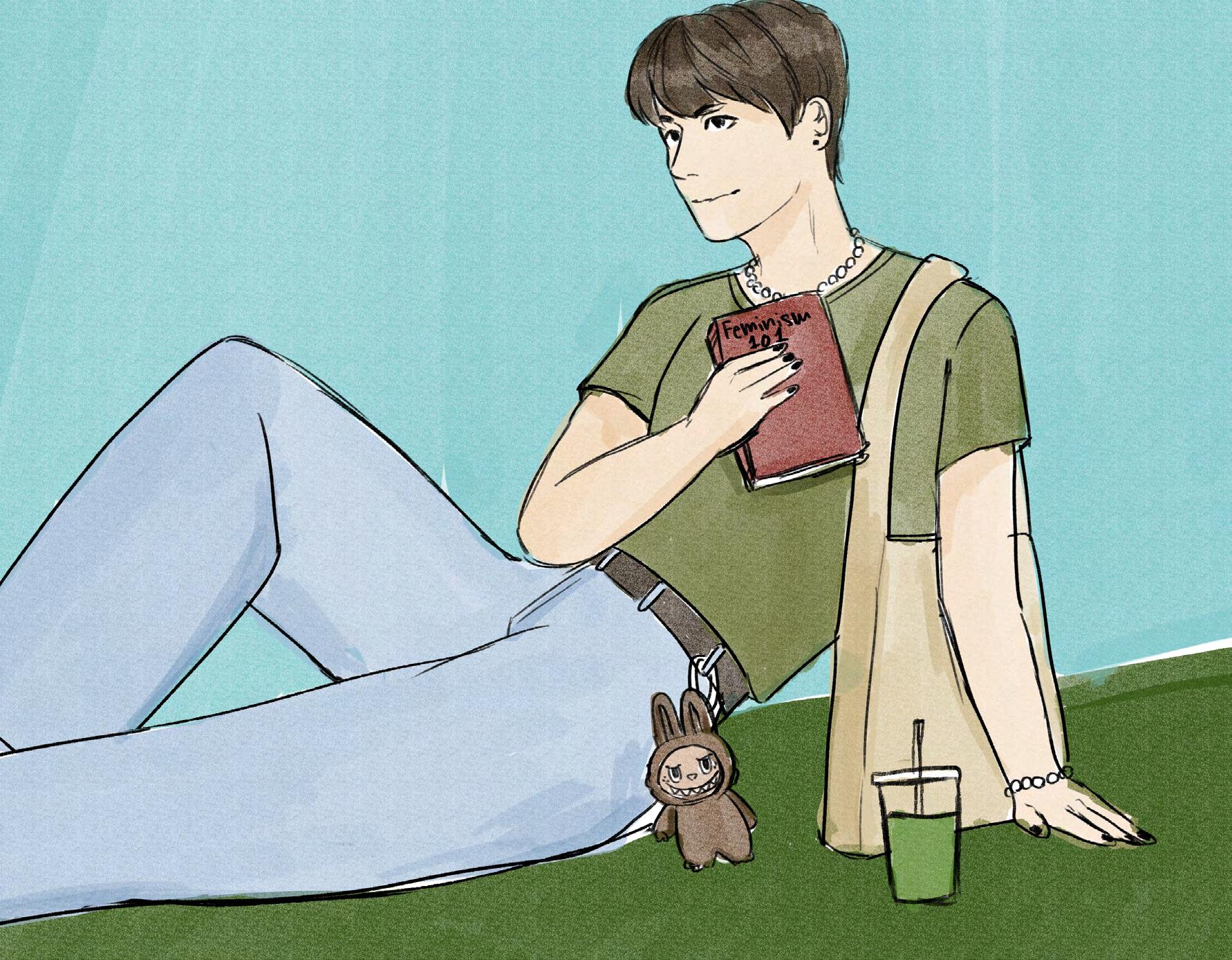
If you think you may have spotted a performative male, my first piece of advice to be sure is to look for a tote bag, an iced matcha or listen to hear him say, “Have you ever heard about this underground indie artist called Clairo?”
The term “performative male” became popular due to TikTok’s influence. This term was meant to mock men who “perform” in a way that is meant to appeal to women.
The word “perform” is key to the performative male aesthetic. He always appears to be more progressive and wellread than he actually is. This form of man, in my opinion, is more toxic than the outwardly rude man, as the performative man is tapping into a form of manipulation that both preys on and takes advantage of women.
The performative male has other tools in the arsenal of his curated aesthetic. He has a vast collection of vinyl records, with the focal point of his collection being Lana Del Rey, and he will often be carrying a book, which is most likely The Bell Jar by Sylvia Plath.
This archetype is a pretty new aesthetic which has inspired “performative male contests” in many different cities around the globe, both
criticizing and mocking this particular toxic flavour of man.
I have had a few run-ins with men sporting the performative male aesthetic. In my experience, they are always the ones lurking in the corner of a party with a Labubu strapped to their tote bag, talking a little too loudly about how “The Bell Jar was just so intrinsically deep.” I once asked a performative man if he knew what the word “intrinsically” meant, and he gave me a look as though I had just told him Thom Bargen had freshly run out of matcha.
Half of the time, the performative man has no clue what he’s talking about, with this presentation being nothing deeper than a performed aesthetic.
Despite my only meeting a performative man in person a few times, I’m finding that they’re popping up more and more around me on the U of M campus, with a mysterious tampon in hand whenever you seem to need one and a smile that seems too forced to be real.
My experience with the performative men has always been negative. They always feel like imposters who don’t actually care about women’s rights; they’re just trying to align themselves with women
in an attempt to seem like a “good guy” so they can get a date.
Tony Wang, the founder of the consulting and trend forecasting company Office of Applied Strategy, described the performative male aesthetic as unsurprising. “It is also not surprising that some men are already leaning in
on the joke and deliberately inviting, rather than dodging, accusations of performativity.”
To all the men who are truly aligned with supporting women’s rights and occasionally enjoy a matcha latte, I apologize that the internet seems to be tearing you apart at the moment. The per-
formative male, despite all the jokes and TikTok videos making fun of them, taps into a very toxic form of masculinity that undermines women in a manipulative way. My advice to you, if you ever see a performative male on the U of M campus, would be to run the other way.
GRAPHIC BY EMMA GILLICH / STAFF
Banning books is to reduce knowledge
Is your favourite book on a banned list?
Quinn Mayhew, staff
There are many things I could say about the act of banning books in classrooms and libraries and making them inaccessible in book stores. The act of banning books, in my opinion, is a way to limit knowledge.
Books like The Handmaid’s Tale by Margaret Atwood challenge government authority and depict a dystopian world that one could say reality is getting very close to at the moment.
The banning of books is a destruction of literature that is odious and socially corrosive. The banning of a book often indicates that it has been challenging authority. I’m not saying that all books are good, because not all are, but if we start banning books, where does the banning end?
With the banning of books comes the silencing of knowledge. This directly reflects what is happening in Alberta right now, with more than 200 books to be yanked off library shelves, after the conservative government has demanded the removal of books they have deemed to have “explicit sexual content.”
The question is, who should
get to decide what books get banned? You could ask a magnitude of people what books they think should be removed from classrooms, and almost every single answer would most likely be different.
Despite the Alberta conservative government’s plan to ban certain books, the banning of books that refer -

enced explicit sexual descriptions has now been reduced to only removing books with explicit sexual images.
Of the original 226 books that Alberta’s government tried to remove from library shelves, the titles consisted of books such as The Handmaid’s Tale The Colour Purple and I Know Why the Caged Bird Sings Sayantani DasGupta at Columbia University said the time to have radical literature is now. “If humans are to deal, as a collective, with everything from religious bigotry to racial injustice to environmental disaster, our future leaders, teachers, artists and politicians need to imagine radical possibilities for the world. They will need to enact a radical empathy, a radical love toward those both like and unlike themselves,” said DasGupta. Now is the time to encourage radical literature in classrooms, not ban it. The need to have diverse literature is key to understanding one another, even if we may not on every political standpoint. Books allow us to follow our imagination to create new worlds in our heads — to ban them is an assault on imagination and knowledge.

GRAPHICBY
EMMAGILLICH
/STAFF
To complete Sudoku, fill the board by entering numbers 1 to 9 such that each row, column, and 3x3 box contains every number uniquely. In Straights, like Sudoku, no single number 1 to 9 can repeat in any row or column. But rows and columns are divided by black squares into compartments. Each compartment must form a “straight.” A straight is a set of numbers with no gaps but it can be in any order, eg [7,6,9,8]. Clues in black cells remove that number as an option in that row and column, and are not part of any straight. Glance at the solution to see how “straights” are formed.
But...



Art tour explores studios along Harte Trail Harte Trail Studio
Boris Tsun Hang Leung, staff
This weekend, artists who live along the Harte Trail will be opening their home studios for visitors to explore. With 20 studios stretching from Tuxedo to Headingley, the Harte Trail Studio Art Tour will allow Winnipeggers to meet local artists and even watch them create pieces in real time.
Chris Foster, the current chair of the program, spoke on the Harte Trail tour. “Some of them will be actually painting or sculpting, right there and then. And you’re either there to admire their work, or you maybe want to purchase something, or maybe you just want to get some ideas for creativity […] We’re all about instilling creativity and a life of art in others.”
The tour will feature a variety of artists, from painters and sculptors to fine art photographers and jewellers. For example, Joanne Harris is an artist who paints impres-
Art Tour to take place this weekend
sionistic landscapes. Greg Fritz, on the other hand, creates soapstone carvings using traditional Inuit methods.
“We’ve got a wide gamut, a little bit of everything for everyone,” Foster commented.
Visitors can also get passports to collect stamps from each studio. Upon finishing the tour, they can turn them in for a chance to win $400 to spend on a piece of art of their choosing.
Foster has helped run the tour for the past five years, and she is also one of the artists who will be opening her home to visitors. She did not start making art until she retired and started taking classes at a local gallery. Foster hopes her art can inspire people to create their own works.
“I love it. It’s my passion. I started off with nothing, never having done anything […] Now I could probably consider myself maybe an intermediate artist,” she said.
“With my art, it’s an inspiration to [those who] have any idea or any inkling of thinking, ‘Oh, I could never do that.’ I’d like them to come away with, ‘Yes, you can.’ Because if I can do it, you can do it.”
Lastly, the Harte Trail Studio Art Tour could be an excellent opportunity to collect an original piece of local art.
“I think everybody should own a piece of original art, doesn’t matter how big or small,” Foster said.
“[There’s] just something very personal about owning a piece of original art rather than something from HomeSense or IKEA, and it means something. It’s something that you can have for the rest of your life.”
The Harte Trail Studio Art Tour will take place from Sept. 20 to 21 from 10 a.m. to 4 p.m. Visit hartetrailstudiotour.net for more information.
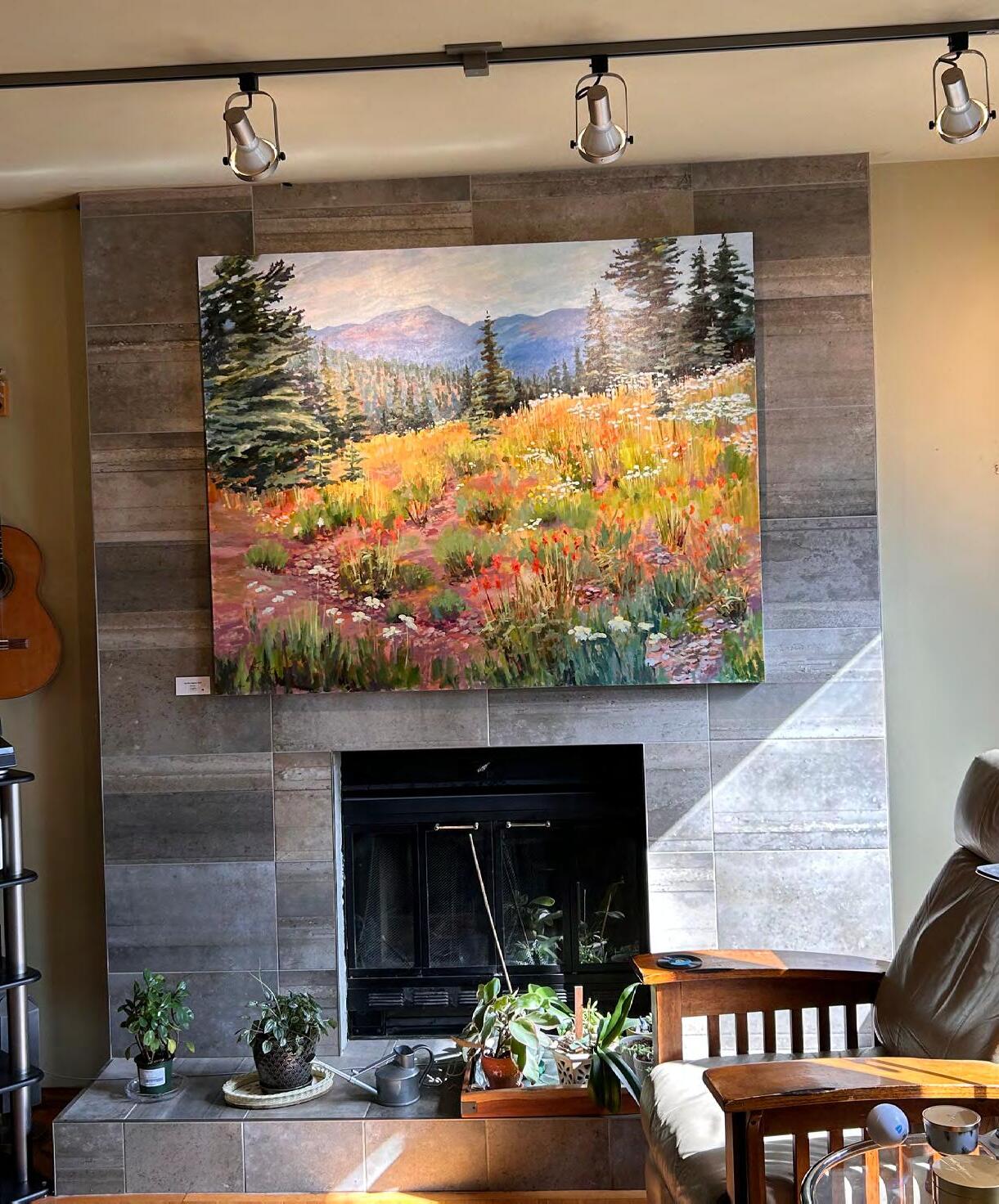
PHOTO BY MIKAELA WARKENTIN / STAFF
BreakOut West to return to Winnipeg
Upcoming music festival celebrates western Canadian artists
Boris Tsun Hang Leung, staff
BreakOut West is set to return to Winnipeg next week for its 23rd iteration. A music conference will run during the day at the Fairmont Hotel from Sept. 24-28, and at night, various venues in the city will host concerts to celebrate musicians in western Canada.
Michael Dawson, the executive director of BreakOut West, explained the concept of the festival. “They’re 30-minute performances, and they’re staggered on the hour and a half hour from venue to venue. You buy a single wristband, and that wristband gives you access to all these shows, and you can make your way around all these venues.”
This year, concertgoers can expect to see local talents such as Jade Turner, Alpha Toshineza and Virgo Rising in addition to performers from other provinces. The lineup even features Mared and Papaya Noon, who are musicians from faraway Wales.
“[The lineup] runs the gamut from R&B and Afrobeats through to hardcore [and] indie rock. [It is] a little bit of everything and [there is] certainly something for everyone,” said Dawson. “We want to do our best to try to be a fair representation of the incredible artists coming out of the west and out of northern Canada.”
Complementing these performances, the daytime conference will entail panels, sessions with professionals in the music industry and opportunities for artists to connect with each other.
“A lot of these artists who are performing as part of the festival will end up doing business with folks who are attending the conference. And so we [often see] people
leaving having secured a tour in Germany or a festival in Amsterdam or whatever directly out of the event,” Dawson added.
BreakOut West travels to a different city each year, with past festivals taking place in locations such as Saskatoon, Calgary and Victoria. The festival was meant to take place in Winnipeg in both 2020 and 2021, but it was moved online due to the pandemic.
Dawson commented that Winnipeg’s music scene punches above its weight, and he is excited to bring the festival back to the city.
“I think Winnipeg has always just been such a vibrant city […] The artists that come out of there working in across all platforms, not just music, are just so incredible,” he said. “[Winnipeg] has so many, for lack of better words, iconic and notable music venues […] from Times Change(d) to The Handsome Daughter to Public Domain, the Park Theatre [and] Sidestage.”
The size of Winnipeg and western Canada’s music scene may not exactly rival Los Angeles or Nashville, but Dawson is certain that there are still plenty of artists and bands here to discover.
“We’re just so excited for audiences to come out and see some artists that they’re familiar with, but also fairly confident [they will discover] some new favourite bands as well,” he said.
“What we hope is that folks come out and see some new music and take a chance on things and [leave] inspired and excited about what’s happening here in western Canada.”
Visit breakoutwest.ca for tickets and more information.

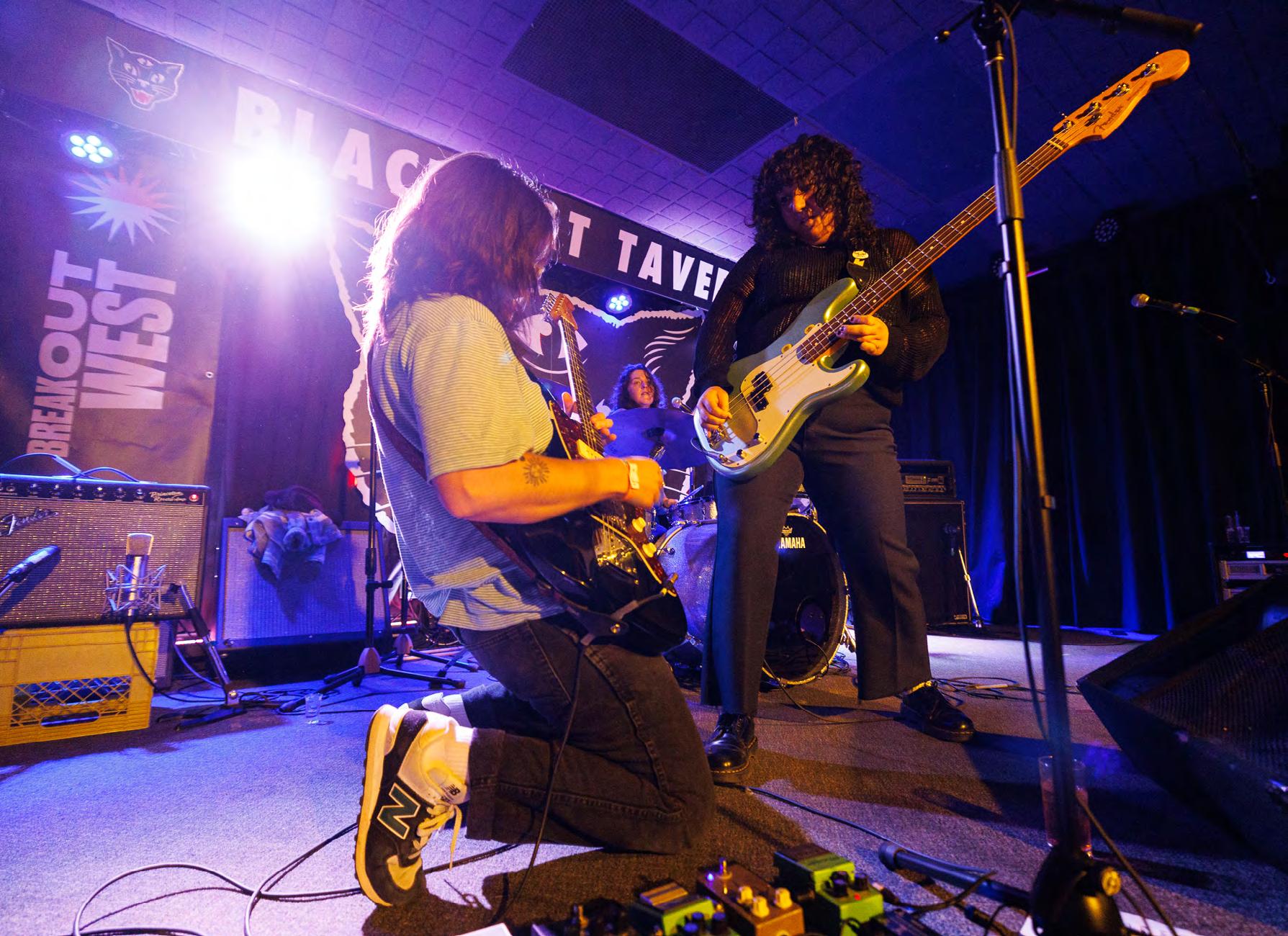


ROOKY KAMIZ PERFORMS AT BREAKOUT WEST 2024
LES SHIRLEY PERFORMS AT BREAKOUT WEST 2024
PHOTOS PROVIDED BY CHRIS GRAHAM
JANKY BUNGAG
Bisons women’s soccer loses game A 2-1 loss to Mount Royal Cougars
Abdul-Jalilu Ahmed, staff
The Bisons women’s soccer team were beaten 1-2 by the Mount Royal Cougars on Saturday, Sept. 13.
The early minutes of the first half saw the Cougars push for a goal, but the Bisons responded in the 10th minute [10:53] with a shot from Taryn Cabak that went wide.
The Cougars opened the scoring in the 16th minute [16:37], with Gabrielle Linford finding the back of the net.
The Bisons continued to press with Tabata Bravo testing Mount Royal goalie Ella Filek in the 20th minute [20:05], but her shot was saved. Another opportunity for the Bisons came at the half hour mark [30:07] when Mia Fonseca fired a shot on target, only for Filek to make a save again.
Between the 34th and 38th
minutes [34:36 to 38:14], the Cougars delivered shots, but the Bisons goalie Holly Dyker saved them.
The Cougars doubled their lead in the 41st minute [41:29] when Analisa Galvez scored, with an assist from Dany Juarez.
The first half ended with the Cougars leading 2-0.
The Bisons came in stronger between the 58th to 62nd minutes [58:05 to 62:49], but they were unable to score.
coach Mark Colvin shared his assessment of the game. “I think it’s an extremely technical team,” said Colvin. “They got on the ball with a good ball tempo early. And I think honestly, early in the game, from a defensive standpoint, we were being way too patient — we were being way too timid — whereas our iden-
“We need to be aggressive, defend forwards and just be confident in our ability to win the ball, and then attack, connect passes and go”
— Mark Colvin, Bisons women’s soccer head coach
In the 90th minute [90:00], Taleesa Minnaar scored, assisted by Taylor Sousa, to narrow the deficit, but the Cougars secured a 2-1 victory.
Bisons women’s soccer head

tity and how we want to play is […] aggressively defending forwards, cutting down distances [and] forcing mistakes as opposed to waiting for mistakes.”
Colvin explained how he
motivated his players to focus and play their game in the second half. “At halftime, the key message to the group was that we cannot give them so much time and space on the ball. We need to be aggressive, defend forwards and just be confident in our ability to win the ball, and then attack, connect passes and go […] In the second half, we came out with more aggressiveness on the ball, we were more brave, playing with a quicker ball tempo, and I think that […] we had a much better half.”
In the second game, the Cougars picked up a 1-0 win over the Bisons on Sunday, Sept. 14.
The Bisons and the Cougars
pushed for a breakthrough in the first half, but neither side could convert their shots, sending the game into halftime scoreless.
In the 50th minute [50:20], Tamara Djurisic scored a penalty goal for the Cougars.
In the 89th minute [89:18], Bravo had a shot at goal for the Bisons, but goalie Filek saved it. The game ended in a 1-0 win for the Mount Royal Cougars.
In Prairie league standings, the Bisons have one point, with one draw and five losses.
The Bisons women’s soccer team will face the Saskatchewan Huskies on Friday, Sept. 19 and Saturday, Sept. 20 at the Princess Auto Stadium.

Bisons men’s football secures first win of the season
Head coach Stan Pierre expresses readiness for this weekend’s homecoming game
Abdul-Jalilu Ahmed, staff
T
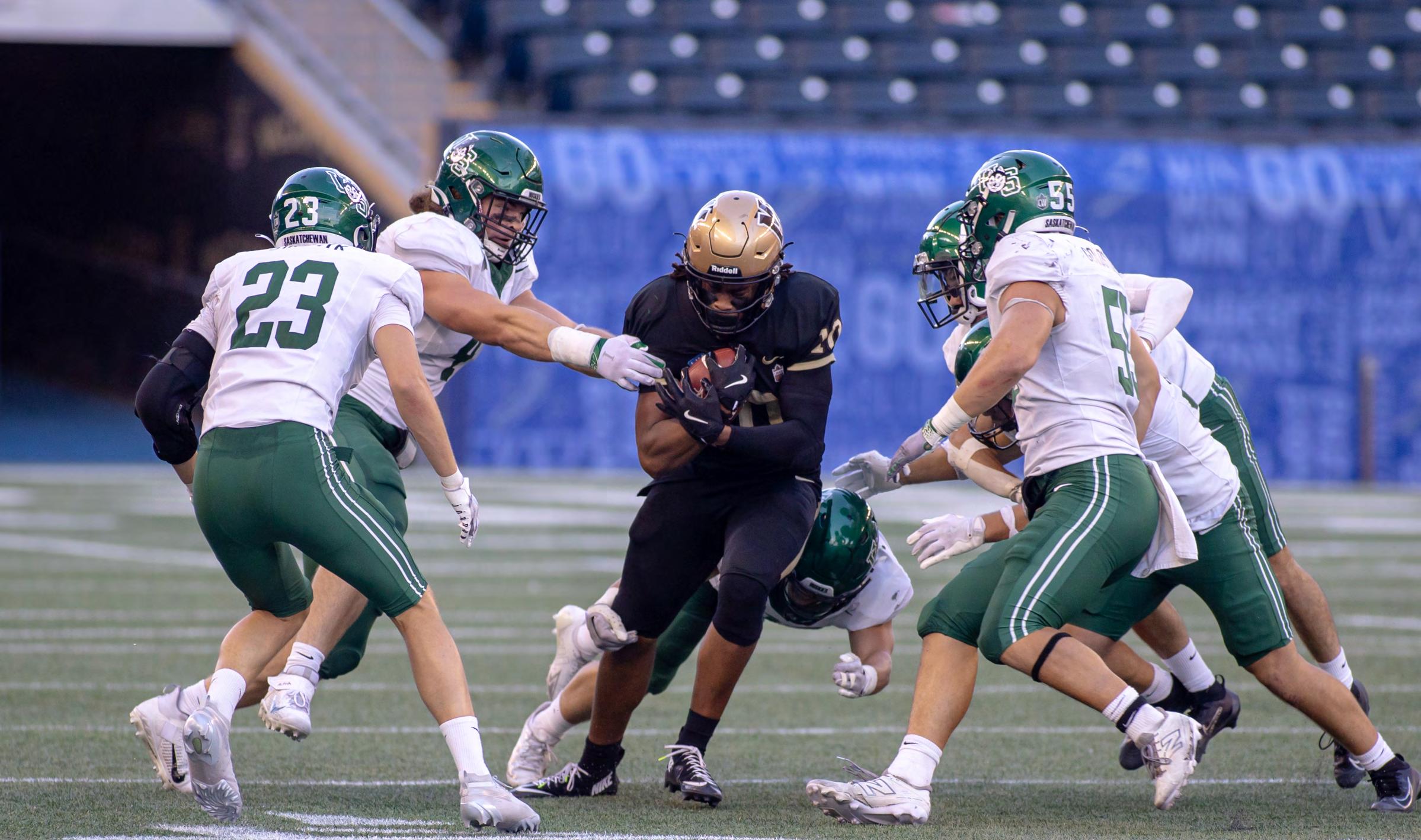
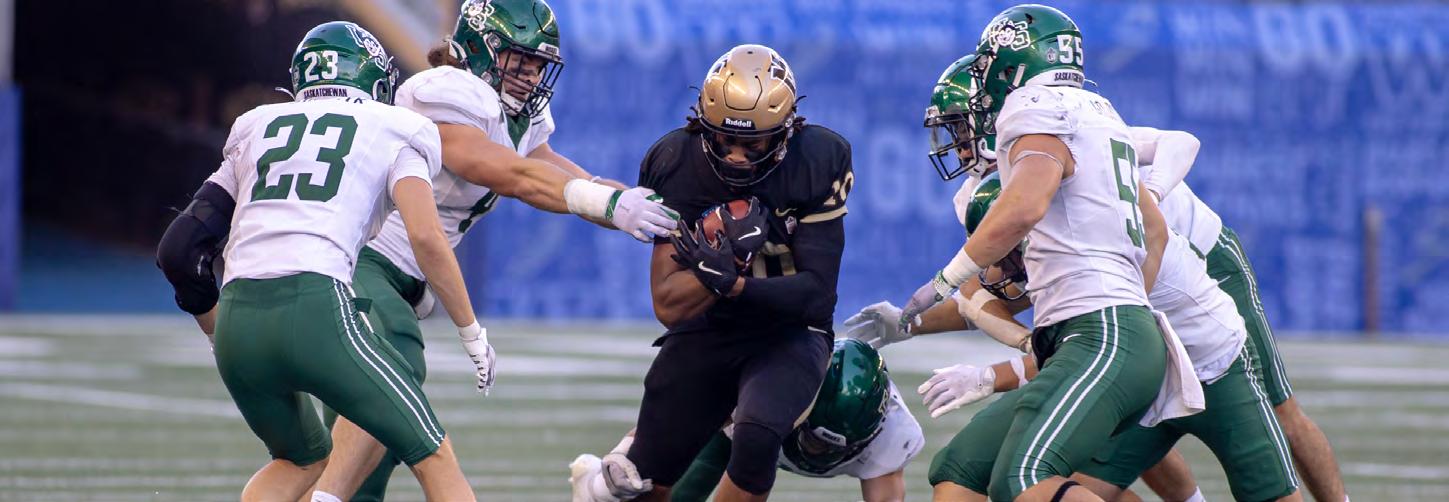
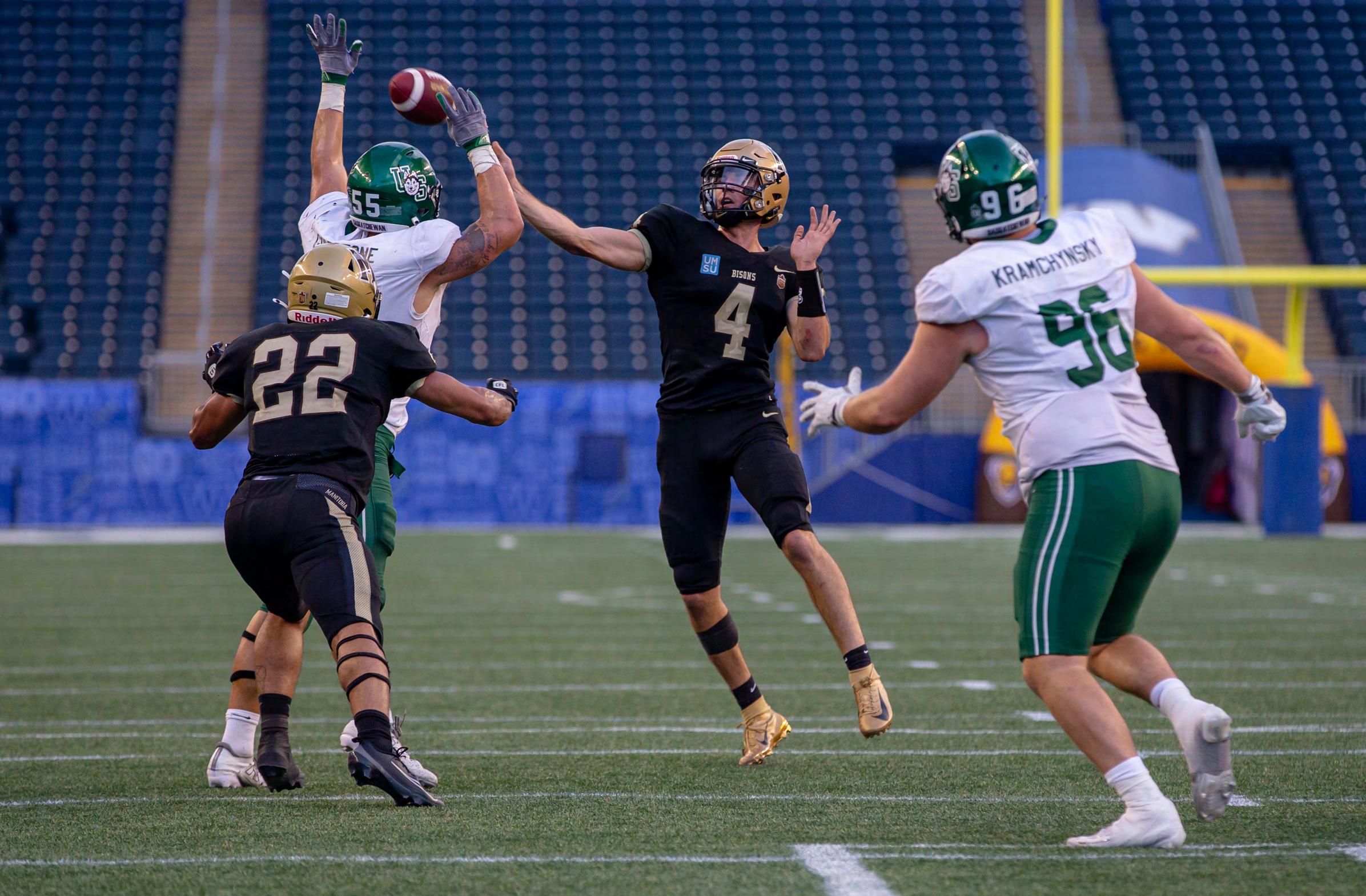
he Bisons men’s football team edged out the Saskatchewan Huskies 21-20 in their home opener on Saturday, Sept. 13 at the Princess Auto Stadium.
The Huskies took an early lead at the 11:26 mark of the first quarter with a 37-yard field goal by Lukas Scott, going up 3-0. They extended their advantage to 10-0 when Ryker Frank made a 14-yard run at 8:36, closing out the quarter.
In the second quarter, the Huskies pushed the score to 17-0 with 34 seconds remaining, as Jace Zidar connected to a 21-yard pass from Anton Amundrud.
At 9:12 of the third quarter, the Bisons got on the scoreboard with a three-yard pass from Jackson Tachinski to Mula Yitna, cutting the Huskies’ lead to 17-7. The Bisons closed the gap even further at 5:21, when Nathan Udoh connected to a 31-yard pass from Tachinski, making the score 17-14.
The Bisons took their first lead of the game early in the fourth quarter, as Vaughan Lloyd caught a 12-yard pass from Tachinski at the 10:47 mark to put them ahead at 21-17. The Huskies responded
with a 40-yard field goal from Scott at 5:33, narrowing the deficit to 21-20, but it was not enough, as the Bisons held on for the win.
Bisons men’s football head coach Stan Pierre reflected on the team’s performance. “We weren’t tackling very well in the first half, that’s for sure,” said Pierre. He continued, “I just don’t think we were physical enough in the first half. So, both lines started to take over the game a little bit, and Jackson made some plays. And these are the things that we have to hang our head on. We need to eliminate our mis takes. We’re still making too many mistakes that are shutting down drives that are promising. We need to keep going forward. But obviously we really needed that win, and it really gives us a chance now to control our destiny in
our season.”
Although it’s his first U-Sports win as head coach, Pierre expressed appreciation for the players’ determination to win above all. “Honestly […] if I was the coordinator and feel good […]
Every time we win, it’s such a relief, and every time we lose, it’s like the end of the world. So it’s nice to feel relief.”
He said the team is ready for the homecoming game and will con-
opportunity […] We’re just going to keep doing the things that we’re doing, continue with our process, and hopefully we come out of this game pretty healthy and we have a good effort.”


our team. I think we caught our groove and we caught our
— Stan Pierre, Bisons men’s football head coach wanted to keep going, and we kept going and we got a dub.”
He emphasized how the win will boost the players’ mentality. “It’s huge. Always knocking off that first win of the season gets a big monkey off your back, and now I think the sky’s the limit for
Bisons men’s football team have two points, with one win and two losses.
“Every game in the Canada West is a battle, so we’re excited for the opportunity”
stride and I think the league’s got to be ready for us now.”
In the league standings, the
The Bisons men’s football team will host the Alberta Golden Bears in their homecoming game at 2 p.m. on Saturday, Sept. 20, at the Princess Auto Stadium.