jazzed-up Going Deep Yakking with Yantz Winnipeg Jazz Fest June 12-15 More partners, more fun Catching up with Bison QB
DESIGN
REPORTERS
VOLUNTEER CONTRIBUTORS
Will
Lagace
MANITOBAN
(204) 474.6535
(204) 474.7651
manitoban@themanitoban.com
A “volunteer staff” member is defined as a person who has had three volunteer articles, photographs, or pieces of art of reasonable length and/or substance published in three different issues of the current publishing year of the Manitoban. Any individual who qualifies must be voted in by a majority vote at a Manitoban staff meeting. Elected representatives and non-students may be excluded from holding votes as volunteer staff members in accordance with the Manitoban Constitution.
The Manitoban is the official student newspaper of the University of Manitoba. It is published monthly during the summer and each week of regular classes during the academic year by the Manitoban Newspaper Publications Corporation.
The Manitoban is an independent and democratic student organization, open to participation from all students. It exists to serve its readers as students and citizens.
Investigative journalists converge on Winnipeg for conference
CECIL ROSNER, CBC MANITOBA MANAGING EDITOR
Exactly 40 years ago this month, two journalists at the Washington Post published a book about the Watergate break-in called All the President’s Men
The book chronicled one of the biggest political scandals in history, a conspiracy to bug the offices of a political rival and then cover up the case by all means possible. The most amazing aspect of the case was that it involved the president of the United States.
Two months after the book came out, President Richard Nixon left office in disgrace. Woodward and Bernstein became folk heroes in the journalistic community and beyond. Soon they were being portrayed in Hollywood by Robert Redford and Dustin Hoffman, and journalism schools were suddenly flooded with applications.
I was caught up in that wave of excitement too. It was hard not to be, since Watergate and its aftermath inspired journalists everywhere to hold powerful interests to account. If the president of a powerful nation could resign as a result of journalistic inquiry, anything seemed possible.
Watergate didn’t create the modern era of investigative journalism, but it certainly sent it to a higher plane. The social forces of the 1950s and especially the 1960s provided fertile ground for aggressive inquiry. Youth and students around the world were rebelling against unjust wars and regimes. Anti-colonial struggles were raging everywhere, and in the U.S. the civil rights movement was reaching a fever pitch. Americans of all stripes began to question the Vietnam War and all the assumptions behind it.
Alternative media began to challenge the status quo as never before. Soon, the mainstream began to pay attention. A docile press gave way to platoons of nosy reporters who refused to take stock answers by politicians at face value. Watergate showed every reporter what was possible. The 1970s was a high water mark for investigative journalism.
The genre has ebbed and flowed since then, but the idea of holding powerful interests to account has never gone away. Today, with revelations by WikiLeaks and Edward Snowden, the actions of powerful regimes are once again under the microscope. That’s why we think it’s entirely appropriate to convene a conference with the name: Holding Power to Account.
The University of Winnipeg and the CBC are both public institutions with different mandates but with some common aims. We stand for informing and enlightening people, bringing information and knowledge to the forefront. CBC Manitoba has a proud tradition of investigative journalism, as does
the network as a whole. In fact, CBC has been at the forefront of broadcasting investigative journalism for more than half a century.
With revelations by WikiLeaks and Edward Snowden, the actions of powerful regimes are once again under the microscope. That’s why we think it’s entirely appropriate to convene a conference with the name: Holding Power to Account
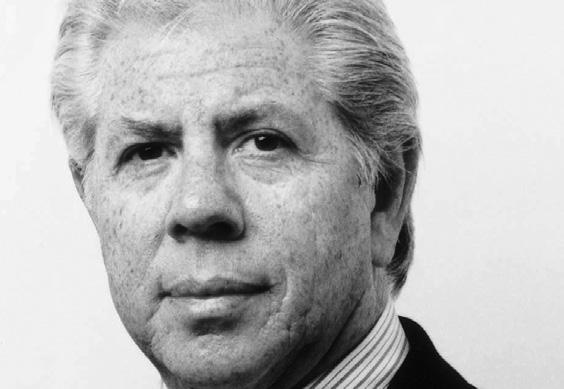
We’re happy that Carl Bernstein will be attending the conference, 40 years after his groundbreaking book hit the shelves. He will be talking about the lessons and legacy of Watergate. The story continues to inspire, and he will be delivering his message to a new generation of journalists.
Also in attendance are many of CBC’s most influential investigative journalists, from Linden MacIntyre and Bob McKeown of The Fifth Estate to correspon-
dents Diana Swain and Adrienne Arsenault. We also have RadioCanada’s top investigators on board, with Alain Gravel and Marie-Maude Denis of Enquete. They were responsible for uncovering and first reporting on the construction and political scandal in Quebec that now forms the basis of the Chabonneau inquiry.
More than 70 speakers will be in attendance from all over the world, including Canada, the U.S., South Africa, Botswana, Uganda, Austria, Nepal, India, Bosnia, Germany, Australia, and other countries. A number of young journalists are coming from different countries to share their experiences working in difficult conditions.
We will also hear from David Milgaard, a man who spent nearly 23 years in prison for a murder he didn’t commit. Investigating wrongful convictions has been an important part of the work Canadian journalists have done for the last 50 years, and Milgaard’s case provides a good case in point.
In all, it’s going to be an exciting weekend. More than 300 people have registered to take part in the proceedings. As our conference program says, holding powerful interests to account is one of journalism’s most important missions. It’s critical to democracy and the preservation of human rights. We hope this conference makes a modest contribution to ensuring that the work continues.
Tax havens and transnational collaboration
A conversation with Frederic Zalac
BRYCE HOYE, STAFF
Frederic Zalac was asked to join the International Consortium of Investigative Journalist (ICIJ) a few years ago. A few months in, ICIJ invited him to sift through a leaked cache of 2.5 million documents linked to offshore tax havens: specifically, Zalac was tasked with combing over a list of 450-500 names and addresses in hopes of finding a prominent or recognizable person in the mix.
“Right away, it was clear that there was something very interesting there, but the task – it was really daunting,” Zalac told the Manitoban. “I don’t think I realized when I started working on that project what kind of work would be involved and the level of difficulty.”
Zalac did find a couple of names that stood out: those of former Liberal candidate Tony Merchant, and his wife, a Liberal senator representing Saskatchewan in Ottawa.
The documents revealed Merchant had stowed away $1.7-million in offshore tax havens in the midst of issues he was having with Revenue Canada.
“Most of the names in there were probably not well known. Some were owners of big companies, a lot were nobodies. Going through that, there were many things I had to take into account – was it of public interest,” said Zalac. “In the case of a senator whose name is in there [ . . . ] or someone who was a candidate for the Liberals for several elections [Tony Merchant], he’s very well-known, so the public interest question there was quite obvious.”
him one day, delivering a hard drive with 2.5 million documents on it, largely disorganized and not searchable in any targeted fashion.
“It was impossible to get through,” said Zalac. “But it was really a typical journalistic leak from good sources at first and became this international project.”
The ICIJ formed a core team of journalists and co-ordinated an international investigative effort to make sense of all of the data.
Without the coding and programming that went into making the jungle of data searchable, Zalac said he doubts more than a few stories would have been pulled from the hard drive.
“The difference is between having one or two stories from one reporter [ . . . ] and to be able to search through all of that and bring in over 80 reporters,” he said. “It just gave it a completely different scale.”
Zalac specializes in science and investigative reporting for CBC’s The National and Radio- Canada’s Enquête and Découverte. He also works with the International Consortium of Investigative Journalists (ICIJ) on the project “Secrecy for Sale: Inside the Global Offshore Money Maze”.
The owner of West Edmonton Mall surfaced in the data heap as well, but compared to the hundreds of pages on Merchant, details were slim.
The mountain of documents didn’t just arrive on ICIJ’s doorstep anonymously one day. It began with one Australian reporter, Gerard Ryle, now the head of the ICIJ. He was working on an investigation into tax havens in the Cook Islands.
One of Ryle’s sources contacted
Dozens of independent stories warranting attention in their own right surfaced, so the ICIJ parked some, and released others throughout 2013 and 2014.
“The kind of information we built our stories on was very dependent on having the technical tools to do it. Without it, I don’t think this project would’ve taken off the way it did around the world.” The offshore tax haven project was unique in that the first of many stories was published on the same date around the world by multiple publications.
“An investigative reporter is usually a lone wolf – this is a completely different model. We had to agree to publish on a certain date in a certain week, and everybody kept the secret, everybody honoured the embargo, and it had a much bigger impact because it was being published everywhere at the same time,” said Zalac. “There was a big wave that went round the world.”
“I think this is really one important way of doing investigative reporting in the future, this international collaboration. Issues are more and more transnational and the only way to tackle those is to work together. This is a great model for it.”
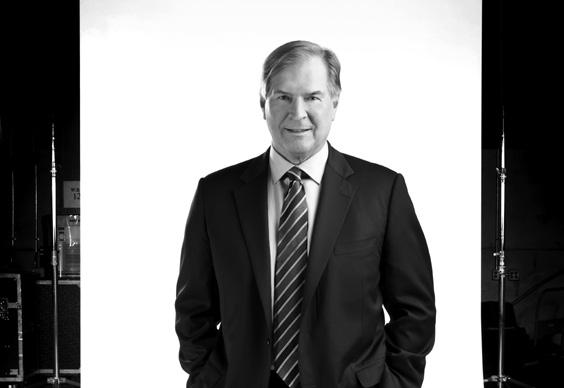
PHOTO OF: CECIL ROSNER, CBC MANITOBA,
The journalist’s dilemma
A look at the ethical quandaries of everyday investigative journalism with David Studer
BRYCE HOYE, STAFF
Inever could’ve been anything else,” remarked David Studer, director of journalistic standards and practices at CBC.
Studer’s 35-year ascent in the Canadian journalism world saw him at different times working as a beat reporter, a field and long-form documentary producer, and every newsroom job in between.
Studer worked at CBC’s The Fifth Estate for 17 years, 16 of which he served as the executive producer, before landing in his director role, where his days are spent considering the ethical minutiae of this or that story being pitched or chased at regional and national levels.
Managing editors at the CBC come to their positions in a nonlinear fashion; for Studer, it was a combination of “life experience and being in a lot of different situations and making some mistakes.”
From dawn to dusk, Studer sees anywhere from six to 20 stories in the midst of production that demand careful ethical inspection before receiving the go-ahead.
Moncton shootings
The recent slaying of three Moncton RCMP officers provoked the same category of ethical considerations as do many such tragedies: is it fair to approach members of the victims’ families for comment? At what point do you stop covering the incident? How much coverage does such an event warrant, and what degree of focus does it deserve at the local and national level? Is it right to publish the alleged shooter’s name?
On the last point, Studer was sympathetic but unwavering.
In the days that followed the
Moncton shootings, a few publications printed articles reflecting on whether it was a good idea to publish Justin Bourque’s name.
Some hypothesized that in publicizing the events and the man behind them the media would be giving Bourque precisely what he wanted and set out for: fame.
Studer disagreed with that rationale.
“Journalism isn’t about rewarding or denying rewards to people who make the news; it’s about reporting the facts, number one,” he said. “Number two: that kind of position suggests that you kind of psychoanalyze the guy and you know that the only reason he did it is to get attention, not because he has mental problems or anything else.”
In other words, psychoanalysis is not the business of journalists and Studer doesn’t advise making journalistic content decisions based on the reading of chicken entrails – or people’s psyches, for that matter.
Another question brought to Studer’s attention in the aftermath of the shootings came from web reporters covering the story. They were debating the ethics of using a photo for the web taken several years earlier of Bourque posing alongside his siblings.
In this case, the question was whether it was alright to publicize the image with the alleged shooters’ family in its original context, or if it was better to alter the shot and crop out the siblings out of respect.
The scale seems to tip quite generously in favour of removing the siblings from the photo, which is what was ultimately done.
The dilemma then is how closely to adhere, generally speaking, to that original position of reporting “the facts” on a case-by-case basis.
Without descending too far into pedantry, it’s easy to imagine a devil’s advocate in the newsroom mounting the argument against cropping out uninvolved subjects from a photo with an alleged criminal.
Hypothetically, assuming no other photos of the alleged shooter were available at press time, would cutting the siblings from the photo not be
editorializing or in some faint sense betraying the dispassionate and coolheaded objectivity that is the creed of any respectable investigative journalist? Is this pedantry?
“It’s not so much misleading as it is allowing people to reach the wrong conclusions without actively directing them there” – David Studer, CBC director of journalistic standards and practices
Interpreting the rules
Although in some cases what is just or right is clear, the CBC has an overarching set of principles engineered to guide its journalists through the grey.
“The journalism standards and practices (JSP) documents at the CBC outlines rules, but they’re general rules, aspirational statements, and the question is, how do you use that in action in any given situation,” reflected Studer.
CBC News does hundreds of different stories across various locations and platforms a day, and the JSP was written in terms sensitive to that inherent variability.
“The JSP can’t be specific to all [cases] so it’s written more like the [Canadian Charter of Rights] or the American Constitution. It is sort of broad, general statements of ‘this is how we do things,’” said Studer.
It is the work of those in Studer’s or Cecil Rosner’s (managing editor, CBC Manitoba) position to interpret the broadly construed tenets of the JSP in any given case, and to also base editorial decisions on precedent – what the organization has done in similar cases in the past.
Wearing a wire, getting approval
Another group of ethical considerations relates to how investigative journalists gain access to inaccessible or restricted information.
“We’re not suppose to mislead people particularly about who we are,” said Studer. “On the other hand, a program like Market Place pretty much couldn’t exist unless you were able to mislead in some ways… There’s kind of a three-legged stool you have to build to get approval, and the approval has to come from a senior level.”
In order to gain approval to go undercover, a story must be of genuine public significance and the “target” must be central to the story.
“You have to have established that there is no other way to do this,” said Studer. “Either because they’ve repeatedly refused your requests, or for some other reason, you have to know they’re not going to give you a conventional interview.”
If a pitch satisfies these criteria it survives that round of scrutiny, and then it’s onto other considerations: for instance, whether to use a hidden camera or microphone, or to do a “jump in” style strategy, approaching a mark when they’re out in public, with or without the familiar nondescript white van with tinted windows parked across the street monitoring the entire affair.
Even here, the semantics of everyday language are under the magnifying glass. Distinctions between what it means to “lie,” “mislead,” or cleverly omit certain details, and the range of possible strategies that may be drawn from these conclusions, is what consumes a lot of Studer’s time.
“It’s not so much misleading as it is allowing people to reach the wrong conclusions without actively directing them there.”
Rob Ford
When it comes to the private lives of prominent public figures, Studer said Canada’s journalists tend to occasionally play into the “polite Canadians” stereotype with a few exceptions.
“Journalists in this country are very
polite and discreet and understanding about the foibles of people in public life,” said Studer.
“I think we take it upon ourselves, journalists do, maybe more than they should, to say ‘up to a certain point this stuff is harmless.’ And it isn’t the public’s business because it doesn’t affect the ability [of the official] to get the job done, doesn’t affect the image of the office.”
In the case of Rob Ford, Studer said it seemed clear Ford’s personal life was bringing down the image of his office, compromising everything he did officially by the way he behaved privately, and thus was perhaps an exception to the rule.
Assuming you accept that Rob Ford’s private blunders constitute a legitimate news story, Studer outlined the ethical reservations that came up for him in the media’s coverage.
The first and most hotly debated question: is it right to pay a source for video – in this case, of the Toronto mayor smoking crack? Studer and, by extension, the CBC, take a firm stance against such acquisitions.
“If you’ve got Rob Ford, who people know is going around drinking and doing other substances, and [someone] manages to get into his company and betray the implicit trust of privacy… and take cell phone video, that really worries me that we’re using that stuff,” said Studer.
“I know what it shows and I know what it proves, and I respect people that make the argument that it’s important for the public to be informed. I just don’t like looking past that.
“I guess it may not be as much a journalistic issue, it’s more of a societal issue, but it worries me that we as journalists, as exemplars of something, would be taking advantage of the opportunity given to us by people who have taken advantage of someone’s implicit trust.”
Studer will be joining a panel of speakers this Sunday, June 15 at 9:15 a.m. for a presentation titled “Ethics, Rob Ford, and Investigative Journalism,” at the Holding Power to Account conference on the University of Winnipeg campus.
PHOTO OF: DAVID STUDER, CBC
Adrienne Arsenau
Featured speakers: Holding Power to Account conference, June 13-15
Diana Swain Linden MacIntyre
Peter Mansbridge Mike Hudson
Marie-Maude Denis
Alain Gravel
Carl Bernstein
Bob McKeown
David Milgaard
Pulling strings
Investigative journalists Declan Hill and Murali Krishnan discuss corruption in sport
MIKE STILL, STAFF
C
orruption, “the act of engaging in dishonest or illegal behavior, especially by powerful people,” is all around us. Certain professions or industries, however, may experience higher levels, based on various factors.
The sporting world, for example, is a target of this illegal operation on a rather frequent basis. Whether it’s cheating, betting on games, or other felonious acts, corruption is heavily present in many areas of sport, both on the business and performance sides.
It can be hard to disentangle the many complicated levels of corruption in sport. Recently, the Manitoban had the privilege of interviewing both Declan Hill and Murali Krishnan, each of whom has extensive knowledge on the subject.
Hill, who has a doctorate in sociology from the University of Oxford, has been an investigative journalist for roughly 20 years, with a specialty in organized crime and international issues. The author, journalist, and academic has also worked for The Fifth Estate, a CBC investigative documentary program, receiving various accolades for his work along the way.
Hill shed light on match-fixing in international football with his book
The Fix: Soccer and Organized Crime, which has now become an international bestseller in 20 languages.
Krishnan, an international broadcaster based in New Delhi, also has quite an established resume. The correspondent for Deutsche Welle, Germany’s international broadcaster, has a master’s in English from New Delhi’s Jawaharlal Nehru University, and was part of the investigative team that exposed match-fixing in Indian cricket, which became 2000’s biggest international sports story. Soccer fixers
While there are a variety of sports in which corruption has reared its ugly head, football is certainly one of
the most common, with match-fixing among the biggest issues.
Match-fixing can be defined as “dishonest activity to make sure one team wins a particular sports match.”
While the definition sounds rather simple, it certainly has its complexities behind the scenes, especially in relation to international football.
“Sport is not theatre. People pay to see athletes trying 100 per cent, and if they’re not, it will be the death of sport” – Declan Hill
“Corruption, and match fixing in some leagues, is no just longer isolated cases; it is now an organized system of business,” noted Hill.
“Key officials sit down and say we are going to try and win 20 or 30 of our games, but we will lose these specific 10 games.”
For example, in early 2013, Europol, the European Union’s police force based in the Hague, made a huge announcement, which revealed an investigation into football matchfixing that uncovered more than 380 matches falling under the felonious category. The investigation took place between July 2011, and January 2013, and involved co-operation from authorities in 13 European countries.
One of the major problems with match-fixing is the significant payoff that individuals, such as key officials who are involved, may receive.
“They [the key officials] can make more money in losing those 10 games, than they can for winning all the others,” said Hill. “This is a clear, consistent trend of corruption.”
Cricket corruption
Cricket has also seen its share of corruption, with money certainly playing a role. One of the biggest examples, involving a few Pakistani cricketers, occurred in 2010. Salman Butt, Mohammad Asif, and Mohammad Amir were convicted in this case for spot-fixing a test match against England.
Pakistani cricket players take in significantly less money per year than their counterparts in India, Australia, or England. A figure in 2010, the year the spot-fixing scandal occurred, showed that Australian and English cricket players took in roughly $400,000 rupees per year, which equates to roughly CAD $7,387. The Pakistani players, on the other hand, received just $22,500 rupees, which totals to about CAD $416.30.
This shocking difference in pay has had a lasting effect on the willingness of Pakistani players to engage in acts of corruption in order to bring in more money.
“When I talked to all my sources, and investigating friends out there [in Pakistan], they said that they found Pakistani cricketers sort of susceptible, and in fact easy to be ‘on the take,’” commented Krishnan.
Spot-fixing, which involves determining the outcome of a specific part of the game, as opposed to the outcome of the entire game, has started to crop up more often over the past few years, and Krishan noted that it is on the rise.
“It’s (corruption) becoming more refined,” he said. “Cricket is no [longer about] betting on the outcome of the game – it’s betting on various facets of the game.”
Krishnan also added that it is harder to trace spot-fixing due to it being relatively quick and potentially unnoticeable during the course of a game.
“It’s a slam bam kind of portion of the game,” stated Krishnan. “It
happens so fast no one really gets to know, unless of course you were on the inside, to find out whether something has actually gone wrong.”
The International Cricket Council (ICC) has worked hard to limit the amount of cases of corruption. It is incredibly difficult, however, due to the lack of eyewitness accounts of what may have been executed in order to rig a whole game or certain parts.
“At the end of the day, all they [ICC’s Anti-Corruption and Security Unit] are left with is compelling, circumstantial evidence,” described Krishnan.
Along with the ICC, various cricketing boards have also been actively involved in handing down penalties to those who are caught.
Krishnan added that certain boards, such as Australia, South Africa, and India, have done enough, while others, such as the England and Wales Cricket Board, could perhaps come down harder.
Regardless of what sport is involved, or the type of corruption occurring, one thing is absolutely certain: It is changing the way that fans experience the game.
“Sport is not theatre,” said Hill. “People pay to see athletes trying 100 per cent, and if they’re not, it will be the death of sport.”
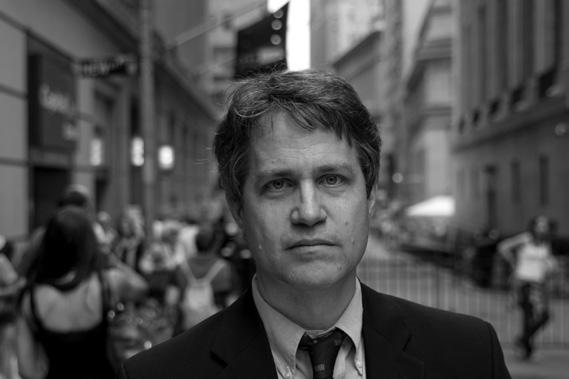
PHOTO OF: DECLAN HILL
Editor-in-chief:
Advocacy and investigative journalism
Q&A with David Beers, founding editor of the Tyee
KEVIN LINKLATER, STAFF
Recently the Manitoban had a brief exchange with David Beers, founding editor of Vancouver’s the Tyee, about the topic of a conference talk he and Lise Lareau (Canadian Media Guild), Roberto Perez-Rocha (Transparency International), and Mary Agnes Welch (Winnipeg Free Press) are presenting titled: “Advocacy and Investigative Journalism.”
The Manitoban: Why are you speaking at the conference?
David Beers: I am really looking forward to be among colleagues and hear from them what they’re experiencing as they try to go about doing investigative reporting, because the landscape has changed in both positive and negative was.
In positive ways, there are more digital tools available, more data sets available, and there are more independent media outlets coming into being. So there’s a lot of new wrinkles to investigative reporting that are positive.
But it’s also a moment in Canada where those who need to be held accountable in a democratic system are ever more adept at not being transparent, and it is very hard to get information out of the government. I’m really interested in hearing from my colleagues what their perspectives are as they try and do their jobs.
M: Is conventional mainstream
investigation enough to change the world?
Beers: Media is an ecosystem. When you look at an ecosystem, you don’t say, “the zebras are mainstream or conventional, but the gazelles are alternative.” There are just a bunch of entities interacting in an ecosystem. They all have their means of survival, they all have ideas of how to go about their business.
My view of it is you need a diverse and complex media ecosystem in order to ferret out as many investigative stories as possible, with as many different contexts and perspectives as possible. I would say that media ecosystem in Canada could stand to be more diverse, certainly.
I’ve worked in what people would call mainstream media settings. I worked for the SF newspaper the Examiner, and I worked at the Vancouver Sun. In both those places it wasn’t as if they didn’t have a point of view or they didn’t have a source of revenue that wasn’t having an influence on them. It was clear that those entities were created for a purpose and serving a purpose within society.
There’s nothing wrong with that. If Conrad Black wants to declare that he’s willing to lose $10 million a year in creating a national newspaper that will be all about the need to cut taxes and promote free market
ideals, he’s welcome to do that, but then I don’t see why he gets to be called mainstream, and then say that someone else is not mainstream.
M: How does being independent enable the Tyee to do long form journalism?
Beers : We’re more like a magazine in that way in that we tend to focus and be comprehensive about a few issues that are very important. We put up five stories or six stories, original pieces per day, a lot of them are about energy politics, First Nations issues, and of course provincial politics in B.C. We have a narrower focus and a narrower promise to our readers about what we’re going to cover. One way the Tyee ’s stories rise to the top is being definitive, by being long, by being in depth.
“establish a sustainable model for independent journalism; one that widens and deepens the democratic conversation about how to create positive change.”
“My view of it is you need a diverse and complex media ecosystem in order to ferret out as many investigative stories as possible, with as many different contexts and perspectives as possible”
–David Beers, The Tyee
M: Your vision for the Tyee is to
Media often the only resort for Canada's whistleblowers
David
Beers: I wouldn’t say Tyee covers these stories because nobody else does, I would say the Tyee covers these stories because I can’t imagine more important stories.
Canada is pretty much self-declared by its prime minister and most of its business leaders to be a resource extraction economy, first and foremost. The infrastructure for that economy ends up being pipelines that cut right through the communities in B.C. that we cover, so there’s a national and international and local story right there that our own leaders say lies at the heart of the future of Canada, so we make that a priority and we take
Hutton describes the realities facing whistleblowers in Canada
FRASER NELUND, STAFF
David Hutton, executive director of the Federal Accountability Initiative for Reform (FAIR), is a panellist at the upcoming Holding Power to Account conference, and an expert on whistleblowers. FAIR “promotes integrity and accountability within government by empowering employees to speak out without fear of reprisal when they encounter wrongdoing.”
Hutton ran a successful consulting firm for nearly two decades before taking the helm at FAIR. His interest in Canada’s whistleblowing laws developed after an attempt to help a friend introduced him to the inadequacies that characterize the current landscape.
There are insufficient protections for whistleblowers in Canada. Doing the right thing and protecting the public interest often means committing career suicide.
Asked whether there was a common thread amongst the many whistleblowers he had encountered, Hutton emphasized the diversity of the occupations from which they came and noted that the consistencies
emerged in the way their situations progressed.
"The media is tremendously powerful because it's really the only thing that organizations fear. Because they know that there's nothing to fear from the courts, the regulator, the police" - David Hutton, executive director of FAIR
“What’s constant is the reprisals against them. What’s very common is the reprisals and the coverup, people launch the reprisals and coverup with
absolute confidence that they can get away with it. And unfortunately that is the reality in most cases.”
Competence in their professions is another hallmark of whistleblowers.
“The people that end up being whistleblowers are simply people trying to do their job and bringing to the attention of their bosses that something is wrong,” Hutton said.
Very few set out to garner attention or raise a fuss.
“Very often they’re very far into the process before they realize that they’re being a whistleblower.”
As higher-ups endeavour to keep the information that the whistleblower has acquired from coming to light, there are few protections from the harassment that ensues in a coverup. Often whistleblowers are forced to go to the media when all else has failed.
Due to difficulties with obtaining evidence, blowback, libel laws, and resource limitations even those who are willing to go public with their stories have trouble getting their story heard.
“Most people who try to go to the
media are going to be unsuccessful” Hutton told the Manitoban Nonetheless, the media’s power in instances where enough evidence is available and the misconduct is considered sufficiently newsworthy is often the only thing that can hold organizations to account.
“The media can be tremendously effective and can drive the story out into the open and shame the authorities into doing something about it.”
It cannot be emphasized enough that the primacy of the media in these situations stems from both the public pressure that can be brought to bear and the lack of any other avenue for employees.
“The media is tremendously powerful because its really the only thing that organizations fear. Because they know that there’s nothing to fear from the courts, the regulator, the police,” Hutton said.
If being ostracized, having your integrity called into question, and financial insecurity are the only rewards whistleblowers can expect, how can we, as a society, expect diligence and integrity from our profes-
them seriously when they say that and cover those issues to add to the conversation and broaden it.”
M: Why did you decide to found the Tyee?
Beers: The Tyee was created to be a vehicle to do the kind of public interest investigative reporting—and might I add solutions-focused reporting—that back in 2003 I could see was harder and harder to produce. When I was working at the Vancouver Sun I saw the writing on the wall. I saw that one company owned most of the media at that time, CanWest, which has since gone bankrupt. They were busily acquiring every media entity they could, running up a $3 billion debt. When you’re carrying $3 billion in debt, you’re not really in expansion mode: you’re looking for cost-cutting.
So they were buying up everything but also diminishing what could be done. I thought if this is the future, then the future lies not in these large organizations, but probably lies in smaller nimble independent media. Right at that time in 2003, open source software was becoming available, and that changed things, so I was able to move ahead with this new project.
sionals? Is the fifth estate enough of a deterrent, or is it a stopgap?
Visit fairwhistleblower.ca for examples of Canadian whistleblowers and an indepth look at our nation's whistleblower legislation.
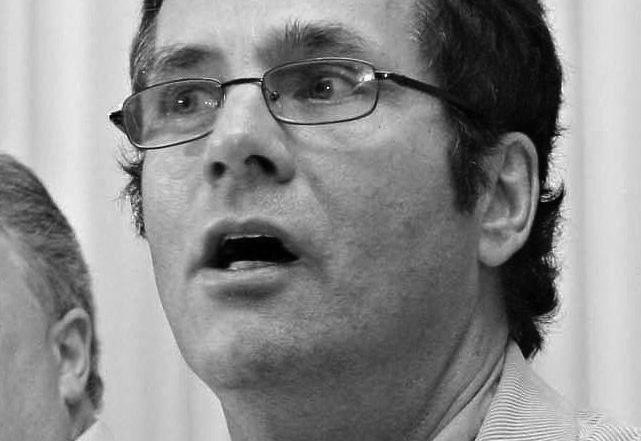
PHOTO OF: DAVID HUTTON, FAIR
Noralou Roos on journalism and health care
QUINN RICHERT
N
oralou Roos is a professor in the faculty of medicine at the University of Manitoba, as well as the founder and director of EvidenceNetwork.ca, an organization committed to providing journalists with access to academic research on health care policy. She will be presenting at the Holding Power to Account conference on Friday, June 13 with Helen Fallding and Steve Buist on a panel titled Health Care, Investigative Journalism, and Human Rights.
The Manitoban : Could you briefly explain the work that EvidenceNetwork.ca does? Would it be appropriate to refer to Evidence Network (EN) as a watchdog group?
Noralou Roos: I wouldn’t call it a watchdog group – I spent my whole career as an academic doing research at the university, and was always frustrated, along with several of my colleagues, that what we were reading in the papers did not reflect the results we got in our research. Furthermore, we realized that we were publishing all of our research in academic journals that nobody except for other academics read. I spent a good part of my career trying to avoid the press; I did an interview once and while the story was quite good, the headline was outrageous. Several of us [academics] have acknowledged over the years that if we really wanted to make our results available then we had to
figure out how to work with journalists to do it. That is really what it is about.
The Manitoban: Would it be fair to say that one of the biggest barriers journalists face when writing about health policy issues is their own level of understanding on the topic?
Noralou Roos: From what I understand now, journalists are themselves under incredible pressures. What we [EN] were told when we first met with journalists when we were first funded to do this project was that what journalists really need is easy access to health policy experts. Journalists told us, “We don’t want to have to go through universities to find out whom to talk to. We would like a website where their contact information is there for everyone to see.” EN has five to 10 experts on every listed topic along with their contact information (which we needed to obtain their consent to post).
The Manitoban: What made you realize that this type of initiative was necessary?
Noralou Roos: Like I was describing earlier, we often see things that appear in the news which really don’t square with what the evidence says. One example is that we’re continually reading about this “aging tsunami” –that there is this incredible number of elderly people that are eventually going to destroy the health care sys-
tem because it will be so expensive. If you actually look at the evidence, the best estimates of how much aging is going to add is about one per cent per year, which our system is quite capable of coping with. There are other things going on, however, which need to be much more criti-
Be skeptical of what you are being told. Take a critical look at things and ask, “is this test necessary? Is this drug necessary? What do we know about how effective this treatment is?”
– Noralou
Roos
cally addressed.
The Manitoban: Could you give an example?
Noralou Roos: A lot of it is new tests. There is this debate around mammography right now. There is growing evidence that mammography saves very few lives and in fact ends up diagnosing and having women treated who never have cancer
that is going to be a problem. This is a very expensive thing to be doing.
The Manitoban: What would you rank as some of the most important health care policy controversies unfolding in Canada at the moment?
Noralou Roos: There is a big case coming up in BC. Dr Brian Day wants to operate a clinic outside the Medicare system and thinks physicians should be able to practice in two systems at once, whereas right now you have to be either totally in the public or private system. That is a big issue that is coming up.
The Manitoban: Is there any advice you would give to new journalists attempting to navigate Canada’s health care system and write well about it?
Noralou Roos: It’s very complicated. Be skeptical of what you are being told. Take a critical look at things and ask, “is this test necessary? Is this drug necessary? What do we know about how effective this treatment is?”
The Manitoban: EN is heavily involved with helping health care experts get op-eds published in major Canadian newspapers, and that is important in order to help contribute to the discourse in this country on health care policy. How would you assess the level of discourse on health care policy right now amongst the Canadian public?
Noralou Roos: I think that we really need to do a better job of communicating what these issues are all about to the public. For example, there is this huge issue around wait times, yet we also need to be concerned about whether the people waiting for, say, surgery, actually need surgery. There is no easy rule to decide when surgery is necessary, and you find big differences across different areas as to when somebody is either sent for surgery or not.
The Manitoban: Is there anything else you would like to add?
Noralou Roos: One of our topics [for the panel discussion] is that there is more to health than health care. We know that poverty is a major threat to the health of the individual. One of the things we’re doing in Manitoba right now is developing a “poverty tool” which is trying to get physicians to realize that it is important to diagnose poverty, as it is important to diagnose hypertension, blood pressure, or cholesterol levels in terms of dictating how frequently you should be seeing the patient and how you should potentially be connecting them to benefits which they may be eligible for but haven’t realized. This could potentially be the most important thing you could do for a patient, and it’s just not something people have done before. But physicians are becoming very interested, so we’re working with them on this.
Things every man should understand about
Elliot Rodger is not an anomoly
KATERINA TEFFT, STAFF
Trigger warning: sexual assault, domestic violence, violence against women
“Men are afraid that women will laugh at them. Women are afraid that men will kill them” – Margaret Atwood
In the wake of Elliot Rodger’s May 23 California shooting rampage, which left seven people dead (including the shooter) and 13 injured, the Internet has been abuzz with discussion of the killer’s motives. What is clear, however, is that Rodger left behind a disturbing YouTube video in which he expressed his desire for revenge against and hatred of women for denying him sex and affection.
It is no mystery, therefore, that these killings were motivated by misogyny.
Unfortunately, many men have reacted with defensiveness to any suggestion that Rodger was not a lone madman or was in any way representative of a broader societal phenomenon. A common response has been, “But not all men are like that!”
The viral #YesAllWomen hashtag has challenged this response – the idea behind it being that, while not all men are misogynists, all women experience the effects of patriarchy on a daily basis. Women en masse have been sharing their everyday experiences of misogyny, and the result has been eye-opening.
Of course, the #NotAllMen and #YesAllPeople hashtags have fought back with equal vigour, attempting to drown out women’s voices and divert attention from the issues at hand. The following are a few important points of which these dogged contrarians should be aware.
We’re not attacking you
We get it; not all men are misogynists. Not all men harass or assault women. That’s a given, and that point has already been made repeatedly, and heard loud and clear.
But all men do benefit from the socially constructed hierarchy that places men at the top and women at the bottom – that’s called patriarchy. In essence, it’s a system that places a high value on men and masculinity, while devaluing women and femininity. The result is male privilege – whether in the home or in the workplace, in public or in private.
When women talk about things men do that make us feel scared, objectified, and belittled, we’re not talking about each and every individual man; we’re talking about maleness and masculinity as a whole, and the way the system is set up to keep us down as bottom-ranking members of society. This generalization serves an important purpose, which is to highlight the fact that this problem isn’t isolated to a few bad men who are crazy or evil. The phenomenon that is patriarchy pervades every one of our social institutions and affects every aspect of how we interact with one another.
And yes, we might not be talking about every individual man, but
we are talking about a very large number of men. The attitude that women’s bodies are public domain is extremely pervasive and common. I hate to break it to you, but if you’re one of those men whose immediate reaction to #YesAllWomen was to insist that women are exaggerating the universal nature of the misogyny we experience, you’re probably one of those men we’re talking about.
When we say all women, we mean it
If you haven’t noticed that misogyny and patriarchy are all around you all the time, you haven’t been paying attention. Perhaps you haven’t wanted to because the elevated position you occupy in society is so cushy.
While writing this article, I struggled to think of a single female friend from whom I haven’t heard a horror story about being assaulted, groped, stalked, harassed, or abused by a man.
I couldn’t do it – because yes, all women have those stories.
Like the time a guy I casually dated for a couple of weeks told me to “fuck off and die” when I said I’d rather just be friends.
Or when a guy with whom I had gone on two dates showed up outside my apartment building uninvited and refused to leave for three hours despite my repeated pleas, because he claimed that he just wanted to show how much he cared about me.
Or when a strange man on the street groped me while I was out for a jog.
Or when I was followed off the bus by a much older man who wouldn’t stop asking me where I lived.
This is only a tiny handful of examples.
The available statistics reflect this harsh reality:
Sixty-five per cent of American women have encountered some form of street harassment.
If you haven’t noticed that misogyny and patriarchy are all around you all the time, you haven’t been paying attention – or haven’t wanted to notice
Forty-one per cent have been subject to physically aggressive harassment in public.
One in four girls will have been sexually assaulted by the time they turn 18.
“Fifty-one per cent of Canadian women have been victims of physical or sexual violence since the age of 16.”
Eighty-two per cent of sexual assault victims are female.
Women are 11 times more likely to be victims of sexual assault than men in Canada.
Ninety-eight per cent of sexual
assault perpetrators are men.
As a man, it is entirely possible that this pervasive misogyny has slipped under your radar. #YesAllWomen is a call for you to open your eyes. Just because you haven’t seen it doesn’t mean it’s not happening.
It doesn’t always have to be about you
Sometimes being a good ally means speaking up and taking a stand. Other times, it means shutting up and listening. The latter applies here.
This isn’t personal. Instead of getting defensive and derailing the conversation, if you give women a chance to share our experiences and let our voices be heard, you might learn something. You have the opportunity to gain some valuable insight here.
As a man, your voice is more often than not the one that’s heard; it’s time to pass the microphone to women for a change.
No one gets mad at the gay rights movement for not talking about climate change. No one gets mad at the animal rights movement for not talking about immigration reform.
So why is it so important to #NotAllMen and #YesAllPeople participants that women talk about all people when we’re trying to have a conversation about issues that affect
women specifically?
It could be partly because of the misconception that pro-woman is synonymous with anti-man. It could also be because that conversation is still trying to occur within a patriarchal society that doesn’t take women seriously and prefers men to be the centre of attention.
It’s not up to the person in the position of privilege to tell the person experiencing oppression whether or not they’re really being oppressed. Listening and really hearing is the first step toward becoming a good ally.
‘Casual’ sexism has serious consequences
According to the Canadian Women’s Foundation, a woman in Canada dies at the hands of her intimate partner every six days. In 2011, more than 85 per cent of spousal homicides in Canada were women.
“On any given day in Canada, more than 3,300 women are forced to sleep in an emergency shelter to escape domestic violence,” and “83 per cent of all police-reported domestic assaults are against women.” Women are “three to four times as likely to be killed by their spouse.” Around 80 per cent of victims of dating violence are women.
And: “In spousal violence, three times as many women experience
serious violence such as choking, beating, being threatened with a knife or gun, and sexual violence. Women are more likely to be physically injured, to get a restraining order, and to fear for their lives.”
Elliot Rodger was not an anomaly
Men’s rights activists and “nice guys” might seem like mere annoyances, but they perpetuate the attitude that men are entitled to women’s bodies. They perpetuate hate and violence.
On one end of the spectrum, it’s a guy calling a girl a bitch for “friendzoning” him. On the other, it’s misogyny-driven homicide.
Rodger was not a madman. He, like Marc Lépine—the shooter of the 1989 Montreal Massacre—before him, was a predictable product of patriarchy.
I wish #YesAllWomen were simply about women getting fed up with being catcalled, but in reality, this conversation is far more serious.
This isn’t the time for whining, “But not all men are like that!” This is an opportunity to listen and learn, because what women have to say is important. Even the most casual, everyday sexism can have deadly consequences.
ILLUSTRATION BY BRAM KEAST
Pink spray paint, gesso, oil on canvas
Carolyne Kroeker
Renyl Lantano
Bring on the bikes
Winnipeg Bike Week offers up events, awareness
MIKE STILL, STAFF
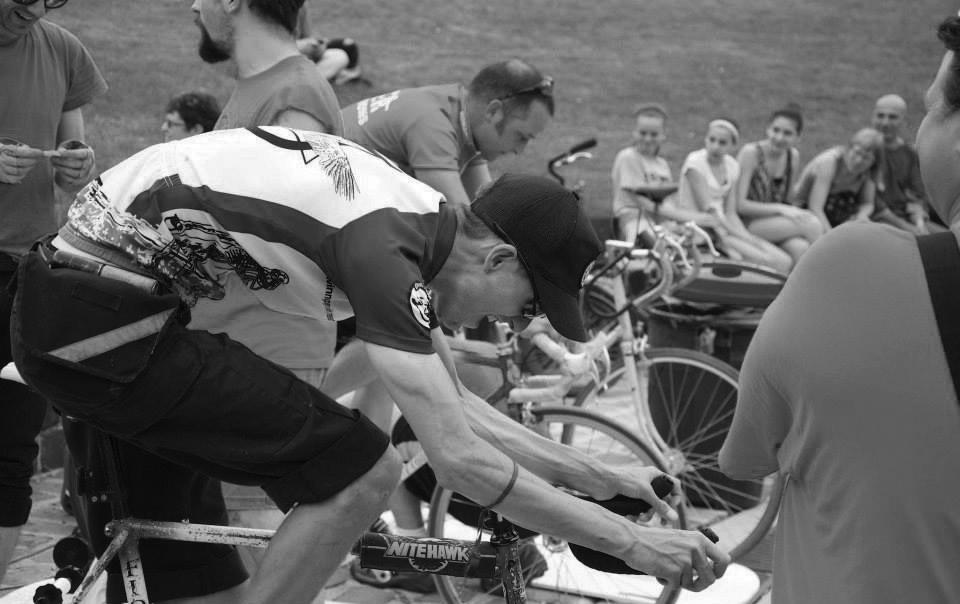
From June 16-22, Winnipeg will transform into a mini cycling hub, as part of the inaugural Winnipeg Bike Week, a weeklong celebration of people riding bicycles.
The event will involve activities each day, for various individuals who may or may not commute on a regular basis.
The week also includes the seventh annual Bike to Work Day, which takes place on Friday, June 20 and is where the idea for Winnipeg Bike Week stems from.
“We felt that if we wanted to keep expanding and encouraging people to bike, we wanted to offer a program that didn’t just focus on commuters, but opened it up to families and students who enjoy cycling just for recreation, sport, leisure, or transportation,” said Andraea Sartison, event coordinator of Bike to Work Day.
The week is packed with tons of exciting activities, including dropin bike polo at the River Osborne Community Centre; an art ride through downtown Winnipeg, taking in a variety of public artwork; and the MEC Bikefest at the Forks. There will also be an informative workshop put on by Bike Winnipeg touching on advocacy efforts for Winnipeg cyclists.
Sartison is quite pleased with the way things have been set up this year – especially in relation to community involvement.
“I think we’re fortunate that we have a lot of people who are connected to different parts of the community—some through shops, some through community bike clubs, some through active transportation networks, and some through races—who were able to rally their own troops and put an event on themselves,” said Sartison.
“That is great for us, because then we don’t have to run everything and micromanage, we just get to focus on Bike to Work Day, and promoting the week as a whole.”
Pit stop party
Speaking specifically of Bike to Work day, one of the biggest
changes over the past few years has been the addition of more pit stops, which are set up all over the city. They provide a place for people to relax and enjoy the presence of their fellow cyclists on the morning of Bike to Work Day.
Sartison added that this year there are 52 confirmed pit stops, which is a huge increase from her first year as the event coordinator in 2011, when there were 21.
“For a cyclist that’s going by, they can expect to be honked at and pulled over, and given some free coffee and free drinks, and have their bike checked out, and maybe get some swag or prizes,” she said.
Along with the previously mentioned items, certain pit stops also offer a unique display, such as live music, basketball games, or performances by kids at schools where pit stops are present.
“I’m always so surprised every year, when people start telling us what they are planning on doing [for pit stops], because it’s really exciting,” said Sartison.
While Bike to Work Day has now grown into a full-week extravaganza, it originally started as a simple idea by a group of people who wanted to create more awareness.
Sartison was quick to mention the hard work put in by her fellow committee members, a number of whom have been around since the very beginning.
“In our committee, I’m a hired event coordinator, but everybody else is all volunteers,” said Sartison.
“They’re many of the core people who started this event seven years ago, just because they wanted to encourage people to bike to work, so it’s kind of a dream project, and a heart project for a lot of them, and I think that’s kind of inspiring to me as well.”
For more information, or to get involved, you can peruse the Winnipeg Bike Week website: www.bikeweekwinnipeg.com.
Yakking with Yantz
A
new
monthly Q
& A with Bison
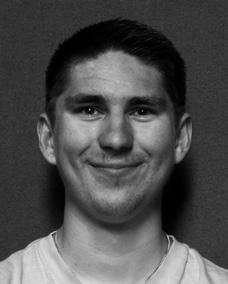
football QB Jordan Yantz
MIKE STILL, STAFF
J
ordan Yantz has football success written all over him. It has carried over to whatever province he’s travelled – whether that be with Winston Knoll Collegiate in Regina, the Vancouver Island Raiders in British Columbia, or, currently, the Manitoba Bisons.
A Canada West All-Star in his first year with Manitoba, a trip to the 2014 East West Bowl, and, more recently, a training camp invite with the Winnipeg Blue Bombers are just a few of the accolades Yantz has accumulated during his time with the Bisons.
While many teammates and coaches know what kind of person Yantz is, the general public may not be so familiar. For this reason, the Manitoban has decided to begin a monthly segment with the all-star QB in order to get to know the man in the helmet.
The Manitoban: How has the off-season been so far?
Jordan Yantz: It’s going well. The facilities are awesome for us. Our strength and conditioning coach Matt Barr is doing a fantastic job pushing us to the right extent of making us better athletes. The speed training we do with coach
[Alex] Gardiner is absolutely fantastic as well, and it honestly shows. I think that when we step on the field, every team is going to know.
M: You’ll be getting all but one receiver [Andrew Smith] back for the upcoming season. Is that a big factor for chemistry and knowing players’ tendencies?
Yantz: Absolutely. Me being in
my first year, I’d like to say up until halfway through the season, I was still learning the wide receivers, as well as the playbook, and the new style of play. All of the receivers and myself have been together this whole off-season, and I think we can just take our game to a whole new level, as far as different routes, different depths, different everything, and our chemistry can only get that much better.
“I think that when we step on the field, every team is going to know” –Jordan Yantz, Manitoba Bisons QB
M : Losing All-Canadian Anthony Coombs definitely hurts. How do you think Kienan LaFrance will step in?
Yantz: I think Kienan is going to do a fantastic job. I think people say too much, “What are you going to do without Coombs?” I believe Kienan is going to be above and beyond what people say he can be, and I’m excited to work with him in the backfield; he’s a very strong, powerful, and explosive guy. He’ll work for every yard. He’s a grinder
and I’m really excited for him.
M: Switching gears to your time in British Columbia, how did Matt “Snoop” Blokker, the former head coach with Vancouver Island and current coach of the Calgary Colts, impact your development as a QB?
Yantz: I lived in the basement suite of his house for my first two years [with Vancouver Island], and it was crazy, because my second year, I got pulled and I never played again until the national championship. There was some tension there, and after it was all said and done, you look back at it and [Blokker’s] like, “I did that for a reason. I felt like you could do better and push yourself.” I give him credit for that, and making me the player that I am.
M: Returning to the subject of the Bisons, looking at the schedule for the upcoming season, and talking to some other players, it’s hard not to mention Calgary. That’s the stepping-stone for you guys. Is there any extra focus put on those two games this year, and especially the final game of the year at home?
Yantz: It’s one game at a time, but you circle the ones when you play against those [Calgary] Dinos. When I heard our home schedule, and we get to host Calgary with our crowd behind us, we’ve had a solid turnout for a number of games, so I can’t wait to get them in our barn. I’m not going to talk smack or anything like that, but you’re going to see a whole different team this year with the Bisons. We’re going to be excited, and ready to go.