SCIENCE & TECHNOLOGY EDITOR Malak Abas science@themanitoban.com
ARTS & CULTURE EDITOR Tobi Nifesi arts@themanitoban.com
SPORTS EDITOR Ryan Stelter sports@themanitoban.com
COPY EDITOR Sarah Doran copy@themanitoban.com
DESIGN
DESIGN EDITOR Bram Keast design@themanitoban.com
GRAPHICS EDITOR Kelly Campbell graphics@themanitoban.com
PHOTO EDITOR Miguel Yetman photo@themanitoban.com
DESIGN ASSOCIATE Kellie Huynh
GRAPHICS ASSOCIATE Aldo Rios
PHOTO ASSOCIATE Chantal Zdan
PHOTO ASSOCIATE Star Roxas
PHOTO ASSOCIATE Megan Colwell
REPORTERS
NEWS Osho Samuel Adetunji
NEWS Hannah Froese
NEWS Diana Ubokudom
COLUMNIST Zach Fleisher
COLUMNIST Jeremiah Kopp
COLUMNIST Shaden Abusaleh
ARTS & CULTURE Olivia Michalczuk
ARTS & CULTURE Emelia Fournier
SPORTS Kellen Taniguchi
SPORTS Jason Pchajek COPY Joseph Gonzalez
MANITOBAN
109 HELEN GLASS UNIVERSITY OF MANITOBA WINNIPEG, MB R3T 2N2
GENERAL INQUIRIES & ADVERTISING
Phone: (204) 474.6535
Fax: (204) 474.7651 Email: manitoban@themanitoban.com FREE MEDIA Campus Plus Media Services Phone: 1.780.421.1000 Email: advertise@free-media.ca Canadian
Picketing begins after UMFA, university mediation breaks down
One picketer struck by vehicle, conciliation between parties underway
GARETT WILLIAMS, STAFF
Picket lines sprung up at the University of Manitoba at 7 a.m. Tuesday after mediation between the university and its faculty broke off Sunday evening.
Bargaining teams for university administration and the University of Manitoba Faculty Association (UMFA) spent nearly 40 hours at the negotiating table with a mediator over the weekend before talks effectively broke down.
Participating faculty members delayed vehicles entering U of M facilities and distributed strike information until 5 p.m. Picketing is scheduled to continue between 7 a.m. and 5 p.m. daily until a new collective agreement is reached.
Picket lines are forming at four locations at the Fort Garry campus – Chancellor Matheson Road at Pembina Highway, University Crescent North, University Crescent South, and King’s Drive. A picket line is also active at the Bannatyne Campus outside the Brodie Centre.
UMFA president Mark Hudson said for the most part motorists were supportive. However, he said three vehicles did try to push through a line and at least one picketer was struck. No serious injuries have been reported.
“We need the public to respect our picketers’ right to be there, as we respect their right to cross our line after a brief delay for information,” he said.
Only classes taught by UMFA members are affected by the strike. The university registrar’s office has posted a working list of continuing classes online.
The latest contract between UMFA and the U of M expired March 31 and the two sides have been negotiating toward a new agreement since the spring. UMFA represents nearly 1,200 professors, researchers and librarians.
The university applied to the province to appoint a conciliator Monday and sessions are scheduled to begin Wednesday with both sides back at the table.
Mediation breakdown
Mediation sessions got off to a rocky start Friday, Oct. 28 following the first day of discussions when university president David Barnard and Hudson issued a joint release criticizing a provincial government mandate directing the university to extend the faculty’s current contract an additional year without any salary increases.
Hudson said the union remained at the table to negotiate non-monetary issues of concern to faculty, chiefly workload and performance
indicator protections, as well as job security assurances for instructors and librarians.
The faculty union submitted a final proposal to the university Sunday and received a counter-offer in return Monday that Hudson called “a very clear rejection of our offer.”
“We can’t solve these problems from the picket line. We want to solve these problems at the table having conversations”
– John Kearsey, U of M vice-president external
“We just saw no flexibility whatsoever, despite the fact that we walked in to that mediation saying that we would agree for the moment to set aside the salary question,” he said.
“Facing the prospect of zero per cent for our members, we had hoped that university management would take that into consideration and really move on some of the more substantive, non-monetary issues and we didn’t see movement at all.”
John Kearsey, U of M vice-president external, said it is disingenuous for the union to suggest that the university made no effort to address the association’s concerns, saying there was significant movement on its part.
“It’s really discouraging to hear
that they would say that there was no meaningful attempt made,” he said, “because we worked really hard and we think we gave them some stuff that they said they wanted, so part of this is confusion as well.”
Kearsey said he is hopeful that a return to the bargaining table with a conciliator will help bring a swift resolution to the strike.
“We want to be back at the table having discussions about the issues that are important to the executive of UMFA and its membership and try and resolve this as quickly as possible so that [students] are not negatively affected by this labour action,” he said.
“We can’t solve these problems from the picket line,” he said. “We want to solve these problems at the table having conversations. That’s what our students deserve. That’s what this community deserves.”
Kearsey also noted that while the provincial mandate directing the university to extend the faculty contract an additional year without an increase was only revealed to the public Friday, the province approached the university as far back as Oct. 6, only days after UMFA turned down a four-year offer. The province did not interfere with the mediation process, he said.
Presented in September, the four-year proposal included a seven per cent salary increase. Including existing increments and positionspecific top-ups, the average UMFA member’s salary increase would have been closer to 17.5 per cent. UMFA countered with a one-year proposal that included an average 6.9 per cent increase.
Hudson said the province’s direc-
tive to eliminate any increases in the first year threw a wrench into an already complex series of negotiations but was not the ultimate deal-breaker.
“I think we showed an enormous commitment to avoiding a strike by proceeding with the non-monetary issues and we hoped that, given the circumstances, the university management would show some flexibility on those,” he said. “And, again, we just saw no movement, even on the non-monetary stuff.
“So while that was a big wrench, the fact that a strike could not be prevented really lies at the feet not of the province alone but at the university administration.”
Student solidarity
A number of students joined faculty on the picket line in a show of support.
Jonah Olsen, who is studying history and anthropology and is a member of the U of M Student Action Network (UMSAN), said he supports the faculty standing up to fight for quality programming.
He said recent cutbacks have left some classes overcrowded or full to the point that students are delaying graduation only because the final required course fills up.
“I don’t mind delaying a couple weeks here – or whatever it takes – to win this strike because the administration is delaying us far more with all their cuts,” he said.
UMSAN is organizing teach-ins in concert with the strike action, with a handful of professors and a community organizer scheduled to speak on the underlying issues that lead to labour disruptions.
“I think that the general trend among students is to be in favour of the strike because they’re aware of everything else that’s affecting them and not just how a strike affects them,” said Olsen.
“We need the public to respect our picketers’ right to be there, as we respect their right to cross our line after a brief delay for information”
– Mark Hudson, UMFA president
“This is just kind of the aftermath of other things that have been hurting us from the other side.”
Check www.themanitoban.com for more updates on the UMFA strike as they happen.
PHOTO BY MEGAN COLWELL
UMSU audit shows $690,000 operating fund deficit in 2015-16
VPI, auditor propose reforms to the student union’s financial operations
LEVI GARBER, STAFF
The University of Manitoba Students’ Union (UMSU) ran a $690,000 deficit in its operating fund last year, according to its official audit presented at council’s regular meeting Oct. 27.
The audit stated that the total deficit to the union’s operating fund was $1.14 million, however, this includes $150,000 in funds that will be returned to the union following a university error regarding the union’s payment for health and dental coverage, and a $300,000 one-time deposit for the union’s health and dental provider Manitoba Blue Cross.
“The problem isn’t one given year. Deficits have happened many times in the past, therefore it is a systemic issue that must be resolved” – Adam Pawlak , UMSU vicepresident internal
The external audit, conducted by the financial management agency BDO Canada LLP, accounted for all recorded spending by UMSU over its 2015-16 fiscal year, which ended Apr. 30, 2016.
UMSU vice-president internal Adam Pawlak presented the complete audit to councillors, claiming that a number of factors led to the large deficit.
Pawlak pointed to high levels of discretionary spending, legal and
engineering costs related to space revitalization, professional costs associated with branding, and the relocation of the Manitoban office from University Centre to the Helen Glass Centre as contributing factors. None of which, he said, were budgeted appropriately last year.
The $76,000 loss incurred by the 2015 Frosh Fest also contributed to the budget shortfalls, according to Pawlak.
UMSU’s financial position
Despite running a $690,000 operating fund deficit, UMSU still has nearly $3 million in assets, including $1.9 million in cash on hand. That however, is $207,000 less than the union had last year.
In addition, the audit revealed that UMSU saw a nearly $500,000 drop in total revenue in 2015-2016 compared to the previous year.
In his presentation, Pawlak brought forward proposals to reform the checks and balances in place to ensure that union spending is accurately reflected by the approved budget and remains stable.
These plans include an overhaul of the union’s internal financial accounting practices and procedures, a higher amount of regulation over discretionary spending, and enforcing the recategorization of UMSU financial operations.
UMSU’s business operations, union operations, and administration have been divided into separate categories of financial management in order for the union to keep an eye on each category’s budgets more closely, said Pawlak.
“ With clear information relating the actual revenues to expenses for each of those distinct lines of activity, we will be in a much better position to analyze operations, ensure that expenses are justified by duly autho-
rized UMSU mandates, and report meaningful information to various governing bodies,” Pawlak said in an email.
Credit card usage
Along with the official audit, BDO Canada presented UMSU with recommendations to ensure the union’s finances are transparent.
The auditor underlined a lack of formal policies concerning the approval of credit card charges as a concern.
“Due to lack of formal policies and procedures, we noted some credit card charges where it was difficult to determine if the charge relates to business affairs of council or are of a personal use,” states the audit.
The audit recommends the union draft formal policies regarding the usage of UMSU credit cards. It also recommends that the credit card statements be presented to council.
In March, UMSU was thrown into disarray after then-president Jeremiah Kopp – now a columnist for the Manitoban – was accused of misusing union funds through an executive credit card by the thenvice-president student services Jessica Morrison.
On March 10, after Morrison’s accusations were made public, council passed three emergency motions which made financial documents – including credit card statements – public, called for a forensic audit, and cut off Kopp and vice-president internal Zachary LeClerc from use of executive credit cards for the remainder of the term.
Afterwards, at their March 24 meeting, UMSU council passed a motion apologizing to students for “for the rash reaction,” citing a closedsession presentation by UMSU accounting manager Ron Davey. Law student representative Karas
Elbardisy explained that the presentation made clear that a forensic audit would not find evidence of any illegal or criminal behaviour.
“It wouldn’t give us ‘was this right, was this wrong,’” Elbardisy said. “And what the councillors know now is that the policies don’t prohibit what happened, they tend not to speak on it one way or the other, and that’s an issue.”
This year, no executives have access to union credit cards.
“I will do whatever it takes in the best interest of this organization so we see a balance and begin growing our savings” –Adam
Pawlak
In his presentation, Pawlak informed council that UMSU’s general manager, Thomas Blumer, is the only staff member in possession of a union credit card and all expenses are reported in finance committee.
Balancing the budget
Pawlak said he is confident that despite years of running deficits, this year’s UMSU executive will reach a balanced budget, if not a surplus by the end of the fiscal year.
“ I will do whatever it takes in the best interest of this organization so we see a balance and begin growing our savings,” he said.
“ The problem isn’t one given year,” he said. “Deficits have happened many times in the past, therefore it is a systemic issue that must be resolved.
I plan to put a legitimate framework in place to address these systemic shortcomings. That, I am willing to commit to.”
Transparency
UMSU councillors unanimously voted at the Oct. 27 meeting to accept the findings of the audit and to hire BDO Canada LLP to conduct the union’s official audit of this year’s finances after the financial year ends April 30.
Before voting, however, Arts Student Body Council representative Serena Gawryluk expressed concern that councillors were not given enough time to review the audit before voting to accept it. She said most councillors viewed the documents for the first time at the meeting.
The same issue was brought up at UMSU’s last meeting on Oct. 13, when councillors were asked to vote on a revised budget at the same meeting it was presented.
“ I believe that Adam has done a good job of presenting to us the issues that caused such a deficit last year,” Gawryluk told the Manitoban
“The only thing I really took issue with is that I wish that the detailed breakdown of the budget that was voted on fairly quickly as well as the audit details had been included in the council package for review earlier on.”
“It is really difficult to take in so many numbers and so much information in such a short period of time and then to come to an opinion and then vote on it so quickly,” she said.
During the meeting, Pawlak apologized for not including the audit in the council package, as in past years, saying he was not aware that it is generally sent to councillors before hand and there are no rules mandating that the executive do so.
The University of Manitoba Students’ Union (UMSU) finally has a full slate of community representatives after filling its LGBTTQ* and Aboriginal students’ rep positions at its last regular council meeting Oct. 27.
The Aboriginal representative position has been vacant since the current executive’s term began in May. The LGBTTQ* position opened in the summer after Theo De Silva stepped down citing a conflict of interest after taking on work at an UMSU-run business.
Education student Douglas O’Brien will take over the LGBTTQ*
file, while Chance Paupanekis, co-president of the University of Manitoba Aboriginal Students Association (UMASA), will step into the Aboriginal students’ representative role.
O’Brien and Paupanekis were the lone applicants for their respective positions and were voted in unanimously by council following a brief five-minute presentation. Both begin their terms effective immediately.
LGBTTQ* representative
O’Brien self-nominated for the LGBTTQ* representative seat and is a member of Arc Education, a faculty
of education group that acts similarly to a gay-straight alliance.
In Arc meetings, members discuss issues in the K-12 education system faced by LGBTTQ* students and staff.
“This insight,” O’Brien said in an email to the Manitoban, “can help me better understand where our future LGBTTQ* UMSU members are coming from and what supports they may need upon entering and during their time at the University of Manitoba.”
Before becoming the LGBTTQ* representative, O’Brien proposed establishing more gender-neutral
bathrooms on campus. Currently, the gender-neutral washrooms at the U of M are not completely accessible to students, he said.
O’Brien said that through his position he hopes to ensure that LGBTTQ* perspectives are part of the dialogue and vision of the student union.
Aboriginal students’ representative
Paupanekis is pursuing a BA in political studies, with a minor in native studies. Paupanekis told council members that while the University of Manitoba has much to be proud
of regarding Indigenous inclusion and education, it has fallen behind the University of Winnipeg, which introduced a mandatory Indigenous credit requirement this fall.
“When people don’t understand why First Nations people and Aboriginal people live under the circumstances that they do,” he said, “it’s because they don’t have the education [and they] don’t have the space to learn about the true history.”
“We need to start promoting Indigenous excellence [and] we need to start working with the First Nations community here on campus,” he said.
U of M’s office of sustainability set to begin waste audit in November
U of M receives $40,000 from the province for waste audit and organic waste processing feasibility study
OSHO SAMUEL ADETUNJI, STAFF
T
he University of Manitoba’s office of sustainability is preparing to conduct a broad-scaled waste audit and organic waste processing feasibility study after receiving a $40,000 provincial grant this summer.
The project funding was granted through the provincial waste reduction and pollution prevention (WRAPP) fund. The WRAPP fund assists projects that aim toward waste reduction, pollution prevention, and integrated waste management practices.
Sustainability engagement coordinator Anna Weier said in an email the grant money will go directly toward hiring an external coordinator to conduct an audit and feasibility study at both the Fort Garry and Bannatyne campuses.
After the successful approval of the contract in October, the project is expected to swing into full gear the first week of November, with the waste audit due for completion Nov. 18.
The waste audit is a comprehensive review of the refuse coming from both campuses over a 48-hour period. Approximately 10 metric tons of garbage and five metric tons of recycling will be sorted through over two weeks.
The organic waste feasibility study will examine the collection, pickup
and delivery methods, and composting of organics produced on campus.
Auditors “will be doing an assessment of the organics in our waste streams. They will consider different collection methods and compost methods,” Weier said.
“We are hiring an external contractor to do the waste audit and feasibility study. That is where the grant money will go” – Anna Weier, sustainability engagement coordinator, office of sustainability
“For instance, we would like them to look at the cost and feasibility of doing in-vessel composting, but they will provide us with other options as well.”
Weier noted that the University of Manitoba Students' Union, through its restaurant enterprises in University
Centre, is already collecting food waste from its kitchens and composting through Progressive Waste Solutions. A handful of offices also collect and manage their own organic waste separately, she said.
Retired director of the campus sustainability office at the University of Winnipeg Mark Burch said that the waste audit and organic waste processing feasibility study is a step in the right direction.
“I think it is important,” he said.
“Since the 1970s, we have talked about closing the loop on how we use materials in the society and in the economy, and recovering them through recycling is a valuable thing to do.”
“We did a waste audit annually at the U of W at the same time that I was working on just reducing waste volumes at source, so looking a lot more at how we could minimize consumption overall and how we might reuse materials or equipment
UMSU council chooses to leave VPSS position vacant
Citing the large cost of an election, council votes unanimously to split work between executives, hire staffer
LEVI GARBER, STAFF
T
he University of Manitoba Students’ Union (UMSU) council voted unanimously to leave the vice-president student services (VPSS) position vacant for the remainder of the year at its regularly scheduled meeting on Oct. 27.
Former VPSS Jessica Smith abruptly resigned from her position at the UMSU council meeting on Sept. 29. Following Smith’s resignation, UMSU council was presented with two recommendations from the UMSU governance committee on Oct. 13 on strategies of replacing her.
Cole Kubay, chair of the committee, gave council two options: hold a full election to select a new VPSS – a process that would take five
weeks including nominations, campaigning, and voting – or leave the position vacant and divide Smith’s remaining responsibilities amongst the four remaining executives and a new union staffer.
At the Oct. 13 meeting, Kubay also informed council that holding an election could cost the union up to $25,000. “The governing documents do not mandate that we have to have an election if [an] executive resigns,” said Kubay. “So the position could technically be left vacant until the UMSU general election.”
After a lengthy debate on the issue, council decided to push the decision on whether or not UMSU should hold an election to its Oct. 27 meeting.
On Thursday, Council unanimously voted in favour of a motion to leave the position vacant. The same motion will also empower the winning VPSS candidate following UMSU’s general election in March to take the position prior to May 1, 2017, much like Smith did following former-VPSS Jessica Morrison’s early and abrupt resignation last March.
UMSU president Tanjit Nagra voted in favour of the motion, telling the Manitoban after the meeting about her decision.
“When discussions first started, I was very torn as to what we should do moving forward,” she said.
“However, after having discussions with my council, I felt as though I was comfortable voting in favour of
the motion, which was to keep the position vacant.”
Nagra pointed to her concern that holding a full five-week election would not be financially accountable for the union as the main reason for her support of the motion.
“Given that UMSU has run deficits in previous years, I think we need to stay financially accountable and the best financial move was to keep the position vacant,” she said.
Nagra also said that moving forward, she and the union’s general manager, Thomas Blumer, would create a new staff role that will be advertised, as per UMSU’s hiring protocols.
When asked why Smith resigned, Nagra declined to comment for a
somewhere before we dispose them.”
“I think it is important and a very good step [but] I think we are 30 years too late.”
Student volunteer opportunities are available. Anyone interested should contact the office of sustainability. Two waste audit information sessions are also being hosted on Nov. 8 and 16 at 2 p.m. in room 210 of the Helen Glass Centre.
second time. In September, the Manitoban reported that leaked emails between Smith and her fellow executives indicated a sour working relationship between her and other UMSU staff.
UMSU councillors did confirm, however, that at the same meeting Smith resigned, a confidential motion on the meeting agenda – to be tabled in a closed session – was related to taking disciplinary actions against Smith.
Smith refused to comment on the motion or the reasons for her resignation.
PHOTO BY MEGAN COLWELL
Editor-In-Chief:
Craig Adolphe
Contact: Editor@themanitoban.com / 474.6770
UMSU must support UMFA in their strike
Failure of the student union to take a stance yet another devastating blow to advocacy role
SHAWN GARBUTT, STAFF
On Oct. 27, the University of Manitoba Student Union (UMSU) council discussed whether to take a stance on the precarious negotiations that have been ongoing between the University of Manitoba Faculty Association (UMFA) and the administration since May. Meanwhile, on Oct. 14, UMFA issued a strike mandate that held 86 per cent approval among membership who voted over the course of a three-day poll.
The potential of a strike, said many an UMSU councillor, is a very serious matter that requires the union to tread with the utmost caution. It is with this attitude that the council reached a stance that simply isn’t one at all.
Choosing to remain effectively neutral, UMSU council came to a resolution that states it “recognizes the importance of UMFA’s demands as it pertains to quality of education for its students,” but ultimately encourages individual student body associations at the faculty level to assess the situation and come to conclusions of their own.
At best, neutrality is a tepid course of action for UMSU to take. At worst, it’s total strategic incompetence. It is not the Arts Student Body Council, nor that of science, nor engineering, that occupies the political presence required for the student voice to be meaningfully heard by those at the bargaining table.
Quite frankly, UMSU’s failure to take a definitive stance on such a critical issue is an institutional embarrassment. This is yet another mark in a series of devastating blows against the union’s credibility as an advocacy group for students.
The entire purpose of a union is to advocate in its members’ interests, so when there is a failure to perform that single task, one must wonder why it exists at all.
One does not have a union so it can spectacularly bungle its finances
to the point of running a $1.14 million deficit, as UMSU did in its last fiscal year. Perhaps if UMSU was successful in its main governing principle – that is, to ensure quality educa-
At best, neutrality is a tepid course of action for UMSU to take. At worst, it’s total strategic incompetence
tion that is accessible to all through “member mobilization, lobbying, advocacy, research and analysis as well as sustained and direct action” –then the seven-figure deficit wouldn’t be so outrageous. Instead, UMSU has consistently failed in its advocacy programs of late. These range from proclaiming neutrality during budget cuts two years ago to its only recently resolved three-year catfight with the Canadian Federation of Students (CFS) that cut off students’ access to the federation’s campaigns and services. It is most egregious that U of M students have time and time again been left in the dust by the union that is meant to exist solely for their benefit.
Being among the largest undergraduate student unions in Canada, It is not unreasonable to expect UMSU to be a political heavyweight and actually achieve results for students. And by achieving results, I do not mean passing a back door tuition raise in the guise of a fee levy that is then passed off as a “student donation” to a glitzy multi-million dollar capital project. Nor do I mean assuming neutrality when the administration announces sweeping budget cuts to academic operations while simultaneously running said multi-million dollar capital project.
Unfortunately, these are past endeavours, and to ruminate on them does only the melancholic any good. On the other hand, there are things UMSU can do moving forward for the betterment of the students it represents: namely, UMFA’s embroilment with the administration over collective bargaining. Ultimately, the issues at play all boil down to the quality of education being provided at the U of M. Even if UMFA is just acting in the best interest of its membership, as a union does, their demands if met will contribute to a better educational environment for students.
Strike rhetoric aside, supporting UMFA is supporting students.
One need only consider the administration’s past actions, those that have worked to undermine the U of M’s quality of education. An example of this is the implementation of quantitatively based performance metrics that have harmful repercussions for academic freedom and the ability of professors to interact with students. These performance indicators bias popular research by heavily weighting top publishing journals and using the number of citations an author receives as indicative of career success. When these measures become tied to things like tenure track and research grants, the financial viability of professors conducting vital work on the fringes of academia is rendered null. This manifests in practice as an administration that cares more for marketability rather than quality, in-depth research, adventurous scholarship, and the academic relationship between students and professors.
More worrying is the fact that the administration has totally sidelined UMFA’s proposals regarding collegial governance. As students, we should be concerned that our administration is intent on freezing out professors from having a meaningful say in the direction of the university. This
Letters to the editor
The administration must think of students
The administration is being wholly unreasonable in allowing negotiations with UMFA to come to a point where the union needs to threaten a strike (“U of M Faculty Association sets Nov. 1 strike deadline,” Oct. 21, 2016). If students and professors really do come first, then why hold back on showing us some appreciation?
Less time should be committed to securing corporate funding in ridiculous campaigns to collect
ridiculous amounts of money for ridiculous projects. Instead, maybe the administration should spend more time on making education accessible. Rather than increasing tuition and fees, we should be increasing the quality of education through smaller class sizes, decreased workloads for professors, and increased departmental budgets.
With U of M teaching staff earning less than almost every other
comparable university in Canada, I think they deserve an increase and shouldn't need to strike to get it. Obviously, the details need to be worked out, but eight months of negotiations should have sufficed. I ask the administration to please consider students before forcing faculty members to strike.
Mathew Scammell
is given the fact that our education is entirely reliant on the ability of faculty members to teach and perform research at their professional discretion in the fields of study they have dedicated their lives to.
UMFA, and not UMSU, is the only union on campus that is currently standing in staunch opposition to the university’s treatment of education as a cheap commodity. This is the final chapter of the administration’s austerity agenda.
The way our administration has professors juggling full course loads, their students, and their research has made academia into a circus act. The clown in all of this, however, is UMSU
If our union is not going to launch its own offensive front, then the least it can do is support the union that has. In this case, it is UMFA’s collective agreement proposals and recent strike mandate that UMSU should be in the business of backing.
Hiding behind fallacious economic reasoning, many claim UMFA’s salary demands at the bargaining table are not financially sound and then conclude the position is unconscionable. This is clever posturing that certainly has public relations directors in administration jumping for joy, as it conveniently fails to mention the fact that salary only one of many issues for UMFA. The purpose of the union’s strike vote in October was to signal to the administration that UMFA felt as
though their concerns regarding collegial governance and professorial workload were not being taken seriously.
Our university would have faculty be part-time professors and full-time administrators. This is the logical consequent of the administration’s frenzied cuts, which has resulted in dramatically increased administrative workloads for staff without adjustments to compensation.
The way administration has professors juggling full course loads, their students, and their research has made academia into a circus act. The clown in all of this, however, is UMSU, who fear taking a stance on negotiations between UMFA and the administration because of how a long strike may impact select students. But it’s students who have the most to lose if the administration continues to overwork professors and continue directing its finances away from the academic operations of the university.
UMSU needs to realize the stakes, rescue its advocacy role, and take a hardline stance on behalf of students. This starts by fighting for quality education provided by accessible professors. Supporting UMFA’s strike mandate is more than a matter of union solidarity. Rather, it has to do with the fundamental nature of education: the dialogue between student and professor.
Valuing diversity of opinion
Amid the pressures and urgency preceding a possible strike, I want to take the time to commend the Manitoban for its coverage. In the comment section, you obviously have made a genuine effort to bring forward as many different voices as possible, and your reporting has been fair, accurate, and responsible. Keep up the principled approach. The university community deserves a nuanced rather than one-sided elucidation of the issues, because
ultimately we all want the same thing: a vibrant university that offers innovative teaching and learning opportunities and generates transformative research and scholarship.
John Danakas Executive director of public affairs University of Manitoba
The U of M needs to move forward with composting on campus
ZACH FLEISHER , STAFF
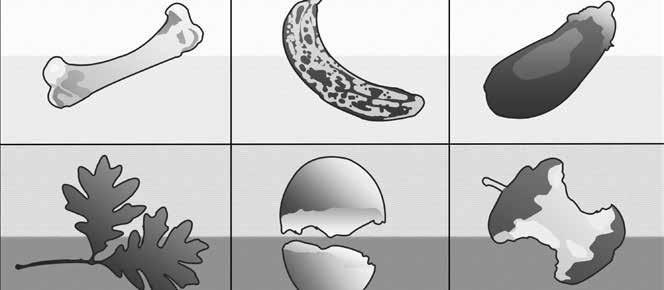
Whether it is a takeout container from Degrees or the remnants of your lunch packed from home, one thing is certain: at the University of Manitoba, all of these products are ultimately headed to the trash bin.
Ahead of a comprehensive waste audit scheduled for release later this year, students, faculty and the broader community should be asking what the future of waste collection is on campus and how we can work together to reduce our carbon footprint at a campus that is big enough to amount to Manitoba’s third largest city.
According to the U of M sustainability office’s 2014-2015 annual report, the institution has committed itself to sustainability and aims to “minimize pollution, conserve resources, [and] reduce the production and release of greenhouse gas emissions.”
Furthermore, the university food systems workshop group identified composting solutions on campus as a major goal in 2015-2016. Finally, it noted that a significant percentage of packaging used in Campo in University Centre is compostable and biodegradable, albeit with no receptacle on campus.
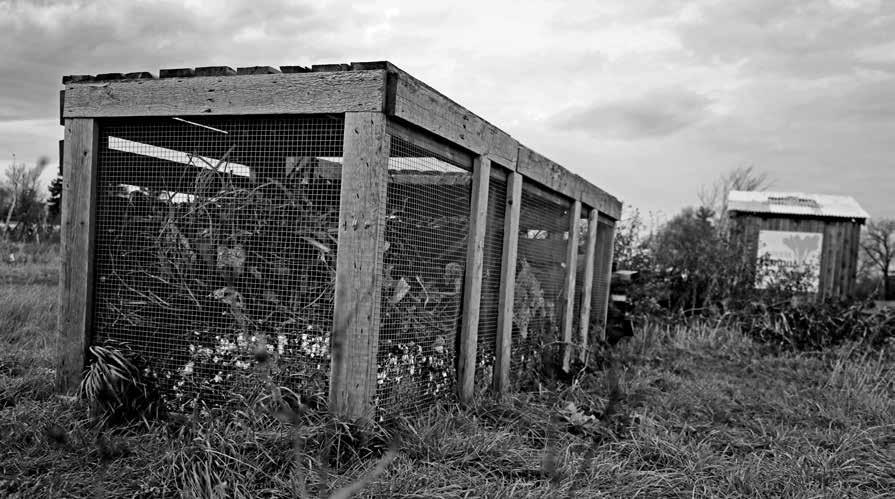
Anna Weier, the sustainability engagement coordinator from the Campus Sustainability Office, told the Manitoban that there was no comprehensive composting program on campus.
Weier also noted that there was
there was no available information from campus eateries regarding rates of diversion for organic materials nor any facilities on campus where one could compost. Weier indicated that further information on rates of diversion and the potential future of composting strategies on campus would be released in February, as part of a comprehensive waste audit.
The U of M is a major contributor to the provincial economy, but what we need now more than ever is for our public institutions to play a greater role in the transition to a green economy
While the university is now studying the issue, the University of Manitoba Students’s Union (UMSU) has already taken some action. Campus businesses run by UMSU currently compost via contract with a local waste solutions business. While UMSU does use compostable takeout materials that dissolve faster than regular take out materials in a
traditional landfill, there is no postconsumer program offered by UMSU or the university at the current time.
Why is it that the university has no comprehensive plan for composting on campus, which would work to reduce greenhouse gas emissions and pre- and post-consumer waste?
Despite successful pilot programs on the Bannatyne Campus with food provider Aramark, there has been no move to reduce waste systemwide, something that is a troubling fact considering there aren’t even any composting receptacles situated alongside existing waste and recycling facilities.
Why does this matter? Do a few table scraps thrown into the garbage really make that big of a difference?
The answer is yes. When organics end up in landfills, they often get sealed in pockets beneath other layers of garbage. When this happens, oxygen is unable to reach the organics and it can then take an additional 25 years for the materials to break down.
Additionally, because organics in landfills break down without the aid of oxygen, they end up releasing methane gas into the atmosphere, an emission that is approximately 25 times more harmful than regular carbon dioxide emissions. If we’re going to be serious in the fight against climate change, it’s clear that we have to look at all sectors for ways to reduce our footprint and carbon emissions, especially on the local level.
For example, in Manitoba, greenhouse gas emissions (GHGs) have been on a steady uphill climb for over 20 years.
Students,
faculty and staff at Manitoba’s largest postsecondary institution have a duty to reduce our carbon footprint, for now and for the sake of future generations
Through improving access to composting, however, we can diminish waste and reduce harmful methane emissions. According to documents from the Manitoba government, Manitoba could divert 100,000 tonnes – composed of approximately 60 per cent food waste and 40 per cent of leaf and yard waste – of total organic waste annually from landfills by 2020. This diversion would be the equivalent of reducing GHGs by 59,000 tonnes annually. Truthfully, this is a small step. Manitoba has been releasing approximately 20 megatonnes of GHG emissions every year for the last decade. However, it is
still movement in the right direction. We often look at universities as models that the public should emulate on a wide variety of issues. substantial step forward. Certainly, institutions like the University of Winnipeg, through the work of their campus sustainability office, have taken a lead in this regard. Their office publishes an annual report, auditing waste practices on campus and showing progress in their efforts to promote a more sustainable campus. According to their 2015 report, the U of W composted 36 tonnes of organic material for the year. While the progress is substantial, seeing as there existed no recorded composting capacity a decade ago, there is still much more work to be done as the total tonnage that ended up in landfills also increased over time. The question arises: what the University of Manitoba can do in the short term.
The U of M is a major contributor to the provincial economy, but what we need now more than ever is for our public institutions to play a greater role in the transition to a green economy. Ahead of the aforementioned waste audit coming in the months ahead, students, faculty, and the general public should be pushing the university to take major steps towards this transition.
Nasty or not, women deserve a place in politics
SHADEN ABUSALEH, STAFF
Idon’t agree with Hillary Clinton. However, I don’t disagree with Clinton because of her femininity, nor because of her status as a woman. My disagreement with Clinton stems primarily from policy. Yet with less than two weeks left until the U.S. presidential election, Clinton is still being criticized for how she acts as a female politician, with emphasis on ‘female.’
In the third instalment of the ‘this can’t possibly be real, it’s 2016’ presidential debate, Donald Trump interrupted Clinton’s reference to his failure to pay taxes by calling her a “nasty woman.” It only took hours for “nasty woman” t-shirts to sweep the Internet as hundreds of women went online to call out Trump for his consistently shameful and misogynistic treatment of women. This is only one example in a series of horrible incidents women have had to experience in the world of politics.
Described as cold, unlikable, robotic, and stiff, Clinton has been criticized ad nauseam for the way she carries herself as a female politician; she’s been called out for not smiling enough, for laughing too loud, for
her lack of good humour, and the accompanied list of recommended beauty changes is endless. This unwarranted advice from commentators is only a sample of the blatantly sexist dynamic that women face in the political world. We don’t have to map out a grand patriarchal conspiracy to conclude that, in an institution created and dominated by men and mainly limited to men, women are mansplained to, talked down to, condescended to, and objectified.
Female politicians continuously face double standards. If a male politician cries, he is sensitive and kindhearted, but when a female politician cries, she is deemed hysterical. This is not only true of the United States, for we see this globally. If you Google the president of Croatia, the image results will be pictures of a blonde woman in a bikini who is in fact not the president of Croatia. Accused of being in a pornographic movie days after winning her seat in office, the president of Croatia, Kolinda Grabar-Kitarović, was answering more questions about who she was wearing or where her
husband was than about her policies. Such sexism toward female politicians has at times turned violent and even life-threatening. For example, when Bolivian councilwoman Juana Quispe refused to resign after pressures to do so for her hand in helping female colleagues file harassment complaints, she was strangled and her body was dumped near a river. The murder has yet to be solved, and although police attributed it to an attempted robbery, critics question that determination since it came as part of a series of attacks against female politicians in Bolivia.
Despite the number of women in parliaments around the world doubling in the last 21 years, women make up only 22.8 per cent of all parliamentarians today. We’ve still got a long way to go.
Here in Canada, we have our own gender gap when it comes to female representation. Women make up 50 per cent of Canada’s population, but only 25 per cent of Parliament. Further, we rank 50th in the United Nations membership when it comes to female representation in national parliaments, falling far behind
countries like Rwanda, Cuba, and Ecuador.
A democracy without women is not possible. We need to foster a political environment that is not only accessible for women but also fair, respectful, and safe. A political environment, that is, where women are assessed based on their integrity, dedication for public service, and hard work rather than negative stereotypes such as how they dress, the way they carry themselves, or the way they laugh or cry. Most importantly, we need to ensure that female politicians are protected from violent misogyny. Failing to act justly
on behalf of our female politicians and leaders will be a huge cost to our democracy. This includes even those leaders you have fundamental political disagreements with, like myself with Hillary Clinton. Clinton is certainly on the deserving end of a lot of criticism. However, that criticism needs to be of a legitimate aim. If problematic, the source of Clinton’s errors are her politics, not her womanhood.
GRAPHIC
Winnipeg needs a more pedestrian-friendly downtown
Winnipeg should entertain the idea of closing off key streets to feature as cultural hubs
JEREMIAH KOPP, STAFF
Ihave never understood when people say that Winnipeg is boring. We may not have the incredible skyline of Vancouver or the nightlife of Montreal, but our city has plenty of incredible offerings – particularly in the summer.
Not only do we have access to a vast assortment of incredible lakes, hiking trails, and nature of all sorts, Winnipeg itself has a colourful arts and culture scene. Whether you prefer Fringe Fest, Folk Fest, Folklorama, or any one of the other myriad local events offered, there is always plenty to do. This vibrant arts and culture scene often occurs despite planning and policy that has become anachronistic. This can often include the basic
geography and infrastructure of our city which serves as the framework for what kind of businesses, festivals, and events take place.
Winnipeg should entertain the idea of closing off key streets to feature as cultural hubs as part of a larger walkable and pedestrian-friendly neighbourhood strategy. While major, popular collector streets such as Corydon or Osborne would be impossible to close off, city council should consider closing down a street in the Exchange District. This area is the Winnipeg neighbourhood that most closely resembles the type of downtown living and entertainment that is seen in larger urban cities.
Ottawa provides an excellent case
study with its well-known Sparks Street. Infamous for its collection of politically charged bars (being a stone’s throw away from Parliament), Sparks Street spans seven city blocks and is advertised as Ottawa’s historic, social, and retail district. A key feature of Sparks Street is its walkability.
A smorgasbord of restaurants, bars, and boutiques open onto a large pedestrian corridor that is often home to summer festivals and street performers. This makes the downtown considerably more friendly and enjoyable to walk through.
It is a model that the city of Winnipeg should adopt in the Exchange District, which functions as our own historic, social, and
retail hub. There are many routes, such as Arthur Street and Albert Street, that could fill a similar need in our downtown . Although Albert Street features a parkade, it stands near the mouth of the street. Any closure could easily circumvent its access routes and leave it open. These streets already feature excellent local businesses and serve as key pedestrian routes in the area. By closing these two roads down to vehicular traffic, you would connect the heart of the Exchange District and make it more attractive to those working, living, and visiting downtown.
If this suggestion is too extreme for city planners, closing the streets to traffic in summer alone should be
considered. This is not a difficult feat and would create a dramatic shift for the busiest and most popular months of the year. This may seem like a trivial proposal, but the physical layout of our city is critical to what kind of neighbourhoods we live in and how supportive our infrastructure is for our social and economic well-being. The Exchange District has become a critical communal point of social activity in our city and we should do everything we can to support this.
PHOTO BY STAR ROXAS
Canadian scientist leading research on synthetic compounds to treat Alzheimer’s disease
Donald Weaver talks molecules for the Big Data Revolution Speaker Series
MALAK ABAS, STAFF
Is the answer to the Alzheimer’s disease epidemic computer-modelled molecules? Donald Weaver, senior scientist and director at the Krembil Research Institute in Toronto, believes it very well may be.
The University of Manitoba’s faculty of science hosted Weaver as its second speaker in the Big Data Revolution Speaker Series this past Friday, where he discussed his research on a variety of Alzheimer’s disease treatments.
Weaver focuses his research on creating possible therapies for Alzheimer’s disease with the use of computer-designed compounds.
Donald Weaver, who also practices medicine, believes that our current Alzheimer’s treatments are proof of just how little we know about the diagnosis and treatment of the disease.
“Really, we have nothing. We
have a couple of symptomatic drugs,” Weaver said in Friday’s lecture.
“We’re still playing around with the aspirins. We’re still playing around with relatively weak symptomatic agents” – Donald Weaver, director, Krembil Research Institute
“Just as aspirin is not the preferred treatment for strep throat – penicillin, say, would be – we don’t have anything at the penicillin level with
Alzheimer’s. We’re still playing around with the aspirins. We’re still playing around with relatively weak symptomatic agents”.
Weaver explained the process his research team is pursuing in creating therapies for Alzheimer’s disease. There are two proteins associated with Alzheimer’s: beta-amyloid and tau. The brain damage that occurs when these proteins misfold is what creates the symptoms of Alzheimer’s disease. Weaver and his team work to create compounds that will slow this misfolding with the help of computer modelling.
The molecules are designed with the ability to bind to receptor sites. The compounds Weaver helps to design are meant to act like a drug, meaning they are able to penetrate the brain barrier, attach to beta-amyloid, and prevent it from interacting with the brain in a degenerative way. Part
of the way that beta-amyloid shows that it is about to do serious damage to the brain is through it changing shape. This is the aforementioned misfolding. Its original shape, alpha helix, changes to its more dangerous shape, named beta sheet.
“We have two issues here. We want to prevent it from changing shape from alpha helix to beta sheet,” Weaver said.
“And we want to interfere with its ability to interact with the neuronal membrane.”
Weaver also discussed previous attempts to create a synthetic compound that would prove successful in trials. Perhaps most famous was homotaurine, which Weaver helped license and bring to trial, but failed to properly pass clinical trials. He added that while homotaurine did not pass preliminary trials, it could partially be attributed to the fact that
Alzheimer’s disease is so difficult to diagnose, as some people used in the trial may not have even been proper candidates in the first place. Weaver and his team have designed over 1,500 compounds to date.
More recent compounds Weaver has helped design are showing positive results. Weaver discussed a recent drug-like compound that has been shown to bind to both beta-amyloid and tau proteins, along with being able to penetrate the brain barrier. As of now, the experimental compound is going through animal testing and fundraising.
“We now have a lead candidate in pre-clinical optimization, and so we hope to declare a clinical candidate, probably in the first quarter of 2017,” said Weaver.
Canadian astronomers claim star activity is ‘probably aliens’
Stars behaving strangely have been suggested to be a sign of alien life
MALAK ABAS, STAFF
New research from a team of astronomers comes with a strange theory: that aliens are out there, and they’re trying to communicate with us through unusual star activity.
The study comes from a paper published in the Publications of the Astronomical Society of the Pacific, coauthored by two Canadian astronomers, Ermanno Borra and Eric Trottier from Université Laval in Quebec.
The odd activity is actually just specific modulations, which present themselves as quick blasts of bright light
The research is relatively simple in theory. The team observed the activity of 2.5 million stars with the help of the Sloan Digital Sky Survey (SDSS). The SDSS, which has collected data available to the public since 2000 with
the use of a 2.5mm optic telescope in New Mexico, has data imagery of approximately 35 per cent of the sky. What they found in those 2.5 million stars was fairly typical – except for a very small fraction of stars. 234 stars (that’s 0.0094 per cent of the observed stars) acted oddly. The odd activity is actually just specific modulations, which present themselves as quick blasts of bright light. Basically, 234 stars were exhibiting light activity that was different than the rest of the stars, but were in sync with each other. The paper puts it best: “Finally, we consider the possibility, predicted in a previous published paper, that the signals are caused by light pulses generated by Extraterrestrial Intelligence to make us aware of their existence.”
Skepticism abounds, naturally
While this idea seems absurd at first, there is some evidence that supports this theory. There really has been some evidence that these strange stars are actually a form of alien communication in another published paper, and the signals observed in this previously published paper match the shape of the signals cur-
rently being observed.
But like all possibilities of alien life presented to the public, the excitement that follows overshadows the skepticism of fellow scientists.
In an email to Astronomy Magazine, Seth Shostak, senior astronomer at the Search for Extraterrestrial Intelligence (SETI) Institute, says that behind the headline, there isn’t much proof of alien life forms seeking human contact.
“I am quite skeptical, in particular, of the data processing that can take spectrally sampled data, and infer time variations. So I’d be a little careful,” Shostak said.
The paper and its tantalizing claims have caught the eye of the Breakthrough Listen Initiative, a US$100 million program that boasts a board with members including Stephen Hawking and Mark Zuckerberg.
The program plans to investigate the 234 stars, but stresses that more research is needed before claims of alien contact can be pursued any further.
“The one in 10,000 objects with unusual spectra seen by Borra and Trottier are certainly worthy of
additional study,” the Breakthrough Listen Initiative wrote in a press release.
“However, extraordinary claims require extraordinary evidence. It is too early to unequivocally attribute these purported signals to the activities of extraterrestrial civilizations.”
The press statement also notes that these strange star modulations are less significant than they seem when placed on a quantifying scale of previous cases of possible alien activity. Breakthrough Listen refers the Rio Scale, a 1 to 10 scale used to determine the significance of a scientific discovery in regards to it “proving” or validating the existence of extraterrestrial life. The Rio Scale is used by the Berkeley SETI Research Center
(BRSC) – a program sponsored in part by the Breakthrough Listen Initiative – that conducts experiments that seek out “electromagnetic signatures of intelligent extraterrestrial civilizations.”
“The BSRC team assesses the Borra-Trottier result to currently be a 0 or 1 (None/Insignificant) on this scale,” the program wrote in a press release.
“If the signal were to be confirmed with another independent telescope, its significance would rise, though an exhaustive analysis of other possible explanations, including instrumental phenomena, must be performed before supporting the hypothesis that artificially generated pulses are responsible for the claimed signal.”
Even Borra and Trottier themselves are admittedly not completely sure of this idea. The paper mentions that, “this hypothesis needs to be confirmed with further work,” and adds that there is a very unlikely chance that the cause of this star activity is actually due to abnormal chemical compositions in the stars.
So is the truth out there?
While these claims may just be a catchy headline and nothing more, if you’re a science fiction enthusiast who grew up watching the X-Files, it may compel you to believe. And here’s the thing: as fantastical as some of these claims may seem, you would not be alone. Fellow believers include Stephen Hawking and Charles Bolden (the current administrator of NASA).
Carl Sagan, scientist and the iconic former host of Cosmos: A Personal Voyage once said it would be “astonishing [to him] if there weren’t extraterrestrial intelligence”. But in the same quote, Sagan added that there wasn’t properly compelling evidence that proved it yet.
“I try not to think with my gut,” Sagan said.
“If I'm serious about understanding the world, thinking with anything besides my brain, as tempting as that might be, is likely to get me into trouble. Really, it's okay to reserve judgment until the evidence is in.”
Within that lies an important thing to remember: we still don’t know. But part of what makes the search for extraterrestrial intelligence so compelling is the fact that we do know so little; only a miniscule percentage of the universe has been viewed by mankind. The full extent of the universe is incomprehensible to scientists as of now. And within that incomprehensible space may lie the answers that prove alien life is out there.
PHOTO BY MIGUEL YETMAN
U of M alumna’s painting in the running for national award
EMELIA FOURNIER, STAFF
When Zahra Baseri left Iran to study art in Manitoba, her goal was not to simply create pretty things. She wanted to use her creations to showcase her critical views and perspective of her cultural background. Today, the University of Manitoba alumna’s award-winning piece Outcry #3 is a part of her ongoing artistic series of paintings confronting gender inequalities in Iran.
Earlier this year, Baseri submitted this piece for the BMO Financial Group’s 14th annual BMO 1st Art! Invitational Student Art competition. The competition showcases works of student artists from universities across Canada. Her piece won the regional award for Manitoba, and she is up for the national award as well.
Baseri is an advocate of freedom. She believes that being able to decide how to present oneself is a key facet of freedom. In Iran, wearing the hijab is mandatory and women are required to shroud themselves in loose clothing. The government recommends women wear black chador – a very loose-fitting piece of typically black fabric.
Baseri believes that Iranian women are silenced in her home country, and she is speaking out against this issue through her piece.
“Imposing a restrictive dress code in the name of religion onto certain groups in society, women in this context, is violating human rights –
violating women’s rights,” Baseri said.
Outcry #3 consists of eight photographs of Iranian women hidden behind black frames of 8mm plywood. She designed them using Adobe Illustrator and engraved them with lasers. The black frames have motifs characteristic of Islamic architecture.
“There are lots of voices that have been condemned to silence” –Zahra Baseri
In addition, the frames represent the black chadors Iranian women have to wear. Baseri said the frames are meant to play a similar role as the chadors by masking the women. For her, the Outcry series is an opportunity to have other voices be heard.
“There are lots of voices that have been condemned to silence, and I thought I could bring it into my art,” said Baseri.
Outcry #3 will be exhibited at the Justina M. Barnicke Gallery at the University of Toronto from Nov. 17 to Dec. 17, along with the twelve other regional winners from each Canadian province and territory. The first two installments of the Outcry
series – a painting and a 3D sculpture – were featured in Montreal’s ArtMûr exhibition “Fresh Paint/New Construction 2016” over the summer. Baseri said she will continue to add more pieces to the Outcry series.
Being featured in the Art! Invitational Student Art competition has given Baseri the exposure
and the acclaim she needs to make a strong entry into the art world after her undergraduate studies.
Baseri advises young artists to pursue what they are passionate about and explore their own personal identity, and channel that through their creativity.
A celebration of women and their art
Girls! Girls! Girls! Gala fundraises GSAC and showcases female artists
EMELIA FOURNIER, STAFF
O
n Oct. 6, Winnipeg’s Gas Station Arts Centre will be brimming with talent as the centre showcases the 12th annual Girls! Girls! Girls! Gala. The gala, which started as an annual fundraising event for the arts centre, provides a space for female artists to showcase their works.
The theme of this year’s edition is Encore, and fittingly so, as there will be returning acts from past years. Artists and performers will reinvent old pieces, reinterpret themes of past years’ galas, and make previous acts and pieces their own.
The Girls! Girls! Girls! Gala is a two-for-one event: an art exhibition of around sixty pieces from twentyfive emerging and well-known artists, and a cabaret of various acts including theatre, contemporary dance, choir, and stand-up comedy.
The gala, which features exclusively female artists, celebrates and addresses the disparity of women in art. In recent times, great strides have been made to curb the menace of gender inequality in Canadian art communities. Many times, male art-
ists are more celebrated and recognized than their female counterparts. More opportunities need to be made available for women to showcase their talent and creativity.
“Making this event exclusively female highlights that we are strong in the art world and we’re able to hold our own in what generally can be described as a boys’ club” – Karen Robb , curator of the Girls! Girls! Girls! Gala
Karen Robb, a University of Manitoba alumna and one of the gala’s curators and artists, spoke to the Manitoban about the importance
of this event and the need for female artists to be celebrated in a maledominated profession.
“Making this [event] exclusively female highlights that [women] are strong in the art world and [are] able to hold [their] own in what, generally, can be described as a boy’s club,” Robb said.
In the past six years, the showcase has been overseen by Ruth Baines and Kim Zeglinski. Together, they have been producing the gala’s performances and managing the performing artists with the aim of celebrating women and putting on a good show.
“This is an opportunity for women to come together and say, ‘Let’s have a good time doing a really fun show,’” said Baines.
The gala will feature 18 performing acts who will present three-to five-minute long pieces. There will be performances by local contemporary dance company Gearshifting Performance Works, the Fu Fu Chi Chi Choir, the Buffalo Gals, and stand-up comedienne Cara Lytwyn, amongst others. The performances
feature women from diverse backgrounds and will highlight the multifaceted versions of women and their art.
“We want the show to be Technicolor instead of all one note,” Baines said. “It’s an incredibly silly, serious, ridiculous, fun night. It’s everything rolled up in one.”
There will be a visual art show which will feature an eclectic selection of art works by established artists such as Darlene Drewniak, Holly Moore, Farrah Okolita, Sari Habiluk, and Juanita Klassen. The art works vary in styles, from pop art to classical art, and will be available for sale.
This year, the organizers have sought to make visual art sold at the gala more accessible to the public. All of the prints are limited to measuring 12x12, so more people will be able to find space for their purchases. In addition, the prints will be priced at $100 or less. This provides a great opportunity to purchase affordable art from both emerging artists and well-established local talent, who often sell their original pieces for
thousands of dollars.
“Everyone wants to decorate their apartment, and they shouldn’t have to do it by IKEA alone,” Robb said.
“[People are] actually going to be able to purchase a piece this year.”
Robb advises to arrive at the gala early if you are looking to claim a piece, as they will go fast. Purchasing art will support local artists as well as the Gas Station Arts Centre.
The Gas Station Arts Centre is undergoing a complete renovation and this gala serves as an opportunity to give back to an organization that has supported the arts community over the years.
The 12th annual Girls! Girls! Girls! Gala will be held Nov. 6. The art reception opens at 6 p.m. and the performances begin at 7 p.m. Tickets are $20 and available online or at the door. Visit www.gsac.ca for the full list of performers and artists, and additional information.
All 13 regional winners of the 2016 Art! competition are viewable at www. bmo.com and Outcry #1 and Outcry #2 are viewable at www.artmur.com
PHOTO BY STAR ROXAS
Hank Bull’s Connexion connects the dots
Canadian contemporary artist showcases archival works in current exhibition
OLIVIA MICHALCZUK, STAFF
This semester, the School of Art Gallery is showcasing an exhibition by Canadian contemporary artist Hank Bull.
The exhibition, called Connexion, is on display until Dec. 2 and showcases the artist’s archive gathered from years of working in a studio and features objects and souvenirs of activity and collaboration acquired over time.
Bull selected sculptural pieces, media pieces, artworks, and numer-
ous articles to highlight the energy, diversity, and experimentation of his practice. As a result, the University of Manitoba’s School of Art Gallery has been transformed from its typical silent serenity to an interactive and busy space for the Connexion exhibition.
The gallery’s ambience is clouded by a choir of sound from low hums and distant music to voices and sounds that are meant to be discovered as you make your journey
through the gallery.
Jamie Wright, the gallery’s project assistant, helped Bull in installing the exhibition.
“It’s pretty cool, he’s actually tuned the entire show so that all the sound pieces create a musical composition,” said Wright.
“They all adhere to a certain modal structure and he bookends that with the piano located in the far corner. He’s handwritten a little piece of sheet music with the core
’Toban turntable
Snowblink Returning Current 4.5/5
OLIVIA MICHALCZUK, STAFF
Toronto’s musical duo
Snowblink’s album Returning Current explores the depths of human relationships and fragility. The recording process was guided by a mood board that used phrases, places, and imagery to direct the musicians, engineers, and producers. Together, they composed 10 uniquely approached songs that were created through a variety of sounds that the band explored, from acoustic instruments to layers of analog processes.
The band, which consists of Daniela Gesundheit and Dan Goldman, released their latest album earlier this fall to critical acclaim. The album, which was produced, written, and performed by the duo, is divided into two halves tagged “day side” and “night side.” The difference between the two is more evident in the content of the lyrics rather than the music itself.
The album is fronted by Gesundheit as the lead vocalist.
Her vocals, pure and effortless, create a somber listening experience. The personification and imagery in the lyrics combines well with the beautiful musical composition to create the illusion that the songs have been modified from ancient songs. As such, listeners must be attentive to understand the essence of the songs and their sound.
The instrumentation and composition on the album suggest a traditional Japanese influence. This is evident by the album’s soothing melodies and rhythms especially in “Feel Like a Man” and “Foothills.”
In Returning Current , Snowblink presents a brilliant collection of blissful folk melodies that highlights the pain, struggles, and hope that every aspirant faces. The lyrics are very personable and the sound is as soothing as rain.
http://www.snowblinksays.com/
Jaylene Johnson Potter and
Clay 5/5
TOBI NIFESI, STAFF
Winnipeg singer and songwriter Jaylene Johnson has had her fair share of successes and setbacks in a career that has spanned over 10 years. The award-winning gospel artist recently suffered an intubation injury that damaged her vocal cords. Nevertheless, after a year and a half of surgeries, recovery, and childbirth, the 2011 Western Canadian Music Award nominee has released a new album, Potters and Clay
Released on Oct. 7, Potters and Clay is a collection of 12 songs that highlight the ups and downs of a trying decade for an artist. The part-country, part-gospel album consists of songs of hope, pain, and gratitude and in many ways sound like prayers and confessions.
The album’s sound is a gentle blend of guitars and pianos that provide a sufficient backing for Johnson’s calming voice. Johnson sings her heart out with lyrics that showcase her faith and detail her experiences and resilience. In a
notes that cycle through the sounds that are out loud. He’s hoping people will sit down and actually play the exhibition.”
There is no shortage of pieces in the gallery – as you move through there are many different artworks that showcase different stages of an artist’s journey. There are large files that contain ephemera from years of studio practice, videos, props, and a variety of Dada art pieces.
“There are so many small things
unique way, the album tells her story or one closely related to hers.
Potters and Clay, which features Steve Bell and Joey Landreth, opens with the somber-sounding “Fallin,” a solemn cry for help, and ends on cheerful note with “I Won't Be Frightened Anymore,” an a capella that showcases Johnson’s vocal prowess. “Find Us,” which has garnered a lot of airplay on the radio since the album was released, is one of the best tracks of the album as it highlights – lyrically and musically – the album’s essence and themes of hope and resilience. Following the release of her
and so many details. The works need to have a dialogue with one another and that can get lost in translation,” said Wright.
Hank Bull’s Connexion is on display for free at the University of Manitoba’s School of Art Gallery (255 ARTlab, 180 Dafoe Road) until Dec. 2.
album, Johnson has been on a Western Canadian tour which will be ends with two dates in Winnipeg at North Kildonan Mennonite Brethren Church (1315 Gateway Road) on Nov. 16 and a house concert at 59 Deering Close on Nov. 19.
Potters and Clay is now available at www.jaylenejohnson.com, Hull’s Family Bookstore, Into the Music, Music Trader, St. Margaret’s, or Saint Benedict’s Table. For tickets to Jaylene Johnson’s final tour dates, visit www. jaylenejohnson.com
Sports Editor: Ryan Stelter
After six years, women’s golf is returning to the University of Manitoba
JASON PCHAJEK, STAFF
In a press release, Bison Sports announced that a women’s golf team will make its return in time for the fall 2017 season. The team is slated to play as a member of the National Association of Intercollegiate Athletics (NAIA), while competing in events across the northern U.S. and attempting to qualify for the
2018 Canadian championship.
The Bisons women’s golf program began in 2001, but ceased operation in 2011 due to a lack of interest and female golfers in Manitoba.
The team had a run of success in its brief decade of existence, winning the 2009 and 2010 St. Cloud Classic. The original team also placed third in the
2006 Canadian University/College Championship.
The team will be coached by former Manitoba Junior Champion Bri-Ann Tokariwski, who is also a three-time Manitoba Women’s Amateur winner. Tokariwski was a member of the original Bisons women’s golf team, as well as numerous
provincial teams. The men’s team coach, Garth Goodbrandson, will also provide oversight of the women’s team while assisting with fundraising.
“We are confident that there will be lots of interested young girls who would like to play on the Bison women’s golf team for quite some time” – Garth Goodbranson, men’s golf coach
“We are confident that there will be lots of interested young girls who would like to play on the Bisons women’s golf team for quite some time,” Goodbrandson said in the press release. “The interest and the quality of junior girls golf has improved tremendously.”
In an interview with UMFM,
Bison women’s hockey team gets swept in Vancouver
Manitoba’s undefeated run comes to an end against the Thunderbirds
JASON PCHAJEK, STAFF
This weekend was a matchup featuring the two top teams in the Canada West, as the Bisons travelled to Vancouver to take on the University of British Columbia Thunderbirds. Manitoba failed to win in both games against the T-Birds, falling 3-2 on Friday, and 6-2 on Saturday.
Friday
The Bisons controlled possession for the majority of the contest, but goals were traded back and forth and ended with the Thunderbirds winning 3-2.
After an early penalty by UBC, the Bisons appeared to take control of the game. However, despite extended pressure and possession of the puck, they had trouble testing Thunderbird goaltender Amelia Boughn. Bison goalie Rachel Dyck was tested heavily near the midpoint of the period but stood tall.
The Thunderbirds got on the board first, as Mathea Fischer tallied her third of the year. Kelly Murray put a point shot towards the net and
Fischer waited in front with a screen. She got her stick on the puck and tipped the shot over Dyck’s glove to give UBC the lead near the 14-minute mark.
The Bisons were back at it again Saturday, trying to avenge their first loss of the season against the Thunderbirds
The Bisons evened up the score seconds later. Courtlyn Oswald got the puck down low behind the UBC net, and put it back into the slot where her sister, Sheridan Oswald, was waiting. Sheridan made no mistake and put the one-timer past Boughn to tie the game 1-1.
The Bisons continued their pressure in the second period, but Lauryn Keen took a hooking penalty and
gave the Thunderbirds an opportunity to take the lead back. On the ensuing power play, a point shot by Nicole Saxvik was deflected in front by Cassandra Vilgrain and past Dyck, restoring UBC’s lead at 2-1.
Like the first goal, the Bisons responded seconds later. Charity Price broke into the UBC zone and put a one-handed shot on net, which was initially stopped by Boughn. Price stayed with it, and got the tying goal midway through the second.
UBC controlled play for the majority of the third period, and it payed off in the final two minutes. Stephanie Schaupmeyer entered the Bisons' zone and dropped a pass to Hannah Clayton-Carroll in the slot. Clayton-Carroll put a shot from the faceoff circle top corner over Dyck’s glove to put UBC ahead 3-2. This proved to be the game winner and handed Manitoba their first loss of the season.
Saturday
The Bisons were back at it again Saturday, trying to avenge their
first loss of the season against the Thunderbirds. UBC had other plans, however, and swept the weekend series with a 6-2 win.
The Thunderbirds got on the board first, as Schaupmeyer scored her second of the season less than two minutes in. Schaupmeyer took an outlet pass near centre ice and streaked into the Bisons’ zone on a two-on-one. She placed a wrist shot from the faceoff dot under the glove of Dyck to give UBC the 1-0 lead.
The second period was less kind to Manitoba. Six minutes into the frame, Fischer fed the puck down low to Kathleen Cahoon. Cahoon fought off a check by the Bison defense and put a shot over Dyck’s shoulder in tight.
Two minutes later, ClaytonCarroll extended the lead further.
Celine Tardif fired a shot towards the Manitoba net from the boards, where Clayton-Carroll waited to tip it past the Bison netminder. The 3-0 lead signalled the end of Dyck’s night in goal, as she was pulled in favour of Amanda Schubert.
Alexa Ranahan added another
Goodbrandson also noted that the depth and quality of women’s golf in the province has improved, thanks to the efforts of Golf Manitoba.
Manitoba’s governing golf body began a program for the 2012 Manitoba Games, allowing young female golfers to receive training under Manitoba professionals. To date, there are now 20 young players involved in the program, with more expected to join as time goes on.
Bison Sports also announced that five Manitoban players have already committed to the team: Veronica Vetesnik, a former junior champion; Lexie Kopp, a former Western Canada Games team member; Marissa Naylor, a 2016 provincial team member; Tianna Slate, who won gold at the 2016 Manitoba Games; and Kaitlynn Santiano, a former member of the St. Mary’s Academy golf team.
for UBC before the Bisons got on the board thanks to Erin Kucheravy. Keen passed the puck back after getting tangled up in the UBC slot. Kucheravy snagged the loose puck and wired it over the shoulder of Thunderbird goaltender Tory Micklash, cutting the lead to 4-1.
Haneet Parhar and Mairead Bast added to the Thunderbirds' lead in the third period, and UBC cruised to a 6-2 victory over the visiting Bisons. Cassandra Taylor was the only other Bison player to score in the contest, and Manitoba now sits at 6-2-0 on the year.
The Bisons return home to the Wayne Fleming Arena to avenge their first two losses in a weekend series against the University of Calgary Dinos. First puck drop is Nov. 4 at 7:00 p.m., and Nov. 5 at 1:00 p.m.
PHOTO PROVIDED BY CHRIS ZUK
Bison volleyball opens season in Calgary
Men manage a split, women drop two close games
RYAN STELTER, STAFF
This weekend, both the Bisons women’s and men’s volleyball took the court against the Mount Royal Cougars in the opening weekend of Canada West volleyball action. The men split their weekend, with a five-set win on Friday and a three-set loss on Saturday. The women lost both their games in two tight affairs, with both their games going to five sets.
The men’s volleyball team now has a record of 1-1, and the women fall to 0-2 to start the year.
Men On Friday, the Bisons won their season opener 3-2 (25-16, 25-23, 18-25, 23-25, 12-15). It was a close game through all five sets, but the Bisons managed to close it out in the fifth set after letting the Cougars crawl back into the game.
Devren Dear, the usual suspect, led the Bisons with 20 kills on the night. Adam DeJonckheere had 15, and Mr. Reliable, Ken Rooney, had 9. Dear was all over the court on Friday, as he also led the team with 12 digs and four blocks.
The Bisons had a good hitting percentage on the evening, with .349, and had 59 kills in total.
On Saturday, the Bisons dropped the ball both figuratively and literally, as they committed 18 errors. They dropped the contest in three straight sets and saw their hitting percentage drop to a .168.
Scott Vercaigne led the Bisons with 13 kills, and setter Luke Herr led the herd in every single other statistical category. It was a great night for him personally, but one the Bisons would like to forget.
Women
The women went the distance on Friday against the Cougars, but lost 3-2 (18-25, 25-15, 25-27, 25-22, 15-11). The Bisons managed to win a crucial third set, but were unable
to close out the next two and the Cougars ultimately handed them their first loss.
Tori Studler led the herd with 17 kills, which was the best out of anyone on the court. Cassie Bujan had 18 digs, which beat out the other players on both teams. The Bisons committed an astonishing 32 errors, gifting the Cougars a large chunk of points.
On Saturday, the Bisons dropped the ball both figuratively and literally, as they committed 18 errors
On Saturday, the Cougars bested the Bisons again in another game that needed all five sets. Manitoba committed far fewer errors with only 19, but was still unable to come out with a win.
First-year captain Kearley Abbott smacked home 13 kills, which led the Bisons. Studler had 12 of her own on the night. Studler led the Bisons with nine digs as well. Neither team’s hitting percentage was any good, as both Mount Royal and Manitoba were hitting about .190.
The Bisons volleyball teams open up their seasons at home against the Regina Cougars at Investors Group Athletic Centre on Nov. 4-5.
Bison women’s volleyball team announce team captains
RYAN STELTER, STAFF
The University of Manitoba women’s volleyball team will have some familiar faces return to lead the team this season. Caleigh Dobie and Sarah Klassen are returning as captains, and first year Kearley Abbott is new for this year.
Dobie is a fifth year libero who was a part of the Bisons CIS (now U Sports) championship-winning team in 2013-14. She struggled with injury for parts of last season, but still managed to play 15 of 24 games and averaged 3.09 digs per set.
Klassen is also in her fifth year and was a captain last season as well.
The six-foot blocker finished with 104 kills last year and, like Dobie, was also a part of that championship-winning team in 2013-14.
“Sarah is just a girl that takes the rest of the players under her wing and Caleigh gives her all in the weight room everyday despite some injuries,” first-year head coach Jon Hykawy said.
“With both of them being captains last season, there was no doubt we would have them back this year. They show tremendous leadership skills both on and off the court.”
Abbott, the rookie right side hitter, is a bit of surprise to be given the responsibility at the tender age of 18 and not having too much U
Sports experience under her belt. Hykawy is confident the responsibility won’t hinder her play.
“She is a very intense competitor, and brings a lot of intensity and emotion to the game,” he said. “I think she’ll be a great captain of the future, she knows how to handle that pressure and [being named a captain] won’t add any pressure to her.”
“This is one of the closest teams I’ve ever coached. They get along really, really well”
– Jon Hykawy, Bisons women’s volleyball coach
Season outlook
The Bisons are a relatively young team, and Hykawy is confident that these girls will help lead this team to the playoffs.
“They’re three important players to our team,” he said. “We’re
BY
a really young team – I want us to feel like we belong.”
That feeling of belonging wasn’t present last season, as the Bisons struggled for most of the year and finished second last with an abysmal 3-21 record. Despite not being around the team too much last season, Hykawy is going to leave last year in the past.
“We were really young last season,” he said. “I have 13 players that can step on the court and play. We’re going to play with a lot of energy and be aggressive, we’re going to serve hard, which is probably a little different than what they have done in the past.”
The Bisons have plenty of optimism for this season, and will attempt to reach the playoffs this season.
“Obviously our goal is to make the playoffs,” Hykaway said. “Is that realistic? We’ll take it one game at a time. I believe we can. This is one of the closest teams I’ve ever coached, they get along really, really well.”
The Bisons have not gotten off to their ideal start, but will hope to turn it around at home against the Regina Cougars on Nov. 4-5 at Investors Group Athletic Centre.
PHOTO
LAUREN SIDDALL
Bison football signs first recruit for the 2017 season
Local product Brody Williams commits to the Bisons, stays close to home
KELLEN TANIGUCHI, STAFF
On Tuesday, the University of Manitoba Bisons football team signed its first recruit for the 2017 season. With the Bisons currently ranked second in total offence in the Canada West division, their first recruit of the year was local defensive lineman Brody Williams out of St. Paul’s High School. Williams fits the Bisons’ needs at the linebacker position, coming in at five-foot-eleven and 210 pounds.
Williams led the Crusaders’ defense with 24.5 tackles, and led the school division with 15.5 special team tackles as well. He also had one forced fumble and one fumble recovery in his senior year at St. Paul’s. Williams has played for his father Andy who is a coach at St. Paul’s, and is involved in the Manitoba provincial football program.
Williams was asked about what other teams had consulted him, before deciding to sign with the Bisons.
“For Canada there were about five, and for the U.S. I went to minicamps for the past three to four years,” he said. “I decided best thing for me [...] was to stay at home, and to get a Vanier.”
“I decided the best thing for me was to stay at home, and to get a Vanier” –Brody Williams, Bison football recruit
Bisons head coach Brian Dobie compared Williams to current Bison receiver Trystan Dyce.
“He’s a coaches’ kid, I look at Trystan, Bobby Dyce’s son, a receiver with us,” said Dobie. “He runs great routes, he’s got great awareness, he
gets the game, he’s a coaches’ kid, and that’s what we see in Brody.”
Williams has a tremendous skill set that he can bring to the Bison linebacking core. He is also a product of a prestigious St. Paul’s program, which Dobie noticed.
“Then you top it off with his physicality, his speed, with who he is,” said Dobie. “He comes from that St. Paul’s program, tremendous integrity, a lot of class, he understands work ethic, he understands commitment. He’s going to be a great leader in our program, as he already is at St. Paul’s.”
Before Williams decided to sign with the Bisons, he asked Dobie if number 51 was available. Dobie replied, citing that he would have to check if it was, but asked him if he knew that it was Dick Butkus’ number. Williams acknowledged that and Dobie was impressed.
“When he said it, it resonated that he’s that kind of linebacker,” he said. “He’s very physical, he is way ahead
of the curve in terms of the work he’s done to prepare for where he is now.”
Butkus was a NFL linebacker and a Chicago Bears legend. Williams watched some videos of NFL linebackers on YouTube with his dad, and once he got to Butkus’ videos, that was when he decided he wanted to wear number 51.
“I didn’t see anyone I liked until I saw number 51, and Dick Butkus has really been what I’ve gone after,” he said. “I’ve gone after all his style and I have just tried to start chasing my dreams and keep going with it.”
Williams decided to stay home to play for the Bisons, instead of taking any of the offers he had available to him.
“My main reason was family, and then it came down to playing time,” he said. “Obviously nothing is really earned, you have to earn it yourself, so I am ready to start proving myself and when I do, I’m sure I’ll end up somewhere on the roster.”
At the end of the day, Williams is happy to be a member of the Bisons.
“It’s quite amazing honestly. It’s a great experience to be committed to somewhere that I need to be,” Williams said. “I’m happy to be a Bison for sure now, It’s good to be official right now for sure.”
Dobie has got himself a good young player, who should fit nicely in the Bison defense for the seasons to come. Dobie has been around as the Bisons head coach for a while, and knows a few things when it comes to recruiting new players for his team.
PHOTO BY RYAN STELTER
Bison women’s soccer team upset Dinos to move on to Select Six
KELLEN TANIGUCHI, STAFF
O
n Saturday, the University of Manitoba women’s soccer team upset the fifth-ranked Calgary Dinos 1-0 in their play-in match. The Bisons were able to shut out the Dinos, who have scored 47 goals in their 14 regular season games.
The Bisons barely squeaked into the playoffs this season, finishing in the sixth and final playoff spot in the Prairie division thanks to their 2-0 victory over the Victoria Vikes last week. The Dinos, meanwhile, finished at the top of the Prairie division.
This is the second time the two teams have met this season, with the Dinos getting the better of the Bisons 3-0 back on Sept. 25 in Calgary. The herd went into this playoff match as huge underdogs, but the team took their momentum from their final regular season game and brought it into this one.
The first half of the game was low on scoring chances, especially for the Bisons. After the teams felt each other out, the game began to move a little more. The Dinos outshot the Bisons 12 to 2 in the half, forcing Bison keeper Maddie Wilford to make five big saves for the herd. The Dinos also had more opportunities on corner kicks than the Bisons, with five attempts to the Bisons’ one.
The second half saw more chances for both sides. The Bisons had only two shots on goal in the half, but were able to find the back of the net on Rebecca Martin’s shot. Martin’s goal came off a rebound, as Dino goalie Sophia Traxler was able to stop the initial
shot, but not the second. The goal came in the 48th minute to put the Bisons up 1-0, with plenty of time remaining.
The herd went into this playoff match as huge underdogs, but the team took their momentum from their final regular season game and brought it into this one
The Dinos played more aggressively for the rest of the game, as they were able to get eight shots on target in the half. But yet again, Wilford
was sensational, stopping all the shots she faced. The Dinos also had seven corner kicks in the half, but the Bisons' defense was able to get the ball out. The Dinos were relentless, but the Bisons’ defensive play was enough to shut the door.
This was the Bisons’ first playoff win since 2008, and the third in their history. The herd now has a 3-5 record in postseason play, and hope to add to that this coming week, as they compete
Thunderbirds manage a split against Bisons in men’s hockey
RYAN STELTER, STAFF
This weekend, the University of Manitoba Bisons men’s hockey team took on the University of British Columbia Thunderbirds in a twogame series. The Bisons won 3-2 on Friday, and the Thunderbirds won by the same score on Saturday.
Manitoba is now 3-3 on the year and sits in fifth place in the Canada West.
Friday
Friday night was the first game of the two-game series at the Wayne Fleming Arena. The Bisons wanted to keep the momentum from a weekend sweep against Regina going, and UBC was desperate for a win as they came into the contest with a 1-5 record. The Bisons did not help the Thunderbirds in the win column, handing them their sixth loss of the season with a 3-2 win.
The first period was a tale of two halves, as the Bisons dominated, generating a lot of pressure and keeping
the T-Birds hemmed into their own zone. They were not rewarded for their efforts, however, as some late penalties from the herd halted their momentum.
On their second power play of the night, UBC made the Bisons pay after a wicked shot from Anthony Bardaro flew over Byron Spriggs’ shoulder from the top of the circle. Despite a good opening frame from the herd, the away team held a 1-0 lead after 20 minutes.
Manitoba found their shooting gloves in the second, as 38 seconds after the break Jordan DePape was left alone in front of the net and he made no mistake to even the score. A few minutes later, Justin Augert had the puck fall to him at the side of the net and flicked it over Matt Hewitt.
“That was a great start to the period for us,” Bison head coach Mike Sirant said postgame. “The guys responded, that really turned the game around in our favour.”
The Bisons added to their lead after Adam Henry rifled a shot over Hewitt’s shoulder on the power play. The second period saw the physicality being ramped up as both Shawn and Brad Bowles threw their weight around, making some huge hits.
In the third, the Thunderbirds were unable to mount much of a comeback with the Bisons playing some great puck possession game in their end. Luke Lockhart had a diving effort in front of the net go in with 13 seconds to go to make it interesting, but the Bisons were able to hold on for a 3-2 win.
DePape, who was recently named captain of the Bisons for a second season, flew around the ice all game. He talked postgame about his team’s performance.
“UBC has a good roster, they got good players so we knew it was going to be a tough game,” he said. “I think we outworked them and came out with the two points.”
Saturday
The Bisons were back in action on Saturday, looking to sweep another weekend series. The ‘Birds had other plans, however, and managed to get a 3-2 win to get the split.
“UBC has a good roster, they got good players so we knew it was going to be a tough game” – Jordan DePape, captain, Bison men’s hockey team
The Thunderbirds opened up the scoring four minutes into the first on the power play via the stick of Joe Antilla. DePape got his second goal
as part of the Canada West Select Six and attempt to keep their dream playoff run going.
The Bisons will take the pitch in the Select Six tournament, which runs from Nov. 3 to Nov. 6, in Langley, British Columbia.
of the series with three minutes left in the period from the stick of Brad Bowles. The T-Birds jumped out in front a minute after, as Austin Vetterl scored to make it 2-1 after 20.
In the second, the Bisons drew even with Quinton Lisoway scoring halfway through the second. The score remained deadlocked at two apiece at the second intermission. Bardaro grabbed the lead for the Thunderbirds – which ended up being the game-winner – halfway through the third. The Bisons tried to tie the game up but to no avail.
After this weekend, DePape moves into a three-way tie for the top scorer of the Bisons with six points in four games, averaging 1.5 points a game in this young Canada West season.
The Bisons head out on the road to play the Calgary Dinos next in a two game series on Nov. 4-5.
Rams bowl over the Bisons
With the loss, Manitoba misses the playoffs for first time since 2011
KELLEN TANIGUCHI, STAFF
On Saturday, the University of Manitoba Bisons football team played the Canada West Leading Regina Rams. The Bisons needed a win, coupled with a UBC Thunderbirds loss to make the playoffs. The Bisons were helped out by the Calgary Dinos, as they defeated the Thunderbirds 41-35 in overtime. But, the Bisons were unable to take care of business on their end and were trounced by the Rams 55-21.
Rams quarterback Noah Picton led his team on an impressive opening drive, which was capped off with a seven-yard touchdown pass to running back Atlee Simon – his first of four touchdowns on the day. The Bisons went two-and-out on their next couple of drives, and the Rams capitalized with a 30-yard field goal from William McGee, increasing their lead. The Rams led 10-0 after the first quarter, as the last nine minutes contained a lot of back and forth
with unproductive drives.
In the second quarter, Atlee found the end zone yet again. This time, he went on the ground via a one-yard run to make it a 17-0 game. Late in the half the Bisons blocked a field goal attempt by McGee, and Bison halfback Cam Teschuck recovered it. On the ensuing drive, the Bisons were stopped and the Rams added another three points with no time left on the clock, taking a 20-0 lead into halftime.
The first half was very one sided, with the Rams outgaining the Bisons 323 yards to 152. The Bison pass-heavy offence led by Theo Deezar was only able to gain 88 yards passing and couldn’t put any points on the scoreboard at half. On the other side, Picton posted 282 yards through the air with one touchdown.
The second half is when things got really out of hand, with the Rams coming out and scoring three unan-
swered touchdowns. Two of them were passes from Picton to Simon, and the other was scored on a oneyard run by the Rams quarterback. The backup quarterbacks got involved as the Bisons finally broke the 41-0 shutout, with a Des Catellier 1-yard touchdown pass to Macho Bockru. The Rams responded quick with an 81-yard touchdown pass from Tyler Viera to Riley Wilson helping them take a 48-7 lead into the fourth quarter.
Both teams exchanged touchdowns early in the fourth, with the Bisons failing on their two-point conversion, making it a score of 55-13. The scoring for the game ended with the Bisons; a pass from Catellier to Trysten Dyce.
Head coach Brian Dobie spoke about the obstacles his team faced this season, and how he hopes to overcome them.
“46 different players have started
in this locker room,” he said. “That’s the bad news. The good news is 46 different players have started in this locker room, almost our whole team returns next year.”
Both teams exchanged touchdowns early in the fourth, with the Bisons failing on their two-point conversion
Smashing records
Rams quarterback Picton threw for 447 yards and broke a Canada West record for most passing yards in a single season with 3,174, breaking Andrew Buckley’s record of 3,162
yards from last year.
Deezar set the single season Bisons record for passing yards with 2,544 yards, passing the previous record of 2,474 set in 2013 by Jordan Yantz.
DJ Lalama also set the Bisons single season tackles record this year with 72, leaping over the previous record of 65 set by Joey Mikawoz in 2000. Lalama spoke post game on his time with the herd.
“I had two missions in mind when I came back,” he said. “To leave the program better than I found it, so hopefully I did that in some ways, and the second one was to not leave with a sour taste in my mouth to end my U Sports career, but unfortunately we just didn’t execute.”