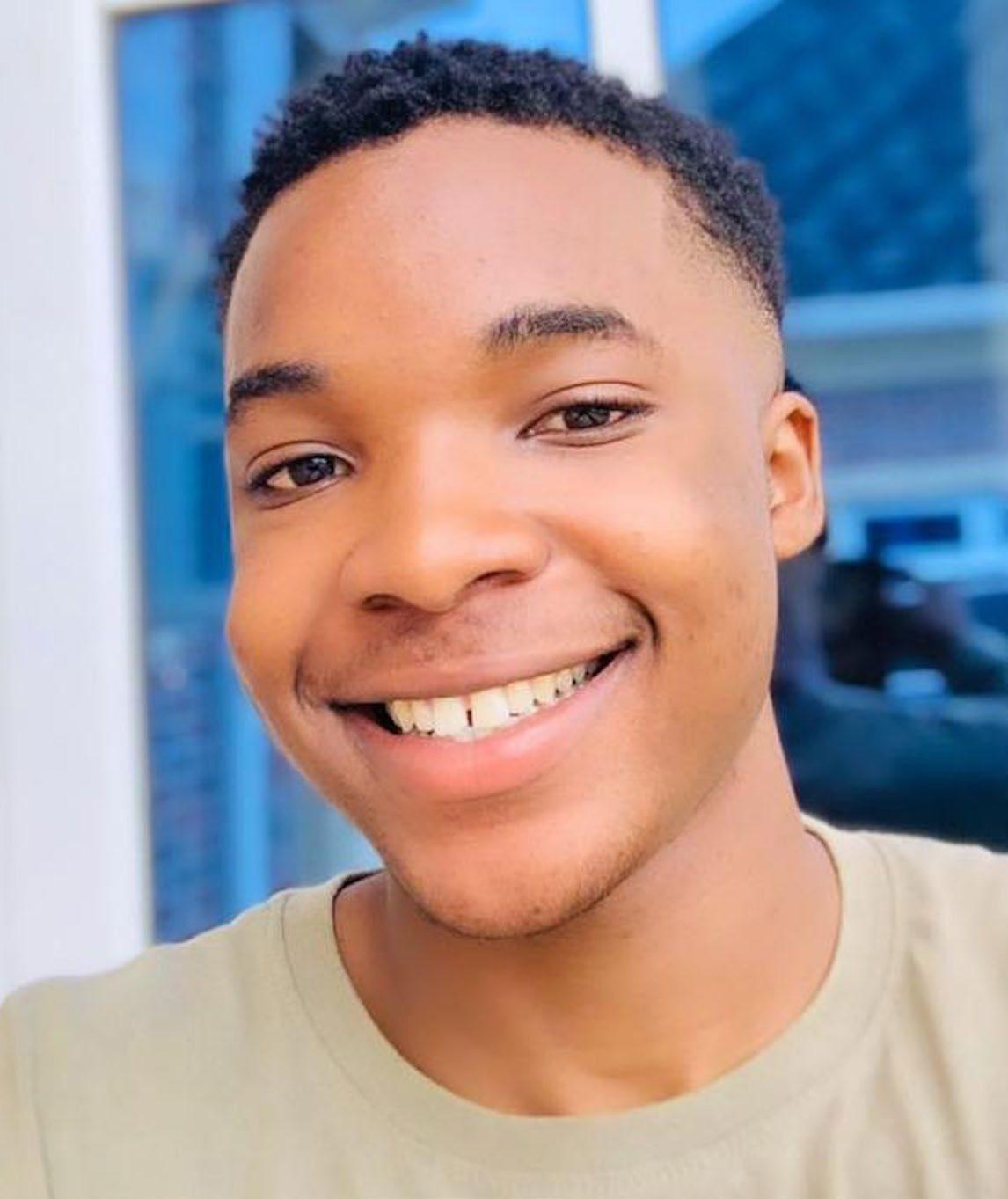
19-year-old U of M international student fatally shot by police
Kyra Campbell, staff
The University of Manitoba community is grappling with the fatal shooting of Afolabi Stephen Opaso, a U of M economics student from Nigeria.
On Dec. 31, 2023, police arrived at an apartment on University Crescent after an individual in the apartment called law enforcement, saying that Opaso was acting “erratically,” according to a public statement by Winnipeg Police Service (WPS).
In a press conference, Winnipeg chief of police Danny Smyth stated that Opaso was found holding two knives. The situation ended with an officer shooting Opaso, who later died as a result of his injuries.
The University of Manitoba Nigerian Students’ Association (UMNISA) said it seeks “truth and accountabil-
ity” in a statement released by president Olivia Ifeoma Onyemaenu following Opaso’s death.
In the statement, Onyemaenu said “we are saddened by the loss of one of our own,” and added that “mental health should never be a death sentence.”
Members of the U of M community have expressed concerns as to why the officer used lethal force seconds after Opaso was instructed to “drop the knife,” as heard in an audio recording of the incident.
Following the shooting, the Independent Investigation Unit (IIU) of Manitoba initiated an investigation into the incident. As the investigation is active, the IIU was unable to comment.
U of M seeks police investigation into former law dean
Colton McKillop, staff
The University of Manitoba has requested police open an investigation into former law school dean Jonathan Black-Branch. The decision follows a Law Society of Manitoba disciplinary hearing that found the former dean misused over half a million dollars of U of M funds during his term, including money taken from a university endowment fund supporting the law school’s Desautels Centre, which aims to foster research as well as collaboration between the academic, legal and private sectors, and of which Black-
Branch was chair and director.
The university had not sought criminal or civil charges against Black-Branch until late December, despite allegations of financial impropriety that arose in 2020.
The administration waited for the outcome of BlackBranch’s disciplinary hearing with the law society before moving forward, said U of M’s executive director of strategic communications Myrrhanda Novak.
“ We reviewed the decision, which noted ‘that even if the standard had been the criminal standard of beyond a
reasonable doubt, the Panel would have been satisfied that proof was sufficient,’” Novak said.
The law society hearing reviewed allegations that Black-Branch misused funds to pay for meals, accommodations, education and travel expenses.
Black-Branch went on leave without explanation in spring 2020 while the university conducted an audit in response to concerns raised by a whistleblower over misuse of funds earlier that year.
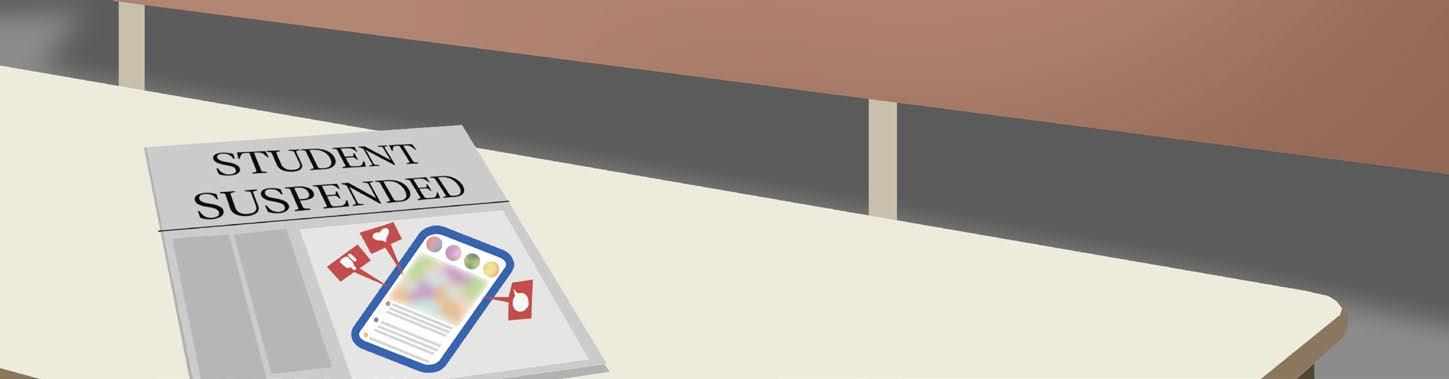
Suspended nursing student’s motion
ruled out of order at UMSU meeting
Sarah Cohen, staff
A motion to release a statement concerning students’ right to freedom of expression and their right to use the advocacy services allotted to them was a heavily debated topic at the UMSU Board of Directors (BoD) meeting on Dec. 14.
The motion, asking for UMSU to release a statement, was brought to the BoD by Arij Al Khafagi, former senior stick of the University of Manitoba Nursing Student Association. Al Khafagi was suspended in November over social media posts regarding the conflict in Gaza that were deemed antisemitic by the university.
Al Khafagi outlined the contents of the proposed statement, which included acknowledging that a nursing student was suspended over posts made on social media, as well as “unequivocally and unconditionally” acknowledging and affirming students’ right to freedom of expression and their right
to representation from the office of student advocacy.
Al Khafagi also asked for UMSU to condemn the university administration’s “overreach on a student’s right to freedom of expression” and to denounce any threats of violence against any student.
According to Al Khafagi’s motion, the University of Manitoba Faculty Association released a statement via email to all staff that supported “the right to free expression on our campuses.”
Some board members took issue with the first clause in the statement which reads that “UMSU acknowledge that a College of Nursing student has been suspended for their comments made on social media,” citing that they needed to “see some-
thing tangibly in order to take action.”
Al Khafagi said she was not able to show the images in question, but disputed the university’s allegations that what she had posted was antisemitic in nature and pointed board members toward a Free Press article and a letter to the editor in the Manitoban by Ben Baader, which described the posts.
Debate over the motion lasted almost four hours, with the BoD entering in camera sessions multiple times before it voted to rule the motion out of order at approximately 1 a.m. on Dec. 15.
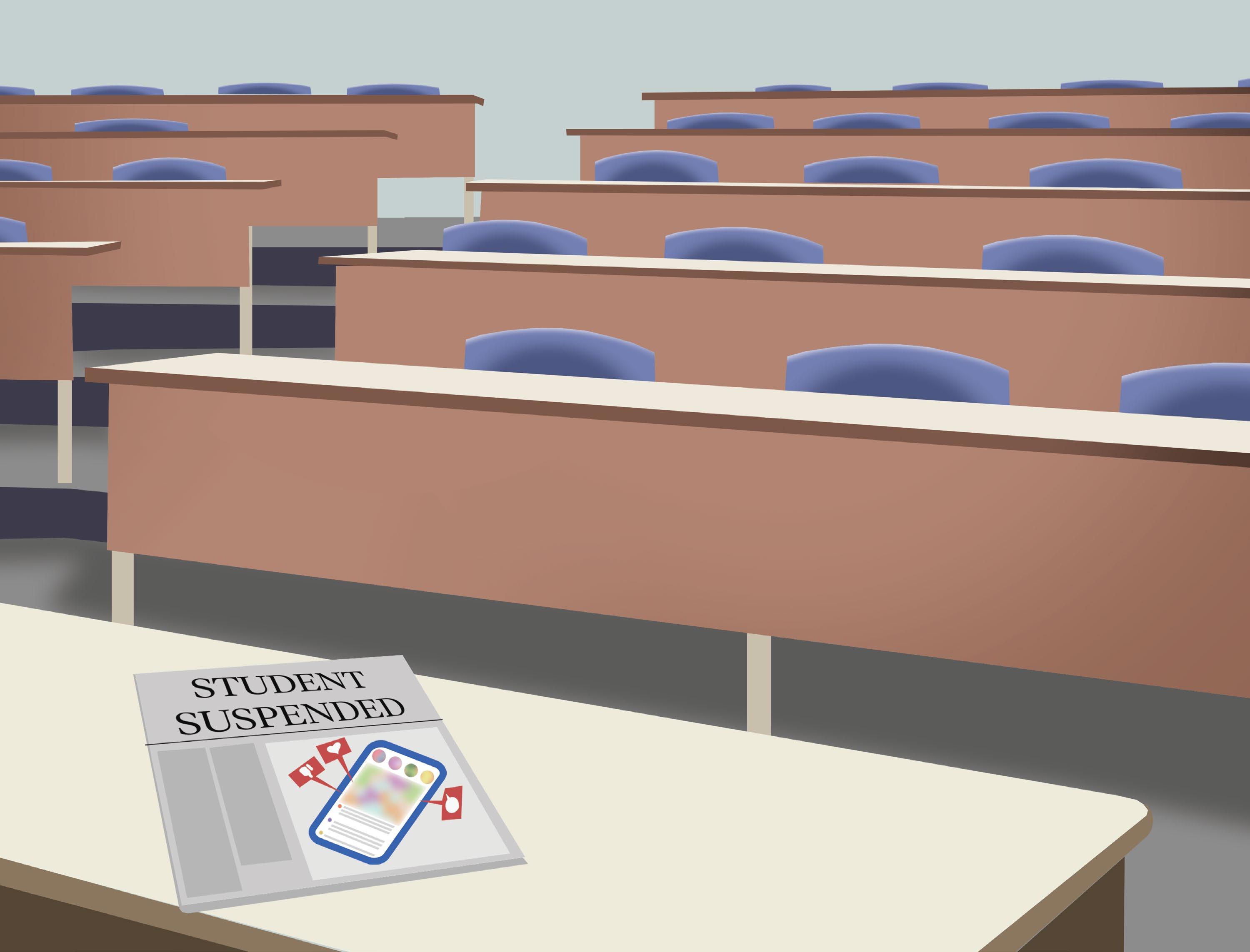
graphic / Teegan Gillich / staff
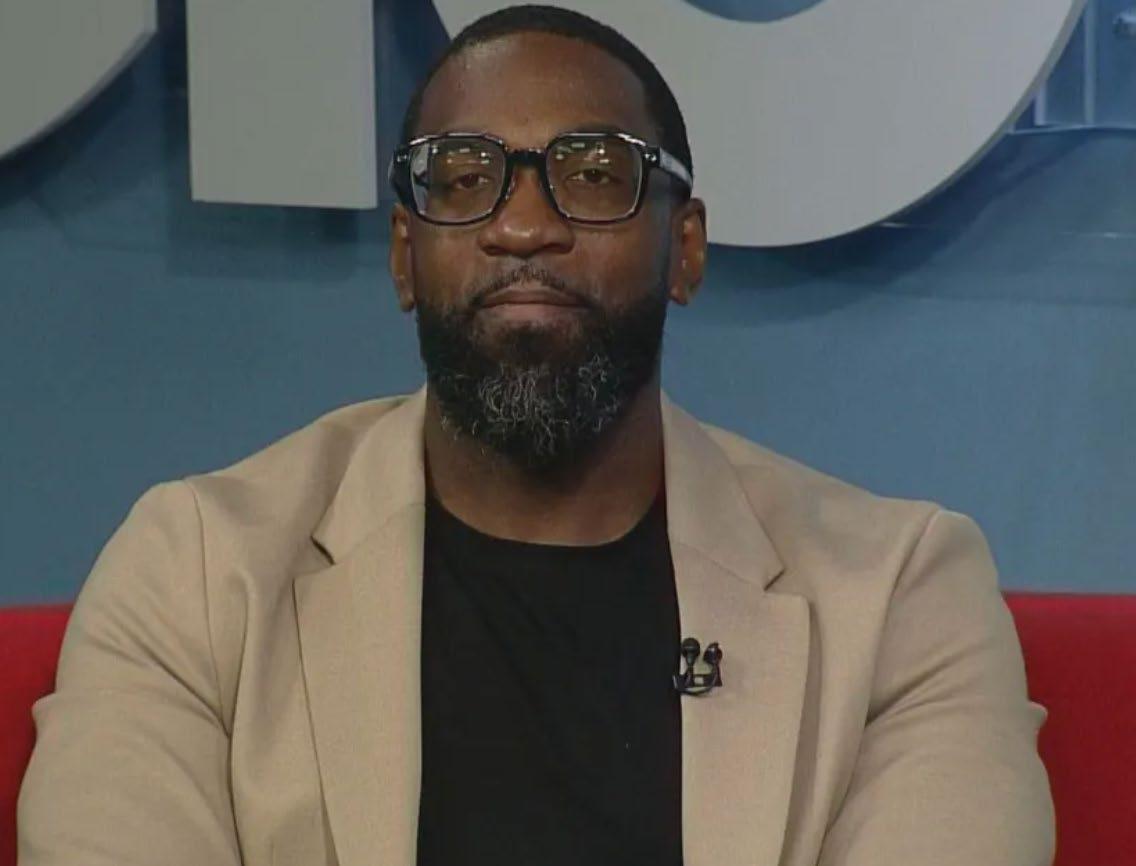
19-year-old U of M international student Afolabi Stephen Opaso.
EDITOR-IN-CHIEF Gillian Brown editor@themanitoban.com
BUSINESS MANAGER Dhruv Patel accounts@themanitoban.com
ADVERTISING CO-ORDINATOR Diego Castro ads@themanitoban.com
EDITORIAL
MANAGING EDITOR Ezra Taves me@themanitoban.com
COPY EDITOR Simon Pensato copy@themanitoban.com
COPY ASSOCIATE Paula Samaniego-Ayllon
NEWS EDITOR Sarah Cohen news@themanitoban.com
NEWS EDITOR Colton McKillop news@themanitoban.com
RESEARCH & TECHNOLOGY EDITOR Elah Ajene research@themanitoban.com
VIDEO EDITOR Kennedy Legault video@themanitoban.com
SOCIAL MEDIA EDITOR Violet Baker social@themanitoban.com
REPORTERS
NEWS Alicia Rose
NEWS Kyra Campbell
NEWS Michaela de Hoop
RESEARCH & TECHNOLOGY Rhea Bhalla
COMMENT Braden Bristow
COMMENT Hanako Teranishi
COMMENT Lakshmisree Shaji
ARTS & CULTURE Kelsey Chin
ARTS & CULTURE vacant
SPORTS Joshua Brandt
SPORTS Quinn Mayhew
VOLUNTEERS
VOLUNTEER STAFF
Bahareh Rashidi, Christina Tran, Romin Cheema
VOLUNTEER
Jonah Corne
interested in volunteering?
email me@themanitoban.com today!
109 HELEN GLASS BUILDING
UNIVERSITY OF MANITOBA WINNIPEG, MB 204. 474. 6535
The Manitoban is the official student newspaper of the University of Manitoba. It is published monthly during the summer and each week of regular classes during the academic year by the Manitoban Newspaper Publications Corporation.
The Manitoban is an independent and democratic student organization, open to participation from all students. It exists to serve its readers as students and citizens.
The Manitoban is a member of the Canadian University Press, and our journalistic standards can be found on the Manitoban’s website.
The newspaper’s primary mandate is to report fairly and objectively on issues and events of importance and interest to the students of the University of Manitoba, to provide an open forum for the free expression and exchange of opinions and ideas and to stimulate meaningful debate on issues that affect or would otherwise be of interest to the student body and/ or society in general. The Manitoban serves as a training ground for students interested in any aspect of journalism.
Students and other interested parties are invited to contribute to any section of the newspaper. Please contact the appropriate editor for submission guidelines.
The Manitoban reserves the right to edit all submissions and will not publish any material deemed by its Editorial Board to be discriminatory, racist, sexist, homophobic or transphobic, ableist or libellous.
Opinions expressed in letters and articles are solely those of the authors. Editorials in the Manitoban are signed and represent the opinions of the writer(s), not necessarily those of the Manitoban staff, Editorial Board or the publisher.
A “volunteer staff” member is defined as a person who has had three volunteer articles, photographs or pieces of art of reasonable length and/ or substance published in the current publishing year of the Manitoban.
Any individual who qualifies as a volunteer staff member must be voted in by a majority vote at a Manitoban editorial board meeting. Elected representatives and non-students may be excluded from holding votes as volunteer staff members in accordance with the Manitoban Constitution.
An independent investigation into the events of the Dec. 31 police shooting of Afolabi Stephen Opaso is underway
< Cont’d from front page
To address mental health crises, the WPS, City of Winnipeg and Shared Health Centre instituted the Alternative Response to Citizens in Crisis (ARCC) program in December 2021, which pairs a police officer with a certified clinician to respond to calls regarding mental health concerns. However, in September 2023 it was reported that the program did not have an adequate number of clinicians for it to operate seven days a week.
In a statement given to the Manitoban, the U of M offered condolences to
Opaso’s friends and family, and said it plans to lower the flag at Fort Garry campus throughout the first week of winter semester in memory of the student.
Along with the statement from UMNISA, the Racial Equity and Inclusion Alliance (REIA) and the University 1 Student Council released a joint statement mourning the loss of Opaso and calling for “accountability, transparency and immediate action.”
REIA founder and co-president Allisther De Castro said the statement is a message of “solidarity” from the campus community to Opaso’s family
and friends.
“It’s our call for urgency” said De Castro, calling on local institutions to address police brutality, so that situations like the fatal shooting of Opaso “won’t happen again to any other students in the future.”
REIA co-president Ivan Nunez Gamez said this incident hits “close to home” for many students. He hopes students of Nigerian descent who seek mental health services due to any distress caused by the shooting are prioritzed. He noted that students can speak to REIA members if they believe it would be a
Winter orientation events kick off new semester
UMSU and International Centre will host programming for new and returning international students
alicia rose, staff
Winter orientation kicked off the new semester at University of Manitoba, with events beginning Jan. 5 welcoming new and returning students before classes began on Jan. 8.
The International Centre is hosting programming specifically for international students who are starting in the winter term.
Fanny Levy, director of the International Centre, said that every term, the centre holds an orientation day, followed by sessions for students to attend after the first day of classes.
The International Centre orientation day took place on Jan. 5. Speakers discussed topics such as the centre’s programs, getting used to campus life and Indigenous cultures.
“We work with a very large number of volunteer students that help us during the day, and that make the day more engaging,” Levy said.
She emphasized the importance of “hearing from students that have gone through similar experiences,” and the advice they can offer.
The centre’s international transitions co-ordinator, Crystal Stewart highlighted her favourite parts of recruiting new volunteers.
“A lot of the volunteers that are applying to be with
me were new students once before, and they always say how they had such a good time, and they became friends with the volunteer at their table,” she said.
She said volunteers want to “give back” after being introduced to “a potential friend or a contact.”
“Many of the students don’t know anybody, and so they’re kind of getting off to the right start.”
During the summer of 2023, the International Centre launched a pre-arrival online orientation for international students to complete. Levy said this course was created to try “new approaches” connecting with students before they arrive. The course provides education on living in Winnipeg, health-care systems and International Centre services.
In October, the International Centre started a winter clothing library. It is collecting “gently used winter clothing” for students who do not have those items and cannot afford them.
“The idea is that they can go and check out an item,” Stewart said.
“It’s free of charge, there’s no expectation for them to return it at a certain time.”
Donations can be given at 541 UMSU University Centre and must be washed and
sorted into labelled bags.
UMSU is also hosting its own winter orientation events for students, which started on Jan. 8. The events include free breakfast supplied by Degrees from Jan. 8 to 12, a winter vendor fair from Jan. 8 to 12, a karaoke night on Jan. 9 and a pajama party on Jan. 12.
UMSU vice-president student life Christine Yasay said the events during winter orientation “give students an opportunity to socialize with new students like themselves or returning students and get to know the places on campus.”
Yasay said it is a great time for students to socialize, since at the start of the term classes are not as intense.
To learn more about winter orientation events, visit the U of M website.
beneficial outlet for them. Nunez Gamez expressed disappointment that the provincial government has not commented on the shooting.
U of M community groups on campus are in the early stages of planning a public gathering to reflect upon the incident and highlight Opaso’s memory.
Students seeking mental health services can visit the Student Counselling Centre at 474 UMSU University Centre or call 204-474-8592 for more information.
Al Khafagi removed from NSA council
Sarah Cohen, staff
Suspended nursing student Arij Al Khafagi no longer holds her position as senior stick of the Nursing Student Association council. The reason for her leave has not been made publicly available at this time. Al Khafagi was suspended from the nursing program in November 2023, allegedly as a result of social media posts criticizing Israel and its actions during the current conflict in Gaza.
The position of senior stick has been filled by Olivia Molyneaux.
U of M previously did not proceed with legal action against prof who misspent half a million dollars
< Cont’d from front page
The hearing documents noted that three employees tasked with processing BlackBranch’s expense claims provided evidence that when they raised concerns with him, he told them to “stop asking questions and to just pay the amounts.”
In August of 2020, the U of M, without publicly naming Black-Branch, announced that an investigation had found that a senior university employee misused school funds. Rather than pursuing legal action, the university brought its concerns to the law society.
Black-Branch, who currently resides in the U.K., did not attend the hearing and sought numerous extensions.
Arthur Schafer, U of M philosophy professor and founding director of the school’s Centre for Professional and Applied Ethics called the law society’s findings “entirely predictable.” However, he said they raise “a number of troubling questions.”
One such question, according to Schafer, is why the administration didn’t “immediately share the information with the police and request a police investigation” after seeing the auditor’s report.
Schafer said the university could have also done more to recover funds from BlackBranch, such as putting a lien— a legal mechanism that grants control over another person’s property until a debt is paid — on his house.
CBC Manitoba reported
that the U of M was advised in 2020 to put a lien on a property that Black-Branch put up for sale that year, which would have allowed the university to attempt to retrieve some of the money misspent by BlackBranch.
There is no record of any lien placed on the property however, and land titles indicate that the house sold in August 2020 for more than $800,000.
Schafer is not the only U of M prof to believe that the university could have done more.
The day before the U of M announced it would seek a police investigation into Black-Branch, five U of M law professors sent a letter to Winnipeg police urging them to take action following the law society’s ruling that BlackBranch’s activities “amounted to fraud.”
Schafer argued the university has “an obligation of accountability to explain and justify their conduct” regarding the situation.
He said, while he didn’t know why the administration didn’t pursue police action sooner or take more steps to recover funds, he believes the university’s “failure to act in a timely way and their failure to give adequate answers to media questions has encouraged speculation that they may have something to cover up.”
“ The best way for any organization to deal with reputationally damaging scandals is to provide open and honest explanation and justification.”
UM project to address anti-Blackness in higher education Part of 12 newly
Elah ajene, staff
Research Manitoba announced its 2023 New Investigator Operating Grant recipients earlier this month. The grants will be supporting 12 projects led by researchers in the early stages of their careers.
Among the recipients, under the social sciences and humanities category, is assistant professor in the department of anthropology Warren Clarke. Clarke received the grant for his project, Addressing Anti-Blackness in post-secondary spaces: Decolonizing white settler learning to create educational pathways for Afro-Caribbean Black students.
Clarke, who specializes in sociocultural anthropology and holds a doctorate in sociology and a master’s degree in public issues anthropology, discussed the interdisciplinary nature of his work. With a focus on decolonizing space, decolonizing theories, gender, masculinity and post-colonialism, he combines elements of sociology and anthropology in applied research.
Beyond his role as an assistant professor, Clarke actively engages with the community through the Afro-Caribbean Mentorship Program. Run by Clarke, the program was originally established in Ottawa and is now present at the University of Manitoba and other institutions. It concentrates on mentorship for Afro-Carib -
funded projects by Research Manitoba
bean Black students, providing monthly workshops on topics such as financial literacy, graduate school entry and addressing the mental health concerns associated with anti-Black racism.
His newlyfunded project on addressing anti-Blackness in post-secondary spaces aims to dissect and understand the complexities of anti-Black racism within educational spaces, focusing particularly on Winnipeg.
the Black community, considering factors such as ethnicity and the diverse experiences of Black individuals.
“We shouldn’t just be thinking about Blackness in one
white settler nation-state,” he continued.
“We have to think about how Blackness is being defined, and then how Black bodies are being discriminated against in this country, particularly in education.”
Clarke’s primary goal is to work in solidarity with young people, bridging the generational gap and establishing trust. He emphasized the importance of establishing relationships with students, administrative staff and teachers in both high schools and universities.
“There needs to be a discussion of ‘how do we appreciate different histories, different cultures,’ not just during Black History Month”
— Warren Clarke, U of M assistant professor in the department of anthropology
box or homogenizing Blackness,” Clarke said.
Acknowledging the prevalent conversation around anti-Indigenous racism, he emphasized the importance of recognizing and addressing the intersectionality within
“We also have to think of Blackness based on ethnicity. A lot of those who are Black-presenting or of African descent do not know Blackness until they come to this
“One of the things that I’ve already started working on is working with a young person at one of the high schools here in Winnipeg who’s interested in working with me on this project as a research assistant,” he added. Although Clarke’s research is still underway, he envisions working with school boards and educational institutions to create actionable frameworks. The project’s outcomes will ideally manifest in policies that actively challenge anti-Black racism rather than merely discuss it. Clarke emphasizes the need for sustainable, non-violent strategies to create understanding
within policies and alleviate the pressures faced by Black students.
Clarke’s inspiration for the project stems from his own experiences in secondary school. Reflecting on the mentors in his own life during this period, he emphasized the significance of mentorship in shaping one’s trajectory.
By addressing the persisting tensions and discrimination faced by young Black people in schools, Clarke seeks to create spaces that support the diverse experiences of Black students.
“This is me not only giving back but trying to shift the narrative and trying to create ways of appreciating Black students and their different ways of being under stress based on this racial discrimination,” he said.
Looking ahead, Clarke calls for increased attention to the Black experience within universities. He advocates for not only representation but a comprehensive exploration of diverse histories and cultures throughout the academic year. Additionally, he highlighted the need for acknowledgment of community advocates actively challenging anti-Black racism and supporting Black youth.
“There needs to be a discussion of ‘how do we appreciate different histories, different cultures,’ not just during Black History Month,” he said.
photo / provided
The science behind gossip
Inside the U of M’s communication and development lab
rhea Bhalla, staff
ccording to research-
Aers at the University of California Riverside, the average person spends 52 minutes each day gossiping. At the U of M’s communication and development lab, researchers are uncovering gossip’s many important functions.
Melanie Glenwright, associate professor in the U of M department of psychology, is a developmental psychologist and the lab’s director. Research produced by the lab addresses questions about how people understand the intentions of communication, and how this changes over the course of their lives. Glenwright’s work explores “communication that is rooted in human interaction.”
The lab is currently working on a couple of studies related to gossip comprehension. Glenwright highlighted research being conducted by Caelan Budhoo, a master’s student working at the lab, examining the reasons people gossip.
“There’s some research that shows that people gossip to provide information that’s useful to another person,” Glenwright said. “There’s another theory that suggests that we’re providing that useful information to other people, but the fundamental goal of gossip is
to provide information about social norms.”
People may, for example, discuss a student who was caught and reprimanded for plagiarism. This form of gossip, Glenwright explained, helps establish social norms that discourage plagiarism and define what it means to be a good student.
Another study at the lab, conducted by Jordanna Smith for her honours thesis, looked at how participating in gossip affects short-term self-esteem.
Participants were placed into two conditions. In the first, they were asked to “gossip” by talking and providing a few facts about several wellknown public figures. In the second, they watched a video on how to complete a Rubik’s Cube. The second task, completed over the same amount of time as the first, was considered boring and non-interactive. Before and after completing their tasks, participants answered a survey on their self-esteem.
“What we saw was actually quite surprising,” Glenwright said. “Jor -
danna’s results show that that social interaction group, they actually had a short-term boost in self-esteem, it wasn’t a decline.”
“It shows that gossip, even short-term, has some social benefits of increasing self-esteem because the social interaction created by gossip has positive benefits.”
Glenwright also mentioned another study by master’s student Malissa Mailey, which plans to examine “the role of interpretive perspective-taking and gossip appreciation in adolescents and adults.”
She explained that engaging in gossip requires people to co-ordinate many perspectives on the absent third party being discussed.
Those participating in gossip must consider both their own opinion on the third party, as well as their objective for gossiping. People may be aiming to change someone’s opinion of the third party, entertain them or establish a social bond. Those listening must also decide whether they believe the gossip.
“This is really difficult to do,” Glenwright noted. “Perspective-taking goes under considerable development in adolescence. That’s why we’re focusing on comparing teenagers to adults to see
how that changes, because we suspect that’s when those big changes are happening.”
Glenwright added that there’s currently no literature covering the role that perspective-taking plays in gossip appreciation in adolescents and adults, making the lab’s research the first on this subject.
Another focus of Glenwright’s research is pro-social teasing. While many are familiar with the concept of anti-social teasing, which occurs with hostile or aggressive intentions, pro-social teasing is less well-known.
“[Prosocial teasing is] meant to foster social interaction and be friendly and playful, as opposed to being mean-spirited,” Glenwright explained.
Glenwright’s work looks at how people understand pro-social teasing throughout their lives. As we move from childhood to adolescence to adulthood, we may interpret the motivations behind prosocial teasing differently.
These are just a few of the many topics being explored at the lab.
“Sarcasm, gossip and teasing
tend to have negative reputations in people’s mindsets,” Glenwright said. “Yet, these forms of communication exist because they have positive, beneficial outcomes for humans as communicators.”
She emphasized viewing these devices as fundamentally positive. While parents and teachers often admonish children for using forms of communication like sarcasm, using sarcasm appropriately with children allows them to better understand how people communicate.
Ignoring these forms of communication because of the belief that they are inherently bad, Glenwright explained, does a disservice to research. It is important to understand these devices, as they are ever-present in society.
“My ultimate goal is to advance our understanding of why we communicate and how our communication skills improve with development,” Glenwright said. “I like looking at the cognitive mechanisms that are at play there.”
For Glenwright, the importance of communication is why she became involved with the communication and development lab in the first place.
“I think communication lies at the heart of human survival.”
Reflections on Israel-Palestine, teaching and the suspension of Arij Al Khafagi
Jonah Corne, volunteer
Over the past decade at the U of M, I’ve taught a course called “Sometimes Pus, Sometimes Poetry: Cinema and Israel/Palestine” several times. The first part of the title borrows a line from the great Israeli poet Yehuda Amichai. The syllabus consists of roughly half Israeli films and half Palestinian films, along with several works of literature and criticism by Israeli and Palestinian writers.
Compared with other courses I offer, even ones that concentrate on much more obscure and formally demanding films, the enrolment has always been modest: on average, between ten and fifteen students. Yet, always, these small groups have proved to be stellar, as if a self-selecting logic were at work. Everyone was there, it seemed, because they absolutely wanted to be, because they had some special interest and investment in the topic, or at least an openness to becoming interested and invested.
Still, I was always faced with the problem of a small enrolment, which is not an insignificant matter in a university climate increasingly driven by financial imperatives and the brute demand to fill seats. Why were the numbers so comparatively low? Obviously, I knew a good part of the reason.
Putting aside my exceptional students, many people feel apprehensive about talking about Israel-Palestine, an infamous “landmine” of a topic. It’s no wonder that many students would simply rather steer clear — especially when lacking a firm grasp of the history of the region and of the peoples involved (a gap that my course anticipates and attempts to rectify) — and instead grapple with the different complications of, say, a course on experimental film.
Following Oct. 7, I wonder what my course will look like the next time I teach it. With hundreds of thousands of people out in the streets in major cities and social media feeds crowded with posts about nothing but the conflict, will the course numbers rise, reflecting the unprecedented catapulting of Israel-Palestine — already the most emblematically charged conflict in the world — into the global consciousness? Or will even fewer students enrol, the no-goness of the topic seeming even more apparent on account of the intensity of the attendant
discourse — and, more pressingly, on account of increased fears about what one can and can’t say, particularly when it comes to voicing criticisms of Israel. I speak here in asymmetrical terms because it is overwhelmingly the case that punitive actions, when they arise, have to do with speech that casts Israel in a negative light rather than, say, speech about the total collectivity of Palestinians couched in dehumanizing rhetoric.
At any rate, I have genuine concerns that my course will become more difficult to carry out in a necessary spirit of openness — concerns crystallized by the affair at our own institution of Arij Al Khafagi, a nursing student who has been suspended based on accusations of making antisemitic posts on social media.
What I know about the affair is what has been made public, and what has been made public does not provide evidence that justifies the ruling against Al Khafagi. The apparently most controversial of Al Khafagi’s Instagram posts reproduces a cartoon in which an Israeli soldier, holding a machine gun over a distraught Palestinian lying in a pile of rubble, looks in a mirror and sees himself as a Nazi soldier, above which a caption reads: “The irony of becoming what you once hated.”
it
Rather, in light of the charges against Al Khafagi, I would like to recount some passages from an extraordinary Israeli novella, S. Yizhar’s Khirbet Khizeh — a text that I regularly teach in my course on cinema and Israel-Palestine, and that the Israeli critic David Shulman described in 2007 as a “canonical text, a masterpiece of modern Hebrew prose and, in theory, still an optional part of the standard curriculum in Israeli high schools.”
Published in 1949, the novella is told from the uneasy first-person perspective of a solider in the Israeli army who is recalling his witnessing — and participation in — a violent expulsion of Palestinian villagers during Israel’s War of Independence, or what Palestinians refer to as the Nakba (the Catastrophe). The name of the village under erasure, which another, unruffled soldier refers to as “Khirbet what’s-its-name,” serves — with an importunate sense of memory — as the work’s title.
Watching a Palestinian
thing, everything was for the refugees, their welfare, their rescue… our refugees, naturally. Those we were driving out — that was a totally different matter. Wait. Two thousand years of exile. The whole story. Jews being killed. Europe. We were the masters now.”
Passages such as these bring into explicit comparative proximity Israeli military violence against Palestinians and the history of violence against Jews — a history that undoubtedly includes the Nazi chapter, given the narrator’s references to “Europe” and to the recent need to rescue “our refugees.”
One can imagine someone stopping me here and claiming that these passages differ from the cartoon posted to social media, and are permissible, because they are embedded within a complex, interpretively open-ended literary work, in contrast to a “crude” one-panel cartoon. Yet this argument betrays an insupportable prejudice about “low” versus “high” culture, presuming, unjustly, that cartoons as a — political — art form are strictly alien from literature.
is important that when it comes to situations close to home, where the possibility of making a difference is more immediate and tangible, we do make sure to act
As my colleague Ben Baader has written, this post and the others “fall squarely within the realm of protected and common political expression, whether one agrees with them or not, or if one finds them distasteful.”
In the cartoon I have just described, one can make a plausible deduction that a statement is not being made about Jewish people in general or even about all Israelis. The Jew looking in the mirror is very specifically an Israeli soldier, in military uniform, wielding a machine gun, engaged in a brutalizing military operation. What the cartoon compares to Nazi violence, in other words, is — pointedly — Israeli-state military violence. Is this quite narrow and non-essentializing analogy so out of bounds as to warrant a suspension from a nursing program? I don’t believe so. However, it is not my intention to defend the image.
woman and her child in their tearful march of dispossession, the narrator (a sabra, a Jew born in pre-1948 Palestine) reflects: “I had never been in the Diaspora — I said to myself — I had never known what it was like… but people had spoken to me, told me, taught me, and repeatedly recited to me, from every direction, in books and newspapers, everywhere: exile. They had played on all my nerves. Our nation’s protest to the world: exile! It had entered me, apparently, with my mother’s milk. What had, in fact, we perpetrated here today?”
The narrator continues the train of thought in the final pages of the novella, as the army transports more of the villagers away on trucks: “I felt that I was on the verge of slipping. I managed to pull myself together. My guts cried out. Colonizers, they shouted. Lies, my guts shouted. Khirbet Khizeh is not ours. The Spandau gun never gave us any rights. Oh, my guts screamed. What hadn’t they told us about refugees. Every-
At bottom, the “scandalous” comparisons at work in Yizhar’s novella and the cartoon cannot be neatly distinguished. Therefore, I wonder why it has been Al Khafagi’s fate to be hauled before a disciplinary committee, but not mine. If the standard of censure is merely sharing material that draws a parallel between Israeli military actions and Nazism, then am I not also guilty for teaching Khirbet Khizeh? Worse, I have done so on campus, in a classroom, an unequivocally public and professional arena, whereas Al Khafagi’s posts were made on her social media account, in an ambiguous zone between the private and the public, the personal and the professional. Among other things, the whole affair sets a chilling precedent when it comes to the university’s ability to bring students’ online lives to bear on their status as students. How far ought such monitoring extend and with what consequences? Should all students’ ability to be enrolled at university be made contingent on retrospective
and ongoing combing of their traces on the internet?
Increasingly these days, in the context of discussions about antisemitism on campus and in other arenas, talk centres on the issue of safety. Some Jews, even many Jews, attest to not feeling safe when confronted with voices critical of Israel. Regarding these fears, which I believe are real — that is to say, experientially real — I am again compelled to reflect on my Israel-Palestine class.
During one iteration of the class, a student — like me, Jewish, having grown up with a fairly exclusively onesided, positive image of Israel — stormed out at the end of a screening, deeply shaken, in tears. Incidentally, the film we were watching was Israeli, Ari Folman’s Waltz with Bashir, which reckons (to a limited extent) with the Sabra and Shatila massacre of Palestinians by Christian Phalangists, facilitated by the Israel Defense Forces, in Lebanon in 1982.
After experiencing such disquiet, the student didn’t drop the class. Rather, he stuck it out, even though by the end his thinking about the Israeli-Palestinian conflict hadn’t much changed. It was only years later when I ran into him that he told me that, in fact, now, his thinking had changed, and that he held a much more complex and critical view of the stories about Israel that he been told as a child. Something had happened in the intervening years — I don’t remember what — but, in any case, he reported to me that much of what we discussed in the course was now, at a delay, making more sense and that he was processing it in a much different way than he did at the time.
By screening the film that so shook the student, and others like it containing content critical of Israel, I can’t honestly say that I was keeping the student, in his original mindset, free from feeling unsafe. Yet none of the material that I was teaching was promulgating antisemitism — an ideology whose history has been an object of my research, and that it feels odd to even need to state, I abhor and will condemn whenever I encounter it. Moreover, the student’s experience turned out well in the long run, turned out to be something that he was thankful for having gone through.
U of M film professor on academic freedom during disquieting times
< Cont’d from p.6
I’m not so naive as to think that every such experience will turn out the same way. However, the episode demonstrates that feeling unsafe, in the sense of being anxiously unmoored or challenged in one’s fundamental beliefs, does not in itself constitute harm, and certainly, if we are to respect critical principles of academic freedom, ought not by that same token constitute grounds for shutting down and censoring ideas that precipitate such a reaction.
I have no trouble acknowledging that certain people who consider themselves advancers of the cause of Palestinian liberation, either wilfully or not, cross the line with their anti-Israel sentiments and spew expressions of genuine antisemitism. However, that this fractional “antisemitism of the left” — a real, if often overinflated and cynically weaponized phenomenon — should demand that we quell and punish an entire, multifarious movement expressing wholly legitimate resistance to a longstanding,
brutal occupation does not make sense. And to emphasize, the cartoon that I have discussed above does not fall into this category.
At the time of my writing, nearly three months have passed since Oct. 7.
In response to the Hamas attacks, which left 1,200 people dead, the majority civilians, and involved a mass seizure of civilian hostages — that is to say, attacks that, while emerging out of conditions of colonial occupation, involved unambiguous atrocities — Israel has responded with atrocities and civilian-slaughtering of its own of an order of magnitude several times higher, as is characteristic of its response to assaults, and as Hamas would well have anticipated. Under a relentless campaign of bombings and a ground invasion over 22,000, or one per cent, of Gazans have been killed.
Moreover, as professor Devi Sridhar, the chair of global public health at the University of Edinburgh, has recently written in the Guardian, “Ultimately, unless some-
thing changes, the world faces the prospect of almost a quarter of Gaza’s 2 million population — close to half a million human beings — dying within a year. These would be largely deaths from preventable health causes and the collapse of the medical system. It’s a crude estimate, but one that is data-driven, using the terrifyingly real numbers of deaths in previous and comparable conflicts.”
In the face of such rapidly escalating suffering of a population that consists of nearly half children, who were not even born when Hamas was elected in 2006 (the last time elections were held in Gaza), it is perilous to cultivate an atmosphere that hinders speaking out against such a situation. In another recent article, in the New Yorker, the Jewish Russian-American writer Masha Gessen has detailed a surreally dystopian, widespread clampdown on speech critical of Israel in memory-haunted Germany; and in an almost too-neat proving of the author’s point, a German foundation took
issue with Gessen’s comparison of Gaza to the Jewish ghettos in Nazi-occupied Eastern Europe, and pulled out of plans to present them with a prestigious prize for political thought named — ironically — after the iconoclastic German-Jewish thinker Hannah Arendt.
It would be wrong for our university to proceed, however preliminarily, down a similar path. For such a way not only risks permitting a genocide (is the term so controversial when nearly a quarter of Gazans are projected to die?) to unfold without contestation, but makes the society in which such speech codes are enforced drastically less safe for its denizens (yes, less safe). Who amongst us would feel comfortable and secure in an environment in which people are afraid to speak out against injustice, and can be severely, damagingly punished for doing so? Such a prospect embodies a truly terrifying form of non-safety entirely without upshot.
Especially when many feel hopeless about the impact
of their actions on a distant arena of so far unimpeded death-dealing, it is important that when it comes to situations close to home, where the possibility of making a difference is more immediate and tangible, we do make sure to act.
This is the situation we find ourselves in in the case of Al Khafagi, who is imminently set to appeal her case. Overturning the ruling against her would help make the university an institution governed by constructive educational ideals — where students and teachers can express themselves and test out ideas without fear of reprisal, and where, indeed, there will be unsettled feelings — rather than by an incoherent, chilling, falsely-problem-solving apparatus of discipline.
Jonah Corne is an associate professor in the department of English, theatre, film & media, where he serves as coordinator of the film studies program.
Let’s abolish the Senate already The Canadian Senate is unnecessary for Canadian democracy
Braden Bristow, staff
Canada is technically a constitutional monarchy, but the king is more like a figurehead, and really, is not that important in the grand scheme of things.
Rather, Canada, for all intents and purposes, is a parliamentary democracy.
This means Canada’s democratic system has a House of Commons made up of elected members of parliament (MPs) who vote on laws and introduce bills. Of course, all these MPs belong to parties, with the majority party being in charge of the whole country.
However, there is a much more sinister second group of people called “the Senate.” This group is not elected at all, they are appointed by the governor general after being selected by the residing prime minister. The Senate, the unelected folks, have the final say to turn down laws and generate their own bills. By its very nature as an unelected body of government, the Senate flies in the face of democracy. Not only are senators appointed, but their appointments can last until they turn 75 years old.
A bill was introduced in 2010 that attempted to limit a senator’s term to eight years, but it did not make it past the second reading in the House of Commons.
Not only are senators unelected officials that hold a great degree of power in Canadian politics, they also basically go unchecked. There is no governing body that monitors senators outside of a committee that com-
prises senators. There is a senate ethics officer, but that officer is only accountable to the senate itself.
Unelected officials shouldn’t even be present in the Canadian system of democracy, never mind unelected officials without a body of accountability. Democracy is supposed to be the rule of the people. Alberta is the only province in Canada which elects senators to represent them in Senate, and even these senators are appointed for life.
Even if these senators were representative of Canadians, what represents the body politic in Canada changes over time. A senator who, on the rare occasion, actually is representative of their region of Canada in 2005 is not necessarily representative, or even useful, in 2024.
A lack of term limits effectively sets senators up for life, and that is without even considering their salary. Taking their salary into account makes the situation even more egregious. A senator’s base salary is $169,600.
Furthermore, Senate expenses tell a grim tale. They show office, living and travel expenses typically costing taxpayers thousands of dollars per senator, and that is just within a quarterly report. In one quarter alone — from July 2023 to the end of September 2023 — former senator Dennis Glen Patterson ran up a travel fee of $43,492.
To put all these absurd numbers in perspective, the Senate proposed a budget estimate of $121 million for the
2022 to 2023 session of parliament. There is no possible justification for over $100 million being used simply to review, veto and table bills when there is an elected body — the House — that already does this.
I, the honourable taxpayer, and every other taxpayer for that matter, are practically paying senators millions of dollars to do a job that the elected body already does. If it weren’t such a waste of money, it would almost be funny. The justification for this is that the Senate provides a “sober second thought.”
I was under the impression that since Canada elects 338 MPs, we should have around 337 sober second thoughts after some overpaid goober says something. While elections such as those held in Alberta remove some the undemocratic aspects by introducing election, this still does not account for the Senate’s cost and political redundancy.
While there have been numerous attempts to reform and modernize the Senate since its creation, these critical issues will always be present, which is why abolition is the most logical decision. As a totally unbiased political expert on Canadian democracy, I think abolishing the Senate would free up millions of dollars and streamline the democratic process.
Removing a body of parliament whose entire job is to
review bills that already go through three readings and committee reviews would improve the political process in Canada. This would grease the wheels of the legislative process.
The Senate is Canada’s most expensive roadblock in the democratic process. Not only would the democratic process improve from the Senate’s removal, but the millions of dollars that are freed up could be put toward something more important like the wages of MPs or student journalists. That money genuinely could be used for the numerous social and economic crises across Canada.
Unfortunately, the Senate probably isn’t going anywhere anytime soon, but we can hope.
A race-conscious critique of The Lord of the Rings films
White supremacist ideology structures Middle Earth
Hanako Teranishi staff
O
ver the break I had a movie marathon of Peter Jackson’s The Lord of the Rings films. I ended up watching the franchise four times within a week, and through every viewing I was gobsmacked by the blatant racism that undergirds Middle Earth.
If it was not apparent from my four consecutive viewings, I am a fan of The Lord of the Rings franchise. However, I am incredibly aware of its faults and believe it should be critiqued, especially since — as Helen Young of Deakin University writes in her book Race and Popular Fantasy Literature — it is a model for the high fantasy genre.
While Tolkien attempts to disconnect his fantasy world from the real, the setting of Middle Earth evokes the image of medieval Europe, according to Young. Tolkien took inspiration from the European Middle Ages in creating Middle Earth, drawing from history, literature, myths and legends. However, it is the specific bias in representing an Anglo-Saxon and Germanic culture as foundation for the imagining of Middle Earth that I take issue with.
The western European
focus in Tolkien’s construction of Middle Earth facilitates a setting that values eurocentrism, which enables blatantly apparent racist ideology to be assumed as fact within the world and resists race-conscious critiques.
Regardless of the insistence that Middle Earth is disconnected from the real world, race plays an essential role in The Lord of the Rings stories, which reflect white supremacist ideology. The members of the world embody agents of good and evil who evoke real cultures, beliefs and politics. Good is characterized as white, while evil is characterized as dark and black in race, imagery and symbolism.
Young argues that the good and free people of Middle Earth who are human or humanoid are strikingly all white and resemble different cultures of historic Western Europe. Young points out the Rohirrim evoke the people of medieval England, the people of Gondor are coded Germanic and Hobbits and the Shire resemble nineteenth-century English culture. The Elves are draped in whiteness.
The films visualize these concepts, and the racist implications cannot be ignored.
In all cases, the protagonists are racially white, and they’re portrayed that way in the films. Whiteness is cast as morally right and superior in the world.
The members of Sauron’s army in the movies consist of different races of Orcs, non-human trolls, and humans. The human figures in his army are the Easterlings, the peoples of Khand, Southrons and Far Harad.
A fair amount of discourse circles around the depiction of Orcs and trolls, so I want to focus on the representation of the Easterlings and Southrons in the films.
Just the names Easterling and Southron reduce the people living in these regions down to their geographical location. In the films, their distinct cultures and values are nullified and can only be discerned from their visual portrayal. Professor Sue J. Kim points out that the Easterlings have almond-shaped eyes, their armour resembles ancient East Asian armour and they wear turbans. The Southrons, who are Black, wear face paint and are covered in oil. In both cases, these characters are depicted as non-European
and non-white.
The films do not provide an explanation for their loyalty to Sauron. They are assumed to be naturally servants of Sauron, through how they are portrayed as an accumulative mass of bodies that contributes to the spread of evil within the world.
The series reduces many diverse cultures from many places east of Europe into a monolith. Meanwhile, certain periods in English history are assigned to their own distinct cultures. This form of representation generalizes and stereotypes non-European people and places, while affording European cultures distinction and specificity.
The films impose a racist
How B ookT ube influences reading choices
Reading with a critical eye in the new year
Lakshmisree Shaji, staff
Every new year, I set a reading goal for myself and spend the rest of the year trying to live up to January Lakshmi’s expectations. As a regular BookTube and Bookstagram consumer, my choices before borrowing a book from Libby are usually influenced by what I’ve watched.
And this year, at least 25 per cent of what I read was solely BookTube recommendations. This interests me as an English student who keeps a tab of books I read outside my courses.
When I started watching BookTube, YouTube’s algorithm was unfamiliar with my interests, and it kept pushing me to videos recommending romance and fantasy novels Don’t get me wrong, I love well-written romances. A part of my master’s thesis is about a romance novel and its Netflix adaptation. I don’t come bearing the ego of a Ulysses-touting first-year English major But it was strange to me how few creators talked about anything besides Colleen Hoo-
ver ’s smut or Rebecca Yarros’s fantasy novels
Many BookTubers receive books from publishing houses who want to market new releases on social media This is not necessarily wrong. Even though I don’t review books, I dream of getting lifelong free deliveries from Verso Books. However, users’ mind-boggling consumption of social media and the bandwagon of people jumping into Colleen Hoover’s book piles concerns me.
A large portion of BookTube only reads books that become popular culture and leaves no space for nuanced discussion. That is why the icky way of dealing with domestic violence in Colleen Hoover’s book was discussed very little and late.
BookTubers make reading a communal and cultural event, and I’m thankful. Some parts of BookTube feel like being in an English seminar class with 20 students, which is beautiful. It brings people closer, promotes healthy discussion and suggests heart-wrench-
ingly good books. I believe good discussions about literature from all parts of the world have the power to start revolutions.
When BookTubers go off the beaten path, though, it pays off.
If it weren’t for BookTube, I would not have read Hanya Yanagihara’s over 800-page work A Little Life, Toshikazu Kawaguchi’s cute novel Before the Coffee Gets Cold or Taylor Jenkins Reid’s page-turner The Seven Husbands of Evelyn Hugo this year. I would have probably gotten around to reading some of them eventually, but not as quickly as I did after watching a YouTube video during my lunch break.
So, I need BookTubers to create content that is responsible and goes beyond books that are half smut. Of course, this columnist also likes good smut. But I need us — those who are not BookTubers — to encourage content creators to make good content.
Manitoba’s Lauren Hower — or @bigbooklady on Instagram — Jesse on YouTube,
structure upon the world that depends on an Anglo European white superiority for the world to prosper and for goodness to thrive. They pit whiteness against Blackness and paint darkness as the embodiment of evil that must be defeated.
This imagery and symbolism blatantly reproduce and uphold white supremacist ideology.
Regardless of my attachment to the series, it’s incredibly important to talk about these problems with the beloved franchise, considering its influence on the genre. Fantasy should imagine possibilities beyond our own lived realities rather than reproduce systems of oppression.
Jack Edwards, Dakota Warren, @emmiereads and @ TheArtisanGeek are some of my favourite BookTubers. Their book recommendations are not only versatile and multicultural, but all of them are politically aware — some are academics and artists.
I hope these people continue to make the experience of reading more communal,
productive, enjoyable and political.
So, I don’t think hoping for something better is in vain anymore. Let’s add more books to my Goodreads “Want To Read” list and watch BookTube all day, because we all deserve at least that.
graphic / Teegan Gillich / staff
graphic / Dallin Chicoine / staff
Re: U of M prof’s concerns regarding nursing student suspension
Haskel Greenfield
The purpose of this letter to the editor is to respond to Ben Baader’s recent letter in support of Arij Al Khafagi in the Manitoban. She was recently suspended for the academic year from the University of Manitoba’s college of nursing for repeatedly condemning Israel’s military on her social media platforms, and in particular, posting an egregious cartoon that equated the Israeli military’s actions in response to Hamas’s barbaric attacks on Oct. 7 to those of Nazis during the Second World War. The accompanying caption stated: “The irony of becoming what you once hated.” As I don’t have access to any inside information on her case, I cannot comment further on it.
Yet she is only part of a hate-filled atmosphere that has been developing at the University of Manitoba. In a recent letter to the editor of the Manitoban, Baader describes the situation at the University of Manitoba in rose-coloured terms which inaccurately portray the actual atmosphere. As a result, as co-ordinator for the Judaic studies program at the University of Manitoba for the last 10 years, I wish to distance myself and the Judaic studies program from Baader’s view and letter in the Manitoban I also wish to distance myself and the Judaic studies program from the second unnamed faculty member associated with the Judaic studies program mentioned in the recent Free Press article who spoke anonymously in support of Al Khafagi. Let it be known that neither of
the two faculty members supposedly (since I don’t know the second person) associated with the Judaic studies program consulted with me prior to publication (nor did they need to, as it is in their right to freely express themselves, but it would have been good to have had a collegial conversation first). The first time that I saw or had any inkling as to what Baader would write was when it was already published in the Manitoban
As a result, I do not want the Judaic studies program to be in any way tarred by association with their myopic views of the world, and specifically regarding antisemitism.
It is incumbent on the University of Manitoba not to tolerate a climate of Jew-hatred, which has been on the rise across North America, including here in Winnipeg. The student code of conduct at the University of Manitoba is very clear: “As members of the University of Manitoba community, we all have the right to feel safe and accepted. We also have a responsibility to act with integrity, to be accountable, and to demonstrate respectful behaviour, online or in person.”
I can only assume that this code of conduct was considered by the University in deciding to suspend Al Khafagi. When she graduates from nursing, she will need to treat Jews who are Zionists that believe in the right of Israel to exist as a state within the region with respect and dignity, like everyone else.
The suspension she has been given hopefully will enable her to reflect on this ethical responsibility, given her
chosen career in the healthcare profession. Even though she has the right to criticize Israel, comparing the Israeli military to the Nazis crosses the line into antisemitism.
Furthermore, Baader’s refutation of the International Holocaust Remembrance Alliance (IHRA) definition for antisemitism is fallacious as this definition allows for criticism of the state of Israel. It is the most widely accepted of all definitions of antisemitism. It has been enshrined into practice by federal and provincial levels of government in Canada, including the province of Manitoba. It is also accepted by more than 40 countries around the world. The IHRA definition of antisemitism is also accepted as of October 2020 by the largest Imam association in the world. The Global Imams Council represents Muslim religious leaders from all Islamic denominations. It was “delighted” that the government of Canada planned to outlaw Holocaust denial and distortion. It is important to note the complete lack of public statements by Baader (or the other unnamed faculty member associated with the Judaic Studies Program) in support of Jewish students who feel targeted by the fact that they believe in the right of Jewish people to self-determination and believe that the chant “from the river to the sea” is a genocidal call for the elimination of the Jewish homeland.
I ask Baader, have you spoken to Jewish students about issues of antisemitism on campus, including those who are brave enough to wear their kippot/skull caps and
Magen David/Star of David jewelry, as well as those who have taken these symbols off in order to try to remain invisible? Are you even aware that Jews are afraid to display any sign of their Jewishness on campus these days?
Baader, have you spoken to Jewish students who have seen inflammatory leaflets posted around campus, and asked them how they feel?
To the best of my knowledge, Baader has not found the time to meet Jewish students once in the Hillel lounge to hear about their concerns about being identifiably Jewish on campus or to comfort them.
Baader (and your silent counterpart) — I wonder, where is your voice to speak out about Hamas barbarism and the growing climate of hostility on campus? Is it only out of concern for Al Khafagi and not the innocents who were murdered, raped and injured on Oct. 7, 2023?
Do University of Manitoba faculty members, such as Baader and the other unnamed person in the Free Press article, represent the larger Jewish community of Winnipeg? They can say what they want as dictated by academic freedom, but I maintain that the answer is no.
Baader (and his silent faculty partner) represent a farleft element in the Jewish community. They are not representative of the mainstream community, which is in fact very Zionist in its political orientation. We are proud to be called Zionists, as we follow it up with action — the Jewish community of Winnipeg has demonstrated exceptionally strong commitment
to and support for Israel. I maintain that the University of Manitoba’s campus must be a safe place for all — Muslim, Christian, Jewish and anyone else. Platitudes are not sufficient. Action needs to be undertaken by all to create and maintain the campus as a safe space.
I ask each and every one of you — what you have done to create a safe place for all? If nothing, then silence is tacit agreement to persecution.
As Martin Niemöller (a German Lutheran pastor in Germany after the Shoah/Holocaust during the Second World War) wrote in his famous poem:
“Then they came for the Jews, and I did not speak out, because I was not a Jew. Then they came for me, and there was no one left to speak for me!”
Niemöller’s argument was for the moral connectedness of all people and an argument against apathy. We all need to speak out to create safe space and learn to live together peacefully here on the Prairies and at the University of Manitoba. Anyone who tacitly supports racism and persecution (such as antisemitism) is as much to blame for tragic events as those who actively pursue it!
Haskel Greenfield is a professor in the anthropology department at the University of Manitoba, director of the Near Eastern and Biblical Archaeology Lab, and co-ordinator of Judaic studies at the U of M.
Legal inaction against law dean accused of misspending funds angering
Letter to Michael Benarroch from U of M student
Milan Lukes
This letter was published online Dec. 14, prior to the university’s decision to pursue legal action against Black-Branch.
Dear Michael Benarroch, It is with immense anger and discontent that I learn that the university administration has chosen to not pursue legal action against Jonathan Black-Branch, as reported by the CBC on Dec. 10, 2023.
For readers unfamiliar with the case, Black-Branch is accused of misspending nearly $500,000 of university funds while serving as dean of the faculty of law at the Uni-
versity of Manitoba between 2016 and 2020. These misappropriated funds, in large part, stemmed from a U of M endowment fund designated for student development, as reported by the CBC. The funds were allegedly inappropriately directed toward BlackBranch’s own benefit — consisting of courses from Harvard and Yale and extensive meal expenses under the appearance of university business. Despite a salary in excess of $300,000 at the time of these misappropriations (according to the University of Manitoba’s Schedule of Public Sector Compensation 2019 Report), Black-Branch still
used the endowment fund for his personal benefit.
Had these funds been appropriately used, university students — the leaders of tomorrow — would have further learned and developed valuable skills. Rather, the selfishness and corruption of an individual stole opportunities from university students whose lives and communities may have been forever changed.
Undeniably, the credibility and reputation of the University of Manitoba has been gravely hurt in this case. I will never forget this story of sheer corruption tied to the university — particularly as I glance at Robson Hall from campus.
However, students, faculty and community members still await a definite answer as to why the university administration has chosen not to pursue legal action. Indeed, a 2019-20 internal investigation yielded fiscal wrongdoing and the university has stated that “steps to recoup the funds” were taken (unsuccessfully).
So, why has the university chosen not to take legal action against Black-Branch to regain the funds?
One of the few reasons that comes to mind is perhaps the university recognizes that they would not win the lawsuit. Perhaps at the time, legal loopholes were apparent which allowed such vile and
corrupt behaviour to occur — provided one was willing to morally sink that low. In any event, there must be accountability.
The University of Manitoba community and donors deserve a clear answer as to why the administration is not pursuing legal action to recoup nearly half a million dollars of misused university funds.
I eagerly await your response.
Milan Lukes is a student at the University of Manitoba.
Re: Re: U of M prof’s concerns regarding nursing student suspension
Bound together in a single garment of destiny
Daniel Thau-Eleff
I am writing in response to Haskel Greenfield’s Dec. 18 letter, which was a response to Ben Baader’s Dec. 5 letter in support of suspended nursing student Arij Al Khafagi. I will begin by addressing the context.
The Jewish world was rocked by the horrific, violent Hamas attacks of Oct. 7, which targeted Israeli soldiers, but mostly Israeli civilians of all ages.
Many of us have also been deeply shaken (and hundreds of American Jews have been arrested protesting) the death and destruction wrought by the Israeli military on the people of Gaza ever since.
The military’s intention may be to target Hamas, but it has killed many more civilians than Hamas fighters, including thousands of children. My friend from Gaza has lost over 50 family members — so many that she has not had the “luxury” of grieving for them all as individuals. Another Winnipegger has lost more than 60 family members. In both cases, all were civilians.
This violence is not just about those killed, it is also the staggering number of people injured, children orphaned, the starvation, spread of disease and the massive destruction of civilian infrastructure. We can only imagine the toll this destruction will take on Palestinian and Israeli lives in coming years and decades.
I grew up, like many in the Jewish community, associat-
ing the state of Israel with the best parts of myself, with my highest aspirations. I understand that criticism of the Israeli state’s treatment of the Palestinian people can be difficult to hear — it can even feel like a personal attack. However, silencing such criticism, and/or retaliating against the critics, does not make things better — it makes things worse.
As discussed in the letter I am responding to, University of Manitoba nursing student Al Khafagi was suspended for her social media posts, one of which was a political cartoon equating the Israeli military’s current actions with those of the Nazis. These posts were labelled antisemitic, which they are not, unless one accepts the International Holocaust Remembrance Alliance (IHRA)’s definition of antisemitism.
This definition was called “vague and incoherent” by 128 scholars who urged the United Nations not to adopt it. Over 60 human rights and civil society organizations made the same plea. The Jerusalem Declaration on Antisemitism provides a more specific, less politicized definition.
In recent years, the University of Toronto appointed an Antisemitism Working Group (AWG) as part of a larger commitment to countering racism and discrimination. Noting the controversy, and the unique role universities play in promoting discussion, it recommended that the uni-
versity not adopt any of the recently proposed definitions.
The ongoing attempts to silence solidarity with the Palestinian people seem to be taking a new turn: appeals for safety. In his letter, Greenfield quotes the U of M’s Respectful Conduct policy: “We all have the right to feel safe and accepted.” This is certainly a noble guiding principle, but it’s subjective. If a student says they feel unsafe or not accepted, who could disagree with them? However, as the U of T’s AWG noted, “discomfort and offense are the unavoidable concomitants of open discussion.” Where is the line between lack of safety, acceptance and discomfort?
Perhaps the University of Manitoba should appoint an antisemitism working group similar to the U of T’s. Addressing antisemitism, along with other forms of racism, is important. It is also important that members of the U of M community are able to criticize nation-states that commit human rights violations. I am concerned that Al Khafagi’s suspension will send the message to other students that they must not speak up on this issue — a silencing which would not be good for anyone.
Interestingly, Greenfield ends his letter by invoking Martin Niemoller’s famous post-Holocaust quote, which reads:
“First they came for the socialists, and I did not speak out — because I was not a
Re: Palestine teach-in: In our own words
socialist.
Then they came for the trade unionists, and I did not speak out — because I was not a trade unionist.
Then they came for the Jews, and I did not speak out — because I was not a Jew.
Then they came for me — and there was no one left to speak for me.”
While it is puzzling to see this poem quoted by a Jewish professor in a rebuke to another Jewish professor — even more so because he quotes only the last two lines — I agree with Greenfield that the poem speaks to “the moral connectedness of all people.”
U of M professor Adam Muller comments on event organizers’ article
Adam Muller
Dear editor,
I thought I might take this opportunity to provide a brief and hopefully re-orienting set of remarks relating to the opinion piece published in the Manitoban by University of Winnipeg organizers of the recent teach-in and discussion event, “Palestine and Genocide: Reflections on Imperialism, Settler Colonialism, and Decolonization.”
Transformation — of hate into love, of enemies into friends and neighbours — lies at the heart of any peacebuilding effort. Norwegian sociologist Johan Galtung, considered by many to be the founder of mod-
ern peace studies, once famously remarked that “Peace must be built; webs of togetherness must be woven, humanizing where there has been dehumanization, and depolarizing where there has been polarization. Peace has to be kept by numerous and competent nonviolent peace forces inserting themselves so densely between violent parties that there is not enough space left for battle.”
In the absence of any adversarial content and the willingness to cultivate and try to use it, participants in the U of W event failed to promote or otherwise engage with peace. They failed to take seriously perspectives not aligned with
critics of Israel, and so their event became little more than another occasion for the righteously indignant to preach loudly and exclusively to the choir. A lost opportunity indeed.
Of course, as another major figure in peace scholarship John Paul Lederach observes, “To speak well and to listen carefully is no easy task at times of high emotions and deep conflict.”
We are most certainly now living through one of these times, and it’s perfectly understandable that people buffeted by anxieties and subjected to expressions of bigotry and hate, not to mention toxic ambivalence, are feeling
especially challenged to know what to say and to do when confronted with the agonizing catastrophe that is Gaza today.
Nevertheless, I believe that precisely in virtue of the precious academic freedom they enjoy, scholars have a special responsibility to listen carefully and speak well. Their failure to do so has real-world consequences that can seriously damage individuals and communities while serving to prolong otherwise resolvable conflicts.
For this reason, and others, I think we should heed Lederach and answer the call “as individuals and congregations to learn the disciplines and skills that help us define
To me, it is even more than that. This poem is powerful precisely because the speaker does not belong to any of the groups who are targeted. It is a call for solidarity. Niemoller does not specify who “they” are, which is also poignant — perhaps suggesting that it doesn’t matter who they are, it’s about what they do. Right now, they have come for the Palestinians.
Daniel Thau-Eleff is a playwright, master’s student in peace and conflict studies, and the recipient of the 2018 Manitoba Human Rights Commitment Award.
ourselves, engage each other in non-anxious interaction, and maintain emotional contact even when we disagree.”
I’m afraid that the op-ed crafted by the U of W professors, as well as the event that they organized, both fall considerably short of Lederach’s humane and peaceable standard.
Adam Muller is a professor in the English, theatre, film and media department at the University of Manitoba, and director of the university’s graduate program in peace and conflict studies. He is also the co-editor of Genocide Studies International.
graphic / Dallin Chicoine / staff
To complete Sudoku, fill the board by entering numbers 1 to 9 such that each row, column, and 3x3 box contains every number uniquely. In Straights, like Sudoku, no single number 1 to 9 can repeat in any row or column. But rows and columns are divided by black squares into compartments. Each compartment must form a “straight.” A straight is a set of numbers with no gaps but it can be in any order, eg [7,6,9,8]. Clues in black cells remove that number as an option in that row and column, and are not part of any straight. Glance at the solution to see how “straights” are formed.
’Toban Listens: Video Palace
A video store you wouldn’t want to rent a movie from
Jacob Davis, staff
or those who grew up
Fwith VHS tapes, there’s likely a nostalgia that sits in your brain and triggers when you hear the sound of a VCR humming to life.
There’s also a good chance that, like me, you got your VHS tapes second-hand.
I remember watching my parents after they purchased a haul from a yard sale. They would inspect each tape to see if it matched its case, and if it didn’t, they would throw it away. No logo, no go.
There was an understanding that whatever was lurking on the unverified wound-up strips of tape was a potential threat, one that children were certainly never meant to be exposed to.
The idea of something hiding on a videotape is not unknown to the horror genre.
Films like Hideo Nakata’s Ringu or David Cronenberg’s Videodrome use the fear of seeing something you aren’t supposed to in the glow of your television as a core part
of their storytelling.
Video Palace: A Shudder
Original Podcast, created by Nick Braccia and Michael Monello, tries to shape those ideas from horror cinema and the experiences of VHS-era children who grew up to be tape collectors into podcast form.
The story is about Mark Cambria, a videotape collector who gets involved with an urban legend about the mysterious “white tapes.”
After watching one of the white tapes, Cambria starts talking in his sleep, which leads him and his partner down the rabbit hole of the tapes’ history and to a renowned video store that is somehow connected to all of it.
The podcast has 10 episodes in total, not including bonus episodes. The story is meta in the sense that while it is fictional, it’s suggested to be tied to the real world.
In episode one, titled “Somniloquy,” Cambria talks to different people about the white
tapes. One of them is a curator at Shudder, a horror movie streaming website that is also the home of the podcast itself.
Full of synth music reminiscent of ’80s horror, this podcast is not the only one to be made with ’80s vibes or disturbing videotapes, but it captures the aesthetic in an organic way that scratches a specific itch.
Video Palace is strongest in its first six episodes, when the suspense and storybuilding is at its best. It is after this point that I started understanding what the finale was leading up to and was disappointed.
The biggest flaw with the podcast in my opinion, could perhaps be chalked up to the simple fact that Video Palace debuted in 2018, a year that, despite containing some fresh perspectives on horror in films like Ari Aster’s Hereditary and Matthew Holness’s Possum, still felt like it hadn’t quite broken free from a doomed cycle of repetitive horror tropes.
While Video Palace didn’t
quite break free from this cycle, it came so close to that nostalgic feeling and ’80s aesthetic I’m obsessed with that I ended up forgiving its faults. Regardless of its shortcomings, I recommend Video Palace to anyone out there with a deep fondness for VHS tapes,
Find out what your body knows
horror and nostalgia for analogue. The first half of the series is so fun that I firmly believe it’s worth your time. Check it out and remember: Be kind, rewind.
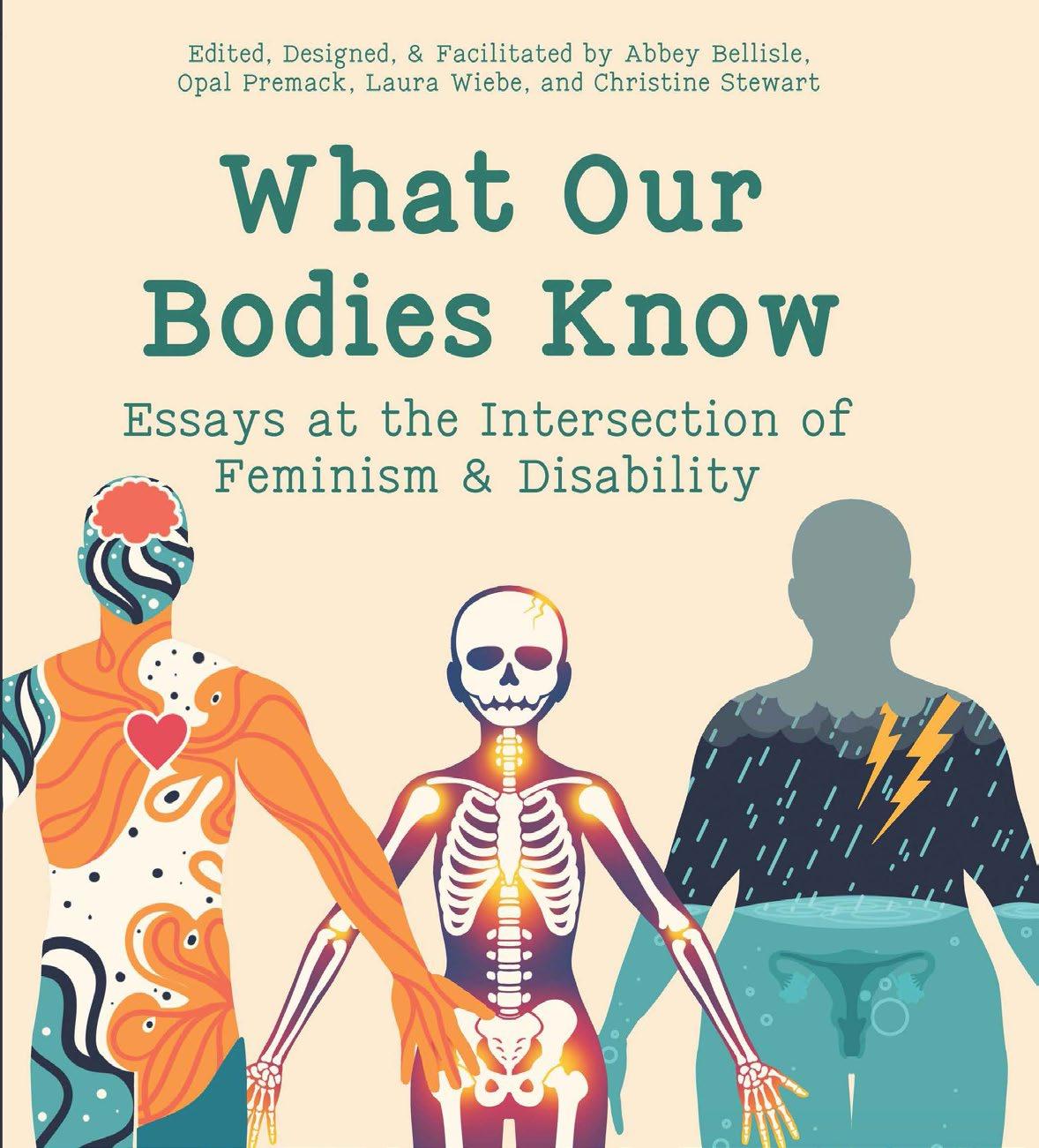
Collection exploring intersection of feminism and disability launches Jan. 19
Jacob Davis, staff
Students and professors alike are invited to attend the book launch of What Our Bodies Know: Essays at the Intersection of Feminism & Disability on Jan. 19, held at the Centre Space of the U of M’s John A. Russell Building.
The student-led book reflects on personal life experiences relating to disability and feminism, and is edited, designed and facilitated by Abbey Bellisle, Opal Premack, Laura Wiebe and Christine Stewart. The launch will be from 3 to 5 p.m. and will feature live readings, a Q&A and a book signing.
The idea for the project stemmed from a final assignment given by Stewart, a professor in women’s and gender studies at the U of M, in her class titled Feminisms and Disability in Contemporary Literature. Stewart also helped facilitate the book-making process.
The assignment had students examine moments from their own lives using concepts from the course, and to further understand them through creative writing.
Stewart first gave students a similar assignment in a previous iteration of her course, and after being impressed by students’ work, she felt the need to give the assignment again and use the student work somehow.
“The second time I taught the class, I asked students if they wanted to do something like this,” Stewart explained.
“And then by the time the third class happened, we were hoping we’d have enough essays that students would volunteer to be in the book.”
Wiebe, copy editor and one of the writers for the book, said the class the essays were written for had students take a “very difficult look” at their lives and the ways direct or indirect experiences of disability affected them.
“It is a deeply emotional process, in a good way,” Wiebe said.
“I find that, moving forward, just after the experience of writing it and handing it in and being a part of the book process, it’s changed the foundation of how I view disability and its relation to my life,” she said.
Wiebe said the process of creating the collection helped build a sense of community for those involved. She said this feeling is sometimes missing in an academic environment, where students are focused primarily on getting their degrees and do not always have the opportunity to hear from those with similar experiences.
Stewart added that, amidst all this, she has seen several students begin her class with a “distant relationship to disability.” These students have not exactly identified as having a disability but may have suspected a disability or suffered from chronic pain or mental illness, and later understood themselves differently and identified as having a disability.
Wiebe noted that the personal journey of self-identifying as having a disability is a big one.
“A lot of the times within our society disability is tied with incapability, which it absolutely isn’t,” she said.
Wiebe said disability is something that is “personally defined” and can have
positive outcomes, such as access to a great community that provides a different perspective on the ways to move through life.
Stewart said that she hopes students feel welcome to
attend the book launch and celebrate with them.
“I know that there is some interest by faculty, but this is really a student-generated piece of work.”
image / Opal Premack / provided
image / provided
OurToba to hold screening, networking event
Watch stories about family Jan. 13 and network with OurToba
Kelsey Chin, staff
OurToba Film Network, a non-profit organization that works to support women, non-binary and gender-diverse filmmakers, will present a film screening and networking event this Saturday, Jan. 13.
The event will be held at 304-100 Arthur St., on the third floor in the Black Lodge studio, and will be pay by donation. Attendees can expect to find light snacks and a cash bar for refreshments as they enjoy six short films by non-binary, gender-diverse and women filmmakers from Manitoba, all focused on the theme of family.
Kathleen Gallagher, president of the OurToba board, said the idea for the event initially centred around meeting the board members of the organization.
She and board member Natalia Longley then decided that the screening should include the whole OurToba community, which is when Gallagher thought that a theme would be an interest-
ing way to bring the event together.
Bebe Blue, a film written by Longley and co-produced by Longley, Gallagher and Trevor Kristjanson about new moms and the struggles of postpartum depression, will be shown at the event.
Moms Meetup, written and directed by Aniko Kere, deals with themes of varying perspectives and glances into private conversations that are similar to those in Bebe Blue Both films are fictional narratives.
Heartbeats, Like a Drum Go By, directed by Ana Toumine was produced with the help of Manitoba Opera and is about dealing with grief. The film was made after Toumine’s father passed away in 2020, and mixes experimental film and operatic elements with archival film footage of Toumine’s family.
Anak, written and directed by Joanne Roberts, sees a return to fictional narrative, and shows three versions of the same character at different points in their life as they
deal with their narcissistic mother.
1980, directed by Haley Charney, is a documentary that explores Charney’s grandfather’s diagnosis with bipolar disorder.
Lastly, Bayline is a tribute documentary directed by JJ Neepin about Neepin’s family going on a trip to visit the place in Manitoba where Neepin’s father grew up.
Doors for the OurToba film screening and networking event will open at 7 p.m., with the screening set to take place at 7:30 p.m. Following the films, attendees will be welcome to stick around for conversation with one another and some of the filmmakers featured in the screening.
Gallagher said this event is like a “lead up” to the OurToba film festival, set to take place in June. Submissions for the film festival opened Jan. 8 and will remain open until March 8. Films must be under 20 minutes long, and must feature women, non-binary and gender-diverse directors or co-directors. Further rules
can be found on OurToba’s website, and all submissions can be made through FilmFreeway.
According to Gallagher, the films being accepted will also focus on filmmakers from the Prairies.
While the screening and networking event on Jan. 13 is catered toward women, non-binary and gender-di-
verse people, Gallagher said everyone is welcome.
“It’s really important that other members of the community, for example, cisgender men, see women, gender-diverse and non-binary filmmakers in these roles,” she said.
“I think that’s kind of how you bridge those gaps.”
photo / Ebunoluwa Akinbo / staff
Kathleen Gallagher, president of the OurToba board.
Bisons hockey teams blitzed
Men’s and women’s teams swept by Thunderbirds over weekend
Quinn Mayhew, staff
he University of Mani-
Ttoba women’s hockey team kicked off the 2024 season with a weekend series against the University of British Columbia (UBC) Thunderbirds.
Both teams were evenly matched in the first period, going head-to-head in both offence and defensive skating.
Molly Kunnas scored the first goal of the game for the herd 10 minutes in, putting the Bisons on the board.
The Thunderbirds hit back minutes later netting a goal, the 1-1 tie holding into the first intermission.
UBC came out charged up for the second period, both outskating and outscoring the herd.
The Thunderbirds scored four times in the second frame, with only one coming from a UBC power play, taking a dominant four-goal lead into the second intermission.
The U of M came back looking to do some damage control and managed to fend off
UBC defensively in a scoreless third frame, but the Thunderbirds took the first game of the weekend 5-1.
Saturday’s game was meant to be a redemption arc for the herd, but ended in an overall weekend sweep for UBC.
The first period started off rough for the U of M. After allowing a goal minutes into the game, the herd gifted the Thunderbirds a power play with a bodycheck. UBC capitalized on the Bisons’ error, taking a 2-0 lead into the first break.
UBC in turn gave up a power play to the U of M at the start of the second period with a hit-to-the-head penalty. The herd capitalized with an Ashley Keller goal, cutting the Thunderbirds’ lead in half.
However, the U of M fell just short of a win. UBC scored a third goal in the final period of the game, and despite Sadie Keller netting a second goal for the herd late in the third, the Thunderbirds held on to sweep the weekend with a final score of 3-2.
Meanwhile, the men’s team started off the weekend series on home ice against UBC for the first game of the new year.
The first period of Friday’s game started off rough for the Bisons, with the Thunderbirds scoring twice right out of the gate, both goals within minutes of each other.
The Bisons had a more successful second period, with Tony Apetagon scoring the herd’s first goal early in the frame to cut UBC’s lead in half.
However, try as they might, the Bisons were unable to fend off the Thunderbirds in the third. UBC managed to slip in one more goal in the frame, winning the game 3-1.
Both teams were evenly matched in the first period of Saturday’s game, with neither managing to score against each other.
The second period ramped up for UBC, the Thunderbirds scoring a shorthanded goal and taking a 1-0 lead into the second intermission. The Thunderbirds took their intensity from the second and
carried it into the third. While the U of M made it onto the board in the third with a goal scored right out of the gate by Noah Basarab, UBC scored two more times to complete the weekend sweep, defeating the herd for the second game in a row 3-1.
Basketball opens 2024 with huge wins over Cougars
Women break 16-year losing drought against Regina, while men lead CanWest
Grace anne Paizen staff
Bisons basketball had an impressive start to the 2024 leg of the season, going 3-1 as they hosted the University of Regina Cougars this past weekend.
The women’s team went into the break on an eightgame losing streak only to take on the Cougars in the new year, a team the women’s side of the herd has not won against since the 2007-08 season.
It looked as though the drought would continue, as the herd was walloped in Friday’s game. Managing only eight points compared to Regina’s 23 in the first quarter, the Cougars took a 51-22 lead into halftime.
The most even quarter of the game was the fourth, where Regina registered 15 points while Manitoba scored 14. However, the drought continued and the herd’s losing streak climbed to nine as the Cougars defeated the Bisons 96-49.
The star of the game in the sole weekend loss for the herd was Emily Mandamin, who led the team with 15 points, led in steals and blocks with three of each and made three
of the Bisons’ four successful three-point shots on the night.
Emily Johnson led in rebounds with seven, while Emerson Martin recorded the fourth made three-point shot for the Bisons.
However, the herd turned things around in Saturday’s game.
The Bisons came stampeding out of the gates, taking a 23-13 lead in the first quarter and taking a 43-36 lead into halftime.
While Regina won the third quarter, sinking 16 points to the Bisons 14 and pulling within five points of the herd by the end of the third, the Bisons pulled off the victory with a final score of 74-67.
Johnson recorded her fourth double-double of the season with 12 points and 10 rebounds. Martin led in points with 25 and rained down threes, making five of her six attempts, while Lauren Bartlett put up 21 points and tied for a team-leading three steals with Mar Tomas Arbos.
The men’s weekend series against the Cougars was just as exciting. While the team entered the new year on a six-game winning streak, the first half of Friday’s game was
close.
The herd started off strong, taking a 25-17 lead in the first quarter, but the Cougars fought harder in the second, making 26 points to Manitoba’s 29.
However, the Bisons took a 54-43 lead into halftime and maintained their press in the second half while the Cougars faded. The herd ultimately won 94-65.
Simon Hildebrandt led the herd in points with 23, while Mason Kraus put up 15 and Daren Watts scored 11. Wyatt Tait led in rebounds with seven and Tito Obasoto led in steals with three.
The men’s team completed the sweep in Saturday’s game, but the game was closer than the previous night’s. Regina led 14-13 after the first quarter, but the Bisons picked up some momentum in the second, taking a 39-26 lead into halftime.
The herd carried its momentum into the third quarter, but Regina surged in the fourth, outscoring Manitoba 22-19. However, the Bisons hung on to win 81-61, not only adding to their winning streak but securing the most wins in the West with a 10-2 record.
Watts led the team with a whopping 29 points in Saturday’s game, while Kraus had another double-digit night with 13 and Jonam Kazadi netted 10. Tait once again led in rebounds, surpassing his previous game’s total of nine, and
The Bisons basketball teams are on the road Jan. 12 and 13, hosted by the
versity
The men’s hockey team plays its next games against the Mount Royal University Cougars Jan. 12 and 13 in Calgary, while the women’s team hosts the Cougars at Wayne Fleming Arena.
photo / Matthew Merkel / staff
Kraus led in steals with six.
Uni-
of British Columbia Thunderbirds.
photo / Matthew Merkel / staff
Sports teams’ schedules
U of M Bisons — Women’s Basketball
Regina Cougars @ Bisons
Jan. 5 — Final: 96 – 49
Regina Cougars @ Bisons Jan. 6 — Final: 67 – 74
Bisons @ UBC Thunderbirds Jan. 12 — 7:30 p.m.
Bisons @ UBC Thunderbirds Jan. 13 — 6 p.m.
U of M Bisons — Women’s Hockey
Bisons @ UBC Thunderbirds
Jan. 5 — Final: 1 – 5
Bisons @ UBC Thunderbirds Jan. 6 — Final: 2 – 3
Mount Royal Cougars @ Bisons Jan. 12 — 7 p.m.
Mount Royal Cougars @ Bisons Jan. 13 — 2 p.m.
U of M Bisons — Women’s Volleyball
Bisons @ MacEwan Griffins
Jan. 5 — Final: 3 – 1
Bisons @ MacEwan Griffins Jan. 6 — Final: 3 – 0
Trinity Western Spartans @ Bisons Jan. 12 — 7:45 p.m.
Trinity Western Spartans @ Bisons Jan. 13 — 6:45 p.m.
U of M Bisons — Men’s Basketball
Regina Cougars @ Bisons
U of M Bisons — Men’s Volleyball
Bisons @ MacEwan Griffins Jan. 5 — Final: 3 – 1
Bisons @ MacEwan Griffins Jan. 6 — Final: 3 – 0
Trinity Western Spartans @ Bisons Jan. 12 — 6 p.m. Trinity Western Spartans @ Bisons Jan. 13 —
U of M Bisons — Swimming
U of M Bisons — Track and Field Bisons Grand Prix #1
Jets
Carolina Hurricanes @ Jets
Jan. 5 — Final: 65 – 94
Regina Cougars @ Bisons Jan. 6 — Final: 61 – 81
Bisons @ UBC Thunderbirds Jan. 12 — 9:30 p.m.
Bisons @ UBC Thunderbirds Jan. 13 — 8 p.m.
U of M Bisons — Men’s Hockey
UBC Thunderbirds @ Bisons
Jan. 5 — Final: 3 – 1
UBC Thunderbirds @ Bisons Jan. 6 — Final: 3 – 1
Bisons @ Mount Royal Cougars Jan. 12 — 8 p.m.
Bisons @ Mount Royal Cougars Jan. 13 — 4 p.m.
*All times CST
Bisons volleyball squads dominate against Griffins
Women’s and men’s teams sweep MacEwan, climb CanWest standings
Joshua Brandt staff
After a much needed winter break — they are student-athletes, after all — the Bisons women’s and men’s volleyball teams were back in action this past weekend, squaring off against the MacEwan University Griffins in Edmonton.
Going into the winter break, the women’s volleyball team was ranked as the eighth-best team in the country. In the CanWest standings, MacEwan trailed the Bisons by two points prior to this weekend’s series. At 9-3, the Griffins looked to surpass the herd (102) on their home court.
The Bisons, however, had other ideas.
In the first match, the herd took the first two sets by narrow margins, winning 25-23 and 26-24.
The Griffins responded in the third set, fighting back and taking it 26-24. Nonetheless, led by Raya Surinx’s work-horse performance, the herd regrouped and took the deciding fourth set 25-22, and the match 3-1.
Displaying superhuman stamina, Surinx poured in 23 kills on 59 attacks. Yes — 59.
Not to be outdone, Brenna Bedosky — who has been playing better and better with each passing game — added nine kills from the middle.
In the rematch, after a close 25-22 first-set win for
the Bisons, the herd asserted complete control, thundering over the Griffins with sound, disciplined, machine-like volleyball.
As the herd took the game 3-0 in straight sets, it was once again led by Surinx, who accumulated 15 kills, giving her a CanWest-leading 233. Not only does she lead CanWest in kills, she leads decidedly by 45.
Libero Julia Arnold also played great, digging up eight Griffin attacks. She now sits second in CanWest with 3.52 digs per set and second in total digs with 169.
With the sweep, the herd manufactured an eight-point cushion between it and the Griffins. The team is now fourth in the CanWest standings with a very respectable record of 12-2.
The men’s volleyball team was riding a five-game winning streak in CanWest play entering its first match against the Griffins last Friday.
The lowly Griffins, ranked dead last in the CanWest standings and still looking for their first win of the regular season, gave the herd a run for its money in the first set, taking it — somewhat surprisingly — 27-25.
Nonetheless, possibly instigated and ignited by that minor blip, the herd proceeded to trounce the Griffins,
Bison briefs
Grace anne Paizen, staff
Bisons swimming
Olympian and former Bison Kelsey Wog was the highlight of the Prairie Winter International — the last swimming event on the Bisons 2023 calendar.
At the meet, which mixes high school clubs and both current and former Bison athletes, Wog made her way into the national record books yet again with a time of 1:04.22 in the women’s 100-metre breaststroke.
The record had been held for 15 years by University of British Columbia Thunderbird Annamay Pierse, who had claimed the prior record in 2009 while wearing a tech suit that is now banned in the sport.
Bisons track and field
winning the first match 3-1 and sweeping the second 3-0.
In the first game, Spencer Grahame led the way for the herd, serving a game-high 22 kills and looking extremely confident while doing so.
Eric Ogaranko also played very well in the first match, exhibiting a versatile, wellrounded game. On offence, he got 13 kills with an efficient .440 hitting percentage, and on defence, he scrounged up 12 digs. In the second match, the Bisons throttled an uninspired Griffins team, winning the first set 25-14, the second 25-18 and the third
Reportedly, the Griffins’ head coach lamented his team’s poor performance after the second match, attributing it to a lack of desire to play on his players’ part. Perhaps the resumption of the season came too early for the Griffins’ liking.
Despite a tepid showing from its opposition, this Bisons team won based on its own merit.
Grahame had another brilliant game, registering 16 kills and two service aces, while Ogaranko matched his dig-output from the previous
There were two track meets that wrapped up the 2023 leg of the Bisons track and field season.
The first was the George Tanner Memorial Classic, held Dec. 2, where eight Bisons won two events each in their respective age categories.
match with 12.
After a couple of victories over a winless Griffins team, the herd has moved itself into fifth place in the CanWest standings and extended its winning streak to seven games.
The Bisons volleyball teams will each face a stiff test as they play host to the powerhouse Trinity Western University Spartans Jan. 12 and 13, whose men’s team is the reigning U Sports national champions, and whose women’s team boasts a flawless record of 12-0 this season.
many more impressive showings from the herd.
Odeleye won the women’s pentathlon and Misha Bruning-Haid won the men’s heptathlon.
Gordon, along with Zoe Nonato, won both the 60 and 200-metre dash events in their respective age categories. Sarah McChristie and Eniola Adepoju won the triple jump in their categories, and McChristie also won the long jump while Adepoju won the high jump. Graham Wright won the shot put and weight throw.
On the women’s side of the team, Signy McKim won the 60-metre dash and high jump, while Alainna Melnyk won the shot put and weight throw and Donnae Gordon won the 300metre dash and long jump.
60-metre dash.
Lindsey Gundrum finished first in the 60-metre hurdles and tied for first with teammate Eniola Odeleye in high jump, who came in first in the
The men’s team saw Hayden Caraoa and Daxx Turner win their respective high and long jumps, and Sean Rowe won shot put and weight throw.
The second meet was the Athletics Manitoba Last Chance held Dec. 8 and 9, with
Finally, both Anna McConnell and Tyler Cox-Yestrau broke school records. McConnell broke her own record with a 14.96 metre shot put throw, and Cox-Yestrau’s time of 21.79 in the 200-metre dash broke a 37-year program record.