


Matthew Merkel, staff
he federal govern-
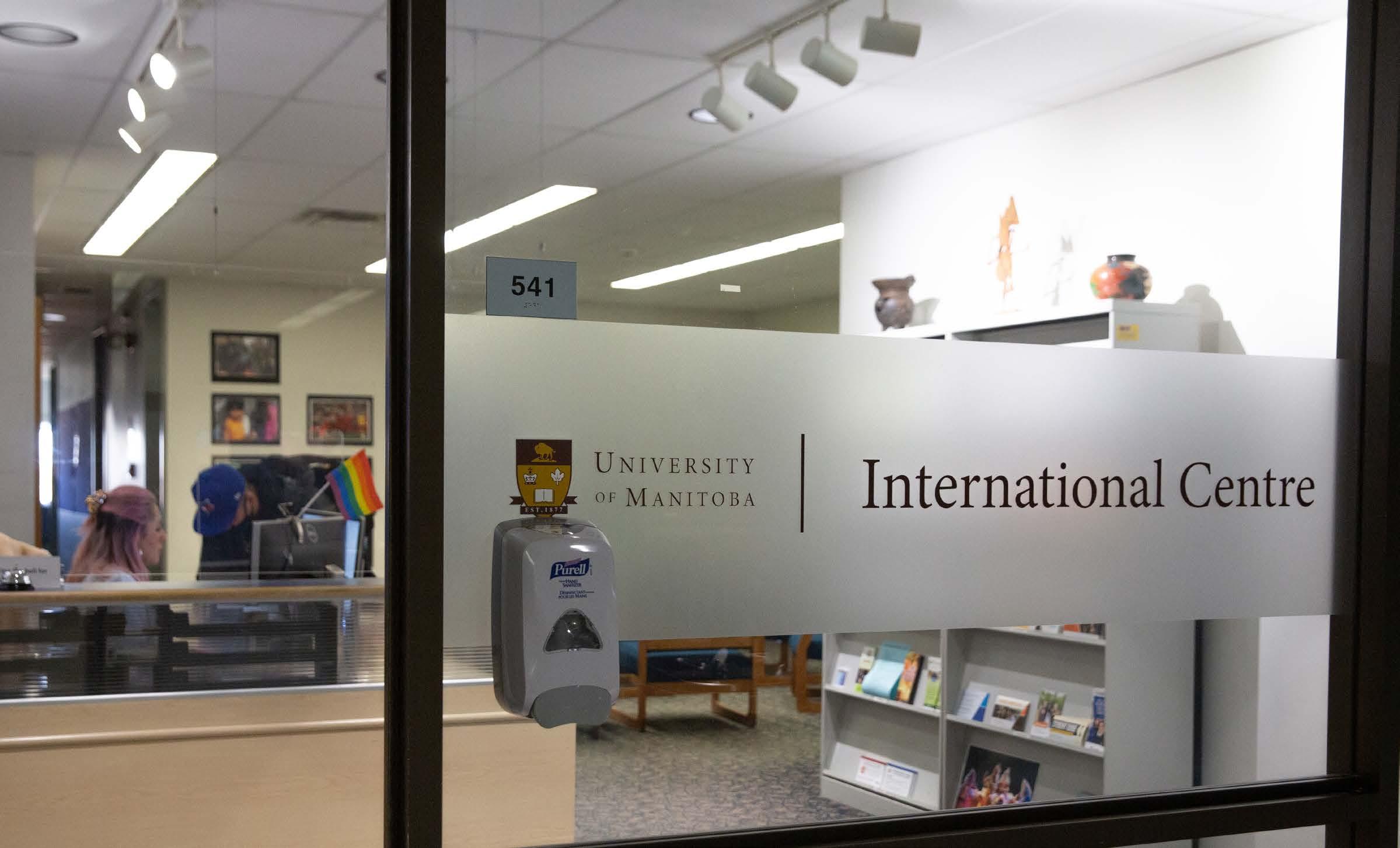
Tment announced on Oct. 7 that eligible international students will be granted the authorization to work more than 20 hours per week off campus. The temporary change will run from Nov. 15 this year to Dec. 31, 2023.
According to the government of Canada’s website, foreign nationals with an approved study permit application submitted by Oct. 7 will
Federal government temporarily permits working over 20 hours weekly off campus
also be able to take advantage of the new changes.
International students are currently restricted to working 20 hours per week off campus during the school year.
Minister of Immigration, Refugees and Citizenship
Sean Fraser stated that the move would help continue the growth of Canada’s post-pan-
demic economy, help employers in markets experiencing labour shortages find new staff and give post-secondary students a better opportunity to make money and gain work experience.
“More than 500,000 international students who are already here in Canada are going to be eligible to work
more if they choose to do so,” Fraser said.
UMSU international students’ representative Kunal Rajpal said that the government’s ruling will help give international students the flexibility to work hours that are more conducive to a student’s schedule, allowing for more optimized study time
Grace Anne Paizen, staff
The Bisons soccer squad won the first stage of the Duckworth Challenge against the Winnipeg Wesmen over the weekend.
The team opened the twopart series with a 3–0 win on Thursday, Oct. 6. Bison midfielder Jessica Tsai opened the scoring at 30:19 in the game, with forward Bianca Cavalcanti scoring nine minutes later. Cavalcanti scored a second goal in the second half that would cap off the shutout.
On Saturday’s game, the Bisons dominated with a 6–0 win. The onslaught began
early, with Cavalcanti scoring the first two goals followed by forward Janelle Chomini before half time. In the second half Tsai got two goals of her own, and was followed by defender Bianca Bucci with the final goal.
The team will wrap up the regular season next week against Alberta opponents
Both the Bisons men’s and women’s hockey teams kicked off the regular season over the weekend.
The two teams are off to a rocky start, each going 0–2 in their first two games. However, it was not without effort.
The Bisons men scored four
goals in their first game that resulted in a 6–4 loss to the UBC Thunderbirds, including two goals from forward Brett Davis. In the wild second game against the T-birds, the Bisons put up seven goals in a close 8–7 loss, with five different scorers for the Bisons side and two goals apiece for both Davis and forward Tony Apetagon.
On the women’s side of things, defenceman Hanna Bailey was the lone goal for the Bisons in their first game — also against the UBC Thunderbirds — in a 6–1 loss. The T-birds put up another six in game two, a 6–2 loss for the Bisons, with forwards Aimee Patrick and Julia Bird netting the two points for the Mani-
toba side.
Both teams will face the Regina Cougars next in their respective conferences.
The golf team finished off their season with the Canada West Championships tournament last week in Victoria, BC.
The team finished sixth overall. Individually Stefan Lavallee and Cameron McIntyre shot +9, Trent Robertson shot +11, Connor Stewart shot +14 and Cole Peters shot +20.
sports@themanitoban.com
and planned savings.
Rajpal said that the existing law negatively affects international students in a variety of ways. He said that international students are limited in their choice of employer, and claimed that this leaves international students more vulnerable to abuse within the workplace. He said the new law will help broaden international students’ options and, ultimately, improve their bottom line.
“We can earn more, we can live comfortably,” Rajpal said.
“We are going through a housing crisis, minimum wage is too low, we do not have international health care, inflation is as high as it could be, we are going through financial distress.”
Then-Minister of International Trade Diversification James Gordon Carr stated that 2018 statistics showed that international students contributed an estimated $21.6 billion to Canada’s GDP, and supported almost 170,000 jobs. Between January and the end of August this year, more than 452,000 international study permits have been processed, a 23 per cent increase from the same period in 2021.
With the growing international student population contributing so much to the economy, Rajpal said that it is important their value is reflected in laws and policies. Although he said students have been happy to see the temporary change introduced, Rajpal argued that it should be made permanent.
He also highlighted the need to reinstate free health care for international students living in Manitoba, something he continues to advocate for.
“I hope to see [the] government recognize our value and make laws according to that, like for example, reinstating international student health care,” Rajpal said.
“International students [are] crucial to the economy of the province and the country, and with that, we should get the relevant protections,” he said via text message.
news@themanitoban.com
EDITOR-IN-CHIEF ? editor@themanitoban.com
Gillian Brown
BUSINESS MANAGER ? accounts@themanitoban.com
Dhruv Patel
ADVERTISING CO-ORDINATOR ? ads@themanitoban.com
Richard Plant
MANAGING EDITOR ? me@themanitoban.com
Grace Anne Paizen
COPY DESK ? copy@themanitoban.com
Ezra Taves (ed.)
NEWS DESK ? news@themanitoban.com
Matthew Merkel (ed.)
Colton McKillop (ed.)
RESEARCH & TECHNOLOGY DESK ? research@themanitoban.com
Elah Ajene (ed.)
COMMENT DESK ? comment@themanitoban.com vacant
ARTS & CULTURE DESK ? arts@themanitoban.com
Alex Braun (ed.)
SPORTS DESK ? sports@themanitoban.com
Kieran Light (ed.)
PHOTO DESK ? photo@themanitoban.com
Ebunoluwa Akinbo (ed.)
DESIGN DESK ? design@themanitoban.com
Matthew Doering (ed.)
GRAPHICS DESK ? graphics@themanitoban.com
Dallin Chicoine (ed.)
AUDIO DESK ? audio@themanitoban.com
Harmatpreet Brar (ed.)
SOCIAL MEDIA DESK ? social@themanitoban.com
Jory Thomas (ed.)
VOLUNTEERS THIS ISSUE ? LJ Fulugan
VOLUNTEER STAFF ? interested in volunteering? email me@themanitoban.com today!

109 HELEN GLASS BUILDING
UNIVERSITY OF MANITOBA
WINNIPEG, MB 204. 474. 6535
The Manitoban is the official student newspaper of the University of Manitoba. It is published monthly during the summer and each week of regular classes during the academic year by the Manitoban Newspaper Publications Corporation.
The Manitoban is an independent and democratic student organization, open to participation from all students. It exists to serve its readers as students and citizens.
The Manitoban is a member of the Canadian University Press, and our journalistic standards can be found online at toban.news/jsp.
The newspaper’s primary mandate is to report fairly and objectively on issues and events of importance and interest to the students of the University of Manitoba, to provide an open forum for the free expression and exchange of opinions and ideas and to stimulate meaningful debate on issues that affect or would otherwise be of interest to the student body and/ or society in general. The Manitoban serves as a training ground for students interested in any aspect of journalism.
Students and other interested parties are invited to contribute to any section of the newspaper. Please contact the appropriate editor for submission guidelines.
The Manitoban reserves the right to edit all submissions and will not publish any material deemed by its Editorial Board to be discriminatory, racist, sexist, homophobic or trans-phobic, ableist or libellous.
Opinions expressed in letters and articles are solely those of the authors. Editorials in the Manitoban are signed and represent the opinions of the writer(s), not necessarily those of the Manitoban staff, Editorial Board or the publisher.
A “volunteer staff” member is defined as a person who has had three volunteer articles, photographs or pieces of art of reasonable length and/ or substance published in the current publishing year of the Manitoban.
Any individual who qualifies as a volunteer staff member must be voted in by a majority vote at a Manitoban editorial board meeting. Elected representatives and non-students may be excluded from holding votes as volunteer staff members in accordance with the Manitoban Constitution.
All contents are ©2022 and may not be reprinted without the express written permission of the Editor-in-Chief.






Elah Ajene, staff
Humans and wildlife are inextricably linked. Our activities directly influence the natural community around us.
Over the course of the COVID-19 pandemic — which prompted nationwide lockdowns — as we altered our behaviour, so did nature.
University of Manitoba post-doctoral fellow in the department of biological sciences and adjunct professor at the U of M’s natural resources institute Miya Warrington sought to find out what birds were doing in response to changes in human behaviour during the lockdowns.
Warrington, who is currently doing research in the United Kingdom, analyzed 25 of the nation’s most commonly observed bird species in her recent publication — including the European robin, blackbirds, mallards, gulls, crows and the great tit, among others.
“We actually leveraged the power of citizen science,” she said. Citizen science is a method of scientific research which involves public participation.
Using eBird — a community-based platform run by the Cornell lab of ornithology — members of the general public were able to provide realtime data of bird sightings, creating an online database for researchers.
“From there we did all sorts of filtering and models just to find things out,” Warrington explained.
Alongside the bird observation data, Warrington also used human mobility data from Google which tracked individual movement patterns using cellular networks.
Warrington and her colleagues found varying results for different bird species depending on the location being observed.
“We had all these interesting mixed trends,” she said.
Amid the lockdown, public park use and outdoor recreational activities increased. In instances where humans had picnics, scavenger species such as crows and gulls would feed on the waste often left behind. Warrington explained that over time this was not beneficial to the scavenger species, and the crowd in parks seemed to disturb them.
Further data analysis showed that as people spent more time at home in their yards and gardens doing daily activities, sightings of the gray tit bird were significantly reduced.
“That suggests that they

“We changed the behaviour and animals responded, both in good and bad ways”
— Miya Warrington, Post-doctoral fellow at the University of Manitoba
were disturbed by people coming into the yards and enjoying it with their pets and spending a lot of time out there,” Warrington explained.
Other species — such as blackbirds — were spotted more frequently. However, Warrington noted that this could have been influenced by humans putting out more bird feeders and baths.
“We changed the behaviour and animals responded, both in good and bad ways,” she said.
Overall, Warrington explained that bird behaviour
did not follow a fixed trend, but rather changed depending on the specific human activity — whether we stayed at home and spent time in our yards or gardens, visited parks or drove our vehicles.
According to Warrington, the fact that birds were able to respond to the drastic changes in human behaviour is a positive sign.
“That means that nature can be resilient, right?” she said.
In the wake of the climate crisis and biodiversity decline, Warrington explained
that changes in human behaviour can make a great impact on nature.
“But we have to be very careful and thoughtful about it because we know that there’s a lot of little nuances to that,” Warrington added.
Regarding the next direction of her research, Warrington said that she will aim to be increasingly species-specific and analyze threatened species within the community.
“The human behaviour is changing a lot, so the animals will,” Warrington said. “That’s why we started this project.”
Warrington’s project is part of a larger study, which focuses on wildlife behaviour previous to this.
With the sudden pandemic, Warrington and her colleagues saw a gap in this area of research that prompted them to look for answers.
“You’re curious because you’re a scientist, you want to help because there’s a crisis going on,” she said.
research@themanitoban.com

Kieran Light, staff
It is a truth universally acknowledged that football is a brutal sport.
On Sept. 29 in the National Football League, the Miami Dolphins and Cincinnati Bengals were set to face off on Thursday Night Football (TNF). It was a much-anticipated game, as the Bengals and Dolphins are both teams with exciting young quarterbacks, Joe Burrow and Tua Tagovailoa respectively.
However, four days prior to the game, the Dolphins went up against the Buffalo Bills where, with 2:28 left in the first half, Tagovailoa was pushed backwards while throwing. He fell down on his back so forcefully that the back of his head hit the ground hard.
When Tagovailoa managed to get up after the hit, it was clear even on live TV that he was disoriented, struggling to stay up or walk, even falling back down to the ground. Despite this, he would later come back in the second half and play for the remainder of the game.
This raised questions about whether Tagovailoa should be
the quarterback for the Dolphins in the TNF matchup against the Bengals. Despite the concerns of many, he was cleared to play.
Horribly, near the end of the second quarter of the TNF game, Tagovailoa was sacked and his head once again hit the ground hard in the process.
playing in grade four where I would begin to create lasting memories and bonds that remain to this day. I will never forget the excitement of my
concern for football players.
There needs to be something done in order to create a safer athletic climate in the world of football in Canada and elsewhere
This time, the hit resulted in Tagovailoa lying on the ground with his fingers held up in a contorted manner, all the while not moving. The game was quickly halted and delayed. Tagovailoa was later taken off the field on a stretcher, and it is not known yet if he will be able to play again this season.
This whole ordeal reignited the long-running debate over concussions in football, and more specifically, the rate at which they occur as it pertains to player safety.
I greatly enjoyed my time as a football player. I began
first win.
In a medical context, I can only say that my experience playing football was lucky. In six years, I never had any serious injuries that hindered me from playing or required me to go seek medical attention outside of athletic trainers. However, I myself suffered a minor concussion when I was 12.
I share the same opinion that many sports fans are currently speaking about with regard to player safety and concussions. Even as a former football player and diehard football fan, watching what happened to Tagovailoa in real time only reinforced my
Head injuries can be directly linked to serious brain damage in those afflicted. A major fear shared by many concerning head injuries is the possibility of developing chronic traumatic encephalopathy (CTE) — a condition that can seriously alter someone’s behaviour and health.
As such, many parents in recent years have refrained from letting their children play football to keep them as safe as possible. According to an NBC news article from 2018, 48 per cent of parents in the United States would encourage their children to play a sport other than football to avoid the risks posed by concussions.
This parental concern reaches across international borders. In Canada, the fear of children developing brain damage due to football injuries has grown to a point where in 2019, Football Canada —
Canada’s governing board for football — banned all children 12 and under from competing in full-contact football. In fact, the ban was finally implemented just this year.
There needs to be something done in order to create a safer athletic climate in the world of football, in Canada and elsewhere. It is a great game that I relished playing, enjoy discussing and adore watching.
There is simply no sport as enthralling.
It is a shame that many children are being robbed of the chance to create life experiences and to learn the many lessons football has to teach and has taught me.
It is even more of a shame that they are missing out for good reason. I can’t speak on what specifically should be done, but solutions need to be devised and executed properly to ensure that the children of the present and of the future can play football safely.
editor@themanitoban.com

Alex Braun, staff
3.5/5 Stars
Bedouin Soundclash is a name you maybe haven’t thought of in a minute, but those of us old enough to remember 2004 might have fond memories of its CanCon smash “When the Night Feels My Song.” The song is slightly confounding in all the ways that make the band such an interesting entity — a melding of reggae, folk, punk and pop with very few suitable comparison points.
I’ve always seen Bedouin Soundclash as a sort of proto-Vampire Weekend, another band of hipsters appropriating a wide swath of world music. But its aesthetic vocabulary couldn’t be any further from Vampire Weekend’s initial ironic Ivy League stance. Bedouin Soundclash sincerely cared in a folksy, old-school punk type way, and wasn’t afraid to be openly anthemic.
Their name, Bedouin Soundclash, is heady and puzzling too — evoking ancient nomadic Arab tribes and Jamaican dub parties in the same breath and representing a band that plays a mix of ska,
rock, electronic, pop and folk. Its 20-plus-year career has led the band down many paths, working with artists from the electronic, jazz, pop and punk worlds in equal measure.

Alex Braun, staff
The Manitoba wedding social — an iconic tradition to some, a tacky social scourge to others, but something unique to our province, and one of our numerous questionable points of provincial pride.
Filmmaker Tavis Putnam saw the solicitation of potential social guests as a situation rife with comedic potential.
“I wanted to raise money to make a movie by having a social,” Putnam explained.
“I thought, ‘oh, well there should be a scene at a social in this movie if we’re going to have a social to raise money for it.’ And then the idea of having this guy go around and try to get people to go to a social kind of came to me.”
The movie, A Social, will be playing Oct. 13 to 15 at the Cinematheque, and was shot on a very low budget. The production team consisted mainly of
Putnam, who wrote, directed and starred in the film, as well as cinematographer Jesse de Rocquigny and Tom Groom, who handled location sound.
The film’s plot is a familiar one to most in our fair city. Ross, the protagonist, is pestering acquaintances and friends to come to his mom’s wedding social, which is deemed “The Manitoba wedding social to end all Manitoba wedding socials.”
Ross isn’t the most socially smooth guy, and trying to sell someone on actually attending a social is a bit of an uphill battle. The comedic thrust of the movie comes from seeing Ross fumble his way through a series of doomed pitches to a cast of eccentric and recognizable Winnipeg characters.
The social is just one of the dubious points of civic and national pride we in Manitoba
After breaking a nine-year hiatus with 2019’s MASS, the band is back with a new album called We Will Meet in a Hurricane.
The 12-track record is being presented as a sort of back-tobasics, late career return to form. The production is shiny and poppy, but the arrangements are kept to a select number of elements paired together in different ways.
The opening title track is a sugar-sweet ska-pop song that establishes the album’s theme of approaching apocalyptic difficulties with a chipper optimism.
“Longer Days in Shorter Years” is a sauntering and slightly silly, lightly political bar-band rocker with a really infectious hook.
Tracks like “A Torn Jacket with Silver Lining” and “Man from Cascades” have truly strange palettes, mixing Spanish guitars, chirpy ska rhythms, country-ish pedal steel glides, lavish string
arrangements and vibraphone.
In general, the sound that Bedouin Soundclash ends up with here is without many clear analogues. The songs themselves are never too off the wall in construction, but the way they’re arranged is never not interesting.
We Will Meet in a Hurricane is an album only Bedouin Soundclash could have made. It borders on cloying sweetness, it’s a little too long and the songwriting is occasionally a bit bland.
However, it’s all vintage Soundclash, and when it works, it really works.
We Will Meet in a Hurricane comes out Oct. 21, and will be available on major streaming platforms.

cling to, and our flimsy provincial identity as Manitobans and Canadians is something that Putnam hoped to explore in the film as well.
“As a colonial country, it feels like when people talk about Canadian culture they are mostly just talking about white Canadian culture,” he said. “I think that in itself is kind of funny because Canada takes so much from other places.”
The film itself is shot in gorgeous widescreen black

and white, giving it a serene detachment and slight melancholy that adds depth to the cringy comedic situations and quirky characters.
The movie is also set in the dead of a Winnipeg winter, which lends it a uniquely Winnipeg-y lonely coldness, a quality of our fair city that Putnam also hoped to explore.
“To me it is a very isolating place to live, especially in the winter,” he said.
“The city’s so spread out, and there’s essentially no public transit and it’s so sparsely populated.”
The loneliness of Winnipeg informs Putnam’s characterization of Ross, a sympathetically awkward and sincere guy who is desperate for community and belonging.
“This character I sort of see as a very extroverted person who wants a lot of social interaction and wants some
kind of community,” Putnam explained. “But he can’t, he can’t get it because his social skills are so terrible.”
Underscoring this desperation is the recurring use of front-facing cellphone camera footage from Ross’s vlog to an imagined audience of fans. These bits filmed in colour also serve as a visual contrast to the bleaker black and white sequences. Beyond these early screenings in Winnipeg, Putnam hopes to get the film on the festival circuit.
A Social is screening Oct. 13 to 15 at the Cinematheque. More information and tickets can be found at winnipegfilmgroup.com/event/a-social/2022-10-13/-30-
arts@themanitoban.com
U of M Bisons — Women’s Preseason Basketball
CJOB Tournament
Bisons @ Lakehead Thunderwolves Oct. 7 — Final: 70 – 76
Bisons @ Brandon Bobcats Oct. 8 — Final: 81 – 73
Bisons @ Winnipeg Wesmen Oct. 9 — 1 p.m.
U of M Bisons — Women’s Preseason Volleyball
Bisons @ Montréal Carabins Oct. 6 — Final: 3 – 1
U of M Bisons — Women’s Hockey
Bisons @ UBC Thunderbirds Oct. 7 — Final: 1 – 6
Bisons @ UBC Thunderbirds Oct. 8 — Final: 2 – 6
Regina Cougars @ Bisons Oct. 14 — 7 p.m.
Regina Cougars @ Bisons Oct. 15 — 3 p.m.
U of M Bisons — Women’s Soccer
Winnipeg Wesmen @ Bisons Oct. 6 — Final: 0 – 3
Bisons @ Winnipeg Wesmen Oct. 8 — Final: 6 – 0
Bisons @ Lethbridge Pronghorns Oct. 15 — 1 p.m.
Bisons @ Mount Royal Cougars Oct. 16 — 2 p.m.
U of M Bisons — Men’s Preseason Basketball
Lakehead Thunderwolves @ Bisons Oct. 7 — Final: 85 – 81 / OT
U of M Bisons — Men’s Football
Bisons @ UBC Thunderbirds Oct. 15 — 4 p.m.
U of M Bisons — Men’s Golf
Canada West Championships Team Final: Sixth place overall
U of M Bisons — Men’s Hockey
UBC Thunderbirds @ Bisons Oct. 7 — Final: 6 – 4
UBC Thunderbirds @ Bisons Oct. 8 — Final: 8 – 7
Manitoba Moose @ Bisons Oct. 11 — 7 p.m.
Bisons @ Regina Cougars Oct. 14 — 7 p.m.
Bisons @ Regina Cougars Oct. 15 — 3 p.m.
U of M Bisons — Cross Country
Stewart Cup
Valour @ Edmonton Oct. 8 — Final: 1 – 3
Winnipeg Blue Bombers
Edmonton Elks @ Blue Bombers Oct. 8 — Final: 11 – 48
Blue Bombers @ BC Lions Oct. 15 — 9 p.m.
Winnipeg Jets
Preseason:
Calgary Flames @ Jets Oct. 5 — Final: 0 – 5
Jets @ Calgary Flames Oct. 7 — Final: 5 – 3
Regular season:
New York Rangers @ Jets Oct. 14 — 7 p.m.
Jets @ Dallas Stars Oct. 17 — 7:30 p.m.
Jets @ Colorado Avalanche Oct. 19 — 7 p.m.


