RESEARCH & TECHNOLOGY DESK ? research@themanitoban.com
Michael Campbell (ed.)
Emma Rempel
COMMENT DESK ? comment@themanitoban.com
Lucas Edmond (ed.)
ARTS & CULTURE DESK ? arts@themanitoban.com
Shaylyn Maharaj-Poliah (ed.)
Alex Braun
Zoë LeBrun
Grace Paizen
SPORTS DESK ? sports@themanitoban.com
Matthew Merkel (ed.)
Isaiah Wagner
PHOTO DESK ? photo@themanitoban.com
Basel Abdelaziz (ed.)
Mohammad Arsalan Saeed
DESIGN DESK ? design@themanitoban.com
Matthew Doering (ed.)
Mikaela Warkentin
GRAPHICS DESK ? graphics@themanitoban.com
Dallin Chicoine (ed.)
Marina Djurdjevic
AUDIO DESK ? audio@themanitoban.com
Josh Wesey (ed.)
SOCIAL MEDIA DESK ? social@themanitoban.com
Jalene Moman, Molly Smyth (eds.)
Audra Ashley
VOLUNTEERS THIS ISSUE ?
VOLUNTEER STAFF ?
Ivan Nuñez Gamez, Emily Unrau-Poetker
THEMANITOBAN.COM
109 HELEN GLASS BUILDING
UNIVERSITY OF MANITOBA
WINNIPEG, MB
204. 474. 6535
The Manitoban is the official student newspaper of the University of Manitoba. It is published monthly during the summer and each week of regular classes during the academic year by the Manitoban Newspaper Publications Corporation.
The Manitoban is an independent and democratic student organization, open to participation from all students. It exists to serve its readers as students and citizens.
The Manitoban is a member of the Canadian University Press, and our journalistic standards can be found online at toban.news/jsp.
The newspaper’s primary mandate is to report fairly and objectively on issues and events of importance and interest to the students of the University of Manitoba, to provide an open forum for the free expression and exchange of opinions and ideas and to stimulate meaningful debate on issues that affect or would otherwise be of interest to the student body and/ or society in general. The Manitoban serves as a training ground for students interested in any aspect of journalism.
Students and other interested parties are invited to contribute to any section of the newspaper. Please contact the appropriate editor for submission guidelines.
The Manitoban reserves the right to edit all submissions and will not publish any material deemed by its Editorial Board to be discriminatory, racist, sexist, homophobic or trans-phobic, ableist or libellous.
Opinions expressed in letters and articles are solely those of the authors. Editorials in the Manitoban are signed and represent the opinions of the writer(s), not necessarily those of the Manitoban staff, Editorial Board or the publisher.
A “volunteer staff” member is defined as a person who has had three volunteer articles, photographs or pieces of art of reasonable length and/ or substance published in the current publishing year of the Manitoban.
Any individual who qualifies as a volunteer staff member must be voted in by a majority vote at a Manitoban editorial board meeting. Elected representatives and non-students may be excluded from holding votes as volunteer staff members in accordance with the Manitoban Constitution.
The University of Manitoba has announced plans to reduce its reliance on natural gas in an effort to curb greenhouse gas emissions. Kale Kostick, projects coordinator for the U of M Office of Sustainability, said long-term plans are being explored for alternatives to natural gas to heat buildings.
Currently, the university has a district energy heating system, which uses natural gas to heat and cool buildings on campus. In this system, the Fort Garry campus’s Central Energy Plant provides steam by burning natural gas to generate steam. A series of pipes then carry the steam to all buildings, where it is released to heat the rooms.
Natural gas is a clean-burning fossil fuel. When burned, it releases only carbon dioxide and water vapour, unlike coal or oil, which release high amounts of harmful byproducts that contribute to air pollution. While burning natural gas may be cleaner than burning fuel oil, it remains the largest source of greenhouse gas (GHG) emissions for the university, since carbon dioxide and water vapour contribute to the GHG effect, trapping heat in the atmosphere.
The university’s most recent GHG footprint was a total of 57,000 tonnes of emissions in 2019, according to their baseline data. Roughly two-thirds of those emissions, or 37,000 tonnes, were from building operations, mainly the use of natural gas to heat buildings. Energy efficiency measures such as pumps for heat redistribution and heat recovery ventilators in certain buildings have reduced emissions since the 1990s, but more must be done to meet proposed targets. The phasing out of natural gas plays a large role in the university’s sustainability strategies over the next 30 years.
“The goal is to hopefully wean ourselves off of that natural gas usage,” said Kostick.
Some potential options to replace natural gas have been proposed, including anaerobic digestion. Anaerobic digestion refers to the process by which microorganisms break down organic substances in an environment without oxygen. The end result of the breakdown is the generation of methane, carbon dioxide, water vapour and other gases which can be used as an energy source. Various organic materials can be used, including biosolids from sewage treatment and food waste from landfills.
The more likely and viable option at this time is that of switching to landfill gas combustion from the Brady Road Resource Management Facility, previously the Brady Road Landfill. This plan would rely on the Brady facility’s methane gas collection system. The gas would be captured and sent to the
“The goal is to hopefully wean ourselves off of that natural gas usage”
— Kale Kostick, Office of Sustainability
university campus to be combusted in place of conventional natural gas, instead of being burnt on-site.
Implementing either option would come at an increased cost compared to the current system. However, the price of natural gas has been on the rise and is forecasted to increase in the years to come. This has altered the calculus behind decisions to switch to landfill gas, as it may make more financial sense in the long term.
These options, while producing markedly fewer carbon emissions than burning coal or oil, still fall below the standard of a completely electrified system. Currently, Manitoba Hydro does not have the capacity to support a switch from natural gas to
electricity for heating.
In 2020, the U of M joined over 1,000 global universities in signing the Universities and Colleges’ Race to Zero campaign letter, pledging to attain net zero GHG emissions by the year 2050. The campaign was established by the United Nations Framework Convention on Climate Change to encourage governments, people and industries to create plans for climate resilience.
The U of M reached out to consultants and has been working with them over the past year to create a climate action plan to reduce GHG emissions by 50 per cent in 2030 and 100 per cent in 2050. Natural gas plays a large part in these plans, but the larger aim is
to ingrain sustainability into policies and processes for the future.
Kostick is confident about the direction the university is taking. Only time will tell if the U of M holds true to its pledges, but meanwhile, the first steps toward a carbon-neutral campus have already been taken.
“The university has embraced sustainability as a very holistic feature,” said Kostick.
research@themanitoban.com
photo / Basel Abdelaziz / staff
TOB AN the MANI
Lack of leadership is to blame for Omicron surge
Lack of tests and early easing of restrictions led to another ‘COVID holiday’
COMMENT
Ivan Nuñez-Gamez, volunteer staff
People eagerly come together during the holiday season to celebrate. However, as COVID-19 cases surged across the world, many were forced to change their New Year’s plans yet again. Amid the rising COVID-19 cases due to the Omicron variant, Canadians were not the exception. While the federal government recommended citizens avoid foreign travel without establishing travel bans, provincial governments established various restrictions to reduce the transmissibility of the virus in their jurisdictions. Lack of preparation has defined most governments’ responses to the new variant. Despite dealing with the pandemic for over two years, government officials continue to underestimate COVID-19 by prematurely easing restrictions and reducing testing supplies.
During mid-November 2021, Canadians were off to a semi-normal holiday season. The federal government eased travel restrictions, provincial governments reduced their caution levels and public health measures and vaccination rates steadily increased. A glimpse of hope filled the air for a short period of time before the Omicron variant was detected in late November. In no time, Canada was reporting record-breaking case numbers. But despite government officials being fully aware of the Omicron variant’s potential, restrictions and access to testing supplies remained piecemeal.
My parents have always told me “forewarned is forearmed.” Though the complexities of government action go beyond the simplicity of a common phrase, it seems inexplicable that despite the World Health Organization’s warnings, government measures did not live up to the occasion. Governments have grown too confident in their pandemic response which has forced citizens to pay the price.
Rather than easing the burden of the pandemic on citizens, the delayed response has created significant uncertainty. Although the federal government announced it would increase rapid testing availability, Canadians continue to express their concern. For example, Ontario residents claim
that despite being promised 55 million rapid tests, they simply can’t access such tests and often must rely on expensive private testing sites. The desperate lack of testing produces uncertainty and subsequently propels the transmissibility of COVID-19. But Ontarians are not the only ones being severely affected by Omicron. The Manitoban health-care system is being hit with a tsunami of Omicron cases before the province fully recovered from the Delta variant. Instead of rapidly implementing restrictions to avoid crowded holiday celebrations, Premier Heather Stefanson announced capacity limits two days after Christmas Day.
As if collective ineptitude in tackling growing case numbers was not enough, some premiers have unveiled their plans to fully reopen in-person learning for K-12 students despite record-breaking case numbers. For instance, even though Alberta extended the return date for in-person learning, Alberta Health Services “no longer has the capacity to inform parents and students of COVID-19 infections,” meaning cases at schools will no longer be followed by an
investigation. More likely than not, this will put students at risk.
The lack of governmental consensus is leading citizens down a dangerous path. Kids undoubtedly belong in classrooms, but they deserve to be in a safe environment where they will learn and grow instead of dealing with the trauma of contracting COVID-19.
Poor governmental leadership — that seems obsessed with satisfying the masses against public health officials’ advice — is what has caused provinces to be so unprepared for this surge of COVID-19 cases. Premiers have been so focused on maintaining their popularity that they have lost sight of the collateral damage they are causing. Canadians need tests. They need health measures that reflect the current state of their jurisdictions. They need a safe environment where they can learn. And most of all, they need true and prepared leadership.
graphic / Dallin
Chicoine / staff
TOB AN the MANI
Canada’s settlement does not reconcile lost childhoods
In light of the large settlement, Canadians cannot forget responsibility
COMMENT
Lucas Edmond, staff
The Canadian government and various First Nations leaders outlined a non-binding agreement to settle a 14year legal battle over the “racist underfunding of child welfare services on reserves.”
The Canadian government decided to settle the agreement with First Nations leaders outside of a legally binding court room in an effort to resolve the Canadian Human Rights Tribunal’s (CHRT) 2016 ruling. The deal must be ratified by March 31, 2022 to be considered binding.
As the deal stands, the federal government will dedicate $40 billion to Indigenous communities to help reconcile the damage caused by its systemic neglect and discrimination. If approved, the settlement will be the largest in Canadian history. Of the $40 billion, $20 billion will be dedicated to compensating First Nations children and their families for the trauma they endured and the other $20 billion will be used to reform the First Nations child welfare system.
Although an important step toward reconciliation, Cindy Blackstock — the executive director of the First Nations Child and Family Caring Society — said she will not stop fighting for First Nations children until she sees tangible changes to the system. “These are simply words on paper. It is not time to look away, and it is not time for any of us to exhale,” she said in a press conference.
Blackstock has been an integral player in bringing these systemic injustices to light. In 2007, it was her and the Assembly of First Nations (AFN) that filed a summary of complaints asserting that Indian and Northern Affairs Canada — later renamed the Aboriginal Affairs and Northern Development Canada (AANDC) — was violating the Human Rights Act. The complaints outlined that the department provided discriminatory levels of child welfare for on-reserve children in contrast to the welfare provided by provincial governments for people residing off-reserve.
Due to the Indian Act, reserves are governed by band councils in conjunction with federal departments. This legislation means the Canadian government is directly responsible for investing in reserves — these investments include child welfare. However, the federal government has no child welfare legislation. As a result, Canada made arrangements in 1989 with provincial governments to provide funding for provinces in order to deliver child welfare for on-reserve Indigenous populations.
In 1991, the federal government applied the Directive 20-1 funding
formula to stimulate on-reserve welfare funding through provincial services. However, the formula made inaccurate assumptions about how many people would need these services which resulted in inadequate and limited fixed funding. Because the compensation framework reimbursed the provinces for children in foster care flexibly at their direct costs, First Nations Child and Family Services had incentive to separate children from their homes and put them into provincial foster care systems. The lack of direct welfare funding for First Nations families mixed with these incentives contributed to the drastic overrepresentation of First Nations children in foster care. Roughly 52 per cent of children in foster care are Indigenous despite making up less than eight per cent of Canada’s child population.
Over the past 14 years, the federal government has made an overt attempt to stall and bury the AFN and Caring Society’s complaints. Between 2008 and 2013, under then-prime minister Stephen Harper, Canada continuously motioned to have the case dismissed. The Harper government willingly
Over the past 14 years, the federal government has made an overt attempt to stall and bury the AFN and Caring Society’s complaints
obstructed the case by having Blackstock harassed, thrown out of consultations and spied on. Further, the Harper government intentionally withheld more than 100,000 incriminating documents and emails from the CHRT.
As a result of continuous impediments to the case, the court hearings survived long enough to witness administrative change. In 2015, running on a platform that looked promising for Indigenous affairs, Justin Trudeau and the Liberal Party of Canada won the federal election. By 2016, the CHRT concluded its review and found that on-reserve child welfare funding was up to 38 per cent lower than funding provided for off-reserve children. The CHRT noted the government was
responsible to make reparations for its abhorrent human rights abuses. However, for the following five years, Trudeau and the Liberal party spent more than $12 million appealing the CHRT’s decision, further delaying crucial reform.
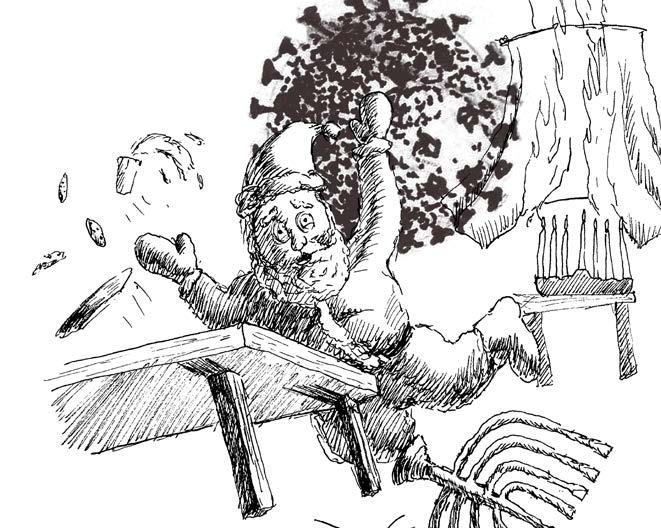
Following the CHRT’s landmark decision in 2016, a panel member noted that for years federal officials, provincial governments and the AANDC neglected blatant discrimination within the system. Instead, the speaker continued, the department simply added “support pillars to a house that has a weak foundation in an attempt to straighten and support the house. At some point, the foundation needs to be fixed or, ultimately, the house will fall down.”
graphic / Dallin Chicoine / staff
The house did fall, and it fell with First Nations children inside of it. These children were victims of the federal government’s abuse. For 14 years, the individuals elected to ensure the safety of these children actively fought them in court. And for 14 years, children were pumped out of a broken house that stole their identities, family support and virtually left them for dead once they aged out of the system. For 14 years, the government chose to ignore racism and erasure.
Although the $40 billion could potentially prevent future abuses, no amount of money can reconcile stolen childhoods. The government is responsible for these abuses and, like Blackstock noted, Canadians cannot surrender this critical fact in light of this large settlement. It is far from time to exhale in relief. Rather, it is imperative that the federal government does not capture the settlement’s narrative and skew it as a fortune of the Liberal party’s goodwill. Now, more than ever, Canadians must pressure the government for reform and remember its role in the destruction of the lives of over 163,000 First Nations children.
comment@themanitoban.com
TOB AN the MANI
One man’s quest for clean oceans
ARTS & CULTURE
Grace Paizen, staff
The equivalent of one truckload of garbage is dumped into the ocean every minute. Currently, plastic can be found in 80 per cent of seabirds and it is estimated by the year 2050 plastic will be found in 99 per cent of them.
With statistics this staggering, the award-winning documentary Hell or Clean Water is a much-needed alarm bell for the future of the planet’s health.
The documentary follows Newfoundland and Labrador diver and former fisherman Shawn Bath on his journey to secure support and funding to clean the Newfoundland coastline.
Director Cody Westman documents Bath’s journey as creator of the Clean Harbours Initiative (CHI), whose purpose is to bring awareness to pollution in the oceans and to clean the ocean floor.
The film starts with a John F. Kennedy quote: “One person can make a difference and everyone should try.” While Bath is definitively the one diver of the CHI who began cleaning the ocean floor on his own volition after realizing he couldn’t leave the task to someone else, Westman showcases the team effort between Bath and CHI volunteers, including Bath’s girlfriend Staunene Whelan.
Award-winning documentary an environmental wake-up call ’Toban cornertable
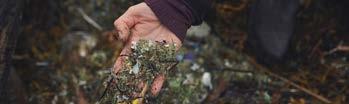
The opening sequence of the documentary sets up the film well. In the breakneck speed of two minutes, the “plastic nightmare” currently plaguing the world’s oceans is sufficiently summed up. To boil down this polyethylene horror story to its core, Bath remarks that he took 1,200 tires out of the harbours in one year and thousands of pounds of trash.
Of course, a significant problem with the dumping of everything from car batteries to asbestos pipes in the ocean is that these toxic materials break down and are consumed by sea creatures which are, in turn, consumed by humans.
The most frightening part of the documentary is the focus on ghost nets — fishing nets left behind by fishermen. These nets are not only trapping, harming and killing wildlife — with one of the saddest moments of the film occurring by finding a drowned orca tangled in these nets — but are breaking down and entering the food supply chain via microparticles.
The purpose of Bath’s initiative is to prove one person can make a difference. But as Bath and Whelan put their own money into the CHI, the film places a spotlight on the stress of obtaining funding from the provincial and federal governments.
The documentary does a fantastic job
elaborating on prejudices or distrust between Newfoundlanders and the federal government and other organizations. In this way, there is even a history lesson to be had between the unlikely partnership of Bath and Sheryl Fink of the International Fund for Animal Welfare to secure funds for Bath to continue the CHI’s efforts.
A particularly politically frustrating moment of the film comes in the form of the Government of Canada’s Department of Fisheries and Oceans $8.3 million initiative to clean up ghost nets and the allocation of funding to local fishermen rather than the CHI, despite the fact that Bath said the government had used the CHI as an example of where the funding would be allocated.
Westman’s documentary follows Bath through this aggravating trial that only escalates as the film continues
to simply secure funding for the CHI.
The film, then, acts as a sort of microcosm of current pandemic struggles of government bungles and negligence.
As educative as it is aesthetically shot, Hell or Clean Water is a much-needed documentary in our current climate crisis.
The garbage is “endless,” as Bath says, but if more individuals believe they can make a difference in the world, the garbage in more than just our oceans can be cleaned up.
Hell or Clean Water will be available to watch on CBC and CBC Gem on Jan. 16.
arts@themanitoban.com
Review: Laurie Fischer
—
‘Musings on a Life Well
ARTS & CULTURE
Zoë LeBrun, staff
Winnipegger Laurie Fischer has released his second selfpublished poetry collection, Musings on a Life Well Lived
Fischer’s first release was a book called Poetry of the Pandemic, which he began during the quarantine of March 2020 as something to occupy his time. As the collection came together, Fischer decided to share his poems in the hopes it would help others to know they weren’t alone in the troubles brought on by the pandemic.
Since the release of his first collection, Fischer’s continued writing practice is now another way he hopes to give back to others while processing his own experiences simultaneously. He hopes that Musings on a Life Well Lived will “inspire, encourage, uplift and motivate” his readers.
Featuring over 100 new poems, Musings on a Life Well Lived is
composed of 10 different sections which address various topics and take a more positive look at the everyday through the lenses of the past, present and future. Some of the themes included across each section are nature, history, childhood memories, pets and the battle with cancer.
The collection’s contents prove true to its title — almost every facet of life is explored within Fischer’s poems and they are imbued with a feeling of familiarity and relatability. Fischer’s thoughts could be our own in many regards, and the landscapes he describes recall ones that many who have lived in Winnipeg and the surrounding areas are accustomed to seeing on a regular basis.
Fischer’s poems do not hide behind elaborate words, abstract imagery or complex metres — instead, they are open for the reader to understand and interpret quickly and easily, making it a more accessible and enjoyable
Lived’
poetry collection for all who read it.
Three poems from Musings on a Life Well Lived stand out in particular.
“An Easy Decision” speaks to the universal experience waking up to a rainy day and choosing to remain in bed and sleep in rather than waking up. Fischer paints this picture clearly, describing the stormy grey sky outside, the distinct lack of birds and the comfort and warmth of the bed he decides to stay in.
“Footprints” is another highlight from Fischer’s new collection, in which he discusses how we impact the lives of others. He encourages us to “make footprints throughout your life / You will never see” and to help others.
Last but not least, “What Day is it?” takes a positive outlook on the isolating lockdowns that we all experienced throughout the COVID-19 pandemic. At the end of this poem, Fischer imparts upon us some wisdom that we all must try to keep close to ourselves in these continuing troubled times:
“Now more than ever / It is time / To set aside our frustration, / To release our anger, / To forget our regrets, / To simply relax and enjoy / The time of our lives.”