PC leadership race down to Stefanson and Glover

Taking steps toward campus

From pigeons to police body cams

University proof of vaccination portal opens Proud to shine


From pigeons to police body cams
University proof of vaccination portal opens Proud to shine
EDITOR-IN-CHIEF ? editor@themanitoban.com
Ty Brass
BUSINESS MANAGER ? accounts@themanitoban.com
Cindy Nguyen
ADVERTISING CO-ORDINATOR ? ads@themanitoban.com
Diego Castro
MANAGING EDITOR ? me@themanitoban.com
Sarah Doran
COPY DESK ? copy@themanitoban.com
Ursula Chojko-Bolec (ed.)
NEWS DESK ? news@themanitoban.com
Cam Cannon, Liam Forrester (eds.)
RESEARCH & TECHNOLOGY DESK ? research@themanitoban.com
Michael Campbell (ed.)
COMMENT DESK ? comment@themanitoban.com
Lucas Edmond (ed.)
ARTS & CULTURE DESK ? arts@themanitoban.com
Shaylyn Maharaj-Poliah (ed.)
Zoë LeBrun
Grace Paizen
SPORTS DESK ? sports@themanitoban.com
Matthew Merkel (ed.)
PHOTO DESK ? photo@themanitoban.com
Basel Abdelaziz (ed.)
DESIGN DESK ? design@themanitoban.com
Matthew Doering (ed.)
GRAPHICS DESK ? graphics@themanitoban.com
Dallin Chicoine (ed.)
AUDIO DESK ? audio@themanitoban.com applications open, see themanitoban.com/jobs
SOCIAL MEDIA DESK ? social@themanitoban.com
Jalene Moman (ed.)
VOLUNTEERS THIS ISSUE ?
Kitty Ker
VOLUNTEER STAFF ? Emily Unrau-Poetker
interested in volunteering? email me@themanitoban.com today!

109 HELEN GLASS BUILDING
UNIVERSITY OF MANITOBA WINNIPEG, MB
204. 474. 6535
The Manitoban is the official student newspaper of the University of Manitoba. It is published monthly during the summer and each week of regular classes during the academic year by the Manitoban Newspaper Publications Corporation.
The Manitoban is an independent and democratic student organization, open to participation from all students. It exists to serve its readers as students and citizens.
The Manitoban is a member of the Canadian University Press, and our journalistic standards can be found online at toban.news/jsp.
The newspaper’s primary mandate is to report fairly and objectively on issues and events of importance and interest to the students of the University of Manitoba, to provide an open forum for the free expression and exchange of opinions and ideas and to stimulate meaningful debate on issues that affect or would otherwise be of interest to the student body and/ or society in general. The Manitoban serves as a training ground for students interested in any aspect of journalism.
Students and other interested parties are invited to contribute to any section of the newspaper. Please contact the appropriate editor for submission guidelines.
The Manitoban reserves the right to edit all submissions and will not publish any material deemed by its Editorial Board to be discriminatory, racist, sexist, homophobic or trans-phobic, ableist or libellous.
Opinions expressed in letters and articles are solely those of the authors. Editorials in the Manitoban are signed and represent the opinions of the writer(s), not necessarily those of the Manitoban staff, Editorial Board or the publisher.
A “volunteer staff” member is defined as a person who has had three volunteer articles, photographs or pieces of art of reasonable length and/ or substance published in the current publishing year of the Manitoban.
Any individual who qualifies as a volunteer staff member must be voted in by a majority vote at a Manitoban editorial board meeting. Elected representatives and non-students may be excluded from holding votes as volunteer staff members in accordance with the Manitoban Constitution.
All contents are ©2021 and may not be reprinted without the express written permission of the Editor-in-Chief.







NEWS Cam Cannon, staff
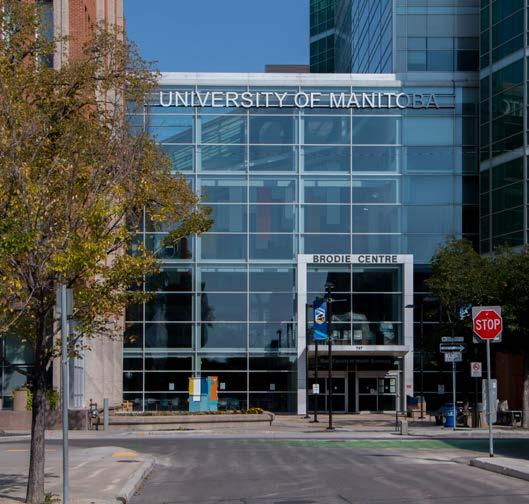
Staff and students at the University of Manitoba are now able to upload their proof of vaccination.
In August the university announced that it will require all “faculty, staff, students and campus visitors to be fully vaccinated against COVID-19.”
The announcement stated that all individuals eligible for vaccination — those aged 12 and up — must have their first dose by Sept. 22 and their second by the end of October.
Even those who do not have class on campus or intend to visit campus will be required to upload their proof of vaccination.
The deadline to upload proof of vaccination is Nov. 14.
“All individuals who do not submit such proof will be considered unvaccinated,” read the announcement from U of M COVID-19 recovery steering committee chair Todd Mondor.
Acceptable proof of vaccination
includes a photograph or screenshot of a QR code issued by Manitoba Health, a photo of a vaccination card or a photo of a vaccination record.
Additionally, the university has established asymptomatic testing protocols for those without vaccinations. As of Sept. 14, anybody accessing the Rady faculty of health sciences — including all buildings on the Bannatyne campus — as well as the Helen Glass Centre for Nursing on the Fort Garry campus will be required to show proof of vaccination or submit to a rapid COVID-19 test.
Rapid testing programs are currently in development for the Fort Garry campus and other satellite campuses.
Distinguished professor of history Adele Perry said the process went “quickly and easily.”
“It was a pretty seamless tech experience compared to many of the kind of experiences that one has in the world of online things […] it was a simple upload.”
Perry said even though she’s teaching

online this semester, she’s glad the university is taking these measures.
“It seems to be an appropriate response in a context where there’s very grave public health concerns,” she said.
On Twitter, U of M instructor Jennifer Doering echoed Perry’s comments — “It was really easy!” — and offered the advice that those with physical vaccination cards will have to only take a photo of the QR code, since the upload site only allows for one file.
Other students, including former
Proof of vaccination can be uploaded at covid-declaration. umanitoba.ca.
news@themanitoban.com
a politician to come along and take advantage of this.
The race to determine Manitoba’s next premier has narrowed to two candidates.
Shelly Glover and Heather Stefanson are the only candidates qualified to run for Progressive Conservative (PC) leadership in the Oct. 30 election.
Former PC chief financial officer Ken Lee also announced his intention to run last week. Lee anticipated running on his opposition to vaccine mandates, but the party announced shortly afterward that he had not met the requirements to do so, though they did not detail what requirement specifically Lee failed to meet.
Glover is a retired Winnipeg police officer and served as a federal cabinet minister under Stephen Harper. She served as the MP for St. Boniface from 2008 to 2015.
Stefanson has been Tuxedo’s MLA since 2000 and served as deputy premier before she became Manitoba’s health minister during the COVID-19 pandemic. She currently holds widespread support among PC MLAs.
“They’re going to bring different kinds of styles to the race and people are going to have to decide which of these
are going to be best to win in the next election,” said U of M political studies professor Royce Koop.
“The first day of the campaign [Stefanson] had two-thirds of the caucus out to support her. What that’s designed to do is it’s designed to scare off other quality candidates.”
“The flip side to that is that there can be backlash if people don’t want to be bulldozed over,” Koop said.
“Some people want a race, they want something exciting, they want a choice and Shelly Glover has given voice to that.”
While Glover and Stefanson offer similar policy in several respects, the starkest difference lies in their views on vaccine mandates for public-facing government workers. Stefanson supports the current health orders, whereas Glover does not.
“This question of vaccine passports is a really hot issue right now,” Koop said.
“People that are uncomfortable with some of the stuff are very mobilized, they’re very motivated and they’re just kind of sitting there waiting for
“It looked like […] Ken Lee was going to do just that, but he didn’t make it, he didn’t make the cut for some odd reason.”
Ken Lee had been signing members weeks before announcing his candidacy Sept. 15. Lee oversaw former premier Brian Pallister’s leadership bid in 2012 and worked as the PC’s chief financial officer.
Lee also opposes vaccination requirements for businesses and government jobs. He and his supporters gathered near the legislature on Sept. 18 to demand an explanation for Lee’s exclusion.
“An election is a public contest, but this is a party affair,” Koop explained.
“If a party wrote into its constitution, ‘Yeah, [we’re going to] have a roller derby [and the] winner becomes our leader,’ they could do that.”
Each applicant was required to pay an entry fee of $25,000, sell at least 1,000 party memberships, collect 50 signatures from party members in good standing and submit to an interview process before the deadline on Sept. 15.

“The more interesting thing related to Lee is, what happens to these people that he recruited?” Koop said.
“If he really recruited 4,000 people, that’s a lot of people that are probably upset right now and that are […] motivated and willing to lash out.”
NEWS Liam Forrester, staff
Last week, the province announced $6 million in expanded diabetes supports for young Manitobans with Type 1 diabetes.
The funding will establish programs to fund advanced glucose monitors and insulin pumps for people 25 and under. Manitobans that meet the program’s criteria will be eligible to receive insulin pumps at no up-front cost, and advanced glucose monitors will be covered under the Manitoba Pharmacare Program once their outof-pocket deductible is met, much like blood glucose test strips.
Diabetes awareness activist Trevor Kirczenow explained the significance of the inclusion of continuous glucose monitors (CGM) — a type of advanced glucose monitor — under the new coverage.
“A CGM […] measures blood sugar levels and it communicates a new reading to the user every five minutes,” said Kirczenow.
“I think sometimes people who aren’t as familiar with the condition think that it’s more about convenience […] There’s definitely the quality-of-life factor, but even with all the finger pricking in the world, you just cannot come close to the quality of information that you get from a CGM.”
Insulin pumps have been provided to eligible children under 18 since 2012 through the Manitoba Pediatric Insulin Pump (MPIP) Program. The province said the eligibility criteria for the MPIP Program will largely remain for those aged 18 to 25 with the new programs.
“An insulin pump […] can replace the need for multiple daily injections of insulin, so if you don’t have an insulin pump and you’re insulin-dependent, that means you’re sticking yourself with a needle many times per day,” Kirczenow said.
Kirczenow’s son is Type 1 diabetic. He struggled with needles until got his pump.
“It was really sad because there were healthy foods that he loves that he would say no to because he didn’t want the needle,” Kirczenow said.
“This kid loves apples, and we would ask him, ‘Matthew, do you want an apple? Do you want a snack?’ And he would kind of think about it and say no, and then after he got his insulin pump that just completely turned around.”
Insulin pump supplies and blood glucose test strips will remain covered under Manitoba pharmacare. Advocates like Kirczenow remain frustrated by the cost.

“The insulin pump supplies can cost a few hundred dollars per month and a CGM costs about $300 per month,” Kirczenow said.
“When you compare the cost of this to, say, the cost of dialysis […] I really think that the province should pay for the preventive supplies. Overall, in the long term, that will be better for our health system.”
Ally Amedick is a 24-year-old healthcare worker and Type 1 diabetic on the verge of aging out of the program.
“I have maybe about a year, year and a half left until I will, once again, not have any coverage,” she said.
“Specifically for the insulin pump, it means that maybe I have five years left with the pump and past that I have to self-pay […] The cost of a pump is [between $6,000 and $8,000].”
“Looking forward, it feels like I’m going to sort of drop off a cliff when I turn 26.”
Amedick is critical of the eligibility requirements the province has put in place.
“You have to have your A1C results under a certain number in order to qualify, and you have to have three separate results that are usually about three months apart in order to qualify. So, we’re sort of disqualifying people that may need it the most, those people that have maybe the least control of their diabetes currently and could most benefit from these devices,” she said.
“I’m very thankful for the coverage. It’s a step absolutely in the right direction but there’s just so much work left to do.”
Jen Dyck is a 31-year-old mother of two with Type 1 diabetes. Because of her age she has been too old to qualify for two insulin pump programs in a row.
“I think when the public hears the news, like the big amount of money, it’s really great, but what they don’t realize is programs have been cut and then there’s nothing put in place for people like me,” said Dyck.
“We can’t save for our future, we’re stuck.”
Dyck explained that having the tools to control her blood glucose had positive impacts on her family as well.
“It’s very important when you’re pregnant that your sugars are well controlled. If they aren’t, either miscarriage or birth defects are common,” she said.
“I have two kids and I paid out of pocket for all my stuff. I managed to keep my sugars perfectly well controlled with those two devices and it paid off. I had two very healthy pregnancies.”
The program including advanced glucose monitors under Manitoba pharmacare will come into effect on Sept. 28 and expanded coverage for insulin pumps will come into effect in November.
Glover expresses interest, Stefanson yet to
NEWS Cam Cannon, staff
The Manitoba Organization of Faculty Associations (MOFA) and the Canadian Federation of Students Manitoba extended an open invitation to the Progressive Conservative Party of Manitoba leadership candidates to discuss the critical role of universities in the province.
A Sept. 15 open letter signed by both MOFA and the federation — representing more than 1,800 academic staff and over 45,000 students respectively — calls for commitments to “affordable, accessible and high-quality public education in our post-secondary system.”
The organizations raised concerns about the controversial Bill 33, which they view as “far too similar to the now-withdrawn Bill 64,” calling for a repeal of the bill, an abandonment of outcomes-based funding — known popularly as the Tennessee model — as well as the restoration of public health care for international students.
In March of this year, MOFA and the New Democratic Party of Manitoba (NDP) called for the bill to be withdrawn, citing concerns about similarities with the Ontario provincial government’s failed Student Choice Initiative which was struck down by courts in 2019.
A month later, Minister of Advanced
Education, Skills and Immigration
Wayne Ewasko announced that the legislation would be amended to address concerns that it would grant the minister powers to set student fees, potentially threatening the ability of student unions to collect fees from their members.
In a Twitter post March 11, Ewasko called the accusations of similarity with the Student Choice Initiative “categorically false.”
The bill received assent on May 20.
“The Pallister era was characterized by steadily shrinking resources, with cuts to the funding of post-secondary education year after year and a planning environment that can only be described as chaos,” read the letter, citing an incident in early 2020 when universities were called on by the provincial government to provide budget scenarios including an up to 30 per cent cut to expenditures within a five-day window.
“Given the importance of our universities to the economic well-being of our province, we call upon you [to] provide a new direction for advanced education and that would start by making it a senior cabinet portfolio, not the entry-level position it is now,” the letter continued.
“Students want to meet with their elected officials in a meaningful way
that creates dialogue and consultation, ensuring the collective concerns of post-secondary stakeholders are implemented into policy,” wrote Canadian Federation of Students Manitoba chairperson Alexandra Koslock in an emailed statement.
“The concerns in Manitoba from post-secondary students, faculty and staff are long-standing as the current government continues to dismantle our province’s colleges and universities while ignoring voices from within the sector.”
She continued, “Students, faculty and staff across the province feel like they have been failed and want to see a new leader that isn’t afraid to create policy change that reflects the needs of constituents.”
“I would love to come,” said
Progressive Conservative (PC) leadership candidate Shelly Glover in a Sept. 20 interview with the Manitoban, after admitting to having not heard about the open letter due to campaigning beforehand.
PC leadership candidate Heather Stefanson did not respond to request for comment.
The election to select a new leader of the PCs — by default to select Manitoba’s next premier — will take place Oct. 30.
— with files from Liam Forrester
news@themanitoban.com

Michael Campbell, staff
Morgan Stirling, a PhD student in the department of community health sciences, has been awarded CBC’s Proud to Shine 2021 recognition for outstanding community involvement of an LGBTTQ* person. As a queer person, they have devoted their research and volunteer work to bringing equity to genderand sex-diverse persons’ interactions with the health-care system.
Alyson Mahar, assistant professor in the department of community health sciences, nominated Stirling for the Proud to Shine recognition.
Stirling has also been recognized by the Canadian Institutes of Health Research by receiving the Canada Graduate Scholarships — Doctoral, one of the top federal scholarships in Canada.
While they were wrapping up their master’s degree, Stirling began to work with CancerCare Manitoba’s underserved populations program. The program aims to help people who are unable to get proper cancer screening and support due to a wide range of barriers.
“My role with the underserved populations program is really focused on identifying the barriers that […] folks face to accessing cancer care in the province,” Stirling said.
Stirling had the opportunity to participate as a research assistant during their master’s degree in a project exploring the experiences of trans folks alongside lesbian, gay, bisexual and queer women’s experiences with cancer.
Stirling’s background of conflict resolution, master’s research and experience with CancerCare Manitoba led them to pursue doctoral studies. They have designed their PhD thesis to assess and develop principles to guide the health-care system’s use of gender data in cancer research.
“My project is really about helping researchers develop the appropriate lens that they need when they are doing their research,” Stirling said.
“So, what are the things that they need to be thinking about in terms of gender diversity when they are developing their studies? How are they thinking about gender up front in the beginning of the design? How are they thinking about gender through the data collection, the analysis, the results and the dissemination?”
Currently, the health-care system does not adequately address LGBTTQ* folks’ health-care needs. Stirling is concerned by the fact that if someone changes their sex designation on their Manitoba health card, it can affect the treatment that they are given.
“My experience has been that clinicians really do want to provide the best care possible” — Morgan Stirling, community health sciences PhD student
“A lot of the cancer screening registries, you know, they send out information based on the sex that’s on somebody’s Manitoba health card,” Stirling said.
Sex designation impacts the automated notices that people are sent regarding cancer screenings. For example, women are sent notices regarding screening for cervical cancer. Folks that identify with an “X” intersex designation may not receive such a notice and may not know to seek cervical cancer screening, especially if they do not have a primary care provider.
“So, if somebody changes their sex designation, that can impact what they will be offered in terms of their
cancer screenings,” Stirling said.
“[If] somebody has an X, we’re not sure how we’re going to be able to accommodate that in terms of people being able to be offered the screening that they need.”
The impact of sex on all types of diagnosis and health-care treatment is also a very real issue for LGBTTQ* communities, but the scope of Stirling’s expertise is limited to cancer care.
“I can only speak to cancer. I imagine it’s similar to other types of programs that use these kinds of registries to guide delivery of care.”
While many of the barriers for
LGBTTQ* folks exist at the systemic level, personal bias is also a factor when it comes to receiving care. According to Stirling, education is a powerful tool in addressing personal bias.
“My experience has been that the clinicians really do want to provide the best care possible,” Stirling said.
“But they get in their own way around their lack of knowledge and understanding.”
research@themanitoban.com
In recent decades, Sept. 11 has held varying political significance in different parts of the world.
For Americans, it has been a day of mourning for the victims of the 2001 attacks on the World Trade Center. For the Latin American left, it has been a day to remember Chilean fascist dictator Augusto Pinochet’s murderous coup against the leftist government of former president Salvador Allende.
The death of Abimael Guzmán, commonly referred to as Gonzalo, has been added to that list this year. Gonzalo died at the age of 86 as a political prisoner of the Peruvian state after 29 years in isolated captivity.
He was the founder and chairman of the Communist Party of Peru (PCP) known more commonly as the Sendero Luminoso or Shining Path.
Throughout the 1980s and ’90s, Gonzalo led the PCP through a people’s war — a revolutionary strategy premised upon a peoples’ army which conducts armed struggle under the leadership of the party while also going among the people to establish base areas — intended to overthrow the Peruvian state and establish socialism in the country.
To some, Gonzalo will be remembered as a butcher or as the caricature of a fanatic, but this ignores the sheer brutality of the state he resisted. It also dismisses the significance of his achievements during a time where the so-called “end of history” was occurring — an idea popularized by political scientist Francis Fukuyama which argued the end of the Cold War would also mark an end to the struggle between capitalism and socialism.
The best known example of brutality committed by the PCP during the war is the 1983 Lucanamarca massacre which witnessed the death of 69 peasants in retaliation to ronderos — peasant vigilante militias — staging the public execution of a PCP commander.
“And we say openly that there were excesses […] But everything in life has two aspects,” said Gonzalo about the massacre in an interview with El Diario
He said the excessive violence was negative, but that he wished to demonstrate to state forces the PCP was “a hard nut to crack” and “ready for anything.”
Gonzalo explained that “in war, the masses engaged in combat can go too far and express all their hatred, the deep feelings of class hatred, repudiation and condemnation that they

have — that was the root of it.”
Overall, the war was brutal, with the state also waging an intense campaign of repression Gonzalo described as genocidal.
In a 1992 report, Amnesty International observed “widespread ‘disappearances’ and extrajudicial executions by the security forces […] as well as torture.”
The report said between 1983 and April 1992, over 4,000 people detained by the government “disappeared” with thousands more murdered. The organization estimated up to 85 per cent of human rights abuses in the country over that period were committed by government forces, especially the army.
In 1986, under the command of president Alan Garcia, Peruvian police are believed to have massacred over 260 prisoners.
Between 1996 and 2001, Peruvian dictator Alberto Fujimori — who came to power in 1990 through an election but dissolved parliament and suspended the judiciary in 1992, thus ruling as a dictator until 2000 — launched a campaign in which over 272,000 women, mainly Indigenous peasants, were forcibly sterilized.
Although today Fujimori is in prison after being convicted of human rights abuses, his daughter Keiko Fujimori is currently a major right-wing politician in the country.
Overall, nearly 70,000 people either disappeared or were killed throughout the conflict and there are countless examples of excessive violence on both sides. But to only focus on the violence perpetrated by the PCP is to deny historical reality.
While the experience of the Peruvian people’s war demonstrates the horrors of warfare and ultimately did not topple the state, Gonzalo and his school of thought represent significant advancements in terms of revolutionary science and prove concretely we are far from the end of history.
Further, the significance of the life of Gonzalo can best be seen by the global campaign launched by the Revolutionary Internationalist Movement (RIM) — an international Marxist-Leninist-Maoist organization counting communist parties from around the world as its members, including the PCP — following his capture in September 1992.
When Gonzalo was initially captured, his comrades feared the state would execute him despite the Peruvian constitution forbidding the death penalty. In turn, the RIM published a statement called “Move Heaven and Earth to Defend the Life of Chairman Gonzalo.”
The RIM dedicated an entire edition of its journal A World to Win to a discussion of Gonzalo and the situation in Peru.
“Comrade Gonzalo represents the uncompromising revolutionary vision of a communist future without barbarous class divisions, without imperialism,” wrote the committee of RIM in a statement.
“Even beyond Peru, millions worldwide who despise the brutal social system these bourgeois voices represent look to Chairman Gonzalo and the people’s war he is leading to batter down the old social order and bring the fresh revolutionary winds of liberation that know no boundaries among
the oppressed.”
As Hinton Alvarez wrote in the journal Kites, this call was taken up and an international conference was convened. There was even a campaign to defend Gonzalo in the United Nations.
“Prior to the initiation of the people’s war in Nepal, a major demonstration in Kathmandu demanded Gonzalo’s freedom, while in the [U.S.], the radical band Rage Against the Machine extended support for the revolution in Peru and the fight to keep Gonzalo alive,” Alvarez wrote.
The campaign was successful in its aims to keep Gonzalo alive, but it wasn’t enough to secure his freedom. The campaign served to popularize knowledge of the war in Peru and the ideas behind it, and had the effect of uniting people across the world for a common cause.
In the opening paragraphs of Vladimir Lenin’s The State and Revolution, Lenin shared the insight that during their lifetimes, the theories of revolutionaries are met with “the most furious hatred” and “the most unscrupulous campaigns of lies and slander,” but after their deaths become “canonized” with their theories and sanitized of their revolutionary content.
It remains to be seen whether Gonzalo will be canonized and his ideas sanitized.
graphic / Dallin Chicoine/ staff words / Cam Cannon/ staff
COMMENT
Lucas Edmond, staff
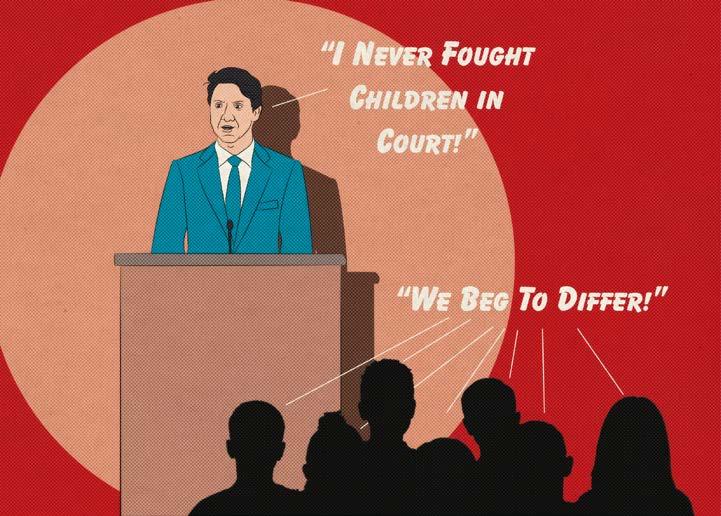
The 2021 election was tumultuous for all parties involved. Little time to prepare talking points, rushed platforms and frantic canvassing defined it. Although no leader ran a perfect campaign, nobody dropped the ball more than Justin Trudeau after he lied on national television about his history of taking Indigenous children to court.
During the leaders’ debate on Sept. 9, New Democratic Party leader Jagmeet Singh jumped on the opportunity to publicly denounce Trudeau’s legal battles. “You can’t take a knee one day if you’re going to take Indigenous kids to court the next,” he said.
Trudeau’s rebuttal was less than satisfactory. Instead of apologizing for wasting a significant portion of resources on legal fees that could have been invested in Indigenous communities, he opted to completely deny the allegation. “It’s actually not true,” Trudeau said.
It is surprising the prime minister would be so bold considering how clear the public record is. Since 2016, the federal government has been fighting the Canadian Human Rights Tribunal’s (CHRT) final decision in a class action lawsuit repre senting Indigenous children.
Although the Trudeau admin istra tion has
been fighting the case’s decision since 2016, it was first filed by the Assembly of First Nations (AFN) and the First Nations Child and Family Caring Society in 2007.
In 2007, the AFN and Caring Society submitted a summary of complaints that asserted the federal government was violating the Human Rights Act, the Convention on the Rights of the Child, the Covenant on Economic, Social and Cultural Rights and the Charter of Rights and Freedoms. This complaint was based on the discriminatory levels of child welfare the federal government provided Indigenous children on reserves in contrast to the levels of welfare made available by provincial governments to off-reserve residents.
The AFN and Caring Society noted abhorrent funding for child welfare on reserves had resulted in the drastic overrepresentation of Indigenous children in foster care. The complaint clarified that for the government to remain in adherence to various human rights legislations and international covenants, Canada must invest an additional $109 million in the first year of the welfare funding formula to correct
existing shortfalls.
The legal battle lasted for seven years and climaxed in 2016 after the CHRT concluded on-reserve funding for child welfare was 38 per cent lower than provincial funding for off-reserve citizens. In a landmark decision, the CHRT ruled the Canadian government had been racially discriminating against 163,000 First Nations children. As settlement, the CHRT ruled the federal government must pay human rights compensation of up to $40,000 for families that suffered from the systemic injustice. Further, the settlement required the government to provide the on-reserve welfare compensation to recognized Indigenous populations that are members of their respective nations but situated off reserve.
The Canadian government took exception to these stipulations and filed for a judicial review of the CHRT’s compensation framework in both 2019 and 2020. In a news release regarding the government’s decision, Trudeau’s administration excused their request for a judicial review by claiming the decision was made without the presence of adequate First Nations representation. “The Tribunal’s decision was made without broad participation of First Nations communities and is a clear overreach of the Tribunal’s jurisdiction,”
conglomerate of First Nations organization had been involved in the dispute for years — including the AFN, Caring Society, the Chiefs of Ontario and the Nishnawbe Aski Nation.
Beyond this, a justice department lawyer representing the federal government asserted the compensation packages the CHRT agreed on was purportedly “wrong in law,” further outlining the government’s disregard to reconciliation for contemporary racial abuses of Indigenous peoples.
This case has been drawn out for 12 years when it could have been settled in 2016 by balancing the funding and providing compensation for welfare. Instead, the government has exercised its judicial power to starve out the class action suit representing hundreds of thousands of First Nations children. In the process, the government has spent over $12 million in the span of five years challenging the case.
The Trudeau government has exhausted excuses for its systemic discrimination against First Nations children. Cornered and frightened in the leaders’ debate, Trudeau did what any unethical politician representing status quo power would do: he lied.
The record is clear: Trudeau did take Indigenous children to court and he failed his public commitment to reconciliation. This squabble during the leaders’ debate was far more than political ammunition aimed at Trudeau’s head — it served as a suitable metaphor for another failed parliament that took advantage of the onciliation for political gain publicly and proceeded to treat them with contempt in the legal arena. Trudeau is no better than the colonists that
Lucas Edmond, staff
Canadian labour is entering the 2021 election in dire straits.
Union density has been steadily declining since the 1980s. Although the Liberal party victory in 2015 gave hesitant hope for improved union membership, the results have been underwhelmingly stagnant. From 1981 to 2014, unionization rates plummeted from 37.6 per cent to 28.8 per cent and improved roughly two per cent by 2020. Little about this is surprising to labour leaders. However, with the Conservative party vying for leadership, labour may be faced with a new challenge.
Conservative leader Erin O’Toole has championed labour policies pundits are calling union-friendly. However, many of the policies he has addressed publicly are little more than embellishments for far more sinister reform.
In August, O’Toole announced he would purportedly “ensure” workers are represented on the boards of large federally regulated private corporations that employ over 1,000 workers or have annual revenues over $100 million. This includes sectors such as oil and gas, trucking, ports, railways, banking, uranium mining, telecommunications, air transportation, crown corporations and more.
O’Toole offered the policy to Canadians with little detail and a lot of political posturing. In the news release outlining his new policy proposal, O’Toole discussed getting workers a seat at the table, taking advantage of a popular rhetorical phrase used by unionists occupying the left side of the political spectrum.
“Too many decisions at major corporations are being made without the people who helped build the company — the workers — at the table,” the news release read.
Instead of using this allegory while simultaneously empowering working-class agency, O’Toole has offered labourers a physical seat at various corporations’ boards. While the idea of O’Toole offering workers an actual seat to keep them docile is humorous, the policy is tokenistic at best. By exploiting union discourse, he may think he can appeal to a new voting base without committing to the cause wholeheartedly.
“Conservatives have essentially run the same campaign over and over again since 2006,” an advisor for O’Toole said in an interview with the conservative-leaning National Post. “If we want to win, we have to do something different.”
O’Toole is likely using this allegedly labour-friendly policy to attract voters. Whether the policy will be implemented to advance tangible material benefits for workers is unlikely. The Conservative party has
not indicated the degree of power these representatives will have, how many seats workers will obtain or if the representatives will be glorified advisors that can be pushed aside and ignored by corporate board members.
Fundamentally, this policy won’t change any of the systemic competitive pressures that motivate the exploitation of workers. O’Toole knows this, and it shows considering many of his other labour policies are radically anti-labour.
Take a longer look through O’Toole’s policy declarations, and detailed COVID-19 recovery plan and readers will find the Conservative party is still sternly corporate at heart. Much of this policy is mentioned in brief and seemingly unassuming statements to hide its conservative nature.
For example, in section 14 of the Conservative’s policy declarations, it notes the party “supports right to work legislation to allow optional union membership including student unions.” While this may seem like a moderate commitment, mandatory union dues were a historic victory for labourers when it was first introduced.
Mandatory union dues, part of the Rand formula, were introduced after militant unionists nearly brought the Ford Motor Company in Windsor, Ont. to its knees.
Justice Ivan Rand was responsible for arbitrating the dispute. Workers wanted the manufacturing plant to become a closed shop for union members only so they could negotiate fairly with employers without the threat of workplace lockouts or scab labour — a person who continues to work despite striking co-workers. On the other hand, employers wanted workers to return to the plant without any changes in employment structures.
Rand concluded that while workers should not be forced into association with unions, they should still have to contribute to the costs of collective bargaining. As a result, mandatory union fees became the baseline model for modern labour politics.
The formula ensured the function of unions and a steady progression of worker rights through collective bargaining processes. Should the formula be abandoned, labourers could be helplessly exposed to employers’ economic agendas. This includes the exploitation of more scab labour, which would play a significant role in reducing union influence. Without the Rand formula — or a union with considerable resources to challenge corporate giants — a single seat at a board of directors’ table would be meaningless.
Furthermore, the Conservative

party remains committed to setting unionized workers against migrants.
Approximately 1.6 million migrant workers don’t have permanent status, making them extremely vulnerable to exploitation.
Migrant labourers lacking permanent status also lack the right to form unions, vote, access universal health care and employment standards that Canadians are accustomed to. As a result, migrant work is often used as a cheaper and more exploitative form of labour to maintain higher rates of corporate surplus. In turn, employers blame migrants for driving down wages and access to employment while they actively partake in repressing their access to basic rights.
With complete citizenship, migrant workers would have access to resources to fight employment abuse, not fear reprisal and contribute to union dues where it applies. Migrant workers have historically been treated poorly by the working class partially due to their informal status.
Instead of affording more rights to migrants, O’Toole plans to rework the
Temporary Foreign Worker Program to provide more power to corporations. The adjusted program would make migrants’ so-called “path to permanence” dependent on employer sponsorship programs. This policy could escalate workplace exploitation by placing unreasonable power in the hands of corporate management.
The path to improved work standards, pay and benefits for all Canadian workers starts with making migrant workers permanent residents.
Although O’Toole has propagated a pro-labour stance publicly, his platform says otherwise. Providing a seat at the board of directors of a large corporation is a manipulative promise that conceals O’Toole’s more controversial labour policy. Pundits can continue to call O’Toole a friend of the labour movement all they want, but post-election he will expose his true form: a conservative politician in a unionist’s clothing.
comment@themanitoban.com
ARTS Grace Paizen, staff
Arts enthusiasts can rejoice as Nuit Blanche returns in 2021 for an extended month-long run. Hosted by Culture Days Manitoba, Nuit Blanche will have everything from exhibitions to concerts to culture events spread out over 31 days.
Extending throughout the downtown area and reaching across the city, Nuit Blanche boasts something for everyone, especially for those who may already have become stir-crazy with another online-dominant semester having kicked off.
U of M fine arts students’ artwork will be featured at athletic apparel brand Zueike’s storefront. Like a Manitoban version of a Making the Cut competition, the event culminates with a fine arts student design contest, the winner earning a collaboration with the brand. Zueike is also hosting a contest for students of all ages to create a design for a shirt.
Downtown, Nuit Blanche @ WAGQaumajuq is a one-night only, timed-ticket event, emulating Nuit Blanche’s past. Advance registration to the outing guarantees safe distancing during the event while visitors admire the inaugural Inuit art exhibition at the Qaumajuq Inuit art centre before bopping to some DJ beats on the rooftop patio, complete with the usual rooftop cash bar.
If strolling through the streets is preferable, “Light in the Shadows” is a project by independent artist Penny Kovacs. Her large paintings and mixed media drawings will be displayed along the windows of Freshcut
Downtown florist in an art-meetscityscape reverie.
For the folks into music, Project Jazz is a two-night immersive multimedia experience. With visuals from local filmmakers and multimedia artists
Mike Maryniuk, Leslie Supnet and Hugh Conacher, the installation takes place in four locations — on the Red River College campus, the Cube at Old Market Square, on the exterior of the Rachel Browne Theatre and the exterior of the King and Bannatyne junction — with projections of jazz music livening up the ever-crisper Winnipeg nights.
Across Main Street, the Native Prairie Mural will spring to life on Amy Street from Sept. 24 to 26. The collaborative and interactive art mural uses wildflowers and grasses to create a prairie landscape over the event’s three nights and offers attendees a chance to add their own flower or poem to the mural.
Over the Esplanade Riel to St. Boniface, Beading on the Land takes place at Théâtre Cercle Molière for the duration of Nuit Blanche. Métis beadworker Charlene Van Buekenhout will go largescale by beading lanterns, instead of beads, into a large flower.
In a comedic twist of timing, the Secret Standup Shows will be featured throughout Nuit Blanche sporadically around the Exchange District and the Forks. The spontaneous pop-up shows will feature Canadian comedians from around the great white north.
The celebration of LGBTTQ* artists
4/5 stars
The release of SUUNS’ fifth full-length album, The Witness, is uncanny in its timing.
The Montreal-based rock band self-recorded and self-produced the album over 2020, one of the strangest, most isolating and revelatory years globally.
The COVID-19 pandemic is not over. The resulting anxiety, solitude and fear are still in process. Some spaces feel safer than they did but it remains difficult to return to ways of being preMarch 2020. And perhaps there will never be a return to the way things once were.
Enter the strangely appropriate album The Witness, with a sound so specific it feels like listening to a genre from another planet.
The sound palette is composed of the familiar and the strange. The album opens — and closes — with the sound of cicadas followed by a resonant eerie bass drone and then, finally, the listener is met with something familiar, guitar and percussion. The vocals both soothe and disturb, with singer Ben Shemie’s voice distorted yet sweet.
Shemie himself admits the band’s intention to never “commit to a certain kind of tonality.”

will be highlighted in the Reel Pride Art Show and 36th annual Reel Pride Film Festival, held at the same time during Nuit Blanche though dates are not yet finalized. Artwork can be purchased during the Reel Pride Art Show, and the event is free to attend.
In more LGBTTQ* pride, Bannock Babes x ArtsJunktion is a one-nightonly “indigidrag” show featuring drag performances from the Bannock Babes with the stage adorned by Moneca Sinclaire and other Treaty 1 community members’ dreamcatcher works.
For students wishing for some beauty treatments, but who are forced to be frugal with their tight budgets, the Aveda Institute is hosting a complimentary Braid and Brow Bar every Thursday and Friday through the
entire run of Nuit Blanche. Get there early to guarantee some much-deserved salon time.
With many more events listed on the Nuit Blanche website, including virtual events, there is something for everyone. Most importantly, this year’s Nuit Blanche allows a great opportunity for a free, fun night out of the dorm, apartment or house and offers more time to spend with exhibits that may have been missed in the time crunch of years past.
Nuit Blanche runs from Sept. 24 to Oct. 24. Event information can be found at nuitblanchewinnipeg.ca.
arts@themanitoban.com
“Whether it’d be major or minor, there’s always a certain kind of evading of what your expectation is,” he said in a statement.
He also made explicit the corresponding significance of the album’s title and lyrics.
“There’s something interesting about the idea a collective witness, being a witness to the time we’re living in now, and the connectedness of what we all have in common.”
Expectations are inherent in the reintegration of socializing after a year of lockdowns and isolation. Social expectations in normal circumstances are seldom met. The heightened expectations of social situations presently are consistent and profound disappointments. This sonar evasion from SUUNS feels

and somehow comforting in the strangeness of reality. Want us to review your band? Email arts@themanitoban.com!







ARTS Grace Paizen, staff
With Zoom invading our personal space on nearly a daily basis, Theo Anthony’s awardwinning documentary All Light, Everywhere is a much-needed dissection of the normalization of today’s surveillance state.
Winner of the Sundance Film Festival’s 2021 U.S. documentary special jury award for nonfiction experimentation, Anthony’s film is just as important to Canadian audiences as Canadian police forces become ever more militarized.
Though an experimental doc that reads more like an artistic video essay, All Light, Everywhere examines important subjects including the history of surveillance, the historical and technological linkage between military and surveillance as well as the idea that the eye is the original camera.
With the panopticon of the western surveillance state as a focal point, the film bounces between the creation and use of police force tools — such as body cameras and tasers — and an educative format of the history that led to the body cam.
The film’s focus on how the camera is linked to violence is well done. The connection documenting how the design for the Gatling gun inspired astronomer telescope designs, which in turn inspired long-range missile
launcher designs, is clearly laid out for the viewer.
There is also, of course, the obligatory history of police department phrenology that is often the focus of civil authority topics, but again, this is done well in the film. French police officer Alphonse Bertillon’s invention of physical feature documentation via photograph clearly highlights how Bertillon created a police bias of how to invent a criminal. The quote by Bertillon featured in the film — “[the eye] only looks for that of which it already has an idea” — remains hauntingly accurate in the practice of suspect profiling.
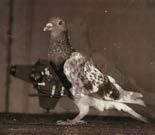
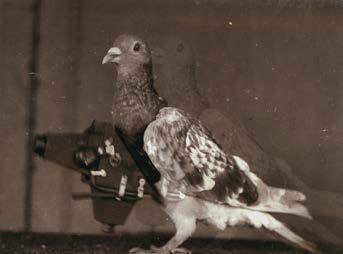
On a lighter note, the history of the pigeon as airborne surveillance officer is accidentally cute, with photographs of pigeons sporting cameras featured in the film. The history of how the military co-opted pigeon photographers to spy on enemy territory in the air is also an incredibly interesting factoid.
The present-day subject in the film of police surveillance comes in the form of Axon — creator of the body cam and tasers used by police forces — and the company spokesperson, Steve Tuttle.
Disturbingly, Tuttle explains how Axon designs their body cam “to see what [the officer] saw,” not what is actually there. In his example, Tuttle illustrates how, even if the suspect had
LeBrun, staff
3/5 stars
Much of our lives today is spent in a state of busyness, and it can be hard to slow down and take a break. Luckily, we have musicians like Rein to help us take a moment to relax and take in the world at a different pace.
Rein is a Filipino-Canadian singer-songwriter who is releasing his third EP collection, Encounters, on Sept. 30. Combining contemporary R&B, jazz and pop music, Rein creates acoustic songs which highlight his mellow but powerful vocals.
Inspired by artists such as Judy Garland, Audrey Hepburn, Frank Sinatra and TikTok sensation Laufey, Encounters consists of four original songs and an arrangement of “So This Is Love” from Disney’s Cinderella
“I grew up mostly listening to vintage Disney songs, classical music and jazz,” said Rein in a press release.
“I wanted to create music that can make people feel they’re in a movie.”
Rein has achieved this goal in spades, creating a dreamy and romantic EP that puts a contemporary twist on the sound of vintage love songs while making you perceive the world in a softer way. With laid-back, lo-fi instrumentals accompanied by swells of backing vocals, Encounter’s vintage sound is brought into the modern era primarily through Rein’s lyrics, particularly in songs such as “Picture Perfect” and “Who Are You, Stranger?” which highlight aspects of modern relationships.
is
reveal to witnesses that the officer thought it was an assault weapon, which can only lead to the question: who are the body cams for?
The film is definitely worth a watch for the historical explanations and for a better understanding of today’s police protocols regardless of which side of the body cam debate the viewer is on.
However, the philosophical takes in the documentary can become wearisome — the narrator quipping off a sentence that on the surface may appear deep but does not survive closer inspection.
The film also runs a little too long
Encounter’s blend of classical, jazz and lo-fi music is both soothing and fascinating to listen to, as it presents a fusion of sounds not often heard in mainstream music. However, this unique sound may be something we begin to hear more of in the future, as Rein plans on continuing to pursue this musical exploration in coming albums. image / Rein / provided
because it is packed full of artistic sequences which could have been cut for narrative momentum purposes.
The pros of the film definitely outweigh the cons and, in the end, the documentary is incredibly educative and informative for those seeking a better understanding of today’s complicated relationship between police and citizen.
All Light, Everywhere is streaming now on YouTube, Apple TV, Google Play and Vudu.
arts@themanitoban.com

“I loved singing jazz and classical standards when I was a part of my high school vocal jazz group and concert choir,” Rein said in the press release.
“I really want to incorporate the genres more in my songs in the future.”
Encounters will be available on all streaming platforms on Sept. 30, 2021.
Want us to review your band? Email arts@themanitoban.com! arts@themanitoban.com
NEWS Zoë LeBrun, staff
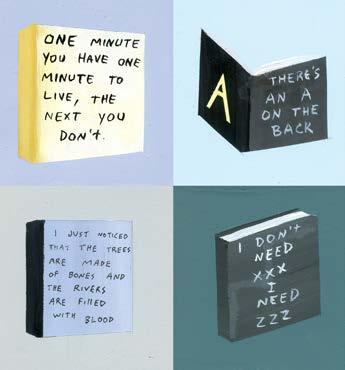
The saying goes, “Don’t judge a book by its cover,” but Library, published by Drawn & Quarterly, is a book by visual artists Michael Dumontier and Neil Farber that requires viewers to stray slightly from this idiom.
Library consists of hundreds of paintings of book covers with invented titles that showcase the artists’ classic deadpan style, resulting in works that are simultaneously thoughtful and entertaining. These paintings, which are bold, minimalistic and colourful, exist in the real world as acrylic and ink works on medium-density fibreboard and are printed in Library in a variety of grid layouts.
The concept behind Library has been going on for some time, with the original project beginning in 2009.
“I painted a book, Neil added a title, and we realized we could do that for a long time,” Dumontier said.
“The thought and then opportunity to make a book came many, many years later.”
Library’s paintings — of which there are over 10,000 to date — were first shown in an exhibition by the same name and have been exhibited many times since. The paintings are often installed in large grids similar to some of the page layouts in the book.
Dumontier and Farber met while attending the University of Manitoba school of art in the 1990s, and their working relationship began 25 years ago when they founded the Royal Art Lodge collective alongside Marcel Dzama, Drue Langlois, Jon Pylypchuk and Adrian Williams.
“When the collective disbanded [in 2008], leaving just Neil and I, our focus really turned to writing,” Dumontier
said.
Although Dumontier’s and Farber’s personal artistic practices differ greatly, their separate modes of thinking complement one another wonderfully in Library. The paintings themselves are initially created by Dumontier, which Farber adds titles to afterward.
“The imagery is always pretty graphic or simplified,” Dumontier said.
“I like to make them quickly […] The books are painted first and Neil adds a title he’s already written, or he reacts to the image provided.”
Farber’s solo work as a painter is very different from his work with Dumontier, but he found Library to be an outlet for different forms of creative energy.
“When we started, I was just enjoying the possibility of making up pretend titles, but I think I figured out pretty quickly it was a good place to put any form of short-form writing,” he said.
His titles contain a wide array of ideas, forms and energies — some are humorous, some are vaguely existential and others are more like short-form poems.
“I write things down on my phone off and on pretty much every day,” Farber said.
“I’ve always got thousands of little bits of writing in my notes app, so whenever Michael gives me blank book paintings, I just scroll through and pick ones I like or ones that will fit
“My favourite part is reading Neil’s titles and laughing,” Dumontier said.
“I am part of the process, but I can enjoy the work objectively. I am grateful for that.”
“I love writing for [the] project and I’m always proud when we get to show one of the large Library paintings, and I’m really grateful that we’ve had this book made,” Farber agreed.
Considering the sheer amount of paintings Dumontier and Farber have created over the years, it comes
the back cover title as a summation of the book,” he said.
“‘It’s not going to be what you think. It can’t be described properly, or understood easily. It’s everything to me. It may be nothing to you.’”
Signed copies of Library can be purchased at McNally Robinson, and you can visit Drawn & Quarterly’s website to learn more about their signed bookplates, which are available to those who order Library from an indie bookstore or comic shop.

SPORTS Matthew Merkel, staff
The University of Manitoba Bisons cross country team held its annual time trials on Sept. 16 at Churchill Drive Park.
Twenty-eight athletes — 12 female and 16 male — participated in the first race of the cross country season, which is used to judge how Bison athletes are shaping up against each other heading into Canada West competition.
Bisons cross country head coach Claude Berube explained the importance of the time trials relative to the Bisons’ schedule.
“It’s basically the start of the season, and it gives the athletes an idea of where they are on the team,” Berube said.
“We’ll find out who’s fit, and who has still got some work to do, but it has an impact on our initial travel and it just gives them a baseline of where they’re at from the start of the season.”
After not being able to participate in U-Sports for over a year, Berube is excited to start competing against other universities.
“This is really exciting to be able to do this and know that next weekend we will be going to [Saskatoon, Sask.],” Berube said.
“We go to Saskatoon next weekend with the group then with a small group to [Camrose, Alta.] the weekend after. Then we’ve got two meets here
in Winnipeg on the 16 and the 23 of October. Then Canada West, and then [the U-Sports national championship] for those who go on to that.”
In the 4.2 kilometre women’s race, Hailee Morisseau finished first with a time of 15:53. Lindsay Greasley finished in second place with a time of 16:21 and Angela Kroeker finished third with a time of 16:57.
Finishing first in the men’s 6.3 kilometre race was alumnus Daniel Heschuk who ran a 19:34. Trailing right behind him was fellow alumnus Simon Berube finishing with 19:37.
Michael Wood was the first current male Bison athlete to finish, finishing in third with a time of 20:20. Four seconds behind Wood was third-year Bison Calvin Reimer.
For cross country team member Annika Niblock, the time trials are a great indicator of how she feels she needs to improve as a runner.
“I’ve got a lot of work to do, that’s for sure,” Niblock said. “It’s a really fast field, all the ladies are really strong.
“This early on in a season, normally when I go into a race I just like to judge my performance off my old times and almost just race myself rather than getting caught up in how others are doing […]
“It’s basically the start of the season, and it gives the athletes an idea of where they are on the team”
— Claude Berube, cross country coach
The time trials are always such a great opportunity to do that, so I’m motivated more than ever to get stronger for the next races.”
Last
year, the cross country season was cancelled due to the pandemic. This forced Niblock to wait a whole year before she would be able to run competitively for the Bisons. With support from her teammates, she’s more motivated than ever to get back to racing.
“It’s definitely nice to get back,” Niblock said.
“Everyone on the team is so inviting and it’s [a] really nice community to be a part of so I felt really welcomed […] This year will be quite a different year, that’s for sure.”
The Bisons cross country team heads out to Saskatoon, Sask. for its first meet Sept. 25.
graphic / Dallin Chicoine / staff
sports@themanitoban.com

SPORTS Matthew Merkel, staff
Not only was the University of Alberta Invitational the Bisons golf team’s first event of the season, but it was also the first tournament the team had participated in since the beginning of the COVID-19 pandemic.
From Sept. 12 to 13, 10 U of M golfers visited Edmonton, Alta. for the tournament. On the men’s side, two teams represented the Bisons. Out of 10 teams, team B finished in eighth place while team A finished second, two strokes away from the first-place University of the Fraser Valley.
Team A was led by Cole Peters, who finished second overall individually with a +1 shooting a par 72 in round two.
Bisons head golf coach Derrik Goodwin explained how Peters’s confidence and experience helped him and his teammates find success in this most recent tournament.
“The night before the first round, he was telling me he was feeling really good about his game and he was feeling pretty confident, and then he went out there and backed it right up,” Goodwin said.
“Cole has a lot of experience playing tournament golf […] through his junior career and his amateur career so far throughout the Manitoba events and stuff like that with Golf Manitoba, so Cole has a lot of experience that he brings to the team. He’s a leader on our team and he’s a team co-captain for us and it was nice to see him kind

“The night before the first round he was telling me he was feeling really good about his game and he was feeling pretty confident, and then he went out there and backed it right up”
— Derrik Goodwin,, Bisons golf head coach
Peters’s performance at the tournament helped him earn Bison male athlete of the week
of step up out there and be our low guy and really show some leadership on and off the golf course.”
Peters’s performance at the tournament helped him earn Bison male athlete of the week.
On the women’s side of the tournament, Marissa Naylor was the lone representative for the herd. After an opening-round 79 put her only two strokes from first place, she would play an 84 the following day, placing her in fifth place.
After a decent tournament back, Naylor feels she’s in a good position to make some noise at the Canada West championship.
“For the first tournament back, first Bison season back since COVID, I couldn’t complain,” Naylor said.
“My first day was solid. I had two bad holes, but other than that, it was a really good round. [The] second day was a good round, too […] I just had
three rough holes and unfortunately on a final day when you’re the final pairing with four tough girls, it’s hard to make it back.
“Overall, I felt like I played well. I struck the ball well, I just had too many miscues.”
“I told [Goodwin] that if I can if I can place good this past weekend then that [would] put me in good position for [Canada West] and I think it really did, so I got that fire back in my belly, I guess you can say.”
“Two years ago, I placed eighth, and I would love to place top five there.”
The Bisons golf team will be participating in a few more tournaments before the start of the Canada West championships. Excited for what the future holds, Goodwin sings the praises of the Bisons golf team.
“For the rest of the year we have three tournaments that our team one guys will be playing in […] and then we’ll be
heading up to Canada West,” Goodwin said.
“Our top guys are really strong players, and we’ve got a good crop of guys there that mesh really well together […] Hopefully we can just put it all together and be in the right frame of mind going into our Canada West championship, and I hope we can be right there and contend for a chance to win that event this year.”
“I feel very fortunate as a coach […] I’ve got 13 very good human beings and individuals that are really nice people on and off the golf course […] I’m looking forward to spending a couple more weeks with them as we move through our full season.”
The Bisons golf team plays next in Priddis Greens, Alta. at the University of Calgary Dinos’ invitational tournament Sept. 26 and 27.
sports@themanitoban.com



Like Sudoku, no single number can rows and columns are divided by black . These need to be filled in with numbers that is a set of numbers with no gaps but can be in any order, eg [4,2,3,5]. Clues in black cells remove that number as an option in that row and column, and are not part of any straight. Glance at the solution to