Campus geese: feathered friends or fowl play?

Lights, cameras, inaction
Police body camera funding fails



At
Forks

CPL season commences with all eight teams at a spectatorless IG Field

Lights, cameras, inaction
Police body camera funding fails
CPL season commences with all eight teams at a spectatorless IG Field
EDITOR-IN-CHIEF ? editor@themanitoban.com
Ty Brass
BUSINESS MANAGER ? accounts@themanitoban.com
Cindy Nguyen
ADVERTISING CO-ORDINATOR ? ads@themanitoban.com
Diego Castro
MANAGING EDITOR ? me@themanitoban.com
Sarah Doran
COPY DESK ? copy@themanitoban.com
Ursula Chojko-Bolec (ed.)
NEWS DESK ? news@themanitoban.com
Cam Cannon, Liam Forrester (eds.)
RESEARCH & TECHNOLOGY DESK ? research@themanitoban.com
Michael Campbell (ed.)
COMMENT DESK ? comment@themanitoban.com
Lucas Edmond (ed.)
ARTS & CULTURE DESK ? arts@themanitoban.com
Shaylyn Maharaj-Poliah (ed.)
SPORTS DESK ? sports@themanitoban.com
Matthew Merkel (ed.)
PHOTO DESK ? photo@themanitoban.com
Basel Abdelaziz (ed.)
DESIGN DESK ? design@themanitoban.com
Matthew Doering (ed.)
GRAPHICS DESK ? graphics@themanitoban.com
Dallin Chicoine (ed.)
AUDIO DESK ? audio@themanitoban.com applications open, see toban.news/jobs
VIDEO DESK ? video@themanitoban.com applications open, see toban.news/jobs
SOCIAL MEDIA DESK ? social@themanitoban.com
Jalene Moman (ed.)
VOLUNTEERS THIS ISSUE ?
Irma Eze-Charles, Max Hamilton
VOLUNTEER STAFF ?
interested in volunteering? email me@themanitoban.com today!

109 HELEN GLASS BUILDING
UNIVERSITY OF MANITOBA WINNIPEG, MB
204. 474. 6535
The Manitoban is the official student newspaper of the University of Manitoba. It is published monthly during the summer and each week of regular classes during the academic year by the Manitoban Newspaper Publications Corporation.
The Manitoban is an independent and democratic student organization, open to participation from all students. It exists to serve its readers as students and citizens.
The Manitoban is a member of the Canadian University Press, and our journalistic standards can be found online at toban.news/jsp.
The newspaper’s primary mandate is to report fairly and objectively on issues and events of importance and interest to the students of the University of Manitoba, to provide an open forum for the free expression and exchange of opinions and ideas and to stimulate meaningful debate on issues that affect or would otherwise be of interest to the student body and/ or society in general. The Manitoban serves as a training ground for students interested in any aspect of journalism.
Students and other interested parties are invited to contribute to any section of the newspaper. Please contact the appropriate editor for submission guidelines.
The Manitoban reserves the right to edit all submissions and will not publish any material deemed by its Editorial Board to be discriminatory, racist, sexist, homophobic or trans-phobic, ableist or libellous.
Opinions expressed in letters and articles are solely those of the authors. Editorials in the Manitoban are signed and represent the opinions of the writer(s), not necessarily those of the Manitoban staff, Editorial Board or the publisher.
A “volunteer staff” member is defined as a person who has had three volunteer articles, photographs or pieces of art of reasonable length and/ or substance published in the current publishing year of the Manitoban.
Any individual who qualifies as a volunteer staff member must be voted in by a majority vote at a Manitoban editorial board meeting. Elected representatives and non-students may be excluded from holding votes as volunteer staff members in accordance with the Manitoban Constitution.
All contents are ©2021 and may not be reprinted without the express written permission of the Editor-in-Chief.






NEWS Cam Cannon, staff
Cowessess First Nation confirms existence of 751 unmarked graves
Chief Cadmus Delorme of Cowessess First Nation, located approximately 150 kilometres east of Regina, Sask., announced the confirmation of 751 unmarked graves near the site of the former Marieval Indian Residential School in a June 24 press conference.
The Marieval Indian Residential School was established in 1898 and initially overseen by the Roman Catholic church. The residential school closed in 1997 and was demolished two years later. Delorme emphasized that this is not the discovery of a mass grave, but rather unmarked graves.
Around 1960, headstones marking the graves were removed.
“We didn’t remove these headstones,” said Delorme. “Removing headstones is a crime in this country, and we are treating this like a crime scene at the moment.” The confirmation comes after recent discoveries of mass gravesites across the country. In late May, the remains of 215 children were found at a former residential school site in Kamloops, B.C. Earlier this month, 104 potential graves were found near the site of the Brandon Indian Residential School.
Calls have been made by residential school survivors and their allies to cancel Canada Day festivities to honour the children lost to the system.
A vigil was held on June 26 in honour of the 751 people whose gravesites were confirmed.
Survivors of the residential school program are encouraged to reach out to the 24-hour National Indian Residential School Crisis Line at 1-866-925-4419 if they are experiencing distress or pain from their trauma.
With a third-wave peak of 601 new cases of COVID-19 on May 19 and a decline to 91 as of June 25, it seems that Manitoba is coming to the end of the third wave of the pandemic.
Manitoba achieved the first milestone listed in the provincial 4-3-2-One Great Summer Reopening Path ahead of time and as of June 26, a variety of public health restrictions have been lifted.
The first milestone, to be met originally by July 1, was to have 70 per cent of eligible Manitobans over the age of 12 receive at least their first dose of a vaccine and 25 per cent of those eligible receive their second dose.
As of June 28, 75.2 per cent of eligible Manitobans over the age of 12 and 63.5 per cent of all Manitobans have received at least one dose of a COVID-19 vaccine. 32.6 per cent of all Manitobans are now fully vaccinated.
In an interview with the Manitoban, Dr. Anand Kumar, a professor of medicine at the University of Manitoba, raised concerns about the Delta variant, which became dominant in major outbreaks in both Israel and England despite their high rates of people with two doses of the vaccine.
“Even though we’ve got reasonable single-dose vaccination rates, that would have probably protected us against the Alpha variant, but they won’t afford us nearly the level of protection with the Delta variant,” he said.
Dr. Kumar hopes to see more emphasis on getting people their second vaccination doses from the provincial government.
“If we do this without […] focusing on double-vaccination rates, and facts on the ground — What are our case counts? What is our test positivity?
— if we don’t pay close attention, then we’ll see a major surge in Delta,” he said. “It will occur probably shortly before and going into school opening in early September […] it will potentially explode in the fall unless we’ve got really significantly higher doubledose vaccination [rates] than we have right now.”
According to Dr. Kumar, a single dose of the vaccine provides approximately 30 per cent protection against the Delta variant, while two doses provide reasonable protection.
Weeks after the Manitoba Nurses Union voted overwhelmingly — 98 per cent — in favour of strike action on June 10, the union has reached an agreement with the province.
According to a press release issued by the union June 26, “in the event bargaining is unsuccessful, the parties will be able to initiate binding arbitration without 60 days of job action.”
Under current legislation, after 60 days of a labour dispute — a strike or lockout — the parties can enter binding arbitration. In this process, employers and unions unable to come to an agreement are assisted by a neutral party who has final say.
Manitoba’s nurses have not had a contract since the provincial government legislated a wage freeze for public sector employees in 2017.
The Public Services Sustainability Act, as it was called, was struck down by courts as unconstitutional in June 2020, the judge referring to the legislation as “draconian.” A month later in August 2020 the provincial government filed notice to appeal the decision.
The Manitoba Nurses Union represents over 12,000 nurses in the province.
news@themanitoban.com
NEWS Cam Cannon, staff
Manitoba’s new vaccine passport program, which grants those who have received their second dose of a COVID-19 vaccine certain privileges — such as visiting relatives in the hospital and dining indoors with other fully vaccinated people from different households — excludes international students.
To be eligible to receive an immunization card, colloquially referred to as a “vaccine passport,” there are three requirements: having a Manitoba health card, having received all required doses of a vaccine and having waited 14 days after receiving one’s second dose.
A provincial government spokesperson confirmed in an email June 23 that anyone who has received two doses of vaccine and waited the required 14 days will be unable to receive an immunization card if they do not have a Manitoba health card.
However, according to the provincial government’s website, international students and others without a Manitoba health card can request a vaccination record.
Callum Morrison, an international student attending the University of
Manitoba, raised concerns about whether the record will be treated the same as an immunization card.
“Everyone vaccinated should essentially be equal, that’s the main thing,” he said. “Why is it because you simply don’t have a health card, you’re going to have a different vaccination card? It’s just stupid, and anyone can tell you that.”
Given that some anti-mask and COVID-19 denialists have been making and spreading their own illegitimate mask exemption cards, Morrison is not sure if any alternatives to the immunization card will be accepted, especially in rural areas where international students are some of the few people without Manitoba health cards.
Morrison also expressed concerns that the interests of international students are being sidelined and that in the comment sections of mainstream news media people are full of vitriol against international students whenever they try to advocate for themselves.
He has reached out to student organizations such as the Brandon University Students’ Union and the University of Manitoba International Students Organization but is at a loss

in terms of what can be done.
“The problem is, I don’t know what any one of us on our own can do,” he said, adding that even if the U of M may want to help international students with this issue, in the end it’s up to the province.
Canadian Federation of Students Manitoba treasurer Marie Paule Ehoussou said that “this is clearly showing the need of international students accessing Manitoba health cards again.
“That’s another barrier, that’s another burden that we have to face. Because now, how are we supposed to prove to people, or show people that we’re actually vaccinated?” she said.
Ehoussou said that having a health card — and by extension having
access to a vaccination card — is a human right and something that international students deserve.
The federation has received complaints about the lack of access to health care and vaccination cards. Ehoussou said the federation is currently working with community groups to try to address the issue.
She also said that some international students may be unaware of their eligibility for vaccines, let alone their ineligibility for the vaccine card — a problem that the federation has been trying to address through their Instagram page.
news@themanitoban.com
NEWS Liam Forrester, staff
A plan to fund body cameras for the Winnipeg Police Service (WPS) was dealt another blow by Winnipeg City Council at its June 24 meeting.
The council received an administrative report from the Winnipeg Police Board on June 4. The report recommended a budget referral for the purpose of purchasing 1,343 body cameras and a digital evidence management system for the WPS.
In the June 16 executive policy committee meeting, Winnipeg Police Board member Councillor Brian Mayes put forward a motion to concur with the board report’s recommendation that city council fund the cameras for the WPS at a price of $32 million over six years plus an additional $717,000 per year for related services.
The report also mentioned the need to hire 16 additional staff to run the program. The committee voted overwhelmingly against the recommendation.
The police board’s recommendation then passed to city council’s June 24
meeting, where it was subsequently withdrawn with an amendment to receive it purely as information. The council voted 12-2 in favour of the withdrawal.
An amending motion from Councillors Kevin Klein and Shawn Nason proposed moving the whole issue of body cameras to the council’s innovation committee. That amendment was defeated in another 12-2 vote.
Mayor Brian Bowman and Councillor Janice Lukes each pointed out that the WPS annual budget exceeds $300 million, and the camera money should come from those funds.
“If the police want body cams, they have an approximately [$300 million] existing budget which they have access to and the freedom to choose their funding priorities,” wrote Lukes in an email to the Manitoban
Councillor Sherri Rollins stated in an email that she would “rather be discussing just about any other item under the sun than funding more paramilitary tools.”

During the meeting, Klein expressed doubts about the report’s estimates.“If I said to you, madam speaker, that we had to pay for this out of our own pocket, I bet you we’d start asking more questions.”
He also stated that he received a significantly cheaper quote from Axon Enterprise, which also supplies body cameras to the Calgary and Toronto police services.
A spokesperson for local activist group Winnipeg Police Cause Harm (WPCH) raised concerns about funds going toward hiring additional officers and who ends up with the footage.
“I think that the community should be asking questions about private companies storing that data itself and us paying more money, $32 million dollars on top of the police budget in
order for the police to hire another police sergeant and another constable also in that agenda item.”
When asked about what alternatives to body cameras might exist when it came to reducing use-of-force incidents, the WPCH spokesperson pointed to the power of our own cellphones.
“What we can do instead of paying an exorbitant amount of money on top of what we already pay to equip body cams is empower [...] civilians’ right to record these interactions.”
news@themanitoban.com
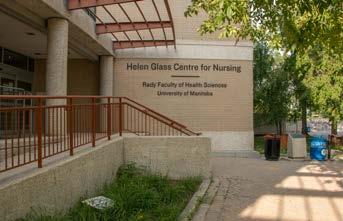
After years of budget cuts to Manitoba’s health-care system, the current Progressive Conservative (PC) government faces a labour shortage in the nursing sector. To compensate, the PCs have introduced a plan to increase the number of seats in nursing programs across Manitoba.
The plan was met with criticism from the Manitoba Organization of Faculty Associations (MOFA). MOFA speculates that the PC government is attempting to “fast-track the proposal in order to provide political cover.”
Jennifer Adair, an executive with MOFA, expressed her frustration with the decision in a news release.
“This announcement is not well thought out and will only complicate our already over-burdened system.”
The 120-seat increase intended for the University of Manitoba would require hiring 15 to 20 nurses with a master’s degree or PhD to prevent the existing faculty from being overwhelmed by the influx of new students. This strategy would reduce the amount of trained nurses able to work in the health-care system.
The PC’s proposal comes on the heels of the Manitoba Nurses Union’s (MNU) decision to put forward a strike mandate earlier this month. The strike vote came after nurses had gone over four years without a contract. The MNU had met to discuss the issue with the PC government over 30 times
since October 2020.
The MNU alleges that throughout the meetings, the provincial government has “displayed an unwillingness to provide solutions and accept proposals on what has become the most substantial issue facing nurses today and for the future: the recruitment and retention of nurses.”
Since 2017, the provincial government has been overhauling Manitoba’s health-care system. Among the changes was the reduction of emergency rooms (ER), from six to three.
The ERs at Concordia Hospital, Victoria General Hospital and Seven Oaks General Hospital were converted into urgent care centres. The total number of ICU beds in Manitoba was consequently reduced from 73 to 61.
On Jan. 8, 2020, the Winnipeg Regional Health Authority (WRHA) confirmed that the province closed 18 beds over two years, bringing the total down to fifty-five.
The resulting shortage of beds meant that the province had to send Manitobans to other provinces in order to receive treatment for COVID-19 this spring.
The PC’s plan to train more nurses may not help the immediate crisis, but some, like Minister of Advanced Education, Skills and Immigration Wayne Ewasko, remain confident of its long-term potential. “[COVID19] has magnified the fact that the
health-care system is stressed, not only here in Manitoba but globally, and so what a better day to plant a tree but today?”
“It’s too bad that the news release that was put out in some cases was purely speculation and was in advance of any kind of major plans moving forward,” Ewasko said, “but I’m a strong believer in my department working with the post-secondary […] institutions and partners to try to help fix a stressedout system.
In 2018, the province cut nursing training at Red River College. As of 2021, the budget at the U of M’s Rady faculty of health sciences has been cut by 1.75 per cent.
This fall, the provincial government will vote on bill 16, the Labour Relations Amendment Act. The bill would make striking employees more vulnerable by allowing employers to
terminate those striking even if their conduct did not result in a criminal conviction.
More broadly, bill 16 would make it more difficult for unions to organize and to advocate as it grants the labour board more power over the unions.
Frustrated MOFA president Scott Forbes stated, “If the PC government wants to fix the nursing crisis, they should start by negotiating a new contract that pays a fair wage and improves working conditions for nurses.”
At press time, MOFA had not yet responded to the Manitoban’s request for comment.
— With files from Cam Cannon news@themanitoban.com
FEATURE
One typical stay-at-home night last September, in the midst of a COVID-19 Manitoba lockdown, my partner discussed the joys of owning and caring for plants around the home. Personally, I couldn’t see the appeal of having so many leaves around a living room or a kitchen.
But fast forward to this past month, and I’ve been living happily in a tiny one-bedroom apartment with 40 living plants, with 10 or so others that I tried and failed to raise as well.
While I can’t quite pin down what brought my change in opinion, plant ownership — especially as decor — has become an increasingly popular trend in 2020, when lockdown was likely starting to get to many people.
On TikTok, many plant owners would show off their Monstera deliciosas, fiddle-leaf figs and, of course, their snake plants.
The trend encouraged people to get more plants to focus their attention on something other than the pandemic, and to be more in tune with nature.
Local Instagram account @wpgfreeplants, run by Jannica Reyes and Riel Lynch, gives away plants to the community.
“We believe that plants positively impact our mental health and well-being, mainly because caring for them allows one to get ‘outside’ of oneself in order to help the plant thrive,” they said.
The pandemic has been a rough time for me, and I’ve often found it difficult to take proper care of myself. This, along with my earlier reservations about caring for plants, gives my sudden love for plants an ironic tinge, yet that love is there nonetheless.
Talia Green from Verde Plant Design said, “It’s helpful to try and keep things alive, it makes you feel better if you’re not in a good place […] especially over quarantine […] [I think] a lot of people realized that they needed something to take care of and something to make them more productive.”
Green said it has given her some sort of structure and more productivity, especially since she lives with attention-deficit/hyperactivity disorder.
“I just need things to mother, otherwise I will go insane.”
Irma
Eze-Charles,
volunteer
University of Manitoba, and Madison Reid, a student at the University of Winnipeg, have opposite experiences. However, both can be relatable to any plant owner.
“I had a succulent [named] Judas [...] and I tried really hard to keep her alive but I accidentally overwatered her then [underwatered her] until she just died,” Gwintsa said.
“Then the one that died in the winter was my aloe. [I] simply called her my baby [...] Not enough sun and way too much water, I learned later,” Gwintsa said. “The sun part I couldn’t control but the water part was definitely me overcompensating for killing the last one.”
“I could have saved it a few times but I was pretty depressed and never put in the effort [...] eventually my roommate’s cat took a few bites [out] of it,” Gwintsa said.
a drink.
“Since I care about [the plant] and keeping it alive, I’m more motivated to get up out of bed and give it water,” Reid said.
It is true — plant ownership can be extremely expensive, depending on the quantity and rarity of the plants. One has to pay for pots, potting soil, plant food, tools and the actual plants. Yet the costs and labour involved hasn’t stopped myself and many others. As restrictions steadily lift, my plants serve as a reminder of difficult, stressful, and incredibly boring times, and I’m extremely thankful for their help.

Sikhona Gwintsa, a student at the
“I’ve been hesitant [to get] any more since, even [though] I love the way plants in a space look.”
Gwintsa said that having plants is a joyful experience with how much fresher the air is. The happier environment can encourage one to get another plant.
Reid got her plant 10 months ago as an anniversary present, and it has made her get out of bed just to give it

At the Forks a collaborative platform for scholarship and creative works
Michael Campbell, staff
The University of Manitoba’s Centre for Human Rights Research (CHRR) has partnered with the Mamawipawin research group to produce a virtual home for scholarship and creative work that exists at the intersection of Indigenous peoples’ rights and human rights. The website, At the Forks, launched during an online event on June 25 and is now accepting submissions from senior undergraduate and graduate students, scholars and community members.
When Adele Perry, director of the CHRR and a professor in the women’s and gender studies program, had the idea for the platform, she knew exactly who to call. Perry partnered with Kiera Ladner, a professor in the department of political studies and faculty partner of Mamawipawin.
“This was Adele’s brainchild,” Ladner said.
“[Perry] called me […] in the early days of the pandemic […] and said, ‘Would you do this?’”
Mamawipawin, or the Indigenous Governance and Community Based Research Space, is a research centre at the University of Manitoba dedicated to bringing Elders, community members and Indigenous peoples of diverse backgrounds into a culturally relevant space for research and collaboration. Mamawipawin is the Cree term for “gathering space.”
The purpose of the platform is to highlight the scholarship being conducted
“At the Forks aims to support and disseminate work that engages this particular place within its wider context”
— Adele Perry, CHRR director

at the intersection of human rights and Indigenous peoples’ rights.
“What we have is really […] a portal for Indigenous-human rights research,” Ladner said.
“And so, that intersection, really, at that ‘forks,’ we will have a portal to work with grad students, or colleagues, or even community-based scholars […] and make it available to all sorts of folks.”
The name of the platform invokes the intersection of the Assiniboine and Red rivers.
“This place is called Nistawayak, or ‘three points’ in Cree, and it is the site of ancient and ongoing histories,” said Perry.
“As a platform, At the Forks aims to support and disseminate work that engages this particular place within its wider context, namely present-day Manitoba, Saskatchewan, Alberta and stretching into our neighbours in northwestern Ontario and south of the Medicine Line.”
At the Forks is currently seeking submissions.
“Our goal is to publish articles that run between about 1,000 and 5,000 words,” Perry said.
“We’re aiming, in a sense, for pieces that are shorter than a standard academic essay or chapter or government report, but more substantial than your usual opinion piece — which generally runs about 600 to 750 words — and definitely [more substantial] than a tweet.”
Students, scholars and community members that would like to submit work are invited to send an email to the CHRR.
Perry entered the position of director
of the CHRR on July 1, 2020, during the early days of the pandemic.
“What I was interested in doing is building [on] the centre’s long-standing connection [to] working at the juncture of human rights and Indigenous rights, and also trying to think of projects that could build [on] the work that we were doing,” Perry said.
The project is not merely a collection of scholarship — it also opens a conversation about Indigenous peoples’ rights research. Perry said she and Ladner hope to work with emerging authors to “put work that needs and […] deserves an audience and in kind of a wider conversation.”
Perry and Ladner also highlighted the importance of the scholarship to move from the platform back into the community.
“We’re hoping that this kind of work can be easily and successfully integrated into classroom teaching,” Perry said.
“Particularly as it remains to [a] greater or lesser extent online and can be used at both […] a secondary and post-secondary level.”
At the Forks is funded by a Social Sciences and Humanities Research Council of Canada (SSHRC) communications grant. Perry said, “those are grants that are sometimes used to pay for things like conferences, but this is obviously a moment where that’s no longer happening in the way that they generally do.”
The project has also received funding from the Margaret Laurence Endowment Fund of the women’s and gender studies program, the department of history and the faculty of arts. According to Perry, the women’s and gender studies program has been “an important partner in this project.”
“Both [Ladner] and I are committed to bringing a feminist lens that puts gender in central ways of this discussion,” she said.
Ladner also emphasized the students who brought this idea to life.
“Like everything that we do as professors, we couldn’t do what we do without the students that we work with. And we wouldn’t do what we do without those students in mind,” she said.
At the Forks aims to capture research that would otherwise fall through the cracks.
“Every year, I see a student paper that is just exceptional and it’s so sad to see those just fall by the wayside,” Ladner said.
“And I think that it […] also gives students that recognition that you do good work, and it’s not just for a [professor] to read.”
Ladner and Perry highlighted the interdisciplinary nature of the platform. “This isn’t all history, and, you know, this isn’t even necessarily in the wheelhouse of political science,” Ladner said.
“That’s what’s really awesome — to […] forget the disciplines and just do good work.”
Michael Campbell, staff
If you are a student or staff member at the University of Manitoba, you have probably received an email from Fran Mulhall asking you to participate in a research study about public perception of Canada geese on campus.
Fran Mulhall is a master’s student in the Clayton H. Riddell faculty of environment, earth and resources. Mulhall’s master’s thesis project plans to apply human dimensions research to Canada geese on campus.
The research started from a place of fiery opinions of Canada geese on campus and how to effectively coexist and cooperate with the natural world.
“I knew that, in the past, there had been some very strong differences of opinion about the geese on campus and what should be done [about them],” Mulhall said.
“And the whole […] premise of human dimensions work is to objectively listen to people’s attitudes and to learn […] the different values that people have toward wildlife, and then to use that information to help inform decisions. And so this seemed like a perfect opportunity to do that.”
Mulhall’s experiences in the field led her to the human dimensions approach.
“I attended the Banff field course a couple years ago and that’s when I was
first introduced to this field of study called human dimensions,” Mulhall said.
“And so, through that course, I kind of developed this interest […] and I kind of just continued, I guess, from there.”
Mulhall explained that the theoretical underpinnings of her study stem from a cognitive hierarchy framework. This framework understands people’s values as being qualities. These qualities, Mulhall said, “typically are influenced by our surroundings.”
“As we […] expand our worldviews and whatnot, we then develop opinions, and opinions are influenced by these foundational values,” she said.
“But [these] opinions we use to sort of navigate very specific situations. So, the field of research and human dimensions is based very heavily on this cognitive hierarchy framework.
“Human dimensions […] takes a bit from the fields of psychology and social sciences and it examines the relationship and influences or effects of humans on wildlife and their habitats. Through that examination, it then seeks to understand how people’s values about wildlife might influence their actions toward wildlife.”
Within human dimensions research, some scholars focus on wildlife value orientations. Mulhall explained that there is a spectrum of values people have toward wildlife.
“Typically they can kind of range from doministic, which is [the idea that] animals are there for humans’ benefit, to something that’s perhaps more mutualistic,” she said.
Mulhall hopes that her research could have an impact on how the University of Manitoba manages Canada geese on campus.
“I do plan on presenting the findings to the sustainability office for their consideration,” Mulhall said.
“I think this type of work is valuable because […] there’s a growing expectation for the public or the users of a certain resource to be involved in decisions about that resource.”
Those expectations allow Mulhall’s research to help bridge a gap between the public and policy.
“This [research] is all about listening to the views of people who interact with wildlife, and then to document that in a representative way so that it can be included as part of the decision-making about wildlife,” she said.
Mulhall is confident that student and staff opinions of Canada geese have not changed substantially because of the necessity to work remotely for the past year.
“I think in a place like Winnipeg, most people interact with geese on a pretty regular basis, whether they’re on campus or not,” Mulhall said.
“So, their values about geese as a wild animal, those will sort of translate,
whatever the geographical location that they may encounter geese.”
Like many Manitobans, Mulhall has a long history with the treacherous waterfowl.
“I grew up in a rural setting, and, you know, encounters with wild animals was not out of the ordinary for me,” Mulhall explained.
“[When you are] younger, you get too close to geese, and they will spread their wings and hiss at you […] but I’ve never actually had a negative encounter with geese.”
Mulhall explained that the notion of wildlife management reveals an inherent perception of conflict between humans and wildlife.
“Wildlife are managed really because there [are] people involved,” Mulhall said.
“By better understanding people, we can make better decisions for wildlife.”
Students and staff that received an invitation via email are invited to complete the questionnaire by July 4.
research@themanitoban.com



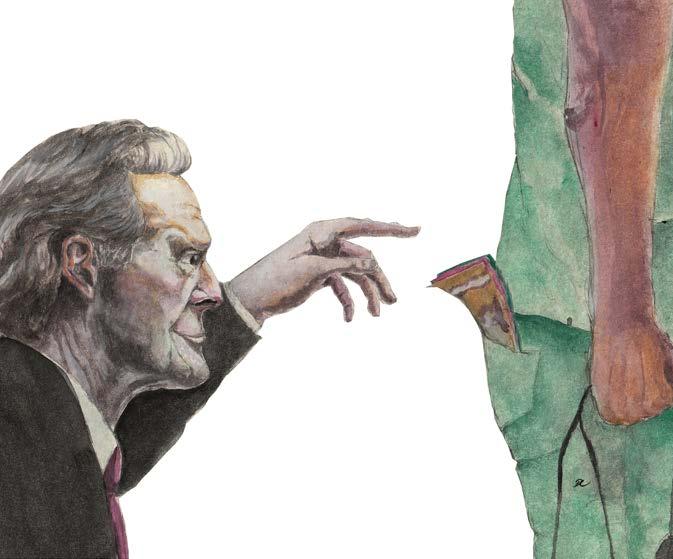
It has become increasingly clear that Manitoba’s Premier Brian Pallister has two political faces — one that has lost all political grip over local constituents in Manitoba, and another, to the rest of Canadians, who seem far less aware of the dumpster fire that is his administration.
The image of Pallister close to tears over “stealing Christmas to keep [Manitobans] safe” on live television is still seared into the brains of critical Manitobans for appearing to be a distasteful political manoeuvre to draw attention away from the fact that his frugal approach to spending was exactly why Manitobans were thrust into the dire health crisis during last year’s holiday season. Yet national and international commentary looked favourably upon the premier’s posturing. Without proper context from local critics, Pallister’s reputation outside of the province remained somewhat unscathed — he said the right things for people who remain uninformed about the state of affairs in an overwhelmingly forgotten province.
In a similar fashion, Canadian premiers seem to have forgotten Pallister’s astonishingly horrific record when he was appointed the chair of Canada’s premiers and the council of the federation (COF) — an interprovincial council that typically meets semi-annually to discuss and set agendas in conjunction with the federal government — on June 17.
For watchful Manitobans, the choice seemed grotesquely ill-informed.
To make matters worse, the premier accepted the position with a news release outlining his commitment to improving the health-care system — a position which has been widely criticized for being shockingly hypocritical due to his historic attacks on Manitoba’s health-care budget. “Over one million Canadians are waiting in pain every day for a diagnosis, test or treatment and these wait times will only get worse […] The time to act is now,” he said in the news release.
For families who have struggled to find emergency care, surgery dates and cancer care during the COVID-19 pandemic due to our overwhelmed hospitals and intensive care units (ICU), these words, at best, rung hollow. And for the 98 per cent of nurses who voted in favour of striking in the early days of June due to Pallister’s ghastly proposals in recent contract negotiations, these words were nothing short of a slap in the face.
The fact that Pallister is championing a health-care-first agenda in the COF is laughable considering his administration’s long-term project of dismantling the province’s healthcare infrastructure.
The Progressive Conservatives (PC) closed emergency rooms (ER) in Victoria General Hospital, Seven Oaks General Hospital and Concordia Hospital in 2017 and 2019, respectively — a decision that has made handling the influx of critical care patients during the pandemic a logistical nightmare. Beyond this, the provincial government has closed all
but one of Manitoba’s QuickCare clinics, cut $83 million from the Winnipeg Regional Health Authority’s budget and slashed significant investments made by previous premier Greg Selinger that were meant to improve the operations of six health-care facilities across Manitoba. For perspective, one of the proposed projects included a $300 million investment for a new CancerCare Manitoba facility.
As a result of cutting the health-care budget to its bare bones, the system has been on the verge of collapse for two of Manitoba’s three COVID-19 outbreaks. In November, nurses reported needing to triage ER patients from their cars due to overwhelmed capacity. More recently, with ICUs completely falling apart along with the frontline health-care workers who have done what they can with the little resources they have, the province resorted to shipping Manitobans to out-of-province hospitals due to lack of space.
Beyond health-care infrastructure crumbling under the pressures of the pandemic, Pallister made a vain attempt to negotiate less-than-ideal contracts with burnt-out nurses after a year of extreme trauma. Although Manitoba hospitals have critically poor infrastructure capacities, Dr. Noam Katz — a physician at St. Boniface Hospital — noted in a recent interview with CBC that labour procurement in Manitoba’s health-care system is of grave concern as well. Katz claimed that important beds go unused simply because hospitals don’t have the staff to tend to them. And this all makes perfect sense seeing as the PCs cut approximately 160 health-care jobs in 2019 and another 50 were projected to be lost in fall 2020.
With a provincial government myopically hell-bent on balancing its budget, labour retention of qualified, burnt-out nurses will most certainly be
more difficult. In light of this, when the dust from the pandemic settles, yet another health crisis may be waiting for the administration — one borne from a lack of foresight and proper investment in frontline workers that have kept the community healthy to the detriment of their own mental and physical wellbeing.
If Manitobans have learned anything from the past five years of Pallister’s leadership, it’s that you cannot trust him to invest in Manitoba’s future. If the premier cannot handle Manitoba’s own health-care system, he is certainly not going to live up to his promises as the chair of the COF.
words / Lucas Edmond / staff editor@themanitoban.com
Lucas Edmond, staff
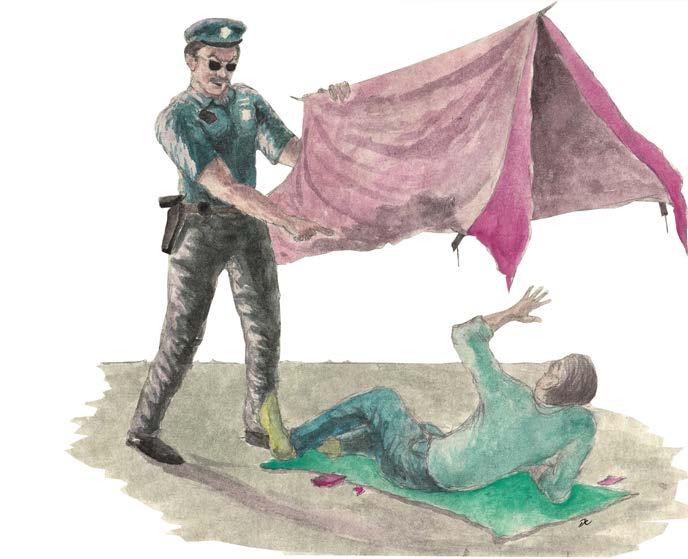
The encampment evictions of a houseless community residing in the Trinity Bellwoods Park in Toronto, Ont. drew attention from houseless advocates on June 22. The evictions were but one example of a growing encampment trend across Canada.
Last week Toronto mayor John Tory enacted orders to evict the encampment with private and public police and security services propped up with expensive paramilitary gear. The encampment — which served as a peaceful community for the houseless people that occupied it — was encircled by police on horses. Some demonstrators were pepper sprayed and others managed to walk away unscathed physically yet devastated by the forceful hands that ripped them from their community.
The spectacle served to illuminate the detestable fact that Toronto’s municipal government spends more than twice as much on unnecessary police budgets than they do on affordable housing initiatives — money that could have been used to provide social assistance instead of coercively enforcing property laws.
The unpopularity of the evictions appeared to sit consciously in the minds of local officials considering the police force made a clear attempt to insulate itself from media coverage and public descent.
Before pursuing the encampment, officers erected a large fence supposedly to protect expected protesters at the site.
A local photojournalist, Ian Willms, was arrested after climbing the fence to cover the evictions. The police later explained, “Media are not exempt from restrictions put in place for people’s safety in the same way they are not permitted to enter other police or crime scenes.” However, this was not a crime scene — it was a forceful removal of people from their chosen community within a municipality that had failed to provide for their basic human right to affordable housing.
Globe and Mail. “We will find somewhere else to go. We are humans who need a place to live.”
Toronto is not the sole bearer of this abhorrent trend of encampment dismantlement. The disputes were reminiscent of similar evictions that took place in Winnipeg last summer and serve as a stark reminder that the housing crisis is a national issue of concern. Similarly, Montreal, Que. and Vancouver, B.C. have had their own housing issues with encampments sporadically popping up before being ripped down by municipal officials. “We will be playing cat-andmouse throughout the summer,” said Montreal camp resident Guylain Levasseur in an interview with the
There are reasonable solutions to housing issues, and it starts with treating shelter as a fundamental right as opposed to a commodity. The notion that there is a housing shortage in Canada is a fictitious presumption meant to prop up an unsustainable economy that relies on the constant growth of the housing market to survive. As a matter of fact, there is a massive housing surplus. From data collected in 2019, Canada’s vacant home rates reached approximately nine per cent of the entire housing market, meaning tens of thousands of houses remain vacant in each major city across the nation, yet there has been minimal effort to correct this trend and provide adequate shelter to the most vulnerable.
Instead, housing remains one of the largest and fastest growing industries in Canada. Approximately 76 per cent of Canada’s wealth was tied to the housing market by 2018 — a fact that is not likely to change anytime soon.
As of March 2021, the price of houses inflated approximately 32 per cent from last year, igniting fears that the housing bubble — which was created from years of fast-paced inflation caused by extremely low interest rates on housing loans — could pop soon. For those with adjustable rates on their mortgages, this could mean a crashing adjustment that leaves them helplessly exposed to the callously cold pressures of debt finance. In sum, leaving housing up to market forces has never been of benefit to working people and instead has been a central cog in the expansion of wealth inequality — should the bubble pop, encampment numbers could rise.
also financed the production of the houses to take out mortgages to buy those houses. In this way, financial institutions are funding both the production and consumption of houses within this market.
The fundamental question is, if we can balance Canada’s economy on such a precarious position that relies on the circulation of fake money, why can we not provide housing as a right?
Withholding housing is a political choice, not a matter of fact. Canada should stray from market orthodoxy and commit to a plan of de-commodifying shelter — if it doesn’t, underhoused communities will most certainly proliferate with time.
Currently, Canada is propped up by a uniquely fictitious economy. Considering three-fourths of the economy relies on the housing sector in some fashion, it can be deduced, without surprise, that most of the economy is also propelled by debt. Take, for example, how the production and consumption of housing works — a development company takes out a loan from a big bank to buy land and build housing which it pays off with a rate of return. To be able to make the development attractive to the bank they must sell the house to consumers. These consumers then go to the same financial institutions that
comment@themanitoban.com
Brendan Scott, UMSU president
Dear Bisons,
I hope you were all able to enjoy the nicer weather the month of May had to offer, and that you are all staying safe during the third wave of COVID-19 in our province.
I am pleased to advise students that the pandemic has not stopped the new University of Manitoba Students’ Union (UMSU) executive team from hitting the ground running. Since our official first day in office on May 3, we have already started large projects that strive to make our union the strongest it has ever been. As your president, I’m writing this letter to detail all our efforts throughout May.
When vaccine eligibility expanded to everyone 18 and over on May 12, we wanted to inform all University of Manitoba students that they are able to receive their first vaccine dose. From May 31 to June 4, students would’ve seen posts on the UMSU’s official Instagram page with instructions about how to book a vaccination appointment and where vaccines were being administered. Trivia questions and infographics were shared, and a vaccination sticker photo contest was held to boost student engagement. We hope all students are being proactive in getting vaccinated — the faster we are all vaccinated, the faster we can resume our normal lives.
This past April, UMSU members voted in a referendum on whether UMSU
should formally join the Canadian Alliance of Student Associations (CASA) at no additional cost per student. 86 per cent of students voted in favour of joining CASA and UMSU’s board of directors ratified the results on April 29. At its annual opening conference, CASA members voted on May 25 to unanimously accept UMSU as their newest member. We look forward to contributing to their advocacy efforts and hope to have a long and prosperous relationship.
The April referendum also contained another question involving an external advocacy group, with students voting 88 per cent in favour of joining the Manitoba Alliance of Post-Secondary Students (MAPSS). These results have also been ratified and UMSU has made its membership in MAPSS official. Its first action afterward was to issue comments to media about the government of Manitoba’s new public survey seeking input on Manitoba student aid.
Our team is already looking forward to working with both advocacy groups throughout the year.
I am pleased to announce that the executive team’s transition in the first week of May went smoothly. We have reviewed our campaign promises and have already started many projects to improve student life and the learning environment at U of M. Negotiations with the Manitoban on a new contract that began in January were finalized this month, with a new eight-year agreement now in place. As the primary newspaper on campus, the
Chicoine / staff
graphic / Dallin

Manitoban is essential to keeping students informed and engaged. Signing off on this new agreement ensures the paper is able to operate to the best of its abilities in the basement of Helen Glass.
To receive weekly updates on what is happening on your campus and within your student union, be sure to check out UMSU’s podcast UMSU 1020, featuring the vice-president community engagement Tino Dogo and myself. Every week we highlight news about UMSU and discuss items that directly affect students, while also making sure to keep it light and fun along the way. You can find the UMSU 1020 podcast on both iTunes and Spotify.
That’s it for now. I’ll be sure to keep
UMSU members updated on the union’s summer activities. In the meantime, enjoy your summer, get vaccinated and stay safe.
Brendan Scott President University of Manitoba Students’ Union
letters@themanitoban.com

Ismaila Alfa’s first play is a powerful blend of theatre, poetry and prose
ARTS & CULTURE
Shaylyn Maharaj-Poliah, staff
The final digital production of Prairie Theatre Exchange’s 202021 season is the world premiere of VOICE, the debut work from journalist, radio host and hiphop artist Ismaila Alfa. Born in Nigeria, raised in Winnipeg and currently residing in Toronto, Ont., Alfa is the current voice of CBC Radio One’s Metro Morning
On the day he landed in Toronto for a job interview, the world came to a screeching halt with the onset of the COVID-19 pandemic. Not long afterward, the murder of George Floyd and the shooting of Jacob Blake led to calls for social reform on a national and global scale. It was during this period, while separated from his family in Winnipeg and alone with his thoughts and worries, that Alfa started the writing process.
Described as “a father’s love letter to his daughters,” VOICE is not your traditional theatre piece, but a nearly hour-long dynamic explosion of poetry, spoken word and beatboxing.
In a recent release, Alfa said, “this play was inspired by my kids, this past year and the reckoning around racism and police brutality […] VOICE is a culmination of my need to make sense of it all and teach my kids enough that they are able to live a good and safe life.”
Alfa’s words are electrifying, frank and unapologetic, providing raw insight into how people of colour, but more specifically the Black community, experience racism in Canada and how it shapes who we are. There are too many poignant lines in the play to list, but one that struck a chord was: “I had an identity thrust upon me before I was even old enough to need ID.”
Though he is not physically present onstage, Alfa himself is a character in this story, his own pre-recorded voice ringing as clear and perfect as a silver bell, touching on a range of topics like capitalism, fatherhood, human connection, the immigrant experience and more. Local actors Ray Strachan and Melissa Langdon bring his words to life, responding to his perfect prose with subtle actions and engaging facial expressions dictated by director Cherissa Richards’s artistic vision.
In her director’s notes, Richards said, “this is a unique coming-together of the first home-grown local Black playwright, local Black actors and local Black director to ever create art on the Prairie Theatre Exchange stage in its almost 50-year history.
“I celebrate this moment of Black artistry and I celebrate the talented allies who have joined us in this incredible collaboration. This is the future of theatre; uplifting the voices

of people of colour who have not had the chance to tell their stories and have them heard loud and proud.”
The show was workshopped, rehearsed and recorded entirely during the COVID-19 pandemic. Ice River Films did a stellar job of filming the performance, mimicking the experience of being in a theatre while utilizing cinematic techniques, such as the use of match cuts and ability to capture smaller, subtler moments and movements, like twitching fingers and falling tears.
The lighting and set were simple, yet powerful, allowing the audience’s imagination to fill in the details while focusing their attention on the pair of physically distant actors and Alfa’s riveting words. The sounds of the beatboxing and humming were haunting
and instrumental in creating an introspective, almost spiritual tone.
All aspects of the digital play fit together seamlessly and effortlessly to draw the audience into the experiences, thoughts and feelings of the voiceless others in Canadian society.
In short, VOICE will leave you speechless.
Prairie Theatre Exchange’s virtual production of Ismaila Alfa’s VOICE is available for viewing until July 11. To learn more about the show and for ticketing information, please visit pte.mb.ca.
Shaylyn Maharaj-Poliah, staff
This month, the Winnipeg Art Gallery-Qaumajuq hosted the National Film Board of Canada’s world premiere of Anishinaabe and Cree filmmaker Kevin Settee’s new documentary series, The Lake Winnipeg Project, which highlights the resilience of the Indigenous communities surrounding the Lake Winnipeg region of Manitoba. The series, fittingly, received its debut on National Indigenous Peoples Day.
The Lake Winnipeg Project is comprised of four short films, running about 10 to 15 minutes in length with a total runtime of 55 minutes. Each bite-sized entry explores different cultures, histories and lifestyles, particularly through times of change, from peaceful protests to pandemics.
The first film in the collection, titled Matheson Island, focuses on the Whiteway family, who have been in the commercial fishing business for generations. They share their experiences from the field, the challenges they have faced and reveal
their feelings about the dwindling industry.
The shortest entry is the second film, Poplar River, which showcases the beauty of the UNESCO World Heritage site Pimachiowin Aki, or “the land that gives life.” In this piece, members of the community emphasize the importance of protecting their lands and waters for future generations.
The third film, Camp Morningstar, focuses on the titular camp, which was formed in 2019 as a response to the ongoing proposal of a silica sand mining project. Conversations with the camp’s organizers and supporters describe how the silica sand relates to their history, ceremony and the spiritual significance of the land.
The final film in the series, Fisher River, describes how the Fisher River Cree Nation responded to the COVID-19 pandemic with generosity and perseverance, purchasing surplus fish and freely distributing it to Indigenous communities in Manitoba, Saskatchewan and the North. The documentary also includes unique

stories of mothering and motherhood while simultaneously supporting the community and its people during these challenging times.
Settee’s intimate camerawork and modest close-up shots seamlessly transport the viewer to these communities and give the impression that the audience is sitting, working and travelling right alongside them.
Settee is also a master at showing, rather than telling. He gives the utmost respect to the residents of the Lake Winnipeg communities by providing them the space and time to share their own stories with care, purpose and in their own words. This brings a certain conversational element and authenticity to each piece. Described as an “own-voices” approach to storytelling, Settee’s presence, voice and
The slow, sweeping shots of the vast Canadian landscapes allow the viewer to fully appreciate the splendour of nature amid the subject matter of climate change, invasive industry and governmental policies. The juxtaposition is jarring, but necessary. Not only does the collection showcase the culture and community surrounding Lake Winnipeg, it also serves as a reminder to take care of what we have — the water, the earth and the land — while we still can.
The Lake Winnipeg Project is available to view for free on nfb.ca.
arts@themanitoban.com
SPORTS
Matthew Merkel, staff
The University of Manitoba and Valour FC will play host to the Canadian Premier League (CPL) during the first month of the 2021 season. All eight soccer clubs’ seasons commenced at a spectatorless IG Field June 26.
After July 24, all teams will return to their respective cities and conclude the rest of the regular season schedule at home.
Winnipeg was chosen out of 11 cities that applied to host the CPL bubble. League commissioner David Clanachan emphasized the importance of having the bubble relatively near most CPL teams.
“I want to be back in our home markets playing in front of fans and supporters as quick as possible,” said Clanachan as reported by Global News
“You can finally see that light at the end of the tunnel, I think. It’s still far away but I believe we can see that.”
This isn’t the first time the CPL has conducted a bubble system. As a result of the COVID-19 pandemic last summer, the CPL’s original schedule was cancelled. In order to have any competition, the league was forced to create a 14-day tournament branded as the “Island Games.”
The 28-game event was played at the University of Prince Edward Island (P.E.I.). Hamilton’s Forge FC came out the victor, finishing first in the group stage before defeating the Halifax’s HFX Wanderers FC in the final.
Initially, the eight CPL teams played in front of empty stands. However, as COVID-19 case numbers in P.E.I. remained low, up to 50 minor soccer
players were allowed to spectate games.
The Island Games were a great success for the young CPL. Founded in 2017, the CPL managed to survive the most destructive year for professional sports in recent history. While many leagues cancelled their 2020 seasons due to financial difficulties brought on by the COVID-19 pandemic, the CPL organized a safe environment and functional schedule for their clubs to operate within. This is no small feat considering the CPL has only had one complete season in 2019.
The league has quickly asserted itself as the top export league in the country, helping young Canadian players develop their game at home in the hopes of landing more prestigious opportunities.
One of the ways the CPL has done this is by partnering with U-Sports to create the CPL-U-Sports draft. Canadian collegiate soccer players are given the opportunity to register and declare themselves available to the draft. If selected, they are invited to that team’s pre-season camp. There, they will try out for their respective clubs. If a player fails to land a roster spot, they are allowed to take part in the draft again the following year if eligible.
In addition to the draft, CPL teams are limited to five import roster spots, thus prioritizing Canadian players. This agreement helps give Canadian players the opportunity to continue their soccer careers beyond college.
League policies like these are what have helped give players like Winnipeg native Marco Bustos the opportunity to showcase their talent to the world. Bustos had an

exceptional 2020 for the Pacific FC — finishing second in league scoring with five goals and first in assists with three — helping the former Vancouver Whitecap and current Canadian national team member gain interest from teams in Major League Soccer and Europe.
“Through that experience of constantly playing, you get a feeling of what kind of football suits you and where you think you can get to,” said Bustos in an interview with CanPL.ca.
“It’s helped me tremendously that I’ve been playing so many minutes and contributing quite a bit.”
Another CPL player hoping to make the jump to the next level is Valour FC’s Jonathan Sirois. The loanee from the MLS’ CF Montreal will look to gain experience in his first year as a professional goalkeeper.
Sirois comes into a Winnipeg club that failed to make it to the second round of the Island Games. However, the club has retained most of its core and is looking to build off last year’s
positives. Winnipeg finished first in shots on target and passes into the box in P.E.I. Valour coach Rob Gale has also been busy during the offseason, bringing to the club key signees in 29-year-old Brazilian import Rafael Galhardo and Chivas centre-back Rodrigo Reyes.
Soccer fans in Winnipeg should be very excited about having the CPL return to their city. Valour FC’s inaugural season was one of Winnipeg’s most popular attractions in 2019. IG Field has gained a reputation across the CPL for being home to some of the loudest fans in Canadian soccer. If COVID-19 numbers continue to decline and vaccination numbers increase, there may be a slight possibility that Winnipeggers will get the chance to see some of Canada’s best athletes in the CPL bubble.
sports@themanitoban.com
SPORTS Matthew Merkel, staff
Former Bison swimmer Kelsey Wog has qualified for the 2021 Canadian Olympic team.
Swimming at the national trials in Toronto, Ont., Wog finished with a time of 1:06.77 in the women’s 100metre breaststroke, earning her a first-place finish and a spot in Tokyo for the postponed 2020 Summer Olympics.
In the women’s 200-metre individual medley, Wog finished second with a time of 2:10.21, which was also good enough for her to qualify.
Cont’d p.16 / Wog > photo / Kelsey Wog / provided

Wog will need best times of her career
< Cont’d from page 15
2016 Olympian Sydney Pickrem was the only swimmer to beat Wog in the event.
For her final event, Wog was the first in the water and never looked back, handily beating her competitors to win the women’s 200-metre breaststroke.
After the race, Wog reflected on her time spent leading up to her qualification and the satisfaction with the results.
“I’m pretty happy with how my races went,” Wog said in an interview with the Winnipeg Sun. “This past year and a half has been pretty crazy with training being so sporadic. It’s good to get the job done here.”
“This past year and a half has been pretty crazy with training being so sporadic. It’s good to get the job done here”
— Kelsey Wog, Olympic swimmer
Wog enters the Olympic circuit after most recently swimming professionally for the Toronto Titans and Cali Condors of the International Swim League.
Prior to her professional career, Wog spent four years swimming for the University of Manitoba, while also studying in the faculty of agricultural and food sciences.
In her final year with the Bisons, Wog won four national gold medals, earned the title of Canada West Female Athlete of the Year and was honoured with the Lieutenant Governor Athletic Award as U-Sports Female Athlete of the Year.
Wog has been a part of an influx of youth in this year’s time trials. Joining Wog in Tokyo is 2016 Olympic star Penny Oleksiak.
The 21-year-old Oleksiak became an international sensation after she secured four medals — one gold, one silver and two bronze — in Rio, making her the first Canadian athlete to win four medals at a single summer Olympic game and tying her with Victor Davis for most medals won overall by any Canadian Olympic swimmer.
Toronto native Summer McIntosh is the new youngest member of the Olympic team. The 14-year-old swimmer qualified for Tokyo in the women’s 800-metre freestyle, finishing with a time of 8:29.49. McIntosh also finished first in the women’s 200metre freestyle.
Another young swimmer making noise at this year’s time trials was 20-year-old Finlay Knox. The Okotoks, Alta. native set a Canadian record in the men’s 200-metre individual medley with a time of 1:58.07, beating his own record set a month prior in the same venue.
Wog, McIntosh and Knox are entering a Canadian team that was extremely successful at the last Olympic games in Rio. Canadian swimmers won six medals in Brazil. All of Canada’s medals in the pool were won by women. 11 of 19 Canadian female swimmers left the 2016 Olympic games with medals.
Although Team Canada enters the Tokyo Olympics strong medal contenders, the competition will be fierce. The United States is a perennial swimming superpower, earning 33 medals — 16 gold, eight silver and nine bronze — at the Rio Olympics.
In the 100 and 200-metre breaststroke, Wog is expected to go head-to-head with some of the sport’s most dominant and established athletes, including American Lilly King, reigning 100-metre Olympic champion.
Wog will also face stiff competition in the 200-metre individual medley. Katinka Hosszu of Hungary is entering her fifth Olympic games. She holds world records in the 100, 200 and 400-metre individual medleys, as well as the 200-metre backstroke. In 2016 she won gold by setting an Olympic record in the 200-metre and a world record in the 400-metre individual medleys. Additionally, she won gold and silver in the 100 and 200-metre backstrokes.
For Wog to win gold, she will need to swim her best times of her career against these legendary swimmers.
Canada’s six medals in 2016 and their influx of new talent make them a dark horse to steal gold in Tokyo. However, with Wog dominating the Canadian time trials, it should come as no surprise to see her and a Canadian flag atop the podium.