

Shanelle St. Hilaire
Amy Fernando
Shanelle St. Hilaire
Amy Fernando

Manitoban is a member of the Canadian University Press, and our journalistic standards can be found online at toban.news/jsp
The newspaper’s primary mandate is to report fairly and objectively on issues and events of importance and interest to the students of the University of Manitoba, to provide an open forum for the free expression and exchange of opinions and ideas and to stimulate meaningful debate on issues that affect or would otherwise be of interest to the student body and/or society in general. The Manitoban serves as a training ground for students interested in any aspect of journalism.
Students and other interested parties are invited to contribute to any section of the newspaper. Please contact the appropriate editor for submission guidelines. The Manitoban reserves the right to edit all submissions and will not publish any material deemed by its editorial board to be discriminatory, racist, sexist, homophobic or trans-phobic, ableist or libellous. Opinions expressed in letters and articles are solely those of the authors. Editorials in the Manitoban are signed and represent the opinions of the writer(s), not necessarily those of the Manitoban staff, Editorial Board or the publisher.
A “volunteer staff” member is defined as a person who has had three volunteer articles, photographs or pieces of art of reasonable length and/or substance published in the current publishing year of the Manitoban. Any individual who qualifies must be voted in by a majority vote at a Manitoban editorial board meeting. Elected representatives and non-students may be excluded from holding votes as volunteer staff members in accordance with the Manitoban Constitution. All contents are ©2021 and may not be reprinted without the express written permission of the Editor-in-Chief.
UMGSA meeting / Skype / 5:30pm
UMSU meeting / Skype / 6:30pm
COPY DESK / copy@themanitoban.com
Ursula Chojko-Bolec (ed.)
Aldin Sabic
NEWS DESK / news@themanitoban.com
Amira Tekle (ed.)
Gillian Brown (ed.)
Cameron Cannon
Damien Davis
RESEARCH & TECH DESK / research@themanitoban.com
Sarah Doran (ed.)
Kunal Rajpal
COMMENT DESK / comment@themanitoban.com
Lucas Edmond (ed.)
Grace Gyolai
ARTS & CULTURE DESK / arts@themanitoban.com
Shaylyn Maharaj-Poliah (ed.)
Kaelen Bell
Zoë LeBrun
SPORTS DESK / sports@themanitoban.com
Isaiah Wagner (ed.)
Matthew Merkel
UMSU meeting / Skype / 6:30pm
PHOTO DESK / photo@themanitoban.com
Alex Decebal-Cuza (ed.)
Basel Abdelaziz
DESIGN DESK / design@themanitoban.com
Joshua Wesey (ed.)
Mikaela Warkentin
GRAPHICS DESK / graphics@themanitoban.com
Jenelle McCann (ed.)
Dallin Chicoine
AUDIO DESK / audio@themanitoban.com
Tino Hove (ed.)
Tawana Matizanadzo
VIDEO DESK / video@themanitoban.com
Jesse Boily (ed.)
Arsalan Saeed
SOCIAL MEDIA DESK / social@themanitoban.com
Colin Ijebor (ed.)
Jalene Moman
In a cabinet shuffle Jan. 5, the provincial government appointed Wayne Ewasko, member of the legislative assembly (MLA) for Lac du Bonnet, to the newly created department of advanced education, skills and immigration. Formerly, provincial government oversight of post-secondary institutions was provided by minister Ralph Eichler and the department of economic development and training.
Ewasko is an alumnus of the U of M’s faculty of education and spent 17 years working as a teacher and guidance counsellor.
He has served as MLA for Lac du Bonnet since 2011 and also served as education critic until the Progressive Conservative party (PC) formed government following the 2016 Manitoba general election. Since 2016, Ewasko has also served as the PC’s caucus chair.
“This new department will focus on aligning advanced education institutions with the needs of the labour markets of today and tomorrow by giving young Manitobans the skills they need to succeed and new immigrants the job opportunities our province can offer,” said Premier Brian Pallister in a press release.
“Minister Ewasko’s […] experience as a teacher and guidance counsellor
makes him particularly well-suited to carry out this important task,” Pallister said.
The mandate of the new department of advanced education, skills and immigration is “to promote access to advanced education opportunities for Manitobans through strong, competitive post-secondary universities and colleges providing the quality education and skills development for today’s and tomorrow’s workforce, and that supports new economic and social opportunities for Manitoba graduates and immigrants.”
The move comes amid declining popularity for the PCs due to the government’s response to the pandemic and following a labour dispute at the U of M in which the University of Manitoba Faculty Association (UMFA) repeatedly alleged that the provincial government was interfering in collective bargaining — this followed the 2016 UMFA strike after which the U of M was fined and made to apologize for engaging in unfair bargaining practices due to provincial government interference.
“We sincerely hope that this shuffle signifies a shift away from the
austerity and Americanization of our universities, rather than an attempt to distract Manitobans from the government’s record during the pandemic,” said Manitoba Organization of Faculty Associations (MOFA) president and University of Winnipeg professor Scott Forbes in a press release.
However, some experts — such as head of the U of M’s economics department and professor Ian Hudson — do not think that Ewasko’s appointment, nor the newly created department, will change much in terms of the post-secondary reforms that are expected in the near future.
Hudson referred to the overall direction of the provincial government’s reforms as intentionally creating the same conditions one would find in an American “red state.”
“I can’t imagine it’s going to result in a change in trajectory considering the [Progressive] Conservatives have pretty clearly mapped out where they’re going to go over the last two years,” said Hudson.
“There’s two elements to being a red state as it pertains to education,” he said, referring to a Republican state.
According to Hudson, the first element is that the provincial government is looking to cut expenditures on post-secondary and rely on the ability of individuals to pay the cost of education, either as students or as donors.
At its final meeting of 2020, held Dec. 10, UMSU’s board of directors heard a presentation on anti-Semitism, a report from UMSU’s judicial committee and comments on UMSU’s future departure from the Canadian Federation of Students.
Condemnation of anti-Semitism motion passed
A presentation from Emily Kalo — third-year student in the faculty of science, senator for the Science Students’ Association and president and co-founder of Students Supporting Israel at the University of Manitoba — was delivered to motivate motion 0498, a motion brought to the board to condemn anti-Semitism by Kalo and Jewish student groups Hillel Winnipeg and Students Supporting Israel.
Motion 0498 was moved by the executive committee. The motion
reads: “Therefore, be it resolved that the University of Manitoba Student Union (UMSU) at the University of Manitoba unreservedly condemn all acts of racism, discrimination, bigotry and violence against the Jewish community.”
“The reason I’m here is because I don’t think the University of Manitoba right now has a clear-cut definition of, first of all, how to prevent anti-Semitic incidents on campus, but more so what do in response to them,” Kalo said.
She stated that the resolution before the board was to “acknowledge, define and condemn anti-Semitism and more specifically it calls on UMSU to adopt the IHRA [International Holocaust Remembrance Alliance] definition of anti-Semitism.”
The government of Canada adopted the IHRA working definition of anti-Semitism in 2019 and the government of Ontario adopted it in October 2020.
‘Murky’ history surfaced at grad
Concerns and confusion around the University of Manitoba Graduate Students’ Association’s relationship with the Canadian Federation of Students — an organization with which UMSU also has a troubled history — were brought up during the UMGSA’s annual general meeting (AGM), held Dec. 9.
After having gained membership in a 2001 referendum, the UMGSA’s membership in the federation has been unclear.
The uncertainty stems from a 2012 investigation into a possible loan from the federation’s Manitoba wing that unearthed the information that the association’s representative who entered into the membership agreement with the federation may not have been authorized to have done so.
The UMGSA’s relationship with the federation is unrelated to UMSU’s ongoing disputes with and attempts to leave the federation.
In the past six years, the UMGSA has paid no membership dues. According to Gordon Howorth, a lawyer who offered his legal opinion during the meeting, “There’s been really, to my knowledge, very little activity for more than six years.”
Many concerns have been aired regarding the IHRA definition among proponents of free speech, critics of Israel’s government and supporters of Palestinian human rights.
Groups such as Independent Jewish Voices have also objected to the definition. The group describes itself as “a grassroots organization grounded in Jewish tradition that opposes all forms of racism and advocates for justice and peace for all in Israel-Palestine.”
The presentation advocated for the implementation of the IHRA working definition of anti-Semitism into the UMSU position statement book in the section pertaining to an equitable campus. The IHRA’s working definition of anti-Semitism is as follows: “Anti-Semitism is a certain perception of Jews, which may be expressed as hatred toward Jews. Rhetorical and physical manifestations of anti-Semitism are directed toward Jewish or non-Jewish individuals and/or their property, toward Jewish community institutions and religious facilities.”
Howorth said that, in his opinion, “So much time has gone by without any payment that it’s very unlikely that [the federation] will even take a run at [the UMGSA] in facing the murky background and also facing the limitation period.”
Student union members of the federation have historically had difficulty when attempting to leave, many ending in lawsuits over unpaid membership fees or the federation’s refusal to recognize votes to leave.
Multiple members of the association expressed concerns regarding the murkiness of the dispute, the lack of information about the ongoing issues with the federation and the holding of hundreds of thousands of dollars, associated with possible federation dues or legal expenses, in the external relations fund.
The association passed a motion to further investigate the fund and “create an action plan that will be presented at the [next general meeting].”
Finals took on different forms last semester as the U of M completed a fall term consisting of mostly remote courses.
Phase three of U of M’s COVID-19 recovery steps stipulated that in-person assessment for the fall 2020 term would only be approved in exceptional cases. This follows from the winter 2020 term where no in-person finals occurred.
Assessment methods have been adapted accordingly.
In the Desautels faculty of music, associate dean (undergraduate) Laura Loewen described unique challenges for students.
The COVID-19 virus can transmit at greater distances while singing or playing wind instruments. In the faculty of music, ordinarily live performances had to be recorded by performers alone and played back.
“To actually learn how to make music with something that can’t react to you has been an extraordinary journey for all of us,” said Loewen.
Other faculties updated final exam formats to address concerns of academic misconduct.
Andrew Frederiksen, associate dean (academic) of the Clayton H. Riddell faculty of environment, earth and resources found success in adapting exams to the online format. Upperlevel exams in the faculty were often successful when treated as “takehome, open-book exercises.”
“We’ve seen more misconduct issues in fall term than in a typical non-remote term, but fewer than in winter 2020,” said Frederiksen. “Hopefully
as both students and instructors have more time to grow accustomed to online teaching, evaluation methods will continue to improve and students will be less likely to succumb to temptation.”
Heidi Marx, associate dean (undergraduate) in the faculty of arts, had a similar suggestion.
She recommended “cheat-proof” assignments within her faculty.
“By that, I mean assignments that require students to engage with course materials in more meaningful ways than just rote memorization,” she said. She encouraged testing methods more in-depth than most multiple-choice exams. Feedback has been received on these new evaluation styles.
Justin Lane, a third-year student in the faculty of science, described the remote testing experience in his biochemistry class.
“The teacher was watching you like a vulture the whole exam and if you made the wrong move it’s assumed you’re cheating […] not exactly a great thing to worry about when a large chunk of your grade is on the line,” he said.
Problems regarding a particular testing format used this term became apparent to UMSU’s vice-president advocacy Kristin Smith. In this testing format, students are restricted to move through exam questions in a particular order.
“I think it’s important to recognize that there are varying experiences with final exams, so not everybody hates it, sort of how it’s been presented to them,” said Smith. “But other people

do have poor experiences and it’s very faculty-specific.”
Students have expressed concerns with this format.
“It eliminates strategies students use to make the exam easier, such as filling out the easy questions [first and] then returning to the harder ones later when you are in the zone or have had time to think about it,” said Lane.
These issues prompted a response from the university. In a memo on exam best practices for the upcoming term, U of M vice-president (academic) Janice Ristock recommended testing that more closely aligned with in-person assessments.
The U of M’s use of exam surveillance software has also generated feedback. This term, instructors could opt to use Respondus Monitor, a software that uses students’ webcams and locks their browsers to invigilate assessments. The university’s use of the software has raised concerns about privacy and testing stress.
Martha Koch, assistant professor in the faculty of education, does not think the software should be used at all.
“We just can’t pretend that this sort of software is the equivalent of asking students to leave their backpacks and
‘An example of how provincial costs can be off-loaded’
CONT’D FROM P. 3
“Part of what you’re seeing the [Progressive] Conservatives do in terms of turning [Manitoba] into a red state is moving the expense of post-secondary education off of the books of the government and on to the costs of the individual,” he said, citing the 2017 lifting of the cap on tuition increases as an example.
In a 2014 interview with the Manitoban, then-education critic Ewasko praised the U of M’s Front and Centre campaign — through which the university raised over $600 million in private donations — as “an example of how provincial costs can be off-loaded onto post-secondary institutions.”
“The second [element] is that [the provincial government] is trying to re-structure education fairly dramatically by making it more accountable to what they would call ‘labour
market outcomes,’” said Hudson, referring to the PC’s plan to introduce what is referred to as the “Tennessee model” of funding for post-secondary institutions.
The Tennessee model of funding is one in which the funding of post-secondary institutions is tied to its ability to meet goals in terms of outcomes and performance metrics such as graduate employment rates and salaries, the number of degrees awarded and so on.
In a November op-ed for the Winnipeg Free Press co-authored with U of M professor of economics Robert Chernomas, Hudson and Chernomas warn that there is little benefit from the model — it is not empirically proven to improve educational outcomes and universities using the model do just as well as ones that do not — although it can undermine the quality of education that students receive.
They argue that goals for outcomes such as graduation rates can result in the encouragement of grade inflation and program requirements being made easier to achieve — undermining the integrity of the education received by students.
As of 2017, the state of Tennessee ranks 43 in the U.S. in terms of educational attainment.
cell phones at the front of the exam room,” she said.
The faculty of education will host a virtual forum on exam surveillance software in February.
Remote assessments have prompted positive feedback as well. Marx reported a very positive response toward remote teaching from the faculty of arts’ Virtual Undergraduate Student Town Hall held last month.
“The impression we have is that overall, students and teaching staff in arts are finding ways of working through the challenges of teaching and learning under our current circumstances together in a spirit of mutual understanding and generosity,” she said.
Loewen pointed out the benefits to remote assessments.
“I think that the job is to stay creative and open and […] undaunted by this,” she said. She noted that this type of learning “will change us and give us different options than we had before.”
words/ Cam Cannon/ staff
‘Be reactive’
CONT’D FROM P. 3
Howorth advised the UMGSA to “to be reactive as opposed to proactive in the situation,” and to maintain that the association is not a member of the federation and will make no payments or agreements with the federation to make payments.The federation’s website currently lists the UMGSA as a member.
Also discussed at the AGM, in the report from the executives, were the difficulties associated with taking office and learning their roles while working remotely, the allocation of funds for a virtual conference grant and advocacy on behalf of students regarding the potential U of M faculty association strike during the fall semester, for the postponement of continuing fees for the 2021 summer semester and regarding healthcare for international students.
words/ Cam Cannon/ staff
On Jan. 5, U of M provost and vice-president (academic) Janice Ristock issued a memo to all U of M deans to be circulated to instructors outlining best practices for online learning.
In the memo, Ristock encouraged deans to remind instructors that best practices include using UM Learn for sharing learning materials and lectures with students to allow students to “review and to facilitate engagement by students with lower speed internet” as well as “maintaining student workloads for the course at a level similar to what would be expected during an in-person class.”
Ristock also highlighted the importance of conducting online quizzes, tests, mid-term exams and final exams as similarly as possible to an in-person assessment and to allow students “to move through assessment questions without restriction,” which is UM Learn’s default setting.
UMSU vice-president advocacy Kristin Smith said the practice of limiting students writing assessments to only being able to move forward through questions was “the most immediately and most obviously arbitrary thing that was happening to
students in the [fall semester].”
The decision to prevent students from approaching assessments in a way that may be most comfortable to them—namely, revising answers before submitting, as many students do while writing in-person exams— came from instructors’ efforts to prevent academic misconduct.
According to Smith, the memo comes “directly” as a result of the advocacy work being done by UMSU, the UMGSA and the student senate caucus.
A report presented to the senate by the senate executive committee at its Jan. 6 meeting states that Ristock had been asked to “prepare a message to all instructional staff raising the importance of trying […] to replicate the in-person examination experience for students.”
This comes after the senate executive committee’s discussion of a student senate caucus proposal which, if adopted by senate, would have mandated that instructors abstain from restricting students to forward movement through online assessments.
“This is really an unprecedented
[…] communication in terms of its breadth and focus on students,” she said.
According to Smith, the COVID-19 recovery steering committee and senate executive committee did not recommend the student senate caucus’ proposal for approval by the senate due to “mandate-heavy language.”
“They felt [that] the measures would infringe too heavily on the academic freedom of professors within their own courses,” she explained.
The senate executive committee reported that the recommendation was not adopted in part because “assessment decisions are best made by faculty members,” and because “in some limited cases, limiting students from going back-and-forth in responding to examinations will be pedagogically necessary.”
Smith explained that in advocating for students there is often a trade off between the interests of students and the academic freedoms guaranteed to faculty at the U of M.
“I think the greatest obstacle to overcome in this line of advocacy [has been] the tension that exists between the academic freedom of professors and other considerations like fairness
CONT’D FROM P. 3
“When I first read this definition and started to come up with this proposal, I felt it was important to not only base it off of myself but also on other present and past Jewish students who have studied at U of M,” said Kalo. “And unfortunately, they basically all had the same story to tell me where they had not only experienced anti-Semitism in Winnipeg as a whole, but specifically on campus.”
She said she believes the definition should be adopted sooner rather than later.“I don’t think that we need to wait for more visible and, as a result, more violent incidents to occur,” she said. “I think that we can protect our Jewish students […] and all of our minorities before the fact.”
The motion passed unanimously.
Judicial committee chairperson
Anika Khan and vice-chair Judith Oviosun made a report to the board on the judicial board’s oversight of UMSU directors and executives. “We did not receive any formal complaints during the period of this report,” said Khan.
Recommendations were made to the board and the executive to address
concerns found over the course of collecting information for the report.
“The first [recommendation] is maintaining professional conduct when performing UMSU-related duties and responsibilities,” said Oviosun. “This includes maintaining a certain level of professionalism when it comes to UMSU meetings, stakeholders, sending out email and also including not allowing personal conflict to influence any UMSU-related work.”
Oviosun said students had brought forward concerns surrounding a lack of professionalism from UMSU executives.
“We’ve seen, even based on what students have put forward, some emails or personal experiences [with UMSU executives] […] that’s one of the reasons why we think it’s very important as an executive, if you’re handling any UMSU-related issues, you should be professional in terms of your emails. Read over them and make sure the wording and the tone is appropriate and not coming off strong and rude.”
Other recommendations made include increasing accountability surrounding executives’ work hours, asking executives to have written documentation of their work, ensuring attendance of meetings related to an executive’s portfolio and ensuring the active delegation of tasks.
In her report to the board, UMSU president Jelynn Dela Cruz spoke about UMSU’s impending exit from the Canadian Federation of Students.
At its Nov. 26 meeting, the board voted 28-1 to leave the federation.
“My recommendation absolutely, especially with […] the board’s opposition to reaffirm membership, I do think that all efforts should be made as soon as the resources are available,” said Dela Cruz.
to students, social responsibility, privacy, things like that,” said Smith.
“What I ultimately have to do when I advocate on difficult issues like this is try my absolute hardest to make the case for why the considerations when it comes to students, for fairness and mental health and performance, outweigh some of those other considerations.”
University of Manitoba associate professor Robert Mizzi was named a Canada Research Chair (CRC) in queer, community and diversity education last fall.
Mizzi was awarded a Tier 2 CRC, including a Social Sciences and Humanities Research Council (SSHRC) grant of $500,000 over five years, to continue his work in anti-homophobia and anti-transphobia educational programs in order to create safe, inclusive workplaces and schools.
He explained that educational research can look very different for different people, especially for academics interested in LGBTTQ* topics. Some choose to focus on adjusting curriculum to represent students, while others work on leadership practices within schools. Still, others study pedagogy, or how to consciously teach in a way that helps foster queer identities.
“I take a bit more of a systematic approach,” Mizzi said.
“If we look at the organizational culture, the governance, the practices [and] the policies, and try to shape them to recognize and include queer and diverse identities, then we are at a greater chance for having more social transformation of […] schools in general.”
As such, Mizzi’s work focuses on adult educators rather than students themselves. His goal is to create an environment where better training for policy-makers and educators spreads
throughout a given organization to directly benefit the students they serve.
“The problem is that you’ll find in workplaces and schools that they’ll just deliver to staff a one-off, threehour workshop on LGBTQ-101 issues, and then it’s forgotten and they think that solves the problem of homophobia and transphobia in schools,” he said.
“That’s just not the case. I’d like to see a bit more thought, innovation, creativity put into these educational interventions so that more people can benefit, and this change is sustainable and it’s long-term rather than just these short-term exercises [where] it’s highly doubtful it’s making any type of impact.”
Mizzi is only the second CRC in education focusing on LGBTTQ* research, which he sees as an opportunity for the program to expand, raising awareness of diverse identities.
“There’s a whole range of communities within one community,” Mizzi said.
“I feel like since there’s only two of us in education, having Canada Research Chairs within queer people of colour, focused specifically on those struggles and how they can enrich workplaces and organizations and schools, as well as trans, non-binary and twospirit — those are priority areas in my view, and that’s where I would like to see more action taken by the Canada Research Chair program.”
At its Jan. 6 meeting, the U of M senate approved changes to the rules for students in the faculty of science around academic warnings, probation and suspensions. The changes come into effect Sept. 1, 2021. Currently, the rules are that students who achieve an “F” grade in 36 credit hours of instruction are placed on academic suspension for one year.
After that year, students can apply to return to their studies with the options of either starting fresh on their degrees or continuing on with no allowance for further “F” grades.
Under new rules, students who have completed 12 to 23 credit hours with a GPA below 2.0 will receive an “academic warning.” Students with a GPA below 2.0 and more than 24 credit hours will be placed on probation, and if they do not achieve a term GPA of 2.0 or above in the following two academic terms will be placed on suspension for five years.
words/ Cam Cannon/ staff
The federal nature of CRC funding means that while Mizzi plans to do most, if not all, of his research within Manitoba, he hopes other provinces will be able to learn from his work and adapt it for their own contexts.
This kind of professional information exchange has become especially valuable during the current pandemic, with schools still facing dramatic uncertainty about what their situation may look like only days or weeks in the future. Mizzi said LGBTTQ* students’ positions can be even more precarious.
“The research is still really unfolding around how [COVID-19] has affected marginalized identities, but what initial reports are showing is how there was an immediate homogenization of marginalized identity, which means that people quickly moved their courses online and that was the focus point,” he said.
“There wasn’t as much a deeper understanding about how marginalized communities will be impacted by this radical shift to online teaching and learning. So we saw students with disabilities losing out on their accommodations, for example. We saw queer students being forced to stay at home, and that may not be a safe environment for them.”
“But at the same time, I had queer students say to me, ‘Well, we now have access to a gender-neutral bathroom.’”
With years of research ahead, Mizzi encourages the U of M community to reach out with their own experiences.

“If students or faculty or staff would like to be in touch with me, to just share their stories or express their interest in working with me, they are welcome to do so,” he said.
“We can try to find some space for them in this research, whether they want to become collaborators or research participants — however they’d like to participate, we’ll find some space.”
When the University of Manitoba announced that its fall 2020 term would be conducted remotely, students knew that they were in for many changes. Every faculty had to face, and continues to face, unique challenges regarding remote learning, and the school of art (SoA) is no exception. Like others, SoA students have faced difficulties with remote learning on top of issues with studio courses, course options and an overall reduction in class quality over the term.
Solange Roy, a third-year SoA student, described the term as “successful overall, but very challenging.”
“Two hours and 45 minutes on Zoom is quite the task,” Roy said. “I think the usual schedule needs some revision since the remote way of learning is very different than the normal campus lectures and campus environment.”
Despite the challenges of the semester, Roy noted the effort that went into online teaching. “I appreciate the efforts from the SoA staff to continue our education as undisturbed as possible,” she said.
“[But] the social aspect — or lack thereof — was the biggest obstacle for me.”
Having witnessed the challenges that the fall term brought, it is now up to the SoA to adjust as necessary to better facilitate student learning in the future.
As one of the programs to continue providing in-person classes over the fall term, it became apparent that there were far fewer class options for students than in previous years, particularly studio courses. This change was not unprecedented — with new restrictions on class capacities and building hours being put in place due to COVID-19, a reduction in course offerings was expected — but just how drastically the class options changed came as a surprise to many.
Classes began overlapping with others extensively and were far fewer in numbers overall. This made it more difficult than normal for students to get into classes they need.
Yet this was the least of SoA students’ concerns — access to studio space became the predominant issue that made the term particularly challenging for many.
Shanelle St. Hilaire, a third-year SoA student, expressed disappointment at being unable to take studio courses for this exact reason.
“I expected there to be some issues
photo / Alexander Decebal-Cuza/ staff

with the in-person classes possibly being cancelled, the studios not being open for enough hours of the day, possibly not being able to use the studio, [among other things],” she said.
Further, certain studios require tools that make working from home impossible — ceramic courses, for example, require kilns to finish projects. Luckily, this meant that select classes were in-person for the majority of the term.
However, there were changes to the usual order of business for in-person classes, the main one being new building hours put in place to facilitate proper sanitization of spaces.
In many studio course syllabuses, it is often written that professors expect students to put approximately two hours of time into class projects for every one hour in class — for studios that are three hours in length, that comes out to six hours outside of class, which students often actually do require since making art often takes great lengths of time.
Regardless of the uncomfortable adjustments that had to be made in order to attend in-person classes, students and professors alike tackled these changes with enthusiasm.
Students who were able to work on campus for most of the term, including Roy herself, reported feeling mostly safe on campus due to sanitization stations and face-covering requirements and felt that these classes ran smoothly considering the circumstances.
However, for those who did not have the option of attending in-person classes or had their classes moved back online, other issues prevailed.
Many studio courses made the switch
to online learning alongside lecture courses for the whole term, meaning that students had to create their own studio spaces at home. This may seem like an easy enough task, but the issue is not so clear-cut — students are often in more than one studio course, requiring much more space to do their schoolwork, and utilize materials that are not meant for use in confined spaces for prolonged periods of time.
Since the average student does not live in a space where they have access to a room solely dedicated to studio practice, many students had to downsize their term projects due to lack of space and access to vital tools and materials.
In addition to this, many artistic mediums — clay, darkroom chemistry and paint thinners, to name just a few — can be harmful when used in spaces that lack proper ventilation, are in close proximity to everyday living spaces and lack the proper vessels to dispose of waste safely. When you consider how much time students must spend on their work, this means that they are spending considerable amounts of time working in less-thanideal spaces and therefore increasing the chance of any potential negative health effects to materialize in student’s lives.
As necessary as the switch to remote learning has been, there is no denying the impact that this had on not only SoA students and their work but those who live with them as well. Scotland Cook, an SoA student who was painting out of his home’s garage for class, knows this all too well.
“I was inadvertently gassing my whole house with noxious fumes from spray paint,” Cook said. “Even working with the garage door open.”
This impacts the quality of all studio courses. More often than not, studios do not have lectures associated with them — the learning experience from being in these classes comes from being able to see and discuss not only your own work but others’ work as well. This experience, and
the relationships that come with it, is essentially impossible to recreate in a Zoom class.
These changes to SoA’s studio classes and their resulting effects have even led some students, like St. Hilaire, to completely avoid taking them this year instead of paying for classes that will not give them the quality of education, experience and access to school facilities that are usually provided.
In fact, studio and lab fees have not been reduced throughout the course of this pandemic despite the fact that the majority of students have no access to the school’s facilities.
Roy’s description of the semester rings true — 2020’s fall term was successful, but ultimately much more challenging than any other term in recent memory at the SoA at the University of Manitoba for a variety of reasons. The efforts of the professors, librarians and rest of the faculty to make the best out of this time should be applauded, but there is considerable room for improvement, which will hopefully take place as we enter 2021. words/ Zoë LeBrun/ staff
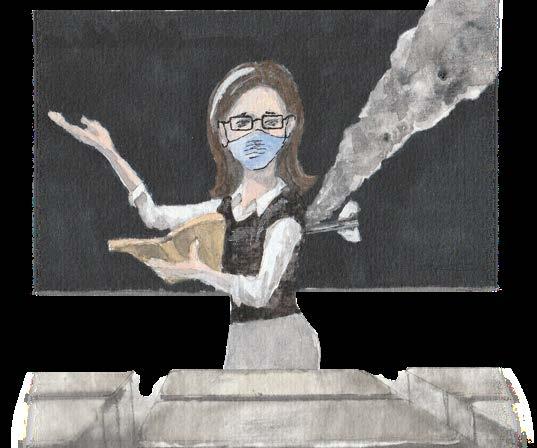
With devotion, teachers are standing by their students to maintain their learning and aid in the development of the social, emotional and academic skills during the COVID-19 pandemic. Unfortunately, this comes at a personal cost to teachers who are overworked to the point of exhaustion.
Without appropriate resources to navigate the cascading social environment that the novel coronavirus has triggered, teacher burnout is at an all-time high. In some cases, students are performing at a lower academic level and are achieving poorer social adjustment skills.
As a first-year teacher, I have seen my colleagues meet students with compassion and patience, feigning confidence that they don’t have in order to make their pupils feel safe and encouraged. In addition to providing instruction, teachers are struggling to meet the high expectations of being a coach, therapist, caregiver, cheerleader, detective and, now, a health-protector.
Teachers are spending more and more time enforcing health and safety restrictions, doing things like sanitizing their classrooms, monitoring handwashing and ensuring physical distancing, thereby leaving less time for academic instruction.
Students and staff are concerned for their own health and the health of their family members. The anxiety skyrockets when teachers are given expired masks that cause skin rashes and headaches for protection. Fears also inflame when educators are told there is a COVID-19 case or two within their schools, and crucial details about contact tracing are left out for prolonged periods of time. On top of this, new and substitute teachers have limited or no sick-time available to cover any pandemic-related absences. If teachers are worried about possible exposure or are symptomatic and choose to self-isolate, use up their sick time and test negative, they are the ones who have to pay the consequences later if they transmit the novel coronavirus. The province and school districts are pushing teachers between a rock and a hard place during a perilous crisis, thereby endangering both staff and students.
Moreover, teachers are overwhelmed with the volume of work, having to continuously revamp their programs due to changing COVID-19 rules. They have twice as much work preparing lesson plans, assignments and assessments for both in-person and online instruction — not to mention these circumstances have made things increasingly difficult for students
with exceptionalities or no access to home computers.
For many teachers, online instruction is unchartered territory for which they are not formally trained. Consequently, it takes significant time to prepare creative lessons that engage students. Professional development days to develop these skills, as well as days to prepare for lesson planning, have been reduced due to blended learning. As a result, teachers have been forced to do this on their own time.
Further, teachers are on call around the clock from both students and parents, willingly responding to emails and calls at all hours, providing support even while exhausted. They spend considerable time following up with vulnerable and at-risk students, especially those who have not been connecting through distance or in-person learning. They are also required to cover for any substitutes if they call in sick.
School space is often an issue due to social distancing. Classrooms have been replaced by libraries, cafeterias and even carts as some teachers travel between various learning spaces. Teachers also constantly contend with modifying classroom configuration in order to accommodate a fluctuating number of students in the room. Outdated and unreliable equipment results in the need to change lesson
plans on the fly, which is complicated by blended instruction.
Each day, teachers continue to rise above these stresses for their students, even when they are on the verge of collapse. Teachers need help. The right kind of help.
While nearly 500 educators and school leaders have signed a letter requesting more staff in schools, the previous education minister, Kelvin Goertzen, who was recently replaced by Cliff Cullen, responded to the calls for help by announcing that the province is hiring 100 teachers and 20 education assistants for a resource centre to support remote learning. But, because none of these teachers will work in classrooms, teacher workload and stress will likely not be reduced in any significant proportion.
Premier Brian Pallister also announced that a rapid-testing pilot project would be launched for Winnipeg educators in mid-January. This serves to return qualified teachers to the classroom faster by reducing long waits for COVID-19 test results. But, there are no plans for rapid testing the students. Although little help is better than none, the province’s action still
does not provide sufficient resources to address teacher safety and workload needs.
Teachers have been vocal in communicating their needs. In their letter to the government, they have requested more resources in the schools, including funding for more substitute teachers and educational assistants as well as equitable access to technology devices for staff and students. They have also requested more mental health supports.
The president of the Manitoba Teachers’ Society, James Bedford, further articulated the need for paid sick leave for all staff, safe and sufficient personal protective equipment and assurance that educators hired for the remote learning centre will not be at the expense of teachers in the classroom. Investments in these steps can help mitigate teacher burnout and stress.
Teachers are feeling vulnerable and exposed as they continue to shoulder greater responsibilities to keep students learning and keep students safe. Teachers are standing by students. Someone needs to stand with us. words/ Shaylyn Maharaj-Poliah/ staff

Between the years when the oceans drank New Orleans and the rise of the Y2K scare, there was an age when shining webpages lay spread across the internet like wizard gifs on an amateur GeoCities site — Miniclip, DeviantArt, SomethingAwful, Newgrounds, with its animated videos of fighting stick figures, Maddox that bordered on the verdant lands of Seanbaby, Homestar Runner, whose heroes wrote emails with boxing gloves on, and eBaum’s World, with its animated videos of fighting stick figures which were often stolen from Newgrounds. Such was the proud epoch of Web 1.0, held together with the guile and skill of the young master of the millennium’s new medium: Adobe Flash.
But the world has moved on from these ancient days, GeoCities have crumbled and the pillars that held up its citadels have, too. On Jan. 1, Flash Player, which had once tread the pixeled thrones of the fledgling internet under motion-tweened feet, was at last laid to rest. Adobe officially ended support of the software.
The demise of our hero was a long time coming. By 2020, Flash was a digital dinosaur, rife with security issues and outclassed by HTML 5 as a content presentation platform. The tech world had progressed and brought with it the era of Web 2.0, with its user-created microcontent,
interactive pages and robust social media networks. Therein lies today’s tragedy: the end of Flash severed one of the few threads connecting us to our digital heritage and an internet experience that is alien to today’s.
To commemorate this shift in online culture, let’s remember the best parts of Flash content’s salad days and think about how we might preserve the ethos that helped create them.
First and foremost, Flash offered a way to realize a vision. The early internet was a place where anything goes, for better or worse. Flash aided and abetted this by circumventing the need for a budget or animation equipment, allowing anyone with access to the software to give form to their dreams and share them with the world. The form of these dreams often resembled a Mario sprite holding a gun, but some more vibrant arts from this period have stood the test of time. The works of Neil Cicierega and the Homestar Runner being notable standouts.
Neil Cicierega is a maestro of the internet age and one of the first people to make a career in the nebulously defined field of content creation. Mainly working in music, both under his name and the musical project Lemon Demon, and short videos, Cicierega has remained relevant for decades. Readers may recognize his work in Harry Potter Puppet Pals and the Ultimate Showdown of Ultimate Destiny. The latter represents the

quintessential Cicierega. In it, Cicierega takes the dorky conversation staple of “who would win” in a fight between pop-culture characters and pushes it to an extreme, complete with charmingly amateur Flashanimated visualizations.
In contrast, Homestar Runner was a focused cartoon show with clean animation, slick writing and pro-quality production. The characters answered emails from fans on a dated Disk Operating System hardware, made low-quality buddy cop films or engaged in meaningless but hotly-contested athletic competitions. The creators, Matt and Mark Chapman, endearingly referred to as the Brothers Chaps by fans, have since gone on to work high profile gigs in broadcast animation, working on hits like Gravity Falls and Wander over Yonder. But, the level of professionalism and sense of fun still shines through their earliest work, even as it clocks in at two decades old.
This separation from business in the
early days of Flash also contributed to the culture. Flash content was freely available and made for the love of it. The lack of clear avenues for monetization meant that hard work went unrewarded, but this also kept the communities and games themselves from suffering from the corporatization that now plagues modern platforms.
Flash animations were free from midroll ads for shaving products or calls to smash like and subscribe buttons. Flash games could be enjoyed without shelling out for microtransactions or downloading data-harvesting apps. Sound fascinating? Interested readers should delve into the library of Flash content hosted on Newgrounds.com, whose community has developed an open-source alternative to Flash player, preserving decades of games and animations for the post-Flash world.
Former staff members of Siloam Mission, a local Christian charity, and the “Not My Siloam” movement are revealing violently colonial parallels in the charitable organization’s relationship with Winnipeg’s Indigenous houseless community. Siloam Mission, one of Winnipeg’s foremost Christian charities, has been hit with several criticisms highlighting its fundamental lack of cultural sensitivity toward people with Indigenous background. With over 66 per cent of Winnipeg’s houseless population falling under this demographic, the public has raised concerns as to who the charity really serves.
Although Siloam signed the Winnipeg Indigenous Accord in 2017, ex-staff reported in an interview with the Winnipeg Free Press that Siloam’s commitment to reconciliation is simply a public relations stunt — signing and checking boxes where they need to in order to look
favourable to those distributing grant money. Considering the context of several statements, they don’t seem far off.
The most disturbing of these cultural insensitivity allegations were directed at the organization’s representative, evangelical CEO Jim Bell. In August of 2019, Bell reportedly disallowed staff members the right to use the phrase “cultural genocide” when referencing Indigenous dispossession, colonialism and residential schools. According to ex-staff, Bell also indicated a few months later that he perceived Indigenous cultural practices as “pagan,” and he vocalized his struggle with the services that Siloam provided for Winnipeg’s Indigenous houseless community.
Although these are but a few examples of the organization’s clear lack of commitment to Indigenous issues and reconciliation, they display Siloam’s complete disregard of the accord they swore to uphold in 2017.
The accord’s backbone is the concept of reconciliation, which can only begin with the formal recognition of the atrocities perpetrated upon First Nations, Métis and Inuit populations — in other words, not silencing staff members’ use of the phrase “cultural genocide.” Further, acknowledging Indigenous cultural practices exist in their own right, separated from colonial judgements and ethnocentrism, is another key tenant. Beliefs cannot be categorized into neat and demoralizing hierarchies like Bell suggested when he labelled Indigenous practices as “pagan.”
Bell’s ethos reflects a modern version of the white saviourism and colonial social taxonomy that was used to justify cultural genocide in the first place. Historically, the use of such loaded verbiage such as savage, barbarian, heathen or pagan was used to display a dichotomous image of Indigenous populations as separated from the “civilized” belief systems of Christianity and the West. It was believed, within government bureaucracies, that so-called “pagans” could be reformed and assimilated
into western Christian society, and efforts to do so were perceived as the “white man’s burden.” It was under this self-indulging racist altruism that cultural genocide silently worked at the erasure of millions who identified with Indigenous belief systems.
So, it comes with extremely disheartening irony that Bell, a white man running a charitable Christian organization, is silencing Indigenous voices, repressing Canada’s history of cultural genocide and using loaded terminology such as “pagan” when referencing Indigenous people.
It is important to understand the damage that beliefs like Bell’s cause to Indigenous communities. When people are labelled as “savage” or otherwise “less than” another, reverberations are felt throughout Indigenous communities.
As the University of Manitoba’s very own Emma LaRocque mentions in her seminal book, When the Other is Me, dehumanization is an experience.
For decades, the scientific community has gradually issued more pointed warnings about the dangerous impact that our changing climate will have on humankind and the earth’s ecosystems. With 2020 being one of the warmest years on record in the arctic, the unique town of Churchill, Manitoba is experiencing first-hand the effects rising temperature and melting ice will have on our world.
Northern Manitoba is an important climate research location with scientists travelling from around the world to Churchill each year. This small town is famous for the areas intersection of arctic, tundra and boreal forest.
Although many Manitobans have not experienced the arctic landscape first-hand, many of us are acquainted with the alarming climate research conducted in our own backyard. It’s a fact that ecosystems around the world — and in our own province — are changing drastically due to anthropogenic influences. But, after a disastrous year like 2020, these warnings should be taken more seriously than ever before.
At the start of the COVID-19 pandemic, it became increasingly clear that we cannot live separated from our social and environmental contexts — an insight that has been shrouded by division and individualism. It is now undeniably clear that we exist in an interconnected world — both physically and holistically akin.
Whether this reality is acknowledged or not, our collective actions produce global impacts, and disasters like COVID-19 leave no life unchanged.
Before the novel coronavirus made its way to Manitoba, our government and citizens were given a couple of short months to prepare. Looking back,
most of us were unaware of how devastating this disease would be. But, just like climate change, expert epidemiologists were warning the world about a global pandemic decades before COVID-19 materialized. Few were listening.
It’s impossible to travel back in time and alter our initial response to COVID-19, but we will not have any excuses when it comes to the global threat of climate change.
As water levels continue to rise, desertification rates of land are also increasing due to higher precipitation levels and storms are becoming more severe. The higher precipitation levels are leading to less predictable torrential rainfalls which wash away or re-evaporate quickly, leaving the land dehydrated and stripped of essential topsoil. The three-fold crisis of desertification, sporadic torrential rainfall and flooding is displacing millions of people.
Changes in the climate, as well as climate events like hurricanes and monsoons, have always impacted the movement of people. However, the continued destruction of our ecosystems will exacerbate migration and conflict, forcing an unprecedented number of people to migrate to new cities or countries.
Climate change contributes to slow onset events such as desertification, rising sea levels and pollution. It’s these gradual shifts in the climate that will leave millions of people with no other option but to abandon their land.
While farmland continues to degrade and drought persists in several regions of the world, sea levels are rising. An estimated 230 million people live one metre below sea level. Additionally, according to the latest report from the
CONT’D FROM P. 10
Upon reflecting on what it feels like to be dehumanized, LaRocque meditates on an excerpt from Indigenous resistance literature written by Métis activist Howard Adams, who asserted “racial stereotypes […] made me feel stripped of all humanity and decency, and left me with nothing but my Indianness, which at the time I did not value […] Not only did my sense of inferiority become inflamed, but I came to hate myself for the image I could see in their eyes.” Power is attained through cultural meaning expressed through symbols in discourses — delegitimizing cultural identity through damaging verbiage and the repression of consensus historical events, like the role Canada and the churches played in cultural genocide, is ultimately contributing to the destruction and repression of Indigenous identity.
The accord Bell signed in 2017 outlines principles of apology for ongoing colonial legacies, sharing, mutual respect and recognition — principles that Bell has clearly failed to uphold. As a result of his negligence to Indigenous representation and his dispossessing actions, Bell should resign as CEO of Siloam Mission. In his place, an Indigenous representative should be appointed to serve the majority Indigenous population that the charity assists. This could act as an initial step to ensuring Indigenous representation and upholding the Winnipeg Indigenous Accord with holistic multicultural practices that consider the dispossessed history of colonialism in Canada.
Intergovernmental Panel on Climate Change, oceans could rise by more than two feet by 2100.
Due to compounding factors related to climate change, quantifying environmental migration on a global scale is a challenge. By looking at specific regions, the World Bank estimates that by 2050 the world may see 143 million internal climate migrants from Latin America, East Africa and South Asia alone.
Although scientists continue to improve their estimates on exactly how many climate migrants the world can expect, one thing is clear — our response to this crisis will define international relations in the twentyfirst century.
The global community is completely unprepared to handle mass environmental migration, as well as other adverse effects of climate change, including intensifying competition for food, increased border stress and future pandemics that may be linked to the pestilence left by decaying ecosystems.
Currently, there are no legally binding agreements accommodating nations that are already experiencing climate migration.
Organizations like the United Nations that establish systems to protect refugees do not have resources to extend those services to climate migrants — including the millions of people who are already displaced by weather hazards like floods and hurricanes each year.
As weather events become more extreme, the time to prepare for ascending crises shrinks. The fact that we have yet to systematically address climate migration exposes our apathy but continuing to ignore this problem after suffering through COVID-19 will be completely inexcusable.
As constituents of a wealthy nation

capable of climate change mitigation, it’s our responsibility to be informed and force our politicians to improve climate change policy.
Climate change is a form of inequality; the wealthiest nations are typically the ones who produce the most anthropogenic emissions per capita, yet it is usually poorer nations that are adversely affected by its consequences.
The primary goal must be to help areas most affected by climate change adapt and maintain a level of stability in their communities.
It’s no longer enough to support policy makers and leaders who “believe” in climate change. We need representatives who will begin implementing strategies to address climate change systemically.
Researchers from around the world have repeatedly warned us about our impact on the environment since the first UN Earth summit was established in 1972. It’s time to listen to the experts and learn from the mistakes we made throughout the COVID-19 crisis. Climate scientists are kicking and screaming for governments to open their ears and cooperate. Perhaps now that they see the cataclysm of COVID19, we can hope that climate change enters into global governments’ agenda with a red marker. words/ Firstname Lastname/ staff words/

In the era of COVID-19, people are forced to entertain themselves in creative ways. Luckily, the Winnipeg art scene is still active — artists and their work are being featured in multiple online exhibitions, and artist talks and various projects and shows are putting out calls for submissions.
The long-anticipated public art exhibit, One Queer City by artist duo Shawna Dempsey and Lorri Millan, is finally being fulfilled this year in Winnipeg’s transit shelters as originally intended back in 1997.
The installation consists of six posters, each by different local artists, of cheerful Winnipeggers — including a toddler with their birthday cake, a fisherwoman with her catch and a boy dressed as the eponymous Golden Boy — alongside text reading “Winnipeg, One Gay City,” which is a reference to the city’s slogan “Winnipeg, One Great City.”
However, when this installation was initially created, the mayor at the time, Susan Thompson, refused to sanction Gay Pride Day, so the project was pushed to the side for decades because Dempsey and Millan were unable to get approval from the advertising agency due to the content. Eventually, the pair filed a human rights complaint and settled with the agency in 1999, the same year Winnipeg elected North America’s first openly gay mayor, Glen Murray.
This public work is on display until Feb. 14. If you are using public transit, keep your eyes peeled.
Another event is the online fashion
exhibit, Inuk Style, held by the Winnipeg Art Gallery (WAG). It showcases a selection of beautiful, carefully crafted Inuit clothing and accessory pieces, created by multiple Inuit artists and designers across the Canadian Arctic and features works from the WAG’s collection and the Government of Nunavut’s Fine Art Collection.
The show was created to celebrate contemporary artists who create Inuit attire using traditional techniques passed down through many generations and is being held virtually until May 2 through the WAG’s website.
Also available online is the decorative art exhibition Simply Splendour, another collection by the WAG. The decorative arts are very important documentation of their time and demonstrate social custom, taste, style, class distinction and fashion of its time. The collection puts a spotlight on British and Canadian works, including over 4,600 beautiful pieces in a range of mediums from porcelain to silver, glass, ink and pencil drawing.
The intention of the exhibit is to celebrate the decorative art of everyday objects. It runs until June 13.
A solo art exhibition, Inversion by Jill Ho-You, is being held online via Martha Street Studio. The work examines systemic failures, unsustainable human practices and questions human contribution to the Earth.
Ho-You’s interest in psychology, anatomy and memory has led her to explore embodied memory in her practice. In her artist statement, she describes this as “the idea that
/

the human body physically records experiences and trauma in its cells, tissues and genes.”
“Recently, I have begun to examine the similar ways the environment and the human body processes and remembers trauma,” Ho-You said. “Paralleling the system of the human body to the ecosystem, my work attempts to compare how both the Earth and body retain deep forms of memory in the atoms, molecules and structures they are composed of.”
Inversion’s works are composed of mixed media such as etchings and bacterial culture that pose an intimate experience between the viewer and the work.
Open access to the exhibit begins Jan. 15 and closes Feb. 19. Additionally, Ho-You will be hosting a virtual artist talk over Zoom on Jan. 23 at 2 p.m.
Lastly, Aboriginal Music Manitoba (AMM) has created an initiative in collaboration with Urban Shaman Gallery to pay tribute to four residential school survivors who live in
The community aspect of Flash content also reflected its Web 1.0 sensibilities. In the modern social media bubble, users frequenting content aggregation platforms like Reddit and Instagram are presented with a stream of posts curated by algorithms and riddled with sponsored content. In the age of forums and mailing lists, users had more of a direct hand in curating their web experience, searching websites, crawling through webring and generally being active participants in the media shared, created and consumed.
Such investments into the online community were displayed in the degree of customization available in these times. Users cut their teeth on HTML and dazzled viewers of their Myspace or LiveJournal home pages with animated cursors and bit-crushed auto-playing MIDI files. I won’t go as
far to say that this was a more ethical method of digital citizenship — construction of a digital bubble of self-reinforcing ideas, devoid of challenge or dissent was definitely possible — but at least it was more engaging and encouraged an interaction beyond repeating talking points and reposting Instagram-slick infographics.
Of course, this retrospective of the early internet doesn’t tell the full story. It glosses over email scams, power-tripping forum mods and the origins of various unsavoury digital communities that metastasized into the alt-right and anti-vaxxers. But, we can still pull a few positive lessons from our digital forebears
First, create and share your creations widely. The media of Web 1.0 still inspires creators to this day. Continue the cycle.
Next, be self-indulgent. Pursue things from a pure place of joy, and even if your creation doesn’t get widespread traction, you will at least have the honour of expressing a part of yourself.
Last, take an active approach to curate what you read and see. Branch out beyond the Instagram Explore page and challenge yourself, even in just reading or seeing new things. The ideas sparked by the change might surprise you.
As long as we remember these lessons, the spirit of Flash is with us, and if you look hard, you can find it living on. McMansion Hell, a site dedicated to methodical takedowns of shoddy, nouveau-riche architecture and Public Domain Review, an online journal showcasing the weird and wonderful media that has passed into public ownership, were both founded in the 2010s and beautifully show an
Manitoba. Indigenous artists have the opportunity to submit their work and have the chance to be chosen by the survivors to recreate their likenesses. Each selected painter will be granted $2,500 to cover the cost of supplies, studio space, materials and other necessary items.
The submission deadline is Jan. 21, and submissions must be sent online through Google Form, mail or fax — physical submissions will not be accepted.
Although the city is under strict restrictions at the moment, Winnipeg artists are still showcasing their talents for anyone and everyone to see.
words/ Firstname Lastname/ staff
words/ Shanelle St. Hilaire/ volunteer
outlet for creativity that reflects the best of the digital age. We would do well to follow and build upon their examples.
Julien’s Daughter — ‘The
4.5/5 stars
There are some bands that spring to life fully formed, like Athena from the head of Zeus or one of those sweet tents that just pops open, no assembly required. Julien’s Daughter is one such anomaly — its debut EP, The Static That Carries Over, is an electrifying six-song sprint from a band that sounds like they’ve already got it figured out.
“Coffee” opens with a broad, surging riff courtesy of guitarist Ian Tata, though it is frontperson Emma Murphy’s emphatic “huh!” that sets things off, spiralling into the kind of unpredictable quicksilver pop that few bands manage so effortlessly. Murphy, Tata, bass player and multi-instrumentalist Chelliot Osuntade and drummer Cody Kennerd play with exhilaratingly taut energy, no wasted notes or gummy ballads, each song packed with wall-to-wall hooks.
One of the bigger hurdles in crafting a brief introductory EP is finding the balance between cohesiveness and variety. Julien’s Daughter strikes a precise middle ground, undermining its obvious knack for pop melody with grimy detours. The scuzzy stomp and coat-hanger guitar of “Foxy Roxy” is all the more effective for the ascendant pop of the first single “Barb 217,” which itself is sent sideways during its seasick breakdown. Despite the impressive, complex songwriting, the production — courtesy of William Grierson and Arthur Antony, save for Adam Fuhr’s work on “Barb 217” — is far from overreaching or glossy. There’s a shaggy simplicity to the atmosphere, faded bursts of pink rather than clean neon lines.
Tata, Osuntade and Kennerd are an image / Julien’s Daughter/ provided

imaginative and agile trio of players, but the band’s secret weapon is in Murphy, whose loose confidence adds layers of conversational detail to her circling, insular lyrics. The themes are familiar — debauchery, self-doubt, guilt, tricky relationships — but in Murphy’s dynamic delivery, dotted with whispers and yelps, they sound like fresh perspectives.
There’s enough runaway energy powering The Static That Carries Over to sustain a full-length record, but this stylish burst of sound is perhaps more vital for its brevity. It feels much larger than its six songs, the kind of music that fills the room and clings to your brain. It also proves that the members of Julien’s Daughter share a creative chemistry that cannot be practiced or workshopped. For a young band to sound so confident is somewhat rare, rarer still when that confidence feels so earned.
Julien’s Daughter’s debut album, The Static That Carries Over, will be available Jan. 15.
words/ Kaelen Bell/ staff
PETRIC’s Flashbacks is airtight nearly to the point of airlessness, the dusty corners of country music sandblasted until even the shadows are gone, every instrument and voice polished and bent into plastic shapes. The album is immaculately produced and loaded with titanium hooks — the kind of glittering, bulletproof pop with the power to blind should you look directly at it.
The album is anchored by a mixture of synthetic beats and effect-laden live drums, with walls of energetic guitar, banjo, pedal steel and keys surging to meet frontman Tom Petric’s keening, youthful voice. The trio is excellent at what they do, crafting a record that plays like a Marvel movie — choruses hit like explosions, and the set-pieces are glittering and recognizable, music made to comfort rather than challenge.
That broad, general appeal is there on the album cover — Winnipeg boys with southern twangs and the sunny sensibility and ocean-swept hair of native Californians. It can’t help but feel like the product of some trans-national focus group, a band from everywhere and nowhere. But it is a successful product, one that aims big and manages to hit all its desired marks, three talented and clearly ambitious musicians reaching for the high of the common denominator.
While the familiarity is the point, it sometimes borders on egregious — the chords that anchor new-love anthem “Single Problems” are near-identical to Macklemore’s 2012 hit “Same Love” — and you find yourself wishing that PETRIC would attempt to carve out its own space rather than push into the slim cracks left by country pop’s

current royalty. Opening track “Kids” is the most obvious piece of American country-radio bait on a record full of it — what three Manitobans are doing singing about prom nights and county queens is anyone’s guess, but PETRIC’s appeal is in how well they manage to sell it. It doesn’t really matter where the band is from when they nail the imitation.
If you’re going to swing big, you had better hit the mark — and there is no denying that PETRIC’s aim is pretty solid. Flashbacks is precisely the record the band sought out to make, the future soundtrack to sunset truck rides and backyard barbecues, soothing and anonymous, romantic and big-hearted. If superstardom is the goal, then PETRIC is on the right path — if there is one thing people love to hear, it would be something they have already heard before.
PETRIC’s full-length album, Flashbacks, will be available Jan. 13.

Since mid-October, university athletes have been disappointed by the news that there will be no winter 2021 season due to the COVID-19 pandemic.
This included the cancellation of major sports such as hockey and volleyball, with drastic measures having been taken to ensure everyone’s safety.
The cancellation of the season was hard on everyone, but it impacted upcoming rookies the most. They now have to wait until the fall 2021 or winter 2022 semester, at the earliest, to make their Bisons debut.
One rookie who remains positive in these times is Bisons women’s volleyball rookie Brenna Bedosky.
The Winnipeg native knew she wanted to be a Bison right from the start of her recruiting process.
“The recruitment process that I went through was probably a little different than others in my situation,” Bedosky said. “I had only played club volleyball
for Junior Bisons, I never really had the urge to play anywhere else.”
“I had gotten interest from a few other places, some in the [U.S.] [and] some in Canada, but at the end of the day, this place is my home.”
Since her rookie season is delayed, the urge to play and the excitement level is much higher for Bedosky.
“I am extremely excited for next year, no matter what my role is,” Bedosky said. “I’m just excited to be here with the team and train for real games with them.”
“The idea that this is what I have been training for for years and that hopefully it will come next year is incredible.”
During COVID-19, training and staying in shape could be very challenging for high-performance athletes.
For Bedosky, since the pandemic has started, she has been doing small workouts by herself and with the team, and in order to stay in shape
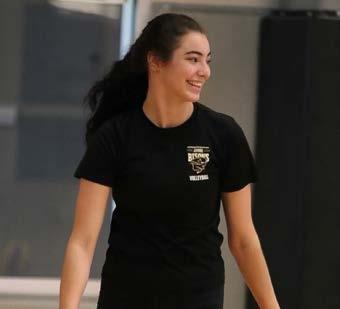
during the code-red restrictions her trainer has given the team small workouts to complete on their own.
These small workouts could lead to greater to success in the future for
Virtual Discovery Day, January 16, 2021
Learn how to launch a successful career as a doctor of chiropractic at our virtual Discovery Day
If you can’t attend on January 16, email admit@nwhealth.edu and we will send you a recording of the presentation after the event.
For many University of Manitoba students, the holiday season is traditionally filled with celebrations that revolve around social gatherings. Unfortunately, the COVID-19 pandemic interfered with the usual social events that typically take place during the holiday break. Due to code-red restrictions, many Manitobans took part in much smaller celebrations with just their household members or by themselves.
The changes to the 2020 winter break also extend to the academic schedule, with winter term classes not set to start until Jan. 18, 2021.
For Taryn Ambrose, a U of M student and daily attendee of the Active Living Centre pre-pandemic, the inability to go to the gym has been detrimental to his grades and his health.
“I feel as if [my grades] took a dive,” Ambrose said. “The gym was a big part of my daily routine and not being able to go took a toll on my motivation and discipline.”
However, like his fellow U of M students, Ambrose has been forced to adapt to the current measures. With limited equipment, his workouts have been curated to work in his environment.
“I’ve been doing a lot more bodyweight exercises like push-ups, sit-ups […] and some weightlifting with the few things I have at home,” Ambrose said.
For Ambrose, the extended holiday break came at a good time, allowing him to focus on his health.
“I’m enjoying the extended holiday break,” he said. “I’ll definitely be using
the time to continue on staying fit.”
Another Manitoban who cannot wait for fitness facilities to open again once COVID-19 cases have decreased is the owner of MORFIT Training Centre, Stuart Klassen.
“The regulations that have been put in place since COVID-19 [began] have affected our industry in many ways,” Klassen said. “Gyms have been asked to shut their doors, leaving many business owners and their employees without work and interrupting the regular fitness habits of a large percentage of Canadians.”
The 10-year fitness professional also co-owns a fitness equipment supplier, White Lion Athletics, and started a fitness app named Huddle Fitness Systems.
Klassen holds a bachelor of science degree in exercise science, is a certified exercise physiologist as well as a level-1 nutrition coach and holds multiple certifications with the Manitoba Fitness Council (MFC). He also works with MFC to train and certify new fitness trainers.
After celebrating the holidays, students that already have irregular diets may feel concerned about what they are eating. Klassen acknowledges this and recommends a patient approach to assessing one’s personal diet.
“If you feel there is room to improve your dietary habits, then read about different perspectives on nutrition and find what resonates with you,” Klassen said. “Scientific opinion in the nutrition industry changes all the time, so maybe don’t get too caught up in science.”
‘Christmas was pretty different this year’
“We have been having check-ins [virtually over Zoom] together pretty often discussing how to do Christmas hampers for families and also now alumnae visits from previous players, which have been pretty amazing,” Bedosky said.
The alumni experience is a great way to learn throughout your university career. Alumni give advice on situations that they have been in and pass it on to younger players.
“There are so many incredible players that have played for this program and just talking to a few of them has been great,” Bedosky said.
It was an unusual holiday season for everyone in Canada this year, but it gave Canadians an opportunity to make the most of it and stay positive, something Bedosky took advantage of.
“Christmas was pretty different this
year compared to others, but still nice, nonetheless,” Bedosky said. “Lots of Zoom calls with friends and family.”
“For training, we started getting back into at-home training pretty soon after. The workouts have been a good thing […] [they help] us keep on track and stay positive during code red.”
graphic / Jenelle McCann / staff
While the closure of gyms has posed a risk to the health of students, Klassen sees isolation as a greater threat and offered solutions to this issue.
“A drop in physical fitness is only one of the consequences of gyms closing and being in [code-red restrictions],” Klassen said. “Other aspects of health can also be compromised when we can’t socialize and contribute to our communities the way we used to. We know that exercise is not only beneficial for physical health, but for mental, emotional and spiritual health as well.”
Like many Manitobans, Klassen looks forward to the day fitness facilities open up again. He predicts that the transition to returning to gyms will be much easier than the adjustment to home workouts. He also encourages students to find ways to stay healthy wherever they may be.
“There will be many people that will stay with in-home training because of the convenience,” Klassen said.
“That will always remain a great option. Most gym-goers are eagerly looking forward to starting up again, so it should be a seamless transition.”
“Just keep in mind that if you haven’t been active for several months, take the first couple weeks easy, let the body re-adjust back to the demands of physical effort.”