AUDIO EDITOR Joseph Gonzales audio@themanitoban.com
PHOTO ASSOCIATE Alex Decebal-Cuza
PHOTO ASSOCIATE Ally Gonzalo
VIDEO ASSOCIATE Nish Joshi
VIDEO ASSOCIATE Paul Stabell
AUDIO ASSOCIATE Tino Hove
REPORTERS
NEWS Gillian Brown
NEWS Damien Davis
NEWS Amira Tekle
NEWS (INDIGENOUS AFFAIRS) Kayla Lariviere
COLUMNIST Cam Cannon
COLUMNIST Meagan Hughes
ARTS & CULTURE Kaelen Bell
ARTS & CULTURE Zachary Sigurdson
SPORTS Isaiah Wagner
VOLUNTEER CONTRIBUTORS
Samantha Nicole Tumlos Evan Friesen
U of M to allow selective exclusion of grades
Petition garnered over 6,000 signatures
GILLIAN BROWN, STAFF
Following a petition urging the U of M to adopt more flexible course assessment methods because of academic changes made to limit the spread of the COVID-19 virus, the university announced that students will now be given the choice whether to include individual final grades in their GPA.
The petition, started by U of M student Andrew Sadik, urged the university to follow the actions of the University of Calgary and implement the option of a pass/fail system for any courses.
In the four days the petition was online prior to the university’s announcement, it gathered more than 6,000 signatures.
“We did not get exactly what the petition requested, but it’s definitely helpful,” wrote Sadik in a recent update.
U of M vice-provost students Laurie Schnarr said in an email to students March 26, “For any course completed at the University of Manitoba in winter term 2020, you can choose whether or not to include a grade received in your GPA calculation.”
“This option will apply to all winter term 2020 courses or spanned courses that you completed over the fall 2019-winter 2020 terms for which a standard letter grade is received (A+ to F).”
Schnarr also said that although
these grades would not be included in students’ GPAs for the purpose of program progression or overall GPA requirements, they will still appear on transcripts and will be used to satisfy pre-requisites for entry into other courses and to satisfy other program requirements.
Grades that students choose not to include in their GPA will be flagged with a notation on their transcripts indicating the grade was excluded due to the COVID-19 situation.
Students will have seven days after receiving final grades to give the university their decisions.
“This has been something that UMSU is in support of, [something] we’ve been advocating behind the
scenes on ,” said UMSU vice-president advocacy Sarah Bonner-Proulx.
Individual faculties are considering changing their grading systems because of the academic changes rather than adhering completely to a university-wide decision.
Bonner-Proulx reported in a recent UMSU meeting that the faculty of law has implemented this pass/
“We did not get exactly what the petition requested, but it’s definitely helpful” — Andrew Sadik, U of M student
fail model on its own.
Canadian Federation of Students Manitoba chairperson Brenden Gali says the organization is also in support of this change for all Manitoban institutions and believes the petition was the driving force behind the university’s decision.
“Anything that garners a number like over 6,000 supporters, administrations take notice,” said Gali.
“They feel that pressure, so I think the actions taken by the University of Manitoba administration has a
direct link to this petition and actions started by students.”
“COVID-19 is affecting many people, different communities of the country,” he added.
“We represent students, so there’s just a lot of things that we hope we can see our governments doing to support students specifically.”
“A lot of our calls to action included the provincial government following the steps of the federal government and deferring student loan repayments until the fall 2020, extending appeal options for students, taking care of international students so that they have the rights to work and study here,” he said.
Gali said he believes this petition “is just one step” in the direction of getting provincial administrations and governments to take better care of students.
For him, Manitoba’s response to COVID-19 is “actually kind of disappointing.”
“We’re going to need more services, we’re going to need more staff at universities to support students for their appeals for services like health care,” said Gali.
Gali added that with “this one per cent reduction in government grants to universities, and post COVID-19, I think we’re going to see students suffer, and it’s a huge disappointment.”
UMSU board approves universal transit contract
AMIRA TEKLE, STAFF
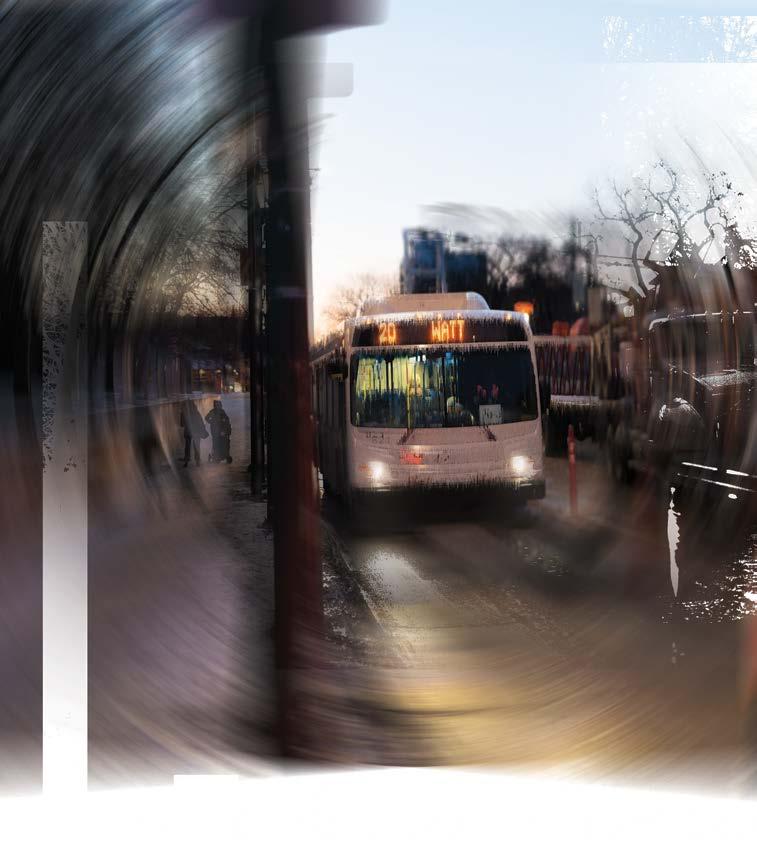
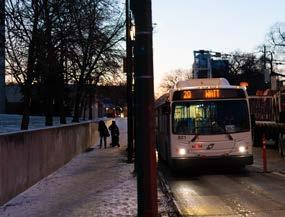
The U-Pass will return to the U of M this fall at $200 per term.
UMSU’s board of directors voted March 26 to approve the newly increased U-Pass rate recently passed
in the City of Winnipeg’s multi-year budget for four years.
Currently, students pay $136.25 per term for the U-Pass. Council initially approved the new rate at $160.75 per
term and students voted in favour of the increased rate in a referendum.
After a lengthy battle between the city, students and other advocates after the U-Pass was not included in the preliminary budget, the inclusion of the U-Pass was approved in the final budget.
Sanderson called the U-Pass’s inclusion in the city’s budget a “major positive” despite the unprecedented increase in cost
Even at $200 per term, the U-Pass remains the cheapest Winnipeg Transit option for students.
The post-secondary pass offered by Winnipeg Transit comes at a cost of $81.65 per month — $126.60 more expensive than the U-Pass per term — and the U-Pass will be approximately $85 cheaper than the low-income rate being introduced this month.
Not all students would qualify for the low-income rate. Despite its restrictive parameters, it was an option city council touted as the solution to the cancellation of the U-Pass proposed in an early draft of the city’s budget.
The board chose not to put another referendum to the student body, instead deciding to unilaterally approve the increase without student input.
Sanderson called the U-Pass’s inclusion in the city’s budget a “major positive” despite the unprecedented increase in cost.
All opt-out options in the current contract will continue to exist, possibly with one addition.
“Everyone outside the transit service area, not just outside the city limits [being eligible to opt-out] — that would be something new that would be a positive.”
“There’s a certain designated amount of metres from a bus stop where if it’s unreasonable that you could walk to a bus stop, then you’re considered outside the transit service area,” added Sanderson.
“Now, if those people [who reside outside of the transit service area] wish to maintain their U-Pass [...] and don’t want to pay for a parking pass and they simply want to drive up somewhere close to the U of M then do park and ride [...] they are absolutely still U-Pass eligible.”
Sanderson said improvements to the terms of the contract were in the works, including “expanded opt-outs” for students who live in areas with little to no reasonable access to public transit.
PHOTO BY ALLY GONZALO
PHOTO BY QUINCY HOUDAYER
Blue skies ahead
QUINCY HOUDAYER, STAFF
Matthew Doering
Editor-In-Chief:
Contact: editor@themanitoban.com / 474.6770
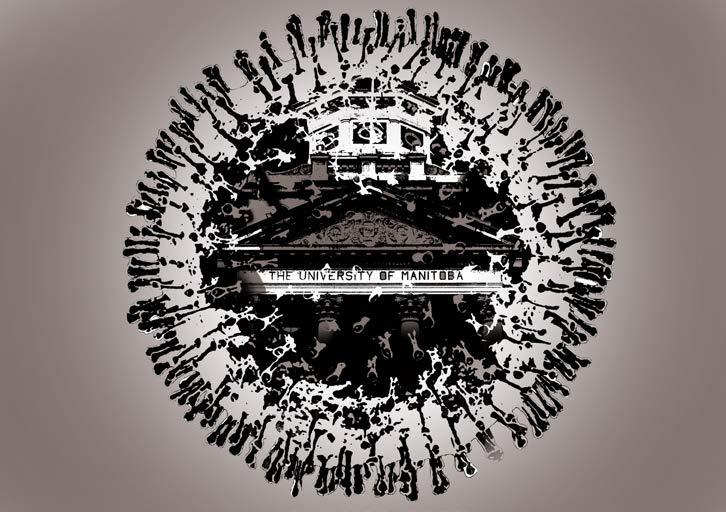
No, COVID-19 was not made in a lab
The damage of social media conspiracy theories and why doctors should be listened to
GRACE PAIZEN, STAFF
In season six of the popular animated series King of the Hill, veteran Bill Dauterive is led to believe the U.S. army was experimenting on him to make him into a walrus super soldier.
Though this plot is ridiculously hilarious, in hindsight, the misuse of social media has led to rumours about COVID-19 that parallel or even trump the imagination of the King of the Hill writing staff.
Authors have been writing about pandemics wiping humans off the Earth since Mary Shelley’s The Last Man
The nearly-200 years since have given us science fiction tropes of plagues, alien viruses and government-created diseases used as bioweapons against the perceived enemy.
These tales can be misused through the human condition of paranoia.
Social media platforms like Facebook, Instagram, TikTok, Twitter and YouTube have given rise to the pseudo-expert.In short, if you have a blue checkmark beside your name or have the most followers, you are given power that, quite honestly, should be reserved for researchers in their fields.
Instead, we are now living in a time where science fiction fantasies
are being stripped from novels, short stories and the screen and warped into social media conspiracies that spread faster than COVID-19 itself.
Some of these conspiracies are spread by people with a great deal of authority — from a California congressional candidate saying that the virus was man-made to the U.S. secretary of state refusing to say he doesn’t believe the virus is entirely a hoax.
No, the coronavirus was not made in a lab. Scientists have already debunked that theory.
In fact, humans have been living with coronaviruses for millenniums. Human coronaviruses cause illnesses like the common cold. First identified by scientists in the mid-1960s, four of the seven types of coronavirus that are known to infect people cause the common cold.
Just because the COVID-19 virus is classified as “novel” doesn’t make coronaviruses new. It simply means the COVID-19 virus is a new type of coronavirus.
This isn’t some science fiction fantasy where a foreign government brought a biowarfare plague upon the Earth.
And if you’re going to redistribute such falsehoods, call it what it is — a second Yellow Peril.
The Yellow Peril was rampant in the 19th century, when the predominantly-white Western countries feared that people from East Asia — hired for cheap labour — were going to invade their countries. If this sounds familiar, it’s because this fear merely mutated into the 21st-century version of outsourcing labour to East Asia, creating the fear of jobs being “taken away” from white Western labourers.
Today, Asian people in countries
That’s the biggest problem with conspiracy theories: they are rarely new
like the U.S. are reporting more and more racist attacks ranging from subtle prejudice — like a decrease in sales from Chinese restaurants and Chinatowns across the country — to physical assault.
The biggest problem with conspiracy theories is that they are rarely new.
By stitching together classic racism with misinformation, conspiracy theorists prey on age-old human prej-
udices and one of the oldest human tropes: the fear of the unknown.
The most frustrating part of the conspiracy theory in the case of the COVID-19 virus is that it isn’t fundamentally unknown.
Researchers know more and more about the virus every day.
They have been communicating strategies to help prevent the spread of infection to the general public for months now and have been busy developing techniques to fight the virus.
Researchers at McMaster University can now isolate the virus from biological samples, a technique that will help in the development of vaccines.
Doctors also know how COVID19 transmits from person to person — through respiratory droplets or touching an infected surface.
The fact that the virus has an official classification in the phylogenetic family tree signifies that the scientific community knows what this disease is — that it’s not some alien virus brought to Earth from the unknown.
It can be frustrating that science moves slowly, but there is so much of the organic world left to document that automatically skipping to the conclusion that COVID-19 is part of some government biowarfare con-
spiracy theory — during the same week scientists finally found the Moustached Kingfisher alive in the wild for the first time in decades — seems ludicrous.
What is the antidote to the pandemic of social media fear then? Simply don’t listen.
Listen to doctors, researchers and scientists.
They have gone through rigorous schooling and training to help us understand disease as well as to find solutions and vaccinations to mitigate spread and, hopefully, eradicate infection.
These people are experts in their fields and should be treated as such. In fact, we may never know the name of every researcher who contributed to the vaccination when it comes out.
This should be enough for you to take what the research community says seriously.
They are not doing this to become TikTok famous, they are doing this because it is their job and their passion to help eradicate disease.
It is time to put aside our overactive imaginations and listen to scientific facts.
GRAPHIC BY EVAN TREMBLAY
Blakely unfettered
Prince George captain pipes up in finale
It was a performance to remember, in a game to forget.
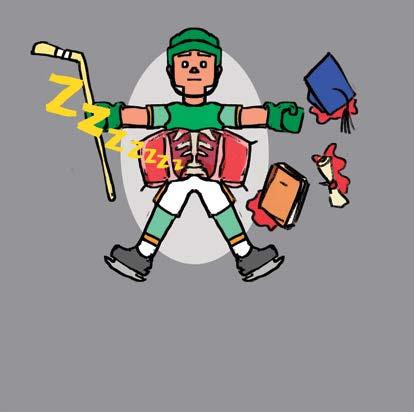
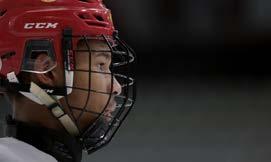
With a hat trick and a pair of assists in an 8-5 loss Saturday, Prince George Silverbacks captain Brantley Blakely bid adieu to his junior hockey career. The Penticton-born winger will leave the British Columbia Major Junior Hockey League for the professional ranks next season, and with the Silverbacks missing the post-season, it was the last time he would suit up in black and silver.
Gothic
clichés gone wild
TOM KAY
Coming this May is a batch of lurid and violent short stories with the tagline “On the Wrong Side. Nothing is right anymore.
These are the Veiled Sagas.”
Z. F. Sigurdson is a new
Usually not one for words, Blakely’s stall was packed after the game, as reporters gathered around for one last chance to speak with the club’s leader for the past four seasons. The attention made Blakely laugh.
“Well this is new,” he said.
“You’d think I was Connor McDavid or something. Not sure what you guys are going to get out of me here.”.
Continued Unfortunately | Page 7
Winnipeg author self-publishing his first short story collection, titled Bloodied — The Veiled Sagas
Continued A thinly veiled | Page 5
Debut an homage to fantasy forbears
BJORN AJOKE
Coming this May is a batch of lurid and violent short stories with the tagline “On the Wrong Side. Nothing is right anymore. These are the Veiled Sagas.”
Z. F. Sigurdson is a new
Winnipeg author self-publishing his first short story collection, titled Bloodied — The Veiled Sagas
Continued Bloodied | Page 5
Blakely unfiltered
Prince George captain speaks out in finale
MARKUS SPECTRAL
I
t was a performance to remember, in a game to forget.
With a hat trick and a pair of assists in an 8-5 loss Saturday, Prince George Silverbacks captain Brantley Blakely bid adieu to his junior hockey career. The Penticton-born winger will leave the British Columbia Major Junior Hockey League for the professional ranks next season, and with the Silverbacks missing the post-season, it was the last time he would suit up in black and silver.
Usually not one for words, Blakely’s stall was packed after the game, as reporters gathered around for one last chance to speak with the club’s leader for the past four seasons. The attention made Blakely laugh.
“Well this is new,” he said.
“You’d think I was Connor McDavid or something. Not sure what you guys are going to get out of me here.”
Continued Despite | Page 7
Transit program goes provincial
RALPH DERMER
The year since city council’s pivotal U-Pass decision has seen dramatic and profound changes to the city — and none more pronounced than experienced at the U of M. =Council’s decision marked a turning point in public transportation policy not just in the city, but in the province as a whole as Winnipeg took on a leadership role and charted a path followed
by most other municipalities.
But it is the students, faculty and staff who commute to the university every day who have been most directly affected as the decision not only upended transportation but campus politics for years to come.
Continued Free transit | Page 3
Parking profits to pay for programs
GEORGE PLIMPTON, III
The year since city council’s pivotal U-Pass decision has seen dramatic and profound changes to the city — and none more pronounced than experienced at the U of M.
Council’s decision marked a
turning point in public transportation policy not just in the city, but in the province as a whole as Winnipeg took on a leadership role and charted a path followed by most other municipalities.
But it is the students, faculty and
staff who commute to the university every day who have been most directly affected as the decision not only upended transportation but campus politics for years to come.
Continued Prices soar | Page 2
WPF announces 2020 headliners
Fans criticize that artists
‘arnet punk’
CYRIL MAGEE
Last week, Punk Winnipeg announced the headliners for the 2020 RBoC Winnipeg Punk Festival.
The lineup includes such eclectic selections as John Legend, Taylor Swift, Wiz Khalifa and the recentlyrevived Jonas Brothers. Festival organizers said they had hoped to bring a diverse group of punk artists to the city for the upcoming series of concerts.
University of Manitoba student Allan Blondie decided to order tickets upon hearing about the lineup. This year’s will be the first Punk Fest she has ever attended.
“It feels like they’re really making punk cool again,” said Blondie,
“really recapturing that Blink-182 feeling.”
Some fans of the festival were not so impressed. On Punk Winnipeg’s Facebook page, long-time fans expressed disappointment with the choice of artists.
“Those arnet (sic) punk artists” said one commenter.
“Stop wasting good money on bullfrick music like that” said another.
Fans have expressed discontent in recent years over the festival’s RBC sponsorship, with many complaining that the company’s influence over lineups has resulted in a change in artistic direction. In that time, headliners of years past like The Misfits
and Bad Religion have begun to go by the wayside in exchange headliners like Christina Aguilera, Ed Sheeran and NSYNC.
Festival organizers claimed that they were “bewildered” and “flummoxed” by the backlash but intended to rectify the situation.
They have since released a statement going over the plan to appease concerns from many fans. This includes the plan to hire more classic punk bands — like Weezer, Coldplay and Panic! At The Disco — as well as a new contract for local bands to be paid a “living wage” of $15 per hour-long show, or $7.50 per half hour.
Sparks fly as rival fundraisers face-off
‘If he knew who my dad was, he wouldn’t treat me like this’
BILL EDWARDS
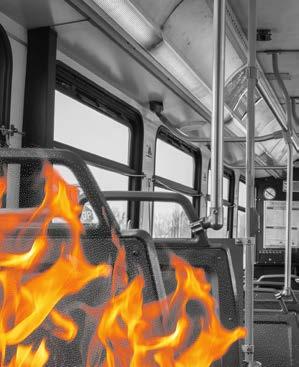
Aseries of ugly confrontations at the Bougie Nights fundraiser last week saw the whole thing — and a small section of the university — go up in flames.
The fundraisers, “board” members of the Winnipeg Junior Achievers Club who had been sleeping outside the UC in a makeshift camp since Monday, were raising money for local youth poverty initiatives.
The annual campaign has long been criticized as token liberal dogoodery — a gross and depraved
performance of poverty cosplay — but has largely been tolerated by the university community because it directed some money toward good causes and the so-called “campers” were well-meaning enough.
But Chuck Stake, an unaffiliated delinquent “with nothing but time on my hands,” said he wanted to guide this year’s participants through a more meaningful experience.
“It’s a rare opportunity to meet these folks on something even remotely resembling my territory, so
I felt I should make the most of it and give them a more honest experience,” said Stake, who organized a rival campaign collecting money for him to serve as private security charged with policing the “squatters.”
The ugliness began overnight Monday when Stake was reported to have sped his rented SUV up over the curb, honking the horn and shining bright lights on the campers and keeping them awake most of the night with Hager-era Van Halen tracks. Several were seen catching sleep during their classes the next day.
Some time after noon Tuesday, Stake — remarkably confident while brandishing a blackjack, obviously new aviator sunglasses and a black uniform with “security” unevenly spray painted across the back — raided the camp and was heard demanding the campers “pack their shit,” pointing to discarded cardboard strewn about the site.
“This is a public area,” he shouted through a bullhorn to the campers who were about eight feet away. “For your own safety, and the security of others, I cannot allow you to remain here. Beat it.”
“They should get back into the classroom where they’re less of a threat to the rest of us” — Chuck Stake, counter philanthropist
Stake was seen throwing personal property into a dumpster, including a speaker that was playing music throughout the day to keep the campers’ spirits up. He refused to comment directly on reports that some items were seen in his vehicle. “That seems unlikely,” he said.
“That guy is an asshole,” said Brad Chadford, an executive-stream business major participating in his second camp out.
“He tossed my speaker into a pud-
dle and then threw it out, mumbling some nonsense about only tolerating Crass or Discharge ‘on cassette.’ Then he followed me inside and wouldn’t let me use the washroom. Where am I supposed to go?
“If he knew who my dad was, he wouldn’t treat me like this.”
Hours later, the entire camp was engulfed in flames after a discarded cigarette lit up the untidy cardboard that remained about the area. There were no injuries and the camp was empty as the fire spread to sections of the university causing significant damages.
Stake, who was first on the scene and called in the fire department, said he wasn’t surprised the week ended in disaster.
“I told them. I told them to pack that shit up,” he said.
“You can’t just leave your things lying around out here, hoping someone will come behind you and clean up.
“They should get back into the classroom where they’re less of a threat to the rest of us.”
Prices soar for black market parking stalls as university expands lot operations
Continued from Page 1
After city council would only agree to support the universal transit program if students increased their contribution to what amounts to savings of less than $5 per month over a regular transit path — a deal Coun. Al Mattered called a “great achievement that students must respect me for securing” — the U-Pass was effectively dead.
UMSA council moved to sidestep its own policies and accept the deal without engaging students through
“I saw a guy yesterday driving from the roof of his car, steering with some ropes and pulleys — and he was on his God damned phone” — William Morrow, aggrieved student
a referendum but failed to satisfy its own bylaws by erroneously holding the vote in closed session after forgetting to re-open the meeting following
an allegedly boring in-camera debate. Council’s failure marked the death knell not only of the program but of public transit in Winnipeg, as the dramatic drop in ridership inspired the city to sell its entire fleet to ride hailing service Rebu.
By the summer, a black market emerged to trade, rent and sell parking passes for the Fort Garry campus. After the market value of a single stall increased by more than 2,000 per cent, the university brought the underground market to daylight by auctioning off five-year leases on individual spaces to the highest bidder.
“This has been an incredible boon to the university,” said U of M spokesperson Dan Johnson. “We raised enough funds to cover paving over the golf course area and buy up some additional property near the university, which will all be converted to additional parking stock.”
“Within a year, the U of M will be among the top lot operators in the city,” he added, failing to explain why additional parking is called for as the university moves to deliver all undergrad programming online.
Documents uncovered by the Buffalo indicate the university has also invested in developing lots near the U of W and at Brandon University. Johnson said the long-term vision will have the university “free of the shackles of provincial funding” by 2030.
A stark division has emerged as students who can afford a city rapid transit licence — which grants access to the Southwest Transitway that was
recently converted into an exclusive toll road direct to campus — and those who weather the roadways, which became an increasingly highrisk exercise after safety regulations were pulled back to allow anyone willing to accept all associated liabilities to construct their own vehicles so long as they have at least three wheels.
William Morrow, a fourth-year faculty of arts student with what looks like black soot covering all of his face but small round circles where goggles shielded his eyes, said his car hasn’t had a windshield since November — and that’s not even the worst part of his commute.
“Man, I saw a guy yesterday driving from the roof of his car, steering with some ropes and pulleys — and he was on his God damned phone,” he said, lugging a jerry can and hose toward the football field, which was recently converted into another U of M private lot.
“I liked it better when I could listen to a podcast on the bus on the way to campus.
“Now I’m out here sucking gas through a hose.”
IMAGE BY QUINCY HOUDAYER, YOUTUBE
IMAGE BY QUINCY HOUDAYER
Chaos on campus
Loose Bisons, Cougars, Pronghorns and Dinos overrun Fort Garry
RALPH DERMER
There was a mad scene on the Fort Garry campus last week after the country’s top university sports teams — already stoked to a frenzy following the cancellation of the National Sporting Championships — were set loose from their pens and wreaked havoc for several hours.
It was the U of M’s own Bisons that first broke free after being sprung from Indebtors Group Field by an anonymous — and currently wanted — individual. The Bisons were followed by the Cougars, Pronghorns and, surprisingly, the Dinos as “All hell broke loose,” according to one more or less confused bystander. According to witnesses, the
Bisons stampeded through the pack of Cougars toward the quad. After charging through the Drake Centre and the ARTlab, the Bisons met the Pronghorns back outside but did little to slow the momentum of the stampede.
It wasn’t until the Dinos appeared on the scene that the suddenly confused Bisons were brought to a standstill and mounted something of a defence formation in the quad. By this point, fire, police and animal rescue personnel were on the scene awaiting backup from the Canadian reserves.
All four teams were eventually rounded up and returned to their
respective pens by the field. Early estimates of the cost of the damages range between upsetting and destabilizing but by any measure, the event was significant.
“I don’t get paid nearly enough for this shit” — Mike Harvey, former security chief
“We were wholly unprepared for this,” said now former campus security chief Mike Harvey, putting out a cigarette while immediately lighting another. He didn’t look good.
“I’m in my little hatch-back here chasing a stampede of Bison as it marches through a pack of Cougars and then I get a call on the radio that Dinos — Dinos — are making their way toward this crazy scene. What am I to do about that with a flashlight?
“I don’t get paid nearly enough for this shit.”
In a curious development, much of the chaos was broadcast with play-by-play by laid off sports guys
who seemed entirely unaware that the stampede was not, in fact, the national championships. The Buffalo’s own Ricky Attenburrow suffered non-serious injuries trying to organize some sort of post-rampage interviews.
“I think it’s a good sports story, really,” he said from the hospital. “People expected the Bisons to put up a strong fight against the Pronghorns, but the Cougar win was a Cinderella story — a total upset.”
Free transit sparks social transformation across city and province-wide
Continued from Page 1
When city council shocked everyone last year by not only supporting the U-Pass program but extending free public transportation to
the entire city — a deal Coun. Al Mattered called a “great achievement that he is proud to have even a small part of” — even UMSA council couldn’t have projected the transformation it would inspire.
Transit ridership has increased 3,000 per cent as tolls to run a vehicle inside the perimeter highway have made passage safe enough for grade school students to resume cycling to school in safety.
Close to 80 per cent of the vehicles in the city have been taken off the road through a municipal buyback program, which was inspired by Australia’s gun buyback efforts in the ’90s after the value of a used car in Winnipeg fell below $100, regardless of make.
The rapid transit program, which is in the process of being extended to all areas of the city, has been so
“It’s
like they’ve seen the light. The libraries are open five days a week again.
It’s magical” — U of M spokesperson Dan Johnson
successful that activist networks once bent on upending capitalism full-stop have retreated entirely into nonpolitical folk rock of a vein few can stomach, but fewer yet can strongly argue against.
In fact, it has been so successful that even the provincial government has jumped on board with not only supporting the Winnipeg program,
but also developing a province-wide, publicly funded transportation network on top of a broad package renewing public investment.
“I don’t know what the hell happened down on Broadway,” said U of M spokesperson Dan Johnson, “but after the U-Pass vote and the quick success of truly public transit, they completely shifted course and began seriously investing in public services — from education to healthcare.”
“It’s like they’ve seen the light,” he added. “The libraries are open five days a week again. It’s magical.”
William Morrow, a fourth-year faculty of arts student with a fine tan, said his commute has become so stress-free he took up embroidery on his way to classes just to spice up the ride.
“This isn’t easy,” he said, “especially when you hit that one last pothole down by Jubilee. It can get pretty exciting if you’re in the middle of a French knot when we bounce through that one. But apparently the city plans to fill it next week and there will only be about three or four left in town.”
“I used to be such an angry dude,” he said from what was formerly the parking lot on the southeast end of campus but has since been transformed into an open, grassed area brimming with gentle wildlife.
“Now I’m just out here in the sun, relaxing and breathing in clean air. I’m almost bored.”
IMAGE BY QUINCY HOUDAYER
Comment Editor: Kenny Ingram
Contact: comment@themanitoban.com / 474.6529
Nationalization of companies needed to combat crises
JONESTON ALEXANDER
Workers around the world have been undermined throughout history. From the general strikes of the early 20th century that were broken by big business to the modern catastrophes of the Great Recession that saw workers have their compensation cut or be fired altogether. Although few seem to understand it yet, what is required to adequately protect the entire world from the dangers of COVID-19 is a mass mobilization of the working class of every country to ensure every person gets
the treatment they need In an age of populism around the world, where autocratic leaders are being elected one after another, it makes the worldwide pandemic an even bigger threat.
From Recep Tayyip Erdoğan in Turkey to Jair Bolsonaro in Brazil to Donald Trump in the U.S., the world is full of leaders who are ill-equipped to deal with or unwilling to properly address the COVID-19 pandemic due to an antiquated ideology.
This ideology believes that the health and life of the stock market
must be put before the life and health of the average person. While elected officials and public figures in the U.S. argue that the economy must not be halted, instead endangering the lives of working people for the prices of shares, more and more people are continuing to get sick.
In Canada, Prime Minister Justin Trudeau has gone in a far more sane and different direction — providing Canadians with monetary relief. But the working-class of the world must think beyond $2,000 cheques.
Instead, they need to understand that in an economy that is totally unprepared to fight a crisis like this — where car makers are making up for a shortage of ventilators and luxury jacket makers are making up for a shortage of nursing scrubs — the only response is a very swift and abrupt move for the government to nationalize all industries.
Once representatives of the people gain control over these services, the country will be in a far better position
to combat crises like COVID-19 that the 21st century brings.
And to ensure that a situation like the current one never occurs again, it is imperative that the government of the people introduces legislation to bar capitalist-sympathizing political opponents from running in future elections and jails all those who disobey.
In the past, the left has brought you Soviet Union dictator Joseph Stalin and North Korean communist Kim Il-sung. But the recent coronavirus outbreak outweighs anything the left has ever done before. While U.S. President Donald Trump has been doing his best to keep America and the whole world safe since we first discovered the coronavirus, leftist leaders around the globe have been undermining him at every turn.
Liberals from every country have made this pandemic worse. From the moronic millennials crowding
the beach in Florida to the socialists around the world who are still probably meeting in their underground bunkers every evening, as we know they love to do.
But it’s not the incompetent people on the left that conservatives like us need to be worried about. It’s the ones plotting the destruction of the planet that we should be paying attention to.
While Trump has been doing almost everything in his power to stop the spread of the virus since halfway through March, liberals seem to
want to do nothing but criticize him.
From his use of language, to his denying of ventilators to various states, to his — as they call it — “slow” response time by declaring a national emergency on March 13.
While Trump is working his tail off in the Oval Office, being sure to positively reinforce staff with handshakes and pats on the back, Canadian Prime Minister Justin Trudeau has been in hiding at his lavish estate — something no one seems to be talking about.
It’s obvious that liberals are just
trying to bring down Trump before the 2020 presidential campaign begins, which is why they’re attempting to spin Trump’s constant wins on the pandemic as losses. When the country returns to normal on Easter Sunday, workers return to work and the stock market shoots back up higher than it ever has in history they will understand that they’ve lost.
But the leftist deep-state plan is even more sinister than what’s even being reported on centrist outlets like Rebel News or Fox News because the entire coronavirus was a ploy from
It is only when we perfect a system of the dictatorship of the proletariat that we will be prepared for the next COVID-19. the beginning.
Liberals in every country around the world made the virus and attempted to release it at once, to not only defeat Donald Trump in 2020, but to create a one-world government as countries band together to fight the virus while using it as a cover for their sick and bad agenda.
This plan was doomed to fail from the very beginning and as the church bells ring and hundreds of people in every church hold hands and shout “Happy Easter” together, we will know that we have won.
On my absence and a prelude to my triumphant return
How SJW neo-Marxists forced me to become a benzo-addicted hospital patient
HORTON STEPHENSON
Acouple of months ago you may have seen a video posted by my daughter on YouTube updating you, my fans, on my whereabouts and condition. I am writing to you now to give further perspective on where I’ve been over the past few months, how I got there and what I’ve done in order to turn my life around.
A year ago, I was on tour with my friend Blaze Newman, where we were not only discussing my bestseller 21 Laws for Living and the new authoritarian left that has been so prevalent in the last many years.
But on one of the stops, one of these SJW, postmodernist, neo-
Marxist-types attempted to end my life as I know it.
I now know, through my own inside information, that a person on the left crashed one of my events on the tour and offered me — what I thought — was water. He told me “Drink this, it will help to digest all that meat you’ve been eating.” And being that I’m not afraid of the ideas of the left, I drank the whole thing.
But I later found out that the drink he gave me was laced with the drug benzodiazepine.
The issue wasn’t the drug. It was the fact that I stopped following the 21 laws.
It wasn’t the fact that I grew tired of the all-meat diet, or the fact that I have crippling personal issues. It was the fact that I stopped pulling myself up by the bootstraps every single day.
I turned into the person I had always hated: a drug-taking SJW postmodernist neo-Marxist.
I began taking the drug more and more, not because of myself but because doctors kept prescribing it to me for no reason, which led to a situation where I couldn’t grip the bootstraps strong enough to pull up on them.
But my daughter never wavered. In line with the 21 laws, she boot-
strapped me all the way to Russia to get treatment. Nothing was easy. From lying in that hospital bed all day, to the hundreds of thousands of dollars I was forced to spend to be there, it was a hard journey for me.
After I awoke from a alleged four-month-long coma, hospital staff attempted to further help with their gadgets and doodads, but I wasn’t interested. I was going to recover on my own.
That is where I’m writing to you from now. Almost completely recovered, entirely on my own — through hard work and meticulous room
cleaning — and all because of the 21 laws that I meticulously followed.
My story proves not only that anyone can fall into a terrible leftist lifestyle of drugs, but that anyone can recover if they follow the 21 laws.
I am excited to be announcing my memoir on the last year of my life, and a brand new book tour with Newman.
I hope that you will learn from my mistakes and understand that the only way to live a productive life is with the 21 Laws for Living, that can be purchased now on my website.
The Van Cats are answer to all of Canada’s problems
GEORGE HENNESSEY
M usic has long been praised for its ability not only to bring people together, but to heal their wounds. Macklemore ended racism, Bono ended world hunger, John Lennon ushered in an era of unprecedented peace and prosperity — all through the power of music.
Now, more than ever, Canada needs somebody to step up.
In the last year alone, the Wexit movement began to take root, there
was the Wet’suwet’en crisis, and now we are experiencing the turmoil of a global pandemic. And worst of all, the price for a barrel of oil has hit rock bottom.
The challenges are tremendous. Canadians are worried about their futures.
Only the sweet croon of one man can guide us through such troubled waters. That man is none other than homegrown music legend and former
prime minister who we all know and love, Stephen Harper.
Of course, Canada is home to many incredible musicians — John K. Samson, Fred Penner, Trooper, Unkle Adams, the list goes on. But none of them match the incredible rawness, the luscious tones and sweet melodies of Stephen Harper and the Van Cats.
What this country needs right now is a Van Cats reunion tour.
Just imagine it: sold out stadiums, Canadians locking hands and realizing everything will be okay.
It is the birthright of every Canadian to get to see Stephen Harper and the Van Cats play their hits one last time — “Sweet Caroline,” “Sweet Child O’ Mine,” “Take Me Home, Country Roads (West Alberta).”
Beyond the spiritual and moral benefits of such a reunion tour, there
is the possibility of this sparking an economic recovery.
Thousands of Canadians, spending thousands of dollars, travelling hundreds of miles to see music legends. All the hits.
Just imagine the glory, the patriotism it would inspire.
Your time is now Mr. Harper. If not you, then who?
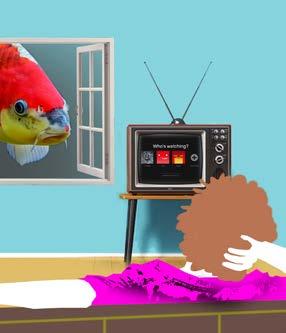
Documentary a labyrinth of unfathomable behaviour 'Inside the Secret World of Humans' confirms koi are a superior species
ANNE BADEN-BADEN
After an entire lifetime of being told humans are the dominant species, a koi can only believe that might be true. Humans appear to be smarter than us — they can breathe air without aquatic respiration and we’ve all heard the arguments that they are the more adaptable species.
However, watching Inside the Secret World of Humans changes everything.
The documentary highlights a normal day in the life of a human and their dominance is called into question from the very beginning.
can’t help but feel some pride that humans depend on water for not only drinking, but also for hygiene.
After a questionable breakfast of something called “peanut butter” and some murky brown liquid a fish wouldn’t dream of breathing, the human congregated with other humans on a long journey to their own type of coral reef, an intricate landscape of tall objects reaching up
this streaming behaviour, finishing a series before dinner and then starting another immediately after.
Staying up well after the sun had descended, it’s no wonder why the human is unable to awake from their slumber in the morning — they all seem fixated on these tiny handheld screens emitting the radiance of colour so familiar in our underwater world.
They all seem fixated on these tiny handheld screens emitting the radiance of colour so familiar in our underwater world
Thinking the human would awaken with the all-holy orb of light — the object they refer to as the “sun” — the human instead hit some sort of weird chiming object repeatedly and went back to sleep. Surprise shark attacks are apparently beyond the ken of the daily human experience.
After this procedure happened several times, the human rose and went to shower. At this point, a koi
to the sky.
After they arrive to work on some part of this reef, it was shocking to see that the human not only binged some bodily vibrations on their commute, but they would also pretend to work, only to stream content all day on the very screens they pretended to use for work.
In fact, when the human returned home from their day on the reef, they immediately indulged in more of
A thinly veiled saga of mashed-up fantasies past
Continued from Page 1
A nonsensical title for a nonsensical book, it consists of seven dark fantasy short stories with loosely connecting characters and concepts.
Sigurdson seems to be drawing from the same handful of gothic ideas — Lovecraftian monsters, sea-side towns, badass warrior women and Tolkien-esque fantasy clichés.
It’s as if someone tried to do 2017’s Bright, but without the hamfisted attempt to discuss race rela-
Sigurdson seems to be drawing from the same handful of gothic ideas
tions and told with the format of the Witcher books, but without the charm.
The longest story, “Sacrifice,” follows four friends going to a music show when they are attacked by creatures.
While mostly being a retread of 2017’s The Ritual or a genderflipped homage to Neil Marshall’s The Descent, there are no redeemable female characters and the obvious misogyny that is palpable when men are left alone becomes apparent.
“Duel of the Giants” remains
nothing more than an excuse for spectacle with a female protagonist who seems to be only concerned with her looks.
The final story, “Attack of the Terror,” may be the most egregious attempt to pad out the word count with nothing but genre tropes. A giant monster attacks a town — how original. Then, get this, it breathes fire. A 10-page attempt to recreate the horror of the 1954 Godzilla with an excuse to paint the last story with a “to be continued.”
If you like juvenile, bloody and thoughtless dark fantasy schlock, this book will be for you.
After viewing such an eye-opening film, one can’t help but wonder how these humans control so much? Would humans be prepared to defend themselves if another animal shows up on their coral reef? But more fundamentally, one has to wonder: would the human even notice in their hypnotic, bingeing state?
This film ultimately raises more questions than it answers and is sure to be used as evidence to help us defeat the humans in the koi uprising.
‘Bloodied — A Veiled Saga’ worth the read
Continued from Page 1
If you like dark fantasy, this book is for you. While self-indulgent — the forward describes the author’s experiences with depression and the support structure that helped him through — it remains sincere and inspiring for those with similar struggles.
The author confesses a love and reverence for the era of pulp fantasy that included Robert E. Howard and Edgar Rice Burroughs, elaborating on the process of attempting to wrestle the excitement and imagination without the racism and misogyny built deeply into the genre.
Through the use of dark fantasy tropes, the author attempts to build some semblance of control in his darkest time and the violence of the stories are reflective of that state of mind.
Through the stories “Beachcomber” and “Sacrifice” we follow male characters through the aimlessness, loss and trauma inflicted upon them by societal expectations and a culture of toxic masculinity.
Sigurdson’s female-led stories — comprising the remainder of the book — remain fast-paced, imaginative and gloriously entertaining adventures.
Understanding the difference between the meaningless use of tropes for pure entertainment and the profound use genre-tropes to explore themes and ideas, the female-led stories remain violently
fun and the characters intriguing, while the male-led stories are bleak and more grounded.
This allows for a compellingly basic space for empowerment narratives and room for more critical pieces.
GRAPHIC BY EVAN TREMBLAY
IMAGE SUPPLIED BY
IMAGE SUPPLIED BY AUTHOR
It’s a Bisons world and we’re all just living in it
Experimental band is just as ground-breaking and politically driven in person
WITHERSPOON CARLSON
T
he smell is almost unbearable as the Bisons crowd into the coffee shop we’ve agreed to meet at. The band is more than 30 minutes late, knocking over chairs and dragging mud across the linoleum. All four members ignore the barista’s greeting as they gather at our small corner table.
It’s an electrifying experience to be in the presence of such intellectual and artistic titans
This reckless, devil-may-care attitude will be nothing new to the Manitoban four-piece’s legion of fans. Bisons shows are now infamous for their wild disregard for fan expectation and safety, often consisting of the band wandering slowly across the stage for several hours, accidentally destroying instruments and leaving radical, anti-capitalist dumps for the custodial staff to clean afterward.
Their new record, the nearly threehour Grazing the Grasslands, is a further assault on good taste and musical form. A fundamental deconstruc-
tion of sound, the album consists of long stretches of dead space, guttural chewing and the occasional clatter as members knock over a drum set or guitar stand.
It is music for our times, an intentional middle finger to vampiric streaming services, right-wing extremism and neo-liberalism. It’s a disorienting piece of political abstraction that demands to be digested in full, much like a piece of grass, or that small rock you swallowed by accident.
The band members reject the concept of capitalistic individualism by refusing to use names, wear clothes or bathe, preferring to be indistinguishable from one another and travel in a small group as they make their way across the country, playing their genre-dissolving shows and begging for scanty meals of grasses and woody shrubs.
They also refuse to speak, often turning away from me or laying down as I ask questions.
One member, a guitar slung across his wide back, has left one of the band’s now legendary dookies beside the entrance. The genius of the move is difficult to deny.
The scrape of chairs as our fellow patrons scramble to move away and the shouts of the employees who are helplessly watching combine to create a piece of living musical protest
— under late capitalist structures, it seems to suggest that we are all smeared dumps unintentionally activating the automatic door of our local coffee shops.
Some songs on the new record express the group’s crucial politics more directly than others. The wordless “Eating Sticks (They’re Dry)” and the 17-minute “Being a Bison is Hard Work but Being a Cop is Unforgivable” speak plainly to the issues of food scarcity and bloated police budgets.
It’s an electrifying experience to be in the presence of such intellectual and artistic titans, to watch their big wet eyes drift in separate directions as they chew a napkin.
Described as being “at the forefront of this new wave of rumination” by Pitchfork, they seem in a state of constant contemplation, digesting pieces of ephemera — including the sleeve of my jacket — only to transmute them into towering works of confrontational art.
In what can only be understood as an act of feminist protest, or perhaps commentary on the act of feminist protest itself, one band member is blocking the women’s bathroom as I ask her what it’s like to be a female ungulate in music. She refuses to answer, instead grunting loudly at a woman attempting to get through
the door.
As I’ve clearly struck a nerve, I end our conversation. The Bisons gather together and move toward the exit, leaving me to consider what they’ve wordlessly told me.
And as I watch the band wander into traffic and cause several minor accidents, I can’t help but marvel at
their transformational instincts — creating art from the machinations of the everyday, they continue to expose the rot of society through an assault of caustic sound and smell.
March out like a lion with record-setting snowfall
LEWIS BROO
League says players were ‘just not feeling it’
World Dunks League cans season citing solely fatigue and travel
BERT LITTLE
Every young athlete grows up dreaming of the day they finally win the “ship” — lifting their sport’s great chalice aloft to the cheers of millions — but sometimes it just isn’t worth it.
At least that’s how members of the World Dunks League (WDL) felt after the league announced Friday it would cancel the remainder of the 2019-20 season, along with the league playoffs.
“We did not make this decision lightly,” WDL president Trey O’Bryan said in a livestream press conference from his living room.
“After careful consultation with our member teams, the league has decided that outright cancelling
the season at this point is the fairest option. We held a vote — nine teams wanted to cancel and seven didn’t — so it’s done.”
When asked if the league cancellation had anything to do with the ongoing global pandemic, O’Bryan — dressed in blue basketball pyjamas throughout the entire press conference — was adamant the league had other worries in mind.
about the virus right now. We are too, but let me assure you, this has nothing to do with that.
were just not feeling it.”
The Manitoba-based WDL has 16 member teams, with at least four residing in Winnipeg.
“Plus, we’re expanding to Kenora next season. What are they going to say when they see that on the schedule?”— Jameson Harden, Brandon Stone Throwers centre
“Listen, the season is a long grind, we play twice a week, there’s lots of travel and it starts to wear on guys.
“No, absolutely not,” he said.
“I know a lot of leagues are worried
We’ve had numerous players complain about how tired they are and how badly they want a break, they
Few players were able to comment, with most replying they would respond after a nap, but none could be reached by press time — or at all.
Bernadette Jordeen, mother of Gimli Fjord guard Mikkel Jordeen, answered for her son, calling the WDL’s decision the “right thing to do.”
“Our boys work so hard every week, they really deserve a break,” she said Those not happy with the deci-
sion were adamant the league had made the wrong call, and that players were overreacting. Among them was Brandon Stone Throwers centre Jameson Harden.
“It’s crazy, absolutely crazy,” he said.
“They’re out here complaining about travel, when we’re the furthest team away — and we voted to keep going.
“We were in first, cruising to a title, then they pull this. I think it’s insane, we got robbed.
“Plus, we’re expanding to Kenora next season. What are they going to say when they see that on the schedule?”
Bisons rampage brought down by Dinos
Streak ends under Dinos bite
RICKY ATTENBURROW
T
he Bisons broke free and went on a rampage last week, stomping past the Cougars and Pronghorns before finally being brought down by the Dinos.
The U of M was turned into the sight of mayhem as the unexpected emergence of the herd took even the most ardent spectator by surprise.
“It was crazy,” one unnamed fan said.
“They just came out of the gate screaming, everyone was yelling and I didn’t know what was going on at first. Thought it was going to be pretty quiet and all, but boy did the Bisons prove me wrong.
“First thought was that the
Cougars would have to get them, but — wow — didn’t see that coming.”
The Cougars stood wary, meeting the Bisons charge with ferocity.
Despite scratching and clawing, bringing the Bisons to heel momentarily, the Cougars could not bring down the herd.
From there, the Bisons squared off against the Pronghorns, who offered no challenge, stepping aside to let the herd through.
“I expected so much more from the Pronghorns, honestly,” another spectator said.
“At least stand there, lock horns and give them a challenge. But no, they just rolled over and let them through. Very disappointing — sad. They could’ve stopped this.”
momentum the Bisons had built.
The emergence of the Dinos left one fan almost speechless.
“I didn’t even know they existed to be perfectly honest,” she said.
“That’s some movie type stuff” — anonymous fan
Going through the Cougars and Pronghorns with relative ease, the Bisons then faced the most ferocious opponent next. The Dinos stepped out of nowhere, bared teeth and sank deep into the herd, killing all
“I mean, Bisons, Cougars, Pronghorns, those make sense, but [Dinos]? That’s kind of out of left field right? You can see the rest of those animals out in the wild, but to have [Dinos]? That’s some movie type stuff.”
When asked how he felt about the performance, U of M communica-
tions director Jonny Dunkus was incredulous.
“A game? I have absolutely no idea what you’re talking about,” he said.
“We had a bunch of animals break free of their enclosures and rampage through campus. Millions of dollars in damage, and while I can’t speak to injuries, I’m sure people were quite scared.
“I honestly think you’re missing the mark here. This actually happened.”
GRAPHIC BY ERNEST ZARZUELA
‘Unfortunately the only team better than us was the one we played today,’ Centennials captain
Continued from Page 1
When asked about the loss, where Prince George was thumped by the visiting Penticton Centennials, Blakely was diplomatic.
“We definitely could have won that game,” he said.
“I think we did a great job from the drop of the puck, keeping good tempo and generating high quality shots. If you look at our expected goals for we were in the 98th percentile in the league, and unfortunately the only team better than us was the one we played today.
“That’s been the story all year, generating a lot of high-quality chances — despite our record as a team we had a positive Corsi-for percentage — we just couldn’t keep it together in our own end.”
Asked what his team could have done to better prepare for Penticton’s solid offence, Blakely took a longterm view of the problem.
“Like I said, it’s been a problem all year,” he said.
“Even when we were in a playoff spot and had a winning record before Christmas, we had these issues. We let too many shots come from highdanger areas and we were awful in terms of blue-line stops.
“We were somewhere in the bottom quarter of the league in terms of blue-line breakups, and even worse at D-zone breakups. We just didn’t get it done, and a lot of that comes down to our defensive formation.”
Now, Blakely is off to Europe, where he will attend a top-flight analytics program in Oslo, Norway, before returning to North America for his first pro season.
“I’m incredibly excited to go to Norway,” he said.
“There are so many great things to learn, I heard there was a class on regression models which will be very helpful once I go pro. The team I’m going to is very analytics-savvy so I’ll fit right in.”
Despite ‘bangs’ and ‘bounces,’ Blakely at a loss for the loss
Continued from Page 1
When asked about the loss, where Prince George was thumped by the visiting Penticton Centennials, Blakely was at a loss.
“It’s insane,” he said.
“We did everything right, everything we could. We banged bodies, got pucks to the net, gave it our all, but the bounces just didn’t go our way tonight.
“I feel bad for the boys. Missing playoffs again hurts, and like this was my last shot, only made it once in four years and even then we got bounced early. It’s wild, like the hockey gods just don’t want us to play in April.”
Asked what his team could have done to better prepare for Penticton’s solid offence, Blakely felt leaning on his club’s superior size could have given them the edge — if Penticton would have engaged.
“Yeah sure they’ve got wicked shooters out there — the one guy with the dusty visor thinks he’s Ovi — but we’ve got brawn,” he said.
“We threw our weight around all night, left them pretty banged up, but still they didn’t want to go. Don’t care that I got the hatty, I was going for that Gordie Howe hat trick, and then they had other ideas.”
Now Blakely’s plans are to head south for a brief vacation in Mexico before travelling up to join his brother in California for summer training.
Connor Blakely has spent the last three seasons playing in the minors out in Stockon, California, and Brantley is excited to join his brother in the same organization.
“Oh it’s going to be great, let me tell you,” he said.
“Lots of sun, take some time off with the bro, then hit up the beach. We play a similar style of game, we have the same killer mentality, so definitely going to bulk up while I’m down there.
“That club obviously knows what it’s looking for. If they’ve got both of us, it’s going to be hard to get in and out of that building — Philly flu 2.0.”
• Keep in touch with friends & family. Touch base and engage through phone calls, online games, video chats and virtual happy hours.
• Stay connected with your social networks participate in online games. Hosting an online Houseparty is a great option!
• Communicate your thoughts, feelings & ideas.
• Reflect on yourself and your social needs. What aspects of your social life do you enjoy? What parts would you like to improve?
• Take an online course, workshop, or learn/perfect a foreign language - try Duolingo for Free!
• Read or pick up a new hobby. Hobbies are great ways to increase your skill set. They can also be fun!
• Create career and educational goals, and learn how to improve your time management.
• Seek information updates and guidance at specific times during the day from health professionals and WHO website.
• Avoid being over exposed to the pandemic news and take breaks from watching, reading, or listening to news stories, including social media.
• Tune-in to your thoughts and feelings and practice stress management techniques. Seek/accept help or support from others when needed.
• Make time to unwind and take a deep breath to remind yourself that strong feelings will pass. Try to do activities you usually enjoy.
• During times of stress, pay attention to your own needs and feelings.
• Eat healthy and keep regular exercise and sleep routines. Try downloading a strength workout app to your smart phone, such as the 7-Minute Workout (no equipment necessary).
• Do yoga, dance to your favourite music, walk briskly around the house, or go up and down the stairs for 10-15 minutes 2 or 3 times per day.
• Go outside for a walk or jog. Wash your hands when you get home, avoid crowded spaces, and practice social distancing.
• Don’t sit all day! Stand during commercial and video lecture breaks, etc.
Comment Editor: Kenny Ingram
Contact: comment@themanitoban.com / 474.6529
Students’ needs deserving of university’s attention
COVID-19 forcing students to cope with inadequate resources
Despite what the University of Manitoba administration believes, academics are the least important thing on students’ minds in this time of global pandemic. The threats to their financial well-being, mental health and their families will always take priority over university courses — a service that students have paid for as customers, not clients.
Over the past week, domestic students across campus were evicted from residence and international students were left to fend for themselves amidst global travel restrictions separating them from their families. Business closures have caused employers to cut pay, furlough, or outright layoff employees, with students losing their jobs and fearing for the well-being of their families. And yet, the university has given students inadequate resources to combat this situation.
Not only that, but in spite of a state of emergency being declared for 30 days in Manitoba, the U of M has doubled down on making the remainder of this year as stressinducing as possible.
Few allowances have been made in regards to coursework — instructors expect students to carry on with
no issue — and there has not been any talk of students receiving course refunds if they cannot participate in school anymore. An extended voluntary withdrawal date without limited access penalty, while generous, should be considered the lowest met expectation.
The COVID-19 pandemic has prompted schools and post-secondary institutions to suspend in-person classes and explore alternative teaching methods such as moving to an e-learning environment. The U of M cancelled classes on March 16 and 17 to allow professors, instructors and other academic staff to transfer classes to an online environment and decide on course syllabus changes to accommodate students.
Numerous departments and units that offer support services to students have also started to implement alternatives such as switching to online appointments and webinars. Considering that the logistics of these methods are complex and require training, staff have expressed concerns on the availability and effectiveness of their services. From technological crashes and errors to inadequate equipment and training to limitations of working from
home, the weight of the consequences brought about by the pandemic is all-encompassing.
Throughout this time, students have been left to wonder what the rest of the academic term might look like and are expected to wait patiently for updates from the university, their professors and their faculties. Despite the steps taken, the accommodations that have been made so far have been unclear, ineffective and inadequate — failing the very people they aim to help: the students.
Some units within the university have made the move to place the burden on students in a more direct way. The faculty of science reached out to its student groups asking that they create one- to two-minute videos for students in order to encourage studying online.
In this email, there was no reference to compensation for these students’ labour in creating these videos and a complete implication of shifting the burden of this online transition completely onto students.
This led to students feeling like they were being asked to solve the university’s problems for it.
The expectation to still submit deliverables such as presentations,
papers, research and lab reports despite the lack of access to resources is making students feel more distressed than they already are.
And these cases are not isolated issues. It seems students from all faculties are feeling the crunch of an administration that is not responding
Despite the steps taken, the accommodations that have been made so far have been unclear, ineffective and inadequate
to the direct needs of students in a time of crisis.
Issues that affect different groups in the community have been and are continuously brought to the forefront, but solutions have been few and slow-moving.
Something the university might consider doing under these circumstances is granting existing students a
passing grade in their current courses and releasing them for the time being to better handle the pressures in their lives. There is ample reason for the U of M to assign a passing grade for specific courses that would not directly affect grade point averages. This solution would grant students the opportunity to more adequately manage their personal situations, as well as relieve the burden on countless faculty members and staff who no doubt have their own worries in this time of crisis.
As it stands, the U of M’s action plan unfairly punishes students. Students are being made casualties in a time of pandemic, and their grades will follow them for years to come, regardless of the circumstances. Students are among the most vulnerable citizens of Winnipeg and the university’s response has caused anxiety, grief and dread across the board.
It is important to remember that students at the University of Manitoba are customers paying for a service, a service that is being shoddily and inadequately presented. When customers are not satisfied with the service they are paying thousands of dollars for, they deserve to have their needs met.
SAMANTHA NICOLE TUMLOS AND EVAN FRIESEN
GRAPHIC BY EVAN TREMBLAY
Mental health in the age of COVID-19
How the novel virus has fuelled Canada’s mental health crisis and what can be done
MEAGAN HUGHES, STAFF
The COVID-19 pandemic has had profound effects on our nation. Our daily lives have been completely disrupted and our routines have dissolved as we proceed into social isolation and quarantine.
Canada was already experiencing a mental health crisis which has now become greatly amplified by the wave of uncertainty and panic brought on by COVID-19.
The number of Canadians who have died from contracting COVID19 has also already surpassed that of the SARS outbreak in 2003. The seriousness of this pandemic has been weighing heavily on Canadians and citizens around the globe.
Mental health crisis hotlines have
been experiencing a growing number of phone calls for support. Many Canadians report feelings of helplessness and anxiety.
The rapidly changing situation is chaotic and unpredictable, leaving a lot of people at a loss for what will happen next.
Many people rely on their daily routine for a sense of normalcy and sanity, especially those who struggle with mental health issues. Going to work, attending school, socializing — these normal activities are things many rely on. We can sometimes take the simplicity or predictability of our daily lives for granted. We may not realize what a luxury some of these things are until we lose them.
When a daily routine is disrupted, especially for people who experience mental illness, it can deliver a shock to mental health that can trigger many different responses, from depressive episodes, to panic attacks and even relapses into addiction. Support groups and addictions centres have been forced to close drop-in centres and meeting places as we face more stringent regulations for social distancing.
Over four million Canadians are expected to apply for emergency funding as a result of job loss due to the epidemic. This epidemic has thrown the economy and the lives of Canadians completely off kilter and these huge waves of change will
have profound effects on our lives for years to come.
There are also risks associated with social isolation which are made worse when coupled with existing mental health issues.
Social isolation can cause a variety of psychological disturbances such as depression and increases the risk of suicide. For people suffering from issues such as social anxiety, symp-
It is important to reach out to friends, family or other supports during this time
toms can increase.
While we navigate through this crisis, it is important to reach out to friends, family or other supportive individuals or support groups by phone, video calls and social media. This is also important because it is not easy to reach out and ask for help, so some people may need help and support even if they haven’t vocalized it.
It is important to bring awareness to the fact that, while we are surrounded by the message to stay home, this is a complicated demand for some people. People who may be
experiencing homelessness during this crisis may have been advised to self-quarantine or self-isolate, but lack viable means to do so. People who are experiencing homelessness and poverty, the elderly and immunocompromised individuals are unfortunately some of the people most at-risk of experiencing complications due to COVID-19.
Local shelters such as the Main Street Project remain open with precautions taken and need all the available support from our communities to help see them through this difficult time.
The Anxiety Disorders Association of Manitoba has launched a new support line for people who need help coping at this time. Details can be found via their website.
It is within our best interest to do everything we can to make sure that COVID-19 does not continue to spread and try to use this time to take care of ourselves and our families. We must find it within ourselves to be patient and mindful during this time. Listen to your body and your emotions and reach out for help if you need it.
We are all in this together and we must unify in taking all proper precautions but also in supporting our collective mental health to make it through the stress of this crisis.
Needs of renters pushed aside during crisis
CAM CANNON, STAFF
Rent is one of the most common forms of unearned income, also known as “passive income.” It is income derived not from labour — not from producing anything of value — but from owning property and granting its use to others. In the most basic sense, rent is income earned from simply accumulating enough money.
Of course, the most obvious objections to this are either that landlords are responsible for upkeep, or that they provide a “service,” albeit, that service can be reduced to just owning property.
But those concerns need to be put aside because they amount to nothing but apologia for the institution of private property and the injustice inherent in it.
What specifically is it about accumulating enough wealth to own property that entitles somebody to the fruits of another’s labour?
What value does this add to a society?
With people facing increasing precarity in terms of their income amidst the COVID-19 crisis, there are groups and individuals attempting to organize rent strikes.
This effort is most notably being put forward by Parkdale Organize in Toronto, Ont., in its “Keep Your Rent” campaign, which has spread across the country.
The main idea of a rent strike is that by withholding rents, tenants are able to exercise power over their landlords and win concessions. This has been done historically to prevent evictions and rent hikes and to demand repairs that have long gone neglected finally be attended to.
The campaign for a rent strike can include hundreds of hours of face to face contact with other tenants in a building, ensuring that everybody is on the same page and that the solidarity necessary to withstand whatever comes the way of the tenants is present. Many choose to do this through establishing tenants’ unions — organizations of people coming together to fight for a better life for themselves, because their power comes from such unity, similar to labour unions.
However, a rent strike goes beyond just not paying rent — this can be seen in the necessity of organizing resistance to evictions proceedings, the gathering of funds to support
tenants in need and securing legal support, as well as outward-facing actions to influence public opinion such as pickets of the landlord’s properties, speaking with journalists and holding rallies.
This requires a fairly extensive network of dedicated activists and organizational infrastructure such as tenants’ unions. This is why, during times of relative peace and stability, the political left needs to be building such infrastructure rather than scrambling to do so during periods of crisis.
Places such as Toronto have already established somewhat of a culture of tenants’ unions and rent strikes, and as such, landlords in Toronto face the strong possibility of a rent strike set to begin on April 1.
In Winnipeg, the campaign is also present, but it seems to lack the infrastructure to reliably and successfully be conducted.
Currently, it is still hard to say anything definitive about the outcomes of these campaigns. However, regardless of the outcomes, there are some unique characteristics about the current crisis that are worth paying attention to.
Given that many people are now out of work and in self-isolation, it is highly likely that many people will be unable to make rent. And even without organized efforts, there is going to be somewhat of a passive rent strike.
In many places including Manitoba, non-urgent evictions have been put on hold. This means that evictions for non-payment of rent will not be happening on a normal timeline — reducing, or at least putting off, one of the main risks of a failed rent strike campaign.
Big banks have offered relief to homeowners with mortgage payments — yielding over 213,000 applications for mortgage deferrals. Ideally, this means that a rent strike will be viewed by the public in a more sympathetic manner — if the landlords don’t need to pay for the property, why should the tenants?
It is difficult to organize in person because of social distancing. There is a great deal of activity happening on the internet, but it is difficult to gauge the real level of support for a rent strike campaign through that. Activists will need to get creative to reach out to the other tenants in their buildings.
Given these unique circumstances, renters need to think strategically. Without infrastructure, it’s unlikely that a rent strike campaign will be successful in the short term in Winnipeg.
That being said, the struggle toward it may go a long way toward not only developing the infrastructure needed for future success, but will also provide a network of supports for those unable to pay rent who in the future may face the prospect of back rents and eviction.
Already, Winnipeg is seeing incredible grassroots organizations popping up due to the crisis — the Mutual Aid Society being especially noteworthy — which in the future, will hopefully continue to operate beyond the crisis and become a permanent feature of Winnipeg’s political landscape.
Let’s emerge from this crisis even more organized and prepared to fight for ourselves than ever before.
GRAPHIC BY EVAN TREMBLAY
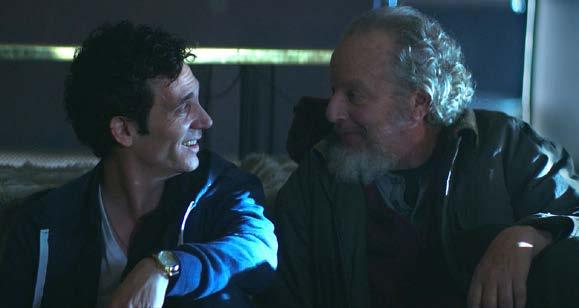
New film a fun lesson about living in the present
'James vs. His Future Self' gives a delightfully modern twist on a classic sci-fi trope
GRACE PAIZEN, STAFF
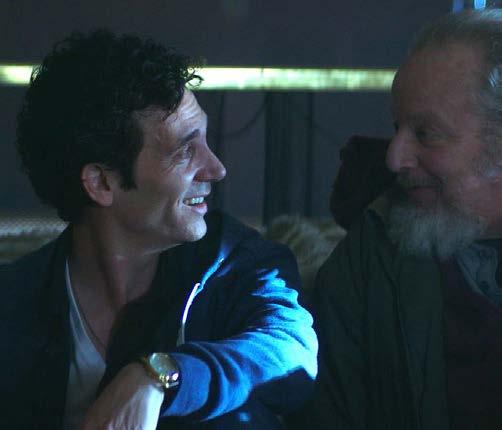
From the first notes of Ian LeFeuvre’s original song “Travel Through,” the theme of James vs. His Future Self is effortlessly established.
Accompanying the science-fiction-inspired font of the opening credits, LeFeuvre’s song brings to mind the Monkees’s “Daydream Believer,” situating James as the daydreaming scientist with lofty aspirations of time travel within the first few minutes of the film.
The brainchild of Jonas Chernick and directed by Jeremy LaLonde, James vs. His Future Self promotes appreciating what we have in the present instead of holding onto the past or being lost in the future.
As Jimmy, James’s older, time travelling self, puts it: “Don’t dwell on the past, don’t dream about the future, just — wherever you are — be all there.”
The comedic backand-forths work just as well as the serious moments because the film is so perfectly cast
The film’s plot falls into the Mary Shelley world of most sci-fi stories. Just like Victor Frankenstein, James is dangerously obsessed with his work, isolating himself from those around him. Even Jimmy warns that if James stays the course “You will end up desperately alone, driven insane. You will end up losing everyone that you care about.”
Some of the humour is more on the bro side of the spectrum
— mainly the only way to identify Jimmy as, in fact, James’s future self — but it does open up the question of how would you be able to make certain the person claiming to be yourself is just that?
However, the film’s anecdotes about the future are hilariously offputting. Instead of a fantasy Jetsons world, there’s simply a tomato shortage — “We seriously don’t have ketchup in the future?” James questions.
The comedic back-and-forths work just as well as the serious moments because the film is so perfectly cast.
From the overachieving James played by Chernick, and the equal parts lovable and terrifying Daniel Stern as Jimmy, to the wildly likeable
Cleopatra Coleman as Courtney and the comedic relief of James’s sister Meredith played by Tommie-Amber Pirie, each actor immerses themselves into their character.
Even Tara Spencer-Nairn’s brief appearance as Officer Walker is a perfect addition, a nostalgic throwback to her witty Corner Gas days. And Frances Conroy’s performance as the overachieving, walking stereotype of the obsessed academic — Dr. Rowley — is impeccable.
Chernick’s comedic delivery is reminiscent of the Kids in the Hall cast member Kevin McDonald — a strange marriage of playful and serious.
Most importantly, Stern is a treasure. His comedic timing is perfect,
easily portraying the lumbering Jimmy as a do-it-yourself crossbow maker, ingeniously constructing a crossbow using darts, a metal pipe and a bicycle seat.
It must also be said that Stern’s range as an actor is arguably underappreciated.
In the most intimate moments shared with James’s love interest, Courtney, Stern genuinely emotes Jimmy’s frustrations over his past decisions.
Called a “sci-fi rom-com” by Chernick, the main love story in the film first appears to be that between James and fellow scientist Courtney.
However, by the end of the movie, a case could be made that the film as romantic comedy is actually focused
on the relationship James has with himself — that only when he learns to appreciate how his actions affect himself in the present and in the future do things begin to fall into place for him.
To be released in a time where it feels as though it might be the end of the world, James vs. His Future Self is a much-needed remedy to our present isolation and a warm reminder to appreciate whatever we may hold dear in this moment.
James vs. His Future Self is available on digital and video-on-demand streaming services April 3.
Awake to a National Film Board of Canada dream
Free catalogue of Canadian film offers much-needed entertainment in time of self-isolation
ZACHARY SIGURDSON, STAFF
W
hile most of us are locked away due to the COVID-19 pandemic, many of us are spending our time watching streaming services.
One option — a Canadian option that is absolutely free — is the National Film Board of Canada (NFB) website.
A nearly endless catalogue of free content made for and by Canadians, the NFB website hosts feature length films, documentaries, animations and short films for a wide range of audiences.
Known internationally as one of the great laboratories of audio-visual creativity, the NFB is a public producer and distributor of thousands of audio-visual productions.
Since its founding in 1939, the NFB has been involved in over 13,000
productions. Throughout that long history, it has garnered more than 5,000 awards including 18 Canadian Screen Awards, 12 Academy Awards, 17 Webby Awards and over 90 Genie Awards.
There are also several major new releases featured on the website, including Ice Breakers, a 15-minute documentary by Sandamini Rankaduwa following Josh Crooks, a promising teen athlete, that shows his connection to the often overlooked history of black hockey players in Canada. Another is Where the Land Ends, a 90-minute
documentary by Loïc Darses exploring Quebec youth and the continuing questions following the 1995 referendum.
Additionally, the NFB is just finishing its three-year plan —
Films span the decades, from short documentaries shot during the Second World War to modern features about contemporary issues
Redefining the NFB’s Relationship with Indigenous Peoples — to promote Indigenous filmmakers and creators at all levels of the industry.
As a result, the NFB currently
runs a bevy of Indigenous content for all audiences — films, shorts, documentaries and animations cover dozens of topics including cultural identity, self-determination and history, to name a few. While the organization of its user-interface can be cumbersome, the NFB maintains playlists tied together by themes, topics, creators, film festivals or catalogued by invited expert, an especially useful function for finding specific content in a sea of films.
Highlights include Comic Strip Chronicles — a series of animated
shorts by cartoonists-turned-filmmakers — and the True North Series by Ryan Sidhoo, a nine-part docuseries that focuses on Toronto’s youth basketball scene.
The NFB catalogue even includes a “NFB at the Oscars” list, a full list of nominated and Oscar-winning shorts and documentaries such as Ryan and The Danish Poet — Academy Award winners for Best Animated Short Film in 2004 and 2006, respectively. Films span the decades, from short documentaries shot during the Second World War to modern features about contemporary issues, resulting in hours of absolutely free entertainment.
To access the NFB catalogue, go to nfb.ca.
IMAGE PROVIDED BY NORTHERN BANNER RELEASING
’Toban turntable
Sarah Harmer — ‘Are You Gone,’ 4/5
KAELEN BELL, STAFF
The world looks much different than it did the last time Sarah Harmer released a record. Ten years on from Oh Little Fire, Harmer returns with Are You Gone, a joyously melodic record that feels graciously at odds with the chaos it finds itself in.
Every song feels genuinely lived in, a piece of personal history
Luckily for us, Harmer’s wit and sense of harmony remain intact. Are You Gone picks up where its predecessor left off, though more muscular and dynamic than before.
The driving, clean rock of songs like “Take Me Out” and “New Low” are exciting evolutions in Harmer’s sound, taking the folk-pop of her previous work to tougher, more energetic heights.
Harmer remains a consummate storyteller, capable of clever turns of phrase and specificity that keep these songs from succumbing to facelessness — every song feels genuinely lived in, a piece of personal history.
Through the gentle sway of “Squeaking Voices,” the blooming harmonies on “The Lookout,” the buzzing synths of “Wildlife,” the LP plays with a variety of sounds without ever feeling scattershot or half-baked, each subtle detour grounded by Harmer’s expressive voice and rich storytelling.
Are You Gone is at its strongest where it plays with Harmer’s formula, eschewing the gentle acoustics or brasher fare. The roiling “Shoemaker” is the record’s crown jewel, a masterclass in tension and release that opens gradually over its four minutes.
Still, songs like the silvery closer “See Her Wave” show that Harmer remains more than capable of crafting a simple country-folk song of uncommon depth.
Are You Gone is the kind of record to lose yourself in, to acquaint yourself with its characters and weather, to find some piece of yourself in its rich Canadiana.
Even if it takes another 10 years, it’ll be worth the wait to be invited back into Sarah Harmer’s little worlds.
Want us to review your band? Email arts@themanitoban.com today!
Nothing fishy about koi farming, show competitions
‘Inside the Secret World of Koi’ an educational glimpse into the life of the famous fish
GRACE PAIZEN, STAFF
There are two worlds of pets: the world where your lovable companion provides comfort and entertainment and the world of show breeding and competition.
The documentary Inside the Secret World of Koi places the championed fish into the latter of the two categories. Nishikigoi — which translates literally to “swimming jewel” — are shown to be just that.
Filmed by Dutch koi enthusiast Yvo de Wal — better known as “The Koi Partner” on his koi hobbyist-dedicated YouTube channel — the nearly hour-long documentary catalogues glimpses into what the title of the film suggests.
De Wal follows Japanese koi farmers from several koi farms as they “harvest” their crop of koi for the year.
From the mud ponds the koi live in for most of the year, the transfer process is laborious.
Koi farmers use everything from inflatable kiddie pools to specialized transport trucks to cart the fish to their respectful koi houses where buyers can shop for a new “swimming jewel” to add to their collection.
This is also the time for koi owners — who are paying farmers to raise their koi on the farm — to check in on their prized fish.
This process is long, as the documentary details. First, the koi must be extracted from the mud pond using nets.
The koi are then placed in a kiddie pool before being transferred by plastic bag to a temporary zip-up aquarium on the back of a truck.
Once in the koi house, the fish are transferred into another space to be measured before being transferred into a bucket to have their picture taken for either the prospective buyer or for the koi’s owner.
This process is repeated through-
The film is methodically slow, showing each step in the harvesting process with long shots of koi casually swimming around
out the documentary as de Wal showcases different koi farms during the harvest. However, the documentary is not dull even with the repetition of the same process again and again — the koi truly are beautiful, and it is amazing how large these fish can be.
De Wal also takes the time to show how these koi farms are a family-run business, the children taking over the koi farming process
from their parents as well as helping their parents through the harvest.
The music in the film blends perfectly with the relaxing narrative of the documentary. The film is methodically slow, showing each step in the harvesting process with long shots of koi casually swimming around.
The documentary is also educational, explaining the many different varieties of koi — from colour to shape — as well as explaining which koi farms are known for their specific hybrid variety of the fish.
The viewer also learns about the different koi competitions taking place around the globe and how the variety of koi the hobbyist chooses may affect their results in these competitions.
Competitions — like the “All Japan Nishikigoi Show” which just celebrated its 51st year this February — take place annually and the fish in competition are mainly raised on the koi farms by the breeders even if they are owned by koi enthusiasts.
The film leaves you with a bevy of koi knowledge and a sense of amazement that so much care and love goes into breeding these beautiful fish.
It might just leave you wanting to start a koi pond of your own.
Inside the Secret World of Koi is available to watch for free on YouTube
IMAGE PROVIDED BY THE KOI PARTNER
IMAGE PROVIDED BY SARAH HARMER
Sports Editor: Jason Pchajek
Unfulfilled expectations as CHL cancels season
Krebs and Smallwood disappointed in ending, happy with first season in Winnipeg
JASON PCHAJEK, STAFF
The Memorial Cup is the pinnacle of Canadian junior hockey, the greatest prize.
But like every other championship in 2020, it too has fallen to cancellation following the COVID-19 viral outbreak.
On March 23, the Canadian Hockey League (CHL) announced it was cancelling the Memorial Cup tournament, and subsequently each of its member leagues’ seasons.
This chain of cancellations left Winnipeg’s newest hockey darling — the Western Hockey League’s (WHL) Winnipeg Ice — with unfulfilled expectations.
With a 38-24-1 record at the time the WHL went on hiatus in response to the COVID-19 virus, the Ice had locked up a playoff spot for the first time since 2014-15, when the club was still in Cranbrook, B.C. as the Kootenay Ice.
For Ice forward Peyton Krebs, getting to the post-season was the goal, and to have that chance taken away stung.
“Really the season you look for is the playoffs,” he said.
“Everything you’ve worked towards in the regular season, those
hard months of playing and doing everything to prepare for this time.
To have that vanish in front of our eyes with one look was really tough.”
Fellow Ice forward Jakin
Smallwood was similarly disappointed, thinking of the senior players for whom this was their last chance at playoff action and a potential shot at the Memorial Cup.
“Obviously it’s pretty disappointing for us and the whole league, especially the 20-year-olds who can’t continue the rest of their [final] WHL season,” he said.
“We’ve just got to be proud of what we accomplished this season so far and just keep that momentum going into next season.”
Krebs, too, had the 20-year-old players on his mind, but knew that while it wasn’t what the players wanted, the decision to cancel the remainder of the season was the right call.
“I think it’s for the benefit of everyone else around us and our families that we’re safe,” he said.
Looking back on the 2019-20 campaign, both Smallwood and Krebs thought the team was in a great position to succeed. Smallwood played in
each of Winnipeg’s 63 games, contributing 14 goals and nine assists across that span.
Krebs meanwhile missed an early chunk of the season due to injury, but upon his return racked up 60 points — 12 goals and 48 assists — in 38 games.
“To have that vanish in front of our eyes with one look was really tough”
— Peyton Krebs, Winnipeg Ice forward
“Just tried to add as much as I could throughout the season,” Krebs said.
“We had a great group, everyone got along really well. [I] thought at the end of the year we were playing great hockey, and it’s a lot of fun playing in Winnipeg for the first time and […] it was pretty special.
“The city embraced us pretty well and as we started winning more and more they showed the support.”
The Ice fared well in the club’s first season in Manitoba’s capital, and for the Alberta-born Krebs and Smallwood, the transition from B.C. to the Prairies was easy.
Krebs mentioned his billets and how great things were in Cranbrook, but called the move to Winnipeg “a fresh start for the organization and the team.”
“Obviously there was some adjusting to do for sure in terms of travel and obviously the rink we’re playing in,” he said.
“I think Winnipeg did a great job of kind of embracing us as much as they could and our management doing everything they could to provide us with what we needed to be successful.”
Smallwood, too, felt welcomed by the city, and is already looking forward to returning in the fall.
“Honestly [the transition] wasn’t too hard for me,” Smallwood said.
“It was kind of like the same system — I mean being in Cranbrook the year before Winnipeg we were still pretty far from home — so I was kind of used to it going into Winnipeg.”
“I enjoyed Winnipeg a lot […] the fans were great there and I’m looking
forward to next season.”
Now left with an extended summer, the two can look toward training for the 2020-21 WHL season. Though they are in different places in terms of their professional aspirations, both players are still focused on making the NHL.
“The NHL is always a hockey player’s final goal,” Smallwood said.
“But just for moving forward I’ve just got to keep working hard and training hard and take every opportunity that I get, and just take advantage of it and make the most of it.”
Krebs — a 2019 first-round draft pick of the Vegas Golden Knights — is not sure about plans with the big club, due to the NHL’s current status, but is heading into the summer aiming for a strong development camp and making the opening day roster.
“I’m expecting to go in there and do my best to make Vegas,” he said.
“That’s the ultimate goal, is to play in the NHL and that’s what I’ve got my sights on and I’m just going to work my hardest and do everything I can to make that team […] I want to play in the NHL next year and that’s my goal.”