






of opinions and ideas, and to stimulate meaningful debate on issues that affect or would otherwise be of interest to the student body and/or society in general. The Manitoban serves as a training ground for students interested in any aspect of journalism. Students and other interested parties are invited to contribute to any section of the newspaper. Please contact the appropriate editor for submission guidelines. The Manitoban reserves the right to edit all submissions and will not publish any material deemed by its editorial board to be discriminatory, racist, sexist, homophobic or transphobic, ableist or libellous. Opinions expressed in letters and articles are solely those of the authors. Editorials in the Manitoban are signed and represent the opinions of the writer(s), not necessarily those of the Manitoban staff, Editorial Board, or the publisher. All contents are ©2016 and may not be reprinted without


Imreet Kaur, staff
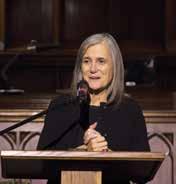
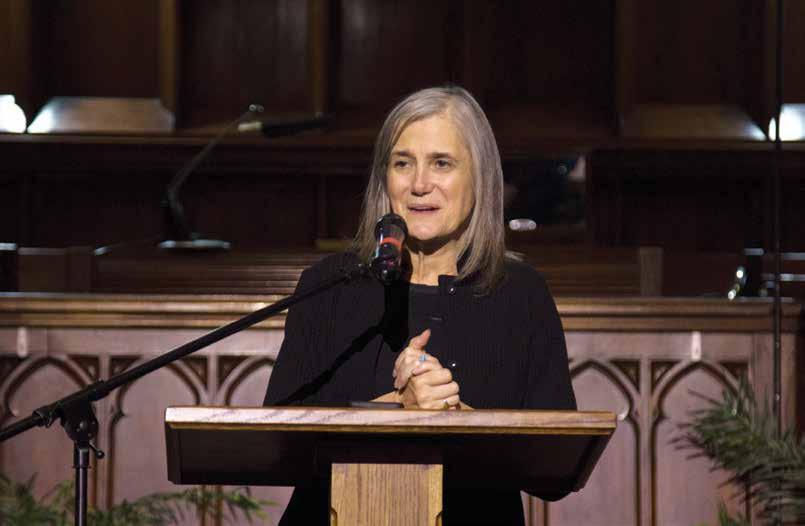
Award-winning journalist Amy Goodman visited Winnipeg as part of her Democracy Now! 2017 tour, speaking at Knox United Church Friday.
Goodman is the host and executive producer of Democracy Now!, a renowned independent news program that airs on more than 1,400 public radio and television stations around the world.
Goodman is an acclaimed journalist with many awards and recognitions. She is the first journalist to receive the Right Livelihood Award, sometimes known as the “Alternative Nobel Prize,” and was awarded the 2014 I.F. Stone Medal for Journalistic Independence Lifetime Achievement Award, among other notable recognitions.
The event, subtitled Stories of Democracy, Resistance and Hope, was hosted jointly by Canadian Centre for Policy Alternatives, Fernwood Publishing, Rabble.ca, 101.5 UMFM, CKUW 95.9FM, and the University of Winnipeg.
Goodman’s address to the crowd
Goodman spoke to a full audience on a broad range of topics, including the role of independent media, the politics of war, climate change, racial injustice in the U.S., and President Donald Trump.
Goodman said it is absolutely critical to see and hear the world through something other than a “corporate lens and a corporate microphone.”
“We need a media when we cover war that’s not brought to us by the weapons manufacturers,” she said. “When we cover climate change, that’s not brought to us by the oil, the gas, and the coal companies. When we cover healthcare, that’s not brought to us by the insurance industry and Big Pharma.
“We need independent media that is brought to us by the listeners, the viewers, the readers,” she added.
Goodman explained that mainstream media is using the public airwaves as if it is their private property.
“President Trump drops the largest non-nuclear bomb in the history of the world on Afghanistan without explaining why,” Goodman observed.
The U.S. military dropped MOAB, the largest non-nuclear bomb ever deployed and nicknamed the “mother of all bombs,” on Afghanistan’s province of Nangarhar in April as a part of a military campaign to defeat the Islamic State.
Goodman also talked about the media's role in holding governments accountable.
“I see the media as a huge kitchen table that stretches across the globe but we all sit around and debate and discuss the most important issues of the day,” she said.
Goodman criticized CNN host
Fareed Zakaria for concluding that Donald Trump “became president” after ordering an attack on a Syrian airbase and reminded the audience of the importance of an independent media to hold those in power accountable, particularly when it comes to war, calling it a matter of life and death.
Goodman said media needs to fulfill its role and responsibility of discussing a broad range of opinions on issues critical to the people rather than acting as a “conveyer belt for the lies of any administration.”
Goodman attracted international attention for her coverage of the Standing Rock protest against the Dakota Access Pipeline in 2016. After Democracy Now! aired footage of private security contractors using pepper spray and attack dogs against protesters, the attorney general of North Dakota issued a warrant for Goodman's arrest for criminal trespassing and a misdemeanour offence in September 2016.
A North Dakota Supreme Court judge eventually dismissed the charges. A number of Indigenous protesters who were facing felony and misdemeanour charges and scheduled to be arraigned the same day as Goodman also had their charges dropped.
According to Goodman, the dismissal of charges was a huge victory for the freedom of press. She recounted the incident to illustrate the power of a free press, arguing that her reporting brought down enough
pressure to persuade the court to drop the charges against her and the protesters.
“We have a decision to make every day. Every hour of every day, whether we want to represent the sword or the shield” Amy Goodman, host and producer, Democracy Now!
“Whether we are journalists or artists; doctors, lawyers, nurses; whether we are teachers, students, employed or unemployed - we have a decision to make every day, every hour of every day, whether we want to represent the sword or the shield," she said.
In conversation with the Manitoban
Before addressing the crowd, Goodman answered questions from local media.
Manitoban: Media ownership is severely concentrated in the U.S and Canada. As young journalists who are trying to venture into new ways of journalism, for example online, how do we bridge the gap between being
relevant, credible sources and keeping ourselves safe?
A My GoodMA n: You just have to pursue your questions wherever they lead. I think there is a fundamental sense in democratic societies, and those who are fighting for their societies to be democratic, that an independent press is essential to the functioning of a democratic society. And so as young journalists, your job is so important and it’s not even just a job, it’s a mission. A mission to open your microphone to people who are not usually heard which I think very much represents the mainstream of the society.
It’s not some fringe group, those who care about war and peace, those who care about climate change, the fate of the planet, those who care about the growing inequality in the world. Whether we are talking about economic inequality, racial injustice, social injustice, I think that all of these people are not a fringe minority, not even a silent majority, but the silenced majority silenced by the corporate media which is why we have to take the media back.
M: A lot of energy projects that are coming up in Canada, such as the Site-C Dam and others, are on Indigenous territory. What is your suggestion when it comes to covering those contentious topics, especially in Canada, when we are starting to talk about reconciliation with Indigenous peoples?
AG: To go there, to cover it, to ensure that you are including all of the voices
in your coverage.
This is our job and you know, Democracy Now!, we were covering the largest unification of Native Americans that our country had seen in decades. From Latin America, from the United States, the First Nations of Canada coming together in North Dakota at Standing Rock Sioux reservation to protect the land from the Dakota Access Pipeline and Energy Transfer Partners that own it. It’s just absolutely critical because, you know, there is a deep connection between what these struggles are all about. They are local struggles but they connect, just like these pipelines do, to global issues. And they are not just issues, you know - it's the issue of the fate of the planet, of climate change. So each one of those is so important to hear.
I think of Winona LaDuke of the White Earth Reservation of northern Minnesota, who says ‘I am not going to spend my life fighting one pipeline after another,’ but that does seem to be what is happening.
Although there is this growing movement and growing awareness as so many people are now submerged under water, at least in the United States, that we have to do something about this. And that’s what the Native Americans have been leading the way in telling all of us.
Imreet Kaur, staff
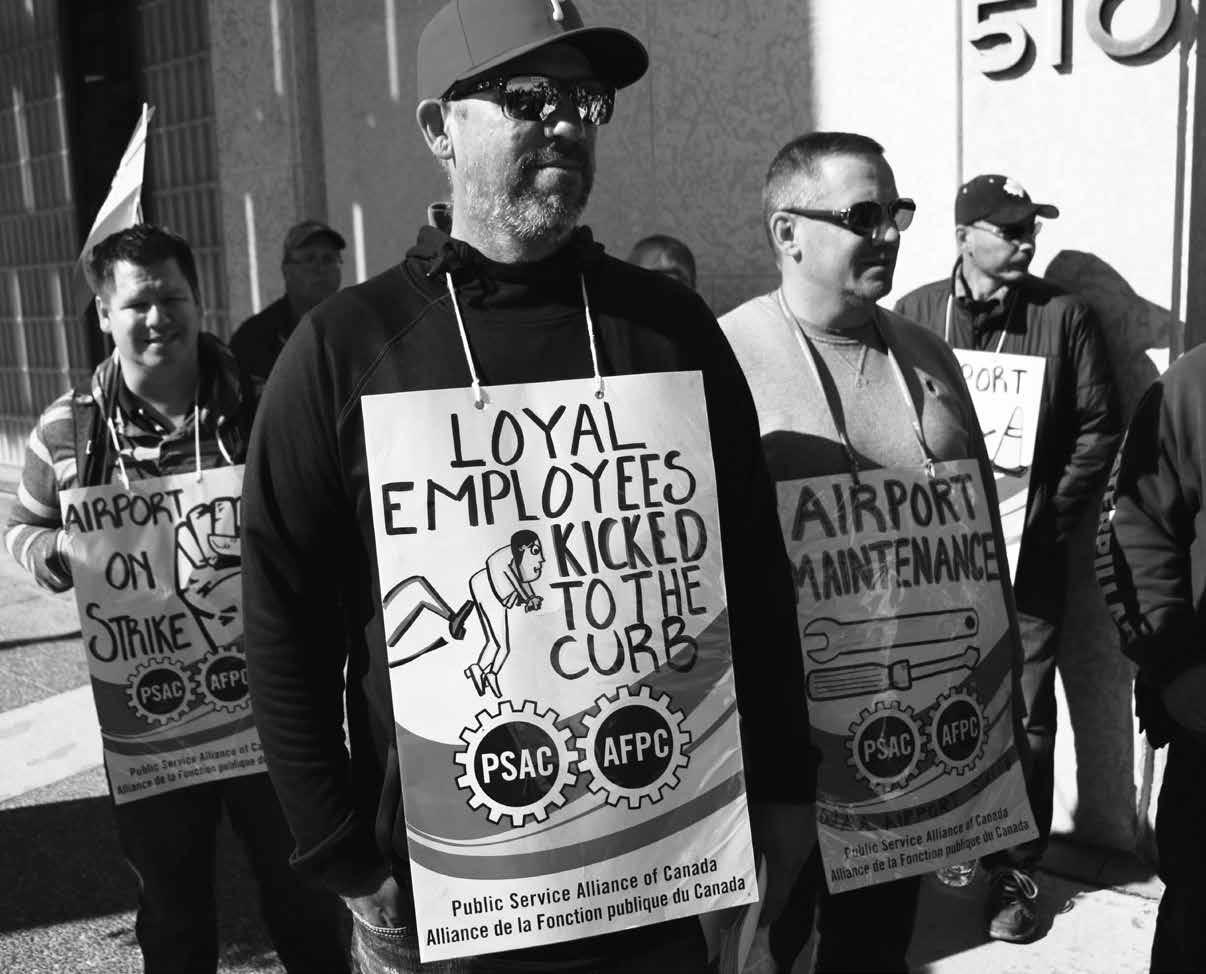
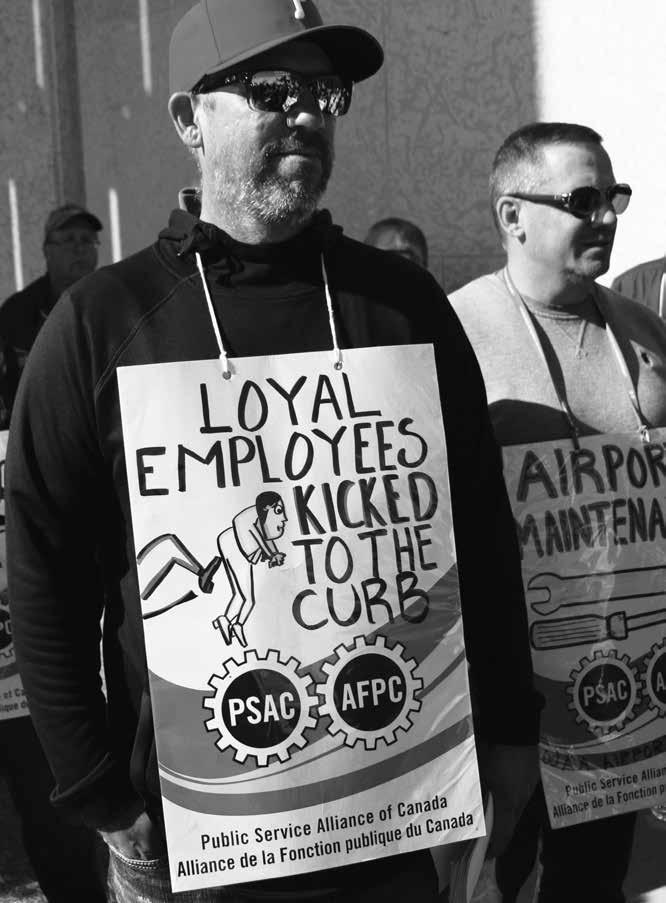
More than 100 Workers of the Winnipeg James Armstrong Richardson International Airport have been on strike since July 24, after collective bargaining and mediation sessions with the Winnipeg Airports Authority failed to reach an agreement.
The strike involves over 120 workers from the Union of Canadian Transportation Employees local 50600, an affiliate of the Public Service Alliance of Canada (PSAC). The members have been without a contract since June 30 and began picketing July 24. The striking workers include administrative personnel, IT workers, and maintenance staff.
The two sides reached a provisional agreement late Sunday. A ratification vote is scheduled for today.
Marianne Hladun, PSAC prairies regional executive vice-president, said Sunday morning the main reason for the strike is the contracting out of union work, saying workers are seeking an agreement that includes job security and fair compensation.
“We have said that if there is any work to be done, our members should be doing the work rather than contractors and when there was no
agreement reached, they hit the picket line,” Hladun said.
“We are currently exchanging proposals through the federal mediator,” she said. “The strike will continue as long as it needs to.”
“If all the unions band together, they have the resources to effectively defend their rights”
- Janet Morrill, UMFA president
“We have said from the very beginning,” she added, “that we are open to coming back to the table and having a discussion but that we meet some solutions on contracting out.”
Hladun said many members have been working at the airport since the 1990s and deserve to have protections against having their jobs contracted out.
When the strike began, Winnipeg Airports Authority denied contracting out union work and argued that
the final offer before the walk-out included language regarding job security.
Tyler MacAfee, a spokesperson for the airports authority, told media in July that the union’s mediation demands would increase the airports authority’s wage and benefits costs by 60 per cent over two years.
“When you look at what's happening in Manitoba right now, with some unions looking at zero per cent [wage increases] and some companies are in layoffs, we thought providing job security for our employees and more wages was something that was going to be positive for them,” MacAfee told CBC News.
Labour unites against provincial reforms
The Public Services Sustainability Act (PSSA) - also known as Bill 28 - was introduced by the Progressive Conservative's in March. Its stated purpose is to provide a framework for public sector employees to negotiate new contracts and compensation increases while ensuring long term viability of public services in Manitoba as existing contracts expire.
The bill has not yet been passed into law.
Bill 28 will impose a two-year wage freeze on new collective agreements, followed by a 0.75 per cent and one per cent increase, respectively, in the final two years of a four-year agreement.
Kevin Rebeck, President of the Manitoba Federation of Labour, views the PSSA as “unfair and unconstitutional,” and said it undermines the collective bargaining rights of over 120,000 public sector workers.
“It freezes wages for the entire public sector for two years, making the decision at the cabinet table instead of at the bargaining table,” Rebeck said.
More than 100,000 workers are represented by the 26 labour organizations that have come together to form the Partnership to Defend Public Services that is challenging the constitutionality of the PSSA. PSAC is one of the unions involved in the partnership.
Hladun said “there has been a shift in the labour relations in the province.”
While noting that the ongoing strike at the airport falls under federal jurisdiction, she said "I absolutely do believe that, because of the political climate provincially, that has an impact on the negotiations at the
airport."
Hladun said PSAC joined the partnership because a number of its members fall under provincial jurisdiction, including workers at the University of Winnipeg and Brandon University.
Hladun noted that many lowpaid academic units represented by PSAC are subject to the wage freeze in Bill-28.
“These are some of the lowest paid workers – research assistants, teaching assistants, markers, lab demonstrators – [and] they’re in precarious work,” she said. “We’re trying to negotiate appropriate working conditions and wages and the government has no place at that bargaining table.”
The University of Manitoba Faculty Association (UMFA) is one of the units affected by Bill 28. Representing 1200 members, UMFA was on strike for 21 days in the fall of 2016 when bargaining with the university broke off after the province mandated the U of M extend an existing contract an additional year without a salary increase.
The two sides eventually agreed on a short-term, one year deal to end the strike. UMFA has since ratified a long term agreement - under duress - and accepted compensation consistent with the PSSA. UMFA has also joined the partnership to defend public services.
“It’s beneficial for us,” said Janet Morrill, UMFA president. “The government is relying on the fact that individual unions may lack the visibility and resources to be able to fight back against them. But if all the unions band together, they have the resources to effectively defend their rights.”
UMFA brought the university before the Manitoba Labour Board in the spring, claiming the U of M bargained in bad faith prior to the 2016 strike. A decision has not yet been released.
Hladun expressed gratitude for the support airport workers have received from other unions as the strike continues.
“We have unions who are refusing to cross the picket line, they’re respecting the picket line,”she said.
Many unions, Hladun said, are standing in support for these workers by travelling outside of Winnipeg to catch flights.
“I honestly believe,” she said, “that as we fight - whether it’s the Pallister government or the federal government or private employers - labour in this province has been coming together for the benefit of all workers and I am so proud to be a part of it - to support them just like they’ve shown their support for us.”
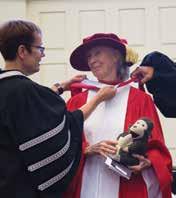
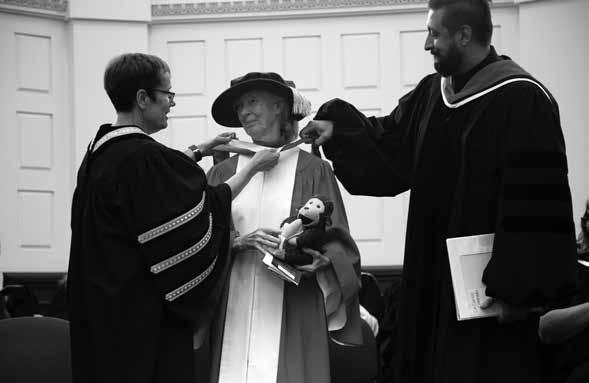
In a special convocation ceremony held Friday, Jane Goodall received honorary doctor of laws degree from the University of Winnipeg
Shaden a bu Saleh, staff
P
rimatologist Jane Goodall received an honorary doctor of laws degree from the University of Winnipeg Friday in a special convocation ceremony.
Goodall joins a distinguished list of individuals who have received honorary degrees from the U of W that includes former Ukrainian president Victor Yushchenko, retired general and senator Roméo Dallaire, and former president of Peru Alejandro Toledo.
“We use these ceremonies to honour extraordinary individuals, those who have made outstanding contributions to their field of study, profession, or to society at large,” Annette Timbee, the U of W president and vice-chancellor, said as she addressed the audience.
Earlier that day, Trimbee and Goodall signed a memorandum of understanding to create new collaborative efforts related to conservation, sustainability, and social justice education.
Friday’s special convocation ceremony was one of several events Goodall took part in during her visit to Winnipeg last week, which
included meeting with a group of Winnipeg elementary school students, a celebration at the Canadian Museum for Human Rights commemorating the 40th anniversary of the Jane Goodall Institute, and a talk held at the Burton Cummings Theatre for the Performing Arts.
Goodall spoke about the Jane Goodall Institute and its origins, explaining that during her trip to Gombe, Tanzania, in 1960 to study chimpanzees, she “also learned about the crippling poverty, the hunger, the lack of education and health facilities for the people living in and around chimpanzee habitat.”
“I realized that if we don’t help these people to have better lives,” she said, “there’s no way we can conserve the chimpanzees.”
Founded in 1977, the Jane Goodall Institute is a global wildlife and environmental conservation organization with offices located in over 25 countries, including Canada.
Goodall said the institute began “not as a bunch of arrogant white people going into a poor African village and saying, ‘Well, you’ve made a mess of things, we’re going to do this to
make your lives better.’”
Goodall explained that the institution rather began as a carefully selected team of Tanzanian researchers who went into villages and listened to the people, asking questions such as,“‘What do you think we can do to make your lives better?’”
Goodall also spoke about Jane Goodall’s Roots & Shoots, a youth service program that aims to foster respect and compassion for all living things, promote understanding of all cultures and beliefs, and to inspire individuals to take action.
“I think, probably, starting Roots & Shoots may be the best thing that I’ve ever done,” she said.
“One of its aspects, which I think is truly important these days, is it’s helping young people to break down the barriers that we build between people of different nations, different cultures, different religions.”
Speaking on her travels, Goodall said, “As I was travelling around the rest of the world I was learning more and more about what we humans are doing to the planet.”
“We can look at chimpanzee behaviour and see the many, many
ways in which their behaviour resembles ours,” she said. “But the biggest difference, I believe, between themour closest living relatives biologically - […] is this explosive development of our intellect.
“So is it not bizarre that the most intellectual species to ever walk this earth is destroying its only home?”
Goodall concluded her speech by reminding her audience that every individual has an invincible spirit within themselves.
Shaden a bu Saleh, staff
T
he University of Manitoba Students’ Union (UMSU) approved a motion to advocate for extending the deadline of tuition fee payments for international students at its regular meeting Sept. 28.
UMSU will pressure university administrators to extend the fee payments period until after the course change deadline.
The motion was submitted by Chris Otisi, the international students’ representative, at UMSU's previous meeting on Sept. 14.
Speaking on behalf of Otisiwho was not at the Sept. 28 meeting - Cristina Aliu, UMSU representative for the Arts Student Body Council, told council that several problems may arise when international students attempt to pay their tuition fees.
“Sending so much money from a different country is a confusing process,” she said.
Aliu said that processing international banking transactions is a
lengthy procedure and many students awaiting pay checks, loans, or scholarships to pay off their tuition fees may have a hard time meeting the regular deadline. As a result, international students may be issued late fees and have holds placed on their accounts.
This, Aliu added, tends to be particularly difficult for first year students who may be unfamiliar with international banking transactions and the online system for tuition payments.
Aliu also noted that at times, payment delays may be the result of national holidays or long weekends observed in international students’ home countries.
Otisi said that one of the promises made during his campaign for UMSU’s international students’ representative was addressing this issue.
“I think it is important for UMSU to advocate for this cause because it is a beneficial aspect, economically, for
international students,” he said.
“With our platform and reach, we can hopefully achieve this.”
Otisi said an extension would help international students “acquire funds on time, pay tuition on time, and participate as a University of Manitoba student without restrictions” or holds.
“The next step from here is to continue to advocate for international students, ensuring this motion to extend tuition deadline for international students is achieved,” said Otisi. “From here on, patience and consistency are key factors.”
Otisi noted that another reason tuition payments should be extended for international students is because they are subject to higher tuition fees than their domestic colleagues.
The estimated tuition for a fulltime, first year University 1 student is $4,400 for the fall and winter terms. International students are charged nearly 10 times that amount, at $14,800.
“Some people don’t realize that they have an indomitable spirit, we need to encourage them to allow it to grow, to achieve their full human potential,” she said.
This happens “when head works in harmony with heart and we have no barriers between people around the world and between us and mother nature.”

Editor-In-Chief:
Garett Williams
Contact: Editor@themanitoban.com / 474.8293
Let’s not forget why Colin Kaepernick first took a knee
ryan Stelter, staff

The American national anthem has been the cause of a lot of discussion in recent weeks.
In case you live under a rock, a short synopsis: On Aug. 26, 2016, San Francisco 49ers then-quarterback Colin Kaepernick sat during the American national anthem prior to the start of a pre-season game against the Green Bay Packers.
“I am not going to stand up to show pride in a flag for a country that oppresses black people and people of colour,” Kaeprnick told reporters after the game.
“To me, this is bigger than football and it would be selfish on my part to look the other way. There are bodies in the street and people getting paid leave and getting away with murder.
“This is not something that I am going to run by anybody. I am not looking for approval. I have to stand up for people that are oppressed […] If they take football away, my endorsements from me, I know that I stood up for what is right.”
I was of the opinion last year that Kaepernick needed to find another
avenue outside sports to protest. I was foolish in thinking that sports and politics should remain separate, as if they were two different animals. I have learned otherwise, and accepted that sports and politics are intrinsically woven together.
That sit-down back in August 2016 started a movement. Kaepernick eventually took to kneeling during the anthem, and that saw other NFLers, such as Michael Bennett of the Seattle Seahawks, follow suit in protest of racial injustice experienced by black citizens in the U.S.
The 11 players who knelt during the anthem in Week 1 of the current season caused President Donald Trump to speak out at a rally nearly two weeks ag0:
“Wouldn’t you love to see one of these NFL owners, when somebody disrespects our flag, to say, ‘Get that son of a bitch off the field right now.
Out! He’s fired. He’s fired!’”
This sparked a response from the NFL the following Sunday. The Pittsburgh Steelers refused to come out of the locker room for the anthem,
while countless other teams knelt or locked arms in “solidarity.” Solidarity against what? Trump? This is defeating the purpose of why Kaepernick started this protest over a year ago.
Owners of NFL teams who donated to Trump’s campaign were seen on the sidelines kneeling or locking arms with their players. These are the same owners denying Kaepernick a job for doing the very same thing. Why did we not see 49ers owner Jed York out on the sidelines kneeling with Kaepernick back in 2016?
Trump has said a lot of jaw dropping things, far too many to list here, and frankly, you’ve probably heard them all. I will say this, however: sadly, what Trump called NFL players on Sept. 22 doesn’t top the list of being the most outrageous.
NFL owners have so far been okay with all the groups and people Trump has gone after, but going after the NFL crossed the proverbial line.
It has suddenly become “cool” to #TakeAKnee, a hashtag littering social media in the aftermath of the comments made by Trump.
This protest was not meant to be some sort of trend on social media.
It was supposed to be a movement in social justice.
On the latest cover of Sports Illustrated , one can see a handful of athletes with the title “A nation divided, sports united.” The interesting thing about this cover: no Kaepernick.
The cover features LeBron James, Stephen Curry, Candace Parker, Bruce Maxwell, Aaron Rodgers, Cameron Jordan, and Bennett, alongside Golden State Warriors coach Steve Kerr, Jacksonville Jaguars owner Shahid Khan, and NFL commissioner Roger Goodell.
As mentioned previously, Bennett has been kneeling since long before it became cool to kneel. Kerr and Maxwell have also spoke out against police brutality and racial injustices in the U.S. But Khan is one of the owners who donated $1 million dollars to Trump’s presidential campaign. Why put these figures on the cover and not Kaepernick?
“In some ways, even though his
picture is not there, Colin Kaepernick is there,” executive editor of Sports Illustrated Stephen Cannella said in a video posted to the magazine's website.
“I think what we’re trying to capture with this cover is the new voices that emerged this weekend, this debate, this protest evolved beyond Colin Kaepernick. We all know Colin Kaepernick stands behind this movement.”
This is a sorry explanation. Why leave out the man who started this all?
Kaepernick opened this uncomfortable dialogue that has white people squirming. Let’s please not forget why this protest started: not because Trump attacked the NFL, not to protest the flag or the American military, but to stand up for racial injustice. Erasing Kaepernick’s image from media portrayals of this protest ignores that crucial point.


Comment Editor: Shawn Huberdeau Contact: comment@themanitoban.com
Students can’t stay quiet as their chance at a prosperous future is stolen
K I eran l abo SSI ère
With the elimination of the Tuition Fee Income Tax Rebate, de facto reductions in operating grants for post-secondary institutions, and the relaxing of the tuition cap, the Progressive Conservative Party has held fast to its antiquated, slash-and-burn austerity model of budgeting. They have made a strong commitment to balancing the budget on the backs of overburdened students. Students need to join together and oppose these policies; in so doing, we need to go beyond simply demanding the status quo.
We need a radically different alternative to the current model of funding for post-secondary education.
It is not enough to make weak, milquetoast appeals for restraint and discretion in funding allocations. In the face of rising tuition and diminishing funding, we need to demand a renewal of public investment in post-secondary education in both our province and our country. We need to demand the absolute abolition of tuition and a progressive funding model to ensure that all people have access to a high quality post-secondary education.
Funding Cut,
Education has not been exempt from the neoliberalization of our society - the concerted effort to implement the logic of the market and roll back government responsibility for funding social services. This process places the financial burden of attending a post-secondary institute directly on the shoulders of individual students.
Tuition fees have been increasing rapidly since the 1990s. Between 2000-01 and 2014-15, tuition revenues tripled, from $3.05 billion to $9.16 billion nationally. While tuition revenues were skyrocketing, government funding for universities was dropping.
In 1992, government funding made up 77.4 per cent of university operating revenues, while tuition fees made up 19.7 per cent. By 2012, government funding only accounted for 54.9 per cent of university revenue, while tuition fees made up 37.5 per cent.
For context, the average for the Organization for Economic Co-operation and Development is 70 per cent government funding for universities. These increases have coincided with increasing public student loan debt, ballooning from $20 billion in 1999 to $28 billion in 2012. This doesn’t even account for private loans, such as lines of credit or credit card debt. In Manitoba, students are graduating with an average of $25,000 in student debt.
How can students be expected to start their independent and professional lives when we bear such a heavy debt burden? Purchasing a house is often considered to be the mark of independence but as of 2011, 42 per cent of 20- to 29-year-olds in Canada lived in their parents’ homes, a dramatic increase from 1981 when only 27 per cent lived with their parents. Poor economic outlooks are already a huge pressure on our generation, and being squeezed by increasing tuition only exacerbates the problem. Decreasing funding for universities and increasing tuition

is increasingly putting students in precarious financial straits.
Another World is Possible
Providing universal post-secondary education is entirely possible in the current economic climate. A report released this year by the Canadian Centre for Policy Alternatives (CCPA) proposed a series of post-secondary education reforms that would make it possible to provide quality, universal post-secondary education with an increase of only $10.5 billion annually in federal spending.
Part of this funding would come from savings from the elimination of current federal programs: tax credits, grants, and miscellaneous student aid - rendered irrelevant with the elimination of tuition fees. CCPA also proposes the introduction of a more progressive taxation program. To put this in perspective, the federal government is moving forward with a plan to purchase new fighter jets at an estimated cost of $6.3 billion. If we can find the money to make war, we can find the money to make everyone’s lives better.
Who Benefits from Free Stuff?
The argument can be made that universal access programs serve to subsidize the rich. The thinking goes that if free healthcare or education is provided to all, then it will be everyone’s tax dollars paying for the wealthy elite to access these services. This argument is misguided at best, and disingenuous and harmful at worst.
With a progressive system of taxation, the wealthy should, theoretically, pay a greater share of their income in taxes, to be redistributed through the funding of social programs such as health and education.
How can students be expected to start their independent and professional lives when we bear such a heavy debt burden?
In a 2016 report, the Parliamentary Budget Officer found that “higher income families benefit disproportionately from non-refundable tax credits.” The people benefitting the most from government aid programs are the ones who need it least. If the current funding model is already benefitting the wealthier members of our society, why not adopt a model that benefits the least wealthy as well?
Dream Big, Be Bold, Break the Consensus
Neoliberal economic orthodoxies that have underpinned the platforms of all federal governments for over thirty years hold that funding for post-secondary education should come from tuition fees and private investment instead of public investment.
The assumption is that post-secondary education is simply a means to ready us for the job market - that
we should consider it a down-payment on our future. This leads us to believe that universal post-secondary education is impossible, impractical, and not the responsibility of the government
These ideas are used to justify the exclusion of people from access to education on the basis of their ability to pay. I call on my fellow students to reject this narrative. Universal postsecondary education isn’t just a socialist pipe-dream: it is entirely feasible.
We must push back against the brutal, neoliberal logic of the market and demand a renewal in post-secondary education funding. We need to demand reinvestment in the youth of our country to ensure a prosperous economic outlook for ourselves, to not be deprived of the opportunities our parents had.
In the face of increasing inequality in our society, in which two men control as much wealth as the poorest 30 per cent of the country, we need to push for policies that encourage equality. If we truly desire a just and equal society, we must make education accessible to all those who wish to access it.
The struggle will not be easy. We are facing a grim policy agenda from our provincial government, but in the face of crushing austerity and a depressing outlook we must have the courage to propose a new vision, one of radical equality, in which there are no economic barriers to quality post-secondary education.
We must go beyond the status quo. We need to abolish tuition fees now.




Nic Dyson Where We’re From 3.5/5
Nic Dyson’s second full-length release and third album, Where We’re From, was released in June following a self-recorded EP, Dreaming Under a Broken Tree, in 2012, and debut LP, This One’s For You, in 2014. Where We’re From was written between the spring of 2014 and Summer of 2016, and the album’s sixth track, “Vertigo,” landed Dyson a spot in the regional finals for CBC’s Searchlight 2017 competition.
Dyson is an acoustic singer-songwriter who is not afraid to go to those dark and lonely places that people tend to push aside. He takes listeners to vulnerable, relatable places in a manner that is both brutally honest and poetic. His scratchy, yet honeyed voice and calming guitar picking beckons forth hidden emotions that have gathered dust over time. As they come to the surface, your body reacts
with sinking in the heart, turning in the mind, a lump in the throat, and a tear to the eye.
“Place and Time” is a heartwrenching song about what could have been. The cyclical patterns of thought and questioning that come from meeting someone under impossible circumstances that haunt people are woven throughout the song, and play with the heartbreak of the painful feeling of wondering what could have been. The love he has for the person he will never have breaks through the lyrics of the sweet and sad tale: “Well, I hope you find what you're looking for in someone else’s eyes, under someone else’s skies, I just don't know why it can't be mine.”
“A Song for Insomnia” takes a step away from the typical solo acoustic or simple accompaniment, by introducing a full band. This punk tune has the same lyrical vibes as the rest of the album, but is definitely something different, sandwiched as it is between two sweet, sad lullabies. It is refresh-
ing but at the same time slightly foreign to the overall style of the album. The same type of tune is introduced later in the album with “It’s Not 2012 Anymore.” A nice common ground between the two styles Dyson is exploring occurs with “Hypnagognia,” combining the indie folk vibe with a full band in a way that is much more sympathetic to the album as a whole.
Dyson’s heart and emotions are an open book on this album, and it is quite striking and beautiful when he sticks to the classic acoustic tunes that he is known for. The songs that feature the full band are a potential glimpse at a new avenue and type of sound that Dyson can go after in the future, either with full band accompaniment on his slow folk tunes or possibly go further into the punk genre.


o l I v I a mI chalczu K , staff
J
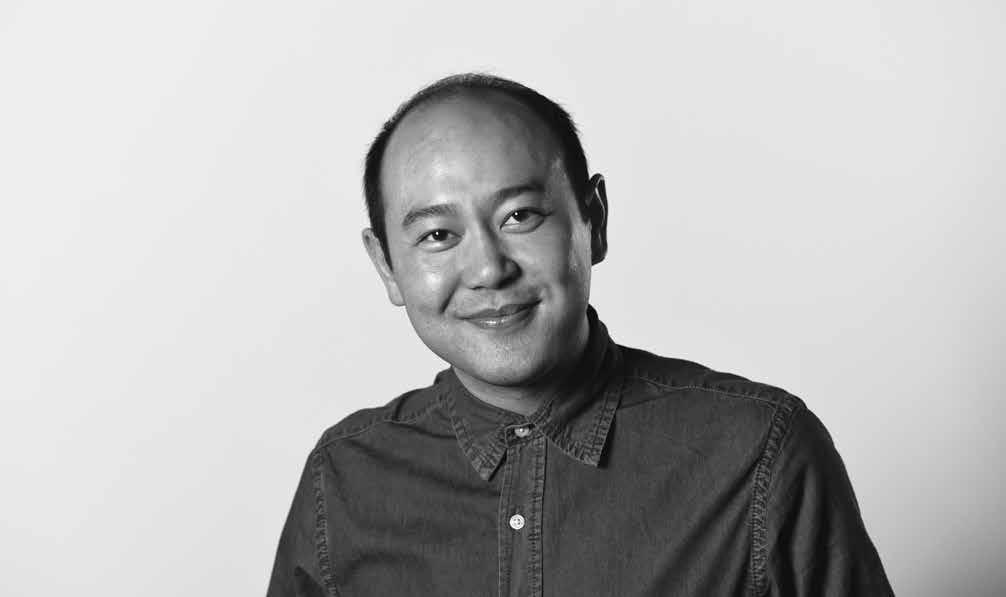
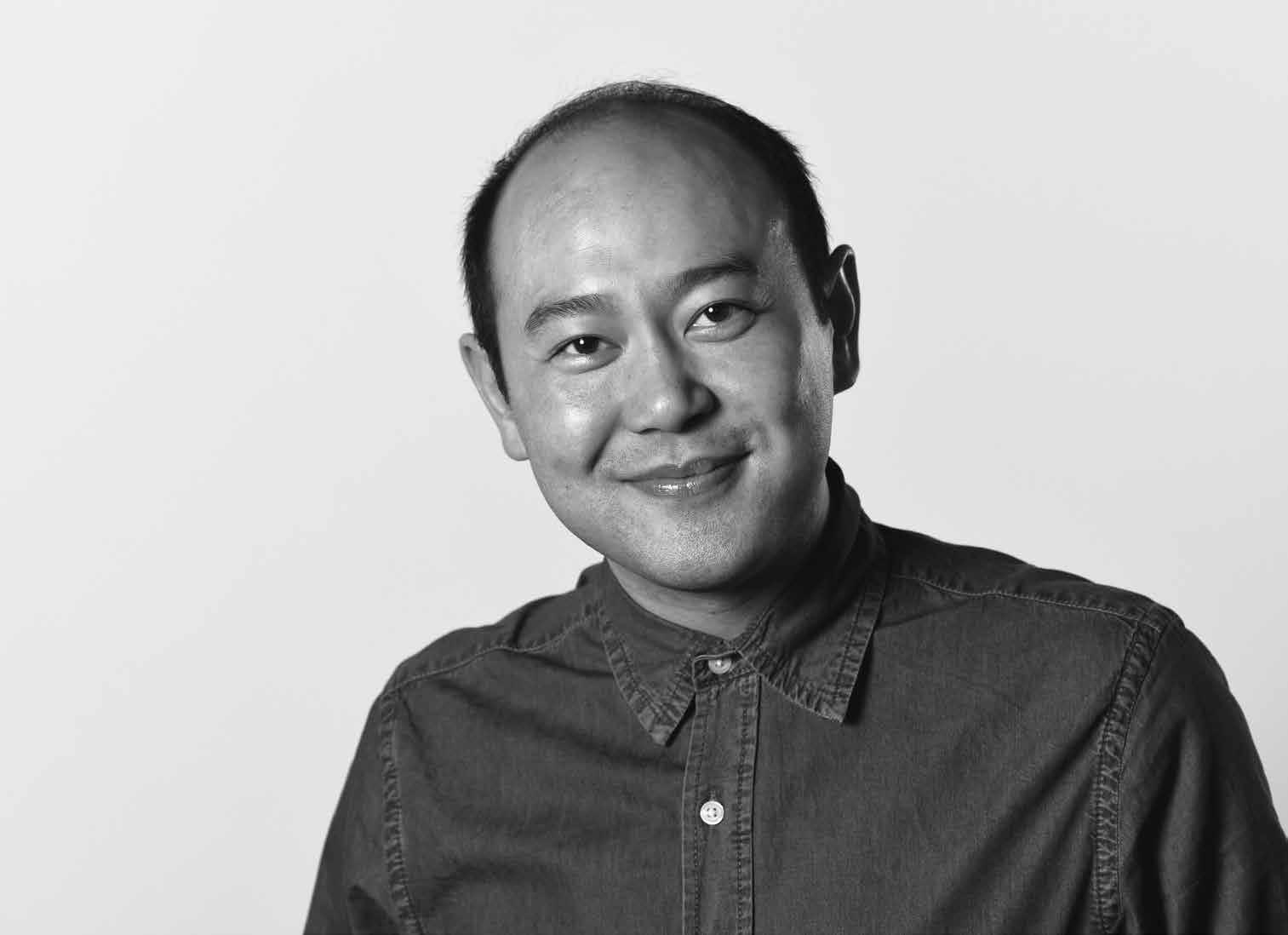
ason Syvixay, also known by his twitter handle @DowntownJason, has been boosting the arts and culture scene of downtown Winnipeg long before he defended his thesis and received his degree in city planning from the U of M earlier this year. His extensive résumé is filled with initiatives and campaigns that have long-lasting and continuing impacts on the communities he serves. There seems to be no end to the commitment that Syvixay pours into his city, with upcoming and reoccurring planning and volunteer projects that strive to make Winnipeg a more lively, vibrant, and sustainable place.
Syvixay’s efforts to build a safer, more resilient, and inclusive Downtown have not gone unnoticed. Six years as managing director of the Downtown Winnipeg BIZ, along with his education at the U of M, have enhanced and fostered his skills in placemaking, place branding, community consultation, and public engagement. His public relations skills were recognized in 2014, when he was selected as the Canadian Public Relations Society Communicator of the Year, and in 2015 he was listed in "CBC’s Future 40."
Syvixay spearheaded the first CEO Sleepout in Canada, a yearly event where CEOs spend a night sleeping outside in downtown Winnipeg to raise awareness and funds in order to help end homelessness in Winnipeg. Since the first sleepout in 2011, the event has raised over $800,000 from the private sector. The funds raised have helped employ 137 people experiencing homelessness for a total of 51,000 hours of work.
public spaces, and defines the role of a planner when protest erupts.”
“I am guided by the notion that good communication and sound planning should always involve the community. The city planning department’s partnerships with
professional with local advocates and innovators. The pieces touch on how everyone contributes to the design and use of public space, and that changes and differences in the livelihood and success of cities are everyone’s responsibility.
“In our studios, we got a chance to put ourselves in the shoes of others. When you can start to think about [how] your role will benefit others, you will start to speak with integrity” - Jason Syvixay, city planning alumni
His education in the department of city planning instilled values of patience, diplomacy, and research skills that are an essential skill set for a planner. Syvixay has applied these skills to the many things he does to enhance the cultural aspects of downtown for tourists and visitors, as well as the people that inhabit that community. Syvixay’s thesis, guided by his advisor Dr. Rae Bridgman and committee members Dr. Jino Distasio and Jeff Palmer, was “focused on Indigenous activism in
Indigenous communities, neighbourhood development corporations, and planning professionals provided me with a unique opportunity to work with a diverse set of publics,” said Syvixay.
“In our studios, we got a chance to put ourselves in the shoes of others. When you can start to think about [how] your role will benefit others, you will start to speak with integrity.”
Syvixay contributes a monthly column to the Winnipeg Free Press called Duets, which pairs a design
“Everyone designs, and design is everywhere. That is, entrepreneurs, artists, and people who engage in everyday street life, are equally important in the design and use of public space” said Syvixay of his column.
“Duets has encouraged readers to explore how they contribute to the fabric of the city by sharing different ways we all design, occupy space, and tackle civic issues.”
For the recent Churchill edition of the international Sea Walls Festival, Syvixay contributed his skills in logistics, event planning, marketing, and communications.
“Sea Walls Churchill was a way to build hope and support in Churchill in the face of serious challenges,
transforming 18 vacant buildings into pieces of artwork, providing a colourful and aesthetically beautiful reprieve for residents,” said Syvixay.
“By tapping into my planning sensibilities, I was able to interact and involve the community in a five-page [feature] about the experience and impact of the initiative” which was published in the Winnipeg Free Press.
Syvixay currently works as a planner at HTFC Planning & Design, one of Manitoba’s foremost design firms, working on community planning projects for towns across Manitoba. This includes conceptual designs for Main Streets in Îledes-Chênes, Ste. Adolphe, and Ste. Agathe, a secondary plan and vision for Pinawa’s waterfront, and a community plan for Woodlands, as well as working on the Arlington Bridge Preliminary Design Project.
Some of his recent volunteer work has included working with the Winnipeg Arts Council, Winnipeg Architecture Foundation, Art in Bloom, and North End Arts Centre.




o l I v I a mI chalczu K , staff, with photos
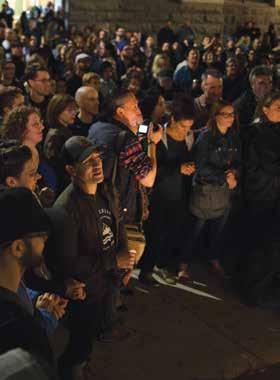
The streets of Winnipeg were once again filled with excitement Sept. 30 as locals came out to support the seventh annual Nuit Blanche, with art installations in The Exchange, St. Boniface, Downtown, and The Forks.
Streets packed with bicycles, pedestrians, and slowly creeping cars navigating around pop-up performances and art pieces brought out the lively energy that literally
lit up the streets with interactive art and performance.
The all-night festival was produced by the Winnipeg Arts Council and Culture Days Manitoba as part of Culture Days, a national three-day event that gives millions of Canadians the opportunity to engage in free activities and performances.
Artists specializing in all sorts of mediums turned familiar streets and buildings into canvases for creativ-
ity. Venues consisted of everything from coffee shops to warehouses, and galleries to back lanes.
The ability to walk in a straight line was solely based on determination and self-restraint, as sights and sounds beckoned from every direction. The best plan for approaching Nuit Blanche is no plan at all, giving in to the waves of people and going with the flow of the crowd.

Ja S on Pcha J e K

The University of Manitoba women’s hockey team will be back on the ice with even higher expectations then last season.
During the 2016-17 U SPORTS season, the Bisons placed third in the Canada West division with a 19-7-10-1 record. But the herd bowed out of the second playoff round with two straight losses to the University of Alberta Pandas after sweeping the Mount Royal Cougars in the opening bracket.
It was a disappointing finish for a club that had a legitimate shot at the Canada West title and the chance to chase a national championship.
This year, the Bisons will look to right that wrong, and fans have quite a few reasons to be optimistic for a team that saw very little change in the off-season.
Last season, multiple Bisons were honoured for their play and many are returning for another tour of duty. Forward Lauryn Keen was selected as the Canada West Outstanding Player of the Year, and was named a first team all-star. She led not only the Bisons, but the entire Canada West in scoring, tallying nine goals and 25 assists in 28 games. She added five more points in the playoffs .
Also receiving the all-star nod were goaltender Rachel Dyck, defenders Alexandra Anderson and Erica Rieder, and forward Venla Hovi. Keen and all four other allstars will be back on the ice this season for the Bisons.
The accolades did not stop there, as head coach Jon Rempel was tapped
as the Canada West Coach of the Year. This was Rempel’s fourth time winning the honour in his 13 year tenure with the herd. Under his award winning guidance, the Bisons will surely be a favourite to take the Canada West - and potentially U SPORTS - crown in 2017-18.
International Experience
Hovi, Rieder, and Anderson bring more than their awards to the Bisons. They carry a wealth of international experience earned this past year.
Hovi - Manitoba’s Finnish phenom - donned the white-andblue of her home country during the 2017 Women’s World Hockey Championship, recording a goal and two assists on the way to a bronze medal finish. This is Hovi’s fourth medal on the international stage, going along with two previous World Championship bronze, and an Olympic bronze during the 2010 games.
Rieder and Alanna Sharman also pulled on sweaters for their country, wearing the maple leaf during the 28th Winter Universiade in Kazakhstan. Sharman recorded a goal and seven assists in five games, while Rieder tallied a goal and an assist, on the way to a silver medal. Anderson joined her teammates in the international festivities when she took part in the Hockey Canada Summer Showcase Camp. She was able to take part in a professional calibre training camp, with on- and office workouts, nutrition classes, and media training. This was followed by exhibition games played against the Canadian National Women’s
Development Team, and the Japanese National Team.
The experience gained by these four Bisons playing against top level talent and training under world-class coaches will be something they bring back with them for the new season.
If there was a single part of the system instituted by Rempel and the rest of the Bisons coaching staff last year that deserves recognition, it was the special teams work
If there was a single part of the system instituted by Rempel and the rest of the Bisons coaching staff last year that deserves recognition, it was the special teams work.
At the close of the 2016-17, Manitoba ranked first in Canada West with a power-play percentage of 23.4 per cent. The next closest group was UBC’s 19.3 per cent that produced 32 power-play goals in 166 opportunities. While higher in magnitude than the Bisons 25 goals on 107 opportunities, the Thunderbirds were not nearly as efficient.
On the other side of the puck, the Bisons were also top of the conference
on the penalty kill. The herd killed off 91.5 per cent of penalties – with only seven power-play goals allowed on 82 opportunities – slightly edging out the University of Saskatchewan at 91.1 per cent.
When the Bisons’ special teams are clicking, the team is near unbeatable, but when it is not, they may be in trouble. During the 2017 Canada West playoffs, their powerplay only operated at 18.2 per cent efficiency and their penalty kill at 78.6 per cent – good for third and fifth in the conference, respectively. While this was spread over a smaller sample, only four games, the team the Bisons eventually lost to was more efficient on similar chances.
The University of Alberta had a top ranked power-play at 33.3 per cent, tallying five goals on 15 chances, three more goals on four more chances than Manitoba. Only UBC took more penalties than the Bisons, 20, but gave up the same amount of goals, giving them an 85 per cent efficiency over six games.
Dyck played another stellar season in goal for Manitoba last year, finishing near the top of every major statistical category.
Of all qualified goalies in Canada West - those playing 540 minutes or more - Dyck ranked fifth in goals against average with 1.51, second in save percentage with 0.931 per cent, tied for first in shutouts with five, and tied for first in wins with 15. With a 15-6-1 record she was a major factor in the team’s success.
This trend continued into the play-
offs where Dyck ranked second in goals against average with 1.52, fourth in save percentage with 0.914, and recorded a shutout when sweeping the Mount Royal Cougars. These numbers aren’t coming off a flash in the pan season, either. Dyck has a career goals against average of 1.81 and save percentage of 0.920. She will be a major determining factor for the Bisons in the upcoming season and will again be an All-Star contender.
A final point that should have University of Manitoba hockey fans excited is the ability this team has to put the puck in the net. The team finished just two goals behind UBC for first in goals among Canada West teams, recording 84 in 28 games, which winds up being an average of three goals per game. Even better considering the team had a 1.64 goals against average. The Bisons’ top five scorers - Keen, Hovi, Sharman, Anderson and Karissa Kirkup - will all be returning, including the conference’s top scorer in Keen.
Don’t let the earlier than expected playoff exit fool you, this team is the real deal, and may be the University of Manitoba’s best hope at a national championship.
year quarterback Des Catellier has moved into the starter’s role
ryan Stelter, staff
T
he University of Manitoba Bisons have had a different face under centre for the past two games.
Second year quarterback Des Catellier has called the signals for Manitoba in place of season-starting pivot, Theo Deezar. Catellier has thrown for 449 yards in his two games, including one touchdown and two interceptions. These are not Hec Creighton numbers by any means, but it has got the job done.
Catellier was given the start ahead of the Bisons’ Sept. 23 game against the University of Regina Rams, and managed the game well enough to give the Bisons their first win of the year. Catellier got the call the Friday before the game.
“The Friday morning day before the game, right before we get on the bus type thing, [I] had a meeting with coach Dobie before and [he] told me they were going with me,” Catellier said.
Heading into Regina without a win, the Bisons needed to do something to change their fortunes.
in gave us that different type of look and different type of spark.”
With new offensive coordinator Blaire Atkinson calling the
not necessarily faltered in the new offensive system, having thrown for 678 yards, three touchdowns, and four interceptions in the first three games of the year.
“We began the year 0-3 and we needed to do some things especially after the Calgary blowout” - Brian Dobie, Bisons head coach
“We began the year 0-3 and we needed to do some things, especially after the Calgary blowout,” head coach Brian Dobie said. “Theo Deezar has been so good for us, and will continue to do so. Bringing Des
shots on the offensive side of the ball, Manitoba’s offence has taken on a much different look from last year. Previous offensive coordinator Vaughn Mitchell had more vertical routes in his playbook, which plays into Deezar’s strengths. Deezar has
mI chael b ell

T
hanksgiving weekend is upon us. A time of family and friends. A time of turkey and ham, or alternative vegan delights for those so inclined. Perhaps it is a time of cranberry sauce, pumpkin pie, and your aunt's famous mystery casserole dish, which everyone says they "like."
But Thanksgiving is also a time of fantasy football. We cannot forget that. After all, if your family dinner runs on a Sunday, that is right during prime football time. Let's raise a glass, shall we? Let's raise a glass and give thanks for those who deserve some accolades so far in the first few weeks of this fantasy season.
To Tom Brady. Age is just a number. You're still slinging the rock, and a very handsome man to boot. If this is what 40 is like, it gives hope to us all. But I’m past 40, so there's no hope left for me.
To Kareem Hunt. Thank you for being the steal of the draft. Some thanks should go out to Spencer Ware, but it's not nice to thank someone for getting injured. But Hunt’s owners, in private, secretly can thank Ware for getting hurt.
To Aaron Rodgers. Thank you for continuing to be the human video game QB that you are.
To the Cleveland Browns defence. Thank you for continuing to be a sieve for any offensive player that faces you. This is why I picked up Andy Dalton again and started him. Thank you, thank you, thank you.
If your family dinner runs on a Sunday, that is right during prime football time.
To Todd Gurley. You left us in a fantasy black hole for a year, but now you're back. It's okay to be Gurley-man again. Thank you.
To Chris Thompson. Thank you for being that waiver waive wonder that everybody wanted. And if he was drafted by you, he made you look like a genius.
To Julio Jones. Thank you for playing injury-free football every year, so that owners never have to worry about you. And that, dear students, is called sarcasm.
To David Johnson. Thank you for making us realize that having the best player in fantasy football on your team, and then losing him, puts everything in perspective.
There are many more we could thank in the column, but we just don't have the print space. There are also many players who we wish not to thank. Our fantasy turkeys, if you will. I'm staring right at you Isaiah Crowell. On my bench. My final thanks goes out to the significant others, friends, and family members who put up with this silly little game we play. I remember one Thanksgiving Sunday, my large family was sitting at the table. I knew one of my players was a gametime decision. I had to check my phone and make a swap. Perhaps I was derelict in my food passing duties: a few people were wondering why I wasn't passing the food and looking at my phone. "What's so important?" they ask. Then a family member clued in and said, "It's football.” I could only look up in doe-eyed embarrassment. My face could not hide the truth. Yes, it is football. Yes, it is. And for many of us, that is the reality of this fantasy life.
Happy Thanksgiving to all. May all your teams be winners this weekend, and hopefully be topped with a heaping spoonful of fantasy gravy.
“There’s certain things with our new coordinator Blaire Atkinson, where Des Catellier’s style fits very well,” Dobie said. “Theo Deezar is a great long ball hitter, as good as it gets in the country. He’s got great touch great arc and trajectory on his throw. Our offence this year has changed a lot though, for someone who’s operated with a vertical offence
for so many years. So Des has brought us a different way of operating the offence.”
Deezar has been supportive of Catellier during his two years with Manitoba, and it has been a big help for the Calgary native.
“He’s been a mentor for me, all throughout since I’ve been here last two years," Catellier said. He “helped me through everything and he’s been really, really supportive. Having his eyes on me is awesome from a guy who’s seen it all.”
ryan Stelter, staff
The University of Manitoba women’s soccer team drew the University of Calgary Dinos and beat the University of Lethbridge Pronghorns this past weekend.
In the 0-0 draw on Saturday against the Dinos, German midfielder Florin Wagner had two shots on goal. Goalkeeper Justina Jarmoszko was strong in goal, making 12 saves to earn the clean sheet.
Wagner got on the score sheet twice on Sunday in a 3-0 win over the Pronghorns. Wagner is now in a three-way tie for third in Canada West scoring, with five goals on the year. The match was the Bisons’ first win since Sept. 9 Celeste Gallego
scored the Bisons other goal in their impressive showing. Jarmoszko was not as busy this match, making only four saves.
Manitoba is now 2-4-2 on the season and sits in sixth place in the Prairie division. A pair of important matches against crosstown-rival University of Winnipeg is up next for the Bisons.
Manitoba plays Winnipeg on Saturday at 2 p.m. at the U of M West Turf Fields and then on Sunday at 2 p.m. at the Ralph Cantafio Soccer Complex for the first game of the 27th annual Duckworth Challenge.

ryan Stelter, staff
T
he University of Manitoba Bisons fell 36-25 to the University of Alberta Golden Bears on Friday.
It was a game full of mistakes and missed tackles between the two Canada West basement dwellers. With the loss, Manitoba falls to 1-4, while the Golden bears earned their first win of the season to move to 1-4.
After a gritty 18-16 road victory against the nationally ranked University of Regina Rams two weeks ago, everyone was feeling good, but the loss shook the Bison locker room.
“It’s dead in there, it’s silence,” Bison quarterback Des Catellier said after the game.
“It’s a tough loss, people take that personally, people don’t like to lose obviously.”
Catellier, making his second straight start, threw for 238 yards, adding to his resume a touchdown
and interception. It was the Bisons defence that let the club down, allowing the Golden Bears nearly 600 yards in total offence.
“It’s a tough loss, people take that personally, people don’t like to lose obviously” - Des Catellier, Bison quarterback
Ed Ilnicki torched the hometown Bisons on the ground, rushing 44 times for 278 yards and a touchdown. He added five receptions for 63 yards in the air. Alberta continued to return to Ilnicki, and even though the
Bisons appeared to have him stopped, he kept barreling through the Bison front seven.
“There was too many bad football plays. There was too many dropped balls. There was too many missed tackles,” Bison head coach Brian Dobie said.
“Today, it was like a steamroller ran over us, that’s how it felt. Kudos to Alberta, they were on a mission to win the game and they won it from the beginning.”
Alberta jumped out to a 5-0 lead in the first quarter, but the Bisons marched back, earning a safety, and then a one-yard touchdown run from Theo Deezar to make the score 8-5.
Alberta scored on their first possession of the second quarter, with Brad Baker hooking up with Nathan Rowe on a 19-yard pass to the endzone. A few minutes later, Manitoba Shai Ross caught a 13-yard Catellier
pass in the house to cap off a six-play, 61-yard drive.
Manitoba led 15-13 at the half, but it didn’t feel like it in the locker room.
“My sense of coming out [at the half] was that we were the team that was behind,” Dobie said. “We came out of the locker at halftime with the lead and it didn’t feel like we had the lead emotionally.”
After exchanging field goals in the third quarter, the Bisons maintained their slender margin. On the first possession of the fourth quarter, Bison running back Somto Anyadike busted open for a 33-yard touchdown run that energized the Bisons bench.
The momentum didn’t last long, with the Bears marching back 77 yards down the field and Ilnicki punching home a two-yard run to make it 25-22.
“It was all excitement on the bench,” Catellier said. “We thought all we
had to do was close out the game a little bit but, credit to [Alberta] they fought back and they went in and just destroyed that momentum.”
Alberta marched down the field again a few minutes later, with Rowe and Baker connecting again to erase the Bisons lead. Rowe got his third touchdown of the night with two minutes remaining to put the nail in the coffin of Manitoba.
“This was a classic case of a flat team today,” Dobie said. “We kept holding on, even then, we were flat. We were very flat.”
Manitoba heads into a bye week before heading west to play the University of Calgary Dinos on Oct. 14.