A “volunteer staff” member is defined as a person who has had three volunteer articles, photographs, or pieces of art of reasonable length and/or substance published in three different issues of the current publishing year of the Manitoban. Any individual who qualifies must be voted in by a majority vote at a Manitoban staff meeting. Elected representatives and non-students may be excluded from holding votes as volunteer staff members in accordance with the Manitoban Constitution.
The Manitoban is the official student newspaper of the University of Manitoba. It is published monthly during the summer and each week of regular classes during the academic year by the Manitoban Newspaper Publications Corporation.
Winnipegers walk 12 kilometres in support of federal adoption of UNDRIP
Bill C-262 is scheduled for a second reading this fall
IMREET KAUR, STAFF
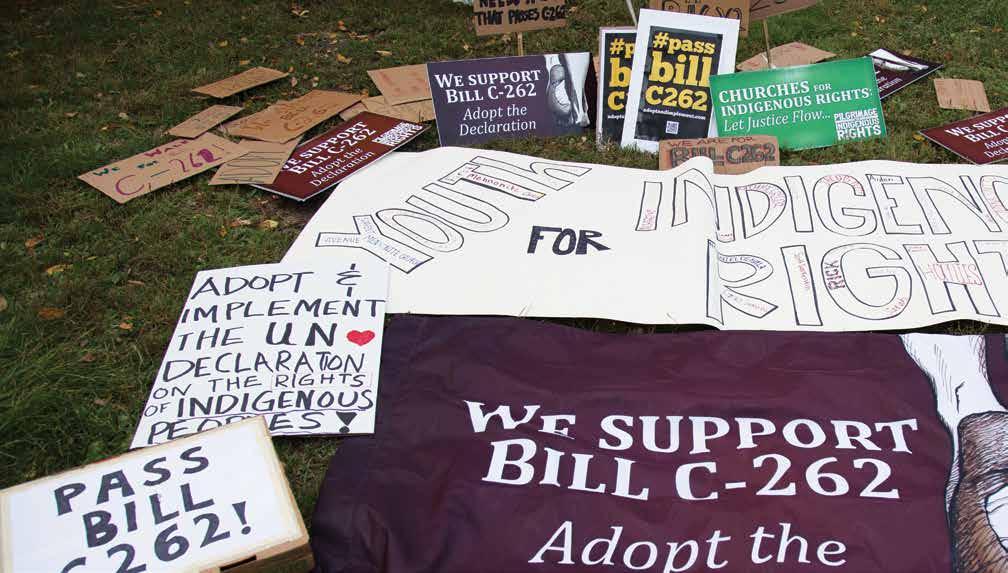
More than 150 people embarked on a 12-kilometre walk from Stephen Juba Park to the U of M’s National Centre for Truth and Reconciliation (NCTR) Saturday to urge the federal government to adopt a private member’s bill entrenching the United Nations Declaration on the Rights of Indigenous Peoples (UNDRIP) into Canadian law.
Bill C-262, introduced by Québec NDP MP Romeo Sanganash in April, seeks to align Canadian law with the principles of UNDRIP. The bill is scheduled to have its second reading on Oct. 18.
The Truth and Reconciliation Commission (TRC), which investigated the legacy of Canada’s residential school system, issued a report with 94 calls to action in 2015. The TRC said answering these calls will move Canada toward reconciliation and build meaningful relationships between Indigenous and non-Indigenous Canadians.
Recommendation 43 urges all levels of government to “fully adopt and implement” UNDRIP, providing a framework for governments to protect the rights of Indigenous peoples and work towards reconciliation.
Ry Moran, director of the NCTR, addressed the crowd gathered at the TRC headquarters, saying the principles of UNDRIP are central to reconciliation between Canada and its Indigenous populations.
“That is the essential part of this entire journey of reconciliation - that we don’t ever forget the gross and extreme violation of Indigenous rights that has happened in this country, for the entire existence of this country,” he said.
Moran noted that the journey to reconciliation will take time, and requires people from all walks of life working together.
“For all the non-Indigenous brothers and sisters in the audience,” he said, “this is the time for allyship.”
Allyship, he said, involves acknowledging the right of Indigenous people to organize “themselves culturally, politically, and socially to end all forms of discrimination no matter where they occur.”
Shahina Siddiqui, president of Islamic Social Services Association Inc., also spoke at the event, highlighting the importance of a collective spirit of hope when addressing the discrimination faced by Indigenous peoples in Canada.
“I can’t imagine the pain and anguish that the Indigenous people of this land have suffered but today is a day of hope,” Siddiqui said.
“We have the same hopes,” she added. “And walking together, the path is so important, so necessary and we need to continue to do it.”
Laura Tyler, a community organizer, claimed reconciliation is not just a process that entails “making
amends for past transgressions.” She said it is an ongoing process.
“It is not acceptable that we think it’s all in the past,” she said.
“We need to do a better job of doing proper community consultations, and I think we can all agree that UNDRIP is an important step in that direction,” she added.
“For all the nonIndigenous brothers and sisters in the audience, this is the time for allyship”- Ry Moran, director, National Centre for Truth and Reconciliation
Government failings
Leah Gazan, an Indigenous activist and instructor at the University of Winnipeg, highlighted the failings of the government when it comes to addressing the systemic discrimination faced by Indigenous Canadians.
She said the government of Canada is failing First Nations children on reserves by underfunding
child welfare and healthcare services. Gazan said that if UNDRIP were applied, development on Indigenous territory would not go forward without the direct consent of affected populations.
Currently, the government of Canada has a set of 10 principles it follows in navigating its reconciliation with the Indigenous peoples of Canada, but Gazan said that does not go far enough.
“The 10 principles being offered currently by the Liberal government under Minister Jody Wilson -Raybould […] don’t protect our land rights, our rights to our land, our rights to our mother, our rights to our waters,” Gazan said.
“There is no reconciliation in the absence of justice.”
Walking instead of talking
Michael Redhead Champagne, founder and organizer of Meet Me at the Bell Tower, a regular community forum hosted at the corner of Selkirk Avenue and Powers Street, urged the audience to seize the window of opportunity - the time between now and Oct. 18 - to organize to make UNDRIP a reality in Canada.
“In Winnipeg, we have a lot of members of parliament that like to do a lot of [talking] when it comes to talking about reconciliation and rights for Indigenous people but it is time for them to stop talking and
start signing some things into law,” he said.
Prime Minister Justin Trudeau addressed the United Nations General Assembly in New York on Sept. 21 and highlighted human rights abuses in Canada, owning its failure to address the struggles of Indigenous peoples.
“For far too long they have [said] the beautiful words even in places like the UN and have refused to back it up with action,” Champagne said. Meet Me at the Bell Tower, in collaboration with various community organizations, hosted Moving Forward Together: A Reconciliation Bell Tower, on Friday evening before the march.
In a conversation with the Manitoban, Champagne said, “There are still some people today that talk about reconciliation as if it is some kind of price tag. That is not what we are pursuing here.”
“There are still too many boil water advisories," he said.
"There are still too many children in child welfare and there are still too many indigenous women at risk of violence and it is not being addressed by Canada.”
PHOTO BY ASHA NELSON
Syrian families targeted by hateful graffiti
In conversation with Alhassans: Syrian family talks about waking up to graffiti telling them to “leave Canada”
SHADEN ABUSALEH, STAFF
Syrian families living in a housing complex on Dufferin Avenue woke up the morning of Sept. 19 to discover hateful graffiti scribbled on their fence.
Phrases such as “Go back to your country,” and “Leave Canada,” were later scraped off by one of the residents living on the property.
Six Syrian families live in the Dufferin complex where the graffiti appeared.
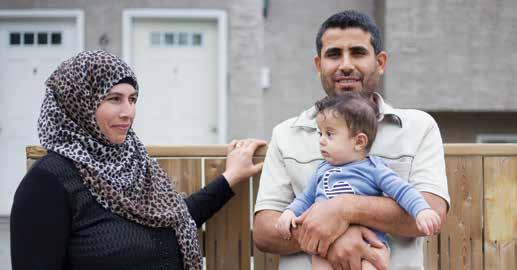
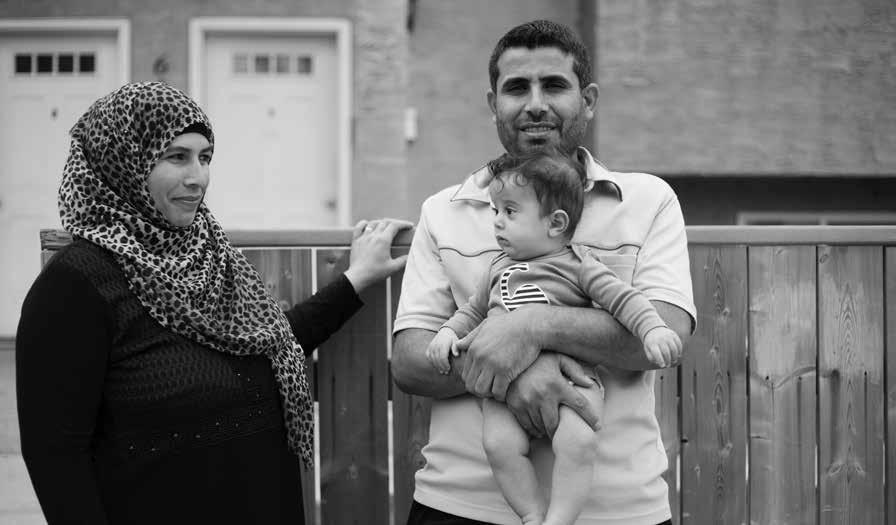
Kamal Alhassan and his wife, Amouna, who speak little English and were interviewed in Arabic, said the graffiti appeared after two months of constant harassment throughout the day and night.
Kamal said he saw the graffiti as he was leaving with his children to take them to school in the morning.
“I went out to take my kids to school. I went to the car and saw the graffiti.”
Winnipeg police have confirmed they are investigating the graffiti.
Coming to Canada
Kamal, Amouna, and their six children arrived in Canada a yearand-a-half ago.
They left Aleppo during the early years of the Syrian Civil War to live in Lebanon, where they registered with the United Nations High Commissioner for Refugees, also called the UN Refugee Agency.
The Alhassans lived in Lebanon for five years before making their way to Canada.
“Suddenly, they gave me a call, the United Nations,” Kamal said. “They told me: ‘There is a trip for you to Canada, do you want to go?’ I said: ‘Yes, I’ll go.’”
“We asked him later: ‘What if it was other than Canada?’” Amouna chimed in. “He said, ‘No I would not have gone.’"
Kamal and Amouna said Canada
was their preferred destination because this is where they want to secure their children’s future and where they want their children to be educated.
“Here it is safe,” Amouna said.
“And honestly, if we did not get Canada, we would not have left Lebanon,” she added. “We would have waited for Syria to be restored for us to go back.”
Amouna said her family’s life in Canada has been nearly everything they expected it to be.
an old house that his family can later renovate on their own.
Harassment
Kamal and Amouna said the harassment their family and neighbours have had to deal with began two months ago.
plex have suffered insults, including those directed at their children by other's the same age.
“During the day it’s children,” Kamal said, “but in the nighttime, we don’t know who it is.”
“Our poor neighbour has been drowned in eggs,” Amouna joked.
The nighttime harassments would start at around midnight and later, Amouna said.
She said that a day after one of her children was threatened by another child to be set on fire, a house next door was set on fire, causing one of the neighbour’s windows to shatter.
“We were scared afterwards,” Amouna said. “What if [they] burned that house to burn us?”
Kamal said his family was planning on leaving the building after their two-year lease ends. But following the vandalism, he said he decided to book an appointment with Manitoba Housing to ask to leave their subsidized contract and move elsewhere. They’ve found a new house, and will be able to move to by the end of the month.
Kamal and Amouna said that they have not been bothered since the incident on Sept. 19 and noted the increased patrolling around their area. They spoke of the strong response from both the community and police since the graffiti appeared. They added that they believe their children are welcome at school since the principle took efforts to ensure their safety.
Both said that what has been happening in the past two months is okay.
“This is okay,” Kamal said. “We think it’s okay.”
“They probably think that we are coming into their country to take their country. But of course, we’re not here for this. We’re like everyone else.”
Kamal said he doesn’t know what may have pushed people to target them. He wondered aloud if it might be due to jealousy, envy, or discrimination.
“People need to recognize that these people have the same needs as everyone else: home, employment, education, respect. Everybody needs those things and I want to see everybody gets them” - James Favel, executive director, Bear Clan Patrol
“But the snow,” she laughed. “We did not expect it to be this cold.”
Kamal said he used to work in the construction of cement buildings, in Aleppo and then Lebanon, “but it won’t work here. It’s all wood.”
On their future plans, Kamal said he hopes to continue learning English and then find work in construction.
“We’re thinking about hopefully buying a house,” Amouna added. Her husband said he wants to buy
“Thankfully, we’ve lived here for a year and bit and we haven’t seen anything,” Amouna said. “It’s been two months since the problems have started.”
They said rocks and eggs have been thrown at their house. At times, their window screens were shaken at night and their garbage bins were tossed over.
In addition, they and the other families living in the Dufferin com-
“Us Syrians, we’re used to being foreigners,” Amouna said.
“We did not know anything before coming here. I did not know how to write my name […] But now, thank god, things are better.”
Support from Bear Clan
James Favel, executive director of Bear Clan Patrol Inc., said he visited the family following the graffiti.
“I went the other day, right after it happened, and I apologised on behalf of the community and offered my support,” he said. “I brought them some granola bars, books for the kids.”
Favel, who lives just around the corner, said that Bear Clan is “paying extra attention,” to the Dufferin Avenue block.
Bear Clan is a nonviolent, nonconfrontational, volunteer-based solution for crime prevention, providing a sense of safety, solidarity, and belonging to community members.
“Our mandate is to protect and empower our women, children, elderly, and vulnerable members of our community,” said Favel. “We do this through relationship building, primarily, and a consistent presence in the community.”
Favel said that he has taken it as his responsibility to ensure the safety and security of community members.
“I don’t do this alone,” Favel added. “We have the average of about 25 volunteers per night.
“We’re just trying to make their experience here better. They come from a war-torn country and to revisit that kind of horror on them while they are here, it’s not acceptable.”
Favel said he has overcome the language barrier by speaking with the Syrian families through an interpreter.
He added that based on what he has learned from community members, the graffiti may have been the work of a local minor.
“Let’s try to not blow this out of proportion,” Favel said. “If this was the act of a child - one 12-year-old child - then I don’t think the rest of Canada needs to shoulder the blame for it as well.
“But it speaks to the education that the child got at home and we need to make sure that we’re setting the proper values for our children.”
Favel noted that while this is the first time he has heard of something like this “so close to home," he has not been immune to racism himself.
“We are an incredibly diverse country but we are not without our issues,” he said. “As an Indigenous male, I’ve dealt with a lot of racism in my time.”
On why he thinks the families on Dufferin Avenue have been harassed, Favel explained that this could have been the result of a lack of understanding, an issue with communication, cultural differences, or a “fear of the unknown.”
“People need to recognize that these people have the same needs as everyone else: home, employment, education, respect," he said.
"Everybody needs those things and I want to see everybody that gets them.”
PHOTOS BY ASHA NELSON
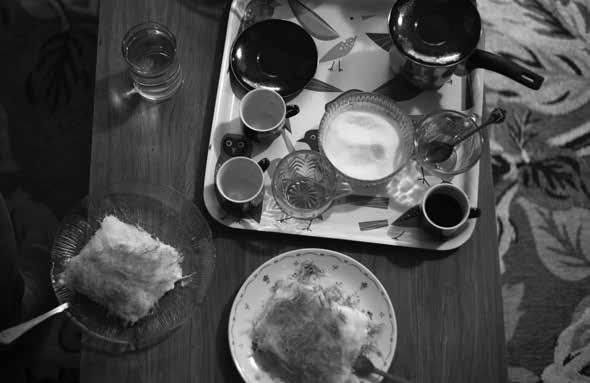
The Alhassans are one of the six Syrian families living in the housing complex on Dufferin Avenue, who, last week, woke up to find hateful graffiti scribbled on their front fence.
UMSU council approves $200,000 boost to IQ’s renovation budget
Additional funds to cover unforeseen expenses, including mechanical and plumbing issues
SHADEN ABUSALEH, STAFF
The University of Manitoba Students’ Union (UMSU) approved a motion to spend an additional $200,000 from the capital projects fund for the completion of the IQ’s renovation project at its regular meeting Sept. 14.
The motion was moved to vote by UMSU’s executive committee.
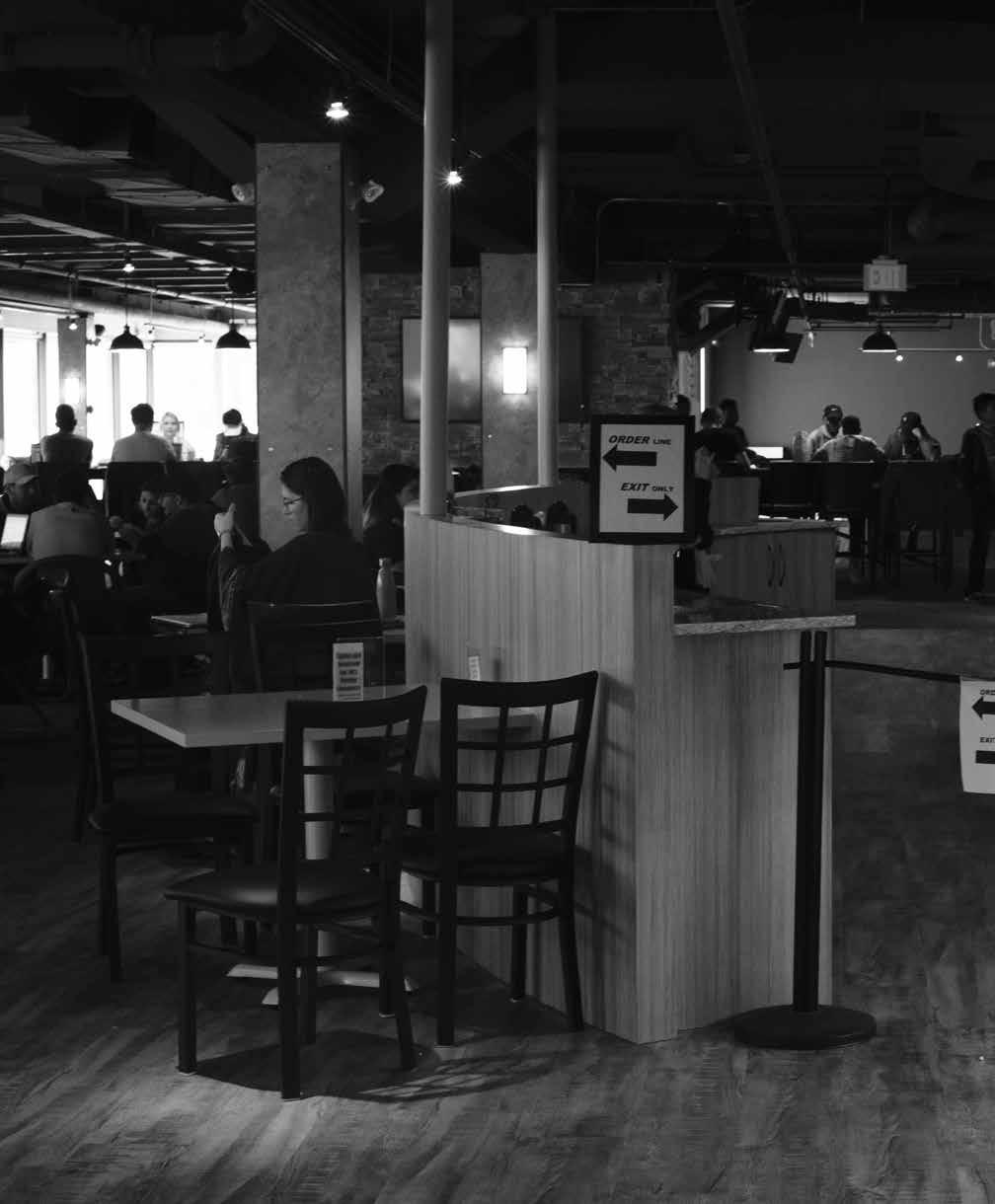
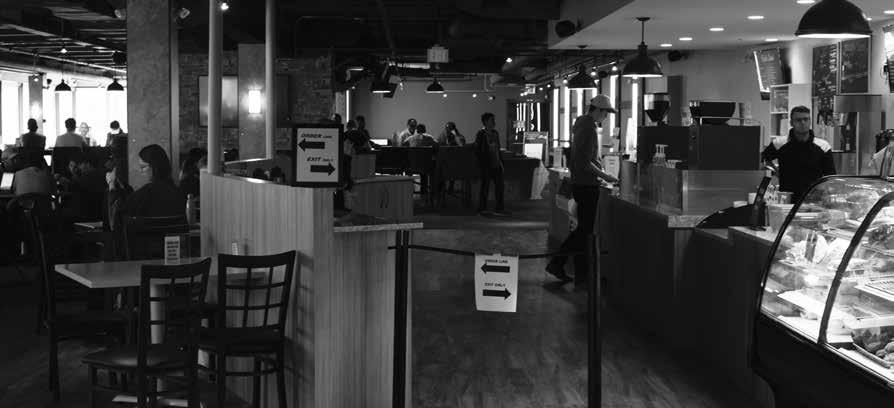
IQ’s Café & Billiards, located on the third floor of UMSU University Centre, was closed over the summer for renovations, which are still being completed. It was the first major renovation to the café in 18 years.
In January, council initially approved spending up to $1 million for the renovations. According to UMSU president Tanjit Nagra, IQ’s was scheduled to re-open just before the start of classes this term.
The meeting was the first time council met since the beginning of the fall term.
IQ’s had a soft opening last Monday following UMSU’s Homecoming Block Party. The official grand opening of IQ’s is yet to be announced.
VP finance and operations Jehan Moorthy explained to council that unforeseen expenses – including asbestos abatement, mechanical and plumbing issues, costs relating to a new point-of-sale system, and the fallout from a power outage over the summer which set renovations back a week.
Moorthy said the money spent to date amounts to just under $1 million, adding that he does not expect the additional funding to be spent in its entirety. He said it will be used as a buffer to pay for all the outstanding
costs to ensure IQ’s is operational and functional.
IQ’s “soft open”
IQ’s opened last Monday, though according to Moorthy this was not the official grand opening.
“We have come across with a strategy to create a soft opening, so it’s not sort of officially open yet,” he said.
The decision for the soft opening came following UMSU’s Homecoming Block Party on Saturday. Students got a first look at the space and provided input and feedback on the renovations.
“There’s still certain renovation aspects that need to be complete, and once that’s complete we’ll be having a grand opening where we’ll formally open IQ’s to the students,” Moorthy said.
He added that while he couldn’t yet say when the grand opening would take place, it will happen sometime in the fall term.
Renovations that have yet to be completed include installing an audio/visual and speaker system, putting in new lights above the pool tables, and fixing the nighttime lighting scheme.
Moorthy noted that among the things students should look out for in the newly renovated space are the grab-and-go deli, which has replaced UMSushi; the return of Starbucks favourites; sustainable lighting; board games; and high-end pool tables.
“We want this place to be sort of warm and welcoming for students,” he said.
“This is a place that students want to now go to opposed to students hav-
ing to go there.” According to Moorthy, $1.046 million has been spent so far on the project, but he could not provide information on when a completed expense report will be brought to council.
UMSU adopts “It’s Our Turn”
At the same meeting, council also voted to adopt the It’s Our Turn campaign, a national movement started by Carleton University students that aims to address sexual violence on university and college campuses across the country.
The campaign asks student unions to adopt, implement, and adapt programming for prevention, support and advocacy which includes creating and implementing a sexual violence awareness campaign, creating a campus survivor network and developing peer-to-peer sexual violence prevention and support training.
The campaign was also adopted by the University of Manitoba Graduate Students’ Association and the University of Winnipeg Students’ Association.
VP advocacy Allison Kilgour said she is “very excited” that the motion passed, calling it “a good step.”
“There has been a lot of progress in Manitoba in regards to sexual violence,” she said. “A lot of this has been studentdriven, not even from just University of Manitoba students, but from students across the province and I think, fortunately, our administrators and province has heard that.”
Kilgour added that this is not an indication “that we’ve solved the problem.”
She said adopting It’s Our Turn is “a reminder that we’re committed to combating sexual violence, to supporting survivors, to ensuring that we have a safe campus, and just kind of furthering the initiatives we already have.”
Additionally, it is “a statement that we support our colleagues across the country.”
Kilgour noted that UMSU has a position statement that is dedicated to ending sexual violence, but adopting It’s Our Turn will help pursue "more action to ensure that our policies are completely survivor-centred, that they’re comprehensive, that there’s no loopholes or anything in there.”
“Some of the things that I would like to pursue is really making sure that we acknowledge that rape culture exists on this campus, and that it’s not something that’s disappeared,” she said.
Muslim Student Association fundraises for Rohingya refugees
STAFF
SHADEN ABUSALEH,
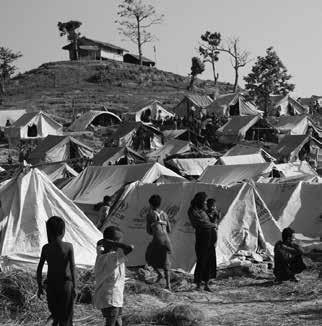
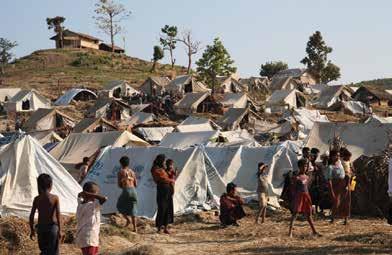
The University of Manitoba Muslim Student Association (MSA) raised $2,000 in donations last week in support of Myanmar’s Rohingya minority.
The funds will be donated to Islamic Relief Canada’s Myanmar Emergency Appeal fund, which aims to provide funding for urgent medical attention and emergency assistance to those fleeing violence in Myanmar.
Myanmar: a quick overview of the Rohingya crisis
The Rohingya - described as “one of the world’s most persecuted
minorities” - are an ethnic Muslim minority who have lived for centuries in Buddhist-majority Myanmar, also known as Burma.
A citizenship law passed in 1982 had the effect of rendering most of the Rohingya stateless. The government of Myanmar does not consider the Rohingya as one of the country’s 135 official ethnic groups, but rather illegal immigrants from neighbouring Bangladesh.
The Rohingya people’s rights have continued to be restricted, including their right to study, work, travel, marry, practice their religion, vote,
own land or property, access certain professions, and receive health services.
Currently, the majority of the approximately 1 million Rohingya living in Myanmar reside in coastal state of Rakhine, which borders Bangledesh.
A number of military crackdowns in Rakhine have forced hundreds of thousands of Rohingya to flee to neighbouring Southeast Asian countries over the past decades . These crackdowns have been accompanied by reports of rape, torture, arson, and murder of the
Rohingya - allegations which the government of Myanmar denies. Renewed violence against the Rohingya was sparked in late August after police posts and an army base were attacked in Rakhine by armed men from the Arakan Rohingya Solidarity Army, killing 12 security force members. This resulted in clashes and a violent military crackdown taking place over the past month.
An estimated 436,000 people have fled across the border into Bangladesh, bringing with them reports of massacres and systematic torching of
villages throughout Rakhine by the Myanmar army.
United Nations High Commissioner for Refugees Filippo Grandi said Sunday that Bangladesh is in need of “massive international assistance” to accommodate the hundreds of thousands of Rohingya refugees now within its borders.
The State Counsellor of Myanmar, Nobel Peace Prize laureate Aung San Suu Kyi and her government have been criticized for the official response to the violence in Rakhine. Aung San Suu Kyi has blamed Continued on page 6
PHOTO BY ASHA NELSON
Continued from page 5 the violence and subsequent military crackdowns on “terrorists.”
The government has also repeatedly rejected accusations of abuse carried out by government troops.
Aung San Suu Kyi has been criticized for her failure to condemn the indiscriminate force used by troops, and been urged to stand up for the rights of 1 million Rohingya in Myanmar.
An online petition launched in early September called on Prime Minister Justin Trudeau to revoke Aung San Suu Kyi’s honorary Canadian citizenship.
Last week, Trudeau sent a letter to the state counsellor, urging her to condemn the violence against the Rohingya.
Student group responds Yazan Hammad, MSA president,
said the fundraiser for Rohingya refugees came about after being proposed by MSA’s facility director, Abdul Ahad.
“Since the news became very big, it was on the team’s mind to do something,” he said. “Until Abdul Ahad actually approached me, as a president, and he was like: ‘Yazan, Islamic Relief are collecting, so let’s do it.’ Next day, we announced it and we just started collecting.”
The fundraiser was announced at the beginning of the term, and ended Friday. Announcements were made through MSA’s social media accounts and the MSA mosque, located in the basement of the E3 building adjacent to University Centre.
Funds were raised through donation boxes set up in the mosque. Additionally, revenue from tickets sold for MSA’s back-to-school barbecue were put towards the fundraising effort.
“The idea of our barbecue was: every ticket that we sold towards the barbecue, the money would actually be donated as well. And we’ve had over 200 people come out,” said Hammad.
Ahad noted that MSA received help from the University of Manitoba Bangladeshi Students' Association and University of Manitoba Graduate Students’ Association through their own fundraising efforts.
“We don’t need pressure for us to help. It should just happen” - Yazan Hammad, MSA president
Speaking on the importance of the fundraiser, Ahad said “It’s not just about being a Muslim, it’s about being a human being at the end of the day.”
“It doesn't make any sense to oppress a people,” he said.
In addition to raising money for the cause, Ahad said MSA’s larger goal through their fundraiser was raising awareness on campus of
plight of the Rohingya.
“Awareness is much more important because a lot of people are not actually aware of what is actually happening,” he said. “And even if they are aware, they don't know actually the details of it.”
“I think on campus, through our small Muslim community on campus, we’ve done a pretty good job,” Hammad added.
Hammad expressed his hope that the university work to raise awareness on this issue, as well as his hope of seeing the international community playing a bigger role in helping those in need.
“It should be our role as human beings to do these things without thinking,” he said. “If we see someone being oppressed, we shouldn't think twice about helping.
“We don’t need pressure for us to help. It should just happen.”
Editor-In-Chief:
Garett Williams
The U of M’s sordid Steve Kirby love affair an affront to justice
SHAWN HUBERDEAU, STAFF
BY
When the University of Manitoba faces a moral dilemma of its own making, the preferred course of action boils down to one thing: covering its ass.
Just recently, a plurality of students approached the media and made public allegations of sexual misconduct levied at the U of M’s fallen star Steve Kirby. While no criminal charges have been filed against the former jazz professor, two internal U of M investigations concluded that the students’ claims of harassment had merit, according to media reports.
Rather than being a trailblazer and taking action, the university administration pursed its lips and quietly announced Kirby’s “retirement.” This retiree then took up active employment in the form of a faculty position - since suspendedat the renowned Berklee College of Music in Boston.
The university’s actions in this case are in flagrant contradiction of the spirit of its own rules and regulations governing cases of sexual misconduct. While mandated by its own policy to “engage in public education, awareness and prevention activities” regarding sexual harassment, the university engaged instead in closeddoor conversations and bad PR pre-
vention activities in public afterwards. All this after - by its own lights - the university deemed it clear that Kirby has the stink of guilt clinging to him.
If we want justice for survivors, then the university must flex its bureaucratic muscles for a purpose: the mandatory adoption of sexual assault policies that aren’t totally toothless.
One might protest that the university has indeed been promoting public education, awareness, and prevention through its Sexual Assault Working Group (SAWG), a body whose goal is to prevent assaults and trigger dialogue on campus via public education campaigns. However, the public campaigns credited to SAWG have for the most part resulted from
grunt work performed by student organizations like UMSU and Justice for Women.
Take a moment to gawk at empty bureaucratic politicking at its worst: the university administration, which holds most of the power on campus, sidesteps responsibility for installing and acting on accountability mechanisms and punitive functions within its policies, and instead creates a group that siphons off student activism while taking credit for the final product.
This is especially egregious given that our administrative bigwigs - the real movers and shakers at the university - have signed off on valuable initiatives without contributing in their unique capacity as the powersthat-be. They are the players that can make change happen across all structural levels - that is, if they could be bothered to. Their reaction to the Kirby case has shown they couldn’t be less bothered.
We do not need the university, as an administrative entity, to wax poetic on the valour of these projects; nor do we even need their active participation on the ground. It is not enough that the university grants these projects an institutional license, thereby enshrining their validity. If
we want justice for survivors, then the university must flex its bureaucratic muscles for a purpose: the mandatory adoption of sexual assault policies that aren’t totally toothless.
Surely a case could be made in favour of firing Kirby for allegations of misconduct the university found merit in. It certainly has no qualms in doling out precarious labour contracts to sessional instructors by the dozens - so why exercise caution in this employment matter? Should one be feeling particularly generous, the thought could be entertained that the university did consider termination of employment. But we will never know because of the utter lack of transparency in these matters that - oh so conveniently - have the effect of saving face for the university.
So where the university can best help deal with sexual misconduct - by not only mandating but enforcing substantive, punitive regulations - it has failed the most.
Kirby was allowed to flee the U of M with dignity and grace, whilst his victims were stripped of plausible avenues of recourse given Kirby’s stature in the local music community and the potential for accusations against a prominent member of said community to stunt their future careers.
The university administration could have thrown its considerable weight behind the women who were targeted and reversed this state of affairs.
Instead, the university turned off the lights and hoped nobody would notice anyone was home. Online references to Kirby’s time at the U of M have been virtually eradicated, and survivors were left in the dark by opaque formal procedures.
The collective egoism of the university administration was present when it looked after its own interests following the first allegations of Kirby’s behaviour - and it remains on display as administrative mouthpieces take to the media to defend their actions by appeals to privacy and, presumably, libel law.
Such behaviour may be perfectly acceptable legal practice. But that does not make the actions of our academic administrators ethical or palatable.
If we want justice for survivors, then the university must flex its bureaucratic muscles for a purpose: the mandatory adoption of sexual assault policies that aren’t totally toothless.
PHOTO
ASHA NELSON
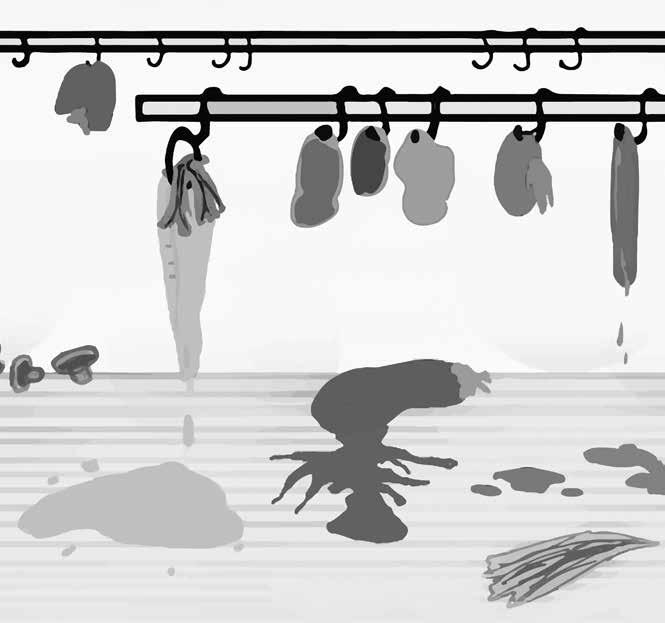
Veganism is both personal and political
Because it is in bed with sexism and racism, it’s time we break up with the meat industry
SYLVIE CÔTÉ, STAFF
W
innipeg’s first vegan festival, VegFest, took place Sept. 16. I attended the lecture by Carol J. Adams, where she discussed her book - The Sexual Politics of Meat: A Feminist-Vegetarian Critical Theoryand walked away feeling politically empowered.
During her presentation, Adams spoke of the origin of her veganism: when her childhood pony died in a shooting accident. While mourning her loss, she found herself eating meat and realized she was eating more than a packaged meat product - she was eating an animal.
Animals had provided Adams much solace and comfort over the course of her life; she realized she could no longer ethically participate in the cruelty they faced in factory farms and slaughterhouses, whatever they churned out - food, clothing, or entertainment.
Veganism is more than a personal cause. Rather, it is deeply political and extends far beyond hipster culture and the mundane act of making meals. Veganism is an answer to the tyranny of the meat industry: an industry predicated on the exploitation of both animals and women.
Adams identifies the massive marketing apparatus that upholds the meat industry as culpable for a sexualized politics of meat that integrates animal cruelty, sexism, and
racism into a single whole. Part of the reason these oppressive phenomena have such reach and impact in society is because we are socially conditioned to accept these ideas through the deluge of marketing media we consume in our daily lives.
This creates a link between the literal consumption of meat and the figurative consumption of women’s bodies
Insidiously, the meat industry’s marketing engine is fueled by the male gaze. Many of the advertisements Adams featured in her lecture showed the ways in which meat is associated with masculinity: strength and sports, whereas plant-based diets are marked as feminine.
Not only this, but Adams connected meat-eating to women’s sexuality. Chickens, cows, and pigs are often depicted in sexualized ways, wearing traditionally sexualized garments like garters and high heels. On top of this, women are depicted as submissive sexually and performatively - all while near animals or animal corpses, or as they eat meat.
This creates a link between the literal consumption of meat and the figurative consumption of women’s bodies.
On my way home from VegFest, I passed by a bar & grill called the Tipsy Cow, which became disturbing to me as I remembered Adams’ idea of “the absent referent.” The absent referent is when the meat one eats is removed from its origin: the cow, the pig, the chicken, and so on. Perhaps it is this disappearance of the animal that makes eating meat so much easier. Perhaps it is the fantasy of ignorance, that makes you think the animals you are eating live free lives - free from violence and abuse.
In the context of this bar, the Tipsy Cow, the absent referent is the woman. The cow represents the woman. The tipsy cow: the tipsy woman. A tipsy woman, a drunk woman, in the space of a bar inevitably leads me to think about sexual assault. It’s easier to name a bar Tipsy Cow than it is to name a bar Tipsy Woman. I’m not saying that if you are a woman drinking, you are inevitably more vulnerable to assault – but I think in this culture, some people, be they aggressors or victim-blamers, might think you are.
We must remain vigilant of the ways in which meat exists in relation to alcohol when it comes to sexist portrayals of women. Part of this relation is the way objectifica-
tion targets women through depictions of femininity where women are deconstructed and presented as isolated body parts in order to appeal to the male gaze.
If you are in a position of privilege, with the power to exercise more food-conscious decisions, then you simply ought to
Another normative form imposed on women’s bodies are pouty lips, half-lidded eyes, and prominent eyelashes, which were all too common in advertisements of cows, pigs, and chickens. Additionally, I noticed the hair on pigs were removed in their depictions, which again suggests what is desirable in women: hairless bodies. An unrealistic standard: have you ever tried shaving your legs? It takes forever.
A sexual politics of meat does not need to focus exclusively on sex and sexuality, however: it also intersects with race. Many of the advertisements that Adams showed depicted pigs that were pink or white, even if this is not always the case in nature.
This suggests the kinds of meat, or women’s bodies, that are desirable in a North American context: white women’s.
While anti-racist feminists fight the food fight against sexism and racism, and vegans expose the rampant animal cruelty in the meat industry, rarely do we acknowledge the three ills outlined above as intricately intertwined. As unrealistic and racialized beauty norms are reinforced for women within the framework of a sexual politics of meat, radical action against any part of this leviathan requires radical action against all of it.
If you are in a position of privilege, with the power to exercise more foodconscious decisions, then you simply ought to. While such a moral obligation might be waived for people lacking the financial resources and time required to be vegan or vegetarian, it becomes harder to justify supporting the meat industry the more freedom one has in the food market.
Some ways to try out a vegan or vegetarian diet is to try it for a week or two - you may learn many new favorite recipes - as well as sampling plant-based meals at restaurants to get recipe ideas.
Take action and help the people and animals you care about.
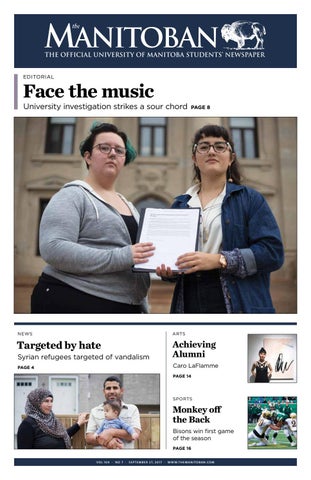
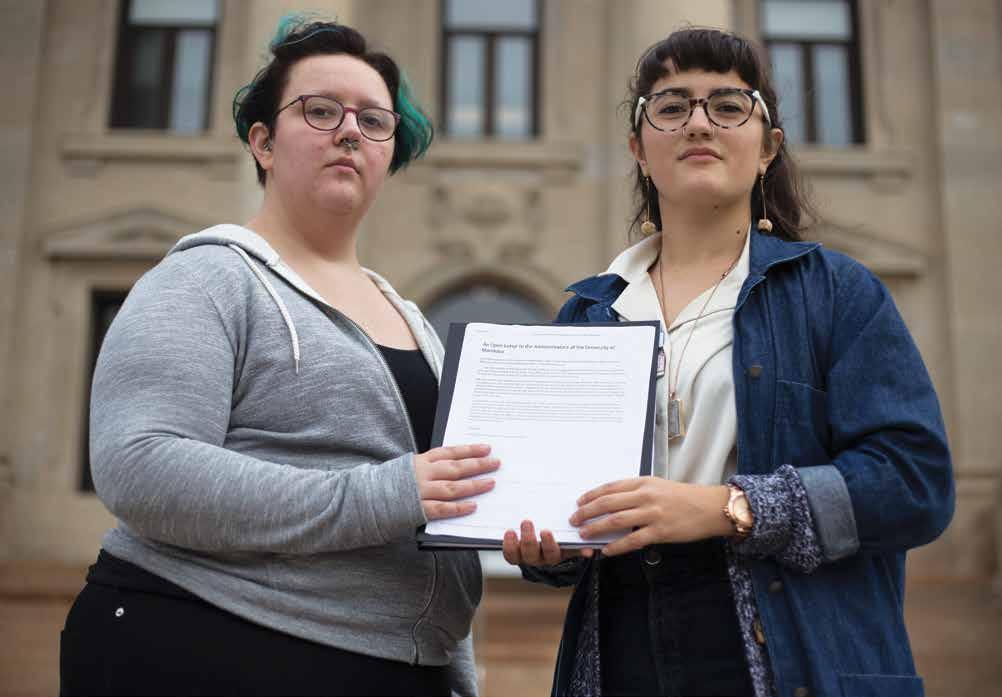
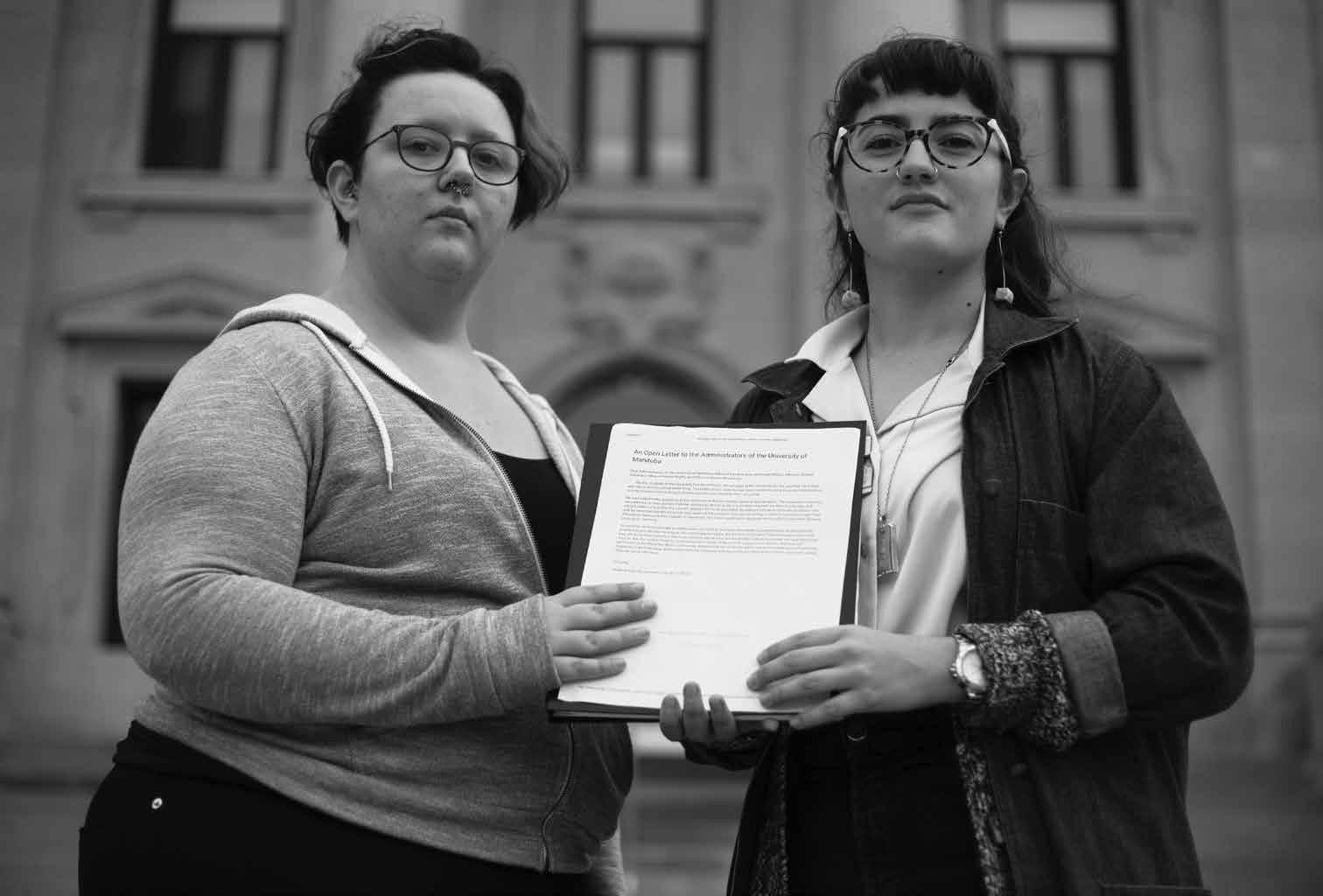
Faculty of music students issue open letter condemning U of M over handling of Steve Kirby case
CAITLYN MASKIEW AND CHLOE LEBLANC-TOD
Dear administrators of the University of Manitoba, Office of Fair Practices and Legal Affairs, Office of Student Advocacy, Office of Human Rights and Conflict Management, and Office of Human Resources.
We, the students at the Desautels faculty of music, are outraged at the university for the way they have dealt with the incident involving Steve Kirby. The safety of our students
has been compromised and we are concerned as to what the university is doing to further prevent such incidents from occurring.
We have asked many questions to the university and have not been given proper answers. The university is refusing transparency on their policies that have allowed an abuser to be in a position of power for almost a decade and, despite letters of warning and concern, allowed him to be pro-
moted. By hiding information from students, it can only be assumed that the university was aware of the situation but was not acting in order to save their image. Had the policies been proactive instead of reactionary, this never would have happened, or would not have been allowed to go on for this long.
As students, we have the right to safety within our school, and when this safety is compromised
we demand that proactive action be taken to ensure this never happens again. We are not convinced of the university’s claims that they will revise their policies in the most effective way, and we are dissatisfied with every answer we have been given thus far. We, the current students of the Desautels faculty of music, with support from alumni, teachers, and performers in the Manitoba music community, demand that the
university admit that this incident never should have happened in the first place, and admit that the university's policies protected Steve Kirby until his retirement, unless they can prove otherwise.
Signed by students from the Desautels faculty of music.
Arts & Culture
Arts & Culture Editor: Olivia Michalczuk
Contact: arts@themanitoban.com
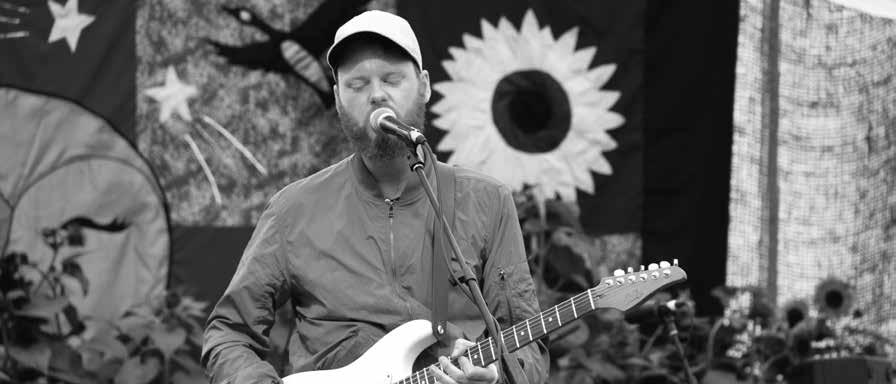
The 16th perennial Harvest Moon Festival
BEN FIGLER, STAFF
The 16th “perennial” Harvest Moon Festival took place in the beautiful town of Clearwater over the weekend of Sept. 15-17th.
With gusting winds, rain, and hundreds of scattered attendees, the provincially-famous festival made it very clear that arts, culture, inclusivity, peace, supporting local everything, and community growth is just too damn important to not celebrate by persisting through the miserable weather, no matter how many tents go tumbling past town hall.
The three-day festival was an impressive showcase of courage, support, and love for Manitoba craft. Friday night of the festival started out with relentless winds and scattered showers causing organizers to get creative and quick.
Slowly, people started noticing festival attendees carrying trees and various plants toward the RV parking section to create their own makeshift pop-up stage. The organizers made their Plan B a reality, featuring all the scheduled acts, almost perfectly
turntable
OLIVIA MICHALCZUK, STAFF
Dent May
Across the Multiverse 5/5
D
ent May’s latest album, Across the Multiverse, takes listeners on a journey that crosses through time and galaxies. Themes of modern-day heartache and romance, couched in a hybrid mix of early Beach Boys poprock and modern synth-y celestial effects, combine to create a unique easy listening experience. Paying
a little bit of extra attention to the words being sung brings to light the beautiful and poetic juxtaposition of light tunes and heavy lyrical themes.
As might be gleaned from the album’s vibe, May’s bio indicates he is inspired by the tradition of musicians such as Beach Boy Brian Wilson, whose iconic songs explore themes of the unstable and painful sides of love.
“Hello Cruel World,” “Face Down in the Gutter of Your Love,” and “I’m Gonna Live Forever Until I’m Dead,”
on-time, in the local hockey rink.
How Canadian can it get? More Canadian, I promise.
The festival featured many workshops throughout the weekend, endless local goods at the pop-up farmers market, and even a homestyle breakfast buffet hosted by the only restaurant in town.
It was a weekend for warriors.
The dreary weather continued through Saturday, as the swarms of soggy, messy-haired harvesters crowded Café Postal’s booth in search
of warmth through the fresh roasted grounds.
Few were quitting, and everyone was optimistic - at least once they warmed up.
By the late evening, everyone was in full festival mode, raincoats traded in for onesies, thermoses changed to solo cups, and rain boots turned to… dancing boots.
The three-day festival was indeed, an impressive showcase of courage, support, and love for Manitoba craft
Seriously, “the show must go on” is an understatement.
Local volunteers provided perogies, cheeseburgers, and a fully stocked bar with very reasonable pricing.
Multiple community fire pits lit up the back of a massive crowd where local jazz-hip hop fusion heavyweights Super Duty Tough Work
heckled and cajoled the audience into waving their arms in the air, chanting, and dancing.
Eventually the frontman even crowd surfed - a personal festival highlight.
Veterans of the popular Soul Night at The Cavern in Winnipeg, Dr. Hotbottom, blew everyone away yet again.
Capping off the night, the unofficial headliners Riel Gentlemen's Choir put on a triumphant performance in the campground, featuring giant fluorescent bumblebees. What a night.
Sunday was a bit more relaxed, especially to those who woke up relieved to see that the sun was shining finally.
As everyone contemplated the similarities between their brains and the freshly cooked scrambled eggs, more local acts performed all day at the restaurant stage.
Discussing the wild weather and reveling in their perseverance, the masses of young enthusiasts slowly dwindled. Harvest Moon 2017 ended with relief but not in disappointment.
in title alone, are great examples of the dark and honest themes that are sung alongside catchy and soaring melodies that have the ability to plant themselves in your brain and have you singing their sorrows while snapping your fingers and tapping your toes.
“Picture On a Screen” starts off with a classic dial-up tone and instantly captivating guitar. Ukulele is introduced just moments before May begs to know: “Picture on a screen, I love you, do you love me?”
The song beautifully describes the desperation of a man obsessed with the image of a person, hoping that the image will materialize into the perfect person to make him happy, as he longingly croons, “reach out your hand to me.”
Each song on the album is unique and even though the songs are distinctively Dent May, they are wonderfully composed in ways that play with the typical compositions of the featured instruments. The cosmic
sounds always ground the songs in the album’s vast theme and overarching scope - the titular journey across the multiverse. “Traveling pixels,” cell phone calls, and the computer in his room are some of the modernizing lyrical elements that May weaves into his songs, while creating a relatable sound that also reminds you of your grandparents’ music.
PHOTO
Alumni profile: Caro LaFlamme
Bachelor of fine arts with honours, 2017
OLIVIA MICHALCZUK, STAFF
Local artist Caro LaFlamme is a recent graduate of the U of M’s school of fine arts who explores many modes of expression while contributing to the arts community in Winnipeg, including photography, mixed media art, music, and writing.
As she travels many artistic avenues, she said she strives to examine
“themes of consumer anxiety, ephemerality, and preservation through a contemporary feminist lens.”
LaFlamme’s work challenges the patriarchal structures that dominate Western art from a strong, honest, feminist approach.
LaFlamme said her work “echoes an internal conflict of simultaneous
complacency with, and resentment of, performing femininity within the messiness of gender politics, and the complex obstacles to enacting feminist theory into praxis."
LaFlamme works to confront and subvert the heterosexual male gaze that has persisted throughout the history of western art.
She said her work has benefitted from her education at the U of M, which taught her valuable skills that have transferred across all her artistic work.
“The senior year of my degree consisted mostly of self-driven projects, which was both freeing and daunting,” she said.
“Having my own studio forced me to decide what I truly wanted to work on, manage my time, and acknowledge my limits as a working student, artist, and musician.”
Recently, LaFlamme had the opportunity to travel to Montreal where she sold the first piece of work from her 2014 Nuit Blanche-featured series "Vandals!" which reflected on the aesthetic qualities of vandalism.
“It feels very validating for someone to enjoy my work enough to purchase some of it, and in a sense, invest their money into my career by bringing a piece of mine into their home.”
Her latest series, “Afterlife,” explores the relationship between the permanence of the artistic medium and the disposability of the subject matter, and was recently featured at Degrees Restaurant.
“These newer pieces frame stylized replications of disposable facial wipes within a makeshift calendar system,” LaFlamme said.
“The calendars, an accumulation of daily cosmetic waste and facial detritus, read as timelines shaped
by (resentful) routine and (muscle) memory,” she said.
“I was drawn to these disposable cloth squares, among other throwaway products, because they read as abstract compositions in and of themselves. The fingermark-shaped trails of foundation, lipstick, and eyeshadow become brush strokes on paper-thin sheets of cotton. With this work, I hope to untangle and examine the contradictions within my everyday actions and routines as a young feminist artist.”
Aside from being a successful visual artist, LaFlamme also spent time writing for the Manitoban. Her editorial piece on celebrating women in music shone a light on the maltreatment of talented musicians and the downfalls of the male-dominated industry.
As keyboardist and back-up vocalist for local indie outfit Sc Mira, she recently toured across Canada. Sc Mira also headlined the NWT Pride Festival in August.
PHOTOS PROVIDED BY CARO LAFLAMME
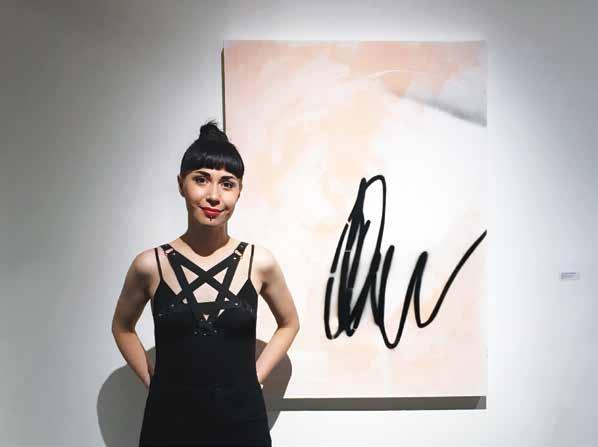
Above: LaFlamme with her piece, Pink (2014, aerosol paint, gesso, oil on canvas), at Art Mûr Gallery in Montreal.
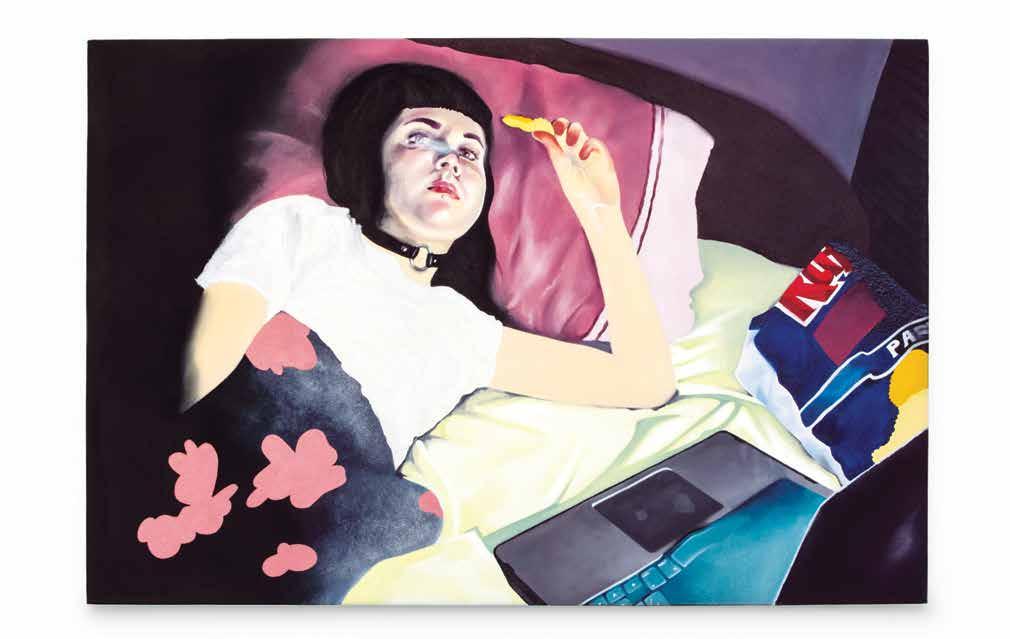
Recline, 2016, oil on canvas
Jarmoszko brings plenty of experience to Bisons soccer
Goalkeeper a standout with the Winnipeg Wesmen in 2015
MIKE STILL
J
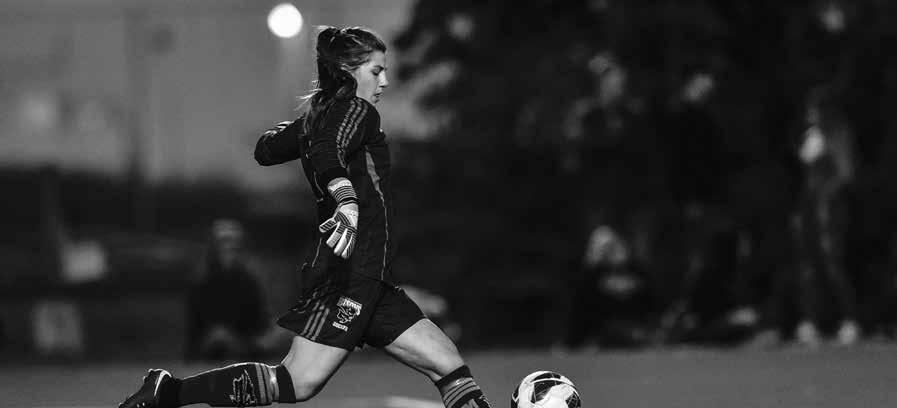
ustina Jarmoszko’s principle when she’s on the pitch is simple.
“My goal is just to be the best athlete I can be out there on the field, and just to help my team out any way I can to show them that I’m there for them,” she said.
Jarmoszko has done that, and then some, during a soccer career that began when she was just three years old.
She was the MVP for her high school team, West Kildonan Collegiate in 2013-14, and earned the same recognition with the Manitoba Blizzard - an elite girls soccer program for players looking to play at the university level - from 2012-14.
Jarmoszko said her time playing with the Blizzard was invaluable, due in part to the fact that she was able to participate in prestigous tournaments in the U.S. against some of the best high school competition America had to offer.
“The intensity was there and it was just kind of like a high you get from it,” she said. “It was just going so fast and it gets your heart pumping, and I just loved it.”
With such an impressive soccer resume, it’s no surprise that
Jarmoszko continued playing in university. She joined the University of Winnipeg team in 2015, and despite a less than stellar team record, her individual stats stood out.
Jarmoszko started and played in all 14 regular season games as a rookie, and led the conference with 117 saves and 1,260 minutes played.
Jarmoszko has high expectations for herself, and her stat line was a product of all the hard work she put in.
“Just being that newcomer, that rookie coming in, you had so many expectations on you. The challenge was there and I took it,” she said. “I thought it was great.”
Despite the strong showing, Jarmoszko made a difficult decision at the end of the season: she left the Wesmen soccer program.
“I felt like, as an individual, I wasn’t becoming the athlete I wanted to be.
I wasn’t improving there,” she said.
“I wanted to be the top player I could be there, and I just wasn’t getting it there, and I decided to look at my options and where I wanted to be, so I decided to take a step back and just focus on me.”
Jarmoszko said her goal was
always to continue playing university-level soccer. However, she had to sit out the 2016 season due to U SPORTS transfer rules.
There’s no way you could accuse her of getting rusty, though. She joined the Winnipeg WSA North Stars soccer club, winning a provincial championship, and then going on to competing in that year’s nationals.
“It was good because I feel like once you step back and you’re not at that university level, it takes, I think,
a level back from your play,” she said.
“And just having that constant competitiveness kept you on your game.”
Fate would eventually bring Jarmoszko to the Bisons as, during a friendly game against the herd in the summer of 2016, Manitoba head coach Vanessa Martinez Lagunas offered her with the opportunity to join the program.
After taking some time to consider her options, Jarmoszko ultimately decided to come on board with
Manitoba, and, despite being only six games into the season, the keeper said she already feels a strong bond with her new teammates.
“Things are great,” she said. “I really enjoy the group of girls we have here, I feel like there’s chemistry and magic starting to go, and we’ve just got to keep that consistency together, and I think we’ll do really great.”
Wengelinski’s football journey a true test of adversity
Second-year offensive lineman has battled injuries, self-doubt
MIKE STILL
B
ison offensive lineman Ryan Wengelinski is the poster child for overcoming obstacles both on and off the football field.
When he was 13 and playing community football for the Fort Gary Lions, he was hanging out with the kicker after practice one day waiting for his ride. He decided to work on his own field goal kicks while he waited, and just as he was following through on one of his attempts, a nail from a piece of farm equipment got jammed up into his foot, breaking four bones.
The pain didn’t stop there. He would later get bone poisoning due to an improperly administered Tetanus shot. Wengelinski almost lost his foot, relied on crutches for weeks, and had to stay on antibiotics for several months.
“It’s tough, because you’re just starting to get to the higher grades in school and then you’re on crutches and you’re sad about it,” he said. “It was tough, but I bounced back from it, and I’m still here and still alive.”
Wengelinski eventually got back on the football field, playing in high school for coach Kelsey McKay and the Vincent Massey Trojans, which he said helped propel his desire
to continue with the sport after graduation.
“The amount of time Kelsey put into that program and put into myself in general of just encouraging me to be around and watch film and workout, all that stuff kind of shaped me to be a leader and step forward and really, really chase after football,” he said.
Wengelinski was not originally planning on playing university football when he graduated from Massey in 2013. Instead, he was focused on taking a few years off from school to get work and life experience.
But that didn’t mean that junior football was out of the equation and after considering offers from a few different teams, he chose the Okanagan Sun of the British Columbia Football Conference (BCFC).
Wengelinski earned a starting spot with the Sun, before he got injured again, fracturing his ankle just games into the season.
He attended rehab and worked to get back on the field before the season ended, but his coach suggested shutting things down for the season.
It did not sit well with Wengelinski.
“The coach out there kept telling
me ‘heal up, we don’t need you right now, we just want you to get better,’” he said. “And me, I took that personally, and I was like, ‘I guess I don’t matter to this team.’”
“I can’t take back what happened. It’s not going to stop me” - Ryan Wengelinski, offensive lineman
A week before the season was over, he decided to pack his bags and fly back to Winnipeg. At that point, Wengelinski didn’t know what his football future was going to look like.
The following season, though, he was back to the grind, playing in the Manitoba Major Junior Football League (MMJFL) for Fort Gary. His team went undefeated, winning the Lloyd Urbanowski Trophy in the process.
“That’s kind of what rekindled me to chase football again,” he said. “I almost had to find myself five times between 18 [years old] and 20 [years old].”
Rejuvenated from the success of 2014 with the Lions, Wengelinski contacted his old coach at Okanagan, looking for a second chance with the team in 2015. He was welcomed back and the team rolled their way to a BCFC title.
“We came a little short of the national championship, but that step right there of going back and realizing my mistakes definitely propelled me into being in a situation where I am now,” he said.
The natural progression for Wengelinski at the end of the 2015 season was to come home, and try to make the Bisons football roster for the 2016 campaign.
He said he trained hard in the lead up to spring camp, and gave his everything on the field. He was rewarded with a roster spot, but was not expected to make much of an impact.
“I was pretty much just like a very late add,” Wengelinski said. “When they finished spring camp, the coaches told me, they’re like ‘we don’t know if there’s going to be room for you, we’re going to have to get back to you, we feel like you’d be a good addition to the team but we don’t know.’”
This statement motivated
Wengelinski to work hard, and he went from a walk-on last season, to a starter in game one of 2017.
“I just looked at where I came from and where I was at the point where they literally told me you might not be on this team,” he said.
“I really dedicated myself in the offseason to lose a little bit of weight and get a little bit faster, and just putting that development into myself and really learning how to be a university athlete, and obviously coming into this year that definitely paid off.”
Wengelinksi suffered another setback in the opening game of the 2017 season, as a foot injury forced him to the sidelines for the rest of the year. But at this point, fighting through adversity is simply embedded in his brain.
“It is what it is,” he said. “It’s done and I can’t take back what happened. It’s not going to stop me.”
PHOTO PROVIDED BY JEFF MILLER
Playing it safe
Bison football head coach weighs in on CFL move eliminating pads from practice
RYAN STELTER, STAFF
Recently, the Canadian Football League (CFL) eliminated fullcontact padded practices, and added another bye week, in an effort to decrease player injuries.
Bison football head coach Brian Dobie said this decision will see itself filter down the ranks of the Canadian football system.
“Almost every rule change, safety change, or safety consideration, cultural effects, they come from the top down,” he said. “They come from the CFL down, they come from the NFL down, they work their way through the NCAA or U SPORTS, down through the high schools, down to the young kids – not the other way around.”
The idea of padless practices has been batted around at U SPORTS national coaches meetings, but it will be a bigger talking point this year.
“We look upwards, and the CFL are the leaders in our country – if they make a rule change or do something to institute more safety mechanisms or whatever it is, we take a look at those things, for sure we do,” Dobie said. “It will be a major topic of conversation at our national meetings in November.”
Having no contact practice might be easier to implement at the profes-
sional level, with all the experience the players already have, but Dobie said it gets tougher as the players get younger.
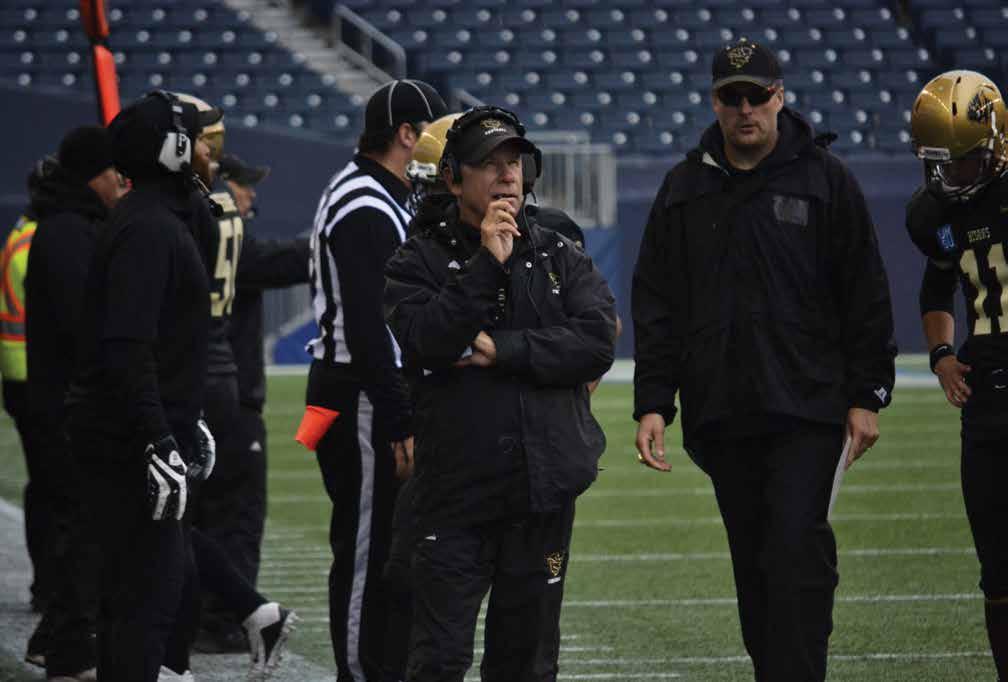
“They need to learn the skills and part of it is they have to learn with pads on, they have to feel safe in those pads”Brian Dobie, Bison football head coach
“I think people have to be very thoughtful and considerate when they look at it because, speaking from an amateur level, we’re the next step to pro, but many of our guys are not close to pro, not everybody is a Geoff Gray or David Onyemata or whoever,” he said. “We would be almost negligent if we threw them into a game with the bullets flying full speed and they never practiced as close as possible to that tempo with pads on.” There can be a balance as to how
often teams can practice in pads, but it is tough to give one blanket answer, according to Dobie.
“There is no perfect answer, but there is some sort of a line or grey area,” he said.
“I think at our level we need to have some kind of contact at the positional areas so that they can protect themselves and be cognizant of everything and everyone around them as well.”
At the high school level, where a lot of players can get their start in playing football, Dobie said the pads are a necessary tool to learn the fundamentals.
“If you took a high school football team and they were never in pads, and now they got to play full speed in a game, that’s worse than having contact in practice, because now, there’s the unexpected, the shock element, [and] everything that goes with it,” he said. “I think that would literally be negligence in another framework.”
Dobie pointed to the 2006 Bisons team, though they were dominant, they fell in the Canada West championship to the University of Saskatchewan. For the majority of that season, Manitoba practiced with pads on. In 2007, the Bisons didn’t practice with pads on for the final six weeks, and won the Vanier Cup.
“Relative to our level, we had an extremely high-end team, we had a very experienced team and they knew how to practice without the pads and they had enough experience with pads on prior to that in the season,” Dobie said. “So we weighed it out and we won the Vanier Cup, and we were healthier and we weren’t as tired, we believe to this day that part of that was for that reason.”
University football players have to learn those fundamentals at some point, and at the grassroots level if players aren’t in pads it leaves a massive part of the game out.
“They need to learn the skills and part of it is they have to learn with pads on, they have to feel safe in those pads and they have to learn proper technique, applied with pads on,” Dobie said.
“I think that holds very true for high school, too. I think if you’re coaching high school you can take the pads off, and probably should. But I think it would be a guarded, thoughtful decision, because, again, everyone is thinking pads off is the answer, but not if you don’t have the fundamentals and that experience.
“Now you’re setting somebody up to literally be hurt. People forget that side of it.”
“Knowledge is power” is an adage especially prevalent in relation to concussions, which have long been an injury not taken seriously in sports.
“I think the more aware you are of anything, and the more knowledgeable you are the more that you can adjust, and adapt to make things better,” Dobie said. “Regardless of what it is, wherever. I think in this case, yeah there’s that scary aspect of football and I get that.”
Contact sports are always going to come with injuries, whether it comes in practice or in a game. With the CFL eliminating padded practices, Dobie said it’s a real sign of leadership.
“There’s no avoiding injuries in sports, a hamstring tear, an ACL in your knee, concussion, a broken wrist. We’re fragile human beings,” he said.
“I think what they’re trying to do is number one create awareness to try create the most optimal culture, rules, safety mechanisms now that there’s transparency. So I applaud the CFL in terms of thinking in that direction and taking leadership, because without that, change doesn’t occur.”
PHOTO BY CHANTAL ZDAN
Balancing the waiver wire
MICHAEL BELL
How an owner negotiates the fantasy football waiver wire is one of the key factors in determining a team's success. Many of these thoughts apply to waiver priority bids or a free agent acquisition budget, or FAAB.
If you've been reading these articles, you know I'm a fan of proactive fantasy ownership. Stagnant ownership leads to stagnant fantasy performance. Players fizzle out, get nicked up, and lose their jobs. If you're not on the ball, your fantasy team will be done quicker than you can say, “the Cleveland Browns are bad at football.”
The waiver wire can be a fantasy gold mine. Don't ignore it.
However, I'm not talking about a full reboot. We don't need to see another "Fuller House.” But once you have your core starters, you will need key pieces to replenish the rest of your lineup for bye weeks and injury protection. The engine of your fantasy team may be strong, but you'll need an oil change from time to time.
The waiver wire is where you can give your team a boost. As I mentioned last week, league winners such as Jordan Howard in 2016 or David Johnson in 2015 were found on the wire. I write this article early in the season because I feel owners need to make strong bids on players in the first few weeks. As Winnipeggers, we are notoriously parsimoniousotherwise known as cheap. If you're using FAAB, obviously don't blow it all. But make a strong bid or use waiver priority on a player who could turn out to be an every-week starter.
Usually, I target running backs on the wire because of volume. Volume and snap rates are king in fantasy. Todd Gurley is dominating, in part, because he's on the field all the time. I can usually find a good spot wide receiver starter from week to week. But the potential stud running back free agent target would be, as Gollum would say, "my precious."
But what if I have enough stud running backs, you may ask? Why would I bid on more? The answer is simple. The goal of fantasy football is to get all the good players you can.
Not to mention, from a strategic point of view, you can use a waiver wire wonder as trade bait; you can target another player to address your own team’s weaknesses. Say you need a wide receiver and so you text a buddy, “I will trade x for y.” The owner may diss you and respond by saying, "Who's this? New phone." But keep trying. Target owners who need what you have. For students in business and commerce, they may have the edge in understanding this concept. Knowledge of the value of commodities comes in handy when
playing fantasy football. In summary, the waiver wire can be a fantasy gold mine. Don't ignore it.
Life is but a dream Update: in one of my leagues I dropped Andy Dalton. Tyler Eifert is hurt - again. My field goal kicker was missing kicks. And I usually start a new defence every week. So I'm streaming all these positions. I've never tried this strategy before, but I'm willing to give it a shot. Basically, I'm finding a new QB, TE,
K, and defence every week, based on matchup. I started Carson Palmer this week because of his favourable matchup, but I also picked up one of the top fantasy quarterbacks right now - I can't believe I'm saying these words - Trevor Siemian from Denver. He was sitting right there on the wire. There are some players out there on the waiver wire who can be impactful, and they come with a cheap price tag. There may be a week where I stop streaming, but not now. The adventure is about to begin.