367 DECEMBER 2025

![]()
367 DECEMBER 2025

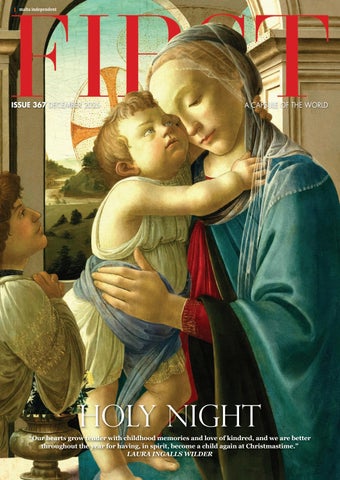
“Our hearts grow tender with childhood memories and love of kindred, and we are better throughout the year for having, in spirit, become a child again at Christmastime.”
LAURA INGALLS WILDER


Use Code FIRST20 at Botika.mt for an exclusive discount from 14th December - 31st December 2025
“Christmas is joy, religious joy, an inner joy of light and peace.” POPE FRANCIS
“POP GUNS! AND BICYCLES! ROLLER SKATES! DRUMS! CHECKERBOARDS! TRICYCLES! POPCORN! AND PLUMS! AND HE STUFFED THEM IN BAGS. THEN THE GRINCH, VERY NIMBLY, STUFFED ALL THE BAGS, ONE BY ONE, UP THE CHIMBLEY!”


very Who down in Who-ville, the tall and the small, Was singing! Without any presents at all! He HADN’T stopped Christmas from coming! IT CAME! Somehow or other, it came just the same! And the Grinch, with his Grinch-feet ice cold in the snow, stood puzzling and puzzling, how could it be so? It came without ribbons. It came without tags. It came without packages, boxes or bags. And he puzzled and puzzled ‘till his puzzler was sore. Then the Grinch thought of something he hadn’t before. What if Christmas, he thought, doesn’t come from a store. What if Christmas, perhaps, means a little bit more.”
DR. SEUSS, HOW THE GRINCH STOLE CHRISTMAS!


LA DOLCE VITA
Art Deco Dreams. A London Christmas, Claridge’s Style.
20 INTERIORS
Hilfiger Homes. Inside Tommy Hilfiger and Dee Ocleppo Hilfiger’s Homes.
34
RAIL DREAMS
Villeggiatura by Train. Paris to the Amalfi Coast.
44 FRAGRANCE
A PHILOSOPHY OF SCENT. PART 16. Here be Dragons. A look atCHANEL N°5 and BLEU DE CHANEL.
48 CREATIVITY
The Eighth Wonder Of The World.
Admont AbbeyLibrary, Austria. Where Enlightenment Ideals and Neuroaesthetics Converge.
56 ARTS & CULTURE
Honouring Artistic Excellence over the Past Two Years. Premju Ghall-Arti 2025.
58 EXHIBITION
Goya’s Disasters of War at Grand Master’s Palace, Valletta.
64 PROFILE
Coming Full Circle. Maria Elena Despott, Head of the European Commission Representation in Malta.
66 WE HAVE A DREAM A Future Without Violence. Annual 16 Days of Activism against Gender-Based Violence.
68 SUSTAINABLE FASHION
The Future of Chic is Circular.
70 CHRISTMAS COCKTAILS
Razzle Dazzle and All That Jazz. Mixology Inspiration.
73 GASTRONOMY
Paris After Dark. Historic Maxim’s.
85 THIS IS WINE FINE WINES FOR CHRISTMAS L’Enfant Jésus 1996. Sassicaia 2019. Biondi Santi Riserva 2015. Corton Charlemagne Bonneau du Martray 2000.

RAIL DREAMS.
The Venice Simplon-Orient-Express, A Belmond Train–Its First Paris to Amalfi Journey. Photo © Belmond / The World from a Window.


In the heart of London’s Mayfair, Claridge’s, operated by Maybourne, captures the essence of grand English style, timeless glamour, and personalised service. At Christmas the grande dame drifts into the season with a kind of fairy-tale grace. Under its shimmering Art Deco ceilings, the scent of warm scones mingles with the sparkle of this year’s Burberry tree, creating a spellbinding blend of Mayfair magic, London tradition and festive whimsy.
Photography courtesy Claridge’s.


This page: Claridge’s Christmas Tree 2025, this year designed by Daniel Lee, Chief Creative Officer of Burberry. The traditional 16ft tree is decorated with bows, a Victorian symbol of unity, made from surplus Burberry fabrics. The tree is covered in wild foliage and thistle, Scotland’s national flower, as a nod to Burberry’s connection to the Highlands, where its cashmere scarves are produced. The colours and textures bring the outdoors in, drawing from the beauty of the UK’s rich landscapes.


Some hotels define a city’s spirit, and then there’s Claridge’s, in the heart of Mayfair. This grande dame has been a symbol of London’s glamour since the 19th century, staying true to the art deco style that lit up its rooms a century ago. It began humbly in the mid-1800s, when William and Marianne Claridge ran a hotel in a single house at 51 Brook Street. In an ambitious move, they purchased the five adjoining buildings in 1854, opening Claridge’s in its own right in 1856. As its reputation grew, it caught the eye of Queen Victoria and Europe’s royal families, and by the 1920s, it was the place to be, flappers gliding past Lalique glass, cocktails sparkling under mirrored ceilings, and the ballroom alive with the Charleston, while art deco pioneer Basil Ionides and architect Oswald Milne shaped a vision of modern luxury that still resonates through its halls today.
Walking through Claridge’s in December is like stepping into a glowing memory. The lobby flows in gentle geometric patterns, polished black and white checkerboard flooring, mirrored surfaces catching the warm light from a Dale Chihuly sculpture overhead, each detail connecting modern London to the jazz age.This continuity, thanks to decades of thoughtful design and restoration, makes the extraordinary feel completely natural. New York-based designerThierry Despont’s 1990s revamp of the Foyer brought its art deco soul back to life, while recent work with designers like Veere Grenney, Guy Oliver, and Diane von Furstenberg has expanded the hotel’s style without losing its timeless charm.


December turns up the festive magic at Claridge’s. Every year, the hotel’s Christmas tree is revealed as part of London’s holiday tradition, and this season’s creation by Daniel Lee for Burberry brings a cozy woodland charm to the lobby. The traditional 16ft tree is decorated with bows, a Victorian symbol of unity, made

from surplus Burberry fabrics. The tree is covered in wild foliage and thistle, Scotland’s national flower, as a nod to Burberry’s connection to the Highlands. The colours and textures bring the outdoors in, drawing from the beauty of the UK’s rich landscapes. The tree features hanging brass bells inspired by the house’s Equestrian Knight Design and baubles handmade by a British glassblower. A gold crown tops it off, while oversized chess
pieces create a striking base, like a Christmas scene frozen mid-story. The whole look is gently theatrical, as if the hotel itself has slipped into a festive daydream. For this Christmas, Burberry details appear throughout, the lift lined in plush check, doormen in signature scarves, and a seasonal cocktail, the Winter Knight, waiting in Claridge’s Bar before guests wander into the Scarf Bar pop-up on the ground floor.

Above left: In the centre of The Foyer & Reading Room, a stunning Dale Chihuly light sculpture, suspends from the ceiling like a chandelier. The walls glisten with original art deco mirrors, while soft music floats from the grand piano.
Above right: Claridge’s legendary traditional Afternoon Tea in The Foyer & Reading Room.
Left: The Lobby looking towards The Foyer & Reading Room.


Beyond the visual magic, the real charm of the season at Claridge’s can often be found in a teacup. Afternoon tea here has been a cherished British ritual for over 150 years, inspired by Anna Maria Russell, Duchess of Bedford, who popularised the idea of a restorative midafternoon pause. At Claridge’s, that simple
pleasure is elevated to an art. The Foyer & Reading Room, framed by glimmering art deco details and lit by the soft glow of the Chihuly chandelier, its 800 glass pieces cleaned each night, creates an atmosphere where time does pause.
This sensitivity to atmosphere is what allows Claridge’s to remain timeless and fresh. Though 2025 marks a century of art deco at the hotel, the building’s history stretches
deeper. The Claridges’ original single house expanded into an architectural project under C. W. Stephens, who reimagined the hotel for its 1898 reopening. Milne’s interwar extensions shaped its reputation as a beacon of contemporary style, while later decades brought waves of guests –Cary Grant, Audrey Hepburn, Spencer Tracy, aristocrats and exiled kings –each adding a layer to the hotel’s mythology.


Above left: Claridge’s Ballroom. Above right: Discreetly tucked away in Claridge’s art deco interior, The Fumoir has been a hidden gem where those in the know have savored a quiet drink in London since 1929. Below left: Claridge’s Mayfair Terrace Suite.
Below right: Claridge’s Spa, designed by André Fu, features cutting-edge treatments and a stunning central swimming pool. The pool is framed by a dramatic multi-vaulted ceiling and elegant stone columns, while private cabanas tucked away from the water provide the perfect spot to relax and unwind.


Claridge’s continues to blend its rich heritage with modern updates. In 2021, the Ballroom reopened after a full restoration by Blair Associates Architecture, bringing back its old-world grandeur. From the dramatic three-tiered ceiling to the hidden lights reflecting off Palladium-leaf pilasters, original art deco elements were uncovered and authentic details recreated. In 2022, Claridge’s Spa debuted after seven years of planning, designed by André Fu to offer state-of-the-art treatments. That same year, the ArtSpace Café by John Pawson opened as a stylish, contemporary spot with a vibrant seasonal menu and an elegant patisserie counter. In 2023, Claridge’s Restaurant reopened, honoring the hotel’s Art Deco roots while serving contemporary dishes made from seasonal, locally sourced ingredients.
And although it has evolved over the years, Claridge’s still feels like its own special world, deeply tied to London –and at Christmastime, it becomes even more enchanting. The season brings a warm glow to the lobby this year with Burberry’s winter magic, the salons buzz with afternoon tea, and the lively spirit of Mayfair blends seamlessly with the timeless charm of a hotel that has been part of a century’s worth of celebrations.

FROM 20TH DEC TO 31ST JAN
“I’ve so enjoyed vicariously visiting Tommy just about everywhere in the world by poring over this book, which makes clear that he gives as much creative consideration to his interiors as he does to his runway collections.”
ANNA WINTOUR, FROM THE FOREWORD.


IN THIS STUNNING NEW BOOK, STYLE VISIONARIES TOMMY HILFIGER AND DEE OCLEPPO HILFIGER INVITE READERS INTO SEVEN OF THEIR PAST AND PRESENT RESIDENCES –EACH HOME UNIQUELY DESIGNED AS A BOLD EXPRESSION OF THEIR ICONIC APPROACH TO LIVING.

What makes a house a home? Is it the setting, the architecture, the interior design, the selection of objects and art carefully collected over many decades? In the case of Tommy Hilfiger and Dee Ocleppo Hilfiger’s homes, it is all these elements, but most importantly, it is the couple’s exceptional warmth and hospitality, combined with their innate sense of style.
Photography Douglas Friedman, courtesy Vendome Press.


Few figures in fashion approach their living spaces with quite the same sense of imagination as Tommy Hilfiger and Dee Ocleppo Hilfiger. Their new book Hilfiger
Homes, published by Vendome Press, showcases seven unique places they’ve designed over the years, houses, a yacht, even a tropical retreat, offering a vibrant glimpse into how they live, create, collect, and entertain. It’s all about atmosphere, instinct, and the bold use of design as a way to tell their story.


In her foreword, Anna Wintour sets the tone, writing that she has “so enjoyed vicariously visiting Tommy just about everywhere in the world by poring over this book,” and noting how clearly it shows that Hilfiger gives “as much creative consideration to his interiors as he does to his runway collections.” The references she draws on, Colefax and Fowler in the Caribbean; baronial Greenwich grandeur; the exuberance of Miami in its Versace-era heyday, underline the breadth of his design appetite. She writes, with characteristically sharp affection, that “there’s always a sense that these are not show palaces,” but places where the Hilfigers truly live.


That spirit runs throughout te book. As James Reginato explains in his introduction, the book began with a simple idea: to gather years of photographs, memories and design adventures into one place. “We’ve bought and decorated so many houses over the years, we thought a book would be a beautiful way to archive everything we’ve done, and share it with other people,” says Tommy. There is an ease in the way he speaks about their homes, as though each one formed naturally from the rhythms of their lives, even when the styles shift dramatically, from the relaxed colonial charm of Mustique to the urbane glamour of Manhattan’s Plaza, or the saturated colour and pop energy of Miami.
The Hilfigers themselves first met on a beach in SaintTropez, bonding over a shared love of family and an equal passion for design. Dee, fondly remembers their earliest project together, a duplex penthouse at The Plaza, and recalls “how much fun we had doing it, coming up with ideas, collecting things, and putting them all together. To dream something and make it become a reality.” That playful spirit, combined with an appreciation for craftsmanship, appears throughout the book’s pages, where Douglas Friedman’s photography captures rooms layered with art, rare objects, bold pattern and the occasional hint of cheeky charm.


Their houses are the product of lively collaboration. Interior designers Cindy Rinfret, Martyn Lawrence Bullard and Chahan Minassian, along with landscape designers Miranda Brooks, Deborah Nevins, Mario Nievera and Keith Williams, make up their trusted creative circle. “Each one has been a labour of love,” Tommy reflects. “It’s been fun to collaborate on all these projects. For us, it’s not about living in these spaces, but about bringing a vision to life and honouring the history and character of each property.” He describes their approach
Left: VILLA MARIA, PALM BEACH. Dee’s dressing room features a custom, faux-bamboo mirror. Below: CORAL HOUSE, PALM BEACH. In the vast, neoclassical living room, the focal point is Picasso’s Mousquetaire aux Oiseaux II (1972). The Hilfigers bought the painting a year before moving in, with this spot above the fireplace in mind
without hesitation: “We’re hands-on because we care deeply about every detail. We’re very, very involved, probably more involved than they would like us to be.”
Bullard, who has known the couple for years, admires their passion.
“They truly could have been interior designers,” he says. “They love the process. They are adventurers.” There is something energising in that word: it speaks to the way the Hilfigers push ideas forward, embrace change and treat their homes almost as creative laboratories. Rinfret agrees, “Their attitude is: Life is not a dress rehearsal. Everything needs to be beautiful. Their houses have meaning. This is designing for life.”


The book’s seven chapters create a kind of visual biography, Palm Beach, Miami, Mustique, Greenwich, Manhattan, the superyacht Flag. Each location has its own character, yet they’re all tied together by a style that’s unmistakably theirs. Rooms are composed but full of ease; colours are confident; and furniture often carries a sense of heritage or humour. And always, there is the underlying feel of family life. Tommy’s
daughter Elizabeth describes the couple as being “on the same wavelength,” inspired by their finds in antiques shops, meticulous in their choices, and united by taste. The effect is clear: wherever they live, the spaces feel lived-in, considered, and expressive of the people who inhabit them.


Maybe that’s why Wintour’s comment feels so spot on: “Tommy doesn’t only know fashion houses, he also really knows homes.”
Hilfiger Homes captures this, offering a rare invitation into the personal side of an intensely creative partnership.There’s no one set philosophy, no fixed palette or strict style. Instead, what you see is a picture of two people who approach interiors as both a craft and a joy. “A house is always a work in progress, like life,” Tommy says. “Times change, and the way you live changes all the time. We never want to abandon our DNA, but we move it forward.”

ABOUT THE AUTHORS. TOMMY HILFIGER, a fashion icon with over four decades of influence and innovation, has built a brand celebrated for its modern take on classic American style and its worldwide cultural impact. DEE OCLEPPO HILFIGER is the founder and creative director of both Dee Ocleppo and Mrs. H, and also serves as the creative director of Judith Leiber. Tommy and Dee have been married since 2008 and share a large, blended family.
JAMES REGINATO, a writer-at-large for Vanity Fair, was formerly the features director for W magazine. He is the author of Growing Up Getty; Great Houses, Modern Aristocrats; and John Richardson: At Home.
DOUGLAS FRIEDMAN specialises in fashion, architectural, and interior design photography. His work frequently appears in leading publications, including Harper’s Bazaar, Elle Decor, and Wallpaper*, as well as in books, including Star Style: Interiors of Martyn Lawrence Bullard and Behind the Blue Door
ANNA WINTOUR, editor-in-chief of Vogue U.S. since 1988, also serves as the global chief content officer of Vogue parent company Condé Nast, and as global editorial director of Vogue
HILFIGER HOMES By Tommy Hilfiger & Dee Ocleppo Hilfiger. Photography by Douglas Friedman. Text by James Reginato.Foreword by Anna Wintour. Published by Vendome Press. Hardcover, 336pages.

“I wanted to hold onto this point in time before our eyes found each other and before I knew whether our hearts could do the same.”

LISA FANTINO, AMALFI BLUE, LOST & FOUND IN THE SOUTH OF ITALY

VILLEGGIATURA BY TRAIN

A NEW CHAPTER FOR THE VENICE SIMPLON-ORIENT-EXPRESS, A BELMOND TRAIN, EUROPE: ITS FIRST PARIS TO AMALFI COAST JOURNEY
The iconic blue carriages of the Venice Simplon-Orient-Express promise nights sparkling with Champagne, ever-changing landscapes, and a touch of theatre from the moment a steward welcomes you aboard. Next year, that magic takes a new turn as the train introduces the latest chapter in its Italian journey series, Villeggiatura by Train, with a debut route linking Paris to the Amalfi Coast. It marks the first time the storied train has travelled from the French capital to Ravello, winding through the French and Italian Rivieras before arriving at Caruso, A Belmond Hotel, Amalfi Coast.
Photography courtesy Belmond.


The experience begins in Paris, where travellers step aboard the lacquered, midnight-blue carriages that have fueled countless rail dreams. The train owes its existence to a collector’s impulse: in 1977, Belmond founder James B. Sherwood bought
two original Art Deco sleeping cars at a Monte Carlo auction, determined to revive the golden age of rail. By 1982, the Venice Simplon-Orient-Express was running once again, with a fleet of painstakingly restored 1920s and 1930s cars, all polished marquetry and soft lamplight. Today, the train links some of Europe’s most captivating cities, with the same timeless pace: long lunches in Deco

dining cars, evenings in Bar Car 3674 over cocktails and piano music, and the soothing sway that makes the entire trip feel like a dream.
This new route departs on 4 May 2026, starting with a Champagne welcome as guests settle into Historic Cabins, Suites or Grand Suites. Lunch follows as the train turns south through France, with seasonal dishes served against a backdrop of rolling hills. Afternoon tea arrives with tempting pastries, and, as dusk gathers, dinner becomes a small ceremony of its own, inspired by the flavours of the regions along the line. Later, Bar Car 3674 draws passengers into its orbit with live music and the convivial atmosphere that has always defined the train’s nocturnal charm and joie de vivre.
Above: Exterior of the Venice Simplon OrientExpress. Photo © Belmond / Coco Capitán. Left: While the train winds south through France, make your way to one of the beautifully restored dining cars for a delicious lunch.
Photo © Belmond / Anna Jay.


By the next morning, the Italian landscape fills the windows.
After breakfast served in cabin, the train continues towards Campania for its call at Pompeii. Guests can join a guided exploration of the ancient site, while those in the Grand Suites are offered rare access to the Casa del Larario Regio V,


opened exclusively for the occasion. The itinerary focuses on local immersion, and for those curious about regional cuisine, Executive Chef Armando Aristarco leads a cooking class at Caruso, using fresh ingredients sourced straight from nearby markets and groves.
After leaving Pompeii, travelers find themselves at Caruso, a cliffside haven perched high above the Tyrrhenian Sea. The
hotel’s history dates back to the 11th century, when a Roman noble family built the original palazzo. Over time, it evolved into a place where frescoes, vaulted ceilings, and terraced gardens create a kind of Mediterranean stage. Its newly opened pool club, La Piscina, blends wellness rituals with leisurely, sunsoaked relaxation, while the sweeping views create a feeling of floating between earth and water.

Above left: Unwind in your cabin as the train winds through the French and Italian Rivieras.
Photo © Belmond / Pia Riverola.
Above right: Prepare for a vibrant evening on board, starting with a gastronomic dinner showcasing seasonal ingredients from along the train’s route. Photo © Belmond / Anna Jay. Left: Make your way to Bar Car ‘3674’ to enjoy live piano music, signature cocktails and sophisticated conviviality late into the night.
Photography © Belmond / (far left) Anna Jay, (left) Pia Riverola.


Caruso hosts an evening devoted to the flavours of the Cilento region, presented beside the infinity pool. Local producers share their craft: Controne beans, Menaica anchovies, artisanal salumi and the area’s celebrated artichokes, all accompanied by regional wines, while a live cooking demonstration by Chef Aristarco turns the setting into a kind of open-air kitchen, elevated by the shimmer of the coast after dark.
The next day moves at a relaxed pace. A private boat glides along the coves between Ravello and Positano, stopping for refreshing swims in crystal-clear waters, while those seeking a calmer activity can join a painting session on Caruso’s Loggia terrace. The final evening unfolds in the Wagner Gardens, where an aperitivo flows into a gala dinner with sweeping sea views. Music drifts over the terraces, and the mood celebrates the simple pleasures that embody an Italian summer.


With this adventure, the Venice Simplon-OrientExpress is adding a fresh chapter to its love affair with Italy. Its routes still end in Venice and Florence, with stays at Cipriani and Villa San
his cuisine focuses on local ingredients from Dieta Mediterranea, protected by UNESCO.
Cortili.
Michele, and now its return to Portofino links the rail journey to the renewed charm of Splendido. But the Amalfi itinerary introduces a different vibe, with a mix of Riviera scenery, ancient wonders, and the laid-back pace of villeggiatura – a dreamy voyage shaped by beauty, sunlight and the pleasure of slowing down.
ABOUT BELMOND Belmond has been a pioneer of luxury travel for over 45 years, building a passion for authentic escapes into a portfolio of one-of-a-kind experiences in some of the world’s most inspiring destinations. Since the acquisition of the iconic Hotel Cipriani in Venice in 1976, Belmond has continued to perpetuate the legendary art of travel. Its portfolio extends across 24 countries with 50 remarkable properties that include the illustrious Venice Simplon-Orient-Express train, remote beach retreats like Cap Juluca in Anguilla, Italian hideaways such as Splendido in Portofino, or unrivalled gateways to world natural wonders such as Hotel das Cataratas inside Brazil’s Iguazu National Park.


“Now we’ll try to stay blind, to the hope and fear outside. Hey child, stay wilder than the wind.”
DURAN DURAN, COME UNDONE
To our beloved Marisa.
The abyss within and the infinite space around you is equal in measure to the infinite space within and the abyss outside. We are a quantum of being, our own measure of existence is ourselves and constitutes us; as if to say the modality of being is what makes being proper. The mundane is made magnificent, we are exalted and transcend out of nowhere, from nothing, and with nothing in hand or at hand; beyond the light of day. Superficially we may remain more or less the same but internally worlds are falling apart and worlds are being made, writes Kris Bonavita.
Photography courtesy CHANEL.
In a twist of fate, we dwell and philosophize in the unknown, even unbeknownst to us, and when we do know, it is rather a more profound understanding of the unknowing. A lesser misunderstanding rather than knowledge proper so to speak. There came a point in our journey when we did not need to know more, we needed to understand that we know less. In fact we understood we knew nothing and had always been running on empty. The algorithm or matrix of being was complete in its unravelling out of its own volition; it did not need to know to be to exist; it needed to be for its own sake whether we knew it or not; however imaginary or beautiful, even more so. For the nature of beauty is in the eye of the beholder. How much more if one acknowledges it to be so! Nature nods to our enquiry. Indeed nature is what we interrogate it to be. It is as much a seeming to be, an assembling of parts, as being proper. A quantum of being in existing is dependent upon us, not itself. The physical nature of being stands in awe of its own beauty. Whether it is a tree arching out its branches to the midday sun or an elephant cooing at the sun’s rising. But we humans talk and muse about it, no differently, but somehow we dwell in those resonances, more than we dwell in the real world. We dwell in language and the rhetoric of aesthetics and ethics for spiritual and cultural reasons, and somehow that becomes us. It becomes not just a way of being but existence proper.
We have all been young once. We have all had Cupid’s arrow rip through our hearts. We have all been punch drunk with an innocent joy, an infectious happiness. But we have all been hurt and jaded, sometimes. Broken but not smitten, not defeated yet, because we are existential survivors. In essence our scaramantic rite of being is brokenness itself. Be interested in everything, even nothing itself is interesting. Where would we be without the humble zero? And may be that is all we need to know. The finitude of things made from the detritus of things.
Live for the day but be thankful and feel with your heart for eternity. Do not stay; do not make this your home; do not tarry unnecessarily any longer than you have already. What you can call home is stranger bound. What you see as shelter is bound to fail. Maybe for one moment it may all feel safe, but there are harbours afar, ships to sail, lands to visit away from here. Dimensions to travel, people to meet; and most of all, you need to encounter. You need to see to believe. You need to hear your name called, and maybe then, for certain then, you will heal, you will change, you will be transformed in an instant into whom you were always. But till then do not tarry, do not wait, do not rest your heart on rocks, your head in shallow waters, your limbs on unyielding places; but go. For not to die is to be as if one were stillborn, frozen in time and space, rather than on a journey. To the kingdom go for here be dragons amongst us.
Facing page: CHANEL N°5 is a timeless emblem of sophistication and innovation. Created in 1921 by Gabrielle Chanel and master perfumer Ernest Beaux, it revolutionised perfumery with its abstract, complex aroma. Rather than imitating a single flower or natural scent, it introduced aldehydes, which added brightness and longevity, setting a new standard in the world of fragrance. CHANEL N°5 comes in 5 interpretations of the signature CHANEL perfume.
“People ask me, how did I manage to create Chanel N°5? I created this perfume, when I returned from the war. Part of my military campaign took place in the northern countries of Europe, beyond the Arctic Circle, during the midnight solstice, when the lakes and rivers exude a special freshness. I have preserved this distinctive scent in my memory, and after much effort and work, I was able to recreate it...”
CHANEL N°5 occupies a rare place in the world of fragrance, woven into memory, culture and imagination for more than a century. When Gabrielle Chanel asked perfumer Ernest Beaux to create “a woman’s perfume, with a woman’s scent” in 1921, she envisioned something abstract and modern, something that felt liberated from the conventions of its era. Beaux responded with an audacious composition built around aldehydes, a pioneering choice that lifted the floral notes into something luminous and mysterious. From the array of experimental blends he presented, she chose the fifth, a decision that shaped one of the most recognisable fragrances in history.
At the heart of N°5 lies a finely tuned floral-aldehydic structure anchored in rose, jasmine, ylang-ylang and iris. In Parfum form, this bouquet is plush and concentrated, unfolding with a deep, velvety warmth that lingers close to the skin. Its intensity amplifies the tactile beauty of the raw materials, revealing subtle facets as it develops.
The Eau de Parfum, created by Jacques Polge in 1986, offers a different expression: brighter at the top, radiant with neroli, citrus and ylang-ylang, and gently coloured with creamy peach notes that soften the transition into the floral heart. Its base introduces a smoother sandalwood richness, touched with vetiver, vanilla and a whisper of leather and incense, giving it a confident, contemporary character.
Though the proportions shift between Parfum and Eau de Parfum, the identity remains unmistakable, a harmony of abstraction and craftsmanship that feels both familiar and endlessly intriguing. Encased in its geometric bottle with its white label and faceted stopper, N°5 continues to captivate across generations. It endures because it speaks not only to style, but to emotion. Elegant, modern, and enveloping, it remains one of perfumery’s true icons.
BLEU DE CHANEL has shaped contemporary masculine perfumery for over a decade, becoming a modern icon since Jacques Polge created the first eau de toilette as a study in crisp woods and unfettered freshness. The Eau de Parfum, introduced shortly after, deepened that original idea. Presented in its signature midnight-blue bottle, it brings an aromatic-woody structure wrapped in warmth, where sparkling citrus opens into ambered cedar, musky woods and the smooth richness of New Caledonian sandalwood. Tonka bean and vanilla lend rounded sensuality, giving the composition a polished intensity that slips easily from day to night. It feels clean and expansive at first breath, then gradually settles into a confident, quietly magnetic trail. The fragrance has always carried a message of independence, shaped around the image of a man who charts his own course. That spirit continues under Olivier Polge, who created the Parfum and, most recently, BLEU DE CHANEL L’EXCLUSIF. For this new chapter, he revisited the original structure and shifted its elements as though turning a kaleidoscope, amplifying certain facets until a new harmony emerged. L’EXCLUSIF places lavender at its centre, giving the composition a classical backbone before moving into denser woods and a leathery, ambered depth shaped by cistus labdanum and sandalwood.
Olivier sought to broaden the woody family into a more textured, resinous territory, drawing on the intensity traditionally associated with feminine extraits and reshaping it through a masculine lens. The result feels both familiar and unexpected: a darker, more enigmatic interpretation that expands the BLEU DE CHANEL universe while keeping its essential clarity. Together, the Eau de Parfum and L’EXCLUSIF show how a modern fragrance can evolve with conviction, staying true to its character while exploring new dimensions of style.
CHANEL is distributed by Alfred Gera & Sons Ltd.
Facing page: BLEU DE CHANEL EAU DE PARFUM –A voluptuous interpretation in which ambery cedar notes add a warm quality to the scent. Woody-musky notes and New Caledonian sandalwood lend elegance and depth. BLEU DE CHANEL L’EXCLUSIF, designed like an Extrait de Parfum, is a complex and intense ambery-aromatic scent with an irresistible trail. Its signature woody notes are heightened, adding a touch of warmth, while leathery, ambery, and resinous accents make it the most enigmatic of the BLEU DE CHANEL line. This unique creation reveals its full character as it unfolds on the skin.


Austrian Enlightenment meets modern neuroscience in the luminous halls of Admont Abbey Library. Long said to have inspired the grand library in Disney’s Beauty and the Beast, its soaring Baroque architecture, serene palette and theatrical details create an environment that calms the senses, sharpens thought and reminds us how space and beauty can shape the way the mind imagines.
Photography location: BENEDICTINE ABBEY OF ADMONT, AUSTRIA.

AN INVITATION INTO THE WORLD’S MOST DREAMLIKE READING ROOM, WHERE WINTER LIGHT, ENLIGHTENMENT IDEALS, AND NEUROAESTHETICS CONVERGE


The Admont Abbey Library in Austria has a way of stopping you in your tracks. Even before you begin to take in its details, the sheer sense of scale exerts its influence: a Baroque hall that stretches for 70 metres, rising to 11 metres at its highest point, with a central dome that ascends a little further to 12.7 metres. Soft light spills over pale shelves and golden accents, blending architecture and imagination in one breathtaking space. Known as the largest monastic library hall in the world, it radiates a dreamlike calm that seems to open the mind the moment you step inside.
Built in 1776, the library embodies the spirit of the Enlightenment.
Abbot Matthäus Offner enlisted Austrian architect Josef Hueber to create a space defined by lightness and clarity, where brightness would naturally draw the eye and inspire thought. Overhead, seven frescoed domes by Bartolomeo Altomonte –painted when he was in his eighties – span the ceiling. These vivid works trace the path of human understanding, from language and observation to the spark of revelation, inviting visitors to follow an intellectual journey that echoes the graceful curve above.
Left: Josef Stammel’s expressive figures animate the library with a theatrical intensity that offsets its ethereal calm. Photo Kseniia Zapiatkina.
Below left: The Admont Abbey Library in Austria has the rare ability to halt thought midstride. Even before one begins to take in its details, the sheer sense of scale exerts its influence: a Baroque hall that stretches for 70 metres, rising to 11 metres at its highest point, with a central dome that ascends a little further to 12.7 metres. Photo Carrie Borden. Below right: A glimpse of the gilded mouldings and pastel surfaces that soften the drama of the space’s monumental proportions. Photo Carrie Borden.


This page: Admont’s vast Baroque library hall, completed in 1776, where pale light and gilded detail create a quietly uplifting sense of scale.
Patrick Langwallne.
Much of the library’s magic lies in the interplay between knowledge and theatre. More than 70,000 volumes stand in orderly bands along the walls, yet the space is far from solemn. Sculptor Josef Stammel brought life to the central hall with his expressive figures, including the striking group called The Four Last Things. Bathed in soft light, their intensity adds a sense of motion to a
room that could otherwise feel frozen in time. It is easy to understand why Admont has long been associated with fairytale imagery, and said to have inspired the fantasy libraries seen in films and books, including the grand library in Disney’s Beauty and the Beast What happens to the mind in a space like this is not simply a matter of beauty. For years, environmental psychologists have studied how architecture influences thought, and one phenomenon has become particularly significant in creative research: the
Cathedral Effect. High ceilings appear to encourage expansive thinking, the kind associated with imagination, abstraction and conceptual exploration. A soaring room prompts the brain toward ideas it may not reach under lower surroundings. Research in 2023 on art gallery visitors showed that open, elevated rooms often bring feelings of joy, while smaller, enclosed areas tend to stir tension or restlessness. The sheer height and openness of Admont, even before you take in its art, seem to gently nudge the mind toward clarity.

Art has a fascinating way of connecting with our brains. The field of neuroaesthetics looks into why certain pieces grab our attention, boost our mood, or spark fresh ideas. Scientists believe it’s a chain reaction: the eyes take in an image, the thalamus filters it, and the visual cortex sharpens edges, colors, and shapes. Almost instantly, the amygdala stirs up emotion, and the hippocampus calls up memories. Finally, the prefrontal cortex steps in, giving meaning and context. This layered process explains why a visually rich piece, full of colour, detail or ambiguity, can feel simultaneously soothing and energising.
Original art often heightens this reaction. Studies have found that spending time with paintings can lower physiological stress markers like cortisol, with the strongest effects coming from viewing the actual work rather than a reproduction. Moments of aesthetic
pleasure trigger dopamine release, creating a calm yet alert state that sharpens thinking. Abstract art, especially, invites the brain into active interpretation, boosting cognitive flexibility. In this way, the Admont frescoes, with their allegorical scenes suspended in light, create a form of mental exercise as well as visual delight.
Colour plays its own role. Neuroscientists have long observed how variations in hue can shift mood: red with intensity, blue with ease, yellow with uplift. These effects aren’t just cultural, they’re tied to our evolutionary responses to light and landscape. The soft tones of Admont, whites, creams, and hints of gold, create a gentle optimism, making the space feel like it’s meant to awaken rather than overpower. Together, the colours, proportions, and details form the perfect setting for reflective thought, a kind of calm, open spaciousness.
Creativity thrives on a delicate mix of stimulation and calm. When the mind is both relaxed and engaged, it’s easier for neural
pathways to spark and connect, giving rise to fresh ideas. Art enhances these connections by engaging multiple parts of the brain at once, while spaces rich in emotional resonance inspire openness, curiosity, and reflection. This interplay between surroundings and inner life is what makes places like Admont so enriching, they create an atmosphere where thoughts can flow freely.
In a time when digital distractions constantly compete for our focus, walking into a space designed for quiet reflection feels more important than ever. Libraries like Admont show us that beauty, knowledge, and creativity are deeply connected, and that the places we spend time in can elevate our thoughts in surprising ways. The late Baroque envisioned rooms that could move the heart as much as the mind, and now modern neuroscience is beginning to explain why that instinct rings true.
BENEDICTINE ABBEY OF ADMONT, Kirchplatz 1, 8911 Admont, Austria.


Winners across 14 competitive categories and seven honorary titles were celebrated for showing artistic excellence, innovation and community impact. Photography courtesy Arts Council Malta.
This December, the winners for the 2025 edition of Premju għall-Arti were announced, with the biennial event bringing down the curtain on a particularly significant year for Malta’s cultural and creative sectors. Organised by Arts Council Malta, the biennial ceremony brought together artists, cultural organisations and industry stakeholders, who united for an evening
dedicated to celebrating standout achievements across the past two years. The ceremony reflected the growing range of artistic work taking shape across Malta, from performances and community initiatives to new creative ventures.
Speaking about the significance of the evening, Premju għall-Arti Project Manager and Arts Council Malta Head of Communications Maria-Angela Vassallo noted that the awards represent “a snapshot of an ever-evolving cultural ecosystem, one

that values excellence, welcomes new voices and remains committed to offering artists a fair and inclusive playing field”. Her comments set the tone for a night focused not only on recognising achievement but also on acknowledging the wider direction of Malta’s cultural development.
Hosted at Teatru Manoel, one of Malta’s most significant cultural venues, the ceremony shone a light on the priorities at the heart of the Council’s strategy: strengthening professionalism within the sector, expanding inclusion, and supporting excellence across diverse art forms – a direction that is firmly aligned with Envision 2050, which places collaboration and longterm cultural development at the centre of national policy.
This year’s edition presented 14 competitive awards and seven honorary titles, highlighting both established structures and emerging voices. Public Cultural Organisations were recognised for their artistic programmes for the 2023-2024 and 2024-2025 seasons, as well as for their contribution to national artistic excellence, acknowledging the central role these organisations play in sustaining Malta’s cultural ecology.
Across the independent sphere, the awards put the spotlight on artists and entrepreneurs
working in theatre, dance, music, visual arts and multidisciplinary practice. Particular attention was given to the Best Work for Young Audiences and Best Project in the Community categories, which recognised projects that build meaningful connections with younger generations and strengthen inclusion at community level.
The Awards also focused on the importance of innovation. The Best Creative and Innovative Enterprise award highlighted projects that combine artistic ideas with entrepreneurial drive, while the Best International Achievement award acknowledged Maltese creatives whose work found an audience overseas and strengthened Malta’s cultural visibility abroad.
Individual excellence was marked through the Creative Practitioner and Young Creative Practitioner awards, acknowledging trailblazers and rising talents whose work is shaping the sector’s future direction.
Seven non-competitive honours celebrated those who have contributed long-term commitment and legacy to the sector. The Lifetime Achievement Award recognised an individual whose creative work has left a lasting imprint on Malta’s cultural identity. The Honour for Cultural Promoters and Honour for Artistic Legacy went to those who have played a vital role in promoting local culture and traditions. The Ambassador of the Arts Award, presented every four years, honoured a leading advocate of Maltese creativity both locally and internationally. Honorary Awards were also given out for community impact, artistic vision, and artistic journey.
All nominations underwent a rigorous evaluation process carried out by a jury composed of external experts and representatives from Arts Council Malta. Applications were assessed against criteria that focused on artistic quality, innovation, collaboration and impact. In four categories –Best Work for Young Audiences, Best Project in the Community, Best International Achievement and Best Creative and Innovative Enterprise – the public also contributed to the final result through an online vote that accounted for 25 per cent of the overall score. Only entries scoring 60 marks or above advanced to the shortlist, reflecting the high standard upheld by the awards. Assessments were carried out confidentially and in line with the Council’s governance guidelines.
Award recipients were presented with a bespoke Arts Council Malta trophy crafted by artist Kane Calì, rounding off an evening that honoured both the achievements of today and the foundations being laid for the cultural landscape of tomorrow.
BEST WORK FOR YOUNG AUDIENCES –L-AQWA XOGĦOL GĦAL TFAL U ŻGĦAŻAGĦ: Peppa Pig bil-Malti – Media Exclusive Limited
BEST PROJECT IN THE COMMUNITY –L-AQWA PROĠETT FIL-KOMUNITÀ: Cospicua Short Play Festival – Kunsill Lokali Bormla


BEST ARTISTIC PROGRAMME OR SEASON 2023/2024 – L-AQWA
PROGRAMM JEW STAĠUN ARTISTIKU 2023/2024: ŻiguŻajg Arts Festival for Children and Young People 2023 –Fondazzjoni Kreattività
BEST ARTISTIC PROGRAMME OR SEASON 2024/2025 – L-AQWA
PROGRAMM JEW STAĠUN ARTISTIKU 2024/2025: ŻiguŻajg Arts Festival for Children and Young People 2024 –Fondazzjoni Kreattività
BEST PRODUCTION: THEATRE –L-AQWA PRODUZZJONI: TEATRU: Il-Każin tal-Imqarbin – Saydon Studio
BEST PRODUCTION: DANCE – L-AQWA
PRODUZZJONI: ŻFIN: Għajn Xtutna –Moveo Dance Company
BEST PRODUCTION: VISUAL ART –L-AQWA PRODUZZJONI: ARTI VIŻIVA: Siġġu – Austin Camilleri
BEST PRODUCTION:
MULTIDISCIPLINARY – L-AQWA
PRODUZZJONI: MULTIDIXXIPLINARJA: Holdfast: Nations At War – Anvil Studios Ltd
BEST PRODUCTION: MUSIC – L-AQWA
PRODUZZJONI: MUŻIKA: Il-Każin tal-Imqarbin – Saydon Studio
BEST CREATIVE AND INNOVATIVE ENTERPRISE – L-AQWA INTRAPRIŻA
KREATTIVA U INNOVATTIVA: Mid-Djarju ta’ Student fi Skola tal-Knisja –Jamie Cardona u Vikesh Godhwani
YOUNG CREATIVE PRACTITIONER –IL-PRATTIKANT KREATTIV ŻAGĦŻUGĦ/A: Jamie Cardona
CREATIVE PRACTITIONER AWARD –PREMJU GĦALL-PRATTIKANT KREATTIV: Vikesh Godhwani Chatlani
BEST INTERNATIONAL ACHIEVEMENT – L-AQWA KISBIET INTERNAZZJONALI: I Will Follow the Ship – Matthew Attard and Elyse Tonna
AWARD FOR NATIONAL ARTISTIC EXCELLENCE – PREMJU GĦAT-TISĦIĦ
ARTISTIKU NAZZJONALI: Mużika Mużika 2025 – Festivals Malta
PREMJU GĦALL-ARTI HONOURS
HONOUR FOR ARTISTIC JOURNEY –UNUR GĦALL-VJAĠĠ ARTISTIKU: Narcy Calamatta
HONOUR FOR SOCIAL CAUSE – UNUR GĦALL-KAWŻA SOĊJALI: Blanket Ban –Davinia Hamilton and Marta Vella
HONOUR FOR ARTISTIC VISION –UNUR GĦALL-VIŻJONI ARTISTIKA: Phyllis Muscat
HONOUR FOR ARTS AMBASSADOR –UNUR GĦALL-AMBAXXATUR FL-ARTI:
HONOUR FOR CULTURAL PROMOTERS – UNUR GĦALL-PROMOTURI
KULTURAL: Rosetta Debattista
HONOUR FOR ARTISTIC HERITAGE –UNUR GĦALL-WIRT ARTISTIKU: Pawlu Camilleri Cauchi
HONOUR FOR ARTISTIC CAREER –UNUR GĦALL-KARRIERA ARTISTIKA: Trevor Zahra
TWO CENTURIES ON, GOYA’S STARK IMAGES RETAIN A DISARMING POWER THAT REVERBERATES BEYOND SPAIN’S WARTIME PAST
Displayed in Valletta’s Grand Master’s Palace, Goya’s Disasters of War invites a contemporary audience into the stark emotional terrain of conflict. His searing etchings, created in silence after illness left him deaf, feel startlingly present in today’s fractured world.

Francisco de Goya’s Disasters of War, currently on show in Valletta, has a strikingly modern edge. Set within the restored halls of the Grand Master’s Palace, the series unfolds like a raw diary, its 80 etchings confronting viewers with scenes that
shaped early 19th-century Europe. Created between 1810 and 1815, during and after the Peninsular War, the works depict a world unraveling under famine, cruelty, and political chaos, marking a turning point in Western art: war shown not through triumph, but through the exhaustion, brutality and loss borne by ordinary people.


Top: Goya, Plate 80: Si resucitará? (Will she live again?), Museo del Prado (1st edition, Madrid: Real Academia de Bellas Artes de San Fernando, 1863). Image Wikipedia Commons. Above: Goya, Plate 1: Tristes presentimientos de lo que ha de acontecer (Sad forebodings of what must come to pass), Museo del Prado (1st edition, Madrid: Real Academia de Bellas Artes de San Fernando, 1863). Image Wikipedia Commons.
Goya had been a court painter to the Spanish Crown since 1786, creating gleaming portraits for the aristocracy and lighthearted Rococo-style tapestry designs until illness left him almost completely deaf in 1793. The shift in his tone is unmistakable. What
follows is a body of work stripped of ornament, contrasts of light and shadow replace colour, and gestures, glances and bodies tell stories too dangerous for words. Though he continued to serve the Spanish crown during the conflict, he reserved his response for these private plates. They were not published until 1863, long after his death, when political tensions had finally eased.


The series is often seen as three acts, war, famine, and allegory, but its impact comes from how the images blend seamlessly, creating a reflection on human behavior under strain. Goya’s captions beneath each scene are blunt, at times darkly witty, at others almost painfully straightforward. His original title, Fatal Consequences of Spain’s Bloody War with Bonaparte, and Other Emphatic Caprices, reveals a personal touch: an artist documenting what he saw without detachment or ornament. Presented in Malta for the first time, the exhibition is the result of a collaboration between Fundación MAPFRE, MAPFRE Malta, and the Bank of Valletta Foundation. Although Goya’s Spain
is two centuries past, the themes he explored in this series, displacement, fear, and the breakdown of civic life, resonate in any time where conflict disrupts daily existence. Set against the Grand Master’s Palace, the experience feels even more powerful. It's a reminder that beauty and violence can exist in the same cultural memory, and that an artist’s vision can transform disaster into a lasting record that refuses to fade.
FRANCISCO DE GOYA. DISASTERS OF WAR. FUNDACION MAPFRE COLLECTIONS, runs at the Grand Master’s Palace, Valletta until 18th January 2026. Heritage Malta is presenting this exhibition in collaboration with Fundacion MAPFRE as well as MAPFRE Malta and the Bank of Valletta Foundation.
4th November - 18th January
Exhibited at the Grand Master’s Palace


On 1 October 2025, I took up the role of Head of Representation of the European Commission in Malta. It is both an honour and a responsibility. I feel fortunate because my new functions bring together matters that I am most passionate about and hold most dear, writes Maria Elena Despott, Head of the European Commission Representation in Malta.
Photography European Commission Representation in Malta.
Ever since my early youth, I have been a firm believer in the European project, with its promise of opportunity, solidarity, peace and prosperity. Since then, I have witnessed, first-hand, its transformative, beneficial impact, fuelled by the drive of professionals from all over Europe, working together as a team at the European Commission to deliver on key priorities for Europeans, in close cooperation with other European Union (“EU”) institutions and national, regional and local authorities in the Member States. This has further emboldened my determination to ‘give-back’ and to contribute my share, to the best of my ability in the service of Europe’s and Malta’s people. Over time, I went from aspiring to working in EU affairs as a young sixth-former and law student –who enthusiastically participated in Mini-European Assembly competitions – to shaping EU policy initiatives directly. For the most part of thirteen years as the only Maltese official at the European Commission’s Directorate-General for Competition, I contributed to developing and enforcing EU competition policy, leading high-profile mergers and antitrust investigations in sectors spanning basic industries to telecommunications and financial services.
In many ways, my earlier experiences informed and guided the approaches I later developed. To cite but one example: I leveraged the positive experience of collaborating with students from all over Europe during my Erasmus programme studies at the University of Verona and as a Chevening Scholar at University College London, to advocating for increased multilateral cooperation as a representative of the European Commission in international fora, such as the International Competition Network and in collaboration initiatives with China.
From the beating heart of Europe, Brussels, I returned home to Malta in 2021, to work as European Semester Officer/Economic Counsellor at the European Commission Representation. The Covid pandemic was still very much a reality then, and I felt privileged to work on delivering the EU’s response, Next Generation EU. That initiative, through national recovery and resilience plans, injected unprecedented financial support to spur reforms and investments in key economic areas to ensure Europe’s recovery and longer-term resilience. My work on the European Semester in Malta enabled me to become even more attuned to the unique circumstances of a small, peripheral island Member State. I also built

on the insights that I had garnered in my years in private practice as a lawyer in Malta, at the beginning of my career.
Those experiences have prepared me well, I believe, for my new role, as Head of the European Commission’s Representation in Malta. The Representation acts as a bridge between Malta and the EU. Ensuring that realities voiced by stakeholders on the ground are effectively relayed as key elements for the shaping of policy, is one of the key priorities for me in my new role. I look forward to continuing to build a strong collaboration with all stakeholders in this regard. What matters for Europeans, including the people of Malta, matters for Europe. Bringing the EU closer to its people, by communicating about the positive impact that EU policies have on their lives and livelihoods is another imperative for me.

Being able to do so in the country where I was born and bred, is a true privilege.
In a way, I feel I have now come full circle. From a young, Maltese woman, aspiring to experience and take part in the European project, to a professional with 13 years of service at the European Commission in Brussels. And then back to Malta –doing my small part over the last four years to help deliver on Europe’s promise for the next generation, including that of my dearest son, for whom I want to see a future of peace and opportunity. Because family matters indeed. I would not have gone far without the unwavering support and love of my dear family, my husband, parents, brother and grandparents. In their own and diverse personal ways, they have taught me the value of hard work, the necessity of a positive approach notwithstanding life’s challenges, and the importance of integrity.
Europe stands at a critical juncture. We, as Europeans, need to rise to the challenges of our time and forge a more autonomous, and resilient future, whilst keeping the EU’s core, founding values firmly in mind to guide our way forward. It is now part of my responsibility, together with my colleagues at the Representation, to help foster the longstanding sense of trust and enthusiasm that Malta’s people have in the EU project. I am committed to playing my part and to communicating on the many ways that Europe is delivering for its people.


or witness abuse, and it emphasises the importance of professional assistance for persons committing abuse.

Above: As part of the 16 Days of
for Social and Affordable


the Parliamentary Secretariat for Equality and Reforms, together with the Ministry for Social Policy and Children’s
launched a new Scheme for Alternative Accommodation for victims of domestic
and the
This scheme, which will be implemented by the Commission on Gender-Based Violence and Domestic Violence, the Housing Authority, Aġenzija Appoġġ (FSWS), and Active Ageing and Community Care, ensures that victims of domestic violence, including children, have access to safe, stable accommodation and the support needed to rebuild their lives and gain independence. As Commissioner Samantha Pace Gasan highlighted, this initiative will help survivors “regain their independence and ultimately live a life of peace, security, and freedom from violence.”


Top left: The thoughts behind these benches were to offer spaces so that one sits and talks with a trusted person with the possibility of accessing information on services who assist persons experiencing abuse or those committing abuse. These benches were installed in various public spaces including in Valletta, Sliema, St Julians, Paola, Cospicua, Xewkija and the University of Malta. Above left: During the 16 Days of Activism, the Commission participated in the discussion, ‘Understanding the Ripple Effects of Domestic Violence and Femicide on Families’, organised by the Equity Office within the University of Malta.

A national campaign which explores the experiences of individuals facing domestic violence, highlights the impacts of domestic violence on child victims, even if they are exposed to abuse, and urges those who commit violence to seek professional support to change their abusive behaviour.


Top: In an activity held in collaboration with Xjenza Malta, the Commissioner on Gender-Based Violence and Domestic Violence visited Esplora to raise more awareness with children on healthy relationships that value respect and dignity. Above: As part of the national 16 Days of Activism campaign, the Commission on Gender-Based Violence and Domestic Violence launched the second edition of the ‘Together We Empower –A Future Without Violence’ Programme, supported by the Parliamentary Secretariat for Equality and Reforms. This programme provides funding to voluntary organisations working to prevent and respond to gender-based violence and domestic violence.
This campaign is organised by the Commission on Gender-Based Violence & Domestic Violence and the Parliamentary Secretariat for Equality & Reforms for the Annual 16 Days of Activism against Gender-Based Violence.


FASHION’S CLIMATE FUTURE IS ALREADY BEING SKETCHED IN, AND IT LOOKS SURPRISINGLY ELEGANT
Photography Vedant Kothari.
Each year, the United Nations hosts the Conference of Parties (COP), bringing together world leaders, scientists, and activists to push for stronger climate action and advance the 2015 Paris Agreement. This November, COP30 took place in Belém, deep in the Amazon, yet the discussions were surprisingly close to the clothes hanging in our wardrobes, zeroing in on how a warming planet impacts materials, supply chains, and consumer choices. In a nutshell, the takeaway was clear: the future of style is all about responsibility, durability, and a renewed love for quality.
Recently, transparency and the need to understand where fabrics, dyes, and trims actually come from is at the front of fashion news and revelations. New rules in Europe and the US are pushing brands to trace their materials with precision, from antideforestation regulations that affect leather to bans on PFAS, the so-called “forever chemicals”. Remote supply chains now sit at the heart of fashion’s climate response, and so they should. Brands are mapping raw materials, measuring footprints, and investing in cleaner energy across production hubs. This technical work may be unglamorous, but it will have a big effect on the industry's future.
Regeneration was another big theme, and that fashion shouldn't only be inspired by nature, but that it should also help restore it. Designers discussed plant-based leathers, bioengineered fabrics, low-impact dyes, and fresh approaches to repair and reuse. The concept of circularity is evolving, driven by a growing demand for pieces that last longer and feel more thoughtful. The 30 WEARS mantra has become a reminder that style can thrive in restraint: picking a well-made stylish coat to wear year after year instead of several flimsy ones that won’t make it past New Year.
Fair partnerships also took centre stage, highlighting the people behind the world’s raw materials. With climate action and social justice more connected than ever, the industry is being called on to foster lasting relationships that truly support workers and preserve craftsmanship. For fashion enthusiasts, this means a growing love for provenance, where the story behind a piece matters just as much as the piece itself.
Fashion has a powerful cultural pull, shaping our dreams, desires, and the visual mood of the times. People need to see adaptation in the clothes and images that fill their world. When brands embrace repair, highlight recycled fibres with style, or showcase craftsmanship rooted in restored landscapes, they help redefine what luxury means. This all comes at Christmas, which usually brings a rush of frantic shopping, but valuing craftsmanship and careful choices can be better for everyone. A well-cut blazer built for many winters, a classic evening bag made to outlast trends, or a sweater spun from traceable natural fibres feels more meaningful than armfuls of short-lived sparkle.


F. Scott Fitzgerald captured the alchemy of a good party in The Great Gatsby: “The bar is in full swing, and floating rounds of cocktails permeate the garden outside, until the air is alivewith chatter and laughter, and casual innuendo and introductions forgotten on the spot, and enthusiastic meetings between women who never knew each other’s names.” That same sense of shimmering possibility is welcome in December, when the world dresses itself in a thousand glittering reflections and the season invites a tasty concoction.
Photography Svitlana.
Christmas cocktails have taken a playful turn this year, blending old-fashioned glamour with a spirit of invention that suits the sparkle of the moment. Bartenders are leaning into winter spice, building on the steady rise of infused spirits and house-made syrups. A Gingerbread Old Fashioned brings bourbon into cosy territory with warming notes of clove and molasses, while a Buttered Rum version layers in brown-butter richness for a velvety finish. Even tequila finds a seasonal footing in creations like The Little Rose, where Reposado, vermouths and a whisper of Campari create a slow, satisfying glow.
Fruity drinks have taken on a crystalline sheen for the holidays, with the clean, cool snap of a White Cranberry Cosmo, or the bright lift of a Cranberry Limoncello Spritz, as effervescent as a well-timed compliment. Clementine adds a burst of winter sunlight to a Whiskey Sour, while apple cider syrup deepens an Old Fashioned with orchard warmth.
Indulgence arrives in velvet textures and dessert-leaning flavours. Pistachio Irish Cream (Crema di Pistacchio Liqueur) has become something of a darling, poured over ice or shaken into richer concoctions. Tiramisu steps out of the patisserie and into an Espresso Martini, bringing mascarpone sweetness to a nocturnal favourite. Even eggnog has shed its stodgier associations, reappearing in coconut form with a breezy, festive wink.
And then there are the easy, joyfully unfussy serves, the sort you can shake or pour while half-listening to carols and checking on mince pies. A Cranberry Mimosa is a simple stroke of brilliance at brunch, while a Peppermint Martini gives the season’s favourite sweet a grown-up shimmer.
This year’s overarching mood favours glamour touched with playfulness: elegant garnishes, sugared rims, rosemary sprigs that catch a glint of candlelight. It’s Christmas after all, the perfect excuse to trip the light fantastic, glass in hand.
GINGERBREAD OLD FASHIONED 50ml Bourbon, 10ml Gingerbread Syrup, 2 dashes Angostura. Stir over ice, strain over a large cube, garnish with orange peel.
CRANBERRY LIMONCELLO SPRITZ 75ml
Prosecco, 25ml Limoncello, 50ml Cranberry Juice, splash of soda. Build over ice, garnish with cranberries.

This page: PLUM GIN AND TONIC. 50ml plum gin, 1 heaped teaspoon plum gin-jam (made by simmering chopped plums with sugar and a splash of gin, then cooling), tonic water. Stir the jam with the gin until it dissolves into a deep purple syrup. Shake vigourously with ice, strain, top with tonic. Garnish with a rosemary sprig.
CLEMENTINE WHISKEY SOUR 50ml Whiskey, 25ml Clementine Juice, 20ml Lemon Juice, 15ml Simple Syrup. Shake and strain over ice; garnish with clementine slice.
TIRAMISU ESPRESSO MARTINI 30ml Vodka, 30ml Espresso, 30ml Kahlúa, 1 teaspoon Marscarpone. Shake hard with ice and strain into a coupe. Sprinkle with cocoa. Garnish with a ladyfinger cookie on the rim.
PEPPERMINT MARTINI 50ml Vodka, 25ml Peppermint Schnapps, 25ml Single Cream. Shake with ice, strain, garnish with crushed candy cane.


When Maxime Gaillard opened a small bistro at 3 rue Royale in 1893, it quickly evolved into a hub of Parisian nightlife. And its reputation continued to soar. Today, Maxim’s remains one of Paris’s most enchanting interiors, a preserved Art Nouveau fantasia of carved mahogany, curving bronze motifs, mirrored light and frescoes that soften every room. Paris Society’s restoration in 2023 lightly refreshed these historic elements while preserving their charm, adding elegant textiles and subtle decorative touches. The legendary address on Rue Royale continues to embody the timeless Parisian allure that made it famous.
Photography Romain Ricard, courtesy Maxim’s, Paris.


Some spots in Paris feel like they’ve stepped right out of an old sepia photograph into modern life. Since October 2023, Paris Society, a leading group in France’s restaurant and hotel scene founded by Laurent de Gourcuff, has taken over Maxim’s with the aim of restoring its legendary charm. Over the past 15 years, the group has run places like Raspoutine and Girafe, famous for its seafood served on a terrace with stunning Eiffel Tower views. Gourcuff was drawn to the magical, timeless vibe of Maxim’s. Now, under Paris Society’s care, it’s once again one of those rare places where the city’s story lives under one roof. Its crimson façade on Rue Royale, between the Seine and the Eiffel Tower’s sweep, has long been part of Paris’s visual memory. For generations, directors, writers, fashion icons, and socialites have passed through its doors, each adding another layer to its rich cultural tapestry.
Founded in 1893 by Maxime Gaillard, the restaurant quickly grew from a humble bistro into a favorite haunt for artists, aristocrats, and anyone with a curious spirit. The transformation that followed under Eugène Cornuché around the 1900 World Fair set its course for decades to come. He invited the artists of the Nancy School to create an immersive Art Nouveau interior that still sets Maxim’s apart: carved mahogany curling like tendrils around the rooms, bronze foliage unfurling in organic rhythms, bevelled mirrors catching fragments of candlelight, and frescoes that soften every corner. The whole interior feels like a Parisian dream frozen in time, rightfully preserved as a French historic monument.


This visual world created an atmosphere that drew a truly unique crowd, and Maxim’s has always been a witness to the city’s shifting moods, a stage where elegance and exuberance shared the same table.
Brigitte Bardot wandering barefoot across the floor in the 1960s; Serge Gainsbourg and Jane Birkin choosing the restaurant for an early rendez-vous; Proust, Otéro,
Mistinguett and Cocteau slipping through its doors in earlier decades; Onassis and Callas seated beneath its lamps; Delon and Belmondo weaving into its latenight rhythm.
So how do you regenerate an icon? The restaurant’s recent revival is guided by Laurent de Gourcuff, founder of Paris Society, who has long held a fascination for the house and its singular character. His group, known for shaping some of the city’s most
coveted contemporary dining rooms, spent close to €2 million restoring Maxim’s. Instead of reinventing the site, they chose to reveal it, refreshing details, enriching comfort, and allowing the existing architecture to shine. Artistic director Cordelia de Castellane introduced subtle touches, patterned cushions, refined tableware, delicately updated textiles, that sit comfortably within the Art Nouveau palette.
The
and
Facing page: (Top) The iconic mahogany panelling and gilded details, preserved with exquisite care by Paris Society. (Bottom left) Maxim’s restored grande salle. Here, original Art Nouveau curves, historic frescoes and mirrored walls create the signature Maxim’s atmosphere –warm, theatrical and unmistakably Parisian. (Bottom right) The stunning staircase at Maxim’s, Paris.


Above left: Lobster, salad and truffle vinaigrette (Homard entier, salade, vinaigrette truffée). Above right: Albert style sole, mushrooms, wilted spinach (La sole Albert, champignons, épinards). Left: Gizzard, smoked duck breast and foie gras salad, artichoke, mustard dressing (Salade folle, gésier, magret de canard, vinaigrette moutardée).
Underneath the surface, the ambition is simple: to return Maxim’s to the experience of dining as theatre. The restaurant has always understood the pleasure of spectacle, and this new chapter embraces that magic while giving it a modern confidence. Live musicians drift between jazz and soft pop in the evenings, lending the room a natural, unforced rhythm; the bar upstairs, long a favourite of night-time Paris, now carries the energy of a house that has rediscovered its pulse.
Led by a young team, the kitchen embraces the timeless classics that built the house’s reputation. The menu feels like a chat between past and present, with heritage dishes served confidently and with pride. Think cuisses de grenouille dressed with parsley, a feather-light soufflé au fromage, and an homage to Bocuse with a version of the famous soupe VGE crowned with a golden pastry dome and filled with truffle, foie gras and poultry broth. There is a bar sauce Choron with the right degree of indulgence, a poulet Henri IV roasted with generosity, and dishes such as sole Albert, lobster à l’américaine, Saint-Jacques in beurre blanc and tournedos Rossini that recall a distinctly Parisian appetite for refinement. Even the pommes allumettes carry the restaurant’s spirit, as does the linguine topped with caviar.


Above left: Vol-au-vent, sweetbreads, chicken (Vol-au-vent, ris de veau, volaille). Above right: Chocolate 'soufflé' mousse (Mousse au chocolat soufflé, parfait glacé). Left: Champagne cocktail (Cocktail création au champagne Mistinguett).
For dessert, Laurent de Gourcuff brought in pastry chef Yann Couvreur to put a fresh spin on classic French sweets. His crêpe Suzette comes with a delicate brightness, the mousse au chocolat soufflé keeps its form with soft richness, the lemon turns into a sharp, modern cream topped with meringue, and an apple paired with Calvados sabayon and tonka bean ice cream delivers a restrained decadence. Couvreur’s touch adds energy to the meal’s finale, keeping in step with the room’s theatrical flair.


Paris Society’s revival of Maxim’s blends past and present with effortless elegance, honoring its storied history while inviting a new generation into a
timelessParisian setting.“We want to revive the Maxim’s myth, perpetuate the legend, restore its prestige, and rediscover its primary function: that of a restaurant above all else. An iconic restaurant, elegant and festive, where guests will come to dance, sing, meet, share unforgettable moments… and much more. All this, of course, with the Paris Society touch: impeccable service, a reinvented menu, and meticulous attention to detail“, says Laurent de Gourcuff.
This page: Paris Society’s revival of Maxim’s blends past and present with effortless elegance, honoring its storied history while inviting a new generation into a timeless Parisian setting.


Oxford House CentralTriqL-Imdina,Zone2, BirkirkaraBusinessDistrict, CBD2010,Malta T. 2546 4000 www.oxfordhouse.com.mt
Dorelan Malta CentralTriqL-Imdina,Zone1, BirkirkaraBusinessDistrict, CBD1010,Malta T. 2546 4172 www.oxfordhouse.com.mt/dorelan
Dorelan Gozo TriqL-Imgarr,Għajnsielem GSM9010,Gozo T. 2546 4152 www.oxfordhouse.com.mt/dorelan


L’ENFANT JÉSUS – SASSICAIA –BIONDI SANTI –CORTON CHARLEMAGNE
Arguably there is no such thing as perfection in wine, just variations of and ones all beautifully flawed in highly particular ways. Or at least from my point of view, I quite enjoy the ravages of time, the cracks of an aging vintage, the faded scents and flavours fraying at the edges. And sometimes it is the flaws of a vintage that give us perfection. The acidity of 1996 is the cause celebre of many a wine lover’s battle. An acidity which some may find overzealous, in this case, allows raw nature to be preserved delicately and immaculately, like a bouquet of blossoming flowers and ripe fruits. A crystallized version of a bountiful spring and summer that was, from a terrain that still is. And all this conveyed in a humble bottle that sings volumes whisperingly and witheringly just for a moment, writes Kris @ FirstThisIsWine. Photography Sean Gabriel Ellul.
Dried and fresh flowers, windswept rose and violet petals brushed and blushing in the warm afternoon winter sun, delicate spice, fragrant clove, cosy vanilla, intimate incense, fresh mint and pine, white truffle, griotte cherry, blueberry and strawberry, clotted cream and scone bun torrefaction all held together in one monumental sweep (no layering here) of a luscious backbone of soaring minerality couched and entertained by quasi undetectable tannins held asunder and aloof as if already in the afterlife. This is what L’Enfant Jesus 1996 is all about.
As for the vintage, 1996 is a unicorn year in Burgundy. You either believe in it or you don’t. There are some stellar wines with fine tannins and thirst quenching acidity still very much in their apogee of grandeur and this, if from good provenance, is one of them. Drink now or keep for another eon.
Beaune is kind of a basket case to characterize. From the mid palate strengths of brown clays harking to nearby Pommard to the metal rich gravelled limestone of more structured fare similar to adjacent Corton. In the midst of this affray, Vigne de L’Enfant Jesus is the lieu-dit of an enclosure within the premier cru climat Les Greves. The flagship monopole of Bouchard is possibly only rivalled in fame and energetic complexity by Drouhin’s Clos de Mouches powerful red and white.

In a repeat of the 1976 Judgment of Paris where California wines beat blind Burgundy and Bordeaux sacrosanct names; a similar event in 1978 would see a newbie from a coastal wasteland gain international recognition as Sassicaia won the hearts of critics in lieu of Bordeaux clarets. Born out of the idea of a Marchese cousin of the landowning Antinori clan, who wishing to mimic left bank top growths and in defiance of Chianti rules, planted Cabernets in gravel soils. The humble wine was for personal consumption until the legendary Giacomo Tachis would create a commercial version in 1968 upon which the term Supertuscan and the AOC Bolgheri came to be, writes Kris @ FirstThisIsWine. Photography Sean Gabriel Ellul.

Tignanello is arguably the first and Masseto the more revered but it is Sassicaia that is the most iconic. In the panoply of Tuscan blends there are 3 aias worth mentioning. Solaia which tends to have the boldest Tuscan shape; Ornellaia the more traditional Left bank middling blend; and Sassicaia with its predominance of Cabernet Sauvignon and a dash of Franc, is the most Burgundian in its aromatic precision of terroir and in its columnar lyricality as if forged from one grape.
Sassicaia 2019 woos with a bouquet of Bolgheri flowers, wild cherries and cedarish smoked resin, before a red dark berry attack laced in a satiny freshness and mid palate luminosity waxing on the lyrical. Defying any notion of a blend and replete with fine layers of varying fruits, woods, tea and light herb aromatics of soft leaf sage, thyme and marjoram; this wanes lengthily into a glistening tannic serenity of anise, vanilla, sweet spice to end in a taut eloquent leather and tobacco finish. There is a balance and high tension advertising its rude health with a generosity and ripeness countermarking the effortless structure of silky 2019. Somewhat Mannerist in its bearing; there are notions of still waters run deepest tranquillities to beguile; gestures of noblesse oblige in the smorgasbord of peak umami flavours; and elongated patterns of light and colouration in the textured but simple complexity.
The Super Tuscan genre can be vaguely divided into two or three groups depending upon winemaking style and grape varieties used. Some go down the Tignanello route of tweaking the Chianti style blend by keeping to a predominance of indigenous grape varieties, such as Sangiovese of Brunello fame, and adding French variety grapes. Others take a leaf out of the Sassicaia cookbook, creating blends solely out of French variety grapes mainly Cabernets Sauvignon and Franc, and/or Merlot; Ornellaia and Solaia come to mind. A third group foregoes the blend route entirely to create single grape cuvees or monocepages whether that be 100 percent Merlot, as in the case of Masseto, or Sangiovese in the case of Flaccianello and Pergole Torte.
Supertuscans gain their stripes solely from popular accreditation with the only legal condition of coming from Tuscany’s wine regions. Unable to use the D.O.C. nomination and boldly creating blends with a more full bodied and intense flavours, some require good aging even if surprisingly lovable on the young side. It was only as late as 1992 that the IGT label was finally created to reflect and assure the quality these wines attained allowing them to be labelled as originating in Tuscany regardless of their variety or blend composition.
FOR CONSTANT REVIEWS ON WINES FOLLOW INSTAGRAM/ FirstThisIsWine


Italy has three mountains to climb. Masseto as its tribute to Petrus, Monfortino as Barolo’s finest, and Biondi Santi as what puts Brunello di Montalcino on the map. Never has a winery so historically flag shipped an appellation, both in terms of ageability and complexity of grape to warrant enjoyment at any stage of its cellaring from its youthful primaries, to an extended phase of secondary refinement with its long subtle marriage to Slovenian oak (3 yrs in the case of Biondi), before reaching a height of perfection in tertiary savoury subtleties without losing much of the initial Tuscan fruit and floral depth. The conditions of Montalcino are such that vines have a 30-year life span poetically leaving grapes to become wines that outlive their vines, writes Kris @ FirstThisIsWine. Photography Sean Gabriel Ellul.

Montalcino does a Burgundy on Tuscany by sticking to its varietal guns choosing to grow only one grape the humble Brunello and letting the extremely diverse Tuscan terroir by way of soil, geology, elevation, exposure and winemaking to create sophisticated renderings of a genre of wine loved the world over.
Biondi Santi is your go to standard since its origins in the late 1800s when the family heroically decided to forfeit the Chianti blend and go for a decade barrelling monocepage of a local clone of Sangiovese so that after only four historic but monumental vintages by the 1940s the cuvee was essentially the first cult wine of Italy enough to inspire a region to flourish to over 200 producers today.
Biondi Santi Riserva 2015 has a dry tannic surfeit of wild cherries and berries on the attack intertwined with a secondary pleated profile of twigs, figs, leather, black olives, cigar and fennel all followed in quick succession by a sous bois silhouette of a savoury coated gamey finish. Rosemary, bay leaf, thyme, tomato pulp, anise, baked spice, zest and dark chocolate all come to mind. A balsamic drift to the purple florals and ethers stand to attention with a silky zing that shows youth yet ageworthiness. Some of its depth still needs to evolve but to be expected from a wine meant to outlive us.
Nestled amongst hills to the south of Siena, the village of Montalcino and its surrounding terrain enjoys the warmest and driest climates. In this fervid setting, sun exposure and inclination of vineyard holdings take on a stronger nuance in expressing different Brunello styles with the north-facing slopes having fewer hours of sun light and a cooler disposition leading to racier more aromatic and structured wines vs to the south and west oriented slopes and valley deeps known for their concentrated power and mid palate complexity. In practice large producers owning various plots tend to blend grapes or wines from varying exposures and soils to procure the best of both worlds, while some stick loyally to one signature holding style. Altitude is also a distinct characteristic with the town sitting around 500 metres above sea level, creating the right conditions for nighttime temperatures to drop enough to preserve signature high levels of acidity even during the peak ripening season. In addition, the comparatively small denomination of around 1200 hectares to the 17000 hectares of Chianti is ensconced in dense woodlands and hilly terrain lending itself to a tempering influence on the summer heat and winter cold.

This is not Chardonnay this is Burgundy is my opening salvo to the difference between grape variety and terroir. If a Burg white is to cut the mustard the one has to be transcended by the other. Burgundy is affably by definition a Byzantine idiosyncratic geo-topographical, climatic and cultural labyrinth of a matrix by way of appellation, lieu-dit, domaine nous and style all sublimated in one bottle. From the ethereal richness of Montrachet, or the melting moments of Meursault; to the bespoke rarity of Musigny, or the ennobling structure of Corton; each terroir and vine-growing and wine-making tradition is transparently and unapologetically reflected in a Chardonnay grape whose propensity to reflect and express this is unmatched, writes Kris @ FirstThisIsWine. Photography Sean Gabriel Ellul.

In this panoply of variation, my understanding of a Corton white versus other Burgs is that it is rich in structure, minerals and aging complexity but as a moving sum of combined parts, rather than a soaring singular whole of its more famous and pricier grand cru cousins. And within that setting Corton Charlemagne’s largest landholder, Bonneau du Martray owns a mosaic of prized vines up and down the hill making it the go to standard of reference, and who in recent years has leased land to DRC, elevating the whole grand cru to a new level of interest.
Corton Charlemagne Bonneau du Martray 2000 is straw coloured to amber in tone with a nose of yellow flowers and touch summer fruits. The attack is poached apple and pear with a surfeit of soft hay, hazelnut praline and fig gracing a secondary mellowed sombre mid palate to finish in a slew of pineapple, melon, lemon curd, nutmeg, cinnamon, clove potent finish. Fat honeyed buttery notes give a cushy feel to the tongue, laced by a savoury wet flint textured streak of briny crushed sea shells. Surprisingly young but there again it is a full bodied well rounded vintage, perhaps less balanced than a Montrachet but more earthy and nutty in flavour true to CC. This does not excel in one thing but it does do a lot of things powerfully well.
For the semantically inclined the meso-climate hill mount of Corton is home to 2 out of 33 grand cru AOCs and crowned by a wooded terrain fringed by scantier soiled limestone marls where white wine is labelled as Corton Charlemagne (so named after its erstwhile owner the Holy Roman Emperor Charlemagne to avoid his beard staining red and maintain marital bliss was bent on drinking white). Further down the slopes more clayish soils are styled as Corton reds. The high calibre of the whites means they are not differentiated by lieu-dit or specific field labelling within the appellation where the reds more variably can be. The south westerly sun hugging Pernand side are considered superior creating fatter more complex whites where the east sunrise slopes closer to Aloxe turn out a linear more structured fare. Transectionally, the upper fringes of the hill have thinner topsoil where hard Jurassic limestone and marl give rise to crystalline floral and citrus notes; the heart of the hill well drained clays to cereal flavours and caramelised spice notes, further down the fossil iron rich deeper soils is where all the mineral and power combine.


Two kitchens, one home. Rosami upstairs and OKA’s downstairs share more than just a roof.
What begins in one kitchen may be transformed in the other, a single ingredient, two interpretations, both honouring the same whole. The new menu nods to the past while staying rooted in the present.
Dining at OKA’s is more than sharing a meal. It’s sharing the joy of gathering around the table.
Book your table today.
The Villa, Main Street, Balluta Bay, Saint Julian's okas.xaracollection.com/


