We would like to thank Ron Kuka for his continued time, patience, and support.
Funding for this issue was provided by the Jay C. and Ruth Halls Creative Writing Fund through the UW Foundation.
The Madison Review is published semiannually. Print issues available for cost of shipping and handling. Email madisonrevw@gmail.com www.themadisonreview.wisc.edu
The Madison Review accepts unsolicited fiction and poetry. Please visit our website to submit and for submission guidelines.
The Madison Review is indexed in The American Humanities Index.
Welcome to this Spring’s edition of The Madison Review. This issue burgeons in the quiet moments that come after asking big questions of the world; each piece reflects one of many meanings we make of it. Each of these works’ distinct, provocative, and invaluable voices begs us to consider how it is we move through this life during this season of change. And change in every sense—the environmental changes brought on by spring, the ever-echoing changes consequential of imperialism, and the intimate changes of the heart endured as we move through life with others who come and go and come again.
We hope these pieces allow you to slow down like smoke leaving an open mouth. The reflexive prose, formal experimentation, and tender sincerity of each of these pieces are forever deserving of the attention they demand. We are endlessly thankful to each of our contributors, without whom this edition would not be possible. Thank you for trusting us with your precise craft, careful dedication, and tender care, as well as calling this journal home.
We would also like to thank our program advisor, Ron Kuka, for his immensely resilient patience, abundant wisdom, and steadfast support, along with the UW-Madison English Department and the Program in Creative Writing.
To the staff, thank you for the love you have poured into this journal. None of this would be possible without the dedication, profound curiosity, and careful attention you dedicate to the literary craft.
A final thanks belongs to you, our Reader. This issue would not exist without your devotion to, and appreciation for, the written word. We sincerely thank you.
Warmly,
The Editors
SMUDGE
Diya Abbas
when i spark up/i smudge history/ with light//my lighter/an electronic candle/a flame which instructs the angle of the word//my cells/lines of women/lines in a train/lined up in a cell/outlined at the edge of the windowsill in smoke/i slow them down/& take a hit of will //i roll myself agency over form/unlike light/ escaping the sound of hooves with the sound of bells/i landed this way to iowa with my grandmother & heard the birds of Kashmir in another field//i was taught the privilege of darkness/women/live in the silent furl of smoke//she is a bird in the largest mass migration in human history//her family spared by a hungry man on a donkey cart/& after he was fed/i don’t know how to say this in english/so i don’t //annihilated//history smudges maps/from the body/to return/from soils of sky & skies of soil//smudge//to replace memory with ritual//null with another null/the unfathomable violence of empire/with the unfathomable blight of ceremony//we must fight with another rapture//
spliff
Diya Abbas
when i light up, smoke creates a door between what happened to me & what i remember. the door is a diaphragm : i replace cell with ash, prepared for the door of interpretation as i turn around, to face, the face, a child’s inside night: the moon a disassociated thumb. every few months, we moved. i made consistency in the transformation of breath, pacing to the density of fungus turning its face, like the ember of fire i maim in my mouth, mine. i swish smoke between my cheeks the way clouds turn the rain. this smoke remains above me & my knowing. thank God for exhales.
Imperium on the Q train
Diya Abbas
into the well of Wednesday every roach rung throat wails a new anthem on the Q train we lunolatrate into the supermoon in Taurus, my mother works nightshifts at the hospital into the same open palm of a whimpermouth going O’,O’ God. all worshipped things spread their leglips with awe. even the subways’ crooked mouth, slants with urgency like a mother at the doorway: of naming. a child once, slams a classic text, maybe a mockingbird into the train floor. who hears this oracle? the man stepped on by tomorrow. tomorrow is another well, an ache in the silver chain of the sky.
the once good man yelps for his goodness in one single slant of tear & greedy scream.
redeemed by his aluminum gullet
filled with wine the throat made of lines of tempered steel this alternative literature today’s prophet a man on the subway made of hay & smoke calling at God for the love of God to return
to this rained out city made of tambour & strum.
Garden Varieties
Naomi Fonseka
When my mother at last appeared, I was just coming down from it all.
She came walking up the sidewalk while I was rinsing my mouth out with orange juice.
It was midday, as I came down, the spring solstice sun still chilly and swollen fat, white light suffusing everything in my condo with a depressing sort of normalcy. I was considering spitting the orange juice into the sink because I was now understanding that sober pastme had bought the kind that had pulp in it—when I saw her.
Like many older South Asian women do, she had always favored peasant blouses with intricate embroidery and fabric that flows down the arms and shapelessly around the breasts and hips—the western version of a kurti, I guess. That day’s was blue, the color of faraway oceans or late afternoon skies, and underneath, she wore ballooning grey pants and soft white walking shoes. Her hair, shorn shorter than I remember, was mostly concealed by a round sun hat.
Umma! I called.
Belatedly, I realized I was in my kitchen and she was in my vegetable garden and therefore she could not hear me. But somehow, through the dirty glass of the window, she looked up from where she was appraising the pea shoots to squint at me.
There was still enough weed in my system that I was moving slow, arms drooping like they were swimming through molasses. I managed to spit some pulp into the sink and wash it down the drain, wipe crumbs off counters, throw cartons of cookies and orange juice alike into the trash can. She was squatting in the plots of vegetables now, using a stick to prod at the roots of my chili plants. They were good chilis this year, long and cherry-red and pungent.
I managed a sweatshirt over my week-old bra, my feet into proper shoes. I opened the door and came into that awful white sunshine, shielding my eyes against the unimaginable blue of the sky. Summer birds sang empty songs on the roof.
She was already gone. -
I had been waiting for her for the better part of five years. In that time, many things had changed and transpired—namely, I had planted
a tangled mass of vegetables to fight with the crabgrass in my tiny New England lawn. Shriveled, pitiful versions of the same variety she used to grow in the backyard of my childhood house in Ohio.
I guess I planted it because I wanted to have something my mother and I could talk about when she finally came to visit me. Something for her to critique me on so I could improve, make it better, up to her standard. Because that was all our relationship really consisted of—me doing something, and her telling me how I could do it better.
When the doctor told her she was having a daughter, I imagine she must have conflated the fetus growing inside of her with all kinds of similarities and sisterhoods, of how she and her new girl child could be the same, like two peas in a pod. Even from a young age, I knew how much the reality rankled my mother. My hair, bedraggled and tufted in ugly spirals, even at its shortest. My clumsy hands, only capable of failure—and even those, mundane. Even my strange body, long and angular and flat and hard, without any curves or breasts, even after puberty, to grant it some womanhood.
But never satisfying her in anything I did or was gave me something to always be moving towards. Like a blip in the distance, a daughter she could be proud of.
So, when I finally got a job, and with it, a condo in Connecticut, one of the first things I did was kneel in the grubby green grass around my front steps and claw it all up. I got some girl I was seeing at the time to help me destroy it all, slicing out the grass and sod with a crappy sod cutter we rented at the hardware shop, like it was cheap grocery store cake. Shoving some planks together for the beds and filling them with mulch and dirt. It was bad, dirty work—uneven and sloppy and probably an eyesore for my neighbors. The girl had been long gone by the time I was ready to plant.
I got tomatoes and green beans and peas from the garden store, but my true pride and joy was the red chili pepper seeds wrapped in wet paper towels and shoved into ziploc bags from some Thai lady at my church. Weeks before, she had brought the peppers to an after-mass potluck, long and thin and shiny. The same kind I had seen my own mother harvest from the garden when I was little, her back bowed over rows and rows of tiny red fingers in gray September morning. At church, the Thai lady and her Thai grandma friends ate them chopped up in their salads and sandwiches; a few just munched on them straight, like gherkins. The white people glared from their cucumber sandwich end of the table. I approached balefully, like a
poor little boy with no food.
She brought the baggies for me the next Sunday. It took me two years of soil experimentation, hoses, and hemming and hawing to finally coax them out—little red, wrinkled pinkies peeping out between the flat green leaves.
-
I was twenty when my mother disappeared.
I was washing dishes in my shit college apartment, a week’s worth of them. Scrubbing age old pad see ew off our bad plastic plates, wearing a boyfriend-ish’s sweatshirt and getting dirty dish water and soap all over the front of it. It was a muggy spring evening, and I was sweating because the AC was broken, and also because of the sweatshirt.
My father called.
We were screaming at each other by the end of it, back and forth, like a good tennis match—the ball striking hard into each of us through the telephone line.
What do you mean she didn’t come home last night? I told you already, she didn’t come home yesterday so I thought she come home today! And she hasn’t come home? No, no come home! What was she wearing? How do I know? I don’t remember! You don’t remember? Where did she go? To see her friend, I already told you!
-
You didn’t have any friends.
It was something you complained about to me often, when I still lived at home. While you washed dishes and I stood silently next to you to dry them. Or while I sat on the ratty couch in the living room that you kept covered in plastic wrap to do my homework, because I didn’t have a desk in my room, you jabbing your needle through Baba’s frayed work shirts, your eyes sharp as its silver point. You said it like it was my fault, like I made you come to America and live in a place where people sneered out of the corners of their round eyes, while you demanded the man behind the counter find you a leg of lamb at the Kroger deli.
I remember all of that.
Baba might not remember what you were wearing, that last night he saw you, but my memory isn’t much better. After all, you had called me the night before—you didn’t tell me you were going out or that you were seeing any friends, but just called to ask if I had applied to any jobs yet. I told you that there was no need, I was still a sophomore in college.
You said something else. I remembered thinking it was strange.
I don’t remember what it was that you said. -
I didn’t have any friends, either. My bad memory works in my favor—I don’t remember much of those long, lonely years. Vaguely, in school—to one of those useless first-day-of-class get-to-know-you, what’s-your-favorite-snack questions, probably—I remember saying, capsicum, because that was what you used to say when you brought their fat, swollen bodies inside, where I would run them under the cold water to get rid of all the dirt or any insects hiding under their smooth ribs. I was informed that those vegetables were just called “red peppers”, the same ones you cooked down until they were glossy eels in the pan, or made me munch on out of plastic bags in school, like a rabbit, while the others dug their fingers into crumply yellow bags of chips and other assorted fried things.
You were always so repulsed by my strangeness, but maybe you should have taken more responsibility for it. You kept my hair so short that I looked like a strange, elven boy—you dressed me in long sports t-shirts and even longer basketball shorts or shapeless capris. Even now, I look in the mirror and at my body that you hated, and at my hair that you fussed over, which even today cycles between long enough to brush my ass or short enough that it all disappears under my gardening cap, and wonder what you would think of me today.
Thanks to you, I was never a girl or a boy or a student or an American or anything else. Never more than a weed among the garden variety white kids. I was just your daughter, sometimes—or trying to be. Some part of me planted the peppers in the hopes you would sense my pure incompetence, wherever you were, and come back to marvel at what an inadequate child you had.
High school came and went. I got into some liberal arts school out in California, paid for with my Burger King money and assorted scholarships.
When I got to college, I got good at getting high. I got okay at fucking. Okay at school too. No better at making any friends. After class let out, I spent my time traipsing through campus. The trees were dark and spindly, and the sky was a perpetual shade of gray in the cold, bluish in the summer. During the winter, the air clung heavy to the earth, in that flat city, so different than the rolling landscape of hills and buildings and suburbs I had grown up in. Where the ends of campus dwindled the grass grew desolate and wild. I stayed there often, with my newfound ‘friends’—pre-rolls, one-hitters, blunts. It was
good.
My classmates were all too-willing to share their excess of cannabis on lonely Friday nights, so that we could all dip our feet into each other’s miseries, failures, mundaneness. I never caught any names, only the tail end of someone else’s high, the strange flavor of their spit from a shared cart. I got good, through this education.
Soon, before I was really twenty-one I had a license that said I was, and then I didn’t need any parties or get-togethers in dorm rooms or alleyways with slow moving words or hands. I did it on my own. I liked to swing my window open, or walk to the ends of the earth, or smoke in the strange parking lot of the abandoned church, overgrown with thick green weeds and dead things.
-
That solstice, outside of my apartment—it’s not the first time that I’ve imagined you’ve come back. You always flicker into my vision, like a trick of the light, when I’m high. I come outside and realize I was only hallucinating you. But the picture remains, like a distant, cloying dream. Even as April bled into May and bleeds again now into June, it remains, so clear in my mind: you, backlit by New England sun, at your feet a rolling sea of green leaves, red tomatoes and white pea shoots poking out indiscriminately. Worst of all, your favorite. Those peppers.
-
I often wonder if I really should have been surprised, when Baba called. You were always in and out—out of places, of my life, of yourself.
That time at school, in seventh grade, Leila Evans jabbing the sharp point of her pencil into the back of my thigh over and over again. Something moved, out of the corner of my eye, and I turned my head to look out the window. There you were, watching with a strange and bewildered expression in the green grass of the schoolyard. I stood up and yelled your name, exclaimed that my mother was here, and ran out to go find you. I only got a step through the school doors before my history teacher caught me by the back of my shapeless pullover and dragged me to the principal’s office.
But before she did, as I pushed that heavy door open and stuck my head into that spring air to call for you, I found you were already gone. When I asked you why you had disappeared, at dinner, you ignored me. Baba looked at me over his rice, bewildered, and said that you had not left the house that day at all.
That time I came home from working the graveyard shift at Burger
King to find Baba hovering over your favorite chair, shaking you so violently by the shoulders that I thought your head would fly loose from your neck. So violently that I thought he was throttling you, gentle him, who always called me to kill the flies and spiders, that I shoved him right off you with all my might before I noticed that your eyes were like white moons in the hollow night of your face, the strange spittle coating the corners of your mouth, your fingers knitted together and trembling. Almost as if you were praying.
That time when you left the house on Black Friday to see if you could get a new sewing machine at the mall to replace the one that you’d broken fixing my school jumper, your scarf wrapped so tightly around your head that I could only see the narrow, untrusting slant of your eyes before you disappeared into the ragged cold, and didn’t come back until it was almost Christmas and the snow had fallen thick enough to hide your footprints eight times over.
That time, after my confirmation ceremony at church, when I came downstairs in the middle of the night, wearing my red robe, just for fun, and found you sewing. When you looked at me in the shuttered light of moon and streetlamp from the window and did not know who I was.
But five years was a long time, even for you.
Since it wasn’t the first time, in those first few weeks, Baba and I had decided not to call the police. Because this is what you did. Because you always came back.
Of course, now, it’s been years since we told them. I don’t remember what morning it was, how many days or weeks or months without you had passed, when I lay awake in the early morning gloom and knew that it had been too long, even for you, and that we had to call them.
We’ve seen this a lot , said the white officer as he helped himself to cup after cup of the chai that Baba handed him with trembling hands. I was sitting in your chair, in my red-eye clothes from the night before. I hadn’t even packed a suitcase.
The officer sipped long, peaceful dregs, rubbing his fat stomach with care, the glossy brown stain of tea clinging to his white mustache. She’s slipped through the cracks.
She’s long gone , his subordinate agreed.
People have a hard time...assimilating. It probably just got to her. Went all up in her head.
Baba made a soft, tremulous sound, wobbled as if he might faint.
I had been translating for him for the entirety of the police officer’s visit—as if all of his English, perfectly shaped, had swum through his mouth and dissipated into nothing.
Yeah. She’s long gone.
-
My third west coast college spring, eight months after the police officially declared you a missing person , the grayish seal of the sky cracked and black storm clouds streaked from horizon to horizon. The earth glimmered with rain. I walked from my row home to some senior’s seedy apartment, getting drenched in the April storms.
You’re that pothead I always see at parties , he had said to me when I was leaving class.
I guess, I had said.
Your newly permanent disappearance was still fresh in me, a hollow hole. A strange child of longing that I carried in my stomach.
Have you ever smoked a bong?
His apartment was seeped from ceiling to carpet in grime. My sneakers stuck to the tiles in the kitchen. There was so much smoke wafting through the confined space that it reminded me of the days, when I was four and not yet disappointing, that I used to wake up with you, before the sun rose, and pick peppers and tomatoes from the garden while morning fog rolled thick and heavy through the grass, obscuring you from view for minutes on end.
He rubbed my back while I inspected the bong, his fingers splayed out against the damp fabric of my sweatshirt, and then underneath it, to press against the sweaty skin, to feel the individual knobs of my spine. I bent my face to its strange glass lips. I went cross-eyed, so close up to it, and what I was seeing through the bong was green and glassy, as if looking down into the particularly clear depths of some tidal pool. My mouth pressed against glass mouth, like I was kissing it.
You actually have to put your mouth in it , he advised, a little disbelievingly, sounding far away.
And then what? I asked, slightly muffled from the bong-kiss I was sustaining.
You inhale , he said, like it was obvious. I suppose it should have been. I stopped kissing the bong and lifted my head for a moment, to suck in a last gush of air. Then, I fit my mouth into the opening and pulled it all inside of me. -
You had always been my only constant. Even if you shouldn’t have been, you were always there.
That morning in the school yard, while Leila made constellations in the soft skin underneath my knee. One fragile afternoon in the grocery store, two months before we spoke to the police, when I dropped all of my change and held up the line for several minutes—I saw your disapproving face, three angry people behind me, as I struggled to scoop the coins off the dirty linoleum. The night I lost my virginity to some high school senior in eighth grade, at some party I shouldn’t have been at—I saw you across the street, in the night, walking our dog, Bobo. Bobo, who died when I was ten, and was buried in the dark earth under your favorite tree.
It was like a bad mystery movie, when the person of interest stares at the main character, only to disappear when a bus roars by.
But after we talked to the police, your ‘appearances’ stopped altogether. There were only those moments when I got high enough, when my pretending felt real, and I could imagine you there. I felt like you were punishing me for telling someone, for telling on you, for making your transience something real. Even in your absence, all I could do was wrong.
These days, Umma, I spend my time in the garden, while it’s still warm. Soon the leaves will turn orange and crackle under my feet as I walk to the car park, and the plants in my garden will shrivel up and die. Some of them will wake up again in the spring. I use the vegetables to make salads and sandwiches, or I bring them to church for Sunday potluck. The Thai grandmas are impressed. I’m going to cut my hair short again soon. Maybe one of these days I’ll buzz it all right off.
At night I fill the house with wordless, warbling music and take my bong out of its hiding place in the closet. It’s only in these times, when the smoke is heavy inside of me and I’m far gone into that place, that I can speak to you like this. I think if I wait long enough, and listen, you’ll tell me. Remind me what it was you said that night, all those years ago, and I’ll finally understand why you had to go.
Umma, I’ve never told you this before. But that night, in that senior’s apartment, after that first hit, before I was in his bed and not quite awake or alive, before him on top of me and me not really there at all, with my eyes closed, I saw you. Not appearing across the street or as a trick of the light, a flicker in the dying lightbulb or a fragment of reflection, not a hallucination, but real and full and warm and solid, like I could reach out and touch you. You were there. Your hair long again, like it was when I was just a little girl, when we spent those
misty mornings on our knees next to each other, digging in the dirt to see if our pepper plants would give us a good harvest.
In the heaviness of the fog, your figure, stout in a heavy peacoat, disappeared into corners of mist. I looked for the strange bulbous shadow of your hat, your long hair tucked inside of it, even as the fog filled up my eyes.
Umma! I cried out for you, frightened.
I’m here, putha! you called back. You were only just around the corner.
It was chilly, those mornings, even though it was only September. Do you remember, Umma? The grass was slick with autumn dew, clinging to my little boots as I ran, looking for tomatoes’ crimson bellies or the pale green points of your jalapeno peppers. The shiny, cherry-red fingers of your chili peppers. The sky was gray, turning blue with the promise of day. The sun just a whisper on the wet horizon.
The Five Brujas I Track in My Hand
Valeria Rodrigo Rojas
They dance in my palm reading, this chamber drips me in nightly sweat, chants I am too young to understand.
I see her: a witch smoked in curtains Milagros offers her iced hand on my forehead katabatic wind relics her wrists past her lifeline.
To protect the geosolitare, I am written on the edge of perception, its bearing drum, nourishing the alchemists’ consumption.
I hear her: in the antipodal street, an anchoress of power she stays healthy as all she does is pace through her living room and there! she gives us light, I know that sound. its echo of electricity in my inimical heel.
Creation myths decay in the paroxysm of authenticity. The crest of the tides in the fingerprint of intention: fracaso .
I smell her: this passport lacerates my trapped finger my wince incensed from tree bark of my skin directs this procession to uncadavered homes.
The girls in the booth laugh behind breakable water. all I can do to reach them is press my thumb inked blue in myth-nation hubris.
Did the child, the one born colored in iron-sharp jacarandas for uneaten tomorrows, pyrograph maps of return on my fingers?
I touch her: tough in the scales of ecdysis this veil exists only in mourning dusk stitched to the lotus drapery of past selves, in serfdom for husk textiles that will never be worn by those that bare my blood.
In aligning spires of fate, spools of redundancy
callused stance of unhappening: strip
I taste her: dry breath from acid cough permeates from clean waters, the throat is a door that can only be unlocked by my nail.
my shoulder-spiked maiden: time-erotic, I know their insatiable hunting teeth for my desire.
A Conversation With Lauren Groff
Aideen Gabbai
Lauren Groff is The New York Times–bestselling author of the novels The Monsters of Templeton, Arcadia, Fates and Furies, Matrix, and The Vaster Wilds , and the celebrated short story collections Delicate Edible Birds and Florida . She has won The Story Prize, the ABA Indies’ Choice Award, France’s Grand Prix de l’Héroïne, and the Joyce Carol Oates Prize, and has been a finalist three times for the National Book Award. She has held fellowships from the Radcliffe Institute for Advanced Studies, the American Academy in Berlin, and the Guggenheim Foundation, was given the Howard D. Vursell Memorial Award by the American Academy of Arts and Letters, and was named to Time Magazine’s 100 Most Influential People list in 2024.
Her work regularly appears in The New Yorker, The Atlantic, and elsewhere, and has been translated into thirty-six languages. She lives in Gainesville, Florida, where she and her husband own the independent bookstore The Lynx.
Her latest short story collection, Brawler , is out now.
Aideen Gabbai: The first question I have for you today is: when did you first realize that you wanted to write as a career?
Lauren Groff: I spent a long time thinking I was a poet, actually [laughs]. Until I got to college, basically, I thought I was going to be a poet for the rest of my life, and then I took some fiction classes and it was all over then. That’s when I knew what I wanted to do, but I took a few years to sort of figure out what else I was going to do, because I didn’t actually even know about the MFA programs.
I wrote a few novels. I wrote three novels, and I was a bartender and admin assistant at Stanford University and then eventually decided to go to grad school, which changed my life.
AG: Relating to the collection, how long does it take for you to assemble a short story collection? How do you know when you’re ready to start looking at what you’ve got and gathering up the stories?
LG: So the very strange thing is, the first story in the collection, it’s called “The Wind”, it took me almost 30 years to write. The first draft I wrote when I was 19, so in college, and you know, it wasn’t quite right. There is a family story sort of embedded in the story and I just wasn’t doing it justice, or I wasn’t able to tell the story at that time. So I tried multiple times over the course of thirty years. That is the, what I think of as the oldest story in the collection, because I just couldn’t get it right until a few years ago.
I don’t think that I’m writing for a collection. I write whatever feels the most urgent. And then eventually I have 16 to 18 stories, which was the case in this aspect. And I looked at them all and sort of tried to find the argument that I was making through the selection of the stories and then the juxtaposition of the stories. And, then I realized I had a story collection about a year ago. But it took a long time to write all these stories.
AG: How hard is it to go from sixteen to eighteen [down] to nine?
LG: Not that long. I mean, it was really just the process of sitting down and paying really close attention to all of the stories and reading them with an eye to a larger idea. And honestly within the first read, within the first few minutes of a read, I was like, “Oh, this one is not for this collection,” for half of the ones that didn’t go in. And then, another day of thinking about them before I decided on the final lineup.
AG: Famously you write your first drafts in longhand and don’t look back at them. Then, what is the kind of mindset that allows you to take that approach, for what most writers would consider a daunting prospect?
LG: It’s not just the first draft, it’s every draft. So the thing is, I realized what my weaknesses as a human being are, and I have OCD, so I actually find it incredibly difficult to think about the larger craft elements, like the structure, the characters, the arcs beyond the page. All of the things that make a story thrum in a specific way. I can’t do that if I’m paying attention to half a sentence on a screen. And the lucky thing, too, is my handwriting is just egregious. I have really horrible handwriting, so I actually can’t read it. Even if I wanted to
read it, I couldn’t do it.
So what’s glorious about this process is that it forces me to keep going and without ever stopping and rereading anything that I’m doing. But what’s happening at the time is that I’m building, through the process of experimentation on the page, a mental map of where it is that the story wants to go, and I’m letting the story drive me for the first few drafts.
And then eventually, when things have become very strong, the shape, the architecture, even the rhythm of the language… When all these become very apparent, it becomes incredibly easy to concentrate on the thing that I love the most, which is the language. And then I try to write more slowly, with more care, so that I can try to read it [laughs] when it’s time to put it on the screen.
You know, to be perfectly honest, I think life in any kind of artistic medium is a life of truly understanding what you can and cannot do as a person. And I cannot work on screens. I just can’t. They make me very sad, so working with living paper makes me delighted. It makes me feel like I’m a child playing.
AG: I read a transcript of [one of] your interviews and I started [writing on paper] and it’s been really interesting to experiment with it.
LG: It’s all experimental, right?
AG: Yeah! Relating to your writing process, you said something to The Los Angeles Daily News that was really interesting to me about an exercise that you use, [picking out] paint chips and writing towards that color. And I was wondering if you would be able to describe what writing towards a color looks like. Is it about emotions or certain sensory experiences, or something else entirely?
LG: Oh, you know, it’s funny. Everyone, because we’re human beings, if you can see color, you have a strong emotional tie to that color. And a lot of it is very particular based on who you are and what your experiences are in life, but a lot of these colors, I think there is a somewhat universal feeling. And it’s not just emotional, I believe because we’re all animals, all of our information is coming into us
through the animal body. And I’m surrounded right now, [gestures to the room] you can see, I’m in this beautiful emerald-green room, right? It’s a very deep, dark green. And I chose it because it makes me feel safe. And it’s safe because primordial humans spent a lot of their time out in the greenery of nature, where things were lush and bursting with life and the leaves on the trees were this rich deep green. This is a summer color, right? So I feel warm, I feel surrounded, I feel able in a room like this.
So I feel like I’m trying to access the emotional frame that doesn’t come from language, that comes from a different place. And it can come from anything, right? It can come from sensation, or even from light and dark, basically anything that makes us an animal. I’m trying to call in the nonlinguistic aspect of feeling something.
AG: Turning to Brawler itself, in a lot of the stories, the point of view characters fall into the role of observers for a good part of the story. Sometimes a little, actually a lot more extreme, like in “What’s The Time, Mr. Wolf?” or a little less, Buddy from “To Sunland”, where he watches his sister for most of the story. Why are you drawn to write from that outsider perspective, instead of, say, moving into the sister’s point of view in “To Sunland”?
LG: I think one of the joys of third person in particular is that you can float in, you can go farther. It’s a titration of distance. You can choose how close you want to be to the perceptions of any individual character at any given time and how far away. And I think there is profound emotional resonance when you’re in a deeply emotional state as a character, to actually go a little bit distanced.
I think often, the more emotional thing… I’m trying to remember Chekov’s adage about this, but Chekov does say when you’re in a place of emotional heat, write coldly. I think that is an aspect of trying to write coldly, this thing that is very, very hot, because it allows the reader to feel it without them feeling manipulated. It’s all about sentimentality and the lack of manipulation.
AG: Why did you choose to accompany each of the stories in this collection with author’s notes?
LG: Yeah, I’ve never done that before. I was the guest editor, for
subsequent years, of first the O’Henry Prize stories, and then the Best American Short Stories, and my favorite thing has always been in those stories the little author notes at the very end. They’re so fun to read. And so it feels like you’re standing with the author over the engine of the car that they built, and they’re pointing out specific things that they want you to look at.
And so I thought it was really fun. I do take a lot of joy in that titration we were talking about, in that titration of closeness. It’s not just story closeness or character closeness, in a very real way, especially in the modern world, there’s an author closeness as well, and that’s really fun to play with as well, right? The way that often people see you as the writer in the story, the way in which, you know, whatever biography is reflected in the story.
So I wanted to pay homage to that in a sort of winking way with these weird little comments about the story that, in some ways, illuminate an aspect of the story that you maybe wouldn’t have seen, but they don’t guide your reading in any real way.
AG: Yeah, that’s what I appreciated about them. They gave a little more insight into your direction and the stories, and I really liked that because reading is such an individual experience that the author sometimes can’t control ways readers interpret them during that process.
I’ve only got a couple of questions left for you. As a bookseller myself at an independent bookstore, I’m curious about how your experience running The Lynx has changed the way you think about your role as an author.
LG: Luckily I don’t run The Lynx. I’m the owner, so I pay all the bills. I do a lot of work, but I’m not in the store every day. But you’re right. I mean, paying attention to the mercantile aspect disillusioned me in a lot of ways. I mean, to have the time, liberty, and ability to write, often we have to sell our books [laughs]. So we actually have to have our work in bookstores.
I guess it makes me unbelievably grateful that independent bookstores exist, because I now know how much hard work they take to keep that nexus, that center of community going in any given place. They’re so
important, not just for the events, but also because, you know, we’re in the middle of Florida, which is a really dark state right now. I mean, we’re cutting down on all sorts of human rights. And so often we have people walking through who are yearning to find themselves reflected in books that they cannot actually get in their public libraries or schools because of book bans. And to have them pull down a book from the shelf like Genderqueer or even Maus or The Handmaid’s Tale . And to have them start looking through, there’s an element of selfdiscovery that is so beautiful to behold.
I love libraries, I love independent bookstores, it has made me feel deeply humbled towards the process of getting a book in the world, because every Tuesday, which is when books are published, as you know, there are 6000 traditionally published books that come out every single Tuesday. And so one cannot possibly have 6000 brand-new books in one store. And that’s not even including the self-published books. It’s wild. So what books do make it to the bookstores? What books are given that chance? It makes you see the environments could be larger. And there is room for everyone, we just need to get everyone reading again.
AG: Okay, one more question. What drives you to keep writing?
LG: I can’t not do it. I do take unwanted fallow periods. When I go up everyday and I try to work and the work isn’t coming to me. And so, I give myself a couple of hours and then I am allowed to read. But I’m there as an open conduit for the work if it wants to come. And sometimes it just doesn’t. Sometimes it doesn’t want to speak to me, and that’s fine, you know, that’s normal. But when things are going well, when I’m deep into a couple of projects…
You know, there is a moment, in every novel I’ve ever written, even the ones that have not been in the world, where I’ll go into my day and everything in my day will speak into the novel. It’s so beautiful. Like, you’re in the grocery store and the little breaded shrimp in the freezer section [laughs]... Everything cracks open and the world cracks open for the book. And it’s the most gorgeous feeling I’ve ever felt.
It’s a way to access the child in me that loves play and loves intentional failure and loves to try things with the understanding that most of the time they’re not going to work. Because it’s so low stakes at the
beginning. The words don’t matter at the very beginning. They will eventually take on meaning and begin to matter. But it’s really just play. It’s throwing colors at the wall. It’s throwing sensation at the wall. It’s letting myself be a wild human outside of the boundaries of this mortal coil. It’s really beautiful.
AG: Thank you so much for that beautiful answer. And thank you so much for speaking with me today.
Impossible Hans Jorg Stahlschmidt
And always it’s the same impossible thing: should you go first or should I as if there were a merciful order to the leaving, as if the autumn of our lives didn’t tangle sweetness with the ache of what breaks down, what keeps us up at night— the terrible labor of love of holding a hand as it cools.
“We’ll go together,” we say lightly, still snagged in the day’s errands, the ordinary business of staying alive— death feels fictional in the generous wash of morning lightloving rises again—warm, steady— in our old familiar way our bodies remembering how to cushion nerve and bone.
When the song sparrow sings and the red-winged blackbird answers, the room turns amber as Bay light pours through the open window, for a moment, even death and all his ragged brothers step back into the shadows, and we make our wildest promise yet— not to die not until a great red comet strikes the earth.
Blue
Peter Gordon
He was supposed to pick me up at noon and now the streetlights were on. My mother had already started calling every number at her disposal, every so-called friend he might be with, the litany of dubious places he might have frequented last. For the people she reached on the other end of the line the mystery lay not so much with where he was but why anyone would go to such lengths to find him. This was the winter of 1969. No one had mobile devices; no one who was not where they were supposed to be could be easily traced. The available means to pinpoint someone’s unknown whereabouts were limited to landlines and land searches, the latter of which consisted of my mother and me driving around in ever-widening circles looking in vain for a blue Corvette convertible.
It was almost seven o’clock when she walked away from the phone and tried to light a new cigarette. Her hands were shaking. “I should just call the police.”
One of the things I was learning was how to perform small, simple tasks a grown man might do around the house if he were still around to do them. Like make her instant coffee in the morning before I left for school. Or ask her if she was all right when she locked herself in the bathroom and ran the faucet for an hour. Now I deftly lifted the cigarette from her trembling fingers, lit it and handed it back to her.
“Maybe he fell asleep,” I said. It wasn’t a leap. He could sleep anywhere. I’d seen him sleeping on his feet in the middle of playing catch with me in the park.
“He sees his eleven year-old son once every two weeks. It’s like every time he comes you’ve grown another inch. He’s going to miss that? He can’t keep his eyes open for that?”
“Suppose he got a flat tire on the --.”
“Don’t!” My mother jabbed her finger in the smoky air as if puncturing my silly word bubble before it could reach her. “Don’t you go making excuses for that man.”
Our house, small and cramped as it was, sat intrepidly on the crest of a hill, meaning anyone going by had to look up to see us. It made for treacherous going heading up the steep narrow driveway in winter but provided an excellent lookout point once you reached the top, like
one of those fortresses built on the edge of a sea cliff where you see the enemy in the distance long before they invade your shores. From my bedroom window you could see joggers, cyclists, and cars coming from either direction. If you crawled out the window and sat on the crown of the pitched roof you could see a mile away, maybe more, above and beyond the road, over the tops of the trees, all the way to the reservoir. At night you could follow a set of headlights for what seemed like hours; it was like watching a pair of incandescent eyes slowly coming at you in a dark room.
I went up to my room and shimmied out onto the roof to get the ultimate vantage point, expecting to see his high-speed approach at any minute, making up for lost time. Except there was nothing happening anywhere. Nothing was coming up or down the road. No shooting stars or planes streaking across the sky. The only things moving were the crows queueing along the power lines. That is until my mother leaned out the open window and shook her fist at me.
“What are you doing out there? Without a coat? In this weather?”
I didn’t answer.
“He’s not coming, Stephen.”
“You don’t know that.”
“Well it doesn’t matter anyway. You’re not going with him.”
I didn’t respond to that either. That was another thing I was puzzling out, when to speak and when to listen, and that most of the time I was better off just letting her talk herself out, give her space to pour out the rants that began with your father this or your father that until she didn’t have a drop of vitriol left, or play along when she asked me to look around and count the number of parents standing in front of me – How many of us do you see? — and then tell her my answer by holding up one solitary finger. “That’s right,” she’d say. “And don’t you forget it.”
Once she’d disappeared from my window frame I crawled back into my room and retrieved my overnight bag – I was ordered to unpack it hours ago but simply slid it under the bed – and stuffed in extra underwear, socks, a flashlight, a compass, and a stack of road maps I’d been collecting. Just in case he had something special planned and needed me to co-pilot uncharted territory. Because you never knew. With my mother nothing was a surprise; with my father everything was.
I heard her downstairs on the phone again and went to the top of the stairs to listen. Is this the police? Are you the dispatcher? I heard her say she wanted to report a missing person and then her voice fell so low
I couldn’t catch a word and then she listened for a while and when she spoke again she repeated the word accident first as an incredulous question, then as a high-pitched exclamatory, followed by the kind of rapid-fire interrogation she usually reserved for me. Where? When? What color was the car?
I raced down the stairs carrying clear, vivid images in my head –crumpled metal and great balls of fire. That beautiful hunk of blue burning to a black husk. My father frozen at the wheel, going down with the ship. I was sure he was dead; I just needed her to confirm it. All she had to do was tell me and not do her thing, which only got worse as I got older, of hiding the truth from me, giving me half the story or leaving out the damning detail. Just tell me.
“ What color was the car? ” she shouted into the phone. “Can you at least tell me that?”
She was pacing now, as far as the cord would let her. She had the phone in one hand and the other hand pressed on her head as if she wanted to keep the top of it from blowing off. I went and hid behind the couch the way I used to do when I was little and my mother and father were fighting. I started chanting rhythmic multisyllabic nonsense to drown out the noise, another old trick, which somehow, almost without me realizing it, morphed into real words which turned into something resembling an actual prayer. It was as though it was bubbling up from some part of me I didn’t know existed.
“Yes of course I’ll hold!” my mother screeched. “You think I’m going to hang up now?”
“Yes I’m here,” she said after a full minute of more frantic pacing. “What? No, it’s blue. His is blue. Blue. Not red. You’re sure it’s red? A red what? No it doesn’t matter, his is blue. Blue! Blue!”
There was a pause and then something – probably the phone – fell to the floor with a dull thud. “You can come out now,” she whispered. “It’s not him.”
The next day came in as one of those crystalline winter mornings. The sky was wiped clean from one edge to the other and every barebranched tree stood perfectly still as if glued in place in a shoebox diorama.
She was watching from the living room window. She’d been there since before daybreak. It was like she was daring him to show up and now she’d lost the dare.
The driveway was slick – black ice from tip to tail – and his first two attempts ended with the car making it less than halfway up before
shaking side to side and sliding back down to the bottom. It was as though my mother had sprayed the whole length of it with Wesson vegetable oil.
The third time he backed it up across the street and gunned it. You could hear the engine grind and the tires scream. He made it to the top in one straight shot and let it come to rest right where the sun lit up the entire shimmering length of it, illuminating that perfect blue –not any old blue, he liked to make sure I knew, but what the fine poets at Chevrolet called marina blue.
“Stay there.” My mother walked out the front and before the storm door could shut behind her turned to me with rage in her eyes. “You. Stay. Right. There.”
She marched down the steps towards the driveway, slowing down as soon as she realized the walkway was deceptively slippery. She shifted to mincing steps and spread her arms to maintain the right balance like she was trying to tiptoe along a high wire. She was in her pink housecoat which flared out as she moved and looked ridiculously gaudy in contrast to the silver sky and the black trees and, when she finally reached it, his shiny Chevy.
He rolled down his window. She stood a few feet back with her arms crossed and from what I could make out was doing all the talking while he stared straight ahead, only occasionally looking her way. A couple of times he nodded but that only seemed to agitate her even more, hands flailing away. At one point she seemed to be turning away only to pivot back and start in again.
When she plodded her way back to the house I was waiting at the open front door with my overnight bag slung over my shoulder. She jerked to a stop when she saw me. Her eyes filled but she kept her jaw set and her mouth firm.
“Where the hell do you think you’re going?”
I slid past her keeping my eyes fixed on the landing, then on the steps that led down to the driveway, then on the driveway itself, telling myself not to look back no matter what. Her scream when it came almost knocked me to the ground.
“Stephen!”
Waiting at the top of the driveway, engine idling, my father didn’t bother calling out my name. He knew he didn’t have to. He casually leaned over and pushed open the passenger side door. Once I flung my bag on the floor and settled inside he slapped me on the knee and let out a little victory whoop. His car was tropically warm. The heaters were on full blast. So was the radio, full-throttle rock and
roll, the kind of music that jumps up and down your spine. He put us in reverse and we eased down the incline and except for a mighty wobble halfway down that nearly turned us sideways we made it out safely to the street. I did what he did, sat back and stared straight ahead. As soon as we hit the highway he told me he wanted to let me in on a little secret, that people say a convertible in these parts is only good half the year but he was going to prove them wrong because a convertible is good any time and any month, and at that he pulled over, put the top down, and when we swung back onto the road he gave me that killer smile and that sonic-boom laugh and as the cold air rushed over our heads he told me to look up – look at that beautiful blue sky – and I thought of the prayer I said to myself the night before, that all I wanted was for him to be alive and to see him one more time and God listened, and must have listened carefully, because my father was alive and I was getting to see him one more time.
Contributors
Diya Abbas is a Pakistani Butch from the Midwest. Her poems and essays can be found in Sinister Wisdom, Adroit, North American Review, The Offing, Michigan Quarterly and others. She believes the poem is a clock. The poem makes time. Find more of her muses at diyabbas.com.
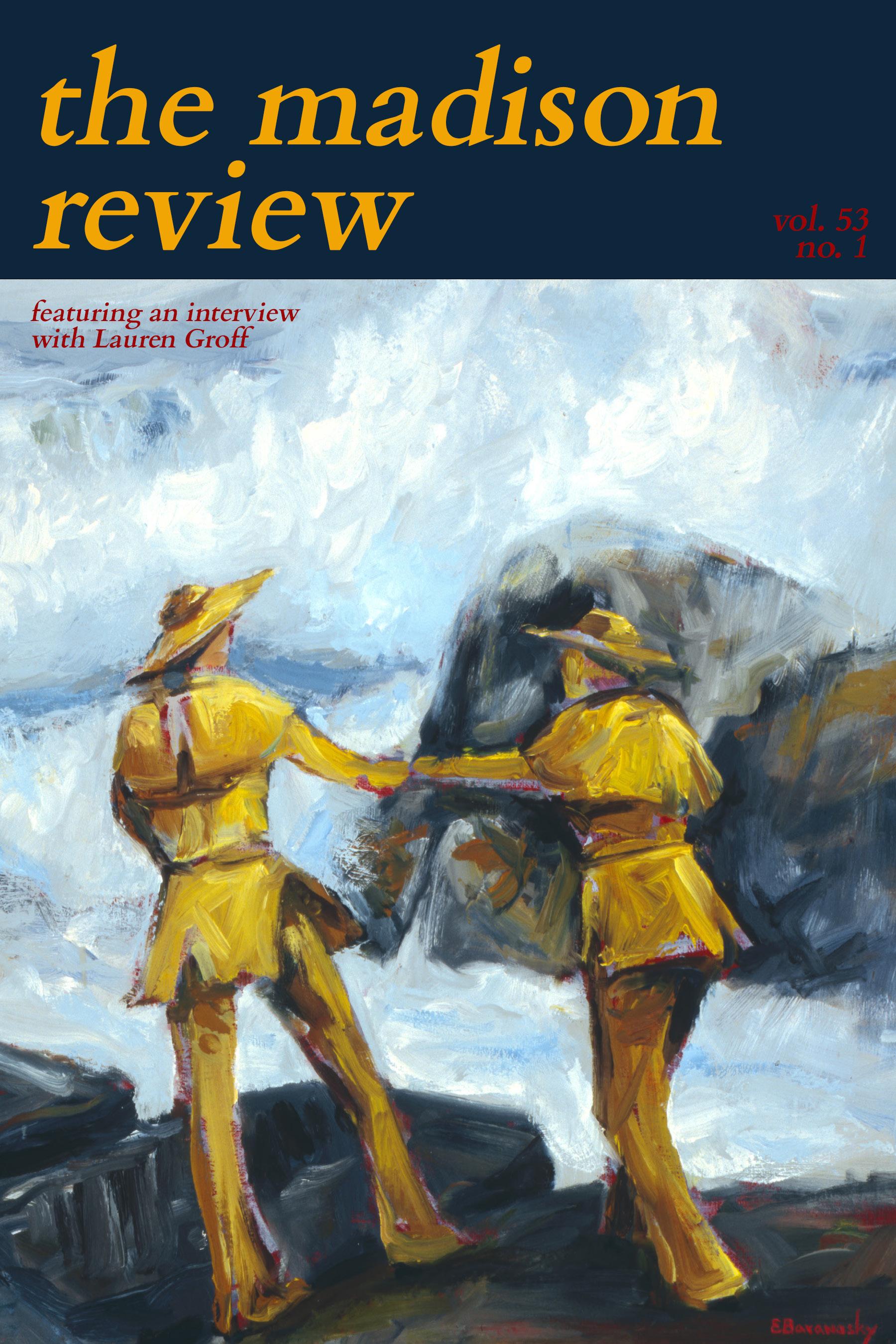
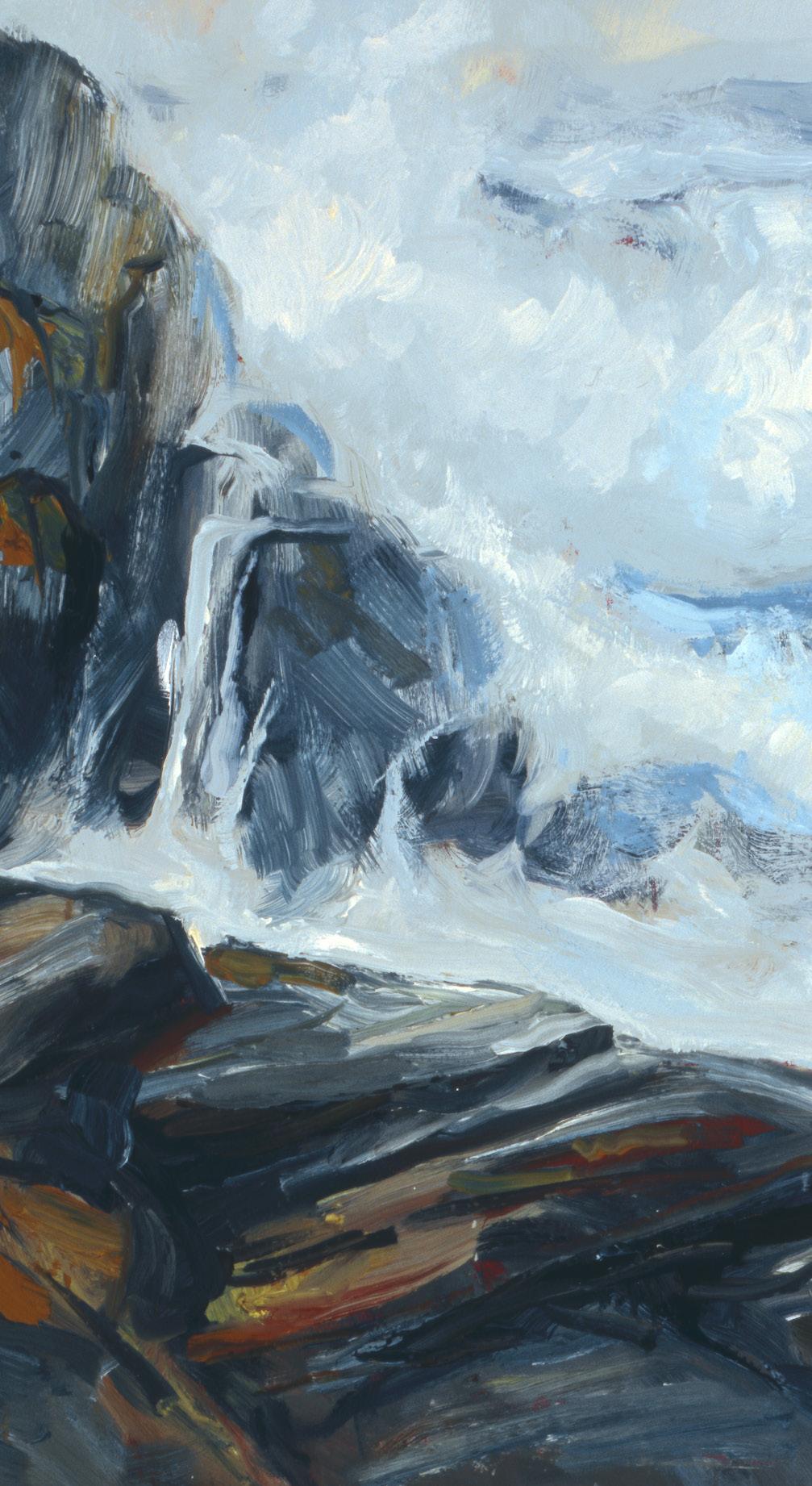
Edward Baranosky ’s work emphasizes the ever-changing moments of the sea. As a poet-artist he crosses the channels and pathways between the visual and the textual. Published in Eastern Structures, Haiku Avenue, Lynx Journal, Northern New England Review, MidAtlantic Review, Crossing Lines, Comstock Review among others. At 79, he is still emerging. He currently lives in Toronto, Canada.
Naomi Fonseka is a writer from Baltimore who also calls Detroit and Sri Lanka home. She is an alumna of Johns Hopkins University, where she studied the Writing Seminars and Environmental Studies. She teaches fiction and poetry to middle schoolers and high schoolers in Baltimore City with Writers in Baltimore Schools.
Peter Gordon is a fiction writer living in Massachusetts. His recent work has appeared or is forthcoming in The Sun, Chicago Quarterly Review, Prairie Schooner, North American Review, Post Road, The Dublin Review and elsewhere. Among the recognitions his stories have received are a Pushcart Prize, inclusion in numerous anthologies and multiple recognitions on the Notables list in the annual Best American Short Stories series.
Richard Hanus had four kids but now just three. Zen and Love.
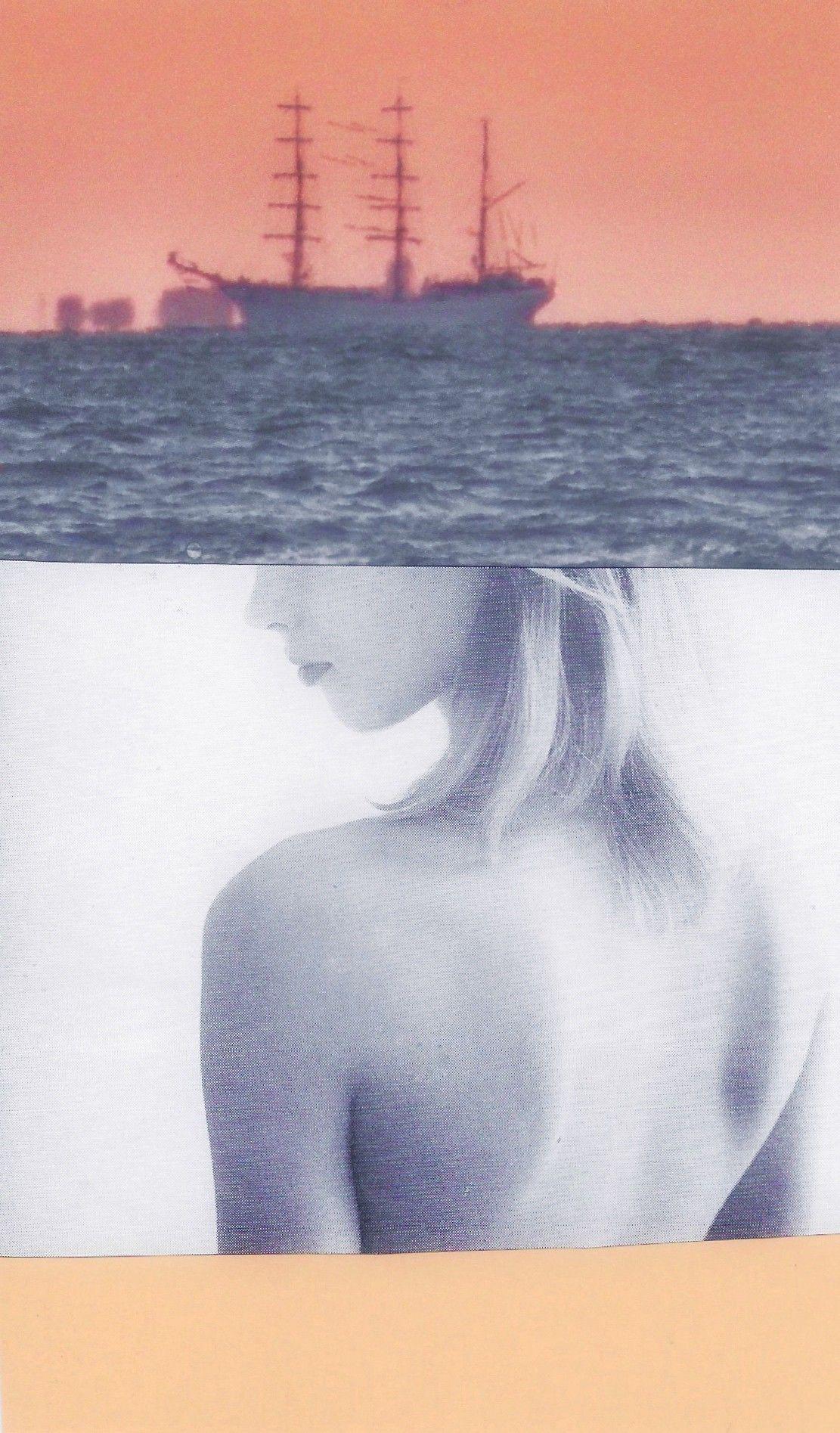
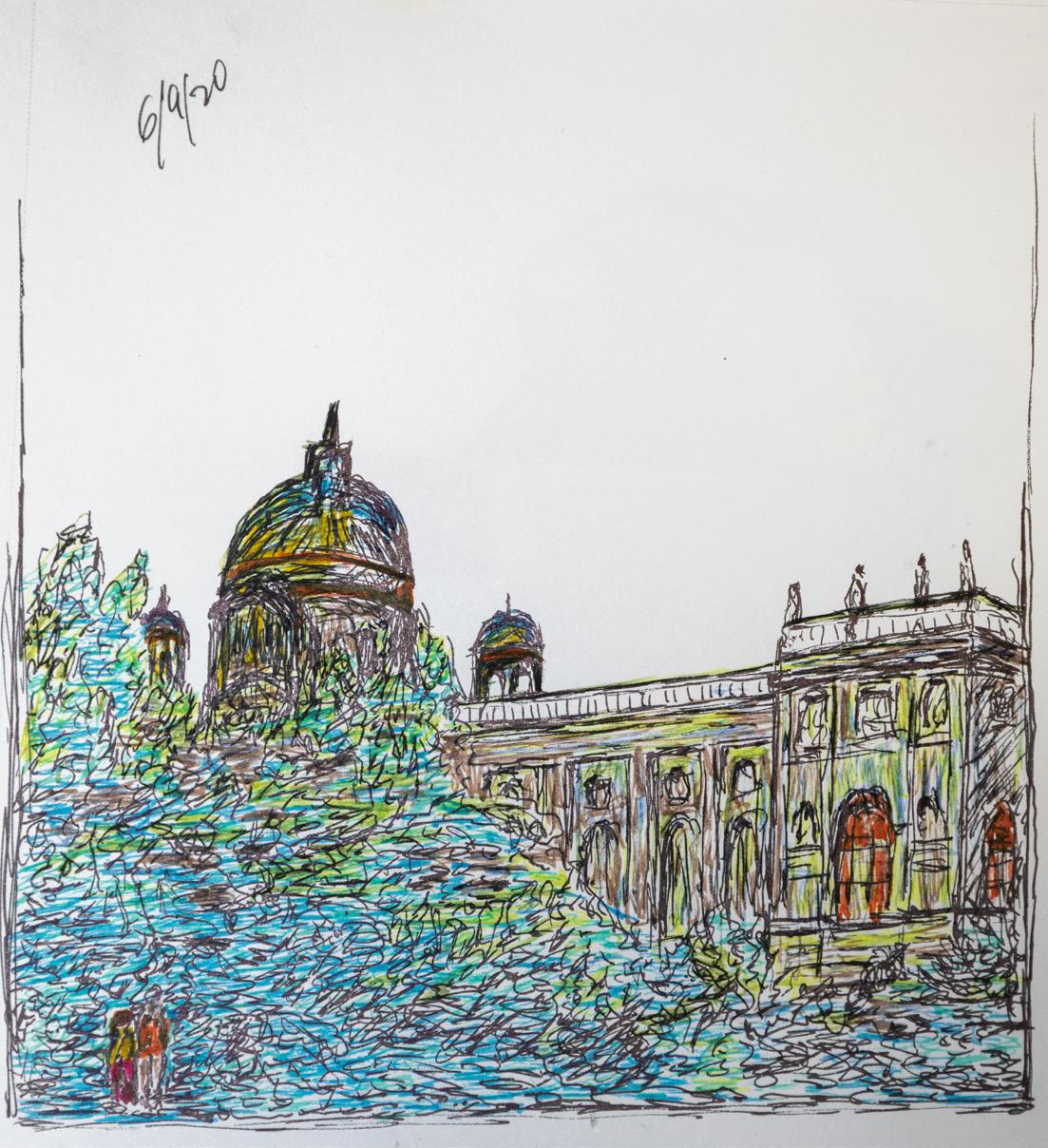
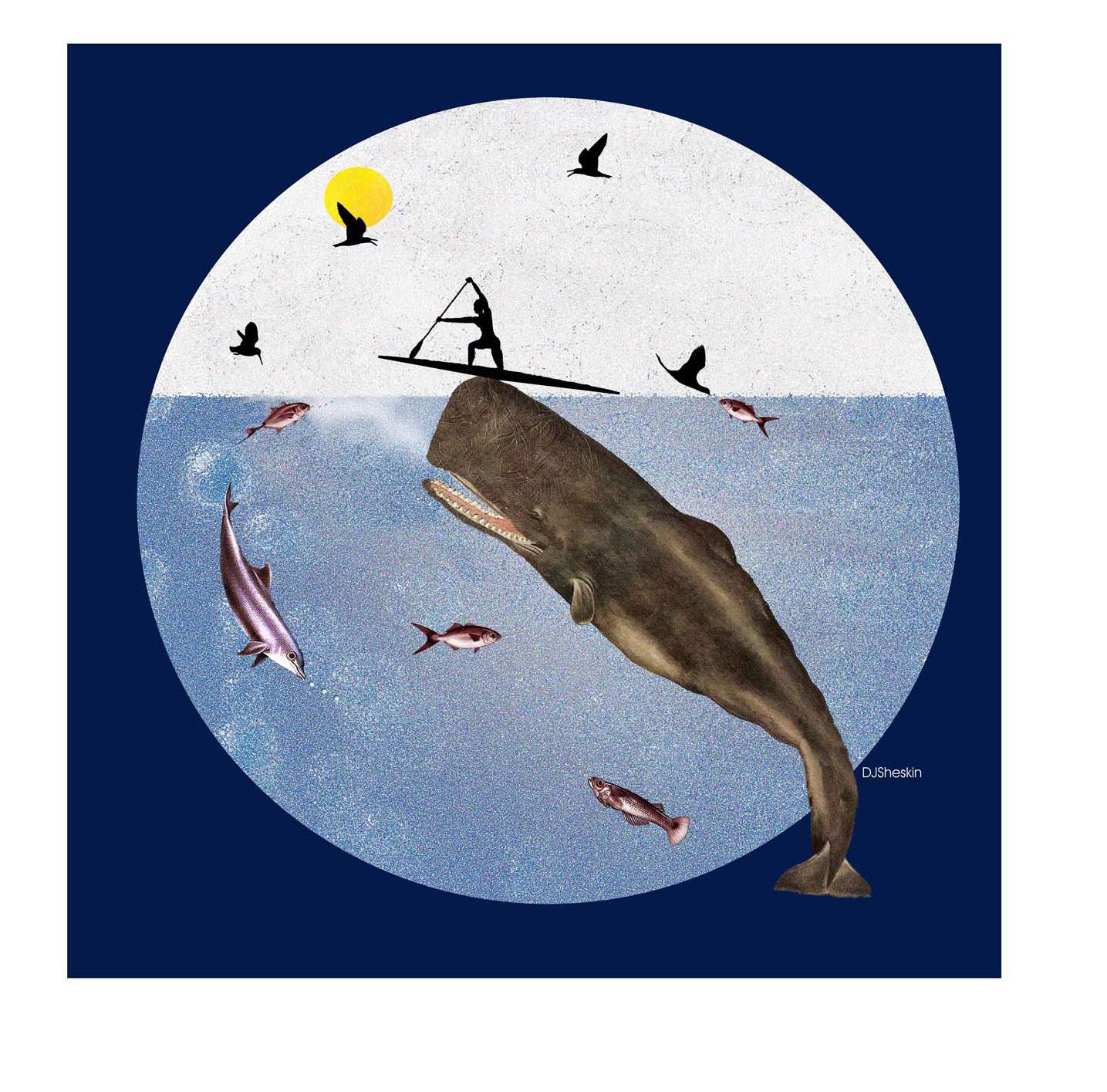
A self-taught artist, David Sheskin made his first work of art at the age of 40. His initial efforts were pen and ink drawings. He then began to paint in acrylics and subsequently utilized sculpture, mixed media, collage and digital technology to create an extensive yet diverse
body of art. His works have been exhibited in galleries and museums and over 300 of his images have been published in magazines as well as in other formats.
Hans Jorg Stahlschmidt is a German-American writer and psychologist in Berkeley, CA. He is a senior clinical faculty member and the dean of the PACT Institute. His poems have appeared in numerous magazines and anthologies across the U.S. and Germany, including Apalachee Review, Atlanta Review, Barrow Street, Aesthetica, Mudfish, California Quarterly, Madison Review, the Anthology of Magazine Verse, and the Yearbook of American Poetry.
Valeria Rodrigo Rojas is a writer,and translator from Valencia, Venezuela based in Brooklyn. She has been featured or is forthcoming in Foglifter, The Columbia Review, ANMLY, Huizache, Michigan Quarterly Review, like a field and others. She has been a Fall 2025 Brooklyn Poets Fellow. She misses the smell of the sea and so reaches towards her chronic pain to take her back.