| VOL. C, NO. 4 |December 13, 2024 |
THELOYALIST.ORG
|

| VOL. C, NO. 4 |December 13, 2024 |
THELOYALIST.ORG
|
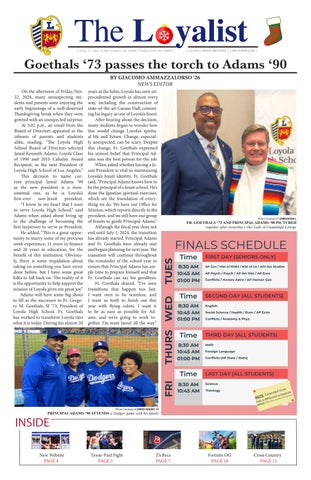
BY GIACOMO AMMAZZALORSO ‘26 NEWS EDITOR
On the afternoon of Friday, Nov. 22, 2024, many unsuspecting students and parents were enjoying the early beginnings of a well-deserved Thanksgiving break when they were greeted with an unexpected surprise.
At 3:02 p.m., an email from the Board of Directors appeared in the inboxes of parents and students alike, reading, “The Loyola High School Board of Directors selected Jamal Kenneth Adams, Loyola Class of 1990 and 2010 Cahalan Award Recipient, as the next President of Loyola High School of Los Angeles.”
This decision to name current principal Jamal Adams ‘90 as the new president is a monumental one, as he is Loyola’s first-ever non-Jesuit president.
“I know in my heart that I want to serve Loyola High School,” said Adams when asked about living up to the challenge of becoming the first layperson to serve as President.
He added, “This is a great opportunity to marry some of my previous work experience, 11 years in finance and 20 years in education, for the benefit of this institution. Obviously, there is some trepidation about taking on something you have never done before, but I have some great folks to fall back on. The reality of it is the opportunity to help support the mission of Loyola gives me great joy.”
Adams will have some big shoes to fill as the successor to Fr. Gregory M. Goethals, SJ ‘73, President of Loyola High School. Fr. Goethals has worked to transform Loyola into what it is today. During his almost 20
years at the helm, Loyola has seen unprecedented growth in almost every way, including the construction of state-of-the-art Caruso Hall, cementing his legacy as one of Loyola’s finest.
After hearing about the decision, many students began to wonder how this would change Loyola’s spiritual life and future. Change, especially unexpected, can be scary. Despite this change, Fr. Goethals expressed his utmost belief that Principal Adams was the best person for the job.
When asked whether having a Jesuit President is vital to maintaining Loyola’s Jesuit identity, Fr. Goethals said, “Principal Adams knows how to be the principal of a Jesuit school. He’s done the Ignatian spiritual exercises, which are the foundation of everything we do. We have our Office for Mission, which reports directly to the president, and we still have our group of Jesuits to guide Principal Adams.”
Although the fiscal year does not end until July 1, 2024, the transition has already started. Principal Adams and Fr. Goethals have already met and begun planning for next year. The transition will continue throughout the remainder of the school year to ensure that Principal Adams has ample time to prepare himself and that Fr. Goethals can say his goodbyes.
Fr. Goethals shared, “I’ve seen transitions that happen too fast. I want ours to be seamless, and I want us both to finish out this year with flying colors. I want it to be as easy as possible for Adams, and we’re going to work together. I’m team Jamal all the way.”
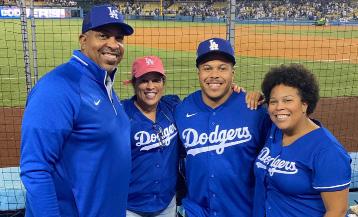


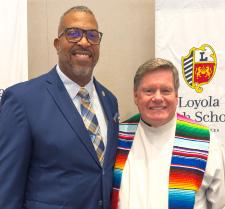



JACOB FRIEDMAN '26 CONTRIBUTOR
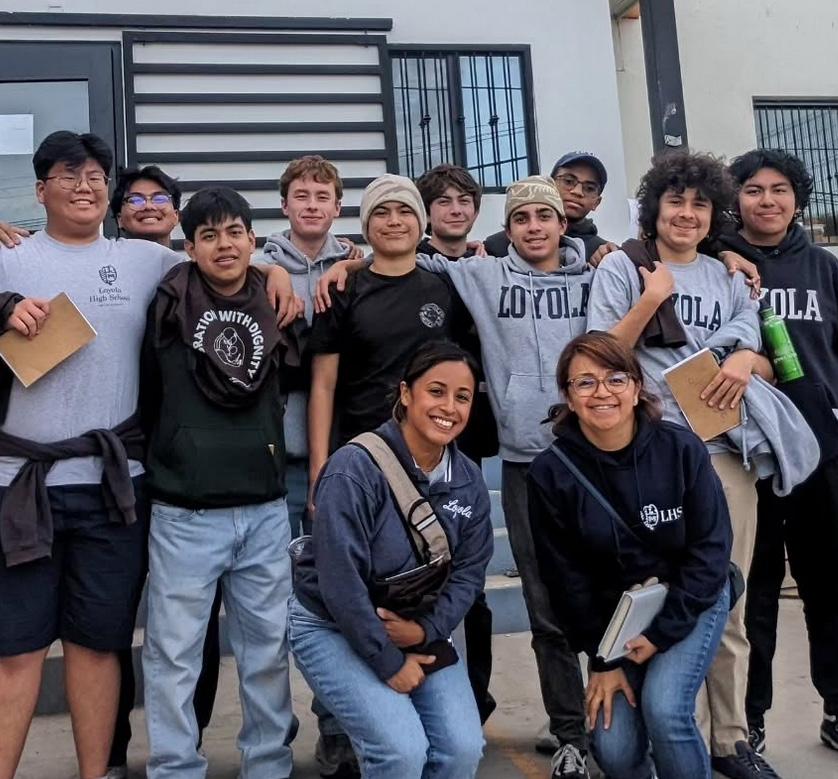
On Monday, Nov. 25, Gabriela Gordillo-Banuelos and Jenavi Hernandez led a group of 10 Cubs to Ambos Nogales for the annual Kino Border Initiative Immersion Trip. Attendees lived in a Jesuit volunteer house in Nogales, Arizona, and crossed the U.S.-Mexico border by foot to Nogales, Mexico, to get educated about the immigration process, volunteer at the Kino shelter, and learn about the town of Ambos Nogales.
The group’s first stop in Nogales, Arizona, was at a Kino office, where they were introduced to the Kino Border Initiative and its mission. Iñigo, a Kino


representative, explained the origins of Kino and gave the group three goals for the trip: to humanize, accompany and complicate.
Most poignant were the conversations held with migrants at the shelter. People from all over North, Central and South America come to the Kino shelter for anything, from a single meal to crucial medical attention, and after serving breakfast, Cubs were lucky enough to have the opportunity to converse with migrants about their lives and what circumstances led them to Kino.
On day three of the immersion, students were given a tour of Nogales, Sonora, and saw the U.S. Southern border wall up close.
As Henry Hall ‘26 noted, “It’s hard not to feel intimidated when
looking up at the wall. It has giant rusted metal posts that look like prison cell bars. If you choose to jump, you’re going to end up crossing the most dangerous desert in the U.S. with broken bones.”
The group also made a stop at the site where sixteen-yearold Nogales resident José Antonio was fired at sixteen times by a U.S. border patrol agent merely for throwing rocks at the border wall. The agent was later twice acquitted of all charges.
At the Kino Shelter, the Cubs participated in an immigration simulation where they were assigned roles and attempted to secure an appointment for a visa, get the visa itself and finally cross the border. Students with affluent roles, such as that of a business and owner or professional athlete, faced no trouble getting into the country, but those with roles escaping poverty or violence had to resort to coyotes or scam lawyers to attempt to cross. The eye-opening experience revealed an unfortunate truth about the U.S. immigration process: those who need visas the most are the least likely to get them.
On Thanksgiving, their final night at Kino, the Cubs met again with Iñigo to discuss three new goals to build on their original objectives and lead their post-immersion activism: to share, accompany and defend.
The attendees keep these in mind as they join forces with Loyola’s own Center for Service and Justice, Kino Club and Arrupe Leadership on campus to raise awareness and support for those at the border and make change in the migrant hub that is Los Angeles.
On the morning of Nov. 8, the Loyola Math Quiz Club set out for the Harvard Math Competition, one of the most prestigious and competitive opportunities offered for high school math students. Brimming with excitement and anxiety, six club members competed and met a variety of students from all across the country, ranging from 10-yearolds to eighteen-yearolds, as they showcased their skills in mathematical combat.
After spending some of Friday preparing for the tournament by going through practice problems involving number theory, proofs and combinatorics, the team felt ready. Their coach and new Loyola mathematics teacher, Stephanie Dito, reassured the team, saying, “We're more than prepared. We just need to go out there and give our all.”
On Saturday, the team competed both individually and as a group, with reality setting in due to the difficulty of the infamous questions and the competitive nature of the tournament. They competed in two individual rounds—a general and a theme round—each consisting of ten questions. Following this was a team round, which also had ten questions, and a guts round with twelve sets of three questions.
The team not only got to compete, they were also given the chance to attend various lectures on Sunday, including a talk with Po-Shen Loh, an American mathematician, Carnegie Mellon professor and national coach for the United States’ International Mathematical Olympiad team. Lectures on various math concepts, such as integrals and fast multiplication,

were offered as well.
When asked about the results after the trip, Kian Wong ‘27 remarked, “Although we didn’t do as well as we wished, this was a valuable opportunity for us to compete with so many intellectually distinguished students across the country.”
Team captain Ethan Lee ‘25, agreeing with Wong, admitted, “Our performance wasn’t the best, but this just shows how hard we will have to work together in the coming months for future competitions.”
From this trip, the team has learned many valuable lessons while making meaningful memories ranging from team bonding to learning and delving deeper into the world of math. They are looking forward to the future, where they will continue to participate in more tournaments and—hopefully— place highly as well.
On Dec. 5, 28 Juniors eagerly embarked on the Junior Leadership Retreat.
Administrative Coordinator Jason Cruz '12, accompanied by counselors, teachers and Senior Retreat Team leaders, led the second retreat of the year (the first occurred in October). Students were given the opportunity to develop as leaders and strengthen their bonds with their peers.
Cruz laid out the offerings of the retreat, saying, “The JLR is a short overnight retreat offered to members of the junior class who are interested in developing their leadership skills and learning more about their strengths and weaknesses in those settings.”
The retreats are designed to improve
a student’s leadership skills. Certain activities stuck out for students as highlights, giving them the chance to be leaders and make friends in a group setting.
William Mills ‘26 stated, “My favorite part of the retreat was when we had to create a skit based on a Bible passage and a modern version. Because the groups were random, I hadn’t had the opportunity to bond with them, and so it was awkward at first, but then we quickly were able to create a friendship.”
In addition to providing students with a chance to develop and grow, the retreat also offered them an escape from the chaotic and stressful year that juniors face.
Cruz shared, “The retreat program of-
fered by Campus Ministry in general is an extremely important piece of the ‘Loyola experience,’ so the more opportunities we can offer our students to reflect on themselves, connect with others, and disconnect from all the stress and worries back home, the better.” The retreats are completely voluntary but have seen a lot of interest this year. Due to this, Campus Ministry has added a fourth retreat in January for the first time. Attending the retreat is also a fantastic way for Juniors to set themselves apart in the Big Brother selection process. All juniors are encouraged to email Mr. Cruz for more information on the upcoming JLRs that will take place next semester.
BY HUDSON PETERS '27 CONTRIBUTOR
The multifaceted Matthew Schaeffer, who has been working at Loyola for over 16 years, represents the athletic, academic and music communities at Loyola. You may have seen him orchestrating the music choir in our masses, on the pool deck, passing by in the halls, or taking pictures with the moms.
Schaeffer has a very educated background in spirituality. He attended Jesuit High School Sacramento and received his undergraduate degree from Loyola Marymount University. After undergraduate school, he went on to study at Cal Berkeley with the Graduate Theological Union (GTU) Program.
“I did a joint degree program with UC Berkeley in biblical studies, biblical languages, and biblical archaeology,” Schaeffer stated. In 2008, Schaeffer had the opportunity to return to the same familiar community—but this time as a teacher. He now teaches theology and liturgy.
While he has one foot firmly in academics, his other foot is planted in athletics.
“I've been a swimmer all my life,” he said. “Being able to contribute to a swimmer’s time drop or goal time is what I love about coaching” he shared.
His passion for swimming runs deep, as he coaches varsity swim and varsity water polo at Loyola. He's contributed to the swim team’s many Mission League, CIF and state championship titles.
Outside of Loyola, Mr. Schaeffer has many hobbies, including rowing year round. He rows for the California Yacht Club and has participated in many competitions. In 2016, he nearly qualified for the Rio Olympics!
He works out and practices rowing every day, demonstrating his commitment and dedication to the things he chooses to participate in. This work payed off, as this year, he won the Head of the Charles competition in his age group. The competition takes place once a year in Boston, Massachusetts, and attracts over 400,000 thousand viewers and 12,000 athletes.
Schaeffer is always trying
to strive for excellence in the communities he is involved in. “When I envision Loyola, I see excellence executed at the highest level. Whether it’s academics, religion, or athletics, I believe in the brotherhood,” he stated. Trey Mastandrea ‘25 emphasized, “Mr. Schaeffer has been there for me in the classroom and on the pool deck for all four years of my swimming career at Loyola. He is one of the most humble individuals I have ever met.” Schaeffer’s humbleness allows him to strive and always push himself further. “Loyola has always found new ways to challenge me in the 16 years I’ve been here. This school has shown me what true excellence is,” Schaeffer emphasized. He has ensured to strive for excellence in his teaching since the start of his career. During the interview, in all of his bald wisdom, he told us the key to having a successful class. Schaeffer summarized, “If they know you care deeply about them, they'll move mountains for you."
BY MICHAEL VOLMERT-UNDERBRINK '27 CONTRIBUTOR
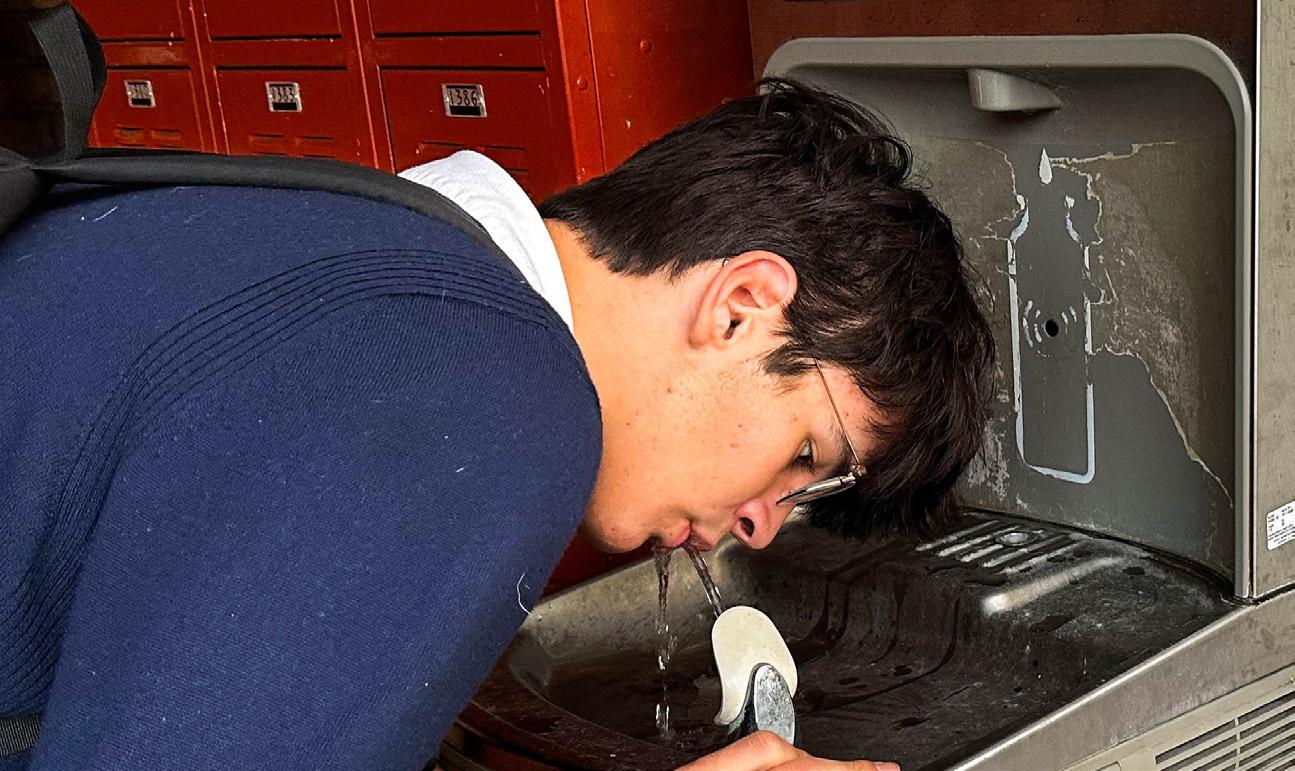
Loyola’s water isn’t what students think it is. In the first week of December, I conducted an investigation around campus by sampling from numerous water fountains in order to determine one goal: the water quality at Loyola High School.
As Loyola is the oldest continually operating school in all of Southern California, it is important to test the drinking water of the school. It can be assumed that Loyola possesses old pipes, especially in older buildings. When pipes become old, they tend to create issues around contamination, discolorization and a build-up of crystals and minerals such as magnesium and calcium levels in the water within old pipes. After taking these tests, analyzing them and comparing them, I made a generalized claim. The schools’ water is safe and drinkable with the exception of one small issue: Loyola’s water is ‘hard.’ The hardness of water refers to the amount of dissolved calcium and magnesium within it.
In the words of Doctor Raechel Hill, Environmental Science teacher at Loyola High School, “A majority of the water that Los Angeles receives is from the Colorado River. The Colorado River is very
big and very long, and starts all the way far up north in Canada. As the river flows, it carves through the US picking up bits and pieces of rock, sediment, calcium and other minerals. We are down here in the South, so we are at the tail-end of the Colorado which means lots of these minerals have built up in the water."
Hill then summarized, "Generally, it is okay to drink hard water, though it isn’t the best option, it won’t hurt you in the long term. Although 425ppm is still higher than normal, all of Southern California tends to have quite hard water anyways.”

1ppm is equivalent to 0.0001% of the water. Though the calcium and magnesium content in the water of areas in East LA happens to be above average, being 0.0093% -0.0291%, it stands at nothing compared to the tests from Loyola, which showed results twice that amount being between 0.0425% and 0.07%.
continuing to drink the school’s water. In some cases, ingesting high levels of calcium and magnesium has links to bowel problems, cramping, weak bones and in extreme cases cardiovascular disease, diabetes and even cancer.
Athletes in particular should be wary of adding electrolytes to this water since they add to the excess of minerals on top of the increased magnesium and calcium levels that this ‘hard’ water already has. These increased levels should not be taken lightly and can
THE FILTERED WATER DISPLAYS NO SIGNS OF ACTUALLY BEING FILTERED

lead to hypercalcemia, which is a result of too many minerals within the blood.


Though data linking the consumption of ‘hard’ water to any major health effects tends to be questionable around campus, there are exceptions that students should be aware of before
Students should also note that despite belief in the contrary, all of the water at Loyola, from the ground to the filtered drinking fountains, displayed nearly identical results. In conclusion, when students are thirsty after their intramural soccer games, they should be conscious that the water from the hoses and fountains is the same.
BY IGNATIUS DOHERTY '26 WEBMASTER
When I first came to Loyola, I already had plans to expand The Loyalist to a digital platform. I saw the potential for an online news site as an opportunity to immortalize articles, modernize a centuryold publication and expand the audience. The inspiration behind such a change lies in my experience with digital journalism in my hometown.
During my freshman year at The Latin School of Chicago, I was immersed in an entirely digital journalism scene through The Forum, the school’s awardwinning digital newspaper.
As a Staff Writer and later Arts Editor, I collaborated with my older brother Jay, a senior and the digital editor of The Forum, to redesign a new cuttingedge website in my first partnership with Student Newspapers Online (SNO), a digital platform also used by high schools including Harvard-Westlake, the Archer School for Girls and Brentwood School. The site quickly became a must-stop source for news, information and features for the entire student body, which earned the
school numerous accolades.
After moving to Los Angeles in the summer of 2023 and starting my sophomore year at Loyola High School, I immediately noticed the absence of the efficiency and widespread reach that a digital platform provides.
With this in mind, I immediately met with an advisor of The Loyalist, Sarah Gacina, and explained to her my plan to integrate The Loyalist with SNO, the same platform I had worked with in Chicago and the leading platform for digital high school newspapers across the country.
With her approval, I took the initiative to propel The Loyalist into a digital age. I configured widgets to include interactive features like polls, countdowns and advertisements tailored to campus-specific events and information.
I also built a staff page to credit our dedicated staff properly and ensure that the site adhered to Loyola’s classic navy and white color scheme. Furthermore, I will continuously update and refresh the site for each new edition—so be on the lookout!
What excites me most about this transition is that it positions The Loyalist as a modern publication that can now be consumed digitally (where most Loyola students naturally consume their media anyway).
I hope this website will provide a lasting opportunity for readers, both inside and outside of the Loyola community, to experience a publication so thoughtfully crafted by such a dedicated team—now showcased on a scale greater than ever before.
Visit www.theloyalist.org or scan the QR code below to read articles, both old and new, with each edition uploaded the Monday after its Friday print release at school.

BY ETHAN DUMPER '27 CONTRIBUTOR
For two years now, ChatGPT has tempted students and haunted teachers. While making learning more accessible for students, many have used ChatGPT unethically to do their work for them.
While ChatGPT isn’t the best writer, it is certainly a fast one, making it an appealing option for students who face heavy workloads.
“[I see it] being employed to replace writing that might be pragmatic and not creative,” offered English teacher Nicholas Martino.
While ChatGPT was initially a large issue in classrooms, strategies like requiring hand-written essays and tools like GPT Zero have reduced student use this year. Martino added that he has seen very few cases of ChatGPT use on assignments this year, which is an encouraging trend.
However, while the technology to detect cheating is getting better, so are the tools to avoid detection. Tools like Humanize AI, which makes ChatGPT
written texts sound more student written are on the rise.
ChatGPT is not necessarily all bad; it has significant elements that can support students in positive ways. For instance, Martino explained how his sophomores are currently doing a project that requires the students to learn more about different creation myths, which can require long hours of research. He encouraged them to use ChatGPT to learn more about different types of creation myths, then pick one and do deeper research using reputable sources.
“They cannot cite ChatGPT… but I do encourage them to use it to find strong
sources which they can cite in their essay,” Martino added.
Students in his class appreciate his AI policy.
“I like the project and the adaptation with ChatGPT,” said Agustya Karadkar ‘27.
With the introduction of new anti-cheating mechanisms, the landscape has considerably changed since the engine was introduced almost two years ago. While some teachers are creating strategies to prevent AI use, others are interested in adapting to the shifting environment. The majority recognize that AI has both its harms and appeals, and make an effort to try use new possible learning techniques wherever posssible.
BY MARCO AMES '27 CONTRIBUTOR
Mobile games have exploded in popularity amongst the Loyola student body. Free, quick to download and easy to play, these games can be enjoyed for minutes or even hours, which surely has led to their popularity.
One such game, Supercell’s Brawl Stars, has recently gained popularity with students. The game currently has over 375 million active players worldwide. Brawl Stars offers a variety of characters, all with different abilities, playstyles and matchups.
Any bus ride to campus or walk through the commons shows just how popular this game is as Cubs yell to each other commands for what to do in-game. The game is able to keep Cubs hooked with constant updates urging players to keep leveling up, which creates a need for other players to “grind” to stay competitive with their peers.
“Honestly, I feel like I have to keep playing so that I’m not a lower level than my friends. Everyone’s always playing, so to stay on track I need to as well,” said Gavin Carey ‘25.
This is not the only mobile game that has spread through Loyola. "Clash of Clans," six years older than Brawl Stars and also
developed by Supercell, has seen a renaissance within the Cub community. Its base-building gameplay, timed upgrades and new updates have brought back attention to this game.
Reagan Lantin ‘27 explained his experience, “I just recently started playing after two years off. So much has changed, it’s overwhelming. I could easily spend two hours a day playing.”
Both Brawl Stars and Clash of Clans have regular updates that raise the maximum level possible, giving players a higher goal and, more importantly, a reason to never stop gaming. They also utilize in-game purchases that allow players to level up faster.
The more players advance, the more hours they spend trying to continue advancing, creating an endless cycle of incentives and quests.
As students spend more time playing, interaction and community increase (for example, the Loyola Clan formed on Clash of Clans recently). This source of community helps bring Cubs together. In the words of Christopher Javier ‘27, “Playing mobile games with my fellow Cubs makes me feel even more a part of the brotherhood.”

BY JOEL VILLALTA '27 CONTRIBUTOR
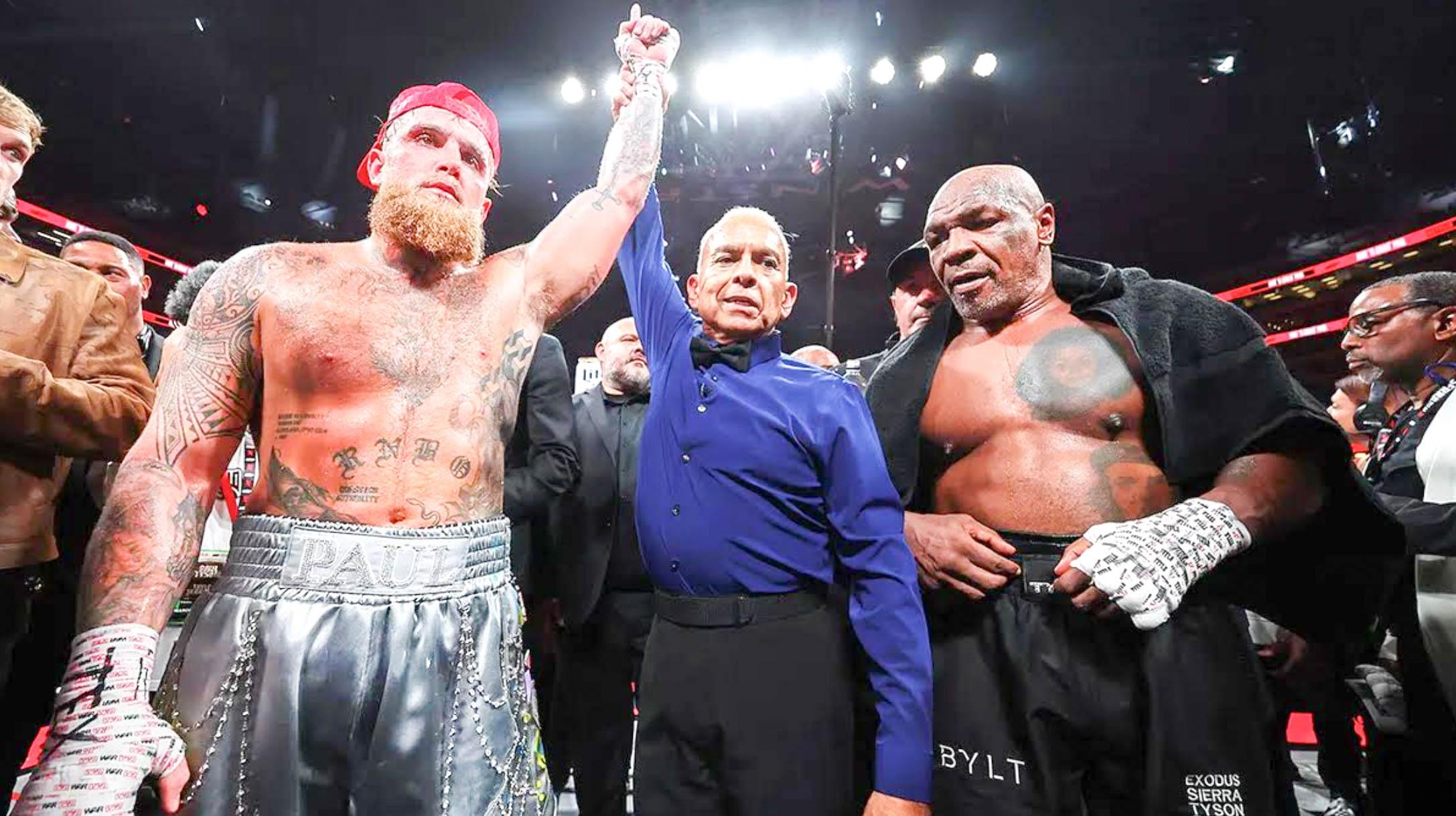
On Nov. 15, the world was shook. At the AT&T Stadium in Arlington, Texas, the judges declared Jake Paul the winner in his long awaited bout against Mike Tyson. Paul raked in a staggering $40 million, while his rival Tyson walked away with an impressive $20 million—proof that their clash was as profitable as it was fierce. Although this fight may have seemed professional to some, many Cubs believe that the match itself was rigged.
First off, there was a significant age difference between the two boxers. 27 year old Paul fought the almost 60 year old Tyson, easily giving Paul a competitive edge.
Avid Tyson fan Aiden Chang ‘27 remarked, “Tyson could barely move around the ring, much less knockout Paul. Of course Jake won because he’s younger and faster. I mean, who expects a 60-year-old man to beat a 30-year-old dude? The fight was simply for the big bucks.”
In addition, public internet videos of Tyson training had been uploaded prior to the fight, including him viciously throwing punches and dodging quick jabs with fast footwork, which is reminiscent of his prime self. Fans saw this and asked, where was this Tyson at the fight?
Furthermore, Paul, with only six years of experience under his belt, faced off against the legendary Tyson whose decorated career spanned over two decades.
While Tyson had been retired for 19 years, his 14 extra years of experience had a significant presence.
Although some fans may think that it’s possible that Paul could have won even with less experience, Jayden Peña ‘27 does not consider Jake Paul to be the boxing prodigy people glorify him to be: “The fact that Paul won is highly unlikely, being that he is drastically less experienced than Tyson. I get that Jake is very young and Tyson is basically a
senior citizen, but someone doesn’t just lose 20 years of experience like it seemed Tyson did during the fight.”
Tyson’s past wins and remarkable career history are enough to show that he was more than capable of winning the match. However, this does not mean that Paul
is a bad or unworthy boxer, but he is seen as no match for the great Tyson, even with Paul being at his top-tier condition. The idea of an almost 60-year-old Tyson with decades in the ring falling to a relative newcomer like Paul feels less like an upset and more like a setup.
The American education system has become a lightning rod for debate. Whether it's the lack of pathways to better opportunities down the line or its outdated structure in need of reform, the same question remains: is it preparing students for the modern world? In short, no and let me tell you why.
The roots of the education system stretches back to the Industrial Age, which was a time of demand for competent factory workers. In order to prepare students for these basic roles, the government created a structured school system where teachers focused on teaching fundamental skills to students such as reading, writing and arithmetic.
Now, flash forward to present day, very little has yet to change in the schooling system, and it continues to limit the opportunity for creativity.
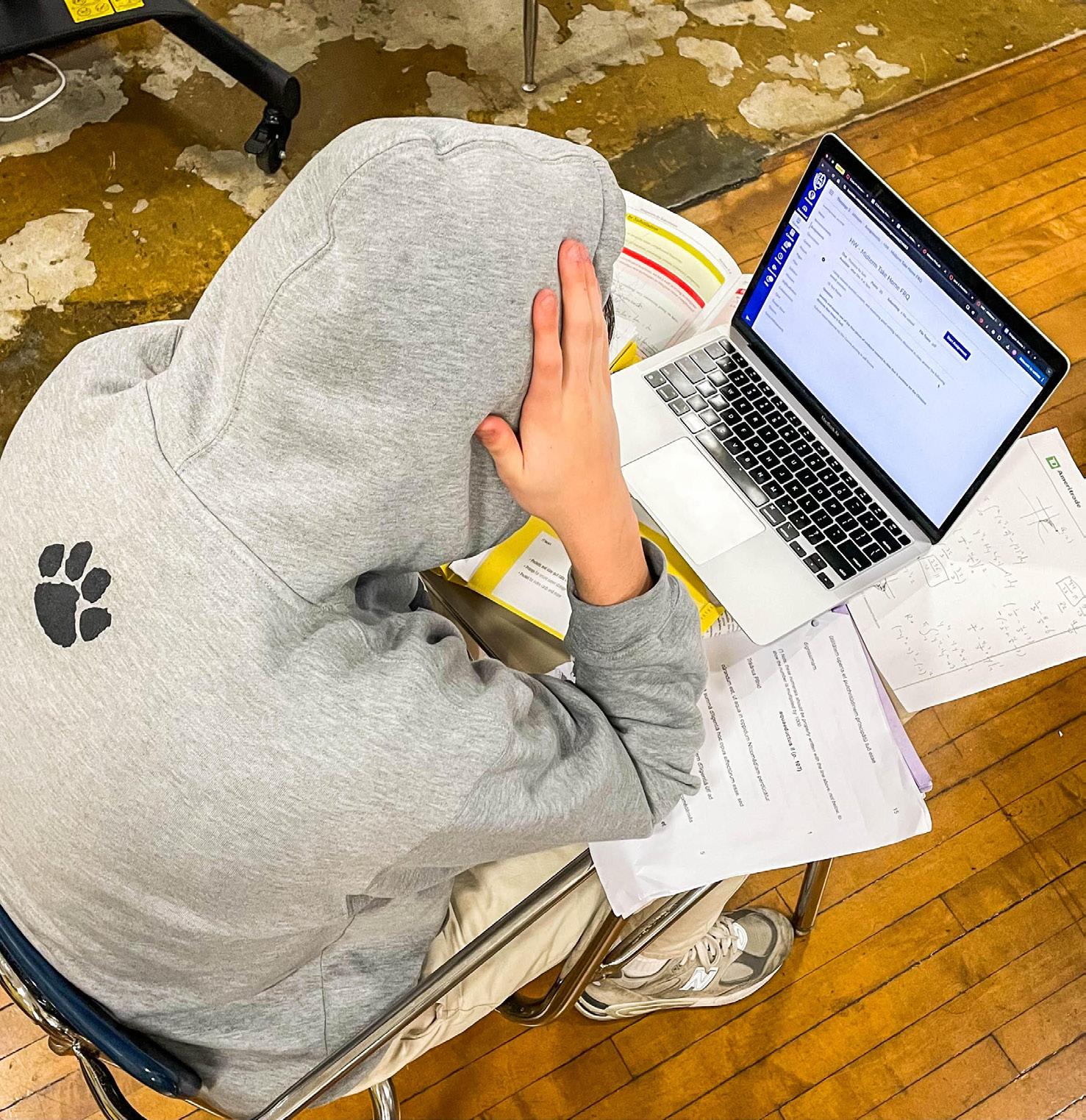
Another big criticism of the education system is the overreliance on memorization and standardized testing. Memorization only leads to students focusing on recalling facts instead of truly understanding the material. In addition to this, when asked to memorize large chunks of information, students often forget it just days later.
Nicholas Kassabian ‘27 agreed with this claim, as he remarked, “After I cram studying all night for tests, I forget half of the material before I even hop on the bus to school in the morning.”
Additionally, although stan-
BY ETHAN HAN '27 CONTRIBUTOR
dardized testing is meant to measure academic progress, these tests often fail to reflect a student's true understanding. The stresses of standardized testing lead to students performing worse than
from these conditions make me more likely to make careless mistakes, which I often do.”
Furthermore, these teaching approaches also fail to prepare students for the complex, real-world
they typically would under normal, non-stressful circumstances.
When asked about this, Grant Hong ‘27 agreed, “I perform better not under test conditions because the pressure and the stress
situations they will encounter after finishing school, where creativity, problem-solving and collaboration skills are far more valuable than learning test-taking strategies or memorizing flashcards.
As mentioned earlier, another significant issue with the current education system is the disregard for different student learning styles. Every student has a unique way of learning, yet the education system only has a one-size-fits-all approach to teaching. Some students prefer visual learning, while others grasp concepts better through a handson activity or auditory instructions By failing to account for these differences, schools often alienate the many students who don’t fit the "traditional" mold of learning, leaving them feeling confused and lost despite being just as capable. What's even worse is that the gaps in knowledge grow over time, as these students fall even further behind and are never given the chance to retain the material.
The American education system was built during a time where the workforce demanded competent factory laborers but has failed to adapt since then. As a result, the current education system perpetuates a cycle of underachievement by continuing to neglect learning differences across students.
In our modern day and age, the ability to think critically and creatively will take you farther in life than test-taking skills or memorization. Therefore, in order to meet demands of the modern world, the education system must be fixed to better fit today's generation of students learning styles.
BY THATCHER HARTMAN '27 CONTRIBUTOR
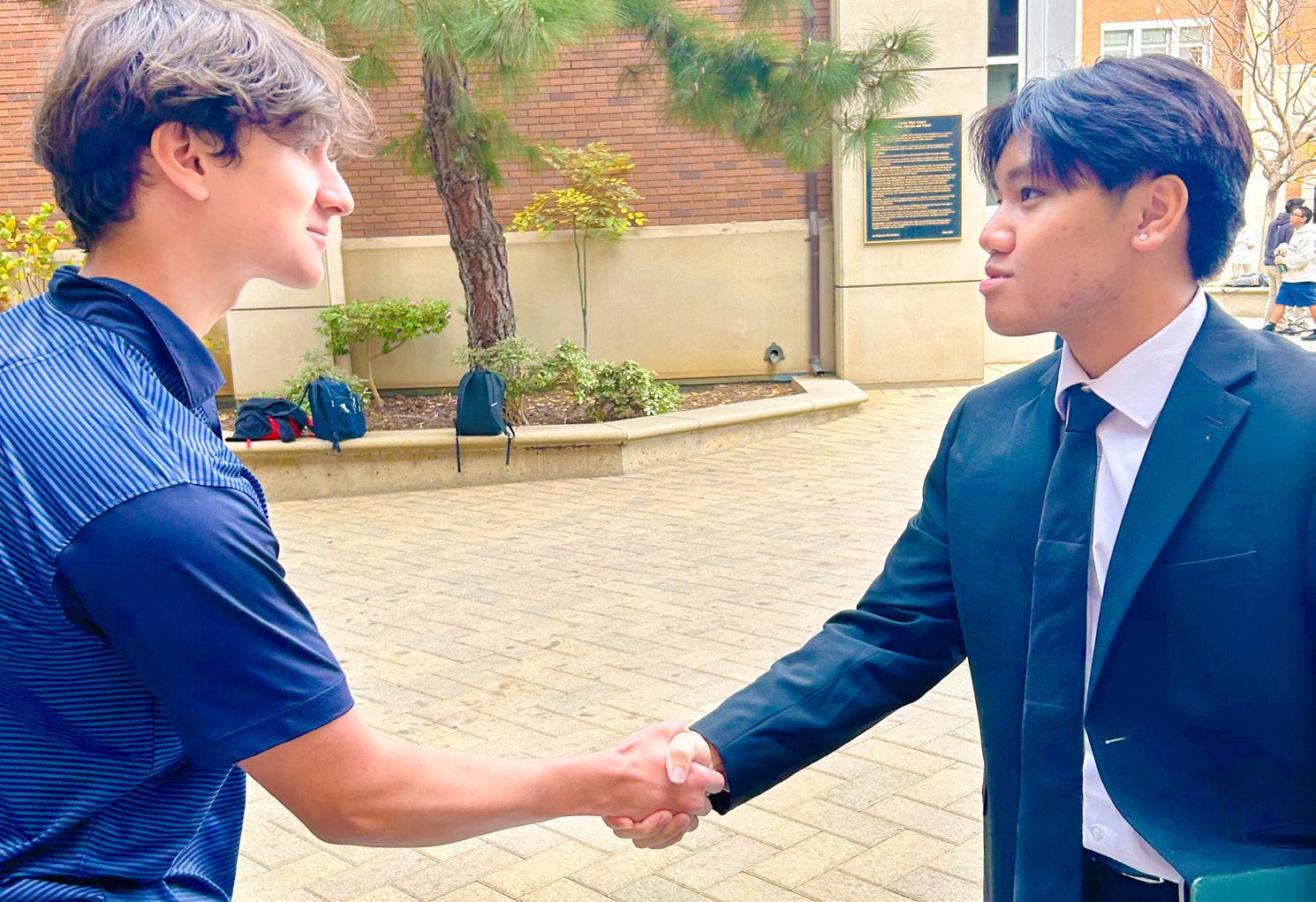
In life, who you know matters just as much as what you know. Your network, which can be from as close as a family member to as far as a classroom professor, can open doors to opportunities like internships, part-time jobs, or college recommendations. In some cases, your network can be the sole reason you land a job, but what exactly does it mean to have a strong network, and why does it matter so much?
Think of your network as the relationships you build and nurture over time. For example, your parents might connect you to a job at their workplace, or a teacher might write you an incredible letter of recommendation for college. These are just small examples of how meaningful connections can propel you toward success.
LinkedIn exemplifies the modern power of networking by making it easier to build relationships and access opportunities you might not have considered. Whether you are meeting professionals in your field of
interest, finding possible mentors, or connecting with past school alumni, relationships will shape your future.
Stated by the department chair of social sciences, Mr. Zucker, "The more you can develop your approach to connecting with people, the more impactful it becomes."
The best way to form a good network is through loyalty and making real connections with others. Networking happens in everyday settings, from classrooms to community events, where shared experiences can lead to meaningful relationships. These connections foster lasting relationships that benefit you both personally and professionally throughout your life. Plus, it really doesn't hurt to meet more people.
In the wise words of Kyle Oh ‘27, "The relationships you have with other people not only can make you a better person, but also can create true connections with others.”
At Loyola, forming bonds with your fellow students and alumni
is an invaluable part of the experience. That's why faculty and upperclassmen encourage the incoming freshmen to join as many clubs as they can, establish close bonds with their teachers, and advocate
for themselves within their classes. By building genuine connections based on shared goals, interests, and values, you create a foundation that supports your dreams and ambitions long after graduation.
BY UPTON TA-BEADLE '27 CONTRIBUTOR
In the past few years, the Loyola speech and debate team has grown tremendously. It expanded its range of events to LD, Congress, public forum, and speech, each with tremendous growth in participation and accomplishments over the years. Most schools only have one form of debate, but Loyola, offering a variety of events, splits its budget between them.
The speech and debate team consists of almost 100 students and is the largest program on campus. At debate tournaments, the team competes against other schools at the local, state, and national levels.
Tomas Gonzalez ‘26, one of the captains of the Lincoln-Douglas team, stated, “For our team to compete across local and national circuits, we require mobility and an expanded coaching staff to be competitive against other schools.”
“Most schools the team competes against have higher tuition rates and can funnel more money into the debate,” Mr. James Zucker, head
coach of the speech and debate team and history teacher explained. Recently, the team has been struggling to compete toe-to-toe.
“A lot of students are very eager to compete and it symbolizes what our school is all about: producing great students and leaders,” Zucker remarked, “but it can also open up unintended consequences.” An increasing team size demands a bigger coaching staff and more resources for tournaments, a goal the team has been working to accomplish. Loyola needs a bigger coaching staff and more resources for tournaments.
Even though the students are the ones who push the team forward, funding is necessary to attract and retain good coaches who keep the team competitive.
Zucker continued, “Coaches like Patrick Fox (a coach for the LD team) will eventually tell us ‘I can’t keep working for Loyola because another school offered me more money,’ which is completely reasonable for him to do.”
Offering competitive pay retains high-quality coaches who build fundamental skills, allowing Loyola to beat other schools despite the resource differences. Coaches like Fox can create new opportunities for the team and open up other styles of debate such as policy debate.
“The goal of the speech and debate team is to compete at the Tournament of Champions, the tournament featuring the best debaters in the country,” said Congress debater Charles Harvey ‘27.
Reaching that goal requires that the team remains resilient and wins throughout the rest of the school year. However, resilience alone is not enough.
To truly thrive on the national stage, the team needs the continued support of the Cubs and school faculty to ensure it has the resources to remain competitive. With the right support, the team can not only reach the tournament of champions but also inspire the next generation of debaters to take their voices to even greater heights.
BY JOSEPH ACUÑA '28 CONTRIBUTOR
Zlicious Eatz, colloquially known as Z’s, is the Loyola-exclusive catering business loved by many, offering a grand variety of foods. However, with so many choices, deciding what to eat can be difficult. A question that one might ask themselves while in line for Z’s would be, “What should I order?” The seemingly endless variety of options ranging from hashbrown plates in the mornings, and teriyaki bowls in the afternoon can be overwhelming. .
While walking around Loyola’s campus before the day's first class begins, the odds are that you’ll spot multiple students indulging in Z’s breakfast menu. The hashbrown plate, bacon bowl and acai bowl are purchased by many students and are often a go-to pick in the morning. These hearty meals have struck popularity among Cubs and are some of the best options for a quick bite before class.
“The Acai bowls are great,” said Ethan Gallardo ‘25. “I believe I get one every day. As for the hashbrown plates and bacon bowls, I see a lot of my peers munching
The chicken tenders are good and the quesadillas are good.”
As school progresses throughout the day, lunch brings out a new menu presenting dishes such as

on them, so they must be good. For lunch, sometimes I’ll get the teriyaki chicken bowls. Honestly, everything is delicious.
the penne pasta bowl and teriyaki beef bowls, which are apparent favorites. On the topic of favorites, the hand-made quesadillas, chick-
en tenders and mozzarella sticks are all delicious appetizers that can be seen throughout campus.
Yet other great options such as the corn-dogs or bacon-wrapped hot dogs are rarely purchased. Even the grilled cheeses, which many might expect to be popular, aren’t. “I think Z’s has grilled cheeses, but I don’t think I’ve ever seen people eating them,” said Gallardo, when asked about which items aren’t as sought out.
When ordering snacks that are lacking in the nutritional department, such as tater tots and chili cheese fries athletic ability can be hindered despite the amazing taste.
“Some items on their lunch menu are a little bit heavy ” said Katie Valdes, a dietitian at USC and team mom for the Loyola varsity football team. on the menu and less fried food.”
Hopefully, Cubs everywhere may now have a better idea of what to look for and order at Z’s.
BY NICHOLAS KASSABIAN '27 CONTRIBUTOR
If you mew, huntereye-max and buy hundred-dollar products, will people finally notice you? In a world where teenagers are all on social media, influencers constantly blast the idea of looksmaxxing. But what is looksmaxxing?
Broadly, looksmaxxing is a trend of young adults using various methods to enhance their physical attractiveness. TikTok is influencing the younger audience to believe it will lead to sharper hunter eyes, positive canthal tilt and a generally more commanding appearance. However, while the concept of lookmaxxing is phenomenal, the potential risks and unpredictable side effects of mental and physical health raise questions about whether looksmaxxing is truly ethical. When asked about his opin-
ion on the ethics of looksmaxxing, Ethan Han ‘27 said, “Looksmaxxing is a great concept, and everyone should pursue being their best self, but realistically, it's just a dangerous trend to catch likes and views.”
Looksmaxing techniques vary widely, with some bordering on the extreme. The “towel method”, which involves biting down onto a towel to reshape the jaw and facial bone structure, is a controversial method that could be harmful. Similarly, excessive use of facial exercises to alter appearances can lead to chronic pain, muscle strain and even long term damage. These methods, promoted by influencers, encourage users to experiment without fully understanding the consequences. The side effects, ranging from mild discomfort to severe

damage, can be very detrimental.
Another common example is “mewing.” Mewing involves pushing your tongue up against the roof of your mouth to bring fat and skin up behind your jaw, giving you a sharper and more defined jawline.
When asked about how tiktok affects him in his life, Jason Toomire ‘27 shared, “It’s crazy that people will do anything TikTok tells them. If mewing really worked, wouldn't everyone have a perfect jawline?”
Mewing is the most popular and prominent method that teenagers use to look their best. But while it does have some health and physical benefits, mewing is mostly exploited for views. Mewing is one of the safest looks-maxing methods, only promoting breathing through the nose and keeping the jaw upright.
Yet it still has some negative mental health side effects, making false claims that will not fulfill the results that mewing promises.
Some students like, Bodhi Morgan ‘27, use various methods of looksmaxxing in their everyday lives. He added, “I personally mew and use the towel method, I feel that it gives me a sharper jawline.” Despite its popularity, the effectiveness of looksmaxing is inconsistent. While some claim drastic improvements, others see little or no change, leading to disappointment. The trend ignores factors like genetics, age, and general traits, making results unpredictable. In conclusion, the mental toll of chasing a model-like appearance outweighs any promised benefits. Be confident in who you are, Cubs!

BY RONNY GONZALES '25 CONTRIBUTOR
Director John Chu has done it again when it comes to making an amazing film out of a musical. Much like his previous work “In the Heights,” “Wicked” is the long-anticipated adaptation of a Broadway play, and it can easily be considered one of the best stage-to-film musicals of all time. From the songs to the acting to the visuals, “Wicked” delivers an amazing spectacle that's fun for the whole family.

The best aspects of the film are the two main leads: Cynthia Erivo's Elphaba and Ariana Grande's Glinda. Their history as accomplished singers boosts the film's musical numbers and it's fun to watch their relationship progress throughout their story from enemies to friends. The emotion conveyed through Erivo's acting fully portrays her character's tragedy, as seen in the drastic difference between her first and last numbers (“The Wizard and I” and “Defying Gravity,” respectively). Elphaba’s character progresses through the film, and with it, her musical numbers become more powerful.
Grande carries the film's comedy through, with every joke (surprisingly) landing. Her rare dramatic moments shined, giving depth to her otherwise stereotypically “valley girl” character. Her best song was the iconic “Popular,” doing the original justice while putting her own unique spin on it.
Nathaniel Vasquez ‘25 stated, “I appreciated Ariana Grande in the movie. Her acting surprised me and she had a really good voice.”
Outside the main two performances, supporting actors Jonathan Bailey and Jeff Goldblum shined. The visuals were also amazing, such as the CG animals, set design of Shiz University and Emerald City.
“The film had magnificent visuals and I felt like I was there,” exclaimed Will Rehder ‘25.
Though the sound mixing was uneven at moments, a majority of the musical numbers were a delight to the ears, such as “Dancing Through
Life,” accompanied by bodacious choreography.
Besides the aforementioned sound mixing, there weren't that many notable flaws in the movie outside the trailers giving away too much and the horrendous marketing campaign. Within the film itself, some scenes such as the ending sequence drag on a little too long, while some musical numbers feel crammed too close together. A tighter runtime could have fixed the film's pacing.
"Wicked" was a fantastic adventure from beginning to end that is easily accessible to the average viewer. They casted the perfect actors and chose the right director for the job. Every person behind the scenes deserves their kudos for contributing to one of the best films of the year. Hopefully, Part 2 is as good as the first and improves upon its minor flaws in an otherwise fantastic film.

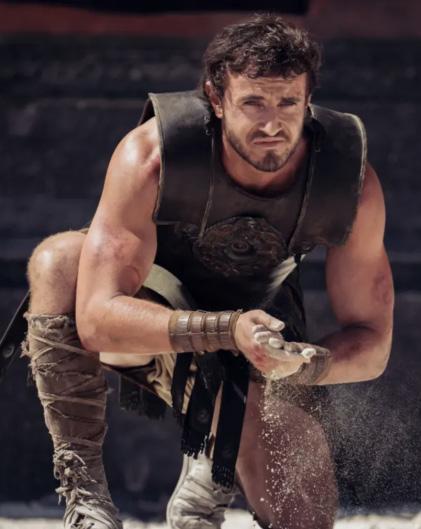
"Gladiator II" is the continuation of Ridley Scott’s 2001 Best Picture winner, “Gladiator.” It follows the son of Lucilla and Maximus, Lucius Verus Aurelius, after he is enslaved and forced to fight as a gladiator in the Colosseum. From there, “Gladiator II” continues down the path of its predecessor and crafts a story that is as emotionally resonant, action-packed, violent and gory as the first installment.
One of the aspects that stood out was the effort that went into crafting the practical effects. The gore in the film looks realistic and enhances the immersion of the viewer by making the battles much more vivid and intense. While the gore is realistic, it is still tasteful.




The cast of “Gladiator II” gave outstanding performances adding to the film’s entertainment value. Specifically, Denzel Washington did an amazing job with the character of Macrinus. His portrayal of the character was astonishing, with his acting prowess on full display. Another great performance was given by Pedro Pascal. He played Roman general Acacius,
BY DANIEL FERNANDEZ '28 CONTRIBUTOR
who was tired of fruitless war and sought the downfall of the twin emperors. Pascal proved to be a great minor antagonist for Lucius in the first half of the movie.
The story was entertaining in its own right, but not necessarily because of its originality. Throughout the film, one couldn’t help but notice striking similarities to the original, but with extra story beats added in. Both films follow soldiers whose families are killed, as they are sold into slavery and become gladiators beloved by the people. Although “Gladiator II” takes some detours and diversions, both plots end in the same way. However, “Gladiator II” is still an enjoyable movie. Though it might be unoriginal, it’s the same story that won the first “Gladiator” a Best Picture award. In fact, the film makes sure that you don’t forget with excessive references to the first movie. The number of times they referred to Maximus by his full name –Maximus Decimus Meridius– felt unnecessary. It took away from the magic of the iconic scene where Maximus reveals himself to Commodus in the original movie.
Despite these critiques, audience reception of the film has been generally positive.
London Perez ‘28 said, “The film was a remarkably enjoyable sequel to its renowned predecessor. I loved its thrilling action scenes strung together by an exceptionally emotional and relevant plot.”
Noah Holmes ‘28 added his own input, “I watched the first 'Gladiator' and it was really
good, so I went to watch the second one. I liked it because it had a good balance of plot and action like the first but with new elements and surprises.”
In conclusion, “Gladiator II” is a worthy and entertaining sequel to its predecessor. While some aspects could be improved, it is a wonderful, action-packed film that provides a great viewing experience.
BY JULIAN ANGELO '27 CONTRIBUTOR
Right before Thanksgiving, Kendrick Lamar, Grammy and Pulitzer prize-winning rapper, put out his sixth studio album, “GNX.” In its first week, it performed higher than Lamar’s previous masterworks “Good Kid, M.A.A.d City” and “To Pimp a Butterfly,” becoming one
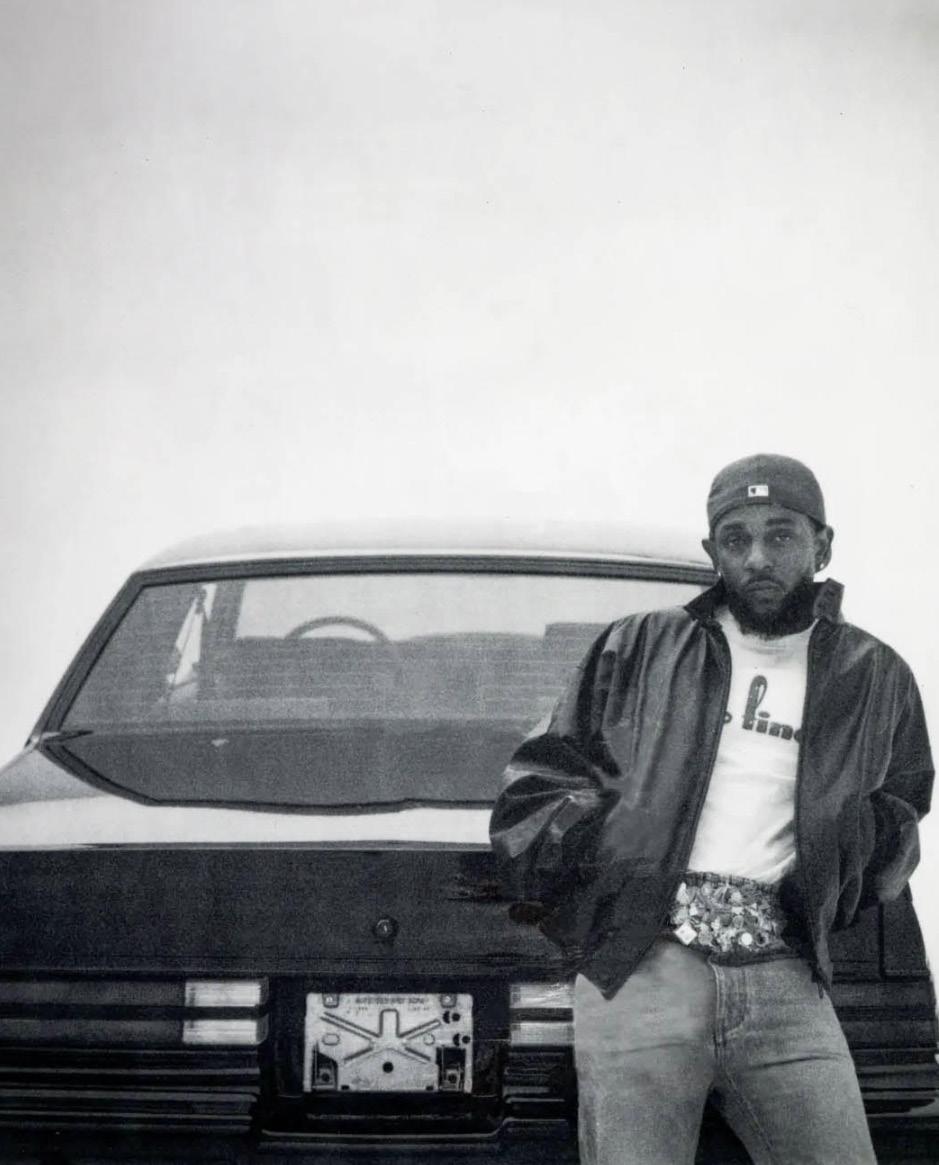
of four albums to have five songs in the top five of the Billboard 200 in the first week since its release, head-to-head with releases by artists like Taylor Swift, The Beatles and Drake. Jesse Roybal ‘27 said the album’s surprise release took the school by storm, stating, “When I first heard Kendrick dropped his album ‘GNX,’ I was in class, and then I realized everyone had headphones on.”
“GNX” differs significanty from previous Kendrick Lamar projects, but its messages stay true to Lamar's past. The album's production is heavily influenced by 1990’s West Coast hip-hop and present-day West Coast rap from producers like DJ Mustard and Sounwave, Kendrick’s long-time beat-makers. Lamar also worked with Grammy-winning mixers, including Jack Antonoff, who worked with artists like Taylor Swift. Unlike in previous releases, Kendrick raps over diverse, up-tempo and bouncy instrumentals. After his feud with Canadian rapper Drake, Lamar has resorted to more cynical lyrics, which are different from his motivating lyrics of the past.
“Honestly, I really loved what Lamar had to say in his album. I liked that he kept the beef going with Drake and that he also showed love for the city,” stated Sevan Keshishian ‘27.
The only A-list celebrities featured on GNX were SZA and Roddy Rich, with the majority of the featured artists being Los Angeles under-
ground rappers like Walle the Sensei, Peysoh, AzChike, and Lefty Gunplay. Over his past five albums, Lamar has covered a lot of ground in his narrative and musical songwriting. In “GNX,” it was uplifting to hear Lamar bring his lyrical focus back to his hometown and rhyme about many aspects of Los Angeles culture. After Drake had previously insulted L.A., Lamar wanted listeners to understand that the city has a wealth of new sounds and musicians. One of the most prominent lines in the album is “Don’t say you hate L.A. when you don’t travel past the Ten,” and it alludes to his pride for Los Angeles and underrepresented communities, making specific references to Los Angeles freeways. In the song “Reincarnated,” Kendrick Lamar samples a song from Tupac’s film, “Gang-Related”. While Lamar never mentions Drake by name, it is clear from the album’s lyrical content that he seeks to dispel any false narratives that the rapper began. Overall, “GNX” was nothing short of Kendrick Lamar’s latest musical sensation, breaking thematic barriers while bringing listeners back to a younger Lamar. The project also displays Lamar's pride of his Southern California roots, which was more apparant in his younger self. Though it has not risen to the monumental status of his previous masterpieces, one can only hope to see him continue to release this quality of music before his eventual, historic retirement.
It's time to talk about the podcast industry
BY JACK NEWALL '26 CONTRIBUTOR
Over the last half-decade, podcasts have rapidly transformed from niche audio files to mainstream media phenomena, reshaping how millions of people consume daily news and content. In 2023 alone, over 400 million listeners tuned into various podcasts worldwide, underscoring their rapid growth. But what’s fueling the industry’s rise, and why has it become so popular?
Many podcasts thrive directly on their incredible versatility, offering something for everyone. Whether diving into politics, sharing a laugh with comedy, exploring health tips or delving directly into educational content, the range of topics is virtually limitless. This diversity ensures listeners can find shows that
align perfectly with their passions and interests. Moreover, platforms like Spotify, Apple Podcasts and YouTube have revolutionized accessibility with millions of episodes just a tap away. Their widespread availability has not only broadened the medium’s audience but also amplified its culture and social impact.
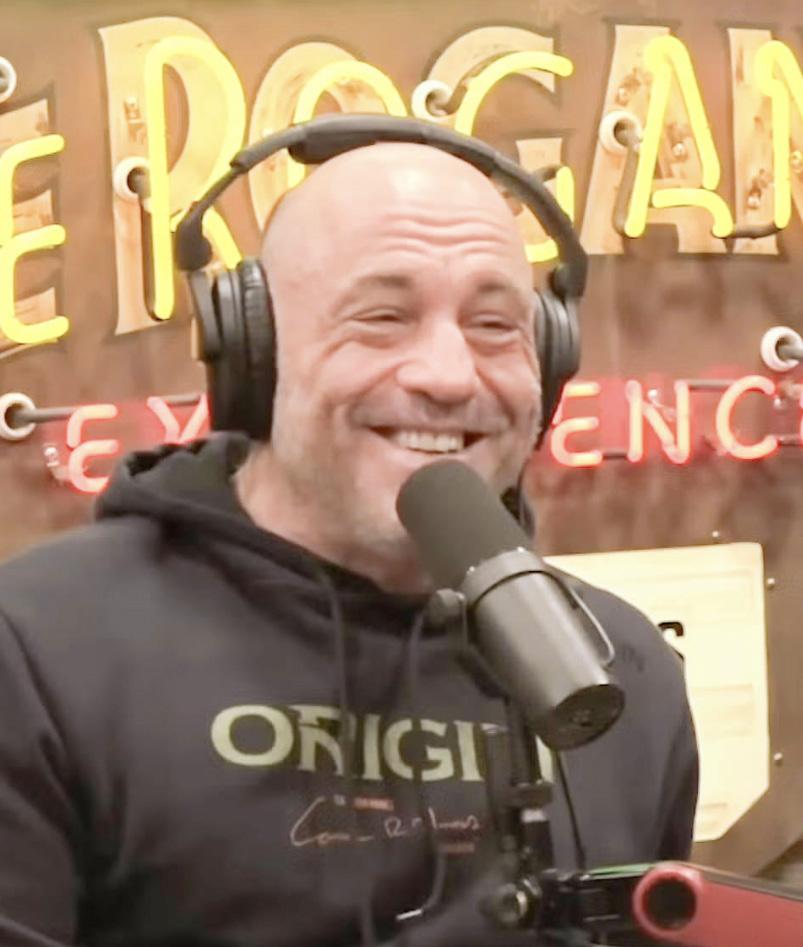
Two shows that have helped define the podcasting landscape are “The Joe Rogan Experience” and “This Past Weekend w/Theo Von.” Joe Rogan’s podcast is among the most downloaded in the world and features intellectual conversations with guests ranging from scientists to athletes and even cultural figures.
“Joe Rogan’s style feels like an honest conversation. He never shies away from tough questions and that's why people love his show,” said Jimmy Levy ‘26.
With a reported $250 million Spotify exclusivity deal, Rogan has not only solidified his place in podcasting but also demonstrated the industry’s economic power.
On the other hand, Von’s podcast offers a more personal and comedic approach. Known for his wit and ability to make everyday life feel extraordinary, Von has built a loyal audience by blending humor with vulnerability.
“Theo Von makes you laugh but also leaves you reflecting on life,” exclaimed Owen Camacho ‘26. “He’s relatable and authentic, which keeps listeners coming back.”
One of the driving forces behind the podcast boom is the ease of accessibility. Unlike traditional media, podcasts can be consumed anywhere–on a commute, during a workout or while cooking dinner. They create an intimate

listening experience, almost like eavesdropping on a conversation, making them highly engaging and personal for everyday consumers.
The financial influence of podcasts has also skyrocketed. In 2023, the U.S. podcast advertisement revenue exceeded $2 billion. Advertisers are drawn to how episodes can reach niche audiences, and creators like Rogan and Von have capitalized on this opportunity by using sponsorships to sustain and expand their shows.
As the podcast industry continues to grow in influence, its future seems limitless. New trends, including interactive episodes and AI-generated content, are already emerging, and they have the capability to enhance the aspects that podcasts already excel at. Yet the core appeal of podcasts remains unchanged: their ability to connect with listeners through authentic conversations. With creators like Joe Rogan and Theo Von leading the way, podcasts are more than a media trendthey have become a cultural phenomenon that shapes how people listen, learn and connect.
The return of "Fortnite OG" marks a significant effort by Epic Games to blend nostalgia with player-driven innovation. On Dec. 6, players were transported back to the iconic Chapter 1 map, complete with classic locations like Pleasant Park, Dusty Depot and Greasy Grove, as well as familiar loot. While the initial release delighted fans, Epic Games has implemented thoughtful tweaks since then to refine the experience, balancing authenticity with modern updates.
When "Fortnite OG" launched, only Solos and Squads modes were available, leav-
BY ANDREW GOLDMAN '27 CONTRIBUTOR
ing players who enjoy Duos feeling left out. The community quickly voiced their concerns, and Epic Games responded by reinstating Duos mode, allowing players to team up and relive the experience with a partner.
“I was kind of bummed at first when there was no Duos,” said Carmine Antonini '27, “But when they added it back, I was so hyped. Playing with friends is what makes Fortnite fun.”
Another player-driven change centered around loot adjustments. Many fans noted that Big Shield Pots, a vital healing item from Chap-

BY FRANK LICHTMAN '25 EDITOR-IN-CHIEF
“The show must go on.” This five-word mantra has echoed across theater stages throughout history. It is also the primary theme of “A Manhattan Christmas Carol,” the Fall play produced by the Hannon Theater Company, which ended its four-night run on Sunday, Dec. 8.
The production, an innovative retelling of “A Christmas Carol,” is a smashing success. It creatively fuses Dickens’ classic fable with other modern elements to keep it relevant today. As usual, it featured actors from Loyola and all-girls schools across Los Angeles, like Marlborough.
The show is a play within a play, with the first act primarily providing exposition on all of the zany characters and crazy circumstances surrounding a fictitious 1937 production of “A Christmas Carol”. The second act is the “Christmas Carol” play itself.
Will Sinclair, expertly portrayed by John Robert Francis ‘28, leads a lively cast of characters to buoy the often formulaic “Christmas Carol” story. Cole Dennis ‘25 delivers a strong performance as producer Moe Flanagan and Tucker Rowland ‘28 gives a winning turn as mobster Knuckles McNichols and the Ghost of Christmas Present. Emma Armour and Emma Kenney each take on several different female roles, with both deftly giving each character a unique flavor.
While funny at times (Rowland’s Jimmy Cagney impression as McNichols earned more than a few laughs from the audience), the play also touches on important emotional themes. Playwright Walter Wolfe offers a stark and timely warning about the dangers of political authorities attempting to censor artistic expression
while emphasizing the classic “Christmas Carol” themes of caring for others and generosity. Throughout Wolfe’s tenure at the helm of the Hannon Theater Company, the troupe has consistently produced thoughtful quality entertainment. “A Manhattan Christmas Carol” continues the excellence of years past, and their Spring musical, “Hadestown: Teen Edition”, is sure to wow audiences as well.

ter 1, were initially far too rare. Epic quickly corrected this, increasing their spawn rates and restoring a core aspect of OG gameplay.
“The Big Pots were super hard to find,” commented Alex Michels '25. “Now that they spawn more often, I can actually play how I remember it—without stressing over whether I’ll find one.”
Epic’s commitment to delivering an authentic yet balanced experience goes beyond nostalgia. The loot pool mirrors the original Chapter 1, Season 1 setup, but Epic has gradually reintroduced additional classic items as the season progresses. To address complaints that matches were “too sweaty,” bots were added to some games, allowing newer or less experienced players to enjoy the mode while still challenging higher-skill competitors.
“I definitely think the bots help balance everything out,” said Charlie Capps '28, “I’m not that great at Fortnite, so I’m kind of happy that I’m not always going against pro players. It’s fun but not as stressful.”
With its faithful recreation of the Chapter 1 map and player-driven updates, "Fortnite OG" has successfully captured the heart of longtime fans while making the experience enjoyable for newer players. Epic Games’ responsiveness to community feedback has cemented this nostalgic release as both a celebration of the game’s roots and a testament to its enduring appeal.
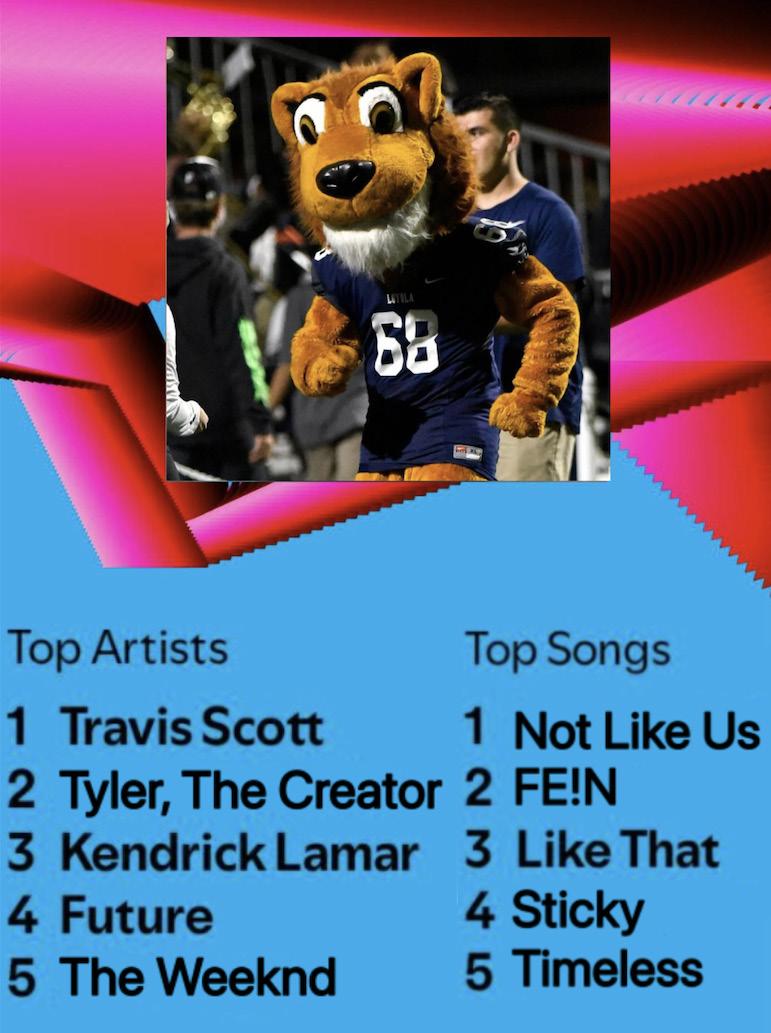
CUB'S MOST LISTENED-TO ARTISTS AND SONGS*

JAMES CRESPIN '26 CONTRIBUTOR
With the Premier League season fully underway and near the midpoint, it is time to look over what has been an intriguing start to the campaign.
The league leader, Liverpool FC, has marched and rolled to a fantastic start, which came as unexpected to many. After the retirement of Jürgen Klopp, many suspected Liverpool would face a period of decline. However, under their new manager, Arne Slot, they are firmly in the driver’s seat to win this season’s title. They are currently nine points ahead of the chasing pack and are now the clear favorites to lift the trophy.
However, one still has to consider their main competitors. The reigning champions, Manchester City FC, are facing one of the worst
runs of form in their modern history. They have looked like a shadow of their former indomitable selves, scarcely resembling the team that won their fourth consecutive Premier League title just a few months ago. With many key injuries, especially to recent Ballon D’Or winner Rodri, people are left questioning their ability to defend their crown. However, no one can deny their talent and pedigree, and with a trademark late-season win streak, they can potentially earn a Champions League spot or even a league title in the second half of the campaign. Arsenal and Chelsea have had great success this season, both emerging as contenders for the trophy. Key players like Bukayo Saka for
ENZO MARTINES '26 CONTRIBUTOR
After a hot start to the season, consisting of wins over Notre Dame and Crespi, the cross country team started their playoff journey, fueled by their genuine belief that they could be one of the teams to qualify for the CIF state final in Fresno.
Team member Luke Brady '26 stated, “As a runner you want to believe that you are definitely going to make it."
Their journey began at Sierra Canyon in the Mission League Finals, where the team finished first and moved onto the Southern Section Prelims at Mount SAC, where they finished third. The team kept pushing. Their aspirations for a state berth began to materialize at CIF Southern Section round one. Leading up to the race, the team was not predicted to even finish within the top 10. However, they proved the naysayers wrong and earned an eighth place finish. Despite their gutsy performance there, the team was not able to qualify for state, finishing 18 points out—one point short of qualifying.
Despite not making state as a team, Aaron Pavon '25, had a stellar race and finished in fifth
place. Because of this standout performance, Pavon was invited to the CIF Finals to race among 200 of California’s best. On Nov. 30, he placed 16th out of 197 runners in the CIF State Division One final.
Overall, the success of the cross country team this year has been palpable, led by the captains and leaders in the senior class. Particularly, Pavon’s work on a state level has not gone unnoticed, as his placings have put Loyola cross country on the cross country map.

emerged as contenders for the trophy. Key players like Bukayo Saka for Arsenal and Cole Palmer for Chelsea have stepped up and proved themselves as world-class. They must continue their strong starts into the next stretch of games to take advantage of Manchester City’s troubles.
Meanwhile, Manchester United and Tottenham Hotspur have had mixed campaigns so far. United got off to a disastrous start, which resulted in the firing of their manager Erik ten Hag. However, they have had a good run as of recent, with hope starting to emerge in the red side of Manchester with the appointment of Ruben Amorim. The same can be said for the Spurs, however they have been extremely inconsistent through-
Forest have surprisingly positioned themselves at the top of the table as a formidable underdog, punching well above their weight. Compare that to Aston Villa, the “expected underdog," who have struggled with balancing both their Champions League and Premier League campaigns. Their inconsistent play has raised questions on Villa’s ability to get into the UCL once again. These teams have proved the quick lifecycle of the Premier League, the unpredictability, and the fast-paced nature of the game.
With the season nearing its halfway point, soccer fans are eager to see what's to come. The high contenders in Liverpool, Arsenal, and Chelsea have risen up back to the front runners, showcasing their
out the season. They were beaten by bottom-dwellers Ipswich Town, yet beat the champions Manchester City. These two clubs will hope to sort out their mishaps and turn their flashes of brilliance into actual consistency.
Along with these traditional favorites, there have also been some surprising underdog stories. Nottingham

strengths and abilities. Meanwhile, there are teams struggling to reach their full potential. Such as Spurs, Villa and the two Manchester sides, who both remain as wildcards.
As the second half of the season approaches, this season promises to keep every fan on the edge of their seat until the final whistle.

$765 million over 15 years
$75 million signing bonus
$51 million average annual revenue.
Soto could pay 7,083 Loyola 4-year tuitions
$700 million over 10 years
No signing bonus
$70 million average annual revenue
He could indulge in an astonishing 255 million Z’s burritos LOYOLA DOLLARS

Ohtani could pay 6,481 Loyola 4-year tuitions
He could treat himself to a respectable 233 33 million Z’s burritos
Ferraris
Ferraris

BY NOAH MORALES '27 CONTRIBUTOR
After four long years, the Dodgers finally reclaimed the Commissioner’s Trophy with their victory over the New York Yankees in the World Series.
But questions have started to arise across the entire baseball community about whether the Dodgers have a chance to win back-to-back titles.
“The Dodgers have a ton of morale and momentum from their World Series win,” said Joseph Fiedler ‘27, a longtime fan. “Los Angeles would love to see their Dodgers win a back-to-back title, so LA has all the belief that it can happen. It looks possible too, for the roster is still about the same with our talent level. The Dodgers for sure have a chance to make it back to the World Series, and hopefully, win it all again.”
The last team to win back-toback titles was the New York Yankees who won three titles from 1998-2000. This Dodgers team is on par with the star power of that Yankees team, featuring former MVPs Mookie Betts and Freddie Freeman, current MVP Shohei Ohtani and new signing Blake Snell, a two-time Cy Young winner.
“They are doing great. They
have a great chance of winning again,” said Alejandro Felix ‘27. “As long they keep getting these star players they should be a powerhouse for the next couple of years.”
Manager Dave Roberts continues to excel in increasing the team's potential by including proper organization, adding depth at the pitching position and re-signing Teoscar Hernandez.
Overall, the team's offense has a high chance of remaining dominant if they can maintain the depth and conditioning required for another championship run. The Dodgers are in pursuit of building an unstoppable franchise. With the new and returning members of the squad, the Dodgers are looking to get back to the top of the MLB world for the second year in a row.

BY JAMES GOGOLAK '27 CONTRIBUTOR
On Dec. 4, the team had their first league game, annihilating Warren High School 3-1. While the overall team effort brought home the win, Hoshek led the way, scoring a hat trick in the opening game of his senior season.
Cash Morrow ‘27 stated, “Will was essential to the team’s win and is a key player for the upcoming season.”
On the pitch, the team has been playing with class. Last year, the varsity squad concluded their league season with a 12-2 record, placing them second overall in the Mission League. The Mission League, a highly competitive conference, consists of school teams such as Harvard Westlake, Notre Dame and Sierra Canyon.
With several players from the senior class, like Will Hoshek and Charlie McMillan, the team has a deep roster of talent. On top of that, the addition of three sophomores has brought new energy to the team.
When asked about improved

dynamic, Noah Nouaili '27 said, “The squad has a lot of depth this year…We are getting used to each other and the way we want to play is gradually coming together.”
Dec. 6, the team faced Alamitos High School, ending the challenging match with a tie, 0-0.
Then the Cubs got back on track on Dec. 10. The 2-0 win came against their longtime rival, Cathedral High School. Josh Gallagher ‘26 scored both of the team's goals, securing their first victory over Cathedral in 6 years!
When asked about the win, varsity coach Chris Walter '93 said, “I like to schedule a preseason game against (Cathedral) every year. It is always a challenge to beat them because they are a D1 playoff contender every year. This year, our defensive line brought this win by keeping a clean sheet. This win seems like a good sign for the season.”
BY JONATHAN KLAUS '26 CONTRIBUTOR
The Fantasy Football regular season has officially come to a close. December marks the start of the Fantasy Football playoffs, and managers everywhere are feeling the pressure. Whether you are a top seed with a first-round bye, or barely holding on to the final playoff spot, these next 3 weeks will determine who takes home ultimate bragging rights, or for some of you, a cash prize.
For most leagues, playoffs kick off this weekend, week 15, and conclude in week 17 with the championship. Every start/sit decision, waiver wire claim or lateseason trade can make or break your chances of victory. If you have a first-round bye, congrats! Your hard work has paid off and you can enjoy a stress-free week.
Brody Crist ‘26 commented, “I feel great about my team going into the playoffs. I will keep trusting the guys who have been performing all season, and a bye week takes a lot of stress off.”
If you barely made it into the playoffs, embrace the chaos. Upsets are common and anything can happen. And for those of you that were unable to clinch a playoff spot this year, better luck next season. Fantasy football is not solely about attaining the championship win, but ultimately about having friendly competition and enjoying the game.
This season has been rife with injuries and surprise stars, and it takes close attention and a lot of luck to succeed. For example, the consensus #1 overall pick going into the season, Christian McCaffrey, has only played in 4 games this season. He is ranked RB59 in PPR (Point Per Reception) leagues. He recently suffered a
PCL tear, sidelining him for the rest of the season. Situations like these are incredibly frustrating for managers who were counting on McCaffery to have a huge impact on their team’s success.
Lincoln Martinez ‘26 commented, “I was extremely confident in my team going into the season and I believed a championship was in my future. However, overconfidence in unproven players and injuries really derailed my season, and I ended up missing the playoffs.”
This perfectly tells the story of this season. Some crucial pickups such as Jordan Mason, Kareem Hunt and Bucky Irving (RB16) have been massive contributors to fantasy owner’s success. Rookie phenoms Jayden Daniels (QB2), Bo Nix (QB7) and Brock Bowers (TE1) have been very rewarding surprises for fantasy owners who selected these players in the later rounds of the draft.
Success in the playoffs will come down to a few things, matchups are perhaps the most important thing to look out for, and even the best players can struggle against elite defenses. Be aware of news and injury updates and make sure players are healthy and are getting a full workload before placing them in your starting lineup. Handcuff stars by picking up their backups in case they go down with an injury, and finally, don’t overthink.
Don’t let one bad week deter you from starting players who have been consistent for you all season. Whether you are a seasoned fantasy football veteran or a rookie, this is the most exciting part of the season. Best of luck to everyone in the playoffs!