CHANGE

April 2026
students
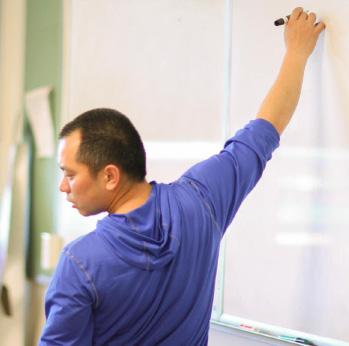
Lowell students open up about experiences with math teacher tom chan
by milena garrone and aMAlie cimala
by charlie steinberg


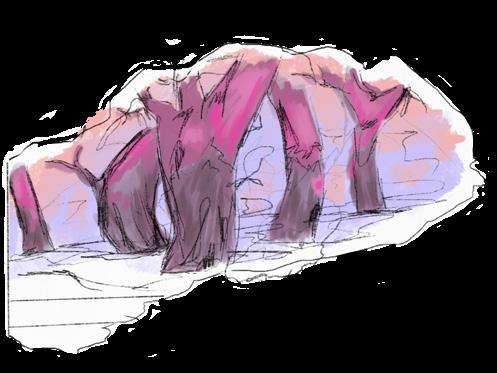
ILLUSTRATION BY YUE YI PENG
PHOTO COURTESY OF LOS ANGELES TIMES
PHOTO BY LAUREN CALDWELL
Editors-in-Chief

Maren Brooks, Kai Lyddan, Yue Yi Peng
News
Editors
Milena Garrone, Serena Miller
Columns Editors
Cecilia Choi, Amálie Cimala
Opinions Editor
Stella Schulte
Sports Editor
Kai Lyddan
Multimedia Editors
Sydney Lee, Alex Mangot
Art Manager
Yue Yi Peng
Reporters
Web Manager Faye Yang
Social Media Manager
Anita Luo
Researcher
Anita Luo
Advisor Paul Wangsvick
Danya Bayer, Audrey Brogno, Ruby Burt, Ashly Carcamo Paz, Winter Chuang, Lucy Dea, Herschel Diamond, Aida Donahue, Sebastian Esperanzate, Lucas Fang, Renée Gilfillan, Jenny Kwan, Lawrence Lau, MJ Liu, Rylee Mauricio, Kimaaya Mehta, Ellie Minami, Elias Montes, Sophie Murphy, Imana Nishanbaeva, Alina Nitedthunyakij, Christina Phan, Joey Pusateri, Sylvie Reavill, Charlie Steinberg, Genevieve Tran, Uma Van Yserloo, Mielle Westphal, Brandon Wu, Jamie Wu, Faye Yang, Taran Yang, Miuccia Yeung
Photographers
Dakota Colussi, Kloe Helmuth, Matthew Leon, Felix Meil, Kristin Woo, Jonathan Yang
Illustrators
Jeffrey Chen, Sarah Cuaresma, Cayce Hewitt, Soleil Wang, Fiona Yu
Business Managers
Isabella Chan, Samantha Louie
THE IMPORTANCE OF HUMANITIES
For many high school students, choosing a major to pursue in college is less about passion and more about practicality. In a society that increasingly equates success with salary, prestige, and material gain, studying STEM is often seen as the most valuable path to follow. This norm is especially prevalent at highly competitive schools like Lowell, where ambition and achievement are deeply embedded in the academic culture. As a result, many students abandon their interests in the arts and humanities, focusing instead on STEM careers, which are perceived as safer and more financially rewarding.
This issue isn’t unique to Lowell, however. Across the country, humanities disciplines are becoming increasingly marginalized, reflecting a broader cultural assumption that these fields are less valuable—an attitude that fails to acknowledge the indispensable role they play in shaping our society.
The humanities have shaped human knowledge for centuries, yet they are steadily losing ground in today’s technology-focused world. A 2024 study by the American Academy of Arts and Sciences found that the number of degrees awarded in these fields has fallen by more than 25 percent over the past 15 years—a trend that shows few signs of slowing. This decline is also reflected in universities nationwide, where resources and funding are increasingly directed towards STEM programs, often at the expense of arts and liberal arts departments. Faculty data further reinforces this shift: the College and University Professional Association for Human Resources reported that from 2003 to 2024, the number of professors in these disciplines decreased significantly, while most other areas of study grew. These changes are driven both by falling student enrollment in the humanities and universities prioritizing hiring in other fields such as computer science, engineering, and medicine.
The humanities remain essential for our society, even in a world that prioritizes practicality and profit.
At its core, the decline of the humanities reveals how narrowly our society defines value, often measuring worth solely on what can be quantified. Although studying fields like history, sociology, and literature may not promise high salaries, they foster the analytical and ethical skills needed to address complex social challenges and sustain a thriving society—something that STEM alone cannot provide. In humanities classrooms, students learn how to analyze complex texts, debate different perspectives, and understand how dif-
ferent social systems shape people’s lives. These same skills have shaped some of the most influential leaders in history—civil rights leader Martin Luther King Jr., for example, studied sociology in college, which equipped him with the skills needed to analyze social inequality and organize movements for change. Today, students rely on those same skills to advocate for change in their own communities, yet society continues to undermine the very programs that develop the leaders capable of making that change. Now more than ever, the study of the humanities is crucial. Earlier this year, President Donald Trump proposed eliminating the National Endowment for the Humanities and has already cut numerous grants and funding for liberal arts programs. These actions undermine the very institutions that equip citizens to critically examine political authority and recognize when power is being abused—effectively enabling the Trump administration to act with less scrutiny. Additionally, the rise in anti-intellectualism, including the devaluing of expert knowledge and the spread of misinformation, makes it harder for people to think critically and engage thoughtfully with complex issues. In this context, the humanities provide the perspectives, analytical skills, and ethical reasoning necessary to navigate these challenges. Scientific advances have undeniably transformed the modern world—from medical breakthroughs to technological innovations—but these developments alone do not determine how they are used or understood. Humanities disciplines provide the crucial framework that guide how scientific progress is applied. The creation of the atomic bomb, for example, demonstrates how scientific discovery alone can yield powerful advancements, but can also have profound consequences when ethical considerations are ignored. Such cases reveal that STEM and the humanities are not competing paths, but complementary ones: while science expands what humanity can do, humanities help determine what we should do. Recognizing this interdependence makes it clear that both fields are equally vital for a thriving society. The humanities remain essential for our society, even in a world that often prioritizes practicality and profit. While STEM drives innovation and economic progress, humanities disciplines develop the intellectual tools needed to analyze complex ideas and understand human experiences. For Lowell students, recognizing the insights they offer is pivotal: even if one doesn’t choose to pursue a major in this field, appreciating its value can guide how we approach the world and the decisions we make within it.

Post-Reading Activities
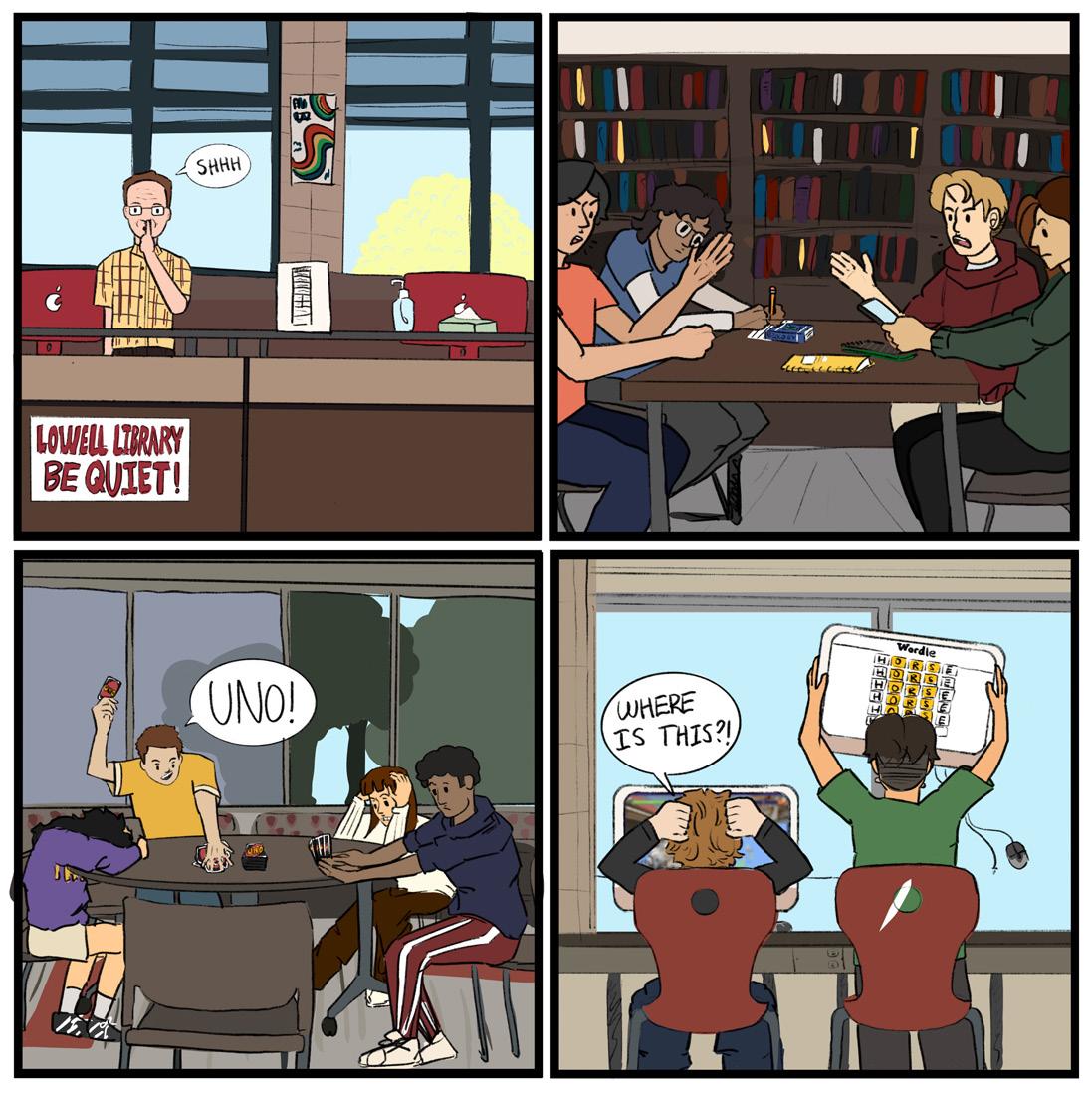
ILLUSTRATION BY
JEFFREY CHEN
From the editors
Dear readers of e Lowell,
We hope all seniors have had a successful college admissions experience, and more importantly have been taking care of their mental health.
Over the past month, we hosted pitching sessions for assistant editors, impressive and promising sta members who will take over the reigns when we graduate later this spring. Unsurprisingly, we have been thoroughly impressed and are more con dent than ever in the future of our publication.
is issue, we decided to highlight e orts by Lowell students to advocate for issues they’re passionate about. We found it fascinating and eye-opening to learn more about the ways that student activists get involved in their communities, as well as the things that inspire them. One reporter shared her own experiences with advocacy and how it passes through generations in our column. We hope these stories draw awareness to the members of our school community that are tirelessly ghting for change.
We hope everyone has a successful and stress-free last few months of the semester, and that you enjoy this issue of e Lowell.
Editors-in-Chief, Maren Brooks, Kai Lyddan, and Yue Yi Peng
e Lowell is published by the journalism classes of Lowell High School. All contents copyright Lowell High School journalism classes. All rights reserved. e Lowell strives to inform the public and to use its opinion sections as open forums for debate. All unsigned editorials are opinions of the sta e Lowell welcomes comments on school-related issues from students, faculty, and community members. Send letters to the editors to thelowellnews@gmail.com. Names will be withheld upon request. We reserve the right to edit letters before publication. e Lowell is a student-run publication distributed to thousands of readers including students, parents, teachers, and alumni. All advertisement pro ts fund our newsmagazine issues. To advertise online or in print, email thelowellmanagement@gmail.com. Contact us: Lowell High School 1101 Eucalyptus Drive San Francisco, CA 94134, 415759-2730, or at thelowellnews@gmail.com.
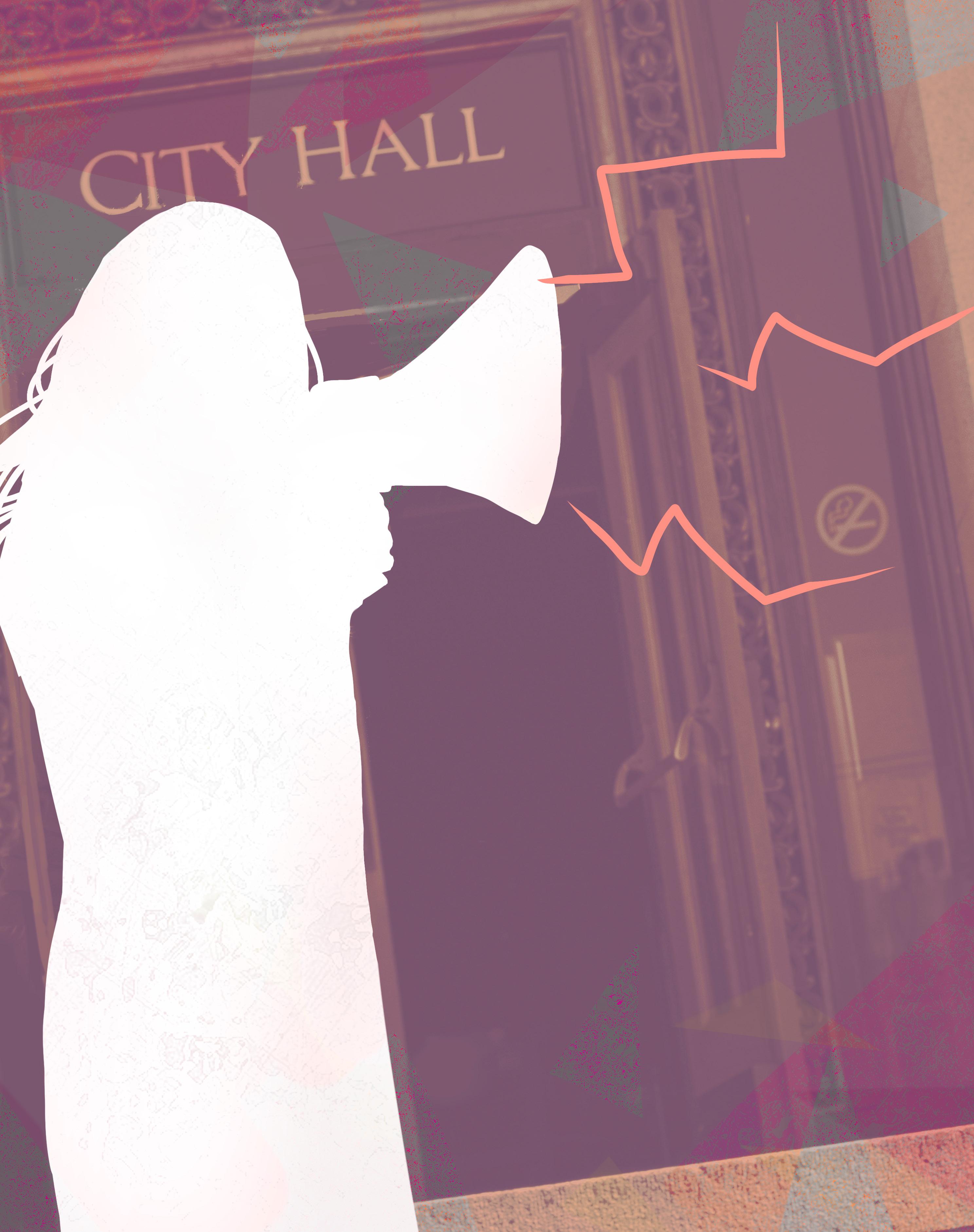
FIGHTING FOR CHANGE:
By Maren Brooks & Ruby Burt
STUDENT ACTIVISTS
AT LOWELL
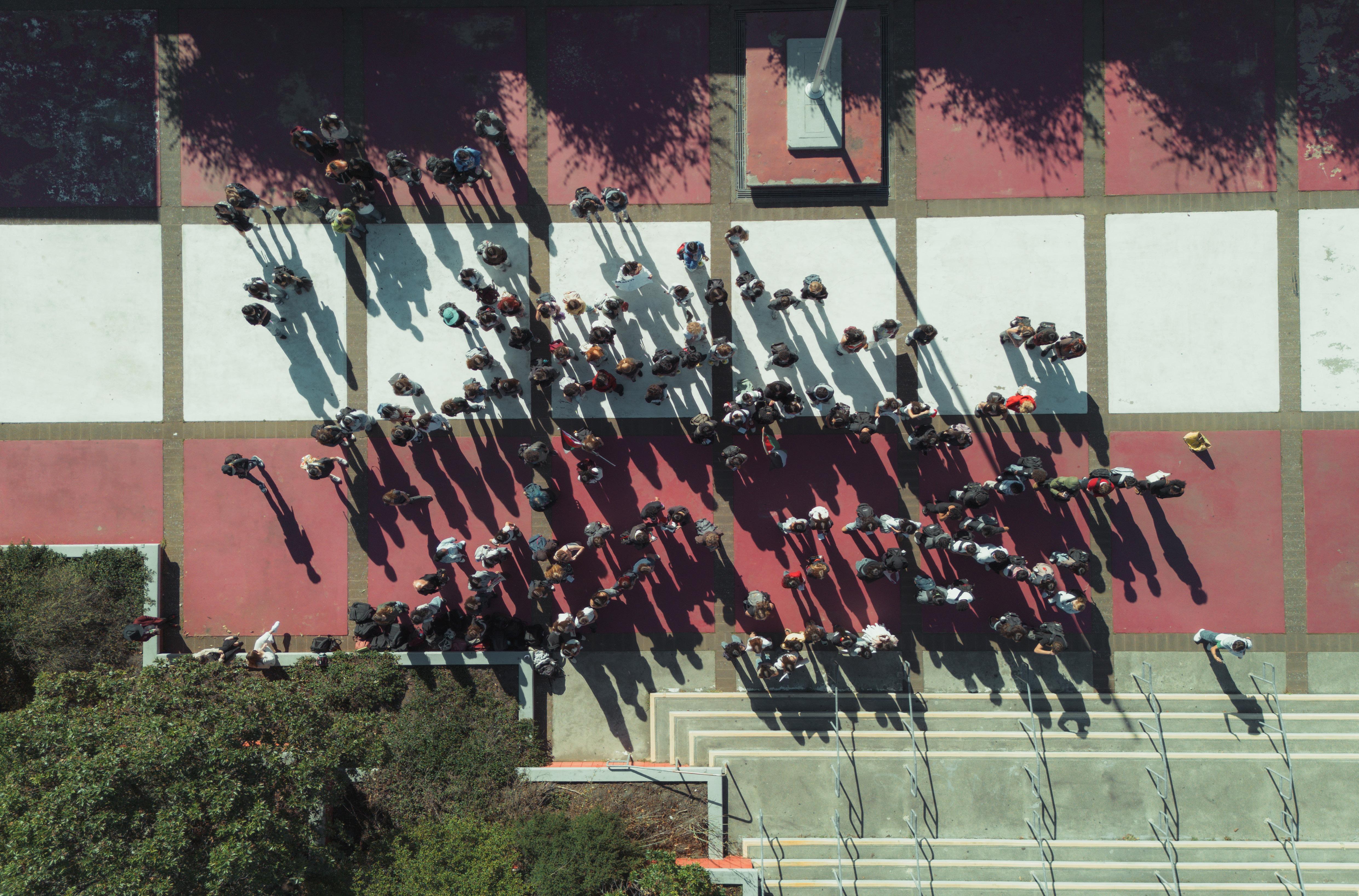
PHOTO
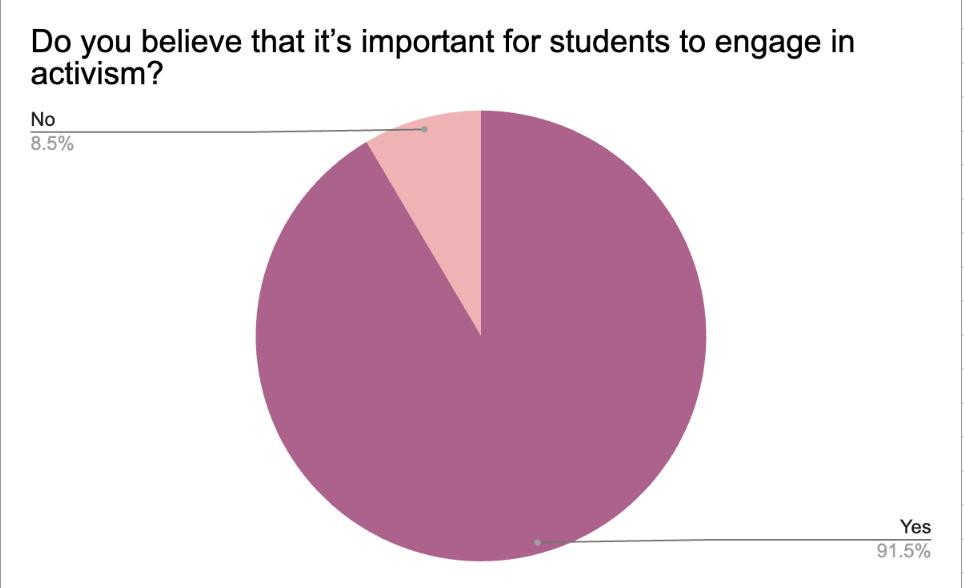
On the morning before junior Amaya Tawasha Diwan is scheduled to speak at the Second Annual People’s Conference for Palestine, she Googles her name out of curiosity, wondering if the conference will be mentioned. Instead, she nds an X thread in which strangers, who refer to her by her full name and mention her location in the Bay Area, accuse her of “pushing extremism” and “betraying Western ideals”. Seeing that the post has received almost a thousand comments from strangers, Diwan feels alarmed, but her fear doesn’t shake her resolve to continue speaking out for Palestine. Like other Lowell students who have found a passion in activism, Diwan is willing to ght tirelessly to make her voice heard. While activism and movements pushing for change have always existed in society, recent times have brought on a resurgence of conversations revolving around issues both domestic and foreign. is year, many of these protests have taken place in San Francisco, including movements protesting ICE activity nationwide, condemning the Palestinian genocide, and most recently related to the SFUSD teacher’s strike, and feature signi cant participation from young people. Whether it is through advocacy regarding current issues, encouraging civic participation or raising awareness around concerns of local politics, many Lowell students have found ways to make their voices heard. In a recent survey conducted by e Lowell in March of 2026, 119 of 130 respondents (91.5 percent) indicated that they believe it is important for students to engage in activism. Civic engagement and activism provide ways for
students to a ect social change, appealing to the common desire to have an impact outside of oneself.
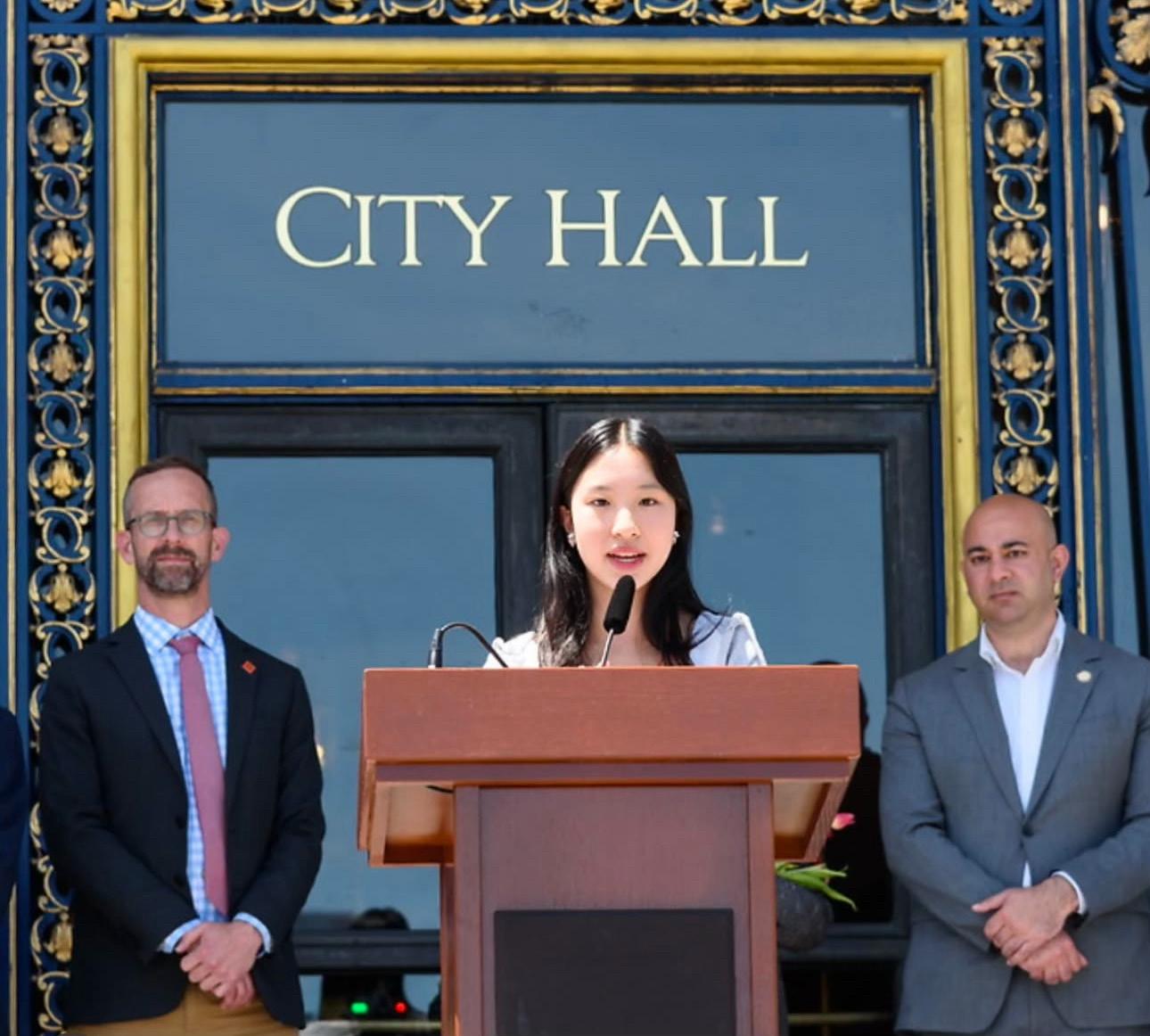
Dr. Constance Flanagan is an author and professor in the School of Human Ecology at the University of Wisconsin-Madison, who focuses on youth and community actions for the common good. She commented on the place that activism can hold for young people who are exploring their role within society. “[For most] high school students, taking a stand on something is the rst act [of civic engagement] that they’ve ever done,” Dr. Flanagan said. “Realizing that they have an opinion or that anybody might listen to it is pretty important.”
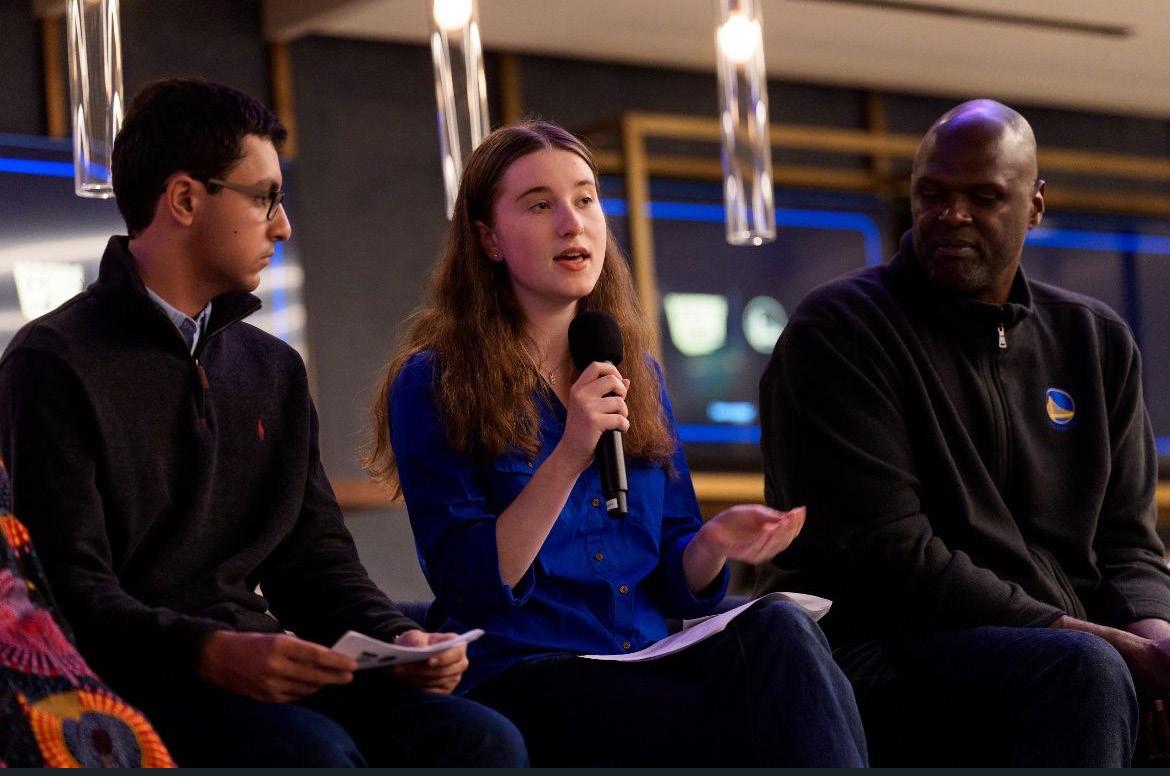
While activism might provide a similar appeal to all young people, student activists engage in their work for a variety of reasons. Some, including Diwan, are spurred to action because of the injustice they observe in the world around them. “Most of what inspires me to be involved in activism is how much su ering I see other people going through, knowing that it could be prevented if people were to take action,” Diwan said. is motivation has led her to become deeply involved in activism, which she does in part through Lowell’s Middle Eastern and North African club (MENA). “I was a part of organizing two walkouts in my freshman year, and then this year I co-organized the walkout for Palestine,” she said. She received the invitation to participate in the People’s Conference for Palestine in Detroit in August 2025, where she was able to share her work and personal experiences on a student panel. Diwan also describes maintaining her advocacy in her day-to-day life. “In my classes, whenever I can bring Palestine into the conversation, I will,” she
said. “[I] just try [to] draw those parallels [through] essays, presentations… even just conversations and class discussions.” For others, the call to action comes from personal circumstances. Senior Winnie Liao, who currently works in advocacy on the topic of housing insecurity, was rst exposed to the issue in her own life. “I got really involved when I had a speci c incident with housing security and instability,” Liao shared. “Because of that situation and the lack of English pro ciency in my family, I had to step up and use my own skills and abilities to seek out legal counseling.” Liao’s personal experiences raised her awareness about similar challenges faced by other members of her community, motivating her to get involved in local politics. “I went and volunteered with the Housing Rights Committee to not only volunteer and connect tenants with housing counselors, but also read through tenants’ rights and laws myself to protect my own family,” Liao said. “ at was sort of the catalyst, and a erwards I got more involved with the San Francisco Youth Commission and doing a lot of legislative advocacy and activism.”
Senior Emily Gorodetskiy recalls getting involved with advocacy due to what she viewed as a lack of interest and understanding in her community about important issues, which manifested as a low degree of political engagement, particularly for young people who are newly eligible to vote. “We need to be electing people that truly represent our values, and youth can’t do that if they’re not going out to vote,” she said. Gorodetskiy described a recent project that she undertook with
the goal of boosting civic engagement and voting in underrepresented communities, in which she blended her passion for giving back to the community with her interest in virtual reality technology. She designed a VR experience simulating the environment of a polling place, which involved instructions and guidance translated into multiple languages. She hopes that the simulation will help people feel more comfortable with the process, which will in turn make them more likely to go out to vote. Gorodetskiy explained that she was able to bring the VR headset to community events, where she got the opportunity to interact with community members and ask them questions about their experiences. “Not only did that help me learn more about my community, but it also helped me understand what [our] community needs are,” she said. Political and social movements in the U.S. throughout history have frequently featured the involvement of youth, with student actions on college campuses o en de ning peoples’ memories of famous protests. Experts propose potential ideas to explain the appeal of activism for young people. Dr. Laura Harrison is the chair of the Department of Counseling and Higher Education at Ohio University. She has previously served as the Associate Dean of Students at Stanford University and
“No matter who you are, you can still create change.”
taught courses on leadership at the University of San Francisco. She o ered a potential explanation for why students tend to get involved in activism more o en than older demographics. “It’s sad to say, but a lot of adults and older people quit learning and being engaged with the world,” Dr. Harrison said. “Young people are ery and they tend to be more emotionally expressive, even sometimes self-righteous. But you need that in any society…older people who are more restrained about things, [and] young people who are ery. I think those tensions are really good for society.” Dr. Flanagan also commented on the reasons why many students gravitate towards activism and push for social change. “Younger generations, on average, are much more open-minded and tolerant than older generations,” she said. “[Young people] have grown up with a much more diverse experience on all kinds of things, and therefore see things from a more heterogeneous point of view.” Dr. Flanagan notes that new issues and challenges are emerging with developments in the current political climate, and to deal with these changes, new methods and needs arise. With conflicting
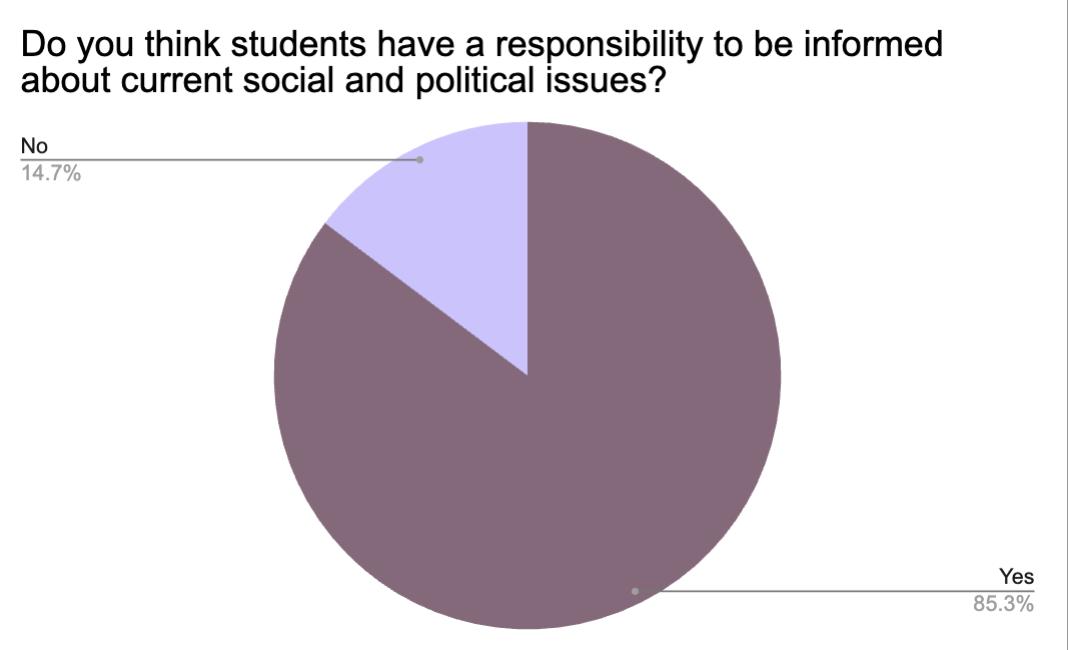
ideas come discussions, and those discussions spark necessary change. Students are o en discouraged from participating in activism because of the common sentiment that individual e orts are meaningless because they are not likely to create tangible social or political change. However, youth have been able to make successful waves through activism and push for change throughout history. Dr. Flanagan mentioned the crucial role youth have played in recent social and political movements, such as #MeToo, Black Lives Matter, and activism in the climate crisis. Liao echoed these ideas, reiterating that students have more power to impact the society around them than they may think. “No matter who you are, you can still create change,” she said. “I was really helping my family out…even though I felt that I was just a teenager and that I had no real power.” Junior Cecelia Mills agreed with the idea that young people can have profound impacts on the social movements they participate in. “ e way that young people and students interact with the world and interact with politics can really be instrumental in shaping the outcomes of activism and of social justice issues,” she said. “I think that the voices of young people and of students are a really powerful tool, especially since a lot of us can’t vote yet, so we have to make our voices heard through activism.” With the current state of social and political turmoil in America, staying educated on current events is the rst step towards impacting positive change. In e Lowell’s survey, 111 of 130 students (85.4 percent) believe that students have a responsibility to stay informed on current social and political issues. “I think [students’] responsibility is to be educated enough to the point that [they] can form an informed opinion on it,” Liao said. “It’s your duty to use your lived experiences and perspectives to form your own opinion about it.” Mills agreed with this idea, stating, “I think we do have a certain level of responsibility to be aware of what’s going on in the world, especially if we are going to be speaking about any sort of issue…
I think it is also sort of our duty as young people to get involved in these things and to ght for a better world.”
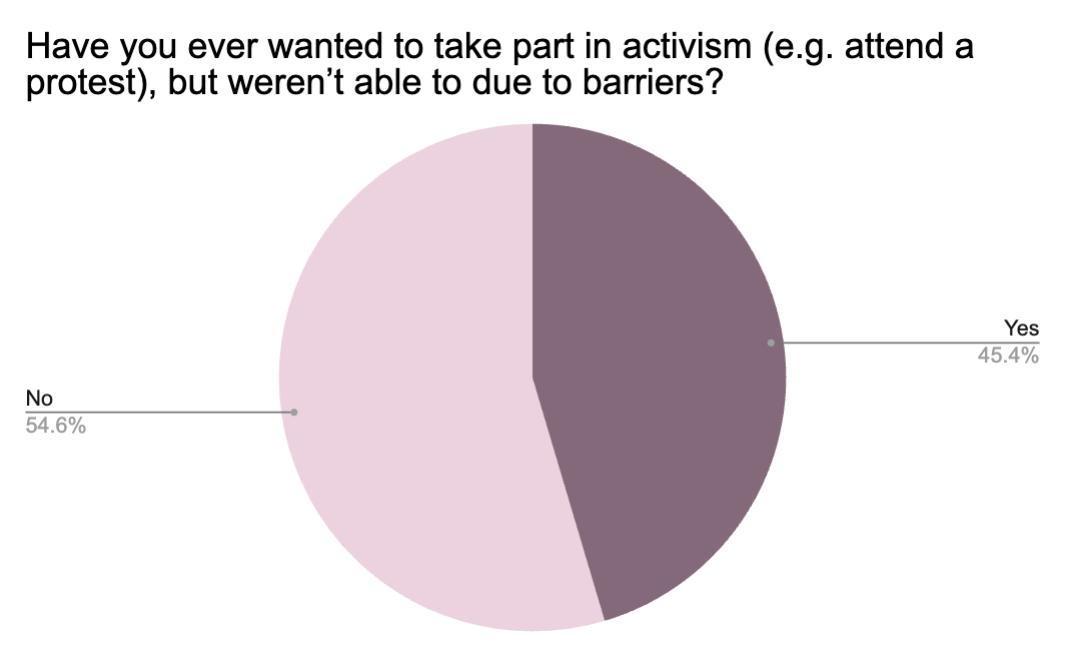
But despite the importance of political engagement, it can be di cult for youth to participate in activism for a multitude of reasons. 59 of 130 respondents to e Lowell’s survey (45.4 percent) indicated they have faced barriers to participating in activism. Some students are scared of the authorities or their parent’s disapproval, while others feel like they don’t have time to participate, or worry that their actions won’t make any di erence. Liao acknowledges that some people are unable to participate in activism by organizing or attending protests. “If you’re facing barriers to activism, that’s not something that you can control,” she said. “I would say to completely prioritize your safety and your health.” Still, she encourages people to stay informed on important events and issues. “Just being aware of the issue, why you feel that way about the issue, and if you wanted to take action, what you could do is your responsibility at the minimum,” Liao said.
Others bring up alternatives to the common understanding of activism as physically protesting in the form of walkouts or demonstrations. While this is an integral part of activism, there are other ways to participate that are less commonly discussed. Gorodetskiy mentioned how being involved can come in ways people don’t tend to think about. “Maybe [it] looks like hosting a workshop or doing interviews with people in a certain district and talking to them about their experiences,” she said. Gorodetskiy believes in the importance of student civic engagement, and notes that opportunities for participating in the civic process are not o en utilized
due to a lack of interest or awareness. She encourages students to attend meetings that provide opportunities for public comment, such as city boards and the Board of Supervisors and Board of Education, if they have concerns. Some activists, like Diwan, believe that social media can also be used as a positive tool to raise awareness and in uence others to get involved. “Most of us have Instagram, meaning we have a platform,” she said. “Even if you only have like 10 friends that you follow that follow you back, that’s still 10 people that you could be educating and outreaching to.” Many social movements overlap in their concerns and motivations, creating opportunities for activists to upli one another. “So many of the [social] and political issues that we’re facing in our country right now are linked,” Mills said. She describes herself as primarily participating in anti-Trump movements, including “anti-ICE, proLGBTQ rights, pro-women’s rights, and pro-Palestine [rights].” Students who support one cause o en nd themselves working with other causes to make a greater impact. Liao said that she o en tries to collaborate with other “youth voices in the city.” She described a recent instance in which she attended a youth transit round table involving a group a liated with SFMTA and several youth councils from di erent city districts, which was a positive experience. “I think fostering spaces where a lot of people can come together and discuss issues that they’re concerned about is [important]... because we’re stronger together,” she said. Dr. Flanagan spoke on the importance of
collaboration in activism, stating that, “the real shi in political awareness is when you realize that your problems are not just your problems, [they are] structural problems.” She describes being politically aware as “when you can link your capacities to have an opinion on stu that matters to you to what other people are also experiencing, and you [realize that] we could work together to make some change.” is connection and evolving understanding between interconnected causes is vital to keeping movements in motion. Being an activist can sometimes mean facing scrutiny and criticism, which can come in the form of bullying and harassment. Diwan described one such instance, sharing, “Someone made an aggressive comment about us, saying if I went to this school, these kids would have to run and hide, which was scary for a 14 year old… we just had to deal with that.” reats of violence, direct or implied, are a common, yet incredibly serious and troubling, experience for students who are publicly involved in activism. But despite the intimidation from comments such as this one, Diwan isn’t planning on giving up her advocacy work. “It’s scary to think that protesting the genocide of my people could get me blacklisted, but I’d do it again because I’m not going to just sit here and be quiet when people are getting slaughtered,” she said. While facing harassment can
“[Student activists seem] connected and full of purpose and energetic at a time when we’re really worried about mental health issues among young people.”
be intimidating and alarming, student activists sometimes face the opposite issue: not being taken seriously. Liao shared an experience of facing dismissal when she approached a district supervisor with a request to create a youth council for the district. She felt that the district supervisor she spoke to shut down her request without listening to her or o ering any alternative support. Despite these obstacles, Liao said she and the other students who wanted to be involved on the council ultimately found success through collaborations with local community organizations and the team’s persistence, and encourages others to not be discouraged by rejection. “ ere are people in the community who have your same views and will support you,” Liao said. “ ere’s always a way for you to get what you want done.”
Mills shared an experience of organizing a demonstration during the recent teachers’ strike, in
which the students’ attempt to meet with Superintendent Maria Su was denied when she sent a representative instead. Despite this refusal, Mills described the strike as still being impactful because of the turnout and conversations that the event sparked. “It was still an important action,” they said. Engaging in advocacy work, and even staying informed about current events, can inevitably take a mental toll due to the proximity to serious and heavy content. Students can be especially vulnerable to this e ect due to their impressionable states of mental well-being. But Dr. Harrison’s work
“You can complain all you want, but nothing is going to change unless you actually do something.”
has led her to the idea that activism can be personally bene cial as it allows students to cope with the overwhelming nature of injustice and tragedy by providing a way for them to have an external impact. “[Student activists seem] connected and full of purpose and energetic at a time when we’re really worried about mental health issues among young people,” Dr. Harrison said. “ ey seemed happy to me, they seemed to be thriving in a psychological sense, whereas I think the doom scrolling and the non-participation…actually has more psychological harm,” she said. “ at’s when people have heightened anxiety and don’t have an outlet for all those strong feelings and values.” Student activists share the conviction that participating in activism can be deeply rewarding, and draw inspiration from demonstrations of hope and resilience that come from communities experiencing the deepest hardships. Diwan described her pride for Palestinian people and the immense respect she has for their perseverance through tragedy. “[I see] their resilience through su ering,” she said. “[ ey might be] starving families, but they still smile and they’re incredibly grateful for what they have. ey still dance, they still sing. ey’re still trying to live while existing in inhumane circumstances.” Diwan draws the strength to keep ghting for better conditions when she sees demonstrations of joy like this. “ at keeps me going,” she said.
At the end of the day, individual students may not have the power to single-handedly change systems of oppression, but they do hold the power to be involved in the solution. “You can complain all you want, but nothing is going to change unless you actually do something,” Diwan said.
MULTIMEDIA





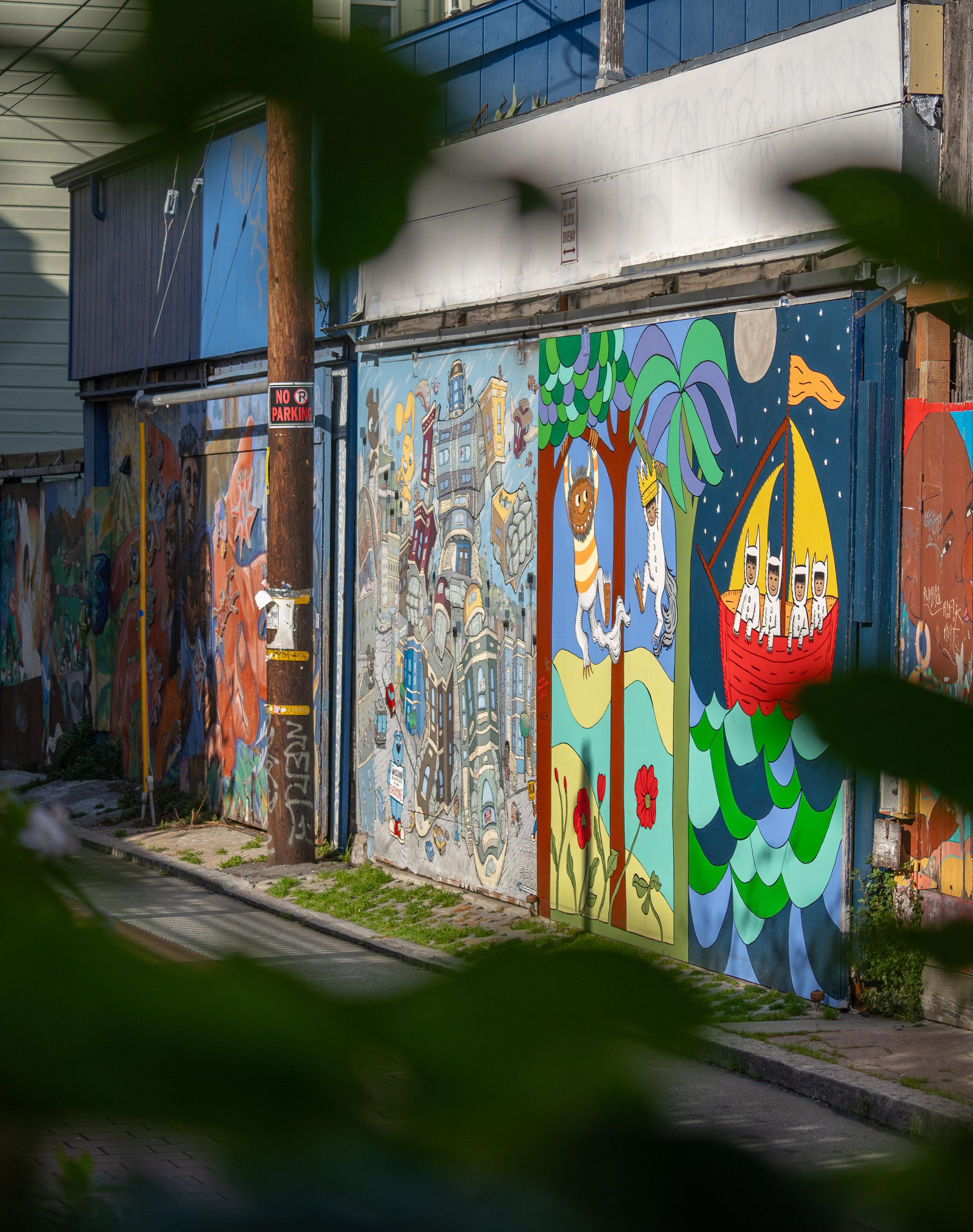
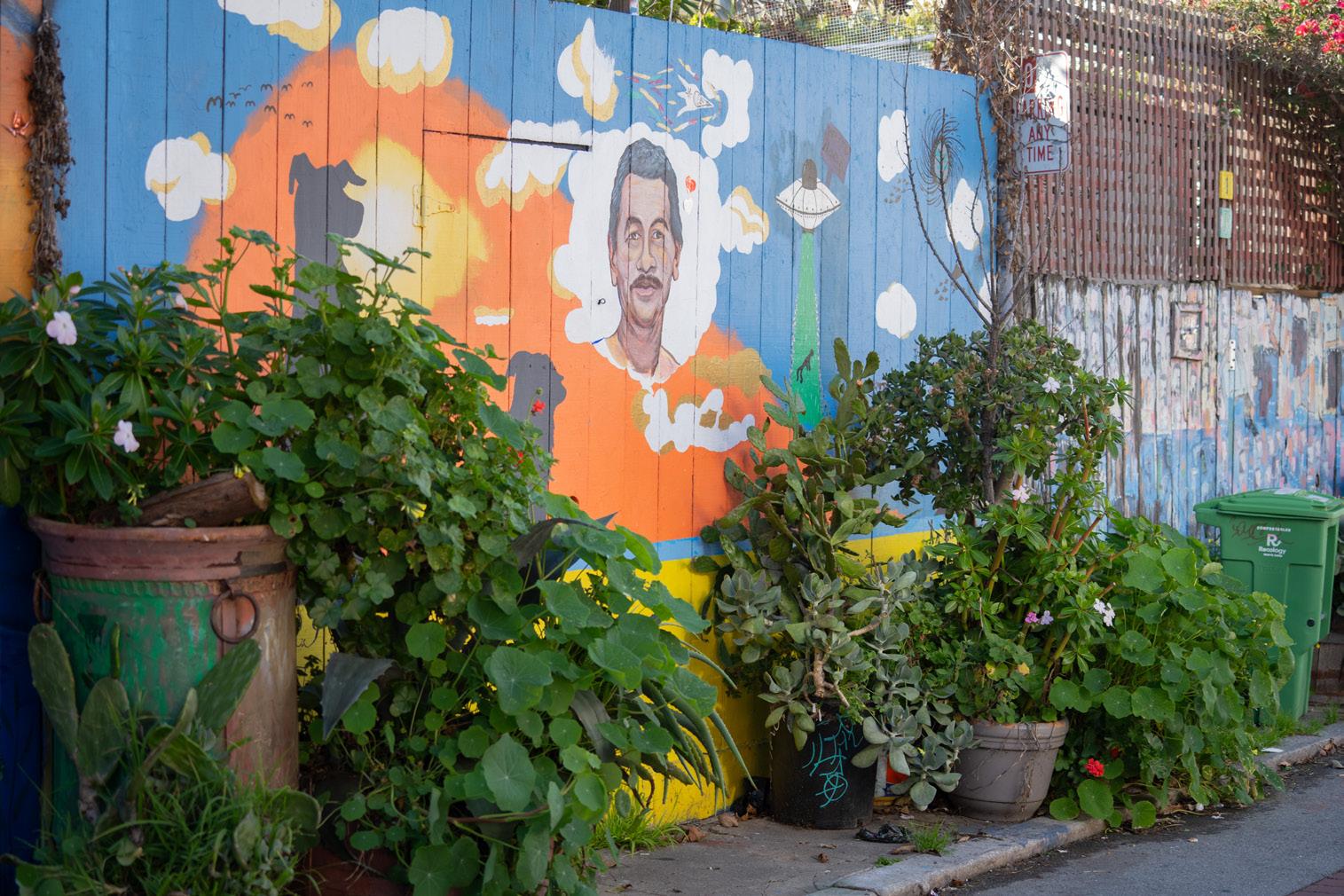
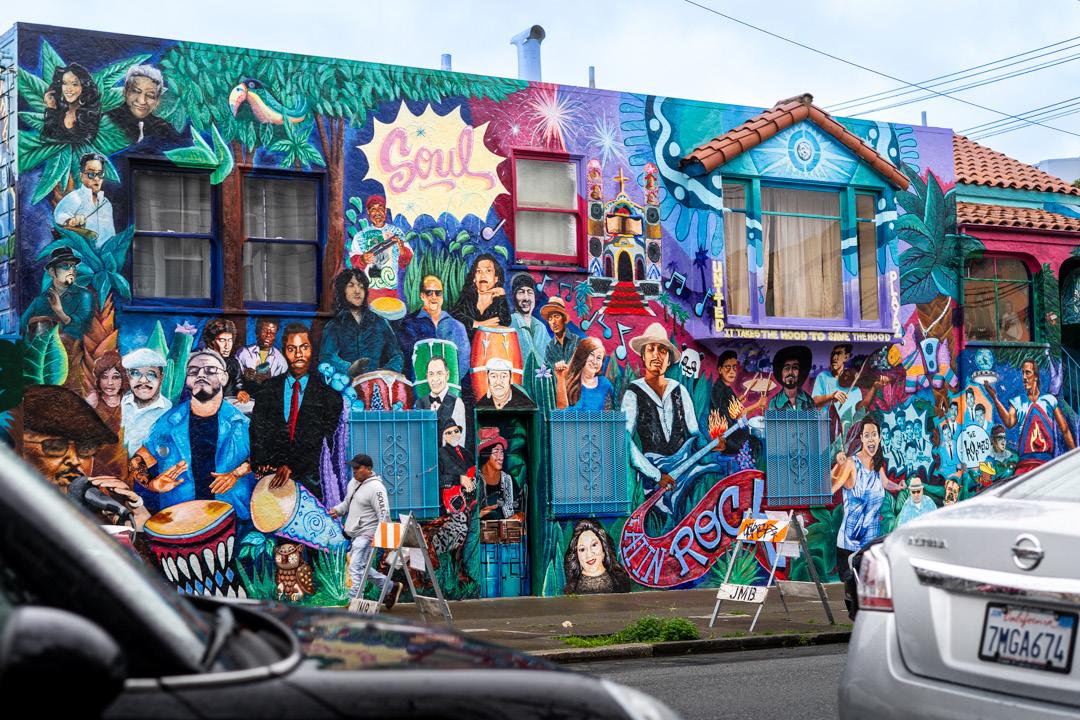
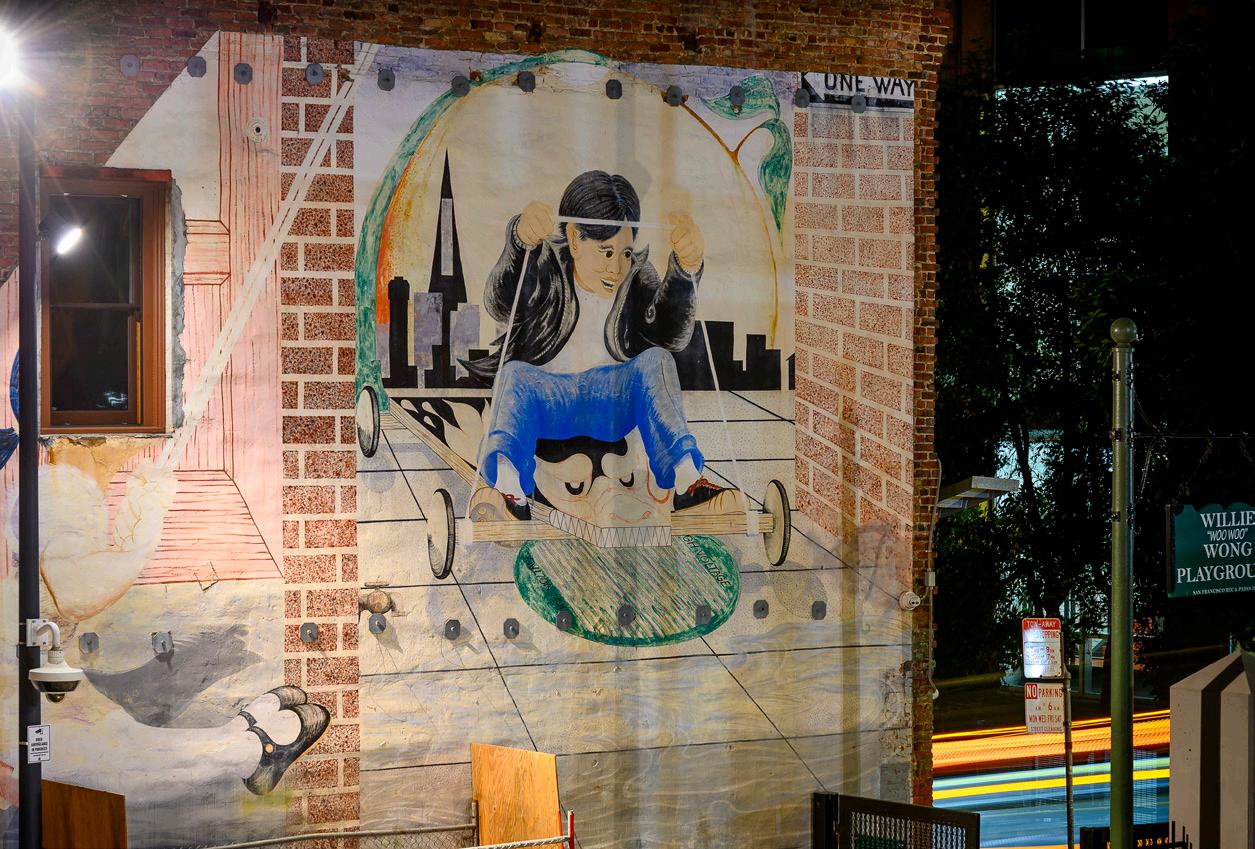
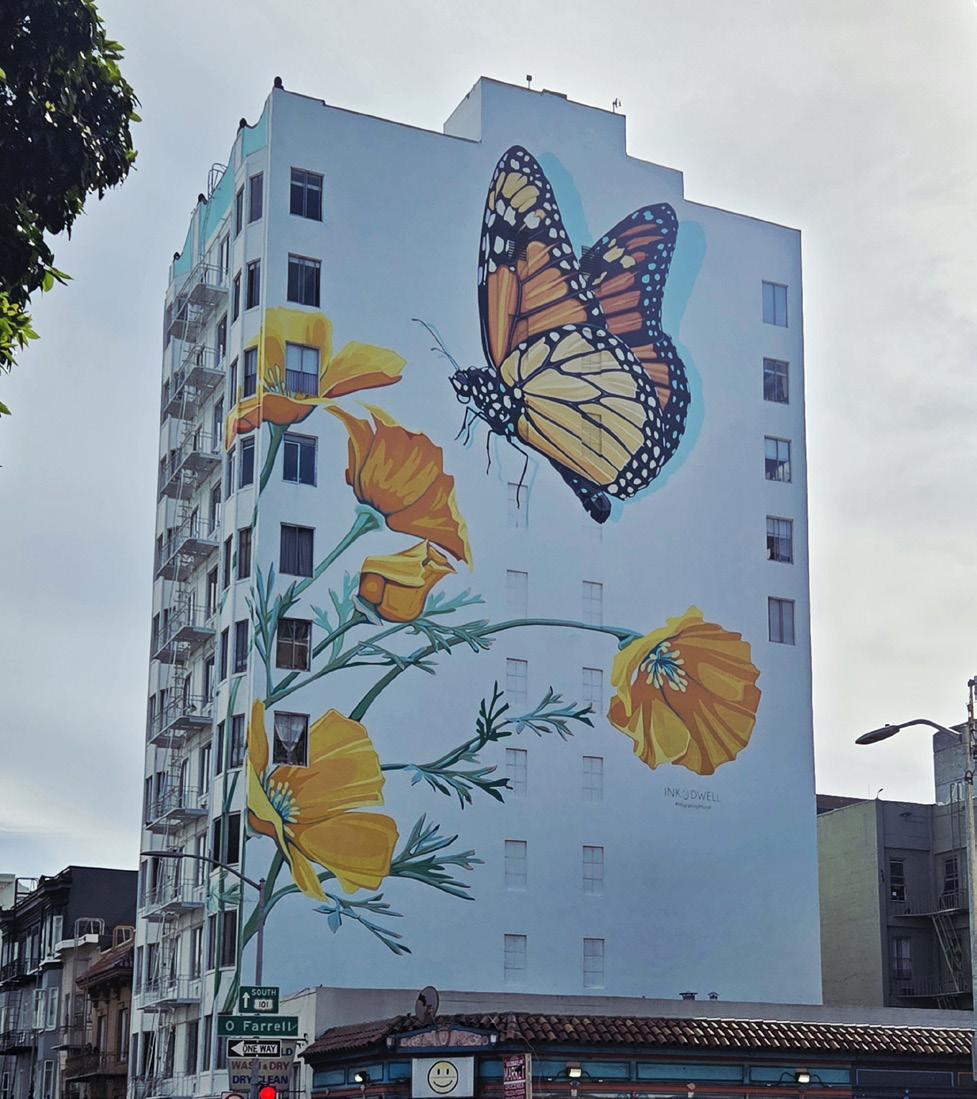
In this multimedia piece, our photographers captured murals from several neighborhoods within San Francisco.

















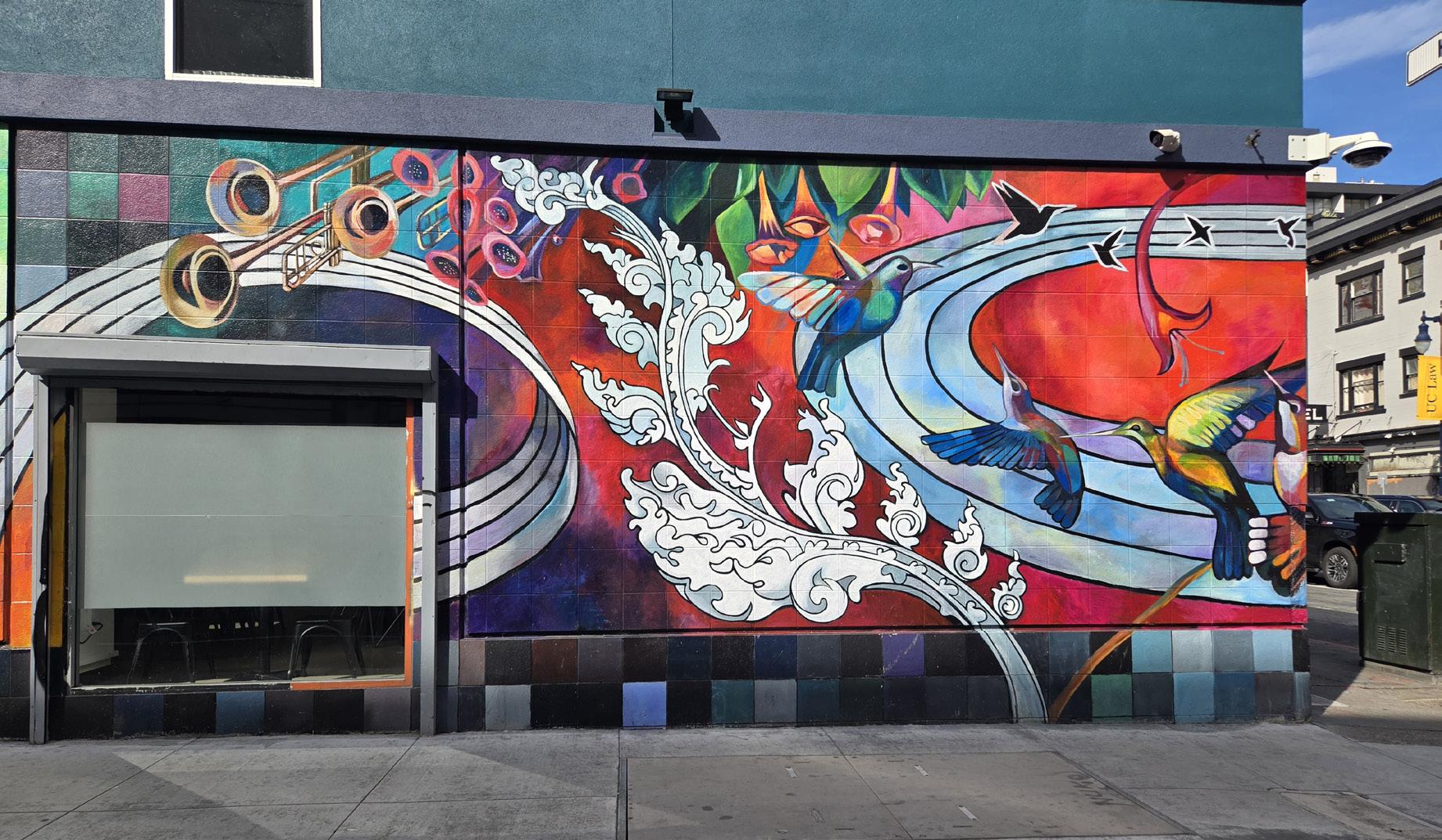



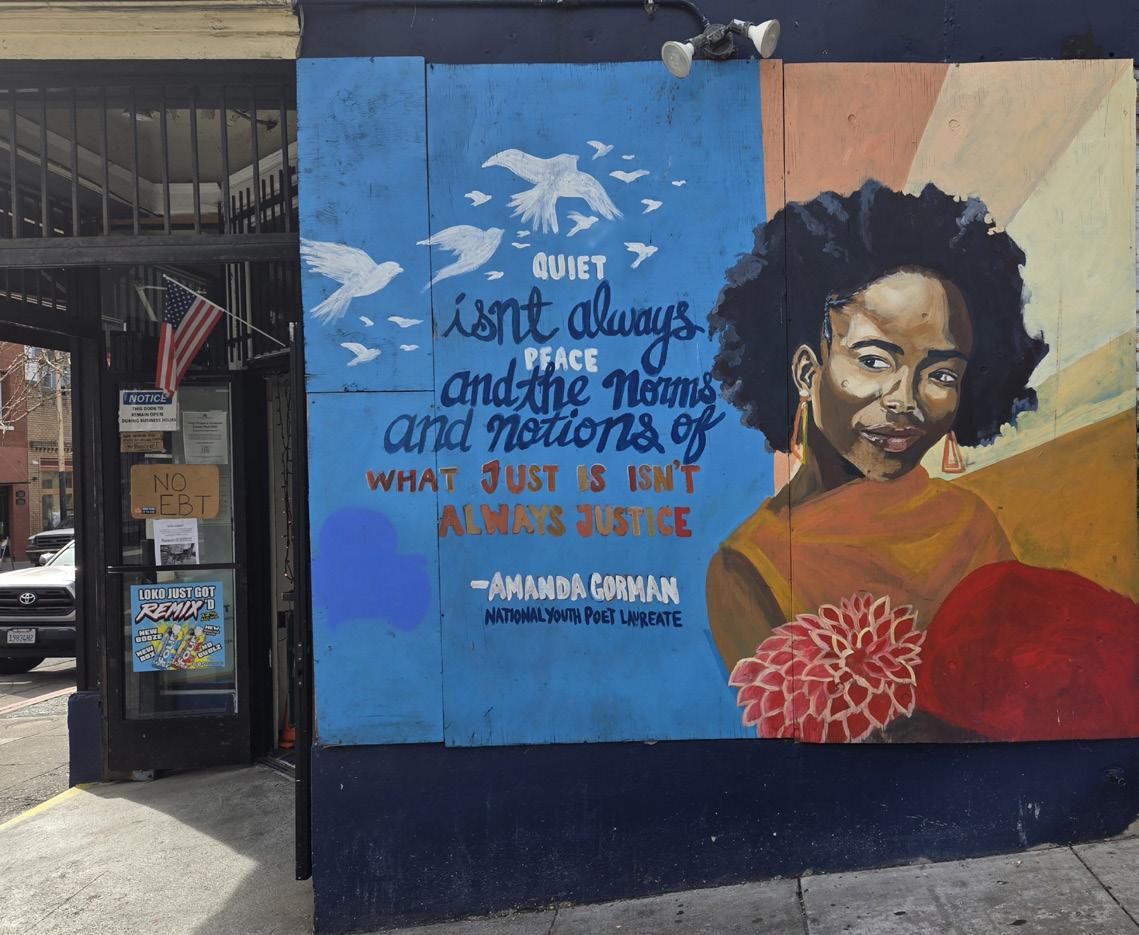
SPREAD
SYDNEY
LEE
The Lowell
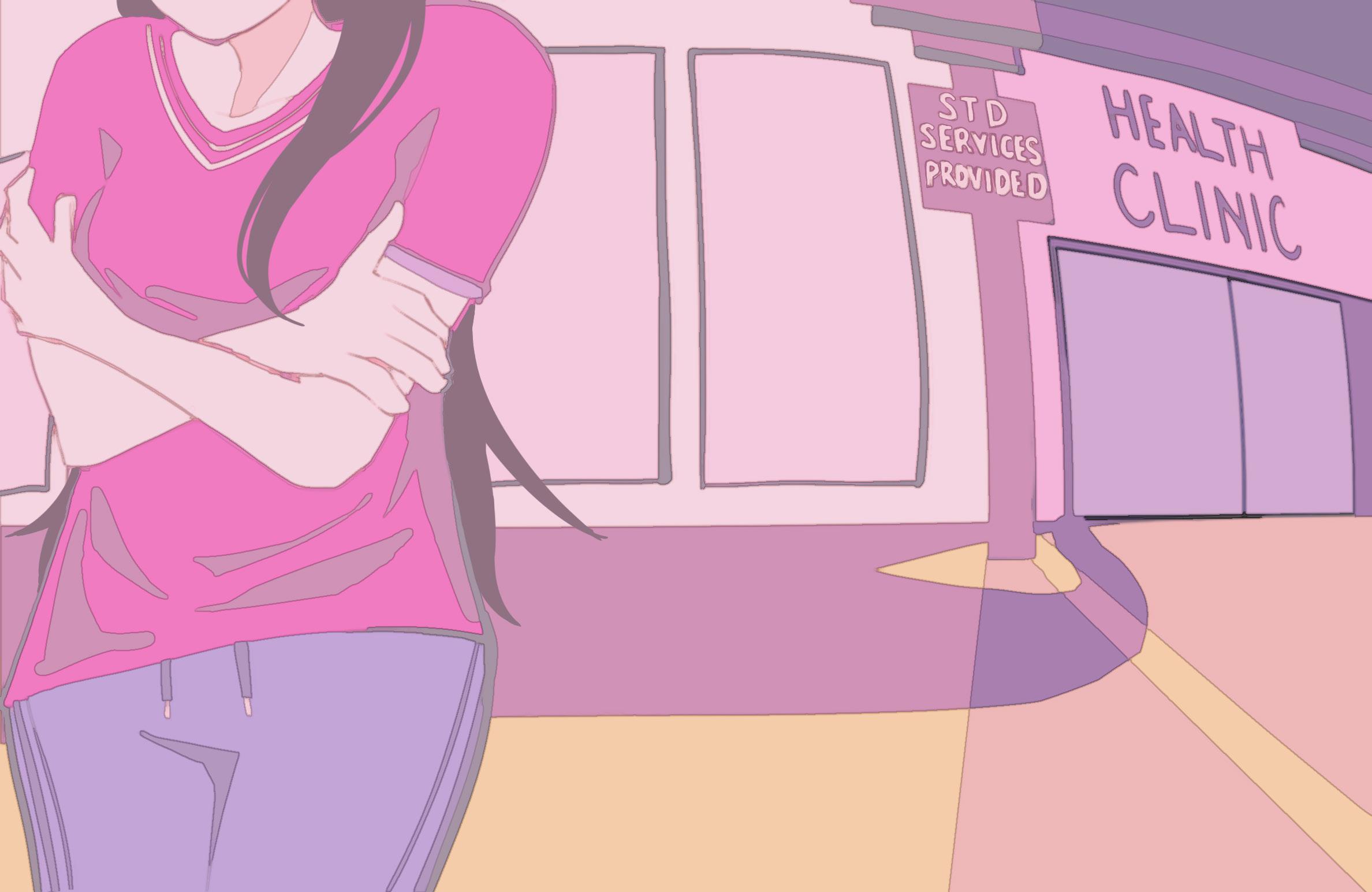
Lowell students struggle to discuss sexual health related conditions with their peers due to a long-standing stigma surrounding those who live with them.
AN OPEN CONVERSATION: Destigmatizing STIs
By Kai Lyddan and Serena Miller
It’s eighth grade, and senior Asher Barolette sits in the doctor’s office, awaiting the results of the test he took to learn more about the cold sores that recently appeared around his mouth. Assuming they were nothing more than pimples, he is ready to go home and return to playing video games. He looks up when the doctor comes in, and is shocked to hear him say, “You have contracted oral herpes.” Suddenly, video games are the furthest thing from his mind. Barolette covers his mouth in fear and disbelief, trying to figure out how this could have possibly happened. He had never kissed anyone. But now he would never be able to kiss anyone, ever. His life was ruined… or so he thought.
At this time, Barolette held the same common misconceptions of many young people concerning sexually transmitted diseases and conditions that share a connotation of sexual activity. These beliefs stem from a longstanding stigmatization and shame surrounding sexually transmitted infections (STIs), often resulting in improper caretaking and a lack of awareness surrounding these conditions. At Lowell, and other high schools around the country, students with STIs and sexually related health issues face feelings of shame,
dejection, and ostracization from their peers.
In 2016, the California Healthy Youth Act was implemented into San Francisco Unified School District (SFUSD) health classes. Before 2016, health classes solely taught abstinence, with a curriculum that strictly preached the unrealistic message of waiting until marriage to have sex. Currently, SFUSD teaches semester-long classes to freshmen, covering topics including contraceptives, safe sex, teen parenting, HIV and AIDs, sexual decision making and STI awareness. But the current curriculum of safe sex with contraception use still fails to fully educate students about the correct way to deal with potential consequences. According to The National Public Library of Medicine, “approximately 10 million of the 20 million new sexually transmitted infections (STIs) in the US annually occur in people aged 15 to 24.” The lack of thorough education regarding the contraction of STIs and the very real possibility of pregnancy scares leaves the millions of teenagers who contract an STI or become pregnant feeling lost and ashamed. In a survey conducted by The Lowell in March 2026, only 70.7 percent of responders feel prepared to deal with an STI given the information they were
taught. “The system failed me,” said Yasmine, a senior under a pseudonym who has struggled with recurring urinary tract infections (UTIs) as a result of sexual activity.
Conversely, Lowell Health teacher Adee Horn says the health education San Francisco offers is “maybe the best in the country as far as resources and support for young people.”
“You all have access to clinics all over the city with free appointments for free resources,” she said. For other schools around the nation, sexual health can be outdated and patchy at best. A study conducted by the American Journal of Public Health in December 2025 states that while 42 states require some form of sexual health education, 34 of those states teach abstinence, and only 32 require education of STIs, with California falling into both of these categories. This lack of complete education leads to teens being ill-equipped to deal with the repercussions of unsafe sex. However, the curriculum offered in SFUSD health classes still tends to fall short of fully educating students for unintended sexual health issues. Horn tries her best to accommodate her students and make her classes as engaging as possible. “I try to bring in real examples for [my students],” she said. “It makes the awkward
“Approximately 10 million of the 20 million new sexually transmitted infections (STIs) in the US annually occur in people aged 15 to 24.”
less awkward.”
For Olivia, a sophomore under a pseudonym, health class did little to enhance her knowledge of sexual health. “As far as sex, I don’t feel like I learned that much real world helpful stuff.” Though Olivia has never contracted an STI, she feels that her health class education would not come in handy for such a situation. Instead she would turn to her family for assistance. “I think I probably could deal with [an STI], but I don’t think that’s because of health class,” she said. “My parents are really accepting. I’m really close with them, so I think they’d be pretty helpful.”
Unfortunately, this acceptance within their family is not the reality most teenagers face when dealing with a sex-related health issue. “I never told my mom but I told two of my friends,” said one anonymous survey responder dealing with a pregnancy scare. “I felt [scared] because I didn’t want people to know that I am sexually active, I just feel like it causes people to perceive me in a certain way,” they added. “An STI-infected person might experience anxiety and depression,” Dr. Adina Nack, a professor of sociology at California Lutheran University, said. “[They will] also be less likely to tell their sexual partners about their STI status, leading to more infections.” According to the Sexual Medicine Society of North America, “younger patients were more likely to express a feeling of awkwardness when addressing sexual health topics in any context.” Olivia recalls her freshman classmates being disengaged in health class despite the stressed importance of the topic. “I think it’s hard because it
is important knowledge, but it’s something that a lot of people our age are uncomfortable around or don’t want to talk about,” she said. Yasmine found that even discussing her UTI among other women to be a taboo topic. “I feel
“I try to share as much as possible because I want to destigmatize it. More people have [oral] herpes than you think.”
like the girls know, but they don’t talk about it,” she said.
Horn acknowledges the discomfort that comes with learning about
sexual health topics. “I know people can feel really awkward talking about sexual health,” she said. However, she combats this by making a welcoming environment in her classroom. “I often start the day with a different slide that says, ‘embrace the awkward,’” she shared. “I do my best to create a culture of openness in my classes and the relationships with my students so that they can feel comfortable.” She achieves this by taking a variety of approaches to teaching this subject, such as trips to the Wellness Center, connection to important and free resources both online and at school, doing demonstrations of safe sex contraceptive use, and other strategies. “I try to bring in as many real world examples for them, and the history behind the different topics. I found some videos, for example, that talk about the history of contraception or how a condom is made.”
Yasmine believes that the health class education she received freshman year was inadequate, as she felt ill-prepared to deal with her UTI or other infections that could possibly be transmitted through sex. “[Sex Ed] didn’t emphasize enough what to do if you get a UTI, like remembering to pee every single time you have sex and stressing that importance,” she said. Olivia says the most helpful resource she remembers being given were links to websites with information on how to deal with specific diseases.
Urinary tract infections, while not an STI, are still fairly common infections resulting from sexual intercourse. The National Public Library of Medicine states 50 to 60 percent of all women in the U.S. will contract a UTI
at least once in their lifetime. Senior Yasmine felt health class had yet again failed her when she contracted a UTI from sexual intercourse. “They didn’t emphasize enough what to do if you get a UTI, or even what a UTI is,” she said. Upon contraction of the UTI, Yasmine experienced a high degree of pain and physical discomfort, which impaired her ability to complete functions during the school day. “I couldn’t do my yoga final because I was in so much pain,” she shared. “I’ve thrown up at school because of the medication and because of the pain.” Yasmine also mostly blames herself for her lack of proper sex education. ”It makes me really hate my decisions,” she said. “I hate everything because it hurts so bad.”
Barolette tries to put an end to the negative connotations of oral herpes by now sharing information about his condition more openly. In doing so, he hopes to break the stereotypes and shame of STIs and similar infections, and educate his peers in the process. While oral herpes, the infection Barolette has, isn’t sexually transmitted, he still feels the same as people living with STIs in the sense of wanting to break down the stigma. “I try to share as much as possible because I want to destigmatize it,” he said. “More people have [oral] herpes than you think.” According to the Johns Hopkins School of Medicine, between 50 and 80 percent of younger adults and teens in the U.S. have oral herpes. However, the near complete lack of mention about oral herpes and similar infections in in-person and online discussions among teens prevents people like Barolette from speaking about it freely. Both Barolette and Horn agree that the primary reason that so many adolescents have STDs or STIs is because of the stigma surround-
ing them that is so deeply ingrained in teenage culture. “People will get disgusted when I tell them that I have [oral herpes],” Barolette said. Though it’s difficult to pinpoint where the entirety of the stigma originates, experts tie it back to the association between sexual activity and immorality. “I think it connects to the belief or assumption that young people are not having sex, be it culture, be it religion, you should not be engaged in physical, any kind of sexual activity until marriage,” Horn said. As a result, there is a lack of information given to
Lowell in March 2026, among the students who reported having contracted sex-related health issues reported feeling ashamed, uncomfortable, frustrated, embarrassed, and scared, all provoked by the strongly perceived reputation that STIs hold. “I feel like [there’s] a stigma of ‘you get around too much, you’re dirty, you’re sickly,’ stuff like that,” Yasmine said.
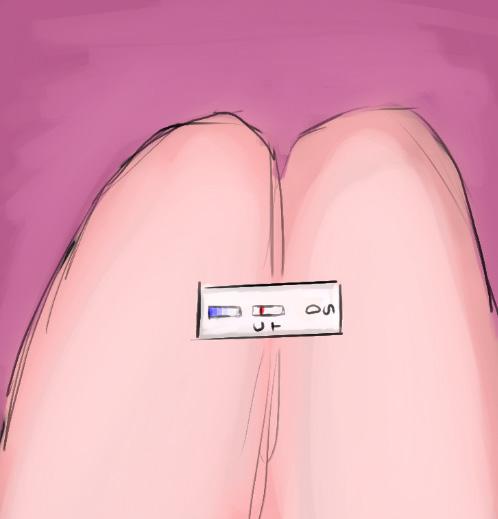
all students, particularly those under this impression, leading to insufficient preparation in the case of contraction. “It’s really just so deeply rooted in religion and culture and country,” she said. Olivia witnessed the harmful effects of the stigma as her peers dealt with the ridicule. “When I went to summer camp, one of the people there had mono and a lot of people were like, ‘You’re a whore, that’s why you have mono.’ She had only kissed one person but got mono.” This public ridicule can lead people to not seeking help, or even getting tested to begin with. In a survey of 182 students conducted by The
Pregnancy scares are among the most common sex-related issues Lowell students encounter. 50 percent of respondents to The Lowell’s survey who replied “yes” to having dealt with a sexual related issue specified that the issue was related to a pregnancy scare, whether the scare being fear of being pregnant or getting someone else pregnant. Even with birth control methods like condoms, pills, patches, injections, and more, pregnancy scares are still by far the most prevalent issue students struggle with, at Lowell and around the country. Many students consider teenage pregnancy to be a taboo or shameful topic, as pregnant teens can be viewed as irresponsible due to their young age. Because of this stigma, female students like Olivia only think they would be comfortable discussing it with close family members. “I think my parents are really accepting, so I think they’d be pretty helpful,” she said. Additionally, the National Library of Medicine mentioned both qualitative and quantitative studies showing that “teen parents feel stereotyped and stigmatized.” Despite this, staff members like Horn try their best to discuss with their students that they aren’t alone in the case of a pregnancy scare. “Yes, pregnancy is a thing,” Horn said. According to the National Public Library of Medicine, stigma is rarely mentioned as a factor affecting the
happiness and success of teen parents. However, the overwhelmingly negative societal view towards teen parents can cause students and other teenagers dealing with it to feel isolated, ashamed, and scared.
The broad issue of tackling the stigma surrounding STDs and STIs is far from a simple solution. However, most people agree that the primary step to be taken is to talk about the scenarios people are in more. “People always think [oral] herpes is so gross until they
“I feel like [there’s] a stigma of ‘you get around too much, you’re dirty, you’re sickly’ stuff like that.”
realize most people have it,” Barolette said. Yasmine also mentioned similar feelings of people mostly being aware of various conditions but not wanting to discuss it among peers. However, according to A Step Ahead Chattanooga, a Planned Parenthood organization in Chattanooga, Tennessee, normalizing conversations about STDs and STIs and encouraging frequent testing are necessary steps to breaking the stigma. “The shame and silence around STIs can stop people from getting tested or treated,” the article from A Step Ahead states. “That silence is what allows untreated infections to spread, and that’s something we can change.” “Less than half of U.S. adults under 45 have been tested for STIs other than HIV,” Nack
said. Horn likens opening up the conversation and frequency of being tested to going to the dentist twice a year. “So if we as a society were open to that possibility, that [STI testing] is just like getting your teeth cleaned, that would go a long way,” she said. “Because so many STIs don’t have symptoms, it keeps everybody safer.”
Although SFUSD has broader access to resources than many other places across the country, the issue of students feeling unsafe to discuss issues like STIs still stands. Horn hopes that the more educated and open students of this generation are able to share their voices and help other people in similar situations feel more accepted and less ashamed. “San Francisco is one of the most informative places in the country,” she said. “I always tell my students, ‘you’re the health ambassadors, take this information with you.’” Additionally, she hopes that students will raise awareness of the often surprisingly common nature of certain infections and conditions, and people will be more willing to talk about it. “If it’s more common, that can help with the stigma,” she said. “You
can take this information to educate others and keep you safe and keep them safe.”

“So if we as a society were open to that possibility, that [STI testing] is just like getting your teeth cleaned, that would go a long way.”
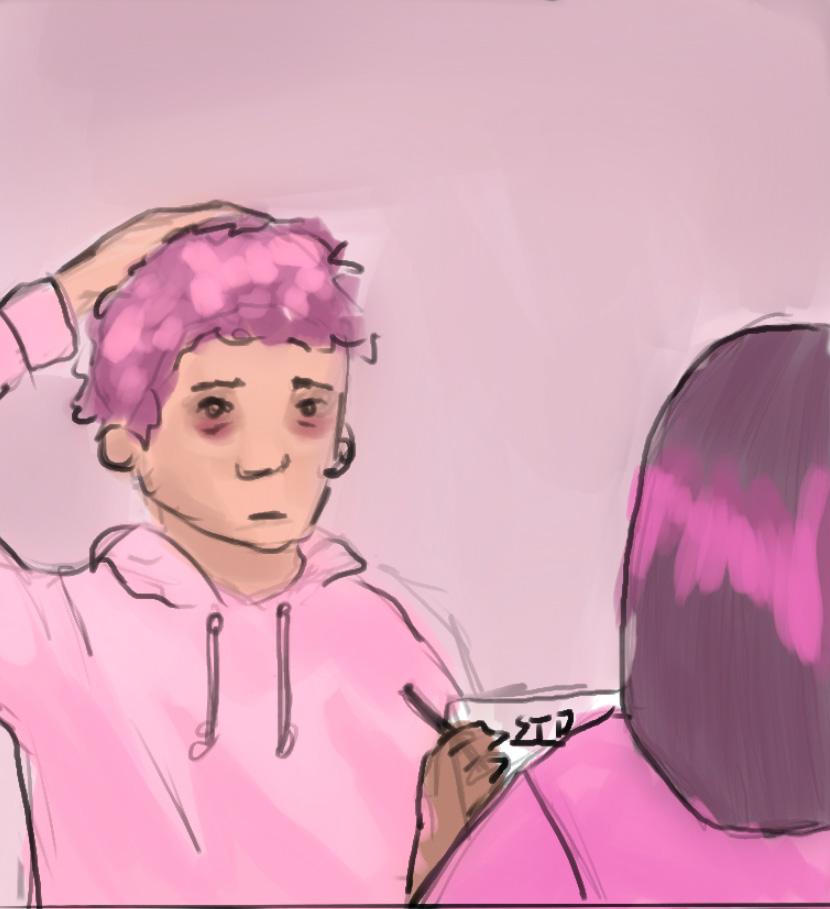
PHOTO BY SYDNEY LEE
Sophie Murphy
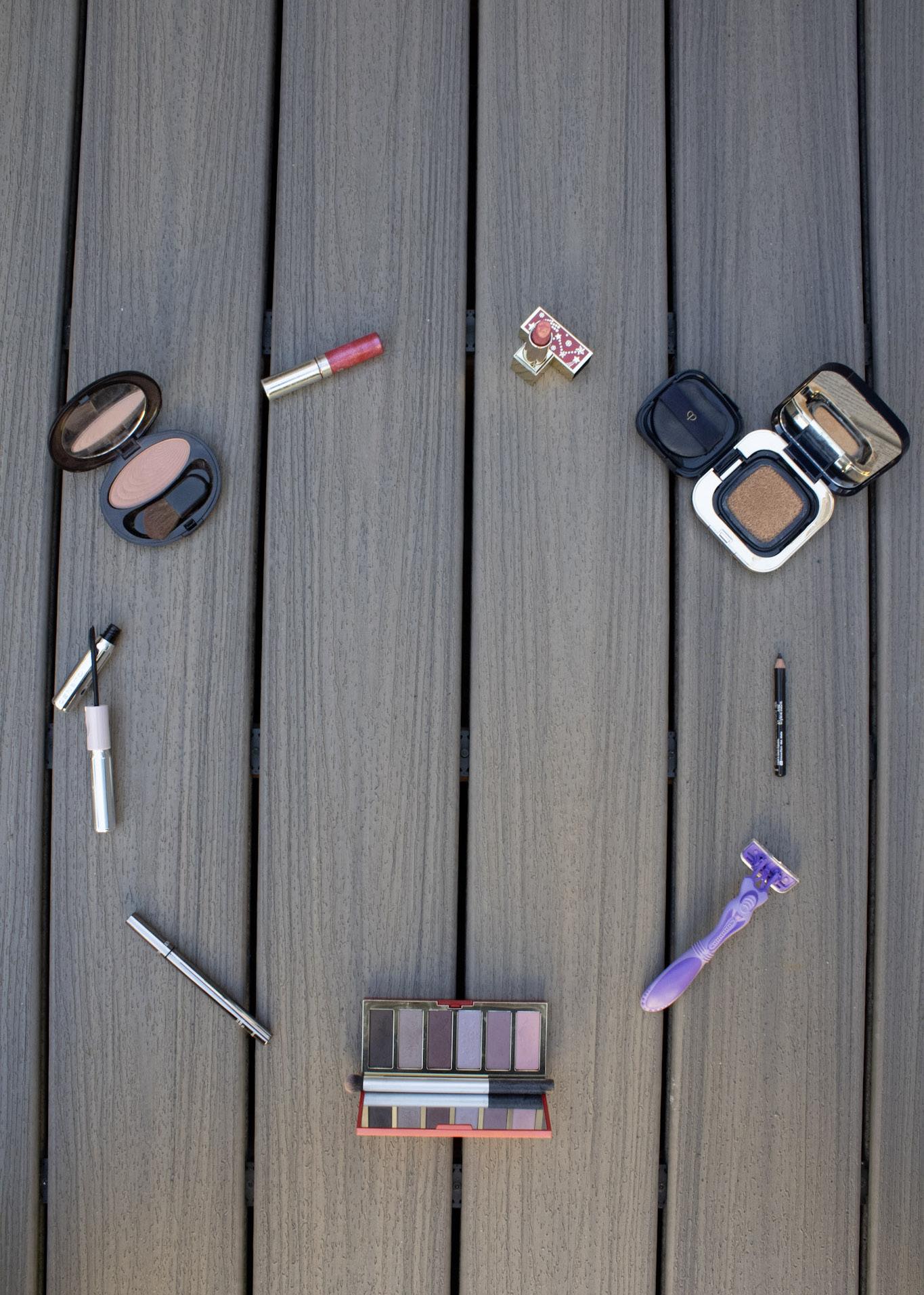
M AKEUPSHOULD NOT F
E E L
LIKEAN OBLIGATION
“Do you want to come to the store with me?” my mom asks. I had just woken up. I put on my shoes and followed her out the door, not giving a second thought to my appearance. Walking into the store, I catch a glimpse of my re ection and suddenly feel exposed. I wish I had taken the time to curl my eyelashes or put on a little bit of concealer, certain that all my insecurities were glaringly obvious to everyone at the store. e simple errand had triggered an unwelcome evaluation of my self worth, and I was confronted with the idea that my perception of myself was tied to my physical appearance. I realized I wasn’t wearing makeup for me, like I had been telling myself. It had become a crutch I relied on to feel good about my appearance. Before putting on makeup, girls should ask themselves why they feel the need to. A large number of teen girls wear makeup. is in itself isn’t concerning. When you’re trying a new eyeshadow shade or asking your friend what lip product they’re wearing, makeup can be a fun and unifying act of femininity. However, putting on makeup o en becomes a social expectation instead of an empowering practice. e reality is that in our society, women who don’t enhance their physical appearances with makeup or through other means are hardly ever accepted in the eyes of a male-centered world. is expectation is a di cult pressure to face for anyone, but especially for young women guring out who they are in relation to these standards. High school is o en considered the time for experimentation and identity formation. For many girls during this period, makeup is a signi cant part of discovering what they like and how they want to express themselves. However, when the only way to feel con dent about your appearance is through the application of makeup, it becomes alarming. It’s important to nd acceptance in yourself both with makeup, if you choose, and without. Feminist movements have fought for freedom from these oppressive expectations. One branch that emerged from this is referred to as “choice feminism”. According to Jenna Crispin, author of the book Why I am Not a Feminist, choice feminism is de ned as, “ e belief that no matter what a woman chooses, from her lifestyle to her family dynamic to her pop culture consumption, she is making a feminist choice, just from the act of choosing anything.” is way of thinking can be
appealing, especially when performing stereotypically feminine tasks. For the women who adhere to this ideology, putting on makeup is an inherently empowering act if it was your choice to do so. Instead of conforming to the stereotype, you’re reclaiming it. However, choice feminism fails to address the systemic in uences that in ltrate everyday actions. In the case of wearing makeup, it glosses over the fact that women have long been held to unattainable standards of external beauty and instead praises the simple act of being able to choose something for yourself. is perspective does nothing to advance women’s interests and attens the autonomy and complexity that women hold.
It’s important to fnd acceptance in yourself both with makeup, if you choose, and without.
Makeup usage is o en justi ed by the argument that makeup is a form of self-expression or art. Makeup artists like Pat Mcgrath, named one of the most in uential people of 2019 by Time Magazine, have proven makeup really is a complex skill worthy of its recognition. However, it doesn’t hold true for everyone. For a while, I considered myself as practicing creativity through makeup like these artists, but it didn’t feel quite the same when I put on mascara in the morning because I wanted my eyelashes to look longer. I nally had to confront that I was not as free as I would have liked to say from the pressure of female beauty standards. Putting on makeup became more of an obligatory act – whether I wanted to acknowledge the expectations of the outside world or not. Once I realized this, I became conscious of how hard it was to stop wearing makeup. Knowing I can feel more con dent in a couple of minutes makes not wearing makeup an active struggle. However, I know that choosing not to wear it when I would otherwise, reduces the reliance I have on makeup. Makeup is a time-consuming and expensive practice that should not be considered the baseline for women’s beauty. It’s important to recognize how these pressures can seep into actions that are performed everyday. Confronting internalized misogyny is a good way to truly start advancing as a society instead of blanketing it with excuses and false empowerment. I should not have to spend 20 minutes putting on makeup every day in order to feel like I deserve to go outside. Girls should be allowed to exist as themselves, and the choice to wear makeup or not should be entirely theirs.

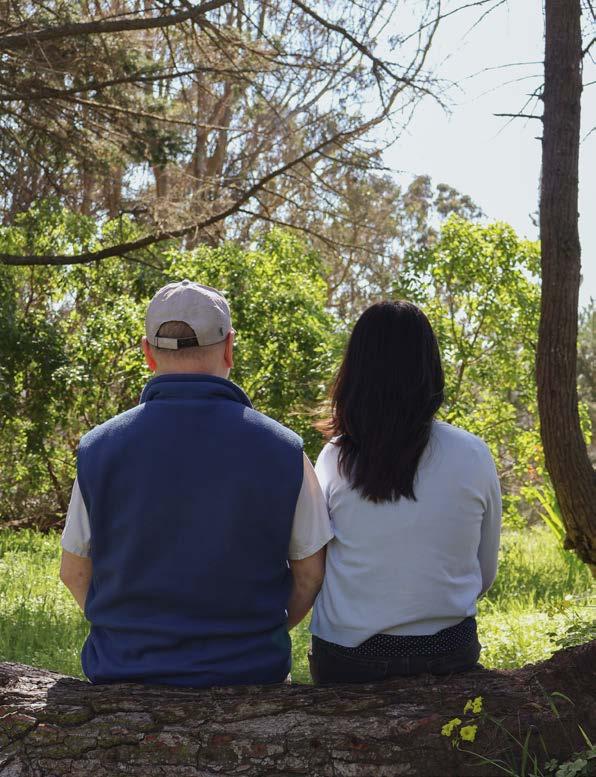
MARCHING THROUGH THE YEARS
BY LUCY DEA
Iwalk in unison with the sprawling sea of people, an army of thousands equipped with bullhorns and bold signs, ready to take action. e atmosphere is electri ed with a boisterous energy that seems to invigorate a passion within every person in the crowd. Unied by a common purpose, people from vastly di erent walks of life clap their hands and chant slogans in unison. is January, I attended an anti-ICE walkout at Dolores Park with my father. It was my rst protest, and I felt nervous, but empowered. At rst, my father and I danced and chanted along with the crowd. However, as the protest progressed, I no longer sensed his lively energy beside me. I turned to look at him, and his face was etched with a mix of emotions: sadness, anger, but most of all, frustration. His eyes met mine, and he said, “Man, I feel tired.” At that moment, I understood his disheartened state.
My father was an activist in the 2000s who advocated for tenant rights and anti-war e orts against the Gulf War in Iraq. He participated in large-scale protests that shut down major Bay Area highways and collaborated on a variety of projects, most notably a multiyear campaign in Oakland, where he fought against the eviction of seniors. During the ICE protest, he expressed feelings of frustration with the current situation, describing how similar it felt to previous situations. He recalled certain chants with similar structures from protests during his activist days, but simply replaced with the word “ICE.” He thought to himself, “Have things really changed?”
My father fights not for his own future, but for his children’s future, in the hope that the world they step into will be safer.
In the words of Mark Twain, “History doesn’t repeat itself, but it o en rhymes.” e ght for justice has always existed, and people will continue to organize to advocate for what they stand for, with each generation passing the torch onto future generations. Although visible changes have been made and current issues a ecting society are somewhat different from those of decades past, the root causes persist. “Following the money” is usually still the touchstone of truth when it comes to world politics and what each nation and its leaders’ intentions are. ere will always be a thirst for power and control, leading to the oppression of the masses. By pitting minority groups against each other, the elite can “divide and conquer.” In particular, anti-immigration policies and practices have existed for centuries. In the 1940s,
my grandparents immigrated to America during the Chinese Exclusion Act by way of the “paper son/daughter” system. ey would not have been able to legally immigrate to the United States during this time. It is essential not to think only for ourselves but for others, as today’s issues also impact everyone else in the long run. My father ghts not for his own future, but for his children’s future, in the hope that the world they step into will be safer. I believe it is my duty to continue my father’s work in advocating against oppression in honor of my grandparents, who had to ght their way through these oppressive systems for their children. In the digital age, technological advancements have made the spread of information increasingly more accessible and e cient. e advent of livestreaming has brought news to people instantaneously. With platforms like YouTube, Twitch, and TikTok, among others, a variety of di erent perspectives are accessible. Although misinformation is pervasive, these platforms give people the opportunity to cross-examine di erent news pieces and investigate the truth of the claims being presented to them with the intent of forming their unique opinions. Fake news complicates the sense of what we are made to believe is real and heavily hinges on partisan politics. Now, more than ever, it is imperative that we use technology to our advantage. Just decades ago, the dissemination of news was limited to only a select few TV channels and newspapers, substantially restricting the viewpoints available to the masses. Technology is a tool that can be widely utilized to demonstrate solidarity for people around the world. Global broadcasting helps a ected individuals see that there are people who care about the social issues they are facing and that they are not alone in their struggles. For example, the broadcasting of the ICE protest at Dolores Park showed solidarity for the protesters in Minneapolis who were also a ected by ICE recently. ere are now an abundance of ways to show solidarity without physical presence, such as relaying important information through social media to increase awareness. rough social media, the younger generation is more motivated to get involved with political activism. At the recent ICE protest, there were many students who attended. I believe that our generation must defend their civil rights and continue to be vocal about their beliefs. e lives of the future generation are in our hands. As my father says, “Silence is consent.”
What Remains of Edith Finch By
Stella Schulte
Edith Finch’s sprawling childhood home is rife with death. It invades every corner of the house, timid and cowering in mystery before it swells in its fantastical reveal. Death robs every sojourner who bears the last name Finch—it’s a curse.
Although they have died, the stories of the absconded Finches in What Remains of Edith Finch is what you, the player, are there to learn. As Edith, the last surviving Finch, you must explore the archive of loss where she grew up. Te house is a wooden sentinel that quietly towers over the vast Washington forest it occupies. Te inside is frozen in time; each room, behind its locked door, is perfectly preserved in the memory of the Finch who lived and died in it. Paintings and baubles are lef inside for the deceased member, tenderly placed by their mourners. Alongside are letters, poems, or photo books that transport you to their fnal day as the player takes on the perspective of Edith’s late relatives and lives out

Emma By Danya Bayer
In this enlightened era, we are blessed with an ample supply of media centered around complex female characters. But long before Virginia Woolf called for the necessity of a room of one’s own, Jane Austen wrote Emma, and gave her protagonist, Emma Woodhouse, a whole mansion.
For an unmarried woman in 1815, Emma lives an enviable life. She has plenty of money, an adoring father, and a childlike belief in her own infallibility, which causes her to hurt others despite good intentions.
Troughout the novel, Emma sincerely wants to make people’s lives better. Believing her own friendship to be a vector of great improvement, she decides to take on Harriet Smith, a girl of indeterminate birth, as a project, and manipulates her into turning down a proposal of marriage. Among Emma’s other sins are mocking her elders and giving credence to those who praise her. She leaves paintings half-done, and makes lists of books she means to read but doesn’t. Sometimes she behaves like a regency-era Blair Waldorf: classist and manipulative.
their last moments.
Te game is a visual novel—a walking simulation that prioritizes storytelling above complex or technical gameplay. While each person’s short story ends in death, they’re mightily full of life: strange and intricate and sometimes heartbreaking. Edith embraces these tales as her own, and the secrets scattered throughout the house foat like dust dancing on a sunbeam, imprinting on her wondering eye, and by extension the player’s. Te anecdotes that are lef behind, though nothing but a glimmer of the family who lavished their love on Edith, become intertwined with her own story and its eventual end.
What Remains of Edith Finch portrays the intricacy and fragility of family history. Ultimately, the player is shown that the Finchs’ demise never came from a family curse, but from their own belief that they were cursed — a justifcation for the overwhelming grief each member felt afer losing another. Edith bears the burden of being the last Finch alive: heralding the memories of her family and assuring that they aren’t gone with her departure. Te Finch family’s legacy is one of tragedy. And yet, despite only inhabiting their tales for a few minutes, Edith’s forebearers hold a palpable, immeasurable weight in the game, and beg the player to consider death: its swifness and asundering force, but also the stories we tell because of it. Maybe we are nothing but the stories of those that came before, and maybe we are nothing but how they are told now. Maybe, if we lived forever, we’d have time to understand how strange and brief life is.

but it also emphasizes that she isn’t a bad or irredeemable person. Afer all, who hasn’t neglected to follow through on their self-improvement plans, or been rude to someone they fnd annoying? Who hasn’t given a friend unnecessary or unhelpful advice, once in a while? In the end, Emma has to face the mistakes she’s made, and make a genuine efort to change.

Te book doesn’t attempt to disguise Emma’s faws,
Emma’s relatability, even if it’s contextual, refutes one of the biggest criticisms of Jane Austen’s works; that their content is insignifcant, detached from both human emotion and world events. Her plotlines largely ignore social issues and contemporary events like the Napoleonic wars. Tey’re centered purely around upper-class characters. But even though her characters’ life circumstances difer sharply from those of any modern reader, they stand out clearly as people, with a full complement of faws and foibles that make them just as, if not more compelling than many modern novels written today.
Jane Austen endures not just because of her exquisite writing style, but for her humorous and realistic insights into human behavior. Anyone who calls her work trivial or unapproachable needs to take a closer look at Emma.
A BAD CASE OF senioritis
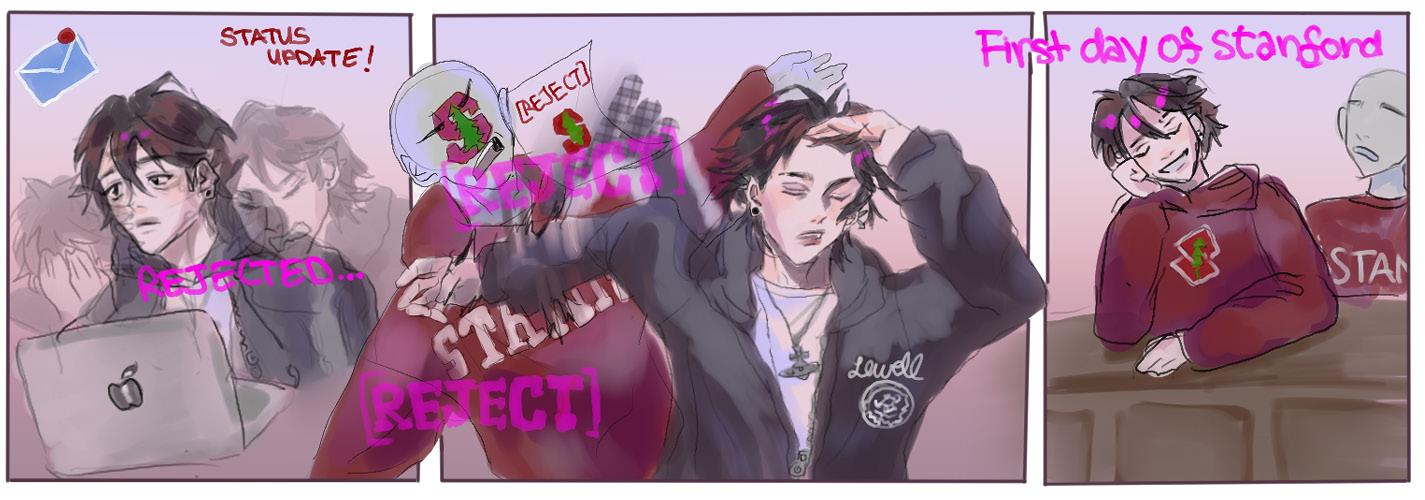
“Rejecting the Rejection” by Fiona Yu
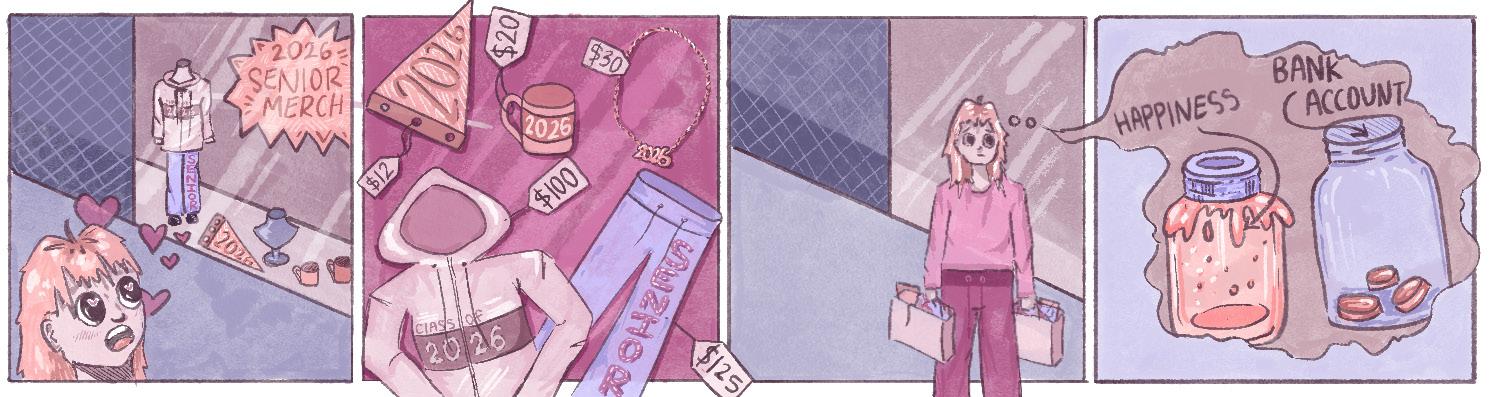
Splurge Season” by Soleil Wang
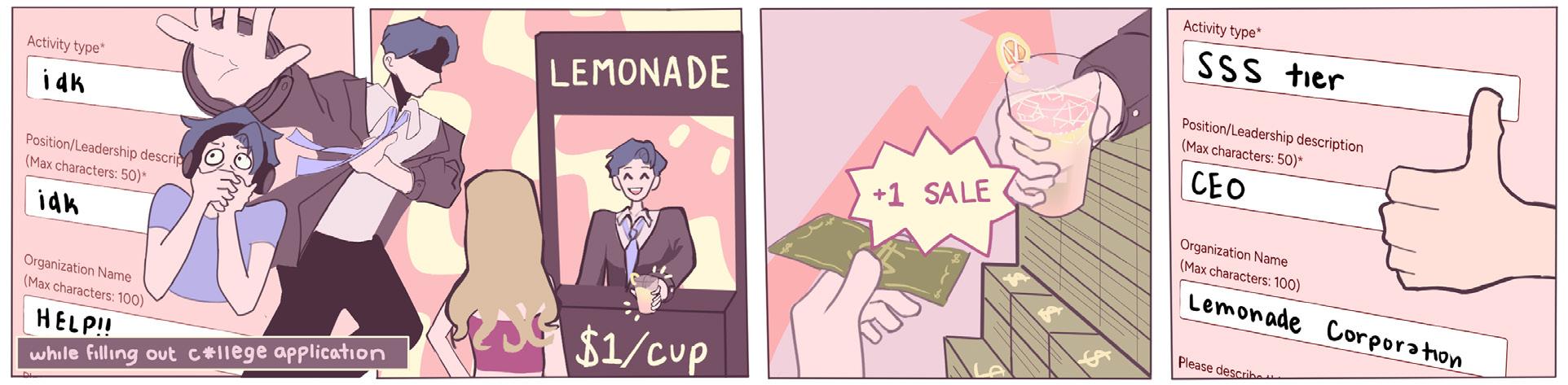
“Last Minute Extracurriculars” by Yue Yi Peng
“Senior

National Parks